



Warm skin and dark brown hair get along beautifully when the brown has the right heat in it. Pick the wrong shade and the whole look can go flat in a hurry; pick the right one and your skin looks brighter, your eyes look deeper, and even simple makeup starts doing more work for you.
Shade matters.
Ashy brown can be sleek, but on warm undertones it sometimes pulls the face a little tired or gray. The shades that usually flatter most are the ones with gold, copper, chestnut, caramel, bronze, or a soft red-brown cast. Not neon red. Not orange. Just enough warmth to keep the hair from looking like a block of one note.
And yes, depth matters too. A level 4 brunette can look rich and glossy, while the same level 4 in the wrong tone can look muddy under indoor light. That’s why the best dark brown choices for warm skin are never only about “dark.” They’re about reflection, softness, and how the color moves when the light hits it.
1. Dark Chocolate Brown for Warm Skin
Dark chocolate brown is the shade I’d hand to someone who wants drama without going full black. It has that dense, glossy look that makes warm skin feel even richer, especially when the color sits at a level 4 with a soft golden-brown reflect. The trick is keeping it plush, not flat.
Why It Flatters Warm Skin
Warm skin likes contrast, but it also likes a little glow. Dark chocolate brown gives you both. If your undertones lean peach, gold, or olive, this shade keeps the face from looking washed out the way an icy brown sometimes can.
- Ask for a level 4 dark brown base with a neutral-warm gloss.
- Keep the finish high shine, not smoky ash.
- Works well on straight hair, curls, and blunt cuts.
- Looks especially good with gold hoops and caramel makeup tones.
Tip: If your brows are medium brown or deeper, leave them soft. A harsh brow with dark chocolate hair can steal the attention from the color itself.
2. Espresso Brown with Golden Sheen
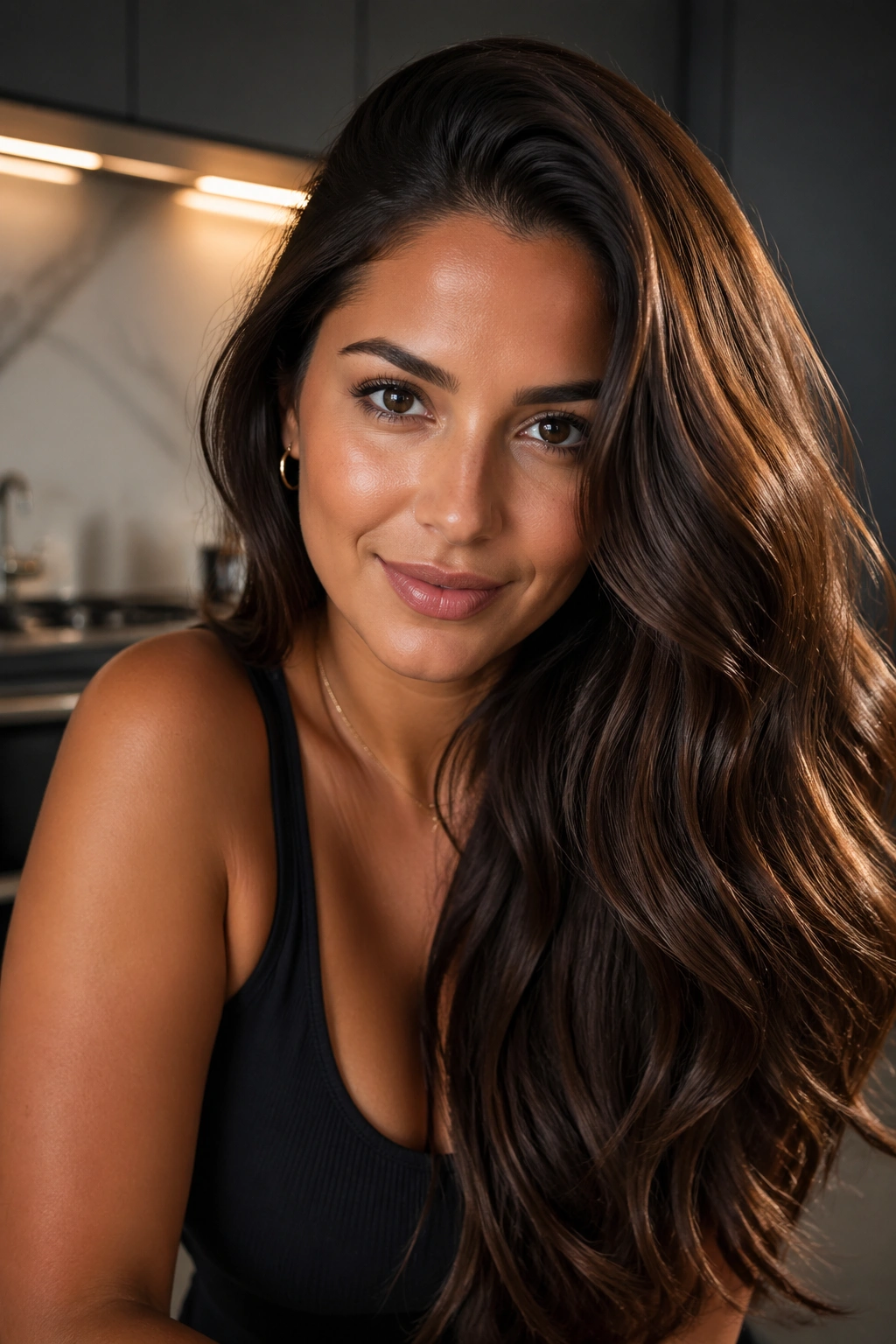
Espresso brown looks richer than almost any other brunette shade, but only if it has a little light in it. On warm skin, that tiny golden sheen keeps the color from swallowing the face. Without it, espresso can read nearly black and feel too severe around the jaw and eyes.
A good espresso brunette is deep, glossy, and polished without being stiff. Ask for a demi-permanent gloss or toner with soft gold reflect, not a cool soot finish. If your hair is fine, this shade can actually make it look fuller because the darkness creates the illusion of thickness.
The smartest way to wear it is with a clean cut or a sleek blowout. The shine does the talking. Messy waves work too, but they should be loose and soft, not crunchy or overworked.
3. Chestnut Brown Balayage
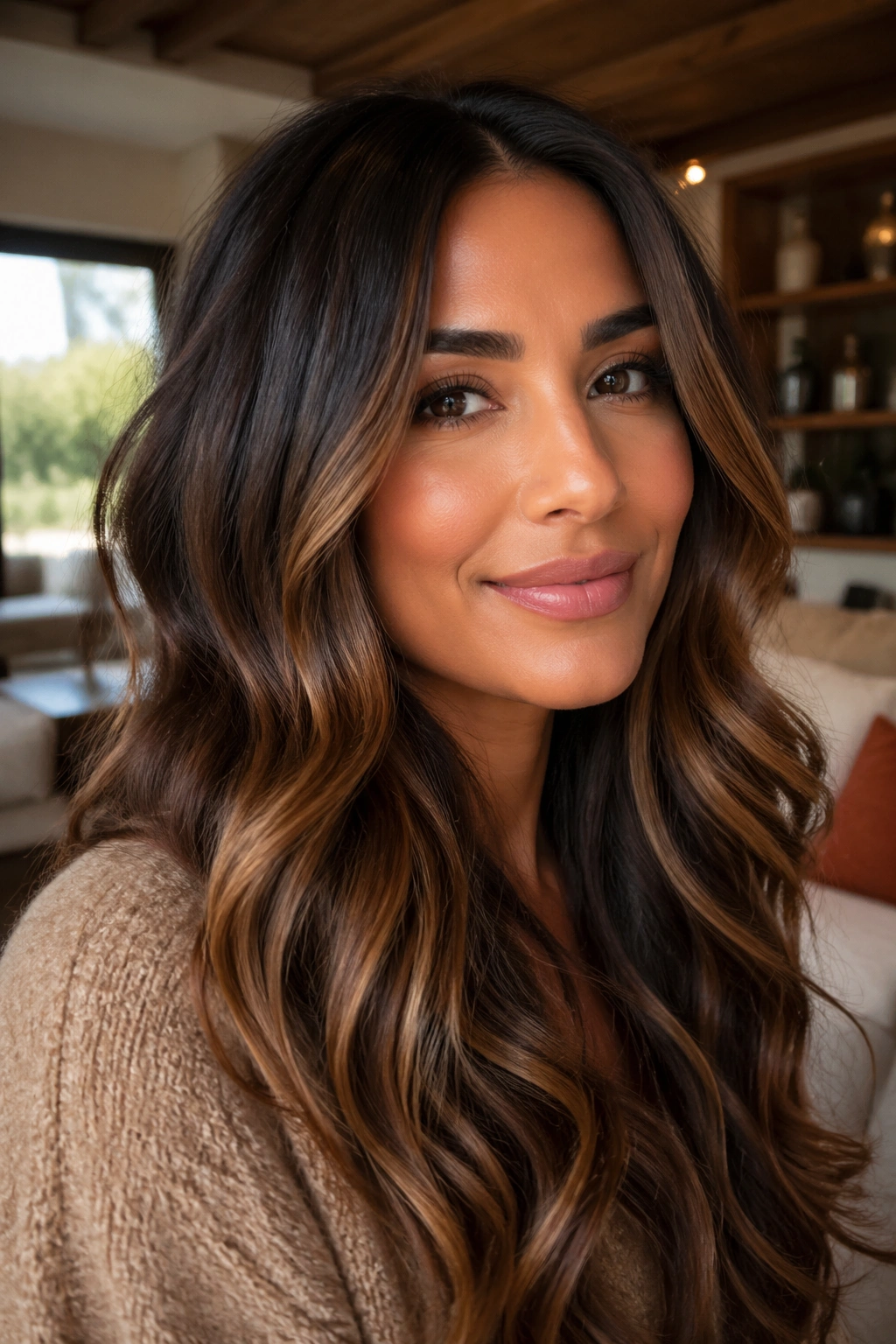
Want warmth without looking coppery? Chestnut brown balayage is the easy answer. It keeps the base deep enough to feel grounded, then threads in chestnut ribbons that show movement when you turn your head. On warm skin, that mix tends to look expensive in a very low-key way.
How to Wear It
Chestnut balayage works best when the lighter pieces sit around the face and through the mid-lengths. That gives the skin a small lift near the cheekbones without turning the whole head light.
- Keep the base around level 4 or 5.
- Place the lighter chestnut pieces 1 to 2 inches away from the roots.
- Add soft waves to show the color change.
- Ask for a blended finish, not chunky stripes.
The best part is the grow-out. It stays forgiving for months, and the color shifts a little instead of looking harsh.
4. Cinnamon Brown Melt
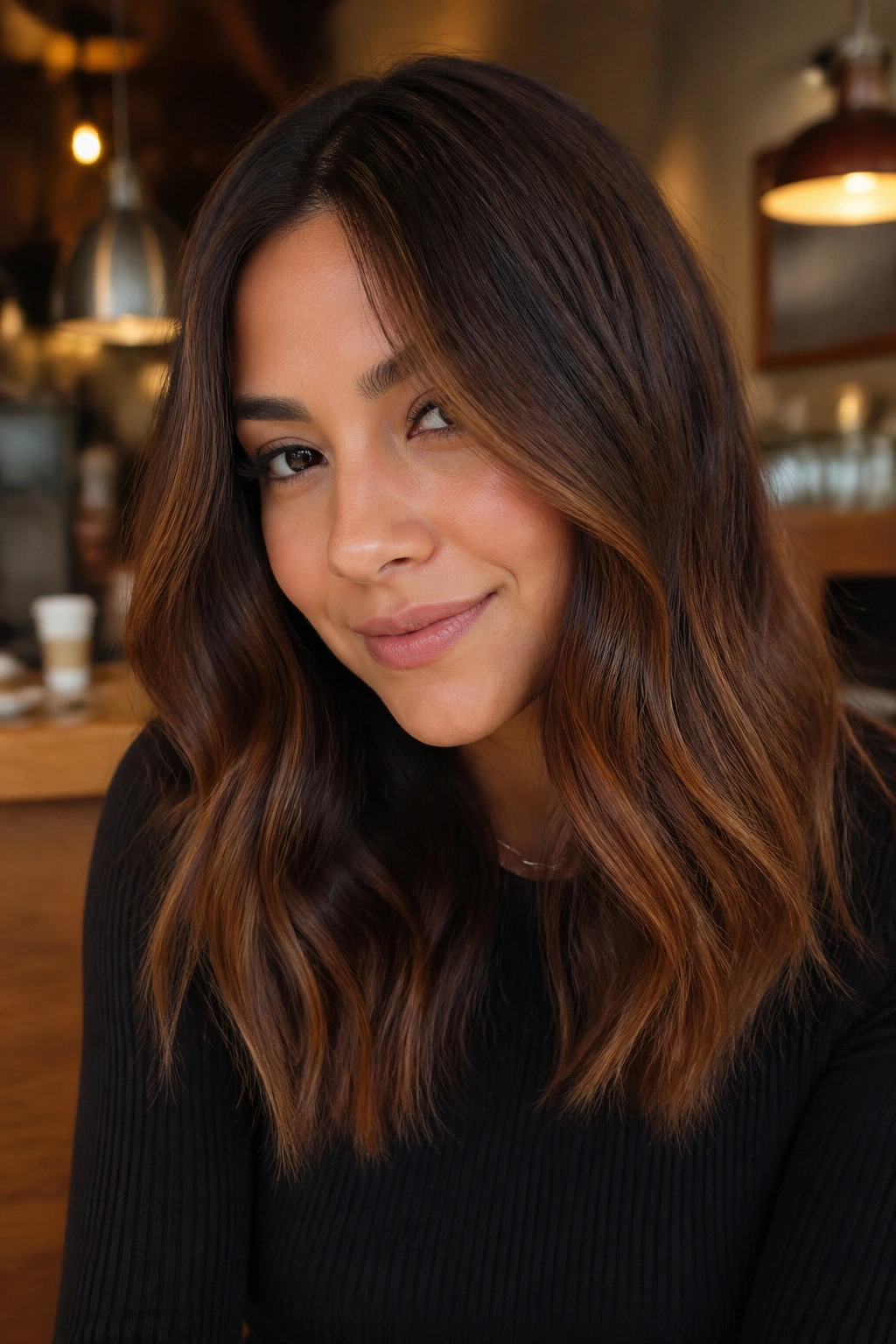
A cinnamon brown melt is what I’d pick for someone who wants warmth but doesn’t want to look red under every lamp. The base stays brown, then the cinnamon tones appear as a warm overlay through the mid-lengths and ends. It’s subtle, but it changes the whole mood.
Imagine hair that looks a touch spiced rather than dyed. That’s the sweet spot. Warm skin handles cinnamon especially well because the shade echoes the same red-gold notes already sitting in the complexion.
- Start with a deep brown base.
- Sweep cinnamon tones through the lower half of the hair.
- Keep the root area darker for dimension.
- Refresh with a gloss every 5 to 7 weeks.
One warning: too much orange ruins the whole thing. Cinnamon should feel warm, not traffic-cone bright.
5. Mocha Brown with Caramel Ribbons
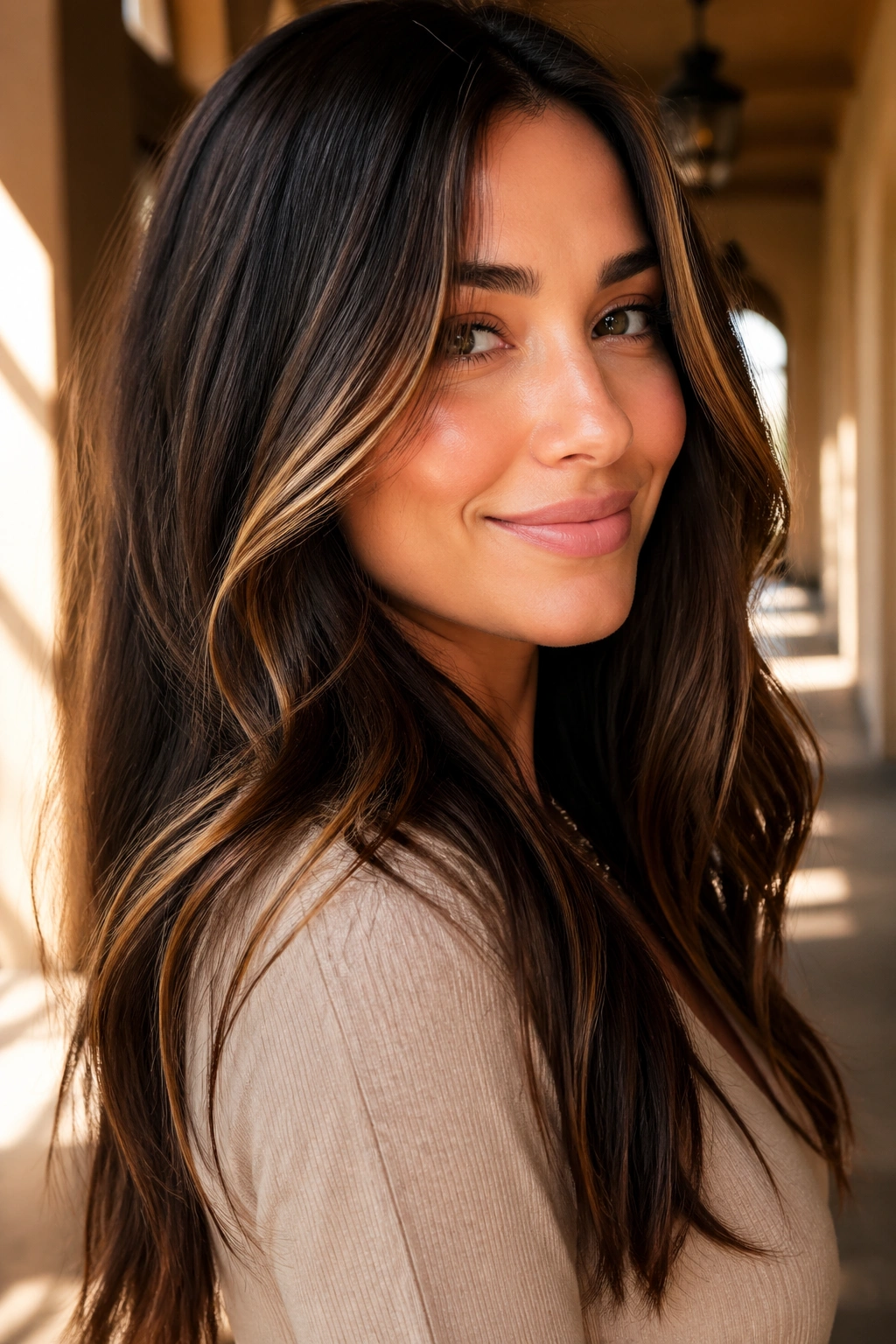
Mocha brown with caramel ribbons is the kind of brunette color that makes people keep looking twice. The base stays cool enough to feel deep, but the caramel lines bring enough warmth to flatter golden or peachy skin without making the hair look striped. It’s a classic for a reason.
The ribbons matter more than the base. Thin, well-placed caramel pieces around the face and through the outer layers catch light in a way that softens strong features. If the strands are too chunky, the look gets busy fast. If they’re too fine, you barely see the point.
This shade is especially good on layered cuts, because the movement helps the caramel show up naturally. On straight hair, it reads more tailored; on waves, it feels softer and more lived-in. Either way, the color wants shine. A dull mocha loses its charm fast.
6. Mahogany Brown Gloss
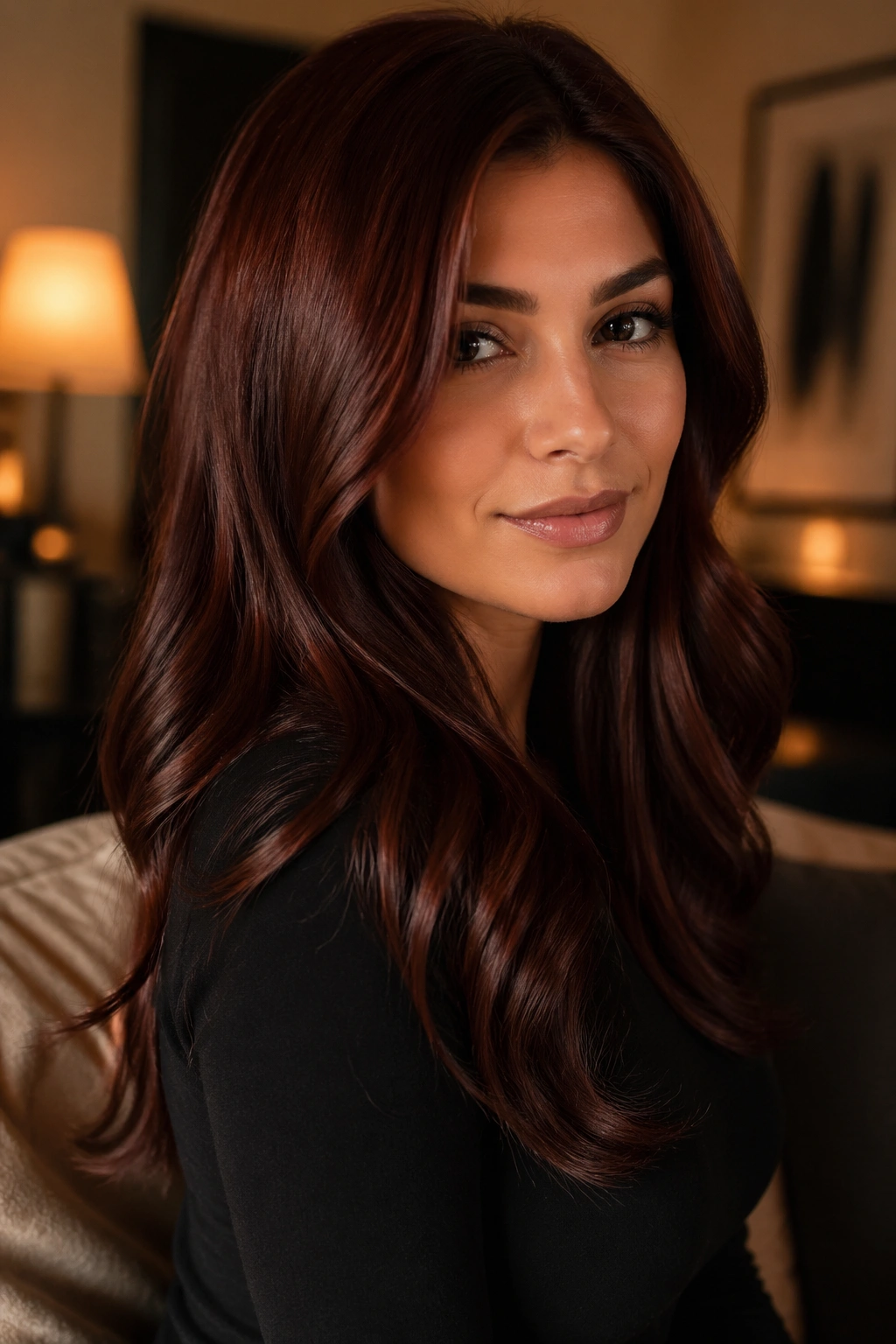
Mahogany brown is not auburn’s louder cousin. It’s deeper, slower, and a little more polished. On warm skin, that matters. The red in mahogany gives the complexion life, but the brown keeps it from drifting too bright or too fiery.
If you like richer makeup shades—berry lipsticks, bronze blush, coffee liner—mahogany fits that whole look without fighting it. It also suits darker eyes beautifully, especially brown and hazel. A gloss finish helps, because mahogany can look flat if the surface goes matte for too long.
This shade is a smart pick for someone who wants warmth that feels grown-up. Not sugary. Not bright. Just rich and saturated. Ask for a brown base with a mahogany glaze rather than a full red dye job, and you’ll get the depth without the costume effect.
7. Warm Walnut Brown for Warm Skin
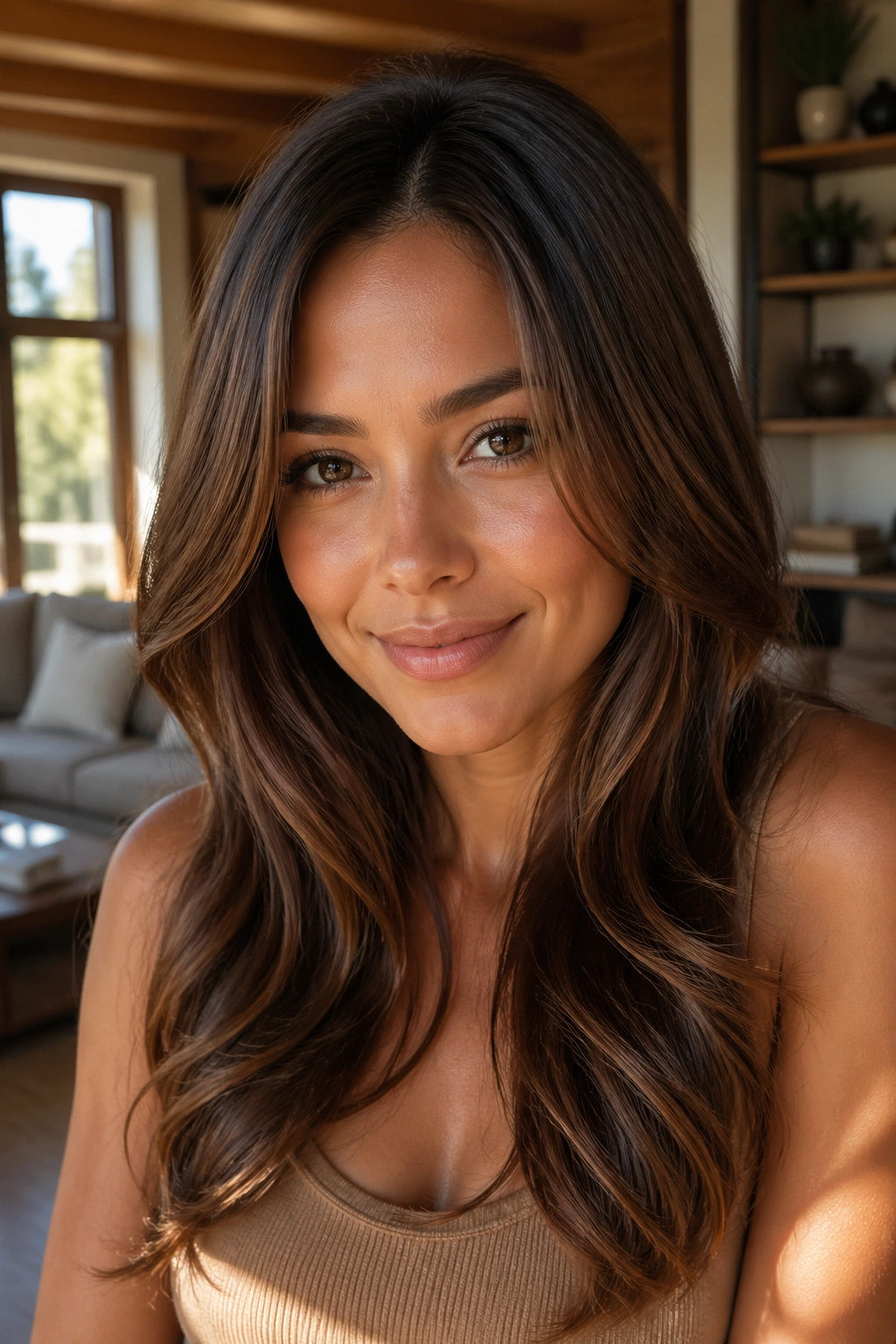
Warm walnut brown has that soft, nutty tone that sits somewhere between chestnut and mocha. It doesn’t shout. It just makes warm skin look calmer and more even. That quiet quality is why I like it on people who want depth without a lot of maintenance drama.
The Tone Sweet Spot
Walnut works because it carries a small amount of gold without tipping into brass. The finish stays natural, and the shade can look slightly different depending on whether your hair is straight, wavy, or curly.
- Best on level 4 to 5 hair.
- Ask for low red reflect and a soft golden tone.
- Great with layered cuts and shoulder-length styles.
- Needs a gloss every 6 to 8 weeks if you want the tone to stay warm.
Pro tip: Walnut brown looks better when the ends aren’t too light. Keep the contrast gentle or the color starts feeling patchy.
8. Maple Brown with Face-Framing Pieces
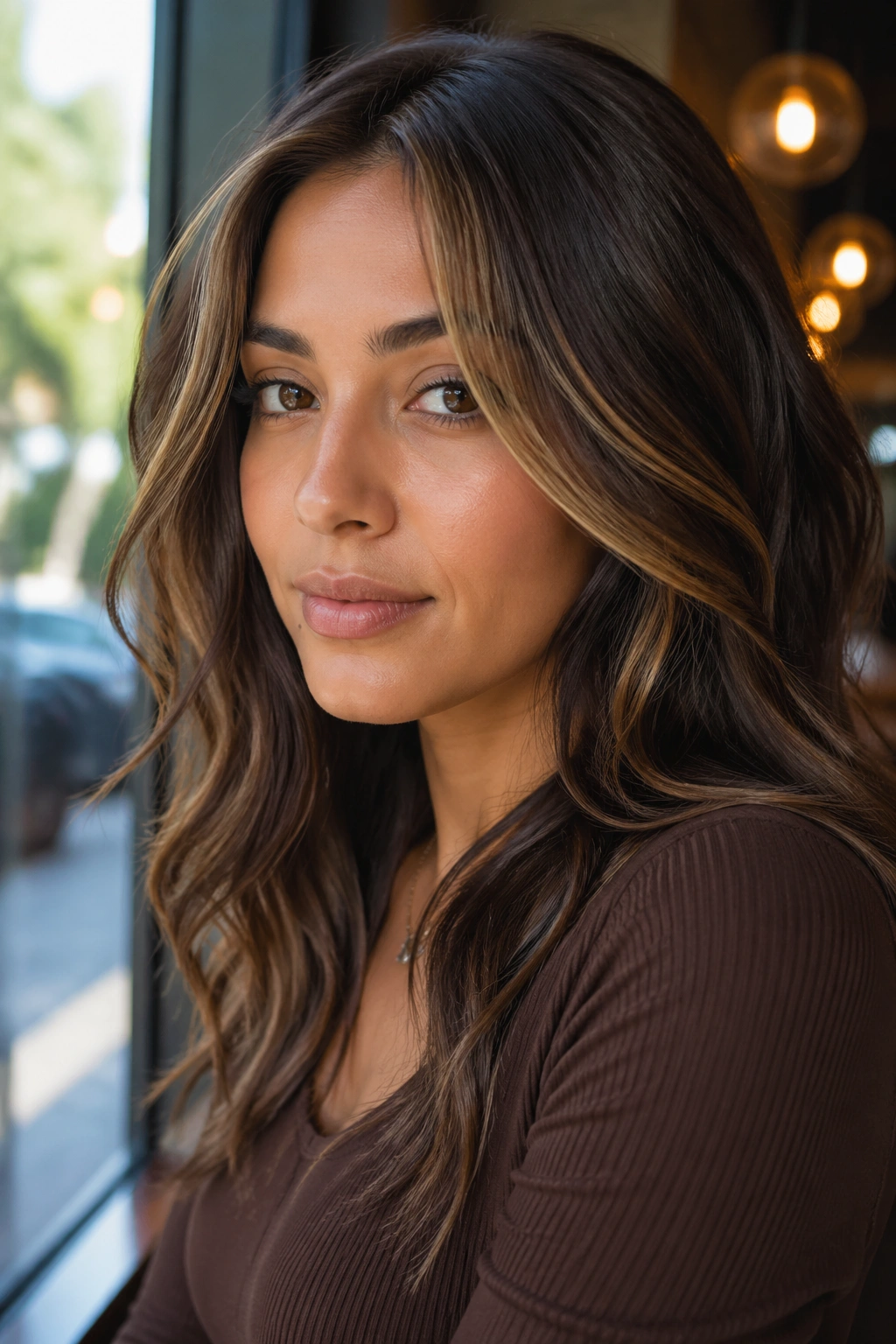
Face-framing maple pieces can change the whole look in one appointment. The base stays a grounded brown, then the maple tone shows up right where the hair hits the forehead, cheeks, and jaw. That little bit of brightness is enough to wake up warm skin without pushing the hair into blonde territory.
The smartest version uses only a few pieces, not a full highlight job. Ask for strands that are one shade lighter than the base, maybe two at most, and keep them soft around the front hairline. That way the lift feels intentional instead of streaky.
This shade works especially well if your haircut has movement. Curtain bangs, long layers, and loose curls all help the maple pieces show up. Straight hair can wear it too, but the contrast is more obvious there. Sometimes that’s the point. Sometimes it is not.
9. Toffee Brunette
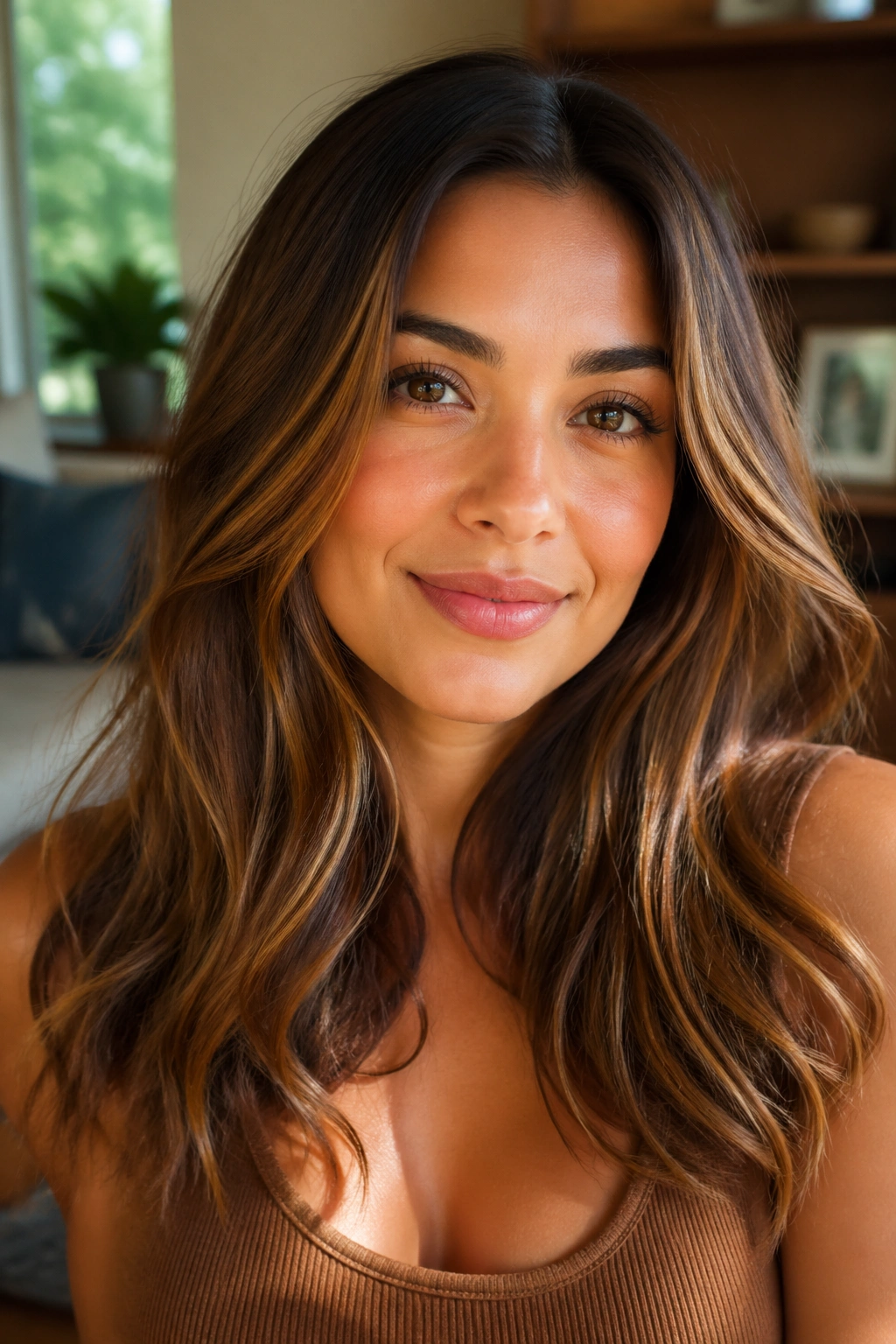
Why does toffee brunette look so soft on warm skin? Because it lives in that middle place between brown and gold, where the tone brightens the face without making the hair look light. It’s one of the easiest ways to add warmth when you want a brunette shade that still feels gentle.
How to Get the Tone Right
Toffee can go too yellow if the formula is off, so the goal is a golden-brown base, not a pale beige one. Ask your colorist to keep the roots a little deeper and let the lighter warmth appear through the mid-lengths and ends.
A few thin lowlights can help too. They stop the color from reading one-note.
The shade is especially flattering if you wear soft peach blush, warm nude lipstick, or gold jewelry. It all connects. And if your hair grows fast, toffee is forgiving because the root shadow helps the color age well between appointments.
10. Copper-Infused Brown
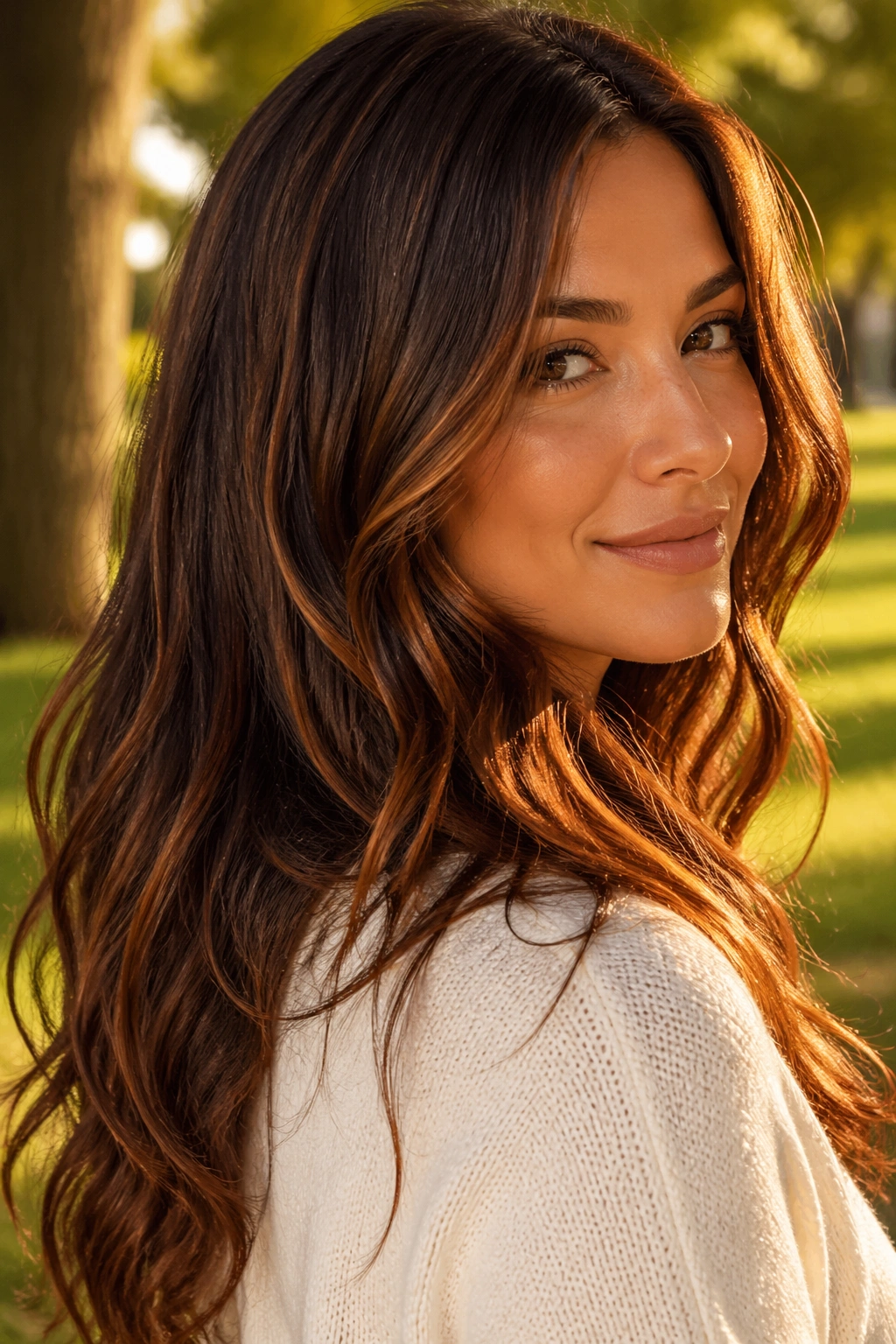
Copper-infused brown is for the person who likes warmth but wants to keep one foot in brunette territory. A full copper shade can feel loud on some people. Copper inside a brown base feels smarter. More wearable. Less costume, more hair.
I’ve always liked this on layered cuts or shoulder-length waves, where the copper catches on the bends of the hair instead of sitting in one flat sheet. The result is movement. Not chaos, just movement.
- Keep the base around level 4 or 5.
- Let copper live mostly in the mid-lengths and ends.
- Use a gloss refresh every 4 to 6 weeks.
- Avoid too much orange at the roots.
Watch out for this: if the copper turns bright under indoor lighting, the formula is too strong. You want a brown that warms up, not one that starts glowing.
11. Bronze Brown Balayage
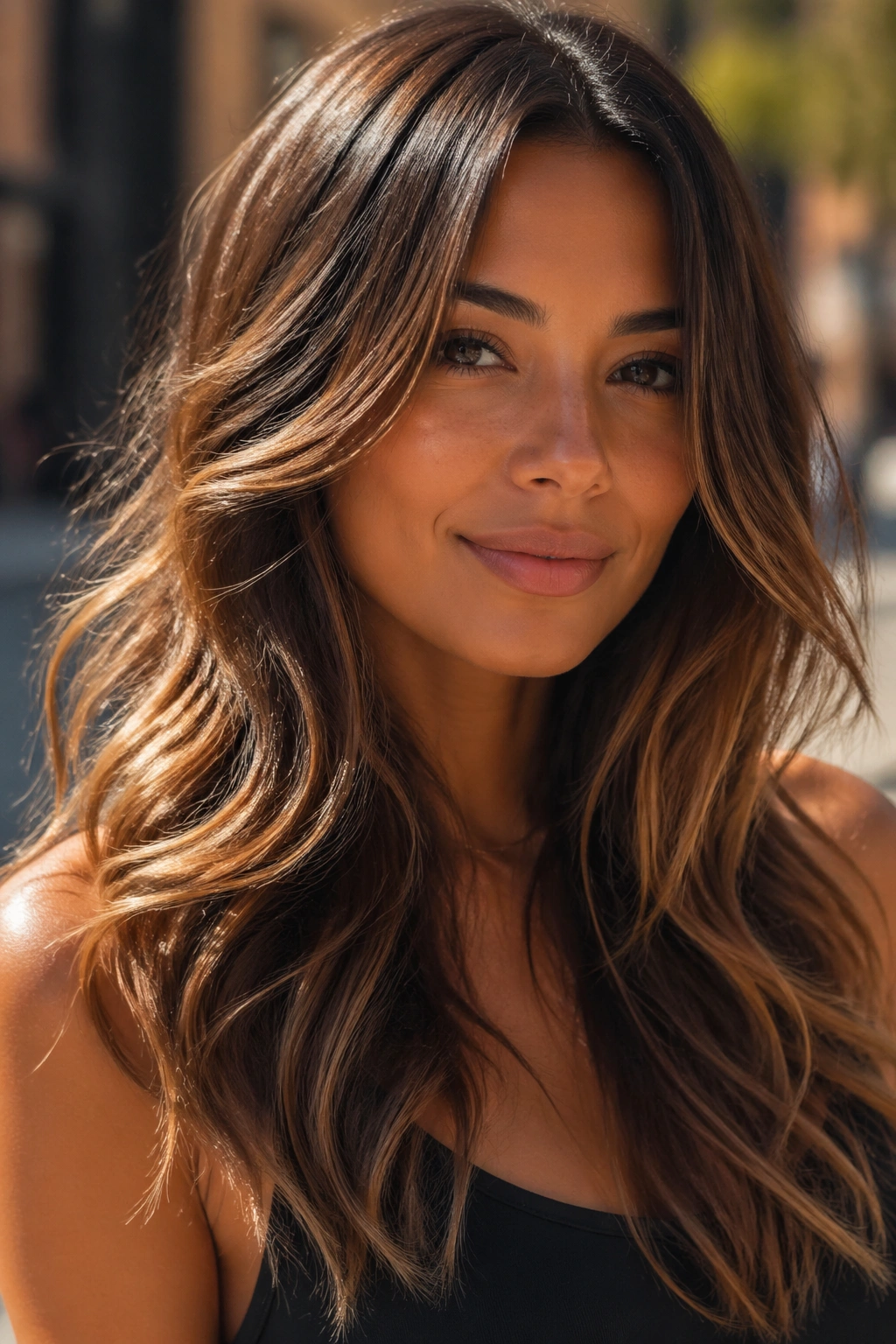
Bronze brown balayage works because bronze is one of the few tones that can feel warm without becoming flat. It mixes gold, brown, and a tiny hint of amber, which gives warm skin a lift that doesn’t look painted on. In sunlight, it has a soft burnished look. Indoors, it still reads rich.
A balayage placement keeps the bronze from taking over the whole head. That matters. Too much bronze can start to look brassy, and brass is not the same thing as warmth. The difference is subtle on paper and obvious in the mirror.
This shade loves waves, but it can also look gorgeous on straight hair if the slices are thin. A clean blowout shows the contrast at the ends. A rough dry can hide it. That’s the trade-off. You get more dimension, but you do need some styling to make it sing.
12. Cocoa Brown with Honey Ends
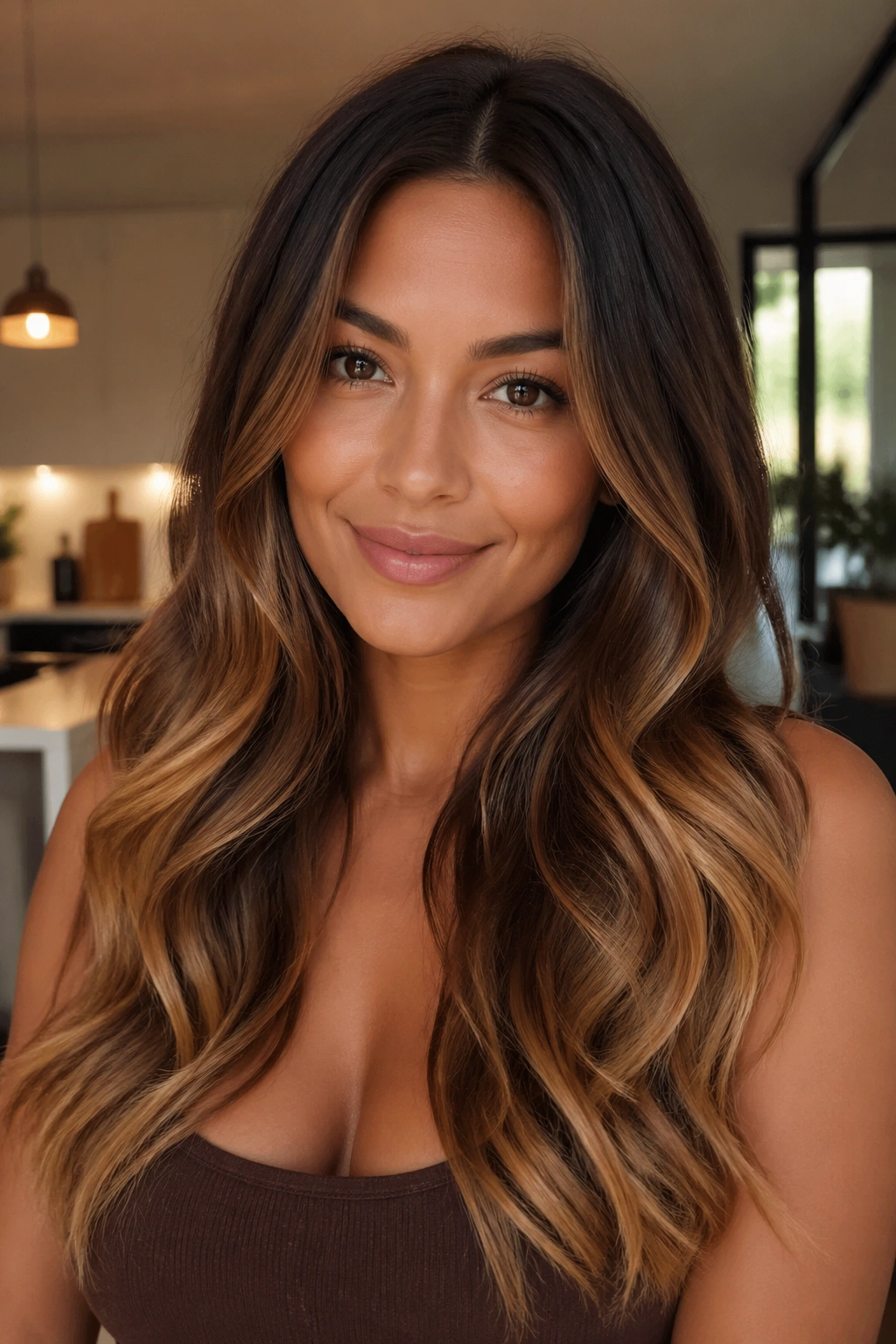
Cocoa brown with honey ends is a softer take on lightened brunette color, and that softness is what makes it work so well on warm skin. The deep cocoa base gives structure, while the honey at the ends adds just enough light to keep the face from feeling heavy.
Unlike a full honey blonde, this shade keeps the depth at the roots and through the crown. That means less harsh regrowth and less pressure to keep the whole color perfect. It also tends to suit people with thick hair, because the darker top half keeps the cut from looking fluffy or dry.
Ask for the honey to stay concentrated on the lower third of the hair. That keeps the effect clean. A glossy finish helps a lot here, too. Honey tones can go dull if the hair loses shine, and then the whole shade gets sleepy.
13. Amber Brown
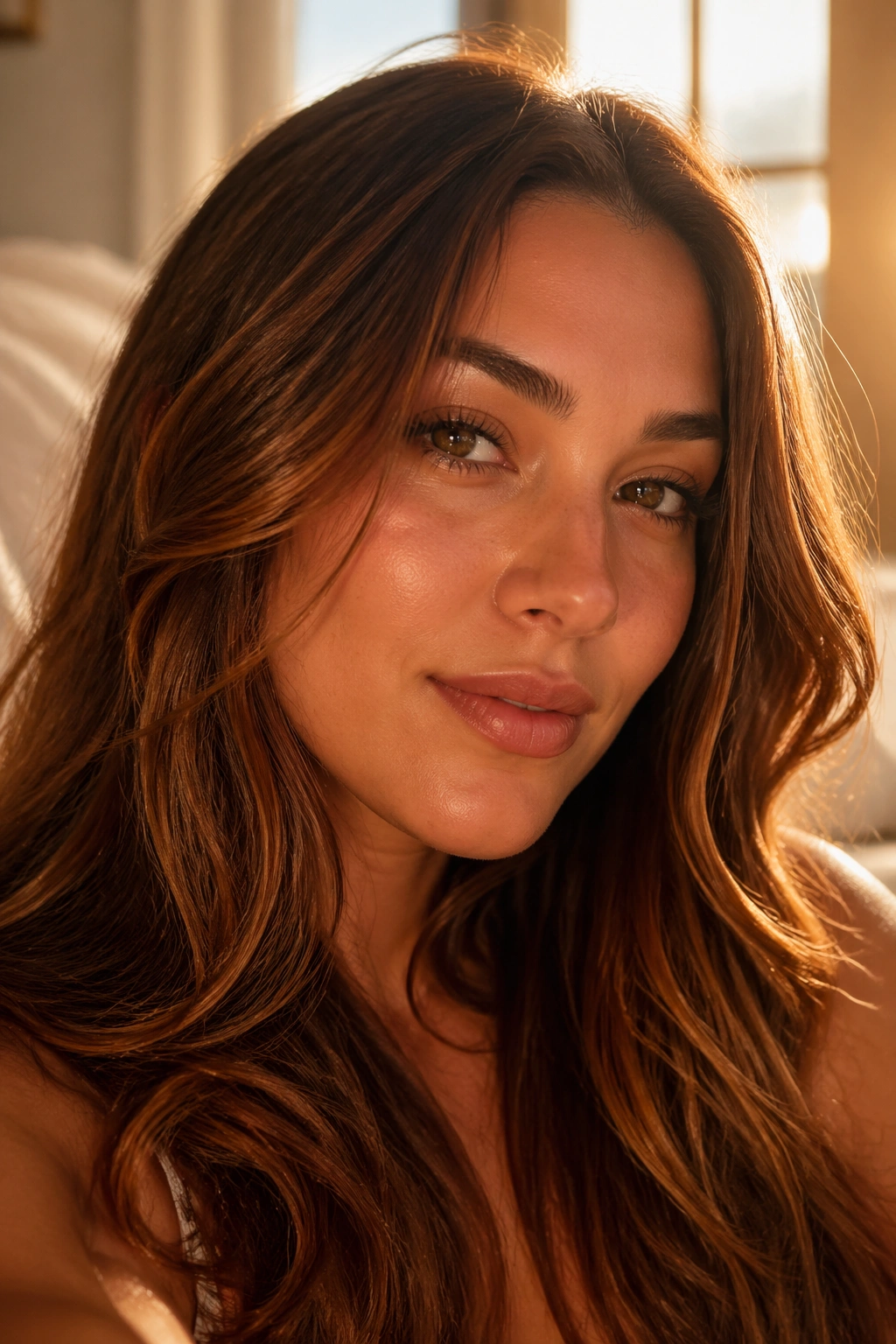
Amber brown is brighter than most dark brunettes, but it still stays in brunette territory. That’s why it flatters warm skin so well. The amber note brings out freckles, peach blush, and golden undertones without pushing the hair into full red.
Why It Flatters Warm Skin
Amber has a luminous quality that a plain brown doesn’t. It gives the hair a little glow, especially when it’s cut in layers or worn with a slight bend. On warm skin, that glow feels connected rather than competing.
- Works best at level 5 brown with amber gloss.
- Keep highlights fine and scattered, not chunky.
- Looks especially good with soft waves or a round-brush blowout.
- Refresh the tone every 6 weeks if you want the amber to stay vivid.
Tip: If your wardrobe leans earthy—olive, cream, rust, camel—amber brown will slot in without a fight.
14. Hazelnut Brown Dimension
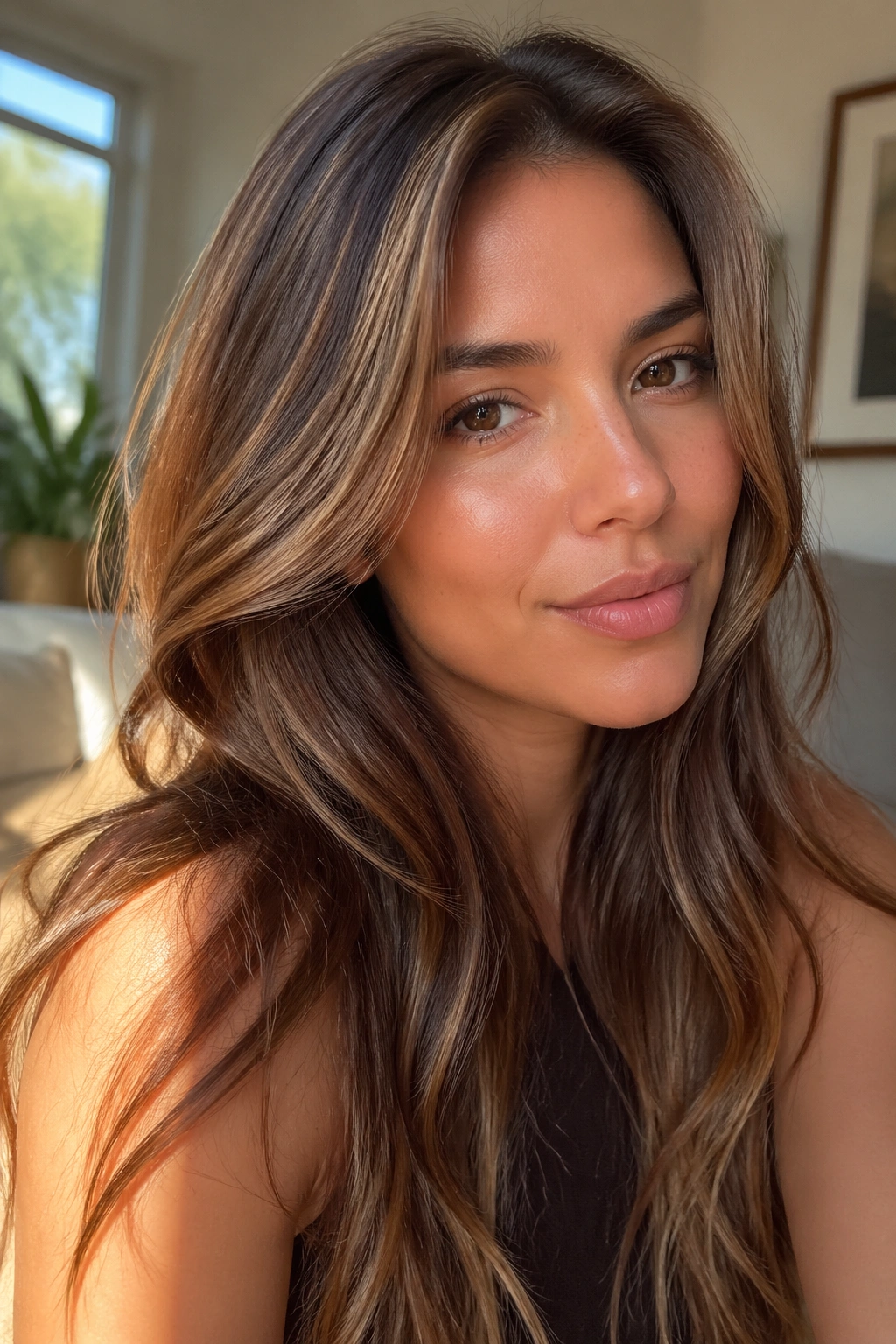
Hazelnut brown is one of the easiest warm brunette shades to live with. It’s soft, dimensional, and never tries too hard. On warm skin, the mix of brown and golden-beige reflects keeps the face bright without making the color look brassy.
The reason it works is simple: hazelnut doesn’t sit in one flat tone. It has enough variation that the hair still looks alive even when you skip heavy styling. That matters if you air-dry a lot or wear your hair up half the time.
I’d choose this shade for anyone who wants a color that looks good on a messy morning and still holds up at night. Add a few lowlights if your hair is very dense. They stop the whole thing from looking sandy. Not all warmth needs to be loud.
15. Auburn Brown Shine
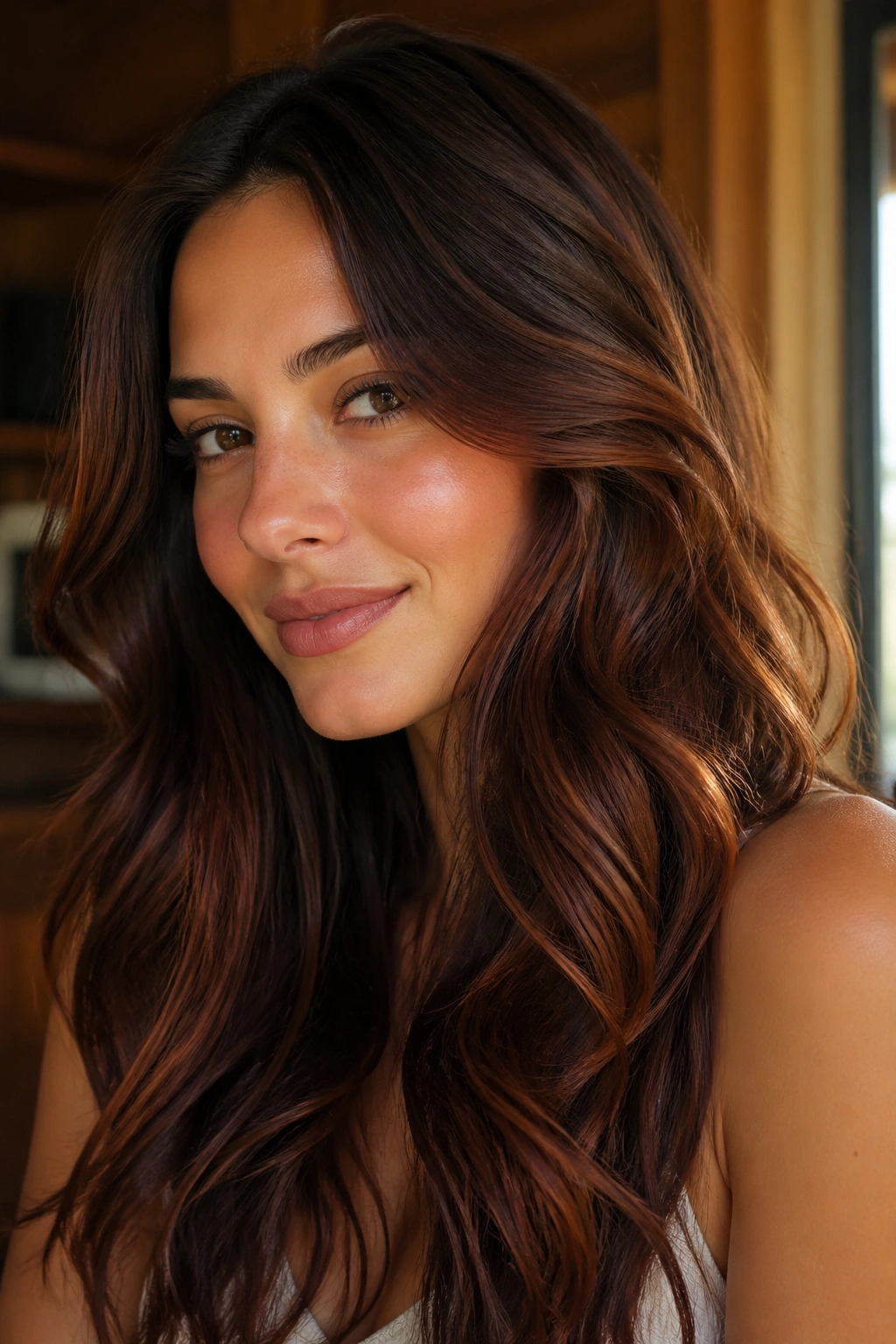
Can auburn brown look understated? Absolutely. Keep the base brown and let the auburn live in the shine, not the whole head, and the color becomes rich instead of fiery. On warm skin, that little bit of red-brown reflect can be stunning, especially if your eyes already have some gold or hazel in them.
How to Wear It Without Going Too Red
The best auburn brown starts with a brunette base around level 4 or 5. Then the red is layered on top as a gloss or glaze, not baked into every strand.
- Ask for brown first, auburn second.
- Keep the red tone deeper and wine-like, not bright orange.
- Wear it with soft waves to show the shine.
- Use color-safe shampoo so the red doesn’t vanish too fast.
Auburn brown is a strong choice, but it does not need to be loud. If anything, the best versions are the quiet ones.
16. Latte Brown Melt
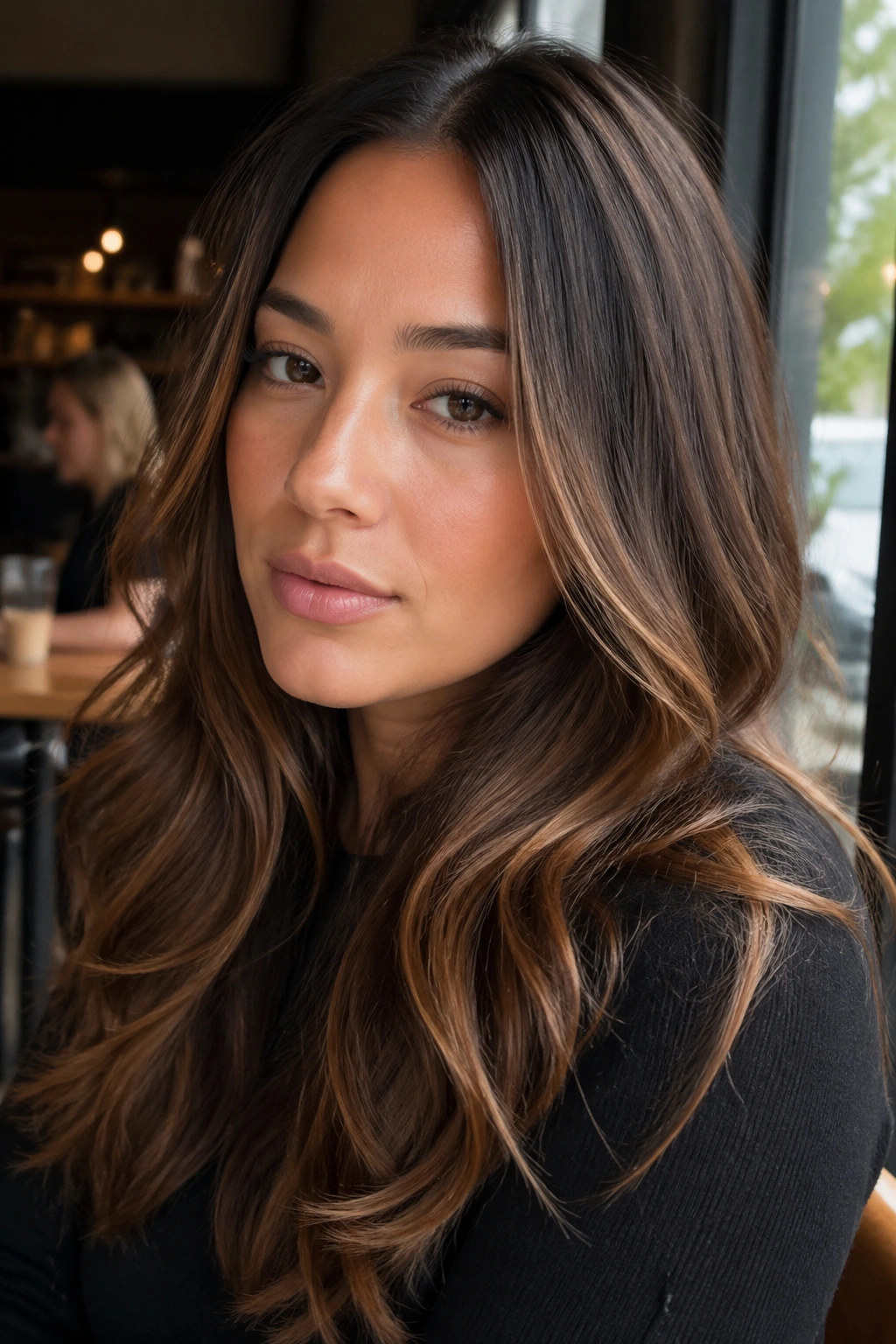
Latte brown is for the person who wants softness around the face and depth underneath. The shade blends creamy brown notes through a darker base, so the overall effect feels gentle instead of high-contrast. On warm skin, that creamy warmth can look incredibly flattering.
Picture a brunette that’s been lightened just enough to soften the edges. That’s latte brown. Not blonde. Not caramel overload. Just a smooth melt from darker roots into warmer ends. It works especially well if your hair is medium texture, because the color change becomes visible without needing a ton of styling.
- Keep the root area one or two levels deeper.
- Put the lighter tones around the hairline and ends.
- Ask for a soft melt, not a stripey highlight pattern.
- Best on cuts with movement below the chin.
The best latte brown has a creamy finish, not a chalky one. That’s the difference between polished and flat.
17. Caramel-Drizzled Dark Brown
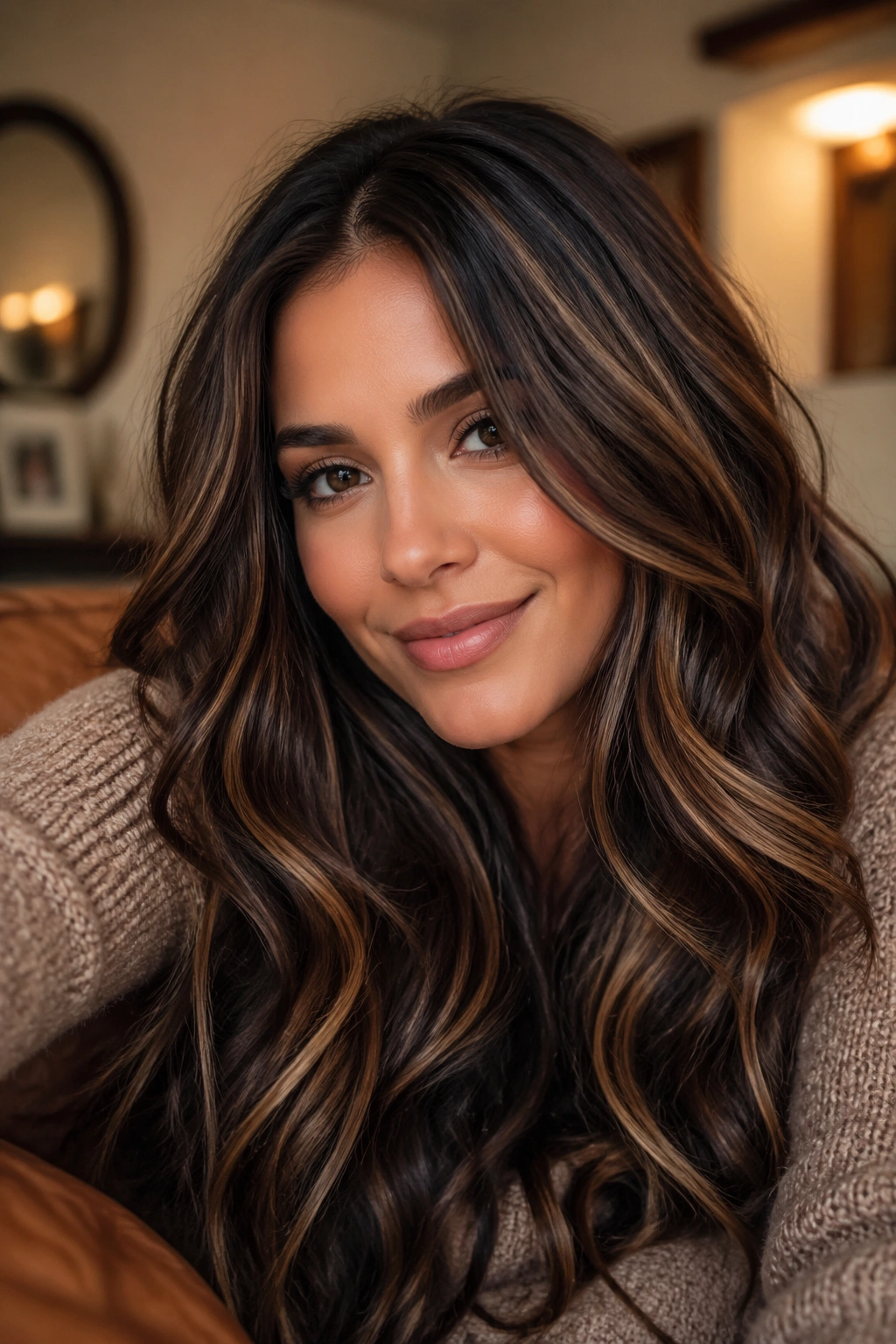
Caramel-drizzled dark brown is one of those shades that does a lot without looking busy. The dark base gives you depth, then the caramel appears in thin, deliberate pieces that sit on top like a glaze. Warm skin likes that contrast because it brightens the face without forcing the color into the blonde zone.
It looks especially good on curls and soft bends, where the caramel catches at different points instead of reading as one block. On straight hair, the contrast feels sharper, which can be lovely if you want something a little more defined. Either way, the caramel should be placed with restraint. Too much and the whole head starts to look striped.
This is also a strong choice if you want visible color but don’t want to live at the salon. The base grows out nicely, and the caramel can be refreshed with a few face-framing pieces instead of a full repaint every time.
18. Toasted Almond Brown for Warm Skin
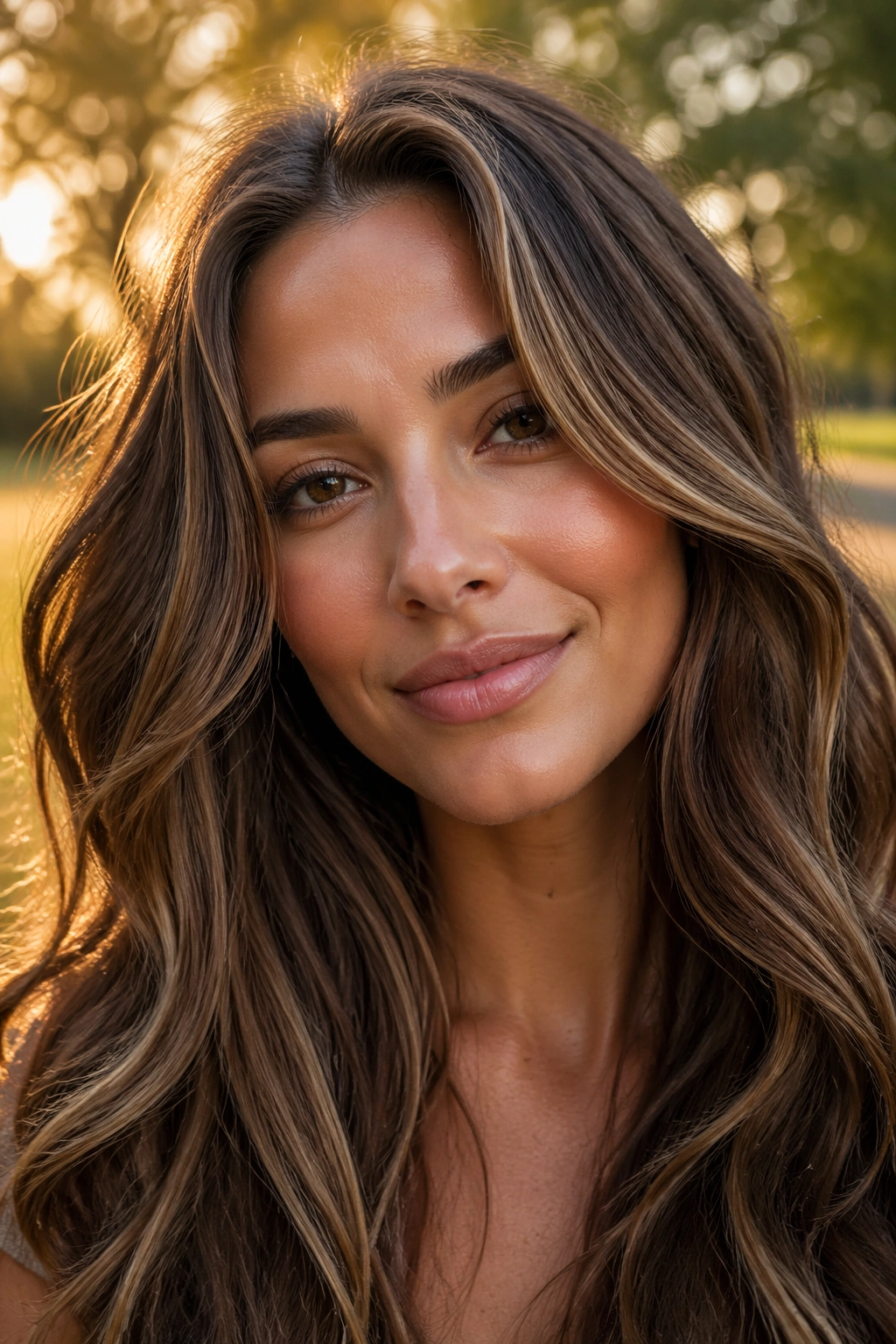
Toasted almond brown sits close to neutral, but that tiny toast of gold is what makes it sing on warm skin. It’s softer than full caramel and lighter than cocoa, which gives it a nice middle ground. If you want a brunette shade that feels airy without losing depth, this is a smart pick.
Unlike a flat neutral brown, toasted almond has gentle brightness baked in. That means it doesn’t disappear in indoor light, and it doesn’t fight with warm undertones. It also plays nicely with lighter eyes, especially green and hazel, because the warm reflect gives the iris a little extra lift.
I’d recommend it to someone who wears a lot of minimalist makeup. The color has enough interest on its own. Keep the finish soft and glossy, and don’t over-lighten the ends. The beauty of toasted almond is that it still feels like brown hair, just with the edges smoothed out.
19. Sandalwood Brown
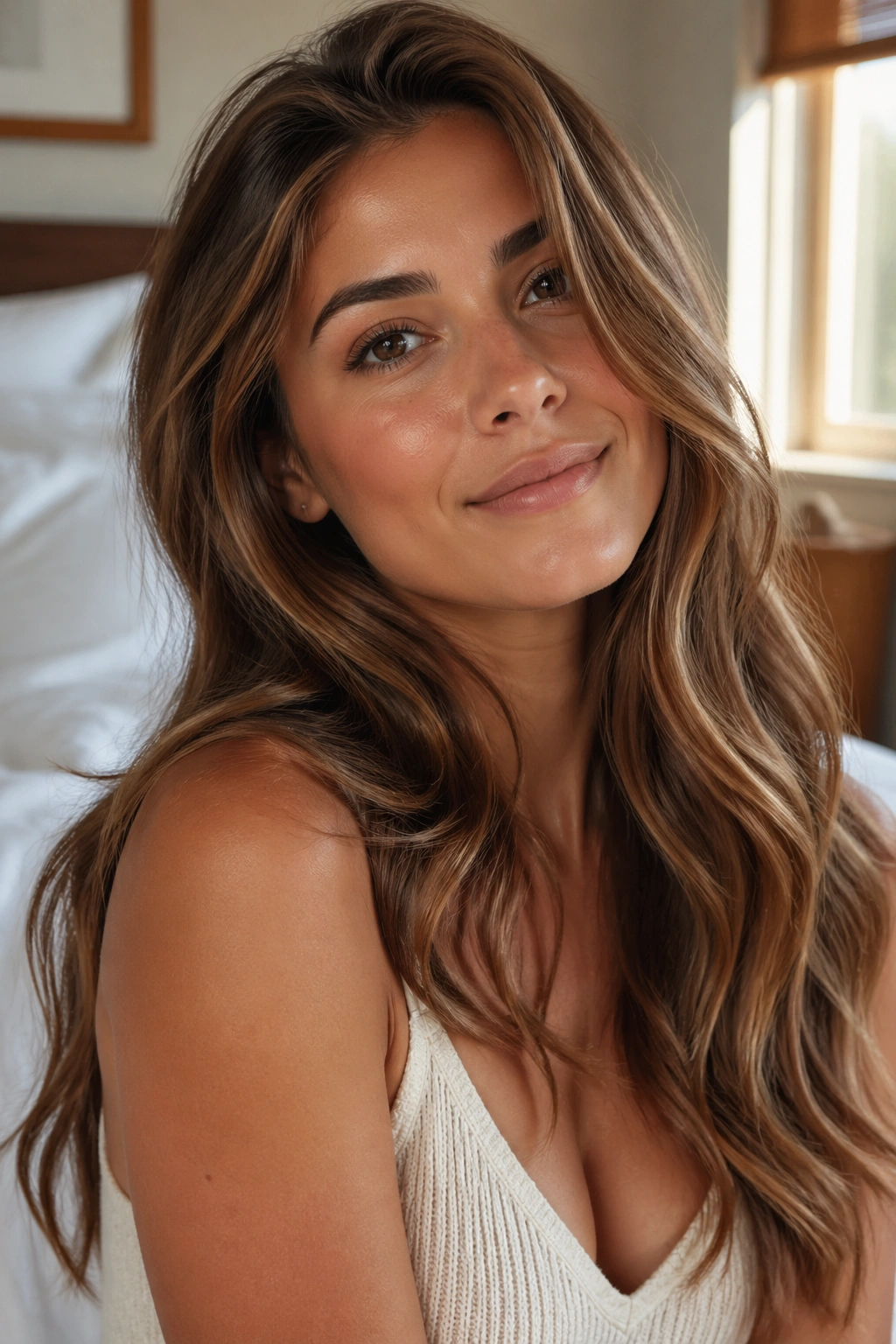
Sandalwood brown has a grounded, earthy feel that makes it perfect for warm skin that doesn’t want flashy contrast. The tone leans soft and slightly smoky, but it still carries enough warmth to avoid that dull, flat brunette look. It reminds me of polished wood, not paint.
Why It Flatters Warm Skin
The color works because it blends brown with a faint golden-beige cast. That keeps the face looking even and calm. If your skin leans golden or olive, sandalwood can be especially kind, since it doesn’t fight the undertone.
- Keep the shade around level 4 to 5.
- Use thin, diffused highlights instead of bold streaks.
- Pair it with soft layers so the color doesn’t sit heavy.
- Schedule a gloss every 6 to 8 weeks if you want the warmth to stay visible.
Small note: sandalwood brown looks best when the hair has movement. A stiff cut can make it feel heavier than it really is.
20. Redwood Brown Notes
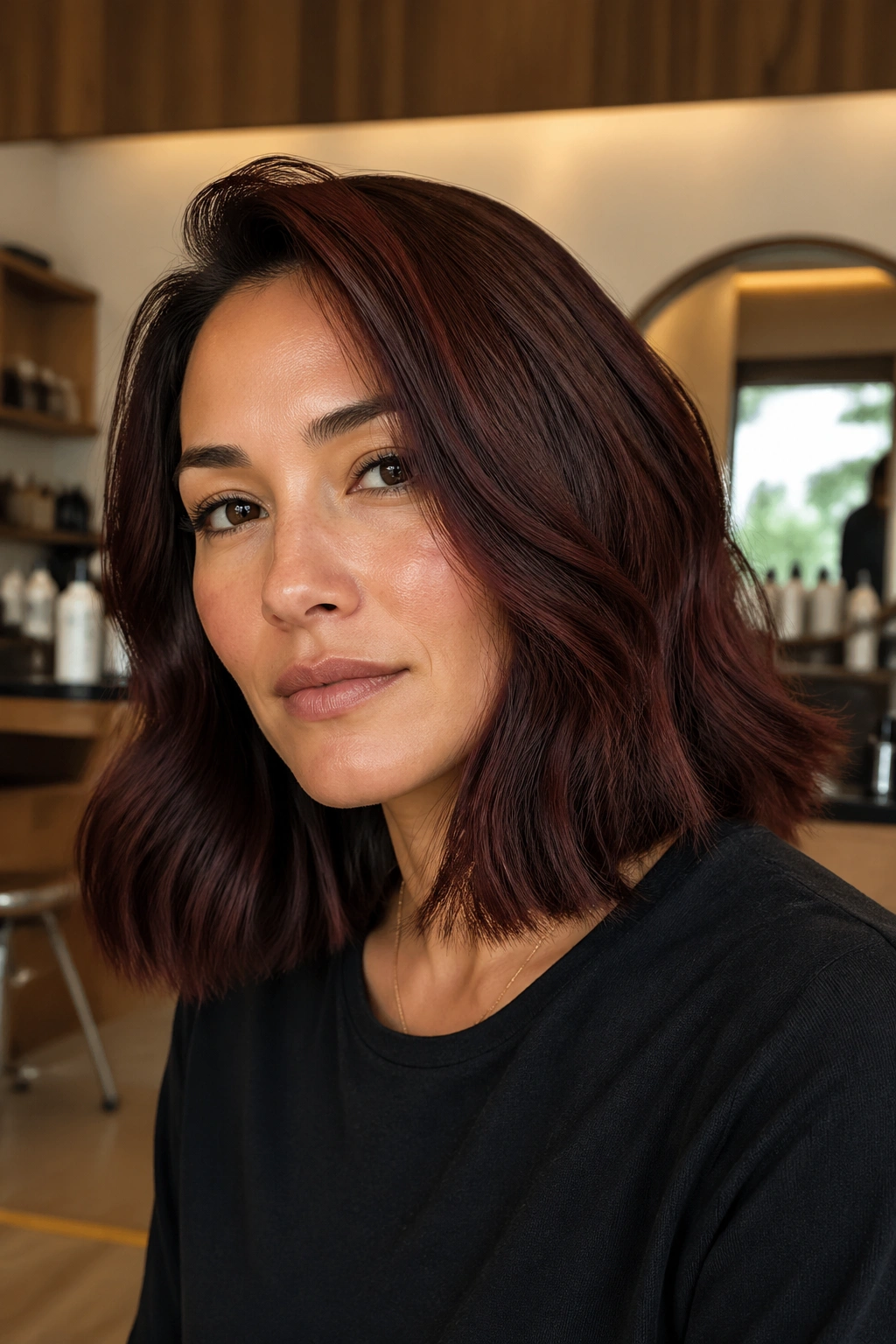
Redwood brown is for someone who wants warmth with backbone. It has more presence than chestnut and more depth than copper, so it lands in a very flattering middle zone for warm skin. The red note is there, but it stays deep and mature instead of bright.
That depth makes a difference. On warm skin, redwood brown can make the complexion look richer without overwhelming it. It’s a strong shade for thick hair too, because the color seems to travel through the strands instead of sitting on the surface.
I like this shade with a blunt cut or a sharp shoulder-length bob. The color already has personality, so the haircut can stay clean. If you want it to read more subtle, keep the red concentrated in a glaze and let the base remain dark brown. Easy fix. Big payoff.
21. Dark Maple Brunette
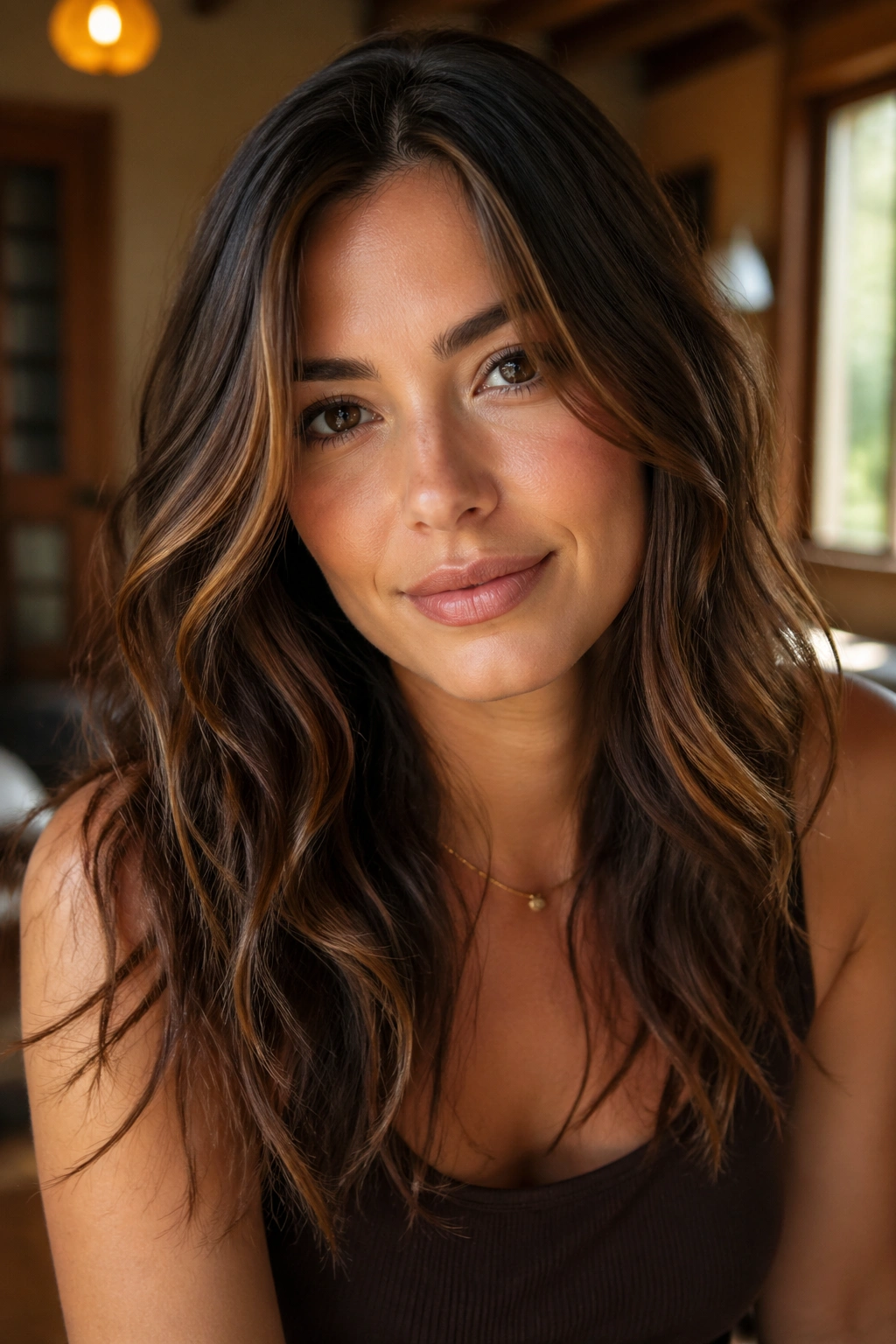
Dark maple brunette sits between maple brown and chestnut, but it has a deeper edge that gives it more shape. If you’ve ever wanted a warm brunette shade that doesn’t drift too light, this one is worth a look. Warm skin usually handles it well because the maple note keeps the face from going flat.
How to Wear It
This shade likes texture. Waves, bends, and layered cuts show the maple tone better than pin-straight hair does. If your hair is naturally wavy, you get a little help for free.
- Ask for a deep brown base with soft maple accents.
- Keep the lighter pieces around the face and on the outer layers.
- Don’t over-brighten the ends.
- Use a shine spray or gloss so the maple reflect stays visible.
Dark maple brunette is a nice choice when you want warmth that still feels grounded. It’s not loud. It just keeps the whole look alive.
22. Cinnamon Mocha Balayage
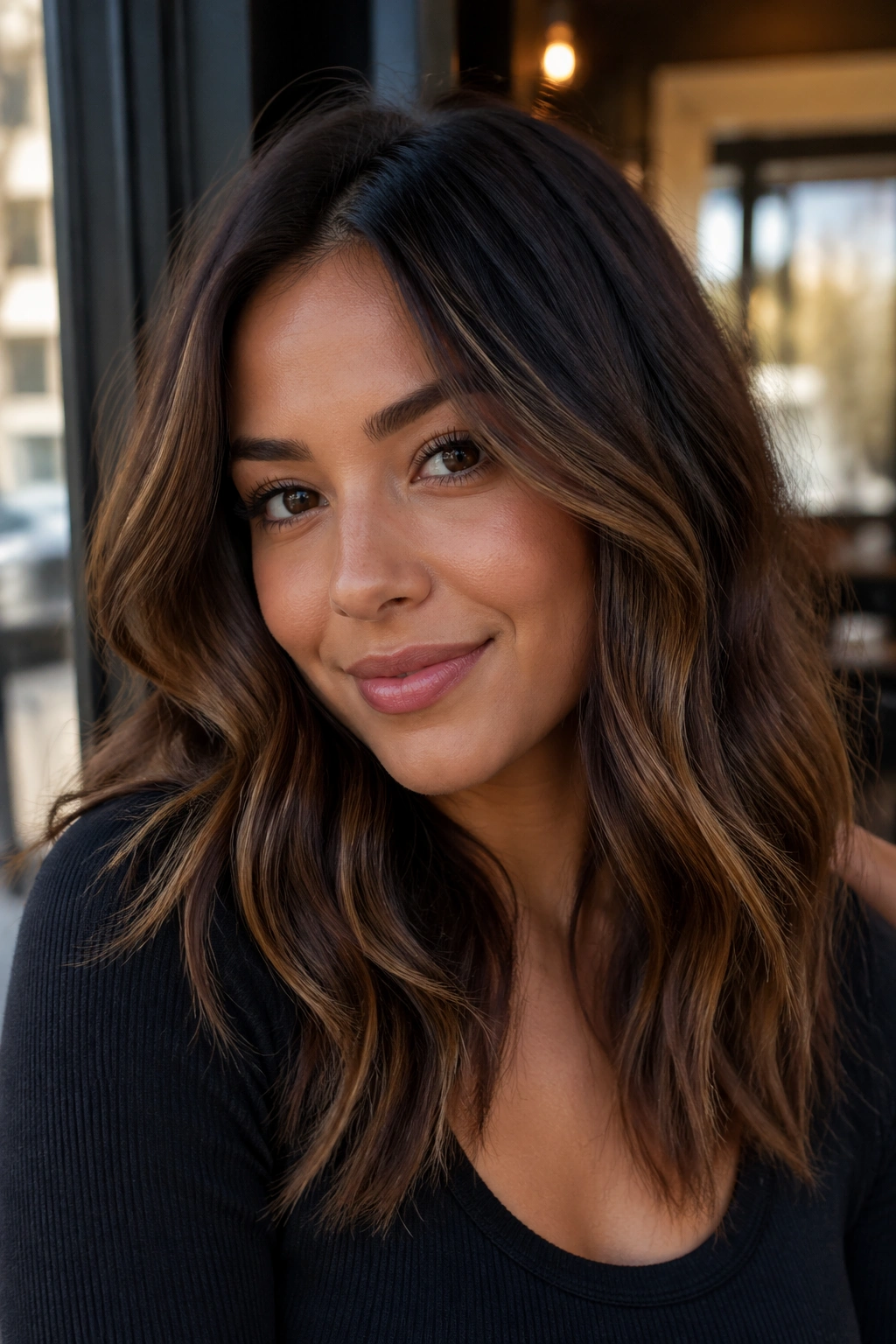
Cinnamon mocha balayage is the shade I picture on someone who wants brunette depth but keeps getting tempted by warm highlights. The mocha base holds everything together, while the cinnamon balayage pieces add a spiced lift through the mid-lengths and ends. Warm skin tends to love the combo because both tones belong to the same color family.
The placement matters more than the color name. Cinnamon should not be sprayed everywhere. It should sit in soft ribbons, usually starting below the cheekbone and fading downward. That keeps the color dimensional instead of busy.
- Start with a mocha brown base.
- Add cinnamon pieces away from the scalp.
- Keep the front brighter than the back.
- Choose a soft, blended finish over harsh contrast.
The result is warm, rich, and easy to wear. Not precious. Not overworked. That’s the appeal.
23. Sable Brown with Golden Lights
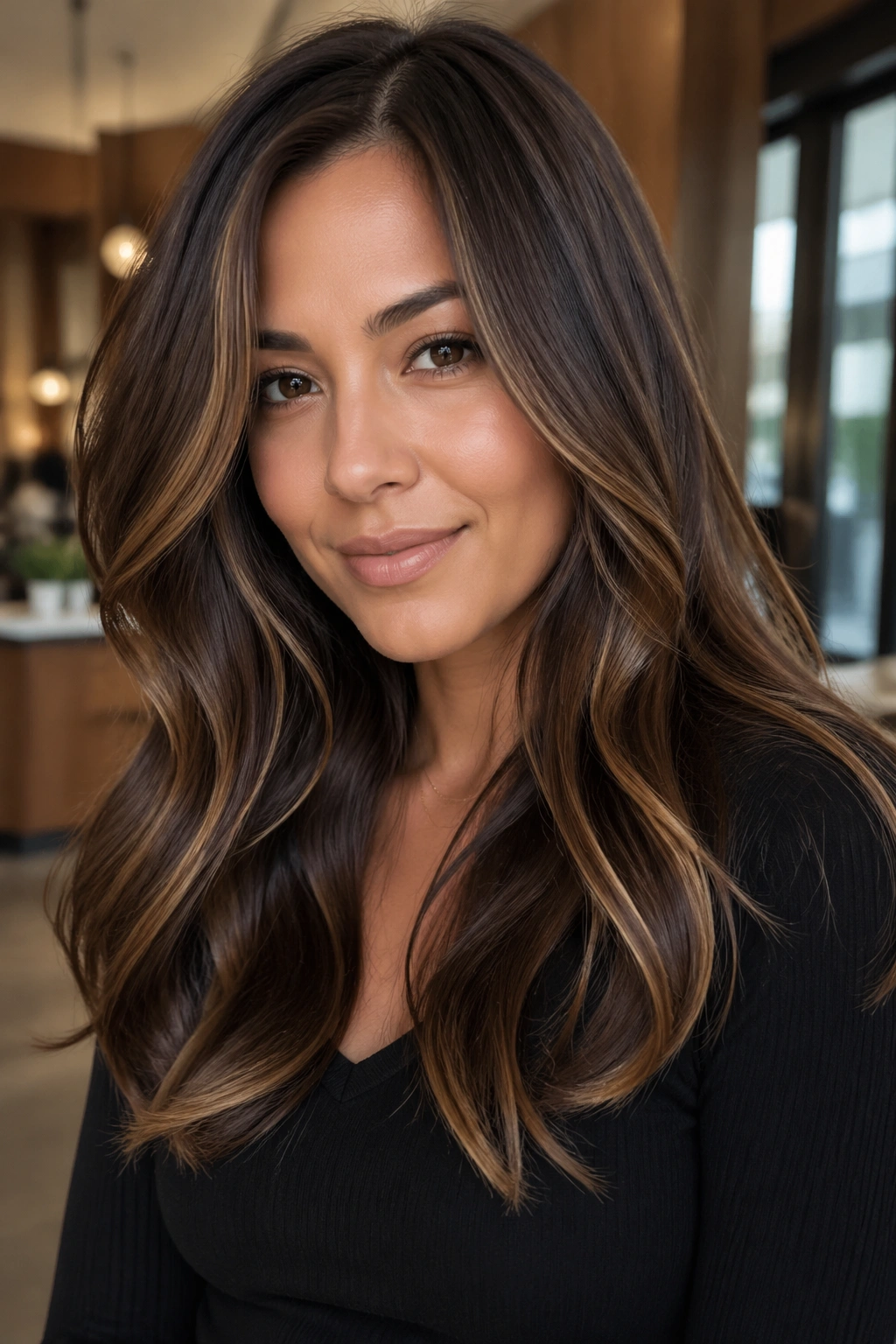
Sable brown with golden lights is a strong move if you like dark hair but don’t want it to feel heavy. Sable gives you that deep, almost-black brown base, while the golden lights keep the shape visible around the face and through the ends. On warm skin, that tiny bit of gold can make a huge difference.
This shade is especially good on dense hair because the dark base helps control the bulk visually. The golden lights break up the mass just enough to show movement. I’d keep the highlights thin and well spaced. Chunky highlights can make sable look dated fast, and that’s not what we want here.
If you style your hair with a round brush or loose waves, the gold pieces show up more clearly. Air-dried hair can still look good, but the dimension becomes more subtle. That subtlety is fine if you want something that feels chic and quiet.
24. Praline Brown for Warm Skin
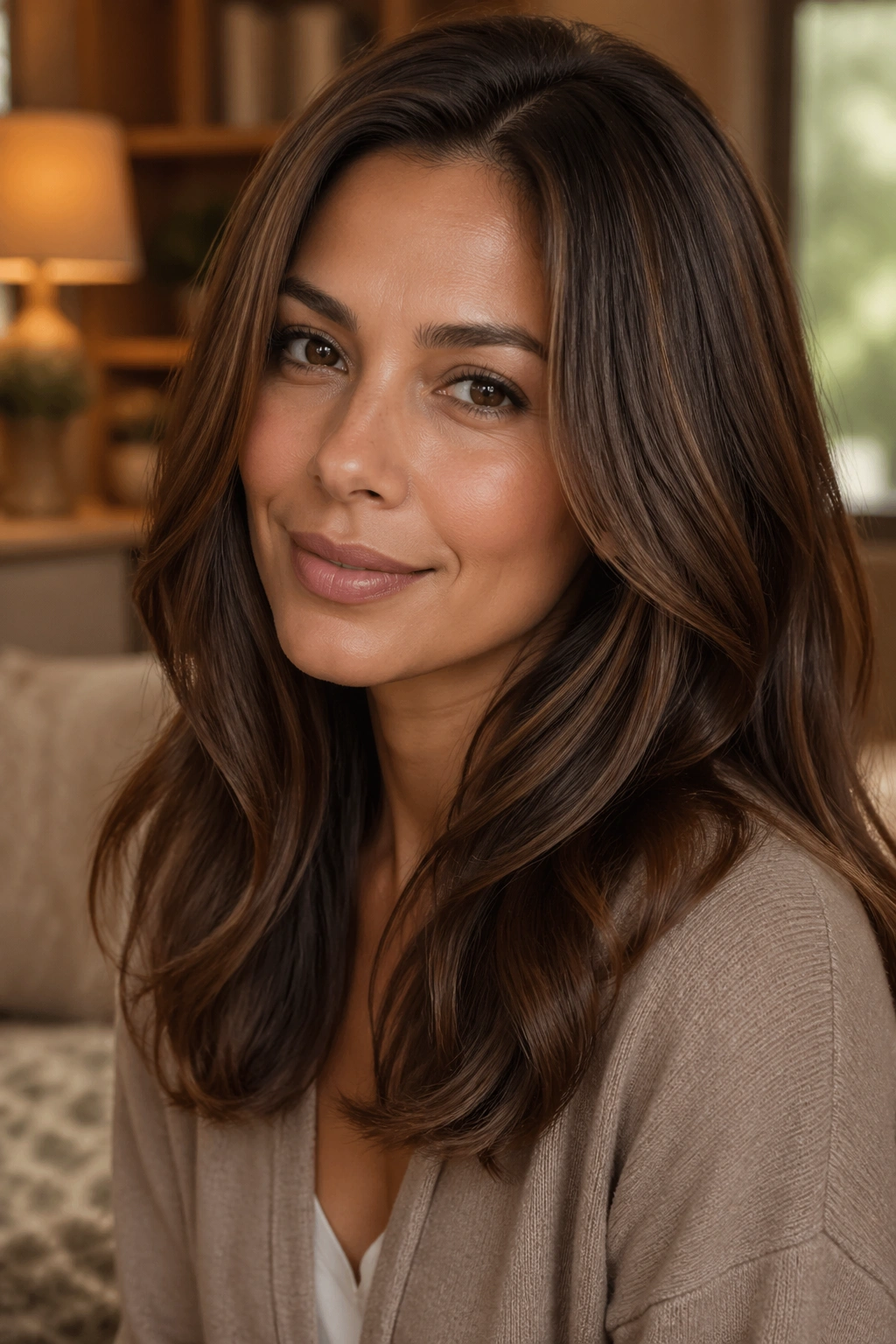
Praline brown is softer than chestnut and less red than mahogany, which is exactly why it works so well on warm skin. It has that nutty, sweet tone that feels approachable but still polished. The color reads warm without shouting about it.
Unlike a color with obvious copper, praline stays gentle. That makes it a smart choice if you want warmth around the face but don’t want the whole head to look fiery. A few lighter lowlights can help, but they should stay diffuse. The point is softness, not contrast.
I’d recommend praline brown to someone who wants a brunette shade that works with warm makeup and simple styling. A soft gloss keeps it fresh. Heavy highlighting can wreck the mood. Keep the finish smooth, and the color does the rest.
25. Mulled Wine Brown
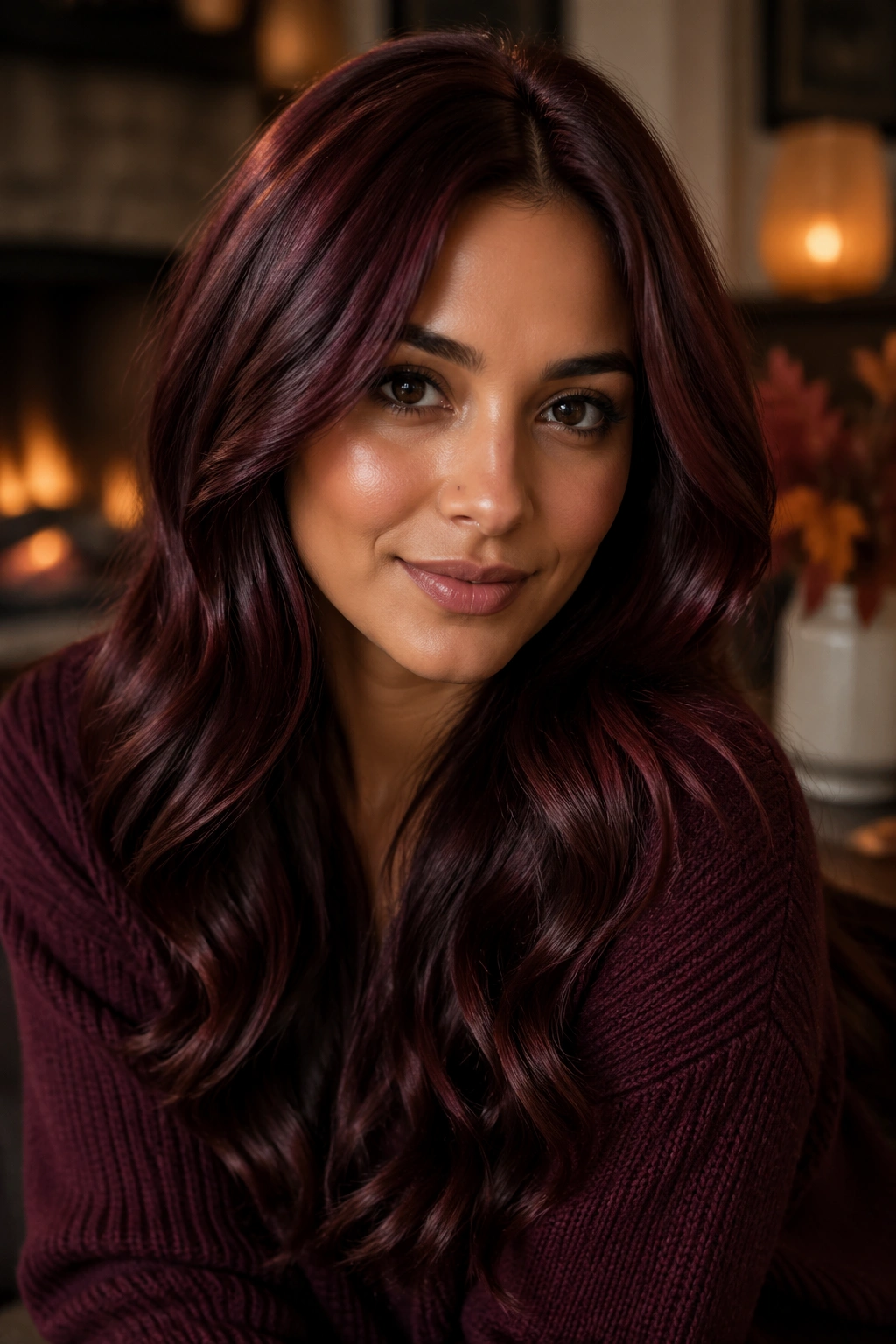
Mulled wine brown has a rich, spiced feel that flatters warm skin in a way that’s hard to fake. The red-brown note is deeper than copper and warmer than plain chocolate, so the whole look feels dense and cozy without turning orange. It’s a beautiful choice if your complexion likes gold, bronze, and berry tones.
Why It Flatters Warm Skin
Mulled wine brown adds life near the face. That matters when your skin can sometimes look a little flat under cool light. The wine note wakes it up, especially if your cheeks and lips already lean warm.
- Best on medium to deep brunette bases.
- Keep the red tone subtle and layered.
- Works well with soft curls and polished waves.
- Refresh with a demi gloss every 5 to 7 weeks.
Tip: If the red starts looking too bright, pull it back with a deeper brown glaze rather than trying to cover it completely.
26. Soft Chestnut Brown
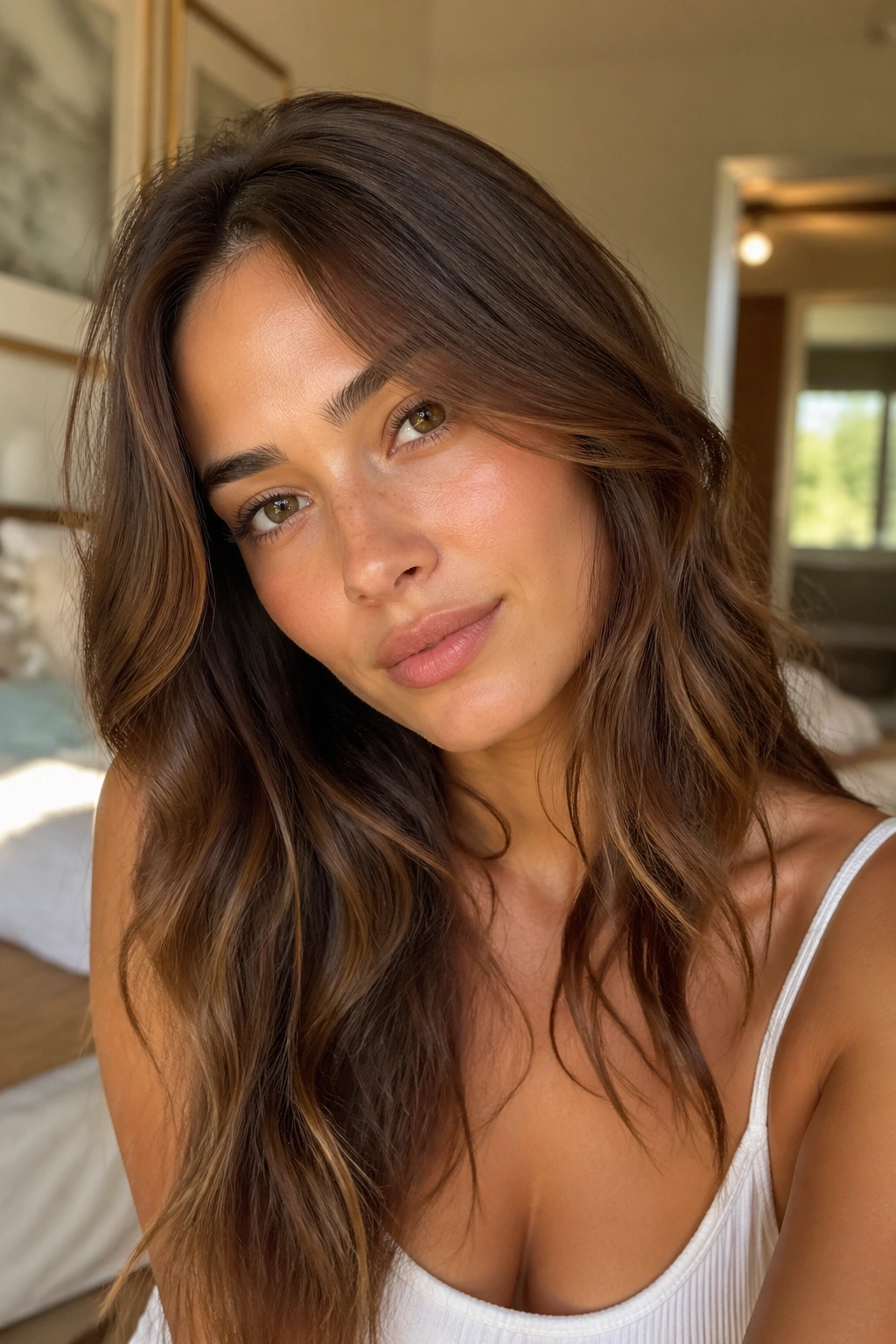
Soft chestnut brown is the safe starting point for anyone nervous about going too dark or too red. It’s warm, flattering, and easy on warm skin because it sits in the middle—brown enough to feel natural, warm enough to keep the face from looking drained. There’s a reason so many people end up here.
Easy does not mean boring.
The shade looks especially good when the base is kept a touch deeper at the roots and the warmth is softened through the ends. That tiny gradient keeps the color from feeling blocky. If you want a little more polish, add a gloss with soft gold reflect. If you want less maintenance, leave the tone closer to your natural brown and just brighten the mids.
Soft chestnut is the shade I’d choose for a first brunette dye after years of lighter hair. It’s forgiving, and it ages well.
27. Espresso Brown with Copper Threads for Warm Skin
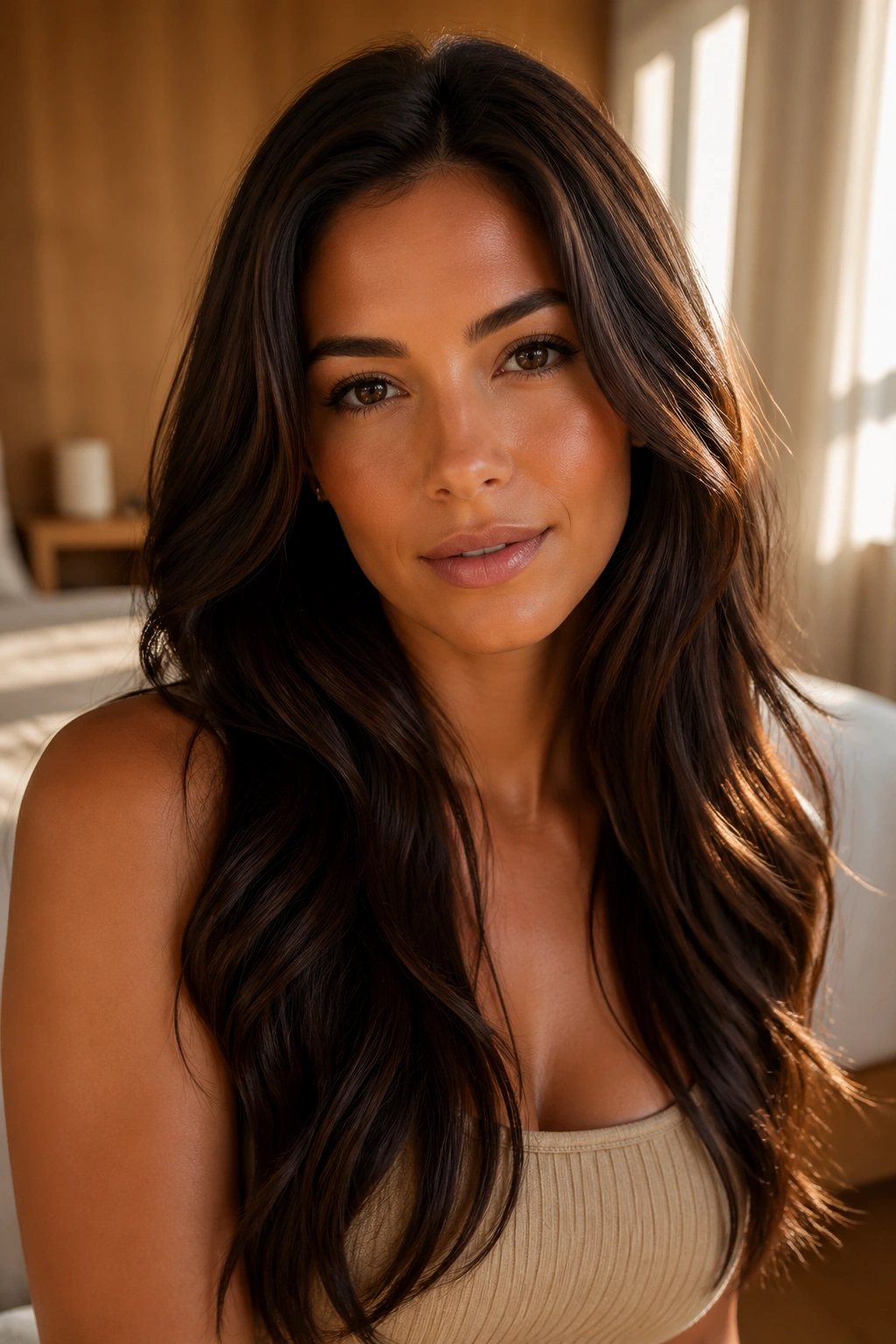
Espresso brown with copper threads is the one I’d point to if you want dark hair that still wakes the face up. The espresso base keeps things sleek and rich, while the copper threads add just enough movement to flatter warm skin without taking over the whole head. It feels modern, but not fussy.
The key is restraint. Copper should show up in fine strands, usually around the front and through the outer layers, not in thick panels. That keeps the shade from drifting into red territory. If your hair is very dark naturally, this also gives you a nice way to add warmth without losing depth.
How to Keep It from Looking Too Red
Keep the copper thin. Really thin. A few delicate ribbons around the hairline and a handful through the mid-lengths are usually enough.
A gloss every 4 to 6 weeks helps keep the espresso shiny and prevents the copper from turning flat. If you want the color to stay rich rather than bright, ask for a brown-first formula with copper as the accent—not the other way around. That one detail changes everything.
