



Dark blonde is sneaky.
It gives you lightness without tipping into harshness, and that’s exactly why so many people keep circling back to it. The best dark blonde hair color ideas for warm tones sit in that sweet spot between brunette and blonde, usually around level 6 or 7, with honey, caramel, gold, amber, or apricot folded into the mix.
Orange is not the goal. Warmth is.
That little distinction matters more than people think. A warm dark blonde that has the right kind of gold can make skin look fresher, freckles pop, and layers look fuller. A bad one can go brassy in a week and make even a good haircut look a bit tired. The difference usually comes down to how much depth stays at the root, where the brighter pieces land, and whether the gloss leans beige-gold instead of yellow-gold.
1. Honey Dark Blonde
Honey is the safe bet that still has personality.
It sits right where warm tones tend to look best: soft, golden, and a little sunlit without getting washed out. On a natural level 6 base, a honey dark blonde can look rich and easy at the same time, especially if the colorist keeps a touch of depth near the scalp and paints the brighter ribbons through the mid-lengths and ends.
Why It Works on Warm Skin
Honey blonde plays nicely with peach, golden, olive, and neutral-warm skin because it echoes the same warmth already in the face. It does not fight your undertone. It meets it halfway.
- Ask for a level 6 or 7 base with honey-toned balayage pieces.
- Keep the gloss in the beige-gold family, not pale yellow.
- A soft root shadow helps the color grow out cleanly.
- Wavy hair shows the dimension fastest, but straight hair still works if the ribbons are placed well.
Pro tip: If your hair pulls red fast, ask for a honey gloss that leans beige, not copper.
2. Caramel Ribbon Balayage
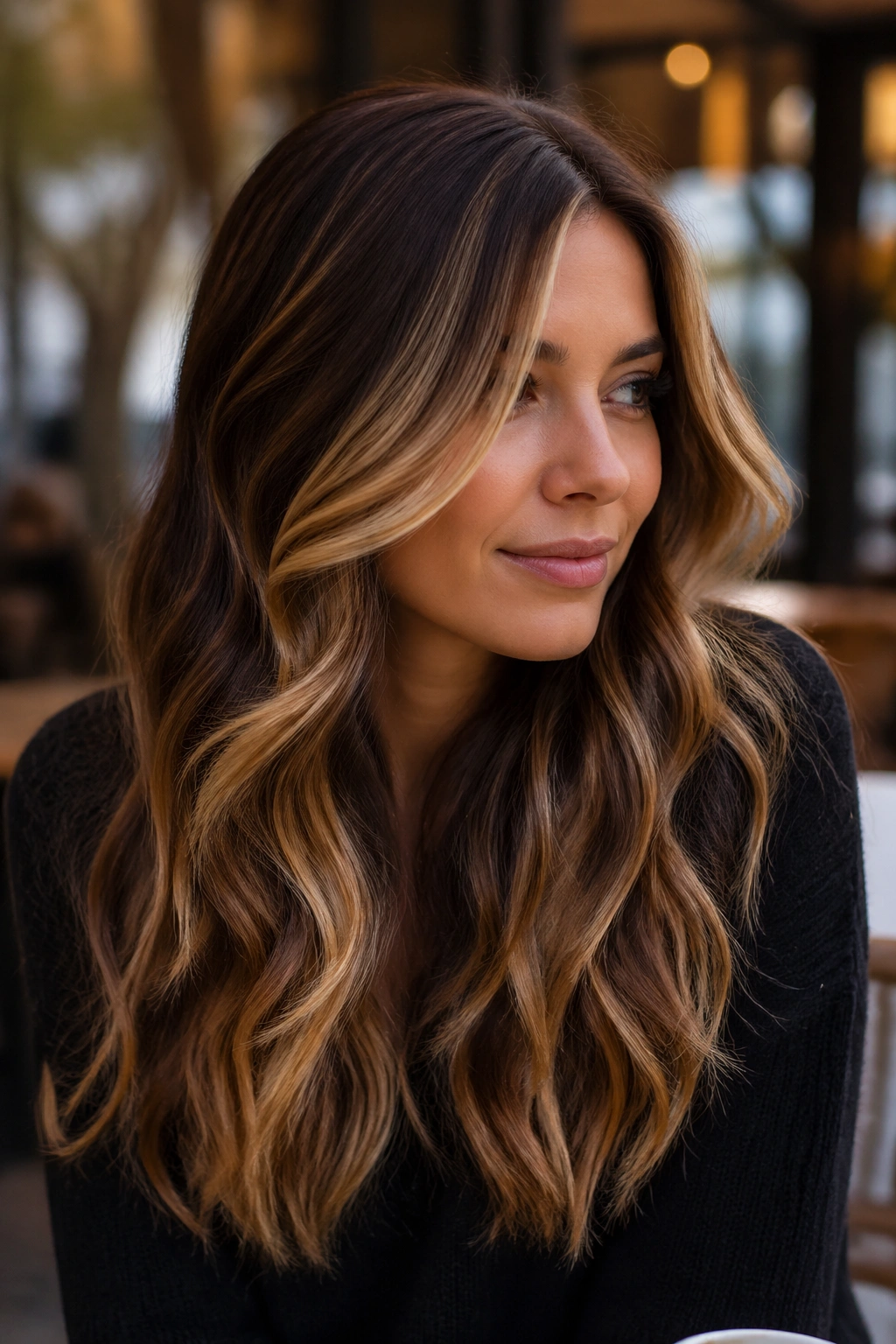
Caramel ribbon balayage gives dark blonde a little movement without screaming for attention.
That’s why it works so well on warmer complexions. The ribbons catch light in a way that feels natural, and the darker base keeps the whole look grounded. On medium-length hair, this is one of those shades that can make a plain blowout look more expensive than it really is.
The trick is placement. The best caramel ribbons are not scattered everywhere. They live around the face, through the top layer, and in the ends where the hair swings. If the pieces are too chunky, the color starts looking stripy. Too fine, and you lose the whole point.
This shade is especially good if you want blonde energy but hate obvious upkeep. The grow-out stays soft because the base stays visible. Nice trade.
3. Golden Beige Dark Blonde
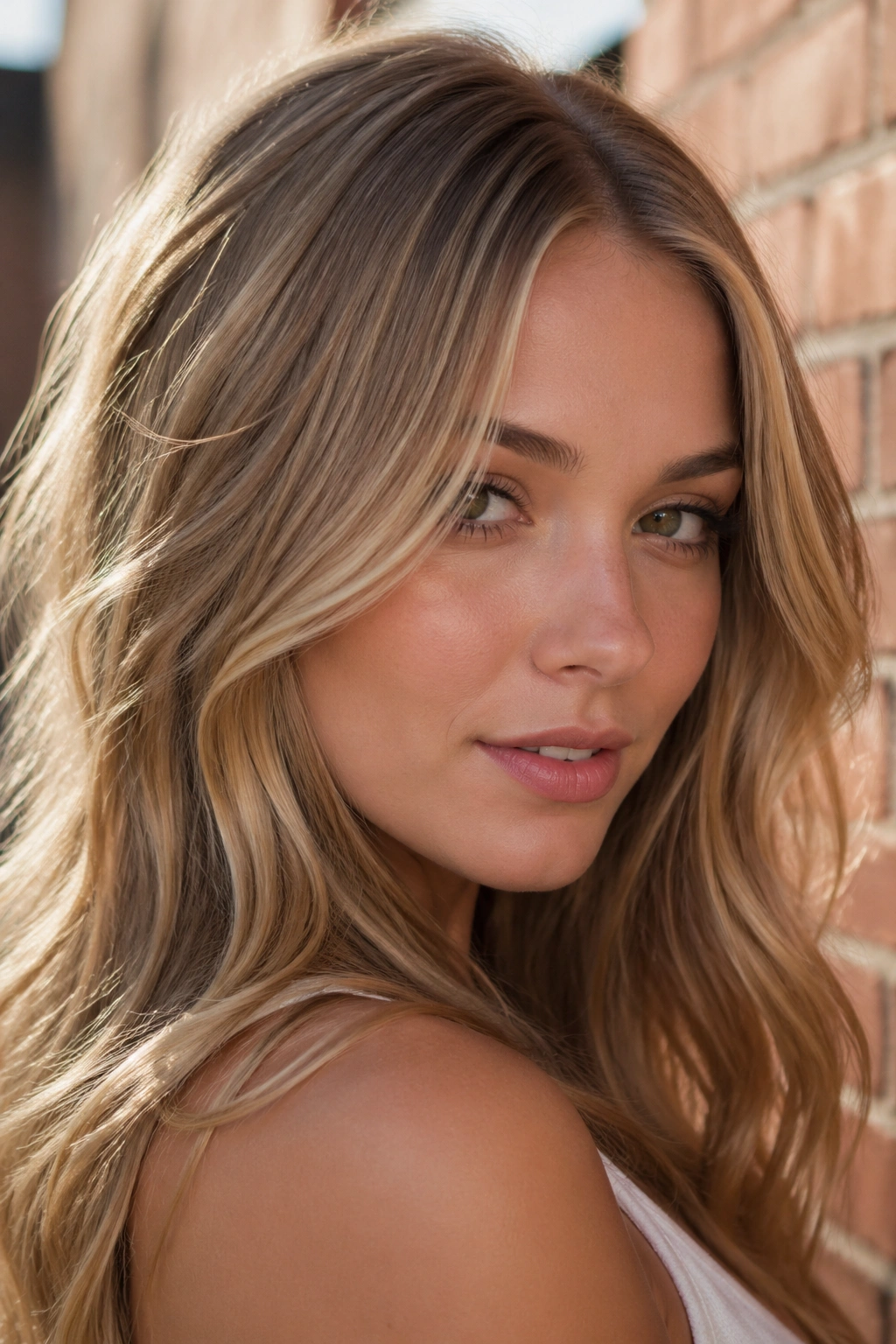
Golden beige is the shade for people who want warmth but do not want their hair to look yellow.
That sounds like a small difference. It isn’t.
Beige keeps the color soft and wearable, while gold gives it life. Together, they make a dark blonde that looks polished in daylight and not too flat indoors. If your skin has a warm-neutral cast, this is often the shade that looks the most balanced without extra effort.
What to Ask For at the Salon
A good version usually starts with a dark blonde base and a neutral-gold toner. That matters. A toner that runs too yellow can look brassy fast, while one that is too beige can read flat and dusty. The right mix sits in the middle.
- Best on level 6 to 7 hair
- Looks clean with soft layers or a blunt bob
- Needs a gloss every 6 to 8 weeks if you want the beige-gold balance to stay sharp
- Works well for people who wear warm makeup tones like terracotta, peach, or bronze
4. Buttered Biscuit Blonde
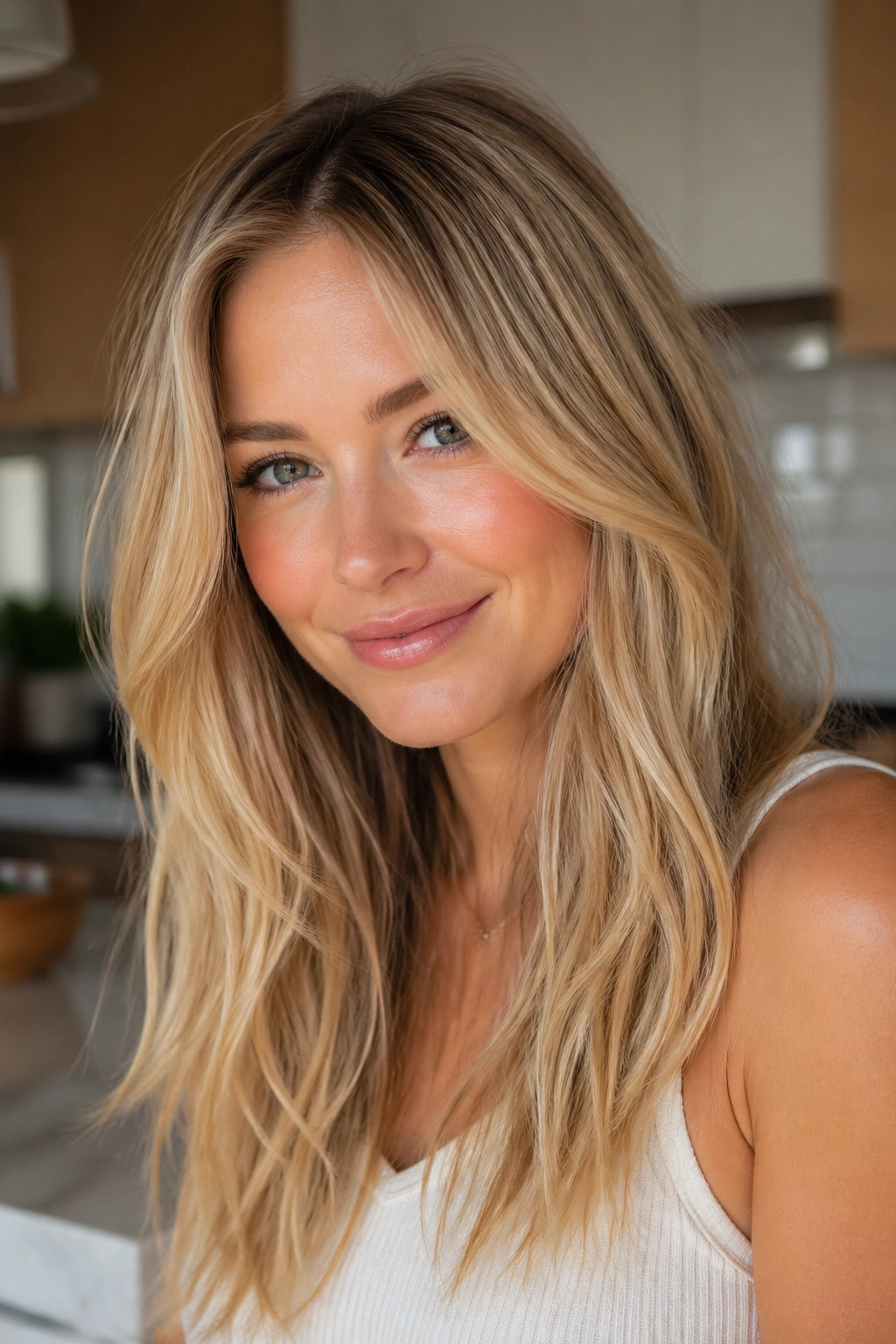
Buttered biscuit blonde sounds almost too cute, but the shade earns the name.
It’s soft, creamy, and warm in a way that feels lived-in rather than dyed. I like this one on people who want a blonde-adjacent color that still looks friendly near the root. There’s enough gold in it to flatter warm skin, yet it stays muted enough that it won’t shout from across the room.
Unlike brighter honey shades, buttered biscuit blonde leans a little paler in the mids and ends. That makes it a good choice if you want some lightness around the face without losing the comfort of a darker base. It works especially well on hair that already has natural golden undertones, since the finish tends to look soft instead of sharp.
If you wear a lot of cream, camel, rust, or olive, this shade sits in the same family and keeps everything looking connected.
5. Toffee Root Melt
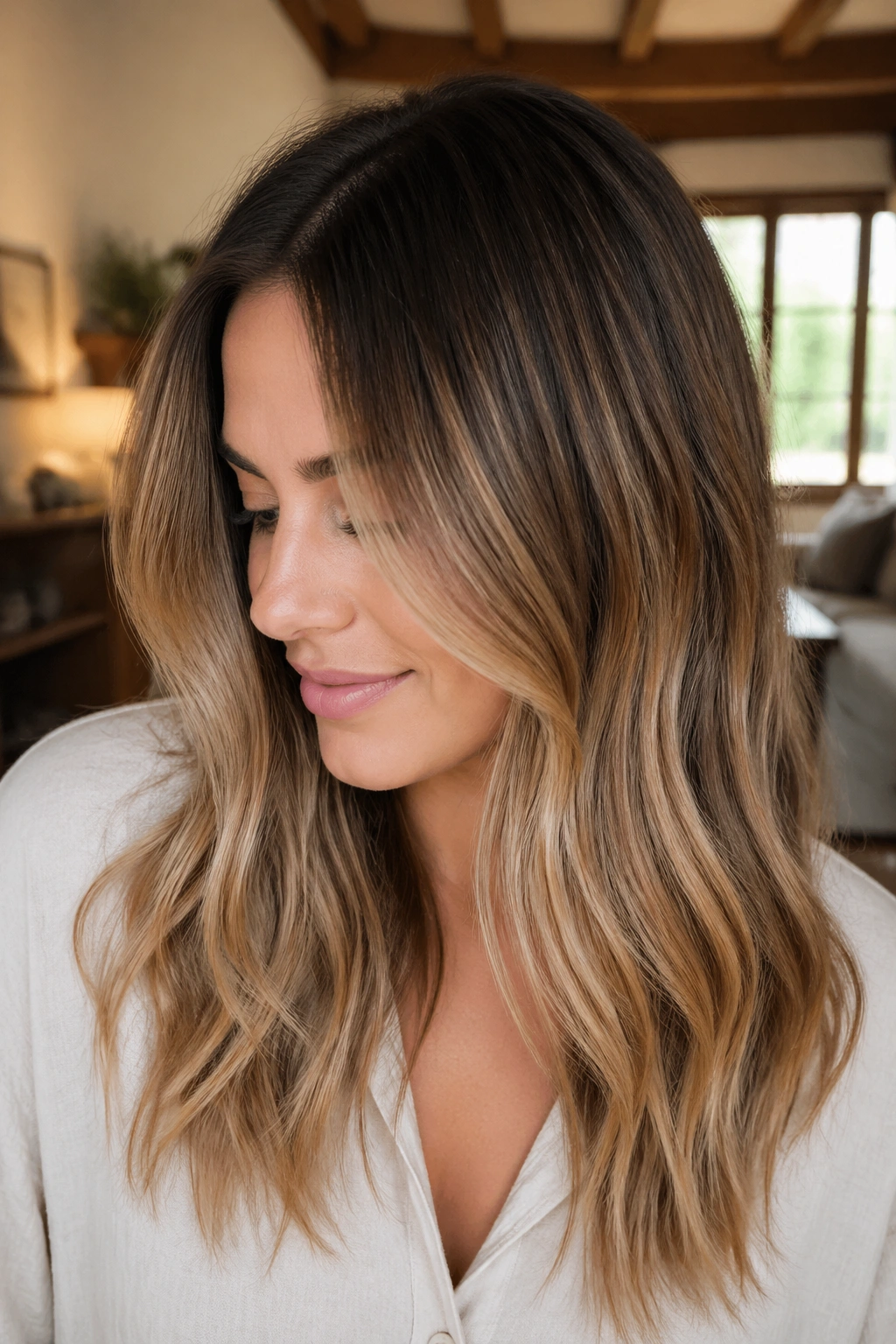
Toffee root melt is what I reach for when someone wants warmth, depth, and easy grow-out in one go.
The root stays a touch deeper — think dark blonde brushing against light brown — and the color melts into toffee through the mids. That little fade makes the whole style look less “fresh from the salon” and more “this is just how my hair behaves.” Which, to be honest, is the point for a lot of people.
The best part is how forgiving it is. A root melt hides regrowth. It also softens the line if your natural color is darker and you do not want a hard demarcation after five weeks. On straight hair, the melt gives polish. On waves, it gives movement.
This is a strong pick if your schedule is busy and you’d rather maintain tone than chase a bright blonde look every month.
6. Maple Syrup Blonde
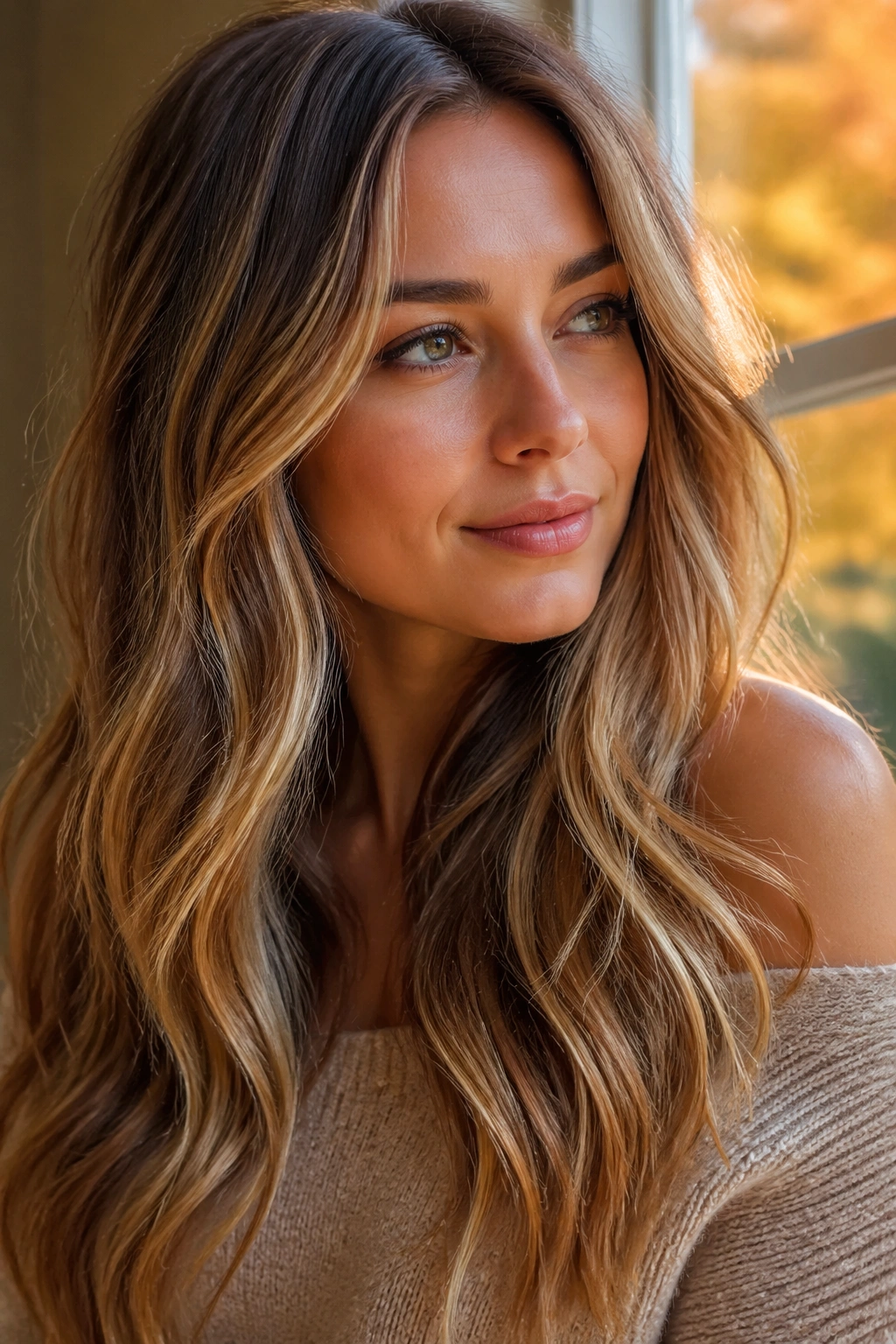
Why does maple syrup blonde look so glossy?
Because the warmth lives in the tone itself, not only in the shine. A good maple shade blends amber, honey, and light brown notes so the hair reads rich before the light even hits it. That makes it especially flattering on warm skin with deeper eyes, since the color has enough depth to hold its own.
How to Wear It
Maple syrup blonde works best when the color stays slightly deeper near the scalp and a touch lighter on the ends. That keeps the shade from drifting into orange. It also helps if the hair is cut with a few layers, because the movement shows off the color shifts better than one blunt block.
A quick gloss every 4 to 6 weeks keeps the syrupy tone from turning dull. If your hair is porous or has been lightened before, that refresh matters more than most people expect.
7. Amber Glossed Blonde
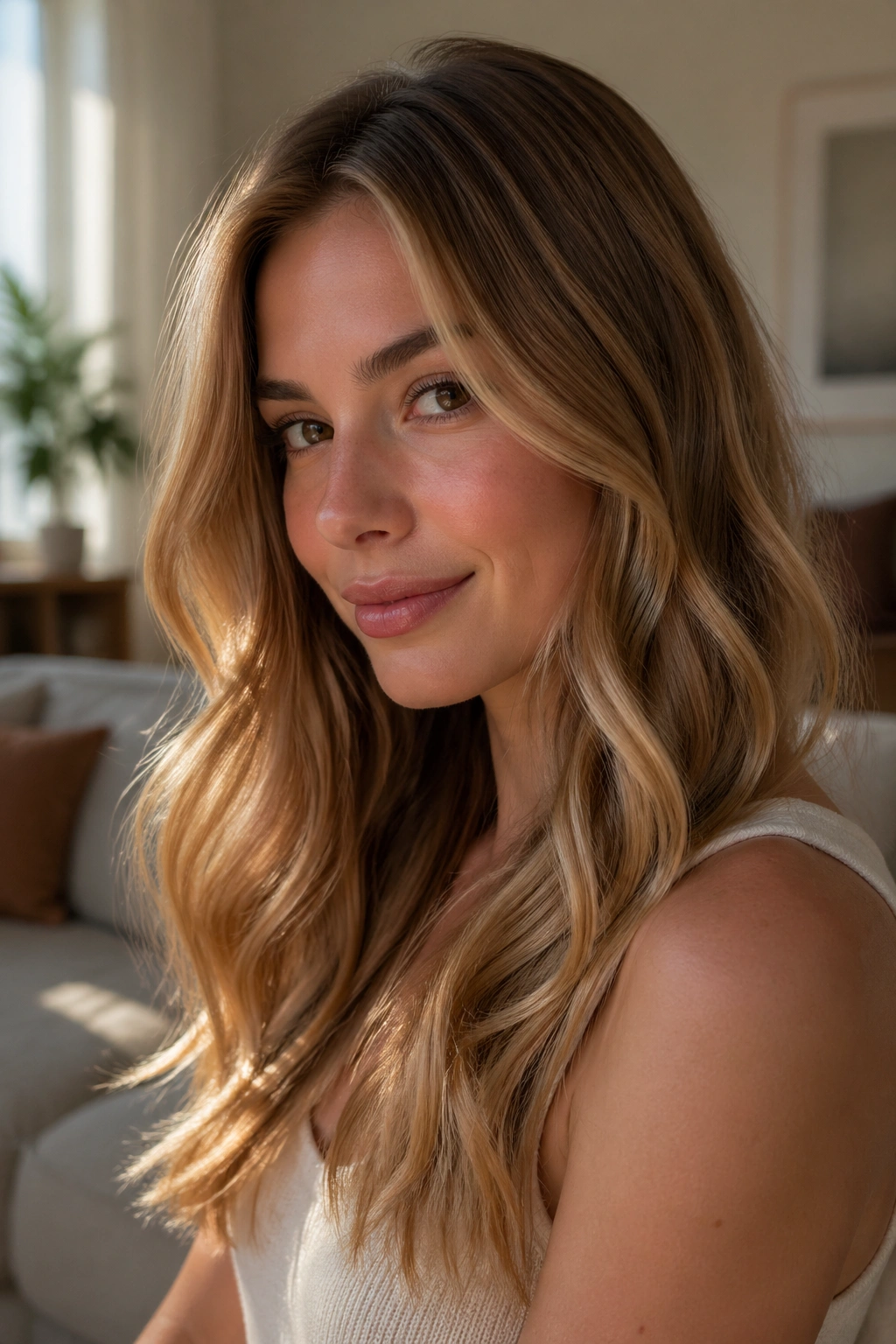
Amber gloss is the easiest way to warm up dark blonde without going for a big color change.
It is not loud. It is not icy. It’s the sort of finish that makes hair look healthy because it gives the surface a warm, glassy sheen. On a darker blonde base, the amber tint can sit almost like a filter, nudging the overall color toward gold and light copper without fully committing to either one.
Quick Notes
- Best if you want a semi-permanent refresh
- Works on virgin hair and color-treated hair
- Looks strongest on straight or softly waved styles
- Fades a little each wash, so it suits people who like change
The biggest mistake is going too orange. Amber should feel rich, like warmed resin, not like a bright copper penny. Keep the gloss translucent and the result stays expensive-looking instead of loud.
8. Cinnamon-Spice Dark Blonde
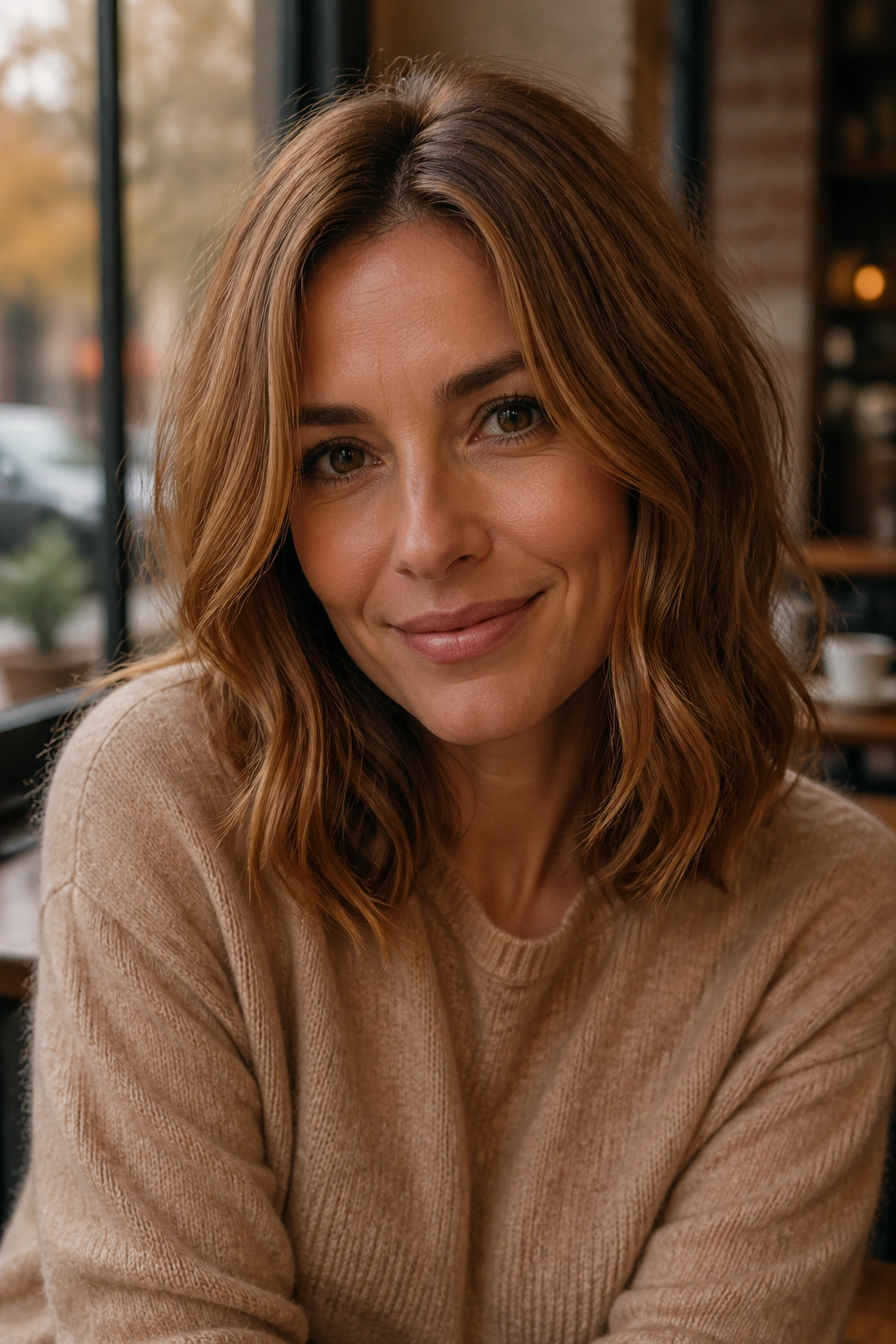
Cinnamon-spice dark blonde is for people who want a bit of heat in the hair, not a full copper turn.
That matters because warm doesn’t have to mean golden only. A cinnamon note adds a tiny red-brown spark, which can make green or hazel eyes look sharper and give flat hair some life. The shade feels especially good in fall-like lighting, although that’s just a side effect of the pigment mix, not a seasonal rule.
Compared with standard honey blonde, this one has more edge. Compared with copper, it’s easier to wear. If you have a naturally warm base that always seems to pull rusty in the sun, this shade can work with that instead of fighting it.
I like it most on shoulder-length cuts. Long hair can take it too, but the warmth shows up faster when the ends move.
9. Bronde with Warm Mocha Lowlights
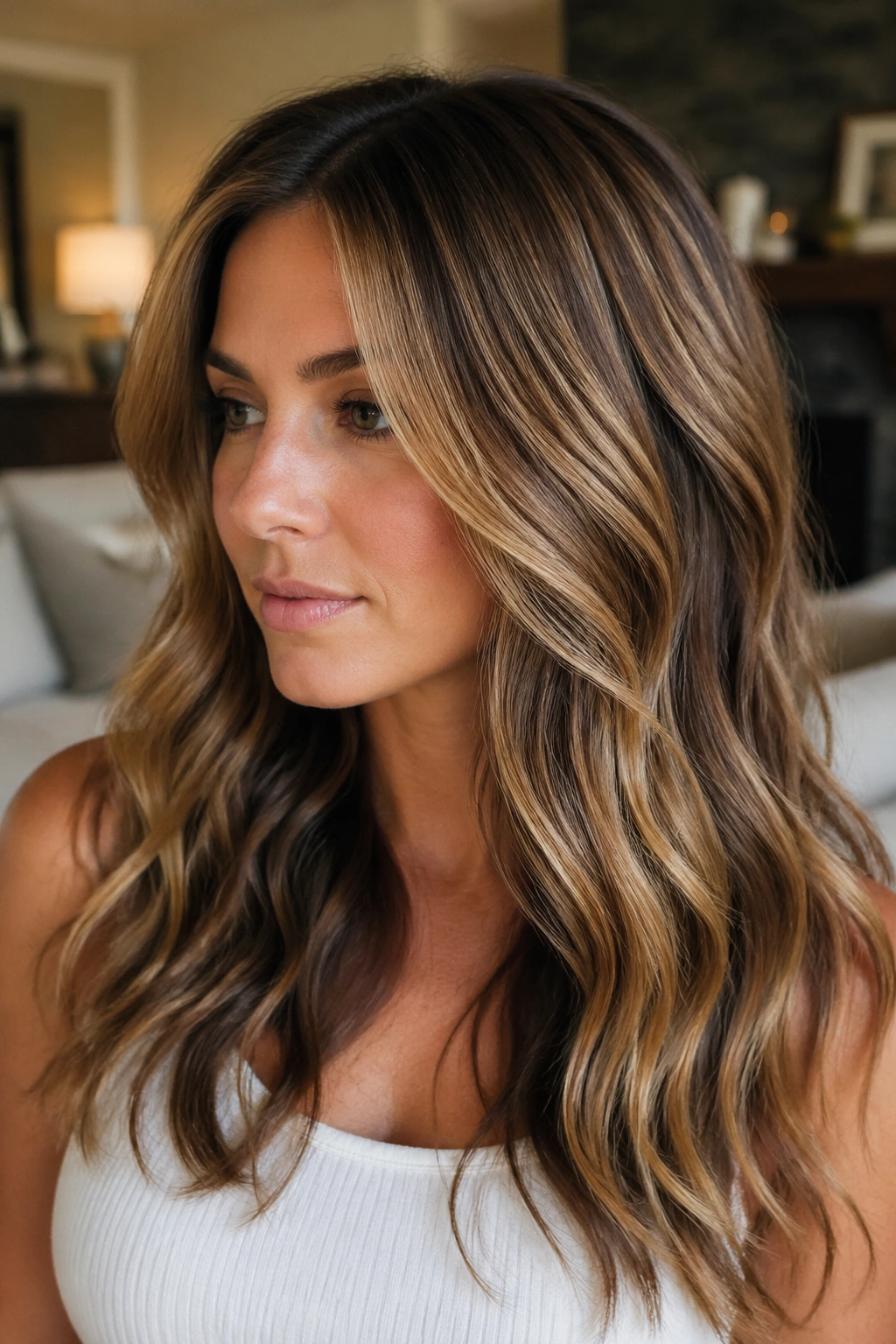
If your hair likes depth more than brightness, warm mocha lowlights are a smart move.
This is not pure blonde. It’s a brown-blonde blend with just enough lightness to keep it from reading heavy. The mocha pieces add shape, especially around the underlayers and crown, while the dark blonde pieces on top keep the warmth visible. The result is dimensional without looking overworked.
What Makes It Different
The lowlights matter because they stop the blonde from floating too high. A lot of warm blondes lose their shape once the whole head gets lightened too evenly. Mocha lowlights fix that. They make the golden pieces stand out more, and they usually make the color look healthier on thicker hair.
This shade suits people who want warmth but prefer a more grounded finish than full honey blonde. It also behaves well on hair that is naturally medium brown, since the transition feels believable.
10. Sandy Gold Dark Blonde
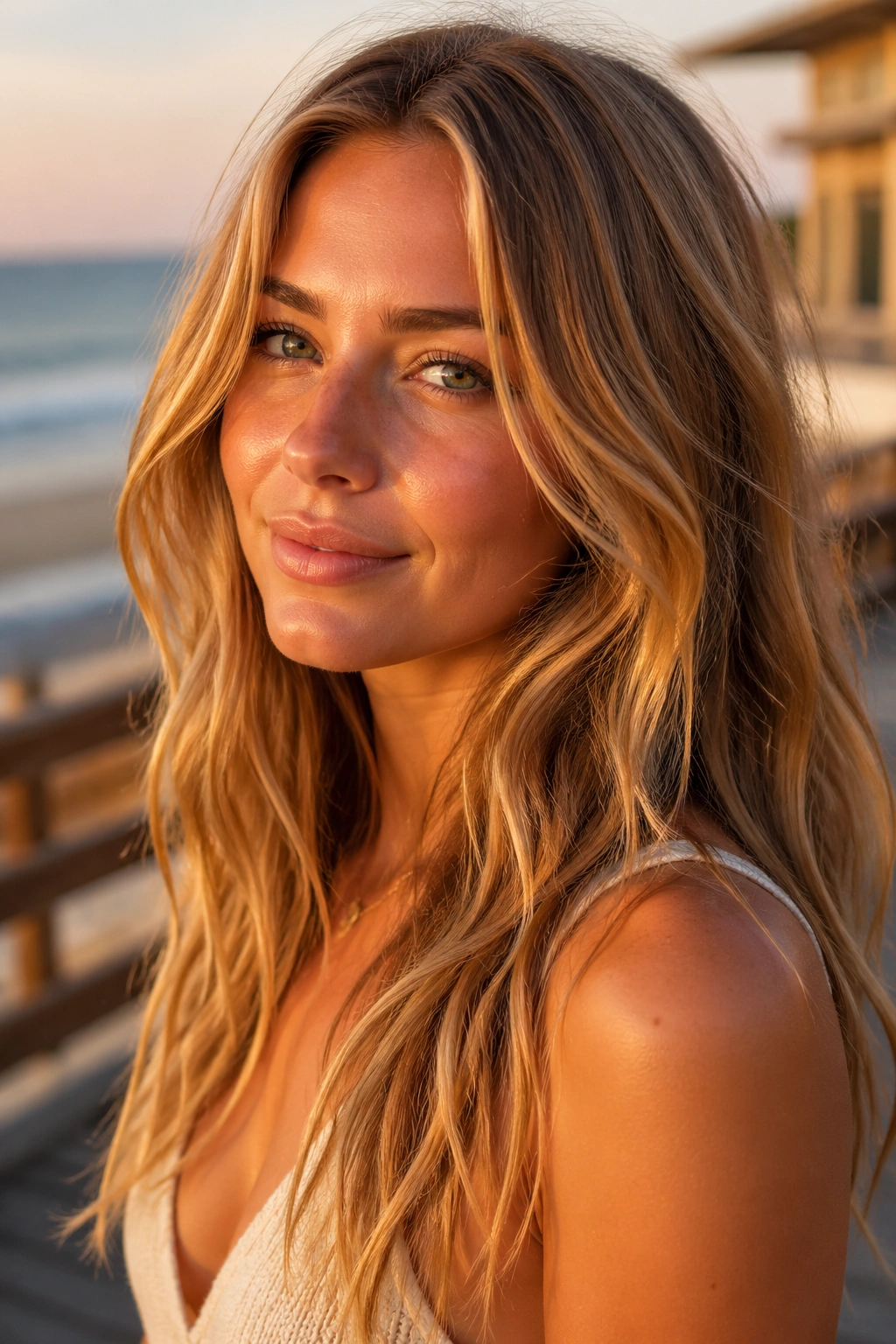
Sandy gold dark blonde is what happens when beachy hair gets a warmer, softer mood.
There’s still movement and brightness, but the color avoids that pale, washed-out look some sandy blondes can get. Gold keeps it alive. Beige keeps it wearable. The balance is the whole point.
Who Should Pick It
If your hair tends to flatten under indoor light, sandy gold helps. It brings enough reflection to catch the eye without demanding a heavy maintenance plan. It’s also a nice choice if you wear gold jewelry or warm-toned makeup, because the shade won’t fight with either one.
The only real catch is over-lightening. Sandy shades can turn brittle-looking when lifted too far. Keep the base in the dark blonde range and let the lighter pieces do the work.
11. Apricot Beige Blonde
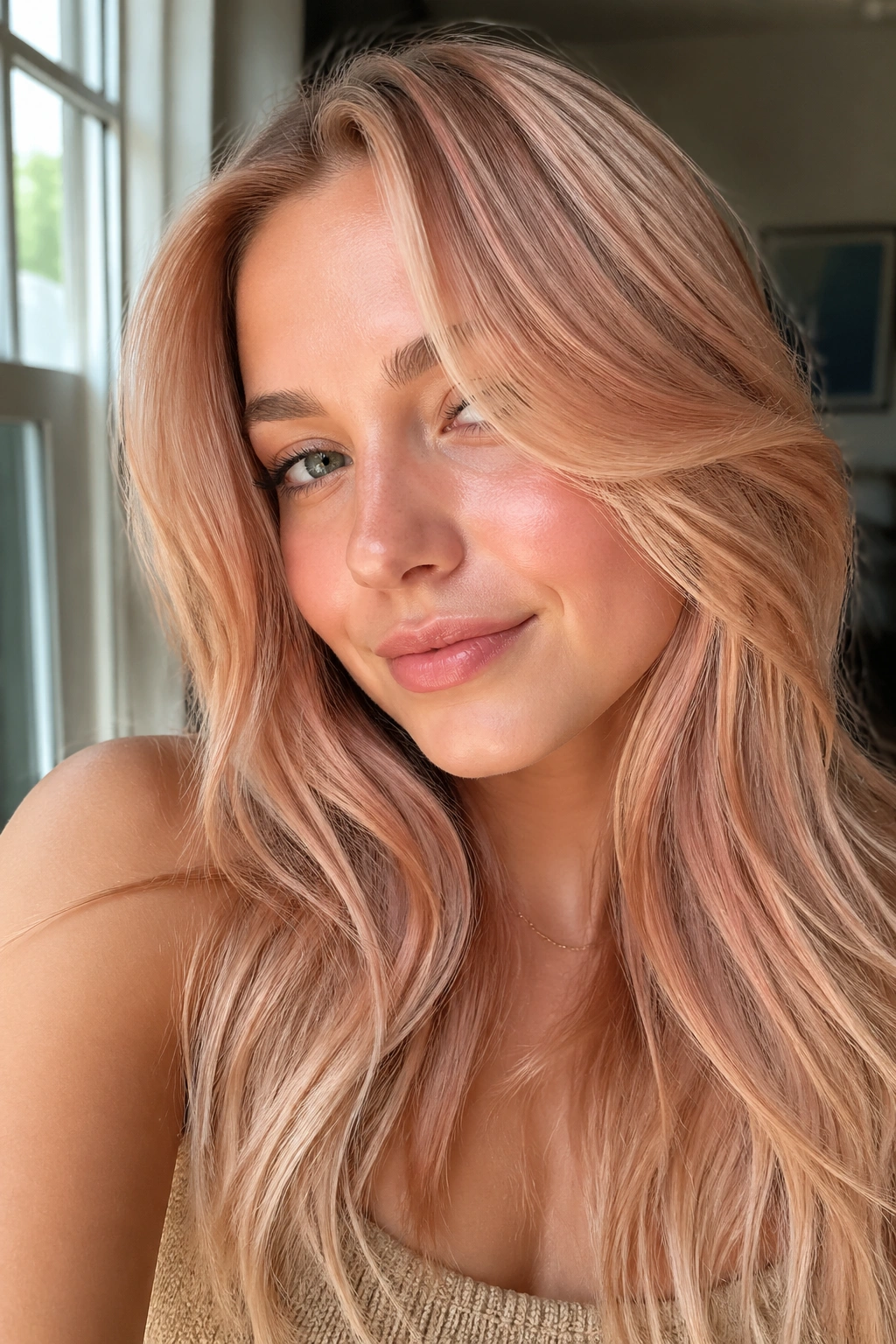
Apricot beige blonde is one of those shades that looks subtle in a salon chair and unexpectedly flattering in daylight.
The apricot note gives the color a soft peach warmth, while the beige keeps it from going sugary. That combination is especially good on skin with rosy warmth or a golden flush, since the hair echoes the face instead of pulling attention away from it. It can also soften redness around the cheeks. Not hide it. Just soften it.
This one works best when the peach is used as a glaze rather than a heavy pigment load. A little goes a long way. If the apricot comes on too strong, the hair can start looking more coral than blonde, and that changes the whole mood.
I’d recommend it for someone who already likes warm makeup shades and wants the hair to feel like part of the same palette.
12. Butterscotch Face-Framing Blonde
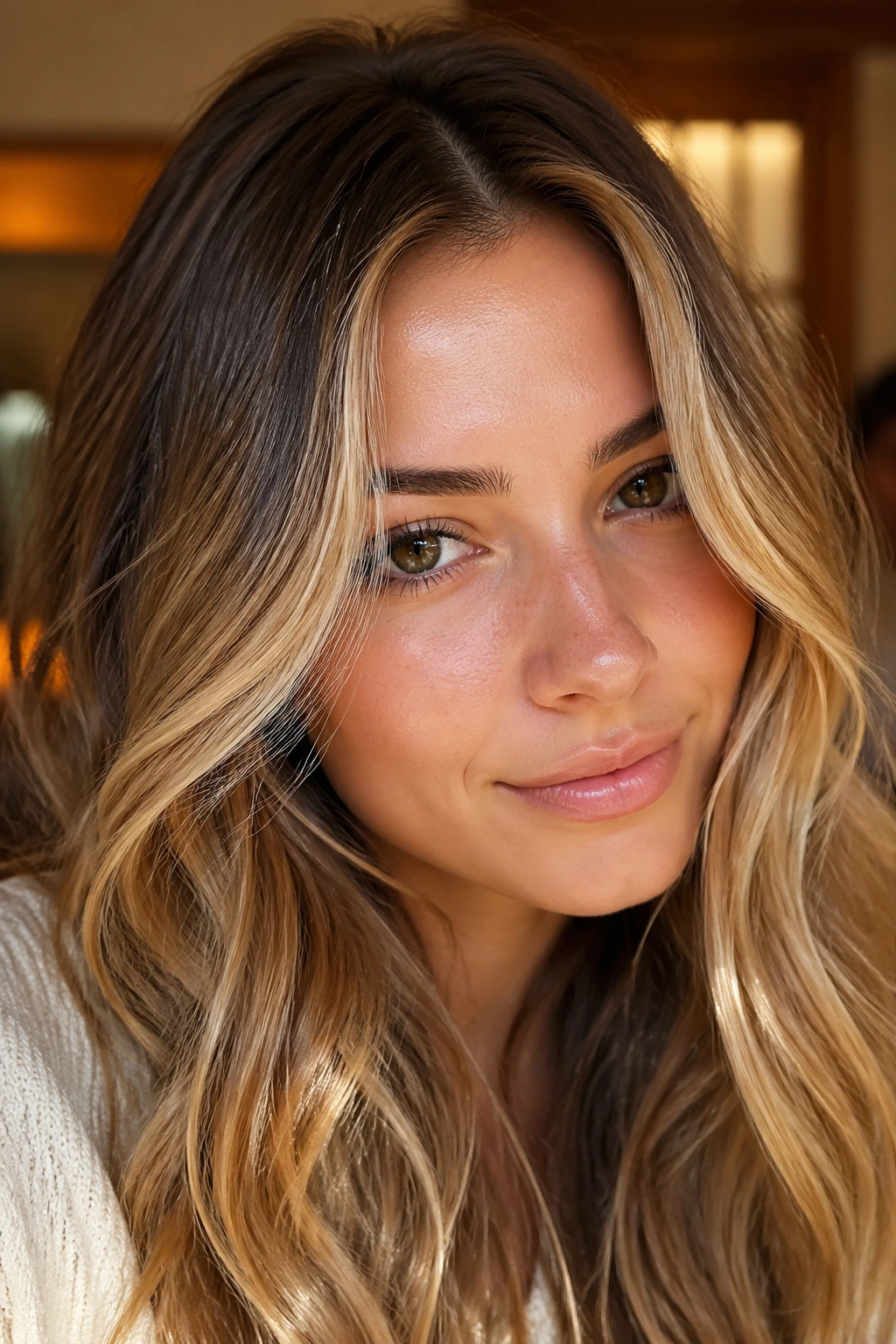
Face-framing butterscotch pieces are the quickest way to warm up dark blonde without coloring the entire head.
You get brightness around the cheekbones, a softer glow near the hairline, and enough depth elsewhere to keep the color grounded. It’s a good choice when you want the front to feel lighter but you do not want to spend the time or money on full-head lightening. Small move. Big payoff.
How to Ask for It
Tell your colorist you want butterscotch money pieces that are one to two levels lighter than your base. Ask for the brightest placement to stay near the face and temple area, not all the way through the back. That keeps the contrast flattering instead of noisy.
- Great for long layers and curtain bangs
- Best when paired with a soft root shadow
- Easy to refresh with a gloss between bigger appointments
- Works on straight, wavy, and curly hair
13. Chestnut-to-Blonde Balayage
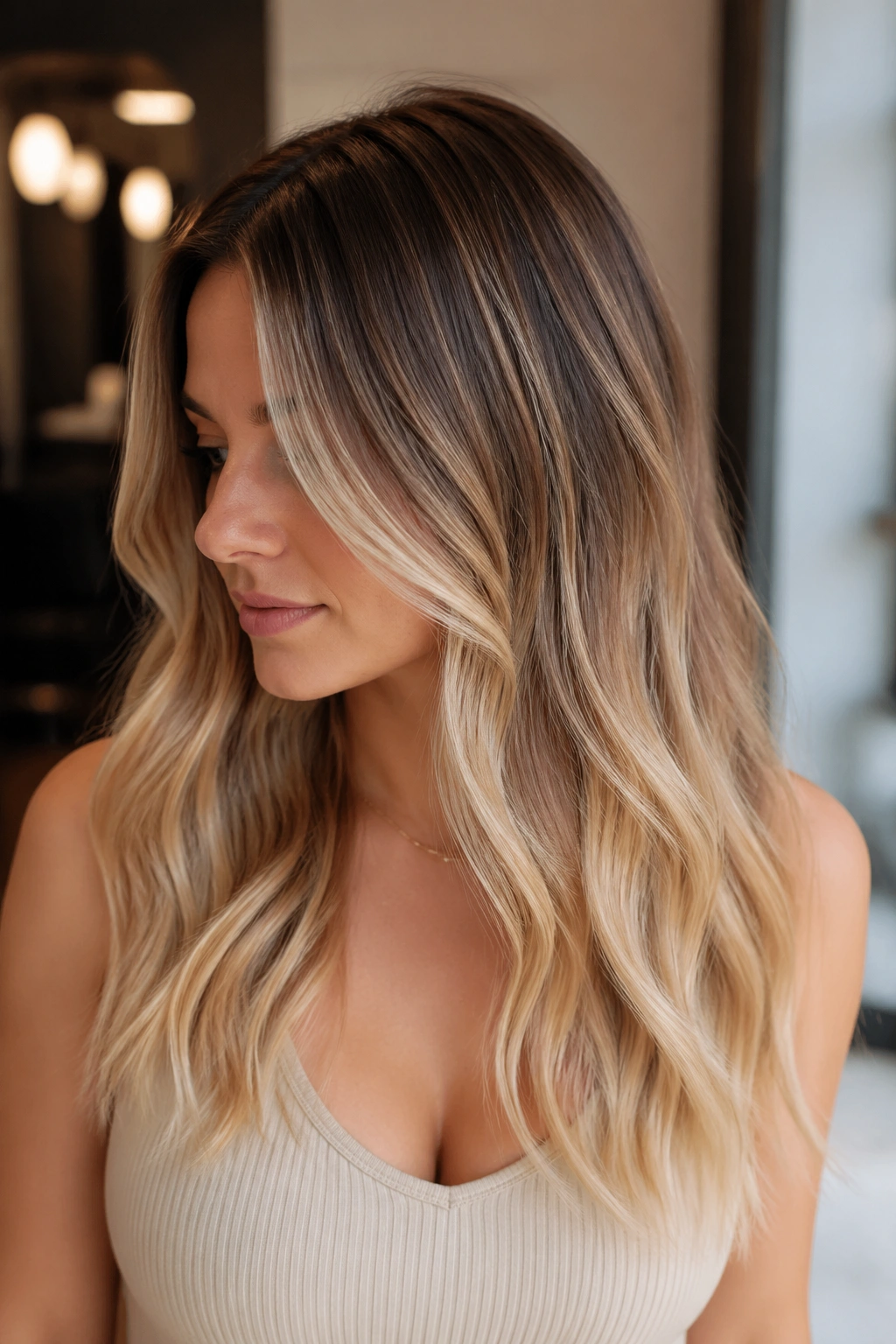
Chestnut-to-blonde balayage is a good answer when you want warmth but your starting point is deeper than dark blonde.
The chestnut root gives richness, and the blonde ends keep the hair from feeling heavy. I like this option on medium and long hair because the fade has room to breathe. On shorter cuts, the shift can look abrupt unless the painter is careful.
Why It Stands Out
A lot of blonde ideas forget that depth is useful. Chestnut depth makes the lighter parts look brighter by comparison. It also helps the color survive longer between salon visits, since the darker base disguises new growth and keeps the whole look soft.
This is a smart pick if your natural hair sits in the medium brown range and you want to move toward dark blonde without losing the richness you already have.
14. Toasted Almond Blonde
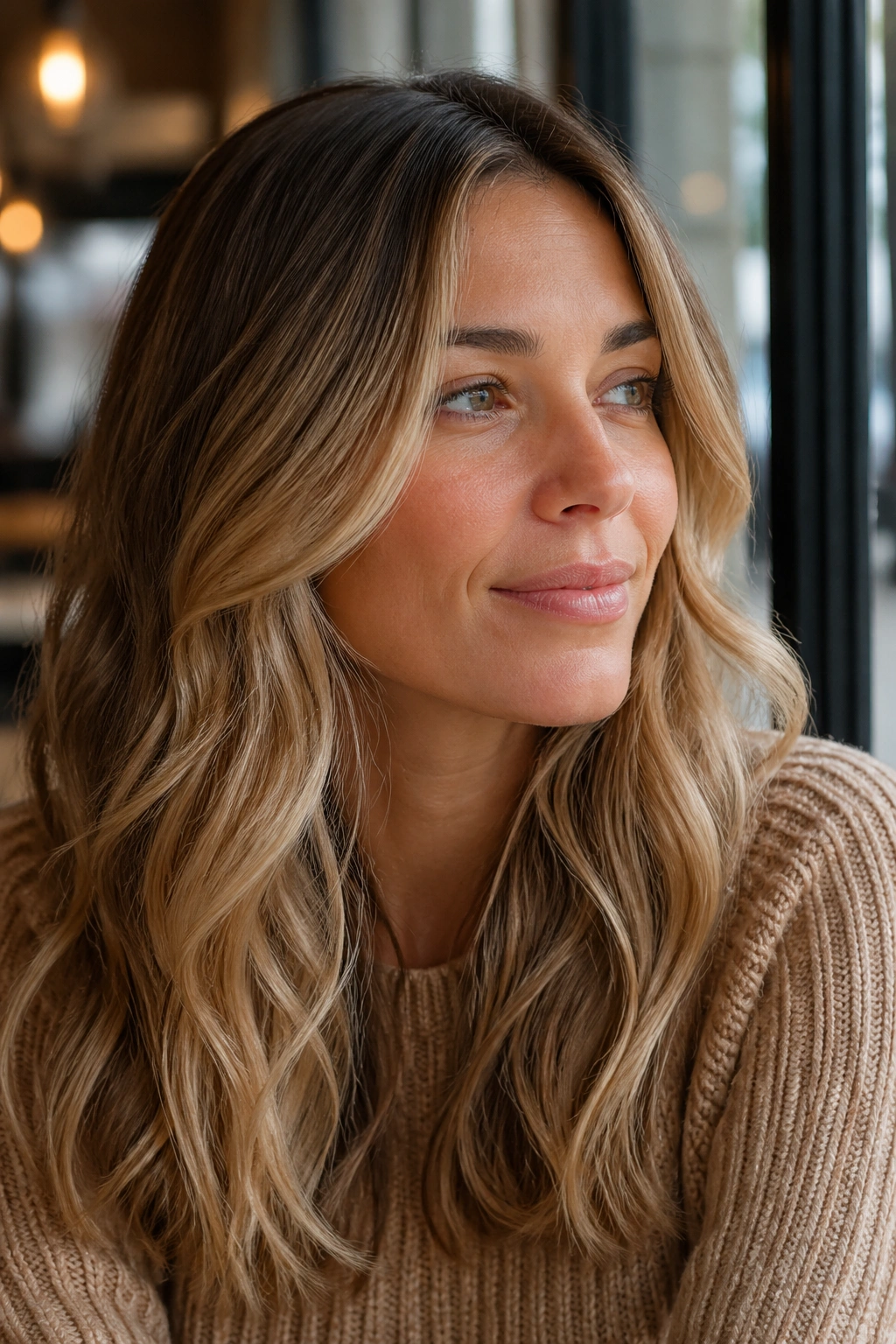
Toasted almond blonde feels quiet in the best way.
It blends beige, gold, and a little brown so the overall tone stays soft and polished. There’s no sharp brassiness, no cool ash, and no dramatic contrast. Just a creamy dark blonde that flatters warm skin without stealing the show. That makes it a solid choice for people who want their hair to sit nicely with everyday clothes, not fight them.
The shade is especially good on finer hair because it does not rely on huge color contrasts to create dimension. A few lighter almond ribbons through the top and around the face are enough. That keeps the color from looking flat, but it still feels understated.
If your wardrobe leans toward camel, ivory, rust, or olive, toasted almond blonde can slot right in.
15. Golden Copper Blonde
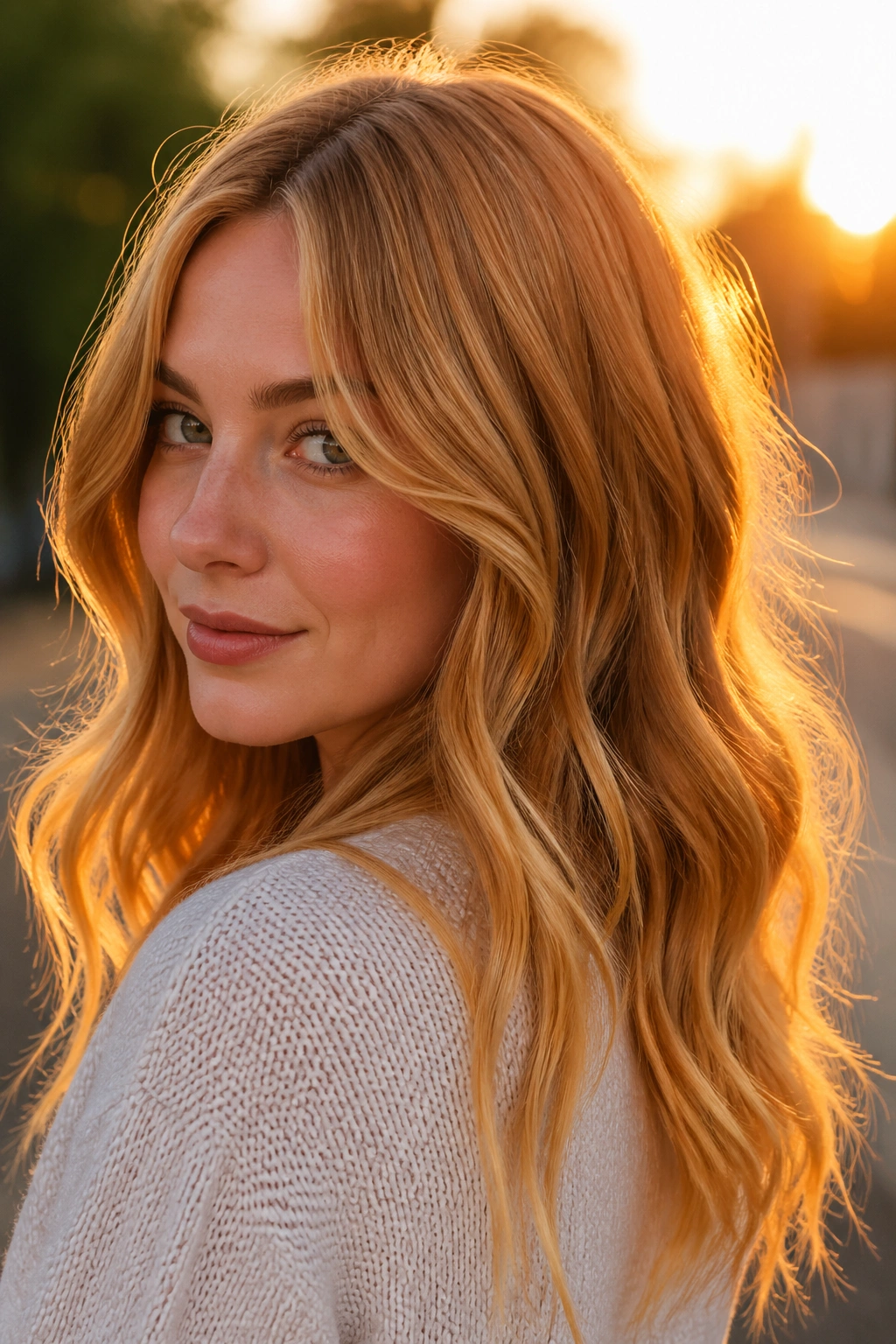
Golden copper blonde is where warm blonde starts to flirt with red.
And that flirtation is the whole appeal. The shade keeps enough blonde in the mix to stay wearable, but the copper gives it a lively edge that honey alone cannot deliver. It’s a strong look on warm undertones, especially when the skin has a bit of peach or gold in it.
What to Watch For
Copper tones fade fast if the hair is porous, so this shade needs a bit more care. A color-safe shampoo and cooler water on wash day help, and a gloss every few weeks keeps the warmth from turning dull. The payoff is worth it if you like hair that looks awake.
This is not the shade for anyone who wants invisible maintenance. It asks for attention. Still, if you want dark blonde with a spark, this one has plenty.
16. Peach-Toned Blonde Glaze
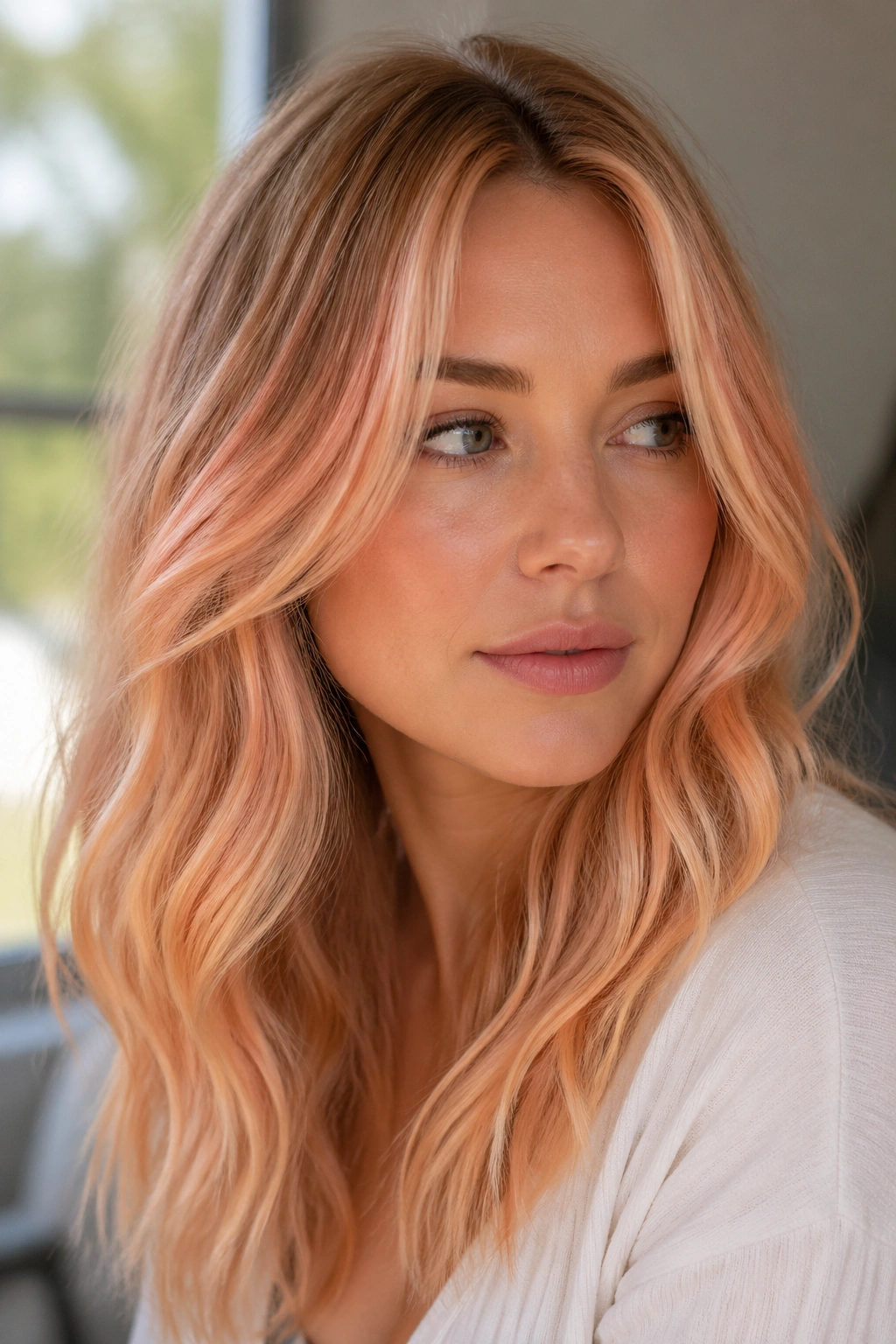
Peach-toned blonde glaze works when you want warmth that feels soft rather than sunbaked.
It’s a little sweeter than apricot and a little less brown than copper. That makes it useful for dark blonde hair that needs a fresh tone without a full color overhaul. A glaze is also a good move if you want to test the waters before committing to a permanent color change.
Compared with standard golden blonde, peach adds a more playful cast. Compared with copper, it stays gentler and fades more softly. The finish can be lovely on waves because the light catches the peach in motion instead of letting it sit in one flat block.
This is a good salon request if your hair already lifts well and you want something that feels seasonal without needing a full transformation.
17. Sandy Caramel Ombré
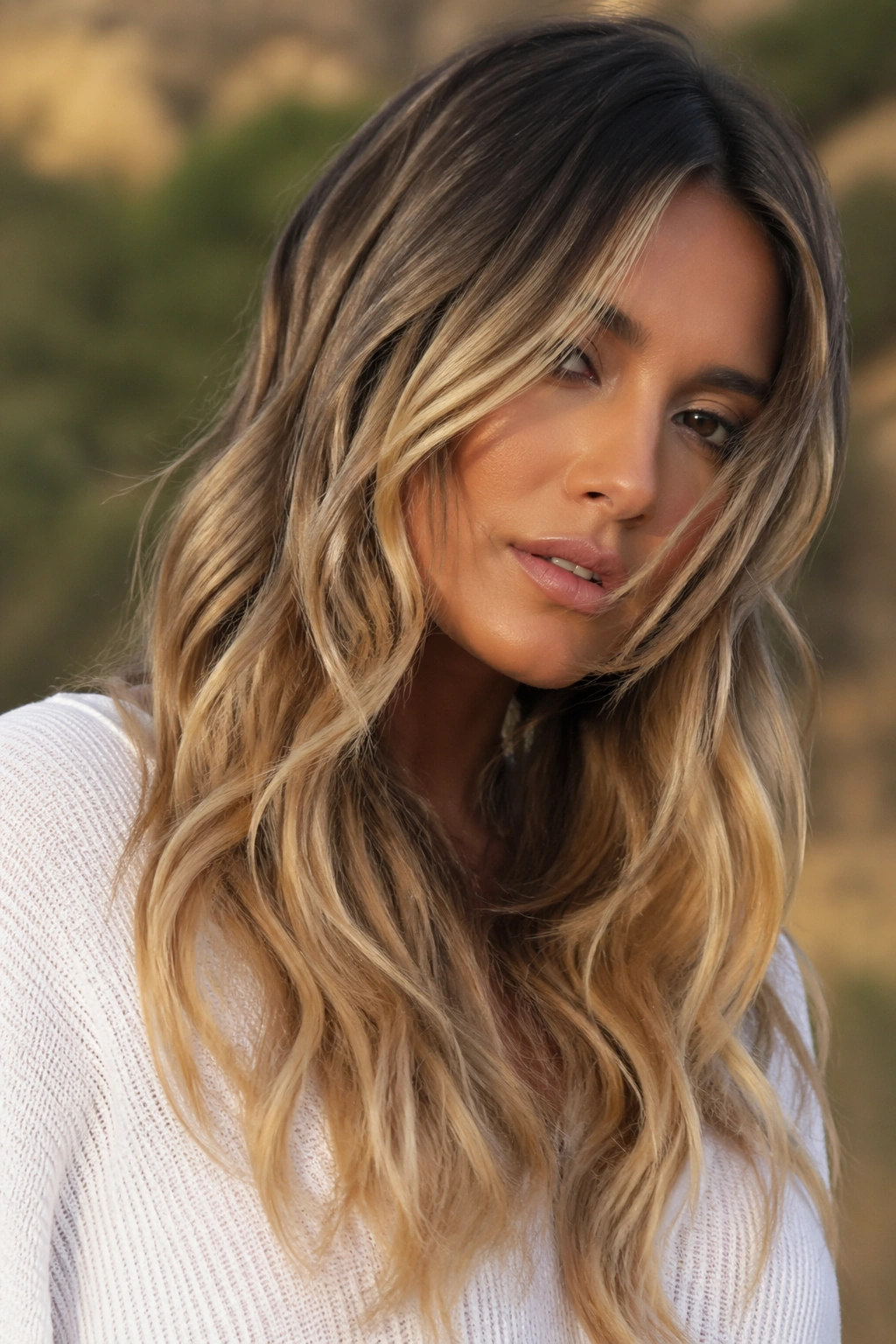
Sandy caramel ombré is one of the easiest warm looks to wear on longer hair.
The root stays darker and the ends drift into caramel, with a sandy middle that keeps the fade from feeling harsh. That matters because ombré can turn chunky fast if the transition is not blended enough. Here, the sandy tone acts like a bridge. It softens everything.
Long waves are the sweet spot. The color has space to move, and the lighter ends do a lot of the visual work. Straight hair can wear it too, but the fade needs a careful hand or it starts looking like two separate colors instead of one story.
If you like a low-fuss color with a little depth, this one earns its keep.
18. Warm Vanilla Blonde
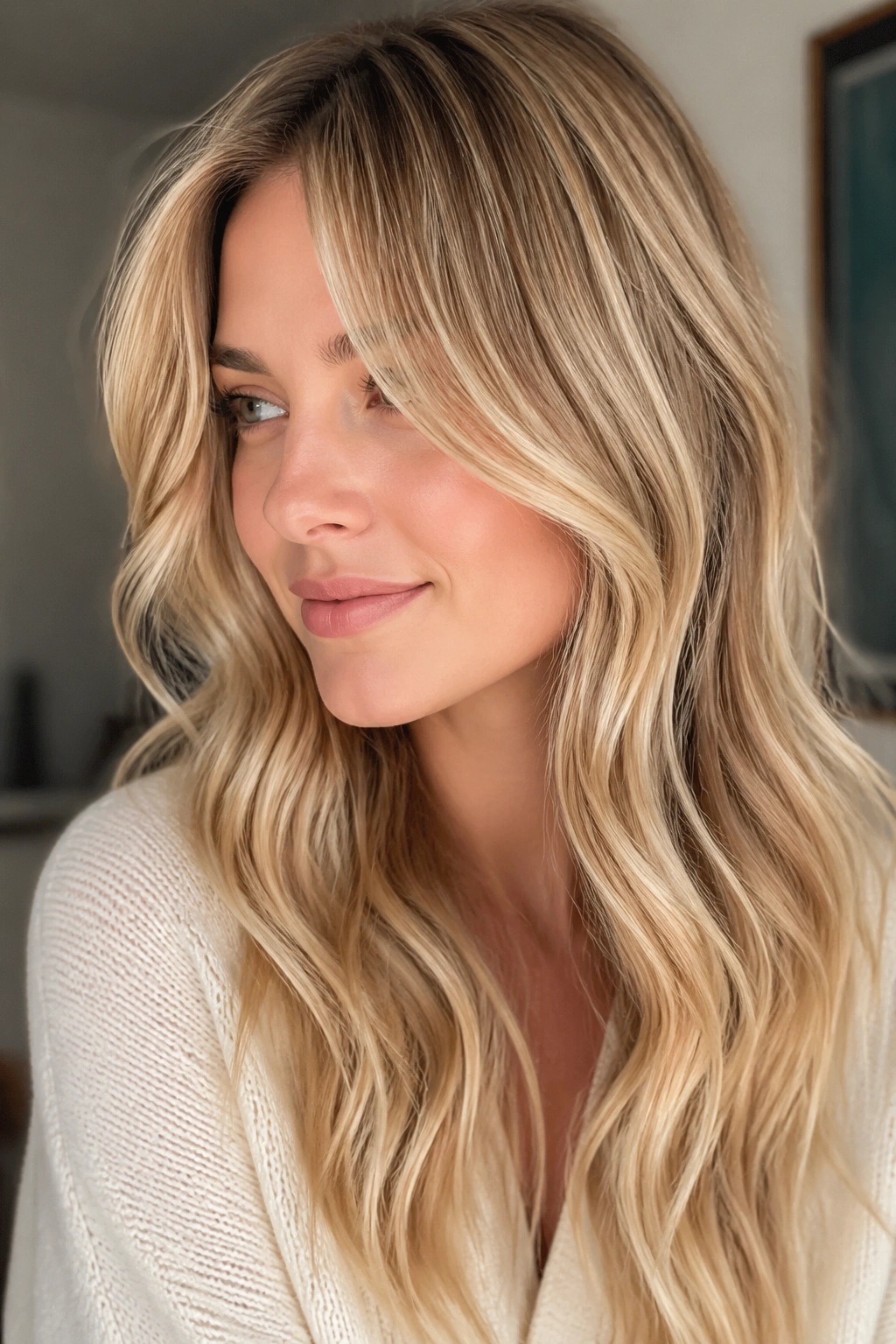
Warm vanilla blonde is what you get when you want brightness, but not a cool or icy finish.
It feels creamy. Soft. A little luminous. On dark blonde hair, vanilla warmth lifts the whole look without making the ends look fragile. That’s handy if your hair has been lightened before and you want to stay on the gentler side of the blonde spectrum.
How It Usually Works
The best vanilla shades sit on a dark blonde base and use lighter pieces only where the eye naturally goes first: around the face, through the crown, and on the top layer. The warmth should stay mellow, not yellow. If the color starts looking chalky, the toner is too cool. If it starts looking banana-bright, it went too far the other way.
A soft wave or round-brush blowout shows the tone better than pin-straight styling. The movement gives the creaminess somewhere to live.
19. Biscuit Bronde
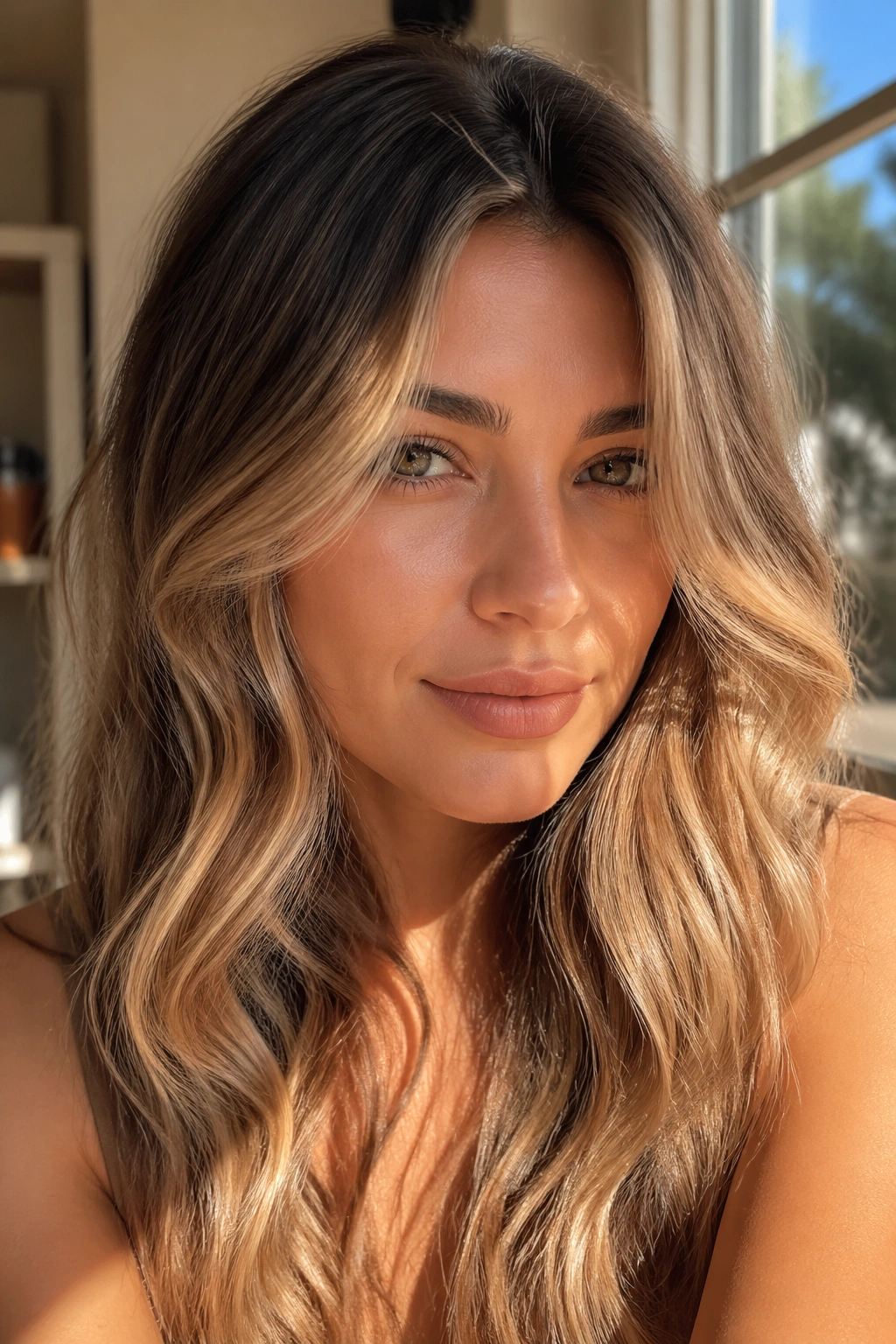
Biscuit bronde is for people who want the easiest possible warm blonde-adjacent color.
It mixes brown and blonde in a way that feels practical, not fussy. The biscuit tone adds a soft golden-beige cast that keeps the hair from reading muddy. That’s a good thing. Some bronde shades get too flat. Biscuit stays a little brighter, a little friendlier.
A Quick Way to Think About It
If honey blonde is a little sweet and toffee blonde is a little rich, biscuit bronde sits between them. It is the shade you pick when you want your roots to blend well, your grow-out to stay low drama, and your color to work with both straight hair and waves.
- Best for medium brown to dark blonde bases
- Nice with long layers or a lob
- Needs only light refreshes if the root stays soft
- Works well with warm brow makeup and gold jewelry
20. Gold-Tipped Curtain Bangs
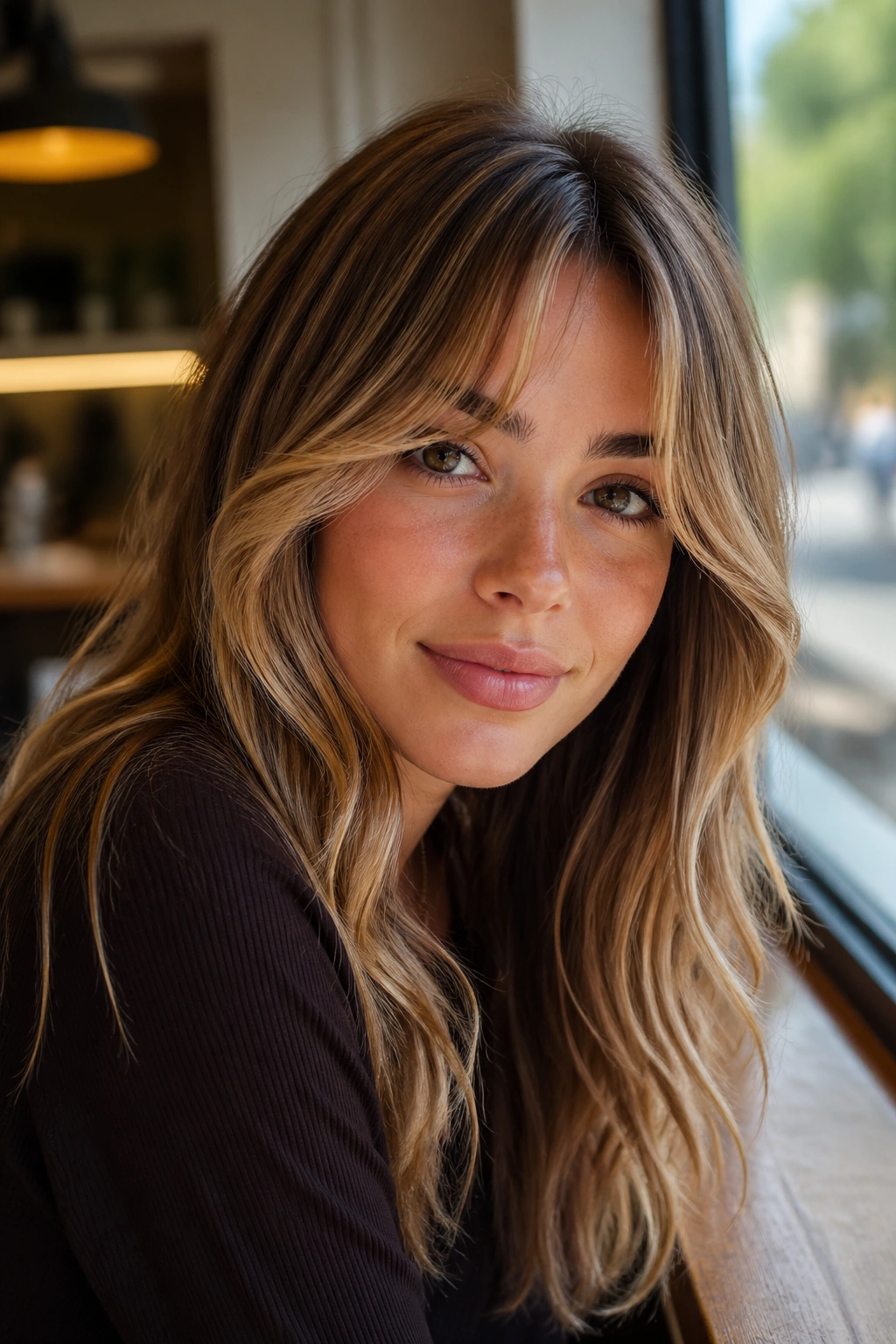
Gold-tipped curtain bangs are the cheapest-looking big change.
Cheapest-looking in the good sense. They give you a fresh read on the haircut without turning the entire head lighter. That tiny bit of gold at the bang ends and face frame can brighten the complexion and make the rest of the hair look newer, even if you have not changed much else.
This works best when the base stays dark blonde and the bang ends are painted a shade lighter. The contrast should be obvious enough to frame the face, but not so strong that it turns into streaks. Curtain bangs already do some of the shaping work, so the color only needs to support them.
If you’re nervous about commitment, start here. It’s a small move with a clear payoff.
21. Sunrise Brunette-to-Blonde Blend
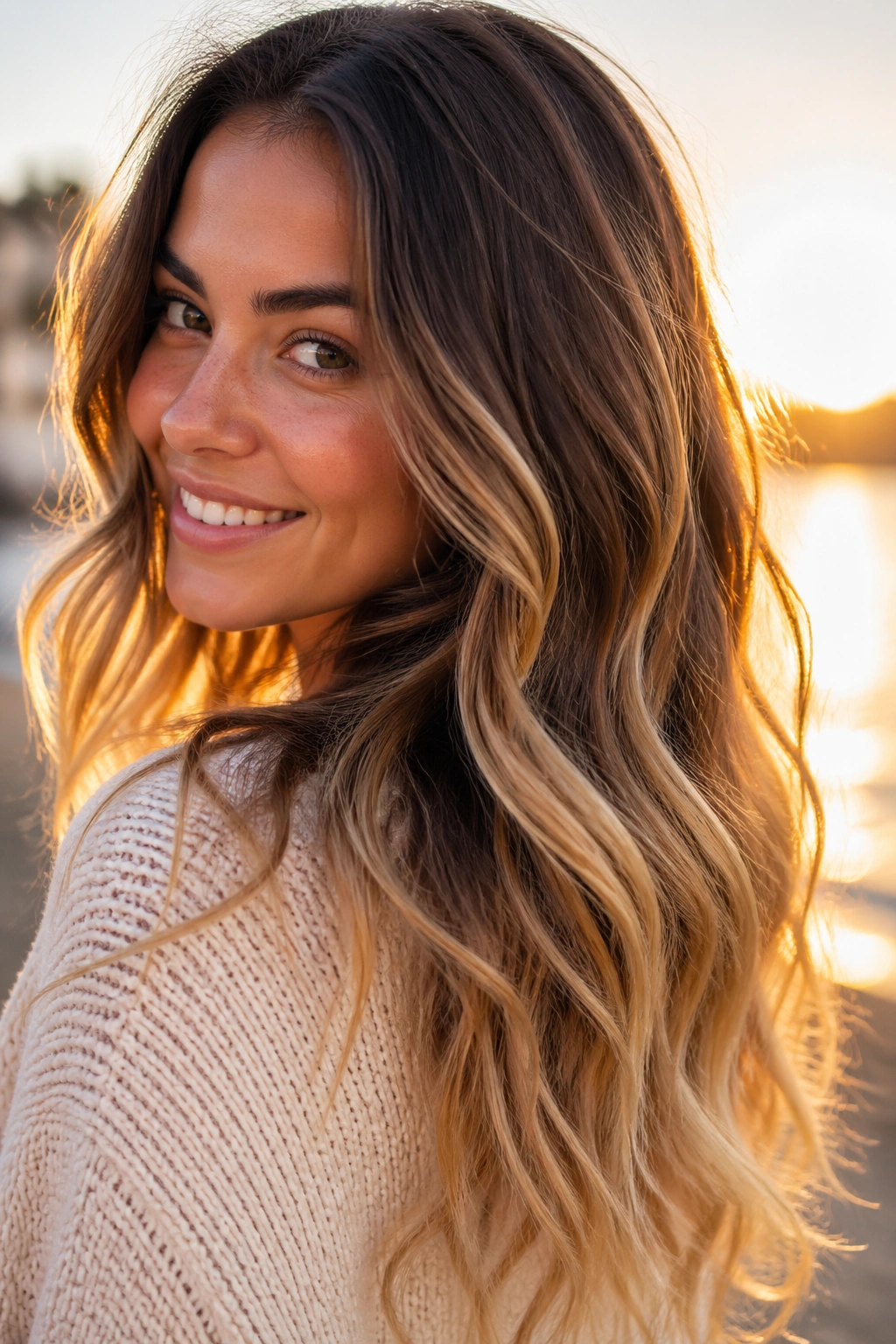
Sunrise brunette-to-blonde blend is warm hair color with a little drama.
It starts with brunette depth near the roots, then shifts into warm golden mids and lighter blonde ends, almost like the sky at dawn. That gradient gives the hair movement even when the cut is simple. It’s a strong option for anyone who wants more than “just highlights” but does not want a hard contrast.
What Makes It Different
The blend matters more than the brightness. If the transition is painted well, the hair looks layered and expensive in a very practical sense: it has shape, shine, and visible dimension from every angle. If it’s rushed, the whole thing can look muddy at the root and pale at the ends.
This is a good style if your natural color is deeper and you want to move toward dark blonde slowly instead of all at once.
22. Maple Cream Blonde
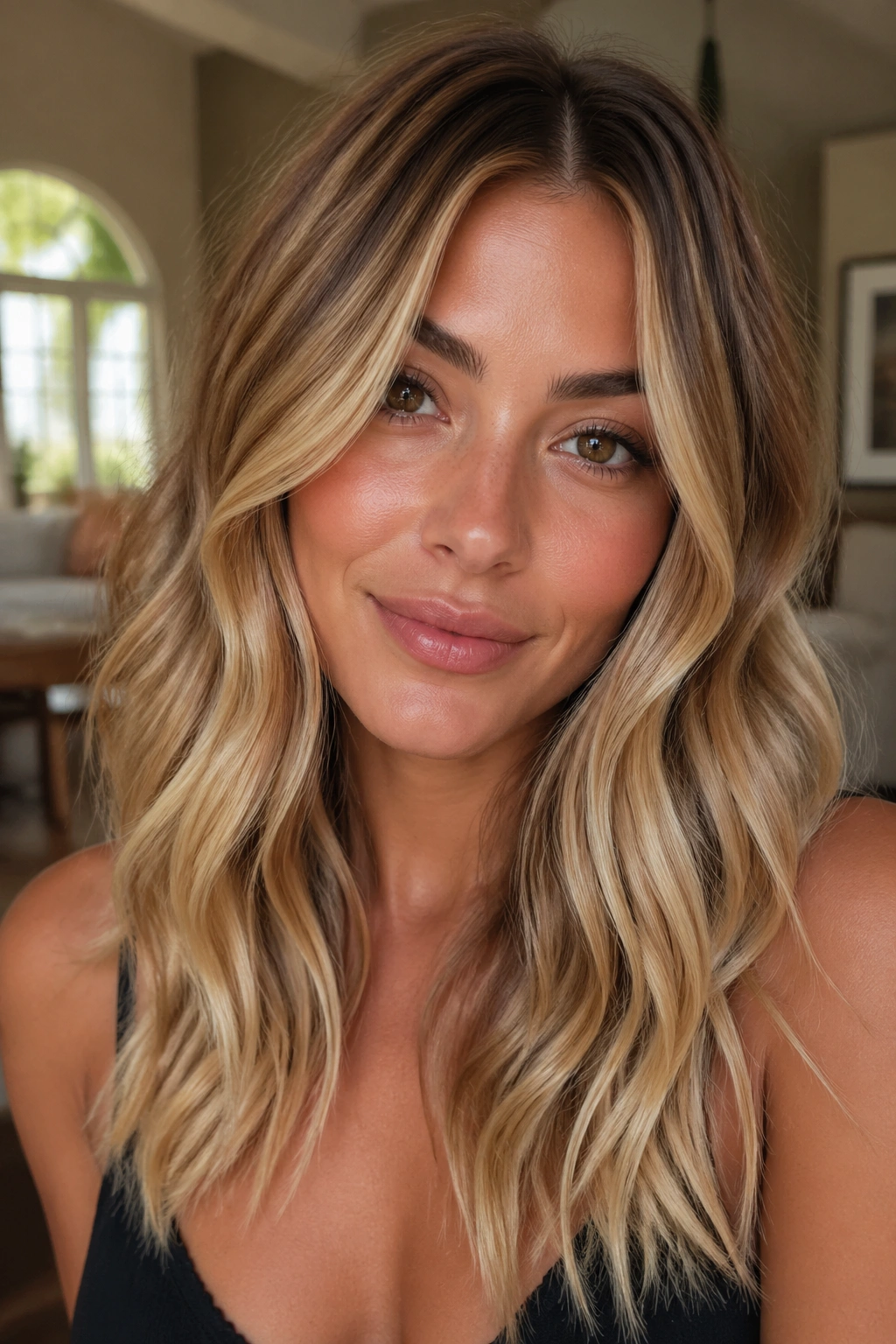
Maple cream blonde is richer than vanilla and softer than caramel.
That balance is what makes it useful. The maple note gives the root and mid-lengths a warm, brown-gold base, while the cream lightens the ends enough to keep the color from feeling heavy. It’s one of those shades that can make thick hair look smoother because the tone itself feels more blended.
Unlike a brighter honey blonde, maple cream does not depend on a lot of light pieces. The tone does the work. That means it can look especially good on shoulder-length cuts, bobs, and soft shags, where a lot of tiny highlights would start to feel busy.
If you want warmth with a little depth still left in the hair, this one is worth a close look.
23. Saffron Beige Blonde
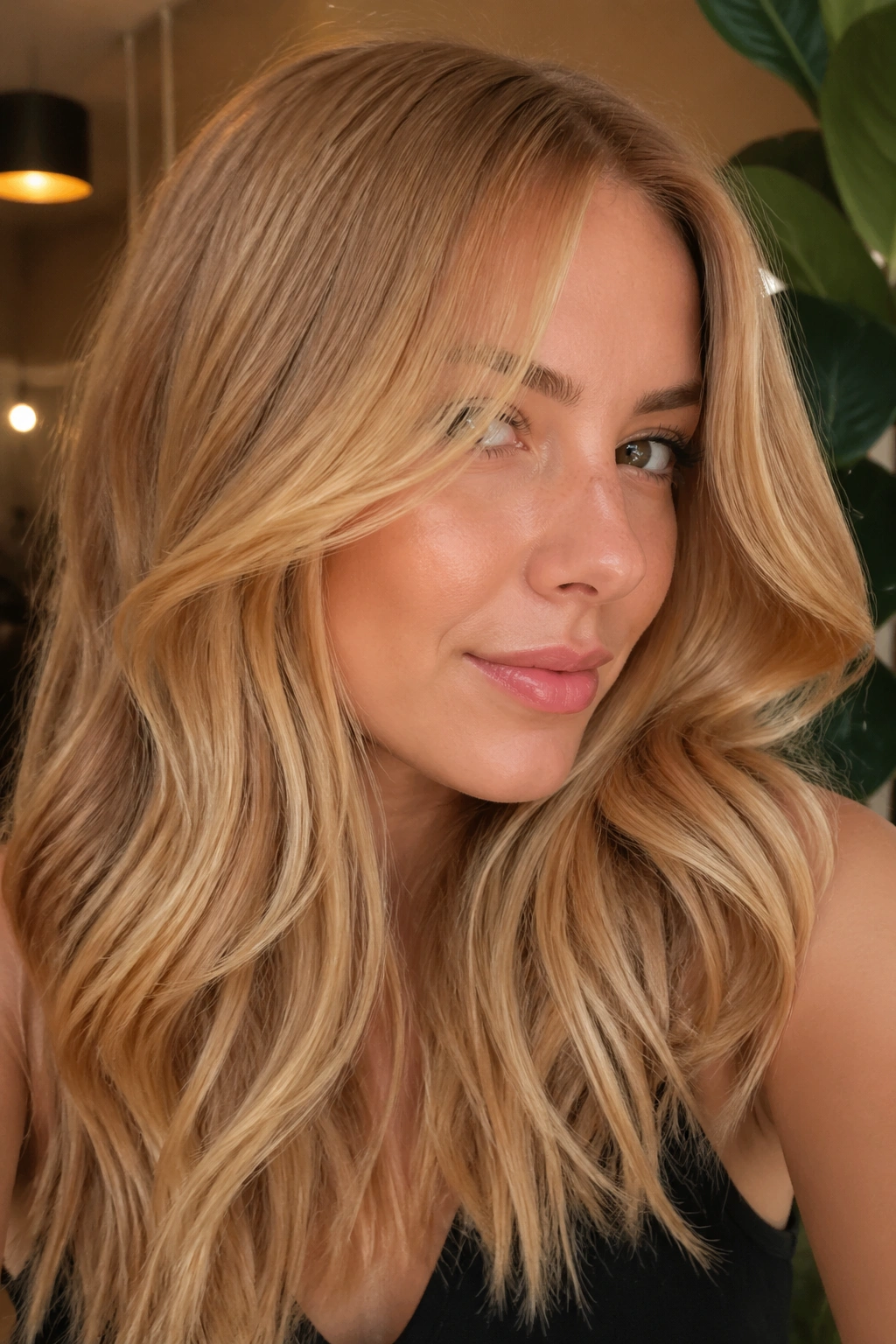
Saffron beige blonde sounds unusual, and that’s partly why I like it.
The saffron note adds a gentle spice warmth, while the beige keeps it grounded. The result is a dark blonde that looks different from plain honey without heading into copper. It has a subtle gold-orange softness that can be gorgeous on warm olive skin, especially when the eyes are dark and the brows are strong.
This shade is at its best when the warmth is spread through fine ribbons instead of one thick block of color. That keeps the saffron effect from taking over. It also helps if the finish stays glossy, because the shine makes the beige side of the tone show up more clearly.
A color like this works when you want warmth that feels a little more interesting than standard blonde.
24. Burnished Honey Blonde
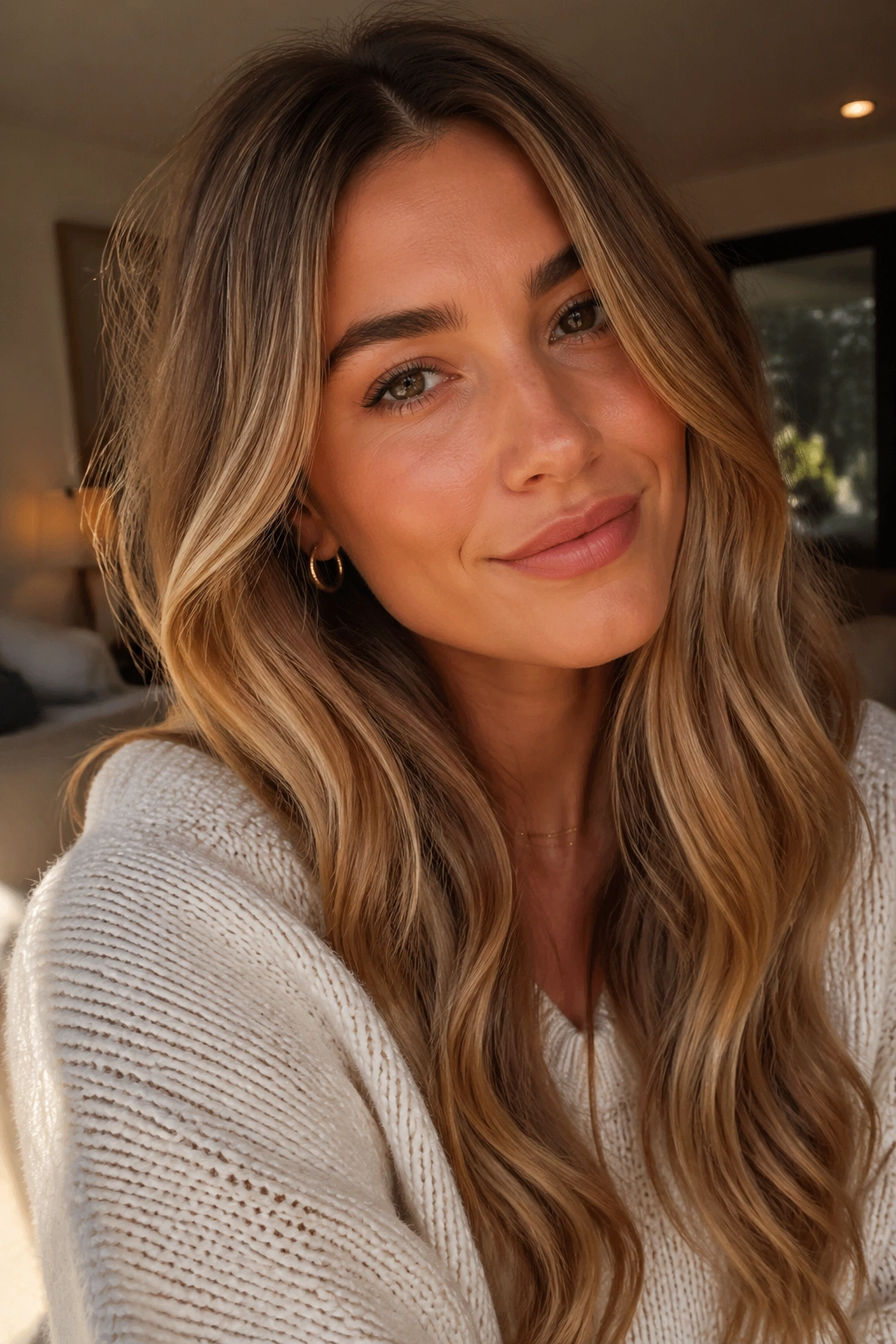
Burnished honey blonde is deeper, richer, and a touch more polished than classic honey.
The word burnished matters here. It suggests a warmed metal finish, not flat gold. That’s what gives the shade its depth. The hair looks like it has been softened by light rather than bleached toward pale ends. On warm tones, that usually reads as flattering instead of flashy.
How to Style It
A loose bend in the hair makes the burnished tone show its range. Straight hair can look sleek, but a soft wave gives the color more room to reflect. If you want the shade to stay deep and rich, avoid a toner that pushes the blonde too pale. Keep the base in the dark blonde lane, and let the glow come from the gloss.
- Great for layered cuts
- Works well on medium-density hair
- Needs regular glossing if you want the warm sheen to stay strong
- Pairs well with warm browns, rust, and bronze makeup
25. Sunlit Wheat Blonde
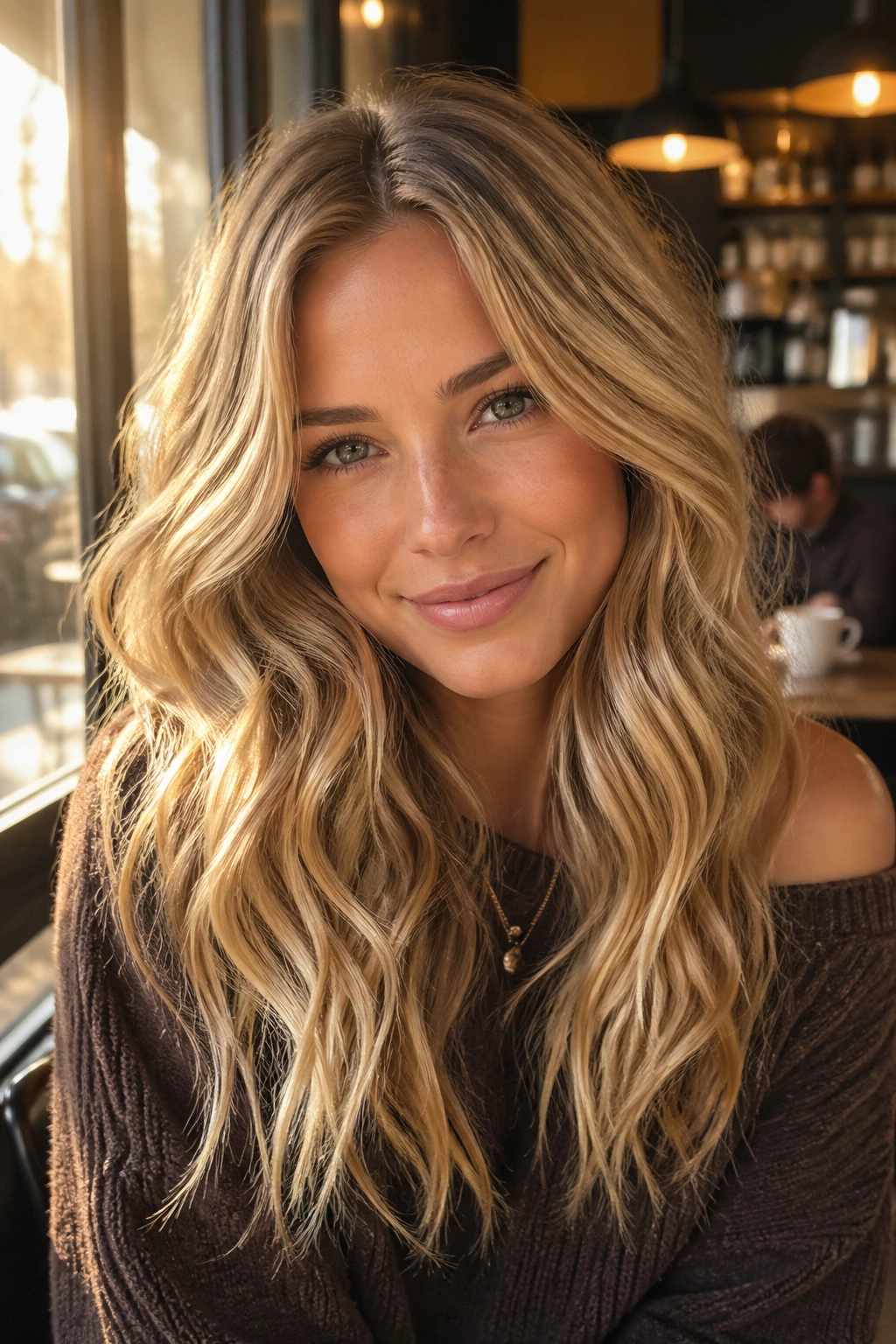
Sunlit wheat blonde is the gentlest warm blonde on this list, and maybe the easiest to live with.
It has that soft harvested-wheat color: golden, airy, and a little dry in the best way, without looking dull. The dark blonde base keeps the style rooted, while the wheat-toned pieces brighten the overall look. If you want a warm blonde that feels natural rather than styled to death, this one lands in a nice place.
I like it on people who want softness more than contrast. It can be worn with minimal makeup, in loose waves, or even in a simple ponytail and still look intentional. The color does not need perfect styling to make sense.
If your hair is already warm and you want to stay in that lane without chasing brass, sunlit wheat is a calm, dependable choice.
Final Notes
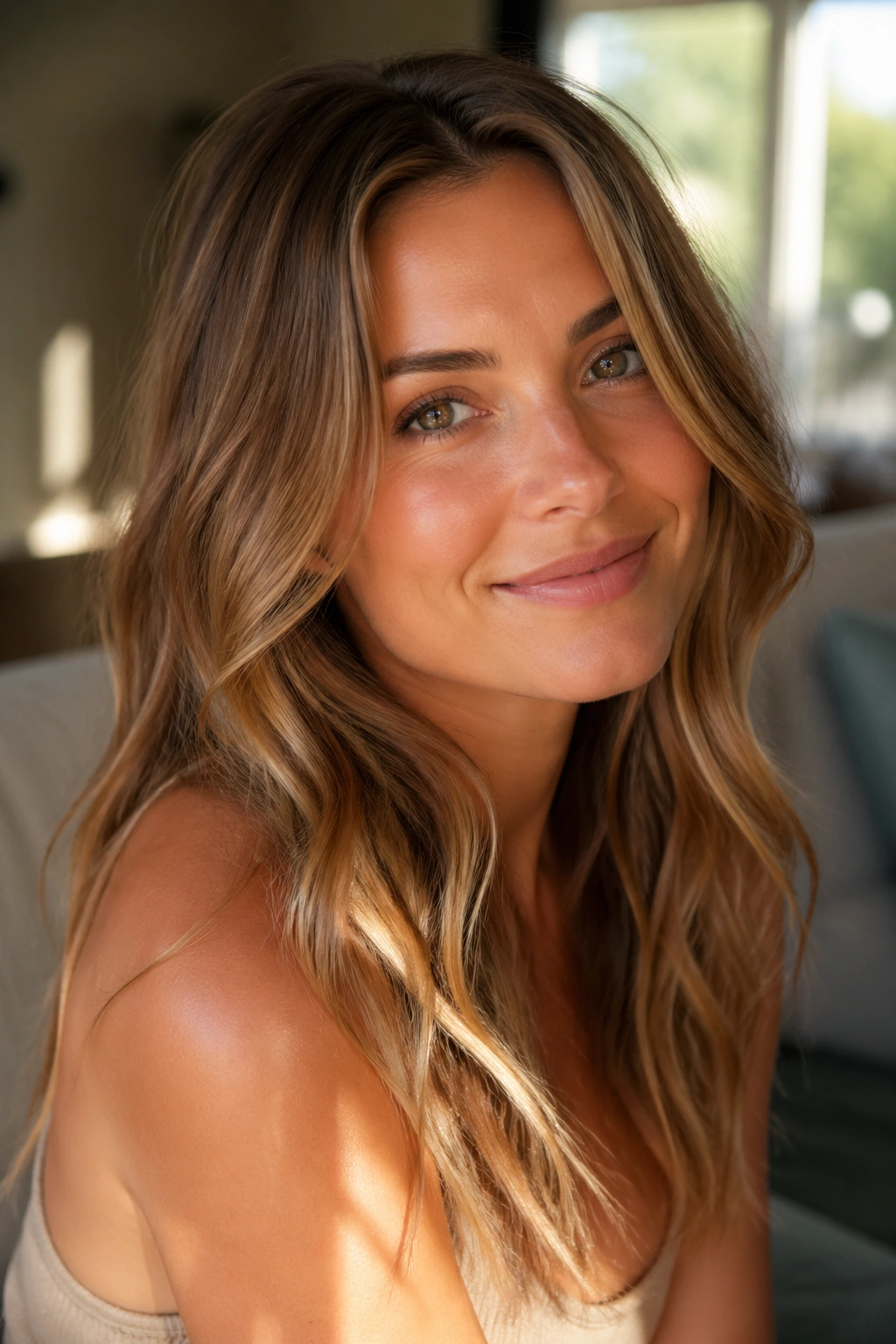
Warm dark blonde works best when the tone feels intentional, not accidental. Honey, caramel, gold, apricot, maple, and beige all have their place, but the cleanest results usually come from keeping the root a little deeper and letting the warmth live in the gloss, ribbons, or face-framing pieces.
If you’re torn between two shades, pick the one with the softer grow-out. That is usually the one you’ll like three weeks later, which matters more than the first-day mirror check. Hair color should look good when it’s freshly done, sure. It should also look decent when you’ve tied it back, skipped a wash, and gone about your life.
