
Glasses change a haircut more than most people realize. Put a heavy frame next to a blunt fringe and the whole face can feel crowded; keep the same frame with a lifted, airy crop and suddenly the eyes look open and rested.
The smartest short cuts for women who wear glasses do two jobs at once. They leave room for the frames, and they give the hair shape where age tends to steal it — at the crown, around the temples, and through the sides.
I always pay attention to three details: the line of the brow, the width of the frame, and how much hair sits at the nape. Get those right and a cut can look crisp with almost no effort. Get them wrong and even a good haircut can feel fussy.
Short hair does not have to mean severe. Soft fringe, feathered ends, a little bend at the cheekbone, and a clean neckline can make glasses look like part of the outfit instead of an afterthought. Start there.
1. Feathered Pixie With Side-Swept Fringe
A feathered pixie is one of those cuts that quietly does a lot of work. The side-swept fringe softens the brow area, while the feathered top keeps the style light around the temples, which matters when your frames already draw a strong line across the face.
Why it works with glasses
The best version sits close at the sides and stays airy on top. That keeps the glasses arm from fighting with bulky hair near the ear. It also gives the eye area a little lift, which is handy if your hair has gone finer over time.
Ask for the fringe to skim across the forehead and stop just above the frame line. Too short and the cut can look spiky. Too long and it falls into the lenses.
Best for: straight to slightly wavy hair, fine hair, small to medium frames.
Styling note: a pea-sized amount of light paste is enough. Rub it between your palms, then pinch the ends for separation.
2. Rounded Jawline Bob
A rounded bob lives or dies on its curve. When the ends bend softly under the jaw, the cut creates a neat frame for the face without competing with the shape of your glasses.
This style is especially kind to square or rectangular frames. Those frames already bring structure, so the rounded bob gives back a little softness. If the hair is thick, ask for internal removal at the ends, not heavy layers that puff out at the sides.
Keep the length just below the jaw if you want the face to look a touch longer. A chin-skimming cut can work too, but it needs a clean edge. Messy ends here are not charming; they just look unfinished.
3. Tapered Nape Crop
Clean at the back, soft at the front. That’s the whole appeal.
A tapered nape crop keeps the neckline neat and lets the crown sit a little fuller, which is a smart trade if your hair has lost density. The back looks sharp in a mirror, and the front stays gentle enough that the glasses still feel like the main feature.
What to tell your stylist
- Keep the nape tight but not shaved.
- Leave enough length at the top to brush forward or to the side.
- Soften the sideburn area so the frames do not sit against a hard line.
- Avoid a square outline unless you like a stronger, more graphic look.
This cut is one of the easiest to live with. Wash, finger-dry, done.
4. Textured Silver Pixie Shag
Silver hair loves movement. Flat silver hair can look dry fast, but a textured pixie shag gives it lift, especially around the crown and cheekbones.
The shag part matters. Tiny, uneven layers keep the shape from turning helmet-like, and that is exactly what you want if your glasses already have a defined shape. Round frames, cat-eye frames, wire frames — this cut plays nicely with all of them because the hair never sits in one hard block.
A little mousse at the roots helps, but don’t drown it. Too much product makes gray hair feel sticky and heavy. Dry it with your fingers, not a brush, and let the ends stay a touch piecey.
5. Chin-Length French Bob With Airy Bangs
This one has a crisp line, but it still feels soft. The chin-length French bob sits close to the face, and the airy bangs keep it from looking severe against glasses.
The trick is the fringe. You do not want a solid curtain that lands right on the frame top. You want separated pieces that graze the forehead and leave small gaps of skin showing through. That keeps the eye area open.
If your frames are round, this bob gives a nice contrast. If your frames are angular, the cut softens the whole look. Either way, the chin length keeps attention near the mouth and jaw, which can be flattering if you want a little lift without going too short.
6. Stacked Wedge Bob
Fine hair loves a wedge. Thick hair can wear it too, but the cut works best when the back is stacked in tidy layers that build height at the crown.
That lift is the point. Glasses add horizontal weight to the face, and a stacked wedge gives you vertical shape in return. The profile matters here. From the side, the cut should curve neatly into the neck instead of flaring out.
Small details that matter
- Ask for stacked layers only through the back section.
- Keep the front corners longer so the face does not look boxed in.
- Blow-dry with a round brush for a smooth bend at the ends.
- Use a lightweight spray, not a stiff lacquer.
This cut looks polished without asking much from you. That’s a nice trade.
7. Asymmetrical Bob With a Deep Side Part
Want a haircut that makes bold frames look sharper? This is a good place to start.
An asymmetrical bob creates motion even when the hair is still. One side sits a little longer, the part drops low, and the whole shape pulls the eye diagonally instead of straight across the face. That diagonal line helps soften big square glasses or heavy acetate frames.
The important part is restraint. If the difference in length is too dramatic, the cut starts to wear you instead of the other way around. A subtle slope looks better day to day and is easier to style. Tuck the shorter side behind one ear. Let the longer side fall near the cheekbone.
8. Curly Crop With an Open Fringe
Curly hair does not need to be tamed into a helmet. It needs room.
A curly crop with an open fringe lets the curls sit high enough to show the glasses and low enough to keep the forehead soft. The fringe should not be a solid wall. Think broken curls, not a straight line.
What makes it work
- The top is cut to keep curl spring.
- The sides stay short enough to clear the frame arms.
- The fringe is left a little longer so it can split naturally.
- The neckline is kept clean, which stops the whole shape from looking bulky.
This is a good option if your hair frizzes easily. A small amount of curl cream on damp hair, then air-drying or diffusing, usually does the job. Don’t over-touch it while it dries. Curly hair always pays a price for that.
9. Sleek Ear-Tucked Bob
There’s something strong about a bob that sits cleanly behind the ear. It shows off the frames, the jawline, and the neck all at once.
This version works best on straight or straight-ish hair. The ends are blunt or lightly beveled, and the finish is smooth rather than fluffy. If your glasses are delicate wire frames, this cut keeps the whole face light and uncluttered. If your frames are thicker, the sleek bob gives them a tidy backdrop.
A flat iron can help, but only if the hair is fully dry and protected first. Keep the pass slow and the tension gentle. A lot of older hair is fine at the front but coarser underneath, so check the nape too. That’s where rough ends tend to hide.
10. Razor-Cut Pixie With a Longer Top
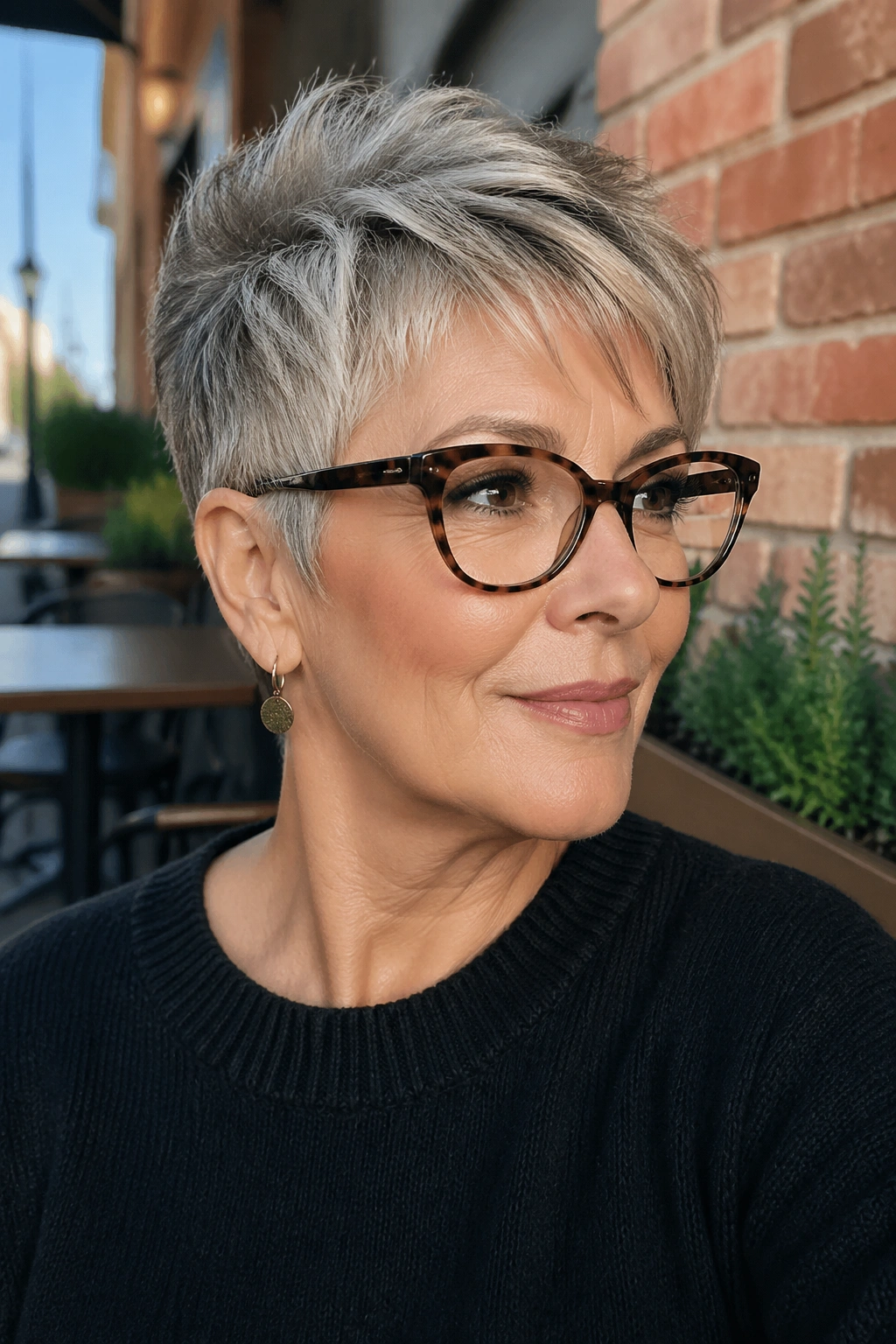
This one has edge, but it is not fussy.
A razor-cut pixie keeps the perimeter soft and the top pieces longer, which gives you movement without losing shape. The razor texture helps the hair sit close around the ears, so the glasses arms don’t have to fight through bulky sides.
The longer top lets you direct the hair forward, up, or to one side. That matters if your face changes shape a little from day to day depending on how the frames sit. A small switch in direction can make the whole cut feel fresh.
Best for: straight hair, thick hair that needs debulking, women who like a sharper finish.
Styling note: dry it rough with your fingers, then use a tiny bit of matte paste only at the top.
11. Crown-Lift Crop for Thinning Hair
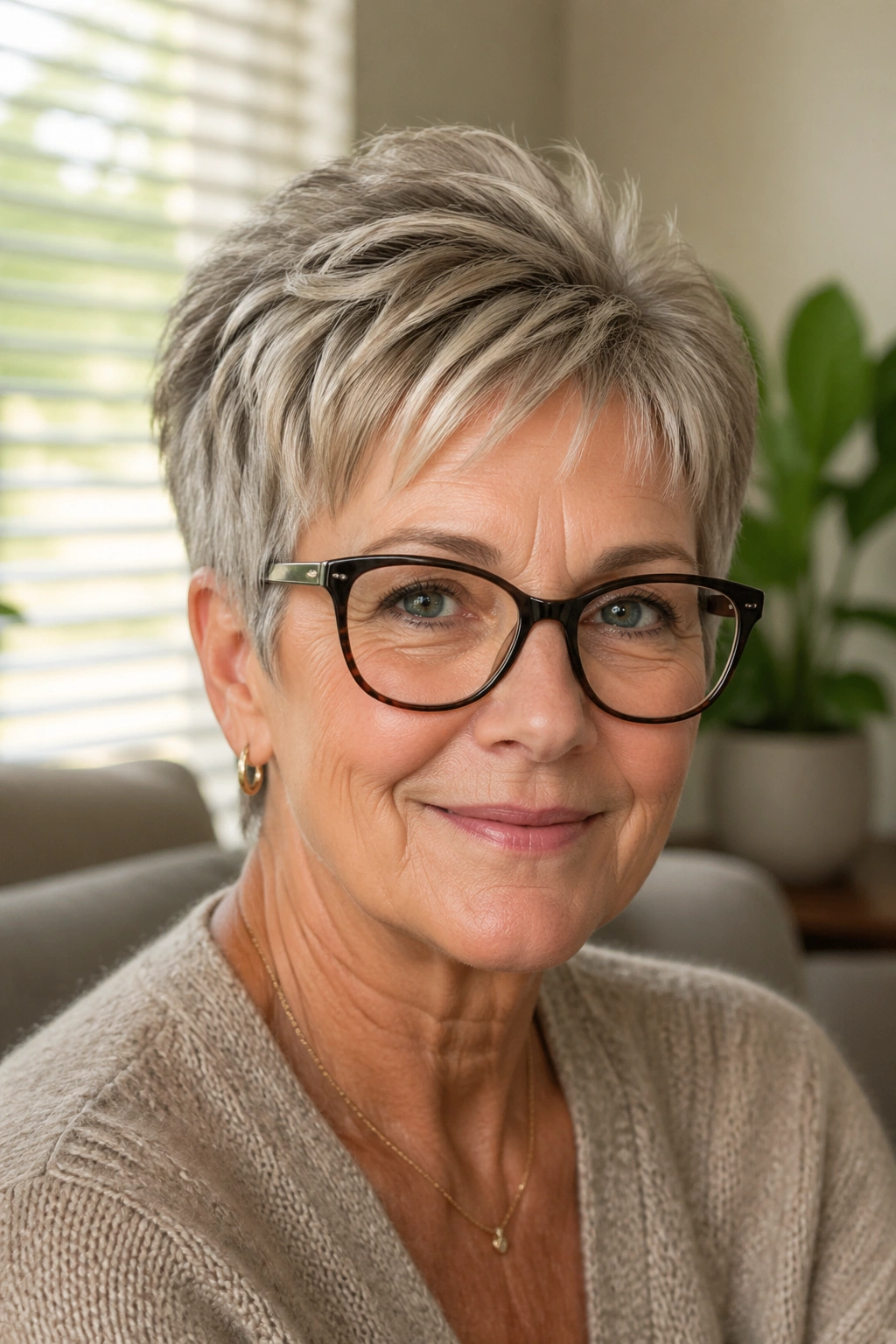
If the hair at the top has gone flat, build there first. Not at the sides.
A crown-lift crop uses short layers and smart direction to make the top stand up a bit, which gives the face more balance against glasses. The side sections stay neat, the back stays controlled, and the eye moves upward instead of getting stuck at the frame line.
What to ask for
- Shorter layers at the crown.
- Tapered sides that do not puff out.
- A soft fringe if you want to cover part of the forehead.
- No heavy weight line across the brow.
A root-lifting spray or mousse helps, but the real trick is the cut itself. Product can’t rescue a shape that’s too heavy on the sides. That’s the part most people miss.
12. Salt-and-Pepper Pageboy

A pageboy sounds old-fashioned until you see it done well. Then it just looks calm and expensive in the best sense of the word.
The modern version is softer than the classic shape. The ends curve under a little, the top has gentle bend, and the overall line sits close to the head. That makes it a nice match for glasses because the hair doesn’t bulge out beside the frames.
This cut is especially good when the salt-and-pepper color is doing its own visual work. You do not need extra layering to make it interesting. A clean shine spray and a precise blow-dry are usually enough. If your hair tends to flip out at the ends, ask for the cut to be slightly beveled.
13. Bixie With Piecey Texture
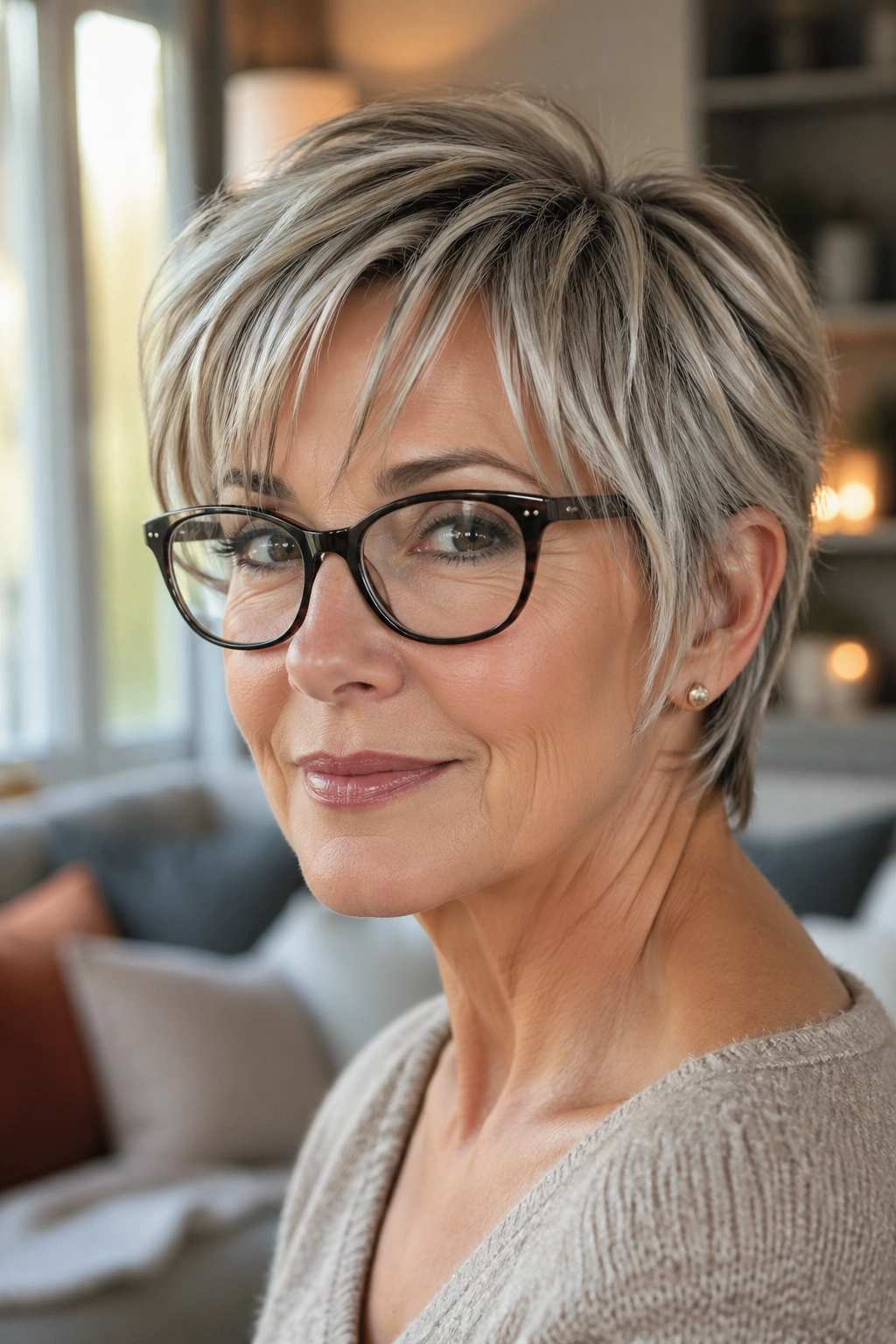
A bixie sits right between a bob and a pixie, and that middle ground is useful. It gives you enough length to tuck behind the ear, but not so much that the sides start overwhelming your glasses.
The piecey texture keeps the cut from feeling heavy. Each section should look separated, not blobbed together. That separation is what makes the face appear brighter, especially if your frames are medium or large.
A bixie is also a nice answer to hair that changes moods. Some days it falls flat. Some days it flips. The cut can handle both. Use a little texturizing spray at the roots and a dab of cream on the ends if they feel too dry. That’s usually enough.
14. Wavy Crop With Soft Layers
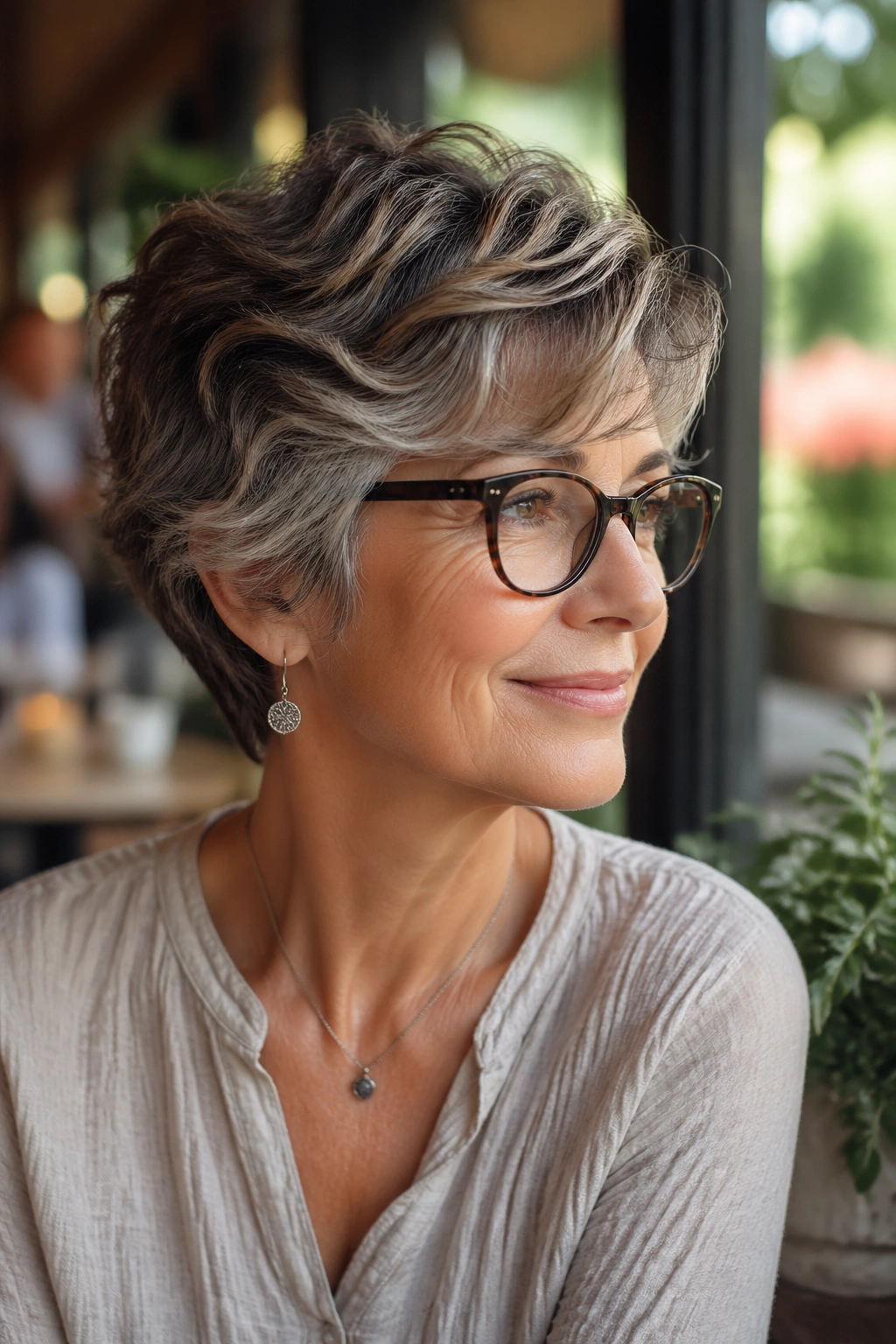
Natural wave can do a lot of the work for you, which is one reason this cut is such a favorite.
The soft layers should start low enough to keep the top from frizzing up and high enough to stop the bottom from hanging in a heavy sheet. That balance matters with glasses, because waves that sit too close to the cheeks can crowd the frames and make the face look wider than it is.
Let the bend show. Don’t iron the life out of it. A wavy crop looks best when the texture is visible around the temples and the nape stays a bit neater. If your hair is silver, white, or salt-and-pepper, the movement really shows. The light hits the bends and the whole cut looks more alive.
15. Undercut Pixie With a Long Top Sweep
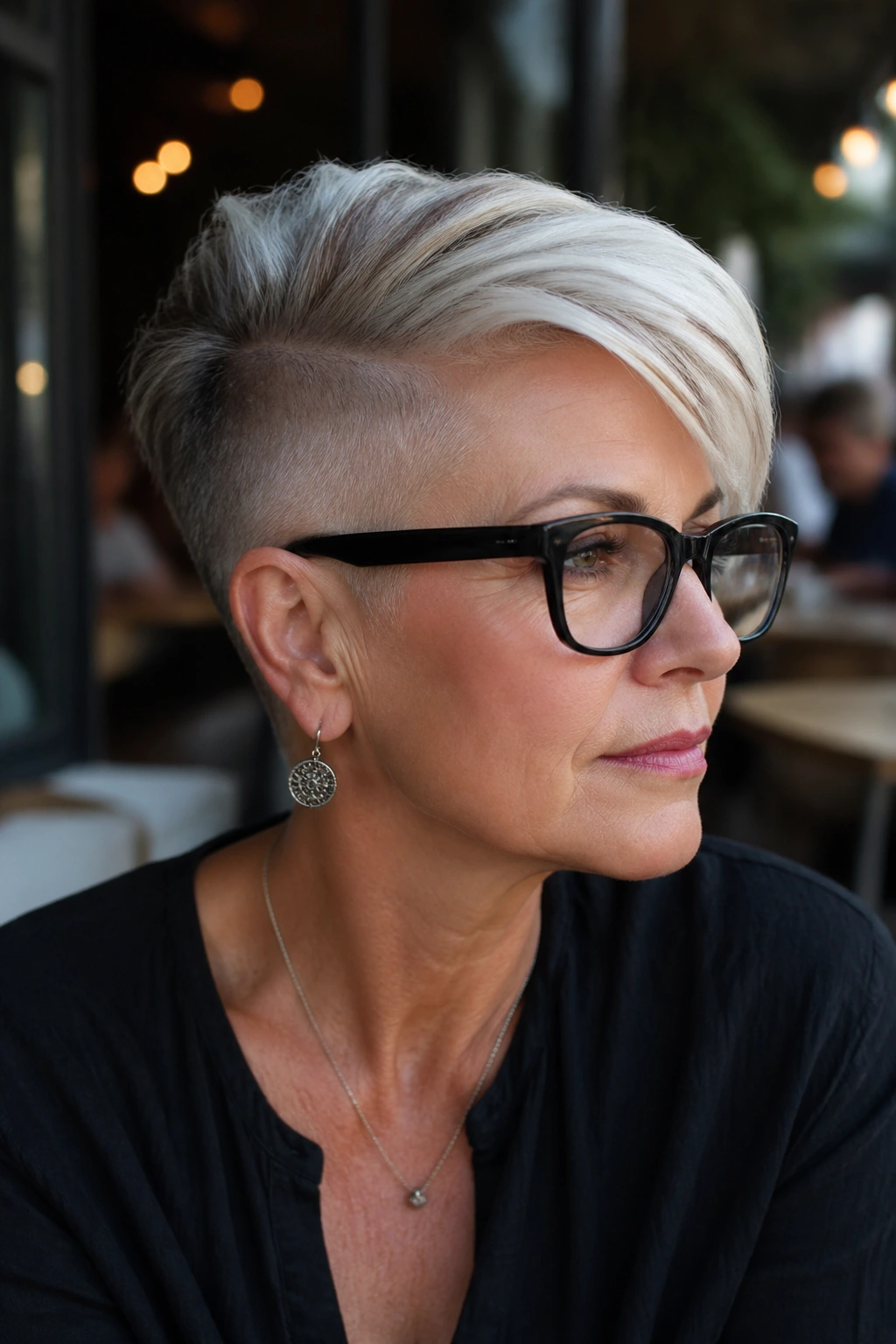
If you like a little drama, this is the cut.
The undercut keeps the sides and back very close, which clears the frames and takes weight off the hairline. The long top sweep gives you all the styling options — forward, sideways, brushed back, or slightly lifted. That contrast is what makes the style interesting.
It also solves a common problem: hair that is thick at the top but too bulky near the ears. A small undercut removes that bulk without making the haircut severe. It’s a blunt answer to a practical problem, and I like that.
This cut does need regular trims. The sides grow out faster than people expect. If you skip the trims, the shape loses its clean line and starts to look more accidental than chic.
16. Stacked Bob With a Hollowed Nape
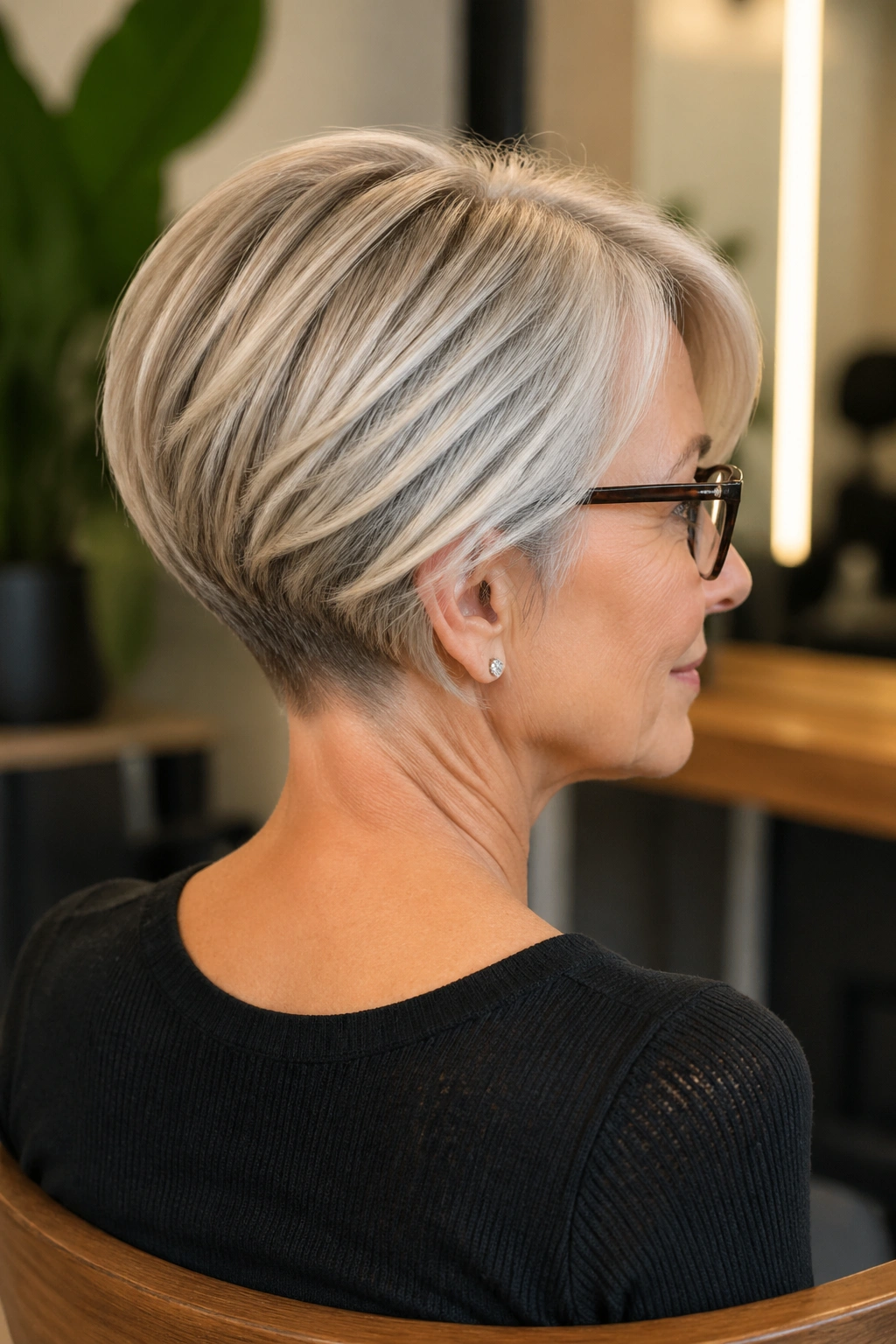
This is the bob for someone who wants shape from the side and back, not just the front.
A stacked bob builds layers through the back so the nape sits close and the crown sits fuller. The “hollowed” part means the middle back is carved out enough to remove bulk. That gives the style a crisp curve, which looks especially good with glasses because the face gains height without extra width.
It’s a strong cut for straight or slightly wavy hair. Thick hair benefits from the internal removal; fine hair benefits from the lift. The outline should stay clean and rounded, not choppy. If the bob is cut too bluntly in the back, it can sit like a shelf.
A side part helps. So does a quick blow-dry with the head turned upside down for volume at the roots.
17. Side-Parted Crop With a Long Fringe
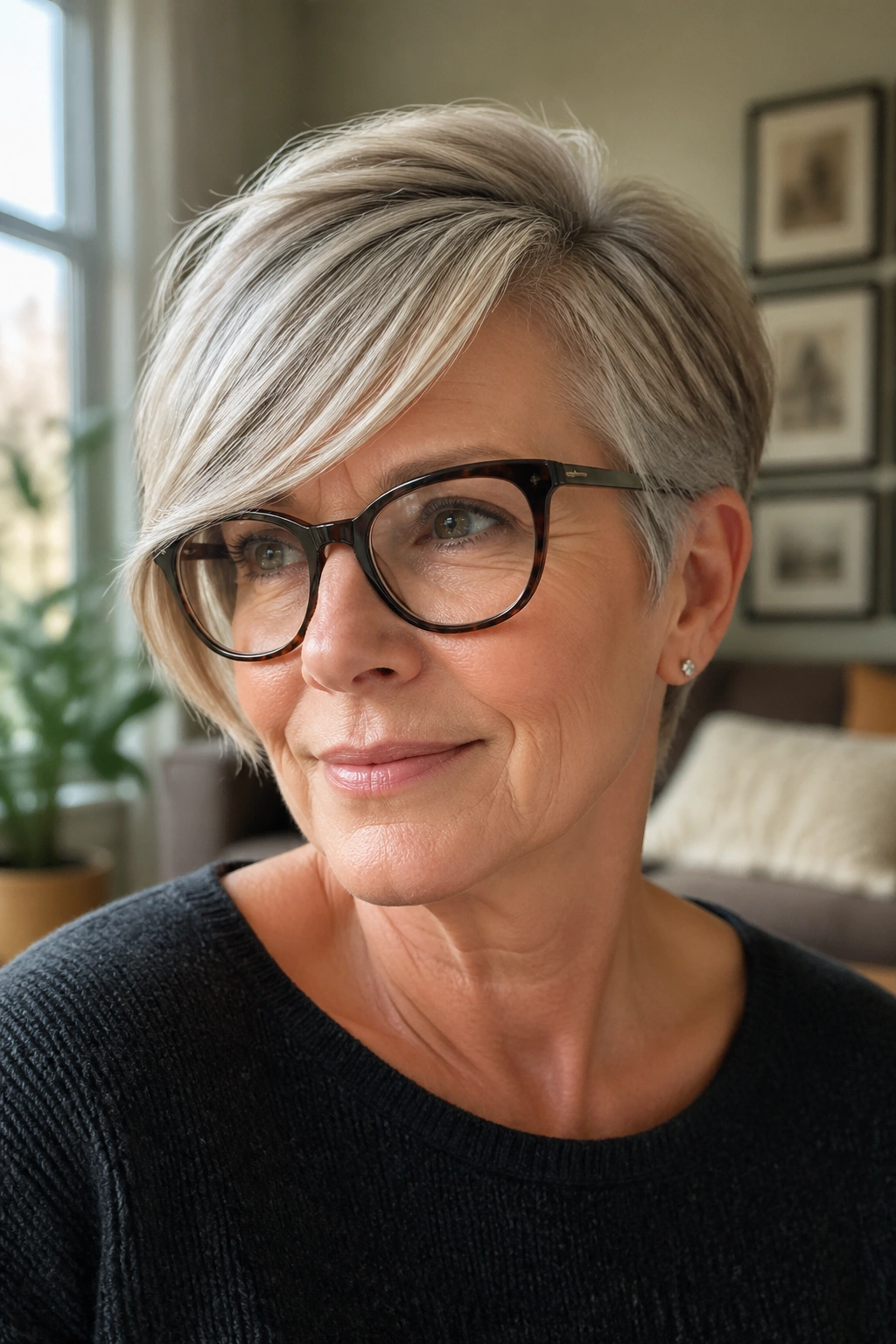
A deep side part changes everything. Seriously.
Move the part an inch or two off center and the whole face softens. The long fringe can sweep across one brow, skim the top of the glasses, and then disappear into the rest of the cut. That line is useful if you want forehead coverage without committing to heavy bangs.
This style works well with wider frames because the fringe breaks up the horizontal line. It also helps with a long face, since the side-swept shape shortens the look a little. Keep the fringe light enough that it can move. A stiff bang against glasses is a fast route to annoyance.
Styling tip: blow the fringe in the opposite direction first, then guide it over. It helps the hair keep a little bend instead of lying flat.
18. Curly Ear-Length Bob
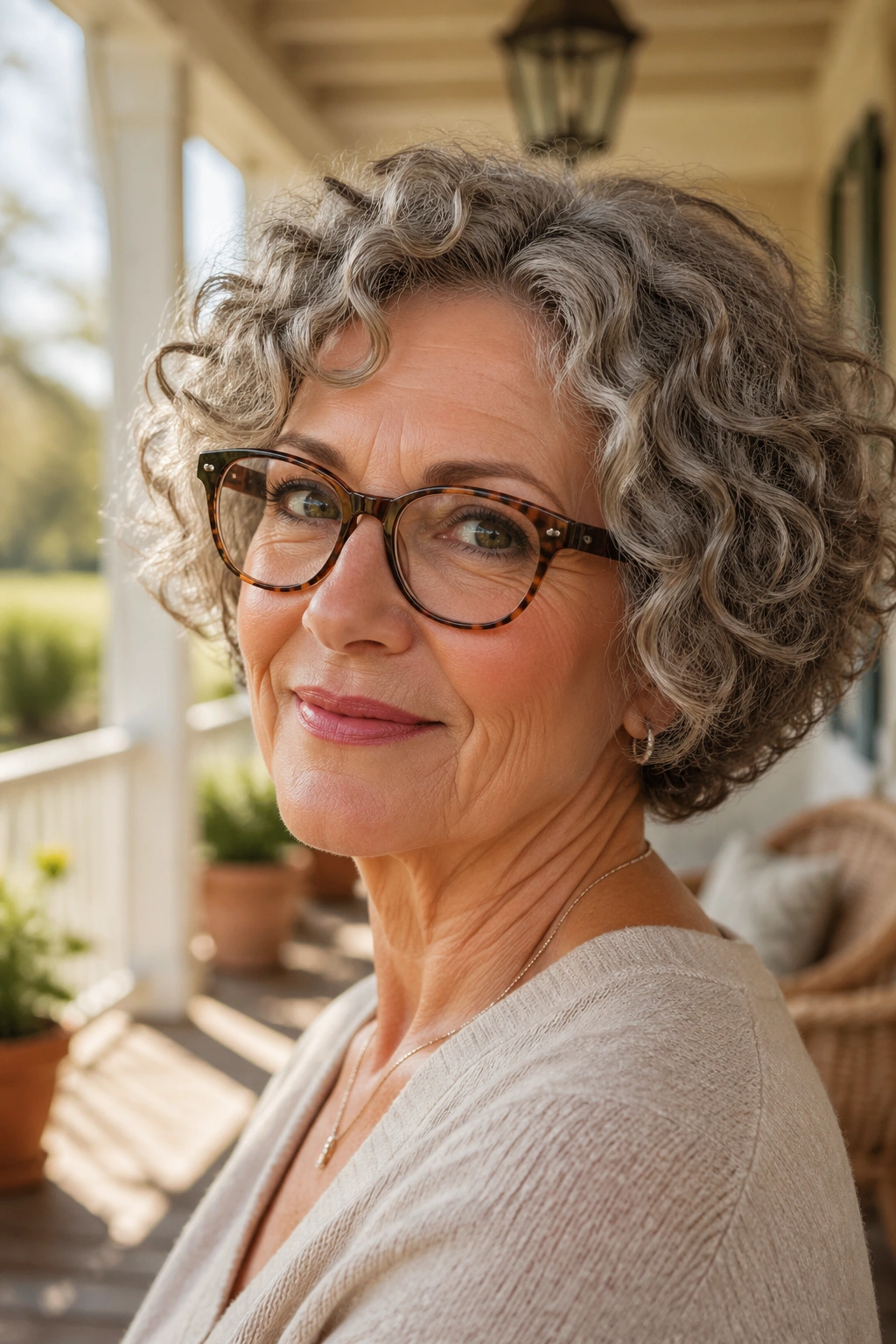
Tighter curls often look best when they’re cut shorter than people expect.
An ear-length bob gives the curls room to spring while keeping the overall shape compact. That compactness matters with glasses. Too much width at the cheek can make the frames feel crowded; this cut controls that by keeping the perimeter in a tighter box.
The cut should be done curl by curl, or close to it, so the shape doesn’t surprise you after the hair dries. That part is annoying but worth it. Curly hair always changes after it leaves the chair, and ear-length styles make that change more obvious. Diffuse on low heat, scrunch only once, and leave some frizz alone. A little frizz on curls is not a problem. It is texture.
19. Soft Mullet-Inspired Short Cut
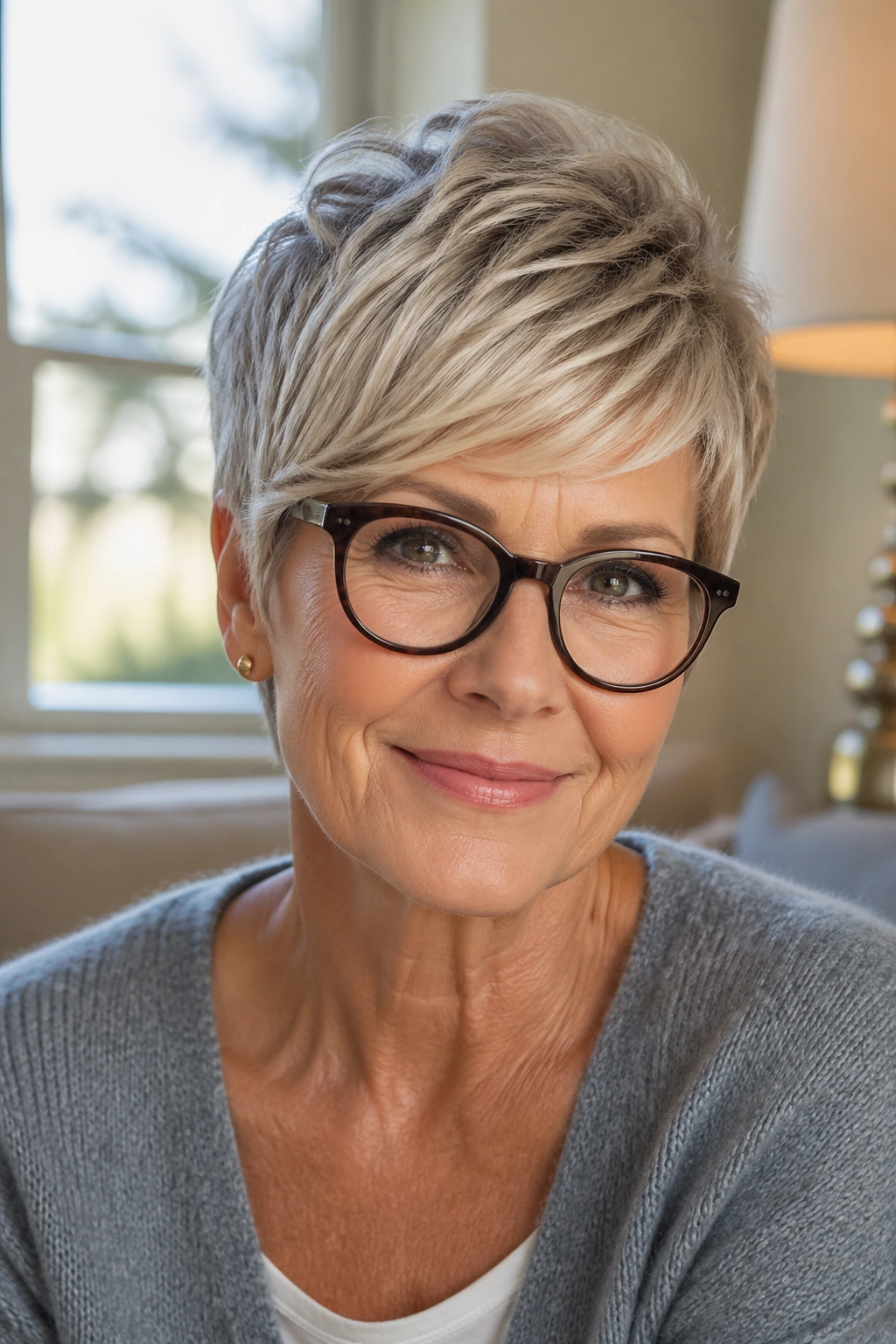
A soft mullet-inspired cut sounds bolder than it feels.
The front and sides stay short, while the back keeps a little more length and movement. The softer version avoids the sharp contrast that makes some mullets feel costume-y. Instead, you get a bit of lift around the face and a gentle tail at the back, which can be surprisingly flattering with glasses.
This cut suits people who do not want a neat little helmet shape. It gives the hair freedom. It also works well if your frames are simple, because the haircut adds the interest. If the frames are heavy already, keep the back piecey and the front light.
Ask for soft layering at the back, not a hard disconnect. That keeps the shape wearable.
20. Blunt Bob With Beveled Ends
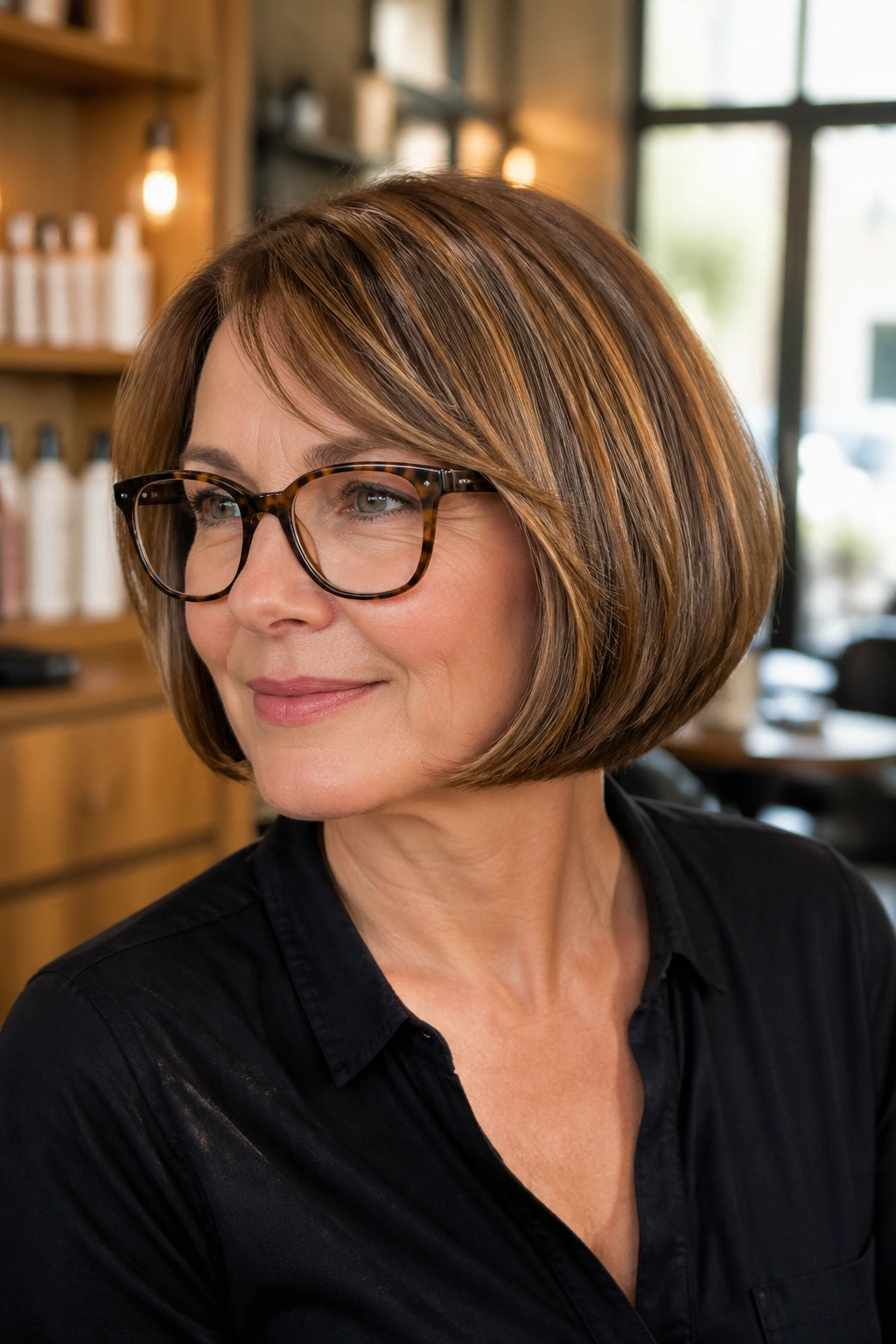
A blunt bob can be the right answer when you want clean lines.
The blunt edge gives the haircut weight, and the beveled ends stop it from feeling boxy. That tiny inward curve at the bottom makes the style sit better against glasses, especially if the frames have a strong lower rim or a dark top line.
This is not the haircut to choose if you want airy movement. It’s the haircut to choose if you want certainty. The shape says exactly where it ends. That can be very flattering with mature features because it puts the focus where you want it — around the eyes, cheekbones, and mouth — rather than all over the place.
Keep the line polished. Split ends show fast on blunt cuts, so trims matter more here than many people think.
21. Choppy Crown Crop
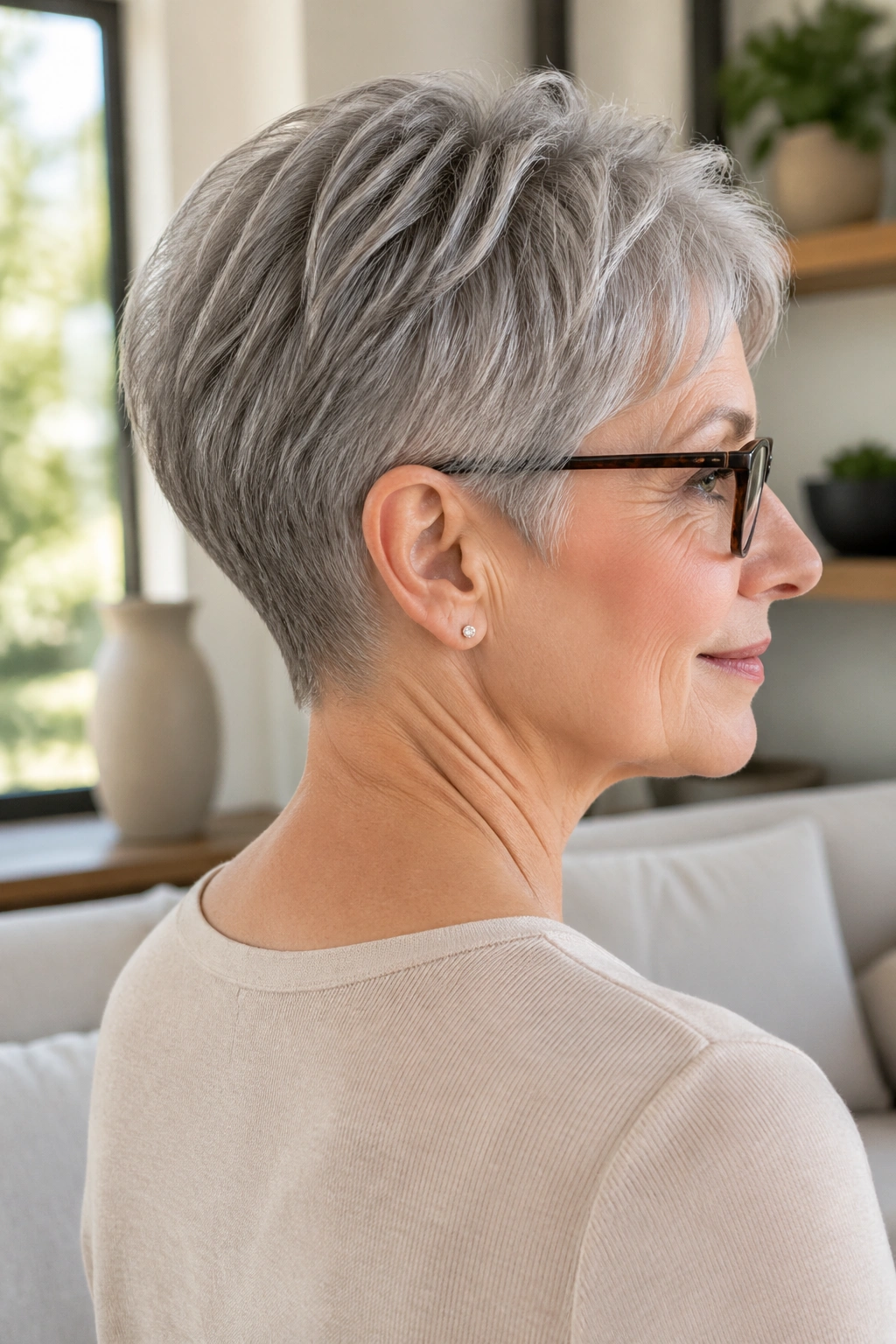
A choppy crown crop gives short hair a little attitude without making it hard to wear.
The crown is cut with uneven texture so it lifts and separates instead of lying flat. That texture helps if your glasses sit low on the face, because the eyes still get a bit of upward energy. The sides stay shorter and smoother, so the overall shape doesn’t blow out too wide.
Best ways to wear it
- Use matte paste, not shiny gel.
- Push the crown pieces forward or slightly diagonally.
- Keep the nape neat so the top remains the focus.
- Let the fringe stay broken up instead of combed smooth.
This cut is great on hair that wants to grow in different directions. Cowlicks stop being a problem and start being part of the style. That’s a good trade.
22. Feather-Light Layered Bob
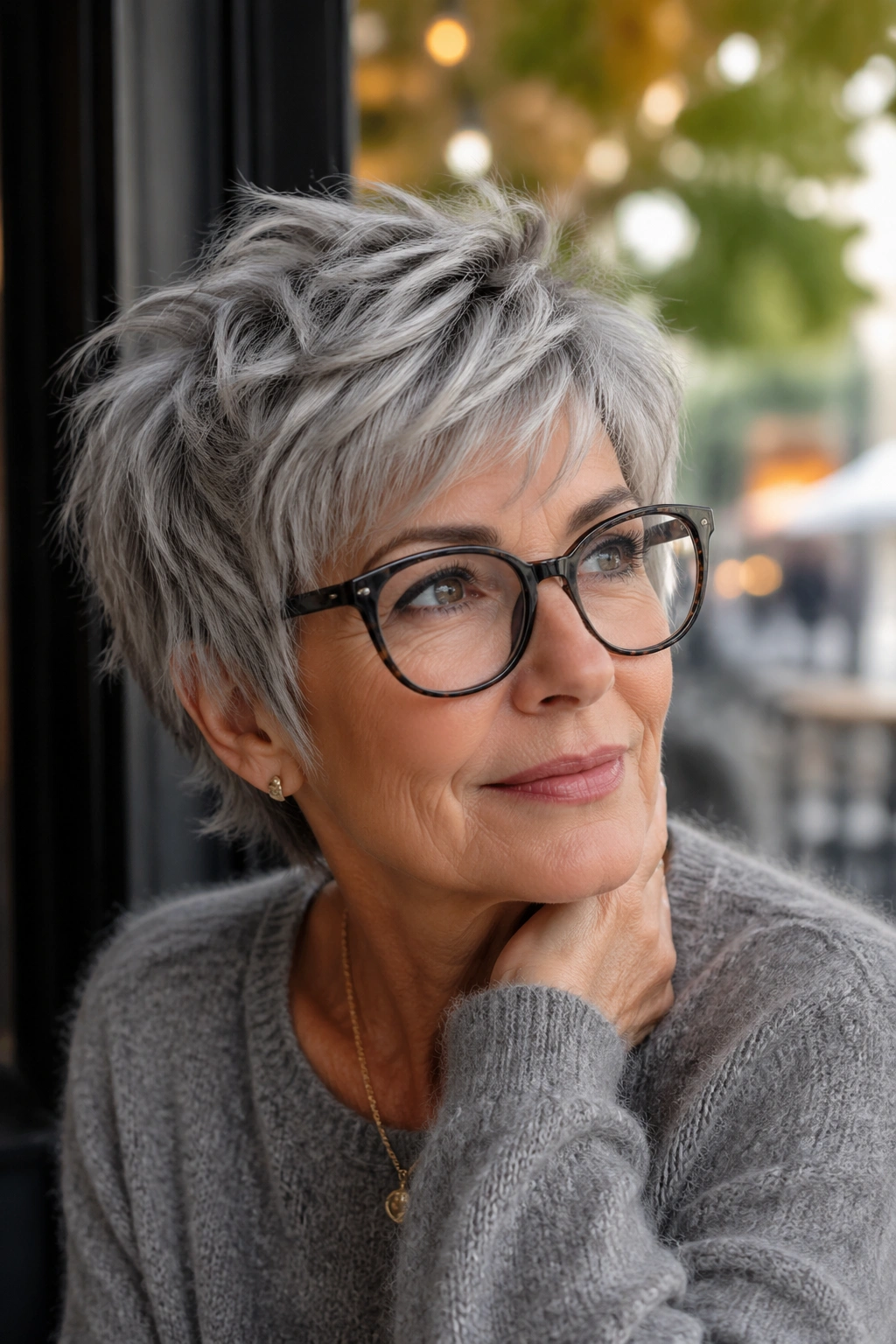
Some bobs feel heavy the moment they’re cut. This is the opposite.
Feather-light layers remove bulk in a way that keeps the ends soft and the movement easy. The cut works especially well if your hair has changed texture over time and feels a little coarser underneath. Light layering stops the sides from puffing out beside the frames.
It’s also one of the easier styles to grow out gracefully. The layers blend instead of piling up in harsh steps. That matters if you don’t want to run back to the salon every few weeks. A round brush at the ends, a quick blow-dry at the roots, and you’re done.
If you wear larger glasses, keep the front pieces a touch longer than the rest. That leaves breathing room around the temples.
23. Nape-Hugging French Crop
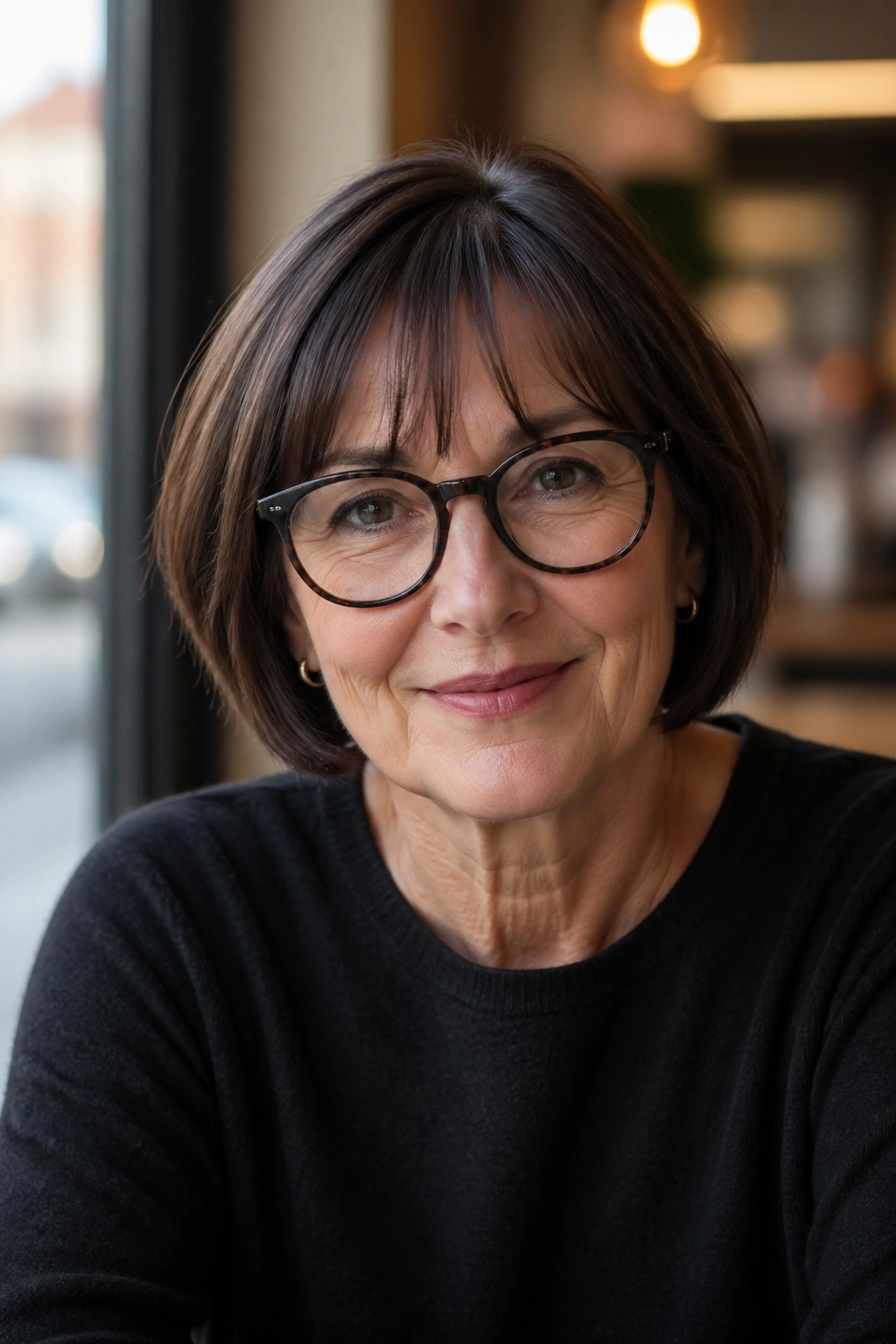
This cut sits close, but it never looks strict.
A nape-hugging French crop follows the shape of the head and neck, which gives it that tidy, edited feel. The front stays soft enough to brush slightly forward, and the sides clear the frame arms without adding width. It’s a good choice when you want your glasses to stay visible and the haircut to behave.
The secret is in the neckline. A clean nape makes the whole cut look deliberate. If the neck area gets fuzzy, the shape loses its charm fast. That’s one reason this crop looks better with regular trims than with heroic styling.
For everyday wear, a mist of light hold spray and a quick finger-shape at the fringe are enough. No big routine. Thank goodness.
24. Soft Shag With Flipped Ends
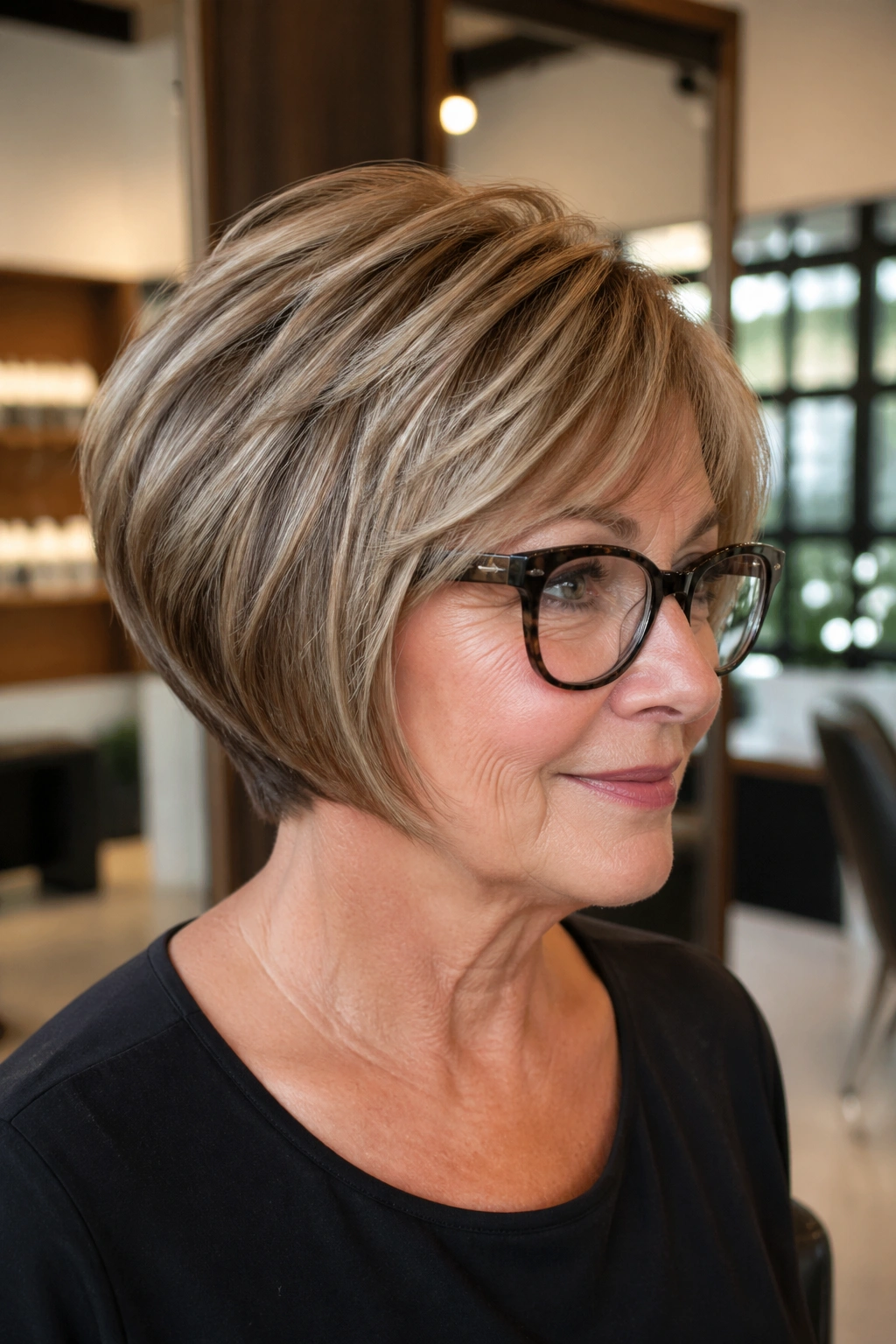
A shag doesn’t have to mean wild layers everywhere. The softer version can look calm, a little playful, and very good with glasses.
The flipped ends give the cut motion near the jaw, which helps if your frames are round or oval. Those shapes can sometimes make the face feel closed in. A soft shag opens it back up by keeping the ends away from the cheeks and letting the texture move.
This style is great for people who hate a haircut that looks identical every day. The pieces can be tucked, mussed, or blown out with a slight bend. That flexibility is one reason I like it for older women. Life is busy. Hair should not demand too much.
Keep the layers light around the ear. Too much bulk there fights the glasses.
25. Brushed-Back Pixie

If you want your face fully open, brush the hair back.
A brushed-back pixie lifts the fringe away from the forehead and shows the frames, the brows, and the eyes without distraction. It can look elegant, but the bigger win is practical: no hair falling into the lenses, no bangs getting stuck in your mascara, no constant fixing.
The style needs some support at the roots. A small amount of mousse or a root spray gives enough hold for most hair types. Dry the front upward with your fingers or a small vent brush, then push it back while it’s still warm. That sets the direction.
It works especially well with glasses that have a strong shape. The haircut stays quiet so the frames can do the talking.
26. Short Bob With Curtain Bangs

Curtain bangs are one of the easiest ways to soften a short bob around glasses.
The trick is length. Keep the bangs long enough to split around the frame, not short enough to sit on top of it. They should graze the outer edges of the forehead and fall away from the lenses. That small adjustment keeps the cut from turning crowded.
A short bob with curtain bangs suits a lot of hair types because the bangs can be customized. Fine hair gets a lighter, airy split. Thicker hair gets a bit more weight, but still not a blunt wall. The bob underneath can be smooth or slightly textured. Either way, the fringe is what makes the face feel open.
If you like a softer look but still want structure, this is a very safe bet.
27. Elegant Crop With Face-Framing Side Pieces
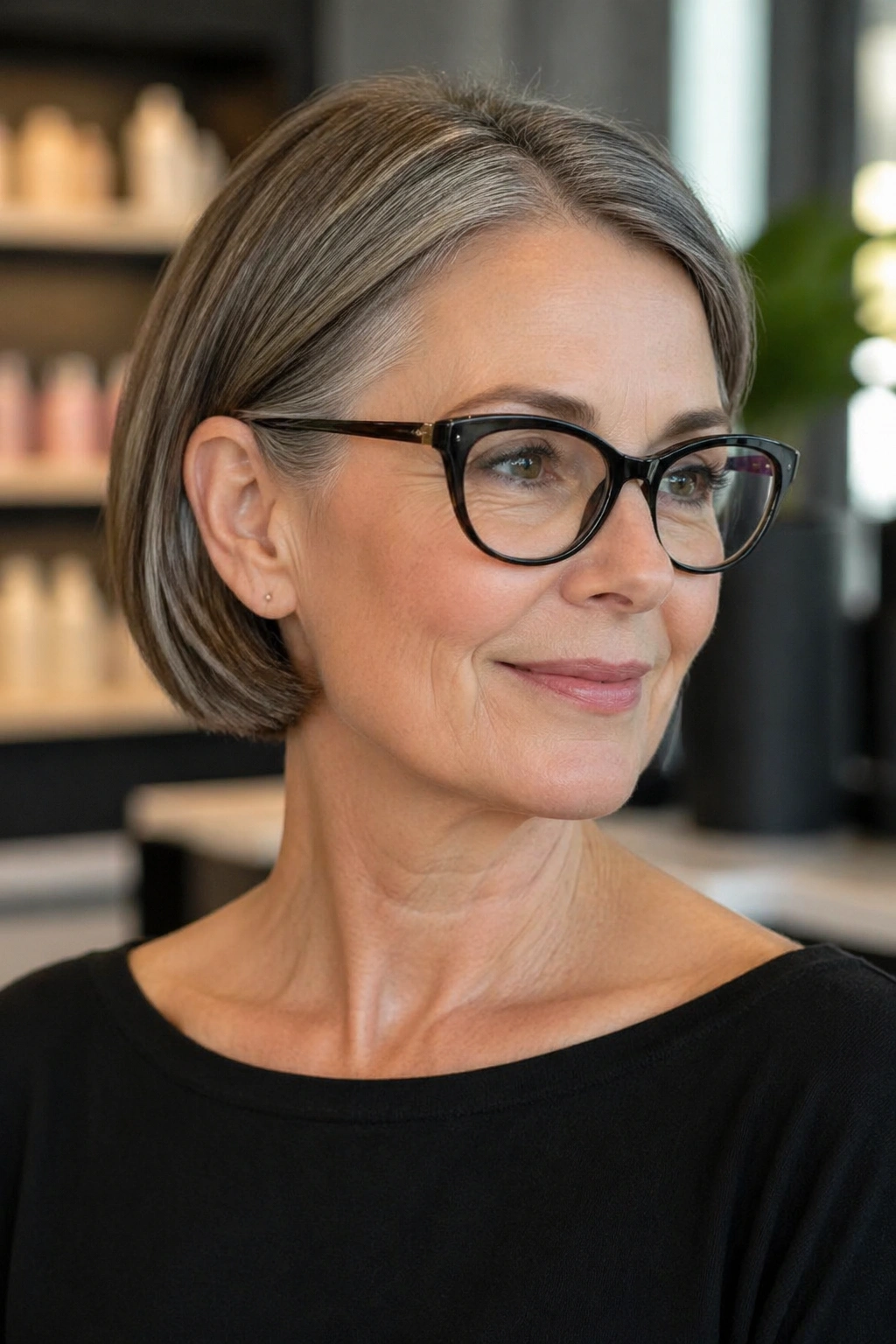
This is the style I’d hand to someone who wants one short cut that stays forgiving.
The back is neat, the crown has a little lift, and the side pieces fall just enough to soften the line of the glasses. Nothing is too sharp. Nothing is too precious. The cut works because every part has a job: the crown adds height, the sides reduce width, and the front shapes the eyes without hiding them.
It’s also one of the easiest styles to tweak. Change the part. Tuck one side. Let the fringe grow for a few weeks. The haircut still holds together because the face-framing pieces keep it grounded.
If you’re choosing among short hairstyles for older women with glasses and you want the least drama with the most payoff, this is the kind of cut I’d point to first. It looks calm, and it gives you room to live in it.
Glasses should feel like part of the look, not a problem to work around. The right short cut makes that happen by opening the face, cleaning up the neckline, and keeping the hair where it belongs. That’s the whole game.