
The best hair color ideas for warmer weather usually aren’t the loud ones. They’re the shades that make hair look healthier, shine a little harder in daylight, and grow out without turning into a project three weeks later. That’s the sweet spot people are usually after, even when they ask for something “fresh.”
When someone sits in a chair and wants a spring refresh, I usually think less about shock value and more about tone. A level 7 blonde with a beige glaze feels completely different from a flat yellow blonde; a brunette with soft copper ribbons can look lighter and livelier without losing depth. Tiny shifts matter. Big time.
The shades below lean wearable first and flashy second. Some are a full color appointment, some are a gloss, and some are just a smarter way to place highlights so your hair catches light in the right spots. If your hair is straight, curly, fine, thick, dark, or already blonde, there’s a version here that can work with your base instead of fighting it.
1. Honey Butter Blonde
Honey butter blonde is one of those shades that makes hair look expensive without trying too hard. It sits between golden and beige, so it reads soft rather than brassy, and that matters when daylight gets stronger and every warm tone on your head becomes more visible.
Why it works so well
Ask for a level 8 blonde with beige-gold toner and a soft root shadow if you want this to look lived-in instead of stripey. On pale skin, it gives warmth without washing you out. On olive or neutral skin, it tends to look even better, because the gold sits right against the natural undertone instead of fighting it.
- Keep the brightest pieces around the face and crown.
- Leave the root a half shade deeper for a softer grow-out.
- Use a violet shampoo only when the blonde starts to turn yellow, not every wash.
- A clear gloss every 4-6 weeks helps the color stay glossy, not dull.
Best for: blondes who want softness, not icy contrast. It’s also a good move if your current blonde feels a little too pale and naked.
2. Strawberry Copper
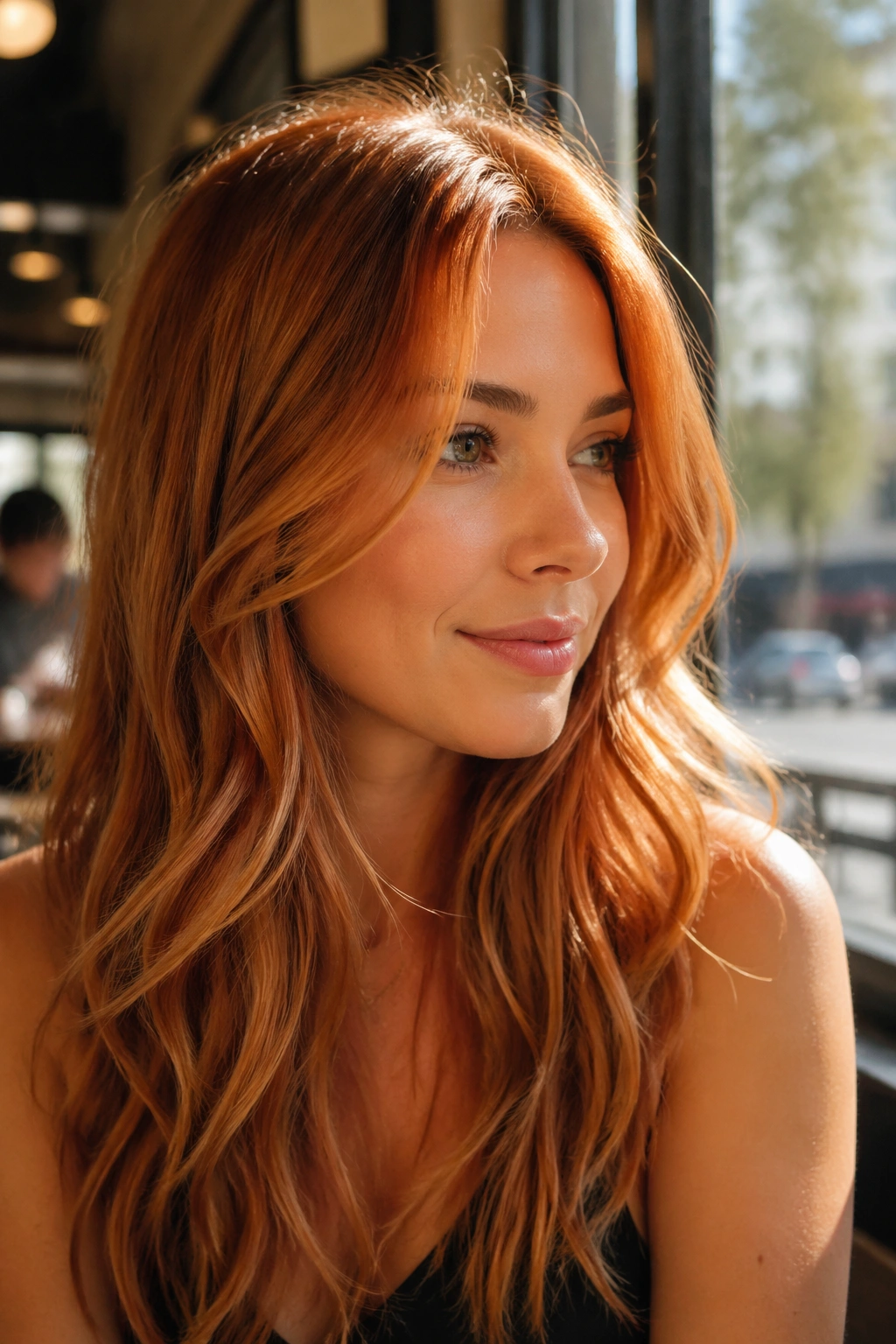
Why does strawberry copper keep showing up on people who want something pretty but not precious? Because it gives you the sweetness of strawberry blonde with the heat of copper, and that mix feels bright without looking cartoonish.
The trick is keeping the red side gentle. You want more peach and gold than pure red, especially if your skin already flushes easily. On very light bases, a demi-permanent copper glaze can be enough. On darker hair, you’ll usually need highlights first, or the shade will just sit on top and look flat.
I like this color most when it’s a little uneven in the best way — lighter around the face, deeper through the back, almost like the sun found it first. It looks especially good on soft waves because the bends catch the red-gold blend. Straight hair can wear it too, but the shine has to be clean or it can drift into orange.
3. Mushroom Brown
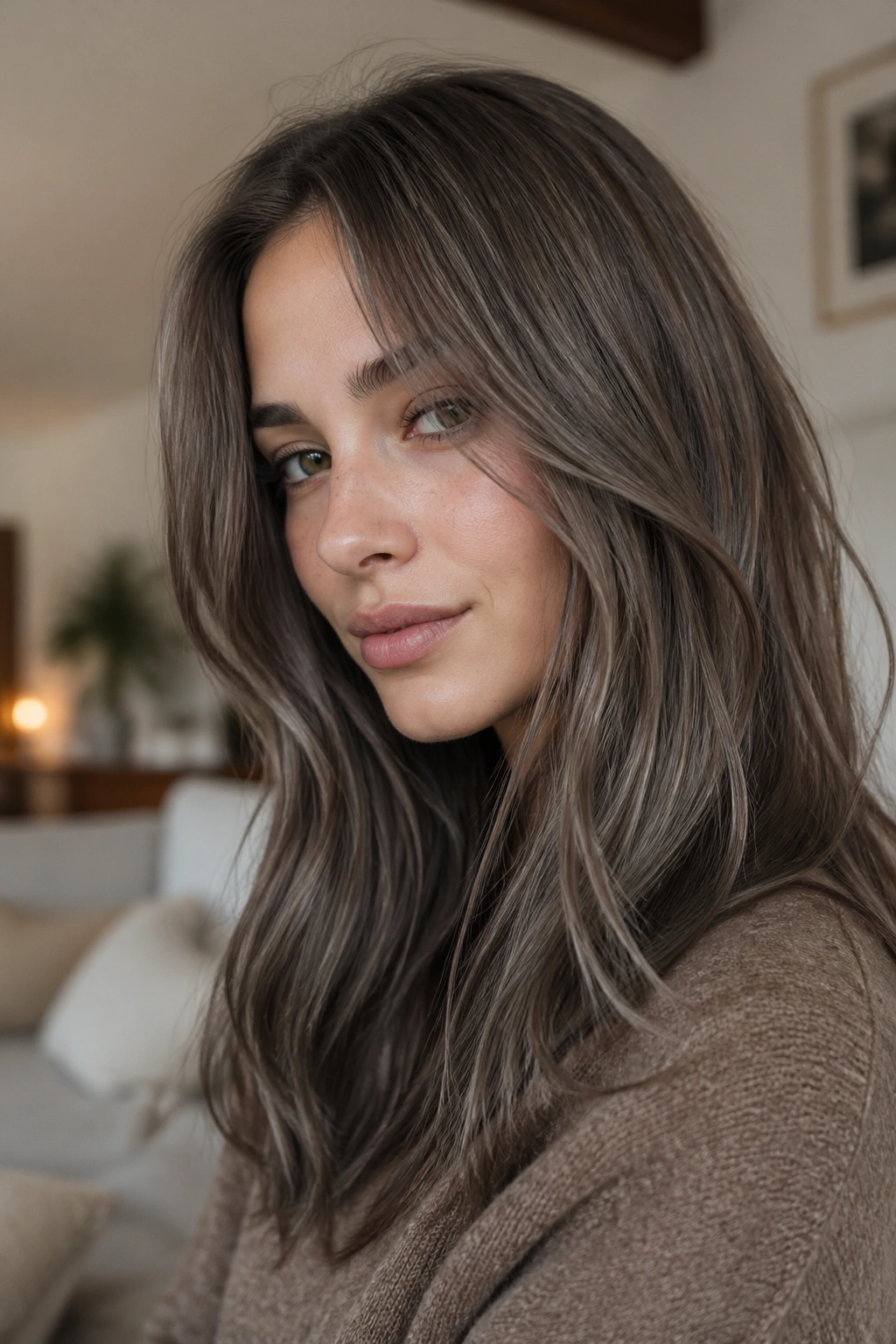
Mushroom brown is for people who are tired of warm brunette color that turns rusty two weeks later. It’s cool, taupe-leaning, and a little earthy, like the color of wet bark after rain. Not glam. Better.
A good version of this shade usually starts with a neutral-cool base level 5 or 6 and gets softened with beige or ash lowlights. If your natural hair is dark, this can be one of the easiest ways to change the mood without lightening much. If your hair is already colored warm, your stylist may need to cancel some gold first, or the final tone will read muddy.
What to ask for
- Neutral brown base with ash-beige dimension
- Soft balayage through the mid-lengths
- No strong red or copper undertones
- A cool-toned gloss every 4-6 weeks
Best for: anyone who wants brunette color that feels modern, clean, and a little quieter than caramel.
4. Cherry Cola Gloss
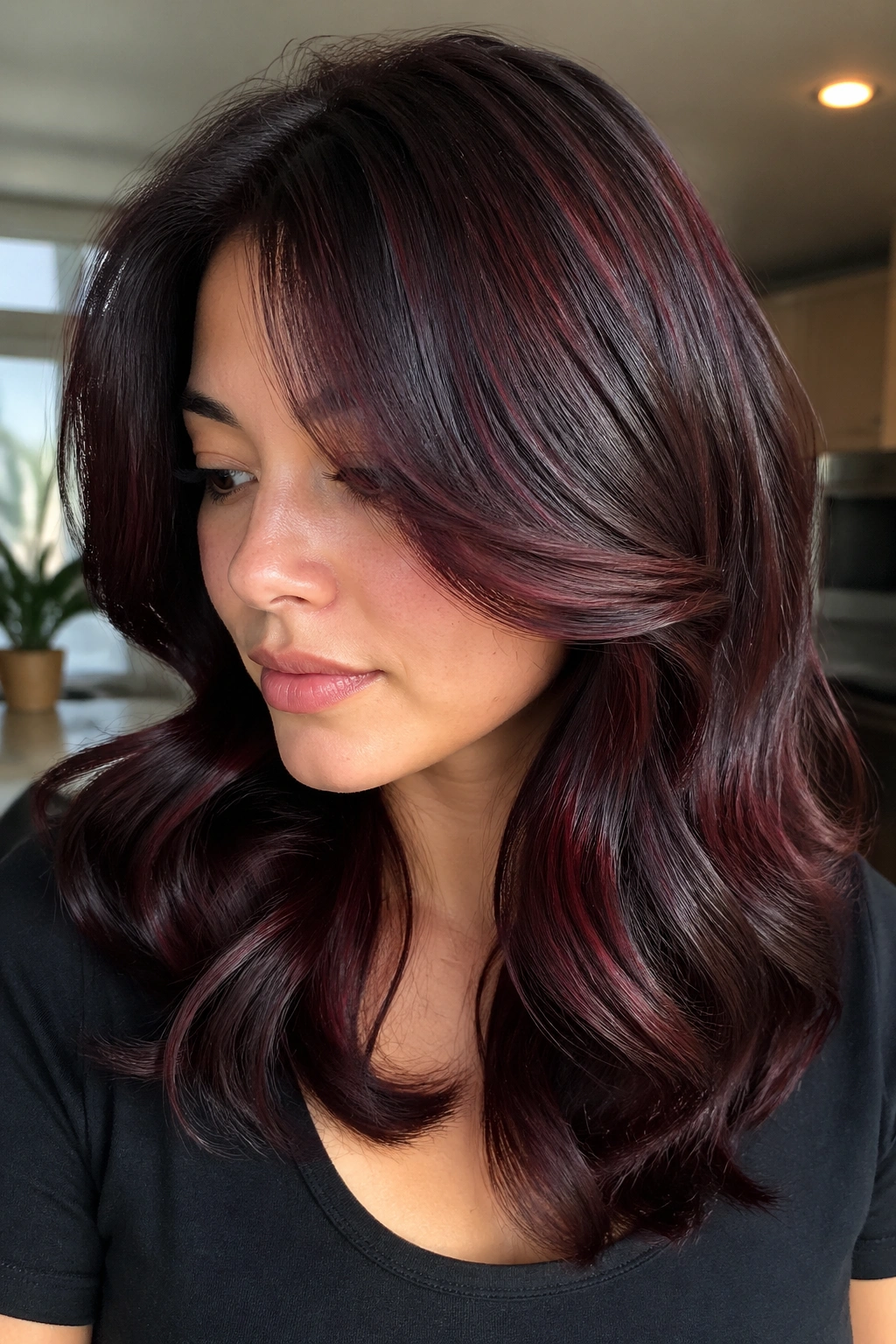
Cherry cola gloss is dark hair with a secret. At a glance, it can look like a rich brunette, but then the red-violet tone catches the light and suddenly the whole thing has depth. That’s the appeal. You get color that feels richer than black-brown without crossing into bright red.
This is one of the easiest ways to add drama without bleaching anything. On natural brunettes, a semi-permanent or demi-permanent gloss can give the hair that syrupy shine people love in salon photos. On very dark hair, you’ll still see the tone, but it shows up more as sheen than as obvious red.
The important part is maintenance. Red tones fade faster than brown tones, so a color-depositing conditioner in burgundy or red-brown can help between salon visits. Cold water helps too, though nobody likes hearing that. It’s true anyway.
5. Soft Apricot Blonde
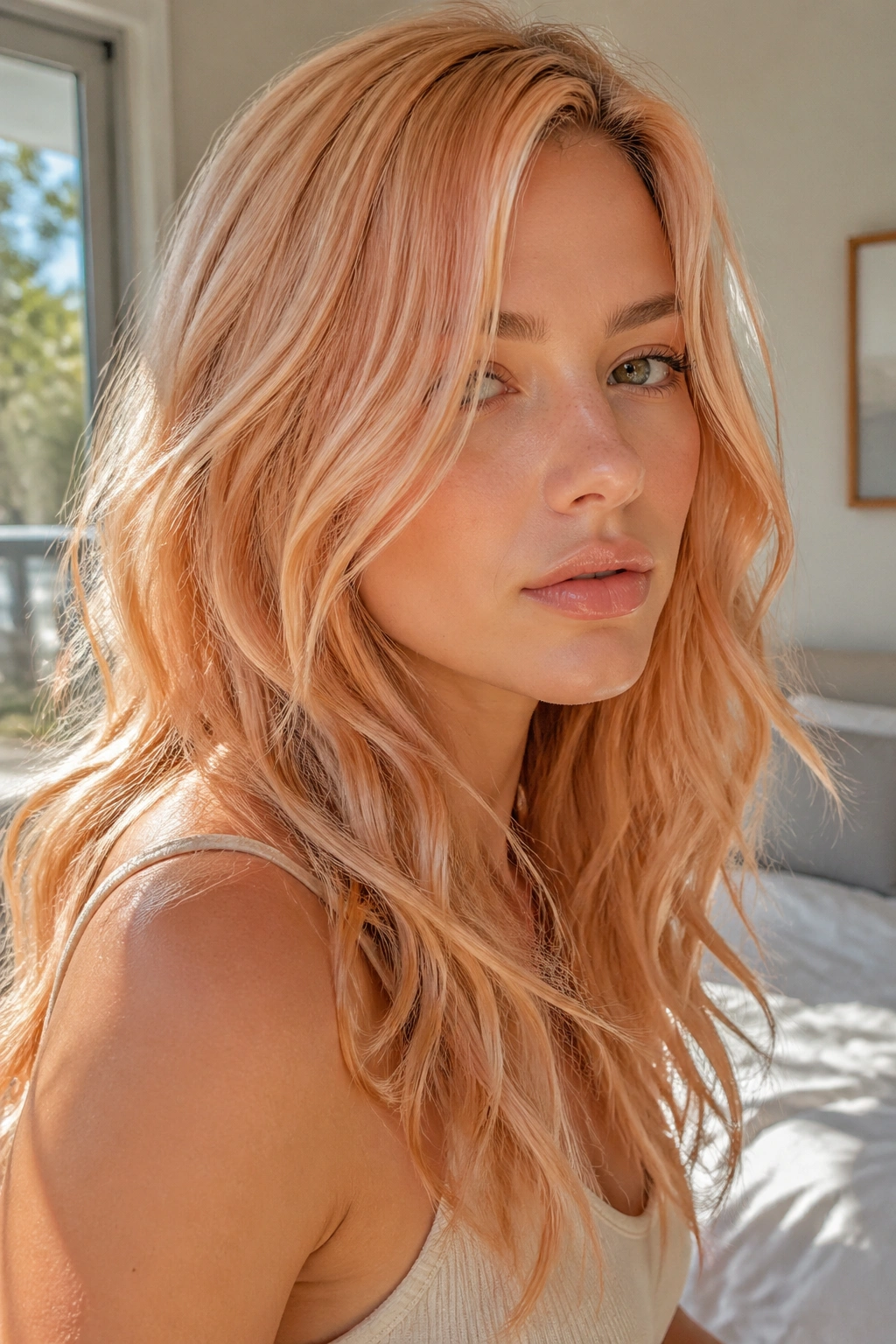
Soft apricot blonde sits in that nice middle space between peach and pale gold. It has enough warmth to feel cheerful, but it stays muted enough to read polished instead of sugary. If rose gold has started to feel overworked, apricot is the better turn.
Best starting point
Usually, this shade looks best on hair that’s already light blonde or lifted to a pale yellow base. The color sits more like a veil than a paint layer, so the canvas matters. On darker hair, you’ll need serious lightening first, and I wouldn’t recommend rushing that part. Orange in the wrong place is a headache.
A few smart notes:
- Keep the roots a bit deeper for contrast.
- Ask for peach-beige, not bright orange.
- Pair it with loose waves so the tone doesn’t look too solid.
- Use sulfate-free shampoo or the glaze will disappear faster than you want.
This color is especially nice if you want something sunny but not loud. It has a soft, almost silky look in daylight.
6. Beige Brunette Balayage
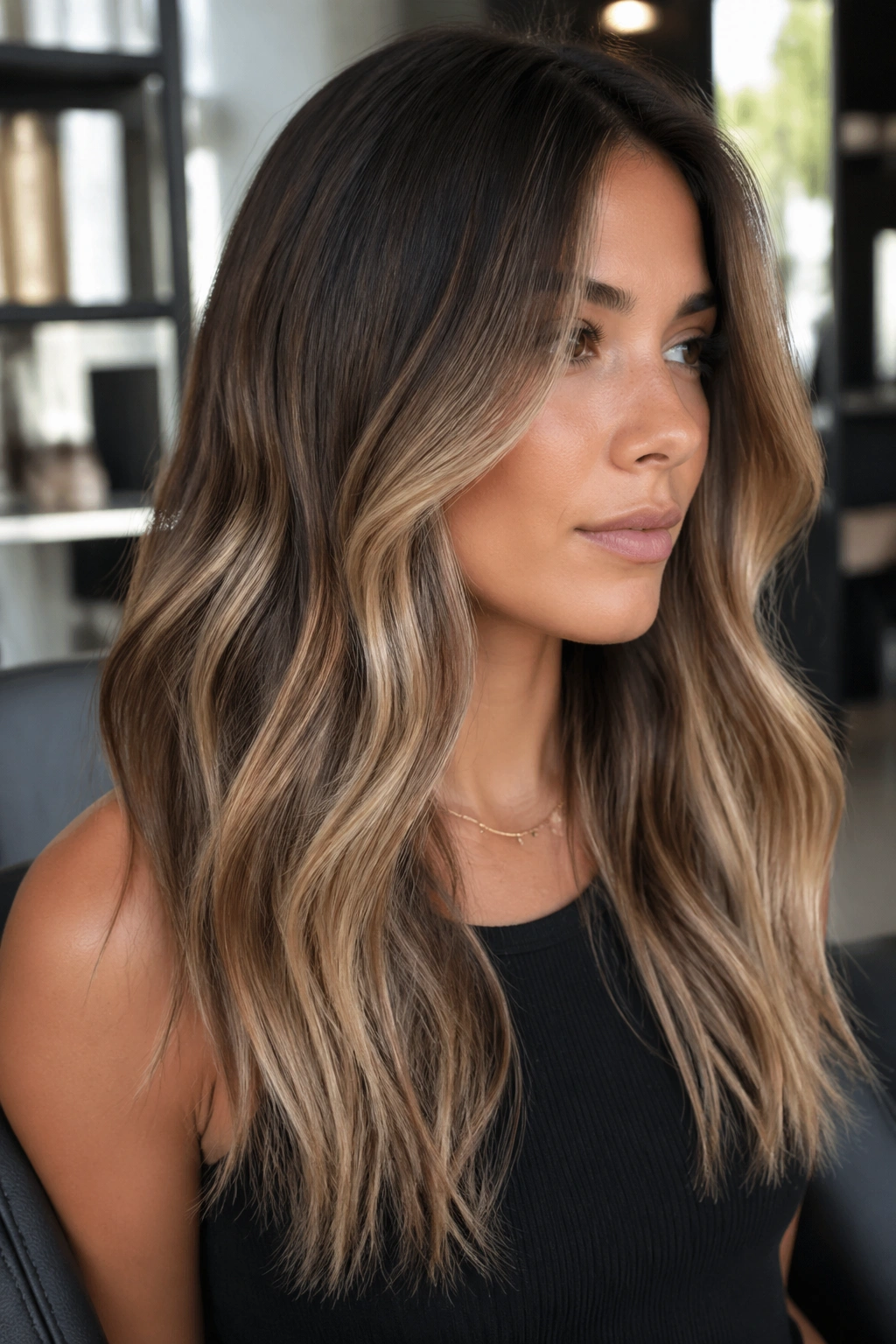
Beige brunette balayage is what happens when brunette stops trying to be one flat color and starts moving. The highlights are hand-painted, usually a shade or two lighter than the base, and then toned into a soft beige so they don’t scream gold every time you pass a window.
Unlike chunky highlights, this version doesn’t carve the hair into obvious stripes. It’s more like light leaking through the lengths. That makes it good for medium brunettes who want dimension without the upkeep of high contrast blonding. It also grows out well, which is not a small thing.
If you want this done well, ask for thin, blended ribbons through the mid-lengths and ends, not heavy foils from roots to tips. The face frame can be a touch lighter, but the overall effect should stay soft. Flat brown has its place. This is not that place.
7. Copper Money Piece
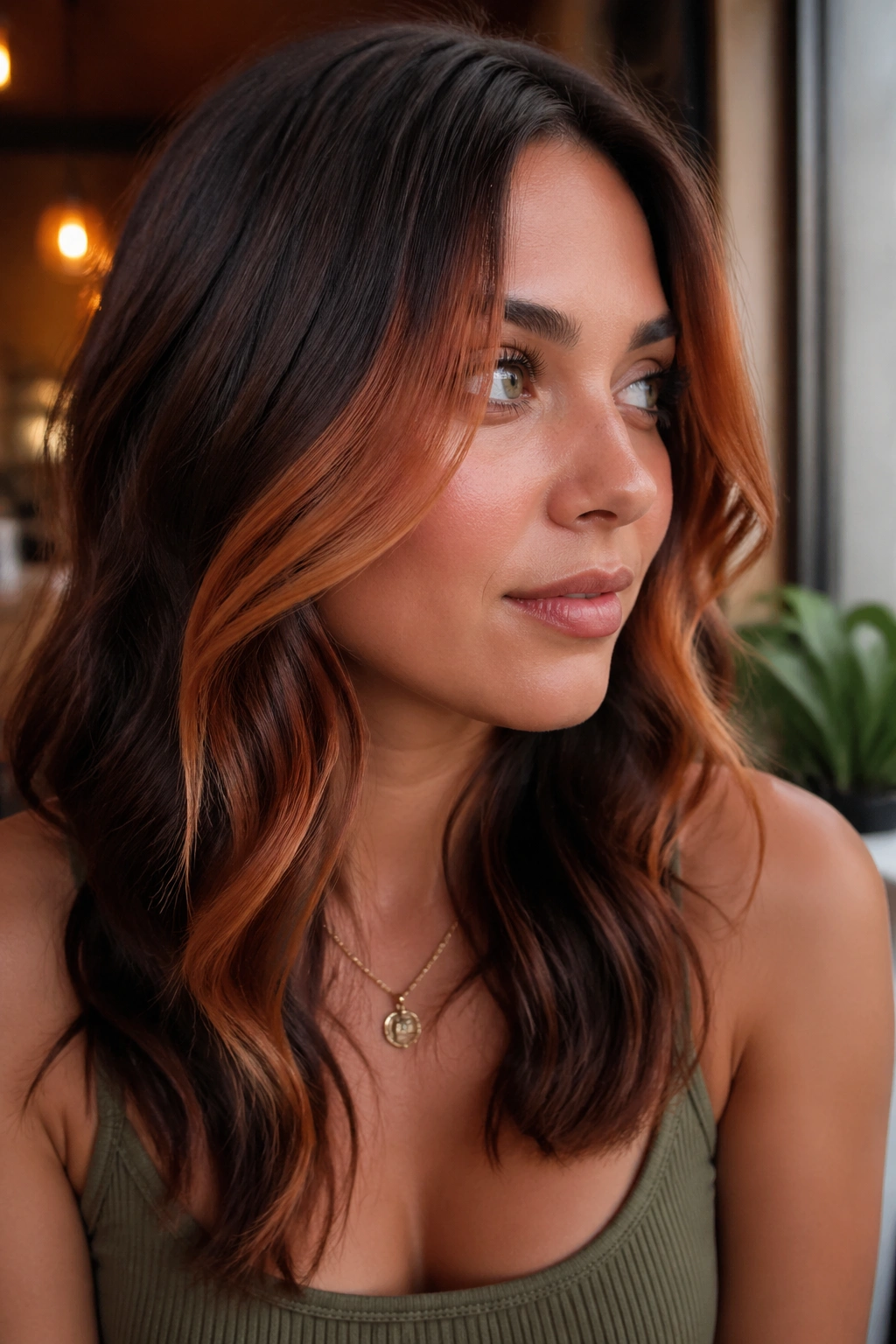
A copper money piece is the fastest way to wake up dark hair without committing to a full color change. You leave most of the hair alone, then place bright copper or auburn pieces right around the face so the color hits first when you look in the mirror.
The result is punchy in the front and calmer everywhere else. That’s why it works. You get the payoff without the maintenance of all-over copper, and when it grows out, it still looks intentional instead of neglected.
- Best on brunette or dark blonde bases
- Works with straight hair, but shines on waves
- Needs a glaze refresh more often than your base color
- Looks strongest when the copper pieces stop around the cheekbone
Pro tip: keep the money piece one shade brighter than the rest of the copper, not five. If the contrast is too sharp, it starts to look disconnected from the hair behind it.
8. Espresso with Caramel Ribbons
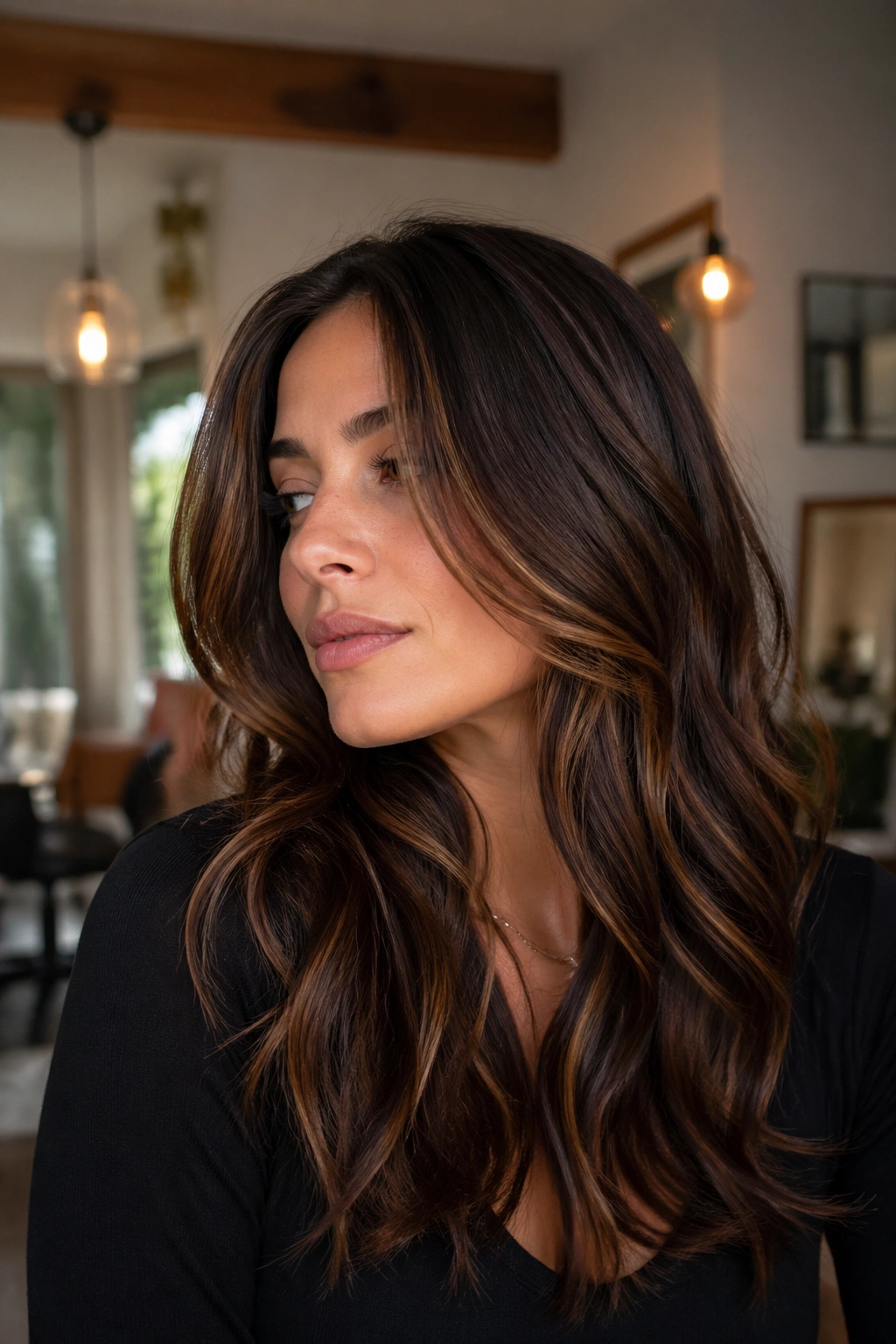
Espresso hair doesn’t have to be flat. In fact, the darkest brunettes often look better when the color has a few caramel ribbons cut through the lengths, because the contrast shows movement that one solid shade hides.
This combo works especially well on medium and thick hair, where the extra dimension keeps the surface from reading heavy. Ask for fine caramel highlights painted in irregular sections, not a uniform set of stripes. The goal is to make the hair look like it caught different kinds of light, not like it was highlighted by a ruler.
One-sentence truth: flat brown can be boring.
If your skin tone runs warm, choose a caramel that leans golden rather than orange. If you’re cool-toned, a softer coffee-brown ribbon looks cleaner. Either way, a clear gloss on top makes the whole thing look more deliberate.
9. Pastel Rose Gold
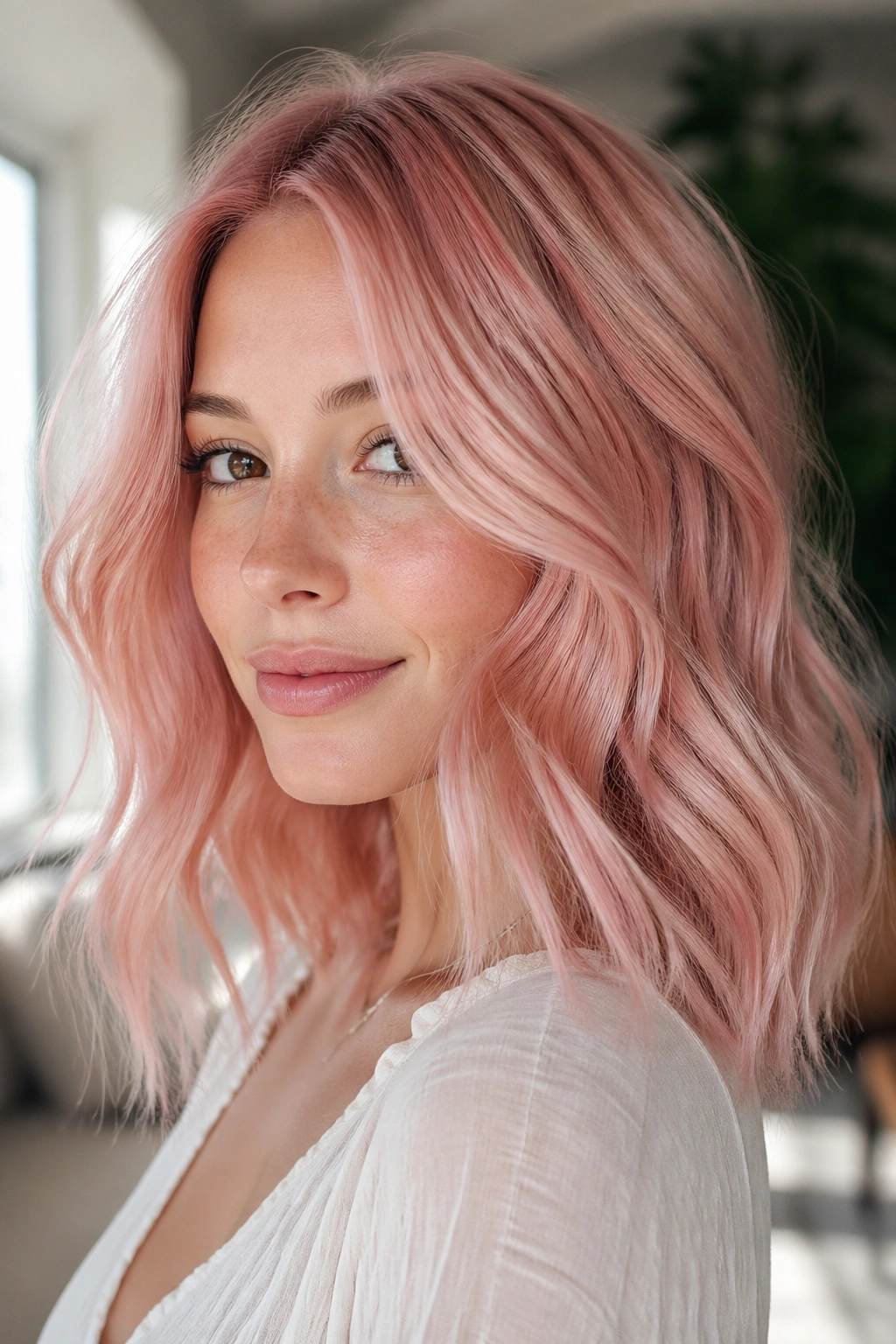
Pastel rose gold is for people who want a color that feels playful but still grown-up. The best version is soft and dusty, not metallic and loud. Think blush with a little champagne in it, not party makeup.
What makes it wearable
The base has to be light enough to hold the pastel, which usually means pre-lightened hair at a pale blonde level. From there, the color sits lightly on top, so timing matters. Too much pigment and it goes pink. Too little and it disappears in one wash.
- Keep the rose tone muted with beige mixed in.
- Ask for a translucent finish, not opaque pink.
- Plan on more upkeep than brunette or honey blonde.
- Use cool water and color-safe shampoo every time.
This shade looks especially good on shorter cuts, shoulder-length bobs, and soft layers. It can feel very polished when the tone is quiet.
10. Smoky Lilac
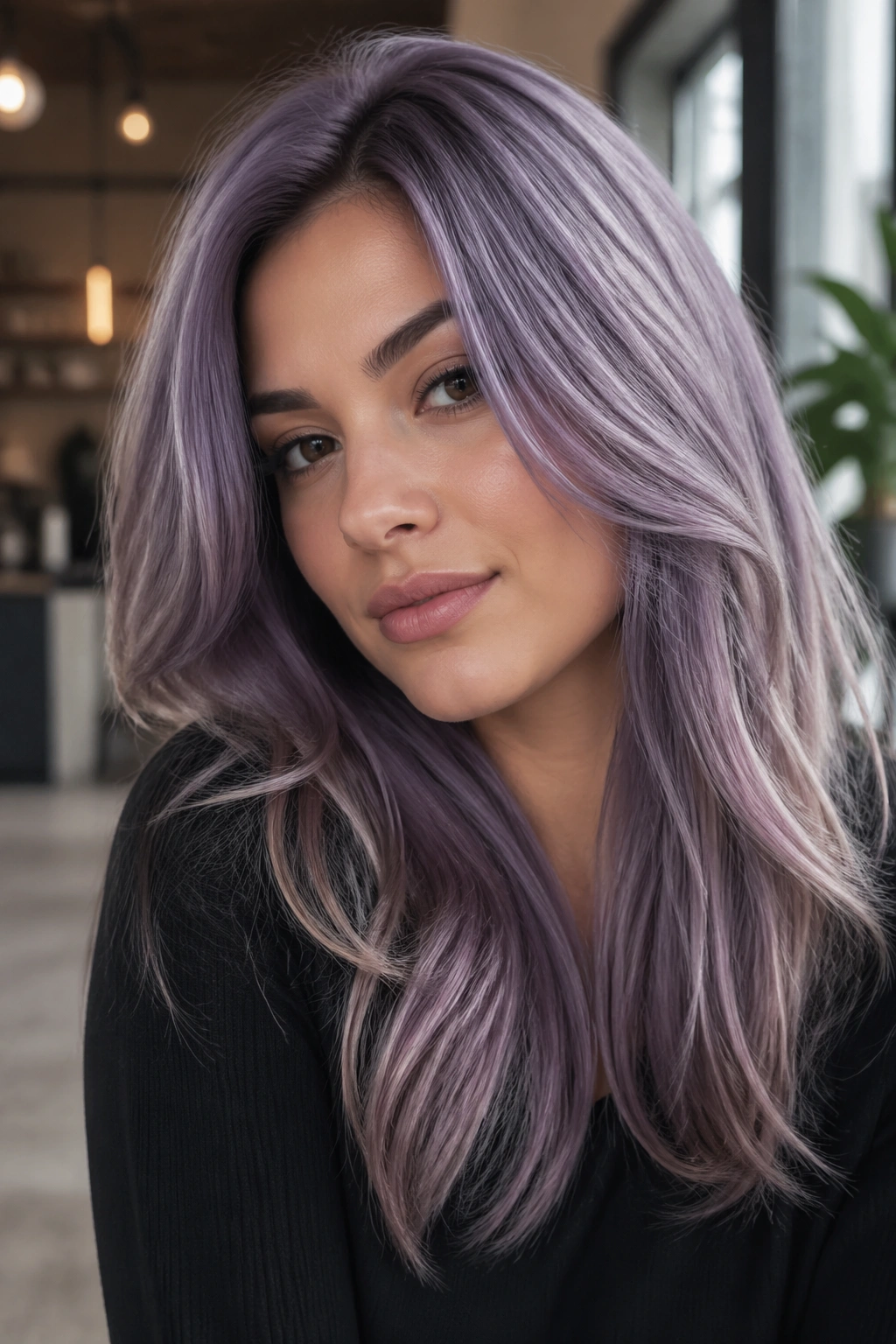
Smoky lilac is the grown-up version of purple hair. Bright lilac can be fun, but it can also tip into costume territory fast. Smoky lilac has gray in it, so the color settles down and looks softer against skin.
The best version usually starts on blonde hair that has been toned a little cool first. Then the lilac is deposited lightly so the finish feels dusty, not opaque. On platinum hair, it can read almost silver-violet. On warmer blondes, it may look more pastel lavender. Both can be good. They’re just different.
A practical note: purple shampoo can muddy this shade if you use too much of it. That’s the part people miss. Keep the wash routine gentle, and use a color-depositing mask only when the tone starts to fade too far into silver.
11. Mushroom Bronde
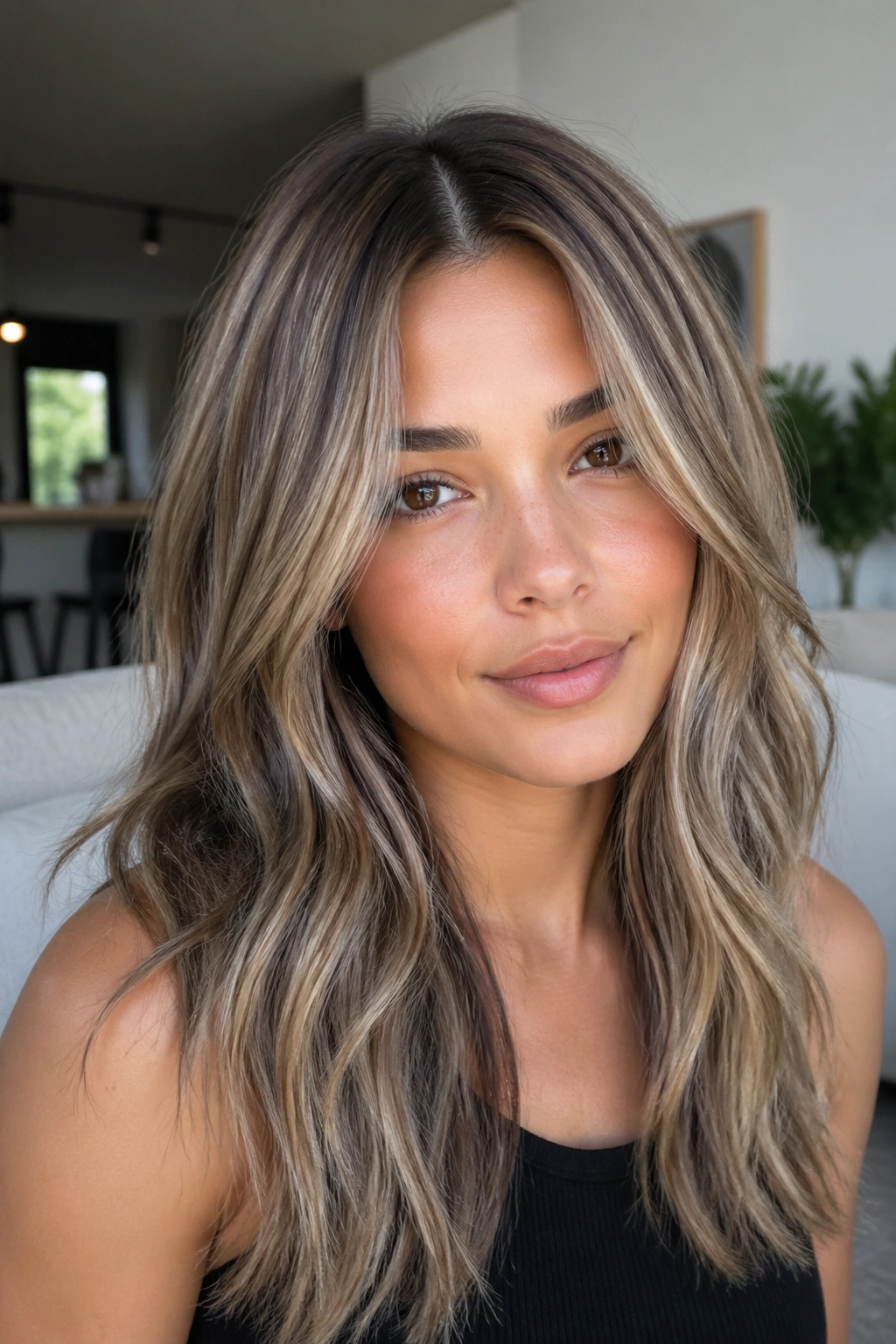
Mushroom bronde is one of the smartest hair color ideas for people who sit between brown and blonde and don’t want to choose sides. It blends both, but the mushroom tone pulls everything into a cooler, more modern place.
How to ask for it
Tell your colorist you want a level 6 or 7 base with beige-blonde pieces and ash lowlights. That combination keeps the hair dimensional without making it golden. If you already have a warm bronde, the stylist may need to tone down the gold first so the mushroom effect can show.
- Keep brightness around the front and crown.
- Ask for a shadow root if you want easier grow-out.
- Use a beige gloss, not silver-heavy toner.
- Avoid chunky highlights; the whole point is softness.
This shade works on straight hair, but I think it looks best with loose bends or a layered cut. The movement helps the different tones show up.
12. Buttercream Blonde
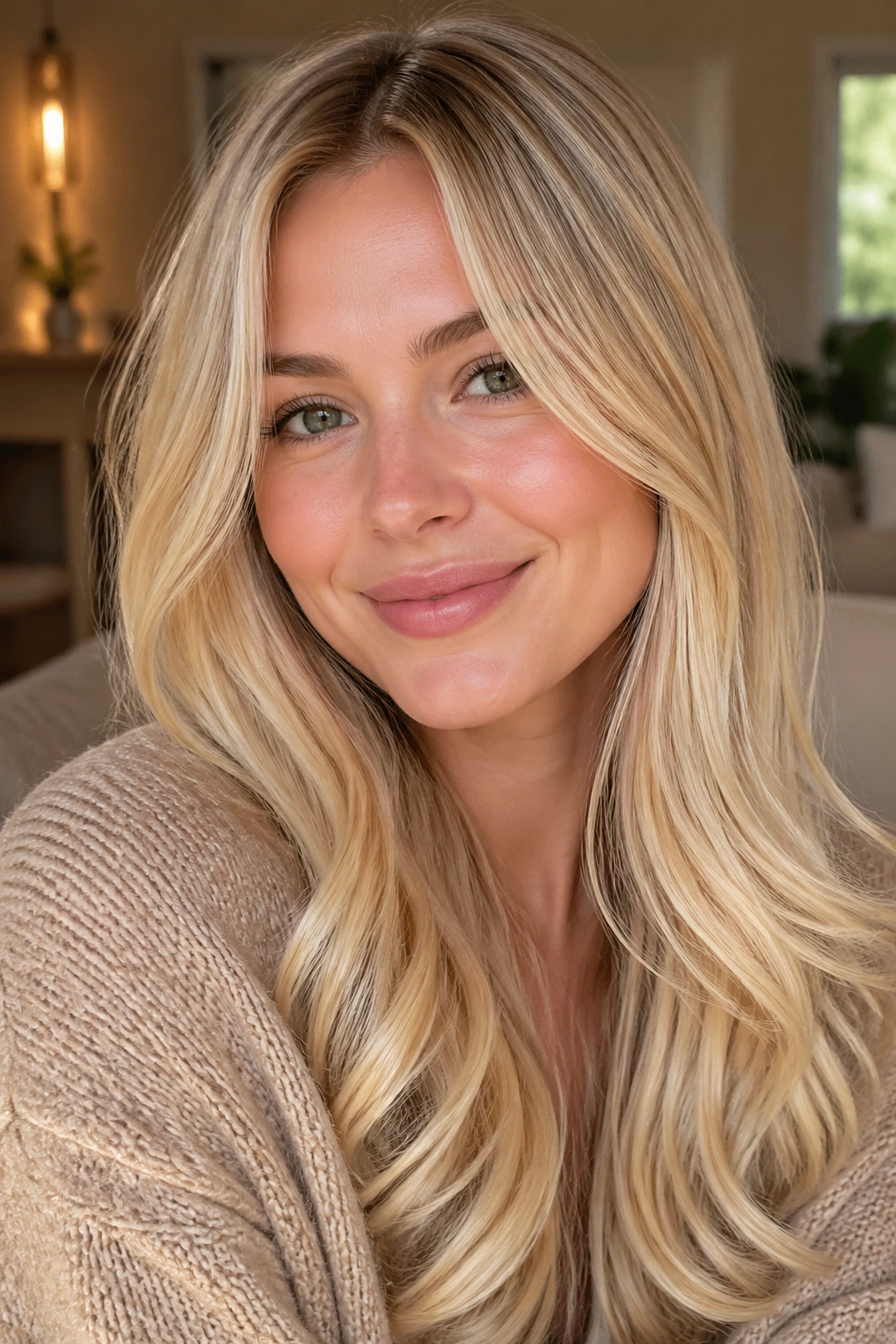
Buttercream blonde is what I picture when someone wants blonde that looks soft, creamy, and expensive in the old-fashioned sense of the word. Not shiny in a plastic way. More like fresh frosting with a little warmth in it.
It sits warmer than ash blonde and cooler than honey blonde, which is why it works on so many people. If your skin gets washed out by icy tones, buttercream is usually kinder. If your natural hair is already light, this can be a subtle shift; if you’re darker, it becomes more of a full lightening project.
The main thing to protect is tone. Buttercream blondes go yellow fast if the shampoo is too harsh or the water is full of minerals. A shower filter helps more than people expect, and a soft beige toner every so often keeps the blonde from turning loud.
13. Cinnamon Brunette
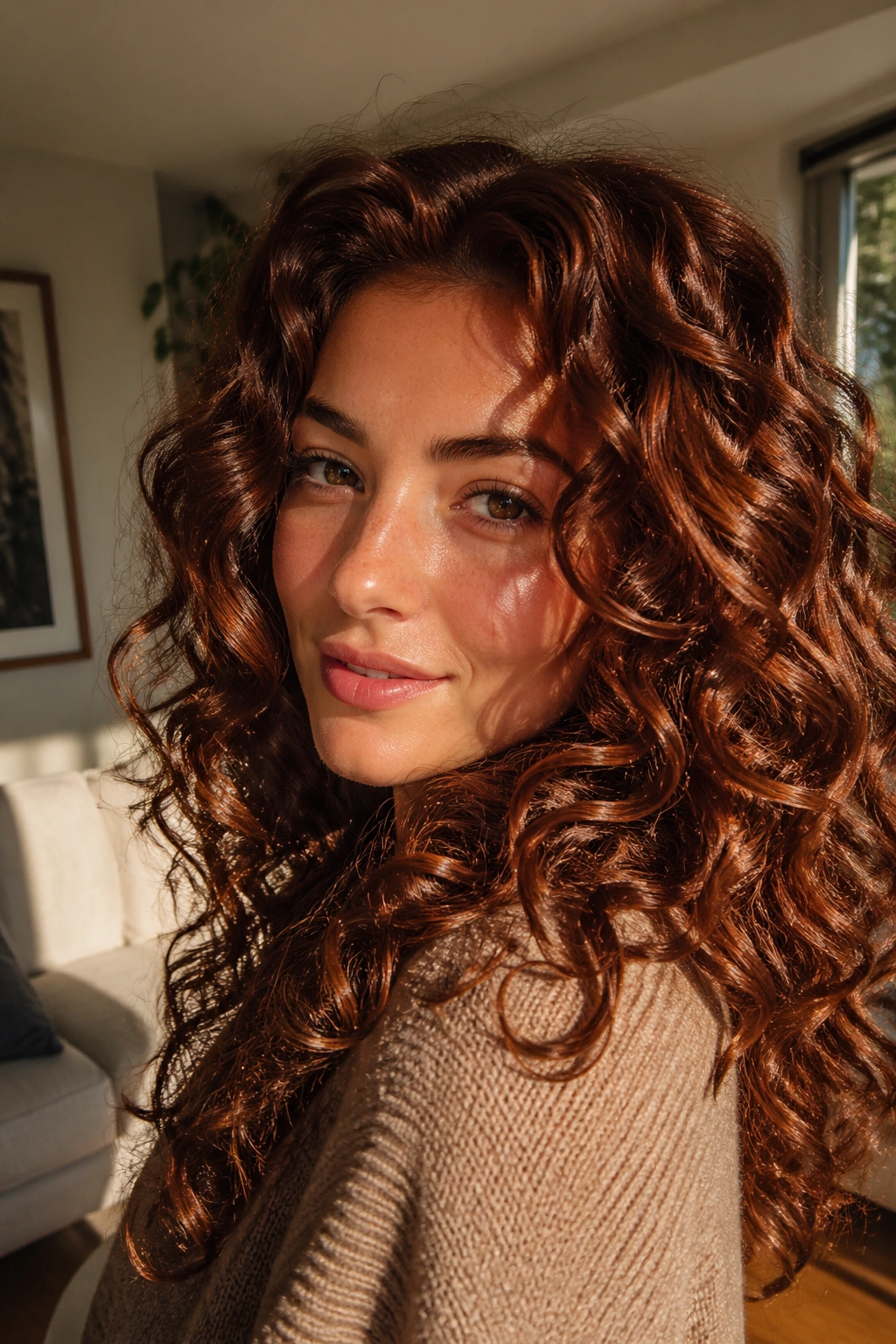
Cinnamon brunette is for people who want depth with a little heat. It’s a brown base with red-brown and spice tones woven through it, and that mix makes hair look richer than plain chocolate.
The shade is especially good on curls and waves because the bends catch the red warmth at different points. On straight hair, it can still look beautiful, but you need shine. Dull cinnamon is not the goal. The finish should look warm, almost velvet-like, not flat or dusty.
I’d choose this shade if your wardrobe leans neutral and you want your hair to do more of the work. It gives you color without committing to bright copper. And if you already have warm undertones in your skin, cinnamon brown can be one of the easiest colors to wear.
14. Peach Champagne
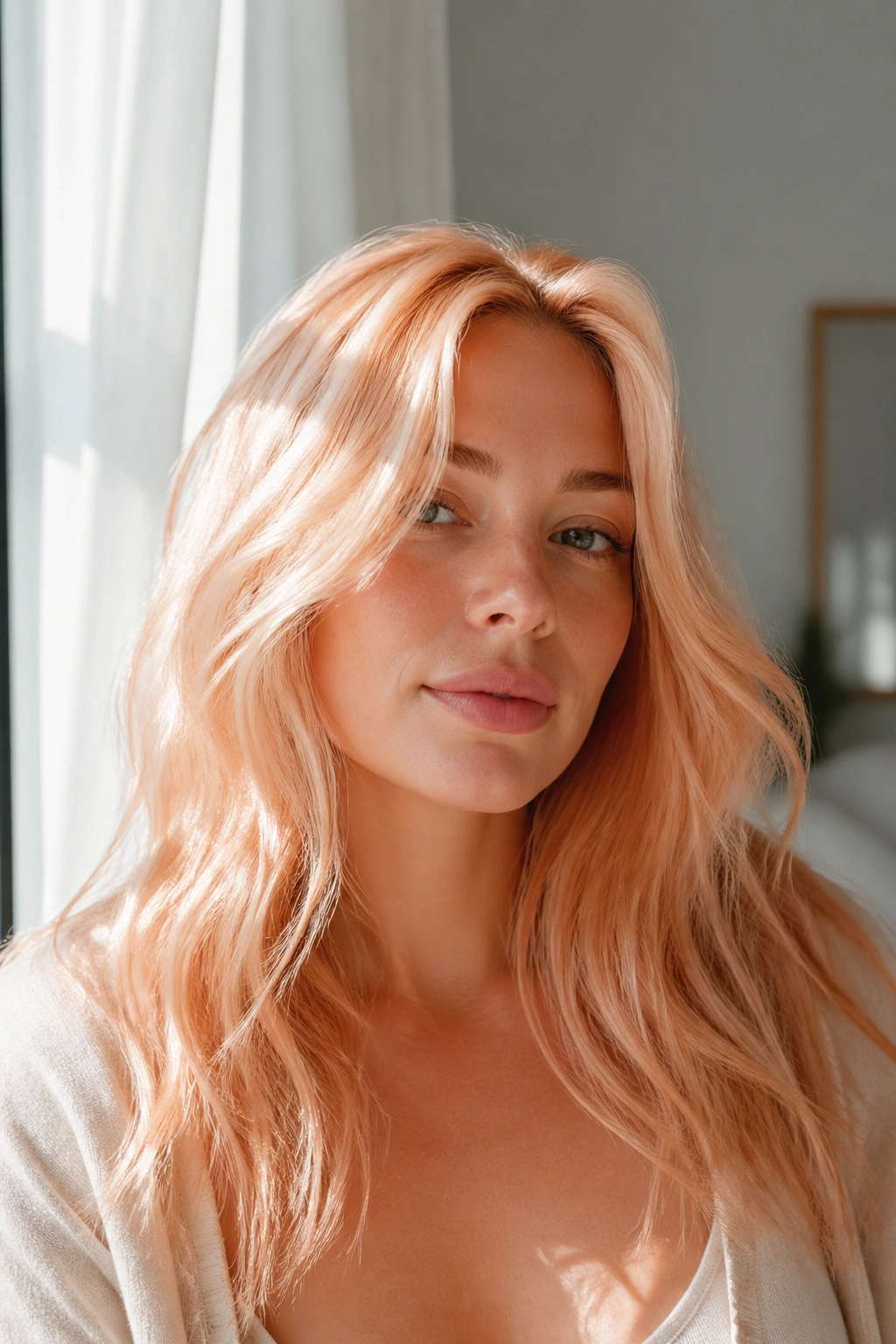
Peach champagne is lighter and airier than strawberry blonde, but it has more warmth than icy pink. The name sounds fancy; the effect is more relaxed. It’s a soft peach-beige veil over blonde hair, and when it’s done right, it looks like color has been dissolved into light.
How it behaves in real life
This is not a heavy-duty color. It fades gracefully, which is part of the appeal. The trick is keeping the peach whisper-thin so it doesn’t turn into flat apricot. Ask for a translucent glaze rather than a saturated pastel.
- Works best on pale blonde or pre-lightened hair
- Looks especially good with soft waves or layered ends
- Needs a refresh every few weeks if you want the peach tone to stay visible
- Pairs nicely with neutral makeup instead of strong coral blush
It’s a good choice if you want something feminine without being too sweet.
15. Ink Black with Blue Sheen
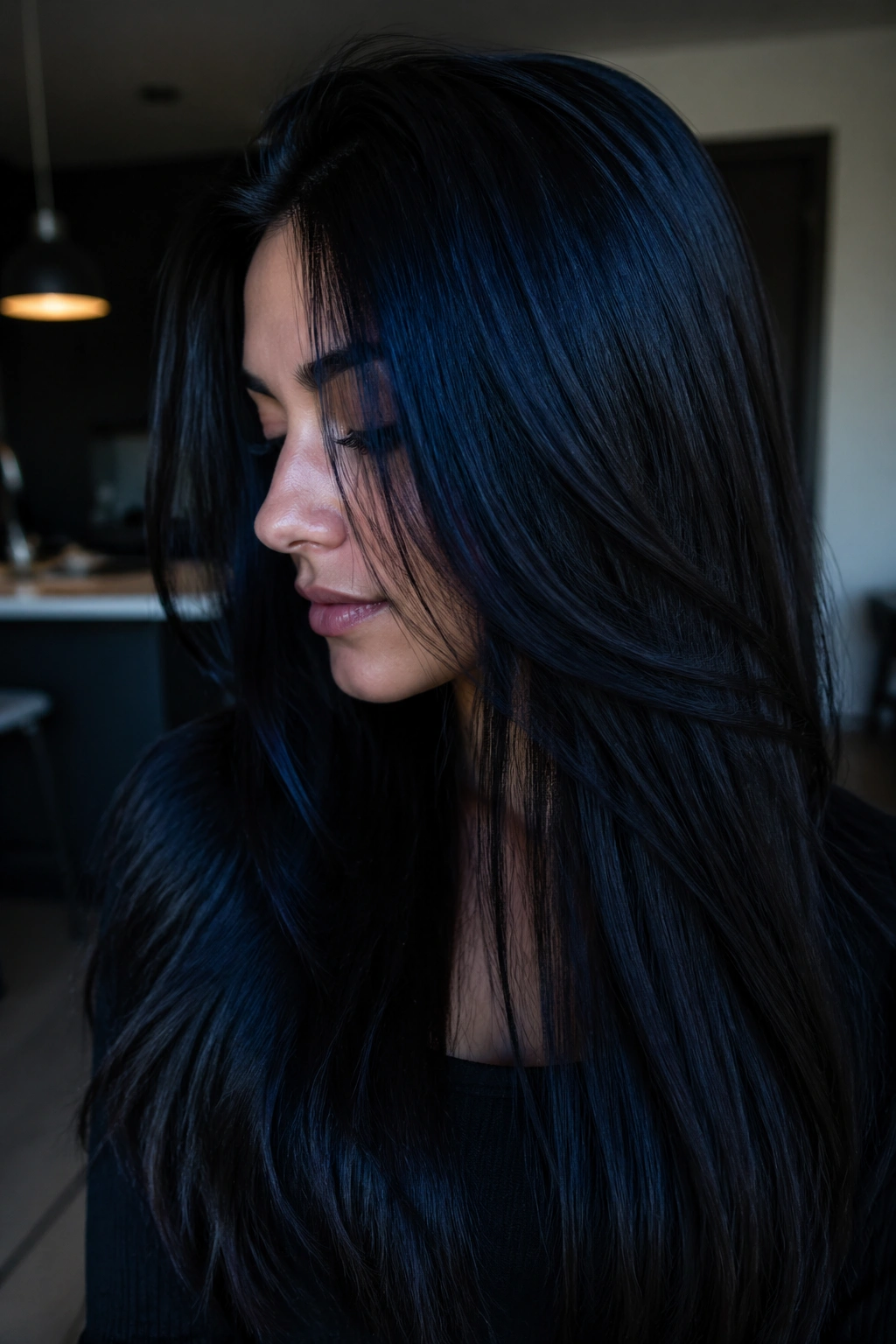
Black hair does not have to look flat. A blue-black sheen can turn a plain dark base into something much sharper, especially when the light hits it from the side and the blue undertone flashes through.
This shade works best when the black is deep but not muddy. The blue should be there as sheen, not as a neon streak. On naturally dark hair, a blue-black demi-permanent color can be enough. On lighter brunettes, you may need to go darker first. Either way, the goal is shine. That shine is the whole point.
If your skin has cool or deep undertones, this can look striking. If you’re very warm-toned, ask for a softer navy-black instead of a hard blue-black so the contrast doesn’t fight your complexion. One coat too dark, and the whole thing can look heavy. Better to keep the finish glossy and clean.
16. Toffee Gloss
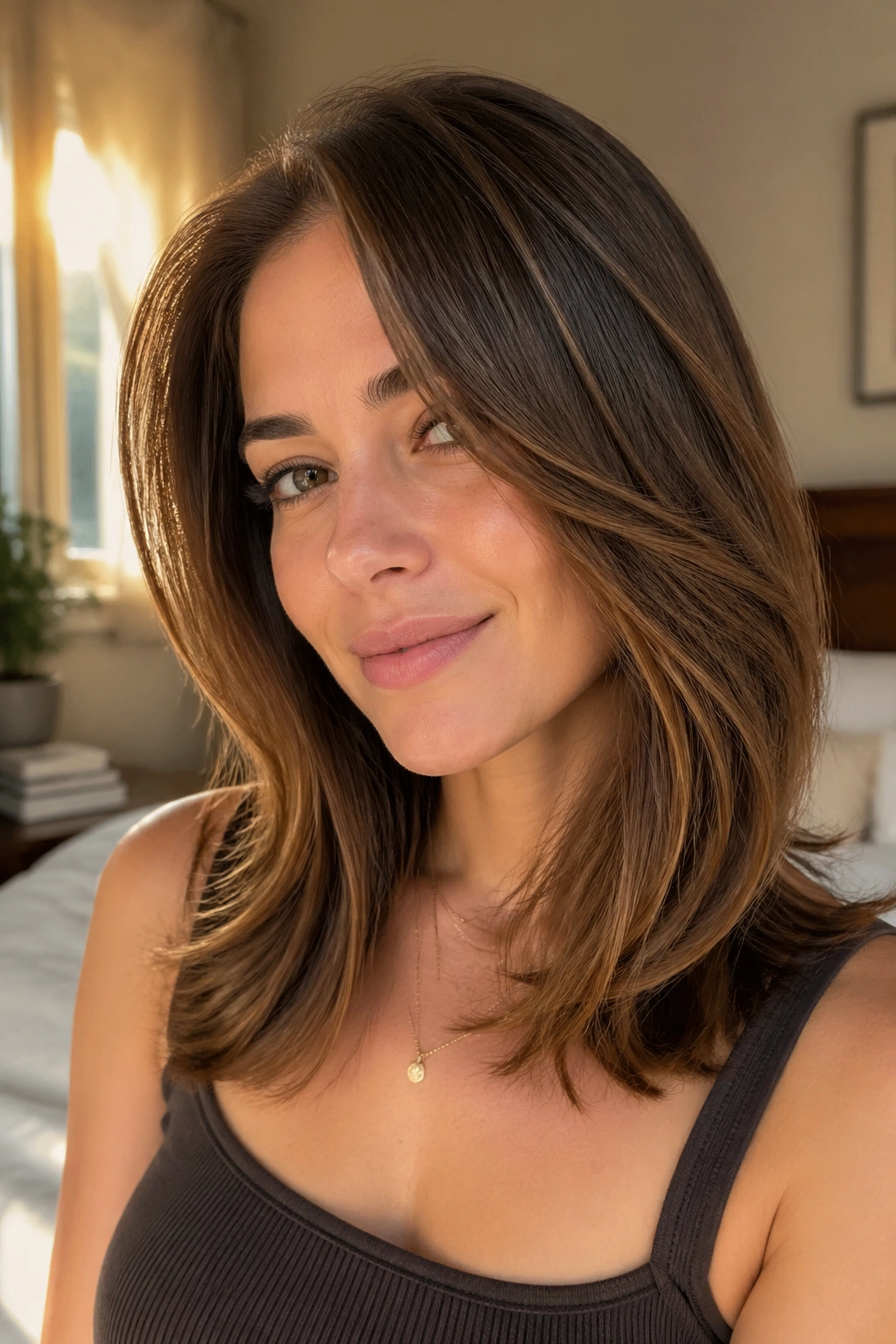
Toffee gloss is the answer when brunette feels too plain but highlights feel like too much work. It’s a warm, soft brown glaze that gives the hair the color of melted toffee — richer than beige, lighter than espresso, and a lot easier to maintain than full highlight work.
This is one of my favorite low-commitment refreshes because it changes the mood without changing the entire head. On medium brown hair, it warms the mid-lengths and ends. On darker hair, it adds shine first and color second. That matters. Glosses should look like a polish, not a paint layer.
- Good for straight or wavy brunettes
- Works well on previously colored hair
- Fades more softly than permanent dye
- Can be done between bigger salon appointments
If you want a change that won’t make your roots look obvious in six weeks, this is a solid pick.
17. Peachy Beige Highlights
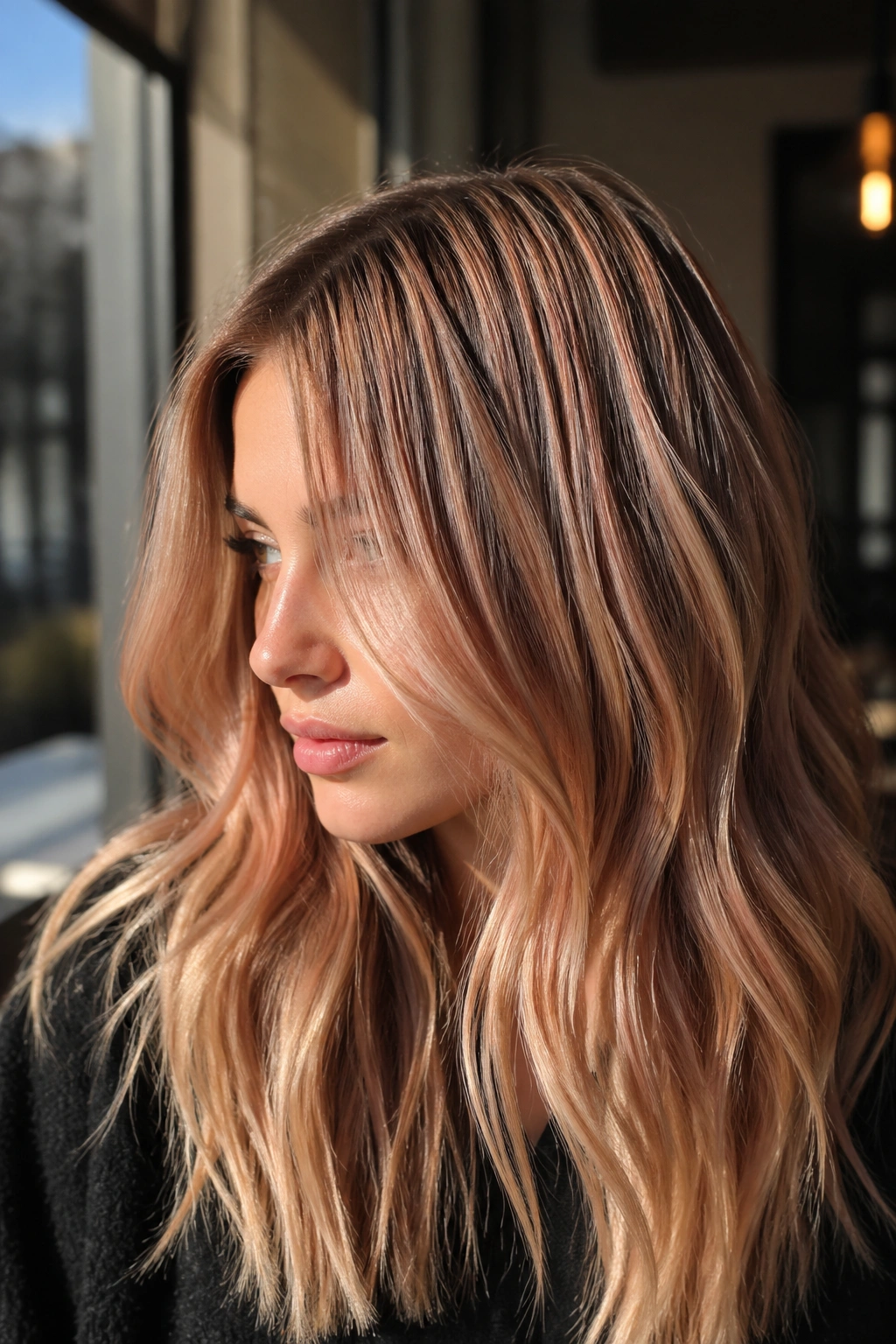
Peachy beige highlights are a sneaky good idea because they feel light and fresh without pushing the hair into loud copper or obvious gold. The tone is soft enough to live inside blonde, light brown, or even a muted copper base.
The placement matters here more than the shade. Thin, airy highlights spaced too far apart will look streaky. Use very fine weaves, about 1/8 inch or less, then tone them into peach-beige so they melt into the rest of the hair. Around the face, a few brighter pieces keep the color from disappearing.
This shade is nice on layered cuts because the motion shows the tonal mix. On blunt cuts, it can still work, but the highlights need to be especially blended or you’ll see every section. I’d keep the overall finish soft and a little translucent. Peachy beige should feel like light, not blocks of color.
18. Sunset Balayage
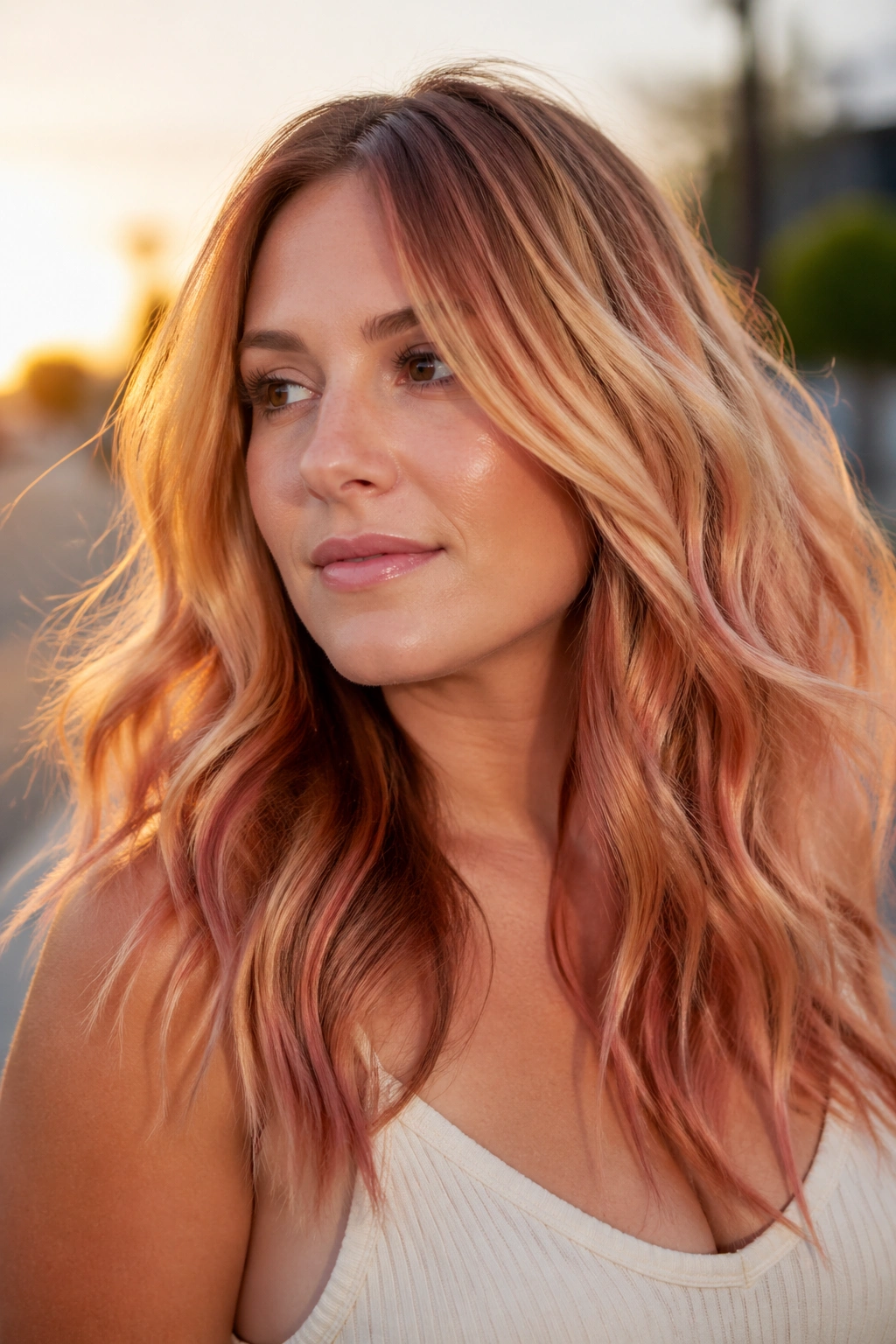
Sunset balayage is what you get when golden blonde, soft copper, and a little coral meet in one blended sweep. It sounds dramatic. It can be, if the colorist piles the pigment on. Done well, though, it reads like warm air and late-day light.
Compared with classic ombré, sunset balayage has more movement through the mid-lengths. Ombré can get heavy at the ends if it isn’t blended carefully. Sunset placement keeps the warmth scattered so the hair feels alive all the way through. That is the difference.
This shade loves waves, braids, and layered cuts. The warm pieces should sit below the cheekbone and get brighter toward the ends, but not in a hard line. If your base is medium brown or dark blonde, the transition can be especially pretty. Go too bright at the top and it loses the whole sunset feeling.
19. Ashy Beige Blonde
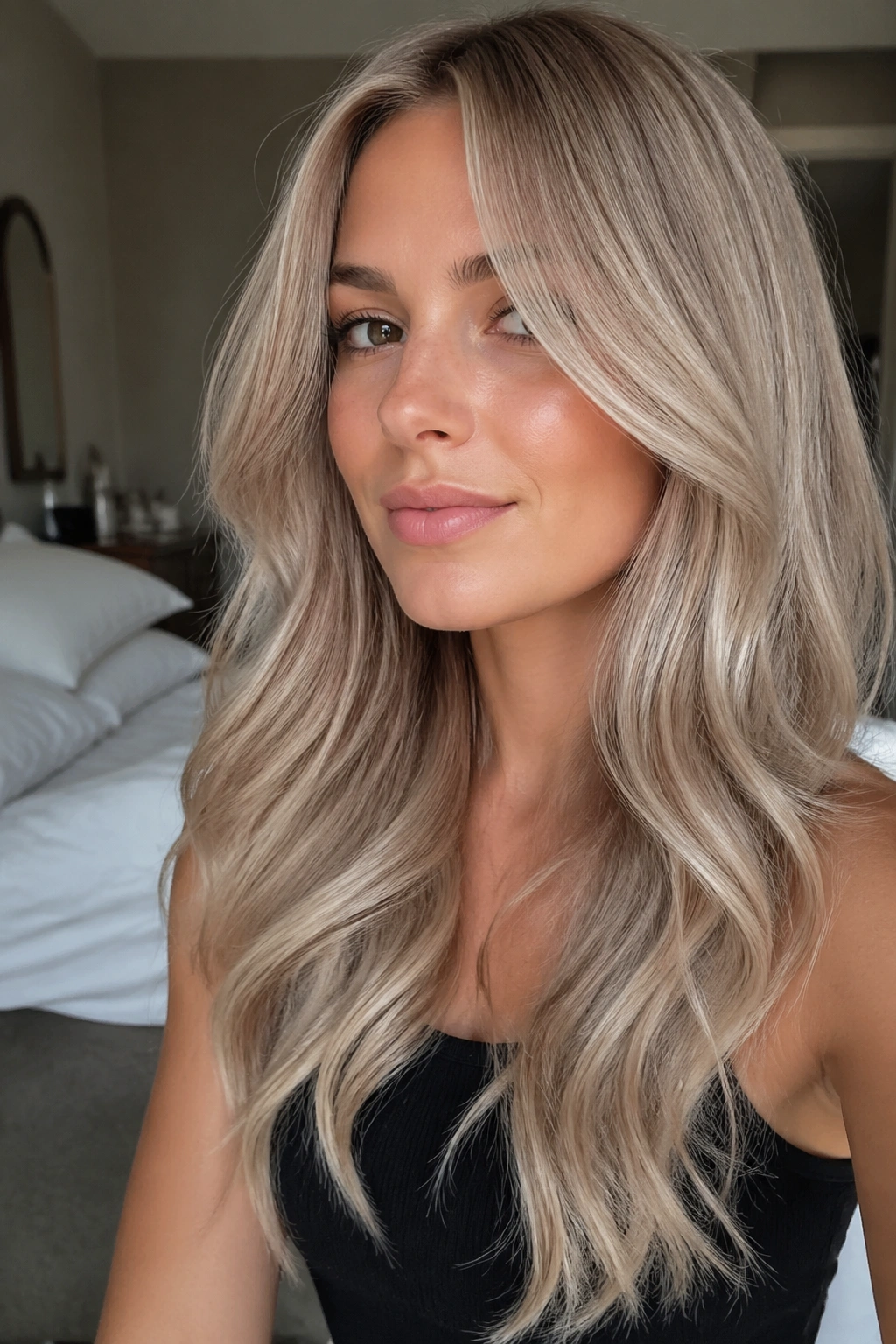
Ashy beige blonde is for people who want blonde without the yellow. Not silver. Not icy. Just clean, quiet beige with enough coolness to keep brass from sneaking in.
The shade works best when the blonde is lifted evenly first. Uneven lightening will show up under a cool toner, and that’s where people get annoyed. If your hair is porous, ask for a softer ash finish rather than a hard one, because super-ashy toner can grab too dark and go muddy. That’s one of those annoying salon truths.
Where it shines
- Natural blondes who want a cooler finish
- Brighter brunettes going lighter through balayage
- People who dislike warm gold tones
- Hair that can hold toner for a few weeks without slipping yellow fast
It’s a clean color. Calm, but not boring.
20. Bronze Face-Framing Highlights
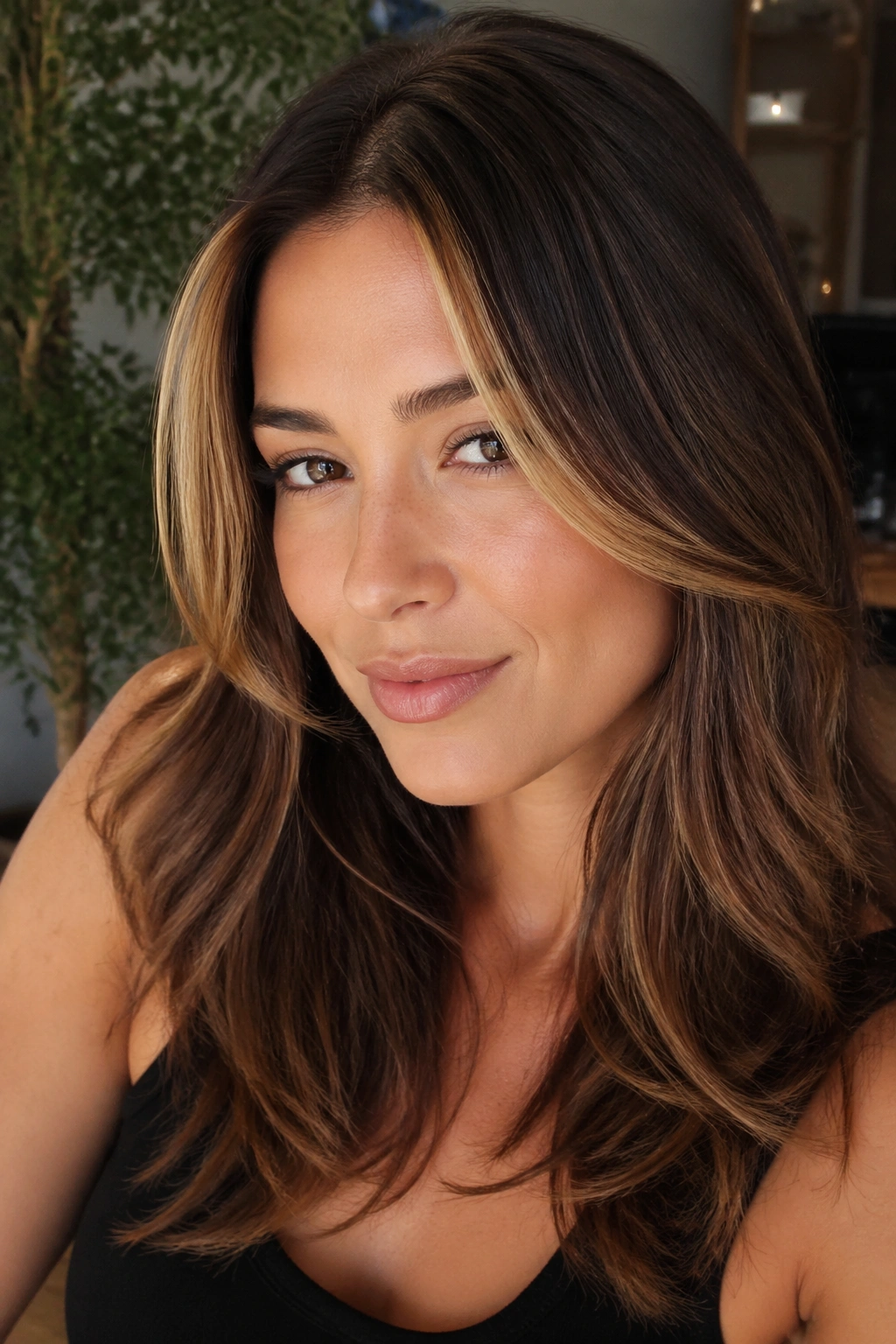
Bronze face-framing highlights are one of the easiest ways to make a haircut feel newer without changing the whole head. The color sits between gold and brown, so it gives warmth and shine without taking over the base.
Where the pieces should go
Ask for bronze placed at the temples, cheekbone, and around the fringe line, then a few softer pieces through the top layer. That keeps the brightness where your eye lands first. The rest of the hair can stay closer to your natural brunette, which saves time and money later.
- Best on brunettes who want lift around the face
- Works with curtain bangs and layers
- Needs less upkeep than full-head highlights
- Looks best when the bronze is one to two shades lighter than the base
This is a good move if your hair has started to feel heavy around the face. A little bronze can fix that fast.
21. Dusty Plum
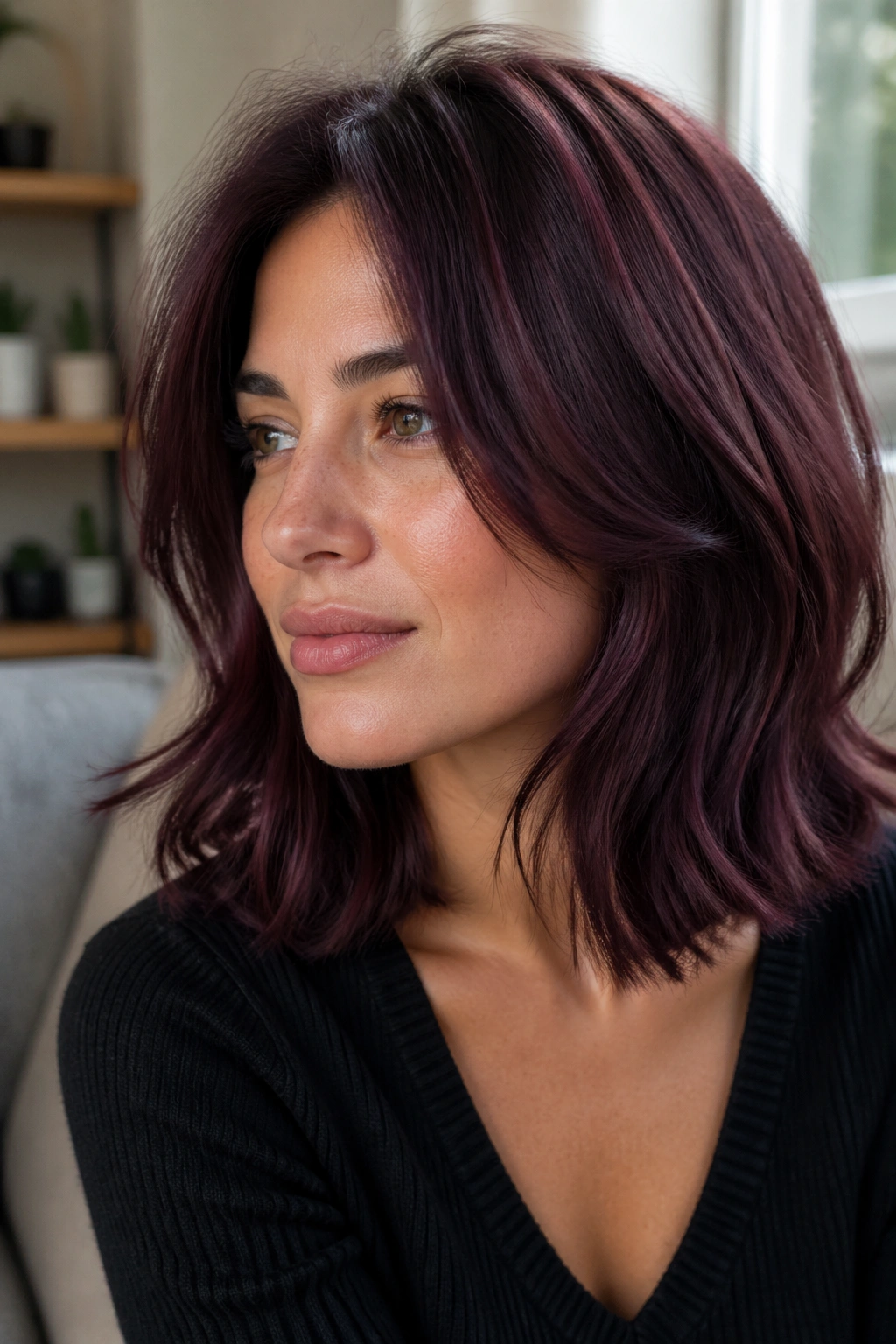
Dusty plum is for the person who likes darker colors but wants a little mood in them. It’s not the loud purple that shows up from across the room. It’s a muted violet-brown, almost velvet-like, and it has a cooler, calmer feel than red.
This color can live on dark hair as a deep tint, or on lighter hair as a fuller plum shade. Either way, the dusty part matters. Too much brightness and it turns electric. Too much brown and the purple disappears. The sweet spot is somewhere in the middle, where the color looks rich in shade and a little violet in daylight.
I like this on shoulder-length cuts and layered shags because the movement keeps the tone from feeling too heavy. It also pairs well with glossy finishes. Dry plum is a miss. Shiny plum is the one.
22. Golden Copper Curls
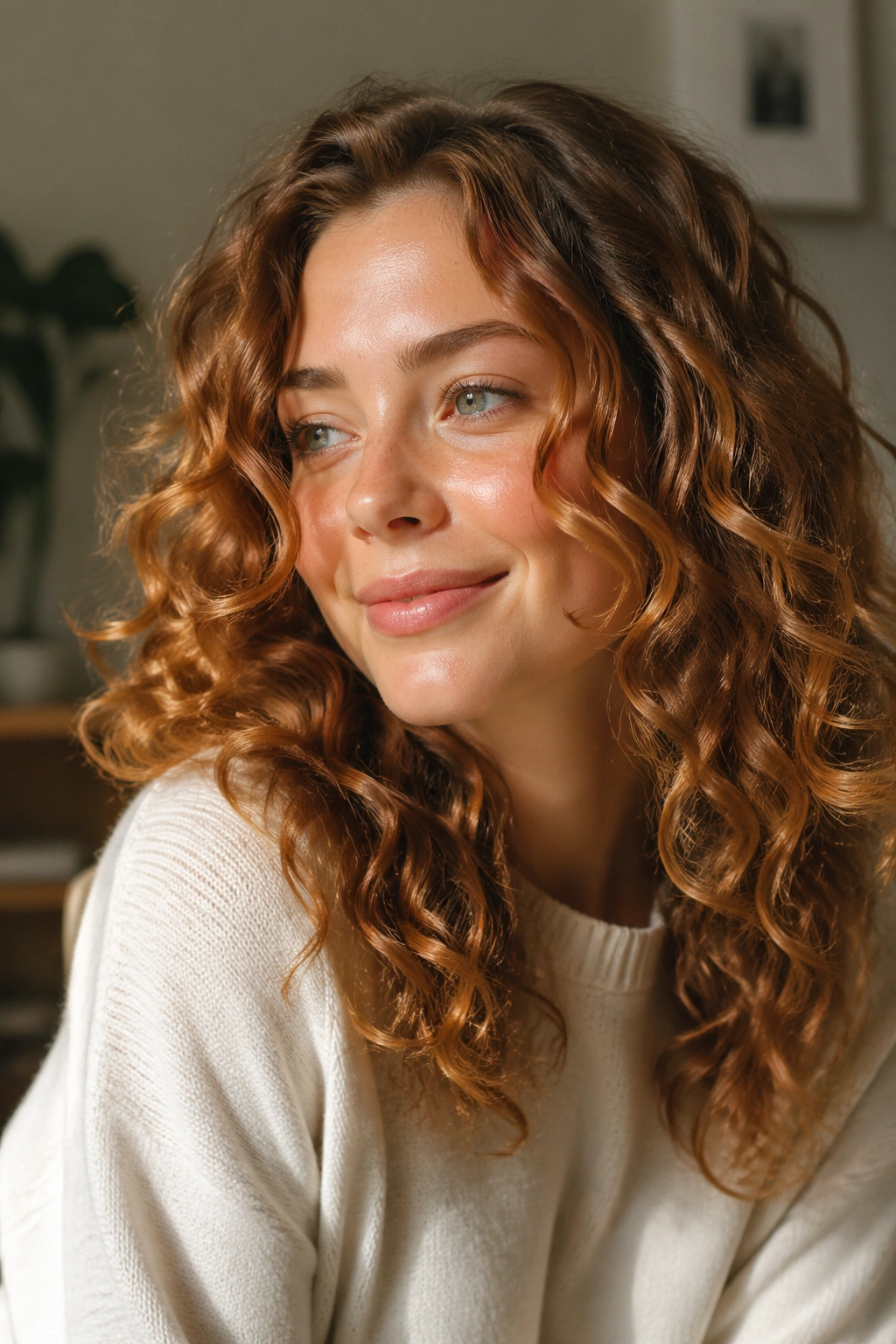
Golden copper curls are probably the easiest place to make copper look dimensional instead of one-note. Curls already break light into little pockets, so the golden pieces and the copper pieces don’t need much help showing up.
If you’ve got natural texture, ask for soft copper ribbons placed through the mid-lengths and ends, not thick foils near the root. That keeps the curl pattern visible. A curl cut can make this even better, because the shape lets the color move. Straighten it every day and you lose some of the effect. Air-dry it or diffuse it, and the color starts doing more of the work for you.
- Keep highlights fine so the curl pattern stays visible
- Use a demi-permanent copper gloss to refresh tone
- Avoid over-lightening, which can make curls look dry
- A satin pillowcase helps the shine last longer
Copper loves texture. That’s the whole story.
23. Rooted Vanilla Blonde
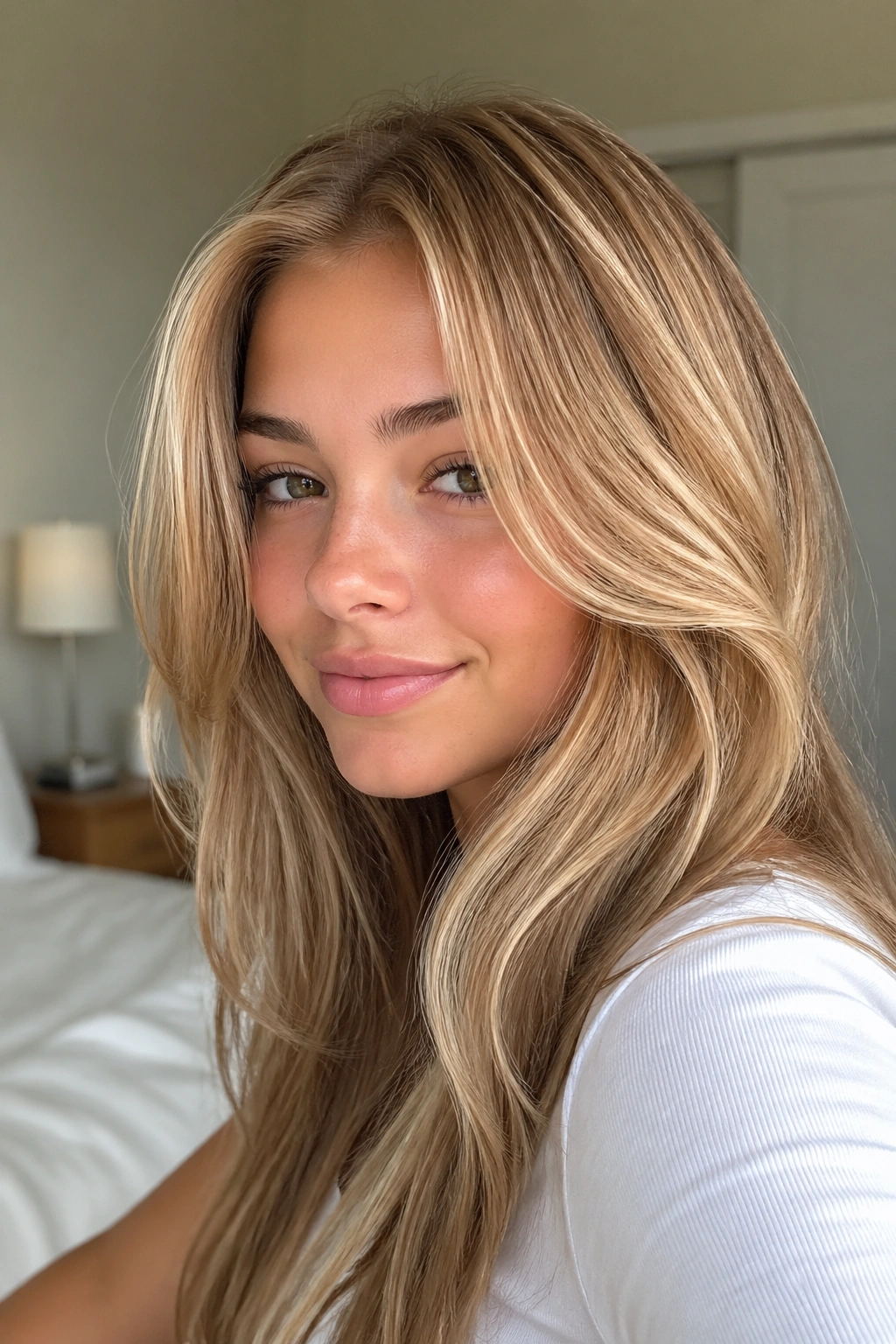
Rooted vanilla blonde is the shade I’d pick for anyone who wants brightness but does not want to babysit it. You get creamy, pale blonde through the mids and ends, then a soft root shadow that keeps the grow-out from looking harsh. It’s light, but not fussy.
This is especially good if your natural base is dark blonde or light brown. A 1 to 1.5 inch root melt gives the color some depth at the scalp, which makes the blonde look less flat and buys you time between appointments. The vanilla tone should stay clean and creamy, not chalky or yellow. If the ends are too cool, the hair can look brittle. If they’re too warm, it starts drifting into banana territory. Neither helps.
A last practical note: this shade looks best when the cut has movement. Long layers, a soft lob, or even face-framing pieces keep the vanilla from feeling too solid. If you want one of the prettiest hair color ideas that still behaves in real life, this is the one I’d hand to the friend who wants bright hair and a sane maintenance schedule.