


Short wavy hairstyles have a nice trick up their sleeve: they can look finished without looking stiff. That’s the sweet spot most people want and very few styles actually hit. Too polished, and the waves turn helmet-like. Too loose, and the whole thing starts reading as “I fought with my hair and lost.”
The good versions are all about shape. A clean line at the jaw, a smart side part, a tucked section behind one ear, a bit of lift at the roots — those details do more than a pile of product ever will. Wavy hair has movement built in, which means the cut has to do some of the heavy lifting. If the cut is blunt in the wrong place or the layers are too choppy, the result can feel messy fast. If the structure is right, though, you get that easy, deliberate finish people notice without being able to name why.
There’s also a practical side to this. Wavy hair can puff up, separate, or collapse depending on humidity, length, and how much weight sits at the ends. The right short style works with that texture instead of arguing with it. That’s what makes it look put-together on a random Tuesday, not just in a salon mirror.
1. Chin-Length Waves with a Blunt Edge
A blunt edge gives short waves something solid to land on. Without it, the bottom can look wispy and unfinished, especially if your hair has finer strands or tends to frizz at the ends.
The shape matters more than people think. When the cut hits right at the chin, the waves have enough room to bend, but not so much length that they spread out into a triangle. That clean line keeps the whole style looking deliberate. I like this one on hair that naturally falls into a soft S-pattern, because the haircut does half the styling for you.
Keep the texture light. A small palmful of mousse through damp hair is usually enough, then scrunch and let it dry with a diffuser or air dry if your waves hold well. Skip heavy oils at the roots. They drag the shape down fast.
2. Side-Parted Tousled Bob
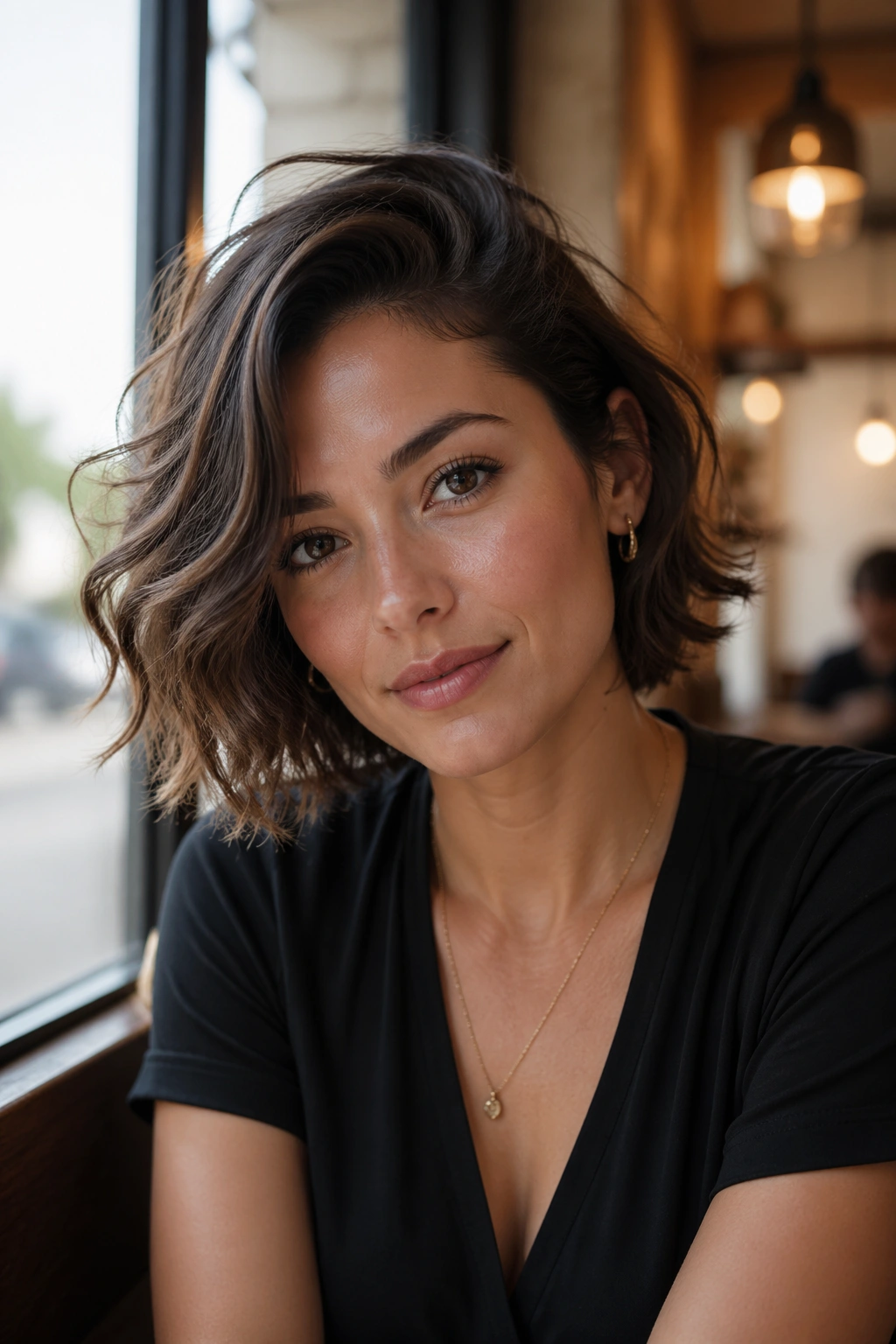
Why does a side part make a bob look more finished? Because it gives the hair a clear direction. Center-parted waves can look sweet and symmetrical, but a deep side part adds lift where you want it and a little softness where you don’t.
Why It Works
The front section gets more volume, which helps if your hair sits flat at the crown. The longer side also falls into the cheekbone area and makes the cut feel more intentional, not accidental. That little shift changes the whole mood.
How to Style It
- Use a 1-inch curling iron and wrap only the middle section of each strand.
- Leave the last inch out so the ends stay relaxed.
- Flip the part while the hair is still warm, then let it cool in place.
- Finish with a light mist of flexible hairspray, not a crunchy one.
This is a smart pick if your hair is round-brushed at the salon but falls flatter at home. The side part gives it some grit back.
3. Soft Layered Crop with Tucked-Behind-Ear Styling
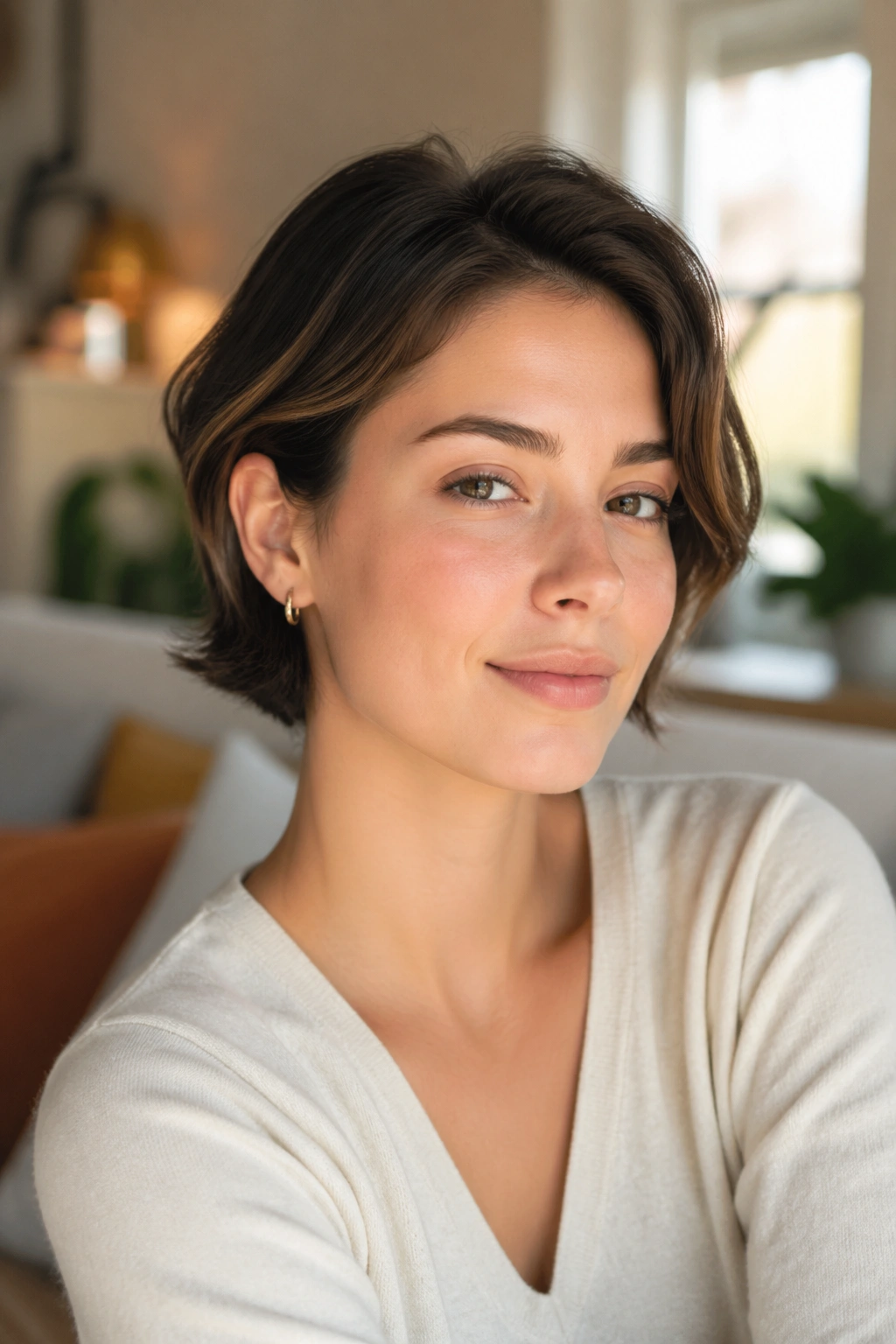
If your hair flips out at the temples, this is the kind of cut that makes peace with it. The layers stay soft, the length stays short, and the tucked-behind-ear trick gives the whole look a clean edge.
A lot of people think a crop has to be severe to look neat. Not true. A softly layered crop can be polished in a way that feels almost casual, which is the point. You get movement around the face, but the ears are open, the neckline is tidy, and the silhouette stays neat even if the waves get a little more active during the day.
Use a pea-size amount of styling cream on dry or damp hair, then push the front pieces back with your fingers. Don’t overthink it. The charm here is that the cut already knows what it wants to do.
4. Wavy Pixie with a Longer Top
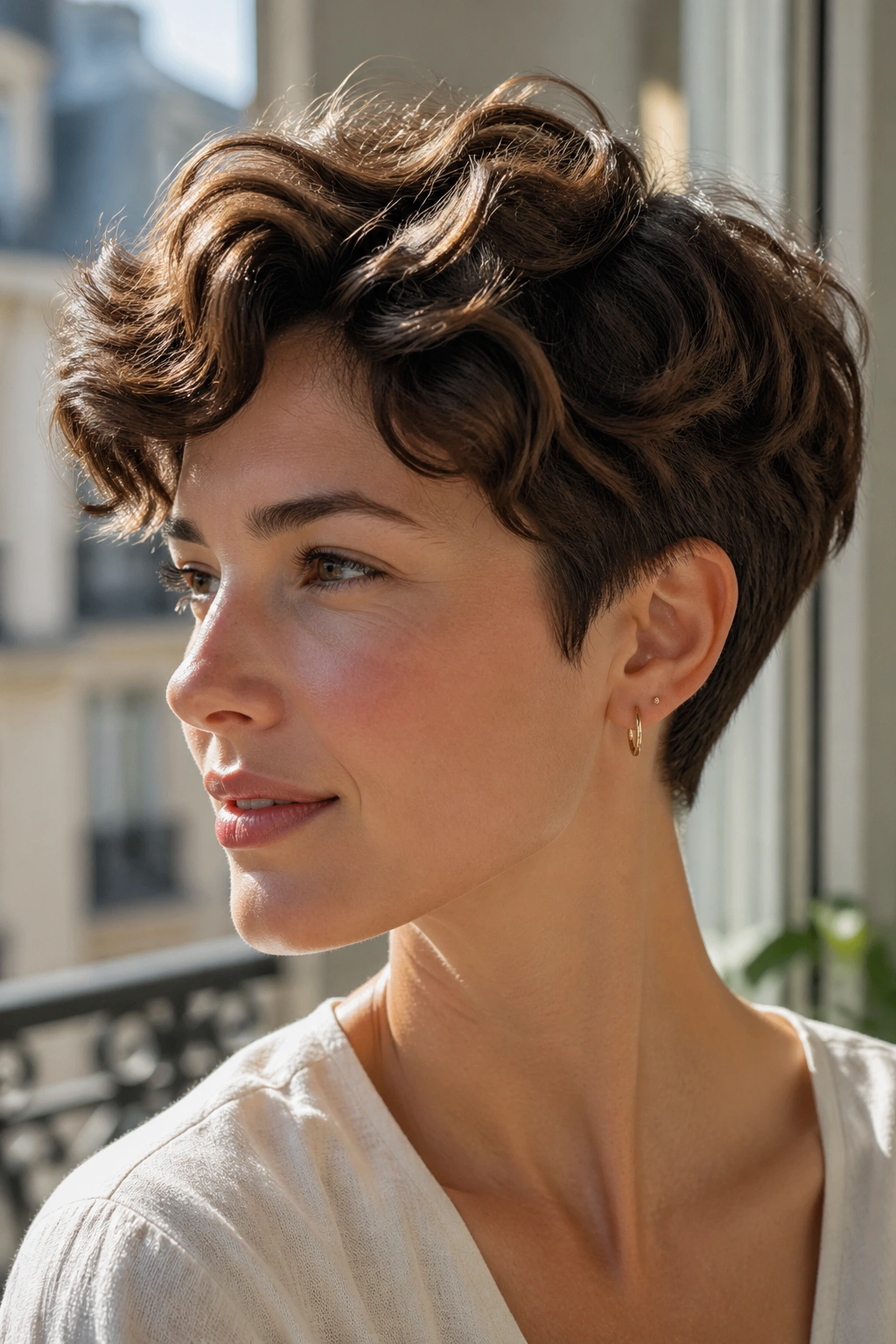
A pixie does not have to look spiky or sporty. Give it a longer top layer, and those waves start behaving like a little piece of architecture — soft on top, tidy at the sides, clean around the ears.
The key is contrast. Shorter sides keep the outline neat, while the top holds enough length to show off your natural bend. If your hair has a loose wave, this style can be surprisingly elegant. It avoids the “flat at the roots, fluffy at the ends” problem that short cuts sometimes create.
What to Ask For
- Keep the sides and nape close, but not shaved too high.
- Leave enough length on top for a wave to form, usually around 2 to 3 inches.
- Ask for soft texturing, not heavy razor thinning.
A tiny dab of matte pomade through the top is enough. Too much product kills the movement, and that’s the one thing this cut needs to keep.
5. Collarbone-Grazing Lob with Loose Waves
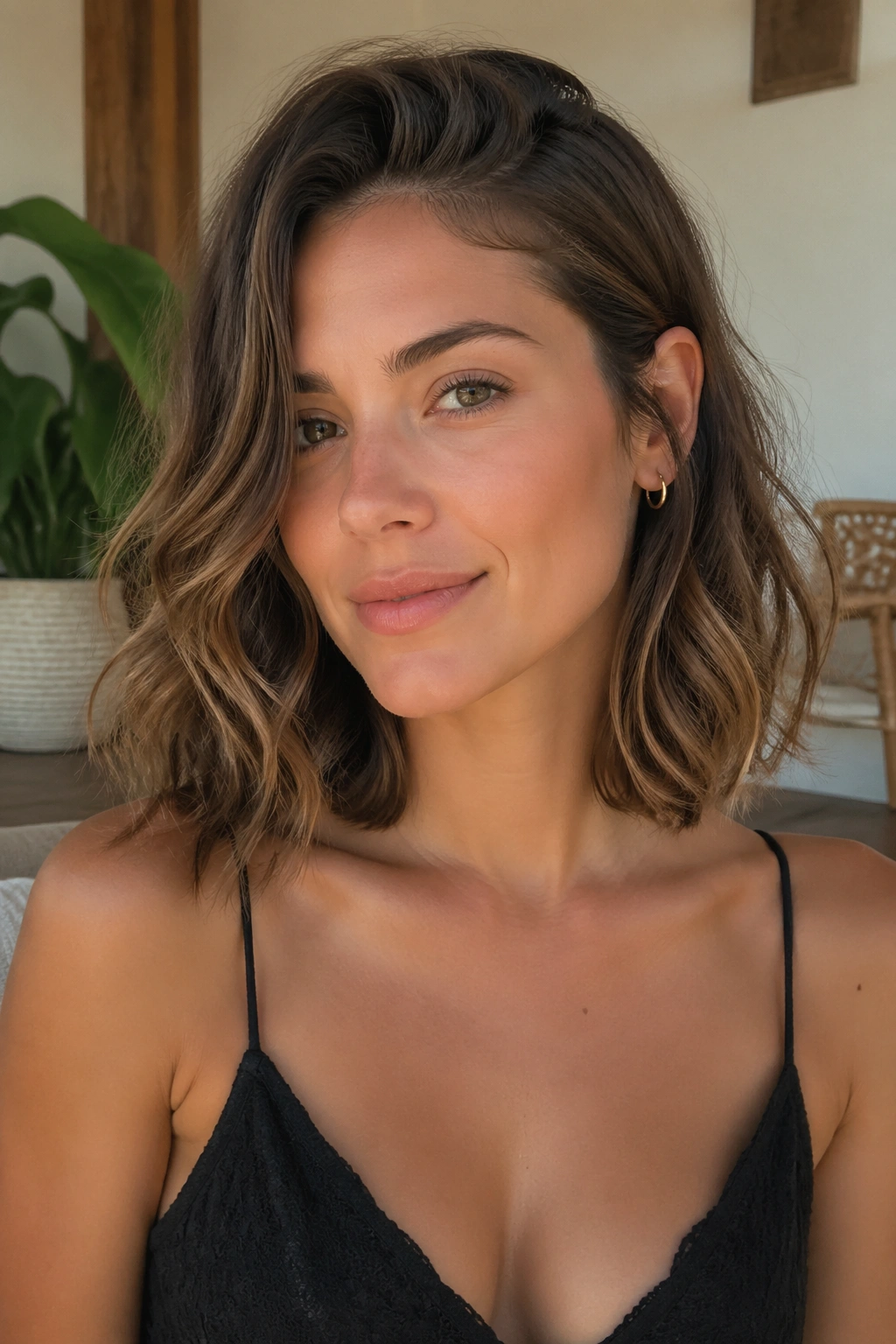
This is the style I reach for when someone wants short wavy hairstyles but isn’t ready to lose every inch of length. The collarbone-grazing lob gives the hair enough weight to stay smooth, while the wave pattern keeps it from feeling plain.
It’s a good middle ground. You still get that neat, shoulder-skimming shape, but the extra length lets you tuck one side behind the ear, pin back a front piece, or wear it half-up without fighting flyaways. The result looks planned, not fussy.
A 1.25-inch iron works well here because the larger barrel gives a softer bend. Wrap the hair away from the face, then brush it out with your fingers once it cools. If the ends look too perfect, pinch them lightly with a drop of serum. That small step keeps the style from reading as overdone.
6. Deep Side Part and Old Hollywood Bend
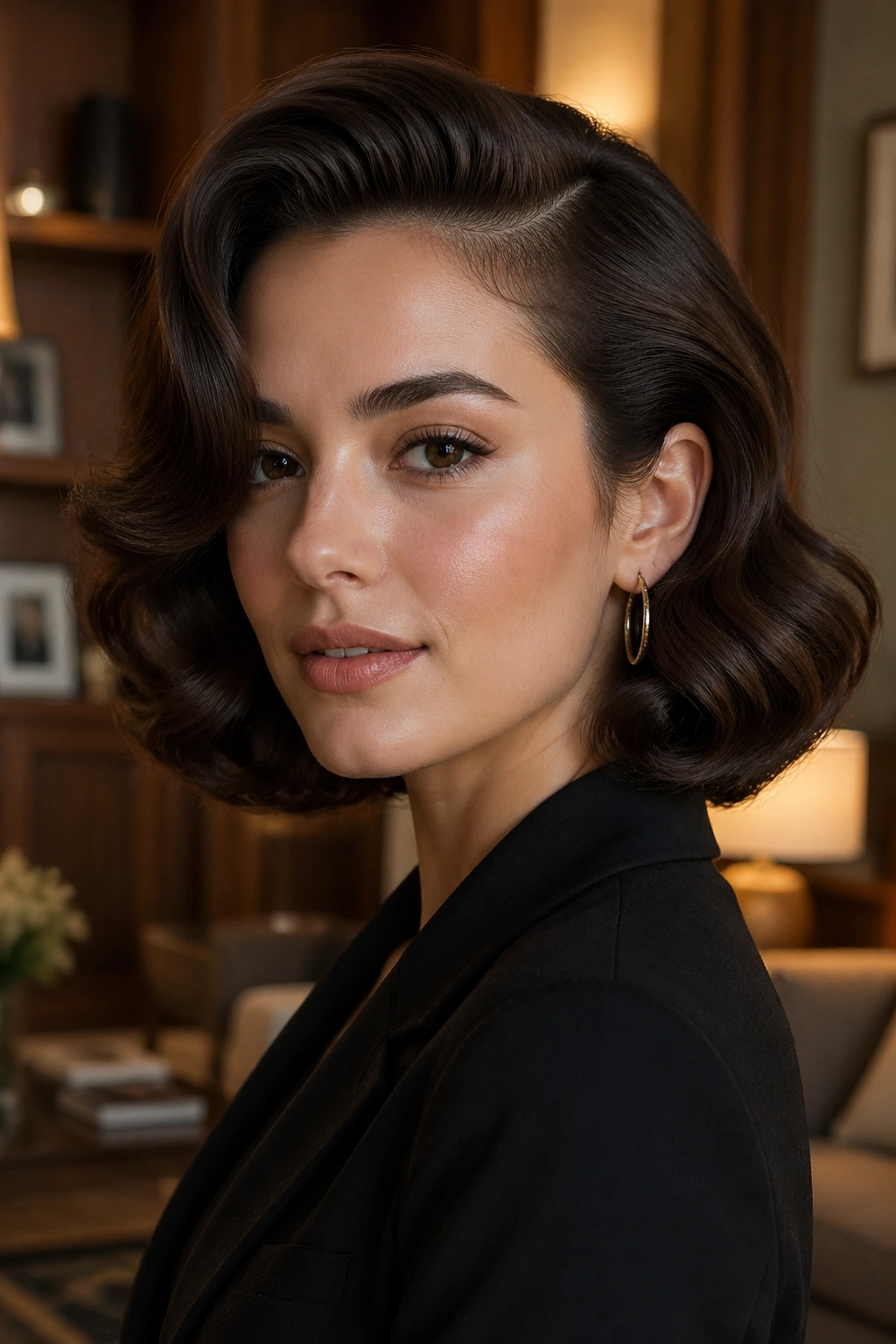
A deep side part can make even simple waves look dressed up. There’s something about that sweep across the forehead — it feels calm, deliberate, and a little more formal than a center part ever does.
The bend itself should be smooth, not springy. Think brushed-out curves, not beach texture. Hot rollers work well if you’ve got them, and so does a curling wand followed by a soft brush-through. Clip the crown while it cools if you want extra lift. That part matters. Warm hair remembers the shape you leave it in.
This style is especially good when you want your hair to look neat for dinner, a meeting, or a photo where you don’t want anything overly messy. Keep the finish glossy. A light spray with shine mist does more here than a heavy oil.
7. French Girl Shag
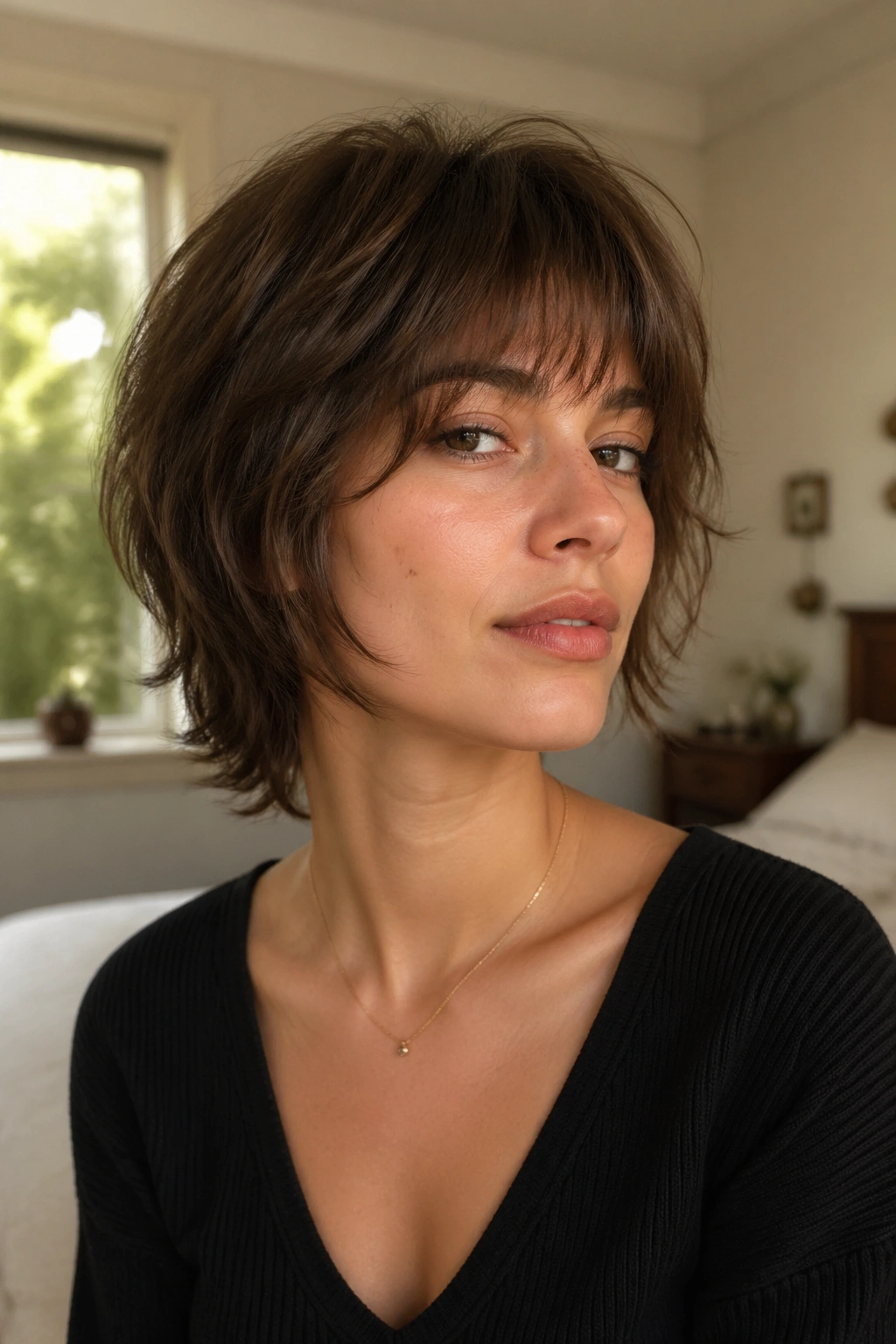
A shag can look polished. People forget that because they picture big, airy layers with a lot of movement, but the shape can be tidy if the layers are soft and the perimeter is controlled.
What Makes It Look Intentional
The best version keeps the ends close enough that the cut doesn’t balloon out. The top has lift, the front pieces graze the cheekbones, and the fringe sits lightly instead of hanging like a curtain. That balance is what makes it feel finished instead of wild.
Who It Flatters
- Thick hair that needs shape without losing body
- Wavy hair that grows wide at the sides
- Faces that can handle a bit of texture around the cheekbones
A shag like this needs regular shaping, usually every 6 to 8 weeks if you want the outline to stay crisp. Let it grow too long, and the whole thing starts to lose its edge. I’m not a fan of leaving this style untouched for months. It gets sloppy fast.
8. Curly-Wavy Mix with Air-Dried Texture
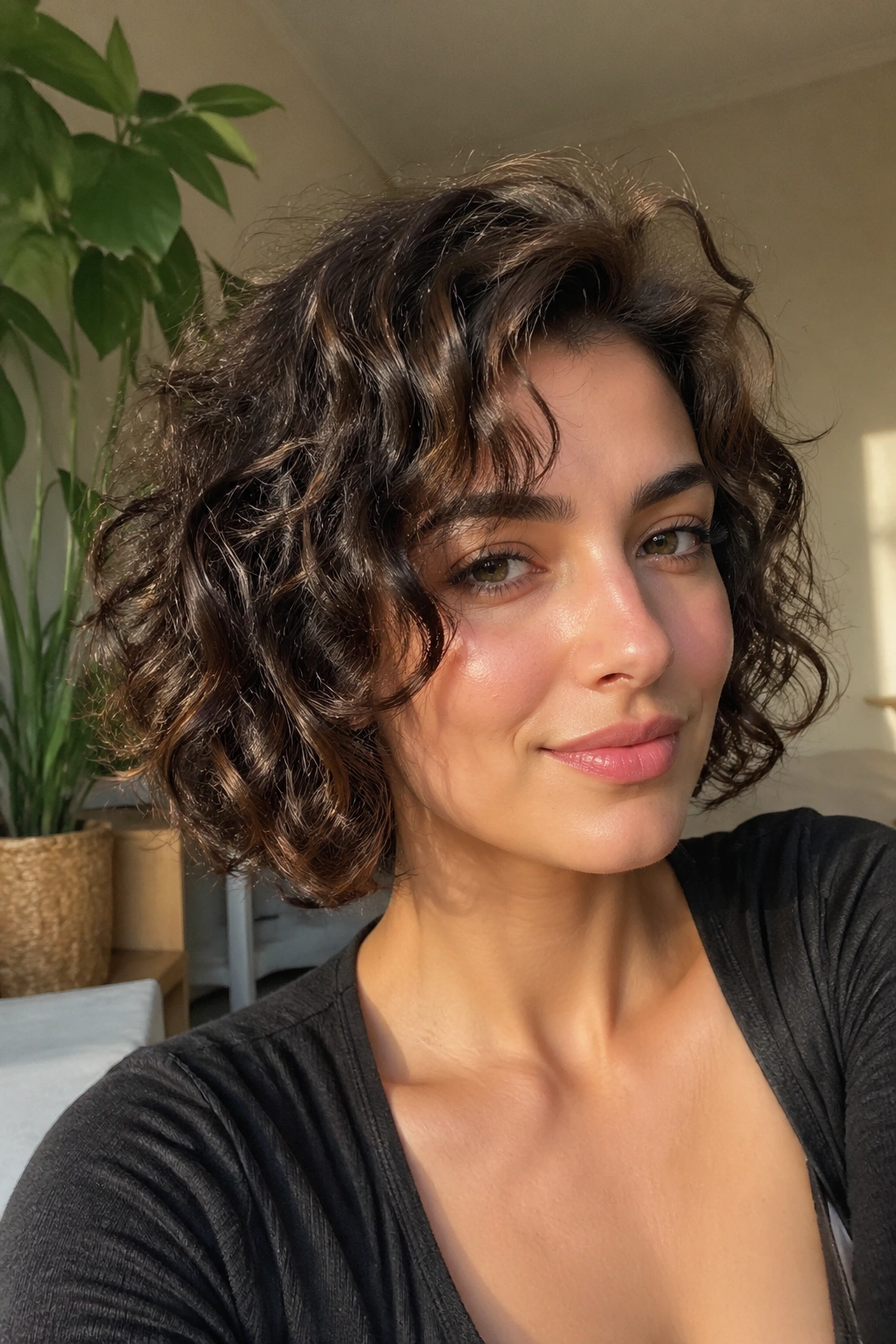
Somewhere between curly and wavy sits a texture that can look either beautifully effortless or plain frizzy. The difference is in the finish. If the pattern is encouraged while the surface stays smooth, the cut looks fresh and awake.
The trick is to stop touching it. Seriously. Once the hair starts drying, hands in and out of it will rough up the curl clumps and break the clean shape. Use a leave-in cream first, then a little gel over the top, scrunch gently, and let it dry until it’s about 70 percent dry before you diffuse or air dry the rest.
You want the surface to feel soft, not sticky. If it crunches, you used too much gel or too much scrunching. A small amount of product goes a long way on short hair, especially when the goal is a neat outline with visible texture.
9. Rounded Bob with Face-Framing Pieces
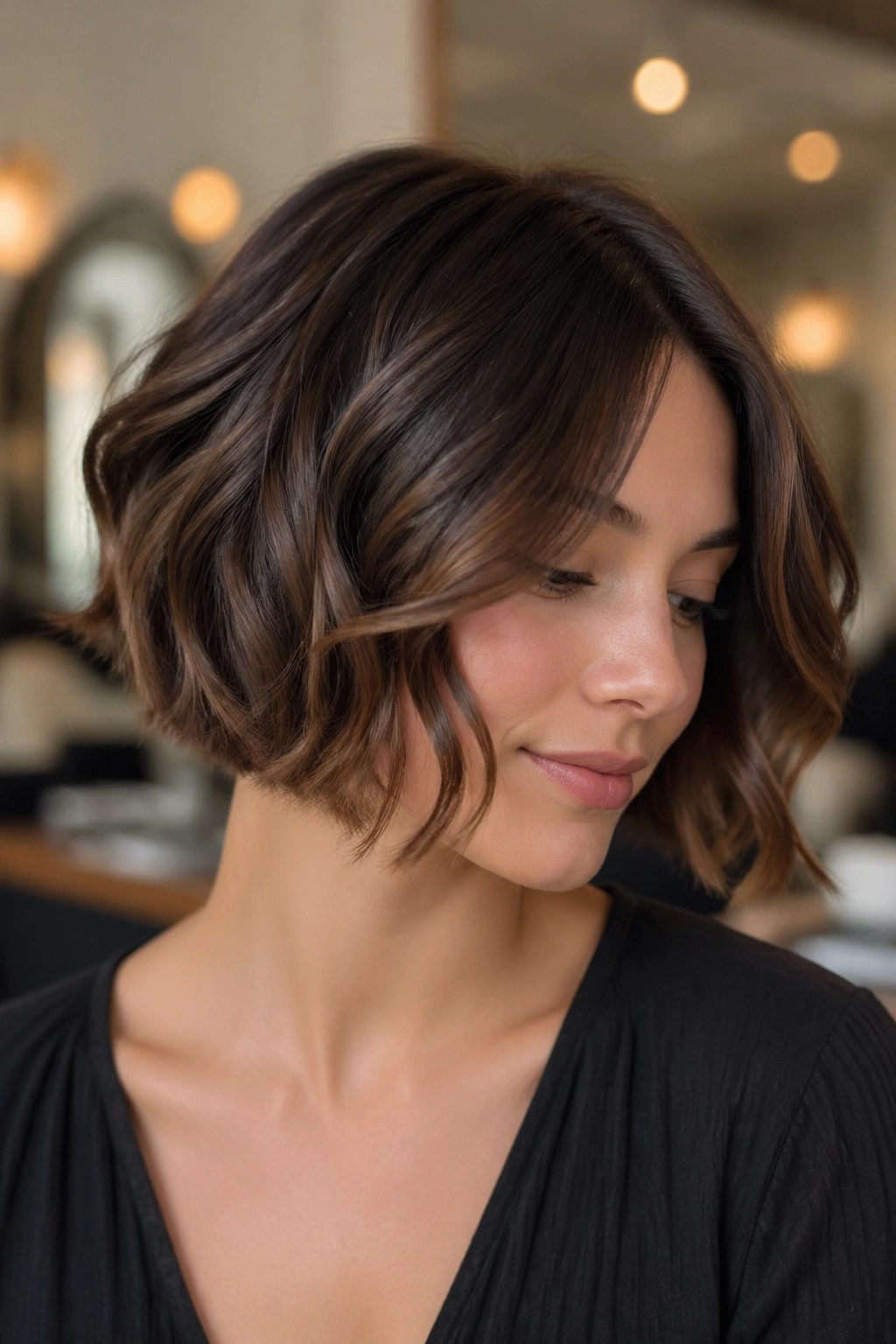
Why does a rounded bob work so well on wavy hair? Because it follows the head shape instead of fighting it. The hair curves in a way that feels polished, and the face-framing pieces keep the front from going heavy.
This cut is quietly flattering on a lot of people because it doesn’t rely on dramatic layers or sharp angles. The curve sits near the cheekbone and jaw, which gives the face a soft border. If your hair tends to puff out at the bottom, ask for a little less bulk in the lower back section and a touch of movement around the front.
A round brush can help, but it doesn’t need a full salon blowout every day. Even a quick bend with the dryer nozzle pointed downward can keep the ends smoother than you’d expect. The shape does most of the work.
10. Sleek Roots and Wavy Ends
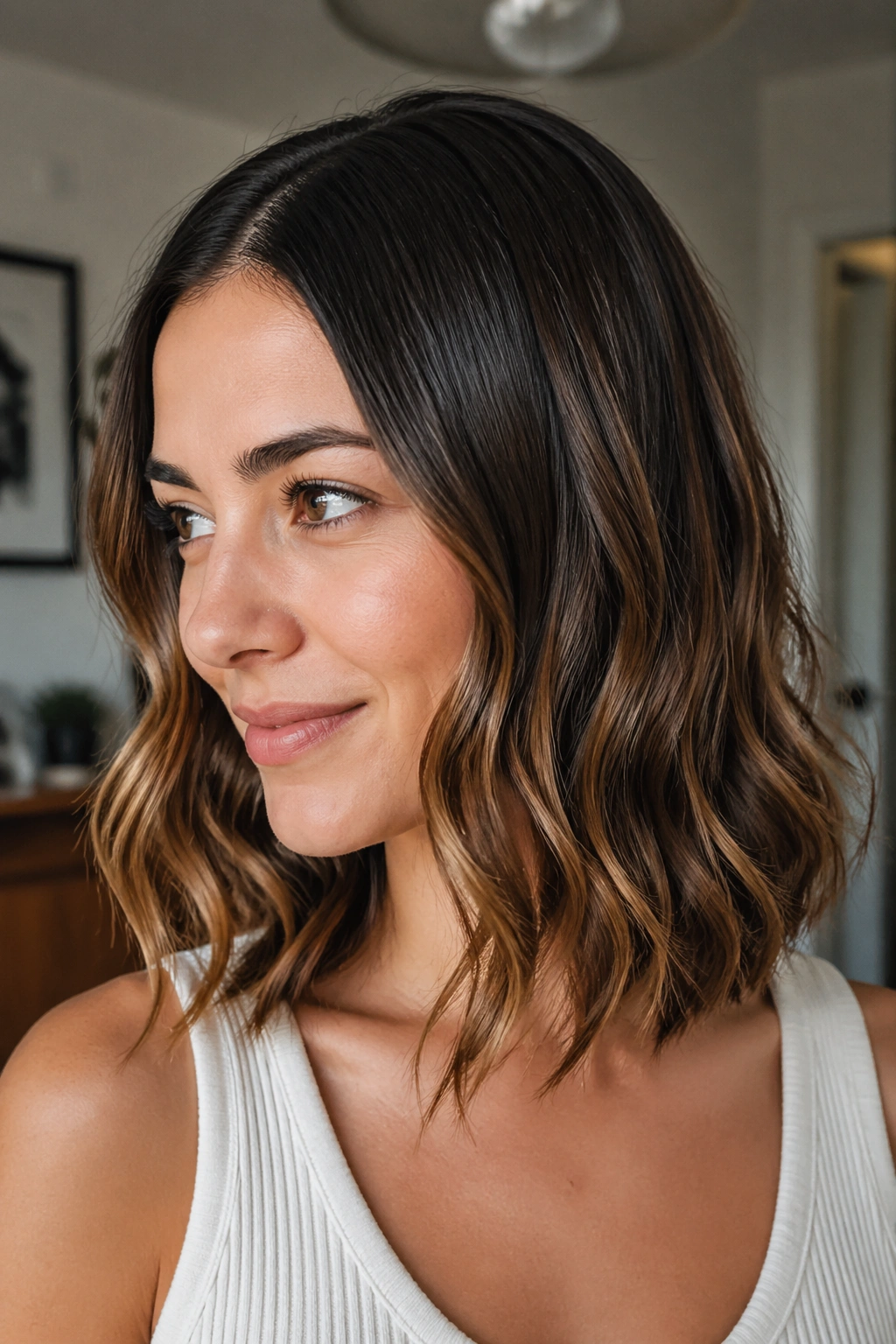
This style is the neatest trick in the bunch. The top stays smooth and close to the head, while the lower half turns into soft waves. That contrast makes short hair look polished without making it boring.
Unlike all-over waves, this version gives your haircut a clear order. The roots look controlled, which reads as tidy right away. Then the bend starts lower down, so the style still has movement and softness. It’s a strong choice if your hair is fine, because keeping the crown smooth prevents it from looking puffy.
Use a flat brush to dry the top flat, then add waves only from mid-length down with a curling iron or a wide iron. A touch of heat protectant is nonnegotiable here. You want the ends loose and bendy, not fried into little hooks.
11. Mini Curtain Bangs with a Wavy Bob
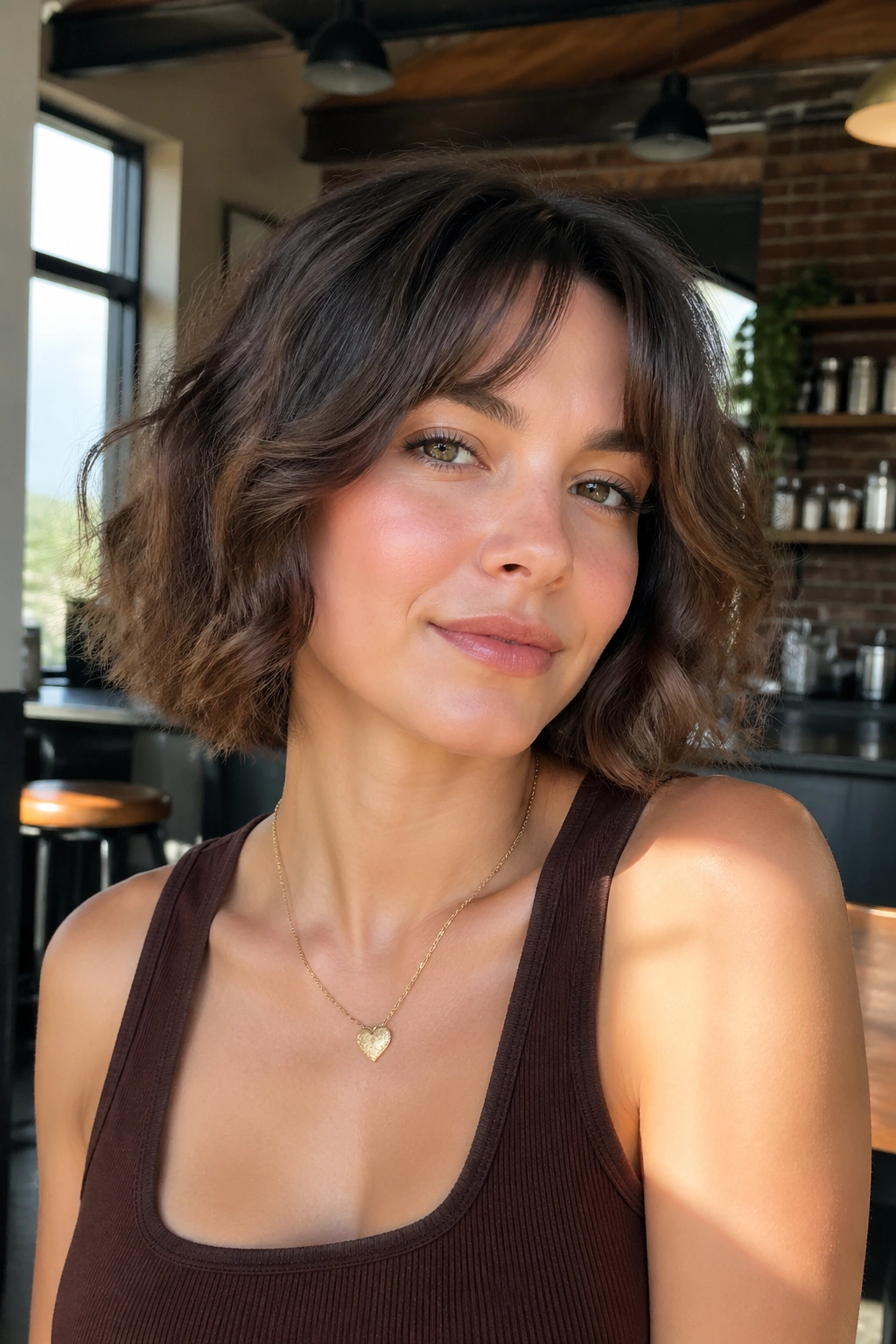
Mini curtain bangs can do a lot of quiet work. They break up a short wavy bob, soften the forehead, and make the whole cut look like it was shaped on purpose rather than chopped around the face.
A Small Fringe, A Big Difference
The bangs should start around the cheekbone area, not far above the brow. That keeps them from looking too severe. Let them curve away from the face with a loose bend; straight, blunt curtain bangs are a different story, and they can fight with waves in a way that feels fussy.
Styling Notes
- Blow-dry the bangs first with a small round brush.
- Aim the airflow downward so they don’t balloon.
- Keep a dry texture spray on hand for the bob itself.
- Trim every 4 to 6 weeks if you want the fringe to stay open and soft.
This style works especially well when the rest of the bob is a little airy. Too much bulk around the ears and the bangs lose their charm.
12. Asymmetrical Bob with a Clean Side Sweep
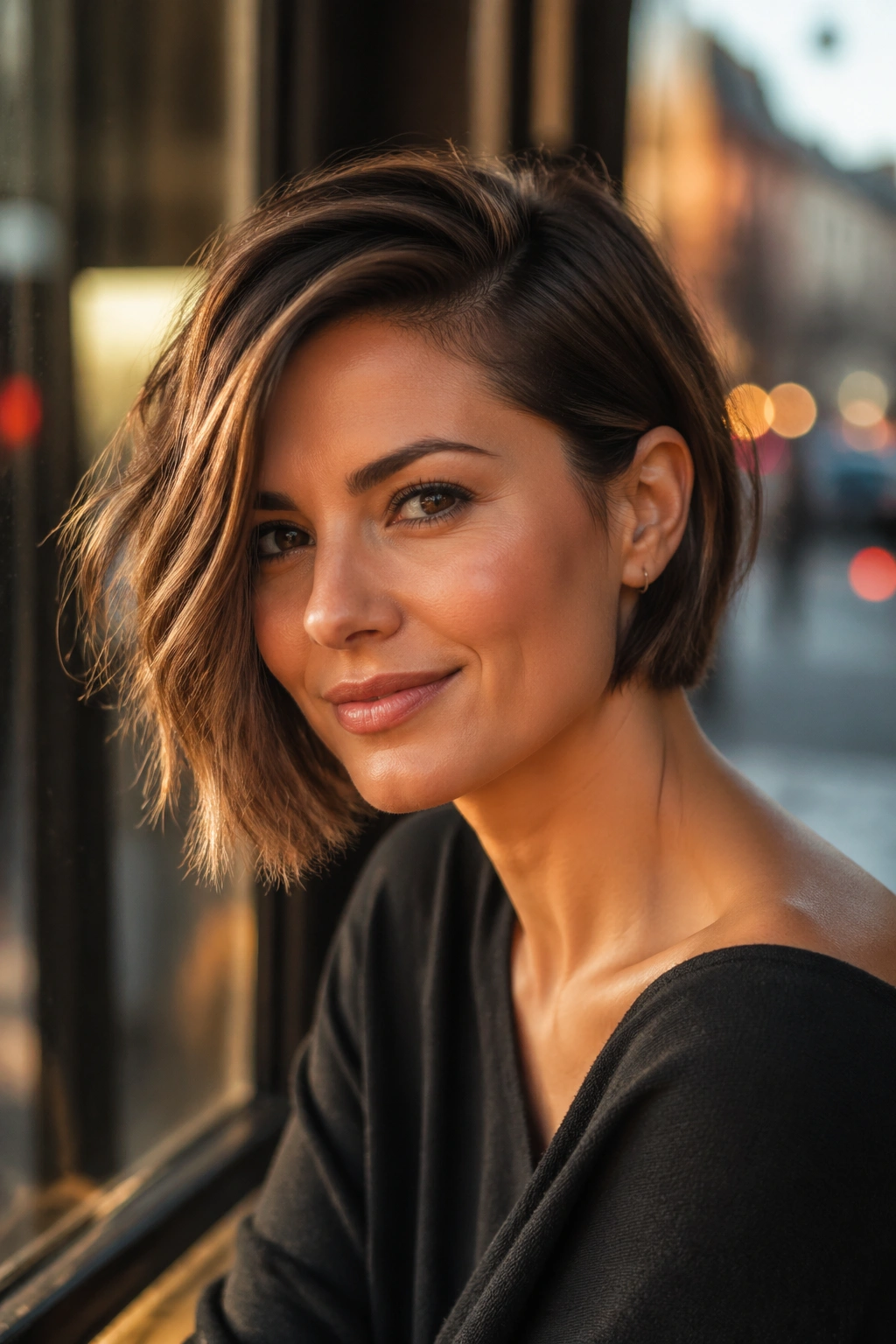
An asymmetrical bob looks sharp when the difference is subtle. One side sits just a bit longer — maybe half an inch to an inch — and that tiny shift gives the haircut movement without making it shout.
The side sweep matters here. It keeps the front from looking boxed in and adds a clean line across the face. Wavy hair brings enough softness that the asymmetry doesn’t feel harsh. Instead, it reads as intentional and a little chic in a low-key way.
I like this style for people who want something neat but not too precious. It looks good with minimal styling, as long as the ends stay tidy. A light cream through damp hair, then a quick rough-dry with your fingers, is often enough. The shape is the point. The wave is the seasoning.
13. Wavy Crop with Micro Fringe
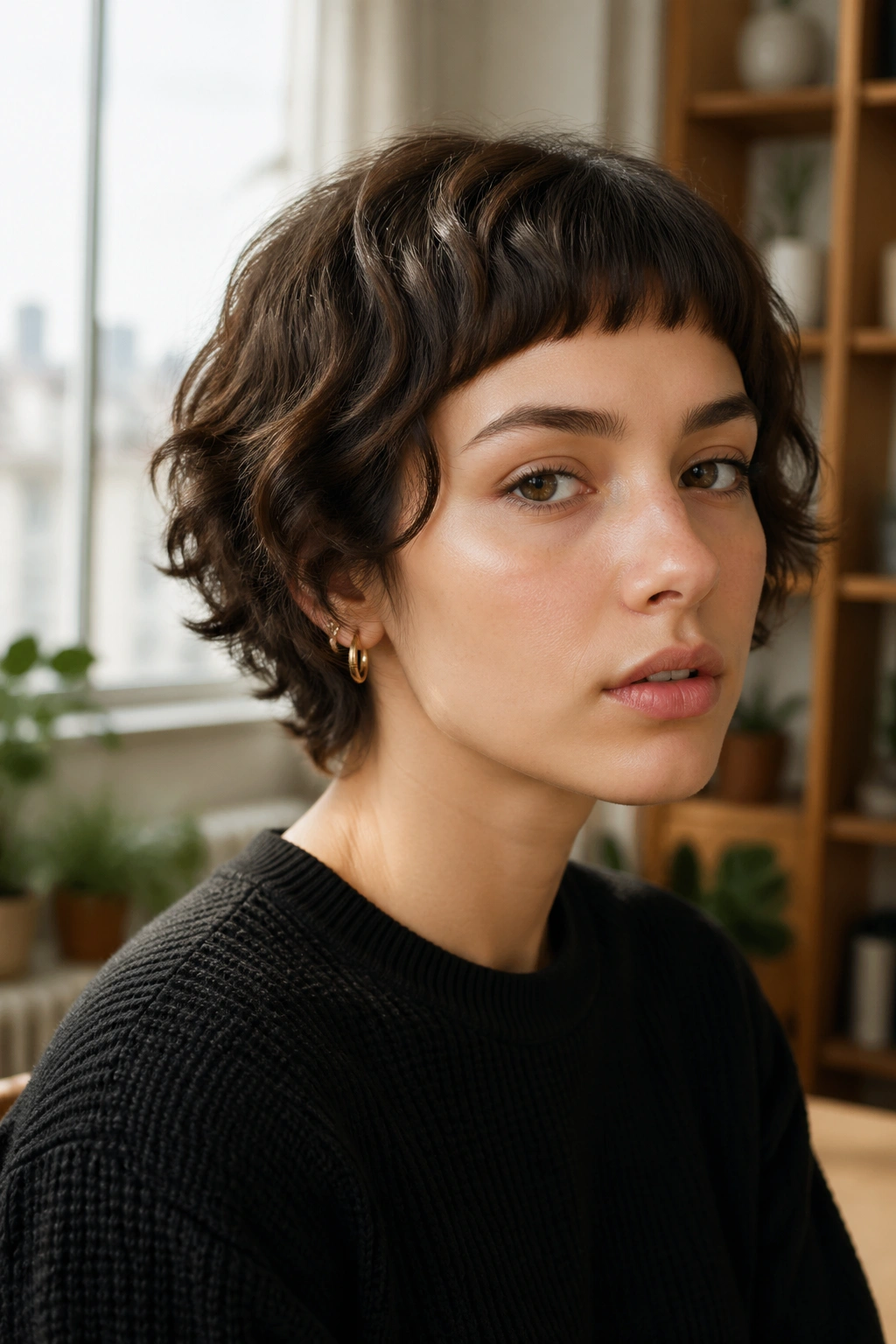
A micro fringe is not subtle. That’s the charm and the risk. Paired with short waves, it creates a look that feels sharp, clean, and very deliberate — but only if the rest of the cut stays tidy.
What to Watch For
- Keep the fringe blunt enough to read as a line.
- Leave the sides soft so the cut doesn’t look boxed in.
- Keep the crop close at the nape.
- Expect trims more often than you’d like.
This is not the style for someone who wants low maintenance. Short bangs grow fast, and they can change the whole face of the haircut in a few weeks. Still, when the shape is fresh, it looks polished in a way that softer fringes don’t. The contrast between the tiny fringe and the wavy body gives the style a kind of precision that’s hard to fake.
A little shine cream on the ends helps, but don’t flatten the top. The crop needs some lift to stay lively.
14. Textured Jaw-Length Bob with Piecey Ends
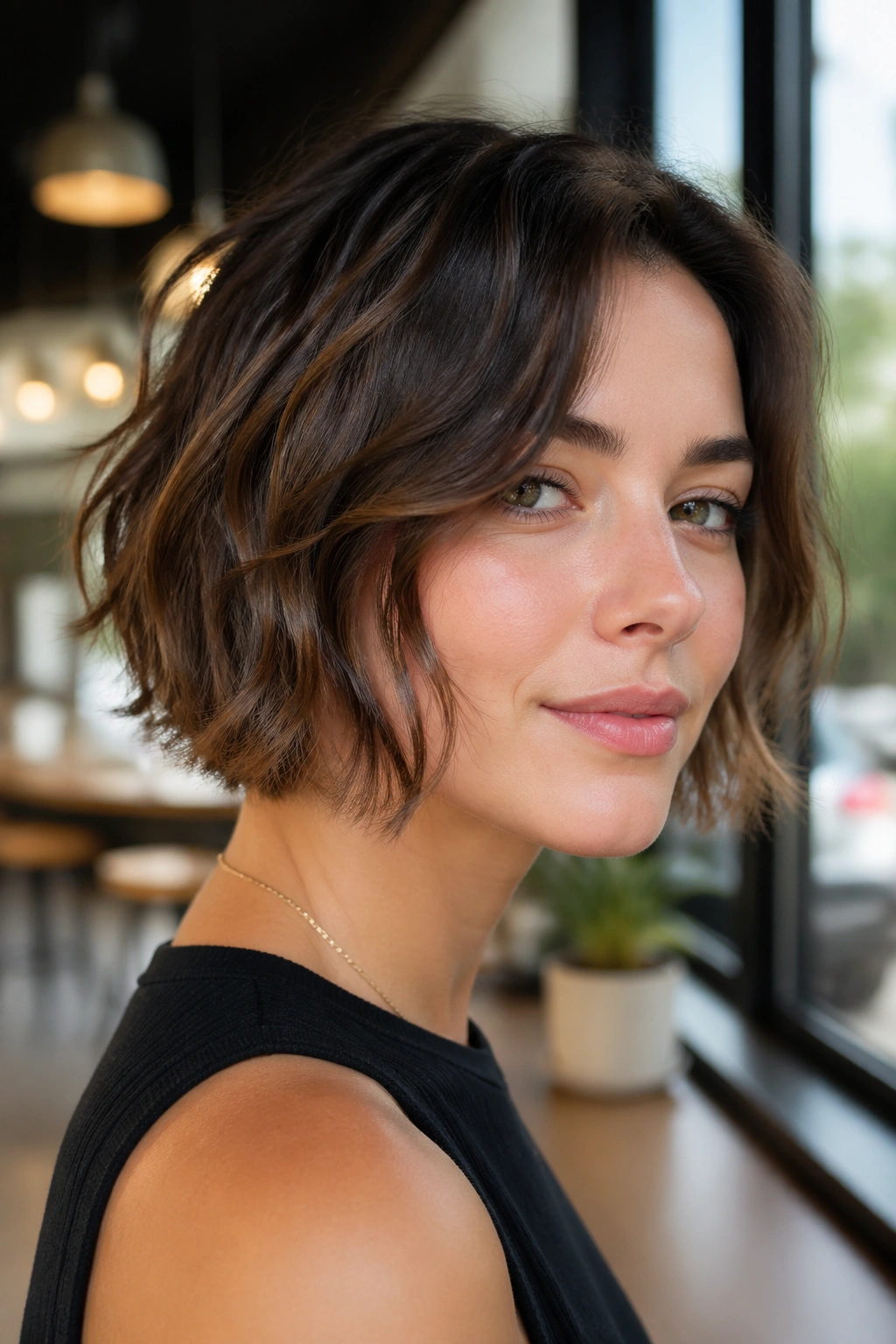
A jaw-length bob can look too solid if the ends are blunt all the way across. Piecey ends break that heaviness up. They let the waves separate a bit, which makes the cut feel lighter and cleaner.
This is one of those styles that benefits from a careful hand at the salon. You want texture, but not so much thinning that the ends fray. Point cutting works better than hacking away at the shape. The result should look like small, clean sections moving against each other, not wispy scraps.
I’m partial to this on thicker wavy hair because it keeps the body under control. The jaw-length line still gives structure, and the softer ends stop it from turning boxy. A salt spray can work, but I usually prefer a light mousse here. It gives better hold without making the strands feel dry.
15. Half-Tucked Wavy Lob
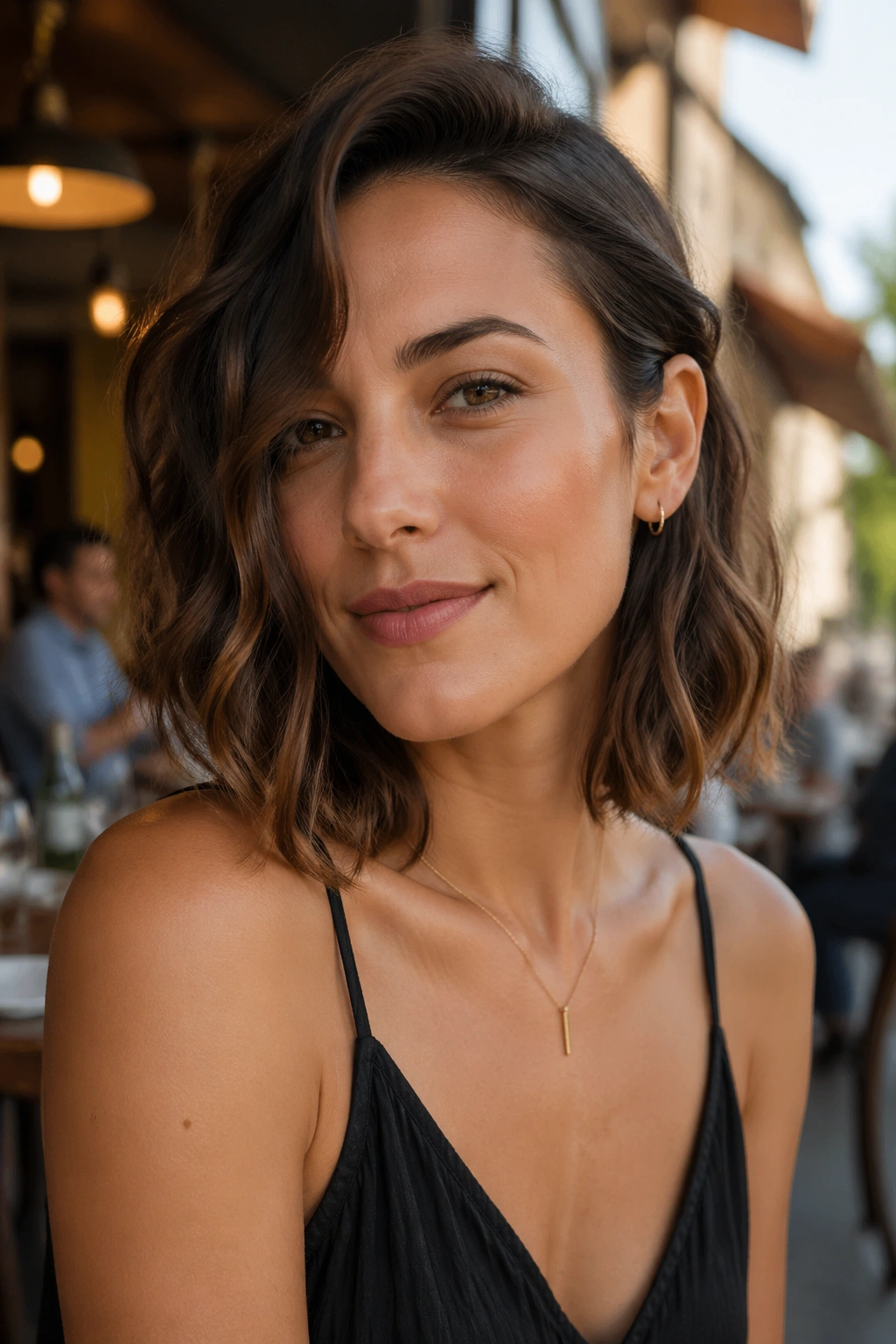
What makes a half-tuck look polished instead of careless? Placement. That’s really it. If you tuck the right section, the style suddenly feels intentional and a little elegant. If you tuck too much, it looks like you forgot to finish your hair.
How to Wear It
Pick one side and tuck only the front two or three inches behind the ear. Leave the rest loose and wavy. The tucked side should expose the cheekbone or jawline a bit, while the other side keeps the softness. That contrast is what gives the look its shape.
This works on a lob because the length is long enough to tuck without losing the wave pattern. It also helps if the hair has a little bend near the face. A flat iron can smooth the tucked side for about 5 seconds per section, but don’t straighten everything. The whole point is the mix.
Simple. Neat. Done.
16. Soft Wolf Cut for Short Wavy Hair
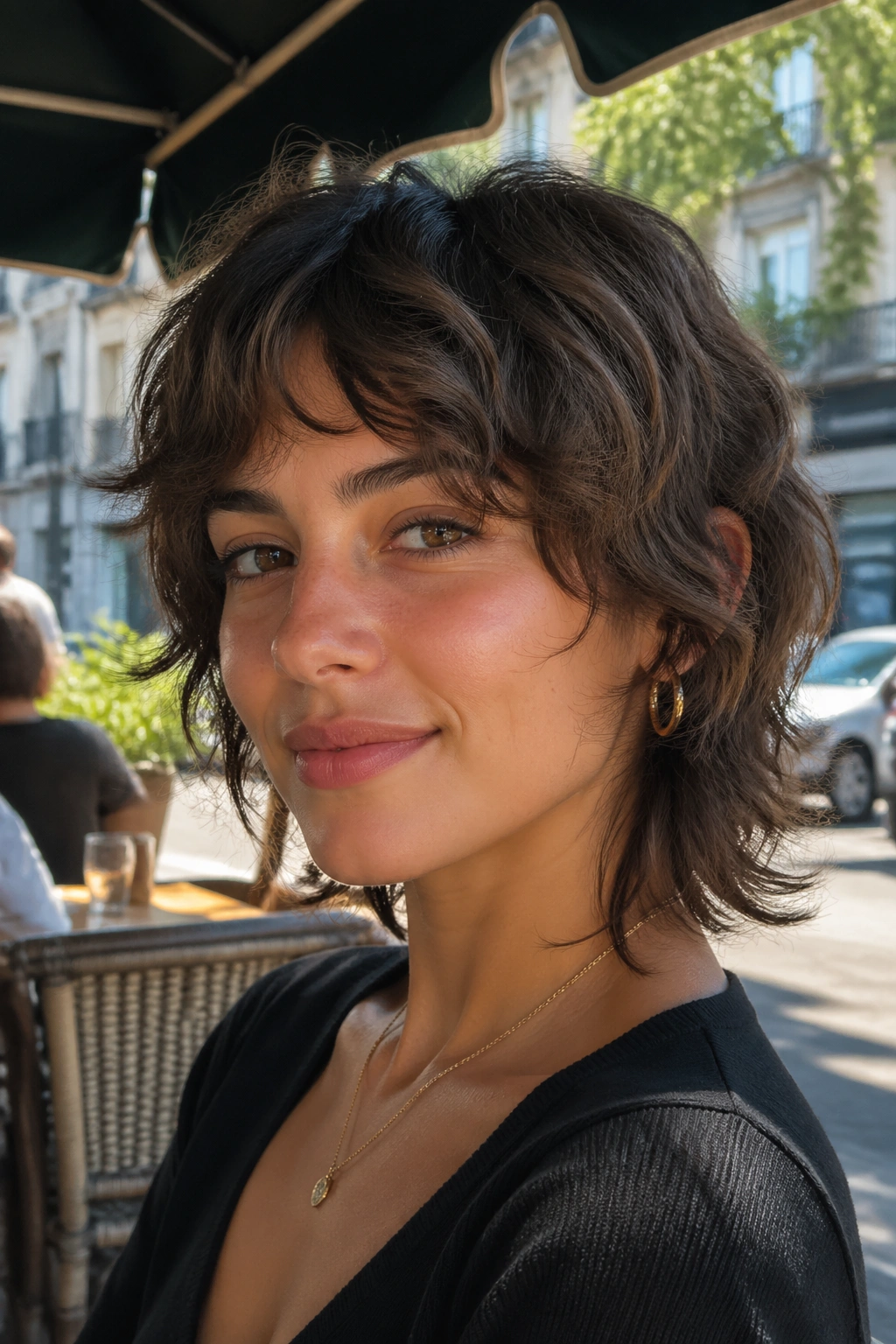
A wolf cut can go wrong fast if the layers are too aggressive. The soft version is the one I’d actually suggest to most people with short waves, because it keeps the perimeter cleaner while still giving the top some lift.
Unlike a heavy shag, this cut doesn’t throw volume in every direction. The crown gets movement, the sides stay a bit closer, and the nape still has some shape. That makes the whole thing easier to wear day to day. It looks styled even when you barely touched it.
If your hair is dense, this cut can be a relief. The extra layering removes bulk without making the ends vanish. Ask for soft, blended layers rather than sharp chops. You want the hair to fall in steps, not in jumps. That’s the difference between cool and chaotic.
17. Glossy Waves with a Barrette or Clip
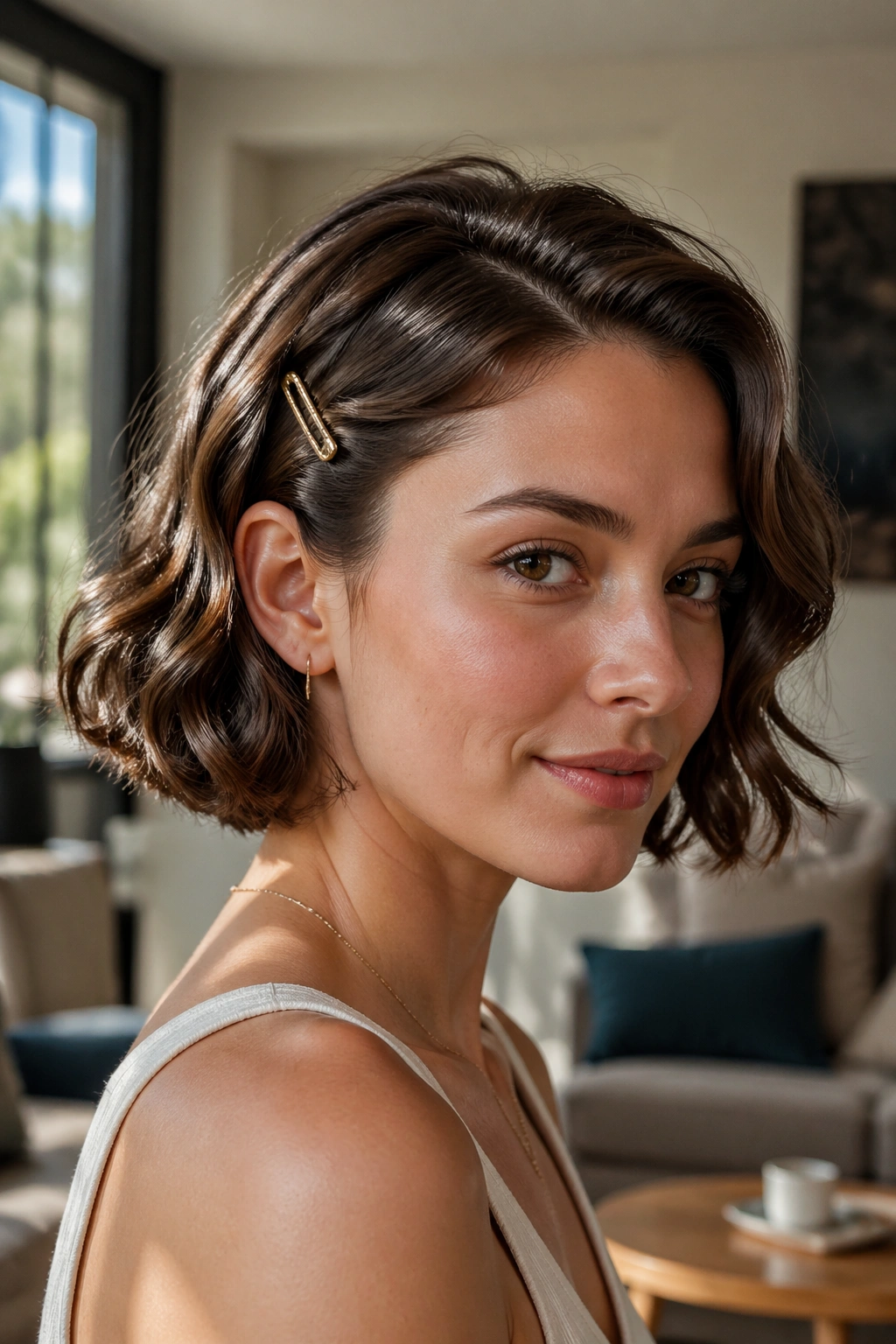
Accessories can save a short wavy hairstyle when you need it to look more finished. A simple barrette or clip adds structure in seconds, and it’s a lot cleaner than trying to force the hair into an updo it doesn’t want.
The best placement is usually just above the ear or slightly behind it, where the clip holds a section flat but still lets the wave show through. I like metal barrettes and plain tortoise clips because they read neat. Oversized fabric bows can work, but they change the tone fast. Sometimes that’s fun. Sometimes it’s too much.
Keep the waves glossy and soft. A small amount of serum on the ends, then a clean part, makes the accessory feel like part of the hairstyle instead of a rescue mission. That’s the real trick. The clip should look chosen, not necessary.
18. Pinned-Back Temple Waves
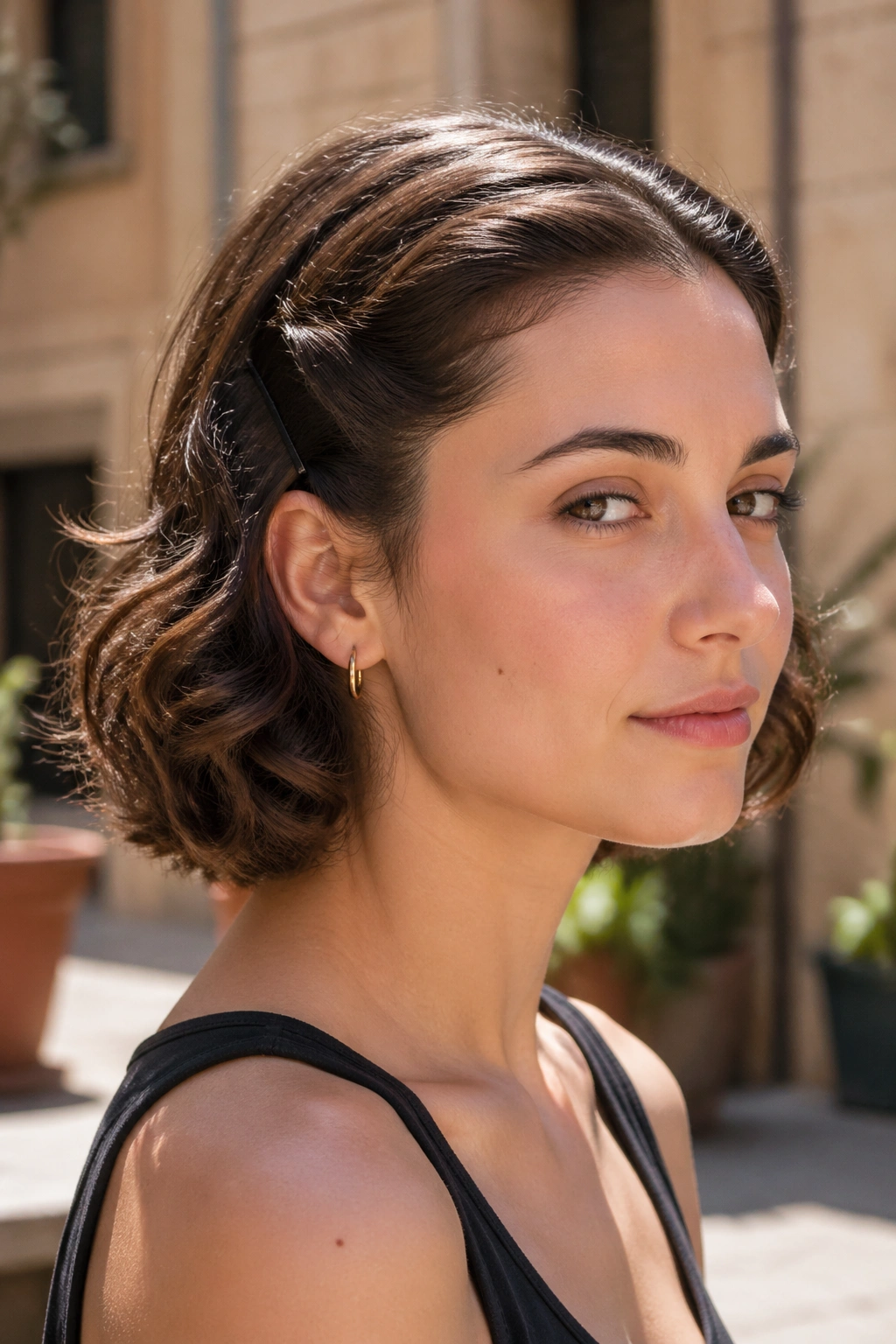
If you want your hair off your face without losing the wave pattern, pinning back the temples is a smart move. It’s small, but it changes the whole frame around your features.
This is especially useful when the front pieces are growing out or when the waves around the temples keep collapsing. Two crossed bobby pins on each side can hold the hair flat without making a big statement. Match the pins to your hair color if you want them to disappear, or pick a metallic finish if you want the detail to show.
Quick Styling Details
- Take a 2-inch section from each temple.
- Twist it back once before pinning.
- Spray the pin lightly before inserting it.
- Leave the rest of the hair loose and touchable.
The result feels neat without being severe. I love it for days when you want a little order but don’t want to lose the softness around the face.
19. Short Waves with a Neat Center Part
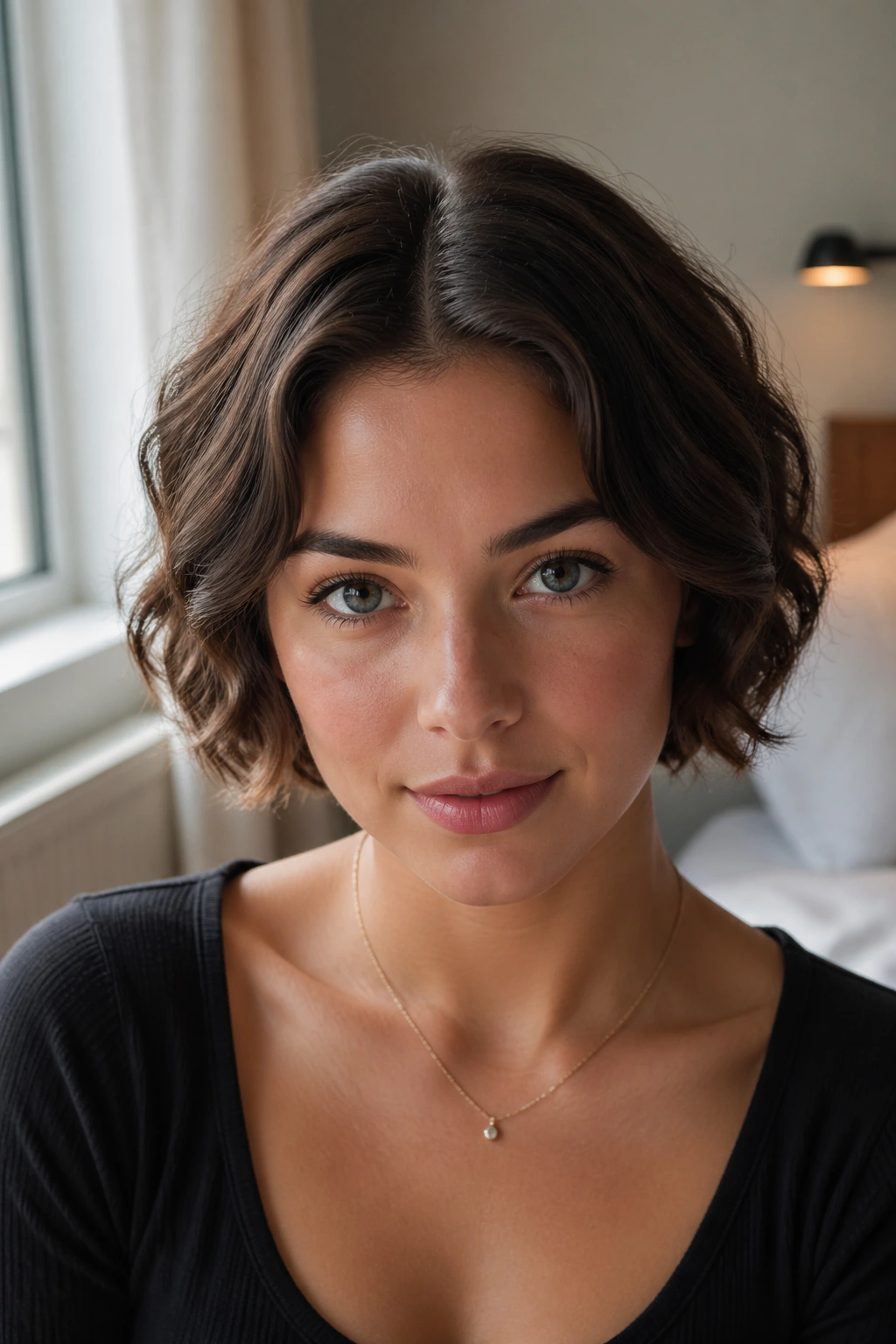
A center part can look formal when the cut is balanced. The myth is that it only works on perfect, flat hair. Not true. On short waves, it can be one of the cleanest-looking options if both sides mirror each other closely.
The balance is the whole game. You want equal volume on each side, with the wave pattern starting at a similar height. If one side swells higher than the other, the part starts looking accidental. A small amount of smoothing cream at the roots can keep the top from frizzing while the mid-lengths stay wavy.
This style suits people who like a calmer look. It doesn’t rely on asymmetry or accessories. That makes it easy to wear with sharp collars, simple earrings, or a plain T-shirt and still look pulled together. Clean is the word here. Not plain. Clean.
20. Wavy Mullet with Controlled Volume
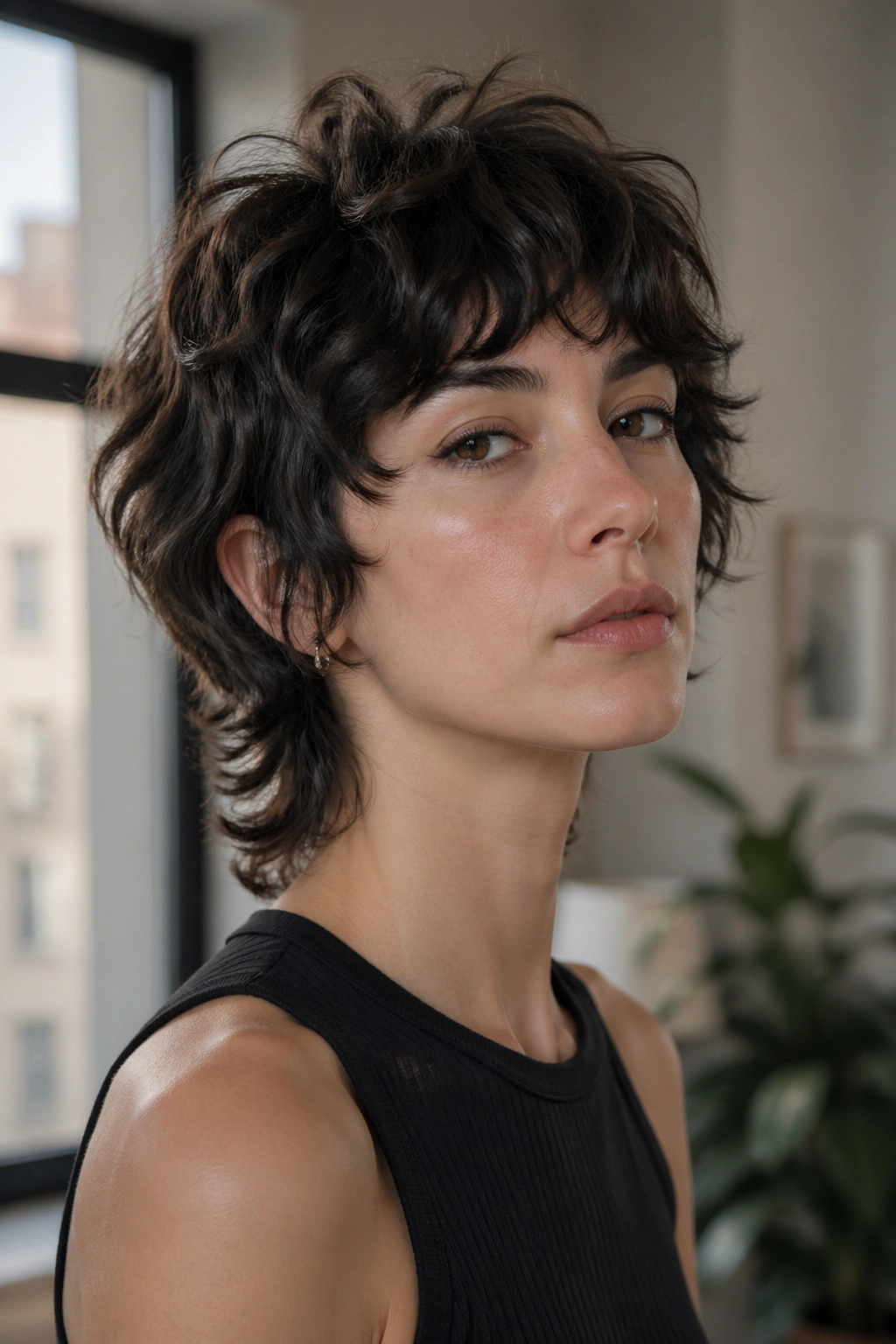
A mullet sounds loud, but it can look surprisingly neat when the shape is controlled. The best version keeps the top and sides soft, leaves the back a little longer, and avoids turning the whole thing into a puffball.
Where the Shape Comes From
The front needs enough length to frame the face. The crown should have movement, but not so much that it sticks straight up. The back can be slightly longer, yet the line around the neck should still be trimmed cleanly. That tidy neckline matters more than people think.
Who Should Try It
- People who like shape but hate heavy styling
- Thick wavy hair that gets wide at the sides
- Short hair that needs some personality without losing control
This cut works best when the texture is soft and the layers are blended. Too much contrast and it turns wild. A little cream, a little finger-drying, and a neat trim around the edges can keep it from looking unruly.
21. Jaw-Length Waves with a Side-Tucked Finish
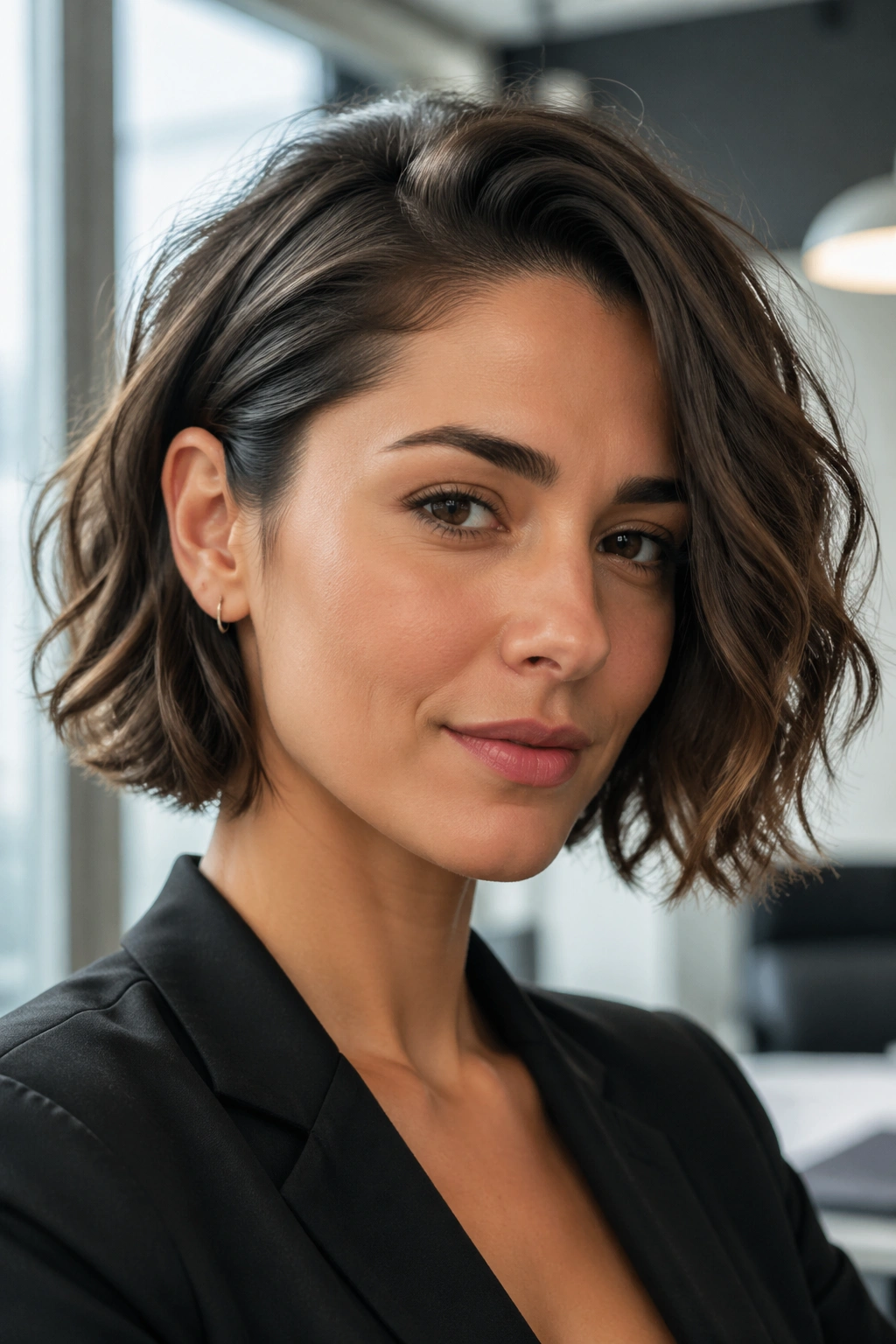
A side tuck at jaw length is one of those tiny habits that makes hair look more composed. The cut itself does the heavy lifting, but the tuck gives the face a cleaner line and keeps the style from hanging in a single block.
This works well for dinner plans, office days, or any time you want your hair off one side without putting it up. The tucked side exposes the neck a little, which makes the whole look feel lighter. Leave the other side loose so the wave pattern still shows. If both sides are tucked, you lose the point.
I like this with a blunt-ish jaw-length cut because the ends stay crisp. If the hair is too layered, the tucked side can look fuzzy after an hour. A tiny clip hidden under the ear can help if your waves slip. No drama. Just a better hold.
22. Feathered Short Waves with a Polished Blowout
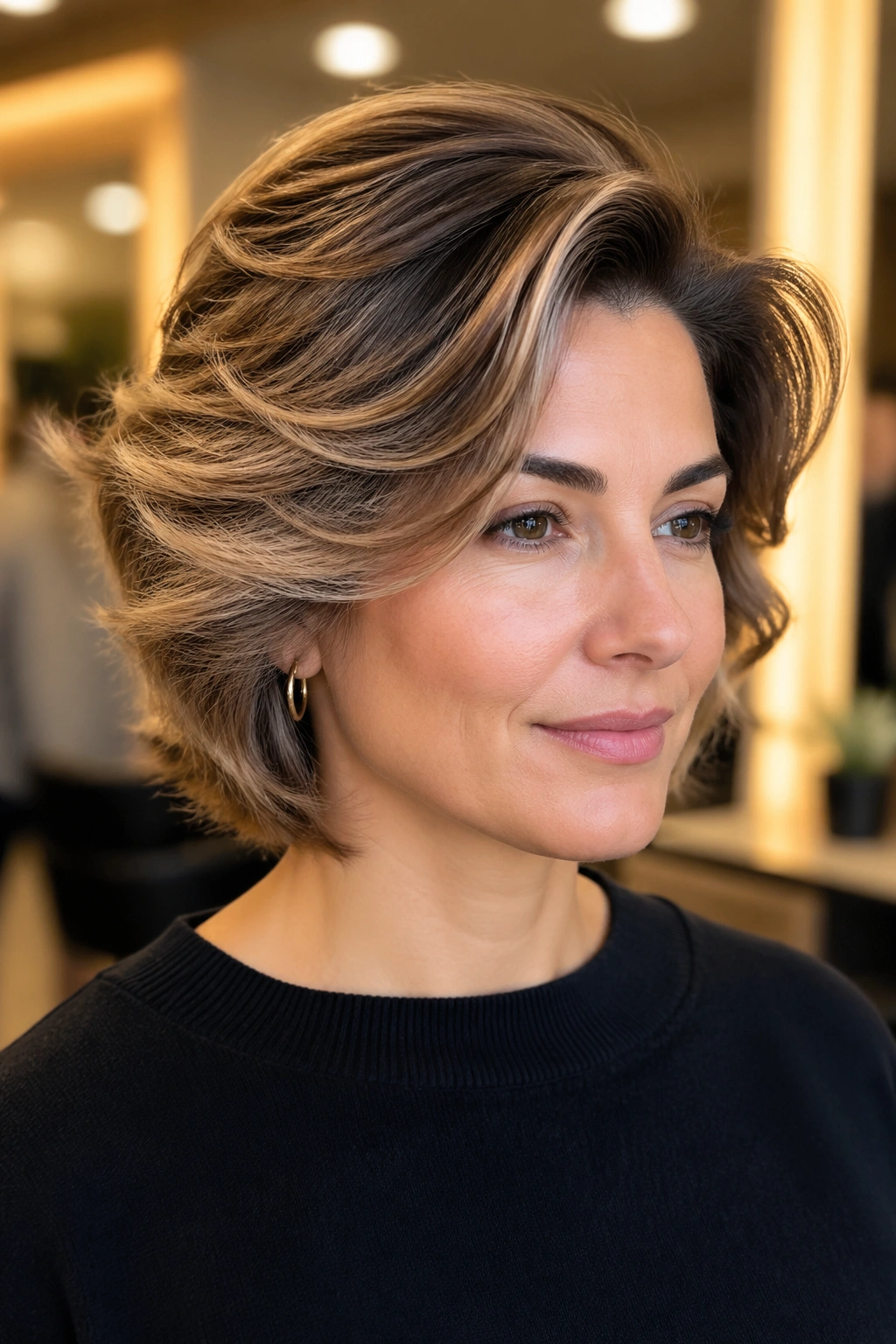
A feathered blowout is the most salon-looking option in the bunch, and that’s not an accident. The round brush shapes the waves, the feathered layers keep the ends from stacking up, and the finish has a soft bend that feels neat from every angle.
You don’t need a giant barrel brush. A 1.5-inch round brush is enough for most short cuts. Pull the hair up at the crown for lift, then curve the ends slightly under so they don’t flare out. The front pieces should bend away from the face. That tiny movement opens everything up.
This style is a good choice if your natural wave needs a little order for work or events. It takes more effort than air drying, yes. But the payoff is a smoother surface, better root control, and a shape that lasts longer than loose texture on its own.
Final Thoughts
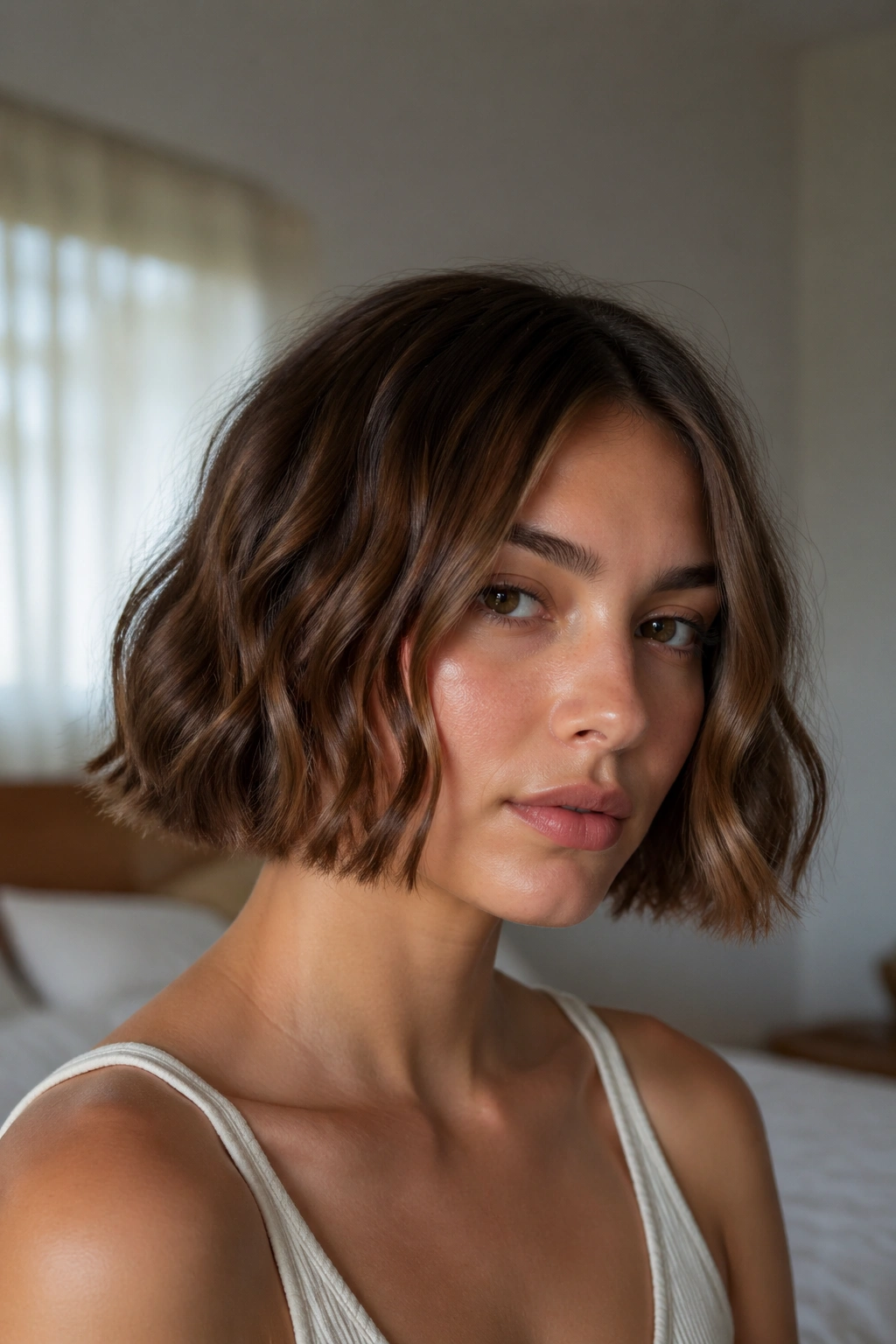
Short wavy hair looks its smartest when the shape is doing something clear. A blunt line, a smart part, a tucked section, a controlled fringe — those details give the waves a job to do instead of letting them wander everywhere.
The big mistake is chasing neatness with too much product. That usually makes the hair heavy, sticky, or flat at the roots. A better cut, a clean outline, and one or two deliberate styling moves will do more than a bathroom shelf full of styling cream.
If you’re taking one thing from this, make it this: ask for a haircut that respects your natural wave pattern and still gives you a strong line somewhere — at the jaw, around the nape, or through the fringe. That’s where short wavy hairstyles start looking pulled together instead of merely shorter.