
Wavy hair has a funny habit of looking easy until you sit in a chair and ask for the wrong cut. Too blunt, and the ends puff out like a triangle. Too many layers, and the whole shape can collapse into frizz with good intentions. The sweet spot is usually a medium-length shag haircut for wavy hair: enough shape to make the bend in your hair look intentional, enough softness to keep it from turning into a helmet.
That’s why shag cuts keep coming back. They work with movement instead of fighting it. A good shag doesn’t need a perfect blowout to look decent, and that matters if your hair air-dries with a mind of its own. The best versions sit somewhere between relaxed and styled, which is a nicer place to live than “I spent 40 minutes on this and still don’t love it.”
The trick is matching the shag to the wave pattern you actually have, not the one you wish you had. Loose waves need different layering than thick, springy ones. Fine waves need a lighter hand than dense, heavy hair. And bangs? They can be gorgeous, but only when they’re cut with enough thought to behave after the first wash.
So here are 20 medium-length shag haircuts for wavy hair that feel wearable, modern, and not remotely precious.
1. The Soft Collarbone Shag
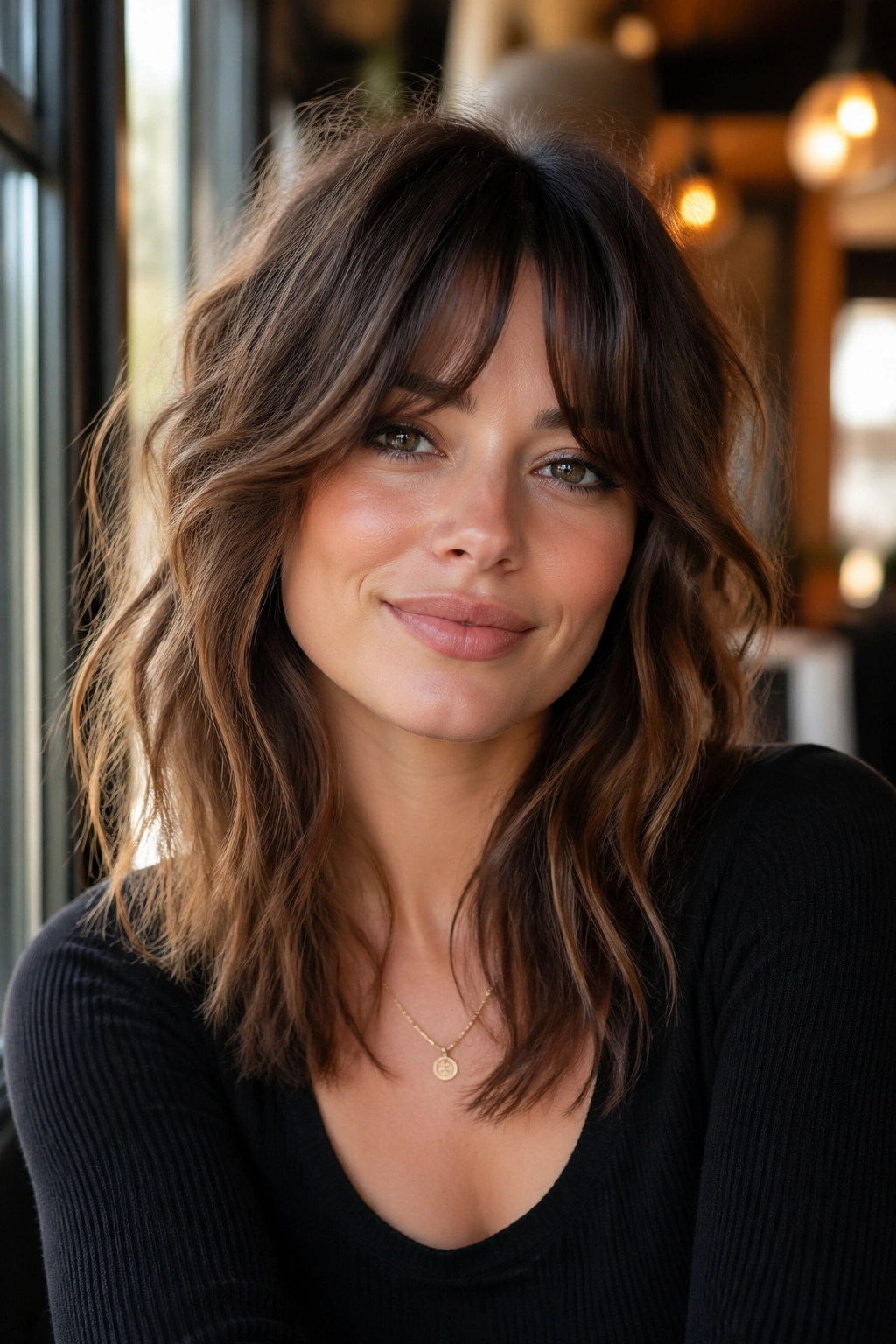
This is the shag for people who want movement without looking like they asked for a haircut with a grudge. The length skims the collarbone, which gives waves a place to bend and settle instead of flopping flat at the shoulders. It’s especially good if your hair has loose, S-shaped waves that need a little direction.
Why It Works on Wavy Hair
The softness matters here. Instead of choppy layers cut all the way up the head, the layers start around the cheekbone and drift down gradually. That keeps the silhouette calm while still taking weight out of the ends. You get shape. You do not get that lopsided, overworked shag that screams for a flat iron.
Ask for light internal layers, a soft face frame, and ends that are point-cut rather than blunted. That last part helps the hair move instead of sitting in a hard line. If your wave pattern is fine, keep the layers longer. If your hair is dense, you can go a little shorter through the crown.
- Best for loose to medium waves
- Easy to air-dry with a little mousse
- Works well with a middle part or soft off-center part
Tip: A pea-sized amount of curl cream at the mids and ends is enough. Too much product makes this cut sag.
2. Curtain Bangs and Shaggy Layers
Bold bangs are not required to make a shag interesting. But curtain bangs can change the whole feel of medium-length waves fast. They open the face, soften the forehead, and give you that lived-in shape without forcing the rest of the haircut to do all the work.
The best part is how forgiving they are. Curtain bangs grow out in a way that still looks deliberate, which is a relief if you don’t want a strict maintenance schedule. On wavy hair, they also blend nicely into the top layers, so the front doesn’t look chopped off from the rest of the cut.
A stylist who knows waves will usually keep the center shorter and let the outer pieces fall longer toward the cheekbones. That gives the bangs movement when you tuck hair behind the ears or wear it loose. If your wave pattern bends more tightly near the front, ask for a longer starting length. You want swing, not forehead curtains that curl up too short after the first shampoo.
This cut has a soft, easy edge. It makes casual styling look considered.
3. The Razor-Cut Shag
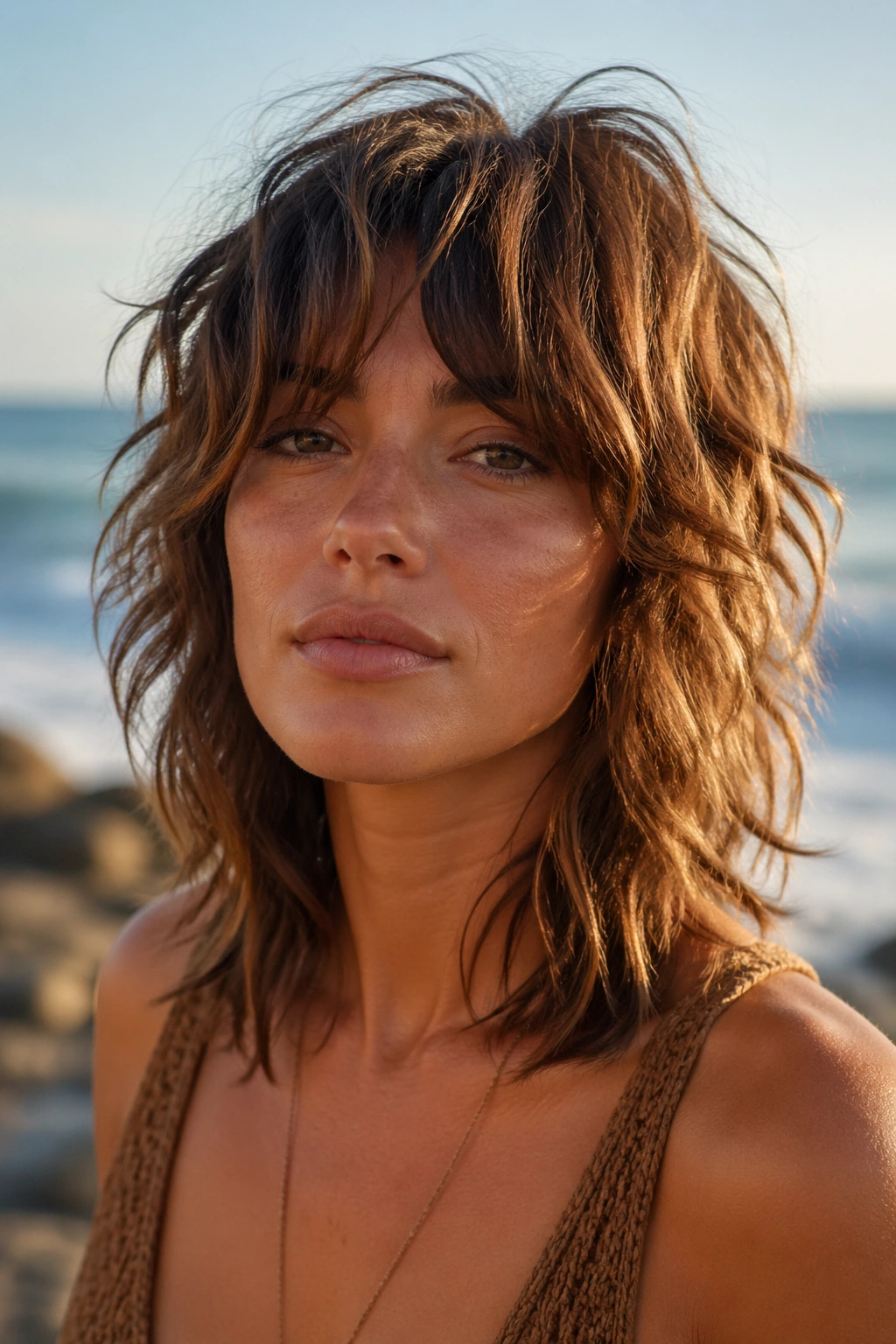
Why does a razor cut matter so much on wavy hair? Because the edge of the hair ends up lighter, airier, and less boxy than a heavy scissor cut. That can be a gift if your waves feel thick at the bottom and flat at the top. The razor helps the haircut move.
The catch is texture. If your hair is very dry or prone to frizz, a razor can sometimes make the ends look fuzzy if it’s used too aggressively. A good stylist knows how to keep the pressure light and where to stop. You want soft separation, not shredded bits hanging on for dear life.
How to Get the Most From It
The cut looks best when the crown has lift and the ends have a little piece-y definition. That usually means a mousse at the roots, then a light wave cream through the mid-lengths. Skip heavy oils unless your hair is coarse.
The razor-cut shag suits people who like a little edge. It’s not polished in a formal way. It looks better slightly undone, which is probably why it works so well with medium waves. The haircut doesn’t apologize for its texture. Neither should you.
4. The Wolf-Light Shag
A lot of people want the cool shape of a wolf cut but not the drama. Fair. The wolf-light version keeps the crown shorter and the perimeter longer, but it softens the whole thing so it reads as shag, not costume. On wavy hair, that balance can be excellent.
Picture this: you want volume at the top, but you do not want the back to kick out in an awkward way. That’s exactly where this cut lands. The layers create lift near the crown and cheekbones, while the lower length keeps the haircut grounded. It works especially well if your waves are a little wild and you’d rather work with that than flatten them into submission.
- Shorter crown layers for volume
- Longer ends to keep the shape wearable
- Soft, not harsh, face-framing pieces
- Good with a diffuser or a rough dry
The thing to watch is proportion. If the top is cut too short, the style can tip into mullet territory fast. Keep the separation soft and the transition gradual. A wolf-light shag should feel cool and a little messy, not extreme.
5. The Shaggy Lob With Hidden Layers
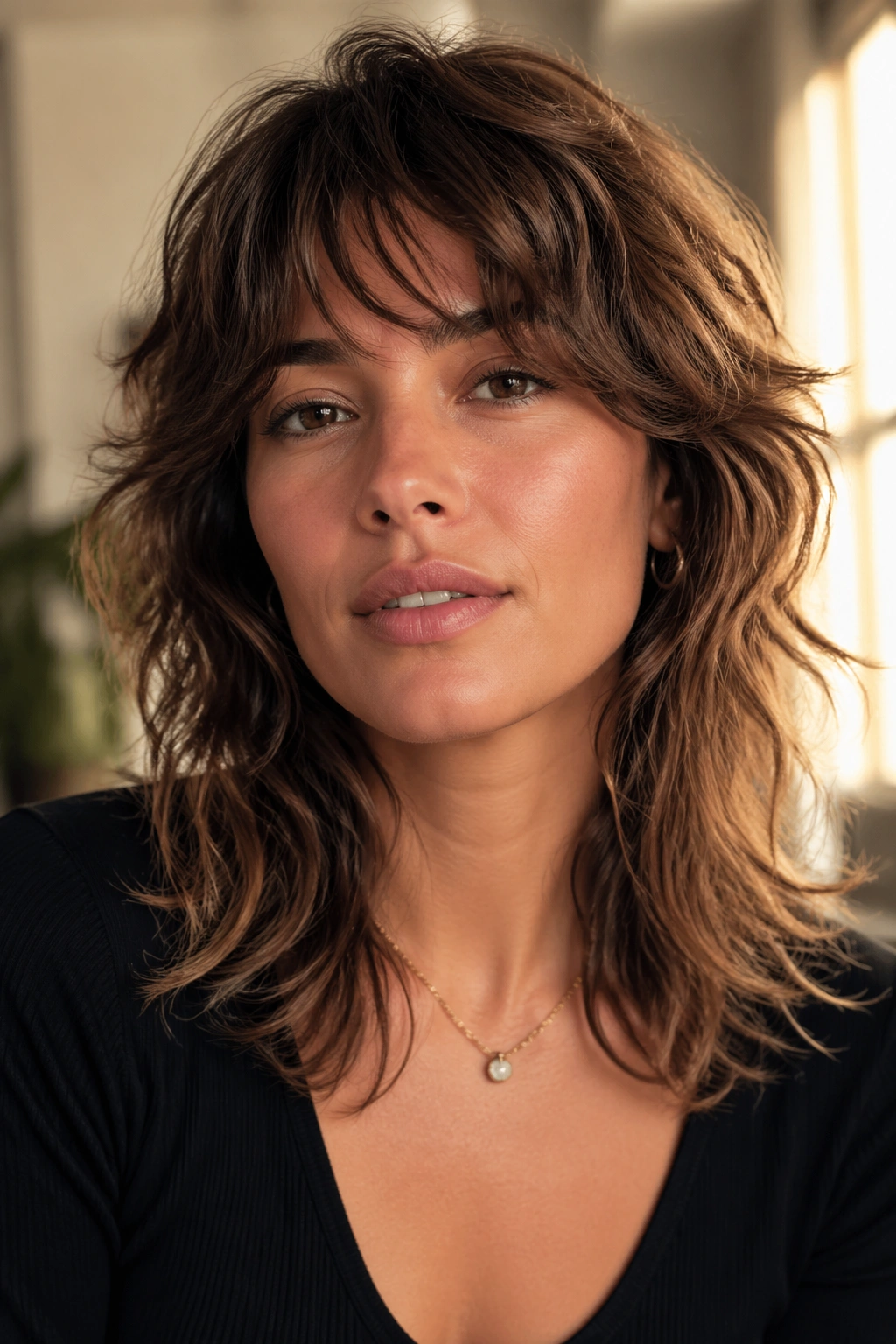
A shaggy lob is the haircut for people who want the cleaner outline of a long bob but still like texture. It’s one of the easiest medium-length shag haircuts for wavy hair because the overall shape stays familiar, even while the inside of the cut does more work than you can see.
That hidden part matters. The internal layers remove bulk and help the waves stack in a nicer pattern, which means the haircut can move without looking over-layered. From the outside, it still reads as a sleek-ish shoulder-grazing shape. Underneath, it’s doing the shag thing quietly.
This is a good choice if you work in a place where hair is expected to look neat, but you still want some softness around the face. The lob outline keeps it tidy. The layers keep it from feeling stiff. You can tuck one side behind the ear and still have enough bend to make the style feel lived-in.
The best version has ends that are lightly feathered, not chopped blunt. That tiny difference changes how the waves fall after they dry.
6. The Face-Framing Shag
Unlike a heavy fringe shag, this cut keeps the front open and lets the face-framing pieces do the talking. That makes it a smart choice if you want movement around the cheeks and jaw without committing to full bangs. It’s one of the more flattering medium shag cuts for wavy hair because it makes the front look intentional without crowding your features.
The shape is usually built with longer front layers that start around the chin and melt into the rest of the haircut. On wavy hair, those pieces curve inward in a way that softens angular faces and keeps rounder faces from feeling boxed in. You get structure, but it’s loose structure. There’s a difference.
This cut also plays nicely with glasses, which sounds minor until you’ve tried a haircut that fights your frames every morning. The longer pieces can sit around them instead of competing with them.
Best move: Ask for face-framing layers that are cut to move when your hair is dry, not just when it’s wet. Wavy hair shrinks and shifts, and that detail saves you from ending up with front pieces that look a touch too short once they dry.
7. The Bottleneck Bang Shag
Bottleneck bangs are a little more sculpted than curtain bangs, and that’s what makes them interesting. They start narrow at the top, open gently at the cheekbones, and blend into the rest of the cut with less fuss than blunt bangs. On wavy hair, they can look gorgeous because the wave pattern gives the fringe a built-in bend.
What Makes It Different
The middle section sits shorter, then the edges soften out. That shape adds a bit of polish to a shag without making the cut feel stiff. It’s one of those details that changes the whole mood of the haircut. The shag still has texture, but the bangs give it a frame.
If your forehead is on the shorter side, keep the center a little longer so the fringe doesn’t puff up too much. If your hair is dense, the bangs should be thinned carefully, not aggressively, or they can separate in odd little clumps. No one wants that. Nobody.
This cut suits people who like a bit of interest around the eyes and cheekbones. It feels a little retro, a little current, and very good with an air-dried wave.
8. The Messy Beach Shag
Some cuts look best only after a blowout. This is not one of them. The messy beach shag leans into texture, salt-spray grit, and that slightly windswept finish that wavy hair often gives you on its own. If you hate spending time smoothing every strand into place, this one makes sense.
The shape is usually relaxed through the crown with broken-up layers that avoid a hard outline. That means the ends can fray a little without looking damaged. In fact, the whole point is a little irregularity. The haircut should look better after you’ve slept on it once.
You’ll usually get the best result by scrunching in a lightweight foam and letting the hair dry with minimal touching. Once it’s dry, a dry texture spray at the roots can lift the top without making the mids crunchy. Heavy oils tend to kill the effect.
A beach shag is not polished. It’s not meant to be. But on the right wavy hair, it can look effortless in the best possible sense—like the haircut already knew your routine.
9. The Feathered 70s Shag
Why does this one keep showing up? Because feathering gives wavy hair movement without turning every layer into a blunt step. The 70s-inspired shag is all about softness at the edges and lift around the face, and that works beautifully when your hair already has a wave pattern to help it along.
The feathered version usually features shorter top layers, longer sides, and ends that flick away from the face. It has a little swing. A little attitude. Not too much. If you’ve ever liked the idea of a shag but worried it would look too shaggy, this is the version to try first.
Style Notes
- Blow-dry with a round brush only at the front if you want more bend
- Use a medium-hold mousse through damp hair
- Let the lower half air-dry so the ends keep their movement
- Tuck one side behind the ear for a softer finish
This haircut loves a bit of volume at the crown. It does not need every strand to be perfect. In fact, the imperfect parts are what make it interesting.
10. The Shoulder-Skimming Shag
A shoulder-skimming shag is a smart pick if your waves tend to get bulky when they hit the collarbone. The length gives you enough hair to play with, but the shoulder-grazing shape prevents the cut from hanging heavy. It’s a nice middle ground for people who are growing out a shorter cut and don’t want to lose all shape in the process.
The layers usually sit lower than in a classic shag, which means the silhouette stays smoother. That makes this cut friendlier for dense wavy hair that needs weight removed without being thinned to pieces. It also gives you more styling options. You can wear it tucked, clipped, or loose, and it still reads as a style.
The key is keeping the perimeter soft. A blunt shoulder line on wavy hair can puff in strange ways once it dries. Soft ends, though, bend and sit better against the neck and collarbone. Small difference. Big payoff.
This is the haircut I’d point to if someone wanted texture but not a big personality haircut. It still has it. It’s just quieter about it.
11. The Deep Side-Part Shag
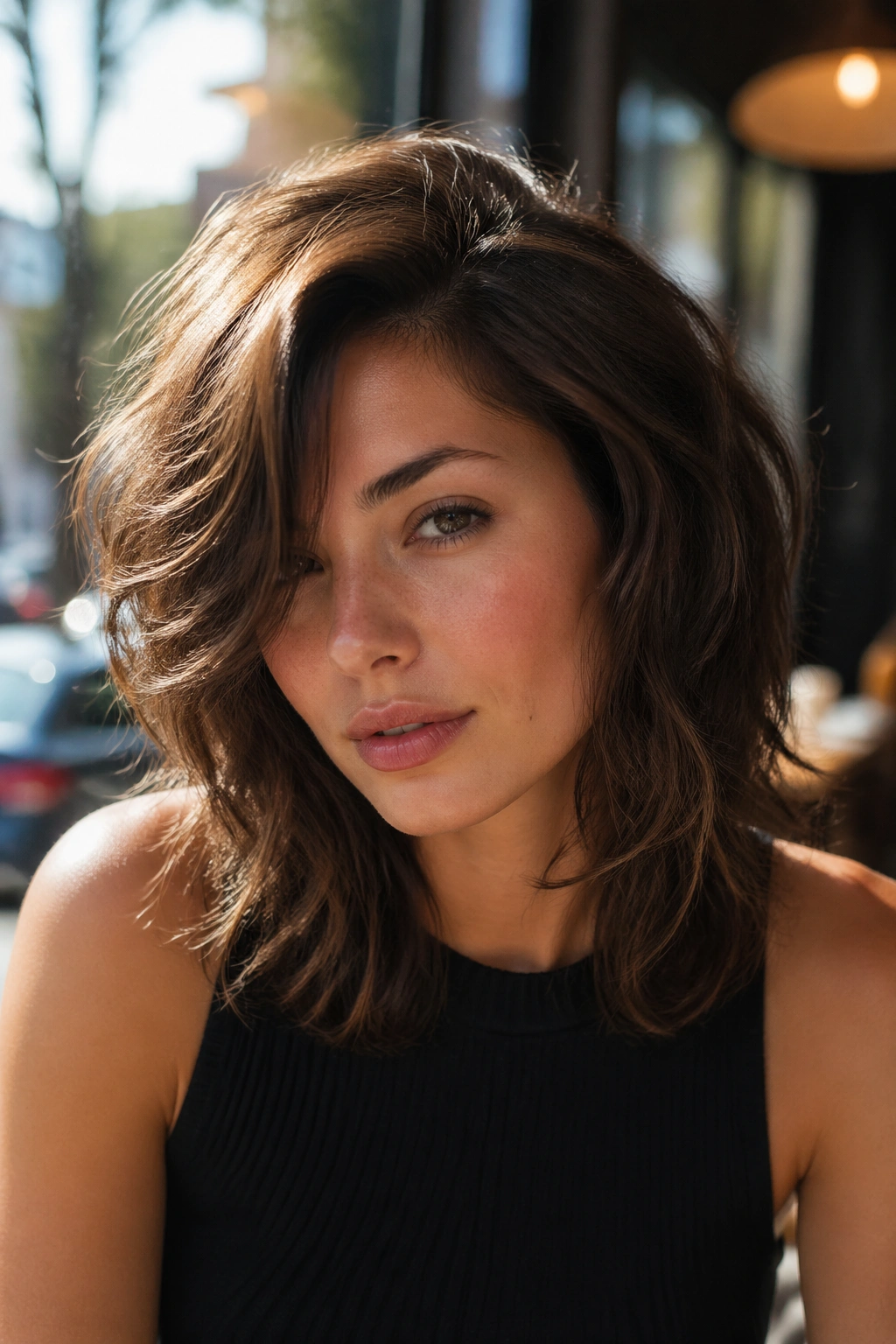
A deep side part changes the whole body language of medium-length waves. Suddenly the haircut looks less symmetrical, more sculpted, and a little more grown-up without becoming stiff. If you’re bored of middle parts, this is the easiest switch with the biggest visual return.
The side-part shag works especially well when the layers are cut to follow the fall of the hair rather than fight it. The heavier side can give you lift at the root, while the lighter side frames the cheekbones and jaw. On wavy hair, that imbalance looks intentional in a good way. Not messy. Not accidental.
This cut is also useful if one side of your hair is flatter than the other. Most people have a side that behaves better. The deep part gives that side more room to shine and keeps the rest of the shape from feeling too rigid.
A lot of people assume side parts are fussy. They can be. But on a shag, the opposite happens. The cut takes the part and turns it into movement, which is exactly what the style wants.
12. The Invisible-Layers Shag
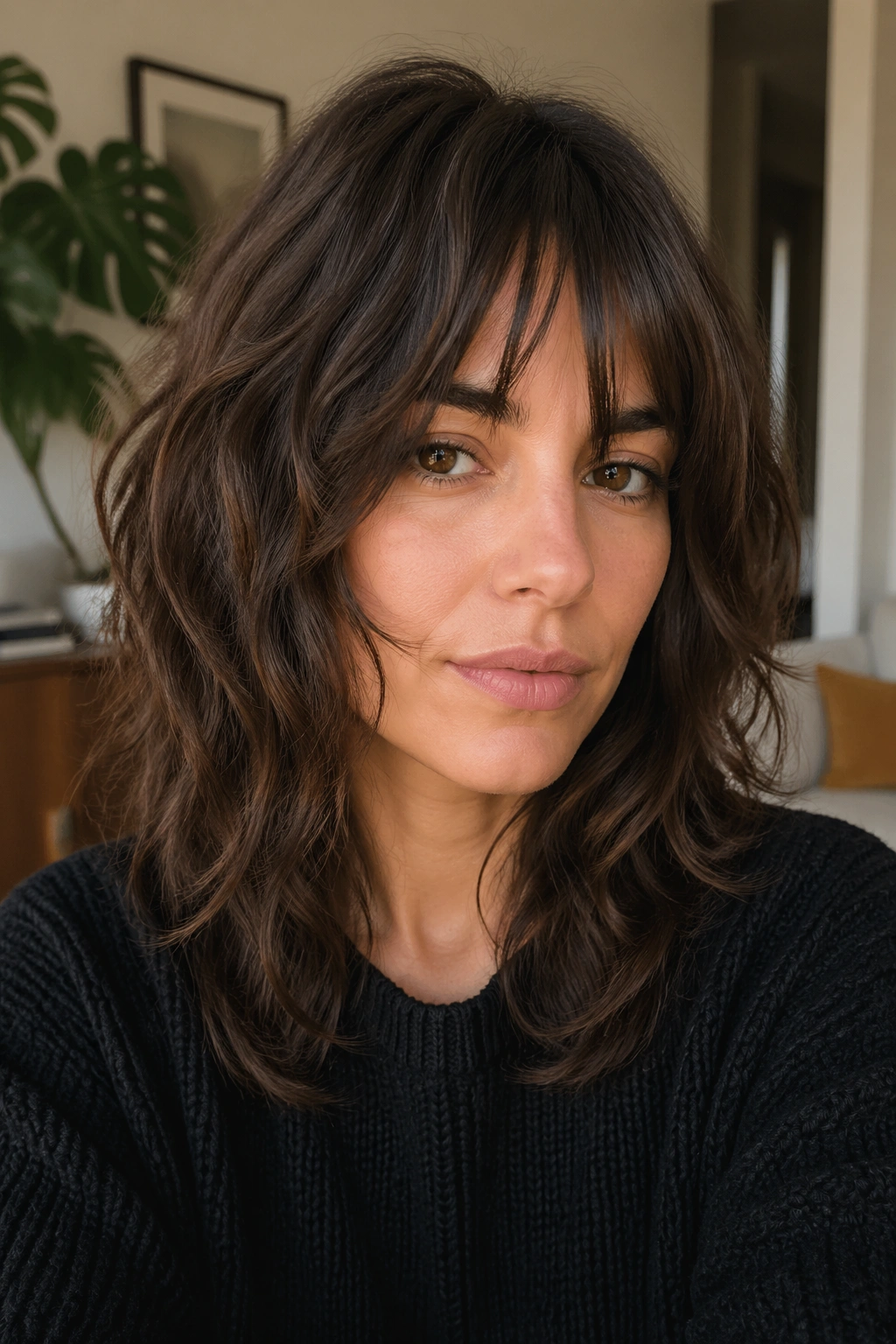
This is the version for people who hate obvious layers but still want the haircut to move. Instead of visible, choppy steps, the layers sit inside the shape and quietly remove bulk. The outside line stays cleaner, so the haircut feels softer and more expensive-looking without trying to be precious about it.
It’s a strong choice for fine-to-medium wavy hair. Too many visible layers can make that hair look thin at the ends. Invisible layers keep the fullness where you want it while letting the wave pattern breathe. That balance is harder to pull off than it sounds, which is why the cut needs a careful hand.
Compared with a more obvious shag, this one reads calmer. Less edgy. More wearable if your style leans minimal but you still want texture. You can air-dry it with a little cream and go, or you can smooth the top with a brush and let the layers handle the rest.
If you’ve ever said, “I want movement, but I don’t want to look like I have a lot of layers,” this is your answer.
13. The Long Fringe Shag
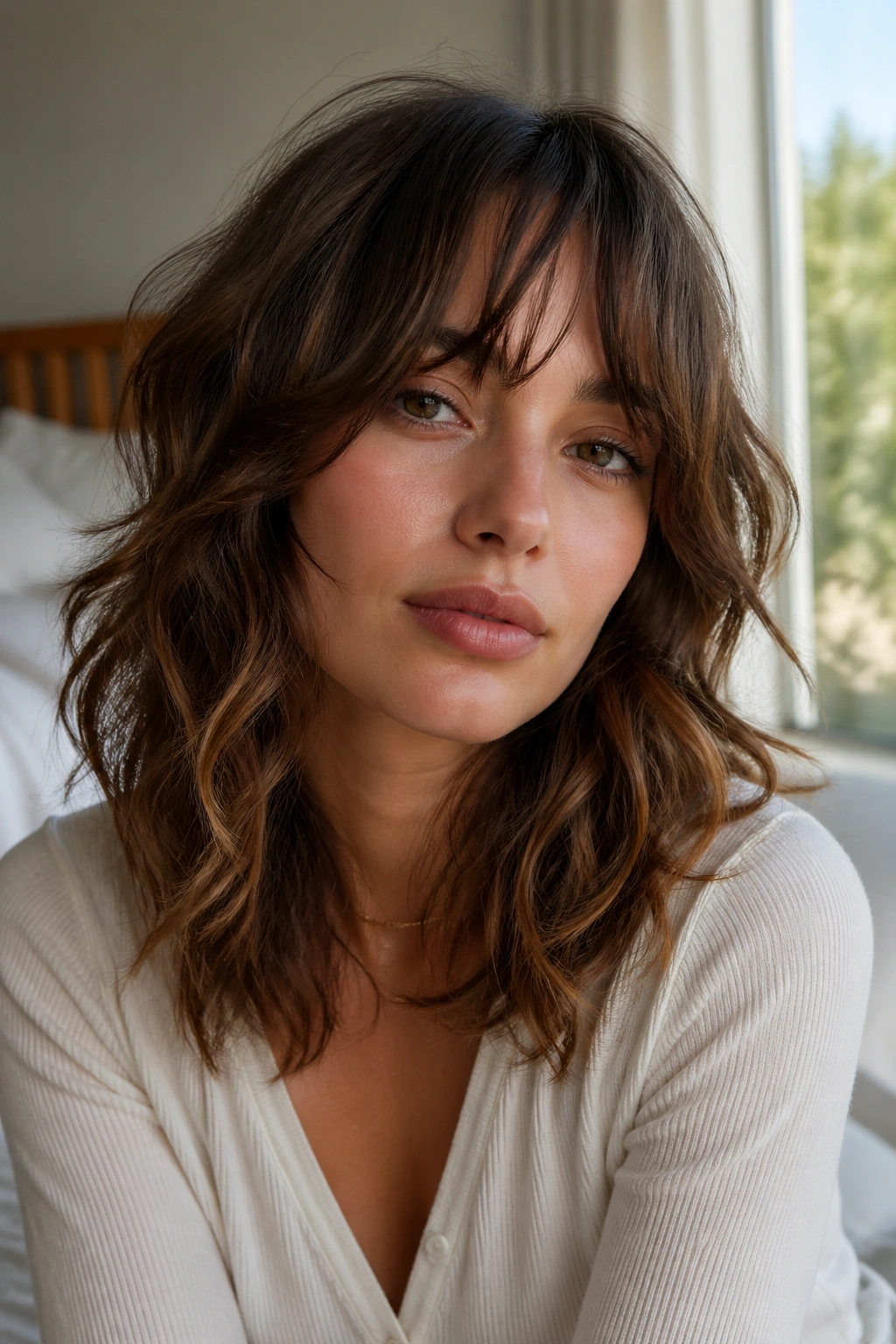
Long fringe is not the same thing as bangs that grew out and got neglected. Done well, it sits around the brows and cheekbones, then melts into the side layers so the haircut feels designed from the start. Wavy hair gives it a little bounce that straight hair has to fake.
What to Ask For
Ask for a fringe that starts slightly below the brow line and can be worn swept sideways or split in the middle. That flexibility matters. If the fringe is cut too short, waves can spring it up farther than you wanted. If it’s cut too heavy, it can block the eyes and lose that airy feeling.
The rest of the haircut should stay medium length with enough internal layering to keep the fringe from looking separate. That’s the whole point. The front should feel like part of the haircut, not pasted onto it.
- Good if you want face definition without full bangs
- Works nicely with glasses
- Needs only light styling in the morning
- Pairs well with a loose, textured finish
This one has a slightly romantic feel. Not fussy. Just soft in a way that flatters wavy hair without making it look overstyled.
14. The Rounded Shag
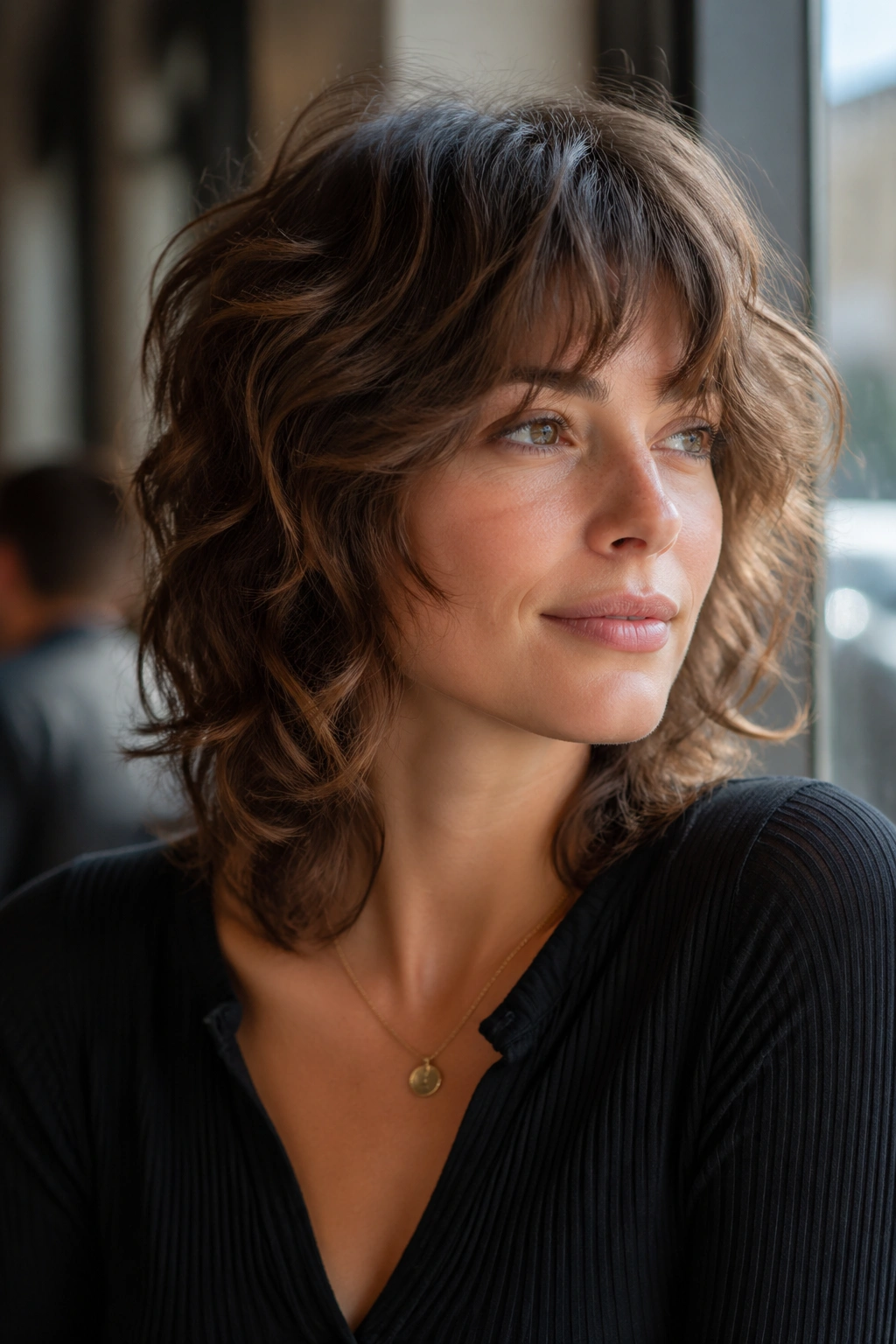
A rounded shag is what happens when the haircut follows the head shape more closely and keeps the balance softer through the sides. On wavy hair, that rounded silhouette can look elegant without losing texture. It keeps the haircut from flaring out at the edges, which is a common problem with thick waves.
The shape works especially well if your hair tends to grow outward rather than down. The rounded cut reins that in while keeping enough layering to prevent bulk at the sides. It also gives the crown a more lifted look, which can be useful if your waves are heavy and pull flat near the roots.
This is one of those cuts that looks more controlled than a lot of shag styles, but it still has movement. The difference comes from the way the layers are blended into the curve of the head. The result is softer around the jaw and more polished through the outline.
If your face shape is broader at the cheekbones or jaw, this cut can be a small miracle. It brings the focus inward without making the whole thing stiff.
15. The Choppy Edge Shag
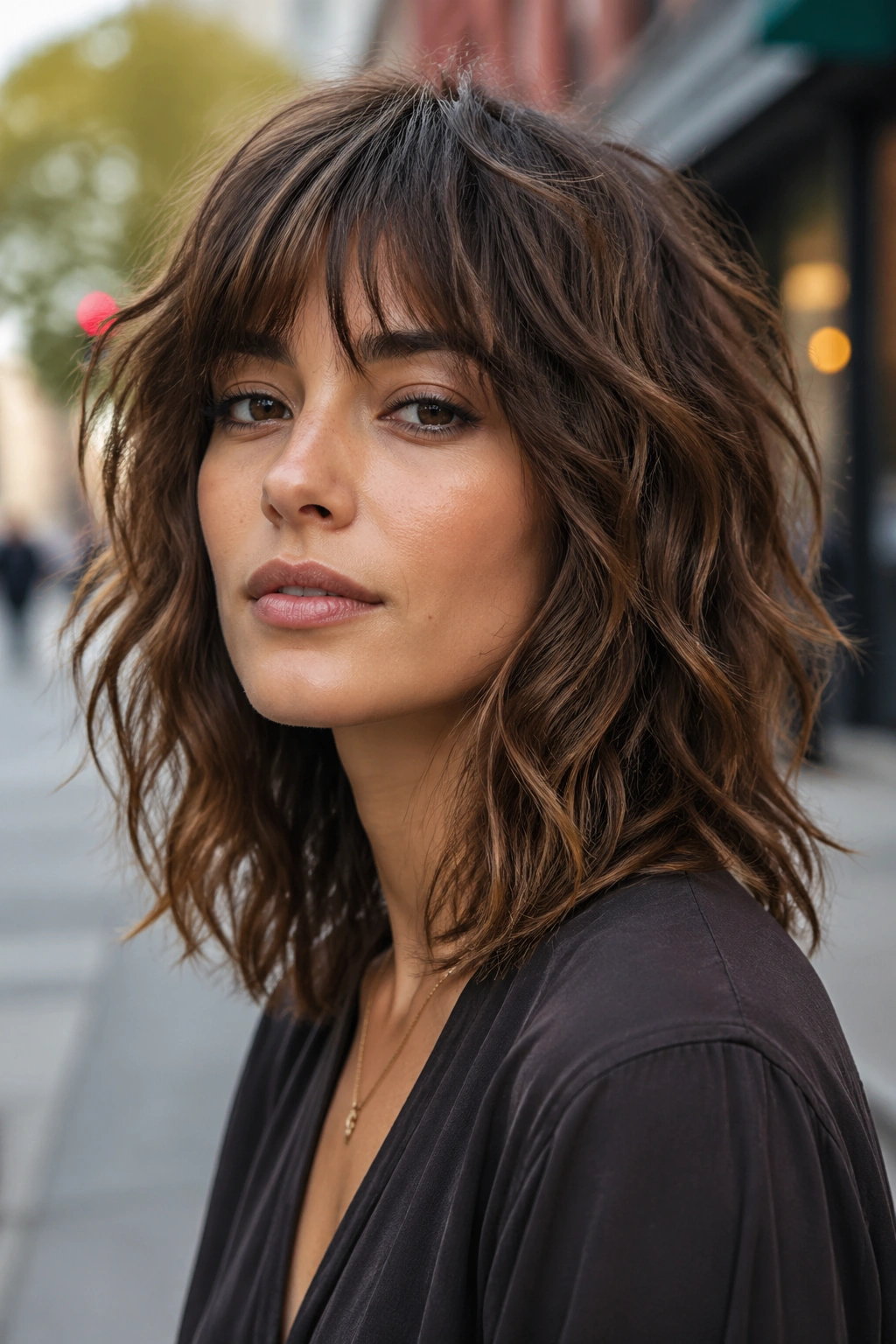
What if you want texture to show? Then you want a choppier edge. This shag is built to make the separation visible, especially on medium-length waves that can hold a piecey finish. It’s a little bolder than the softer versions, but not reckless if it’s cut with some restraint.
The best choppy shag keeps the layers irregular enough to catch light and movement, yet not so broken up that the ends look thin. That line is easy to cross. A good stylist will vary the length in small increments, which makes the whole haircut look more alive. The waves do the rest.
How to Wear It
A texture spray or light sea-salt mist is enough on most days. You want the strands to separate a bit, not stick together in crunchy spikes. Dry it with your fingers, then leave it alone. Seriously. The more you fuss, the faster it loses its shape.
This cut suits people who like their hair to look a little rebellious. It has personality. It also has a clear downside: if your hair is already very frizzy, too much choppiness can make it look bigger than you planned. A little edge is good. Too much is a mess.
16. The Low-Maintenance Air-Dry Shag
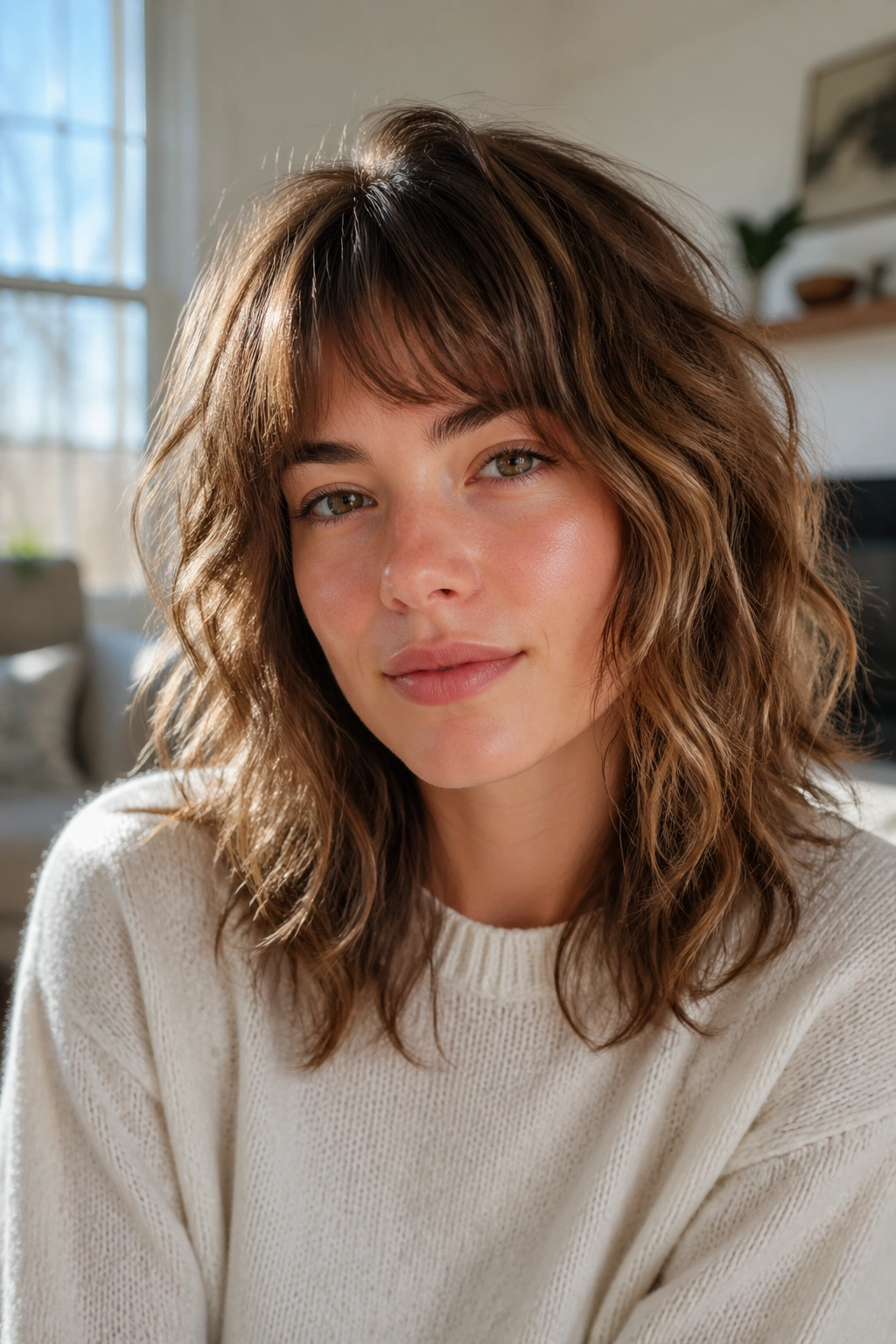
There’s a whole category of shags that look prettier than they are practical. This is not one of them. The air-dry shag is built for wavy hair that looks decent with minimal handling, which means the layers are placed to support your natural bend instead of forcing a shape that only appears after a hot tool.
A good version usually has a soft crown, a face frame that starts at the cheekbone, and ends that are not too blunt. That combination helps the waves fall into place while they dry. If your hair dries flat at the root, a little root-lifting spray or mousse goes on damp hair before you do anything else.
- Scrunch in product with a microfiber towel
- Do not brush it once it starts drying
- Flip the part if one side goes flat
- Let the ends dry on their own instead of over-diffusing them
This haircut appeals to people who want to wash, add product, and get on with life. No shame in that. It’s efficient, and the texture usually looks better because of it.
17. The Bangless Face-Frame Shag
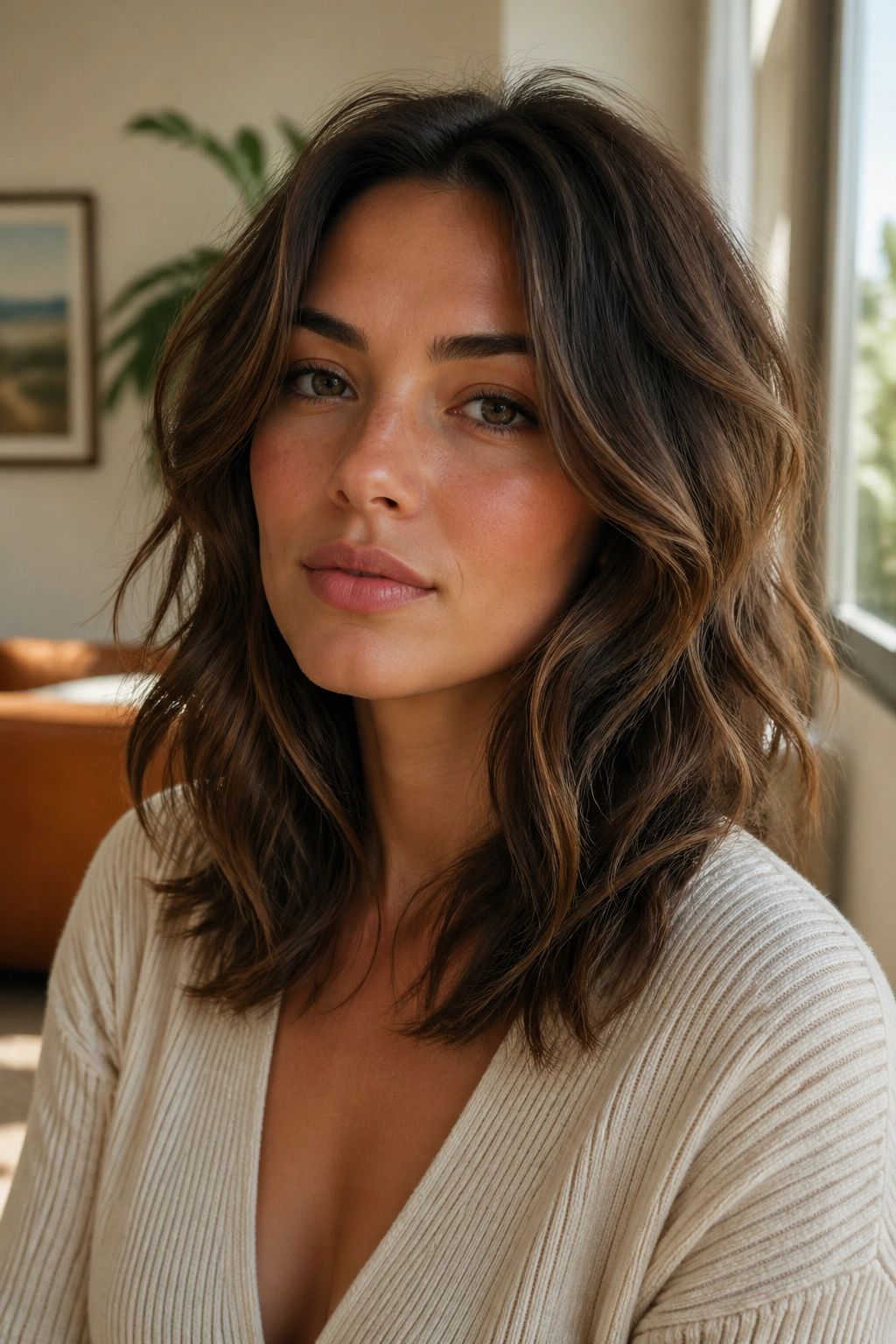
Not everyone wants bangs. Some people know bangs would become a daily negotiation. Fine. The bangless face-frame shag keeps the front open while carving the hair around the cheekbones and jaw so the shape still feels intentional.
This version can be especially good for wavy hair that gets puffy at the front when bangs are added. By leaving the forehead clear, the haircut stays light and relaxed. The focus shifts to the side pieces, which can be cut to skim the face and blend into medium-length layers. That movement can be more flattering than bangs anyway, especially if you like wearing your hair tucked behind one ear.
The style feels a little cleaner than other shags. You still get the lived-in texture, but there’s less visual clutter around the face. That makes it easier to wear with earrings, glasses, or a simple neckline that you actually want people to notice.
This is the option I’d hand to someone who wants a shag but flinches at the word “bangs.” It gives the shape without the commitment.
18. The Modern Mullet-Inflected Shag
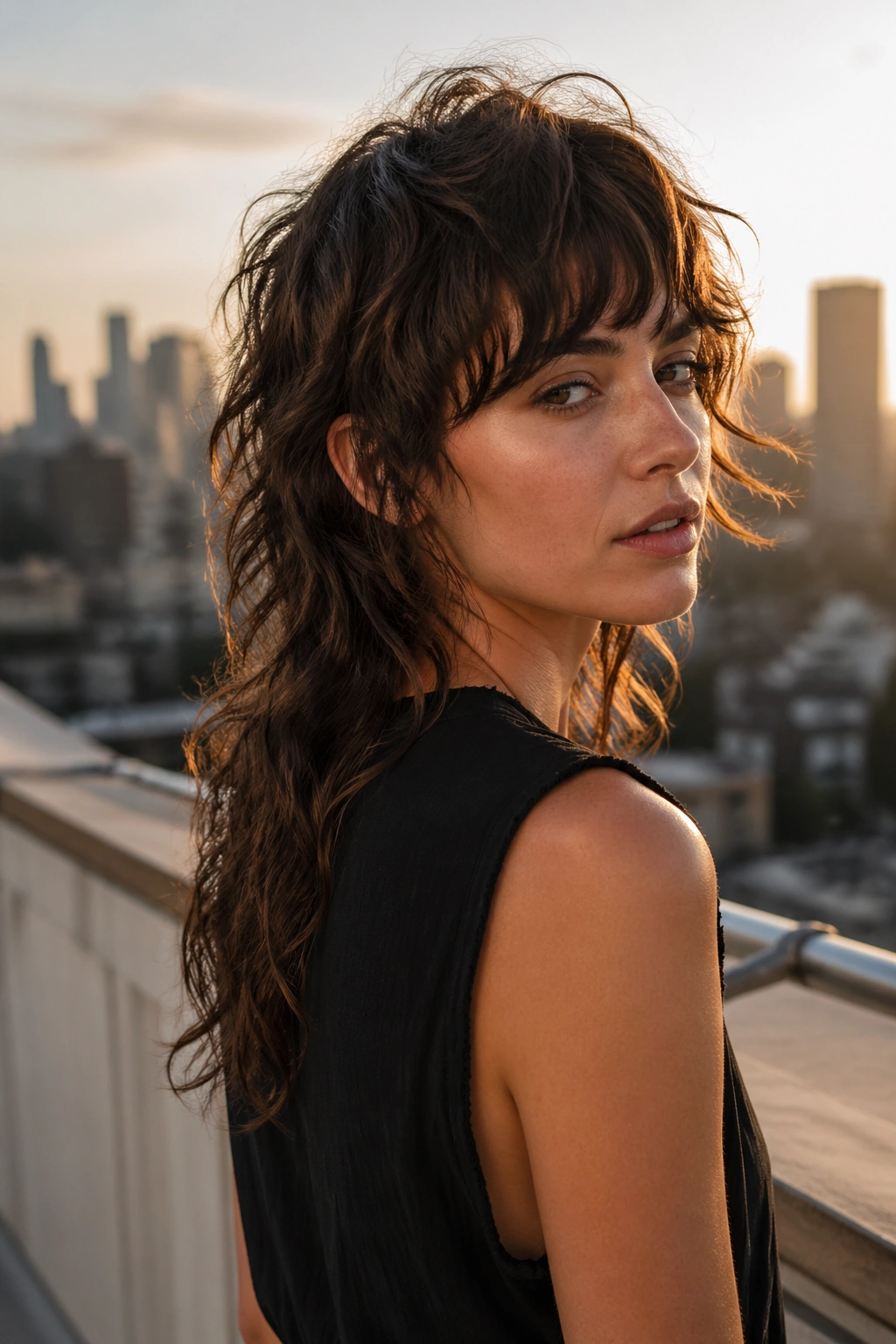
A modern mullet-inflected shag sounds dramatic, but the wearable version is more subtle than the name suggests. The back stays a touch longer, the crown gets some lift, and the front and sides are cut to keep everything connected. On wavy hair, that contrast can look sharp in a good way.
The key is softness. You do not want a hard disconnect unless you truly want a bolder cut. The modern version keeps the transition smooth enough that it still reads as a shag first, mullet second. That makes it easier to live with if you like interesting hair but don’t want people staring at the back of your head in confusion.
This cut suits a wave pattern that has enough body to support the shape. Fine hair can wear it, but the layering has to be careful or the back goes stringy. Dense waves, on the other hand, often love it because the extra length in back balances the shape at the crown.
It’s a confident haircut. Not loud, just opinionated.
19. The Polished Curl-Boosting Shag
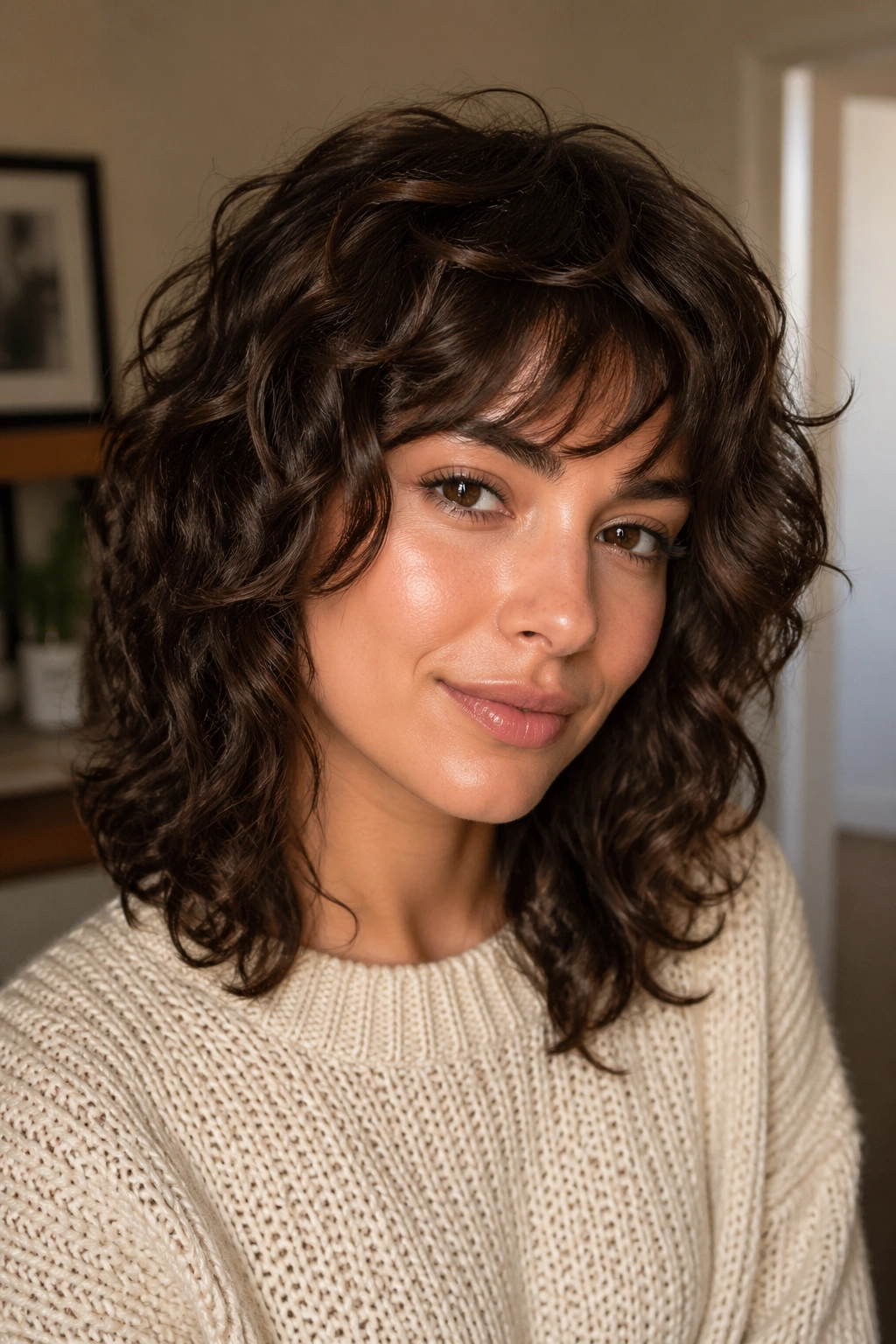
Some wavy hair is really closer to loose curls, and those textures deserve a different approach. The polished curl-boosting shag uses medium-length layers to let the waves stack instead of spreading out. The result can look soft, glossy, and full of shape when it’s styled with a little care.
This cut tends to work best when the stylist leaves enough length for the pattern to gather. Too-short layers can split the curl family and make the hair look uneven. Medium layers, though, help the wave clumps form and hold. That can reduce the puffy halo some people get around the sides.
A curl cream, then a small amount of gel, usually makes sense here. Scrunch, diffuse on low heat, stop before the hair gets dry and crunchy. That last part matters. If you over-dry it, the shape gets frizzy fast.
Why It’s Different
It’s not trying to look messy. It’s trying to look defined. That distinction makes it useful for anyone whose waves want more structure but not a full spiral pattern.
20. The Grow-Out Friendly Transitional Shag
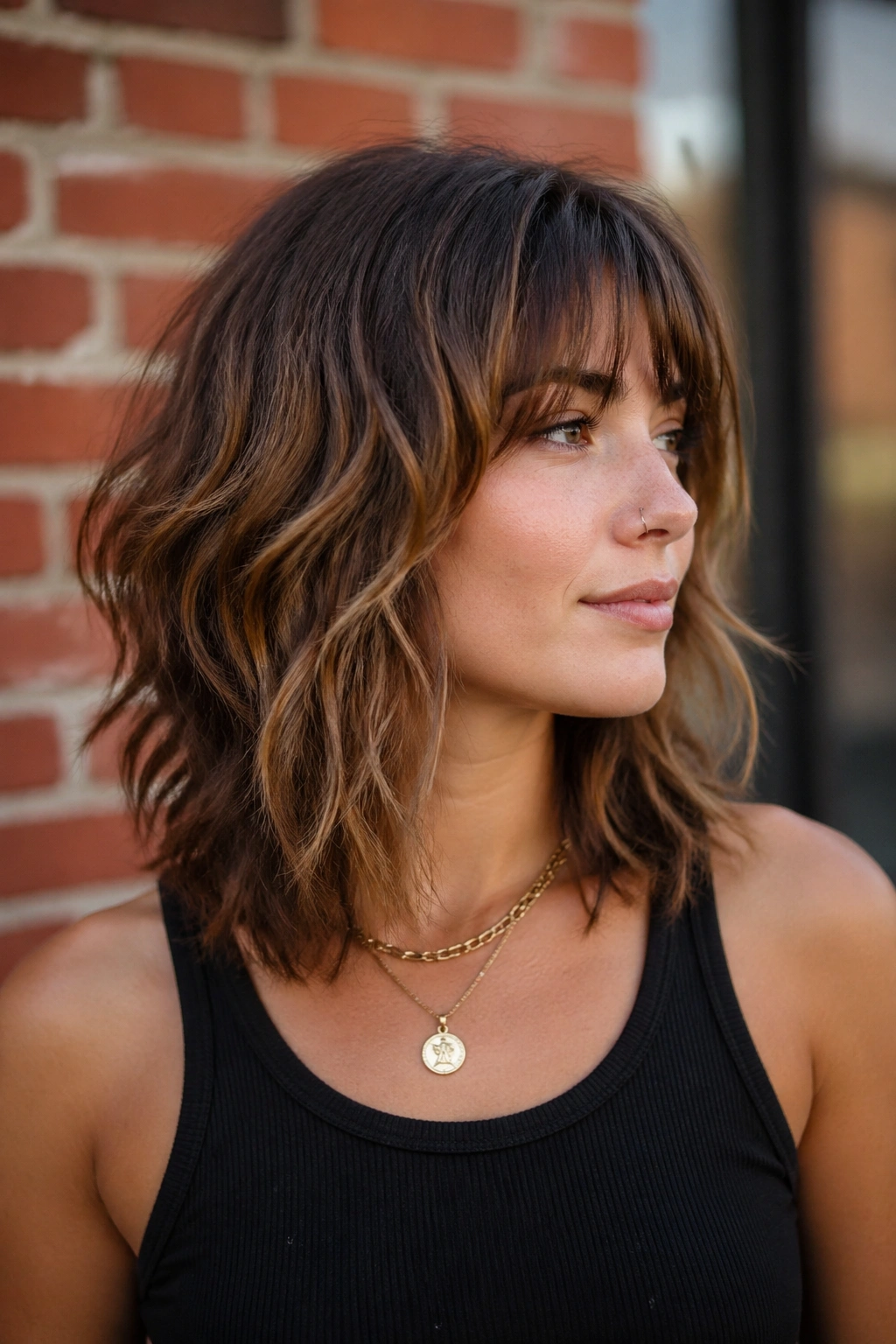
Why do some haircuts fall apart six weeks after the appointment while others keep looking deliberate? Grow-out is the answer. This shag is cut so the layers blend into each other as they get longer, which means the shape keeps making sense even when the front pieces start touching your chin and the back loses a little lift.
That makes it a sensible choice if you don’t want a cut that demands constant reshaping. The overall length sits in the medium zone, usually somewhere between the collarbone and the shoulders, with soft layering that doesn’t create a sharp line of demarcation as it grows. Wavy hair handles that especially well because the texture helps hide awkward stages.
What Makes It Stay Wearable
- Layers that start lower and blend gradually
- A face frame that still works after several weeks
- Ends that are soft, not blunt
- Enough density left in the perimeter to keep the shape full
This is the shag for people who like a haircut to behave for a while. Not forever. Hair never does that. But long enough to feel useful, and that counts.
If you’re torn between a bolder shag and something safer, this is the middle path. It has shape on day one and enough grace to survive the grow-out phase without looking forgotten.