
The idea that hitting seventy requires a mandatory trip to the salon for a “sensible” pixie cut is one of those stubborn myths that simply refuses to die. Over the years, I have seen thousands of women embrace their 70s with a sense of style that is far more daring and sophisticated than the rigid standards of previous generations. There is a specific kind of freedom that comes with this decade—a transition from trying to look younger to simply trying to look like the best, most authentic version of yourself. Medium length hair is often the “Goldilocks” zone for this stage of life; it offers enough length to feel feminine and versatile, yet it remains manageable enough to handle the changes in texture and density that naturally occur over time.
Hair changes as we age—that is a physiological reality. For many, the strands become finer, the scalp produces less oil, and the pigment fades into beautiful shades of silver, slate, or pearl. These changes shouldn’t be viewed as obstacles, but rather as a new set of characteristics to work with. A medium length cut, typically falling anywhere from the mid-neck to just below the collarbone, provides the structural support needed to lift the features. It’s about creating an upward visual pull. While very long hair can sometimes drag the face down and emphasize the effects of gravity on the jawline, a well-executed medium cut can act like a non-invasive facelift.
Choosing the right style is less about following a specific rulebook and more about understanding your unique hair “behavior.” Is your hair thinning at the temples? Does it have a new, wiry curl pattern that wasn’t there twenty years ago? Or has it maintained a thick, straight consistency that feels heavy? The following styles are selected not just because they look good in a photograph, but because they solve real-world problems for women who want to look polished without spending three hours in front of a mirror every morning.
The goal here is to find a shape that moves with you. We are looking for movement, light, and soft edges. Whether you choose to lean into your natural gray or maintain a color that makes you feel like yourself, these twenty-three styles offer a range of structures that prioritize volume, ease of maintenance, and that elusive “cool factor” that has no expiration date.
1. The Classic Collarbone Bob
The collarbone bob is arguably the most forgiving length for any woman navigating her 70s. It sits right at that sweet spot where the hair is long enough to feel like a “style,” but short enough that it doesn’t weigh down the features. Gravity is a real thing, and as we age, hair that is too long can actually drag the face downward, emphasizing fine lines around the jaw and neck. By grazing the collarbone, this cut creates a horizontal line that frames the face and gives the appearance of a stronger jawline.
Why It Is a Top Pick for Mature Hair
When hair loses its natural pigment and becomes gray or white, the cuticle often becomes rougher. This can make shorter cuts look frizzy and longer cuts look “see-through” at the ends. The collarbone bob provides enough weight to keep the hair lying flat and smooth while maintaining enough density at the bottom to look healthy and thick. It is a structural masterpiece that works for almost every face shape, particularly those that have become more angular over time.
Quick Facts for Maintenance
- Density check: Works best for medium to thick hair but can be adapted for fine hair with a blunt-cut hemline.
- Styling time: Roughly 10 to 15 minutes with a large round brush.
- Trim frequency: Every 6 to 8 weeks to keep the ends from splitting and looking thin.
- Tool tip: Use a 1.5-inch ceramic round brush to achieve that slight inward curl at the bottom.
Pro tip: Ask your stylist for a “blunt” perimeter with very subtle internal layers; this keeps the hair looking thick while removing just enough weight to allow for movement.
2. Layered Shag with Wispy Bangs
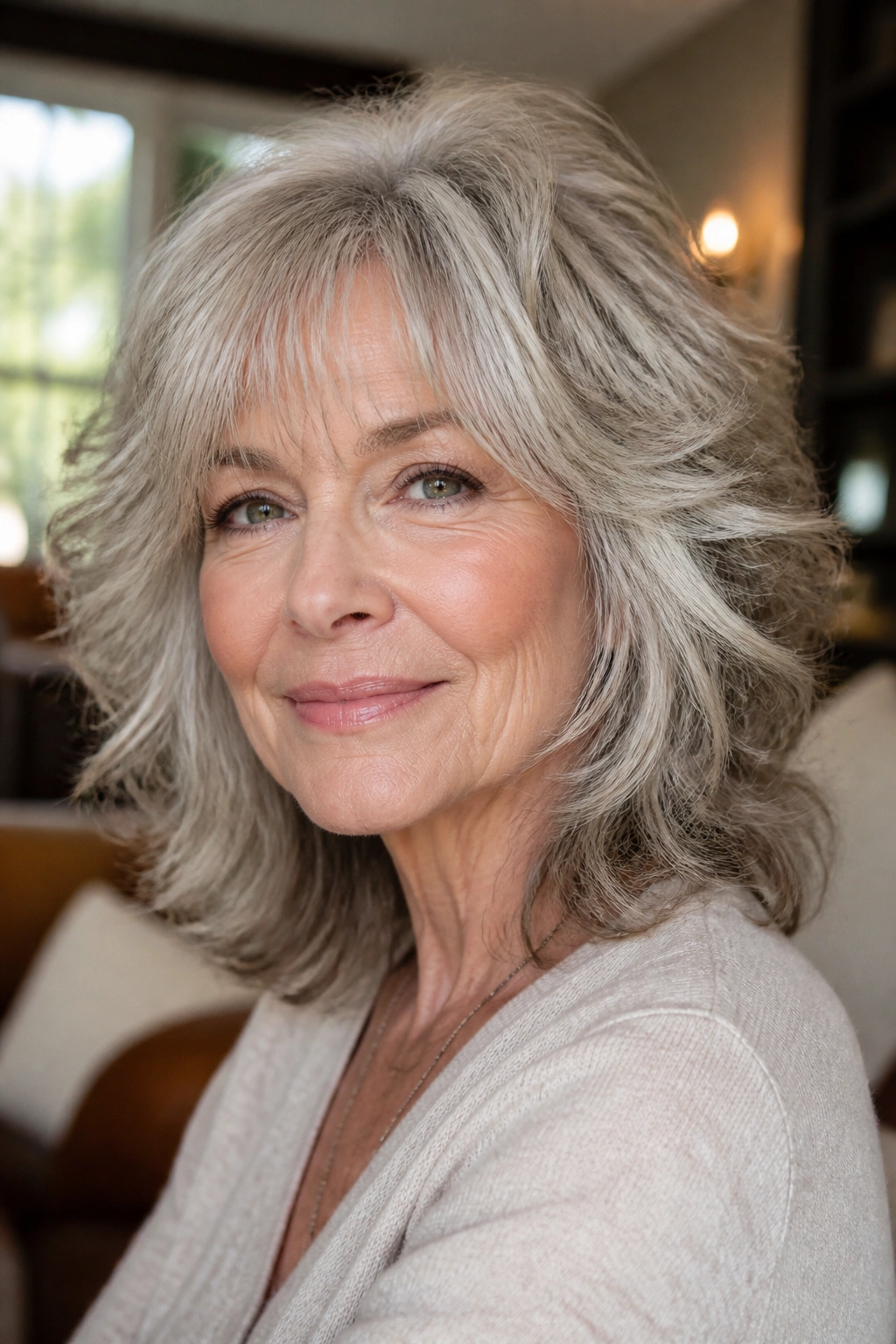
There is a common misconception that shags are only for the youth or the rock-and-roll crowd. In reality, a medium-length shag is a miracle worker for thinning hair. By incorporating multiple layers of varying lengths, you create the illusion of a much fuller head of hair. The “shagginess” provides a built-in messiness that is actually very intentional, meaning you don’t have to worry about every single hair being in place.
Historically, women were told to avoid bangs after a certain age, but wispy, see-through bangs are a fantastic tool for camouflaging forehead lines and drawing attention directly to the eyes. Unlike heavy, blunt bangs that can look too harsh against aging skin, wispy fringe feels light and airy. It softens the overall look and adds a bit of playfulness that keeps the style from feeling stagnant or “dated.”
One of the best things about this approach is how it handles the “second-day hair” problem. Because the style relies on texture, you can often go a day or two between washes without it looking flat. A bit of dry shampoo at the roots and a quick scrunch with your fingers is usually all it takes to revive the volume. It’s a low-effort, high-reward look that celebrates texture rather than trying to iron it into submission.
3. Salt and Pepper Long Bob (Lob)
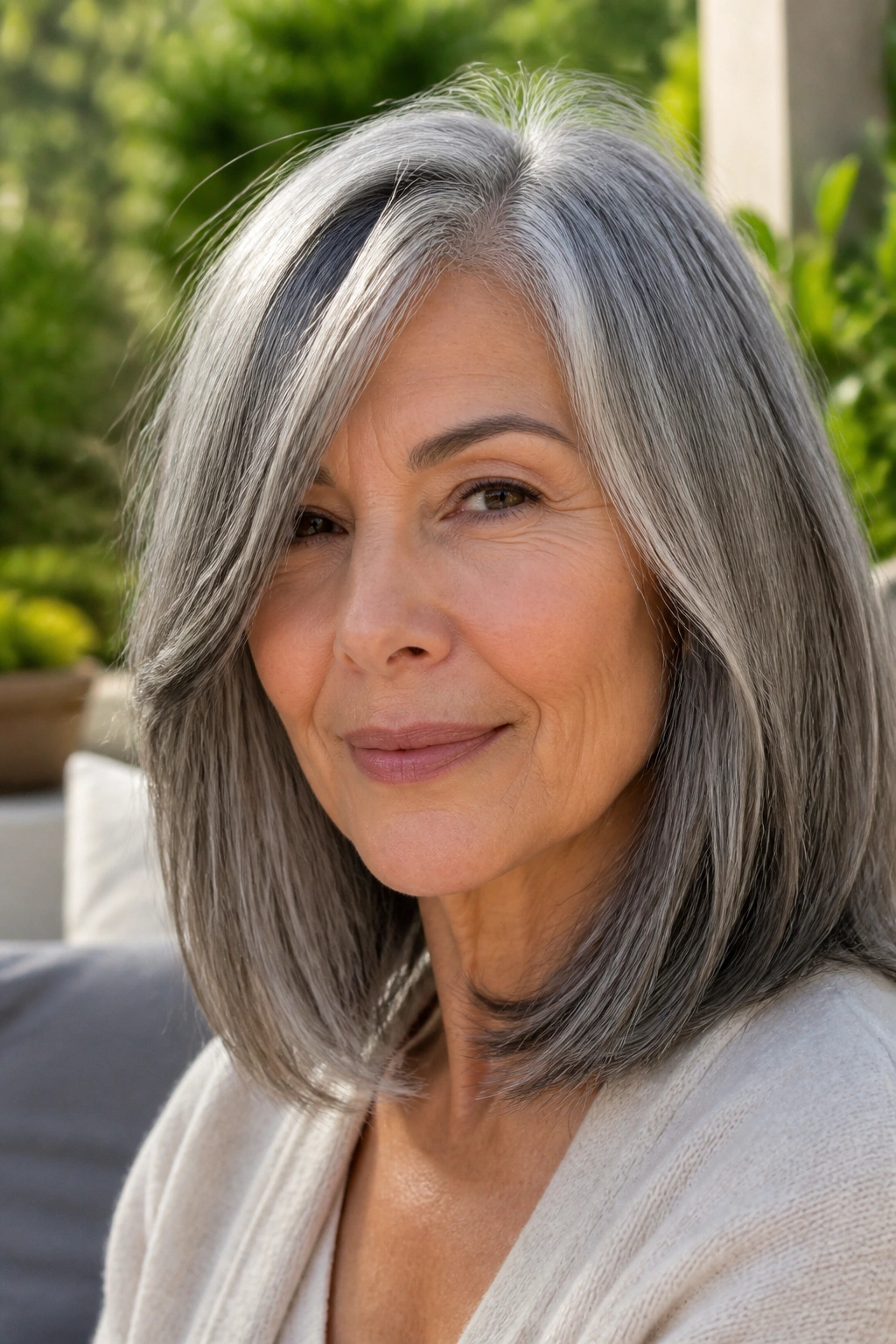
Is your hair transitioning into that beautiful mix of charcoal and silver? A “Lob”—or long bob—is the perfect canvas for showcasing multi-tonal gray hair. When hair is a mix of colors, a straight, architectural cut allows the light to hit those different shades, creating natural highlights and lowlights that look incredibly sophisticated.
What Makes This Style Different
Unlike a traditional bob that might feel too short or “old-fashioned,” the Lob extends a few inches past the chin. This extra length allows for more versatility. You can pull it back into a low ponytail for gardening or exercise, but when worn down, it looks sharp and professional. The key here is the “swing.” A well-cut Lob should have a bit of movement when you turn your head, which signals health and vitality.
How to Style Your Lob
- Apply a heat protectant: Gray hair is more prone to yellowing and damage from heat, so never skip this step.
- Blow dry with a paddle brush: Instead of a round brush, use a paddle brush to dry the hair flat against the head. This encourages shine and a sleek finish.
- Finish with a drop of clear oil: Gray hair can be thirsty. A tiny amount of argan or marula oil worked through the ends will keep them from looking “crispy.”
Who This Cut Is Best For
This style is ideal for women with naturally straight or slightly wavy hair who want a “wash and go” style that still looks like they spent time at a salon. If your hair is very fine, ask for a “one-length” lob to maximize the appearance of thickness at the ends.
4. Feathered Layers for Maximum Volume
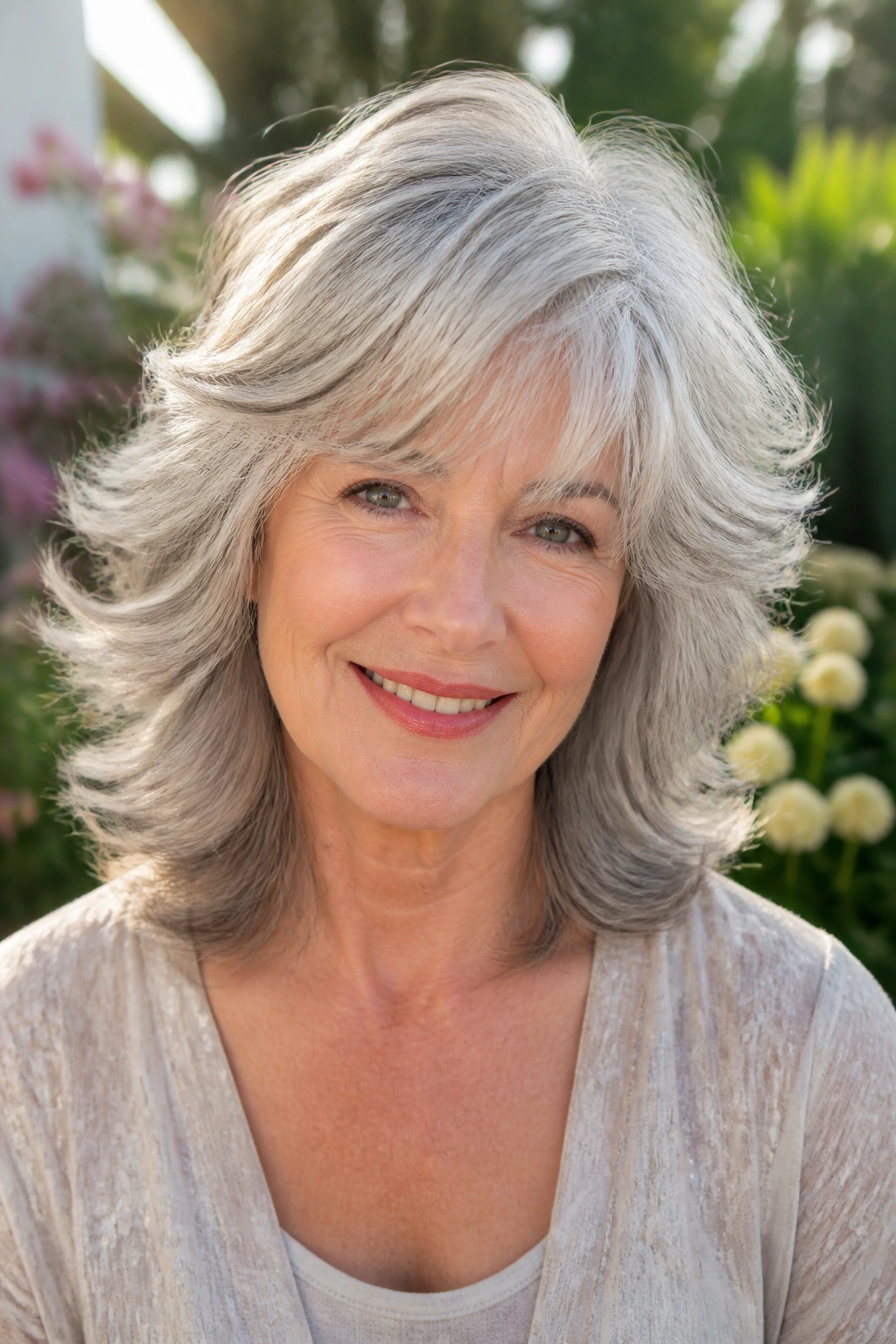
If you grew up in the era of big hair, you probably have a soft spot for volume. Feathered layers are the refined, grown-up version of those voluminous styles. Instead of the stiff, hairsprayed looks of the past, modern feathered layers are all about softness and “air.” Think of it as a haircut that is constantly being caught in a gentle breeze.
This technique involves cutting the hair at an angle so that the ends “feather” away from the face. This is particularly effective for women who feel that their face has “collapsed” slightly over time. By flicking the hair back and away from the cheekbones and eyes, you create a visual lift. It’s a very energetic style that communicates a sense of activity and spirit.
In practice, this look requires a bit more styling than a blunt bob. You’ll want to use a volumizing mousse on damp hair and a medium round brush. The goal isn’t to create tight curls, but to “bend” the hair away from the face. It’s a classic look for a reason: it’s universally flattering and hides the thinning that often happens around the crown of the head. When the layers are stacked correctly, they support each other, preventing the hair from falling flat an hour after you’ve styled it.
5. The Sleek Shoulder-Length Blunt Cut
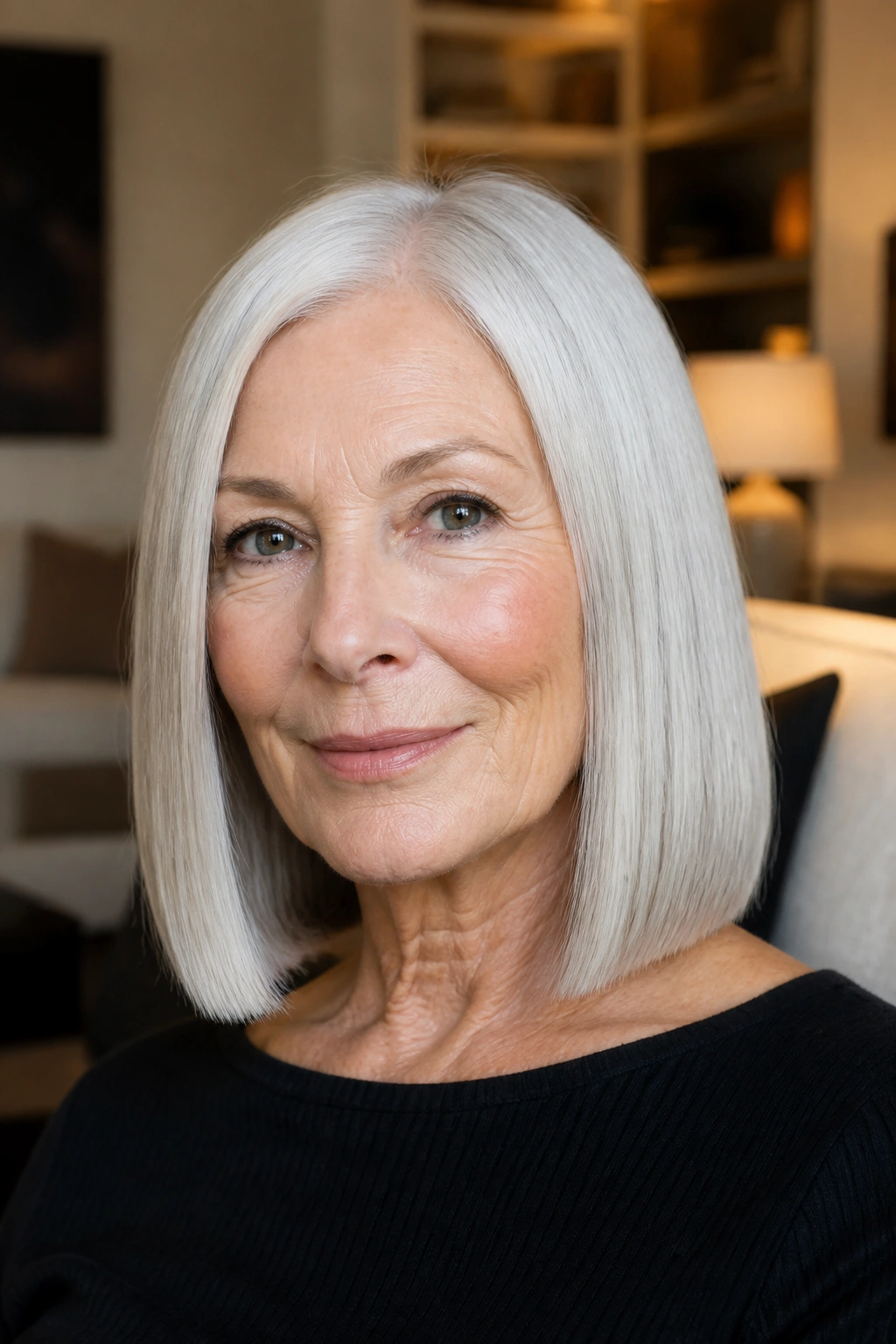
Sometimes, the simplest approach is the most effective. A blunt cut that hits exactly at the shoulder is a powerful statement of elegance. This style works best for women who have maintained a good amount of hair density and prefer a minimalist aesthetic. It’s clean, it’s sharp, and it looks incredibly expensive when maintained well.
Unlike layered styles that can sometimes look “shredded” if the hair is too fine, a blunt cut creates a thick, solid line at the bottom. This visual weight makes the hair look healthier and more substantial. It’s a great choice for women with silver or white hair, as the lack of layers allows the “solidity” of the white color to pop. It acts almost like a frame for a painting, putting all the focus on your face.
Maintenance for this style is all about the health of the hair. Because there are no layers to hide behind, split ends will be very visible. You’ll want to use a deep conditioning treatment once a week to keep the hair hydrated. When styling, a quick pass with a flat iron (on a low heat setting!) can help seal the cuticle and add a mirror-like shine. It’s a “no-nonsense” hairstyle that looks just as good with a casual turtleneck as it does with an evening gown.
6. Curly Lob with a Deep Side Part
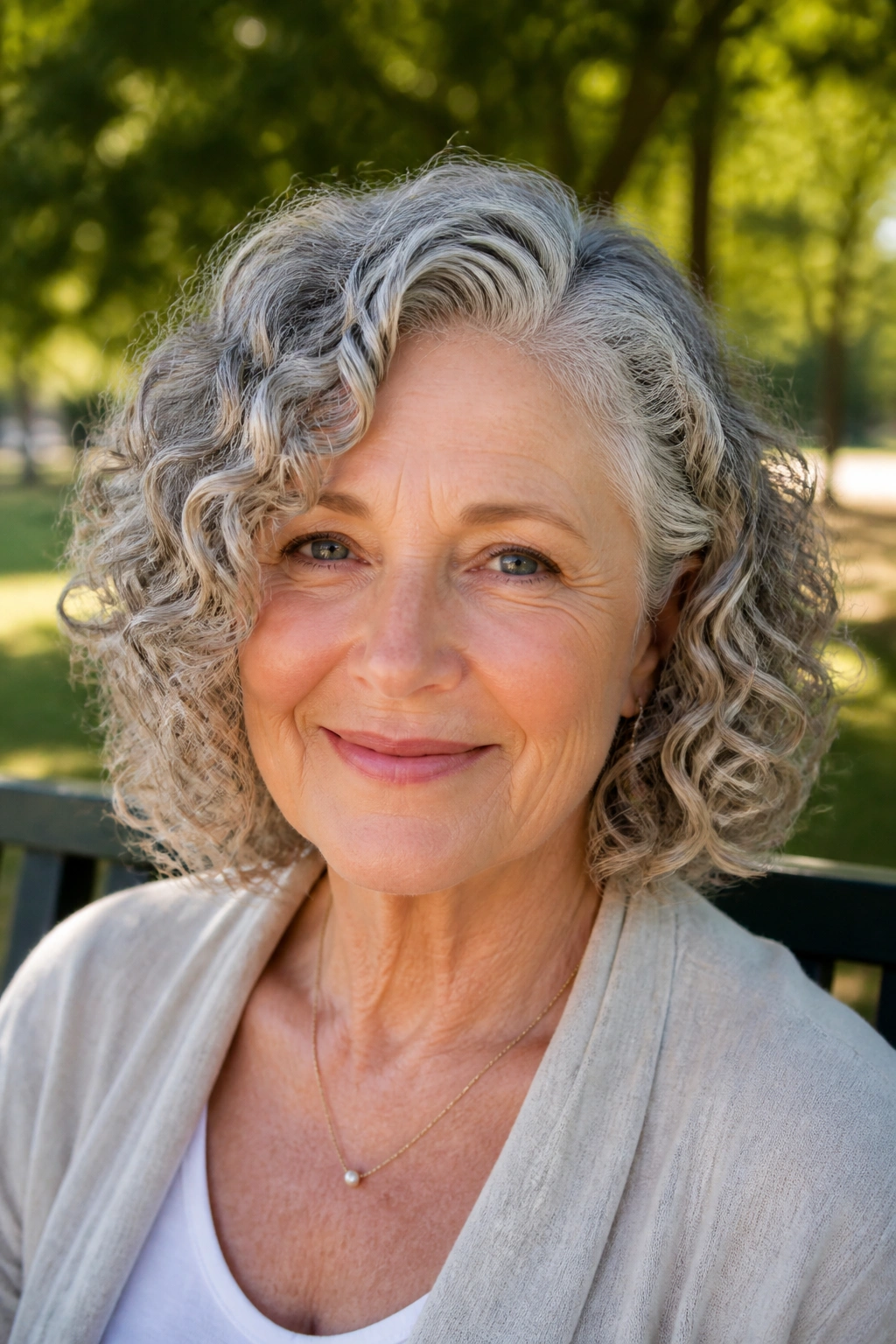
If you have natural curls, stop trying to straighten them. Over time, the labor of constant heat styling can leave mature hair looking parched and brittle. Embracing your natural texture in a medium-length “Lob” is not only easier on your morning routine, but it also provides a massive amount of natural volume that straight-haired women can only dream of.
The Power of the Side Part
As we age, our faces often become slightly asymmetrical. A deep side part is a clever trick to counteract this. It breaks up the symmetry of the face and adds a significant “lift” to the roots on one side. If your hair is thinning at the part line—a common occurrence—shifting your part to the side can hide the scalp and make your hair look twice as thick.
How to Style Curls at 70
- Hydration is king: Use a sulfate-free shampoo and a rich, leave-in conditioner. Curls need moisture to “clump” together beautifully.
- The “Plop” method: After washing, don’t rub your hair with a towel. Gently squeeze it with a microfiber cloth or an old cotton T-shirt to prevent frizz.
- Avoid the brush: Once your hair is damp and product is applied, don’t touch it with a brush. Use your fingers to coil any unruly sections.
Pro tip: Use a diffuser attachment on your hairdryer. It distributes the air evenly so your curls stay defined rather than blowing out into a cloud of frizz.
7. The Airy Butterfly Cut
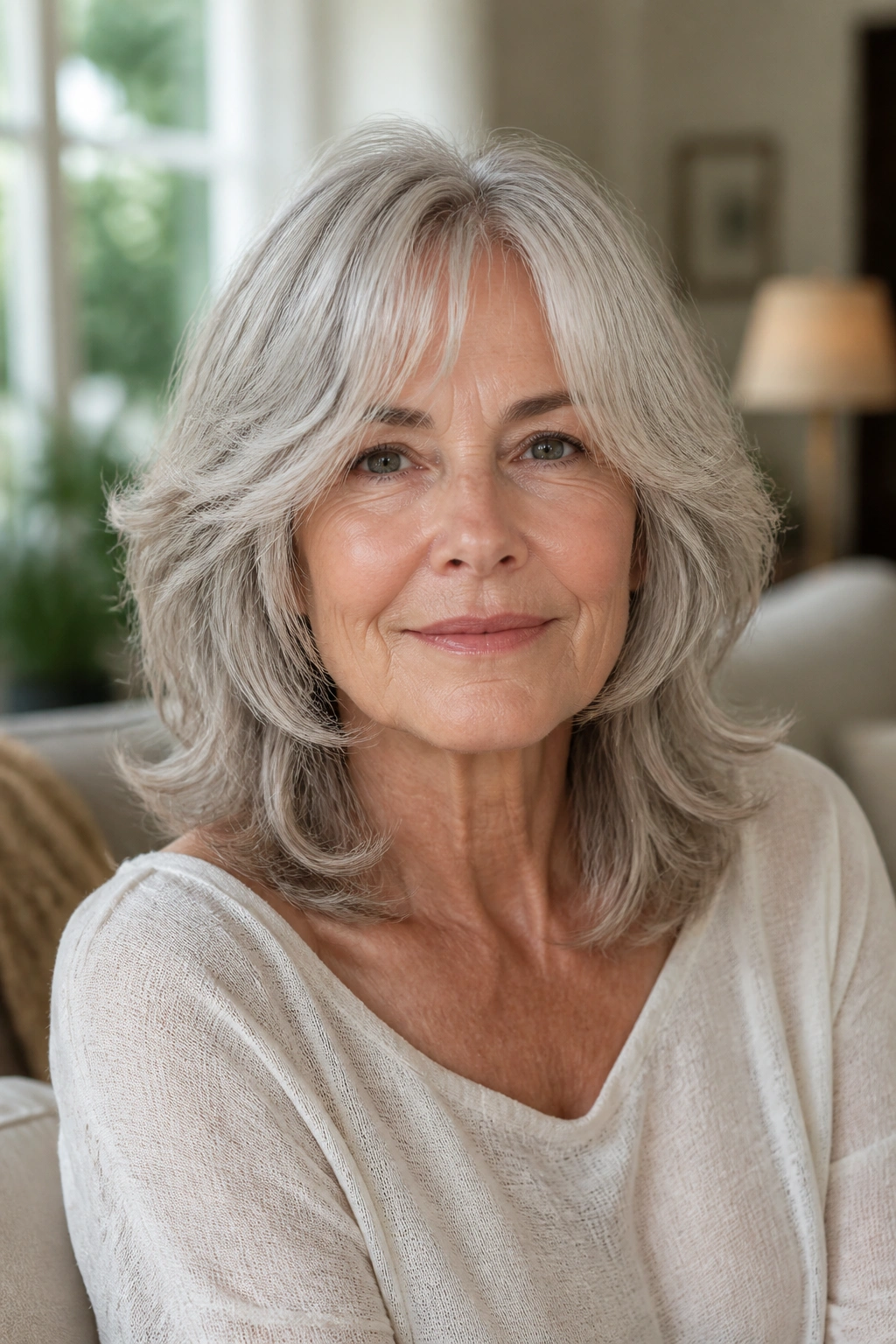
The “Butterfly Cut” has become a popular request in salons for its ability to provide incredible movement without sacrificing length. For a woman over 70, we adapt this by keeping the length at the shoulders or just below. The cut features very short layers around the face (the “wings”) and longer layers throughout the back.
This is a fantastic option if you like the idea of a shorter style but aren’t ready to commit to a bob. When the hair is pulled back, the shorter face-framing layers fall out, giving the illusion of a shorter, chic cut. When worn down, you have the full, bouncy appearance of a medium-length style. It’s the ultimate “have your cake and eat it too” haircut.
The mechanism here is all about weight distribution. By removing weight from the top and middle sections, the hair feels lighter on the scalp. This can actually be more comfortable for women who find that heavy hair causes tension or headaches. The layers also mean that even as the hair grows out, it maintains a pleasing shape, meaning you can stretch the time between salon appointments if you have a busy schedule.
8. Wispy Fringe with Tapered Ends
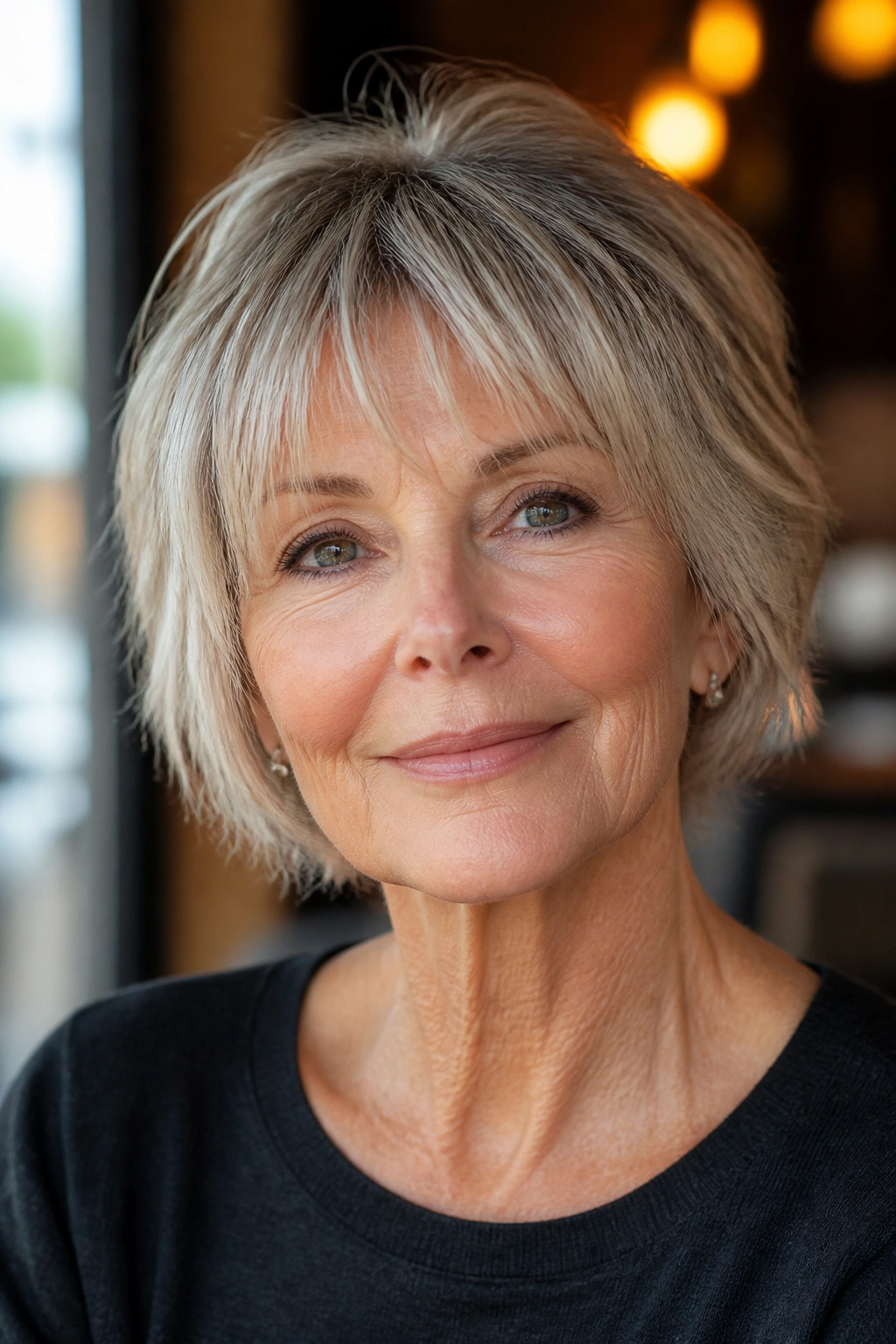
Texture is the secret weapon for aging gracefully. A medium-length cut with tapered ends—where the hair is thinned out slightly at the very bottom—prevents the style from looking like a heavy “helmet.” When you pair this with a wispy fringe, you get a look that is soft, approachable, and very fresh.
Why It Works for Mature Faces
As the skin on the neck and jawline begins to soften, harsh, heavy hair can create a distracting contrast. Tapered ends “blur” the line where the hair ends and the skin begins. This softness is incredibly flattering. The wispy fringe acts as a curtain, softening the forehead and drawing the viewer’s eyes to your eyes and cheekbones rather than your neck.
What to Ask Your Stylist
- “I want medium length with the bulk removed from the ends.”
- “Please give me a light, see-through fringe that hits just at the eyebrows.”
- “Keep the layers long so I don’t get too much ‘puff’ at the sides.”
This style is particularly effective for women who wear glasses. The tapered sides and soft fringe frame the frames of your glasses perfectly, making your eyewear look like an intentional part of your style rather than an afterthought.
9. Textured Waves for Fine Hair
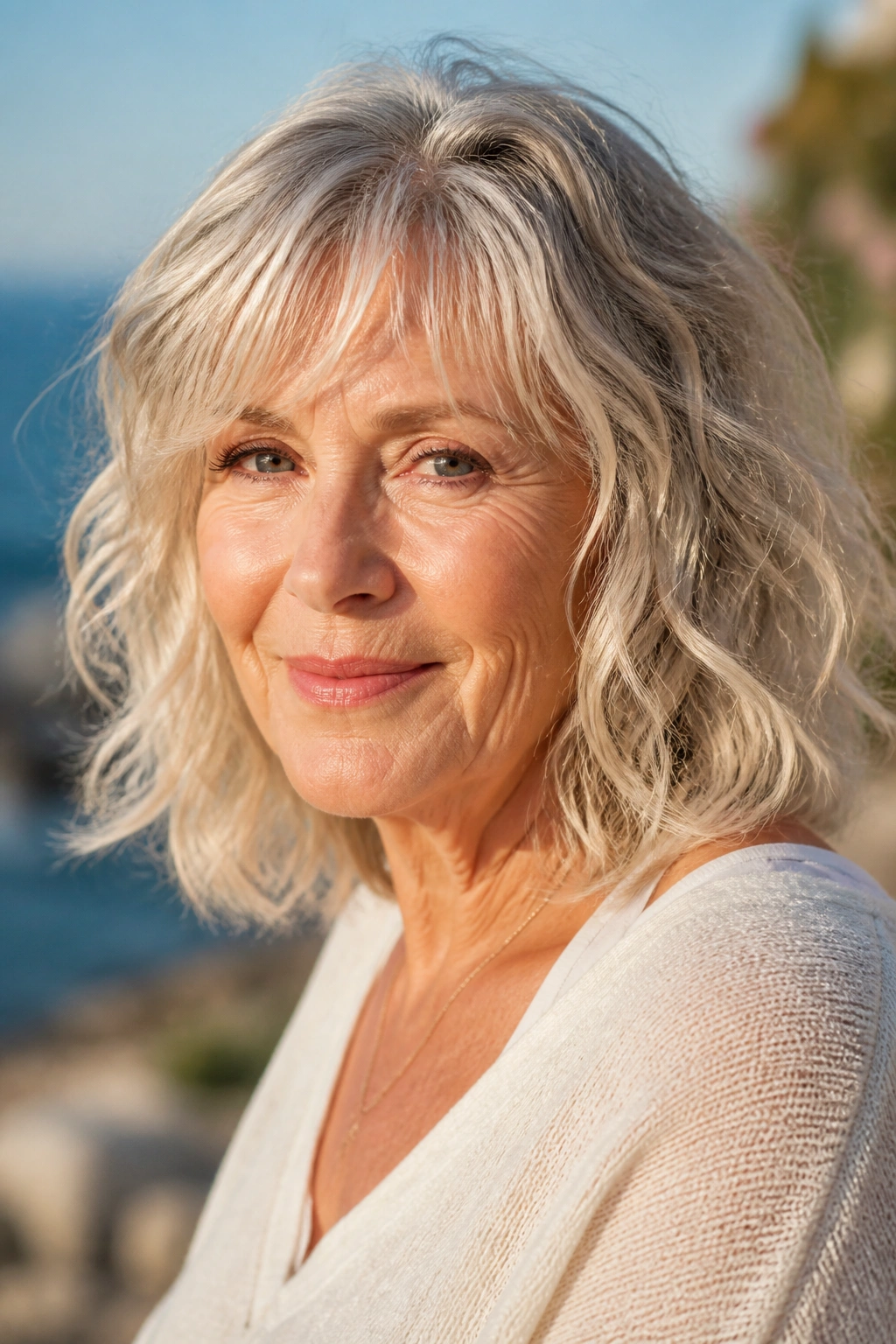
If your hair has become significantly finer over the years, you might feel discouraged from growing it to medium length. However, adding texture through “beach waves” can actually make fine hair look much more voluminous than a short, flat cut. The key is to create “air pockets” between the strands of hair.
Fine hair tends to stick together and lie flat against the scalp. By using a texturizing spray or a light sea-salt spray, you encourage the hairs to move independently. When you add a very slight wave—either through a large curling iron or by braiding damp hair—the curves of the waves take up more physical space than straight hair. This creates the visual illusion of a higher hair count.
The Science of Texture
- Product choice: Avoid heavy waxes or pomades. They will weigh fine hair down and make it look greasy.
- Root lift: Use a volumizing powder at the crown. Just a puff of powder can keep your roots standing up for 24 hours.
- The “messy” factor: Don’t aim for perfect curls. The more “lived-in” the waves look, the more natural and thick the hair will appear.
10. Face-Framing Graduated Layers
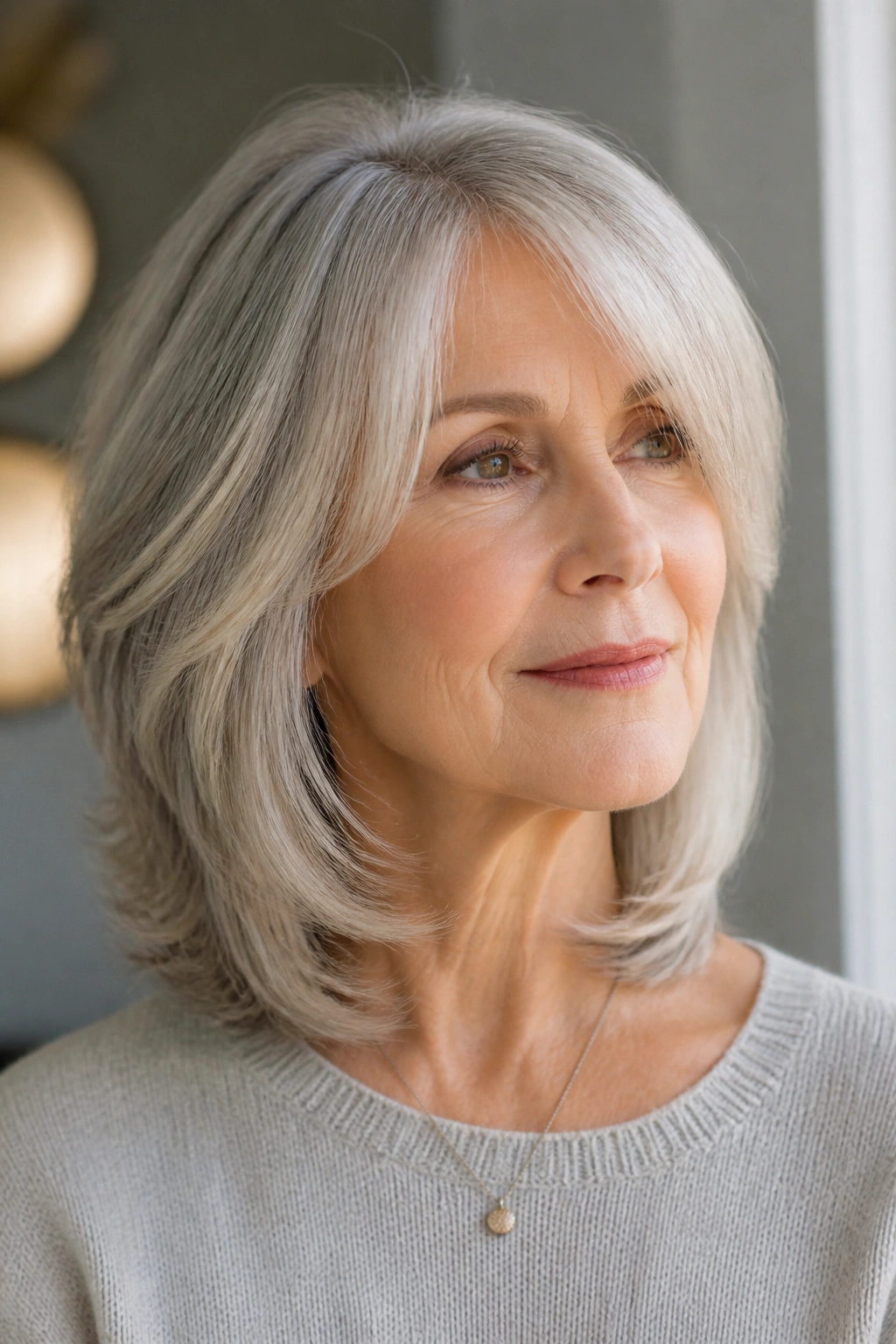
Graduation in a haircut refers to layers that gradually get longer as they move from the back to the front (or vice-versa). For women over 70, having layers that are slightly shorter in the back and angle down toward the front is a brilliant way to frame the face. It creates a “pathway” for the eye to follow, leading directly to your smile.
This style is often called an “A-line” bob, but when kept at a medium length, it feels less severe. The shorter hair at the nape of the neck provides a “lift” that supports the longer hair in the front. This is an excellent solution if you have hair that tends to get “flat” at the back of the head. It also keeps the hair away from your collar, which prevents that annoying “flip” that happens when hair hits your coat or scarf.
Styling this is relatively straightforward. You want the front sections to be smooth and slightly curved toward the chin. This creates a “bracket” effect that highlights your facial structure. It’s a polished, sophisticated look that says you are in control of your style. It works beautifully on straight hair, but can also be adapted for wavy hair by keeping the graduation very subtle.
11. Soft Curls with Curtain Bangs
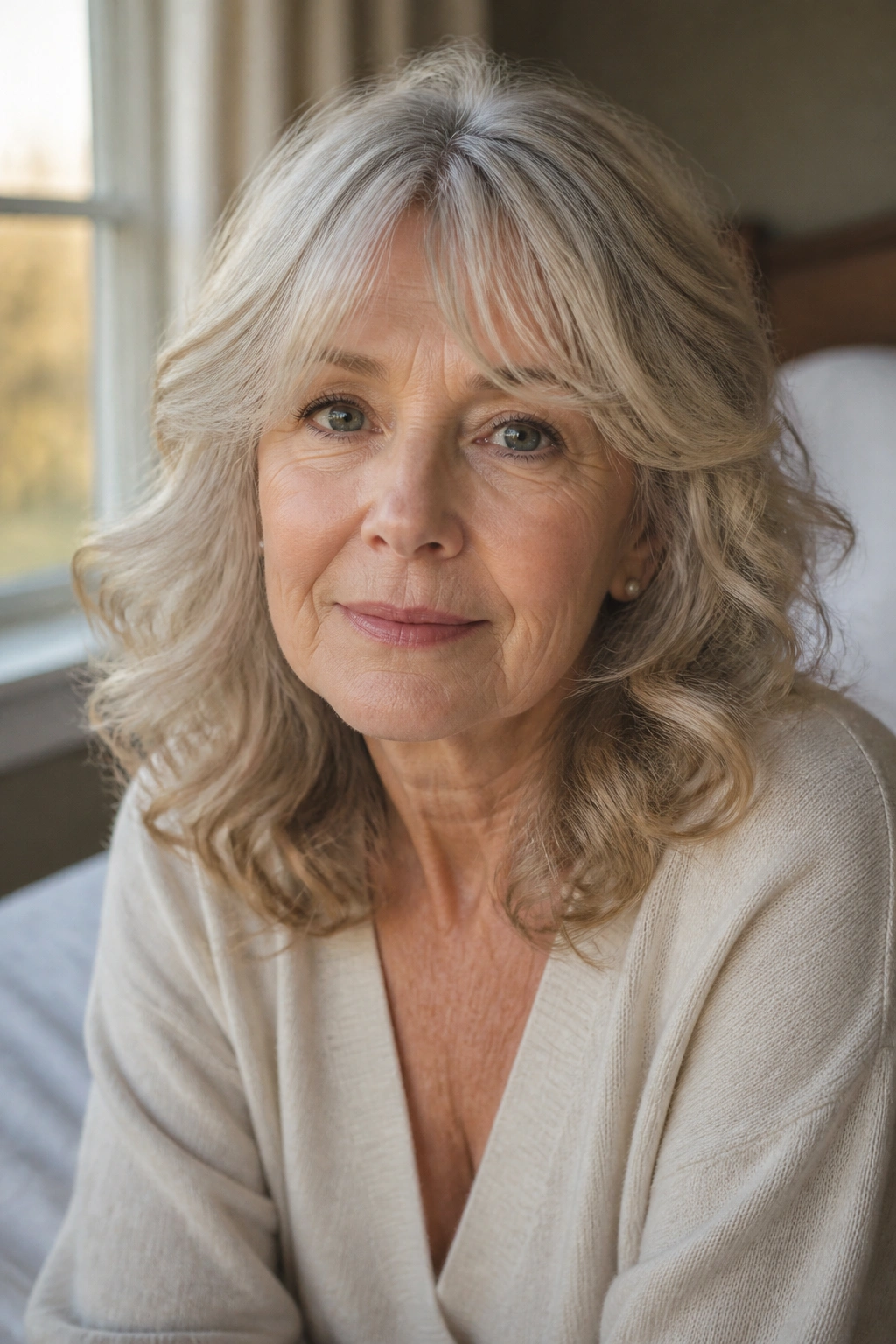
Curtain bangs are the “it” style of the moment, but they are actually a timeless classic that looks spectacular on mature women. These bangs are parted down the middle and swept to each side, much like a curtain being pulled back from a window. When paired with soft, medium-length curls, the effect is incredibly romantic and feminine.
The reason curtain bangs are so effective for women in their 70s is that they highlight the cheekbones. As we age, we often lose volume in our cheeks; these bangs “fill in” that space visually. They also provide a great way to hide thinning at the temples without the commitment of a full, heavy fringe. If you decide you don’t want them one day, they are long enough to be tucked behind your ears or pinned back with a decorative clip.
To get the most out of this look, focus on “bigness.” This isn’t the time for flat, limp hair. Use a volumizing mousse and blow-dry the bangs with a small round brush, pulling them forward and then sweeping them back. The rest of the hair can be set in large rollers or curled with a wide-barrel wand. It’s a soft, “cloud-like” hairstyle that feels very luxurious.
12. Silver Fox Modern Mullet (The “Wolf Cut” Light)
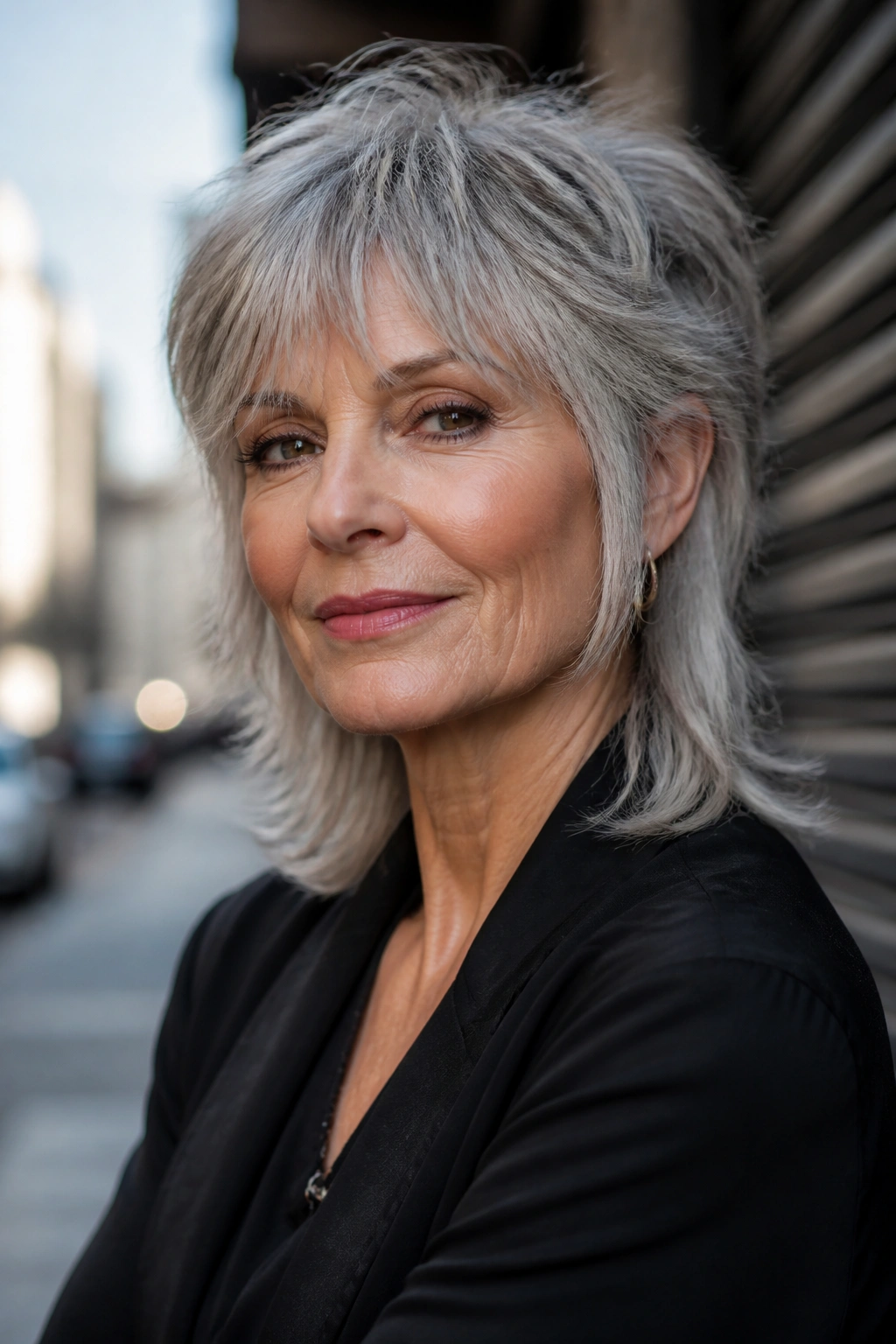
Don’t let the word “mullet” scare you. The modern version—often called a wolf cut—is essentially a heavily layered shag that focuses on volume at the top and softness at the bottom. For a woman over 70, this is a “personality” cut. It says you’re creative, energetic, and not afraid to stand out.
Why This Style Is Gaining Popularity
As hair thins, the crown is often the first place to suffer. This cut solves that by creating a “crown of layers” that are short and easy to fluff up. The length in the back stays at the shoulders, providing that medium-length feel that many women find comforting. It’s a very edgy look that works particularly well with natural silver or white hair, giving it a “rock-star” elegance.
How to Wear It
- The “Wash and Go”: This cut is designed to look good with almost no styling. Use a bit of texturizing cream on damp hair and let it air dry.
- The “Polished” Version: Use a small round brush on the top layers to create height, and a flat iron on the bottom to keep the length sleek.
This is a great choice for women who have a bit of a “rebellious” streak. It breaks the traditional “old lady” hair mold while still looking intentional and styled.
13. Straight Lob with Tucked Sides
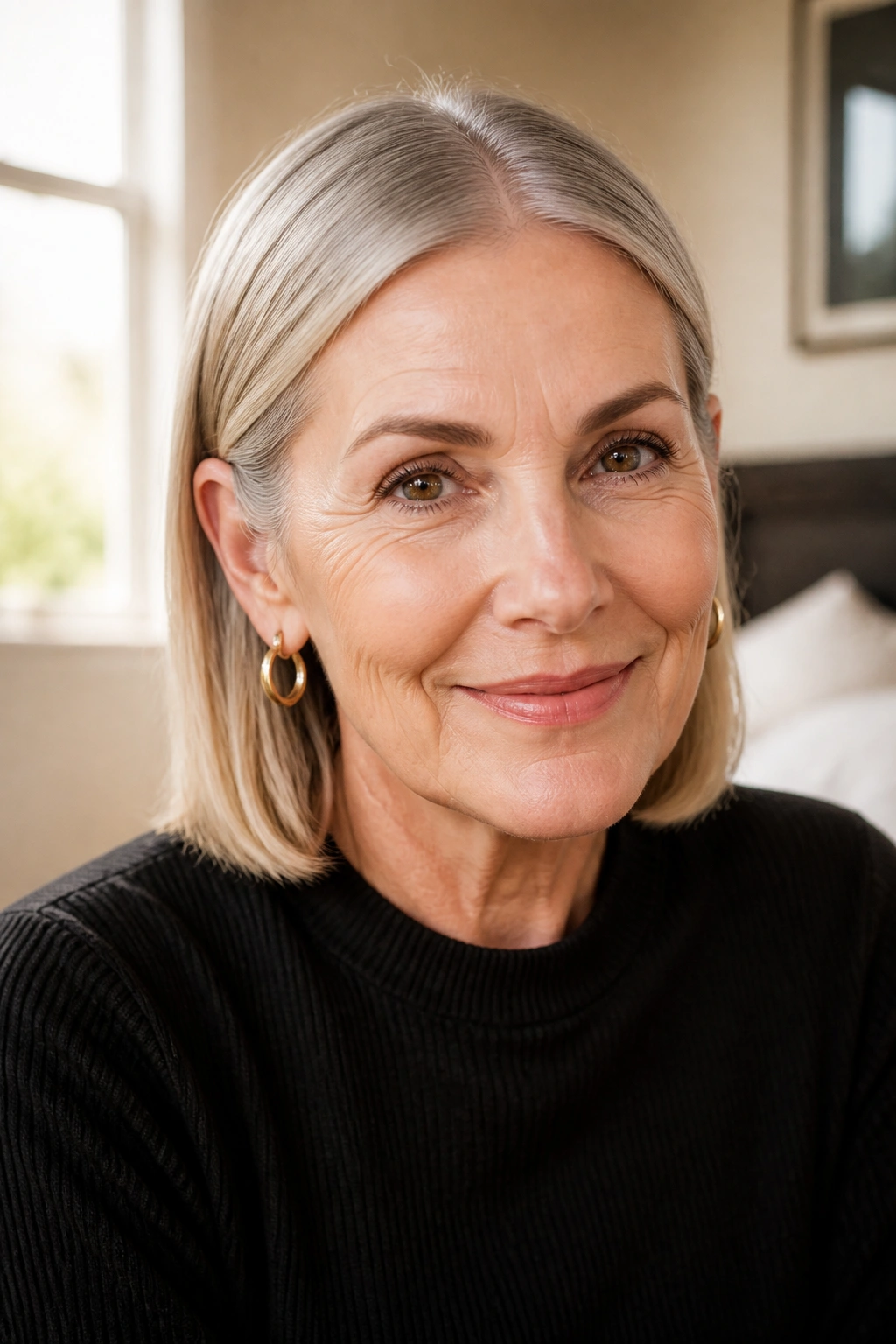
There is something incredibly chic about a woman who can pull her hair behind her ears and look like she’s ready for a photo shoot. A medium-length, straight lob (long bob) that is styled to be tucked behind the ears is a minimalist’s dream. It opens up the face entirely, showing off your eyes, your earrings, and your smile.
This style relies on precision. The cut should be very straight, with minimal layers. By tucking the sides behind the ears, you create a very slim profile. This is particularly helpful if you have a rounder face and want to create a more elongated, oval appearance. It’s a “clean” look that pairs perfectly with bold jewelry or a high-quality silk scarf.
To achieve this, you’ll need a good quality smoothing serum to keep flyaways at bay. Since gray hair is often more “willful” and prone to standing up, a tiny bit of hairspray on a clean toothbrush can be used to smooth down those little baby hairs around the hairline. It’s a simple, sophisticated look that never goes out of style.
14. Voluminous Blowout Layers
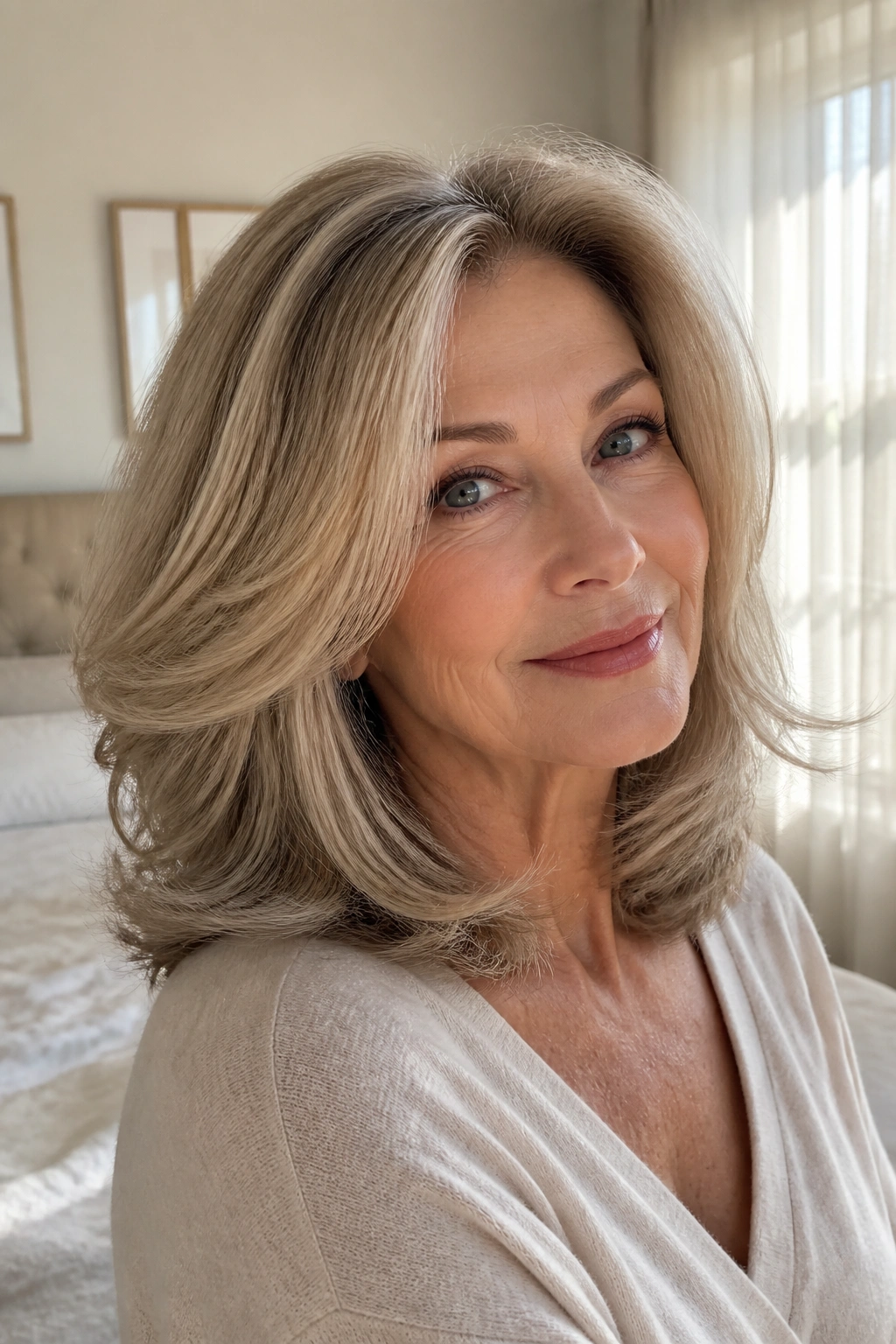
If you have the time and the inclination to style your hair, nothing beats the classic blowout. Medium-length hair with long layers is the perfect canvas for this. A blowout creates a sense of “expensive” hair—it looks healthy, shiny, and full of life.
The Anatomy of a Great Blowout
The secret to a blowout that lasts isn’t just the drying; it’s the cooling. After you’ve dried a section of hair around a round brush, don’t just pull the brush out. Let the hair sit on the brush for ten seconds until it cools down. This “sets” the shape. Better yet, use Velcro rollers. Once a section is dry, roll it up and let it stay there while you finish the rest of your head.
Key Products
- Root-lifting spray: Apply only to the first inch of hair at the scalp.
- Round brush with a metal barrel: The metal heats up and acts like a curling iron, providing more “bend” to the hair.
- Finishing mist: A light-hold hairspray that doesn’t feel crunchy.
This style is perfect for social events, dinners, or whenever you want to feel your most confident. It’s the “gold standard” of hair for a reason.
15. Razored Ends for Movement
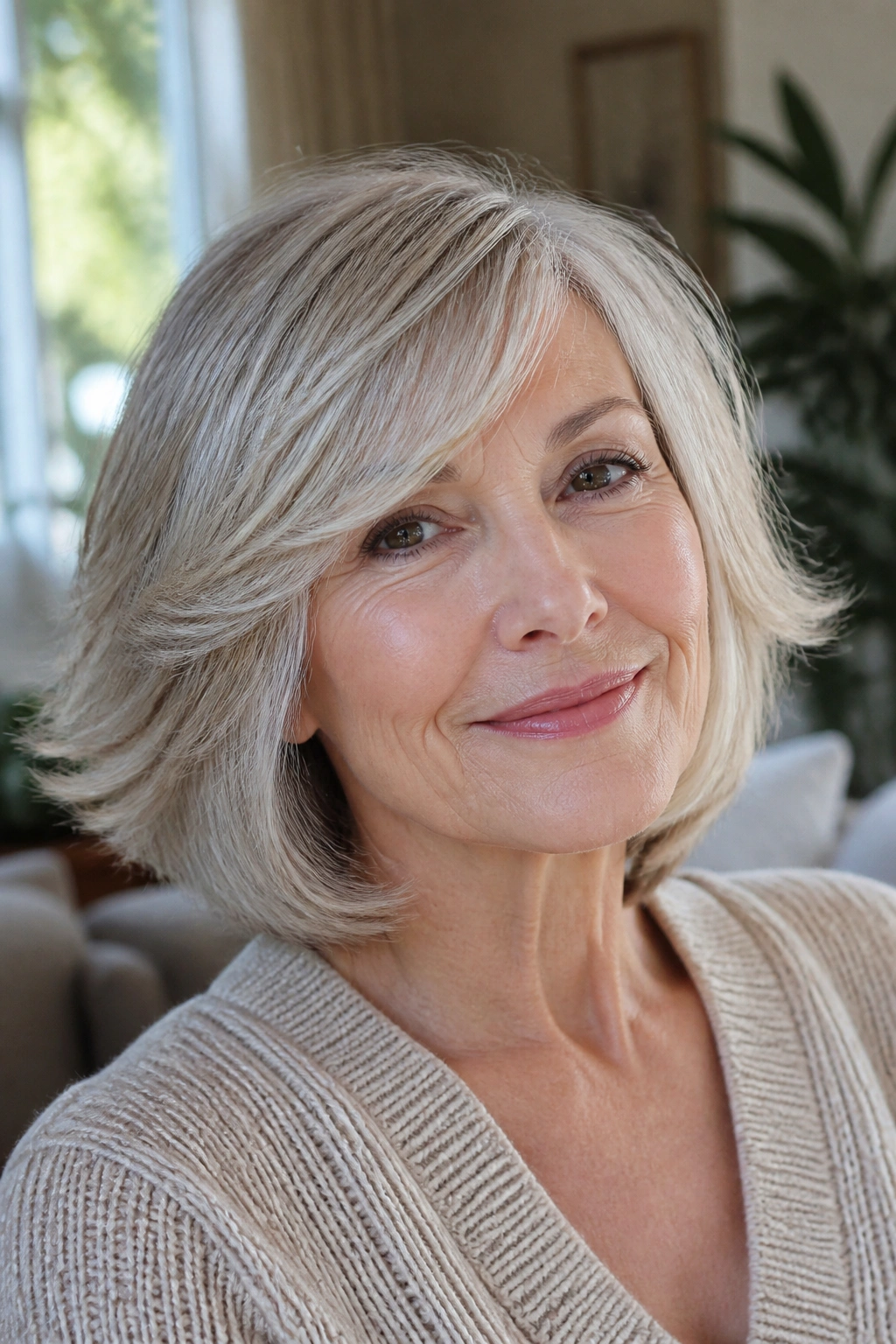
While most haircuts are done with shears, a razor cut offers a different kind of finish. Instead of a blunt, straight edge, a razor creates a “tapered” end that looks very soft and lived-in. For medium-length hair, razored ends can take a heavy, boring cut and make it look light and modern.
This technique is excellent for women with thick, coarse hair that tends to look like a “block.” The razor removes weight and creates “shredded” ends that move beautifully when you walk. It gives the hair a bit of a “swing” and prevents it from looking static.
However, a word of caution: razors should only be used on hair that is in good condition. If your hair is very fine or already prone to splitting, a razor can sometimes make it look “fuzzy.” Talk to your stylist about whether your texture is a good candidate for this technique. If it is, you’ll find that your hair has a new sense of freedom and lightness.
16. The Classic Pageboy Update
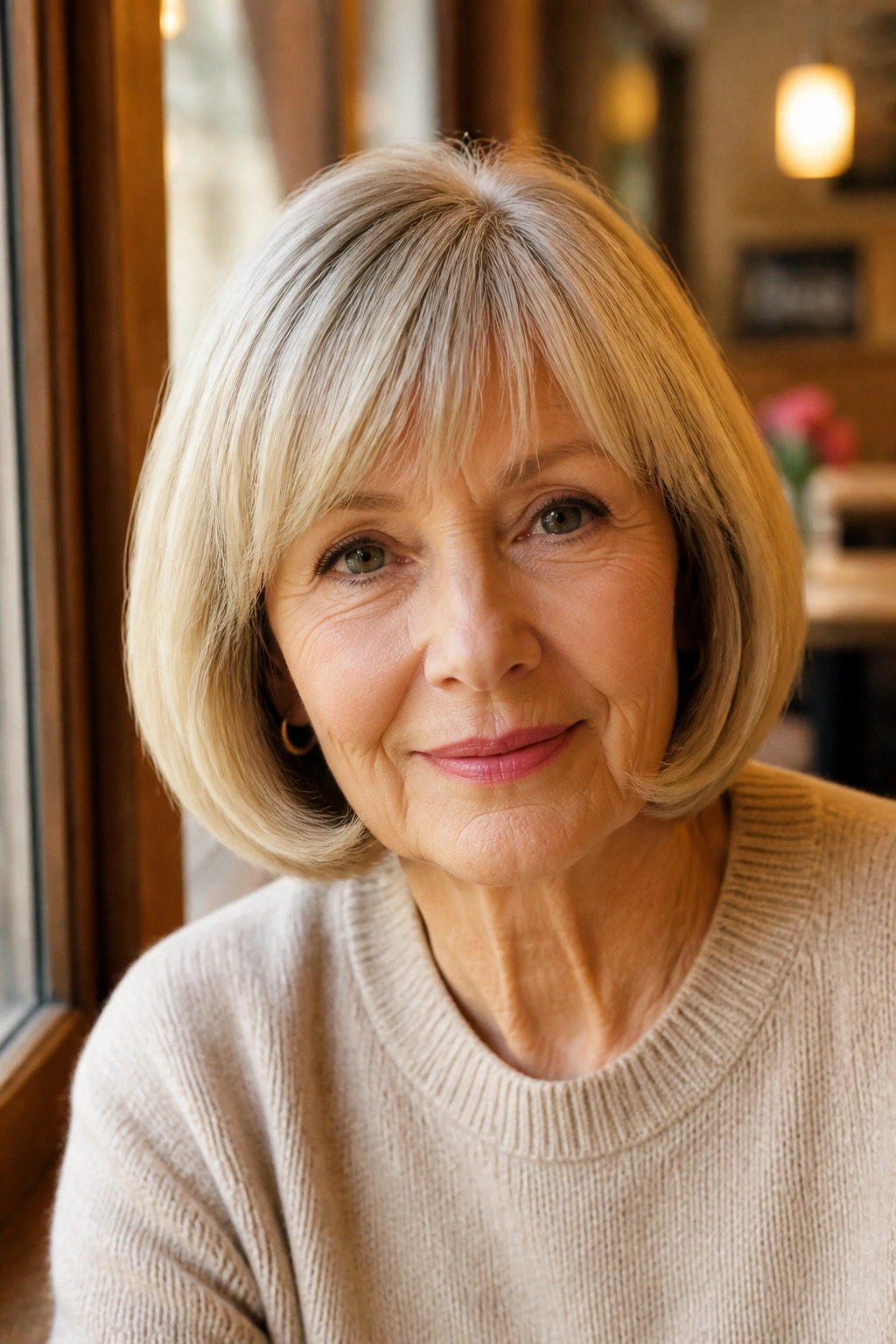
The pageboy is a vintage style characterized by hair that is all one length, usually hitting the mid-neck, with the ends curled under. For a more “now” version, we take the length to the shoulders and keep the “under-curl” very soft and natural rather than stiff.
This is a very “contained” style. If you don’t like hair falling in your face or feeling messy, the pageboy is for you. It stays in place and looks very tidy. It’s a popular choice for women who have a very classic, tailored wardrobe. The “under-curl” also has the benefit of hiding the ends of your hair, which is useful if you’re overdue for a trim and want to hide a bit of dryness.
To style this, you really only need a large round brush or a hot air brush. Simply dry the hair and, as you reach the ends, roll the brush inward toward your neck. It’s a ten-minute job that looks like a million dollars.
17. Deep Side-Swept Bangs with Medium Length
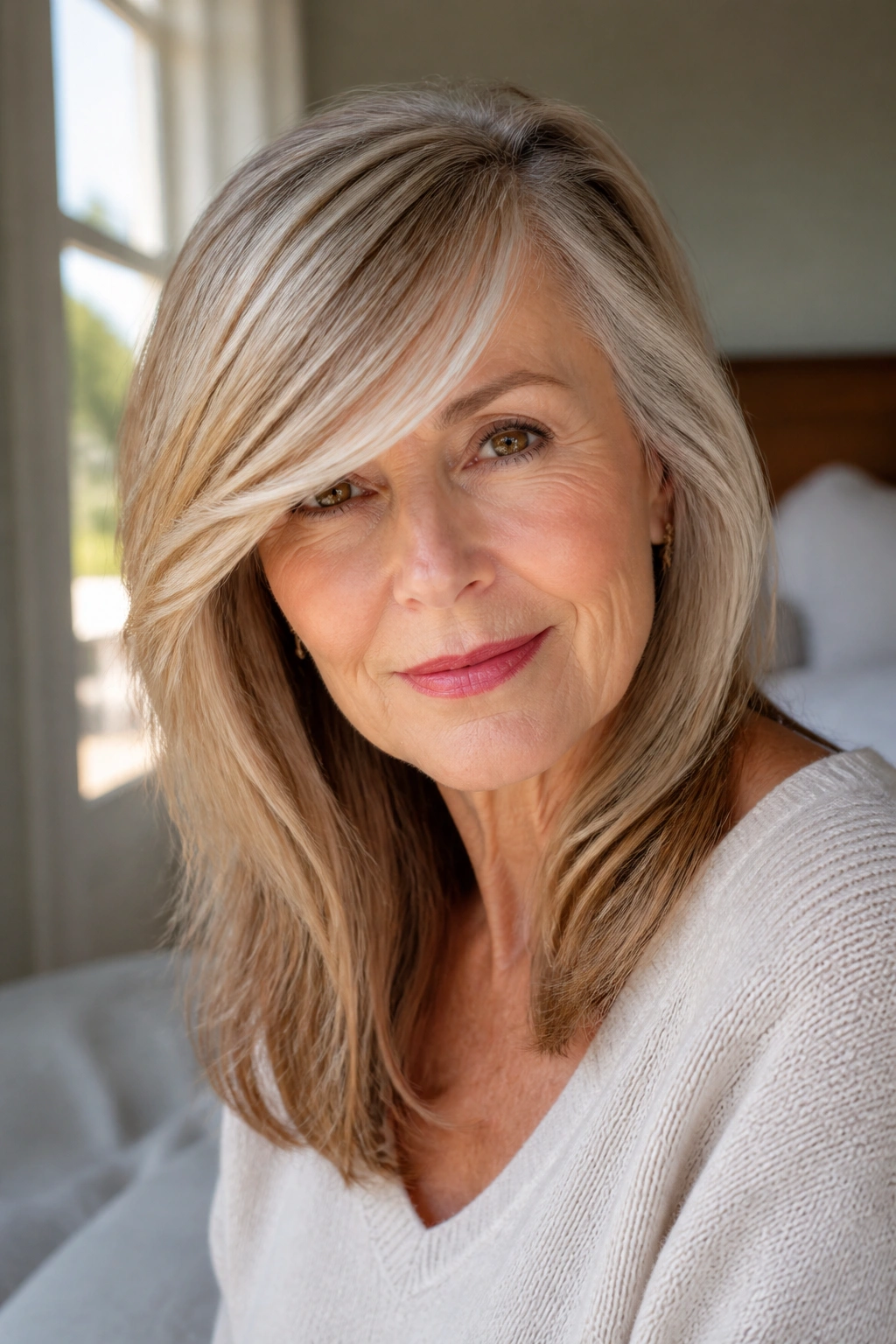
If you have a high forehead or thinning hair at the front, a deep side-swept bang is your best friend. Unlike straight-across bangs that can be high maintenance, side-swept bangs are very easy to live with. They blend into the rest of your hair and can be as long or as short as you like.
The Visual Magic
By sweeping the hair across the forehead, you create a diagonal line. Diagonal lines are “active”—they make the face look more dynamic and less “droopy.” This style also allows you to use the density from the back of your head to fill in the front. It’s a clever bit of architectural engineering for the hair.
Styling Tips
- Blow-dry the bangs first: Your bangs will dry faster than the rest of your hair. Shape them while they are soaking wet to ensure they lay flat.
- Use a “flat” technique: Don’t use a round brush on side bangs, or you’ll get a “1980s bubble” effect. Use a paddle brush and blow the air straight down.
- The “tuck”: If the bangs are long enough, tucking the opposite side behind your ear creates a beautiful, balanced asymmetry.
18. Bohemian Natural Texture Lob
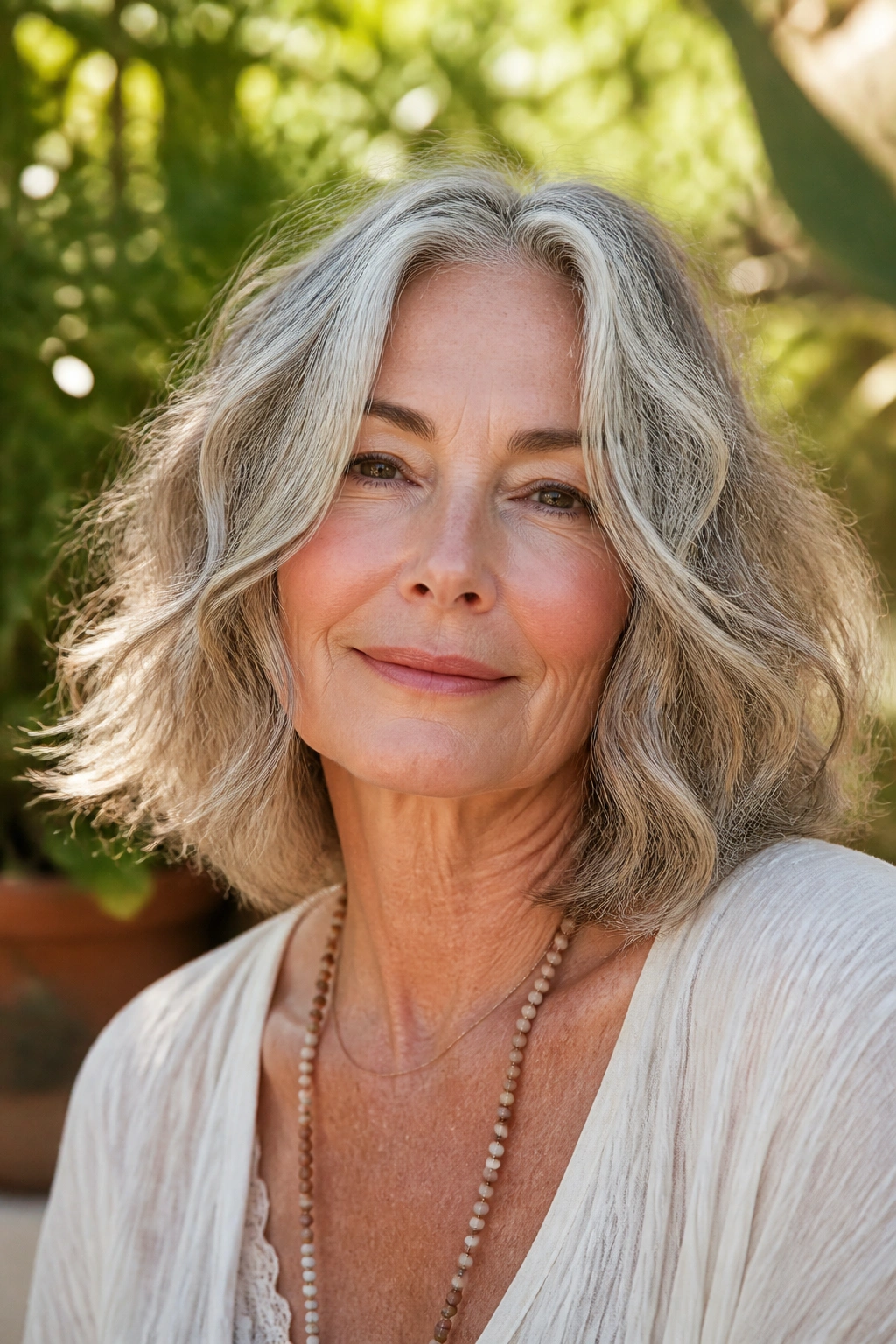
Who says “Boho” is only for twenty-year-olds at music festivals? A bohemian-style lob is all about celebrating whatever texture you have—be it a slight frizz, a random wave, or a bit of stubborn “kink.” This is the ultimate low-maintenance style for a woman who would rather be in her garden or at an art gallery than in a salon chair.
The cut is usually a mid-length bob with very long, “invisible” layers. The goal is to make the hair look like it just naturally grows that way. It’s a very “relaxed” look that communicates a sense of peace and self-assurance. It works beautifully with natural gray hair, especially if you have different “zones” of color (like whiter temples and a darker back).
To keep this from looking “messy” in a bad way, use a high-quality hair oil or a curl-defining cream. You want the hair to look hydrated and healthy, even if the shape is informal. It’s a very “artistic” look that pairs well with natural fabrics like linen and cotton.
19. Stacked Back with Longer Front (A-Line)
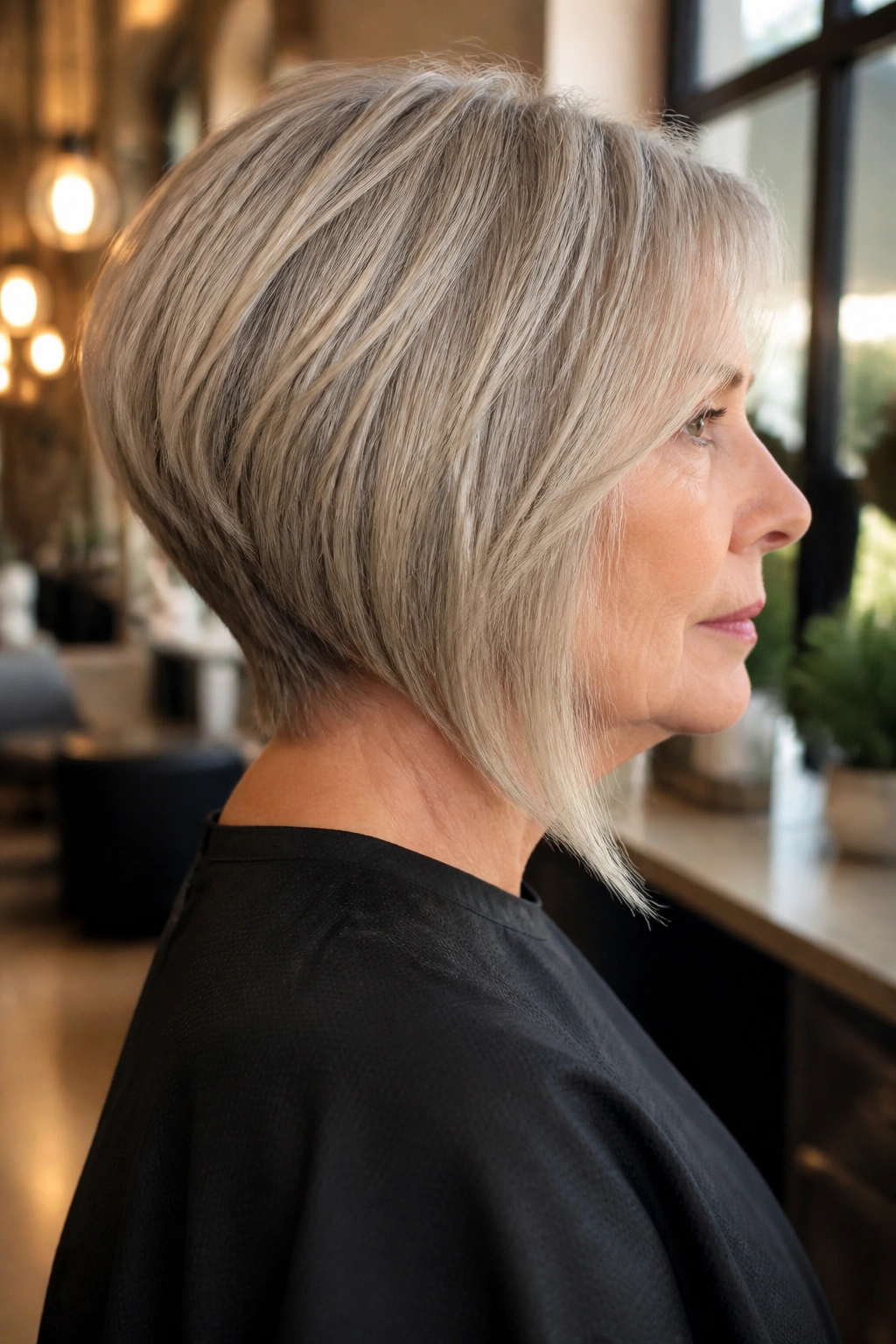
The “stacked” look involves cutting the hair shorter at the nape of the neck in very close layers, creating a “wedge” of volume. As the cut moves forward, the hair gets longer. In a medium-length version, the front pieces might hit the collarbone while the back is at the mid-neck.
This is a structural powerhouse. If your hair is very flat at the back of your head (the “flat-head” syndrome many of us fight!), the stacking provides built-in height that will never fall down. It’s a very sharp, modern look that feels very professional.
Styling this requires focus on the back. Use a small round brush to “lift” those stacked layers away from the scalp. The front can be left straight or given a slight wave. It’s a very “sculptural” haircut that looks fantastic from every angle—especially the profile, which is where many haircuts fail to impress.
20. Piecey Layers with Highlights
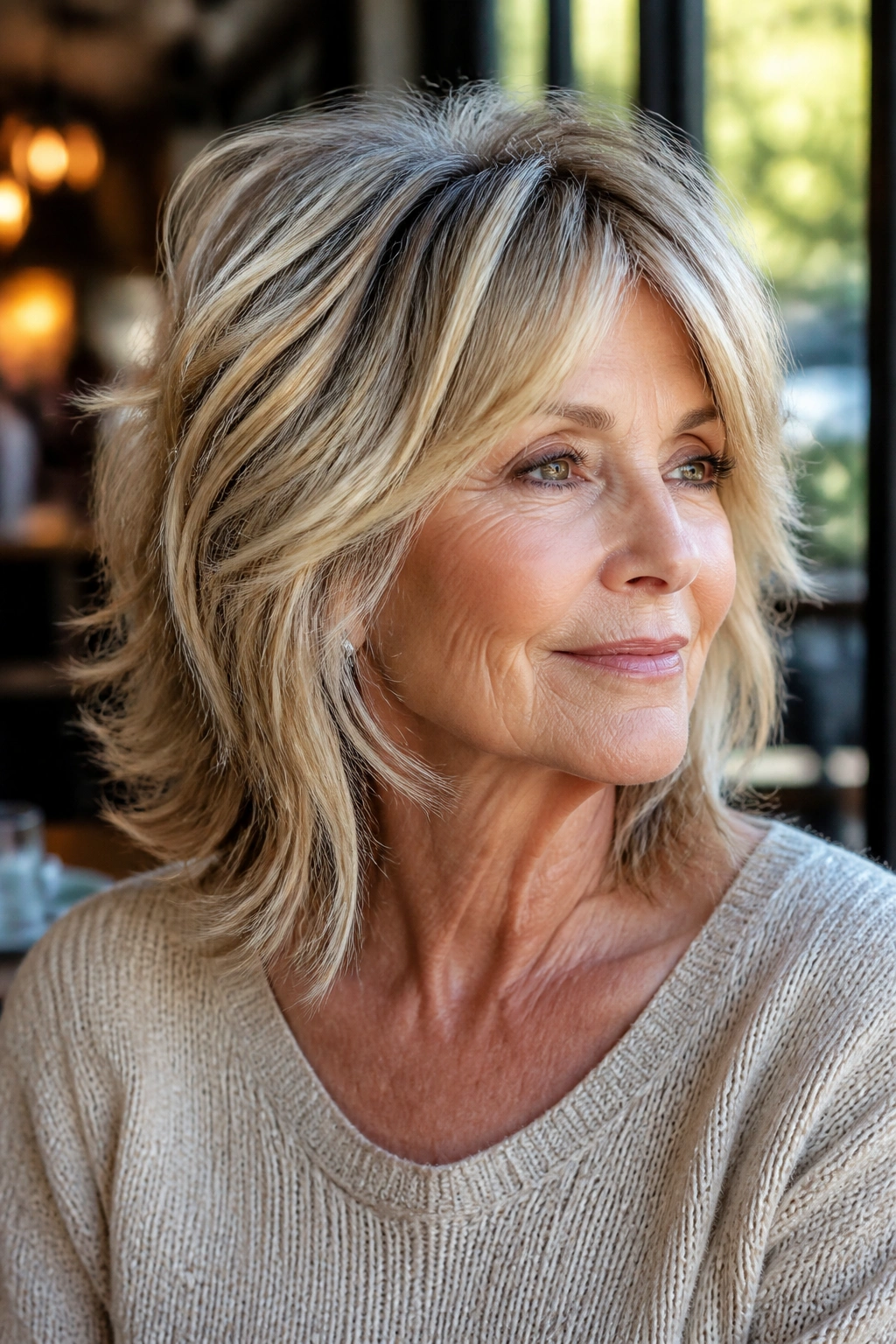
If you still color your hair or have natural highlights from the sun, “piecey” layers are the best way to show them off. This involves using a texturizing product to “clump” small sections of hair together at the ends.
Why It Looks Youthful
“Piecey-ness” implies movement and moisture. Dry, over-processed hair tends to fly away in a “cloud.” Healthy, youthful hair tends to stay in small, defined groups. By creating this look intentionally with a bit of pomade or wax, you give your hair a much healthier appearance.
How to Achieve the Look
- Style as usual: Blow dry or air dry your hair.
- Apply product to fingertips: Use a tiny amount of styling cream or “texture paste.”
- Pinch the ends: Gently pinch the ends of small sections of hair. Don’t do the whole head—just focus on the layers around your face and the very bottom.
- Shake it out: Give your head a gentle shake to let the pieces fall naturally.
21. Shoulder-Skimming Soft Shag
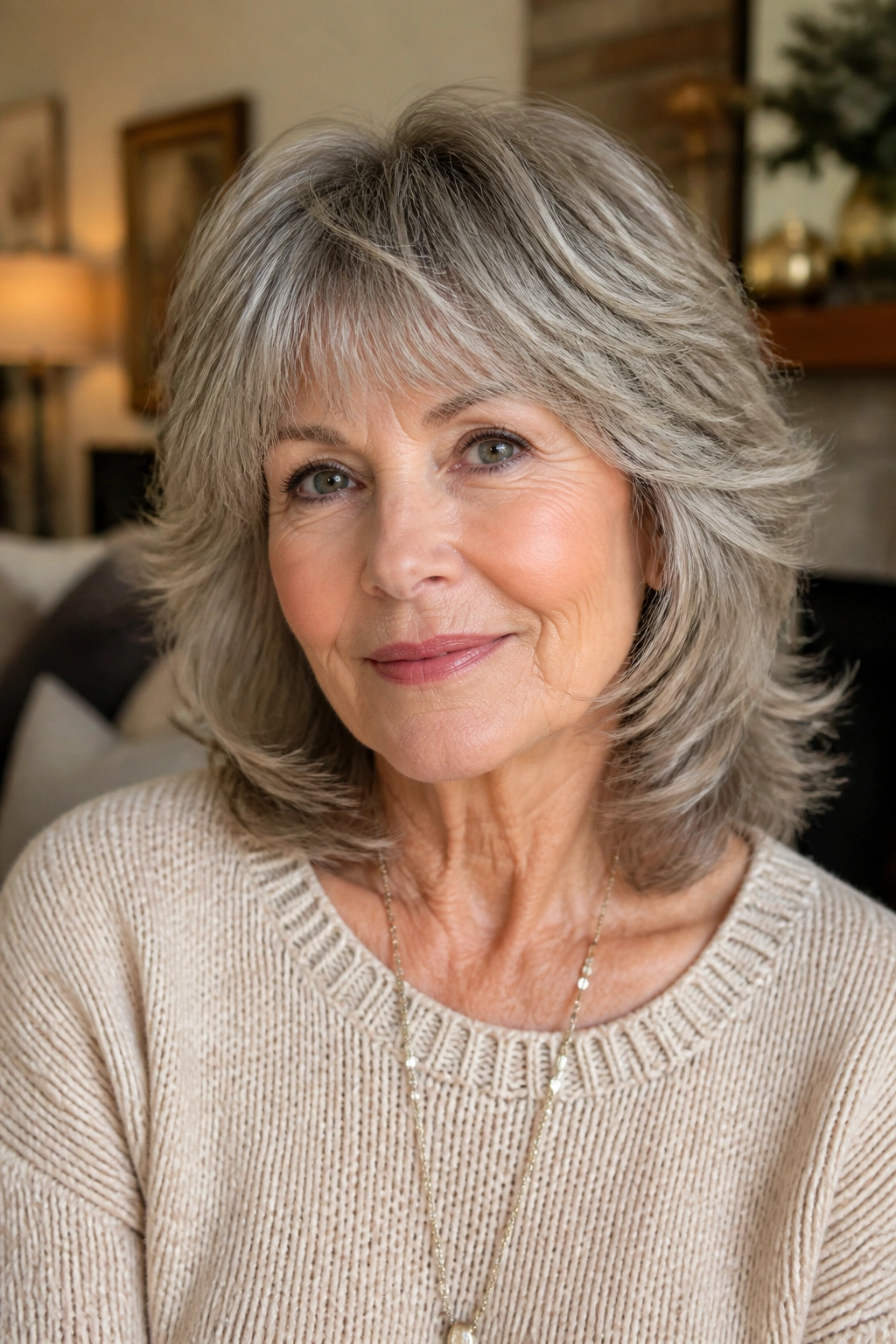
This is a gentler version of the traditional shag. Instead of choppy, aggressive layers, the layers are kept long and blended. The hair just barely skims the shoulders, creating a very soft “halo” around the neck and face.
This is an excellent choice for women who have very sensitive skin on their neck or who find that harsh hair “pokes” them. The shoulder-skimming length is long enough to be feminine but short enough to stay out of your way. It’s a very “middle-of-the-road” style that suits almost everyone.
Because the layers are so blended, this style grows out beautifully. You won’t feel like you have a “hair emergency” if you miss your six-week trim. It’s a reliable, classic style that works with any hair color and any lifestyle.
22. Polished Flip with Bangs
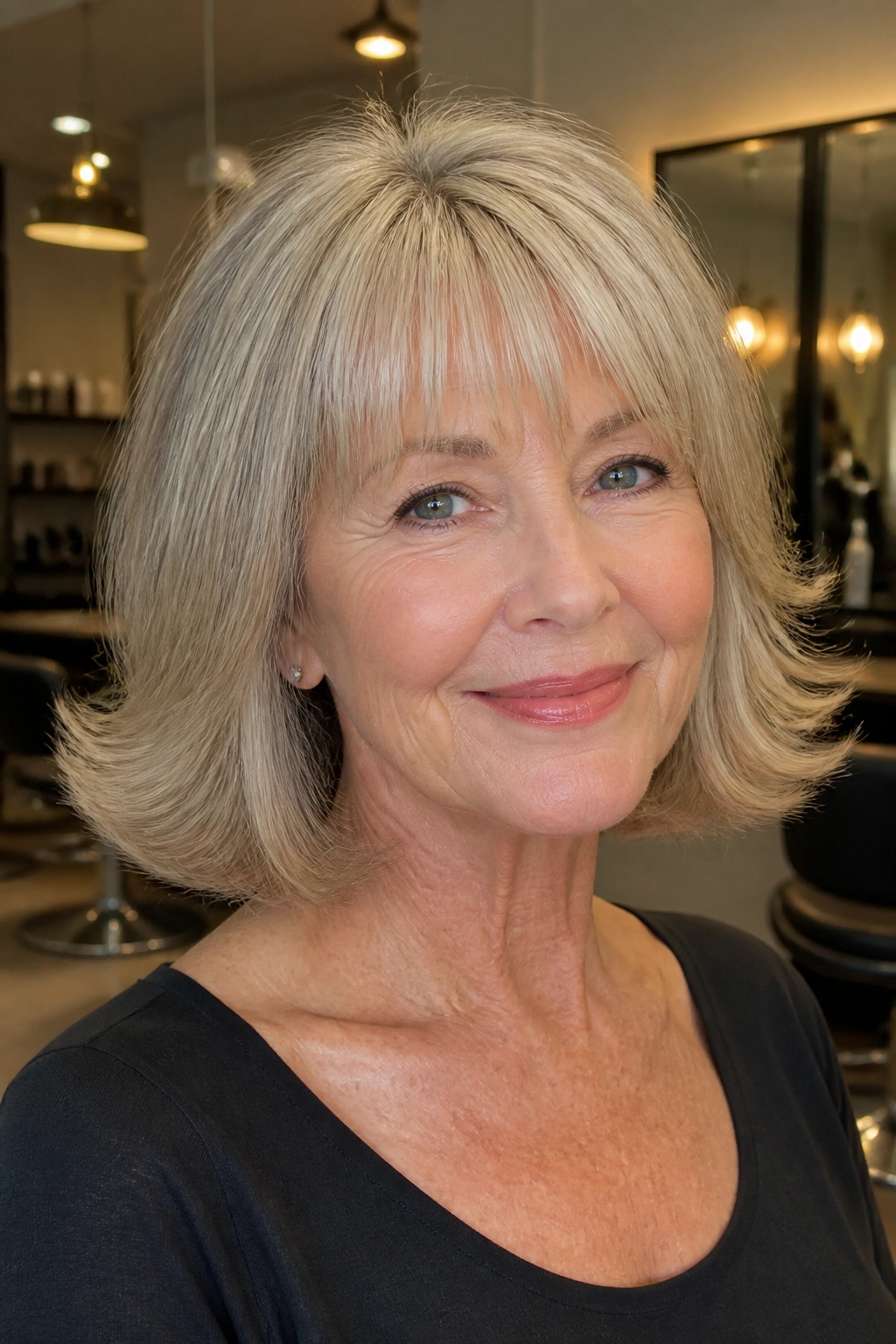
Remember the “flip” from the 1960s? It’s back, but in a much more sophisticated way. A medium-length cut where the ends “flip” out away from the neck is a very cheery, upbeat style. When paired with a full (but light) set of bangs, it’s a very “complete” look.
The flip is a great way to handle hair that naturally hits your shoulders. Instead of fighting the “shoulder flip,” you lean into it. By using a round brush to encourage the hair to turn outward, you create a wide, horizontal line at the base of your neck. This can make a thin neck look stronger and more elegant.
This style is very “intentional.” It doesn’t look like you just rolled out of bed; it looks like you have a “look.” For many women in their 70s, having a defined style is a great way to feel more “put together” and confident in social situations.
23. Asymmetrical Medium Cut
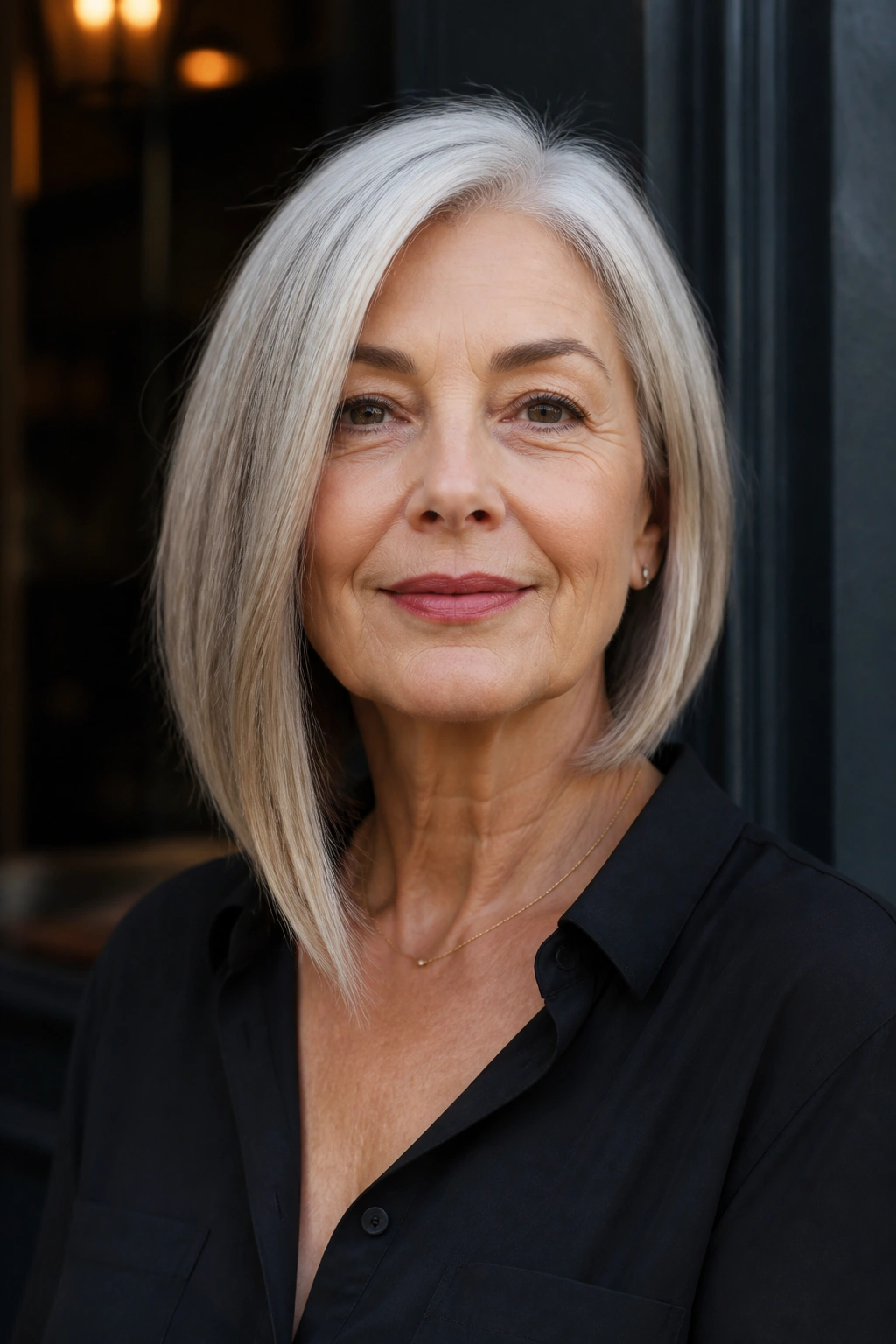
If you want something truly modern, consider an asymmetrical cut. This is where one side of the hair is slightly longer than the other. We’re not talking about a dramatic difference—perhaps just an inch or two.
Asymmetry is a powerful tool for aging faces. It distracts the eye from any sagging or wrinkles by providing a “complex” visual to look at. It’s a very high-fashion look that says you are current and engaged with the world. It works best on straight hair, where the difference in length is most obvious.
Despite looking complicated, it’s no harder to style than a regular bob. You just follow the lines of the cut. It’s a “statement” haircut that requires a bit of confidence, but the payoff is a look that is entirely unique to you.
Wrapping Up
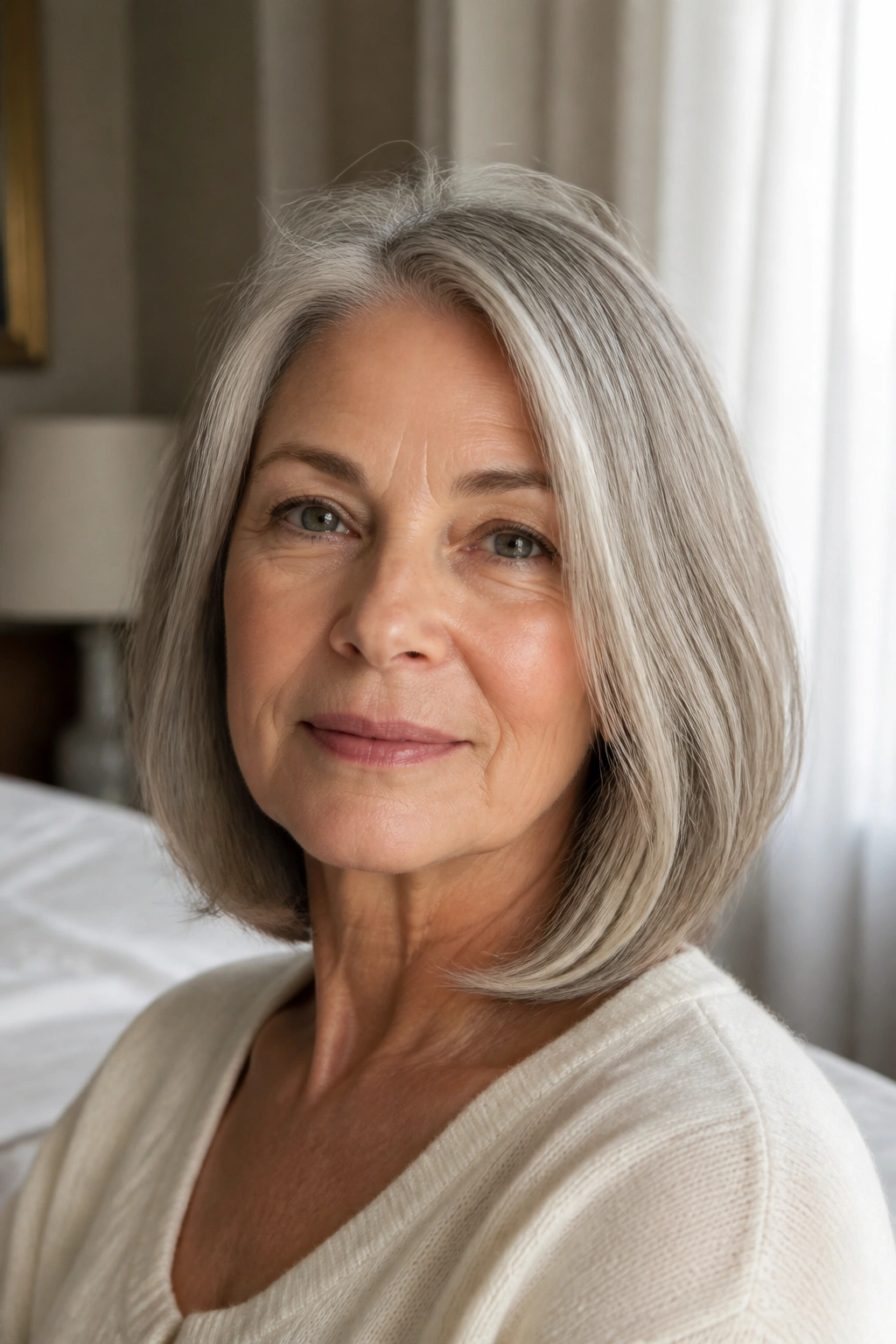
Finding the right hairstyle at seventy isn’t about hiding your age; it’s about framing the life you’ve lived in a way that feels comfortable and stylish. Medium-length hair offers a versatility that short hair can’t match and a manageability that long hair often lacks. Whether you choose a structured lob, a playful shag, or a minimalist blunt cut, the most important factor is how the hair makes you feel when you catch your reflection.
Don’t be afraid to experiment with your stylist. Bring pictures, but also talk about your lifestyle. Do you spend your mornings at the gym? Do you have trouble holding a heavy hairdryer? A good stylist will take those physical realities into account to give you a cut that works in your real life, not just in the salon.
As hair texture changes, remember that moisture is your most valuable asset. Invest in high-quality conditioners and heat protectants. Silver and white hair is a beautiful, natural accessory—treat it with the same care you would a fine silk garment. With the right medium-length cut, your 70s can be your most stylish decade yet. There is a quiet power in a well-chosen hairstyle, a signal to the world that you are still here, still vibrant, and still very much yourself.