



Brown and red knotless box braids have a way of looking rich before you even touch a styling spray. The brown keeps the color grounded and wearable, while the red gives the braids movement every time they swing over a shoulder or pull back into a ponytail.
That combination works because knotless braids already have a softer, lighter root than classic box braids. Add brown and red into the mix, and you get dimension instead of a flat block of color. Chestnut, auburn, burgundy, copper, mahogany, cinnamon, rust, cherry — each shade changes the mood in a different way, and placement matters just as much as the color itself.
I’m a fan of looks that earn their place by doing more than one job. These braids can look polished, protect natural hair, and still feel bold enough to make a simple white tee look intentional. The trick is choosing the right shade story for your hair length, your parting pattern, and how much contrast you actually want to live with.
1. Chestnut Brown With Auburn Ends
Chestnut brown with auburn ends is the easiest entry point if you like warmth but do not want a loud red head. The brown does most of the work, then the auburn shows up at the tips where the braids move the most.
Why It Feels Easy to Wear
This version keeps the color shift low and clean. You can wear it with middle parts, side parts, or a high bun, and it still reads as soft instead of flashy.
Auburn ends also make the braid length look longer because the eye follows the color change. That little trick matters on medium-length braids, where you want the style to feel full without looking heavy.
- Works well on waist-length, mid-back, or elbow-length braids
- Looks best when the auburn starts in the last 4 to 6 inches
- Fits people who want color but still need something work-friendly
- Easier to maintain visually than a full red install
Pro tip: Ask for the auburn on the outermost braids near the face and on the bottom rows, not every single braid. That keeps the style from turning muddy.
2. Burgundy Peekaboo Braids
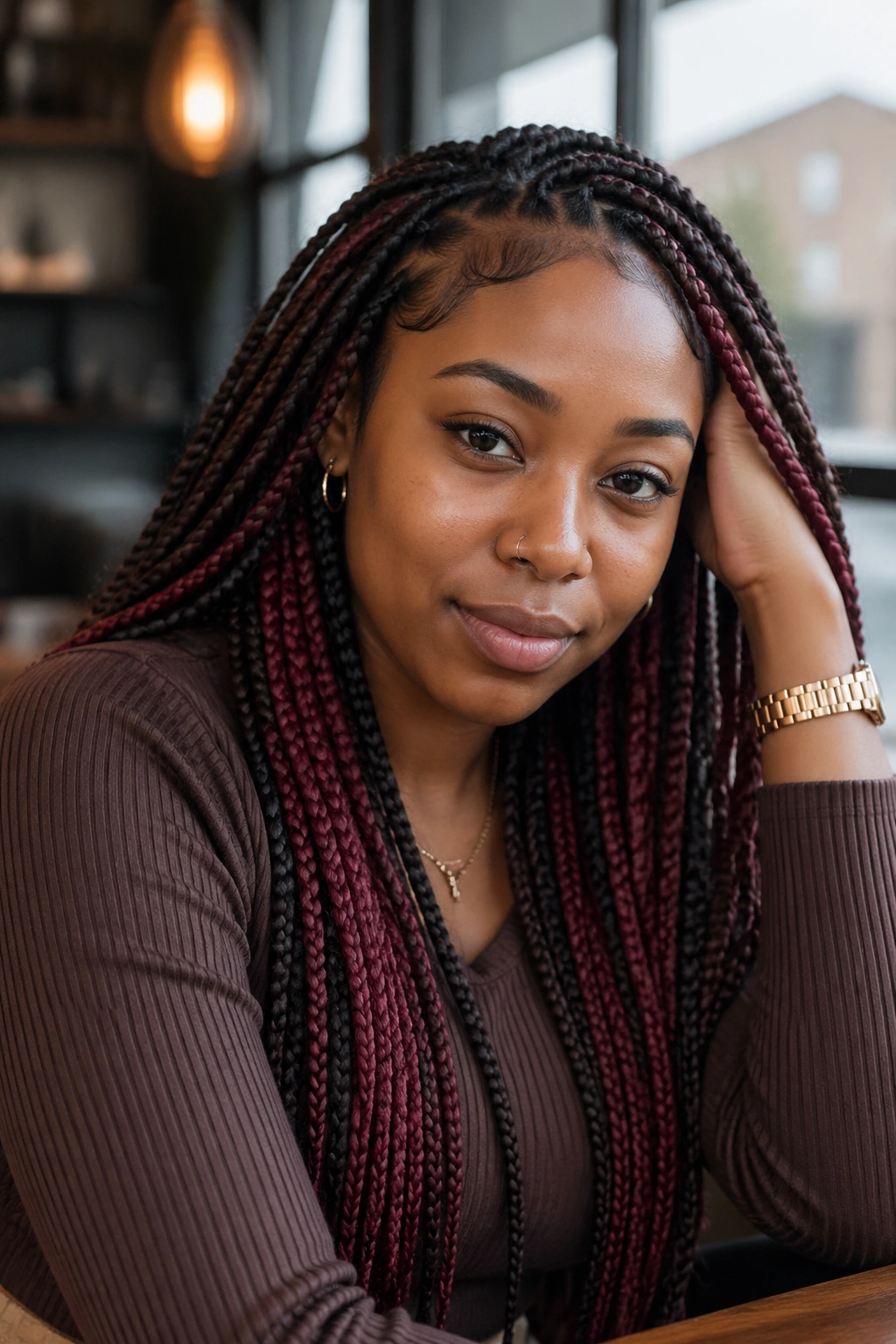
Burgundy peekaboo braids are for anyone who likes color with a bit of mischief in it. From the front, you mostly see brown. Turn your head, and the burgundy flashes underneath like it was hiding there on purpose.
That hidden placement is what makes the style feel expensive without trying too hard. You get contrast, but not the kind that shouts from across a room. It’s a nicer choice if you wear your braids loose most of the time and only tie them up on busy days.
I especially like peekaboo color on medium-size knotless box braids because the parts stay clean and the color panels can show through without looking chunky. A few burgundy rows in the nape and lower crown are enough.
The key is distribution. Keep the burgundy concentrated in the underlayers and around the back third of the head, then let the brown sit on top like a cover. Simple. Smart. A little sneaky.
3. Cinnamon Brown Bob With Cherry Red Face Framing
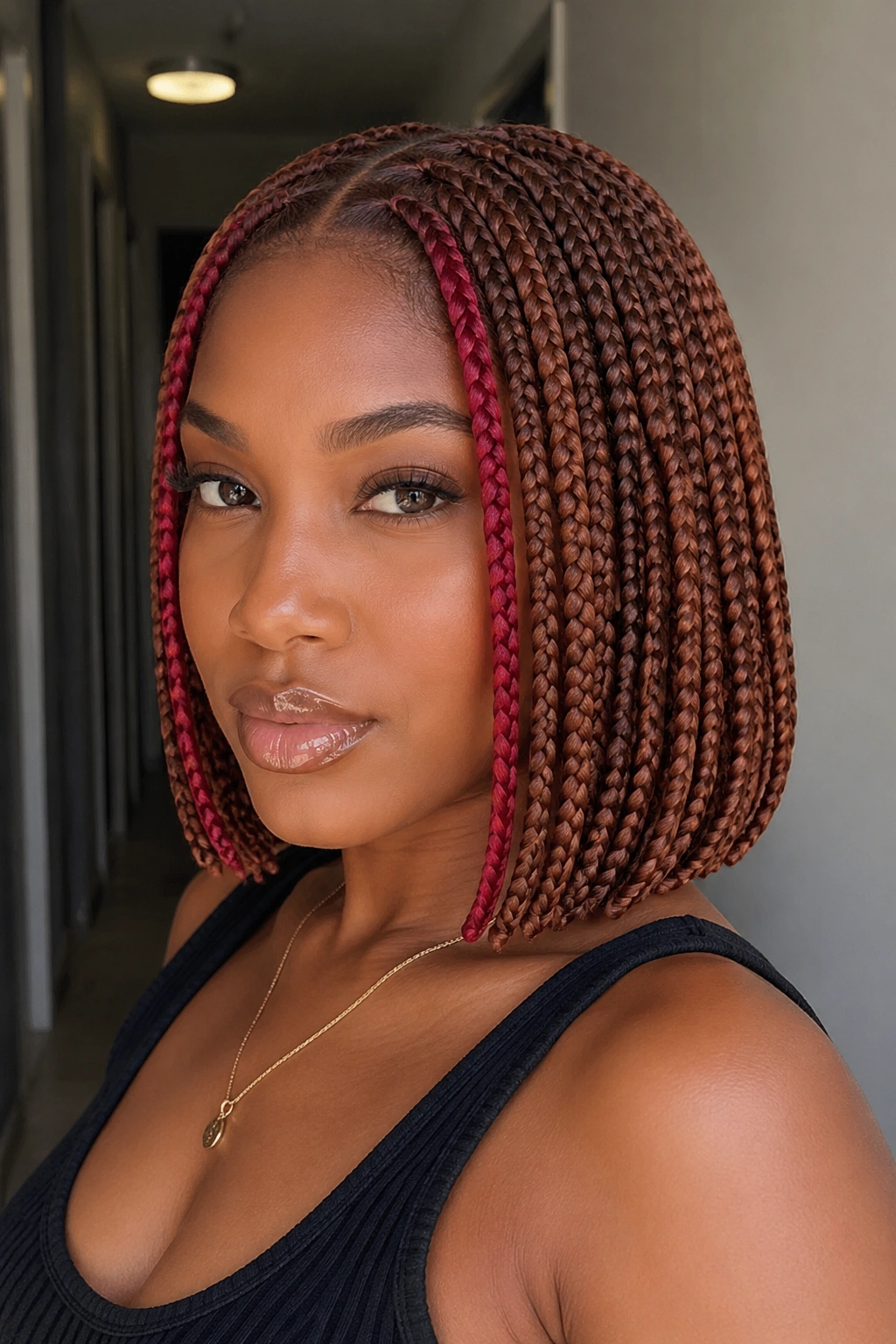
A shoulder-skimming bob gives brown and red knotless box braids a sharper personality. The cut makes the color read faster, and the cherry red face-framing pieces draw attention straight to the eyes and cheekbones.
The best part is how little hair you need to color for this look to matter. Two to four red braids near the front can change the whole mood, especially if the rest of the install stays cinnamon brown. You do not need a heavy color block to make the point.
What Makes This Bob Work
The shorter length keeps the braids light and easy to move. That’s helpful if you hate the drag that can come with long styles, or if you just want a neck-and-shoulders frame that feels neat.
The cherry pieces should sit right beside the temples or just behind them. Too far back, and you lose the face-framing effect. Too wide, and it stops looking intentional.
A bob like this also makes maintenance simpler because the ends are closer to the shoulders and don’t snag as much. If you’re tired of braids getting caught on coat collars, this is the one I’d point you toward first.
4. Deep Mocha and Wine Red Waist-Length Braids
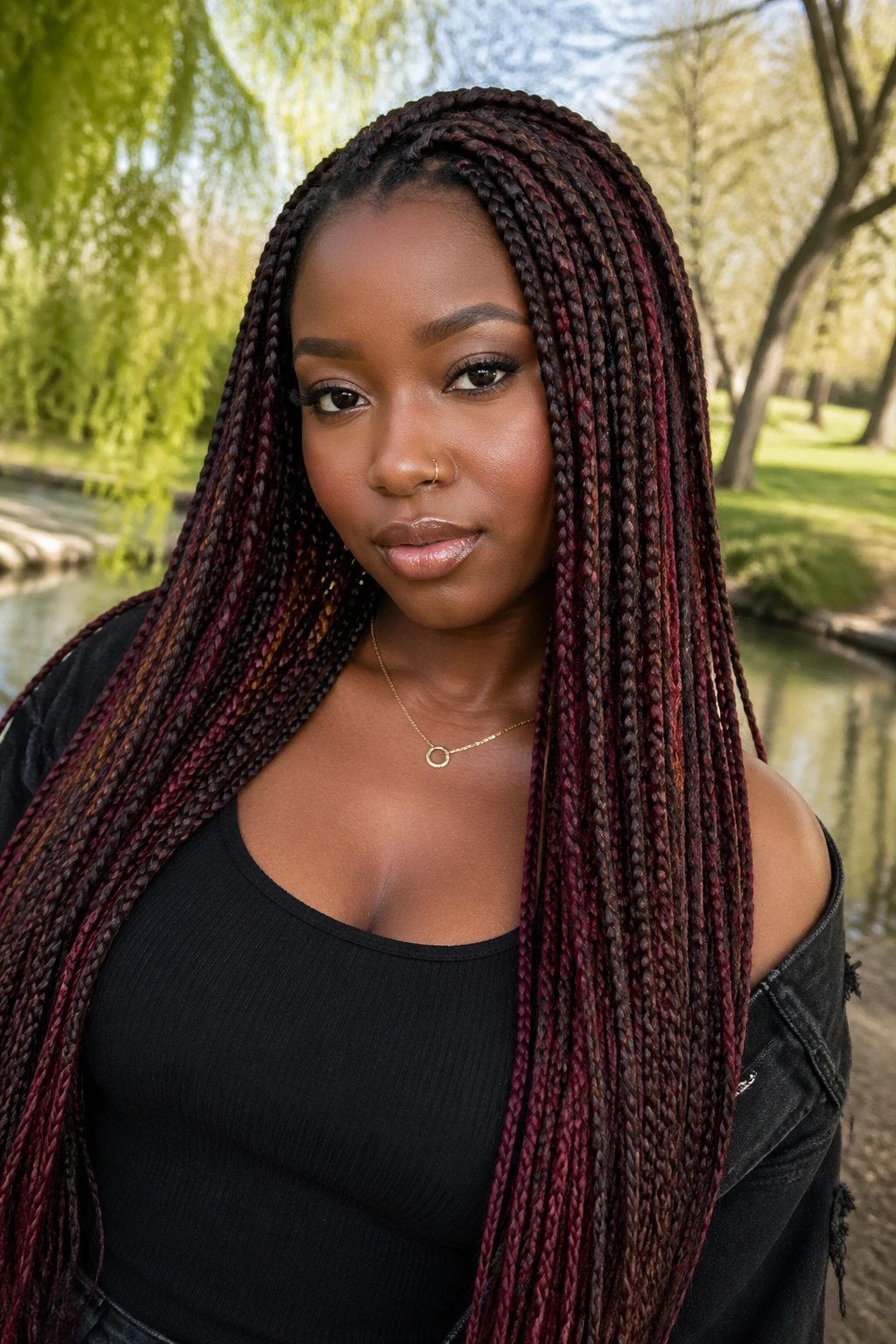
Deep mocha and wine red is the version I’d call the grown-up drama option. The mocha base keeps the style grounded, while the wine red shows up as a deeper, moodier accent that reads well in indoor light and still looks interesting outdoors.
Waist-length braids give the color room to move. Shorter installs can be cute, but long braids let the red travel through the length instead of staying stuck near the root or tips. That matters if you want the shade change to feel fluid rather than patched on.
There’s also a practical side to this look. A darker base makes root growth less obvious, which is useful if you like to stretch your wear time and keep the style looking neat for longer. The color story still feels rich when the roots begin to show.
I’d keep the braids medium in size rather than extra tiny. Too many small braids at waist length can start to feel fussy, and the wine red loses some of its depth when the sections are too narrow.
5. Honey Brown Braids With Copper Red Streaks
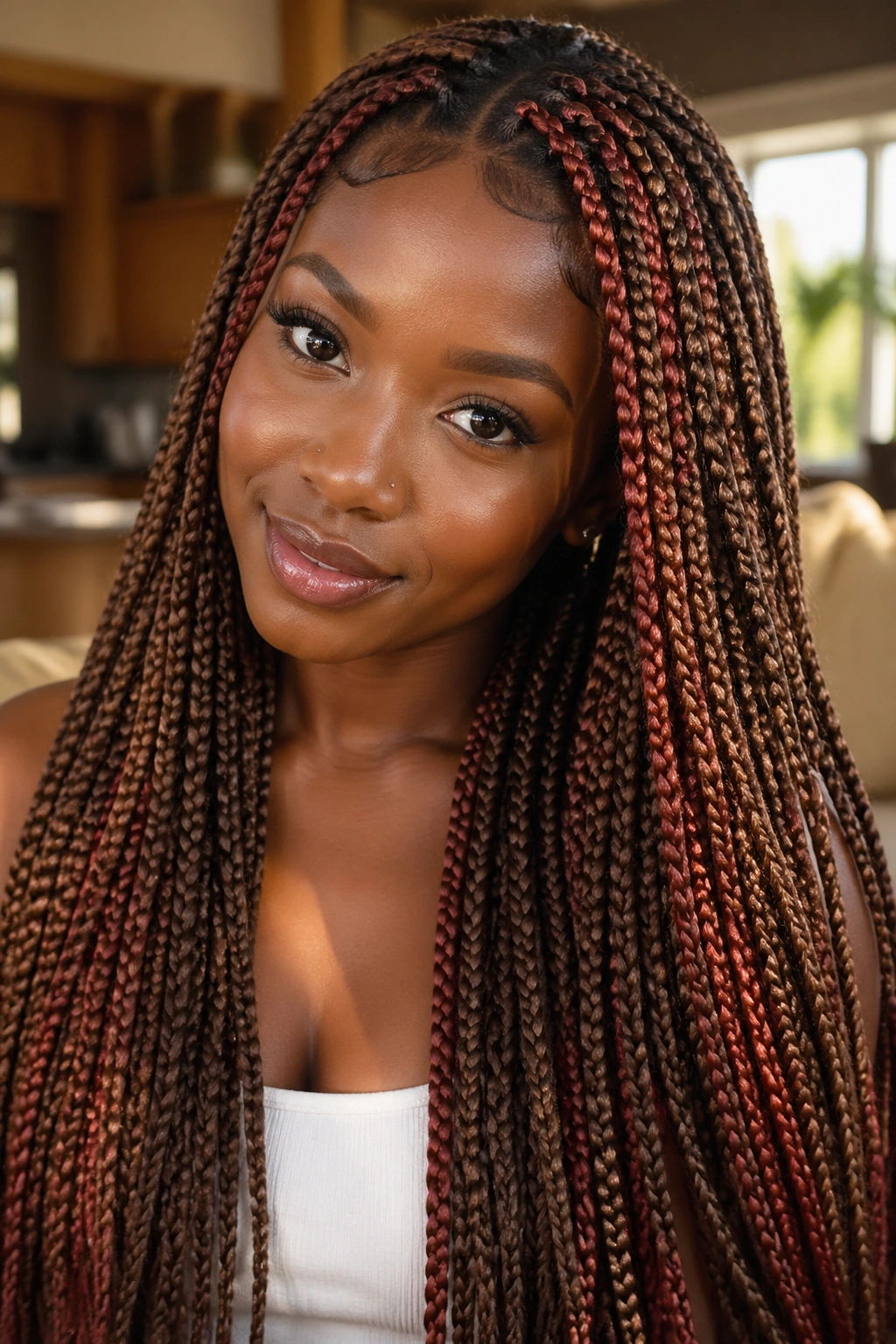
Why do honey-brown braids with copper streaks look so bright without tipping into neon territory? Because the copper is doing the job of a highlight, not the whole outfit.
Honey brown already has warmth in it, so the red accents do not feel like a jump. They feel like a rise in temperature. That makes the style a smart choice if you want your braids to look lighter around the face without switching to blonde.
How to Place the Copper
Use the copper in thin streaks through the crown and around the temples. A few well-placed braids are more useful than scattering the shade everywhere and losing the contrast.
Try this layout:
- 6 to 8 copper accent braids through the top half
- 2 to 4 copper pieces around each temple
- Brown braids through the back and lower sections for balance
- Slightly thicker parts if you want the color to read from farther away
The result feels bright, but not loud. That’s the sweet spot here. Copper on honey brown gives you shine, movement, and a little heat around the face without making the whole install compete with your clothes.
6. Brown and Red Boho Knotless Braids
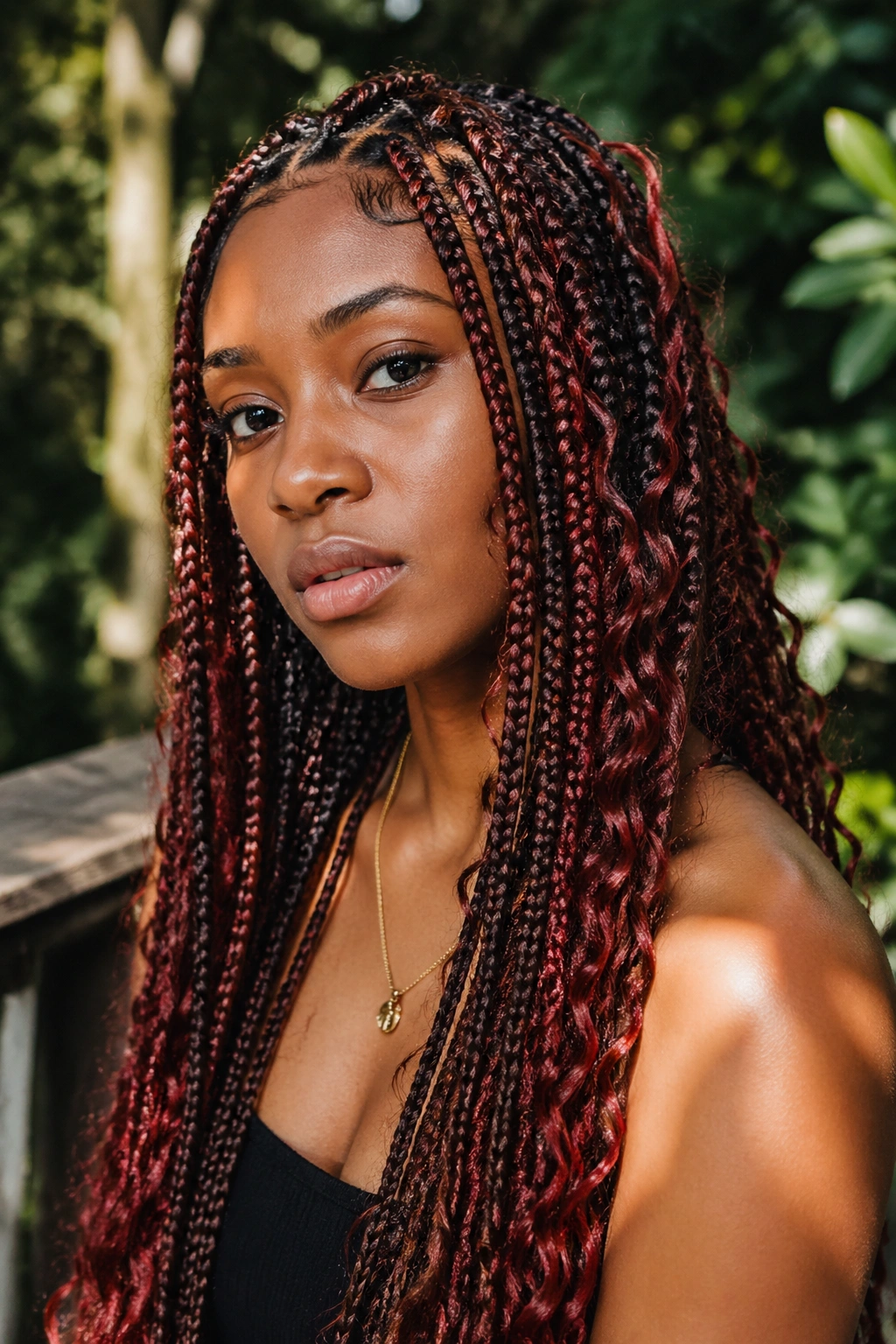
Unlike sleek box braids, boho knotless braids carry loose curls through the length, and that changes everything. The color softens because the curls break up the braid line, which makes brown and red look less blocky and more lived-in.
I like this version for people who want the style to feel softer on the edges. The loose strands around the braids catch the eye first, then the red threads through the curls and braid body. It’s a messier look, but in a good way.
The brown base does a lot of heavy lifting here. If the whole install were red, the curls could start looking busy. Brown keeps the texture readable, and the red gives the curls a little heat when they spill over the shoulders.
This style works best when the curls are placed on every other braid or every third braid, not every single one. Too many loose pieces and the braid pattern gets lost. A little restraint goes a long way.
7. Mahogany Braids With Triangle Parts
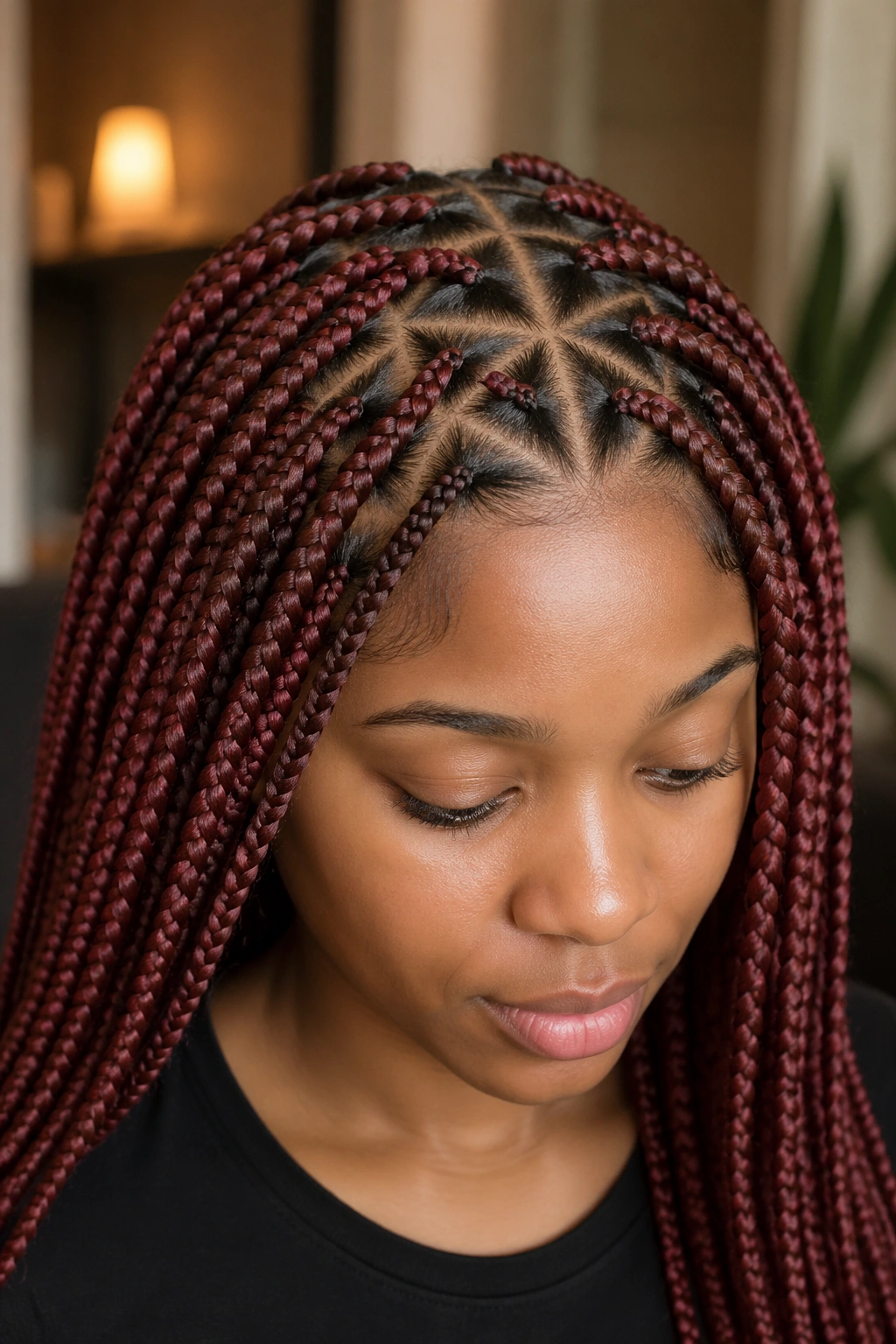
Triangle parts make brown and red knotless box braids feel more graphic right away. The parting pattern is the first thing people notice, and it turns a plain install into something with shape and structure before the color even has a chance to speak.
Mahogany sits in a useful middle ground. It is red enough to show, brown enough to stay wearable. On triangle parts, that balance matters because the scalp pattern already brings a lot of visual interest.
Why Triangle Parts Read So Clean
The points of the triangle create sharper sections than square parts, so the color looks more deliberate. Each braid has a little more space around it, which helps the mahogany show up as a distinct shape instead of melting into a block.
I’d keep the braids medium-sized here. Tiny triangle parts can get busy fast, and jumbo parts can make the scalp pattern feel clumsy. Medium size gives you enough room for the geometry to breathe.
Best move: keep the front triangles a touch smaller than the back ones. That gives the hairline a cleaner finish and keeps the style from feeling top-heavy.
8. Side-Swept Brown and Red Knotless Braids
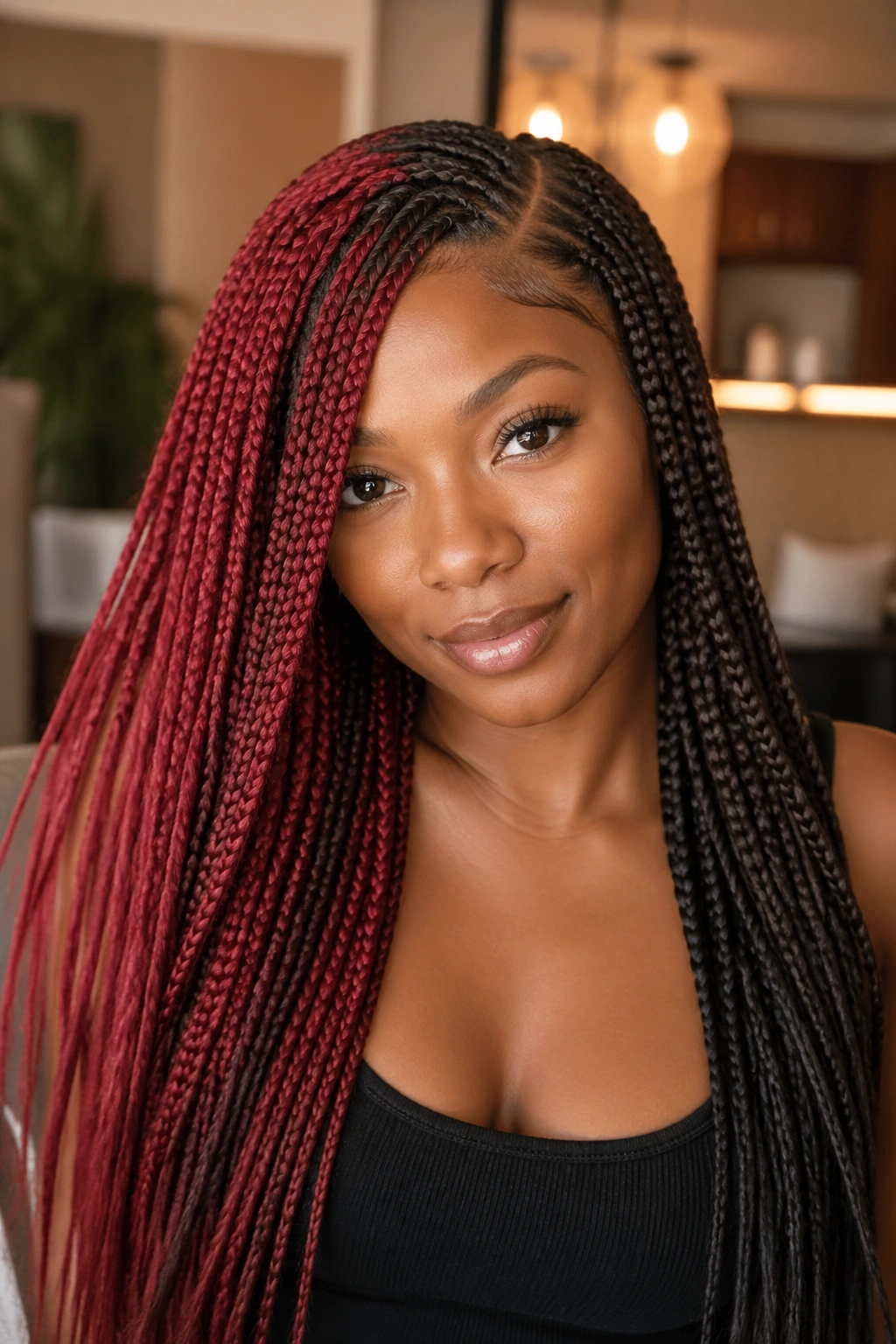
Side-swept braids are not shy. They shift the whole face frame to one side, and when you add brown and red into the mix, the style gets a little theatrical in a good, wearable way.
A deep side part lets the red braids pool over one shoulder while the brown braids anchor the opposite side. That contrast is what makes the style look styled instead of just worn down. It’s one of the few braid looks that can feel formal with almost no extra effort.
The side sweep works best when the length is at least mid-back. Shorter braids can do it, but they don’t hold that long drape across the chest the same way. You want enough length for the movement to show.
If your hairline is sensitive or you dislike tension around the front, keep the side part clean but not tight. The look is in the angle, not in a scalp that feels pulled thin.
9. Jumbo Brown Braids With Red Ends
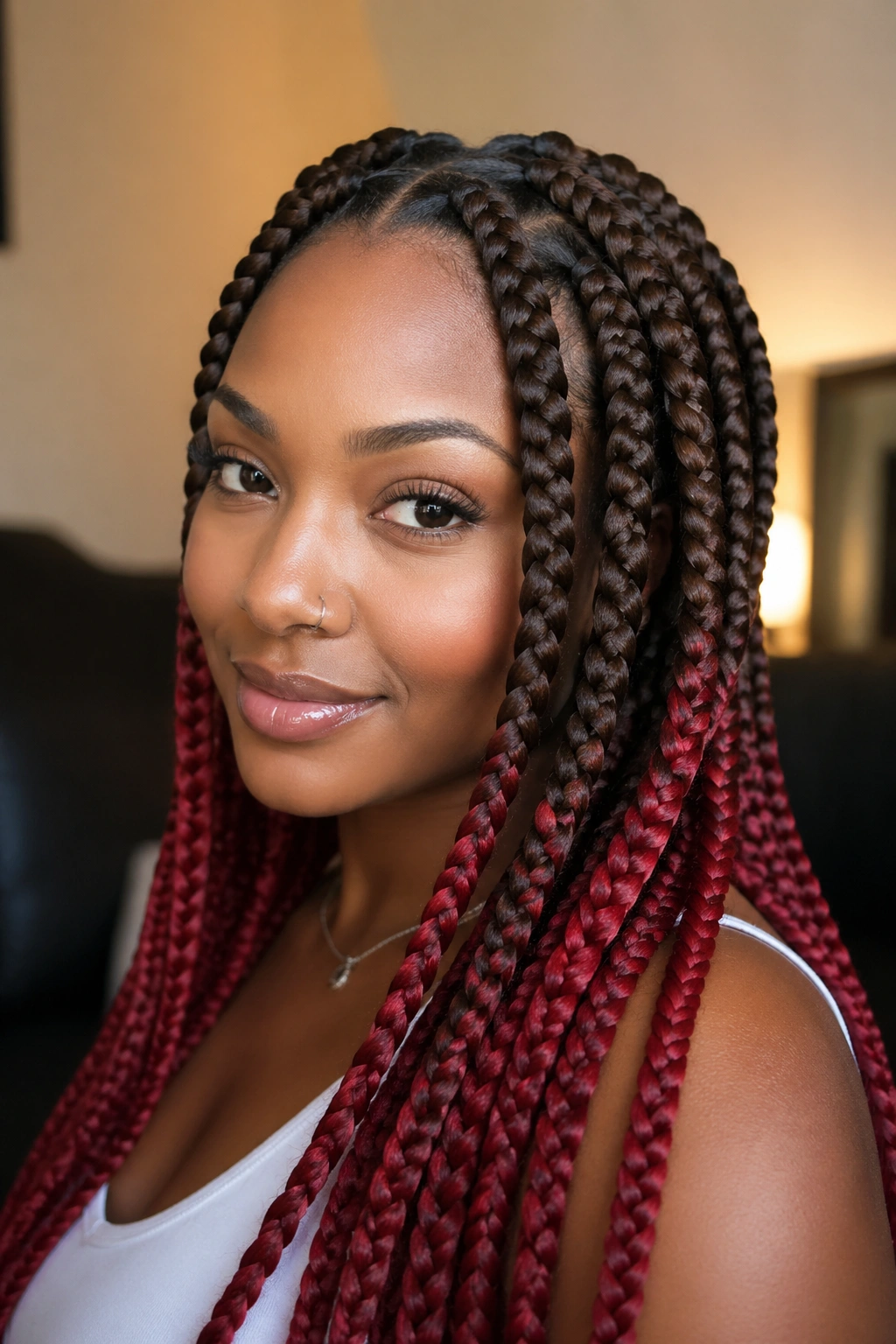
Jumbo knotless box braids make brown and red look bolder because each braid becomes its own color panel. There’s nowhere for the shade change to hide, which is exactly why this style works so well if you want something obvious without installing fifty tiny braids.
The red ends do the loudest talking. They show up when the braids swing, when you gather them into a bun, and when the wind catches them. Brown at the root and mid-length keeps the whole thing from looking too candy-bright.
What to Know Before You Ask for Jumbo
- Expect fewer braids, often around 12 to 18, depending on head size
- Keep each braid evenly sized so the red ends line up cleanly
- Ask for a smoother transition if you plan to wear the braids for weeks
- Do not go too heavy on length if your scalp gets tired easily
The downside is weight. Jumbo braids can feel heavier than medium ones, especially if you add long extensions. If you want the look but not the drag, stop the length at chest or mid-back instead of pushing it all the way down.
10. Alternating Brown and Red Pieces
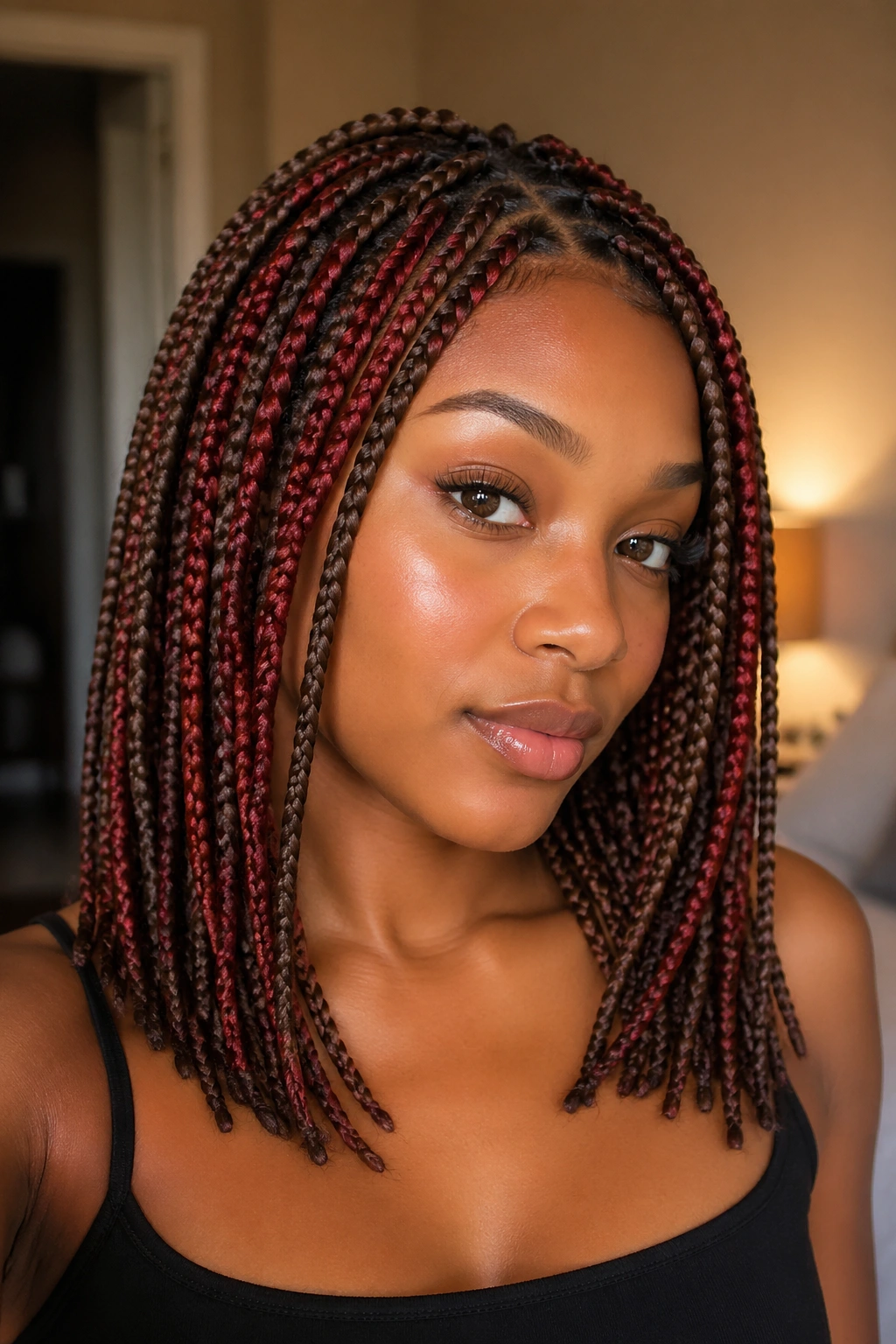
Alternating brown and red pieces is the style for people who like pattern without needing a full ombré. You can break the color up braid by braid, which gives the install a rhythm that feels almost woven into the parts themselves.
The trick is not to make every braid the same. Two brown braids, one red braid, then another brown braid creates a more natural eye movement than random scattering. The pattern feels planned, not accidental.
This version is one of my favorites for medium knotless braids because the alternating color reads clearly at shoulder length. On very long braids, the pattern can get lost when the hair lays flat over clothes. On short braids, it can feel a little too choppy.
Keep the tones close enough that they still belong to the same family. A cinnamon red next to medium brown works better than a fire-red next to ash brown. The closer the temperature, the cleaner the finish.
11. Layered Brown and Red Knotless Braids
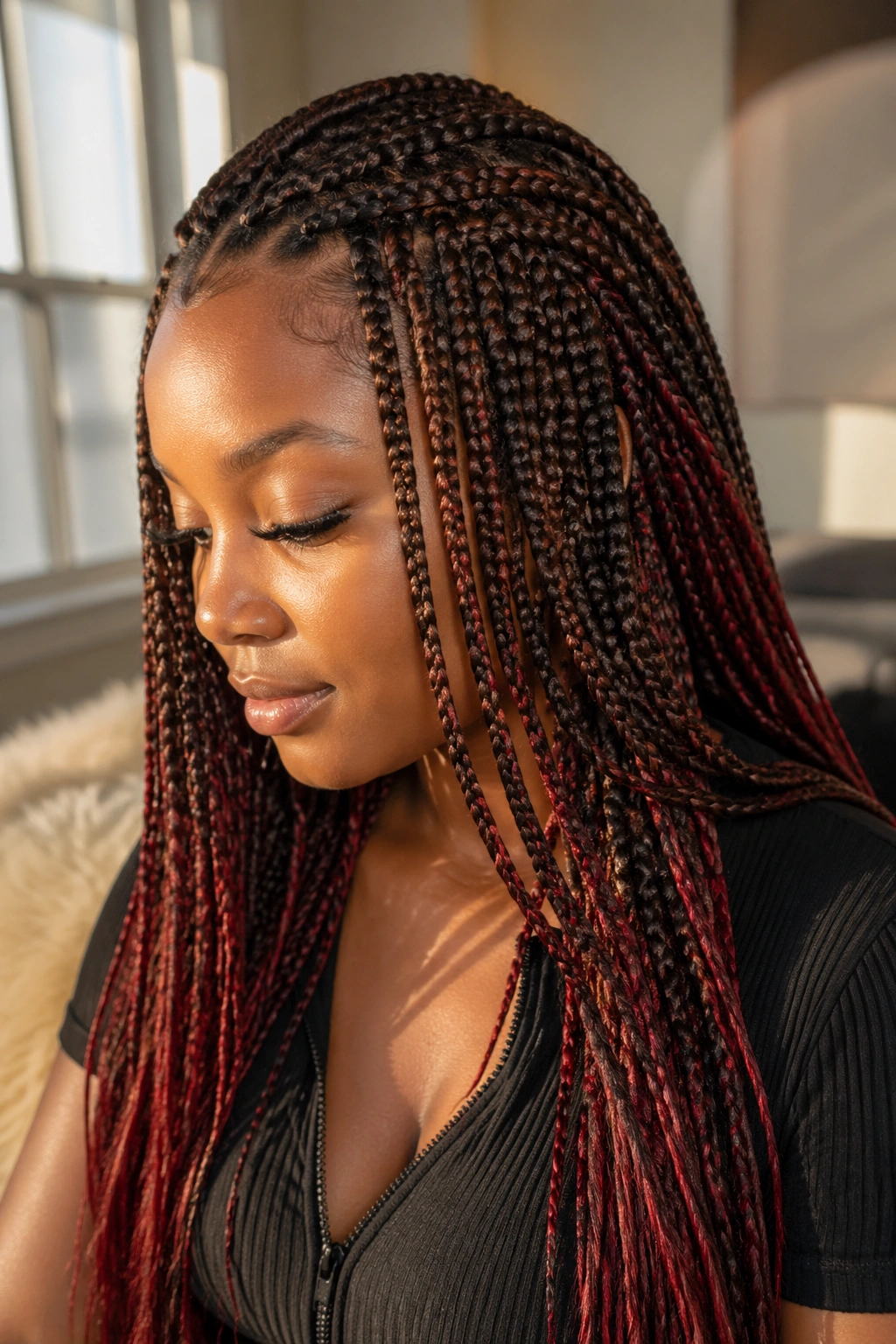
Layering changes the shape before the color even gets a chance to show off. Shorter braids around the crown and longer braids beneath create a soft stagger, and brown with red makes that stagger easier to see.
Why does this work so well? Because the color difference helps the eye catch the layers. A red upper layer over a brown lower layer feels airy, while a brown top with red underneath gives you a quieter version that still moves well.
How to Ask for It
Tell your braider you want the front and crown braids a little shorter, with the back left longer for drape. That simple change keeps the shape from looking blunt.
You can also place the red on the top layer only if you want the layered cut to stand out more. If you’d rather keep things subtle, reverse it and tuck the red in the lower layer so it flashes when you move.
Layered braids are useful if you wear earrings a lot. They leave room around the jaw and neck, which lets the whole style breathe instead of sitting like one heavy curtain.
12. Half-Up Half-Down Brown and Red Braids
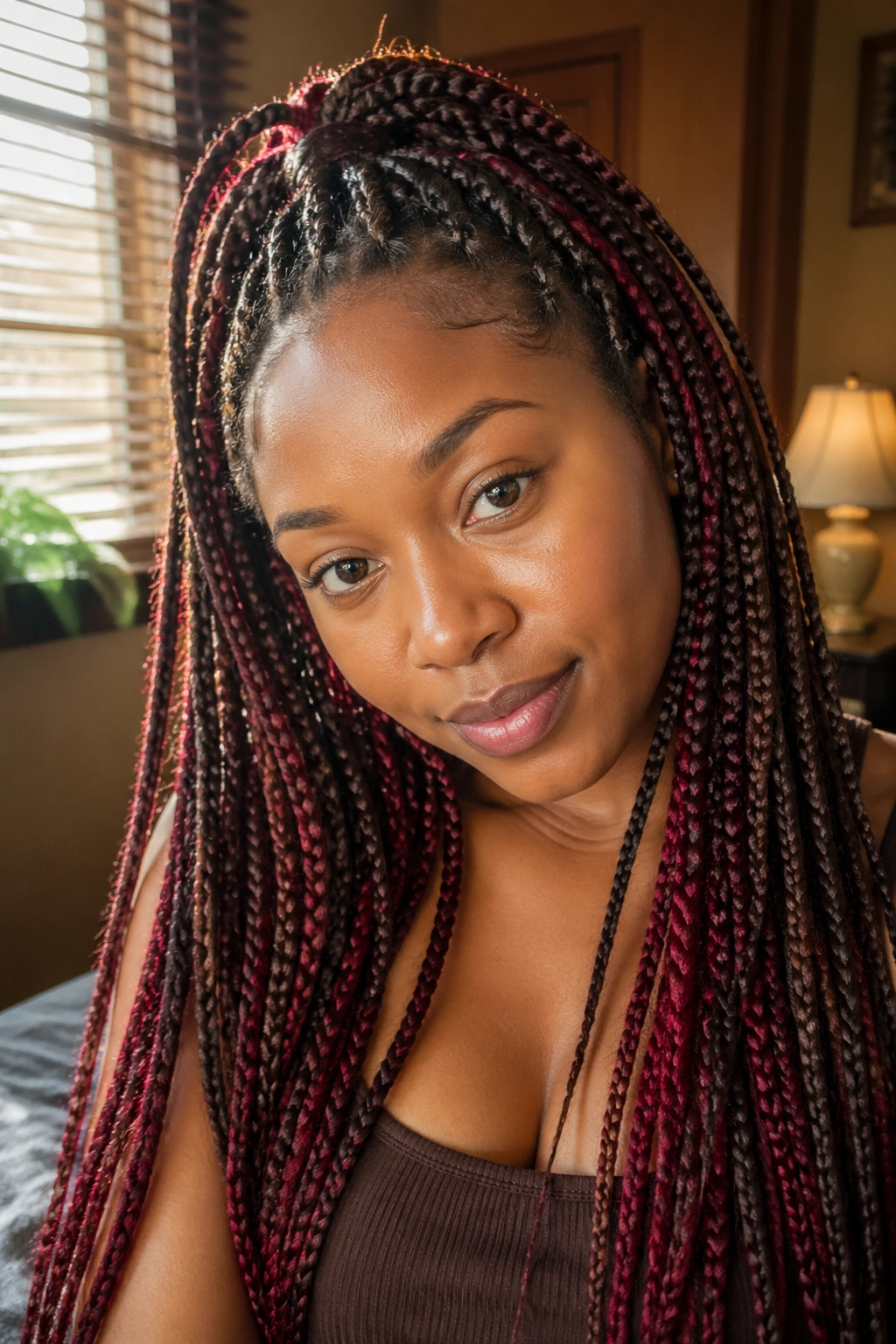
Half-up half-down braids give you two personalities in one style. The top section gets lifted, the lower section falls freely, and both color tones get a chance to show in different ways.
Compared with a full ponytail or a full-down install, this style gives more shape around the crown. That matters if your red pieces live near the top, because the lifted section shows them off instead of hiding them under the rest of the hair.
I like this look on medium-to-long knotless braids with a mix of brown and red. It keeps the scalp visible, which can be flattering when the parting is neat and the roots are fresh. You do not need a giant top knot either. A small to medium half-up section is often enough.
The style also buys you flexibility. Wear it loose for casual days, then twist the top half into a bun or claw-clip shape when you want your face fully open. Easy. No drama.
13. Red Money Pieces on a Brown Base
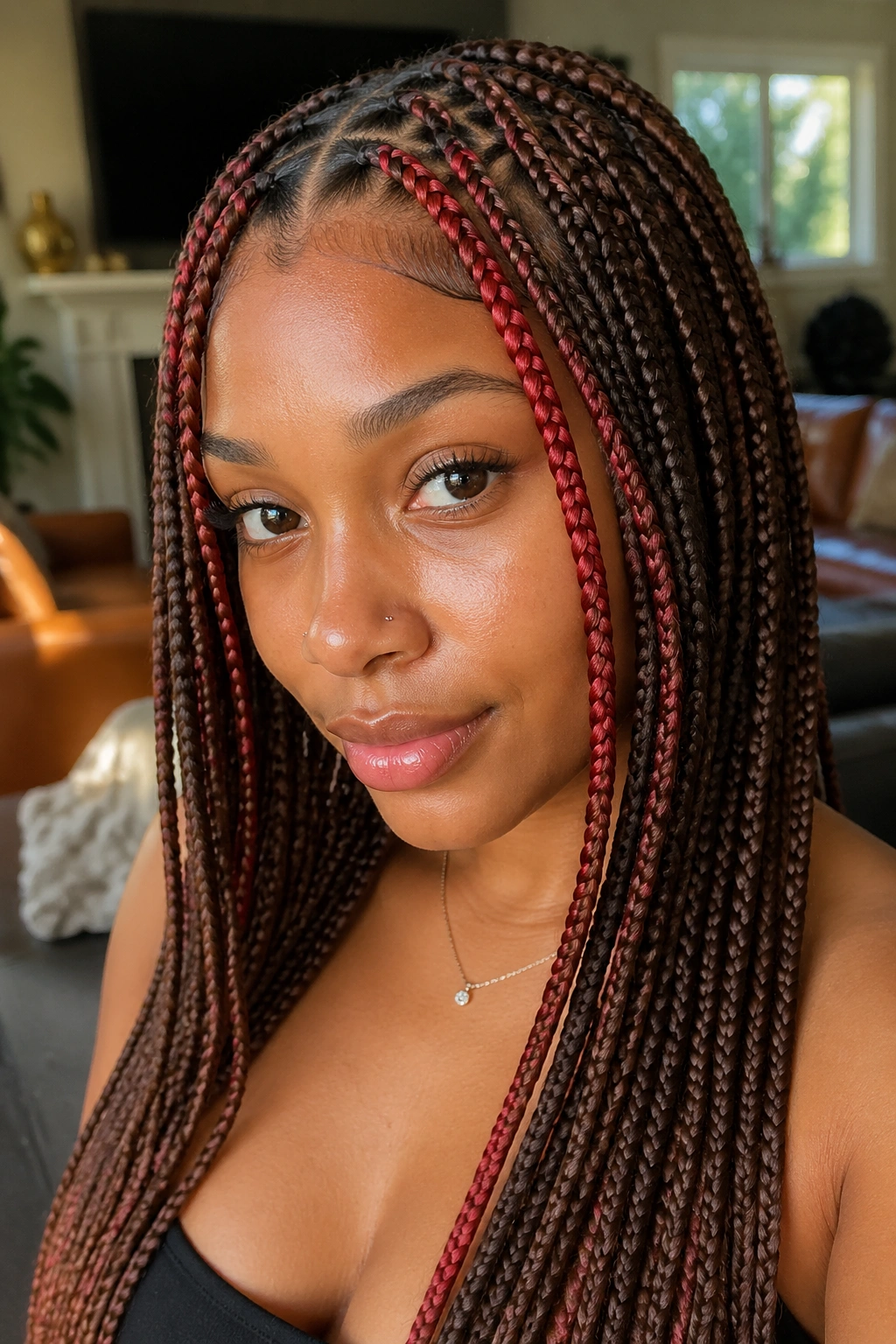
Money pieces are the fastest way to wake up brown knotless box braids. Two to six red braids at the front change the whole frame, and you get the payoff without coloring the entire head.
That front placement matters. The red braids sit near the temples, curve around the face, and show up in every selfie angle. If the rest of the braids stay brown, the contrast feels deliberate instead of busy.
Best Way to Wear Them
Keep the money pieces slightly thinner than the rest of the braid set. That helps them read like accents instead of front-loaded chunks of color.
This style flatters people who like to pull hair back but still want a color story visible at the hairline. Even in a low bun, the red front braids keep doing work.
A small warning: if your braid length is very long, too many money pieces can start to crowd the face. Stick to a few, then let the brown do the heavy lifting everywhere else.
14. Chocolate Brown Braids With Cherry Red Tips
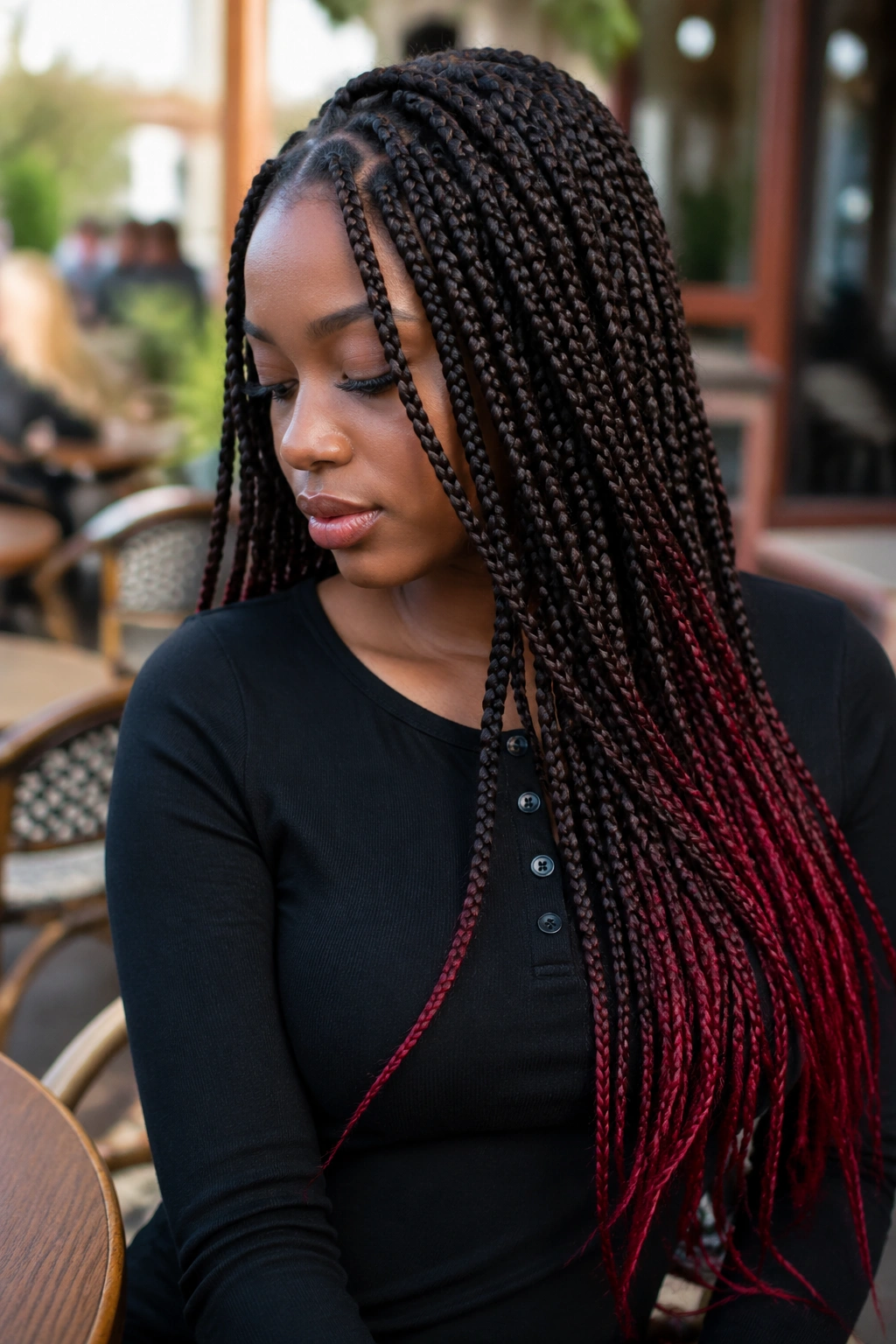
Cherry red tips are for people who want the color to show late, not early. The chocolate brown base hides the drama until the ends swing, and then the red makes its entrance.
The effect is clean and a little sharp. From a distance, the braids look rich and dark. Up close, the tips give you that hit of color that changes the mood of the whole style.
This is one of those looks that gets better with movement. When the braids are still, the color shift feels subtle. When you walk, turn your head, or tie them into a bun, the cherry ends pop out from the bottom and sides.
I’d use this on medium or waist-length braids. Very short braids don’t give the red enough space to show, and extra-long braids can make the tip color feel like too much of a good thing. The middle ground is where it lives best.
15. Soft Ombre Brown Into Red
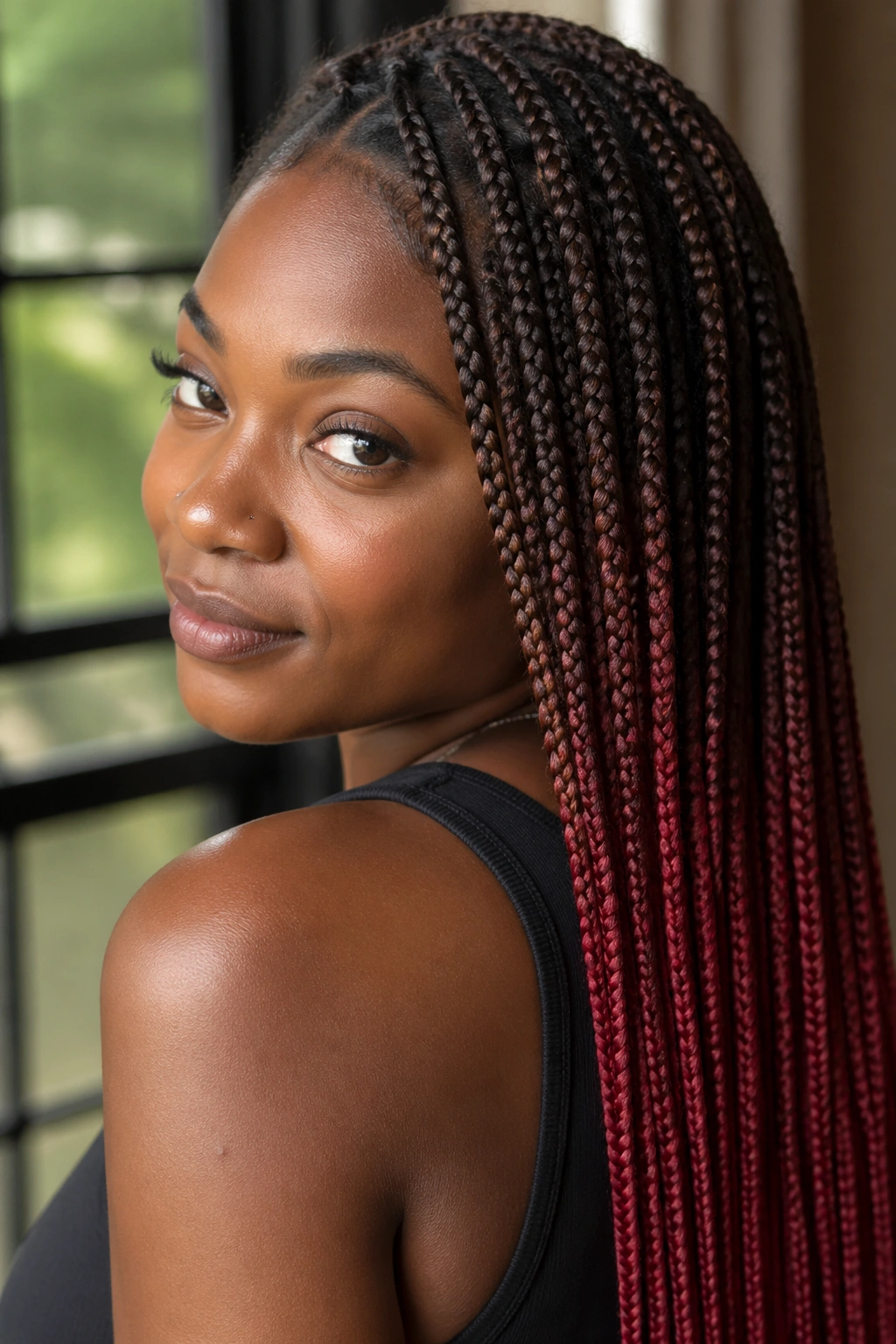
Soft ombré is the most gradual version of brown and red knotless box braids, and that slow fade is the whole appeal. There’s no hard jump from one color to the other. The color simply gets warmer as it travels down the braid.
The best ombré starts with a brown that matches your natural depth and ends with a red that still feels related. Think chocolate into auburn, or medium brown into rust, not black into fire-engine red. The closer the tones, the smoother the fade.
The Detail That Makes It Work
Ask for the color change to begin around the lower third of the braid, not halfway up unless you want a stronger contrast. Starting too high can make the red feel like a block instead of a fade.
Ombré is especially good on long braids because the transition has room to breathe. On shorter styles, the fade can feel compressed.
It’s also one of the easiest ways to keep the look wearable when you like bold color but need something that still works with a plain black jacket, a soft makeup look, or a simple work outfit. The fade does the talking, not the whole head.
16. Brown and Red Braids With Curled Ends
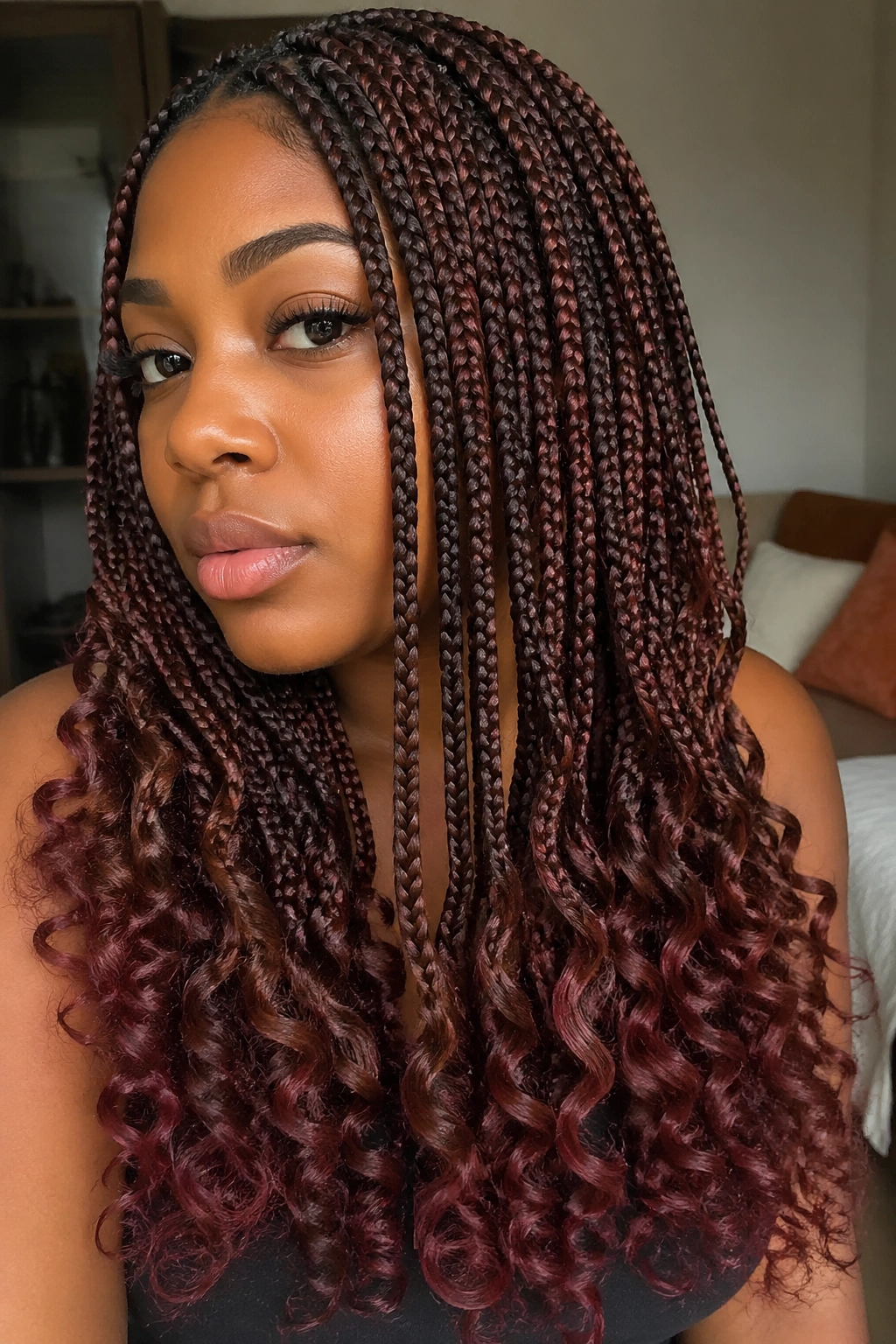
Curled ends change the feel of knotless braids fast. Straight ends can look crisp and neat, but curled ends bring a softer finish that makes brown and red look more layered and a bit less rigid.
Burgundy and brown work especially well here because the curls catch both shades as they move. If the ends are set with a rod or dipped carefully so they hold a wave, the color at the bottom starts to look fuller, almost like fabric folding over itself.
A few practical notes matter. Keep the curls uniform if you want a polished finish, or vary the rod size slightly if you want more movement. And don’t overheat synthetic hair trying to force a curl pattern it won’t keep.
This style suits people who like feminine softness without giving up the structure of braids. The braids do the protective work. The curls do the styling work. Both have a job.
17. High Ponytail Brown and Red Braids
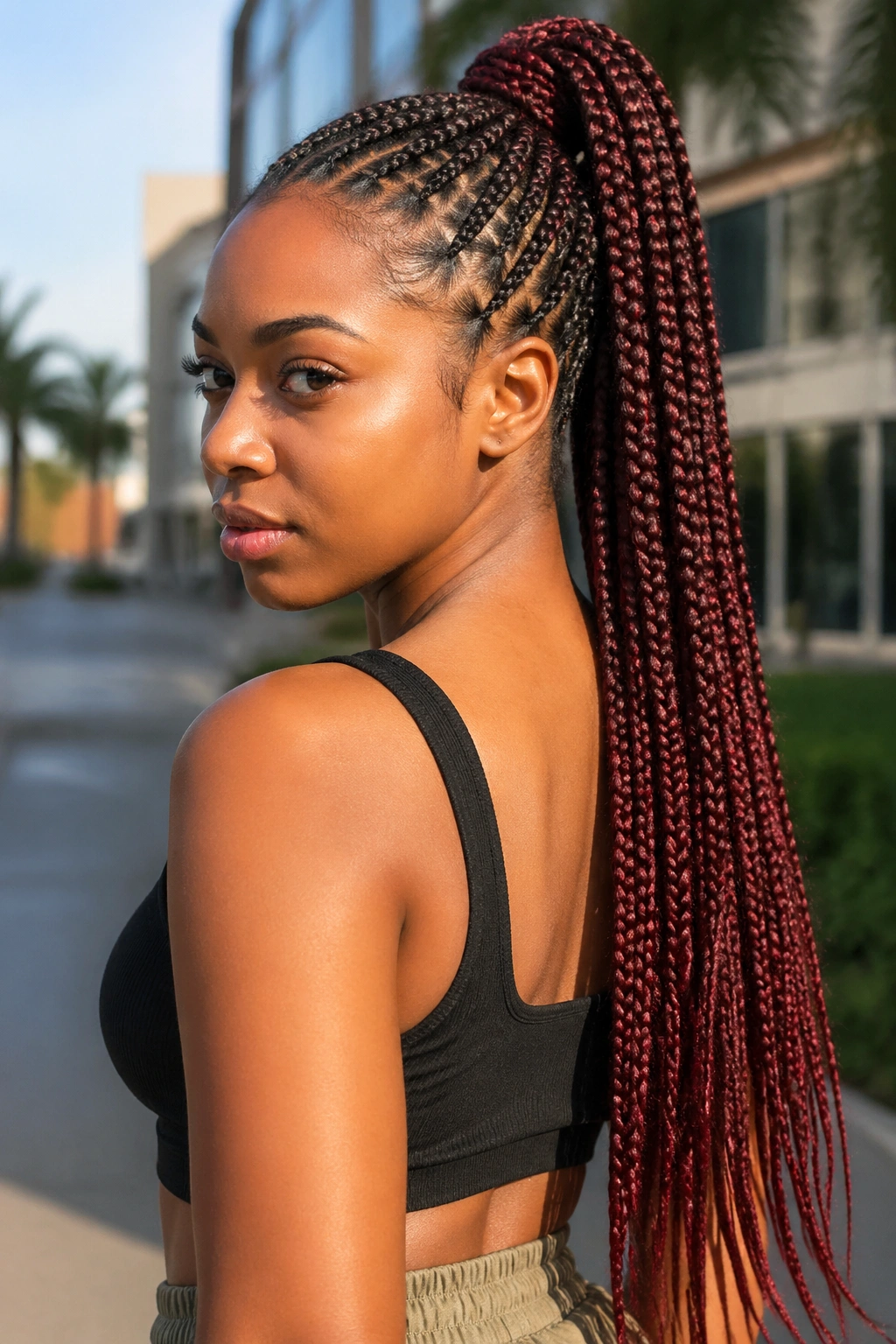
Can knotless braids still feel light in a high ponytail? Yes, if the install is balanced and the front sections aren’t pulled too tight.
The high ponytail shows off the color in two places at once: the lifted crown and the long tail. Brown at the roots keeps the base neat, while red braids in the tail add movement every time you walk. It’s a useful style when you want your face fully open and your color still visible.
How to Keep It Comfortable
Use a medium-width ponytail base instead of cinching the hair into a tiny knot. A wider base spreads the weight across more scalp.
A few face-framing braids left out in front can soften the line around the temples. I’d skip that if you want a very clean look, but it helps when you want the style to feel less severe.
This one works best on medium or long braids. Short braids can still go up, but the tail may not have enough length to swing the way you want.
18. Criss-Cross Parts With Brown and Red Feed-Ins
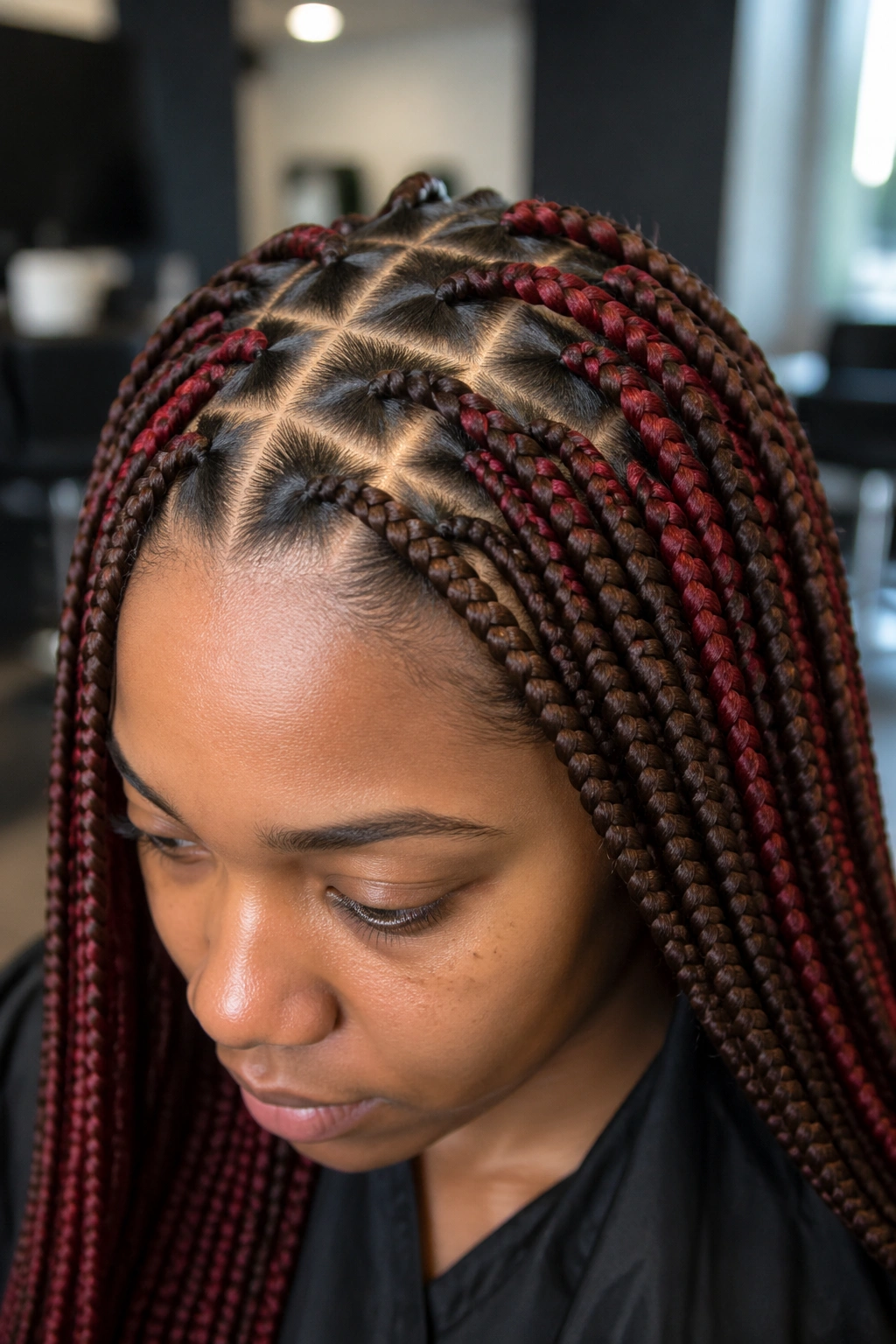
Criss-cross parts make the scalp itself part of the design. The sections overlap in a way that feels almost architectural, and when you feed in brown and red hair, the part pattern gets even more visible.
This is a style for people who notice detail. The crossing sections create little windows around the braids, and the color placement helps those windows stand out. Brown keeps the overall look grounded; red gives the parting some spark.
The feed-in method is useful here because it creates a smoother start at the root. That matters when the parts are already doing a lot visually. You do not want thick, clumsy beginnings competing with the part work.
Keep the braid size medium and the crossing sections clean. If the parts are crooked, the whole style loses its edge. Straighten the grids first, then let the color do the rest.
19. Shoulder-Length Rust and Espresso Braids
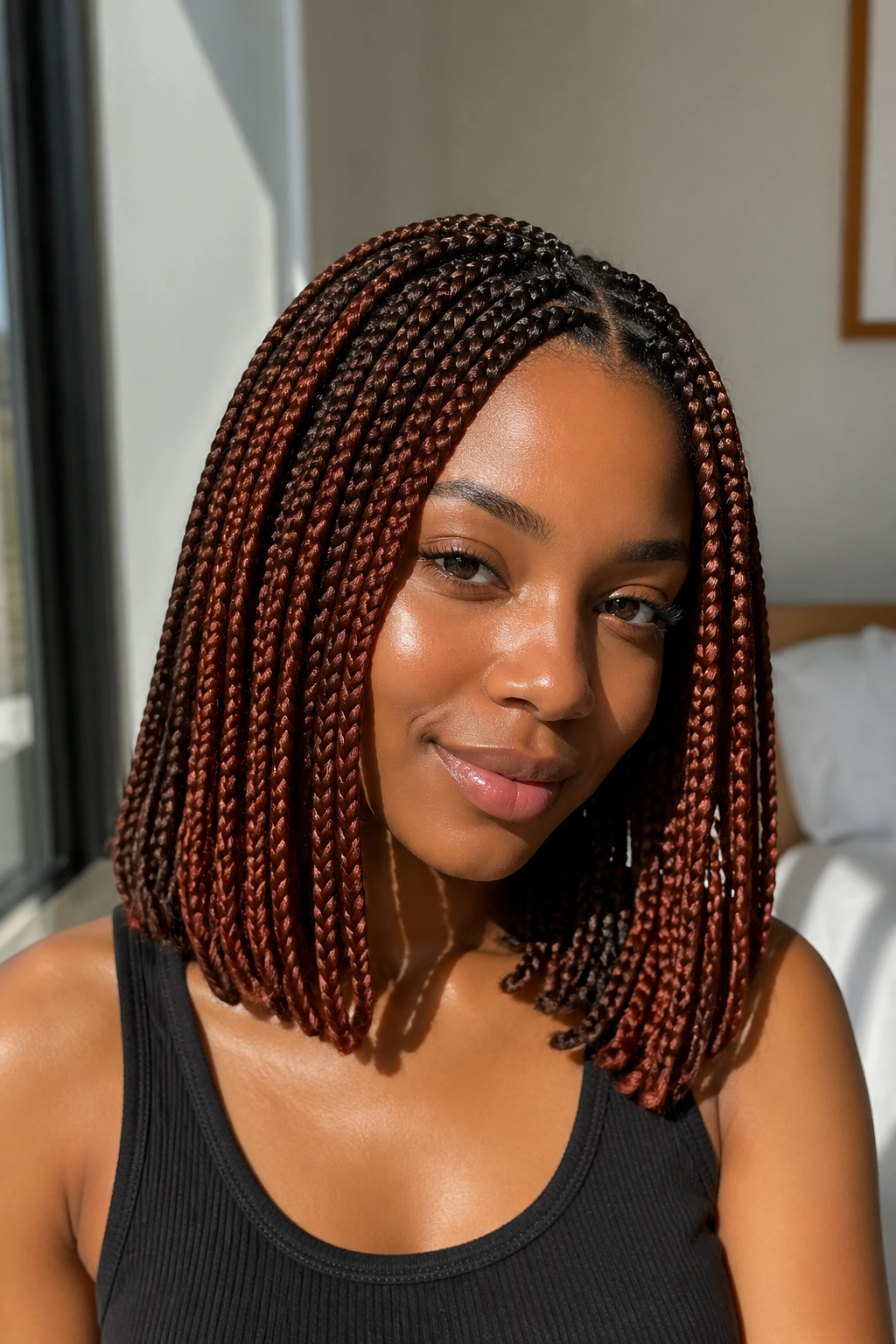
Shoulder-length braids are underrated. They sit close enough to the face to show color clearly, but they do not drag down your neck the way longer installs can.
Rust and espresso is a smart pairing if you want red that feels earthy instead of bright. The rust has warmth and grit; the espresso keeps everything from looking washed out. Together, they make a clean everyday style that still looks styled on purpose.
Who This Length Flatters
- People who want easier wash days
- Anyone who dislikes heavy braids on the shoulders
- Those who like wearing jackets, scarves, or collars without constant snagging
- Anyone who wants color without committing to waist-length hair
Shoulder length also makes the parts more visible, which is useful if you like neat grids or triangle sections. The style looks tidy from every angle, not just the front.
If you want a red-brown look that you can wear without thinking about it every minute, this is one of the nicest choices in the whole group.
20. Dark Brown Braids With Copper Accent Panels
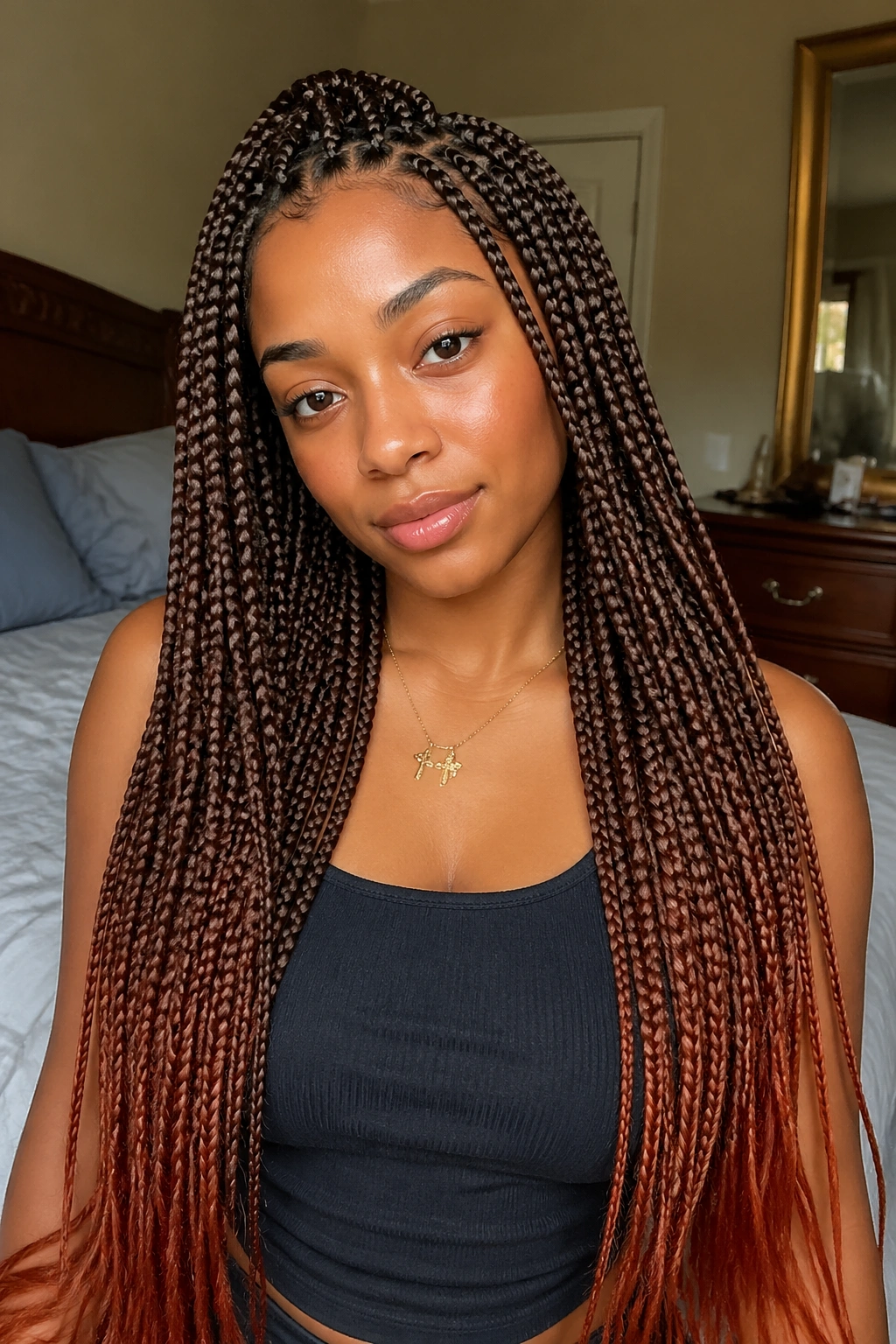
Dark brown with copper accent panels is the boldest version here, and it works because the copper is used like blocks of light, not tiny flecks. That makes the color read fast. You see it instantly.
I’d place the copper in wider panels through the crown, sides, or lower back sections, depending on how much contrast you want. The dark brown gives the style weight, while the copper makes the braids pop when they move. It’s especially sharp on longer knotless box braids because the panels have room to show without getting crowded.
This is the style I’d pick if you want something that looks intentional from every angle and still feels wearable with simple clothes. Black, cream, denim, white tees — the copper can handle all of it without needing a loud outfit to support it.
If you try only one high-contrast brown and red braid look, make it this one. It has enough edge to feel fresh, but the dark base keeps it from drifting into costume territory.
