


Short box braids can do more than sit neatly against your shoulders. Pull them into a ponytail and they change shape fast — sharper at the crown, softer at the nape, playful when the ends swing, and a little unexpected when you split them into two or add a scarf. That’s the part people miss when they assume shorter braids are only good for “wearing down.” They’re actually easier to style than longer sets in a few ways, because the weight is lighter and the base can sit closer to the head without dragging.
The trick is knowing where to place the elastic and how tight to go. Too high, and the style can pull on your edges. Too low, and it can collapse into a stubby little bundle that looks unfinished. The sweet spot usually lives somewhere around the crown, the occipital bone, or the nape, depending on the mood you want and the length of the braids. A rat-tail comb, a few snag-free elastics, a satin scarf, and a light mousse are usually enough.
I’ve always liked short box braid ponytails for one simple reason: they look styled without looking overworked. A good one can read polished, sporty, or playful in under five minutes. The 18 ideas below move through all of that — sleek, loose, bold, soft, and a few that sit right in the middle.
1. High Crown Ponytail With a Sharp Middle Part
This is the style that makes short box braids look longer than they are. A clean middle part draws the eye straight up and down, while the high crown placement adds lift without needing extra length.
Why It Works
The middle part gives the style a neat spine. The ponytail itself sits high enough to show off the braids at the roots, which is where short sets can look their best. If the braids are chin-length or just brushing the collarbone, this placement keeps the ends from getting lost in the back.
A little tension goes a long way here. Brush the braids upward with your fingers first, then smooth the hairline with a soft brush and a touch of edge control if you use it. Do not pack on too much product; short braids show buildup fast.
- Best for: oval, round, and heart-shaped faces
- Works best with: medium-sized box braids and a lightweight elastic
- Extra touch: wrap one braid around the base to hide the tie
- Watch for: pulling the front too tight
Pro tip: If the ponytail feels heavy, split the braids into two sections before securing them, then join them with a second elastic one inch higher.
2. Low Nape Ponytail With a Wrapped Base
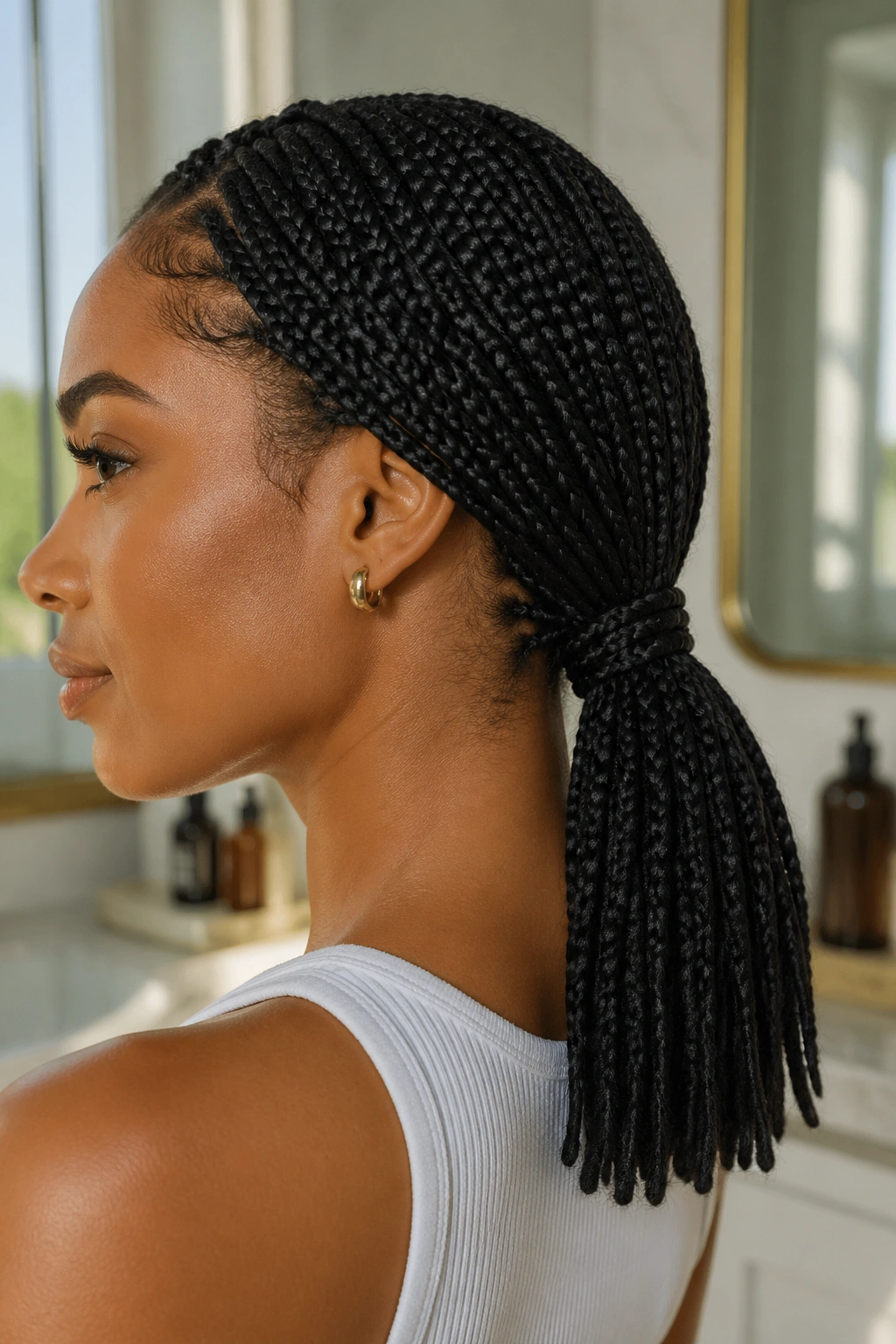
If you want polish without fuss, start here. A low ponytail at the nape is the easiest way to make short box braids look intentional on a busy morning.
The style sits close to the neck, which keeps the braids from fanning out in odd directions. That matters more with shorter lengths, because anything that sticks out at the sides becomes part of the silhouette. A wrapped base smooths the whole thing out and hides the elastic in a way that feels finished, not dressed up for the sake of it.
I like this version for work, dinner, errands, and those in-between days when you want your hair out of the way but still want to look like you meant it. If you have a longer bob length, let a few ends rest over the collar instead of forcing every braid into the tie.
One detail people skip: anchor the ponytail with a snag-free tie first, then use a single braid to wrap around the base. That braid should sit snug, not tight. If it’s cinched too hard, the base starts to look ropey instead of smooth.
3. Half-Up Ponytail With Loose Face Framing
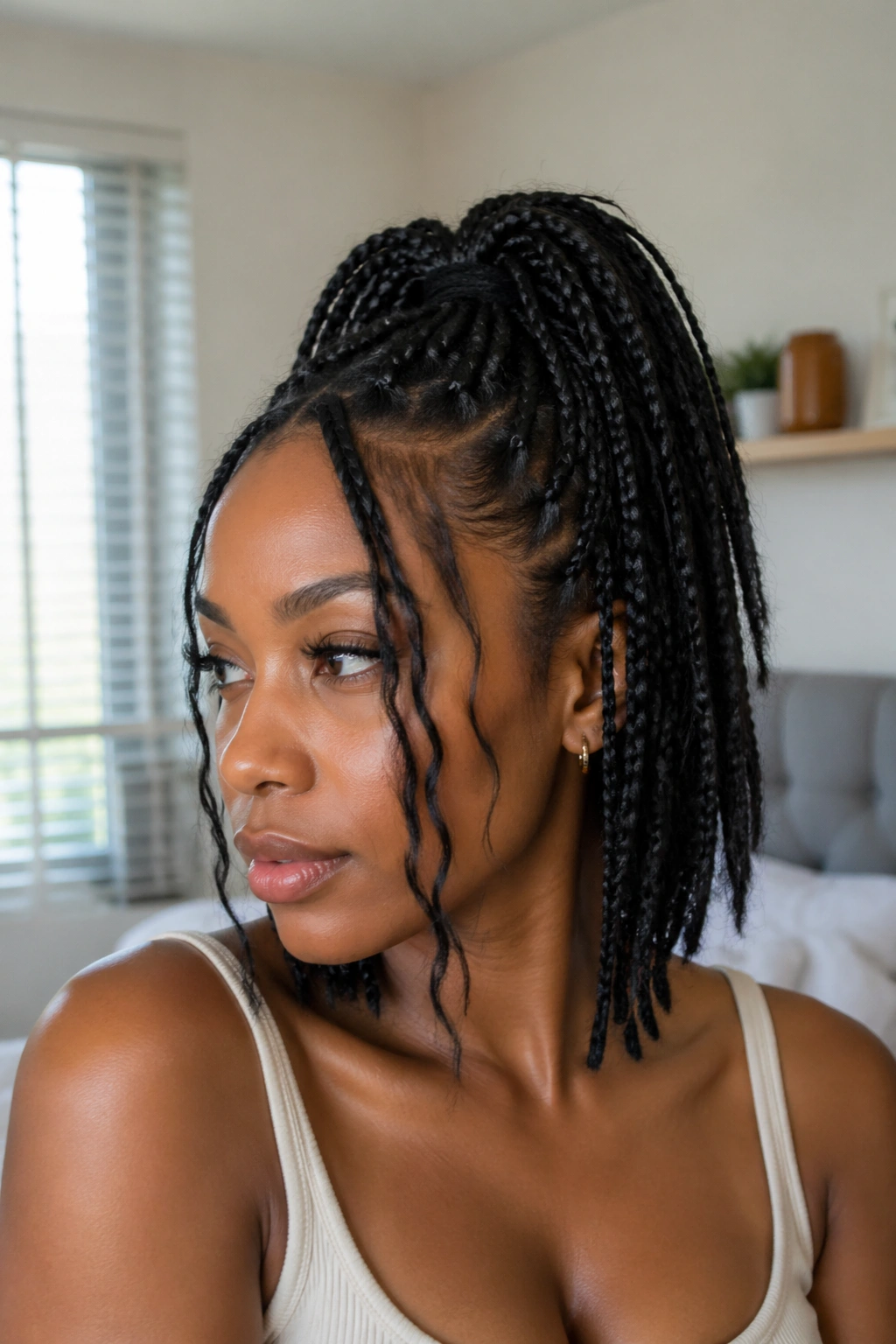
Why pull every braid back when half of them can do the pretty work for you? A half-up ponytail keeps the face open while leaving enough movement around the jaw and neck to stop the style from feeling stiff.
The top section gives you height. The bottom section gives you shape. That balance is the reason this one works so well on short box braids, especially if your set lands between the chin and shoulder.
How to Wear It
Pull the top half into a small ponytail at the crown or slightly behind it. Leave the front corners out if you like a softer shape, or tuck them in for a cleaner finish. You can even twist the front pieces back before tying them, which gives the style a smoother line without needing cornrows.
This one flatters round faces because it opens the center of the face without dragging all the attention to the sides. It also works nicely with gold cuffs, since the lower braids stay visible and give the accessories room to show off.
A little mousse at the ends keeps the loose braids from frizzing out by midday. Not fancy. Just useful.
4. Bubble Ponytail Down the Back
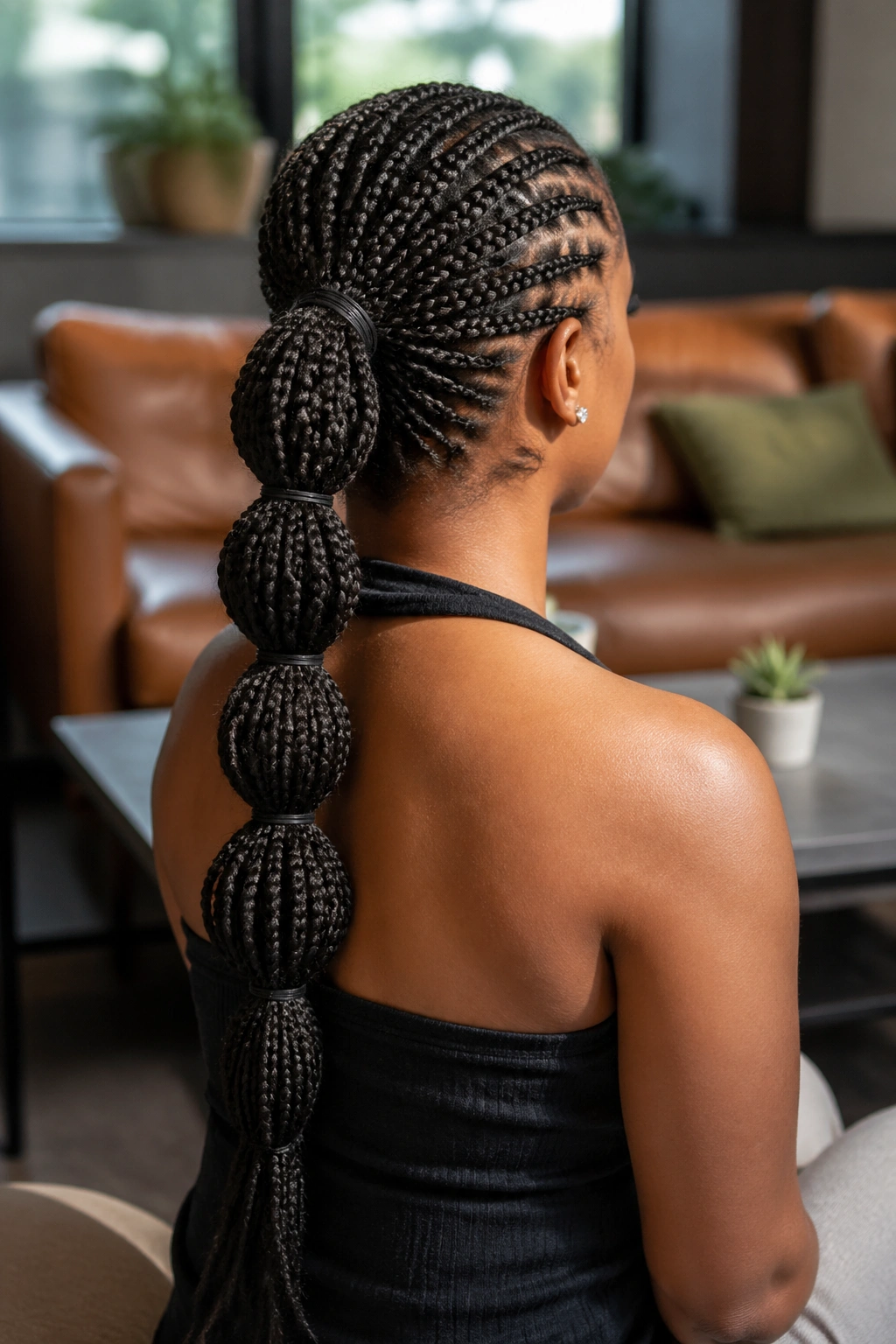
Picture a short ponytail that looks fuller than it has any right to. That’s the bubble version, and it’s one of the best ways to make short box braids feel playful instead of plain.
The trick is spacing. Secure the ponytail at the base, then add small elastics every 2 to 3 inches down the length. Gently tug each section outward so it puffs into a rounded shape. On short braids, the bubbles tend to look soft and chunky rather than long and stretchy, which is exactly why the style works.
What To Keep In Mind
- Use clear, snag-free elastics so the braids don’t catch
- Keep the sections even, but don’t obsess over perfection
- Stop before the tail gets too short to puff
- Add one cuff or bead at the end if you want a little weight
This style is a smart fix for braids that feel flat after a week or two. It brings the length back to life without needing any heat, mousse overload, or extra hair. And honestly, that’s a relief.
5. Side-Swept Ponytail for Softer Lines
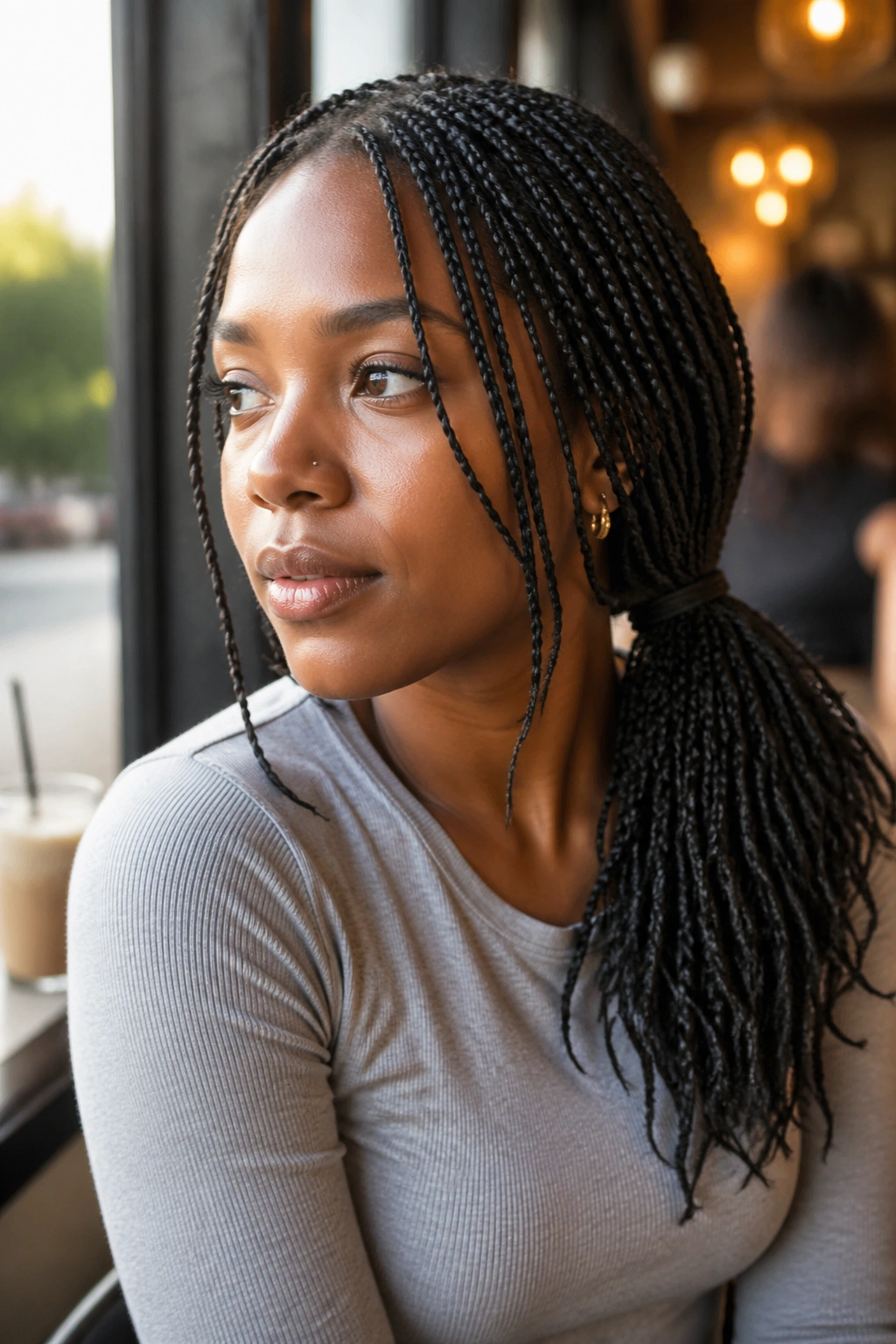
A side ponytail changes the whole mood. It shifts the braids off center, which gives the face a softer frame and makes the style feel a little less strict than a straight-back ponytail.
I like this one when the braids are fresh and you want movement more than structure. Pull the ponytail behind one ear or just below it, depending on how much length you have left. If the braids are very short, anchor the tie lower at the side of the head so the base doesn’t collapse.
The side sweep is also forgiving on days when your part is not perfect. That’s a real advantage. A slightly uneven middle part gets swallowed by the angle, so you can stop fussing and move on with your life.
Keep the side closest to the face a bit looser than the back side. That tiny bit of slack stops the style from looking pulled too hard and gives the braids a nicer drape over the shoulder.
6. Sleek High Ponytail With a Scarf Tie
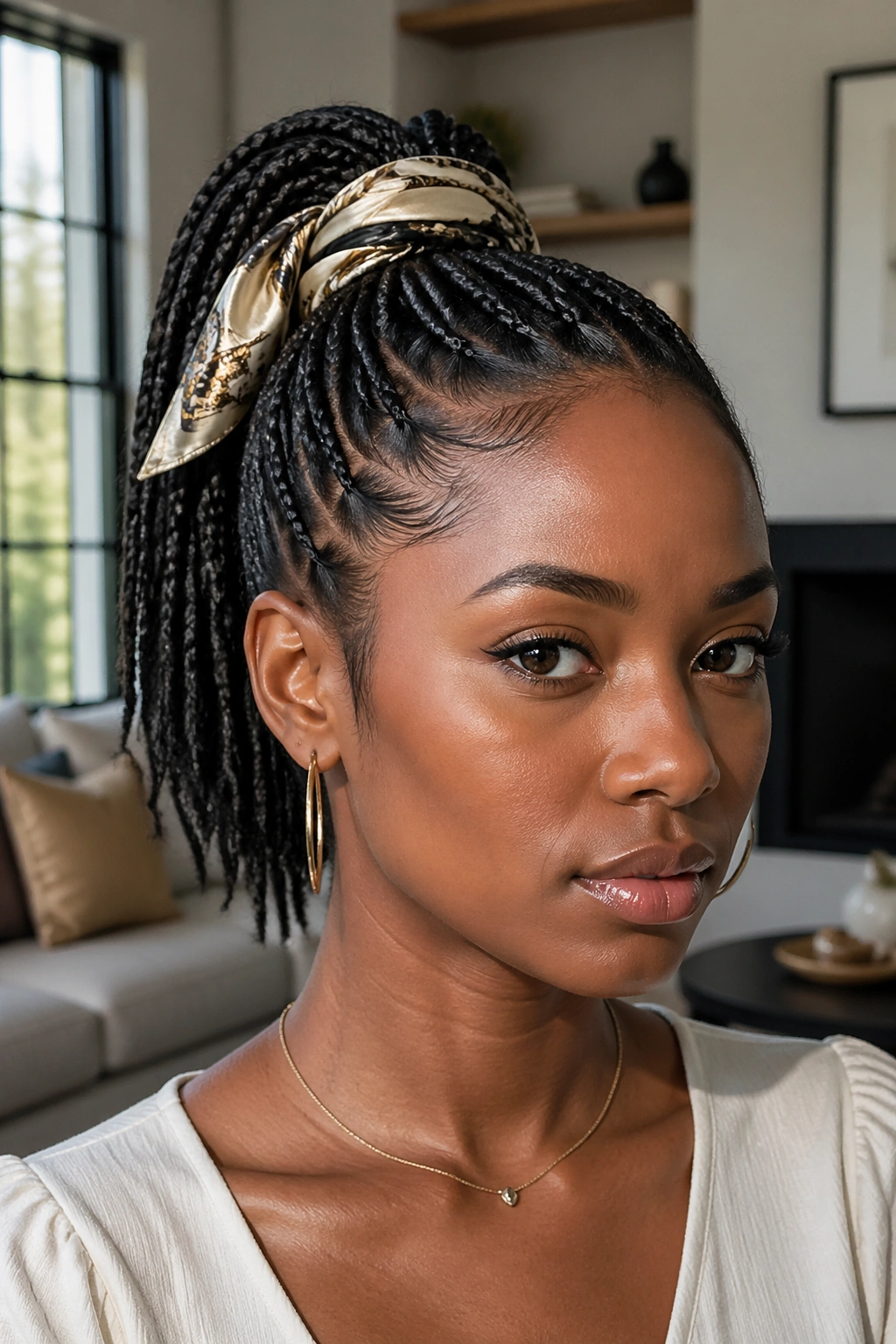
A satin scarf does more than decorate a ponytail. It hides a rough base, softens the line of an elastic, and gives short box braids a cleaner finish than a plain tie ever will.
Compared with a standard high ponytail, this version is kinder to the roots and easier on the eye. The scarf can sit as a wrap, a knot, or a small bow, depending on how much of the base you want to show. I lean toward a narrow knot when the braids are short, because a giant bow can start to swallow the style.
Use a silk or satin scarf if you have one. Cotton grabs too much and can make the base look bulky. If your braids are fresh, this is also a nice way to keep the front from feeling exposed while still letting the ponytail sit high.
Best move: choose a scarf color that repeats one small detail in your outfit — earrings, shoes, lip color, whatever you already have on. It makes the whole thing feel grounded instead of random.
7. Pineapple Ponytail With Lift at the Top
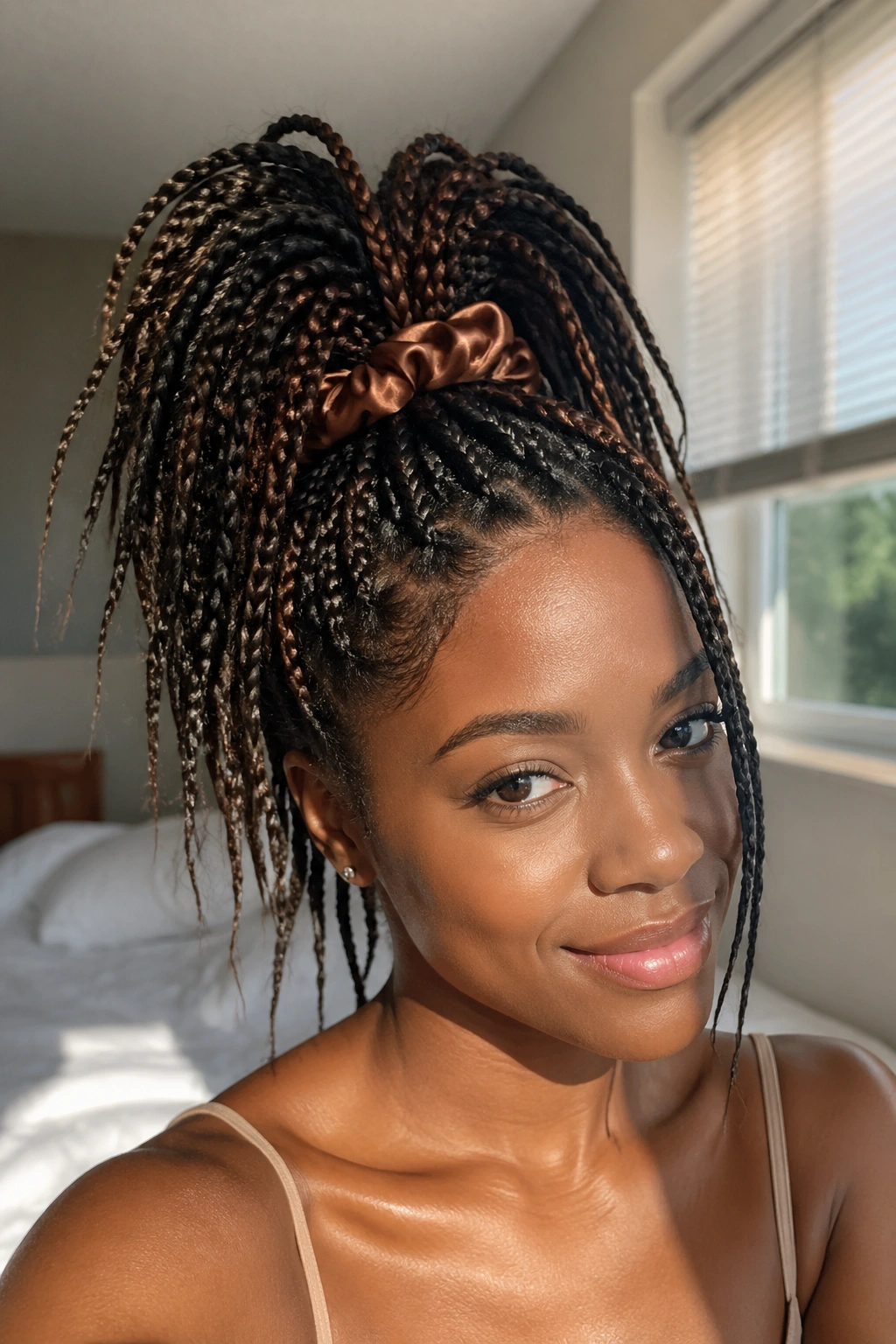
This one has a lot of personality for something so easy. The pineapple ponytail sits high, loose, and a little wild, which makes it a good match for short box braids that need lift more than polish.
Instead of smoothing every braid flat, gather them toward the top of the head and let the ends fall forward or to the side. The shape is rounder than a tight high ponytail, and that softness can be flattering on longer faces or anyone who wants volume near the crown.
A large satin scrunchie works better than a narrow elastic here. You want hold, yes, but you also want the braids to keep some puff. If the tie is too tight, the style loses its shape and starts looking like a cramped top knot without the knot.
This is one of those styles that looks casual in the best way. Not sloppy. Just relaxed. And when the braids are short, relaxed often beats over-structured.
8. Twisted Base Ponytail for Extra Texture
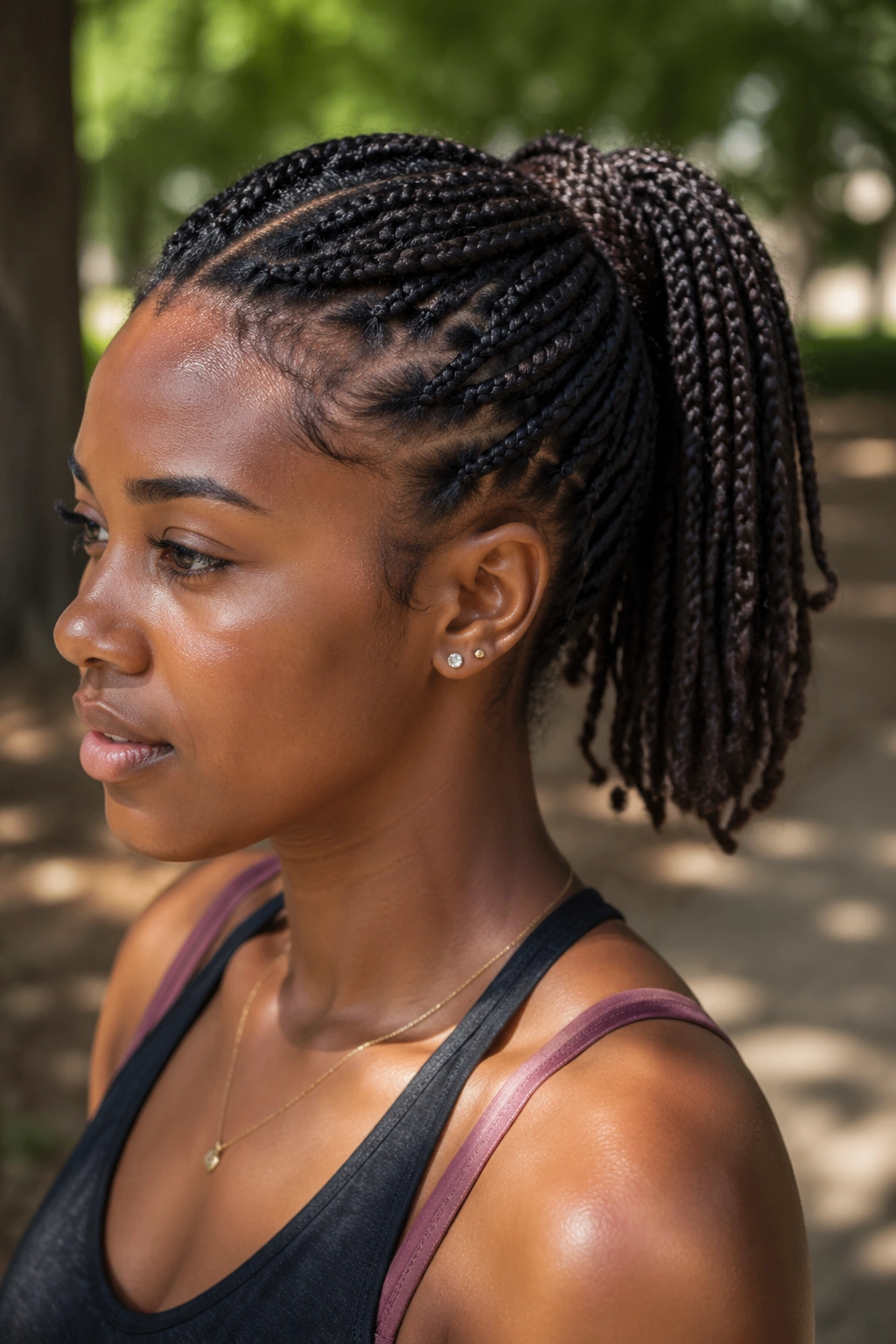
When a plain ponytail feels too bare, two twisted side sections can fix it fast. They add shape around the base and make short box braids look more layered without changing the whole style.
Split out two small sections from the front, twist each one back toward the ponytail, and pin them where they meet the elastic. The twists should be snug enough to hold but not so tight that they flatten the roots. I like this move because it gives the front some interest without needing a full braid-down at the hairline.
What Makes It Different
- It hides a plain elastic better than a wrap alone
- It works on short braids that do not reach a full long tail
- It leaves the rest of the set free to move
- It can be dressed up with cuffs or left plain
The texture matters here. Twists add a slightly rope-like look that feels more finished than a simple brush-back. If your braids are thick, this detail helps break up the bulk. If they’re finer, it keeps the style from disappearing into one flat shape.
9. Two-Tier Ponytail With a Split Length
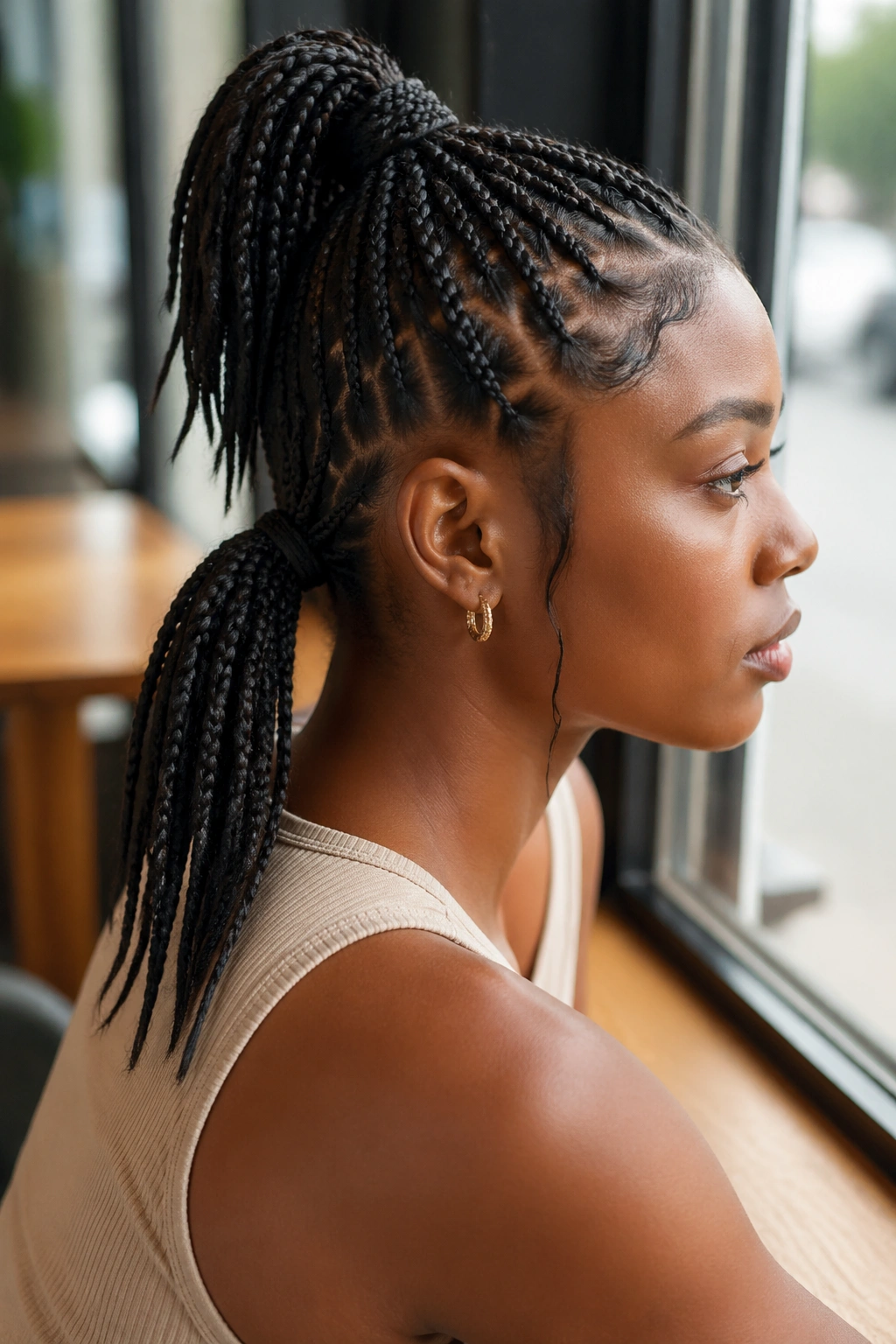
Can a short braid ponytail be layered? Absolutely. And the two-tier version is the proof.
You make one small ponytail higher up, then another just below it, so the braids fall in two levels instead of one. The effect is playful, almost like a stacked shape, and it gives shorter lengths a bit more visual weight. That matters when the braids don’t have enough swing to read as a single big tail.
How to Get the Most From It
Start with the top section at the crown or slightly behind it. Tie the lower section about 2 inches beneath the first one, keeping both bands snug but not tight. The goal is to create a stepped look, not a pair of lumps.
This style works best with braids that hit the jawline or collarbone. If the set is too short, the lower section can look cramped. If it’s a little longer, the split makes the ponytail look fuller than it really is.
I’d wear this one with a center part or a soft zigzag part. A hard side part can fight the shape, and nobody needs that extra argument before coffee.
10. Braided Mohawk Ponytail
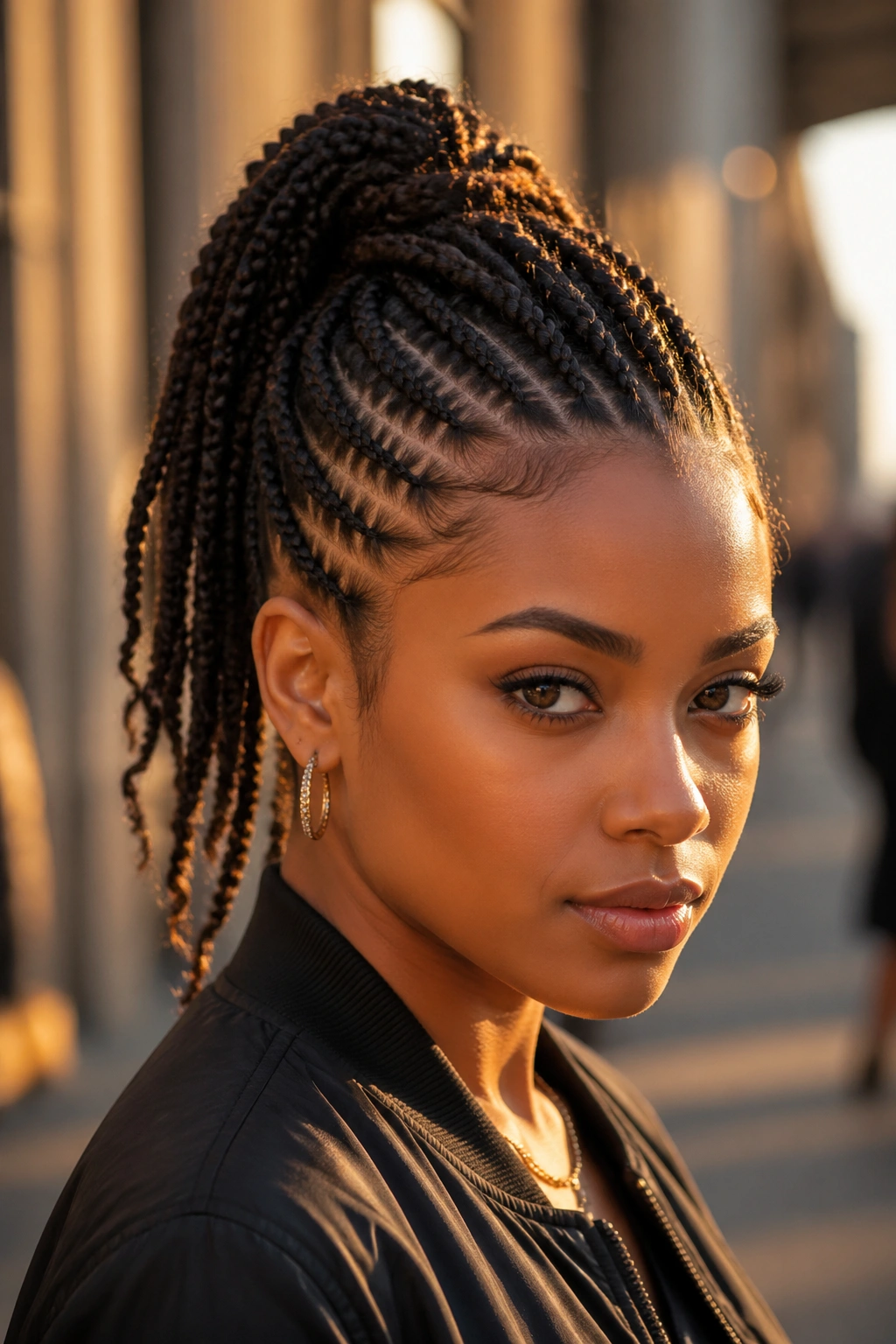
This one has edge, but it is not as dramatic as it sounds. A braided mohawk ponytail pulls the center section up and back while keeping the sides tucked close to the head, which gives short box braids a strong line through the middle.
The shape works especially well if your braids are thicker or if the hair at the sides tends to puff out. By directing the braids upward in one strip, you get a cleaner silhouette and a little height without resorting to a sky-high ponytail.
You can keep the sides flat with a light brush and a little gel, or you can braid or pin them if you want a sharper finish. Either way, the point is the same: let the center carry the style. The result looks deliberate and slightly bold, which is a nice change when you’re tired of the same old ponytail.
Be gentle around the temples. A mohawk shape should look strong, not strained.
11. Beaded Ponytail That Ends in a Small Cluster
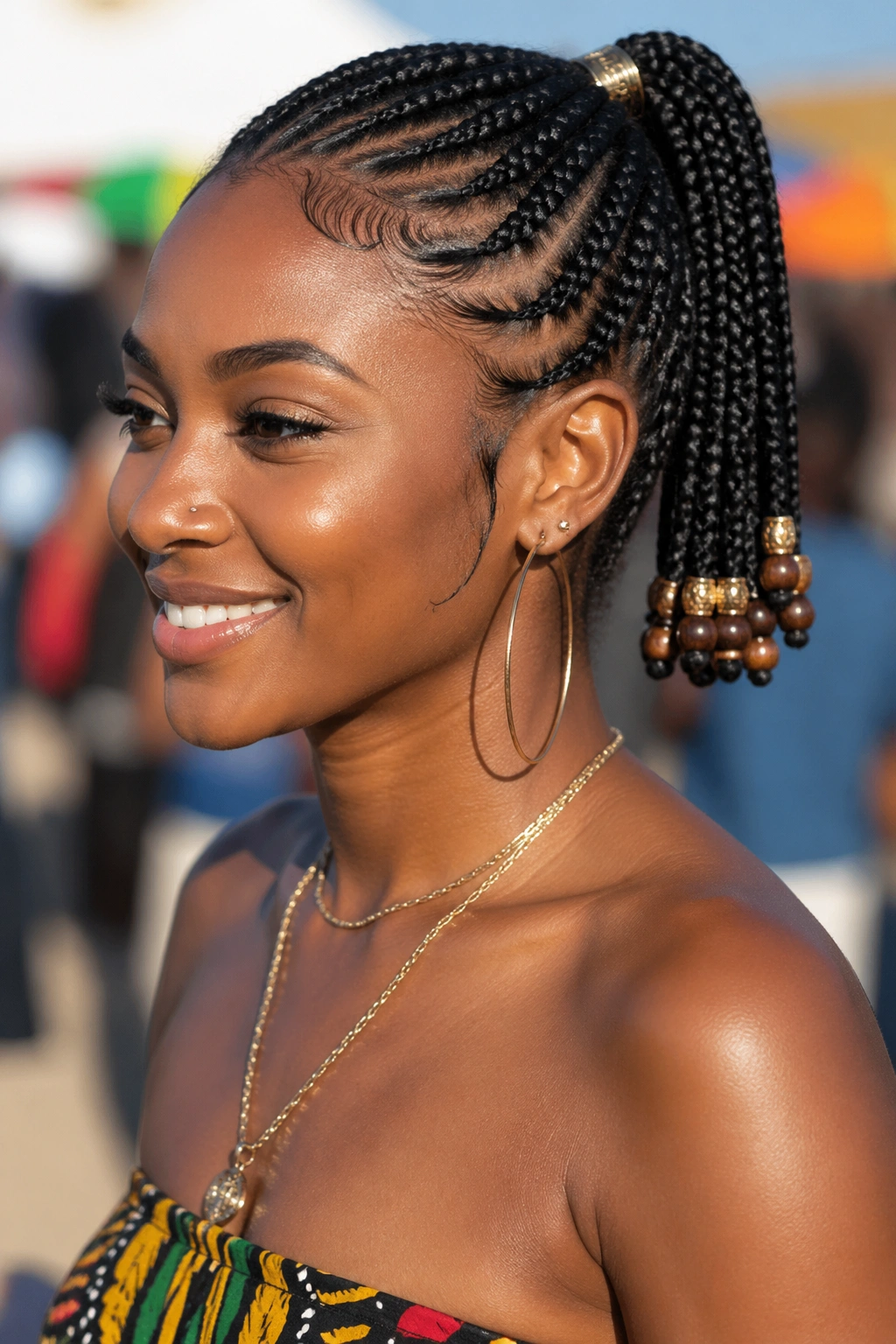
Beads can rescue a short ponytail that feels too simple. A few at the ends, or a tight cluster near the back, give the braids a little weight and sound without turning the style into costume territory.
I prefer fewer beads, not more. Three to six small ones are usually enough on short box braids, especially if the ponytail itself is compact. Too many, and the ends start to feel crowded. That’s the wrong kind of busy.
How Much Hardware Is Enough
A single metal cuff at the base plus a few beads at the tail is usually plenty. If your braids are very short, put the beads on the most visible outer braids instead of every strand. That keeps the style clean and stops the ponytail from looking overfilled.
This is a nice option for festivals, dinners, or any day when you want the braids to do a little more talking. The sound of the beads moving is part of the appeal. So is the way they give the ponytail a finished end instead of a soft drop-off.
12. Loose Low Ponytail With Curled Ends
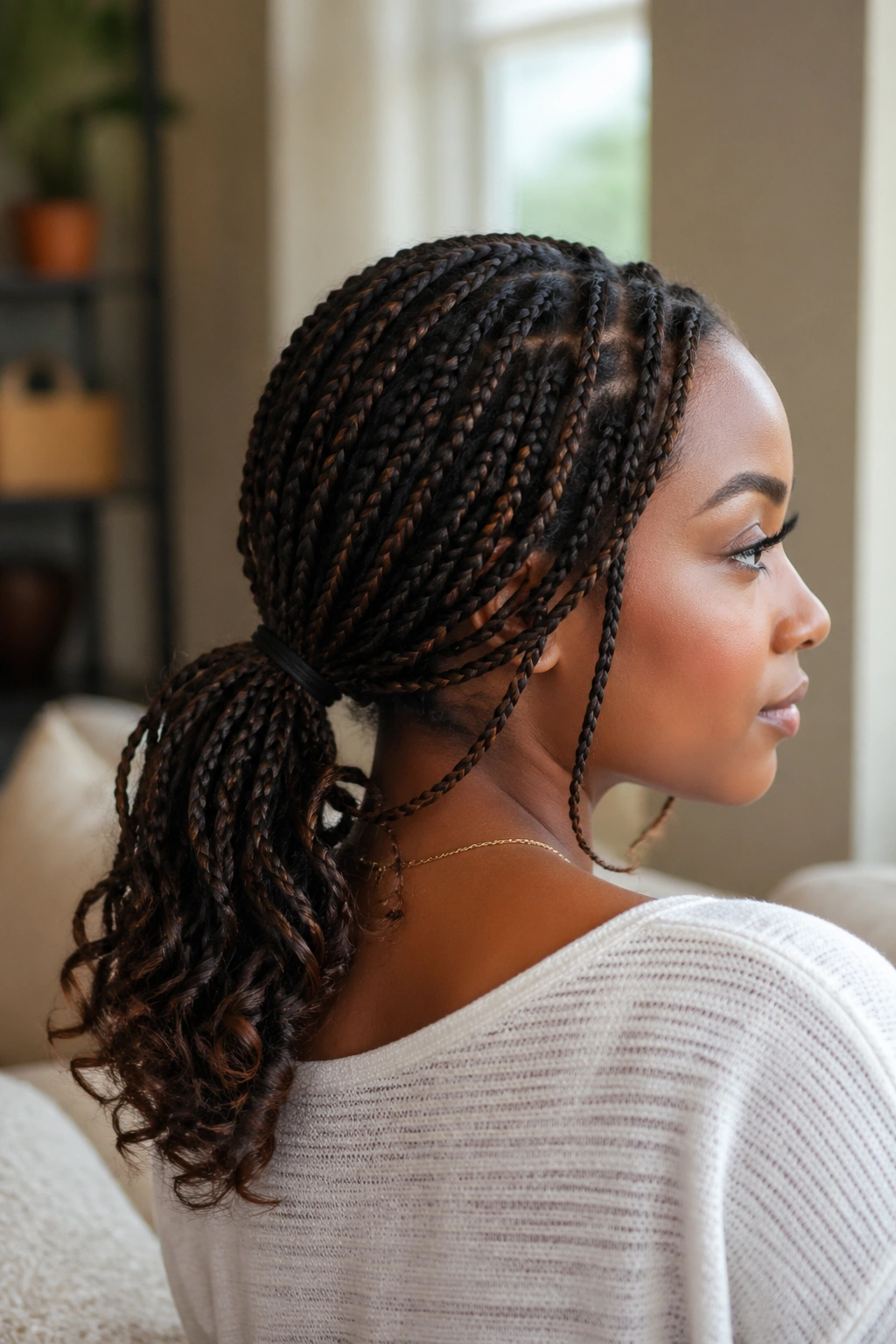
Unlike a tight low ponytail, this one keeps the movement alive. It’s softer, slower, and a bit more relaxed, which is exactly why it suits short box braids so well.
Gather the braids loosely at the nape and let the ends fall naturally. If your braids were sealed with curled ends, even better. If not, you can still get a pretty result by keeping the tie low and not forcing every braid into the same line. A little irregularity actually helps here.
The style looks especially good when the braids have settled in and gained a bit of softness. Freshly done hair can feel too rigid for this shape, while slightly worn-in braids fall into place more easily. That is not a flaw. It’s the reason the style feels easy to wear.
A tiny drop of lightweight oil on the ends can keep the tail from looking dry. Use sparingly. You want shine, not slip.
13. Accent-Cornrow Ponytail
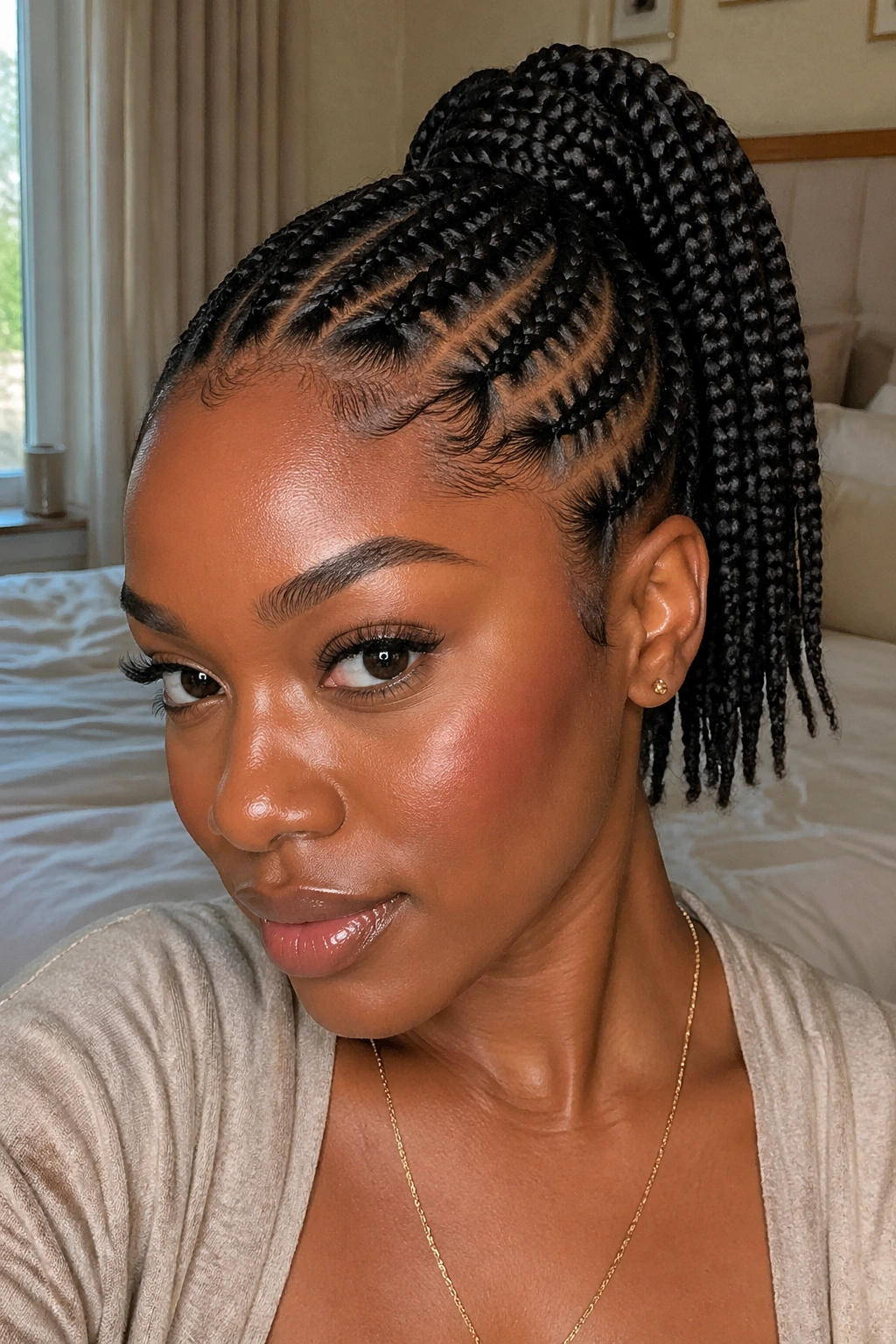
A few cornrows at the front or sides can make a short box braid ponytail look much more finished. They give the base a cleaner direction and help the ponytail sit exactly where you want it.
This works well if your braids are short enough that loose roots tend to puff. A row or two of cornrows tames that instantly. Then the remaining braids can be gathered into a ponytail without fighting the shape at the front. It’s a practical fix, not just a style choice.
- Use 2 to 4 skinny cornrows if you want a subtle look
- Use 6 or more if you want the front to feel much tighter
- Pair it with a mid or high ponytail so the lines stay visible
- Finish with mousse around the roots for a smoother surface
The best part is that the cornrows don’t have to cover the whole head. A small accent is enough. That keeps the style from feeling heavy while still making the ponytail look intentional from every angle.
14. Mini Twin Ponytails for Short Braids
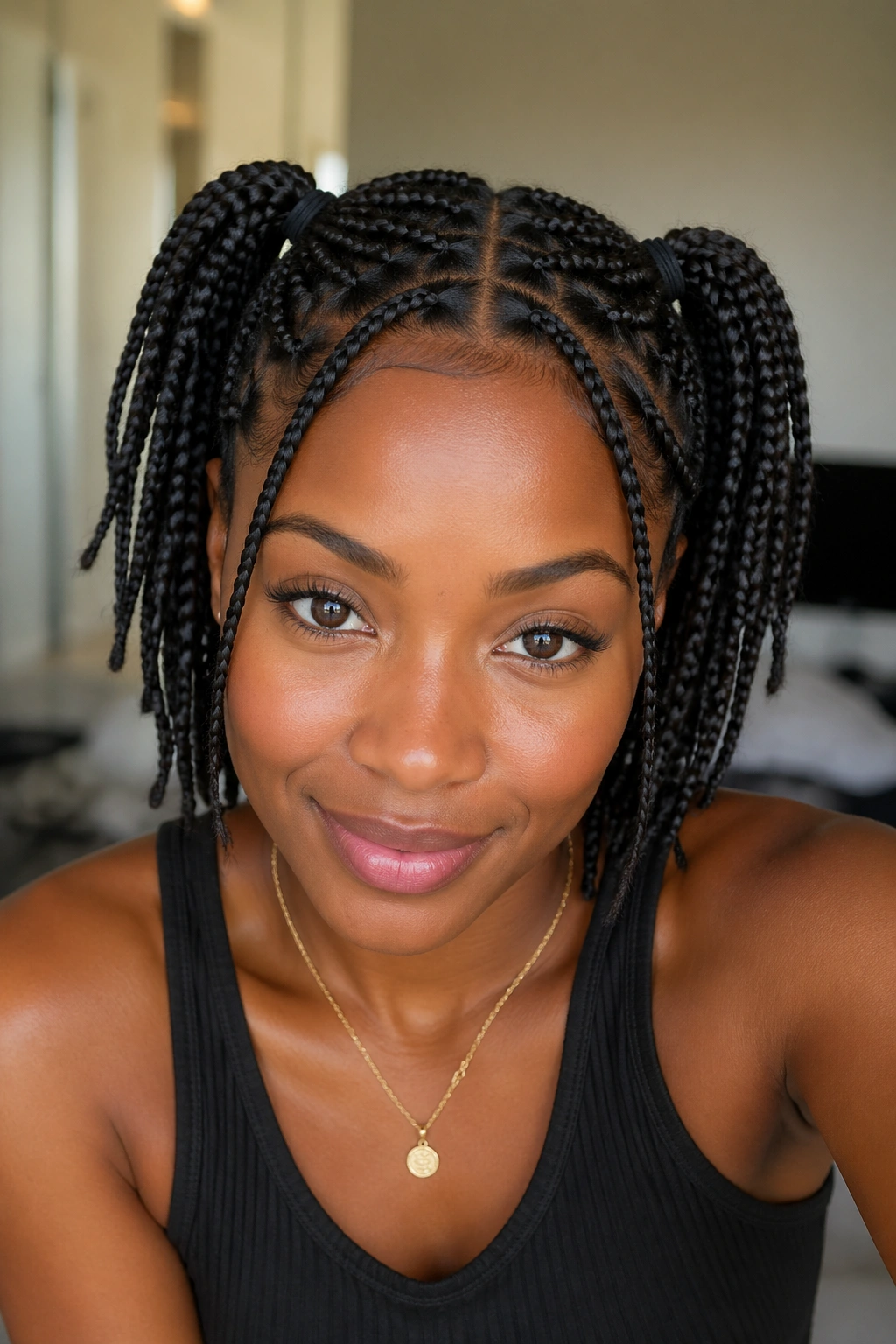
Two ponytails can be easier than one when the braids are short. They split the weight, keep the shape playful, and stop the back from looking like one heavy lump at the center.
The key is symmetry. Match the height, the size, and the placement as closely as you can, but don’t drive yourself mad trying to make both sides identical down to the braid. Hair has a way of refusing perfect math anyway.
This style is fun on shorter sets because it lets the ends bounce in two directions. The result feels youthful without looking like you borrowed the idea from a costume rack. If the braids are thick, keep the ponytails small so they don’t overwhelm the head. If the braids are finer, you can make them a touch fuller.
A matching set of elastics helps more than people think. One dark and one clear tie can throw the whole look off fast.
15. Cuffed Ponytail With a Clean Wrap
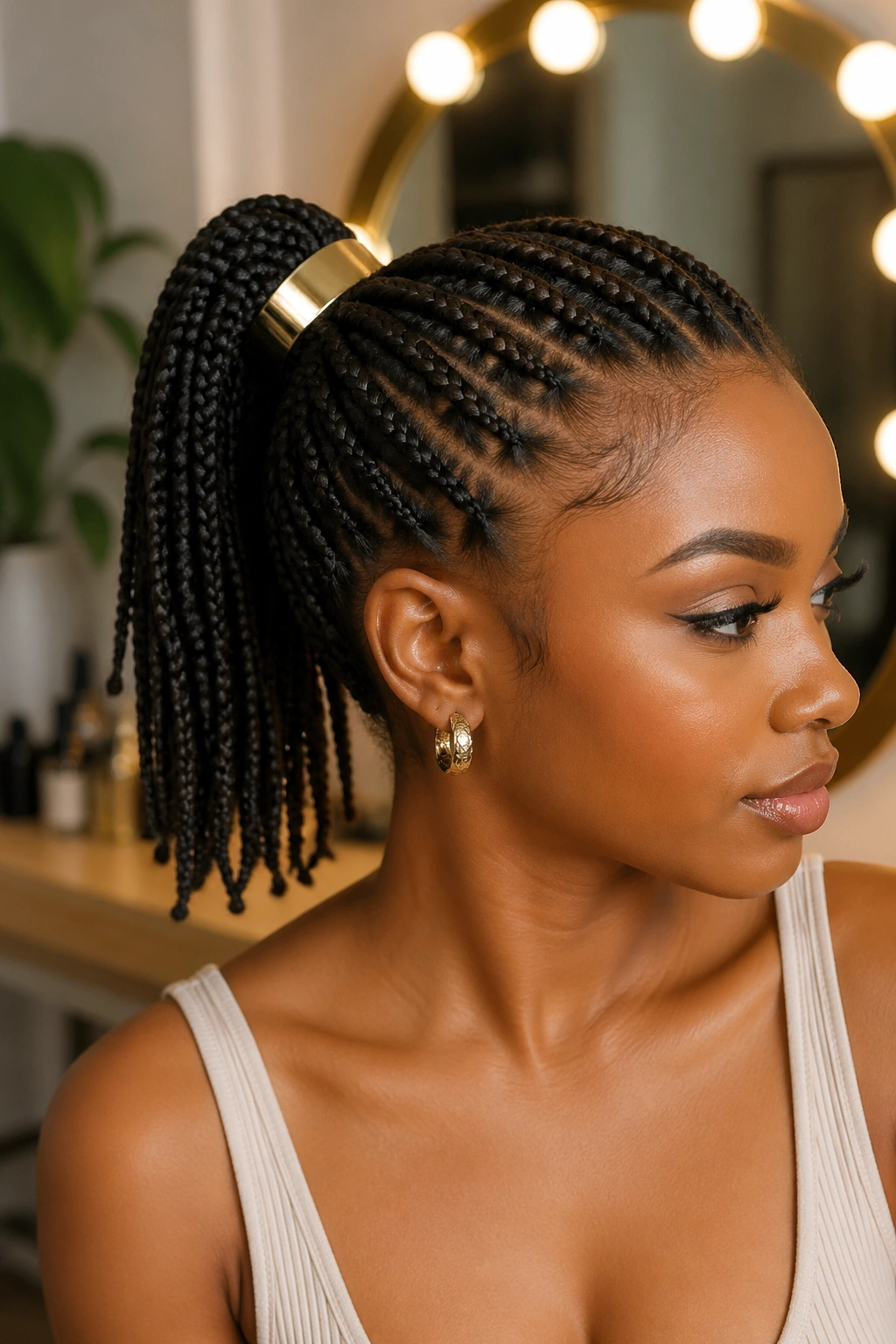
A hair cuff is the fastest way to make a short box braid ponytail look styled on purpose. It sits right at the base, hides the elastic, and gives the ponytail a little shine without needing extra steps.
I like this move for braids that are just past the chin, because the cuff helps the base feel finished even when the tail itself is short. A gold cuff reads warm and classic. A silver one feels a little sharper. Either can work, but only if the ponytail is neat enough to deserve it.
Best Placement for the Cuff
Put the cuff directly over the elastic, not slightly above it. If it sits crooked, it will slide around all day and start annoying you. Keep the base flat first, then slide the cuff into place and pinch it shut only as much as needed.
This style is one of the rare ones that looks better with restraint. One cuff. Maybe two, if they’re small. More than that and the eye starts wandering away from the braid shape itself.
16. Retro Flip Ponytail
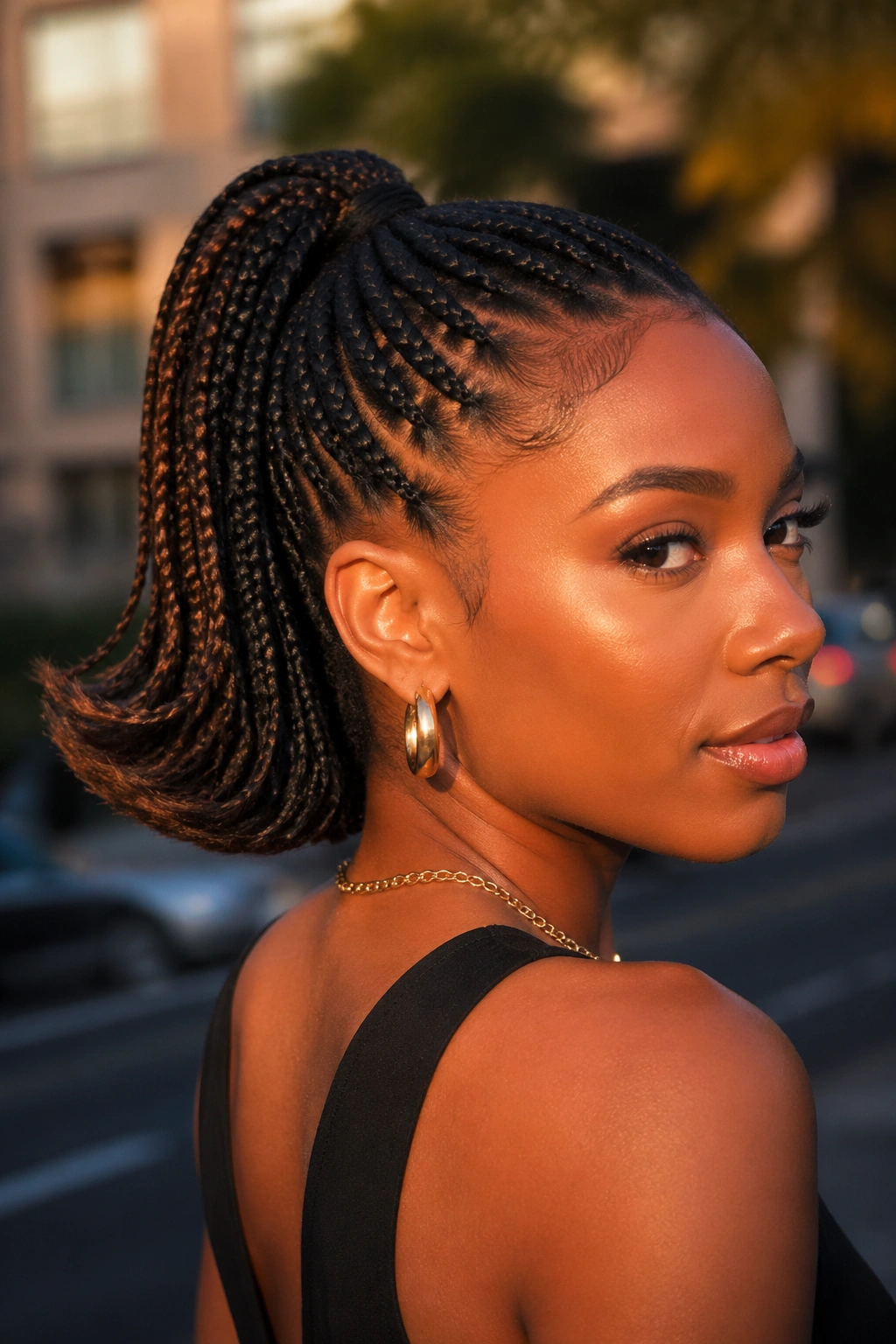
Short braids can flip. They just need the right anchor. The retro flip ponytail takes the tail and bends it upward or outward at the end, which gives the style a little old-school shape.
The trick is to secure the ponytail high enough that the ends have some room to turn. If the braids are only a few inches long, the flip will be modest. That’s fine. A small curve still reads as a flip if the base is clean and the tail is directed upward.
This style works best when the braids have enough softness to hold a bend without sticking straight out. A second elastic can help train the ends into the curve, and a couple of pins can keep the shape from falling flat. It’s a nice option when you want something a little different but not fussy.
Wear it with hoops or a bold lip if that’s your thing. The shape can take it.
17. Workout-Ready Tight Ponytail
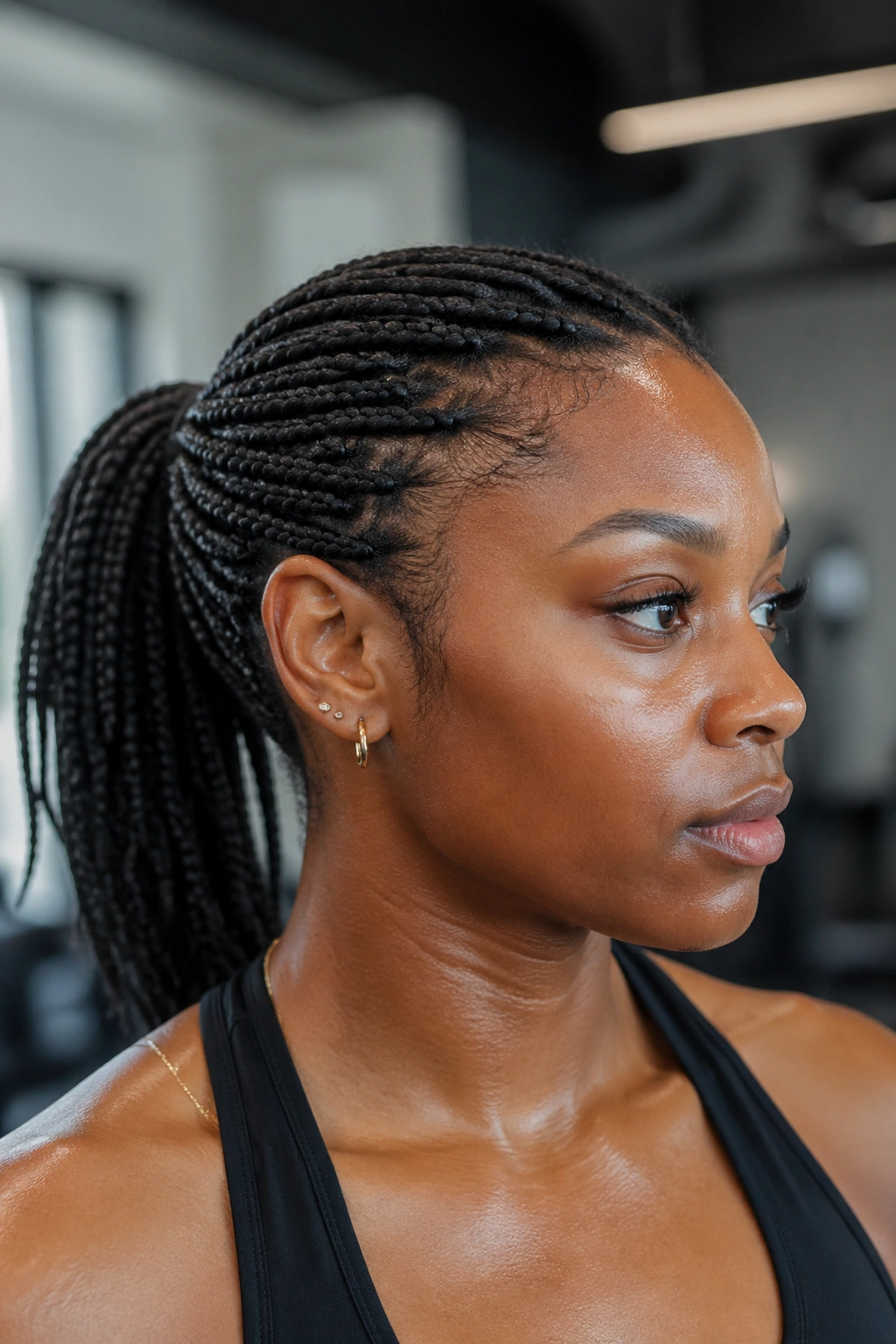
Not every ponytail needs to be pretty first. Some need to stay put, and that is its own kind of beauty.
A workout-ready ponytail for short box braids should sit low or mid, hug the head, and resist slipping when you move. The goal is control, not decoration. Use a soft gel on the roots if you need it, but keep the amount small. Heavy product plus sweat usually turns into residue you’ll hate later.
This style is useful on travel days, gym days, or mornings when you need the braids off your neck in ten seconds flat. It also works when the set is older and the roots have started to puff a little. A tight base can pull everything back into line.
One honest note: if your scalp feels sore, loosen it. That discomfort is not a badge of honor. A secure ponytail should feel like it’s holding the hair, not squeezing it into place.
18. Soft Everyday Ponytail With a Side Part
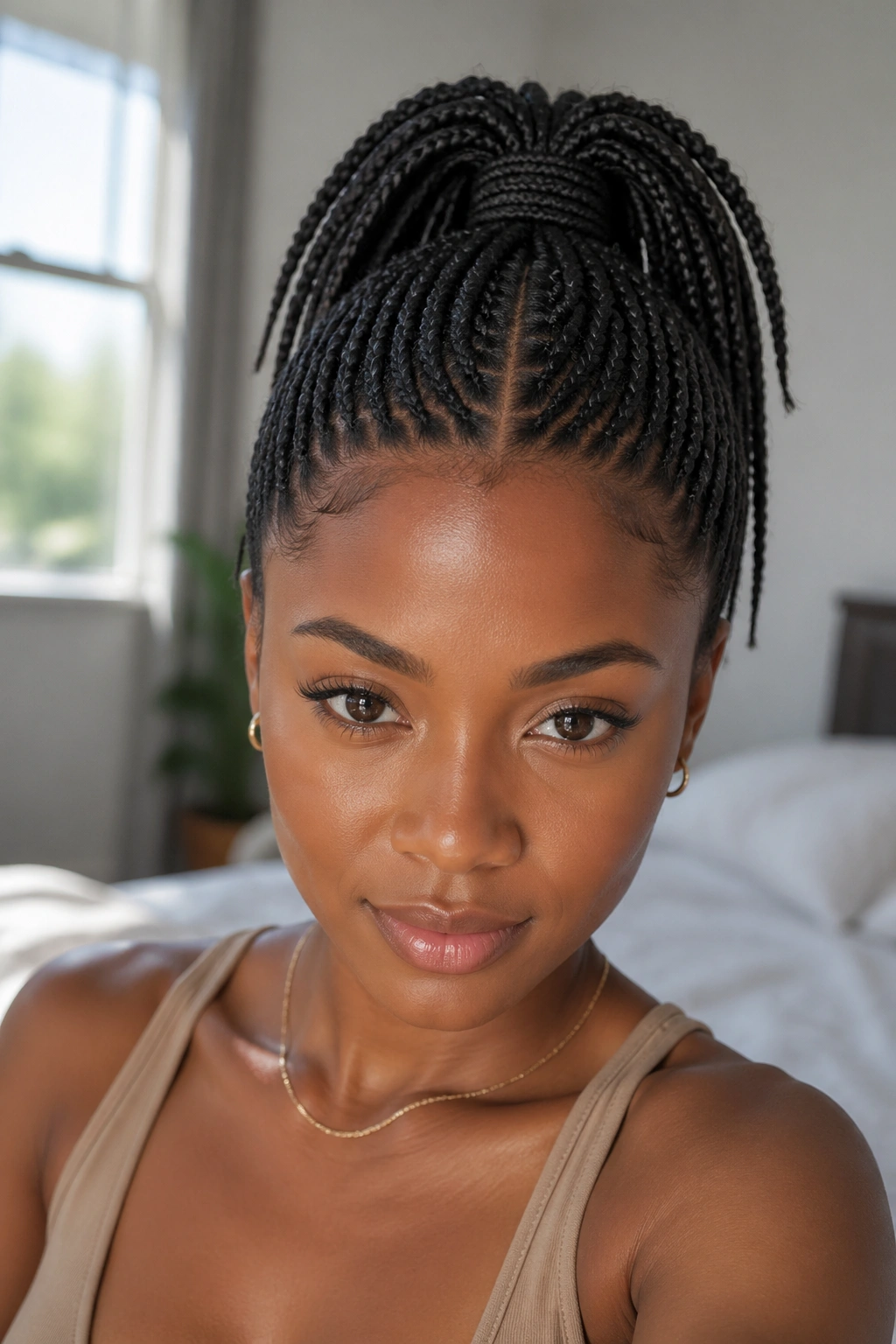
Some days call for the easiest version of all: a side part, a low tie, and a little movement around the face. It’s the kind of ponytail you can make without a mirror once you’ve done it a few times, which is exactly why it earns a spot here.
The side part does most of the work. It breaks up the symmetry, hides minor frizz, and gives short box braids a more relaxed shape than a center part can. Pull the ponytail low and slightly off center, then leave one or two braids loose near the temples if the style feels too neat.
This one is my pick for everyday wear because it doesn’t ask much from you. No fancy wrapping. No extra hardware. No wrestling with the edges for twenty minutes. Just a clean part, a soft tie, and enough slack to let the braids move naturally when you turn your head.
If you want the style to last longer, refresh the roots with a light mist of mousse and smooth the front with your fingertips instead of a brush. That keeps the look soft instead of stiff. And honestly, soft is the point here.