
Orange box braids with curly ends have a way of looking louder than they feel. The color can swing from copper to burnt pumpkin, and the curls at the tips take the edge off so the style moves instead of sitting stiff. That little bit of softness matters.
The tricky part is choosing the right orange. Bright tangerine reads playful, rust and amber feel warmer, and deep copper looks richer in daylight. Curly ends change the whole mood, too — tight ringlets feel more polished, loose spirals feel breezy, and wispy tendrils make the braids look less boxy.
I like this style because it does two jobs at once. It gives you that bold color without turning the whole head into one flat sheet of orange, and the curls keep the silhouette alive around the shoulders, jaw, and collarbone. If the braids are installed cleanly and the ends are set with enough room to move, the finish looks deliberate rather than busy.
Tiny choices matter here.
1. Waist-Length Copper Orange Box Braids With Spiral Curly Ends
Waist-length braids are the version I’d pick if you want the color to make a statement before you even open your mouth. Copper orange has depth that bright neon shades can’t touch, and when those braids fall all the way down the back, the curly ends feel like the final flick of a paintbrush. It’s bold, but not chaotic.
What saves this look is the curl pattern at the bottom. Spiral ends give the braids a little lift, so the length doesn’t drag the face down. If the braids are medium-thin and the curls start only on the last 2 to 3 inches, the style moves well and doesn’t turn into a giant fuzzy cloud by day three.
I also like this version with a center part, because it lets the orange read evenly on both sides. Side parts can work, but the drama gets concentrated fast. Center part plus waist length plus copper tones? That’s the cleanest version to my eye.
If you wear earrings, this is the braid style that loves a hoop. Big hoops, small hoops, smooth gold, brushed brass — all of it works because the color already does the heavy lifting. Keep the outfit simple and the hair does the talking.
2. Shoulder-Length Orange Bob With Curled Tips
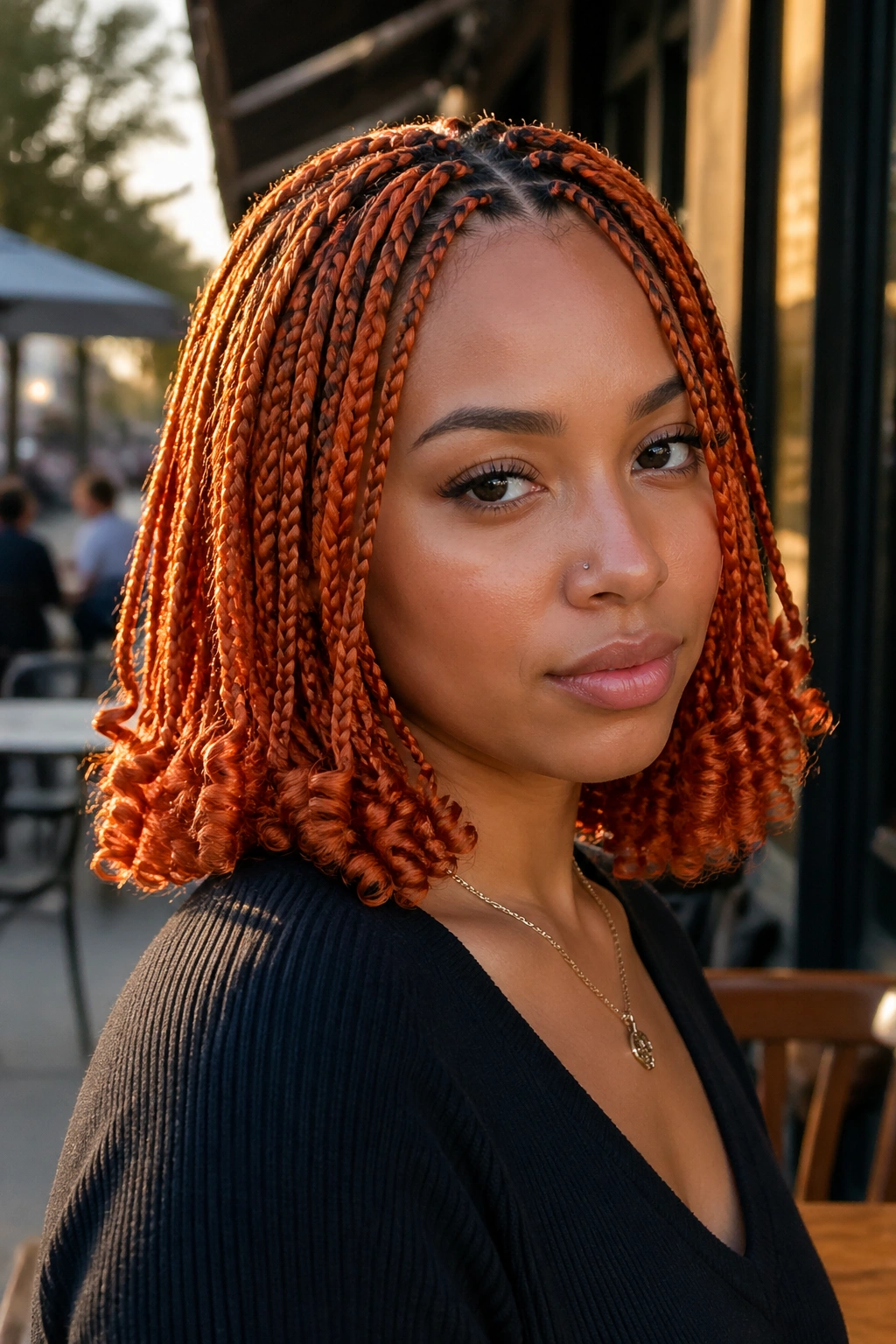
Can a bob be the best place to start with orange? Honestly, yes. Shoulder-length orange box braids with curly ends feel easier to wear than the waist-length versions, and they still give you enough color to turn heads. The shorter shape keeps the orange from swallowing your features.
Why the Bob Works
A bob leaves the curl pattern in plain sight. The ends sit near the collarbone, which means the spirals catch movement every time you turn your head. That matters more than people think, because curly ends can disappear when they’re buried under too much length.
The shape also keeps maintenance simpler. Fewer inches means less tangling at the bottom, and the curls stay neater because they’re not rubbing against a coat, tote strap, or car seat all day. If you hate redoing the same few pieces every morning, this is a smart place to land.
What to Ask For
- Ask for medium braids with blunt shoulder length, not too long past the shoulders.
- Keep the curled ends to about 1.5 to 2 inches so they bounce instead of frizzing out.
- Ask for a curl pattern that matches the rest of the braid thickness.
- Finish with lightweight mousse if you want the ends to stay shaped longer.
One good bob is enough. You do not need extra tricks here.
3. Knotless Orange Box Braids With Soft Face-Framing Curls
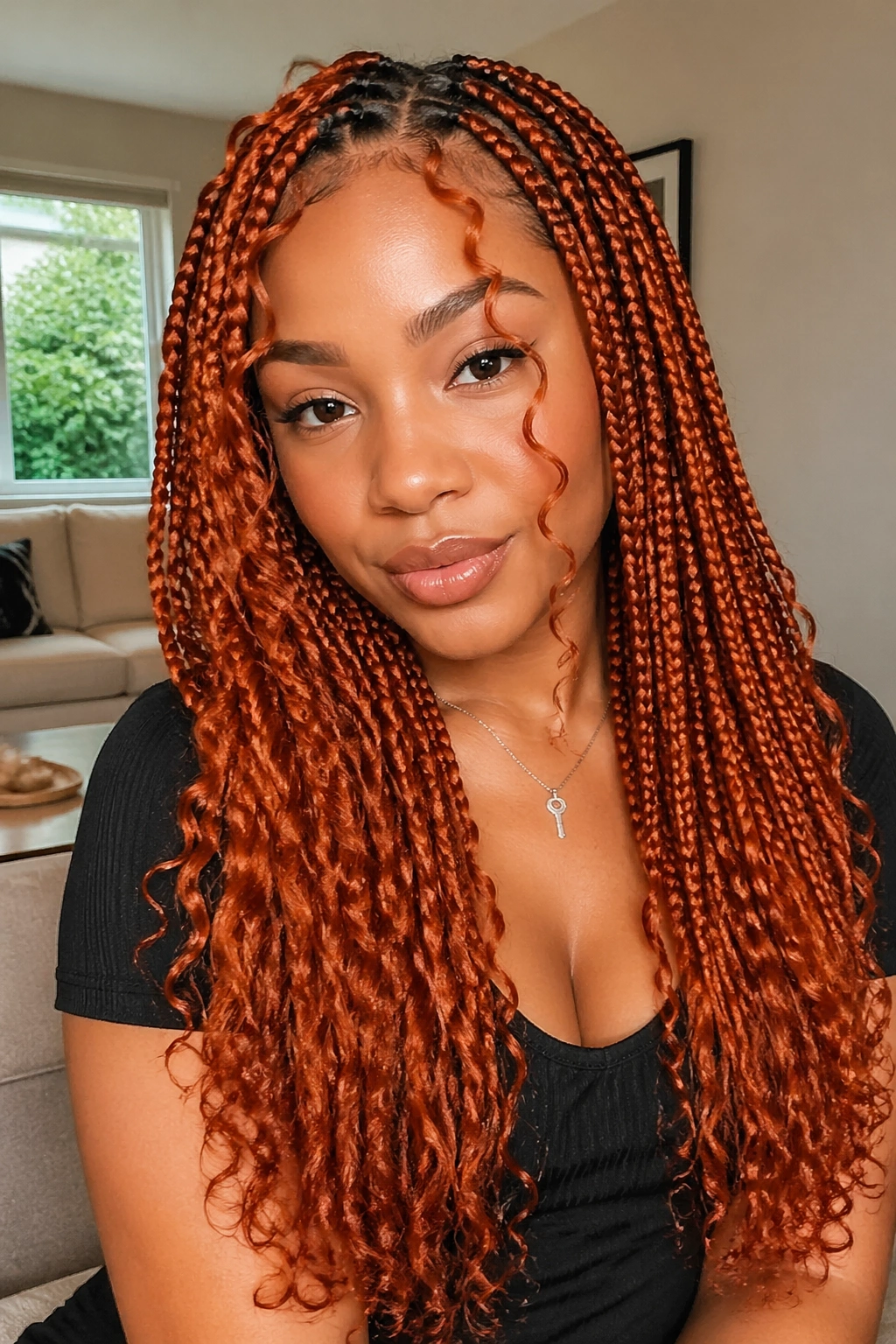
Knotless braids soften orange in a way I always appreciate. The scalp looks cleaner, the start of each braid lies flatter, and the whole style feels less stiff around the hairline. Add curly ends, then leave a few face-framing tendrils out, and the look turns from sharp to wearable in the best possible way.
That front softness is the point. A couple of curled pieces near the cheekbones can pull the color into your face without making the whole style feel heavy. If you have sharper features, those loose pieces soften things up. If your face is rounder, the vertical line of the braids gives enough structure to keep the style balanced.
A Few Things That Make It Work
- Keep the braids small to medium so the knotless start stays neat.
- Leave one or two curl pieces per side near the front, not a whole curtain.
- Ask for the curls to begin below the chin, so the front doesn’t crowd your eyes.
- Use a light edge control only if your hairline actually needs it. Too much product around orange braids looks greasy fast.
This is the version I’d pick for someone who wants color but doesn’t want the hair to feel loud all day. It has polish. It also has a little swing.
4. Jumbo Orange Braids With Big Curled Ends
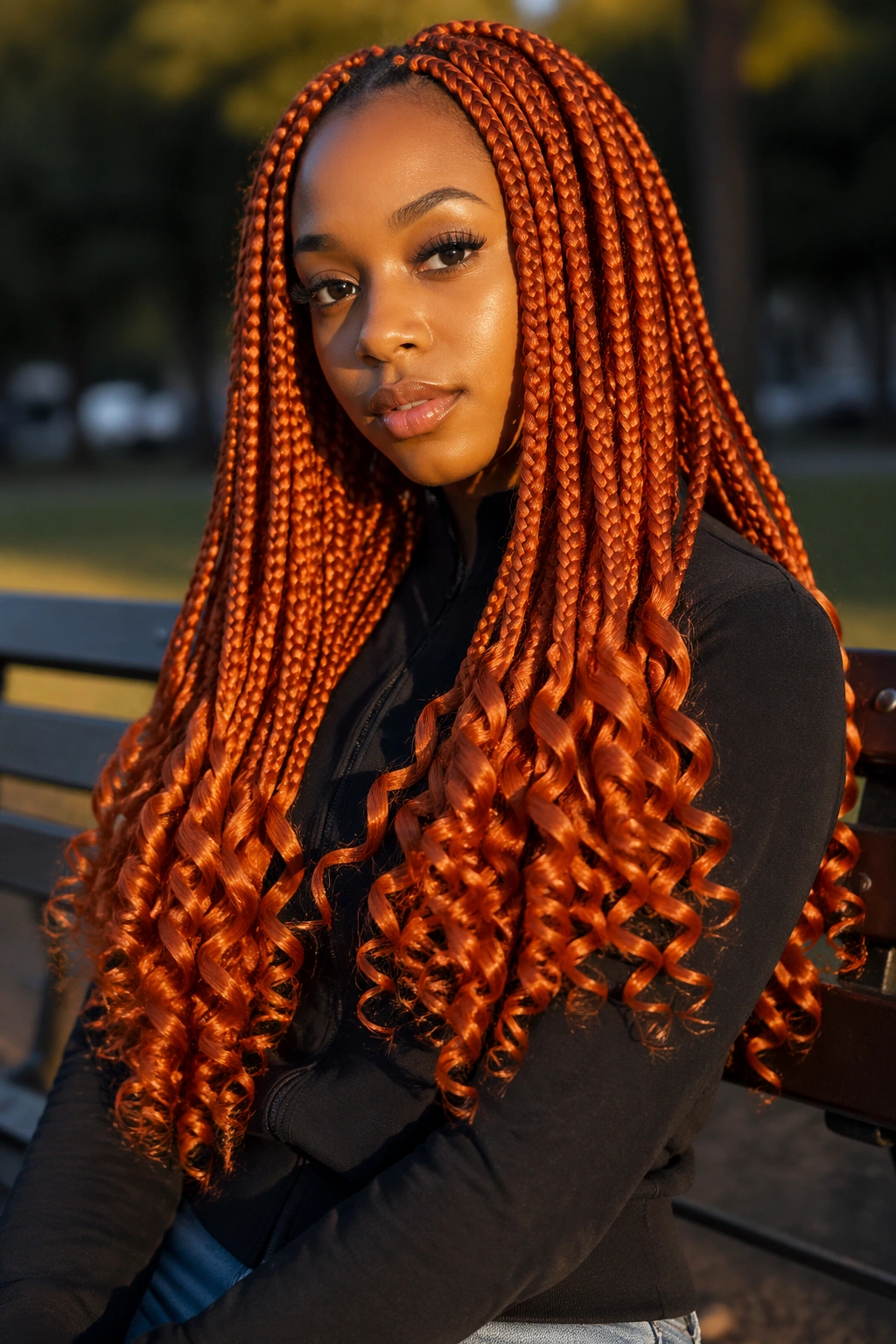
Jumbo orange box braids are unapologetic, and that’s the charm. They install faster, they read from across a room, and they need curly ends that are big enough to match the scale. Tiny curls on huge braids look mismatched. Big barrel curls or loose spiral ends look right.
The best part is how the shape changes the color. A jumbo braid gives each section more surface area, so the orange comes through in solid blocks instead of a fine weave of color. That makes copper, pumpkin, and burnt orange shades look deeper and more saturated. If you want people to notice the color first, this is the clearest route.
You do have to respect the weight. Jumbo braids can tug if they’re made too long or too dense at the root, and heavy curl bundles at the ends only add to that feeling. I prefer this style when the braids stop around chest or mid-back length. Past that, the braids can start fighting gravity.
Keep the curl ends loose and roomy. Tight little curls look fussy on a jumbo braid. Bigger and softer wins here.
5. Micro Orange Box Braids With Wispy Tips
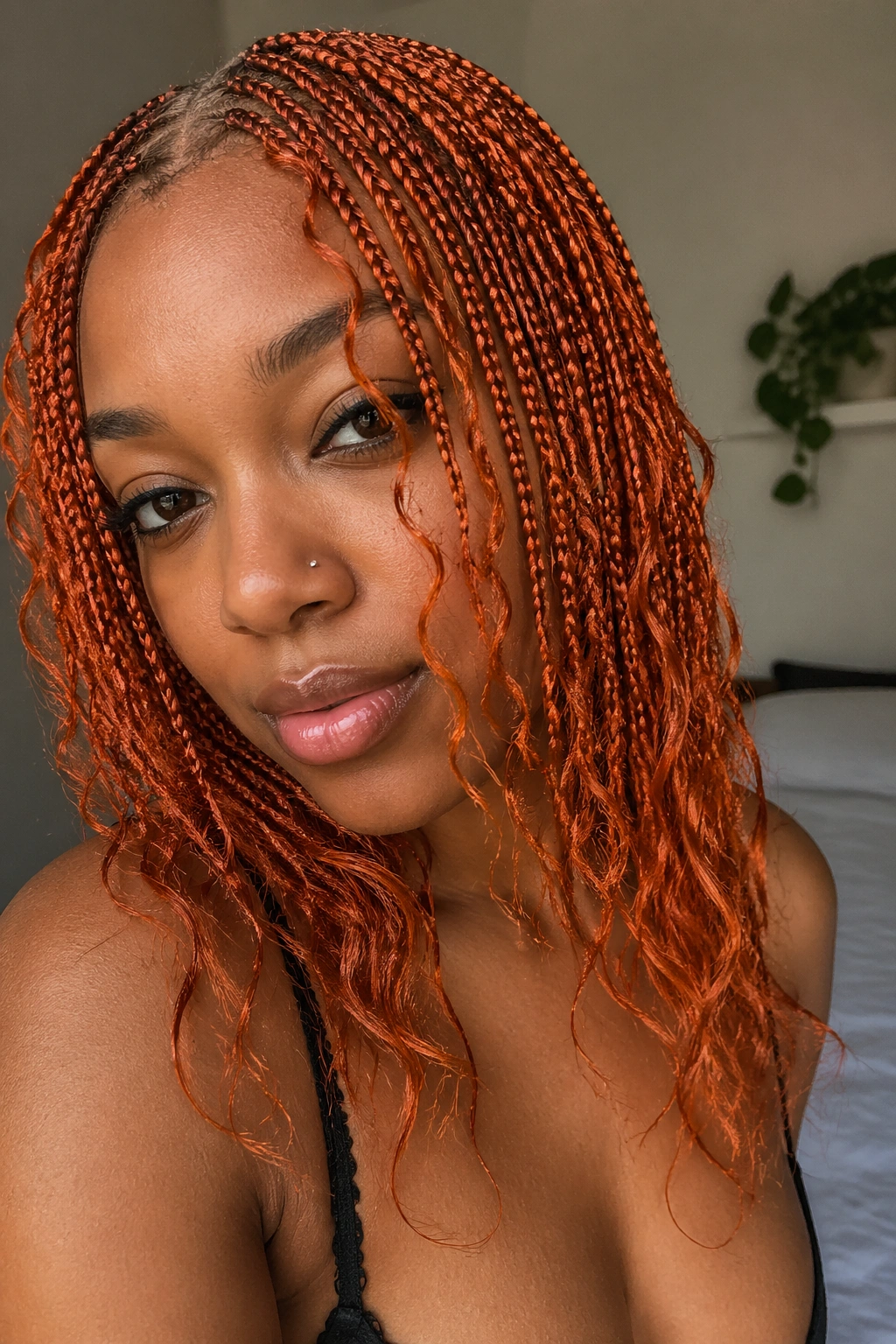
Micro orange box braids with curly ends are the style I think about when I want texture for days. The tiny parts make the color look almost woven, and the wispy ends give the whole head a kind of lightness that medium braids can’t fake. It’s a lot of work, yes. It also pays off.
You feel the difference when the braids move. Smaller braids sway in a finer way, and the curly ends don’t bunch up into one obvious cluster. That makes the style feel airy, which is useful if you like big hair but don’t want the bottom to get bulky. The curls should be thin and soft, almost feathered.
A few practical details matter here:
- Choose micro to very small braids only if your scalp can handle the installation time and tension.
- Keep the ends shorter and lighter, because dense curls can drag micro braids down.
- Use curls that fall in loose spirals, not tight spring coils.
- Refresh the ends with a tiny bit of mousse, then finger-separate once. Too much touching makes them frizz.
This is not the easiest braid style on the list. It is, however, one of the prettiest when it’s done well.
6. Half-Up Orange Braids With a Curly Ponytail
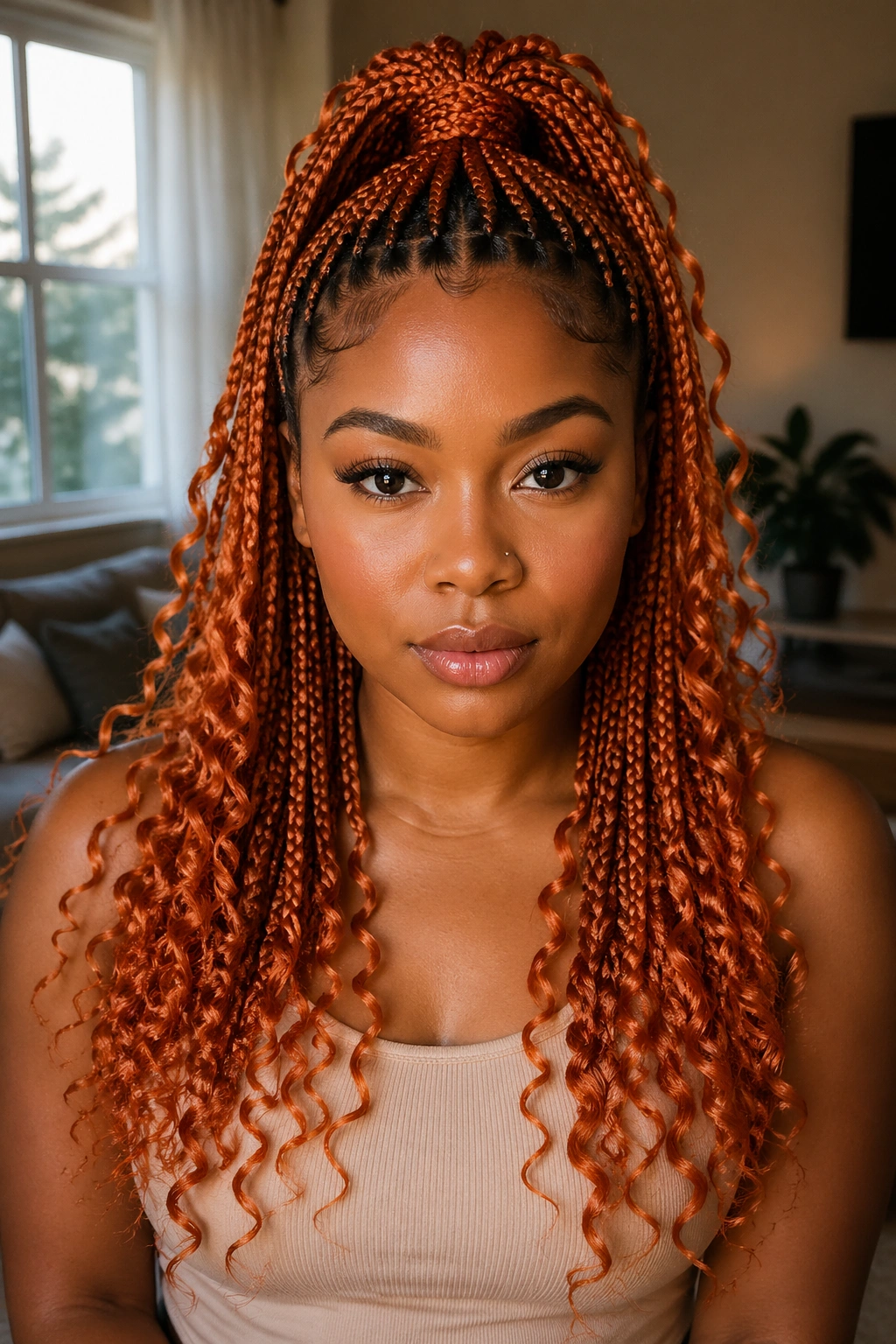
Want the color up and off your face without hiding the curls? Half-up orange braids with curly ends solve that neatly. You get the clean crown of a pulled-back style, then the lower half falls loose so the spiral ends can do their job. It looks playful, but it’s also practical.
Why the Half-Up Shape Helps
The top section gives you lift at the crown, which keeps long orange braids from feeling heavy around the temples. The lower braids stay down, so the curls can frame the shoulders and collarbone. That mix keeps the style from going flat.
What Makes It Look Better
A wrapped ponytail base always looks cleaner than a bare elastic. You can hide the band with one braid or a small piece of hair, then let the remaining curls hang free. A few face-framing strands help, but don’t overdo it. Two is enough.
I like this version with bright copper or mango-orange hair because the lifted top section shows off the color near the scalp while the loose ends move at the bottom. If you wear glasses, even better. The top half keeps the frames clear, and the curls below soften the whole look.
7. Side-Swept Orange Box Braids With a Full Curl Cascade
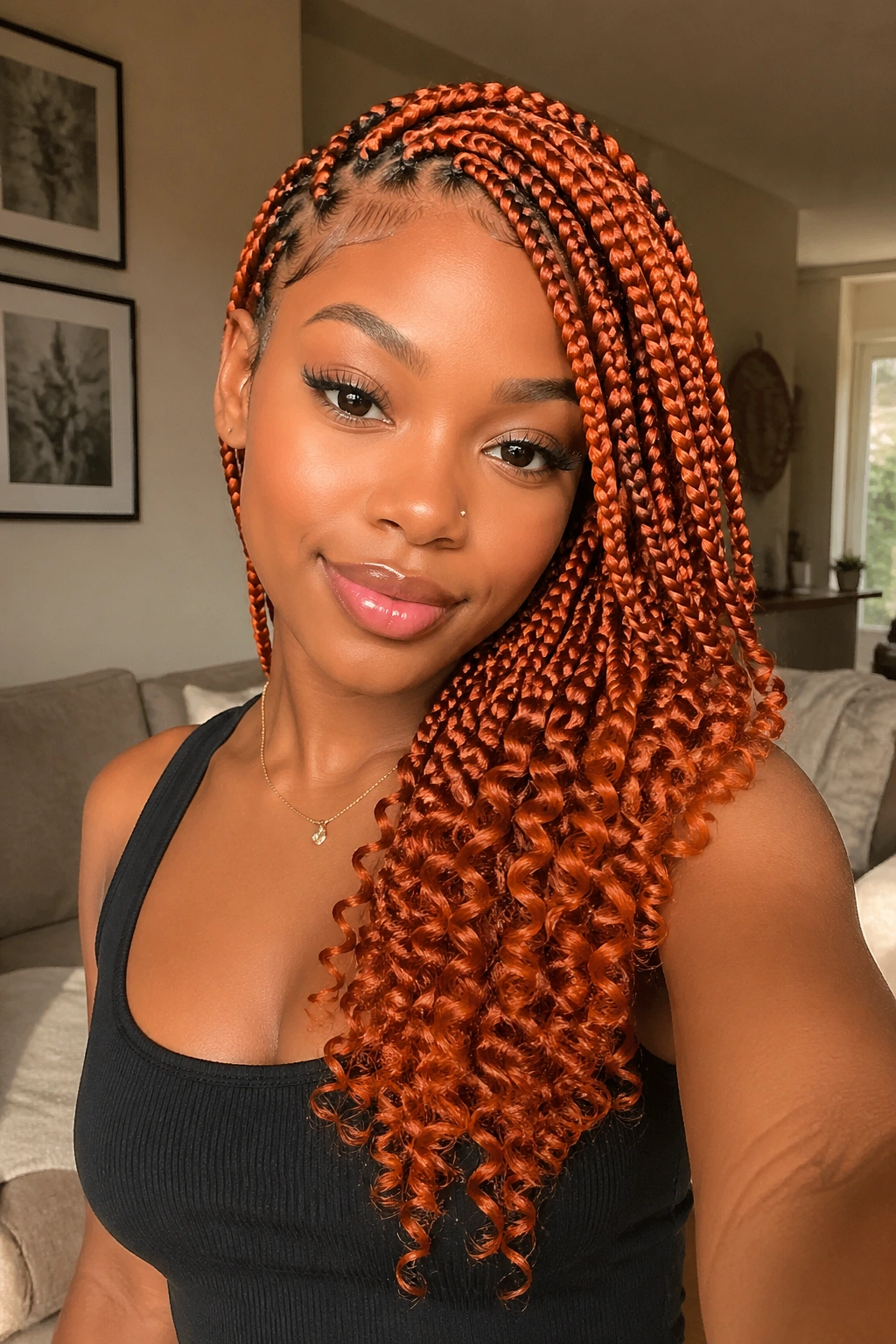
A side-swept braid style has attitude in a quieter way. Instead of spreading the orange evenly across the head, you push the braids over one shoulder and let the curly ends pool on one side. The result feels deliberate, almost like the hair made the outfit decision for you.
I like this look because it uses asymmetry to create shape. One side stays neat and close to the head; the other side carries the movement and volume. That contrast keeps the style from feeling too symmetrical or too predictable, which matters when the color already grabs attention.
The curls need room to fall. If the ends are too tightly packed, the side sweep turns into a dense lump instead of a cascade. Ask for enough length at the tips so the braids can bend naturally over one shoulder. A little curl separation at the bottom helps too, especially if the hair is a brighter orange shade that needs softening.
This is also one of the easiest styles to pair with earrings or a neckline that sits a little lower. The open side gives you space, and the orange braid color does the rest.
8. Orange Ombré Box Braids With Honey Ends
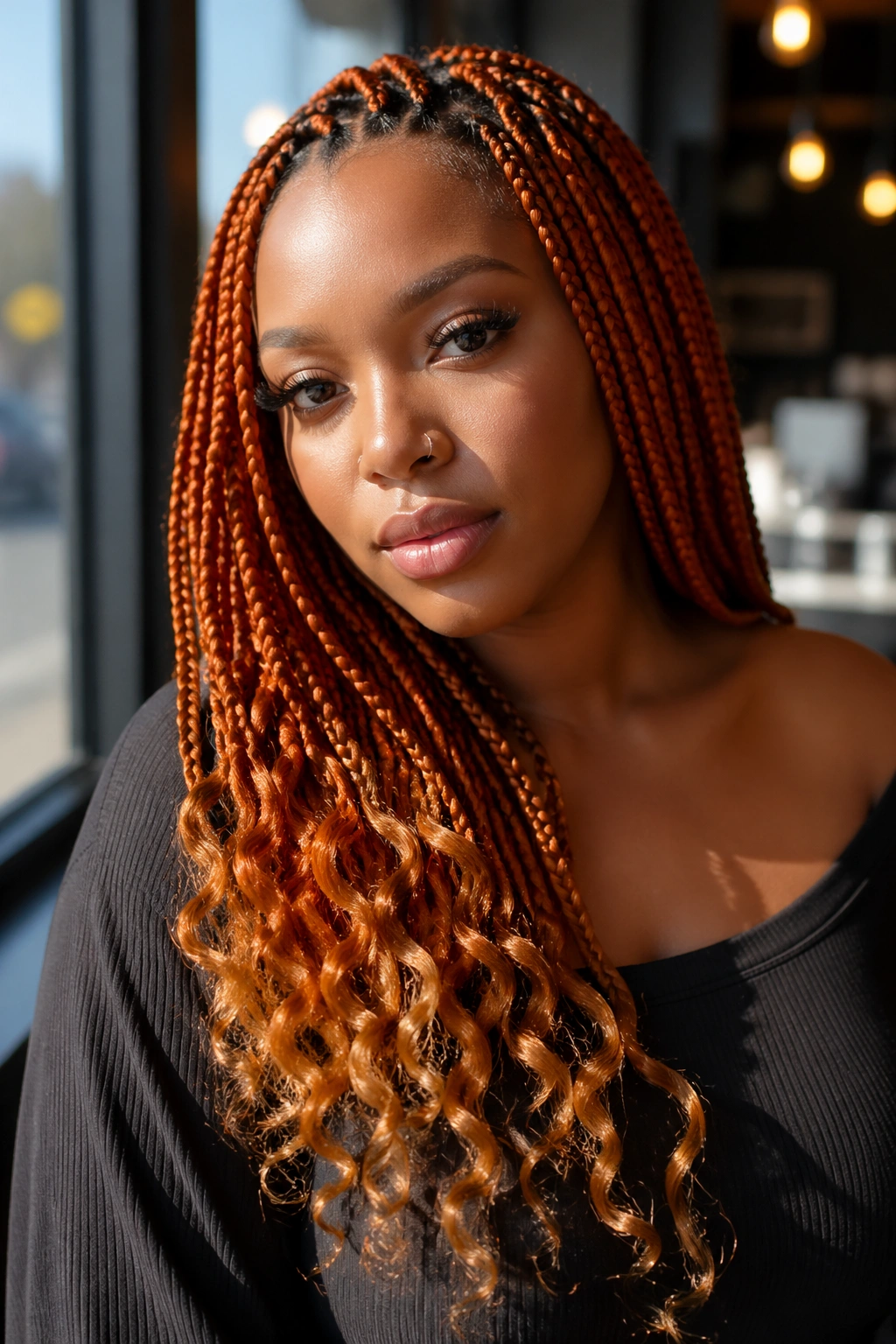
Orange ombré braids are for the person who likes color but doesn’t want the whole head shouting at once. The shift from darker roots or mid-lengths into honey-orange or apricot ends gives the style a gradient effect that feels smoother than solid orange from top to bottom. The curly ends make that fade even more obvious.
A solid orange braid can look fierce. An ombré braid looks more layered. That’s the difference. You get depth near the scalp, then the color opens up toward the bottom, and the curls finish it with movement. It’s a softer read, especially if your wardrobe leans neutral or you’re not trying to match every shirt you own to your hair.
What Makes the Gradient Stand Out
The braid body should stay a shade darker than the ends. That keeps the contrast from looking washed out. Honey, amber, and light copper tones work well because they still belong to the orange family without turning pale.
This style also hides regrowth better than a full-saturation orange. The root color buys you time, which I always appreciate. If you want the easiest path through wear, this is one of the more forgiving choices.
9. Triangle-Part Orange Box Braids With Bouncy Ends
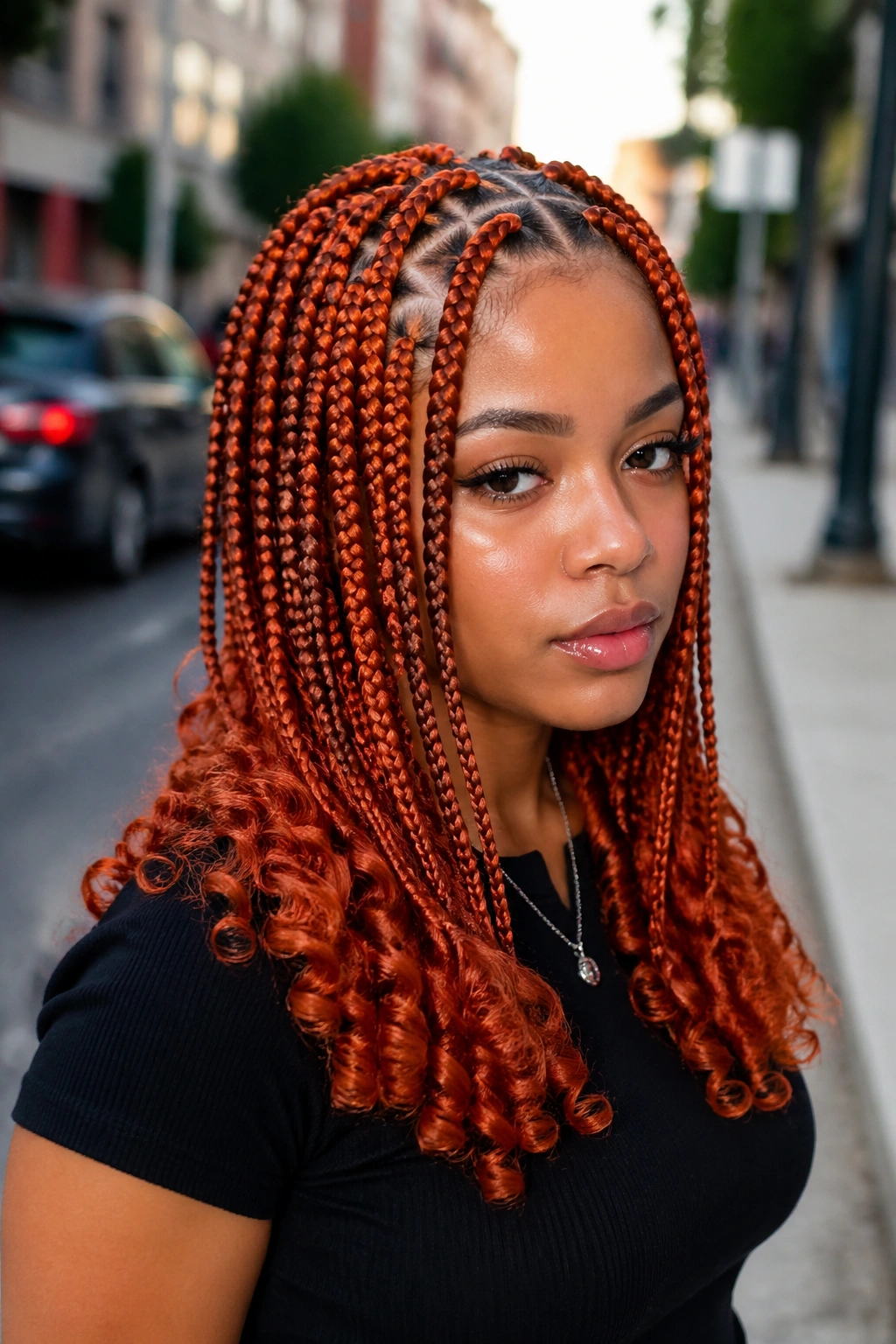
Triangle parts change the whole mood. Instead of neat squares, you get little geometric flashes at the scalp, and orange braids with curly ends suddenly feel sharper and more design-forward. The style looks small in one way and dramatic in another, which is exactly why it works.
Triangle parting is one of those details people notice without always knowing why. The shape gives the braids more visual rhythm, especially when the orange shade is vivid. Each section catches the eye slightly differently, and the curly ends stop the look from becoming too rigid or architectural.
What to Ask For
- Ask for medium triangle parts, not tiny ones, unless you want a very dense finish.
- Keep the braid length around mid-back or shorter so the parting still shows.
- Choose a curl pattern with clear bounce, not tight fuzz.
- Add a few gold cuffs near the front if you want the parting to pop even more.
This version suits someone who likes their hair to read as styled, not accidental. It has edge without needing extra color tricks. The geometry is enough.
10. Layered Orange Braids With Mixed Curl Lengths
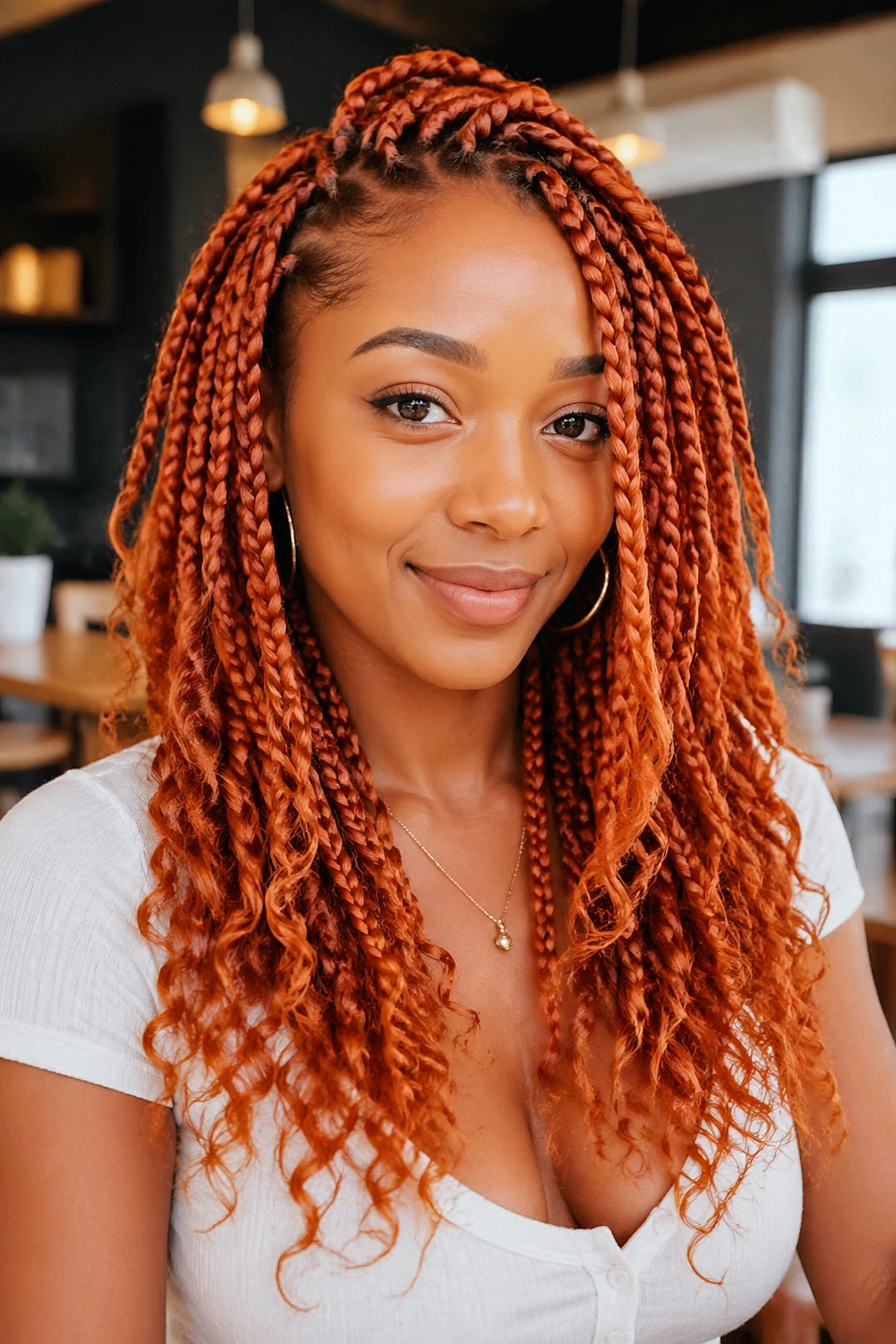
Mixed curl lengths can save orange braids from looking too uniform. Some ends fall in short spirals, some drop longer, and the whole head gets a bit of variation that feels more natural than having every curl sit at the exact same point. That little asymmetry matters.
The braid layers should still be planned. You do not want random lengths that look unfinished. You want a deliberate stagger, where the outer pieces hang a little longer than the inner ones and the curls spill at different points along the line of the shoulders. Done right, the silhouette feels richer.
Why Layering Helps
The eye likes movement, and mixed lengths create it. A straight row of orange braids can look heavy if all the ends stop in the same place. Layering breaks that block into smaller shapes, so the style feels lighter.
What to Watch For
- Keep the shortest layers above the collarbone if you want clear shape.
- Let the longest layers land around the upper chest or lower chest.
- Match curl sizes to the braid thickness so nothing looks pasted on.
- Don’t overload the back with too many short pieces; the layers should breathe.
This is one of my favorite ways to make orange feel less flat. The color already has energy. The layers give it a little room to move.
11. High Bun Orange Box Braids With Curly Pieces Left Out
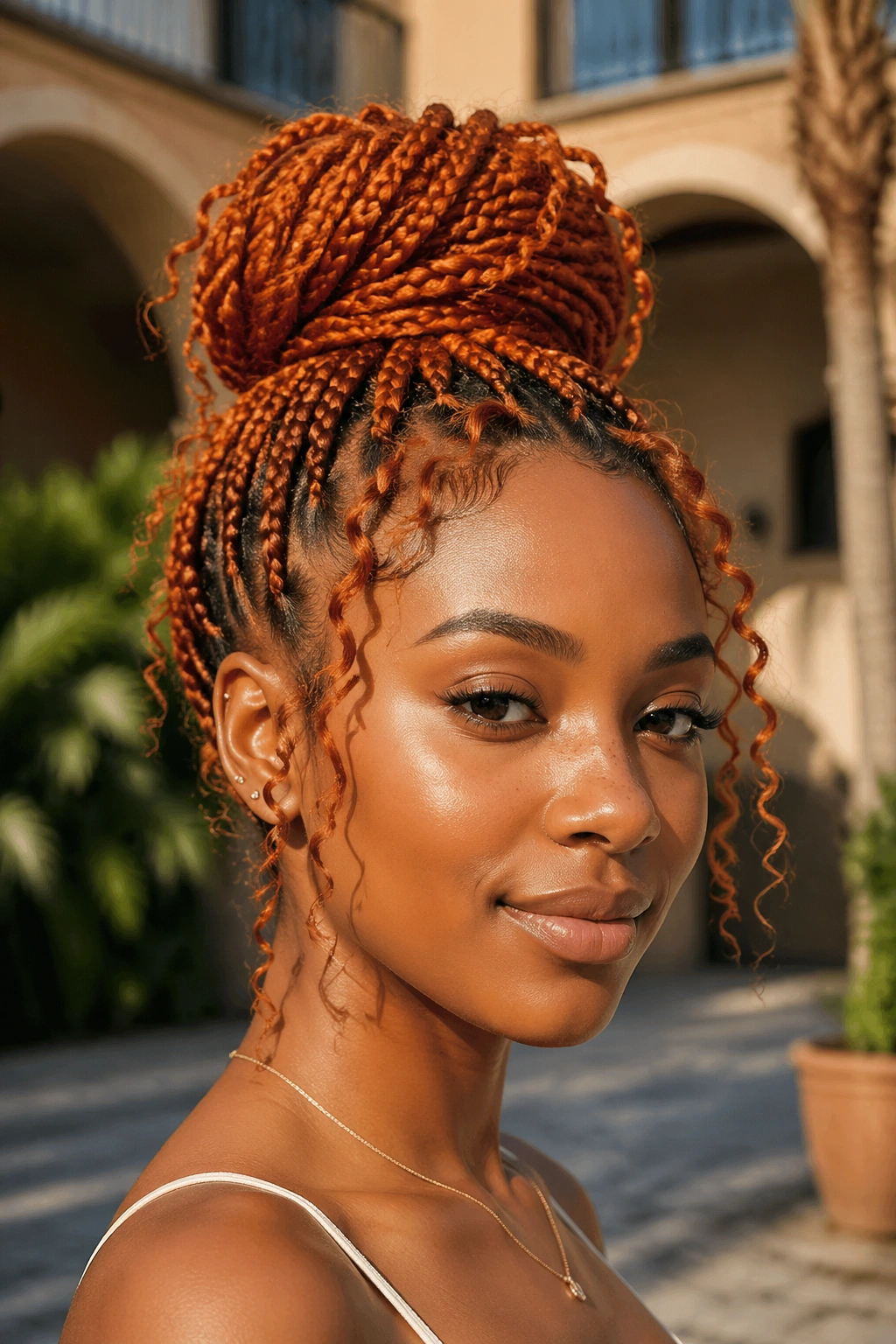
Want your neck free but refuse to give up the curls? A high bun solves that. Orange box braids swept into a bun look crisp on top, and the curly pieces left out around the crown or temples keep the style from turning severe. It’s clean, but not hard.
The bun itself should not be packed like concrete. Leave enough give so the braids can sit without strain, and pull only enough pieces into the knot to hold the shape. If the bun is too tight, the curls left out look like an afterthought. If it’s too loose, the whole thing slips into mess. There’s a middle lane here.
A few curled pieces around the bun are enough. One or two at the sides, maybe one falling at the nape, and you’ve got shape without clutter. I like this style with deeper orange tones because the lifted placement shows off the color from every angle. You get height, shine, and a little softness all at once.
This is the braid look I’d pick for warm weather, long shifts, or any day when hair on the neck sounds annoying. It keeps its polish even when the rest of your outfit is plain.
12. Boho Orange Box Braids With Loose Curls Throughout
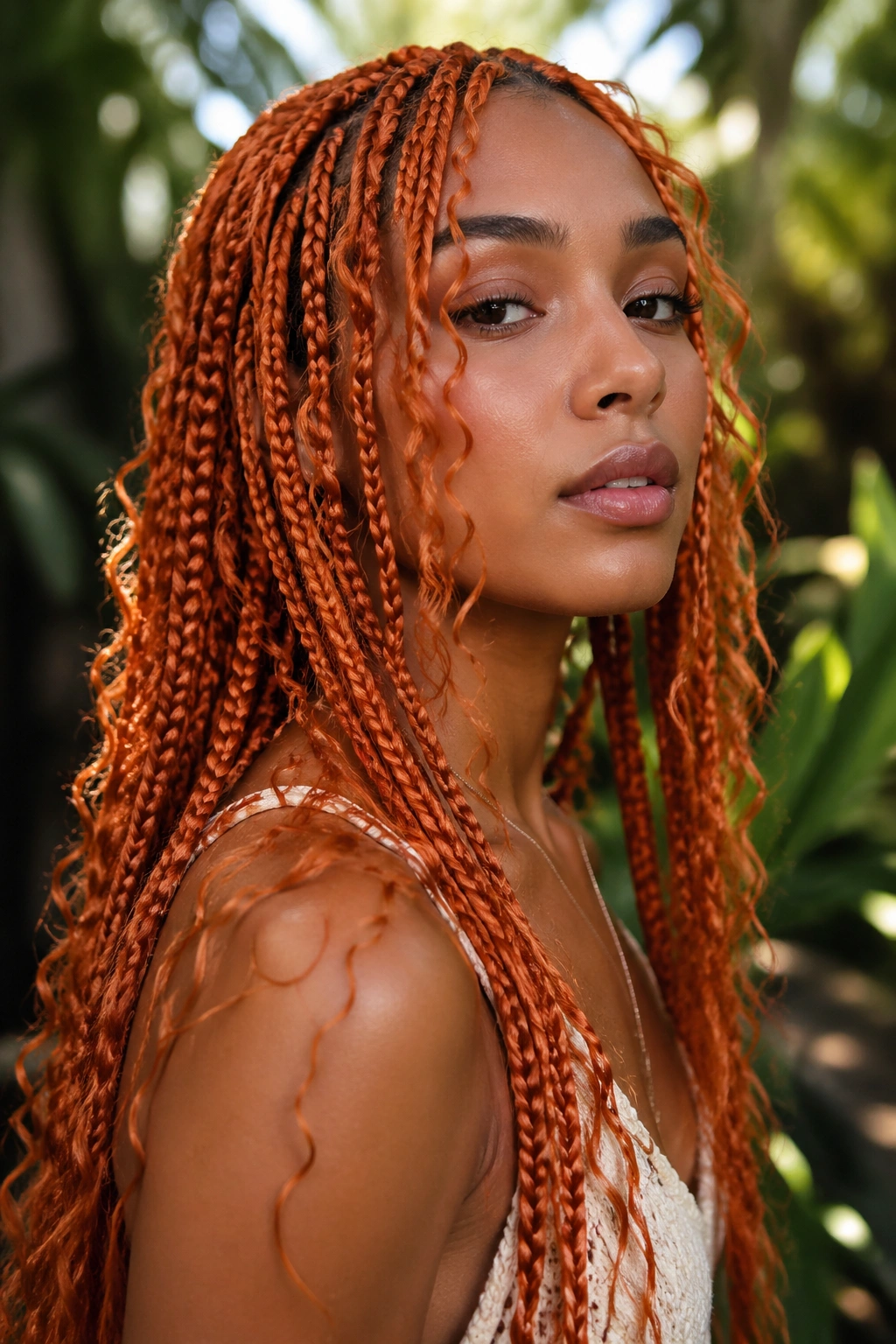
Boho braids are where orange gets a little freer. Instead of saving all the curl for the ends, you leave loose curls scattered through the braids so the whole style has texture, not just the bottom edge. The effect is softer, messier, and much less buttoned-up.
Why the Texture Feels Softer
The loose curls break up the orange in small pockets. That matters because a solid braid line can look harsh when the color is bright. With boho pieces mixed in, the eye keeps moving, and the style never settles into one flat surface.
The trick is restraint. You want enough curls to shape the braid, not enough to choke it. If you overdo the loose pieces, the hair starts to look frayed instead of styled. I’d keep the extras concentrated around the front and crown, then let the ends carry the rest.
A boho orange braid works especially well in shades like ginger, apricot, and cinnamon-orange. Those colors already have warmth, so the curls feel lived-in instead of chaotic. It’s a lovely style if you like texture and don’t mind a bit of controlled mess.
13. Layered Bob Orange Box Braids With Ringlet Ends
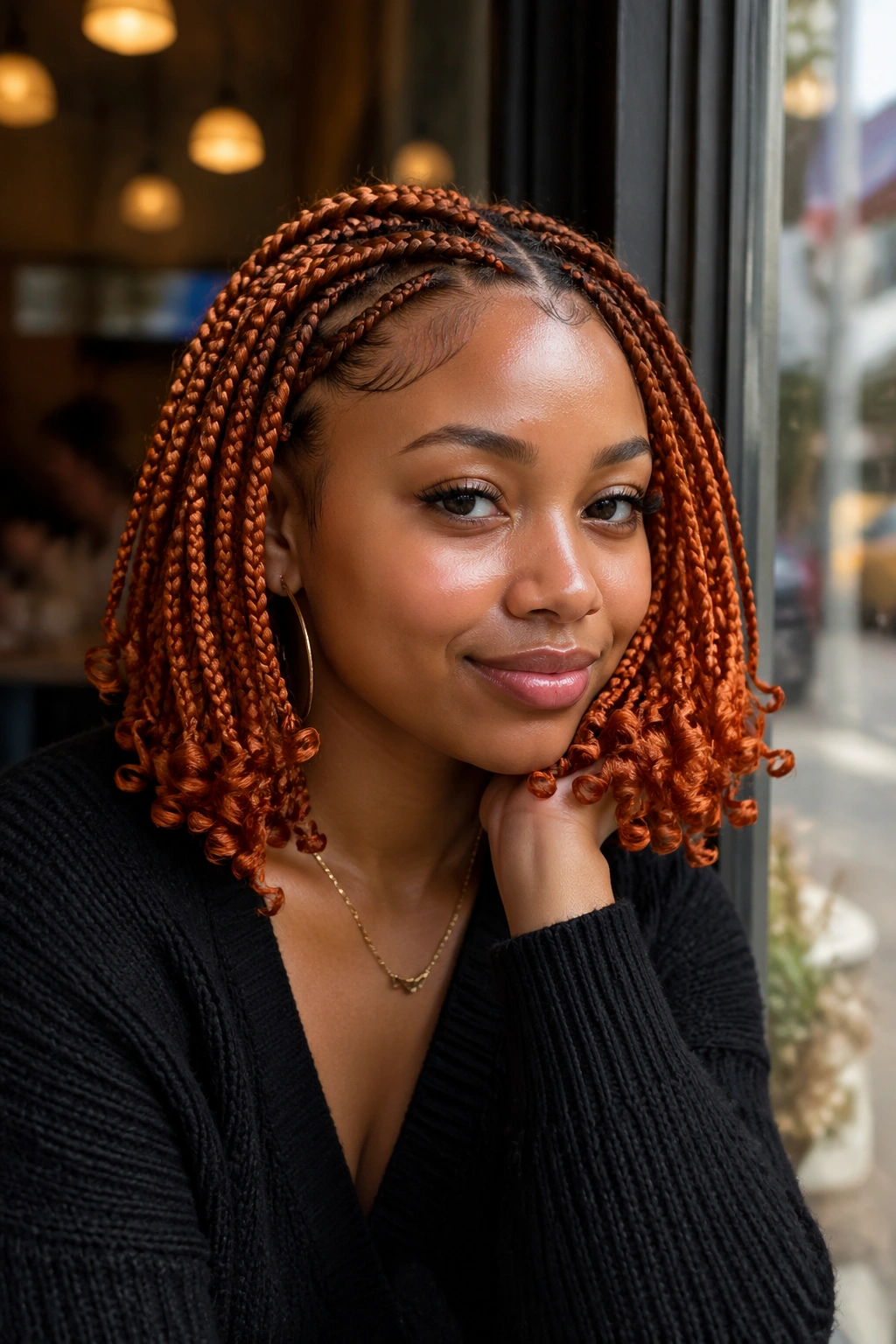
A layered bob gives orange braids a cleaner shape than a full, one-length cut. Shorter pieces near the face sit a little higher, the back stays slightly lower, and the ringlet ends finish the line with movement instead of a blunt edge. It’s neat, but not stiff.
I like this version because the layers do half the styling for you. You don’t need long braids to create drama. You need a good cut line, a saturated orange shade, and ends that curl in a way the eye can follow. The bob shape keeps the color close to the face, which can be striking with warm undertones or bright lipstick.
Quick Shape Notes
- Keep the front layer just below the jawline if you want a clean frame.
- Let the nape sit slightly shorter so the bob curves naturally.
- Use small ringlets at the ends so the cut line doesn’t look too blunt.
- Add a middle part if you want symmetry, or a side part if you want the layers to swing.
This style feels polished without trying too hard. That’s rare, and I value it.
14. Two-Tone Orange Box Braids With Dark Roots
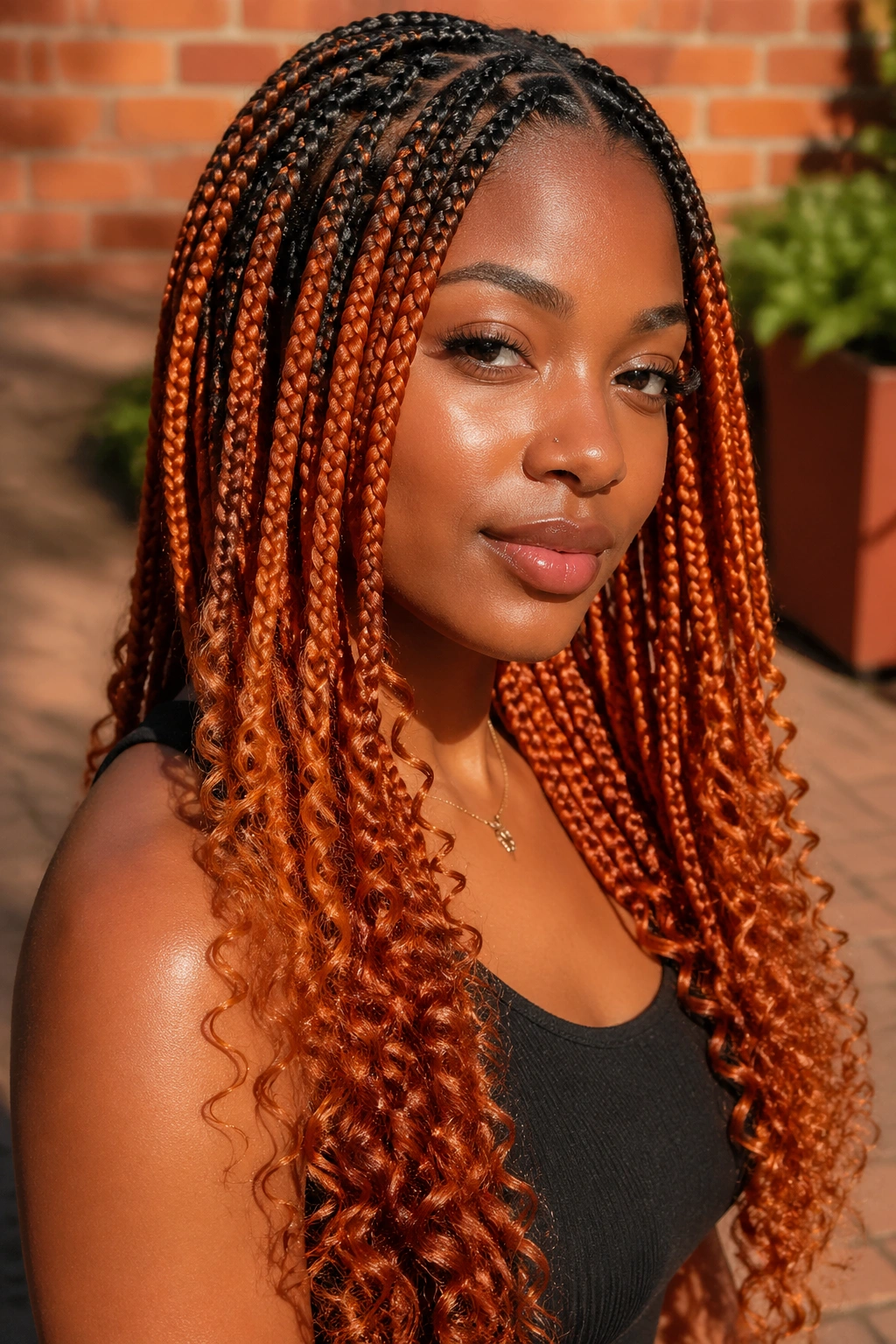
Two-tone orange braids are the easiest way to make a bright color feel grounded. Dark roots, espresso midsections, or even deep burgundy near the scalp give the orange room to shine without taking over the whole head. Curly ends at the bottom make the transition feel smooth instead of abrupt.
The contrast does a lot of work. Dark roots frame the face and make the orange pop farther down the braid, which is useful if you love color but don’t want your scalp to be the brightest thing in the room. The style also looks a little more forgiving as it grows out, which anyone who wears braids for more than a minute will appreciate.
You can push this look soft or bold depending on the orange you choose. Rust and copper feel richer with dark roots. Tangerine and pumpkin read louder. Either way, the braid body stays visually interesting because the color shifts instead of sitting still.
This is the version I’d point people toward when they say they want orange, then quietly admit they don’t want all-over orange. Fair enough. This solves that problem.
15. Side Part Orange Braids With Swoop Bangs
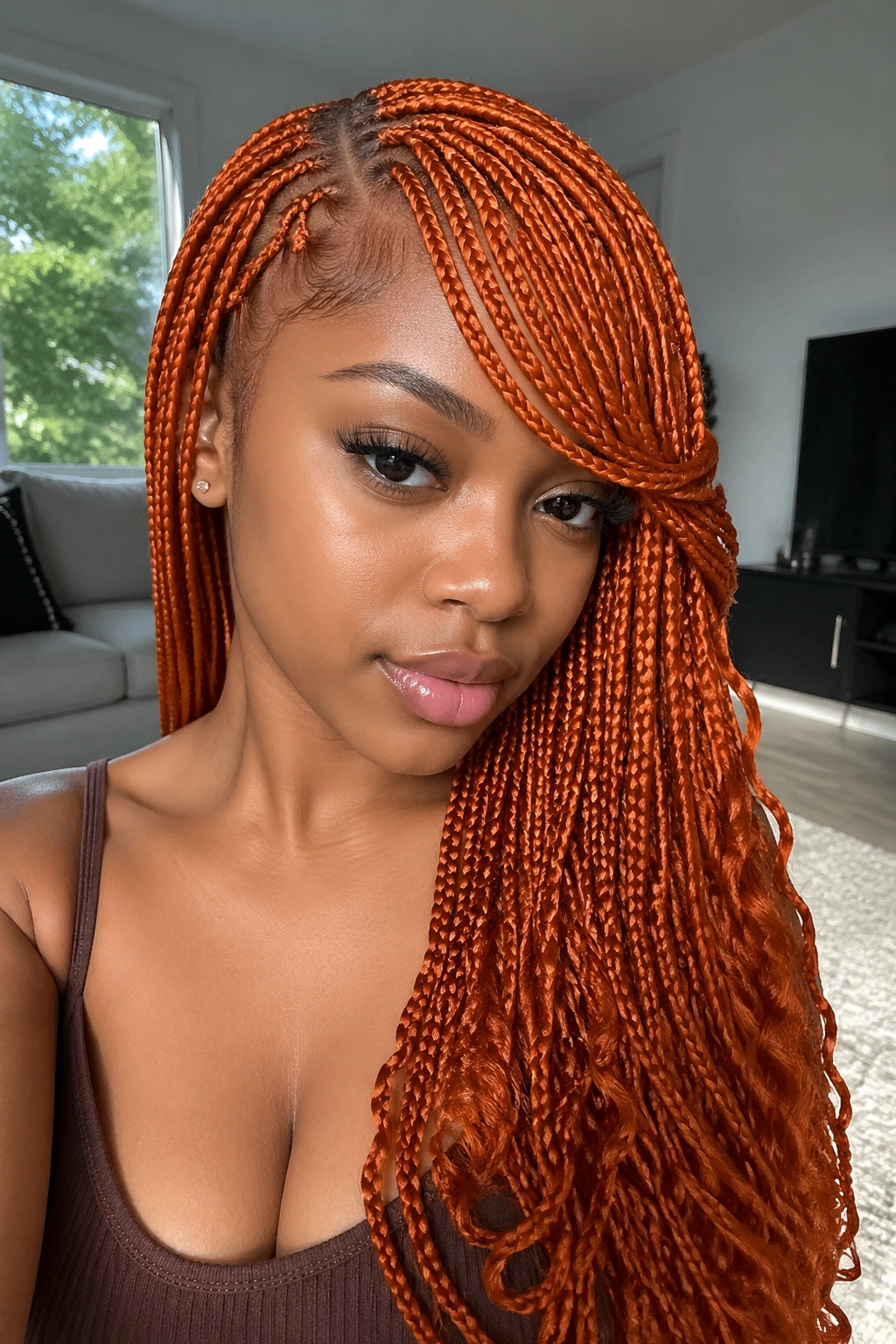
A side part changes orange braids fast. The color pools over one side of the face, the curly ends fall with more direction, and the whole style gets a little swoop that feels softer than a center part. If you want movement near the eyes, this is the one.
The swoop bang effect matters because it breaks up the front line. Orange braids can look strong in a straight-down shape. A side part and a few front pieces create a curve, and curves are kinder on a bold color. You don’t need heavy bangs either. Two to four face-framing braids, bent slightly inward, are enough.
A side part also lets one side carry more volume, which helps if your braids are medium-length and you want them to read fuller in photos or in person. The curls at the ends should be soft, not ultra-tight, so the front doesn’t look too staged. I’d keep the color deep copper or marigold-orange here. Those shades hold the shape well.
This is a good choice when you want orange to look styled, not just installed.
16. Medium Orange Box Braids With Beads and Curly Ends
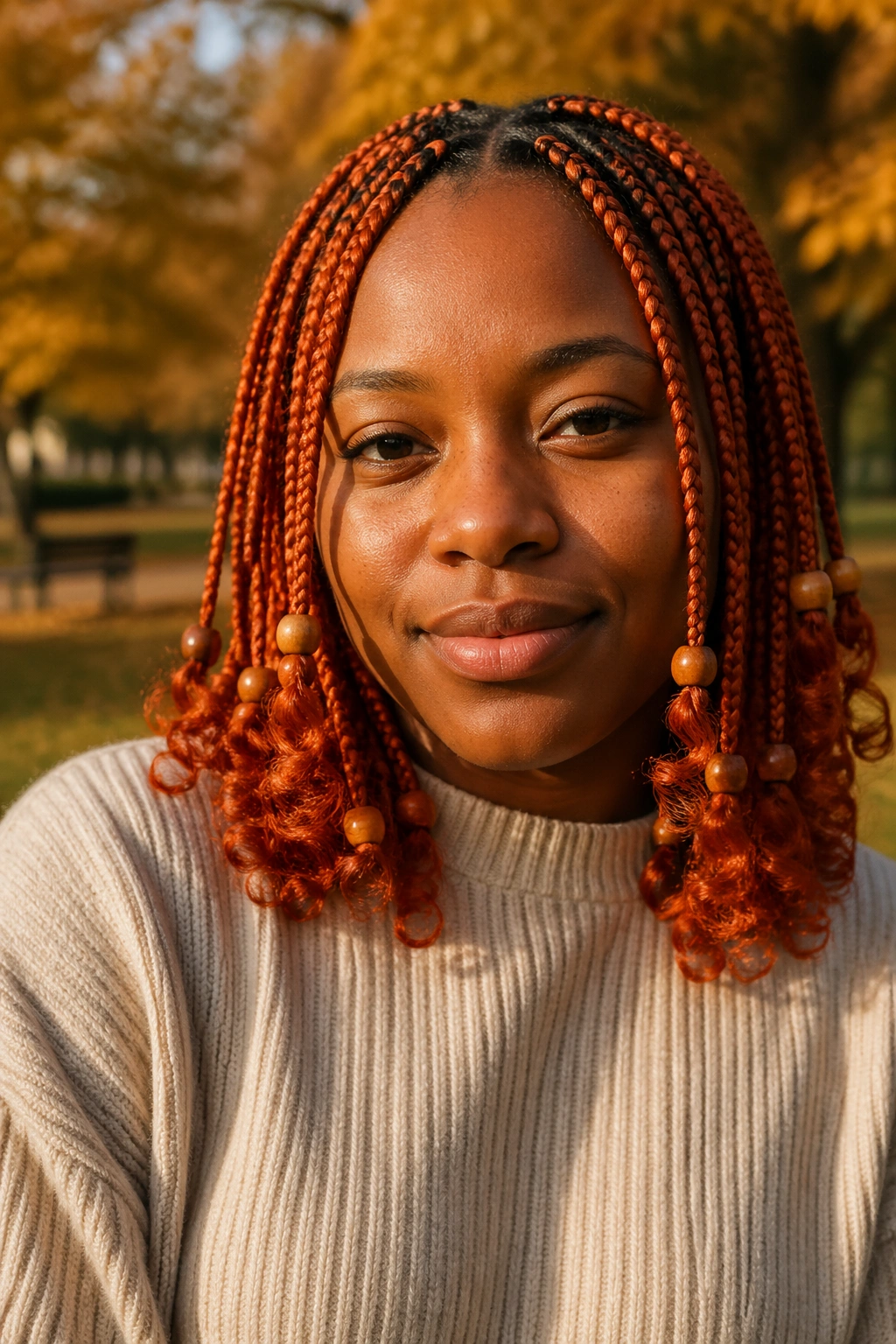
Medium orange box braids are the reliable middle ground, and beads give them a little personality without stealing the show. The curly ends soften the bottom, while the beads add small points of shine higher up. That mix keeps the style from feeling one-note.
Where the Beads Belong
Beads look best when they’re placed intentionally, not scattered all over the head. I like a few on the front braids, maybe two or three on each side, and then a couple closer to the back if you want rhythm. Wooden beads make the orange feel earthier. Gold beads make it look richer. Clear beads can get too busy if the braid color is already bright.
The medium size is the sweet spot because it holds the beads without looking heavy. Tiny braids can get weighed down fast, and jumbo braids can make the beads feel awkward. Medium thickness gives enough structure for the accessories and enough freedom for the curls to move.
This version is easy to dress up or down. Swap the beads, change the parting, and the whole mood shifts. That’s useful.
17. Flame-Orange Braids With Deep Red Lowlights
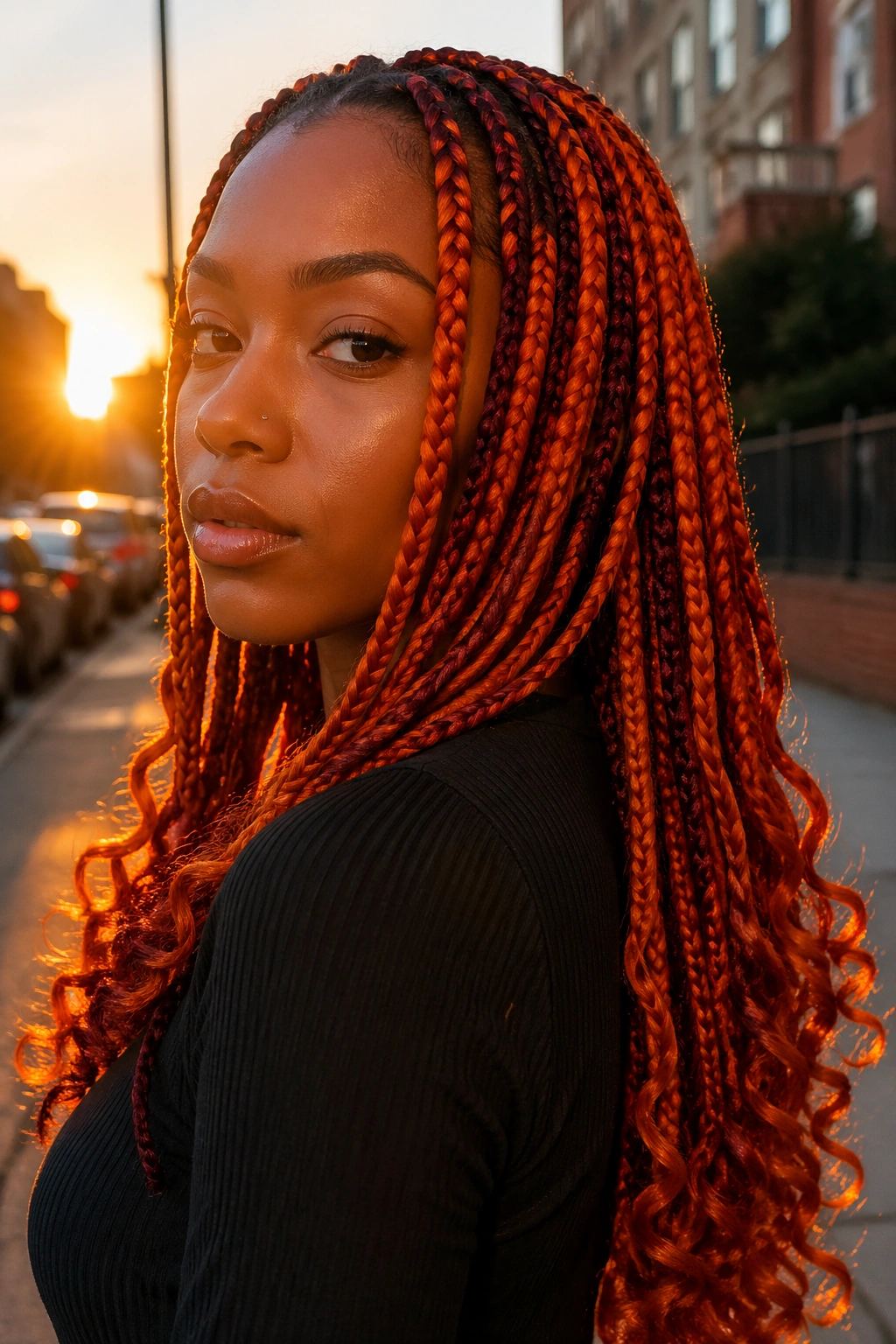
Is there anything more dramatic than flame-orange braids with deep red lowlights? Probably not much. This version takes the orange family and pushes it hotter, with ember, cherry, and rust tones folded into the braid so the curly ends feel like the last bit of fire at the bottom.
The red lowlights stop the orange from flattening out. They create shadow inside the braid, which makes the whole style look fuller and more expensive-looking — though “expensive-looking” is not the point. The point is that the hair has depth. When the ends curl, the lighter pieces show first, then the deeper red peeks through behind them.
Who This Version Suits
- People who already wear warm colors and want hair that plays into that palette.
- Anyone who likes a strong braid look but wants more depth than a single orange tone gives.
- Readers who do not mind a style that gets noticed quickly.
The one thing to watch is balance. If the red is too dark and the orange too bright, the braid can feel striped in a harsh way. Keep the tones close enough that they blend from a distance and separate up close. That’s the sweet spot.
18. Everyday Wear Orange Box Braids With Curly Ends
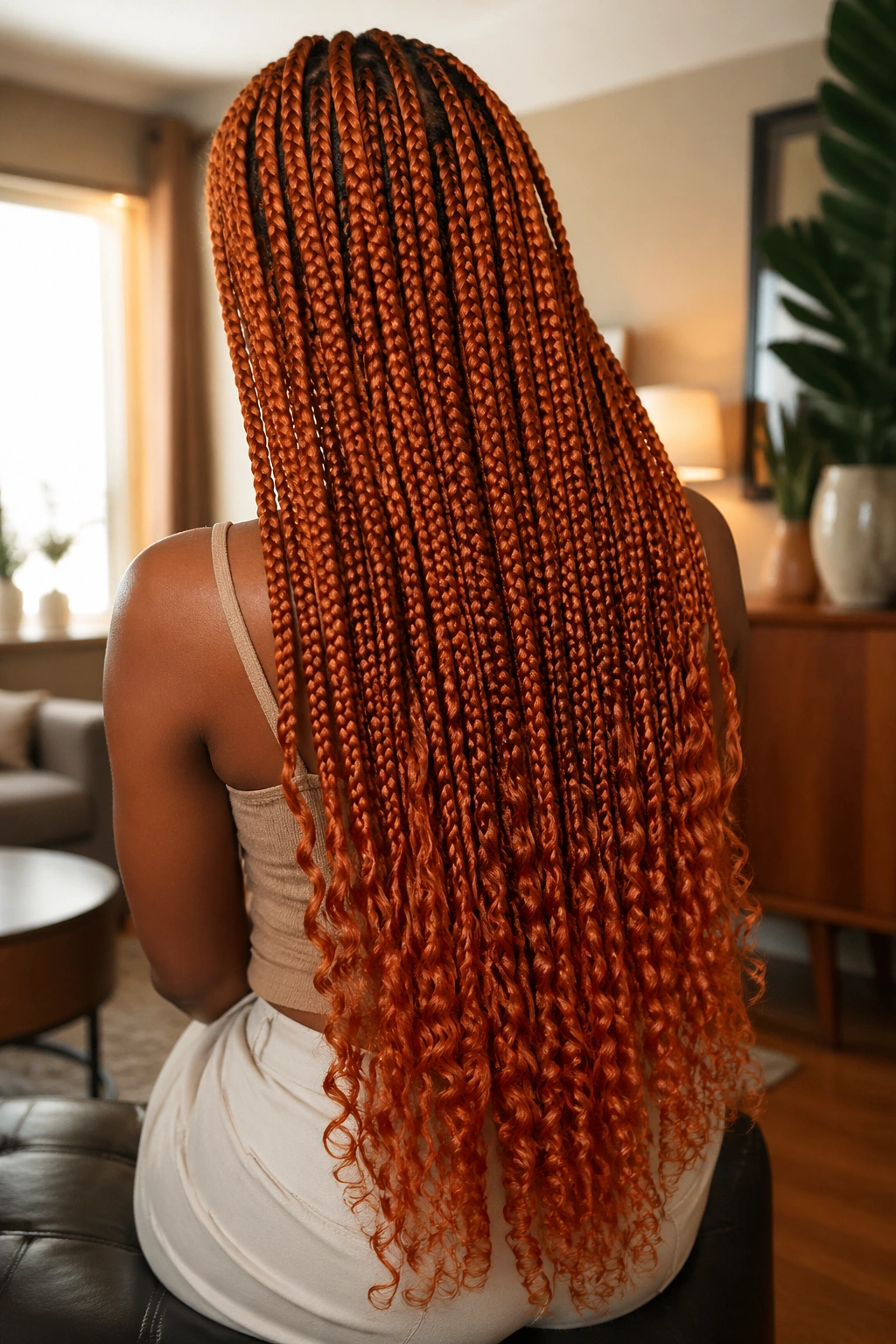
Not every orange braid style needs to feel like a headline. Everyday wear orange box braids with curly ends are the version I’d choose when you want the color to live with you, not perform for you. Think softer copper, muted ginger, or burnt orange, with curls that are tidy enough for work but loose enough to move.
This is where the details matter most. The braids should be medium-sized, the parting should be clean, and the curls at the bottom should hold their shape without looking precious. If you sleep on a satin bonnet and refresh the ends with a little mousse every few days, the style stays neat far longer than people expect. Nothing magical. Just consistent care.
I also like this look because it works with ordinary clothes. Black tee, denim jacket, white button-down, plain hoodie — the hair still does the heavy lifting. A bright orange braid can sometimes demand the rest of the outfit to keep up. This version asks less from your closet.
If you want a style that feels warm, wearable, and a little bit fun every time you catch it in the mirror, this is the one that keeps its shape without asking for constant fuss.