



Rainbow box braids for kids can be playful, neat, and surprisingly wearable when the color placement is handled with a little restraint and the braids are sized for the child’s head, not the photo. That sounds obvious, but a lot of styles miss that balance. Too much weight at the front, too much tension at the roots, too many accessories hanging off the ends — and suddenly the style looks busy instead of cheerful.
A good set of kids box braids should feel like a win on both sides. The child gets the fun of color. You get a style that stays tidy through school, play, naps, and all the little head tosses that come with everyday life. The best versions are not the loudest ones. They’re the ones that sit well, move well, and don’t make bedtime a wrestling match.
Color placement changes everything. A full rainbow can look bold and bright, while a peekaboo layer or pastel mix reads softer and calmer. Some children want every braid to shout. Others want color only in the tips or hidden underneath. That flexibility is what makes rainbow box braids such a useful style to keep in your back pocket.
1. Classic Braids with Every Color in the Row
This is the version most people picture first: full rainbow braids running from root to tip, with the colors changing braid by braid across the head. It’s the cleanest way to get a true multicolor look, and it works especially well when the parts are neat and the braids are kept a medium size.
Why It Works
The strength of this style is simple. Each braid becomes its own color stripe, so the whole head reads like a pattern instead of a jumble. That makes the style easy to read from a distance, which is why it looks good in school photos, family gatherings, and those random moments when a kid turns around too fast for anyone to pose them properly.
The trick is not to cram every color into every braid. That can get messy fast. I prefer a steady rhythm — red, orange, yellow, green, blue, purple — or a repeated color block that keeps the head balanced.
Quick details that matter
- Best braid size: medium, about the width of a pencil or a little thicker
- Best color count: 4 to 6 shades, repeated in order
- Best finish: small beads only if the child likes them; otherwise keep the ends clean
- Best hair length: long enough to hold the extensions comfortably without pulling at the scalp
Pro tip: ask for the brightest color to sit away from the face if the child is sensitive to bold looks. It softens the whole style right away.
2. Rainbow Ombre Braids That Fade from Root to Tip
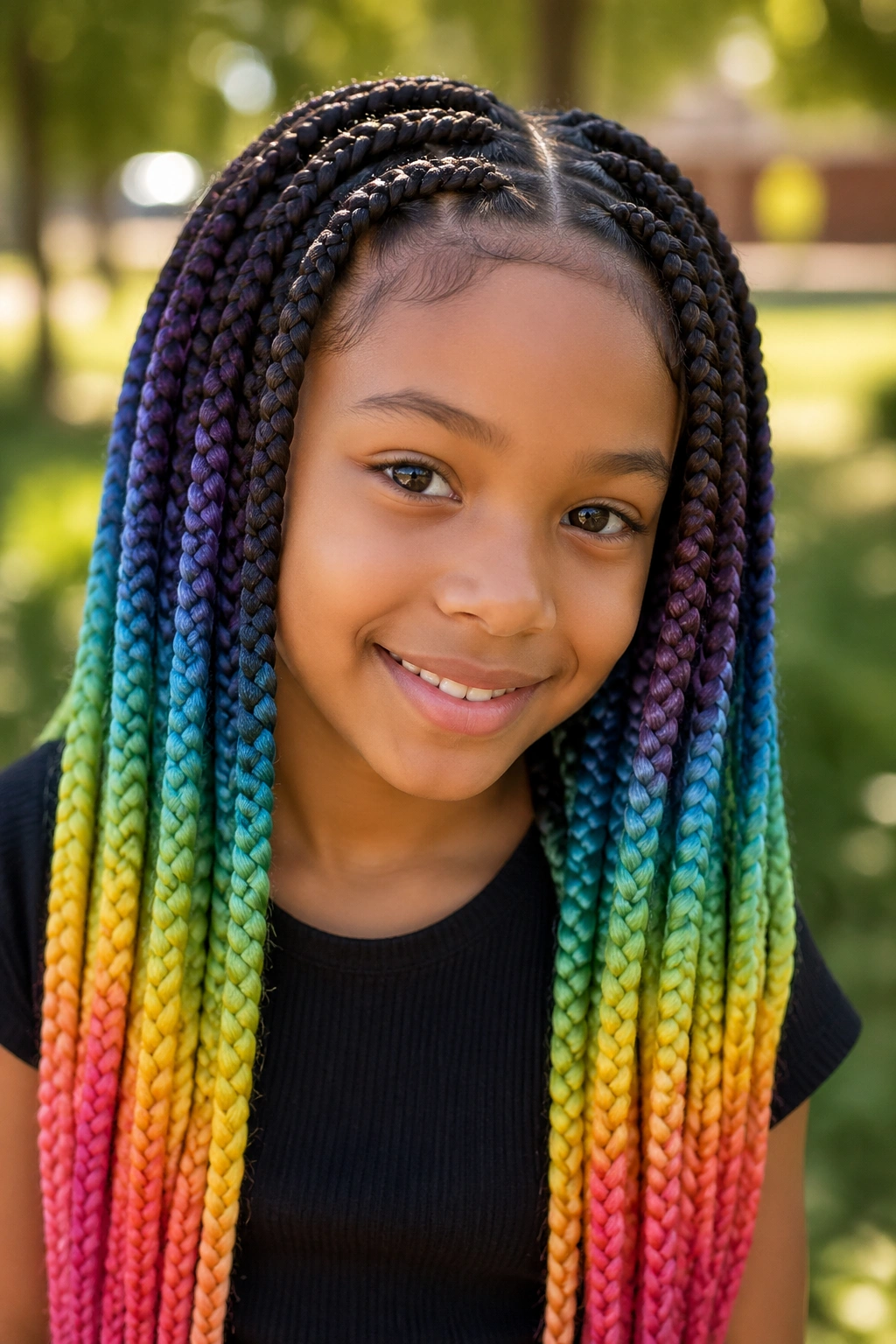
Rainbow ombre box braids are the easiest way to get color into the hair without making the whole head feel busy. The base stays darker or more natural, then the color starts to melt lower down, usually around the middle or the last third of the braid.
That fade does a lot of work. It keeps the roots calm, which matters when you want the child to wear the style for more than a few days without feeling like every braid is demanding attention. It also grows out neatly, which is a small mercy when braids stay in longer than planned.
I like this style for kids who want rainbow hair but don’t want the full carnival effect. It looks polished in a very easygoing way. Not stiff. Not fussy. Just bright enough to make a child grin when they catch it in the mirror.
The best part is that ombre braids are forgiving. If the color mix is a touch uneven, the fade hides it. If one shade is a little louder than the rest, the dark root keeps it grounded.
3. Hidden Rainbow Underlayers for a Peekaboo Surprise
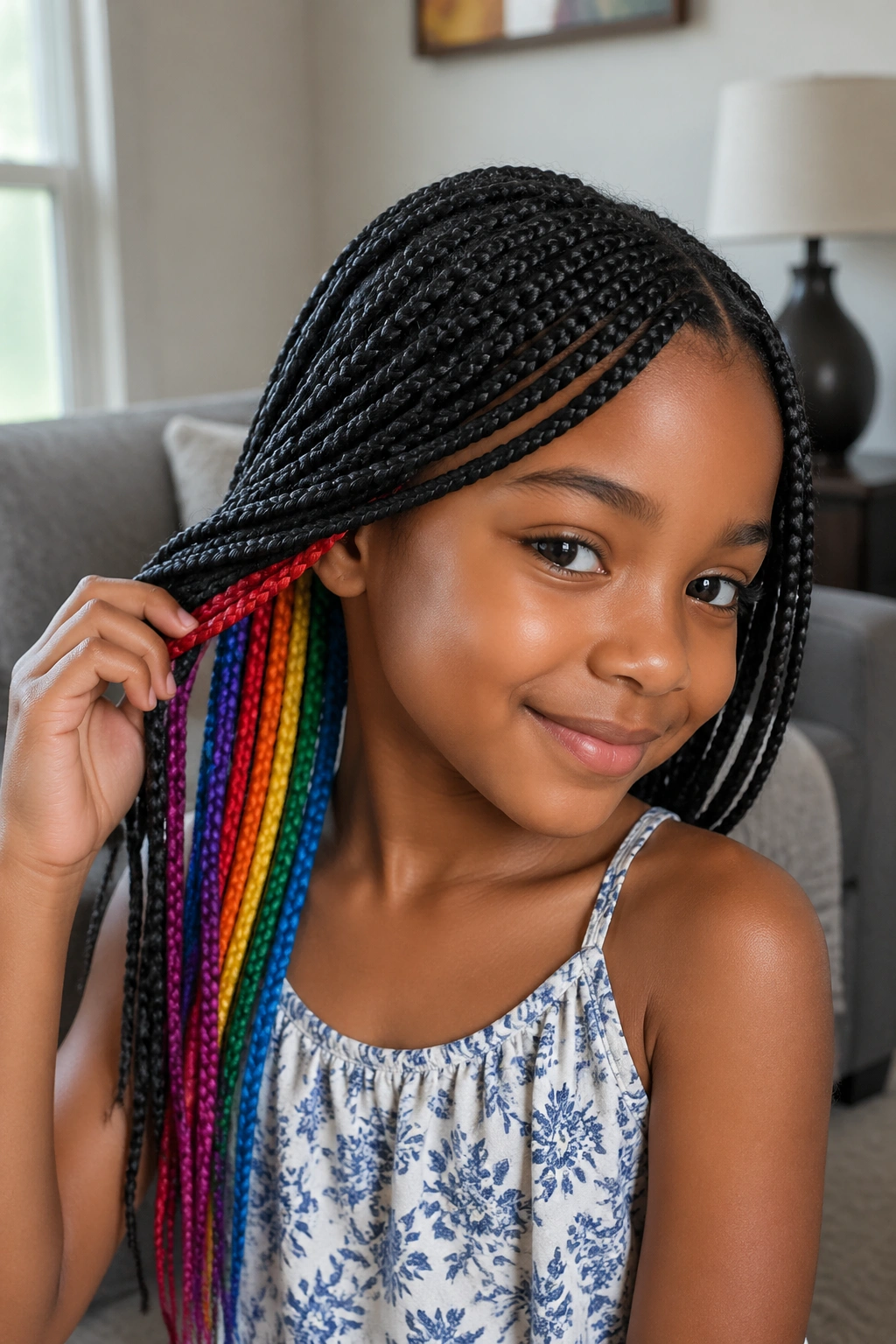
What if the bright colors stayed tucked away until the hair moved? That’s the whole appeal of a peekaboo rainbow layer. The top row of braids can stay dark, brown, black, or even a single calm color, while the underneath section carries the rainbow.
It’s a smart pick for kids who love color but don’t want it on full display every second. Some children like the idea of a little surprise. Others need a style that fits a school dress code or a parent’s sense of order. This one sits right in the middle.
How to Ask For It
Tell the stylist to keep the rainbow concentrated in the lower half or the back panel of the head. The top layer should fall naturally over it, so the color peeks out when the child runs, flips, or puts the hair into a half-up style.
A few things help:
- Keep the top layer a bit denser so it covers the bright hair properly
- Choose 2 or 3 bright shades underneath instead of all the colors at once
- Use a clean middle or side part so the reveal looks intentional
- Avoid heavy accessories near the crown, since they can expose the underlayer too soon
It’s a sneaky little style. In the best way.
4. Jumbo Rainbow Braids That Finish Fast
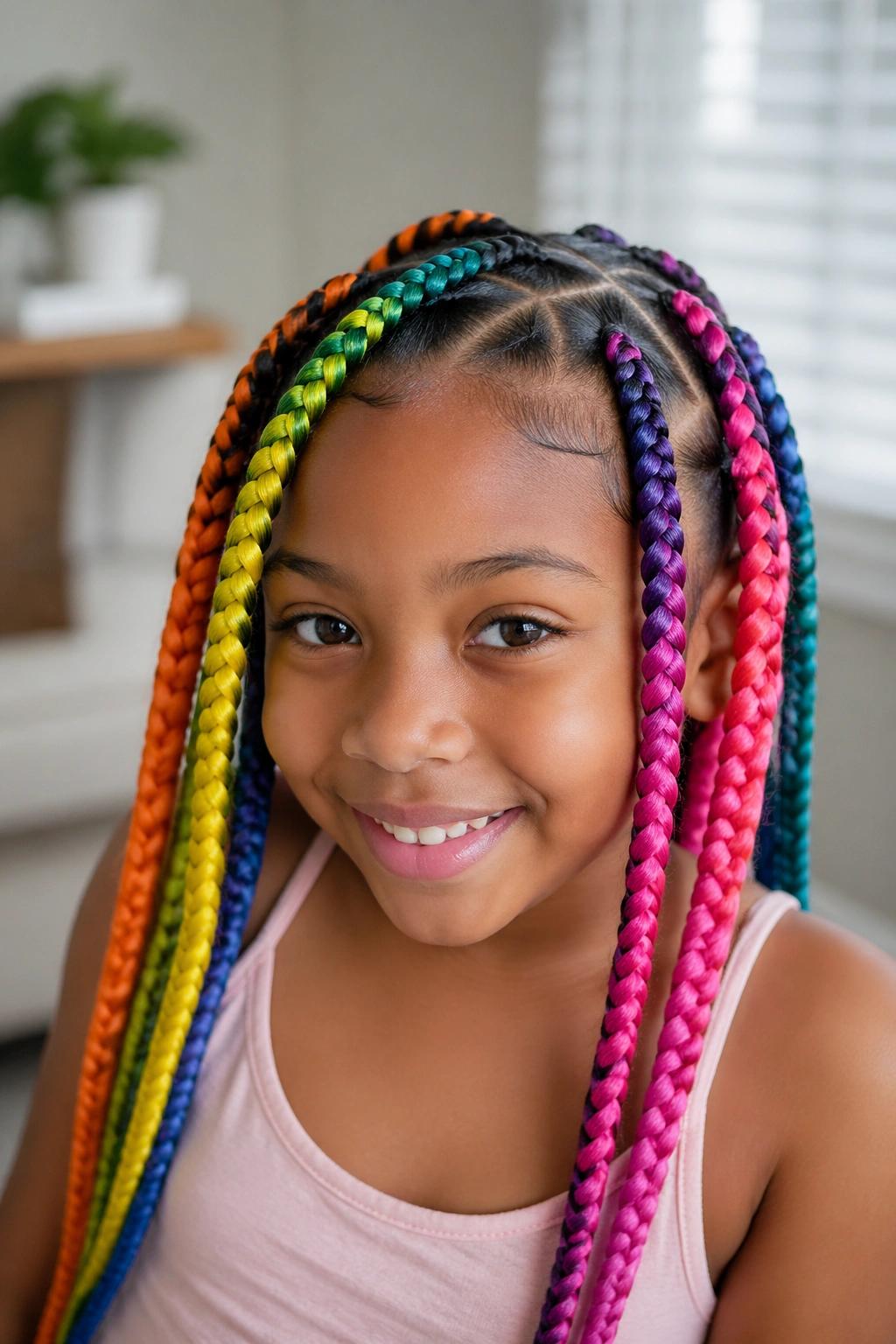
A child sitting still for a long braid appointment is asking for patience from everybody in the room. Jumbo rainbow braids can help with that because fewer, thicker braids mean less time in the chair and less fuss once the style is done.
The larger braid size also makes the color blocks easier to see. Instead of tiny strands disappearing into one another, each braid shows off its own streak of color. That gives the whole head a bolder look, even when the palette stays simple.
What to watch for
- Use jumbo size only if the child’s scalp can handle it comfortably
- Keep the braids light, because oversized extensions can drag
- Best on thicker hair or older kids who can sit through a firm install
- Works well with four to eight braids across the head, not a crowd of tiny pieces
Jumbo braids are not the style I’d pick for a very tender scalp. They can feel heavy if the extensions are packed too tightly. But when they’re done with a light hand, they look modern, playful, and easy to manage.
5. Tiny Rainbow Braids with Bright Tips
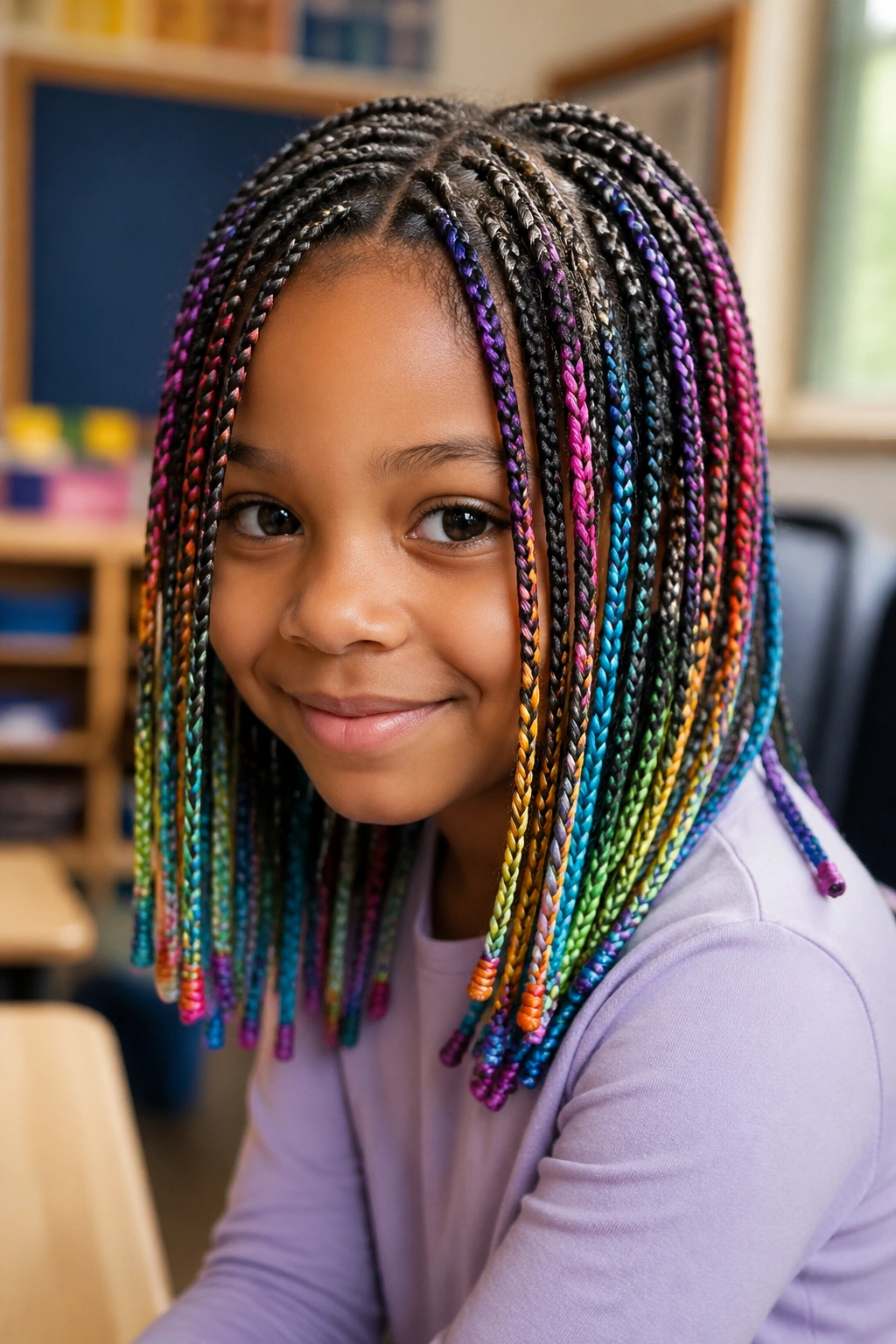
Tiny braids have a different energy. They move more. They fan out when the child turns their head. They also show off color in a softer way, because the rainbow can live just at the ends while the roots stay calm and neat.
This is one of those styles that looks delicate in person, which is not the same thing as looking fragile. The braid size creates a lot of texture, and the colored tips give the hair a little sparkle without making the whole head feel overloaded.
It does come with a trade-off. Tiny braids take longer to install, and a young child has to sit still enough for the parts to stay clean. If the head is very full or the extensions are too dense, the style can get heavy fast. That’s where people get into trouble. Small braids are lovely, but they need a light touch.
I like this look for children who enjoy movement in their hair and don’t mind a longer appointment. It’s also a good choice if you want the rainbow effect to feel more subtle from the front and more playful from the back. The color only needs to show in the last few inches to do its job.
6. Braids with Lightweight Beads
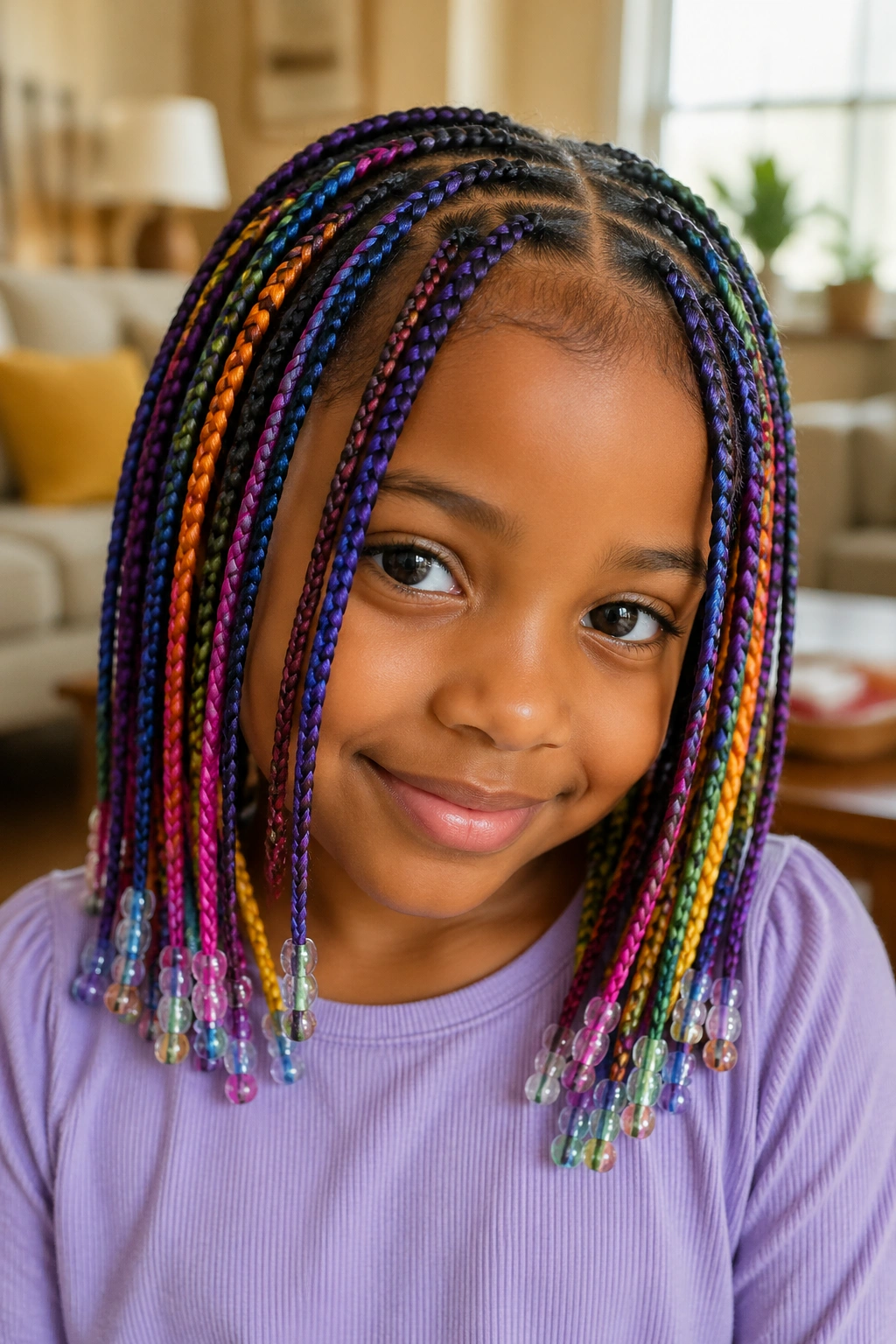
Plain braids are fine. Beads change the whole mood. When the ends of rainbow box braids are finished with lightweight beads, the style gets a little music, a little swing, and a little personality.
The important part is weight. Heavy beads can tug at the ends and make a child miserable by the end of the day. I prefer small acrylic beads, silicone-lined beads, or a short cluster of plastic beads that won’t drag the braid down. Glass beads look pretty in photos, but on kids’ braids they can be too much unless the braids are very few and very sturdy.
Bead choices that make sense
- Light acrylic beads for everyday wear
- Silicone-lined beads if the ends need a better grip
- Two to four beads per braid is usually plenty
- Skip metal charms unless the child is old enough to handle the extra weight
Beads work best when the braids themselves are already neat and the color is doing part of the talking. If the beads are loud, the braids can stay simple. If the rainbow is already bold, keep the bead count low. That balance matters more than people think.
7. Half-Up Rainbow Braids with a Bun on Top
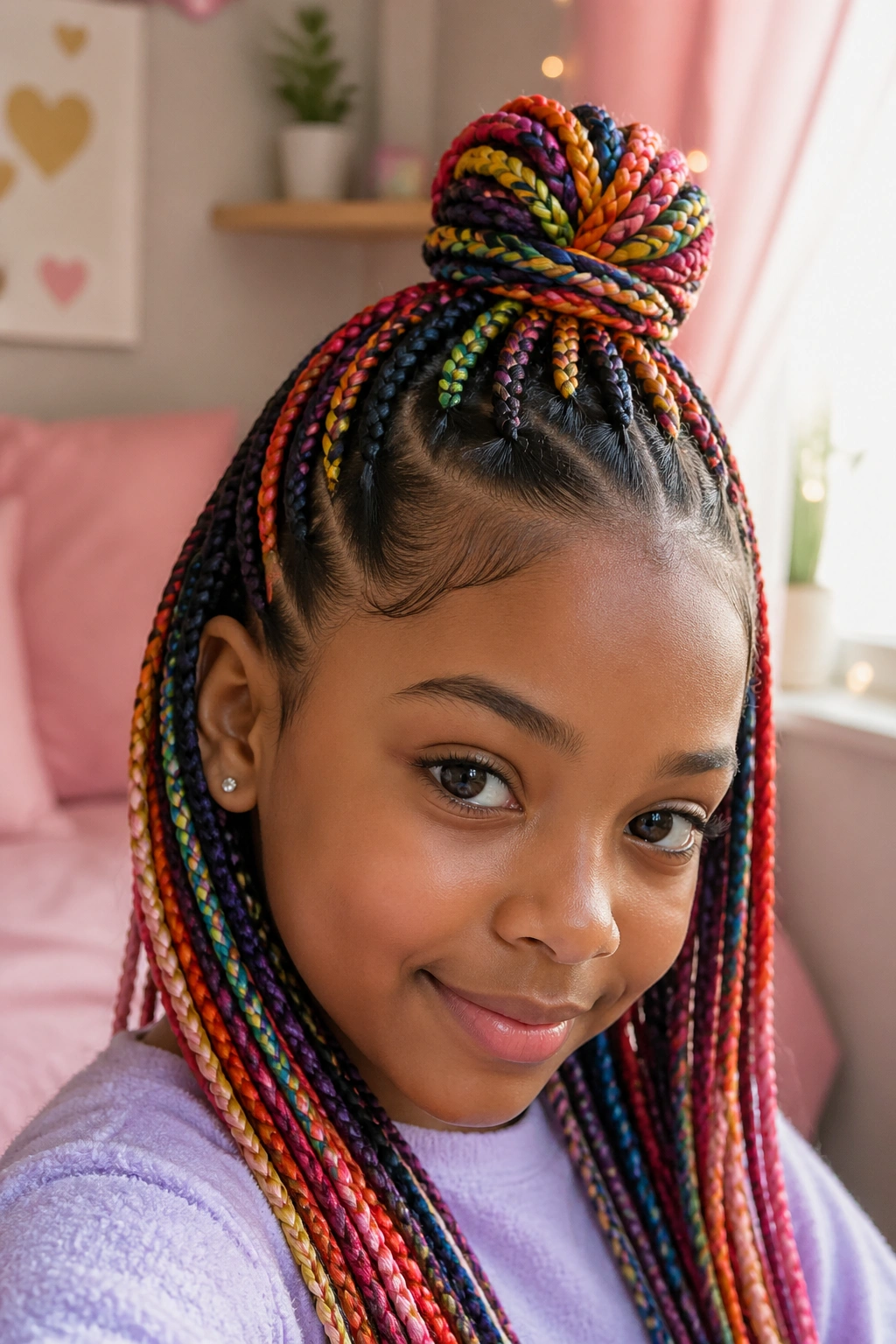
A half-up style is one of the easiest ways to tame rainbow box braids for a busy day. The top section gets pulled into a bun or puff, and the rest stays down. The result looks playful but stays out of the face.
Why parents like it
The hairline gets a break. The front stays controlled. And the style can look neat even when the child has been jumping around for hours. A half-up bun also gives you a little bit of lift at the crown, which helps rainbow braids look fuller without adding more braids.
I’d keep the bun soft, not tight. A knot at the top that’s pulled too hard can make the front hairline sore, and nobody wants that. A satin scrunchie or covered elastic works better than a rough rubber band. If the braids are medium length, twist the top section once and tuck the ends in rather than winding it into a hard little ball.
Small details that help
- Leave the bun loose enough to move
- Pull up only the front and crown braids
- Keep the back section free so the child can still feel the color flow
- Add one or two beads near the front only if they do not interfere with the bun
It’s cheerful. It’s easy. It stays out of the way.
8. Crisscross Part Rainbow Braids
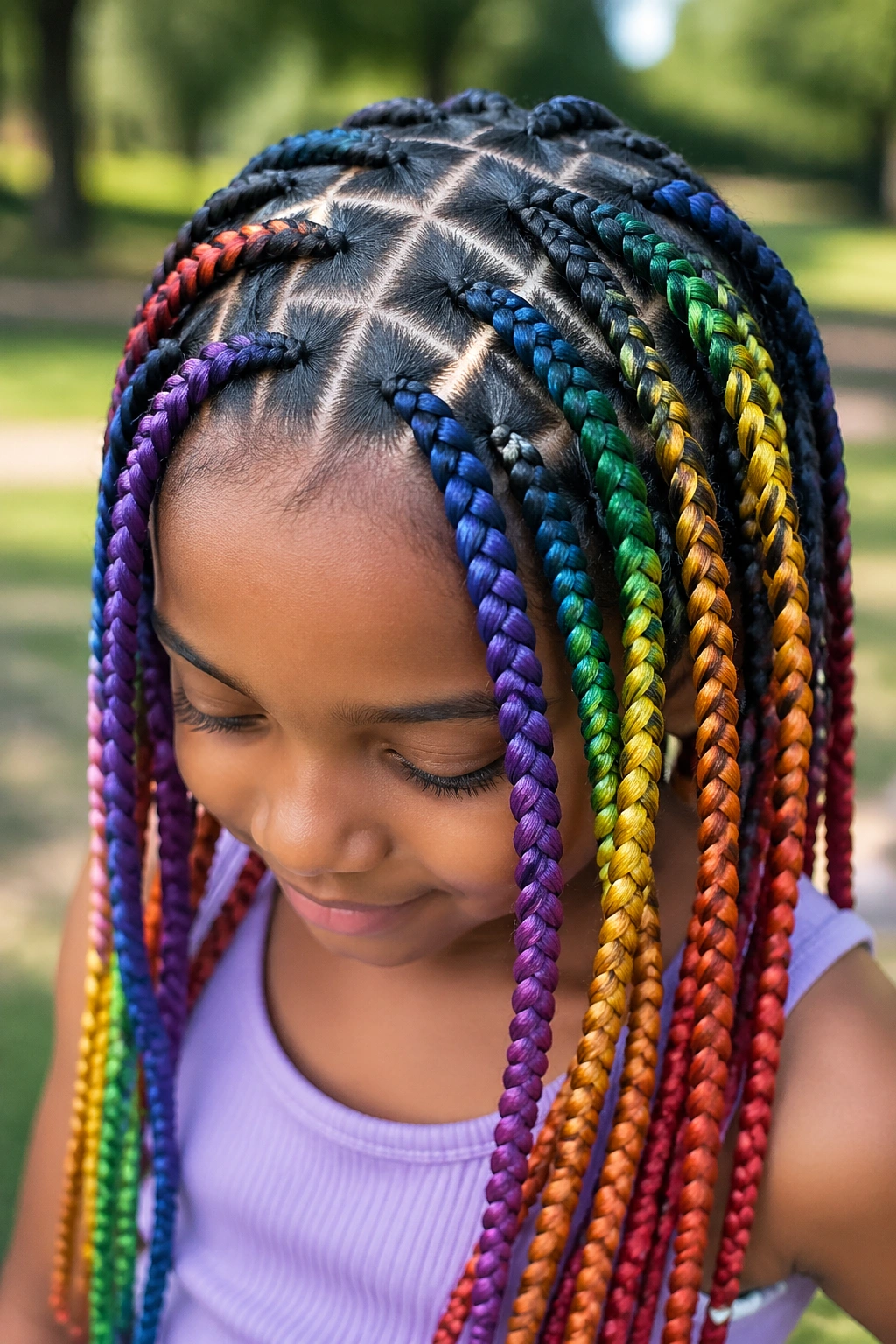
Crisscross parts make the whole head feel more playful before anyone even notices the colors. Instead of straight rows, the sections cut across one another in angled lines, X-shapes, and diagonal paths that give the scalp a little architecture.
That matters more than it sounds like it should. Rainbow braids already bring enough color. When the parting adds movement too, the style stops looking flat. A child who likes patterns, shapes, and little surprises in the mirror usually loves this one.
The parting has to be clean. No sloppy zigzags that wander off and collapse on themselves. A rat-tail comb and a calm stylist make a big difference here, because the crisscross lines are the whole point. If the parts are crooked in a lazy way, the style just looks messy. If they’re deliberate, it looks sharp and fun.
This is a good pick for school pictures or birthday braids when you want something a little different from the standard box grid. The color can stay classic. The parting does the heavy lifting.
9. Triangle-Part Rainbow Braids
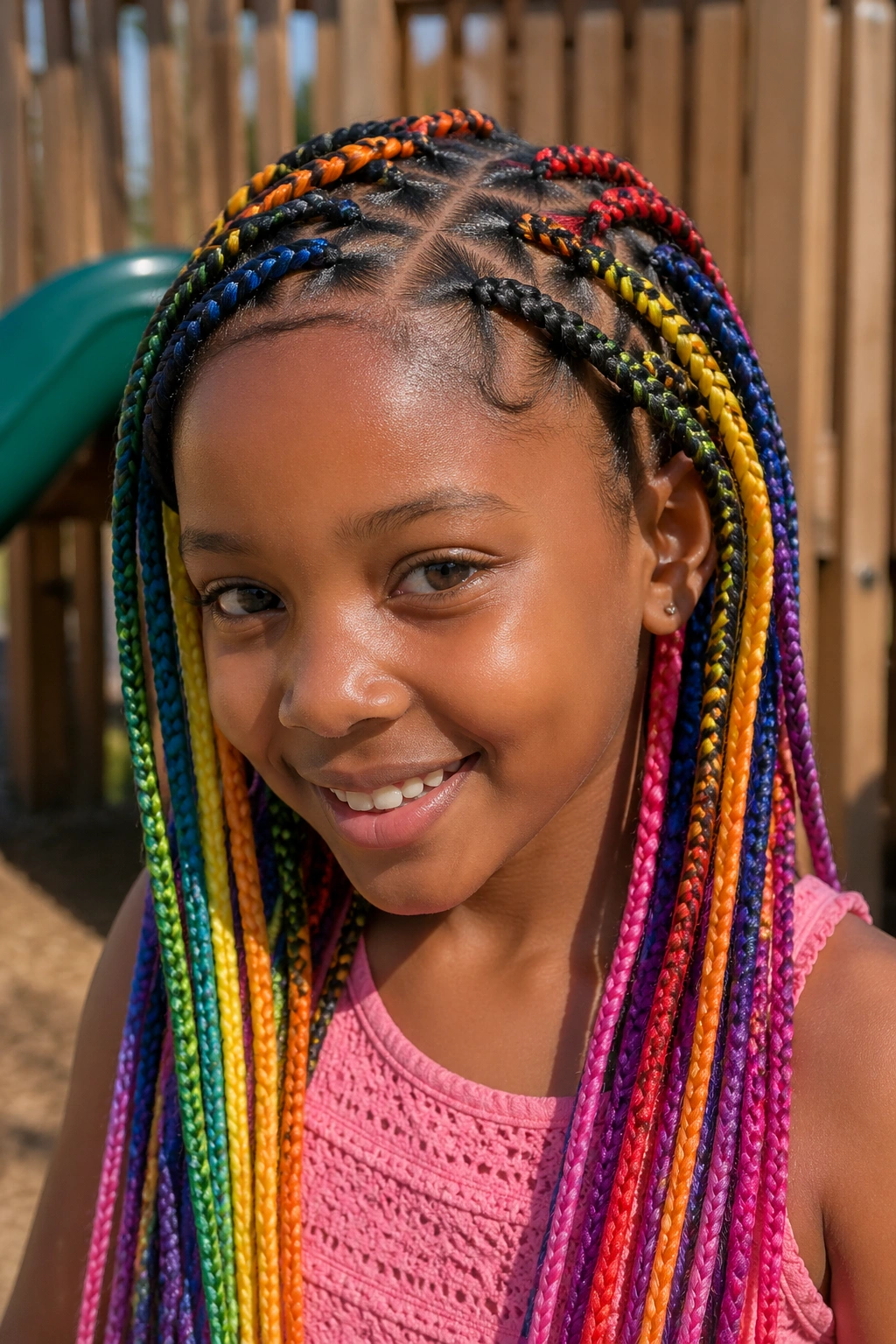
Triangle parts are one of my favorite ways to make kids’ braids feel a little more alive. Each section has sharper edges than a square part, so the braids seem to fan out a bit more around the head.
That shape changes how the color reads. A rainbow set with triangle parts looks less rigid and more fluid, even if the braid size stays the same. The scalp pattern itself becomes part of the design, which is a nice bonus if the child likes details up close.
What makes it worth trying
- Triangle parts soften a boxy look
- They help medium braids sit flatter
- The style holds up well with mixed colors
- It’s a good choice for children with finer hair, since the sections don’t have to be huge
I wouldn’t make the triangles too tiny. That starts to steal time and can make the install feel fussy for no real gain. Clean, medium triangles are enough. The rainbow already brings the fun; the parting just gives it shape.
If you like styles that look good from every angle, this one is worth a serious look. The top and sides both get a little more energy, and the braids fall in a way that feels less stiff than a standard grid.
10. Heart-Part Rainbow Braids
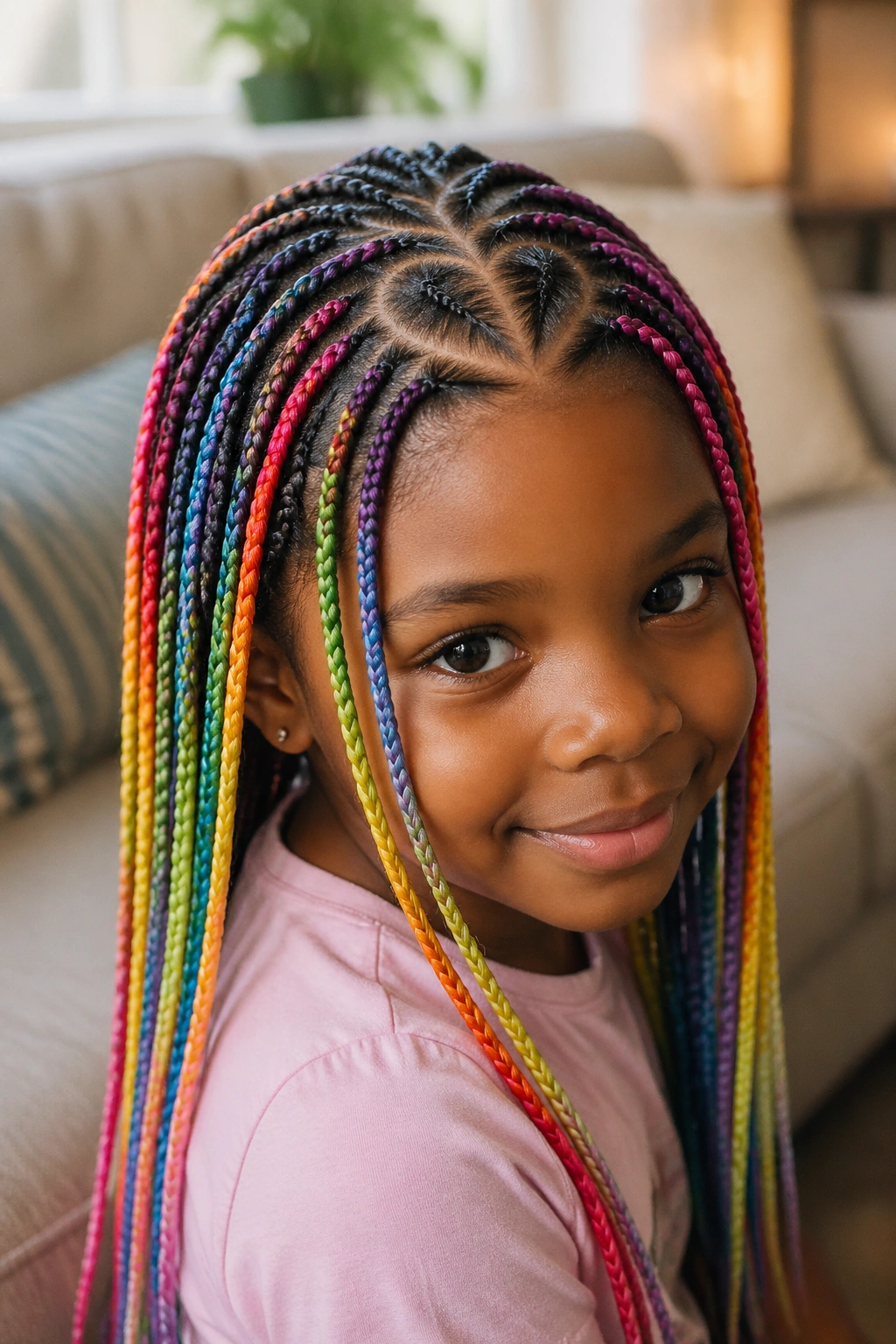
Heart parts are a sweet choice when the child wants something with a little charm in it. The shape usually sits at the crown, the front, or a side panel, and the rest of the braids can stay simple so the design has room to breathe.
That’s the part people often miss. Heart parts do not need a busy head full of extra tricks. One clean heart, placed well, is enough. The rainbow color gives the shape more life, because the different shades trace the parting and make the pattern easier to spot.
I like this for birthdays, family photos, and any day when the child wants to feel a bit special without turning the whole style into costume hair. It can be soft and pretty or bright and loud, depending on the color mix. Either way, the parting needs steady hands. A heart that sags on one side stops being a heart.
The rest of the braids should stay balanced. If the heart sits on the left, keep the color spread even enough that the head still feels symmetrical overall. That keeps the style from tipping into chaos.
11. Knotless Rainbow Box Braids for Softer Roots
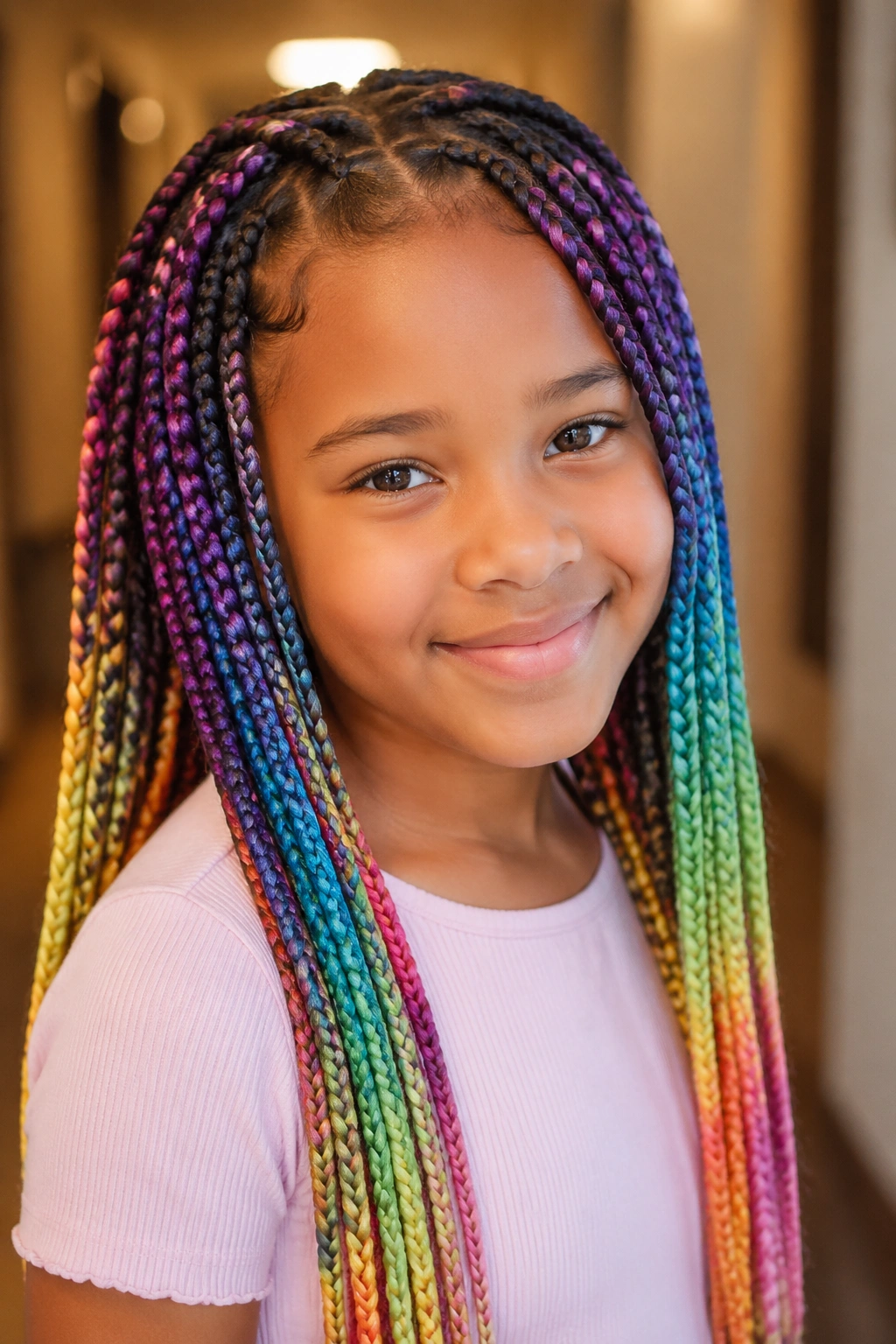
Knotless braids change the root feel right away. There’s no hard knot at the base, so the braid starts more gently and lies flatter against the scalp. For kids with a tender hairline, that can make a big difference.
The color still gets to do the fun part. In fact, rainbow shades can look even smoother with knotless braids because the braid itself has a softer start. The finish feels less bulky near the root, which helps the whole style move a little more naturally.
Why the softer start matters
A child who hates the pulling sensation at the edge of the hairline often does better with knotless braids. The install can take longer, though, and the stylist has to feed the extension in carefully so the braid keeps its shape. That extra time is worth it if the goal is comfort.
This style is a good fit when you want the rainbow to feel polished but not stiff. It works well with medium or small braids, and the lighter root makes the colors look like they’re flowing rather than sitting in chunks. That’s a subtle difference, but it shows.
If a child has ever complained about the very first day of a braid style, I’d start here. It’s a calmer place to begin.
12. High Ponytail Rainbow Braids
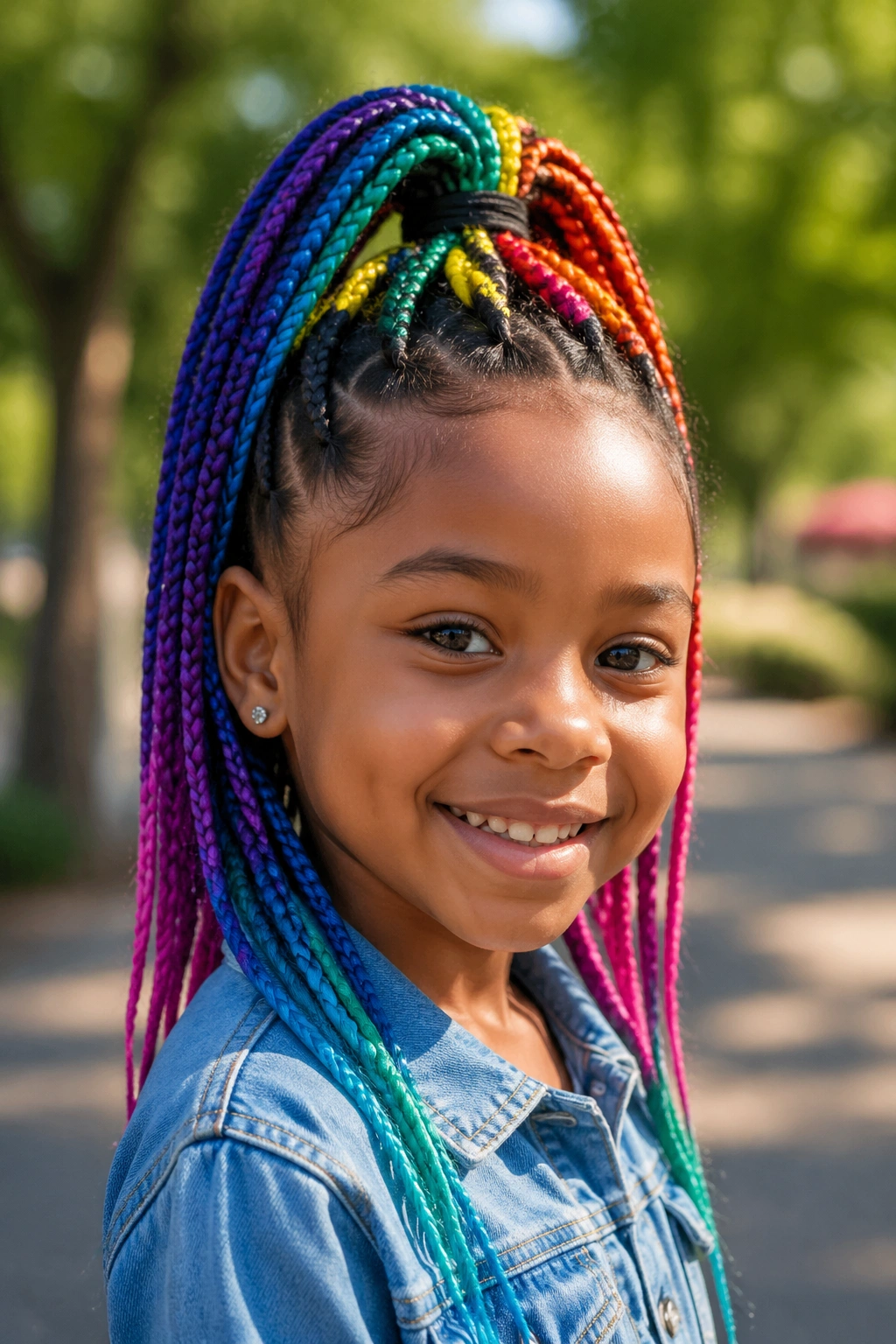
Pulling rainbow box braids into a high ponytail changes the whole silhouette. The hair gets lifted off the neck, the color bunches together at the crown, and the style suddenly feels more energetic than formal.
What to pay attention to
A high ponytail needs balance. If the braids are too long or too heavy, the base can feel strained. If the elastic is too tight, the child will notice right away. I like to gather the braids just high enough to clear the shoulders, then secure them with a soft band and wrap one braid around the base when there’s room.
The style is especially handy for active kids. It keeps the face open, which means fewer braids sticking to cheeks during play. It also gives the rainbow a tall, stacked look that photographs well without trying too hard.
- Use a snag-free elastic
- Avoid piling every braid into the pony if the hair is very full
- Let a few front pieces fall free if the child wants softer framing
- Keep the tail from sitting too high if the scalp is sensitive
The ponytail version is practical, which sounds boring until you’ve watched a child flip their hair out of their eyes ten times in one afternoon. Then it makes perfect sense.
13. Double Pigtail Rainbow Braids
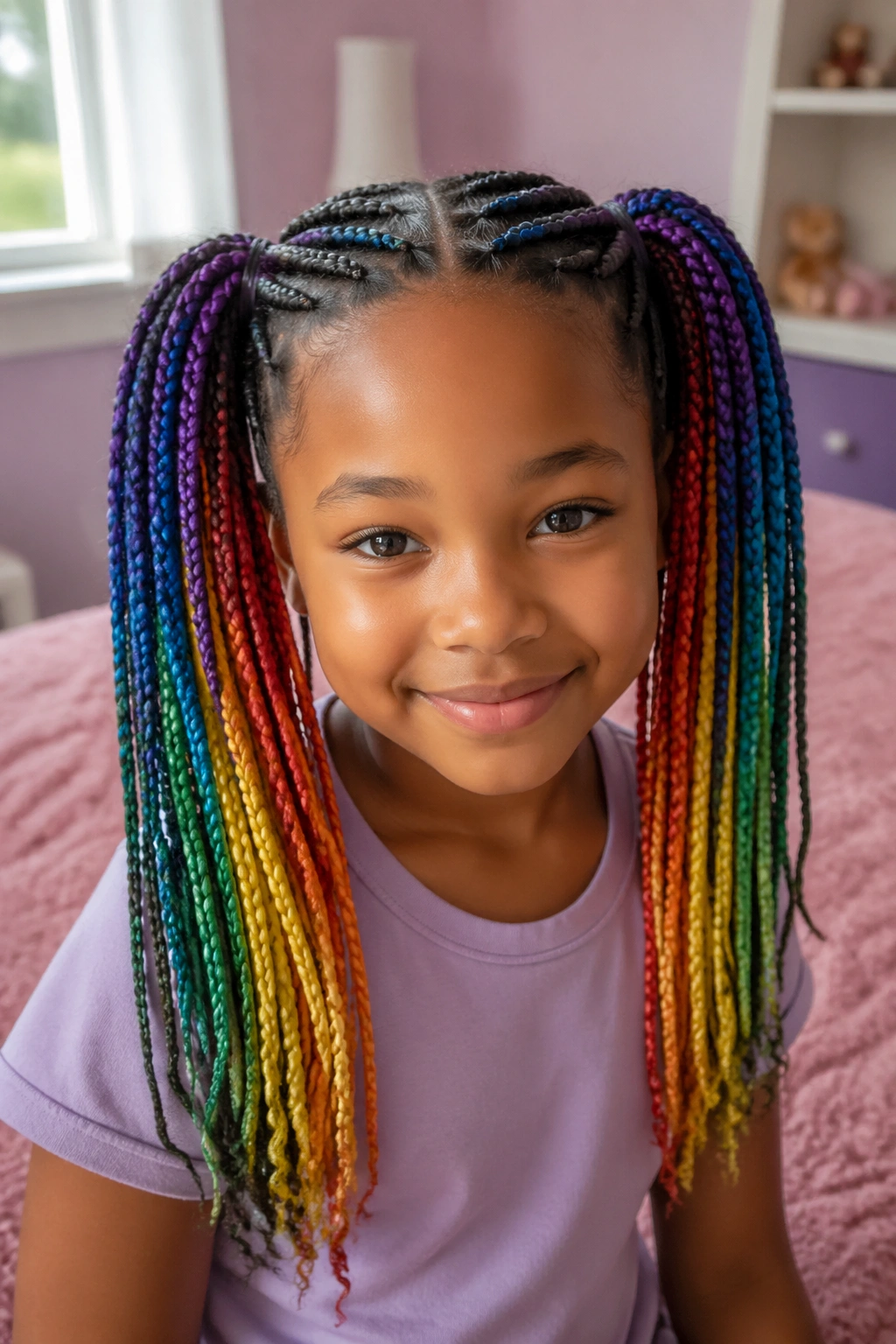
Two pigtails can make rainbow box braids feel lighter, younger, and easier to wear. Splitting the hair into two sections spreads the weight out, so the braids do not all pull from one spot at the crown.
That is the real reason this style works. It looks playful, yes, but the balance is what matters most. A single ponytail can feel heavy on a child’s scalp if the braids are thick. Two pigtails usually sit more comfortably.
I also like the way color behaves here. Each side can mirror the other, or the colors can alternate in a slightly uneven way that still feels intentional. A neat middle part keeps the look tidy, while a soft side part makes it feel more relaxed. Both work.
This is one of those styles that suits little kids especially well. It keeps the braids out of the face, gives the head a soft shape, and makes the rainbow look cheerful instead of overwhelming. If there are beads, keep them close to the ends and not too many, or the pigtails will droop.
14. Neon Rainbow Braids with Sharp, Bright Colors
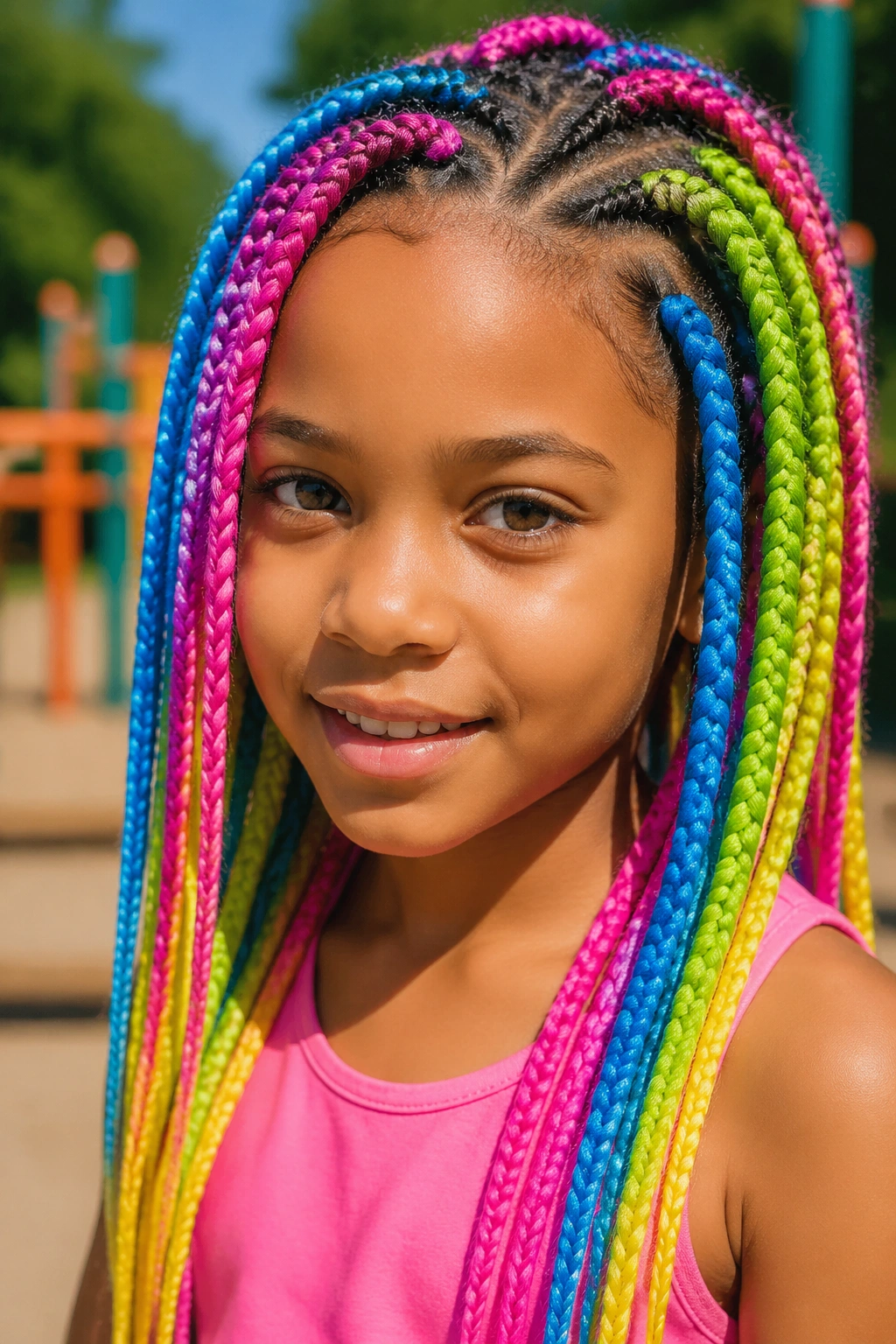
Are neon colors too much? Not if the child loves them. Bright pink, electric blue, lime green, and hot yellow can make rainbow box braids look almost glowing, even under ordinary light.
The key is contrast. Neon shades show best when they sit against a darker base or when the colors are broken up with black or brown extensions. If every shade is equally bright, the style can get visually noisy. A little breathing room helps the colors pop one by one instead of colliding with each other.
How to keep it readable
- Use 2 or 3 neon shades instead of every bright color at once
- Let one darker braid sit between very loud colors
- Keep accessories plain so they do not compete
- Ask for clean parts, since neon shows mistakes fast
Neon hair is not shy. That is the point. Still, the style works better when the braid pattern stays neat and the child’s face is left open enough that the colors frame rather than swallow them.
One small practical note: some synthetic hair can shed a little color residue at first. A separate rinse and a towel you don’t mind sacrificing are worth having on hand.
15. Pastel Rainbow Braids in Soft Candy Colors
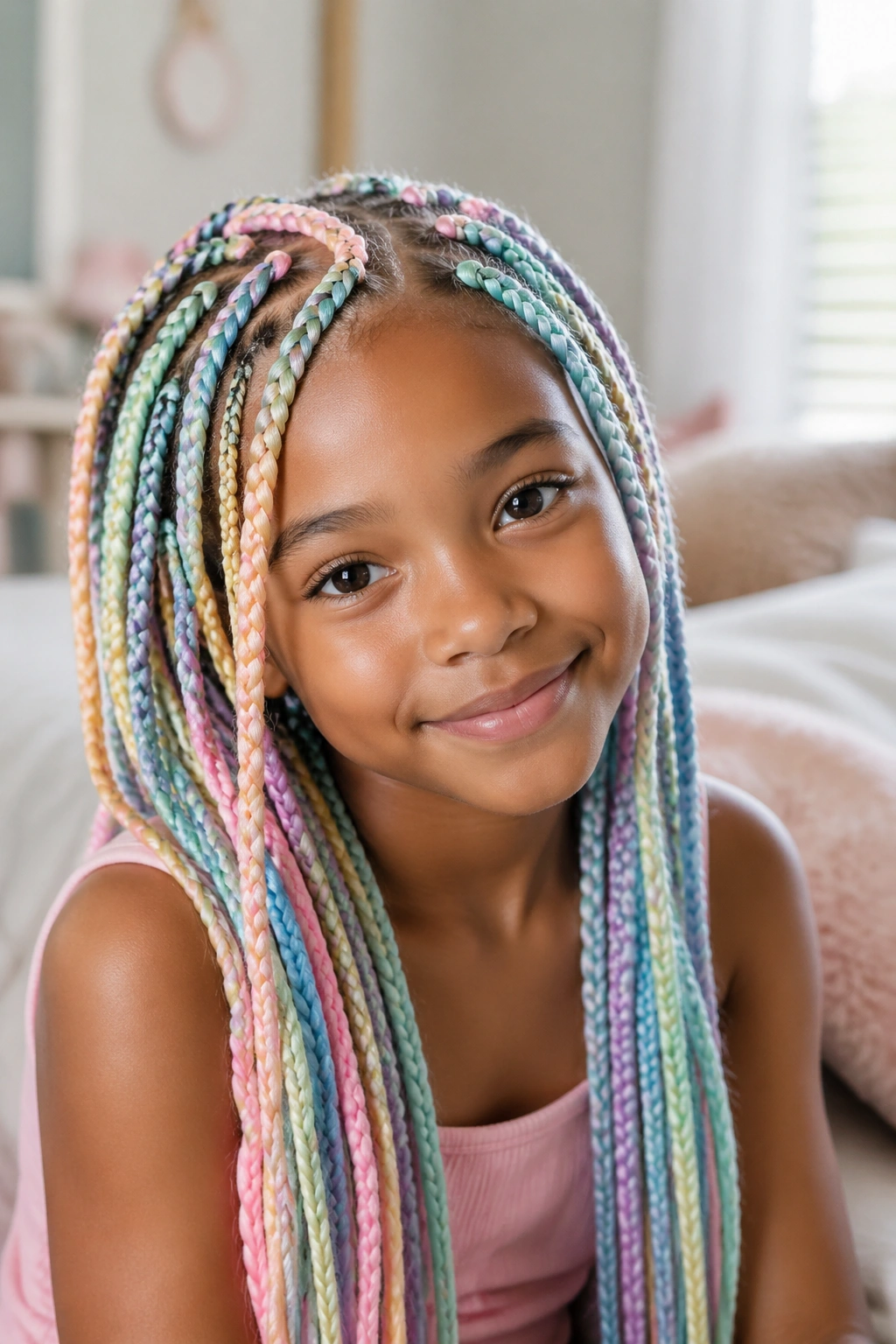
Pastel rainbow box braids feel gentler than the neon versions. Think mint, lilac, baby pink, powder blue, and soft yellow. The whole look reads lighter, sweeter, and a little dreamy without getting too precious.
This style works well for children who like color but not sharp contrast. The shades blend more softly, so the head looks bright without looking busy. It can be a nice middle path when a child wants rainbow hair but doesn’t want the colors shouting from across the room.
A few color pairings that hold together well
- Lilac + mint + pale pink for a cool, airy look
- Butter yellow + peach + sky blue for a warmer mix
- Pink + lavender + white-blend extensions when you want the style to feel light
Pastels can show buildup faster than darker tones, so clean scalp lines matter. That doesn’t mean the style is high maintenance. It just means product should be used sparingly, and the roots should stay neat if you want the colors to keep their soft look.
There’s a sweetness to this version that can be hard to fake. It works best when the parts are crisp and the braids are not overloaded with extras.
16. Mixed-Size Rainbow Braids for More Movement
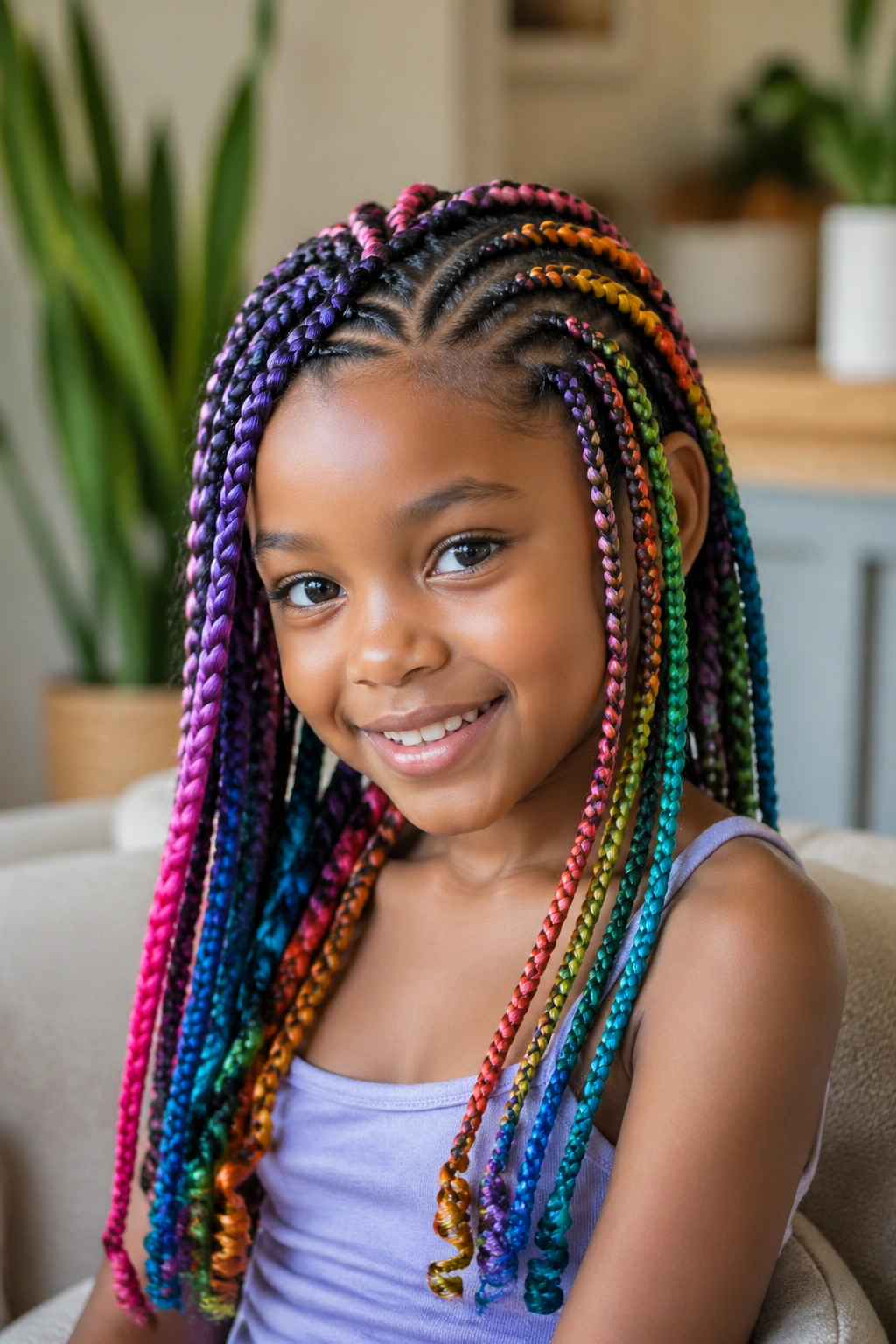
Uniform braids are tidy. Mixed-size braids have more life. A few larger braids at the crown, smaller ones around the sides, maybe a medium braid or two near the nape — that mix gives the rainbow room to move instead of sitting in a flat grid.
I like this style because it feels less rigid. The head shape looks softer, and the color placement can follow the braid size instead of fighting it. A bigger braid can carry a bold shade, while smaller braids can break up the palette so it doesn’t all land at once.
There’s also a practical side. Mixed sizes can work around areas where a child has more or less hair density. If the crown is thicker than the edges, you do not have to force the whole head into one size just to make the style look even. That kind of flexibility is useful, and honestly, it makes the final result look more natural.
It’s a good choice for kids who like movement. The smaller braids swing a little faster, the larger ones anchor the look, and the color ends up feeling layered instead of stamped on.
17. Ribbon-Woven Rainbow Braids
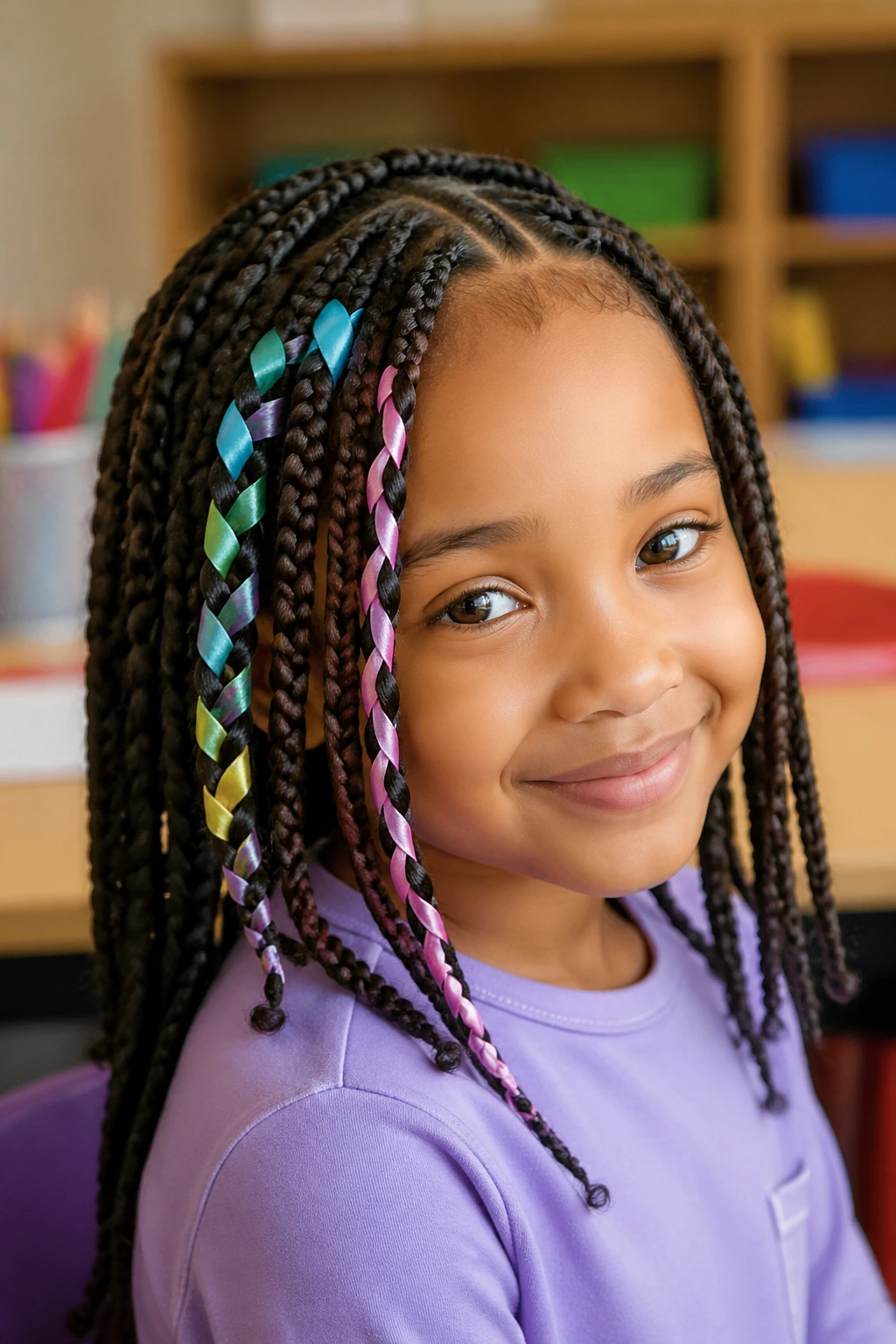
Ribbon can do a lot without adding much weight. A thin satin ribbon woven through a few rainbow box braids gives you extra color and texture without changing the whole structure of the style.
Unlike beads, ribbon moves quietly. It does not clack. It doesn’t pull the ends down much. And it can be swapped out faster than a full reinstall if the child wants a new accent next week. That makes it a good choice for shorter wear or for children who like to change things up often.
What works best
- Use soft satin or grosgrain ribbon
- Cut the ribbon into short lengths so it does not tangle too much
- Weave it through only a few braids, not every braid on the head
- Keep the ribbon ends trimmed cleanly so they don’t fray in a mess
A scratchy craft ribbon is a bad idea. It can feel rough at the neck and make bedtime annoying. Soft ribbon sits better and looks neater. If you want a style that feels a little dressed up without adding weight, this one is a quiet winner.
It is also a good fallback when beads feel like too much. Sometimes hair just needs a little trim of color, not a full second layer of accessories.
18. Rainbow Braids with Colored Tips
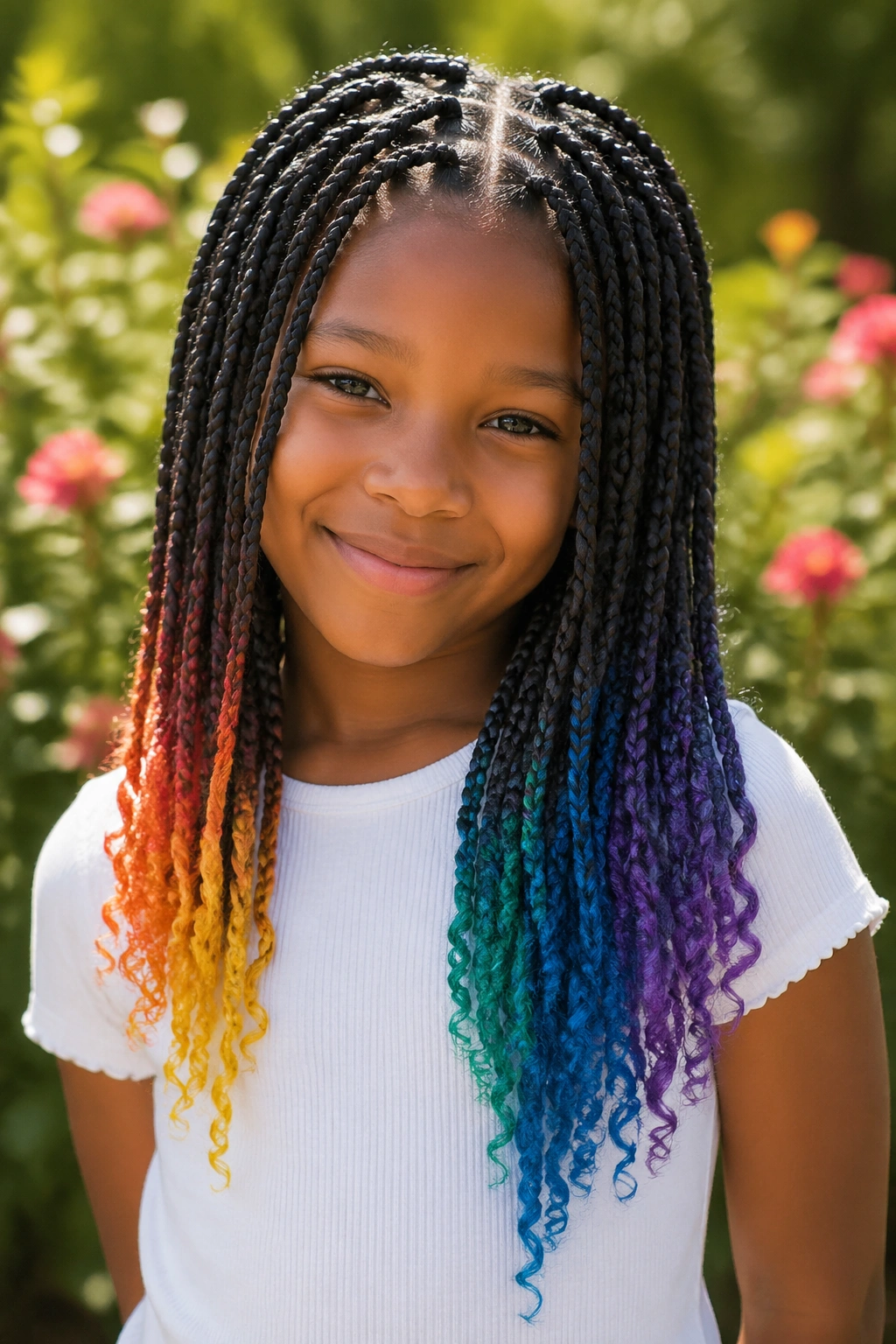
Colored tips are a neat middle ground between plain braids and full rainbow hair. The braid can stay one solid color through most of its length, then switch to a bright tip in red, blue, purple, green, or any other shade the child loves.
That means the color lands where it has the most movement. When the child walks, turns, or tosses their head, the ends flick out and show the surprise. It’s a small detail, but it changes the whole feel of the style.
Why it’s useful
- Less color at the root
- Lighter overall look
- Easy to match with uniforms or dress codes
- Simple to refresh if only the tips need replacing
I like this version for children who want color but don’t want the whole head to be bright from top to bottom. It can also work well when you want a cleaner look for the first few days after braiding and a more playful look later.
The tips should be long enough to notice, usually a few inches, not a tiny dab at the very end. If the color is too short, it gets lost. If it’s too long, the braid stops reading as mostly one shade. That balance is what makes the style feel deliberate.
19. Side-Swept Rainbow Braids
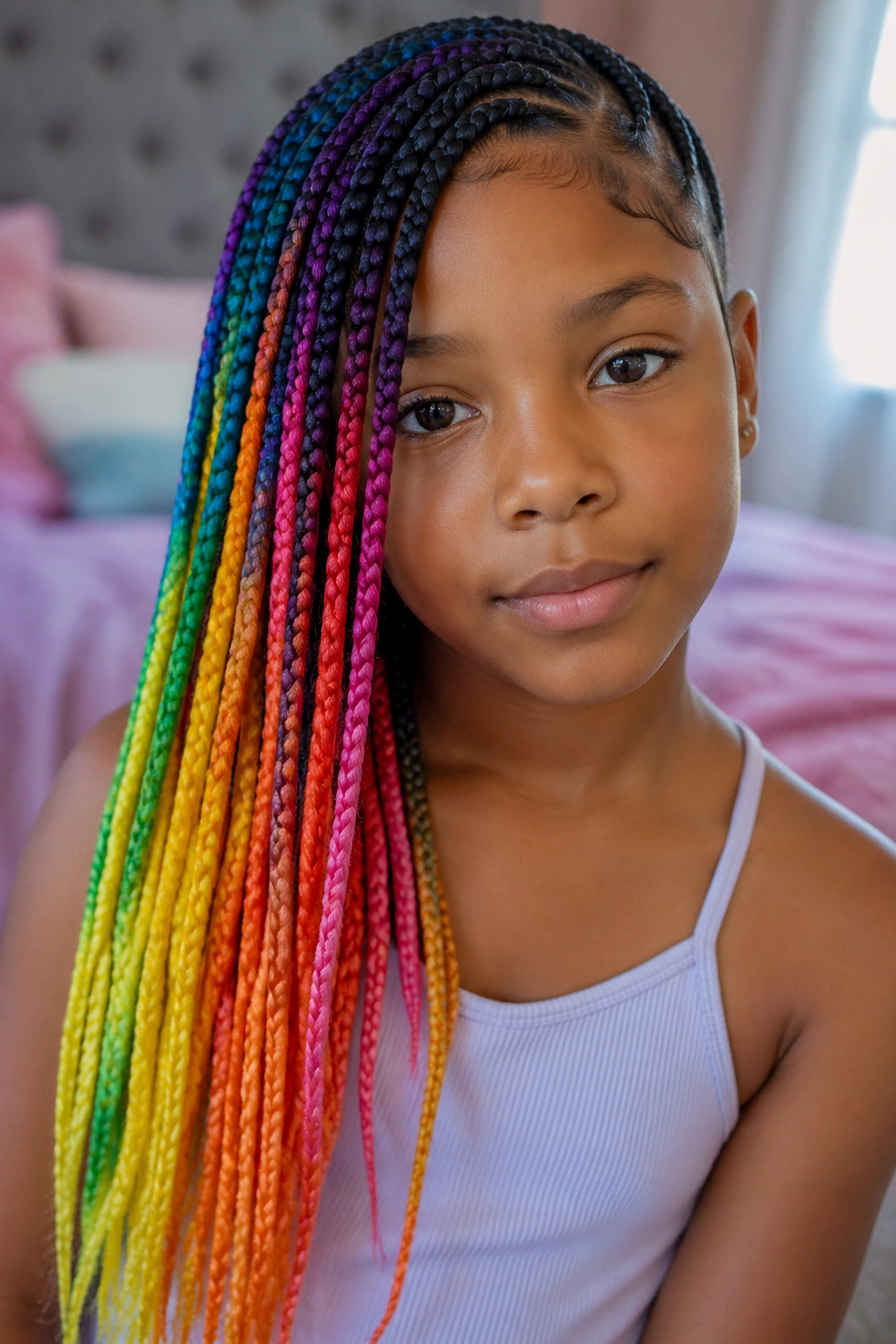
A side-swept look shifts all the braids to one shoulder or one side of the face, and that one change can make rainbow color look richer. The asymmetry gives the eye a place to land, so the style feels styled even when the braid pattern itself stays simple.
This version works especially well with medium-length braids. Long braids can overwhelm the shoulder, and very short braids may not hold the sweep cleanly. But when the length is right, the side-swept shape lets the colors fall like a little curtain of stripes.
It’s also useful for children who hate hair in their faces. Sweep the braids off the forehead, pin or braid them into a gentle side direction, and the child gets color without the constant brushing-away motion.
A clean side part helps. So does keeping the front section a touch flatter than the rest. That keeps the style from puffing out near the ear, which can look bulky in a hurry. The rainbow reads best when the silhouette stays simple.
20. Rainbow Bob Braids for Easy Daily Wear
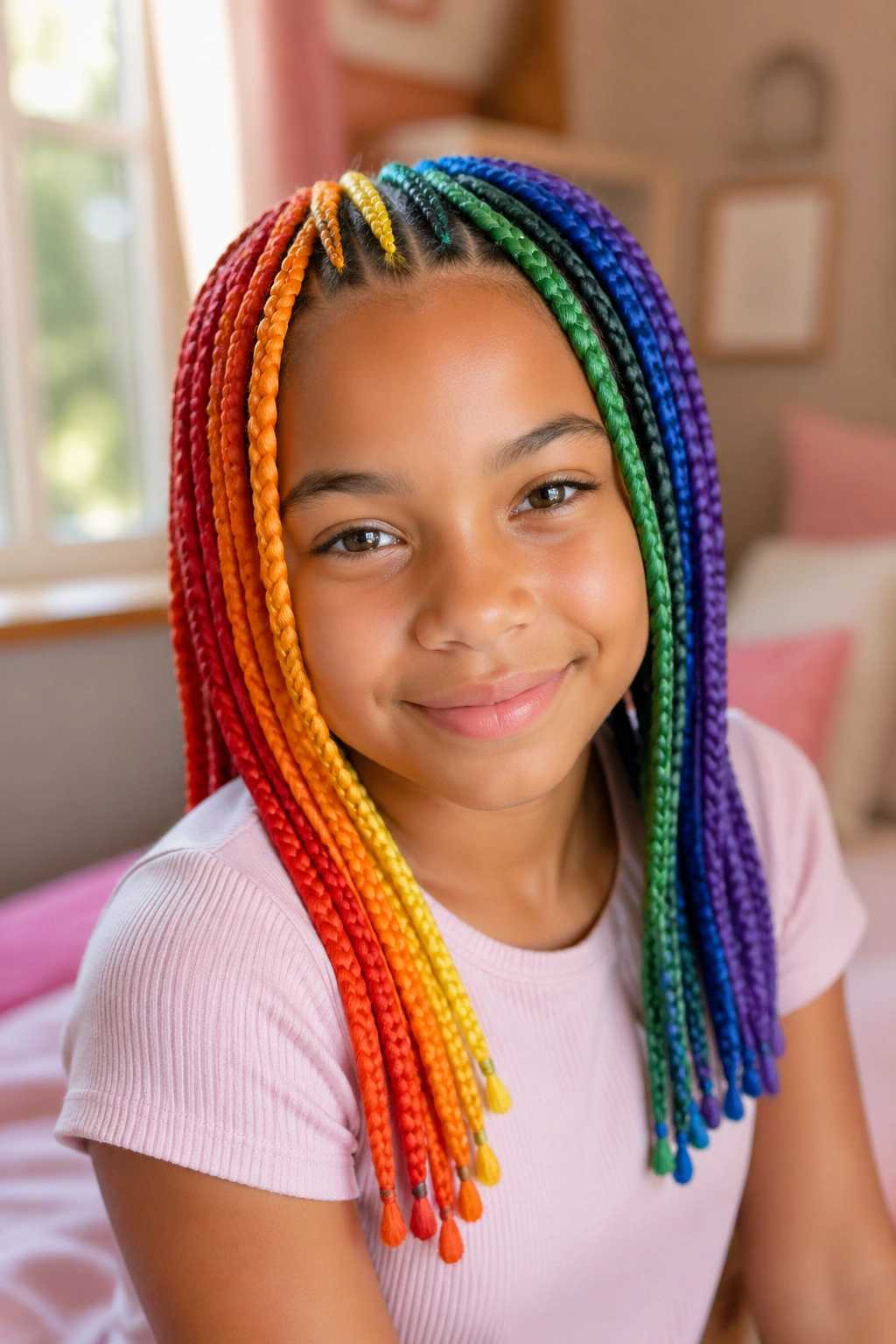
Can rainbow box braids still look full when they’re short? Absolutely. A bob length — chin to shoulder, usually somewhere in that range — makes the style lighter, quicker to wash, and easier for a child to live with every day.
That’s why I like it so much for younger kids and for anyone who gets tired of hair on the neck. The shorter length cuts down on tugging, especially when the child is active. It also means fewer snags at the back of the collar and less weight when the braids are decorated with beads or color.
A few reasons the bob version holds up well
- Less pull on the scalp
- Faster drying after washing
- Easier to tie back at bedtime
- Cleaner shape when the child is moving all day
A bob is not boring. Not even close. The color shows faster because the hair ends sit higher, and the whole head feels lively without needing extra length to make the point. If you want a rainbow look that a child can wear without thinking about it every ten minutes, this is the one I’d reach for first.
It has a nice honesty to it. Short, bright, and easy to live in. That combination is hard to beat.
