



Jumbo knotless box braids can look soft or severe, airy or heavy, and the difference usually starts at the part line. On natural hair, that matters more than most people realize. A braid that looks gorgeous on a phone screen can feel way too heavy once it hits your scalp, especially if the sections are oversized or the install ignores density at the crown and temples.
That’s why jumbo knotless box braids on natural hair work best when the style is matched to the hair beneath it, not just the photo in someone’s camera roll. Knotless braids already have a gentler base than traditional knot braids because the extension hair is fed in gradually instead of anchored with one tight knot at the root. The result is flatter at the scalp, cleaner at the start, and usually easier to live with.
Still, “jumbo” changes the game. Bigger sections mean fewer braids, more visual weight, and a shape that can go from sleek to bulky in a hurry. The sweet spot is a braid that feels bold without swallowing your features, and that sweet spot looks different on a dense coily head than it does on fine, stretched natural hair. One size does not fit all here. Not even close.
The styles below lean into that reality. Some are soft and wearable, some are a little dramatic, and some are the kind of braids that make the parting work almost as hard as the braid itself.
1. Classic Waist-Length Jumbo Knotless Box Braids
This is the version people picture first, and honestly, it earns that reputation. Waist-length jumbo knotless box braids give you swing, drama, and enough length to pull into a bun or ponytail without the set looking skimpy. On natural hair, the shape works best when the braids are thick at the root but not bloated at the base.
Why It’s the Reliable Starting Point
If you want one style that tells you how jumbo knotless behaves on your hair, start here. The weight sits lower than with a traditional knot braid, and the knotless feed-in keeps the scalp line looking smooth instead of bulky.
A waist-length set also gives the braid room to breathe. Shorter braids can look choppy if the sectioning is too big. Longer braids show off the thickness in a way that feels deliberate.
- Ask for clean square parts so the braid sizes read evenly.
- Keep the feed-in gradual; three to five additions per braid usually looks smoother than one big extension dump.
- Stretch your natural hair first so the root doesn’t puff up under the extension.
- Choose braiding hair that feels light in the hand. Heavy synthetic hair adds up fast when the length reaches the waist.
Pro tip: if your edges are delicate, ask for slightly smaller front sections than the back. It makes a real difference.
2. Shoulder-Length Jumbo Knotless Box Braids
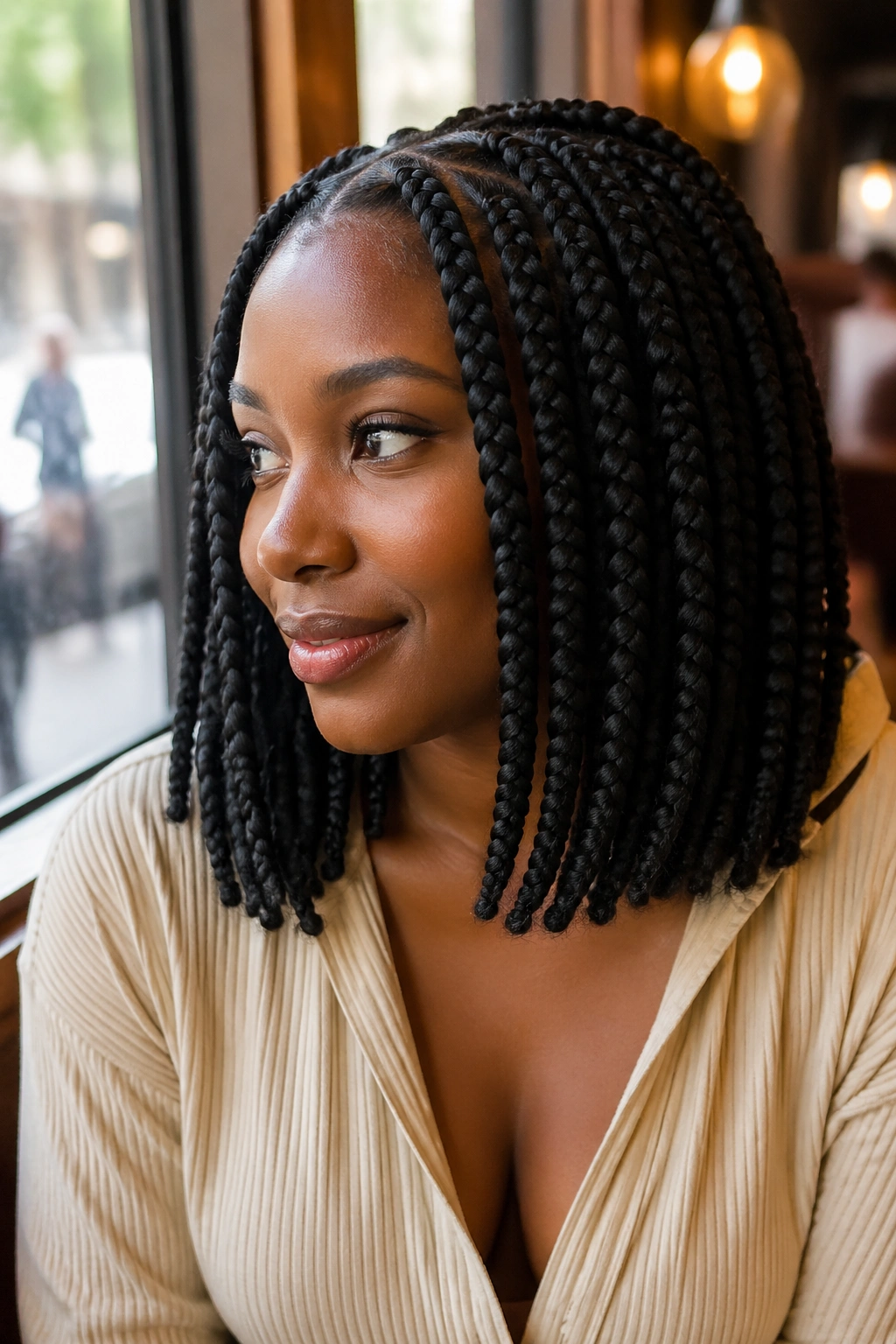
Shorter is often kinder. Shoulder-length jumbo knotless box braids take pressure off the neck, cut down on snagging at collars, and make the whole style feel easier to live in. If you like braids but hate how much long hair gets caught in zippers, scarves, and seat belts, this is the smarter move.
The shape is cleaner too. Because the braids stop around the shoulders, the eye sees the parting and the fullness before it gets distracted by extra length. That matters on natural hair, especially when the braid hair is dense and the roots need a little air.
This length is also a good call for people who want jumbo braids but don’t want the install to feel like a commitment. You still get the chunky look. You just don’t carry all that extra swing down your back.
And yes, it can still be styled. Half-up ponytail? Easy. Side pin? Fine. A small scarf tied at the crown? Even better.
Your neck will thank you.
3. Side-Part Jumbo Knotless Box Braids With Face-Framing Pieces
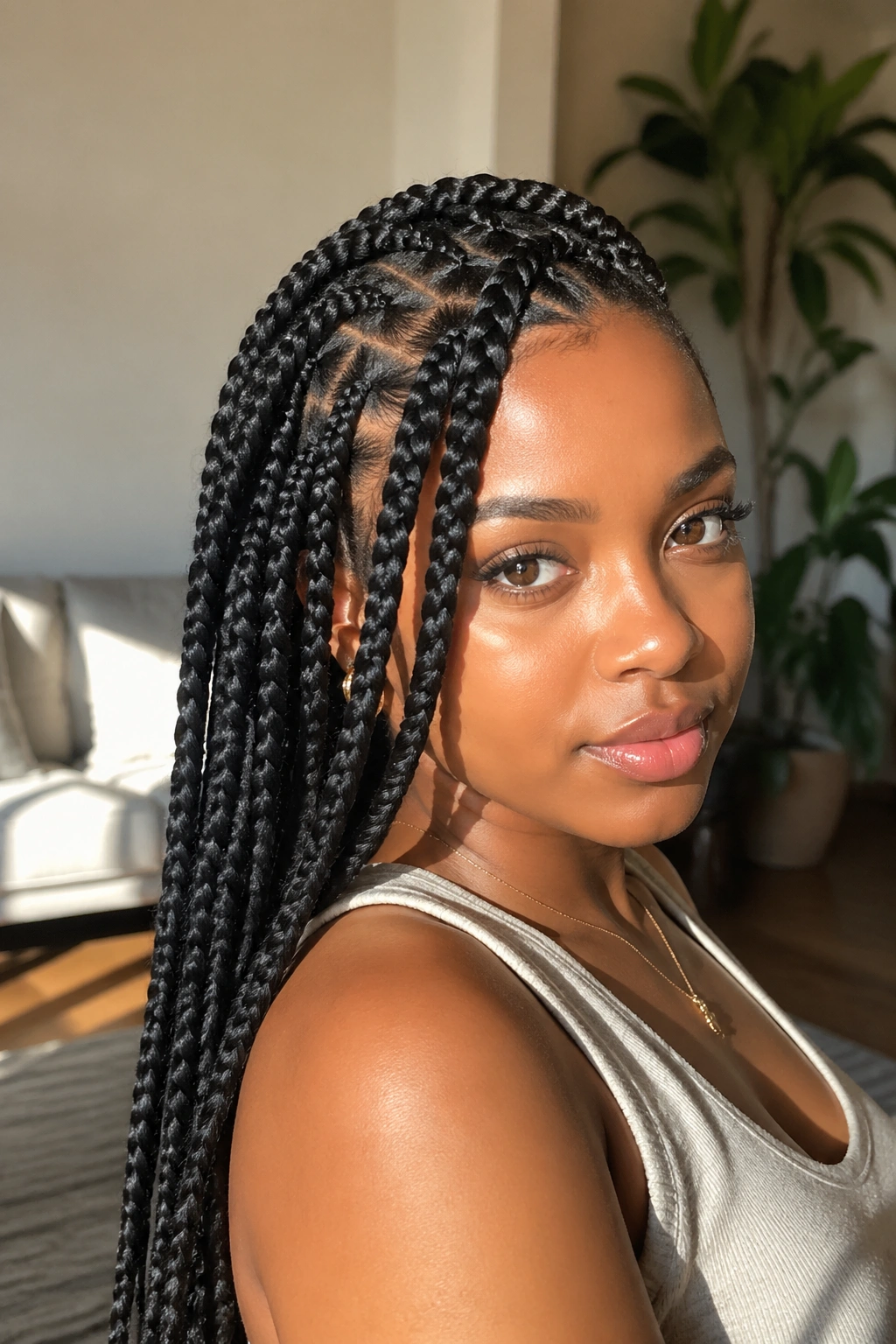
Why does a side part change the whole mood? Because it breaks the grid. A center part can feel neat and symmetrical, but a deep side part gives jumbo knotless braids a softer line and pulls attention toward the eyes and cheekbones. On natural hair, that asymmetry does a lot of work without asking for extra accessories.
How to Ask for the Part
Tell your stylist you want a side part that starts clean at the crown, not a vague sweep that disappears after the first braid. If you like your hair to fall across one temple, ask for two or three face-framing braids on the heavier side and keep those front pieces slightly shorter.
The trick is balance. Too much hair in the front and the style starts to sag forward. Too little and the side part feels accidental. A good side part should look intentional from every angle, even when you turn your head.
This style suits people who want softness without making the braids small. The jumbo size still reads bold. The side part just edits the mood a little. Less blocky. More movement.
If you wear hoop earrings or a structured collar, this one tends to look especially sharp.
4. Triangle-Part Jumbo Knotless Box Braids
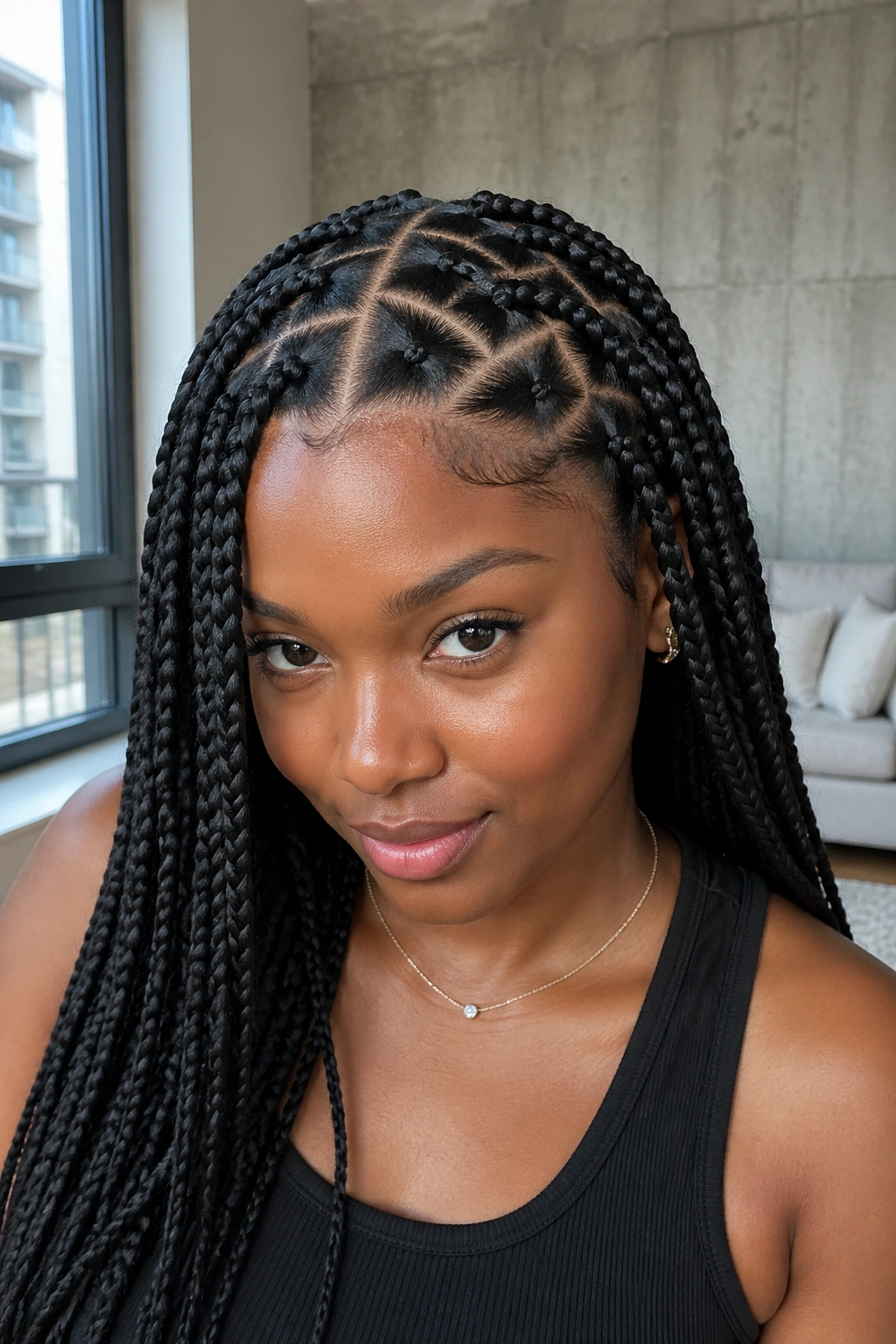
Walk into a room with triangle parts and people notice the sectioning before they notice the length. That’s the whole point. Triangle-part jumbo knotless braids give natural hair a geometric edge, and the shape makes each braid feel a little more sculptural than a plain square grid.
The style works because triangle parts interrupt the straight lines you expect from box braids. Your eye keeps moving. The scalp pattern becomes part of the design, not just a hidden base underneath the braids. On dense natural hair, that visual movement can be a lifesaver if you worry that jumbo sections will look too blocky.
What to Watch for
- Keep the triangle points clean and sharp at the scalp.
- Make the sections large enough to read as triangles, not little triangles that collapse into squares.
- Use equal braid thickness so the part pattern stays the star.
- Don’t crowd the front hairline with oversized sections.
Triangle parts need patience. They are a touch more work than standard boxes, and you can see the difference immediately when they’re done well. When they’re sloppy, you see that too. There is no hiding.
The payoff is a braid set that feels more custom, which is exactly what most people want when they’re choosing jumbo knotless over something plain.
5. Half-Up, Half-Down Jumbo Knotless Box Braids
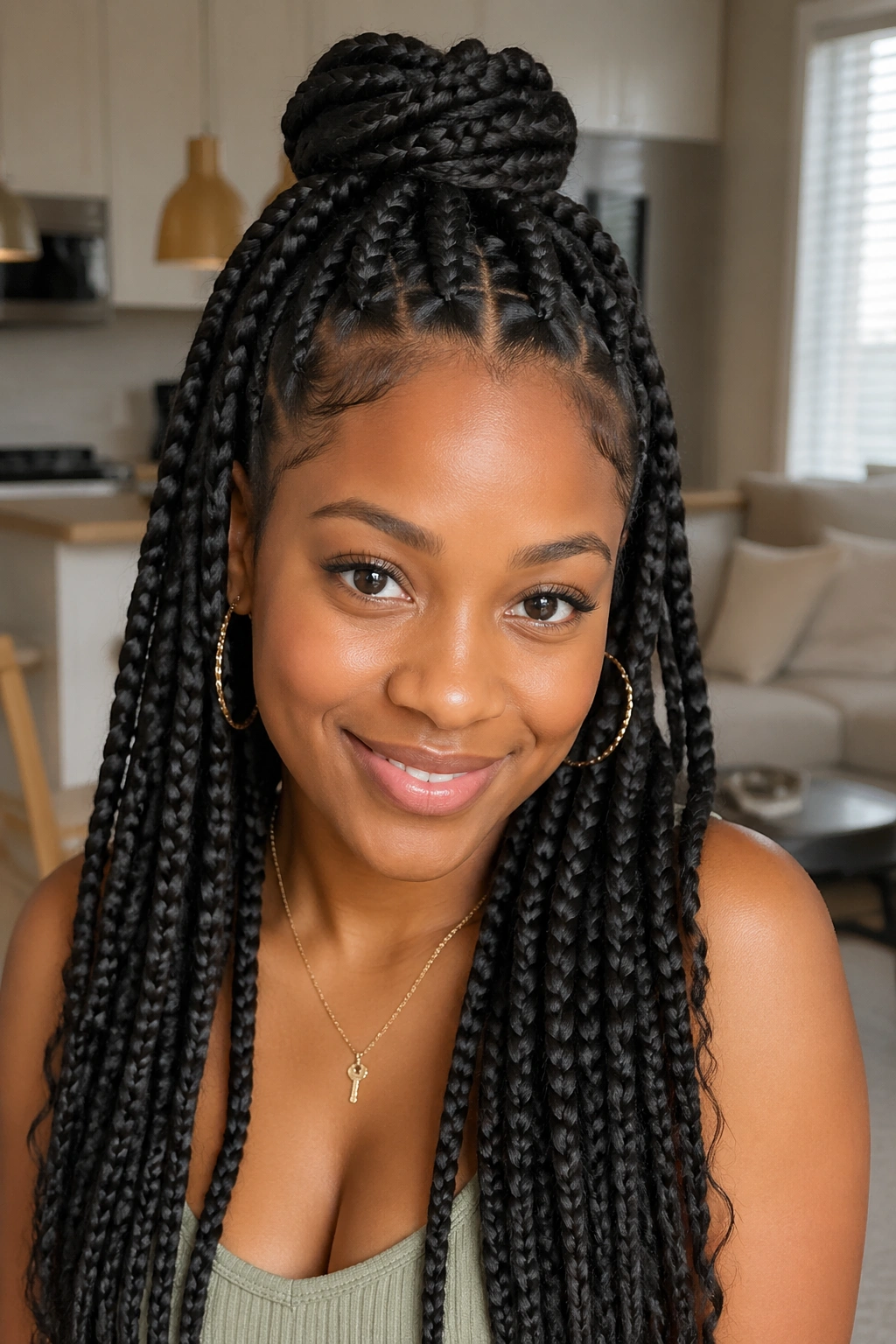
Half-up, half-down jumbo knotless braids are the closest thing braids have to a cheat code. You get the lift and control of an updo at the crown, then the movement of loose braids underneath. For natural hair, that split is useful because it keeps some weight off the scalp without hiding the whole install.
The style is also forgiving on busy days. The top section can be gathered with a satin scrunchie, a wrapped braid, or a simple claw clip if the braids aren’t too heavy. The lower half hangs freely, so you still get the full look of the length.
What I like here is the shape. It makes jumbo braids feel lighter than they are. That’s not magic. It’s just proportion. When the top is controlled, the bottom looks more relaxed.
It also gives you two looks in one. Wear it smooth and lifted when you want polish. Let a few front pieces fall loose when you want the style to feel less strict. If your braids are waist length, keep the gathered section to the top third rather than pulling back half the head; otherwise the ponytail starts carrying too much weight.
Simple. Clean. Easy to wear.
6. Boho Jumbo Knotless Box Braids With Curly Ends
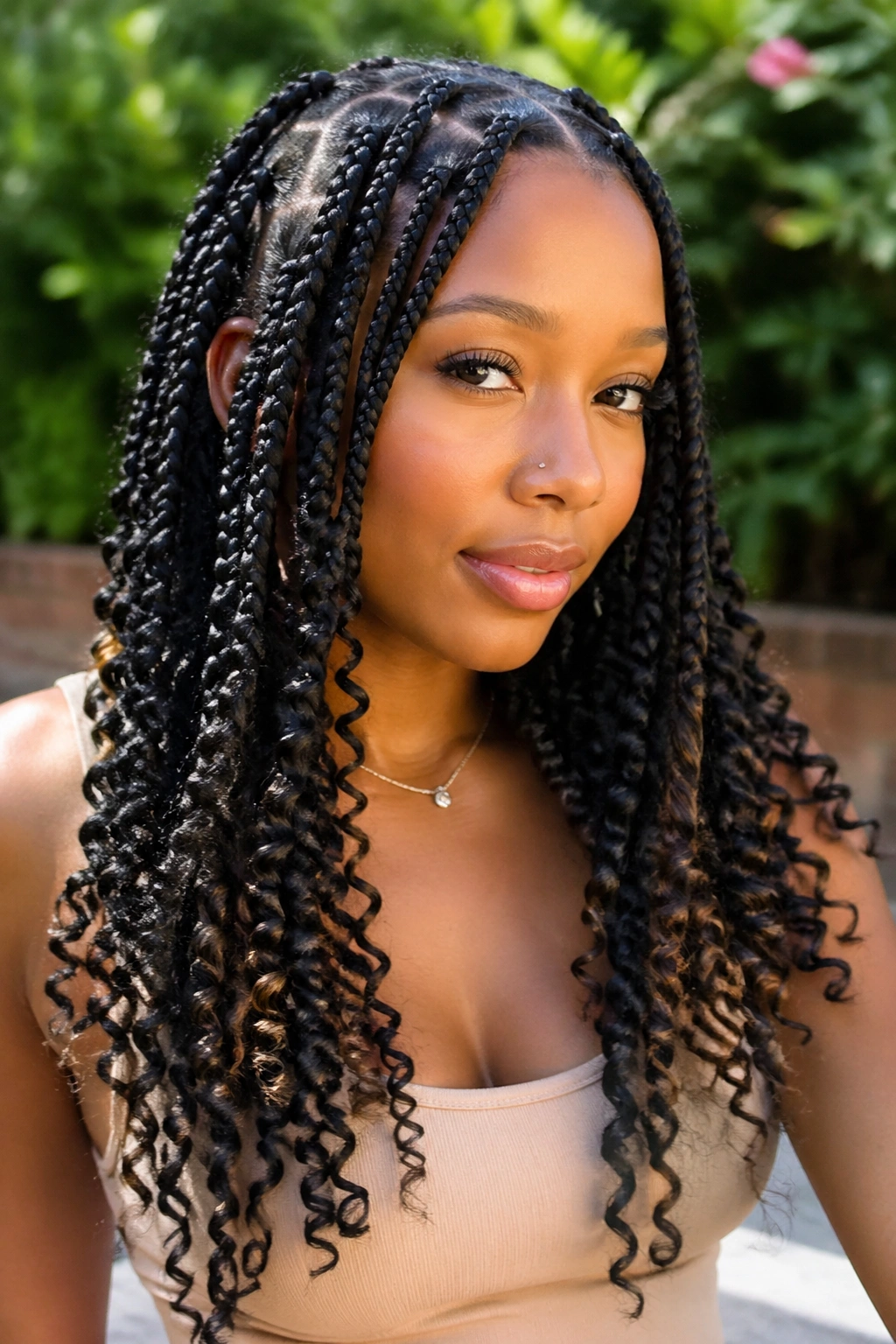
Unlike a sleek jumbo braid, boho knotless braids trade hard lines for movement. A few curly pieces tucked through the set or left near the ends soften the whole look, and the effect is less rigid straight away. On natural hair, that softness can be useful if the braid size is large and you don’t want the final result to feel boxy.
The key is restraint. Too many curly pieces and the style turns fuzzy. Too few and it barely registers. I like the balance when the curls appear in small, irregular pockets, not every braid and not every inch.
Boho styles also hide the grow-out phase a little better. The mixed texture distracts the eye, which is handy when you don’t want the braids to look freshly set and perfect forever. That perfection gets old anyway.
What Makes It Different
The curls do more than decorate. They break the straight fall of jumbo braids, which makes the set look lighter even when the hair itself is long and full. If you want a softer finish around the face, leave a few curly strands near the front and keep the rest of the braid line clean.
It’s a good option when you like braids that feel a little less formal.
7. Beaded Jumbo Knotless Box Braids
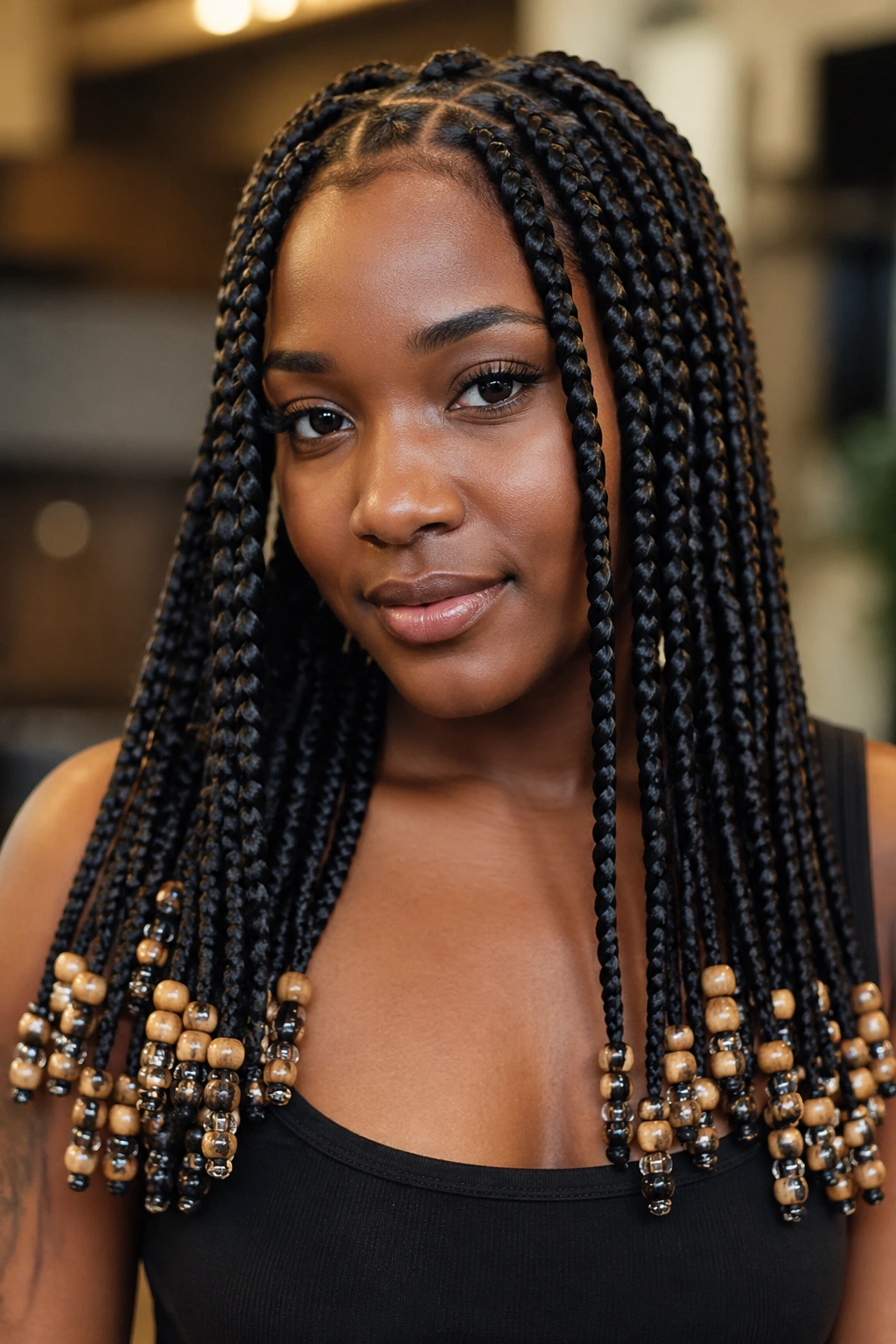
Beads change the whole rhythm of jumbo knotless braids. They add movement, sound, and a little weight at the ends, which can be a good thing if the braid set feels too plain. On natural hair, beads also make the braid ends look finished instead of just sealed off.
Where the Weight Belongs
Keep the beads near the lower third of the braid. If you load the front too heavily, the style starts swinging in a way that pulls attention away from your face and onto the accessories. That gets annoying fast.
A few small rules help here:
- Use lightweight beads so the ends don’t drag.
- Keep the front braids cleaner and less crowded.
- Mix bead sizes only if the braid set itself is simple.
- Make sure the ends are sealed well before adding anything.
Beads work best when they look chosen, not scattered. Three or four accent braids in the front can be enough. You do not need every braid dressed up.
There’s also something satisfying about the sound. A little clink when you move. Not loud. Just enough to remind you the style has personality. If your wardrobe leans simple, beaded braids give the whole look a point of view without changing the braid pattern itself.
8. Burgundy, Copper, or Honey-Blonde Jumbo Knotless Braids
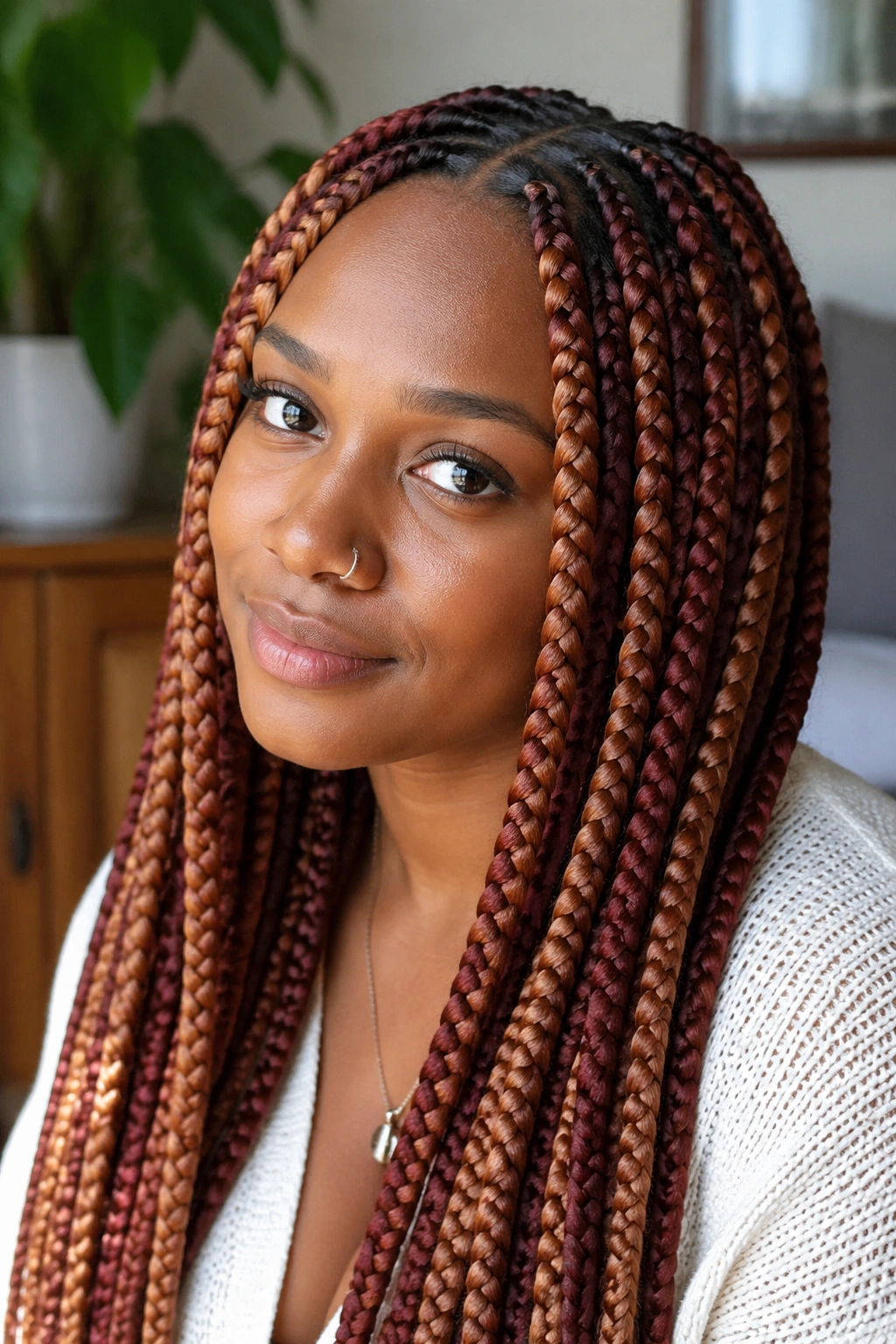
Color changes the mood more than length ever will. Burgundy, copper, and honey-blonde jumbo knotless braids give natural hair a deeper visual edge because the braid pattern stands out the second light hits it. Dark braids can disappear into one block from a distance. Warm color keeps the sections visible.
That’s one reason I like reds and coppers on jumbo braids. They show the plait without needing extra styling. The braid line becomes part of the look instead of hiding inside it.
If you want the color to feel rich rather than loud, ask for a shade that has depth, not a flat neon tone. A honey-blonde with darker roots, or a burgundy that leans brown in shade, tends to wear better than a single harsh block of color. The braid shape stays readable.
Colored braiding hair also changes the feel of simple outfits. A plain tee and hoop earrings start to look deliberate. So does a black dress. You do not need much else.
Warm tones often flatter the texture of jumbo knotless braids because they make the twists and wraps easier to see. If your natural hair is darker, that contrast can be especially satisfying. It feels finished, not fussy.
9. Jumbo Knotless Box Braids in a High Ponytail
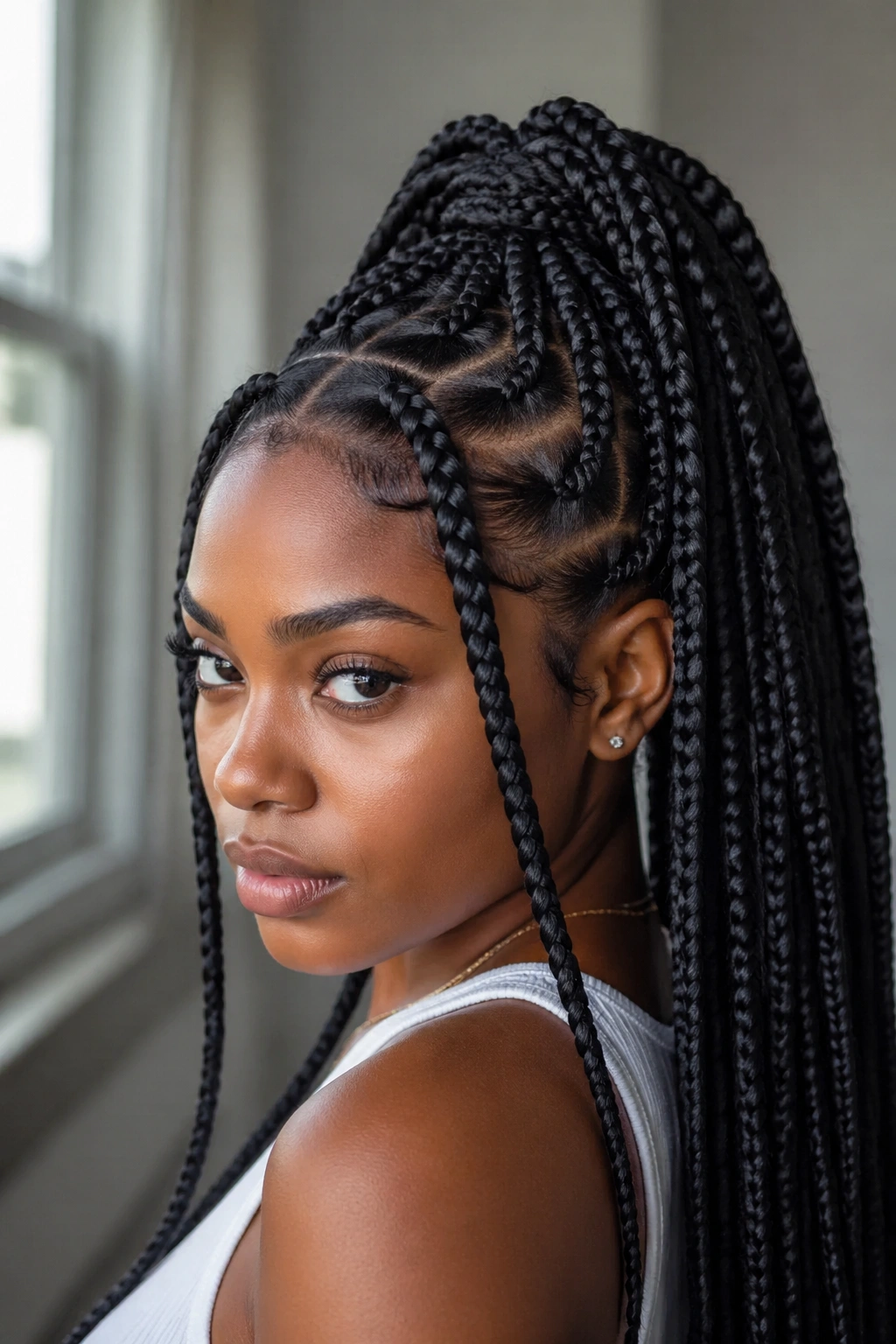
Can jumbo braids actually stay up in a high ponytail without looking strained? Yes, if the base is done right. The trick is not yanking the whole set into the air. A high ponytail with jumbo knotless box braids should sit lifted, not clenched.
How to Wear It Without Pulling Edges
Start with a firm but not tight base. A satin scrunchie or a strong elastic wrapped once or twice is usually enough. If the ponytail feels like it needs brute force to stand up, the placement is wrong.
Keep a couple of front braids loose near the temples. That softens the line and keeps the style from pulling too hard across the hairline. If you want more polish, wrap one braid around the ponytail base and pin it underneath.
A high ponytail is especially good when the braids are mid- to waist-length, because the lifted top gives the set shape and keeps the tail from dragging. On shorter jumbo braids, the ponytail can look stubby. On longer braids, it gets beautiful swing.
I also like this style for days when you want the face open. Earrings show. Neckline shows. The braids move more with you. It’s practical, but not boring.
10. Jumbo Knotless Box Braids With Blunt Bob Ends
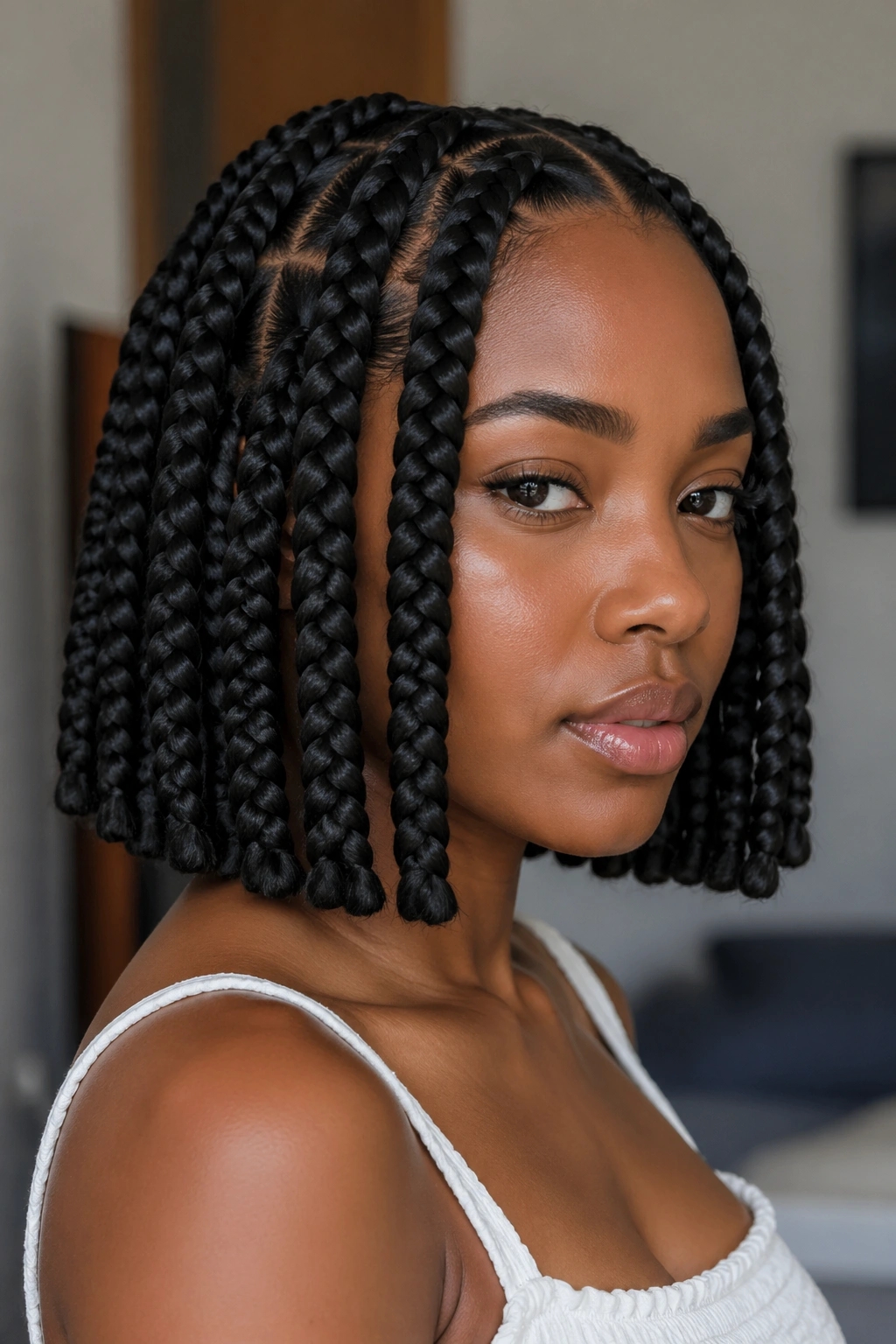
If you’ve ever looked at a full set of long braids and thought, no thanks, the bob is the answer. Blunt bob jumbo knotless braids keep the weight down and the silhouette sharp. They also read fast. You see the line immediately.
The shape suits natural hair because the shorter length lets the parting and the braid thickness do the work. You don’t need extra length to prove the style is there. The cut line says enough.
What to Watch for
- Ask for the bob to sit around jaw to collarbone length.
- Keep the ends even if you want a boxy finish.
- Angle the line slightly forward if you want a little swing.
- Trim or seal the ends carefully so the braid tips don’t look frayed.
This is one of the easiest jumbo braid styles to live with if you dislike hair on your shoulders. Sleep is easier. Jackets are easier. You don’t spend half the day moving hair out of your face.
A blunt bob also looks good with strong makeup or simple clothes because the braid shape already carries the style. Nothing extra is needed. That’s the part I like. It’s blunt in the best sense.
11. Crisscross Part Jumbo Knotless Box Braids
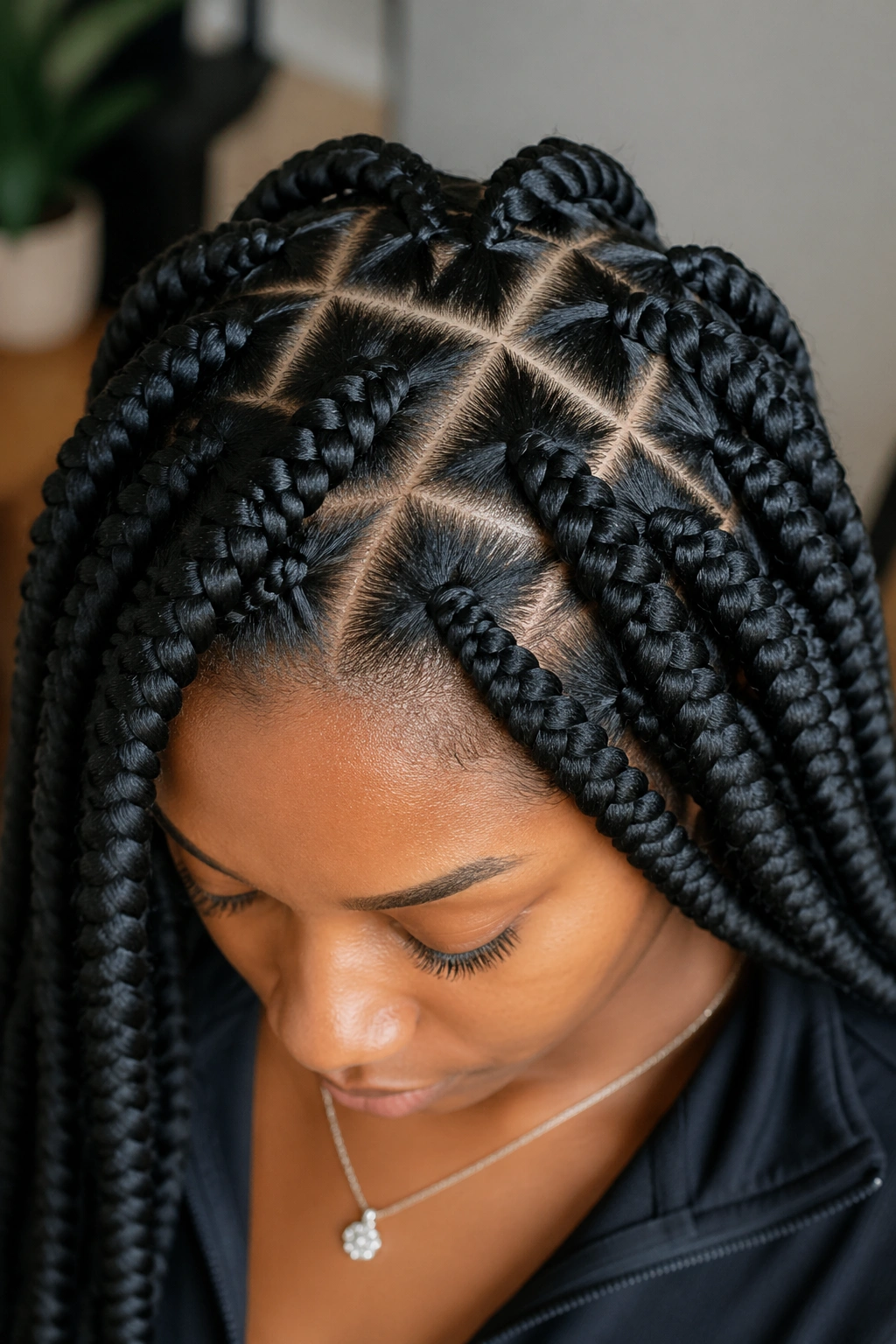
Crisscross parting turns the scalp into part of the design. Instead of a straight grid, the sections cross over each other in a pattern that feels a little more playful and a little less expected. On natural hair, that matters when you want jumbo knotless braids to look styled, not just installed.
The pattern works best when the braids themselves are big enough to show it. If the sections are too tiny, the crossing lines get lost. If they’re too huge, the crisscross can look crowded. There’s a middle ground, and it’s worth finding.
It’s also one of those styles that can make a simple braid set feel more finished without adding beads, cuffs, or color. The parting does the heavy lifting. That’s useful when you want detail but don’t want extra objects in your hair.
Not everyone wants that much pattern on the scalp. Fair enough. It’s a more styled look, and it asks for cleaner sectioning than a plain square set. But when it’s done with crisp lines, it has presence.
One small thing: if your natural hair has a mix of textures, a crisscross part can disguise uneven density better than a plain grid because the eye focuses on the crossing lines first.
12. Clean Grid Jumbo Knotless Box Braids With Sharp Parts
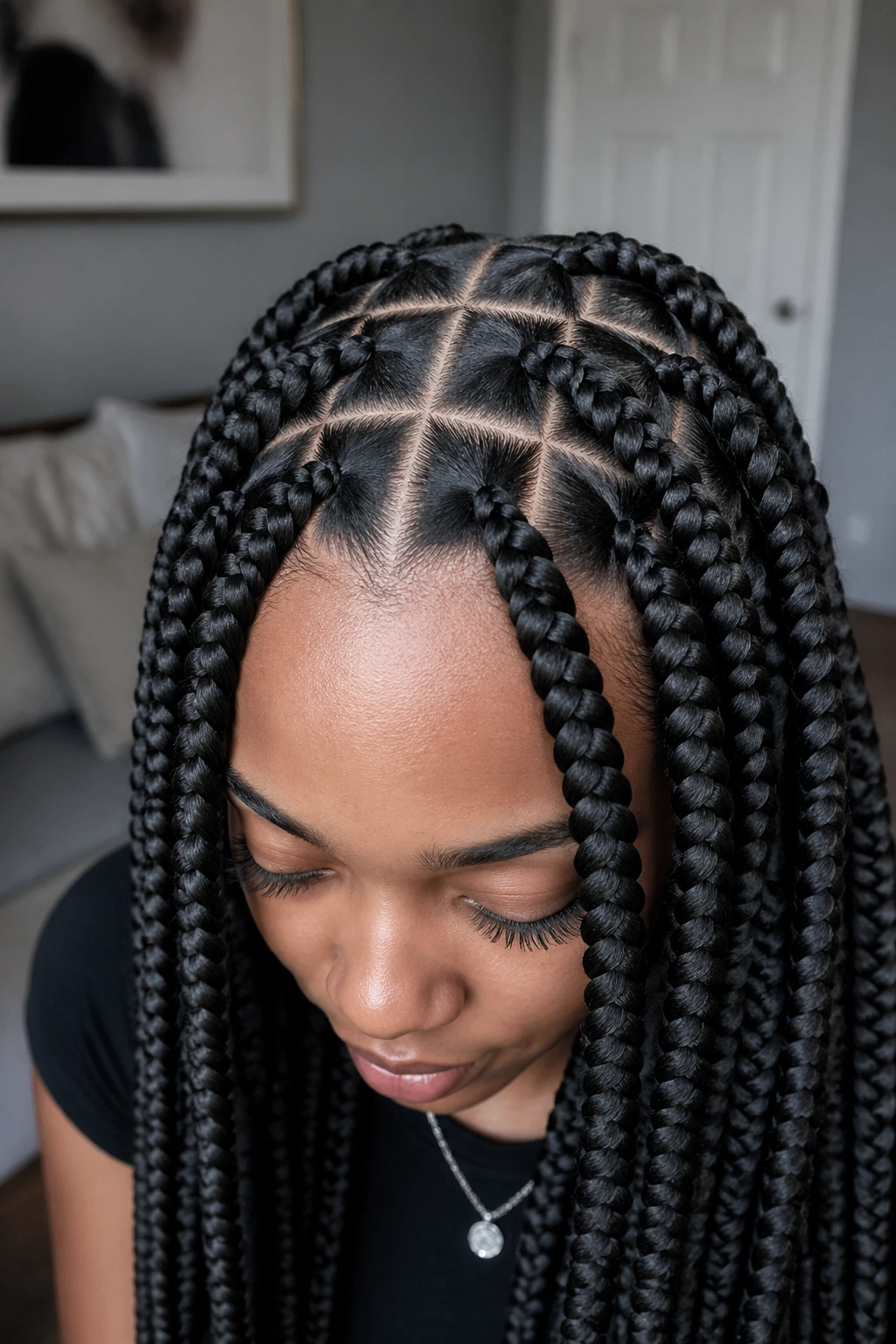
A clean grid looks calm. That’s the whole appeal. Sharp square parts make jumbo knotless braids feel orderly and deliberate, and they suit natural hair when you want the scalp pattern to stay crisp from root to tip. No drama. Just clean lines.
Unlike triangle parts, a square grid gives you symmetry. Unlike crisscross parting, it doesn’t ask for visual movement. The style is quieter, which is exactly why it lasts mentally. You can wear it with loud clothes or plain clothes and it never fights the outfit.
This is also one of the better options if you care about uniformity. Equal parts, equal braid size, equal spacing. It all reads clearly. If the sections wander, the style loses its edge fast, so this is the kind of install that rewards careful sectioning more than almost anything else on the list.
A tidy grid can also make natural hair look more polished at the roots because the parting sets the tone immediately. If your texture is thick or coily, the clean lines create contrast with the braid body and keep the style from feeling too heavy.
I’d choose this one when I want the braids themselves to be the main thing, not the accessories.
13. Layered Jumbo Knotless Box Braids
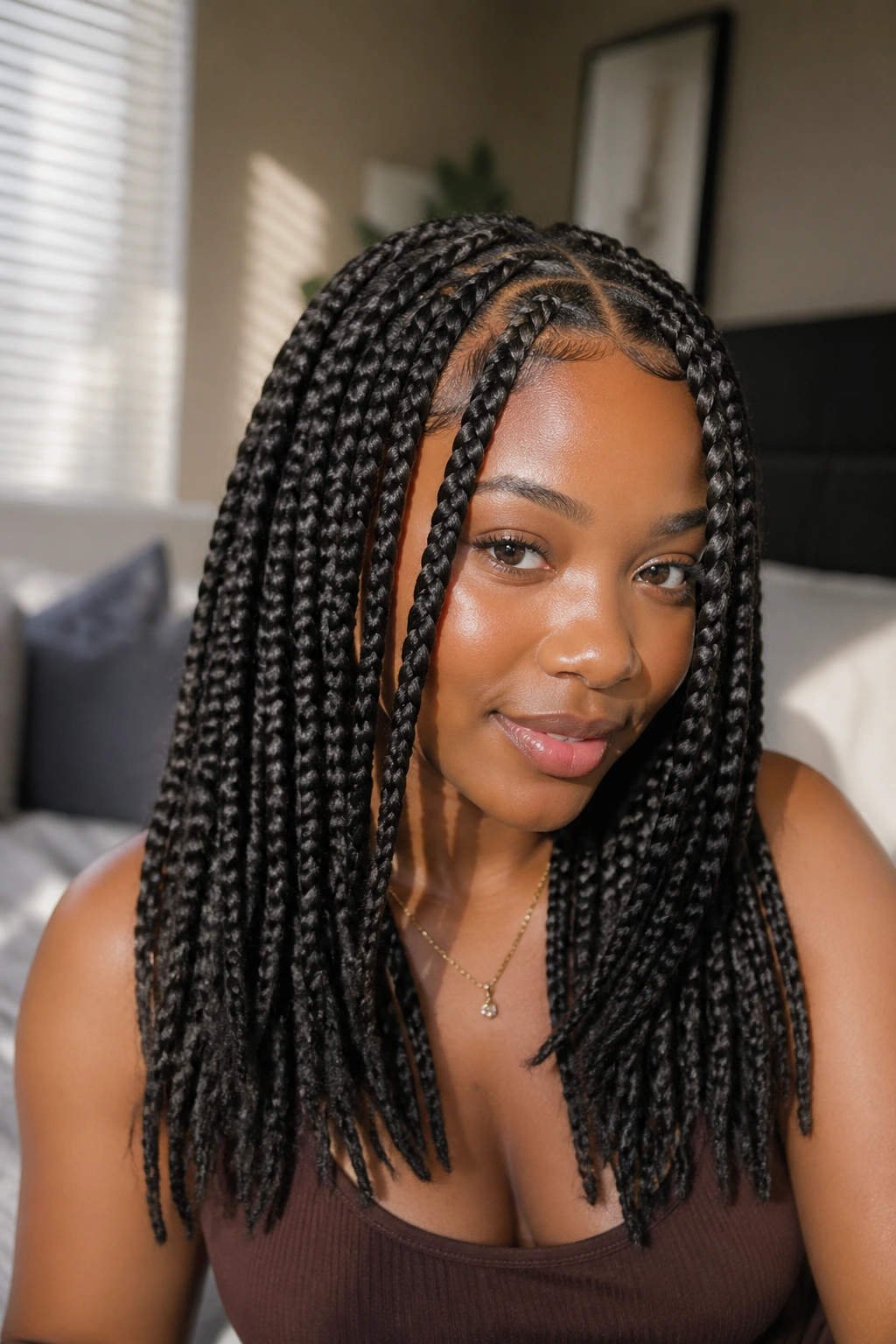
Layering solves a problem most people only notice once the braids are finished: all that length hanging at one level can look heavy, even when the braid size is flattering. Layered jumbo knotless braids break that line so the set moves more and sits lighter around the face and shoulders.
What Layering Fixes
- It cuts the blocky look that long jumbo braids can get.
- It keeps the front from swallowing your features.
- It makes ponytails and half-up styles sit better.
- It gives the braids more swing without adding more hair.
A layered set does not need to be dramatic. Sometimes the top layer only needs to be a few inches shorter than the back. That small difference changes the whole shape. The style stops looking like one straight curtain and starts looking fitted to the head.
On natural hair, layering can also help if your braid density is uneven from crown to nape. The shorter front pieces disguise a little variation and keep the attention where you want it.
This is the style I reach for when long braids feel too blunt but I still want the length. It’s a quiet fix, which is often the best kind.
14. Jumbo Knotless Box Braids With Thread Wraps and Gold Cuffs
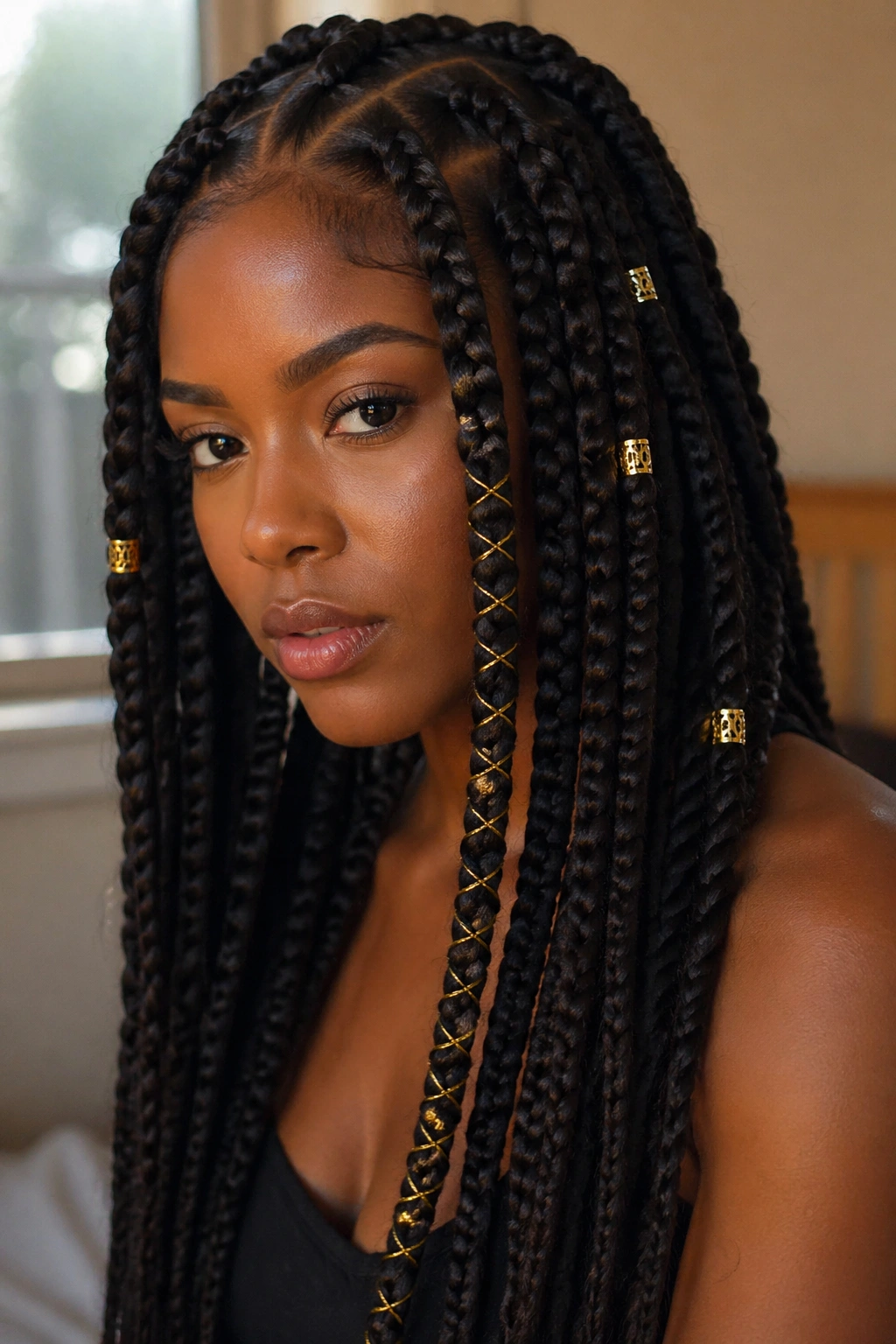
Accessories can rescue a plain set faster than a fresh install. Thread wraps and gold cuffs give jumbo knotless braids a little edge without changing the braid pattern itself. That makes them useful on natural hair when you want a quick shift in mood.
The trick is spacing. A thread wrap around every braid is too much. A cuff on every section is too much too. Better to place the details where the eye naturally lands — a few front braids, a braid near the temple, maybe one or two toward the ends. That creates rhythm instead of clutter.
Thread works especially well if the braid hair color is simple. Black, brown, or blonde braids suddenly get a little texture. Gold cuffs do the same thing, only brighter. If your earrings are already bold, keep the braid accessories smaller so the whole look doesn’t start competing with itself.
I also like this option for protecting the ends visually. A thread wrap can hide an uneven tip or make the finish feel more polished. That’s a small thing, but small things matter in braids.
If you want the set to look styled without changing the whole install, this is one of the easiest ways to do it.
15. Deep Side-Sweep Jumbo Knotless Box Braids
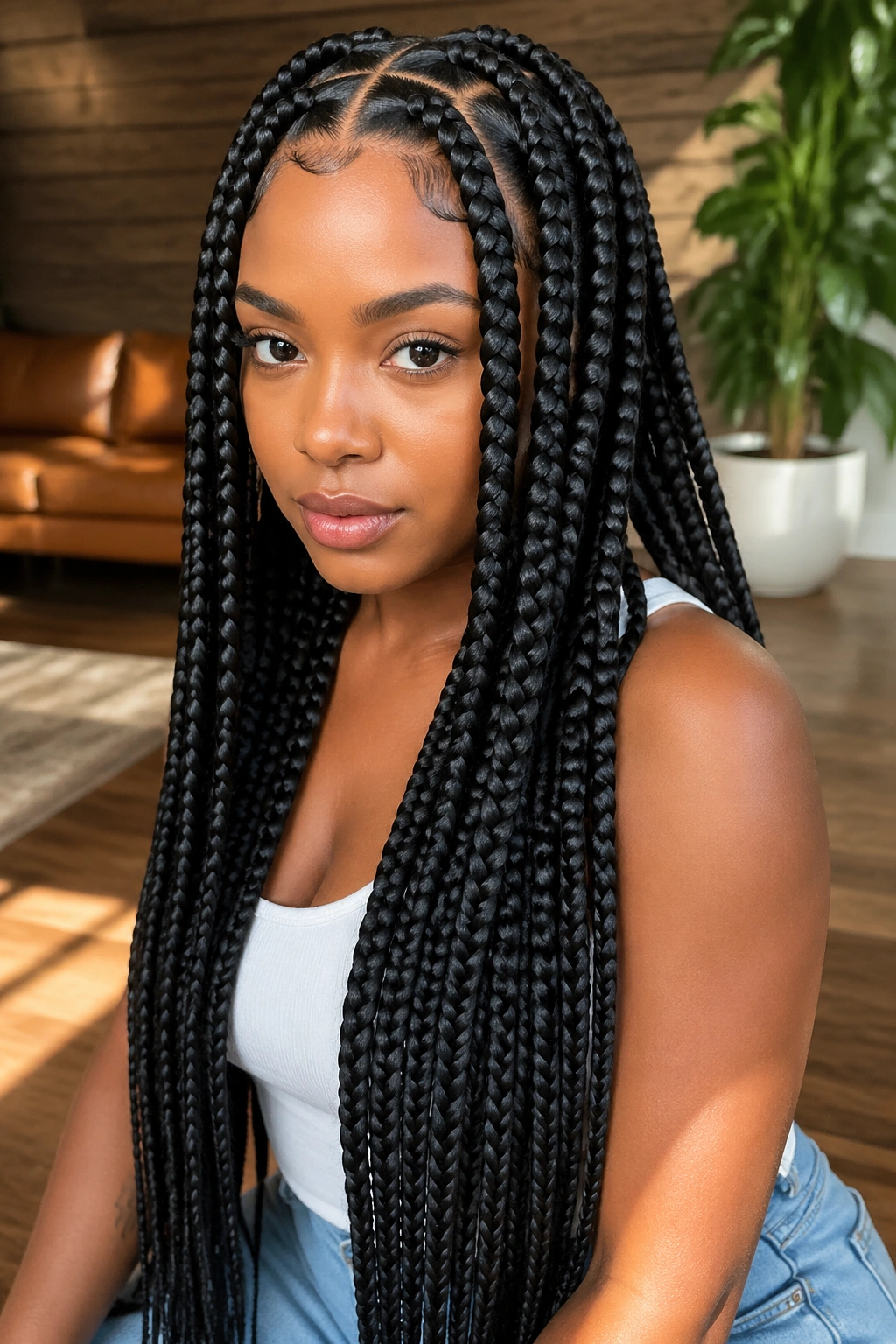
Want the same jumbo braids, but softer? Sweep them to one side. A deep side-sweep changes the line of the whole style, opens up the neckline, and makes jumbo knotless braids feel less rigid on natural hair. It’s a simple move, and it does a lot.
The reason it works is shape. Pulling the braid mass over one shoulder creates movement around the face and gives the style a little asymmetry. That helps if your braids are long or especially full, because the side sweep breaks up the visual weight. It also gives earrings a chance to show, which matters more than people admit.
How to Keep the Sweep in Place
Use a side part that starts clearly at the crown. Then anchor the heavier side with two small pins under the top braids or secure it with a hidden clip near the nape. A little product at the roots helps, but don’t drown the scalp in gel. You want hold, not stiffness.
This look is especially useful when the braids are already installed and you want a new shape without changing a thing. Change the sweep. Change the whole mood.
And if you’ve been living in the same braid part for a while, this is the easiest way to make the style feel fresh again without touching a single extension.
