

Curled hairstyles can look like you spent ages on them, even when the routine took ten minutes and a little patience around the crown. The trick is not forcing every curl into the same shape; it’s choosing styles that let the curl pattern do the work.
I’ve always had little patience for styles that collapse by lunch or need a forest of pins to stay upright. A good everyday look should hold its own through wind, a long commute, a desk fan, or the weird little frizz halo that shows up when you forget to turn the shower fan on. That’s the bar. Nothing glamorous about it.
The best daily curly styles usually do three jobs at once: they keep hair out of your face, protect definition, and avoid crushing the shape you already have. Some lean polished. Some lean loose and casual. A few are the kind you throw together when your roots are flat and your ends are still decent, which is a very real state of life.
Soft hold, smart parts, and a couple of pins usually beat a thousand sprays. That’s the rule I keep coming back to, because it works.
1. Curled Hairstyles That Start with a Wash-and-Go
If your curls already have shape, the wash-and-go is the one style I’d trust on the busiest mornings. It keeps the curl pattern visible, which matters more than people admit. Good curls don’t need to be hidden under too much styling.
Why It Works
The whole point is controlled freedom. You set the curls while they’re wet, let them dry into place, then leave them alone until they’re fully dry. That little bit of restraint makes a huge difference.
- A medium-hold gel or foam keeps the outer layer from frizzing before the inside dries.
- Diffusing on low heat helps the roots lift without blasting the pattern apart.
- A strong part at the side or middle gives the style shape right away.
- If the crown droops, a small root clip while drying can save the whole look.
One mistake ruins it fast: touching curls before they’re dry. Don’t do it. Let the cast form, let it set, then scrunch it out with clean hands once the hair feels cool and dry from root to tip.
2. Half-Up Clip-Back Style
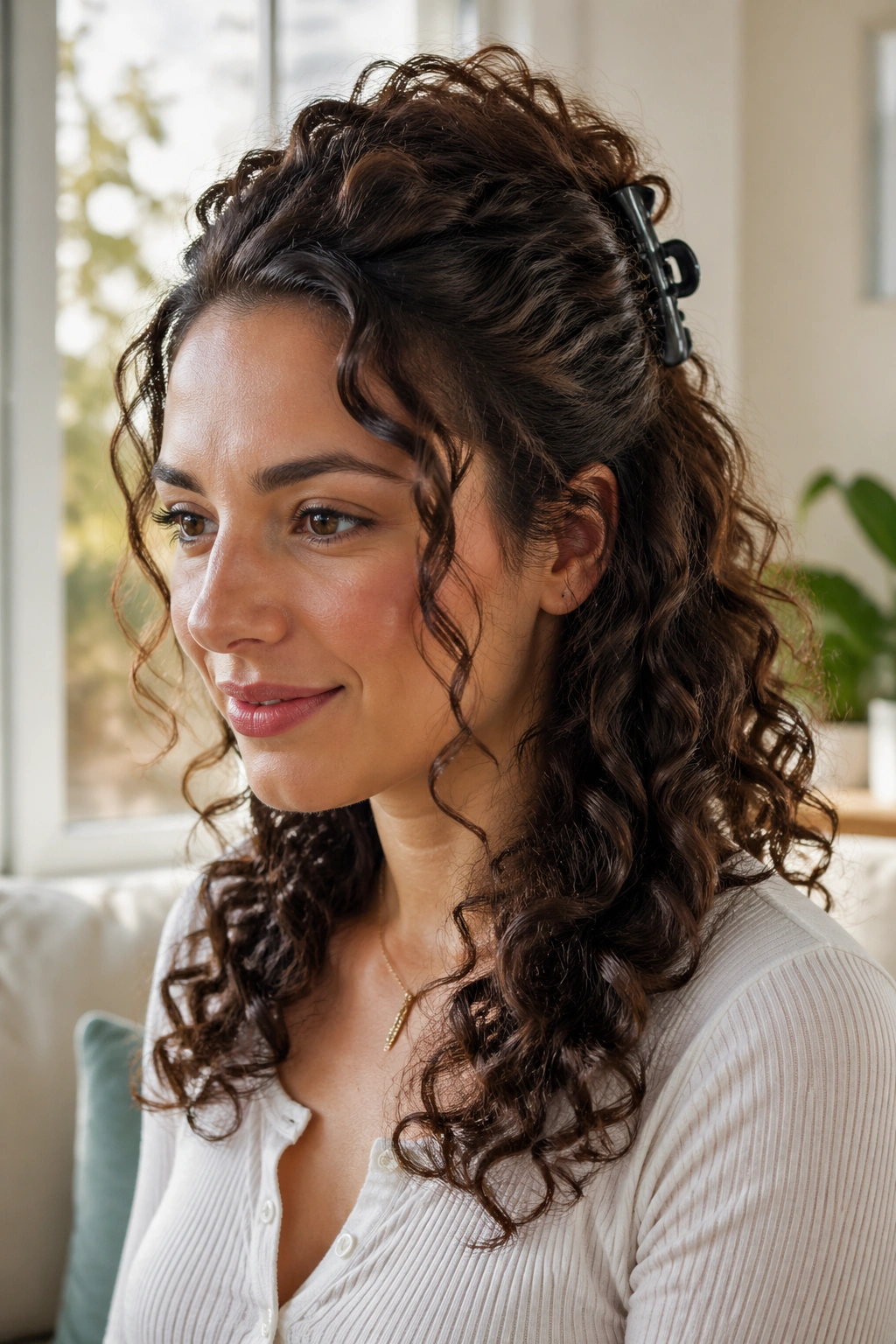
Why does this style keep showing up in curly routines? Because it solves the annoying middle ground. Your face gets cleared, the top gets control, and the lower curls still do their thing.
The half-up clip-back style works best when you gather only the top section from temple to temple, then leave the rest loose. A matte claw clip usually grips better than a glossy one, especially if your hair is soft or slippery. I like a twist before the clip goes in, not after. That gives the top a little lift instead of flattening it into the scalp.
The sweet spot is right at the crown or just behind it. Too low, and the style looks heavy. Too high, and it starts to feel fussy. Keep a few front pieces out if your curls like to frame the face. Those pieces soften the whole thing.
A quick mist of water and a pea-sized bit of cream on the front curls keeps them from looking dry against the clipped-back top. Small move. Big payoff.
3. Low Curly Ponytail at the Nape
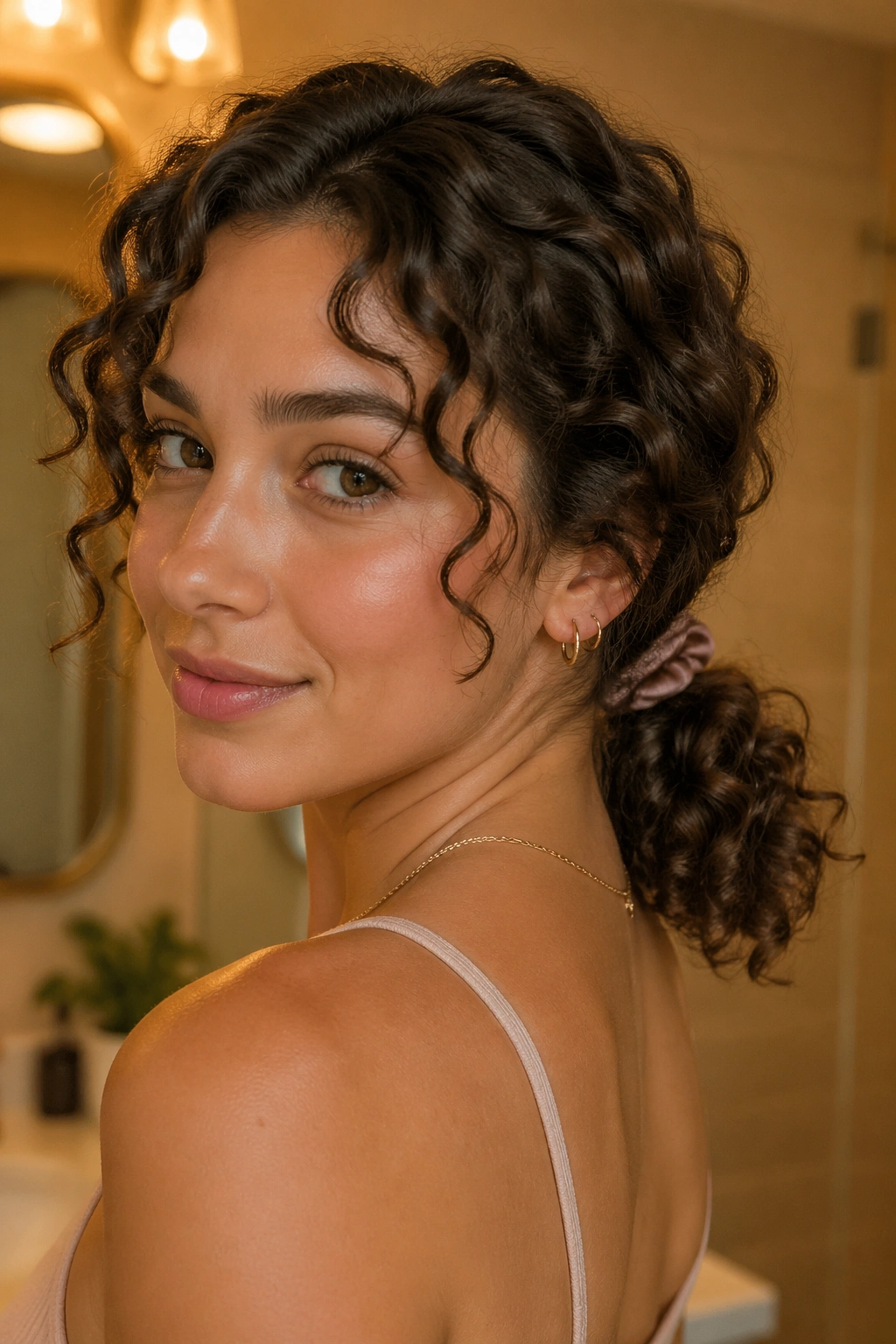
A low curly ponytail can look calm and still keep the curl pattern visible. That’s why I reach for it when I want something neat without turning my head into a helmet.
The trick is placement. Sit the ponytail at the nape, not halfway up the back of the head. That lower anchor keeps the crown from getting squashed and gives the style a little swing. A satin scrunchie or a spiral tie is kinder than a tight elastic, and it leaves fewer dents in the hair.
Small Details That Matter
- Lift the crown slightly before you secure the tie.
- Wrap one small curl around the elastic and pin it underneath.
- If your hair is thick, split the ponytail and join it again with a second hidden elastic.
- If your ends are dry, smooth only the last two inches with a tiny bit of serum.
This style is good on second-day hair, especially when the roots are a little too loose for a full wear-down day. It keeps the shape clean without making the curls disappear.
4. Side-Parted Curly Bob
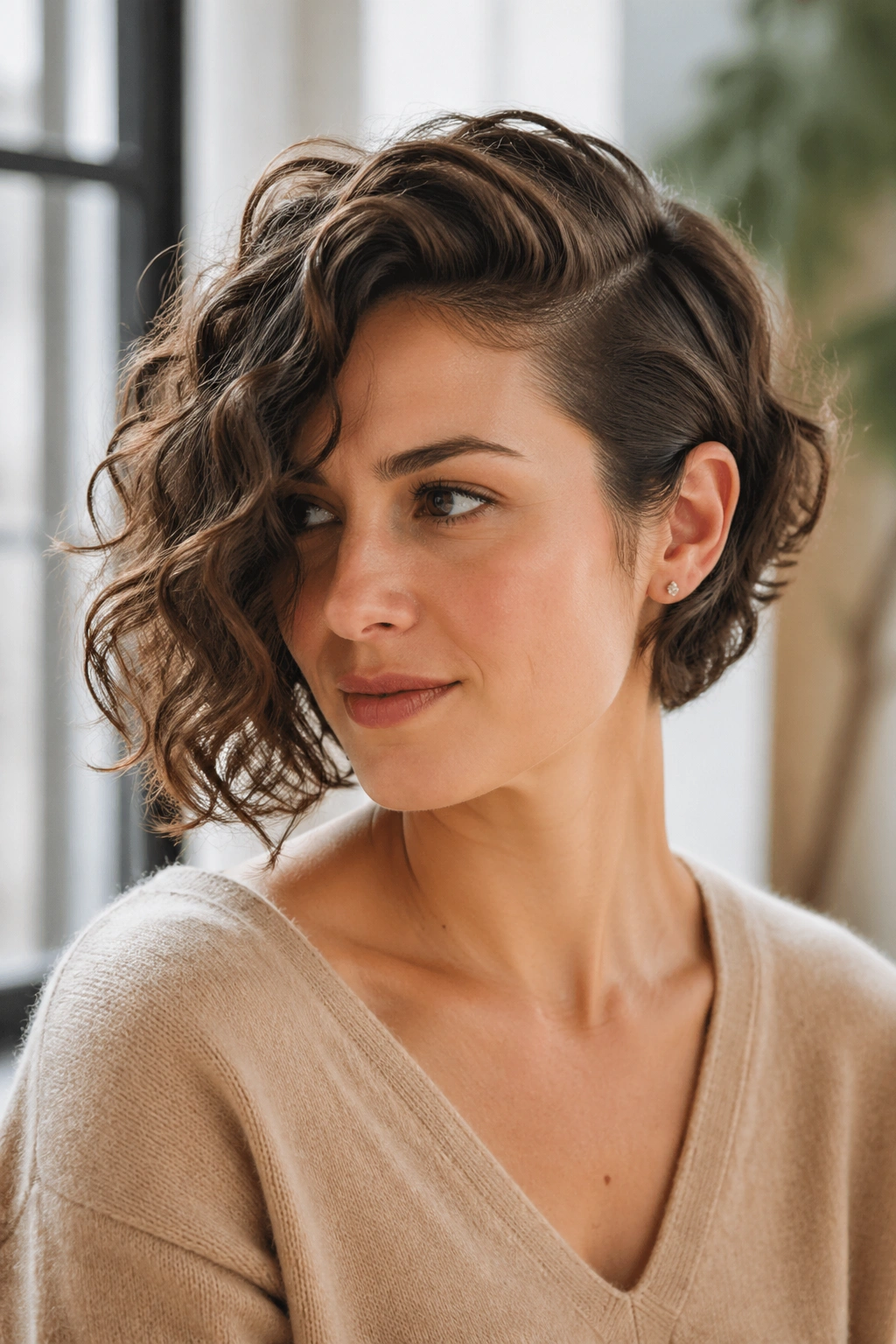
Short curls can turn boxy fast. Change the part, and the whole haircut shifts.
A side-parted curly bob works because it breaks up width and gives the front a softer line. On a straight-across bob, curls can balloon out on both sides and start to feel puffy in the wrong places. Move the part a little deeper, and the weight starts to fall differently. That’s the whole game.
I like this look best when one side gets tucked lightly behind the ear and the front curl is left loose. That tiny contrast makes the shape feel intentional. A drop of styling cream on the front pieces helps them clump into nice, defined sections instead of splitting into frizzy wisps.
If your bob has a tendency to triangle out, flip the part on damp hair and let it dry that way. The roots learn fast. Not instantly, but fast enough to matter.
One more thing. A bob like this looks best when it moves. If it’s too stiff, you lose the charm.
5. Crown Braid with Loose Ends
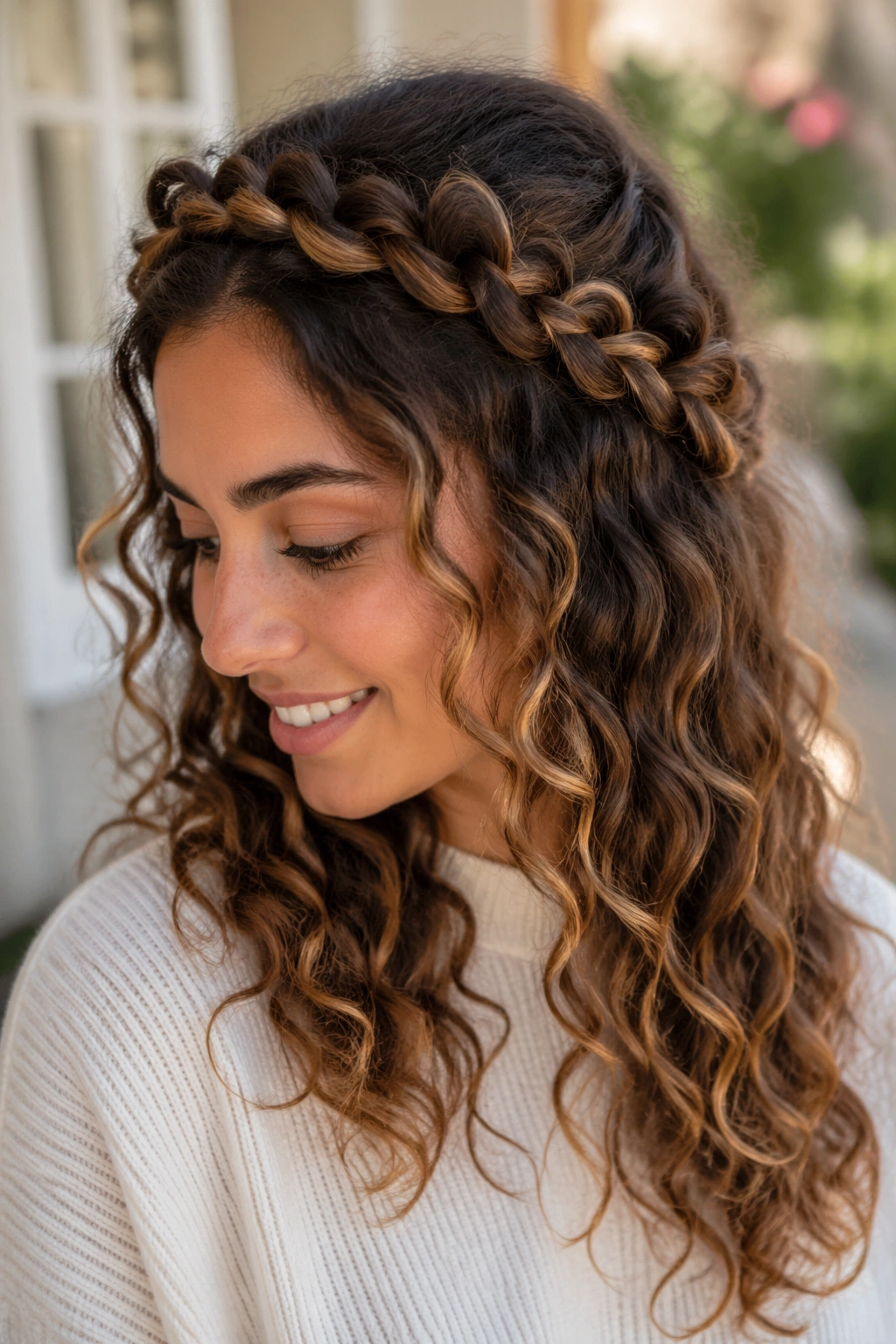
A crown braid is one of those styles that looks more complicated than it is. That’s partly why it works so well for everyday wear. The braid keeps the front under control, and the curls at the back still get to be seen.
Start the braid near one temple or along the hairline, then carry it across the crown without pulling it too tight. A braid that hugs the scalp too hard can make the whole style feel harsh. I prefer a softer hand here. A Dutch braid gives a little more lift, while a rope twist makes the texture stand out in a different way. Either one can work.
The loose ends are the part I like most. Let them fall into the rest of the curls instead of pinning every last strand away. It keeps the style from looking stiff, and it softens the line around the head. If your hair slips easily, braid on slightly textured hair rather than freshly conditioned hair. That extra grip saves time later.
This is one of those looks that feels practical and pretty at once, which is rarer than it sounds.
6. Pineapple Puff
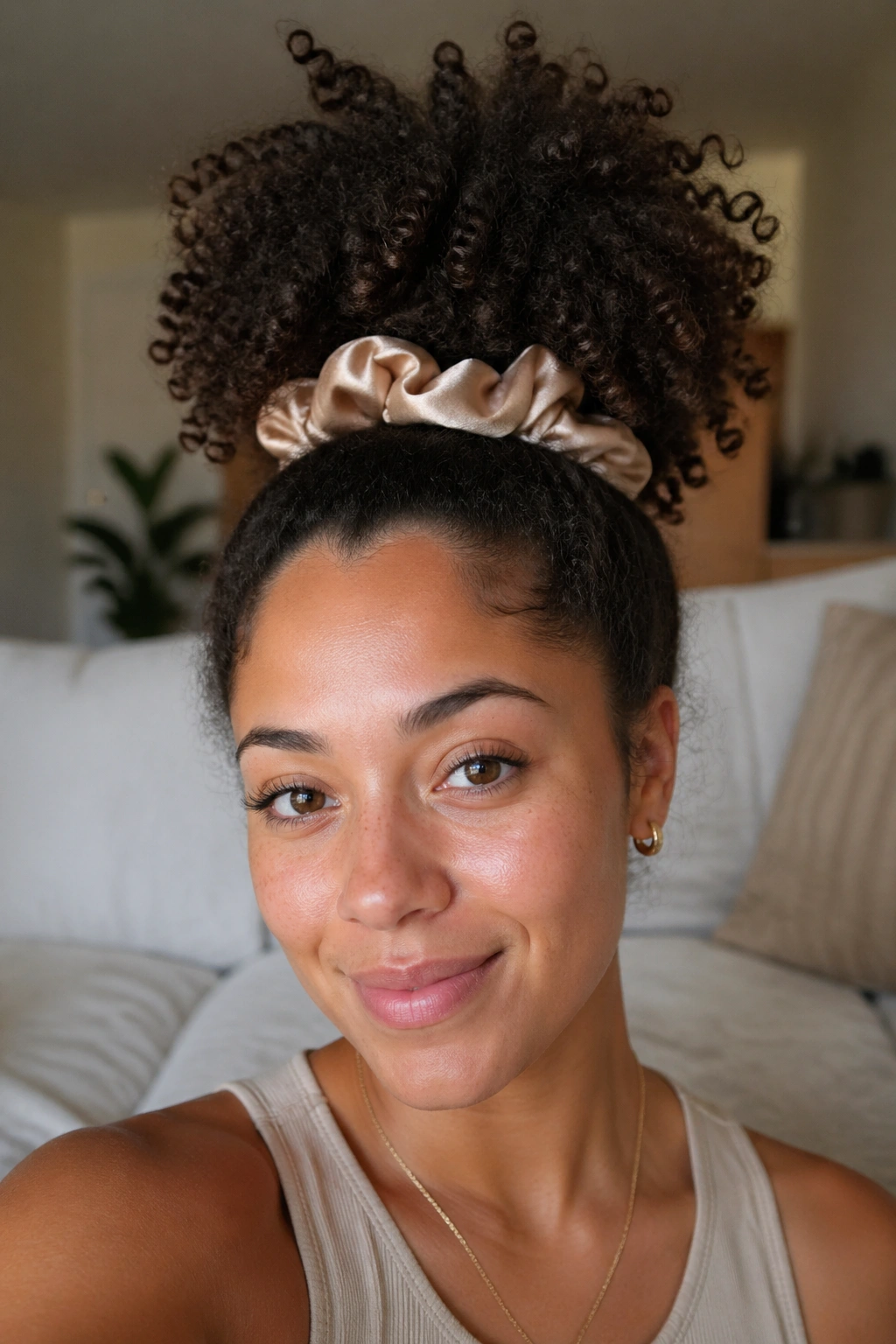
The pineapple puff is part hairstyle, part curl insurance. It keeps the volume high and the ends safe, which makes it a favorite for anyone who wants a quick everyday style without crushing the curls.
Unlike a high ponytail, the pineapple sits loose at the top of the head, usually just forward of the crown. The hair gathers upward, but the tie stays soft enough that the curls don’t get smashed flat against the scalp. For longer curls, the ends fan upward and outward in a way that looks playful without trying too hard.
This style is especially useful for thick or springy curls that need a little containment. A large satin scrunchie does the job nicely. If your hair is shorter, a mini pineapple with a few pins can still give the same general shape. You’re aiming for height, not tension.
It’s also one of the better options when you want to stretch a wash day a little longer. Sleep on it. Wear it out. Re-fluff the next morning. Easy enough.
7. Curled Hairstyles That Work with a Claw Clip
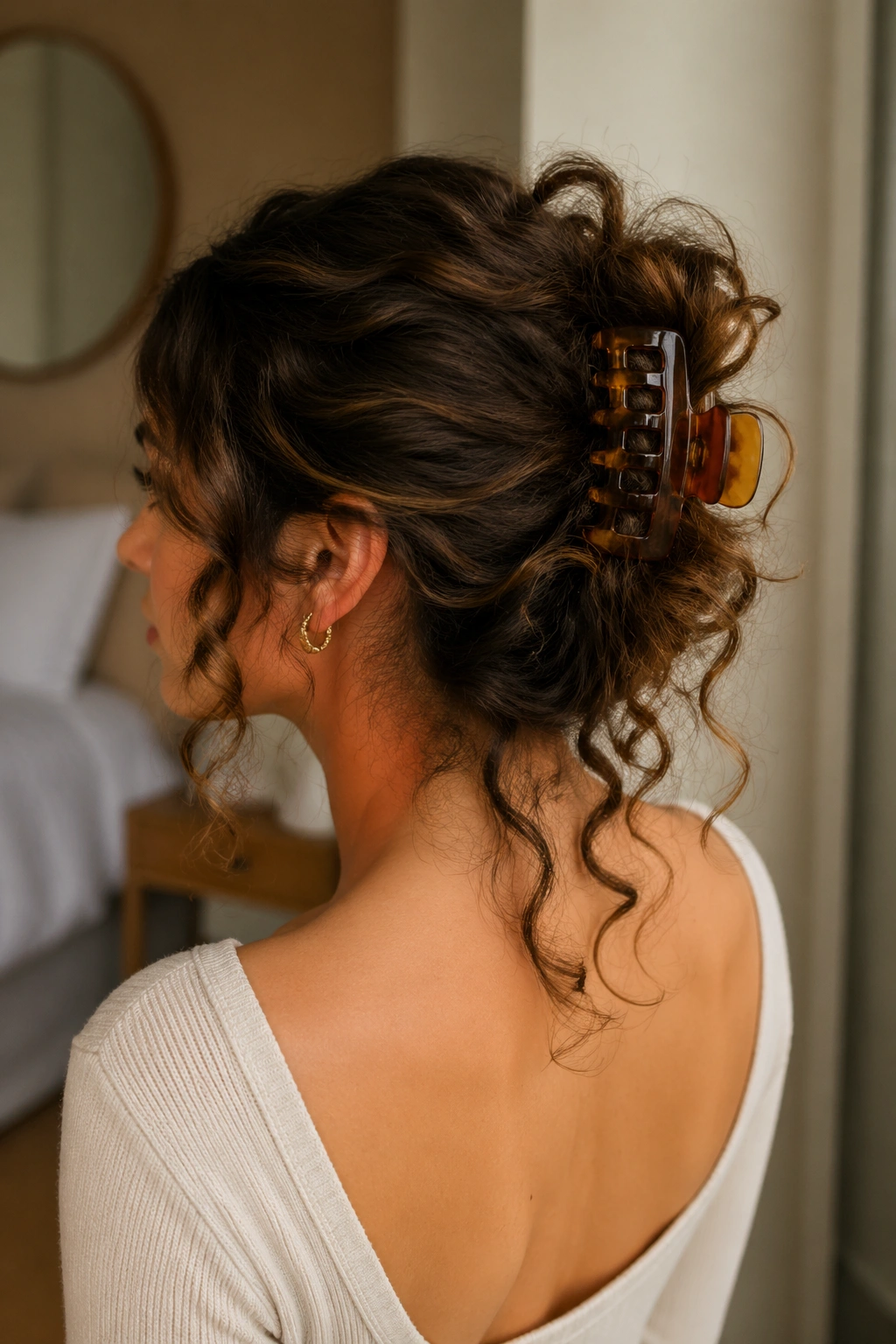
A claw clip is the fastest fix when the roots are flat and the ends still have life. That alone earns it a place in any rotation of curled hairstyles.
The best version starts with a loose twist from the nape upward. You don’t want to smooth every curl into submission; you want enough structure to lift the hair, then enough softness for the curled ends to spill out. The clip sits mid-back or at the crown, depending on how much hair you have. A larger clip with deeper teeth holds dense curls much better than a tiny decorative one that slips after twenty minutes.
What to Watch For
- Choose a clip that’s wider than your hair mass.
- Leave a few curls around the temples loose for balance.
- Don’t pack the twist too tightly, or the clip will pop open.
- If the back feels heavy, place the clip a little lower and let the top puff slightly.
A claw clip style looks best when it isn’t too neat. That’s the whole charm. It should feel like you put in effort, not like you wrestled your hair into obedience.
8. Curly Shag with Face-Framing Pieces
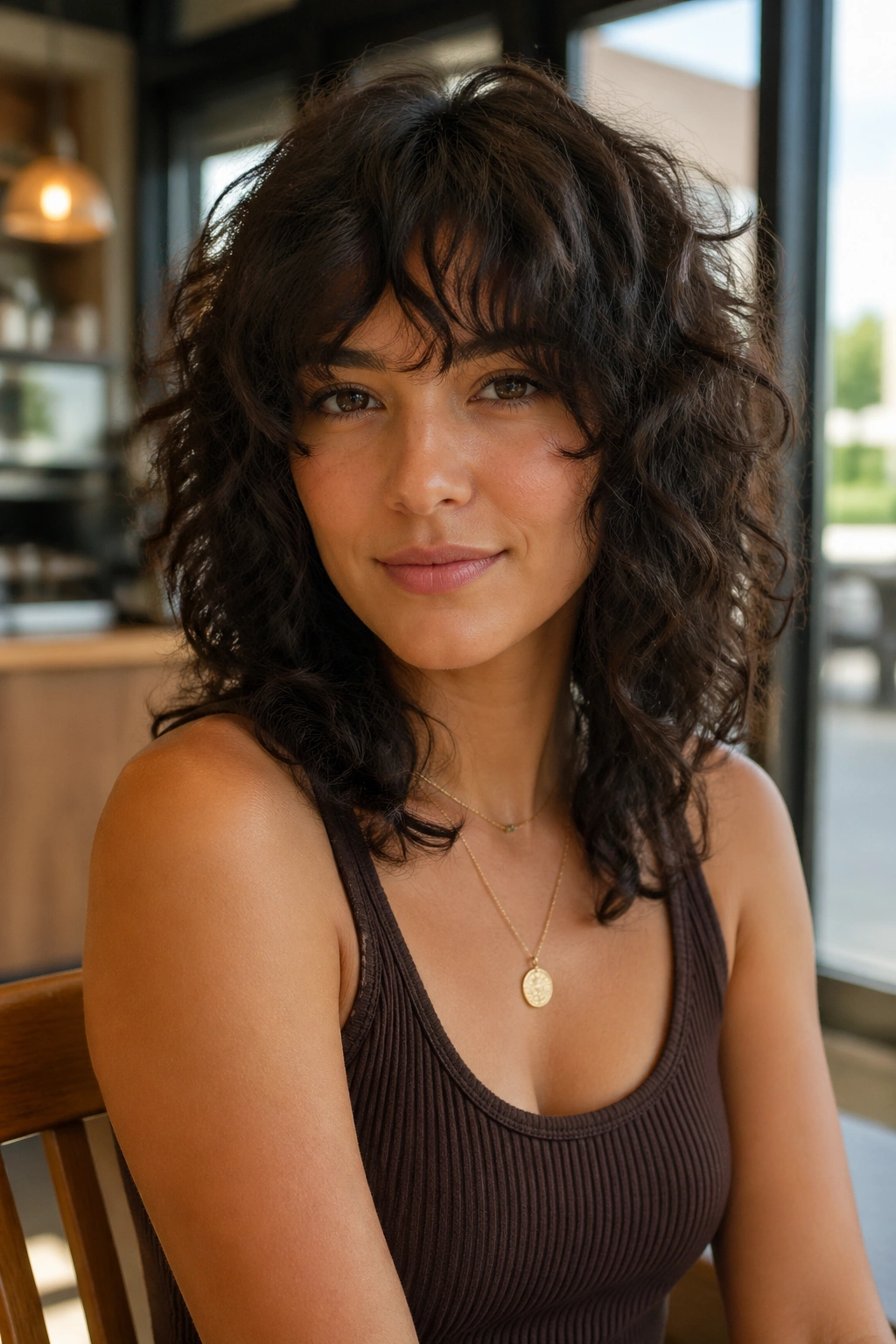
A haircut can do most of the styling if the shape is right. The curly shag proves that point better than almost anything else.
Layers take weight off the sides, which stops curls from turning into one giant rounded wall. Face-framing pieces pull the eye inward and keep the style from feeling bulky. If your curls are loose waves, the shag adds movement. If they’re tighter coils, it helps the shape fall in a way that feels lighter around the face.
I like this look for everyday wear because it doesn’t ask for perfect definition. A little cream, a little scrunch, maybe five minutes under a diffuser, and you’re there. On days when the front pieces puff more than the rest, I’ll dampen just those sections and twist them around my fingers once. That usually settles them down.
The shag does have one downside: if the layers are cut badly, the shape can go uneven fast. So when this one works, it really works. When it’s off, you notice. Still, for low-effort styling, it’s hard to beat.
9. Low Curly Bun with Soft Tendrils
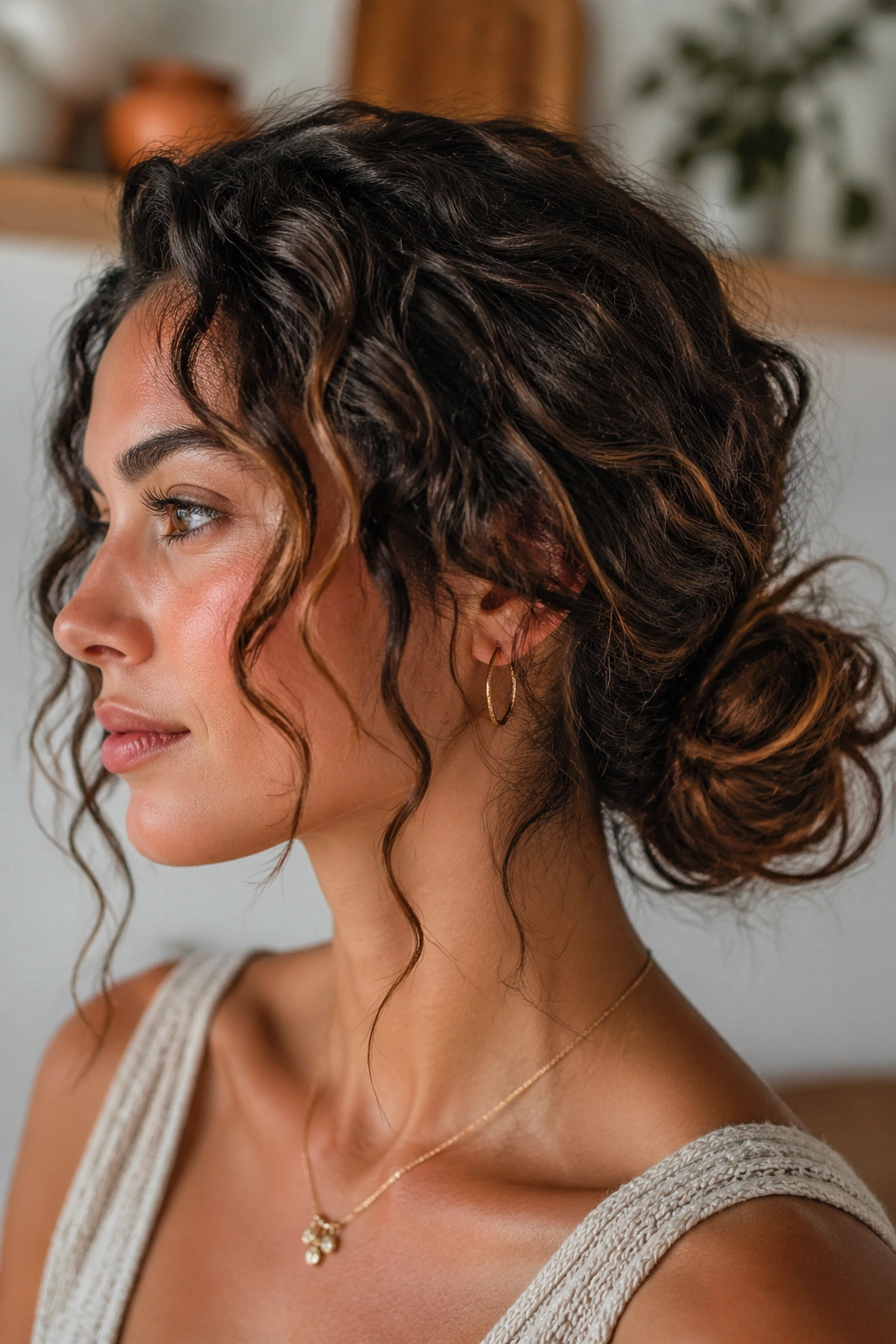
The nape should feel tucked, not stretched. That’s the line I keep in mind with a low curly bun.
This style starts with a loose gather at the base of the neck. Don’t yank the hair tight. Leave a little softness at the crown so the bun doesn’t look severe. Then twist the length into a bun and secure it with pins or a gentle elastic, depending on how much hair you’re holding. If the bun is too neat, it loses the curl texture that makes it interesting in the first place.
Soft tendrils do a lot of the work here. Two pieces around the face are usually enough. They break up the outline and keep the style from looking too formal for everyday wear. If the hair is freshly washed, the bun may slide. Day-two hair usually grips better and gives the shape more hold.
For thick curls, four to six pins is normal. Sometimes more. That’s not a flaw; it’s just hair behaving like hair. Leave the bun slightly imperfect and it reads as relaxed instead of rushed.
10. High Curly Ponytail
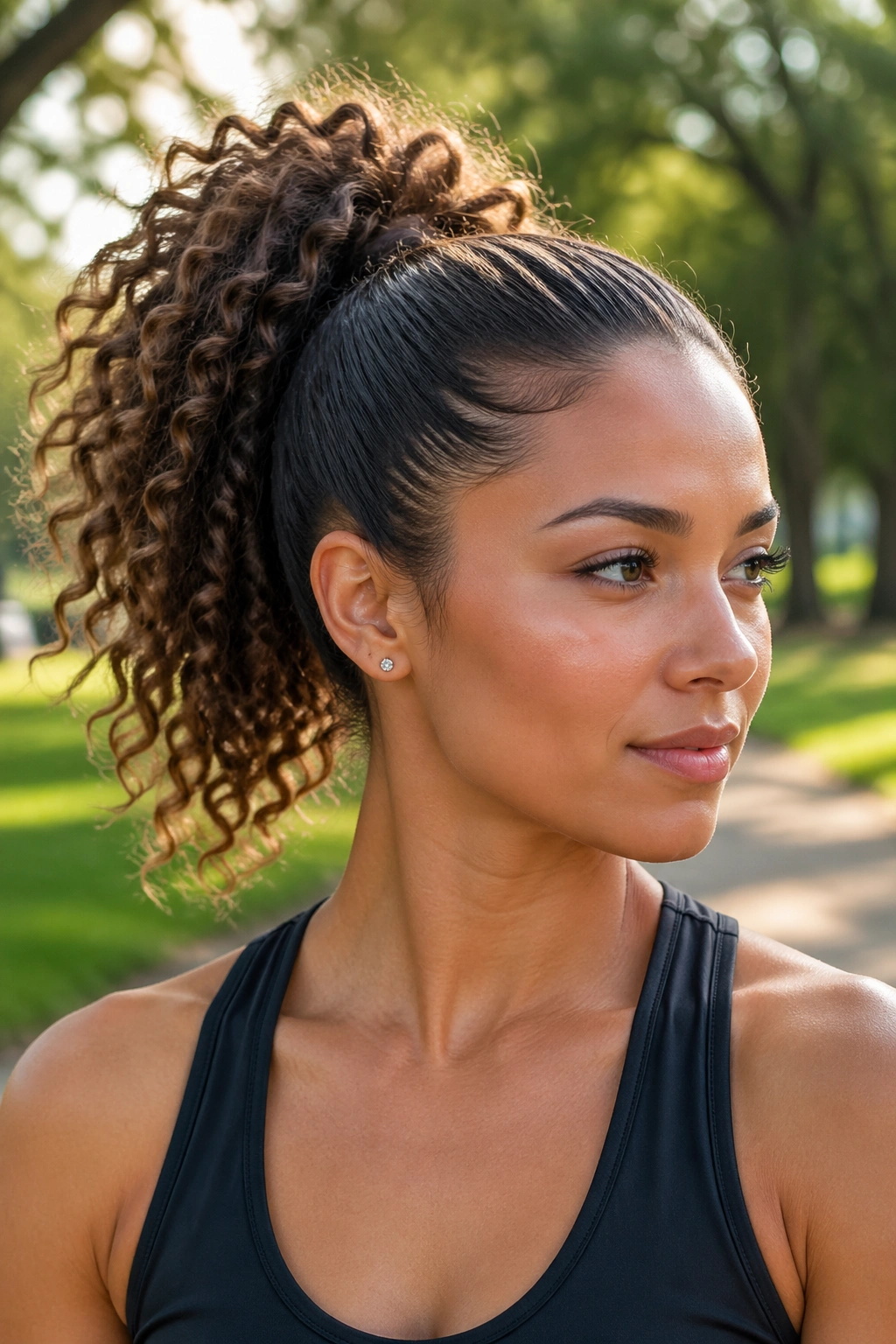
Some mornings need your hair off your neck, full stop. A high curly ponytail does that job and still gives you shape.
The ponytail sits high enough to lift the face, but not so high that the base looks pulled tight. Curls add their own height, which means you don’t need to yank the elastic to the moon. A strong coil tie or covered elastic helps keep the hold secure without snapping strands. If the hair is heavy, a second hidden elastic underneath can keep the ponytail from sagging halfway through the day.
Quick Rules That Help
- Gather the hair when the crown still has some lift.
- Wrap one curl around the base to hide the tie.
- Keep the ends curly, not brushed out.
- Use a little gel at the edges if flyaways are jumping everywhere.
This style feels sporty, but it doesn’t have to look gym-only. A clean part and a defined front section make it sharp enough for work, school, or anywhere else you don’t want hair in your mouth.
11. Deep Side Part with a Tucked Side
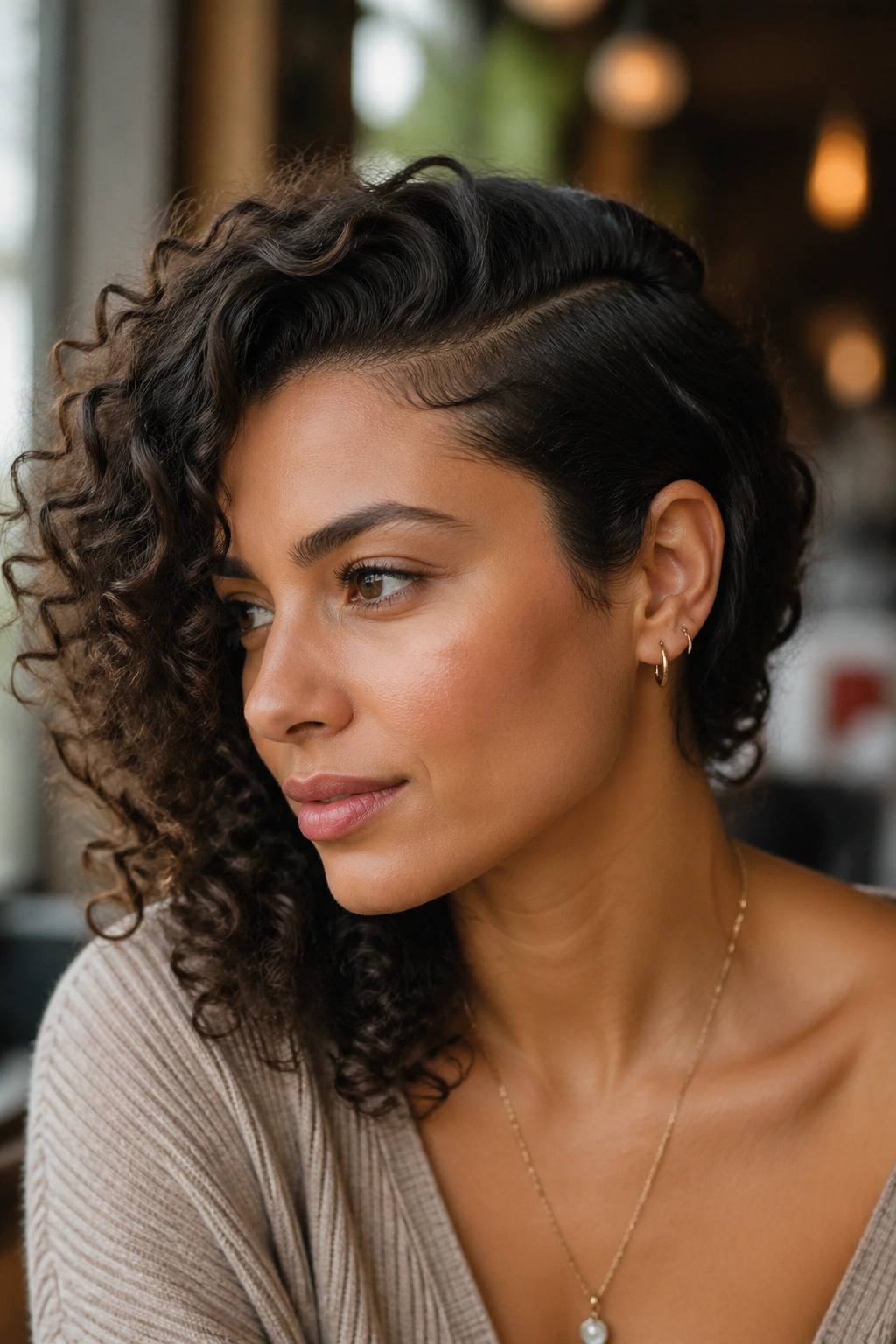
A deep side part changes the whole silhouette. That’s the reason it’s still one of the easiest everyday moves for curls.
When you push the part farther over, the hair falls with more drama on one side and a little more control on the other. Tuck the smaller side behind the ear, and the face opens up without losing the softness that curls bring. It’s a simple move, but it changes the balance of the whole head.
I like this style on medium and thick curls because it lets the volume stay where it belongs. Fine curls can wear it too, though they often need a bit of root lift at the part so the style doesn’t collapse. A root clip while drying helps. A light pin near the ear helps too if the tuck won’t stay put.
A decorative pin can be useful here, but it doesn’t need to shout. A small metal clip, a slim barrette, or even one bobby pin placed carefully can keep the tucked side from falling forward. Some mornings that’s all the difference.
12. Twist-Out Lob
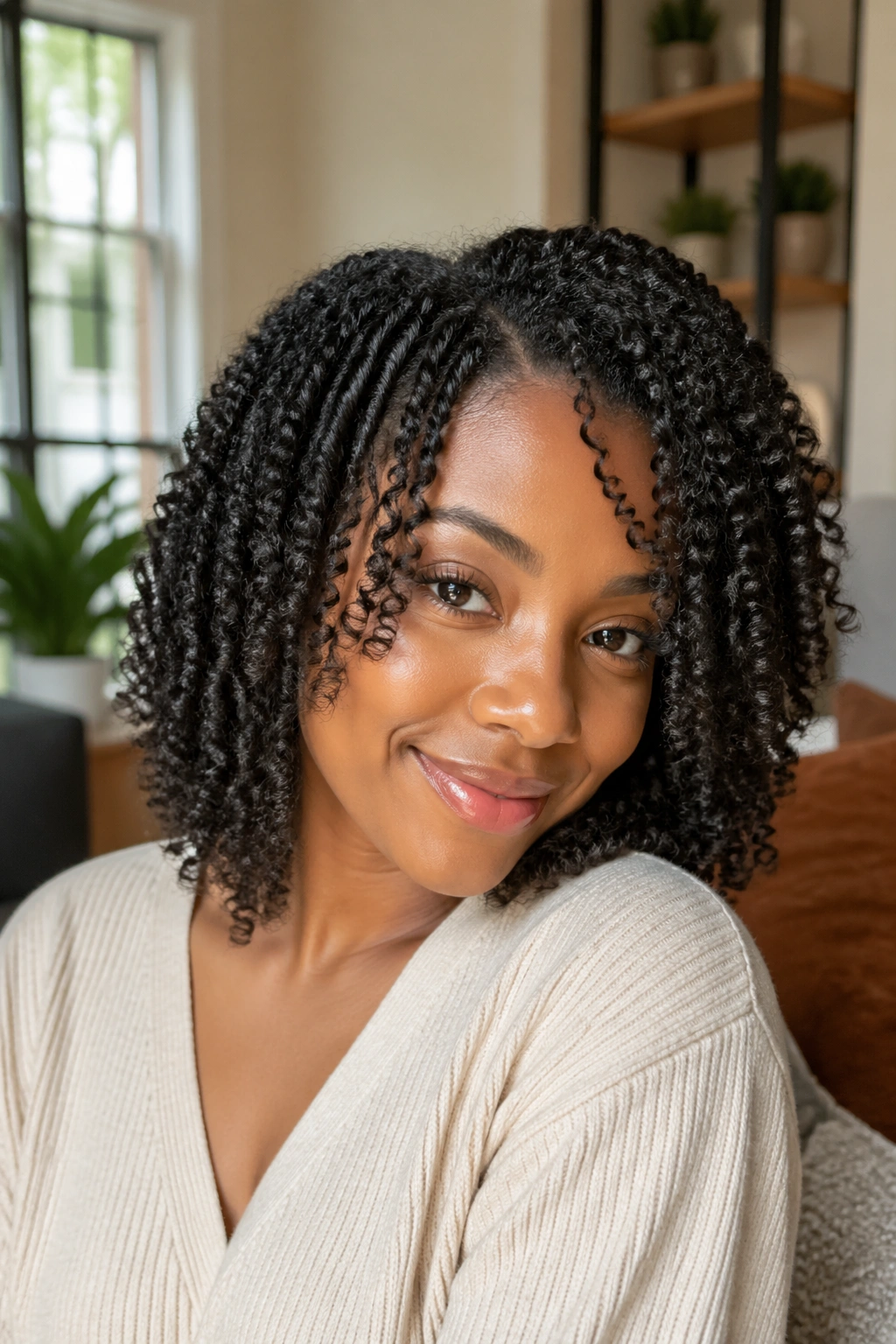
Unlike a wash-and-go, a twist-out gives you more stretch and less shrinkage. That matters if you like a little length around the shoulders and want the shape to feel a bit more controlled.
A twist-out lob works best when the hair is set in medium sections, not tiny ones. Chunkier twists give broader, softer definition. Once they’re dry, separate them gently with a little oil on your fingertips. Don’t rip them apart. That turns nice clumps into a frizz cloud, and nobody wants that.
The lob length helps the style sit cleanly on the shoulders instead of puffing out at the sides. It also makes the result feel wearable during the day because the ends still have enough movement. I’d choose this when the weather is dry and I want a fuller shape without too much halo.
If your curls are tighter, the twist-out stretches them in a way that can feel fresh without heat. If your waves are looser, it adds enough structure to keep the style from falling flat. Either way, the finish should feel soft, not crunchy.
13. Curled Hairstyles for a Headband Day
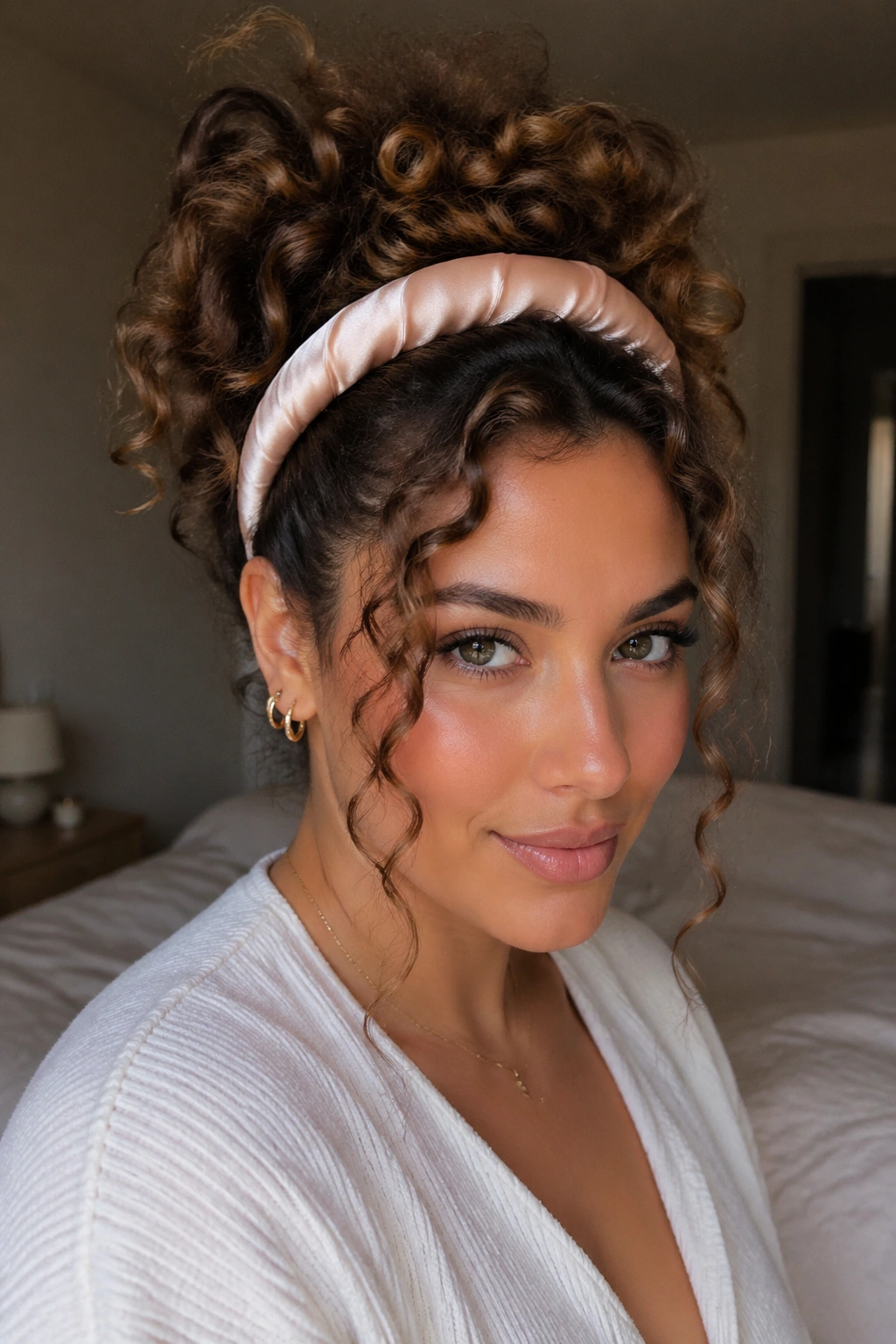
What do you do when the front pieces will not cooperate? Put a headband on them and move on.
Headbands are one of the easiest ways to make curled hairstyles feel finished with almost no effort. A padded band gives a little height and keeps the crown from looking flat. A satin band is gentler if your hair slips or frizzes easily. The point is to control the front without flattening the rest of the style.
How to Wear It
- Start with dry or nearly dry curls so the band doesn’t snag.
- Pick a headband that’s about 1 to 2 inches wide.
- Push a touch of volume forward at the crown before placing it.
- Leave a few curls around the temples and ears for softness.
This style works especially well on second-day hair, when the root shape has loosened but the ends still look decent. It also saves you from re-styling the entire front section, which is a relief on rushed mornings. A headband can look too young if it’s too shiny or too tight, so a slightly matte texture tends to feel better.
14. Curly Bangs with Shoulder Layers
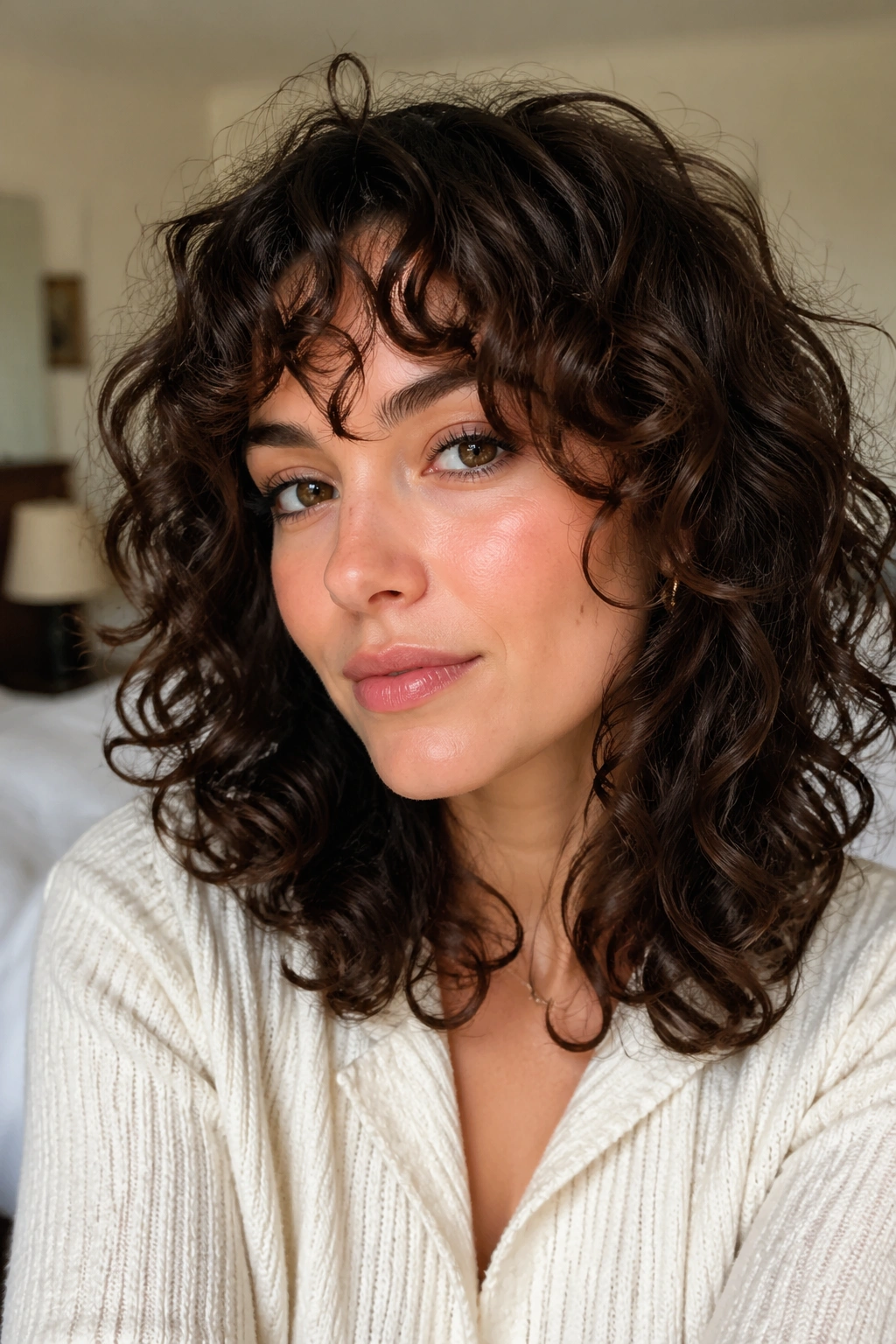
Curly bangs are easier than people think when they’re cut to shrink. That’s the whole secret, and it’s not much of a secret at all once you’ve worn them for a while.
The bangs need to be shaped for the curl pattern, not straightened into submission. A soft fringe that sits above the brows when dry can fall exactly where you want it after it settles. Shoulder layers keep the rest of the shape from dragging the front down, which keeps the cut lively instead of heavy.
I like a tiny bit of cream or leave-in just on the fringe. Too much product makes bangs stringy. Too little makes them frizz out and lose their form. A quick shake with damp fingers usually does more good than a comb. Combs can overwork the front and separate the curls in an ugly way.
If your bangs puff up, pinch them gently while they dry. That keeps the curl clumps together. Simple move. Worth doing.
15. Messy Top Knot with Curly Spill
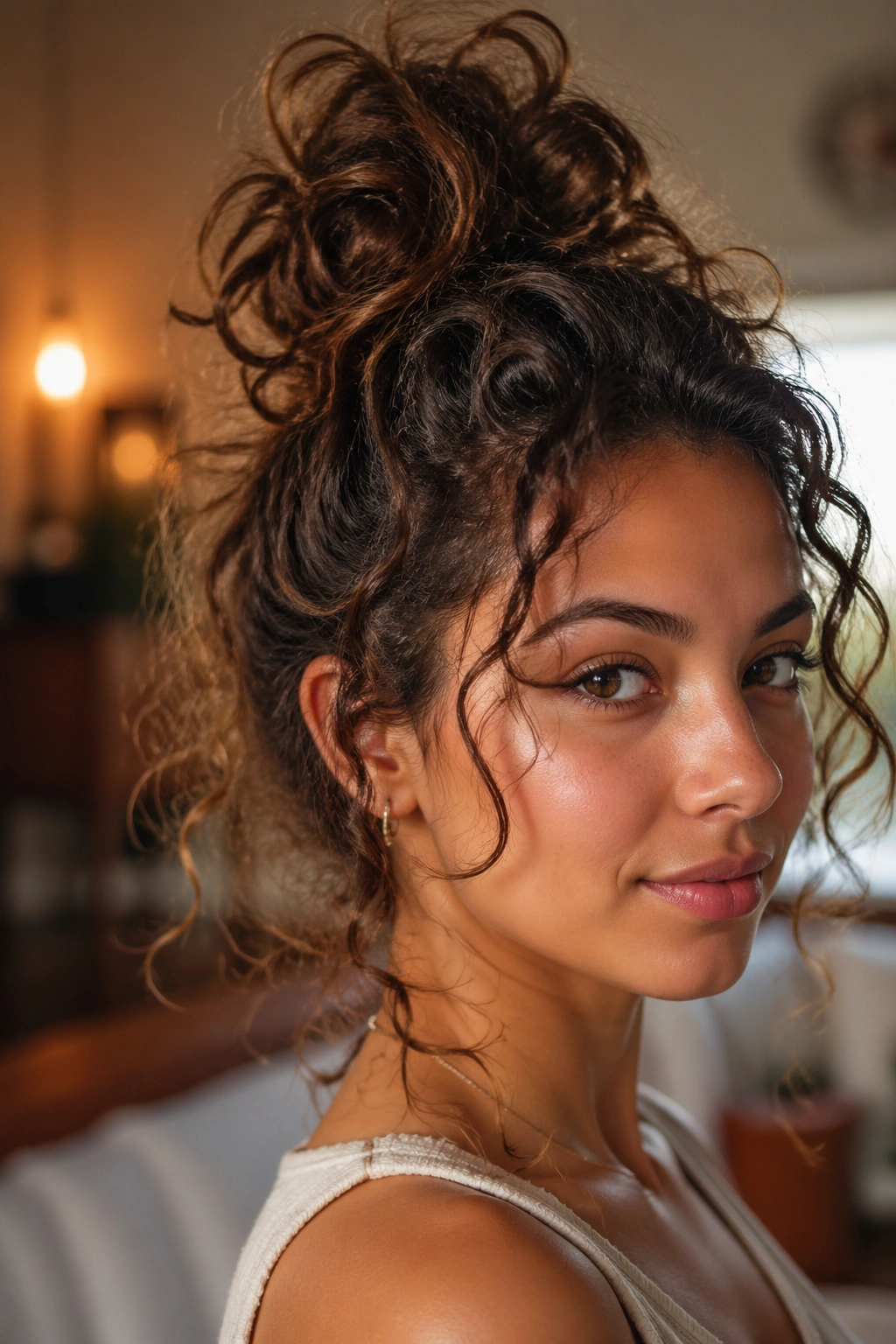
Some mornings need a knot that looks accidental but isn’t. That’s where the messy top knot earns its keep.
The knot sits high enough to clear the face and neck, but it should still leave some curl texture spilling out. You’re not trying to build a ballerina bun here. You want a loose, casual knot with a few ends peeking free. A couple of pins, a soft tie, and maybe a twist from the front are usually enough.
What Helps It Hold
- Gather the hair at the crown, not the exact top of the head.
- Twist once or twice, then stop before it gets tight.
- Leave a few curls out around the face and nape.
- Pin the knot in a way that lets it sag a little.
This one is especially useful when humidity is making a sleek style feel pointless. Thick curls can handle the volume; finer curls can fake the fullness with a little root lift first. The best version always looks like you were busy, not like you forgot your hair existed. That difference matters more than people think.
16. Half-Up Space Buns
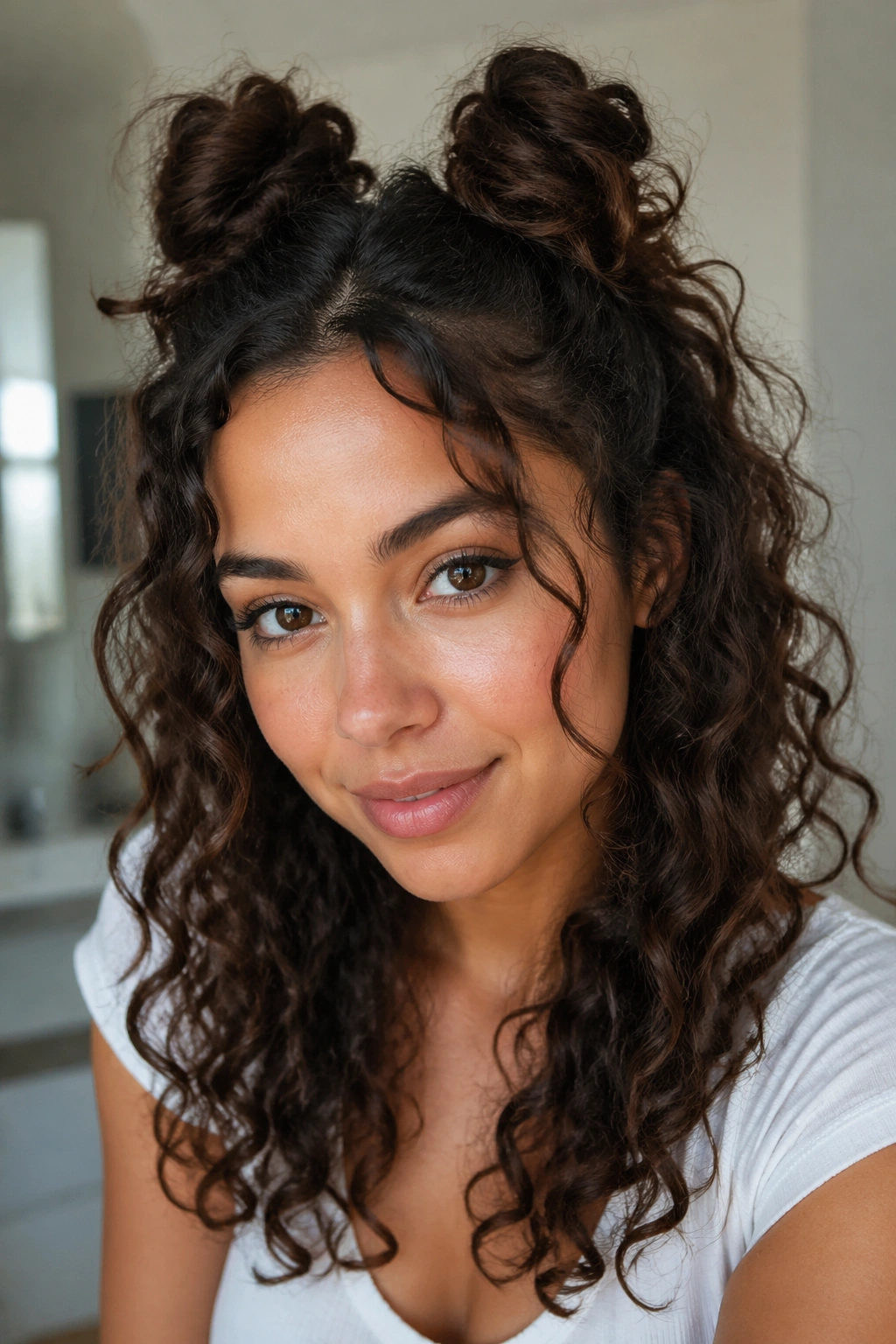
Can space buns feel grown-up? Yes, if they stay small and the curls around them stay loose.
The trick is size. If the buns are too big, they start to read as costume. If they’re modest and slightly soft at the edges, they look playful in a way that still works for daily wear. I prefer placing them high on the head with the lower half of the hair left out. That keeps the curls visible and stops the style from feeling overworked.
This look suits shoulder-length hair and longer curls especially well. The top section should be enough to make two buns, but not so much that the style swallows your whole head. A couple of face-framing curls keep it from getting too neat. If the front pieces are short, let them stay loose instead of trying to pin everything up.
One practical note: this style can tug if the buns are pulled too tight. Keep the grip firm, not harsh. That’s the difference between fun and headache.
17. Side Braid into Loose Curls
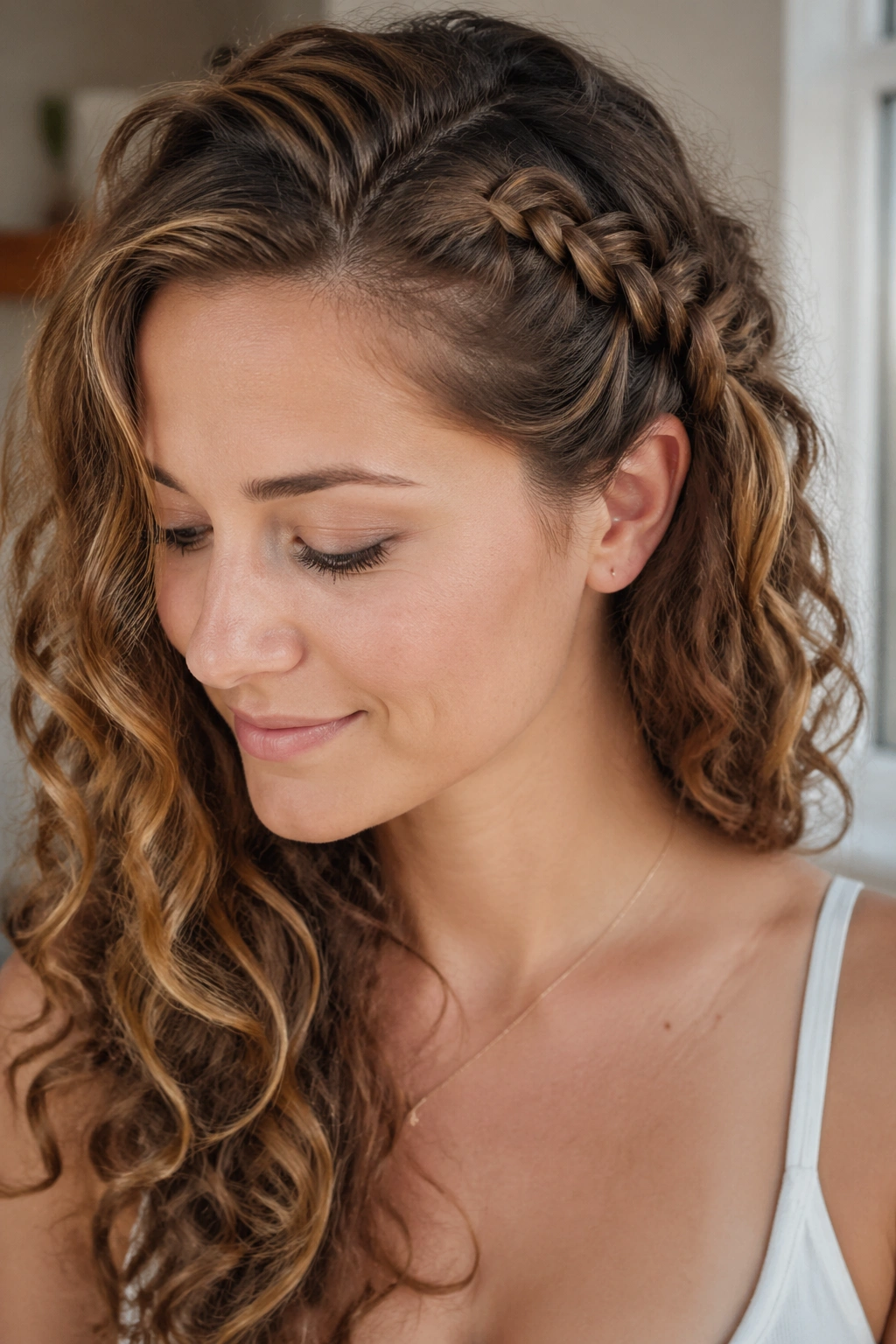
Unlike a full braid, this one keeps the curl pattern visible. That’s exactly why it works on busy days.
The braid runs along one side, usually from the temple down toward the ear or just behind it. Then the rest of the hair falls loose. You get a bit of control where you need it, but you don’t lose the shape of the curls on the other side. It’s a smart compromise, which is a fancy way of saying it solves two problems at once.
A slightly loose braid looks better here than a tight one. Pulling the edges a little wider after braiding softens the line and helps it blend into the rest of the hair. Too much pulling, though, and the braid starts to fray. I’d rather leave a few bumps than destroy the braid’s shape.
This style is a good pick for humid days, travel, or any morning when you want one side out of your face and the rest of your curls left alone. It doesn’t try to do too much. That’s why it lasts.
18. Sleek Sides with Curly Length
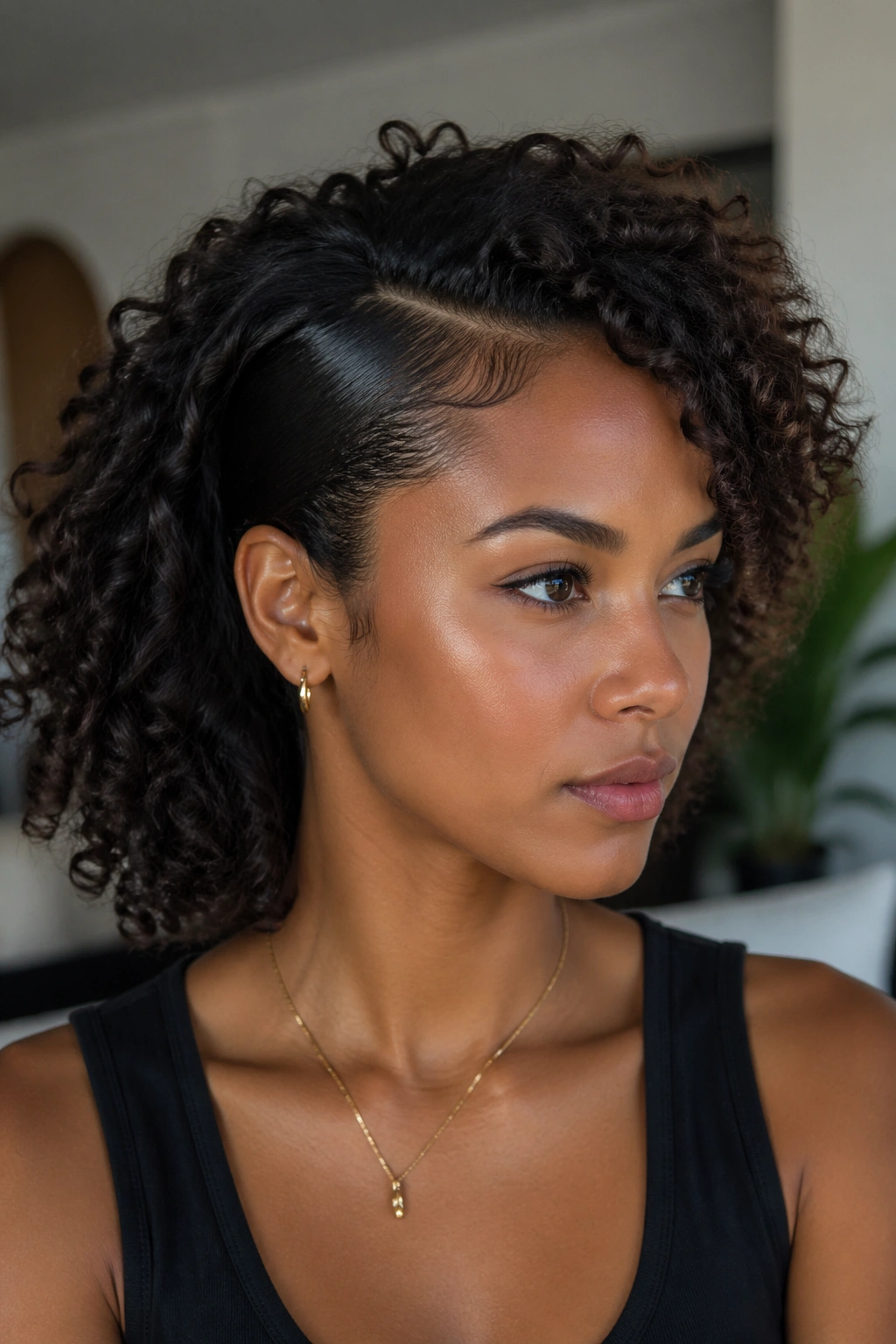
Sleek sides and curly length is one of my favorite contrasts. The top looks controlled, the ends stay lively, and the whole style feels sharper than a plain wear-down look.
The key is restraint. Use gel or a light pomade only on the sides and top edges, then leave the lengths alone so the curls keep their movement. A small brush or even a toothbrush can smooth flyaways near the temples and hairline. Don’t drag the product through the whole head, or you’ll lose the texture that makes the style worth wearing.
This works especially well on medium to thick curls that hold shape easily. The sleek top gives structure, which can be helpful when the hair is big or uneven after sleeping. If the crown wants to puff, smooth it down with damp hands first, then set it with a little product. That usually does the job without making the hair feel hard.
The best part is the balance. Clean up the top, leave the ends soft, and the style looks deliberate without feeling stiff.
19. Rolled Low Ponytail
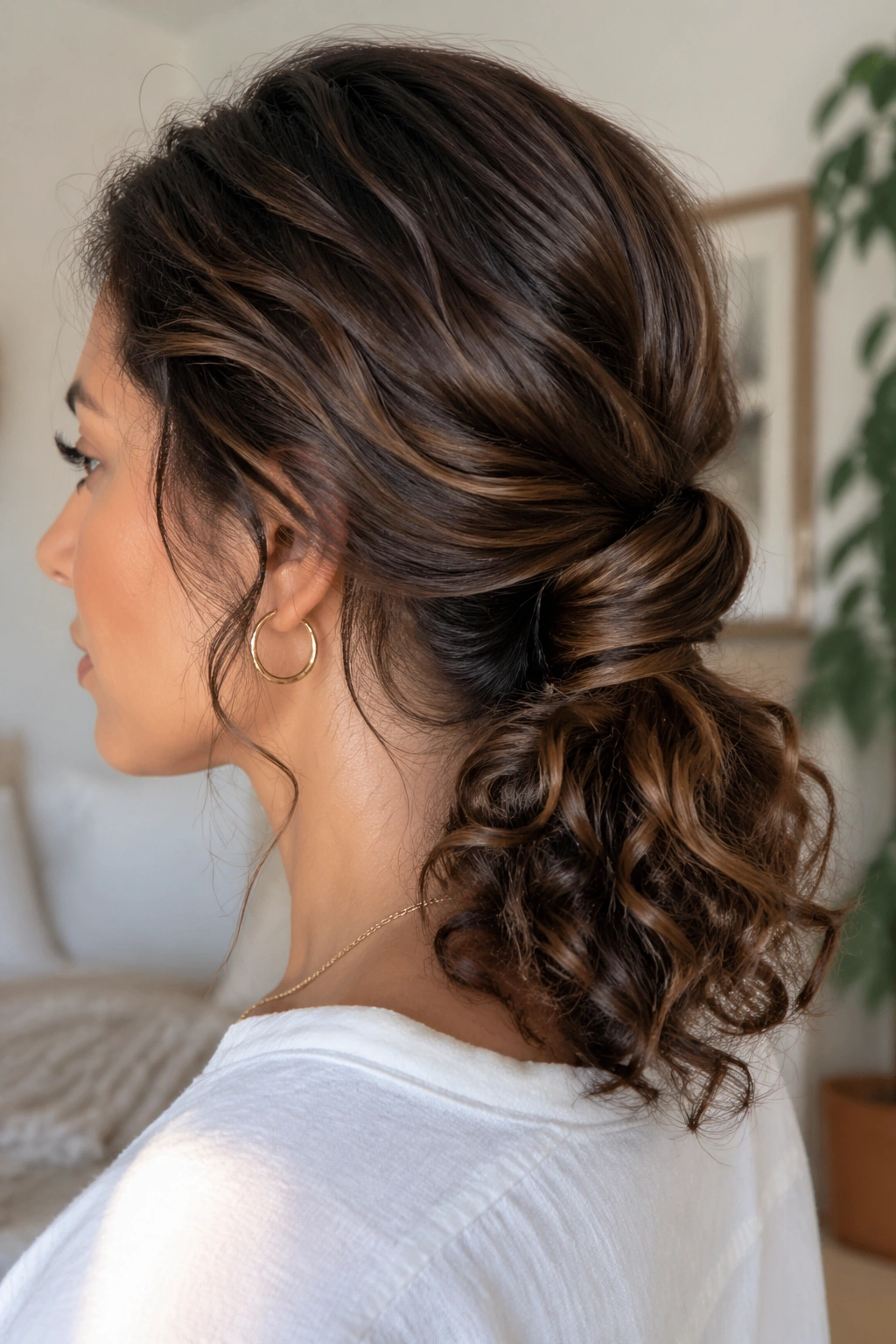
A rolled low ponytail gives you a cleaner finish than a basic tie without asking for much more time. I reach for it when I want the back to look tidy and the curls to keep their shape.
Start with a low ponytail at the nape, then split the hair just above the elastic and flip the tail through the opening. That simple roll creates a little bend in the style, which makes it feel more finished. If the hair is dense, use two pins to keep the roll from slipping. If the hair is fine, a smaller elastic and one pin may be enough.
Small Details That Improve It
- Keep the roll loose so the crown stays soft.
- Leave the ends curly instead of smoothing them flat.
- Pull a tiny bit of volume at the top after securing it.
- Use a satin tie if your hair is prone to breakage.
This is one of those styles that works for workdays, errands, and late-afternoon plans without needing a reset. It looks neat from the front and still lets the curl texture show through at the ends.
20. Curly Lob with a Clip Accent
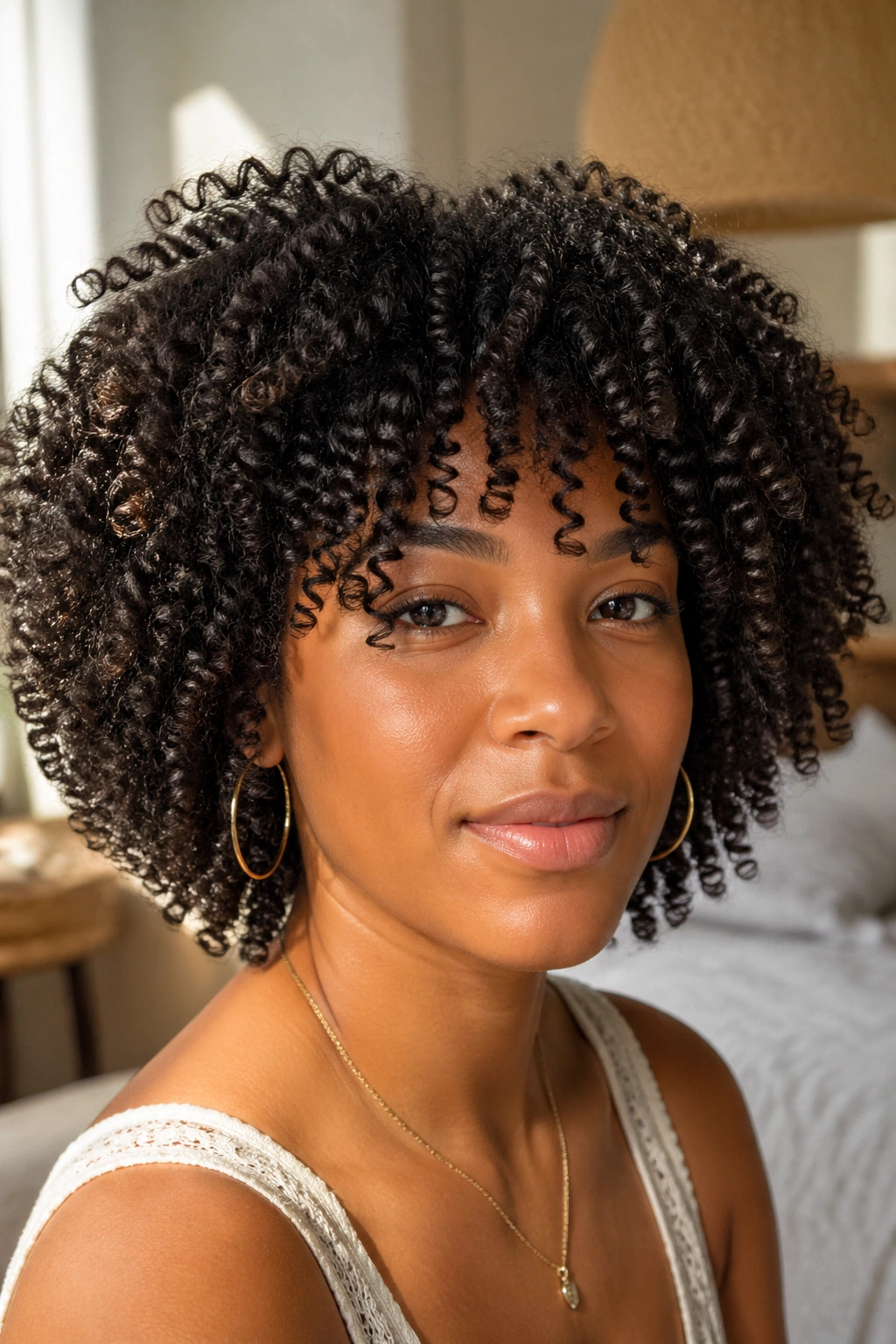
A shoulder-grazing lob with one clip is a strong everyday answer when you want almost no fuss. It keeps the curls looking full, but the little accessory gives the shape a clear edge.
I like a deep or slightly off-center part here, then one side clipped back with a metal barrette or a sturdy snap clip. The other side stays loose and full. That asymmetry keeps the cut from looking too formal, and it also helps if one side tends to puff more than the other. On denser curls, a clip with teeth holds better than a flat decorative piece. On finer curls, a slim pin can do the same job without sliding.
This style is especially good when your curls are a little worn in but still worth showing off. It doesn’t need a perfect refresh. A little water, a touch of cream on the ends, and one clean clip placement usually does enough. That’s the appeal. It feels calm, quick, and honest about what curly hair actually does during the day.
A good everyday style doesn’t need a long speech. It needs to survive the day and still look like your hair, which is the part a lot of people miss.