


Short hair shows everything. The cut, the curl, the part line, the way the ends sit on your neck — all of it is on display the second you add a perm. That’s why perms for short hair with soft curls can look polished or puffy with almost no middle ground.
The trick is not “getting more curl.” It’s getting the right kind of bend. A chin-length bob with a loose body wave behaves nothing like a cropped pixie with a partial wrap, and the same rod size can land differently depending on layering, density, and how much length you’ve left on top. Short hair is honest that way. It does not hide mistakes.
A good soft perm on short hair should move when you shake it out, not sit there in neat little corkscrews like a doll’s wig. Think bends, not springs. Think airy shape around the cheeks, a little lift at the crown, and ends that curve instead of flaring out like a triangle.
And if you’re sitting in a salon chair trying to decide between “soft and wearable” and “too much curl,” the better question is usually about placement. Where should the curl start? How tight should the wrap be? Which panels should stay almost straight? That’s where the best short perms win.
1. Loose Body-Wave Perm for a Chin-Length Bob
If you want movement, not ringlets, this is the safest place to start. A loose body-wave perm gives a short bob a soft bend that looks clean around the jaw and a little fuller through the sides, without the heavy, over-curled look that can make short hair feel crowded.
Why It Flatters Short Hair
The magic is in the rod size and the wrap tension. Ask for larger rods, usually around 3/4 inch to 1 inch, and tell the stylist you want the curl to brush out into waves, not spirals. A chin-length bob already has shape; this perm just loosens it up and keeps the edges from looking sharp.
- Best for straight or slightly wavy hair that feels flat at the ends.
- Works well when the cut has a blunt perimeter and light internal layering.
- Needs a gentle finish with a leave-in cream, not crunchy gel.
- Usually looks best when the front is a touch softer than the back.
Pro tip: ask for one test section near the nape before committing to a full head. On short hair, that one section tells you a lot.
2. Soft Root-Lift Perm for Fine Short Hair
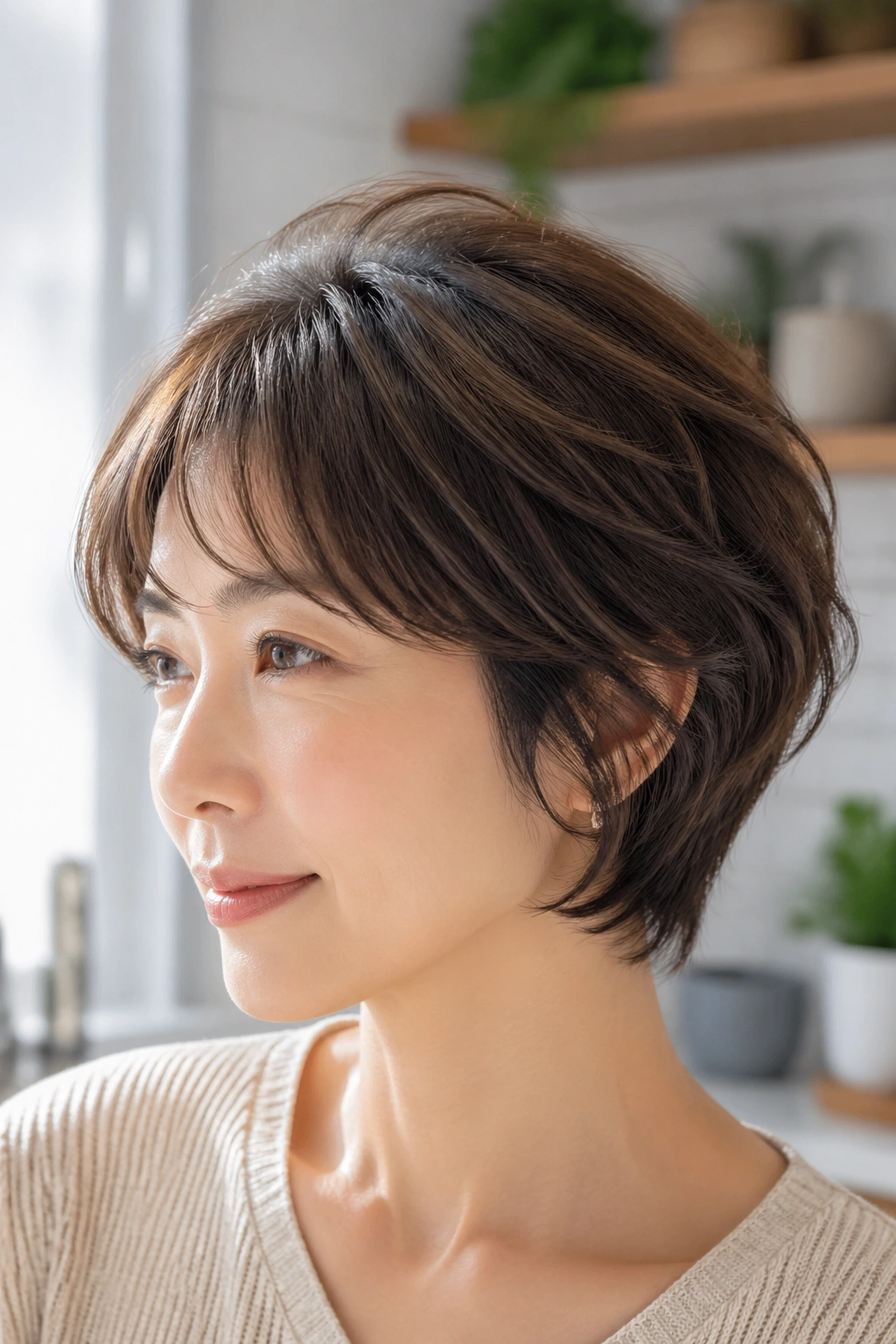
Fine hair does not need a dramatic curl to look fuller. It usually needs lift where the head goes flat — at the crown, around the temples, and sometimes right behind the ears. That’s why a soft root-lift perm can be the smartest move for short hair that wants body without a lot of curl pattern.
This version keeps the ends calmer and puts most of the movement near the scalp. The result is a short style that feels lifted but still easy to brush into place. It’s especially good if your hair tends to collapse by lunchtime or if a full perm makes the ends puff out more than you like.
A lot of stylists will place the rods a little farther from the root than you’d expect, so the wave starts higher and the curl relaxes before it reaches the perimeter. That keeps the cut looking neat. It also makes grow-out less annoying, which matters more than people admit.
Fine hair needs kindness here. Strong solution, short processing time, and a well-timed neutralizer can make the difference between airy volume and fried ends.
3. Face-Framing Wave Perm on a Short Lob
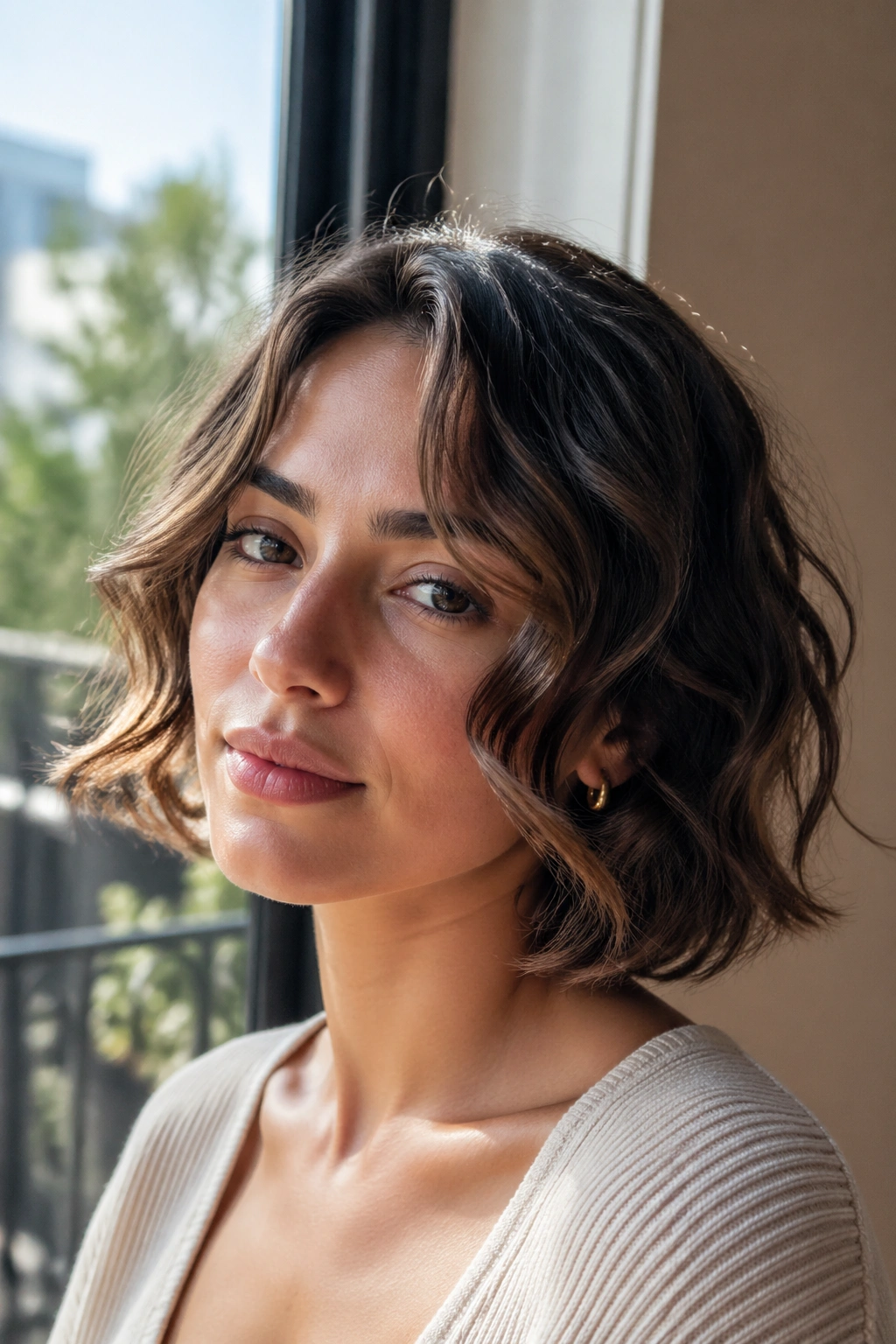
Why let every curl do the same job? A face-framing perm gives the front sections the movement they need while leaving the back softer and heavier, which is a nice trick on a short lob that sits somewhere between bob and grown-out crop.
How to Ask for It
Tell your stylist you want the curl pattern to open around the face and settle more quietly through the back. That usually means slightly more wrap on the front panels, less tension near the nape, and maybe a rod size difference of one step between zones. Small change. Big effect.
This style is useful if you wear a side part, tuck one side behind your ear, or like seeing a bend that starts near the cheekbone. The curl line pulls the eye downward, which makes the cut look longer and softer. That’s a good thing when short hair has a lot of bluntness.
It also grows out well. The front stays flattering longer, even when the back starts to loosen. You can keep it neat with a round-brush blow-dry or let it air-dry and scrunch in a little cream.
4. Beach-Wave Perm for a Layered Crop

I’ve seen layered crops turn into helmet hair when the perm is too tight. That’s the part people regret. A beach-wave perm avoids that by using wider sections, bigger rods, and a looser wrap that leaves the hair looking broken up rather than buttoned down.
The layered cut matters here. Short layers give the wave somewhere to land, so the finished look feels casual and touchable instead of stiff. If the layers are too choppy, though, the wave can separate in odd places. So the cut and perm need to talk to each other. They really do.
What Makes It Different
- The curl pattern is irregular on purpose.
- The crown stays softer than the mid-lengths.
- The ends should bend, not flip.
- A salt-free texture spray often works better than heavy mousse.
This is the short perm I’d pick for someone who wants that “I slept on it and it happened to work” feel. Not fake beachy. Just loose, a little undone, and easy to shake out.
5. Feathered Perm for a French Bob
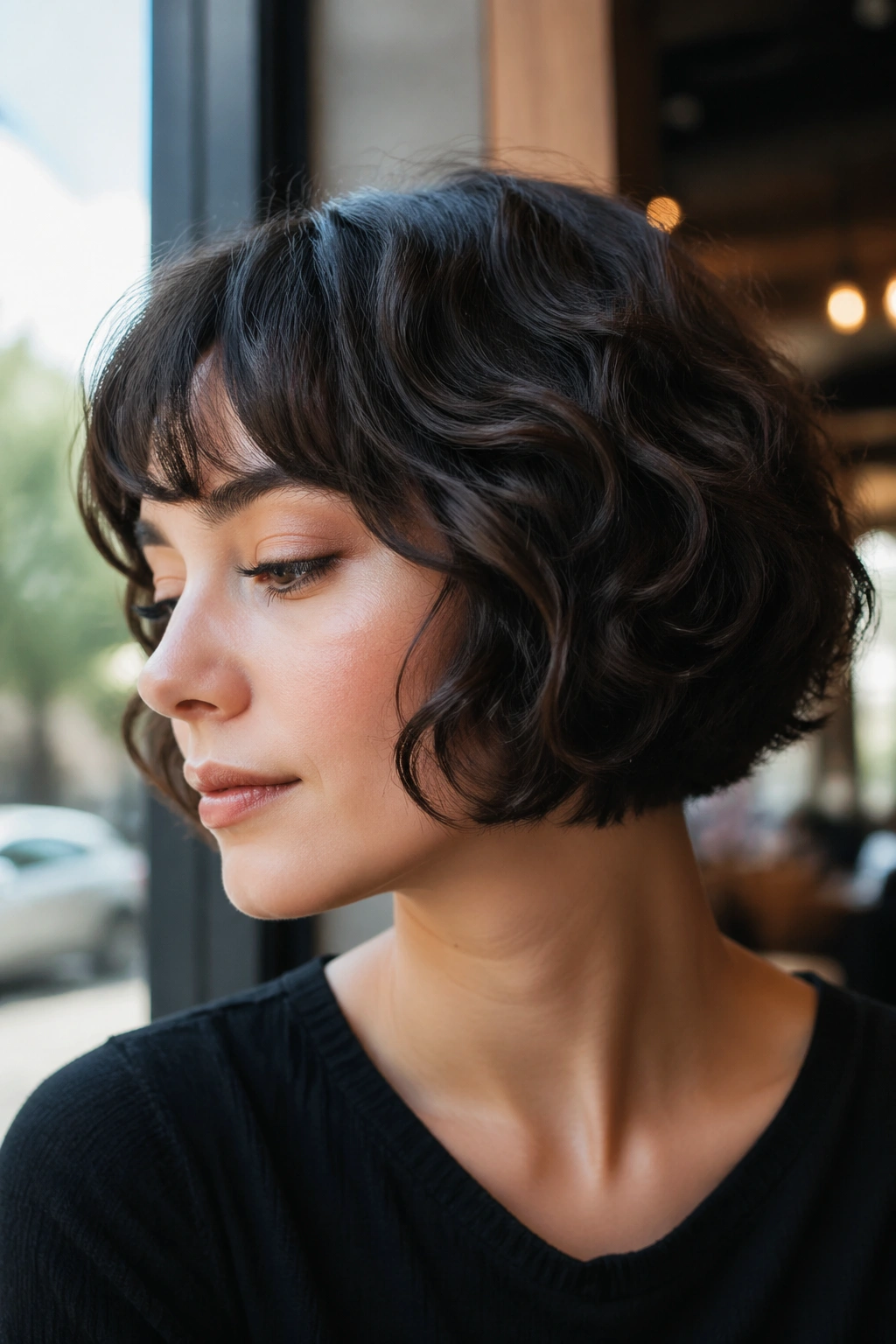
A French bob already has attitude, so the perm shouldn’t fight it. A feathered perm softens the perimeter and gives the cut a light, airy bend that sits close to the head instead of ballooning out. The result feels neat, not fussy.
The best version keeps the ends whisper-soft. That means larger rods, minimal tension, and a finish that lets the hair move when you turn your head. If the fringe is part of the cut, the front should stay slightly smoother than the sides. Otherwise the whole thing can turn into a puffball, and nobody wants that.
This style gets even better as it relaxes. That’s a real advantage. The first wash after the perm can look a touch tight, but once the curl softens, the shape becomes easier to style and flatter around the jaw.
I like this on hair that has some density but not a ton of width. It keeps the classic bob line intact while adding just enough texture to stop the style from feeling flat or stern.
6. Stack Perm for a Rounded Bob
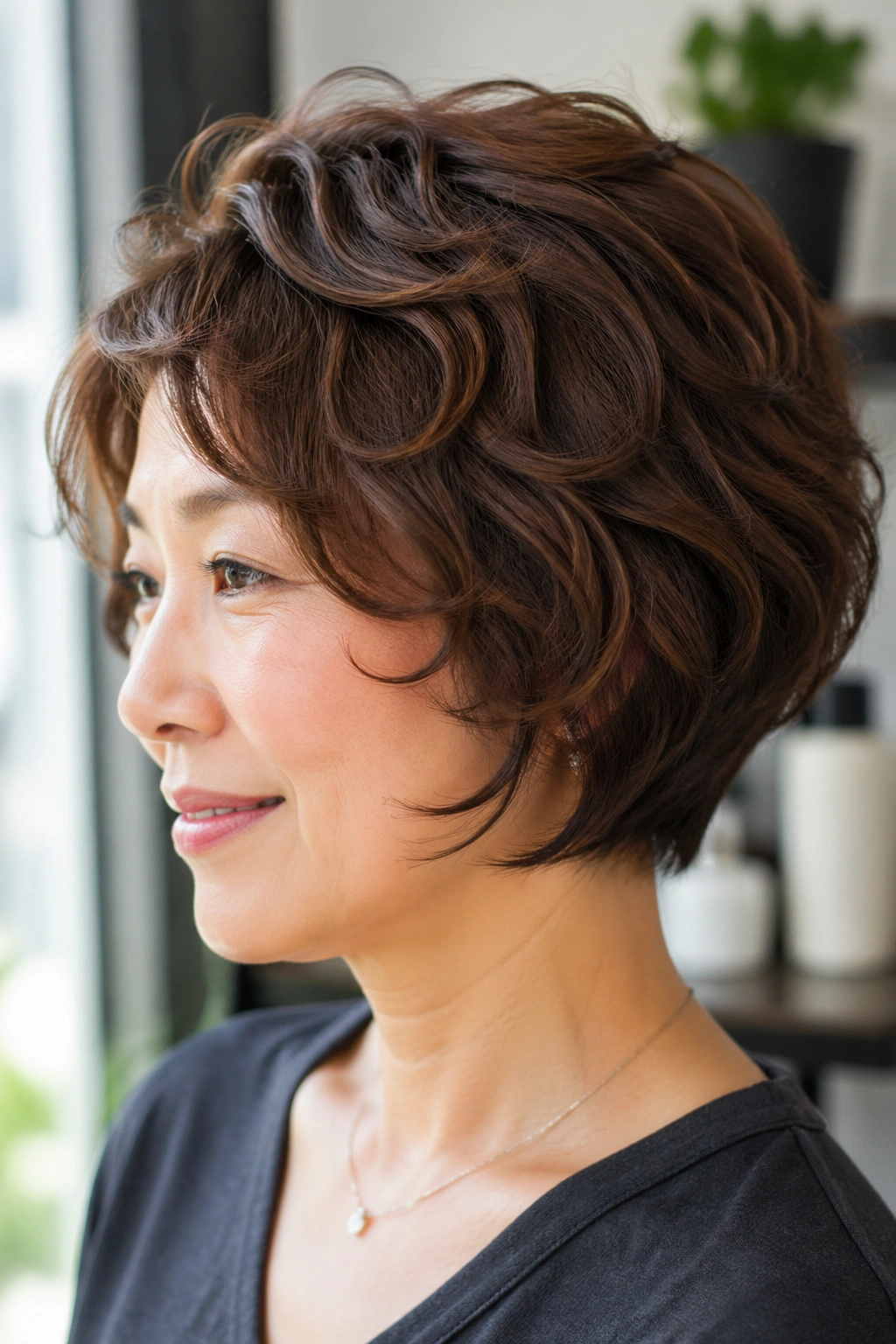
A stack perm is a sneaky one. It gives you the look of fullness in the back without making the sides explode outward, which is exactly why it works so well on a rounded bob. Compared with an all-over wave, this version puts more life where the haircut needs support and keeps the perimeter cleaner.
The back panels usually get a little more curl and a little more lift. The sides stay looser. That balance matters because a short rounded bob can look top-heavy fast if every section receives the same treatment. You want shape, not bulk.
Why Stylists Reach for It
The stacked back creates a gentle curve at the nape.
The top sits with more lift.
The sides frame the face without widening it.
The whole cut keeps its round silhouette instead of turning boxy.
This is one of the better options if your hair naturally lies flat in the back. It fills out the silhouette in a controlled way. And if you like a polished short style that still has movement, this is a strong choice.
7. Loose Spiral Perm With Oversized Rods
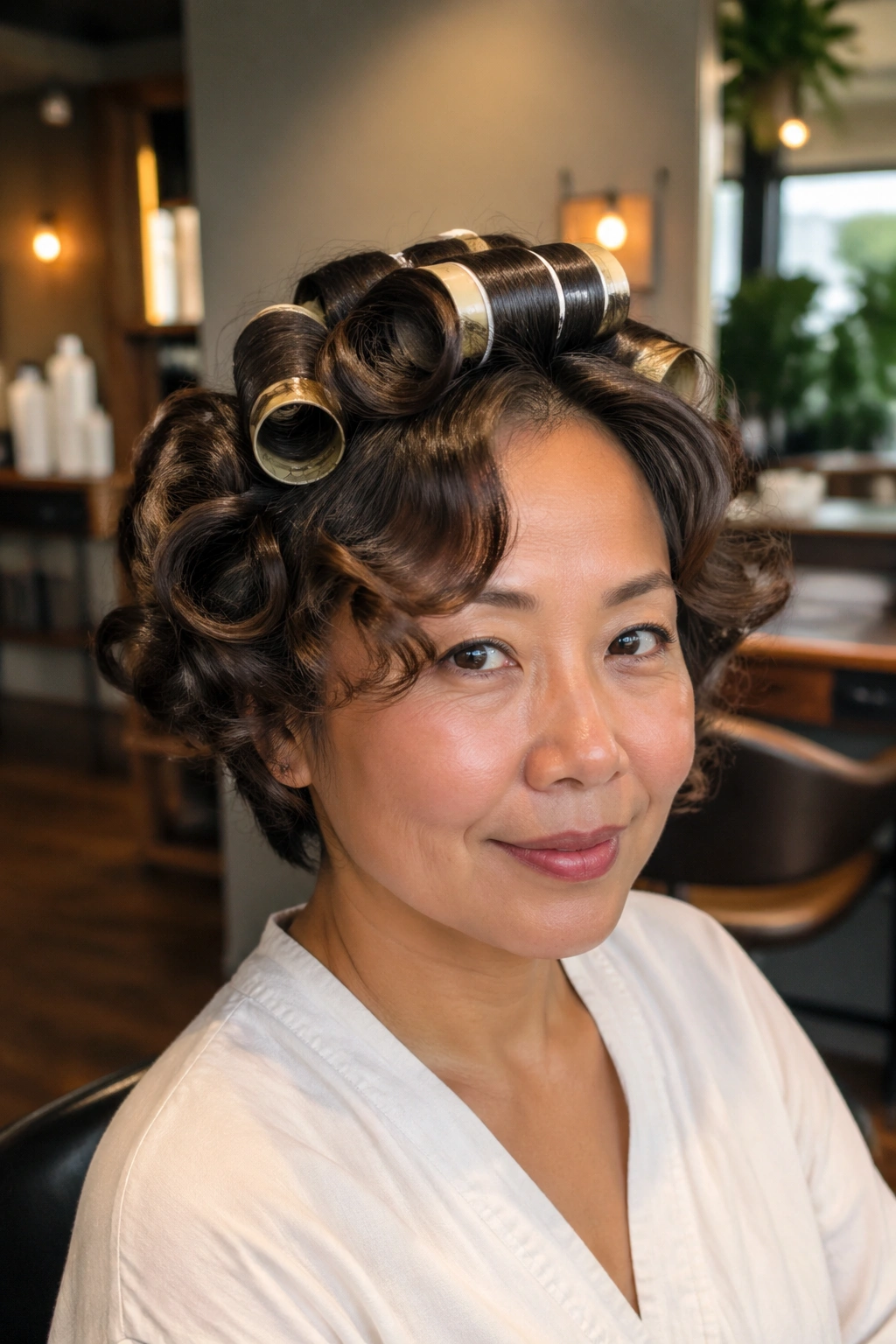
A spiral perm does not have to mean tiny corkscrews and a lot of volume. With oversized rods and thin sections, the curl can land as a soft spiral that reads more elegant than retro. On short hair, that distinction matters.
The Science Behind It
The curl shape comes from how the hair wraps around the rod. If the section is too wide, the curl goes uneven. If the rod is too small, the curl tightens and the hair jumps up more than you planned. Use larger rods, keep the sections tidy, and the spiral becomes a soft loop instead of a tight coil.
That’s why this style works better on short hair with a bit of length through the top or front. It gives the curls room to show without crowding the head. Shorter nape sections can stay looser so the style doesn’t feel stacked.
- Best on short bobs with some top length.
- Good for hair that needs bounce more than volume.
- Easier to style with finger-coiling than brushing.
- Looks better when the curls are separated with a serum, not a comb.
8. Partial Top-Only Perm for Short Hair
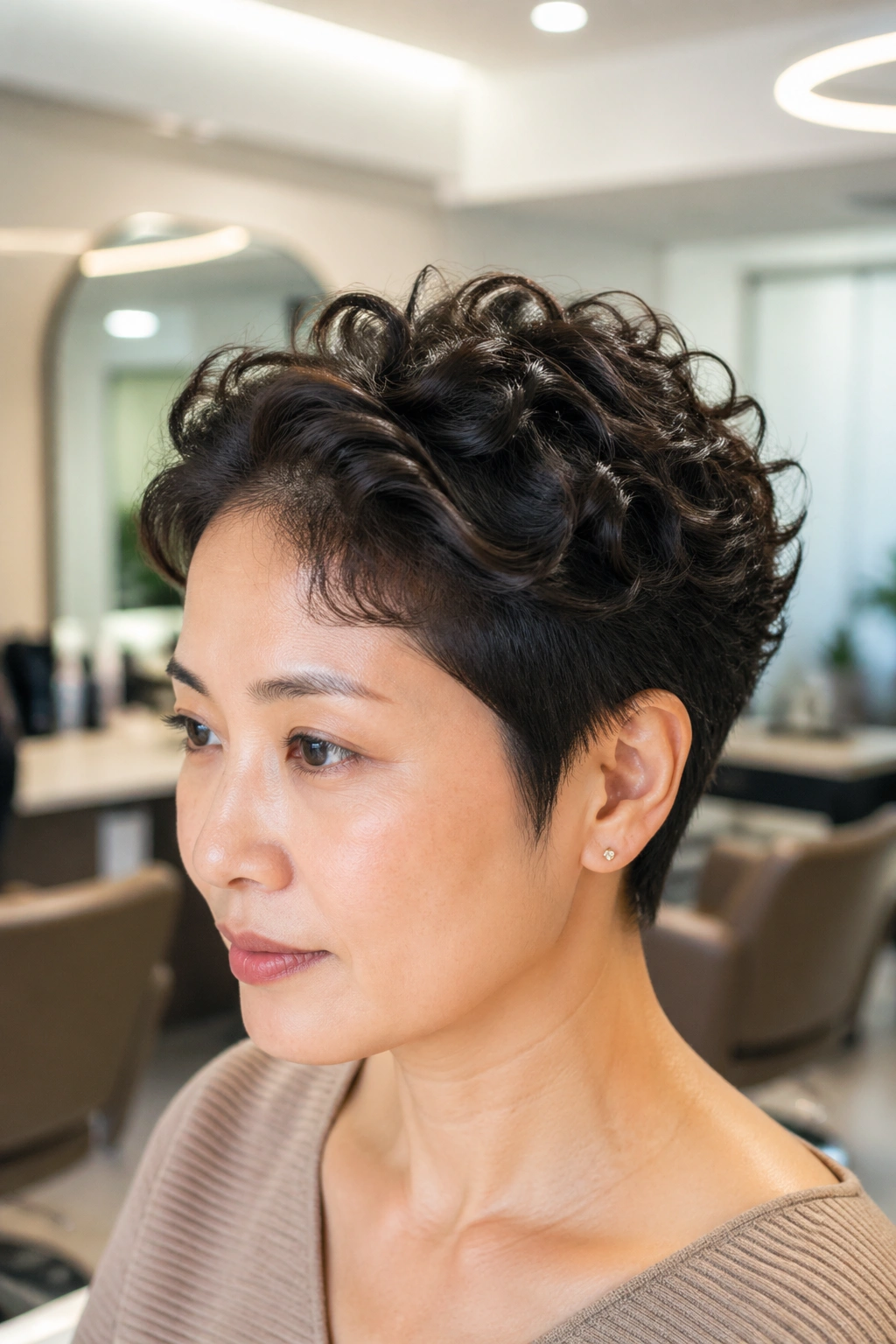
Do you really need to curl every inch? Usually, no. A partial top-only perm keeps the sides and nape calmer while giving the crown, top, and maybe the front a soft bend. That makes it one of the most practical perm options for short hair that needs personality without a full head of texture.
This works especially well on pixie-bobs, undercuts, and cuts that already have a natural shape you like. The top gets the lift. The rest stays tidy. No puffing around the ears. No fuzzy triangle at the neck.
Best Cut Pairings
- Pixie-bobs with longer top layers.
- Short crops with an undercut at the nape.
- Side-swept styles that need a little front movement.
- Round or square faces that benefit from height at the crown.
A partial perm is also easier to live with on busy weeks because you can rough-dry the roots and leave the rest alone. That alone makes it worth a look if you hate spending ten minutes coaxing every section into place.
9. S-Wave Perm on an Asymmetrical Cut
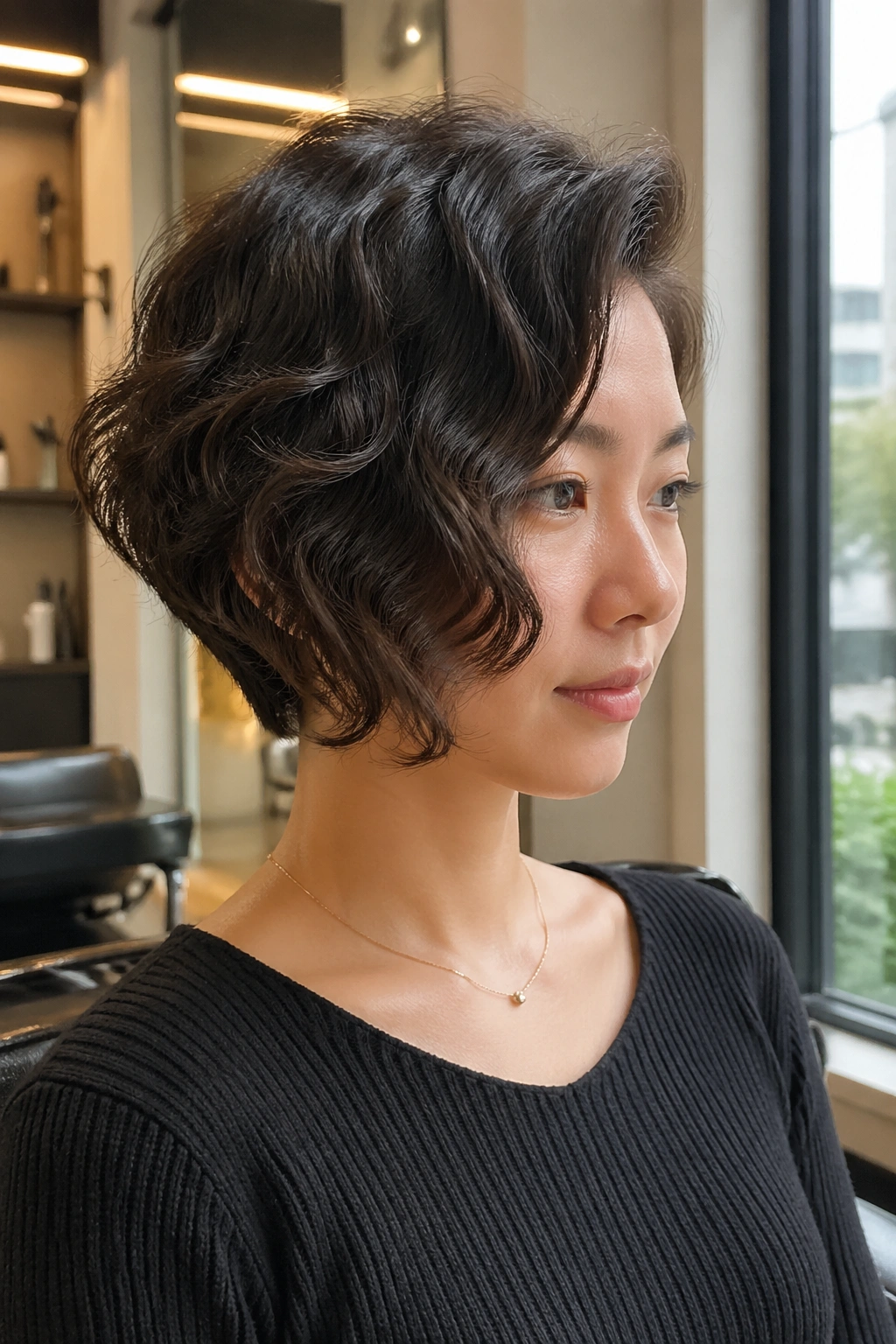
An asymmetrical cut already has motion built in. Add an S-wave perm, and the shape starts to feel intentional in a way a tighter curl never could. The wave bends one direction, then the other, so the hair looks soft and sculpted instead of springy.
The reason this works so well is that the cut gives the eye a line to follow. One side is longer, so the S-curve can travel. On very short asymmetrical cuts, the wave may stay tighter near the top and loosen toward the ends; that’s fine, even good. The finish should feel smooth, not busy.
What to Watch For
If the shorter side gets the same wrap as the longer side, the cut can lose its edge. The better approach is to keep the shorter side a touch looser and let the longer panel carry more of the curl story. That keeps the haircut readable.
Use this when you want a short style with some drama but no hard curl ringlets. It’s one of those perms that looks best when the hair moves. Standing still, it’s nice. In motion, it gets interesting.
10. Pin-Curl Perm for a Vintage Bob
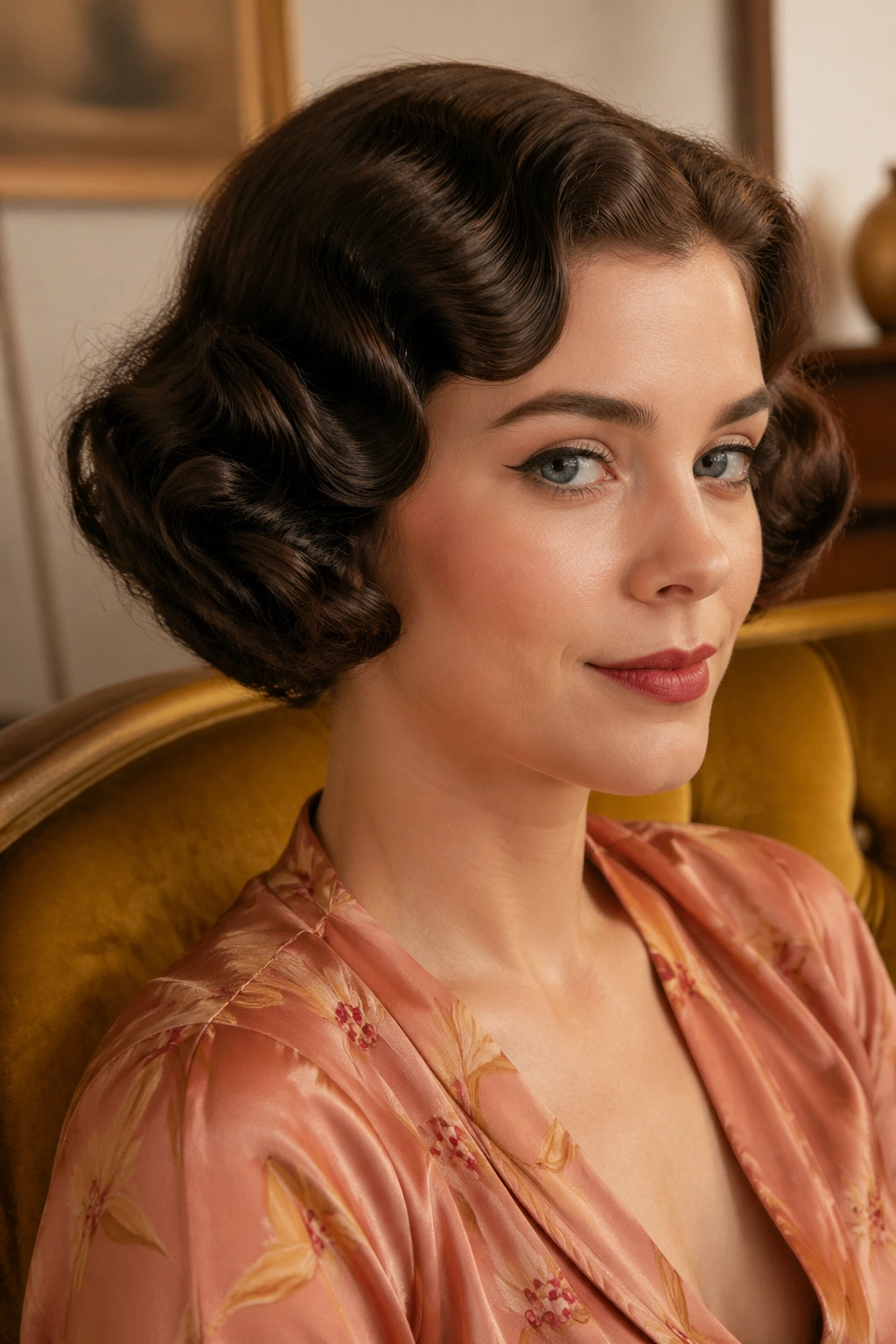
A pin-curl perm sounds old-school because it is, in a way. But on short hair, especially a vintage bob, it can give that soft, polished bend that feels dressed up without being stiff. The key is using larger pin formations, not tiny, tight curls.
This style is all about direction. The curls can be rolled under for a tucked-in finish or set away from the face for a more open shape. Either way, the result is smoother than a spiral and more controlled than a beach wave. It’s the kind of perm that looks good with a tucked ear or a barrette.
- Best for blunt bobs and softly rounded bobs.
- Great if you like a side part or a deep side sweep.
- Needs a gentle brush-out with a boar-bristle brush once fully set.
- Often looks best with a shine cream on the ends only.
There’s a little ceremony to this one. That’s part of the charm.
11. Multi-Texture Perm for Thick Short Hair
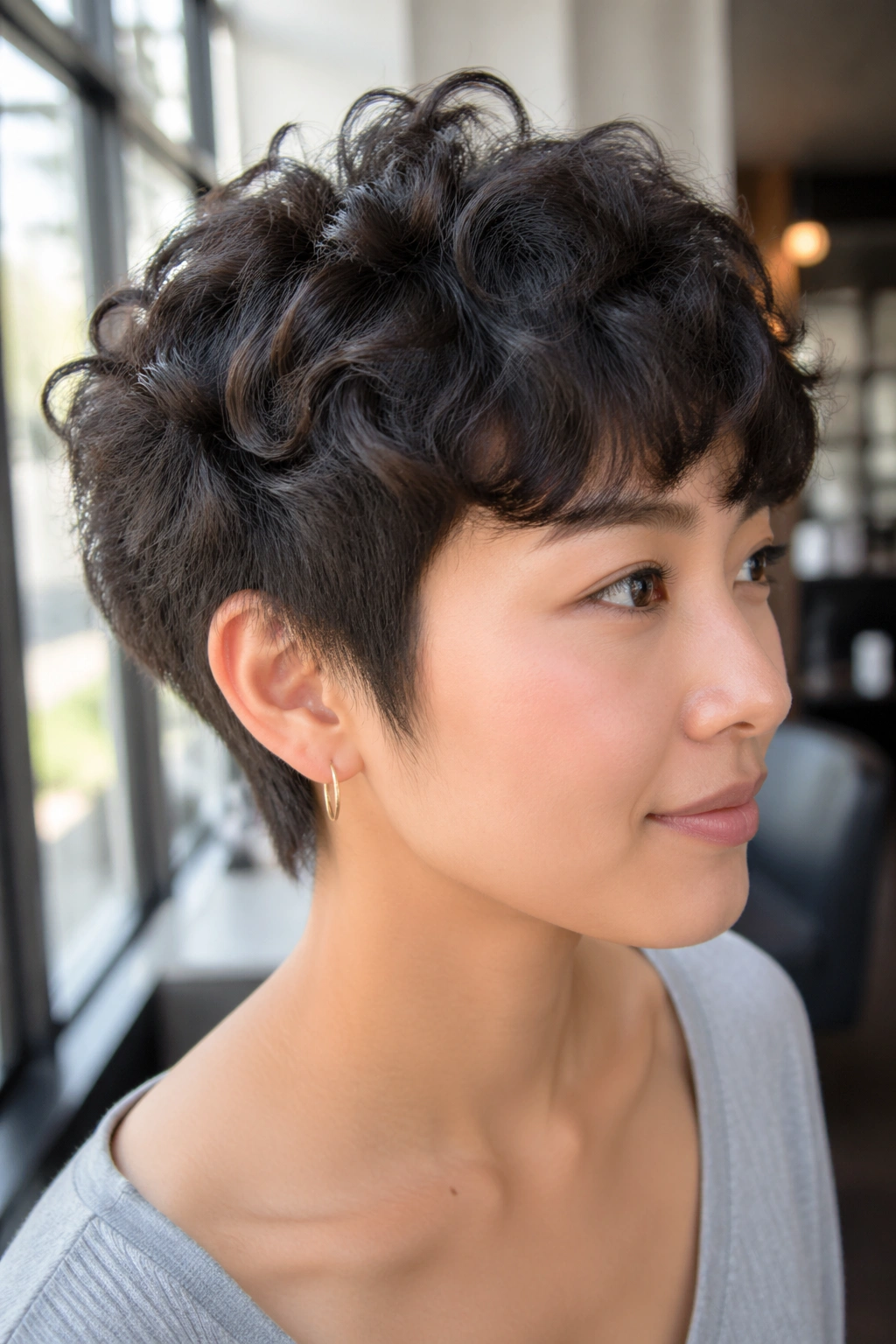
Thick short hair can take a curl in one zone and stay stubbornly straight in another. That’s why a multi-texture perm makes sense. Instead of giving the whole head the same rod size, the stylist uses different wrap patterns in different areas so the final shape doesn’t balloon out.
This is the section where being specific pays off. Thicker hair often needs slightly smaller rods near the crown for lift and slightly larger rods through the sides so the curl stays soft and the silhouette doesn’t widen too much. If every zone gets the same treatment, the result can look dense and boxy.
Why It Works Better Than One-Size-Fits-All Curl
The crown gets body.
The sides stay controlled.
The nape doesn’t kick out.
The haircut keeps its shape as it grows.
That mix gives you a short perm that feels edited instead of busy. And if your hair has different textures in the same head — common, by the way — this is often the best way to keep the result even.
12. Curly Undercut With Soft Top Perm
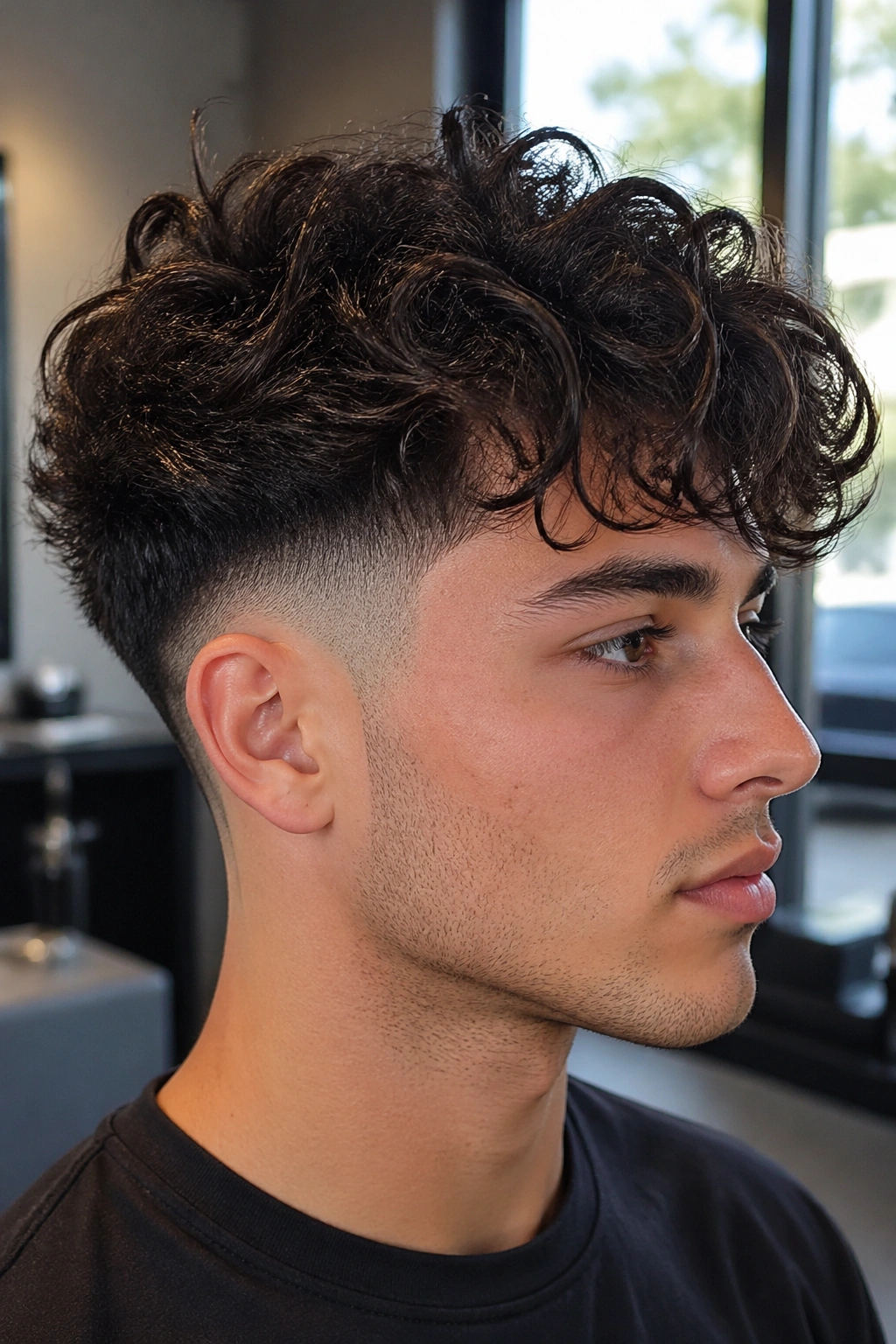
Unlike a full-head perm, a curly undercut leaves the sides or nape shorter and cleaner while the top carries the movement. That contrast keeps the style sharp. It also makes soft curls look more deliberate, because the curl has a clean frame around it.
This is a good one if you like a short haircut with a bit of edge but don’t want that edge to come from a tight curl pattern. The top can fall in loose bends, brush forward over the forehead, or sweep to one side. The undercut keeps everything from getting too wide.
I like this option for people who wear glasses or have strong brows. The short sides keep the face open. The soft top adds texture where you can see it.
One catch: the undercut needs maintenance. If you let it grow out too long, the contrast disappears and the whole cut loses that crisp shape. Keep the nape neat, and it stays sharp.
13. Barrel Curl Perm for a Chin-Grazing Cut
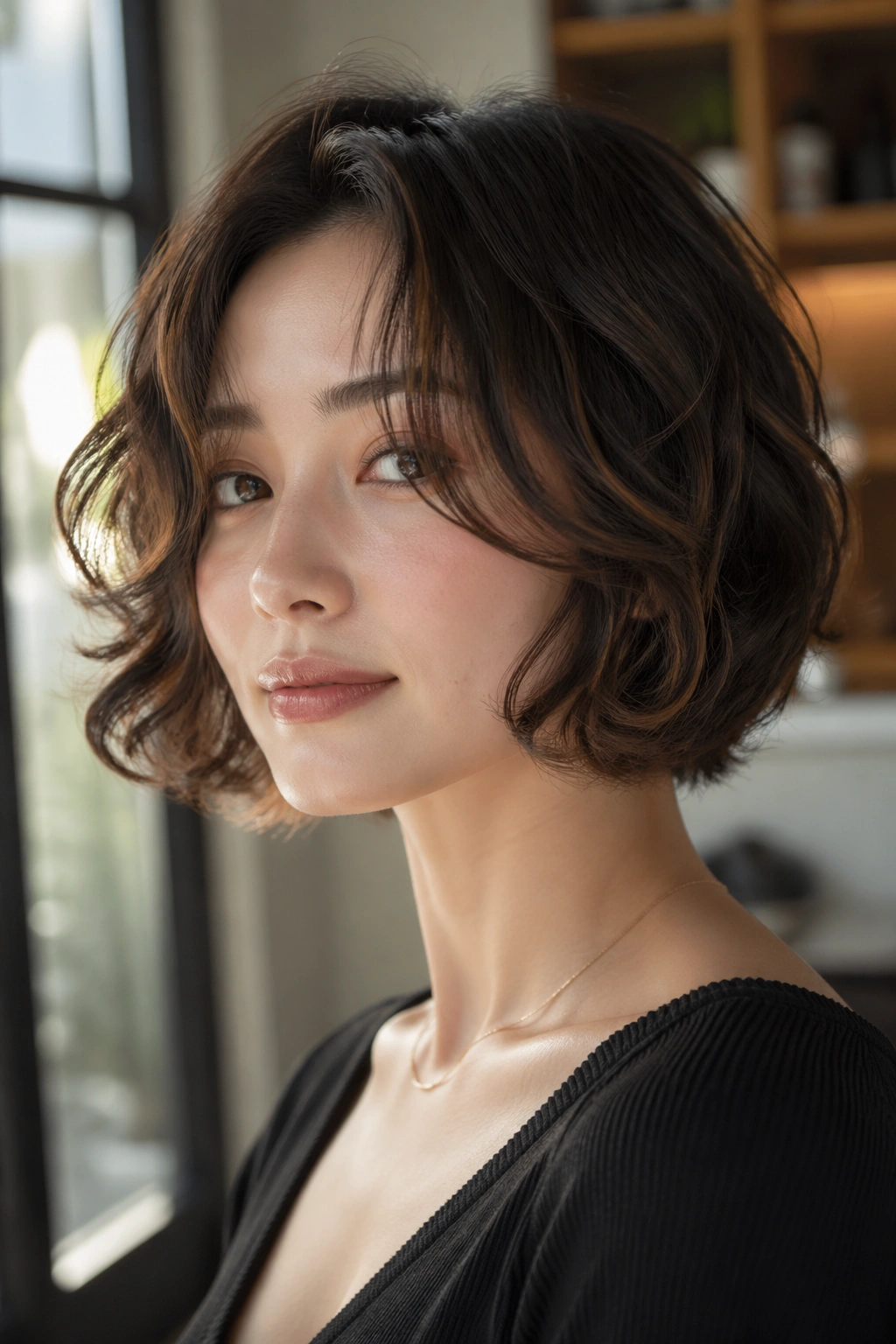
Barrel curls on short hair can look expensive in the best way, but only if the curls stay loose. On a chin-grazing cut, a barrel curl perm gives broad, smooth curves that sit close to the head and turn at the ends rather than springing out in all directions.
This is a good choice when you want a little more polish than a wave but less tightness than a classic spiral. The curl should be large enough to show a soft loop, especially around the jaw and cheek. If the hair is too short, though, the shape can jump up and lose that long line. Length matters here. A lot.
The most flattering version usually keeps the front pieces a touch longer so the curl can fall across the face instead of sitting straight up from the root. That tiny adjustment makes a huge difference.
If you’ve ever looked at a short perm and thought, “That’s nicer than I expected,” there’s a decent chance barrel curls were involved.
14. Water-Wave Perm With Glossy Bends
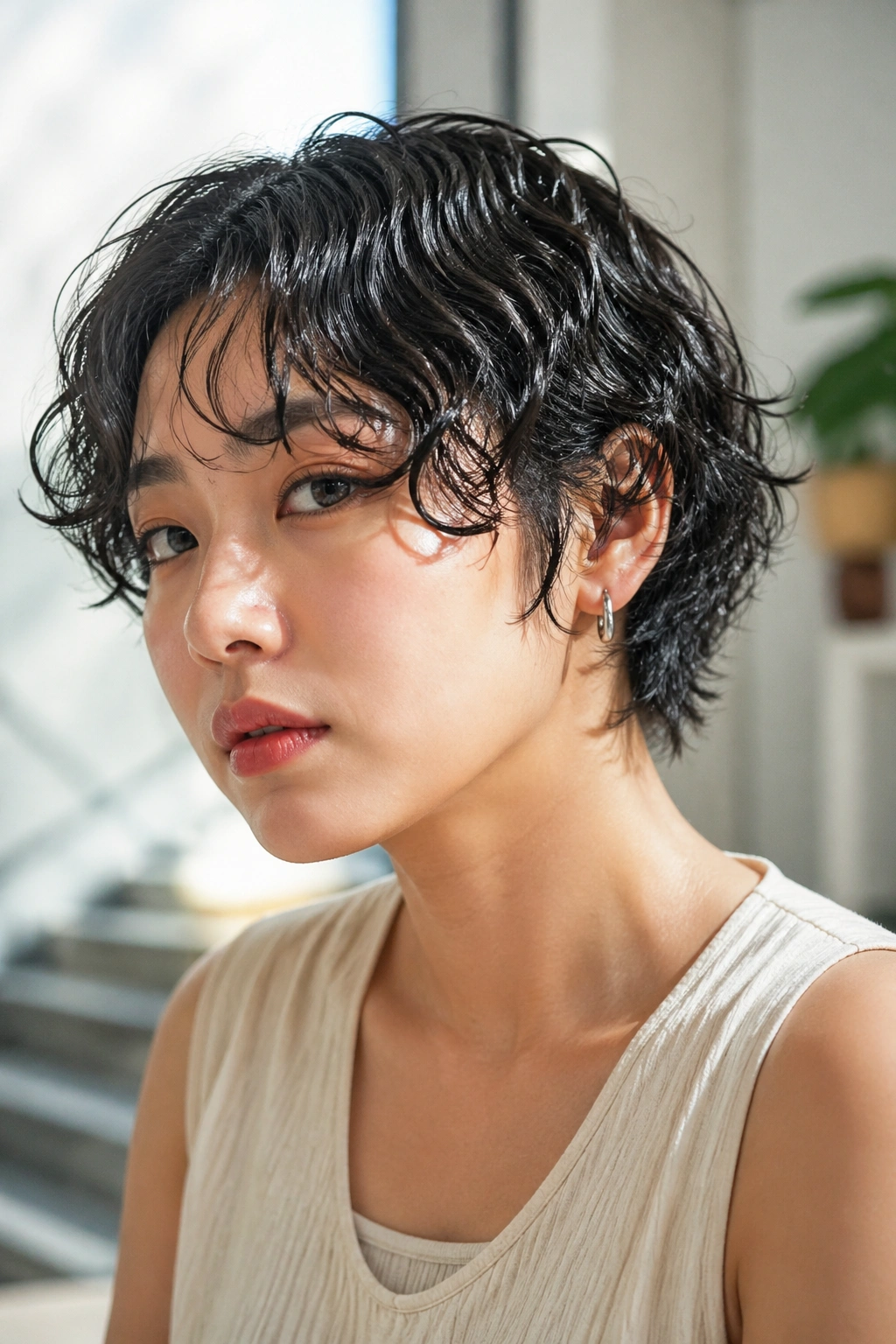
What makes a water-wave perm different? The curve is smoother, flatter, and a little more uniform, so the hair looks glossy rather than fluffy. On short hair, that can be a gift. The style sits close to the head and keeps the outline clean.
How to Wear It Well
After washing, squeeze the water out with a microfiber towel and apply a light leave-in from mid-length to ends. Then scrunch gently and leave the hair alone for a bit. Brushing too soon can break the wave pattern and make the finish puffy.
This perm suits short cuts that already have sleek lines — think blunt bobs, angled bobs, and cropped shapes with longer top layers. It also works when you want the hair to look styled without looking “done.” That phrase gets overused, but here it fits.
Use a shine serum sparingly. A drop or two is enough. Too much, and the wave goes flat.
15. Air-Dry Perm for Busy Mornings
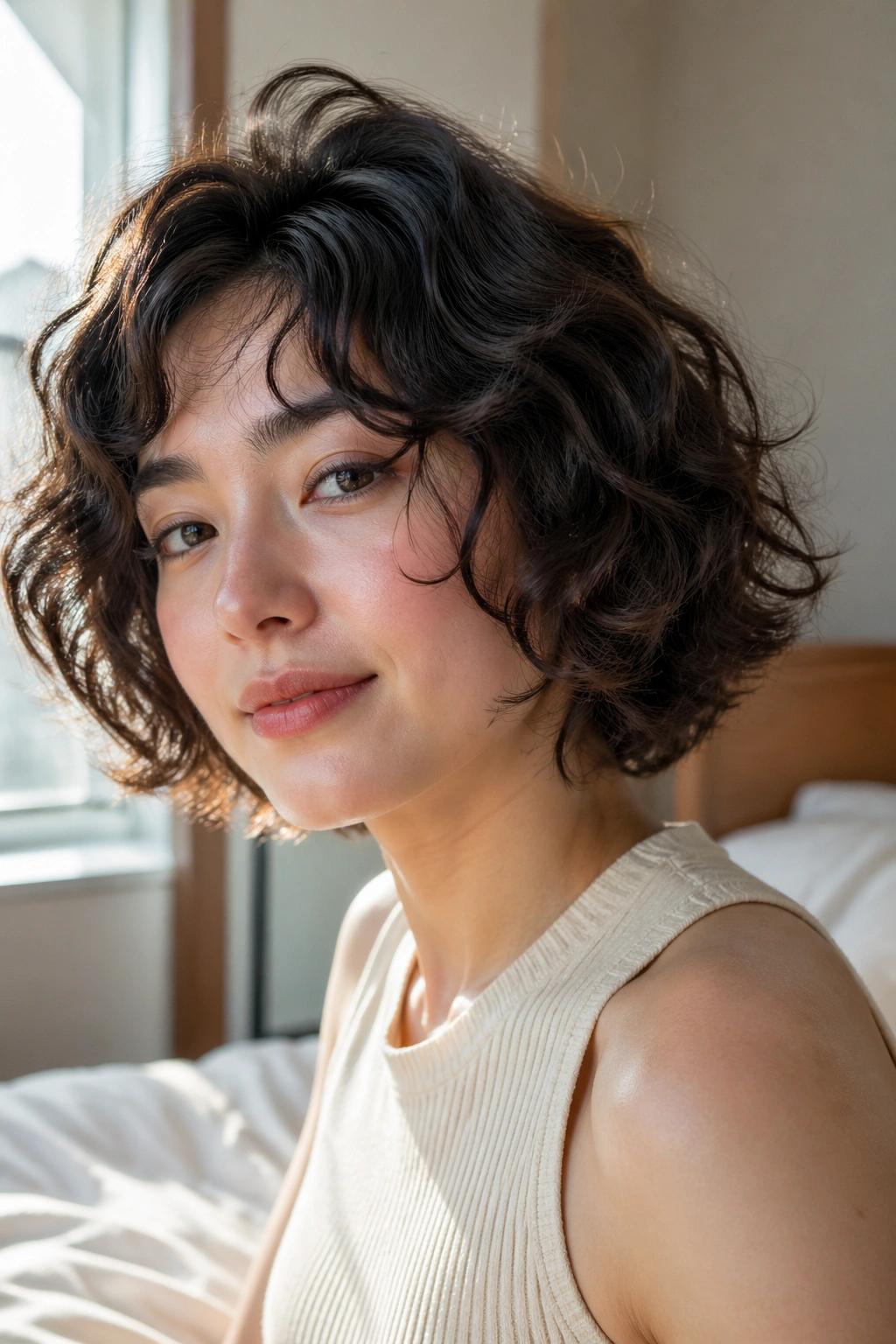
A good air-dry perm should look better when you stop fussing with it. That’s the whole point. Soft curls on short hair often do their best work when they’re left to dry on their own, with maybe a little scrunching and a small amount of cream.
This style is not about perfect curl clumps. It’s about forgiving texture. The hair falls into loose bends, the crown keeps a little lift, and the ends settle without needing a brush and a battle. If you’re the type who hates blow-drying short hair, pay attention here.
The cut usually needs some internal layering so the hair can dry with shape. A solid one-length crop may resist this more than you’d expect. And if your hair is very coarse, you may still need a diffuser for the first five minutes to keep the top from drying in odd directions.
But for most people, this is the easiest perm to live with. Low drama. Good result.
16. Directional Wrap Perm That Sweeps Away From the Face
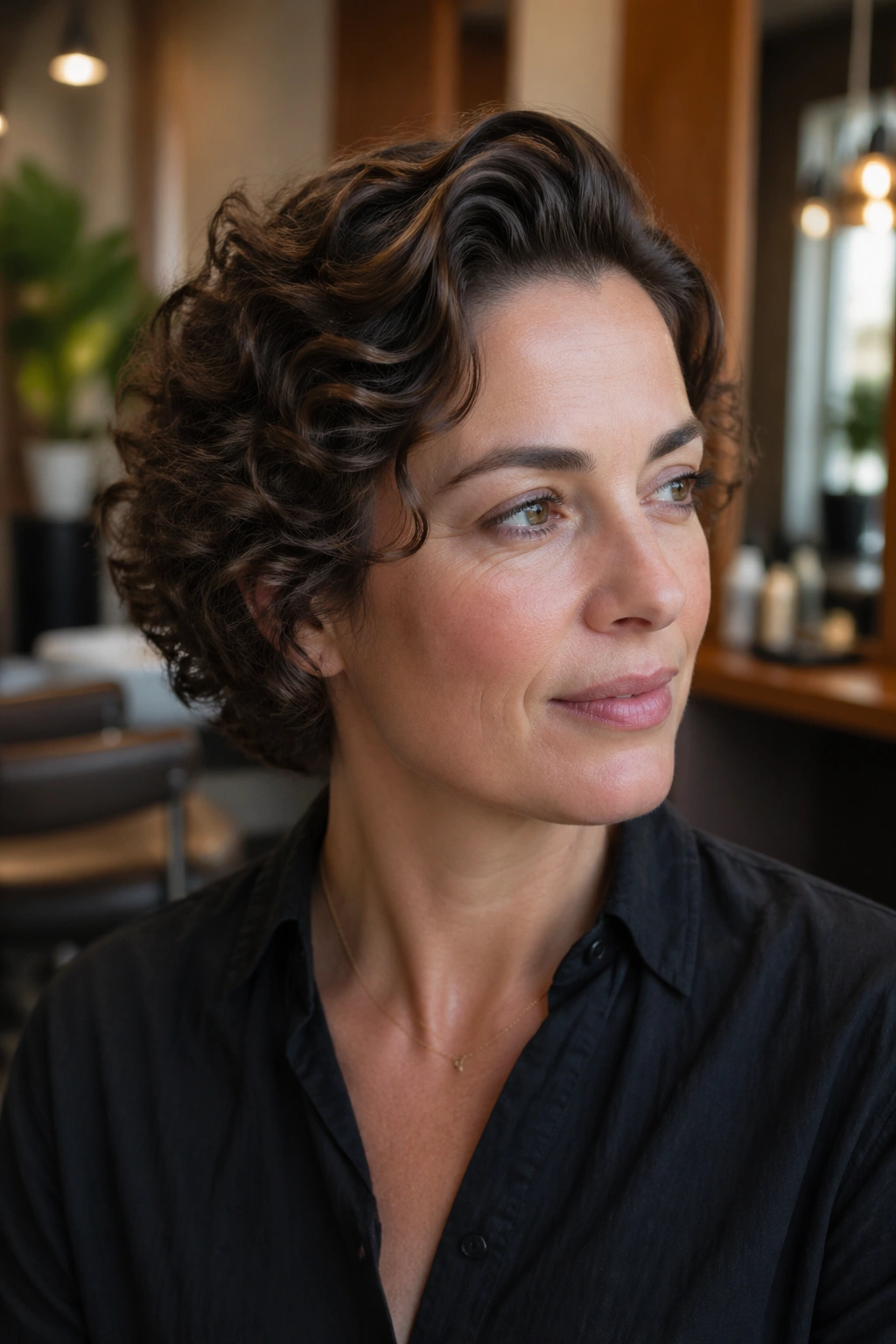
A directional wrap changes everything. Instead of wrapping every section the same way, the stylist directs the hair away from the face or toward a chosen side, which shapes the final movement before the curls even form. On short hair, that gives you a lot of control.
The payoff is subtle at first and obvious later. Hair that sweeps away from the face tends to open the features, show off the eyes, and make a short cut feel cleaner. It can also stretch the look of a round face a bit, which is useful if you want softness without extra width.
I like this on side-parted bobs and short layers around the temples. The wave doesn’t fight the cut. It follows it.
There’s a downside, and it’s a real one: if the wrap direction is sloppy, the curl can cross over itself and look bent in the wrong spot. Directional work needs a careful hand. Worth it, though.
17. Wedge-Cut Perm With Soft Volume at the Crown
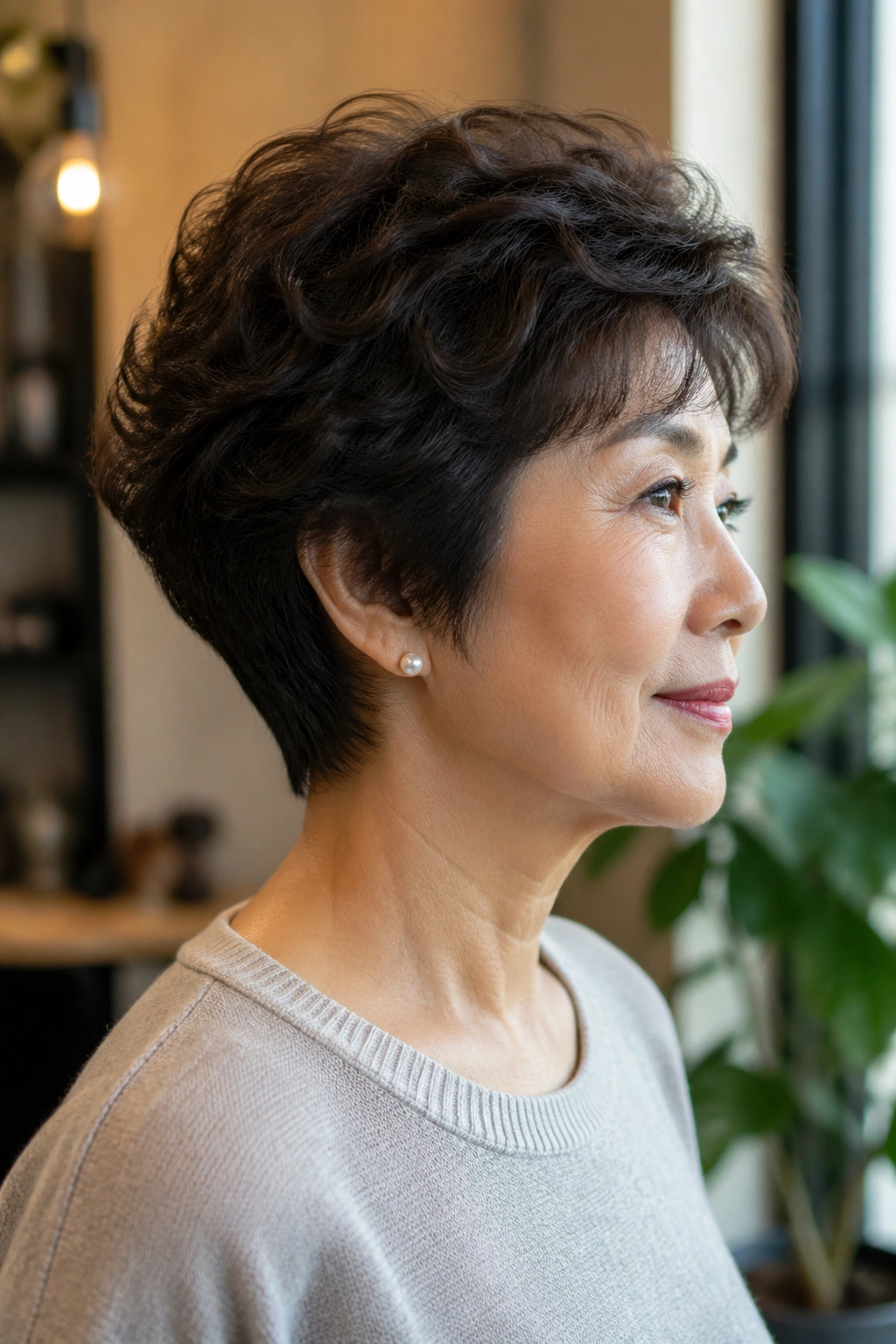
A wedge cut already has structure, which is why a perm can work so well on it. The shape builds itself up from the nape toward the crown, and soft curls only make that architecture more visible. The result is rounded and tidy, not flat.
What to Ask For at the Salon
Ask for lift at the crown, softness at the sides, and enough length left through the perimeter to keep the shape from reading too tight. The rod placement should support the wedge, not erase it. A good stylist will keep the top a little looser so the crown doesn’t stack up too high.
Why It Flatters
The cut does the heavy lifting. The perm just adds texture where the shape already wants to go. That means less styling work later, which is a nice perk if you don’t want to spend twenty minutes with a brush and blow dryer every time you wash your hair.
This is one of those styles that can look sharp in profile. From the side, you get a clean arc. From the back, the curve stays neat. It’s a quiet winner.
18. Curly Pixie Perm With a Long Fringe
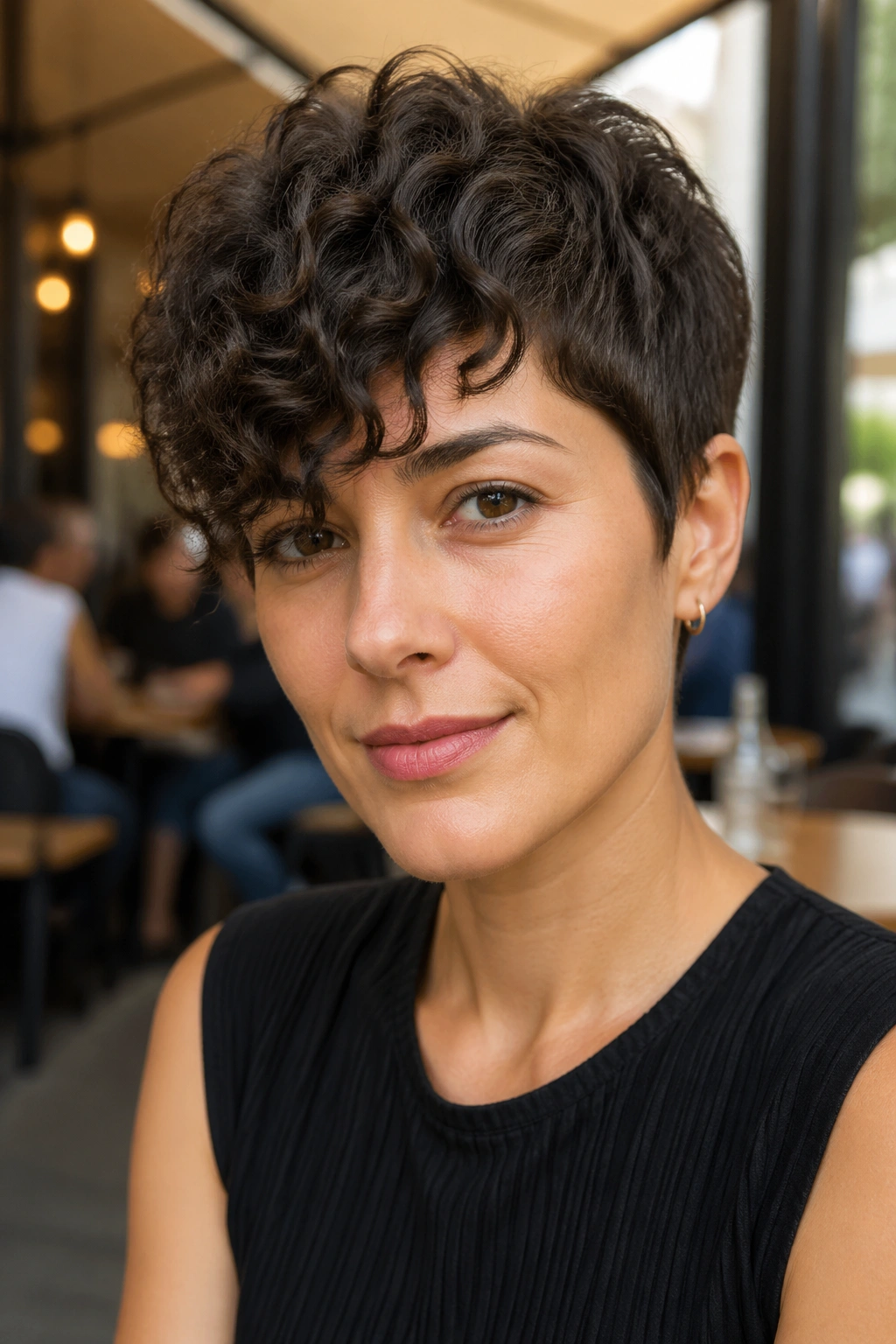
A curly pixie perm is not about turning the whole head into a cloud. It’s about giving the top and fringe a soft, bendy texture while leaving the sides and nape short enough to stay light. That balance makes it one of the easiest short styles to wear if you like a little edge.
Unlike a fuller perm, this one leaves space around the ears and neck. That means the curl gets to be the star on top, where people actually see it. The fringe can sweep forward, fall across the forehead, or break into small pieces that soften the face.
Best Features to Ask For
- Longer fringe than the sides.
- Soft wrap on the top panels.
- Clean nape, not over-curled.
- A styling cream with light hold, not stiff gel.
This style works especially well if you want a short cut that still looks feminine, sharp, and a little playful. The soft curl keeps it from feeling too severe.
19. Razor-Cut Shag Perm With Airy Curls
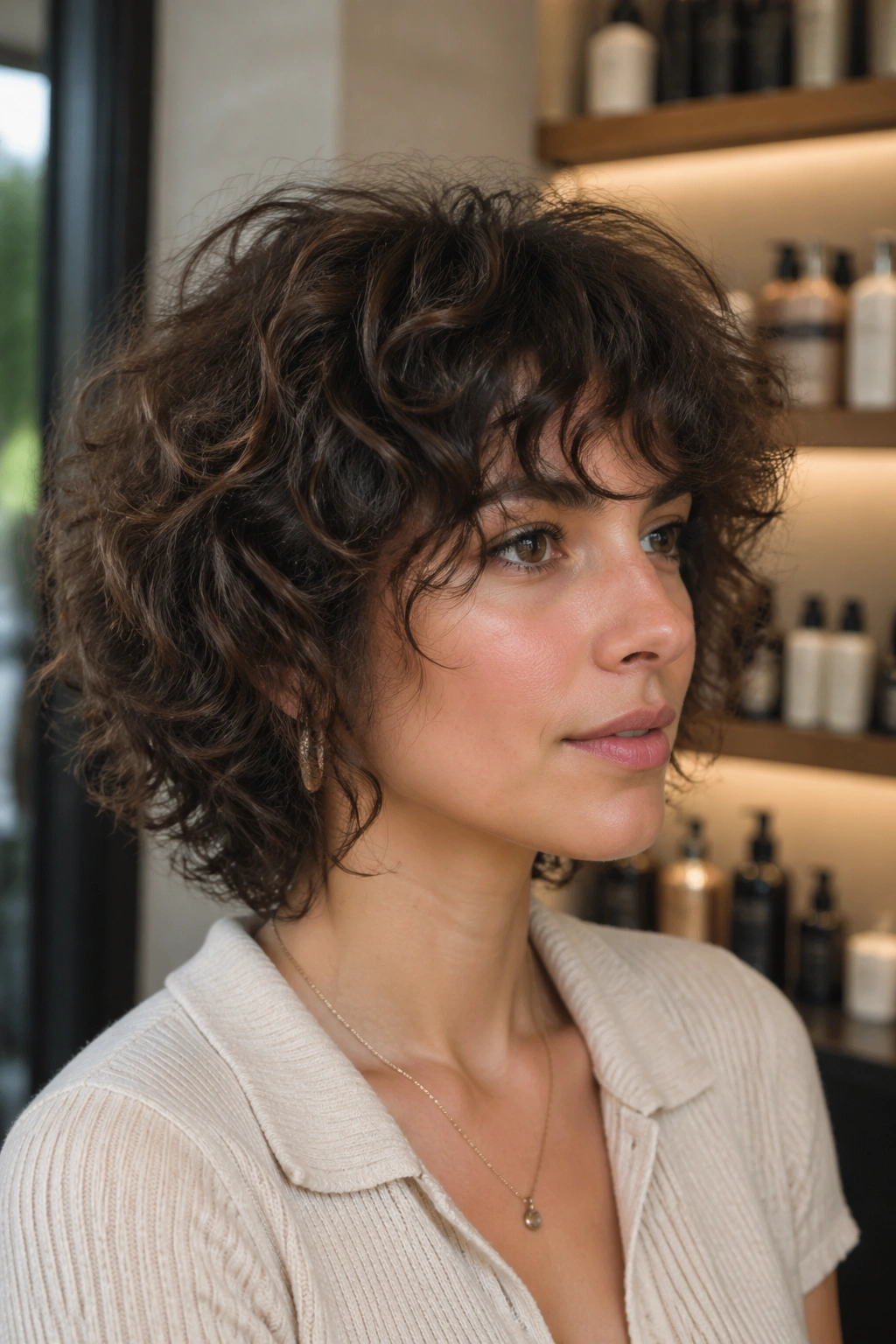
A razor-cut shag and a soft perm can be a great match, but only if the curl stays loose. The shag already has broken-up ends and movement, so the perm should add bounce, not bulk. Tight curls on a shag can turn chaotic fast. Loose ones look lived-in and cool.
The reason this works is the layering. Short shag layers give each bend somewhere to fall, and the razor finish keeps the edges soft. That combination makes the curl look airy instead of heavy. It also means you can scrunch the hair with very little product and still get a finished shape.
This is one of my favorite options for people who don’t want a neat, polished look. The hair can be a little messy. That’s the charm. It should look like it knows what it’s doing without trying too hard.
A little texture spray at the roots helps. So does a trim every few weeks to keep the layers from collapsing into each other.
20. Low-Commitment Body Perm for the Grow-Out Stage
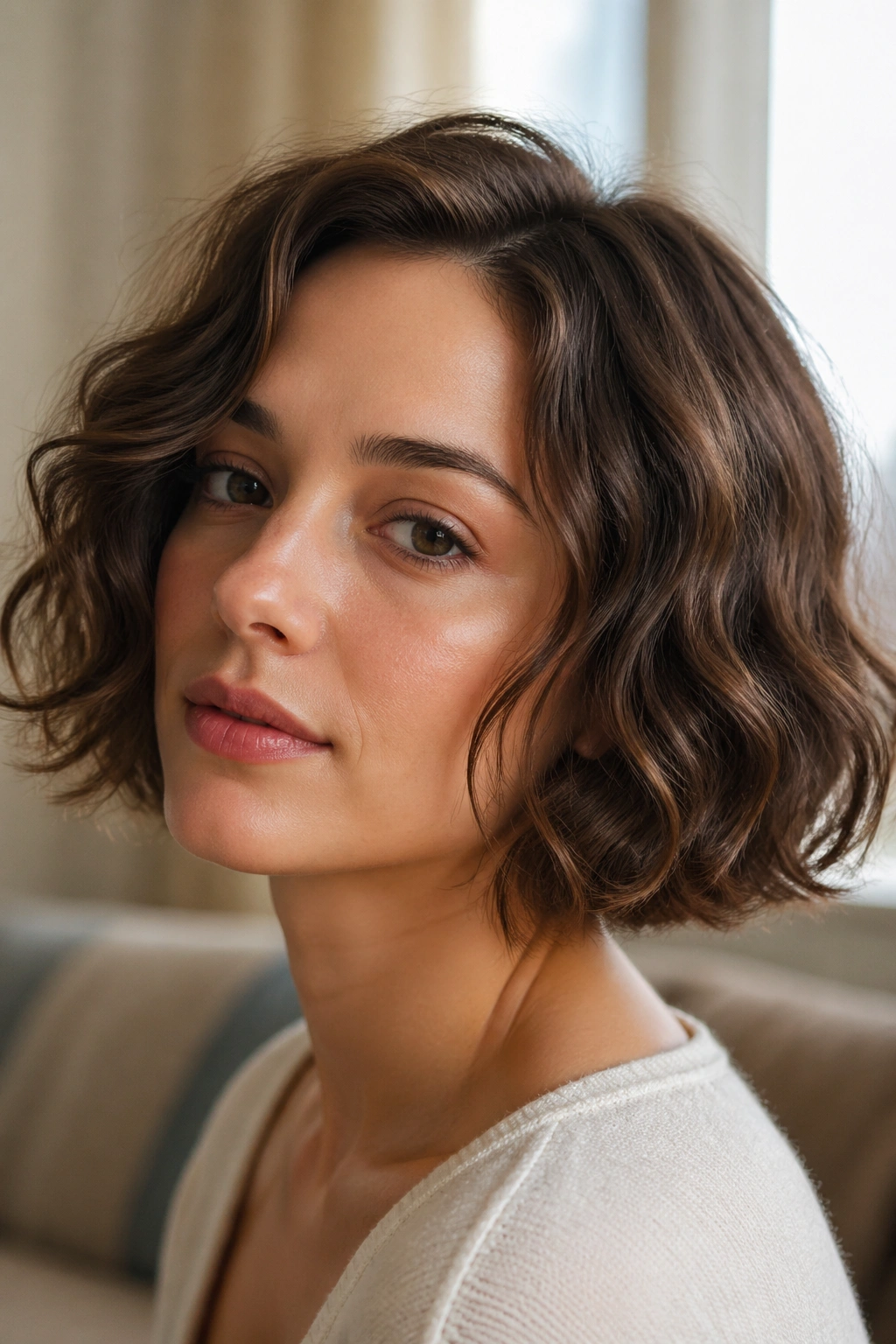
What if you want the curl to fade gracefully? Then a low-commitment body perm is the one I’d point to first. It gives short hair a soft bend and a touch of fullness, but it doesn’t lock you into a pattern that looks awkward three weeks later.
This matters more than people think. Short hair grows out fast, and the line between “intentional softness” and “odd half-grown texture” can show up quickly. A gentle body perm softens that transition. The ends relax into a natural wave, the crown stays alive, and the cut keeps some shape as it lengthens.
It’s also the easiest version to pair with future trims. You can crop the sides, reshape the fringe, or grow the top a little longer without fighting a severe curl pattern. That flexibility is the whole point.
If you’re trying a perm for the first time on short hair, this is the safest bet. Not because it’s boring. Because it gives you room to live with it.