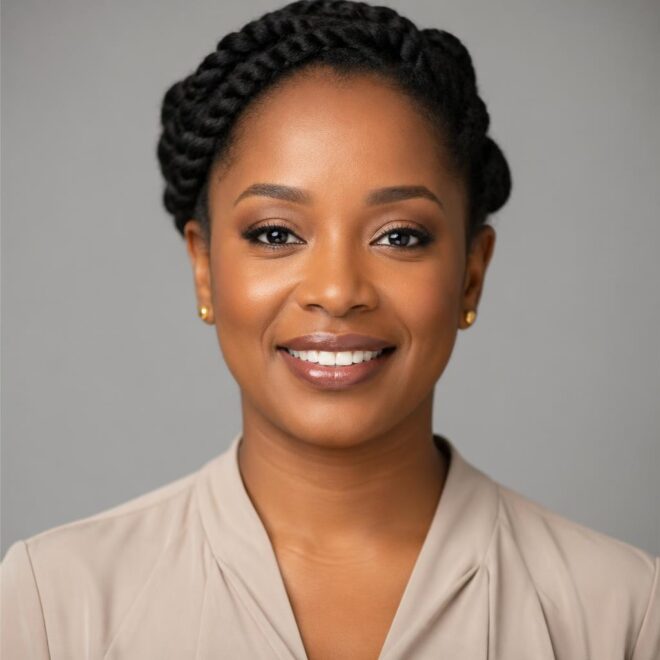


Medium highlighted box braids have a nice honesty to them. The braid size is large enough to show color shifts, but not so chunky that the style loses shape after a few days. Add honey blonde, caramel, burgundy, copper, or a soft brown-and-gold mix, and the whole look changes without needing a dramatic cut or a full-color commitment.
Medium braids sit in that useful middle ground between tiny and jumbo. They are easier to wear for long stretches than very thick braids, and they give highlights enough surface area to show up in a real way, not just as a faint streak you only notice in a mirror under perfect light. That matters. A lot.
Color placement matters just as much as color choice. Warm highlights tend to soften deep brown and black bases, while ash, beige, and silver tones cool the whole style down. Face-framing pieces catch the eye first, but hidden layers and underlights do the quieter work, the part that keeps the hair interesting from every angle.
The styles below move from soft to bold, from easy-to-wear to more attention-grabbing. Some lean on light around the face, some hide color until the braids move, and some are for days when subtle is not the goal at all.
1. Honey-Blonde Face-Framing Highlights
If you want the color to show fast, put it near the face. Honey-blonde pieces around the temples and hairline give medium highlighted box braids a brighter edge without flooding the whole head with light strands.
Why It Looks So Clean
The trick is keeping the front braids a little thinner than the rest so the highlight reads as a frame, not a block. Two to four braids on each side usually give enough brightness to matter, especially on dark brown or black hair.
Honey blonde works because it sits in that warm middle zone. It doesn’t look icy, and it doesn’t land too orange if the shade is chosen with a little care. That makes it easy to wear with everyday makeup, plain tees, and the kind of outfits you don’t want to overthink.
- Best on dark brown, 1B, and soft black bases
- Ask for 2 to 4 lighter braids on each side
- Keep the crown darker so the face frame stands out
- A middle part makes the contrast feel sharper
Tip: keep the lightest pieces closest to the cheekbones, not buried behind the ears. That tiny shift changes the whole read.
2. Caramel Ribbons Through Jet-Black Braids
Caramel does not need to shout. Thin ribbons of it running through jet-black medium braids give movement, and that movement is the whole point.
The color works best when it appears in a repeating pattern instead of random patches. Think every second or third braid, or one caramel braid followed by two dark ones. The eye notices the shift, but it never gets the feeling that the head was striped with a marker.
This style is a good pick if you want your braids to look different from a distance and richer up close. Under indoor light, the caramel pieces stay soft. In daylight, they pull warmer and a little brighter. That small shift is what keeps the style from feeling flat.
3. Burgundy Peekaboo Layers
Why does burgundy look softer than bright red in braids? Because it sits deeper in the color range, so the tone shows as richness first and loudness second.
That makes it ideal for peekaboo placement. Put the burgundy braids under the top layer or toward the back half of the head, and they show up when the hair swings or gets pulled into a half-up style. It’s a sneaky color move, which is honestly half the fun.
How to Wear It
- Hide burgundy under darker top braids for a surprise effect
- Bring a few burgundy pieces to the front if you want more contrast
- Works well with gold hoops and warm lipstick
- Looks strongest when the parting is neat and the sectioning is even
If you like color that appears instead of announces itself, this is a smart lane. Subtle, but not shy.
4. Chestnut Ombré Ends
Someone always wants color but doesn’t want roots that scream for attention three weeks later. Chestnut ombré solves that problem neatly.
The darker root area keeps the braids grounded, while the lower half fades into chestnut brown or a lighter warm brown. On medium box braids, that transition has room to breathe. The change looks smoother when the light and dark shades are only one or two steps apart, not a giant leap.
A clean ombré depends on the ends more than people think. If the braiding hair is frayed before it goes in, the fade can look ragged. Trim the ends cleanly, then let the color change happen slowly. The result is more polished, even if the style itself feels relaxed.
- Best when the lower third shifts lighter, not the full braid
- Works well with shoulder-length and mid-back lengths
- Keep the fade gradual; hard lines look accidental
- A glossed or moisturized finish helps the brown tones stay rich
The trick is not a dramatic fade. It’s a controlled one.
5. Ash-Brown Micro Highlights
Ash-brown highlights give medium highlighted box braids a smoky look that feels calm instead of loud. They’re the answer for anyone who likes dimension but does not want warm gold fighting with their skin tone or their wardrobe.
The “micro” part matters. Tiny ash-brown strands, woven in narrow slivers, look more expensive than giant blocks of color because the braid pattern itself stays visible. On medium braids, that little bit of contrast can read like texture rather than color, which is a nice shift if you usually find highlights too flashy.
Cool brown tones also age well as the braids settle. They do not scream for attention on day one, and they don’t suddenly look strange when the hair loosens a bit. That’s a real plus if you want a style that holds together without constant fuss.
Some people skip ash tones because they worry they’ll look dull. They won’t, if the base is dark enough and the highlight strands are thin enough. The contrast stays quiet, but the braids still look layered. That’s the sweet spot.
6. Golden-Brown Knotless Illusion
Unlike a stiff, chunky braid base, this version keeps the first stretch of each braid flatter and softer. That’s where the knotless illusion comes in, even though the overall style still reads as medium box braids.
The golden-brown highlights sit on top of that smoother base and give the hair a lighter edge. Because the scalp area is less bulky, the color feels more natural and a little more expensive-looking in the best sense of the word. The braid and the highlight work together instead of competing.
This one suits people who care about comfort as much as appearance. The lighter start at the scalp often feels gentler, especially if the hairline is sensitive. It also lets the highlight show sooner, which matters if you don’t want to wait until mid-length before the color becomes visible.
Best for: anyone who wants medium highlighted box braids with a softer front line and a warm, sunlit finish.
7. Copper Streaks Around the Crown
Copper can go wrong fast if it’s spread everywhere. Keep it controlled and it looks rich, warm, and sharp.
What Makes the Copper Work
The best copper placement sits near the crown and around the face, where the light hits first. If the whole head turns copper-heavy, the color can take over. A few streaks do the job with less effort.
Medium braids are a good match because the braid width gives the copper enough room to show without turning into a flat stripe. On a dark base, the warm tone looks especially clear in daylight. Under softer indoor light, it reads as a glow, not a glare.
- Use copper on 3 to 5 braids near the front and crown
- Keep the rest of the head dark or deep brown
- Let the braids fall loose before deciding on more color
- Works well with warm undertones and gold jewelry
Tip: if the copper looks too bright in the mirror, reduce it before you install the whole set. A little goes far.
8. Platinum Money Pieces
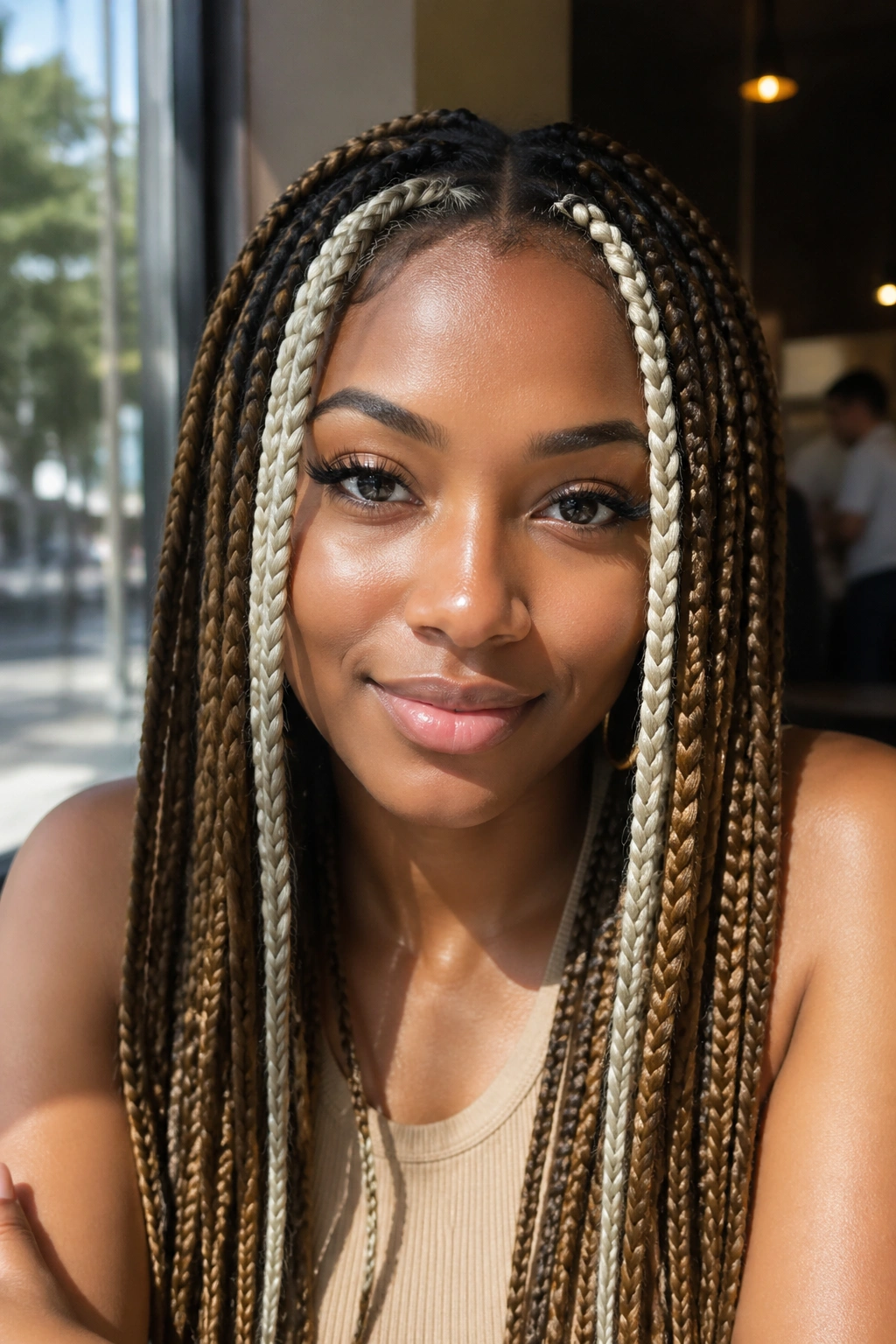
This is the loudest look in the group. Platinum money pieces on medium highlighted box braids hit hard because the color contrast is immediate and the eye goes straight to the front of the face.
The smartest version keeps the platinum limited to a few braids at each temple, maybe two to four on each side. That gives you the brightness without making the whole style feel frozen. The darker base does the grounding work, and the platinum pieces act like a spotlight.
A middle part sharpens the effect. So does a high ponytail, where the front pieces fall forward and show off the color line. If you like braids that read bold in photos and even bolder in real life, this is the one to try.
It does ask for confidence. No way around that. Platinum on medium braids is not shy, and that is exactly why it works.
9. Auburn and Black Contrast
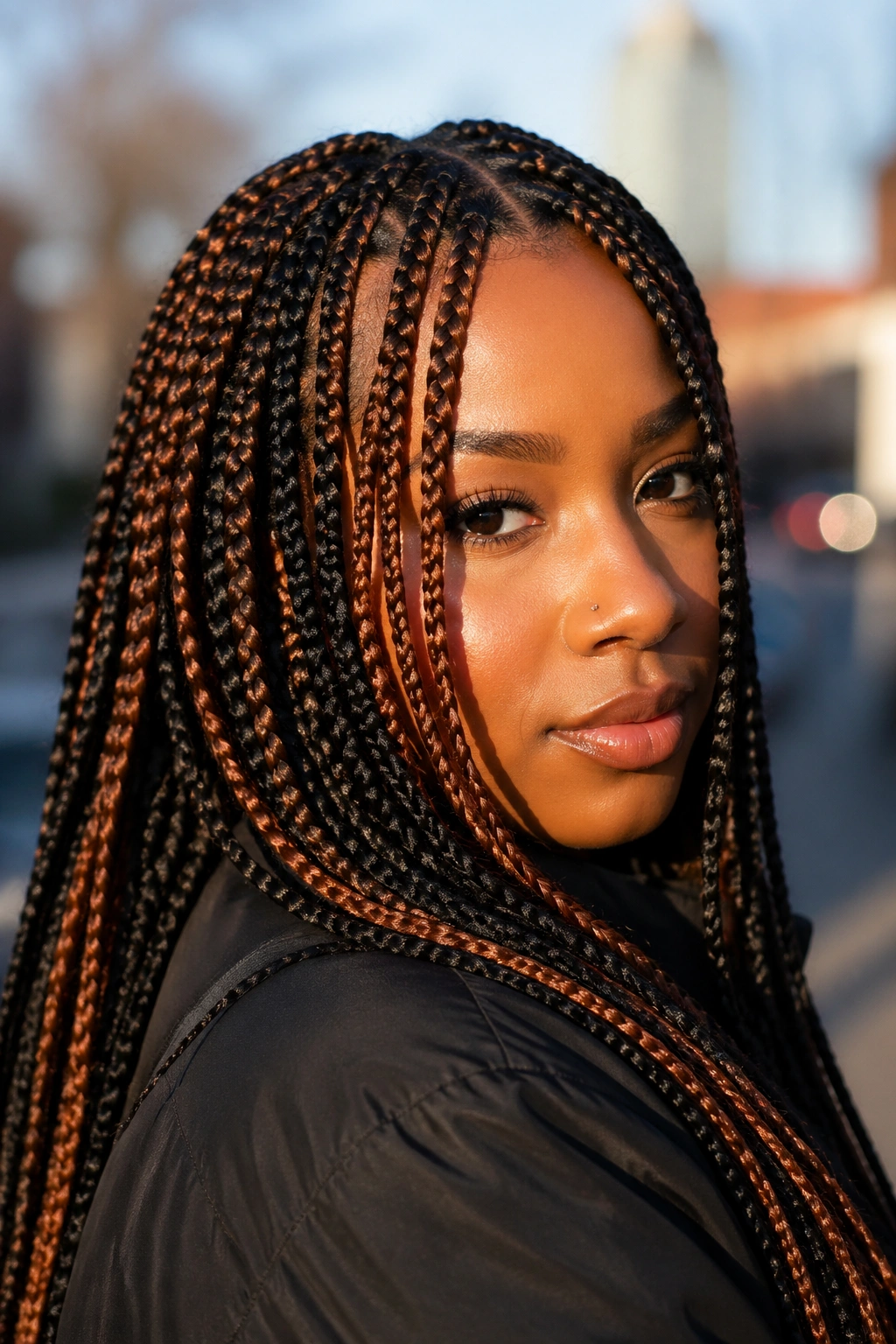
Can auburn stay soft next to black braids? Yes, if the tone leans more brown-red than orange-red.
That’s what makes auburn a smart choice. It gives warmth without turning neon, and the black base keeps the style from wandering too far into bright territory. On medium box braids, the contrast feels strong enough to notice but not so strong that the braid pattern disappears.
Where It Shines
Auburn looks best on shoulder-length to mid-back braids because the longer length gives the red-brown tone time to show through the movement. It also works well with side parts and half-up styles, where the color can catch light from different angles.
If you want warmth but don’t want gold, auburn is a good answer. It sits in that middle lane between copper and brown, and that makes it easier to wear than people expect.
10. Beige-Blonde Boho Braids
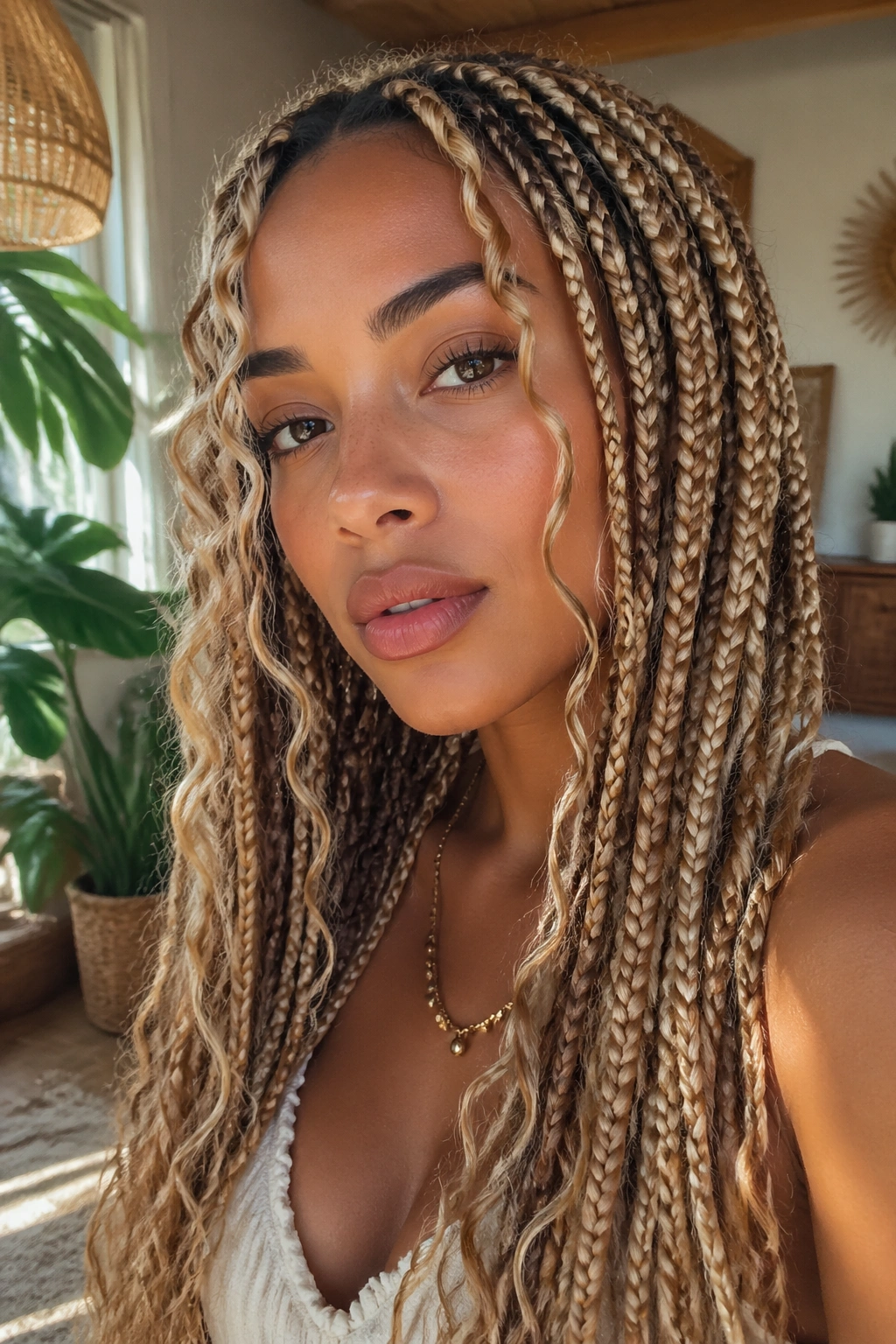
Picture medium braids with just enough beige-blonde to soften the whole head, plus a few loose curly pieces around the face. That’s the boho version, and it has a very specific mood: relaxed, but still tidy.
The beige tone matters because it is less shiny than bright blonde. It reads sandy, almost muted, which keeps the style from looking overdone. Add a few lighter pieces at the top and a few curled tendrils at the ends, and the whole thing feels less rigid than a standard braid set.
Small Details That Matter
- Leave 2 to 4 curly pieces out near the front
- Keep the blonde shade soft, not stark
- Use medium-width braids so the curls do not swallow the pattern
- Wrap the ends well if you want the curls to stay neat longer
This style can frizz fast if the curls are too tight or the braids are installed too loosely. A little structure goes a long way here.
11. Buttery Bronde Mix
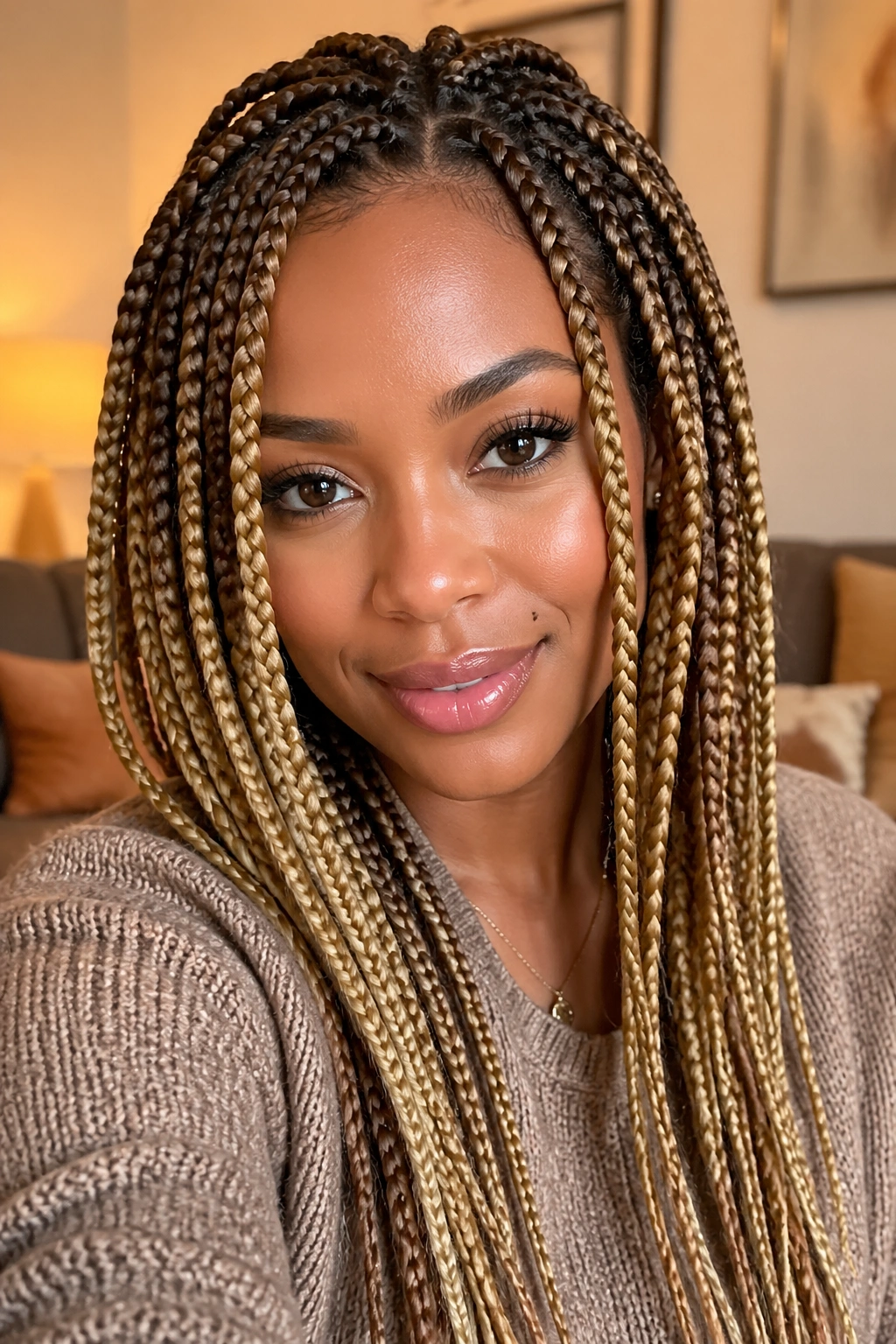
Buttery bronde is for people who can’t pick between brown and blonde and don’t want to. It blends the two in a way that feels smoother than a hard highlight stripe and warmer than a cool ash mix.
Medium highlighted box braids show this color especially well because each braid has enough width to hold more than one tone. A single braid might read as brown at the root, caramel through the middle, and soft gold toward the end. That layered effect is the whole appeal. Nothing about it feels abrupt.
It is not loud. That’s the point.
On dark hair, buttery bronde softens the contrast without washing the style out. On medium-brown hair, it can look almost sun-kissed, especially when the braids swing over the shoulders. The look works best when the tones are blended in a steady rhythm instead of scattered randomly.
12. Espresso With Cinnamon Highlights
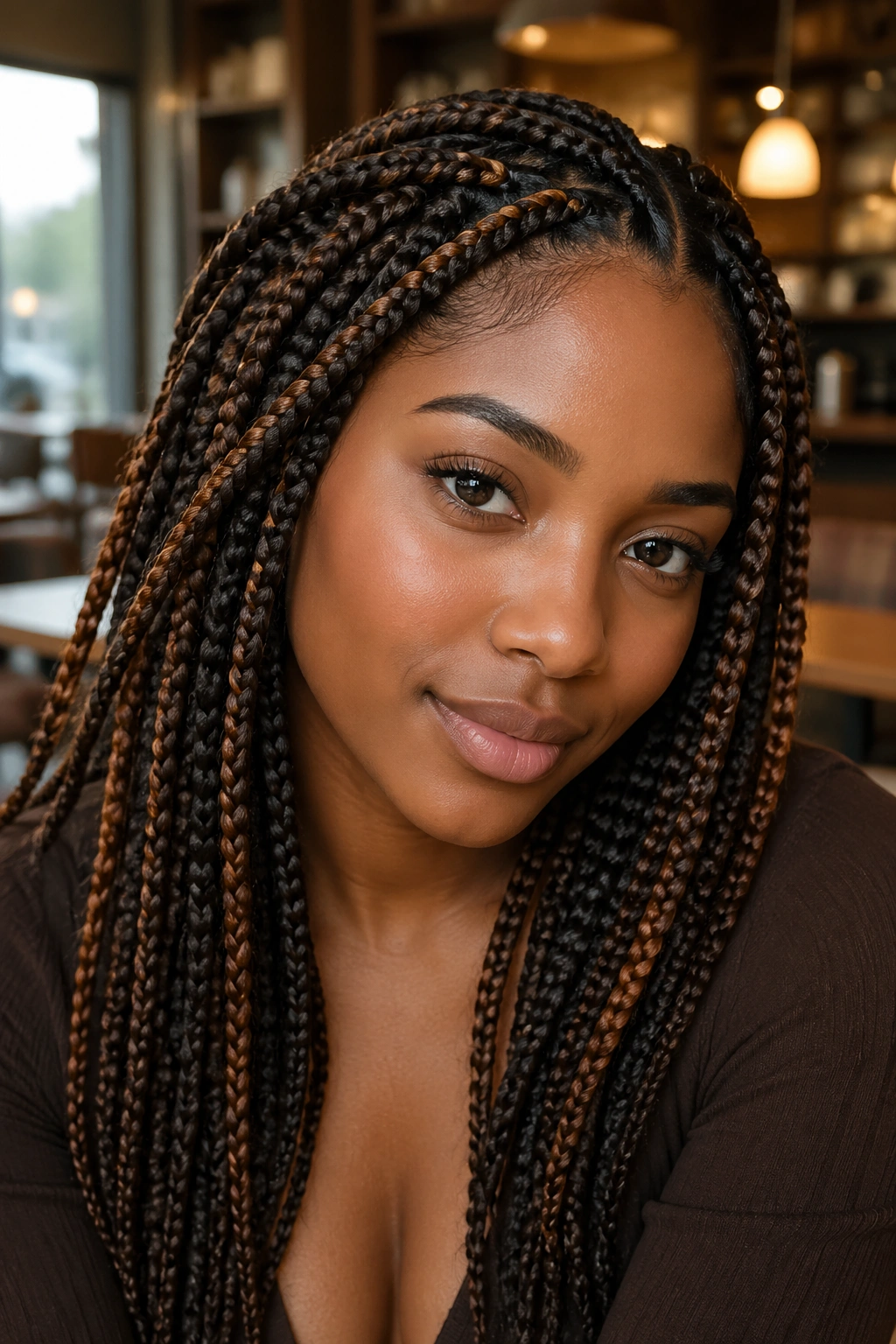
Espresso and cinnamon is a smarter pairing than espresso and bright caramel. Cinnamon carries warmth, but it stays deeper and a little redder, which gives the braids more depth.
Unlike a high-gold highlight set, this one feels grounded. The darker espresso base keeps the whole head rich, while the cinnamon threads add a warm lift that shows up especially well along the front half and the outer layers. Medium braids are a good fit because the color can move from braid to braid without turning patchy.
If your wardrobe leans neutral, this style slips right in. If you wear warm browns, cream, rust, or black, even better. The color doesn’t fight the outfit. It sits with it.
For the cleanest result, keep the cinnamon in thin bands rather than broad stripes. That small restraint makes the difference between a polished braid set and one that feels too busy.
13. Rose-Gold Accent Strands
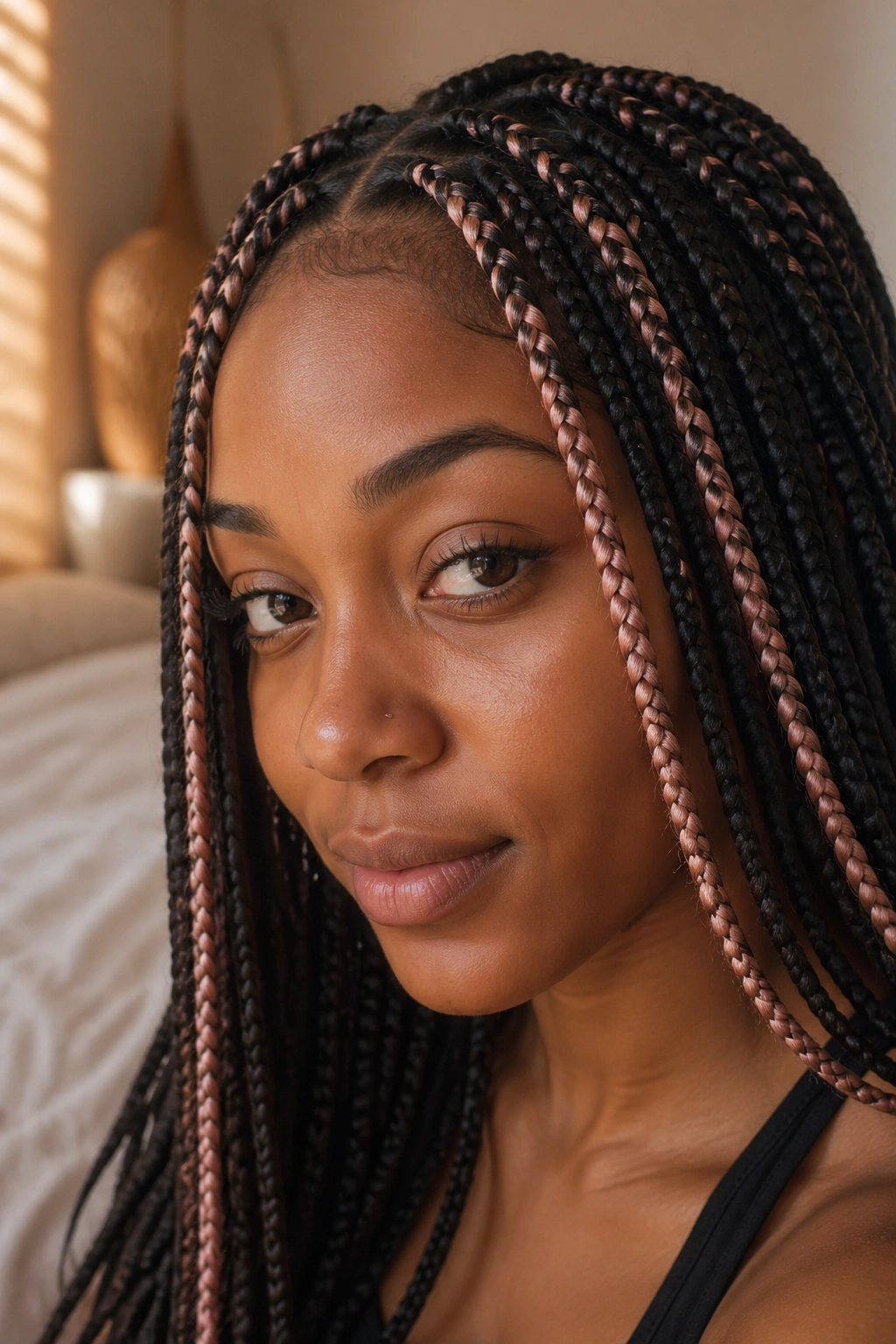
Rose-gold on braids can go sweet fast, so the answer is restraint. A few accent strands around the face and top layer give the style a soft shimmer without turning it into candy.
How Much Rose-Gold Is Enough
Keep the rose-gold limited to the braids people see first. That might mean 8 to 12 accent pieces total, depending on head size and braid count. The rest can stay brown, black, or dark blonde so the pink tone feels like a highlight, not the main event.
Rose-gold shows up best on medium braids because the braid surface is wide enough to catch the pink-brown shift. On very small braids, it can disappear. On jumbo braids, it can look a little too heavy. Medium keeps it in the middle, which is where it belongs.
- Best with warm brown or blonde base hair
- Keep the pink tone soft, not bubblegum
- Use it near the front and part line
- Works well with glossy finishes and simple makeup
Tip: if the rose-gold looks too sweet on its own, pair it with darker lowlights so it stops reading childish. That fixes a lot.
14. Mocha and Honey Swirl
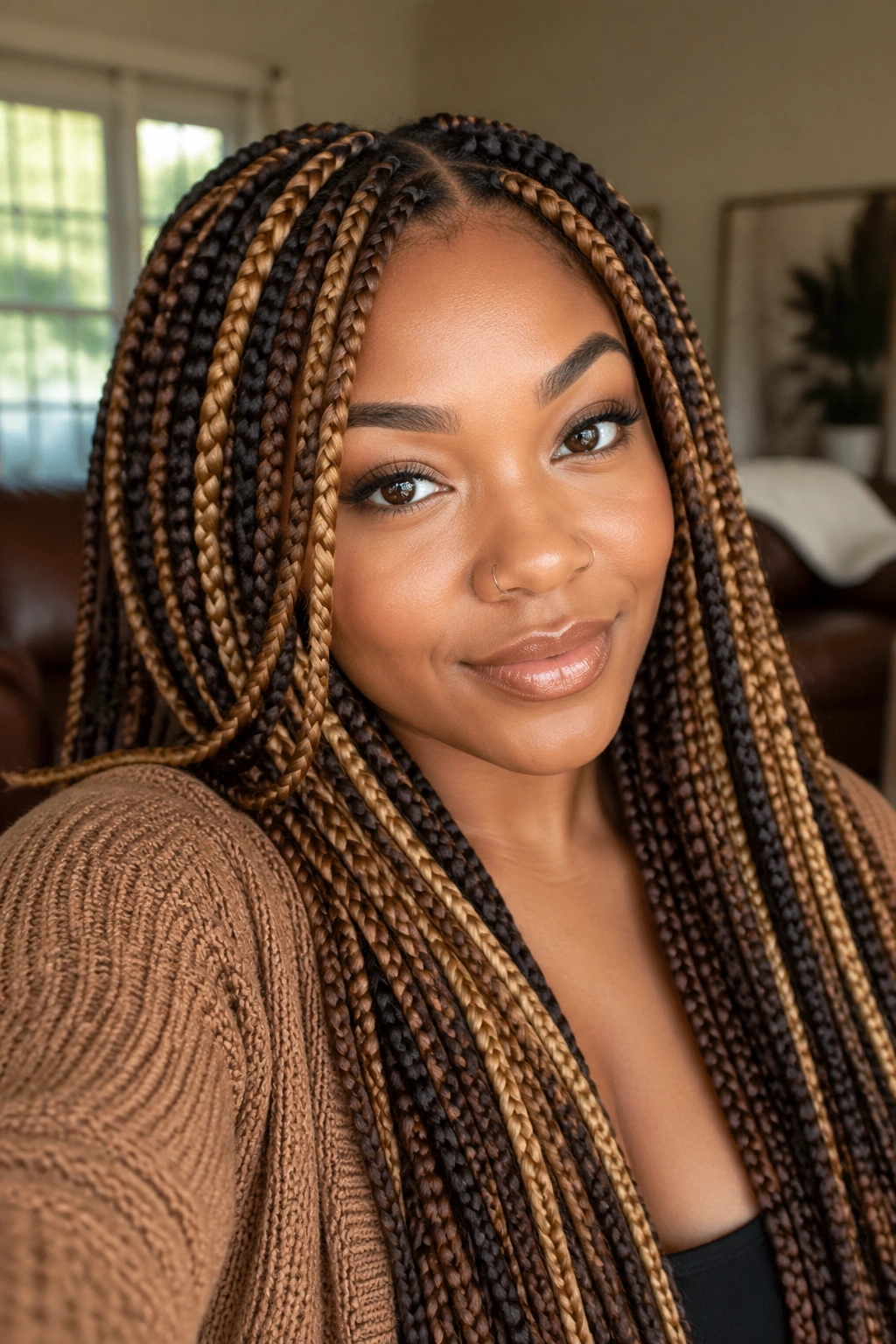
Mocha and honey is one of those combinations that looks easy and takes a little planning. The dark brown has to be deep enough to anchor the style, and the honey has to be bright enough to show up without turning harsh.
The best version uses three tones, not two. Ask for deep mocha, a mid-caramel bridge shade, and honey blonde for the lightest pieces. That middle shade is what keeps the transition smooth. Without it, the color jump can look abrupt, especially on medium braids where each strand is visible.
This style works because it gives you warmth in layers. The braids look darker under indoor light and lighter when they move through daylight. That change keeps the hair from feeling flat, which is the trap with single-tone braids.
It also plays well with half-up styles. When the top is pulled back, the honey pieces show more. When the hair is down, the mocha does most of the talking.
15. Soft Ombré From Roots to Ends
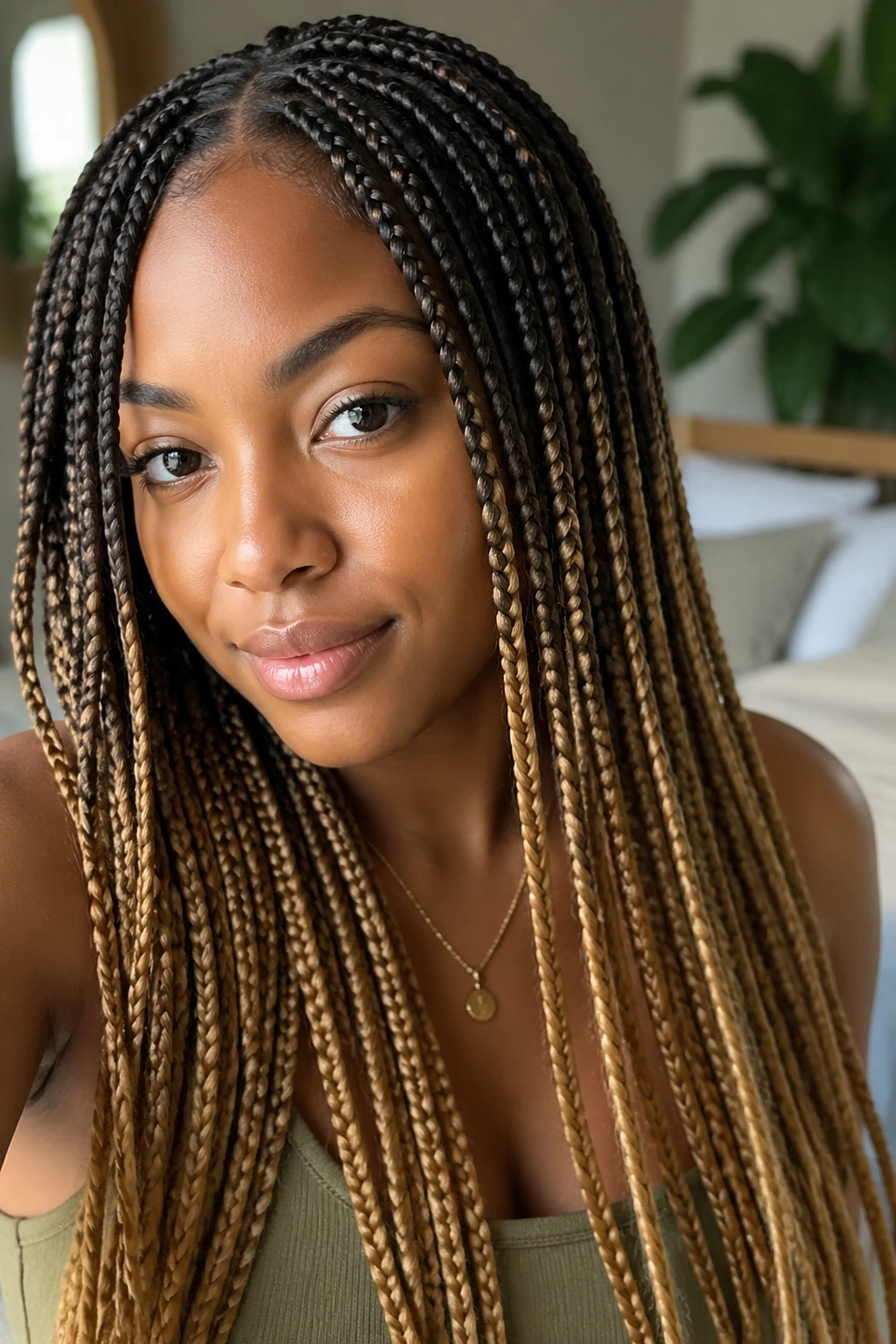
Why do some ombré braids look smooth while others look like two different heads stitched together? The answer is the transition zone.
The fade needs space. A good soft ombré leaves the first 2 to 3 inches close to the natural base or deep root shade, then steps into a middle tone before reaching the lighter ends. On medium highlighted box braids, that gradual shift gives the color room to breathe. A sharp jump looks pasted on. A slow one looks deliberate.
How to Keep the Fade Smooth
- Keep the root color deep and steady
- Let the middle shade do most of the blending
- Stop the lightest tone one step shy of platinum or bright yellow
- Trim frayed ends before installation so the fade stays clean
Soft ombré is one of the easiest ways to wear highlights if you hate visible grow-out. The base stays forgiving, and the lighter ends keep the style from feeling heavy. It’s a neat compromise.
16. Chunky Highlight Panels
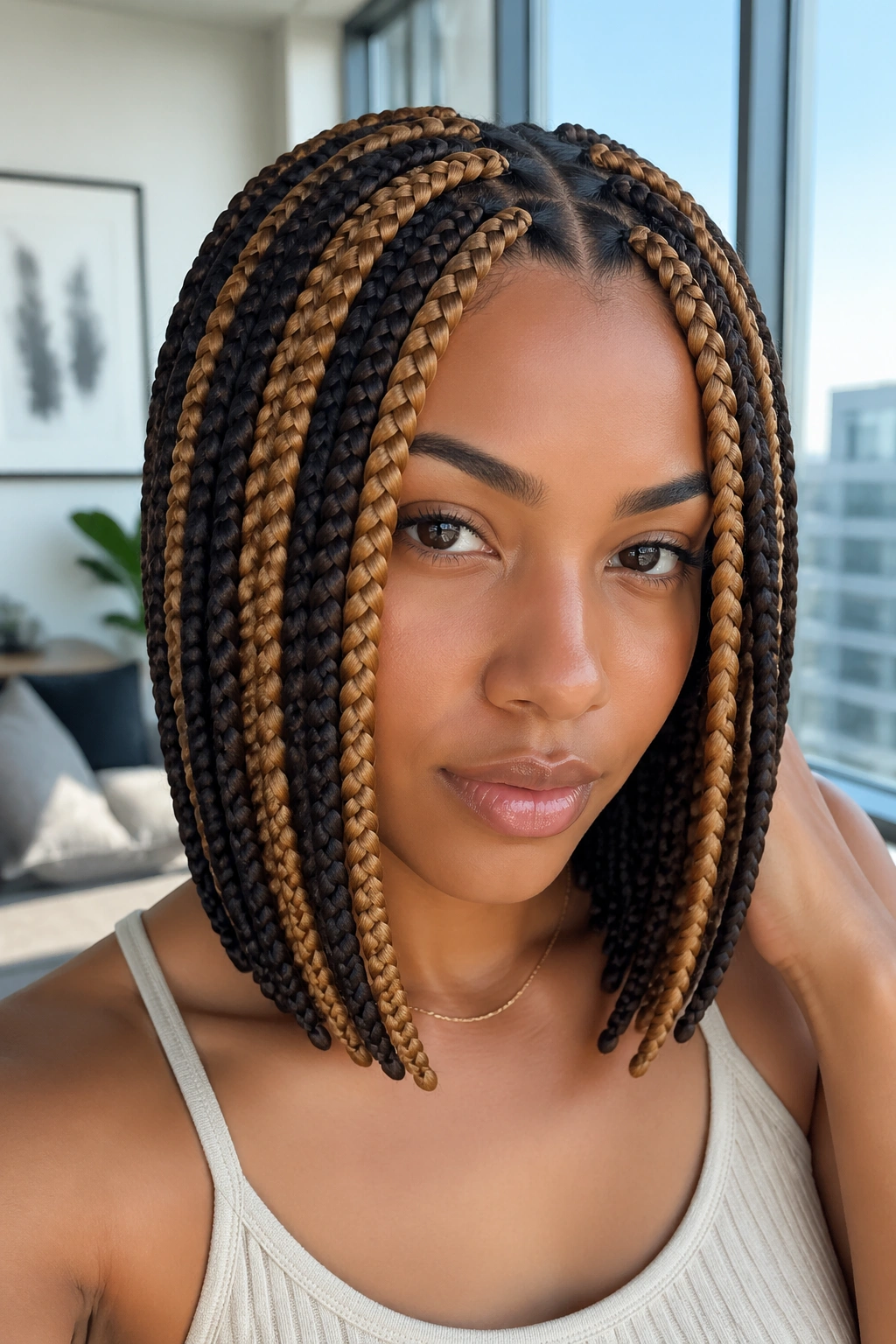
Some braid styles want fine detail. This one wants blocks. Chunky highlight panels put wider bands of lighter color across the head so the contrast reads from across the room.
That makes the style a good choice if you like graphic shapes. The larger panels can sit along one side, around the crown, or across the back for a more structured look. Medium box braids handle this better than tiny braids because the panel can sit cleanly inside the braid size instead of getting lost in the weave.
A good way to think about it: the braids become the frame, and the highlight panels become the image. The contrast is strong, so the sectioning needs to be neat. Messy parting will show.
Best Details to Watch
- Keep each panel wide enough to be intentional, not random
- Use one or two highlight shades, not five
- Pair the look with simple clothing if you want the braids to lead
- Works best on mid-length and longer sets
This style has a little edge to it. Not subtle. That’s fine.
17. Multi-Tone Sunset Blend
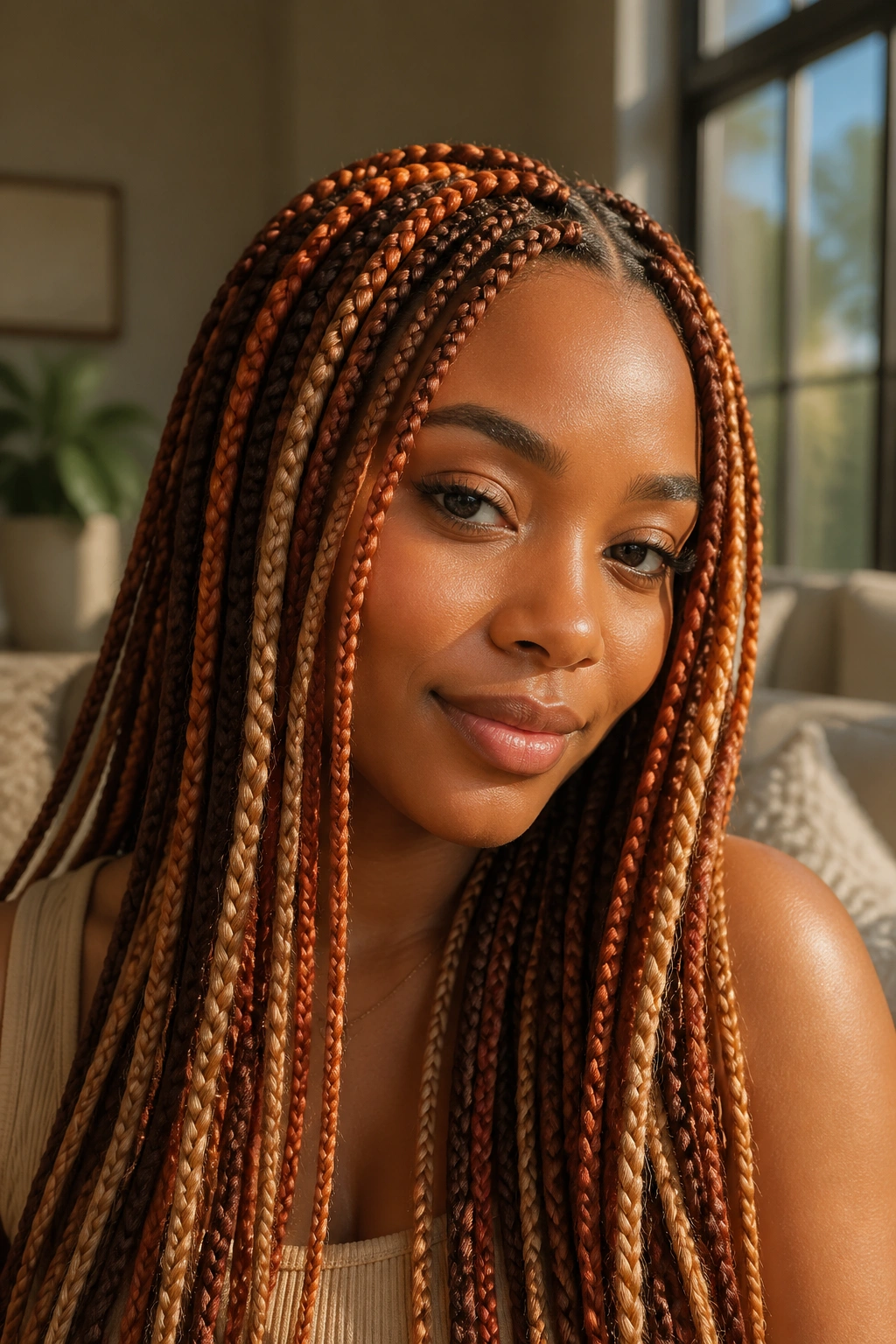
Copper, gold, auburn, caramel, and a touch of brown can all live in the same head if the mix is handled with discipline. That sounds busy on paper. In person, when the tones are balanced, it looks warm and layered, like the braids are holding light instead of color alone.
The key is choosing one dominant shade. Usually that’s the base brown or caramel. The brighter tones should sit in smaller amounts so they lift the style instead of taking it over. Medium highlighted box braids are one of the few braid sizes that can carry that many tones without turning muddy, because each braid gives the color a clear lane.
The look changes as you move. Near the crown, the warmer shades can seem deeper. Toward the ends, they catch more light and soften out. That shift is part of why people keep coming back to warm blends.
It suits anyone who likes dimension and doesn’t mind a little richness. Plain is not the point here.
18. Blue-Black With Silver Threads
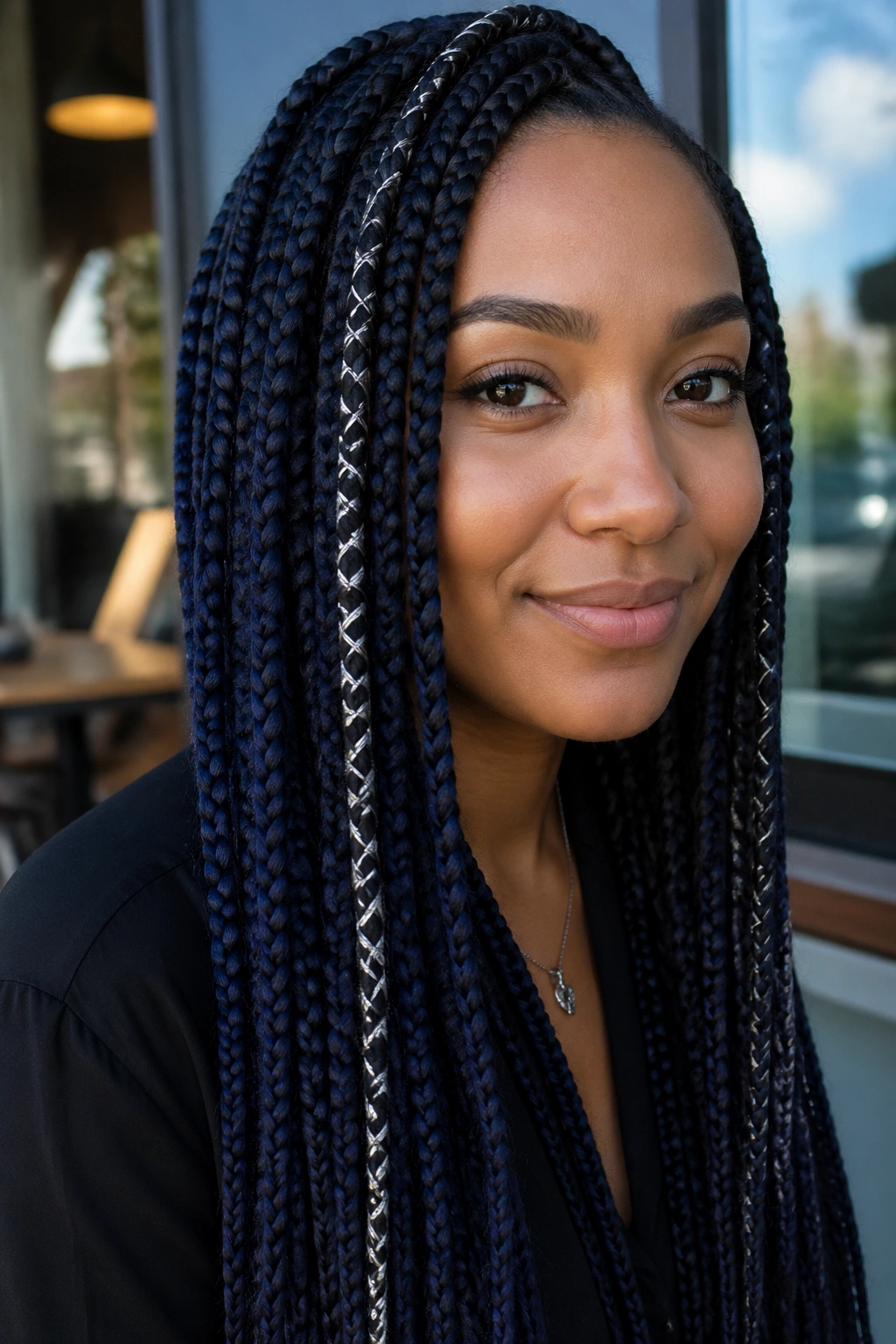
Blue-black by itself already has a cool, glossy feel. Add silver threads, and the whole style picks up a sharper edge.
Unlike warm highlights, silver does not soften the base. It cuts through it. That makes this a strong choice for cooler undertones, black clothing, silver jewelry, and people who want their medium box braids to feel sleek instead of sun-warmed. The silver doesn’t need to cover much hair to matter either. A few thin threads near the front and through the outer layers are enough.
The style works best when the silver is placed where the braids move. Underneath layers can stay blue-black, while the top pieces catch light as you turn. That keeps the look from becoming flat or too metallic.
One caution: silver can show dryness faster than warmer shades. A light mousse and a little braid spray on the ends help keep the finish neat.
19. Cherry Red Accent Braids
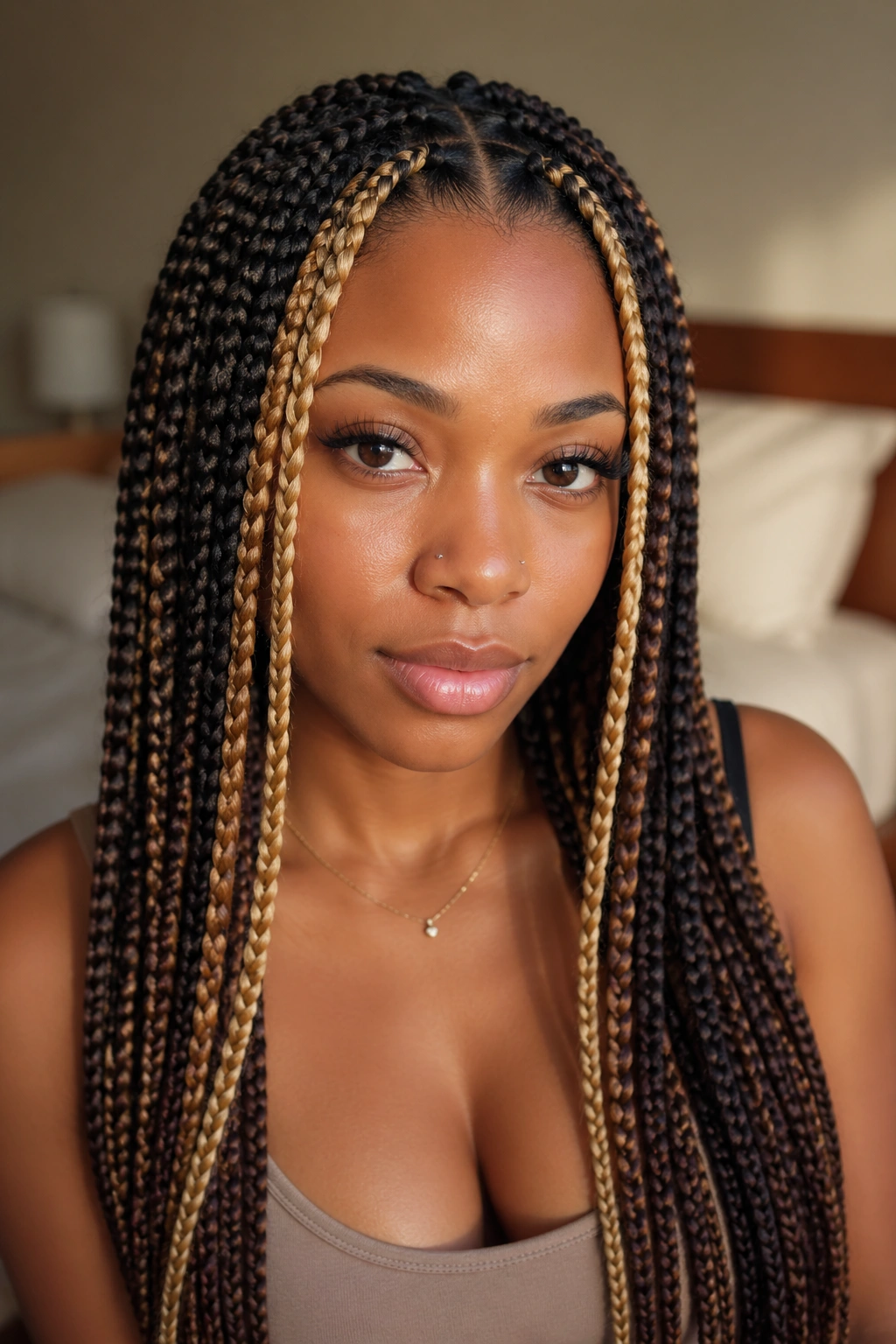
A little red goes a long way. Cherry red accent braids can make medium highlighted box braids look sharper and more playful at the same time, but only if the red is used with some restraint.
Where the Red Should Sit
Put the cherry pieces near the part line, temples, or just behind the face-framing braids. That way the color shows when you look straight on, not only when the hair is flipped. Five to eight red braids is plenty for most heads. More than that, and the style can start to feel heavy.
Cherry red looks best on black and deep brown bases. It does not need a lot of competition, so keep the rest of the hair calm. Simple earrings, clean edges, and low-key makeup help the color do its job without turning the whole style into a costume.
Tip: if you want the red to look deeper, mix in one dark burgundy braid between the cherry pieces. That little trick gives the whole set more depth.
20. Face-Framing Blonde Bob-Length Braids
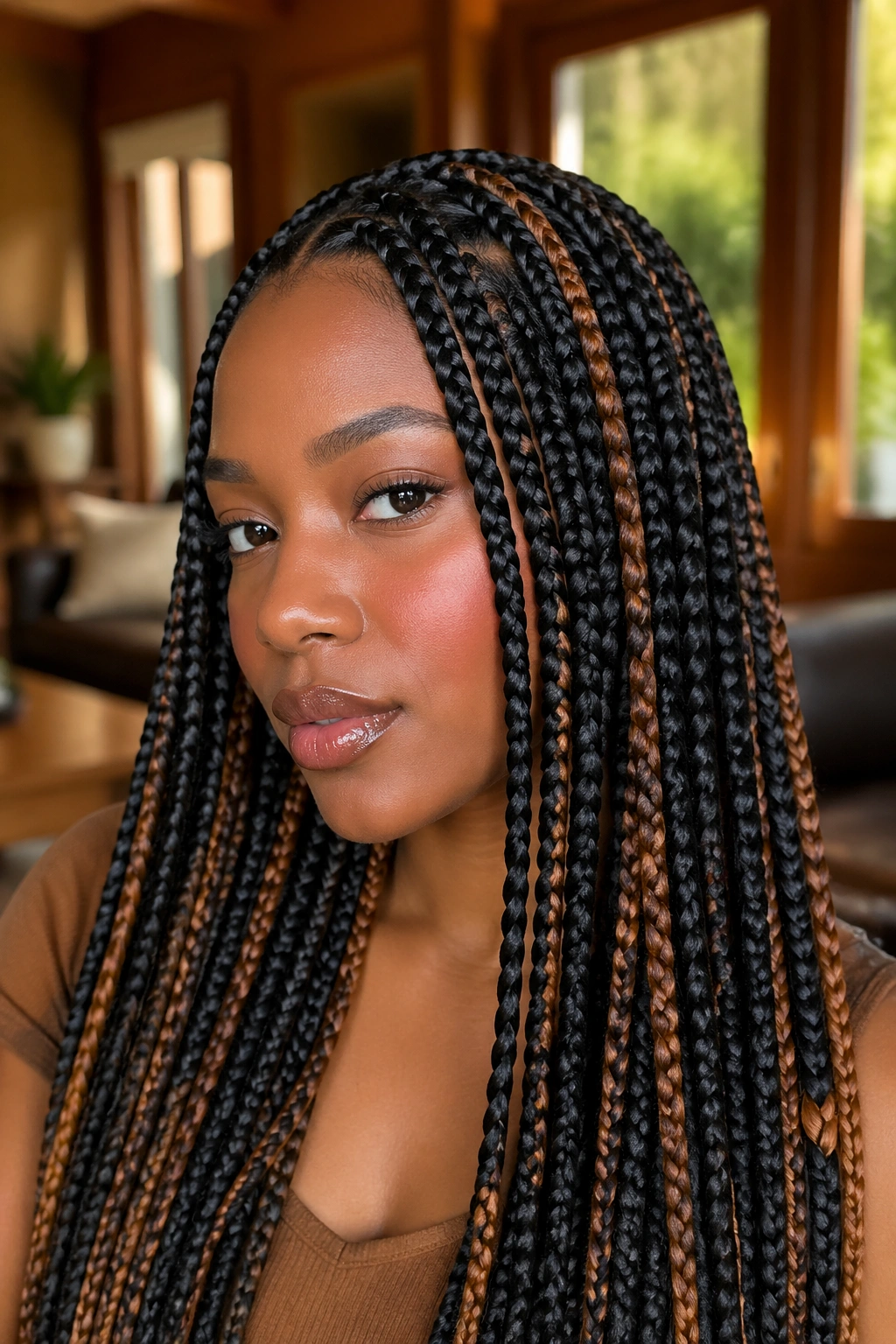
Shorter medium highlighted box braids hit differently. When the length stops around the jawline or collarbone, the highlights show more sharply because there’s less hair to hide behind.
The blonde pieces at the front do most of the work here. On a bob-length set, face-framing color can pull attention upward and keep the cut from looking boxy. That matters because shorter braids can sometimes feel heavy if the color is too even or too dark all over.
A blunt end gives this look more edge. A slightly layered finish softens it. Either way, the blonde should sit around the face and upper layers so the hair stays bright where it counts.
This style is also practical. Less length means less weight on the neck, fewer tangles at the ends, and less time spent managing the braids when you sleep. Plainly put, it wears easier than waist-length hair.
21. Triangle-Part Highlighted Box Braids
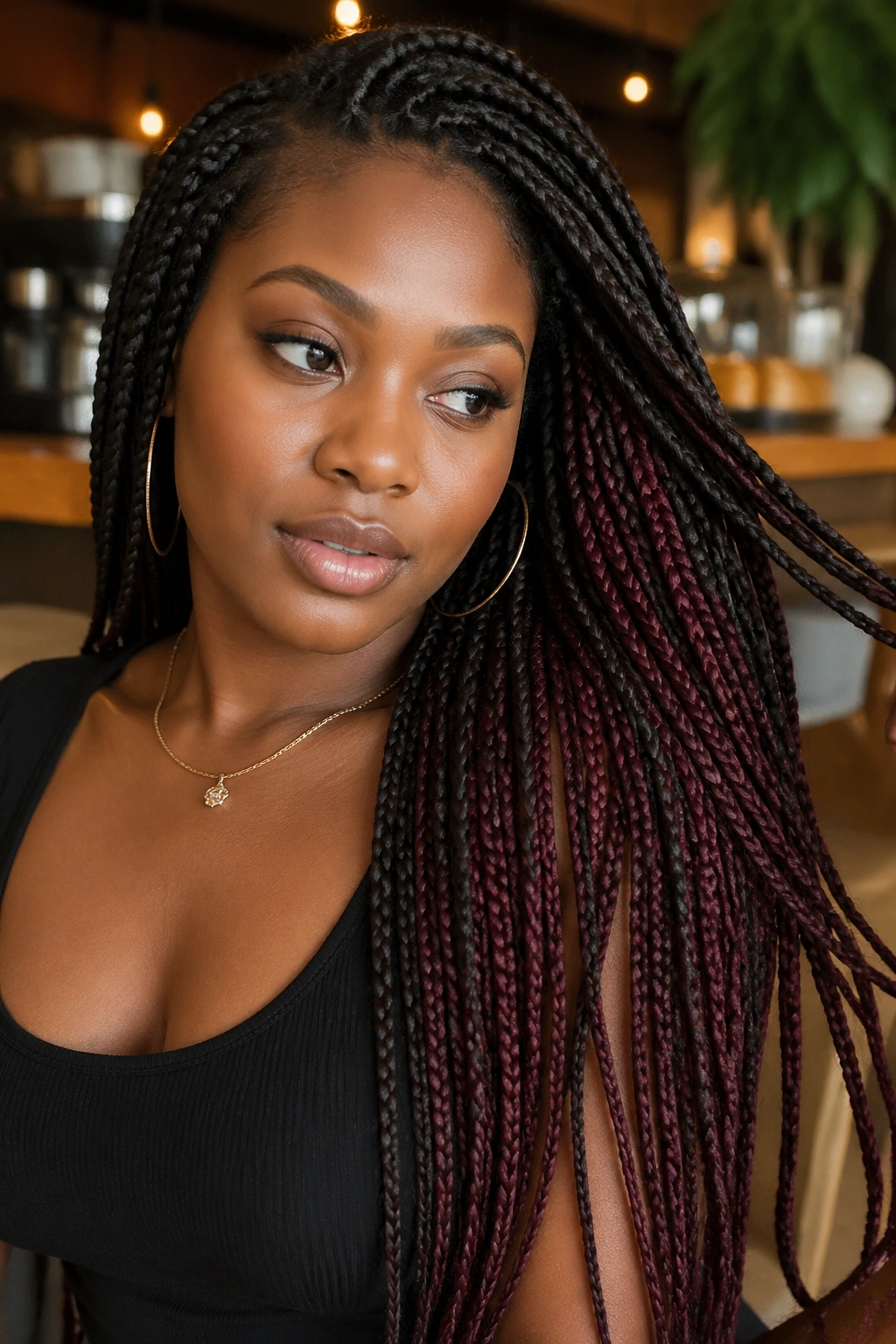
Why do triangle parts change the feel so much? Because they break the grid.
Why the Parts Matter
With standard square parts, highlights can look more regular and predictable. Triangle parting shakes that up. The scalp pattern feels less rigid, and the highlighted braids fall in a way that looks a little less expected. Medium box braids benefit from that shift because the parting itself becomes part of the design.
The highlight placement can follow the triangle shapes or ignore them on purpose. Both ways work. If you want the style to feel more playful, alternate lighter braids through the triangles instead of lining them up in rows. If you want it cleaner, keep the highlights grouped by section so the shape stays crisp.
- Triangle parts add visual movement at the scalp
- They work well with face-framing highlights
- The style looks better when sections are precise
- Great choice if square parts feel too familiar
It is a small detail, but it changes the whole head.
22. Side-Swept Highlighted Braids
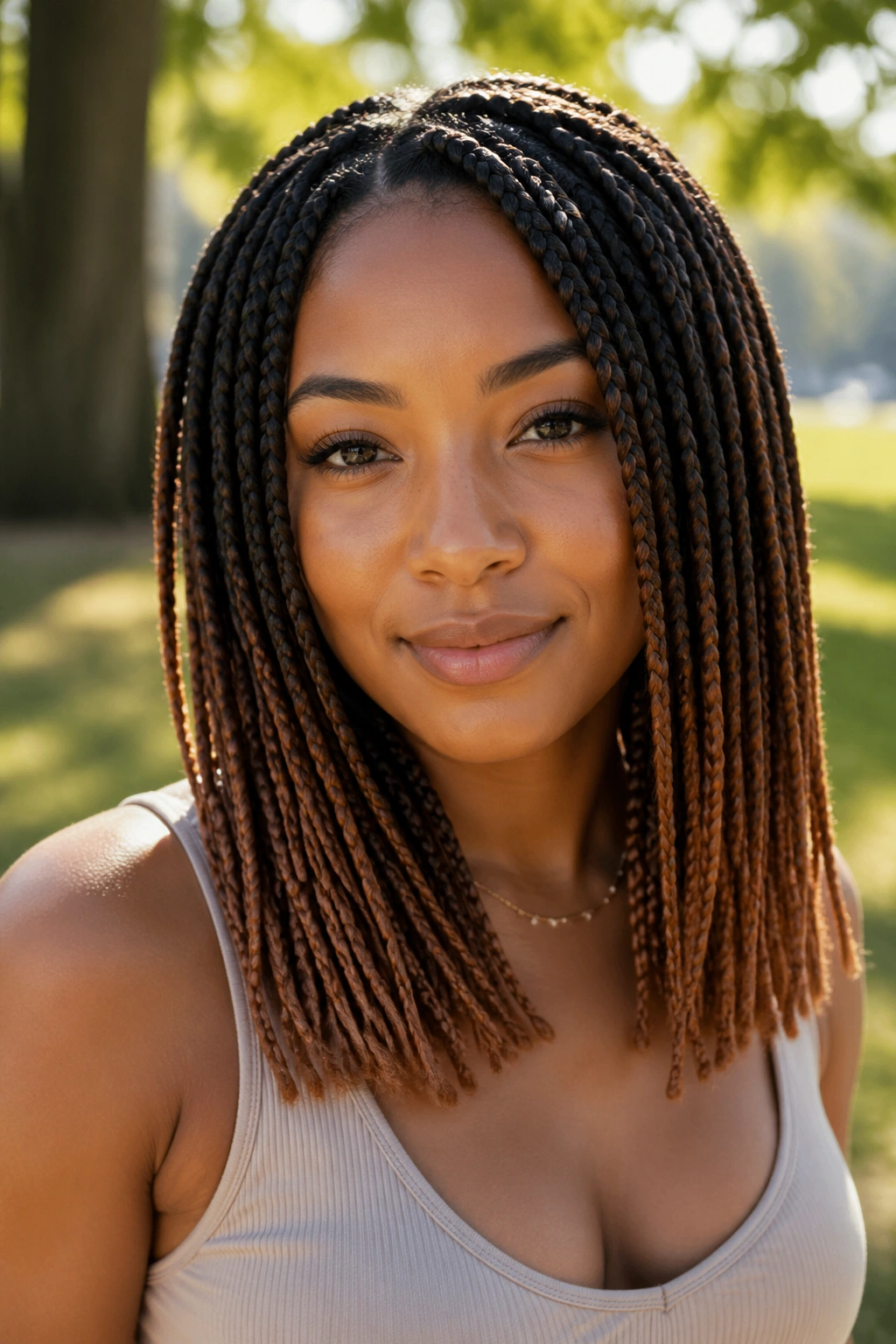
A side-swept braid look can make highlights seem richer because one side gets more visual weight than the other. That asymmetry does a lot of work.
The brighter side sits over the temple and cheekbone, while the darker side settles behind the ear or into the back. The result is a soft cascade of color that feels intentional without looking stiff. Medium highlighted box braids are a good fit because the braid length still moves easily enough to follow the sweep.
This style also plays well with earrings and glasses. One side stays open, so the face doesn’t get crowded. If the highlight pieces on the open side are a shade lighter than the rest, the sweep reads even more clearly.
What to Keep in Mind
- Put the lightest braids on the heavier side of the sweep
- Keep the opposite side darker for contrast
- Use a side part that follows the direction of the fall
- Works best when the braids are not too heavy at the ends
It’s a clean way to make color feel shaped, not random.
23. Layered Waist-Length Highlighted Braids
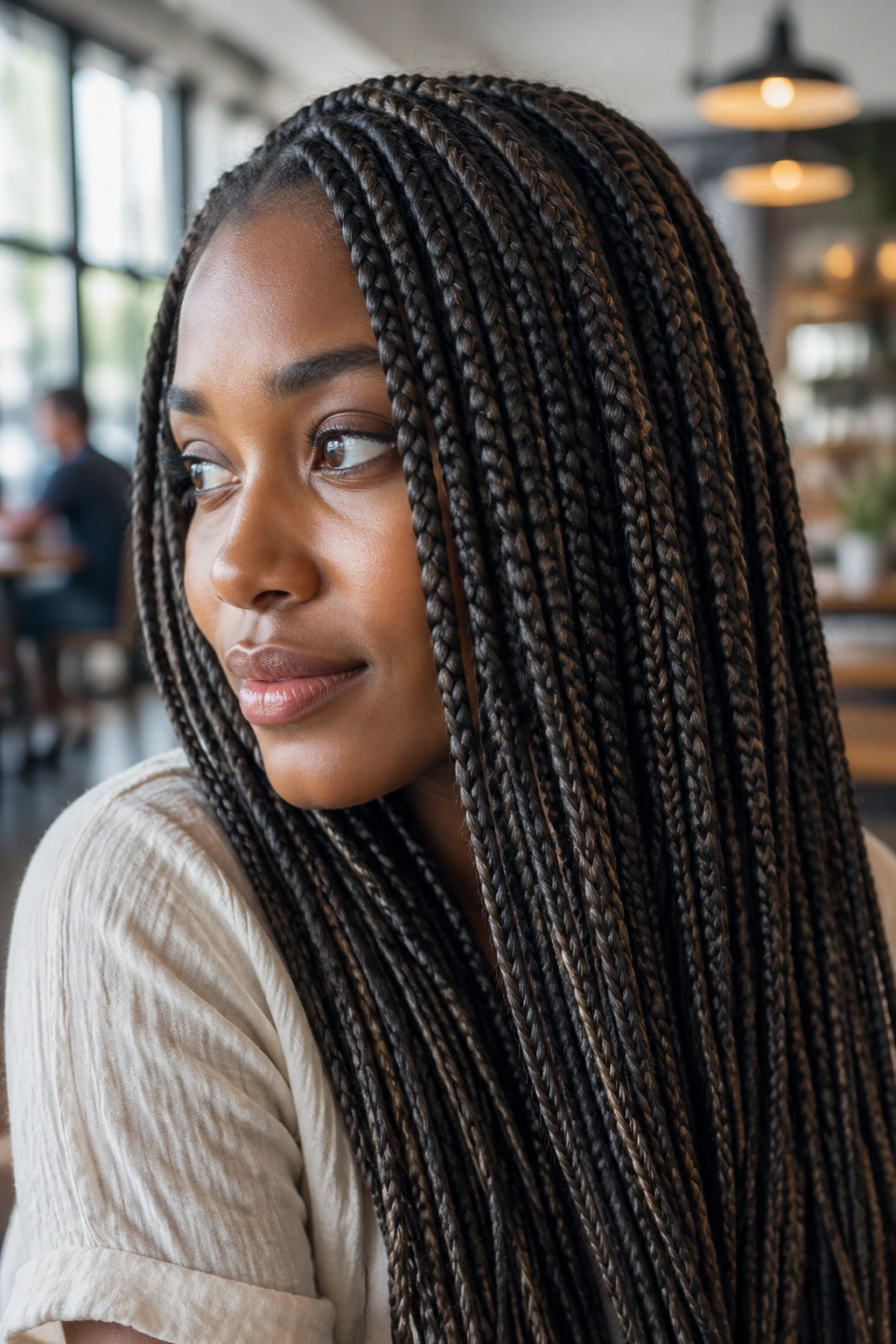
Long braids can be beautiful, and long braids can drag the face down. Layers fix that problem.
With waist-length medium highlighted box braids, shorter pieces around the front and sides stop the look from turning into one solid curtain. The highlights help too. When lighter strands sit on top of darker ones at different lengths, the color keeps moving even when the hair is still.
This style needs a little care during installation because the balance matters. If every braid is the same length, the whole set can feel heavy. Put some length in the back, shorten the front by a few inches, and let the highlight pieces live in the layer changes. It gives the eye somewhere to go.
The look is strongest when the braids are neat at the root and the ends are sealed cleanly. Long hair exposes every messy edge. There’s no place to hide it.
Still, if you want drama, this has it. Quietly.
24. Beaded Highlighted Braids
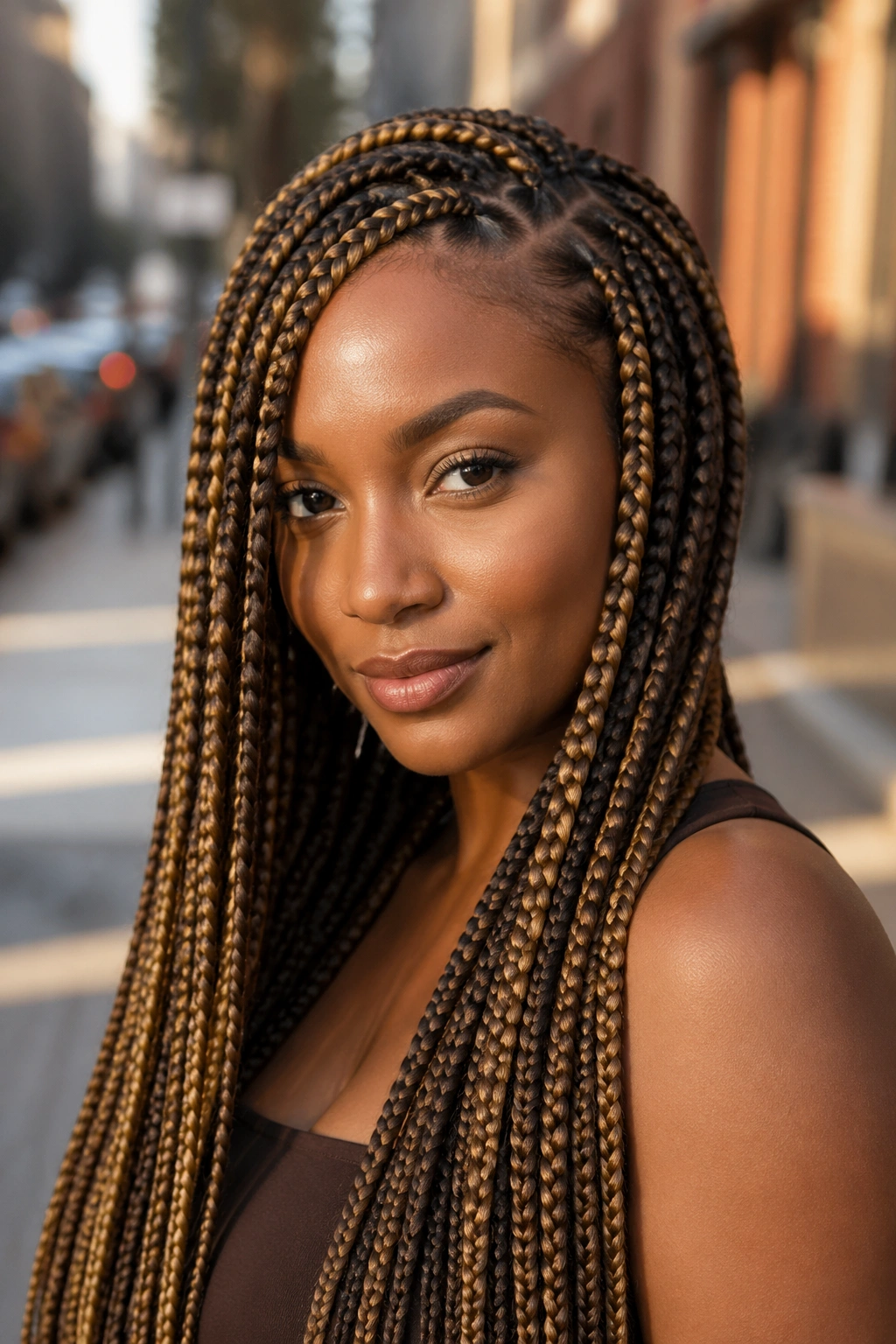
Beads add sound, weight, and shine, which is a lot for one accessory. On medium highlighted box braids, that extra detail can make the color feel more finished instead of more crowded.
The best bead choices usually echo the highlight tone. Gold beads sit well with honey, caramel, and rose-gold pieces. Clear or smoky beads work with ash or silver highlights. Amber beads pull warm tones together without looking too shiny. You do not need to load every braid. A few at the ends or around the front do enough.
Beads also change how the braids move. They pull the eye downward, which helps when the highlights are only on the top layer and you want the lower half to feel anchored. Too many beads, though, and the style starts to swing in a way that gets annoying fast.
If you are wearing the braids for a trip, an event, or just because you like a bit of sparkle when you walk, this is a strong finishing touch.
25. Classic Medium Braids With Soft Tonal Highlights
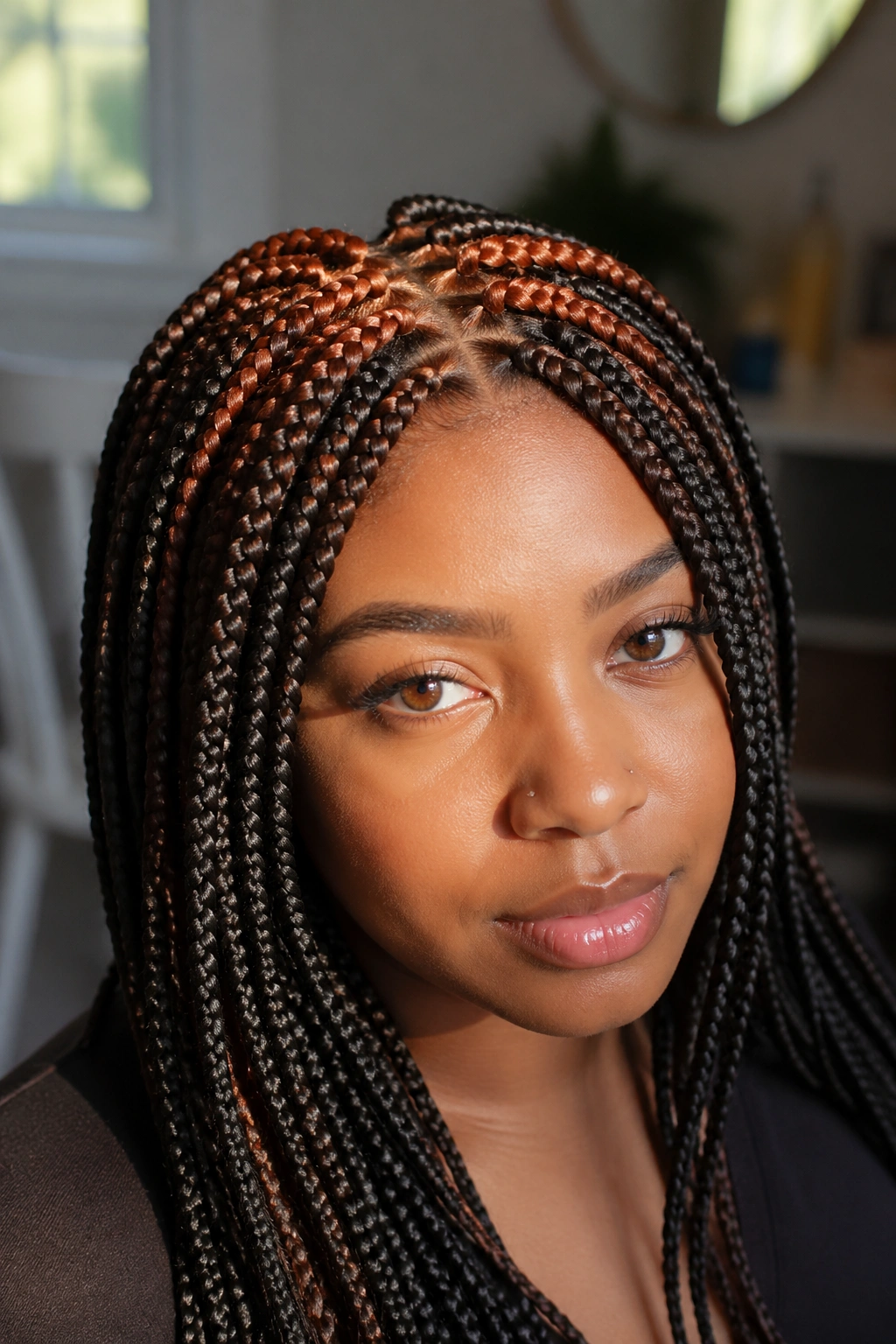
This is the version I’d point to when someone wants color but does not want to babysit their hair. The highlights stay close to the base shade — maybe one step lighter, maybe one step warmer — and that small shift keeps the style polished without making it loud.
Soft tonal highlights also grow out better. The roots do not scream, and the braids keep their shape even after the shine fades a little. That makes this a good pick for people with busy weeks, low-maintenance routines, or a job where hair should look neat without stealing the whole show.
Medium highlighted box braids in a quiet color range have a calm kind of confidence. No neon. No sharp stripe drama. Just clean parting, even tension, and color that looks good from the front, the side, and the back.
That’s probably why this one lasts. It works on day one, and it still behaves on day twenty-one.