



Hair that looks calm from the front and a little mischievous when it moves has a way of pulling people in. Blonde peekaboo knotless box braids do exactly that. The darker top layer keeps the style grounded, while the blonde underneath flashes through in motion, at the crown, or in a half-up ponytail, which is why the look feels more lived-in than a full head of blonde braids.
The appeal is not hard to understand. You get contrast without committing to an all-over blonde install, and you get the softer root feel that knotless braids are known for. That combination matters. A heavy braid line across the hairline can make a style look stiff fast, while a well-done knotless braid lays flatter, moves better, and tends to feel easier to wear for long stretches.
There’s also a visual trick at work here that people overlook. Peekaboo color is more interesting than a full surface dye job because the hair reveals itself in layers. A turn of the head. A lifted ponytail. A braid tucked behind the ear. That little moment of reveal is what gives the style its edge, and it is part of why the look photographs so well without needing extra decoration.
The style only works when the details line up. Shade choice, braid size, parting, placement, and maintenance all shape the final result, and the difference between “nice” and “I need that” often comes down to those small decisions.
Why the Peekaboo Placement Feels So Fresh
Peekaboo braids are not about hiding color for the sake of hiding it. They work because the blonde sits where the eye doesn’t expect it right away. The dark outer layer acts like a curtain, and the blonde underneath becomes the surprise.
That matters more than people think. If the blonde were spread evenly over the whole head, the look would read louder and flatter. With peekaboo placement, the color has rhythm. You see a flash, then the darker braids close back over it, then the blonde returns when the hair shifts. It feels more dimensional, and that depth is what keeps the style from looking one-note.
Where the Peekaboo Effect Shows Up Best
The best reveal usually happens in a few predictable places:
- The sides near the ears, where braids move when you tuck hair back.
- The nape, especially in medium and long lengths.
- The crown, when the top layer is lifted into a bun or ponytail.
- The ends, if the blonde is concentrated lower in the braid.
Placement changes the mood. Blonde concentrated low in the braids feels subtler. Blonde placed at the sides creates a flashier frame around the face. A good braider will think about how you part your hair, how you usually wear it, and where the color will peek through during normal wear, not only on day one.
Why the Look Feels More Wearable Than Full Blonde
Full blonde box braids can be beautiful, but they also put the color front and center every second. That can be a lot if you want contrast without the commitment of an all-over bright style.
Peekaboo placement gives you a middle ground. You still get the brightness, but the darker top layer keeps the style from shouting at every angle. For a lot of people, that balance is the whole point. The hair feels playful, not loud. Bold, not busy.
And yes, that difference shows in real life. The roots still look neat when the blonde underneath grows out a little, so the style often stays visually fresh longer than an all-over light install.
Why Knotless Braids Feel Lighter at the Root
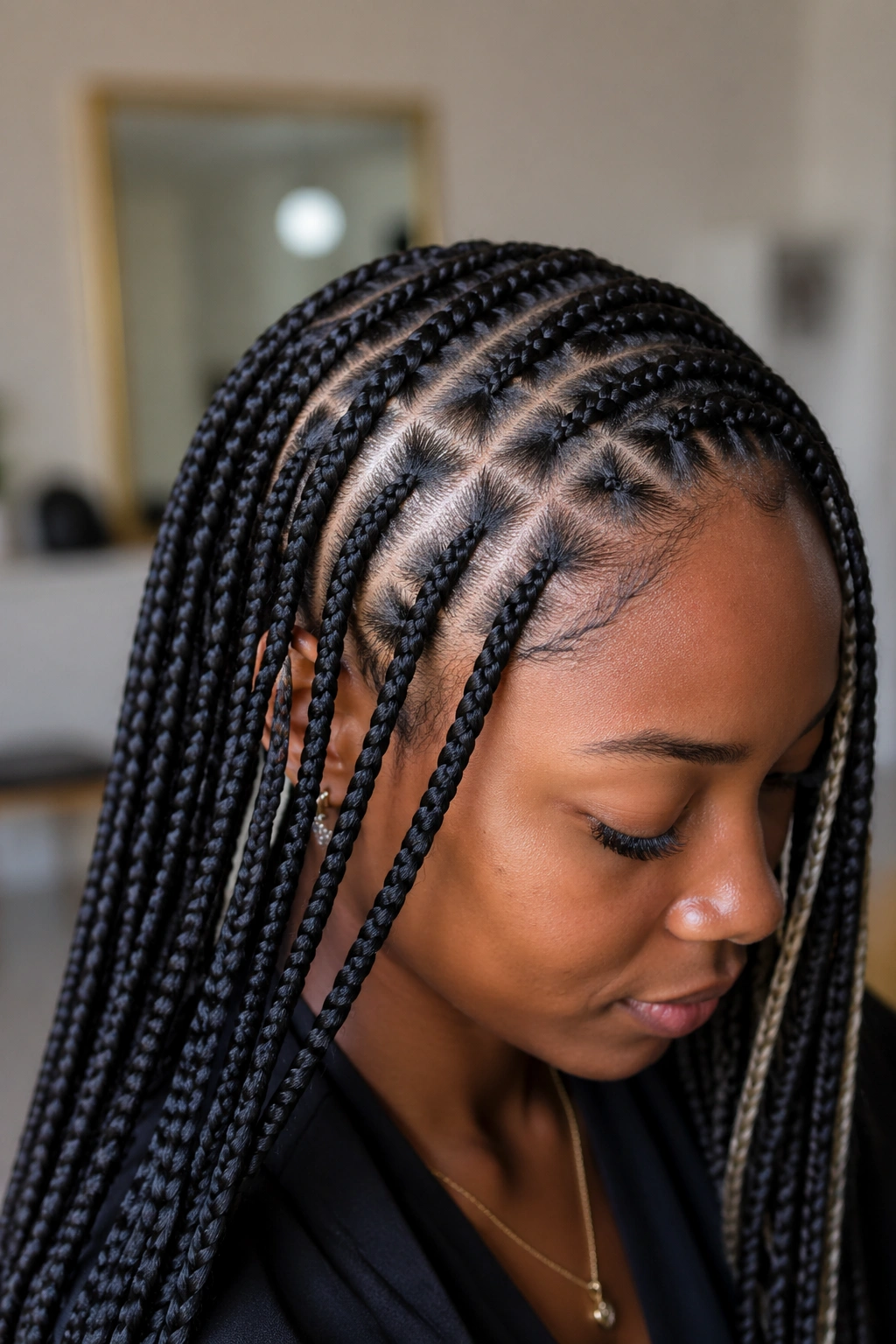
Knotless braids changed the conversation around protective styles for a reason. Instead of starting with a tight knot at the scalp, the braider feeds the extension hair into your natural hair gradually. The result is a flatter start and, for many people, less immediate pull at the base.
That does not mean knotless braids are weightless. Long braids with thick extensions still carry weight. But the entry point is softer, and that soft start matters when you’re planning to wear the style for weeks instead of days. Hairline comfort is not a small thing. It is the thing.
What the Feed-In Method Changes
A knotless braid starts with your own hair and then gains extension hair in small sections. That gradual build gives the braid a slimmer root and usually a more natural drop from the scalp.
The visual upside is obvious. The braid looks like it grows from the head instead of sitting on top of it. The comfort upside is the part people feel by the second or third day, especially around the temples and nape. When the braids are installed cleanly, the scalp can still move a little, which makes a long wear period much easier to live with.
When Knotless Is the Better Choice
Knotless braid installs are often the better move if you:
- Wear braids for several weeks at a time.
- Want a softer hairline look.
- Prefer styles that lay flat under scarves, hats, and bonnets.
- Tend to feel tension fast at the temple or nape area.
There is a catch. Knotless braids take more time to install because the feed-in process is slower and more precise. They also ask for neat sectioning. Sloppy parting shows up fast with this style, because the eye can see the movement of the braid from root to tip.
Choosing the Right Blonde Shade for Your Base Color
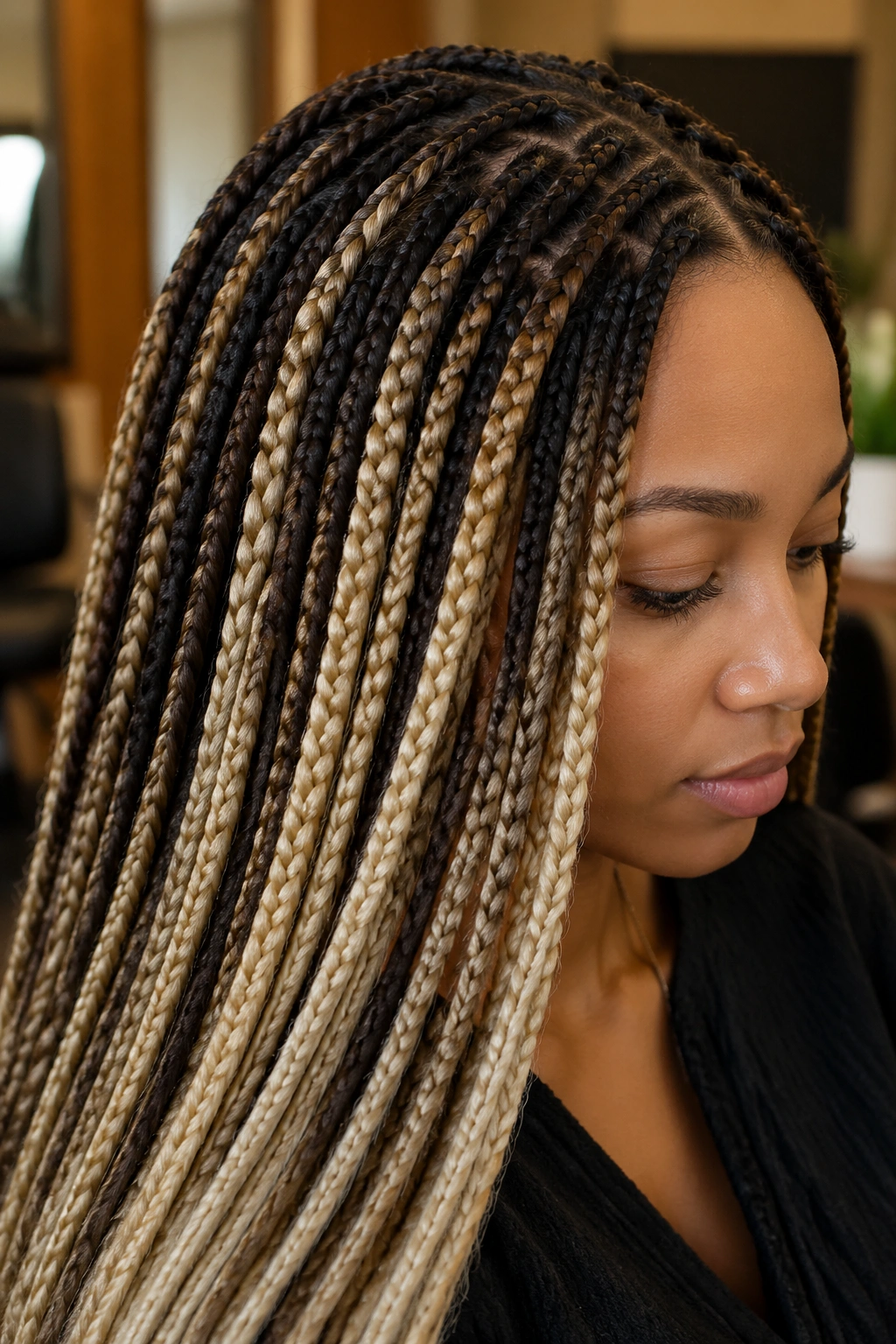
Blonde is not one color. That sounds obvious, but hair appointments are full of people discovering it the hard way. Honey blonde, champagne blonde, platinum, beige blonde, caramel blonde, and golden blonde all read differently once braided into dark hair.
The best shade depends on your base color, your skin tone, and how much contrast you want. A warm honey blonde against deep brown hair feels softer and more blended. A bright platinum or icy blonde gives more snap, more contrast, more edge. Neither is “better.” They do different jobs.
Warm, Cool, or Neutral Blonde?
Warm blondes carry yellow, gold, or honey tones. They tend to pair well with warm undertones and with darker braiding hair because they keep the style rich instead of brassy.
Cool blondes lean beige, ash, or icy. They can look sharp and modern, but they also show dirt, product buildup, and fading a little faster. If you like a crisp contrast, cool blonde is the louder choice. If you want something easier to live with, warm blonde usually wins.
Neutral blondes sit in the middle. Those are the shades that can work on more people without fighting the base color. They are the quiet workhorses of blonde peekaboo knotless box braids.
Matching the Blonde to the Peekaboo Placement
Placement changes shade choice. A blonde hidden under dark braids can go brighter than a blonde worn all over because only small sections are visible at once. That means you can sometimes get away with a lighter blonde than you would choose for a full-head style.
Still, the contrast needs to make sense. If your base hair is almost black and the blonde is very pale, the peekaboo effect becomes dramatic fast. If the goal is subtle movement, a honey or caramel blonde underlayer often looks more polished in daily wear.
A useful trick: hold the braid hair next to your natural hair in daylight, not under bathroom lighting. Bathroom bulbs lie. Sunlight tells the truth.
Choosing Braid Size, Length, and Parting
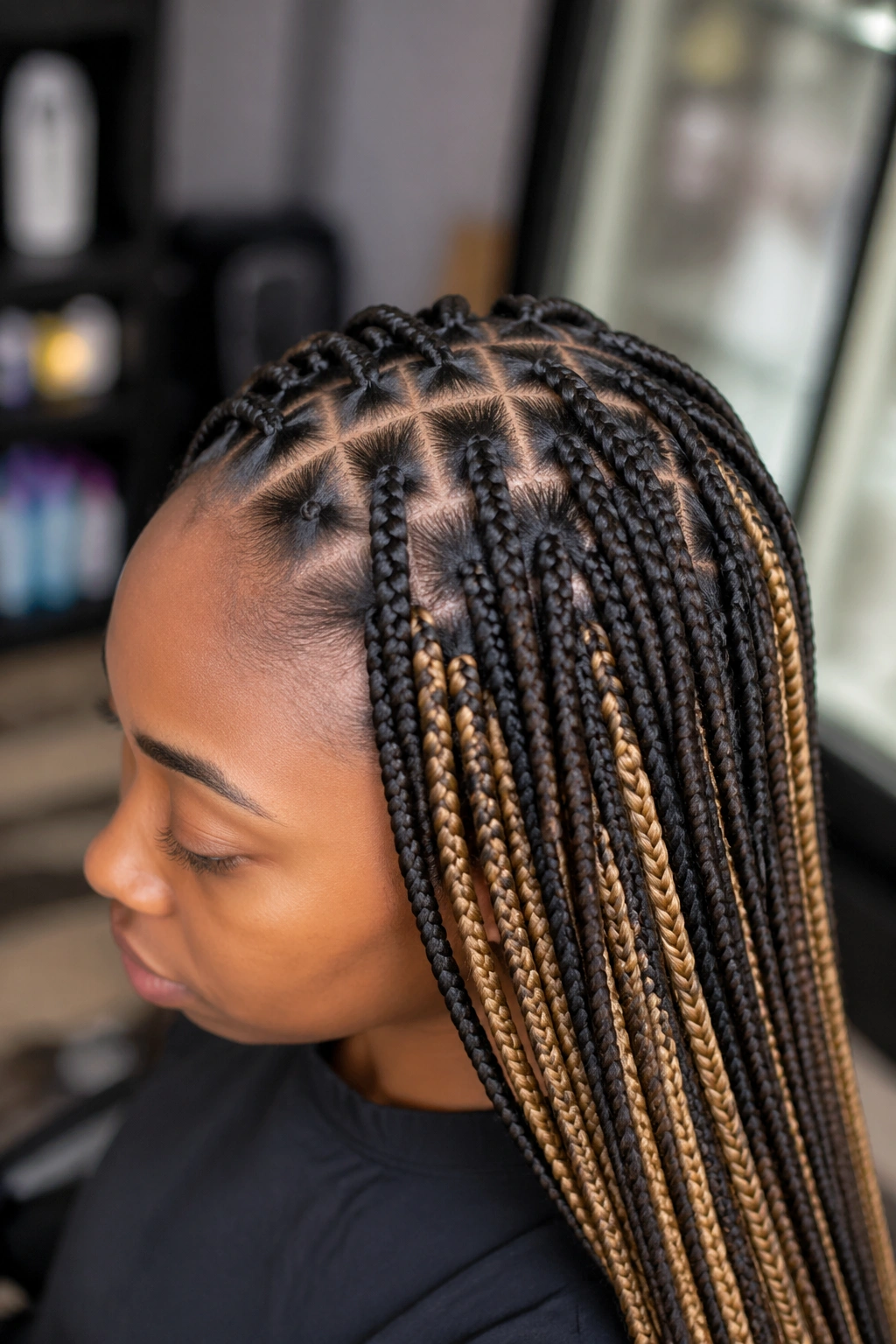
The shape of the braid matters as much as the color. Tiny braids give more swing and more styling flexibility, while medium braids strike a balance between speed, fullness, and weight. Jumbo braids make a statement, but they can tip the scale toward heaviness if the install goes long.
Part size changes the mood too. Clean, square sections create a classic box braid look. Slightly larger parts feel softer and faster to install. The wrong part size can throw off the whole style, even when the color is perfect.
Small, Medium, or Large Braids
Small knotless braids tend to move the easiest. They spread weight out across the head, which can help if you’re aiming for a longer wear period. They also show off the peekaboo color in a more scattered, textured way.
Medium braids are probably the most forgiving choice for most people. They are quick enough to install without dragging on forever, but they still look full and polished. They also hold buns, half-up styles, and side parts well.
Large braids give the strongest visual punch. They are bold, and they can look fantastic on the right head shape, but they demand more care with weight. Too much extension hair on a large braid can pull hard, and that is where the “protective style” idea starts to fail.
How Length Changes the Look
Long braids show off the blonde peekaboo effect in motion. The lower the blonde sits in the braid, the more it flashes when the hair swings. Waist-length installs can look dramatic and polished, though they take more care at night and more patience in the shower.
Shoulder-length or collarbone-length versions feel lighter and easier to manage. They also let the blonde underneath show up in tighter spaces, which can be nice if you want movement without the bulk of long hanging braids.
One-inch choices matter here too. A braid that ends around the ribcage wears differently from one that stops at the mid-back, and the weight difference is not small once all the strands are installed.
What to Ask For at the Braiding Chair
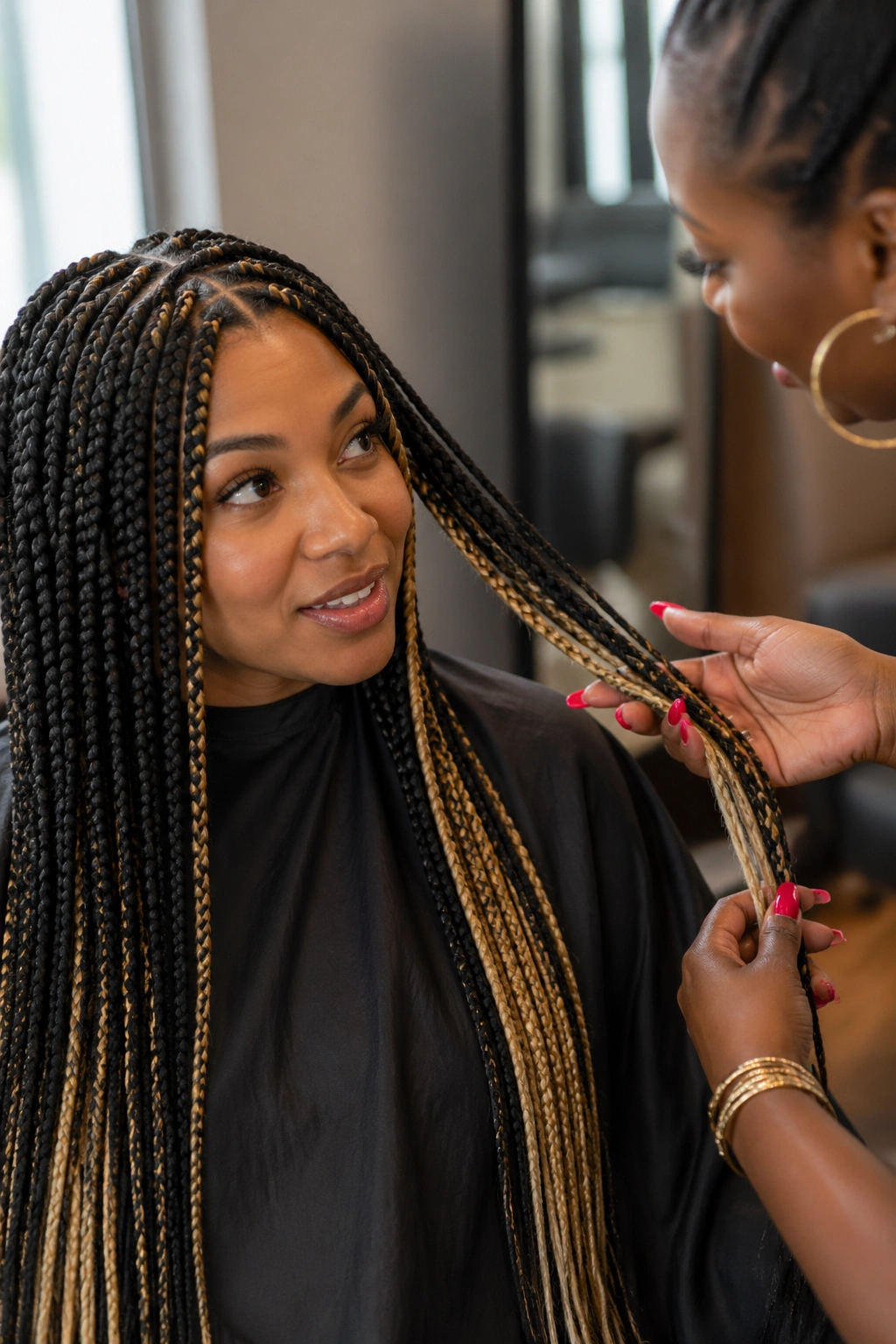
A good style starts long before the first braid is finished. If you sit down and say “blonde peekaboo braids,” you may still leave with something that does not match the picture in your head. The phrase needs backup.
Bring a reference photo, even if you think you can explain it. Then say where you want the blonde to appear, how much contrast you want, and whether you want the blonde visible from the front or mostly from movement. Those details matter.
Be Specific About Placement
Tell the braider whether you want:
- A hidden blonde underlayer that shows mainly when hair moves.
- Blonde at the back and sides for a stronger peekaboo effect.
- Blonde concentrated near the ends for a softer reveal.
- Blonde mixed through a few face-framing pieces if you want more drama.
The more specific you are, the fewer surprises you get. “Peekaboo” means different things to different stylists, and one person’s subtle placement can be another person’s very visible contrast.
Ask About Parting, Feed-In Size, and Finish
Do not skip the practical stuff. Ask how large the parts will be, whether the braid will be knotless from the start or only partially feed-in, and what kind of sealing method will be used on the ends. If you want a clean finish, say so. If you prefer a softer, slightly fuller look, say that too.
You should also ask how the blonde hair will be blended with your natural hair or braiding hair. Some installs use the blonde only in the lower layer. Others weave it through selected sections. Those are not the same style, and they do not wear the same way.
The Installation Process and What It Actually Feels Like
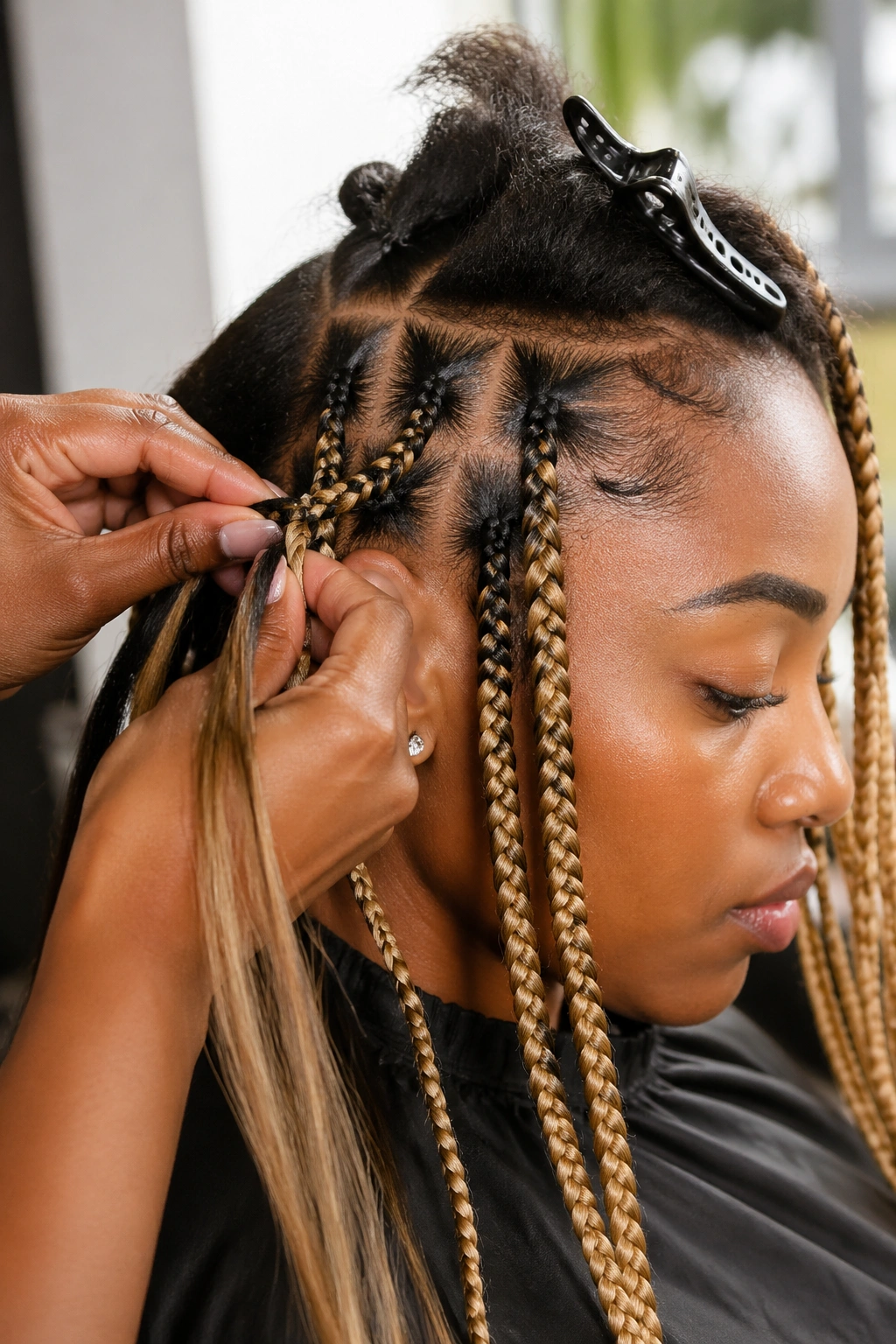
The first hour of braiding feels almost calm. Then your scalp starts to understand what is happening. That is normal, though it should never cross into sharp pain. Knotless box braids should feel snug, not brutal.
A clean install begins with parted sections and a clear plan for where the blonde pieces will live. The braider usually works row by row, adding extension hair gradually and keeping the root flat. When the blonde is hidden under the darker top layer, the visual payoff starts to show only as the head fills in.
The Early Stage: Parts and Root Direction
The parts set the whole style. If the sections are crooked, the braids will show it all the way down the length. If the parts are neat, the finish will look intentional even before the last braid is done.
At the root, the braid should sit close to the scalp without feeling pinched. A little tension is normal because braids need grip. A hot, stabbing pull is not. If your eyes water from the tension, speak up. Do not try to power through that. That kind of tightness tends to make the style less wearable, not more secure.
The Feed-In Stage: Where the Shape Gets Built
The extension hair gets added in stages. That gradual buildup is the whole knotless idea, and it is what gives the braid its soft root line. A good braider keeps the strands even so the braid does not bulge in one place and go skinny in another.
Blonde sections need extra care here. If the color is being hidden under darker braids, the layering has to be clean enough that the peekaboo effect looks deliberate instead of accidental. You want contrast, not clutter.
The Finish: Ends, Hot Water, and Clean Lines
Most braids are sealed at the ends, often with hot water or another finishing method depending on hair type and stylist preference. The ends should look tidy and hold together without fraying.
A finished knotless braid should swing, not stick. It should lay flat at the root and feel balanced from left to right. If one side feels much heavier, or if the braids at the nape tug hard when you turn your head, the install may need a small adjustment before you leave the chair.
How to Wear the Style Without Fighting It
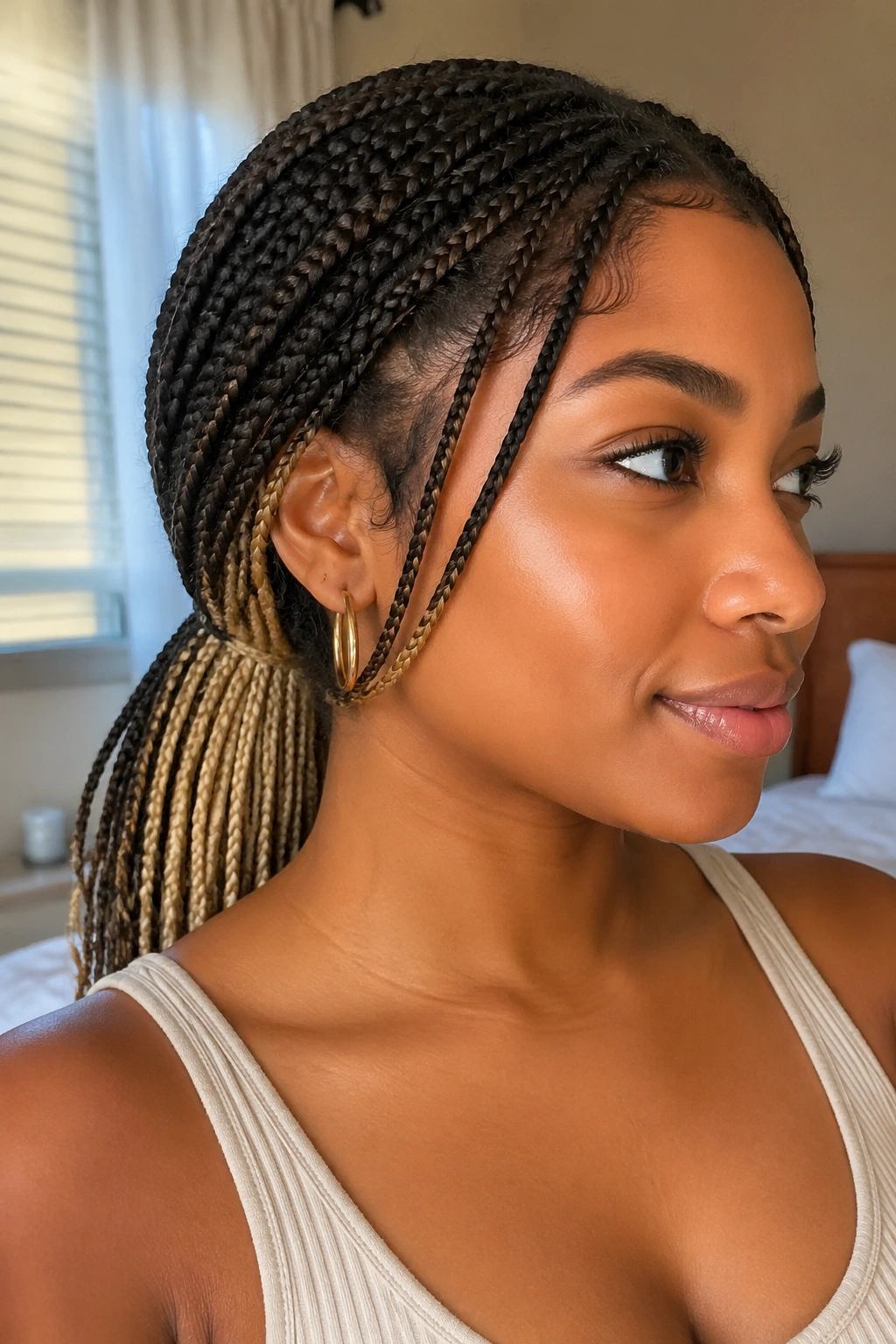
There’s a temptation to treat braids like a set-it-and-forget-it style. Bad idea. Even a good install needs smart daily handling if you want the shape to last and the scalp to stay comfortable.
Peekaboo blonde braids look best when the movement is part of the style. Low ponytails, half-up looks, side sweeps, and loose buns all show the hidden color in different ways. That range is one reason people keep coming back to this look.
Easy Everyday Styling Options
A low ponytail gives the blonde a nice reveal at the nape. A half-up top knot puts the hidden color on display when the lower braids fall away. Side-swept braids can show the blonde near the temple and ear, which is one of the prettiest places for the contrast to appear.
If you want something cleaner, wrap a few braids around the base of a bun instead of pulling everything straight back. That keeps the shape soft and helps the blonde peek through from underneath.
A few practical ideas:
- Low bun with two loose face-framing braids
- Half-up half-down with the blonde hidden in the lower section
- High ponytail for a sharper, more graphic look
- Side part with the blonde exposed on one side only
Night Care Matters More Than People Like to Admit
Sleep can wreck a good braid pattern faster than styling ever will. A satin or silk bonnet helps reduce friction, and a satin pillowcase gives backup when the bonnet slides off. If your braids are long, gather them loosely before bed so they do not twist around your neck.
Do not sleep with wet braids. They stay damp longer than most people expect, and damp roots are a bad place to be if you care about scalp comfort and clean-smelling hair.
Scalp Care, Washing, and Keeping the Roots Calm
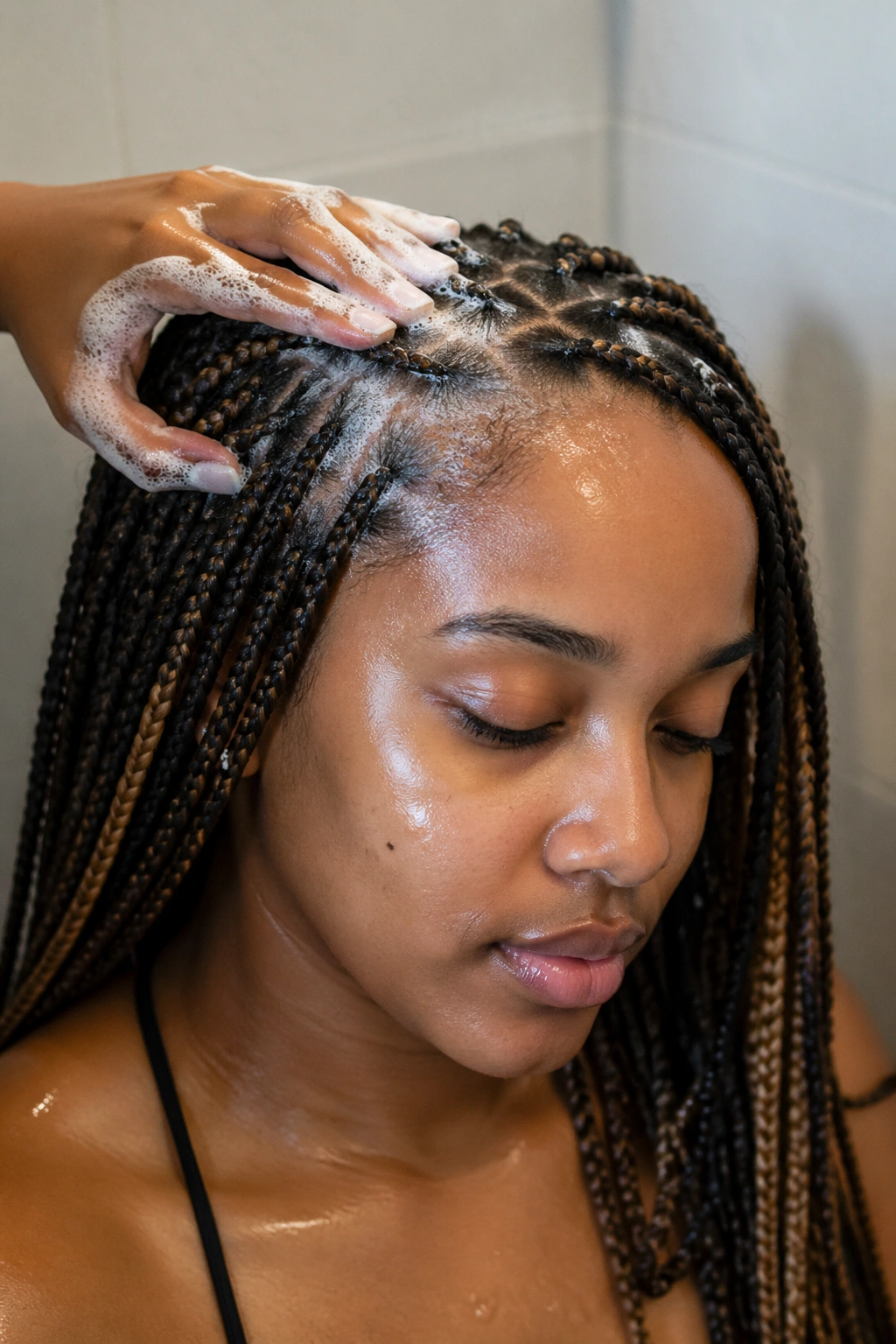
A clean scalp and a pretty braid style are not enemies. They can live together. The trick is to wash in a way that clears buildup without causing frizz or soaking the install for hours.
Use a diluted shampoo mix or a cleansing applicator bottle so the product gets to the scalp instead of sitting on top of the braids. Focus on the roots, not the lengths. The braid hair itself does not need a full scrub every wash.
How to Clean Between the Braids
Part the hair in a few sections and apply shampoo directly along the scalp lines. Massage gently with the pads of your fingers, not your nails. Rinse with low water pressure so the braids stay neat and do not unravel at the ends.
A lightweight scalp spray can help between washes if your scalp feels tight or itchy. Skip heavy oils that leave a greasy film. That film tends to collect dust and make the blonde sections look dull faster.
Signs the Style Is Too Tight
Pain is the first warning. Red bumps around the hairline are another. If the braids feel like they are pulling your eyes upward, the tension is too much.
A good braided style should settle in after the first day or two. It should not get more painful. If the tension is still rising after a day or two, the style needs attention.
Keeping Blonde From Looking Dull or Brassy
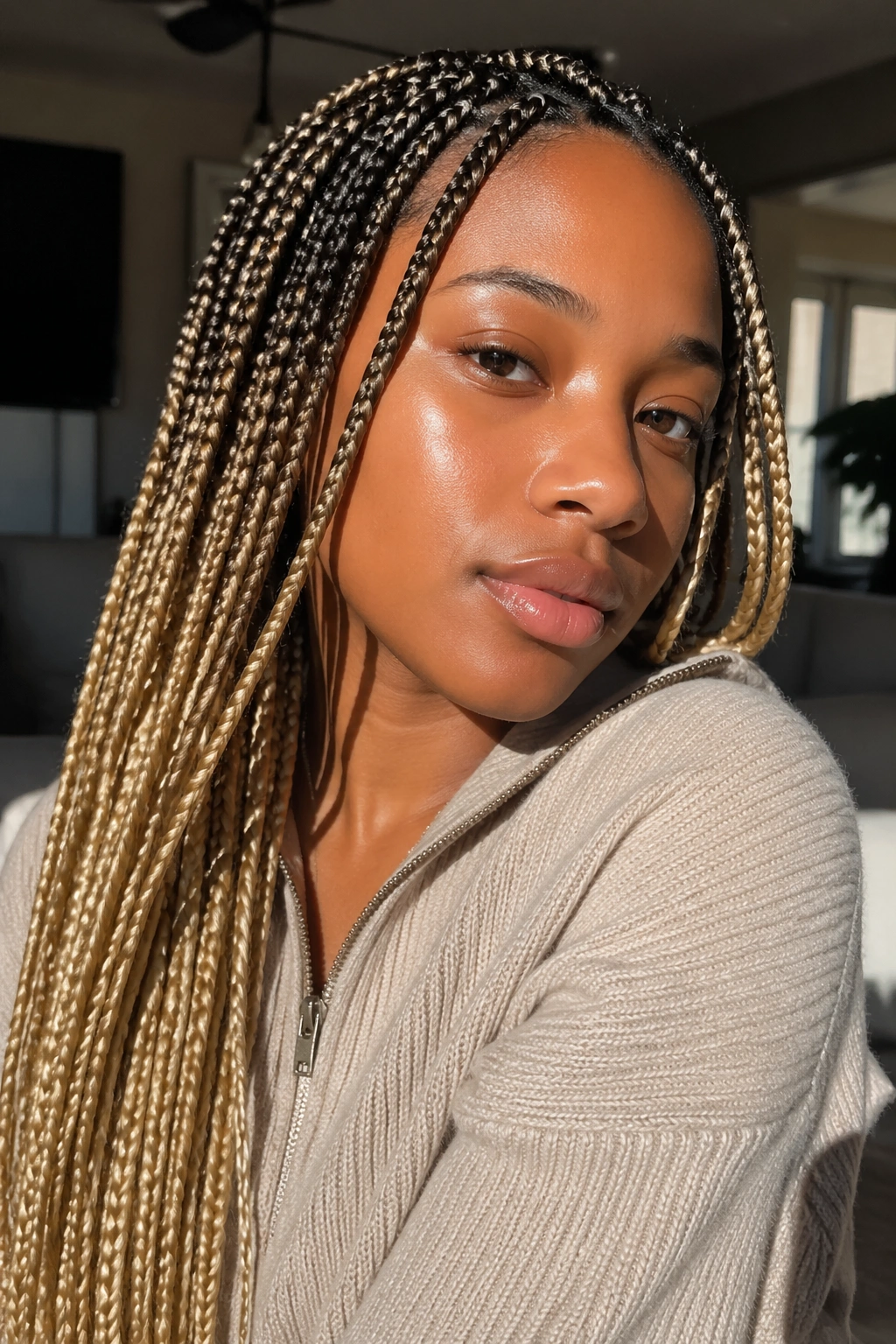
Blonde braiding hair has a short fuse if you are rough with it. Product buildup, hard water, smoke, heavy edge control, and too much rubbing can all take the shine out of it. The blonde still sits there, of course, but it stops looking bright and starts looking tired.
That is where care becomes visual. A little effort keeps the contrast crisp. Neglect makes the blonde blur into the rest of the style.
What Works Best for Brightness
Use a light mist, not a greasy layer, on the blonde sections. A few sprays of braid sheen can help, but too much turns the strands limp and dusty-looking. If your water runs hard, a gentle rinse with filtered water for the scalp can keep mineral buildup down near the roots.
If the blonde starts to look off-tone, a purple-toned cleanser may help on some hair types, but use it carefully. Overdoing purple products can leave the blonde looking flat or ashy in a way that does not match the rest of the install.
What to Avoid
Avoid heavy pomades near the blonde pieces. They cling to synthetic hair in a way that is hard to undo. Avoid sleeping on the braids without a wrap. Avoid lots of touching, especially with lotion-heavy hands.
One small habit helps more than people expect: wipe your hands before fixing the front of your hair. Finger oils dull bright blonde faster than you’d think.
Common Mistakes That Age the Style Fast
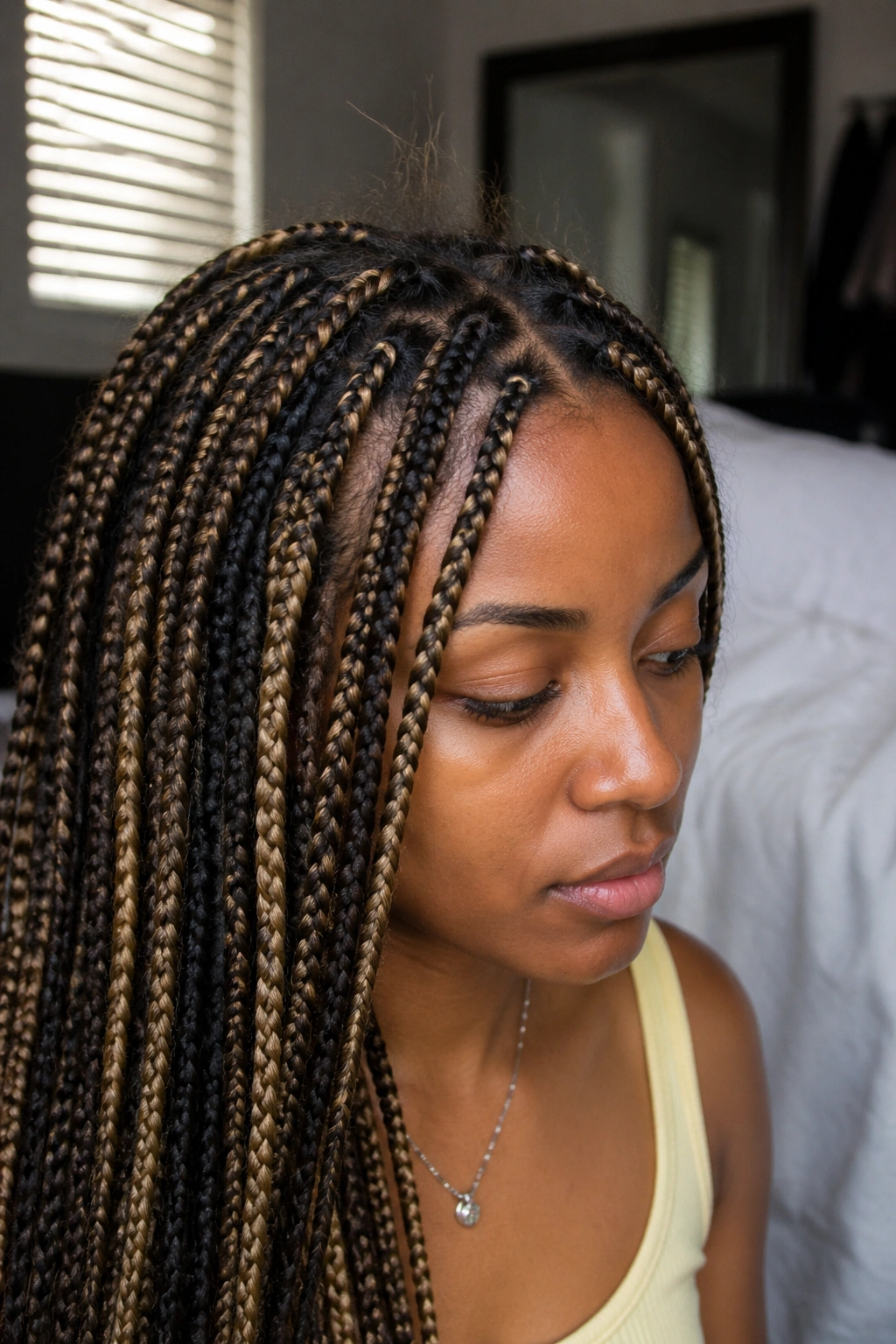
A hairstyle can be technically neat and still age badly. Blonde peekaboo knotless box braids are especially sensitive to a few avoidable mistakes, and most of them are about weight, placement, or care.
Overloading the braid with too much hair is a common one. The braid looks full on day one and starts feeling like a chore by day four. Another problem is mixing a blonde shade that fights the base color so hard that the peekaboo effect turns muddy instead of clean.
The Biggest Problems I See
The usual suspects:
- Braids that are too heavy for the part size
- Blonde sections placed where they never get seen
- Loose roots that frizz within the first few days
- Too much product at the scalp
- Ends that unravel because they were not sealed cleanly
None of these are dramatic on their own. Together, they shorten the life of the style fast.
Why “More Hair” Is Not Always Better
It is easy to think a fuller braid will look richer. Sometimes it does. Sometimes it just looks bulky. Once braids get too thick for the head shape and parting pattern, the style stops moving naturally.
That is especially true with knotless installs. The whole point of the style is softness at the root and a smooth drop through the length. If the braid is overloaded, that softness disappears.
Who This Style Flatters Best
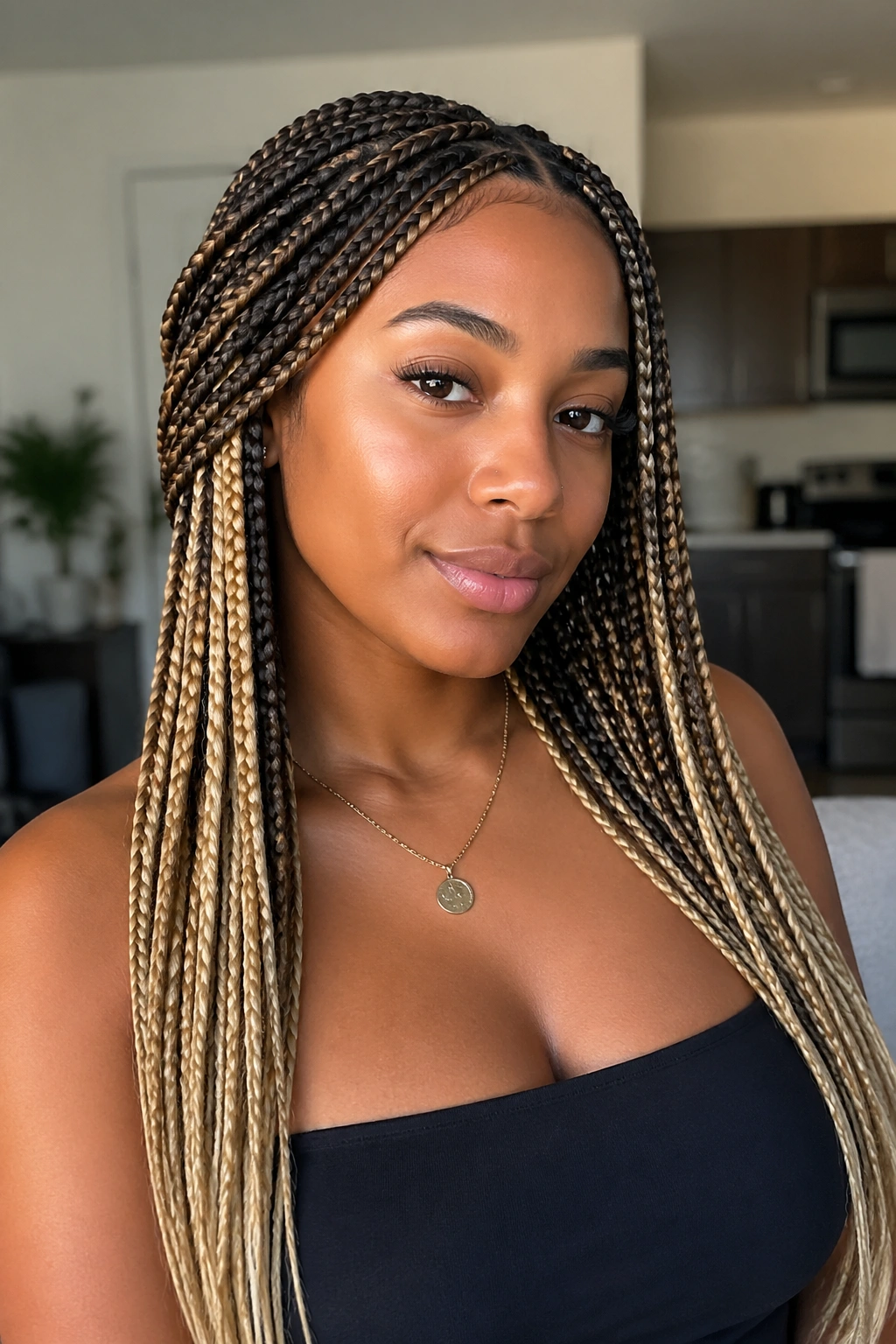
Some braids are universal. Others need a little thought. Blonde peekaboo knotless box braids lean bold, but they still work across a wide range of face shapes and hair textures because the blonde is controlled through placement.
The style tends to flatter people who like movement and contrast. If you wear a lot of neutral clothing, the blonde gives the look a pulse. If you already like stronger makeup or sharper accessories, the braids can carry that energy without competing with it.
Face Shape, Features, and Style Mood
A center part with peekaboo blonde can lengthen the face, while a side part softens sharper angles. Face-framing braids with blonde underneath can bring light near the cheeks and jawline.
People who want a softer, less “done” braid look often like knotless box braids because the root stays flatter. The blonde adds personality, but the knotless base keeps it from looking stiff or heavy. That balance is the sweet spot.
Who Might Want a Different Version
If you want a low-maintenance style with almost no visual upkeep, very bright blonde may be a little demanding. If your scalp is already sensitive, jumbo braid weight can be annoying no matter how pretty the color is.
In those cases, a softer honey blonde hidden mostly at the ends may be a smarter pick. Same concept. Less noise.
Removal and What Your Hair Needs Afterward
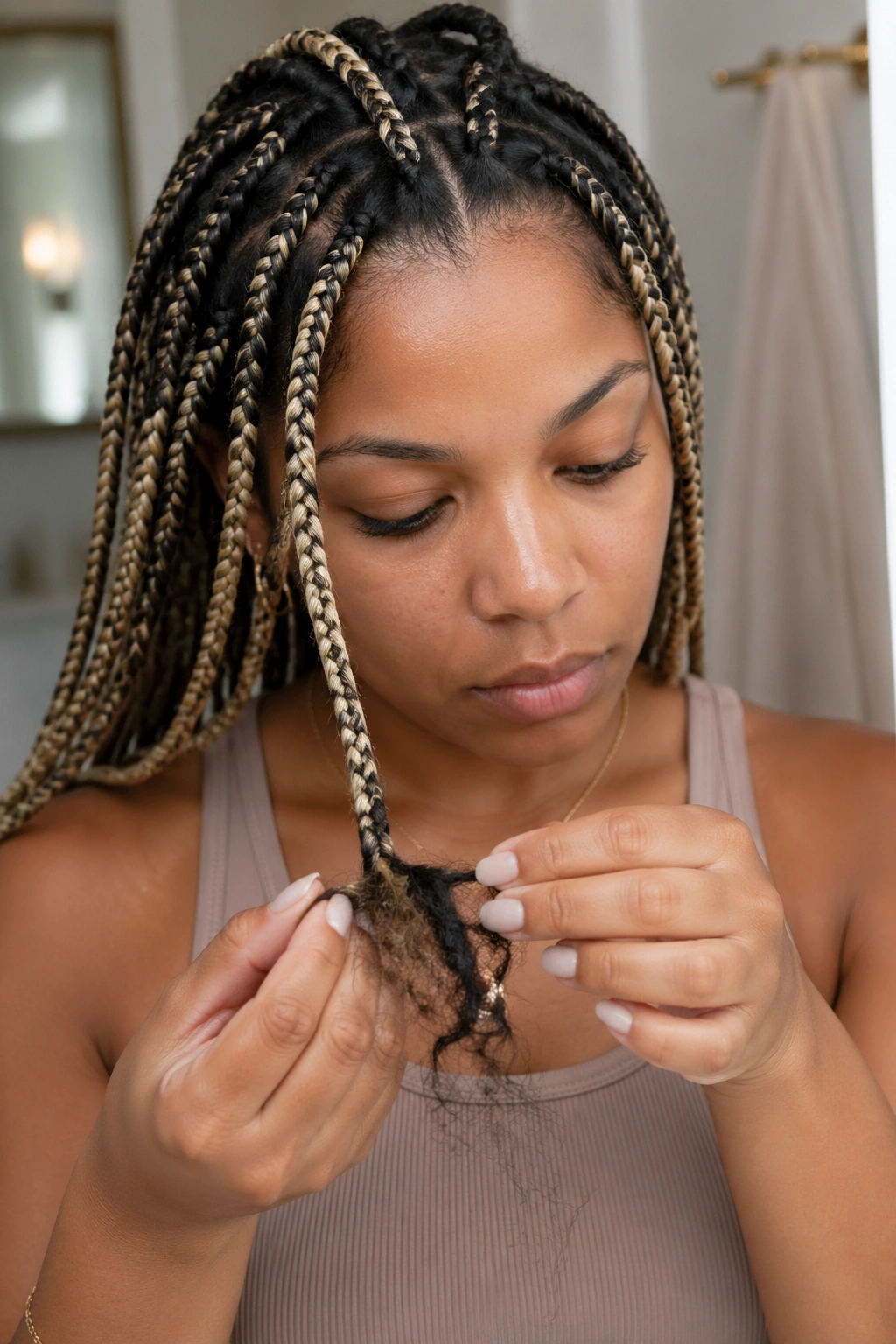
Taking braids down matters as much as putting them in. Rushing removal pulls at the hair and leaves you with tangles that take twice as long to sort out later. Slow is better here. Not glamorous. Better.
Start at the ends and work upward carefully, trimming only the sealed portion if needed. Then separate the braid hair from your natural hair with your fingers before you comb. A wide-tooth comb or detangling brush can help once the sections are loose, but the fingers do the first, most important part of the work.
Aftercare Right After Removal
Your scalp may feel tender, and your hair may feel puffier than usual. That is normal. Give it a gentle cleanse, a moisturizing conditioner, and a break from tight styles for a few days.
A light protein treatment can help if your hair feels stretched or soft after long wear, but do not overdo it. Braided styles already put the hair through a lot. The goal is recovery, not punishment.
What to Do Before the Next Install
Trim ends if they are fraying. Deep condition if the hair feels dry. Check whether you actually liked the size and length you chose, because that matters next time more than almost anything else.
And if you lost track of what made the style work, look back at the details: part size, blonde shade, length, and weight. Those four choices decide a lot.
Final Thoughts
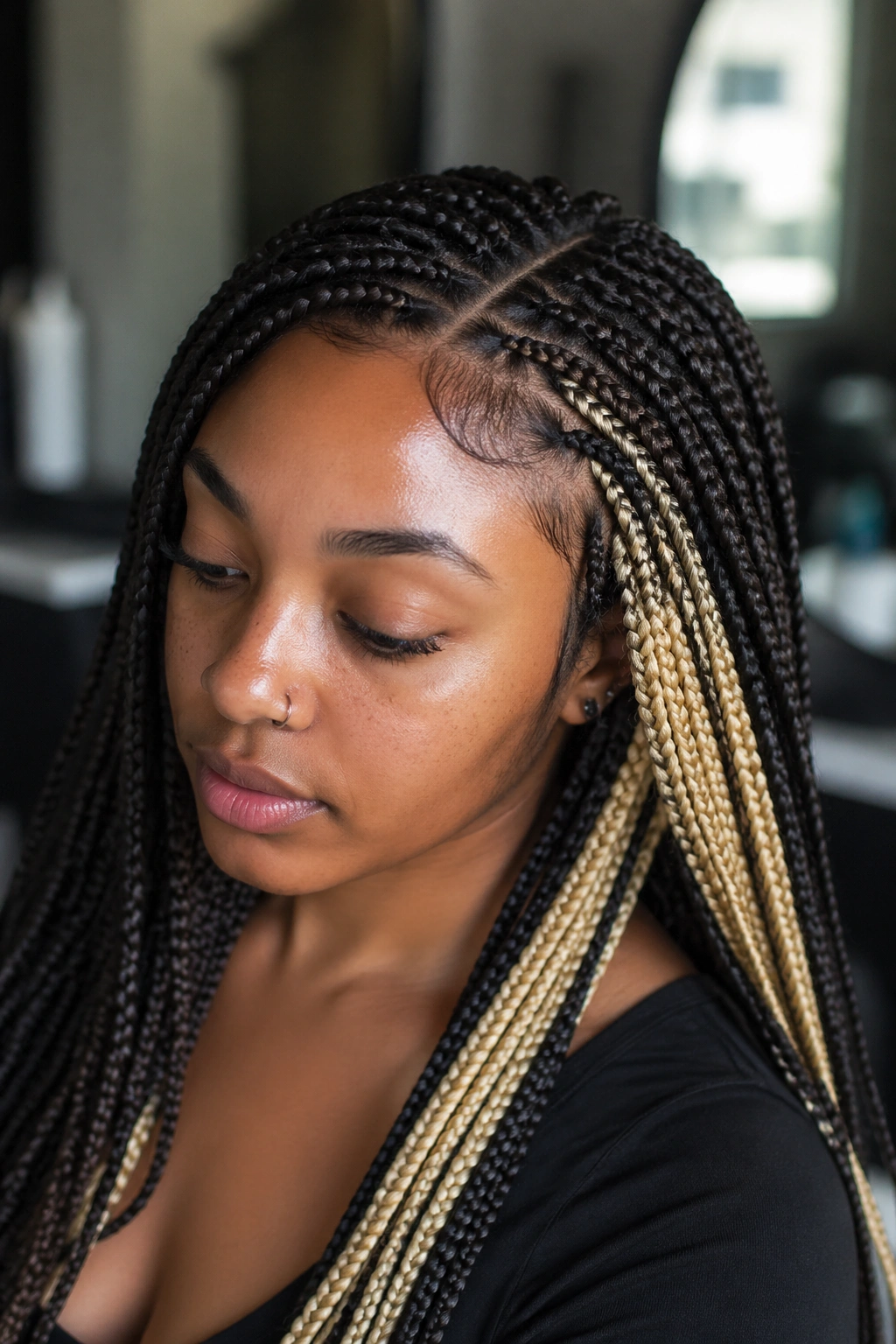
Blonde peekaboo knotless box braids work because they give you contrast with restraint. That hidden flash of blonde feels more interesting than an all-over bright style, and the knotless base keeps the roots softer and easier to live with.
The style rewards careful choices. A good blonde shade, a sensible braid size, and a clean install matter more than extra decoration ever will. That is the part people sometimes miss. The drama comes from restraint.
If you want braids that move well, show color in the right places, and still feel wearable after the first few days, this is one of the strongest ways to do it. Keep the tension sane, keep the parts neat, and let the blonde reveal itself when the hair moves. That’s where the style has its best moment.
