



Small blonde and brown knotless box braids can go two ways: soft and expensive-looking, or busy in a way that fights with your face. The difference is rarely the braid size alone. It’s the color placement, the parting, and whether the blonde is doing a job or just showing up for attention.
Knotless braids already change the feel of the style. Because the extensions are fed in gradually instead of starting with a tight knot at the root, the braid sits flatter at the scalp and tends to feel lighter. Add small parts, and the whole thing gets neater, more detailed, and easier to style into ponytails, buns, half-ups, and those loose, slightly undone looks people keep saving on their phones.
The blonde-and-brown pairing is where things get interesting. Brown keeps the style grounded. Blonde brings light around the face, along the ends, or in little flashes that move when you turn your head. Too much contrast can look stripy. The right mix looks intentional, and that’s the whole point.
What usually makes these styles work is restraint. A few lighter braids near the front. A honey-to-caramel fade through the ends. A cool beige blonde against deep espresso brown. Or a stricter alternating pattern if you want the braid pattern itself to be part of the look. Once you know where you want the blonde to land, the rest gets much easier.
1. Honey-Blonde Ends on Espresso Roots
Honey-blonde ends on dark espresso roots are the easiest way to make small blonde and brown knotless box braids feel soft instead of loud. The dark root area keeps the style anchored, and the lighter ends catch the eye only after the braid has already done its job.
Why It Works
The contrast lives at the bottom, which means the scalp stays calm visually. You get the lift of blonde without putting it right next to your hairline, where strong color shifts can look harsh. That makes this version especially nice if you want the color to show when the braids move, not scream the second someone looks at you.
- Best when the brown is a true espresso or dark chocolate shade
- Honey blonde works better than a pale, icy blonde here
- Small parts keep the fade from looking chunky
- The ends can be sealed blunt or left slightly tapered for a softer finish
My favorite part: this version looks even better after a few wears, because the ends settle and the color blend feels less stiff.
2. Blonde Money Pieces Around the Face
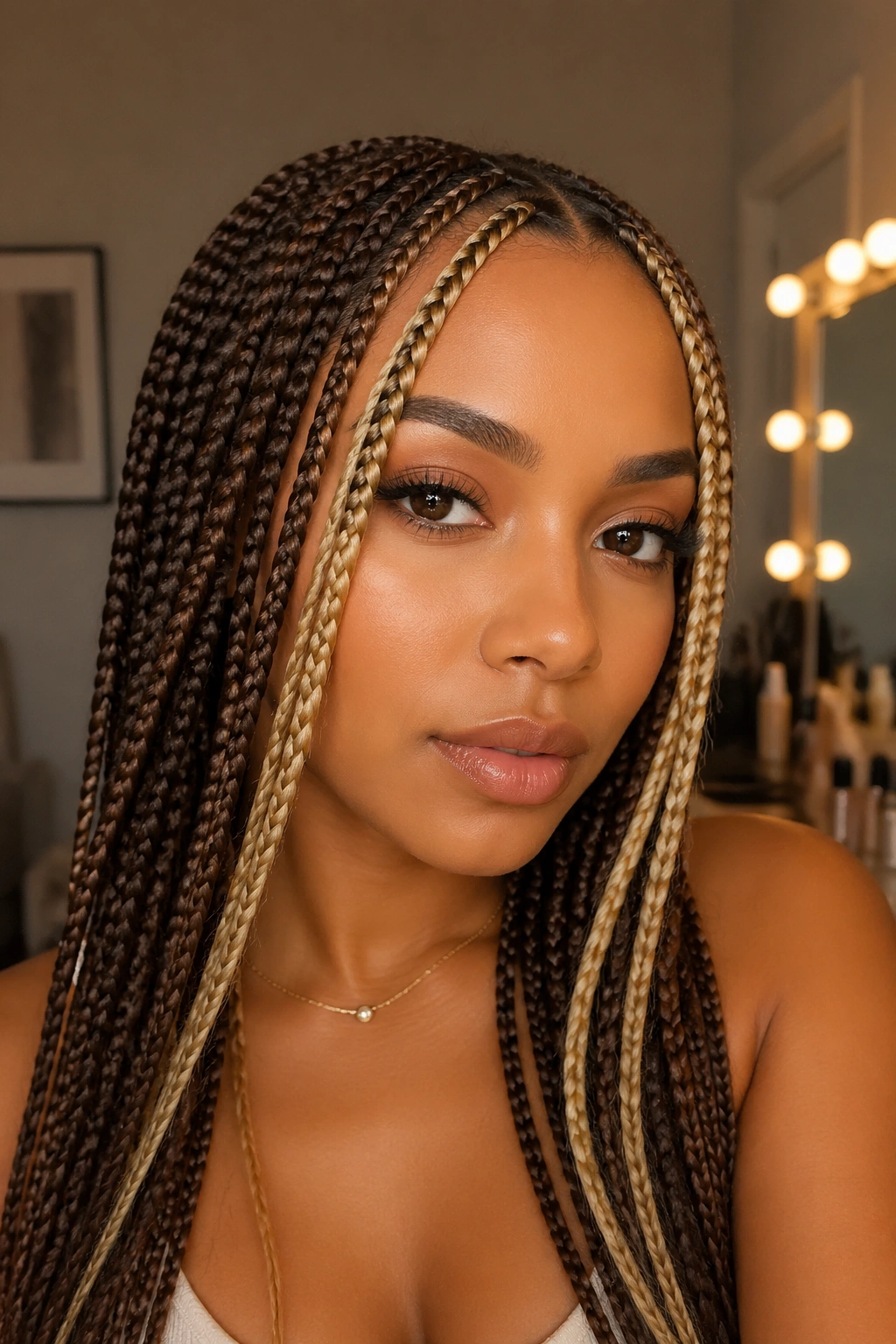
A few blonde braids at the front do more than a whole extra row of color in the back. That’s the part people miss. The face sees the braid first, so those front pieces carry the style.
The smartest version keeps the rest of the head mostly brown, then places two to four lighter braids where they frame the cheekbones and temples. It’s a clean way to brighten the face without turning the whole install into a high-contrast pattern. If your skin tone runs warm, honey or caramel blonde usually reads softer than a pale beige shade.
This style also works when you want your braids to look good tied back. A ponytail, low puff, or half-up style brings the blonde forward and makes the front rows do the talking. I like this version for anyone who wants a little drama but doesn’t want every braid competing for attention. The rest of the head can stay quiet. That’s the charm.
3. Caramel Ombré Small Knotless Box Braids
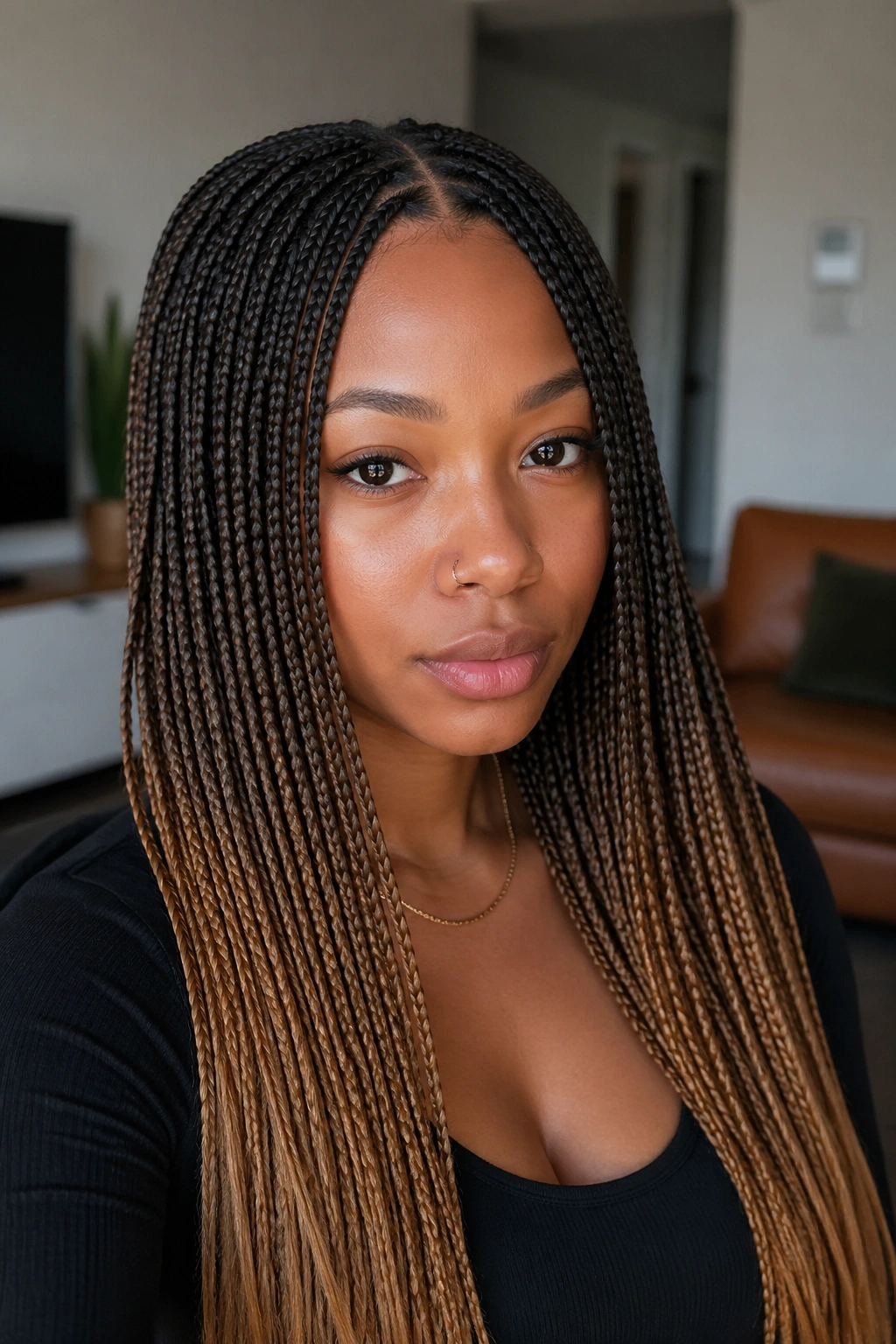
Why does ombré usually look cleaner than a hard color split? Because the eye likes movement more than a sharp stop. Caramel ombré small knotless box braids move from brown at the root into warm caramel or light blonde toward the ends, and that gradual shift is doing a lot of work.
The braid reads as one piece, not two colors fighting inside the same strand. That’s why ombré can look polished even when the braids are tiny. There’s enough detail to keep it interesting, but not so much contrast that the pattern starts to feel busy. If your braider can stagger the color change slightly instead of switching every strand at the same point, the finish looks even smoother.
How to Wear It
This is the version I’d pick for someone who wears braids down most of the time. The color gets a chance to breathe when the ends swing, and the lighter tips make the length look more visible. A middle part gives it a neat line. A soft side part makes the caramel feel warmer. Either way, the transition does the heavy lifting.
4. Alternating Blonde and Brown Knotless Box Braids
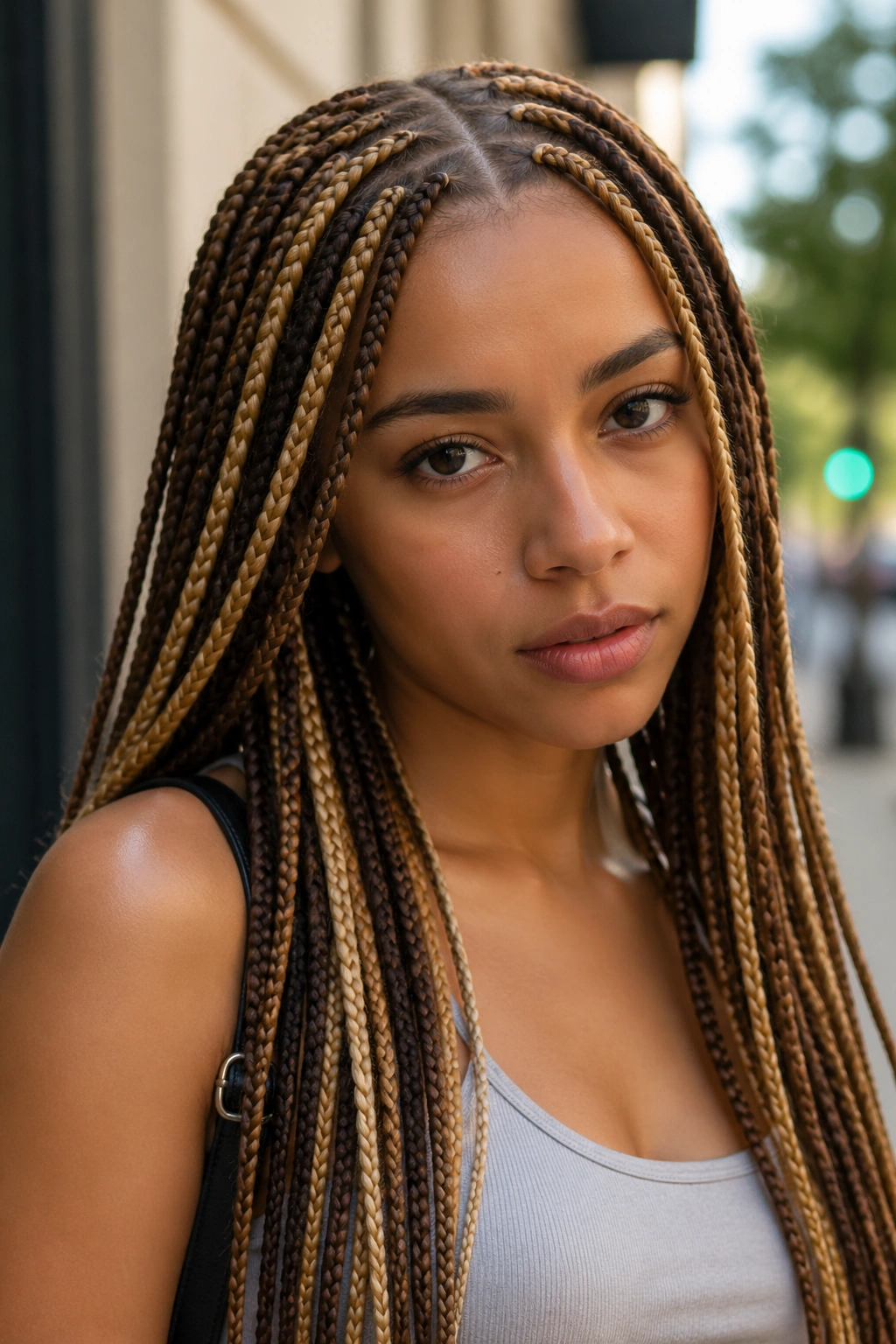
Some people want the color to show from every angle, and this is the one for them. Alternating blonde and brown knotless box braids create a tighter visual rhythm, almost like a woven pattern across the head.
Here’s the thing: alternating shades works best when the parting is very clean. If the sections are sloppy, the color pattern starts looking accidental. But when the rows are neat, the blonde and brown read like a deliberate design choice. I prefer this version when the braids are truly small, because tiny parts keep the contrast from turning chunky.
- A 1:1 ratio feels bold and evenly balanced
- A 2:1 brown-to-blonde ratio feels calmer
- Zigzag parts make the color pattern feel more playful
- Square parts keep the look crisp
If you like braids that look different from the front, the side, and the back, this is the one. It has movement built into it. No accessories needed.
5. Shoulder-Length Small Blonde and Brown Knotless Box Braids
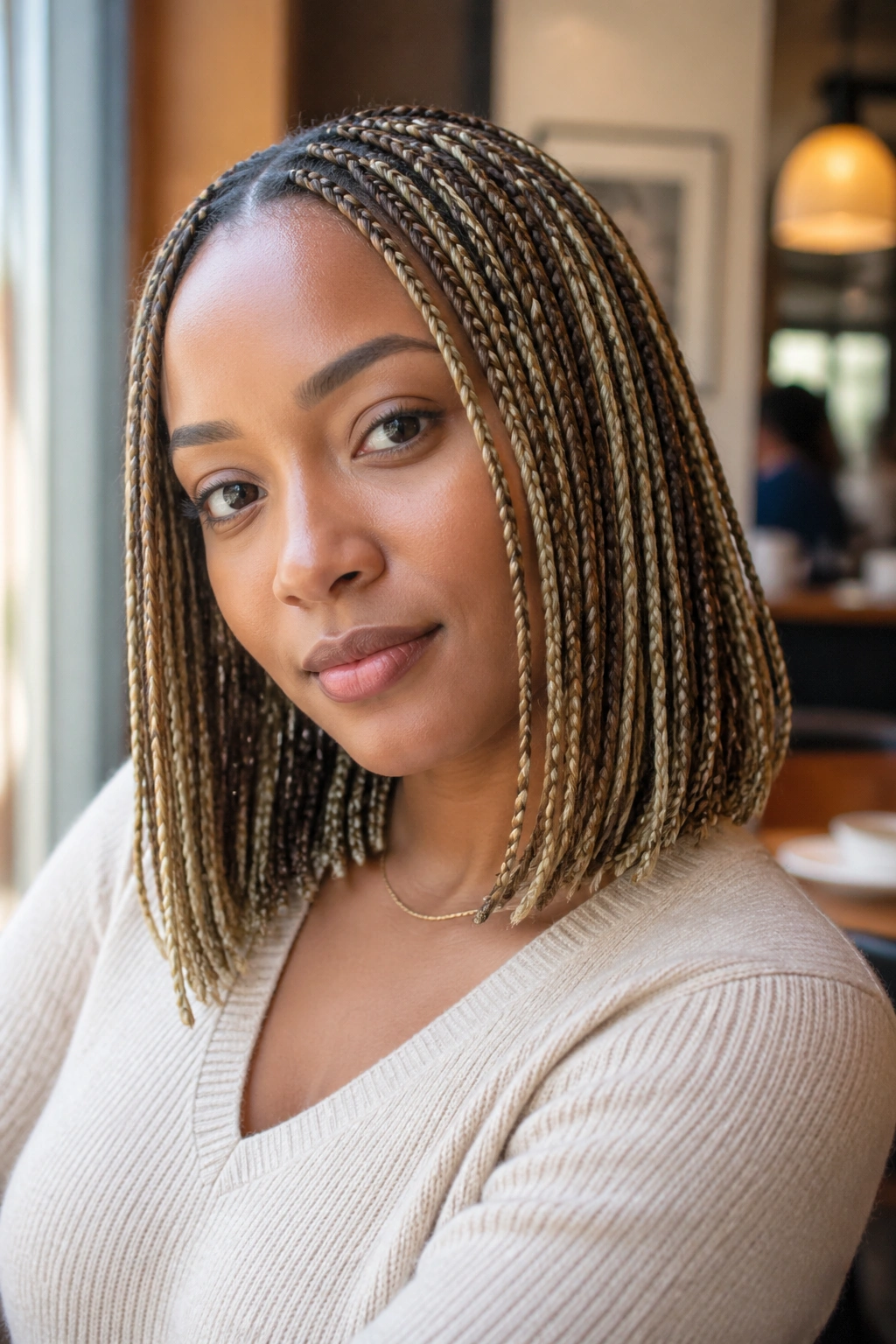
Shoulder-length braids are underrated. People chase waist-length installs because the photos look dramatic, but shoulder-length small blonde and brown knotless box braids are easier to live with and often look sharper in real life.
The shorter length keeps the weight down, which matters when the braids are small and there are a lot of them. Less length also means less tugging at the nape, less snagging on sweaters, and less time spent fighting the ends when you sleep. The color shows up fast, too. You don’t need extra inches for the blonde and brown to read clearly.
I especially like this length when the blonde is placed in a soft ombré or on the outer rows. The haircut-like finish makes the braid pattern feel neat, almost tailored. It’s the kind of length that works with gold hoops, a satin scarf, or a plain white tee. No fuss.
And yes, the style still feels full. Small braids give you enough density that shoulder length does not look thin. It looks deliberate.
6. Triangle-Part Small Blonde and Brown Knotless Box Braids
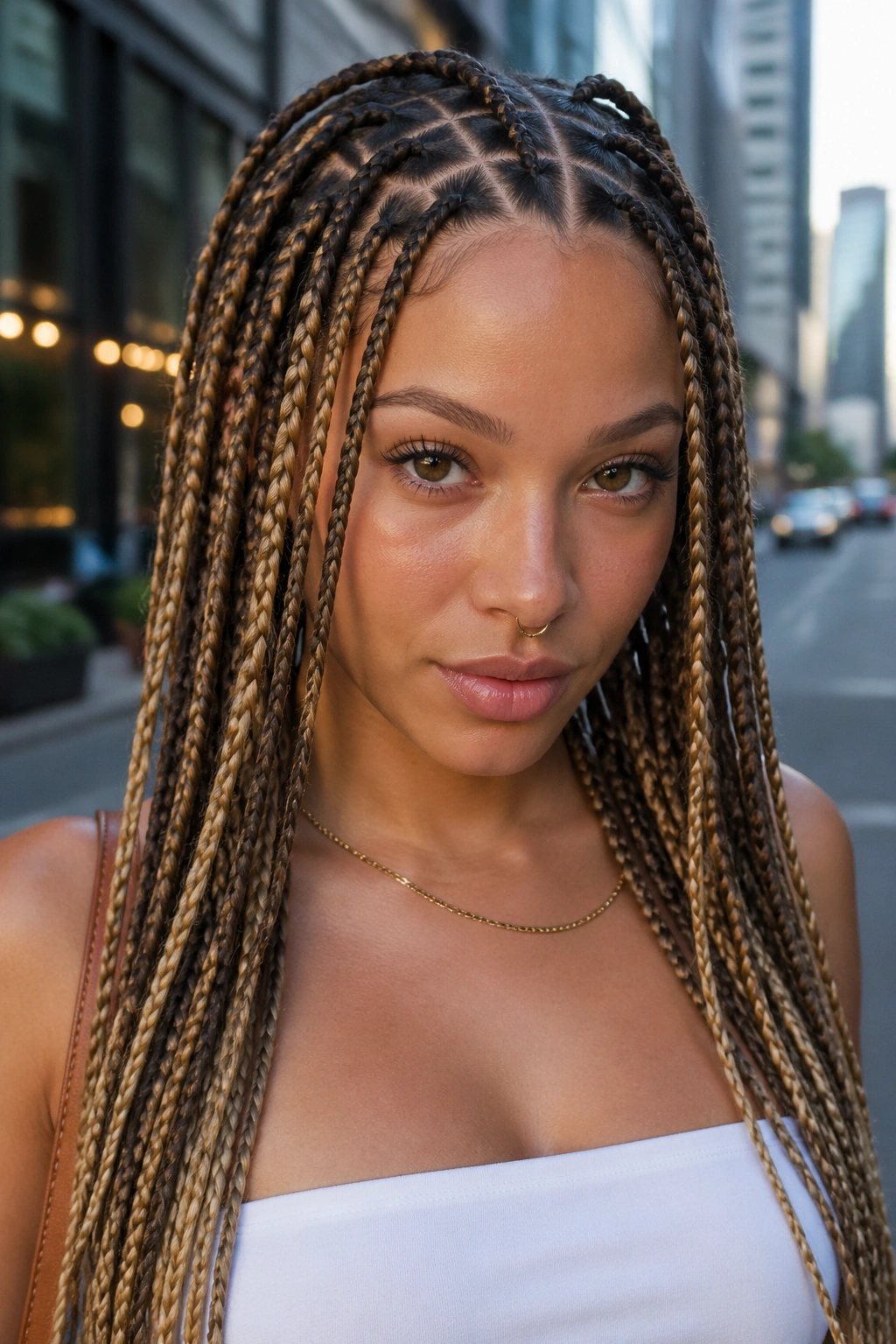
Triangle parts change the whole mood of knotless braids. Unlike square parts, they make the scalp pattern a little more angular, which gives the blonde and brown mix a sharper edge. If square parts feel too expected, triangle parting wakes the style up.
The shape also helps the color show up in a different rhythm. Because the parts aren’t arranged in perfect little boxes, the blonde and brown strands break across the head in a less rigid way. That can be a relief if you want color but do not want the style to feel too neat or too school-uniform.
This version is best for someone who likes the braid work to be visible. Clean parting matters here, and so does consistent braid size. If the sections are uneven, the triangle pattern loses its punch fast. Ask for tidy lines, and keep the color mix balanced so the shape can stay the star.
If you wear a side part or a tucked-behind-the-ear look, triangle parts show beautifully from odd angles. That’s part of the appeal.
7. Center-Part Small Blonde and Brown Knotless Box Braids
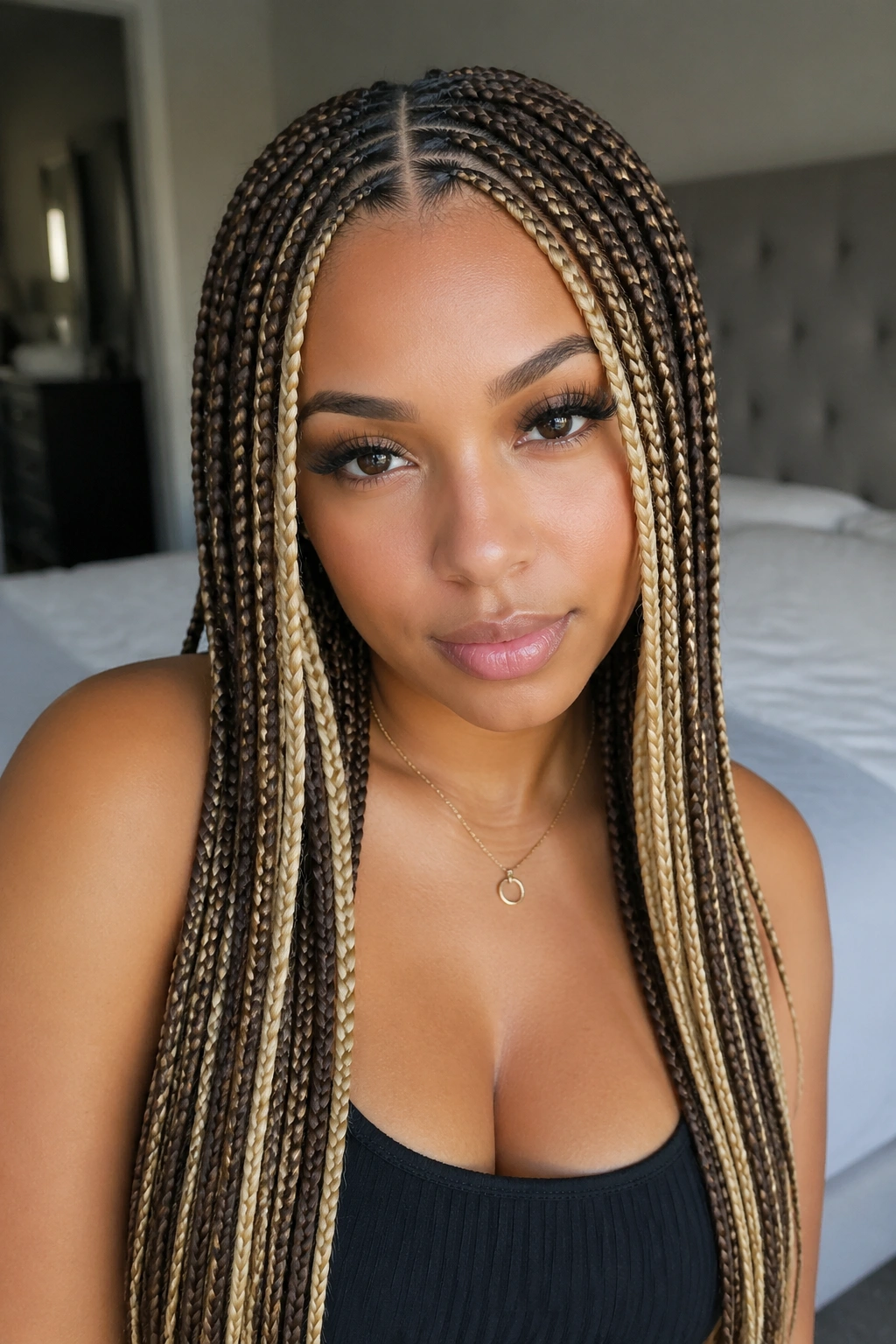
A center part is one of those choices that looks simple until it isn’t. Get it right, and small blonde and brown knotless box braids fall into a straight, calm line that makes the whole install look cleaner.
Why It Works
The center part creates symmetry, which helps when the color is already doing a lot. With a brown base and blonde highlights or face pieces, the middle line gives the eye somewhere to rest. That’s useful. Without that anchor, two-tone braids can start feeling visually busy, especially around the forehead.
- Works well on oval, round, and heart-shaped faces
- Makes blonde money pieces look more obvious
- Keeps updos neat because the front rows already sit evenly
- Pairs well with sleek edges, but doesn’t need them
My tip: ask your braider to line the part up with the middle of your nose bridge, not just your forehead. That tiny adjustment can make the whole style sit more naturally.
This is the version for people who like their braids to look tidy without trying too hard.
8. Side-Swept Small Blonde and Brown Knotless Box Braids
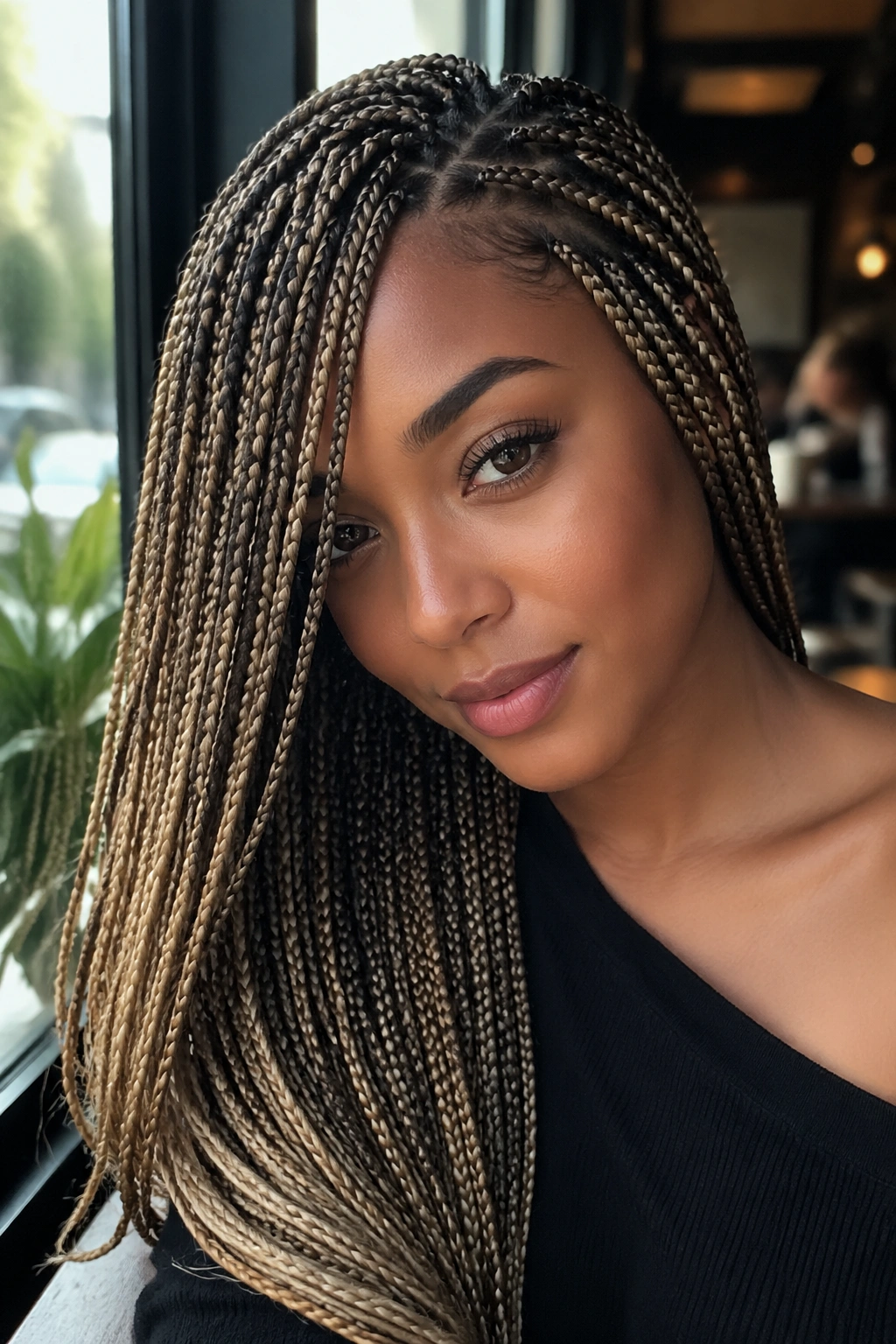
A deep side part can make two-tone braids look richer. That surprises people, because side parts are often treated like a backup option, but with small blonde and brown knotless box braids they can bring the color forward in a much nicer way.
The swept side pushes the lighter braids across the face, which means the blonde catches more light near the eyes and cheekbones. Brown stays visible underneath, so the style still feels grounded. It’s a good move if your forehead feels long to you or if you simply like a braid style that has a little motion in the front.
Wear this one loose and let it fall naturally for a day or two before deciding whether the part needs tightening. Small braids settle. They always do. A fresh side part can look a touch stiff on the first day, then soften once the hair moves and the extensions hang a little more freely.
This version also gives you an easy shortcut for evenings out: tuck one side behind the ear and let the color do the rest.
9. Peekaboo Blonde Layers in Brown Knotless Box Braids
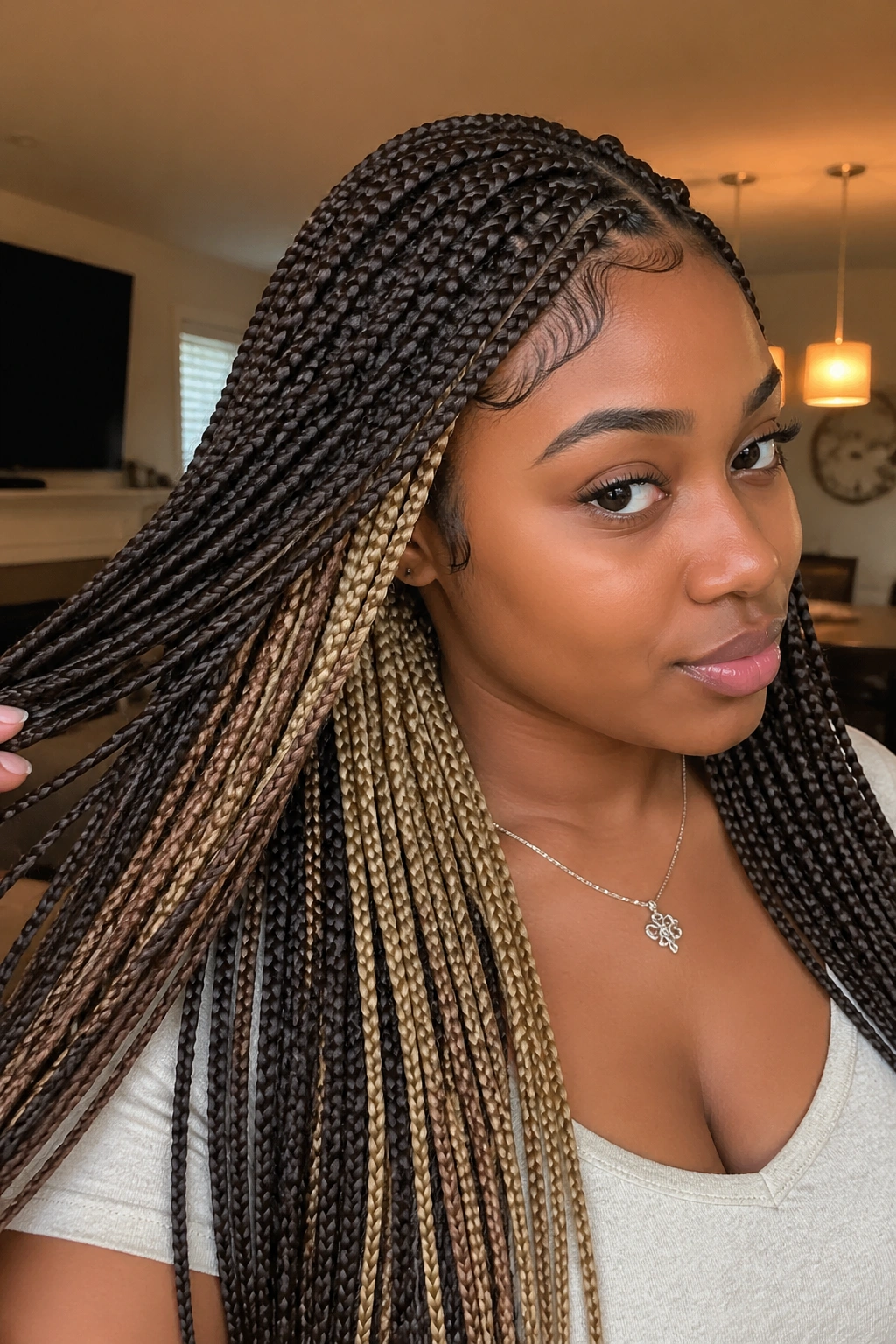
Why hide the brighter color under the top layer? Because the reveal is better that way. Peekaboo blonde layers in brown knotless box braids give you the surprise effect without making the top of the head feel too loud.
The top rows stay mostly brown, which keeps the install grounded and wearable. Underneath, the blonde waits. When you swing the braids, pull them into a half-up style, or twist them into a bun, the lighter pieces show through and change the whole look. That shift is what makes peekaboo color interesting. It changes with movement instead of sitting flat.
How to Style It
A claw clip lets the lighter underlayers show near the crown. A half-up ponytail opens the back. Even a simple tuck behind both ears reveals more blonde than people expect. If you want the style to feel subtle at work and a little more playful later, this is a smart choice. You get two versions of the same head without changing anything.
10. Small Blonde and Brown Knotless Box Braids with Curled Ends
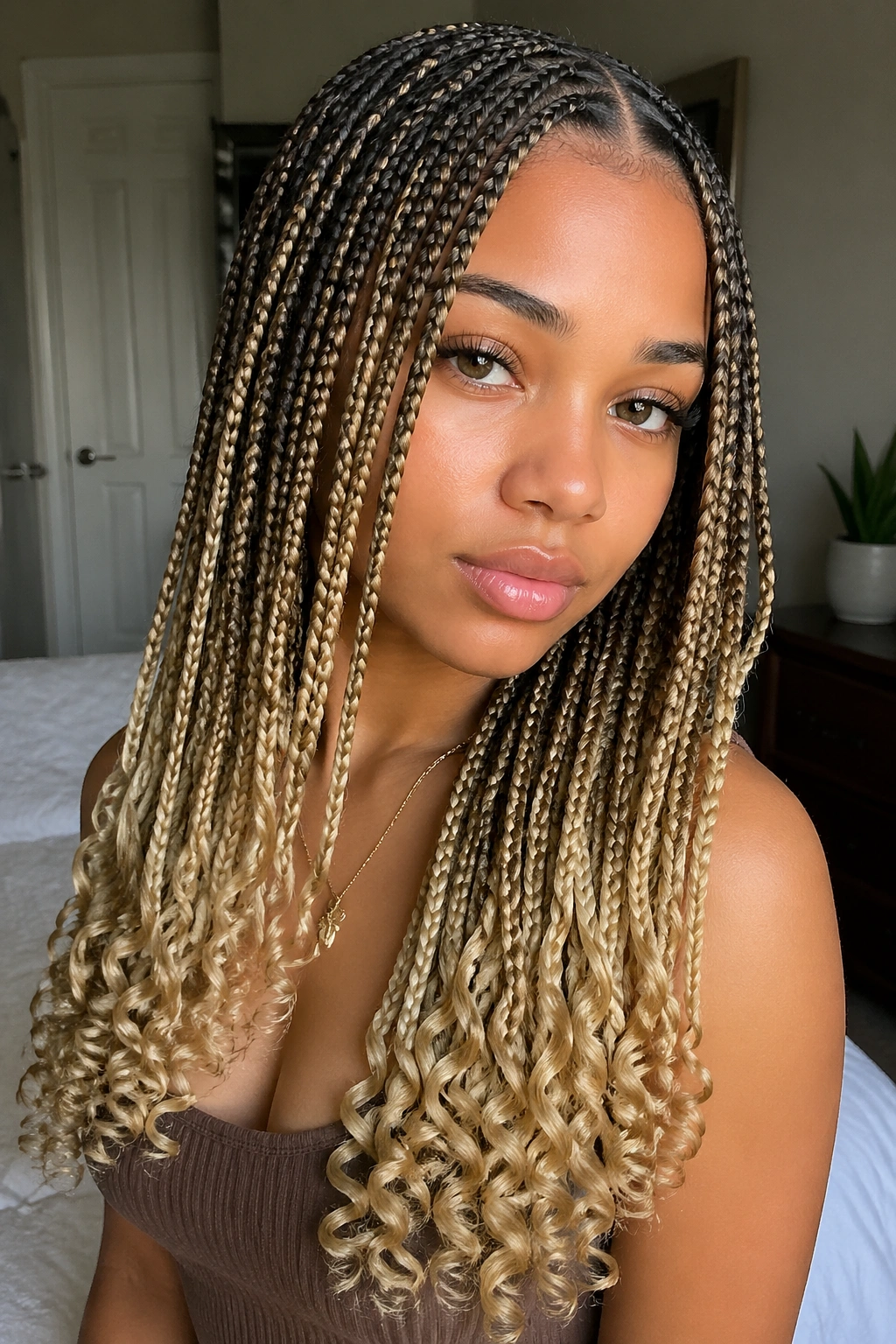
Curled ends soften the line of small braids fast. A straight braid can feel crisp, even severe, if the color contrast is high. Add curls at the bottom and the whole look eases up. The ends stop reading like rope and start reading like hair.
That matters when the blonde is concentrated toward the tips. Straight ends can make blonde look very sharp, almost highlighted with a marker. Curled ends break that up. They also move nicely, which helps if you like wearing your braids down. The shape of the curl catches the eye before the color does, and the style feels less rigid because of it.
- Use flexi rods or perm rods if you want a tighter curl set
- Keep the curl size around 1 inch if you want a soft bend
- Mousse helps the ends hold their shape after setting
- Hot water sealing should be clean and even, or the finish gets messy fast
I like this version on shoulder-length or waist-length braids. The curl gives the length some bounce that the braid alone cannot do.
11. Waist-Length Small Blonde and Brown Knotless Box Braids
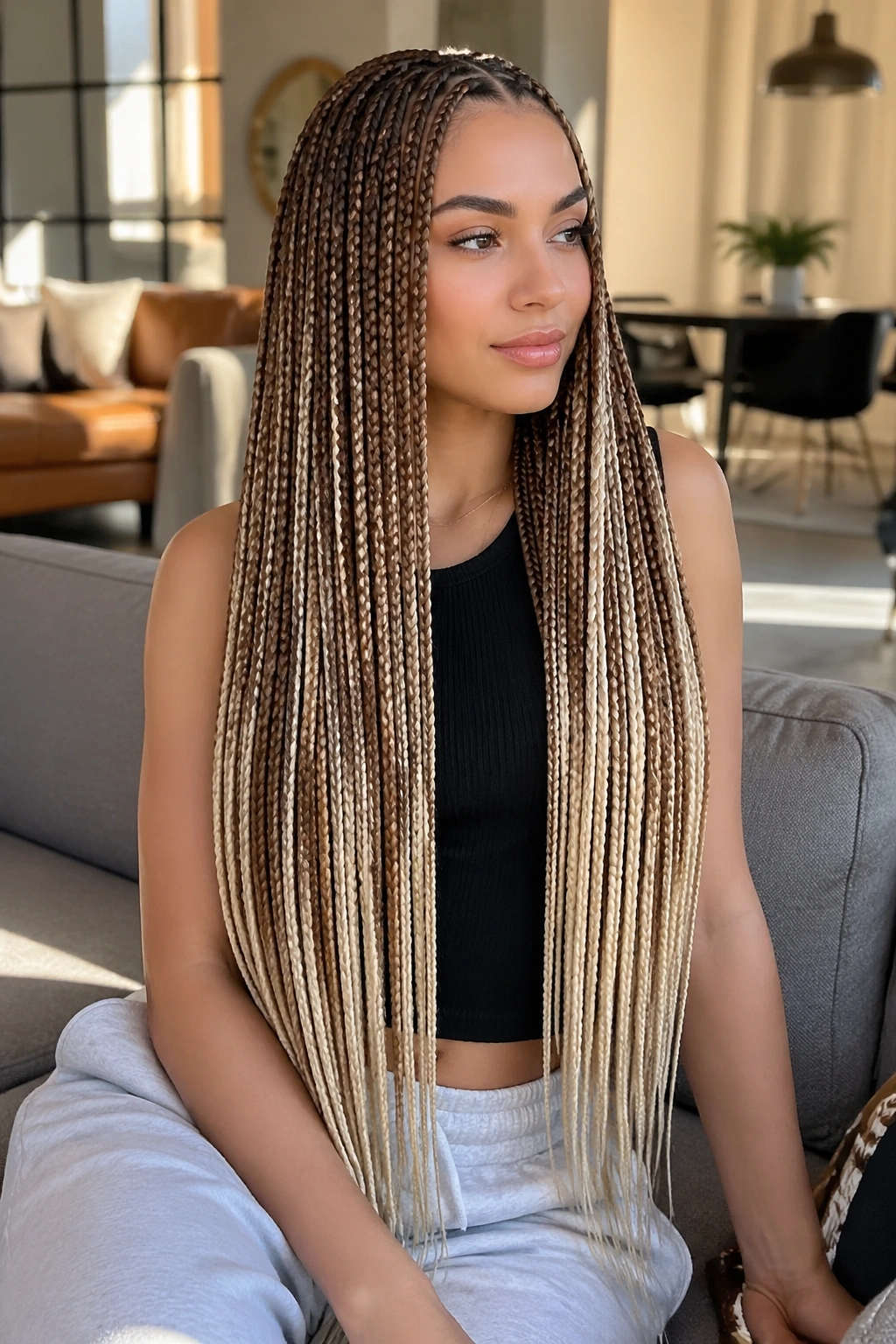
Waist-length braids look dramatic, sure, but the bigger reason people keep choosing them is movement. Small blonde and brown knotless box braids at waist length show off color in layers, and the small size keeps the overall weight from becoming ridiculous.
The braid pattern has room to breathe here. Brown at the roots, blonde toward the middle, lighter ends at the bottom — all of it has space to show. Shorter styles can hide the fade if the contrast is subtle. Waist length makes the fade obvious in a good way. When the braids are small, the ends move individually instead of clumping together, so the color reads as textured rather than blocky.
Sleeping takes a little more care. That’s the tradeoff. You need a long bonnet, a loose braid, or a wrap that keeps the ends from tangling under your shoulders. But if you love the feel of braids swinging when you walk, the extra length is worth the work.
This is also the version I’d pick for anyone who likes ponytails. Long, small braids stack beautifully without looking bulky at the base.
12. Bob-Length Small Blonde and Brown Knotless Box Braids
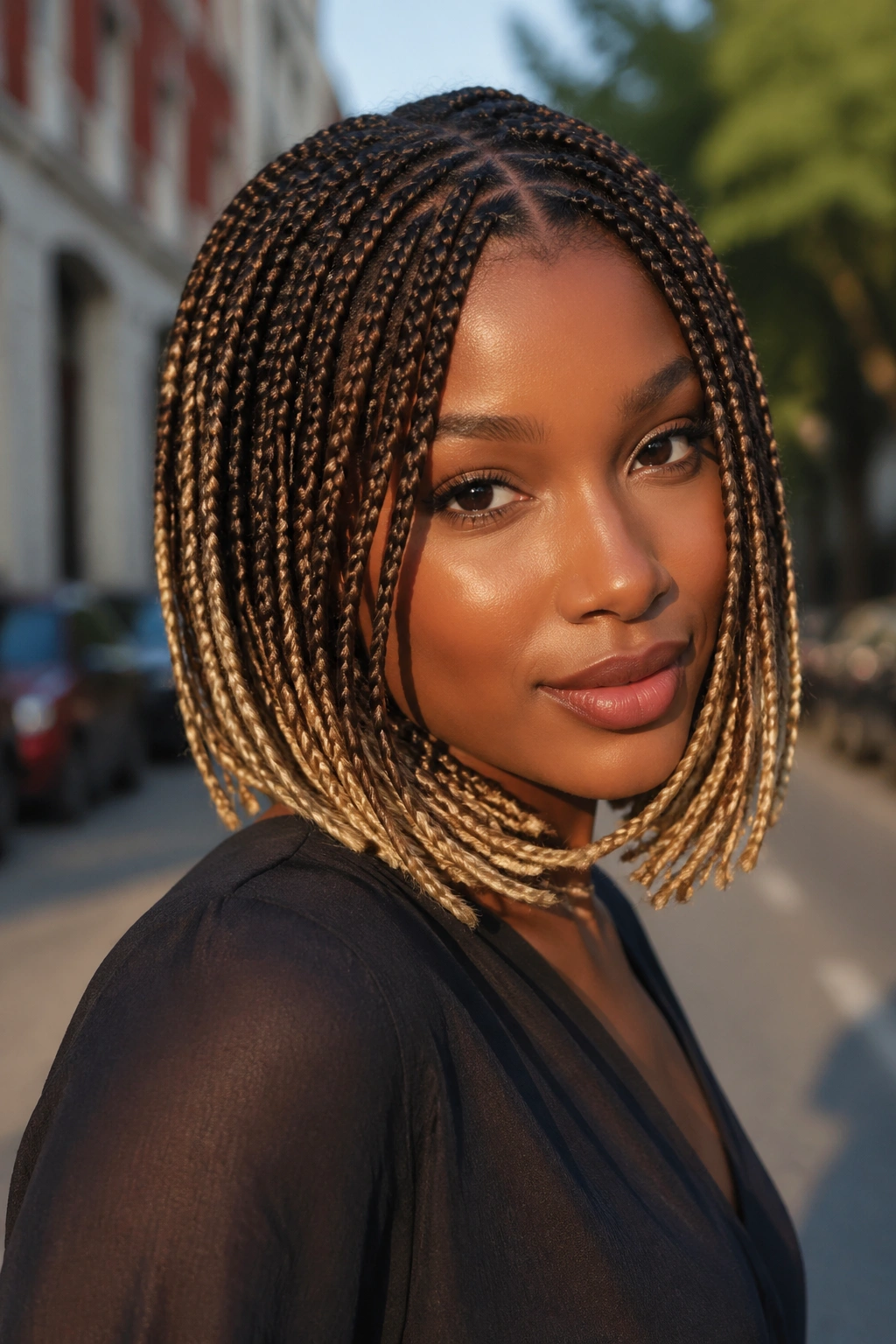
A bob-length install is the opposite energy. It keeps the look tight, compact, and easy to manage. Compared with waist-length braids, bob-length small blonde and brown knotless box braids feel less dramatic but often look more deliberate, because every strand sits close to the face.
The shorter shape makes blonde feel cleaner. There’s less length for the color to diffuse across, so the contrast lands fast. If you want the brown to stay dominant and the blonde to act like an accent, this is a strong option. It also means less time drying after washing, less time untangling at the ends, and less strain around the nape.
I like bob-length braids for people who wear jackets, collars, or structured tops a lot. Long braid ends can bunch up. A bob stays out of the way. It looks neat in photos and in motion, which is harder to get than people think.
If you want a hairstyle that feels modern without shouting, this is the one I’d keep on the shortlist.
13. Boho Small Blonde and Brown Knotless Box Braids
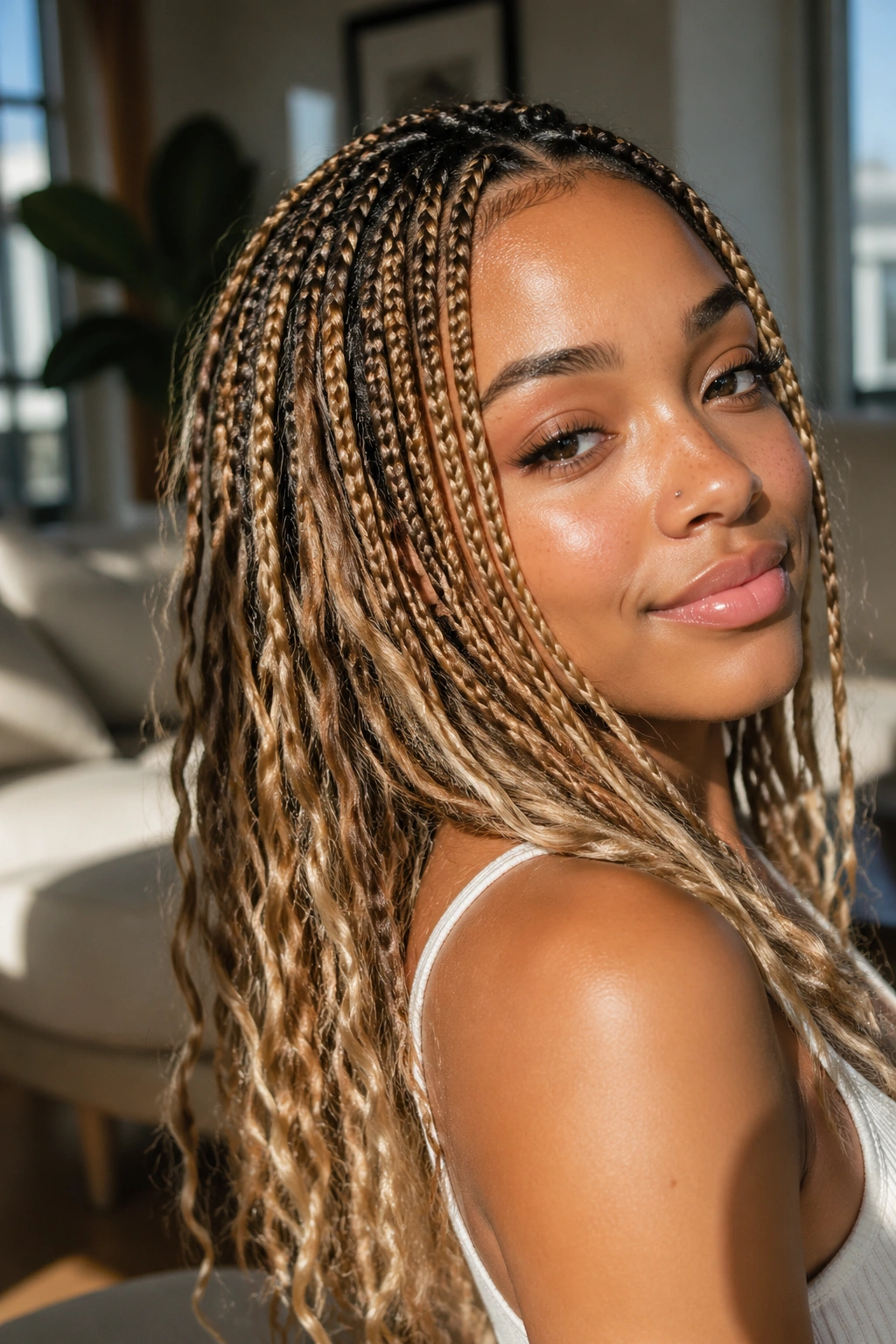
Boho braids bring in loose curls, and that changes the texture completely. The small blonde and brown knotless box braids become less about strict lines and more about movement, frizz, and a little softness around the edges.
Why It Works
The loose pieces interrupt the braid pattern in a way that makes the blonde and brown mix feel easier on the eye. Instead of seeing one neat grid from root to end, you get curls slipping through the braids and catching light in different spots. That’s useful if you want the style to feel less polished and more relaxed.
- Use loose curl pieces in both blonde and brown for better blending
- Keep the curls away from the scalp so the roots stay neat
- A light mousse helps the loose strands stay clumped, not fluffy
- Small braids are the right size here; large braids can overwhelm the curls
One warning: if the loose pieces are too many, the style starts looking messy instead of soft. A little restraint goes a long way.
14. Small Blonde and Brown Knotless Box Braids with Gold Cuffs
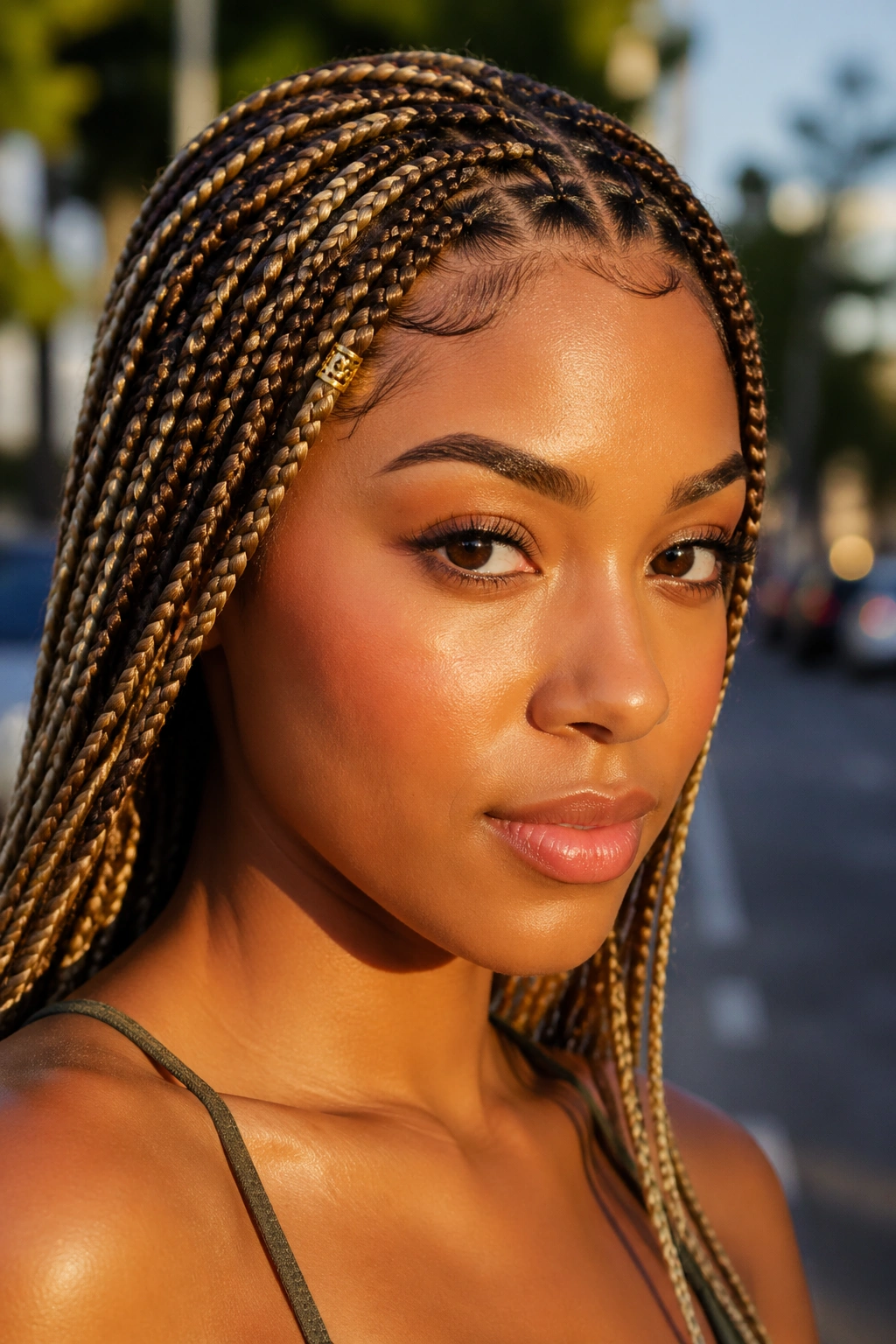
Accessories do a lot of work when the color is already carrying visual weight. Gold cuffs on small blonde and brown knotless box braids can sharpen the whole style in a few seconds, especially if the braid palette leans warm.
The trick is placement. Put cuffs near the front rows, along the temple area, or near the lower third of a few braids, not everywhere. Too many metal pieces can make the style feel crowded. One metal finish is enough, too. Mixing gold, silver, and rose gold all at once usually looks chaotic on a two-tone braid job.
I like cuffs because they add a little rhythm without changing the base style. If the braids are mostly brown with blonde accents, gold reads warm and intentional. If the blonde is lighter and beige, a smaller cuff set keeps the look from tipping into costume territory.
This is a good choice when you want the braids to read as styled, not just installed. Tiny detail. Big payoff.
15. High Ponytail Styling for Small Blonde and Brown Knotless Box Braids
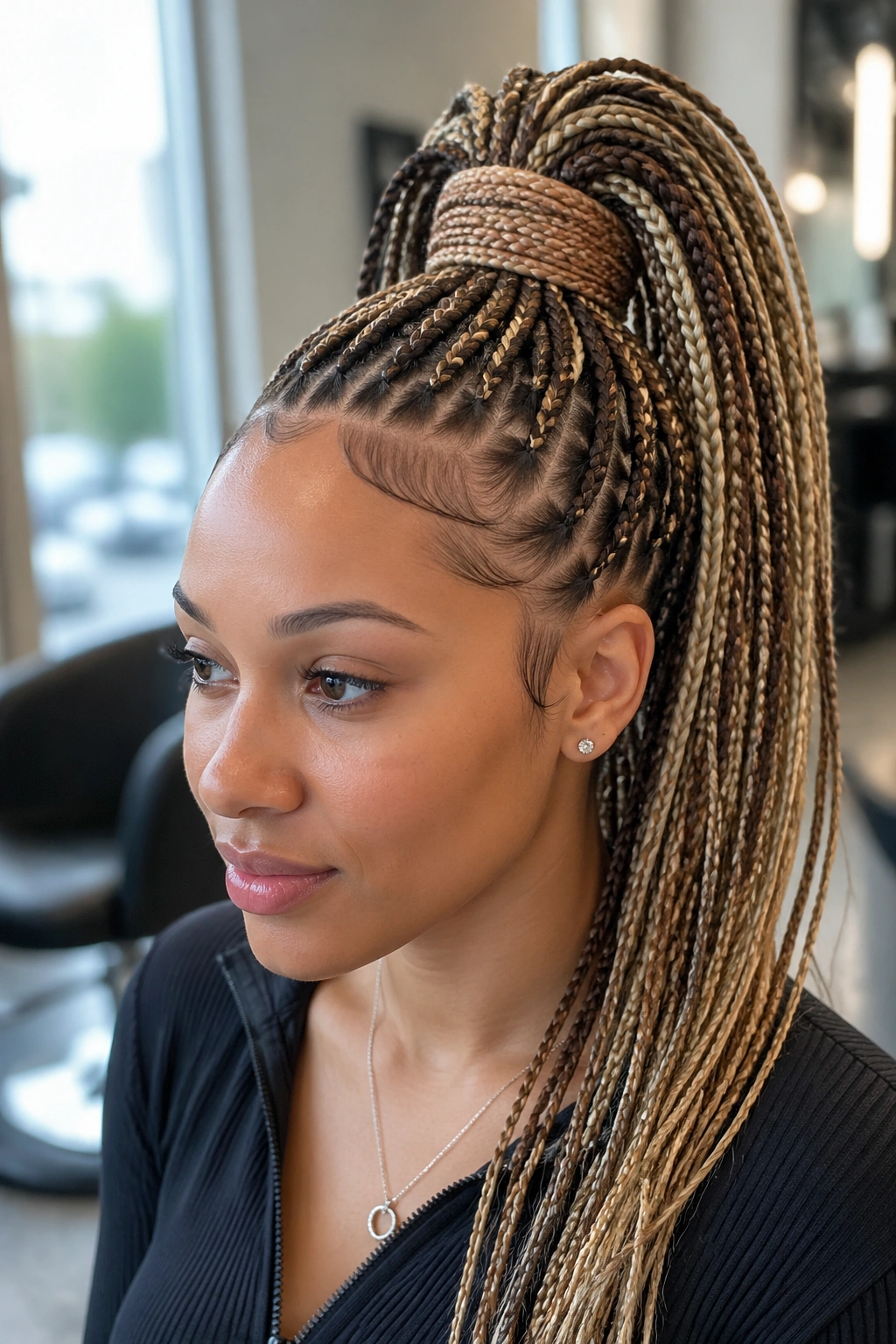
Why do some braided styles look better pulled up? Because the base stays flatter, and the color stacks where the eye can see it. Small blonde and brown knotless box braids are especially good in a high ponytail because the roots sit neat and the lengths don’t bunch too aggressively.
The ponytail lifts the blonde toward the top of the head, which makes the color more visible than it would be when the braids hang flat. Brown still grounds the style, but the lift changes the energy completely. It feels cleaner, sharper, and a little more polished.
How to Wear It
Use a sturdy snag-free elastic and wrap one braid around the base if you want to hide the band. Keep the ponytail high but not yanked back hard; knotless braids should not be stressed at the edges. If the front rows are too tight, the style loses the benefit of the knotless method, and that’s a shame because the whole point is a flatter, calmer root.
A high ponytail also makes the color mix read from the front and the back at the same time. Handy.
16. Low Bun Styling for Small Blonde and Brown Knotless Box Braids
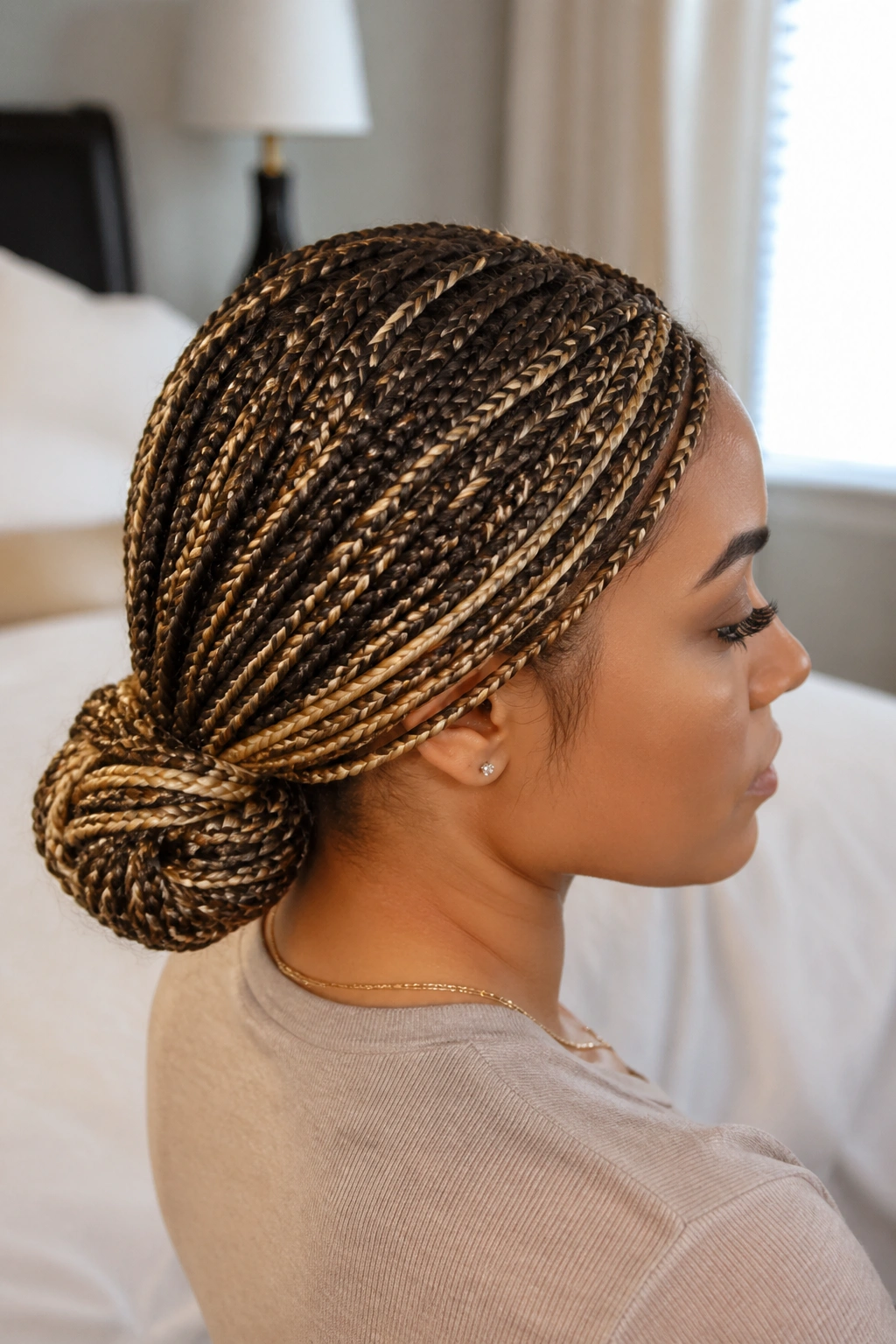
A low bun can make even a loud two-tone braid job feel quiet. That sounds backward, but it’s true. With small blonde and brown knotless box braids, the bun tucks most of the length away and leaves the color to show in the gathered twists and the few loose ends that escape.
The bottom of the head is where the brown usually dominates, so the bun looks grounded right away. Blonde pieces around the sides or at the crown break up the shape and keep it from looking heavy. It’s a smart way to wear the style when you want your hair off your neck but still want the braid work to show.
- Keep the bun low and loose for less tension
- Use a satin scrunchie instead of a thin elastic
- Twist the braids in one direction before coiling them
- Pin the bun only where needed; too many pins can dent the braid pattern
This is one of those styles that looks more expensive when it’s not overworked. Clean, low, and done.
17. Soft Face-Framing Highlights for Small Blonde and Brown Knotless Box Braids
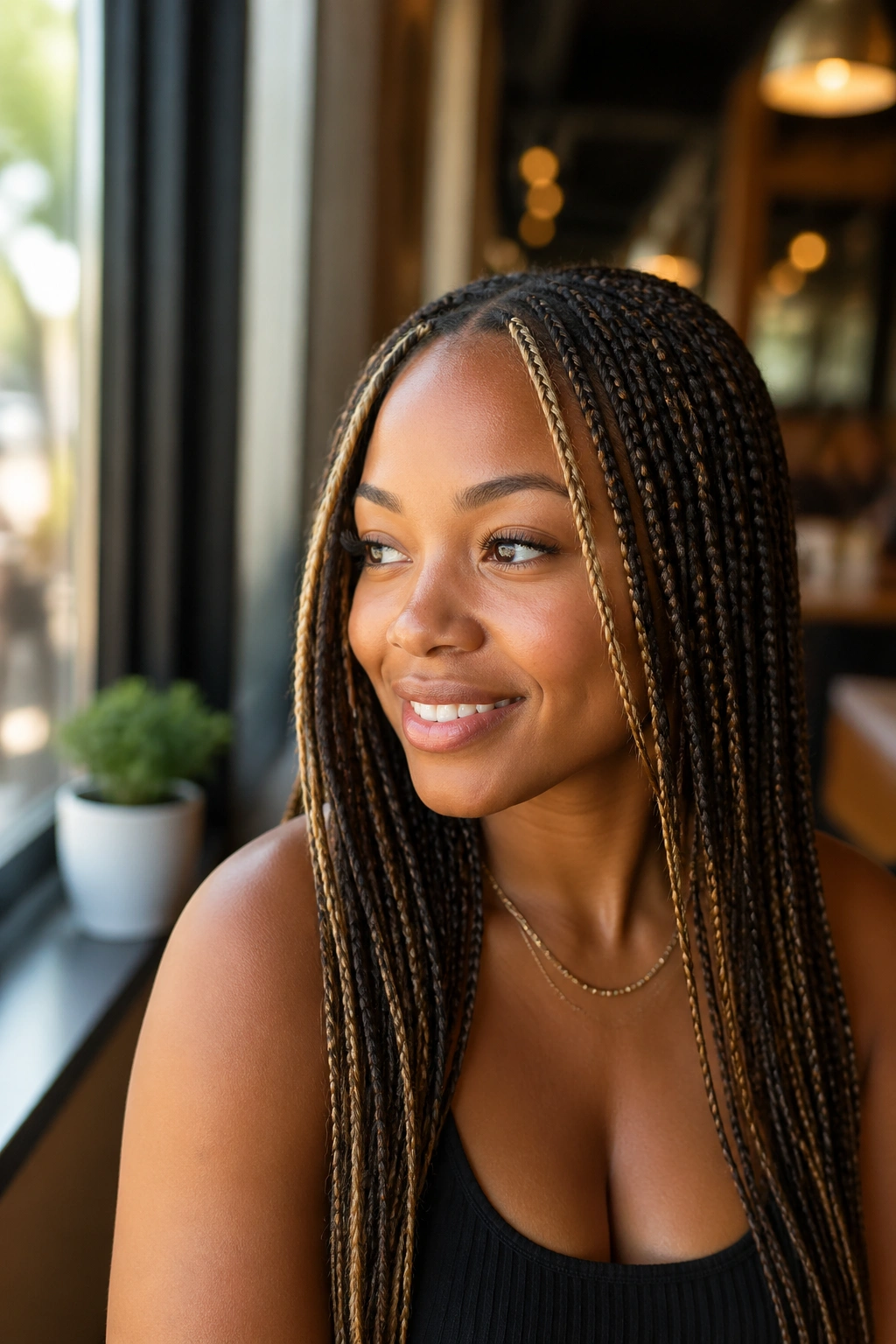
Face-framing color is one of the easiest ways to make small blonde and brown knotless box braids feel lighter without changing the whole head. A few blonde braids at the temples, near the cheekbones, or along the front edge soften the face right away.
The rest of the install can stay brown and grounded. That matters. When too many front braids are blonde, the look can start to feel stripey, especially with small parts. A quieter front section gives the lighter pieces room to matter. You notice the face first, then the braid pattern, then the color. That order helps.
I also like this approach because it works with nearly any length. Shoulder-length, bob-length, waist-length — the front pieces still do their job. If you wear a middle part, the highlights can sit on both sides. If you wear a side part, they can lean into the sweep and create a little more shape around one eye.
It’s subtle, but not dull. There’s a difference.
18. A Low-Drama Everyday Version of Small Blonde and Brown Knotless Box Braids
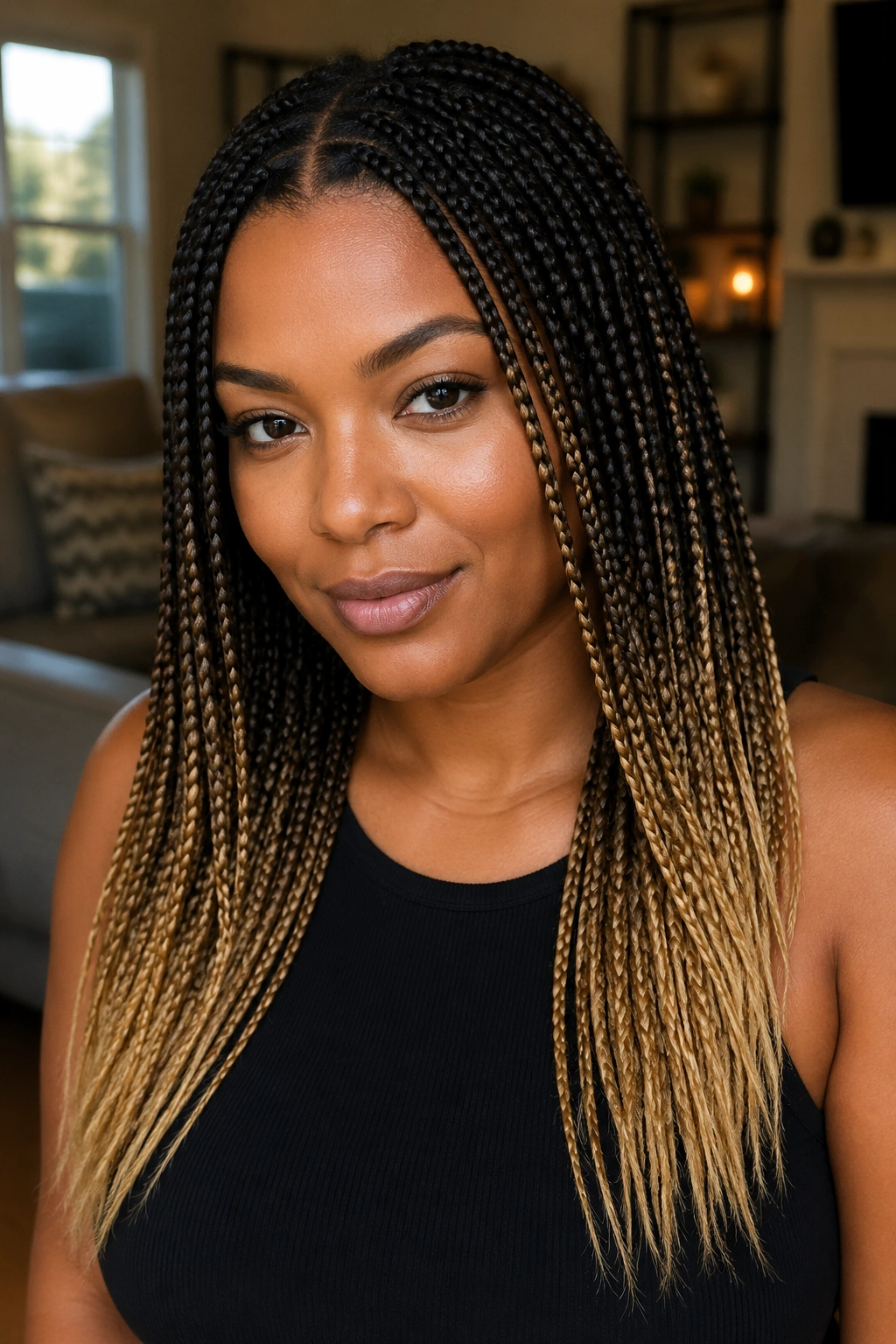
Not every braid style needs to make a scene. The most wearable version of small blonde and brown knotless box braids usually keeps the brown as the main color, uses blonde in measured streaks or soft ends, and sticks with clean parting that does not try to steal the show.
That restraint is what makes the style age well across a full wear cycle. The braids still look neat after a couple of weeks, the color mix does not go muddy, and your styling choices stay open. A center part, low bun, half-up ponytail, or loose wear all make sense here. Nothing fights the braid pattern.
If you want a clear formula, I’d ask for a medium-deep brown base, one or two blonde tones, and consistent braid size all over the head. Keep the blonde concentrated where you want movement — front rows, ends, or a few hidden layers — instead of scattering it everywhere. The result feels calmer, cleaner, and easier to keep up with when life gets busy. That sort of braid install does not need much help, and that is probably why it ages so well.
