

Blue box braids for kids can look playful without turning into a daily battle at the bathroom sink. That sounds obvious until you’ve watched a child tug at the front row, complain about a bead that feels too heavy, or fall asleep on a couch with braids spilling over a pillow like rope.
The color matters more than people think. Navy feels calm, cobalt feels bold, sky blue reads softer, and a mixed blue blend can make even a simple braid pattern feel special. But the real difference between a style that gets loved and one that gets yanked out is usually weight, part size, and length.
A braid can be pretty and still be miserable. Too long, too thick, too many beads, too much tension at the hairline — that combination is where a lot of cute styles go sideways.
The 18 looks below stay focused on what works for real kids: comfort, movement, easy upkeep, and a color story that still looks fun on a school morning or a picture day.
1. Classic Cobalt Blue Box Braids for Kids at Collarbone Length
Collarbone-length braids are the sweet spot.
They give the color room to show, but they do not swing so far that a child spends all day flipping them back over her shoulders. That matters more than people admit. A style that sits near the collarbone is easier to manage in a car seat, easier to wash, and far less likely to feel heavy after a long day.
Why It Works on Kids
A medium braid size keeps the install neat without dragging the scalp down. I like square parts that are roughly ¾ inch to 1 inch wide, because they keep the pattern clean and the braids balanced from front to back. The cobalt shade also photographs clearly without needing extra accessories.
If the child has fine hair, this is the kind of length that lets the braid look full without turning into a weight issue. And that’s the part people miss. The style can still feel special even when it’s not extra long.
- Length: Collarbone to just below the shoulders
- Parting: Clean square sections with even spacing
- Finish: Slightly tapered ends so they move better
- Good for: School, family outings, and low-maintenance wear
My take: This is the easiest blue box braid style to recommend first. It’s tidy, practical, and still has enough personality to feel fun.
2. Shoulder-Grazing Blue Box Braids That Stay Light
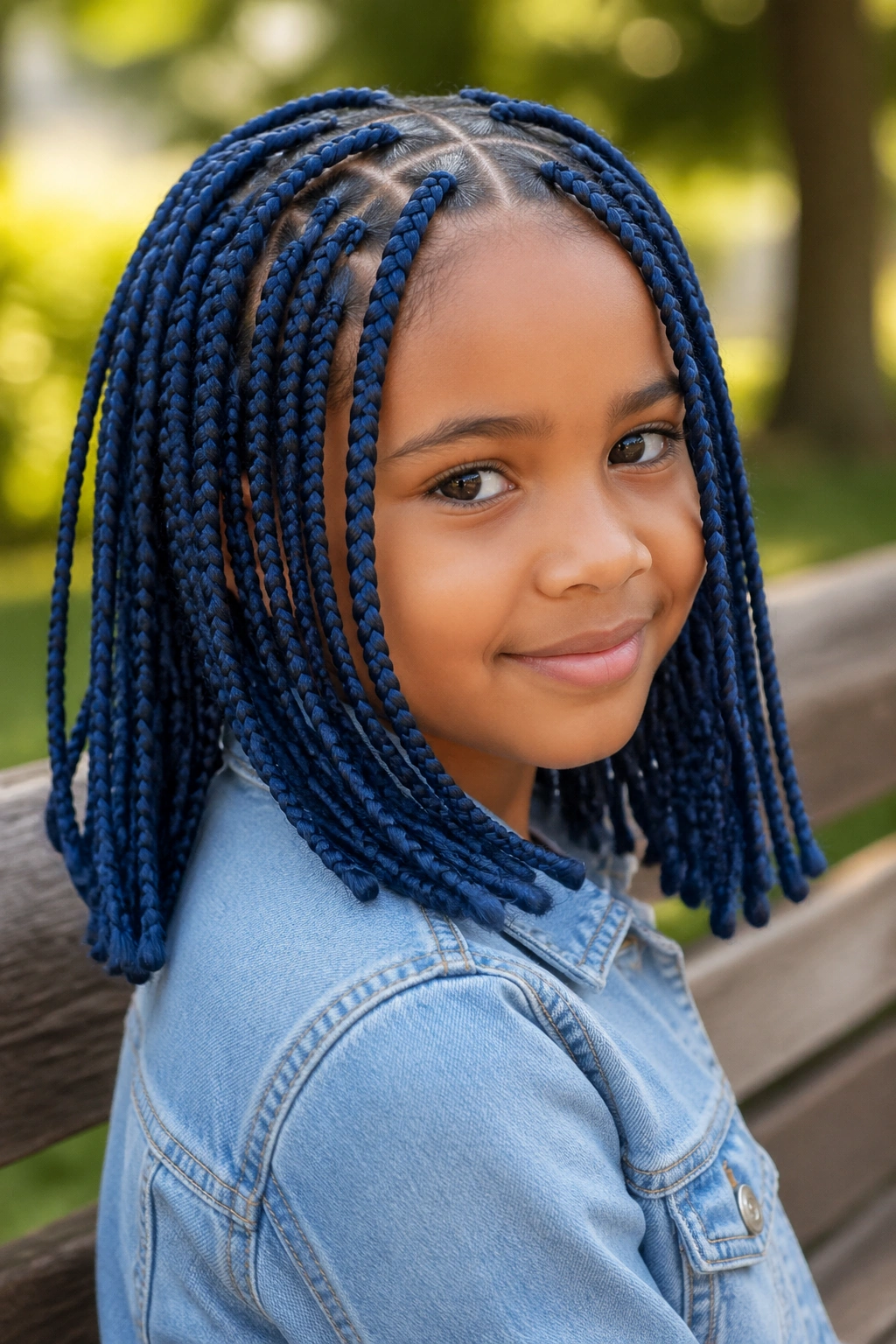
Shorter braids solve a lot of problems before they start.
When the ends stop around the shoulders, there’s less swinging, less tangling at the nape, and less chance of a child leaning on a braid and whining about it five minutes later. That makes this one of the smartest blue box braid options for younger kids or any child who does not sit still well during styling.
A blunt shoulder-length cut gives the whole look a neat edge. It also keeps the blue color front and center, because the eye lands on the braid line before it gets distracted by length. If you want the hair to look polished without feeling fussy, this is a strong place to start.
The other bonus is bedtime. Shorter braids tuck into a bonnet or satin scarf with less drama. They don’t pile up under the neck, and they’re easier to refresh in the morning with a little water-based spritz and a light oil on the scalp.
No, it isn’t the flashiest version.
It’s the one that tends to last.
3. Blue Ombre Box Braids for Kids With a Soft Fade
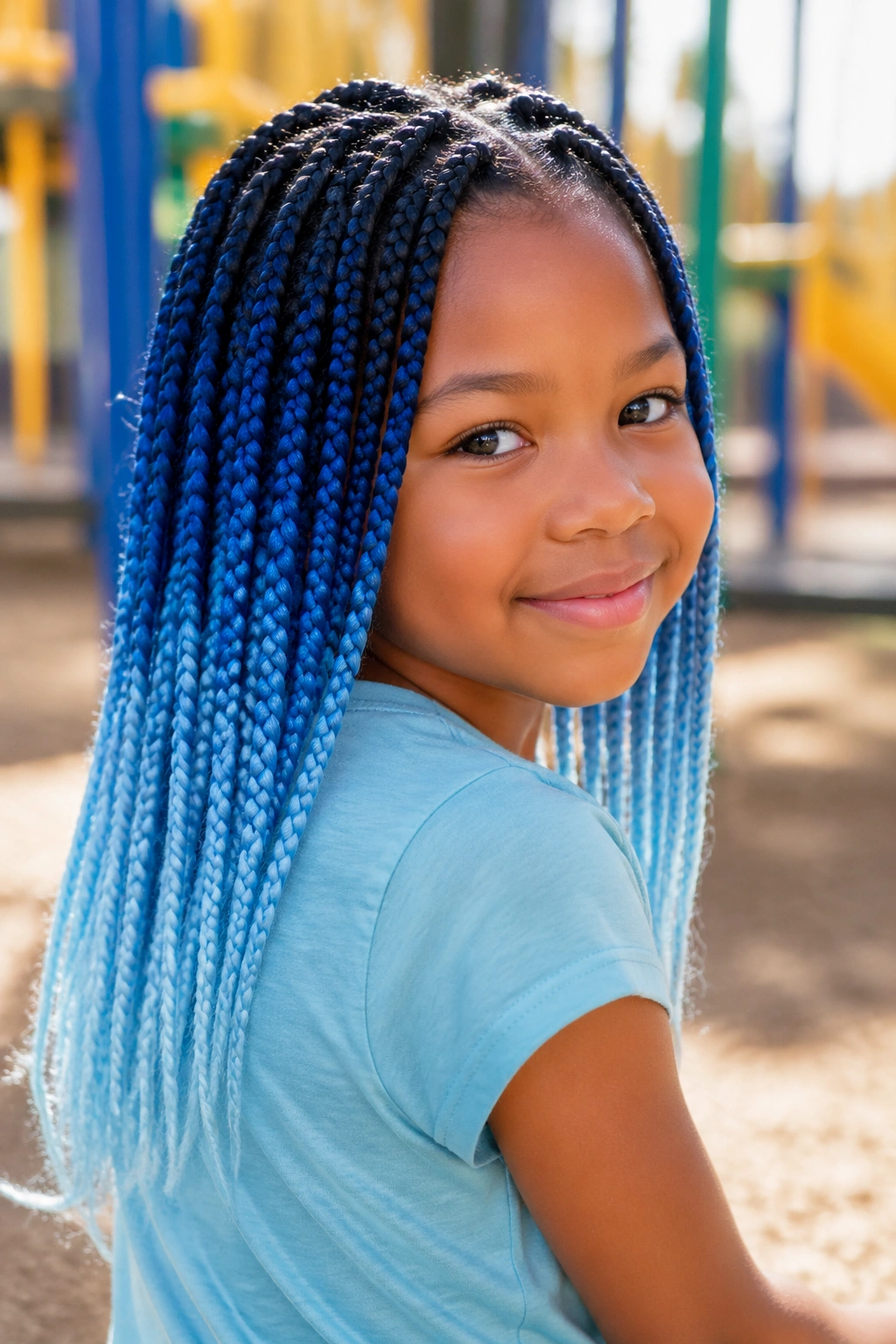
Can blue braids look softer on a child? Absolutely.
A good ombre braid starts with a deeper root — navy or black-blue works well — and moves into cobalt, aqua, or baby blue toward the ends. The fade keeps the color playful without making the whole head look flat. It also lets you choose how bold you want the style to feel, which is useful when the child likes color but doesn’t want anything too loud.
How to Keep the Fade Clean
The trick is to let the shade shift happen gradually. A hard color break can look chunky in synthetic hair, especially if the braid size is small. A smoother fade looks more natural and keeps the blue from reading as a block of color.
- Root color: Navy or dark blue for a grounded start
- Middle section: Cobalt or royal blue for the main body
- Ends: Baby blue or sky blue for brightness
- Best length: Shoulder to mid-back, so the fade has room to show
If you’re choosing this style for a child with a round face, the lighter ends can help the braids feel less heavy around the cheeks. That tiny detail makes a bigger difference than most people expect.
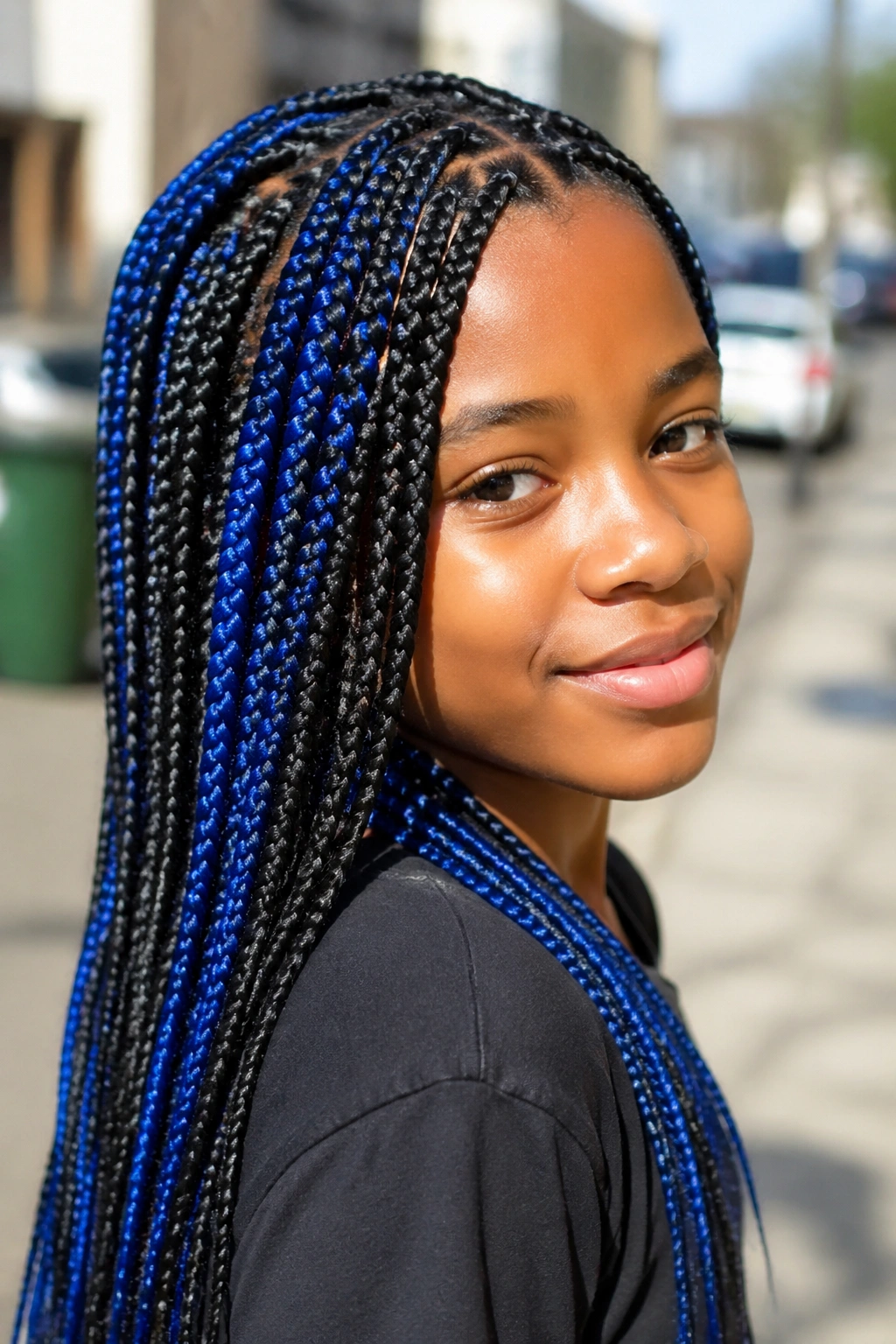
4. Blue and Black Two-Tone Box Braids That Pop in Photos
A kid who keeps touching her hair usually wants something interesting at the part line, not more hair.
Blue and black two-tone braids give you that interest without forcing the whole style to be busy. The black keeps the braid grounded. The blue gives it life. Put the two together and you get a look that feels richer than a solid-color install, especially in daylight.
The easiest way to wear this pattern is to alternate braids: one blue, one black, or two blue braids followed by one black braid if you want the color to show a little more. Another option is to keep the braids black near the crown and let the blue take over at the outer rows. That version feels a touch softer and works well for kids who are just getting used to colored hair.
- Color balance: More black for a quieter look, more blue for a brighter look
- Parting: Square or slightly triangular parts both work
- Best accessories: Clear beads, black beads, or no beads at all
- Style mood: Neat, bold, and easy to dress up or down
I’d pick this one for a child who likes color but gets tired of high-contrast hair after a few days. It has enough contrast to stay interesting, and enough dark tone to keep it grounded.
5. Triangle-Part Blue Box Braids for Kids Who Like Pattern
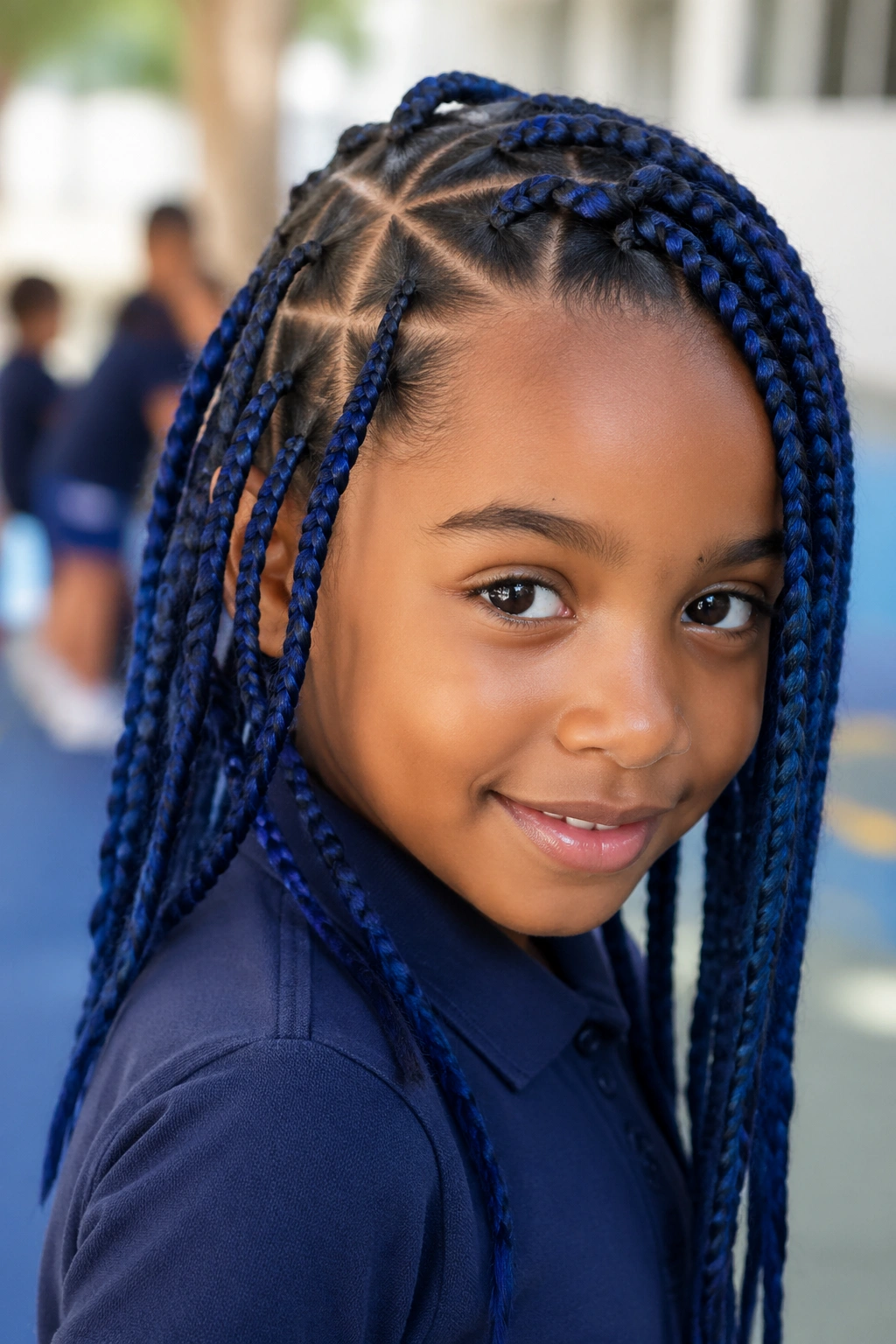
Triangle parts change the whole feel of box braids.
Instead of the usual square grid, the scalp shows off little triangles that make the style look sharper and more deliberate. On kids, that can be a fun middle ground between plain and playful. The braids themselves can stay medium or small, while the parts do the visual work.
This style looks especially nice with a bright royal blue because the geometry of the parts gives the color more edge. The pattern shows up from above and from the side, which means the style still looks interesting even when the braids are pulled behind the ears. That’s a small thing, but it matters for children who are always moving.
The only real catch is part precision. Triangle parts are less forgiving than square ones, so the sections need to be clean and even. If one triangle is lopsided, it jumps out fast. Still, when the pattern is neat, the result feels polished without looking stiff.
For little ones who like hair that looks “designed,” triangle parts are a good move. They add shape without adding weight, and the blue gives the whole head a bright, crisp finish.
6. Knotless Blue Box Braids That Feel Softer at the Roots
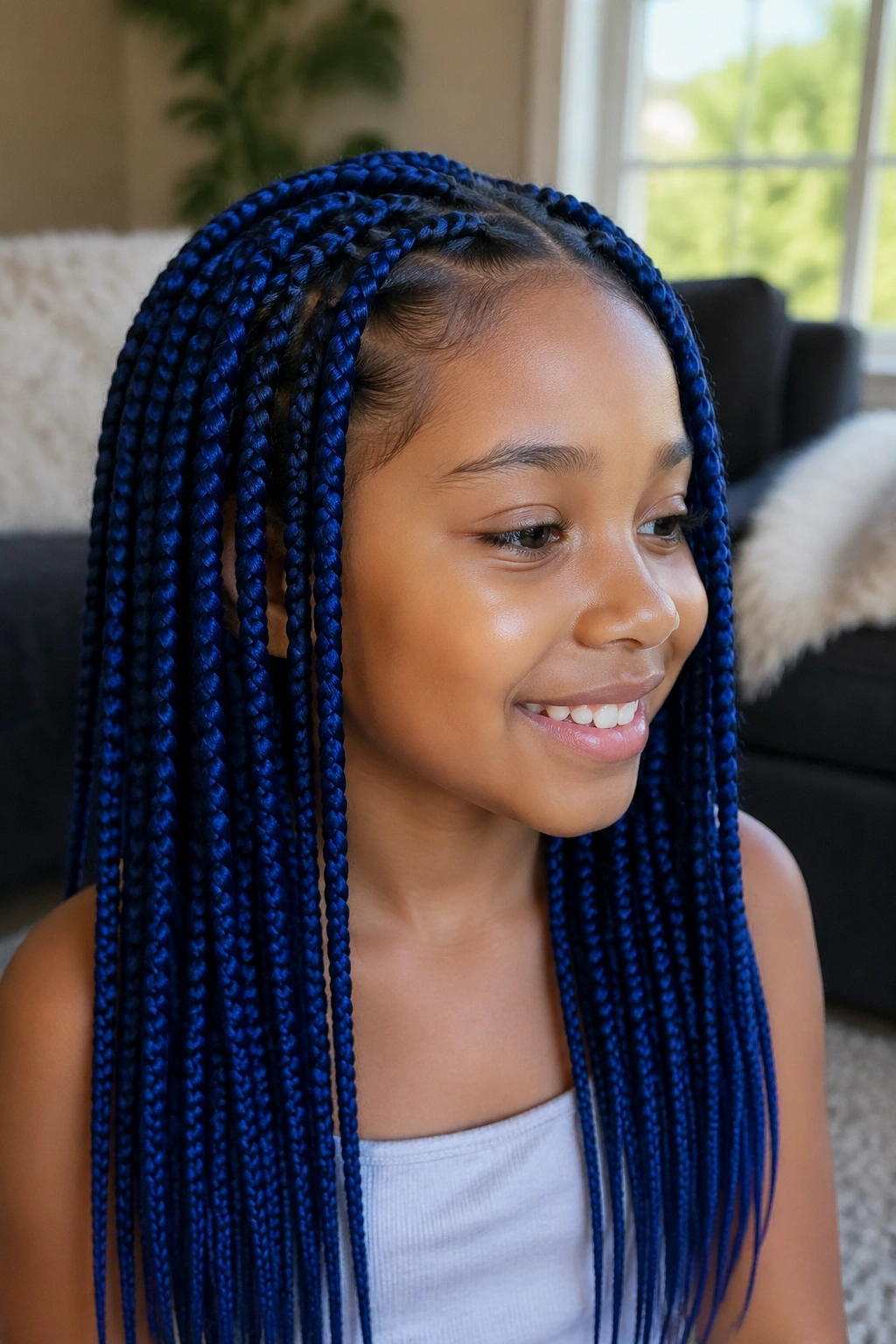
Knotless blue box braids are the quieter cousin of the classic version.
The difference starts at the root. Instead of beginning with a tight knot, the stylist feeds the braiding hair in gradually, which helps the braid lie flatter against the scalp. On a child’s head, that usually means less tugging at the hairline and less of that stiff first-day feeling that some braids have.
What Makes This Version Kinder
The softness is the whole point. Kids who are tender-headed or who hate the “tight for two days” braid experience usually do better with knotless installs. The braids still have structure, but the base feels smoother, and the scalp doesn’t get pulled as hard when the child turns her head or lies down.
There is a trade-off. Knotless braids can take longer to install, and they ask for a steady hand. But if you’ve got a child who complains when styles feel too firm, the extra time is worth it.
A medium cobalt blue works especially well here because the flatter root lets the color read as sleek instead of bulky. Keep the length modest — collarbone to mid-back is plenty — and the whole look stays neat without feeling heavy.
7. Blue Box Braids with Beads That Still Feel Manageable
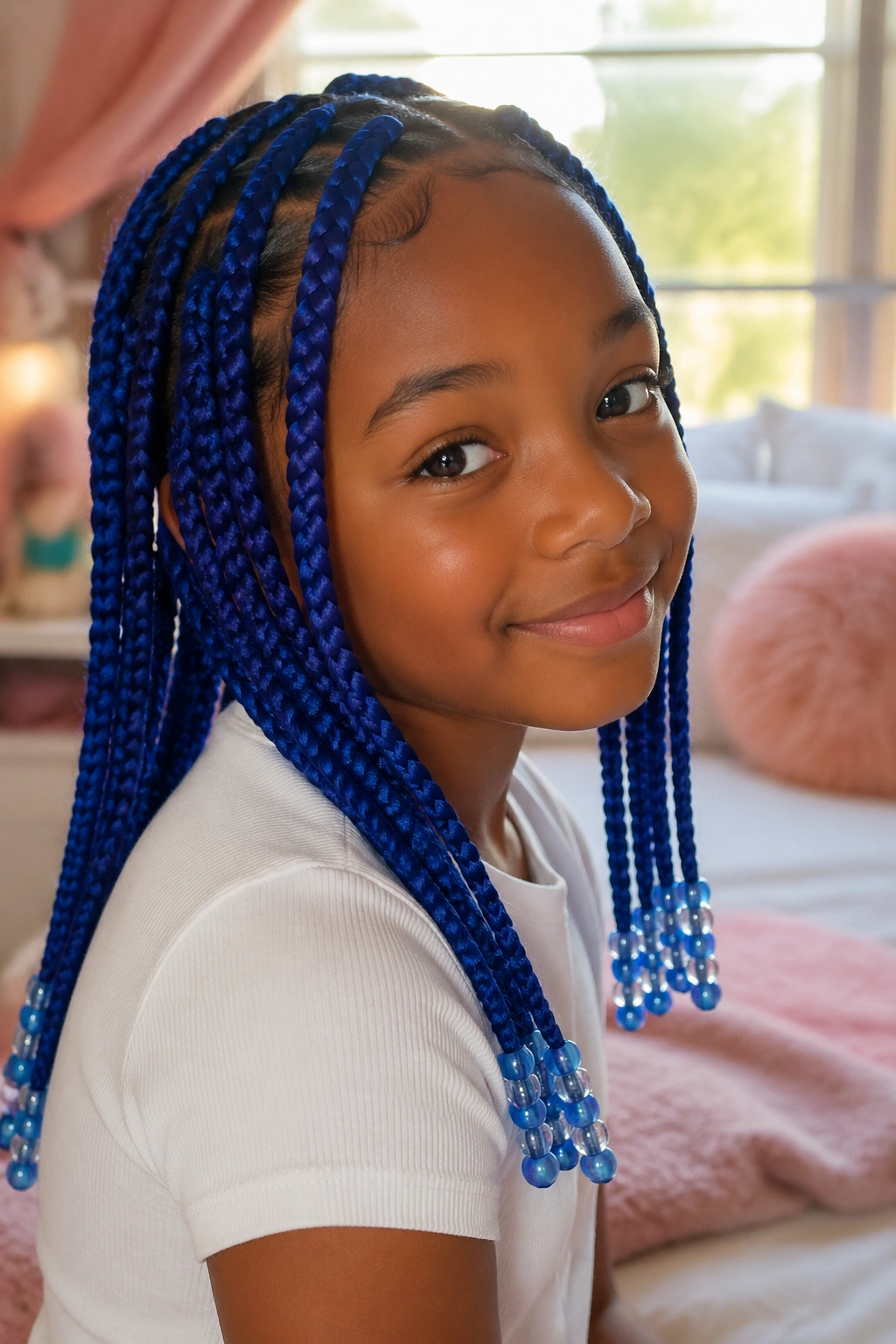
Beads can tip a style from cute to annoying in one afternoon.
That’s why the trick with kids’ blue box braids is not “more beads.” It’s the right bead choice in the right number. Three or four smooth beads at the end of a braid can look playful. Ten beads rattling against the shoulders can turn into a headache fast.
What to Watch For
Choose beads with smooth holes and rounded edges so they slide on cleanly and don’t snag the braid ends. I also like to keep the bead count lower on the front rows, because those braids get touched the most. The back rows can handle a little more decoration if the child likes the sound and movement.
- Per braid: 2 to 4 beads is plenty for most kids
- Placement: Ends only, not halfway up the braid
- Weight: Light plastic or resin beats heavy glass every time
- Look: Clear beads, white beads, or blue-tinted beads all work with cobalt hair
Beaded braids are a good pick for birthdays, school events, or any day when the child wants the hair to feel special. Keep the rest of the style simple so the beads have room to shine.
8. Half-Up Half-Down Blue Box Braids for Busy Mornings
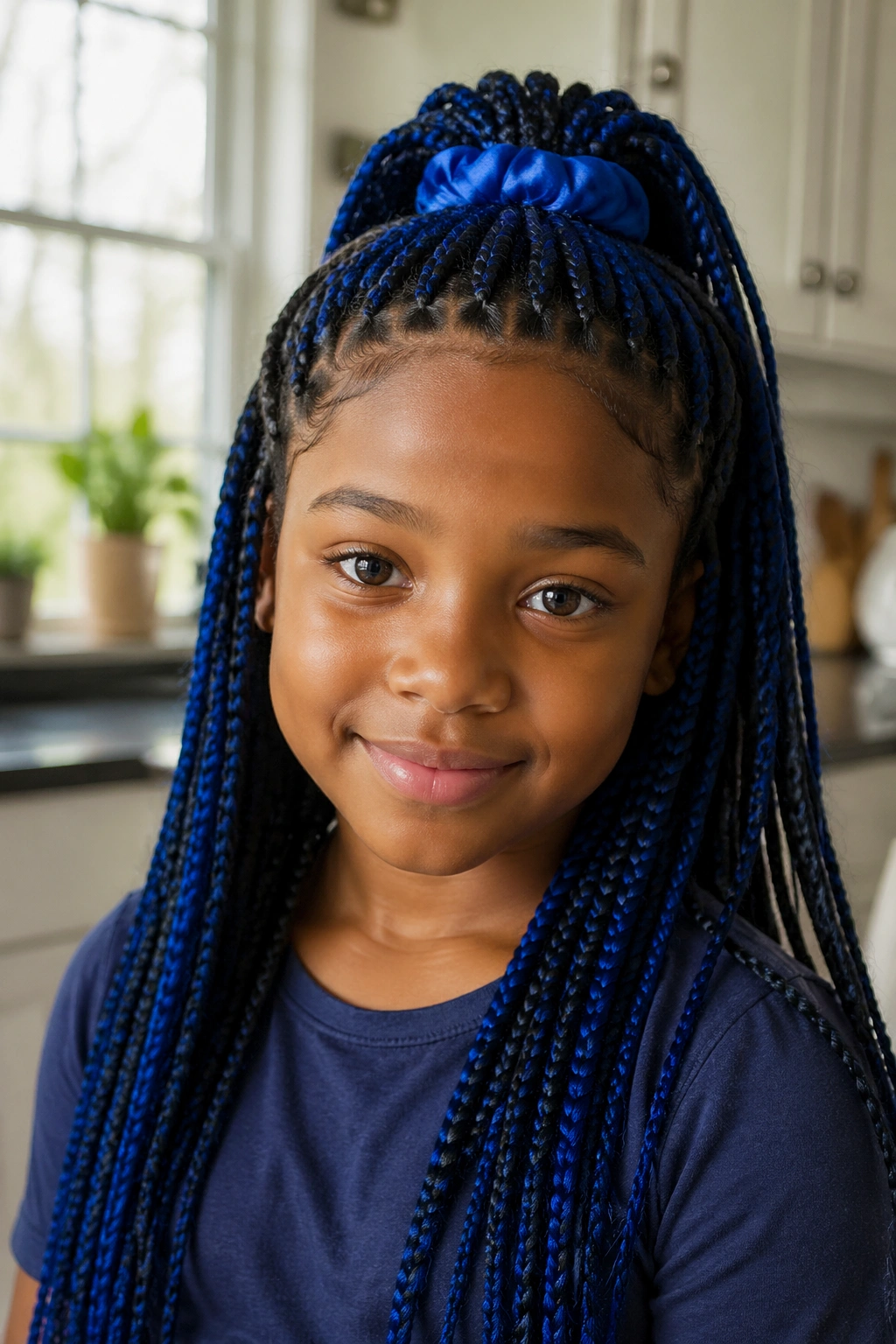
Some styles do their best work when they make the face look open.
A half-up half-down shape does that without changing the braid structure underneath. Pulling up the top third of the braids keeps hair out of the eyes, leaves the length loose, and gives the whole style a little lift. On kids, that balance matters because it feels playful but still practical.
A Good School-Day Compromise
The top section should be loose enough to avoid a dent at the crown. Use a satin scrunchie or a soft wrapped band, not a tight elastic that bites into the hair. If the child is wearing the style all day, I’d keep the half-up section no higher than the top of the ears. That keeps the tension low and the look soft.
The lower section can stay plain or get a few beads or cuffs if the child likes a little sparkle. I prefer this style when the braids are shoulder-length or mid-back. Very long braids can make the top section feel heavy, and then the whole point gets lost.
It’s a neat option for kids who want the hair off their face but still like seeing the color move when they walk.
9. High Ponytail Blue Box Braids That Clear the Face
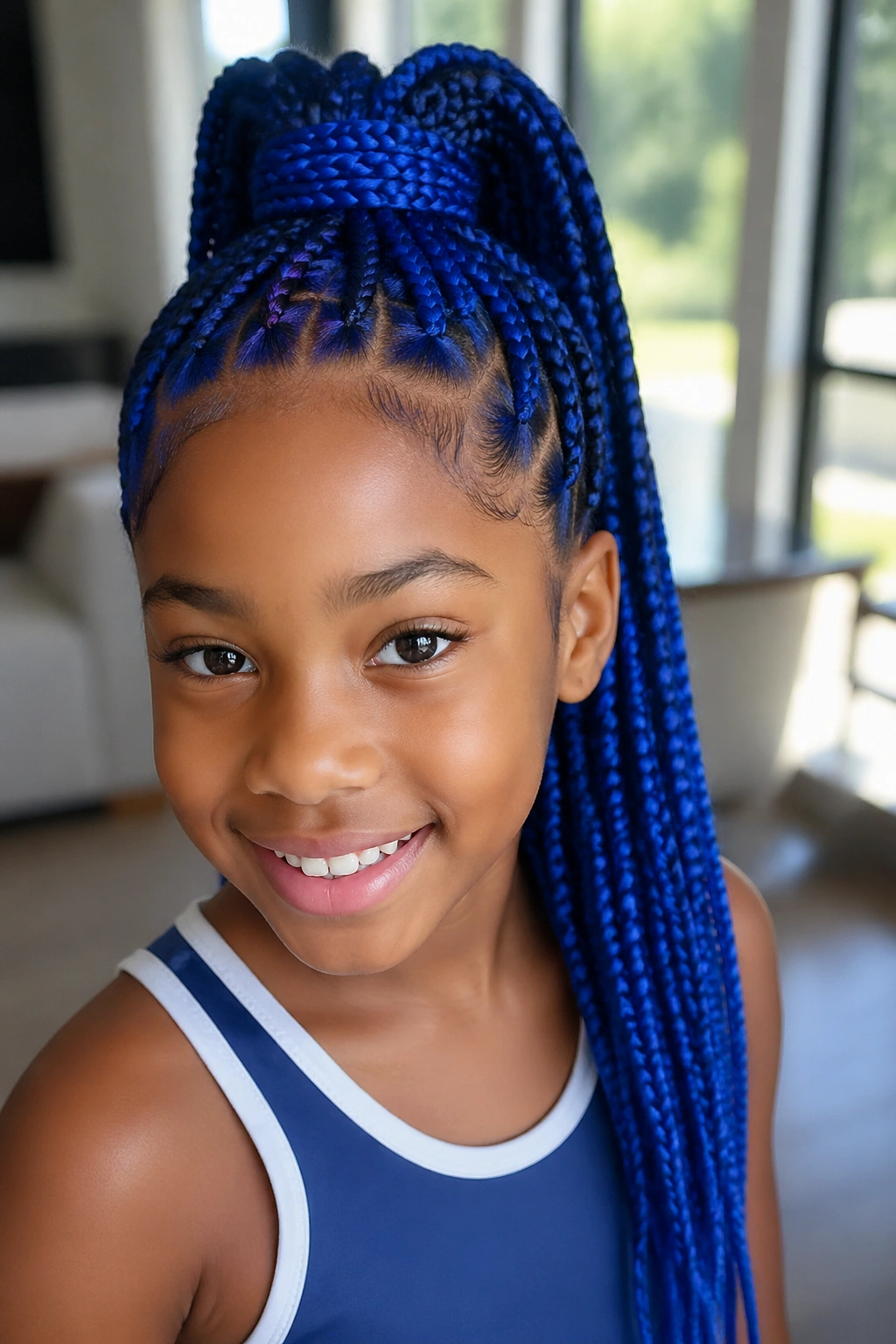
Why does a high ponytail work so well? Because it clears the face fast.
That’s the short answer, and for kids it matters a lot. A high ponytail keeps the front rows neat during homework, sports, or any moment where loose braids would keep slipping into the eyes. It also gives the blue color a strong shape, since the braids bunch together into one visible section instead of hanging in every direction.
The key is height without tension. The ponytail should sit at the crown, not pulled back hard at the hairline. If the child’s edges are tender, keep the base soft and use a wide satin scrunchie so the ponytail doesn’t dig in.
This style works best when the braids are medium length. Shorter braids can feel stubby in a ponytail, and very long ones can pull too much. Around shoulder to mid-back length is the sweet middle. The look is tidy, active, and easy to reset after a nap.
And yes, it’s one of those styles that tends to make a child stand up straighter. Funny how a ponytail can do that.
10. Blue Box Braids in Low Space Buns for Playful Days
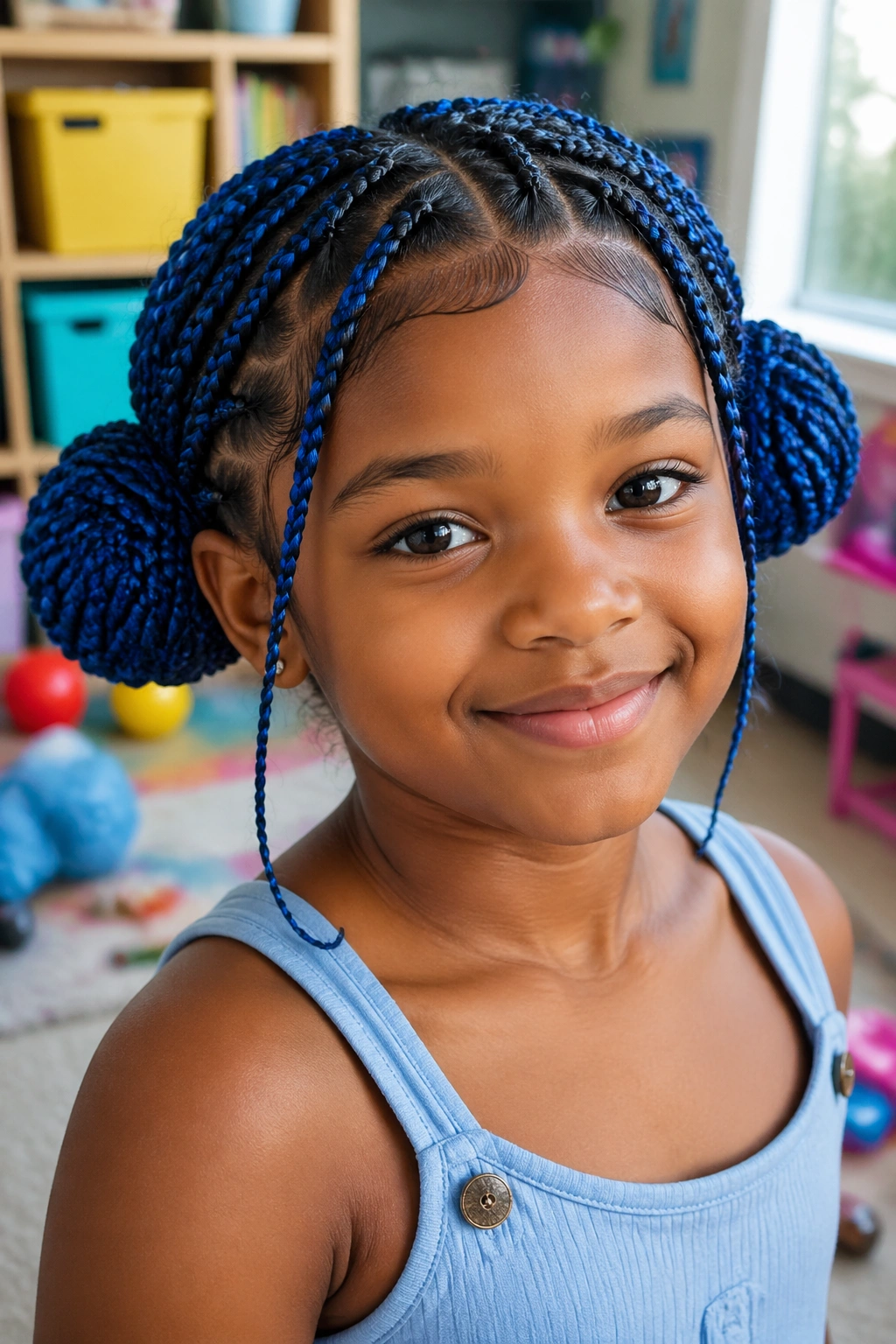
Birthday hair has a different job.
It needs to look fun, hold up to movement, and survive a child touching it every ten minutes because she likes the way it feels. Low space buns do all three. Split the braids into two even sections, twist each side into a bun near the ears or slightly above them, and let the blue color wrap into little coiled shapes.
The low placement matters. High buns can get heavy and pull on the scalp, especially if the braids are long or decorated with beads. Lower buns keep the weight centered and make the whole style feel calmer. If the child has a rounder face, the two buns can also add a nice bit of shape without looking severe.
A medium or small braid size works better here than jumbo braids. The smaller the braid, the smoother the bun will sit. If you want the style to look extra neat, leave two or three slim braids out around the face. That tiny detail softens the look and makes the buns feel more relaxed.
It’s playful. It’s practical. And it photographs well without asking for much.
11. Blue Box Braids with Curly Ends for a Soft Finish
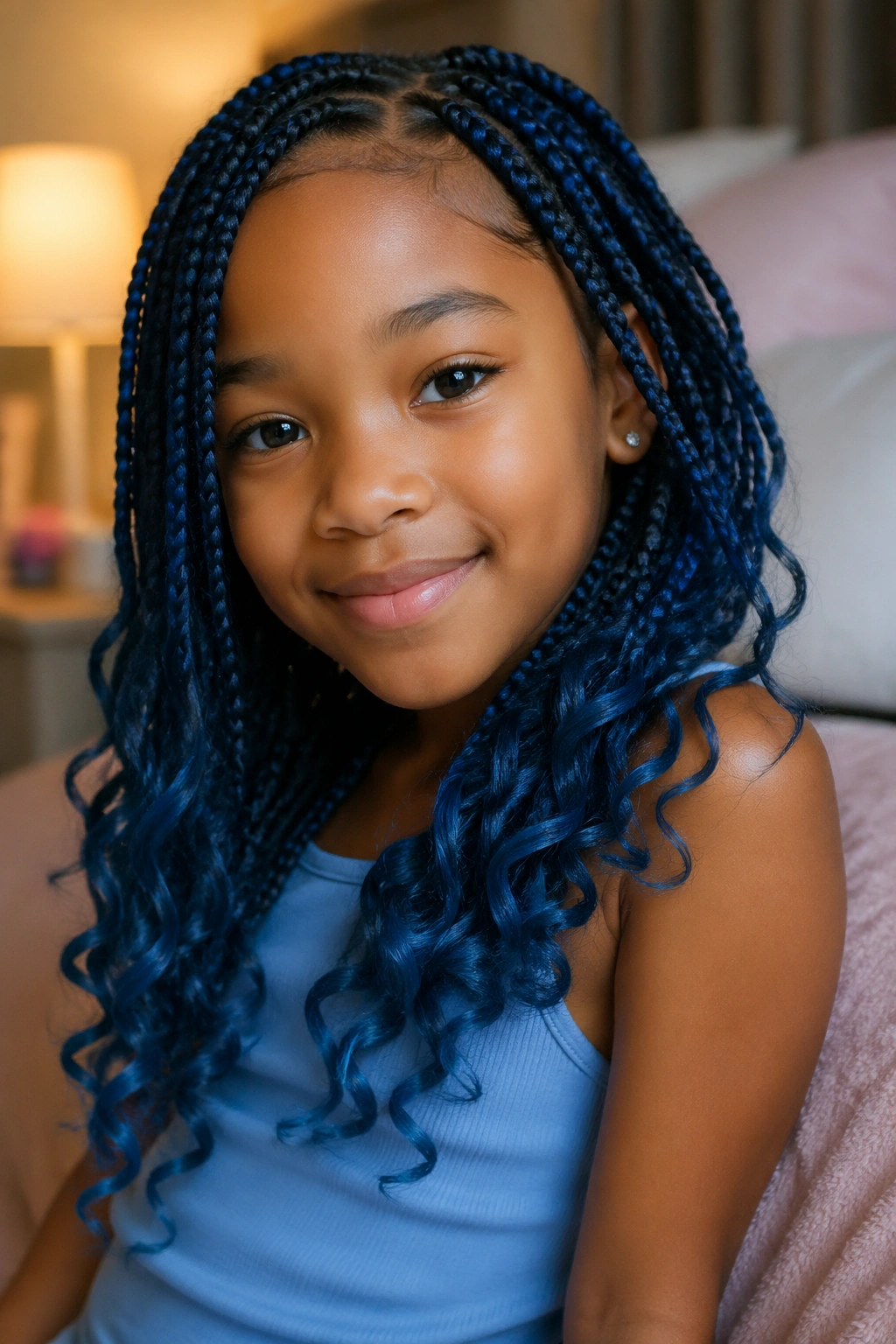
Curly ends change the mood of blue box braids fast.
Instead of a blunt finish, the hair spills into loose coils or curls that move a little when the child walks. That adds softness, which is useful if you want the color to feel lively instead of severe. A little curl at the ends can also make shoulder-length braids look fuller without adding much extra weight.
The trick is not to go too long with the curl piece. Four to six inches of curl is enough for most kids. Longer than that, and you start running into tangles, especially around collars, hoodies, and seat belts. The curls should feel soft to the touch, not like a bundle that needs constant fixing.
This style works best with synthetic hair that holds shape but doesn’t feel stiff. If the curls are too tight, they start to mat at the ends after a few wears. If they’re too loose, they lose the point of the style. A gentle curl keeps the look sweet and manageable.
I reach for this one when the child wants her braids to feel a little dressier but still easy to sleep in. It gives the color some movement, and movement is half the charm here.
12. Jumbo Blue Box Braids That Cut Down on Install Time
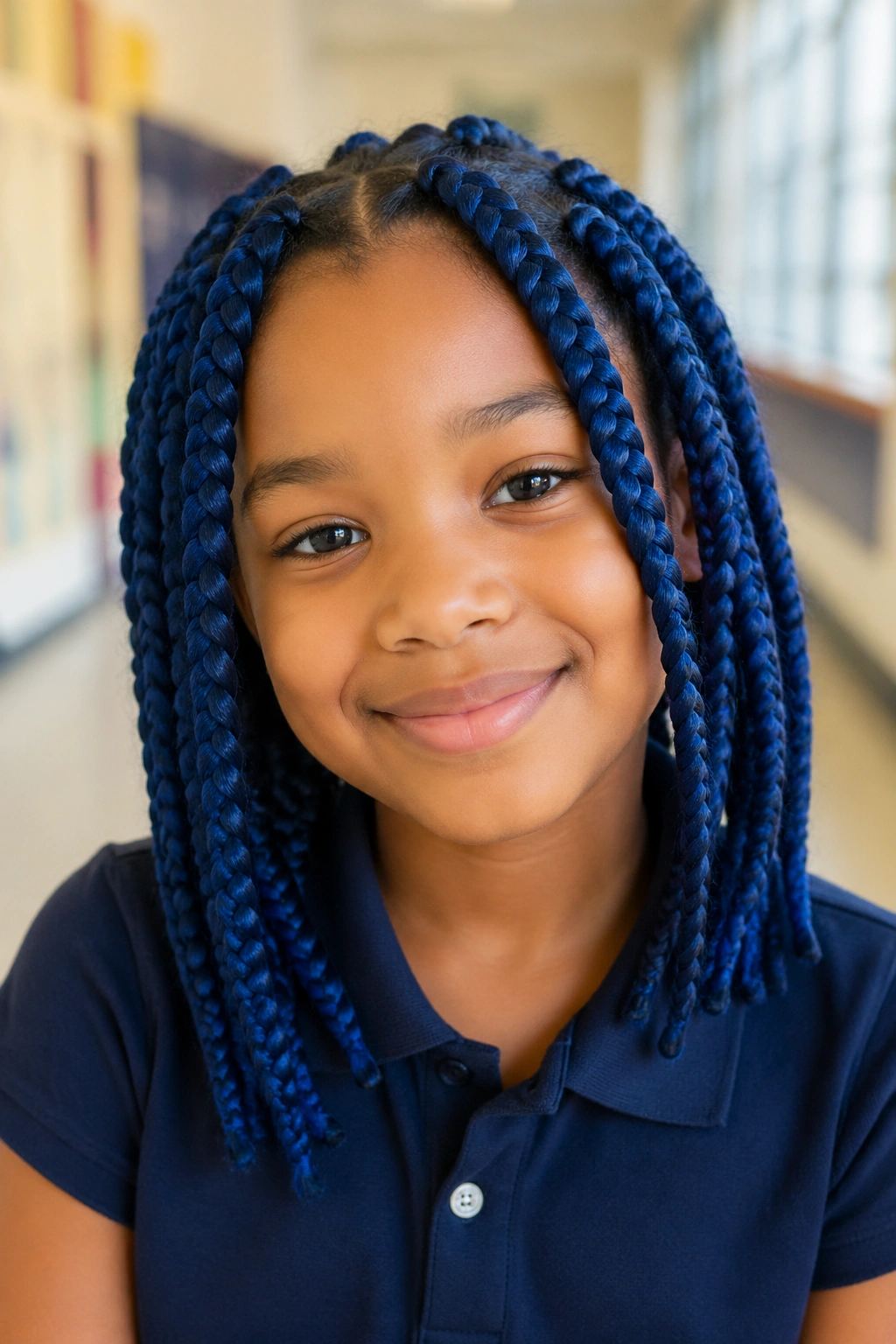
Jumbo blue box braids are not lazy styling. They’re a choice.
A larger braid size means fewer sections, fewer hours in the chair, and less scalp tension from the sheer number of parts. For a child who cannot sit still for long, that matters a lot. The look is bold, too. One thick cobalt braid can read almost like a ribbon, which is part of what makes the style fun.
When Jumbo Braids Make Sense
They work best on kids with dense hair or hair that handles a little more bulk at the root. If the hairline is fragile, I would not go too big. Big braids can pull harder than people expect, even when the style looks simple from the outside.
A good jumbo install usually uses fewer, wider sections and keeps the length moderate. Around shoulder length is plenty. If you go too long, the braid can swing and feel heavier than it should.
- Install time: Shorter than small braids
- Look: Bold, chunky, easy to spot
- Maintenance: Less fussy, but not for fine edges
- Best mood: Casual days and quick turnarounds
I like jumbo braids when the child wants color and the schedule is tight. I don’t like them when someone tries to force them onto a very small head with very fine hair. That’s where trouble starts.
13. Small Blue Box Braids That Hold Their Shape Longer
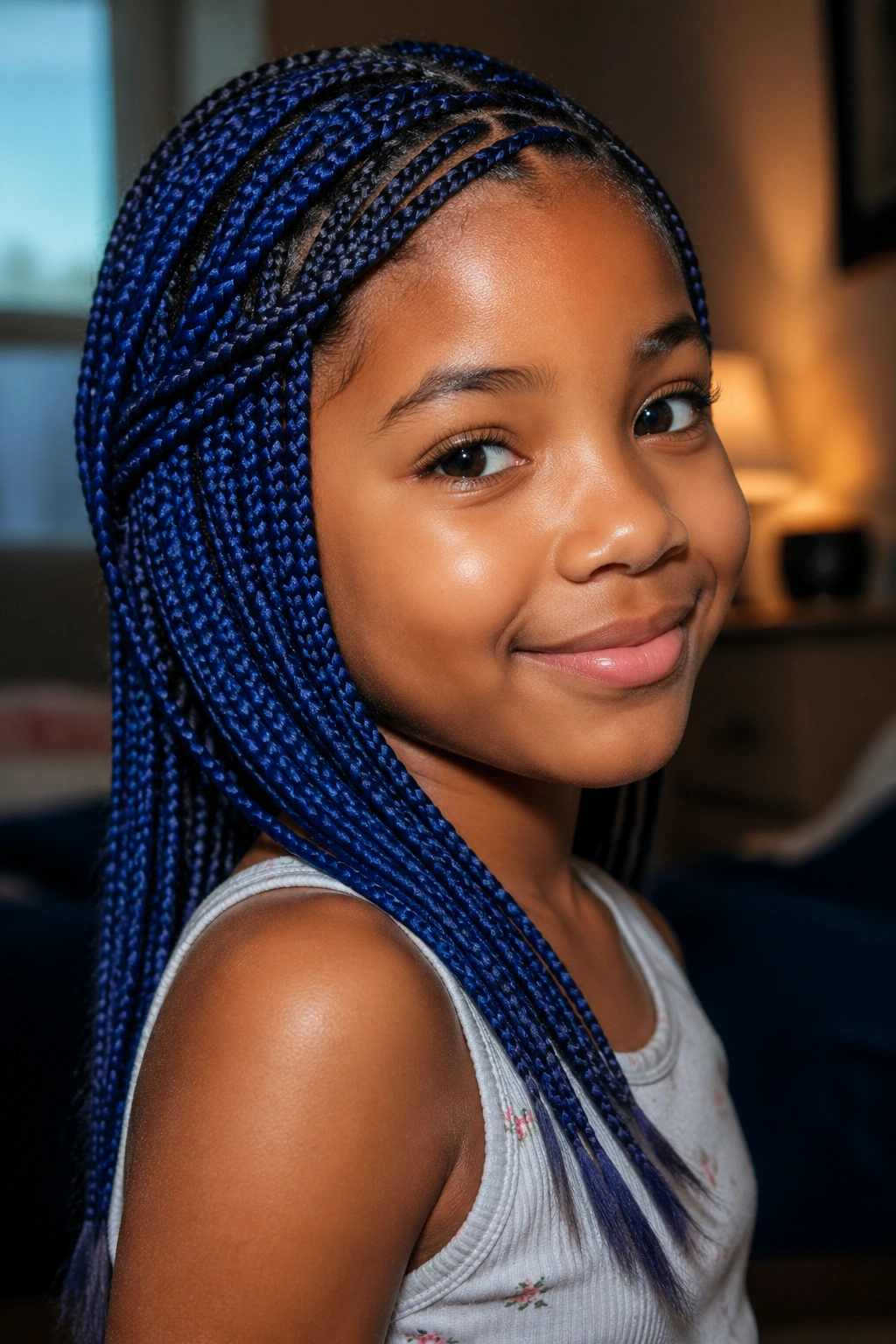
Small braids buy you time.
They hold their pattern longer, keep the color looking crisp, and tend to look neat even when the child has been active all day. The price is time in the chair. A small braid install asks for more patience from both the stylist and the kid, so this is not the pick for a child who gets squirmy after twenty minutes.
Think pencil-width sections, clean parting, and a finish that lands around the shoulders or collarbone. That combination keeps the style elegant without making it too bulky. A deep royal blue works well here because the smaller braids create a lot of texture, and the color helps each braid stand apart.
The downside is simple: more braids mean more touch points. More touch points mean more chances to fuss at the scalp if the style is installed too tightly. So if you go small, the root work has to stay gentle. No shortcuts there.
When the install is done well, the payoff is a neat braid pattern that can hold up through play, washing, and sleep better than a chunkier style.
14. Fulani-Inspired Blue Box Braids with a Front Cornrow Accent
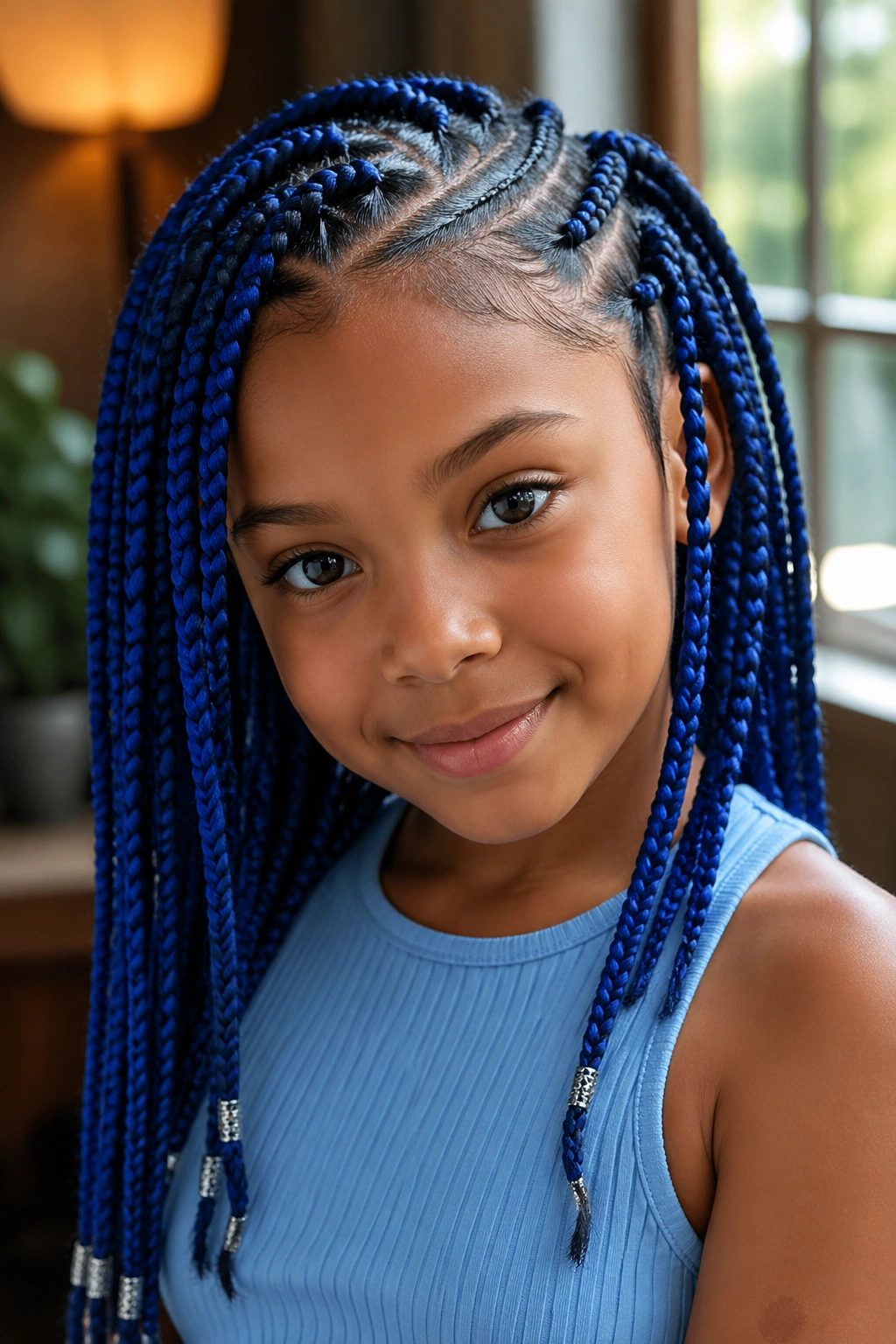
A little structure in front changes everything.
Fulani-inspired braids usually mix box braids with a few cornrow accents near the hairline or along the center part. On kids, that gives the style a clear shape without making the whole head look overworked. The blue color brings energy, and the cornrows add a frame that makes the face pop.
What Makes It Different
The front rows matter most here. A single center cornrow or two slim side cornrows can guide the eye back toward the box braids and keep the style from feeling too plain. If you add beads, keep them on the lower half of the braids so the front stays light.
- Front detail: 1 to 3 slim cornrows
- Main body: Medium box braids in cobalt or royal blue
- Accessories: Small beads or cuffs, not both at once
- Best look: Kids who like a little pattern around the face
The style works best when the front is tidy but not pulled hard. I would rather see a slightly looser cornrow than a perfect one that leaves a child irritated by lunch. The shape should frame the face, not fight it.
It’s a lovely option when you want the blue braids to feel a little dressier without adding a pile of extras.
15. Blue Box Braids with Heart Parts for a Sweet, Clean Finish
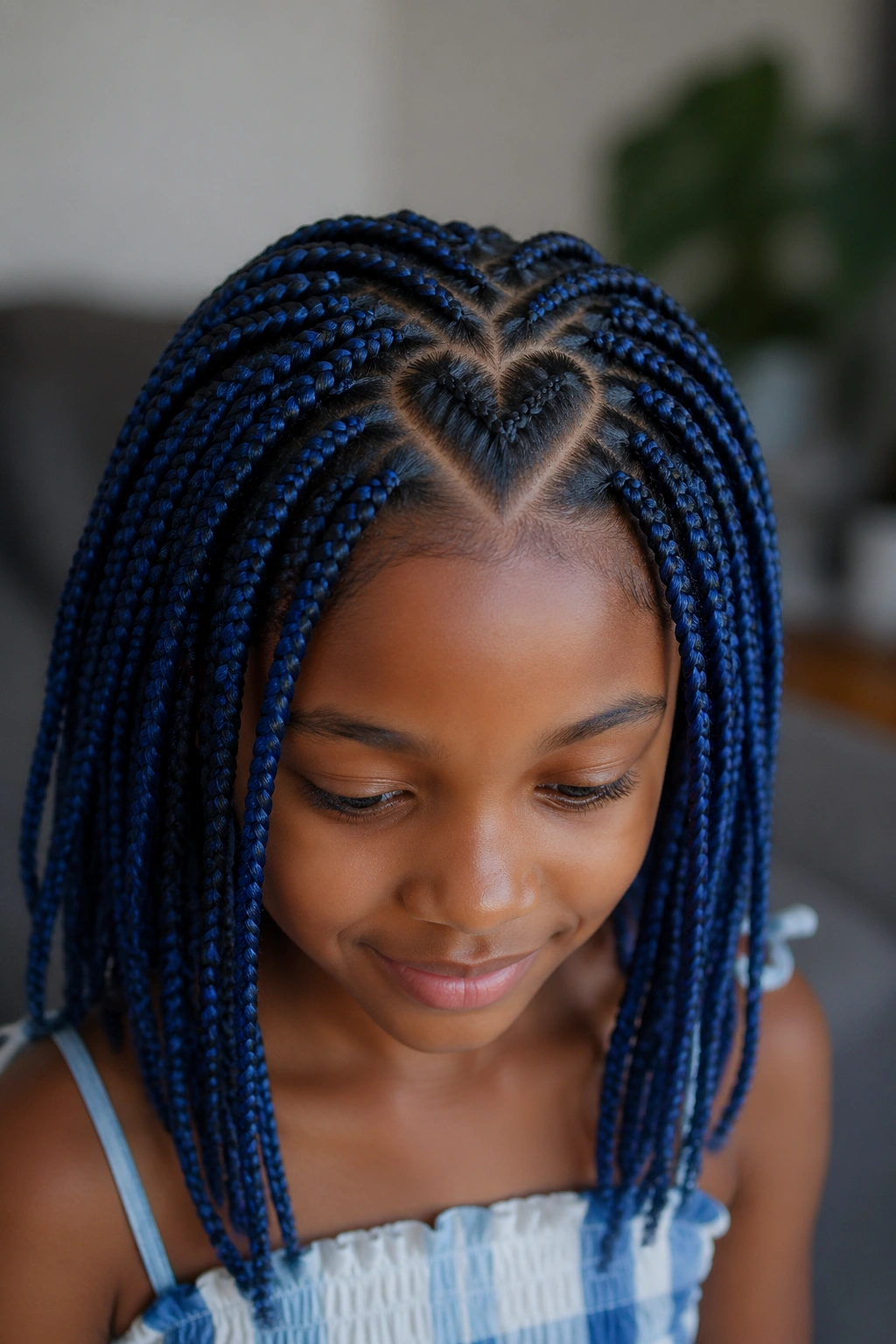
Can a child wear heart parts without the style feeling too much? Yes, if you keep the heart small.
Heart parts are one of those details that look tiny from a distance but make a huge difference up close. A heart shape near the crown or temple gives the braid style a little surprise, and kids usually notice it right away. The shape feels special without needing heavy accessories.
The best version uses a medium braid size and a clean parting hand. If the heart is too big, it gets sloppy fast. Around 2 to 3 inches wide is enough to show the shape without crowding the scalp. I also prefer this look on shoulder-length or collarbone braids, because the part design stays visible without being buried under too much hair.
This is a birthday style more than a school-hallway style, and that’s fine. Not every braid needs to work overtime. Sometimes the job is to make the child smile when she catches sight of her own head in the mirror.
Keep the rest of the style simple. The heart is the star, so it should not have to compete with too many beads or extra colors.
16. Side-Part Blue Box Braids with Face-Framing Pieces
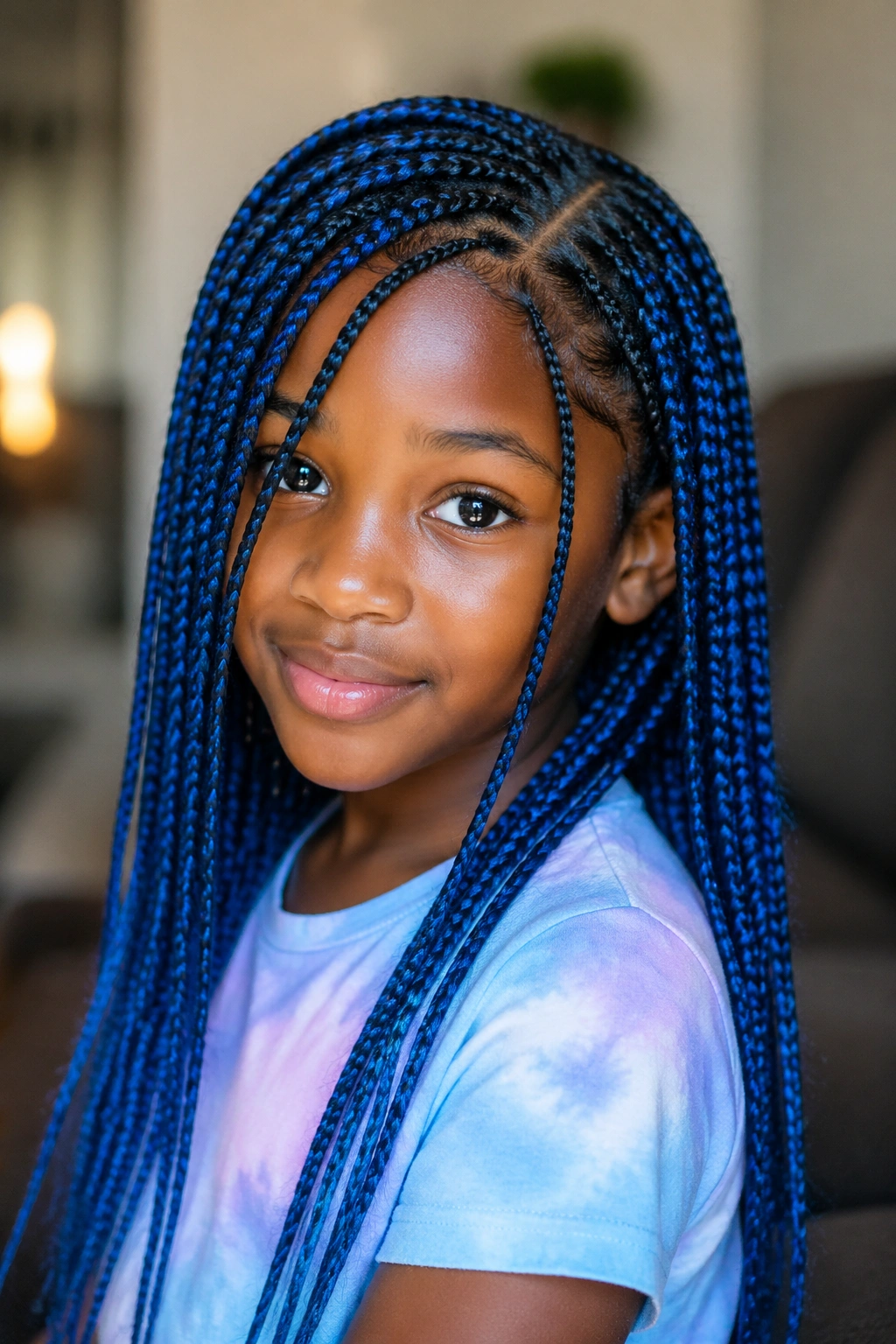
A center part is tidy, but a side part can feel friendlier.
That matters for kids who do not like hair sitting straight down the middle of the face. A side part shifts the weight a little, opens one side of the forehead, and gives the blue braids a softer line. Leave a pair of slimmer face-framing braids in front, and the whole style feels more relaxed.
This one works especially well with mid-back braids because the side part gives the length a place to fall. If the braids are too short, the side shape can disappear. If they’re too long, the style can feel heavy on the shoulder side. Somewhere in the middle is the sweet spot again.
I like to keep the part about 2 inches off center so the style looks intentional but not severe. The front pieces should skim the cheeks, not hang into the eyes. That small detail makes the braid easier to wear during school, lunch, and anything that involves looking down at a desk.
It’s a clean, easy version of blue box braids, and it works because it respects the child’s face shape instead of forcing the hair into one fixed look.
17. Mixed Blue Shades for Box Braids with Depth
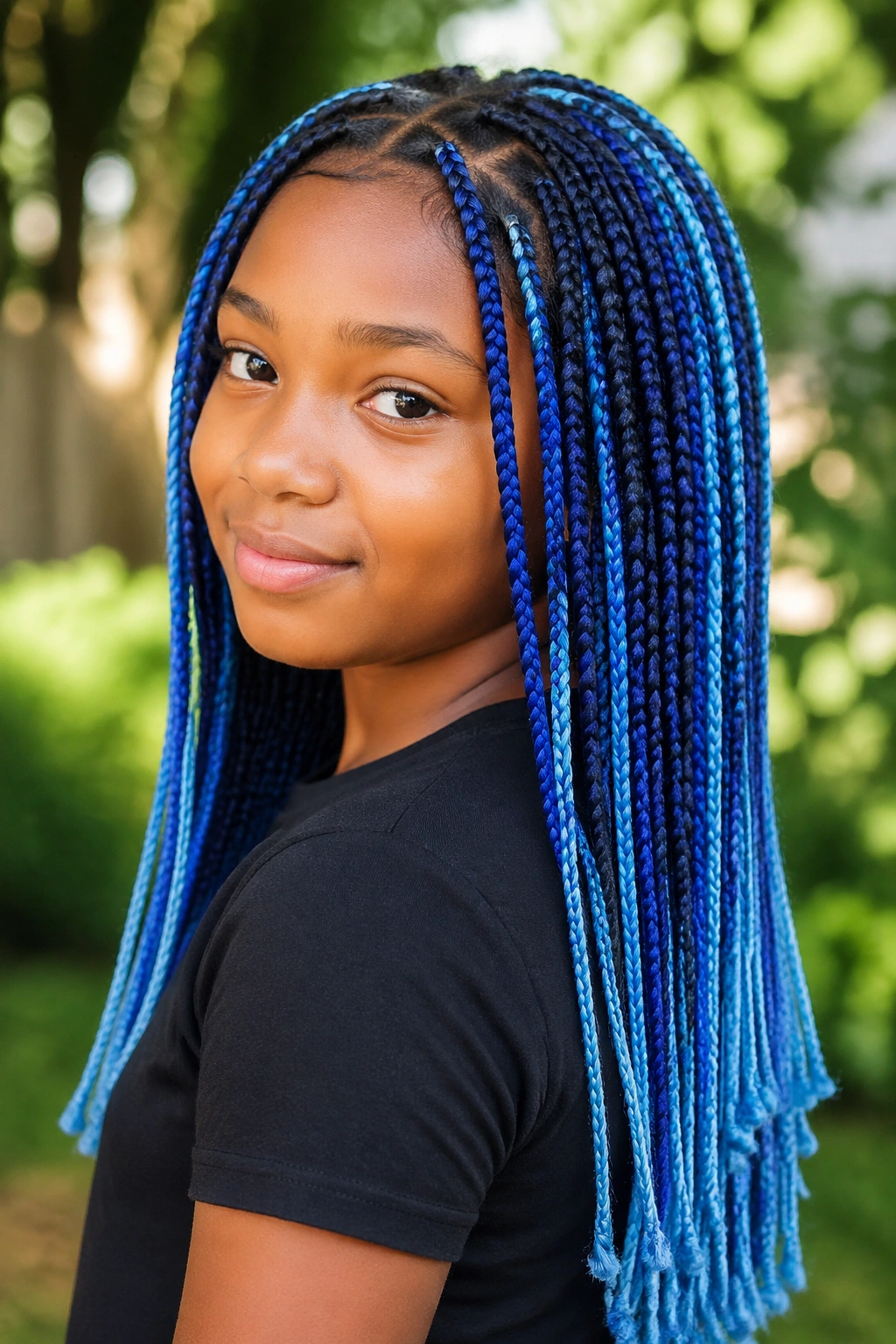
Flat color can be nice.
Mixed blue shades are better when you want the braids to have depth. A braid that blends navy, royal blue, and sky blue catches the eye in a gentler way than a single shade stretched across the whole head. The look feels layered, and the layers matter because they make the braid movement easier to notice.
A good way to do it is to keep the base darker and weave lighter blue through the outer rows or through a few accent braids. That keeps the style from looking patchy. Too many light strands placed too randomly can make the braid look busy, which is not what you want on a child’s head.
This version works well on longer braids, because the shade changes have room to show. Mid-back length is enough. The hair itself does the talking; no extra jewelry needed unless the child wants it. If you do add cuffs, keep them spaced out so the different blue tones still stay visible.
I like this style for kids who love color but do not want one loud block of it. It has movement, and it feels a little more thoughtful than a single-shade install.
18. Blue Box Braids with Ribbon Wraps and Soft Bows
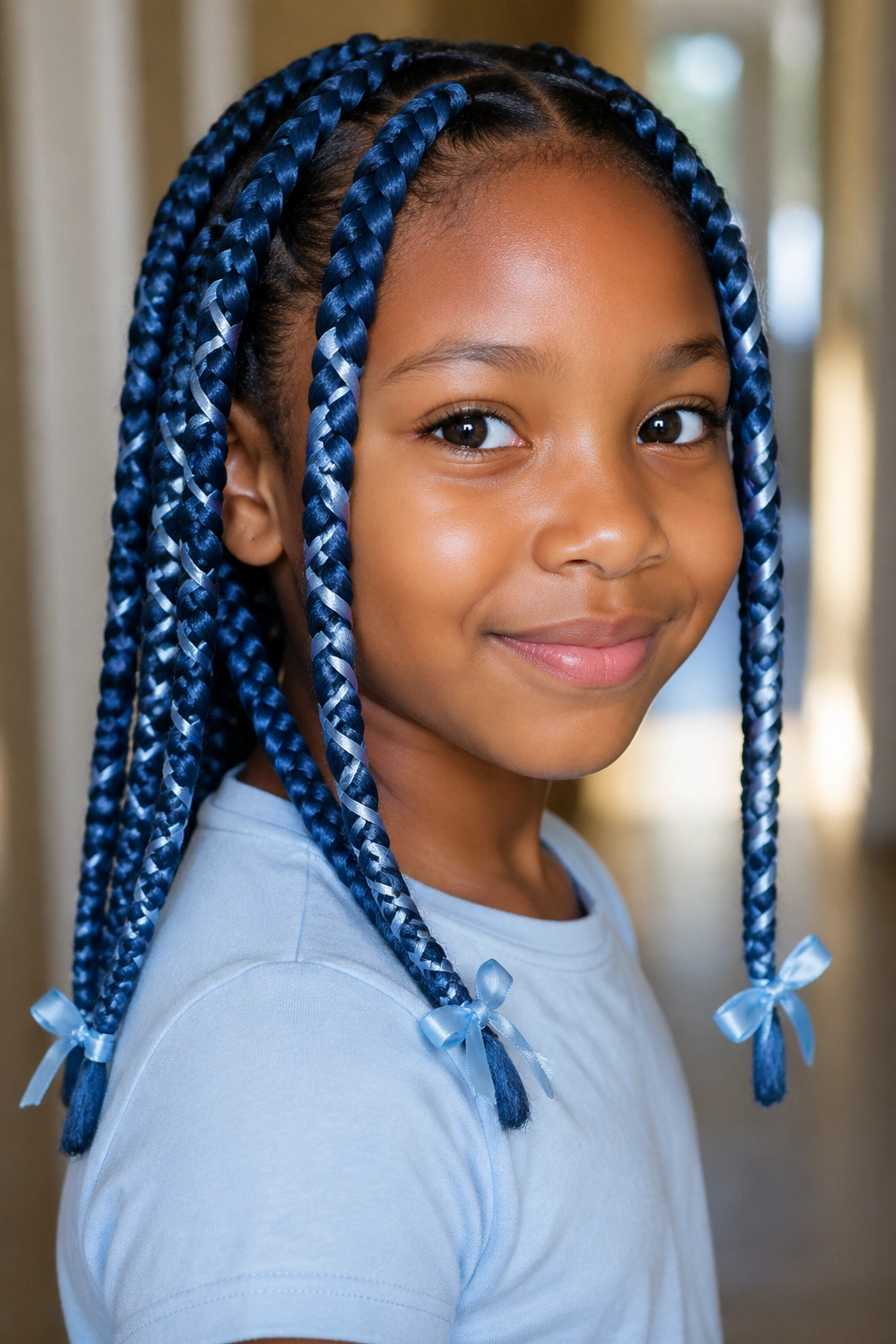
Ribbon is underrated.
A satin ribbon tied around a few braids or wound through the ends can make blue box braids feel dressed up without adding weight. Unlike beads, ribbon stays light. Unlike glittery accessories, it does not snag as easily. That makes it a strong option for kids who want something pretty but cannot stand the feel of extra hardware.
The best placement is near the ends or around one or two braids at the front. A ribbon tied too close to the root can look messy fast, and it can pull if the child keeps touching it. Keep the bow simple, about 1 to 2 inches wide, and let the braid still be the main thing.
This style is especially nice for school events, photos, or any day when the child wants blue hair with a softer finish. A ribbon in white, silver, or a pale matching blue works well with cobalt braids. If you want the color to stay center stage, use a thin ribbon rather than a thick one.
It’s a small touch, but small touches often win with kids. They notice the bow. They remember the bow. And they usually leave the braid alone because the bow feels special enough on its own.
Final Thoughts
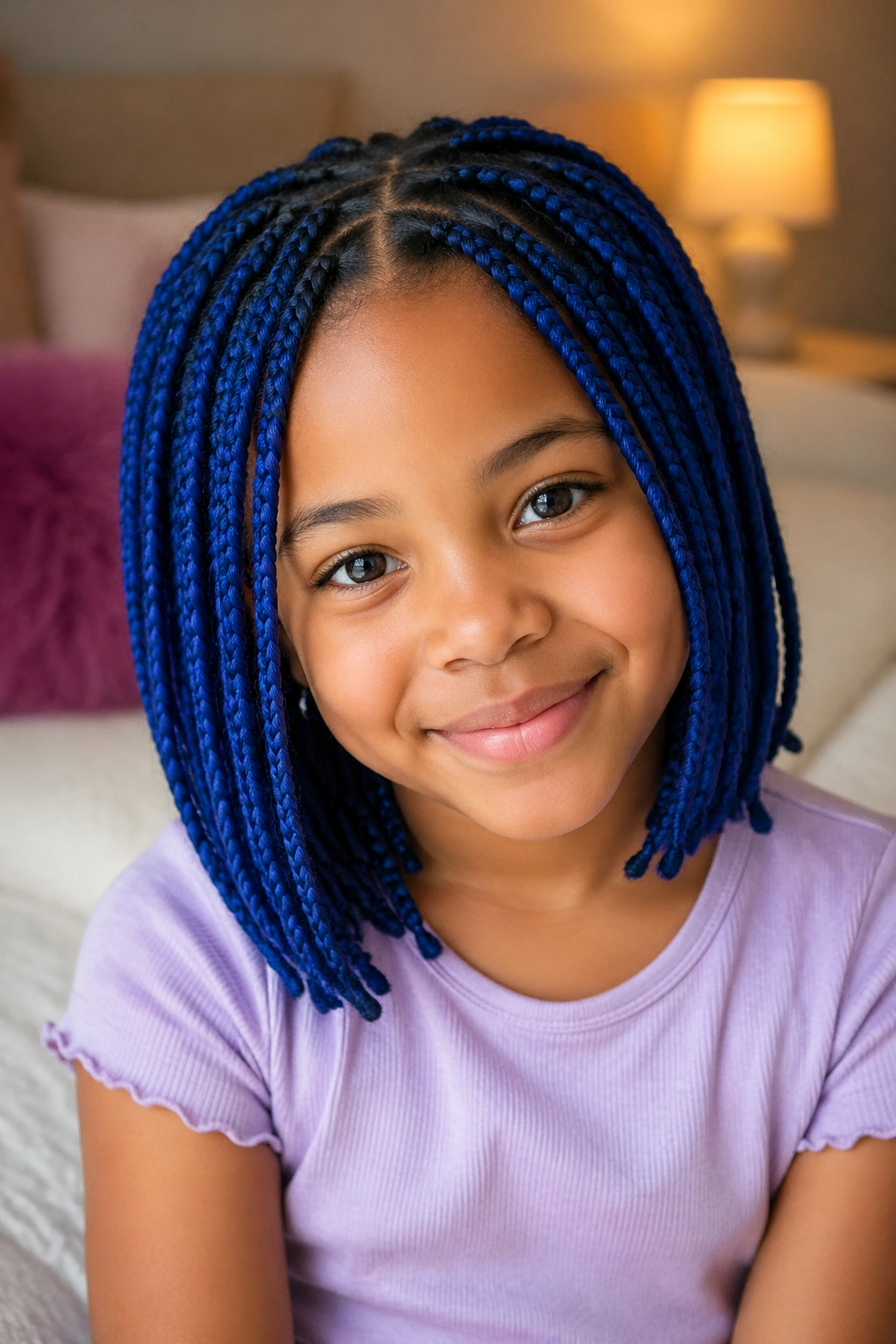
The prettiest blue box braids for kids are the ones a child can wear without fussing at them every five minutes. That usually means keeping the braids light, the length realistic, and the accessories sensible.
A style can still feel special at collarbone length. It can still feel dressy with a ribbon, a heart part, or a bead or two. The real win is when the hair fits the child’s day instead of forcing the day to revolve around the hair.
If you’re choosing between two looks, pick the one that puts less strain on the scalp and less weight on the ends. Cute matters. Comfort matters more.