



Box braids with heart designs for men work best when the rest of the style stays clean. A sharp line-up, a controlled braid size, and a part that actually follows the curve of the heart make the whole look land the right way. If the parting is sloppy, the shape reads muddled. If it’s crisp, it looks intentional and expensive without trying too hard.
The funny thing is that a heart design does not have to feel soft or playful. On a man, it can look bold, athletic, even a little defiant when it sits against a taper fade or a tight set of braids. The shape is doing the visual work, but the haircut around it is what keeps it from drifting into costume territory. That’s the part people miss.
Hair length matters here. So does density. A small heart can disappear in thick, coarse hair if the sections are too wide, while a bigger heart can look awkward on tiny braids because the parting has nowhere to breathe. The sweet spot is usually a style that gives the heart room to show from the front, side, or back without fighting the braid pattern.
And yes, the braider matters. A heart design is a parting trick first and a braid style second, which means clean sectioning, steady tension, and a calm hand are doing a lot of heavy lifting. The styles below range from subtle to loud, from low-key to hard to miss, and the best one is the one that fits the rest of your cut instead of shouting over it.
1. Small Heart at the Temple
A small heart at the temple is the easiest way to wear box braids with heart designs for men without feeling like you’ve gone all in on the idea. It sits off to the side, usually just above the fade, and gives you one clean visual moment instead of a full head of shape work. That makes it a good starting point if you want something noticeable but not flashy.
Why it works
The temple area is a natural place for detail because it already frames the face. A small heart there catches the eye fast, especially when the rest of the braids fall straight back or hang to the side. It also pairs well with a low or mid taper, since the fade gives the heart a clean border.
This style looks best when the heart is neat and not too deep. A shallow curve reads cleaner than a bulky one. If the part is too wide, the shape can look more like a blob than a heart, and that kills the whole point.
Best for: men who want one design feature, not a full pattern.
Ask for: a small heart part near one temple, with tight sectioning and a crisp taper around it.
One more thing. Keep the braid size medium or small here. Jumbo braids can crowd the design and make the heart look cramped.
2. Twin Hearts on Both Sides
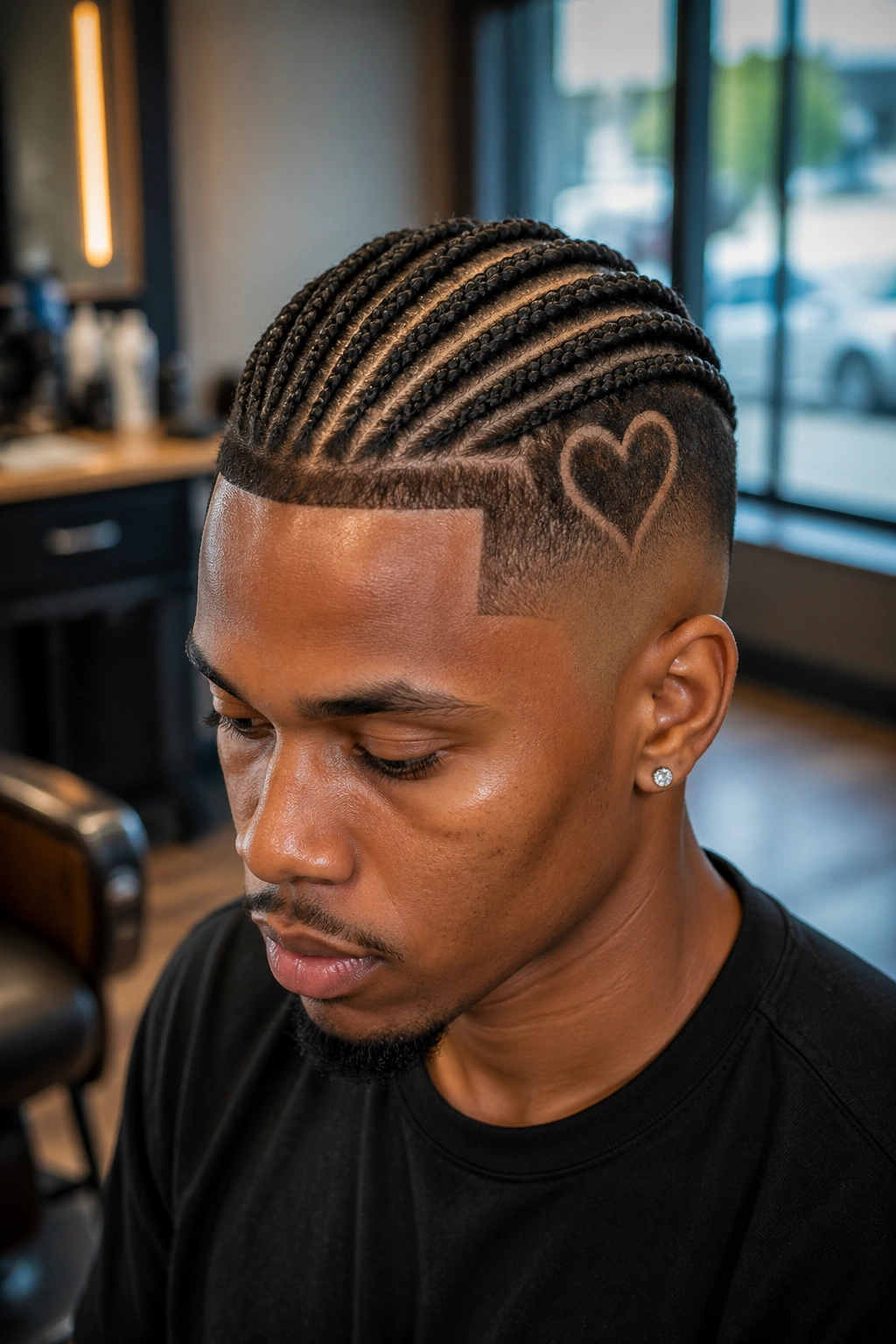
Twin hearts are for the man who likes symmetry. One heart sits on each side of the head, usually near the temples or just above the ears, and the look has a balanced, mirrored feel that can be surprisingly clean when the parts are done well. It’s a little bolder than a single heart, but not in a noisy way.
The trick is keeping both hearts close in size. If one side is bigger, the whole style starts to feel uneven, and not in a good way. The braids in the middle can stay straight while the side sections do the talking. That contrast gives the design room to breathe.
Twin hearts work especially well with medium box braids and a sharp fade. The fade keeps the sides from looking too crowded, while the hearts frame the face without pulling everything forward. If you wear a beard, this style can look even better when the beard line is clean and the sideburns are trimmed.
There’s a little drama here, but it’s controlled drama. That’s why it works.
3. A Single Heart Right at the Hairline
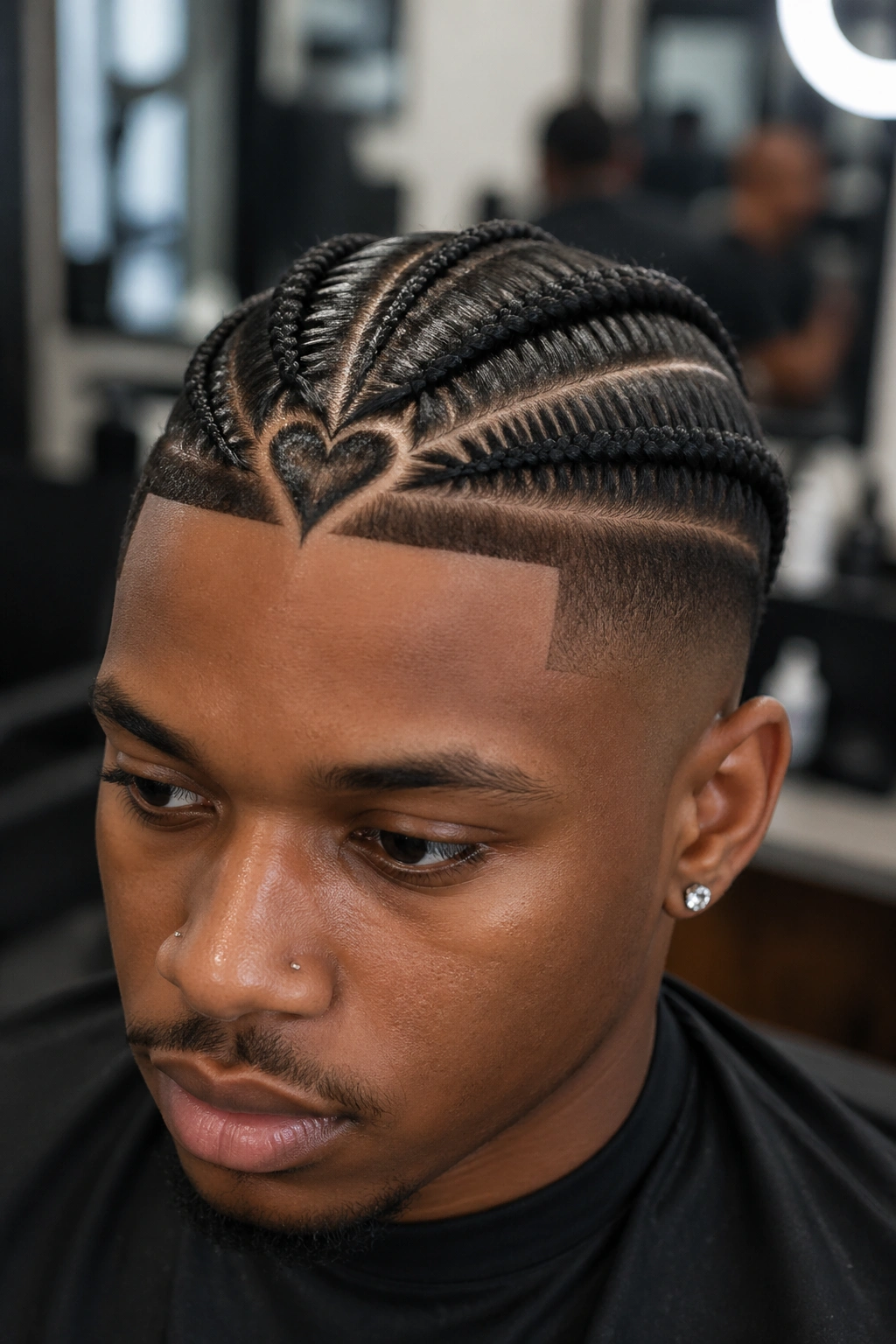
A heart placed at the front hairline is loud in the best way. You see it before you see anything else, which makes it a strong choice for men who like their braids to have a front-facing detail. The design sits where a lineup would usually be the star, so the heart becomes the main feature instead of a side note.
The shape needs a clean forehead line to work. If the hairline is uneven, the heart can get lost in the noise. A sharp edge-up and a neat part at the front make the design look deliberate, not decorative.
This version works well with braids pulled straight back from the face. A center part or two clean front parts help the heart sit in the middle like it belongs there. You can keep the braid length short or medium, but I’d avoid very long braids for this one unless you want the front detail to get swallowed.
What to watch for
- The heart should be centered, not drifting left or right.
- The top point needs to stop cleanly at the hairline.
- Thin sections make the shape read faster.
- A fresh lineup makes the whole thing look sharper.
If you like styles that get noticed from across the room, this one does that without needing color or beads.
4. Heart Design Leading Into a High Ponytail
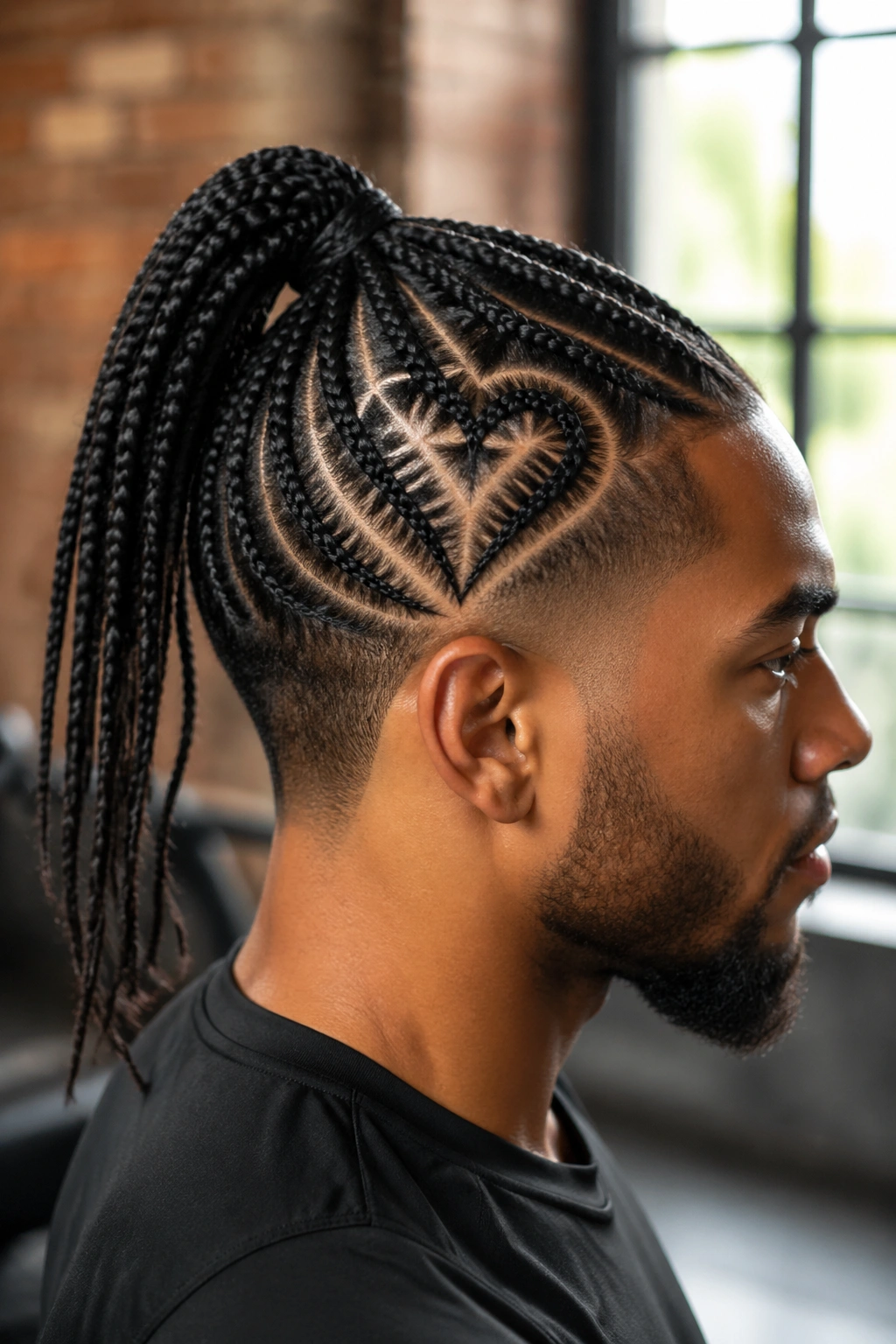
A heart that feeds into a high ponytail has a nice contrast: the scalp design is detailed, then the braids pull upward and tight. That gives the style a little lift, both visually and literally. It also keeps the heart from getting lost under hanging braids.
The heart usually sits on the crown or just behind the front hairline. From there, the braids are gathered into a ponytail, bun, or knot. That top section gives the heart a purpose. It’s not just sitting there looking pretty; it’s part of the direction of the style.
This is one of the better choices for men who like an athletic silhouette. The pulled-up shape exposes the face, the fade or taper on the sides keeps the profile clean, and the heart adds detail without making the whole look soft. That last part matters if you want the style to feel sharp.
A ponytail style like this also makes maintenance easier in one small way: the top section stays more contained during the day. Less rubbing. Less fuzz.
5. Heart and Zigzag Parting
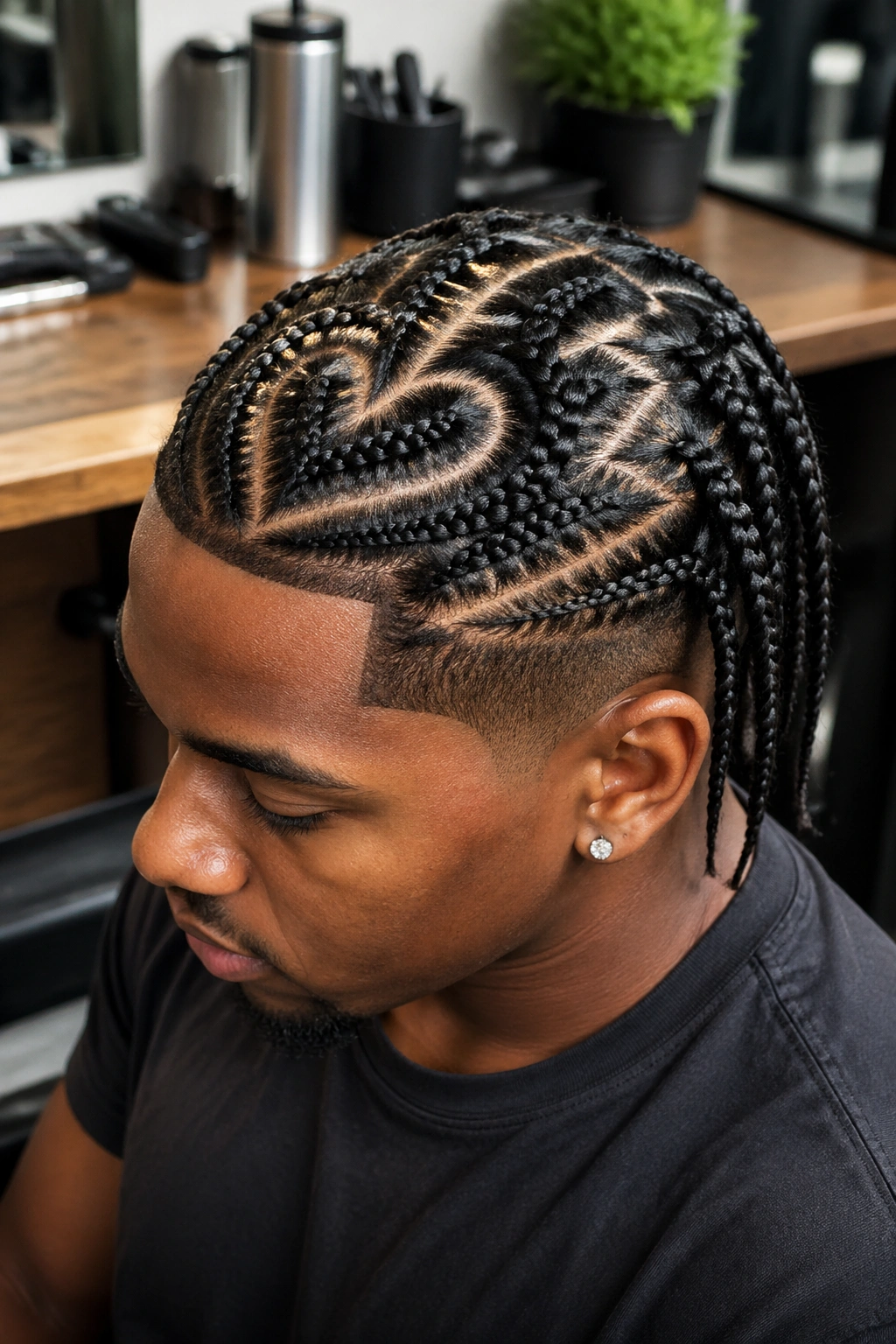
A heart paired with zigzag parting is the style for someone who wants one shape to lead into another. The zigzag adds motion, and the heart gives it a clear focal point. On the scalp, that combination looks more complex than it actually is, which is part of the appeal.
The cleanest version uses the heart near the front or side, then lets the zigzag parts travel backward between braid rows. The zigzags should not be too tight or too busy. When people overdo them, the scalp starts to look crowded. A few well-placed angles are enough.
This style works because it breaks the grid of standard box braids. Regular sections can feel predictable. A heart with zigzags changes the rhythm of the head without forcing a whole new braid pattern.
Best details to keep in mind
- Keep the heart larger than the zigzag line thickness.
- Use the zigzag on one side or one path, not everywhere.
- Medium braids show the pattern better than very thick ones.
- A clean parting comb makes a real difference here.
There’s a reason this one shows up in sharper braid work. It looks technical without being fussy.
6. Jumbo Box Braids With One Oversized Heart
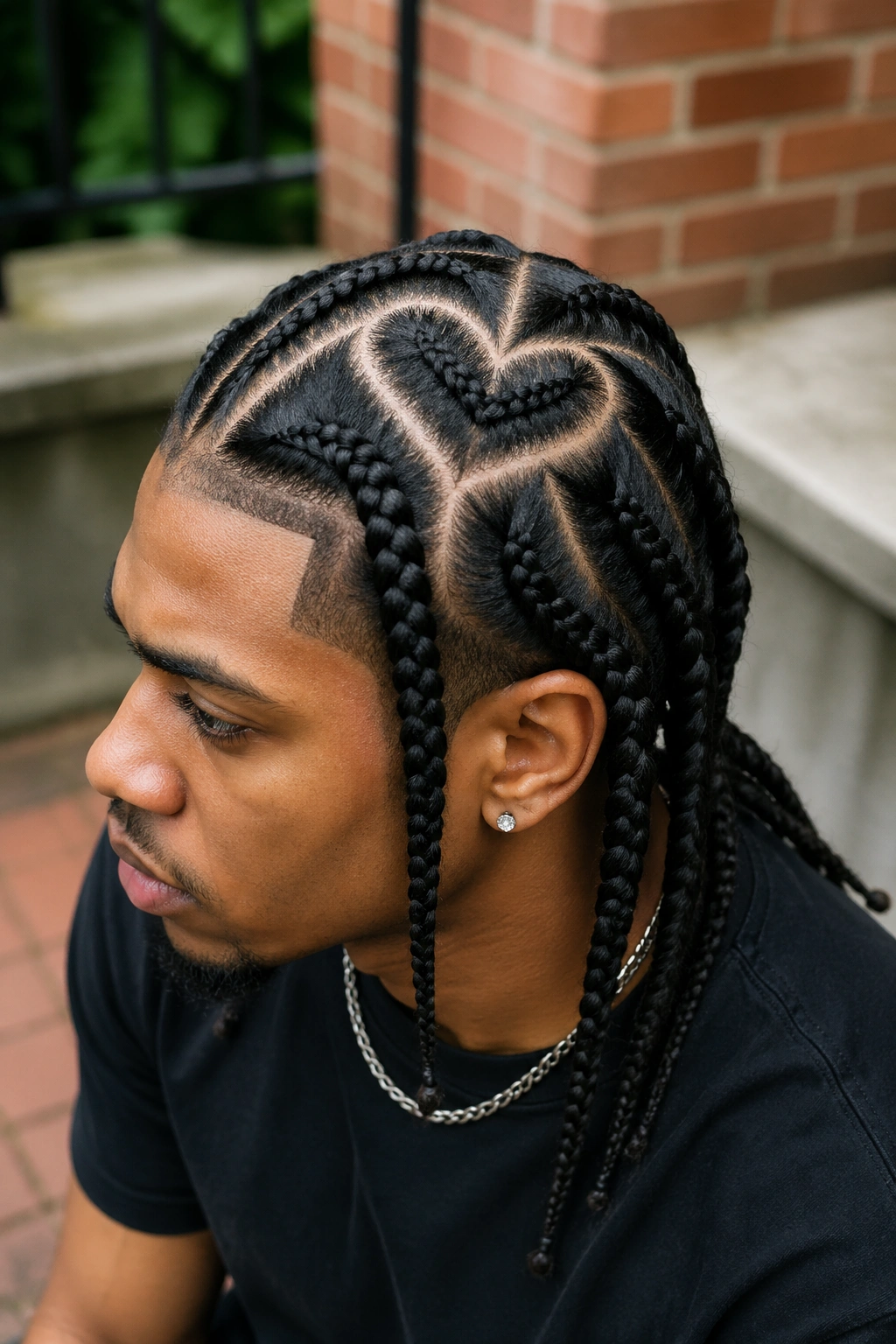
Jumbo braids are not the obvious choice for heart designs, and that’s exactly why they work. The bigger braid size leaves fewer sections on the scalp, so one oversized heart becomes the obvious centerpiece. Nothing gets crowded. Nothing gets hidden. The design has room to be seen.
This version suits men who want a strong shape but do not want to sit in a chair for a marathon braid session. Fewer parts mean a faster install, and the oversized heart helps the style still feel detailed. If the heart is too small on jumbo braids, it looks like an afterthought. Bigger is better here.
The side effect of the jumbo size is that the scalp design should stay simple. One heart. Maybe one clean side part. That’s enough. If you pile on too many shapes, the style starts to wobble.
This is a good style for thick hair and broad facial features. It has weight. It looks solid. And when the parts are neat, it reads as strong rather than busy.
7. Knotless Box Braids With a Hidden Heart
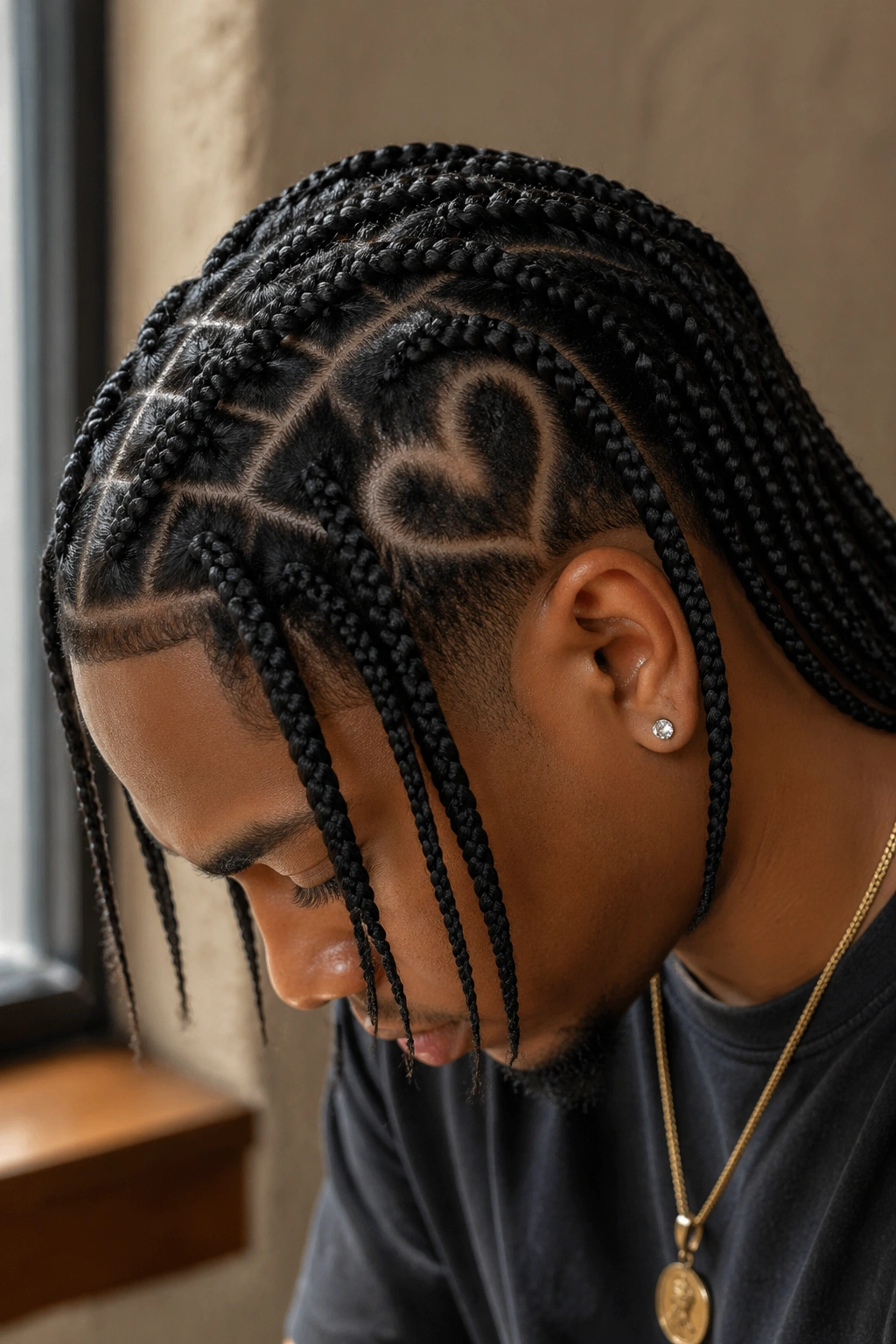
A hidden heart in knotless box braids feels calmer and more grown. The shape is still there, but it does not scream for attention. It can sit under a top layer of braids or off to the side where only certain angles catch it. That makes the style feel private, which some men prefer.
Knotless braids help because the scalp looks softer and the sections lay flatter. The heart can blend into that flatter base instead of fighting a bulky knot at the root. The result is cleaner around the forehead and more comfortable on the scalp, especially if you wear the braids for more than a quick weekend.
This is the style I’d point to if someone likes detail but hates obvious detail. It’s still a heart design. It just doesn’t act like one from across the street.
How to keep it subtle
- Keep the heart slightly off-center.
- Ask for thinner, flatter parts around the design.
- Use braid thickness that matches the rest of the head.
- Avoid heavy color if you want the shape to stay quiet.
There’s a little elegance in holding back. This style understands that.
8. Heart Design Framed by a Taper Fade
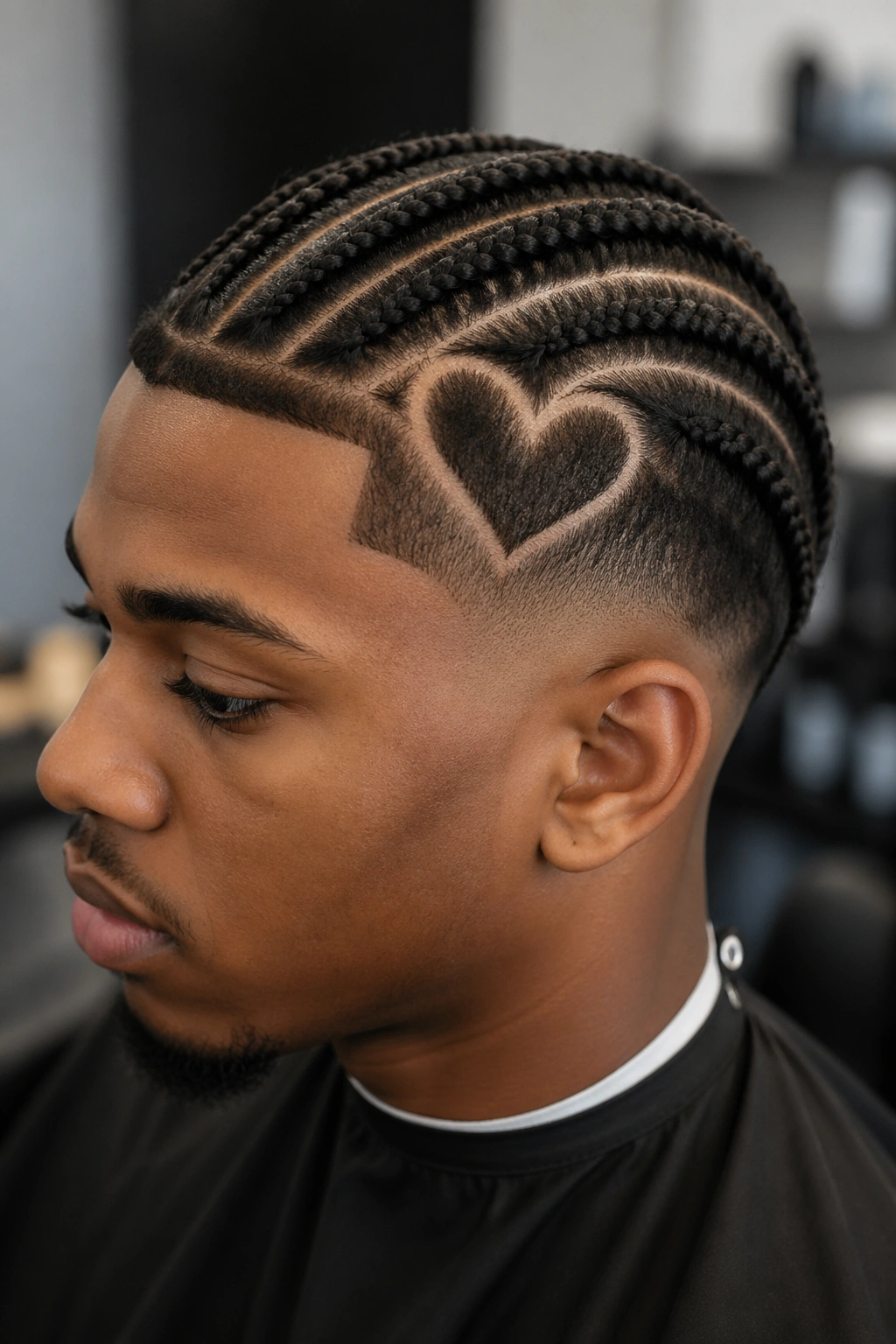
A taper fade gives a heart design structure. Without the fade, the heart can float a little too much. With the fade, it gets a clean border that makes the shape pop. That framing effect is why this version works so well on men’s box braids.
The fade can be low, mid, or high, but I like a low taper best here. It keeps the cut neat without stealing attention from the braid work. The heart usually sits where the fade meets the braid sections, which creates a nice visual stop. Your eye knows exactly where to land.
This is also one of the easier styles to pair with a beard. Keep the beard edges lined up, and the whole look feels connected from top to bottom. Skip the sloppy neck line, though. That ruins the point fast.
The neatness matters more than people think. A taper fade is not just a background detail; it is part of the design.
9. Half-Up Box Braids With a Heart Crown
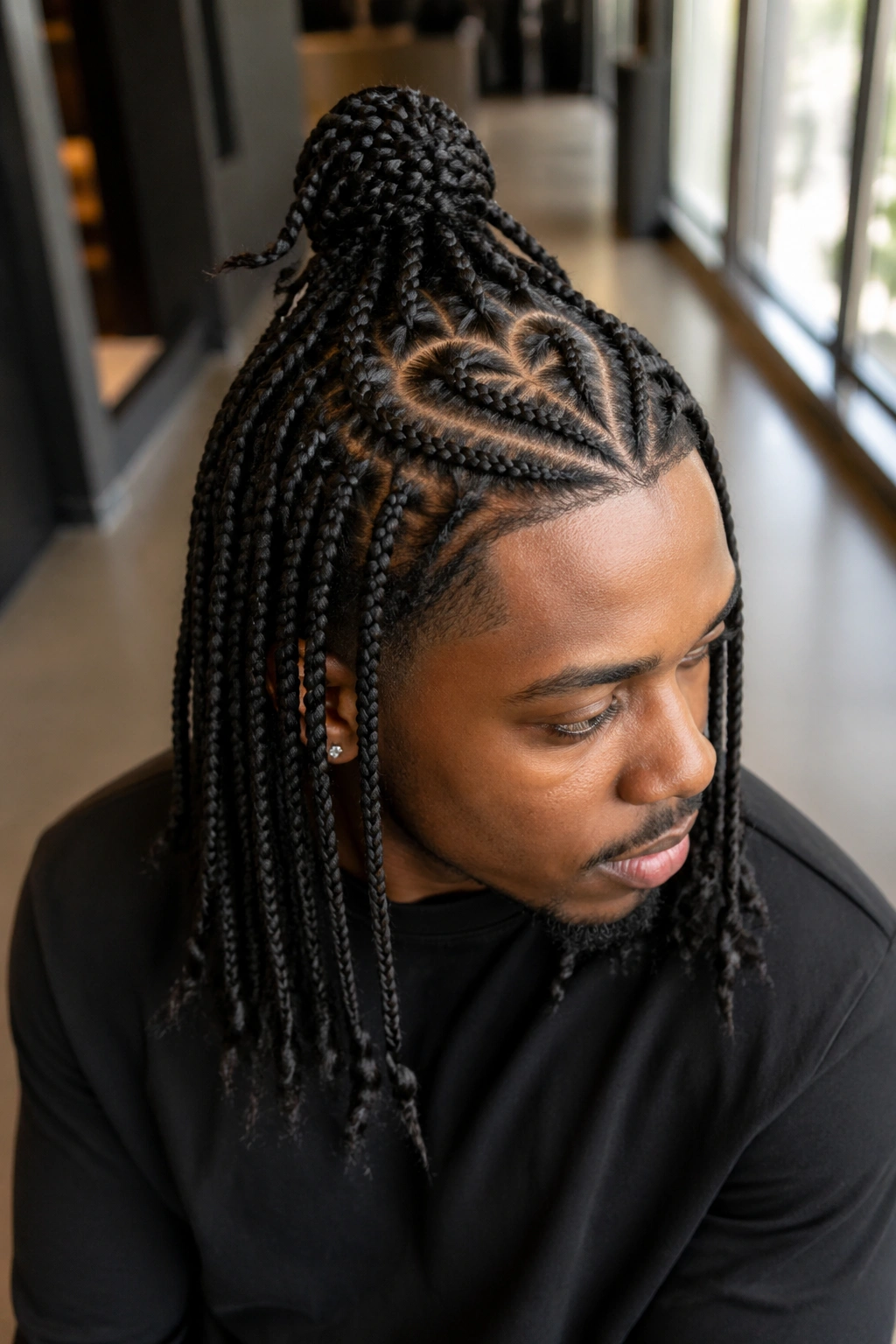
Half-up box braids let the heart live near the crown, where it can sit above loose lengths and still be seen. The top section gets gathered into a bun, puff, or ponytail, while the rest falls down. That mix gives the heart a framed, almost crowned look.
I like this one for medium-length braids because the top section has enough weight to hold shape, but not so much that the style drags. The heart can sit just ahead of the tie point, which makes it part of the visual center of the haircut. It’s a smart spot. It stays visible when the hair is up and still looks good when the hair hangs loose.
The style reads polished without feeling stiff. That’s the balance people usually want but rarely say out loud. You get structure on top and movement below.
What to tell your braider
- Put the heart just before the half-up section.
- Keep the top parts clean so the tie doesn’t cover the design.
- Make the braids around the crown slightly tighter than the rest.
- Leave enough length to wrap the top section once without strain.
It’s a style that looks better the longer you wear it into the day.
10. Beaded Box Braids With a Heart Part
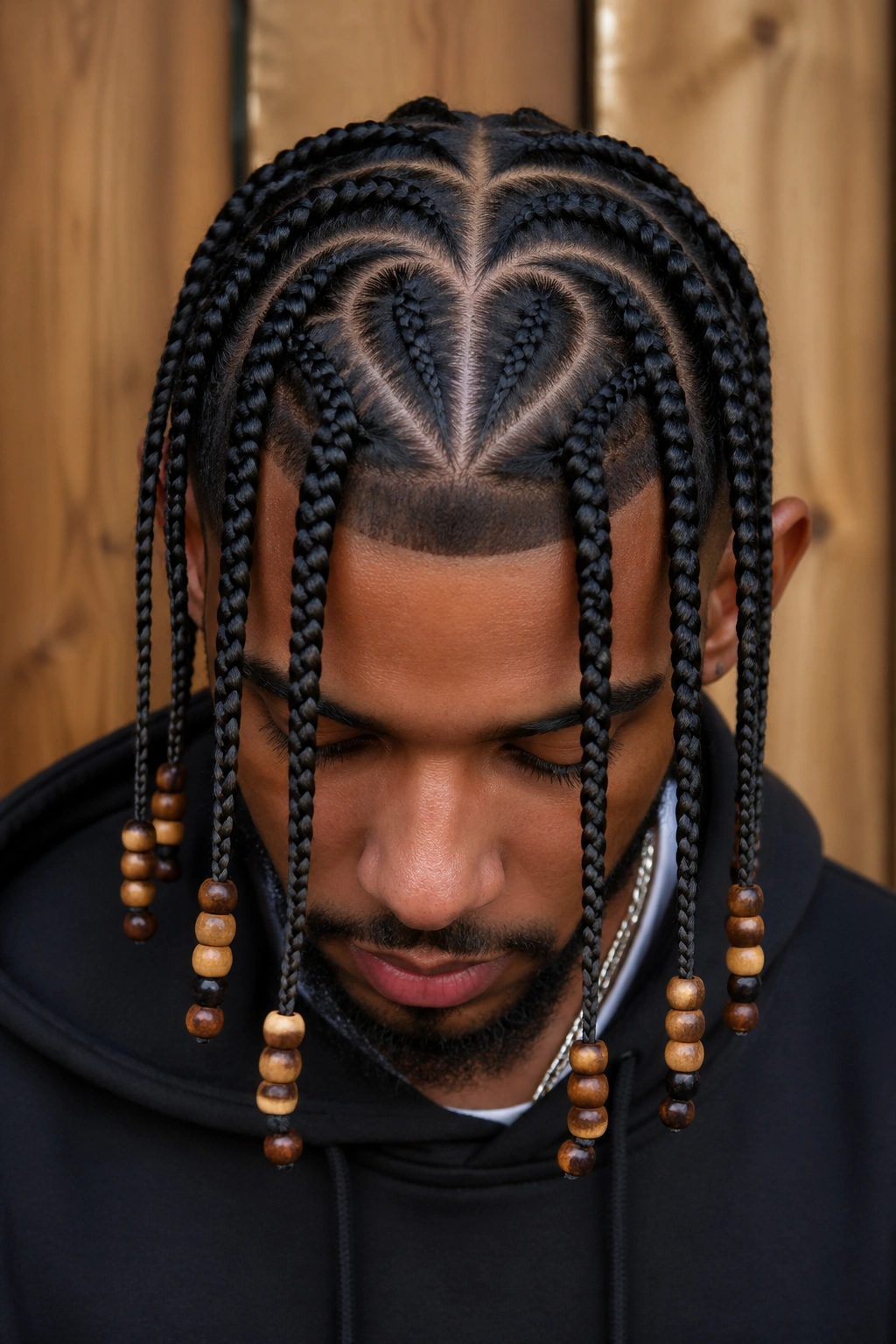
Beads change the mood fast. Add them to box braids with a heart part, and the style gets a sharper finish at the ends without messing with the scalp design. That’s useful, because the heart stays the main feature while the beads give the braid ends some weight and sound.
This combination works best when the heart part is simple and the bead choice is restrained. One bead color, maybe two at most. Too many colors can turn the whole thing into a craft project. Clean wooden beads, black beads, or clear accents are safer and look better with men’s braids.
The sounds matter, too. Beads click and tap when you move. Some people like that. Some don’t. If you train, work, or wear headphones a lot, test the length first so the ends do not annoy you.
Beads and hearts make a nice contrast. One is hard edge detail, the other is end-point texture. Together they keep the style from feeling flat.
11. Shoulder-Length Box Braids With a Soft Heart Outline
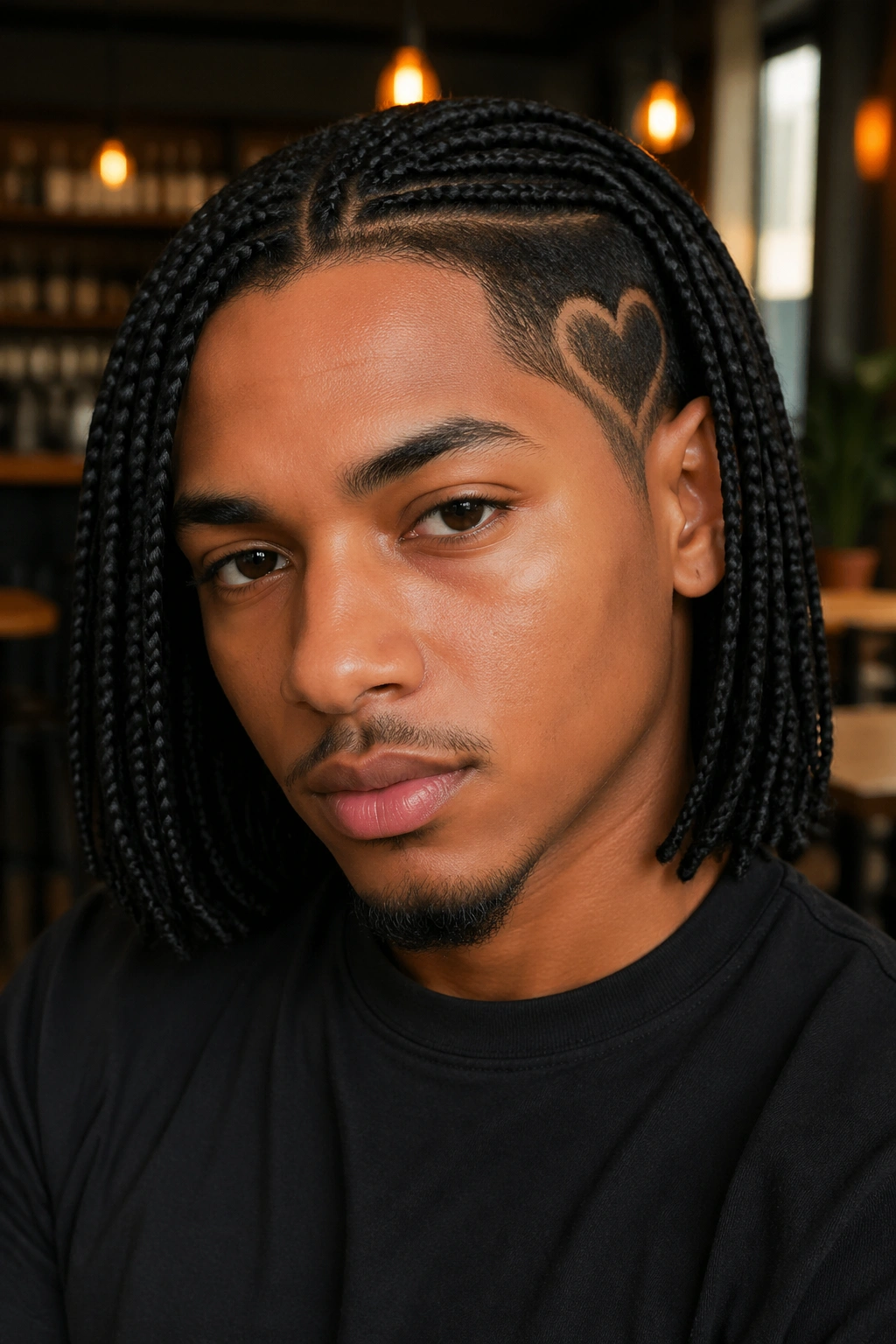
Shoulder-length braids give a heart design more room to feel relaxed. The hair does not pull everything upward, so the heart outline can sit in a softer, more open space. That makes this one a good pick if you want a shape that is clear but not too graphic.
The heart should be broader here than it would be on short braids. Shorter lengths can handle tight, small details; shoulder-length styles need a shape that reads from a little distance. A soft outline works better than a sharp cut-in, especially if the braids themselves are medium size.
This is one of the most wearable versions on the list. It can go casual, clean, or dressed up depending on your fade and your braid neatness. If the parts are fresh, the style feels considered. If they’re fuzzy, the heart loses its edge fast.
There’s no need to overcomplicate it. Let the length do some of the work.
12. Undercut Heart Mohawk Braids
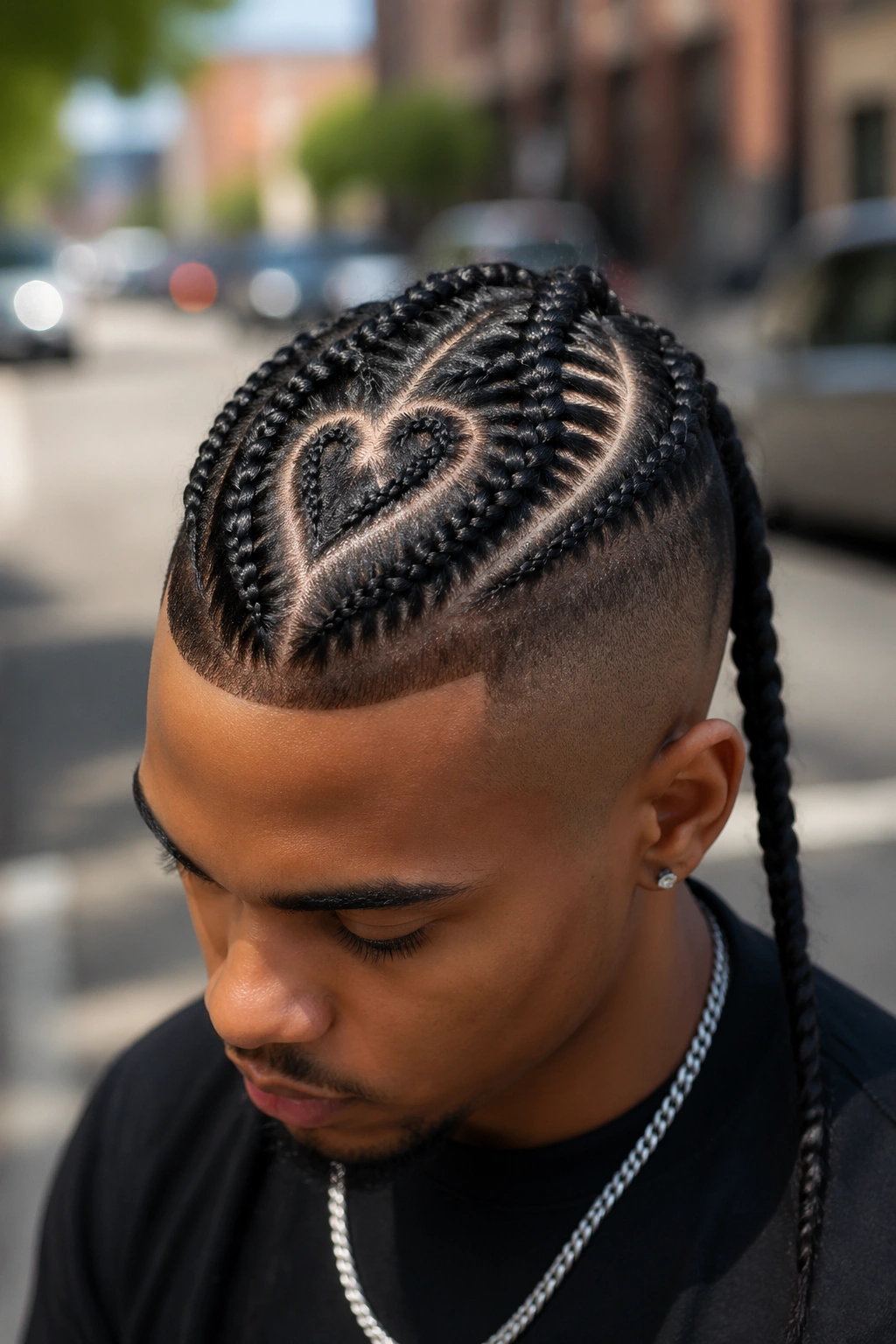
An undercut heart mohawk is loud, but it knows what it’s doing. The sides are cut down or clipped low, the braid strip runs through the center, and the heart sits right where the eye wants to land. That central placement gives the style a strong spine.
This version works when you want the heart design to feel more like part of a full haircut and less like a decorative add-on. The undercut sharpens the profile. The mohawk strip creates a natural lane for the braids. The heart becomes the detail that pulls the whole thing together.
It’s not a quiet style. Fine. It doesn’t need to be. The key is keeping the center braid line neat enough to support the shape. If the strip is uneven, the heart gets dragged off balance.
Best pairings
- A clean line-up at the front
- Short sides or a full undercut
- Medium-thick braids through the center
- A beard with sharp edges, if you wear one
The mohawk shape gives the heart a stage. That’s the whole point.
13. Side-Swept Box Braids With an Off-Center Heart Part
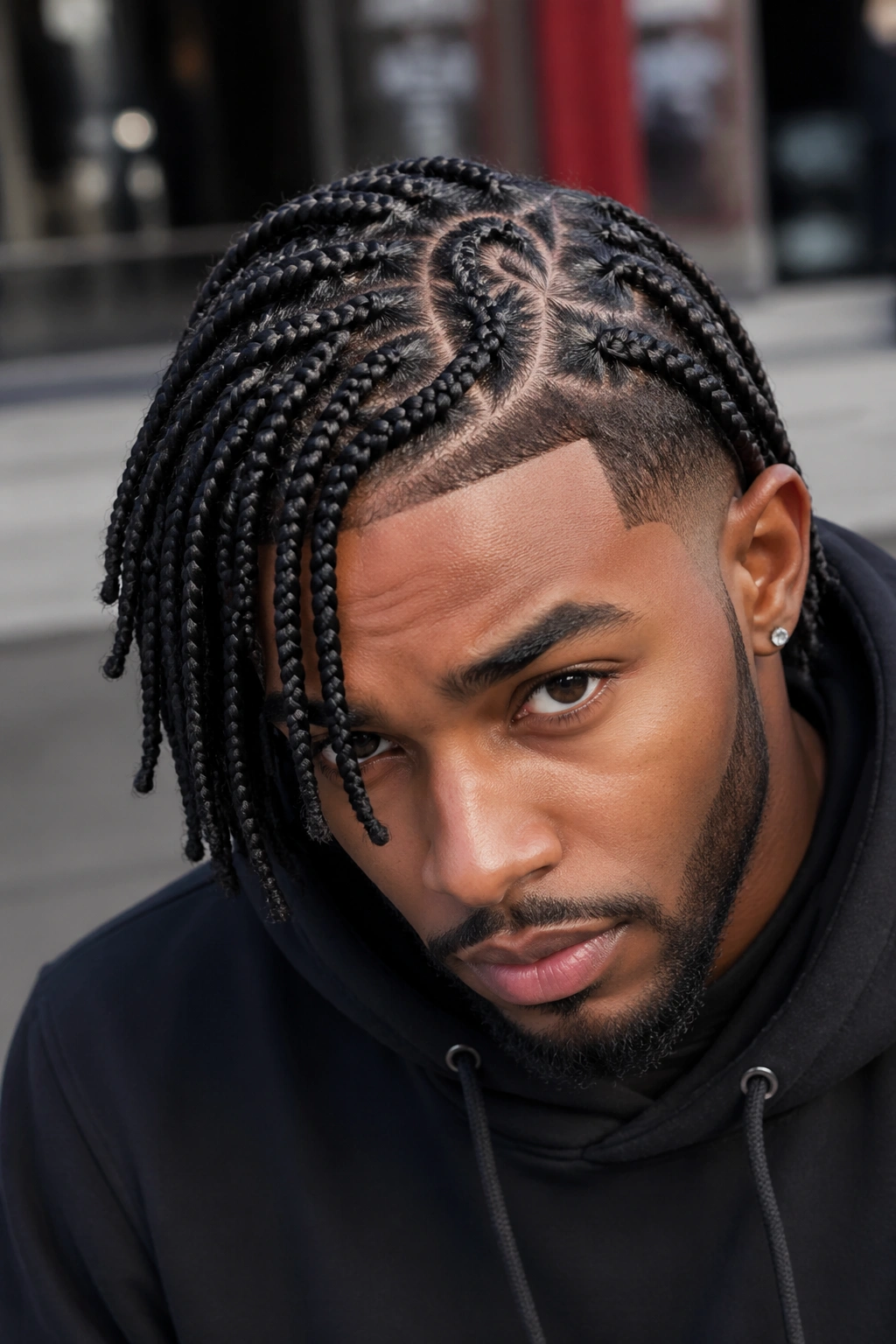
Side-swept braids shift the energy of the whole style. Instead of everything falling straight back, the braids angle to one side, and the heart part sits off-center to match that movement. The result feels a little more relaxed, a little less formal, and a lot more human.
The off-center heart matters because it keeps the style from looking too staged. A centered heart can be strong, but a side-swept version has motion. It looks like the haircut is doing something, not just sitting there. That can be a good thing if you like styles with flow.
This works especially well on men with naturally fuller hairlines or broader foreheads, because the side sweep softens the front without hiding it. It also gives you room to show a fade on one side and keep the other side fuller.
Not every braid style needs to be symmetrical. Some of the best ones aren’t.
14. Two Micro Hearts for a Clean, Minimal Look
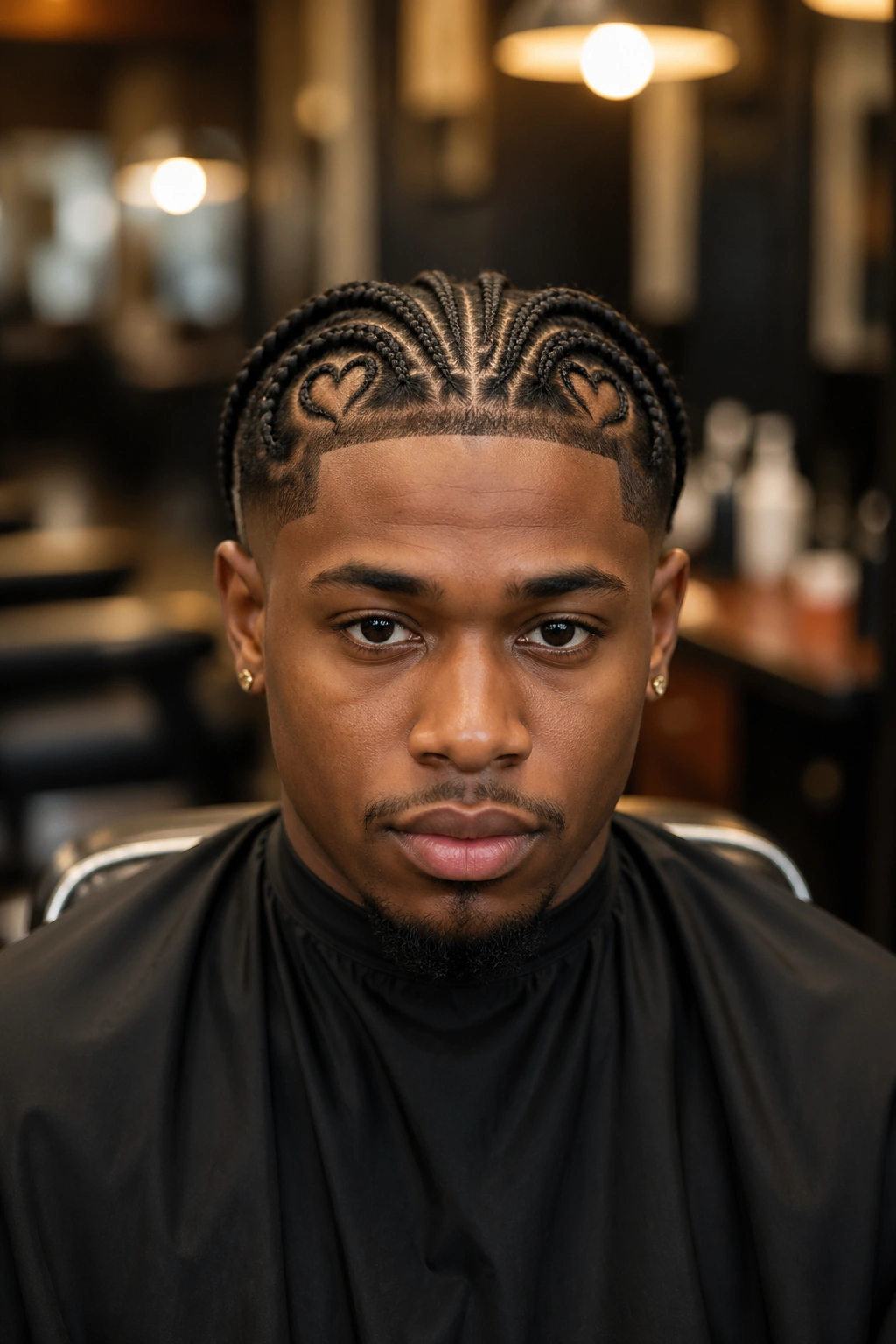
Two micro hearts are the opposite of loud. They’re small, tight, and easy to miss unless you’re looking closely. That is why they work. Men who want a design without turning the whole head into a pattern can use micro hearts as a quiet flex.
The best place for these is usually near the front sections or just behind the temples. One on each side keeps the layout balanced, but the shapes stay tiny enough that the braids remain the main event. You can pair them with knotless braids, small box braids, or a light taper.
Micro hearts are good if you have a job or dress code that calls for something polished. The design detail is there, but it does not dominate the room. That balance can be hard to find, and most people miss it by making the shapes too big.
What makes this style different
- The design is readable only up close.
- The braids stay clean and minimal.
- The look works with short, medium, or longer braid lengths.
- It depends more on part precision than braid size.
Tiny design. Strong effect.
15. Heart Design at the Nape of the Neck
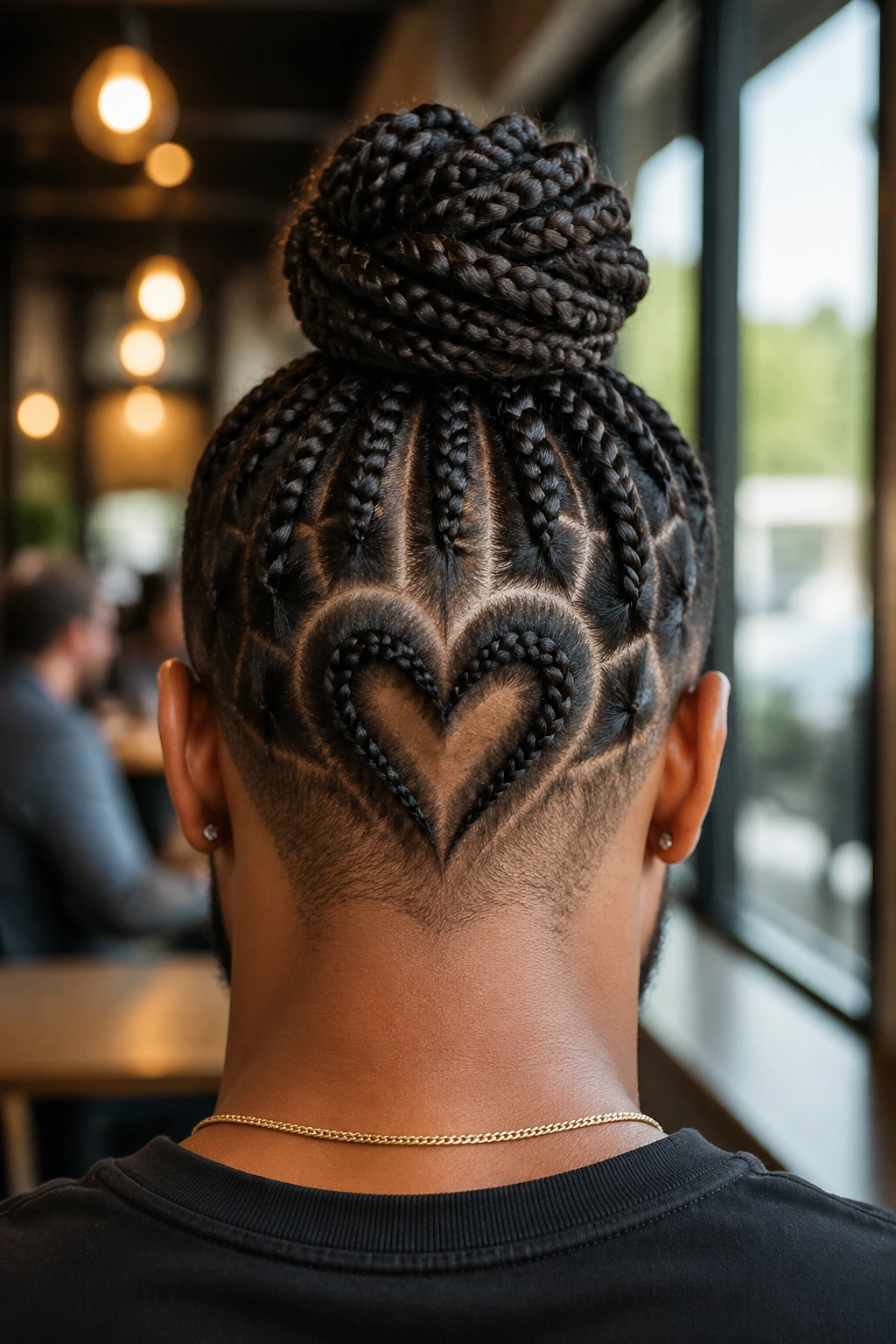
A heart at the nape is for men who like a surprise. You do not see it head-on unless the braids are tied up, but when it shows, it changes the whole mood of the style. It feels personal. Almost hidden.
This placement works well if you wear a bun, ponytail, or half-up style. The heart sits low on the back of the head, often just above the neckline, and acts like a signature detail. It is not the first thing people notice. That is part of the charm.
The nape design can also be useful if you want something more understated for work or school. Most of the time, the style reads like standard box braids. Then you tie the hair up, and there it is. Clean. Unexpected. A little sharper than people expect.
You need a tidy neck fade or a clean neckline for this one. Mess there will make the design look accidental.
16. Colored Box Braids With a Heart Outline
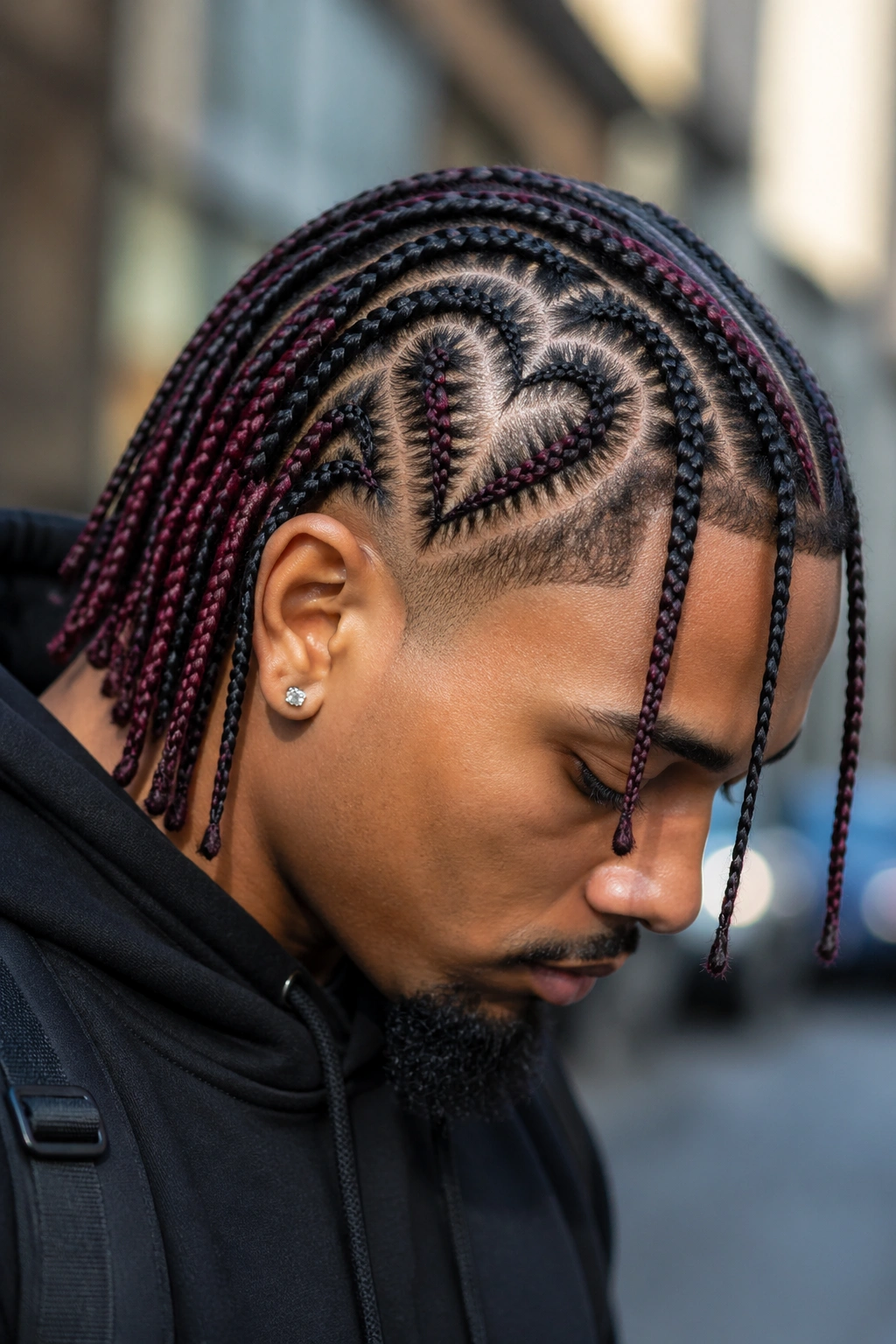
Color changes how a heart design reads. A burgundy outline, a deep blonde braid, or even a two-tone mix can make the heart shape stand off the scalp in a stronger way. The outline no longer depends only on parting; the color helps carry the shape.
This is a good move if you want the design to stand out in photos or under bright light. Dark hair and dark parts can blur together a little. Add color, and the lines separate faster. You do not need neon shades unless that’s your thing. Subtle color often looks better with men’s braids because it keeps the style from feeling too busy.
The heart outline should still stay crisp. Color is support, not a substitute for clean sectioning. If the parting is shaky, the dyed braids will just draw attention to the mistakes.
Color combinations that work
- Black braids with a deep red heart outline
- Dark brown braids with caramel or honey accents
- Blonde-tipped braids with a dark heart part
- Burgundy extensions with a neat fade on the sides
Color should sharpen the heart, not drown it.
17. Braided Bun With a Heart Around the Crown
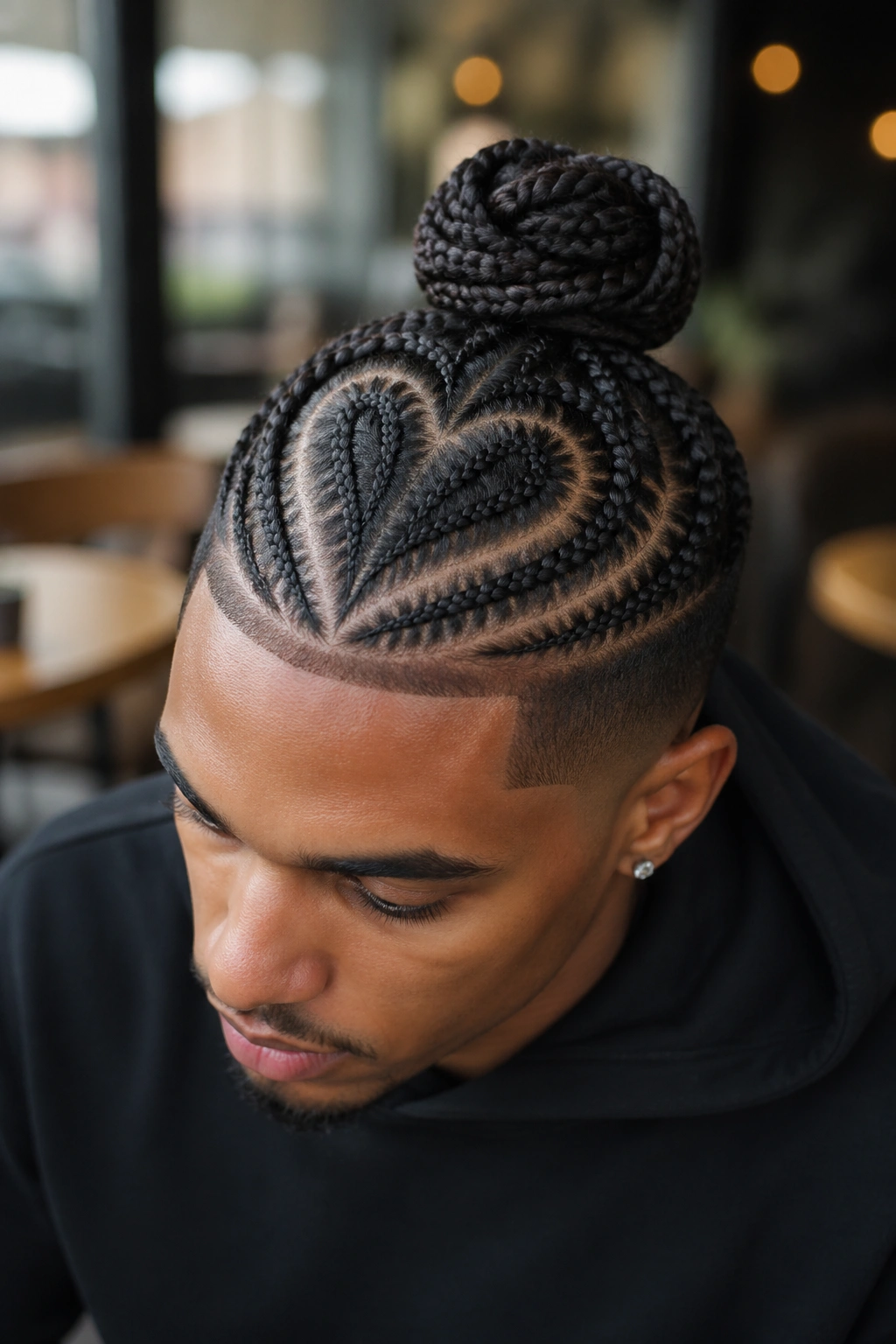
A braided bun with a heart around the crown has a polished, almost sculpted feel. The braids circle upward into the bun, while the heart sits in the crown area like a frame. That placement gives the style height and shape at the same time.
This one works best on medium to long braids because you need enough length to build the bun without pulling the roots too hard. A tight bun can make the heart look cleaner, but do not yank the hair so hard that the scalp starts complaining. That kind of tension looks sharp for five minutes and then feels like a mistake.
The crown placement also makes the style easy to photograph from different angles. Front, side, back — it holds up. The heart acts like a visual anchor, especially when the bun is centered and the parting is even.
A style like this has presence. It walks in before you do.
18. Short Box Braids With a Clean Final Heart Line
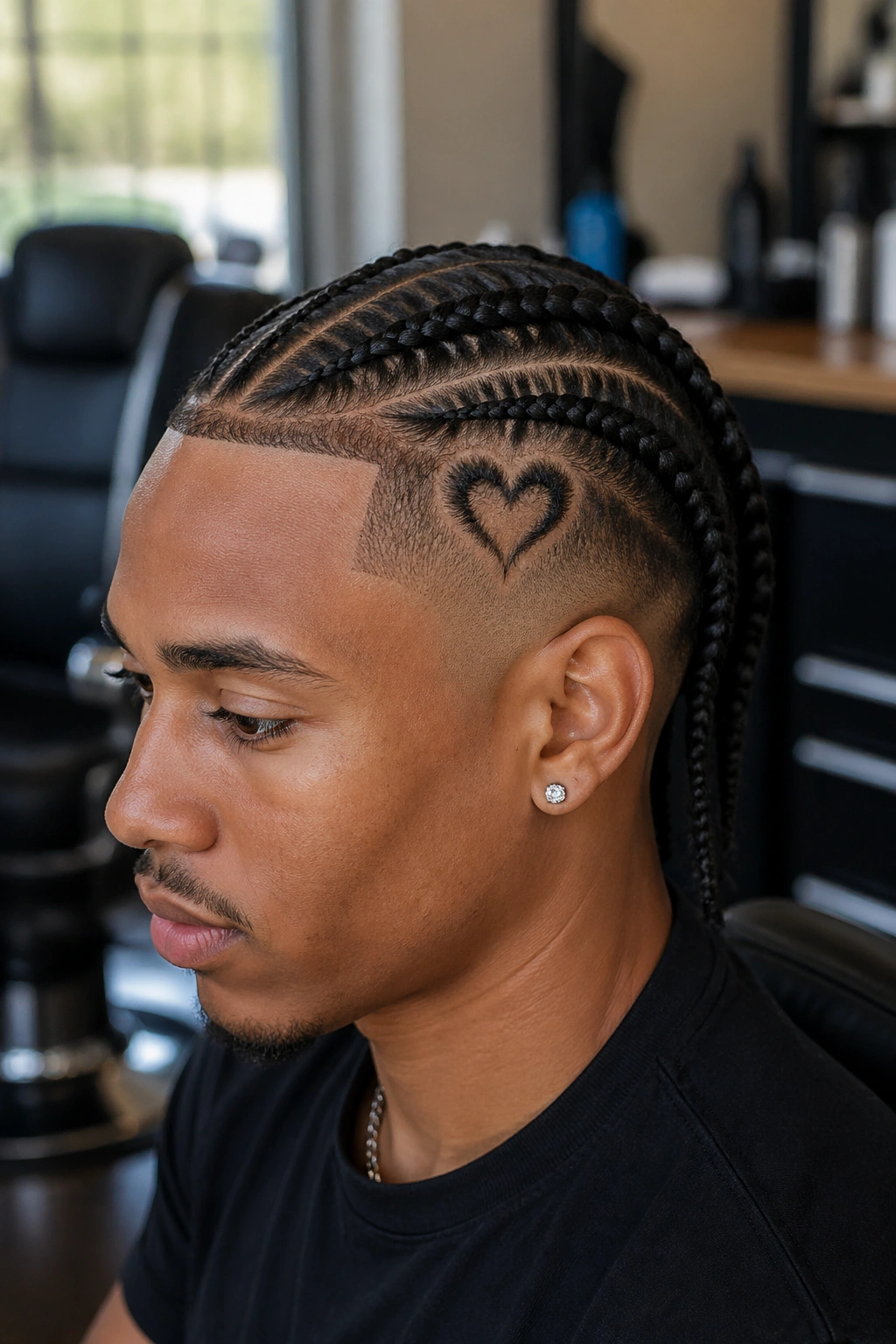
Short box braids give the heart design the clearest finish of all. The reason is simple: there is less hair hanging around to distract from the scalp work, so the shape stays visible all day. If you want a style that looks neat, fresh, and done on purpose, this is the one to end on.
The heart can run along the front, side, or back of the short braid set, but I like it best when it is paired with a sharp line-up and a low taper. That combo keeps the whole style compact. Nothing drags. Nothing hides. The design sits right where it should.
Short braids also make maintenance easier. Washing is simpler. Drying is faster. The parting tends to stay cleaner longer because there is less weight pulling on the sections. That matters more than people think, especially if you wear braids for weeks at a time.
If you want one style that looks tidy without feeling plain, this is the safest pick on the list. Clean lines. Tight parts. One clear heart. No extra noise.
