



Blonde and brown box braids with curly ends have a rare kind of easy charm. They look styled, but not stiff. They feel playful, but still grounded enough to wear every day without looking like you tried too hard.
The mix of brown and blonde does most of the heavy lifting. Brown keeps the style from feeling too bright or flat, while blonde brings in contrast near the face, through the parting, or at the ends where the curls can move and soften the whole braid. That last part matters more than people think. Curly ends stop box braids from reading as one long block of color, and they give the whole style a little bounce when you turn your head.
I also like that this color pairing can go warm, cool, soft, or bold depending on the shades you choose. Honey blonde leans sunny. Caramel sits in the middle and usually feels the easiest to wear. Ashier blondes cool things down. Put the wrong tones together and the braid pattern looks busy. Get it right and the style feels layered, rich, and oddly polished without being fussy.
1. Honey Blonde Face-Framing Braids with Curly Ends
Honey blonde around the hairline is one of those choices that makes the whole style look brighter in the first five seconds. It pulls attention forward, which is exactly what you want when the rest of the braids are a deeper brown. The curly ends keep it from feeling hard or blocky, and that tiny bit of movement at the bottom makes the color shift look softer.
Why It Works at the Hairline
Face-framing braids do a lot when the rest of the hair is long. They bring the eye up, break up the edge around the forehead, and make the color blend feel deliberate instead of random. I like this version with four to six lighter braids near the front and sides, then medium or dark brown through the back. That ratio gives you contrast without turning the whole head into a stripe pattern.
The curls at the ends should stay loose, not tight and springy. A soft bend looks richer against honey blonde because the shade already has warmth. If the curls are too stiff, the style can start to look dated fast. Soft ends. Cleaner lines.
- Ask for honey blonde only around the front and temple braids.
- Keep the back a medium chestnut or mocha brown.
- Use medium-size braids, around 0.4 to 0.6 inch each.
- Finish the ends with loose curls, not tight ringlets.
Best move: leave the front braids a little shorter than the rest. It opens the face and keeps the color from swallowing your features.
2. Dark Chocolate Roots with Caramel Ends
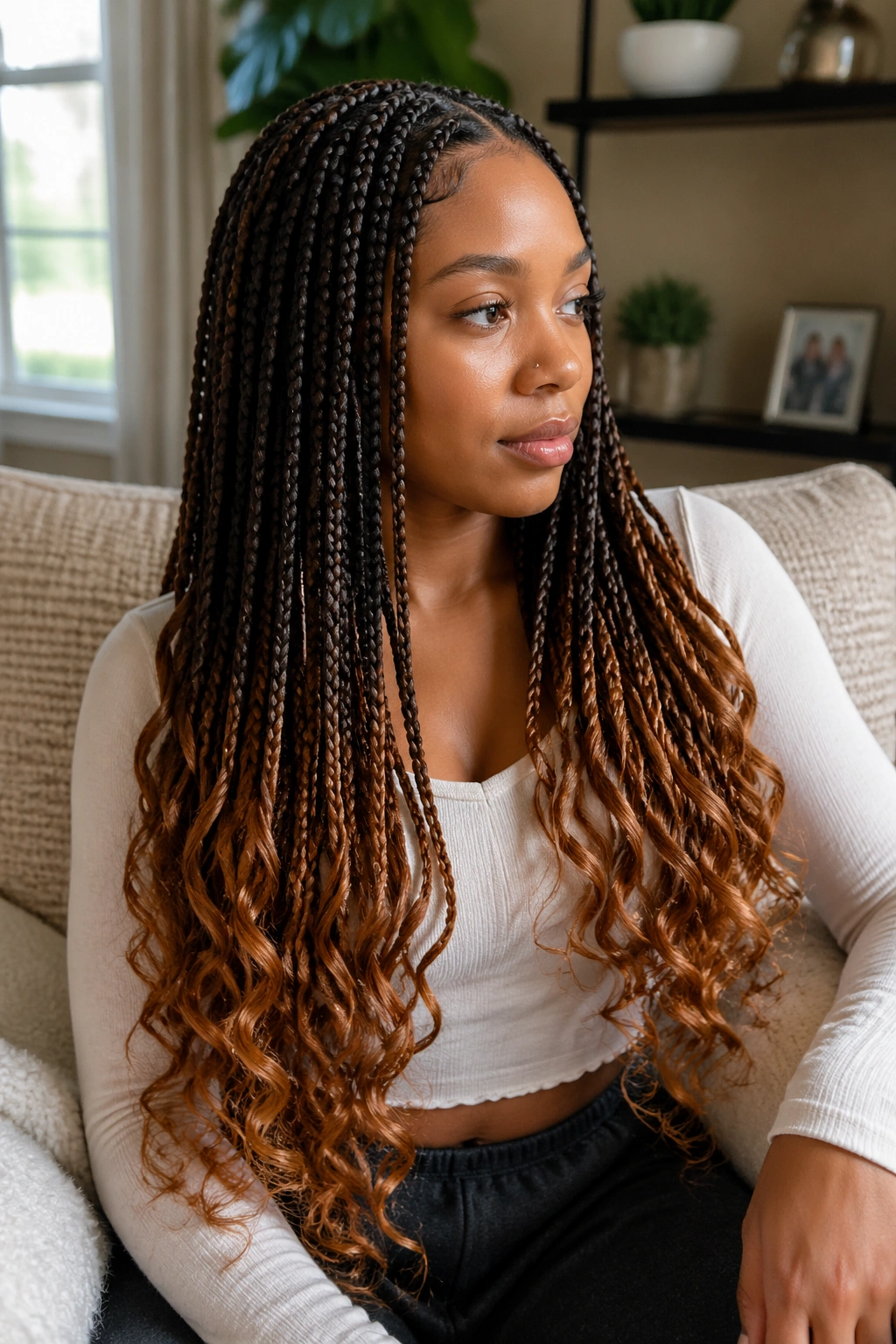
Want a version that grows out quietly? This is the one. The darker root area keeps the style low-drama, while the caramel ends lighten everything just enough to make the curls show up.
Dark chocolate at the crown gives the braids weight. Caramel at the bottom gives them lift. That contrast is especially nice on waist-length braids because the eye naturally falls toward the ends, where the curls can swing and separate a little. You get shape without losing depth.
This look feels calm, not flashy. That’s the appeal. The color change happens gradually, so the style doesn’t need cuffs, beads, or extra texture to feel finished. It already has a built-in gradient, and the curls at the bottom make the shift look even smoother.
One detail matters here: keep the caramel warm, not yellow. A warmer caramel reads like a real color melt. A pale, sandy blonde can turn the whole style harsher than you want.
If you wear this with a middle part, the fade looks clean and symmetrical. With a side part, it feels softer and more casual. Either way, the style is carrying a little more color story than people expect from a simple brown-to-blonde blend.
3. Alternating Blonde and Brown Feed-In Squares
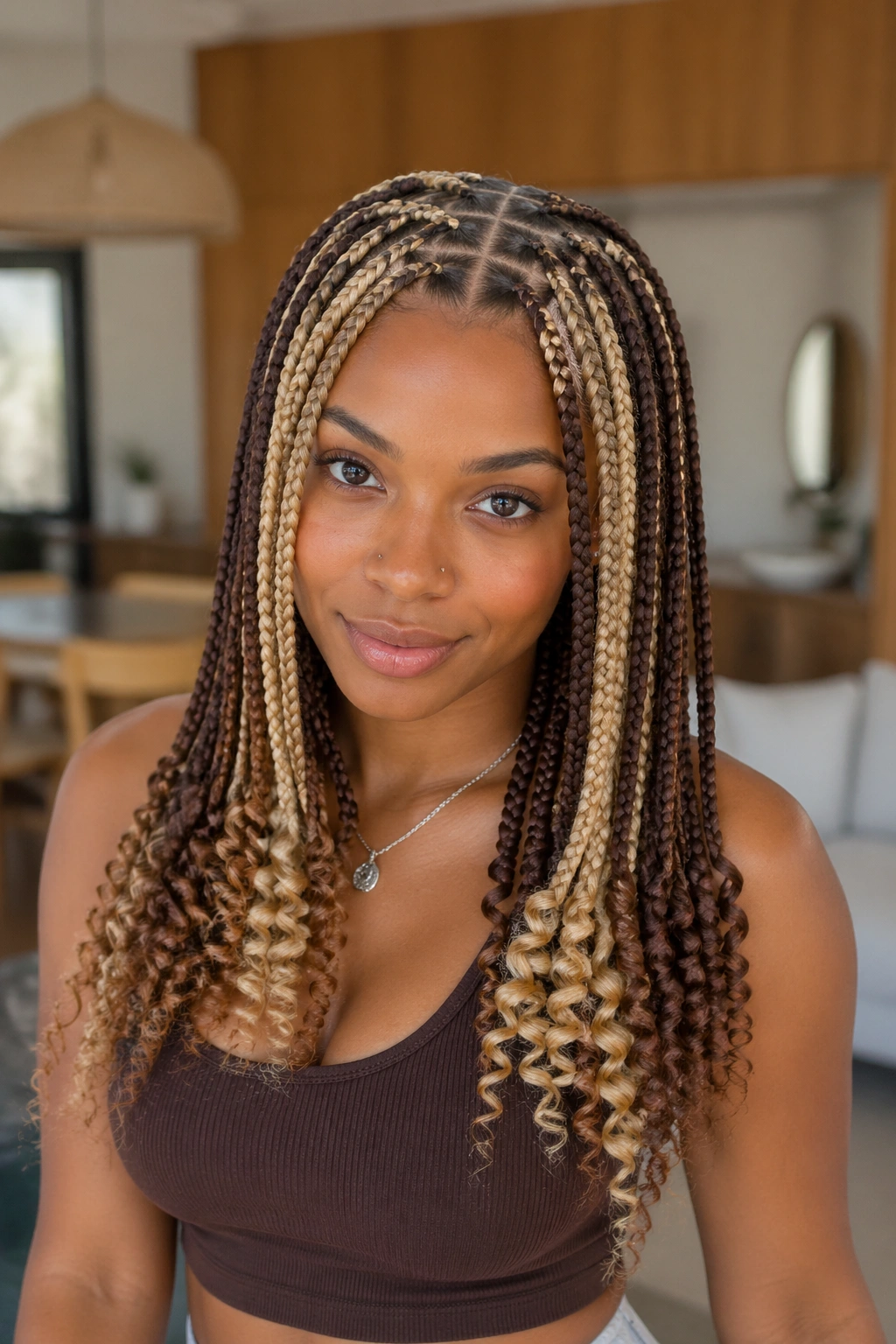
Imagine each braid as its own small stripe of color. That’s the charm here. Instead of fading from one shade to the next, the braids alternate between brown and blonde, which gives the whole head a checkerboard rhythm that feels neat and controlled.
How to Ask for the Pattern
Ask for alternating braids across the parting grid rather than random placement. That keeps the look balanced. If the braids are all different lengths or sizes, the pattern can get messy fast, and then the blonde starts stealing attention in the wrong places.
A feed-in base helps because it keeps the scalp area tidy before the color contrast starts. You get a cleaner transition from root to braid, and the lighter braids don’t look like they were dropped in as an afterthought.
This style works especially well with medium-sized braids. Too tiny, and the color contrast disappears unless you’re standing right next to somebody. Too jumbo, and the alternating colors can feel heavy. Mid-size braids give the pattern room to breathe.
- Use two blonde shades if you want extra dimension.
- Keep the brown pieces one shade deeper than the base.
- Add curly ends in both colors so the finish feels unified.
- Ask for clean square parts; the grid matters here.
My take: this is the best choice if you like order. It has a crisp, graphic feel without looking severe.
4. Waist-Length Boho Braids with Spiral Ends
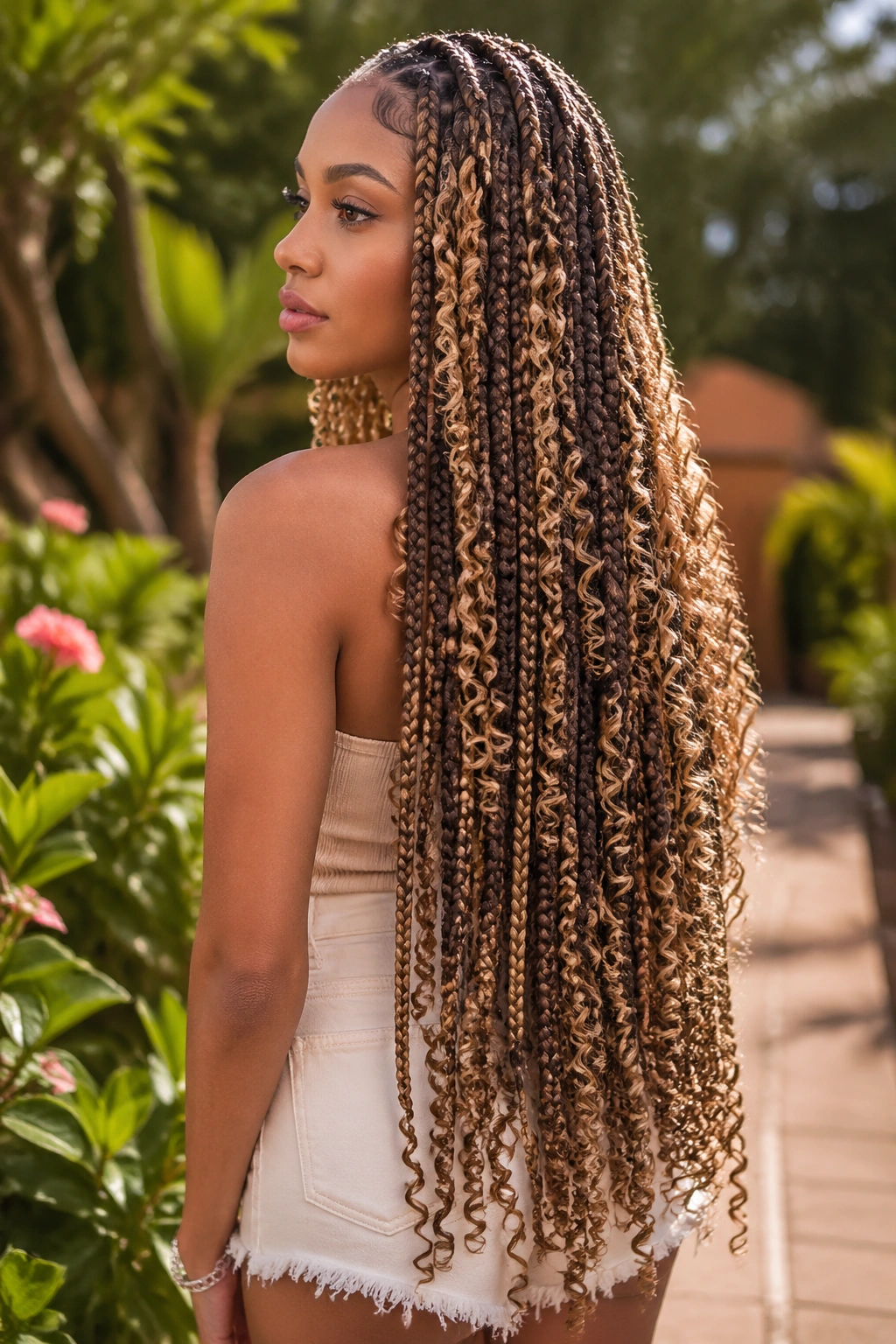
Boho braids already carry a little looseness, so putting blonde and brown into them gives the style room to move. The curly ends matter a lot here. Without them, the braids can look like they stop too abruptly. With them, the whole thing feels lived-in and soft.
The reason this look works is simple: texture hides the seam between colors. The extra curly pieces and soft ends keep the eye busy in a good way, so the blonde strands don’t need to do all the work on their own. Brown braids anchor the style. Blonde strands lift it. The curls knit everything together.
I like this version for long hair because the length gives the curls something to do. At shoulder length, boho texture can feel crowded. At waist length, it opens up and sways instead of puffing out.
If you want it to look intentional, keep the curls loose and varied. A few spiral pieces are fine, but too many tight pieces can turn the style frizzy before it’s even left the chair. That’s the catch with boho braids: they love movement, but they punish overdoing it.
5. Shoulder-Length Box Braids with Curled Bob Finish
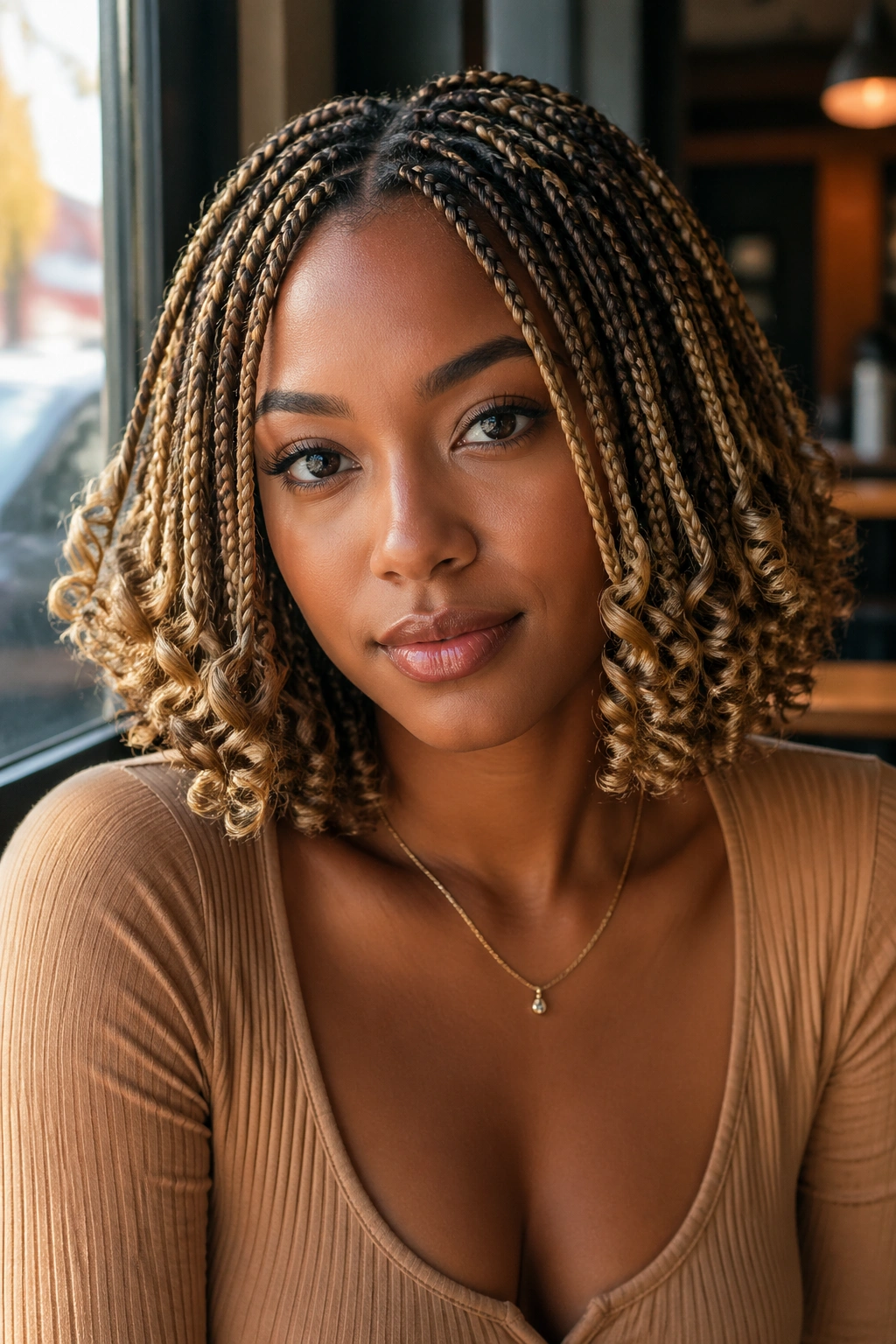
The first thing you notice is the swing. Shoulder-length box braids with curly ends move in a way longer braids don’t. They skim the collarbone, brush the jawline, and sit in that neat middle ground between a full long style and a sharp bob.
This cut is a smart choice if you want the blonde and brown mix to feel a little cleaner. Shorter length means less visual weight, so the color contrast shows up faster. A honey or caramel braid near the front can change the whole read of the style, even if the rest stays dark brown.
Why the Shorter Length Matters
A shorter braid makes the curls look denser. They hang together more tightly, which gives the ends a plush finish instead of a loose, stringy one. That’s useful if you want the style to feel tidy without losing softness.
This shape also saves your shoulders. Long braids can feel heavy by the end of the day, and the curl pattern sometimes gets stretched out from the weight. Shoulder-length braids keep the bounce closer to the face, where it does the most work.
A clean center part looks sharp here. A side part makes the bob feel a little more playful. Either way, the braid ends should sit just below the collarbone so the curls have space to flare.
6. Triangle Parts with Beige Blonde Ribbons
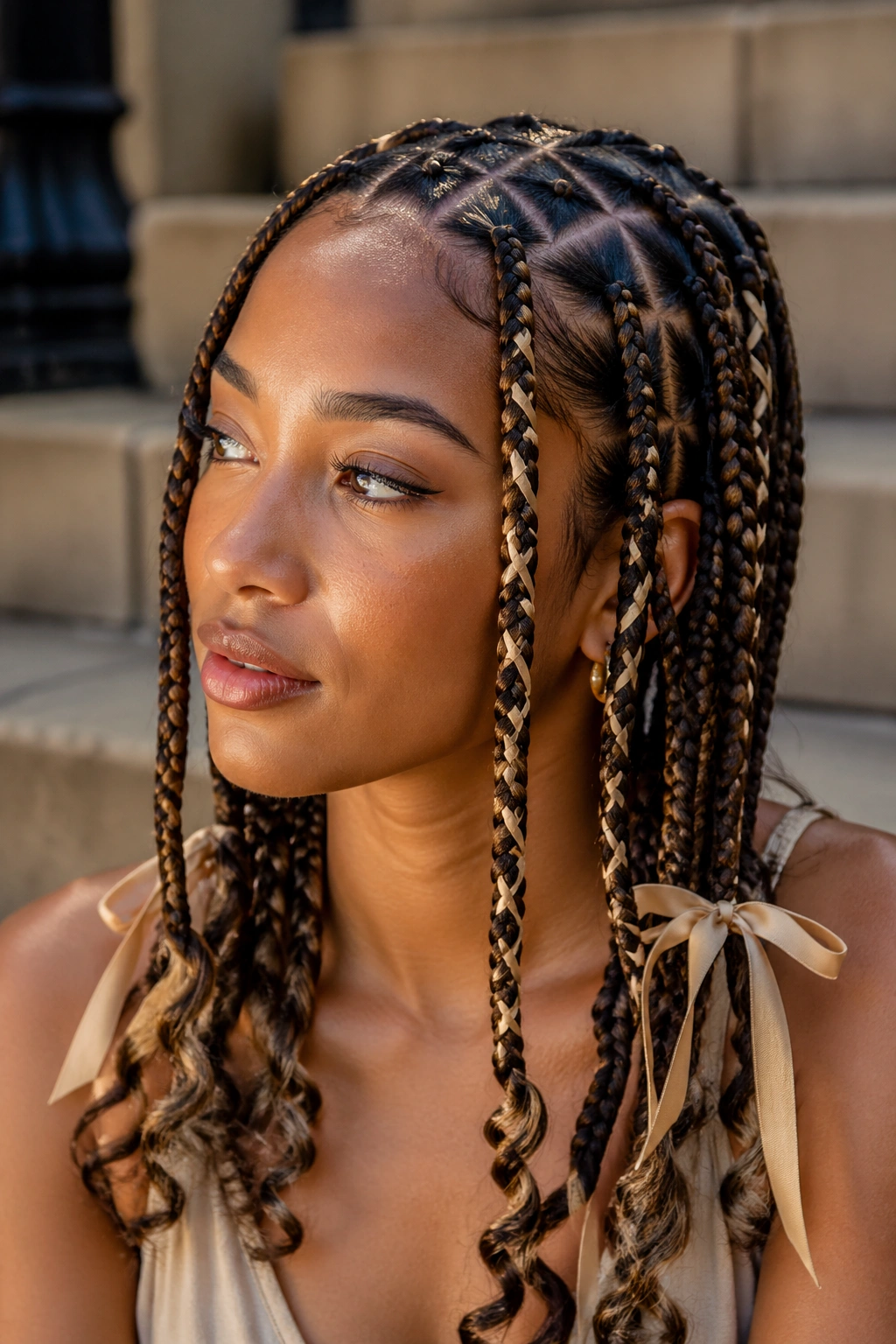
Triangle parts change the whole mood of the braid. They break away from the classic grid and give the scalp a more decorative look, which is useful when the color mix is already doing something noticeable. Beige blonde tucked into brown braids reads a little softer than honey blonde. Less sun, more cream.
That softer tone matters with triangle parting because the shape itself has a bit of edge to it. The parts catch the eye first, then the lighter braids follow. If the blonde is too bright, the style can start to feel loud. Beige keeps it controlled.
What Makes It Different
Triangle parts are a small detail, but they make the installation look more custom. Instead of neat little squares everywhere, you get angles that shift the pattern across the scalp. The curly ends help balance that geometry so the look doesn’t turn rigid.
I’d keep the braid size medium here. Tiny braids can make the triangle shapes too busy, while jumbo braids can hide the parting design altogether. Medium sections let both the part and the color show up.
A middle part gives this look a polished edge. A soft off-center part makes the beige blonde feel a little less formal. Either way, the shape and the shade work together instead of competing. That’s the whole trick.
7. Side-Part Box Braids with Soft Tendrils
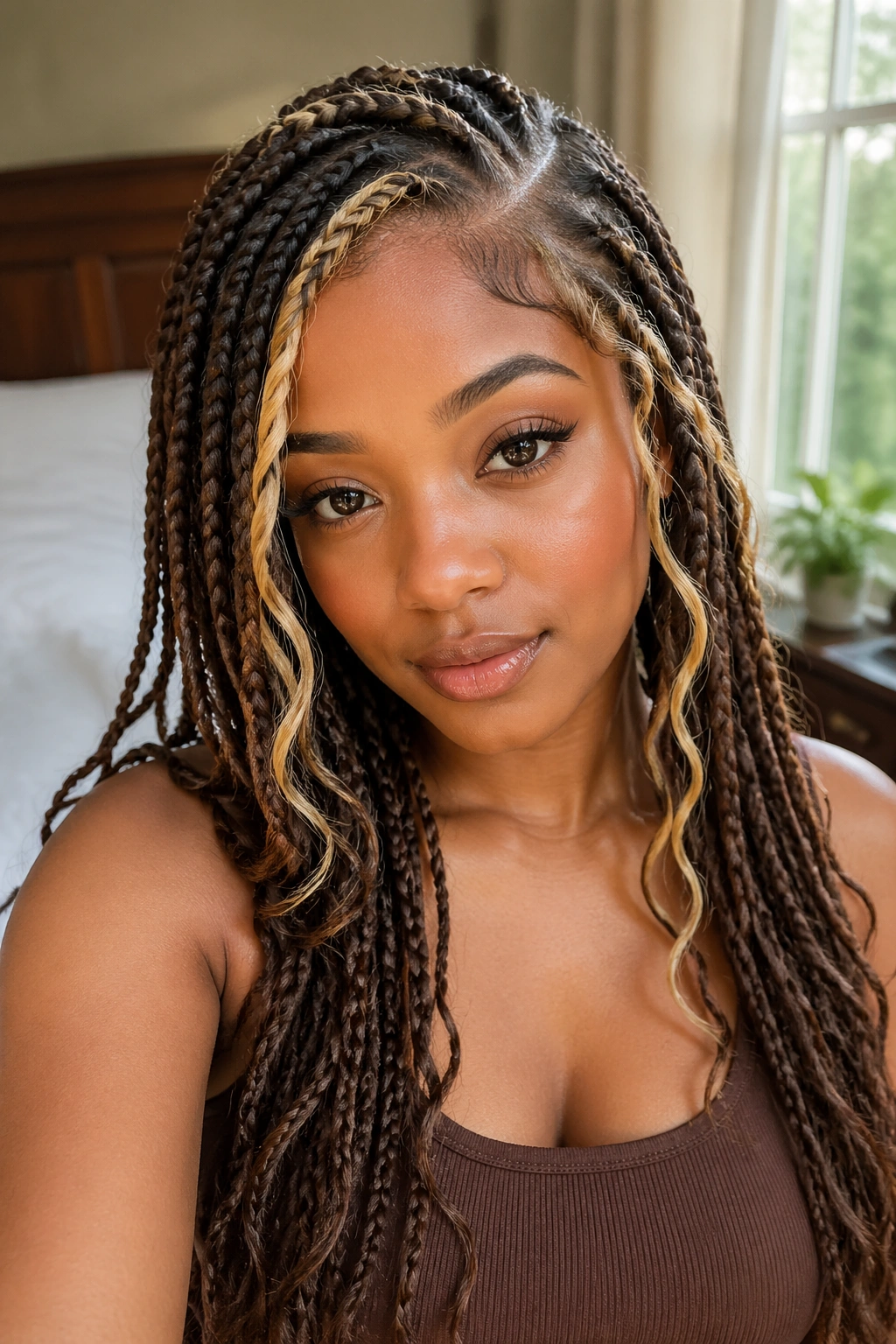
A deep side part changes the balance of blonde and brown in a way a center part never can. The front side takes on more visual weight, which means the lighter braids have a better chance to frame the face instead of sitting evenly across the head.
I’ve always thought this was the easiest way to make a braid style look more relaxed. The side part creates a natural sweep, and soft tendrils near the front make the curls feel deliberate. You don’t need a lot of loose pieces. Two or three enough. More than that and the style starts losing its shape.
The brown base keeps the side part from looking too heavy, while the blonde braids near the front make the angle feel brighter. It’s a clean move. No fuss.
What to Watch For
If the part is too deep, the style can start collapsing to one side. That’s fine if you want drama, but not so fine if you need the braids to stay put all day. Ask for enough braid density on the smaller side so the shape still feels balanced.
The curly ends should sit below the shoulder line. That gives the sweep a little movement when you turn. It’s a small thing, but it keeps the braid ends from looking clipped off.
8. Jumbo Box Braids with Thick Curled Ends
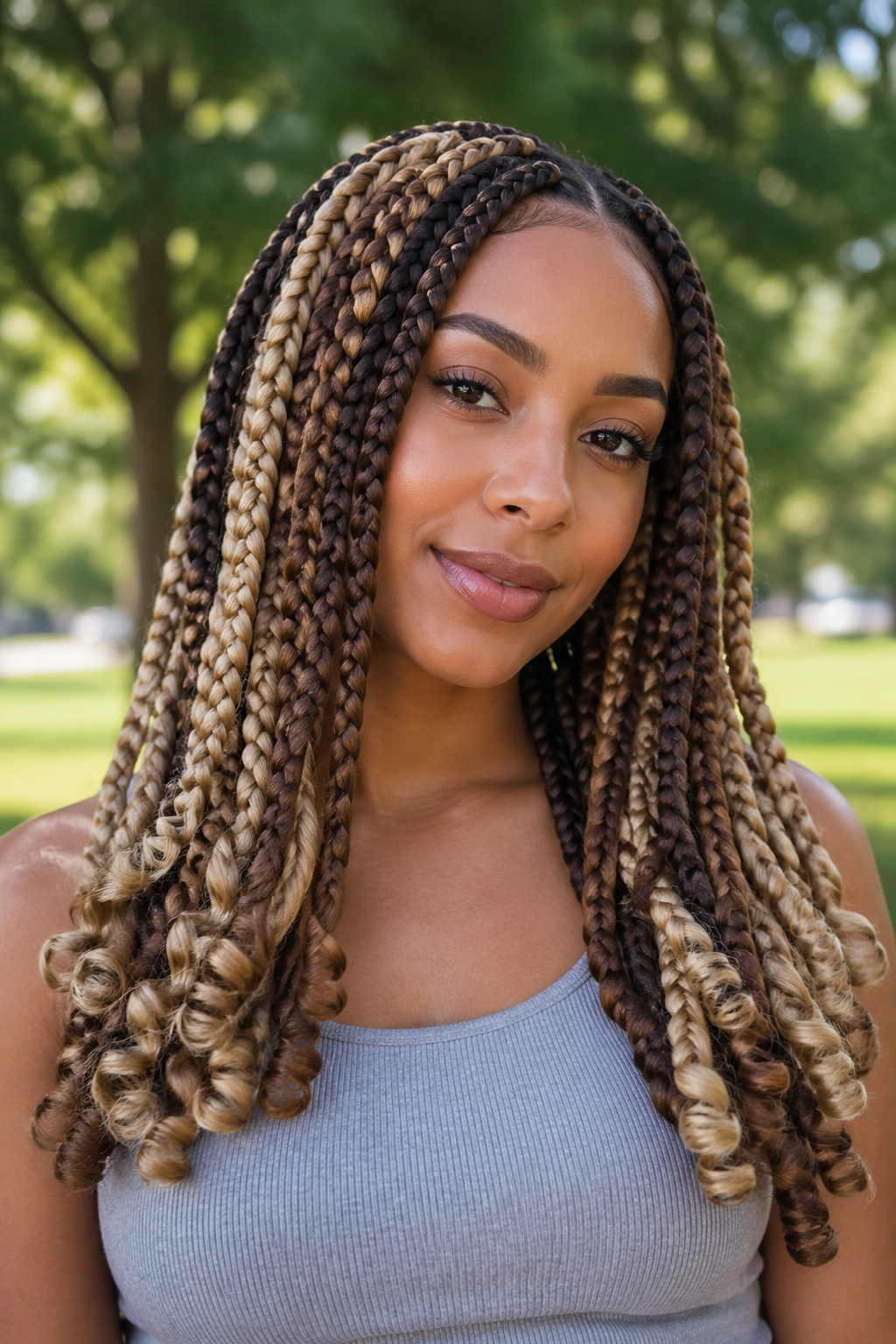
Big braids are not lazy hair. They’re a choice. And in blonde and brown, they make a strong case for themselves because each braid carries more color, more weight, and more visible texture.
The thick curled ends matter here because jumbo braids can look blunt if you stop them too neatly. A soft curl at the bottom loosens the shape and keeps the style from feeling harsh. You end up with a stronger silhouette up top and a gentler finish underneath.
This look works best when the color placement is simple. Think wide sections of mocha brown with a few blonde braids placed strategically near the front and through the crown. Too many color shifts on jumbo braids can feel clunky, and the whole point is to keep the structure clean.
- Use larger parting squares.
- Keep the blonde pieces spaced out.
- Ask for a curl pattern that lands in chunky spirals.
- Leave a little length after the curl so the ends do not feel chopped.
Jumbo braids also tend to install faster than smaller ones, which is not glamorous, but it matters. Less time in the chair is one of those things people appreciate more after the fact.
9. Knotless Braids with Tapered Blonde Tips
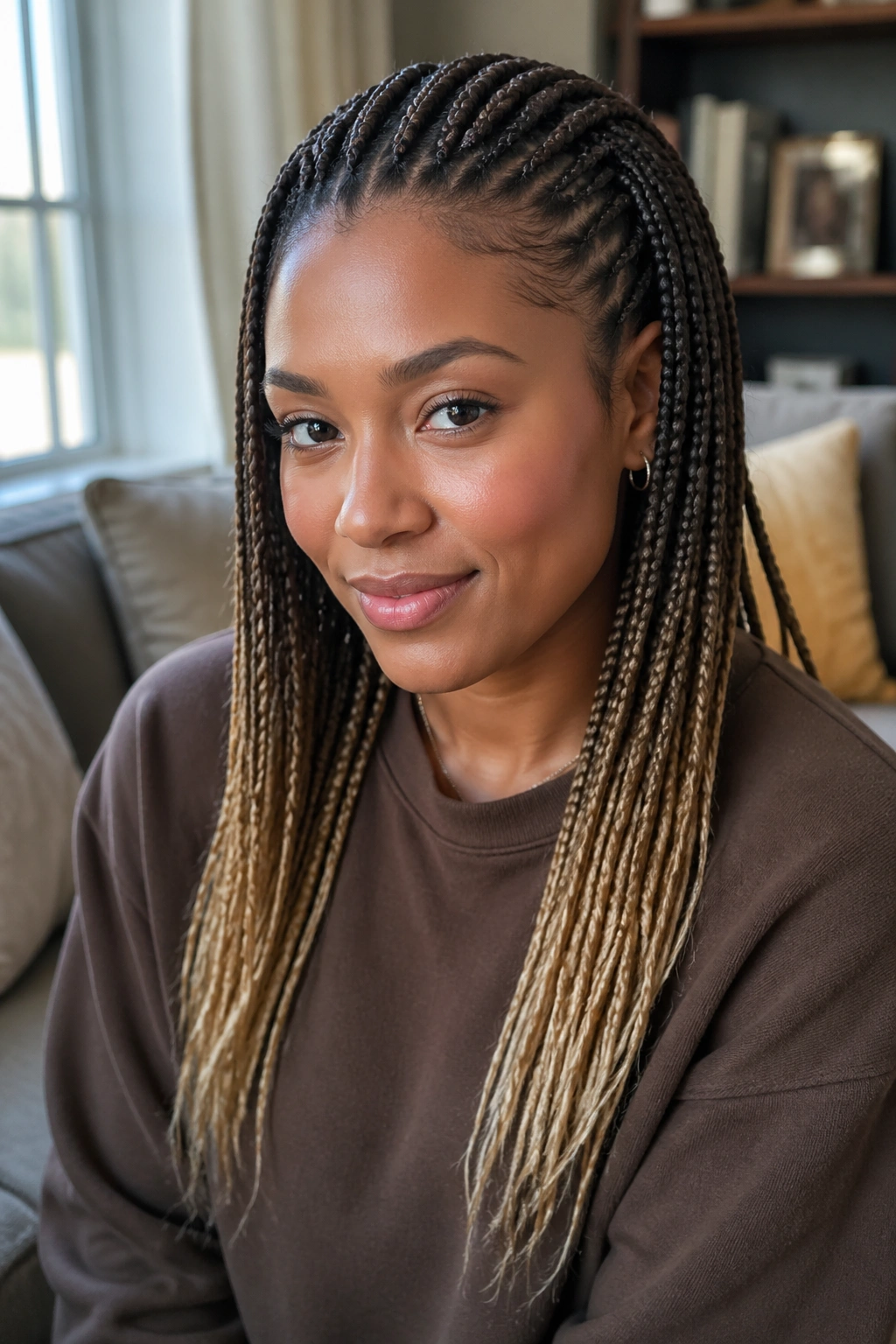
Why choose knotless if the color is already doing work? Because knotless braids let the blonde and brown blend start softer at the root. There’s no bulky knot sitting at the scalp, so the color can move from natural hair into braid hair with less visual noise.
The tapered base is the real advantage. It makes the braids lie flatter, feel lighter, and grow out more gracefully. If you plan to keep the style in for a while, that matters. A sharp root can make the braid look tired early. A knotless base buys you more time.
The blonde tips should stay narrow and clean. Not bleached-looking, not chunky. The best version feels like the color narrows toward the ends and then opens into the curls. That transition is what makes the style look finished.
I’d use this version if you like hair that feels smooth around the hairline. It’s also friendlier if your scalp gets annoyed by heavier installs. The look is still full, just less boxy. That’s the tradeoff, and it’s a good one.
10. Layered Braids with Mixed Curl Patterns
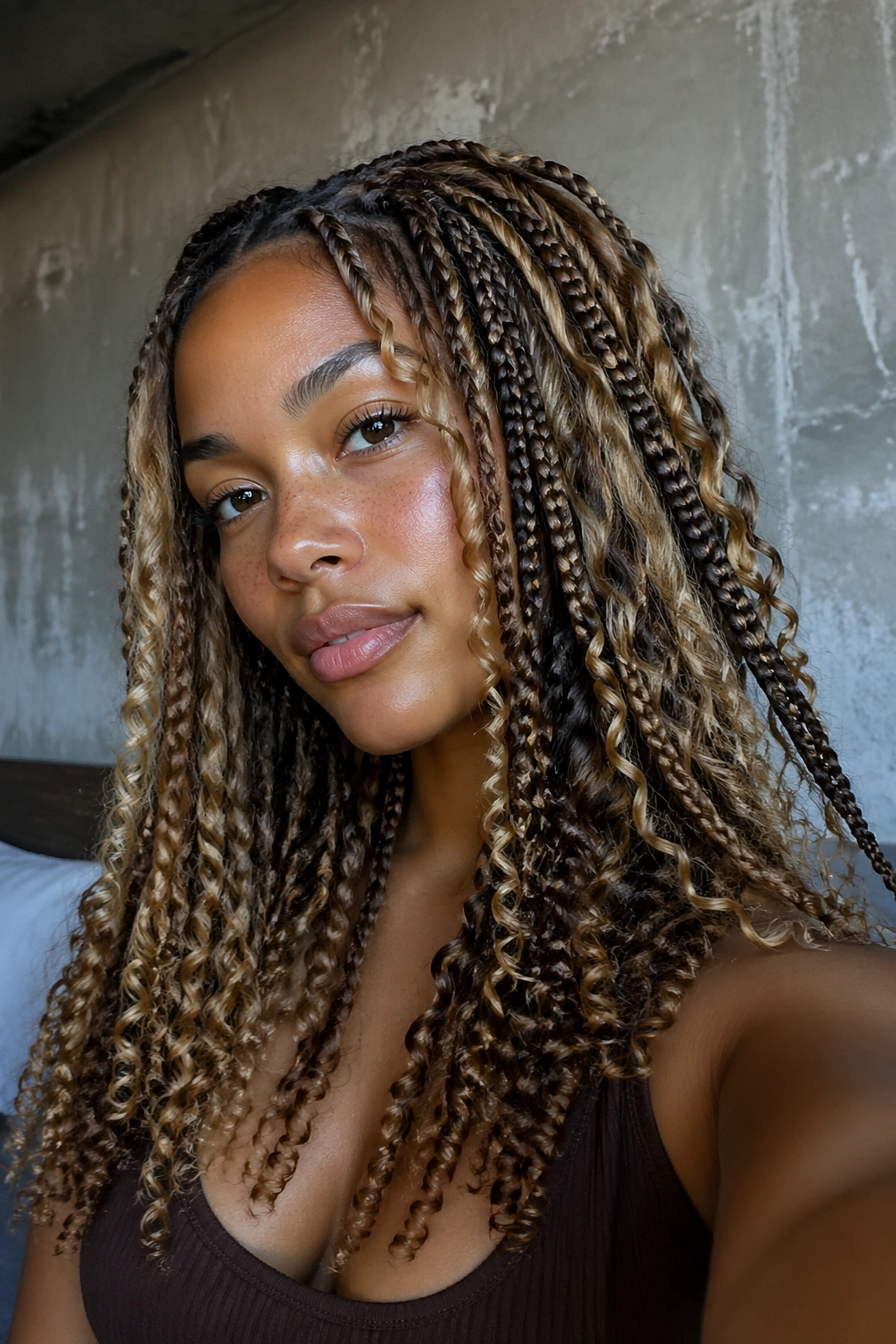
Mixed curl patterns keep braids from looking too neat. That’s the point. A few looser waves near the crown, tighter spirals near the ends, and maybe one or two free pieces around the face give the style a layered feel that works especially well with blended blonde and brown hair.
The braid itself stays structured. The curl pattern does the softer work. That contrast makes the whole style feel deeper, because your eye keeps finding new details instead of landing on one flat shape.
How to Get the Most From It
Ask for the curls to be set in more than one size. A 3/4-inch wand effect near some ends and a looser bend on others can make the style feel less uniform. Uniformity isn’t the goal here. Variation is.
This works best when the blonde is not all in one place. Spread it across the braid lengths so the curls can catch different shades as they move. A honey piece near the front, a caramel braid in the middle, a brown braid with blonde tips in back — that sort of thing.
The style can get frizzy if the curls are handled too much. Light mousse is enough. Heavy product tends to weigh the pieces down and blur the shape. Leave the texture alone once it has settled.
11. Half-Up Half-Down Braids with a Curly Cascade
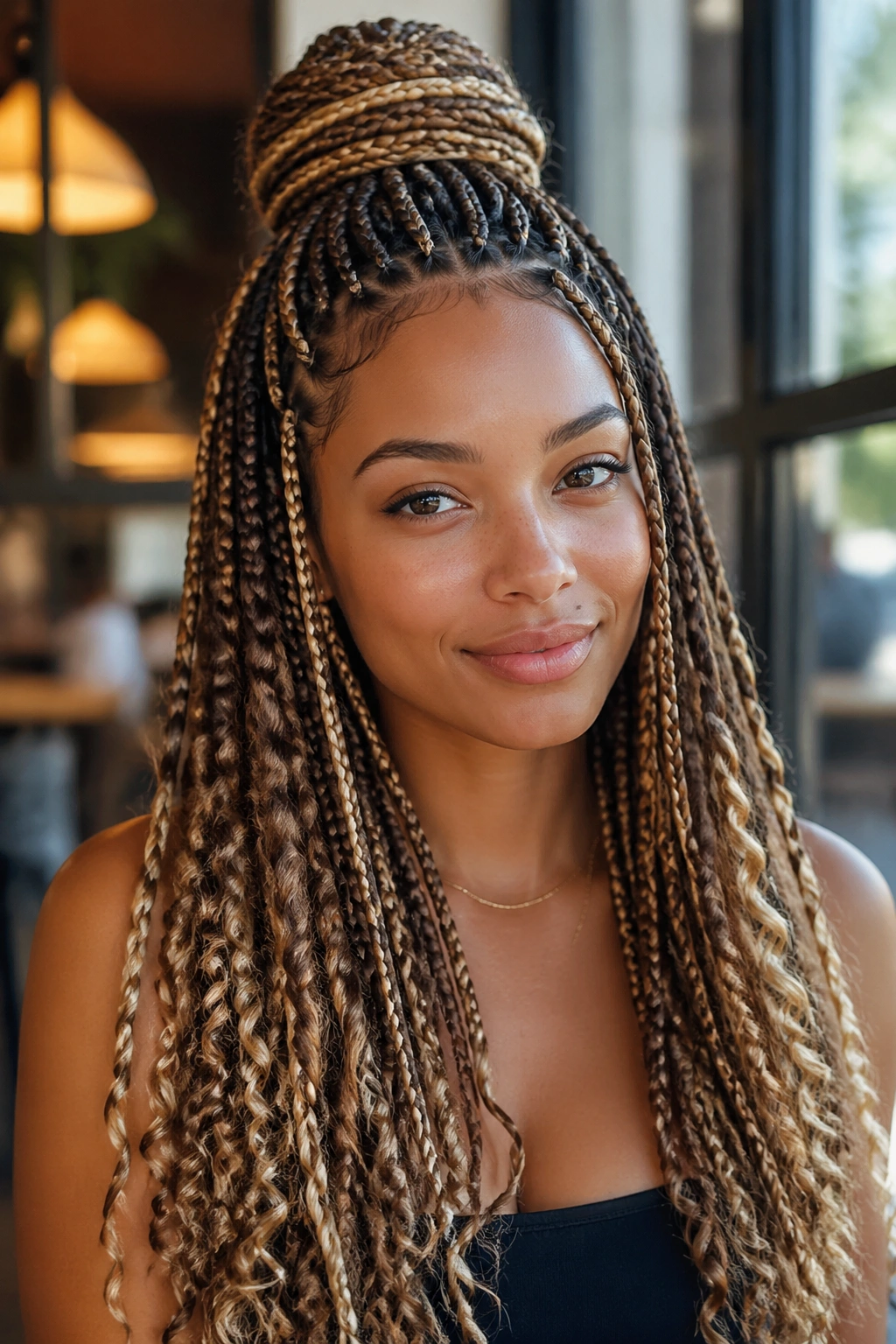
Pull half the braids up, leave the rest down. That’s the core idea, and it works because the top section shows off the braid pattern while the lower section gives you the full sweep of blonde, brown, and curls.
This is one of the easiest ways to make long box braids feel lighter. The crown gets lifted off the shoulders, which changes the whole silhouette, and the curls underneath create a softer drop than straight braid ends ever could. It’s practical, but it doesn’t look practical, which is probably why people keep coming back to it.
The color mix looks best when the updo section includes both blonde and brown braids. If you only pull up the darker braids, the look can feel unbalanced. A scattered mix gives the top knot or half ponytail a richer finish.
You can keep the front a little sleek with edge control or leave a few braids loose near the temples. Both work. The only thing I’d skip is making the top so tight that the curls below lose their shape. That tension can flatten the whole style.
12. Blonde Peekaboo Underlayer in Brown Braids
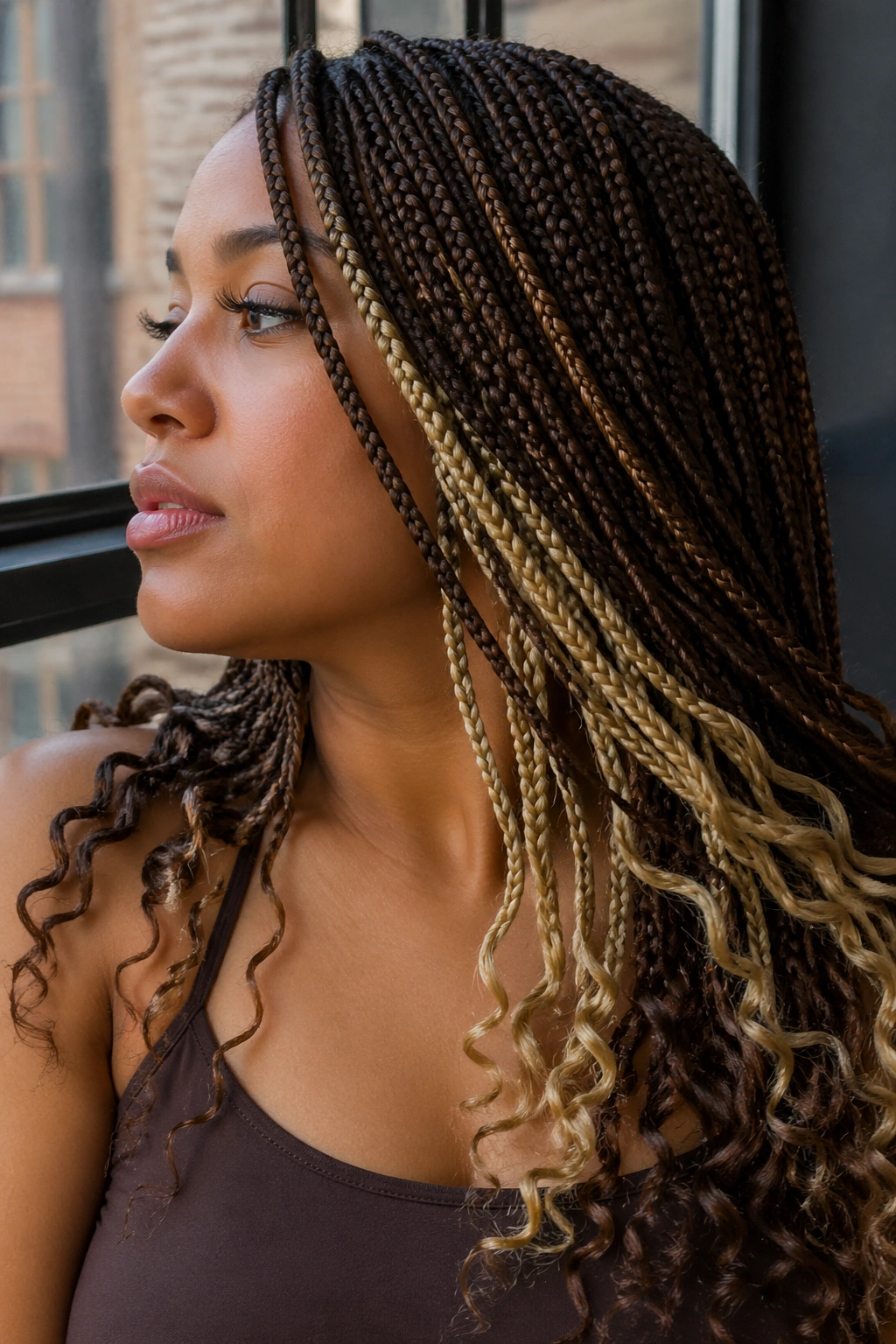
Peekaboo blonde isn’t subtle. That’s the point. The lighter color hides under a darker top layer, so it shows when you move, turn, or pin the hair up. It gives the braids a little surprise without forcing the color story to be loud all day.
This is a strong choice for people who want blonde in the style but not on every braid. The brown top layer keeps the look grounded. The blonde underneath keeps it interesting. When the curly ends hang down, the lighter pieces peek through the lower layers and make the whole style feel deeper.
The best part is the flexibility. Wear it down, and the blonde feels tucked away. Wear a high bun or half-up style, and suddenly the lighter pieces show off. That kind of shift can make one braid install feel like two styles.
If you ask for this version, tell the braider to place the blonde on the underside of the sections, not only at the very back. Otherwise the reveal can be too thin to matter. A good peekaboo layer should show in motion, not only in a mirror.
13. Sleek High Ponytail with Curly Ends
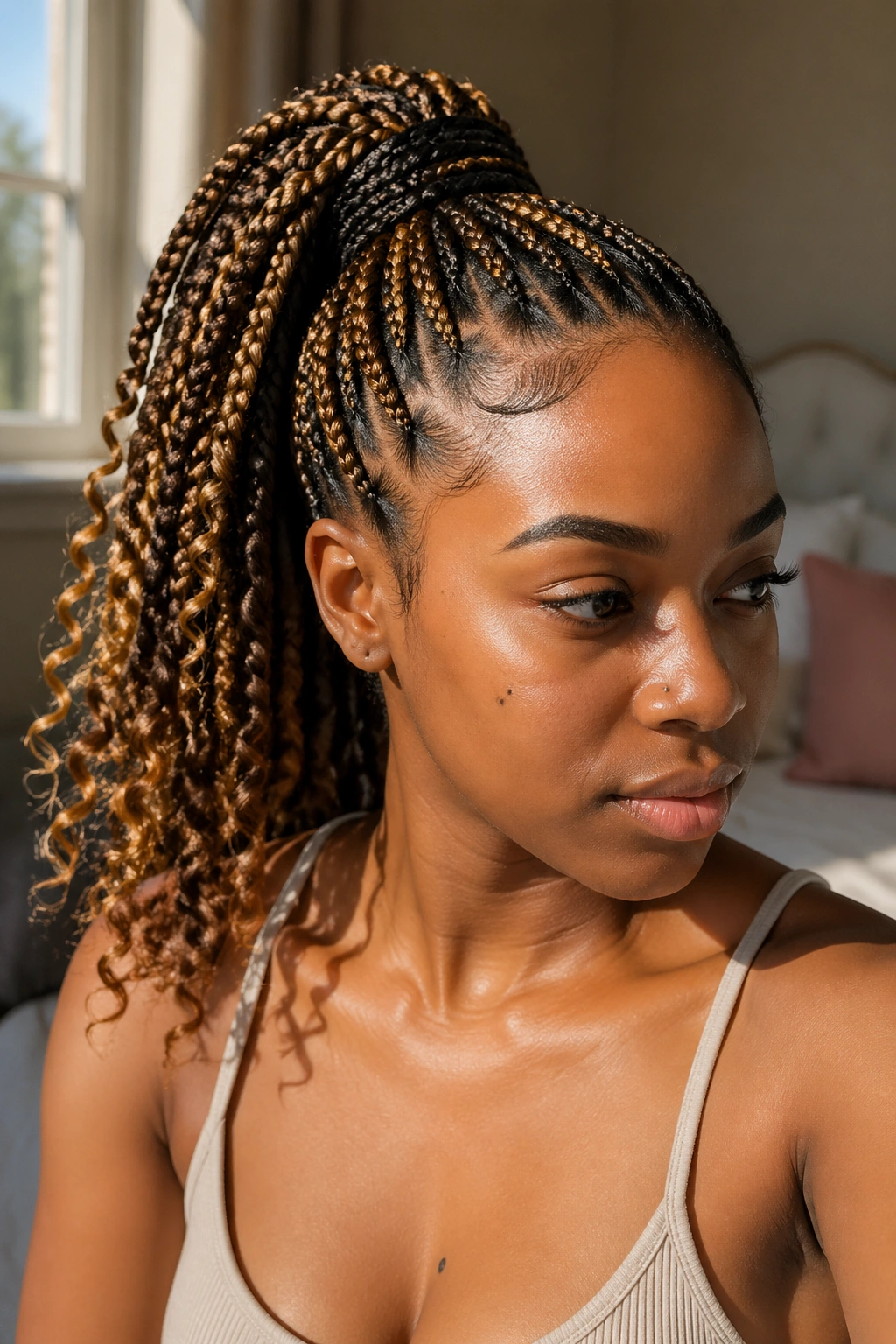
A high ponytail makes the curls feel louder. The braids get pulled up, the face opens, and the ends drop like a curtain of movement behind the crown. With brown and blonde mixed through the ponytail, the whole style looks sharper and more athletic.
The base needs to be clean. That’s non-negotiable. If the top is lumpy or loose, the ponytail won’t sit right and the blonde pieces can look scattered in a bad way. Smooth the front, secure the crown, then let the ponytail do the talking.
This style loves contrast. Put a few honey blonde braids near the front and sides, then let the darker braids anchor the ponytail itself. When the curls fall, the lighter strands get a chance to separate visually from the brown sections, and the movement looks fuller than it is.
A ponytail like this is one of the few braid styles where the ends matter more than the length. Even a shorter ponytail can look dramatic if the curls are soft and full. Too many tight coils, though, and the tail can start looking like a spring. Not the goal.
14. Braided Crown Updo with Loose Curls
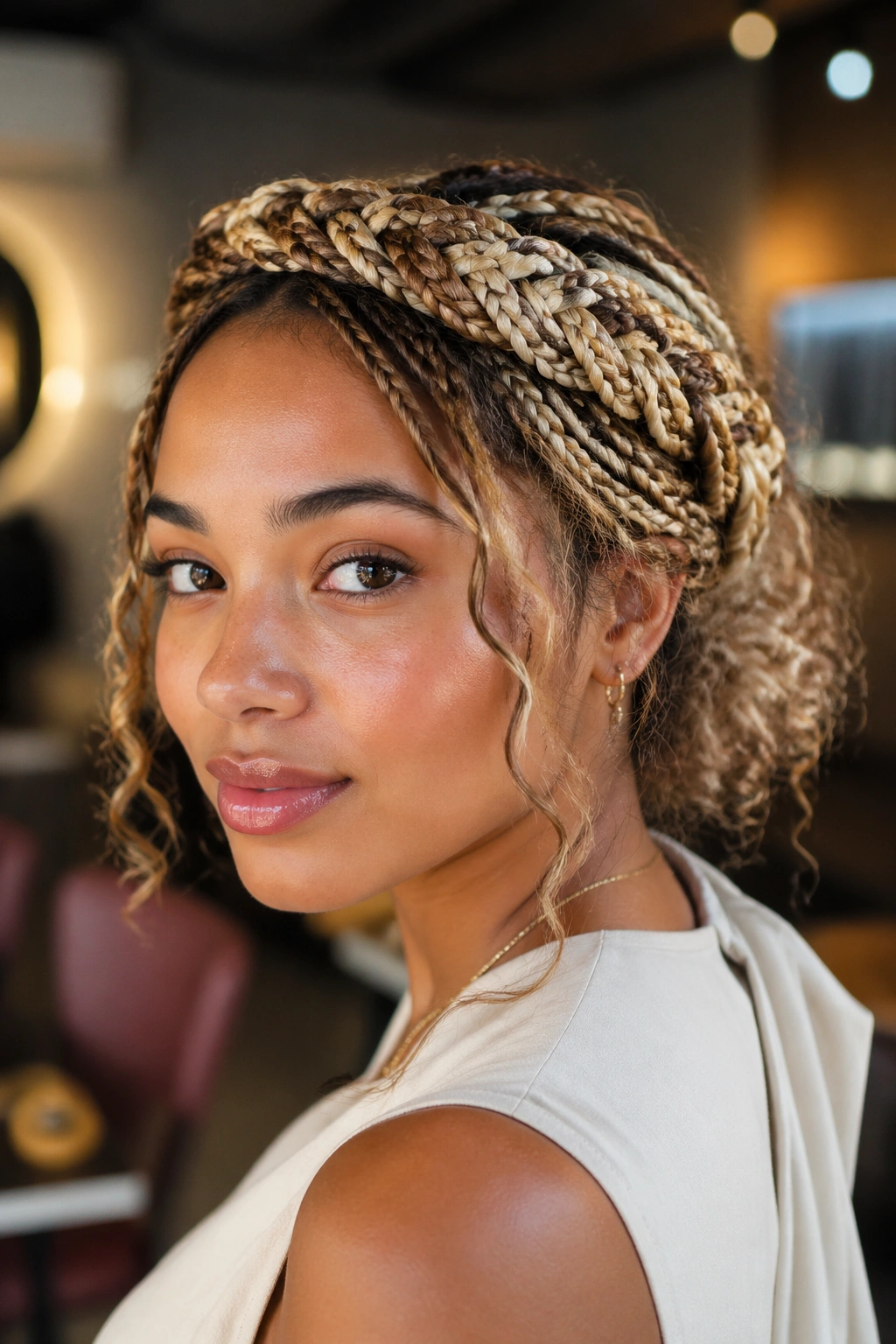
One crown braid can change the whole silhouette. Wrap it across the head, pin the rest up, and the blonde and brown mix turns into a halo of texture instead of a hanging curtain of length. It’s elegant, but not in a stiff way.
The loose curls are what save this style from looking too formal. A few ends can spill at the nape, and a couple of lighter pieces can frame the temples. That tiny looseness keeps the updo from feeling too locked in.
The Shape That Matters
A crown updo works best when the braids are not too bulky. Medium or small braids tuck better and let the curve of the head stay visible. If the braids are huge, the crown can get thick and start sitting too high.
Blonde pieces near the front of the crown make the twist more obvious. Brown pieces through the back keep the shape from turning washed out. You want the braid line itself to show, because that line is what gives the style its structure.
This is a good pick for events, but it doesn’t have to be fancy. A crown braid on a regular day can look calm and put-together without feeling dressed up. That’s a nice line to walk.
15. Micro-to-Medium Boho Braids with Lots of Texture
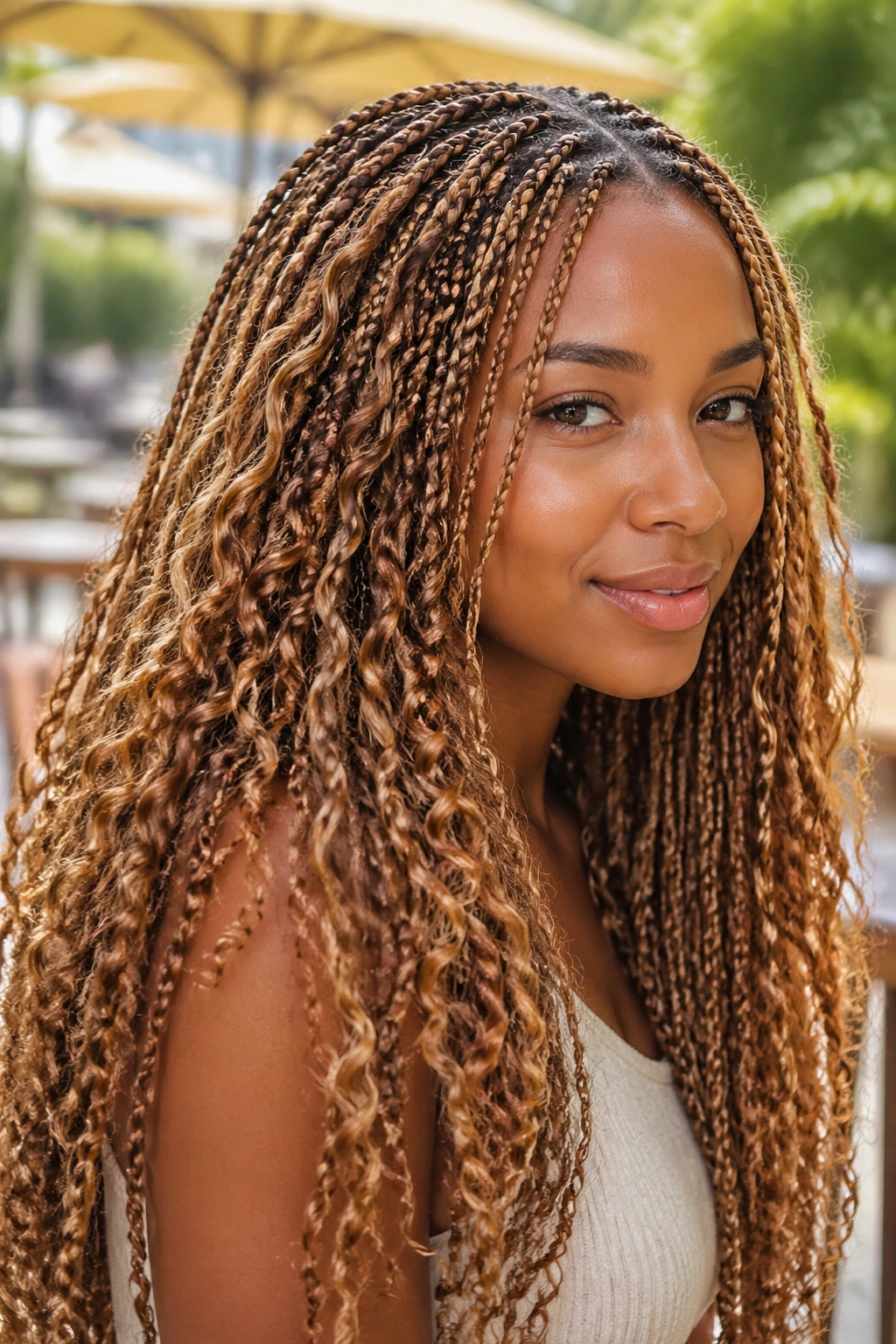
Micro-to-medium braids give you the richest color mix because there are so many strands moving at once. The blonde and brown weave together almost like fabric, and the curly ends keep the edges from looking too exact.
This style takes patience. It also pays off in texture. The smaller the braids, the more the colors blend as a mass instead of standing apart in big chunks. That’s useful if you want a softer version of blonde and brown without losing the contrast altogether.
I like this version with a slightly uneven curl pattern. Some ends can be looser, some tighter, and a few face-framing pieces can be left a little longer. The variation keeps the style from turning into a wall of similar-looking strands.
What to Ask For
- Micro braids at the front, medium braids in the back for easier wear.
- Honey, caramel, and mocha tones instead of only one blonde shade.
- Curly ends set with a soft flexi-rod shape or loose wand curl.
- A few free pieces around the hairline for movement.
The catch? Smaller braids can frizz faster if you sleep rough. A silk scarf or bonnet matters here more than people like to admit.
16. Espresso-to-Honey Ombré Melt
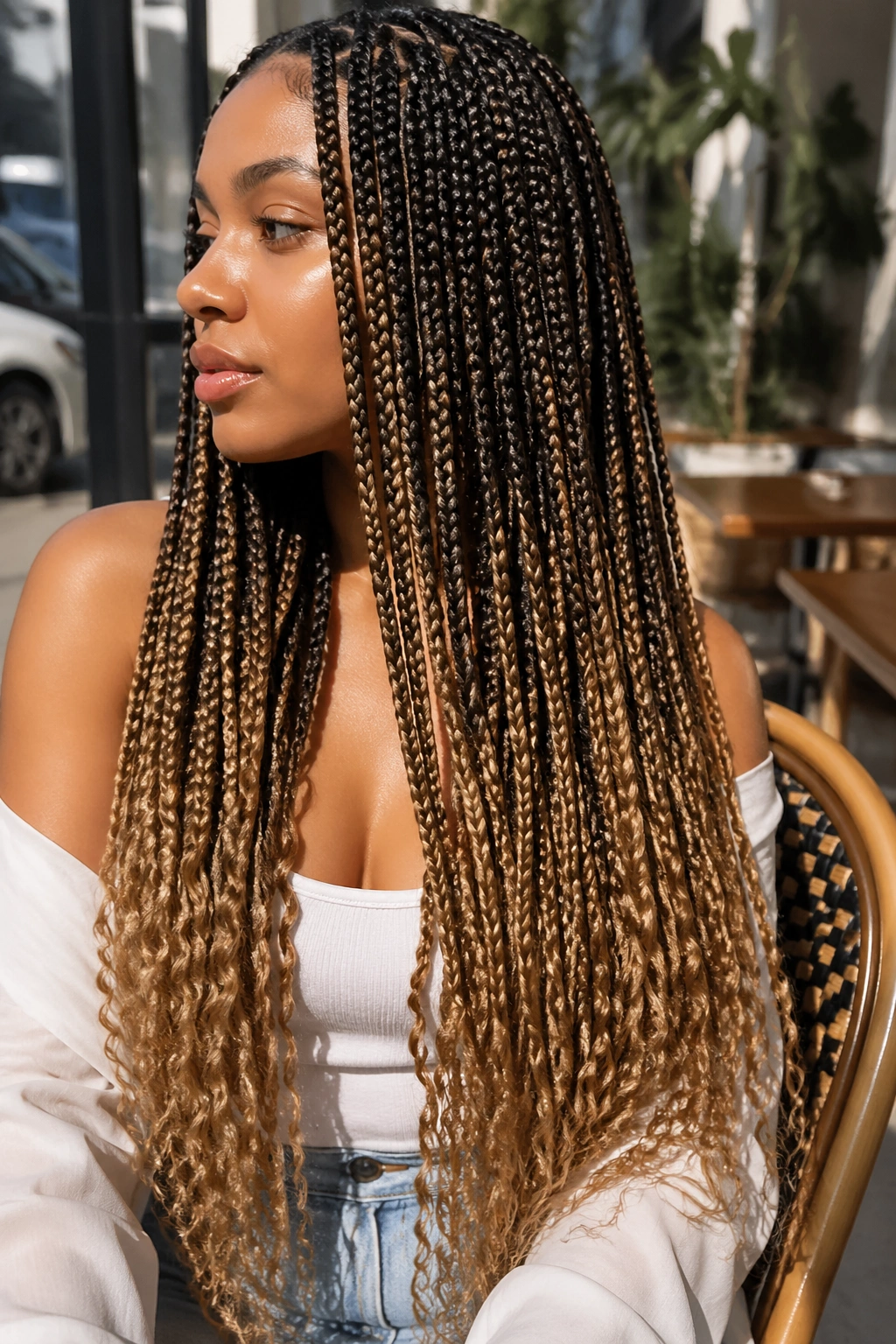
Espresso at the roots. Honey at the ends. That simple shift can carry an entire style if the blend is handled cleanly. The braid starts dark, stays rich through the middle, and then lightens into curly tips that feel warm rather than sharp.
The reason this version works so well is that the eye never hits a hard stop. The color slides along the braid instead of jumping between two unrelated shades. That makes the curly ends feel like part of the design, not an add-on.
This look is especially nice on longer braids because the gradient has room to show. Short braids can still wear it, but the melt really shines when you can see the full route from root to curl. The blonde doesn’t need to be pale. It just needs to be noticeably warmer than the base.
If you want the blend to stay soft, keep the ombré narrow near the mid-lengths and wider at the last few inches. That gives the curls something brighter to sit on, which makes the ends feel full without looking chunky.
17. Side-Swept Blonde and Brown Box Braids with Curly Ends
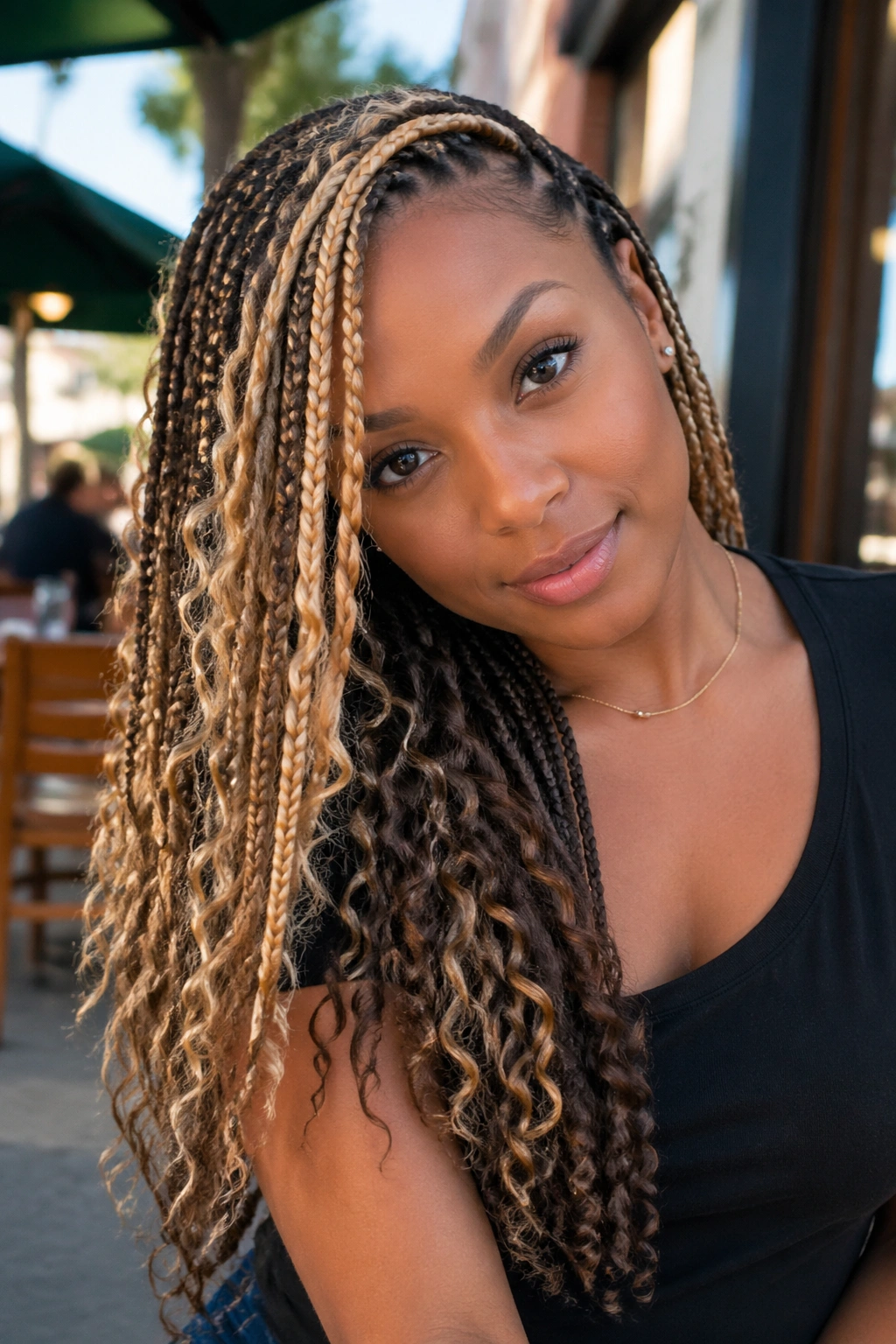
Need drama without extra volume? Sweep the braids hard to one side. That single change makes the blonde and brown contrast feel more directional, and the curly ends fall in a thicker, longer-looking line across the shoulder.
The side sweep is especially good if the front braids are lighter. They create a bright line at the face, while the darker braids pile behind them and keep the style from looking washed out. It’s a small visual trick, but it works every time.
Where the Shape Shines
A side-swept style looks best when the part is clean and the braids are long enough to drape. Mid-back length is the bare minimum. Waist length gives the curls room to cascade. Anything too short starts fighting the shape.
A little edge control at the front can help, but don’t flatten the hair so much that the style loses its swing. The magic here is in the movement. When you turn, the curls should slide, not stick.
This is one of the more flattering options if you like asymmetry. It gives the face a longer line on one side and a softer frame on the other. That contrast can be a lifesaver if you’ve been wearing middle parts forever.
18. Soft Neutral Blend with Cuffed Ends
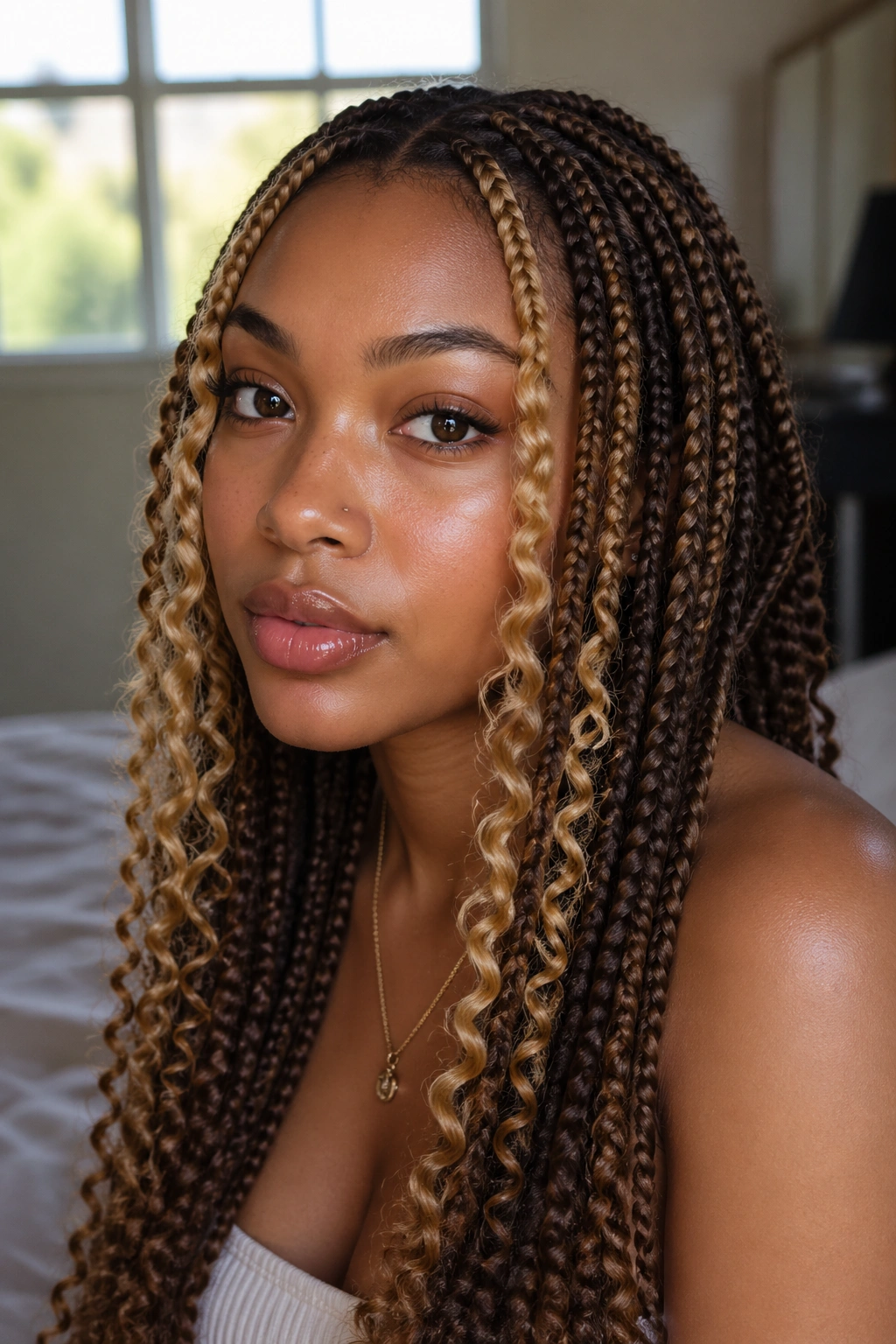
The soft neutral blend is the version I’d pick for everyday wear. It keeps the blonde muted, the brown rich, and the curls relaxed enough to work with almost anything you wear. Nothing screams for attention. The whole style just sits there looking finished.
That restraint is what makes it good. The colors don’t compete, the curls don’t fight the braid pattern, and the shape can move between casual and dressed up without needing a restyle. Add a few gold cuffs if you want. Leave it bare if you don’t. Both choices make sense.
This is also the easiest style to keep wearing when you’re tired of your own hair and still need it to look decent in real life. The neutral tones don’t go out of their way to make a statement, which means they tend to age better between salon visits. That matters more than people admit.
If you want one braid idea that feels safe but not boring, this is it. Not plain. Not loud. Just balanced, soft at the ends, and a little prettier every time the curls start to loosen.
