



White highlighted box braids are the sort of style that looks crisp from across the room and a little unforgiving up close. That is exactly why people love them. The white strands throw a hard line against dark braids, so the parting, braid size, and placement all matter more than they do in softer color mixes.
The look can go sleek or playful fast. A few white face-framing pieces feel sharp and modern; a heavier set of white streaks starts to read icy and graphic. White also shows everything — lint, mousse flakes, heavy edge control, even sloppy sectioning — so this is one of those styles that rewards clean work and a light hand.
I also like that the color combo gives you room to steer the mood. Keep the base braids black or deep brown and the white reads bold. Add gray, silver, or pearl-toned pieces and it softens a touch. The styles below move through chunky, knotless, bob-length, waist-length, boho, and side-swept versions, so you can pick the one that fits your face, your routine, and how much attention you want the braids to grab.
1. Classic Face-Framing White Pieces
This is the safest way to wear white highlights if you want the look to read clean instead of loud. Keep most of the braids dark and place the white only at the temples, along the part, and through one or two braids near the front. The result feels sharp, not busy.
That restraint matters.
Why It Looks So Balanced
The face-framing version works because the white sits where the eye naturally lands first. You get contrast without turning the whole head into a checkerboard. On darker skin tones, the brightness can pop hard; on lighter complexions, it gives a cool framed effect that doesn’t fight your features.
I’d keep the white pieces thin — almost ribbon-thin on medium braids — if you want this to feel polished. If the white sections are too wide, the braid starts looking striped instead of highlighted. That’s the part people miss when they copy a photo and end up with something louder than they meant.
- Best with medium box braids and a middle part or soft side part.
- Place white near the front two to four braids for the cleanest framing effect.
- Use black or deep brown as the base so the white stays crisp.
- Keep the white sections thin if you want the style to stay wearable day to day.
Tip: If you’re nervous, ask for the white to stay at the front only. You can always add more later. Taking it away is the annoying part.
2. Jumbo White-Tipped Braids
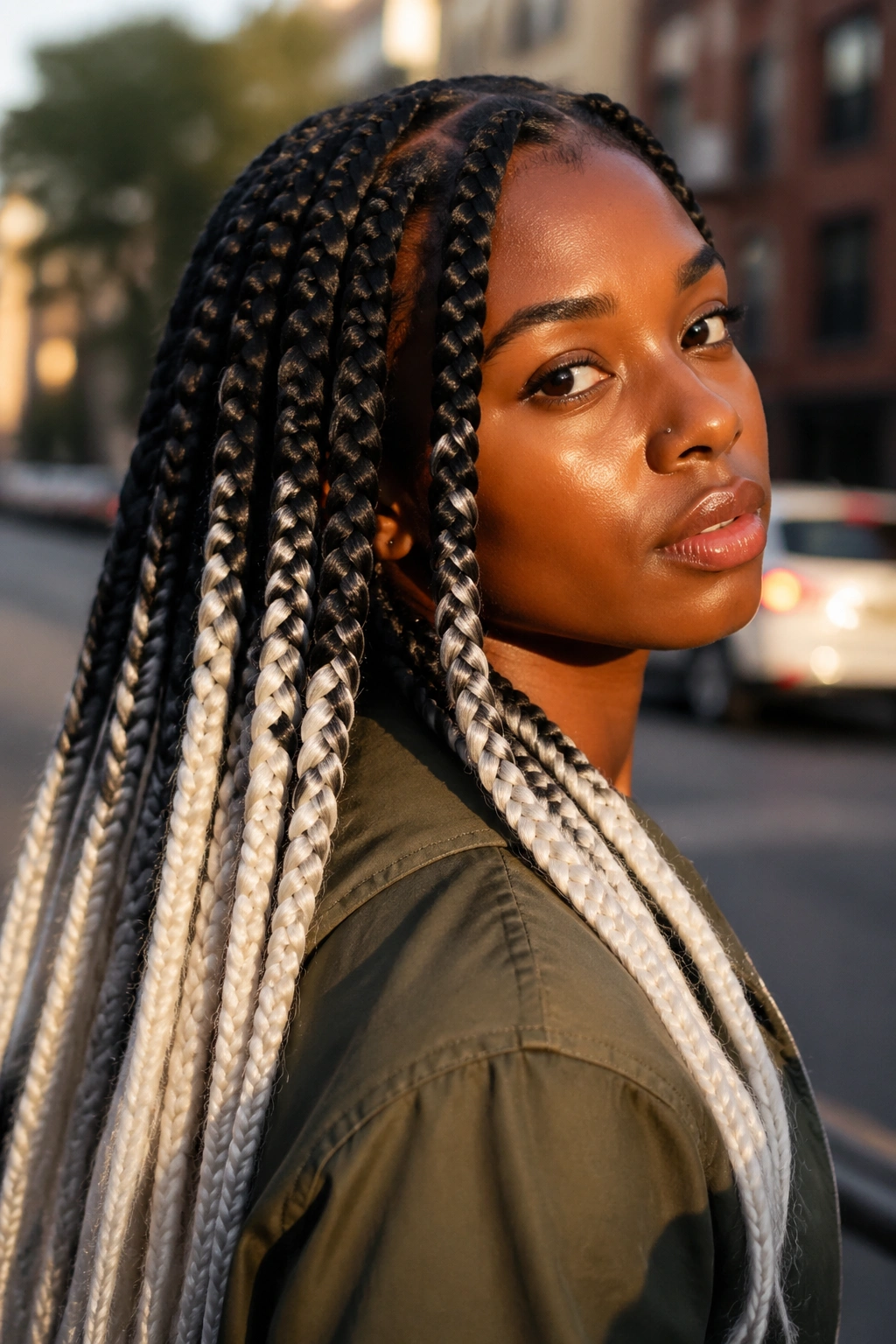
Jumbo box braids make white look louder than a full head of smaller highlights ever will. The braid size does half the styling for you. A thicker braid with a white tip feels bold, but not fussy, and it gives you that high-contrast look without needing a ton of pieces.
The cleanest version keeps the roots dark and pushes the white into the last third of each braid. That matters because the eye reads the movement at the end first. If the white starts too high, the braid can look blocky. If it starts low, the whole style feels longer and lighter.
I like this version for anyone who wants drama without spending half the morning arranging curls, clips, or beads. It’s also a smart choice if you wear your braids in a ponytail a lot, since the white tips show even when the lengths are pulled back. The whole thing has a blunt, graphic finish that works best when the sections are even and the ends are sealed cleanly.
Keep the white tips neat. Frayed ends make this style look tired fast.
3. Knotless Braids with Soft White Streaks
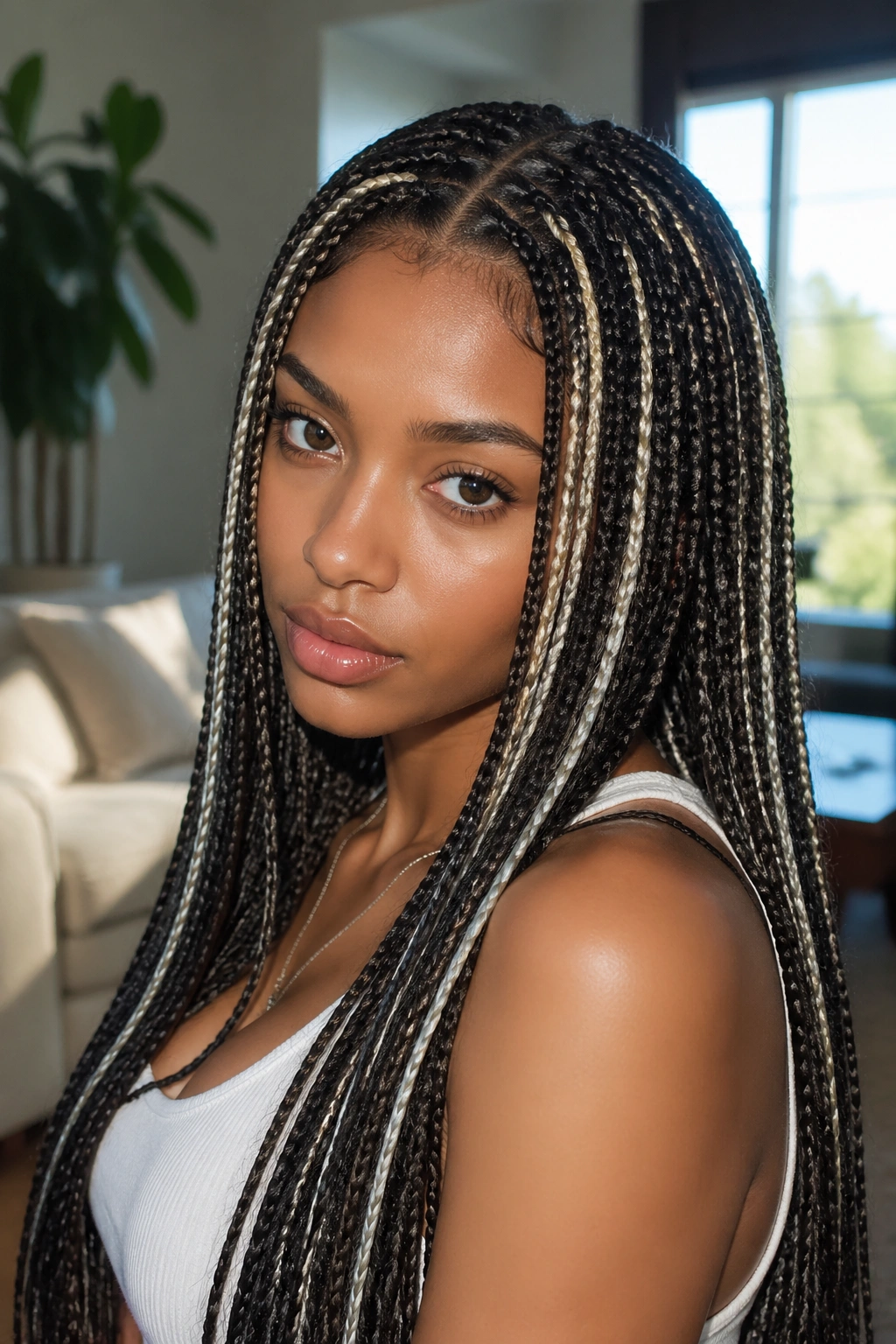
Why do knotless braids make white highlights look calmer? Because the braid starts flat at the scalp, so the color change gets all the attention instead of the knot. That smoother start is a gift when you’re working with bright white pieces.
The style feels lighter on the head, too, which helps if you want white highlights without the extra visual weight of thick knots at the base. I’d place the white in thin streaks through the outer layers and around the part, then leave the underlayers dark. You get movement when the braids swing, but the style still looks tidy when it’s pinned back.
How to Place the Streaks
Think in lines, not blobs. White looks best when it follows the braid path in a controlled way, especially on knotless installs where the parting already looks smooth and clean. If the white jumps around too much, the scalp pattern starts to feel noisy.
A few placement rules help a lot:
- Put white beside the part, not all over the crown.
- Use thinner sections near the hairline.
- Keep the back mostly dark if you want a softer finish.
- Ask for the white to appear in two or three repeated areas rather than scattered randomly.
That last point is the one people ignore. Random placement usually looks accidental. Repeated placement looks planned.
4. Triangle-Part Braids with White Geometry
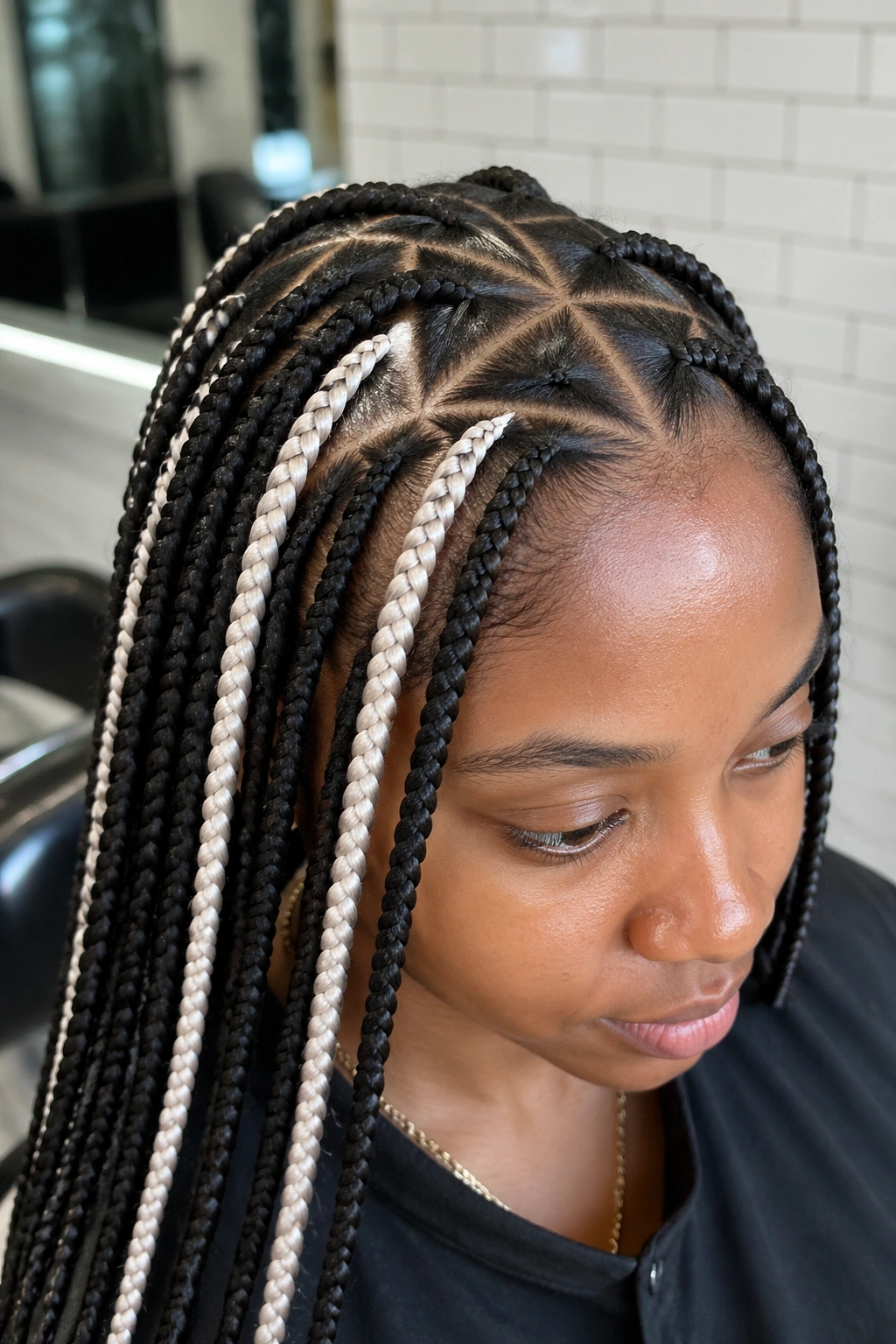
Picture a crisp triangle part and a thin white braid sitting just beside it. The geometry does half the work. Triangle parts already feel deliberate, and white highlights make the pattern read even more sharply.
This style is best when you want the scalp design to be part of the statement. Square parts are neat, sure, but triangle parts give the white pieces a little edge. I like it with medium braids and a clean middle section, because the shape shows up better when there’s enough room between rows.
The trick is consistency. Keep the white pieces the same width from braid to braid, or the design starts to wobble. If one highlight is twice as thick as the next, the pattern loses that crisp, almost architectural feel. And yes, this style can look very cool with a few accessorized front pieces, but too many cuffs will clutter the line work.
- Use medium-small triangle parts so the scalp pattern stays visible.
- Keep highlight widths consistent from front to back.
- Leave at least a few rows fully dark so the white lines stand out.
- Pair with simple edges instead of a heavy baby-hair design.
A clean triangle part and a white strand beside it can do more than a whole pile of accessories.
5. Waist-Length Braids with Hidden White Layers
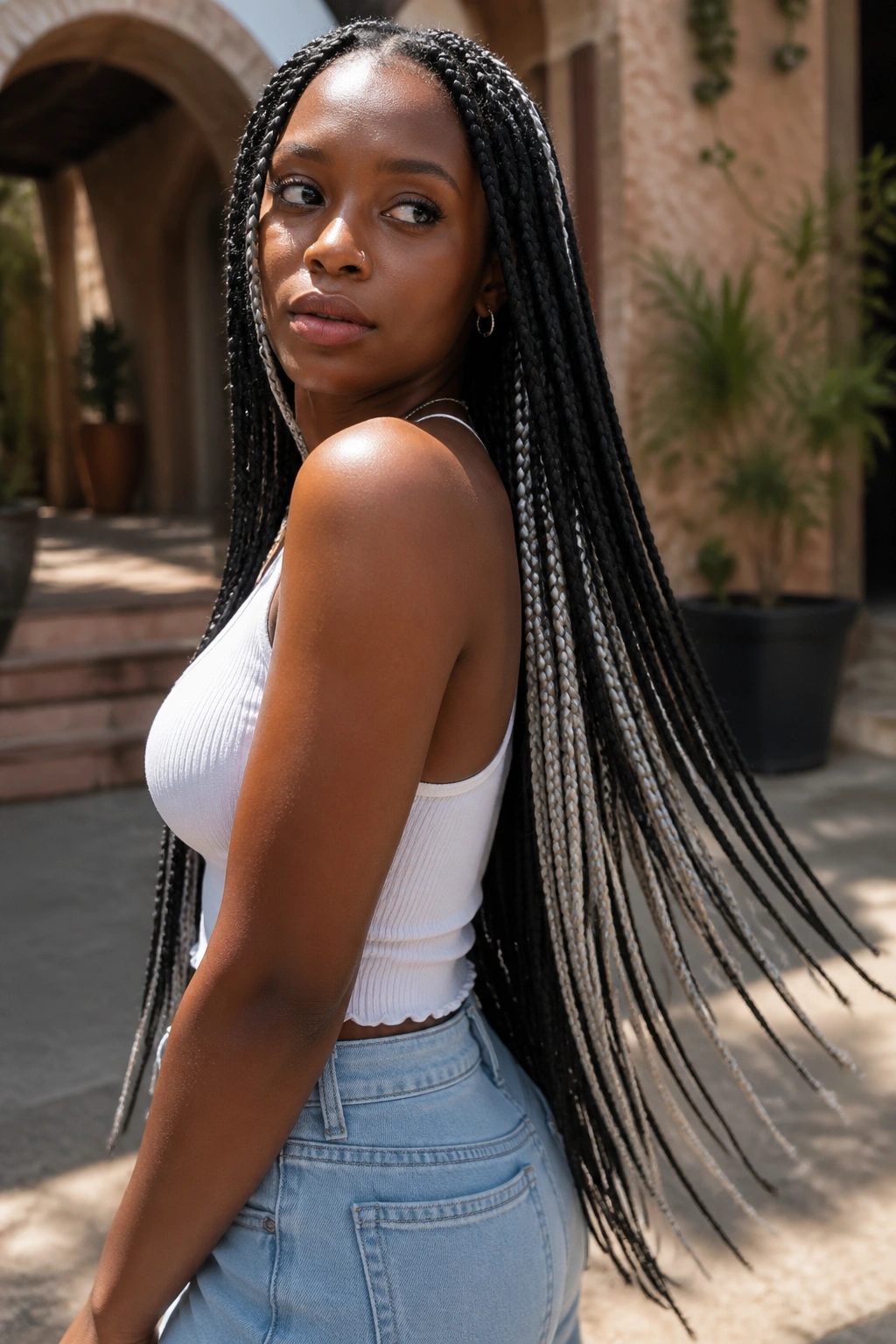
White underneath dark braids is one of my favorite ways to wear this look. It feels a little secretive. From the front, the style can read almost classic, but the moment you turn your head or sweep the braids over one shoulder, the white flashes through and wakes the whole thing up.
This works best when the white is tucked into the middle or lower layers rather than sitting on top of everything. The top rows stay dark, which keeps the style grounded, while the hidden white pieces show up during movement. You get a slower reveal, and that’s what makes it feel richer than a simple front highlight.
Waist-length braids can get heavy, so the placement matters. White synthetic hair looks brightest on longer lengths, but it also shows dryness and product buildup more easily. A light foam wrap and a satin scarf at night go a long way here. Heavy oils are a bad idea; they make the white look dull fast.
There’s also a nice balance in the silhouette. Long braids give the white room to stretch out, which means the contrast doesn’t get cramped near the roots.
6. Bob-Length Braids with Platinum Ends
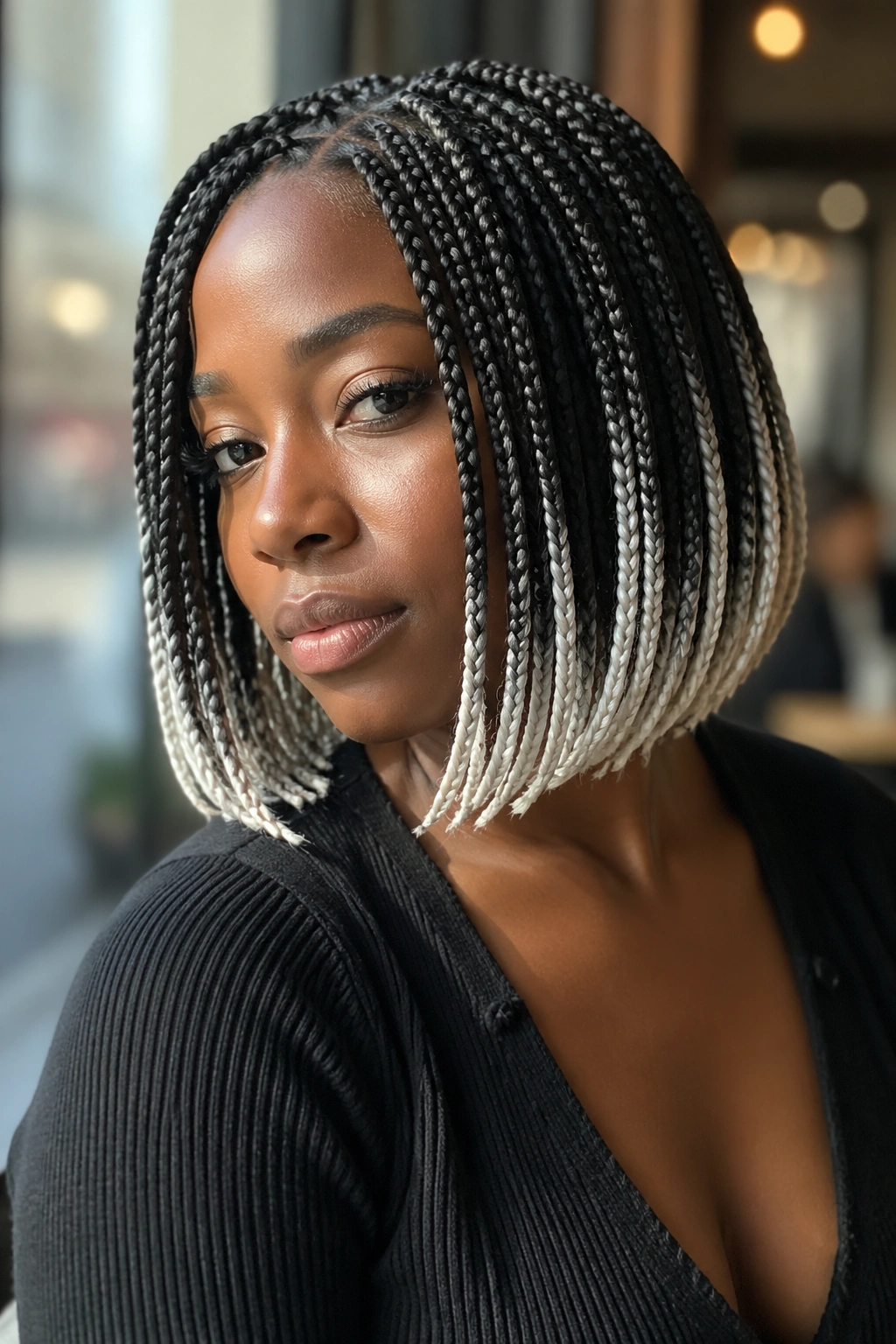
Short braids make white feel sharper. A bob-length cut keeps the eye focused on the contrast at the face and jawline, not on how much hair is moving around your shoulders. It’s a cleaner look, and honestly, it can feel less fussy to live with.
Compared with waist-length braids, this version needs less time to wash, dry, and detangle at the ends. It also keeps the white from dragging against jackets, scarves, and bag straps all day. If you’ve ever had long light-colored braids pick up lint by the hour, you know why that matters.
I like platinum ends here because they read bright without making the whole head look washed out. Ask for the braids to fall somewhere between the jaw and the collarbone, then keep the white concentrated at the lower half. The shape stays neat, and the highlights still show when you tuck one side behind the ear.
This is also a smart option if you wear glasses. The shorter length keeps the frames from competing with the braids, which sounds minor until you actually wear it.
7. Boho Braids with White Curly Tendrils
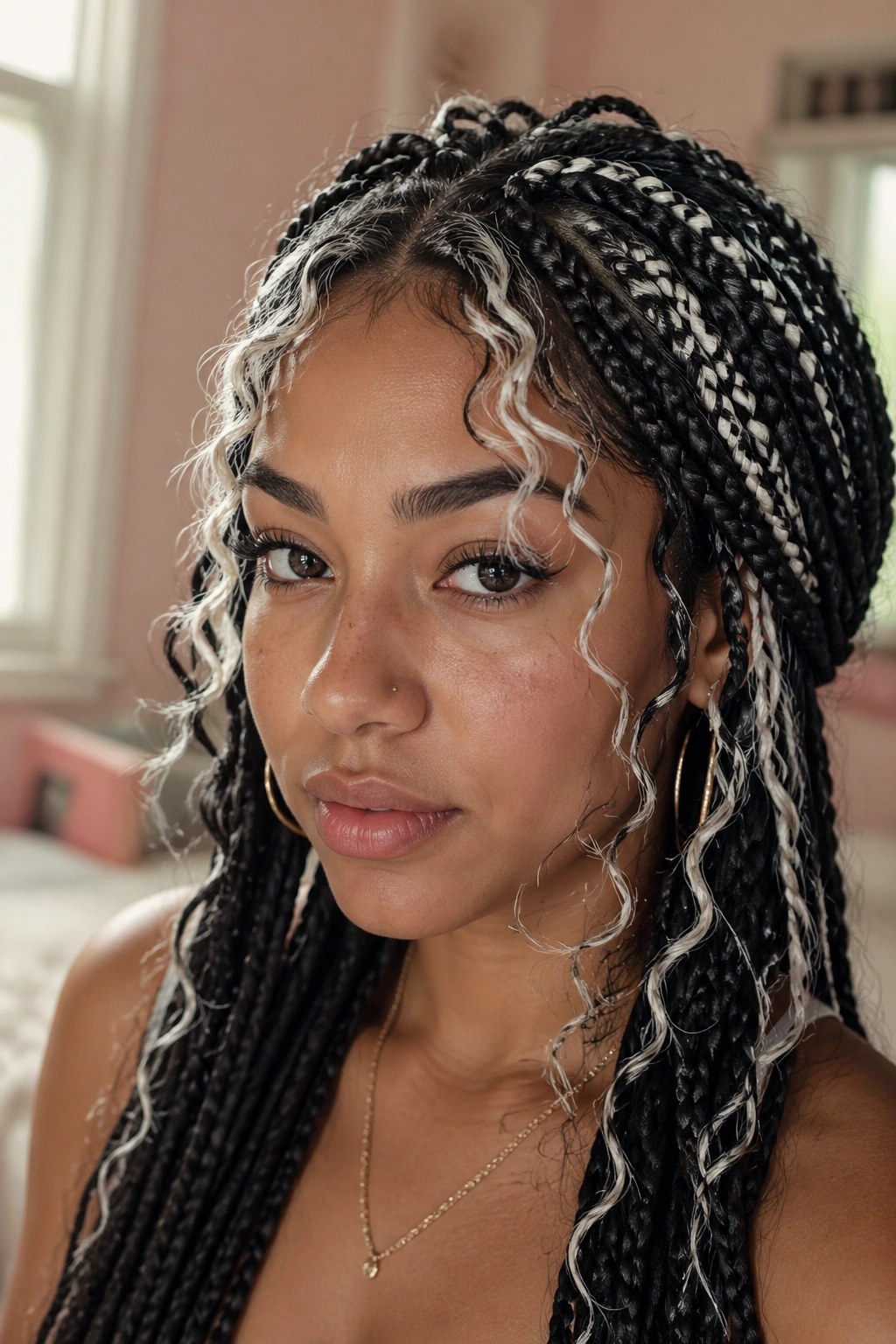
Soft curls change everything. Once you add loose white tendrils to box braids, the whole style stops feeling so strict. The braids still hold the structure, but the curls break up the hard line of the white and make it feel lighter, almost airy.
What Makes It Feel Softer
The curly pieces work best when they’re placed near the front, around the ears, and through a few rows in the back. You do not need curls everywhere. A handful is enough to keep the look from turning stiff. Too many loose strands and the style starts looking messy by day two, which is a different thing entirely.
I’d keep the white curls a little longer than the braids around them so they show movement. That little difference in length is what gives the style life. It looks especially good when the base braids are medium or small, because the curl texture has space to stand out instead of fighting the braid size.
- Place 6 to 10 curly pieces if you want a light boho effect.
- Keep the curls around the face and crown for the best framing.
- Use a light mousse instead of heavy cream products.
- Sleep with a satin bonnet or scarf so the curls don’t puff out overnight.
Tip: If the white curls frizz faster than the braids, wrap them gently at night with the rest of the style instead of trying to re-curl them every morning.
8. High Ponytail Box Braids with White Tail Pieces
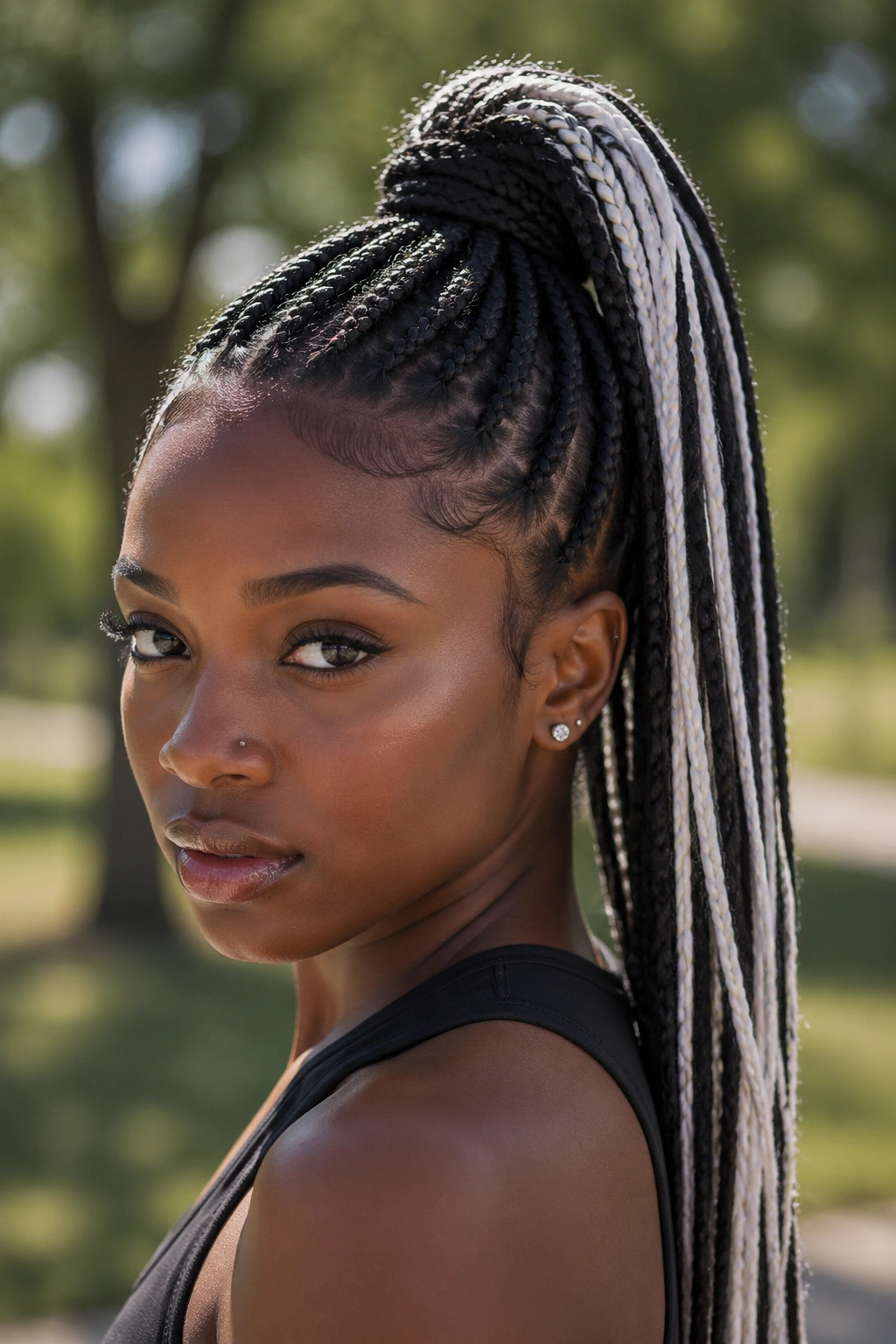
A high ponytail changes the whole read of white highlights. When the braids are pulled upward, the white sections move to the tail and catch the eye with every step. It’s a clean, athletic look, but it still feels styled.
What I like here is the contrast between the tight base and the loose hanging lengths. The top stays smooth, so the ponytail itself becomes the feature. White pieces through the tail make the movement visible from the back and side, which is useful if you want the color to show even when your face is off to the side.
Keep the ponytail base firm but not yanked tight. That’s a real line I draw with this style. If the style is too tight at the crown, the white might look good for two hours and then your scalp starts complaining. Not worth it. Use a wide wrap or a braid cuff at the base if you want a polished finish without piling on extra accessories.
This version is especially good for people who like a sharp, lifted shape. It gives you height, swing, and a clear view of the white lengths all at once.
9. Small Box Braids with Alternating White Feed-Ins
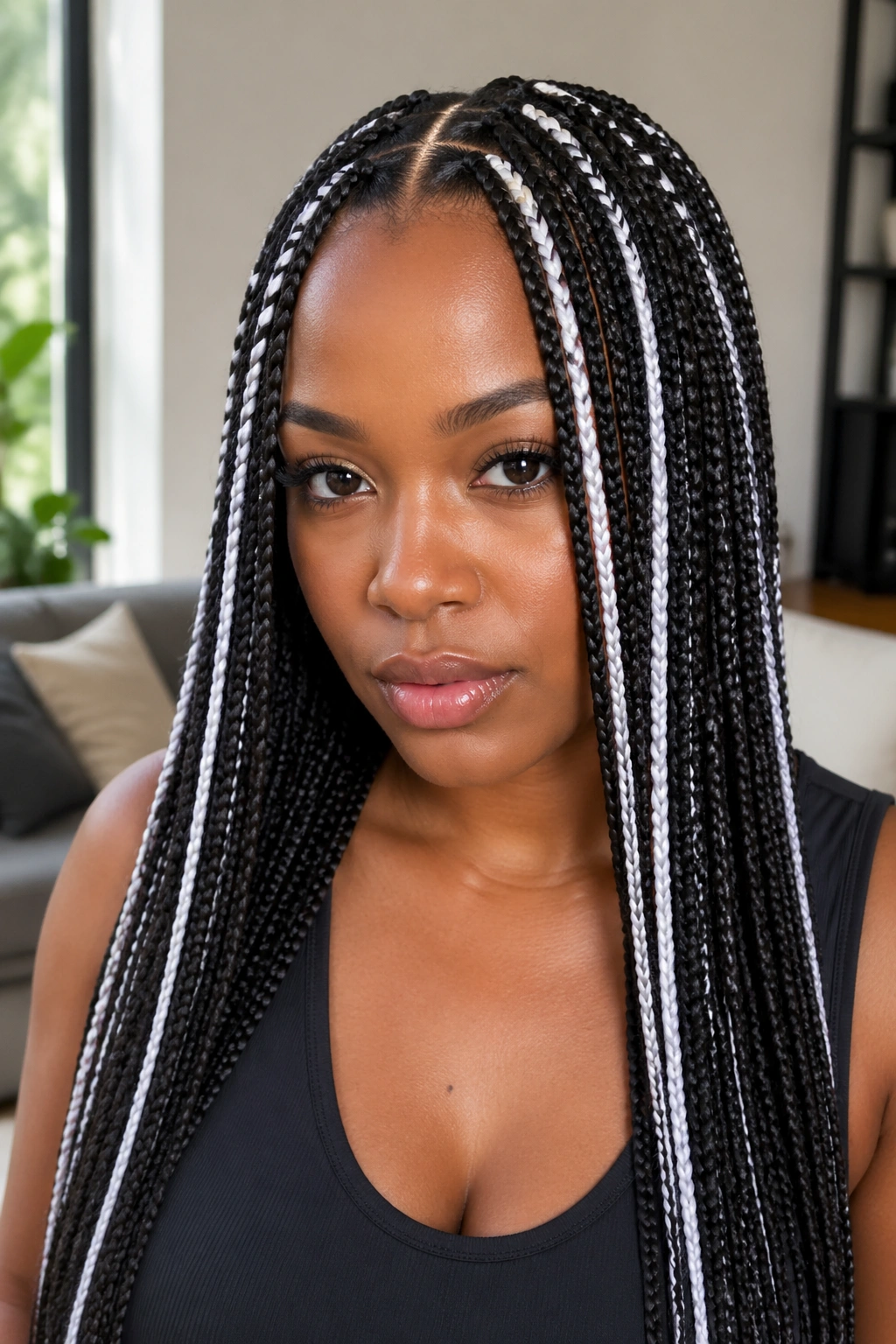
Want the white to feel woven in instead of painted on? Small braids are the move. The tighter grid gives you room to repeat the color in a steady rhythm, so the highlights feel intentional instead of random.
The best way to do this is to alternate white feed-ins every few braids rather than every single one. That spacing keeps the head from turning into a zebra stripe effect, which is where a lot of people go wrong. The pattern should feel like a pulse. Not noise.
How to Avoid the Zebra Effect
Keep the white concentrated in lanes. One row of white, a couple rows dark, then another white lane a little farther back. The eye can follow the pattern without getting tired. You can also vary the placement slightly at the crown and then repeat it more evenly through the back.
Small braids need patience. Lots of it. But they reward you with detail that lasts, and white highlights look especially neat in this format because the sections are narrow enough to stay crisp.
If you like a style that looks more complex from a distance and cleaner up close, this is the one. It has pattern without clutter.
10. Lemonade Box Braids with White Highlights
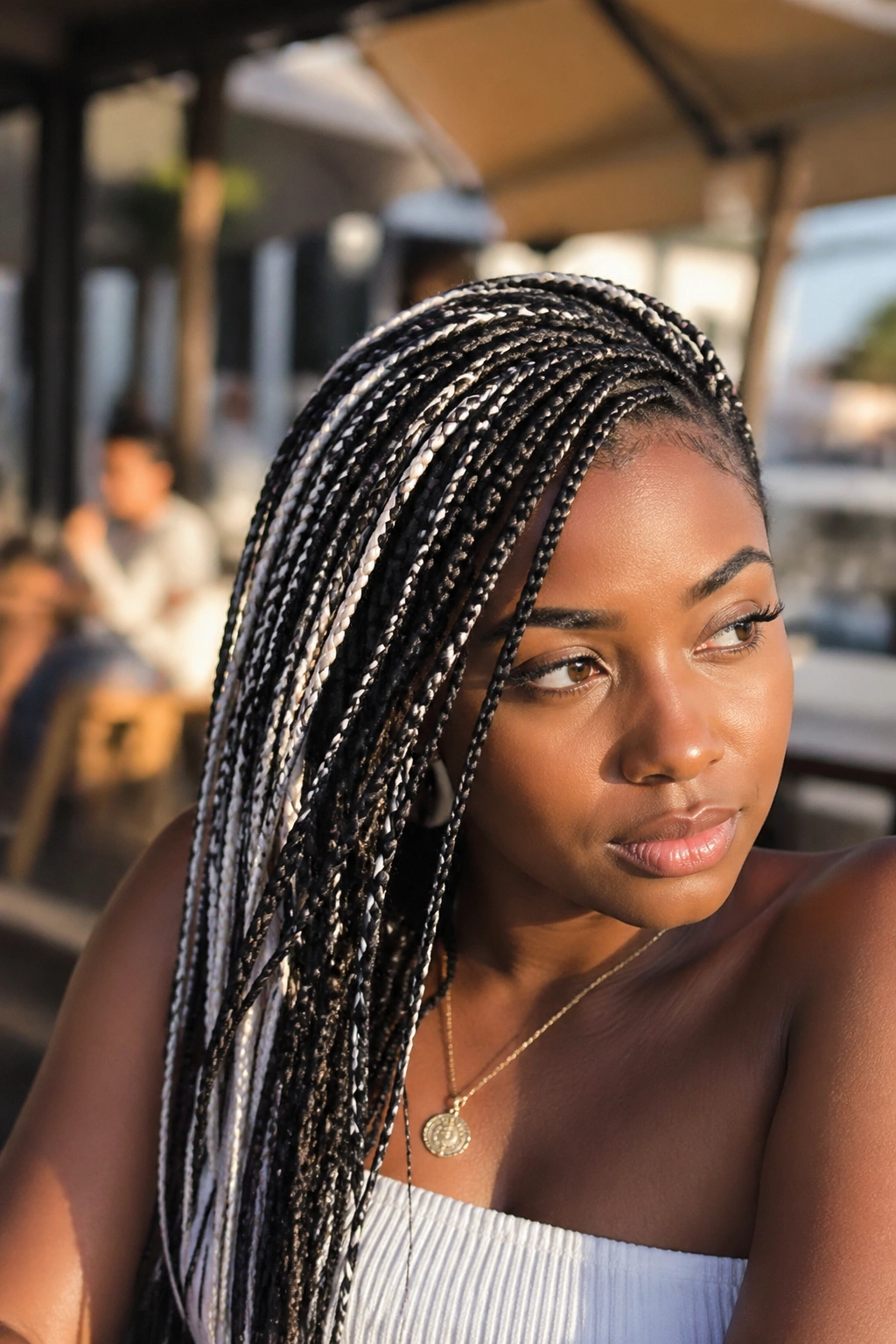
Pull everything to one side and the white starts to read like a streak of light across the face. That’s the whole appeal of lemonade braids. The diagonal shape does the styling before the color even enters the picture.
I’d use white highlights on the top layers and leave the hidden side more subdued. That way, the white shows when the braids drape across the shoulder, which is where this style lives anyway. If you place the white on the under-side instead, you lose the face-framing effect that makes this cut so good.
The side sweep also gives you a chance to play with length. Longer braids move beautifully here, but they don’t have to be waist-length. Collarbone to mid-back can work just as well if the white pieces are placed near the front sweep and the tail ends stay clean.
- Keep the side part deep enough to show the braid direction.
- Put white on the top-visible rows.
- Leave the lower side mostly dark for contrast.
- Use a light hold mousse so the sweep stays smooth instead of puffy.
A side-swept style is one of the few looks where white can feel dramatic and easy at the same time.
11. Half-Up Box Braids with White Crown Streaks
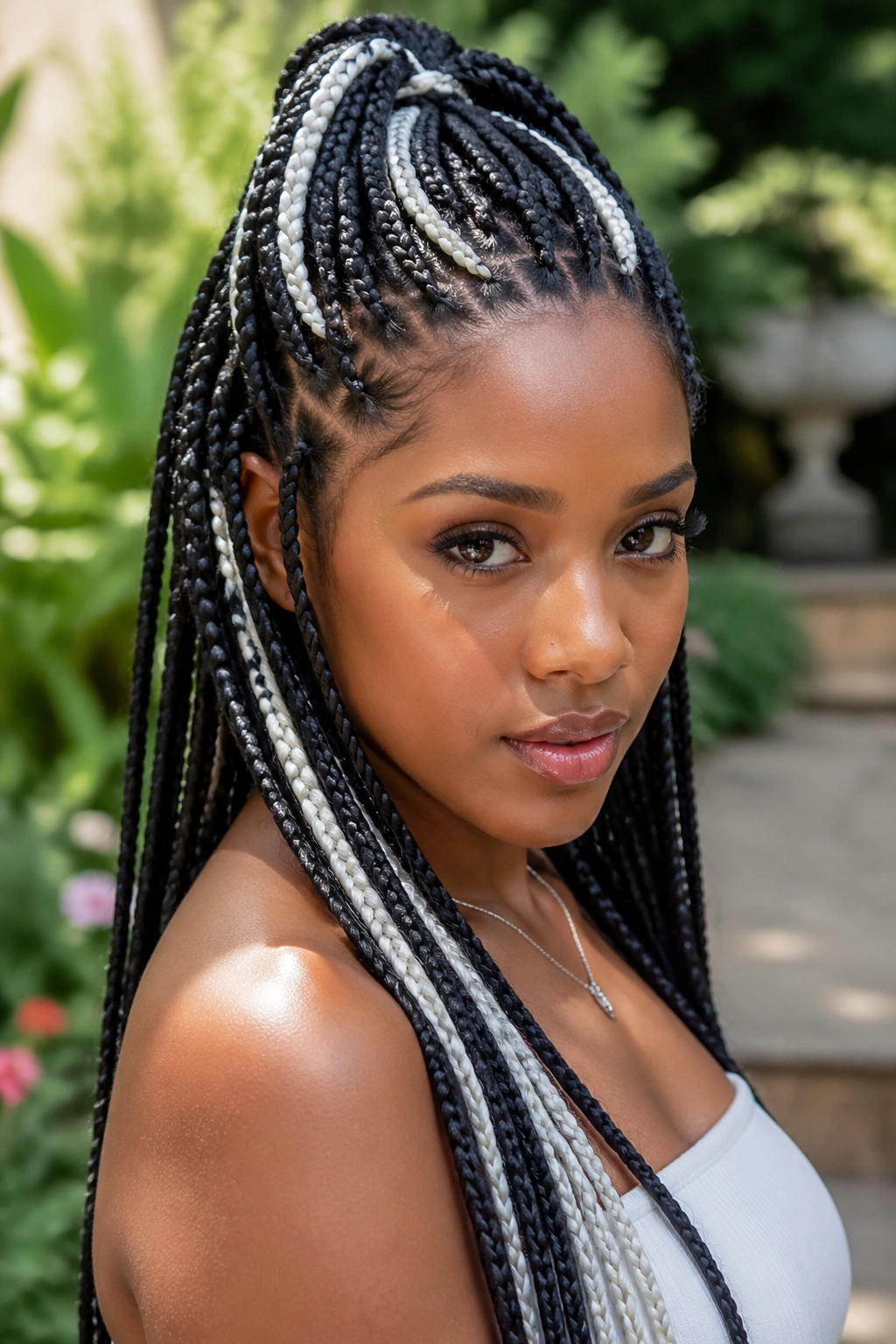
A half-up style gives white highlights a stage. The top section lifts away from the face, so the crown becomes the part everyone notices first. That’s where the white should live if you want the look to feel balanced instead of busy.
I like this version when the white pieces are concentrated around the top third of the head, then taper out as the braids fall. The result is bright where it matters and calmer where the hair rests on your shoulders. It also keeps the white visible in photos, which sounds shallow until you realize how often that matters with braided styles.
The biggest mistake here is yanking the top section too tight. The style should feel secure, not strained. Leave a little give at the scalp, especially if the braids are medium or long. The crown pieces need room to sit neatly, and they will not do that if the base is stretched thin.
This style works well for days when you want your braids out of your face but still want the white to read as part of the design instead of an afterthought.
12. Fulani-Inspired Box Braids with White Beads
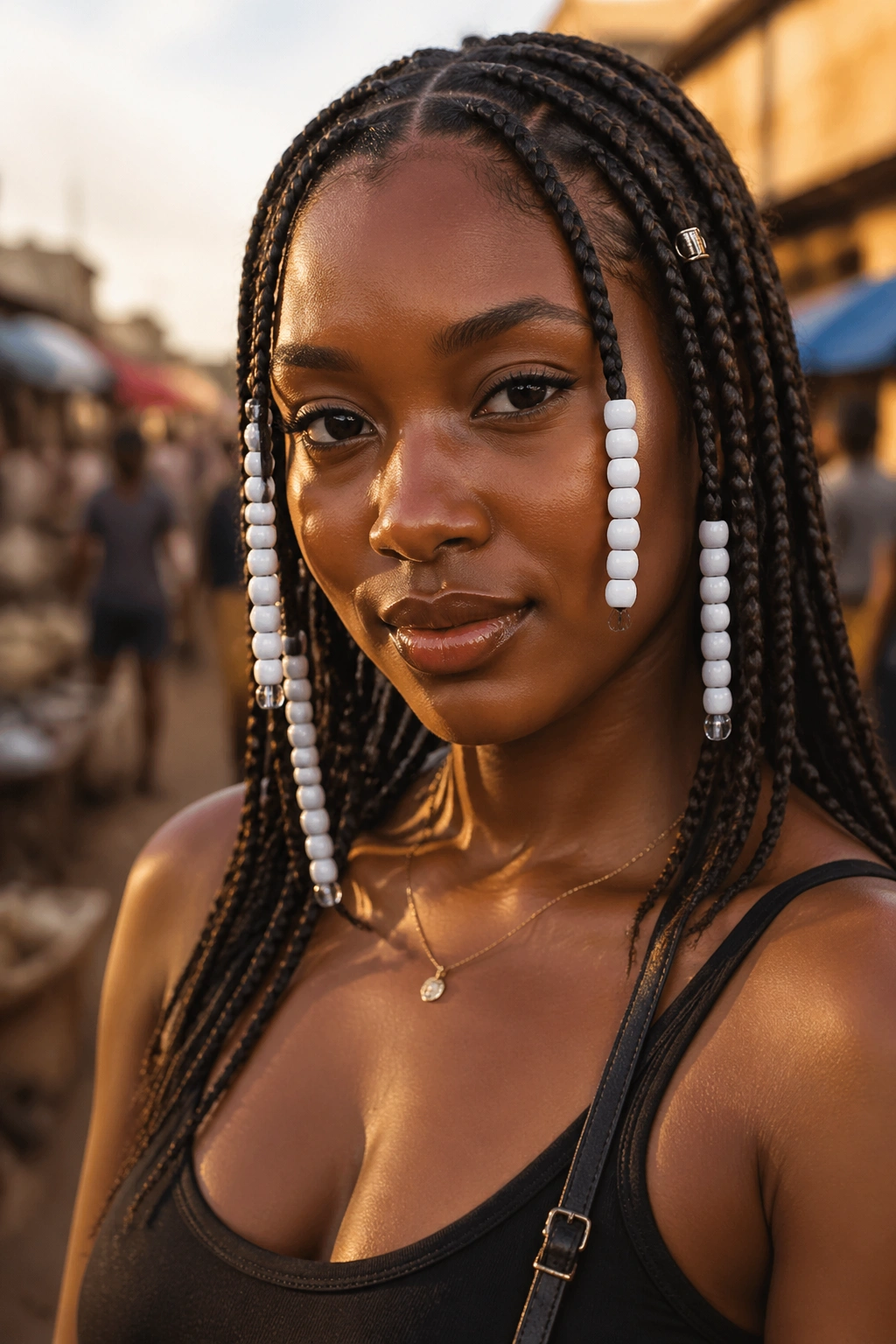
Box braids and Fulani-inspired accents can be a strong mix when the white is handled with discipline. A few front braids, a few wrapped accents, maybe a row of white or pearl-toned beads — that’s enough. You do not need to cover every braid with hardware.
Why the Accents Matter
The beads and wraps shift the white from “highlight” to “ornament,” which changes the whole mood. Instead of reading as just color, the white becomes part of the shape and rhythm of the style. That works best when the braid pattern itself is clean and the accessories repeat in a controlled way.
I’d keep the front braids simple and place the white details near the face, then let the rest of the braids stay quieter. Three to five beads on a front braid can be enough. More than that, and the sound, weight, and visual clutter start to pile up. Nice in theory. Annoying in motion.
This style suits people who like a little structure and a little sparkle, but not a full head of ornament. The white details feel deliberate when they echo each other instead of competing.
13. Gray-to-White Ombré Braids
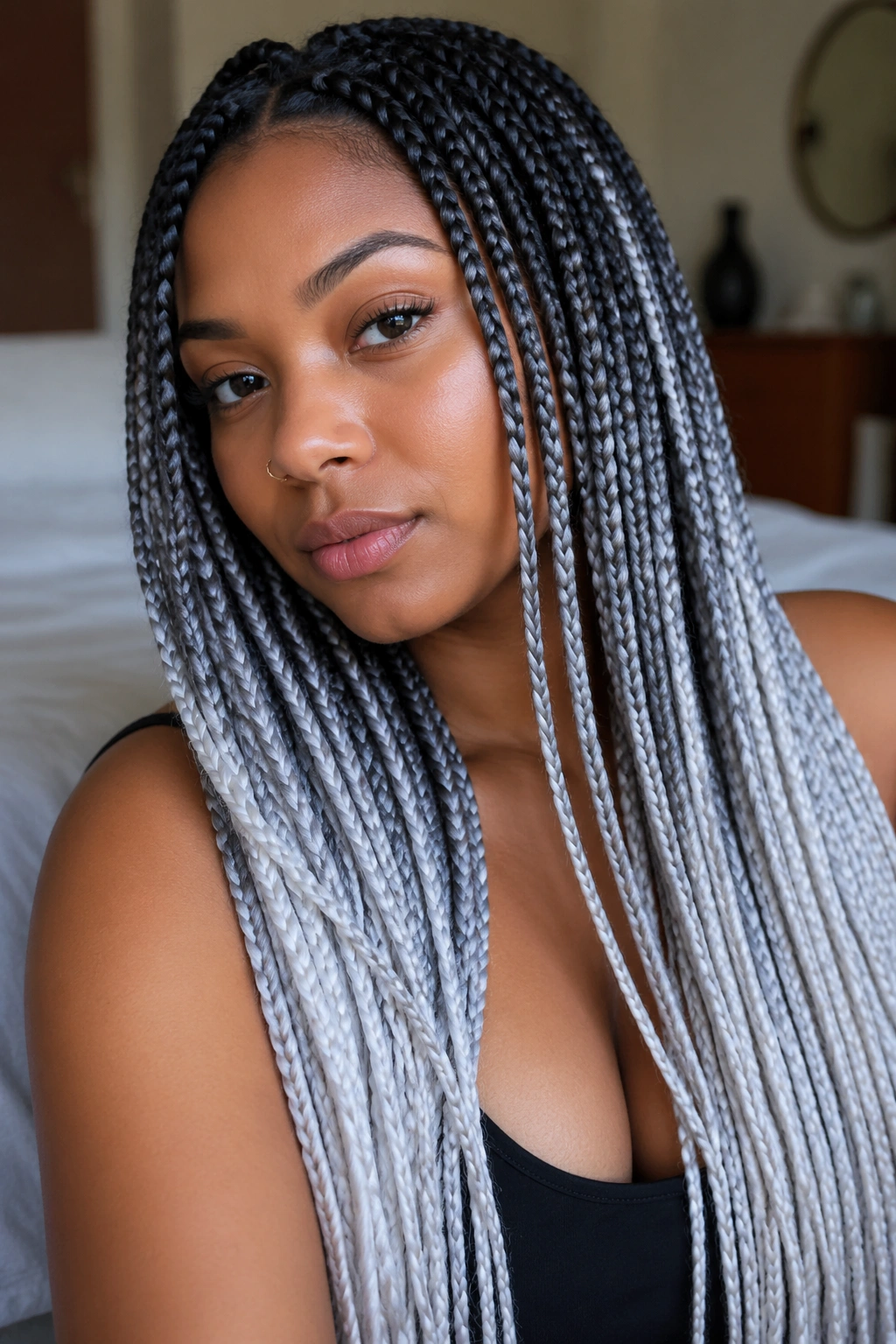
A smoky fade softens white in a way pure white never can. Start with black or deep charcoal at the roots, slide into gray through the middle, then end at white. The whole braid looks more gradual, and that makes the bright ends easier to wear.
Where to Start the Fade
The fade should begin low enough that the root area stays grounded. If the white starts too high, the braid loses that smooth gradient and starts looking patchy. I usually like the shift to gray somewhere below the cheekbone area on long braids, then the white near the final third.
This style does well with long lengths because the gradient has room to breathe. On shorter braids, the fade can feel compressed. You want each color to have a little space to show its own line before it moves into the next one.
- Keep the root color dark and solid.
- Let the gray sit in the middle third.
- Push the white toward the ends and outer layers.
- Use this on longer braids so the transition looks smooth rather than stacked.
A good ombré reads like one calm movement. A bad one looks like three separate hair packs glued together. Not the same thing.
14. Shoulder-Length Braids with Ribbon Highlights
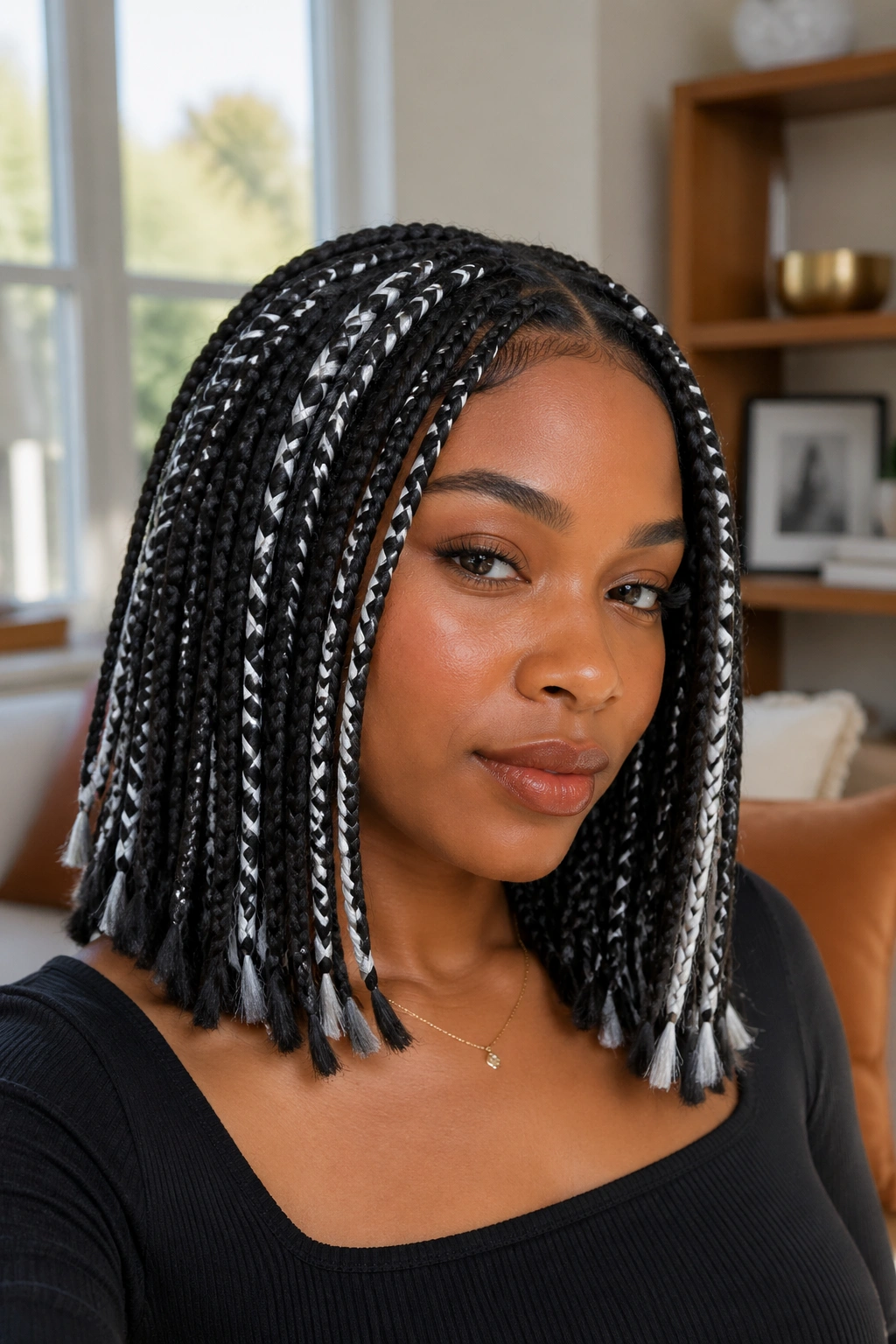
Shoulder-length braids make white look lighter and more precise. The shorter length keeps the style from feeling heavy, and the white threads read like strips of ribbon moving through the braid pattern. It’s a neat look. Very tidy, but not stiff.
This length works especially well if you like to wear your hair down most of the time. The white sits near the face and shoulders, where it can actually be seen, instead of disappearing into a long curtain of hair. That means you can use fewer highlight pieces and still get a strong effect.
I’d ask for some layering at the front so the white pieces land at different points instead of stopping in one blunt line. That tiny change keeps the style from looking boxy. It also makes the braids easier to tuck behind the ear without losing the shape.
Shoulder-length is a smart choice if you want a style that feels polished but doesn’t drag. It gives the white a clean runway, then gets out of the way.
15. Minimalist White Threads
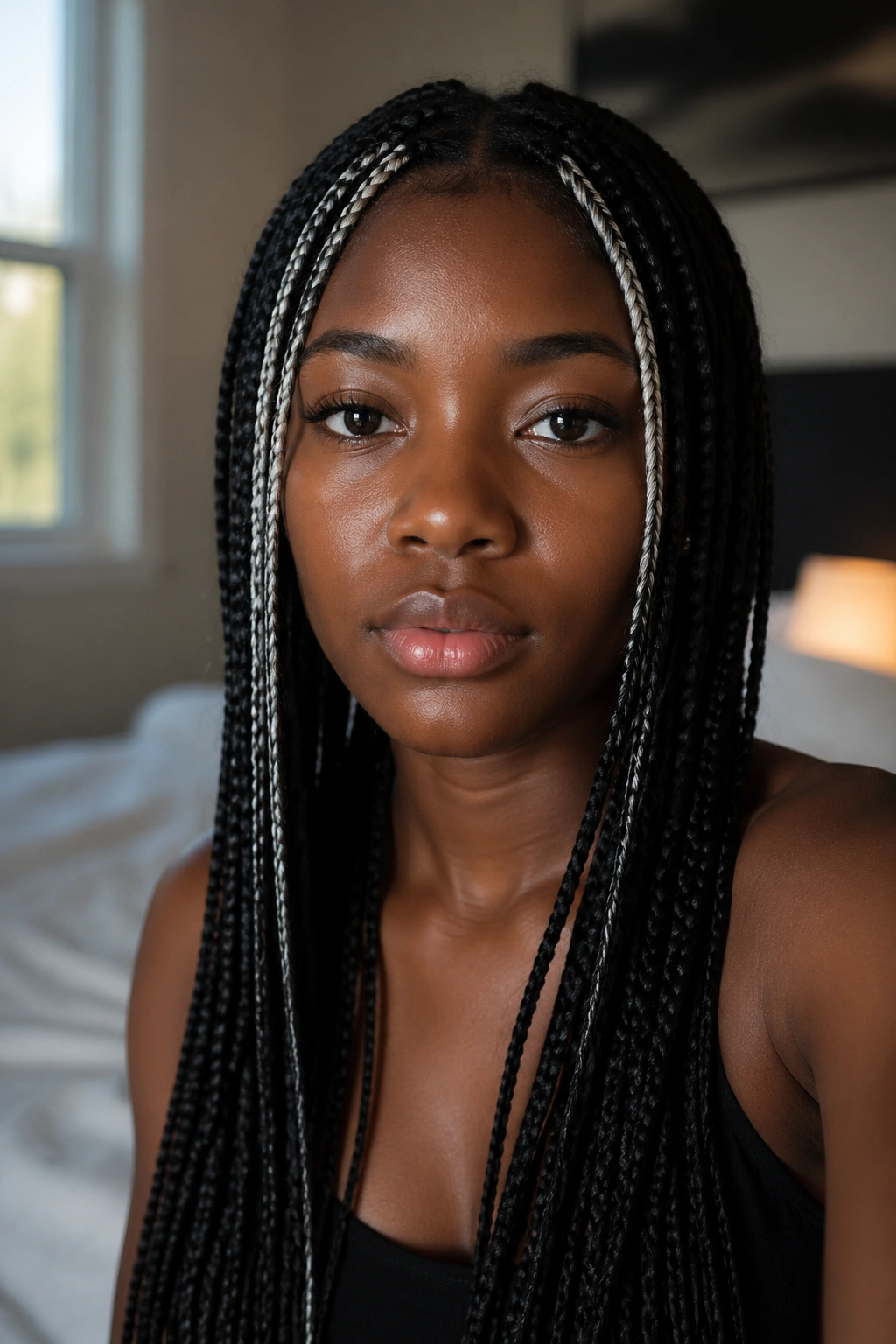
Want the quietest version of the look? Keep the braids dark and run fine white threads through just a few sections, almost like tracing lines rather than filling in color. That’s the version I’d choose if I wanted the white to read crisp instead of loud.
The style works because it leaves a lot of breathing room. White can turn shouty fast when it’s everywhere, and a minimalist approach avoids that. Place the threads near the front, maybe a few through the crown, then let the rest of the hair stay black or deep brown. The contrast stays sharp, but the shape remains calm.
How to Keep It Polished
Use the smallest white sections you can manage without losing the effect. Fine strands look better than chunky panels here, and they age more gracefully as the braids loosen over time. That matters. Thicker highlights can start to look dated once the newness wears off, while narrow white lines still look intentional.
This is also the easiest style to pair with everyday clothes. No special wardrobe needed. No heavy accessories needed either. It works because the braid itself is the point, not a pile of extra decoration.
If I had to pick one version for someone who wants white highlighted box braids that feel clean, modern, and easy to live with, this would be the one.
