



Finding the perfect balance between a grounded, earthy aesthetic and a pop of playful color is exactly why brown and pink knotless box braids have become a staple in the braiding community. Most people struggle when moving away from standard natural tones for the first time. They worry about the color being too “loud” or not professional enough for their daily environment. Brown serves as that essential anchor—it provides a sophisticated, natural-looking base that allows the pink to act as a highlight rather than a distraction. It is the hair equivalent of a chocolate-covered strawberry, and the results are consistently stunning across every skin tone.
The knotless technique itself changed the game for anyone with a sensitive scalp. Historically, traditional box braids started with a tight knot at the root, which often led to tension headaches and, in some cases, traction alopecia. Knotless braids begin with your natural hair, and the synthetic extensions are fed in gradually as the stylist moves down the strand. This creates a flat, seamless finish that feels much lighter and moves more naturally. When you add a color palette like chocolate brown and dusty rose or espresso and neon pink, you are not just getting a protective style; you are wearing a piece of art that requires almost zero morning effort.
Choosing the right shades matters more than most people realize. You aren’t just picking “brown” and “pink.” You are choosing between cool-toned ash browns that pair well with pastel pinks or warm, honey-toned browns that look incredible with vibrant magentas. I have spent years watching how these colors interact under different lighting, and the magic usually happens in the contrast. If the brown is too close to the pink in saturation, the colors can get “muddy.” If the contrast is high, the braids have a three-dimensional quality that makes the pattern of the hair pop.
There is a specific confidence that comes from walking out of a salon with a fresh set of braids that perfectly capture your personality. Whether you want something subtle that only shows when you put your hair in a bun or you want a full head of high-contrast color, the brown and pink combination offers more versatility than almost any other duo. It is timeless, it is feminine, and when done correctly, it is one of the most flattering ways to experiment with color without the commitment of chemical dyes on your natural hair.
1. Mocha Brown with Subtle Pastel Pink Highlights
The beauty of a mocha base is its neutrality. It isn’t too dark, and it isn’t too golden, which makes it the perfect canvas for a soft, pastel pink. This look is frequently achieved by using a 1B or 2 shade of braiding hair mixed with a very light “cotton candy” pink. Instead of a 50/50 split, the stylist “peppers” the pink throughout the head. This means only about one out of every five or six braids will feature the pink color, creating a scattered, highlighted effect that mimics how natural sunlight hits the hair.
Why This Structure Works for Beginners
If you are nervous about color, this is the safest entry point. The pastel pink is light enough that it doesn’t clash with the mocha, and because the pink is used sparingly, the overall look remains grounded. It is a sophisticated way to play with “fairy-core” aesthetics without feeling like the hair is wearing you.
Essential Maintenance Tips
- Use a clear braiding mousse to keep the flyaways down; colored mousses can sometimes dull the vibrancy of pastel synthetic hair.
- Focus on the roots with a light oil like jojoba to maintain scalp health without weighing down the light-colored extensions.
- Pro tip: If the pastel pink starts to look a bit frizzy, a quick dip in hot water (carefully!) can smooth the synthetic fibers back out and restore that sleek look.
2. Deep Chocolate and Hot Pink Ombre
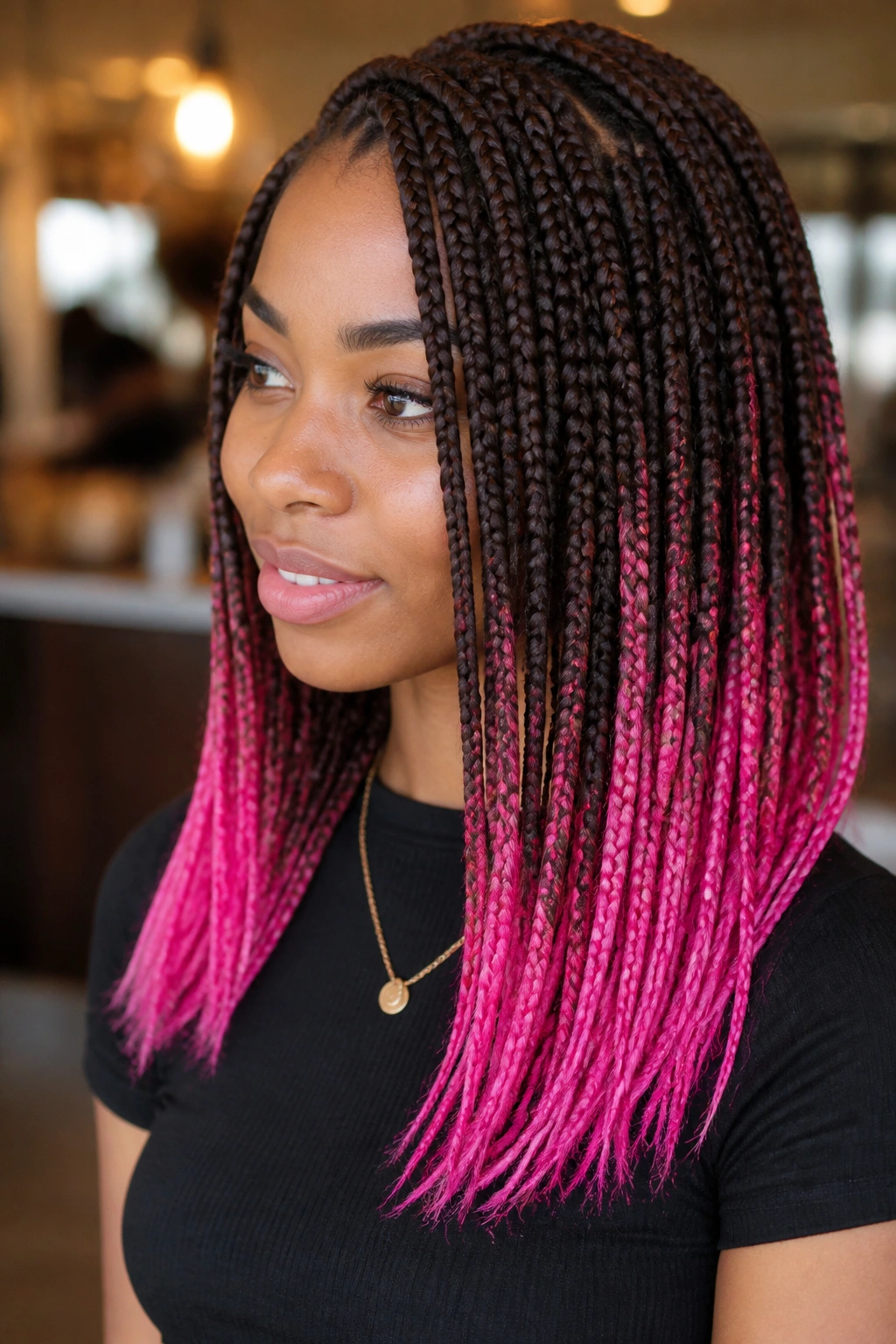
Ombre remains a popular choice because it allows for a “business in the front, party in the back” vibe. With deep chocolate brown at the roots, the braids blend seamlessly with most natural hair colors, making the growth less obvious over time. As the braid progresses, the color transitions into a saturated hot pink. This transition usually happens around the mid-back or shoulder level, depending on the length of the braids.
Hot pink is a bold choice, but when it is kept at the ends of the hair, it stays away from the face. This is particularly helpful for people who feel that bright colors can sometimes wash out their complexion. The weight of the deep chocolate brown keeps the look feeling balanced.
Getting the Transition Right
A skilled stylist will “taper” the colors during the feeding process. They start with the chocolate brown and slowly begin adding smaller strands of the hot pink until the brown is completely replaced. This prevents a “harsh line” where the color changes, which is the hallmark of a high-quality knotless install.
Styling the Ombre Look
- High Ponytail: This style puts the pink on full display as the ends bunch together.
- Half-Up, Half-Down: This shows the chocolate roots while letting the pink cascade down your back.
- Low Bun: You can tuck the pink away almost entirely if you need a more conservative look for a specific event.
3. Honey Brown with Soft Rose Quartz Ends
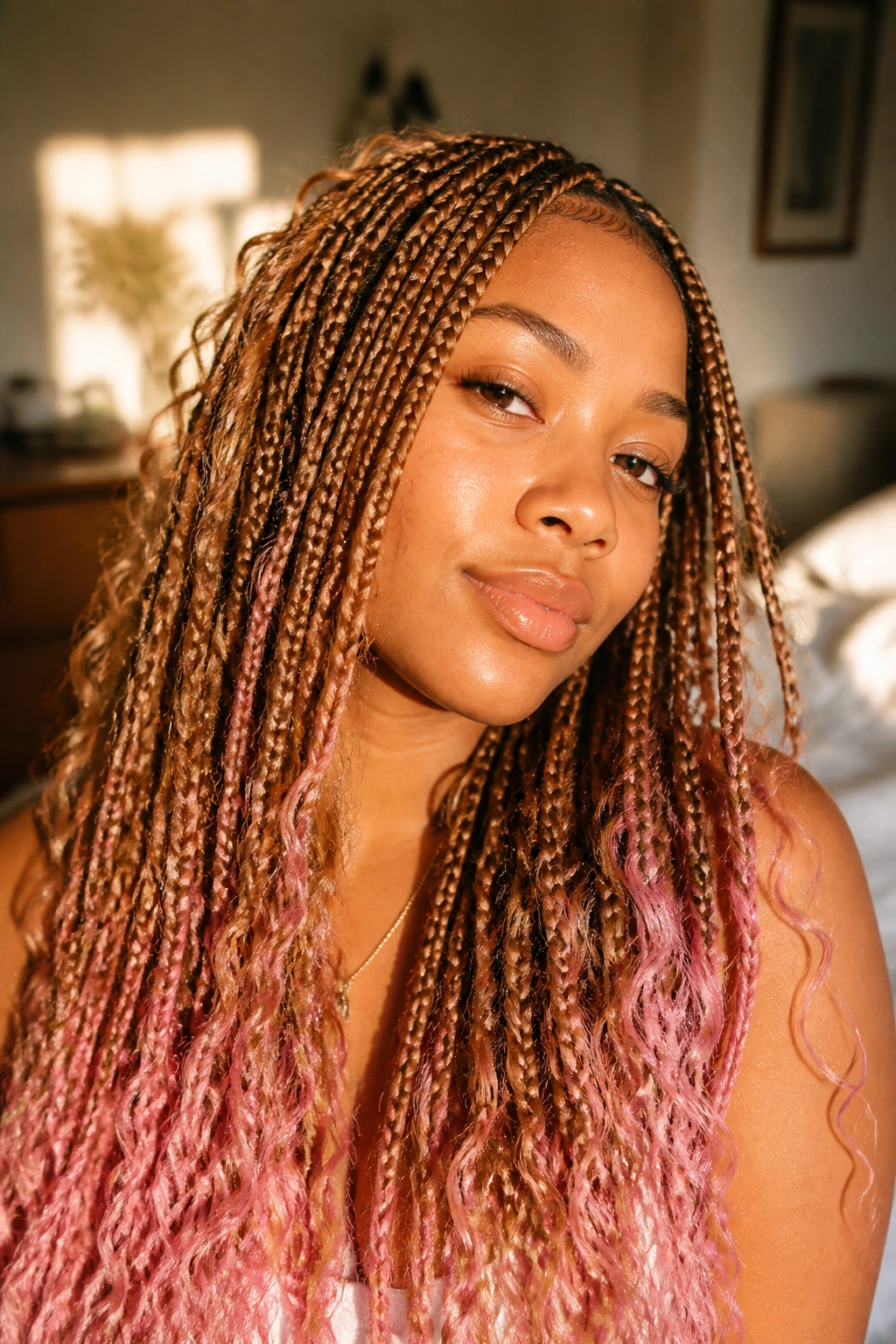
Honey brown is a warm, inviting shade that looks incredible on warm undertones. When you pair it with a rose quartz pink—a shade that is slightly more muted and “dusty” than traditional pink—the result is an ethereal, romantic look. This style often uses the “bohemian” or “goddess” variation, where small curls of synthetic or human hair are left out of the braids to add texture and volume.
The rose quartz color is soft enough that it almost acts as a neutral. It doesn’t scream for attention, but it adds a glow to the overall style. Using this color at the ends of honey brown braids creates a gradient that feels very natural, like the hair has been lightened by the sun over several months.
Choosing the Right Hair
For the most natural look, look for pre-stretched braiding hair in a color 27 or 30 (the honey tones) and a muted pink. If you are doing the bohemian style, using human hair for the curly bits will prevent the matting that often happens with synthetic curls after a week or two.
Is this style high maintenance? Yes, slightly. Because of the curly pieces and the lighter colors, you will need to be diligent about your nighttime routine. A silk bonnet is non-negotiable here. Without it, the rose quartz curls will turn into a tangled mess within forty-eight hours.
4. Caramel Base with Peek-a-Boo Neon Pink
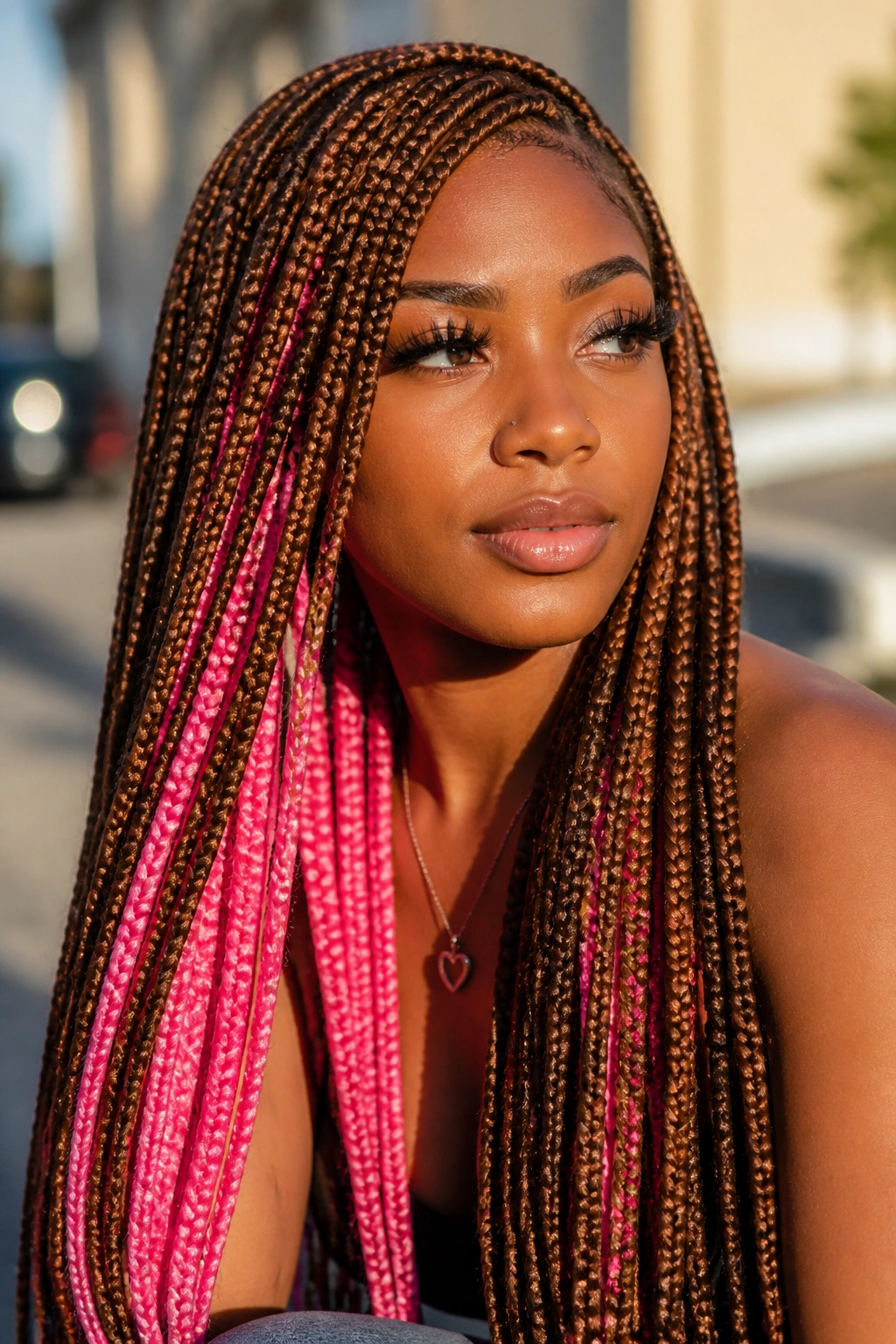
The “peek-a-boo” style is for the person who loves a surprise. The top layers of the hair are done in a rich, warm caramel brown, while the bottom layer—closest to the nape of the neck—is done in a striking neon pink. When the hair is worn down, the pink is almost invisible, only flashing through when you move or when the wind catches a braid.
However, the moment you pull that hair into a top knot or a side braid, the neon pink takes center stage. It is a high-contrast, high-energy look that feels very modern. Caramel is a great middle-ground brown because it has enough gold in it to bridge the gap between a natural root and a bright synthetic color.
How to Request This at the Salon
Ask your stylist for a “two-toned layer” install. You should specify exactly how many rows of pink you want at the bottom. Usually, two or three rows are enough to create the effect without overwhelming the caramel.
Why Neon Pink?
- It glows under UV light (perfect for certain events).
- It creates a sharp, clean contrast that looks very intentional.
- It is one of the most “photogenic” colors for social media.
5. Chestnut Brown with Bubblegum Pink Mix
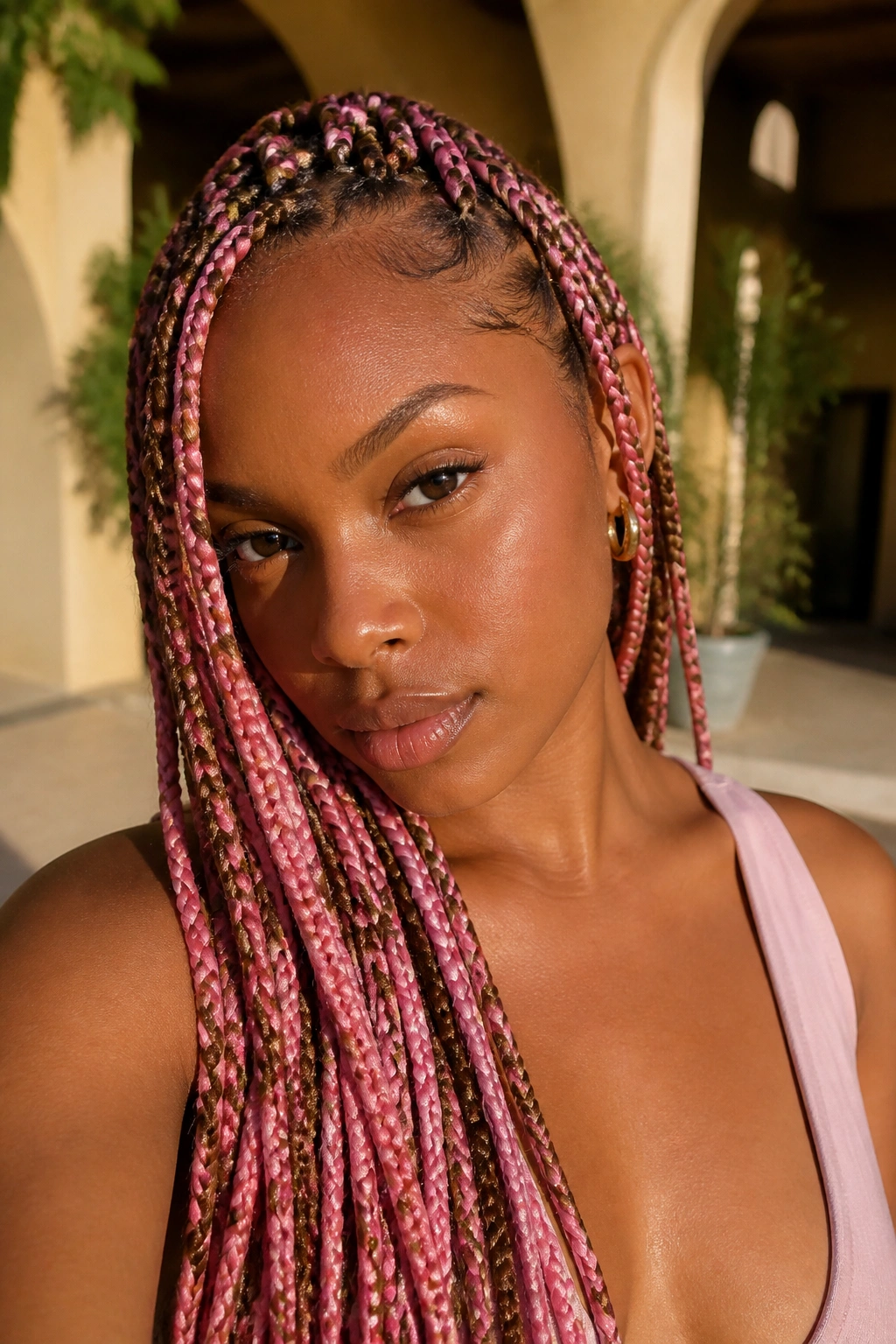
This is what I call the “blended” look. Instead of separate braids of different colors, each individual braid contains both chestnut brown and bubblegum pink. The stylist achieves this by holding both colors of hair simultaneously as they braid. The result is a “candy cane” or “twine” effect where the colors spiral around each other all the way down.
Chestnut brown has a slight reddish undertone, which complements the blue-based coolness of bubblegum pink. It is a playful, youthful style that works exceptionally well for medium-length braids. Because the colors are so thoroughly mixed, the style has a consistent texture and “vibe” throughout the whole head.
The Science of the Blend
When you blend two colors in one braid, the braid can actually appear slightly thicker than a single-color braid. This is because the eye is processing two different light reflections. If you want a full, voluminous look without adding actual weight, blending colors is a secret weapon.
Styling Tip: These braids look fantastic when accessorized with silver hair cuffs or rings. The cool tone of the silver brings out the “pop” in the bubblegum pink and makes the chestnut brown look even richer.
6. Dark Cocoa with Dusty Rose Accents
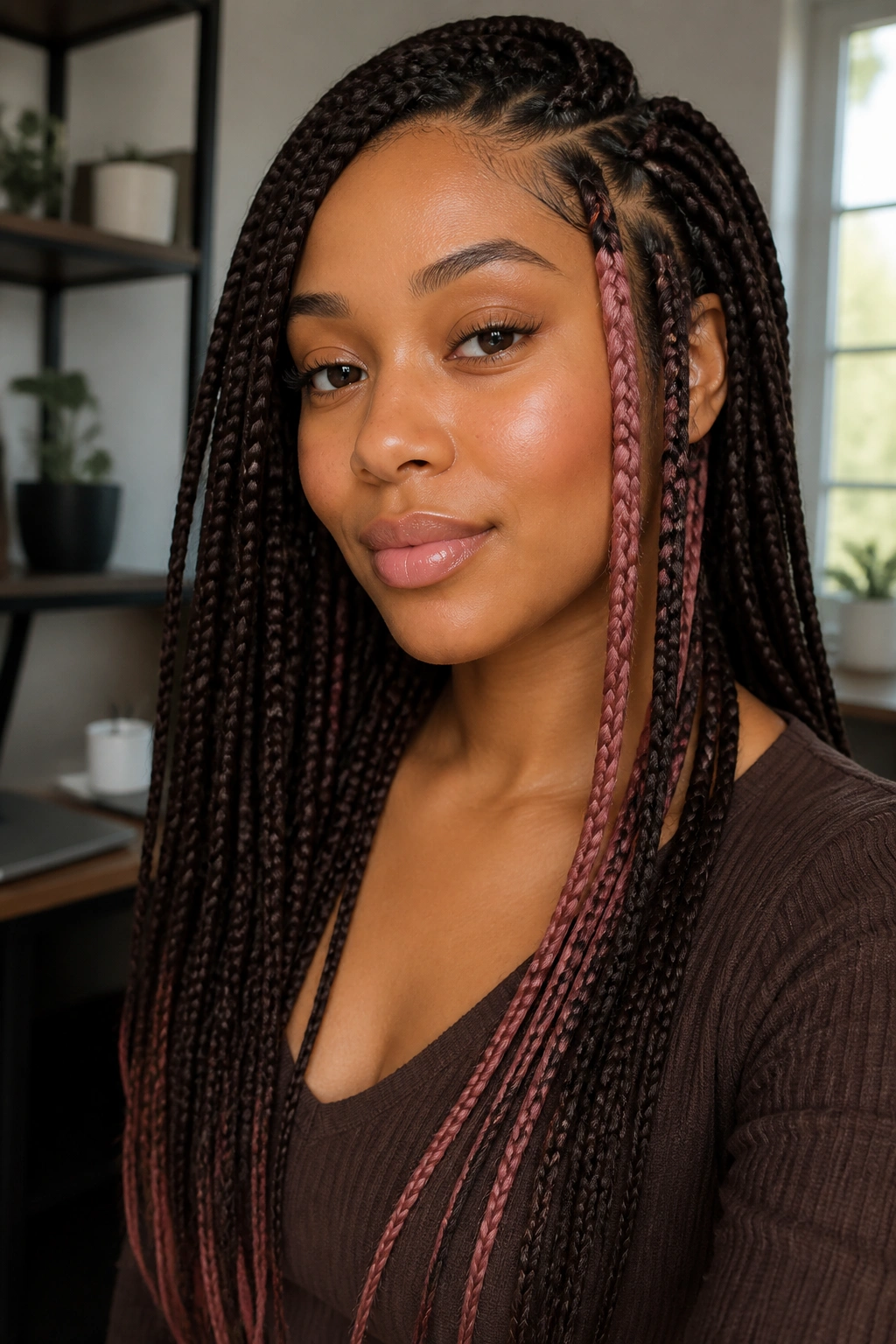
If you are looking for something that feels expensive and “quiet luxury,” this is it. Dark cocoa is a deep, almost black-brown that provides a high-end, sleek foundation. Dusty rose is a sophisticated, “grown-up” pink that has grey or brown undertones. Instead of doing the whole head, you might only have four or five braids on one side of the head in the dusty rose color.
This asymmetrical look is incredibly chic. It creates a focal point near the face without requiring the maintenance of a full-head color job. Dark cocoa is also the best shade for hiding any natural hair breakage or frizz, as the dark color masks the “shadows” between the strands.
Perfect for Professional Environments
Because dusty rose is so muted, it often passes as a dark blonde or a rose-gold in certain lighting. This makes it one of the most office-friendly ways to wear pink. It is stylish without being “distracting” by traditional corporate standards.
Scalp Care for Darker Braids
Darker synthetic hair can sometimes show “scalp flaking” more clearly than lighter hair.
- Use a witch hazel-based cleanser on a cotton pad to wipe the parts between your braids twice a week.
- Apply a light, peppermint-infused oil to keep the scalp stimulated and smelling fresh.
7. Golden Brown and Cotton Candy Pink Skunk Stripe
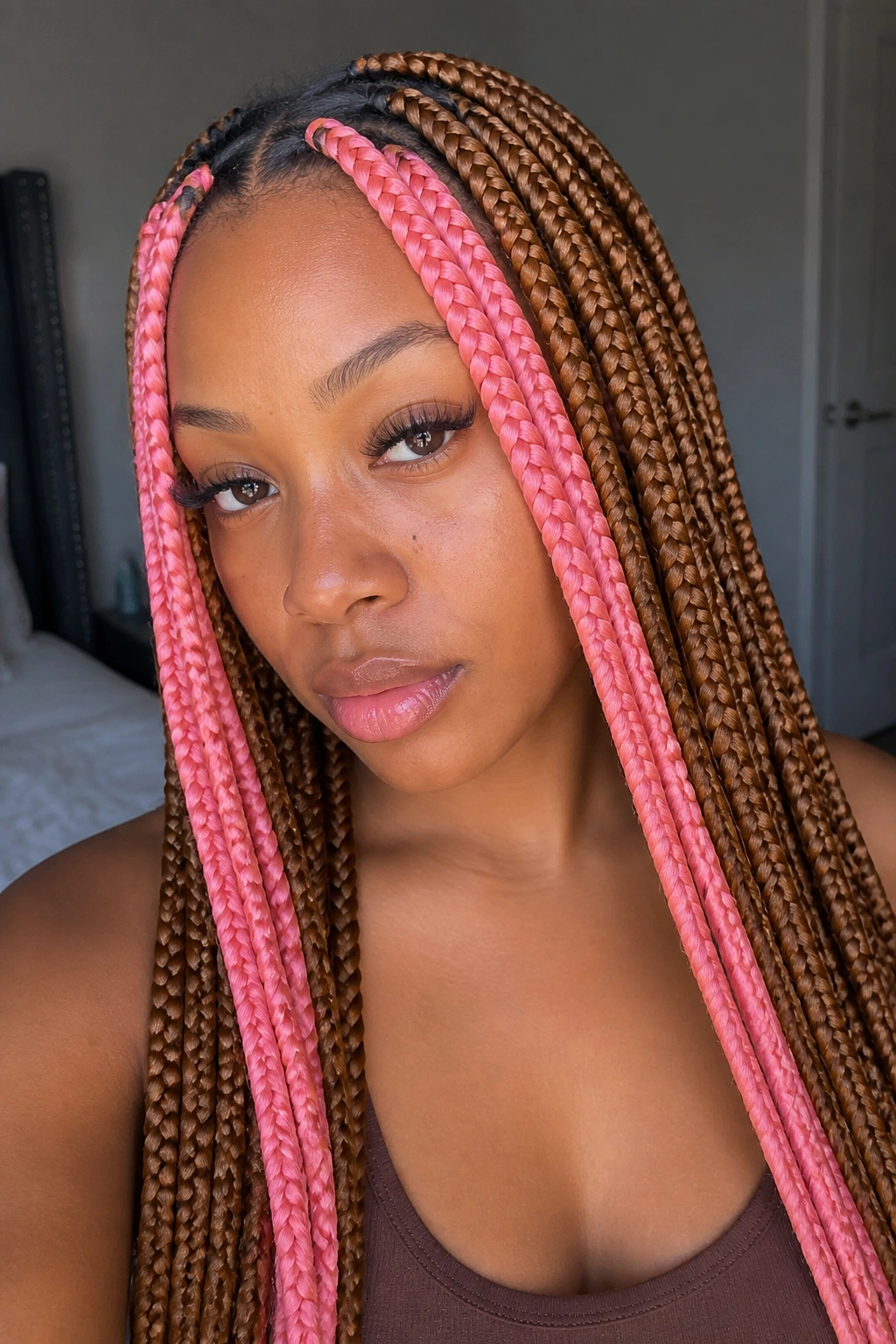
The “skunk stripe” or “money piece” trend has migrated from traditional dye jobs into the world of braids. In this version, the entire head is a beautiful, warm golden brown, but the two braids directly framing the face are a bright, undeniable cotton candy pink. It is a bold, “main character” look that draws all the attention to your eyes and cheekbones.
Golden brown is a very flattering shade for those with golden or olive skin tones. By keeping the pink restricted to the front, you create a frame that brightens your face. It is like having a permanent ring light following you around.
Customizing Your Frame
You don’t have to stop at just two braids. Some people prefer a “chunky” frame, taking the first two rows of hair around the hairline and making them pink. This creates a much more dramatic contrast, especially when the hair is pulled back into a bun.
What to watch out for: The front of the hair—the “edges”—is the most delicate part of the scalp. Ensure your stylist isn’t braiding those pink “money pieces” too tightly. Since they are the most visible part of the style, you want them to look healthy, not strained.
8. Mahogany and Magenta Blend
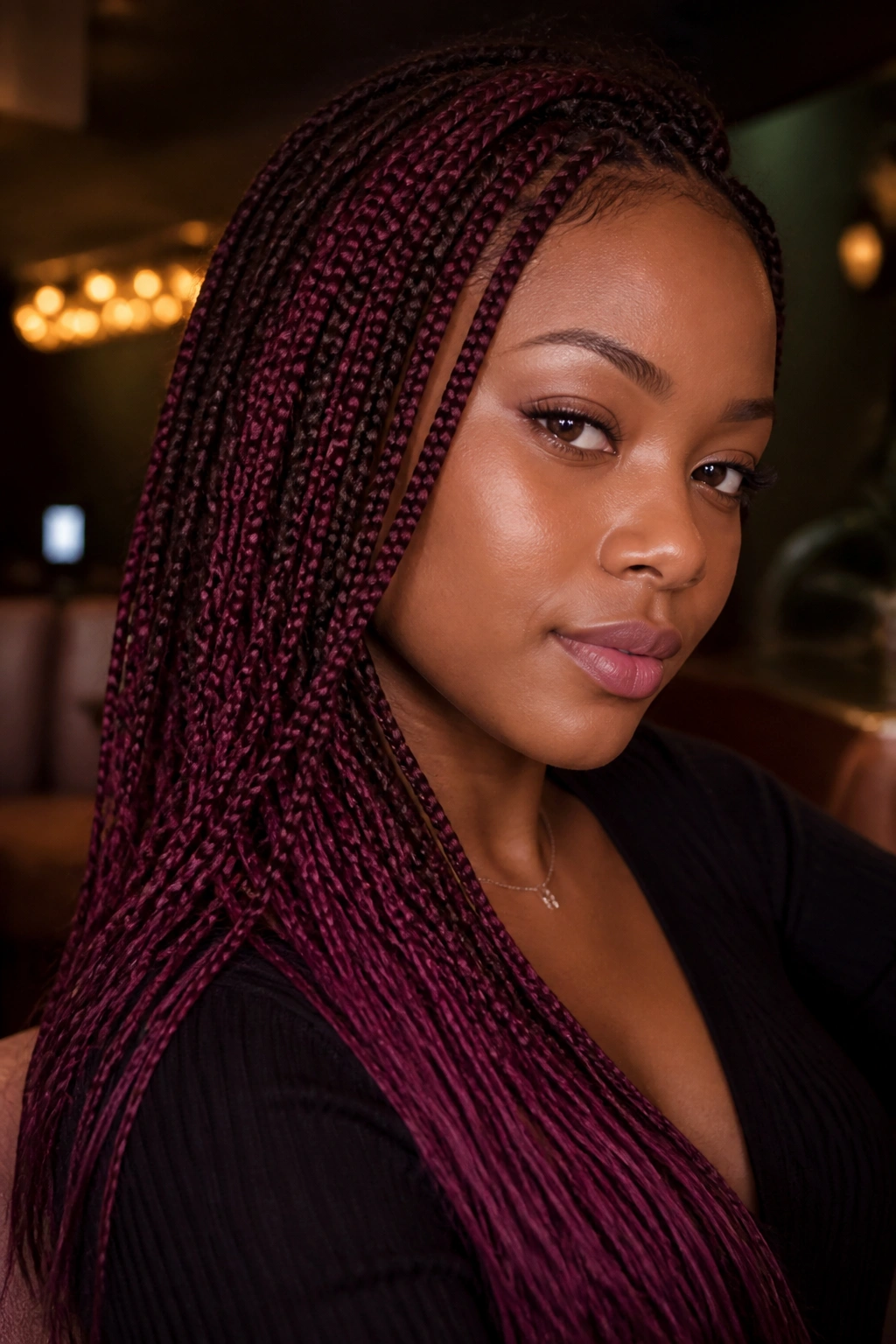
Mahogany is a rich brown with deep purple and red undertones. Magenta is a powerful, dark pink that also sits on the edge of the purple spectrum. When you combine these two, you get a monochromatic-adjacent look that feels incredibly cohesive. This isn’t just “brown and pink”—it’s a sophisticated “berry” palette.
This combination is particularly striking on deeper skin tones. The red in the mahogany brings out the warmth in the skin, while the magenta provides a vibrant, jewel-toned pop. Because both colors share a red/purple base, the transition between them is very smooth, even if you do a full ombre.
Why This Palette Is Timeless
Unlike neon colors which can sometimes feel tied to a specific “era” or trend, jewel tones like mahogany and magenta have been staples in fashion for decades. They feel regal and intentional.
Nighttime Protection for Longevity
- Wrap the base: Use a silk or satin scarf to lay your edges flat and keep the mahogany roots from frizzing.
- The “Pineapple”: Gather the braids loosely at the very top of your head to prevent friction on the magenta ends.
- The Bonnet: Cover everything with a large, high-quality bonnet to ensure the braids don’t rub against your pillowcase.
9. Espresso with Pale Pink Face-Framing Tendrils
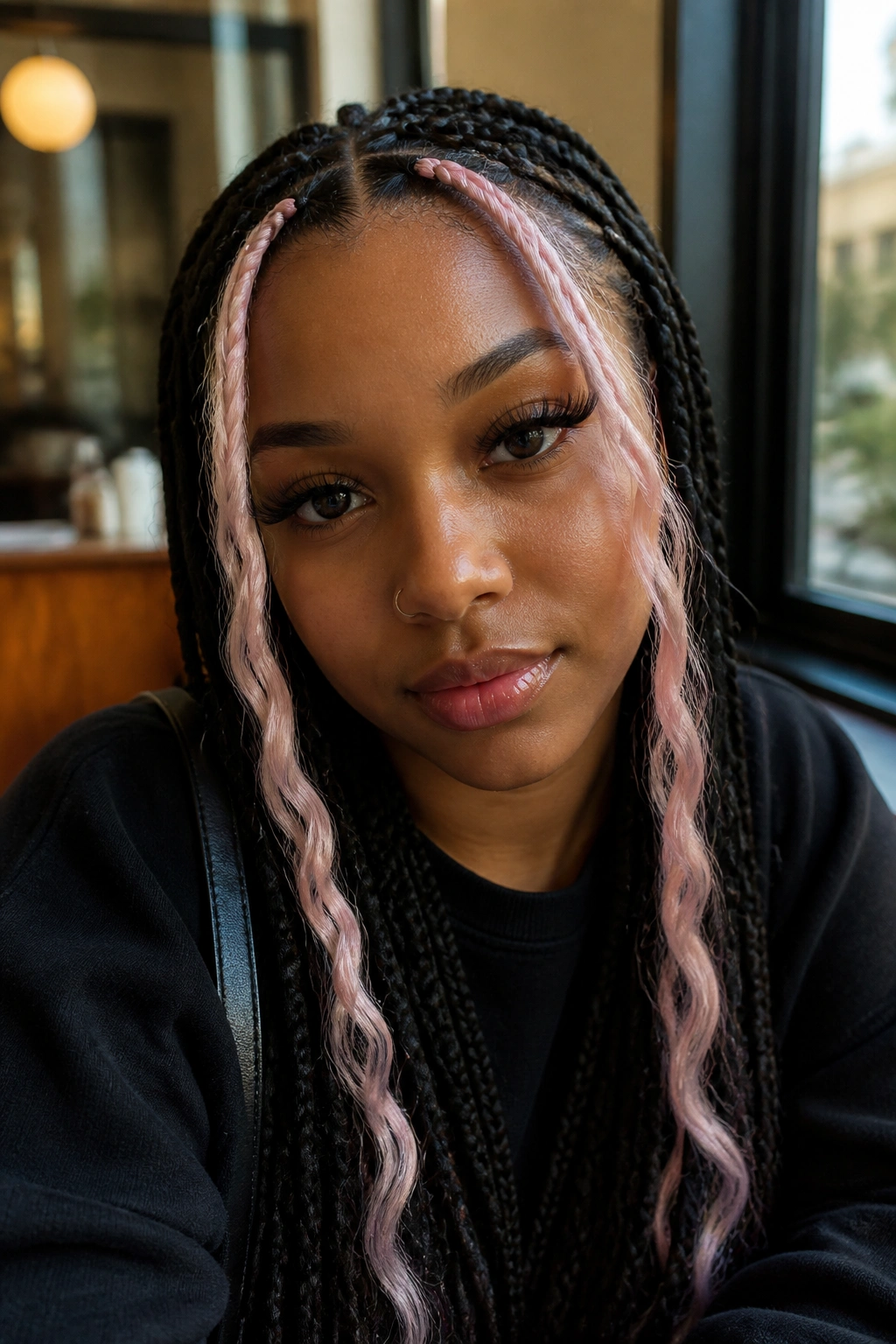
Espresso is the darkest of the browns, appearing almost black until the light hits it. Pairing this with a very pale, almost white-pink creates a high-fashion, high-contrast look. Instead of full braids, this style often incorporates “tendrils”—thin, unbraided strands of the pale pink hair that hang loose around the face.
This gives the style a soft, wispy feel that balances the structural “heaviness” of the box braids. It’s very “Y2K” in its inspiration but feels completely fresh when executed with the clean lines of knotless parting.
The “Knotless” Advantage Here
Because espresso is so dark, traditional knots would be very visible against the scalp. The knotless method allows the espresso hair to “emerge” from your scalp, making the transition to the pale pink tendrils look like a deliberate design choice rather than an afterthought.
A note on tangles: Loose tendrils are prone to tangling. To keep them looking “pale and pretty” rather than “pink and matted,” you should run a tiny drop of hair serum through the loose pieces every morning.
10. Auburn and Rose Gold Knotless Braids
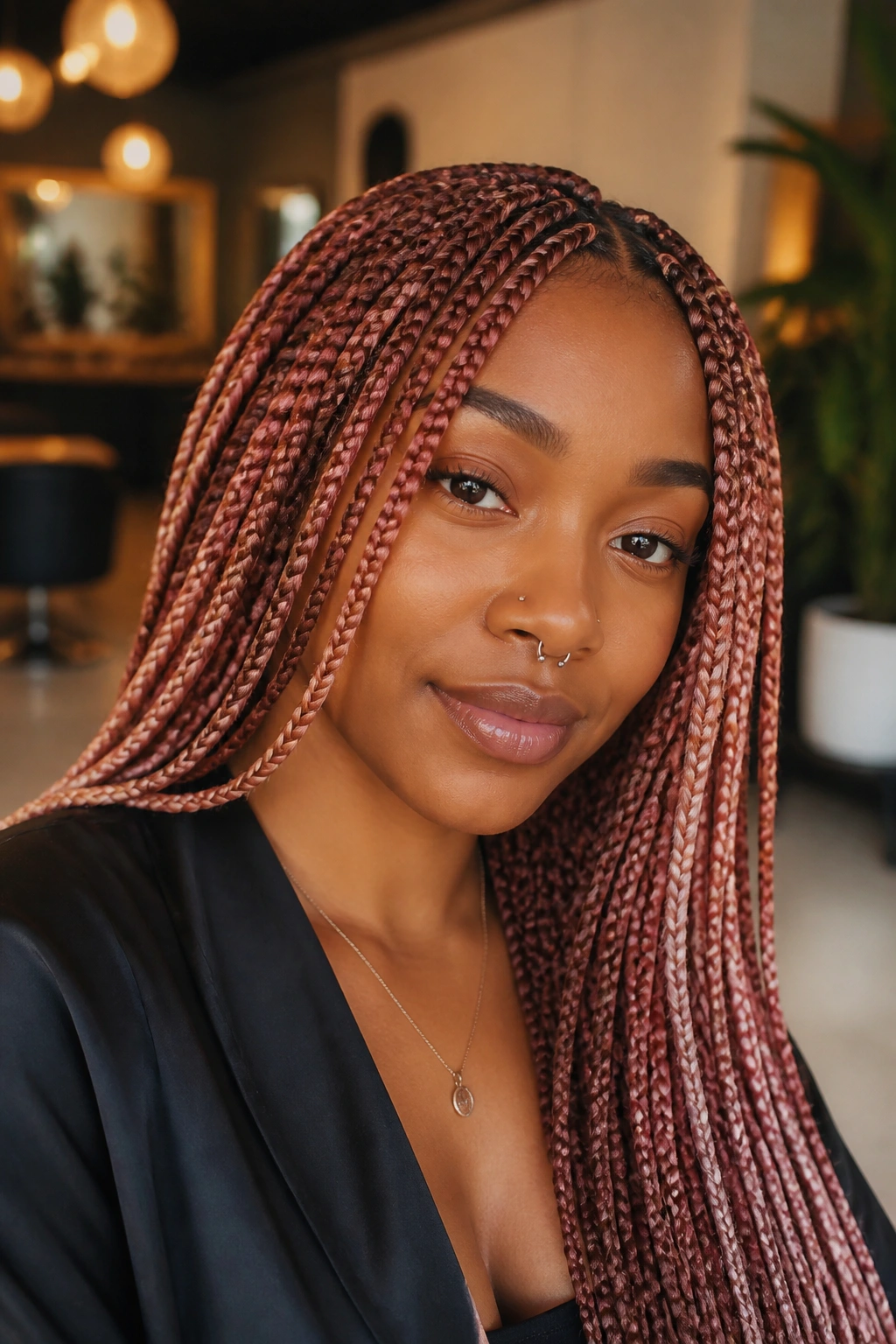
Auburn brings a fiery, autumnal energy to the mix. It is a brown that leans heavily into orange and red. Rose gold is a metallic-looking pink that has shimmer and warmth. Together, they create a “sunset” effect that is absolutely breathtaking. This is one of the most requested color combinations for those who want a “glowy” look.
Rose gold braiding hair often has a different sheen than standard pink hair. It reflects light more effectively, which can give your braids a “glossy” appearance. When mixed with auburn, the hair looks multidimensional and thick.
Finding the Right Rose Gold
Not all “rose gold” braiding hair is created equal. Some look very orange, while others look like a muddy pink. Look for hair that has a clear, “champagne” undertone to ensure it contrasts properly with the auburn.
Seasonal Versatility
While we don’t focus on specific years, it is worth noting that this color combination is a favorite because it works year-round. It feels warm and cozy during cooler months and looks vibrant and sun-kissed in the heat.
11. Coffee Brown with Strawberry Pink Tips
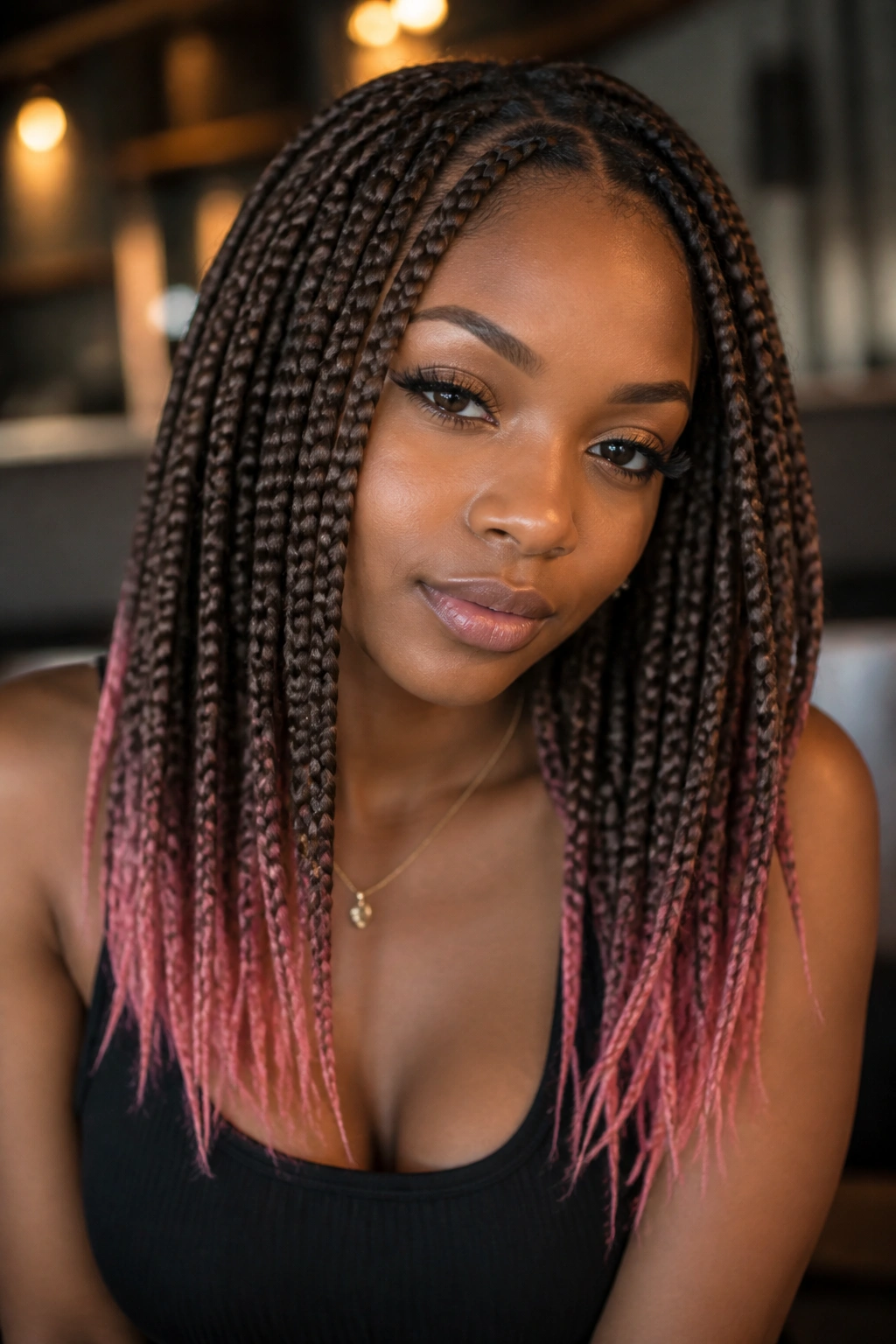
Coffee brown is a medium-to-dark brown that is very “flat” (meaning it doesn’t have much red or gold). This allows the strawberry pink—a warm, bright pink—to really stand out. By only coloring the last 3 or 4 inches of the braids, you create a “dipped” effect.
This is a great option for people who want long braids (butt-length or thigh-length) but don’t want a massive amount of color near their head. The strawberry pink acts as a “finish” to the look, like a bright accessory at the end of a classic outfit.
The “Dip-Dye” Technique
To get the best result, the stylist should use the “hot water set” method to seal the ends. This not only keeps the braids from unraveling but also makes the strawberry pink hair look sleek and shiny.
Tip for Longevity: The tips of braids are the first things to get “raggedy” because they rub against your clothes. If your strawberry tips start to look frayed, you can actually trim them slightly and re-dip them in hot water at home to “reset” the look.
12. Walnut Brown and Peony Pink Criss-Cross
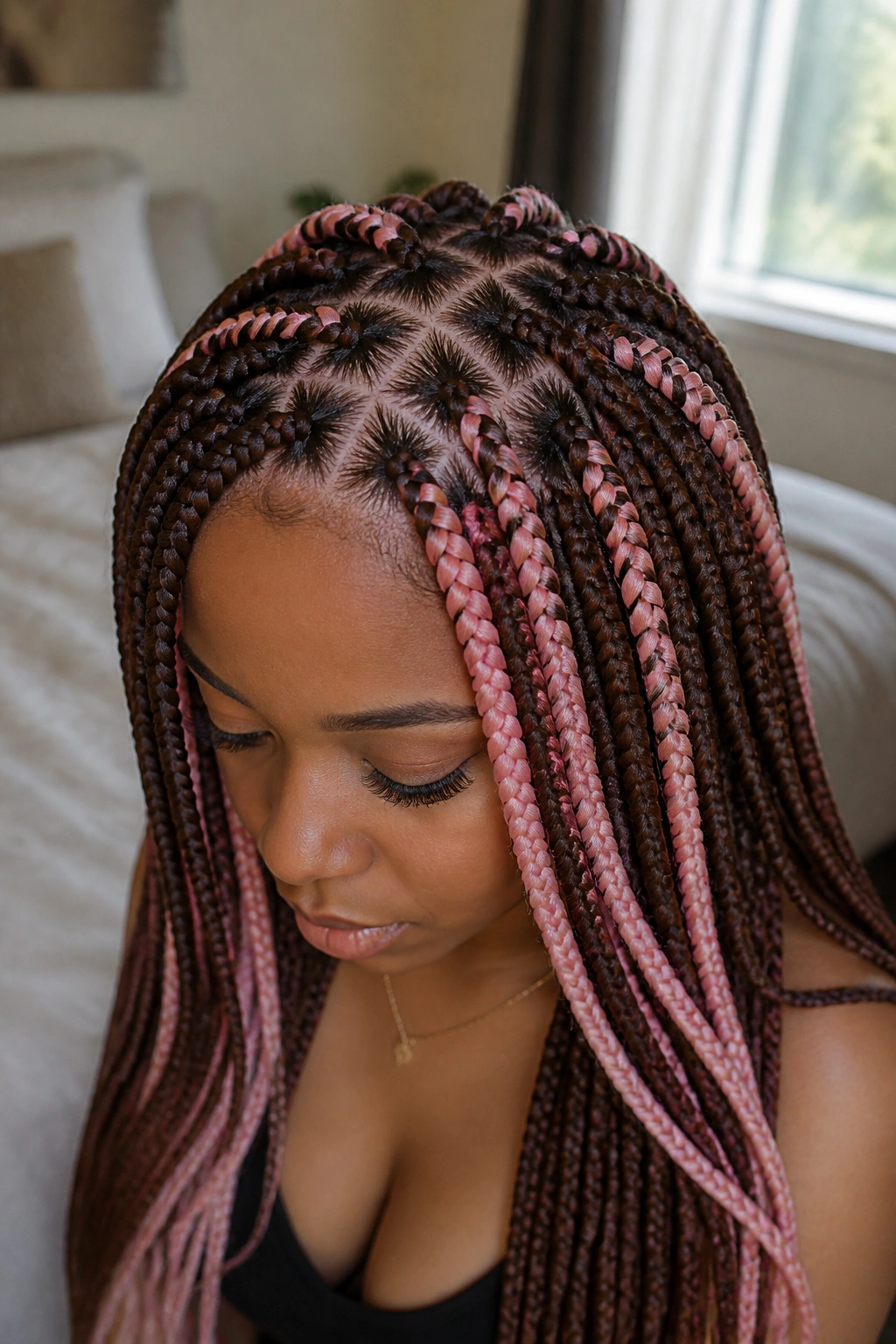
This style utilizes the “criss-cross” parting method on the scalp, where rubber bands or intricate parting creates a pattern before the braids even begin. The walnut brown—a soft, earthy medium brown—is used for the main body of the hair. The peony pink is used for the “design” part of the scalp.
Peony pink is a very “true” pink—not too light, not too dark. Using it in the scalp design makes the intricate parting pop. It turns the top of your head into the focal point of the style.
Why Walnut Brown?
Walnut is a very forgiving color. It blends well with most natural hair shades (from dark brown to light black) and provides a “soft” contrast to the peony pink. It doesn’t look as “harsh” as espresso or black would.
scalp Health and Designs
Any time you use rubber bands or intricate parting:
- Don’t leave them in for more than 6 weeks. The tension can cause breakage.
- Keep the scalp hydrated. A spray-on leave-in conditioner is easier to apply to these designs than a thick cream.
13. Sandy Brown with Fuchsia Highlights
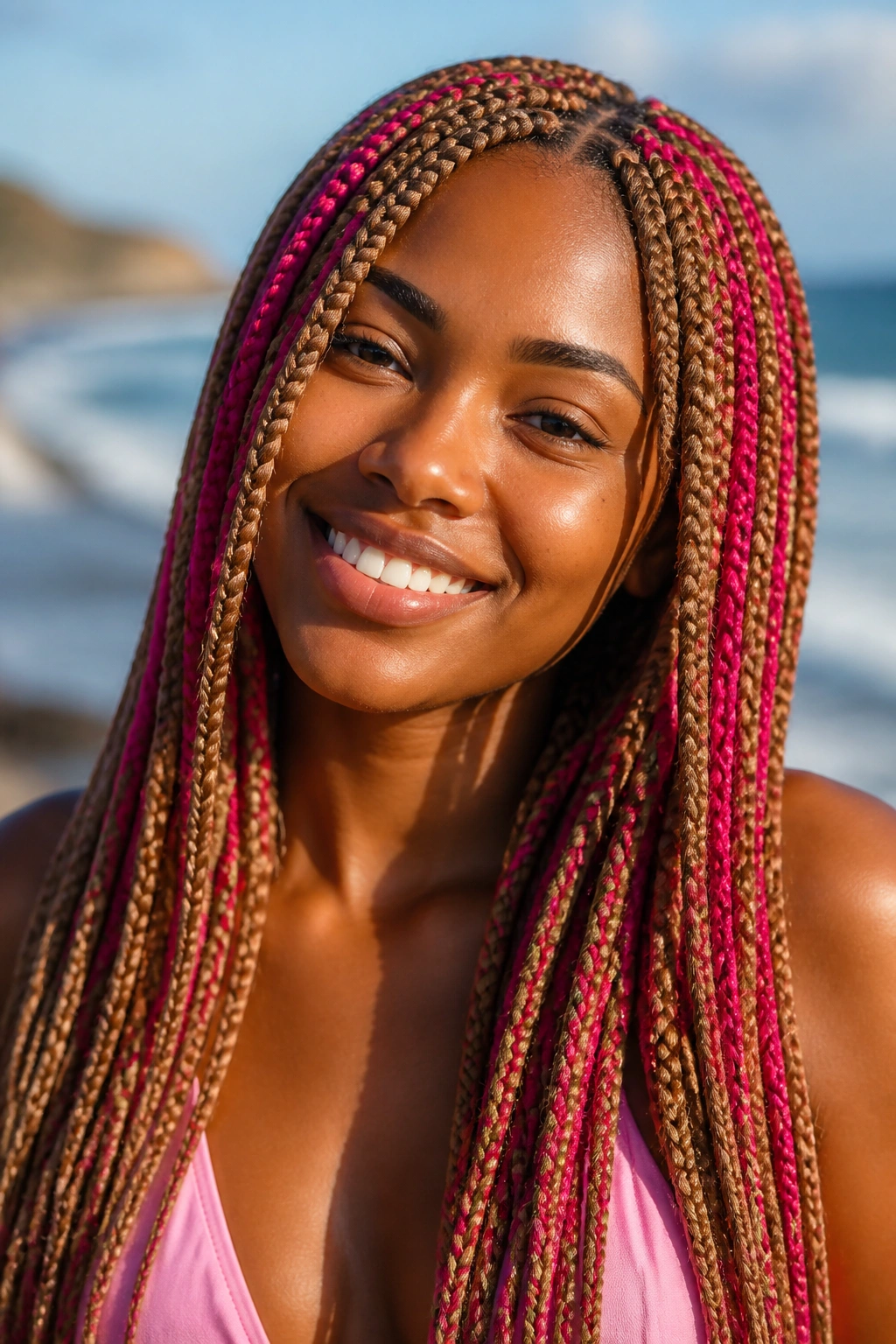
Sandy brown is a light, “bronde” (brown-blonde) shade. Fuchsia is a high-saturation, purple-pink. This is a very “beachy” and vibrant combination. The fuchsia provides a sharp, electric contrast to the muted, sandy base.
This look is often done with “medium” sized knotless braids. Because the sandy brown is lighter, the “gaps” between the braids are less obvious, giving you a very full-looking head of hair. The fuchsia highlights act as “lightning strikes” throughout the style.
The Vibe
This is a fun, high-energy look. It’s perfect for someone who has a bold wardrobe and wants their hair to match that intensity. It’s also one of the best combinations for summer vacations or festivals.
Maintenance Note: Lighter colors like sandy brown can sometimes show “product buildup” more than dark colors. If you use a lot of edge control, make sure you are cleaning it off your hair every few days to prevent a white, crusty look at the hairline.
14. Russet Brown and Salmon Pink Gradient
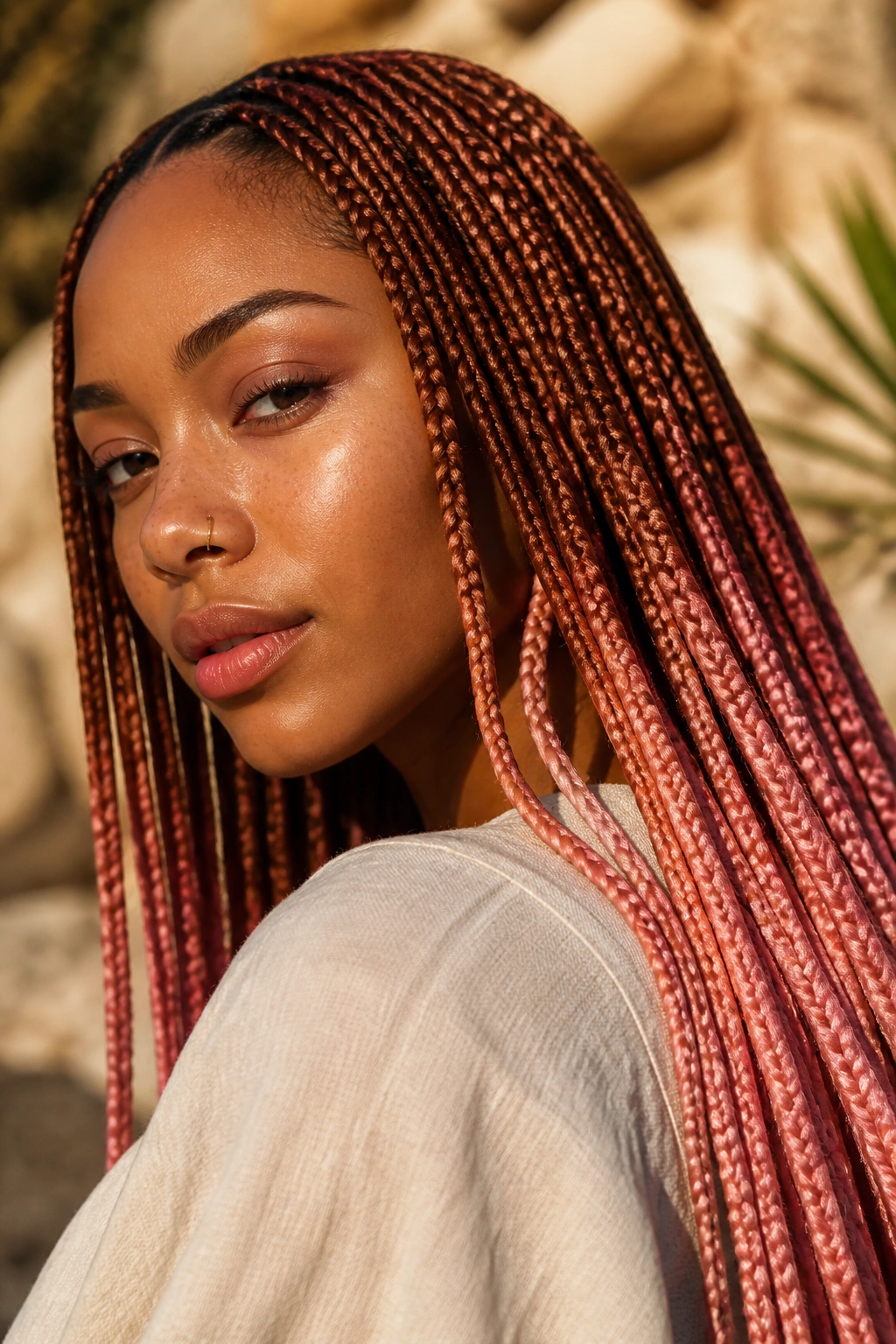
Russet brown is a deep, woody brown with heavy red tones. Salmon pink is a unique shade that leans slightly toward peach or coral. Together, they create a very earthy, organic-feeling gradient. This is far from the “Barbie pink” aesthetic; it feels more like something found in nature.
The gradient here is often subtle. The russet brown might slowly fade into a terracotta shade before finally landing on the salmon pink. It is a “sophisticated boho” look that pairs perfectly with linen clothing and gold jewelry.
Visual Depth
Because salmon pink has orange undertones and russet brown has red undertones, they are “analogous” on the color wheel. This means they naturally “belong” together, creating a visual depth that is very pleasing to the eye.
Best Skin Tones
While this looks good on everyone, it is particularly stunning on those with deep complexions and warm undertones. The “warmth” of the hair colors brings a beautiful glow to the skin.
15. Umber Base with Flamingo Pink Beads
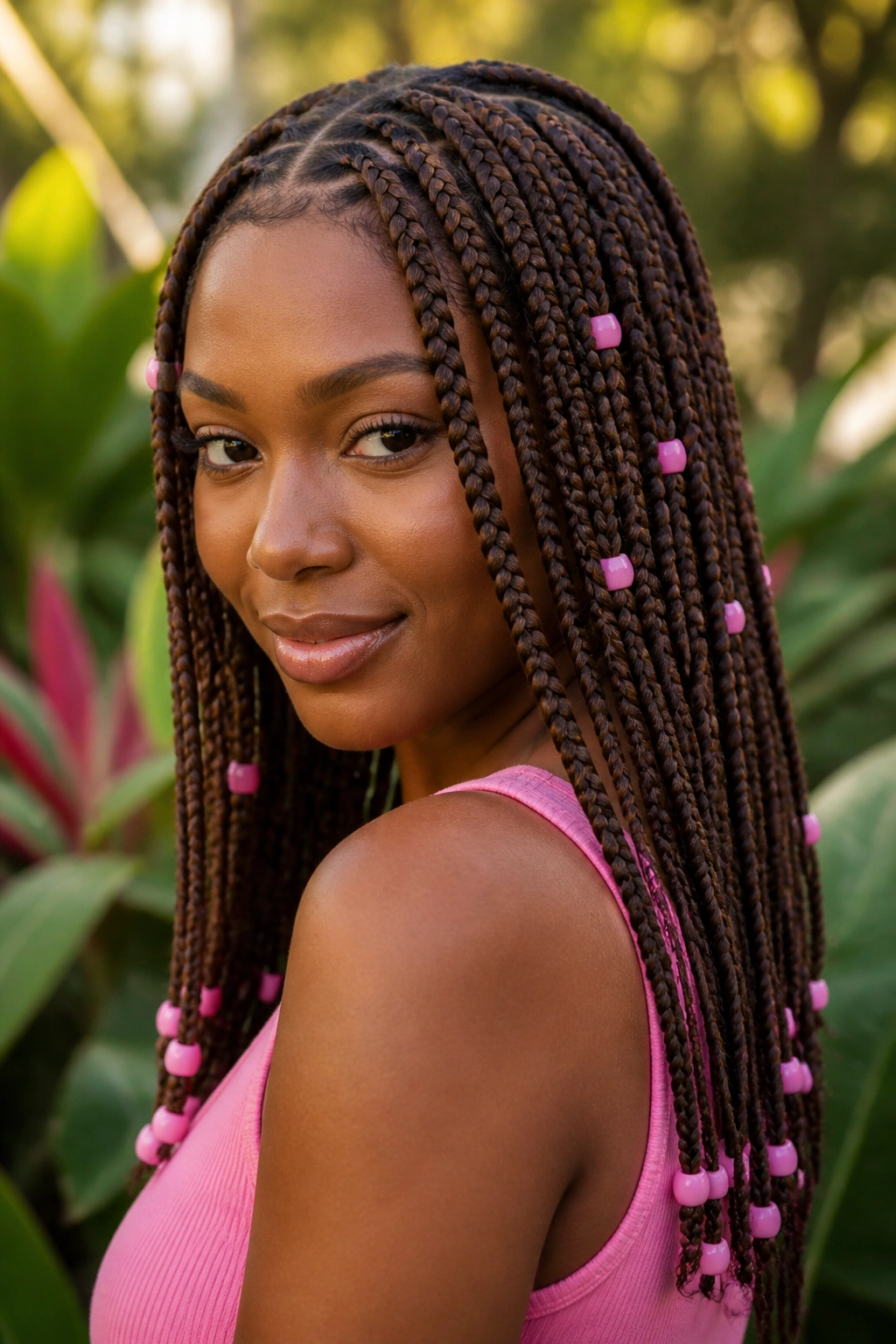
Umber is a classic, dark, cool-toned brown. Flamingo pink is a bright, “tropical” pink. In this style, the focus isn’t just on the hair color, but on the accessories. The braids are kept a solid umber for the first 90% of the length, with a few flamingo pink braids mixed in. Then, the ends are finished with heavy, high-quality flamingo pink and clear beads.
Beads add a rhythmic sound and a physical weight to the braids that many people find satisfying. They also protect the ends of the hair from friction.
The Art of Beading
You can mix and match. Using umber beads on the pink braids and pink beads on the umber braids creates a “swapped” effect that looks very intentional and high-end.
A Warning on Weight: Beads add weight. If you have a sensitive neck or very fine hair, don’t go too heavy on the beads. Start with just a few on the front braids to see how they feel before committing to a full head of “clinking” accessories.
Choosing the Right Brown for Your Skin Tone
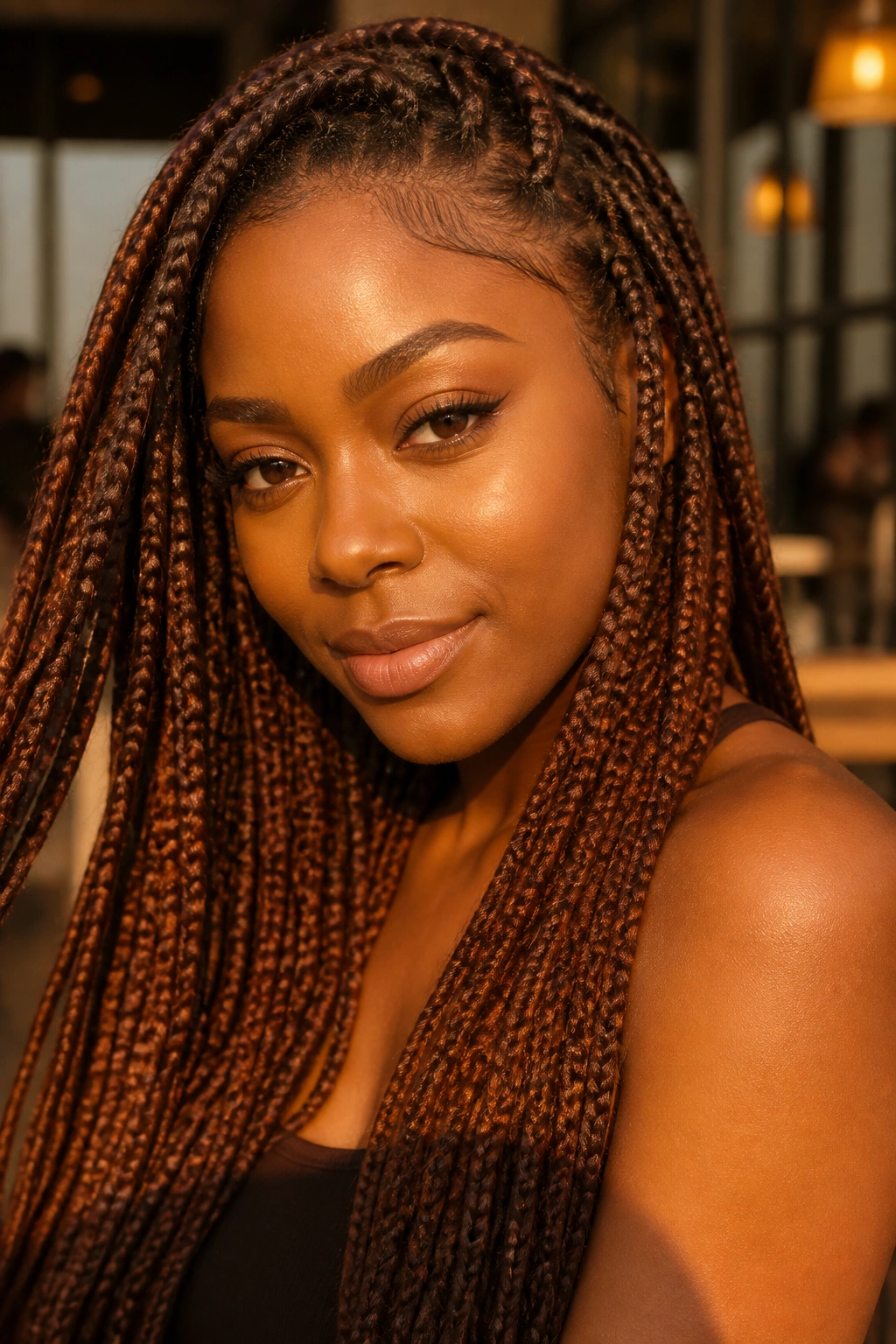
Picking the right brown is the foundation of the entire look. If the brown is wrong, the pink will never look right. Historically, we categorize skin undertones as cool, warm, or neutral. A quick way to check yours is to look at the veins on your wrist. If they look blue or purple, you’re cool-toned. If they look green, you’re warm-toned. If you can’t really tell, you’re likely neutral.
For cool undertones, I consistently recommend “ash” browns or “espresso.” These shades have a blue or grey base that won’t clash with the pink. If you have warm undertones, “honey,” “caramel,” or “auburn” are your best friends. They have a yellow or red base that makes your skin look radiant. Neutral undertones are the lucky ones—you can pretty much rock any brown on this list, though “mocha” and “walnut” tend to be the most “natural” looking.
When you bring the pink into the equation, think about saturation. A very bright “hot pink” provides a high-contrast look that stands out. A “dusty rose” or “rose gold” provides a low-contrast look that feels more “blended.” Neither is better; it just depends on whether you want your hair to be the first thing people notice when you walk into a room.
The Knotless Installation Process
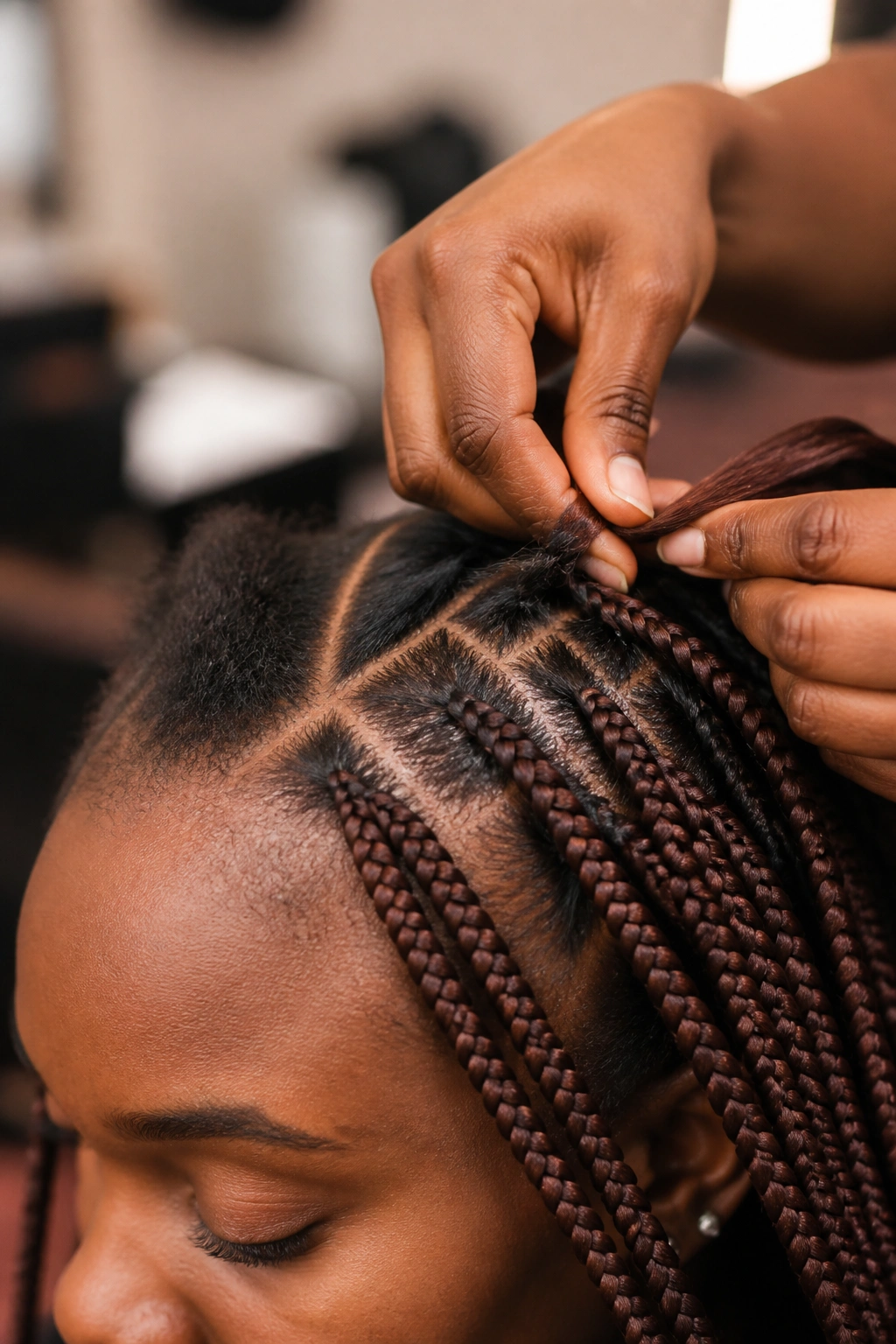
If you have never had knotless braids before, the process can feel a bit different than traditional braiding. It generally takes longer—anywhere from 4 to 8 hours depending on the size and length. This is because the stylist is carefully integrating small pieces of synthetic hair into your natural hair to create that flat, “grown-from-the-scalp” look.
Before you go to the salon, your hair should be freshly washed, deep-conditioned, and blown out straight. This makes the parting process much cleaner and helps the braids last longer. If your hair is “curly” at the root, the knotless braids can sometimes look “puffy” after just a week. A good blowout is the secret to a “crisp” set of braids.
During the install, don’t be afraid to speak up about tension. The whole point of knotless is to avoid pain. If you feel a “pulling” sensation on your scalp, tell your stylist immediately. They can adjust their grip. A “painless” install is the hallmark of a veteran braider.
Maintenance for Long-Lasting Braids
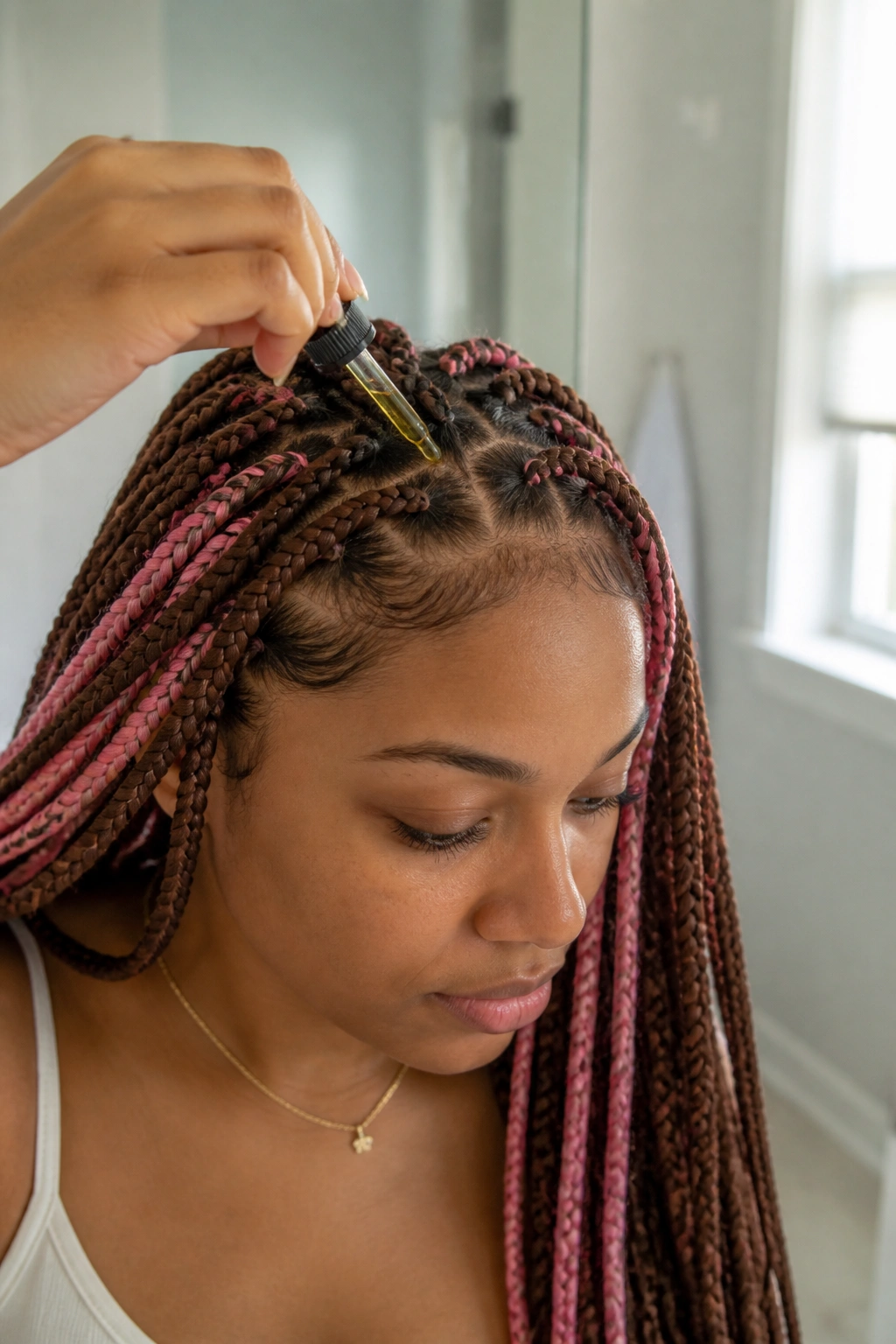
The biggest myth about braids is that they are “zero maintenance.” While they certainly save you time in the morning, you still have to care for your natural hair underneath. Most knotless styles can last between 4 and 8 weeks. To get to that 8-week mark looking fresh, you need a routine.
Scalp Health
Your scalp is still exposed. Use a light, antimicrobial oil once or twice a week. Look for ingredients like tea tree oil or peppermint oil to keep itchiness at bay. If you workout and sweat, use a dry shampoo or a damp cloth with a bit of witch hazel to “wipe” your scalp. This prevents salt buildup and odor.
Washing Your Braids
Yes, you can (and should) wash your braids! However, you don’t do it like normal hair.
- Focus on the scalp. Use a diluted shampoo in a spray bottle.
- Gently massage the parts between the braids.
- Let the soapy water run down the length of the braids—don’t “scrub” the braids themselves, as this creates frizz.
- Dry them completely. This is the most important step. If synthetic hair stays damp at the core for too long, it can develop a “mildew” smell. Use a hooded dryer or a blow dryer on a cool setting.
Dealing with Frizz
As your natural hair grows, you will see a bit of “fuzz” at the roots. You can “tame” this by applying a bit of firm-hold foaming mousse and wrapping your hair with a silk scarf for 20 minutes. This “sets” the hair back down and makes the braids look fresh again.
Final Thoughts
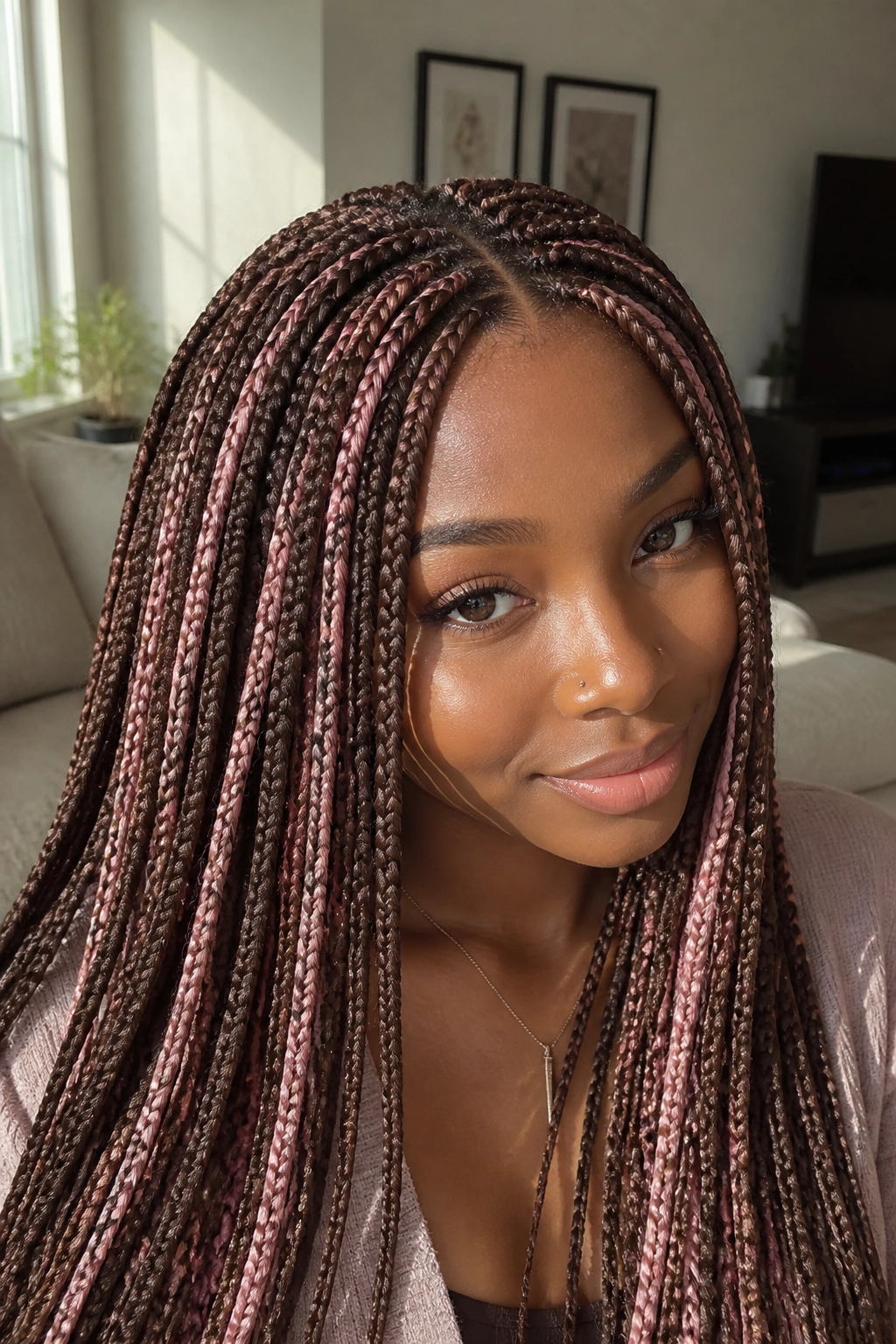
Brown and pink knotless box braids are more than just a passing trend; they are a masterclass in how to use color to highlight natural beauty. Whether you opt for the high-energy “neon pink and caramel” or the sophisticated “dark cocoa and dusty rose,” you are choosing a style that prioritizes both hair health and personal expression. The knotless technique ensures that your edges stay intact and your scalp stays comfortable, which is the most important part of any protective style.
As you look through these 15 variations, remember that the “best” style is the one that makes you feel most like yourself. Don’t be afraid to customize—mix the shades, change the length, or add the beads that speak to your aesthetic. When you find that perfect balance of earthy brown and playful pink, you’ll realize why this combination remains one of the most beloved palettes in the world of braiding. Take care of your scalp, protect your hair at night, and wear your braids with the confidence they deserve.
