



Brown knotless box braids have a way of looking polished without acting fussy. The color does half the styling work before you even touch a scarf or mousse. A deep espresso braid reads sleek and serious; a chestnut shade feels warm and easy; an ombré finish adds movement even when the braids are pulled into a bun or tucked behind the ears.
The reason brown and ombré knotless box braids stay so appealing is simple: the tones are flattering, and the knotless base keeps the front of the style lighter on the scalp. That lighter start matters. If you have ever taken down tight braids and felt that dull, tender pull around your hairline, you already know why the technique matters as much as the color.
Shade choice changes the whole mood. Espresso can look sharp. Chestnut softens the face. Caramel or honey at the ends makes the braid pattern pop in a way that looks expensive without trying too hard. And when the braids get long, those lighter ends move a little more, which keeps the style from feeling heavy or flat.
Some versions are quiet and low-key. Others lean bolder with gold cuffs, curled ends, a side part, or a blunt bob. The styles below stay within the brown family, but each one brings a different energy, different maintenance needs, and a different way to wear knotless box braids without feeling stuck in the same look every time.
1. Espresso Roots with Honey-Dipped Ends
This is the style I reach for when I want brown braids to look rich, not loud. A deep espresso root that fades into honey ends gives you contrast without the harsh line that can make ombré feel too staged. The change in color happens gradually, so the braids look softer near the face and a little brighter through the length.
Why the Gradient Works
Knotless box braids already have a gentler start at the root, and this color choice matches that softness. The dark base keeps the scalp area neat, while the lighter ends catch movement in a way that makes the braid pattern easier to see. It’s a small visual trick, but it matters.
This version looks especially good on medium and long lengths, around waist length or longer, because the ombré has room to show. If you keep the braids medium-sized, the color shift reads clean. If you go jumbo, the transition feels bolder and a little more fashion-forward.
- Ask for 1B or 2 at the root and a soft 27 or 30 tone at the ends.
- Keep the transition in the lower third of the braid, not halfway up.
- Use a light mousse on the finished braids so the ends stay smooth, not fuzzy.
- Finish with 2 to 3 drops of oil on the scalp, not a full soak.
Pro tip: If you want the honey tone to look warm instead of brassy, choose a honey shade with a gold cast rather than a yellow one.
2. Chestnut Braids with Soft Curls
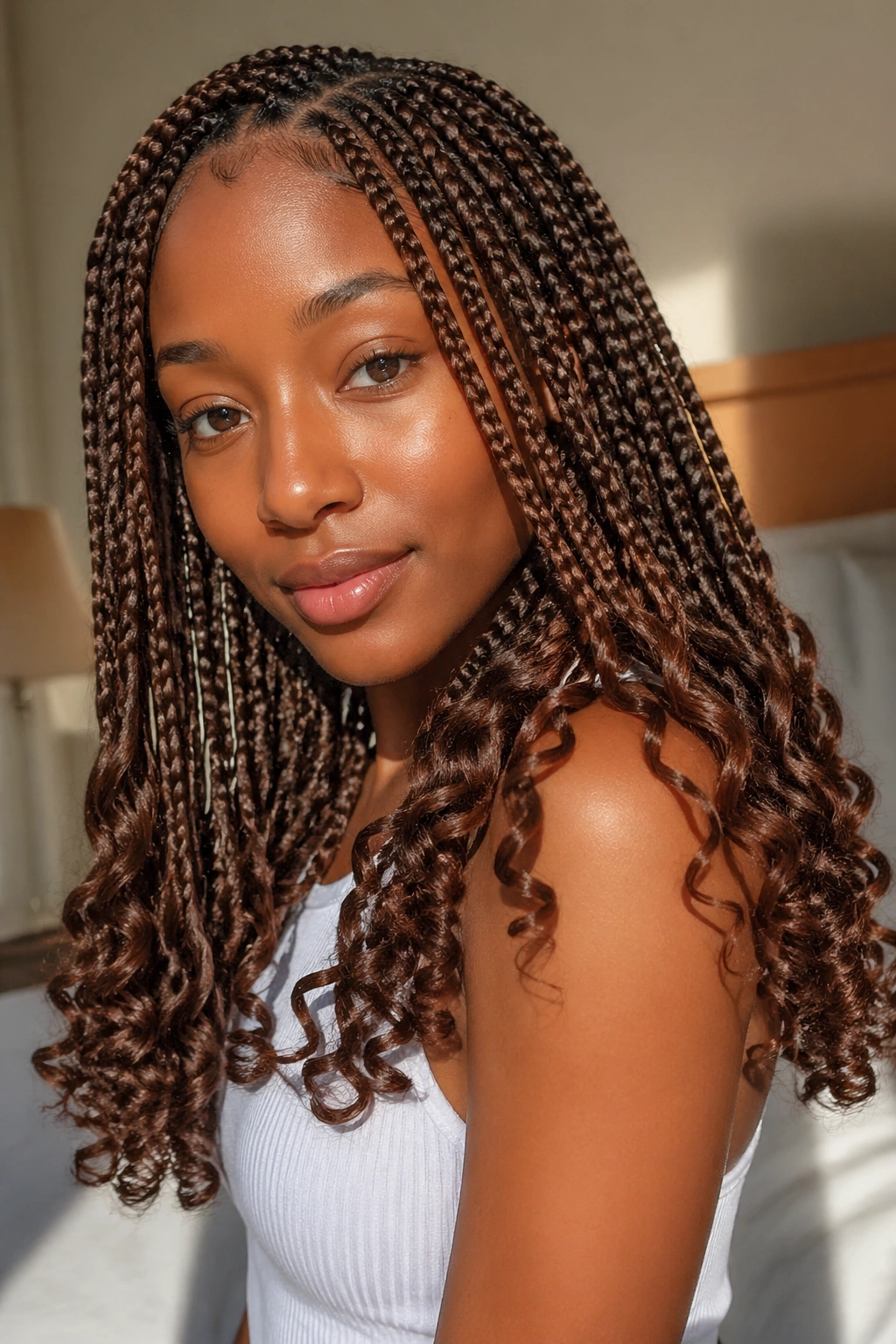
Why do chestnut knotless box braids look so easy to wear? Because chestnut sits in that sweet spot between brown and copper, so it flatters a lot of skin tones without screaming for attention. Add soft curls at the ends, and the whole style gets a little bounce that straight ends cannot match.
Who This Style Flatters Most
Chestnut works well when you want warmth near the face. It’s a smart pick if your wardrobe leans cream, denim, olive, rust, or black. The color doesn’t fight those clothes; it settles into them. And the curls at the end keep the braids from feeling too severe.
I like this look on shoulder-length to mid-back braids. Shorter than that, the curls can get lost. Longer than that, the texture contrast becomes the point. A 14- to 20-inch braid length usually gives enough room for the curl pattern to show without turning the whole style into a maintenance project.
How to Keep the Ends Pretty
Use a flexi rod or perm rod on the ends overnight, or ask for pre-curled ends if your braider offers them. Sleep in a satin bonnet, not just a pillowcase, because the curls at the bottom flatten fast if they rub all night.
A little shine spray helps here. Not much. Just enough to keep the chestnut tone looking smooth.
3. Mocha Braids with Caramel Face-Framing Pieces
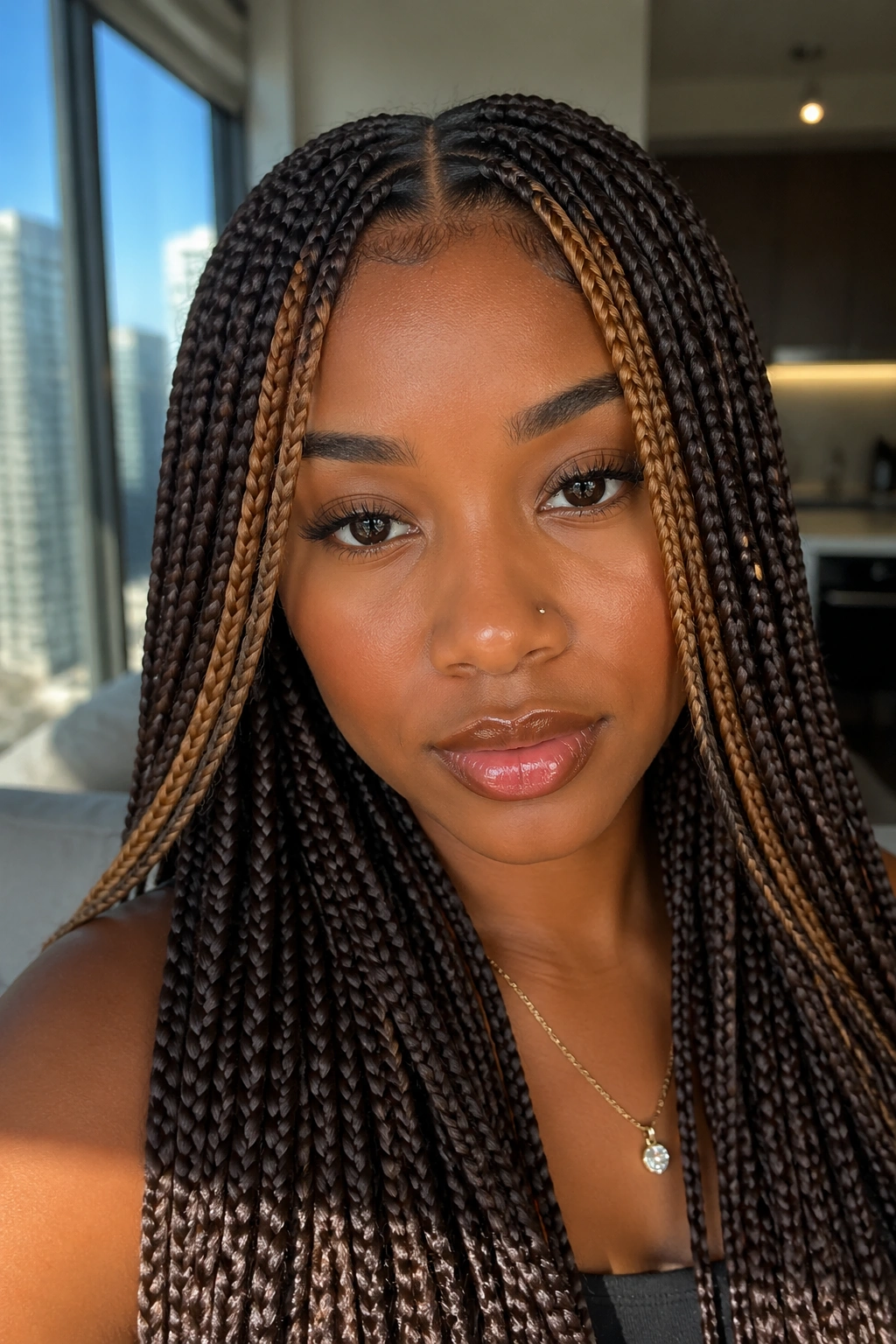
You know the look I mean: the braids are mostly mocha, but the front pieces are lighter, and the whole face gets this soft frame that feels deliberate without looking overdone. That’s the charm of caramel face-framing braids. They pull the eye upward and make the style look styled even if the rest of the braids are kept simple.
The trick is placement. Put the lighter pieces just at the hairline and temple area, then let them fall forward by an inch or two. That’s enough. If you push the contrast too far back, you lose the effect. If you make too many face-framing pieces, the style starts to feel busy.
- Best with medium box braids because the contrast shows clearly.
- Ask for 2 or 4 at the base and 27 or 30 in the front pieces.
- Works well with middle parts and slight off-center parts.
- Looks good with hoops, tiny cuffs, or nothing at all.
This is one of those styles that saves time on makeup days. The face-framing braids do a lot of the work for you. A clean lip and brushed brows are enough.
4. Cinnamon Brown Braids in a Long Sleek Length
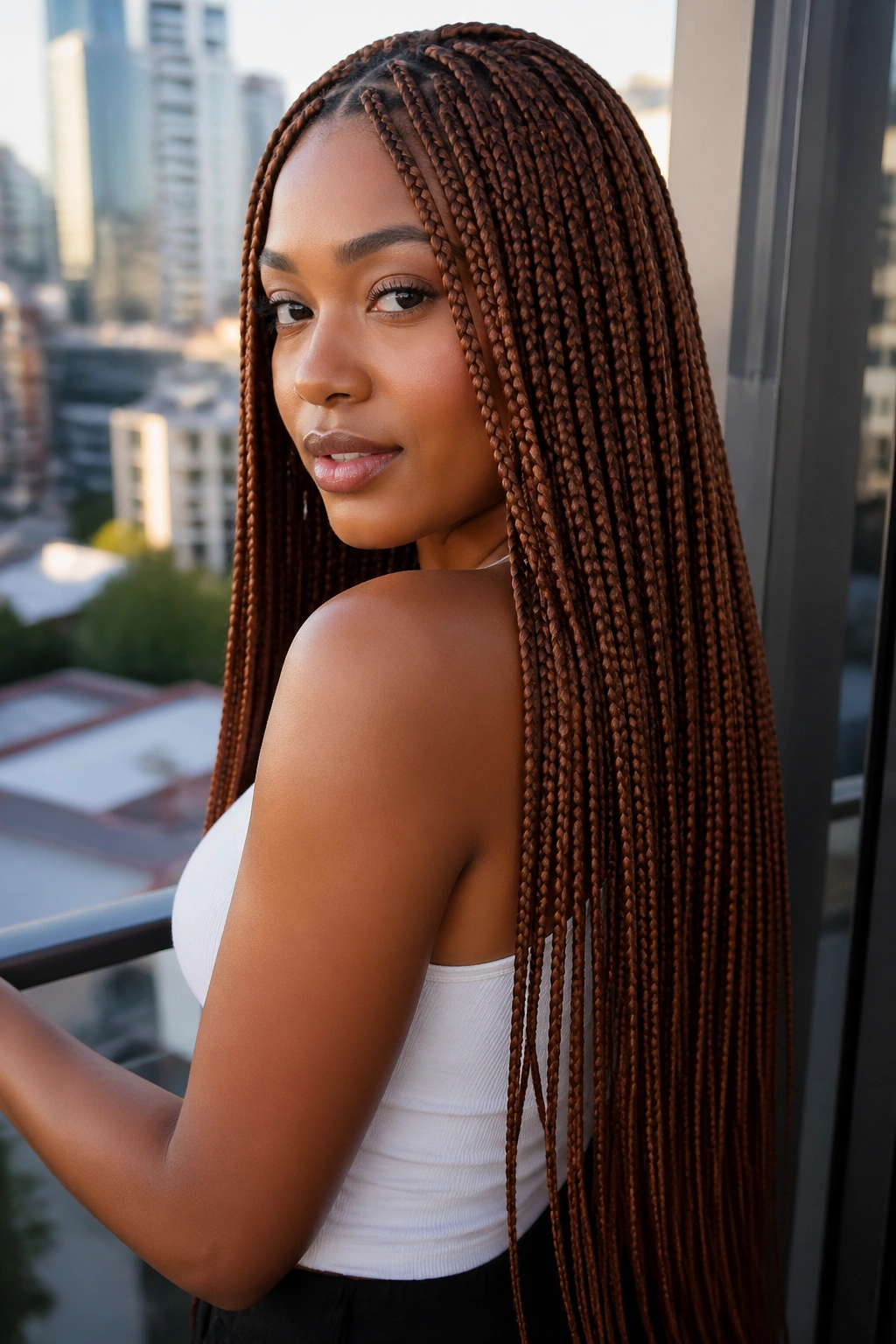
Cinnamon brown has a little spice to it, but not the loud kind. It reads warm, polished, and slightly glossy, especially when the braids are kept long and straight. There is no curl at the end, no heavy accessory load, no complicated parting pattern. Just a clean braid finish and a color that feels alive when the light hits it.
That restraint is what makes the style good. Long, sleek knotless box braids can start to look flat if the color is too dark and too uniform. Cinnamon breaks that up. It gives the braids more depth, which matters when you wear them down most of the time.
I like this shade on braids that hit mid-back or longer. Short cinnamon braids can look cute, sure, but the full effect shows when the braids move over a jacket collar or swing behind the shoulders. The movement lets the warmer tone shift a little from braid to braid.
If you care about a clean finish, tell your braider to keep the part sizes even and the feed-in tension light. Uneven parts show more on a sleek style than people expect. And yes, a soft edge brush helps, but the real payoff comes from neat sections and a calm hand.
5. Ash Brown Ombré Braids for a Cooler Finish
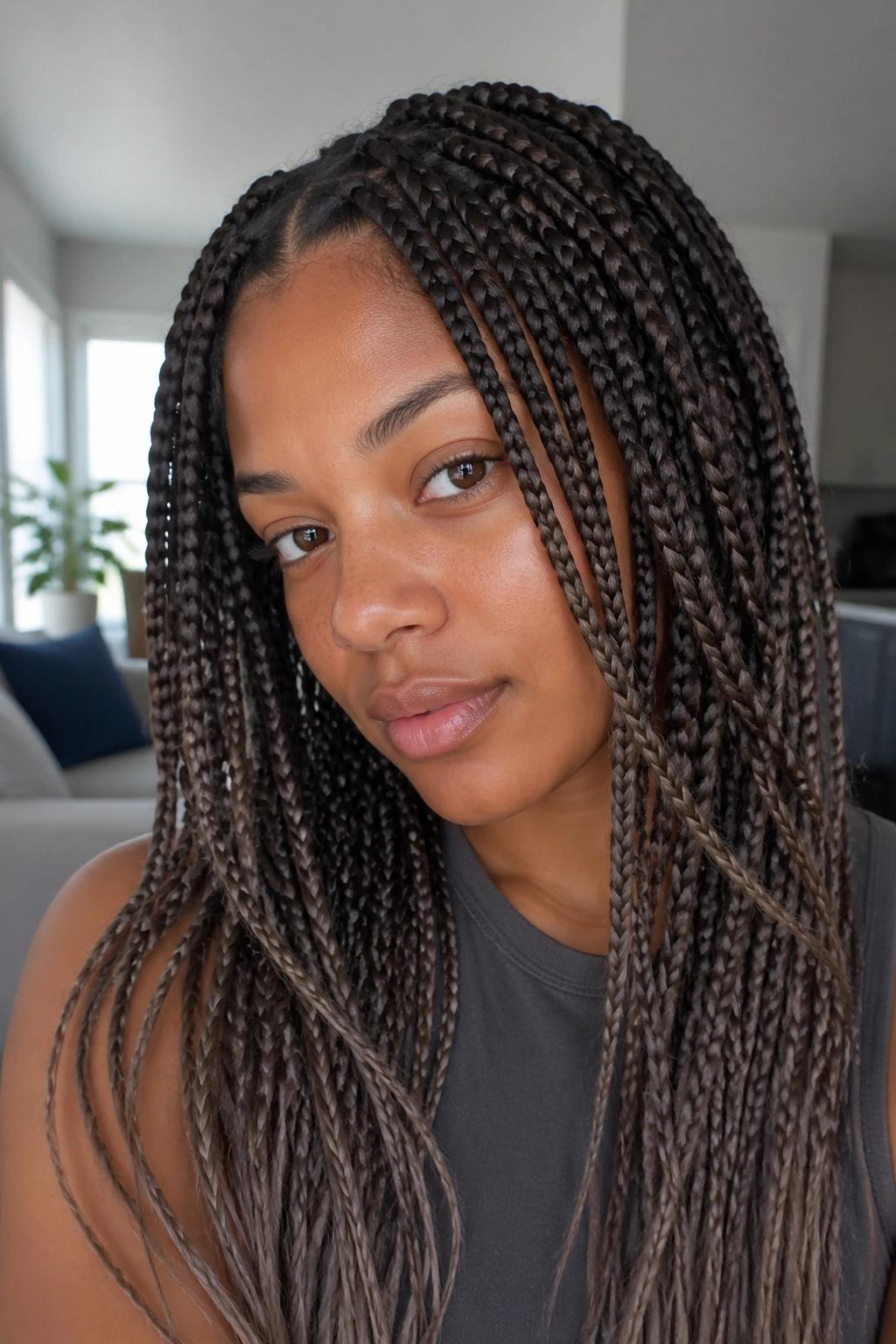
Ash brown braids are for the person who likes brown hair but not too much warmth. The cooler tone takes the edge off red or gold undertones, which makes the style feel crisp instead of cozy. That might sound subtle, but on hair, subtle color shifts matter a lot.
What Makes Ash Brown Different
Ash brown sits closer to taupe or smoky brown than to caramel. It’s a good match if you wear silver jewelry more than gold, or if you prefer black, gray, white, and deep blue in your wardrobe. The braids read cleaner in photos, too, because the cooler tone defines the braid pattern without a bright shine.
The ombré part should stay soft. Think dark root into smoky brown, then a slightly lighter ash at the ends. You do not want a blonde-looking finish here. The whole point is the muted fade.
This style works well with medium-length braids and a middle part. A clean center part keeps the cool tone balanced on both sides of the face. If you add curls, keep them loose and short, or the softness of the style starts to drift away from that sleek ash finish.
What to Ask For
- Root color: 1B or 2
- Mid-length tone: ash brown
- End tone: light ash brown or smoky beige
- Best braid size: small to medium
It’s a cool, calm look. No drama required.
6. Toffee Brown Knotless Box Braids in a Chin-Grazing Bob
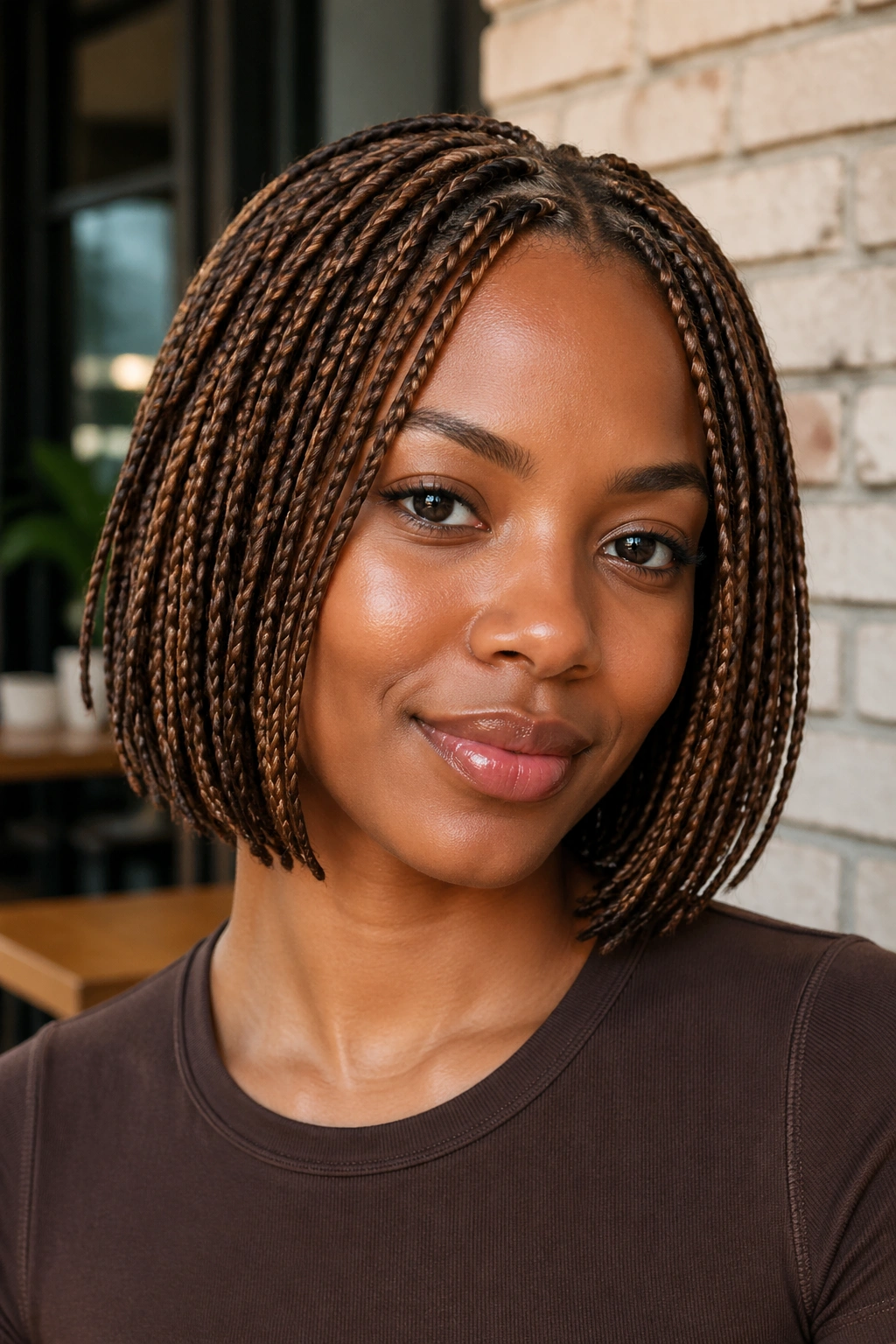
A chin-grazing bob is one of the smartest braid lengths around. It keeps the style light, the drying time shorter, and the upkeep less annoying. Add toffee brown, and you get a finish that feels friendly instead of severe. The color is warm, but not sticky-sweet. That balance matters.
Why Short Braids Hit Harder Than People Expect
Long braids get attention, but a blunt bob has presence. It sits at the jawline, frames the neck, and shows off earrings without competing with them. Toffee brown softens that sharp shape so the bob looks intentional, not heavy. If you have a round or heart-shaped face, this length can be especially flattering because it opens up the jaw and keeps the braid line neat.
The maintenance is easier, too. Shorter braids mean less tangling at the ends and less weight pulling at the roots. That does not make them maintenance-free. You still need to wrap them at night and refresh the scalp. But washing is simpler, and the braids dry faster after a rinse.
The Details That Make It Work
- Keep the bob blunt or only slightly layered.
- Use small-to-medium knotless parts so the style sits flat.
- Add a light mousse once a week to keep flyaways down.
- Ask for ends cut evenly after installation so the line stays clean.
This is one of my favorite looks for people who want brown braids without committing to extra-long hair.
7. Walnut Brown Braids with a Sharp Side Part
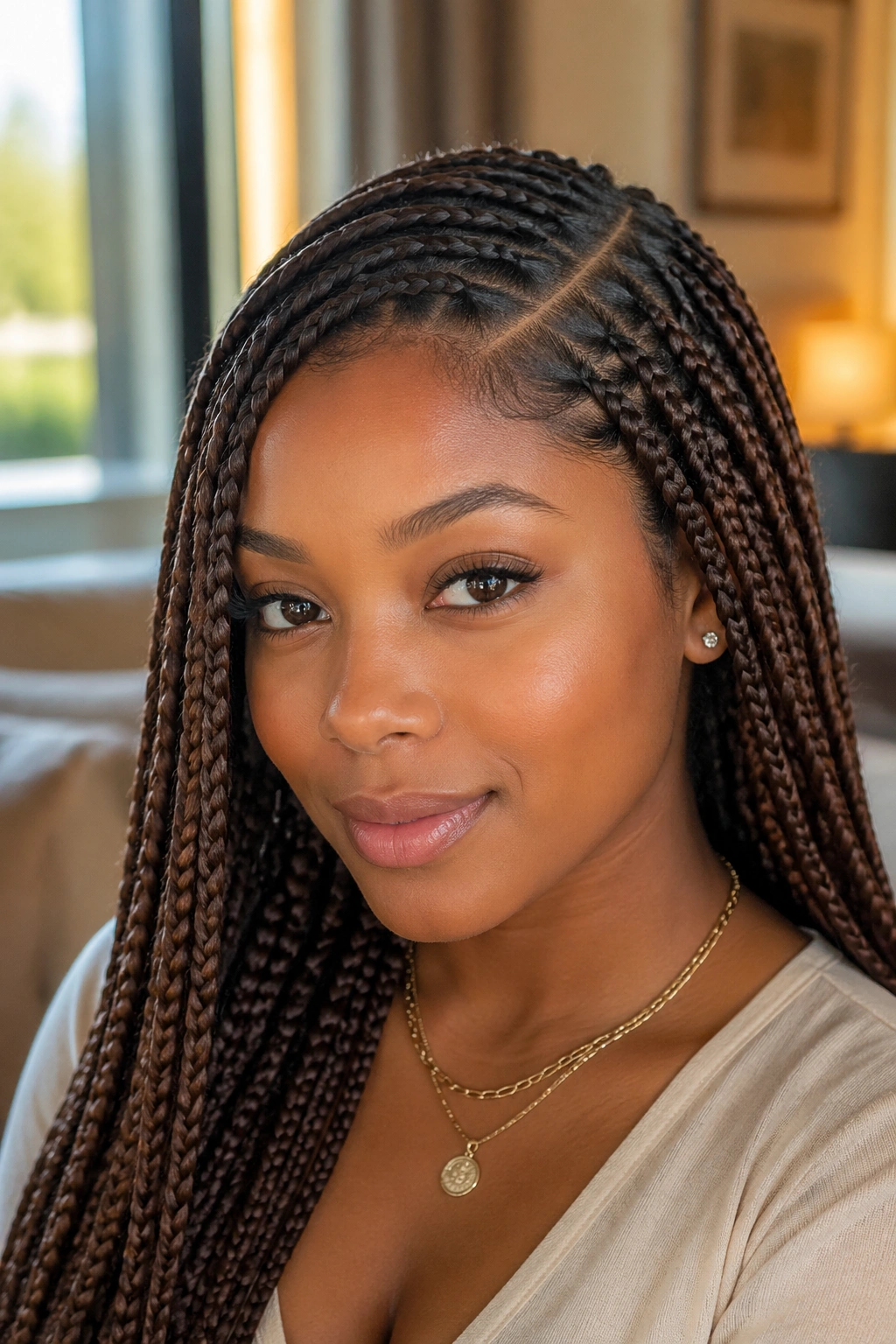
Walnut brown has depth. It is darker than chestnut, softer than espresso, and it tends to look expensive in a very quiet way. Pair it with a sharp side part, and the whole style gets structure right away. That part changes the mood more than the color does, which is why I like it.
The side part shifts volume across the head, so the braids fall in a way that feels a little more styled than a straight center part. It can make cheekbones look sharper and give the forehead area more room. If your face tends to read long, a side part can balance that out. If your face is already broad, keep the braid size medium so the style doesn’t feel too heavy on one side.
The beauty of walnut brown is that it does not need extra accessories to feel finished. A clean braid line and a little sheen are enough. If you want to dress it up, one or two gold cuffs near the front is plenty. More than that, and the style starts to lose its clean shape.
No curls needed here. That’s the point. The part does the talking.
8. Bronze Brown Braids with Gold Cuffs
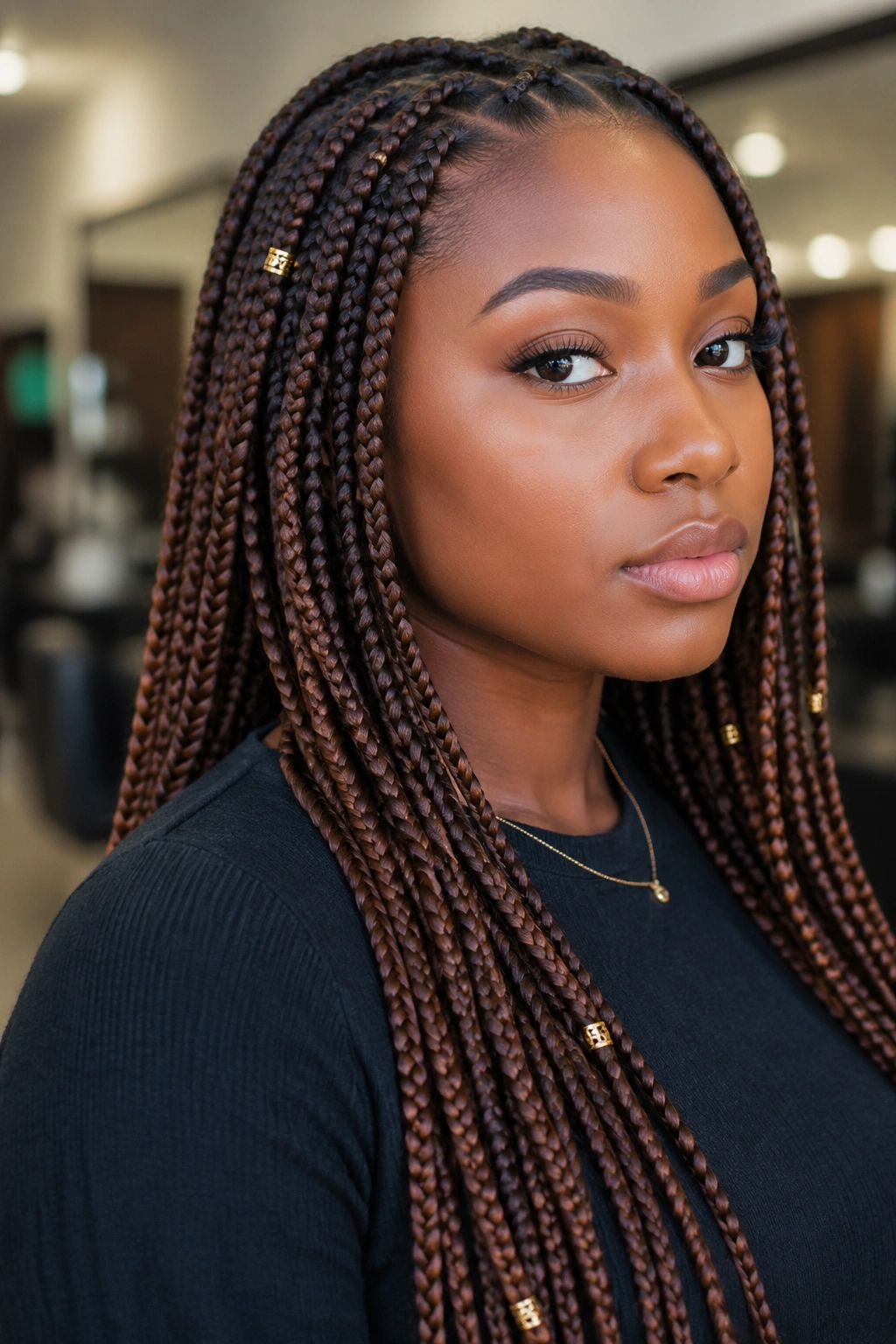
Bronze brown is for the person who wants the braids to have a little glow. Not blonde. Not red. Bronze. It sits right in the middle and picks up light in a soft, warm way. Add gold cuffs, and the whole look shifts from everyday braids to something that feels more dressed up without being fussy.
Why the Accessories Matter
Gold cuffs work best when they’re placed with a bit of restraint. One near the temple, one near the ends, maybe a few scattered through the top third of the braids. That spacing matters. If the cuffs are packed too close together, the style starts to look noisy. Keep some quiet space between them, and the bronze tone will still be the main event.
This look suits both medium and jumbo braids, but I think it shines most on medium parts because the color and accessories stay visible. Bronze brown also plays well with warm makeup: terracotta blush, brown liner, and nude gloss. The whole thing feels coordinated without looking like you spent an hour planning it.
What to Watch For
- Choose lightweight cuffs so the braids do not sag.
- Place them on a few braids only, not every braid.
- Keep the rest of the style smooth with a satin wrap at night.
- If your scalp gets dry, oil it before adding cuffs so you are not tugging at the roots later.
Small details. That is what makes this one click.
9. Dark Chocolate Braids with Auburn Peekaboo Pieces
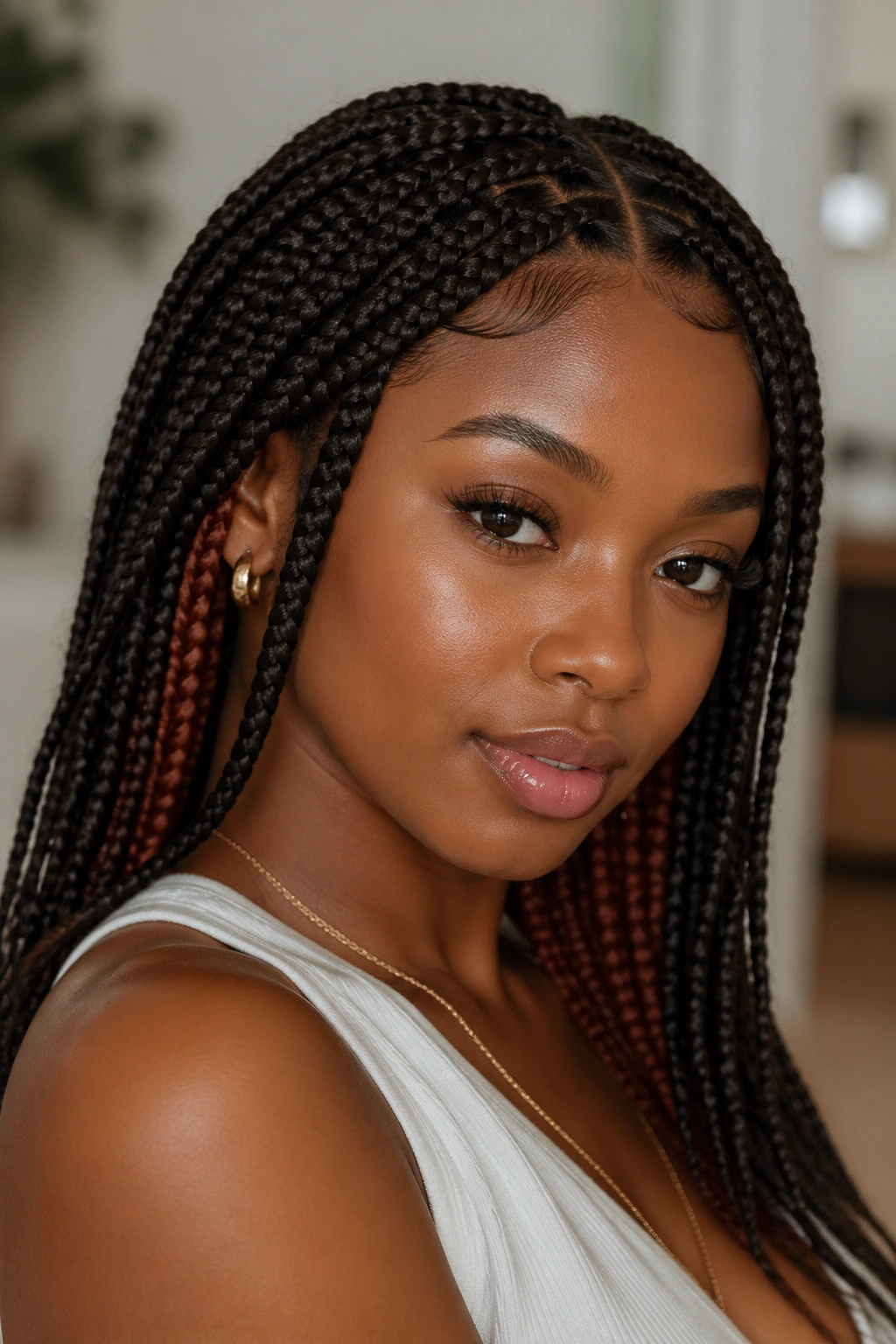
Can a braid color be subtle and bold at the same time? Yes, if the bold part is tucked in. That is the whole point of auburn peekaboo pieces in dark chocolate braids. The darker outer layer keeps things grounded, while the reddish strands hide underneath and flash only when the braids move.
How the Peekaboo Effect Works
This style is easier to wear than a full red-brown head of braids because the bright color is not always visible. You get the payoff without feeling like the style is shouting all day. The auburn should appear under the top layer and around the sides, where it can peek through when you tuck hair behind one ear or throw the braids into a half-up style.
It works best when the auburn is only one to two shades lighter or redder than the base. Too much contrast and the hidden pieces stop feeling hidden. The fun is in the reveal.
If you wear your braids down most of the time, this still works. The color depth shows in motion. If you wear them up often, even better. That is when the under-layer starts showing off.
How to Keep It Clean
- Keep the top layer dark and dense.
- Use auburn on thinner sections underneath.
- Ask for medium parts so the peekaboo color does not overwhelm the head.
- Refresh the braids with a light mousse to keep the color layers separated.
It’s playful without feeling childish. That’s a hard balance, and this style pulls it off.
10. Cocoa Brown Braids with Blonde Money Pieces
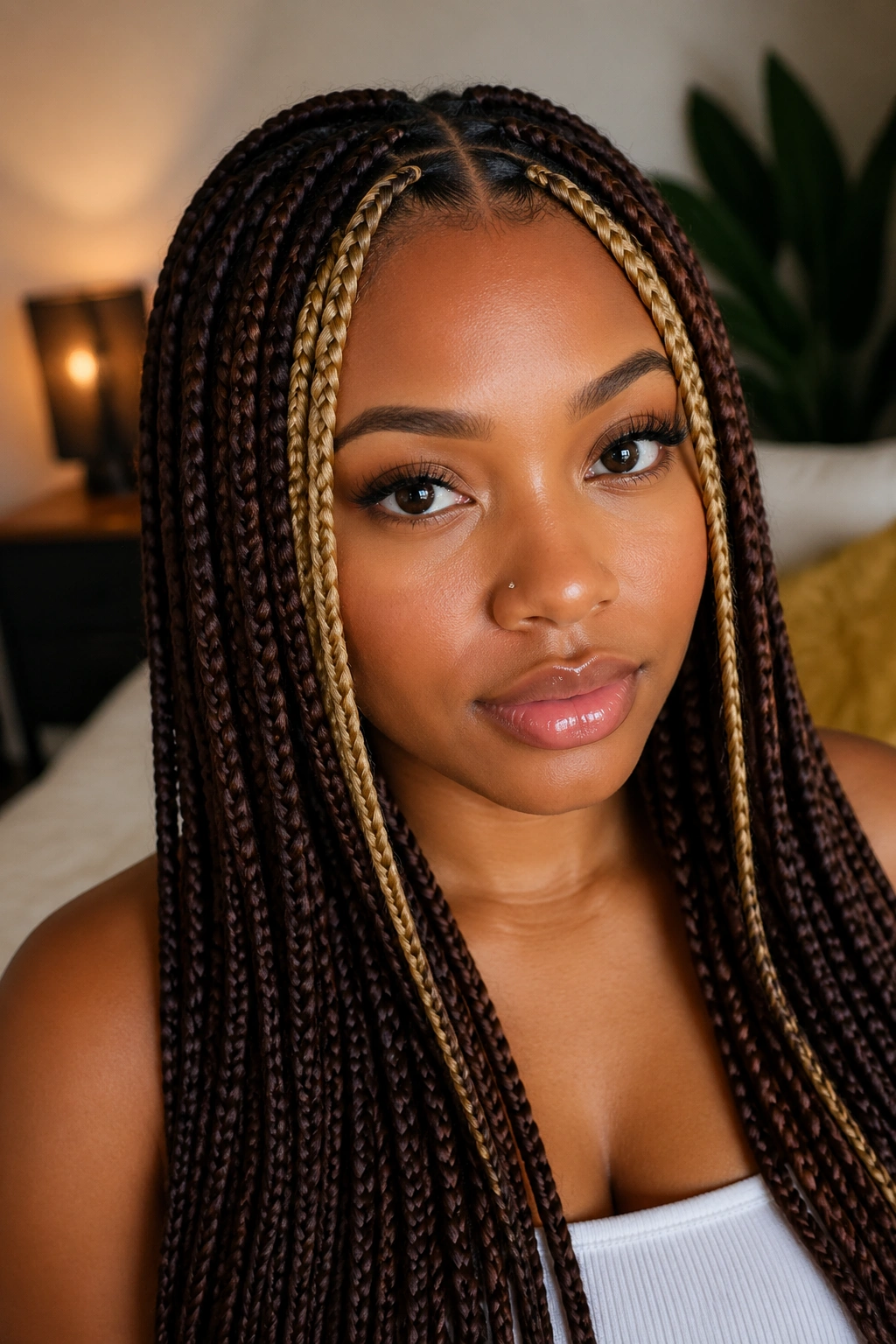
A braid style can be brown and still brighten the face. Cocoa brown with blonde money pieces does exactly that. The darker body keeps the look grounded, while the lighter front pieces pull light toward the face. If you want contrast without a full ombré fade, this is the move.
The money pieces should be narrow enough to frame, not dominate. Think two to four braids near the hairline, depending on your parting and braid size. If they are too wide, the face loses the contrast. If they are too thin, the effect disappears the second you pull the braids back.
This is one of the easiest brown braid looks to personalize. If blonde feels too bright, ask for honey or caramel instead. If you want more drama, choose a beige-blonde that sits closer to a warm platinum than a golden blonde. The base braid color stays the same, so you can shift the front without changing the whole head.
I like this style on medium-length braids because the front pieces show clearly and the rest of the hair stays uncomplicated. It’s a good answer for anyone who wants one small thing to feel different.
11. Maple Brown Braids with Waist-Length Ends
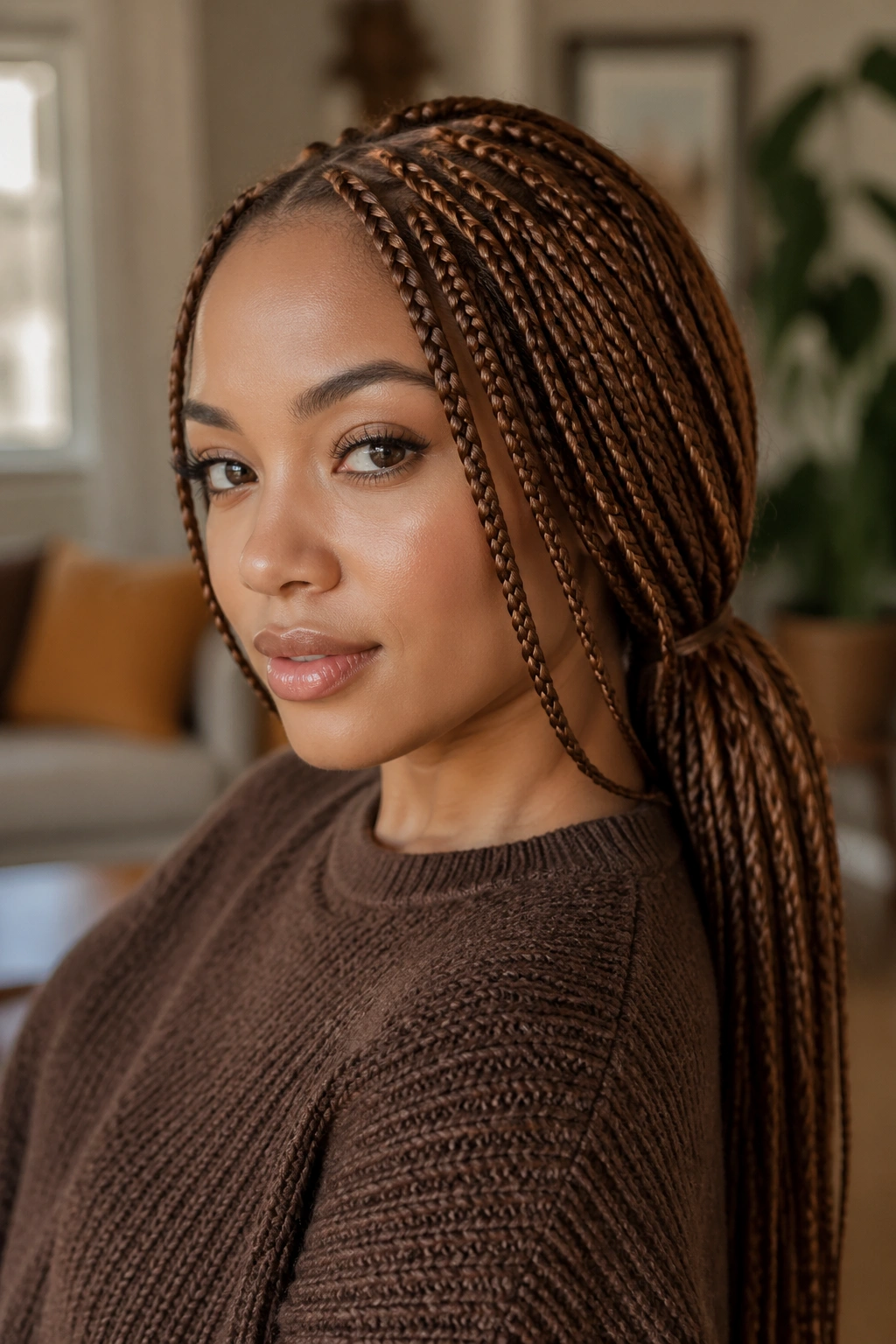
Maple brown has that sweet spot between warm and deep, and on waist-length braids it feels almost plush. The color holds richness at the roots, then seems to soften as the braids move down the back. That kind of length asks for a color with some depth, or the whole style can look thin and flat from a distance.
Waist-length knotless box braids are not light. That’s the truth. They swing nicely, and they look beautiful in a low ponytail or half-up knot, but they also put more weight on the scalp than a bob or shoulder-length set. Maple brown helps because the shade itself feels smooth, which makes the style look less heavy than it is.
If you choose this length, ask for clean, even parts and keep the braid size medium unless you want the installation time to climb fast. Smaller braids at this length will sit flatter and move better, but they also take longer to finish. Bigger braids give you more volume with less time in the chair. That trade-off is real.
Sleep matters here. Satin bonnet, long scarf, or a braid wrap that actually covers the ends. Waist-length braids get messy at the bottom first.
12. Hazelnut Braids with Triangle Parts
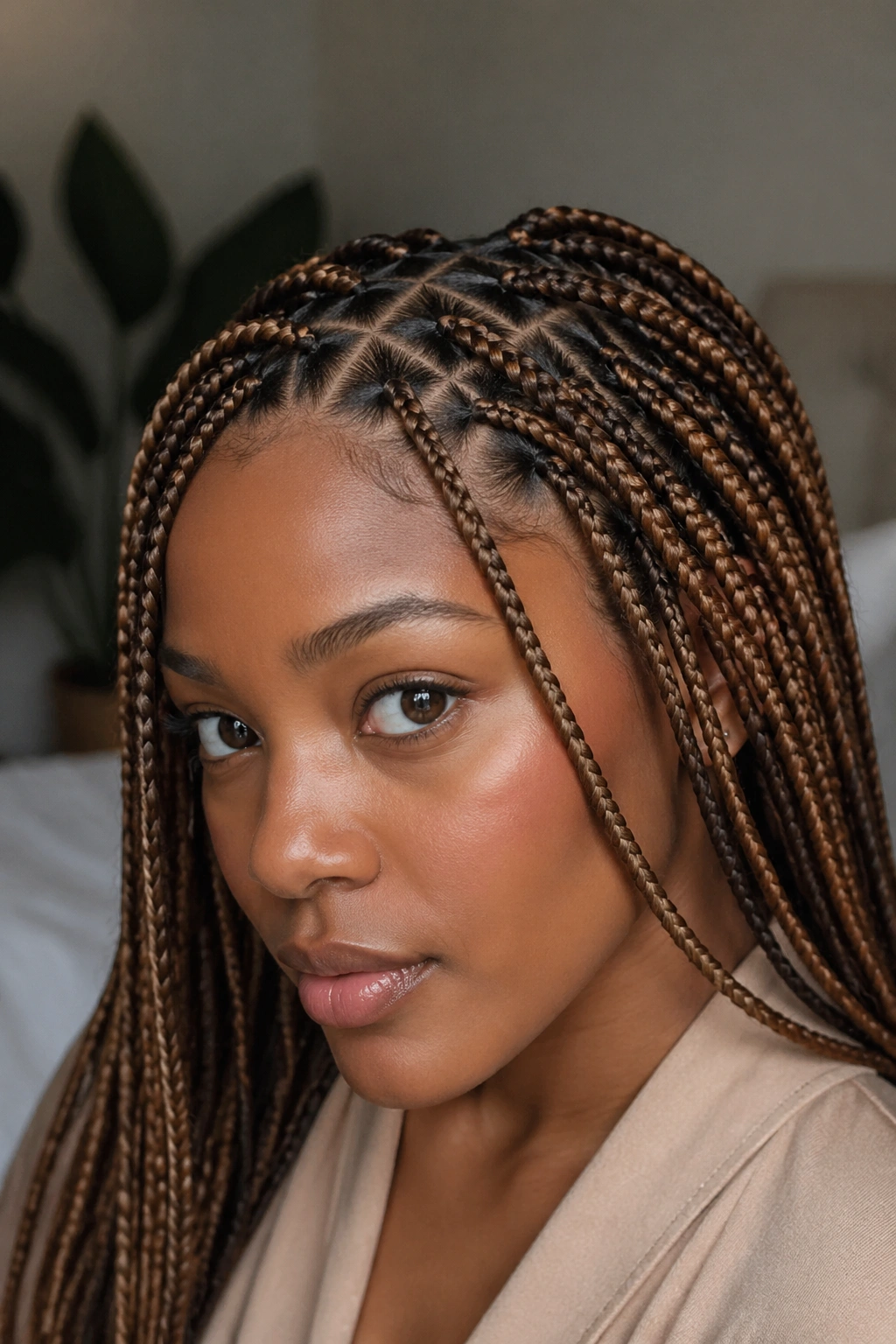
Hazelnut brown looks even better when the parts are the star. Triangle parts give knotless box braids a less rigid feel than straight squares, and that tiny change makes the whole style feel more custom. The hazelnut tone adds warmth, so the parting pattern stands out without needing extra color tricks.
Why Triangle Parts Change the Mood
Square parts are classic. Triangle parts feel a little more relaxed and a little more current, though I hate using that word because it sounds lazy. What I mean is simple: the parting breaks up the grid pattern and makes the scalp pattern more interesting to look at. On a hazelnut braid set, that difference is easy to see.
This works best on medium or small braids. Jumbo triangle parts can look chunky unless the braids are long enough to settle. If you want the parting to show, keep the rows neat and ask your braider not to overpack the front. The hairline should still look soft.
What to Ask For
- Triangle parts of similar size across the head
- Hazelnut or warm brown braiding hair
- A neat, flat front with light feed-in tension
- Optional curled ends if you want more movement
Triangle parts are a small detail, but they can make a familiar style feel new. That’s worth it.
13. Coffee-and-Cream Jumbo Knotless Braids
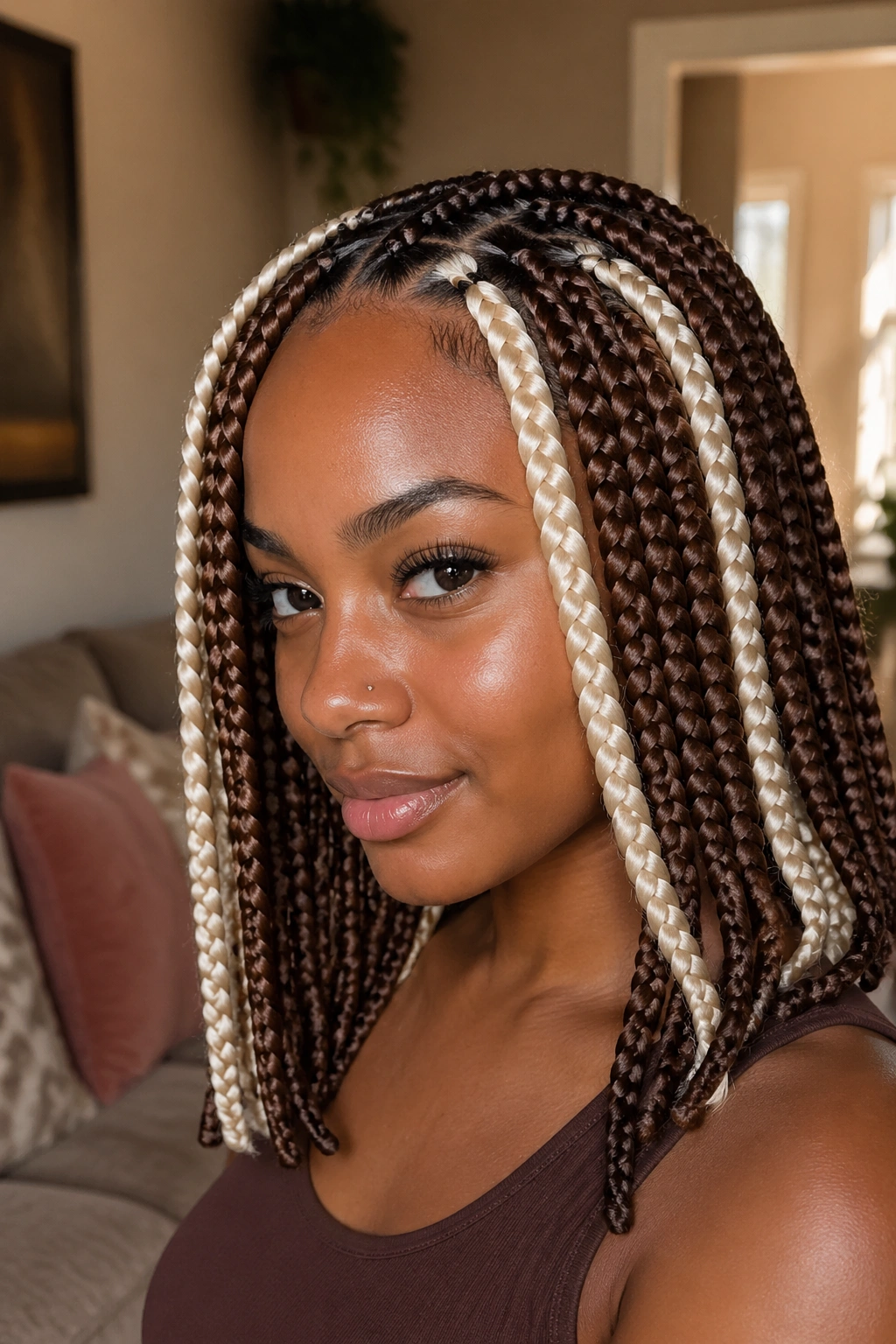
Jumbo knotless braids are a different animal. They are bigger, faster to install, and they make the color contrast louder. Coffee-and-cream is the perfect pairing for that size because the darker coffee base gives weight, while the cream pieces break it up before the style gets too dense.
Unlike smaller braids, jumbo ones rely on contrast more than fine detail. You can see the sections from a distance, so the color needs to be clean and deliberate. That makes this style good for people who like a strong braid pattern and do not want to spend hours staring at tiny part lines.
Jumbo braids also tend to feel heavier, so the knotless method matters even more here. The feed-in start reduces the bulk at the root, which helps the style sit flatter. Still, if your scalp is sensitive, keep the parting a little larger and the length shorter. Shoulder length or mid-back is usually enough for a jumbo set. Waist length can start to feel like a commitment.
I’d call this a statement style. Not flashy. Just clear. The braids are big, the color reads from across the room, and that’s the whole point.
14. Rich Brown Braids with Burgundy Undertones
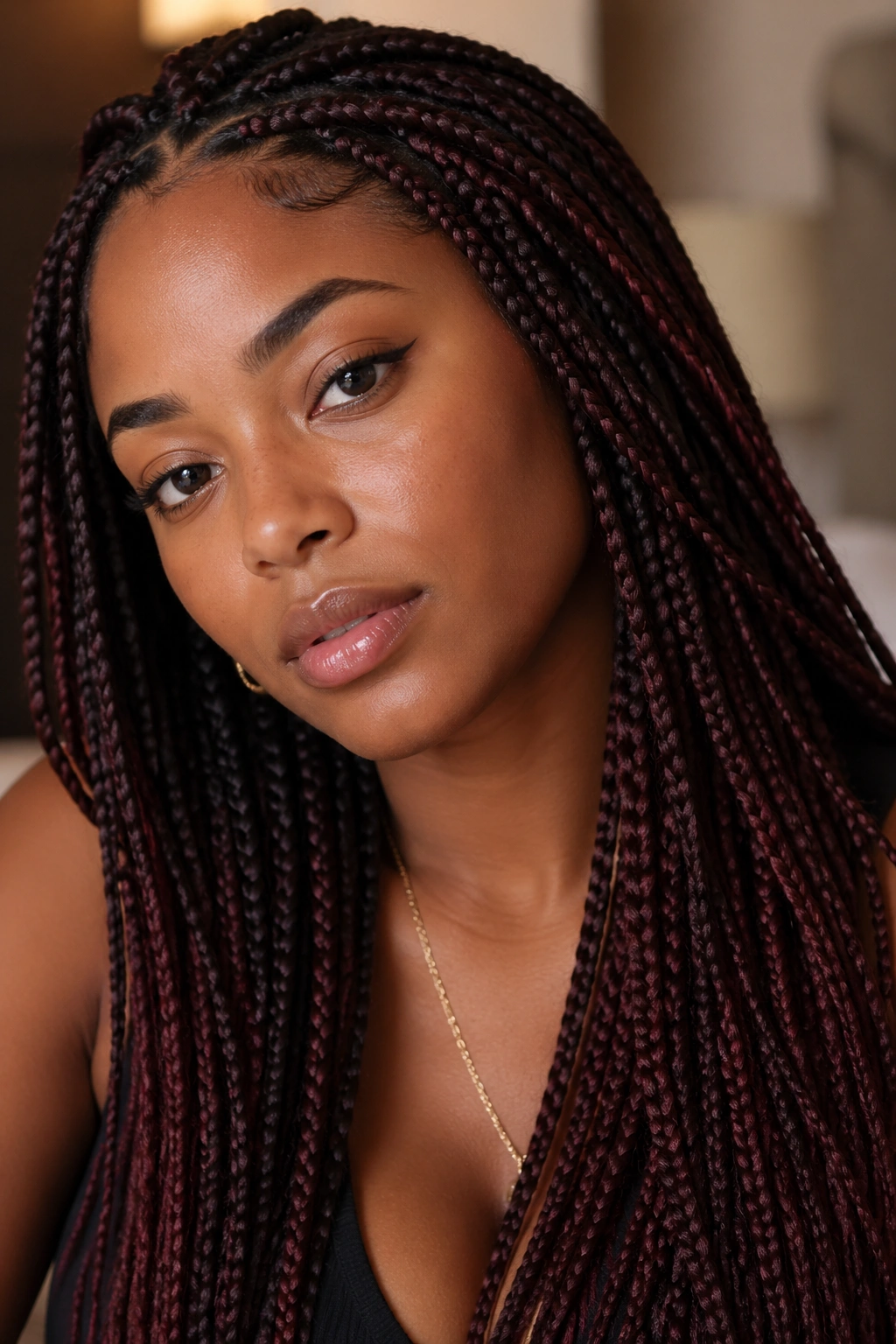
What if you want brown braids that tilt a little red without going full red? Burgundy undertones handle that nicely. The base still reads brown, but there’s a wine-colored hint in the strand that shows up when the light hits or when the braids are layered over dark clothes.
The Difference Between Burgundy and Auburn
Burgundy is deeper and cooler than auburn. Auburn leans copper. Burgundy leans wine. That matters because it changes how the braids read against the skin. Burgundy can make brown braids feel more serious and a touch moodier, while auburn feels brighter and warmer.
This shade works especially well in fall-looking wardrobes, though I’m not tying it to a season so much as a color story: black knitwear, deep green, charcoal, cream, and burgundy lip gloss. The braid color slips into that palette without competing. If you want a set that feels richer in low light, this is the one.
Best Way to Wear It
- Keep the base around 2, 4, or deep brown
- Ask for a burgundy blend rather than a flat red panel
- Wear it with a center part for balance
- Add a few gold accents if you want warmth back in the mix
It is a grown-up color choice, which sounds dull until you see it on clean, mid-sized braids. Then it makes sense.
15. Sandy Brown Ombré Braids with Loose Waves
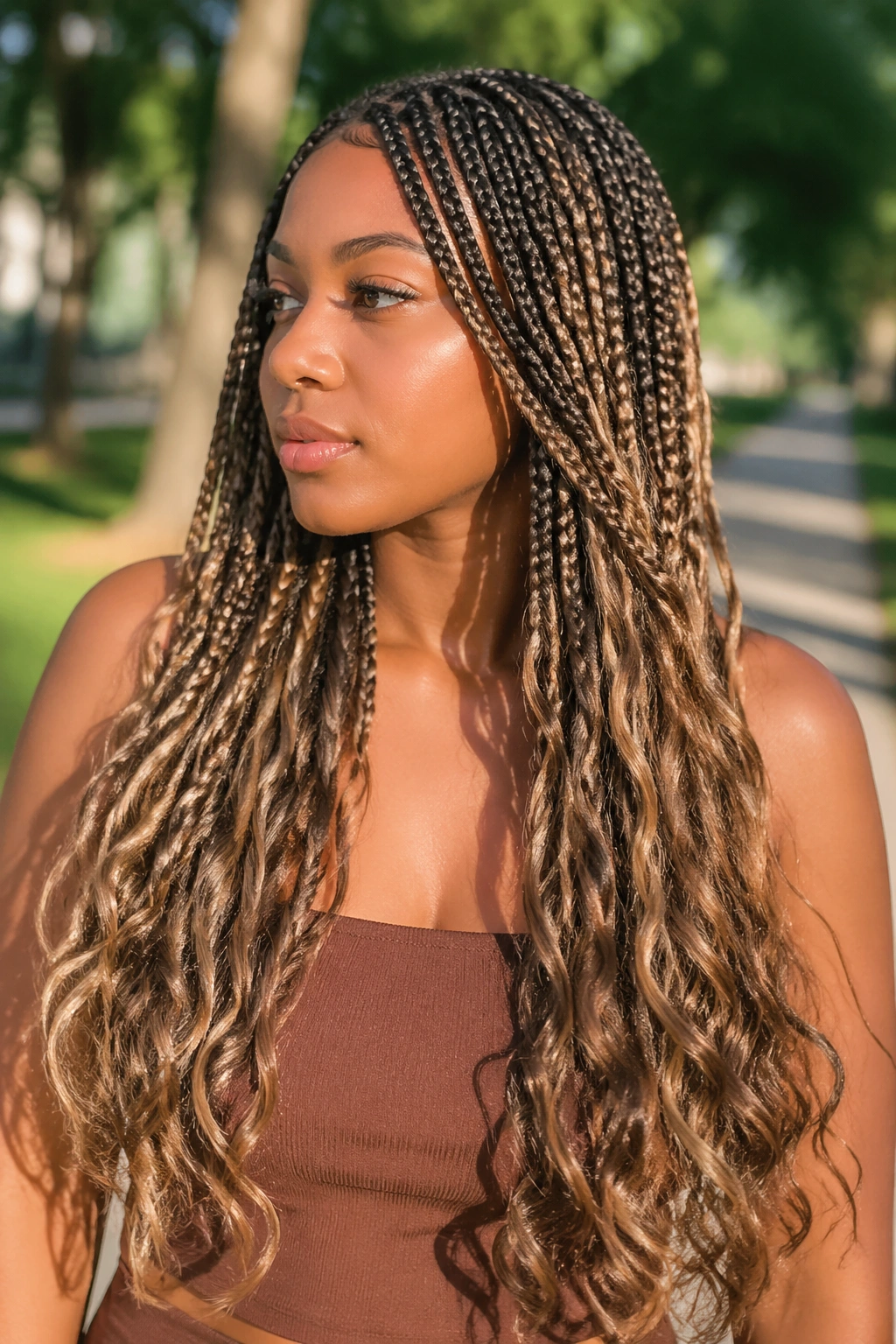
Sandy brown is what happens when brown braids get a little air in them. The tone is lighter than chestnut and softer than caramel, so the ombré feels airy instead of sharp. Add loose waves to the ends, and the style becomes more relaxed immediately.
This is one of those looks that changes the shape of the braid. Straight ends give you a stronger line. Loose waves break that line up and make the whole set feel softer around the shoulders. The waves do not have to be tight. A light bend is enough. If they are too curly, the style starts drifting away from the brown ombré effect and into full glam territory.
The best length here is mid-back to long. Short braids with waves can look a little crowded, while longer braids have space to move. If you like wearing your braids half-up, the loose wave ends look especially good because they spill out of the tie with a bit of shape.
A small trick: set the waves with a foam roller or large flexi rod, not a tiny one. Large bends keep the finish soft.
16. Chestnut Ombré Braids with a Half-Up Top Knot
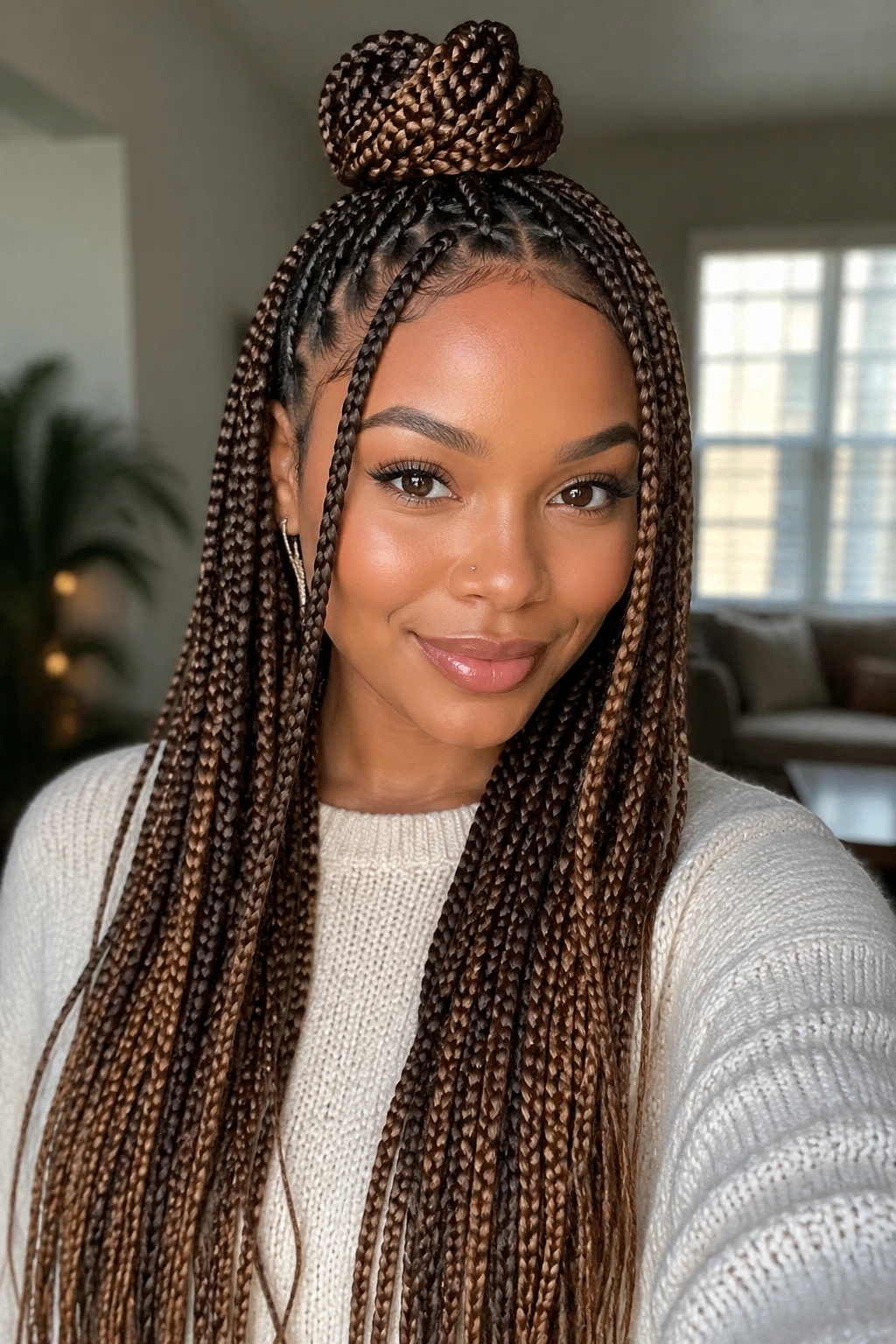
A half-up top knot gives knotless braids a bit of lift, and chestnut ombré makes that lift look more finished. The chestnut tone warms the style from root to tip, while the top knot keeps the face open and the rest of the braids free to fall down the back.
Why This Combo Feels So Easy
Half-up styles can look accidental if the color is too flat. Chestnut fixes that. The warm brown catches light in the sections that frame the knot, which makes the style feel intentional even when you throw it up in two minutes. That is the charm here: it looks styled without acting precious.
This version works on medium or long braids. Short braids can still do a tiny top knot, but the proportions are trickier. You want enough length left down the back so the knot feels like a choice, not a necessity. A waist-length set is beautiful here, but a mid-back set is easier to wear every day.
What Makes It Hold Better
- Gather only the top third of the braids.
- Tie with a strong but gentle elastic.
- Wrap a small braid around the base to hide the band.
- Let a few face-framing pieces fall out on purpose.
That last part matters. Too tidy and the style loses its looseness.
17. Brown Braids with Swirled Curly Ends
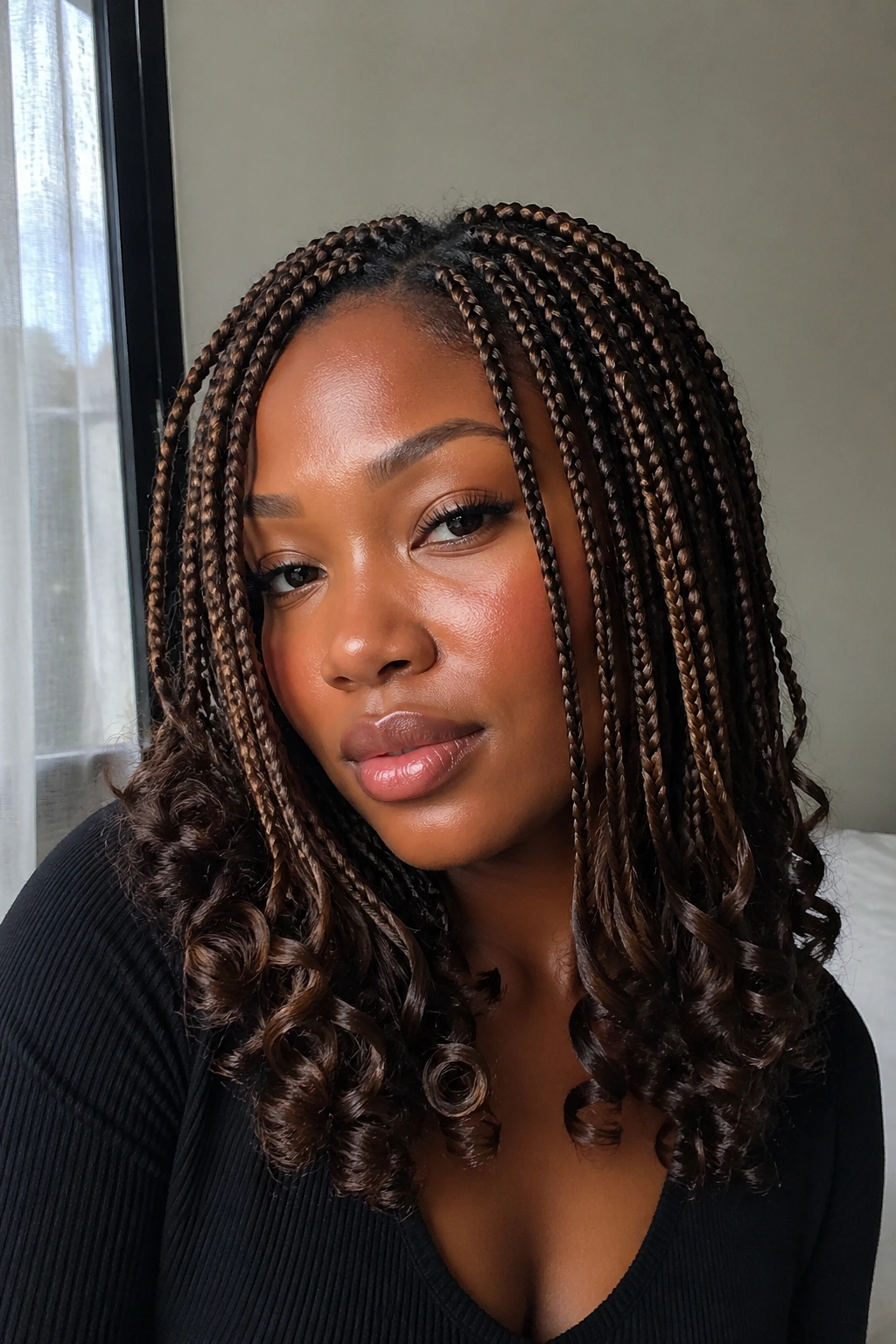
Swirled curly ends are one of those details that make a braid set look far more expensive than it is. The brown base keeps the style grounded, while the curls at the bottom add softness and movement. I like this on knotless braids because the feed-in base already has a smoother feel, so the curled ends do not clash with the root.
The curls can be tight or loose, but I prefer loose spirals. Tight curls can look frilly on brown braids, especially if the braid size is small. Loose spirals keep the finish modern and easy to move through. If you wear your braids down often, these ends can be the part that gets the most attention.
A few practical notes help here:
- Use flexi rods or perm rods on damp ends.
- Seal the curls with mousse and let them dry all the way.
- Sleep with the ends tucked loosely in a satin bonnet.
- Refresh the shape with a little water-free foam, not heavy oil.
This style is not the lowest-maintenance option in the bunch. It does ask for a bit of care. But the payoff is clear every time the braids brush your shoulders.
18. Soft Brown Ombré Braids with a Simple Center Part
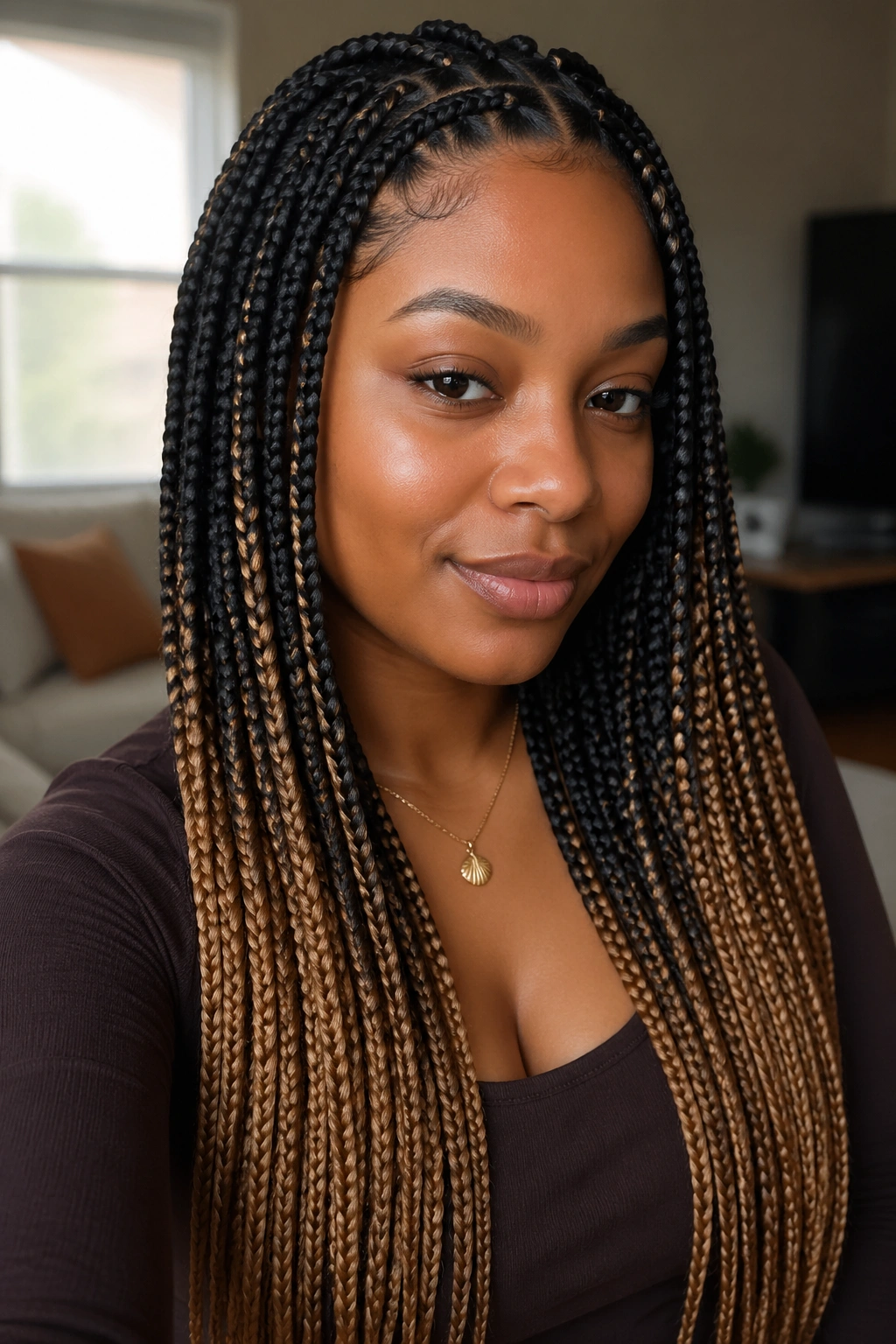
A simple center part is easy to overlook, which is exactly why it works so well. Brown ombré knotless box braids can already carry a lot of visual interest on their own, and a clean middle part keeps the whole look calm. The style feels balanced, clean, and easy to wear with almost anything.
This is the version I’d choose if I wanted the color to do the talking. The roots can stay a deep brown, the mid-lengths can shift into a softer mocha, and the ends can lighten only a little. No dramatic contrast. No extra pieces. No cuffs. Just a smooth fade and a part that runs straight down the crown.
That simplicity gives you room to change the rest of the look whenever you want. A red lip works. Bare skin and hoops work. A black turtleneck works. Even a big sweatshirt works, which is more honest than people usually admit.
If you want the easiest long-term wear, this is the safest bet. Not boring. Just steady. And there is real value in a braid style that does not need to be dressed up every morning to feel finished.
A clean center part, a soft brown fade, and knotless braids that sit flat at the scalp — that combination ages well, and I mean that in the best way.
