


Short afro hairstyles offer a powerful combination of style, versatility, and authenticity that works for women with natural texture. Whether you’re embracing your natural hair for the first time or refreshing a beloved look, short afros give you options that feel effortless while delivering major visual impact. The beauty of a close-cropped or moderately textured short afro is that it works with your hair’s natural texture rather than against it—no endless heat styling, no chemical processing required.
The right short afro style can highlight your face shape, express your personal aesthetic, and make a statement about self-acceptance and natural beauty. From meticulously shaped TWAs (teeny weeny afros) to fuller, rounder cuts with sculptural texture, short afros adapt to suit different hair densities, face shapes, and lifestyle needs. What makes these styles particularly appealing is their flexibility—you can dress them up or down, add accessories for visual interest, or keep them completely minimal depending on your mood and occasion.
What matters most when choosing a short afro style is understanding your hair’s natural texture, density, and your own styling tolerance. Some styles require consistent shape maintenance every few weeks, while others look intentionally tousled and lived-in. Some celebrate maximum height and volume, while others work with tighter, more compact shapes. Understanding these differences helps you pick a style that’ll genuinely work with your routine rather than against it.
1. The Classic Textured Crop
A textured crop keeps hair at a uniform short length all over—typically one to three inches—and celebrates the natural curl pattern without manipulation or added texture. This is the foundation style that works for almost every hair type and density, making it an excellent choice if you’re new to short natural hair. The simplicity of the cut actually showcases your hair’s authentic texture, from coily to kinky to wavy patterns.
Why It Works for Everyone
A textured crop requires minimal daily styling beyond a light moisturizer or oil and perhaps finger-combing or a soft brush in the morning. The uniform length means no tricky angles to maintain, and the style looks intentional whether your curls are super defined or slightly frizzy. It’s the kind of cut that works on different head shapes and face types because the focus is purely on texture rather than a specific silhouette.
Styling and Maintenance Tips
- Wash weekly with a gentle cleanser and deep condition every other wash to keep curls bouncy and defined
- Apply leave-in conditioner and a light oil while hair is still damp to lock in moisture
- Let hair air-dry or use a diffuser on low heat to maintain curl definition
- Recut every 4-6 weeks to keep the shape crisp and the length uniform
- Sleep on a silk pillowcase or bonnet to protect curl definition overnight
Pro tip: A textured crop becomes even more striking when you add definition to the shape—ask your barber or stylist to taper slightly at the sides and back while leaving more volume on top. This adds dimension without abandoning the simplicity you love.
2. The Tapered Cut with Sharp Sides
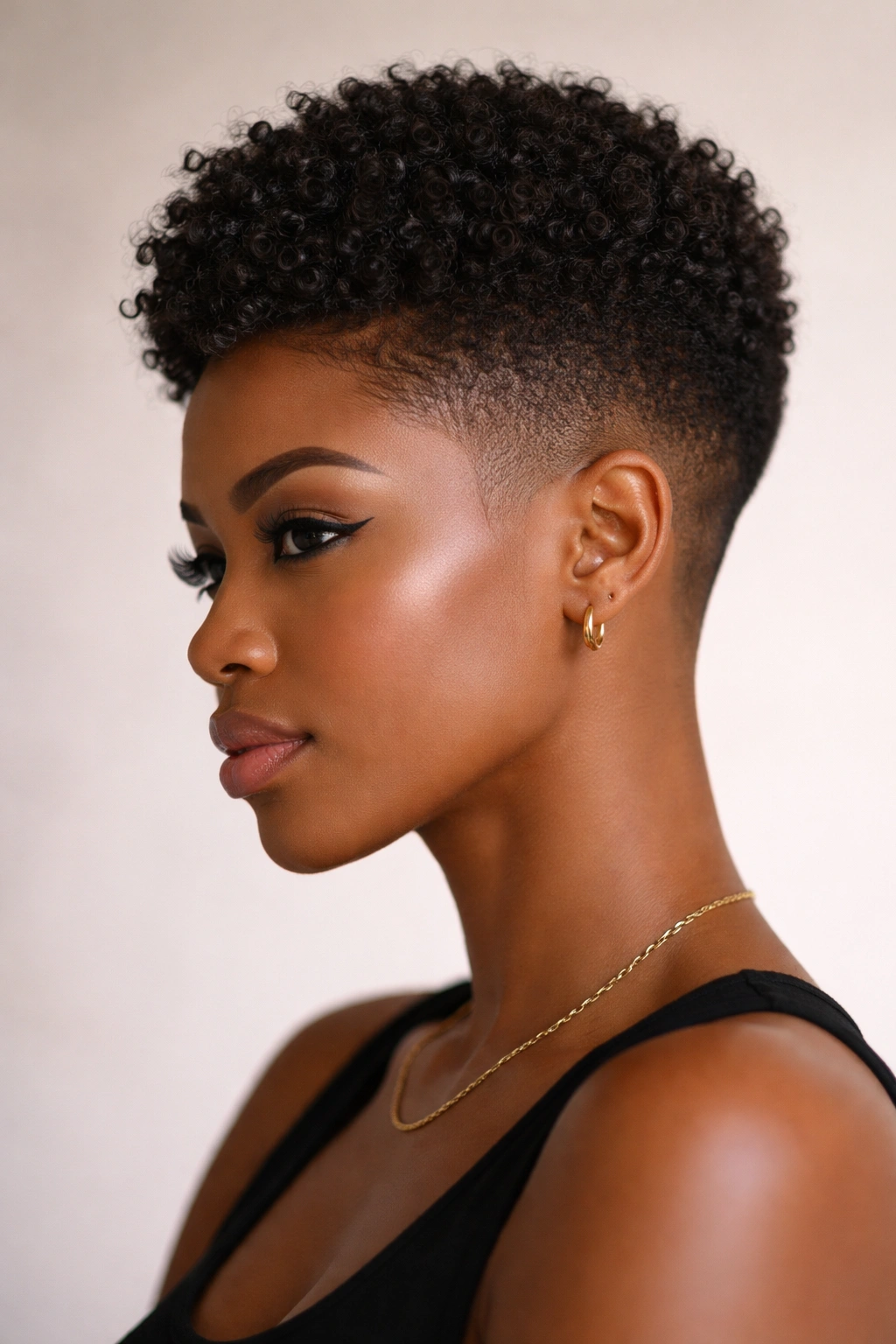
A tapered cut features longer textured hair on top—usually three to four inches—that gradually shortens toward the sides and back, which are cut very close to the scalp. This style creates clean, sculpted lines that feel contemporary and intentional while still celebrating your natural curl pattern at the crown. The sharp edges make the style feel polished regardless of whether you’re in professional or casual settings.
What Makes the Lines Pop
The contrast between the closely tapered sides and the fuller texture on top is what gives this cut its visual punch. Well-executed tapering requires a skilled barber or stylist who understands how to work with natural hair texture—the goal is clean geometric lines, not razored edges that thin out your curls. The shape naturally flatters oval and heart-shaped faces, though it works beautifully on most face types when the proportions are balanced correctly.
How to Maintain Sharp Edges
- Visit your barber or stylist every 2-3 weeks to keep lines crisp and maintain the taper
- Use a fade cream or edge control product on sides and back to define the tapered areas
- Moisturize the top texture regularly to keep curls defined and healthy
- Request a low, medium, or high taper depending on your preference—this controls how dramatically the sides fade
- Ask for a detailed edge-up on the hairline and neck to make the style look intentional and groomed
Worth knowing: The closer the fade on the sides, the more visible your scalp becomes—choose your taper thickness based on personal preference and comfort level with scalp visibility.
3. The Textured Faux Hawk
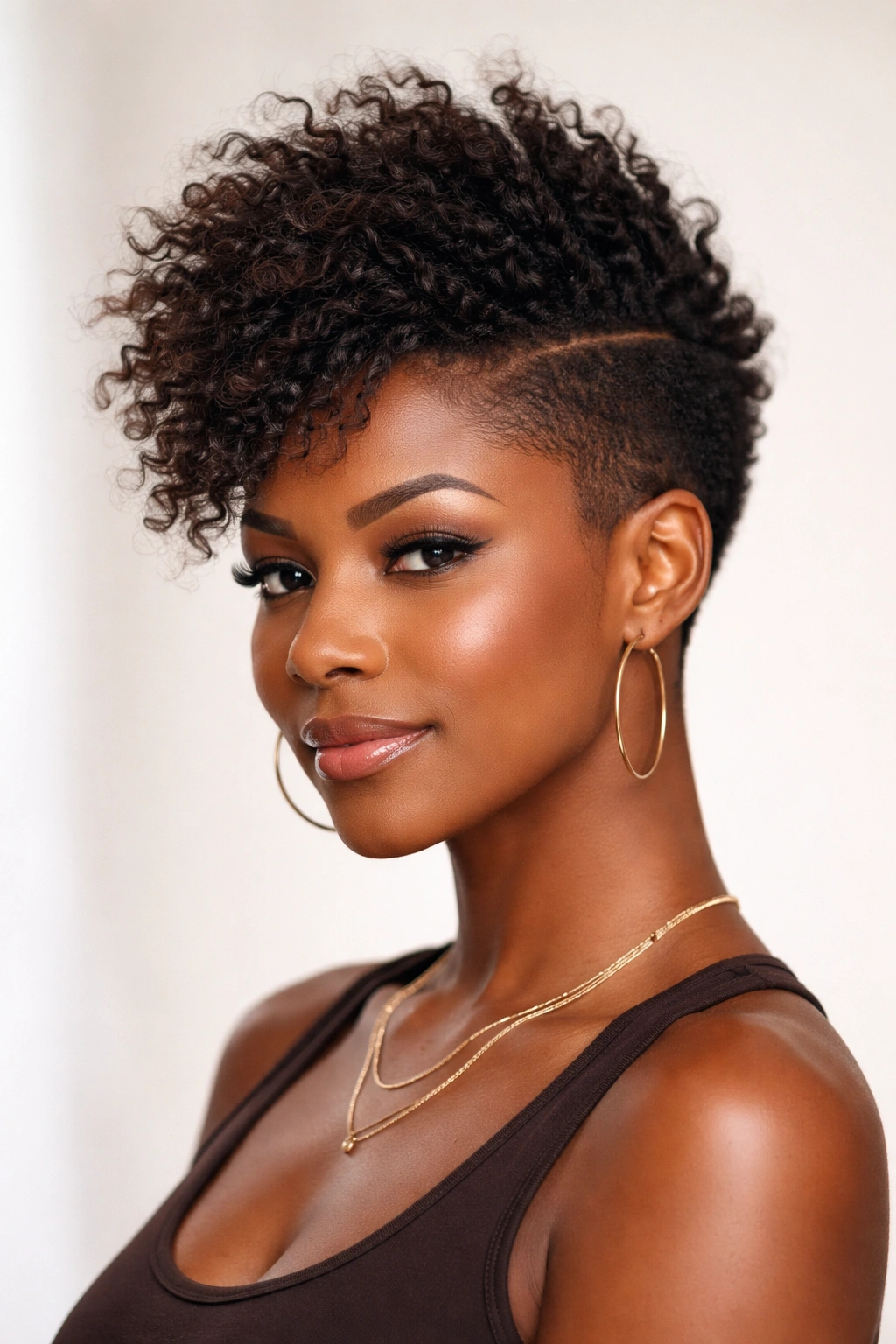
A textured faux hawk (or fohawk) is a playful middle ground between conservative and bold—you get sculptural dimension and attitude without committing to a full traditional hawk. Hair is cut shorter on the sides while the center strip from forehead to nape is left longer and styled upward or swept to one side, creating visual height and movement. This style works especially well if you want something with personality that still functions in professional environments.
Creating the Right Dimension
The sides of a textured faux hawk are typically tapered or faded short, while the center section stays three to five inches long. The contrast between these lengths creates the hawk’s characteristic silhouette without requiring the extreme styling commitment of a traditional mohawk. You can style the center section multiple ways—brushed straight up for maximum height, textured and tousled, or swooped dramatically to one side for a softer take.
Styling Your Faux Hawk Daily
- Apply gel, mousse, or a lightweight styling cream to damp hair to encourage the center section upward
- Use a blow dryer on medium heat with a concentrator nozzle to style and set the direction
- Finger-comb or use a soft brush to shape the texture while the product is setting
- Reapply product as needed throughout the day for hold without crunchiness
- Visit your stylist every 3-4 weeks to maintain the side taper and center section length
Insider note: A textured faux hawk photographs beautifully and makes a statement at events or photos, but it does require daily styling and product—this isn’t a wash-and-go style.
4. The Cropped Coil
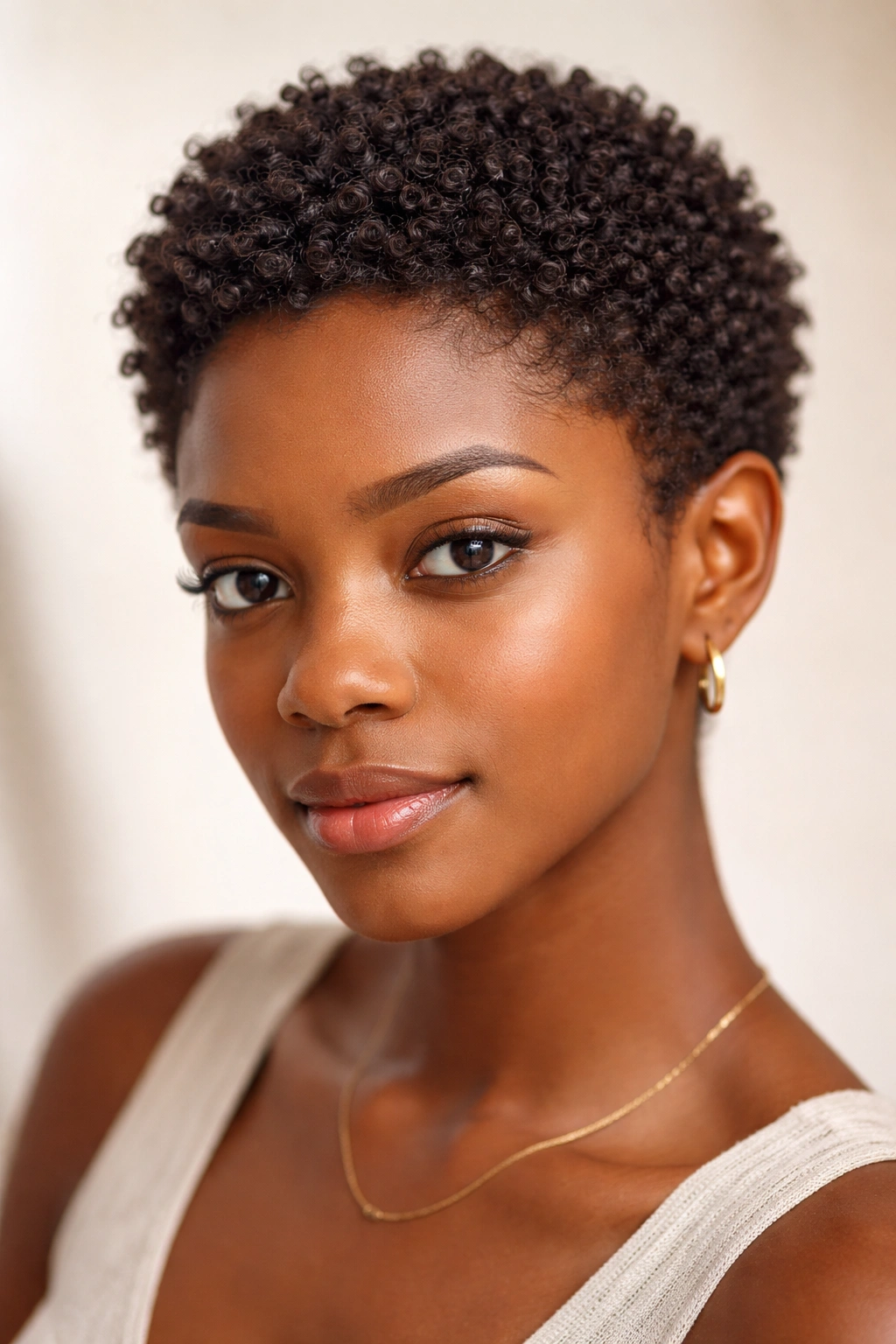
A cropped coil celebrates tight, springy curls kept at a uniform short length that emphasizes the beauty of each individual coil. If your hair naturally coils tightly, this style lets those coils exist exactly as they are without manipulation—no stretching, no finger-coiling, just trim and go. The result is a style that’s visually striking, naturally voluminous, and surprisingly low-maintenance despite its sculpted appearance.
Coil Definition and Texture Showcase
Tight coils create their own visual interest and texture at even very short lengths, so the cropped coil style works beautifully at one to two inches all over. The key is choosing a stylist who understands how to cut curly hair while it’s in its natural state—cutting dry hair shows the true length and curl pattern, preventing the common mistake of cutting hair too short when it shrinks after washing. The style becomes even more striking with excellent moisture and curl definition products.
Keeping Coils Bouncy and Defined
- Wash with sulfate-free shampoo and deep condition weekly to maintain elasticity
- Apply curl cream or gel to soaking-wet hair and use the “praying hands” or scrunching method to encourage coil formation
- Plop hair in a microfiber towel for 10-15 minutes to remove excess water without disturbing curl pattern
- Air-dry or diffuse on low heat until completely dry to set the curl pattern
- Recut every 4-5 weeks to maintain shape and remove any single-strand knots that develop
Pro tip: Refresh your coil definition on wash days using the “plopping” method plus curl cream—you’ll get more defined coils without needing to restyle from scratch.
5. The Undercut Textured Top
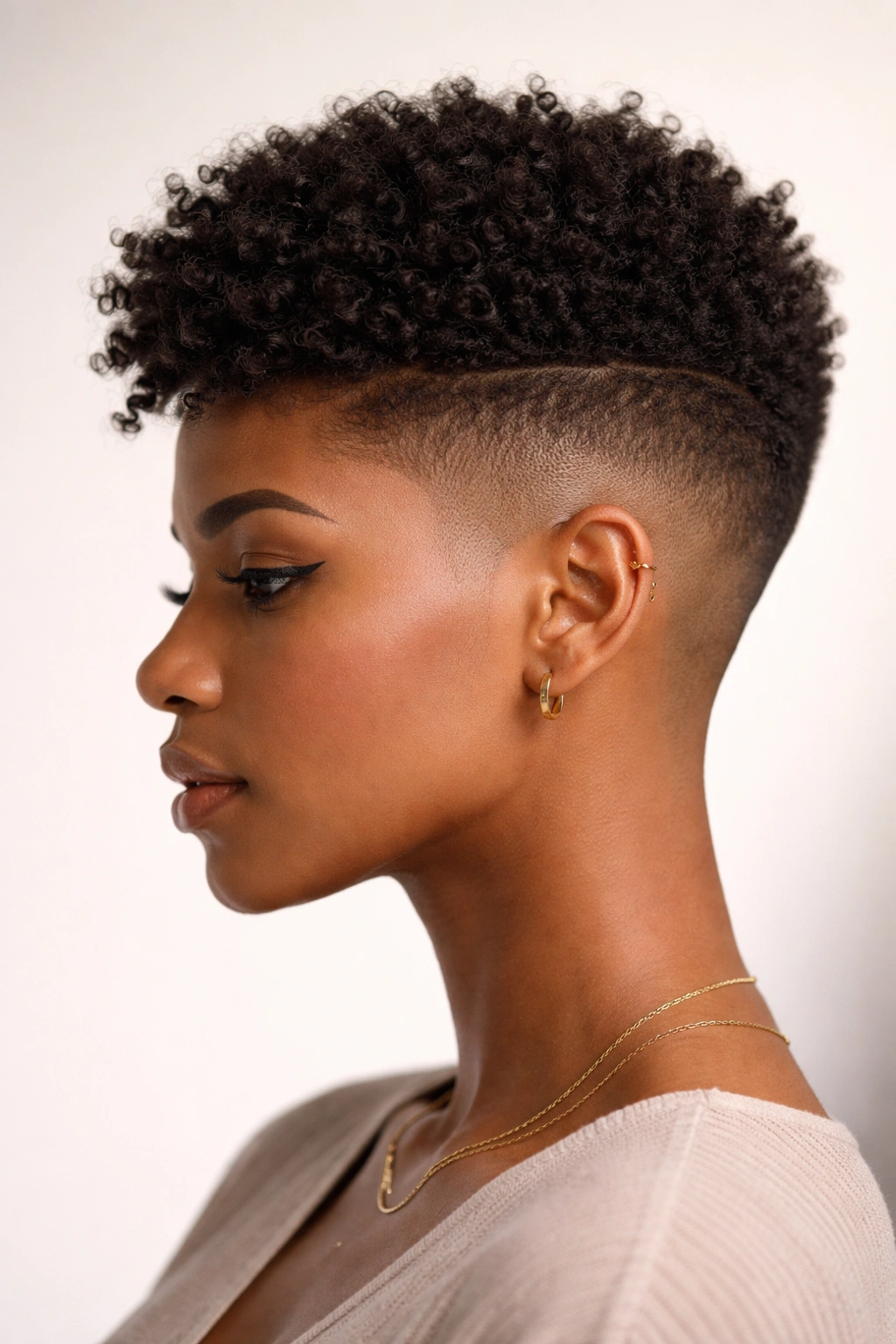
An undercut textured top features an intentional contrast between closely cropped or completely shaved sides with significant length and fullness on top. This edgy style makes a bold statement while letting you maintain noticeable hair length where it counts visually—at the crown. If you love the sculptural look of a shaved or nearly-shaved undercut but want to keep some length, this hybrid approach delivers both elements.
Creating Dramatic Contrast
The top section in an undercut typically stays three to five inches, while the undercut sides and back are cut with clippers to one-eighth of an inch or even shaved completely. The dramatic length difference creates visual impact and an undeniably contemporary feel. This style flatters angular face shapes particularly well and gives you flexibility in how you style the top—slicked back and smooth, textured and tousled, or even styled upward.
Maintaining the Undercut Look
- Trim the top textured section every 3-4 weeks to prevent it from appearing unkempt
- Shave or fade the undercut every 1-2 weeks depending on how dark your hair is and how stark you want the contrast
- Keep the top section moisturized and defined with curl cream or styling products
- Consider the maintenance commitment carefully—this isn’t a low-maintenance style despite its edgy appearance
- Visit a skilled barber who has experience with both textured tops and precise fades
Worth knowing: The contrast between closely cropped or shaved sides and longer textured hair on top can feel high-maintenance. If you prefer less frequent salon visits, choose a slightly longer undercut rather than a shave.
6. The Shaped Afro Puff
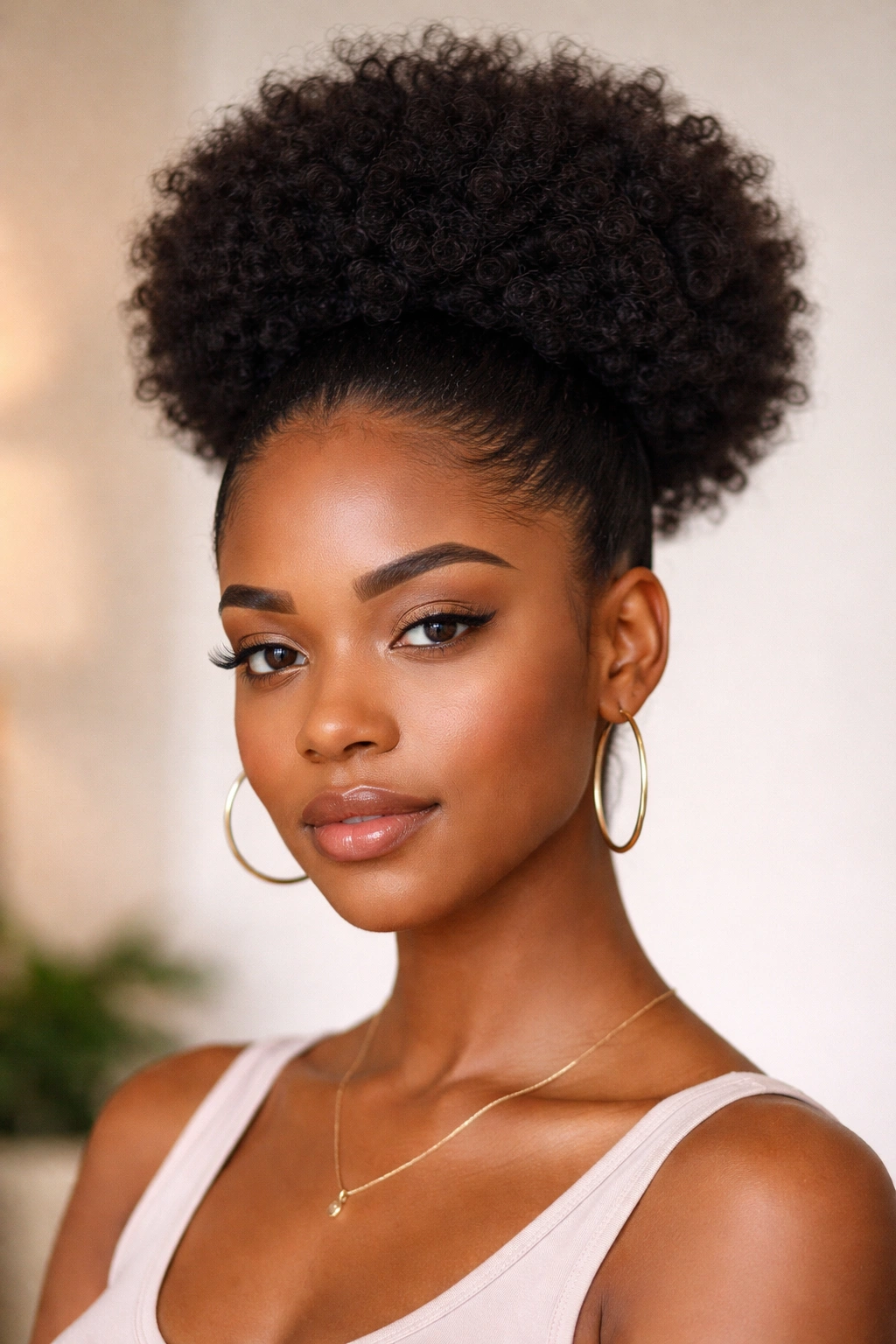
A shaped afro puff gathers and secures hair at the crown while allowing the rest to shrink into a defined, compact puff shape. Unlike a full-size afro, a shaped puff works beautifully at shorter overall lengths and creates a playful, youthful aesthetic that reads as intentional rather than accidental. The puff can be worn high on the crown, positioned slightly off-center, or doubled for extra fullness and dimension.
Creating the Perfect Puff Shape
The key to a gorgeous shaped afro puff is understanding your hair’s natural shrinkage—what’s six inches when wet might be three inches when dry and stretched into a puff. Work with your natural texture rather than trying to force hair into an unnatural shape. A well-formed puff should feel light, bouncy, and secure without being pulled so tight that you’re experiencing tension or discomfort at the roots.
How to Secure and Style Your Puff
- Gather hair into a high ponytail at the crown using a smooth hair tie or scrunchie
- Fluff and shape the puff by gently separating sections and encouraging fullness
- Smooth the gathered section with a light mousse or gel if you prefer a polished base
- Use bobby pins to secure any loose sections around the puff base
- Refresh the puff on days two and three with a spray bottle of water and light product
- Wear the puff with a bonnet or silk scarf at night to maintain shape and prevent frizz
Pro tip: A shaped puff photographs beautifully and works for both casual and professional settings when styled cleanly—the key is intentional shaping and a secure, smooth base.
7. The Shaved Design Cut
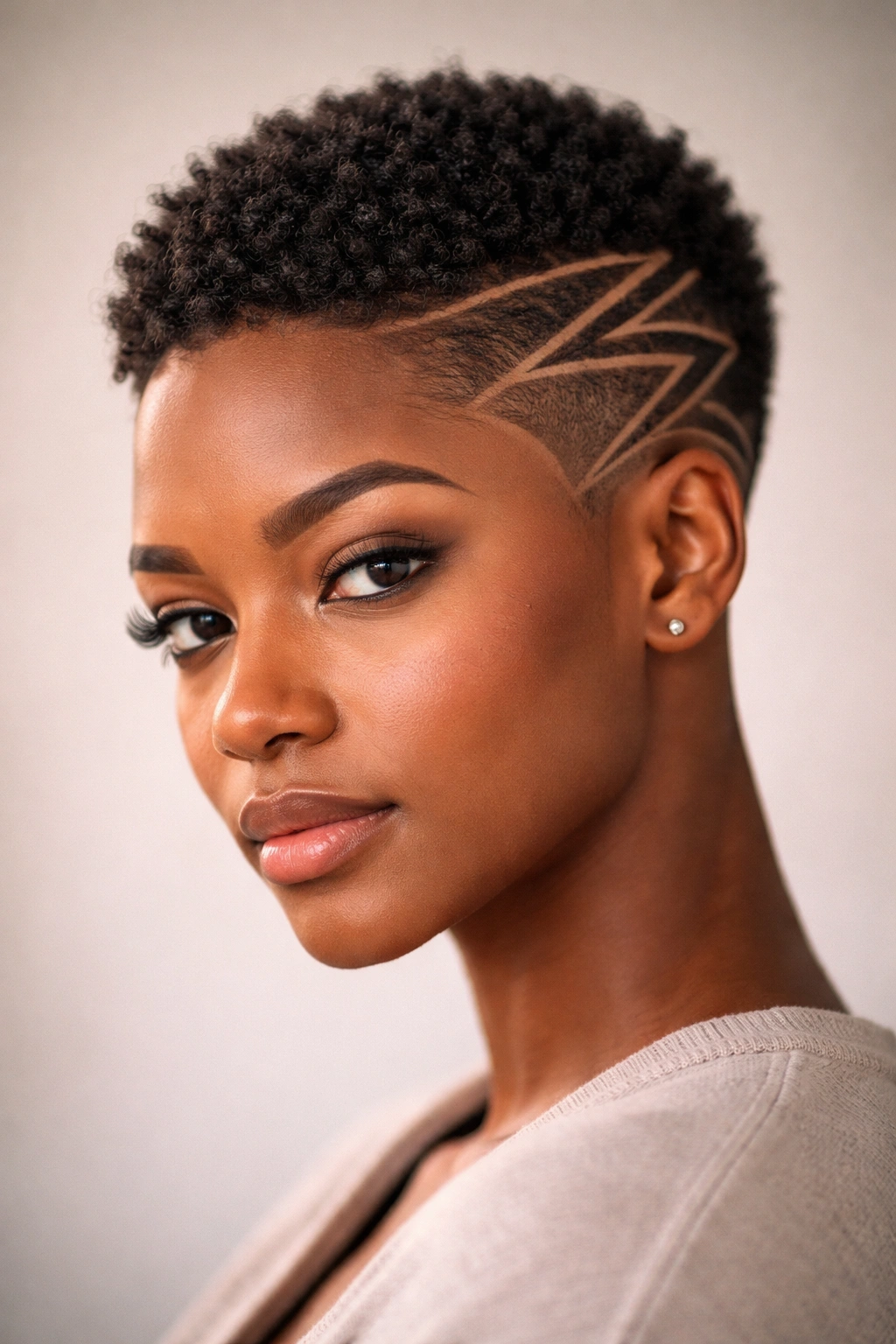
A shaved design cut incorporates geometric patterns, lines, or small designs shaved into the sides or back of very short hair. This style combines precision barbering with artistic expression—think sharp lines, stripes, or even small sculptural designs that add visual interest and personality. If you’re drawn to bold statements and enjoy the edgy aesthetic of a very short cut, a shaved design cut offers personalization without compromising the simplicity of short hair.
Design Options and Placement
Shaved designs work beautifully on the sides (shaved clean with geometric lines), the back (perfect for designs that show when hair is pulled up), or as a subtle accent that only appears when you move or tilt your head. Common designs include clean straight lines, curved patterns, checkerboard grids, or even small detailed images. The designs become most striking when paired with slightly longer textured hair on top—the contrast makes the shaved design stand out.
Getting and Maintaining Your Design
- Work with a barber who has specific experience with shaved designs and custom patterns
- Bring a photo or sketch of the design you want, or collaborate with your barber on custom ideas
- Expect to invest more time and money in a detailed shaved design than a standard cut
- Maintain the design by visiting your barber every 2-3 weeks as hair grows in
- Keep the shaved areas moisturized and protected from the sun if you spend time outdoors
- Consider whether the design matches your lifestyle—it makes a bold statement
Worth knowing: A shaved design cut requires a committed barber relationship to maintain—you’ll want to see the same person regularly to preserve your design’s quality.
8. The Textured Tousled Bob
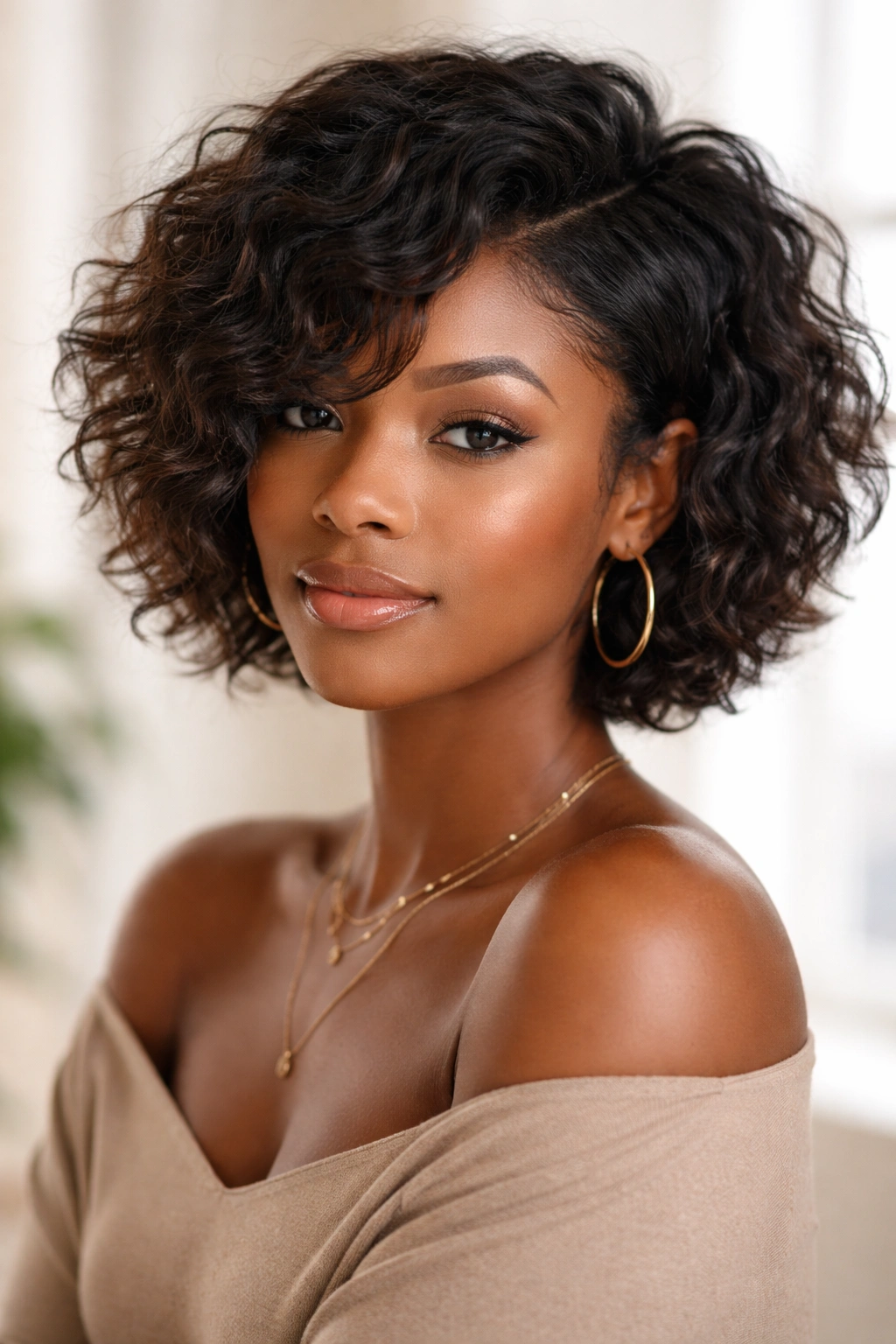
A textured tousled bob works with short natural hair when you’re looking for a style with shape and dimension—slightly longer in front than back, with textured layers throughout. This approach to short hair bridges the gap between a super-short crop and a longer bob, creating visible movement and visual interest. The tousled texture keeps the style feeling effortless and lived-in rather than strictly geometric.
Layering for Movement and Dimension
A textured tousled bob typically measures two to four inches at the back and slightly longer—three to five inches—in front, with subtle layers throughout that encourage curl pattern and texture to show naturally. The layers prevent the hair from feeling heavy or dense, which is crucial when working with natural texture at short lengths. Asymmetrical cuts—longer on one side than the other—add even more visual movement and personality to a textured bob.
Styling Your Textured Bob
- Apply leave-in conditioner and curl cream to damp hair to encourage definition
- Use your fingers or a wide-tooth comb to shape curls rather than brushing through the entire head
- Air-dry or diffuse until completely dry to maintain curl pattern and prevent frizz
- Tousle and separate curls with your fingers for a lived-in, intentional look
- Recut every 5-6 weeks to maintain shape and remove split ends from the layers
- Sleep on a silk pillowcase or bonnet to preserve shape and definition
Pro tip: A textured tousled bob looks intentionally undone when styled with slightly separated curls and a light product application—the goal is “naturally beautiful,” not “perfectly controlled.”
9. The Sleek Shaven Look
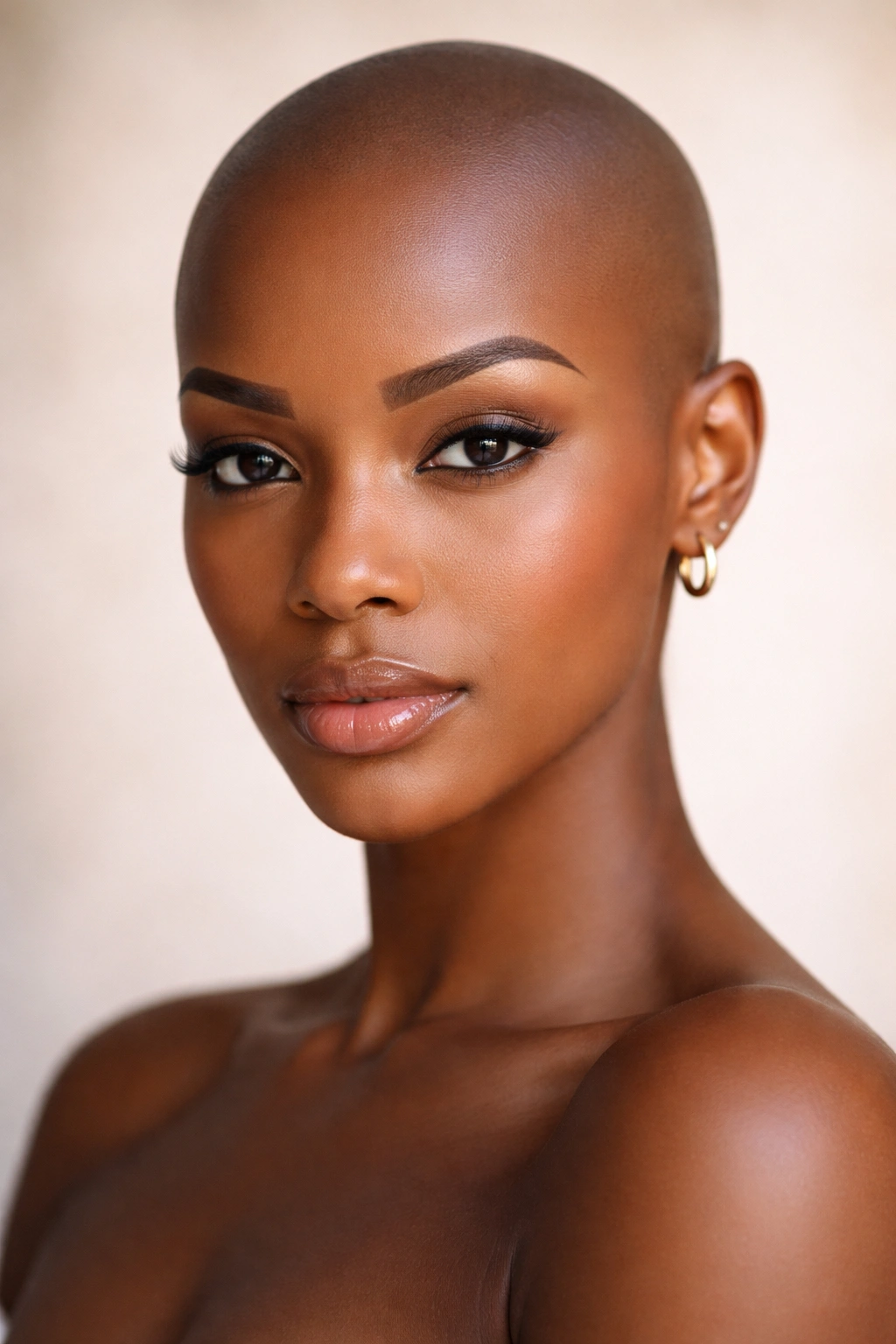
A sleek shaven look keeps hair super close to the scalp all over—often clipped down to one-eighth of an inch or shaved completely—emphasizing your face shape, bone structure, and the beautiful shape of your scalp. This is the ultimate low-maintenance short afro style: no styling required, no product needed, pure simplicity and confidence. A completely shaven head celebrates your features boldly and authentically, making a powerful statement about self-acceptance and style.
Finding the Right Length and Shaving Approach
A fully shaven look can be achieved with a sharp razor for a completely smooth finish, or with clippers set very short for a slight texture that feels soft rather than completely smooth. Both approaches work beautifully—the choice comes down to personal preference, sensitivity, and maintenance tolerance. Some women prefer the complete smoothness of a razor shave, while others choose slightly longer clipper settings for easier home maintenance between barber visits.
Maintaining a Shaven Scalp
- Shave or trim your head at home every 3-5 days using clippers or a razor, depending on hair growth and your preferred look
- Moisturize your scalp daily with a lightweight lotion or scalp oil
- Protect your scalp from sun exposure with sunscreen or a hat when spending time outdoors
- Keep the area around your hairline and neck clean and well-defined with regular touch-ups
- Exfoliate your scalp gently 1-2 times weekly to prevent ingrown hairs
- Wear soft pillowcases to avoid irritation and allow your scalp to breathe
Worth knowing: A completely shaven look is genuinely low-maintenance, but it does require consistent attention to keep looking intentional rather than neglected—plan for regular touch-ups.
10. The Textured Fade with Volume on Top
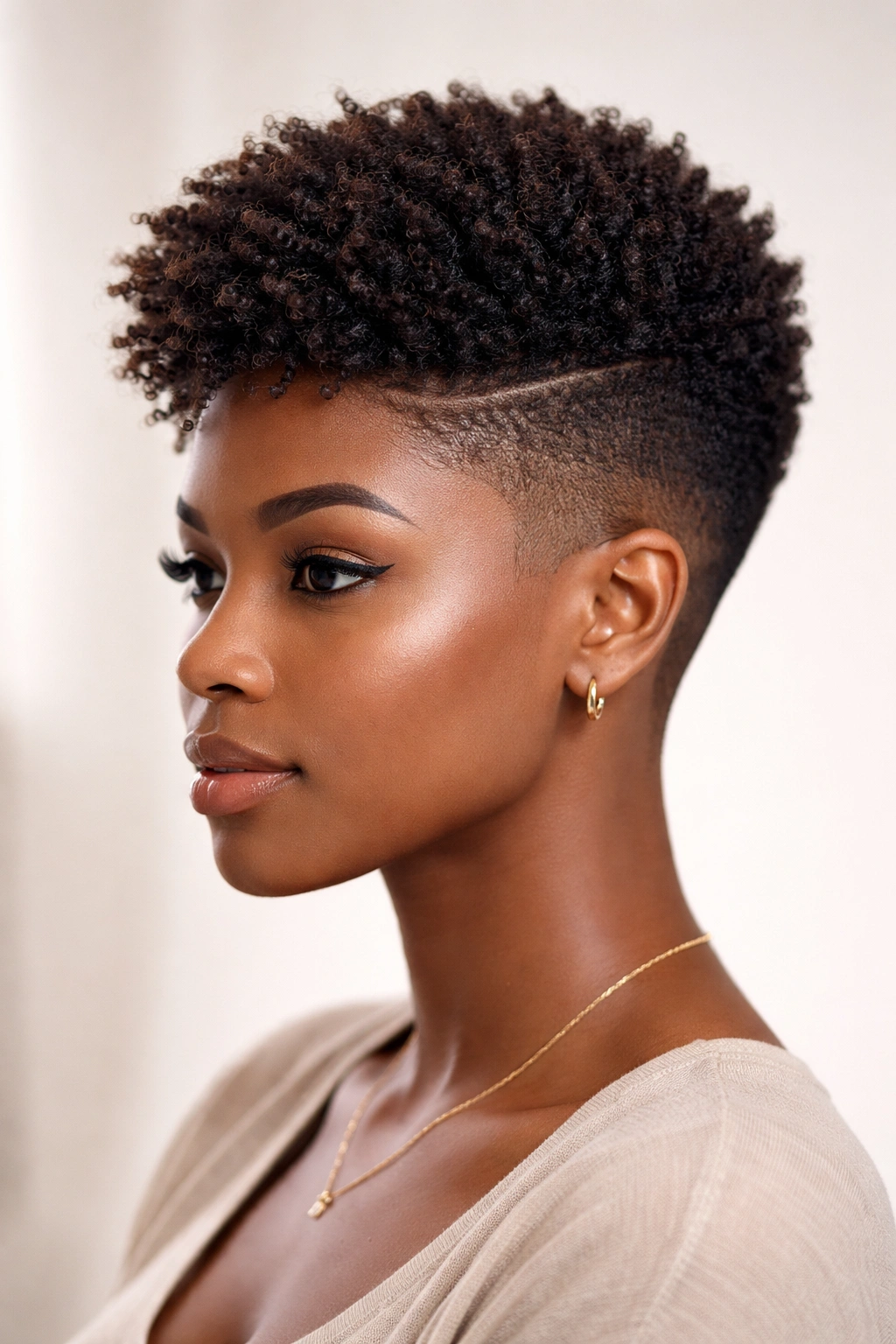
A textured fade with volume on top combines a gradual fade on the sides and back with fuller, longer hair maintained at the crown and front. This style offers visual interest and dimension while still celebrating your natural texture. The fade creates clean lines and a polished appearance, while the textured volume on top lets your curls exist in their most beautiful form without compromise.
Balancing Fade and Volume
The fade typically starts very short near the ears and neck, gradually getting longer as it moves up and back toward the crown. Meanwhile, the top stays significantly longer—three to five inches—maintaining maximum volume and texture definition. The transition between the fade and the top section should feel smooth and intentional rather than abrupt, requiring skillful clipper work by an experienced barber.
Styling for Maximum Volume and Definition
- Apply curl cream or mousse to damp hair, focusing on the longer top section
- Use a blow dryer with a diffuser on medium heat to encourage volume at the crown
- Avoid touching or scrunching the top too much while drying to prevent frizz
- Once dry, finger-separate curls for a defined, textured look
- Visit your barber every 3-4 weeks to maintain the fade and keep lines sharp
- Moisturize regularly to keep the top section bouncy and healthy-looking
Pro tip: A textured fade with volume works beautifully photographed from the front or slightly angled—the dimension and shape show beautifully from these angles.
11. The Mini Twists or Braids
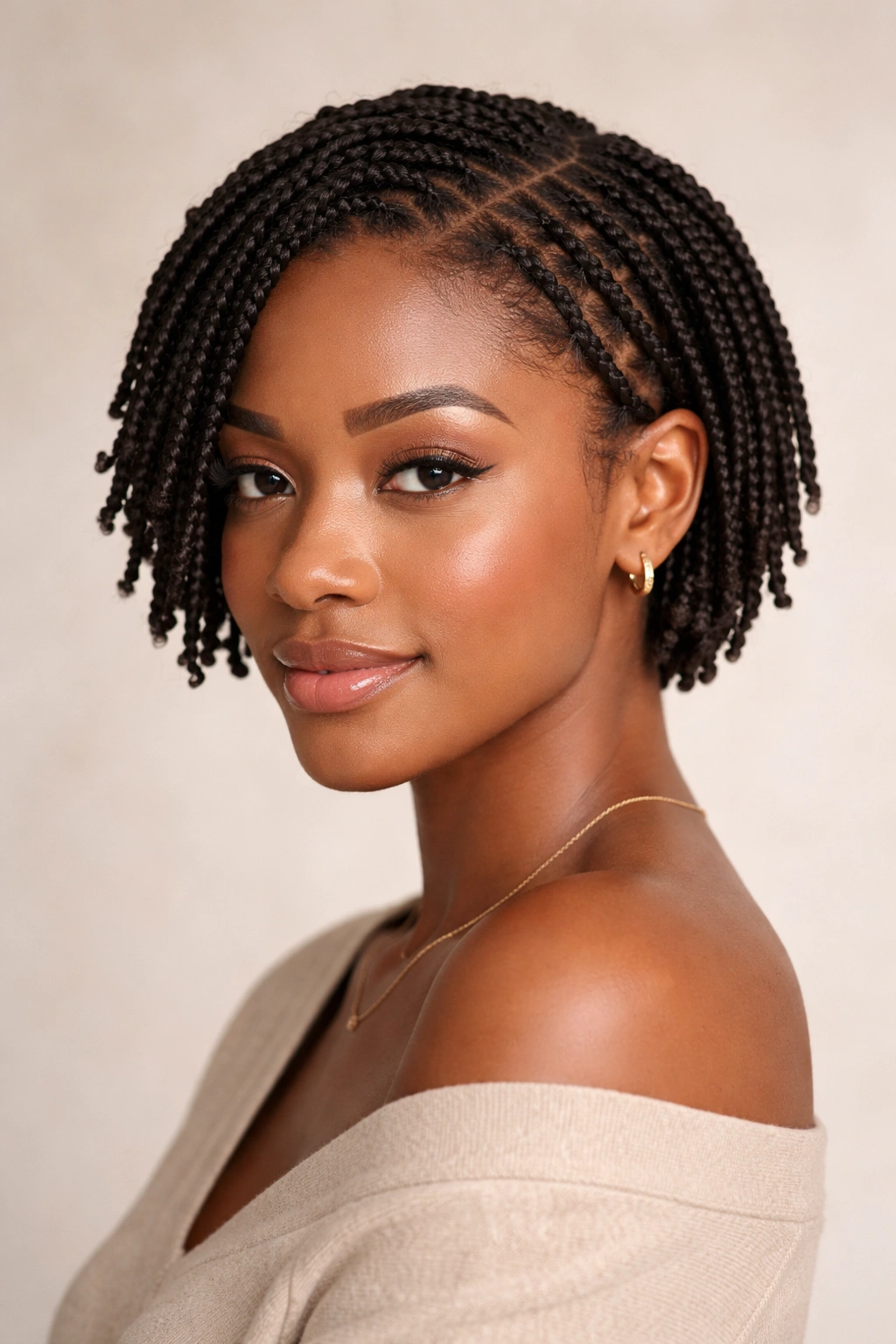
Short mini twists or braids offer a styled alternative to loose curls—creating defined, elegant sections throughout short hair while maintaining a compact overall length. This style requires braiding or twisting hair into small sections while wet, then allowing them to set and dry completely. The result is a polished, intentional aesthetic that feels sophisticated while still being natural and textured.
Creating Mini Braids or Twists
Work with damp or wet hair, applying a light cream or gel to help sections stay defined. Part hair into small sections—typically one-half inch to one inch depending on how many twists you want and your hair density—and twist or braid each section from root to tip. The smaller the sections, the more defined and polished the result; larger sections create a more relaxed, tousled appearance.
Maintaining Your Twists or Braids
- Keep twists in place for 3-7 days depending on your preference and how they look as they mature
- Refresh at night using a spray bottle of water and light product to fluff individual twists
- Sleep on a silk bonnet or scarf to prevent frizz and protect the twist definition
- Unravel gently by untwisting from the bottom up, starting a few days before you want to switch styles
- Moisturize between styling sessions to keep hair healthy and hydrated
- Restyle every 1-2 weeks depending on how long you want the twists to last
Worth knowing: Short twists or braids require hands-on styling time, but the polished result lasts multiple days—great if you enjoy styling days but prefer minimal touch-ups.
12. The Crown Braids with Shaved Sides
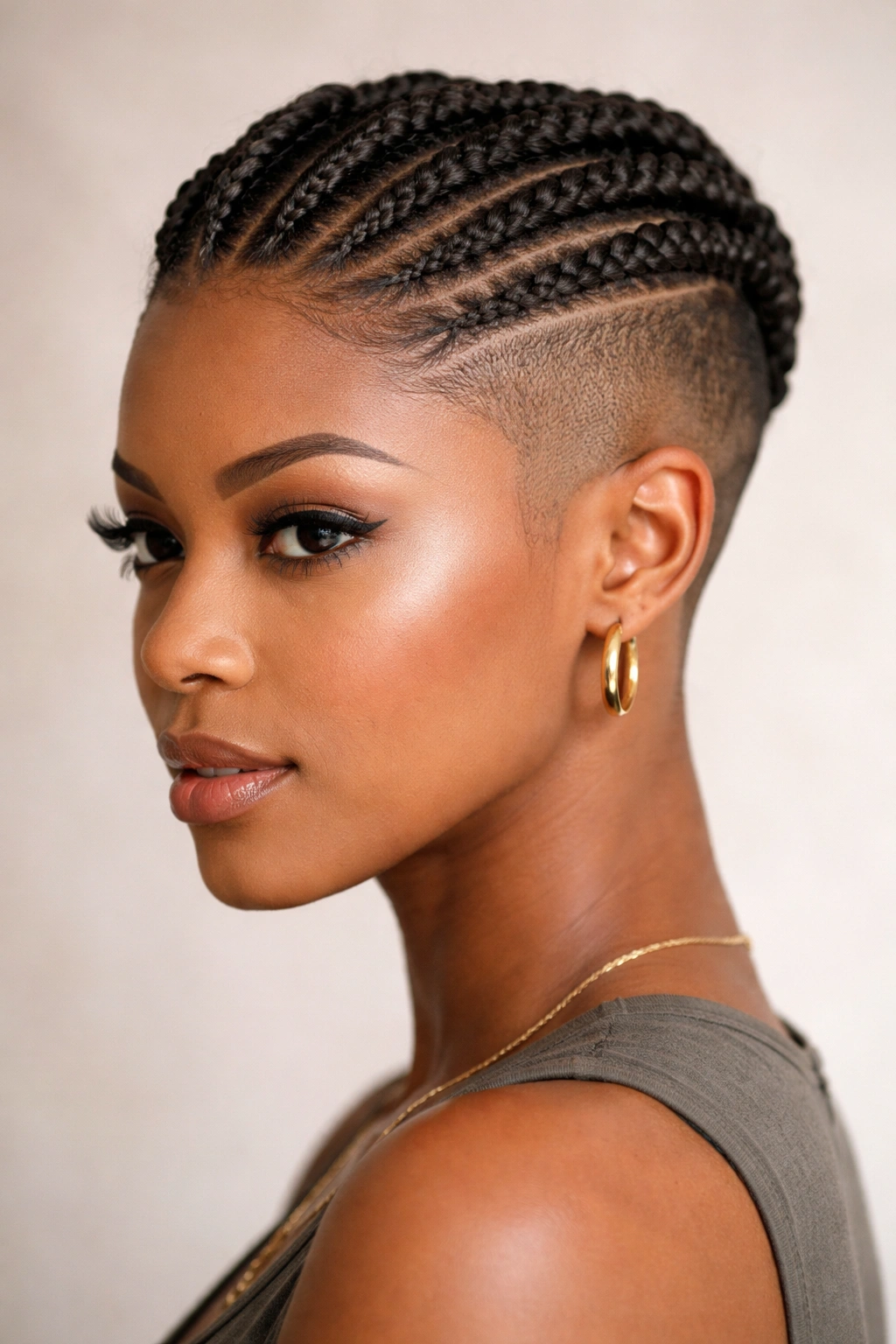
Crown braids with shaved sides create a striking contrast between intricate, beautifully braided hair along the crown and cleanly shaved sides and back. The braids can run front to back, side to side, or in geometric patterns, showcasing braiding skill and artistic expression. This style works beautifully for anyone who loves the aesthetic of braids but wants a low-profile overall look, or for those who enjoy bold statements.
Braiding Patterns and Placement
Crown braids typically run from front to back in tight, neat rows, though they can also be positioned diagonally, in geometric patterns, or as decorative accents. The braids sit prominently on the crown while the sides and back are kept close to the scalp for dramatic contrast. This style celebrates both your natural hair and the artistry of braiding, creating a look that’s undeniably unique and personal.
Styling and Maintaining Crown Braids with Shaved Sides
- Have braids installed by a stylist experienced with crown braiding on natural hair
- Keep braids in place for 1-3 weeks depending on how quickly they loosen and your preference
- Shave or fade the sides and back every 1-2 weeks to maintain crisp contrast
- Moisturize the braided sections by spraying with water and applying light oil
- Sleep with a bonnet or silk scarf to protect braids and reduce frizz
- Unravel braids carefully by undoing them section by section from the bottom up
Pro tip: Crown braids photograph beautifully and make a powerful statement—this style is perfect if you enjoy artistic, expressive hair styling.
13. The Textured Mohawk
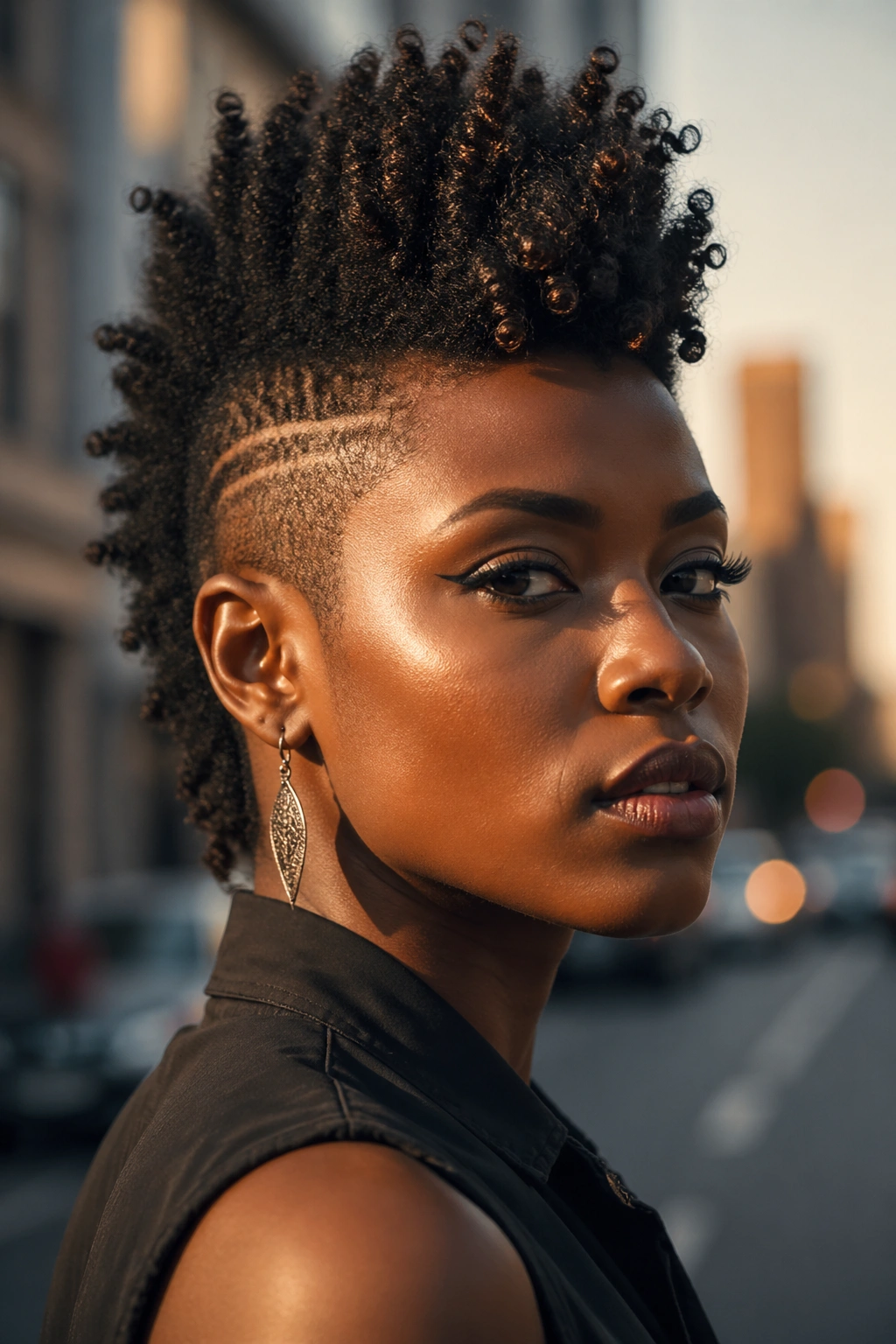
A textured mohawk takes the faux hawk concept further with a more dramatic, intentional aesthetic—hair is kept significantly longer along the center (four to six inches) while the sides are cut very close or shaved completely. This bold style makes a statement and works for anyone confident in wearing an unapologetically artistic, alternative aesthetic. A textured mohawk celebrates natural curl pattern at maximum length in one dramatic column.
Styling Your Natural Texture Mohawk
Unlike traditional mohawks that require heavy gels and daily styling, a natural texture mohawk can be styled with product for hold or simply left in its natural state, depending on your preference. Some women style the center section upward for maximum height, while others let the textured curls fall naturally along the center line. The power of a textured mohawk is that it works beautifully styled or unstyled—the contrast with the shaved sides creates impact regardless.
Maintaining Your Mohawk
- Keep the center section moisturized and defined with regular deep conditioning and curl cream
- Shave or fade the sides every 1-2 weeks to maintain the dramatic contrast
- Maintain the center section length for 6-8 weeks between trims
- Style the center section with gel or mousse if you want maximum upward height
- Sleep on a bonnet or pillowcase to protect the style and prevent frizz
- Consider your lifestyle and comfort with a bold statement before committing to this cut
Worth knowing: A textured mohawk requires maintenance commitment on multiple fronts—side shaving, center section length management, and consistent styling—but the visual payoff is undeniably bold and striking.
14. The Natural Wash-and-Go
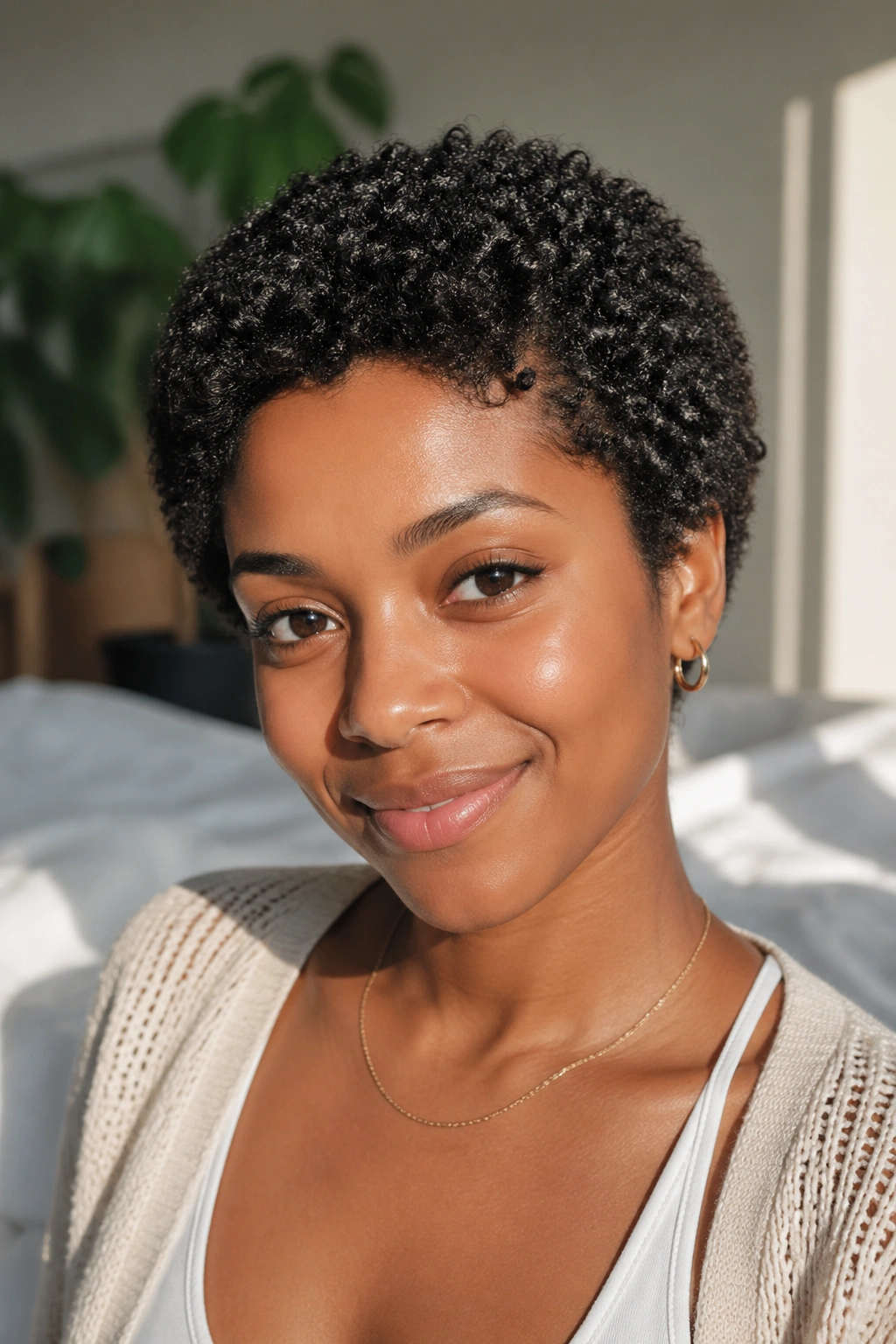
A natural wash-and-go is the ultimate minimalist short afro style—hair is cut in a simple, uniform short length (one to three inches) and styled with just moisture and light product, then allowed to dry into its natural curl or coil pattern. This is the true definition of low-maintenance hair: wash, apply product, let it dry, and you’re done. No heat styling, no complicated techniques, just embracing your hair exactly as it grows from your scalp.
Finding Your Wash-and-Go Length and Texture
The wash-and-go works beautifully on all curl patterns—coily, curly, wavy, or kinky—when you find the right length for your specific texture. Very short lengths (one to one-and-a-half inches) work well for tighter coil patterns, while slightly longer lengths (two to three inches) give curlier or wavier patterns room to show definition. The key is finding the sweet spot where your hair looks intentional and well-groomed without requiring styling effort.
Creating Your Wash-and-Go Routine
- Wash with sulfate-free shampoo and deep condition weekly to maintain softness and definition
- Apply leave-in conditioner while hair is soaking wet and coat thoroughly
- Add a lightweight curl cream, gel, or mousse for hold and definition
- Use the praying hands method or scrunching motion to encourage your curl or coil pattern
- Allow hair to air-dry completely before touching it
- Refresh on non-wash days with a water spray and light product application
- Sleep on a silk pillowcase or bonnet to maintain definition and prevent frizz
Pro tip: A wash-and-go looks best when your curls or coils are well-defined and moisturized—invest in quality leave-in conditioner and curl products rather than relying on cheap alternatives that don’t deliver lasting hold or moisture.
Final Thoughts
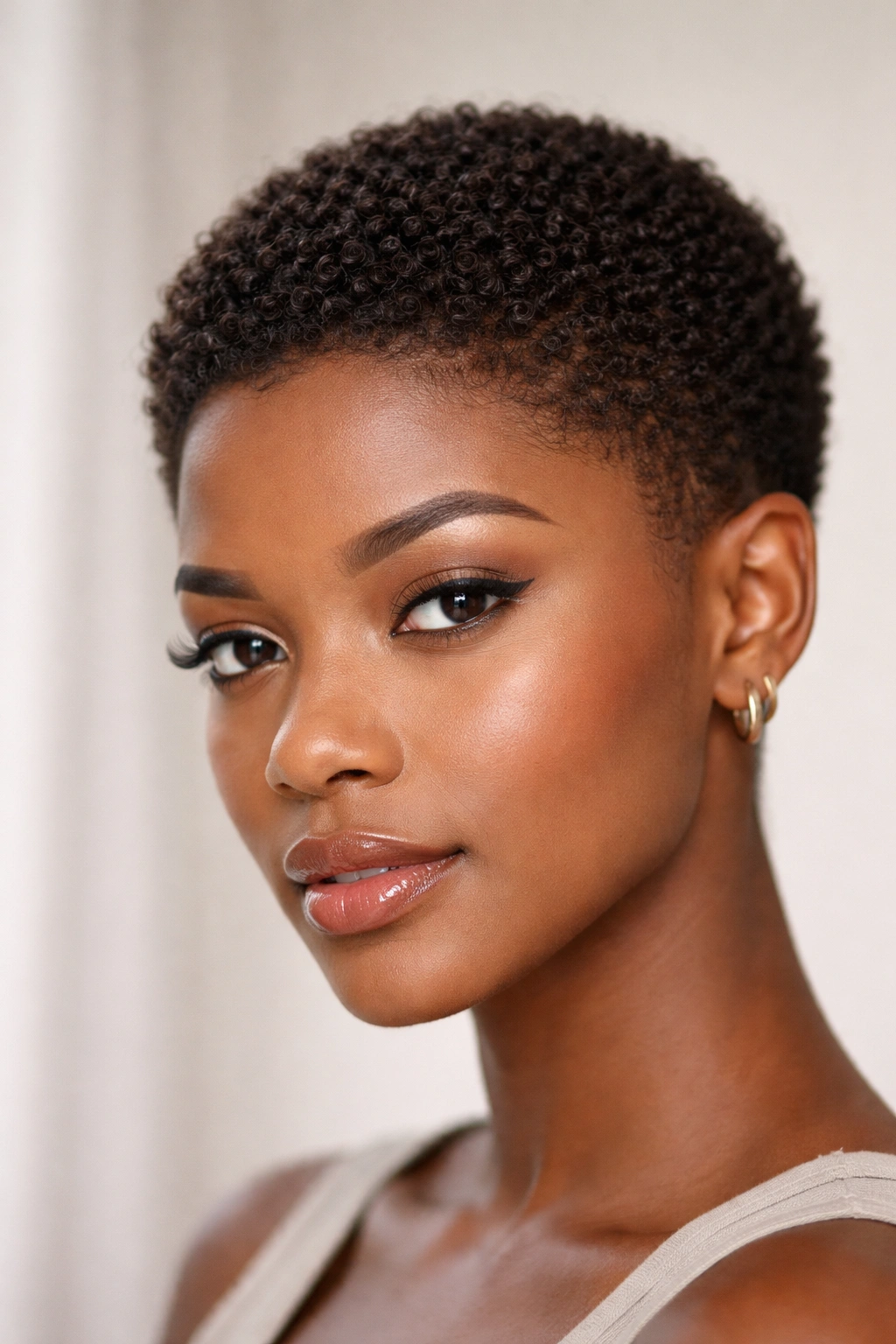
Choosing a short afro hairstyle that works for your lifestyle, hair texture, and personal style is about honesty and self-knowledge. Some of these styles are genuinely low-maintenance (the textured crop, the sleek shaven look, the wash-and-go), while others require regular salon visits and styling time (the tapered cut, the crown braids, the textured mohawk). Neither category is better or worse—they’re just different commitments suited to different lives and preferences.
The most important thing is picking a style that makes you feel confident and authentic. Short afro hairstyles celebrate your natural texture and face shape, but only if you’ve chosen something that actually works with your hair and your routine. Whether you’re drawn to sculptural, precisely maintained cuts or effortlessly textured minimal styles, there’s a short afro option that genuinely works for you. Don’t settle for a style just because it looks good on someone else—find the one that feels like the most authentic version of yourself.