



Black women with long hair have incredible versatility when it comes to ponytail styling. The length provides endless creative opportunities, whether you’re going for sleek and polished, textured and natural, or bold and statement-making. A well-executed ponytail isn’t just about pulling hair back—it’s about celebrating the volume, movement, and potential of long, gorgeous strands while keeping your edges intact and your scalp healthy.
The beauty of ponytail styles lies in their adaptability. You can wear them to work, to the gym, to a date night, or on a casual weekend without any fuss. What matters most is finding styles that work with your hair texture, honor your scalp’s health, and make you feel confident. Long ponytails also offer the unique advantage of creating dramatic movement and allowing you to show off length and styling techniques that shorter hair simply can’t achieve.
Many Black women worry that ponytails will damage their edges or cause tension, but the right technique and the right style make all the difference. Choosing looser-hold styles, protecting your hairline with edge control applied thoughtfully, and rotating between different ponytail placements throughout the week means you get the style benefit without the breakage cost. The styles below range from ultra-sleek to textured, from minimalist to fashion-forward, so there’s genuinely something for every mood, occasion, and hair goal.
1. High Sleek Ponytail
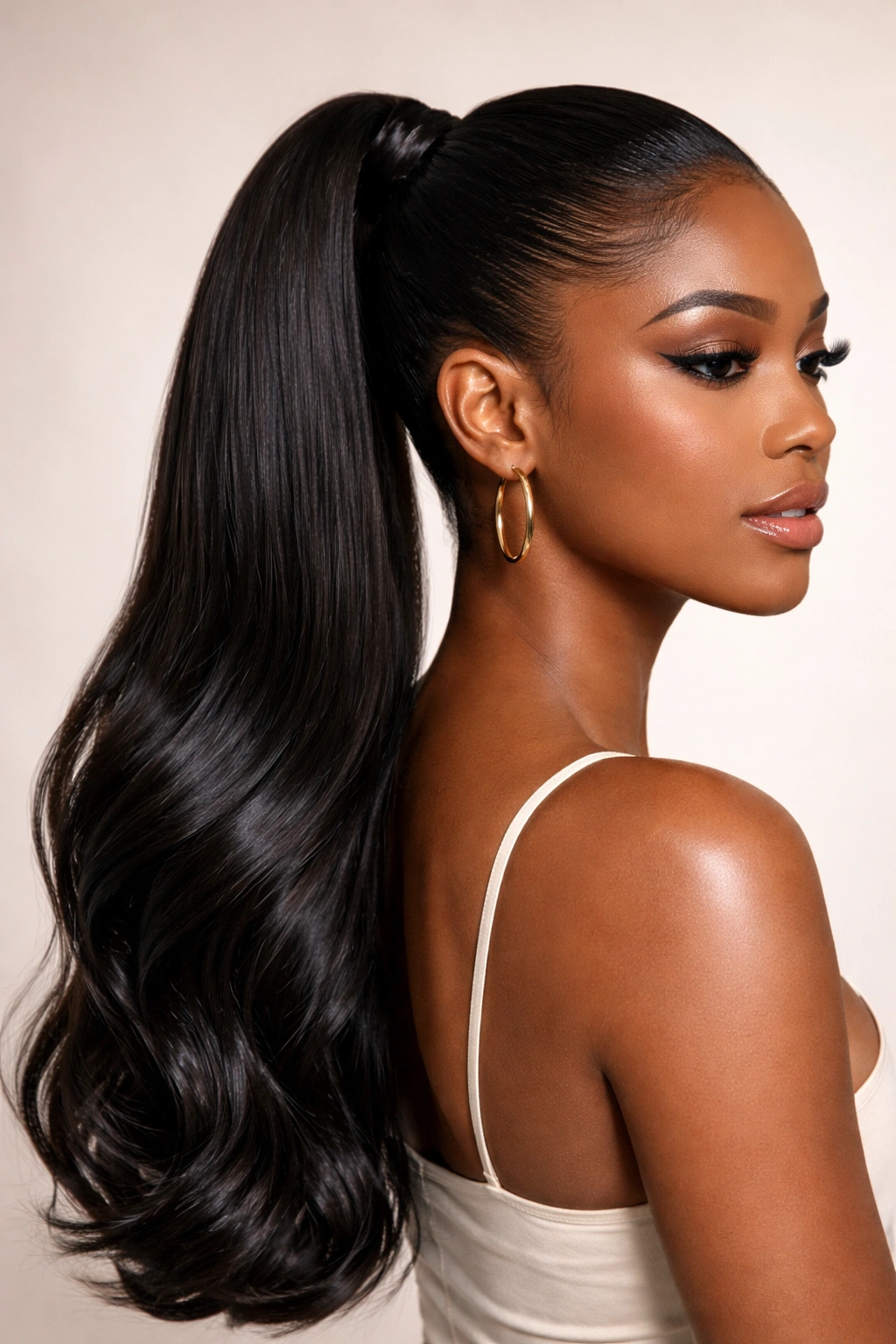
A high sleek ponytail is the foundation of polished styling—there’s a reason this style shows up everywhere from boardrooms to red carpets. The key to making it work beautifully is creating a smooth base with zero flyaways while keeping the ponytail itself soft and full, not artificially tight. Start with hair that’s either freshly washed and blow-dried or styled the night before for maximum grip.
How to Create a Flawless High Sleek Ponytail
Begin by applying a light smoothing serum or edge control to your edges, then use a fine-tooth comb to gather hair at the crown. The placement should sit about an inch or two below the very top of your head—high enough to feel energizing but not so high that you’re straining your hairline. Use a soft elastic band and secure the ponytail with two or three passes, being intentional about not pulling with force. The smoother your gathering process, the less you have to rely on aggressive tension.
Styling Tricks That Make the Difference
Once your ponytail is secured, smooth the crown area with edge control and a toothbrush, working the bristles in one direction to catch flyaways without disrupting the base. For extra polish, wrap a small section of hair around the elastic band to hide it completely. This wrapped section elevates the entire look from casual to intentional. If your ponytail feels thin or sparse at the base, lightly backcomb the section before securing—this creates a subtle cushion that makes the style appear fuller without requiring dangerous tension.
Maintenance Between Washes
Sleek ponytails hold well for 2-3 days. After the first day, mist lightly with a lightweight hair spray and re-smooth the edges. Sleep with a silk or satin bonnet to protect the smooth texture. By day two or three, if flyaways start appearing, rather than re-doing the whole style, simply touch up the edges with a light product and a fine-tooth comb. This extends the style’s life without creating cumulative tension.
2. Low Ponytail with Defined Baby Hair
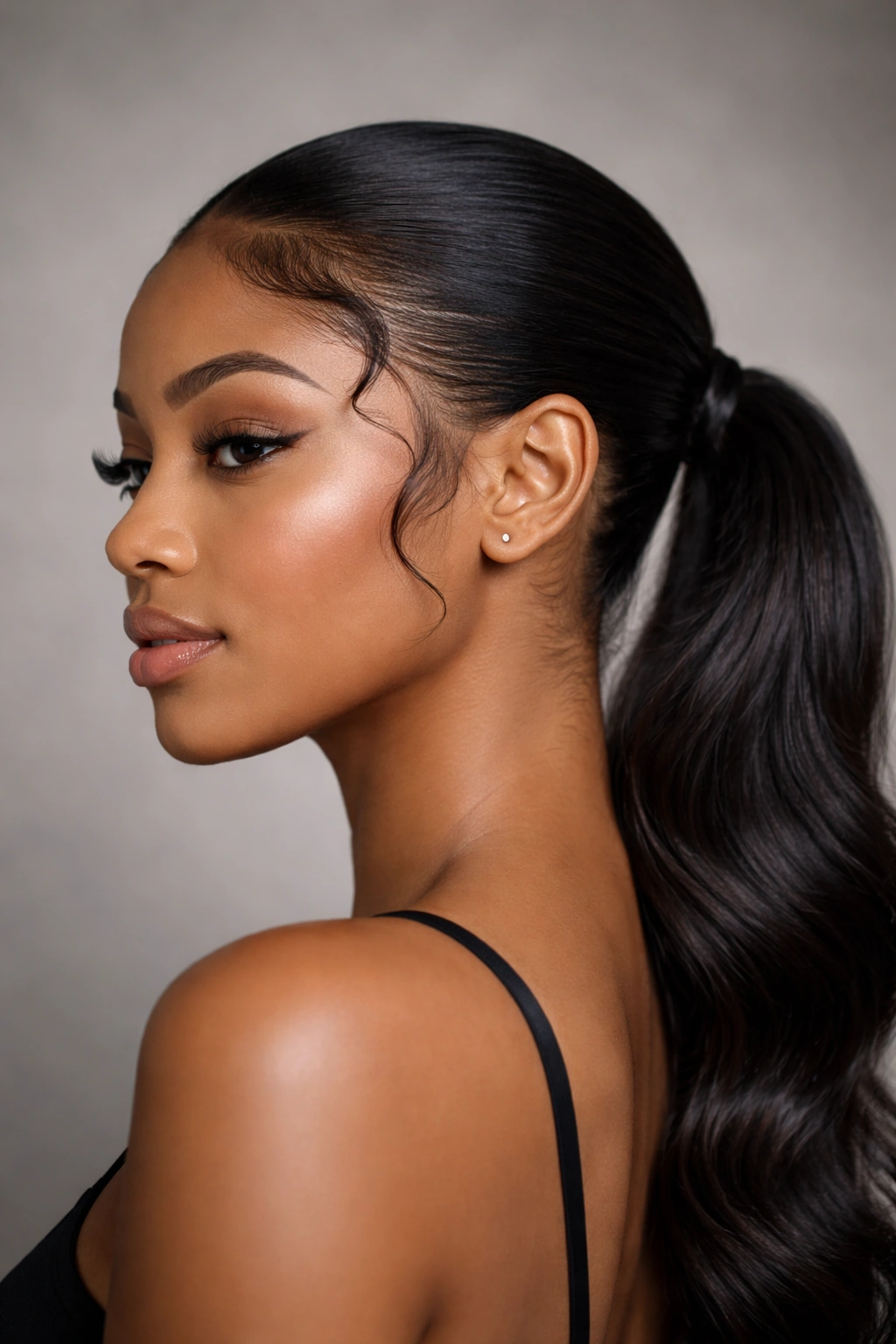
This style is all about intentionality and artistry—the baby hair framing your face becomes part of the design rather than something to hide. A low ponytail sits at the nape of your neck, creating an elegant silhouette that’s sophisticated without feeling severe. The defined baby hair adds personality and makes the style feel more editorial and less corporate.
Creating the Perfect Base with Edge Control
The secret here is using edge control that holds without looking waxy or too heavy. Apply a small amount to the hairline, working from the temple down around your ears, and smooth into place with a soft-bristled brush or toothbrush. Define baby hair by isolating small sections and smoothing them with a light hand—this isn’t about laying them flat, but about creating intentional shape that frames your face. Avoid over-saturation of product; a light hand is always more sophisticated.
Positioning Your Low Ponytail
Gather your hair at the nape of your neck, roughly where your collar would sit if you were wearing a shirt. Secure with a soft elastic, then wrap a small section of hair around the band. This wrapped section keeps the ponytail looking polished and hides any imperfections in your gather. The low placement is especially flattering for long faces and works beautifully with oval or square face shapes because it creates balance.
Styling Variations Within This Style
You can wear this ponytail with curly or textured baby hair for a more natural, undone look, or keep everything slicked for a sleek aesthetic. Some women prefer leaving 1-2 inches of loose texture at the nape before securing the ponytail, which creates a softer silhouette. Others add a decorative clip or hair accessory directly into the ponytail wrap for extra visual interest. The versatility within this framework means you can repeat the style multiple times and have it feel different each time.
3. Braided Ponytail
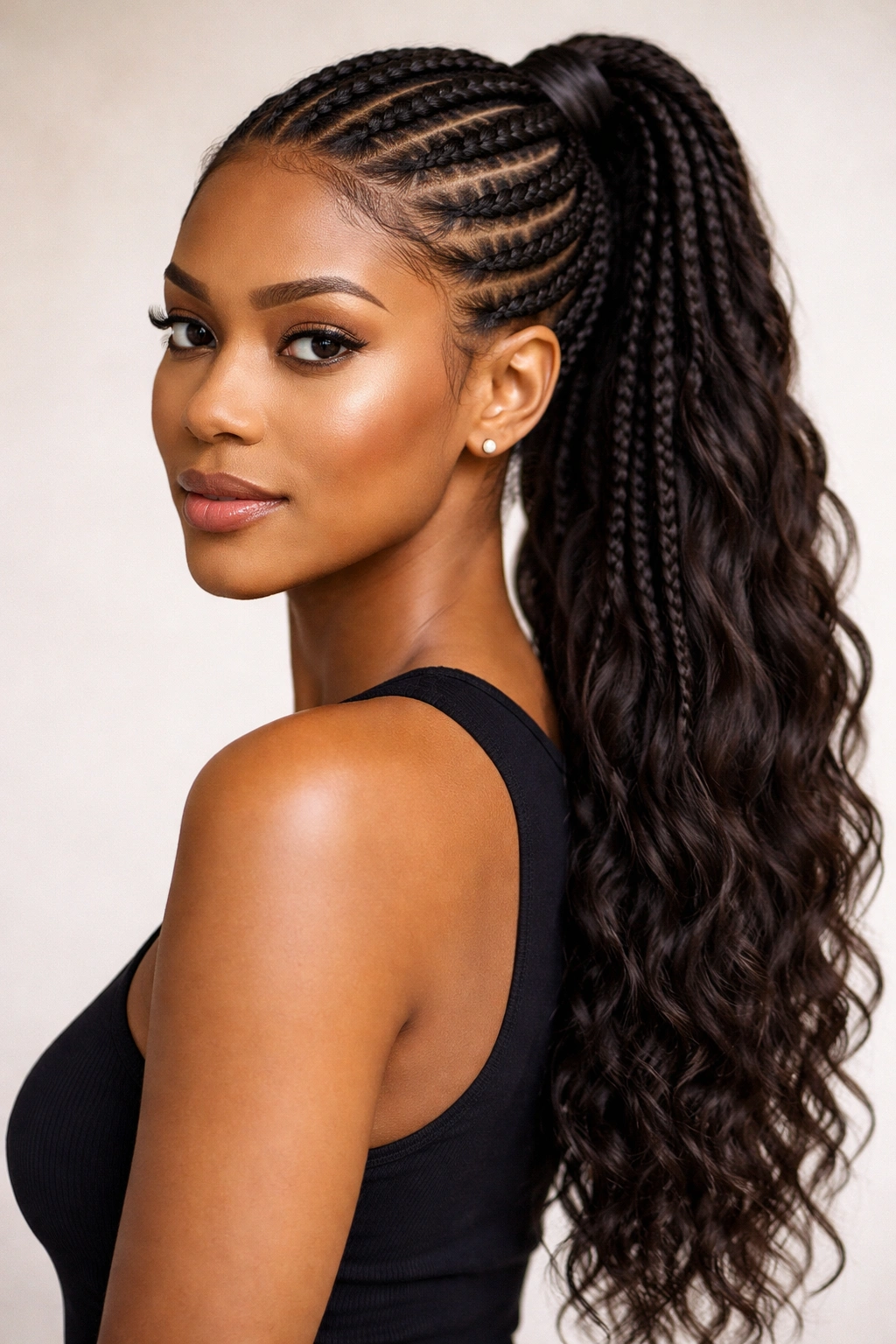
A braided ponytail combines two protective techniques into one stunning style: the braid reinforces the structure and reduces breakage at the scalp, while the gathered ponytail format keeps hair together and off your neck. This style works beautifully whether your braids are sleek and tight, or loose and textured. The braid can travel straight back from your forehead, or you can create curved braids that follow the contour of your head before flowing into the ponytail.
Braiding Techniques for Maximum Hold and Softness
If you’re braiding your own hair, start with a three-strand braid at the crown and continue down toward the ponytail point. The braid shouldn’t be so tight that it creates tension on your scalp—if you can’t slide a finger between the braid and your head, it’s too tight. Consider doing multiple braids instead of one thick braid; two or three smaller braids that feed into one ponytail create volume and visual interest while distributing tension across more of your scalp. Feed new hair into your braids as you travel backward, just as you would a feed-in braid.
Where to Place Your Braid to Ponytail Transition
The most flattering placement is having your braid end where you’ll secure your ponytail—roughly at the crown or slightly lower depending on your preference. This creates a seamless transition and looks intentional. Secure the ponytail low enough that the braid gets a chance to shine, not so low that the braid disappears into the gathered section.
Caring for Braided Ponytails
This style holds beautifully for 3-5 days. The braid actually protects the gathered section, so the ponytail stays tighter longer without you having to re-secure it. Sleep with the style tucked into a silk bonnet or scarf to preserve the braid texture and keep everything neat. When you’re ready to take it down, gently unravel the braids rather than pulling, and allow your hair to rest for at least one day before styling again.
4. Puffed Ponytail with Textured Volume
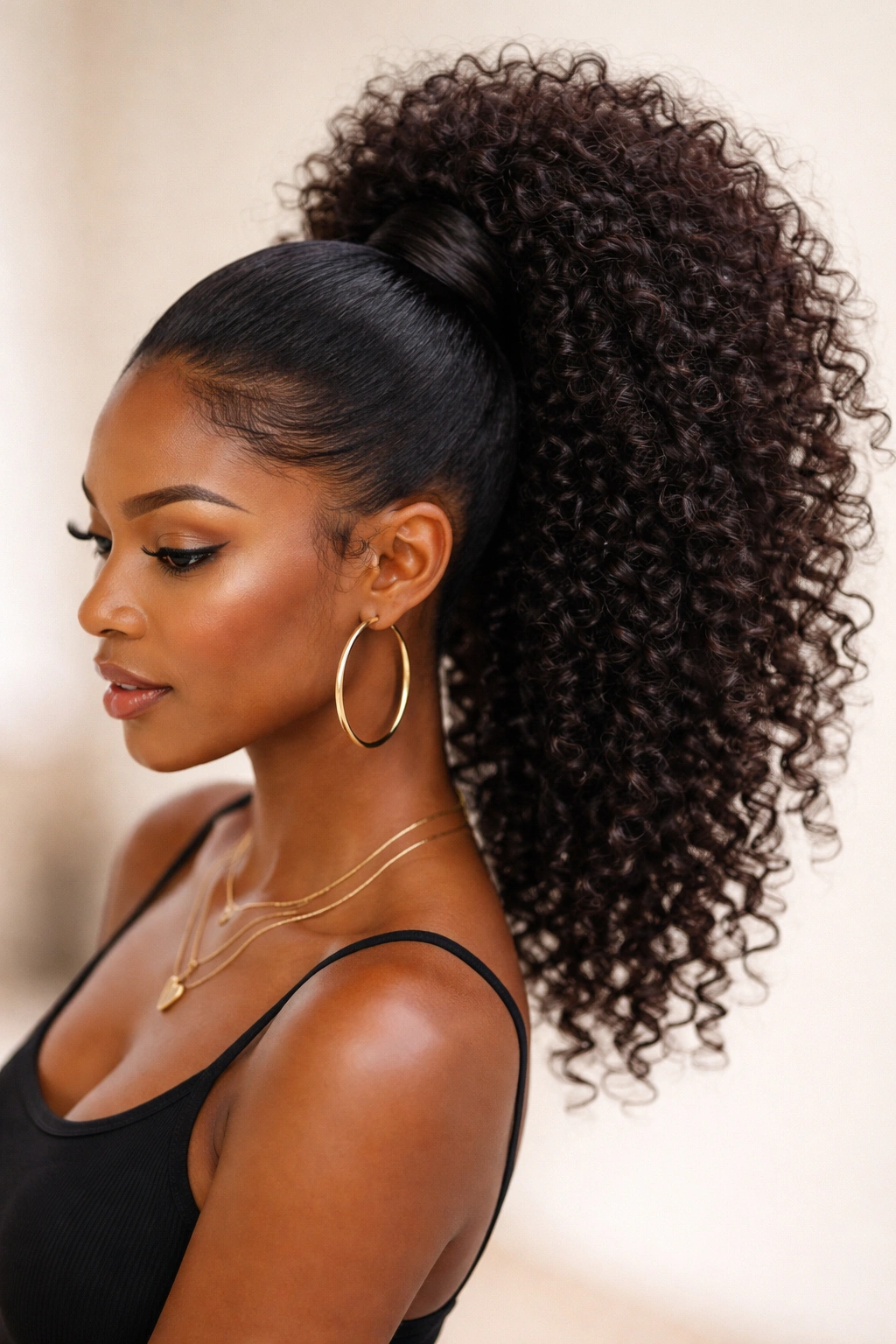
This style celebrates natural texture and creates maximum visual impact through volume and dimension. Rather than smoothing everything, you’re actually enhancing the fullness and curl pattern of your hair, then gathering it into a defined ponytail. The puff sits at the crown, stretching upward and creating a beautiful silhouette that works on every face shape. This is the style for days when you want to show off texture and movement while keeping hair off your face and neck.
Building Volume at the Crown
Start with damp or lightly dampened hair. Apply a leave-in conditioner and curl-enhancing cream to your hair, then use your fingers or a wide-tooth comb to fluff and separate curls. The goal is to create defined, separated curls rather than one big clump. You can also gently rough-dry your hair with a microfiber towel or cotton t-shirt to encourage curl formation and volume. Flip your head upside down while styling to encourage curls to grow away from the scalp, creating maximum lift.
Gathering and Securing Without Losing Texture
Once your curls have formed and you’re happy with the volume, flip back upright and gather your curls into a high ponytail. Use a claw clip or flexible hair tie rather than a standard elastic band—these options distribute pressure more evenly and reduce frizz. The ponytail shouldn’t be gathered so tightly that it compresses all your beautiful texture. Instead, leave it soft and full, so the ponytail itself maintains dimension and doesn’t look flat or one-dimensional.
Defining Your Puff and Ponytail
You can either smooth your edges completely for contrast, or embrace texture all the way around, including at the hairline. Both approaches are valid. Some women love the dramatic contrast of a smooth, defined hairline paired with a voluminous puffed ponytail. Others prefer letting texture extend all the way to the edges for a cohesive, natural look. The choice should align with your personal aesthetic and the occasion.
5. Twisted Ponytail
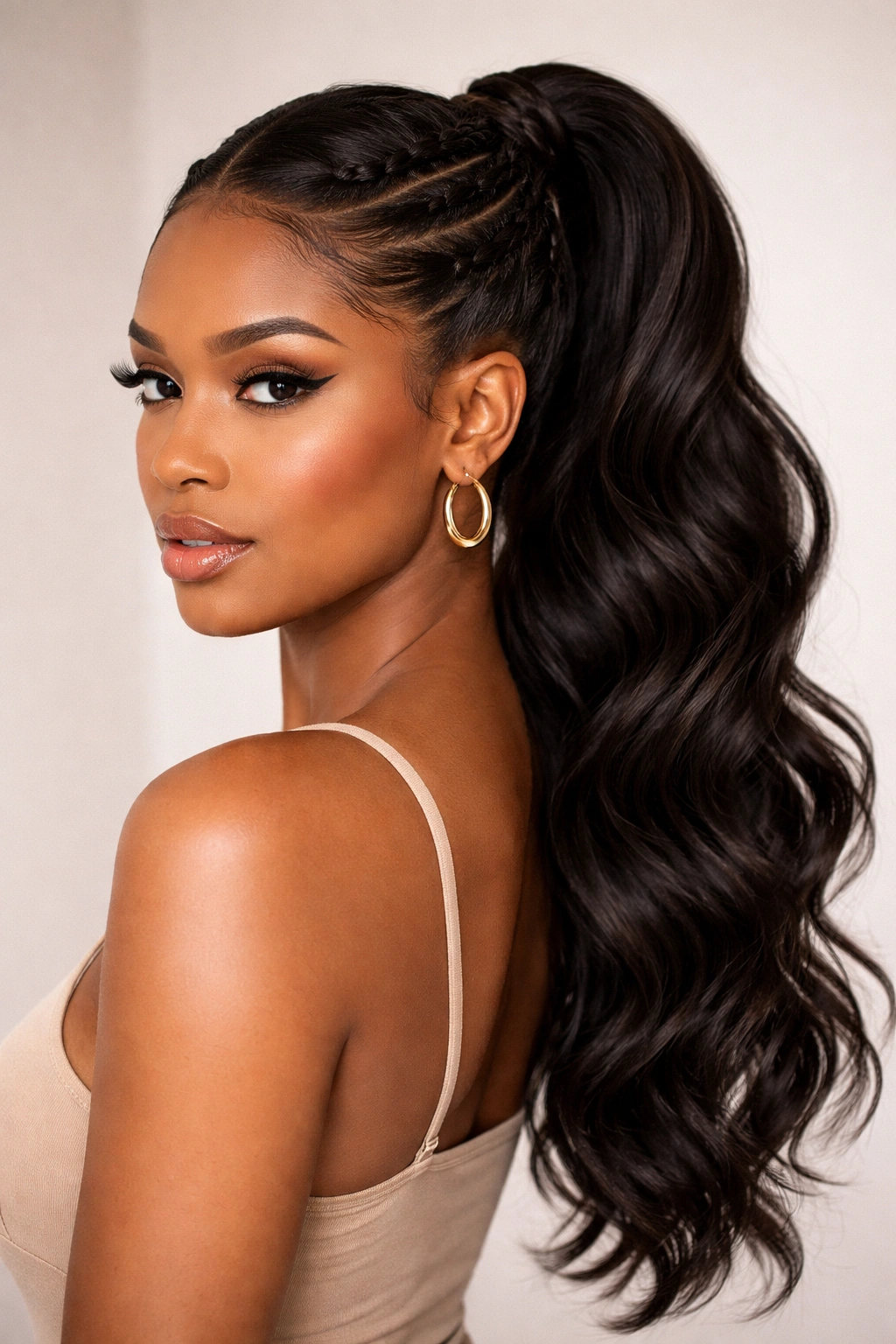
Twists are elegant, protective, and endlessly customizable. A twisted ponytail uses two-strand twists either as a braid-like element leading into a ponytail, or as the primary texture within the gathered ponytail itself. You can twist hair from your hairline backward into the ponytail, or you can create twists within the gathered ponytail section to add visual interest and complexity. This style works on every hair texture and length.
Creating the Basic Two-Strand Twist
Divide a section of hair into two even strands. Twist each strand away from the center, then cross them over each other and continue down the length. The twist should feel comfortable—not so tight that it strains your scalp, but tight enough to hold its shape. Practice is key here; your first attempts might feel awkward, but after a few times, twisting becomes second nature and actually faster than braiding.
Incorporating Twists Into Your Ponytail Style
One popular approach is creating two or three twists from your temples toward the back of your head, then gathering those twists plus your remaining hair into a ponytail. The twists create a frame for your face while also adding structural interest. Another option is gathering your ponytail first, then creating twists within the tail itself—wrap two-strand twists around the ponytail base, or create several twists throughout the length of the ponytail for texture and visual movement.
Texture Options with Twisted Styles
Twists can be sleek and smooth for a polished look, or you can separate the twists after securing them to create a softer, more textured aesthetic. Separated twists have a more voluminous, romantic quality. Smooth twists feel modern and clean. You can even combine both approaches in one style—sleek twists feeding into a separated, textured ponytail, for example.
6. Side Ponytail
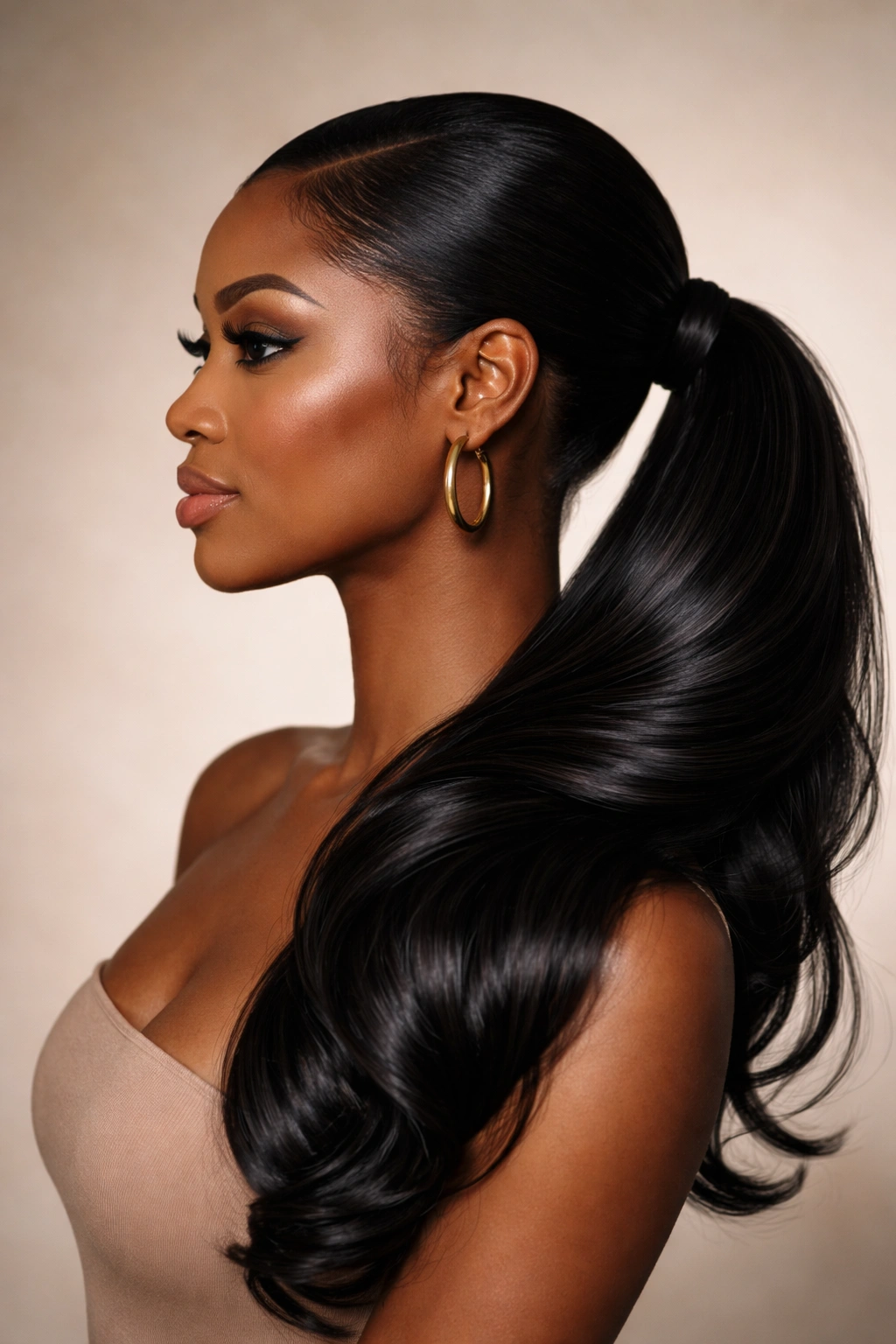
A side ponytail shifts the focal point of your look to one side, creating drama and visual interest. The ponytail is gathered low and to one side rather than centered, which completely changes the silhouette and feeling of the style. Side ponytails work beautifully for both casual and formal occasions and are especially flattering for people who prefer asymmetrical styling or want to show off one side of their face.
Finding Your Ideal Side Placement
Experiment with placement—the ponytail can sit just past your collarbone on your right or left shoulder, or it can be positioned lower, closer to your mid-back on one side. The lower and more exaggerated the side placement, the more dramatic the style. For a softer, more wearable version, position it just slightly off-center rather than completely to one side.
Styling the Face-Framing Side
Depending on the occasion and your preference, you can wear your baby hair smoothed and defined on both sides of your face, or you can leave wisps of texture on the side away from the ponytail. Some women love creating a smooth line from the hairline back toward the ponytail on the side where hair is gathered, while leaving the opposite side slightly textured. This asymmetrical approach is sophisticated and modern.
Creating Visual Balance
Since you’re moving hair to one side, your styling choices on the opposite side matter for balance. Smooth edge control on the side where hair is gathered creates a sleek line that enhances the asymmetry. On the opposite side, you might apply a small amount of edge control for a polished look, or leave edges textured for contrast. The choice depends on whether you want this style to feel formal or relaxed.
7. Bubble Ponytail
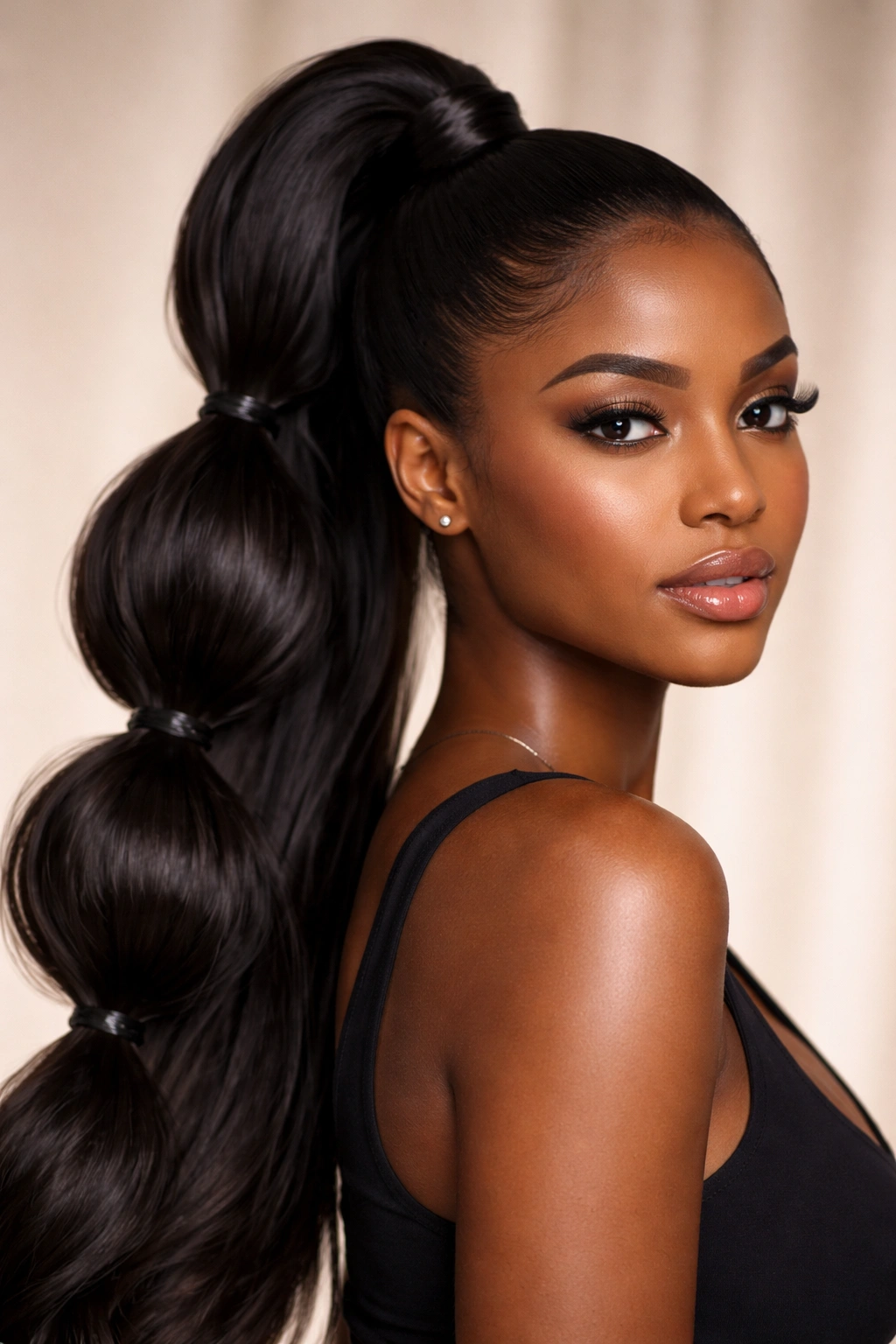
The bubble ponytail is playful, eye-catching, and requires just three things: two or three elastic bands, a willingness to be bold, and hair long enough to create distinct sections. You’re essentially creating a series of gathered sections that puff out between each elastic, resembling bubbles. This style is perfect for when you want something fun and fashion-forward that still keeps your hair secured and off your neck.
Securing Your Bubble Sections
Gather your hair into a high ponytail and secure with an elastic band. Then, position a second elastic band about 2-3 inches down from the first, creating a gathered section. Gently fluff out the hair between the two bands to create your first “bubble.” Repeat this process down the length of your ponytail—add another elastic band 2-3 inches below the second band, fluff the section, and continue until you reach the end of your hair. You can create 2-3 bubbles or 4-5 bubbles depending on your hair length and how dramatic you want the effect.
Adjusting Bubble Density and Shape
The fluffing process is what transforms your secured sections into actual bubbles. Use your fingers or a wide-tooth comb to gently separate and lift the hair between each band. The more you fluff, the puffier your bubbles become. Some women prefer rounded, full bubbles; others like more subtle puffing that’s less obvious. Experiment to find the bubble intensity that feels right to you.
Styling Options Within Bubble Ponytails
Your bubbles can be smooth and sleek if you apply smoothing serum first, or textured and voluminous if you work with naturally curly or textured hair. You can keep everything the same diameter, or deliberately make some bubbles larger and some smaller for an uneven, artistic effect. Some women add hair accessories, ribbons, or small clips at each band placement for extra personality.
8. Slicked Back High Ponytail with Bang Fringe
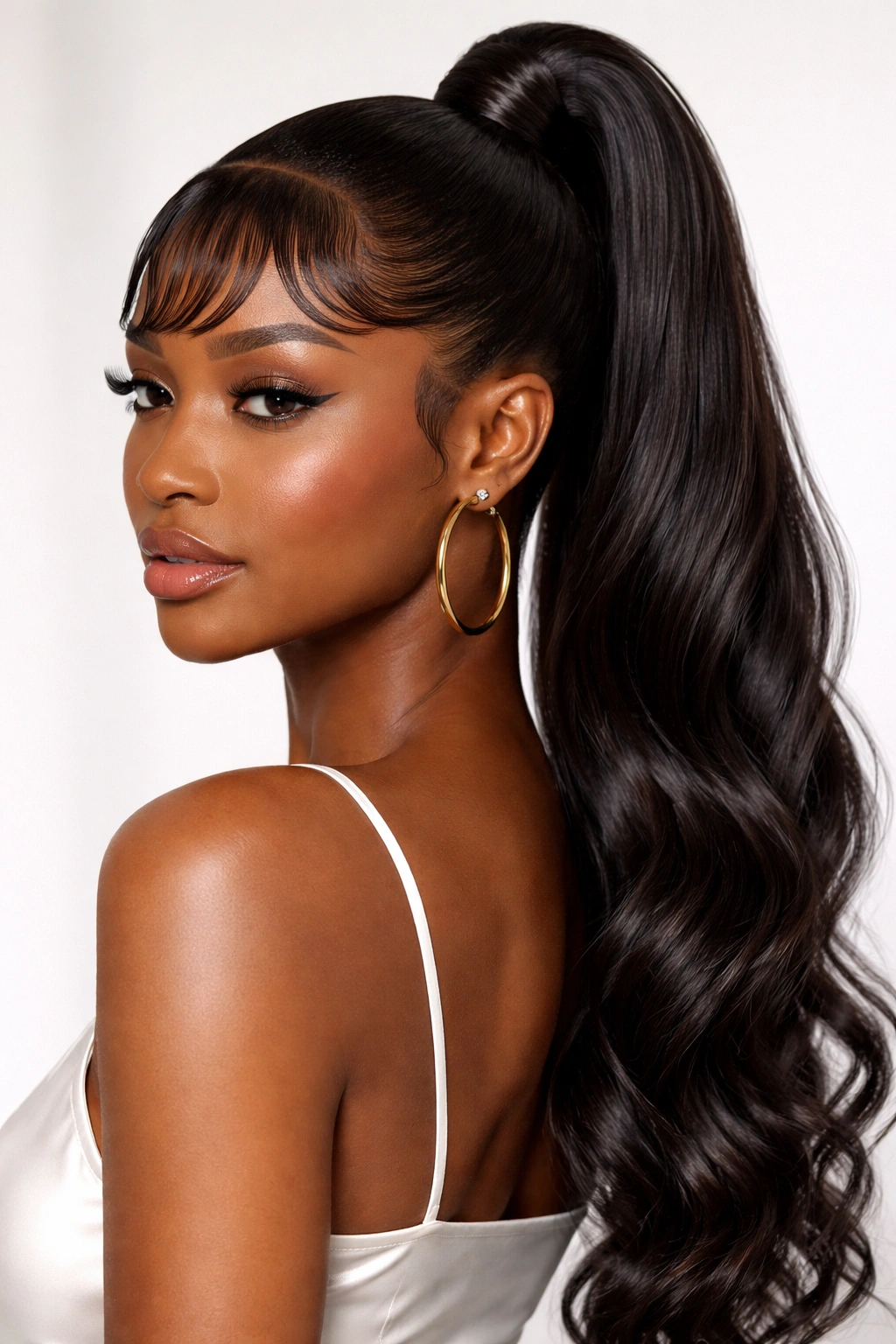
This is a statement-making style that combines edge control artistry with the clean lines of a high ponytail. Basically, you’re creating a defined fringe or bang area with your baby hair by slicking and sculpting it forward, then sweeping the rest of your hair back into a high, sleek ponytail. The contrast between the smooth, defined fringe and the gathered ponytail creates a modern, intentional look that reads as high-fashion.
Creating Your Bang Fringe with Edge Control
This technique requires patience and a good edge control product. Apply edge control to your hairline, focusing on the area from temple to temple across your forehead. Use a fine-tooth comb or soft brush to smooth this section forward, creating a defined bang-like shape. You’re essentially sculpting a fringe from your existing baby hair without cutting anything. The fringe should look intentional and defined, not like random hair that escaped your ponytail.
Positioning Your Ponytail for Maximum Impact
With your fringe defined, gather the remaining hair into a high, centered ponytail. The contrast between the sleek, defined fringe and the gathered section is what makes this style work visually. Make sure your ponytail is smooth and polished so the defined fringe stands out. Some women add a wrapped section of hair around the elastic band for extra polish.
Maintaining Your Fringe Throughout the Day
Because this style relies on edge control to maintain the fringe shape, you’ll want to refresh it periodically. Carry a small container of edge control and a fine-tooth comb, and touch up your fringe if it starts to relax. The fringe usually holds well for a full day, and you can sleep in this style with a silk bonnet to preserve the definition overnight.
9. Layered Ponytail
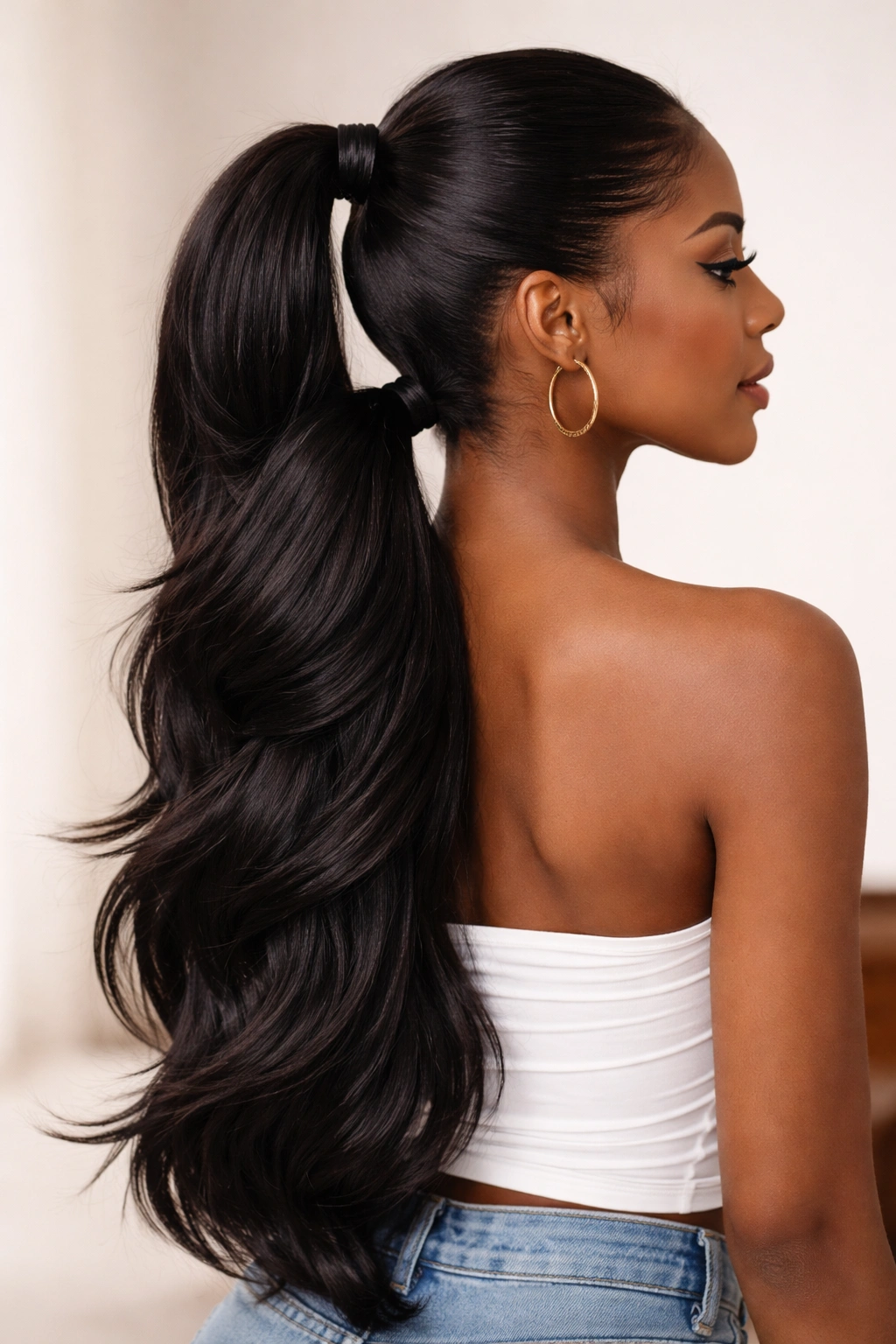
This style plays with length and creates visual interest through strategic sectioning. Rather than gathering all your hair at the same point, you create multiple ponytail sections at different heights, creating a cascading, layered effect. This works beautifully on very long hair and creates the illusion of even more length and movement. It’s a style that photographs beautifully and works equally well for formal occasions and creative casual looks.
Creating Your Layered Sections
Start with a high ponytail at the crown, securing it with an elastic band. Then, create a second ponytail about 2-3 inches lower using hair that wasn’t included in the first ponytail, plus some hair from underneath the first gathered section. This second ponytail will naturally sit lower and longer. You can stop there with two layers, or continue creating a third or even fourth layer, with each successive ponytail sitting progressively lower. The more layers you create, the more complex and dramatic the style becomes.
Styling Each Layer for Visual Distinction
You can keep all layers sleek for a cohesive look, or differentiate them by making some smooth and some textured, or by varying how tightly each section is gathered. Some women prefer all layers equally full and voluminous; others like the highest layer sleek and the lower layers increasingly textured. The choice is yours, and different approaches create completely different visual impressions.
Managing the Weight and Longevity
Layered ponytails work beautifully but do require all sections to be secure and stable. Check your elastics regularly to make sure nothing is slipping. This style holds well for 2-3 days, though you may need to re-secure lower layers more frequently than the top layer. The advantage is that if one layer starts to feel loose, you can usually tighten just that section without disrupting the others.
10. Wrap-Around Ponytail
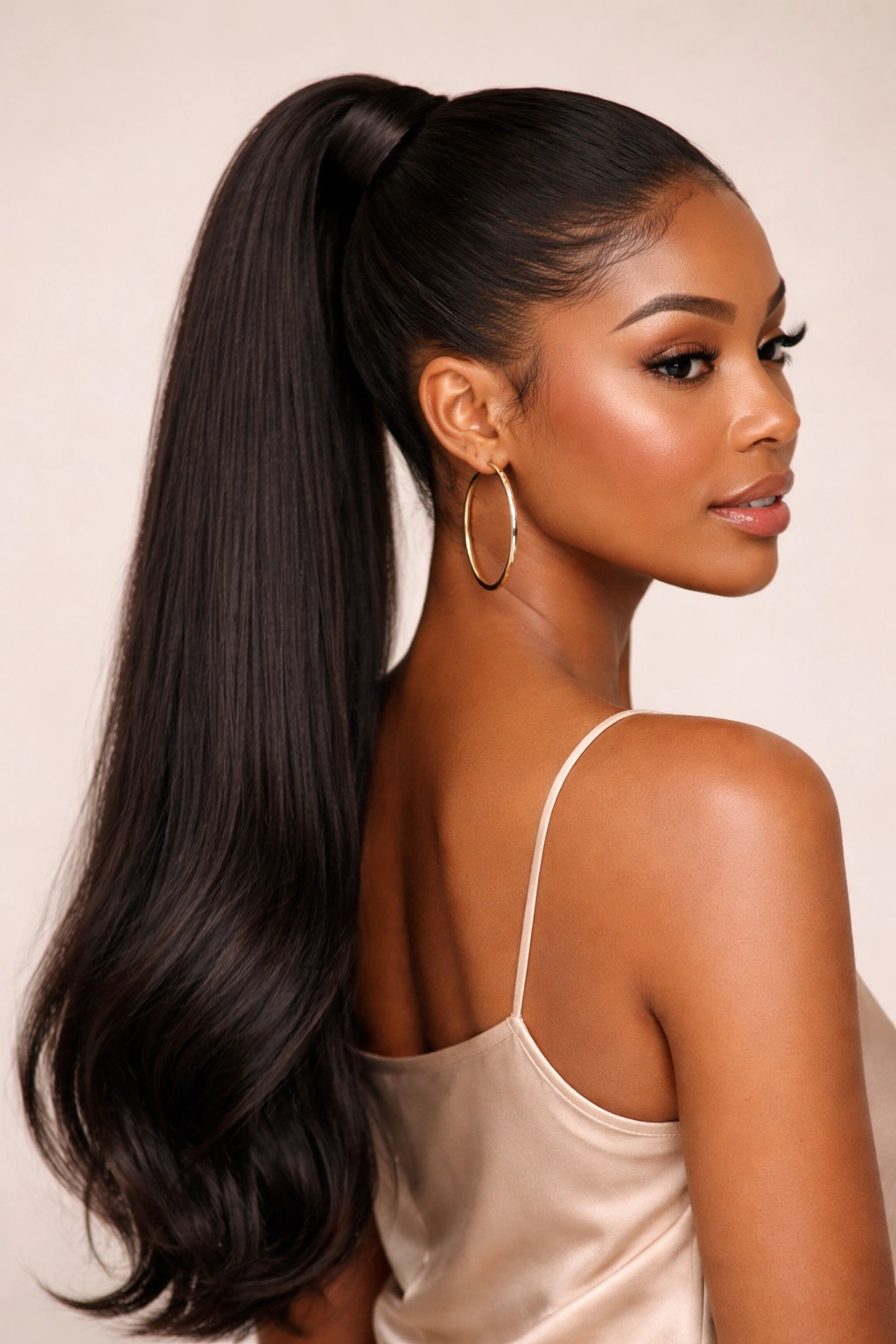
This style uses your own hair as a decorative element, wrapping a section around the base of your ponytail to hide the elastic band and create a cohesive, finished look. The wrap adds visual interest and sophistication, transforming a basic ponytail into something that feels intentional and polished. You can do this with any type of ponytail—sleek, textured, high, or low—and it always elevates the overall effect.
Creating Your Initial Ponytail Base
Gather your hair into a ponytail and secure with an elastic band. The ponytail itself should be secure and stable. For the wrap, you’ll use a small section of hair from underneath the ponytail—about 1-2 inches’ worth. This section will become your wrap, so it shouldn’t be so large that the ponytail looks unbalanced once it’s freed.
Wrapping Your Hair Around the Base
Separate your wrap section and then literally wrap it around the elastic band, covering it completely. Secure the wrap with bobby pins that match your hair color, positioning the pins on the underside of the ponytail where they won’t be visible. Make sure the wrap is tight enough that it doesn’t slip, but not so tight that it compromises the integrity of your ponytail. The wrap should look like a seamless continuation of your hair, not like something applied on top.
Variations on the Wrap Technique
Instead of wrapping with your own hair, some women wrap with ribbons, yarn, or fabric that complements their outfit or hair color. You can wrap multiple times for a thicker, more decorative look, or wrap once for a minimal, elegant effect. You can even create multiple wraps at different points along your ponytail length for a more dramatic effect.
11. Curly and Textured Ponytail
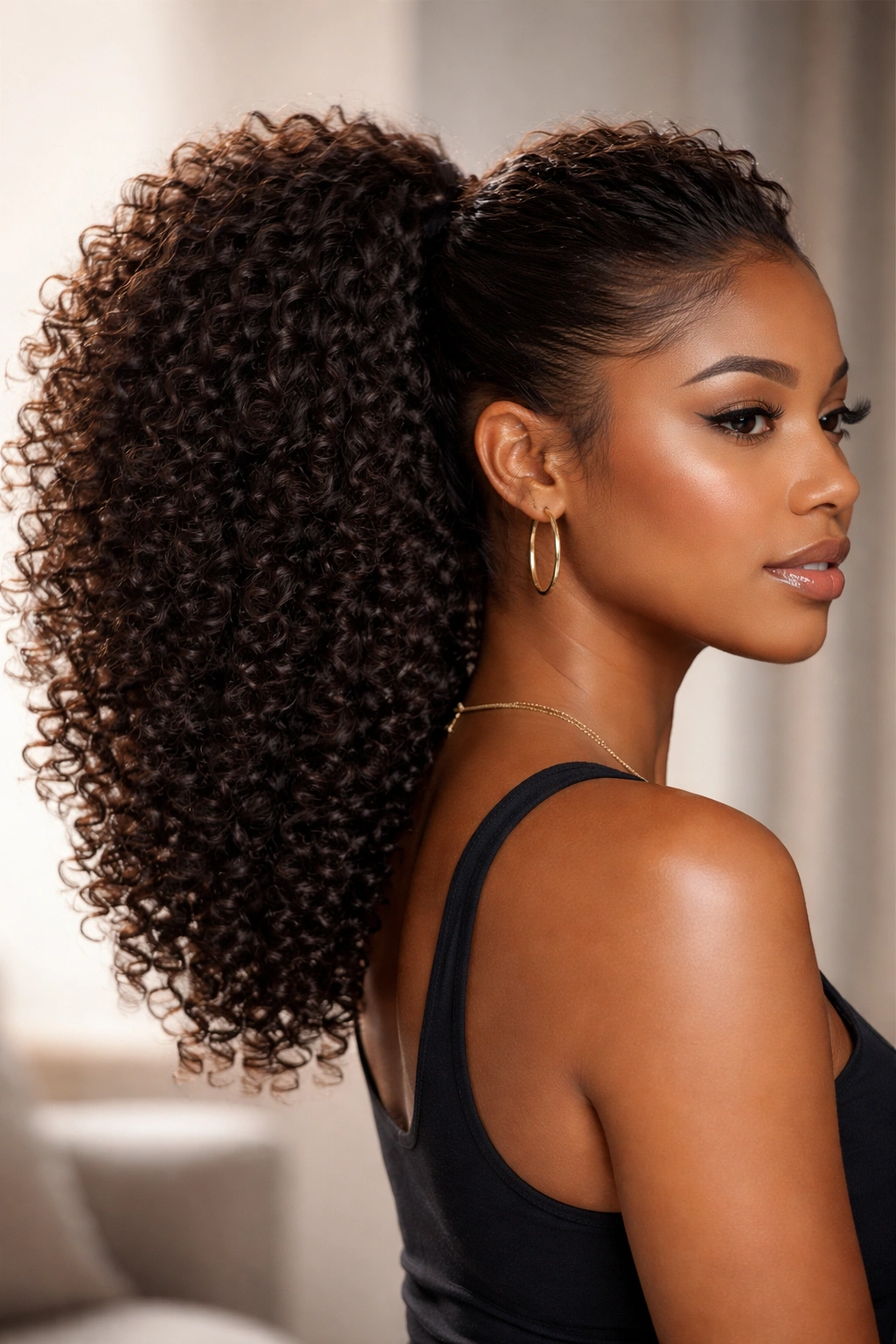
This style celebrates your natural curl pattern by gathering textured hair while maintaining the definition and movement of your curls. Rather than smoothing everything into a sleek ponytail, you’re keeping your curls intact and curly, simply bringing them together at a central point. This style is perfect for natural hair, heatless styling, and any day when you want to show off your texture while keeping hair out of your face.
Prepping Your Curls for Optimal Definition
Start with hair that’s been moisturized and has defined curls. Apply a leave-in conditioner and curl cream or gel to damp hair, then allow curls to form and dry. Finger-coil sections if you want more defined, separated curls, or simply let your natural curl pattern form on its own. The key is having curls that are intentional and defined before you gather them into your ponytail.
Gathering Without Flattening Your Curls
Use a claw clip, flexible elastic, or hair tie designed to work with textured hair—standard ponytail bands can create a crease or flatten your curls. Gather your curls gently, securing them without compressing them. The goal is for your ponytail to maintain all the volume and dimension of your loose curls, just gathered together. Avoid using elastic bands so tight that they flatten sections of curl.
Styling Within Your Textured Ponytail
You can wear this style with defined, separated curls throughout, or you can do a hybrid approach with smooth, controlled edges and curly, textured ponytail hair. Some women add edge control for contrast; others embrace texture all the way to the hairline for a completely natural, cohesive look. Both approaches are beautiful and the choice depends on your personal style and the occasion.
12. Sleek Low Pony with Statement Hair Accessories
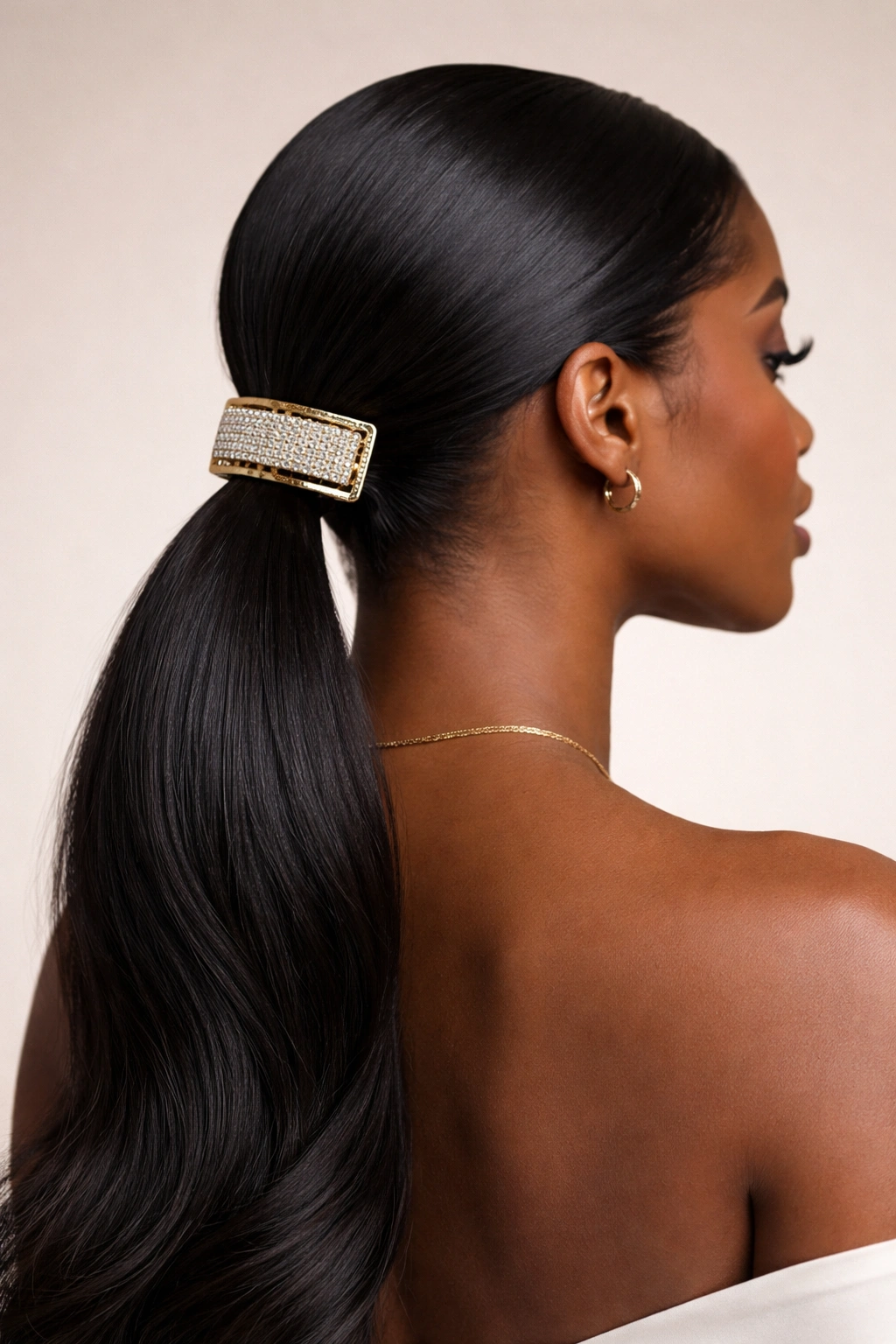
This final style takes a simple sleek low ponytail and transforms it with strategic hair accessories that add personality and visual impact. A basic low ponytail becomes completely different when paired with the right clip, cuff, barrette, or decorative elastic band. This approach lets you recycle the same basic ponytail style multiple times while creating entirely different visual effects depending on your accessory choice.
Building Your Perfect Sleek Foundation
Start with a smooth, sleek low ponytail gathered at the nape of your neck. The ponytail itself should be polished and simple—smooth edges, secure elastic, possibly wrapped with a small section of your own hair to hide the band. This understated base is what allows your accessory to shine as the focal point rather than competing with complicated styling.
Choosing Accessories That Make an Impact
Statement hair accessories include: metal hair claws in gold or silver, decorative barrettes with pearls or stones, minimalist bar clips, chain-linked cuffs that wrap around the base of your ponytail, ornate comb pieces, colorful hair rings or slides, or vintage-inspired clips. The accessory should coordinate with your outfit or express your personal style. Place the accessory at the base of your ponytail for maximum visibility, or position it partway down the tail for a different visual effect.
Layering Multiple Accessories for Extra Drama
One accessory is impactful; multiple accessories can be even more striking. Some women wear two claw clips at different angles, or pair a clip with a decorative hair cuff. This approach works beautifully for special occasions or when you want to make a bold statement. The key is ensuring that multiple accessories feel intentional and balanced rather than cluttered or accidental.
Final Thoughts
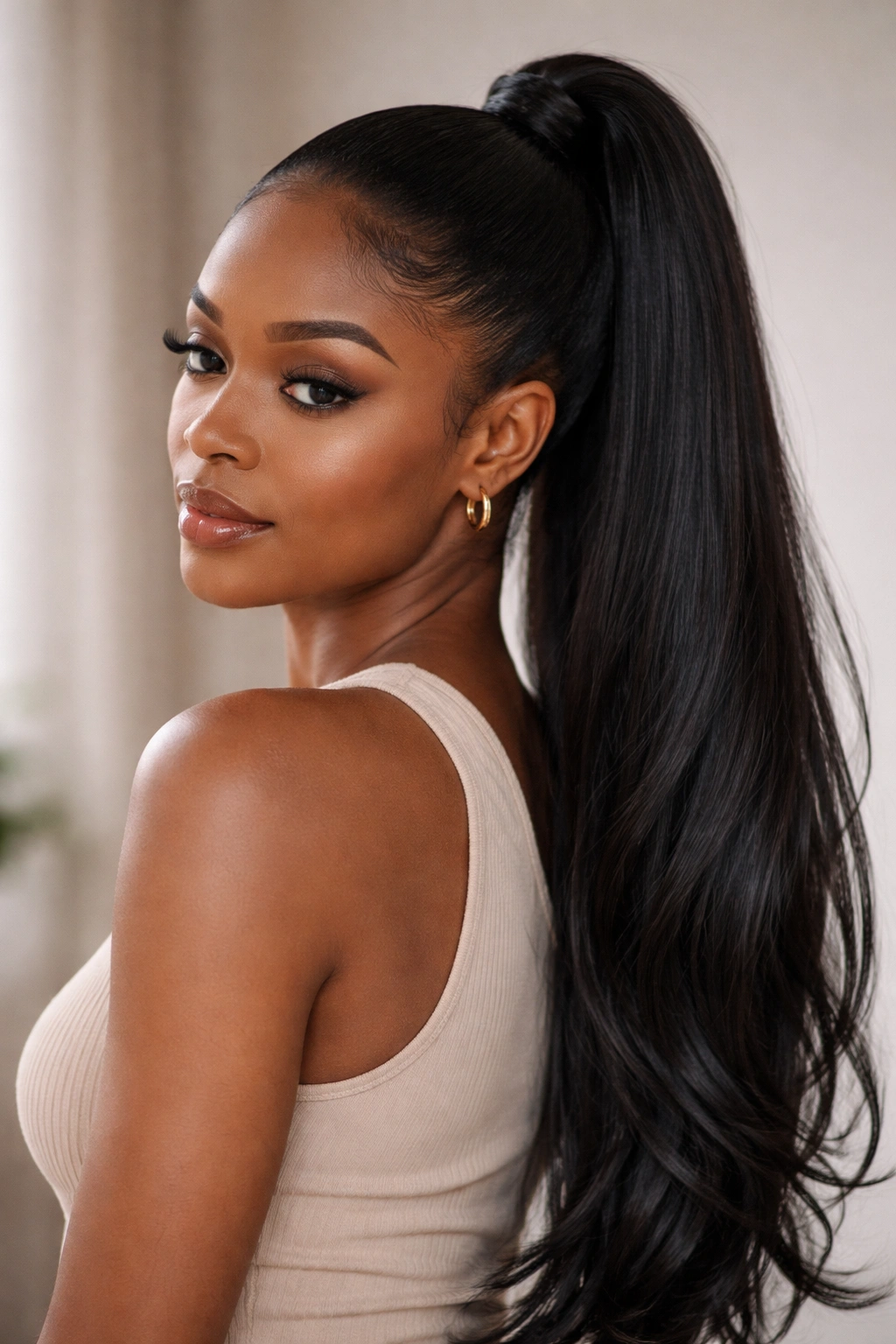
The ponytail is one of the most versatile, protective, and beautiful hairstyles available to Black women with long hair, but it’s only as good as the technique behind it. Each of these twelve styles celebrates your length in a different way while keeping hair secure, off your face and neck, and protected from damage. The key is rotating between styles so you’re not placing stress on the same section of your scalp repeatedly. Wear your high sleek ponytail for a few days, then switch to a braided ponytail the following week, then try your textured puff. This rotation keeps your edges healthy while letting you explore the full range of what’s possible with long hair.
Remember that longevity and scalp health matter far more than having your edges perfectly laid every single day. Tension is the enemy—if a style makes your scalp hurt or pulls your hairline, it’s too tight, and no amount of visual impact is worth the damage. Find the sweet spot between style and sustainability, and you’ll be able to wear these ponytails for years to come. Your long hair is an asset, and the right ponytail style celebrates that while protecting what you’ve worked hard to grow.
