

Curtain bangs can feel risky with thick, wavy hair. That much texture usually swallows up delicate framing, and curls tend to shrink up the moment your stylist cuts those long pieces. But here’s what most people miss: the right cut and styling approach can make curtain bangs absolutely stunning on wavy texture — especially when you’re working with real volume. The key is choosing styles that work with your wave pattern instead of fighting it, and understanding how to cut bangs so they don’t disappear into the body of your hair.
I’ve watched countless clients transform their look by pairing curtain bangs with long hair and embracing their natural wave. The styles that work best aren’t timid or over-layered — they’re confident cuts that give your texture somewhere to go while still delivering that effortlessly chic, parted framing that makes curtain bangs so appealing. Your thick, wavy hair is actually an advantage here; it holds shape, it has movement built in, and it can support bangs that feel both intentional and lived-in.
The styles below are specifically designed for hair that has genuine body and wave. Some lean into your natural texture, others play against it for contrast, and all of them assume you’re not fighting your hair type — you’re working with it. Whether you want soft romance, edgy texture, or bold dimension, there’s a curtain-bang style here that’ll make you actually excited about your bangs instead of regretting them three weeks in.
1. Classic Curtain Bangs with Long Layers
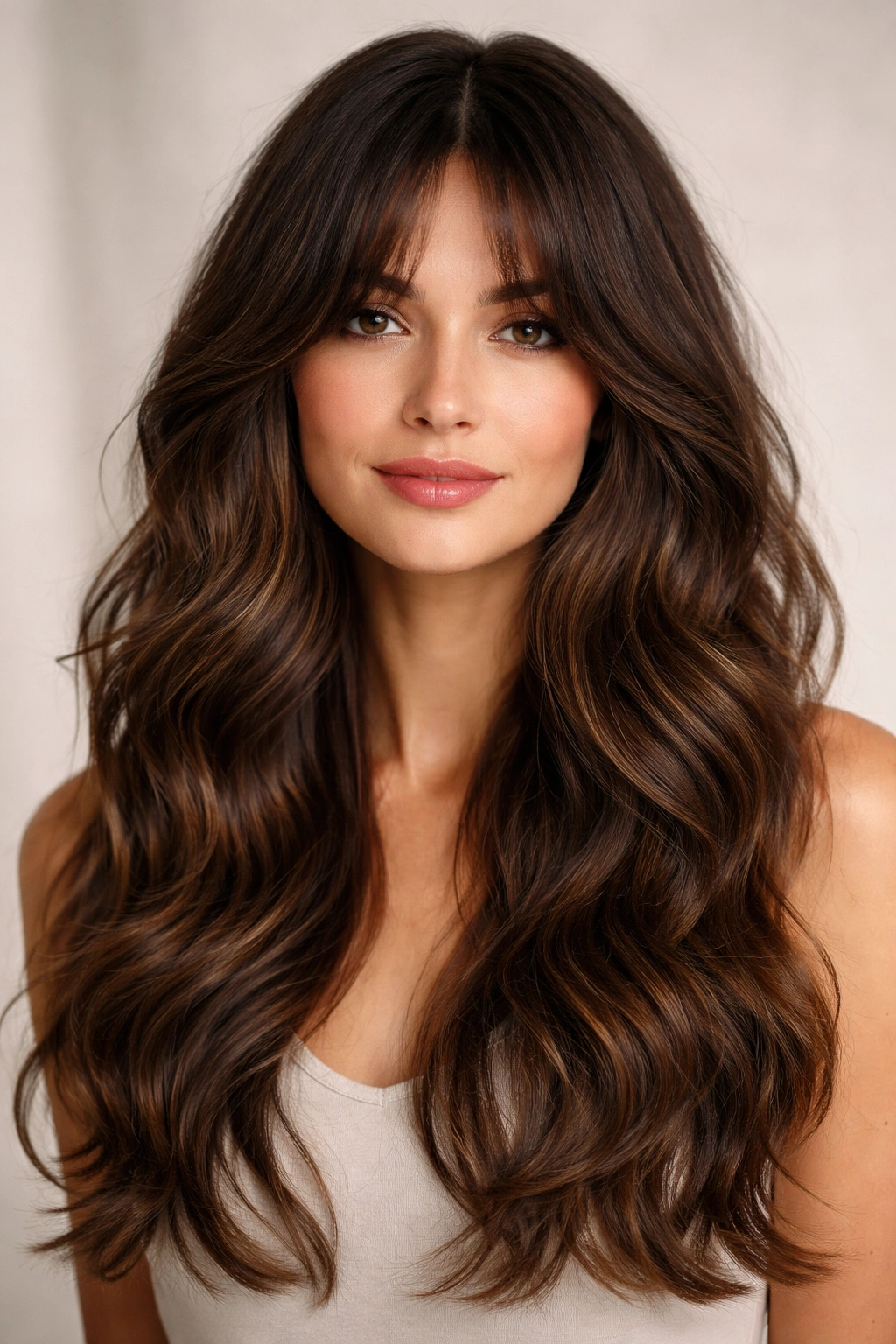
This is the foundational style that works for nearly everyone with wavy hair. Long curtain bangs (typically hitting around the cheekbones) sweep away from the face, and the entire head gets cut in subtle, graduated layers to keep movement intact without removing too much length.
Why It Works for Thick Wavy Hair
The layering actually removes weight strategically while preserving fullness where you need it. Your stylist isn’t chopping all over — they’re thinning the interior and mid-lengths so your waves don’t feel like a solid brick of hair, but longer lengths stay intact for that romantic, full effect. The bangs themselves grow out gracefully; even after six weeks, they frame beautifully instead of looking blunt and heavy.
How to Style It
- Use a round brush on medium heat and dry from underneath, lifting the roots upward while pushing hair away from your face as bangs dry
- Apply a lightweight wave cream or texture spray to damp hair before blow-drying for enhanced definition
- Once dry, use a 1.25-inch curling iron or flat iron to relax any crazy waves and refresh the gentle bend in your bangs (they need that subtle swing-back shape)
- Tousle with your fingers and finish with a flexible hold spray — never crispy, always lived-in
- On second-day hair, spritz with sea salt spray and finger-comb for that “I woke up like this” texture
Pro tip: Have your stylist cut the bangs slightly longer than you think you want — they’ll settle into the perfect length within a week as they soften and adjust to your natural wave pattern.
2. Curtain Bangs with a Shag Haircut
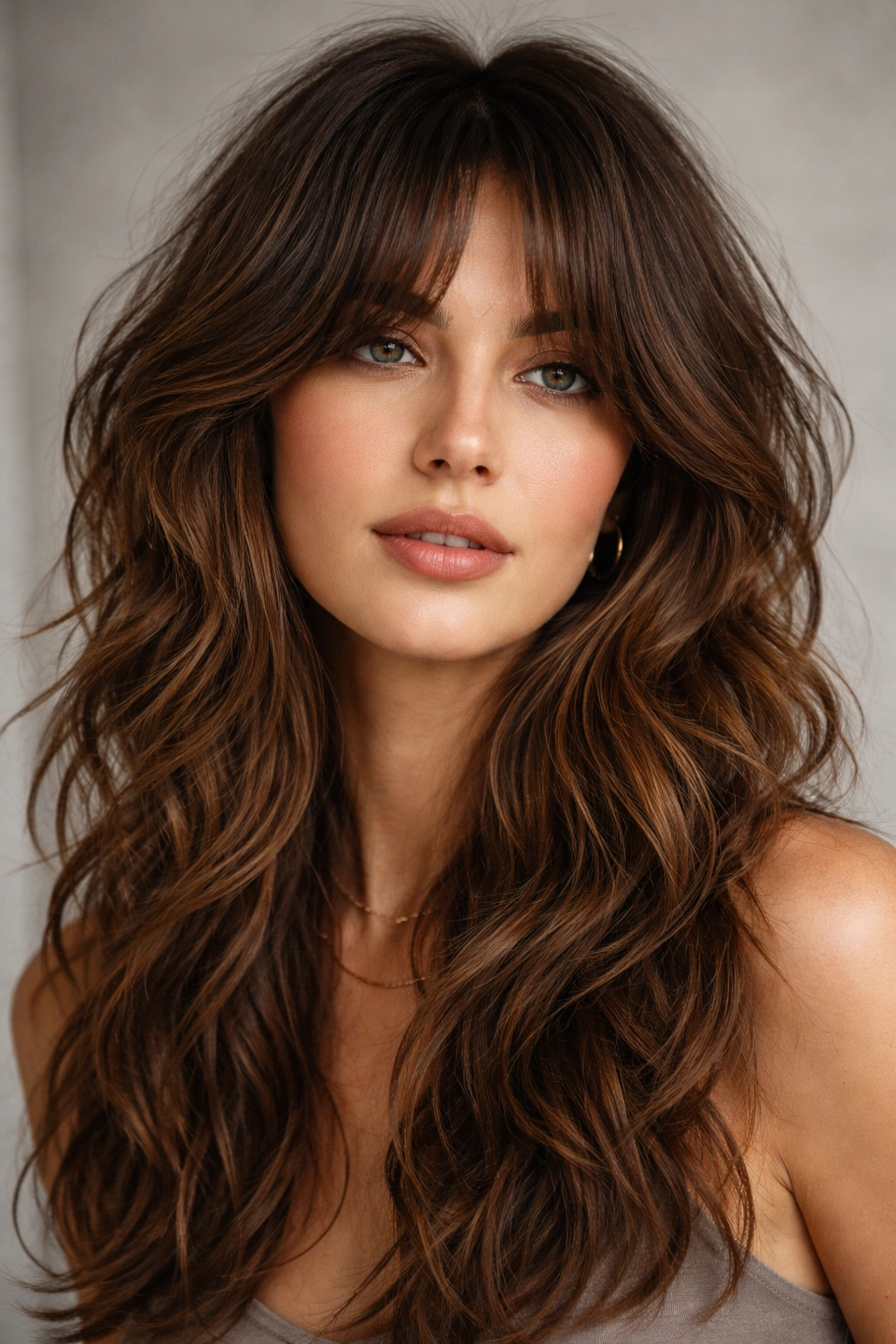
A shag is practically made for thick, wavy hair, and combining it with curtain bangs creates serious texture and movement. This cut layers aggressively throughout, creating choppy pieces at different lengths that break up bulk while emphasizing waves.
Why It Works for Thick Wavy Hair
Shags are all about removing weight in a way that actually increases movement and visual dimension. On thick hair, that aggressive layering prevents you from looking flat or heavy while playing up the texture you already have. The curtain bangs are just one part of a highly textured whole — they’re not doing all the work of breaking up density, so they can focus on framing.
How to Style It
- Scrunch a texturizing cream or mousse into damp hair before air-drying for a natural, piece-y finish
- Blow-dry only if you want more control; let it air-dry for that undone, rock-and-roll shag texture
- Use your fingers to separate and define individual layers throughout
- Add dry texture spray mid-length and underneath for separation between layers
- Embrace the choppy, intentionally “messy” look — that’s the whole point
Worth knowing: This cut requires more frequent trims (every 4-6 weeks) because all those layers need to stay sharp and defined. If layers get too long and blunt, the shag loses its personality fast.
3. Face-Framing Curtain Bangs with Soft Waves
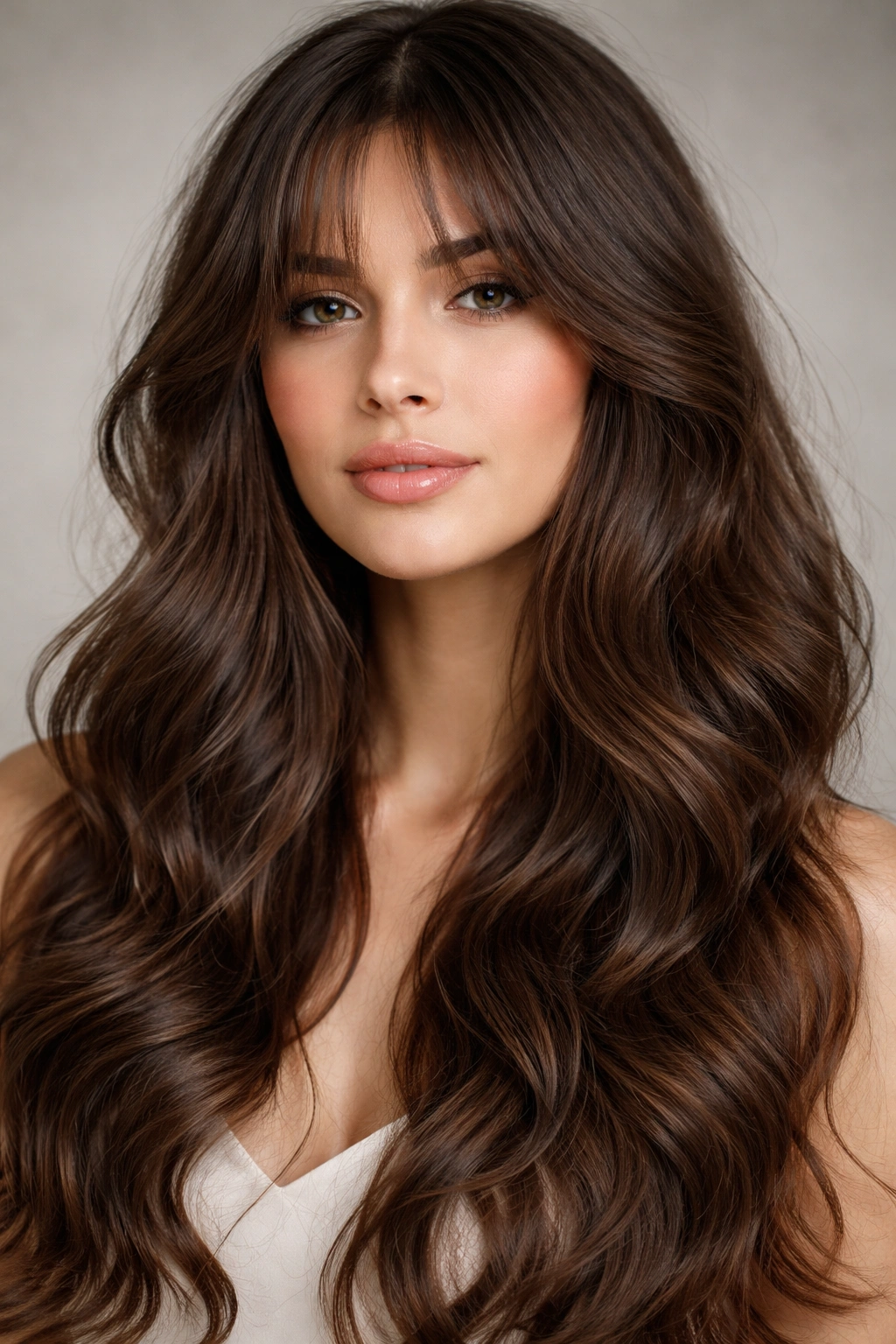
If you want a softer, more romantic take on the trend, this is it. Longer curtain bangs (cheekbone-length or slightly below) pair with long, gently waved hair and minimal layering, creating an effortlessly ethereal aesthetic that’s very “modern mermaid.”
Why It Works for Thick Wavy Hair
Your natural texture becomes an asset instead of something to fight against. This style celebrates waves rather than cutting them away, and longer bangs integrate beautifully into the overall silhouette without looking wispy or fragile. The volume of thick hair prevents this from reading as too delicate or princess-like.
How to Style It
- Apply a lightweight leave-in conditioner to damp hair to enhance natural waves without crunch
- Diffuse dry with a blow-dryer on low speed and low heat, or air-dry and refresh with a wave cream
- Use a 1.5-inch curling iron loosely on the bottom third of your hair and bangs only — avoid over-curling the roots, which already have natural texture
- Separate waves gently with your fingers instead of a brush
- Finish with a flexible-hold spray that won’t stiffen the soft wave pattern
Pro tip: This style looks best when you’re not fighting your natural wave — work with the texture you wake up with, not against it.
4. Curtain Bangs with a Blunt Long Bob
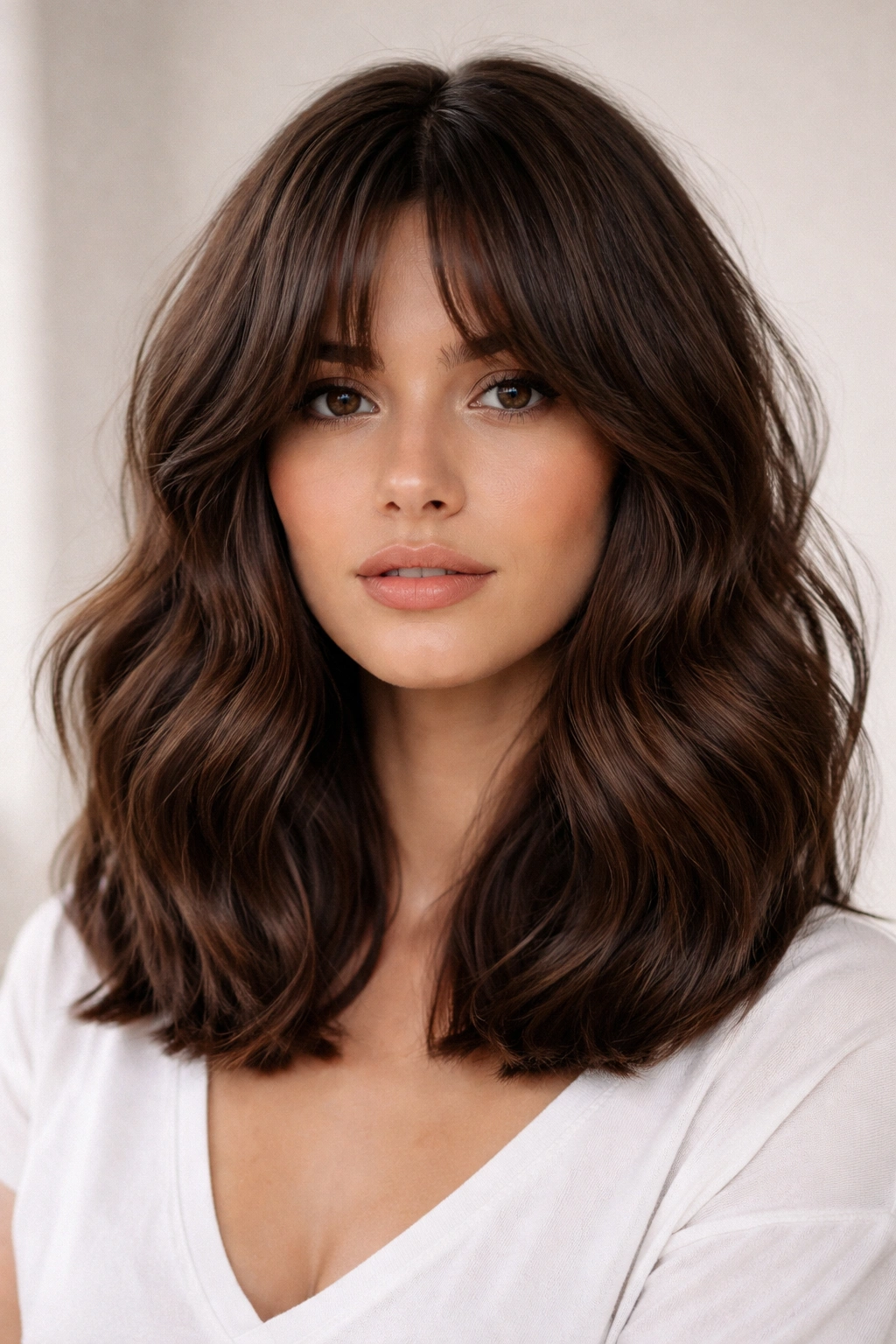
A long bob (lob) cut dead-straight across the ends, paired with parted curtain bangs, creates gorgeous contrast between the intentional geometry of the blunt edge and the soft frame of the bangs. It’s polished but not stiff.
Why It Works for Thick Wavy Hair
The blunt ends actually ground thick hair and prevent it from looking too wispy at the tips, while the layers woven throughout (especially around the face) keep you from looking boxy. Your stylist creates a subtle A-line or concave shape, so the back stays full but the front flows. Curtain bangs soften what could otherwise feel too severe.
How to Style It
- Blow-dry straight with a paddle brush for sleek, intentional texture, or use a round brush for subtle bend
- Apply smoothing serum to reduce frizz and enhance the blunt line
- Curl or wave just the face-framing pieces and bangs if you want dimension without affecting the overall sleek vibe
- Use a fine-tooth comb to separate the curtain bangs from the rest of your hair for clean line separation
- Refresh with dry shampoo and texturizing spray on day two for a softer, lived-in look
Worth knowing: Blunt bobs show every imperfection in the line, so you’ll need trims every 5-6 weeks to keep that edge sharp and intentional.
5. Textured Curtain Bangs with Beach Waves
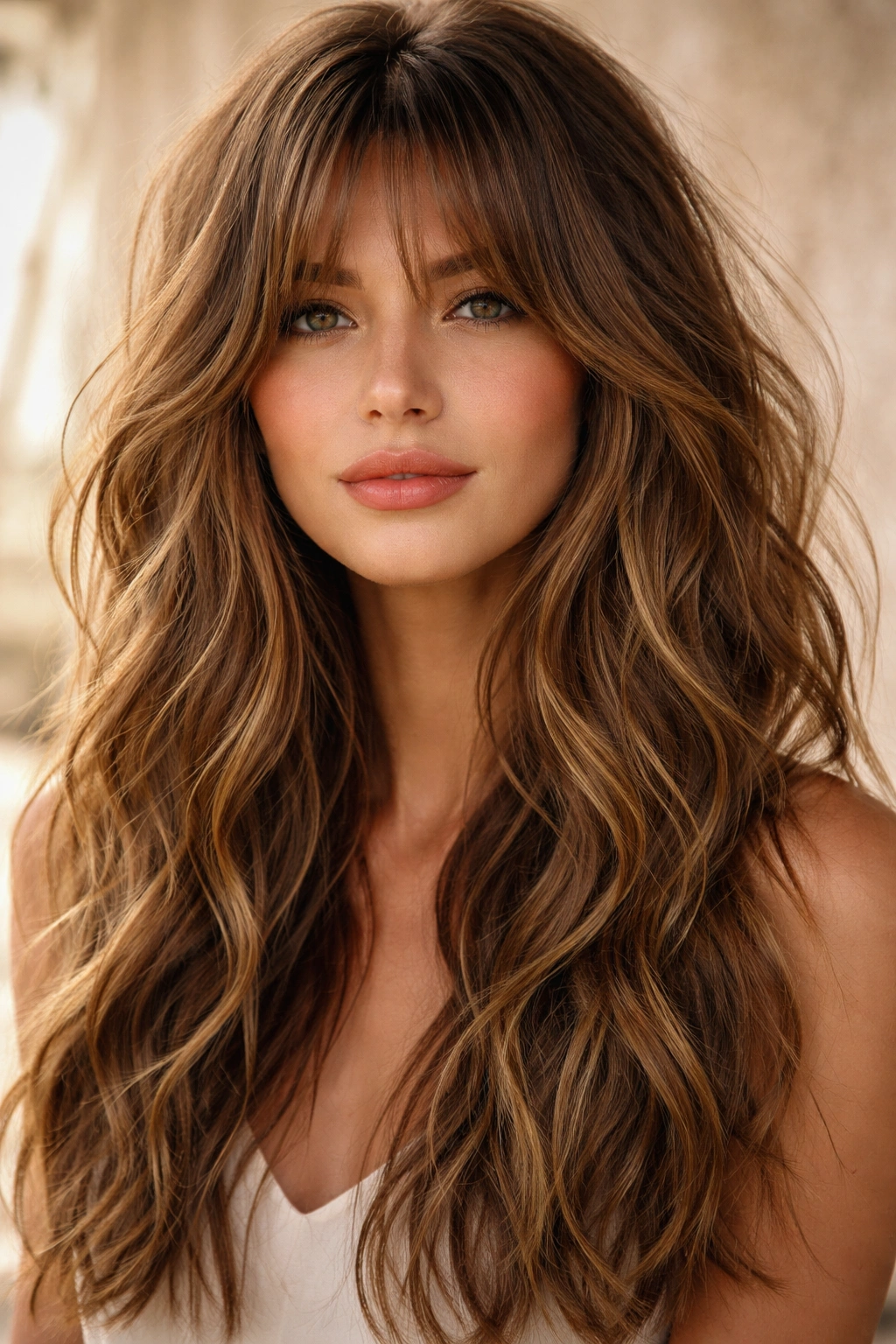
This is the “I just got back from the beach” style — curtain bangs that are deliberately piece-y and textured, paired with loose, broken-up waves throughout your long hair. It’s not a single uniform wave; it’s strategic texture that looks effortless.
Why It Works for Thick Wavy Hair
Your natural texture is the whole point here. You’re not trying to create uniform waves; you’re enhancing and directing the randomness you already have. Thick hair naturally holds textured pieces without them falling flat or frizzing out, so this style actually looks better the more voluminous your hair is.
How to Style It
- Apply sea salt spray or texturizing spray to damp hair throughout
- Either air-dry completely (embracing your natural wave) or diffuse-dry with fingers, encouraging separate, piece-y texture
- If you want to add more intentional bends, use a flat iron or waver on random sections — not all the way through
- Use a brush only to separate bangs from the rest of your hair; otherwise, scrunch and finger-comb
- Let the bangs dry naturally or tousle them with your fingers for that piece-y, windblown shape
Pro tip: This style actually improves the longer you go between washes. Day-two and day-three hair often looks better than day-one because the waves have settled and developed more definition.
6. Curtain Bangs with Blonde Balayage and Dimension
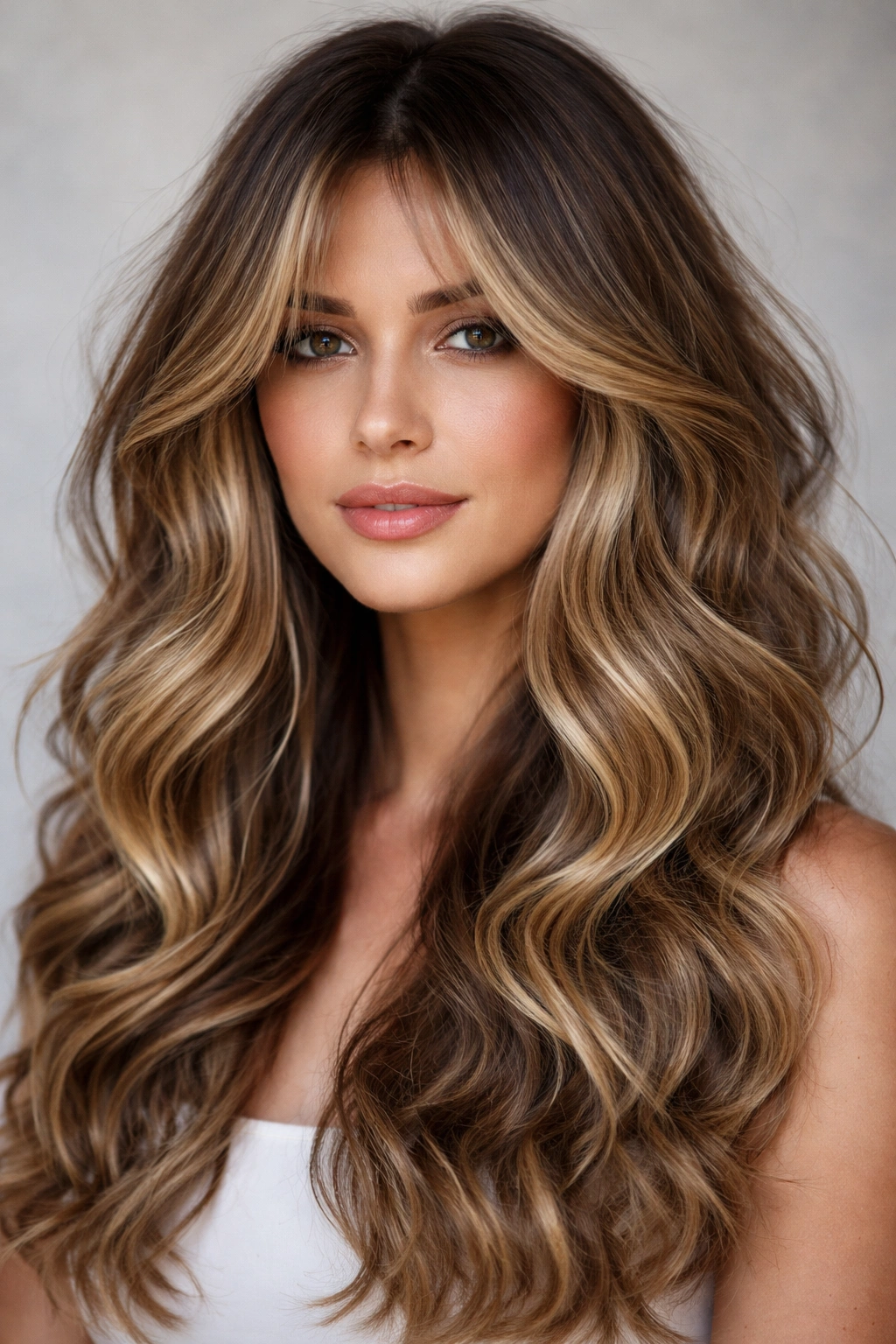
Long hair with strategically placed lighter pieces — especially around the face — makes curtain bangs look more sculptural and intentional. The contrast in color adds visual interest and can actually make the framing feel more dimensional even if your waves are subtle.
Why It Works for Thick Wavy Hair
Color dimension breaks up visual density and adds movement even on days when your texture is less pronounced. Balayage (hand-painted highlights) placed strategically around the bangs and face-framing pieces catches light and draws attention to the shape. On thick hair, this prevents the overall look from feeling heavy.
How to Style It
- Apply a moisturizing leave-in conditioner focused on mid-lengths and ends — colored hair needs extra hydration
- Blow-dry with a round brush, curling the bangs and face-framing pieces inward slightly to enhance the sculpted effect
- Use a curling iron loosely on lower sections for gentle wave enhancement
- Let highlights do the heavy lifting — minimal product is needed once you’re dry
- The lighter pieces will move and catch light on their own without needing heavy texture product
Worth knowing: Balayage on wavy hair can sometimes emphasize dryness, especially if you’re getting frequent color. Invest in a good moisturizing mask and use it weekly.
7. Curtain Bangs with a Textured Wolf Cut
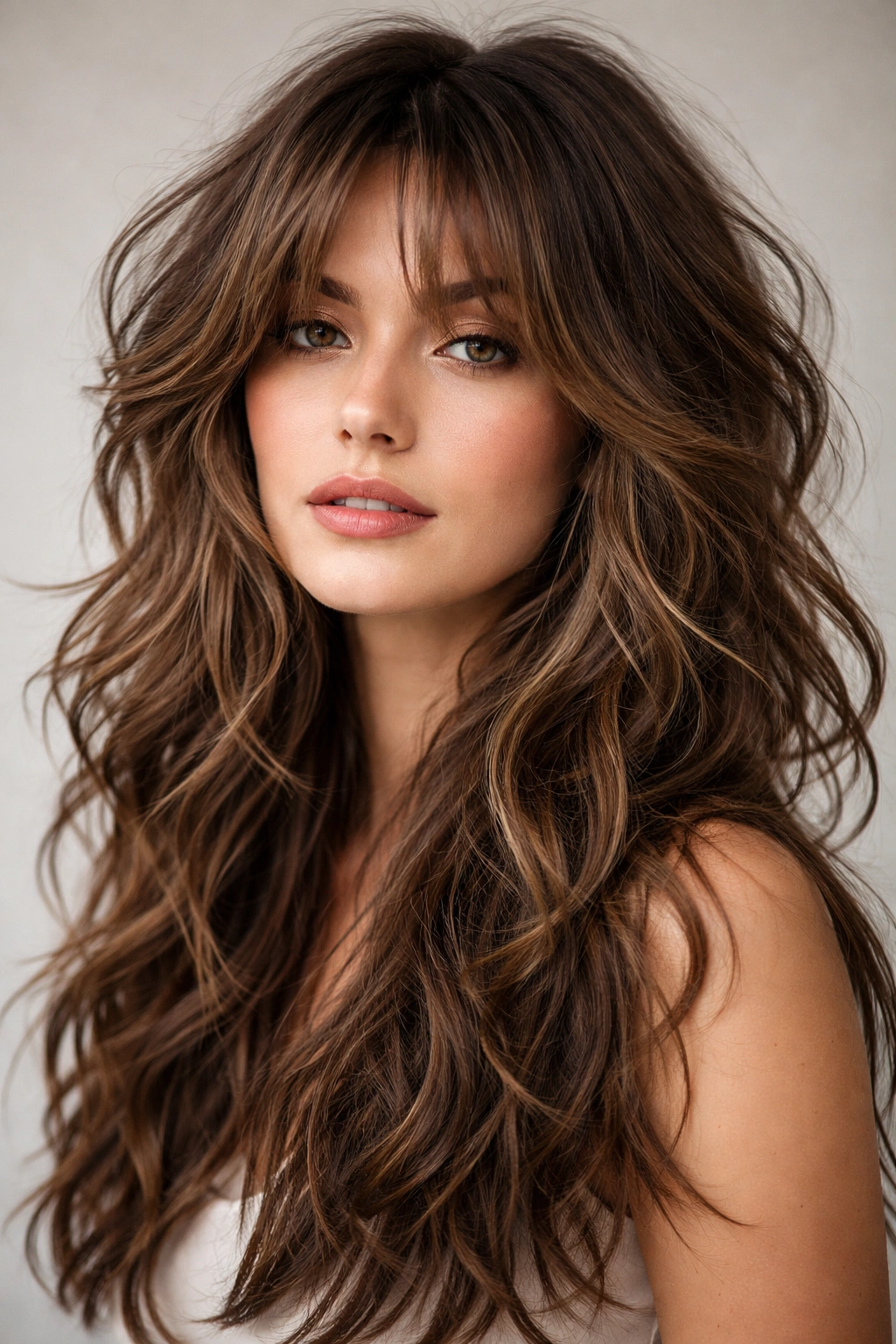
A wolf cut is basically a shag’s edgier, more dramatic cousin — extremely layered throughout with shorter choppy pieces on top that create tons of movement and dimension. Curtain bangs are the softer introduction to all that texture.
Why It Works for Thick Wavy Hair
Wolf cuts were literally designed for people who want maximum movement and dimension without looking like they’re trying too hard. On thick, wavy hair, this cut is transformative. You remove so much strategic weight that your waves actually have room to move independently instead of clumping together. The bangs provide the elegant framing that keeps the whole vibe from reading as too rock-and-roll.
How to Style It
- Mousse or wave cream on damp hair before diffusing for maximum volume and piece separation
- Diffuse thoroughly or air-dry for that naturally textured look — the cut does most of the work
- Tousle and separate layers with your fingers while the hair is still slightly damp
- Once dry, use a texture spray on the shorter, choppy pieces on top to enhance dimension
- Avoid brushing once dry; the goal is an intentionally undone, piece-y texture
Pro tip: This cut can look a bit chaotic immediately after a wash. It genuinely improves over days two and three when product settles and the waves relax slightly.
8. Curtain Bangs with Straight Sides (Movement Contrast)
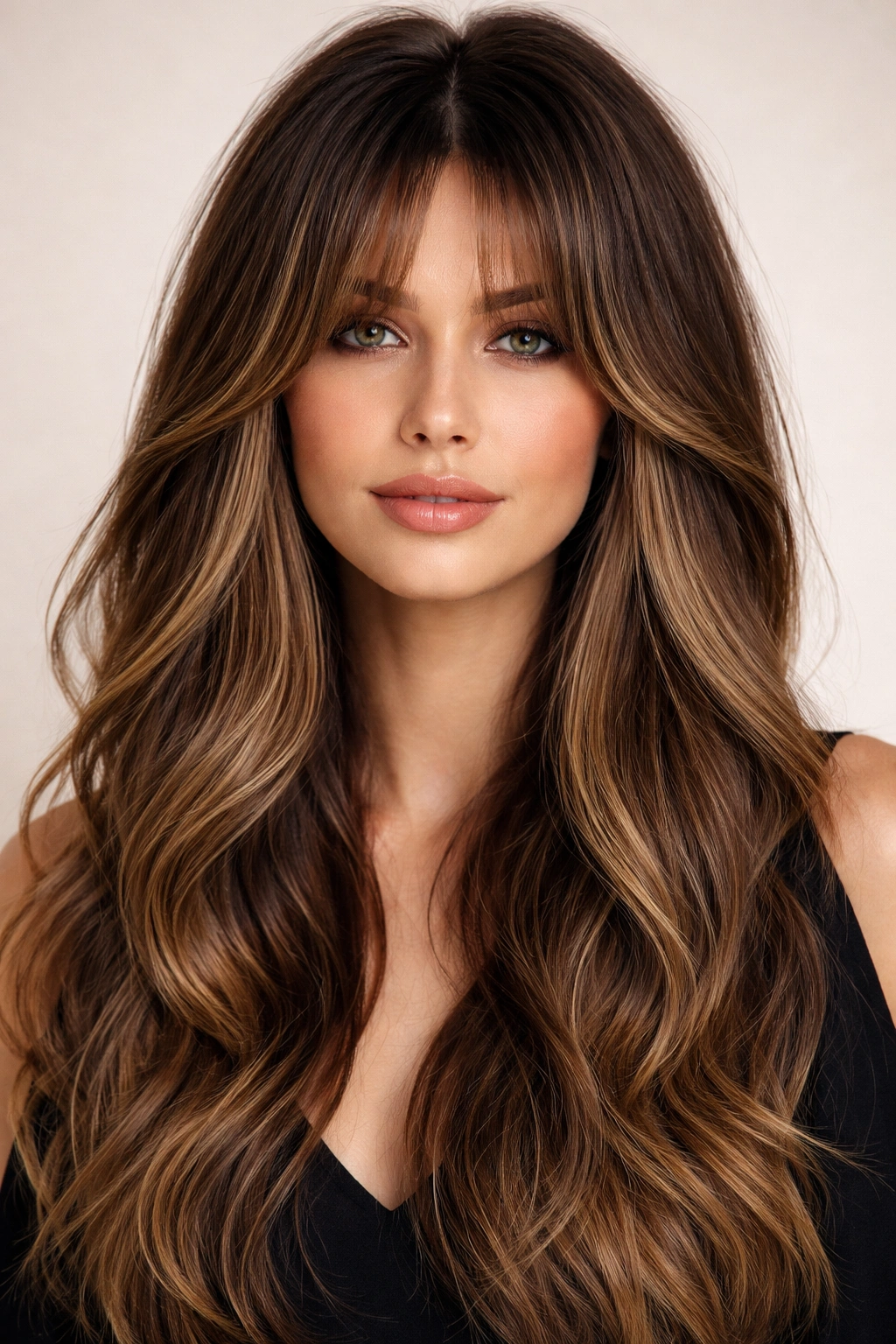
What happens when you combine curtain bangs and longer hair on top but keep the sides relatively straight and not overly layered? You get intentional contrast between the soft, voluminous top and the sleeker sides — a modern, slightly avant-garde take on the trend.
Why It Works for Thick Wavy Hair
Straight sides actually prevent thick hair from puffing out sideways, which can be a real problem with very layered cuts. You keep fullness and movement on top (where you want it, framing your face) while the sides stay more controlled. The curtain bangs get to be the star without competing against too much texture elsewhere.
How to Style It
- Blow-dry the sides straighter and smoother with a paddle brush or flat iron
- Create more texture and wave on top, especially around the bangs and crown
- Apply a smoothing serum to sides and a texturizing spray to the top — this creates the intended contrast
- Use a flat iron on the sides if needed to maintain the sleek element
- Curl or wave just the top sections and bangs with a curling iron if you want enhanced movement up top
Worth knowing: This cut requires a steady hand at a stylist who understands how to work with contrasting textures — it’s not beginner-friendly from a styling perspective.
9. Curtain Bangs with Thick Layers Throughout
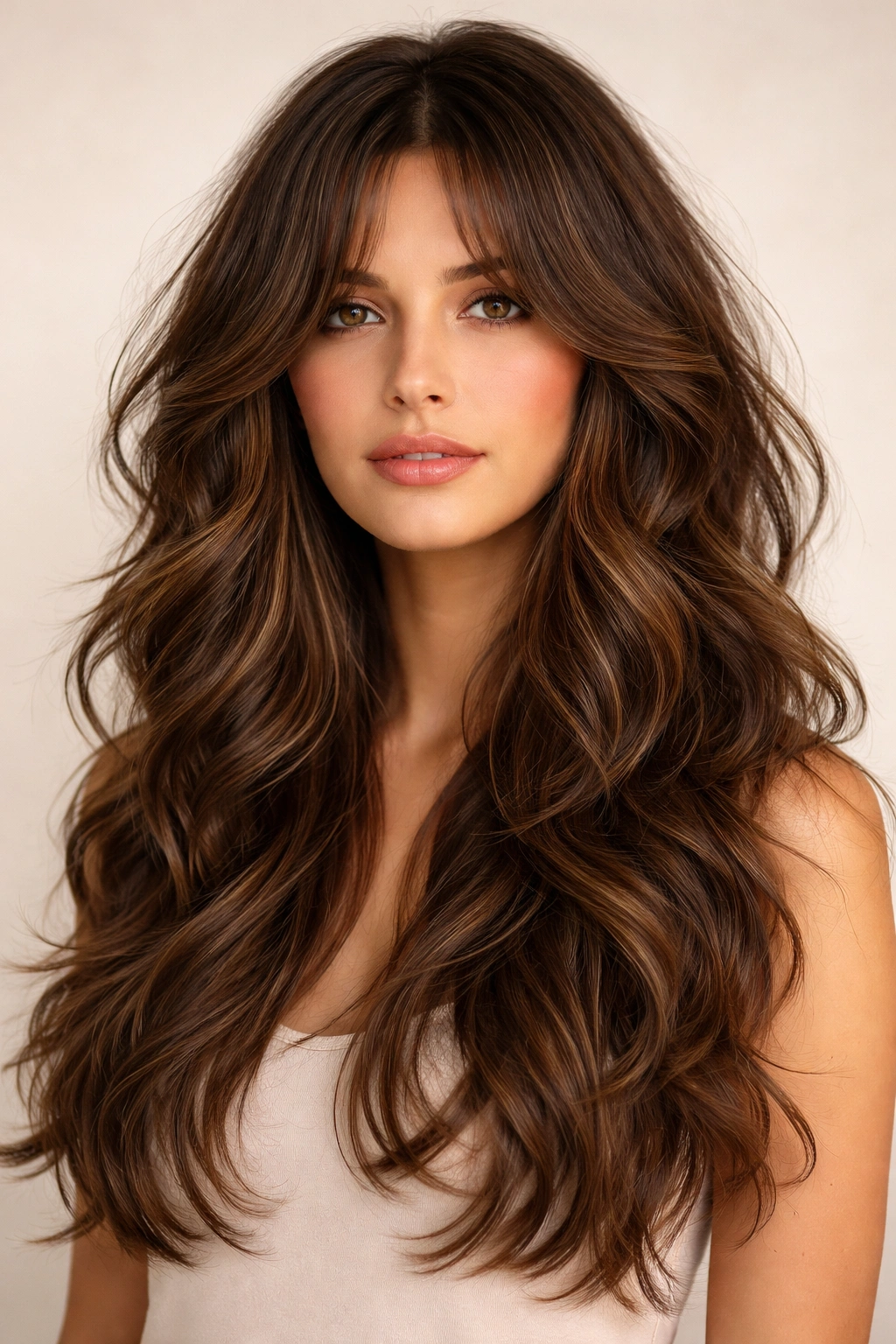
Sometimes the solution to styling thick, wavy hair isn’t to be subtle about the layers — it’s to lean into them fully. This style cuts layers at multiple depths throughout the entire head, creating tons of independent movement while keeping length in the ends for fullness.
Why It Works for Thick Wavy Hair
Heavy density gets broken up at multiple points so nothing feels solid or immobile. Thick layers actually weigh each other down in a balanced way, preventing the top from puffing and the ends from feeling stringy. Curtain bangs are just one of many layers, so they integrate naturally and don’t feel like a separate element.
How to Style It
- Apply texture cream to damp hair and either diffuse-dry or air-dry for maximum separation between layers
- Use your fingers to encourage individual layers as they dry instead of smoothing them down
- Once dry, spritz with a texture spray and scrunch gently to reactivate the layered separation
- Avoid heavy brushing, which can flatten the intentional texture of multiple layers
- Refresh on day two with more texture spray and finger-tousling
Pro tip: Ask your stylist to cut layers in a way that works with your natural wave pattern, not against it — some wave directions do better with layers cut at specific angles.
10. Curtain Bangs with a Deep Side Part
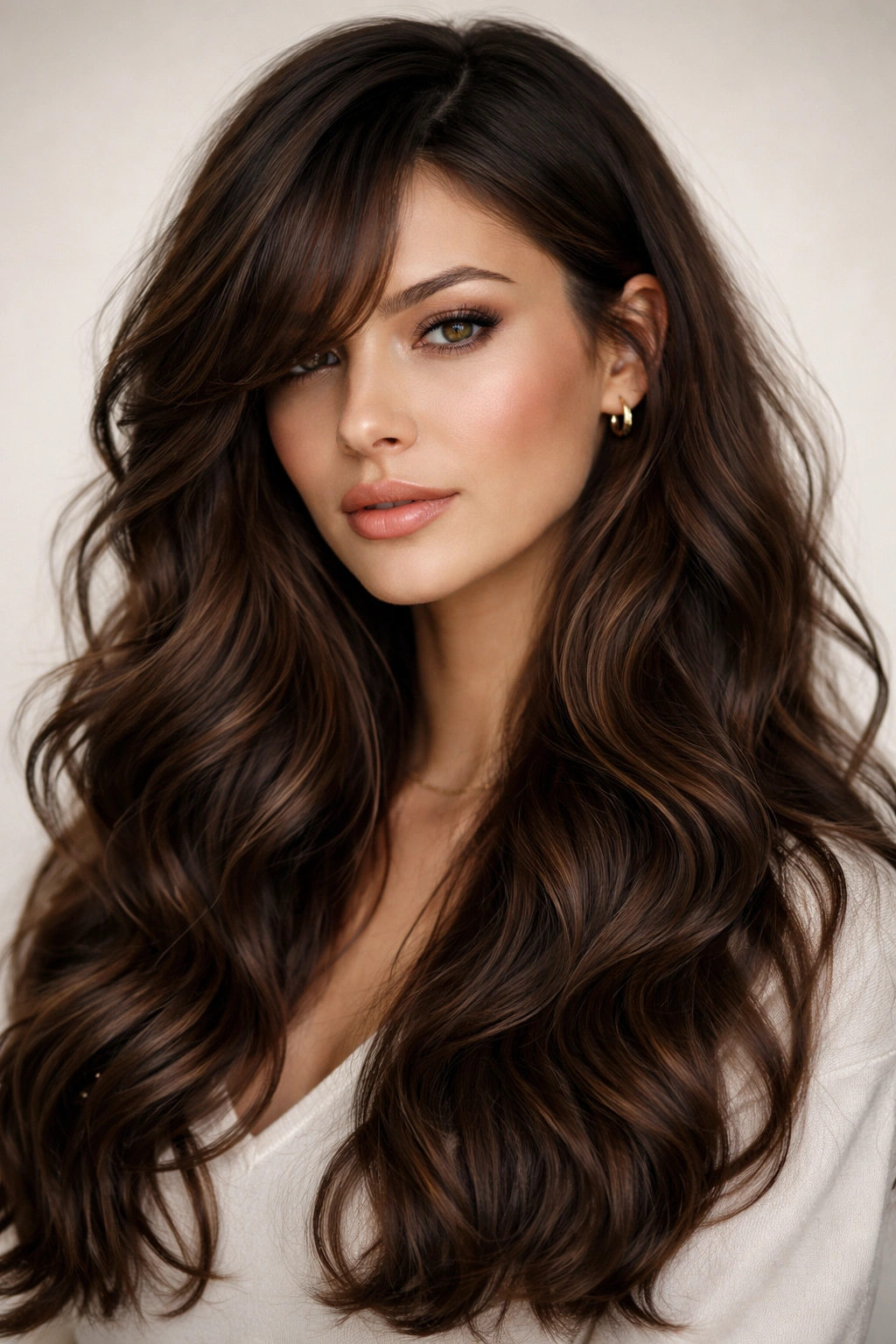
Shifting the part dramatically to one side — so deep that most of your hair falls to one side while curtain bangs provide softness on the other — creates major visual impact and balance. It’s a power-move take on the trend.
Why It Works for Thick Wavy Hair
A deep side part creates an asymmetrical shape that makes thick hair feel intentional and styled rather than just voluminous. The curtain bangs balance out the drama of the deep part, keeping the whole look from feeling too heavy on one side. This works especially well if you have a slightly longer or shorter section on one side from your cut.
How to Style It
- Create the deep part while your hair is damp and set it with blow-drying — part placement stays best when heat-set
- Blow-dry all the hair to the favored side, creating subtle waves or curls as you go
- Use a round brush on the underside (the side with less hair) to add volume and prevent it from looking too flat
- Pin the bangs slightly back and to the side if you want them to play into the deep part drama
- Refresh the part on day two and smooth down any flyaways on the heavy side with a smoothing serum
Worth knowing: This style requires intentional styling daily; it won’t happen naturally without deliberate blow-drying and part placement.
11. Curtain Bangs with Colored Dimension (Lowlights)
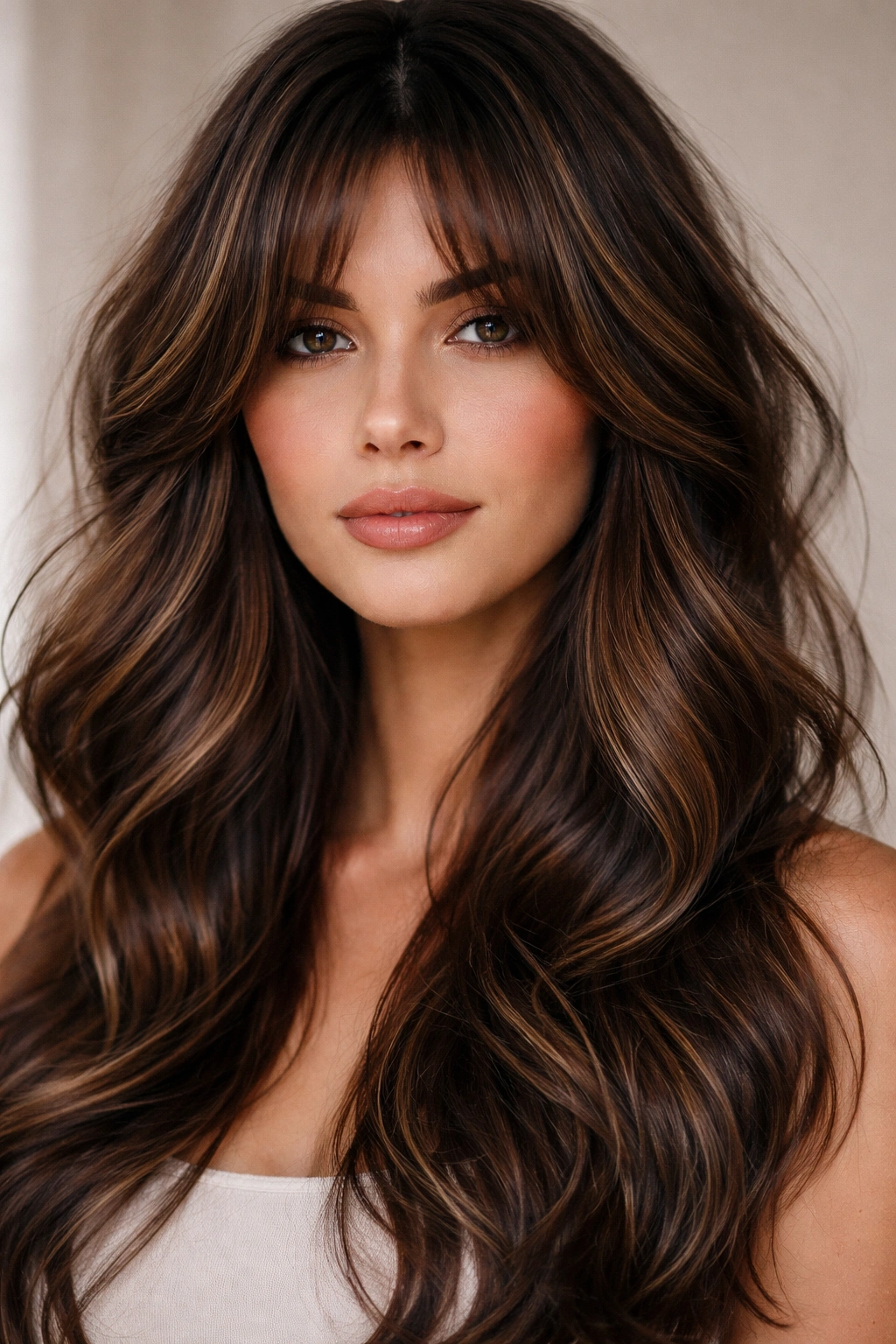
Instead of traditional highlights, deeper lowlights woven throughout (especially blended into the bangs and face-framing pieces) create dimension that reads as sophisticated and intentional. It’s the “expensive color” technique that adds movement without going light.
Why It Works for Thick Wavy Hair
Lowlights on wavy hair create shadow and depth that makes texture look more intentional and sculpted. When you combine darker pieces with your base color, waves appear more defined because the color variation makes each individual piece visible. This is especially powerful for thicker hair, where dimension can get lost in the volume.
How to Style It
- Apply a hydrating leave-in conditioner (colored hair needs it more than virgin hair)
- Blow-dry with a round brush, giving extra attention to the pieces that have lowlights — the color variation will be most visible when that section has gentle shape
- Use a curling iron loosely on sections with lowlights to enhance the way light hits the darker pieces
- Tousle with your fingers so the color placement isn’t too uniform
- Finish with a flexible-hold spray that won’t flatten the wave or dull the color dimension
Pro tip: Lowlights are lower-maintenance than highlights because they blend as they grow out instead of creating harsh regrowth lines.
12. Curtain Bangs with a Mullet-Inspired Long Style
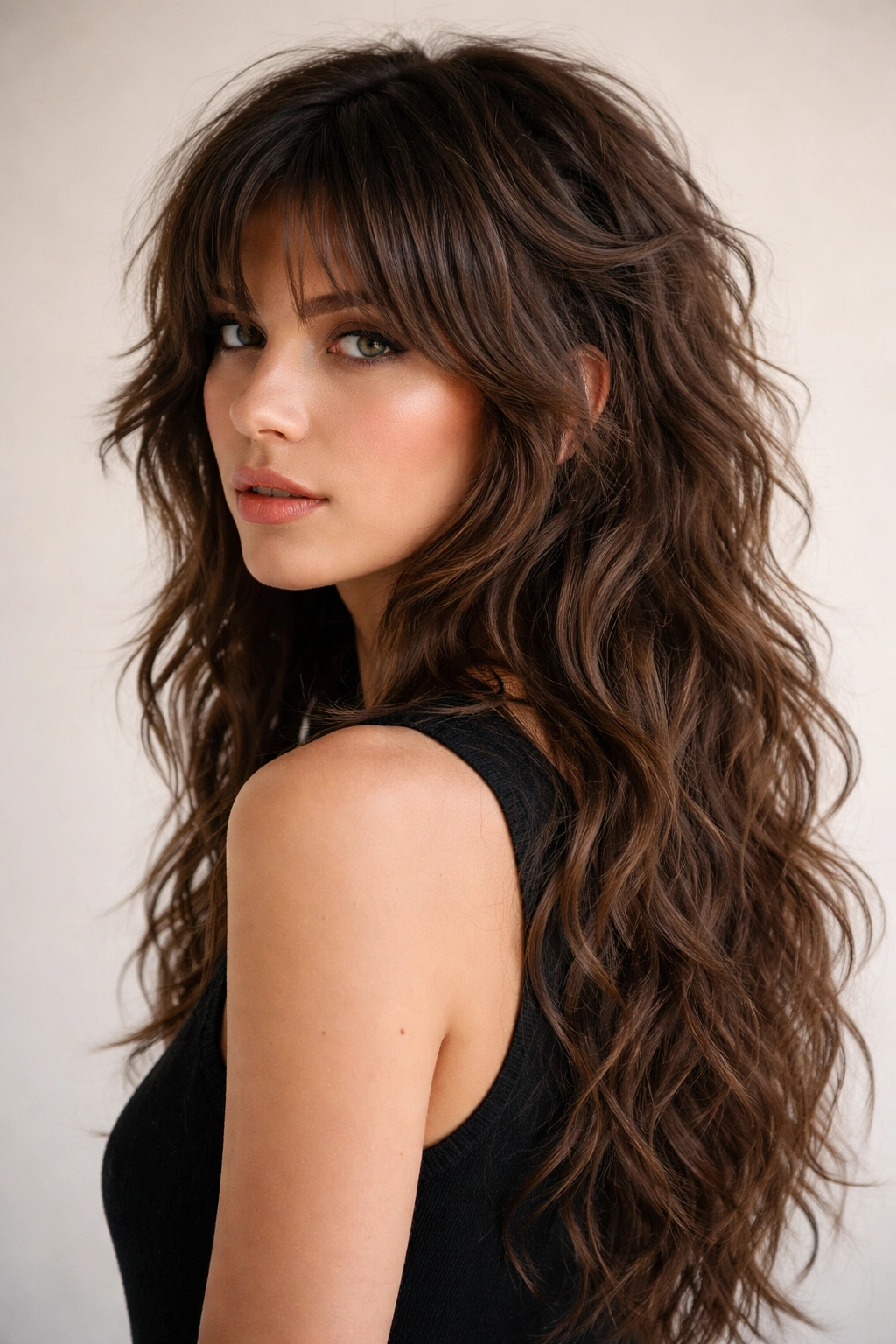
This is the daring choice: longer curtain bangs paired with significantly shorter pieces on top (creating an almost wolf-cut effect up top) and longer, fuller hair in the back. It’s retro-futuristic and definitely makes a statement.
Why It Works for Thick Wavy Hair
The short, choppy pieces on top prevent thick hair from puffing straight out, while the longer back keeps the fullness you want. Curtain bangs bridge the gap between short and long, softening the drama of the shape. It’s an unconventional choice that actually looks incredible on thick, wavy hair because texture is what makes it work instead of working against it.
How to Style It
- Apply a texture cream or mousse to damp hair and diffuse-dry thoroughly
- The short pieces on top should be textured and piece-y; use your fingers to separate them as they dry
- The longer back can be more waved or left natural, depending on your preference
- Use a texture spray on the shorter sections to maintain separation and definition
- This cut looks best when nothing matches — the intentional clash between short and long is the whole point
Worth knowing: This is not the cut to choose if you want a traditional, conservative look. It requires confidence, and it requires regular maintenance (every 4-5 weeks) to keep the shape defined.
Final Thoughts
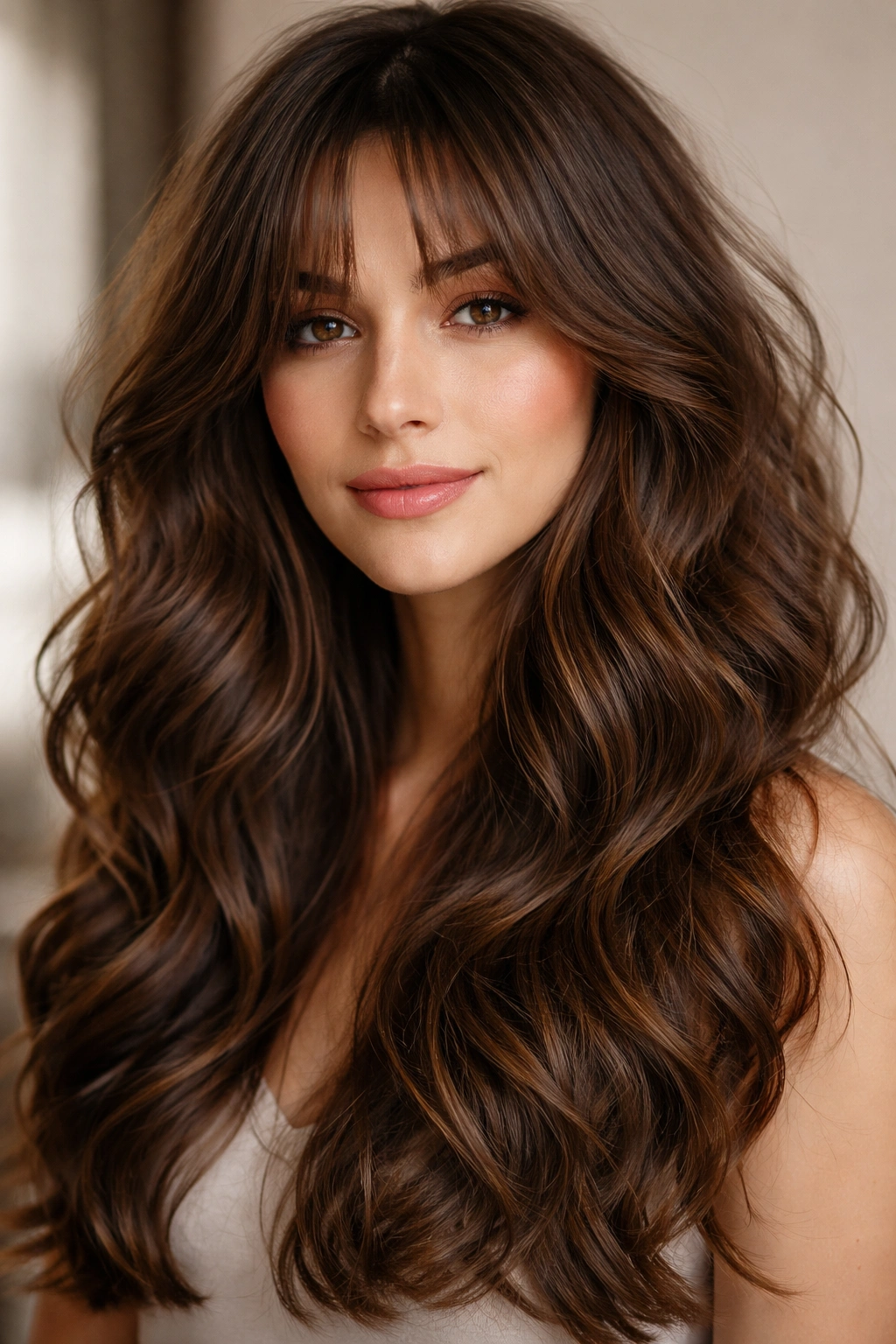
Curtain bangs and thick, wavy hair can absolutely coexist beautifully — you just need to choose a style that actually works with your texture instead of against it. The common thread in all these styles is that they either lean into your natural wave or create intentional contrast with it, but they never pretend your hair is something it’s not.
The most important part of making any of these styles work is finding a stylist who understands thick, wavy hair. Explain your natural wave pattern, how your hair tends to shrink when wet, and what your daily styling routine actually looks like (not your dream routine, your real one). A stylist who gets this will cut your bangs appropriately and layer your hair in a way that actually moves instead of just sitting there.
And here’s what I’ve learned from watching people style these cuts long-term: your hair looks best when you stop fighting it. The styles that actually stick are the ones where people embraced the movement their hair already has and just gave it direction. Curtain bangs are that direction — they frame your face while everything else gets to be exactly what it is.