


If you’re looking to refresh your natural hair look, the combination of afro styles with braids opens up a world of creative, protective, and genuinely stunning possibilities. The beauty of mixing these two textures lies in the visual contrast and dimension you create—the volume and bounce of an afro paired with the structure and definition of braids creates something that’s equal parts bold and refined. Whether you’re after a look that takes five minutes or one that’s an intentional statement piece, afro and braid combinations give you flexibility, versatility, and the chance to express your personal style in ways that work with your hair’s natural texture rather than against it.
What makes these combos so appealing is that they’re not just about aesthetics. Many of these styles also serve as protective styling options, meaning your hair can stay healthy and strong while you’re rocking something that turns heads. You don’t need to choose between what looks good and what’s actually good for your hair—these combinations do both at the same time. The mixing of braids with natural afro texture also tends to extend the life of your braids because the afro sections are absorbing less manipulation over time.
These styles work across different hair lengths, textures, and personal aesthetics. Whether you prefer understated elegance or bold, artistic expressions, there’s genuinely something in this range that speaks to your individual style. Let’s explore the specific combinations that work best and exactly how to execute them with confidence.
1. Two-Braids-Into-Full-Afro
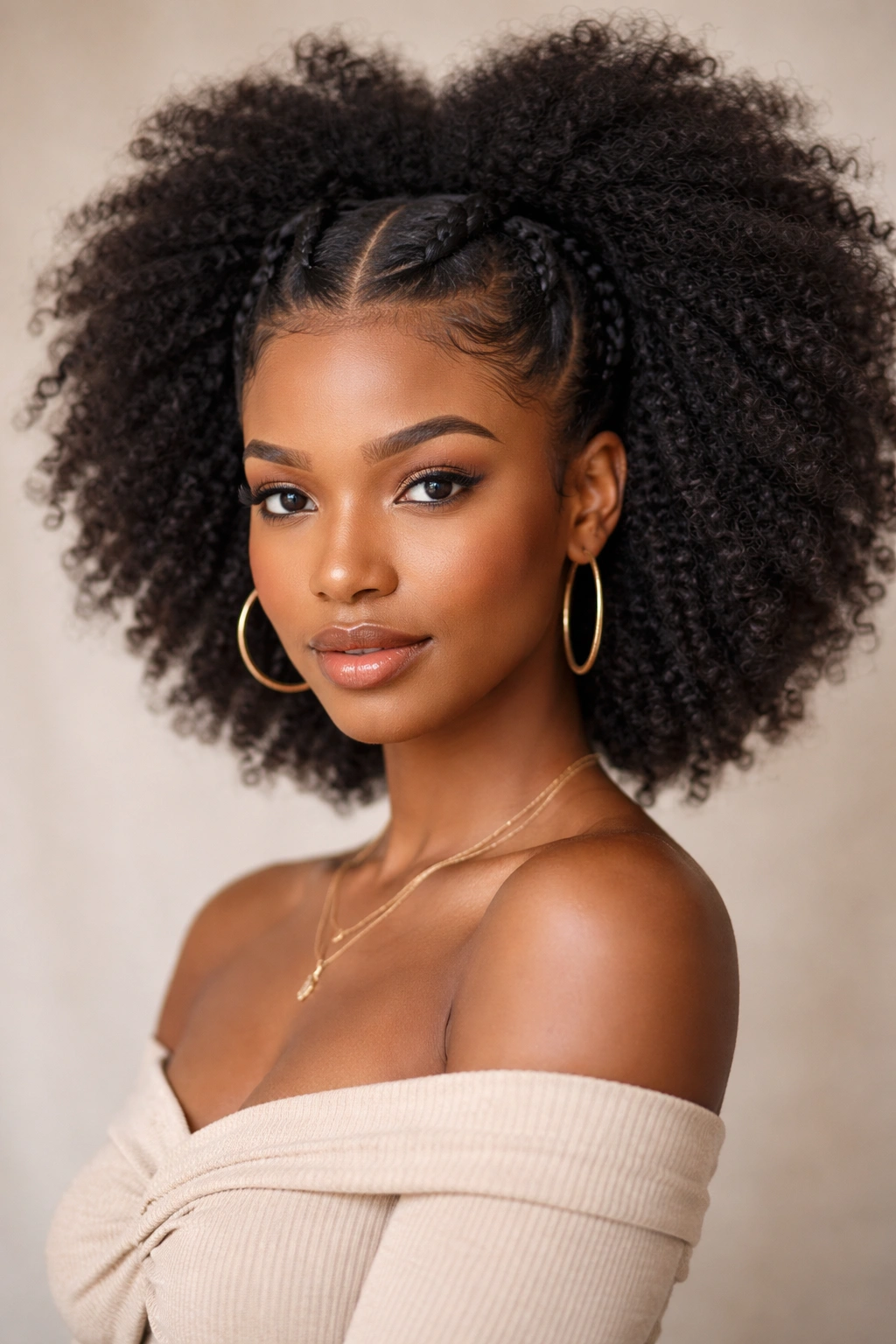
This combination takes two thick braids—usually starting from the front or sides—and fades them into a natural, voluminous afro that takes up the rest of your head. The braids act as a frame for your face while the afro creates impressive volume and presence. The visual impact is striking because you get clean lines where you want them and full, unmanipulated texture everywhere else.
Why This Approach Stands Out
The two-braid transition works beautifully because it creates visual balance without being symmetrical. The braids contain the style slightly while the afro section remains completely free and natural. This combination is particularly flattering if you have a longer afro—anything from four inches and up gives you the presence you need for this look to really shine. The braids themselves can be thick, thin, twisted, or even braided in a more intricate pattern depending on your preference.
What You’ll Need to Pull It Off
- Two sections of hair sectioned cleanly from your hairline back
- Braiding products (gel, edge control, or braid cream)
- A leave-in conditioner or light oil for definition in the afro section
- About 20-30 minutes for the braiding portion (depending on your speed and braid thickness)
- A pick or wide-tooth comb for fluffing the afro section once you’re done braiding
Pro tip: Braid tighter than feels natural the first time you try this—as you move throughout your day, the braids will loosen slightly and look more intentional. If you braid loose, they’ll be completely unraveled by evening.
2. Feed-In Braids Woven Into Afro Crown
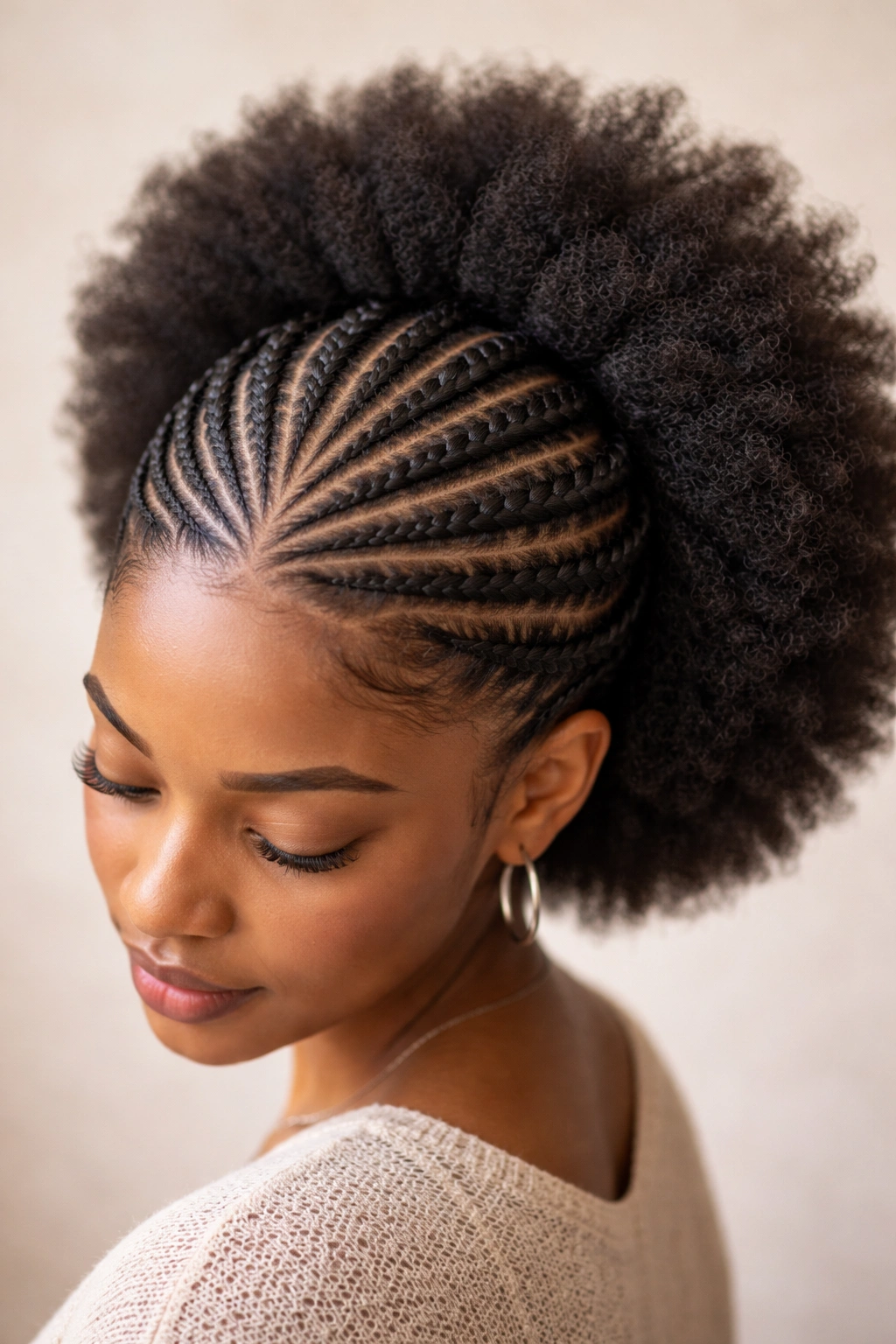
Feed-in braids create an intricate, almost crown-like pattern across the top of your head while the back and sides remain as a full, fluffy afro. This style is particularly elegant because the braids look complex and intentional, but they’re actually just sitting on top of your natural hair rather than requiring your entire head to be braided. The contrast between the detailed braids and the unstructured afro is what makes this look genuinely special.
How Feed-In Braids Transform Your Afro Look
Feed-in braiding is a technique where you add hair gradually as you braid, which makes the braid look thinner and more seamless than traditional box braids or three-strand braids. When you use this technique just on the crown or along the hairline and let the rest stay as an afro, you’re creating a style that feels both carefully styled and completely natural. It’s the best of both approaches in one look. The braids can follow any pattern you imagine—geometric, curved, free-flowing—because they’re sitting on top of your afro rather than dividing it into sections.
Essential Elements for Success
- A clear vision or reference image of the braid pattern you want (this helps your braider understand your intent)
- Feed-in hair matching your texture and color (this doesn’t always have to be braiding hair—you can use your own hair if you’re comfortable with the technique)
- Patience during the installation (this style typically takes 2-4 hours depending on complexity and the number of braids)
- A moisturizing leave-in conditioner for the afro section underneath the braids
- A silk or satin pillowcase to protect the braids and afro while you sleep
Insider note: The afro underneath the braids will get fluffier and more voluminous as the days go on, which actually works in your favor—it fills in around the braids beautifully.
3. Lemonade Braids Meeting Fluffy Afro
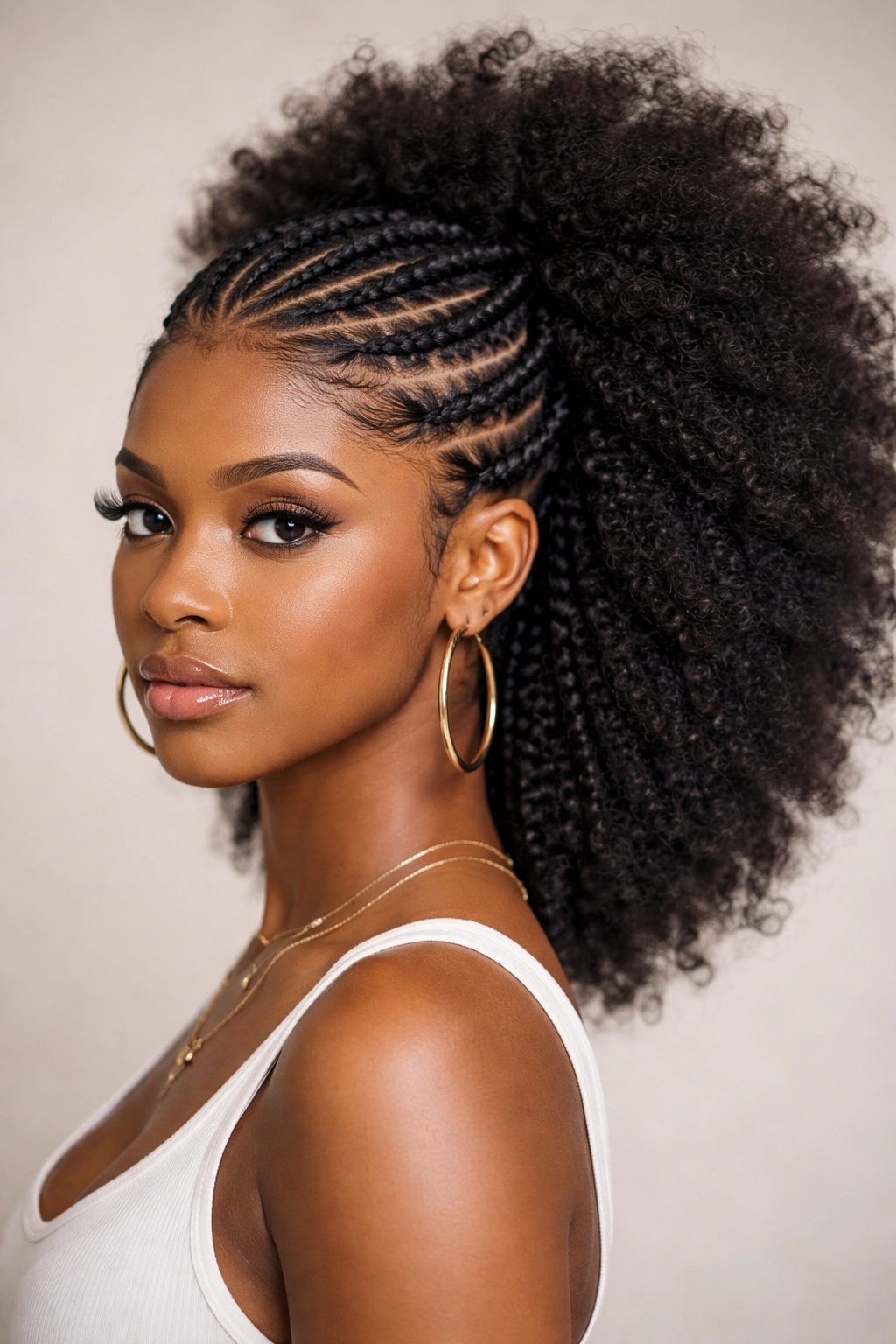
Lemonade braids are those curved, artistic braids that create a specific geometric or free-flowing pattern, usually starting at the hairline. When they meet a full, fluffy afro in the back, you get a high-contrast style that’s equal parts artistic and effortlessly cool. The braids show intentionality and skill while the afro shows confidence and texture. This is the look that makes people pause and ask what you’ve done to your hair.
The Artistic Power of This Combination
Lemonade braids have their own language—they can curve gently, create sharp geometric patterns, or flow in seemingly random but actually carefully planned lines. When these are contained to the front and sides of your head and then release into a natural afro, you’re essentially creating a hairstyle that moves from structure to freedom. The braids are typically thin and delicate looking, which means they don’t overpower the afro; they complement it instead. The contrast in texture is what makes this combination unforgettable.
Getting This Look Right
- Hair that’s clean and moisturized before you start (dry, brittle hair is harder to braid into the curved patterns lemonade braids require)
- A stylist experienced with curved and artistic braid patterns (this is specialized work, and skill matters)
- Braiding hair or your own hair if you’re doing feed-in braids with your natural texture
- 3-5 hours for installation depending on how many braids and how complex the pattern
- Leave-in conditioner and a light oil for the afro section to keep it looking fresh
Worth knowing: Once you get lemonade braids done, they stay looking sharp for about 4-6 weeks with proper care, and your afro will only get more voluminous as time goes on—which actually enhances this style rather than detracting from it.
4. Cornrows With Full Afro Back Section
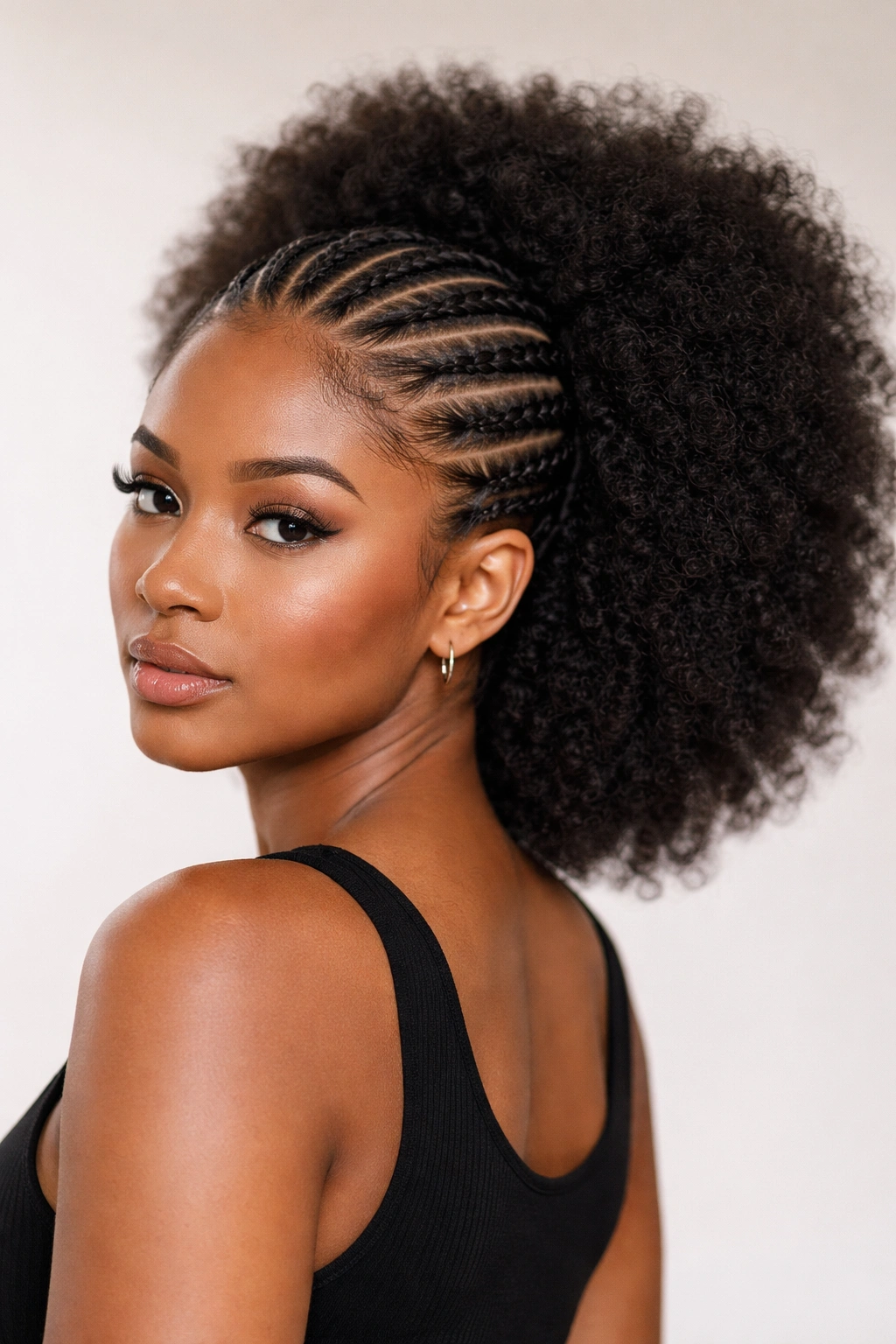
Classic cornrows running from your hairline to the crown transition into a full, unbraided afro in the back. This is possibly the most practical and versatile of all the combinations because it’s clean enough for professional settings but bold enough for any other occasion. Cornrows are that perfect middle ground—they look intentional and neat without requiring constant restyling of the braided sections.
Why Cornrows Create the Perfect Foundation
Cornrows sit flush to your scalp, which means they’re practical for active days, they protect your hair while you’re braiding it, and they create a visual anchor that makes the afro section behind them look even more impressive. The braids can go straight back, follow a curved pattern, or even create an artistic design if your stylist is creative. The key is that cornrows frame and define the space for your afro, rather than competing with it. The result is a style that’s both groomed and gloriously free.
What This Style Requires
- Clean hair with enough natural moisture to braid comfortably (cornrows pull tighter than some other braids, so hair that’s too dry might feel uncomfortable)
- A stylist who can execute clean, consistent cornrow lines (uneven cornrows will disrupt the whole look)
- 1-2 hours for installation depending on how many cornrows you’re getting and how complex the pattern
- A leave-in conditioner for the afro section to encourage curl definition and shine
- Planning to wear this style for 2-3 weeks for maximum value
Real talk: Cornrows are genuinely one of the most low-maintenance braided styles once they’re in. You’re not constantly fussing with them or worrying about them unraveling because they’re literally braided against your scalp.
5. Side-Parted Braids With Voluminous Afro
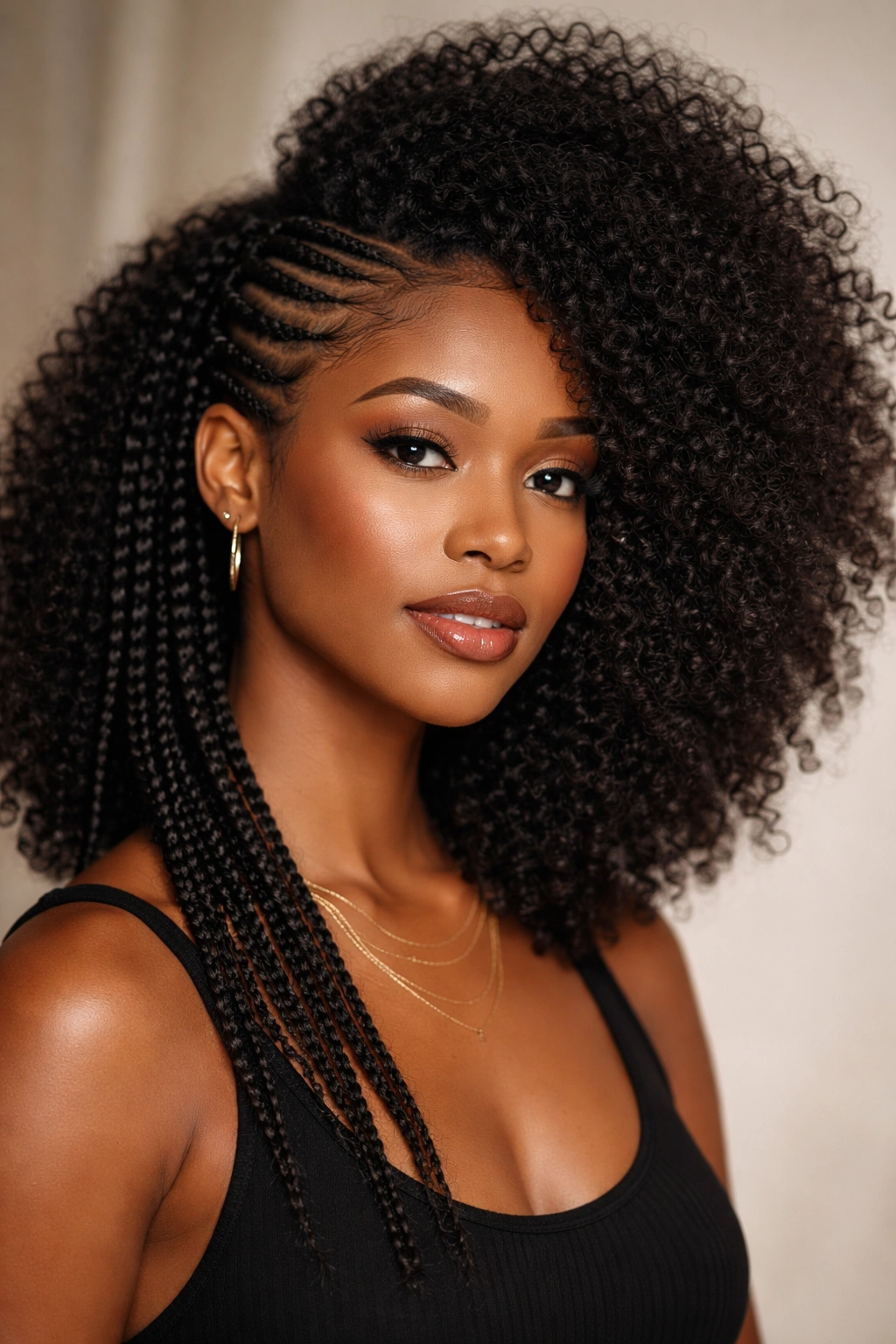
This style takes braids that sweep from one side of your head, often starting at the temple and flowing toward the back, while the opposite side stays as a full, bouncy afro. The asymmetry of this look is what makes it special—it’s intentional and confident without being overdone. You get the detail of the braids exactly where you want to showcase them while maintaining the volume and texture of your natural afro everywhere else.
The Power of Asymmetrical Balance
When you braid one side of your head more heavily while leaving the other side as a full afro, you’re creating visual movement and interest. This style works particularly well if you have a longer afro or if your hair is thicker on one side than the other—you can actually use the styling to balance your proportions. The braids can be thick or thin, can feature added hair or just your natural hair, and can follow any line you choose. The afro section creates a soft frame that makes the structured braids feel even more impactful.
Execution Details That Matter
- A clear side part (this is where the look’s visual impact comes from, so take time with this)
- Braiding products to keep the braided section looking polished throughout the day or week
- A leave-in conditioner for the afro side to keep it looking defined and full
- 45 minutes to 2 hours depending on how many braids you’re doing and their thickness
- A styling cream or gel to define the part line and keep it sharp
Pro tip: This style actually looks better a few days in rather than immediately after installation—the afro fluffs up and gains volume, which increases the contrast with the braids.
6. Half-Up Braids, Half-Down Afro
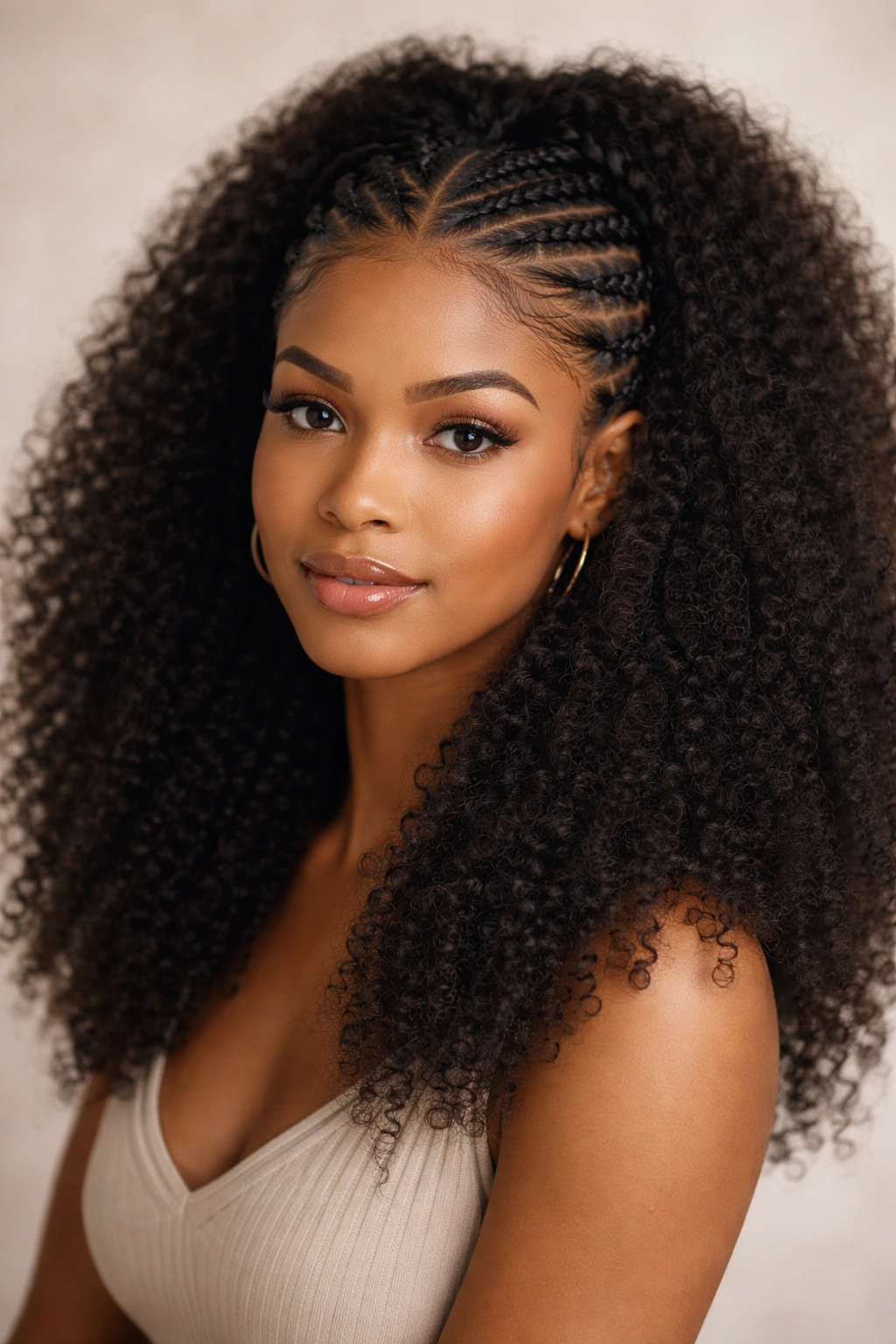
Take the top half of your hair and braid it up into braids that either stay in place with a clip or wrap around into a crown-like formation, while your bottom half remains completely unbraided and voluminous as a full afro. This style is practical and pretty—it gets some hair off your face and neck without committing your whole head to braiding. It’s the sweet spot between wanting style and wanting freedom.
Why This Hybrid Approach Works
Half-up, half-down styles let you have multiple looks in one style. From the front, you see the braids and the detail work. From the back or at an angle, you see the full afro. You get to experience both the sculptural quality of braids and the organic beauty of natural, unbraided texture. This is also genuinely practical for people with jobs or lifestyles where they need their hair contained sometimes but want to show their afro other times. You’re essentially getting two different hairstyles in one installation.
Making This Combination Work
- Enough hair on your crown to have a substantial section to braid (this works better with hair that’s at least four inches, ideally longer)
- Braiding products for the braided section to keep it looking neat
- A leave-in conditioner for the bottom half to encourage curl definition
- 30-45 minutes for installation depending on how intricate you want the braids to be
- A hair clip or band if you’re going for a fully secured half-up look, or nothing if you want the braids to just fall naturally
Worth knowing: You can actually style this look differently depending on the day—sometimes wear the braids fully up and pinned, sometimes let them fall gently, sometimes flip your whole head upside down to dry or refresh the texture. It’s flexible.
7. Twisted Braids Spiraling Into Afro
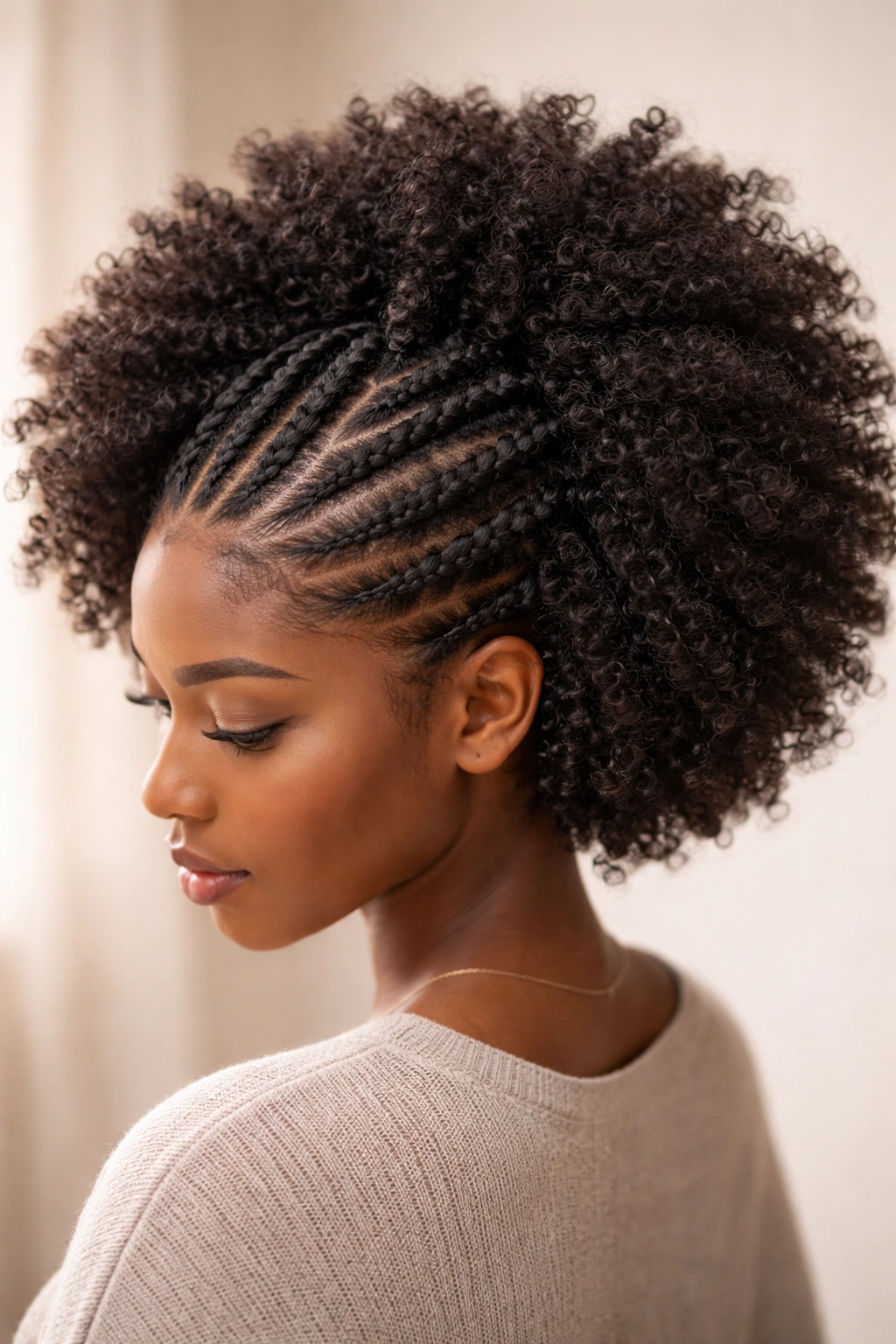
Instead of traditional braids, use twisted sections (two-strand twists or three-strand spirals) that flow from your scalp out, and let them fade into and merge with your full afro. Twists have a completely different visual quality than braids—they’re curvier, more organic looking, and have a beautiful spiraling pattern that’s distinct from the geometric patterns of braids. When twists meet an afro, you get a unified look because twists are actually closer to your natural curl pattern than traditional braids are.
The Textural Magic of Twists Meeting Afro
Twists and an afro are visually cohesive in a way that braids sometimes aren’t—they’re closer on the spectrum of natural texture. When you do twists and then let them unravel or blend into your unbraided afro, you get movement that flows naturally rather than looking like two different textures competing for attention. The twists can be started thin and grown progressively as they move toward your natural afro, or they can be uniform and then just release into frizz and texture. The result feels intentional but also undeniably natural.
What You Need for Twisted-Afro Combos
- A moisturizing product suitable for twisting (twisted hair dries out faster than braided hair, so conditioning is key)
- Twisting cream or oil to encourage definition and shine in the twisted sections
- A leave-in conditioner and possibly a curl cream for the unbraided afro section
- 1-3 hours depending on how many twists and how long your hair is
- The understanding that twists will start to loosen and unravel after about 1-2 weeks, which many people actually love because the texture gets even more interesting
Insider note: Some people two-strand twist their entire head and then just let the twists unravel naturally over 2-3 weeks into a voluminous, refreshed afro—it’s like having multiple styles in one installation.
8. Braided Headwrap With Exposed Afro
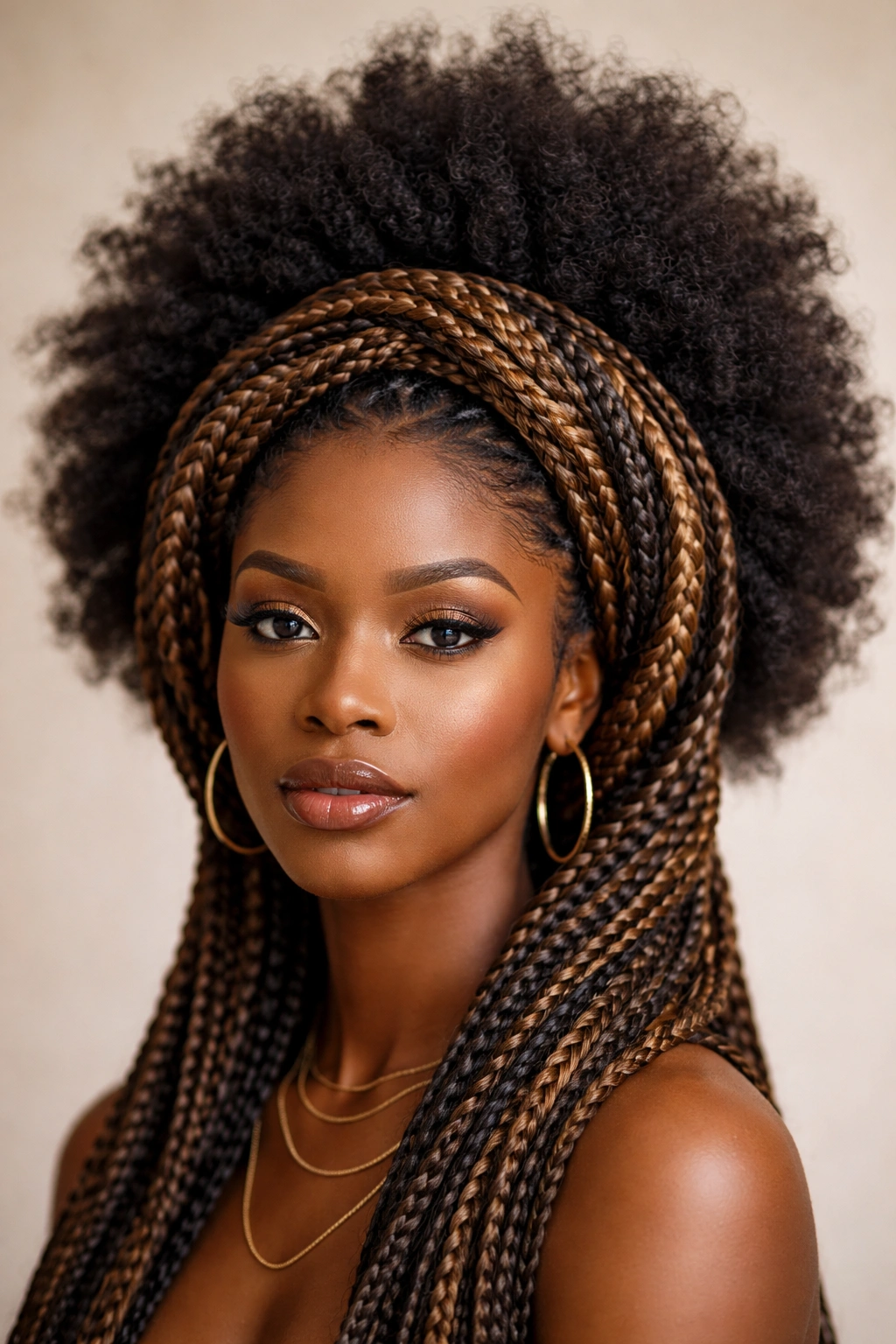
Create a wrap or turban-like style where braids form the structure and framework around your head, with your natural afro fully visible and exposed in the center. This style is boldly artistic and works particularly well for people who want to showcase their afro volume while adding a sculptural, wearable element. The braids literally frame your afro like a work of art.
The Artistic Expression Potential
When braids become the structure of a wrap rather than the primary style, you’re thinking about your hair differently—it becomes an art piece that you wear on your head. The braids can wrap around, can cross over the crown, can form geometric patterns, or can flow asymmetrically depending on your creative vision. Your afro isn’t hidden or contained; it’s celebrated as the central focus while the braids add dimension and intentionality. This is a look that announces you have a very specific vision for how you want to show up.
Building This Look
- Enough length in the braided sections to wrap around your head (this might mean you start with longer hair or you use longer braiding hair)
- A clear plan or reference image of how you want the wrap to flow (this is creative work, and having a vision helps immensely)
- Braiding products to keep the wrap sections looking defined and smooth
- A leave-in conditioner and possibly styling gel or mousse for the exposed afro section
- 2-4 hours for installation depending on the complexity of your wrap pattern
- Willingness to be bold—this isn’t a subtle look
Real talk: This style makes a statement. It’s not for days when you want to blend in; it’s for days when you want your presence to be felt before you even open your mouth.
9. Braids on Top, Picked-Out Afro Below
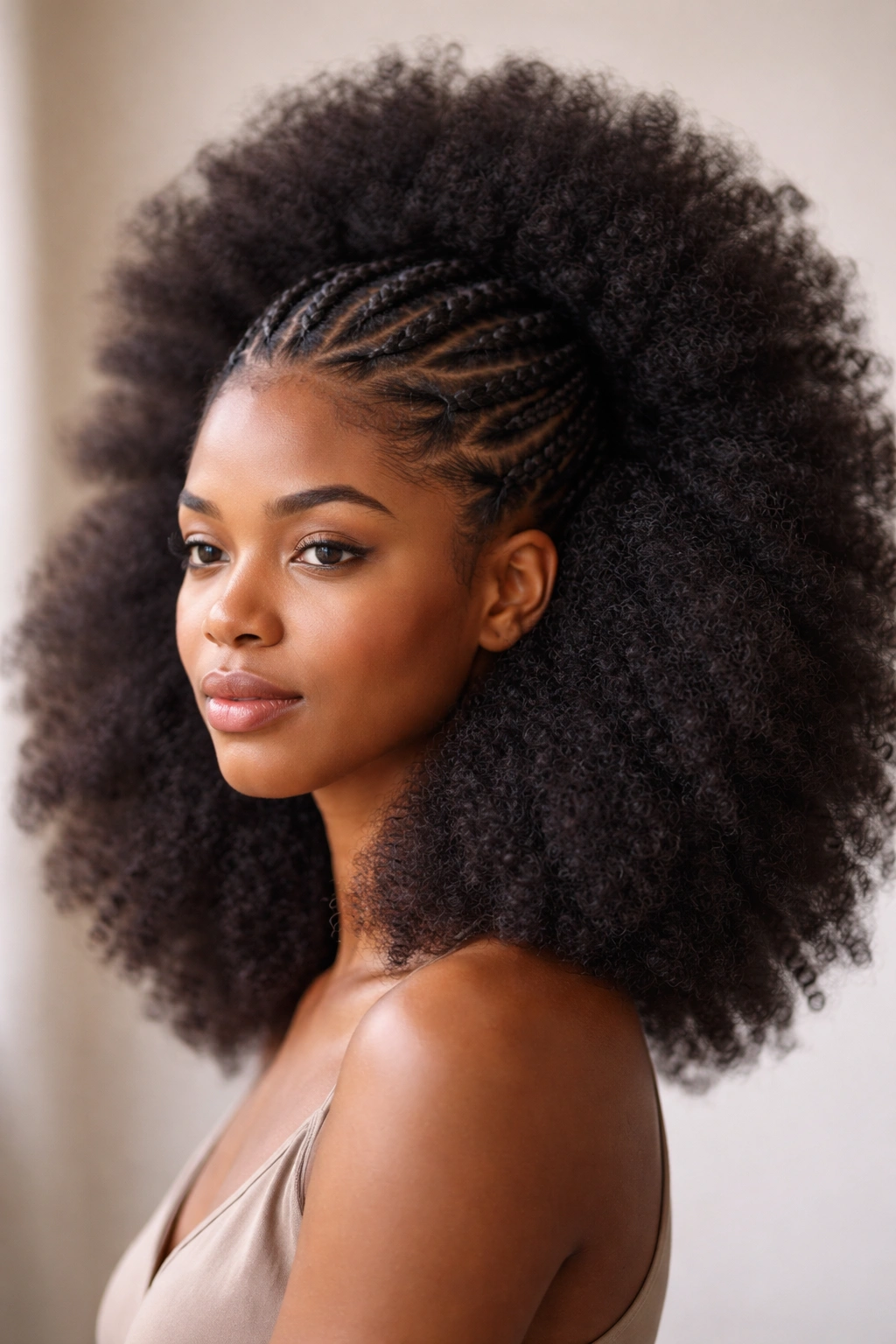
Do detailed, complex braids on just your crown—they can be multiple thin braids, one thick braid, feed-in braids, or any pattern you love. Then pick out and fluff your afro to maximum volume for the rest of your head. The picked-out texture from a pick gives you a fluffier, more voluminous finish than just leaving your hair natural, and it creates a distinct visual layer above the braids. This combination is particularly stunning if you have longer hair.
Why Picking Out Your Afro Changes Everything
There’s a difference between an afro that you simply don’t braid and one that you’ve deliberately picked out with a pick or comb to encourage maximum volume and texture. When you pair that picked-out fullness with braids on top, you’re creating height and dimension that’s visually striking. The picked texture also has a slightly different aesthetic than unpicked texture—it reads as more intentional and voluminous. This is a look that works beautifully in almost any setting.
Making This Combination Pop
- A pick (a metal comb with wide teeth, often called an afro pick—this is essential for getting the fullness you want)
- Braiding products for the crown section (gel, edge control, or braiding cream)
- A leave-in conditioner and possibly a lightweight oil for the picked-out section (you want it defined, not frizzy)
- 45 minutes to 1.5 hours depending on how intricate your crown braids are
- A clear vision of how voluminous you want the picked-out section—you control this, so go as big or as modest as you prefer
Pro tip: Pick your afro out gently in sections rather than aggressively all at once—this gives you more control over the volume and texture, and you’re less likely to break your hair.
10. Zigzag Braids Meeting Textured Afro
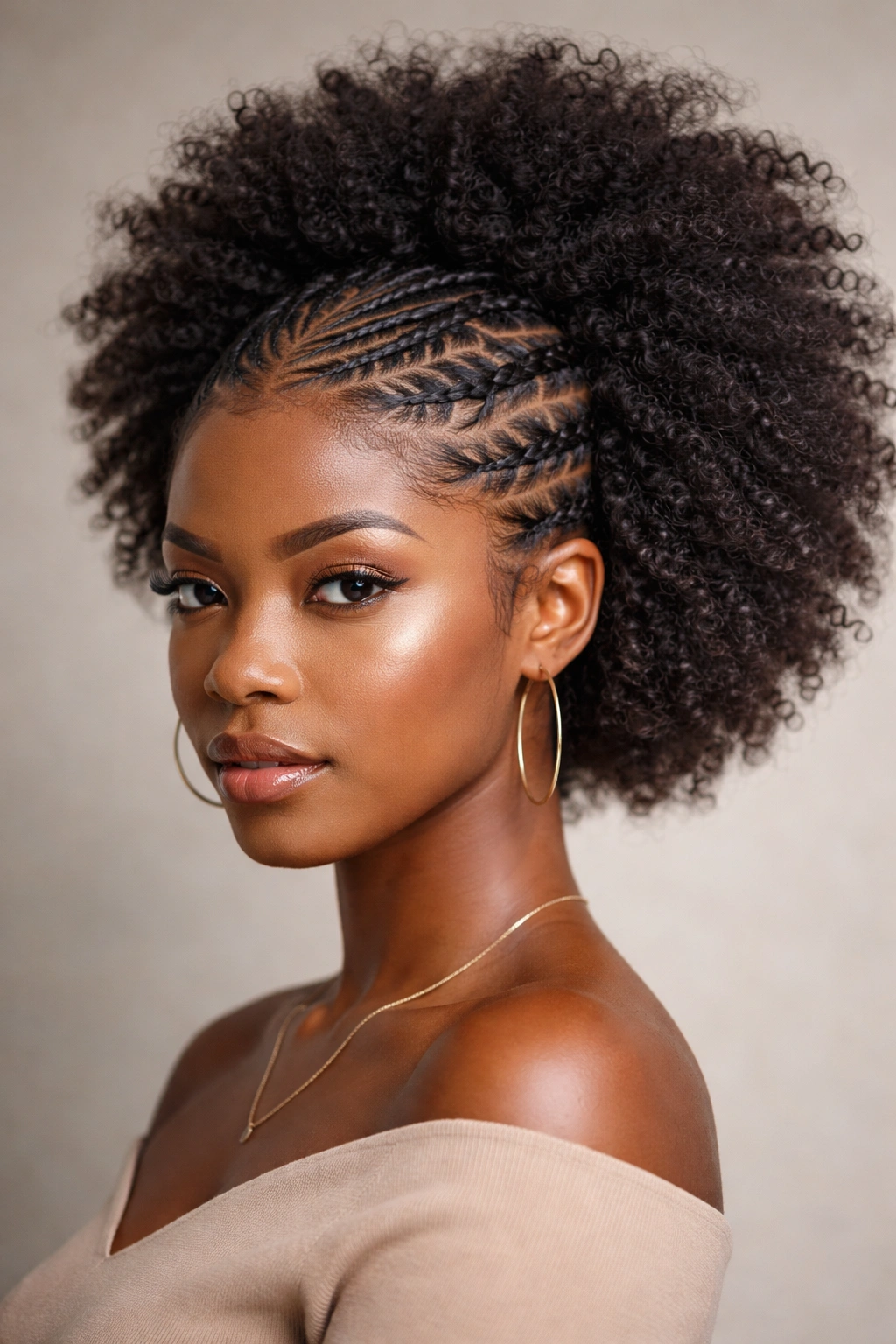
Use a zigzag braiding pattern—where your braids literally follow a zigzag or chevron geometric design across your head—and let that transition into your natural, textured afro. The geometric precision of zigzag braids combined with the organic, unstructured nature of an afro creates a genuinely striking visual contrast. This style says you pay attention to detail while also celebrating your natural texture.
The Visual Impact of Geometric Precision
Zigzag braids are attention-grabbing because they follow such a clear, artistic pattern. When that pattern is contained to a specific section of your head and then releases into your natural afro, you’re creating a style that’s organized and free at the same time. The braids draw the eye and create movement, while the afro section provides visual rest and balance. This combination works especially well if you have a good amount of hair volume—the afro needs to be substantial enough to stand up to the geometric braids.
Pulling Off Zigzag Braids Into Afro
- A stylist who has experience with geometric braiding patterns (this is specialized skill)
- Clean, well-moisturized hair before you start (zigzag patterns can feel tight at the bends, so you want your hair to be in good condition)
- Braiding products to keep the zigzag sections looking sharp and defined
- A leave-in conditioner and possibly edge control for the afro section to keep your edges clean
- 2-3 hours for installation depending on the complexity of your zigzag pattern
- Willingness to let people ask you about your style—this look gets compliments
Worth knowing: Zigzag braids are a statement. They’re not subtle. They’re for people who like being noticed and who have the confidence to carry off bold, artistic styling.
11. Micro Braids Fading Into Afro
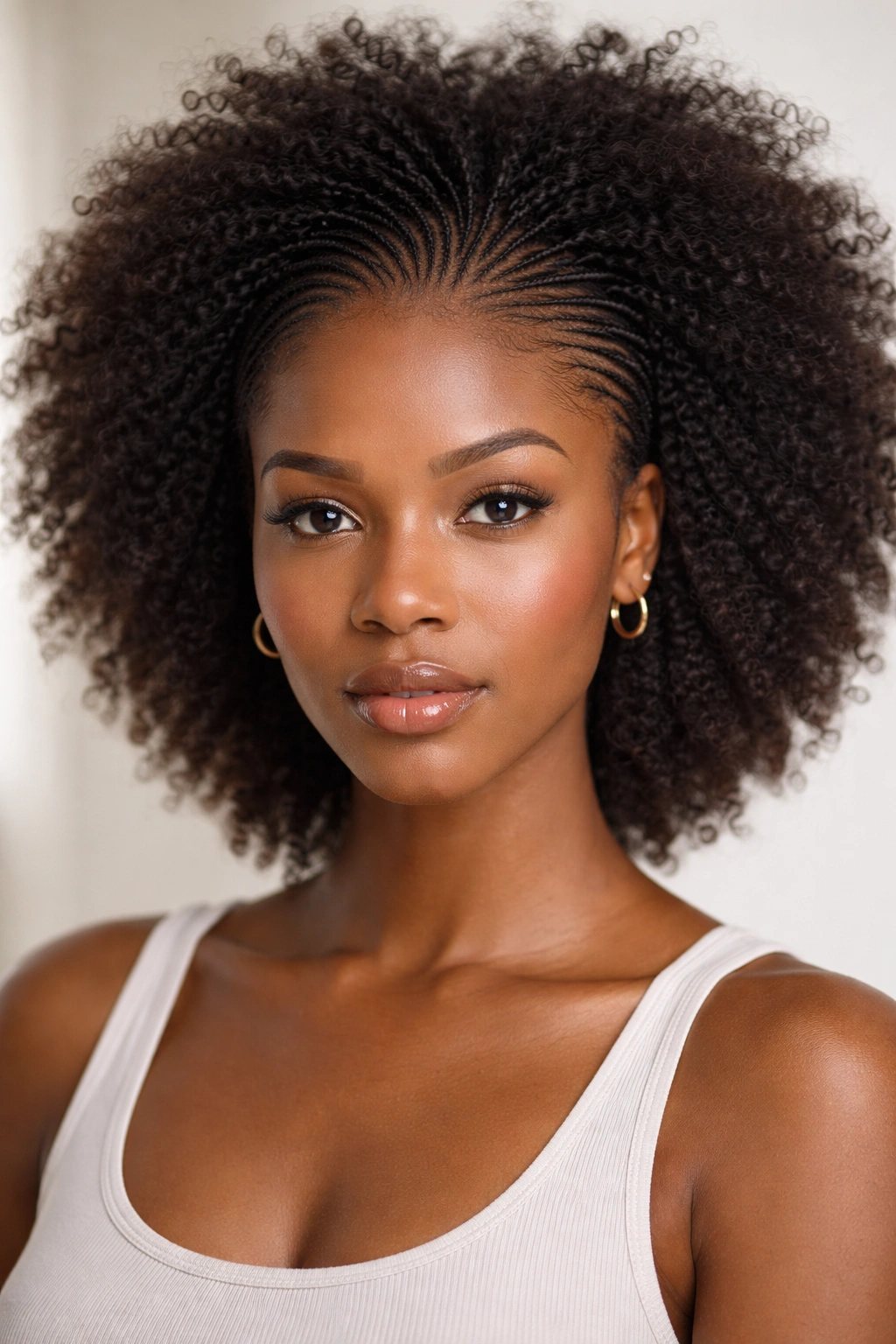
Create very thin, delicate micro braids that start at your roots and gradually, progressively blend and fade into your natural afro texture. Instead of having a clear line between braided and unbraided sections, the transition is seamless and gradual. This style requires a bit more thought in the installation, but the result is a unified look where the braids and afro feel like they’re part of the same style rather than two competing elements.
The Sophisticated Art of Seamless Transitions
Micro braids are thin enough that they can actually look quite close to your natural texture, especially if they’re the same color as your hair. When you braid progressively—starting with thin braids at the roots and literally losing the braids as they move toward your ends—you create a style that flows from controlled to free. This requires careful planning but results in something that feels effortless and intentional at the same time. People often can’t quite pinpoint what’s different about your hair; they just know it looks good.
Requirements for Seamless Micro-Braid-Into-Afro
- Hair that’s at least medium length (at least 3-4 inches) so you have room for the transition to work
- A stylist experienced with fade techniques and progressive micro braiding
- Braiding products for the braid sections
- A leave-in conditioner for the entire head to keep both the braided and unbraided sections healthy
- 3-5 hours for installation depending on how many micro braids and how long the transition section is
- Maintenance every 2-3 weeks to keep the transition looking clean as your hair grows
Insider note: This style can actually be refreshed without completely redoing it—you can re-braid just the top sections and let the rest continue to transition into your afro.
12. Braided Bangs With Full Afro Crown
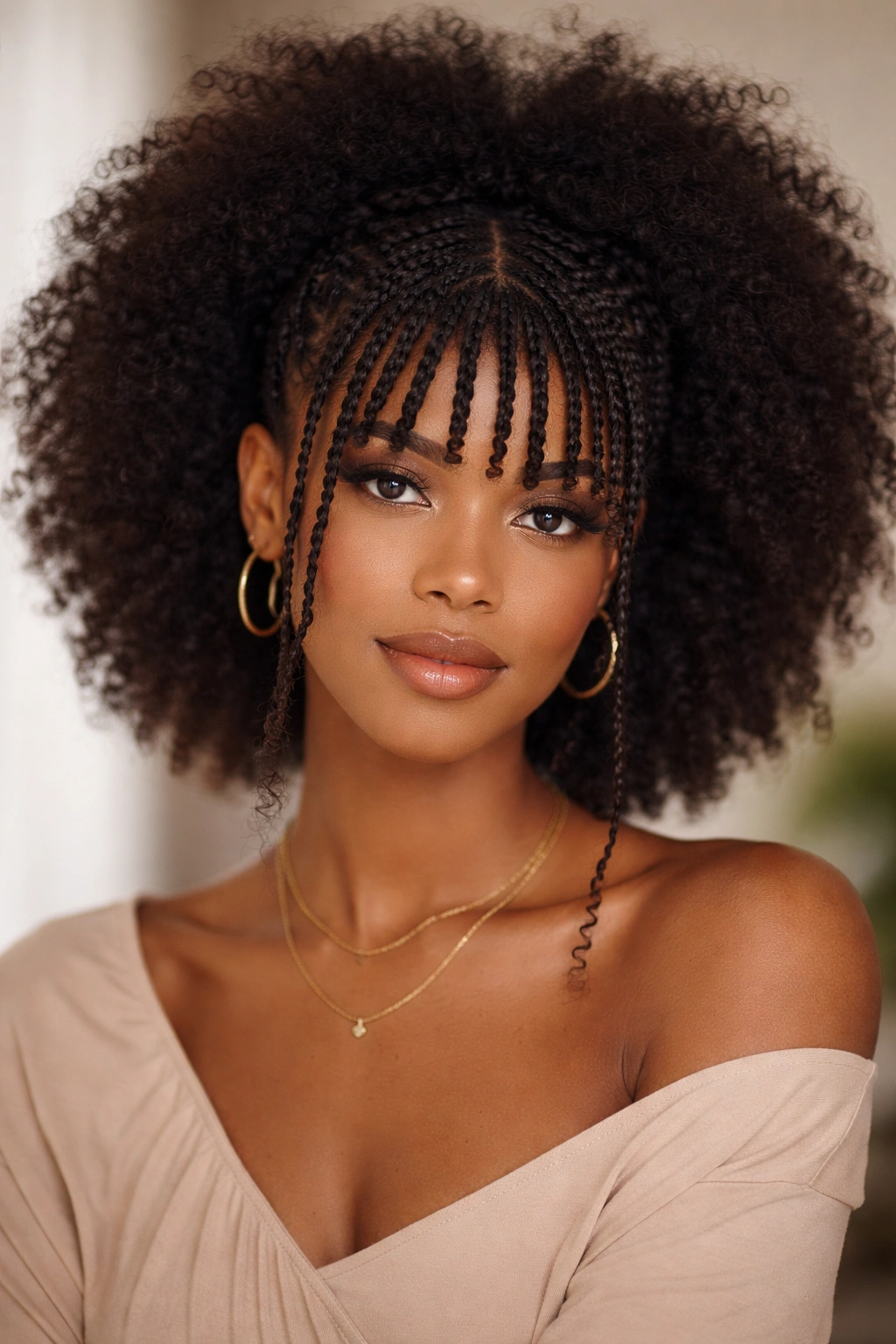
Create braided bangs—whether thin or thick, simple or complex—that frame your face and define your forehead, while your entire crown and back remain as a full, voluminous afro. This style is playful and functional—the braids keep hair off your face while the afro makes a presence statement. It’s perfect for people who like the practicality of having something to do with their hair but also love the freedom of an afro.
Why Braided Bangs Elevate Your Whole Afro
Braided bangs draw attention to your face in a flattering way—they frame your features and create balance. When the rest of your head is a full, unbraided afro, your face becomes the focal point in the very best way. This style is also incredibly practical: the braids stay in place, they don’t require constant fussing, and you get to show off the full beauty of your afro without sacrificing any practicality. This is a sophisticated, confident look that works for almost any face shape.
Creating Braided Bangs That Work
- Clear, clean bangs section before you start (the line between your bangs braids and your afro is part of the style, so get this right from the beginning)
- Braiding products to keep the bangs looking neat throughout the day or week
- A leave-in conditioner and curl cream for the afro section to keep your crown looking full and defined
- 20-30 minutes for installation (braided bangs are quick because you’re only braiding a small section)
- Regular maintenance if you’re keeping this style long-term—the braids will loosen after 2-3 weeks, so plan for touch-ups or refreshes
Pro tip: Braided bangs look particularly good if you have a longer afro—the length of the crown afro balances the detail of the braided bangs perfectly.
Final Thoughts
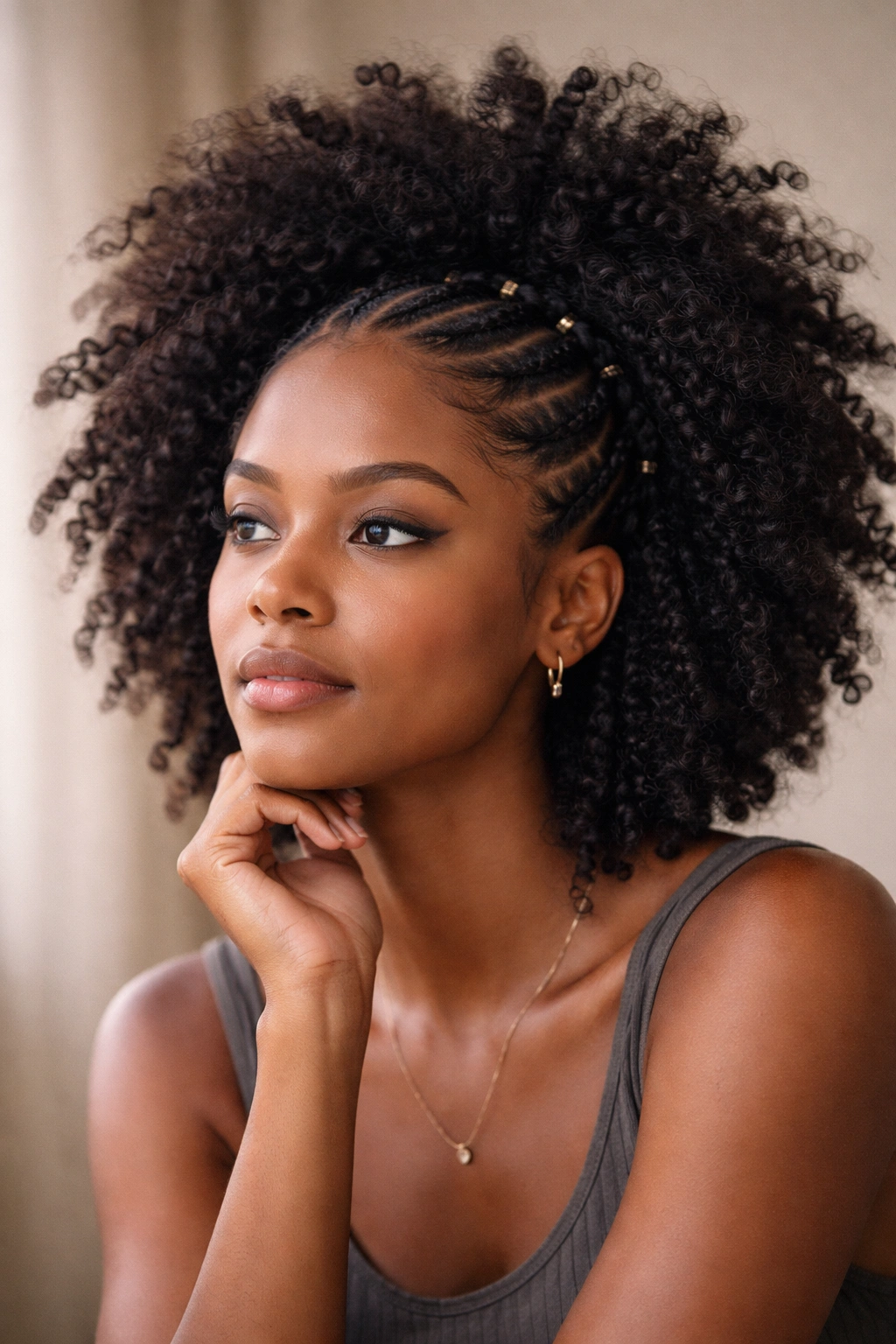
The beauty of combining afros with braids is that you’re not limited to one expression or one look. These twelve combinations represent completely different aesthetic choices and practical realities, yet they all celebrate your hair’s natural texture and possibility. Some of these styles are quick to install and easy to maintain, while others are detailed artistic statements that require more time and intention—and both approaches are equally valid depending on what you need in that moment.
The key is choosing a combination that makes you feel genuinely good, not just one that looks good in a photo. You’re going to be wearing this style for days or weeks, so pick something that aligns with your lifestyle, your confidence level, and what actually makes you feel like yourself. Whether you’re drawn to the graphic precision of geometric braids, the seamless flow of twists, the practicality of cornrows, or something completely different, there’s an afro and braid combo waiting for you to bring it to life. The fact that you’re exploring these options means you’re already thinking about your hair intentionally—that’s genuinely where the best styles start.