



Tapered afro cuts have become the gold standard for Black women who want shape, dimension, and low-maintenance style that actually honors their natural hair texture—and they’re especially powerful after 30. There’s something about the precision of a well-executed taper that communicates confidence, intention, and self-knowledge. Unlike the fuller, rounder afros that dominated a decade ago, tapered cuts work with your hair’s natural volume while creating clean lines and movement that frame the face beautifully. They’re sophisticated without being corporate, bold without being high-maintenance, and they photograph exceptionally well across every skin tone.
The real magic of a tapered afro isn’t just about cutting away length at the sides and back—it’s about understanding how your hair grows, where your natural texture shines, and how to enhance your bone structure and personal aesthetic. A good taper creates the illusion of more volume on top, elongates the neck, and makes your features feel lifted and intentional. Women over 30 typically appreciate cuts that require less daily styling effort while still looking polished enough for a boardroom, a date night, or a casual Sunday with friends. That’s exactly what these cuts deliver.
The cuts that follow represent real, tested styles that work across different hair densities, face shapes, and lifestyle needs. Whether you’re looking for something subtle and understated or bold and statement-making, you’ll find options here that align with your personal aesthetic and daily routine.
1. The Sculpted Fade with Textured Crown
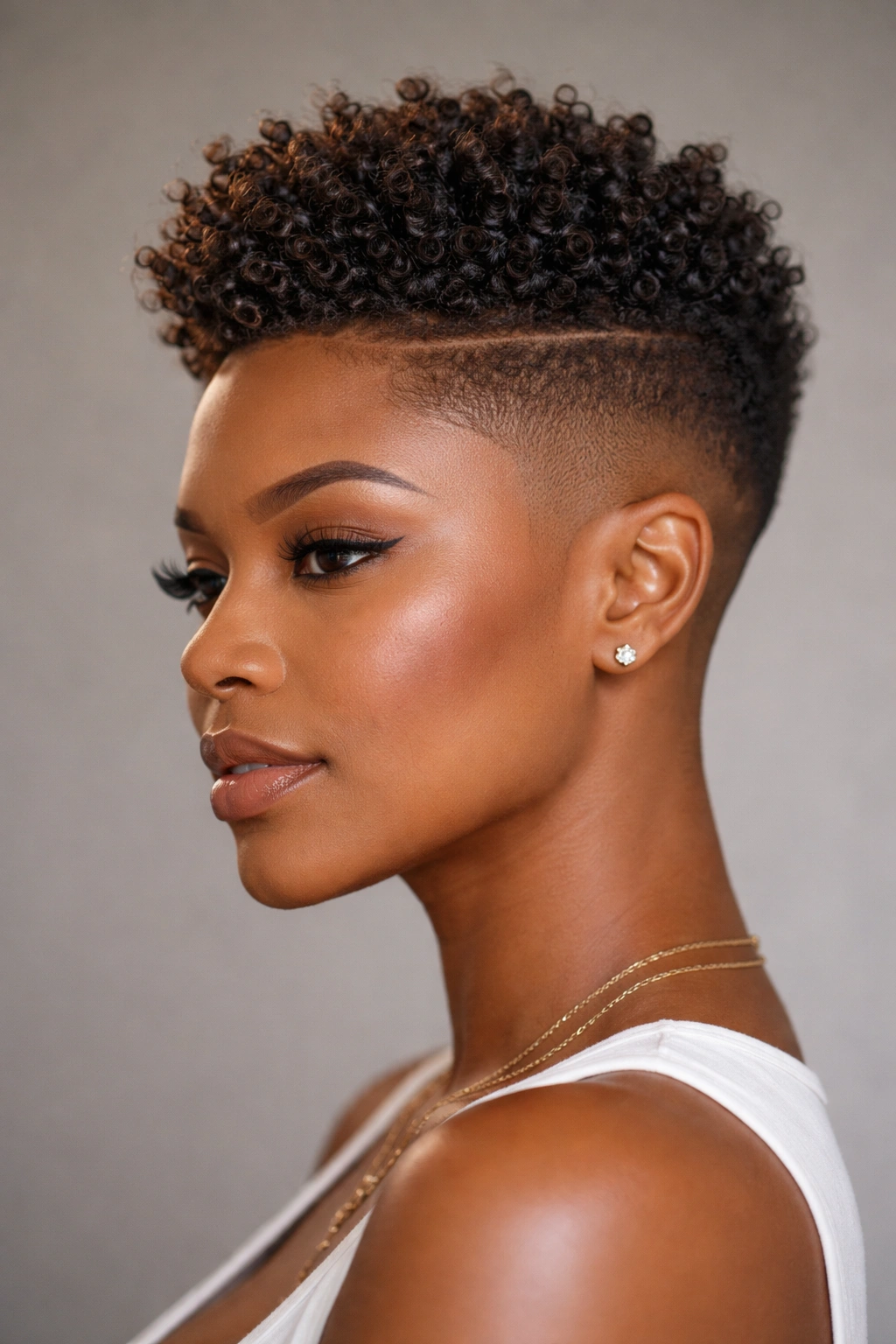
This is the refined cousin of the basic fade—it keeps sides and back close to the scalp for a sleek, intentional look while leaving the crown fuller and more textured. The fade doesn’t just disappear the hair; it’s sculpted with precise lines that create actual dimension rather than just shortness. Your barber or stylist blends the fade gradually upward, typically starting at the ears and tapering toward the back of the neck, so there’s real craftsmanship in how clean the transition looks.
Why This Works for Mature Skin Tones
The close fade at the sides and back exposes your jawline, cheekbones, and collarbone—all things that feel more elegant and powerful as you get older. It also creates an immediate sense of polish without requiring daily styling. The textured crown gives you dimension and movement without bulk, so your hair looks intentional rather than just “short.”
Key Features
- Fade typically sits at a #1 or #2 clipper guard at the very closest point, then blends up gradually
- Crown is left 2-3 inches for texture and movement
- Works best when maintained every 2-3 weeks to keep the fade clean
- Requires minimal daily styling—literally just finger-combing or a light pick when you wake up
- Looks equally good slicked back with gel for formal occasions or worn with natural texture
Pro tip: When you book your appointment, ask your stylist to fade the back with emphasis on sculpting around the nape of your neck—this creates a sophisticated finishing detail that makes the whole cut look more intentional.
2. The Temple-Tapered Afro with Sidepart Definition
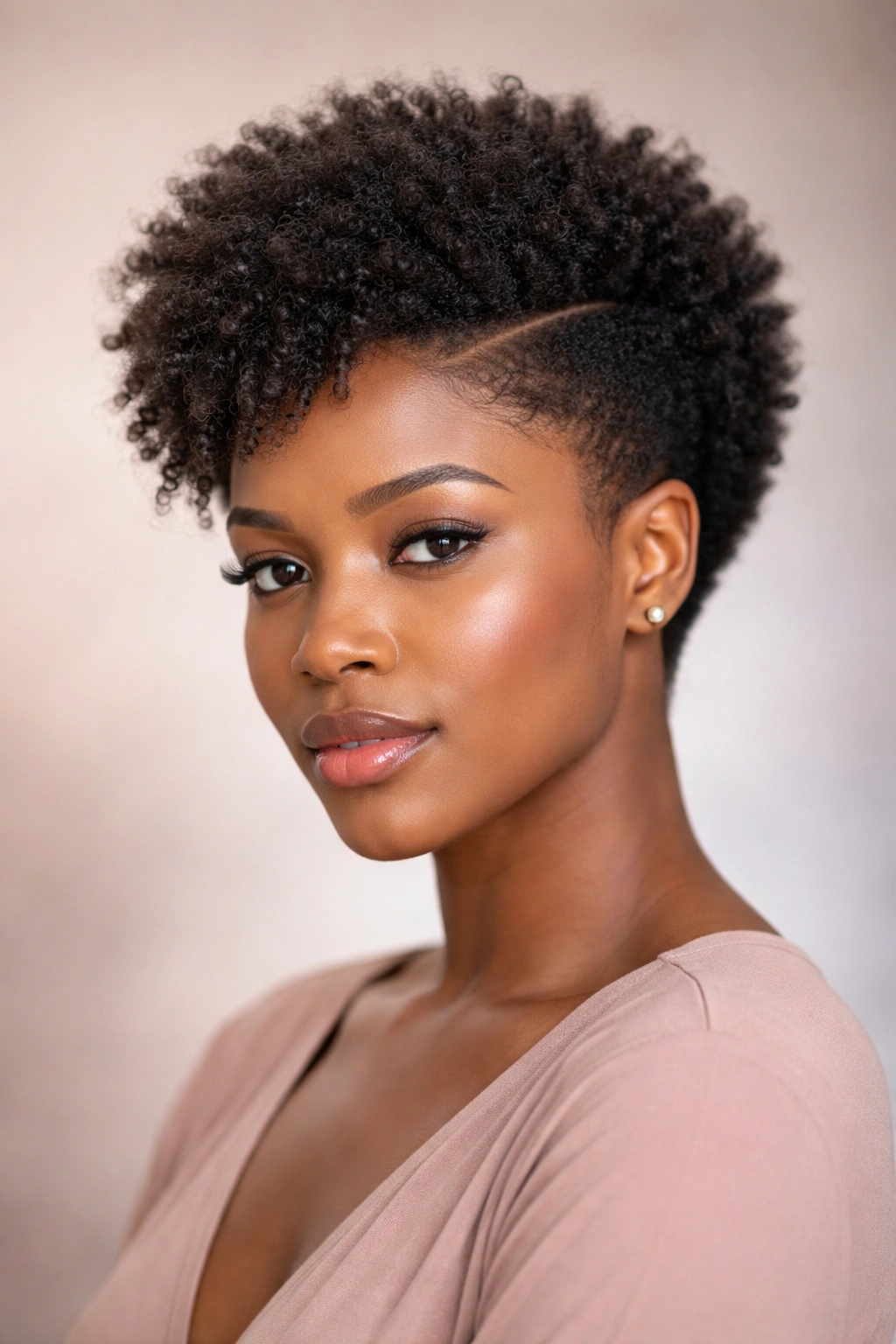
This cut keeps significantly more hair on top and sides, but tapers the temples and back—creating definition around the face and ears that reads as intentional and polished. The sidepart gets etched into the fade with precision, and that single line does enormous work in terms of how sophisticated the entire cut looks. You get to keep density and fullness, but the taper and part line create shape and structure that elevates the whole aesthetic.
Why This Works for Mature Skin Tones
As your hairline and temples mature, a tapered temple detail actually works with those changes rather than against them. The taper directs attention inward toward your face rather than trying to hide anything. A defined sidepart creates visual interest and feels intentional in a way that reads as very grown-up and self-aware.
Key Features
- Temples are faded using a #1 or #1.5 clipper, creating a clean line from ear level
- Sidepart is etched with precision to create visual separation
- Top and crown retain 3-4 inches for movement and dimension
- Back tapers gradually rather than fading all the way down
- Can be styled sleek with gel or worn with natural texture, depending on occasion
Worth knowing: This cut can work with a receding hairline or thinning temples because the taper actually creates the illusion of cleaner lines rather than drawing attention to hair loss. The precise part line is the focal point, not the hairline.
3. The Undercut Fade with Voluminous Top
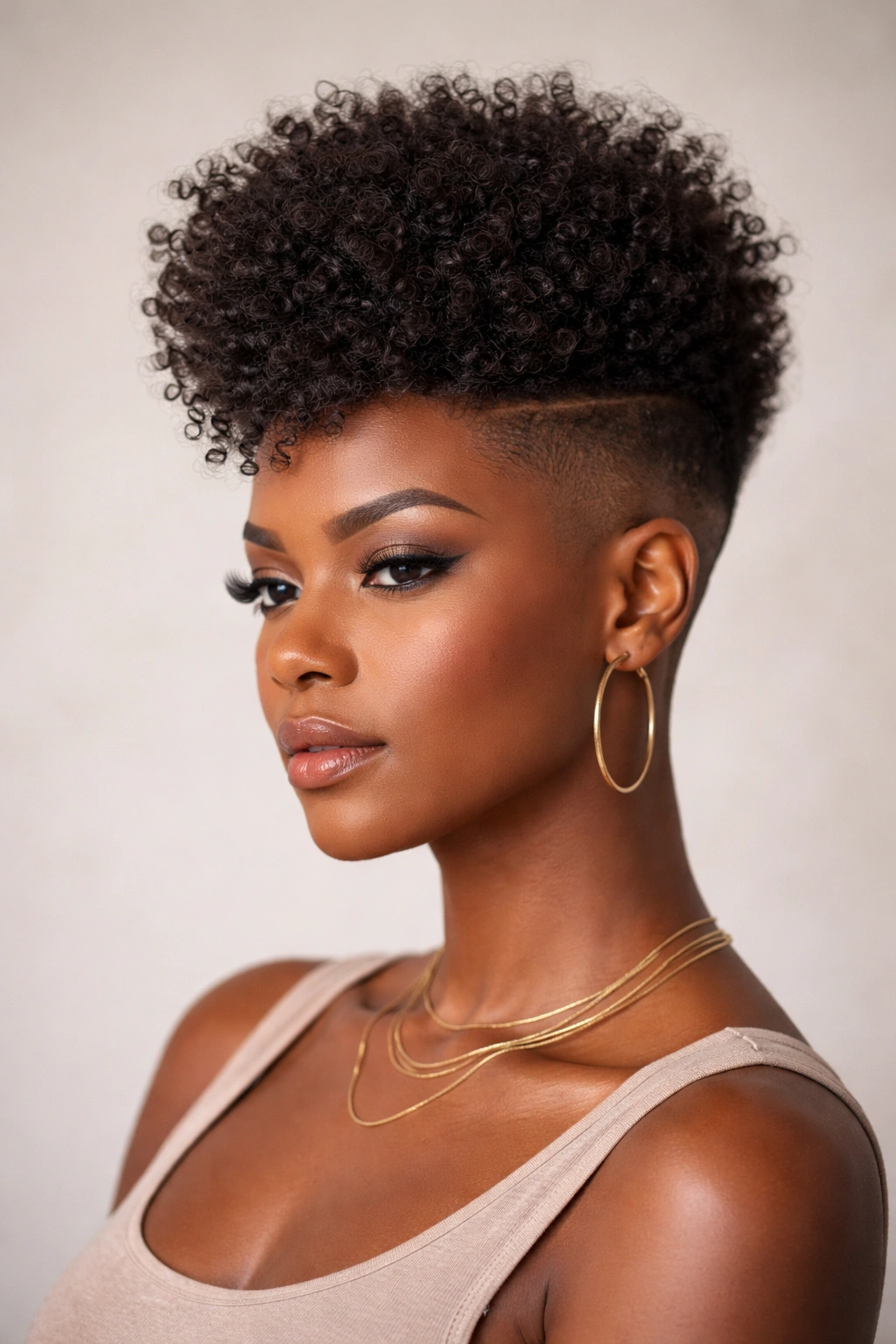
An undercut combines a fade at the sides and back with a significant length differential between the top and everything else—usually 3-4 inches of textured volume on top sitting above a closely faded base. It’s bold and definitely makes a statement, but on women over 30, it reads as artistic and intentional rather than just trendy. The key is making sure the transition between lengths creates actual dimension rather than just looking choppy.
Why This Works for Mature Skin Tones
The substantial volume on top feels powerful and modern without being youthful-trying. You’re not mimicking someone’s 23-year-old aesthetic; you’re using an undercut structure to create genuine movement and style. The closely faded sides create a striking contrast that makes your face feel more defined and your features feel lifted.
Key Features
- Sides and back fade to a #1 guard starting mid-ear level
- Top and crown are left 3-4 inches with texture and layers built in during the cut
- Transition between lengths is carefully blended rather than blunt
- Requires styling product (pomade, gel, or mousse) to shape and direct the top section
- Very photogenic and creates excellent visual interest from the front
Insider note: When you’re consulting with your stylist about this cut, ask them to cut layers into the crown rather than just one blunt length on top. Those internal layers create movement and texture that make the whole cut look less heavy and more dimensional.
4. The Graduated Taper with Clean Edges
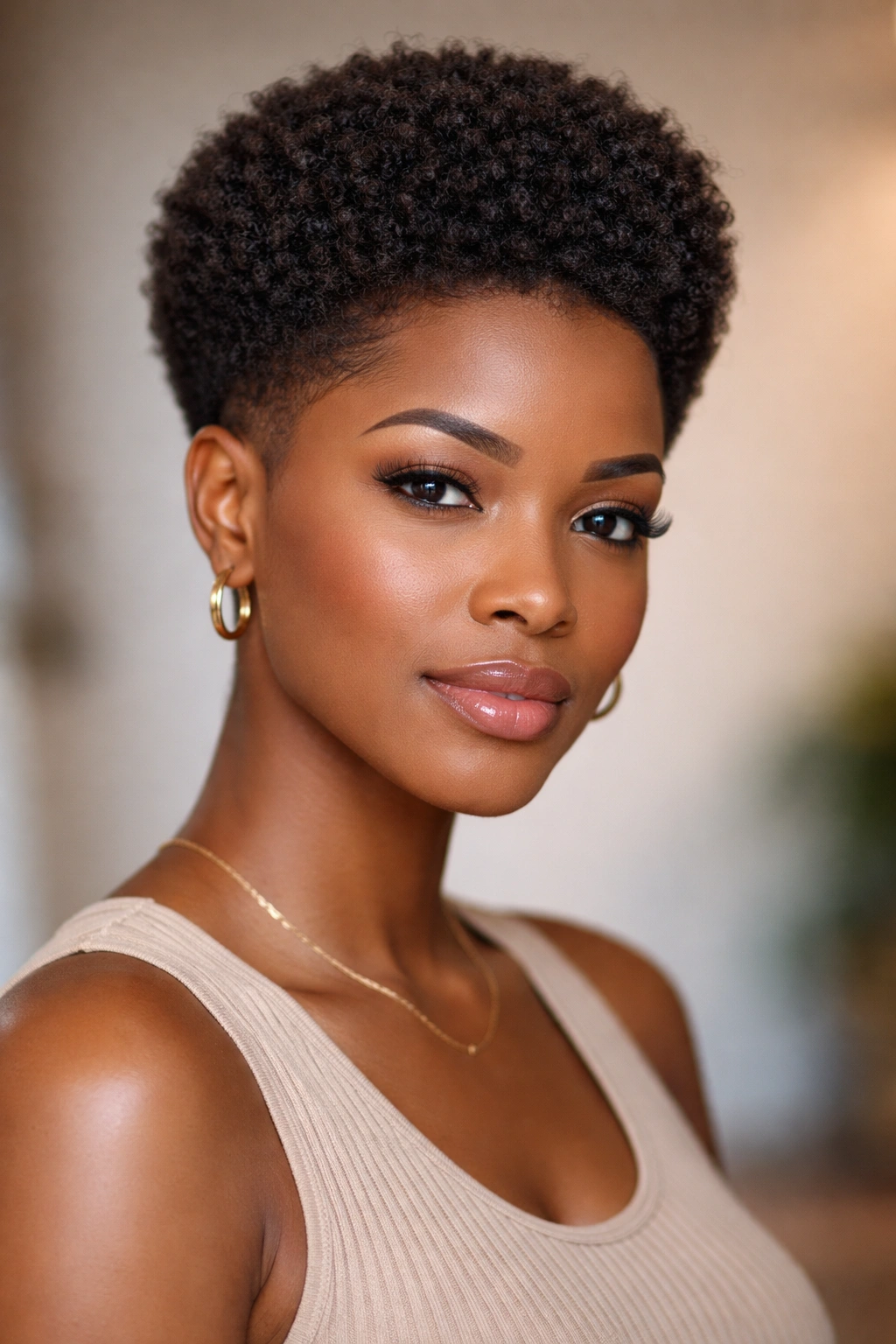
This is a more conservative tapered afro that keeps moderate length overall (2-3 inches) while graduating the back and sides slightly shorter. There’s no dramatic fade; instead, there’s a subtle graduation that creates shape and structure. Clean edges get precise definition around the ears, temples, and nape, so even though the overall silhouette is cohesive, the grooming is meticulous and intentional.
Why This Works for Mature Skin Tones
This cut is the answer if you want unmistakably tapered structure without the drama of a fade. The graduation creates shape without shortness, so you retain density and volume while still looking polished. The clean edges signal precision and intentionality, which makes the whole look feel more sophisticated.
Key Features
- All-over length is typically 2.5-3 inches
- Back and sides gradually shorten compared to the crown
- No hard fade line; instead, a smooth transition between lengths
- Edges around the ears, temples, nape, and sideburns are cut with precision for definition
- Styling is minimal—mainly keeping edges fresh and moisturizing your hair
Real talk: This cut requires edge maintenance more frequently than a fade (every 2-2.5 weeks rather than 3) because the precision definition gets softer as your hair grows out. But if you have the routine, it looks intentionally groomed in a way that reads extremely polished.
5. The Textured Crop with Micro Fade
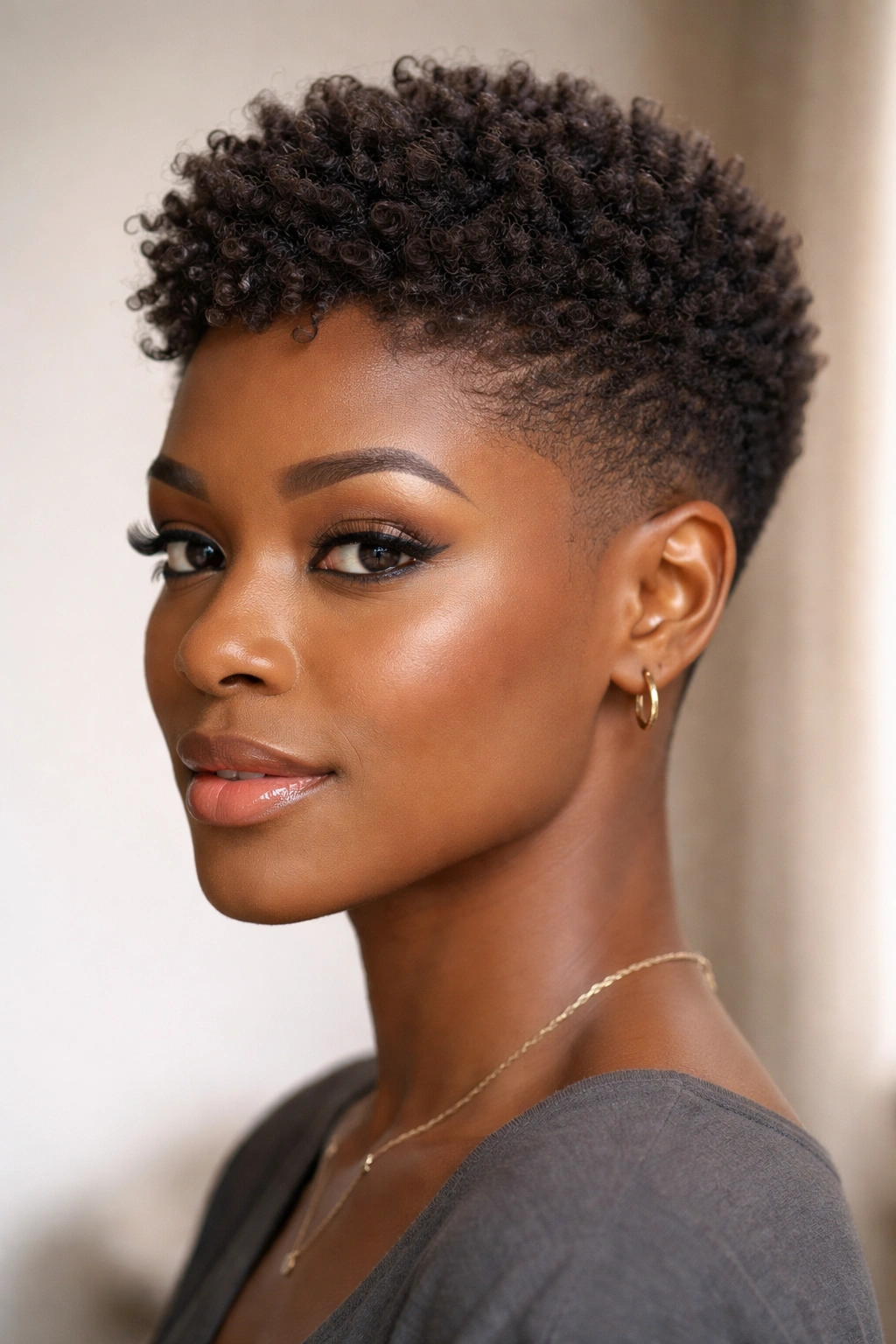
A textured crop is an all-over short cut (1.5-2.5 inches) where the top gets more length and texture while a micro fade at the sides and back keeps everything tapered and defined. The texture isn’t about creating curl definition or pattern—it’s about using scissors to cut layers into your natural hair so it has dimension, movement, and visual interest rather than sitting as one flat shape. This cut works beautifully on very coily or tightly coiled hair.
Why This Works for Mature Skin Tones
A textured crop that’s well-executed feels absolutely confident and powerful. It announces that you’re comfortable with yourself and your natural hair, and the layers create dimension that keeps you from looking severe. The micro fade keeps everything tapered and intentional rather than just “short all over.”
Key Features
- Overall length is kept between 1.5-2.5 inches
- Scissors are used to create layers and texture throughout the crown and top
- Sides and back fade slightly shorter (usually a #1 to #1.5)
- Works exceptionally well on tightly coiled, kinky, or densely textured hair
- Styling is quick—usually just a light moisturizer and finger-combing in the direction you want the texture to fall
Pro tip: Make sure your stylist understands the difference between a “textured crop” and a “buzz cut.” A textured crop uses scissors to build in layers and dimension; a buzz cut uses clippers all over. You want texture, not uniformity.
6. The Asymmetrical Tapered Afro
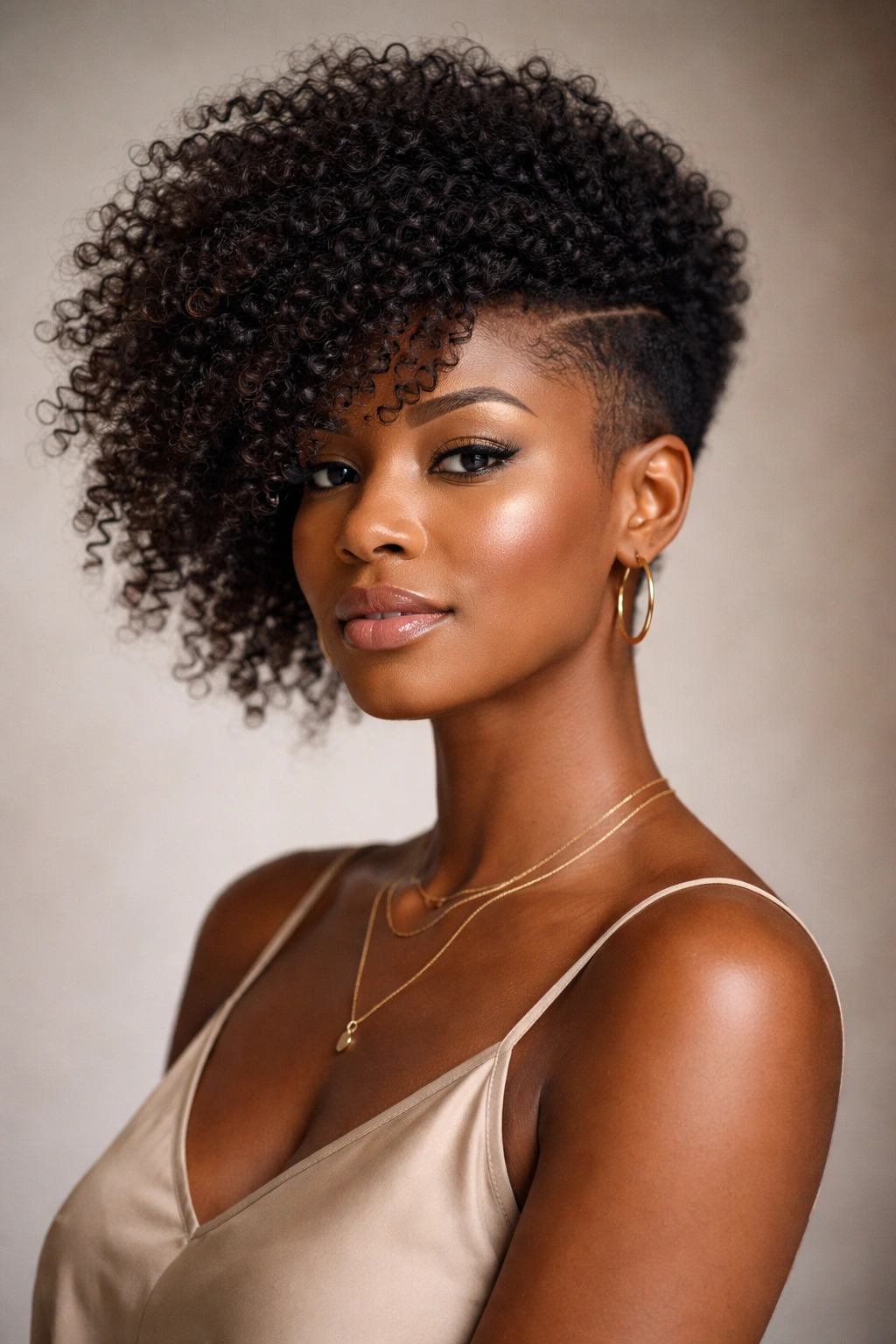
An asymmetrical tapered afro keeps more length on one side while tapering the other—creating a deliberate, artistic silhouette that frames your face from one direction while showing off the taper from another. It’s a statement cut that requires confidence to pull off, but when you do, it reads as someone who knows exactly who they are and isn’t interested in playing it safe. It works best when both sides are intentional—not accidentally uneven, but purposefully different.
Why This Works for Mature Skin Tones
An asymmetrical cut actually works better as you get older because you have the bone structure and confidence to carry off something unconventional. It draws attention to one side of your face intentionally, which can work beautifully if you have a side you prefer to show. It’s not a trend; it’s a personal aesthetic choice.
Key Features
- One side is left longer (3-4 inches) with full texture and movement
- The other side is faded or tapered significantly shorter (often a #1 or #1.5)
- The contrast between sides is dramatic and intentional, not subtle
- Works beautifully with natural texture but also looks striking when styled with product for definition
- Best maintained with regular touch-ups every 2-3 weeks to keep the intentional asymmetry clear
Worth knowing: Asymmetrical cuts require regular styling to stay intentional—if you go a few weeks without maintenance, it starts looking accidentally uneven rather than deliberately artistic. This isn’t a low-maintenance cut; it’s an intentional, high-impact one.
7. The Tapered Afro with Sideswept Crown
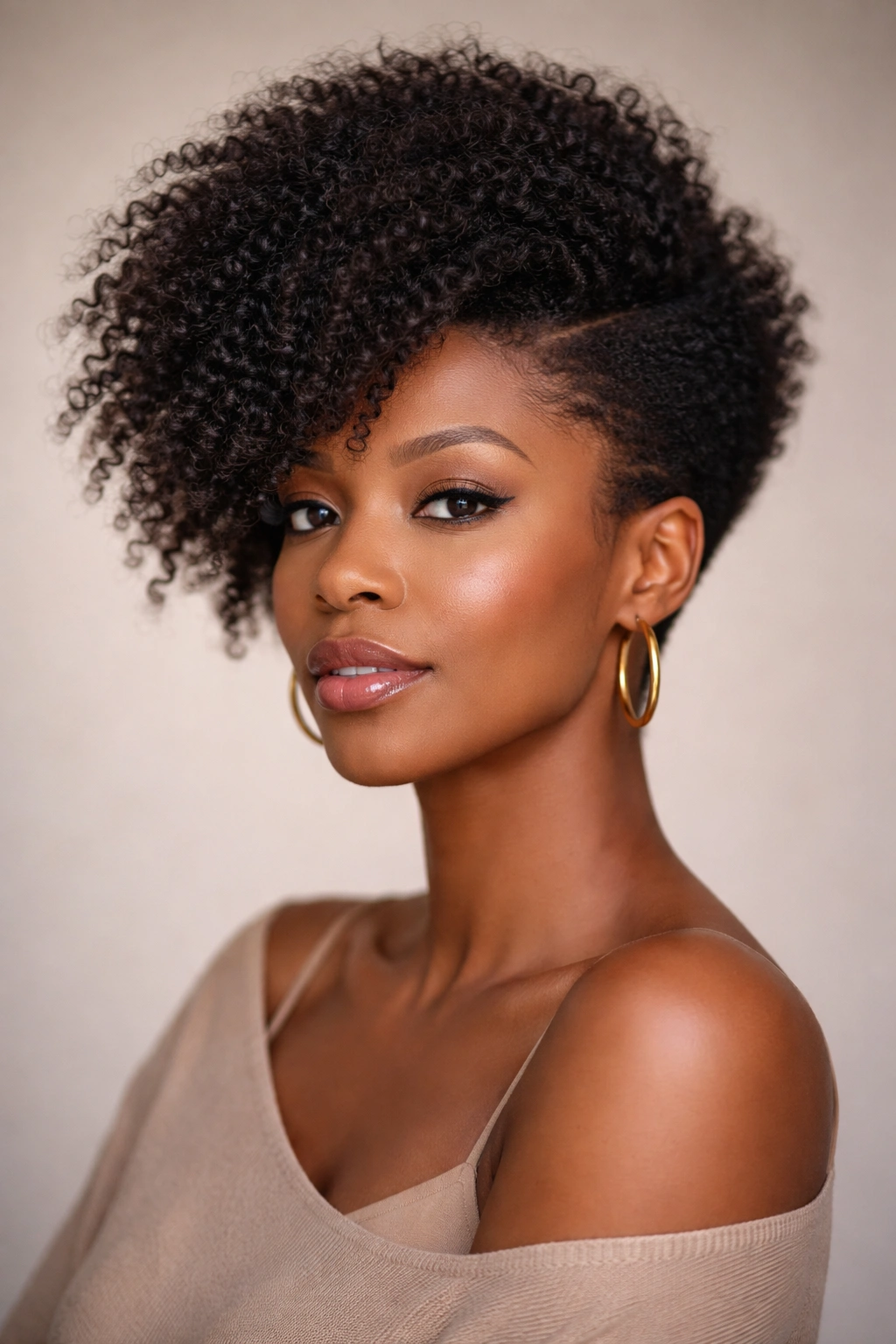
This cut keeps a fuller, rounder afro structure overall but adds a subtle taper at the sides and back that creates shape and direction. The crown is left longer (3-4 inches) and styled to sweep to one side, creating movement and intentionality. It’s less dramatic than an undercut but more structured than a basic natural afro—it’s the middle ground for women who want sophistication without sacrificing the feeling of wearing their natural hair fully.
Why This Works for Mature Skin Tones
This cut honors your natural hair texture while creating just enough structure and direction to feel intentional. The taper keeps the silhouette from feeling too round or matronly, while the sideswept crown creates visual interest and movement. You get the beauty of a full afro with the polish of a tapered cut.
Key Features
- Sides and back taper gradually rather than fade—usually starting to narrow around mid-ear
- Crown is left significantly longer for movement and can be styled with product for direction
- Overall silhouette is rounder than an undercut but more tapered than a basic afro
- Works beautifully with natural texture and also looks striking styled with gel or mousse
- Requires maintenance every 3 weeks or so to keep the taper definition as hair grows
Insider note: Ask your stylist to cut subtle layers into the crown during the cut itself—this ensures the sideswept styling doesn’t require heavy product and still looks natural and dimensional.
8. The Precision Fade with Sculpted Designs
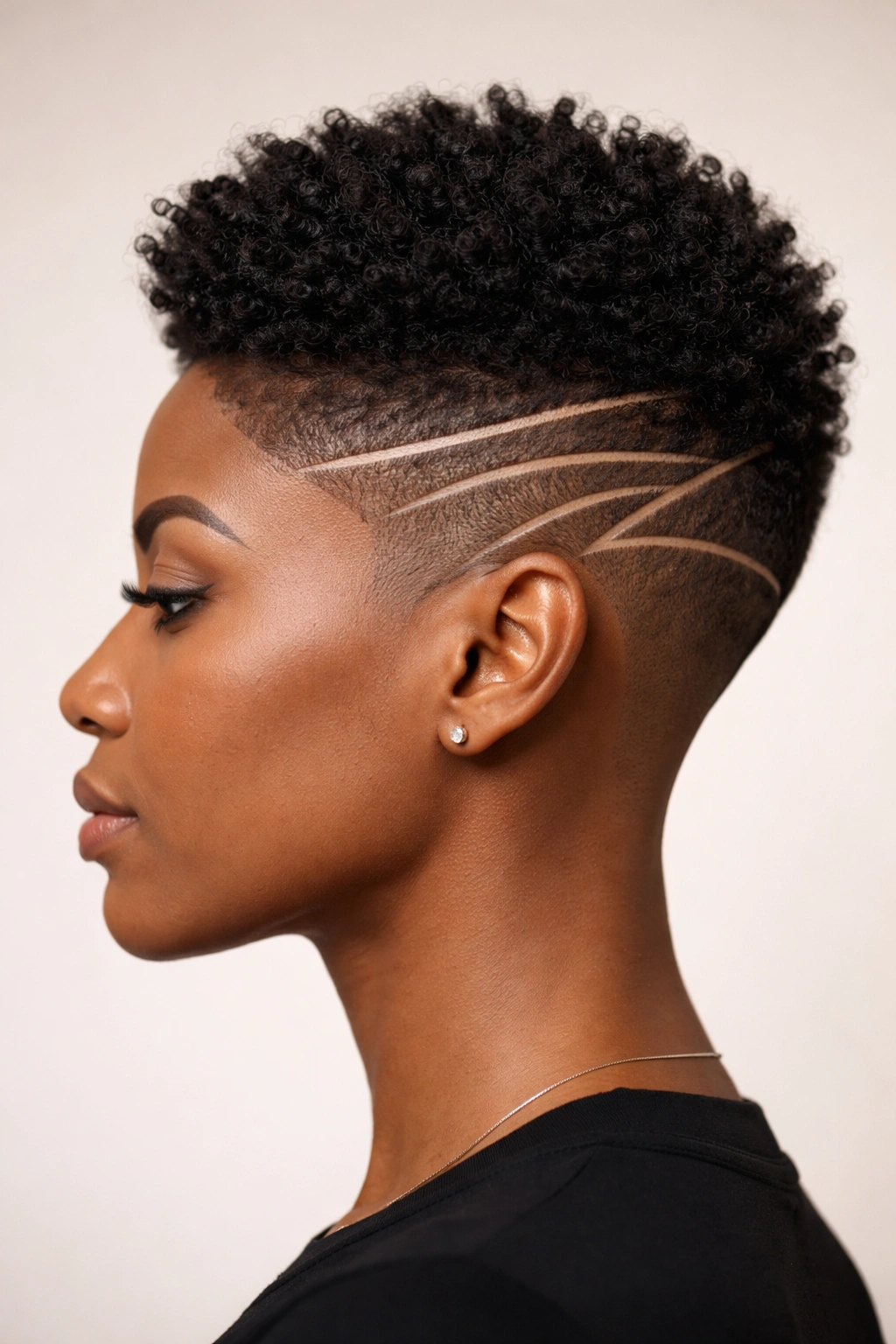
A precision fade combined with designs or lines etched into the fade creates a cut that’s both minimalist and detailed. The fade itself is clean and close, but the designs—could be geometric patterns, clean lines, shapes, or even negative space—transform it from basic into artistic. The designs sit along the sides, back, or around the ears, creating visual interest without requiring significant daily styling.
Why This Works for Mature Skin Tones
Designs can read as youthful if they’re trendy or overly ornate, but clean geometric designs or minimal lines actually look sophisticated and intentional. They show you’ve thought about your style, and they create visual interest that a plain fade doesn’t. You’re not trying to look young; you’re making a deliberate aesthetic choice.
Key Features
- Base fade is typically a #1 or #1.5 guard for a close, sleek finish
- Designs are etched with precision using cutting technique or careful clipper work
- Crown is left with 2-3 inches of texture
- Designs should be geometric, clean, and minimal rather than ornate or trendy
- Requires a skilled barber or stylist who specializes in precision line work
Real talk: Designs need maintenance more frequently than a plain fade because as your hair grows, the contrast between the design and the growing-out fade becomes less sharp. Plan on maintenance every 2-2.5 weeks to keep designs crisp.
9. The Temple-Fade Afro with Full Crown
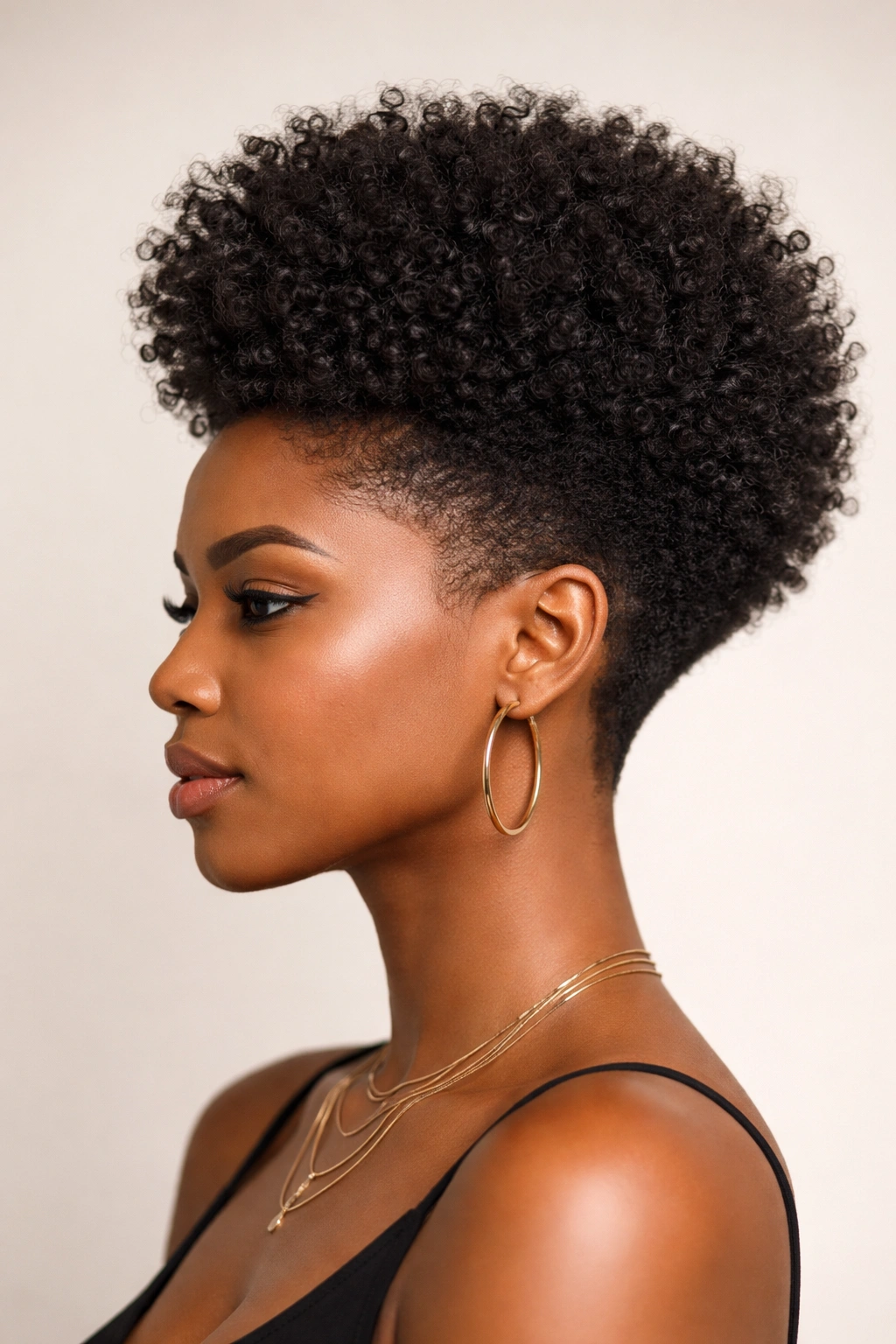
This cut fades the temples and sides while keeping the back fuller and the crown voluminous—creating a tapered silhouette that’s distinctly different from front to back. When you look in the mirror, you see a fuller, rounded afro, but from the side and back, you see the clean taper. It’s a sophisticated balance between maintaining the fullness of natural hair while creating intentional shape.
Why This Works for Mature Skin Tones
This cut works brilliantly for women who don’t want a dramatically short or faded look but still want that tapered sophistication. The temple fade frames the face intentionally, while the fuller crown keeps the overall silhouette generous and powerful. It’s the definition of elegant without being severe.
Key Features
- Temples are faded to a #1 or #1.5, creating clean definition around the face
- Back and sides gradually taper shorter as you move down
- Crown is left full (3-4 inches) with natural texture or subtle layers
- Overall silhouette looks rounder and fuller from the front, tapered from the side and back
- Works beautifully with natural texture and requires minimal daily styling
Pro tip: When you’re consulting about this cut, bring a photo that shows what you mean by “fuller crown”—some stylists interpret “full” differently, and you want to make sure you’re on the same page about the actual length and volume you’re keeping on top.
10. The Elegant Taper with Textured Layers
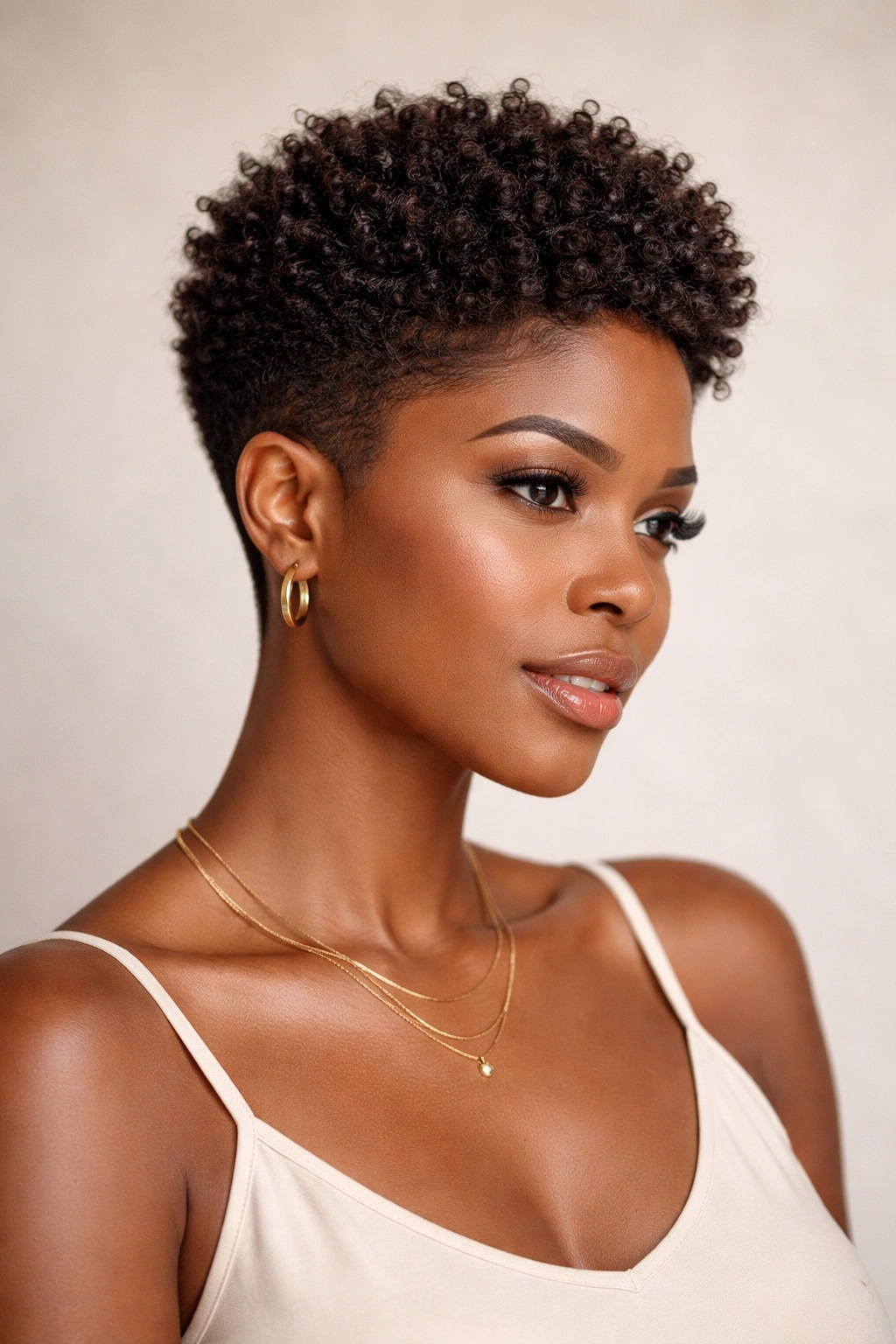
This final option is a masterclass in balance: a tapered cut that maintains moderate length (2.5-3 inches) throughout while using scissors to build layers and texture that create dimension and movement without requiring product. The taper is present at the sides and back—keeping the silhouette shaped and intentional—but the real artistry is in the layering that gives the cut texture and personality. It’s sophisticated, low-maintenance, and looks beautiful on every hair type.
Why This Works for Mature Skin Tones
This cut is the answer if you want something that looks intentional and polished without being dramatic or high-maintenance. The layers create visual interest and dimension that keep you from looking severe or style-less, while the taper keeps everything shaped and refined. It’s a professional cut that works for any setting.
Key Features
- All-over length is approximately 2.5-3 inches
- Scissors are used throughout the cut to build layers that create texture and movement
- Sides and back taper gradually shorter than the crown
- Works beautifully with natural texture and requires only basic styling (moisturizer and finger-combing)
- Photographs beautifully and reads as intentionally groomed
Worth knowing: This cut really requires a skilled stylist who understands how to use scissors to create dimension in natural hair—not all barbers have that skill set. When you’re booking, look for someone with a strong portfolio of textured tapered cuts.
Final Thoughts
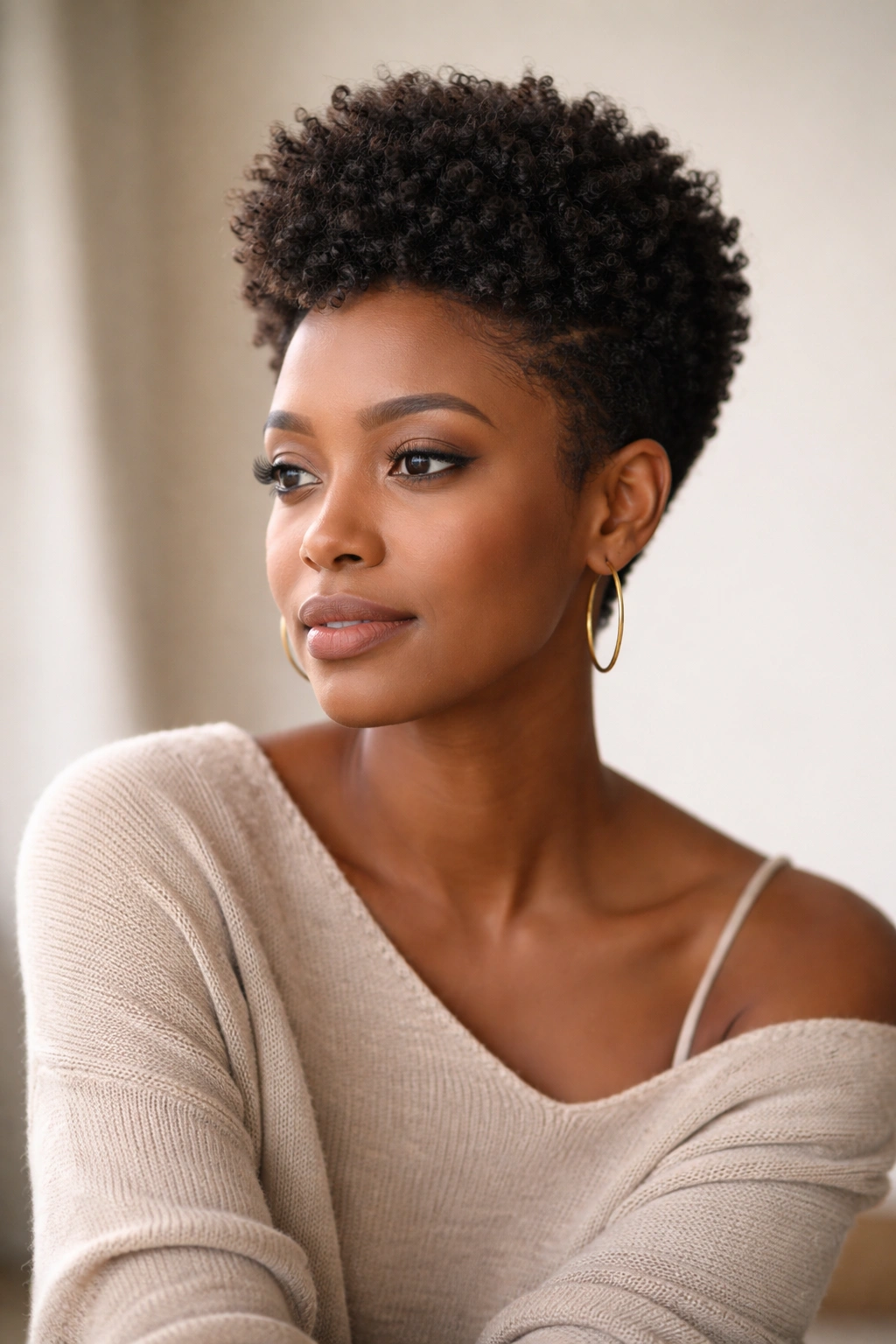
A tapered afro cut that’s right for you isn’t just about choosing a style from a photo—it’s about understanding what works with your hair texture, your daily lifestyle, your face shape, and your personal aesthetic. The cuts above represent genuinely different approaches: some dramatic and statement-making, some elegant and understated, some low-maintenance, and some that require a bit more styling intention.
The common thread across all of them is that they honor your natural hair while creating intentional shape, dimension, and polish. That’s what makes them so powerful for women over 30—you’re not trying to look younger or copy a trend. You’re making a conscious choice about how you want to show up in the world, and the right tapered afro cut amplifies that intentionality.
Finding a stylist or barber you trust is half the battle. Bring photos of cuts you’re drawn to, be specific about your daily styling comfort level and your lifestyle, and don’t be afraid to ask questions about maintenance requirements and how often you’ll need touch-ups. A great tapered afro cut is an investment that pays dividends in how confident and polished you feel every single day.
