


Marley twists have become one of the most beloved protective styles for natural hair, and for good reason. They’re versatile enough to work with virtually any hair texture, length, and lifestyle—whether you’re heading to the gym, a formal event, or just want a low-maintenance style that looks polished without hours of styling time. Unlike some protective styles that can feel limiting or monotonous after a few wears, Marley twists offer endless creative possibilities through different thicknesses, lengths, color combinations, and installation methods.
If you’ve been curious about trying this style but aren’t sure which variation would work best for your hair type or aesthetic, you’re in the right place. The beauty of Marley twists lies in their adaptability—what works perfectly for someone with fine, delicate strands is completely different from what suits thick, coarse hair, and that’s exactly the point. There’s a Marley twist style for every hair texture, every face shape, and every personal style preference.
This guide walks you through ten distinct Marley twist styles, each with its own approach to thickness, length, styling technique, and visual impact. Whether you’re drawn to the classic elegance of a well-executed basic twist, the drama of an intricate updo, or the edginess of a two-tone color combination, you’ll find detailed guidance on how to achieve the look, what works best for different hair types, and exactly how long you can expect to wear it comfortably. Let’s explore the styles that are transforming natural hair everywhere.
1. Classic Two-Strand Marley Twists
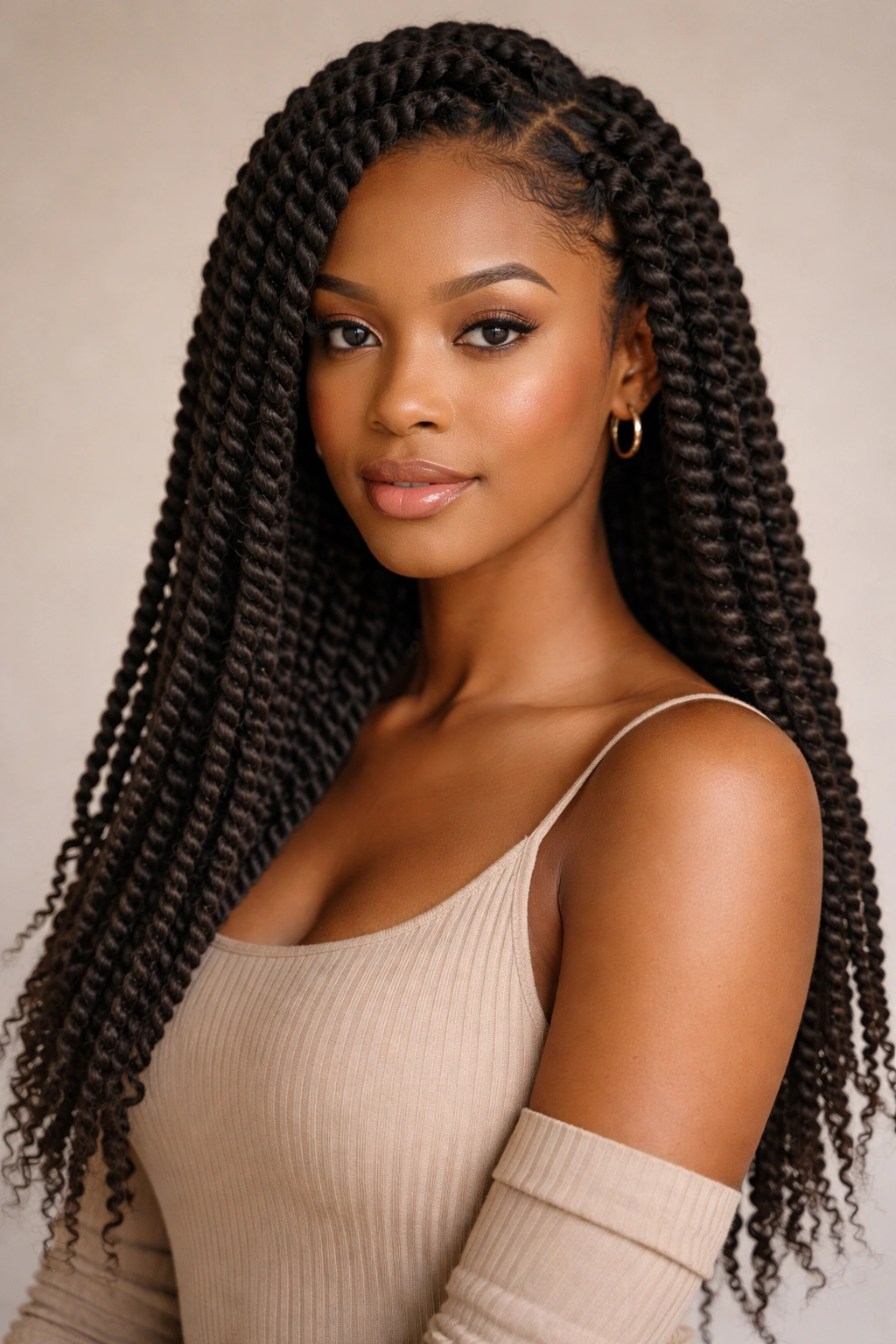
The classic two-strand Marley twist is the foundation of this entire style family, and it deserves respect as a timeless choice. This is the version most people picture when they think of Marley twists—medium-thickness twists that fall somewhere between too-thin and chunky, creating a balanced aesthetic that’s appropriate for virtually every setting. What makes the classic version work so well is that it hits that sweet spot where the twists are defined enough to look intentional and refined, but thick enough that they hold their shape beautifully throughout the entire wear duration.
Why This Style Stands Out
The two-strand twist you see in most professional settings and on the red carpet is called “two-strand” because each twist is made from exactly two sections of hair twisted together—your natural hair and the Marley hair you’ve added to create texture and length. The simplicity of this construction is actually what makes it so powerful. Because there are only two strands being twisted together rather than three or more, the twists move with your head’s natural motion rather than fighting against it. This means less tension on your scalp and less breakage of your natural hair over time.
The durability factor cannot be overstated here. Classic two-strand Marley twists typically last 4 to 6 weeks without significant unraveling, especially if you sleep on a silk or satin pillowcase and refresh the twists every couple of weeks by re-twisting the roots where new growth appears. The weight distribution is even across your entire head, so you won’t wake up with one side significantly flattened or with certain twists loosening faster than others.
Installation Tips and Styling Options
- Use medium-weight Marley hair (not the super-coarse version used for box braids, but not the silky fine strands either) to balance durability with a refined appearance
- Section your natural hair into squares or rectangles roughly ¼ to ½ inch across—this is bigger than micro-braids but smaller than the chunky locs aesthetic
- Add the Marley hair starting about an inch or two away from your scalp, leaving your natural hair exposed at the roots for a more natural look and reduced tension
- Twist in the same direction consistently (either always clockwise or always counterclockwise) for a cohesive, intentional appearance
Pro tip: If your twists feel too smooth and slippery after installation, try re-dipping the ends in hot water while they’re held in the twisted position. This helps the Marley hair set into the twist pattern more securely.
2. Chunky Marley Twists for Maximum Impact
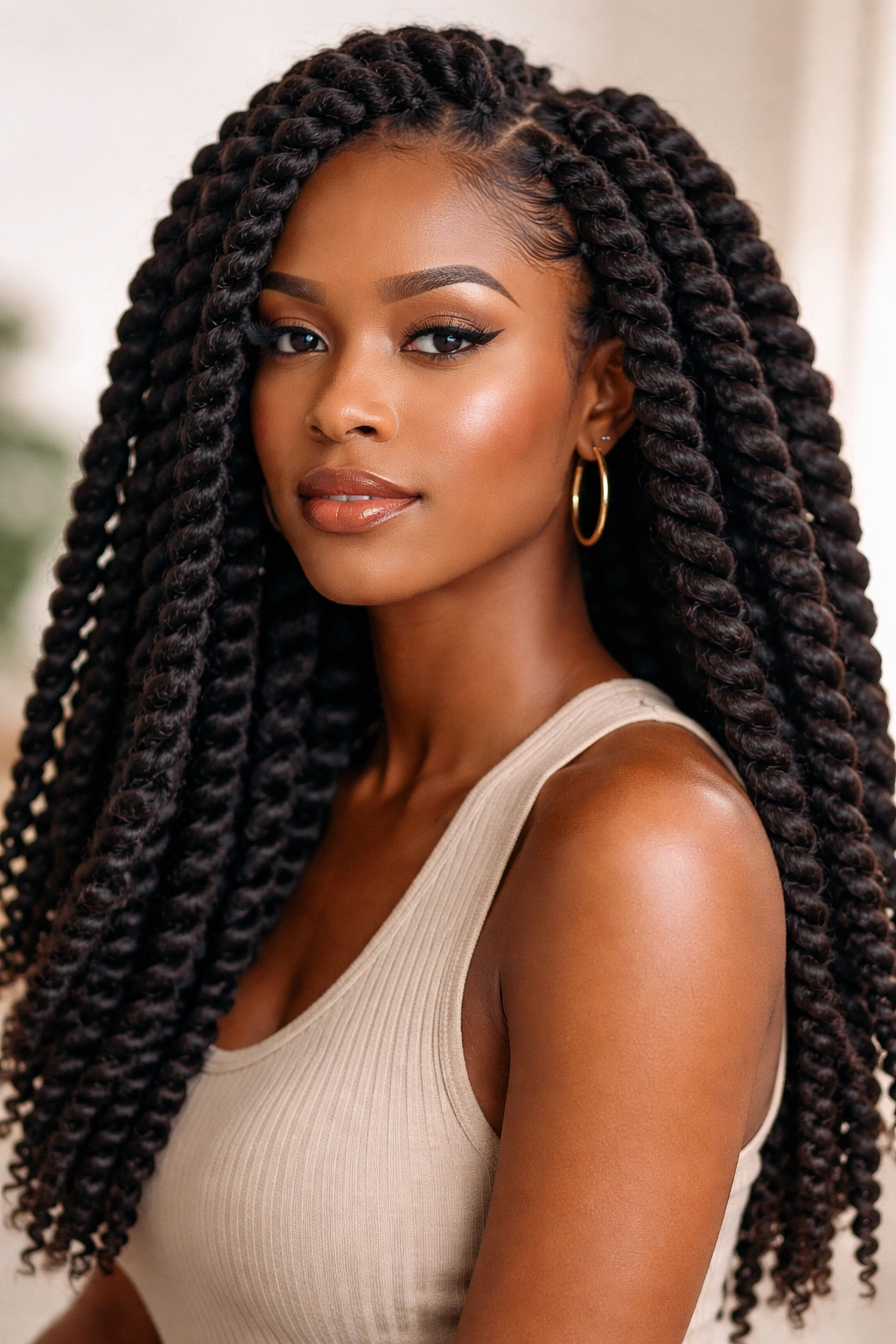
Chunky Marley twists make a bold statement the moment you walk into a room. These are the thicker version of the classic two-strand twist—think twists that are roughly the width of a pencil or thicker—and they transform the entire aesthetic of the style from elegant and understated to dramatic and impossible to ignore. Chunky twists photograph beautifully, move with gorgeous fluidity, and require noticeably less installation time than their thinner counterparts, which is a major practical advantage if you’re working with a tight schedule or want to minimize tension during the installation process.
What Makes Chunky Twists Different
The thickness of chunky twists completely changes how the style ages and how your natural hair experiences the process. Thicker twists mean fewer individual sections installed on your head, which translates to less total manipulation of your natural hair during installation. If you have sensitive scalp, tension alopecia concerns, or simply want to minimize the time you spend sitting still while getting your hair done, chunky twists are genuinely your answer. They also tend to hold their twist definition longer because there’s more surface area holding the Marley hair in the twisted position.
Where chunky twists require a bit more care is in the styling phase. Because they’re heavier, they put more weight on your natural hair roots, so sleeping on a satin pillowcase or bonnet becomes even more critical. They also look best when you’re willing to let them hang loose rather than immediately styling them into an updo—the visual impact of chunky twists comes from seeing the full length and movement of each individual twist.
Styling and Maintenance Specifics
- Section your natural hair into larger squares—roughly ¾ inch to 1 inch across—to create the chunky aesthetic
- Use coarser, slightly heavier Marley hair that can support the larger section size without looking sparse or stringy
- Consider using slightly thinner Marley hair than you think you need; the thickness comes from the size of the natural hair section, not necessarily from using more Marley hair
- Style these twists down most of the time; if you do bun them, make sure to use bobby pins to support the weight and reduce stress on your roots
Worth knowing: Chunky twists work exceptionally well if you have lower-porosity hair that resists moisture. The larger section size means more of your hair is accessible to products and moisture, and you’ll see better hydration results than you might with thinner styles.
3. Thin Delicate Marley Twists for Refined Elegance
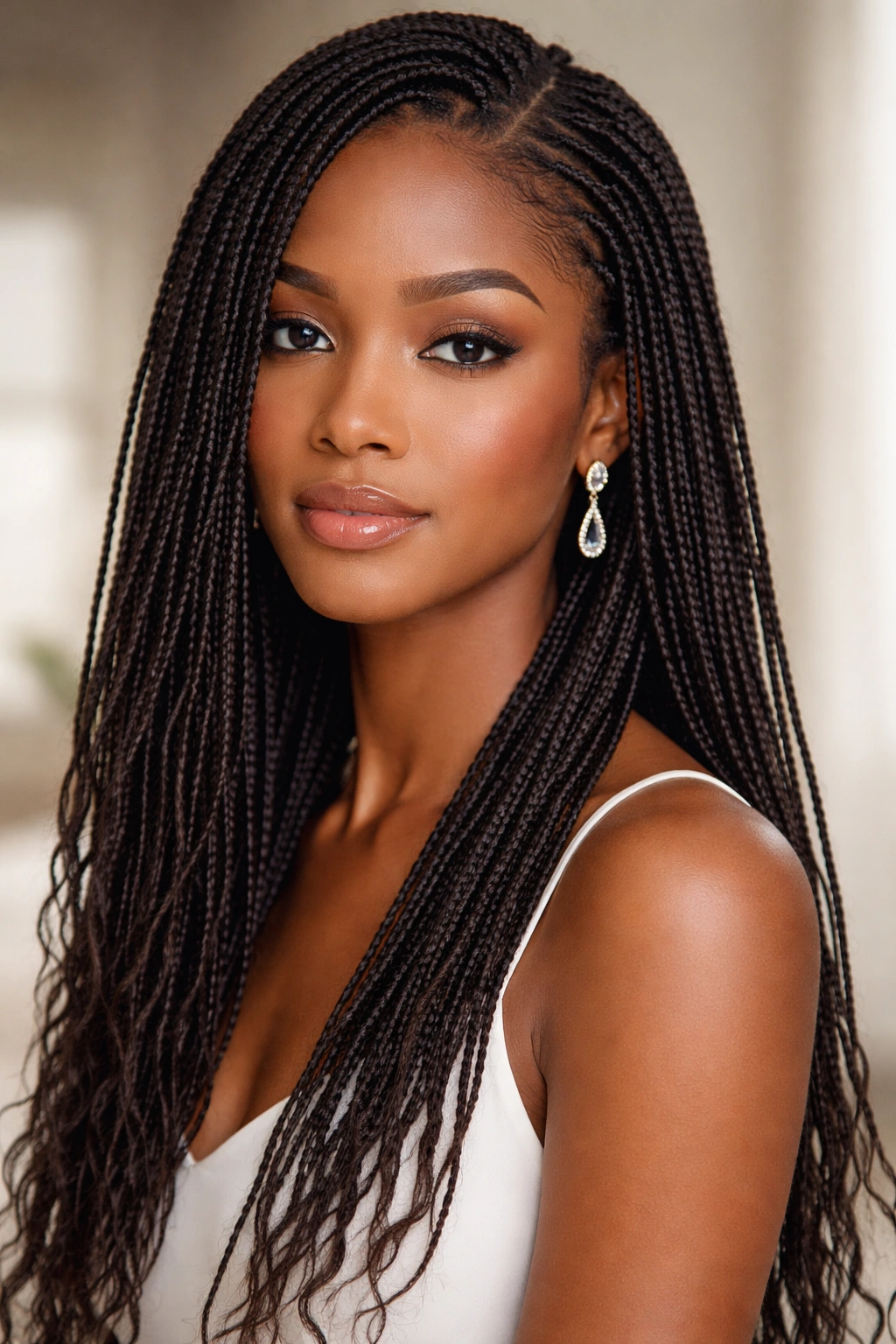
If chunky twists are the bold statement, thin Marley twists are the whispered confidence of someone who knows exactly what suits their face and aesthetic. Thin twists—sometimes called micro twists when they get especially delicate—create an incredibly refined, almost braided appearance that reads as more polished and formal than their thicker cousins. They’re perfect for professional environments, special occasions, or anyone who simply prefers the visual elegance of more intricate, detail-oriented styling.
Why Thin Twists Command Attention
The delicacy of thin Marley twists creates an almost lace-like quality when viewed up close, and from a distance, they read as an incredibly intentional, well-executed protective style. They also move beautifully—each individual twist has enough independence to create genuine flow and movement, which is especially noticeable if you go for extra-long length. Because there are more individual twists covering your head, the overall aesthetic becomes more textured and complex, which appeals to people who love the visual richness of intricate styles.
The main consideration with thin twists is installation time. You’re looking at potentially 6 to 10 hours of styling time depending on your hair thickness and length, so this is the choice for someone either committed to a lengthy professional installation or willing to do a multi-day DIY process. They also require slightly more frequent root maintenance because you have more individual twists that need re-twisting as new growth emerges.
Styling Approach for Thin Twists
- Section your natural hair into very small squares—roughly ¼ inch or smaller
- Thin twists work beautifully with Marley hair that’s been carefully selected for finer texture; don’t use the coarsest weight available
- These twists are ideal for upstyles, intricate bun arrangements, and wrapped or pinned looks because the thinner construction gives you more flexibility in how you can manipulate and pin them
- Thin twists absolutely require a silk or satin sleep method—either a bonnet, pillowcase, or head wrap—to prevent frizz and maintain definition
Insider note: If you love the look of thin twists but are intimidated by the installation time, consider doing a partial installation where only your crown or front sections are thin twists, while the back is chunky twists. This cuts the installation time roughly in half while still giving you the refined look where it shows most.
4. Half-Up, Half-Down Marley Twist Style
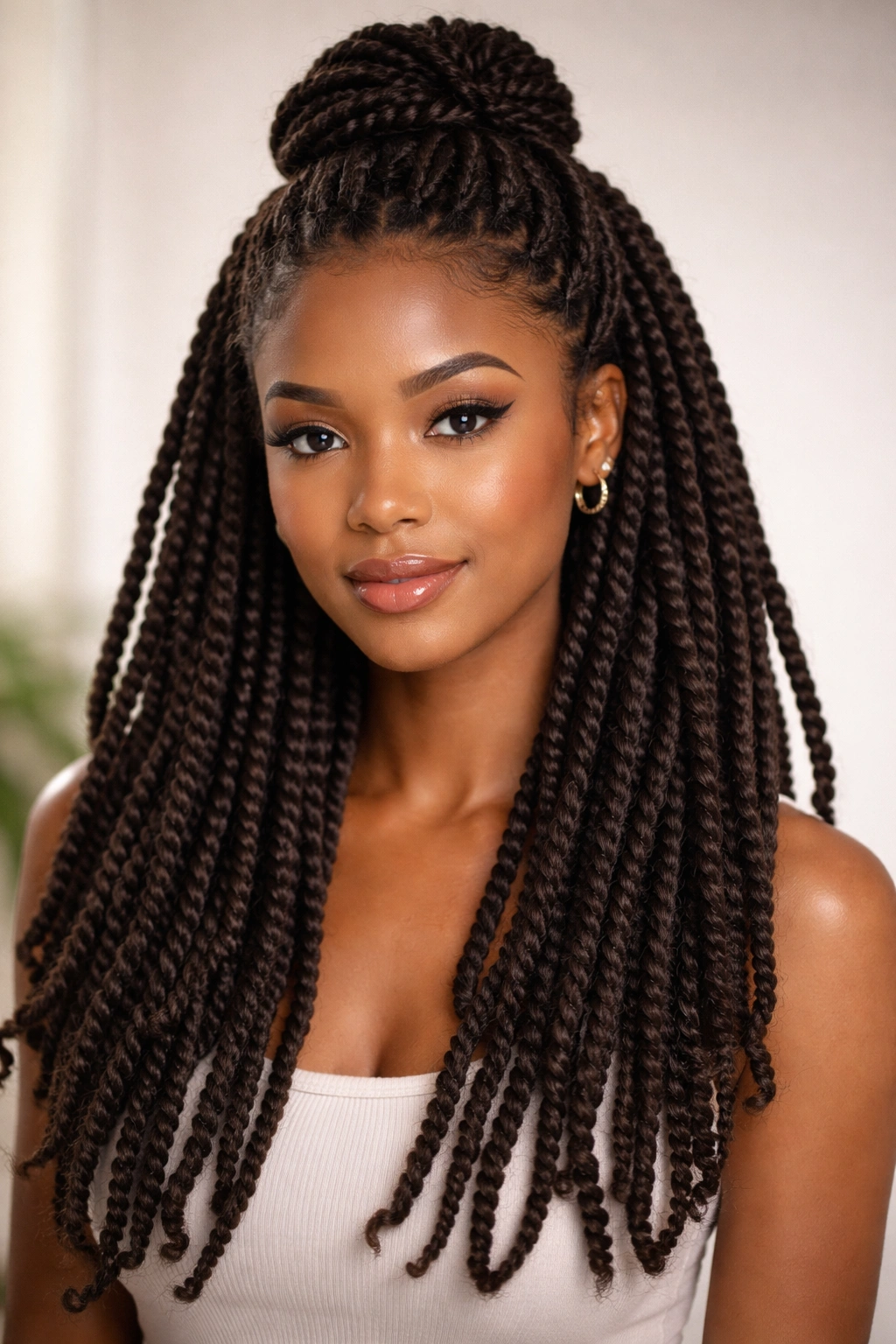
The half-up, half-down Marley twist style splits the difference between showing off the full length and movement of loose twists while also creating the polished, intentional look of a styled updo. This variation involves taking the top section of your twists and securing them at the back of your head with bobby pins, decorative clips, or even by wrapping a thin braid around the gathered twists, leaving the rest of the twists to fall freely down your back and shoulders.
How This Style Works and Why It’s Practical
Half-up styles serve a genuinely practical purpose beyond just aesthetics. If you have thick, voluminous twists that sometimes feel heavy or create too much weight pulling on your roots overnight, securing the top half reduces that downward tension while you sleep. It also solves the real problem of twists occasionally falling in your face when you’re trying to focus on work or studying—you get the benefit of having your hair pulled back without the commitment of a full updo.
The half-up style also gives you flexibility throughout your day. You can undo the pins or clips in the evening when you want the full drape of loose twists, then pin them back up again the next morning. This kind of styling versatility from a single protective style installation is genuinely valuable if you lead a lifestyle where you move between casual and professional settings.
How to Secure Your Half-Up Twists
- Gather the top section of twists at the crown or slightly higher, depending on your face shape and preference
- Use approximately 4 to 6 bobby pins depending on the thickness of your twists and the weight you’re supporting
- Try wrapping a thin three-strand braid around the base of the gathered twists to create a decorative element that’s both beautiful and functional
- Alternatively, use a silk or satin scrunchie specifically designed for natural hair; this reduces friction and breakage compared to regular hair ties
- Secure any loose twists around your face with individual bobby pins if needed
Pro tip: This style works beautifully if you do it with alternating thick and thin twists, or if you mix solid-colored Marley hair with one contrasting color in just the top section. The gathered hair becomes a focal point, so it’s a great place to introduce visual interest.
5. Two-Tone Marley Twists with Color
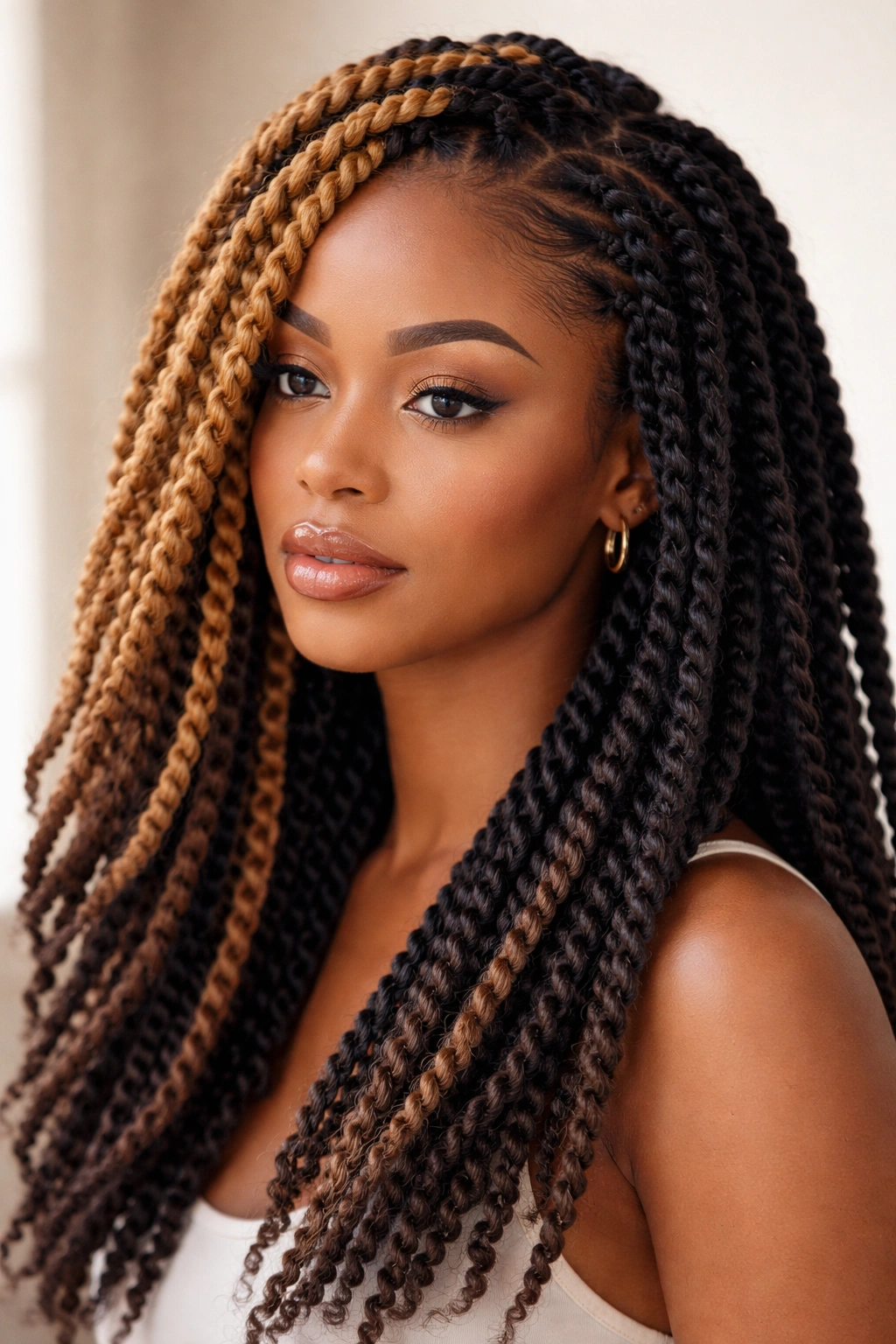
Adding color to your Marley twists transforms them from a natural protective style into a bold fashion statement. Two-tone Marley twists involve adding Marley hair in two contrasting colors—say, your natural hair color paired with blonde, burgundy, bronze, or even jewel tones—and either alternating the colors throughout or concentrating one color in the front while the other appears more in the back. This is where Marley twists truly become an artistic expression rather than just a protective styling method.
Design Options and Color Considerations
The flexibility of color application is one of the best parts of this style. You could do a subtle blend where 80% of your twists are in a neutral color and 20% are in a contrasting shade, creating visual interest without an overwhelming color commitment. Or you could go bold with a 50-50 split that’s impossible to miss. You could also concentrate the contrasting color in your front section, framing your face while keeping the back more neutral—this approach is excellent for professional environments where you want a hint of color without looking overly dyed.
The beauty of using Marley hair for color expression is that it’s completely temporary. Unlike dyeing your natural hair, which requires significant commitment and potentially damaging chemical processes, colored Marley hair comes out when you take down the style. This means you can experiment with colors you’d never actually dye your natural hair, try trending color combinations, and switch things up every few weeks without any permanent consequences.
Choosing Colors That Work for Your Skin Tone
- Warm skin tones are absolutely stunning with warm Marley hair colors: honey blonde, rose gold, copper, burgundy, and warm bronze
- Cool skin tones glow with cooler Marley shades: ash blonde, silver, cool burgundy, jewel tones like sapphire or emerald, and cool-toned bronze
- Deep skin tones can pull off virtually any color beautifully, but the impact is particularly striking with contrasting colors: try pairing your natural color with bright blonde, vibrant red, or jewel-tone purples and blues
- Test the color against your skin before committing to a full head—buy a small amount of the Marley hair and hold it next to your face in natural lighting
Worth knowing: If you’re adding color to your twists, consider doing a partial color application. Color just your front twists, your crown section, or create a color block in one area. This uses less colored Marley hair, is more affordable, and creates a sophisticated color effect that’s interesting without being overwhelming.
6. Marley Twist Updo and Bun Styles
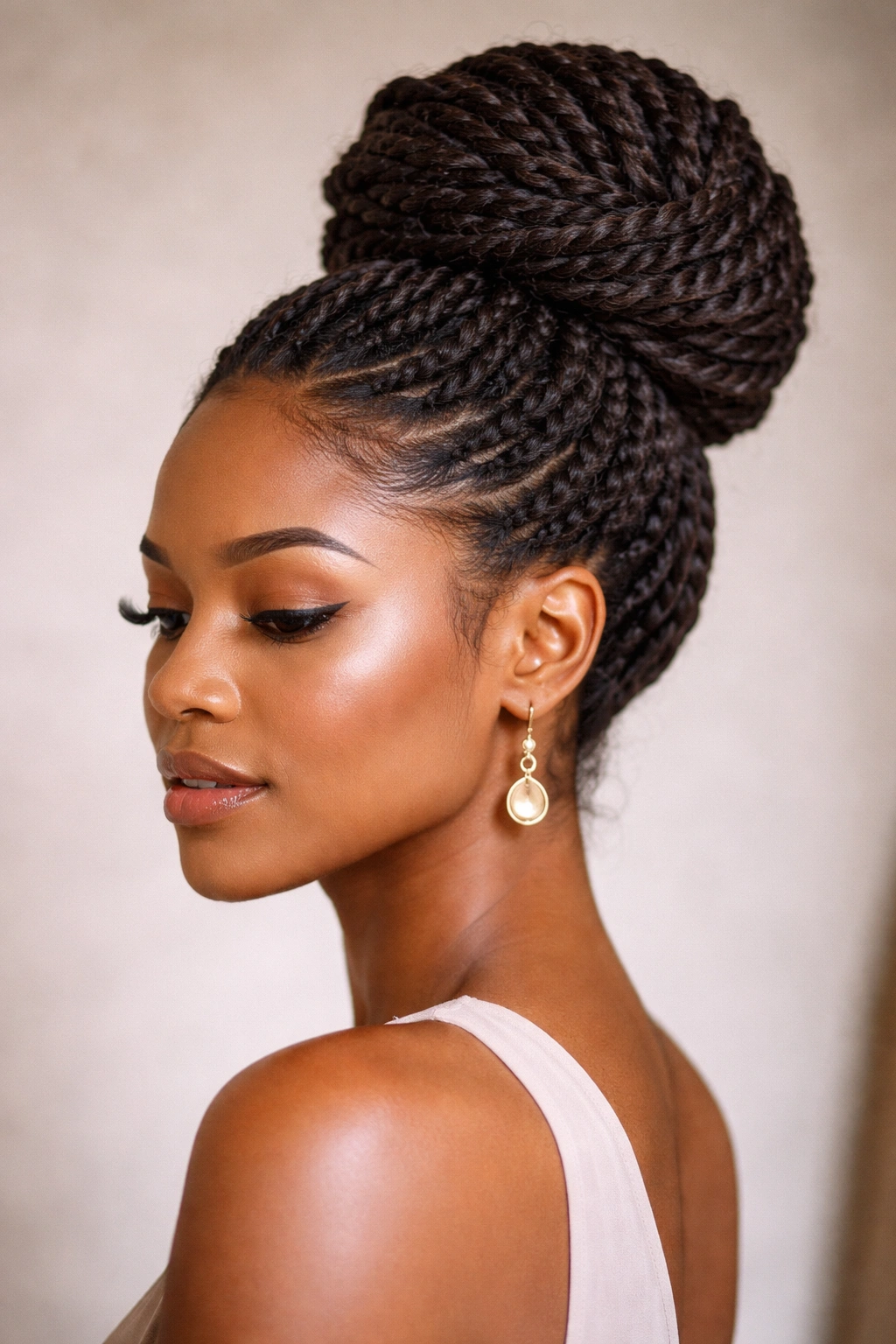
Taking your Marley twists up into an updo or bun completely changes the visual impact while also solving practical problems like keeping hair off your neck in warm weather or creating a polished silhouette for professional or formal events. The updo version of Marley twists is genuinely elegant—it reads as intentional, refined, and sophisticated in ways that sometimes surprise people who think protective styles are only casual.
Updo Variations and Structural Options
The simplest updo version is the high bun, where you gather all your twists at the crown and wrap them into a circular bun shape, securing with bobby pins and possibly finishing with a decorative hair cuff or gold bun cover. A mid-height bun sits at the nape of your neck and creates a slightly more formal silhouette. The low bun is classic and elegant, perfect for formal events, and involves gathering your twists at the very base of your head. Each height position creates a subtly different visual impact and works with different face shapes.
Beyond basic buns, you can create elaborate updo styles by braiding some of your twists together, crossing them artfully, or creating an asymmetrical arrangement that’s visually interesting from the back and sides. Twisted updos, where your twists are woven together rather than simply gathered, create a far more intricate and textured updo than a basic bun.
Securing Your Updo for All-Day Comfort
- Start by gathering your twists into your desired bun position, then use a satin or silk scrunchie as your base to prevent friction
- Use bobby pins in a strategic X or grid pattern to support the weight of your updo throughout the day; don’t rely on a single point of contact
- If you have thick, heavy twists, consider using hair sticks or wooden pins instead of bobby pins—they distribute weight more evenly and are genuinely more supportive
- Create a small braid at the base of your updo to add decorative interest and provide extra grip for pins
Pro tip: If you’re going for a formal event updo, try softly pulling a few twists out of your bun to frame your face, then securing them with bobby pins to the sides of your head. This creates softness and dimension that prevents the style from looking too severe.
7. Marley Twists Combined with Braids
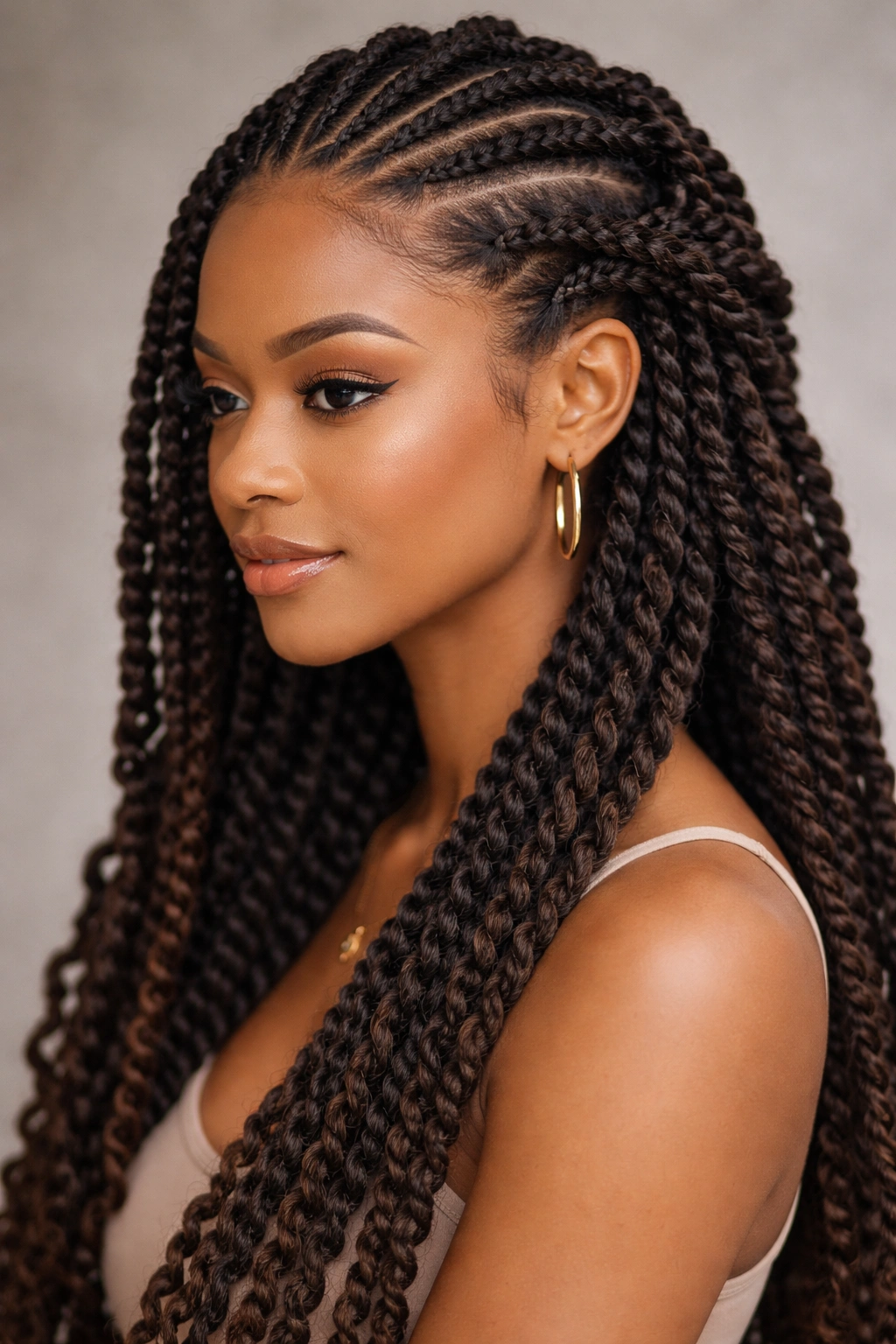
Combining Marley twists with braids—whether three-strand braids, box braids, or cornrows—creates a hybrid protective style that’s visually interesting and offers the benefits of both techniques. You might do a front section of cornrows that transition into Marley twists, a crown braid that frames the sides of loose twists, or even alternate sections of twists and braids across your entire head for a pattern effect.
Hybrid Style Combinations That Work
The most popular combination is cornrows in the front that transition into twists in the back. This keeps your edges neat and protected while allowing you to showcase the length and movement of twists where they’re most visible. Another stunning option is a crown braid—a braid that goes around your head like a halo—with loose Marley twists beneath it. This creates a romantic, elegant aesthetic that’s perfect for special occasions.
You can also create a sectioned approach where vertical sections of your head are braided while other vertical sections are twisted. This creates a striped pattern when viewed from above and is endlessly customizable depending on how wide you make each section. The structural complexity of a braided section actually supports the Marley twists nearby by creating anchor points and adding visual weight distribution.
Planning Your Combination Style
- Decide which sections will be braided and which will be twisted before installation begins—draw it out or use reference photos
- Braided sections are ideal for areas where you want maximum neatness and protection: your edges, crown, or around your face
- Twisted sections work best where you want visible movement and visual interest: the bulk of your hair, length pieces, or side sections
- Consider color options: you could use one Marley hair color for your braids and a different color for your twists to create even more visual distinction
Insider note: If you combine twists with braids, your installation time will be longer than twists alone, but not as long as if you did braids throughout. This can be a smart middle ground if you want some protection and neatness without committing to an 8+ hour installation.
8. Long, Flowing Marley Twists
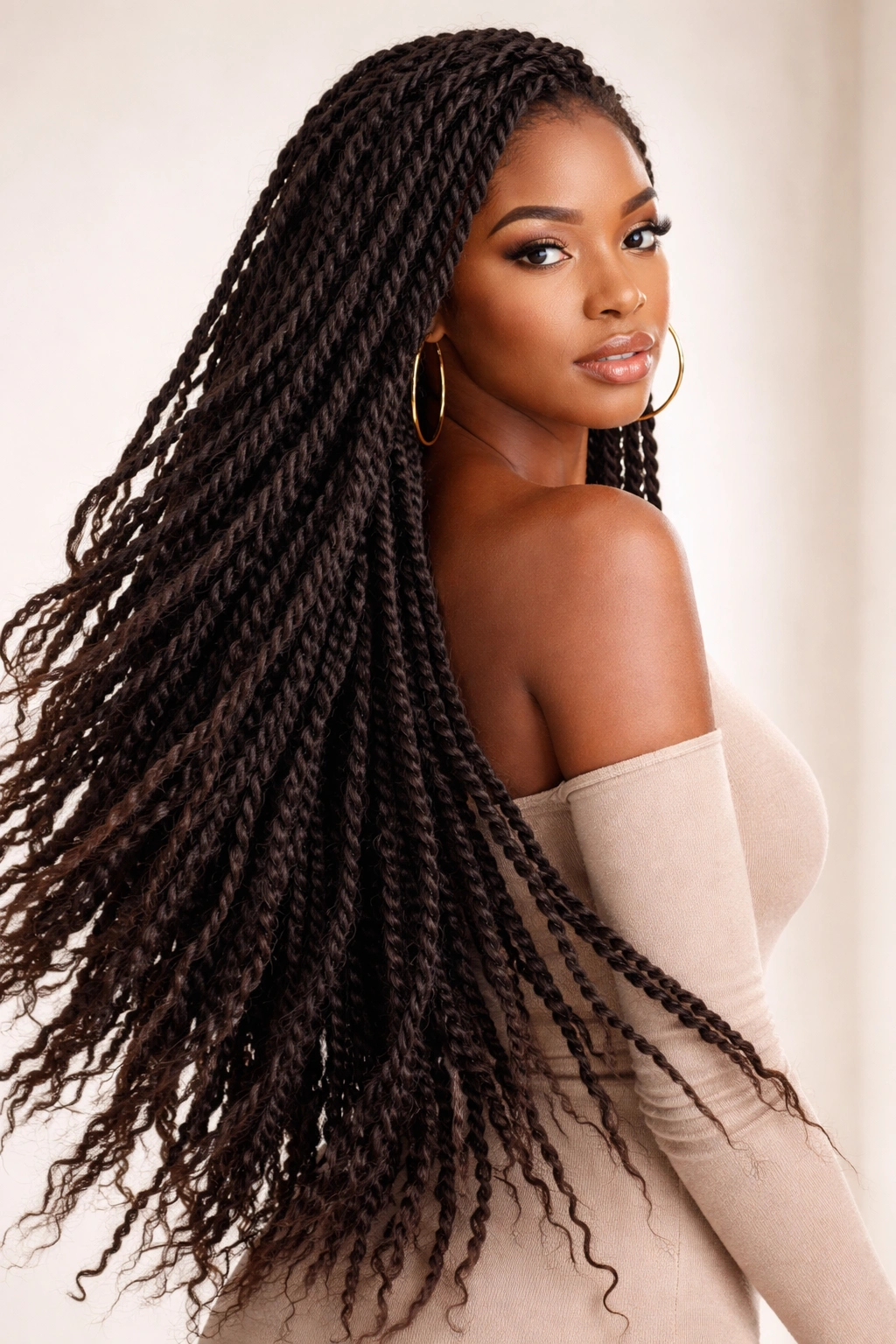
Long Marley twists—falling past your shoulders and often extending toward mid-back or beyond—are undeniably stunning. There’s something about the unbroken length and the way long twists move and sway that captures attention. Long twists also photograph beautifully, which is a genuine benefit if you love documentation or content creation. The longer your twists, the more dramatic the visual impact, and the more you’ll notice the movement and fluidity of the style.
Installing and Maintaining Length
The consideration with long twists is weight and tension. Longer twists put more strain on your natural hair at the roots, so sleeping correctly becomes non-negotiable. You absolutely must use a satin or silk pillowcase or bonnet, and many people find that wrapping their twists loosely in a silk scarf before bed reduces the movement and weight strain overnight. Some people also prefer to bun their long twists at night to minimize root tension while sleeping.
Long twists also require more Marley hair, which increases the cost of the installation. However, they last longer between root touch-ups because the length distributes new growth across a greater distance, making root regrowth less visually obvious than it would be with shorter twists. A long twist with an inch of new growth at the root is far less noticeable than a short twist with the same amount of new growth.
Styling Long Twists Beautifully
- Keep long twists down and loose as often as possible to showcase length and movement; wearing them up constantly wastes the visual investment
- Create loose waves or gentle waves in your long twists by braiding them while damp and allowing them to dry for a wavy texture
- Try sleeping in loose braids to create gentle waves that look effortless and undone rather than tightly twisted
- Accessorize with hair cuffs, rings, or wraps placed artfully along the length to add visual interest and break up the solid look
Worth knowing: If you have finer or lower-density hair, long twists might feel heavier and more uncomfortable than you’d prefer. Consider going medium-length instead—still past your shoulders but not extending to your mid-back—to get length and movement without the weight strain.
9. Short and Shoulder-Length Marley Twists
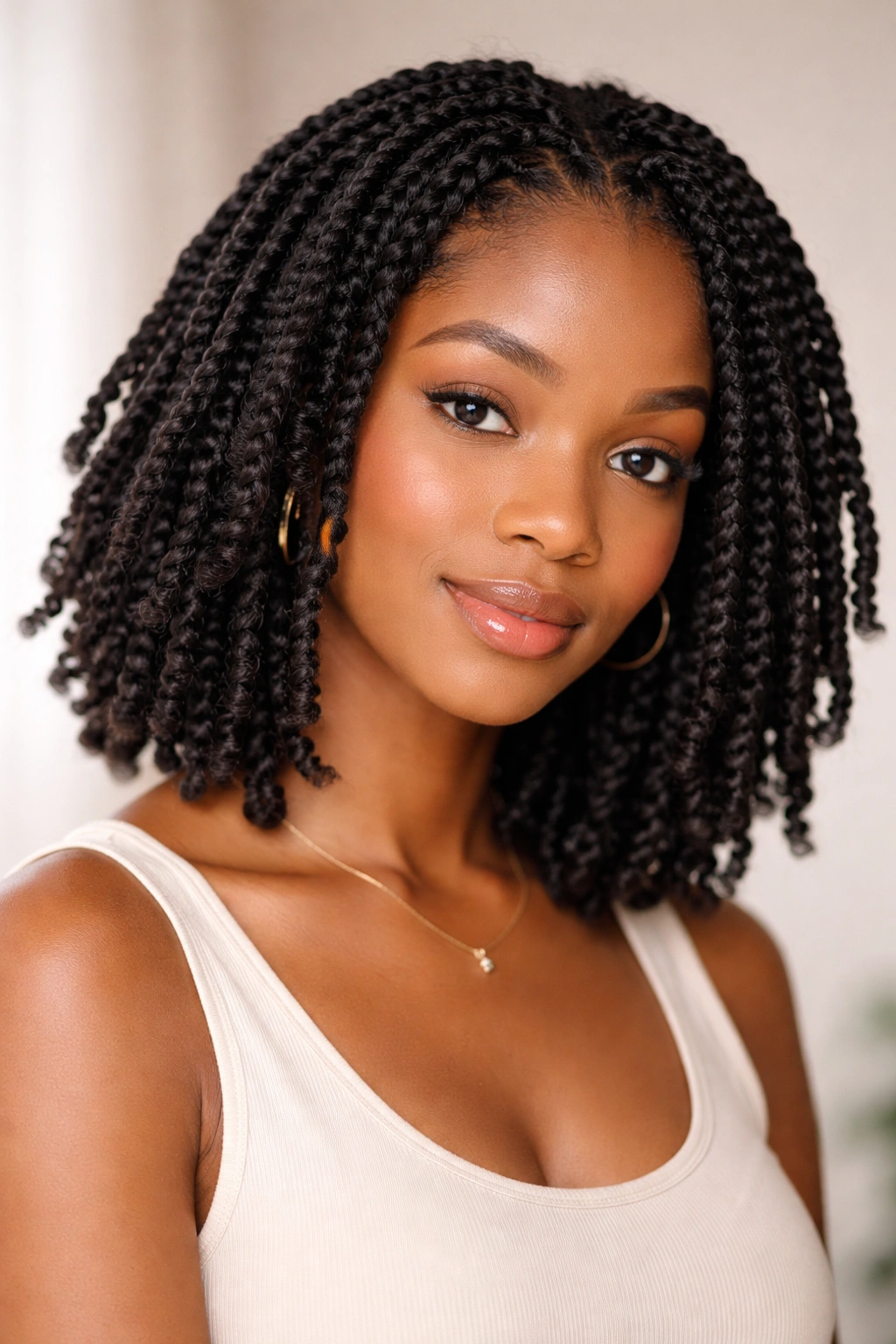
Short Marley twists—ending at or just below your shoulder—hit an entirely different aesthetic sweet spot. They feel easier to manage, lighter on your scalp, and they age more gracefully than longer twists because you’re less likely to notice the thinning or wear at the ends. Shoulder-length twists are also incredibly practical for active people: they’re long enough to showcase the twist texture and style beautifully, but short enough that they won’t get caught in anything and they feel genuinely easy to manage.
Why Shorter Length Works
There’s an elegance to restraint, and short Marley twists demonstrate this principle beautifully. They require less Marley hair, which reduces both cost and installation time. They also dry faster after washing, which is a genuine practical advantage. Because there’s less length hanging from your roots, the tension is naturally reduced, which is particularly beneficial if you have fine hair, a sensitive scalp, or have experienced tension-related hair loss in the past.
Short twists also style differently—they work beautifully with buns and updos, they tuck into tops without creating bulk at your neckline, and they have a sophisticated, intentional quality that reads differently than very long twists. They’re also ideal if you live somewhere warm or humid, because less hair hanging down means less moisture absorption and less frizz.
Styling Short Twists Effectively
- Section your natural hair into medium-sized squares to create twists that feel proportional to your shorter total length
- These twists work beautifully without any additional styling—they’re gorgeous worn completely down and loose
- Try alternating bun and loose-twist days to create visual variety and extend the lifespan of the style
- Layer a delicate chain, gold necklace, or pendant to draw attention to your neckline and face while wearing short twists
Pro tip: If you go short with Marley twists, consider doing colored Marley hair in an ombré or gradient effect. The shorter length makes a bold color choice feel manageable, and the visual impact is striking without feeling overwhelming.
10. Marley Twists with Coils or Curls at the Ends
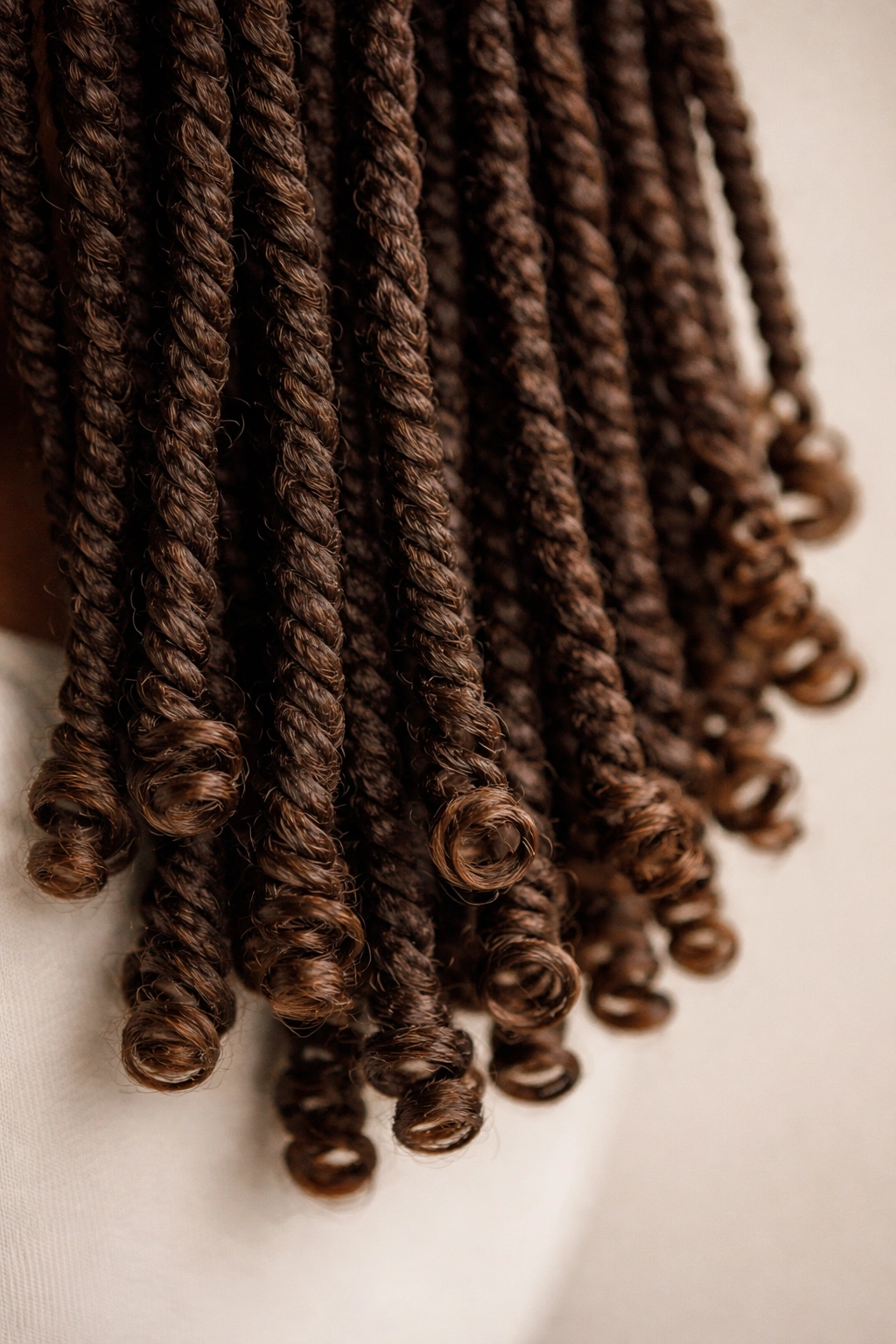
This final variation adds texture and dimension to your Marley twists by creating coils or loose curls at the very ends rather than keeping them twisted straight all the way down. You can do this by untwisting the bottom 2 to 4 inches of your twists and creating coils with those loose sections, or by curling the ends around a curling iron or flexi-rod for a looser, wavy effect. This creates a visually rich, textured aesthetic that’s genuinely stunning.
Creating Curl Texture at Your Twist Ends
The most common method is the untwist-and-coil technique. Once your twists are installed and have set for a day or two, you untwist just the bottom portion and hand-coil those loose sections around your finger, then dip them in hot water to set the coil pattern. This creates a beautiful transition from the twisted texture above to the coiled texture at the bottom. The visual effect is far more complex and interesting than simple straight twists, and it makes the ends of your twists look fuller and bouncier.
Alternatively, you can create waves or loose curls by setting the bottom sections on flexi-rods while damp and allowing them to dry. This creates a softer, less structured curl than hand coils and gives more of a tousled, beachy effect. Some people also use a curling iron on low heat to gently curl the ends, creating romantic waves that catch light beautifully.
Maintenance Considerations for Textured Ends
- Coiled or curled ends require slightly more attention during sleep; wrapping them in a silk scarf or bonnet prevents them from flattening
- These textured ends can be refreshed about once a week by spraying with water or a light aloe vera gel and hand-shaping them back into coils or waves
- The combination of twisted hair with coiled or curled ends looks lush and full, but requires regular maintenance to keep the textured ends from looking tired after a few weeks
- This style works best with medium to chunky twists; thin twists with textured ends can look a bit chaotic rather than intentional
Insider note: If you do coils or curls at the ends, consider doing this on only half your twists while leaving the other half straight twisted all the way down. This creates a mixed-texture aesthetic that’s visually interesting and less high-maintenance than coiling or curling all of your twists.
Final Thoughts
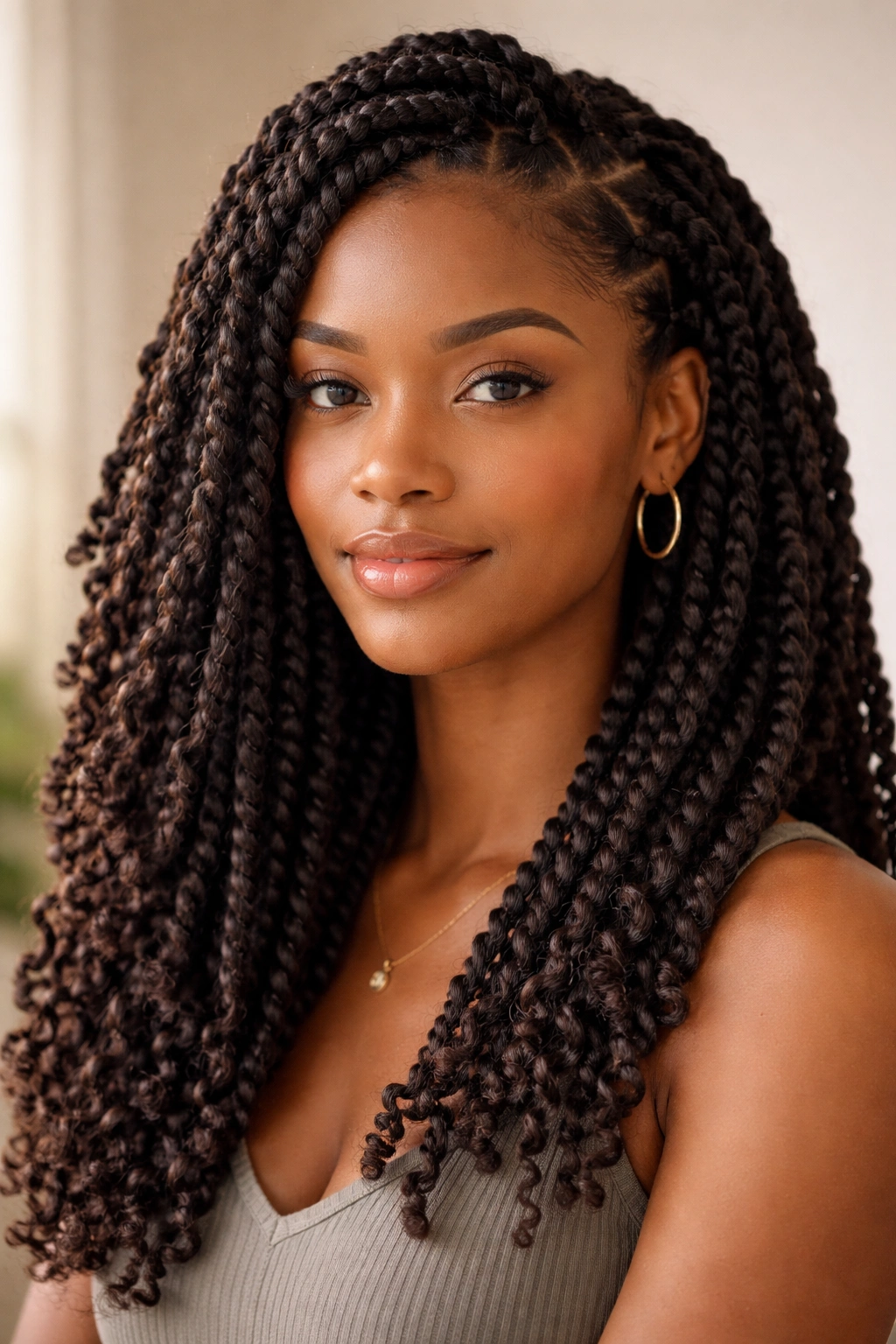
Marley twists represent genuine artistry and flexibility within natural hair styling. Whether you gravitate toward the elegance of classic two-strand twists, the dramatic impact of chunky textures, the refined delicacy of thin twists, or any of the countless variations that combine color, length, styling, and texture options, there’s a Marley twist style that aligns perfectly with your hair, your lifestyle, and your personal aesthetic.
The most important thing to remember is that protective styles are exactly that—protective. While they absolutely should look beautiful and feel aligned with your personal style, their primary job is to protect your natural hair while allowing it to rest and grow. Choose the style that not only photographs well and makes you feel confident, but one that feels genuinely comfortable on your head and that you’ll actually maintain properly throughout the wear duration.
Start with the style that resonates most with you, give it proper care and maintenance, and don’t hesitate to try something completely different next time. Marley twists offer such genuine versatility that you could try a different variation every single time you get them done and explore new facets of the style for months. That’s the real power of this protective style—it grows with you, adapts to your changing preferences, and always delivers both protection and style in one beautiful package.