



Curly pixie cuts are having a major moment, and honestly, it’s not hard to see why. A well-executed pixie on curly hair can be absolutely stunning—it’s low-maintenance compared to longer styles, it shows off your natural texture in the best possible way, and it instantly reads as confident and chic. The challenge is that not every pixie cut works with every curl pattern, and finding the right style for your face shape, curl type, and lifestyle can feel overwhelming when you’re scrolling through endless inspiration photos.
The beautiful thing about curly pixie cuts is their versatility. Whether you’ve got tight coils, loose waves, or springy ringlets, there’s a pixie variation that’ll make you feel like the best version of yourself. Some pixies lean into all that texture with layers and movement, while others embrace clean lines and defined shape. Some work beautifully with fade sides, and others keep more length throughout for that softer, more romantic vibe.
Here’s what matters most: the right pixie doesn’t just look good—it feels good to wear. It fits your daily life, works with how you naturally style your curls, and makes you excited to look in the mirror. That’s what separates a mediocre pixie from one that genuinely changes how you feel about your hair. Let’s walk through ten curly pixie styles that actually deliver on both the visual appeal and the practicality that makes real people happy.
1. The Textured Crop with Length on Top
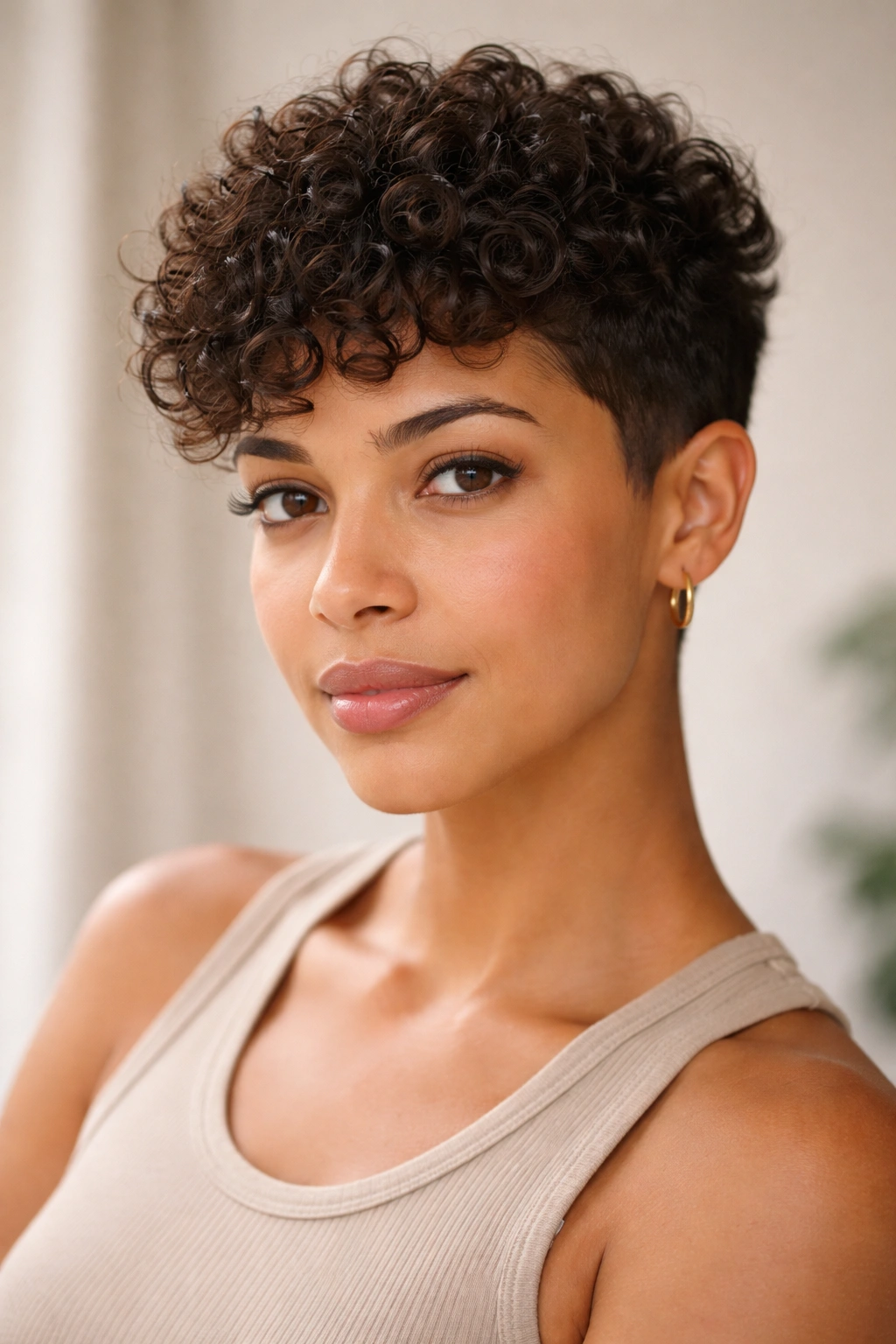
This is the pixie that gives you the best of both worlds: short and practical on the sides and back, with enough length on top to showcase your curl pattern and create real dimension. The top stays anywhere from 2 to 3 inches long, while the sides taper down to roughly half an inch or shorter. What makes this style work so beautifully is the intentional texture—your stylist should cut into the curls rather than blunt across them, creating a tousled, piece-y finish that looks effortlessly styled even when you’ve barely touched your hair.
Why This Style Stands Out
The textured crop works on nearly every curl pattern because the length on top gives your curls room to express themselves while the short sides keep everything feeling sharp and intentional. You get that playful, carefree vibe from the movement on top, but the tapered sides give it structure and polish. This is the style that often requires the least styling time—your curls naturally fall into that textured, separated look without you needing to do much beyond applying product and maybe finger-combing.
What Makes It Work for You
- Works beautifully on oval, round, and square face shapes—the height on top elongates, and the shorter sides prevent too much width
- Ideal for loose to medium curls and waves; tighter coils might get more visual impact with slightly more length on top
- Requires minimal styling: apply leave-in conditioner or curl cream to damp hair, scrunch, and let air dry or diffuse
- Best for people who appreciate a laid-back aesthetic and don’t want to spend 20 minutes styling their hair every morning
- Holds its shape well for 4-6 weeks before needing a shape refresh
Pro tip: Ask your stylist to cut the top layers at varying lengths rather than all one length—this creates that intentional tousled look that reads as effortlessly cool rather than choppy or unfinished.
2. The Tapered Curly Pixie
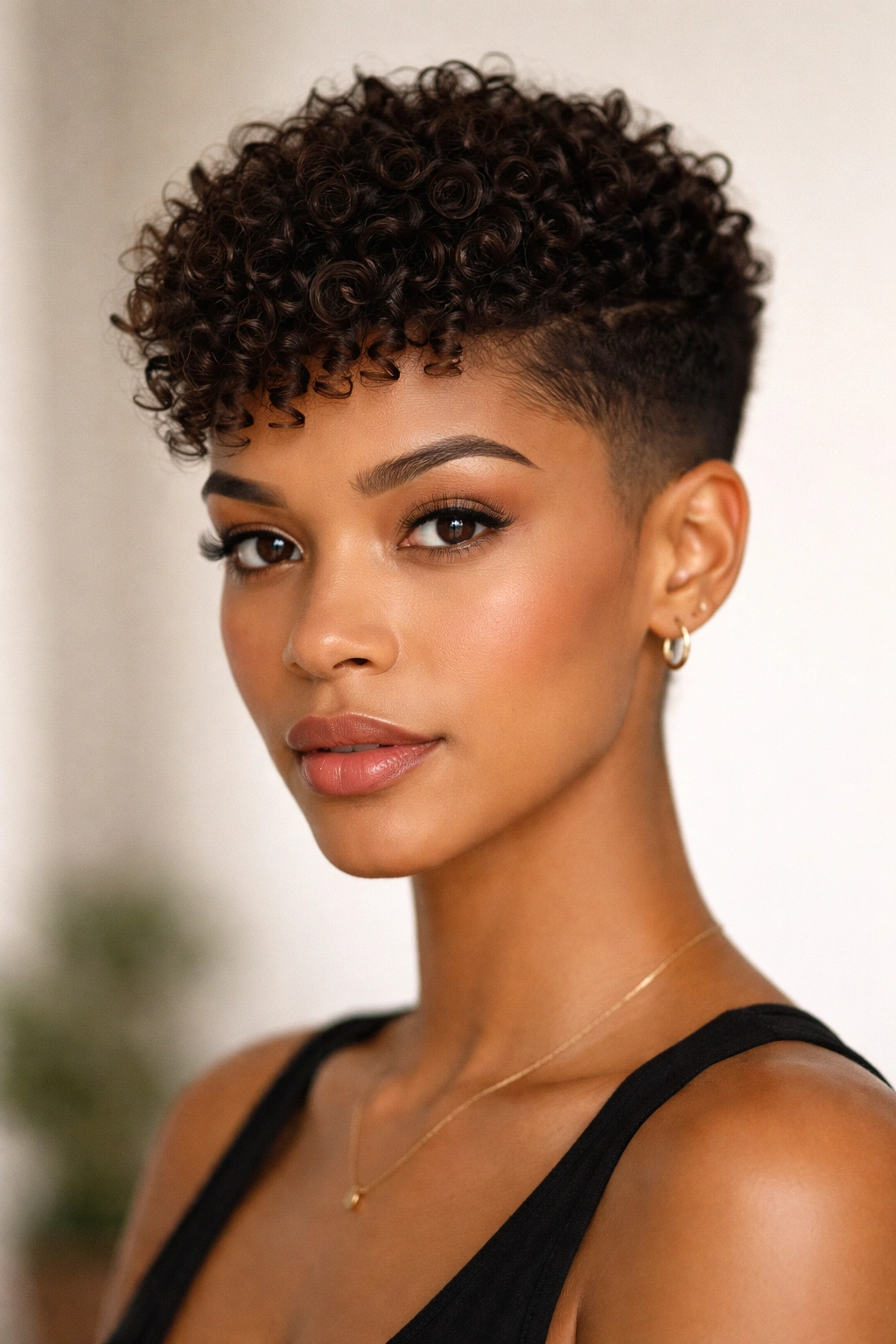
The tapered pixie is the classic short haircut approach applied to curly hair—very short on the sides and back (think half an inch or even shorter), with gradually increasing length as you move toward the crown. By the time you reach the top center, you might have 1.5 to 2 inches of curl, creating a beautiful silhouette that’s sharp at the perimeter and softly rounded at the top. This style is all about clean lines and intentional shape, and it reads as polished and put-together on everyone who wears it.
The Architecture Behind This Cut
A true tapered pixie requires precision from your stylist. The sides and back should taper smoothly rather than having a blunt line—think of how the length gradually increases, maybe a quarter-inch at a time, until you reach the top. On curly hair, this means your stylist needs to understand how your curls will expand as they dry. That half-inch wet might become three-quarters of an inch or a full inch once your hair is completely dry, so they need to account for that natural expansion when cutting. The cut works when there’s a clear vision of what the finished, dried curl pattern will look like.
Styling and Maintenance
- Requires more regular trims (every 4-5 weeks) to maintain the tapered shape as your hair grows
- Looks fantastic with a side part or swept to one side for asymmetrical styling
- Works best on people with confident personal style—this cut makes a statement, and it’s not subtle
- Can be styled smooth or textured depending on your mood and what you use product-wise
- Particularly striking on tight coils and springy curls that have strong natural volume
Worth knowing: This pixie works best if you’re willing to get regular trims. As your hair grows, the shape starts to disappear unless you’re refreshing it every month or so. If you prefer growing-out phases or going longer between haircuts, this might not be your ideal style.
3. The Shaggy Curly Pixie with Layers
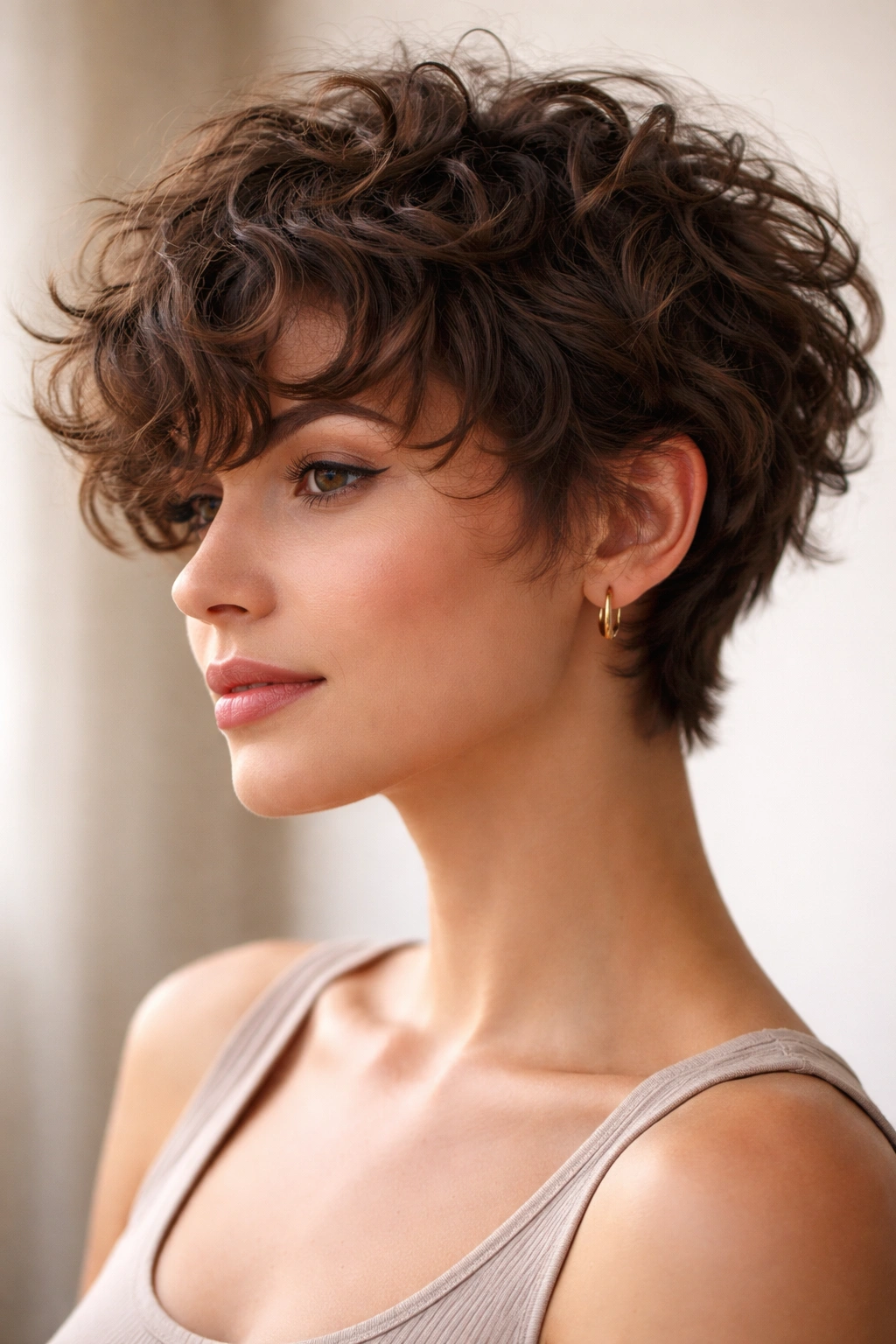
Shaggy layers are back, and they’re absolutely gorgeous on curly pixie cuts. This style uses strategic layering throughout—not just the crown, but layers woven through the entire head—to create movement, dimension, and that coveted lived-in texture. The overall length is still short (nothing extends below the chin, and most of it sits above the ears), but the layers make the hair feel lighter and bouncier. You end up with a style that has serious personality without requiring serious styling time.
How Layers Transform a Pixie
Layers on curly hair do something special—they break up density and let your curl pattern shine through in a way blunt edges sometimes can’t. Because curly hair has natural volume, layers actually help control bulk while simultaneously making the style look fuller and more dimensional. Instead of one solid shape, you get movement and texture that catches light differently depending on how you position your head. This is the pixie for people who want their short hair to feel playful and a little bit undone.
Making This Style Your Own
- Best for wavy to medium curls; tighter coils can work but benefit from slightly longer layers
- Requires good communication with your stylist about how many layers you want and where the longest pieces sit
- Styling is simple: apply product to damp hair and let curls do their thing, or use a diffuser for more definition
- Creates that “salon-fresh” look without needing professional styling between cuts
- Works on most face shapes, though the asymmetrical placement of longer pieces can be tweaked to flatter your specific features
Insider note: The shag’s magic is in the cut, not the styling. A well-executed shaggy pixie looks good even when your hair is having an off day. That’s the cut doing the work for you.
4. The Coily Undercut Pixie
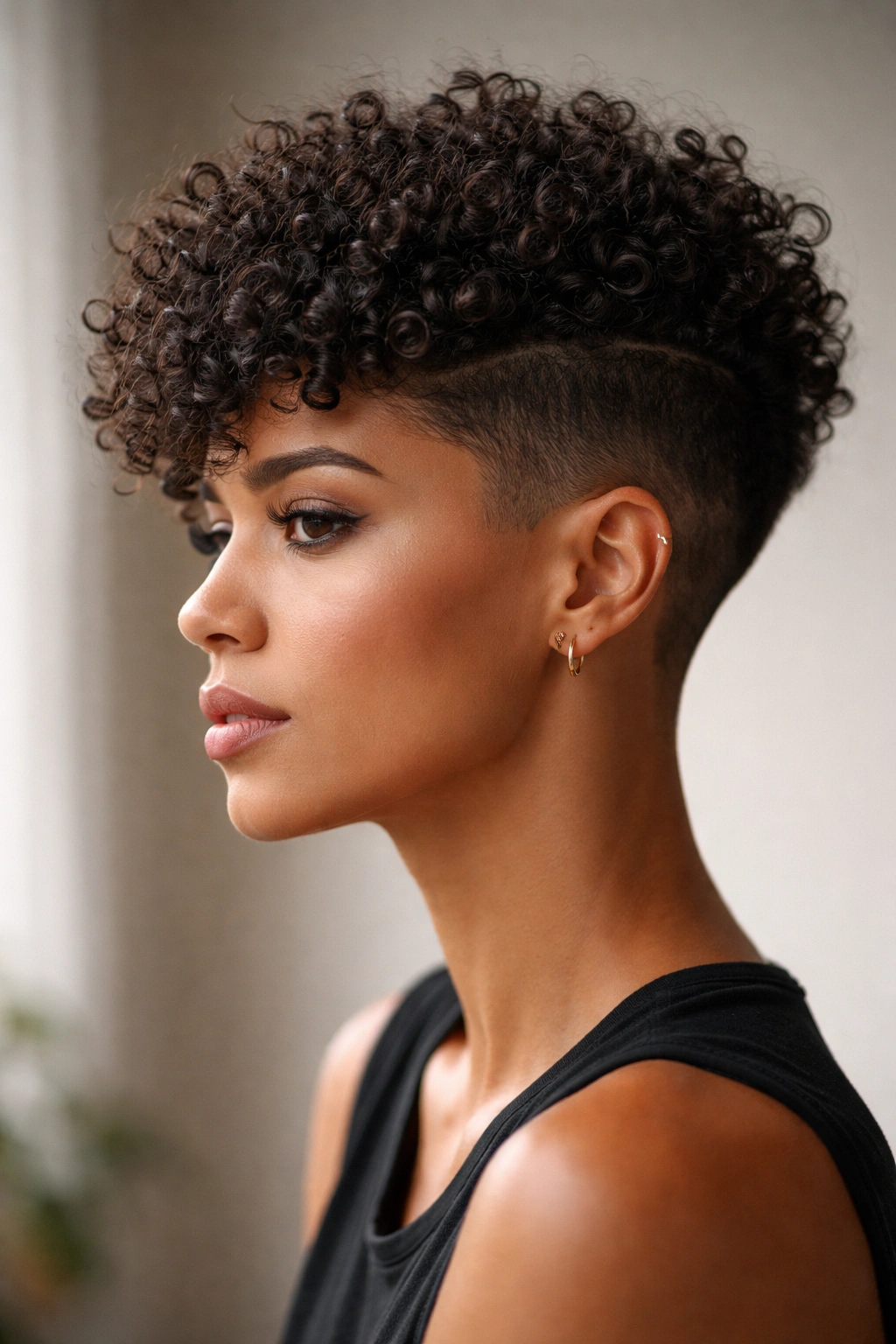
If you have very tight coils or kinks, the undercut pixie might be your exact match. This style features very closely cut sides and back (sometimes even shaved for a dramatic effect) with a much fuller top section that sits anywhere from one to three inches tall. The contrast between the bare or nearly-bare sides and the voluminous coils on top creates visual drama and makes your natural curl pattern the absolute star. It’s bold, it’s distinctive, and it flatters most face shapes because it creates beautiful height and proportion.
Why This Works for Tight Curl Patterns
Tight coils can sometimes get weighed down by their own length and density. The undercut removes that weight from the sides and back, letting the coils on top expand upward and outward freely. You get maximum volume and definition without the bulk, and the contrast of the cut actually makes your curl pattern look even more striking. Plus, the maintenance on the shaved or closely-cut sides is incredibly simple—you might not need a full trim for weeks if you’re just maintaining the coily crown.
Styling and Upkeep
- Requires a skilled stylist who understands coily hair and can cut close to the scalp safely without irritation
- The tight sides need touchups every 2-3 weeks if you want a crisp look, or can be left to grow slightly softer
- Styling the top section is minimal: apply product to damp or wet coils and let them set naturally, or use a steamer or hooded dryer
- Looks absolutely stunning with decorative clips, headwraps, or headbands that draw attention to the contrast
- Works beautifully on oval, heart, and round face shapes
Pro tip: If you’re not ready to shave the sides completely, ask for a very close fade that gradually gets longer as it moves up. You get most of the visual impact with less commitment to the shaved look.
5. The Soft Curl Pixie with Long Bangs
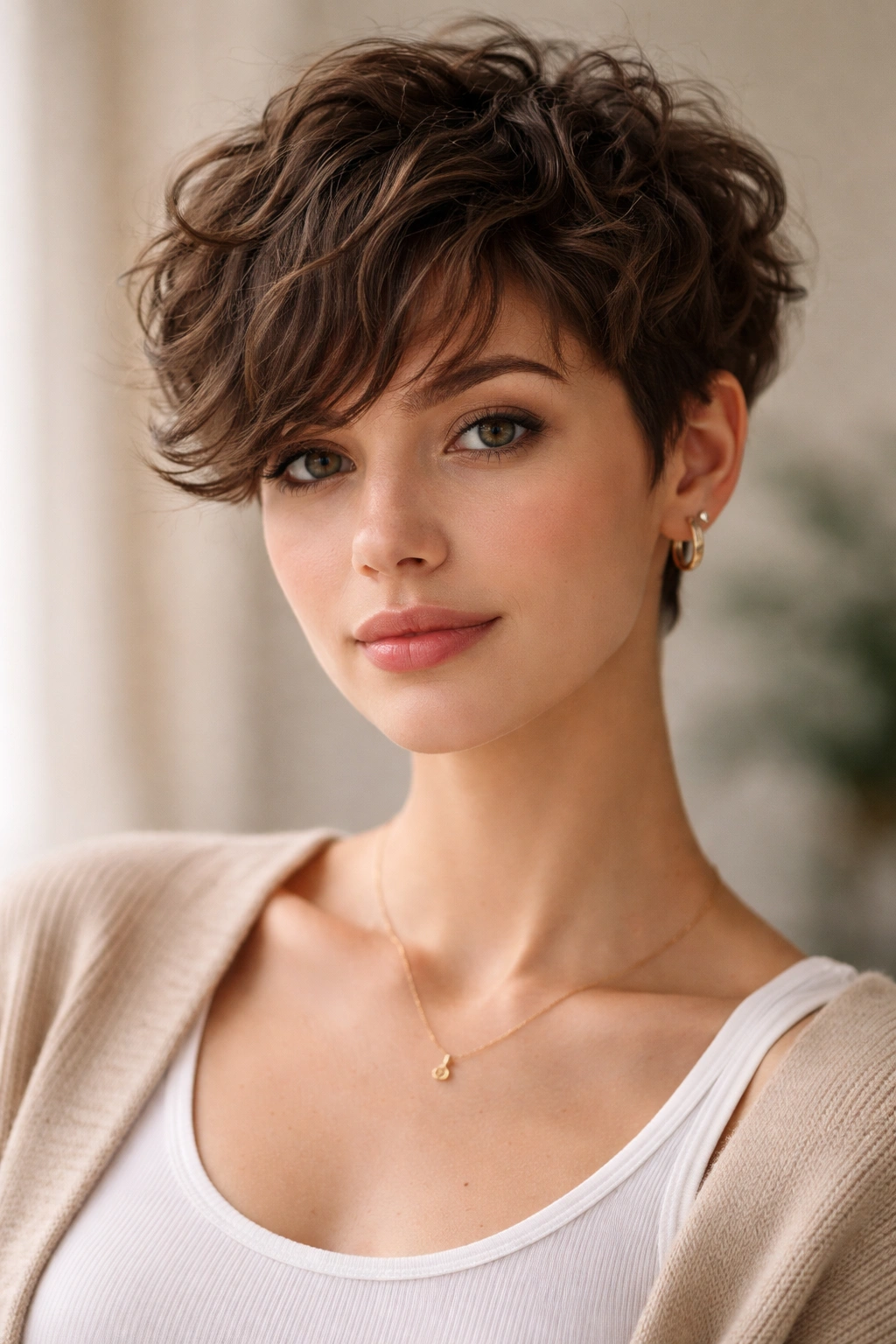
This style keeps the overall pixie short (sides tapered, back close to the head) while incorporating longer bangs that brush your eyes or cheekbones. The bangs give you a piece of that longer-hair feeling without the actual length commitment, and they create softness and femininity that balances the shortness everywhere else. It’s a style that works beautifully on oval and heart-shaped faces, where the longer bangs can flatter your features while the short sides show off your bone structure.
The Styling Advantage of Length on the Face
Long bangs on curly hair are forgiving in the best way. Your curls naturally fall where they want, framing your face without requiring you to blow-dry or flat-iron them straight. They create softness and draw attention to your eyes and cheekbones. If you have a wider forehead or a longer face, the bangs can help balance proportions. The best part? You get the low-maintenance benefit of a pixie with just enough length to feel like you have options for styling.
Getting This Cut Right
- The transition between the short sides and the longer bangs should feel intentional, not awkward—your stylist needs to blend them smoothly
- Works on all curl types, though looser curls might require slightly longer bangs to achieve the same framing effect as tighter curls
- Requires a trim every 4-6 weeks to keep the bangs at the right length and the sides tapered
- Styling is dead simple: apply product and let your curls do their thing, and the bangs will fall naturally
- Can be parted center, swept to the side, or even pinned back depending on your mood
Worth knowing: If you’ve never had bangs before, this is a great gateway into trying them. You get the framing effect and the softness without committing to full-length hair.
6. The Chunky Layered Curly Pixie
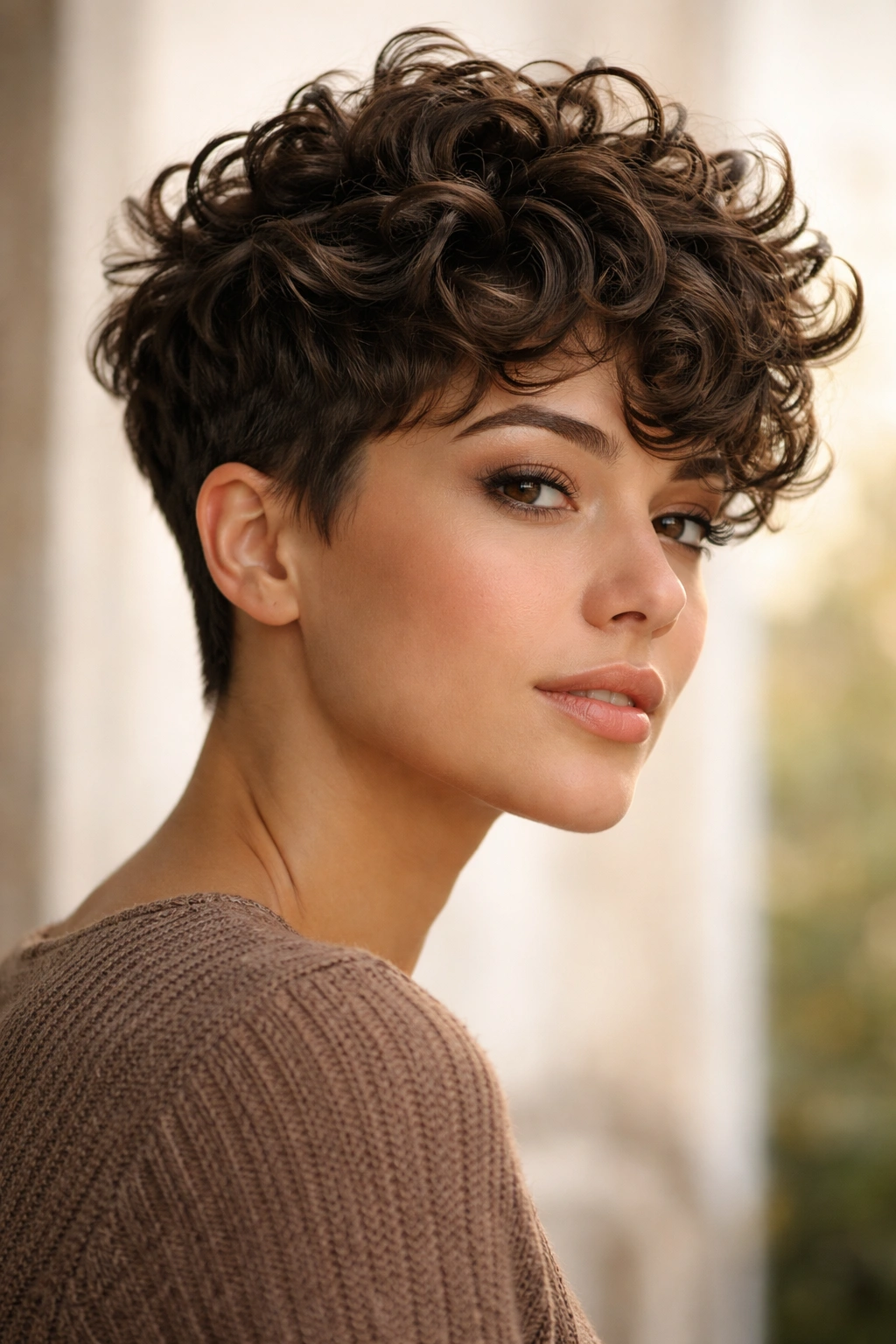
Where the shaggy pixie is all about fine, integrated layers throughout, the chunky layered pixie uses thicker, more intentional sections to create defined texture and movement. The layers are more obvious and graphic—you can actually see distinct pieces of curl rather than everything blending together. This creates more visual interest and can make your curl pattern look more dimensional. It’s a style that’s very much about celebrating the individual character of your curls rather than blending them into one cohesive shape.
The Visual Impact of Chunky Layers
Chunky layers create a graphic, almost sculptural quality that’s particularly striking on people with defined curl patterns. Instead of a soft, blended shape, you get clear separations and movement that catches light and shadow in interesting ways. This is the pixie that looks fantastic in photographs and reads as deliberate and stylish rather than accidental. The layers also create natural texture without requiring you to do much of anything—your curls will fall into those defined chunks very naturally.
Styling for Maximum Impact
- Works beautifully on medium to loose curls; very tight coils might look choppy unless the chunky layers are quite thick
- Best suited for people who like a more statement-making haircut and don’t mind their cut being very visible
- Can be styled smooth and defined with gel or mousse, or left natural for a more relaxed texture
- Requires a stylist who understands how to cut chunky layers into curly hair without it looking unintentional
- Trim every 5-6 weeks to maintain the definition and prevent the layers from growing out into an unflattering shape
Pro tip: Tell your stylist you want “chunky layers, not choppy.” There’s a difference between intentional, thick pieces and a cut that looks like it needs more precision. A good stylist will know exactly what you mean.
7. The Natural Curl Mini Afro Pixie
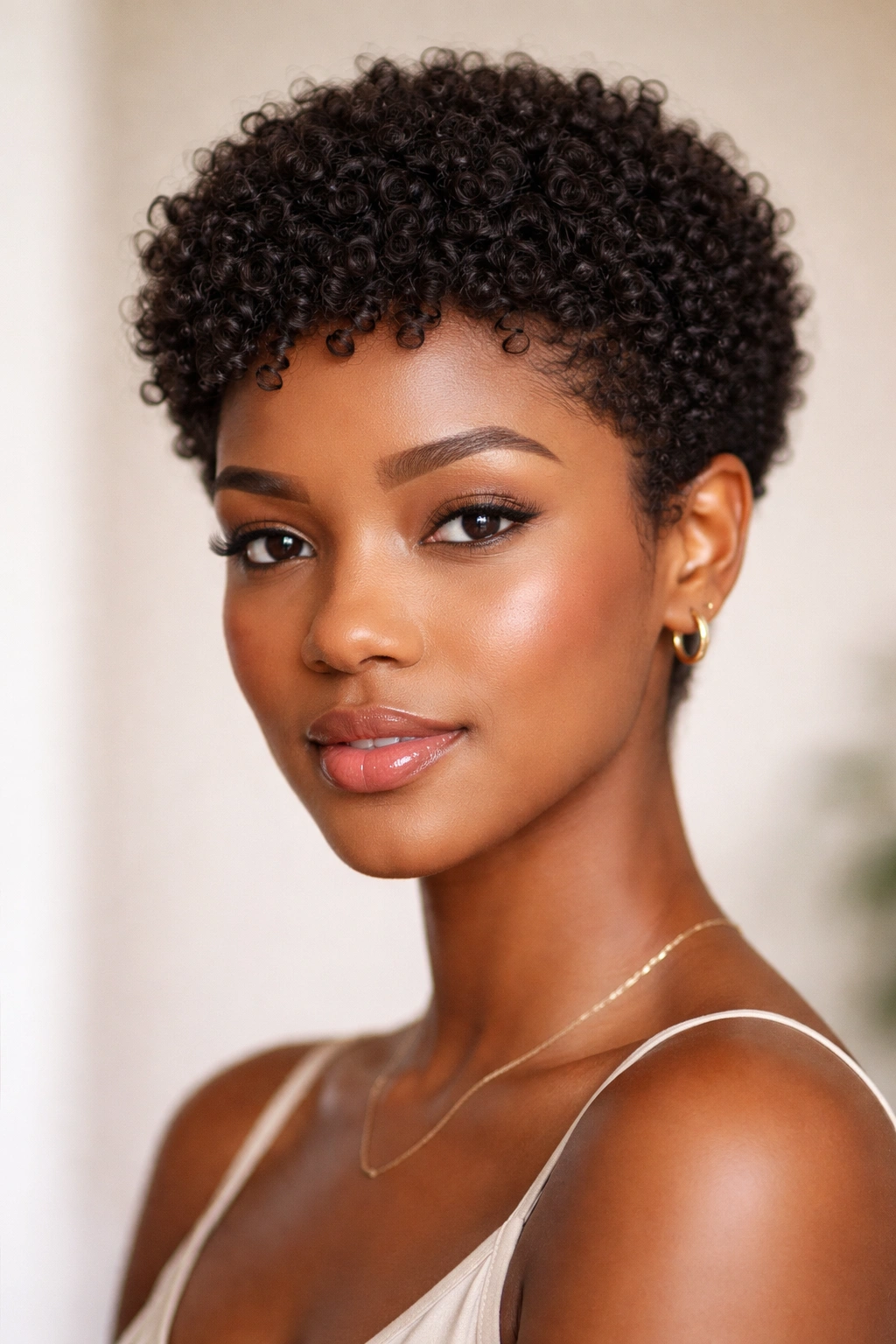
This is the pixie that embraces maximum volume and texture—short all over (usually 1 to 2 inches at most), but cut into the curl pattern in a way that lets it expand into a gorgeous, rounded shape. It’s not quite an afro (which typically allows more length), but it has that same celebration of natural texture and volume. On tight coils and kinky hair, this style is absolutely stunning. It’s confident, it’s low-maintenance, and it’s becoming an increasingly popular choice for people wanting to embrace their natural curl pattern in the shortest possible way.
Why This Cut Celebrates Your Curls
A mini afro pixie isn’t trimmed to create a smooth, rounded outline—instead, it’s cut to work with your curl pattern’s natural expansion and shape. Your stylist cuts within the curls rather than against them, creating texture and definition. The result is a style that looks fuller and more voluminous than a standard pixie, but with more shape and intentionality than just letting your hair grow out naturally. It’s basically the shortest possible celebration of natural hair texture.
Maintenance and Styling
- Works specifically on tight coils, kinky, and textured hair; not ideal for loose waves or curls
- Requires a stylist experienced with cutting natural textures—this is not a cut every stylist knows how to do well
- Minimal styling: spray with water or a light leave-in product and let your curls expand naturally, or use a pick or fingers to shape
- Looks absolutely beautiful with decorative elements like clips, scarves, or jewelry that draw attention to the shape and texture
- Requires trims every 6-8 weeks to maintain the shape and keep the overall length short
Worth knowing: This pixie is making a statement about embracing your natural texture. If you’re still figuring out your natural curl journey, this might be the style that helps you get there.
8. The Voluminous Curly Pixie with Fade
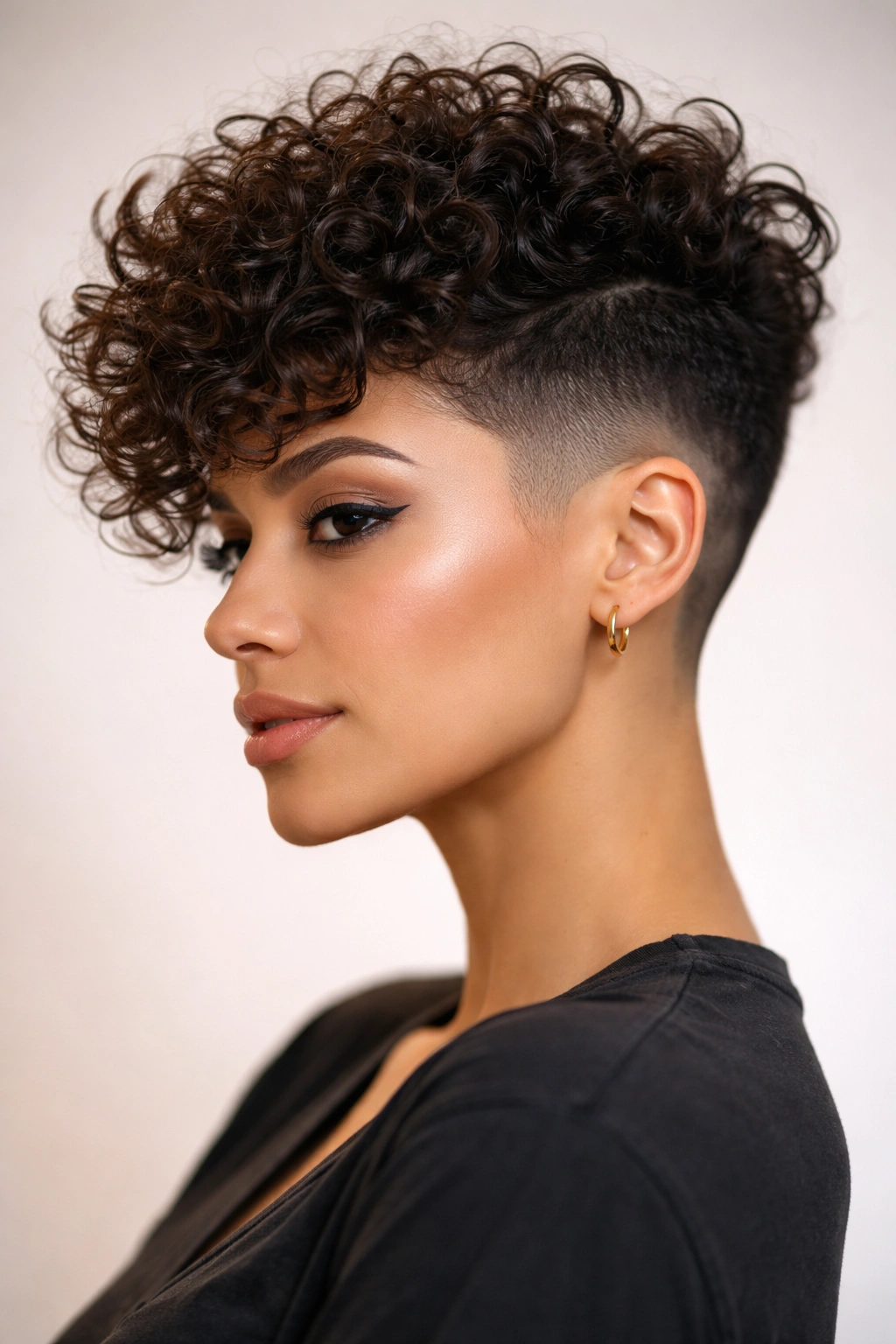
The fade—the smooth transition from very short on the sides to longer on top—is typically a men’s cut, but it translates beautifully to curly pixie cuts. The sides fade super close (sometimes to skin, sometimes to a quarter-inch), while the top maintains more length and texture. What makes this different from other tapered styles is the crisp, intentional nature of the fade. It’s precise, it’s trendy, and it creates a striking silhouette, especially on curly hair where the volume on top provides such a clear contrast to the bare or nearly-bare sides.
The Visual Drama of a Fade
A fade creates instant visual interest because of the dramatic contrast. When you add curls on top of that, you get maximum impact—the voluminous curls practically float above the clean lines of the fade. This style reads as modern and deliberately styled, even when you’re doing very little to style it. It works on all curl patterns, but the contrast is most striking on people with defined, bouncy curls that have real volume.
Styling and Maintenance
- Requires the most frequent trims of any pixie style to maintain the fade—every 3-4 weeks is ideal if you want crisp lines
- Can be styled sleek and defined, or left natural for more of a textured look—both work beautifully
- Works on all curl types and most face shapes, though the clean sides create a good balance for rounder face shapes
- Looks fantastic with or without a part; side parts emphasize the fade, while center parts let your curl pattern take the lead
- The fade can be adjusted from very subtle to very graphic depending on your preference
Pro tip: If you love the fade look but don’t want to commit to super frequent trims, ask your stylist for a softer fade that transitions more gradually. You’ll lose some of the graphic impact, but you might get an extra week or two between trims.
9. The Tousled Curly Pixie with Texture
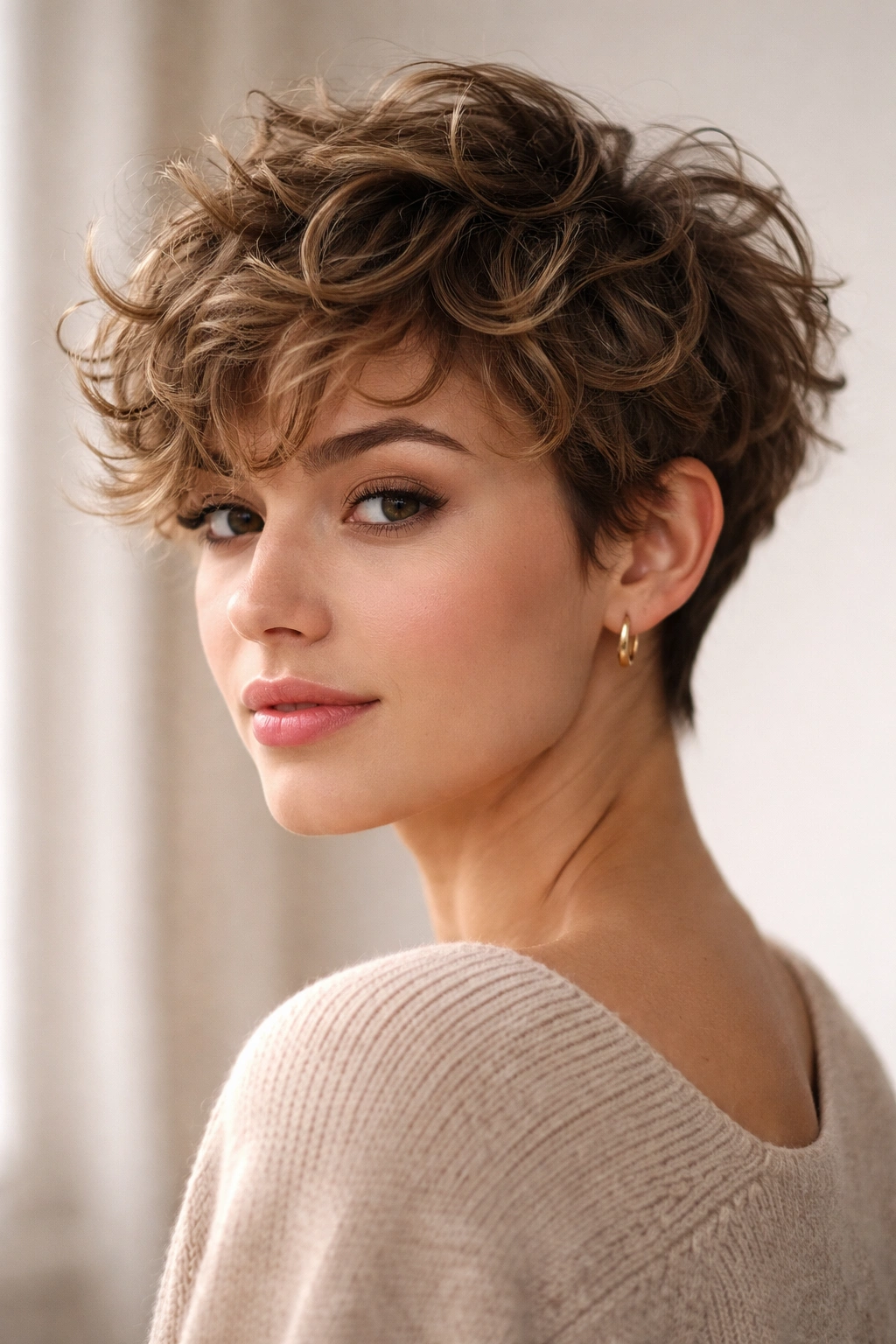
This is the pixie that looks like you just rolled out of bed with perfect hair—tousled, piece-y, full of movement, and completely effortless-looking. The cut is textured all over with shorter and longer pieces mixed throughout, creating that “I didn’t try and it looks this good” vibe. It works on all curl patterns and doesn’t require any particular face shape advantage—it’s just universally flattering because of the way the movement and dimension work on curly hair. It’s also one of the lowest-maintenance options because the textured cut basically styles itself.
The Magic of a Textured Cut
A truly textured pixie cut uses variation in length and angle to create natural movement and separation without requiring a ton of styling. Because curly hair naturally wants to do texture anyway, working with that instinct rather than against it gives you a style that looks good even on days when you do almost nothing. Some pieces are a bit longer, some are a bit shorter, some angle forward, some angle back—all of it working together to create a cohesive, intentional look that happens naturally.
Styling for That Effortless Vibe
- Works beautifully on all curl patterns from loose waves to tight coils
- Requires good communication with your stylist about wanting variation in length and texture, not a perfectly blended shape
- Styling is minimal: apply product to damp hair and either air dry or diffuse, letting the cut do most of the work
- Holds its shape reasonably well for 5-6 weeks before needing a refresh
- Flatters most face shapes because the textured movement around the face is so soft and forgiving
Insider note: This is the cut to get if you want a pixie that looks intentional and stylish but you’re tired of having to style your hair every single day. The cut does the heavy lifting for you.
10. The Curly Pixie with Defined Coils
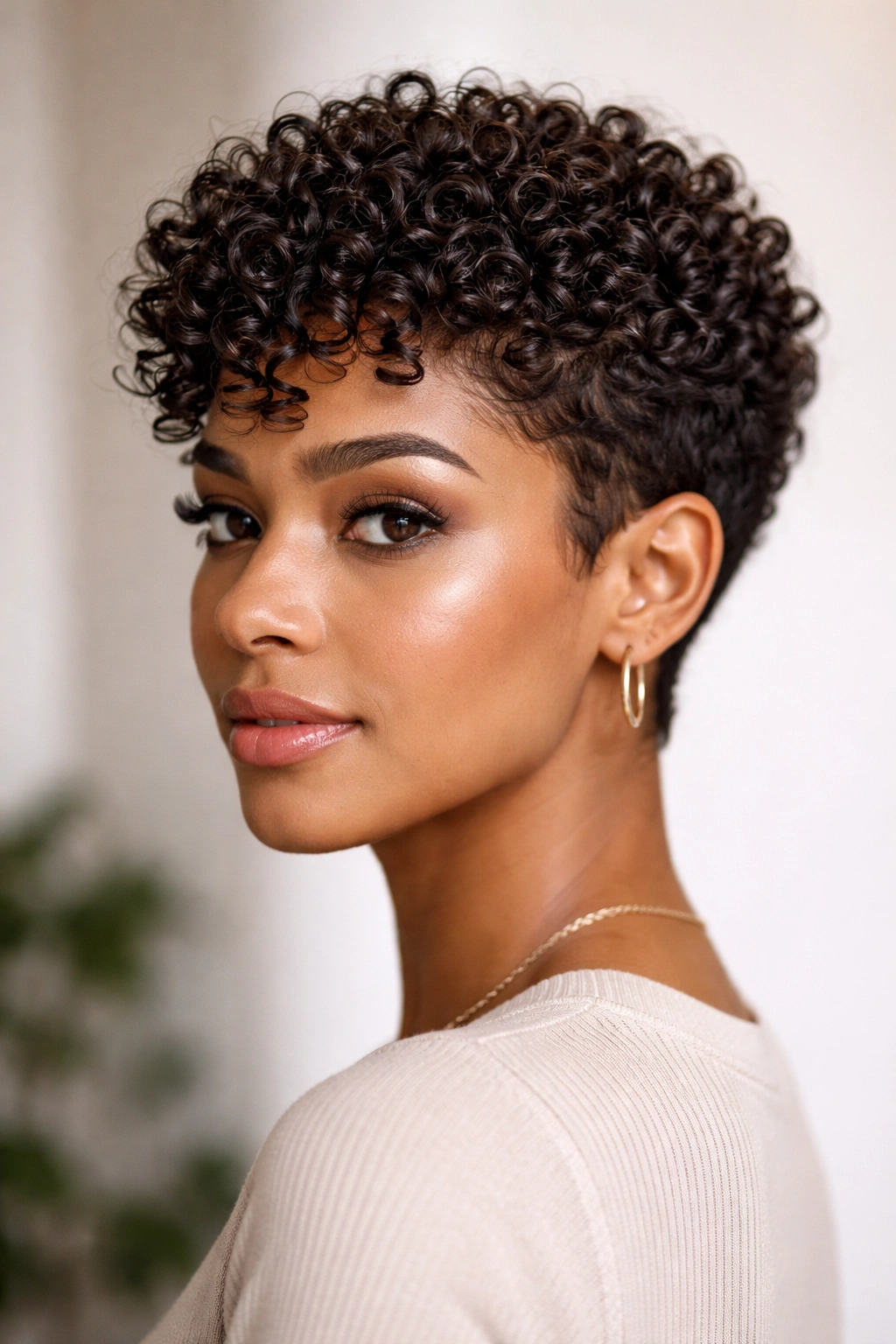
This style is specifically designed to enhance and define your natural curl or coil pattern rather than blend it. Instead of layering and breaking up texture, this cut works with your individual curls, defining each one and creating separation without sacrificing density. It’s cut shorter overall (typically 1.5 to 2.5 inches) and uses point-cutting techniques to enhance definition rather than create layers. The result is a style where you can actually see each coil or curl distinctly—it’s visually stunning and celebrates the unique character of your hair.
How to Achieve Defined Coils
Point-cutting (cutting at the tips of curls in a tapping motion rather than slicing across them) and twist-cutting (twisting the curl and cutting through the twist to create definition) are the key techniques here. Your stylist works with your individual curls, enhancing their natural pattern and creating separation without breaking them up into fragments. The result is a style that looks polished and defined while still being very clearly natural. It’s a technique that requires a stylist experienced with curly and coily hair—not every stylist knows how to do this well.
Styling for Definition
- Best for medium to tight curls and coils that have a distinct, consistent pattern
- Styling requires the right products: a curl cream or gel that defines without flaking or crunching, and usually a technique like praying hands or raking
- Works beautifully on all face shapes, especially ones where you want to draw attention to facial features
- Requires trims every 5-7 weeks to maintain definition as your hair grows
- The more you style with definition-enhancing products, the more this pixie shines—but it also works nicely with a more natural approach
Pro tip: If you get this cut, invest in a good curl cream or gel that’s meant for definition. The way the cut is executed, you’ll want products that enhance and separate rather than smooth or blend your curls together.
Final Thoughts
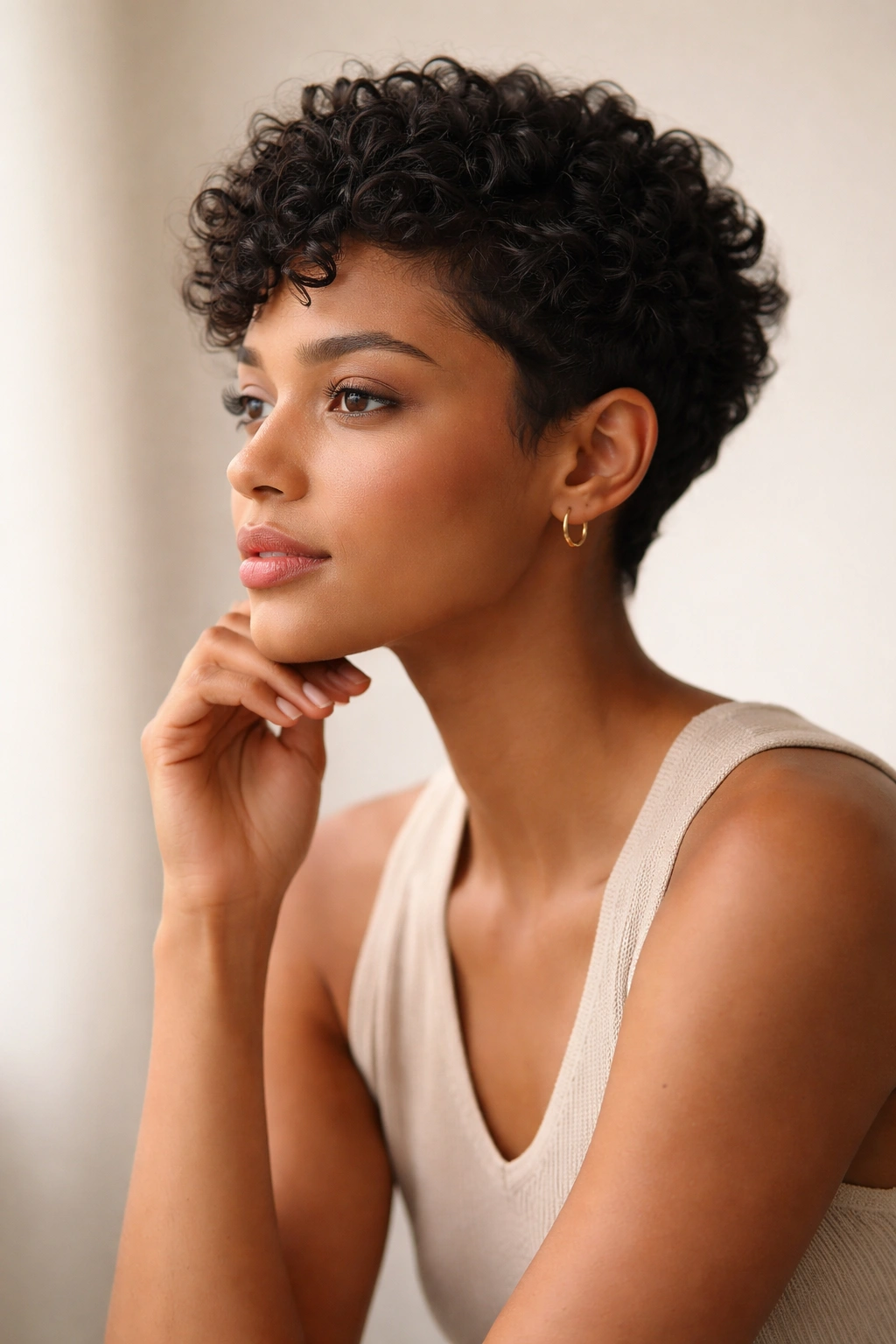
The perfect curly pixie cut is out there for you—it just requires finding the right stylist who understands curly hair, the right style that matches your texture and face shape, and the confidence to make the commitment. What works beautifully for someone else might not be your ideal, and that’s completely okay. Think about what matters most to you: Do you want minimal styling time, or are you excited about the opportunity to style your curls in new ways? Do you prefer a softer, more romantic vibe, or do you love the boldness of a sharp, clean cut? Are you ready to commit to regular trims, or do you want something that grows out gracefully?
The good news is that curly pixie cuts have gotten so much better and more inclusive in recent years. There are genuinely beautiful options for every curl pattern, every face shape, and every aesthetic preference. The ten styles here are just a starting point—once you have a stylist who really understands curly hair, you can explore endless variations and adaptations that feel specifically yours.
And here’s the thing about short hair on curly heads: once you go there, you often don’t go back. There’s something about the confidence of a good short cut, the ease of maintenance, and the way it shows off your curl pattern that just hits different. Your curl pattern becomes the focal point instead of something you’re trying to manage or hide. That’s when you know you’ve found your style.
