


Mohawks have become a powerful statement in natural hair styling, and there’s a good reason why. Your natural afro hair already has the texture, volume, and structural integrity to make a mohawk look bold and intentional—qualities that other hair types often have to work harder to achieve. Whether you’re drawn to the edgy confidence of a high fade mohawk or the softer elegance of a shaped faux hawk, natural hair gives you incredible versatility to explore this look in ways that feel authentically you.
The beauty of wearing a mohawk on natural afro hair is that it celebrates your hair’s inherent texture while creating a striking silhouette. You get to play with height, definition, and contrast in ways that truly showcase what healthy, natural hair can do. From sculpted and geometric to flowing and textured, these eight styles offer different vibes for different moods, hair lengths, and personal aesthetics.
What makes these styles work is understanding how to work with your natural curl pattern and density rather than against them. A well-executed mohawk on natural hair doesn’t require heavy chemicals or heat damage—just strategic styling, good products, and the right technique to bring the look together. Let’s explore eight distinct mohawk variations that celebrate natural afro hair’s versatility and power.
1. The Classic Shaved-Sides Mohawk
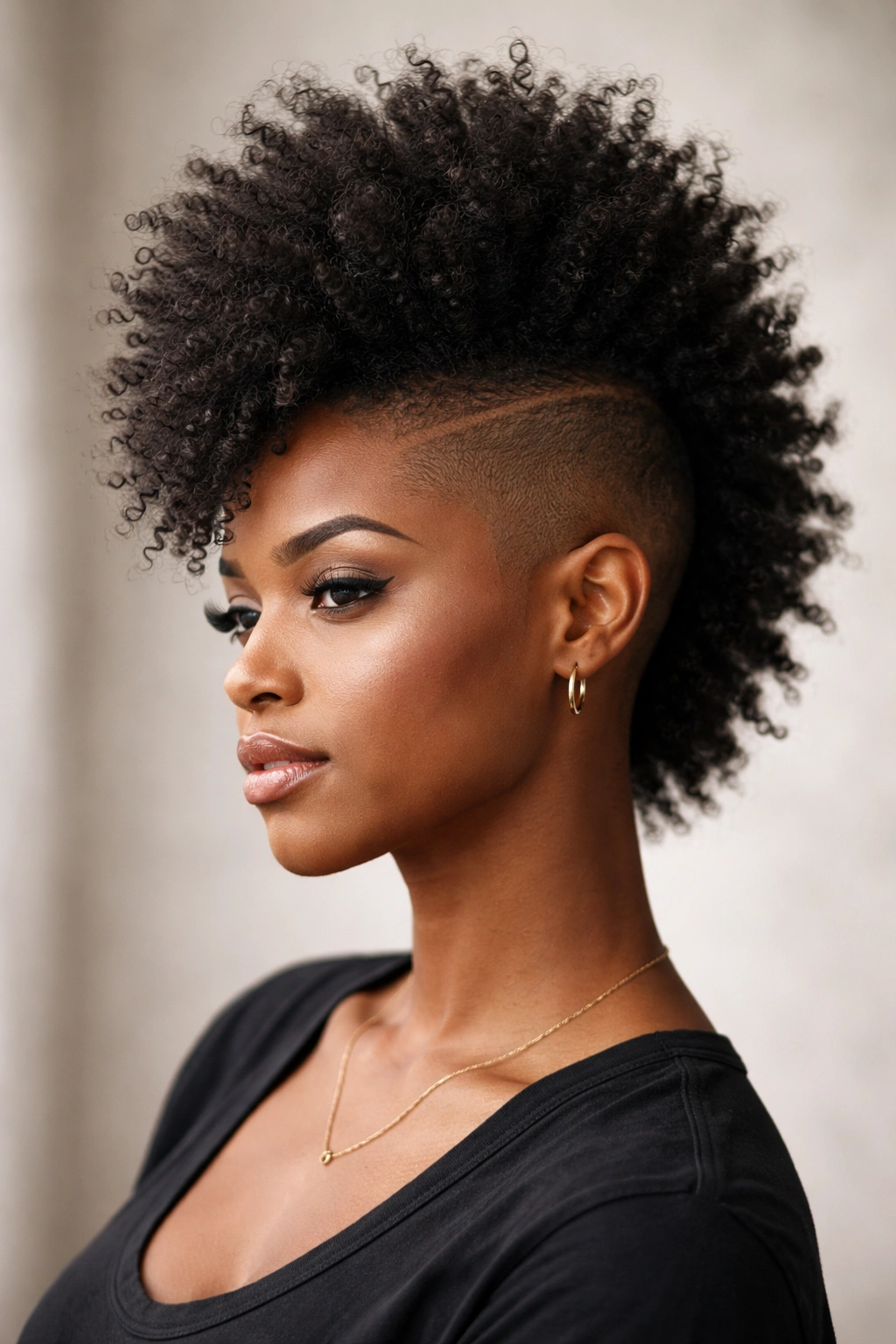
This is the statement-maker, the style that says you’re serious about your aesthetic choices. The classic shaved-sides mohawk features a clean, faded—or completely shaved—sides with a thick column of natural hair running up the center of your head from your nape to your crown. The contrast is what makes this style so striking: the smooth, sculptural sides highlight your natural curls standing tall in the middle.
Why This Works for Natural Hair
Natural afro hair at the crown tends to have more volume and height naturally, which means your mohawk already wants to stand up and demand attention. When you pair that with faded or shaved sides, you’re not fighting against your hair texture—you’re amplifying it. The clean sides provide a visual frame that makes your natural curls look even more impressive and intentional. This style typically requires a trip to a barber or stylist who understands how to cut natural hair properly, making clean lines without damaging your edges.
How to Style and Maintain It
Wash day routine: On wash days, you’ll focus all your moisture and product on the center column of hair. Use a hydrating leave-in conditioner and lightweight styling gel or cream to define your curls. Apply product in sections, working from the base upward, and use a microfiber towel or t-shirt to scrunch moisture into your strands.
Between wash days: This is where the style lives—refresh it with a light water mist and gel to keep your curls defined and help the mohawk stand at its best height. A durag, wave cap, or silk scarf can help set the shape while you sleep.
Pro tip: The height of your mohawk is determined partly by the angle at which you sculpt your hair and partly by your natural curl pattern. Coarser, tighter curls will stand taller more easily, while looser curls might need more product support to maintain that vertical drama.
2. The Textured Fade Mohawk
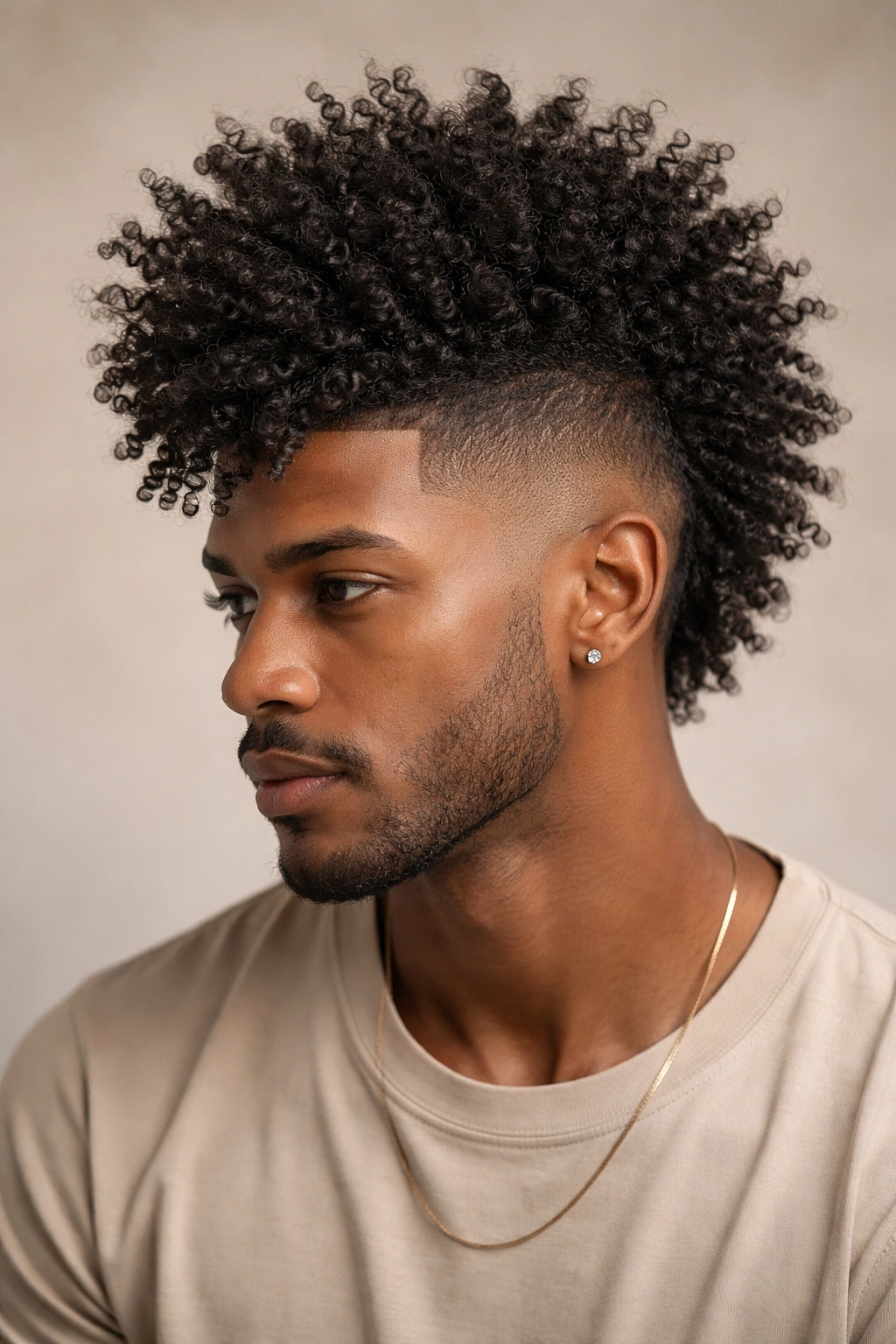
If you want the boldness of a mohawk without going completely shaved, the textured fade gives you exactly that. This style maintains some length on the sides—maybe a quarter-inch to half-inch of texture—and gradually fades up to your longer center column. It’s less extreme than a fully shaved look but still creates dramatic contrast and visual interest.
Why This Works for Natural Hair
A textured fade celebrates natural hair in both directions: the sides showcase your curl pattern at a shorter length, and the center gets all the drama and fullness. This style works beautifully across different curl patterns because the fade accommodates varying hair textures. Looser curls that might seem limp at longer lengths can look sharp and defined in the faded sides, while coarser, denser hair looks absolutely stunning with that dimensional fade effect.
The Styling Advantage
The textured fade requires less intensive daily maintenance than a completely shaved look because there’s more texture to work with on the sides. You can refresh your curls with a water bottle and cream between washes without having to worry about stubble. The fade also grows out more gracefully—as your hair gets longer, you can maintain the style for a bit longer before your next cut, making it a practical choice for busy schedules.
Maintenance note: Keep your fades crisp by visiting your barber or stylist every 2-3 weeks if you want that sharp, fresh look. The center column can be styled while slightly damp with your favorite curl cream or gel.
3. The Faux Hawk with Center Part
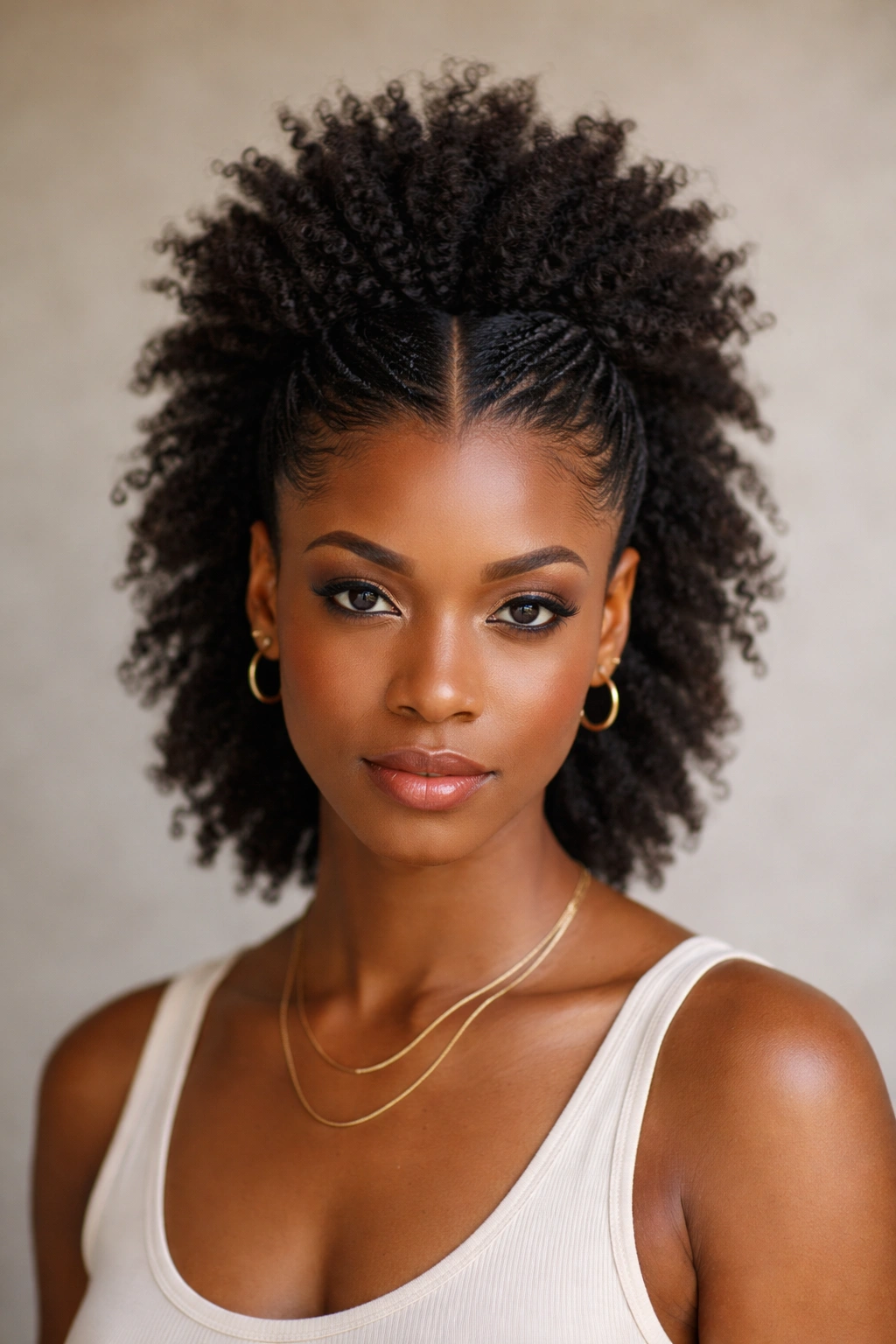
This is the softer cousin of the classic mohawk—instead of dramatically shaved sides, you’re creating visual height and definition through strategic parting and styling on your natural hair. A center part down the middle of your head with the hair on either side either smoothed back, twisted, or braided creates the illusion of a mohawk while keeping all your hair intact and healthy.
Why This Works for Natural Hair
A faux hawk lets you experiment with the mohawk aesthetic without committing to cutting your hair short on the sides. It’s perfect if you’re not ready for that level of change, if you like having styling flexibility, or if you want to test drive the look before going full commitment. Your natural hair’s texture makes this style particularly effective—the volume at your crown naturally creates that lifted center, and your curls add visual interest all over rather than in just one column.
Creating the Look
For a clean, slicked look: Apply a smoothing gel or edge control to your sides and sleek them back and down, using a fine-tooth comb to guide your curls. This creates a dramatic contrast between the controlled sides and the voluminous center.
For a twisted variation: Instead of smoothing the sides flat, twist sections on either side of your center part and pin them at the back of your head, letting your center column stand full and textured. This version reads softer but still has major style impact.
For a braided version: Create one or two braids on either side of your center part, pinning them back so they frame your face and travel along the sides of your head. Your unbraided center hair can then be styled in its natural state or enhanced with curling creams for extra definition.
4. The High-Top Mohawk with Twisted Sides
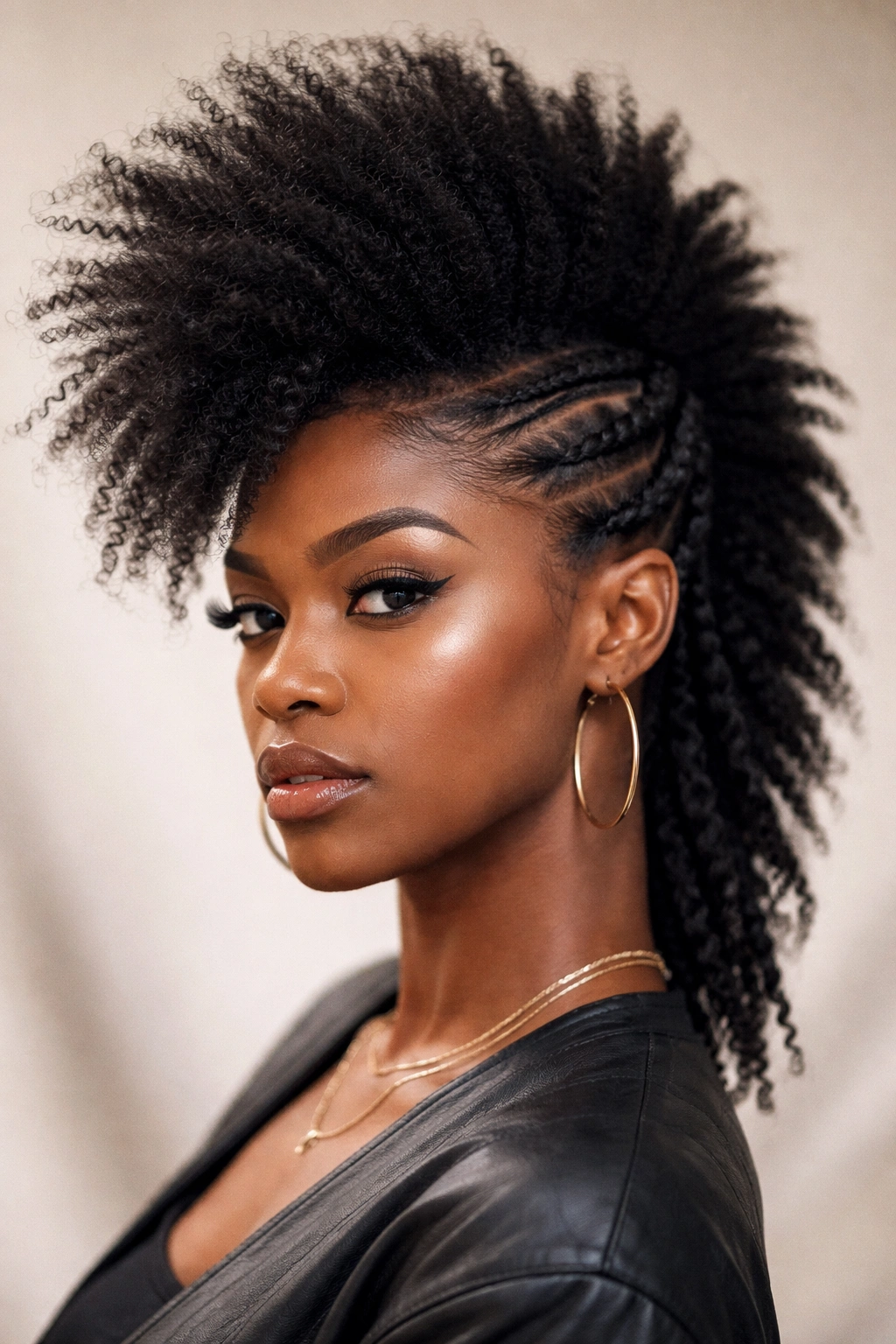
A high-top mohawk takes your natural volume and amplifies it vertically, creating an almost sculptural effect on top of your head. Rather than shaved sides, this version uses twisted sections on both sides that connect to the base of your high-top, framing your face while keeping all your hair.
Why This Works for Natural Hair
High-top mohawks are actually a classic style in Black hair culture, and they work beautifully on natural afro hair because they celebrate height and volume. Your natural curls at your crown are already predisposed to give you this height—you’re just emphasizing what’s already there and framing it with intentional styling on the sides. This style feels bold without requiring any cutting, making it accessible to anyone with shoulder-length or longer natural hair.
Technique and Styling
Creating the twist framework: Two-strand twists on either side of your head form a visual line that guides the eye up toward your high-top. Start your twists at your temple or ear and spiral them back toward the nape of your neck, securing them with bobby pins.
Defining your high-top: Apply your curl cream or styling gel to your center and crown area, working product through your curls while using your fingers or a wide-tooth comb to encourage height and definition. You want maximum volume and texture in your center section.
Set it overnight: After styling, wrap your high-top loosely with a silk or satin scarf, allowing your twists to set in place. You’ll wake up with a style that’s crisp and holds its shape.
Real-world note: High-top mohawks photograph incredibly well because of the dimensional silhouette they create. If you’re into visual self-expression and photography, this is a style that really shines.
5. The Braided Mohawk Strip
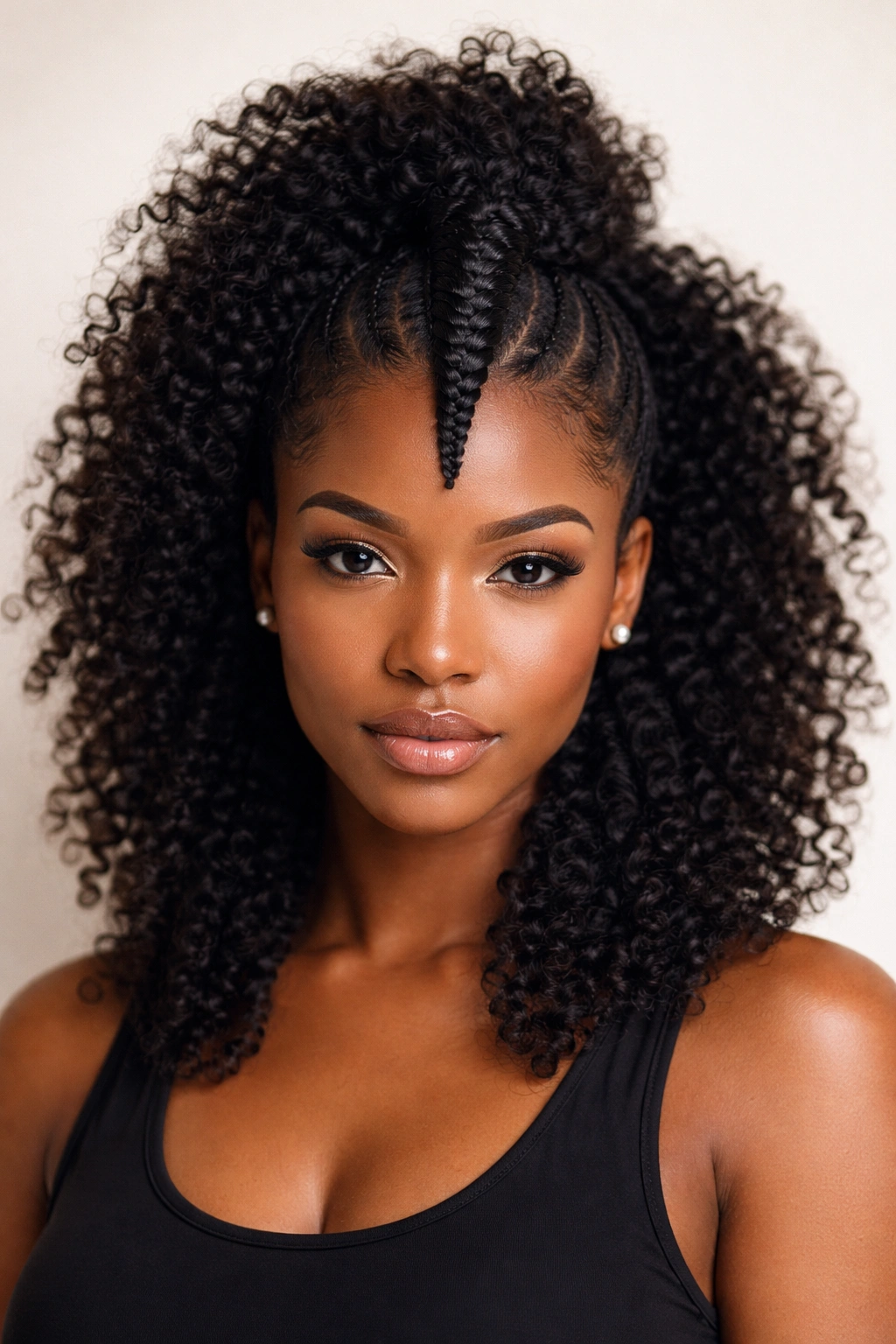
This style braids one clean section down the center of your head, creating a defined mohawk stripe with your natural hair remaining in its loose, textured state on either side. It’s a hybrid between a protective style and a visual statement, combining the structural appeal of braids with the organic beauty of natural afro curls.
Why This Works for Natural Hair
Braiding creates visual definition and line that complements the texture of your loose curls. The contrast between the smooth, organized braid down the center and the free-flowing curls on the sides creates a compelling visual story about your styling intentionality. This style also offers protective benefits—the braided center gets handled less and therefore experiences less manipulation and breakage, while your sides remain in their natural state.
Creating and Maintaining the Braid
Prep your hair: Start with clean or lightly dampened hair. Apply a lightweight styler to your center section to make braiding easier and help your braid stay crisp throughout the week.
Braid technique: Create a single braid (or two thin ones for a thinner, more elegant effect) starting from your hairline and traveling down to your nape. You can do a traditional three-strand braid, a Dutch braid (which sits up and catches light beautifully), or a French braid depending on the look you want.
Keeping your braid fresh: This style typically lasts 5-7 days if you refresh it during your nighttime routine with a silk scarf. If you want the braid to last longer, you can lightly mist it with water and seal it with gel every few days.
Protective benefit: Because the center braid experiences less daily manipulation, it’s a smart option if you’re focused on growing and protecting your hair while still expressing yourself with a bold style.
6. The Colored Mohawk Stripe
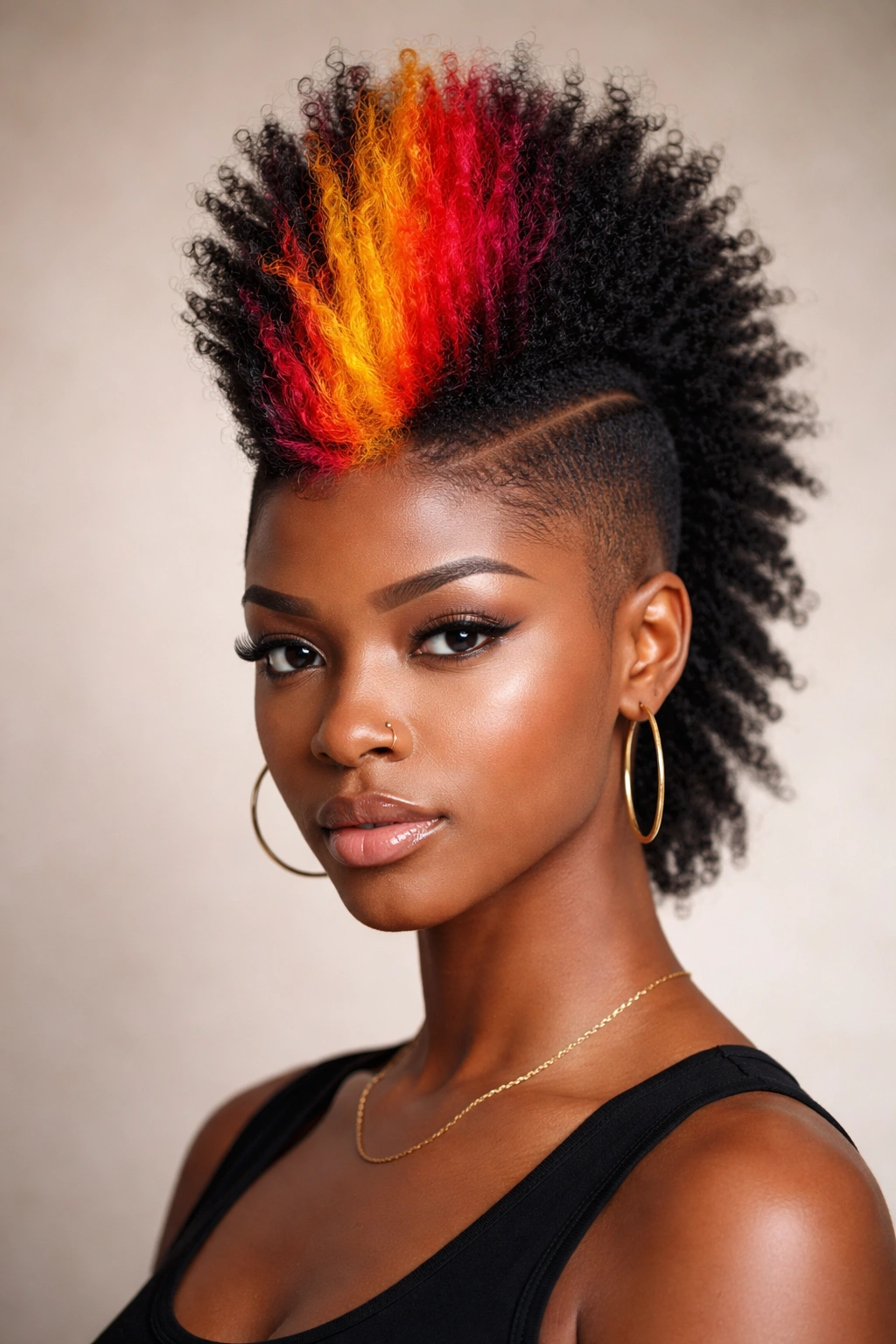
If you want to add another dimension to your mohawk, consider color. This style involves dyeing or color-depositing the center mohawk stripe a contrasting shade—natural-looking highlights, jewel tones, pastels, or even bold colors—while keeping your natural color on the sides. The color creates immediate visual drama and makes the mohawk impossible to ignore.
Why This Works for Natural Hair
Natural afro hair takes color beautifully, especially when you use quality dyes and maintain them with color-safe products. A colored mohawk stripe becomes a powerful form of self-expression because the color literally defines the shape and intention of your style. You get the structural boldness of a mohawk plus the creative impact of hair color, all in one statement.
Color Execution and Care
Choosing your shade: Lighter shades (blondes, coppers, warm reds) create striking contrast on darker skin tones and darker natural hair. Jewel tones (emerald, sapphire, plum) offer a more mysterious depth, while pastels feel playful and artistic. Consider what feels authentic to your personal style.
Application and safety: Colored mohawks work best when you’ve either worked with a professional colorist or have experience maintaining healthy colored natural hair. Make sure you’re using color-safe shampoo and conditioner to preserve your color and prevent fading. Color-depositing conditioners between salon visits help refresh your shade between appointments.
Maintaining health: Colored hair needs more moisture, so prioritize deep conditioning treatments at least twice a month. Limit heat styling and protect your colored strands from sun exposure when possible by wearing protective styles or using UV-protective products.
Cost consideration: Keeping a colored mohawk fresh typically requires touch-ups every 4-8 weeks depending on how much new growth you’re willing to tolerate. Factor that into your decision, but know that the visual impact is absolutely worth it for many people.
7. The Loc Mohawk
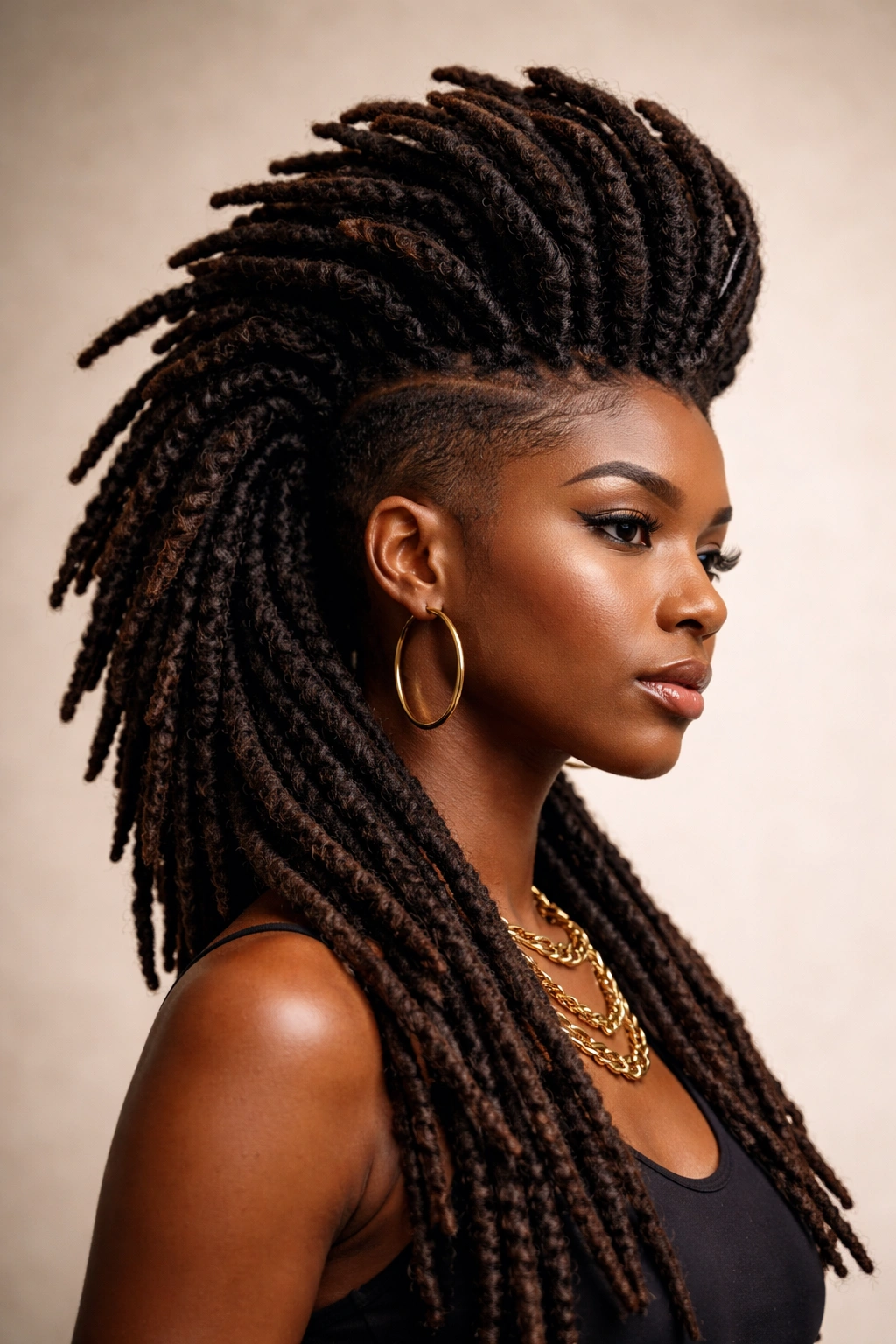
If you’re wearing locs or considering them, a loc mohawk is an absolutely stunning option that combines the sculptural power of locs with the bold statement of a mohawk. Center locs stand tall and strong, creating a natural column of height, while shaved or faded sides showcase your scalp and create dramatic contrast.
Why This Works for Natural Hair
Locs are perhaps the ultimate expression of embracing your natural hair texture, and a loc mohawk takes that celebration to its most dramatic form. Locs have inherent weight and structure that makes them stand vertically without requiring product support, which means your mohawk holds its shape effortlessly. The visual impact of a loc mohawk is profound—it’s a style that announces both your commitment to natural hair and your personal aesthetic confidence.
Creating and Maintaining a Loc Mohawk
Starting your locs: If you’re not already locked, you have several methods: sisterlocks (tiny, uniform locs), traditional locs (medium to large), or freeform locs (organic, irregular sizing). For a mohawk, medium to large locs create better visual impact, though any size can work beautifully.
Placement strategy: Consider starting or maintaining only the locs you want in your center column, and shaving the sides as they would have been. If you already have full locs everywhere, you can create a loc mohawk by shaving or fading the sides while keeping center locs long.
Styling and maintenance: Locs require minimal daily styling—they essentially style themselves. You might use a light retwist cream to keep them defined, and a regular retwist appointment every 4-8 weeks keeps them tight and neat. Since you’re wearing a mohawk, the regular maintenance of your locs gives you the freedom to rock this style without daily styling effort.
Lifetime commitment note: Locs are a longer-term commitment than loose natural hair styles. They can last for decades if you want them to, and transitioning out of locs requires deliberate decisions about whether to cut them off or comb them out. It’s a beautiful choice, but one worth thinking through carefully.
8. The Geometric Shape Mohawk
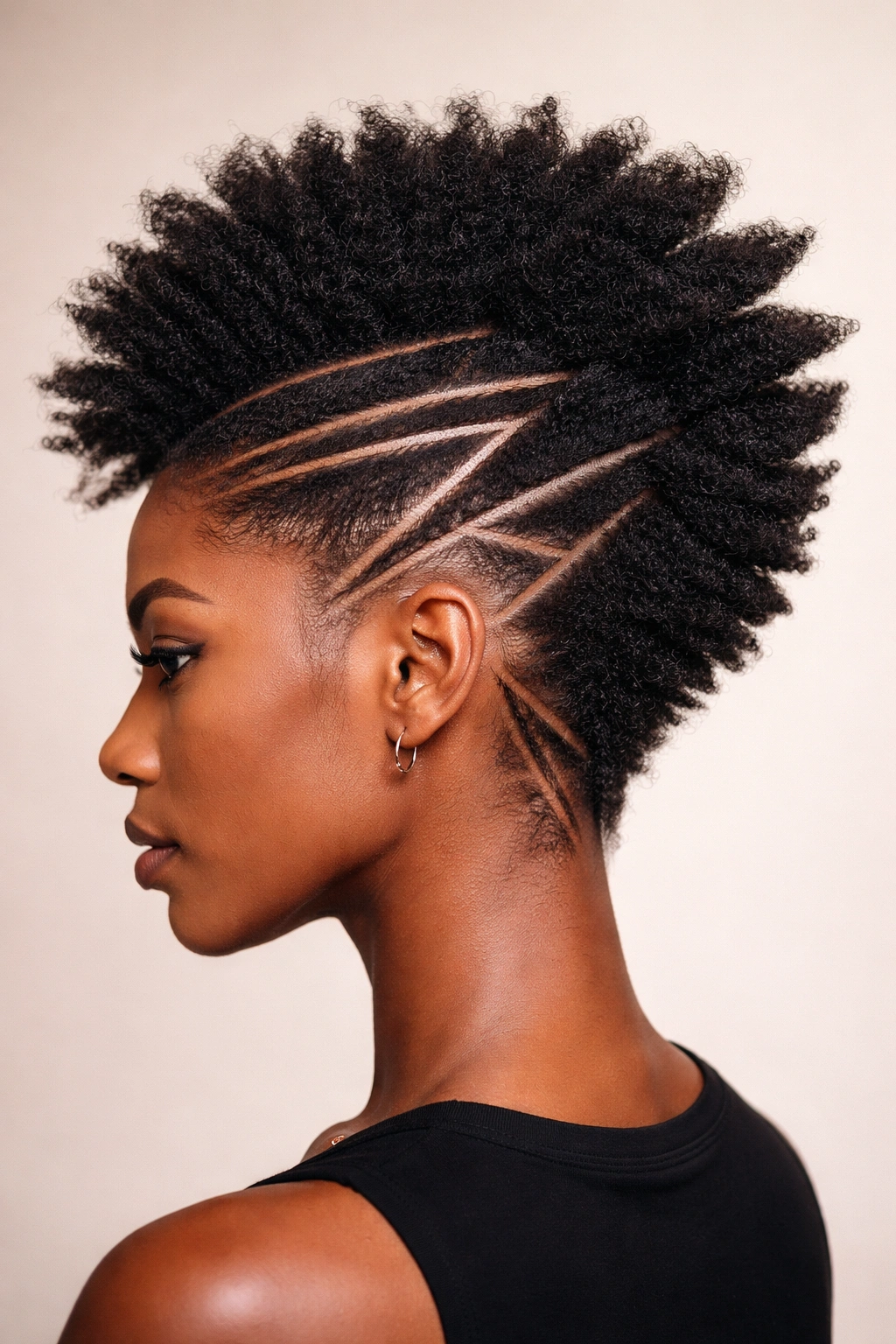
For the maximalist, the artist, or anyone who loves precision in their styling, a geometric shape mohawk uses sharp lines, clean edges, and sometimes multiple layers to create an almost sculptural effect on your natural hair. Think sharp angles, distinct lines at different heights, or creative asymmetry that goes beyond the traditional single vertical strip.
Why This Works for Natural Hair
Your natural curls provide excellent texture contrast that makes geometric shapes read clearly and intentionally. You can use shaping, fading, and styling techniques to create anything from chevrons to angular side designs, creating a three-dimensional sculpture on your head. This style is popular in barber circles and speaks to the artistry possible when working with natural afro hair.
Creating Geometric Definition
Work with a skilled barber or stylist: Geometric mohawks require someone who understands how to shape natural hair and visualize your design in three dimensions. Look for a barber or stylist who has experience with natural hair and appreciates geometric or artistic designs.
Possible geometric variations:
- A V-shaped or chevron pattern where your mohawk splits into two defined points
- Asymmetrical sides where one side is longer or styled differently than the other
- Multiple layers at different heights that create visual complexity and depth
- Angular designs where clean lines travel across your scalp creating geometric patterns
Maintenance specifics: Because geometric designs rely on clean lines and precise fading, you’ll need touch-ups every 2-3 weeks to keep your design crisp. But the visual impact of a well-executed geometric mohawk makes it worth the maintenance commitment.
Confidence factor: Geometric mohawks make a statement about your relationship with your appearance—you’re not just styling your hair, you’re creating wearable art. This style works best when you truly love it, because it absolutely commands attention.
Keeping Your Mohawk Healthy and Fresh
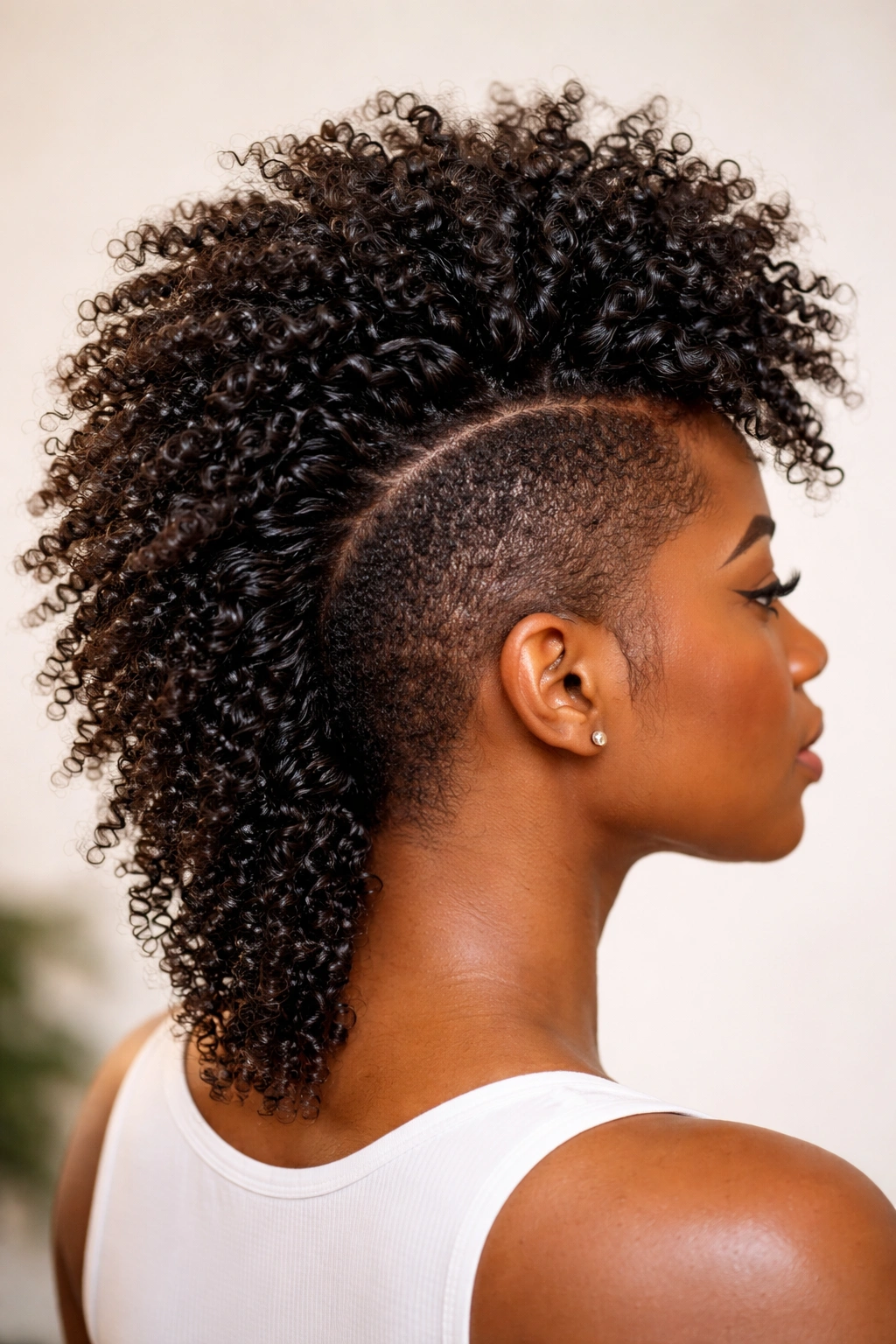
Your natural hair’s health is the foundation of any mohawk style looking its absolute best. A striking style loses its power if your hair looks dry, damaged, or unhealthy, so prioritize moisture and protective practices even as you rock a bold look.
Wash days should be gentle but thorough—use a sulfate-free shampoo that cleanses without stripping your curls, and follow with a rich, creamy conditioner. Deep condition at least once a week, focusing product on your mid-lengths and ends where dryness tends to accumulate. Your center column (whichever style you choose) experiences slightly more manipulation from styling, so give it extra attention during conditioning.
Between wash days, a light water misting and a dab of leave-in conditioner keeps your curls refreshed and your style looking intentional rather than limp. If you’re rocking a protective style like braids or locs, maintain them gently—don’t oversaturate or over-manipulate, and let them do their job of protecting your hair underneath.
Product selection matters tremendously. Look for curl creams, gels, and stylers that provide hold without flaking, crunchiness, or buildup. Natural oils like jojoba, coconut, or almond oil can be light enough to add shine without weighing down your curls, especially for looser curl patterns. Heavier butters and shea-based products work beautifully for coarser, tighter curls that need more moisture support.
Making Your Mohawk Uniquely Yours
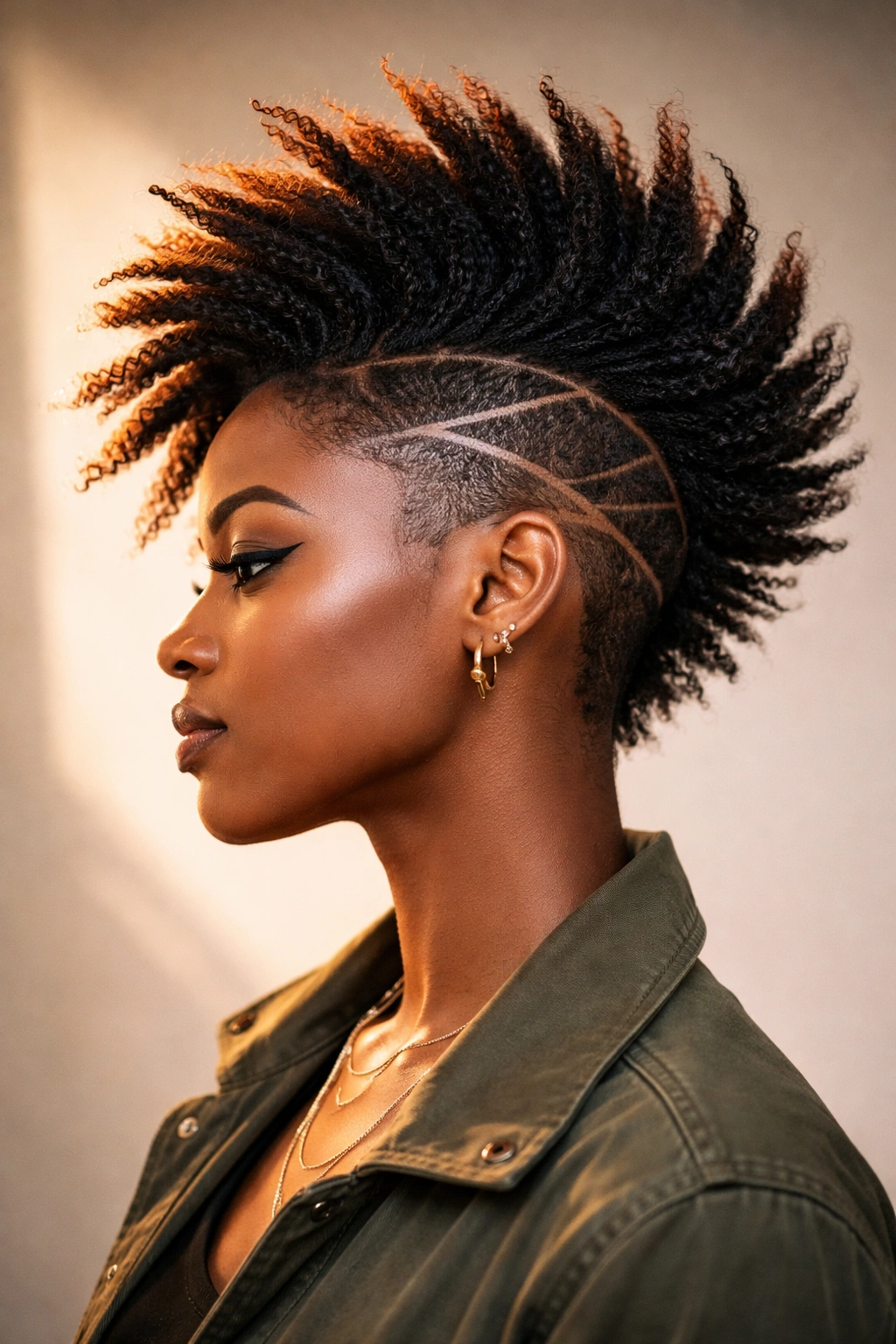
The magic of a mohawk on natural hair is that you get to define what it means to you. Some people wear a mohawk as a political statement about Black beauty and self-acceptance. Others choose it purely for the aesthetic—they love how it looks, how it feels, and how it makes them walk through the world with confidence. Some people rotate between different mohawk styles depending on their mood, their schedule, or what they’re celebrating.
Your natural hair texture, your curl pattern, your lifestyle, and your personal style should all influence which mohawk resonates with you. A busy professional might love the low-maintenance elegance of a loc mohawk. An artist or creative might gravitate toward the geometric or colored options. Someone who enjoys changing their style frequently might prefer a faux hawk that offers flexibility without permanent changes.
The styles outlined here aren’t limitations—they’re starting points. Your barber or stylist can help you imagine variations, combinations, or entirely new approaches that speak to who you are and what makes you feel powerful. The most important element is that you choose a style that makes you feel genuinely yourself, because confidence in your style choice transforms everything.
Final Thoughts
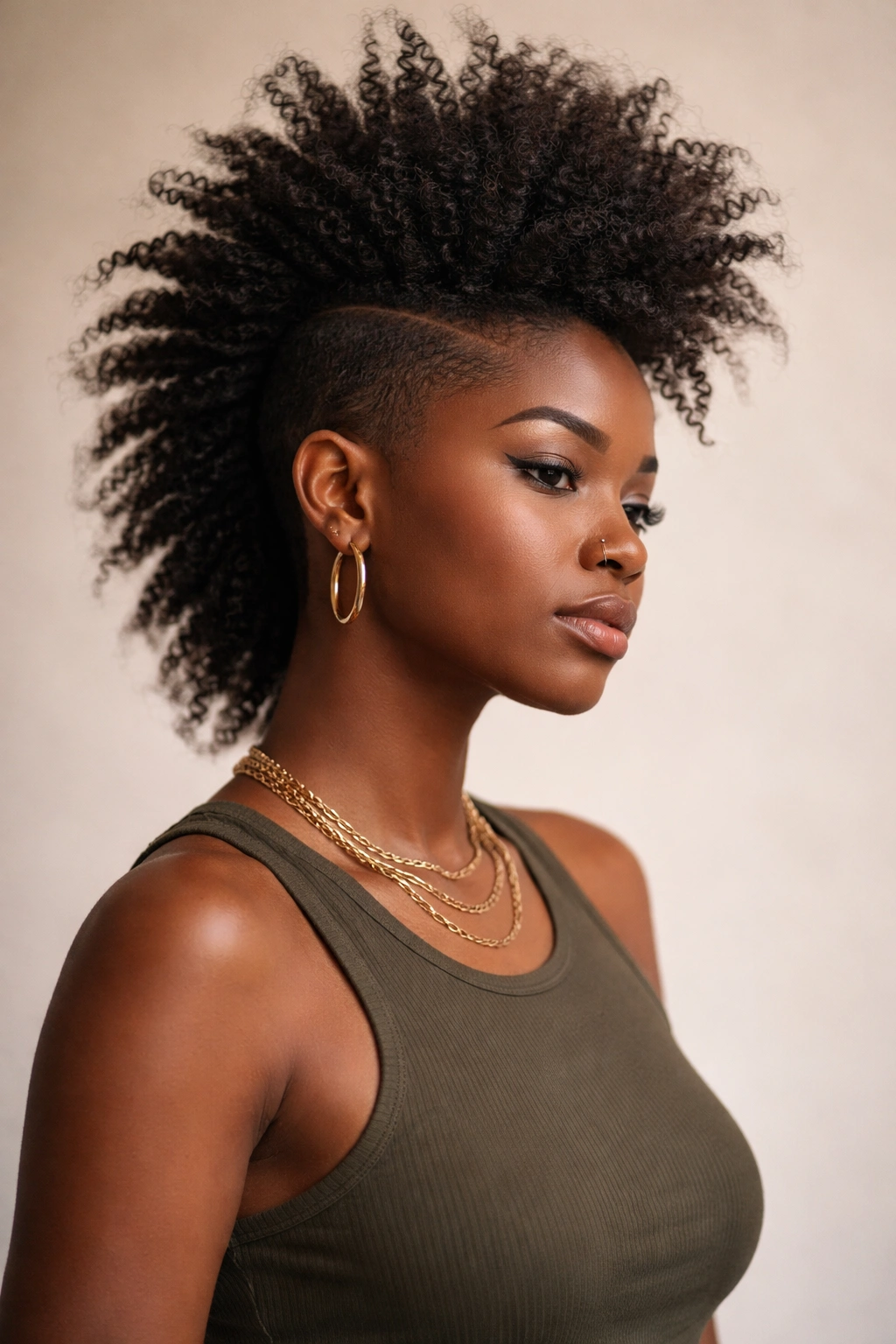
A mohawk on natural afro hair is more than just a hairstyle—it’s a statement about embracing your texture, celebrating your beauty, and refusing to apologize for taking up space boldly and intentionally. Whether you choose a classic shaved-sides look, a protective braided style, a colorful variation, or something entirely your own, you’re tapping into a rich tradition of Black hair artistry and self-expression.
The eight styles covered here represent different aesthetic approaches, different time commitments, and different levels of permanence, but they all share one thing in common: they look stunning on natural hair and they require you to own your choice fully. That ownership—that decision to wear your hair this way unapologetically—is what makes a mohawk truly powerful.
Start with a style that calls to you, connect with a stylist or barber who respects and understands natural hair, and then step into the world knowing you’re carrying art on your head. Your natural hair already has the volume, texture, and presence to make a mohawk look incredible. Now you just need to decide which version of bold speaks to you.