


A clean split can do a lot of heavy lifting in jumbo half-and-half box braids. When the contrast is sharp — black against honey blonde, copper against espresso, or one side sleek and the other loose — the whole style gets shape fast.
Clean. Bold. Fast to style.
The jumbo size helps more than people think. Bigger sections show color more clearly, install faster than tiny braids, and give the braid pattern enough room to breathe so the look reads from across a room without turning messy. Too many small pieces can make the contrast feel busy. Too few, and the style starts to feel clumsy instead of deliberate.
The other thing that matters is comfort. A good braid set should feel snug, not punishing, especially near the hairline and temples where tension shows up first. If your scalp is sensitive, larger parts and lighter braiding hair are usually kinder than tight, overpacked sections.
Half-and-half doesn’t have to mean one rigid formula. Sometimes the split lives in the color. Sometimes it lives in the parting. Sometimes it lives in the way the braids fall over one shoulder, or the way one side gets beads while the other side stays plain. The strongest versions look chosen, not accidental. And that’s where the fun starts.
1. Classic Center-Split Black and Honey Blonde Jumbo Braids
This is the cleanest place to start, and I mean that in the best way. A straight middle part with one side jet black and the other side honey blonde gives you instant structure, plus enough contrast that the style doesn’t need much else.
Why the split works
The center line gives the color story a spine. Without it, the two tones can blur together and lose their punch. With it, each half has its own job, and the eye knows exactly where to land.
A jumbo braid size of about 1 to 1.5 inches per section keeps the contrast readable without making the head look overloaded. That size also works well if you want the braids to feel substantial but not heavy in the crown.
- Ask for a crisp center part from the front hairline to the nape.
- Keep the lighter side near the face if you want more brightness.
- Use a small amount of mousse at the roots so the parting stays neat.
- If your natural hair is dark, the black side will blend more softly at regrowth.
Pro tip: if you want the style to look sharper for longer, keep the lighter braiding hair slightly longer than the darker side. Even a 2-inch difference changes the way the color reads once the braids settle.
2. Black Roots with Blonde Lengths for a Softer Half-and-Half Look
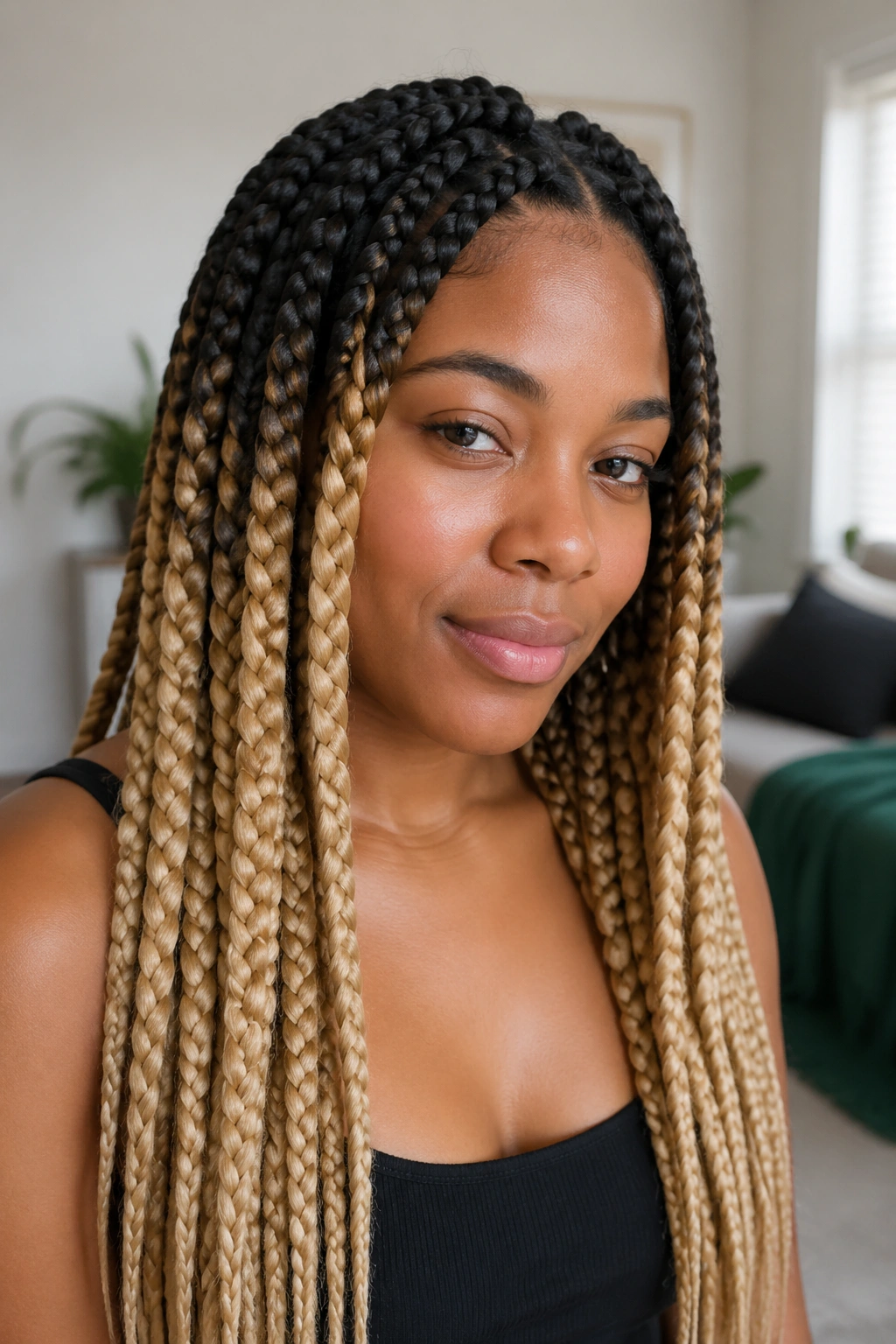
A hard split is not the only way to wear this style. If you want the contrast to feel a little less loud, keep the roots dark and let the lighter tone take over through the braid body. That gives you a half-and-half effect without the obvious line down the middle.
This version is especially good if you wear braids often and hate how a bright regrowth line can age the style. The dark root zone buys you time. It also makes the lighter lengths pop more when the braids move, which is where this look gets good.
I like this approach when the braids are long. The first 4 to 6 inches stay grounded, then the blonde takes over and does the visual work. It feels less costume-y, more wearable. And yes, that matters.
If your braider is mixing hair, ask for a soft transition point around the mid-lengths instead of a harsh switch. That tiny detail keeps the style from looking chopped in two.
3. Side-Part Jumbo Braids with One Bold Color Block
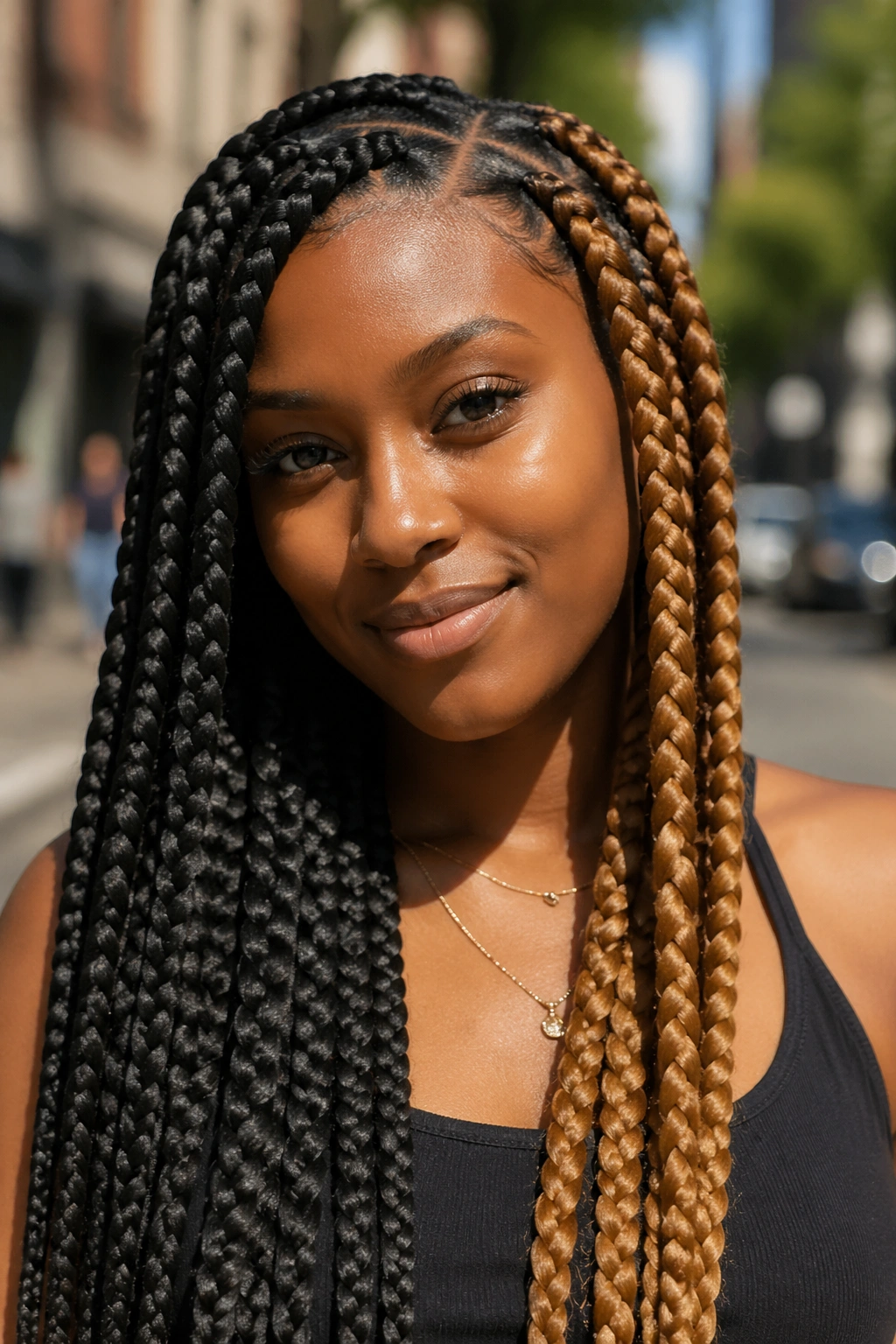
Why does a side part change everything? Because it steals the look away from symmetry and gives it movement before you even touch the braids.
A deep side part can make a half-and-half style feel richer, especially when one side is darker and the other side is lighter. The longer side frames the face, while the shorter side keeps the crown from feeling too flat. It’s a small trick, but it changes the whole balance of the head.
How to ask for it
Tell your braider you want the part about 2 to 3 inches off center, not shoved so far over that the style starts sliding into old-school drama hair. You want enough shift to see the line, not so much that the roots look strained.
- Keep the front braid on the heavier side slightly longer.
- Leave the side with less hair a touch tighter at the root.
- Use a rat-tail comb to keep the part clean all the way back.
- Don’t overload the style with extra cuffs or beads; the side part already does the talking.
The best side-part versions feel a little effortless. Not sloppy. Just looser in the way a good jacket sits on the shoulder.
4. Triangle-Part Jumbo Braids with a Split Color Story
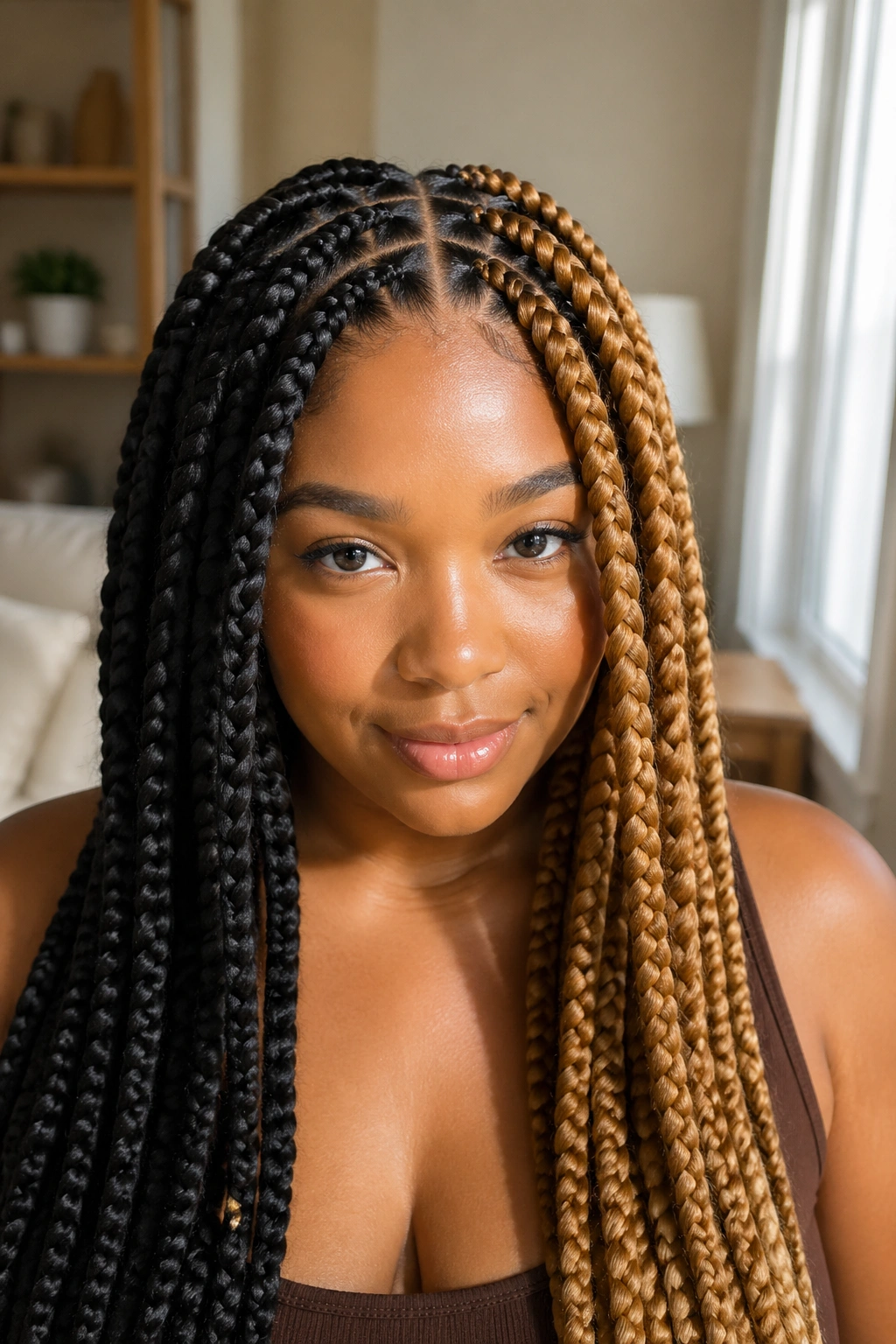
A triangle part can make even a simple two-tone braid set look more expensive. The sharp angles catch the eye, and the geometry gives the color contrast a little extra edge. Square parts are classic, sure. Triangle parts feel more alive.
Picture this: you sit down for the install, look in the mirror halfway through, and the scalp pattern already looks like part of the style. That’s the payoff. The parts aren’t background noise. They’re part of the design.
What to watch for
- Keep each triangle section around 1.25 to 1.5 inches wide so the braids still read jumbo.
- Make sure the points of the triangles are clean. Fuzzy parting kills the look fast.
- Triangle parts work especially well with black-and-blonde or burgundy-and-black contrast.
- If you like a neat scalp finish, ask for a light mousse set before the braids dry.
The real charm here is that the parting can carry the style even on days when the braids are tucked back or pinned up. That’s useful. A style that only looks good from one angle gets old fast.
5. Half-Up Crown Jumbo Braids with a Split Down the Middle
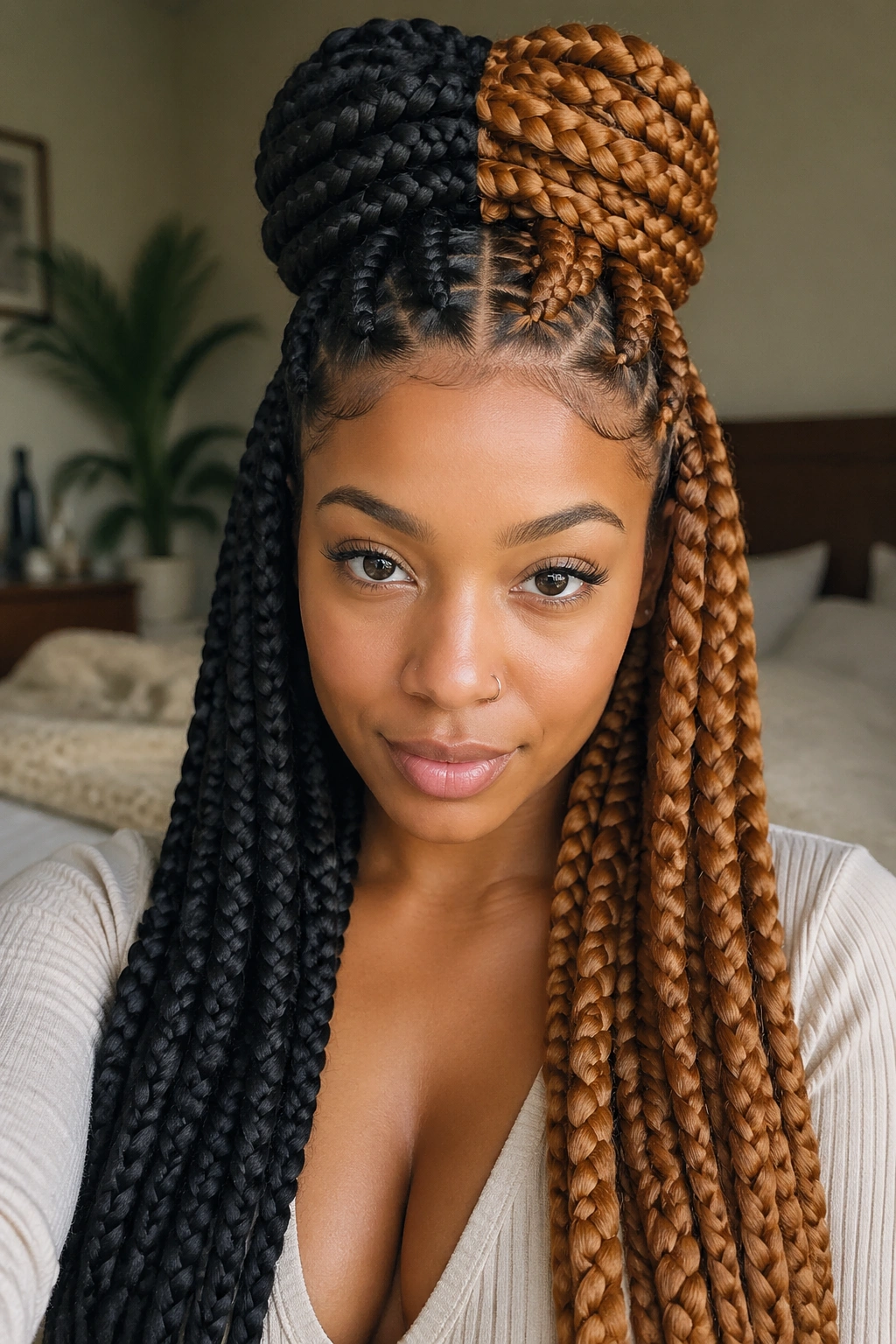
This is the version I’d point to if you like wearing your hair off your face but still want the length to show. A half-up crown takes the weight off your shoulders and lets the color split stay visible from the front.
The trick is keeping the top section clean. If the top is too messy, the whole thing starts to look like you ran out of time. If it’s tight and neat, the style gets a nice lift without losing softness. I usually like a satin scrunchie or a wrapped braid knot for the top half because regular elastics can make the crown feel stiff.
It helps to leave the top half just a little fuller than you think you need. Jumbo braids flatten when they’re gathered, and a too-small top knot can make the style look top-heavy.
This one shines when the braids are mid-back length or longer. Shorter lengths can work too, but the shape is better when there’s some swing in the back.
6. Copper and Black Blocked Braids
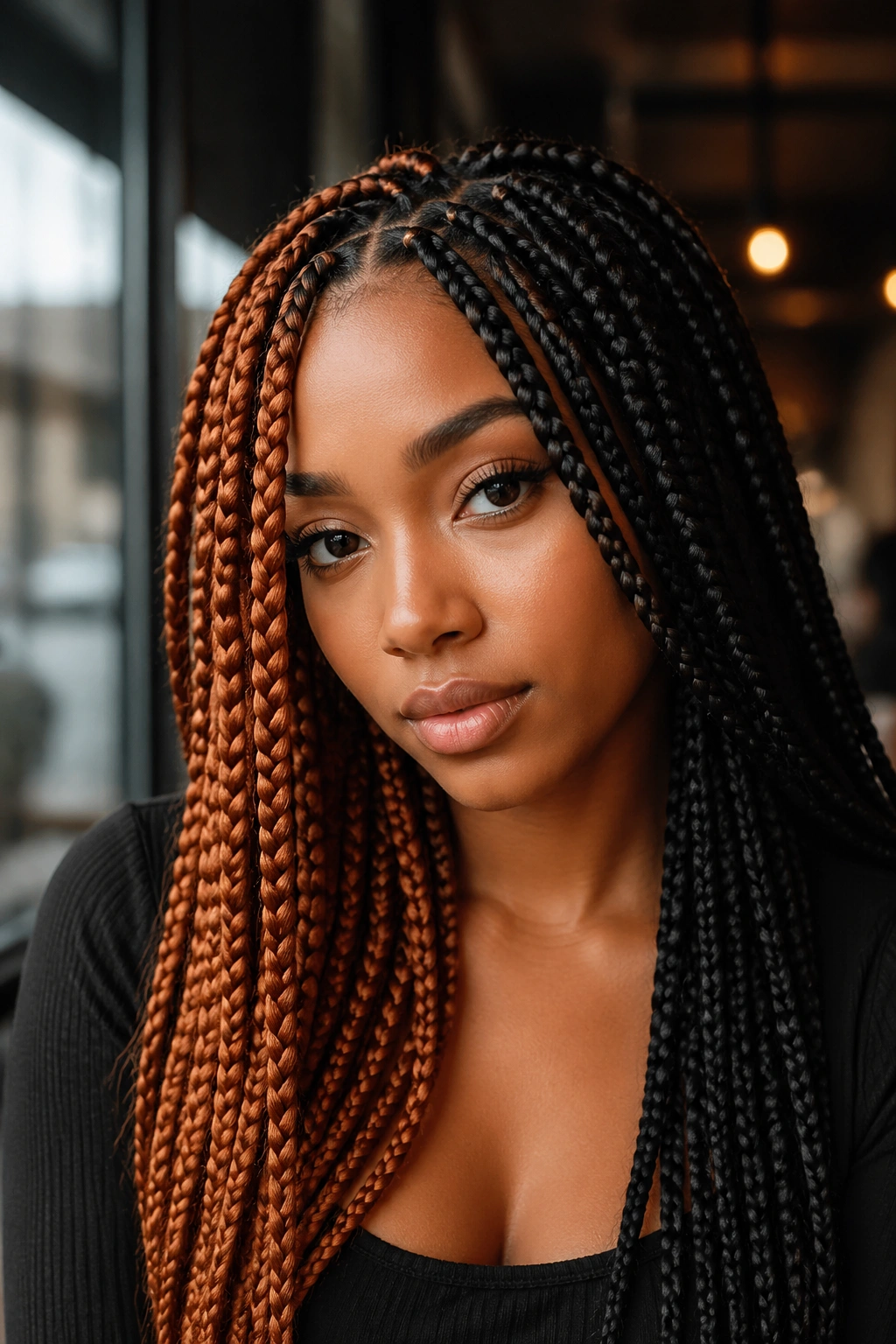
Copper and black reads warmer than blonde and black, and that changes the whole mood. The look still has contrast, but it feels richer, more grounded, and less stark around the face.
That matters if you want the style to feel bold without looking icy. Copper has a way of warming skin and jewelry together. Black keeps it from drifting too soft or too sweet. The two shades sit in a nice middle zone where you can wear the braids with gold hoops, a black jacket, or a plain white tee and still look pulled together.
This version works especially well when the copper side is kept in larger, cleaner pieces rather than a tiny mix of strands. You want the color block to show. If it gets blended too much, the whole point disappears.
Compared with blonde, copper is easier on people who don’t want constant attention on their hair. It turns heads, sure. It just doesn’t scream from across the street.
7. Shoulder-Length Jumbo Braids in a Split Bob Shape
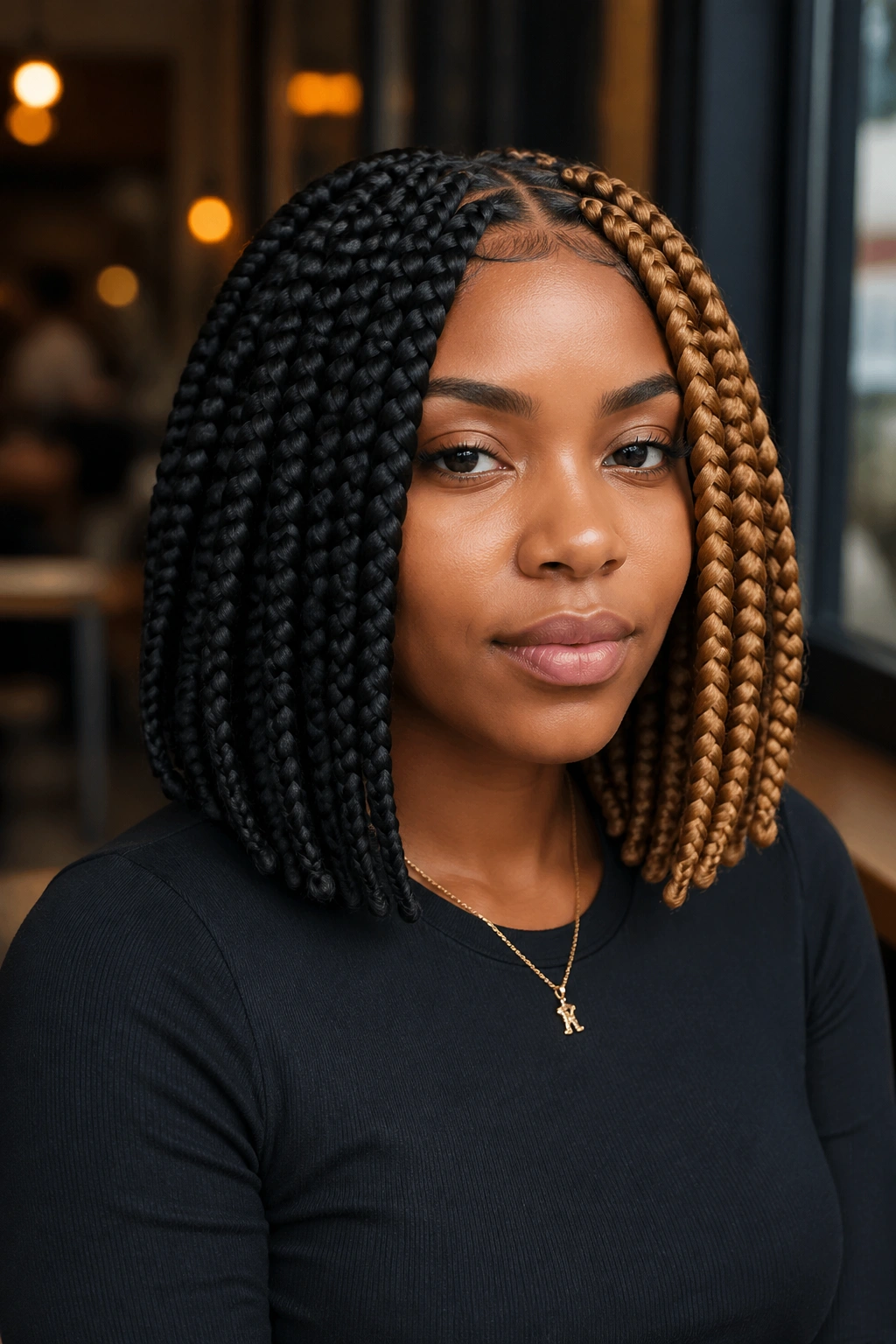
A shoulder-length bob is one of the smartest ways to wear half-and-half box braids because the length keeps the style light. Heavy braids are no joke. Cut them to the shoulders, and suddenly the color split feels sharper, the neck feels free, and the whole look gets a little cooler.
What makes the bob version work
The short length puts more focus on the braid pattern and less on the ends. That means the split color is the star, not the hair dragging the eye downward.
- Ask for a length around 8 to 10 inches if you want a true bob feel.
- Keep the ends blunt so the shape stays clean.
- Use smaller cuffs near the face if you want a little shine without clutter.
- This is a good choice if you wear scarves, collars, or jackets that usually fight with long braids.
I’m a fan of this version for people who get tired of braids catching on everything. Car seats, backpack straps, coat zippers — all of it. A bob dodges half those annoyances.
8. Waist-Length Braids with Curled Ends
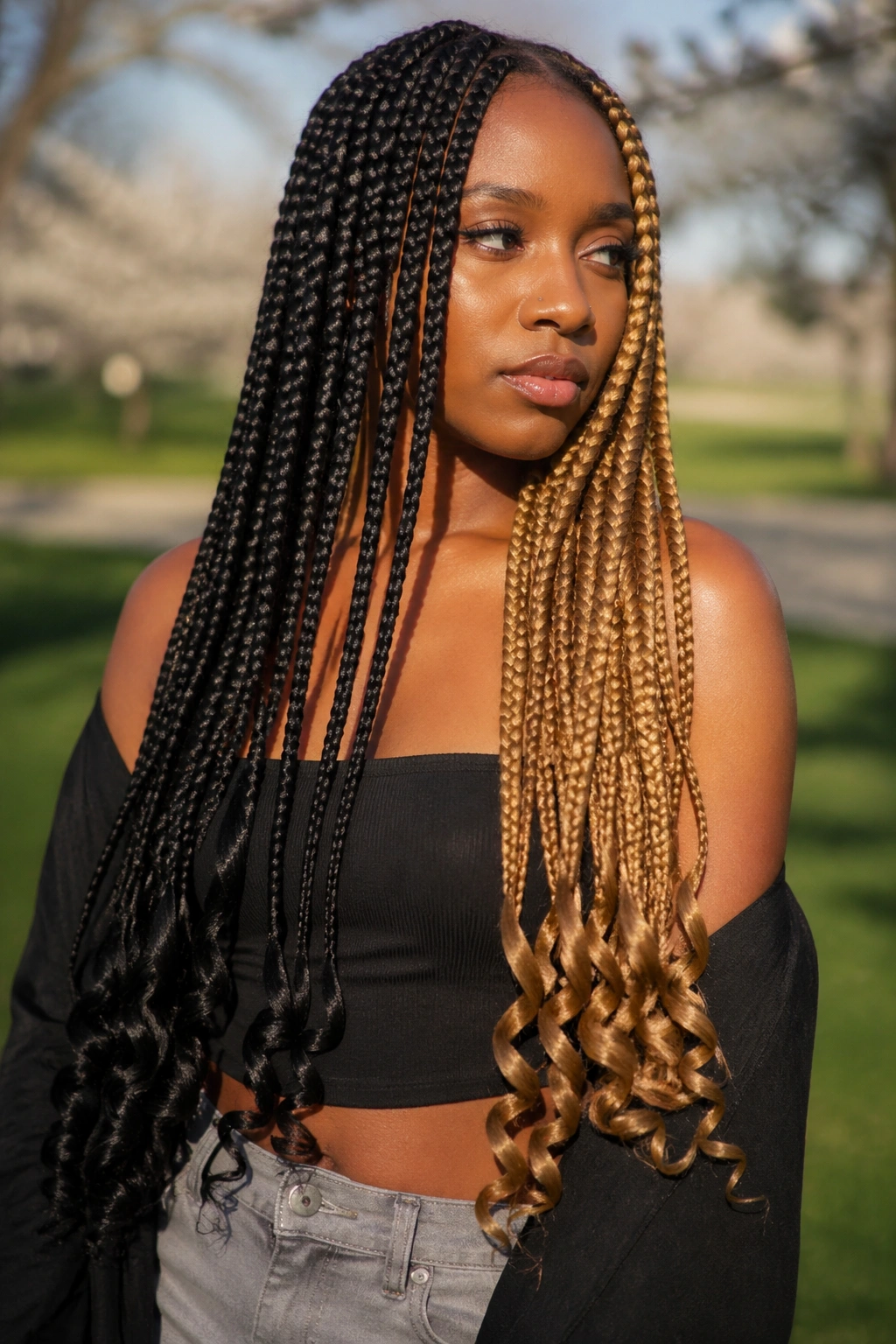
Straight braid ends can look strong and graphic. Curled ends change the mood fast. They soften the line, add movement, and make the half-and-half split feel a little more finished.
The curl matters more than people think. A 3- to 4-inch curled finish gives the ends enough bounce to show up, but not so much that the style turns fluffy. If the curls are too tight, the braid lengths start to fight the shape of the head. If they’re too loose, they just look like the ends fell asleep.
This version is a good match for long braids because the curl keeps the length from feeling flat. A hot water set, flexi rods, or a wrapped end finish can all work, depending on the hair type being used. The point is movement, not perfection.
If you want the split color to stay the focus, keep the curls simple. Long braid sets already have enough going on.
9. One Side with Beaded Ends and One Side Left Bare
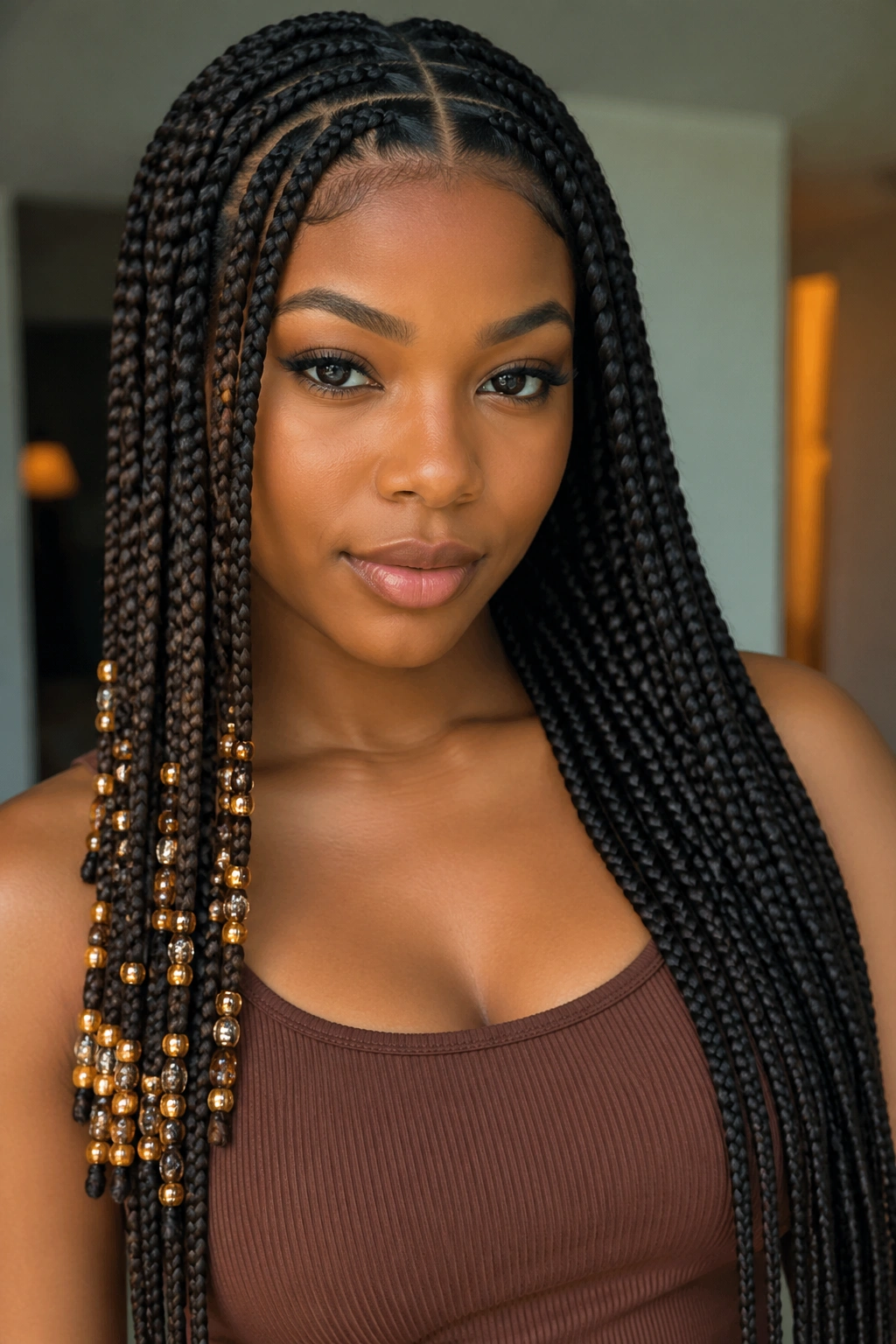
What happens when only one side gets beads? The style gets a little story. The bare side stays sleek and graphic, while the beaded side adds sound, movement, and a hint of personality every time you turn your head.
How to use it
Beads work best when they’re not scattered all over the place. Put them where the eye will catch them first — usually the outermost braids near the temple and a few near the ends on the heavier side. Three to five beads per braid is usually enough. More than that, and the weight starts to take over.
Wood beads feel earthy. Clear beads feel lighter. Gold-tinted beads sit somewhere in the middle and play well with both dark and light braid colors.
This is the kind of detail that can make a simple black-and-blonde set look custom. No need to decorate every strand. A few well-placed beads do more than a pile of random extras ever will.
10. Burgundy and Jet Black Jumbo Braids Swept to One Side
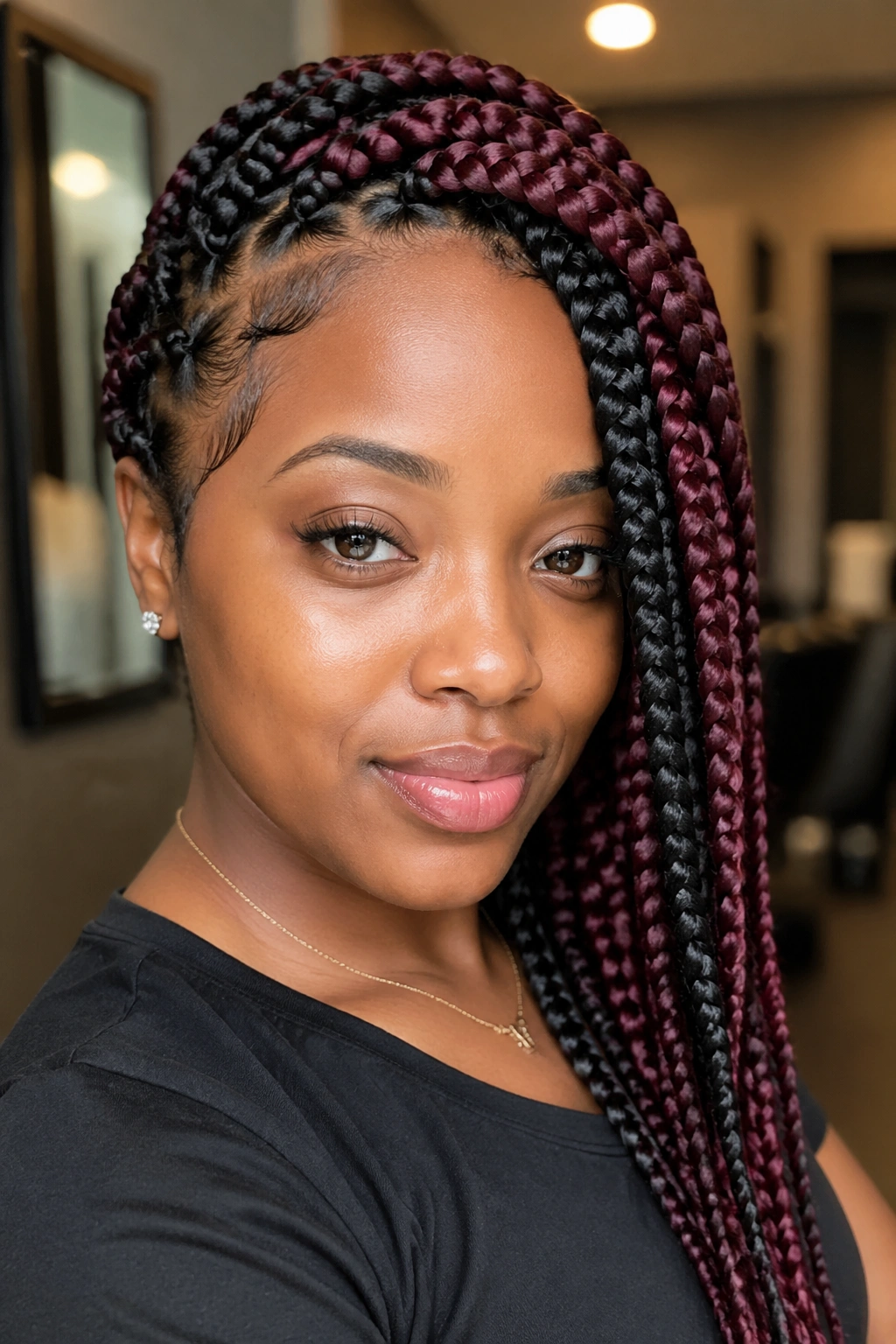
A side sweep does something useful here: it turns the half-and-half look into a curtain of color instead of two rigid halves. That’s especially nice with burgundy and black, because the red tone catches light more gently when it moves.
I like this version for people who wear their braids over one shoulder a lot. The weight naturally gathers, and the colors layer on top of each other in a way that looks rich instead of flat. A centered style can feel too formal with burgundy. Swept aside, it loosens up.
A good side-swept set usually benefits from slightly shorter pieces at the nape so the back doesn’t bunch awkwardly under the longer shoulder side. That keeps the shape from puffing out in the wrong place.
If you’re choosing between burgundy and a brighter red, burgundy usually wins for longevity. It fades more gracefully and doesn’t demand as much from your outfit.
11. Crisscross Parting with Clean Two-Tone Braids
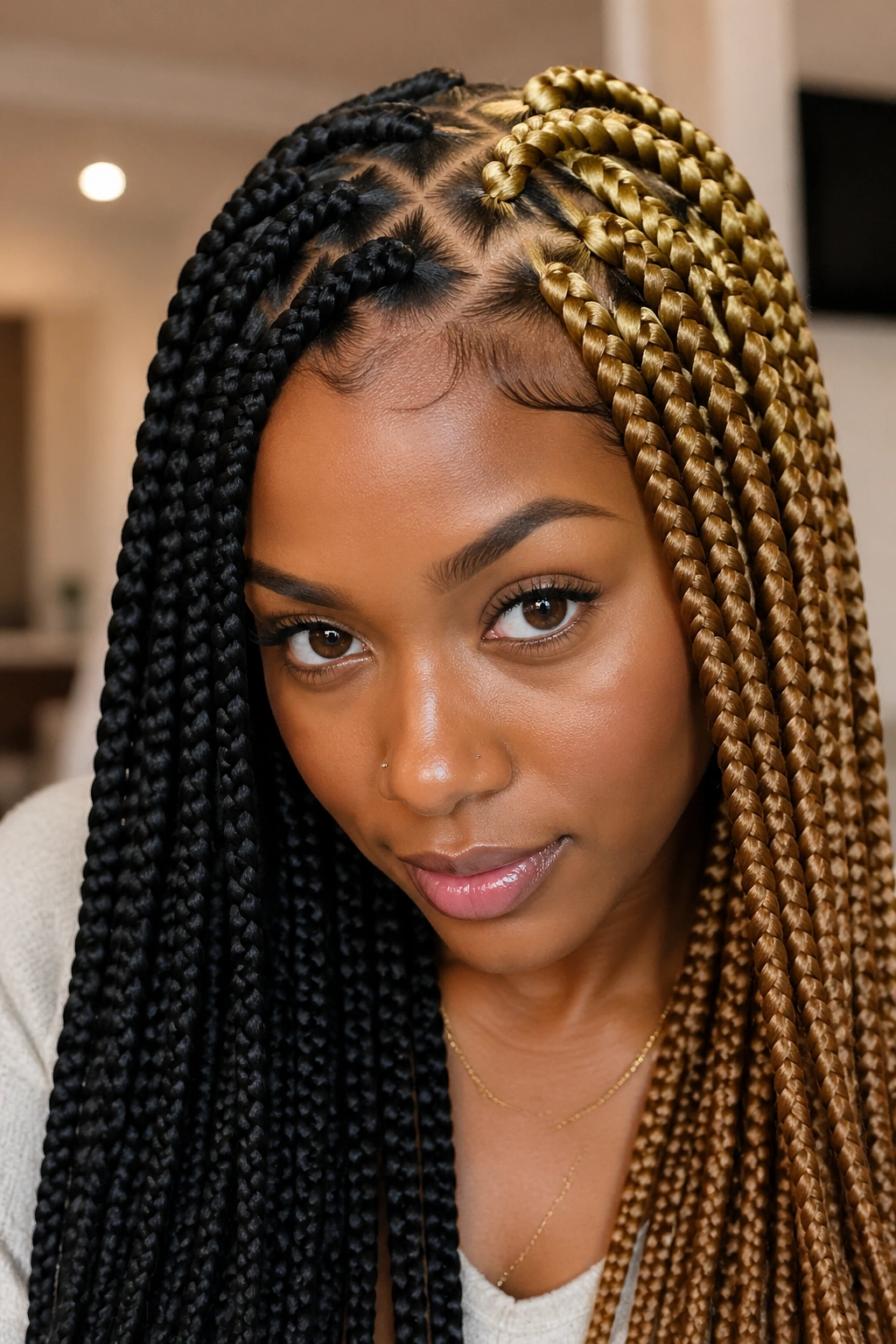
Busy color needs a clean map. That’s the whole reason crisscross parting works so well with half-and-half jumbo braids. The parting pattern gives the eye something steady to follow, so the two-tone color can feel intentional instead of chaotic.
The best crisscross sets are still neat at the scalp. If the lines get fuzzy, the geometry loses its sharpness and the style starts to look overworked. Keep the front section especially crisp. That’s where people look first.
A crisscross pattern also helps if your hair density changes from front to back. The alternating parting can hide tiny irregularities and make the whole install look fuller than it is.
I’d keep the color pair simple here. Black and blonde. Burgundy and black. Copper and espresso. Two shades are enough. Three is where things can start to wobble.
12. Feed-In Hairline with Jumbo Braid Sections
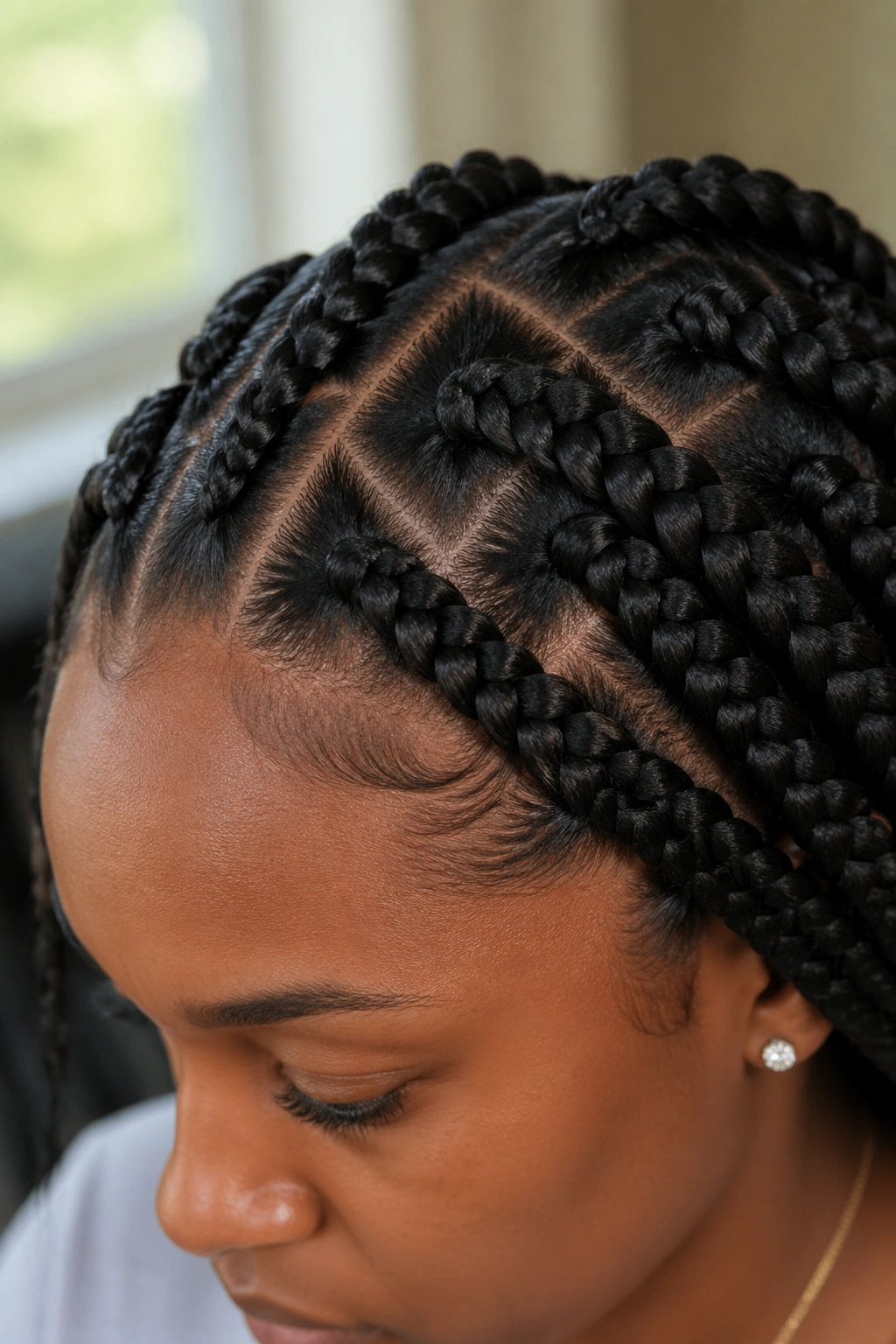
The hairline tells on a braid style. Fast. A clean feed-in around the perimeter softens the front edge and keeps the whole look from feeling like a blocky helmet.
This matters more with jumbo braids because the sections are already large. If the first row sits too hard against the scalp, the style can feel bulky right where you want softness. A feed-in start with 2 thin starter rows usually smooths that out and gives the braid body a cleaner launch.
It’s a good pick if you wear braids often and want the front to last a little longer before frizz starts to show. The transition from small to jumbo also makes the hairline look more polished in photos, which I know sounds shallow, but sometimes the mirror is shallow too.
My take? If your edges are delicate, ask for this instead of a blunt start. The style will still be full. It just won’t feel as aggressive.
13. Gold Cuffs on One Half of the Braids
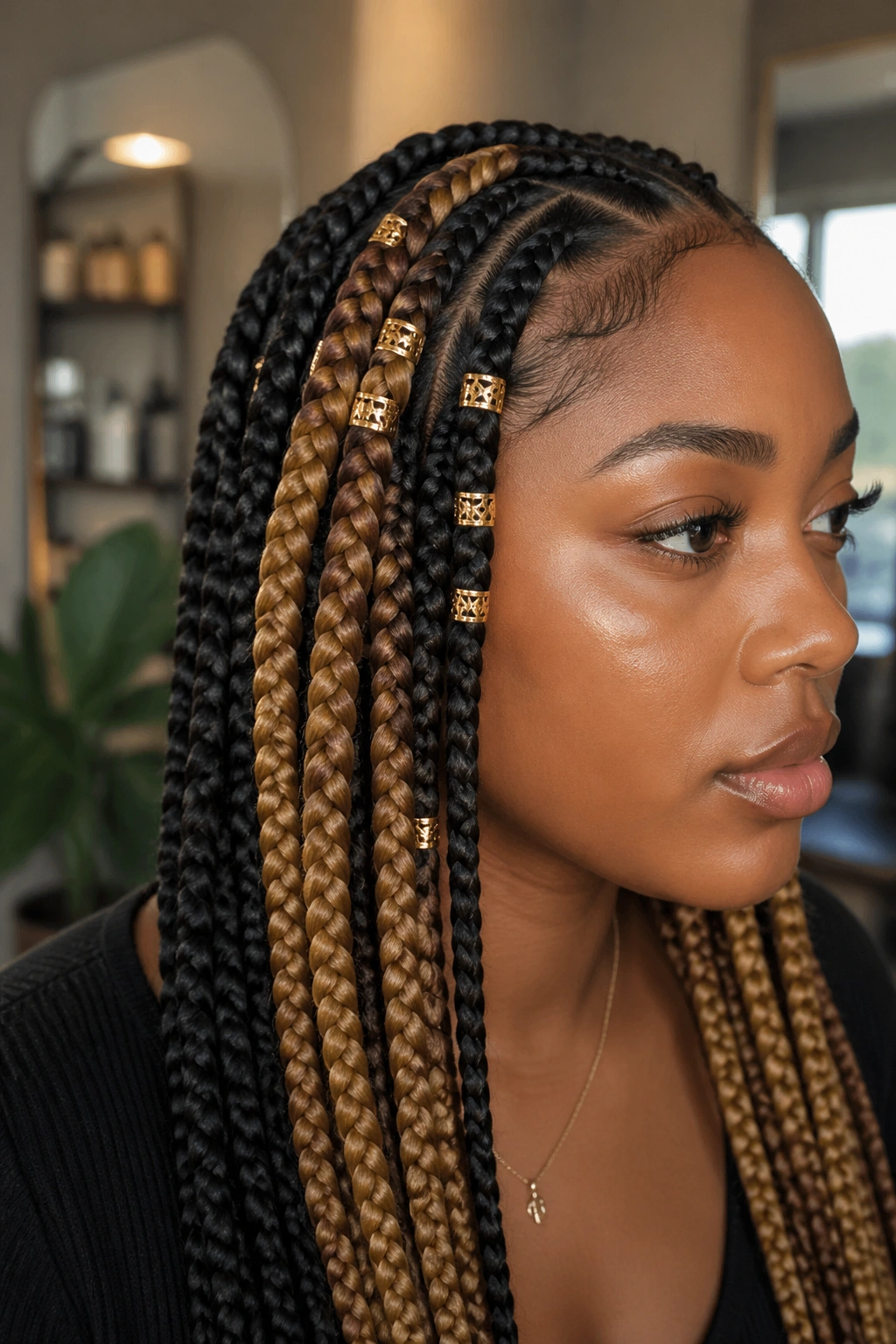
Gold cuffs are one of those details that people either underuse or overuse. The sweet spot is somewhere in the middle, and that’s especially true on a half-and-half set where one side is already carrying the visual weight.
Where to place the metal
Put the cuffs on the side that needs the lift, not everywhere. Four to six cuffs total is usually plenty for a jumbo set. Space them out by 2 to 3 braids so they don’t clump into one noisy cluster.
- Use smaller cuffs near the face and slightly larger ones toward the ends.
- Keep the other side plain if the color already feels strong.
- Match the cuff tone to your jewelry so the look ties together.
- If the braids are very long, place one cuff near the mid-lengths rather than the tips only.
This works best when the rest of the style stays clean. Gold cuffs can make a braid set look finished in five seconds, but they can also make it look overdone in five seconds. Small difference. Big result.
14. Deep Side Sweep with Face-Framing Jumbo Braids
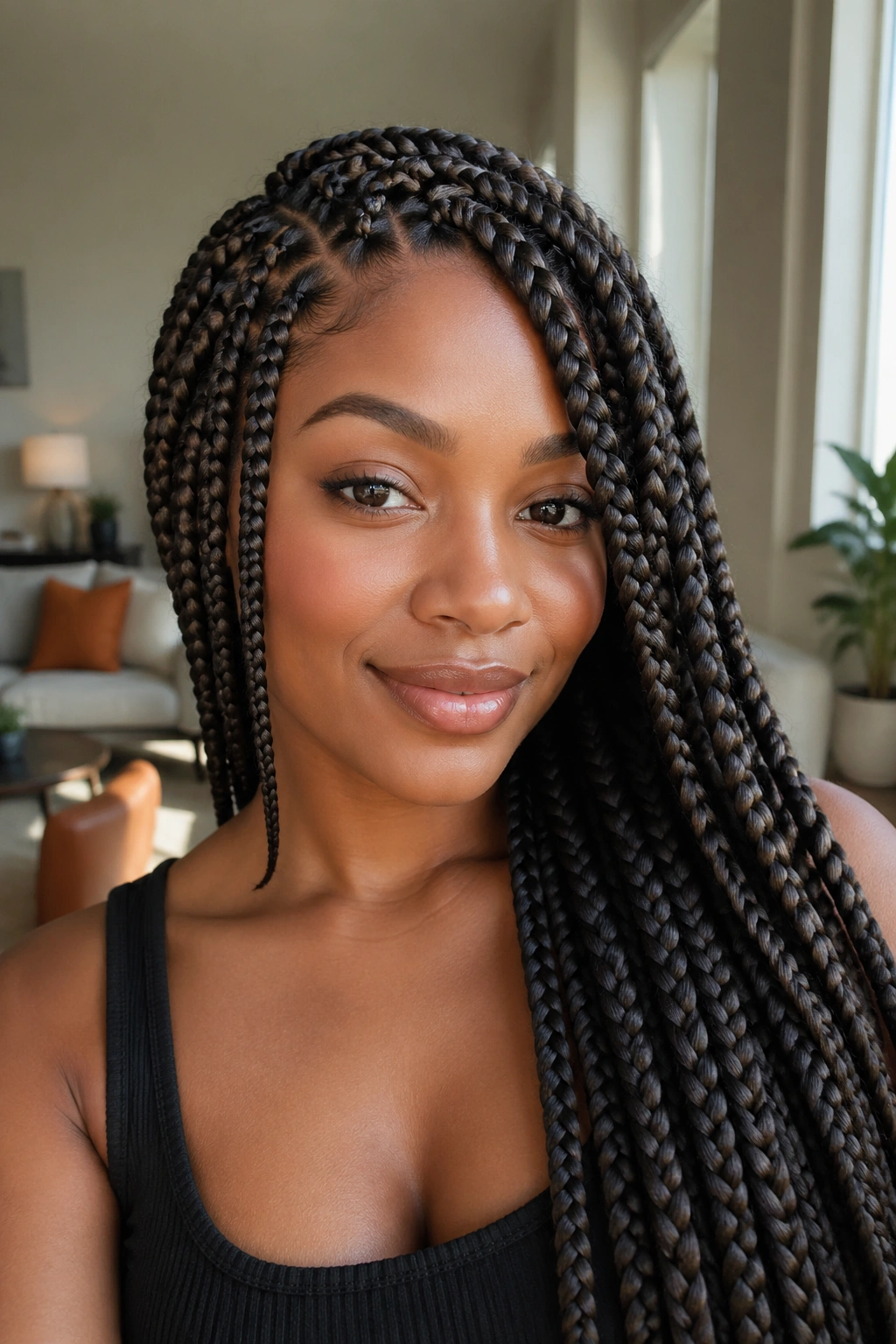
A deep side sweep changes the whole geometry of a half-and-half look. One side falls forward, the other side sits back, and the face gets a little frame without needing extra hair left out.
That’s the part I like. You do not have to sacrifice length to get softness around the cheeks. Leave the first two front braids on the heavy side a touch shorter — maybe 2 to 3 inches shorter than the back lengths — and the shape starts to bend naturally around the face.
This version pairs well with black-and-blonde, but it also looks good with copper, burgundy, or even deep brown and caramel. The sweep does the heavy lifting, so the color doesn’t have to shout.
It’s a good option if you like your braids to feel a little more dramatic without going full-on costume. The line of the part, the sweep of the front, and the braid length all do enough on their own.
15. Blunt Braided Bob with a Sharp Middle Line
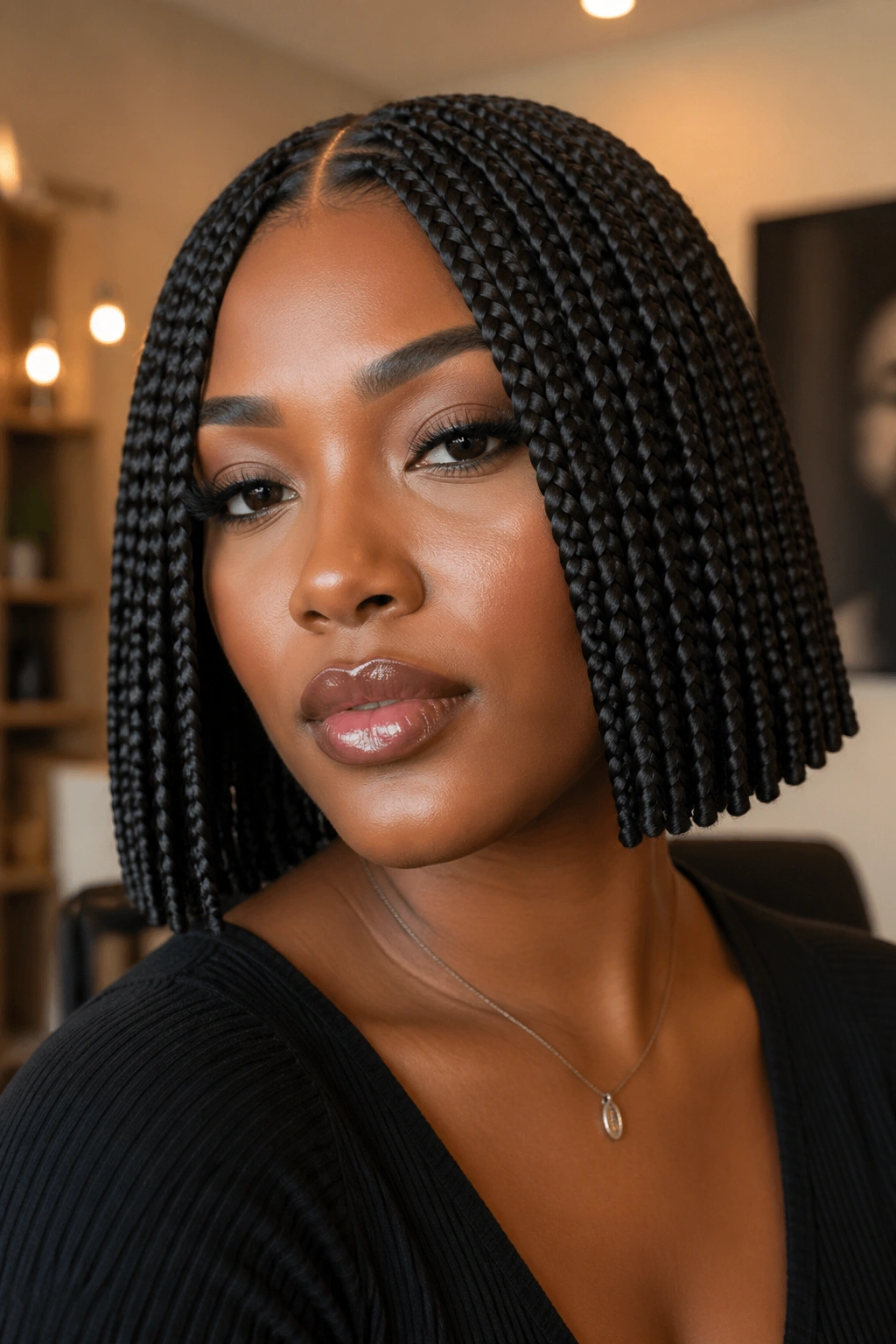
Why does a blunt bob make the color split look stronger? Because the ends stop the eye cold. No layering. No extra fluff. Just a clean edge and a clear middle part.
That edge is the whole point. With jumbo half-and-half braids, a blunt finish makes the style read like a graphic design instead of a soft transition. It’s neat. A little severe, even. In a good way.
How to ask for it
Tell your braider you want the length to hit around the jawline or collarbone, with no tapering through the bottom. If the ends are trimmed unevenly, the bob loses its punch right away.
A blunt bob also makes the style easier to tuck behind the ears or clip back on one side without the shape getting weird. Short hair, in braid form, can be surprisingly practical. It still has attitude.
16. Honey Brown and Espresso Half-and-Half Braids
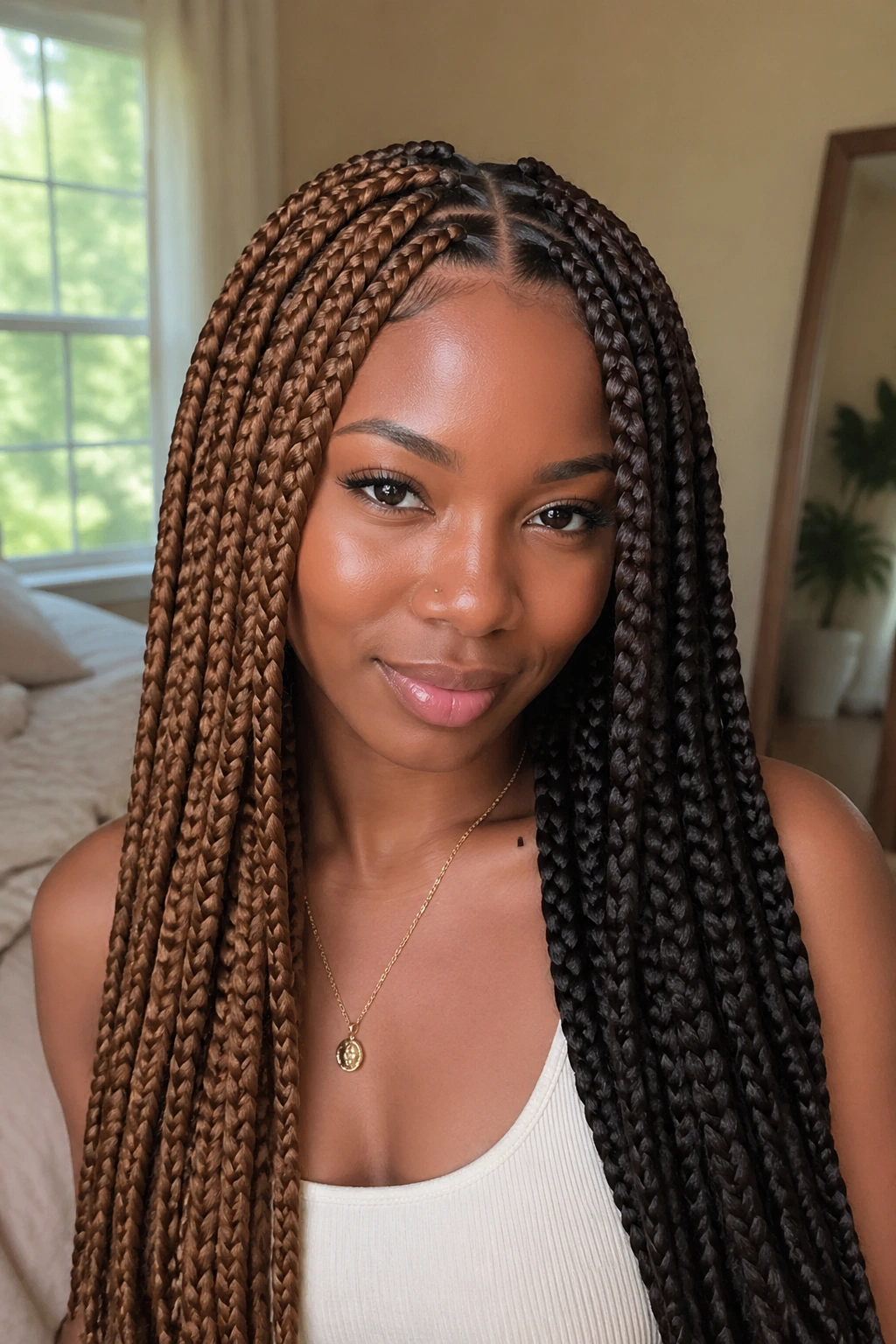
This is the version for people who want contrast but don’t want the contrast to jump the fence. Honey brown and espresso sit closer together than black and blonde, so the style feels softer from the start.
I like this pairing because it gives the braids dimension without making them look split into two separate personalities. The lighter brown adds warmth near the face. The espresso side keeps the look grounded and keeps the braid texture visible in low light.
A setup like this also tends to be easier to wear with everyday clothes. Denim, cream, olive, black — none of it fights the hair. That sounds minor. It isn’t. A braid style that works with your closet gets worn more.
If you want the tone shift to show, keep the lighter brown on the side that sees the most light in your usual part. That simple choice changes the whole effect.
17. Half-Up Space Buns with Split-Color Braids
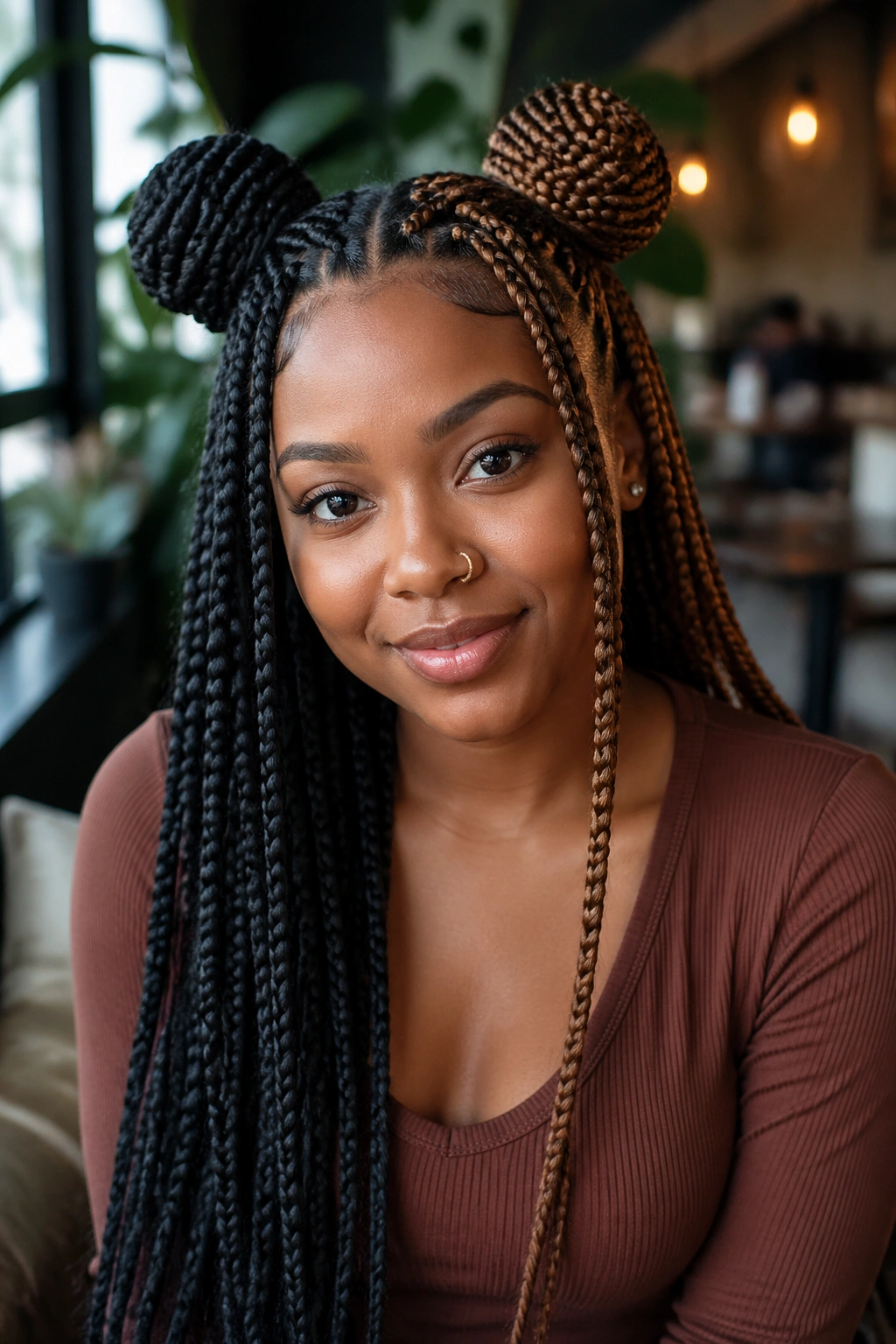
It is playful, but not childish. That’s why the half-up space bun version works so well with jumbo half-and-half box braids.
You gather the top section into two buns, one on each side, while the lower braids hang loose. The split color shows through the front, and the buns give the style a little height. It’s a good choice if you want to show off the braid size without wearing the whole set down your back all day.
The top buns should stay loose enough that they don’t flatten into hard knots. A satin scrunchie or a soft wrap keeps the base from getting choppy. I’d also keep the buns small enough that they don’t pull the front rows too much. The style should feel fun, not like a workout.
This one is especially good with longer braids, because the loose ends keep the buns from feeling too heavy on top.
18. Ombre Half-and-Half Braids from Root to Tip
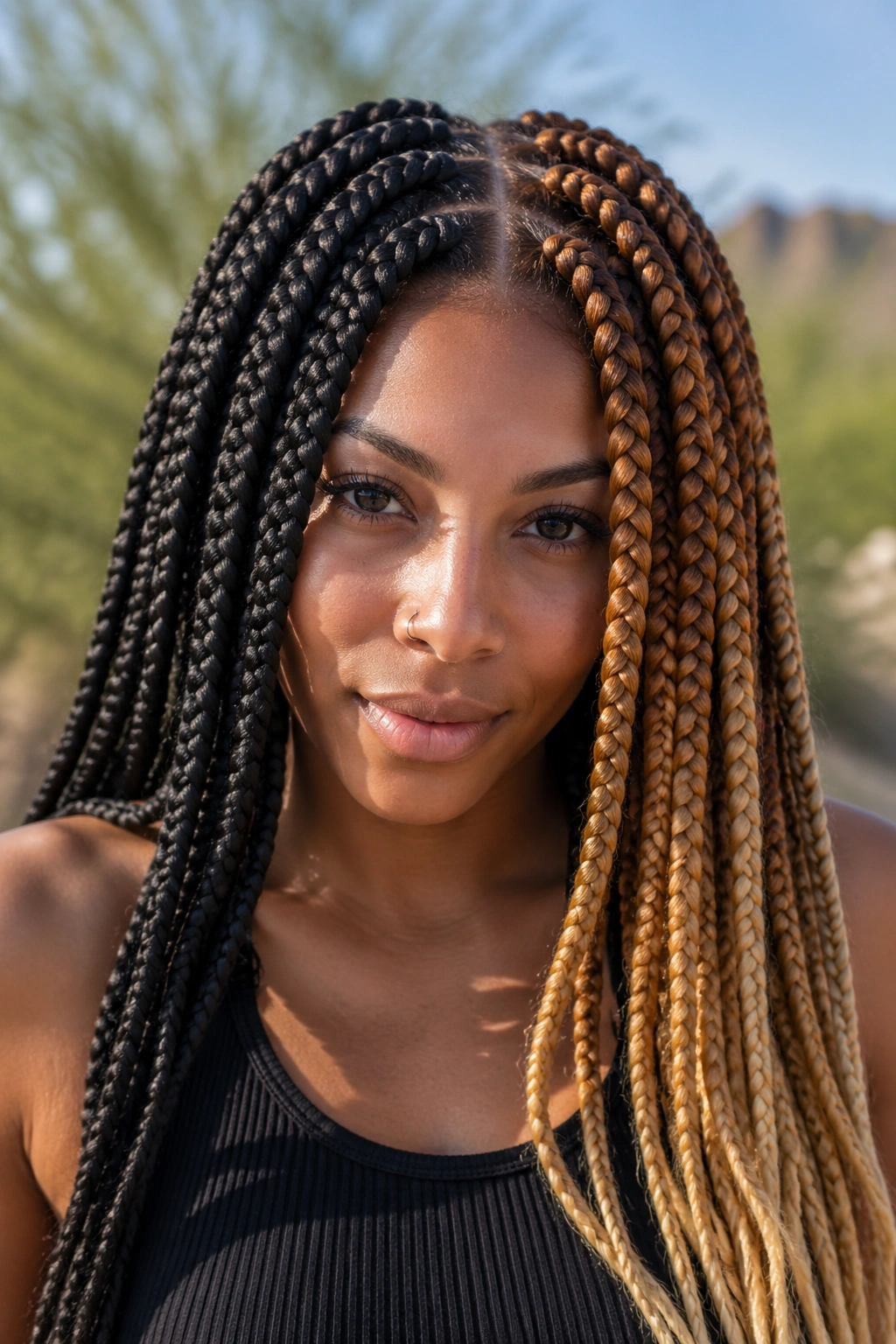
A hard block split is one thing. An ombre split is another. Here, one half fades from dark to light as it moves down the braid, while the other half stays steadier. The result is softer, less graphic, and more fluid.
That matters if you like contrast but don’t want the middle line to be the whole story. Ombre gives the braid body more motion, especially when the hair swings in the wind or gets tucked behind the shoulder. It feels less fixed.
I’d use this version when the braid length is long enough to show a change in color over time. Short braids can lose the fade too fast. Mid-back or longer gives the ombre room to breathe.
Compared with a block-color split, ombre is easier on people who get bored fast. The look changes as it moves. That’s half the appeal.
19. Rainbow Accent on One Side of Jumbo Braids
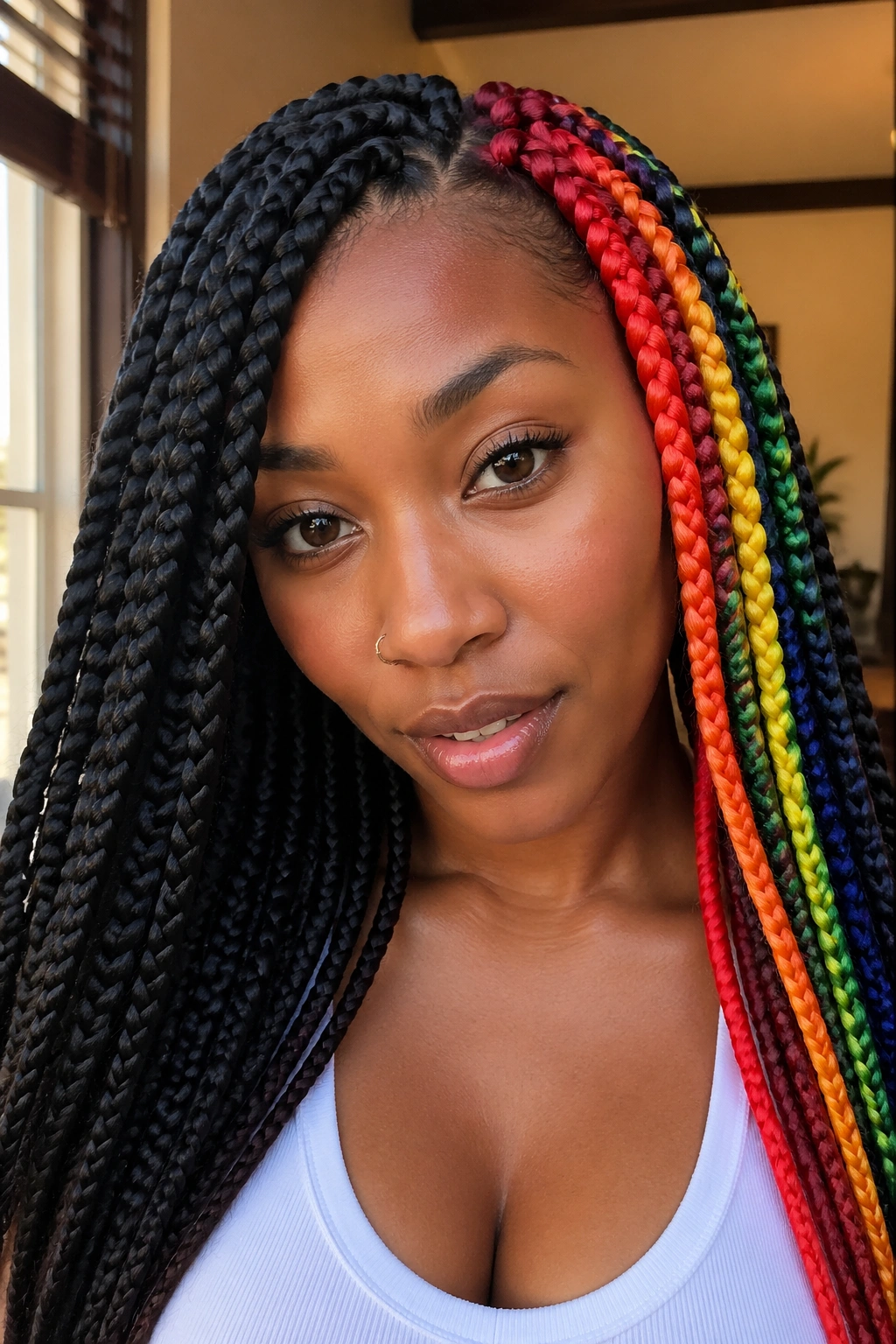
A rainbow accent does not have to mean every color under the sun. Usually, three shades are enough. Four if you want the style to lean playful. Five is pushing it unless you really know what you’re doing.
Keeping the color story under control
The trick is anchoring the rainbow side with a dark base so the bright tones don’t float off into chaos. A black or deep brown half gives the color something to sit against. Without that anchor, the braid set can start looking like a pile of markers.
- Pick 3 to 4 accent shades at most.
- Keep the other half plain and grounded.
- Repeat each accent color at least twice so it looks planned.
- Use the brightest shade near the front where it catches the eye first.
This version is fun in a way that still feels wearable. It works because the jumbo braid size gives each color enough space to show without turning into confetti.
20. Center-Part Braids with Two Slim Face-Framing Pieces
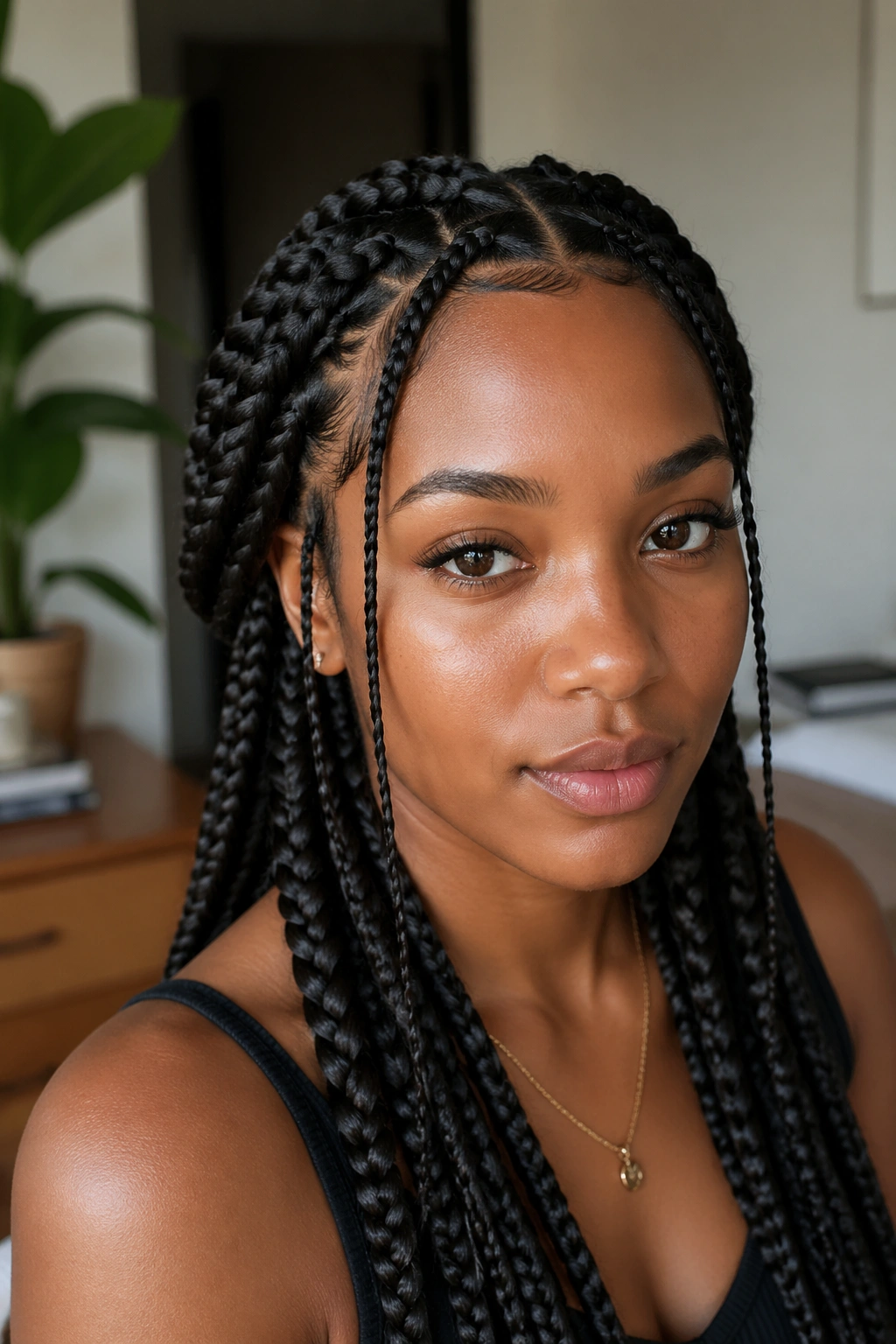
Sometimes the smallest detail gives the biggest payoff. Two slim face-framing braids at the front can turn a simple split-color set into something softer and more finished.
The rest of the braids stay jumbo and full. Those two front pieces do the talking. They pull the eye to the face, soften the center part, and keep the style from feeling too rigid around the forehead. It’s a little trick, but a good one.
I especially like this on people who wear glasses or want to keep some hair near the cheeks without letting the whole front fall loose. The slim braids don’t need to be tiny. Just narrower than the rest — maybe half an inch wide instead of a full inch or more.
This is also a very practical version if you wear braids to work or school and want the style to feel neat without being severe. That balance is harder to get than it sounds.
21. Low Ponytail Jumbo Braids with a Half-and-Half Finish
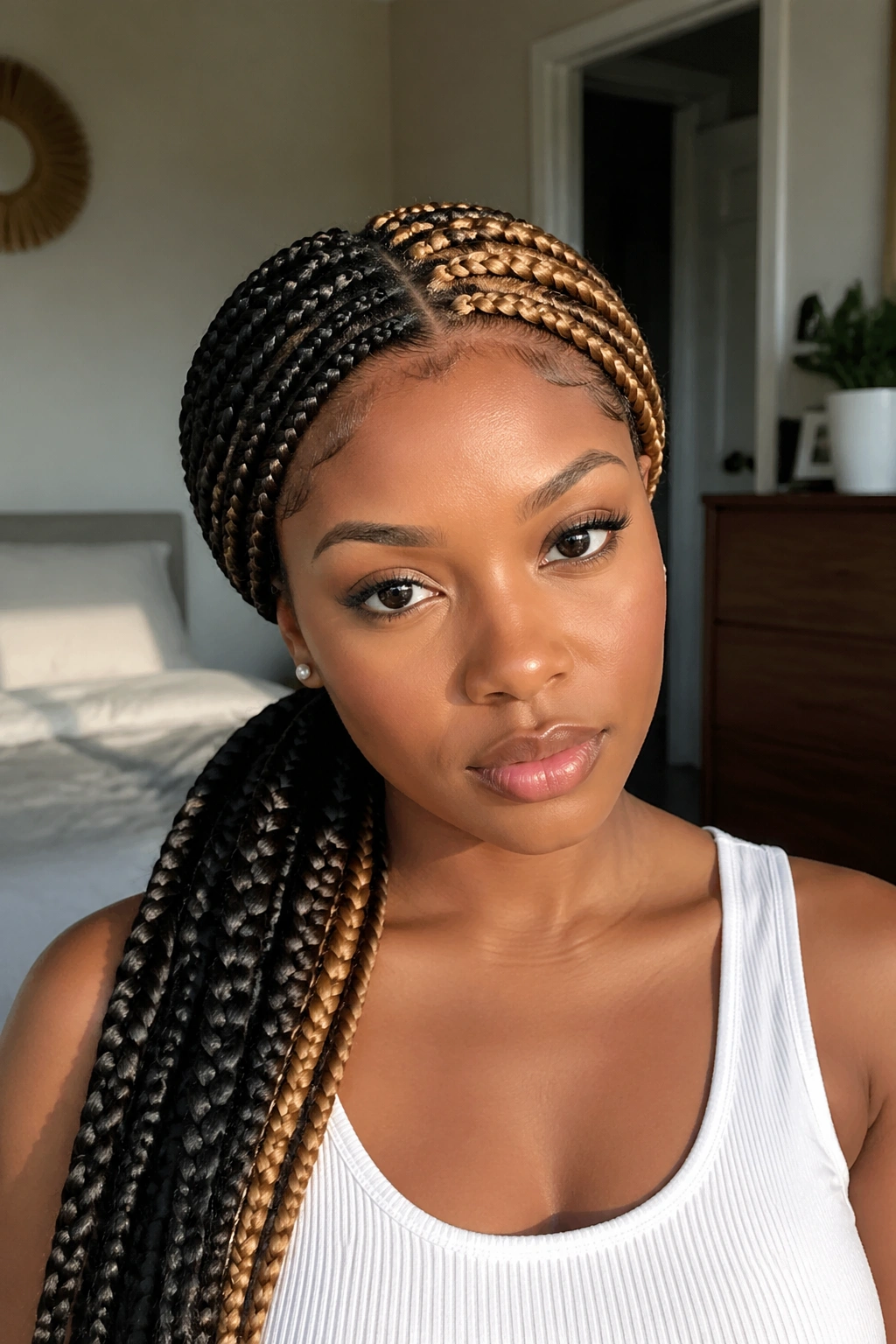
Why does a low ponytail work so well with big braids? Because it puts the weight where the head can handle it: at the nape, not at the crown.
A low ponytail also shows the split color in a nice, calm way. The top stays polished. The lengths gather. The whole style moves as one piece instead of fanning out in every direction. If your braids are 20 inches or longer, this finish can save your shoulders.
How to tie it without stress
Use a wide satin scrunchie or a soft braid tie. Don’t crank down a tiny elastic and hope for the best. That’s how you end up with a dent and a headache.
A low ponytail works best when the front is smoothed with a little mousse or light gel, then brushed back gently. No need to plaster the hair down. You want control, not stiffness.
This one feels especially clean with black-and-blonde braids, because the gathered tail shows both shades side by side.
22. Chunky Square Parts with Snatched Edges
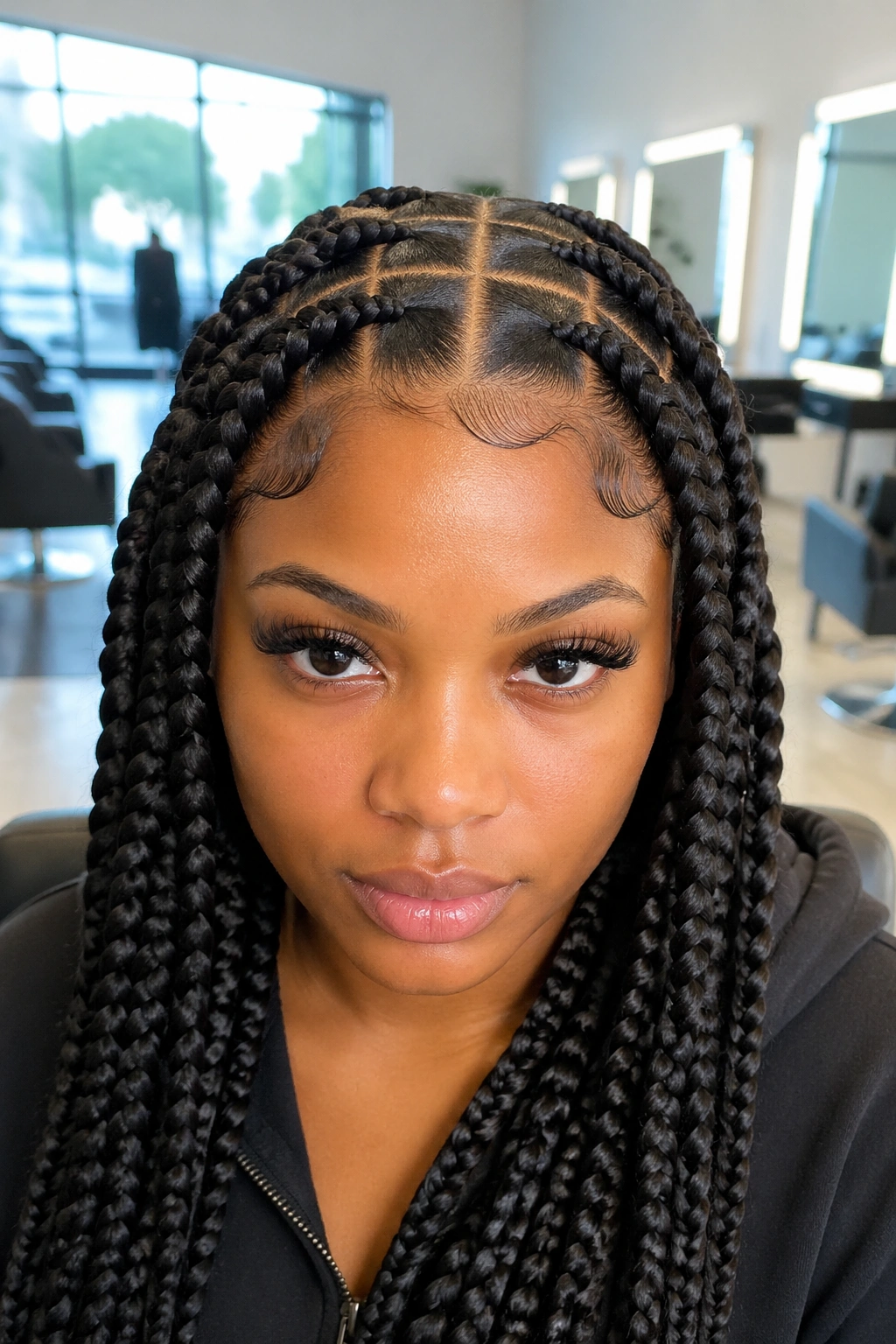
Square parts are classic for a reason. They’re easy to read, neat on the scalp, and they give jumbo braids a strong, stable base. Add a half-and-half color split, and the whole style starts to feel bold without needing extra decoration.
The edges matter here, but not in the overdone way people sometimes mean. You want the perimeter smooth, not scraped flat. A little edge control goes a long way. Too much and the front starts to flake or look wet in a bad way.
A 1.25-inch square part usually gives you enough space for the braid to stay jumbo without swallowing the scalp pattern. If the parts are too tiny, you lose the point. If they’re too large, the style can look sparse.
I like this version for people who want the braid pattern to stay visible from a distance. It’s simple. Strong. No fuss.
23. Curly Human-Hair Ends on Split-Color Braids
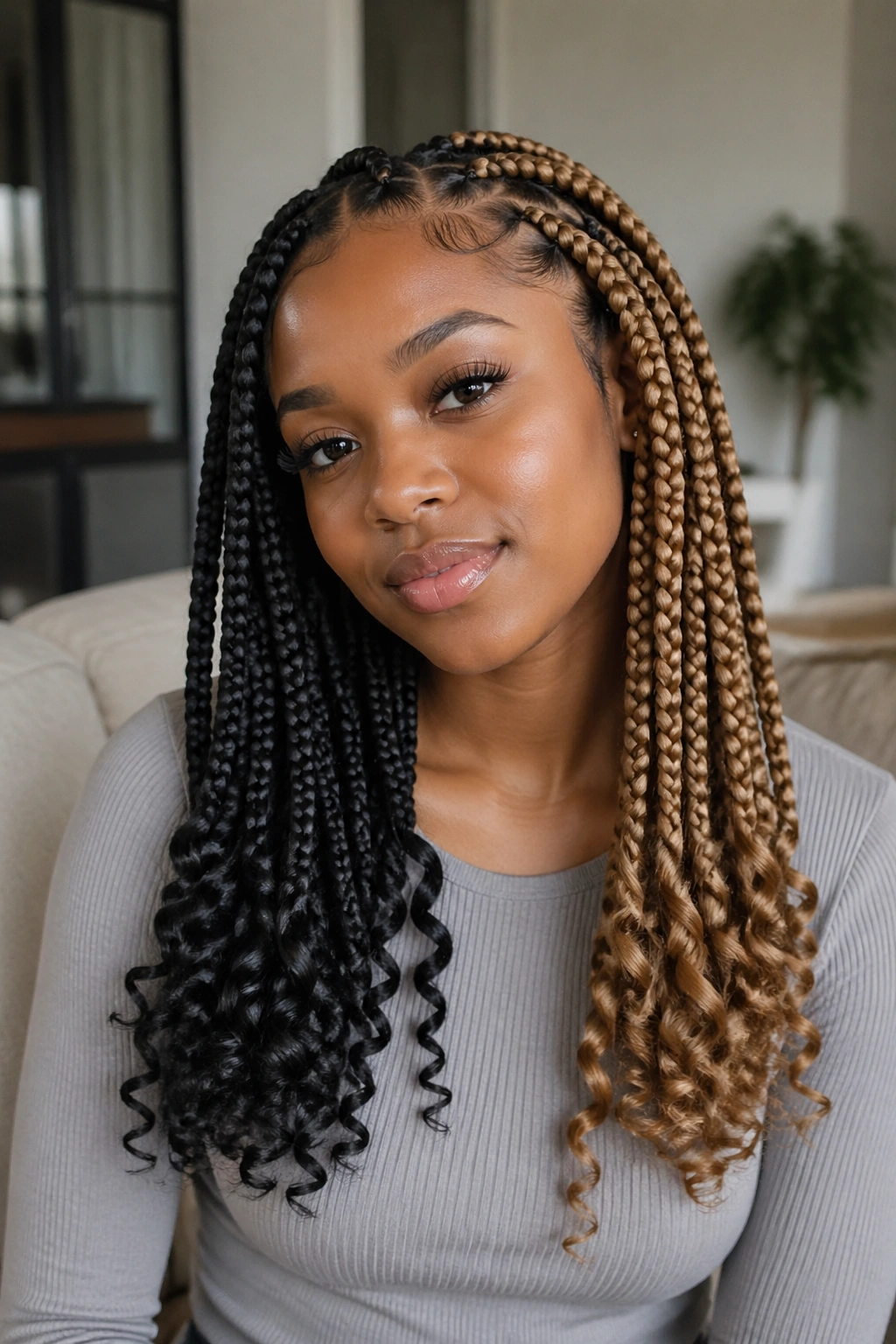
Curly ends soften everything. That’s the easiest way to say it. The strong lines of jumbo braids get a little relief, and the half-and-half color feels less rigid once the ends bend and move.
Human-hair curly ends can be gorgeous, but they do ask for more care than plain synthetic tips. They like moisture. They frizz more in humidity. They also need more gentle handling when you’re sleeping or refreshing the style in the morning. None of that is a dealbreaker. Just know what you’re signing up for.
I usually think 4 to 5 inches of curly finish is enough to give the look shape without stealing the braid length. Less than that and the curl can disappear into the end of the braid. More than that and the style can feel top-heavy.
This version is best when you want the braids to feel a little softer around the shoulders and collarbone. The curl makes the contrast feel less hard, which is exactly what some people want.
24. Blonde Front Half with Dark Back Braids
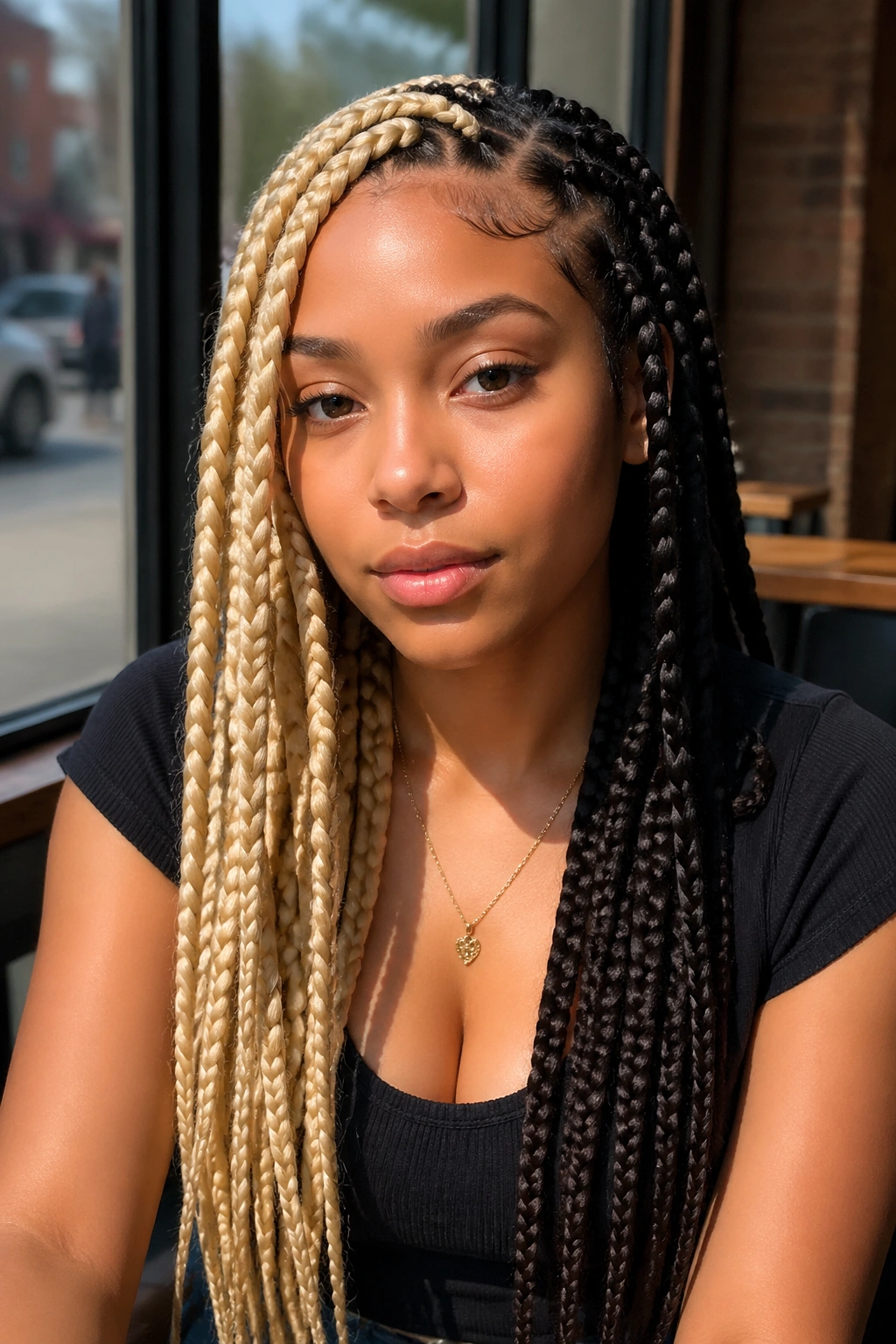
This is the more strategic take on half-and-half. Instead of dividing the color evenly down the middle, you put the lighter shade at the front and the darker shade in back. The result is bright where people look first and grounded where the braids collect the most weight.
Compared with a center split, this version feels a little more hidden and a little more polished. You get the pop around the face without giving up the sleekness of darker length in the back. It’s a smart move if you wear your braids down most of the time.
I’d ask for the lighter color on the first 3 to 4 braids near each temple so the brightness frames the face naturally. The back can stay dark and simple. That contrast looks especially good when the braids are long and move a lot.
It’s also easier to live with. The front stays the star. The back takes care of business.
25. The Everyday Wearable Jumbo Half-and-Half Set
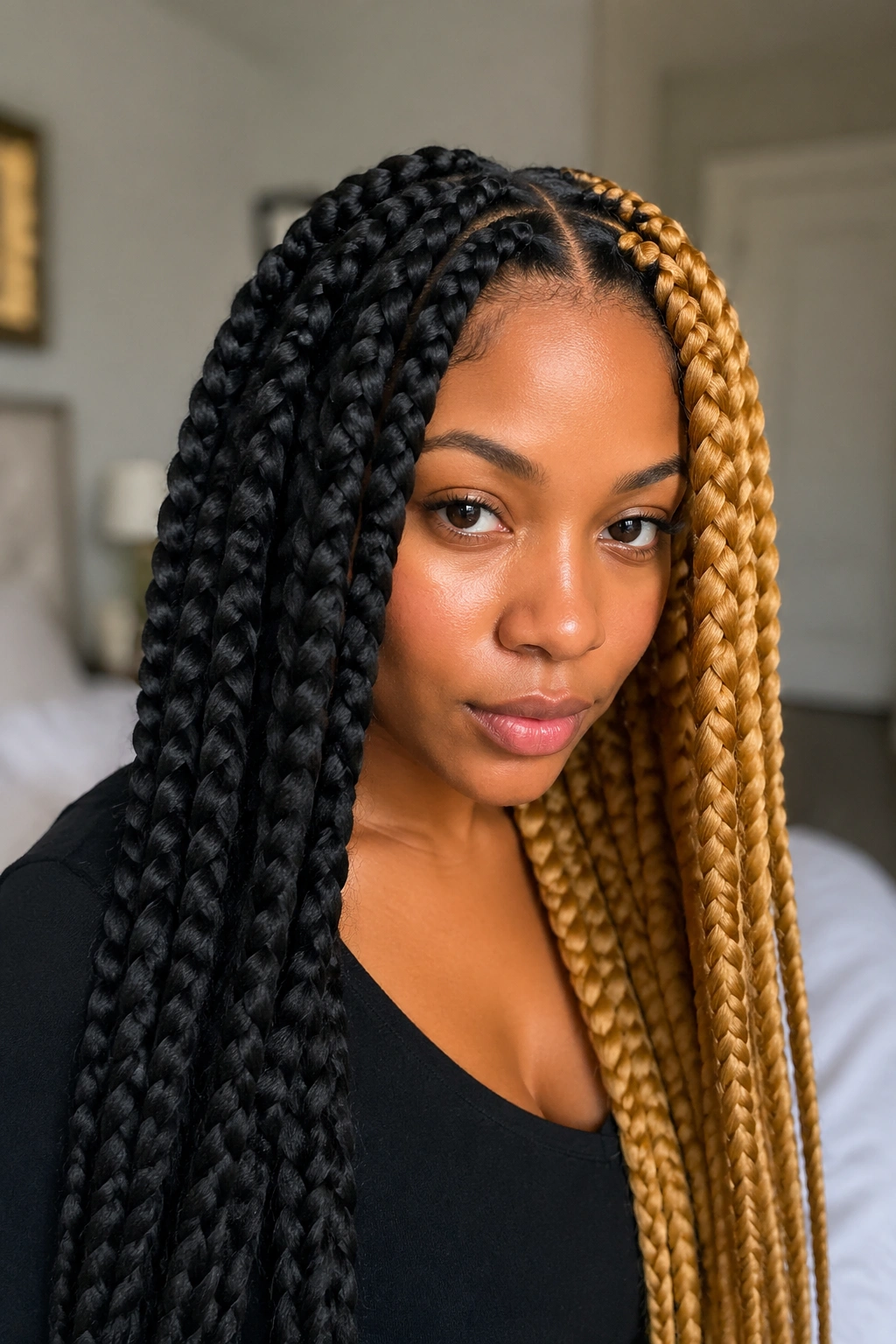
If you want the style to last in real life, this is the version I’d choose. Keep the contrast strong enough to notice, but not so dramatic that you have to build every outfit around your hair.
A medium-jumbo braid size, around 1 to 1.25 inches, keeps the install neat and the tension manageable. Choose two colors that live in the same mood — black and honey brown, espresso and copper, burgundy and black — and skip the heavy extras unless you really want them. That restraint pays off. The style stays easier to refresh, easier to sleep in, and easier to wear for more than one outfit.
Why this one lasts
The best everyday sets are the ones that still look good when the sheen fades a little and the edges are no longer perfect. That’s the real test.
- Keep the parting clean and simple.
- Use one accessory type, not five.
- Refresh the roots with a light mousse instead of piling on product.
- Choose a length that does not fight your coat, bag straps, or chair back.
A style like this does not need to shout. It just needs to hold its shape and give you that neat, finished feeling when you walk out the door.