



Pink box braids for kids work best when they look fun first and feel easy second. That sounds obvious, but it’s the part people skip, and it’s why some braid styles get adored in the mirror and hated by bedtime.
The pink can be soft cotton-candy, bright bubblegum, dusty rose, or a warmer rose-gold shade that reads gentler on the eye. The braid size matters too. So does the parting. So does whether the style pulls from the roots or sits lighter on the head. A style that looks cute on a photo can be a miserable choice if it tugs at the hairline or takes forever to dry after a wash.
Kids notice everything. They notice when braids swing too hard, when beads clack against each other, when the nape feels itchy, and when a style takes too long to finish. That’s why the best pink box braid ideas aren’t just pretty; they’re practical, wearable, and honest about what a child can live with for more than ten minutes.
Some of these styles are playful and loud. Some are softer and sweeter. A few are the kind you choose when you want the hair to stay neat through school, weekend play, and a full afternoon of running around without needing to redo the whole head.
1. Soft Pink Box Braids for Kids at Shoulder Length
Shoulder-length braids hit a sweet spot for a lot of kids. They give you enough room to show off the pink color, but they don’t swing so low that the style starts to feel heavy or fussy.
Why It Works
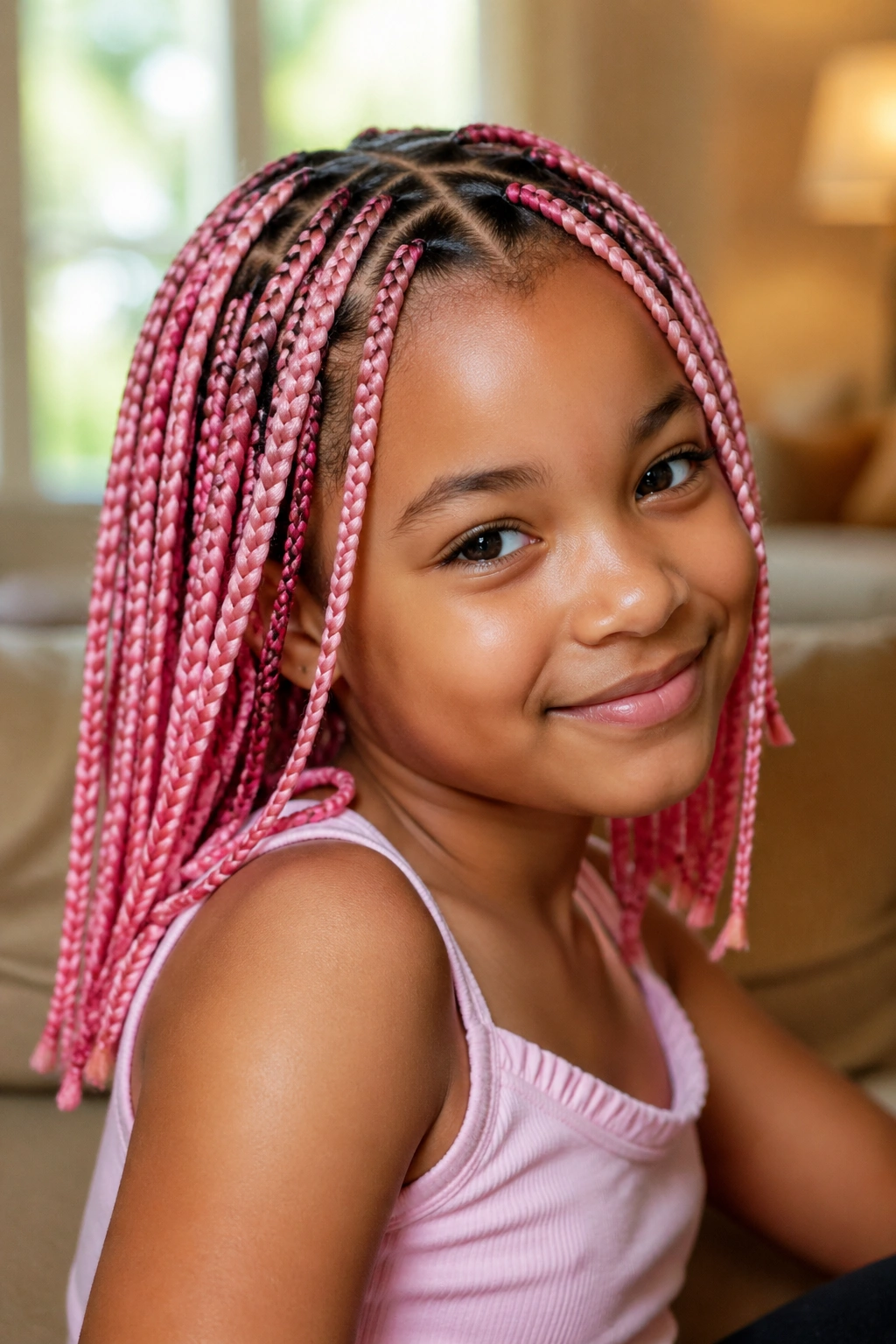
The shorter length keeps the braids light on the neck, which matters more than people think. A child can sit through a movie, run around a playground, or lean back in a car seat without the ends getting in the way every five minutes.
The Details That Matter
- Use medium parts so the scalp still looks neat without turning the install into an all-day project.
- Choose a soft pink shade if the child is new to color; it reads cheerful without screaming for attention.
- Keep the ends blunt or lightly curled so the style looks finished instead of chopped off.
- Skip heavy add-ons near the face if the child likes to move a lot.
A shoulder-length braid style also gives you more control when it’s time to sleep. A satin bonnet fits more easily, and the braids don’t press against the pillow in the same awkward way longer styles do.
My favorite part: this length looks polished even when it’s a little messy by day three. That’s not a flaw. That’s the whole point.
2. Hot Pink Jumbo Box Braids with Clear Beads
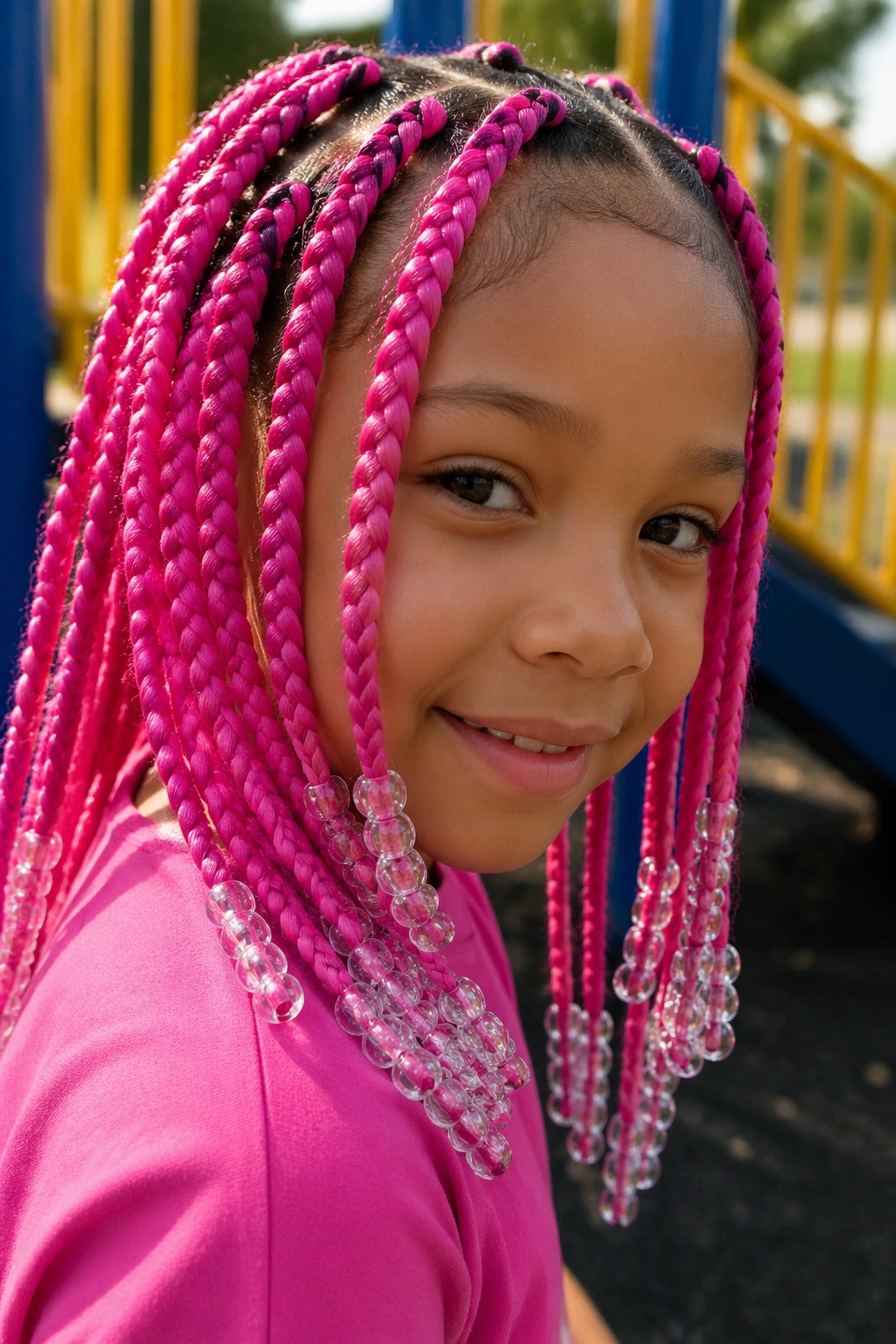
If a child wants pink that announces itself from across the room, jumbo braids do the job fast. Fewer sections mean less sitting time, and that alone can make the whole experience go smoother.
The trick is not to go too big. A jumbo braid should still move cleanly and lie flat at the root. Once the sections get oversized, the style can feel bulky and start to lift at the scalp, which is not what you want on a little head.
Clear beads make this style feel crisp. They let the pink do the talking while adding a little shine at the ends. I like these best when there are about 10 to 14 braids total, depending on the child’s hair density and how full the install needs to look.
Nope, you do not need a pile of accessories here. One or two beads per braid is plenty. Anything more starts to compete with the color, and this style is already doing enough on its own.
3. Black-to-Pink Ombré Box Braids
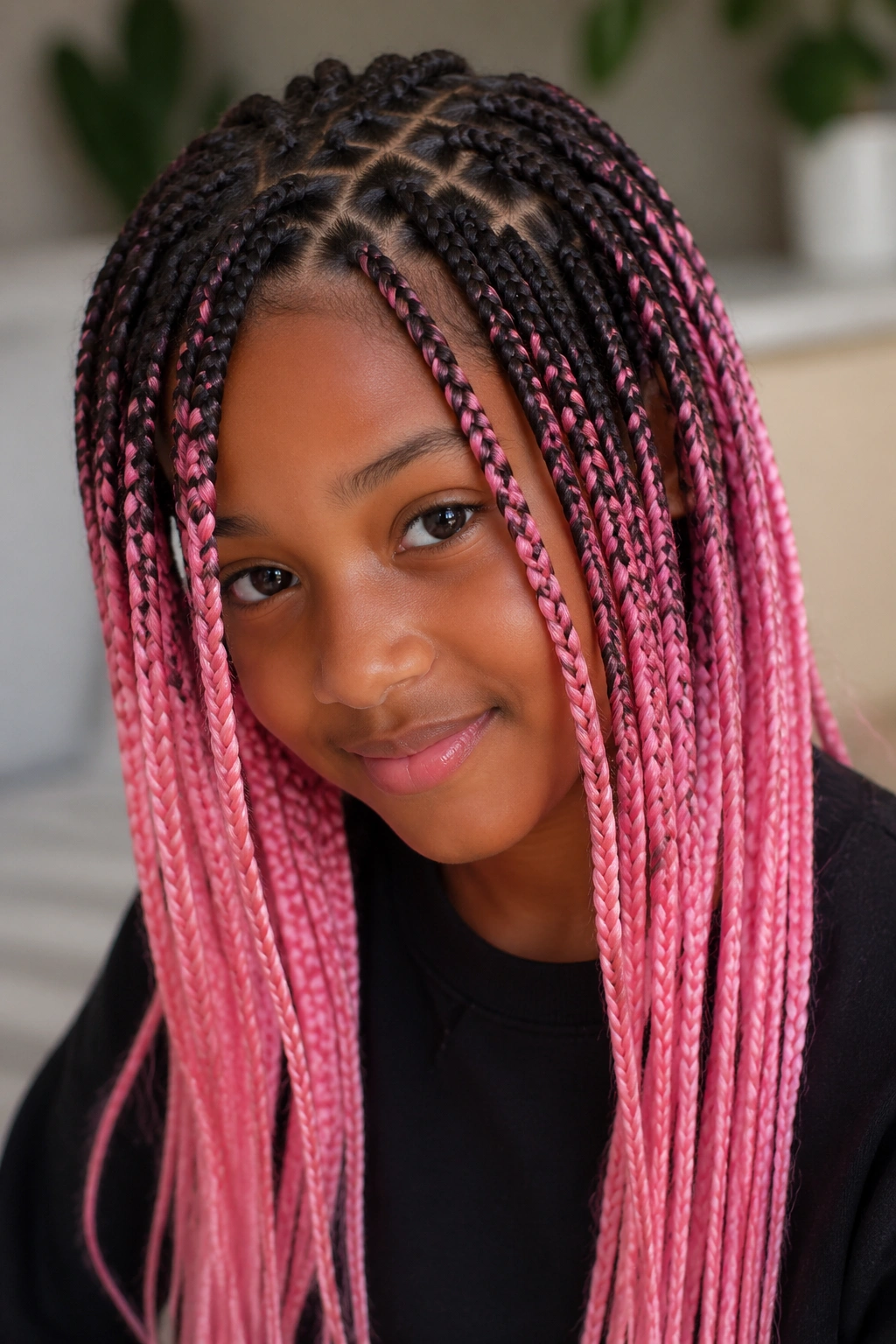
Why do ombré braids keep showing up on kids who are still deciding how bold they want to be? Because the darker root gives the style a softer start, and the pink shows up where the eye naturally lands.
That fade works especially well when a child is nervous about having bright color right at the scalp. The black or dark brown root keeps the look grounded, then the pink takes over through the mid-lengths and ends. It feels a little less sharp, a little more blended.
How to Keep It Neat
- Use pre-blended braiding hair if possible; the color transition looks smoother than a hard splice.
- Let the pink begin halfway down the braid for a gentle fade.
- Keep the roots clean and simple so the parting stands out.
- Choose one pink shade, not three, unless you want the braid to look busy.
This is also a smart choice for kids who go back and forth between school and dressy events. The root stays calm. The ends bring the fun.
4. Pink Box Braids with Heart-Shaped Parts
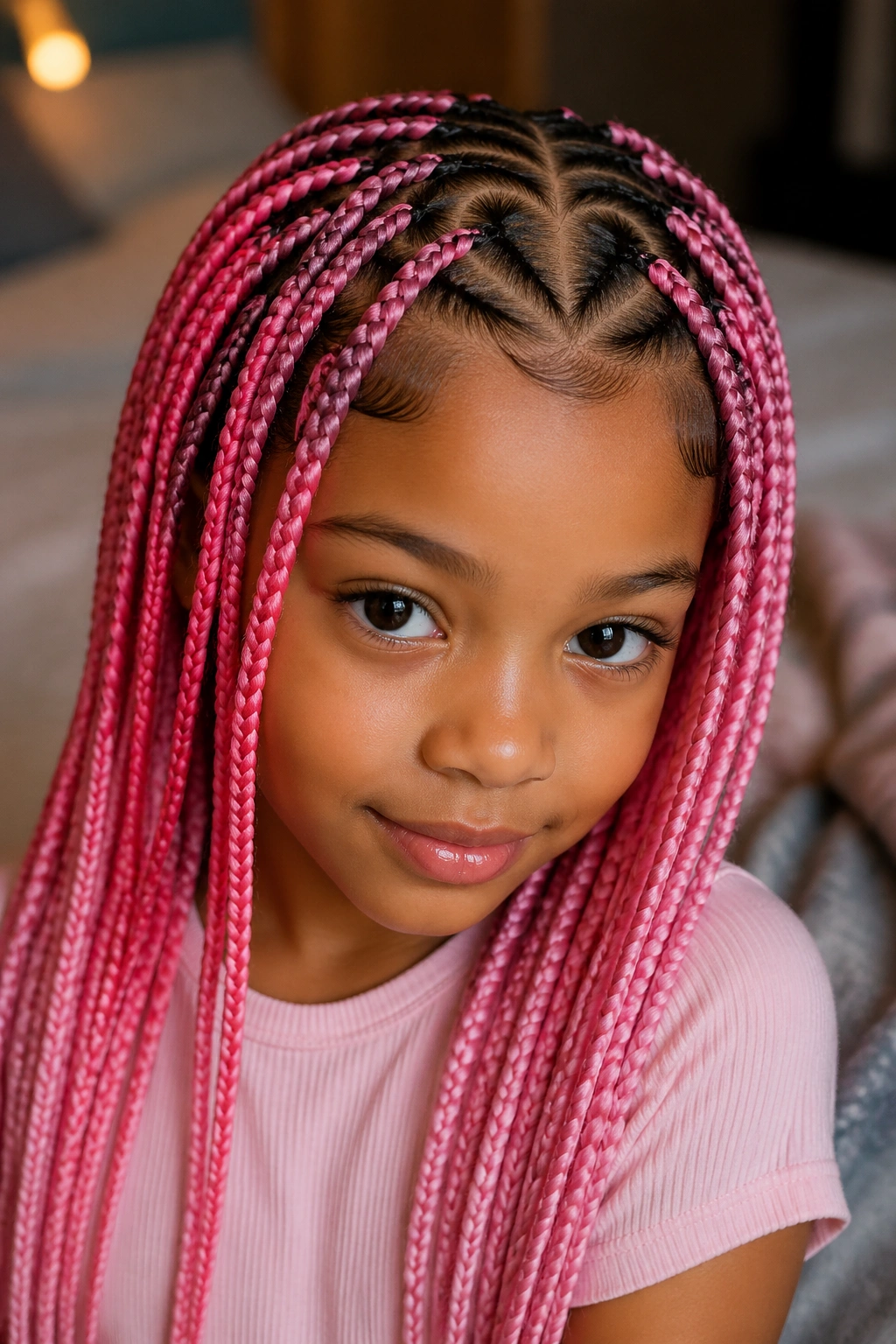
A heart part is one of those details kids notice instantly. A side part is cute. A heart part turns into the thing they point at in the mirror and ask to show everyone at school.
The design works best when the braids around it are medium-sized. Tiny parts can crowd the heart shape and make it hard to read from a normal distance. Bigger sections give the shape room to breathe, which is really the whole appeal.
You do not need a whole head full of hearts either. One big heart at the crown or two smaller hearts near the front is enough. Too many shapes start to look busy, and then the pattern loses the charm that made it fun in the first place.
Best When You Want the Style to Stand Out
- Use a clean center or side base so the heart shape looks intentional.
- Keep the heart near the front or crown where people can actually see it.
- Pair with soft pink braids if you want the parting detail to be the star.
- Finish with a light gel or mousse so the shape stays visible for a few days.
It’s a birthday style, a photo-day style, a “I want something special” style. And honestly, those are the best kinds.
5. Chin-Length Pink Box Braids Bob
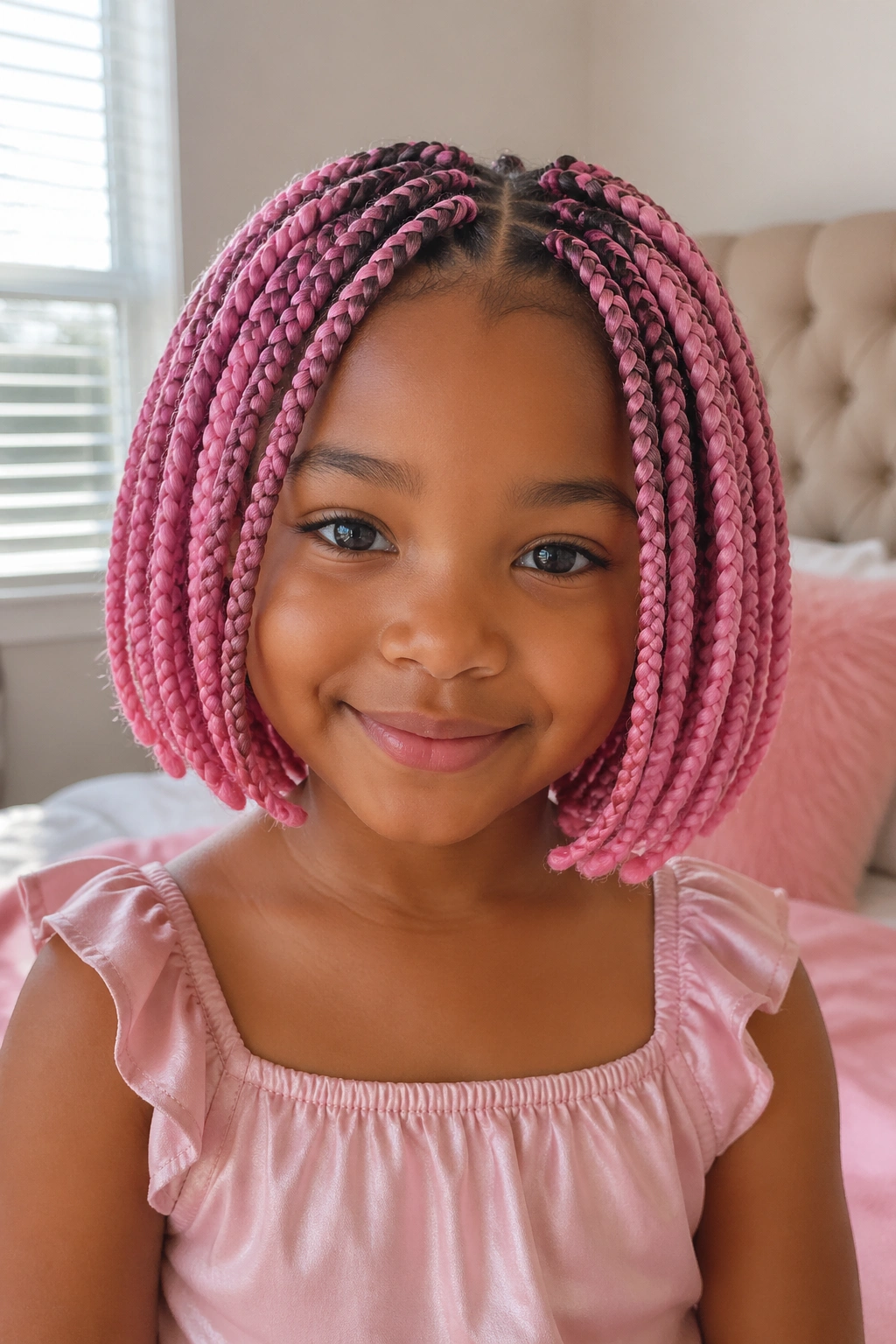
A bob is the style I recommend when a child hates hair brushing against the shoulders. Some kids don’t mind length at all. Others act like anything past the chin is a personal insult.
Chin-length pink braids look tidy, fresh, and easy to manage. They also dry faster after washing, which matters more than people admit. Shorter braids don’t hold as much water near the ends, so the whole routine feels less annoying.
The shape gives the face a lot of room. That’s useful when the pink is bright, because the color gets to frame the features instead of competing with them. A bob also bounces when the child walks, and that movement makes the style feel lively without needing extra accessories.
Short braids do have one drawback: they can flip in odd directions if the ends are not finished well. A blunt cut, a gentle curl, or a neat bead at the tip can keep the bob from looking patchy by day two.
6. Pink Box Braids for Kids with a Knotless Base
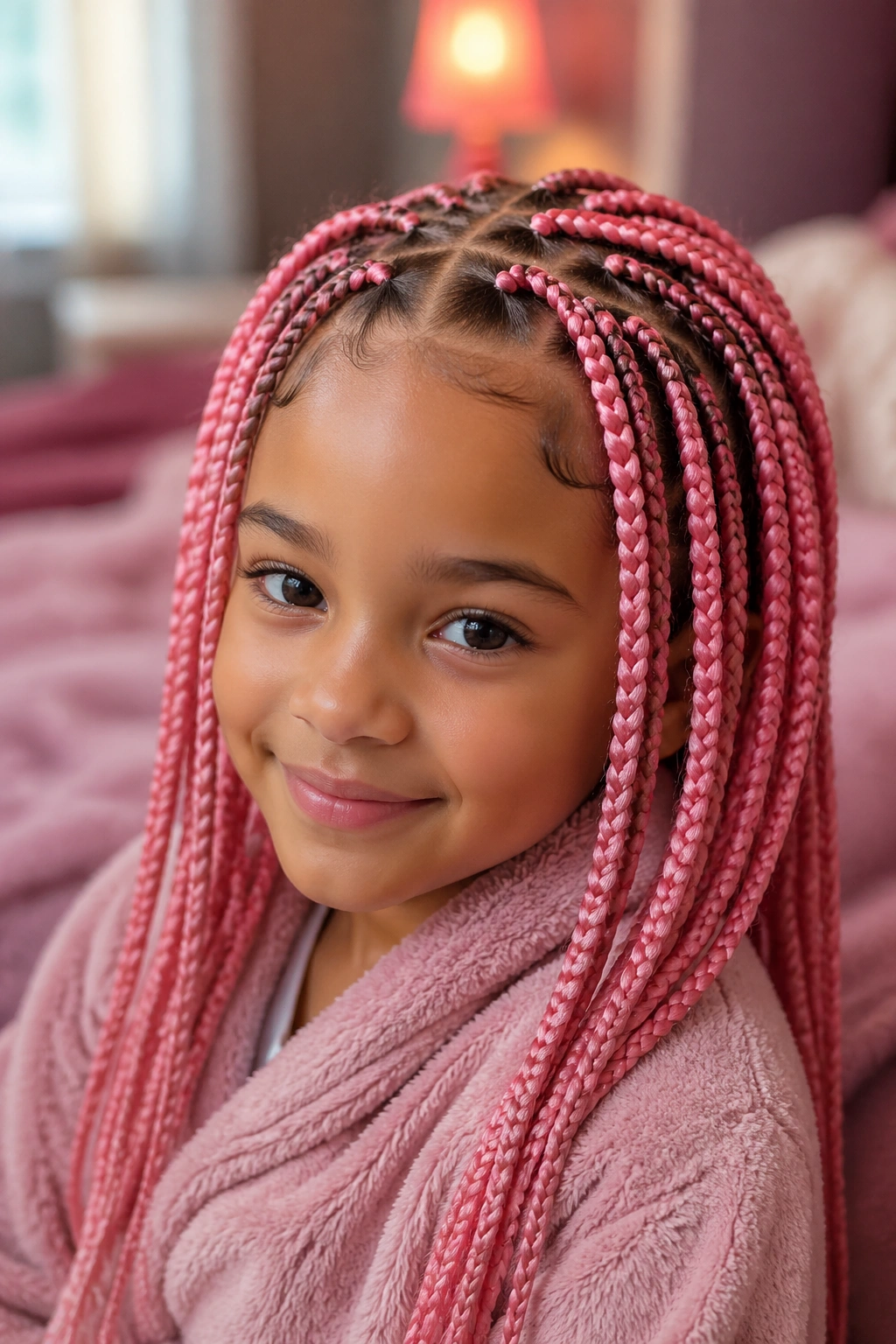
Pink box braids for kids can look polished and still feel easier when the base is knotless. That’s the big reason this style gets chosen again and again by parents who care about the scalp as much as the finish.
Knotless braids start with the child’s own hair and add the braid hair gradually, so there’s less of that tight little knot sitting at the root. The result is a flatter base and less sudden tension at the hairline. For kids with tender scalps, that can make the difference between a good braid day and a lot of complaints.
When I’d Pick This Style
- Choose it for first-time braid wearers who may not sit still for a heavy install.
- Pick medium-sized sections so the braids still last without feeling bulky.
- Use soft pink or rose pink if you want the look to feel gentle.
- Avoid overloading the front edges; the goal is comfort first.
The downside? Knotless takes longer. That is just the tradeoff. You buy comfort with time, and for a lot of families that’s worth every extra minute in the chair.
7. Pink Box Braids with Curly Ends
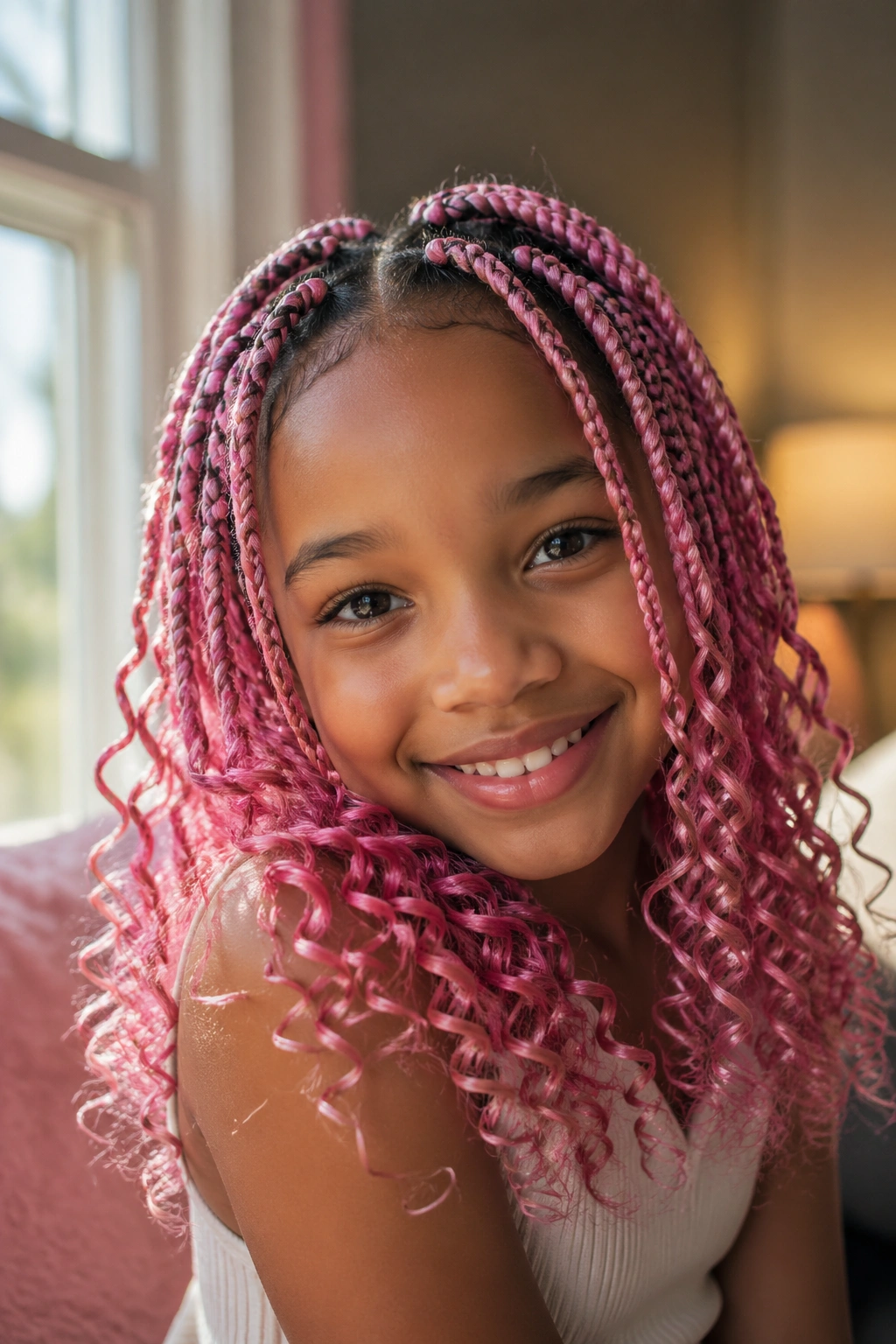
Straight ends are neat. Curly ends feel softer.
That’s the whole appeal here. The braids stay structured at the root and through the body, then the finish loosens up with curls that bounce instead of hang stiffly. On kids, that touch of movement can make pink hair feel lighter and more playful.
You can create the curl with flexi-rods, perm rods, or pre-curled braiding hair, depending on how the style is installed. The important part is keeping the curl tidy enough that it doesn’t turn into frizz by the second day. A little mousse helps. So does not touching the ends every ten minutes.
Keeping the Curl from Going Flat
- Set the ends before dipping them, if the braider uses the hot-water method.
- Use lightweight products, not thick creams that weigh the curl down.
- Sleep with the braids loose and covered so the ends don’t get smashed.
- Choose shoulder-length or mid-back length; very short braids lose the effect.
This style feels especially nice when the pink is soft or pastel. The curls add a little softness that keeps the color from looking too sharp.
8. Pastel Pink Box Braids with Gold Cuffs
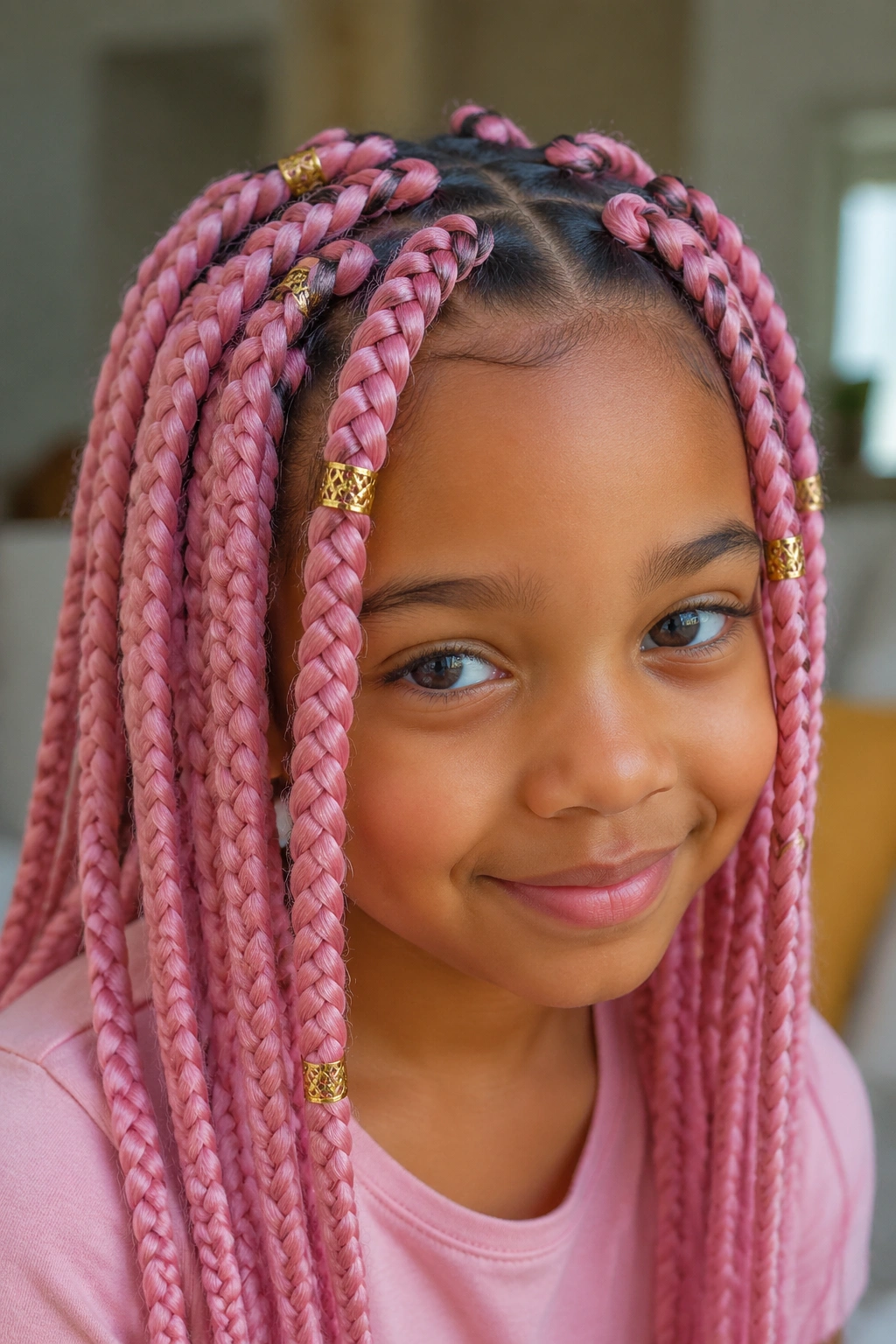
Pastel pink and gold cuffs is a combination that feels polished without trying too hard. The pink gives you sweetness, and the cuffs bring just enough shine to make the braids feel finished.
The important thing is placement. A cuff every inch down the braid can make the style look crowded and, worse, add extra weight where a child does not need it. A few well-placed cuffs near the face and mid-lengths do more than a dozen stacked together.
Gold works better than bright silver here, in my opinion, because it warms up the pink instead of making it feel icy. That’s a small thing, but little details are what make braid styles look thought-out instead of random.
If the child likes accessories, this is an easy win. If they do not, skip the cuffs entirely and let the color carry the style. That restraint is often smarter.
9. Pink and Purple Mixed Box Braids
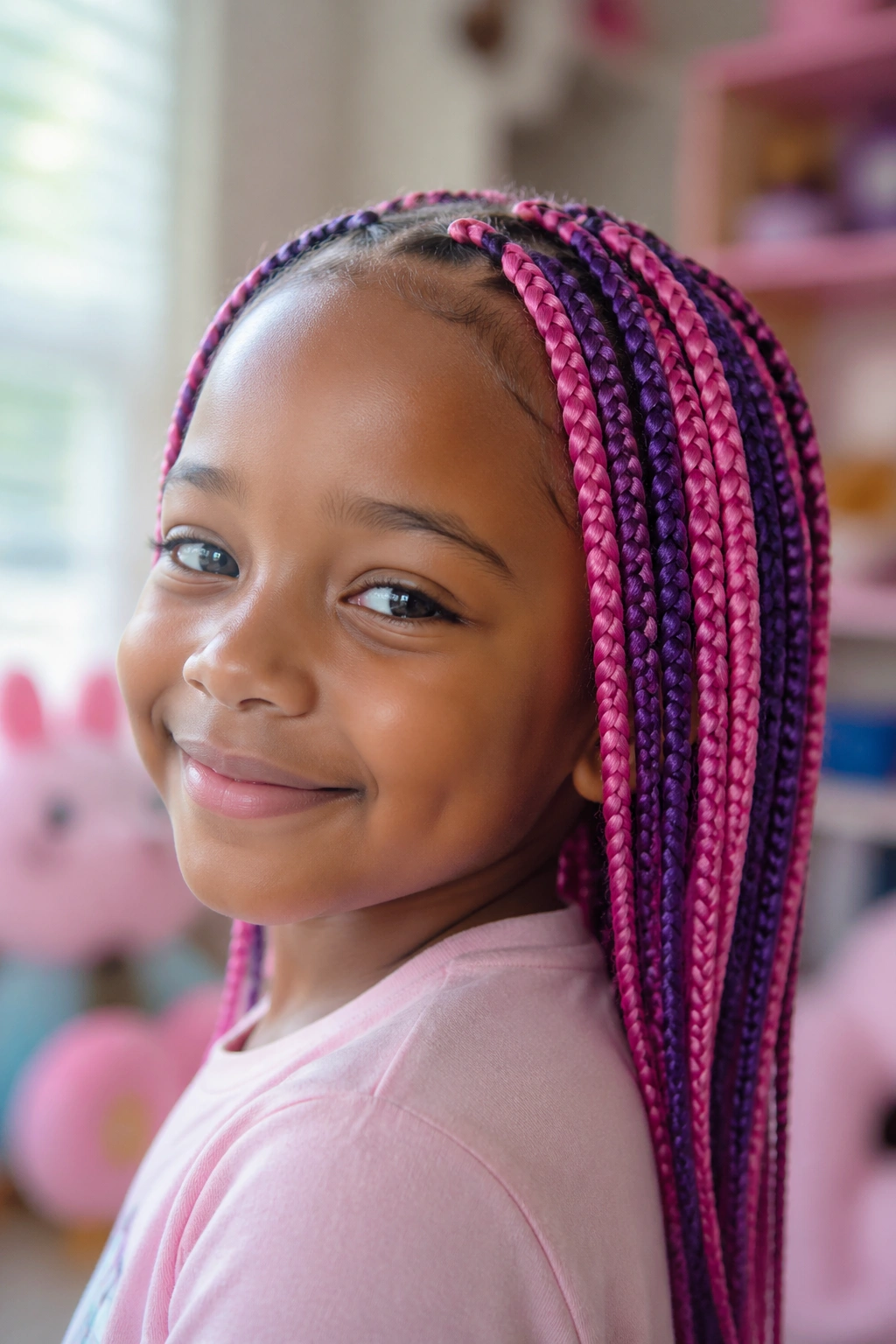
What happens when one pink shade feels too sweet? Add purple. The mix keeps the hair playful, but it gives the color more depth and stops the whole style from looking flat.
This combo works especially well when the pink and purple are close in brightness. If one shade is much louder than the other, the balance gets thrown off and the braid can look patchy from a distance. A blended set of pink and lavender or pink and deep violet usually looks cleaner.
How to Mix the Colors
- Alternate strands braid by braid for a striped look.
- Blend the colors inside each braid if you want a softer finish.
- Put the darker tone underneath so the brighter pink shows first.
- Use one accent braid near the front if you want a smaller dose of color.
This style suits kids who like a little drama but do not want neon everything. It’s bright, but it still has shape.
10. Triangle-Part Pink Box Braids
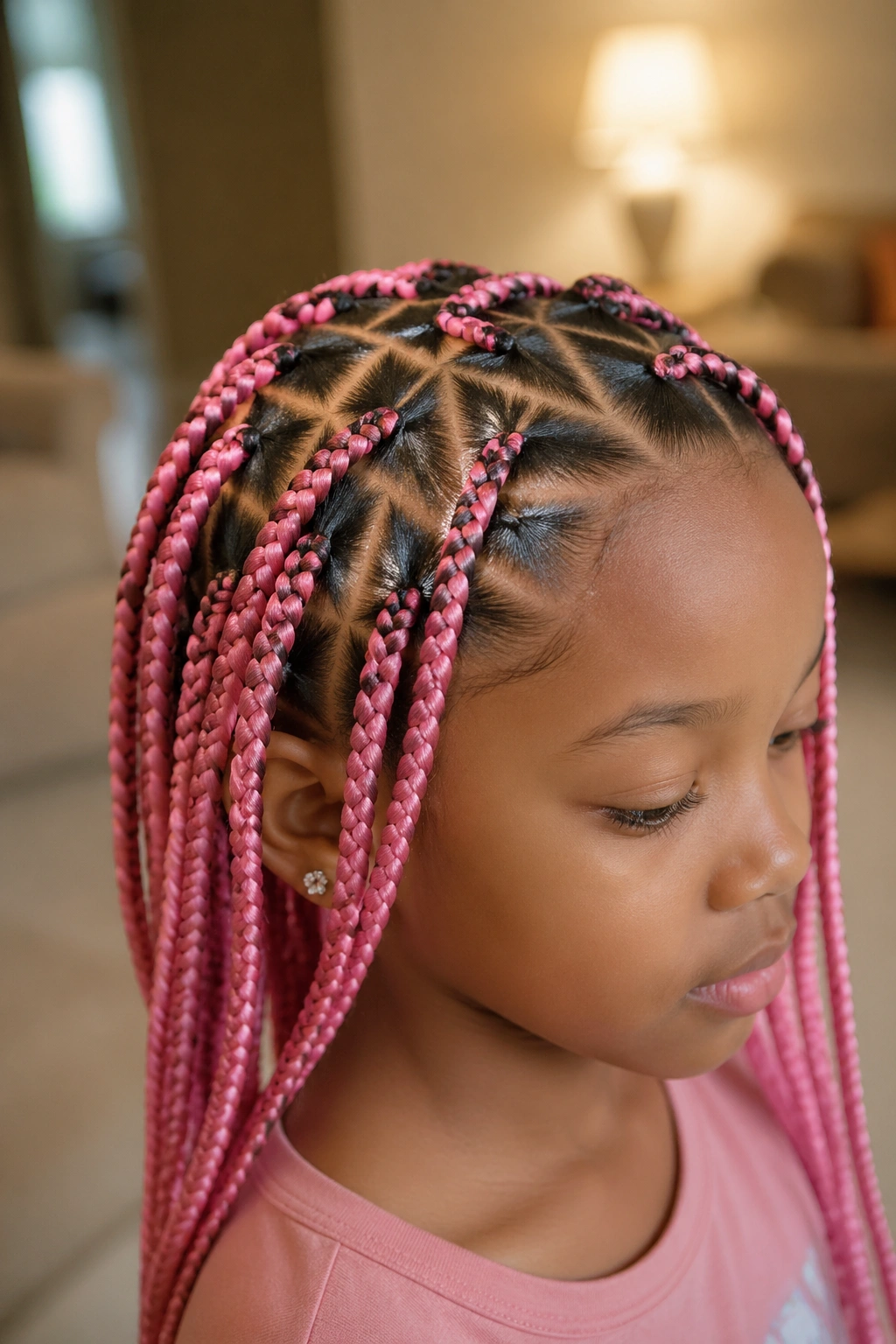
Triangle parts change the whole mood of pink box braids. The braids themselves might be simple, but the sections on the scalp make the style look sharper and a little more modern.
A triangle part works because the eye catches the angles right away. It feels more designed than a square grid, even when the braid size stays the same. That makes it a smart option for kids who want something a little different without adding more hair or more length.
I like triangle parts best on medium braids. Tiny triangle sections can look crowded, and very large ones can make the pattern fade. In the middle range, the shape reads clearly and still lays neatly under the pink.
The style also grows out in an interesting way. Even when the roots start to show, the pattern still has a little visual life left in it.
11. High Pigtail Pink Box Braids
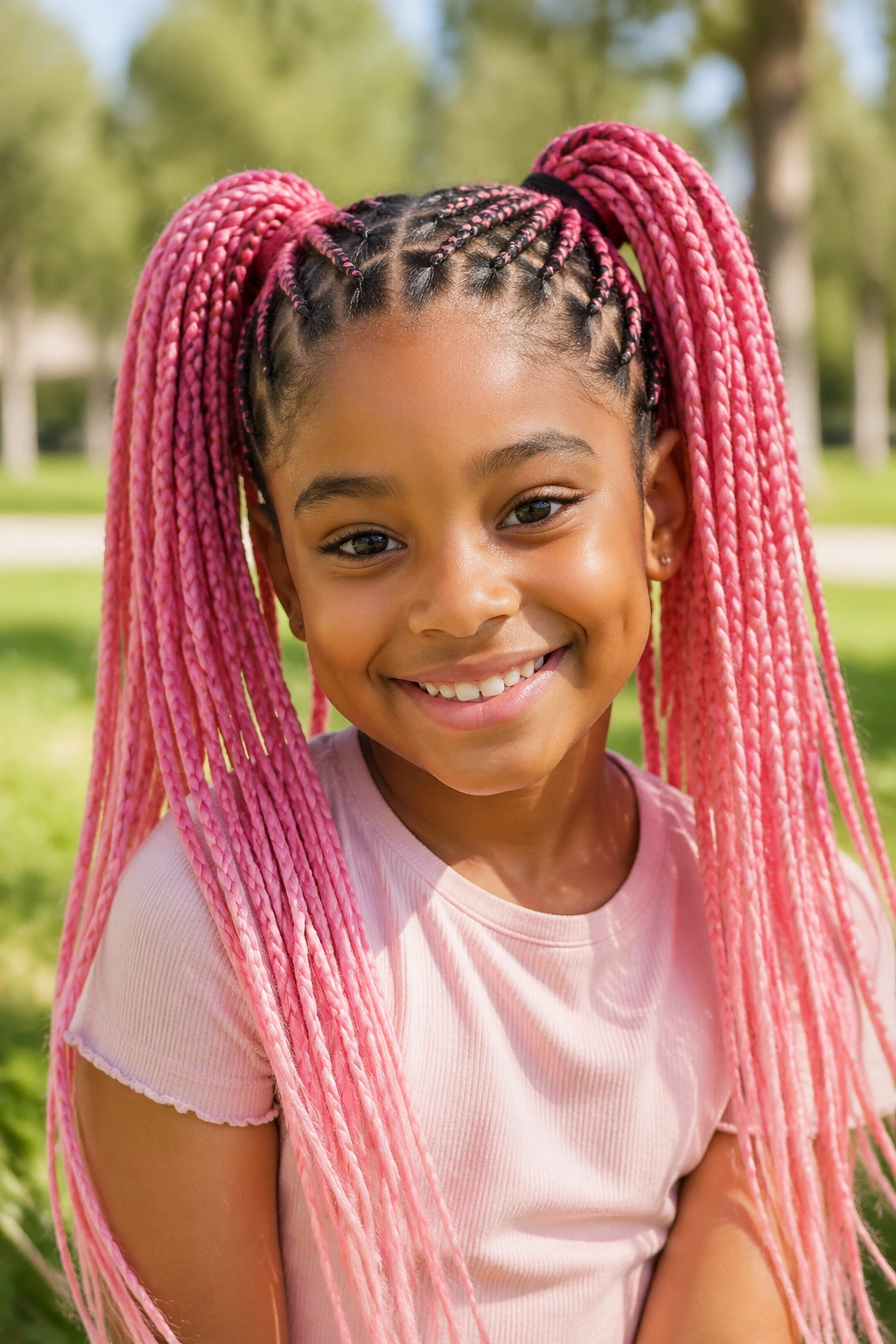
High pigtails are one of those styles that can take a plain set of pink braids and turn them into something much more playful in five minutes. The base stays the same. The mood changes completely.
This is a smart choice for active kids because the hair gets lifted off the shoulders and neck. That makes running, jumping, and dancing easier, and it keeps the ends from hitting the same spot all day. If the braids are mid-back or shoulder length, the pigtails sit nicely without dragging.
One small warning: don’t pull the pigtails too high and too tight. The lift should look cheerful, not strained. Leave enough slack at the front that the hairline stays flat, especially if the child wears the style often.
A clean center part works well here, but a soft zig-zag or side part can make the pigtails feel less plain. It’s a simple style. That’s the charm.
12. Pink Box Braids with Beaded Ends
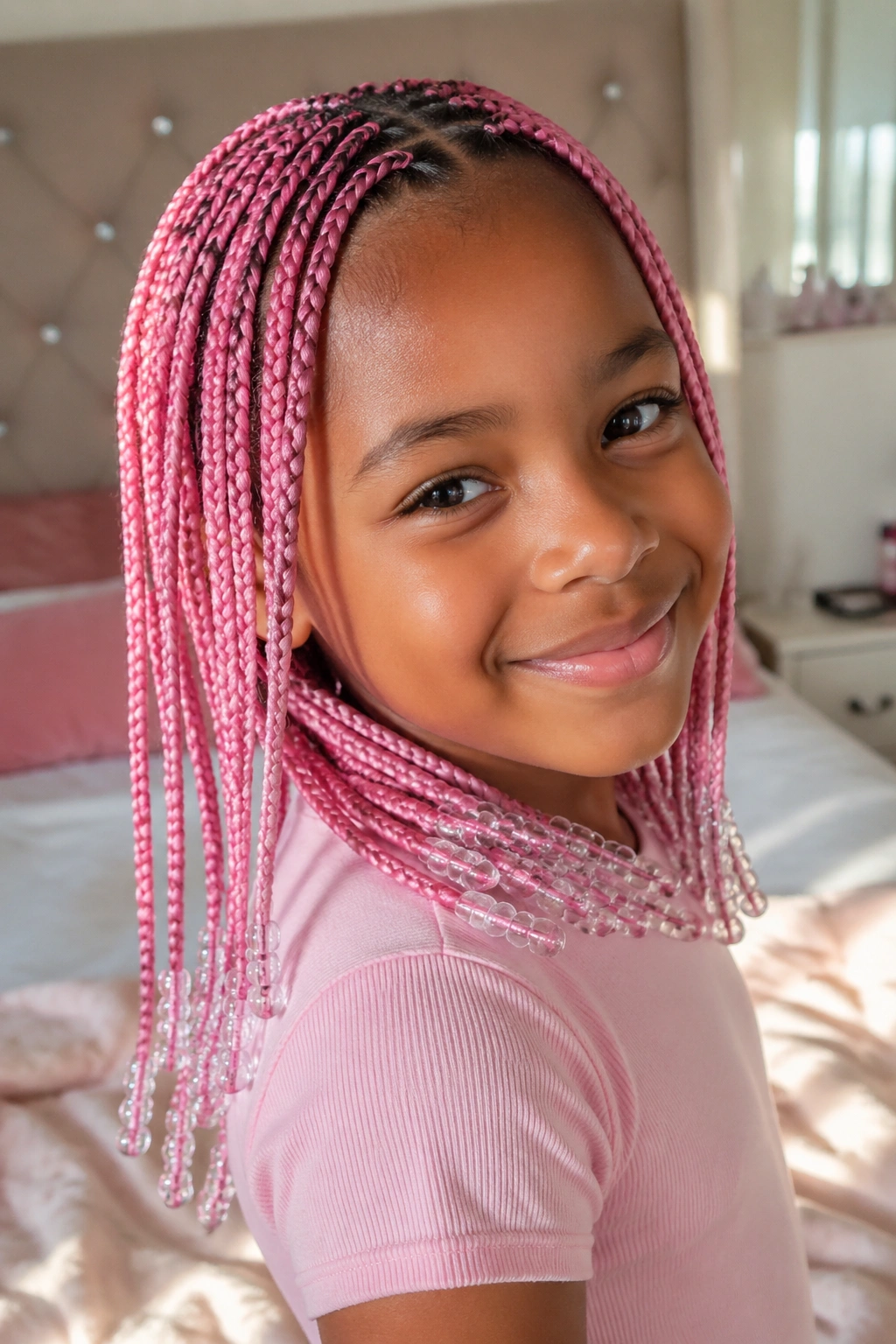
Beaded ends give box braids a little sound and a little movement. Kids tend to love that part, because the braids click softly when they walk, and the finish feels more interactive.
The beads need to stay light. That matters more than color. Lightweight plastic or acrylic beads are usually better than heavy wooden ones for small kids, especially if the braids are long. Too much weight at the ends can pull in a way that feels annoying by the end of the day.
Smart Ways to Place the Beads
- Put one or two beads on each braid end instead of stacking them high.
- Use clear or pink beads if you want the color story to stay cohesive.
- Keep beads on the lower third of the braid so the scalp doesn’t carry extra weight.
- Check the elastic or stopper so the beads do not slide off during play.
This style feels especially good on shorter and medium lengths. Long braids with heavy beading can get tiring fast, and kids usually know that before adults do.
13. Half-Up Space Buns with Pink Box Braids
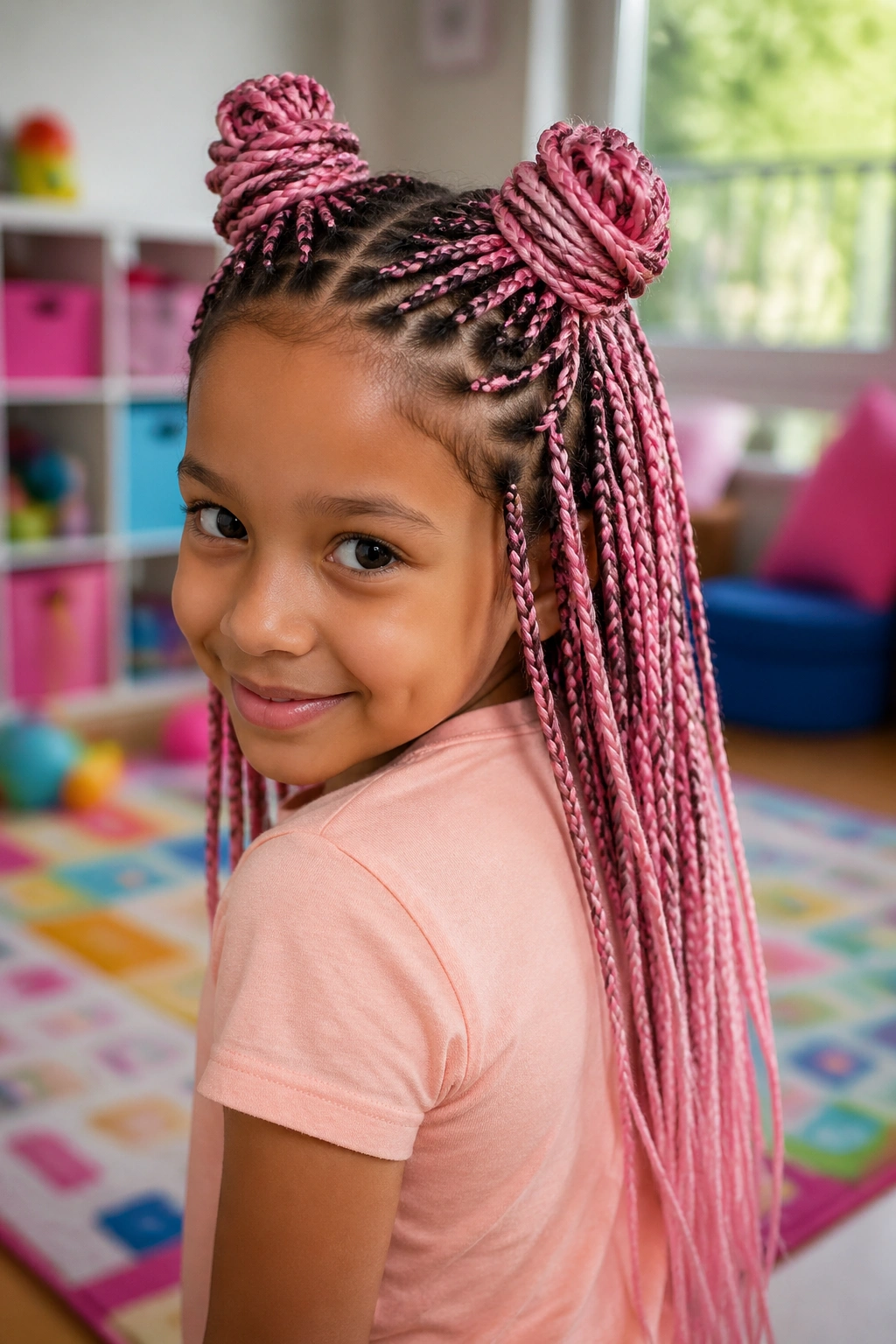
Half-up space buns are the kind of style that makes a child grin the second they see it in the mirror. The braids stay down in the back, but the top section gets lifted into two small buns, and that changes everything.
The best part is that you do not need a whole rebraid to make it happen. If the box braids are already installed, you can gather the top third, twist each side into a bun, and secure it with snag-free bands. It’s a styling move, not a new install, which is why parents like it.
A Small Warning
Do not pack too much hair into the buns. That’s where the style gets heavy and starts to pull. Two modest buns look cuter and stay neater than one giant top knot trying to do too much.
This style suits parties, casual weekends, and any day when the child wants a little extra personality. It also works well with mixed pink shades, since the buns show off the color from a new angle.
14. Pink Box Braids for Kids in a School-Ready Mid-Back Length
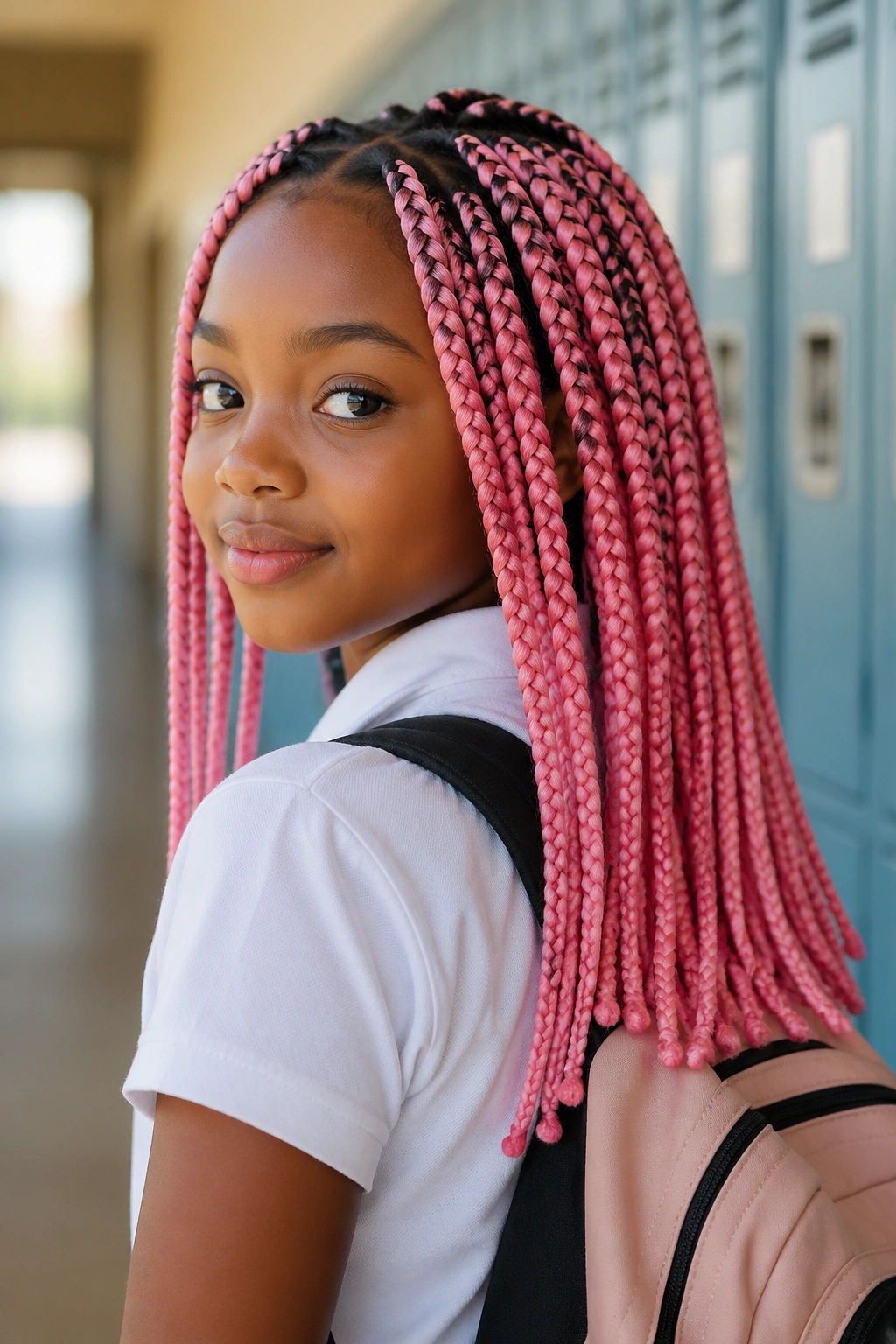
How long is long enough? For a lot of kids, mid-back length is the answer.
It gives you visible braid movement and enough room for pink to stand out, but it does not drag the same way waist-length braids can. That makes it easier to wear with backpacks, zip-up hoodies, and regular school days where hair has to stay out of the way for hours.
A school-ready length also means fewer complaints at home. The braids can go into a low ponytail, a single braid, or a half-up style without turning into a huge styling job. That flexibility matters, especially when mornings are rushed and nobody wants a fight over hair at 7:10 a.m.
Best When You Want Easy Styling
- Use medium-length synthetic braiding hair so the install has enough body.
- Keep the ends clean and even; uneven mid-length braids look sloppy fast.
- Choose a soft pink or blush pink if the dress code feels more conservative.
- Add one small accessory only so the look stays neat, not crowded.
If a parent wants a style that survives school, play, and a quick after-school outing, this is one of the safest bets.
15. Pink Box Braids with Ribbon Wraps
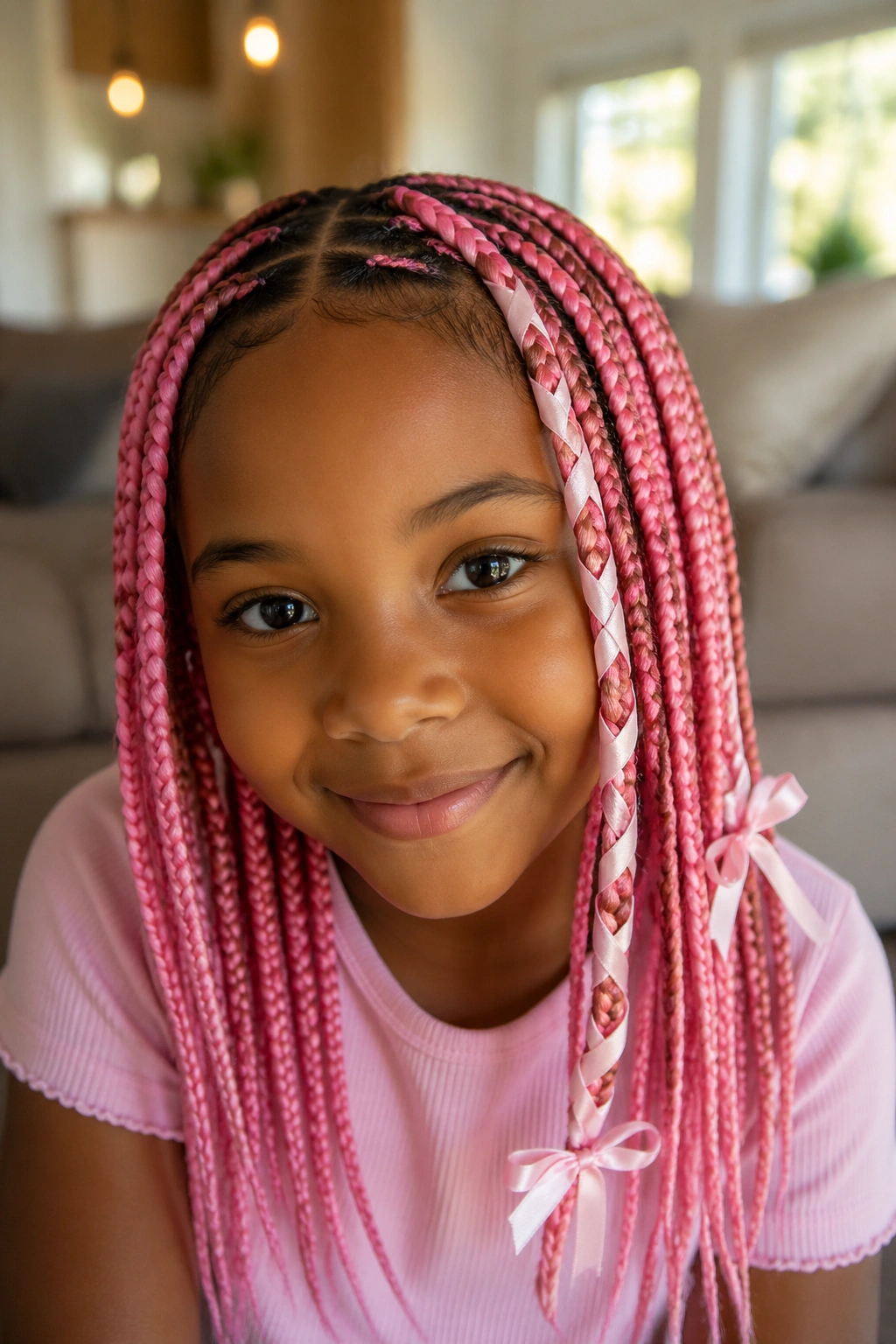
Ribbon wraps are a simple way to switch up pink box braids without changing the whole style. They work especially well for kids who like variety but do not want a full reinstall every time.
A soft satin ribbon woven through a few braids can change the look in minutes. I prefer thinner ribbon, about a quarter to half an inch wide, because it sits flat and does not snag as much as stiffer trim. You can wrap it around the braid near the ends or thread it through one braid near the front for a small pop.
The key is moderation. One ribbon accent near the face can look sweet and clean. Eight ribbons everywhere starts to feel busy, and the pink braid color gets buried under the extras.
This option is nice for birthdays, school performances, and days when the child wants something special without the weight of beads or cuffs.
16. Crisscross Part Pink Box Braids
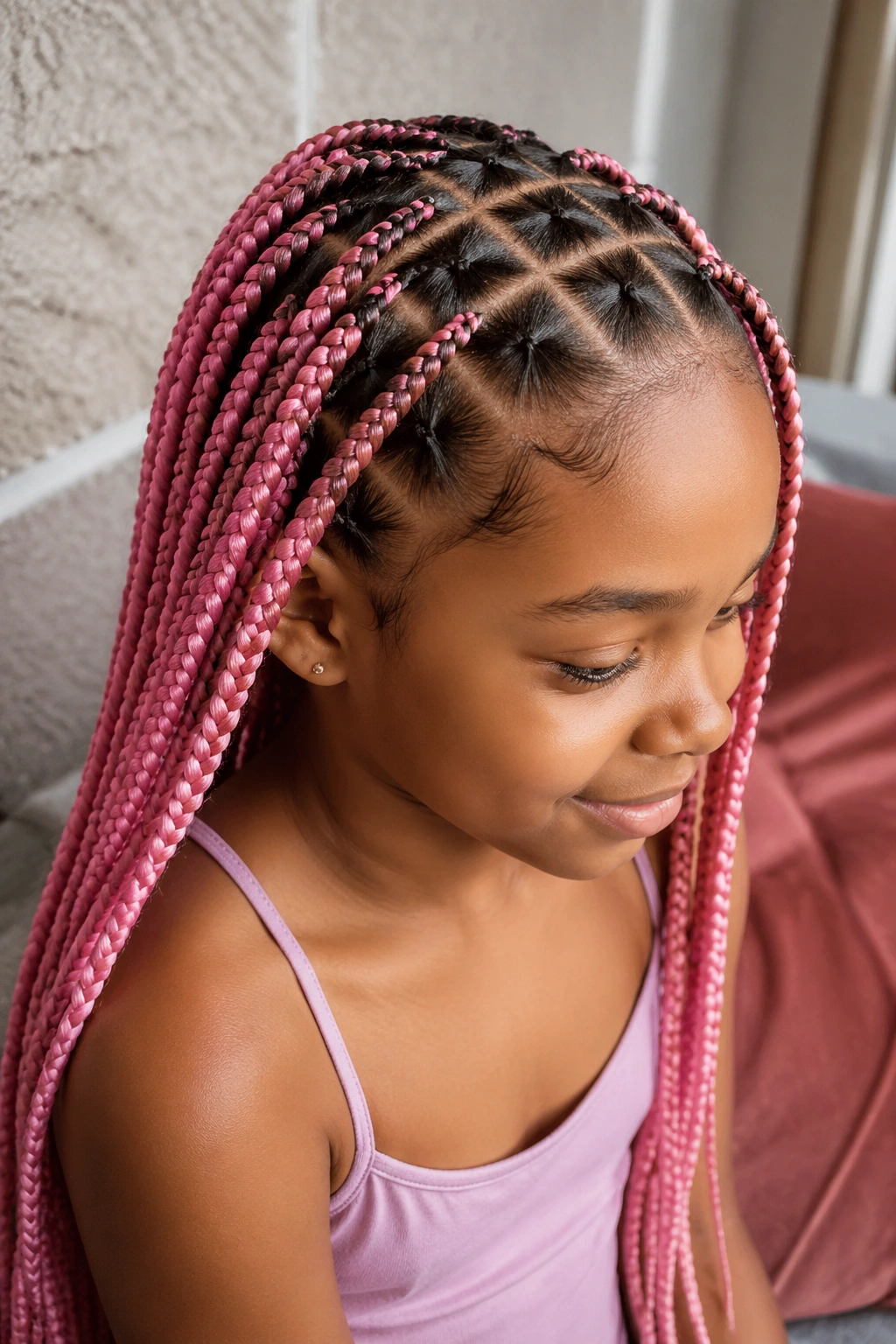
Crisscross parts are for the kid who likes a little pattern on the scalp before you even get to the braid color. The parting crosses over itself in neat lines, which makes the whole style feel more detailed right away.
Unlike a plain square grid, crisscross parting adds motion to the base. It looks a bit more dressed up, but it does not require a dramatic change in braid length or size. That’s why it works well when you want the hairstyle to do some of the talking.
What to Watch For
- Keep the sections medium-sized so the crossing lines stay visible.
- Use clean part lines; fuzzy parts ruin the whole effect.
- Pair with a solid pink shade if you want the pattern to stand out.
- Avoid too many accessories near the crown, since the parting is already busy.
I’d choose this for a child who likes detail and does not mind a style that takes a bit more time to set. It is a little showier, and that’s the point.
17. Rose Gold Pink Box Braids
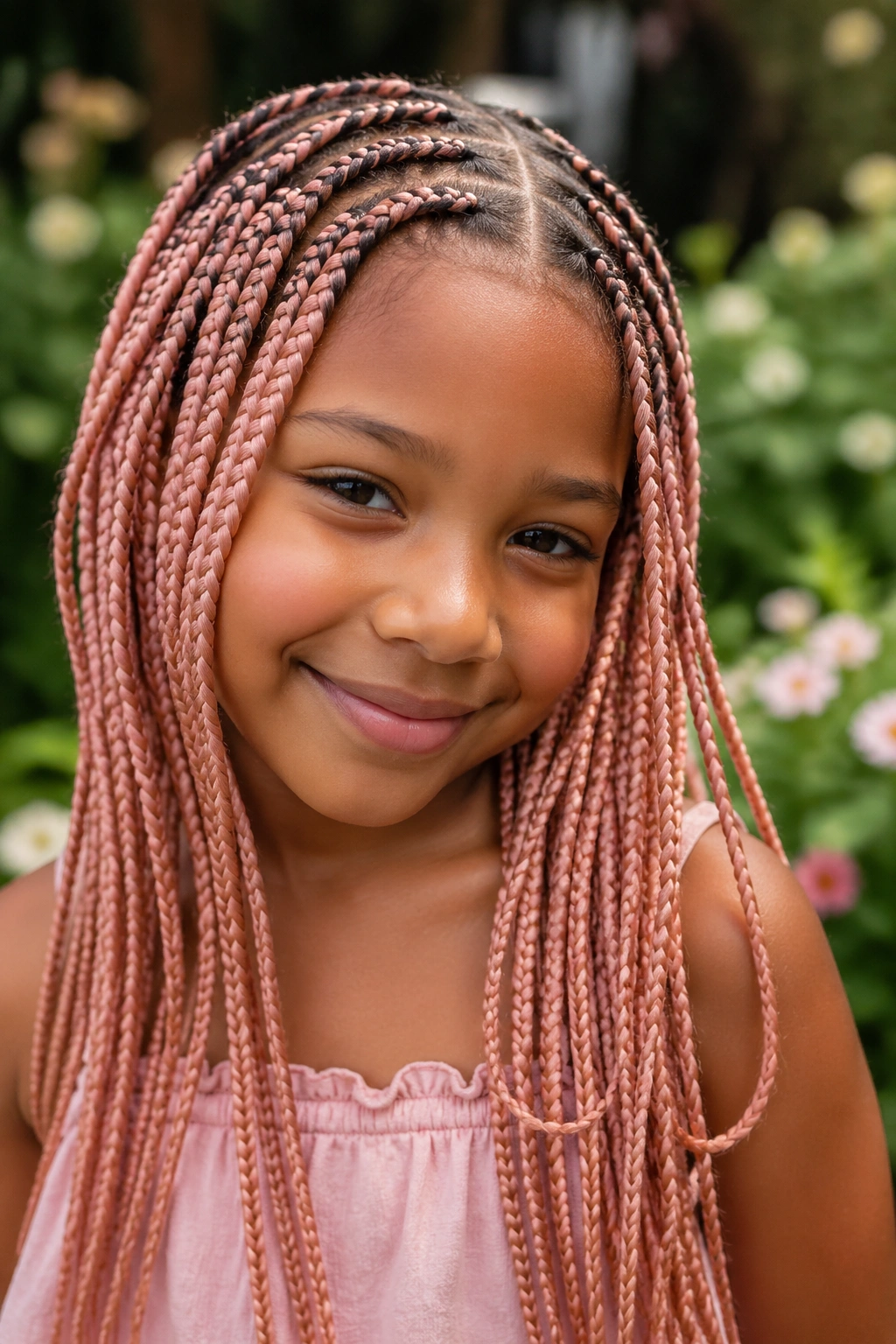
Rose gold pink sits between blush and peach, and that warm tone changes how the whole style reads. It feels softer than hot pink, less sugary than baby pink, and a little richer than either one.
That’s why I like it for kids who want pink but do not want the hair to shout before they do. The shade has warmth, so it tends to look calm in daylight and still holds its color indoors. It also works well on a lot of skin tones because the color isn’t icy or overly bright.
Why the Tone Matters
The shade you choose can change how the braid style feels before the braids even move. A cool pink looks crisp. A warm rose gold looks mellow. Neither is better in every case, but rose gold often gives the gentlest finish when the goal is color without edge.
This is a solid choice for medium-length braids, especially with no extra accessories. The color itself does the work. Nothing else needs to fight for attention.
18. Pink Box Braids with a Braided Crown Finish
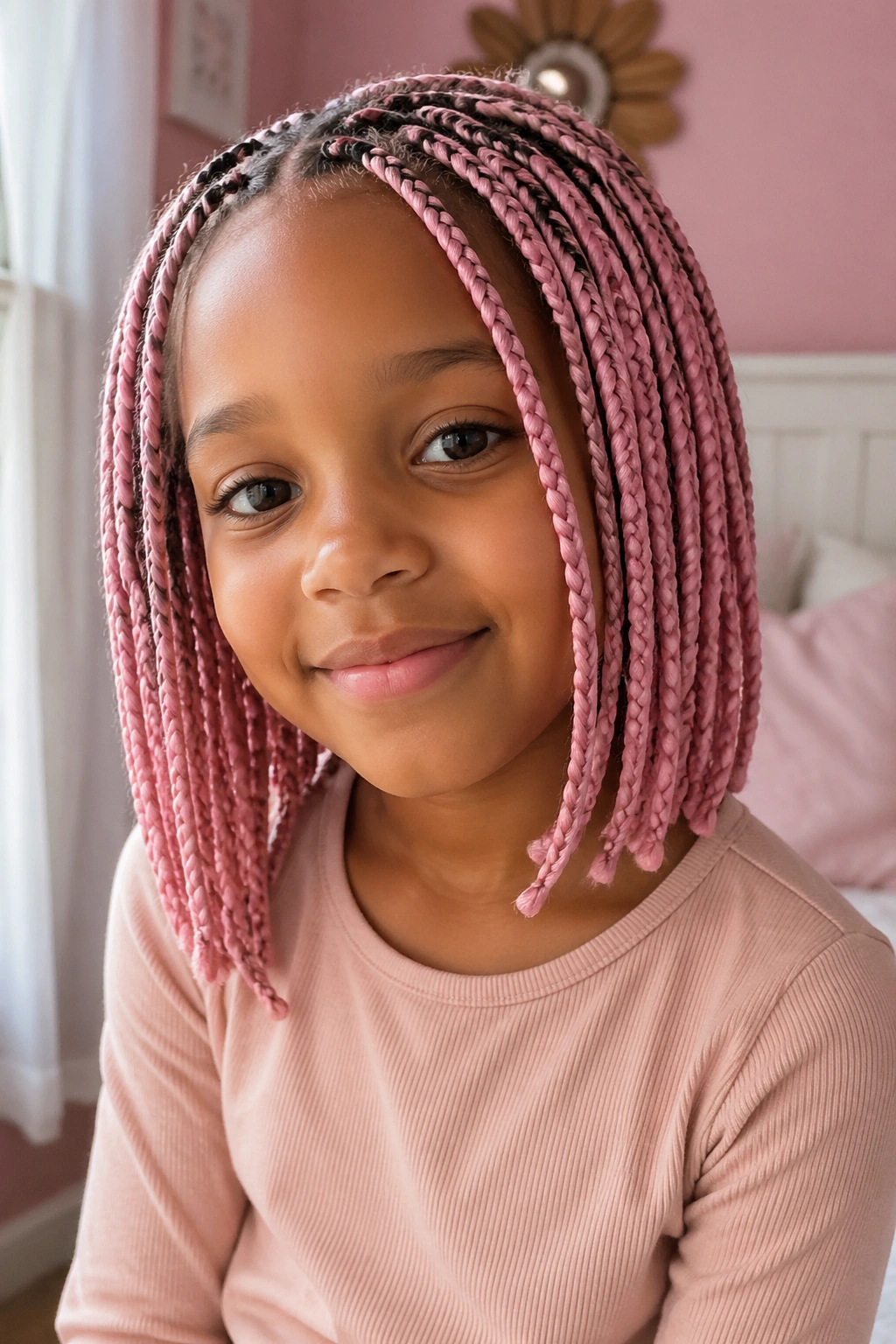
A braided crown finish is what I reach for when the hair needs to stay tidy but still look special. The pink braids wrap around the perimeter of the head, and the rest falls into place with a softer, almost halo-like shape.
This style is useful for events, picture days, and long afternoons when you want the braids kept up and away from the face. It keeps the front neat, opens up the features, and gives the whole look a little structure. Kids usually like it because it feels fancy without being stiff.
The best version uses medium braids and a soft pink shade, but a brighter pink can work too if the child wants more punch. The crown section should sit flat, not tight, and the rest of the braids should fall evenly so the style looks balanced from every angle.
If I had to pick one thing that makes pink box braids for kids work over the long haul, it would be this: the style has to make sense in motion. A child is not standing still for the camera all day. They’re turning, playing, leaning, laughing, and probably messing with the ends a little. The right braid style can handle that.
