

A curly inverted bob can look sharp, airy, and expensive-looking in the best sense—or it can balloon out at the back and turn into a triangle by lunch.
Curly hair changes the rules.
That is the whole point. An inverted bob is built on angle: shorter in the back, longer toward the front, with enough shape at the nape to keep the cut lifted instead of boxy. On curls, though, the line is never as simple as the haircut diagram makes it look. Shrinkage, density, and curl pattern all push the finish in different directions.
The trick is not chasing a perfectly neat outline. It’s choosing the right amount of graduation, the right front length, and the right texture so the style still reads after your hair dries and tightens. Some curls want stacked volume. Others want a softer slope, a little movement, or a longer front piece that grazes the jaw instead of stopping on it.
That’s where these 21 inverted bob hairstyles for curly hair earn their keep. Some are polished. Some are messy in a good way. A few are a little bold. All of them work because they respect what curly hair actually does, not what a flat diagram says it should do.
1. The Classic Stacked Curly Inverted Bob
This is the version most people picture first, and for good reason. The back is stacked in gentle layers so the nape sits close and the crown lifts, while the front stays a bit longer to keep the shape from feeling too round. On curly hair, that stacking gives the cut a clean backbone.
Why the back matters
The back of the head is where an inverted bob lives or dies. If you leave too much weight there, the curls puff out into a block. If you remove too much, the whole shape can collapse and look thin. The sweet spot is a soft stack with small, controlled layers rather than a choppy chop.
For curls with medium density, ask for the back to be cut in a way that leaves the silhouette slightly shorter by the nape and a touch fuller at the crown. The angle from back to front should be obvious, but not so steep that the front looks detached.
What to ask for at the salon
- Keep the back about 1 to 2 inches shorter than the front once the curls settle.
- Build the crown with graduated layers, not a blunt shelf.
- Leave the front long enough to hit the chin or just below it when dry.
- Cut it dry if possible, or at least check the length dry before the final trim.
One small tip: if your curls spring up hard, ask for the back to stay a little longer than you think you need. Shrinkage is rude.
2. The Soft Curly Inverted Bob With a Side Part
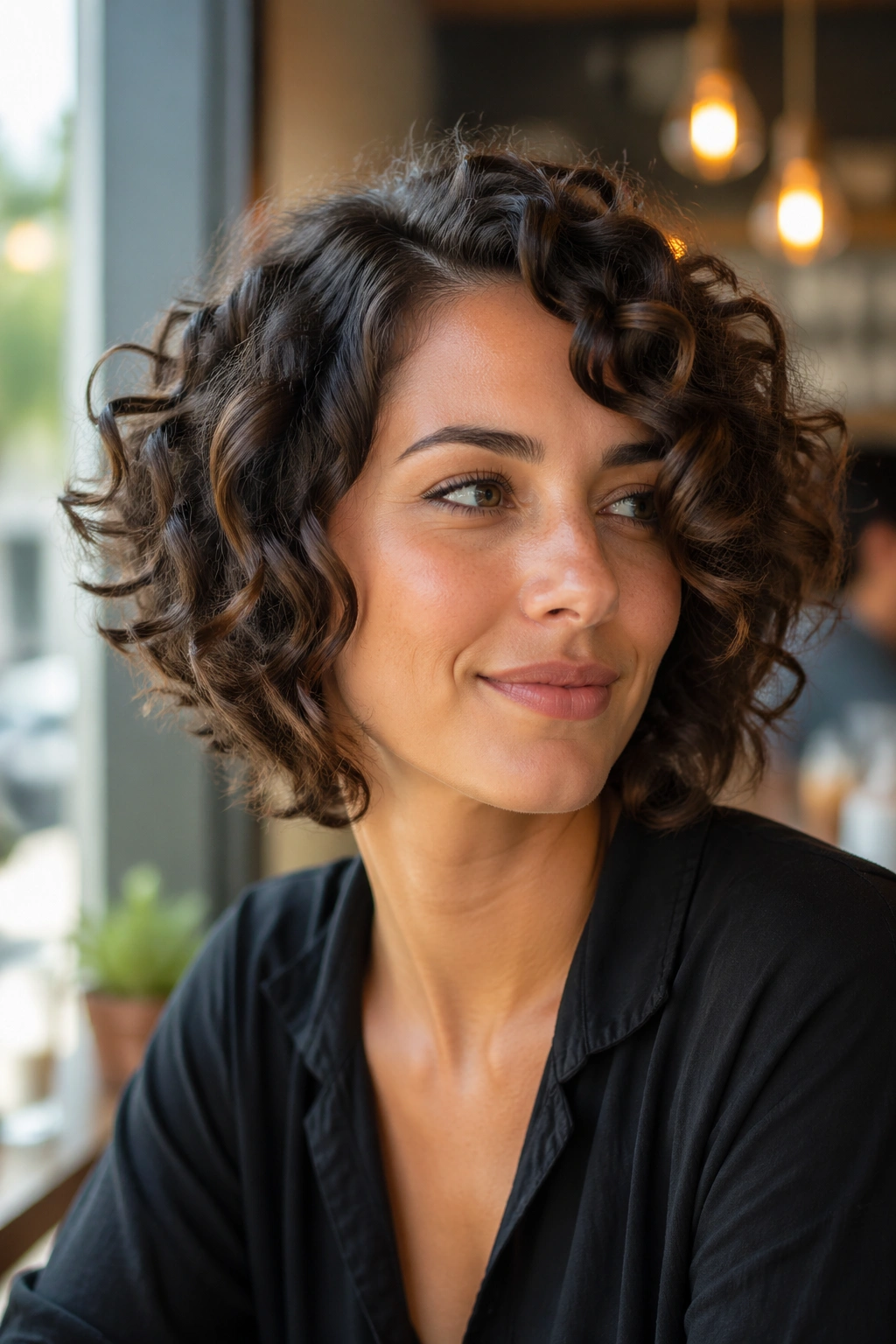
A side part changes everything. It breaks up the symmetry, makes the front pieces fall in a softer way, and gives curly hair that lived-in shape people love without needing a lot of styling. This version feels looser than a stacked bob, which is exactly why it suits people who want movement more than a crisp outline.
The side part also helps if one side of your curl pattern is stronger than the other. Most people have at least one stubborn side. A deep side part lets the stronger curls do a little extra work and gives the weaker side a bit of cover.
This is one of those cuts that looks especially good when the front is allowed to skim the cheekbone. Too short and it can get frilly. Too long and the angle disappears. Keep the part low and wide, then let the hair fall in a soft diagonal line toward the jaw. It’s simple, but it works.
The style is lovely on 2C to 3B curls, especially if you dislike anything too severe. It reads relaxed, not sloppy. And that’s a harder balance than people think.
3. The Chin-Length Curly Inverted Bob
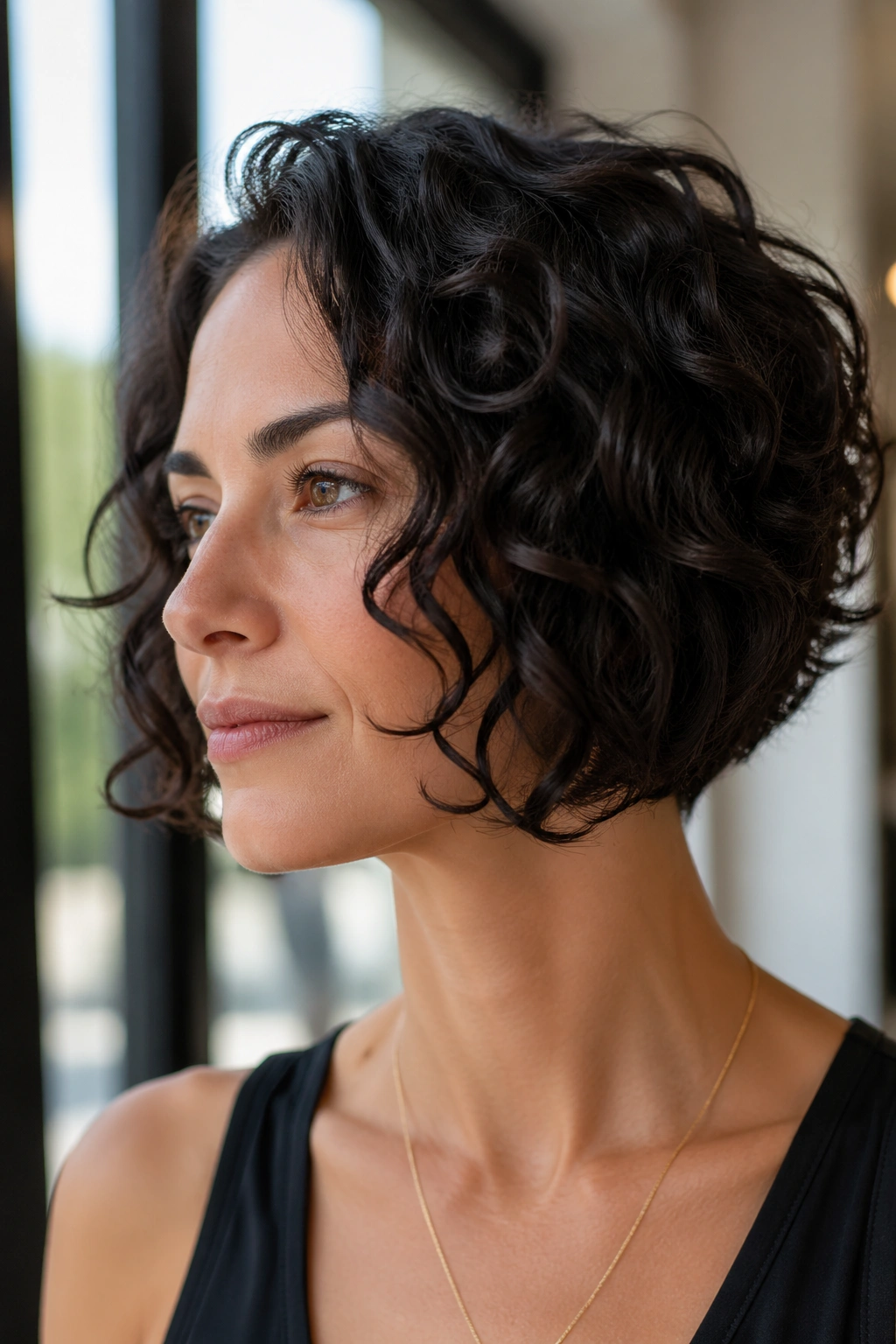
Why do chin-length curls look so confident? Because there’s nowhere to hide. The cut sits right at the face, so the angle has to be clean and the curl pattern has to be treated with respect.
How to keep it from puffing out
The biggest mistake with a chin-length inverted bob is cutting all the layers too short at once. That’s how you get a round puffball that sits away from the head. Instead, keep the nape neat and the front slightly longer, then use just enough internal layering to release bulk. The line should feel shaped, not stripped.
Chin-length works best when the curls have enough spring to hold a strong outline. Tighter curls can wear it beautifully, but the stylist needs to account for shrinkage and leave a little extra length in the front. Loose curls can wear it too, though they often need more definition cream or gel so the pieces don’t separate into frizz.
Styling notes
- Diffuse upside down for the first few minutes, then finish upright.
- Scrunch in a light hold gel while the hair is soaking wet.
- Let the front pieces form around the jaw instead of forcing them inward.
- Trim more often if you want the shape to stay sharp.
Short. Bold. A little unforgiving. That’s the charm.
4. The Curly Inverted Bob With Curtain Bangs
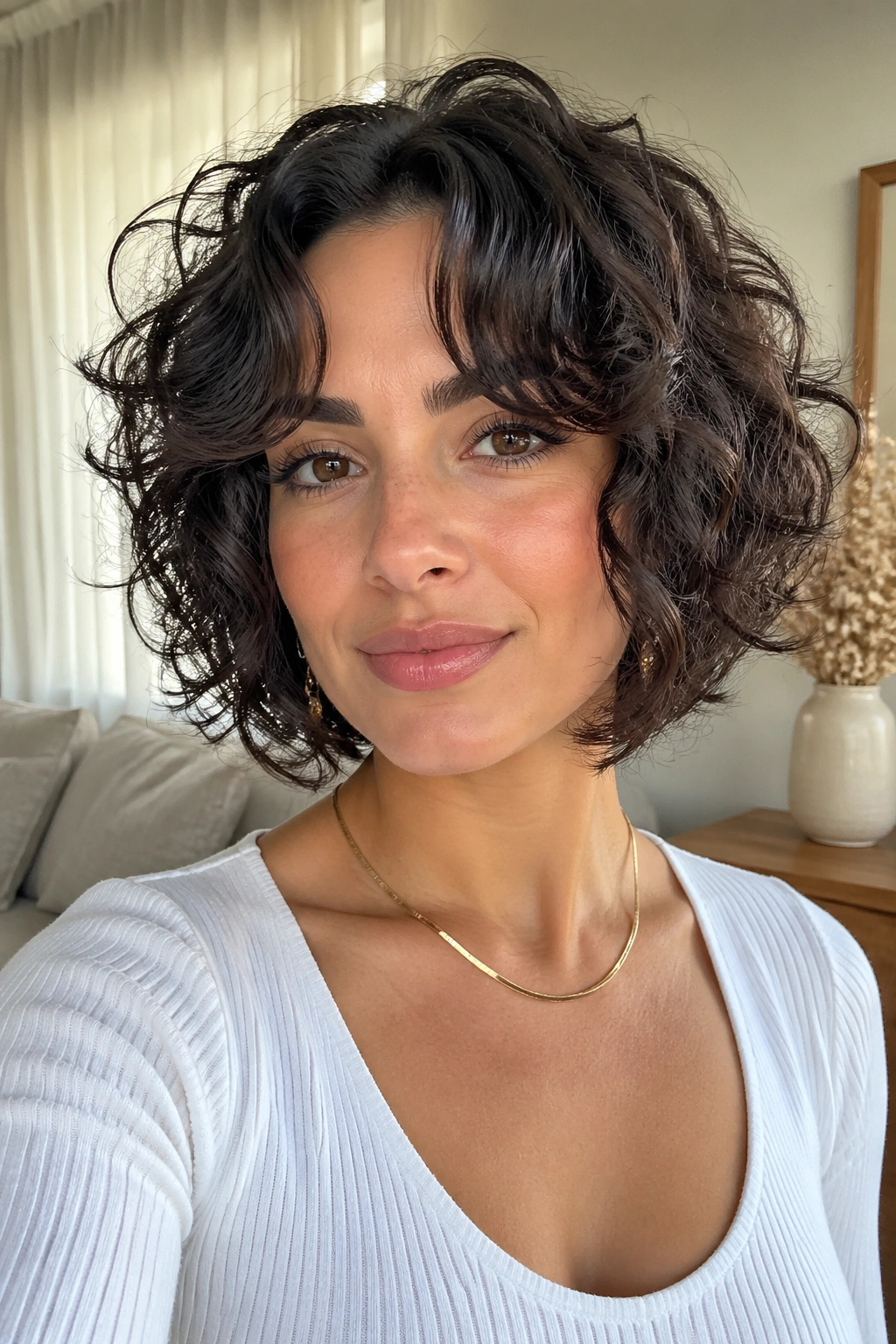
Curtain bangs can be brilliant on curly hair, but they need a calm hand. If they’re cut too short, they spring up and fight the rest of the style. If they’re too long, they just look like extra front layers. The best version splits softly at the center and curves away from the face, blending into the inverted shape.
This cut gives you two things at once: a face frame and a built-in softness that keeps the bob from feeling severe. It’s especially flattering if you want the style to sit lighter around the forehead and cheekbones. The bangs should fall somewhere between the brow and the cheekbone when dry, depending on your curl pattern.
A dry cut helps here. Wet curly bangs can lie to you in a way that is almost offensive. Once they dry, they often rise an inch or more. A stylist who knows curls will leave room for that and shape the bang to the curl, not against it.
The result is pretty, but not precious. That matters. You want the front pieces to melt into the rest of the bob, not sit there like a separate haircut.
5. The Asymmetrical Curly Inverted Bob
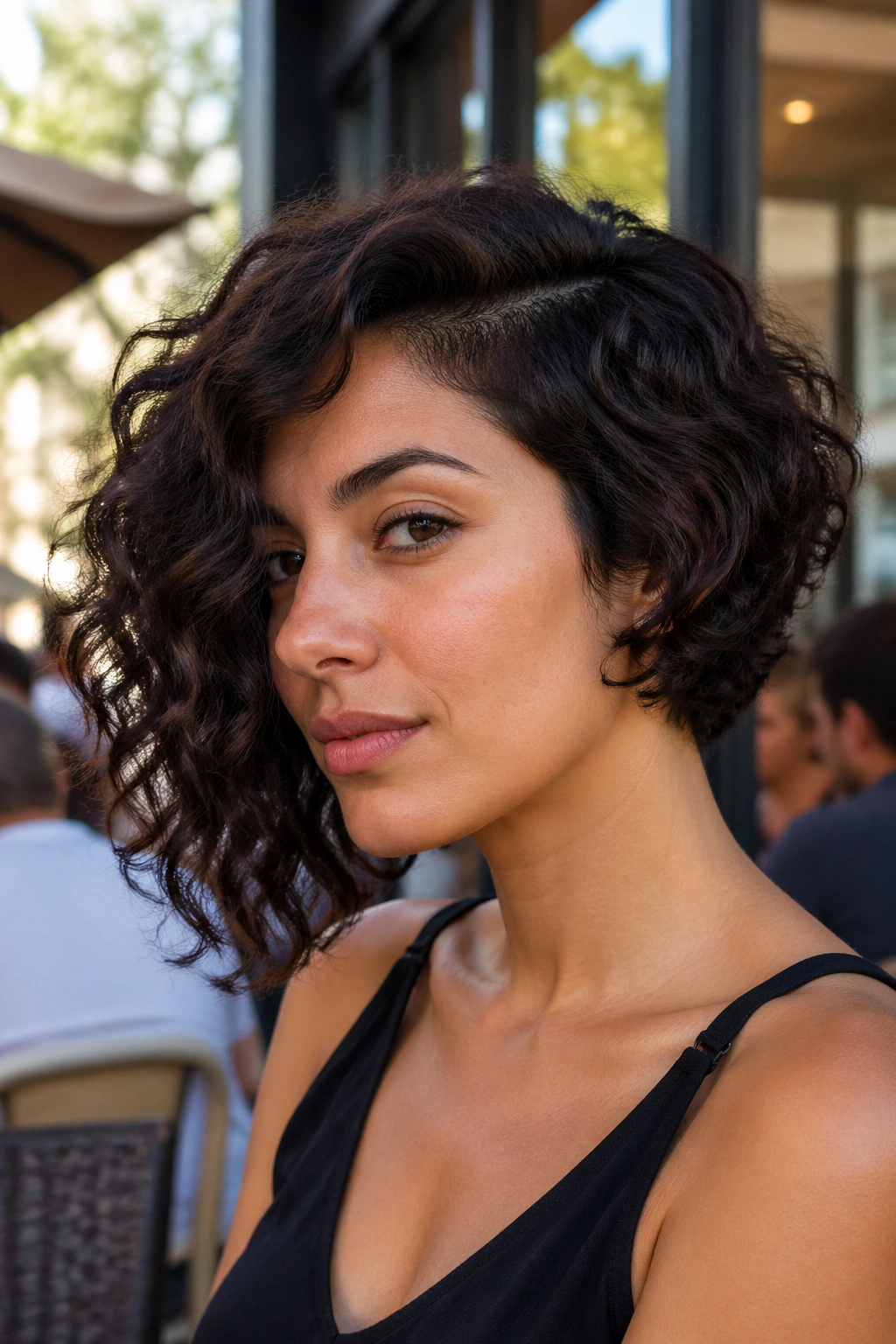
One side longer than the other. That’s the whole idea, and honestly, it can be a lifesaver if your curls naturally behave unevenly. The asymmetrical version takes the diagonal line of an inverted bob and exaggerates it just enough to feel intentional.
What makes it different
Unlike a symmetrical bob, this shape doesn’t ask both sides to mirror each other perfectly. That means you can lean into the curl pattern you already have. If one side curls tighter or lays flatter, the asymmetry can make that look deliberate instead of annoying.
The longer side often falls just below the jaw, while the shorter side sits closer to the nape or cheek. That small difference creates movement every time you turn your head. It also gives the haircut a little edge without requiring wild styling.
Best for
- People who like a sharper, more graphic shape
- Curls with a mix of textures on each side
- Anyone who wants the bob to feel a little less sweet and a little more modern
- Short hair fans who still want one side to brush the collarbone
Ask for the longer side to be no more than 1 to 2 inches past the shorter side unless you want the difference to read loudly. Too much gap and the cut can start feeling costume-y. Keep it subtle, and it stays stylish.
6. The Layered Curly Inverted Bob for Thick Hair
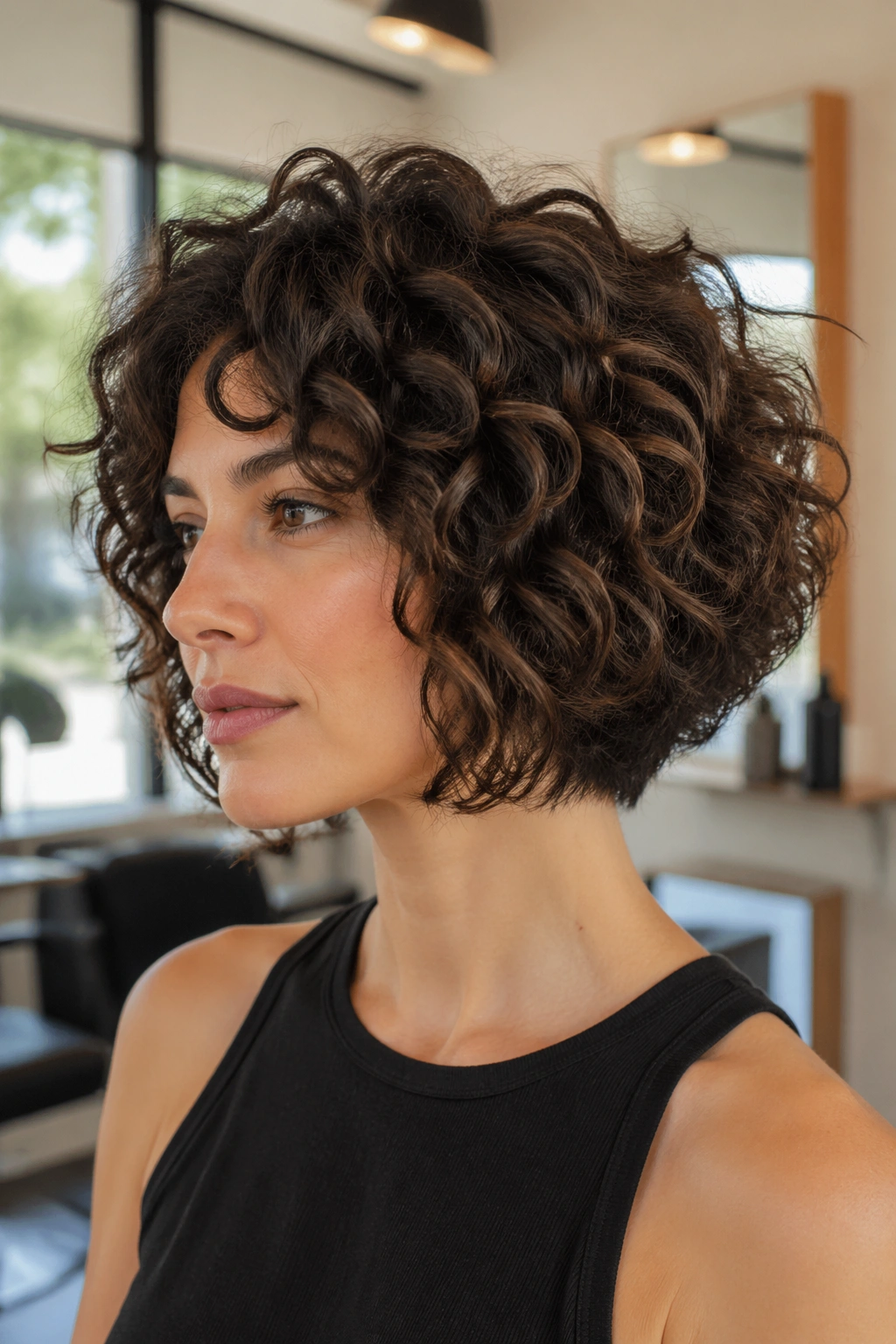
Thick curly hair needs a different approach. If you just cut the outline and walk away, the result can look heavy at the bottom and fuzzy at the top. A layered inverted bob gives that density somewhere to go.
The secret is removing bulk without stealing shape
A good stylist will build the layers from the inside, not just hack away at the surface. That keeps the outer line strong while making the interior lighter. Razor work can help in some cases, but thick curls often behave better with careful shears and point cutting. Too much razoring can leave the ends frayed.
The back should still be shorter, but the real win is in the crown and mid-lengths. That’s where thick hair tends to collect weight. Once that area is opened up, the curls can spring instead of sitting in one dense block.
Practical details
- Keep the perimeter blunt enough to hold a shape.
- Ask for internal layers around the occipital bone.
- Leave enough length so the bottom doesn’t balloon.
- Use a cream or foam with hold, not a heavy butter that just coats the hair.
Thick curls look expensive when they move. Heavy curls look tired. The difference is usually the layering.
7. The Loose Beach-Curl Inverted Bob
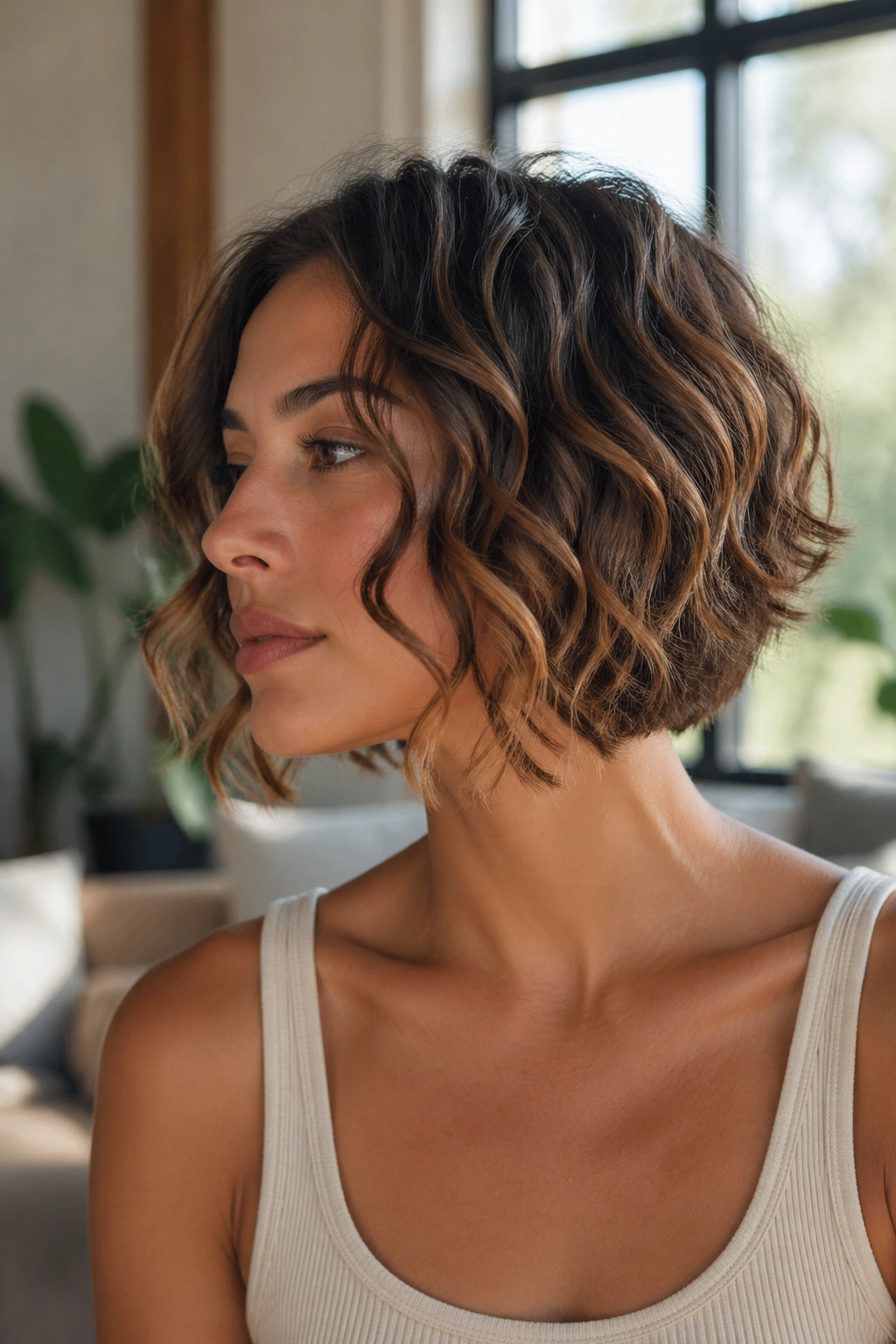
This version is for people whose hair sits more in the 2A to 2C range, or for anyone who likes the idea of curls but doesn’t want a lot of spring. The shape is still inverted, but the finish is looser and a little undone.
A cut like this needs a softer angle. Too much stacking and the waves can look overbuilt. The front pieces should skim the jaw and collarbone, with the back trimmed just enough to keep the silhouette lifted. If the hair is very fine, the angle can be a bit steeper; if it’s medium or thick, keep the graduation gentle.
The styling part matters here. You want waves that bend, not waves that collapse. A diffuser on low heat works, but so does air-drying with a light wave cream and a few clips at the roots to hold lift while the hair sets. Scrunching can help, though overdoing it often makes the ends frizzy.
This cut has a relaxed feel that works with denim, linen, and a good cheekbone. Simple, not plain. There’s a difference.
8. The Tight Coil Curly Inverted Bob
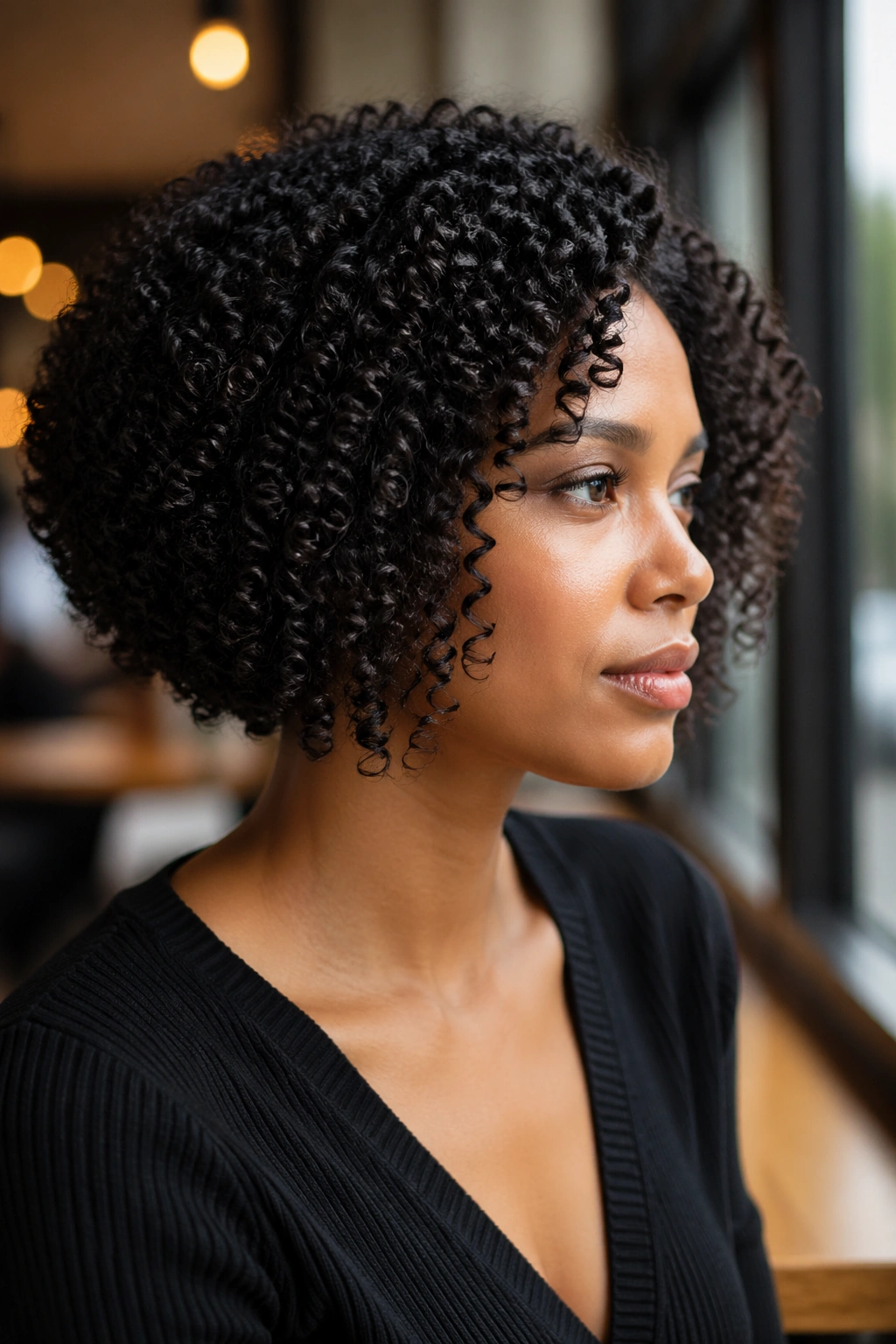
Coils bring a completely different shape to an inverted bob. The line becomes more sculptural, more rounded, and more about proportion than about straight angles. That’s why this version looks strongest when the stylist understands how tightly your curls shrink.
Do you want the bob to sit at the jaw, or just below it? That question matters more here than on looser textures. Tight coils can rise a lot, and a cut that looks shoulder-skimming when wet may end up sitting at the ears once dry. Leave space for that.
How to get the shape right
- Shape the back into a soft slope, not a hard shelf.
- Keep the front long enough to frame the face after shrinkage.
- Trim curl-by-curl where needed, especially around the neckline.
- Avoid aggressive thinning at the ends.
The best tight-coil inverted bob feels rounded and alive. The curls cluster in a way that gives the haircut a crown-like lift, while the front length keeps it from becoming a helmet. If your coils are dense, this can be one of the cleanest ways to wear a short cut without losing elegance.
9. The Curly Inverted Bob With an Undercut Nape
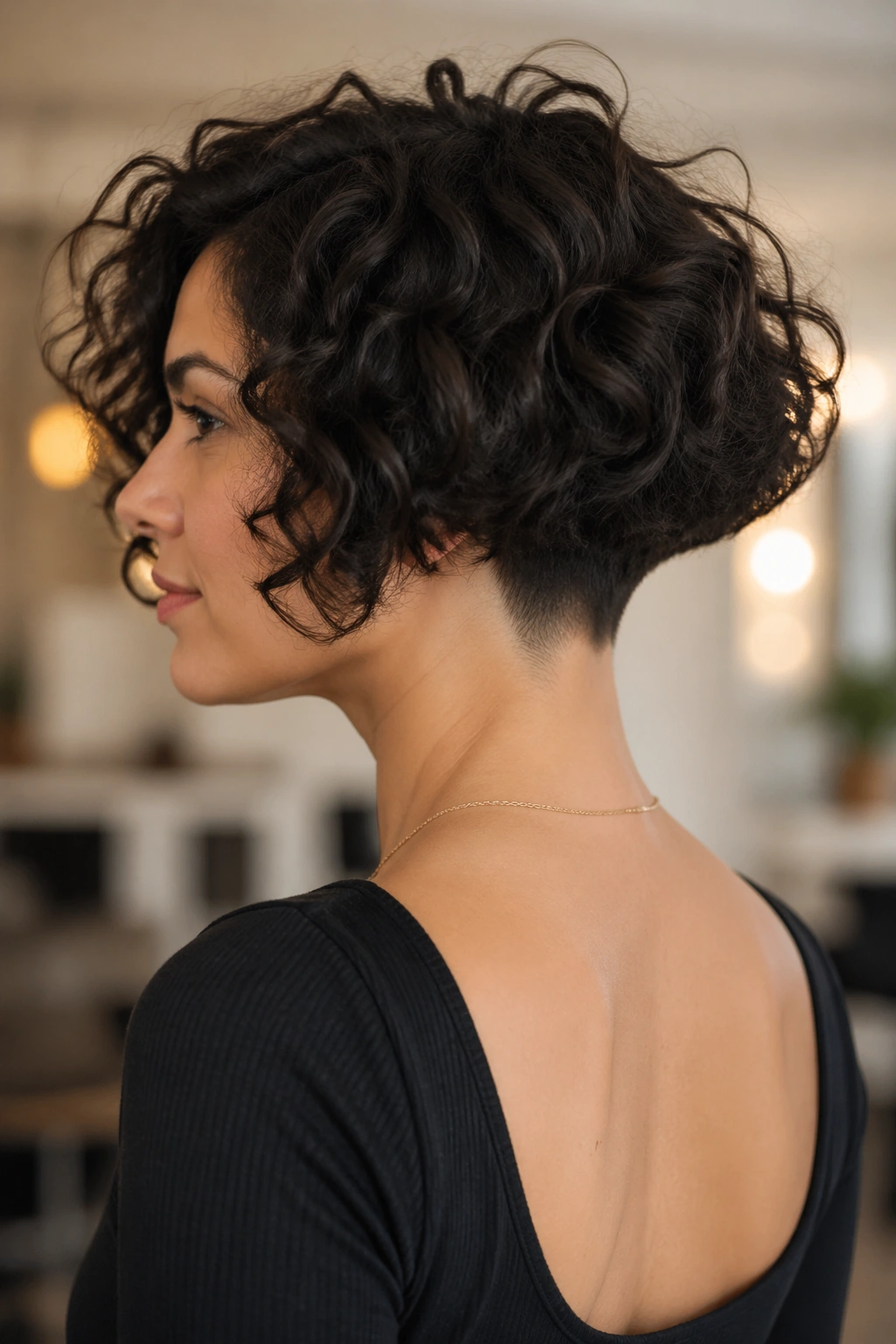
This is for the person who is done fighting bulk at the back of the neck. A hidden undercut at the nape removes a strip of weight underneath, letting the upper curls sit closer to the head and move better. You don’t have to show the undercut for it to do its job.
Why people love this one
The undercut keeps the back from puffing against collars, scarves, and humid weather. That alone is worth it if you have dense curls. It also sharpens the angle of the inverted bob, because the outer layer can fall neatly over the shorter section below.
The cut feels a little daring when you first hear about it, but the result doesn’t have to look edgy. It can stay very wearable. If you want a cleaner finish, keep the undercut narrow and low. If you want more relief, ask for a wider section trimmed close to the scalp.
The main caution is upkeep. The undercut grows out faster than the visible hair, so you’ll need regular touch-ups if you want the nape to stay crisp. But for people who hate the neck bulk, it’s a trade worth making.
10. The Rounded Curly Inverted Bob With a Tapered Back
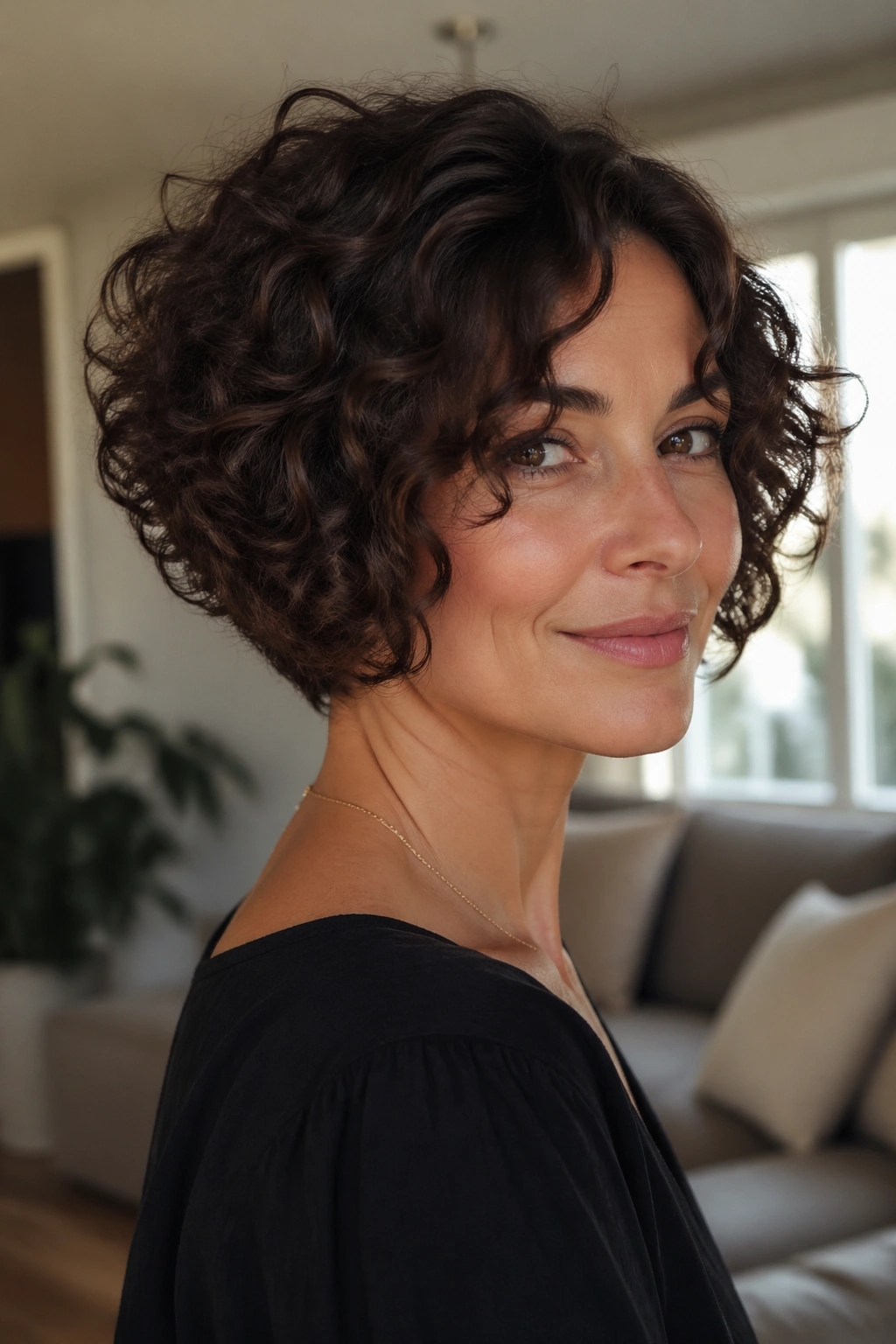
A rounded bob can sound soft and sweet, yet on curly hair it often looks structured and polished. The taper at the back gently narrows toward the nape, while the crown keeps enough height to stop the silhouette from flattening.
This shape is especially nice if you don’t want the inverted angle to scream at people. The front still comes forward, but the transition from back to front feels smoother, almost like a slow curve instead of a hard diagonal. That can be flattering on narrower faces because it adds width without adding bulk in the wrong place.
The trick is balance. If the back is too tight and the crown too flat, the cut loses its roundness. If the crown is too high, the style can look overly puffy. A good cut sits in the middle, with the curls stacking neatly and then softening as they travel toward the sides.
It’s a quieter haircut. Not boring. Quiet.
11. The Shaggy Razored Curly Inverted Bob
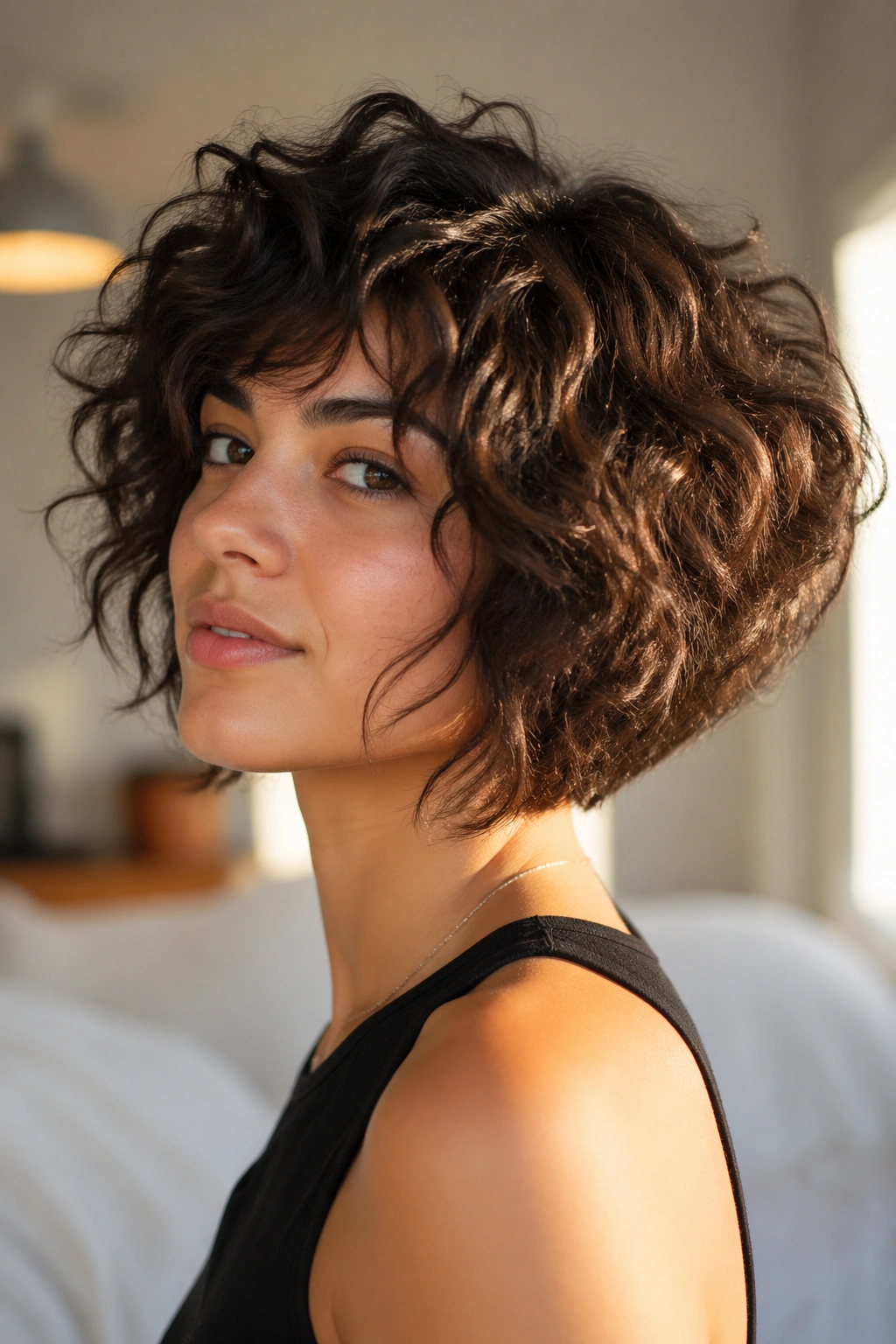
This is the messy one, and I mean that in a good way. The shaggy inverted bob borrows from a shag cut: softer ends, more broken-up texture, and a freer silhouette. On curly hair, that can be a gift if your natural pattern already likes movement.
What makes it work
The razor is used lightly here, mostly to feather the ends and reduce that blunt bob look that can feel too stiff on curls. The back still has structure, but the interior pieces are looser and more irregular. That gives the haircut a lived-in, slightly undone feel.
It works best when the curls are already medium to loose and when you don’t mind some frizz as part of the look. In fact, a little frizz helps. The style is meant to look touchable, not frozen into place.
Key details
- Keep the layers long enough to preserve curl clumps.
- Use a diffuser only until the hair is about 80% dry.
- Finish with a light oil on the ends, not the roots.
- Skip heavy brushing once it’s dry.
If you like curls that move and fall in pieces, this one has a lot of charm. If you want neat lines, pass it by.
12. The Deep Side-Swept Curly Inverted Bob
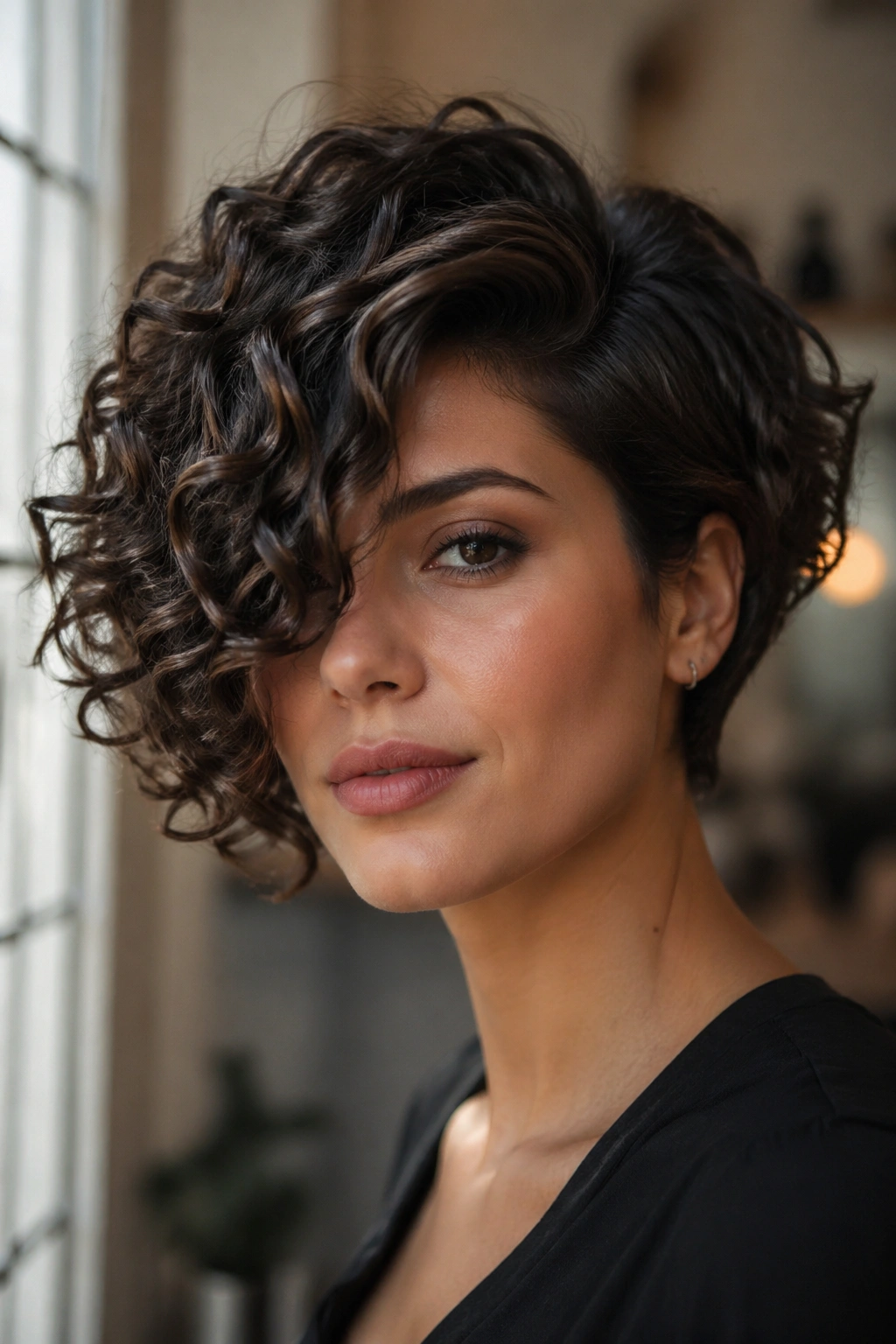
A deep side-swept fringe gives the bob drama without making it fussy. The front falls across part of the forehead, then blends into the longer side of the inverted shape. It’s a smarter choice than a straight-across bang if your curls have different strengths from side to side.
Compared with curtain bangs, this version feels more polished and a little more grown-up. The sweep draws the eye diagonally, which helps lengthen the face and soften a stronger jaw. It also gives the bob a nice sense of motion, especially when the curls are defined at the front.
The part needs to be committed. A shallow side part won’t give you the same effect. Push it deeper, let the front section dry in that direction, and clip the root for the first 10 minutes if you need help training it.
This style looks especially good when the front curl is allowed to fall in one clean ribbon rather than a bunch of tiny pieces. That one decision makes the whole haircut feel more deliberate.
13. The Curly Inverted Bob for Mixed Curl Patterns
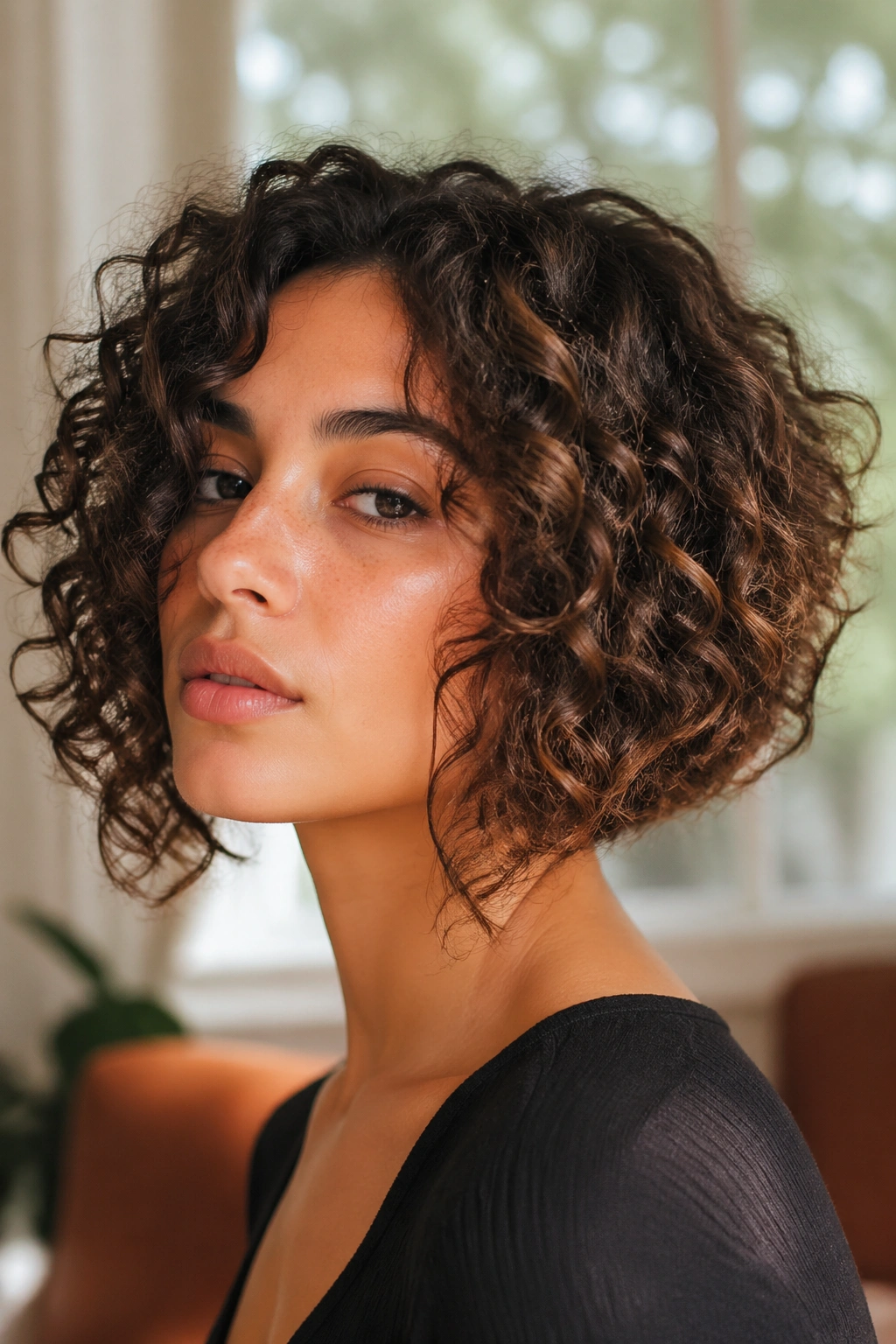
Mixed curl patterns are common. One section may be loose, another tight, and the back may do its own strange little thing. A good inverted bob can actually make that easier to live with, because the angle gives each area a role instead of forcing everything into one flat shape.
The goal here is not perfect symmetry. It’s control. Leave the tighter curls a touch longer where needed so they don’t spring too far, and keep the looser areas a little shorter if they tend to hang. That sounds tiny, but it changes the whole cut.
What helps most
A stylist who cuts curl by curl will usually get a better result than someone chasing a wet, combed-out shape. The mixed-pattern bob also benefits from a stronger perimeter around the front so the eye has somewhere to land. Otherwise the different textures can look scattered.
If you live with more than one curl pattern, don’t fight it with too much product. A medium-hold gel at the crown and a lighter cream on the ends usually works better than one heavy layer everywhere. The hair should look coordinated, not pasted down.
14. The Air-Dry Curly Inverted Bob
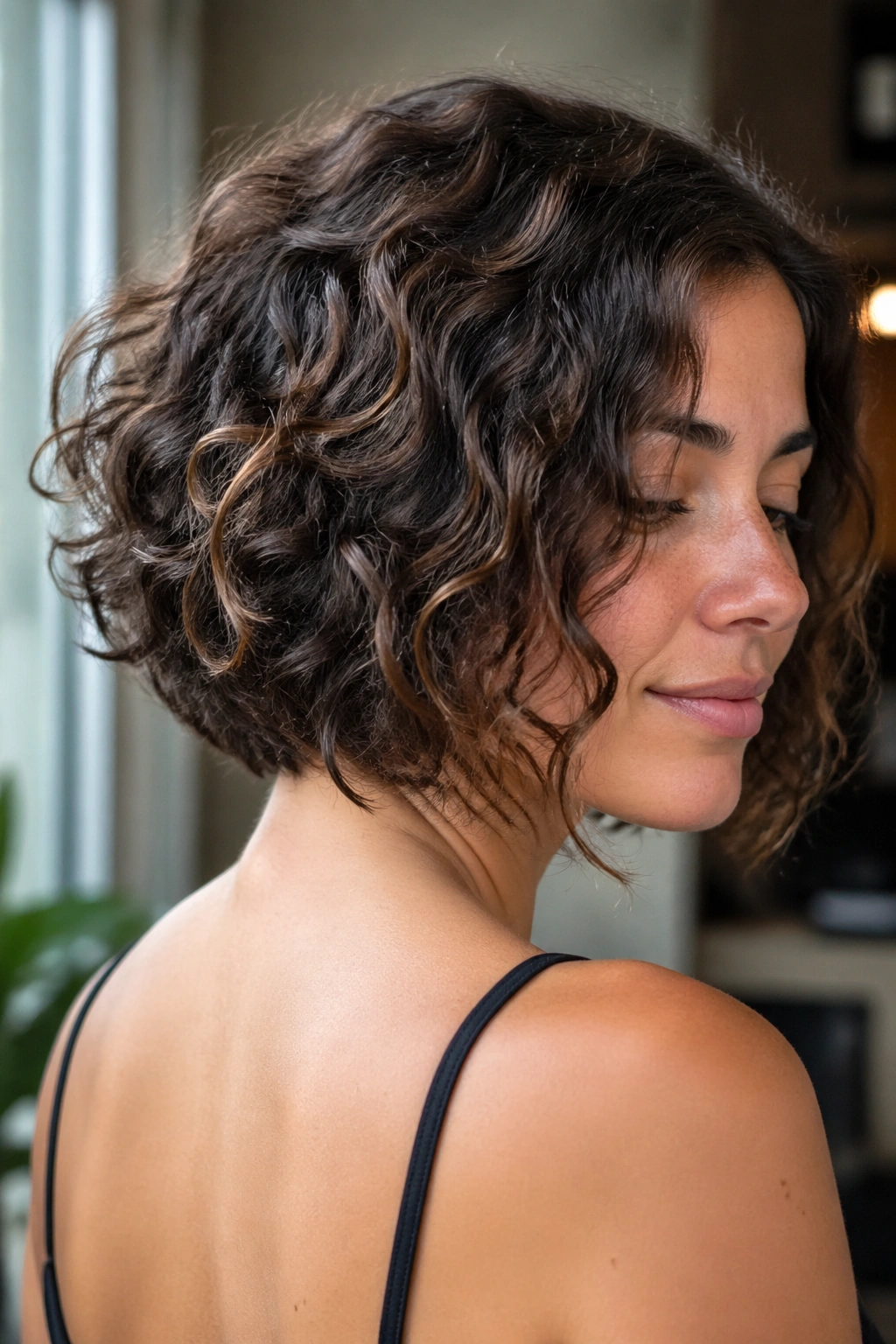
Some cuts only work when styled with intent. This is the opposite. The air-dry inverted bob is built for people who want shape without a long routine, and curly hair can look especially good this way if the layers are placed well.
The cut needs enough internal shape to dry into a believable angle on its own. That means the back can’t be too heavy, or it will spread out. It also means the front should be long enough to drape a little while it dries. Short front pieces often dry in awkward bends when they’re left alone.
How to air-dry it without the triangle effect
- Apply product on soaking-wet hair.
- Scrunch only until the curls clump.
- Clip the roots at the crown if they want to lie flat.
- Leave the hair alone for the first 20 minutes.
That last part matters. Touching it too soon breaks the curl cast and turns the style fuzzy. The best air-dry inverted bob has a soft, natural finish with enough angle to look intentional and enough looseness to feel easy. Not every haircut can do that.
15. The Curly Inverted Bob With Face-Framing Spirals
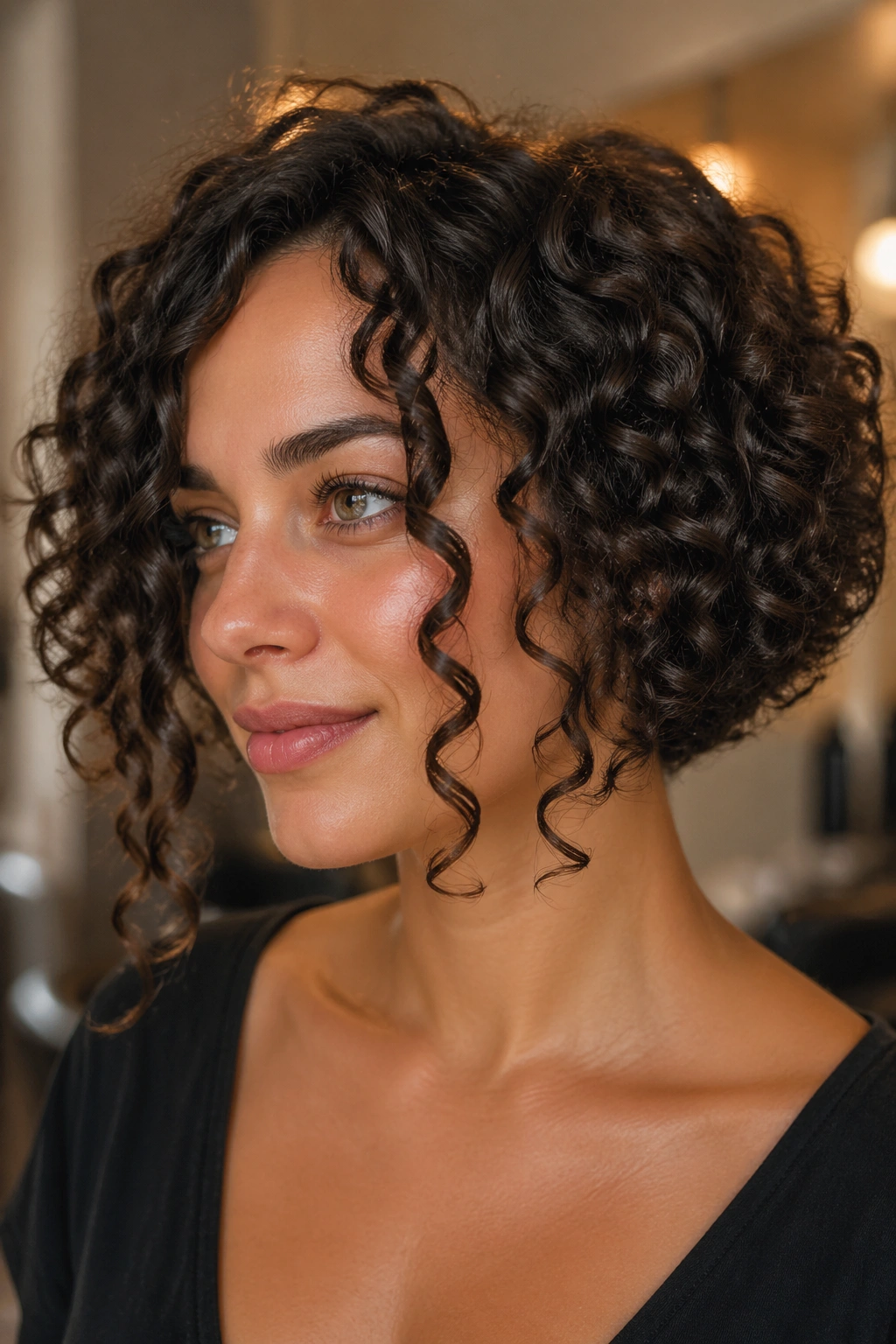
Face-framing spirals can rescue a bob that feels too blunt. They pull the eye toward the cheekbones and jaw, and they give the front of the haircut a sense of rhythm. When they’re cut well, they look like they belong there from the start.
What makes this style different is that the longest front pieces are not just longer for the sake of being longer. They’re shaped to fall in distinct spiral groups. That means the front doesn’t sprawl. It coils and settles in a defined way.
How to style it
- Twist the front pieces while they’re wet.
- Let them set before separating them.
- Use a tiny amount of cream on the spirals.
- Avoid combing them out after they dry.
The reason this works is simple. Curly hair looks best when the ends know where they’re going. A few well-placed face-framing spirals give the inverted bob a clean finish without making it stiff. If you want the haircut to feel flattering from the front and from the side, this is a smart route.
16. The Micro-Bang Curly Inverted Bob
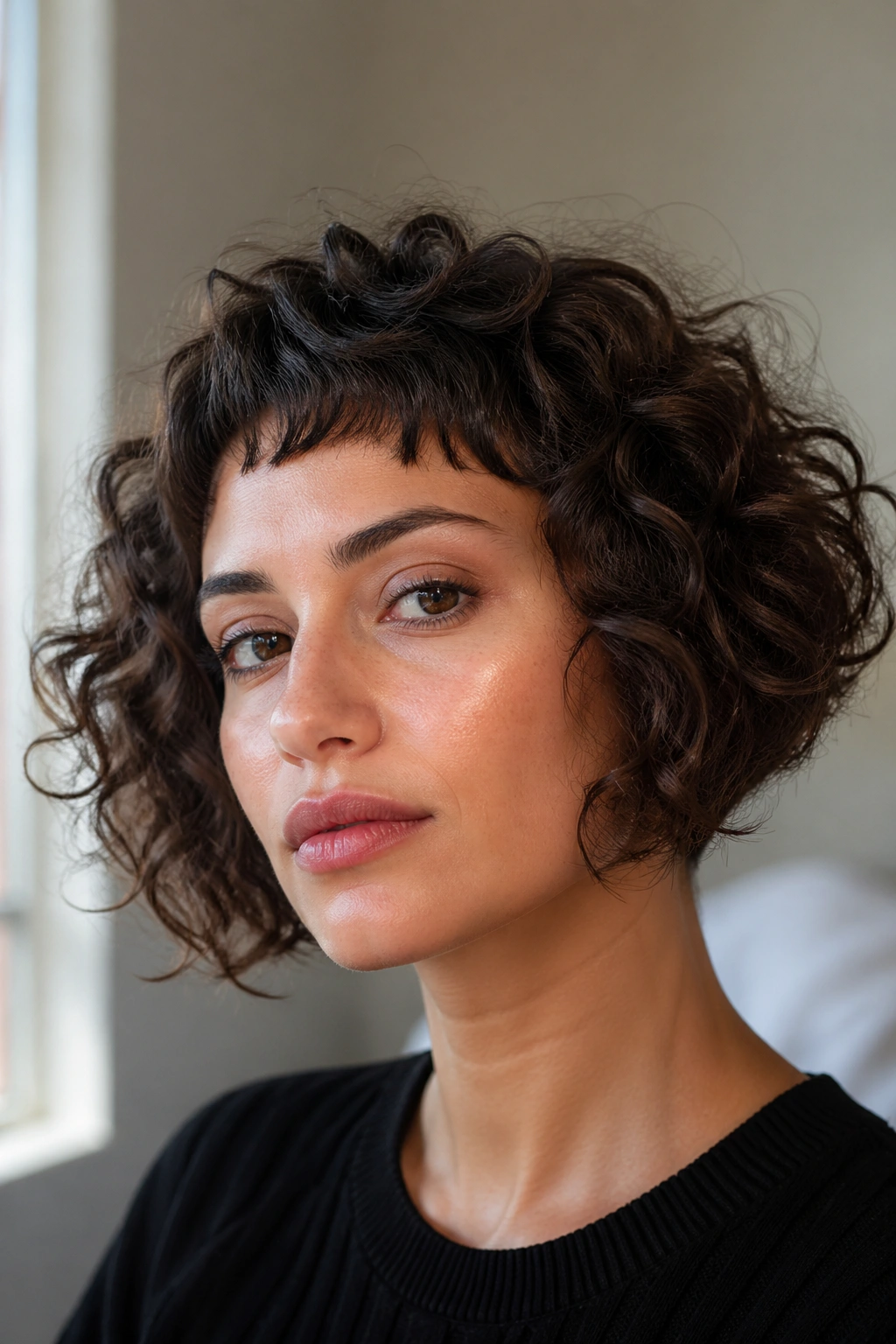
Micro bangs on curly hair are a choice. A bold one. They can look brilliant when the rest of the haircut has enough movement to balance them, but they’re not a quiet detail. The bangs sit high on the forehead, so the bob underneath needs to do the softening.
Why do some people pull this off so well? Because the contrast is the whole trick. The short fringe brings attention to the eyes, while the angled bob keeps the rest of the style from feeling too severe. Together, they create a shape that feels fresh and a little artistic.
The important part is length. Micro bangs on curls are often cut a touch longer than they look in the chair, because they spring up once dry. A stylist who knows curly hair will cut them in tiny increments instead of taking a big chunk off at once. That patience saves a lot of regret.
This style is not for the undecided. It’s for people who like a haircut with personality and are willing to let the fringe do its own thing.
17. The Collarbone-Length Curly Inverted Lob
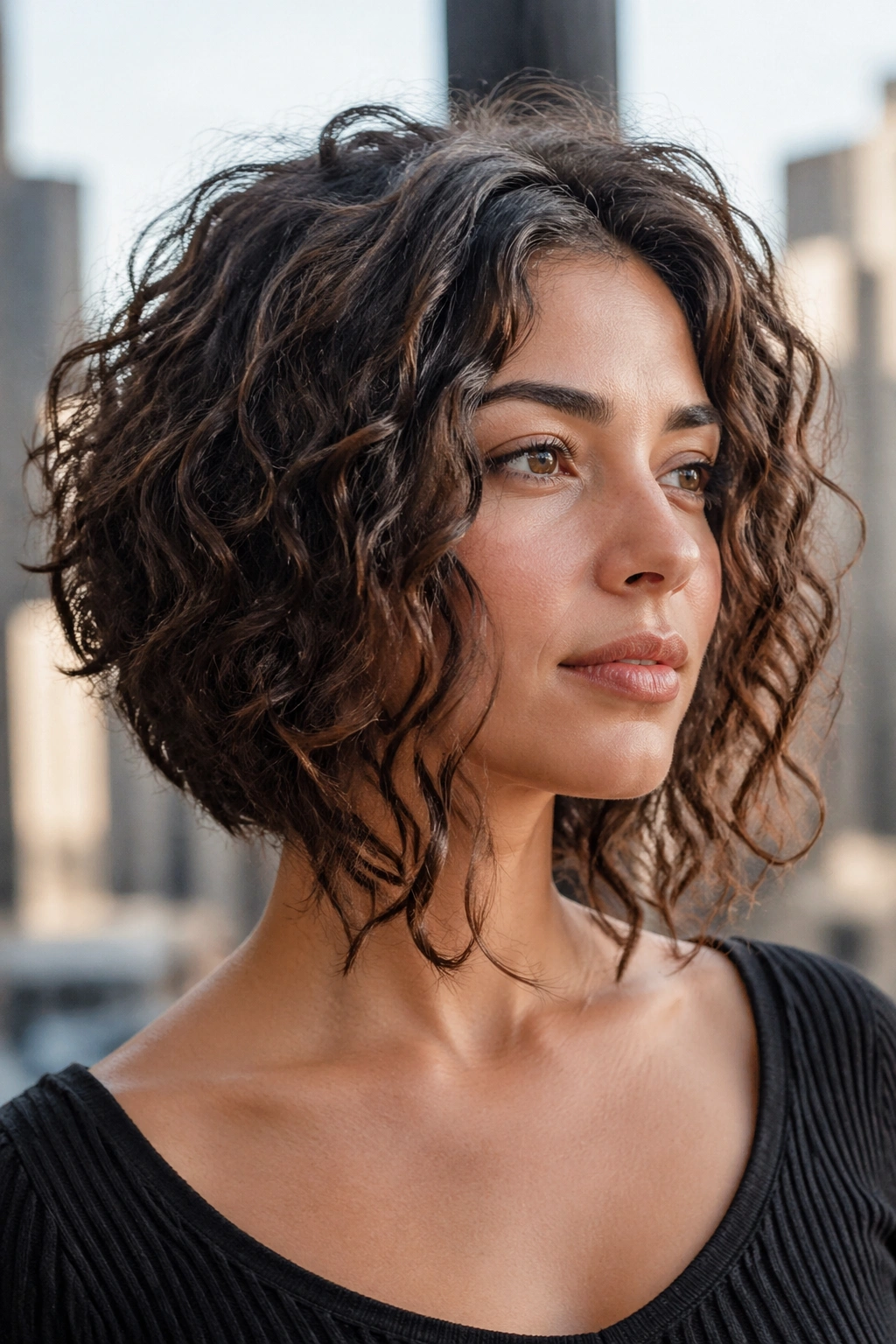
Not everyone wants a short bob. Fair. The collarbone-length inverted lob gives you the angle of the style without the commitment of a tighter bob. The back still sits shorter, but the front stretches lower so the shape feels softer and easier to grow out.
Unlike a classic bob, this one gives you breathing room
The longer front pieces make the haircut less dependent on perfect curl definition. If your curls are having an off day, the length helps the style stay readable. It also works well for people who are nervous about losing too much length at once, which is a real concern with curly hair because shrinkage can surprise you.
This is a good cut for transitioning from longer hair into something more shaped. The angle introduces structure without cutting the whole head into a sharp line. It also gives you room to pin, tuck, or twist the front pieces when you want a different look.
Best for
- Curl patterns that shrink a lot
- People growing out layers
- Anyone who wants an inverted shape but not a super-short neckline
- Thicker textures that need length for weight
If you’re unsure where to start, this is a safe, smart landing spot.
18. The High-Volume Curly Inverted Bob for Fine Hair
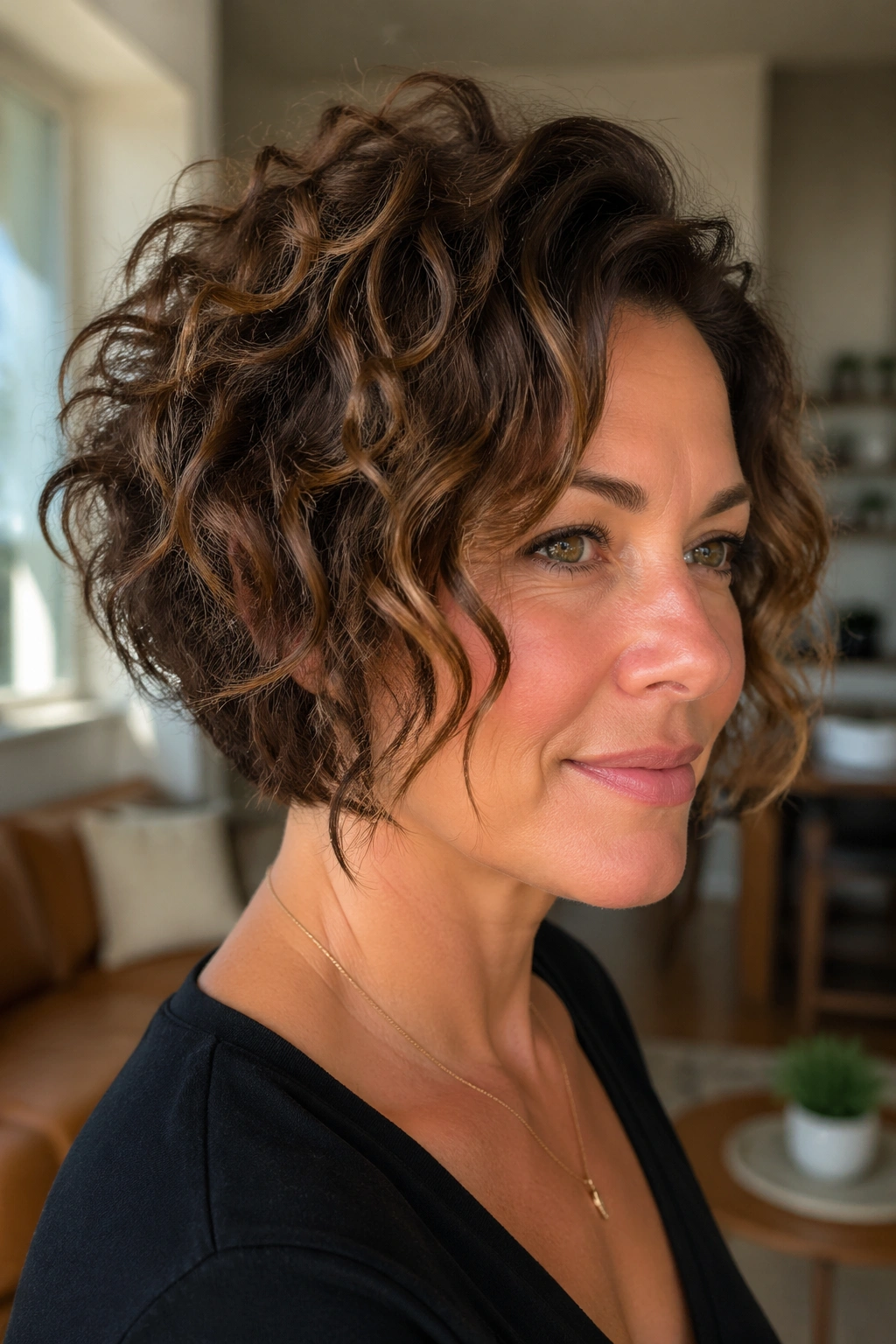
Fine curly hair has one big challenge: it can go flat at the roots and frizzy at the ends in the same afternoon. A high-volume inverted bob solves part of that by building lift into the crown and keeping the shape light enough to move.
The cut should not be overloaded with heavy layering. Fine hair needs support. Leave enough perimeter to make the ends look full, then build the crown with careful graduation so the back rises naturally. Too much thinning will only make the hair look see-through.
A root-lifting mousse or foam can help before diffusing. Focus it at the roots and mid-lengths, not the ends. The bob should rise at the back and skim the cheeks in front, creating the illusion of fullness without making the shape puff out like cotton.
It’s a smart haircut for anyone whose curls look best when they’re not weighed down. Keep the line clean, keep the product light, and the hair usually does the rest.
19. The Curly Inverted Bob in Natural Gray
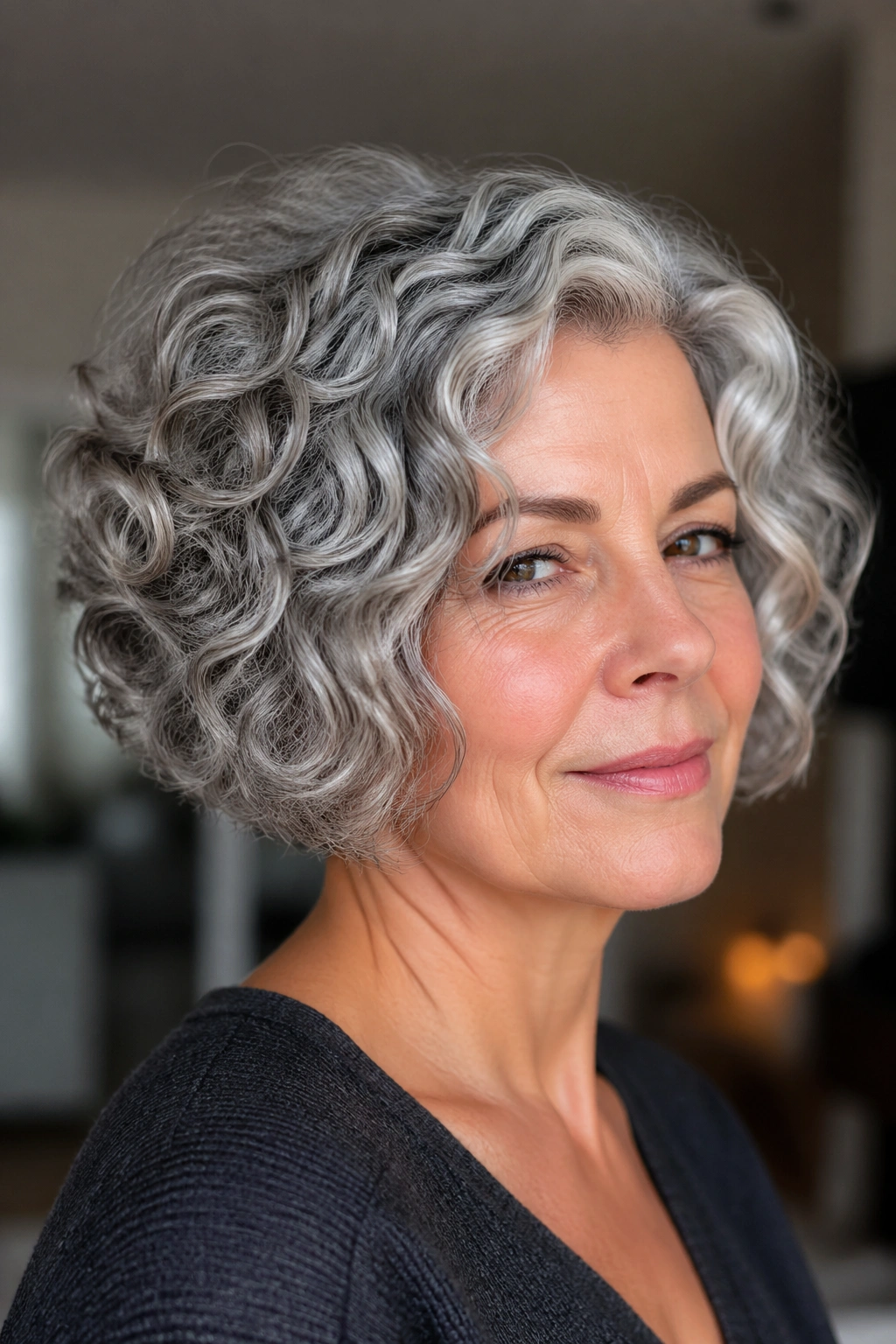
Gray curls can look gorgeous in an inverted bob because the shape gives the hair a clear silhouette, and gray strands often reflect light in a way that makes the texture pop. The cut does not need to be fancy to be strong. It needs to be well-shaped and a little disciplined.
A lot of people worry gray hair will look coarse. Sometimes it does. That’s exactly why the layered angle helps. It breaks up bulk near the nape and lets the front pieces fall in a way that feels deliberate instead of wiry.
A gloss or shine cream can help the silver tones look cleaner, but the bigger issue is moisture. Gray curls often need a richer conditioner than they used to, especially at the ends. Dry ends can make the whole style look fuzzy, even when the cut is good.
I like this version because it doesn’t try to disguise the gray. It puts it in a shape that feels modern without trying too hard. There’s a lot to be said for that.
20. The Curly Inverted Bob With a Side-Pinned Finish
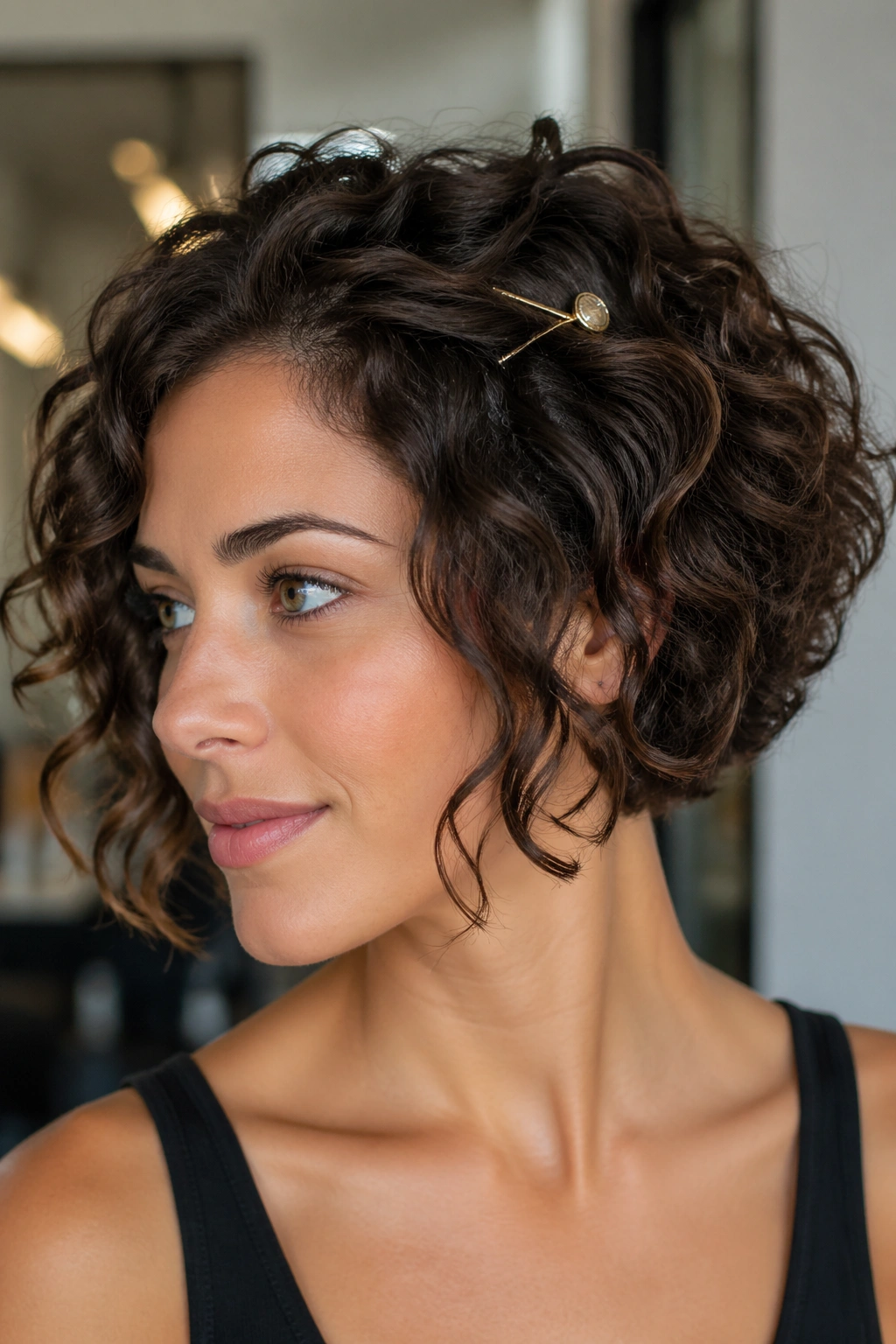
Some days, the haircut itself is only half the story. The side-pinned version turns a curly inverted bob into something more dressy with one clip, pin, or barrette placed just above the temple. The cut needs enough front length for that to work, so this is best on bobs with a little room in the front.
How to make the pinned side look intentional
Start with a deep side part and let the front section dry in that direction. Then pin back the heavier side just above the ear, leaving a few curls loose near the cheek. The pinned section should feel controlled, while the loose side keeps the haircut from becoming too stiff.
This is a strong choice for evenings, weddings, dinners, or any day you want the bob to feel a little more dressed up without curling or re-styling the whole head. A decorative clip can work, but a plain metal pin often looks cleaner because it doesn’t compete with the curls.
The shape of the haircut matters here. If the front is too short, the pin will fight the curl. Leave enough length and the style falls into place more easily.
21. The Low-Maintenance Curly Inverted Bob for Grow-Out
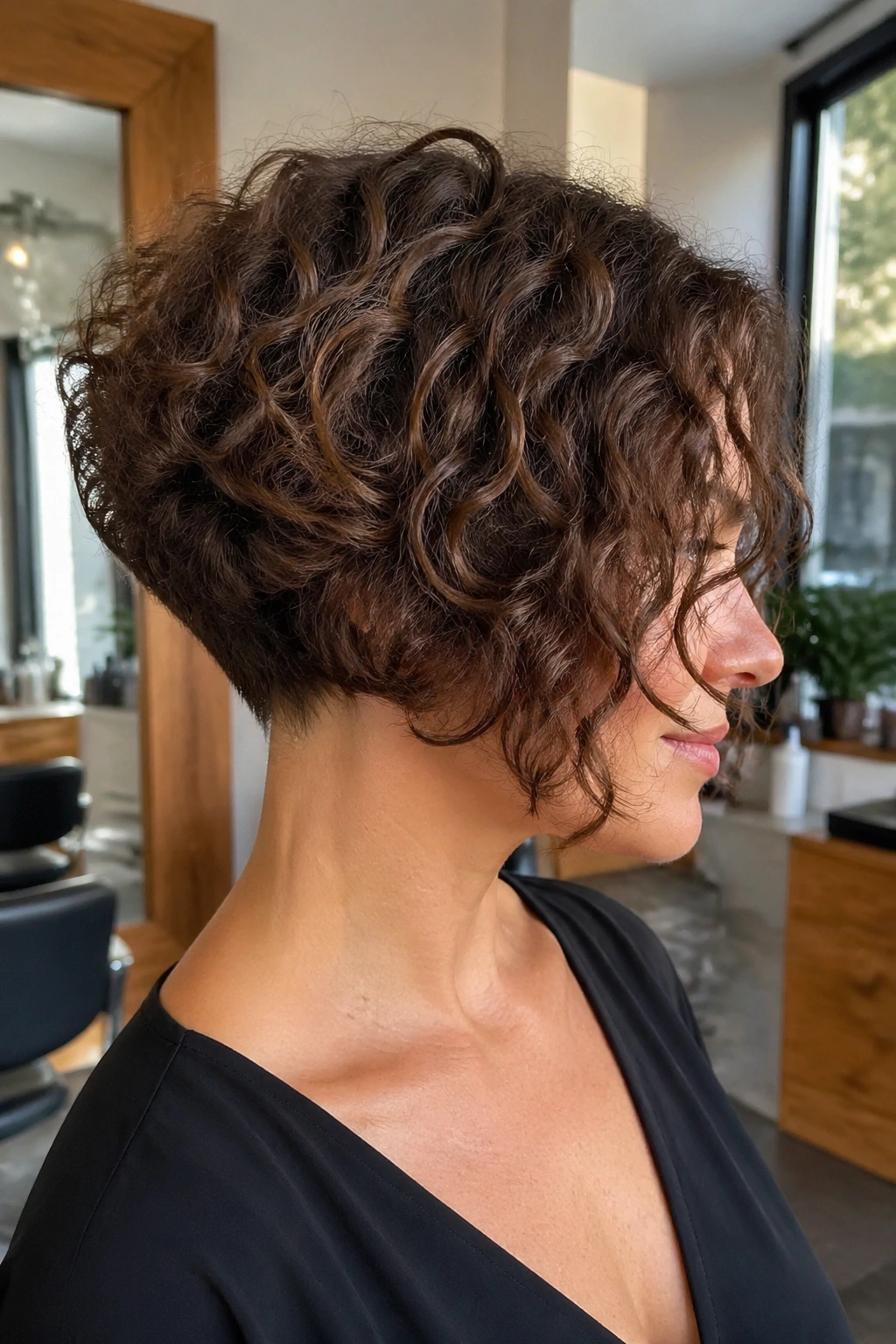
This is the practical one, and I’m a fan of practical haircuts. The low-maintenance inverted bob is designed to grow out without losing its shape fast. That means softer graduation, fewer sharp corners, and front lengths that can drift a little longer without ruining the look.
If you wear curly hair, this matters more than people admit. A cut can look great for two weeks and then go rogue if the grow-out line is too severe. A gentler inverted bob avoids that problem by keeping the back tidy and the front flexible.
What to ask for
- A soft angle instead of a hard wedge
- Long internal layers that blend as they grow
- A front length that stays below the jaw
- Enough shape at the nape to keep the outline clean
This is the version I’d send to anyone who likes low drama. It still looks styled. It still shows off the curl pattern. It just doesn’t punish you if you miss a trim appointment or let the hair air-dry a little messy.
And honestly, that’s the smart choice for a lot of people. Not every good haircut needs to be high-maintenance. Some just need to keep looking decent when life gets busy, and this one does that without making a fuss.
The nicest thing about an inverted bob on curly hair is how many directions it can go without losing its basic shape. You can keep it stacked, soften it with a part, push it toward shag, or let it grow into a lob and still keep the angle. That flexibility is what makes the cut worth considering in the first place.
The best version is the one that matches your curls when they are doing their ordinary, everyday thing—not the version they perform for one great styling day. That’s the real test.