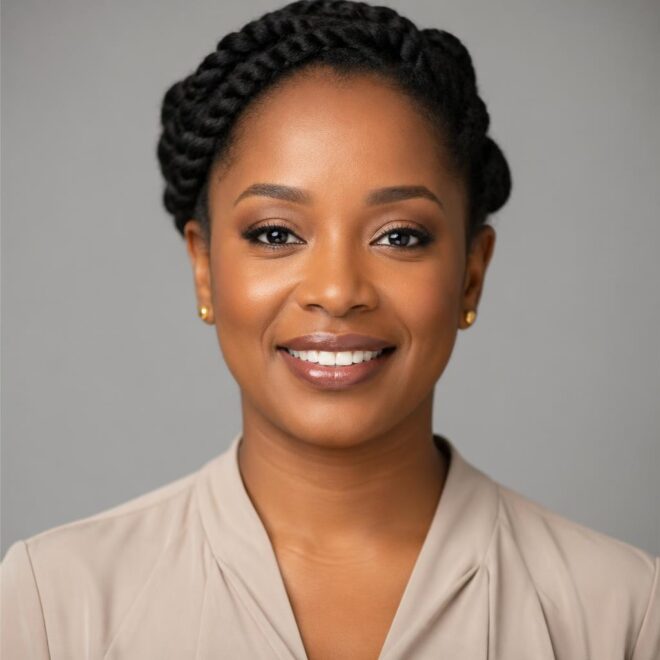


Small knotless box braids with laid edges have a very specific kind of appeal. They look neat, but not stiff. Polished, but not severe. And when the braids are done well, the hairline doesn’t fight the style — it finishes it.
That’s the part people often get wrong. The braids get all the attention, but the edges do a lot of the visual work. A clean swoop at the temple, a curved baby-hair line near the forehead, a light touch of edge control instead of a helmet of gel — those details change the whole mood. The style feels softer. More put together. Less like you borrowed a look and more like you chose it on purpose.
Small knotless braids help here because the base is lighter and flatter than a traditional knot. That matters if you like a style that sits close to the scalp, moves well, and doesn’t look bulky around the part. It also matters if your hairline is delicate. Heavy pulling at the front is a bad trade; neat braids and gentle edges are the better one.
And yes, there are plenty of ways to wear them without making the front look the same every time. Some versions are clean and simple. Others lean dressy. A few are playful, which is honestly where this style gets fun.
1. Classic Center Part With Soft Temple Swirls
A clean center part is the safest place to start, and that is not a boring thing. On small knotless box braids, a middle part gives the eye a straight line to follow, which makes the braids look crisp from the scalp down. The laid edges finish the front without stealing the scene.
Why It Works
The balance is the whole point. A center part keeps the braids evenly distributed on both sides, which helps the style sit neatly on the head and keeps the weight from leaning too far one way. Add two soft swirls at the temples, and the look goes from plain to intentional in about five seconds.
Keep the baby hairs close to the hairline. Thin. Controlled. If the swoops are too thick, they start arguing with the braids.
- Ask for a part that runs straight from the forehead to the crown.
- Keep the temple edges short and curved, not overly long.
- Use a light edge control with a soft brush; stiff gel leaves flakes on dark hair.
- A silk scarf laid for 10 to 15 minutes helps the front stay smooth.
Best tip: If your hairline is fine or sparse at the temples, keep the swirls narrow and brush them downward first, then curve them. It looks cleaner and pulls less.
2. Deep Side Part With Sleek Swooped Edges
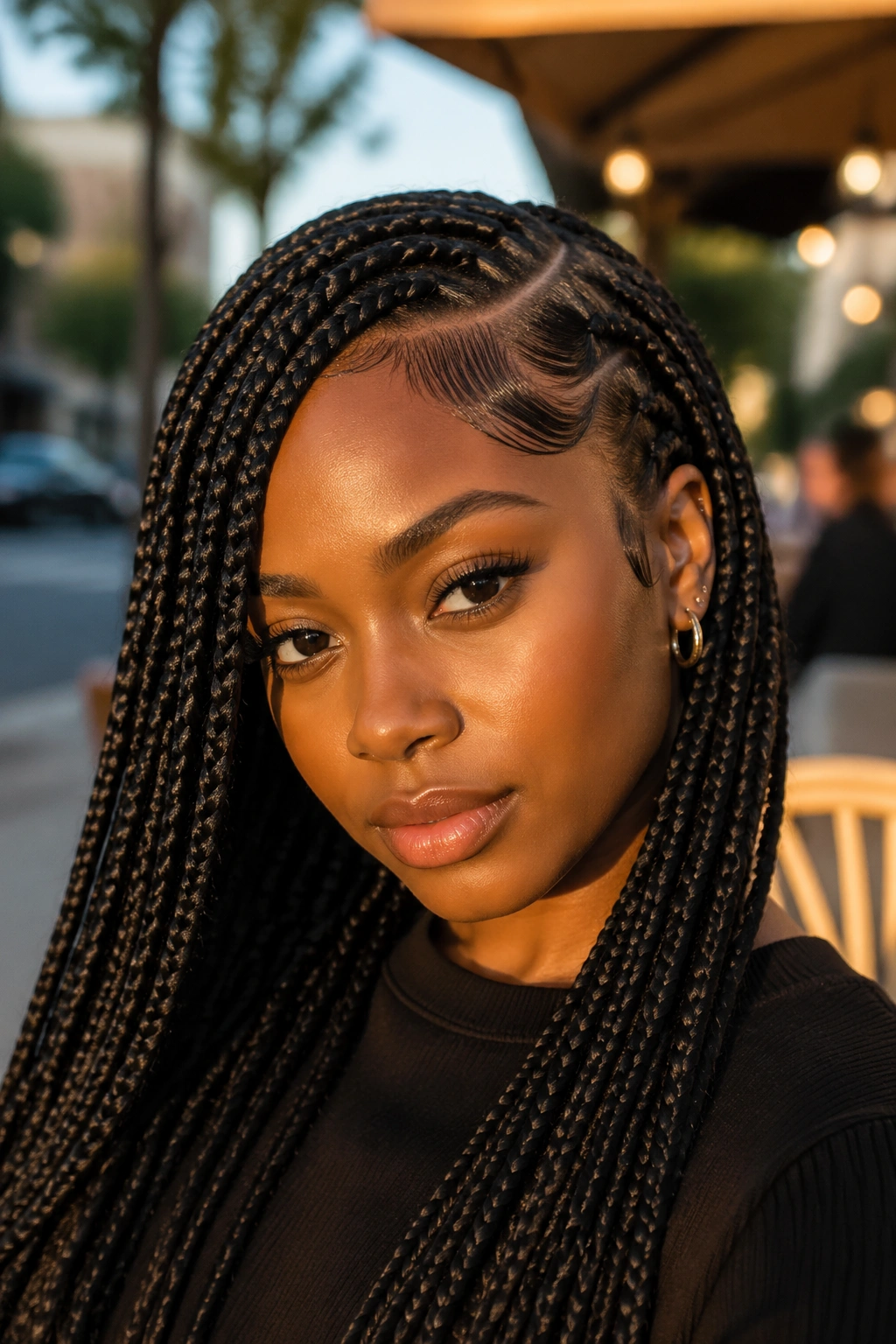
A deep side part changes the whole face shape in one move. It gives small knotless box braids a little drama without forcing the braids themselves to do something complicated, which is part of why this version works so well.
The side part should sit high enough to be obvious, usually somewhere above the outer corner of one eyebrow. Too shallow and it looks accidental. Too deep and the style can feel lopsided in a way that is hard to fix once the braids are installed.
The edges matter even more here because the front line of the braids is already angled. A smooth swoop across the temple helps carry that angle into the rest of the style. If you like a little movement around the face, this is a strong choice.
It also flatters people who wear glasses. The side part opens up one side of the face, so the frames do not compete with the braids as much.
3. Shoulder-Length Knotless Braids In A Clean Bob
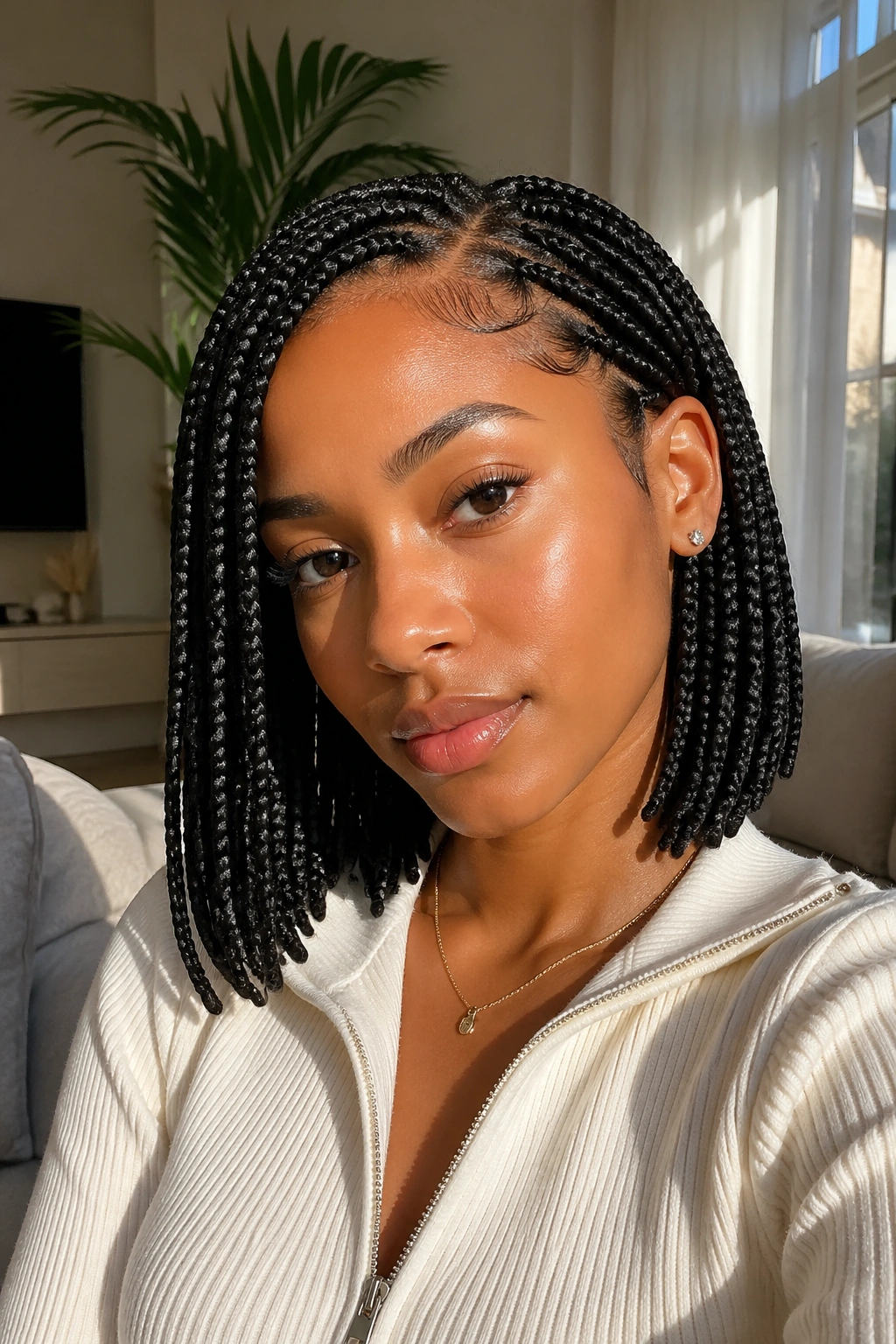
Why do shoulder-length braids look so good on a knotless base? Because the shape stays light from root to tip, and that keeps the bob from feeling boxy. Small braids give the cut more movement than thicker braids ever could.
The real charm is the swing. When you turn your head, the ends move instead of sitting there like a block. That matters with laid edges, because the front stays neat while the length keeps the look easy and wearable.
How to Ask for It
Tell the stylist you want the braids to fall somewhere between the jaw and the shoulders, depending on your neck length and how much bounce you want. A chin-length bob can feel sharp. A shoulder-length bob reads softer and a little more relaxed.
- Keep the ends blunt if you want a sharper finish.
- Ask for small, even sections so the bob doesn’t puff up at the bottom.
- Use a light mousse at night to keep frizz down near the front part.
- If you want the edges to show, keep the front pieces tucked behind the ear on one side.
A bob is easy to live with. That’s the honest truth.
4. Waist-Length Braids With Tapered, Natural Ends
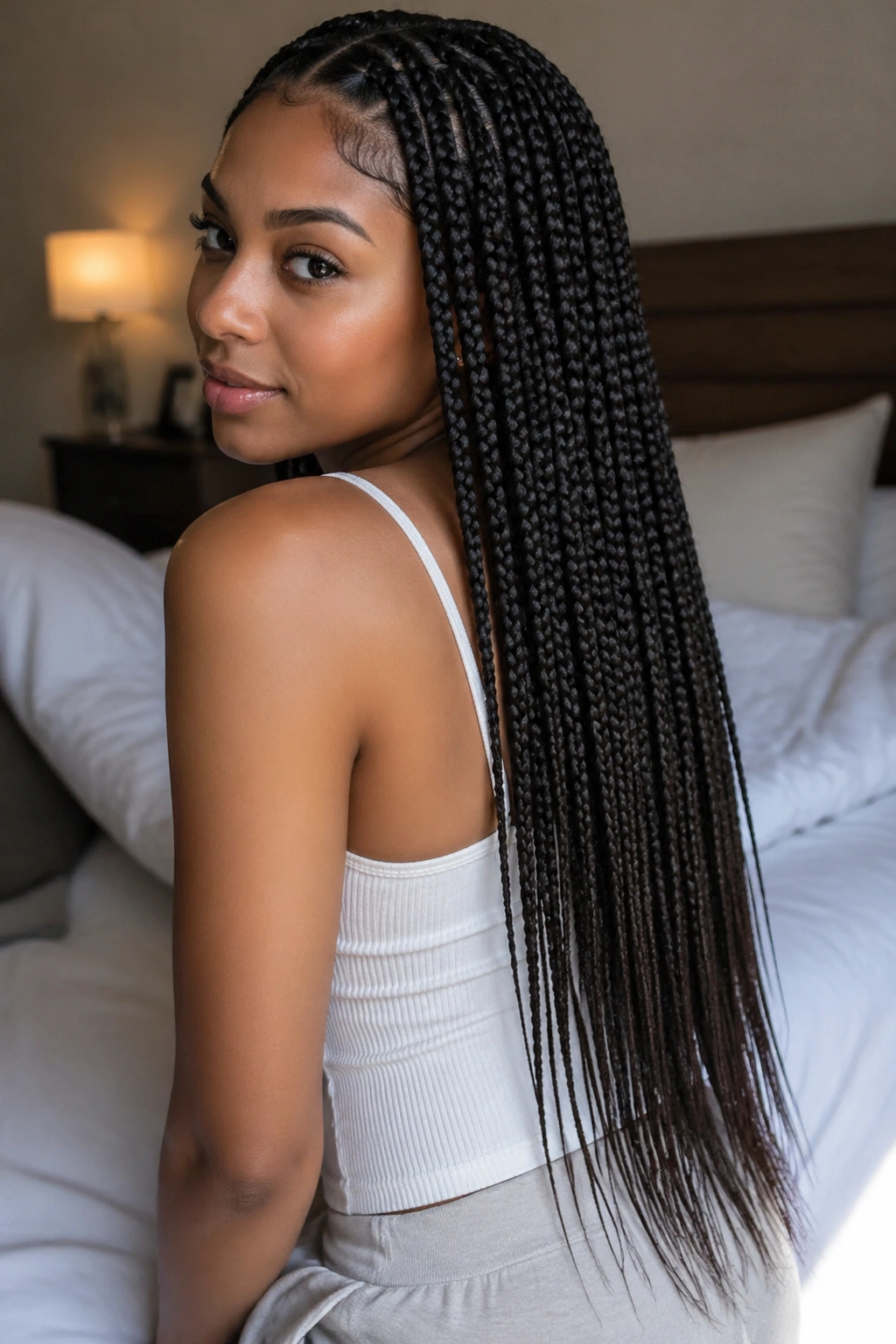
A long set of small knotless braids has a different energy. It looks more dramatic, but not because it’s loud. The length gives the braids room to swing, and tapered ends keep them from looking too heavy.
I’ve always thought this is one of the best pairings with laid edges because the front stays neat while the rest of the style moves. You get that clean face-framing line near the forehead, then all the softness of long braids flowing down the back.
If you want this version to feel expensive — and I mean that in the real sense, not the silly one — pay attention to the ends. A blunt finish can work, but tapered tips look lighter and more natural. They also shed less against clothing, which is a small mercy if you wear jackets a lot.
One more thing: long braids show every inch of care. A satin bonnet is not optional. Neither is a quick mousse pass every few days.
5. Half-Up, Half-Down With Laid Edges At The Temples
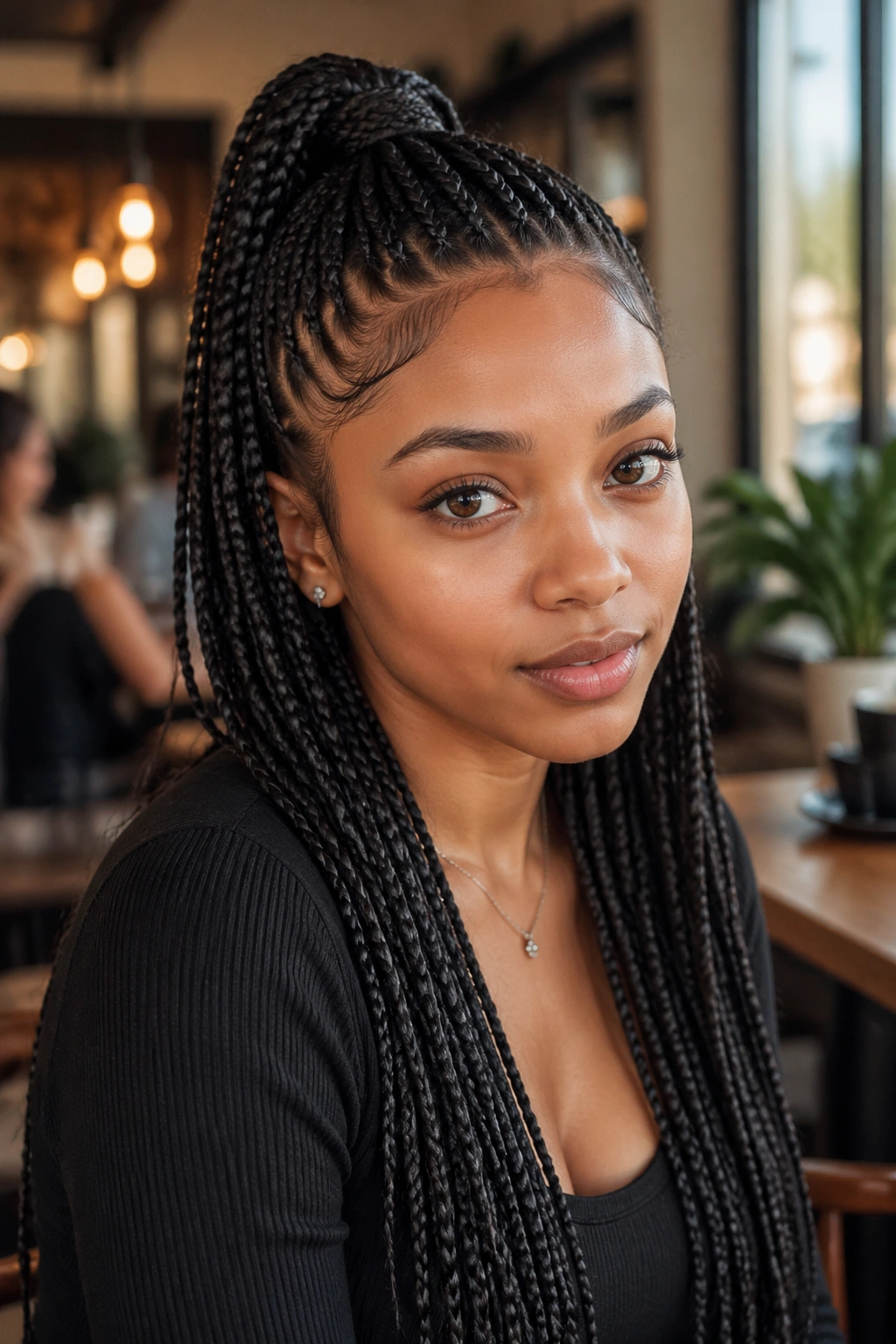
Half-up, half-down is one of those styles that always survives because it solves a problem. You get hair off your face, but you still keep the length visible. On small knotless box braids, the shape stays neat because the braids are light enough to gather without looking bulky.
The laid edges make the top half look finished instead of thrown together. That’s the difference. Without the front detail, the style can feel like a quick tie-up. With soft temple swirls and a clean front part, it looks deliberate.
The best part is how forgiving it is on tired hair days. If the braids are a few days old and the roots need a little freshening, the half-up shape hides more than you’d think. It also works with almost any braid length, from collarbone to waist.
And if you’re the kind of person who likes a look that can go from errands to dinner without a full reset, this is the one I’d keep in rotation.
6. High Ponytail With A Lifted Crown And Clean Hairline
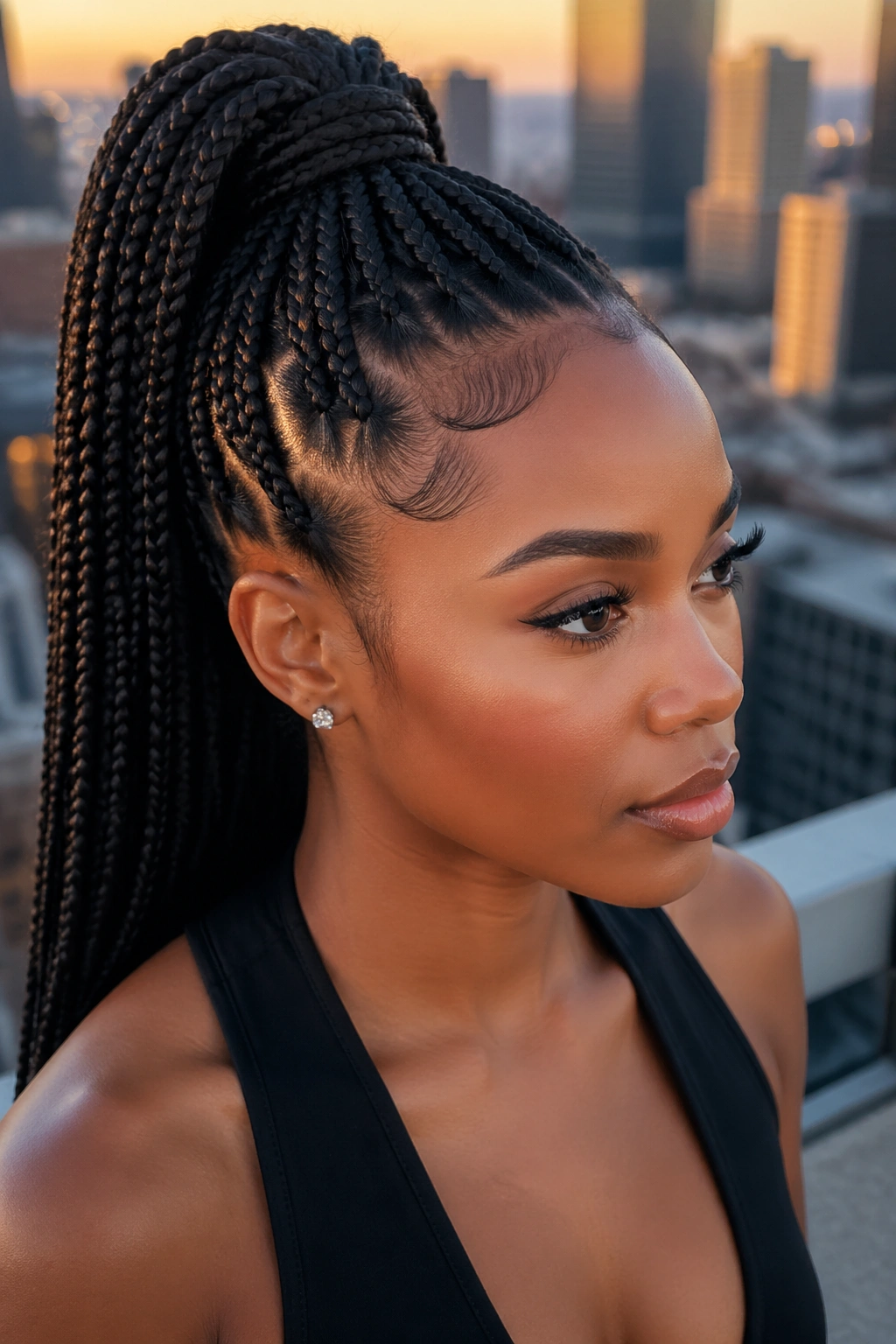
A high ponytail makes small knotless braids feel sharper. Not harsher. Sharper. The crown lifts, the face opens, and the edges become part of the silhouette instead of a side note.
Unlike a loose style, this one puts all the attention on the top of the head first. The ponytail should sit high enough that the braids fall from the crown, not the back of the head. That lift gives the style a cleaner line and makes the laid edges look almost sculpted.
It’s best when you want your face fully out of the way. Heat. Makeup. Gym. A long day. The style holds up because the braids are small, which means the ponytail does not feel like you’re dragging a brick around.
A wrapped braid or a small braid strand around the base hides the elastic and makes the whole thing look more finished. If you have a sensitive scalp, don’t yank the pony tight. Tight is not the same thing as neat.
7. Low Ponytail With A Wrapped Base
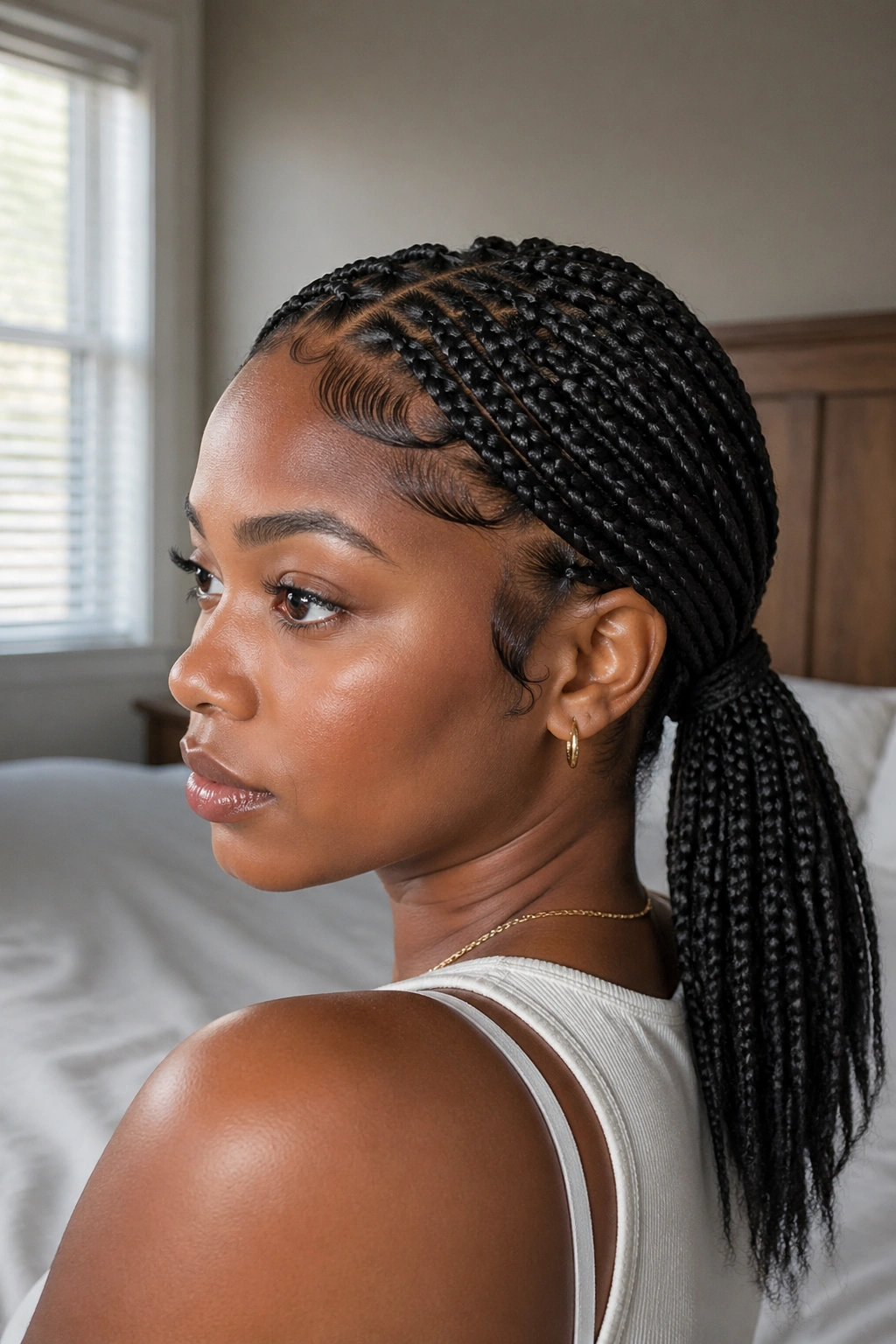
A low ponytail is the quieter cousin of the high one. It sits closer to the neck, which makes the whole style feel calmer and more grounded. On small knotless box braids, that lower placement lets the pattern of the parts stay visible at the crown.
What Makes It Different
The front edges can be softer here. You do not need a dramatic swoop to make the style work. A gentle curve at the temples and a clean part line usually do enough. The ponytail base can be wrapped with one braid or a small piece of braiding hair, which hides the band and keeps the nape neat.
How to Wear It
- Position the pony at the nape or just above it.
- Smooth the crown with a soft brush before tying.
- Leave one braid loose if you want a little movement around the face.
- Seal the front with a scarf for 10 minutes before heading out.
It’s a calm look. That’s what I like about it.
8. Sleek Braided Bun For Nights Out And Busy Weeks
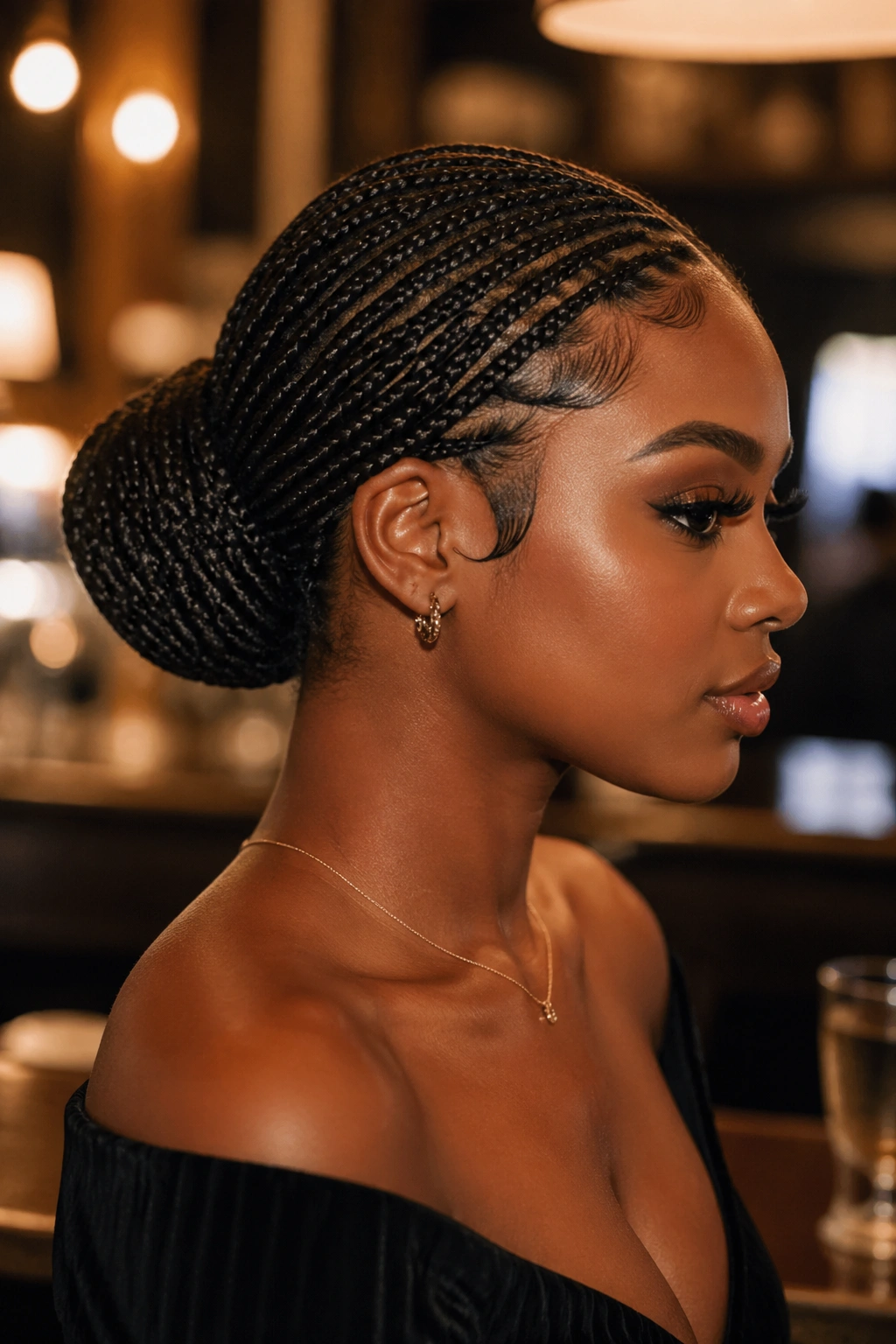
A braided bun with small knotless braids is one of those styles that looks more complicated than it is. The braids already give you structure, so all you’re really doing is gathering that structure into a neat knot and letting the shape do the talking.
A low bun near the nape feels polished. A mid-height bun feels a little cleaner and more formal. Either way, the laid edges are the last detail your eye lands on, which is why a smooth front matters so much. If the front is fuzzy, the whole style loses its edge — no pun intended.
The trick is not to overthink the bun. Twist the braids loosely enough that they don’t snap at the base, then pin the loose ends in a circle or a compact coil. Four to six bobby pins usually do the job if the braids are small. Use more if the style is long.
This is the version I’d pick when I want my hair off my shoulders and I still want it to look planned.
9. Triangle Parts That Give The Scalp A Graphic Look
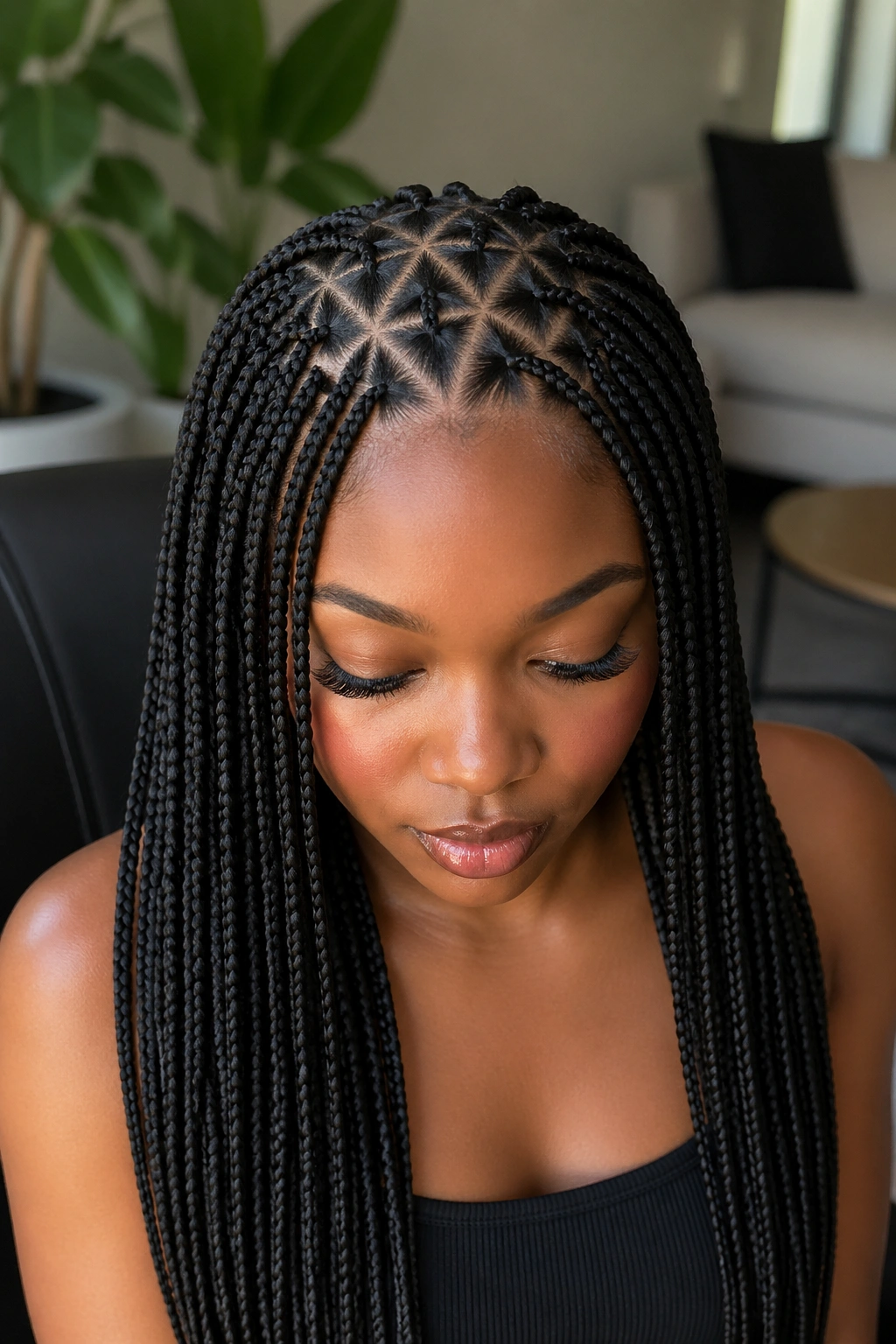
Triangle parts do something box braids rarely get credit for: they change the feel of the scalp itself. The braids can be small, but the parting pattern makes them read in a bolder way because the shapes keep breaking the grid.
Why does that matter? Because small knotless braids can sometimes look a little uniform from a distance. Triangle sections fix that. They create angles around the crown, which makes the style feel more custom and less standard issue.
How to Ask for It
Tell the stylist you want triangle parting throughout, not just in one row. The triangles can be tiny or medium, but they should stay consistent enough that the pattern looks deliberate. If the front part is neat and the edges are laid close to the temples, the geometry shows up even more clearly.
This is a good pick if you like detail that people notice only when they look twice. And honestly, that is usually the smarter kind.
10. Diamond Parts For A Softer, More Deliberate Grid
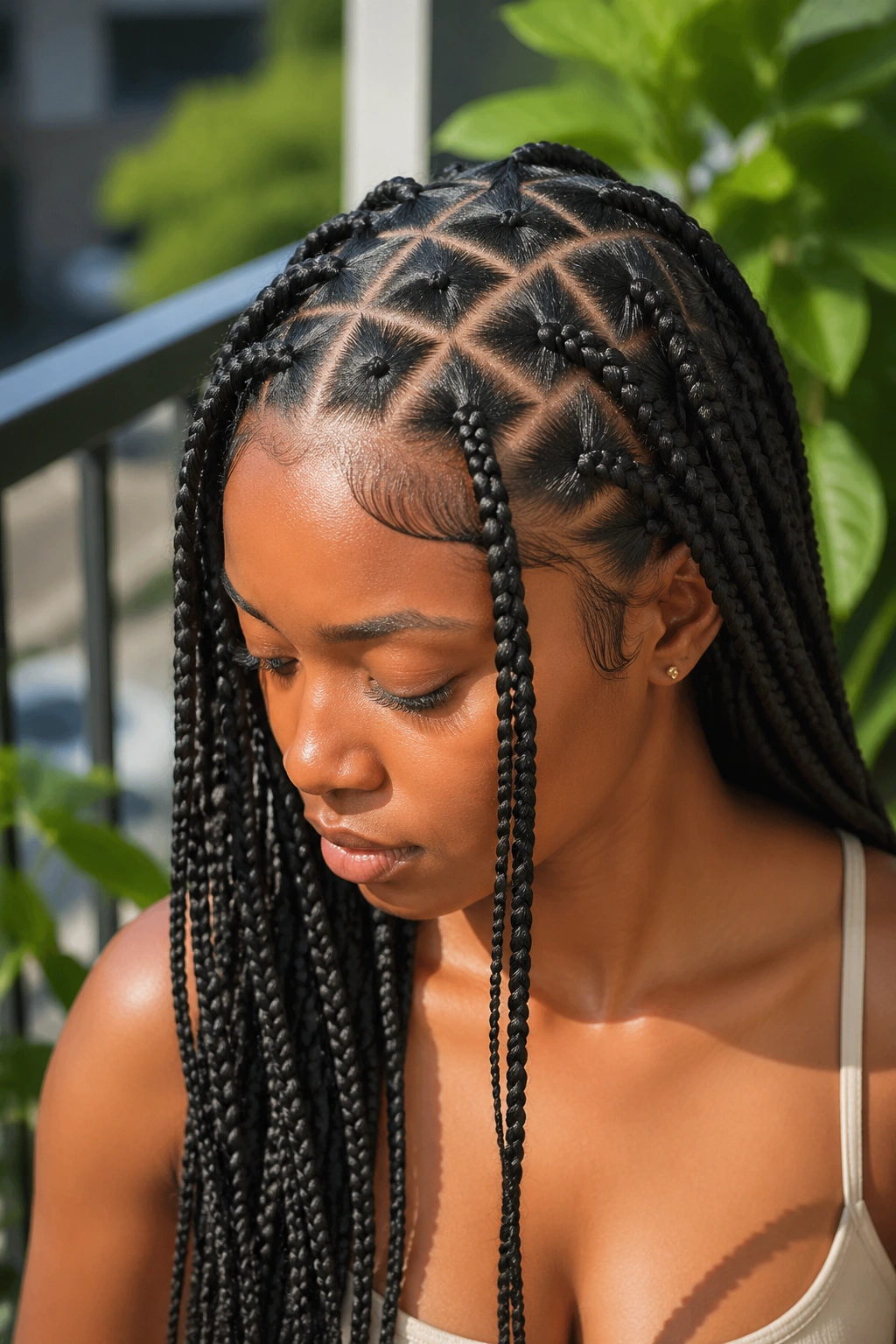
Diamond parts feel a little softer than triangles, which is why they suit people who want pattern without sharp angles everywhere. I like them on small knotless box braids because the parting still reads clean from a distance, but up close it has enough shape to feel thoughtful.
The effect is subtle. Not plain. Subtle.
When the edges are laid in a gentle curve at the front, the diamond parts seem even more intentional because the top of the style is doing two jobs at once: framing the face and organizing the scalp. That can be especially flattering if you like the front to look tidy without too much shine or gel.
- Diamonds work well on medium-density hair because the sections can stay balanced.
- They look especially nice with a crisp center part.
- Keep the front swirls short so the part pattern stays visible.
- Ask for equal spacing between each diamond, or the grid will drift.
It’s a style for people who like detail but do not want the style to shout about it.
11. Zig-Zag Parting For A Playful Top Layer
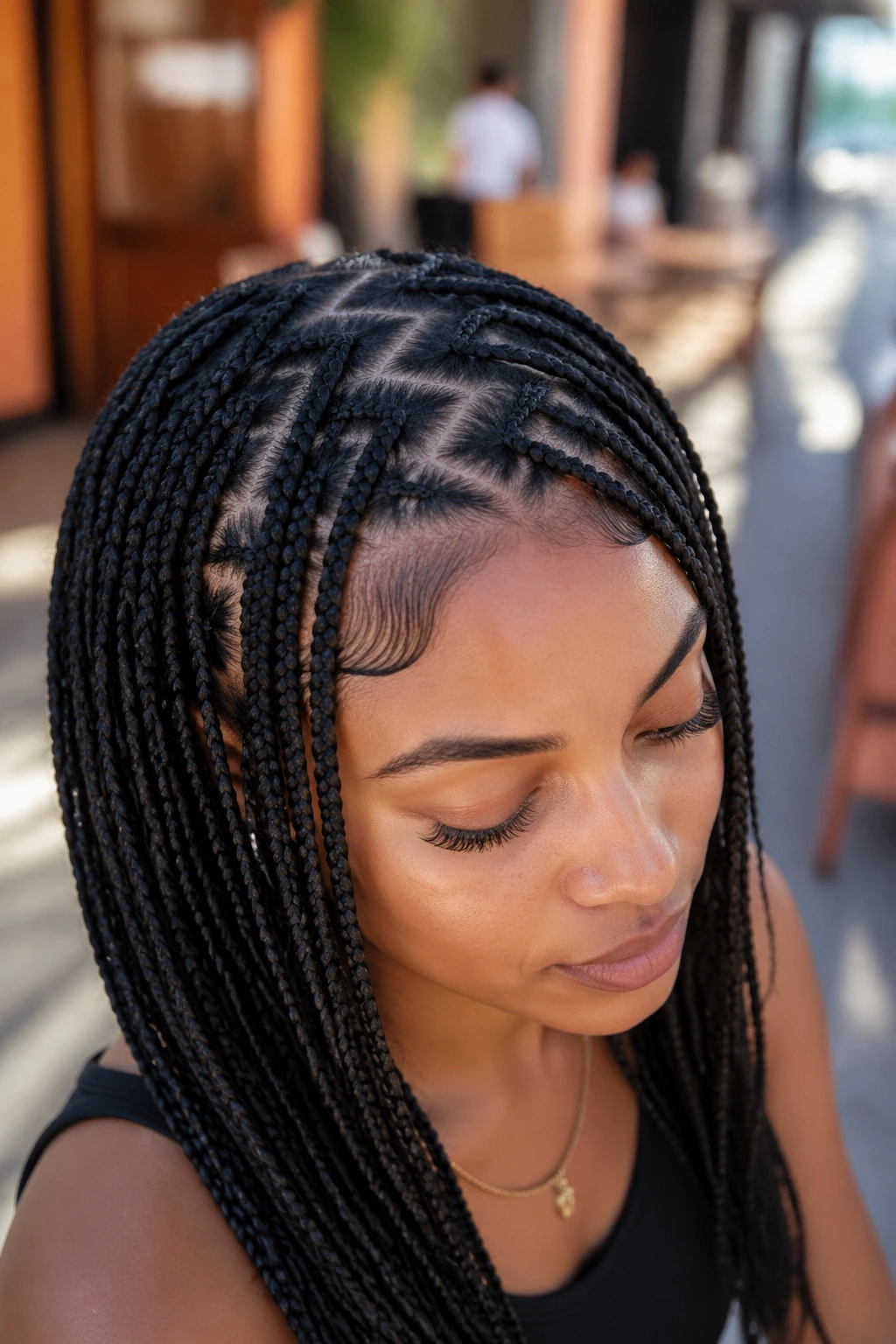
Zig-zag parts have a little attitude. Not much. Just enough. On small knotless box braids, that broken line across the top gives the style a lived-in feel, which is a nice break from all the straight lines braids usually bring to the table.
The part itself does the work here, so the edges can stay more minimal. A slim curve at the temples is enough. If you go too heavy with the baby hairs, the front starts competing with the zig-zag pattern, and that’s not a fight worth having.
I think this works best when the rest of the braids are kept consistent and smooth. The contrast is what makes it interesting. Clean part. Soft front. Simple braids. Done.
It also photographs well from overhead angles, which is useful if you wear your hair up a lot. You get a little visual movement without needing beads, color, or extra accessories.
12. Beaded Ends That Add Weight And Movement
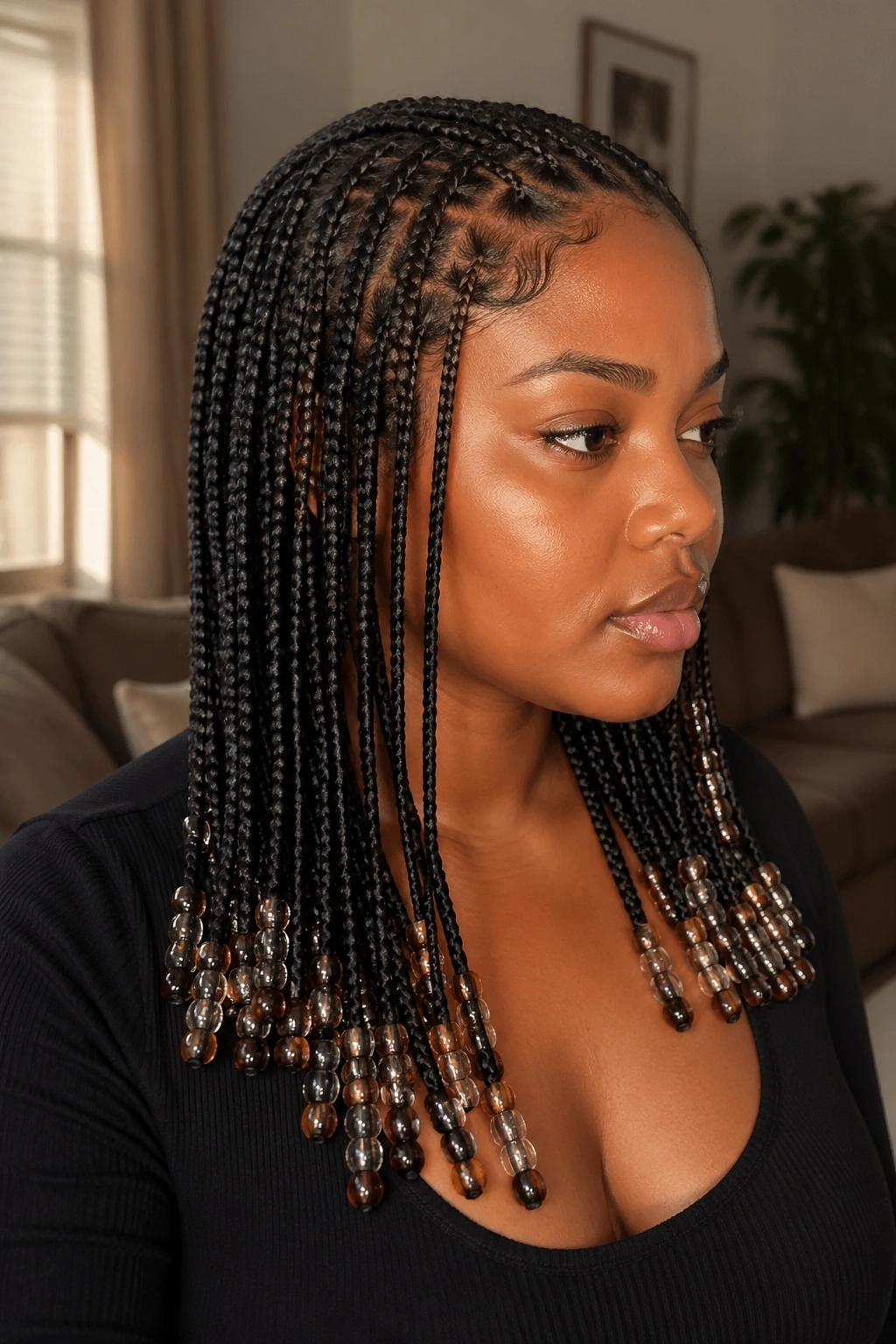
Beads change the sound of the style as much as the look. That’s not a metaphor, either. They click softly when you move, and small knotless box braids with laid edges suddenly feel a little more animated.
Why It Works
Beads at the ends add weight, which helps the braids hang with a cleaner line. If the braids are small and the ends are light, beads give them a bit more presence. Clear beads keep the look airy. Wooden beads make it earthier. Black or brown beads blend in and feel quieter.
The front edges stay important because beads pull the eye downward. Without a neat hairline, the style can look unfinished. With laid edges, the top half has enough polish to balance the extra movement below.
Best Way to Wear It
- Put beads on every braid for a fuller look.
- Add them only to the front rows if you want a lighter finish.
- Match bead size to braid size; tiny braids and giant beads look off.
- Seal the ends first so the bead holes do not snag the braiding hair.
It’s a fun choice, but it still needs restraint.
13. Gold Cuffs And Barely-There Jewelry
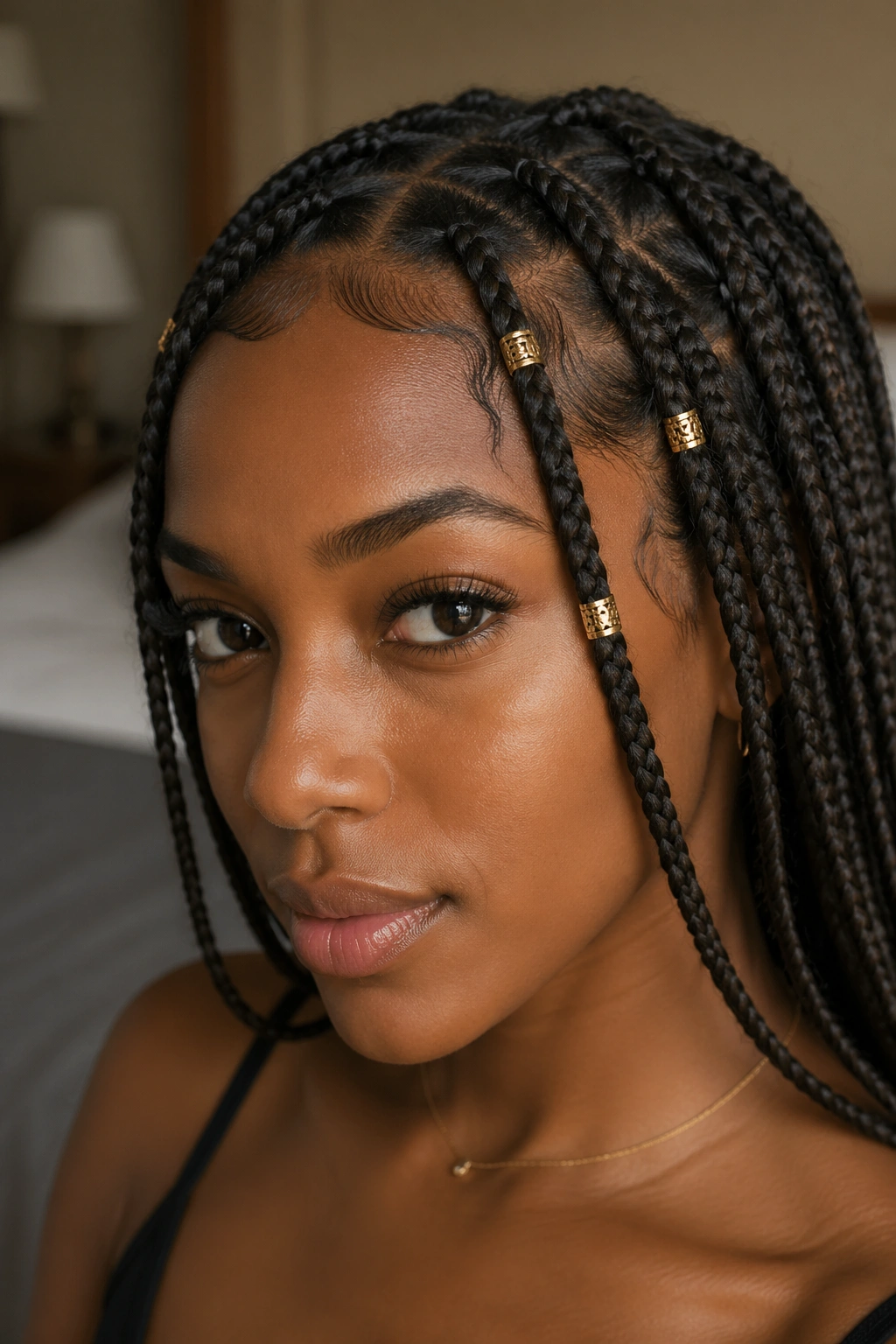
Gold cuffs are the easiest way to make small knotless box braids look dressed up without changing the whole style. One cuff on every braid would be too much for my taste. A few placed near the front or around the perimeter is usually enough.
That’s where laid edges help again. The smooth front gives the jewelry room to stand out. If the hairline is already busy, the cuffs get lost. If the edges are neat and the parts are clean, the metal reads as part of the design instead of extra noise.
What To Watch For
Use cuffs with a smooth inside so they do not snag the braiding hair. Cheap ones with rough edges can catch and fray faster than you’d expect. Place them on the lower third of the braid for a lighter look, or cluster two or three near the front rows if you want more shine.
The best part is how easy they are to remove. Change the placement. Switch up the number. Keep the braids the same. That’s a nice trade when you want a different mood without a full reinstall.
14. Curled Ends That Soften The Whole Style
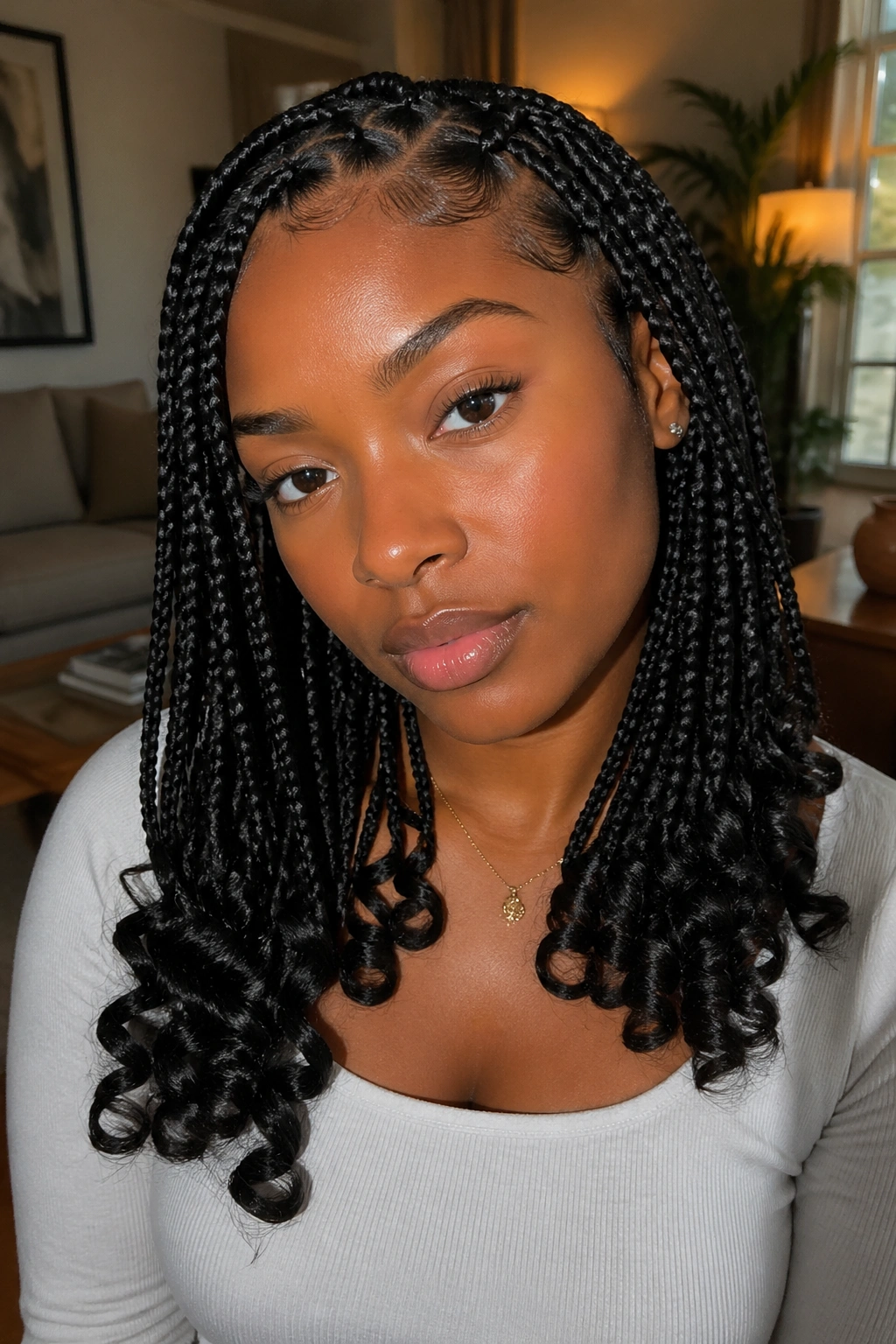
Curled ends can take small knotless braids from neat to soft in one step. The shape at the bottom changes the mood of the entire head, and that matters more than most people think. Straight ends read crisp. Curled ends read gentler.
On synthetic braiding hair, the curls usually come from flexi rods or perm rods and a hot-water set, then a careful dry-down. If the ends are human hair, you can often set them with foam and a low-heat tool instead, though I still prefer the cleaner finish of a rod set.
The nice thing is that laid edges make curled ends look balanced rather than overly sweet. The front keeps the style grounded. The bottom gives it movement. It is a good mix.
One warning: keep the curl size in proportion to the braid size. Tiny braids with huge barrel curls can feel off. Medium curls or soft spirals usually look better.
15. Ombré Braiding Hair For Color With Less Fuss
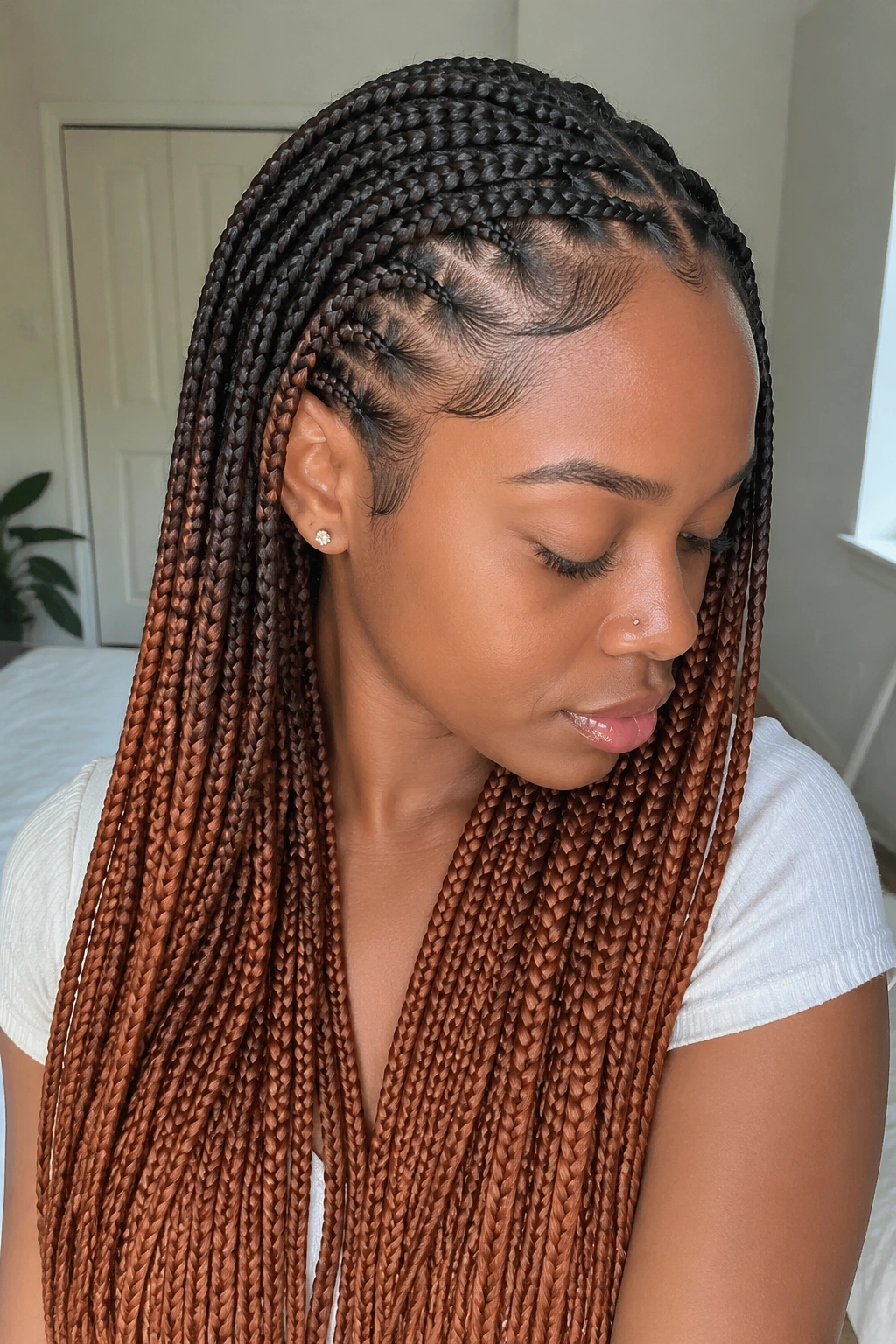
Can color do the work for you? Usually, yes — if you pick the right shade. Ombré braiding hair gives small knotless box braids a little depth without forcing you into a full bright-color commitment.
The root-to-tip shift is what makes this version easy to wear. Dark brown fading to honey. Black moving into burgundy. A warm brown sliding into copper. Those transitions show up clearly on small braids because there’s so much surface area for the color to travel across.
Best Shades
- Dark brown into chestnut if you want something quiet.
- Black into honey blonde if you like contrast but not neon.
- Burgundy into plum if you want a richer finish.
- Brown into copper if you want warmth around the face.
Laid edges pull the color back toward the front, which sounds small until you see it in person. The style stops looking like a color swatch and starts looking like a real hairstyle.
16. Face-Framing Braids That Highlight The Cheekbones
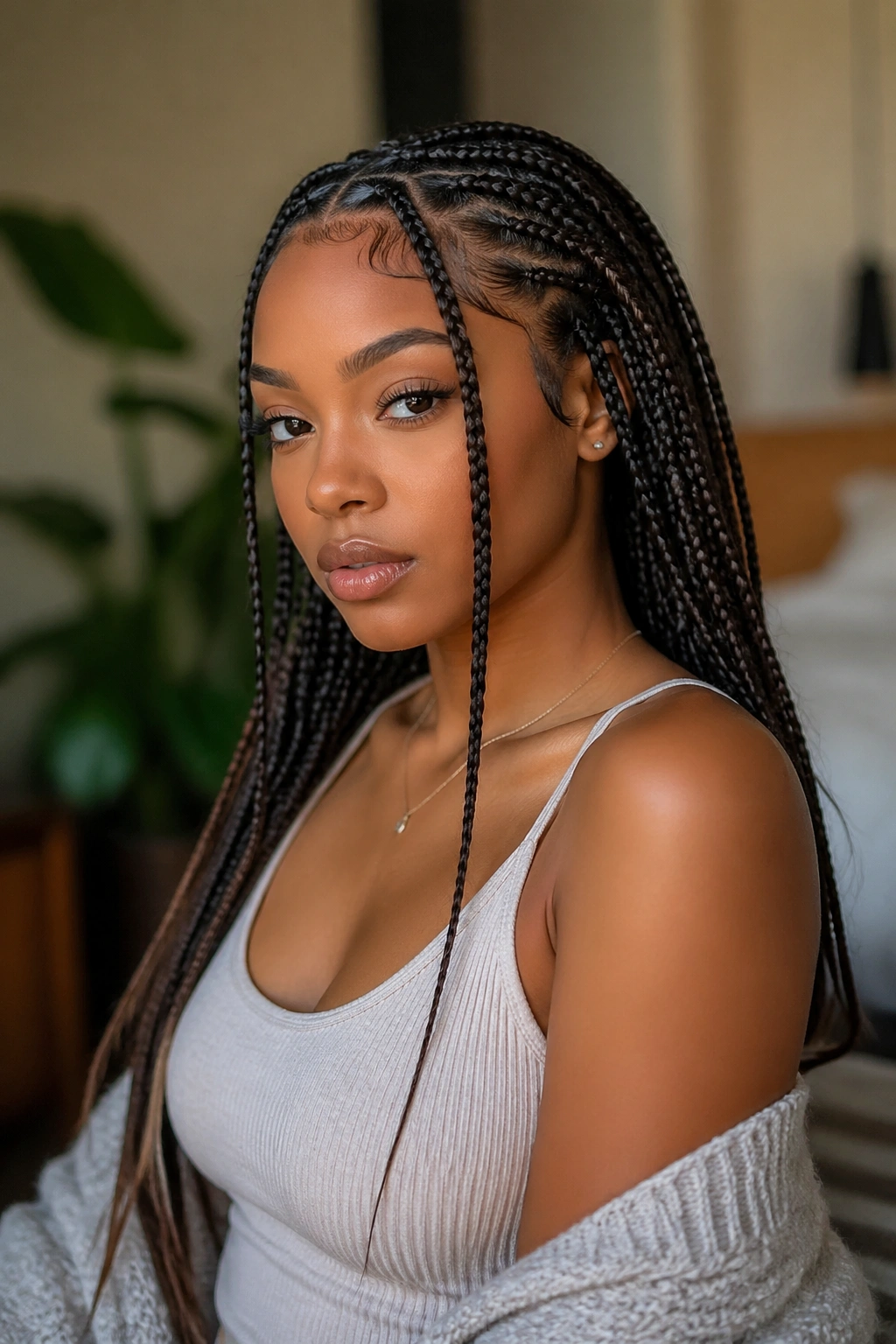
The quickest way to change the shape of small knotless box braids is to let a few front braids fall forward. Not all of them. Just a couple. That tiny shift creates a frame around the face and makes the laid edges feel softer because the front of the style has movement.
I like this on people who do not want the whole forehead exposed. The loose front braids break up the hairline a little, which means the baby hairs can stay more delicate. No heavy swoops needed. A narrow curve at the temple and one or two braids hanging near the cheekbones usually do the trick.
What To Ask For
- Leave two to four front braids slightly shorter than the rest.
- Keep the pieces on each side even, unless you want an uneven, casual feel.
- Ask for the face-framing pieces to start just behind the temple, not too far back.
- Use a light mousse on the loose braids so they do not puff up first.
It’s a simple move. And it works.
17. Fulani-Inspired Front Accents With Tiny Braids
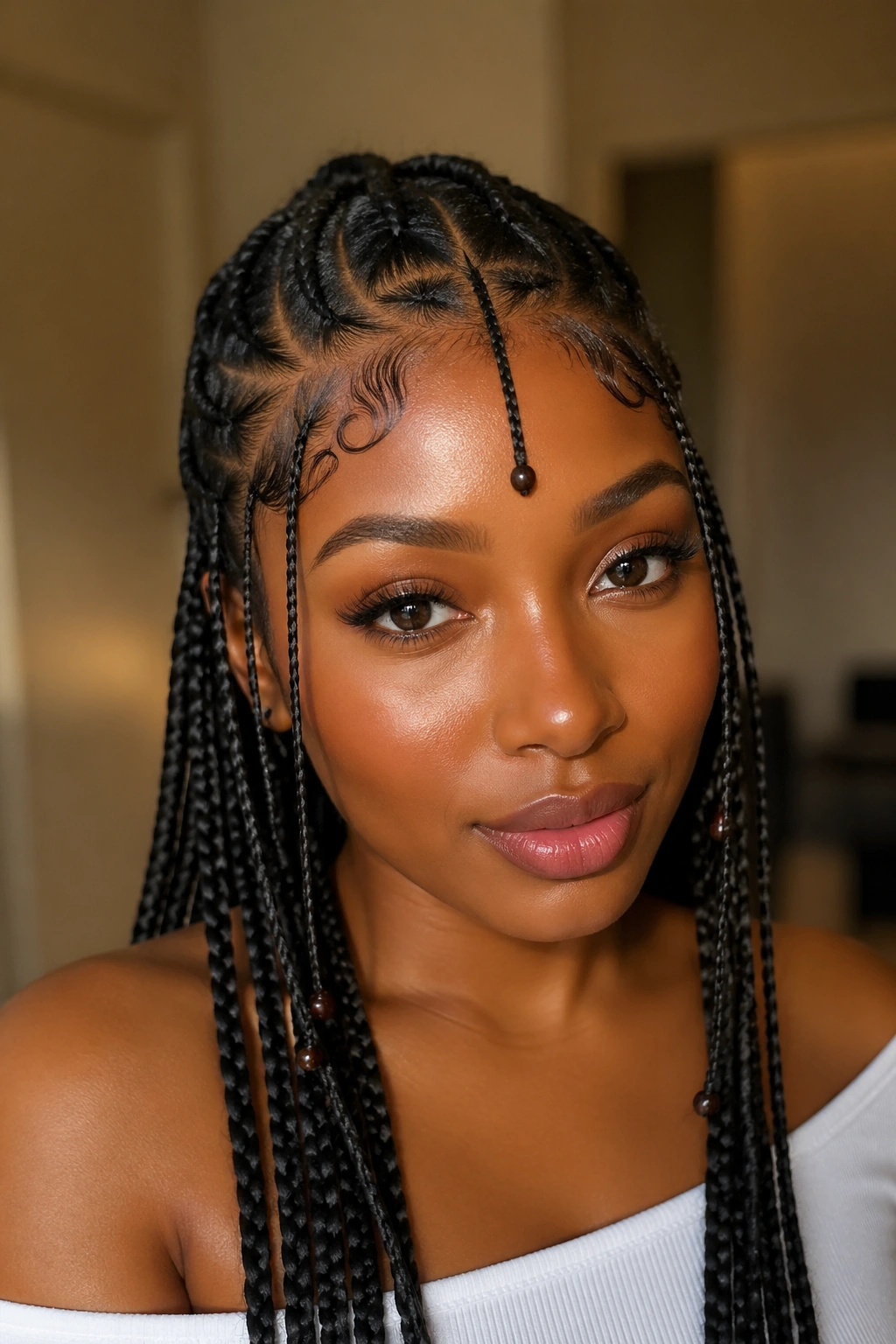
This version borrows the front detailing of Fulani-inspired styling without losing the clean shape of small knotless box braids. The front rows can be braided with a little more intention — a narrow center braid, a few thinner front pieces, maybe a bead or two near the ends — while the rest stays classic.
The edges play a big role here because the front already has extra detail. A soft, careful swoop near the temples keeps the look from getting crowded. If the baby hairs are too thick, the front starts to feel busy fast.
I think this style is strongest when the back stays simple. Let the front accents lead, then keep the rest of the braids straight and even. That contrast gives the look shape. It also keeps it wearable for more than a day or two, which matters if you’re not trying to fuss with your hair every morning.
A small note: this style looks best when the braids are truly small. The thinner the braid, the more graceful the front accents feel.
18. Mixed-Length Small Knotless Box Braids For Daily Wear
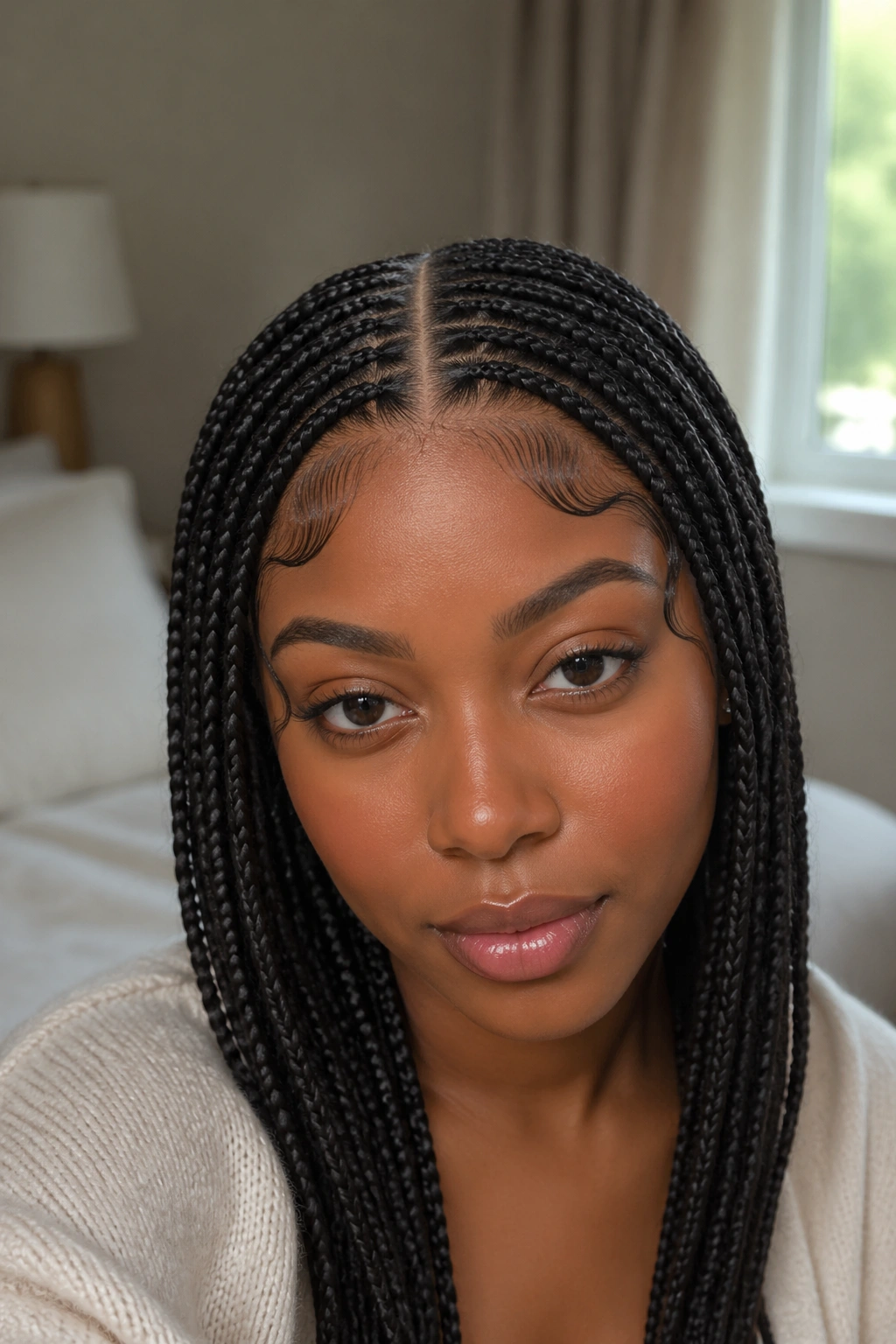
Mixed-length braids are underrated. A few shorter pieces around the face, longer lengths toward the back, and the whole style starts moving more naturally. It breaks up the visual weight in a way that makes small knotless box braids with laid edges feel easier to wear every day.
Compared with one flat, even length, mixed lengths do a better job of framing the face and keeping the ends from bunching up at the same point on your shoulders. That matters when you wear coats, tote bags, or backpacks. The shorter front pieces stay out of the way. The longer back pieces still give you the drama people want from braids.
This is also one of the better choices if you want the style to look full without being heavy. The braids can stay small, the edges can stay soft, and the overall shape gets a little more movement just from the length changes. Not flashy. Just smart.
If I had to pick one version for someone getting small knotless braids for the first time, I’d probably land here. It is easy to live with, easy to style up, and it does not ask too much from your hairline. That alone is worth a lot.