



Red braids can look flat in a hurry. The knotless version fixes the heavy root, and ombré keeps the color from turning into one solid block.
That matters more than people think. Red is a tricky family of shades: burgundy can lean moody, copper can swing orange if the hair quality is off, and bright crimson can start yelling before you even leave the chair. A knotless install softens the base and gives the color room to breathe, which is why the whole style feels lighter on the scalp and cleaner at the part.
I’ve always liked this combo for the same reason I like a good jacket with a strong lining — it gives you structure, but it still moves. You can keep it long and sleek, cut it into a bob, add curls, stack on cuffs, or let the color fade from black into wine and then into a hotter red at the ends. The details change the entire mood.
1. Black-to-Burgundy Knotless Box Braids
This is the red braid style I reach for when someone wants color without going straight into loud territory. The dark root keeps the set grounded, and the burgundy fade adds warmth instead of glare. On knotless braids, that transition feels cleaner because the scalp line stays soft.
Why the Burgundy Fade Works
Burgundy is one of those shades that behaves well in different light. Indoors, it can look like deep wine. Outside, it picks up a berry tone that feels richer than plain black braids with red ends.
The best part is how forgiving it is once the braids are a few weeks old. Grow-out shows less sharply at the root, and the color still looks intentional even when the style has loosened a little.
- Best length: mid-back or longer, so the fade has room to show.
- Best part size: small to medium boxes keep the color blend smooth.
- Best add-ons: gold cuffs, one or two braid rings, or a clean middle part.
- Best mood: polished, easy, and not trying too hard.
Pro tip: Ask your braider to keep the burgundy concentrated in the last third of the braid if you want the color to read soft instead of vivid.
2. Fire-Red Dip-Dye Waist-Length Braids
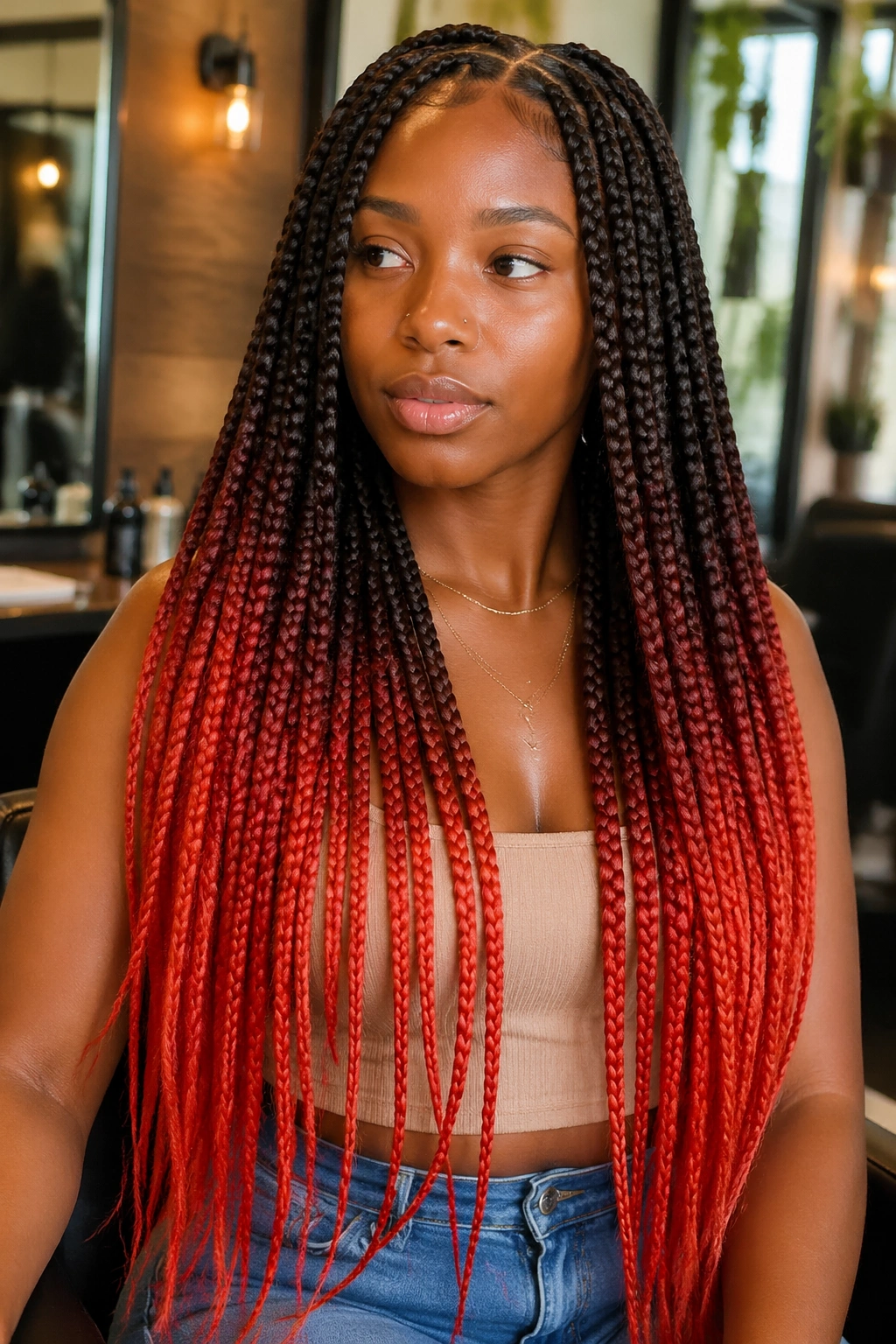
Fire-red dip-dye braids are not subtle. That is the whole point. The root stays dark, the length stays long, and the red lands at the bottom like a loud finish line.
The style works because the eye first reads the dark base, then catches the shock of color at the ends. That makes the red feel cleaner and more expensive-looking than a full-head bright red set, especially on knotless box braids where the installation already has a smoother start.
Waist-length braids give the color enough space to matter. On a shorter length, bright red can look a little blunt. With extra length, the color develops movement. Each braid swings differently, and the red flashes in pieces instead of all at once.
If you like a dramatic ponytail, this is one of the strongest choices. The dark root keeps the crown tidy, and the red ends pile up in a way that actually looks better when gathered. No need to overthink it. Keep the clothes simple and let the hair do the work.
3. Copper Ombré Knotless Bob Braids
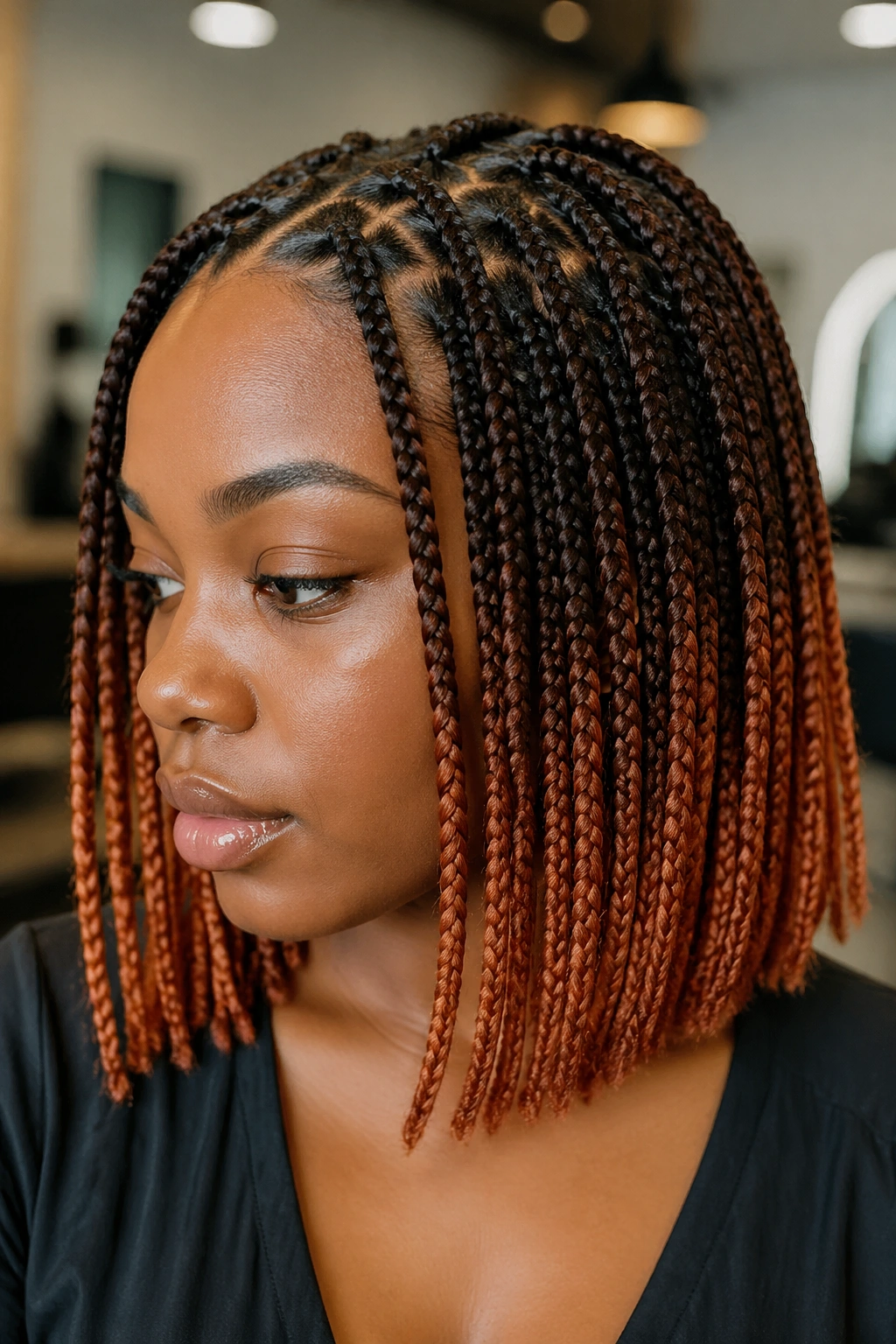
Why do copper ombré bob braids look so clean? Because the short length shows the fade instead of hiding it.
A bob is unforgiving in the best way. If the color transition is sloppy, you see it right away. If the blend is tight and the ends are blunt or slightly tucked, the whole style looks crisp. Copper sits in that sweet spot between red and brown, so the shift from dark root to warm end feels natural rather than painted on.
Knotless construction helps here because a bob can already feel sharp and structured. You do not want a chunky knot sitting at the scalp taking up visual space. The lighter root lets the cut stay the star.
How to Wear It
- Keep the bob between the jawline and collarbone if you want the fade to show.
- Wear a side tuck behind one ear when you want a softer shape.
- Add small gold cuffs near the face, not all over.
- Ask for medium-small parts so the bob does not look boxy.
A copper bob is the style I’d hand to someone who wants red but still wants to look neat at a glance. It has range. That’s the real draw.
4. Auburn Braids with Curled Ends
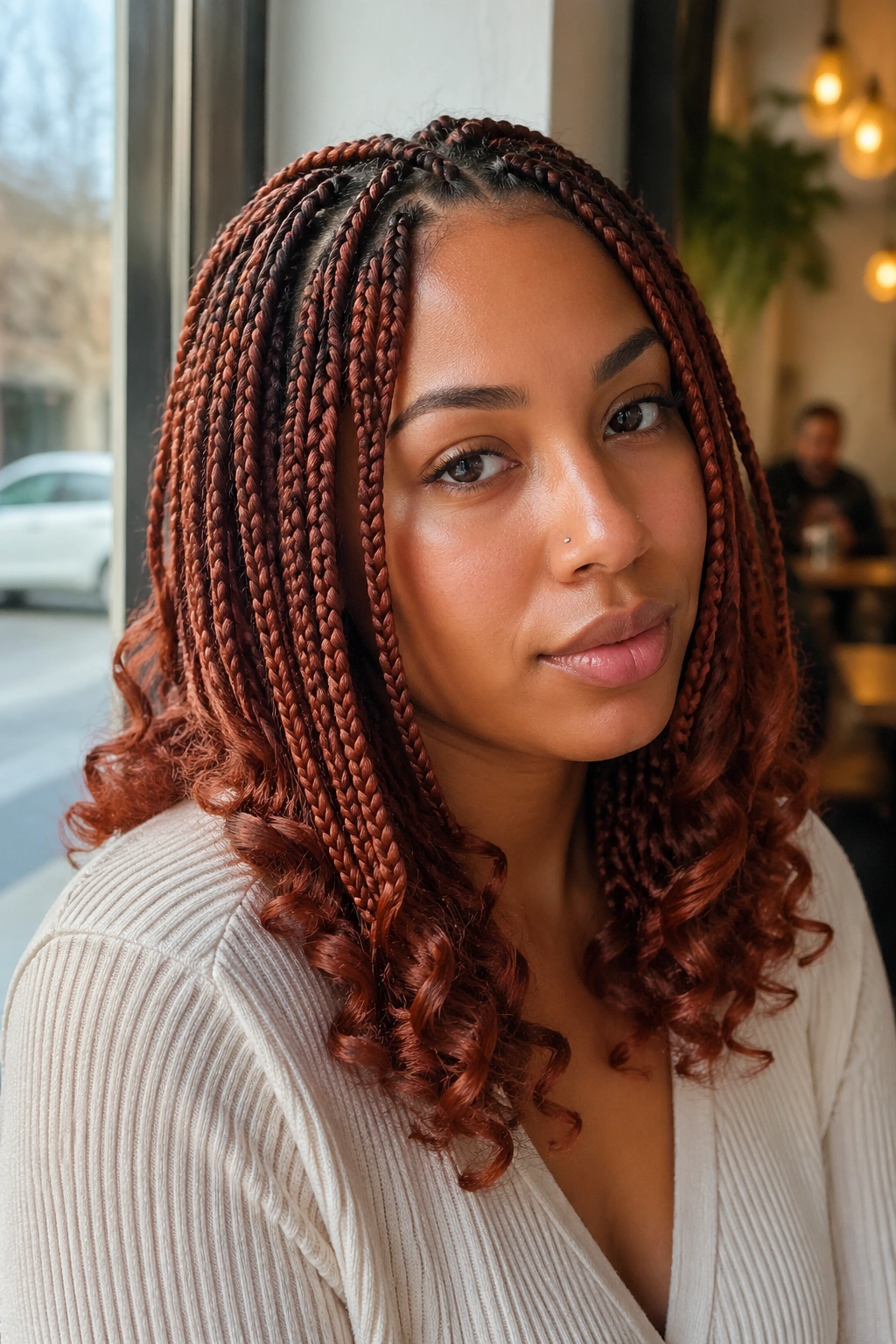
Picture braids that graze the shoulders and curl under at the tips. That little bend changes everything.
Auburn sits between brown and red, which is why it tends to feel easy on the eye. It has enough color to stand out, but it doesn’t demand a full statement outfit. When the ends are curled, the braids stop looking stiff and start moving like hair again, which I always think makes a protective style feel more finished.
The curled ends also help shorten the visual line a bit. Straight waist-length braids can feel heavy if the braids are thick. Auburn with curls breaks that weight up, especially around the collarbone and shoulders.
What to Ask For
- A medium box size so the curls do not get lost.
- Ends wrapped on flexi rods or perm rods before the hot-water set.
- A color mix that leans brown at the root and warmer auburn below.
- A light mousse finish so the curls hold their shape.
Auburn braids are one of those sets that looks calm from far away and more interesting up close. That’s a good balance.
5. Cherry Red Peekaboo Knotless Braids
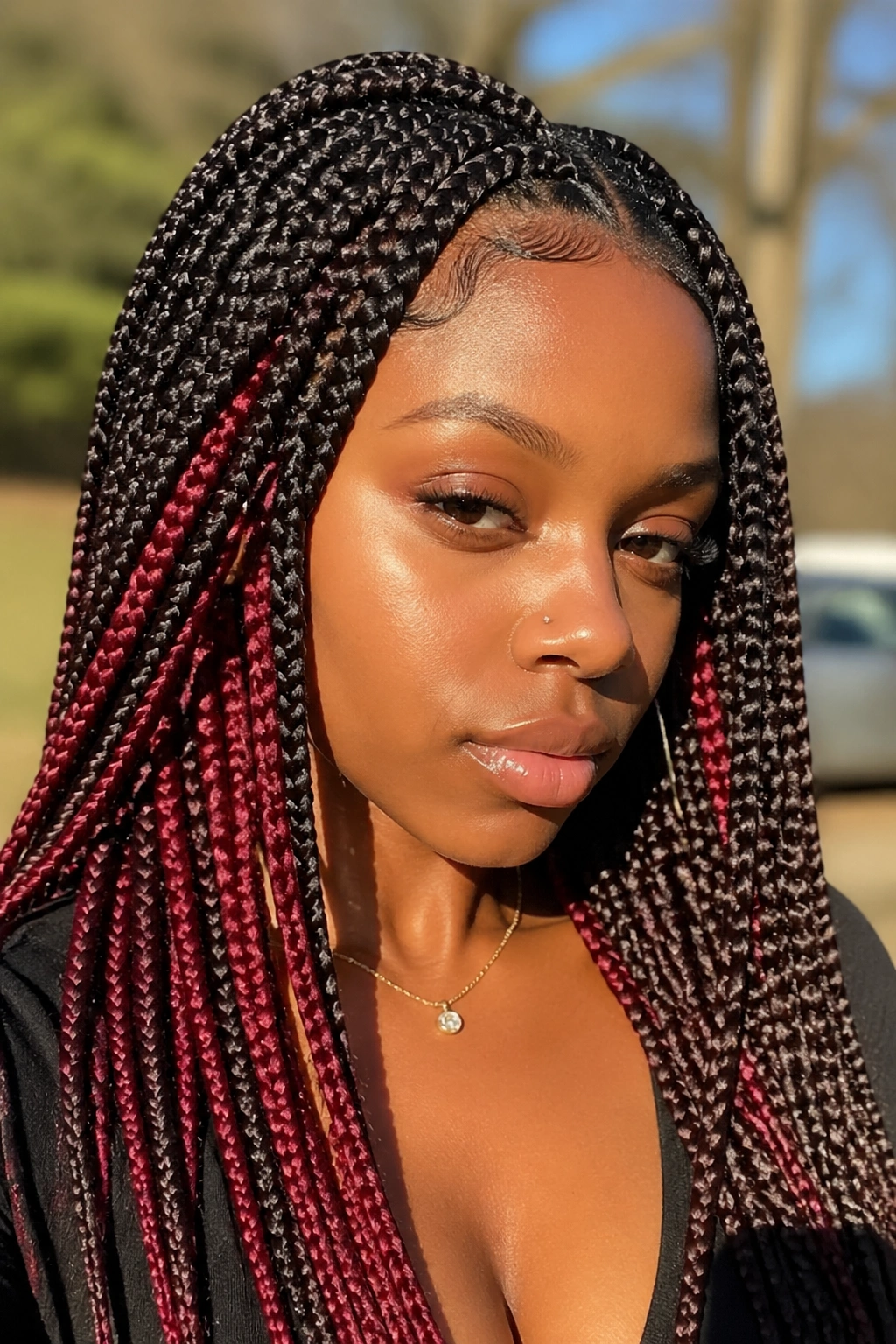
Cherry red peekaboo braids are for people who want a secret in the style. The top layer stays dark — black or deep brown — and the red hides underneath where it only flashes when the braids move.
That placement is smarter than it looks. You get the fun of red without committing every braid to the color. In a ponytail, the cherry pieces show up. In a half-up style, they show up again. Even when the hair is down, the red slips out here and there at the sides and the nape, which gives the whole set a little tension.
I like peekaboo color because it ages well. When the roots grow, the style still looks deliberate. The dark top layer keeps the braid set readable, and the red underneath keeps it from feeling plain.
If you work somewhere that leans conservative, this is one of the easiest ways to wear red without feeling boxed in by it. It is playful, but not noisy. The difference matters.
6. Deep Wine Red Medium Box Braids
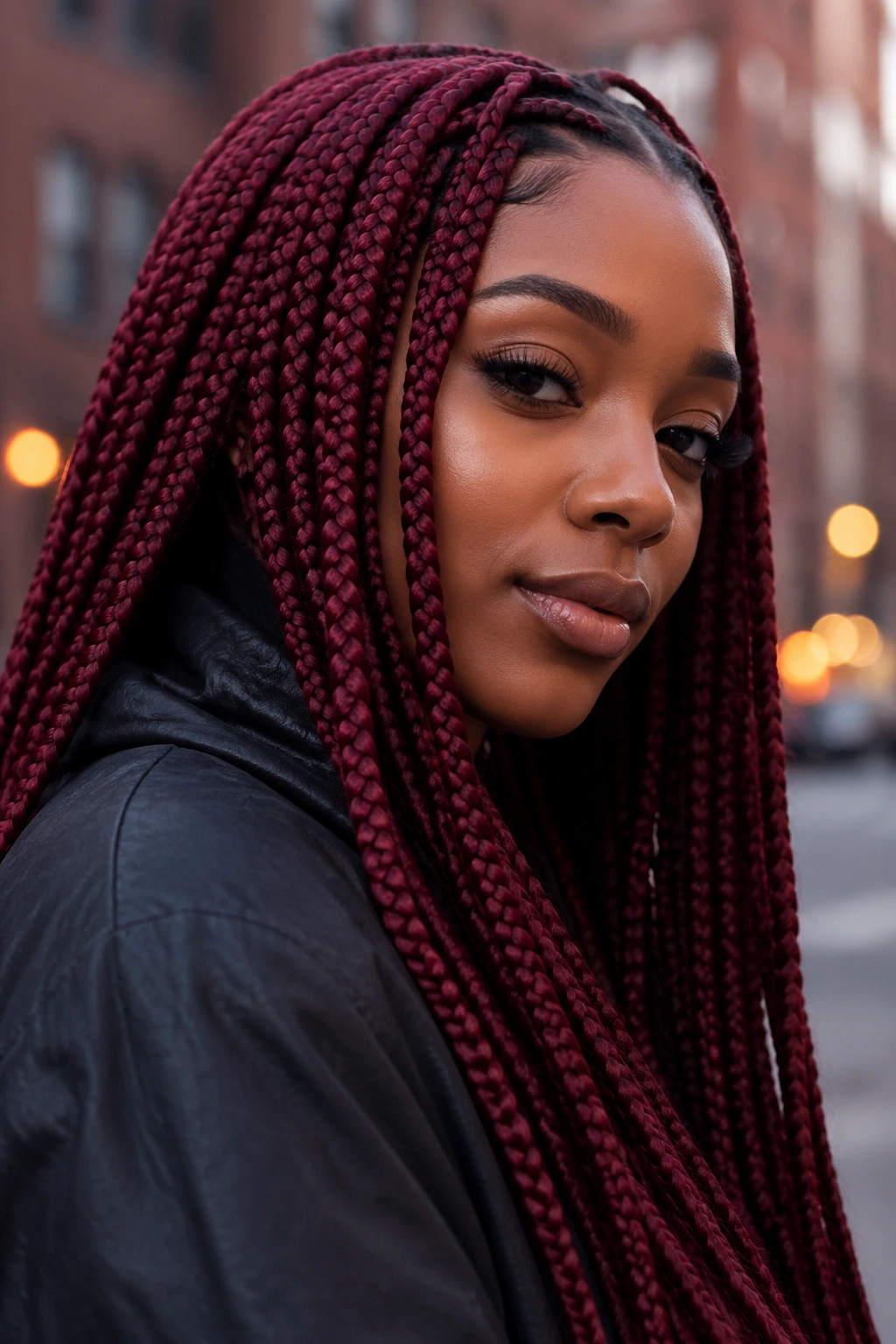
If burgundy feels too plum and scarlet feels too sharp, deep wine red lands in the middle. It is richer than cherry, darker than fire red, and easier to live with when you want color that does not scream at every mirror.
Medium box braids suit this shade best. Tiny braids can make the color look busy, and jumbo braids can flatten it. Medium sections let the red read like fabric — dense, smooth, and a little glossy when the light hits.
This is also the shade I’d choose if you want a braid style that works with simple clothes. A white tee, a black hoodie, a blazer, a satin dress — wine red can sit next to all of them without fighting for attention. It has a grown feel to it.
The one thing I’d watch is shine. Too much product can make deep red hair look dusty instead of rich, especially on synthetic braiding hair. A light foam and a clean scarf at night usually beat heavy oil every time.
7. Black Roots with Scarlet Dip-Dye Braids
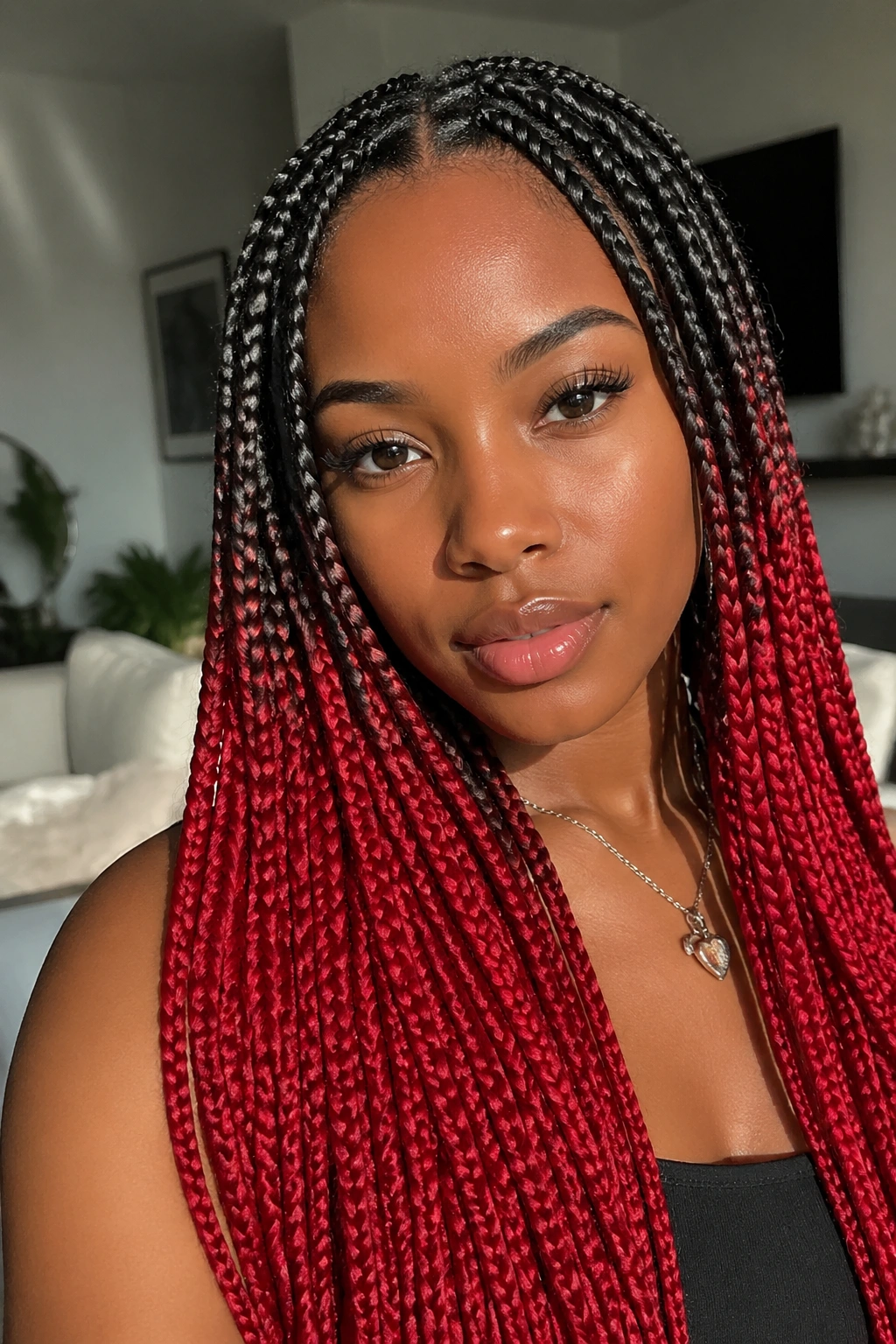
Black roots with scarlet dip-dye ends hit harder than full red because the color arrives late. The eye reads the dark base first, then the scarlet surge at the bottom, and that little delay gives the style its punch.
Why It Hits Harder Than Full Red
The darker root makes grow-out easier to hide. That’s not glamorous, but it matters. A style that still looks clean after two or three weeks is worth more than one that looks amazing for four days and then starts asking for touch-ups.
Scarlet at the ends also gives you movement without a lot of commitment near the scalp. If you pull the braids into a bun or a ponytail, the red gathers where people actually see it.
- Best for: medium to long lengths.
- Best pairing: glossy mousse, a clean middle part, and one statement accessory.
- Best color shape: a sharp transition from black into red, not a muddy blend.
- Best vibe: bold, neat, and a little dangerous in the good way.
Pro tip: Keep the scarlet placement below the shoulders if you want the style to look more wearable during the day.
8. Ginger Ombré Braids with Gold Cuffs
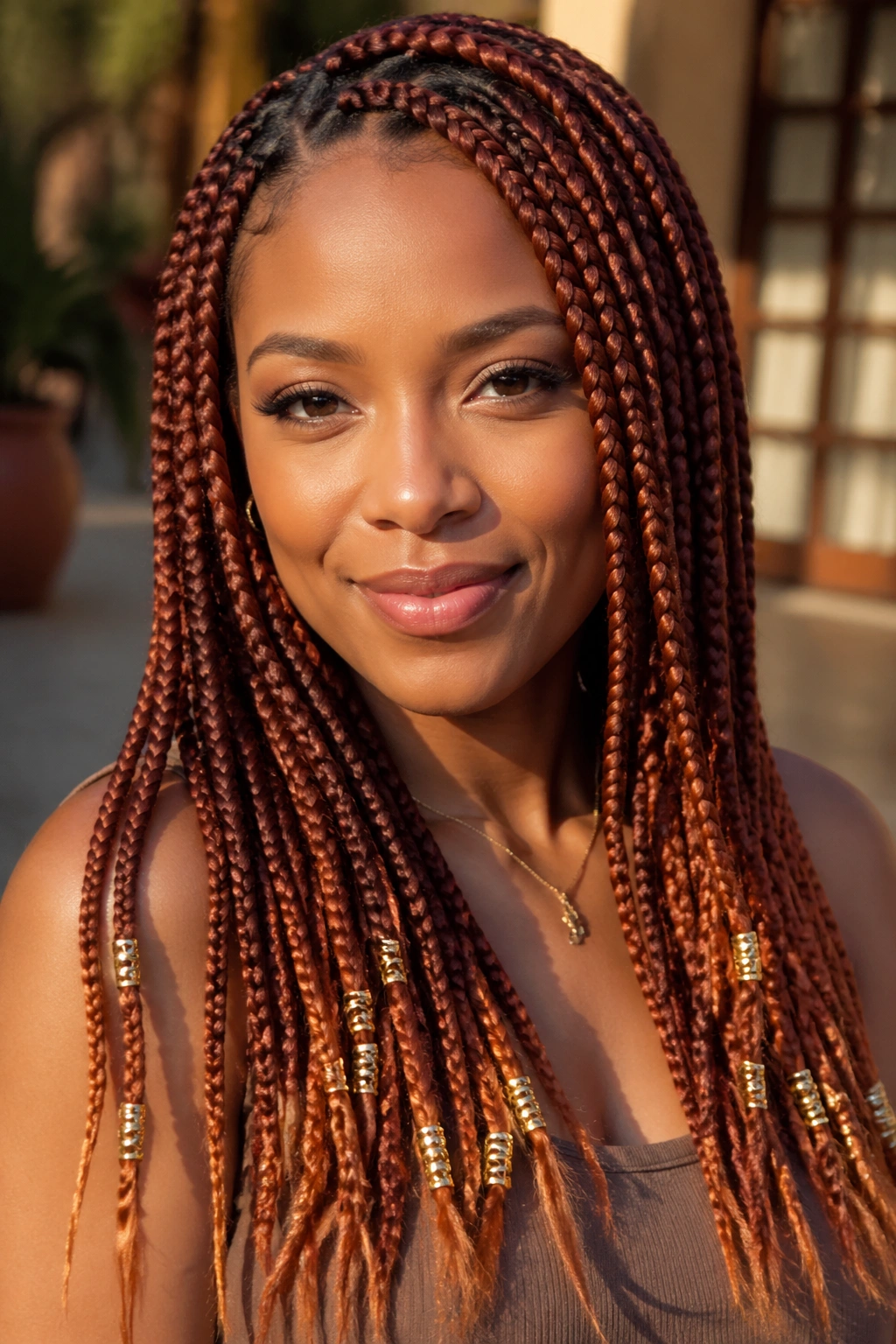
Ginger braid color is warmer than most people expect. It sits in that orange-red-copper range that can make knotless braids feel brighter without turning them neon.
Gold cuffs belong here, but only in small doses. A few well-placed cuffs near the face or near the ends give the ginger something to bounce off. Too many, and the whole set starts looking cluttered. I’d rather see three cuffs used well than twelve thrown on because they were in the drawer.
The color combo works especially well when the braids are medium-sized and the ombré is gradual. If the fade jumps too fast from dark to ginger, it can look striped. A slow transition keeps the braid surface smooth and warm.
This is a nice option for anyone who likes red but wants a sunnier finish. It has energy. It also plays nicely with warm makeup — terracotta blush, brown liner, soft gloss. The hair does not need much else.
9. Maroon Knotless Braids with a Side Part
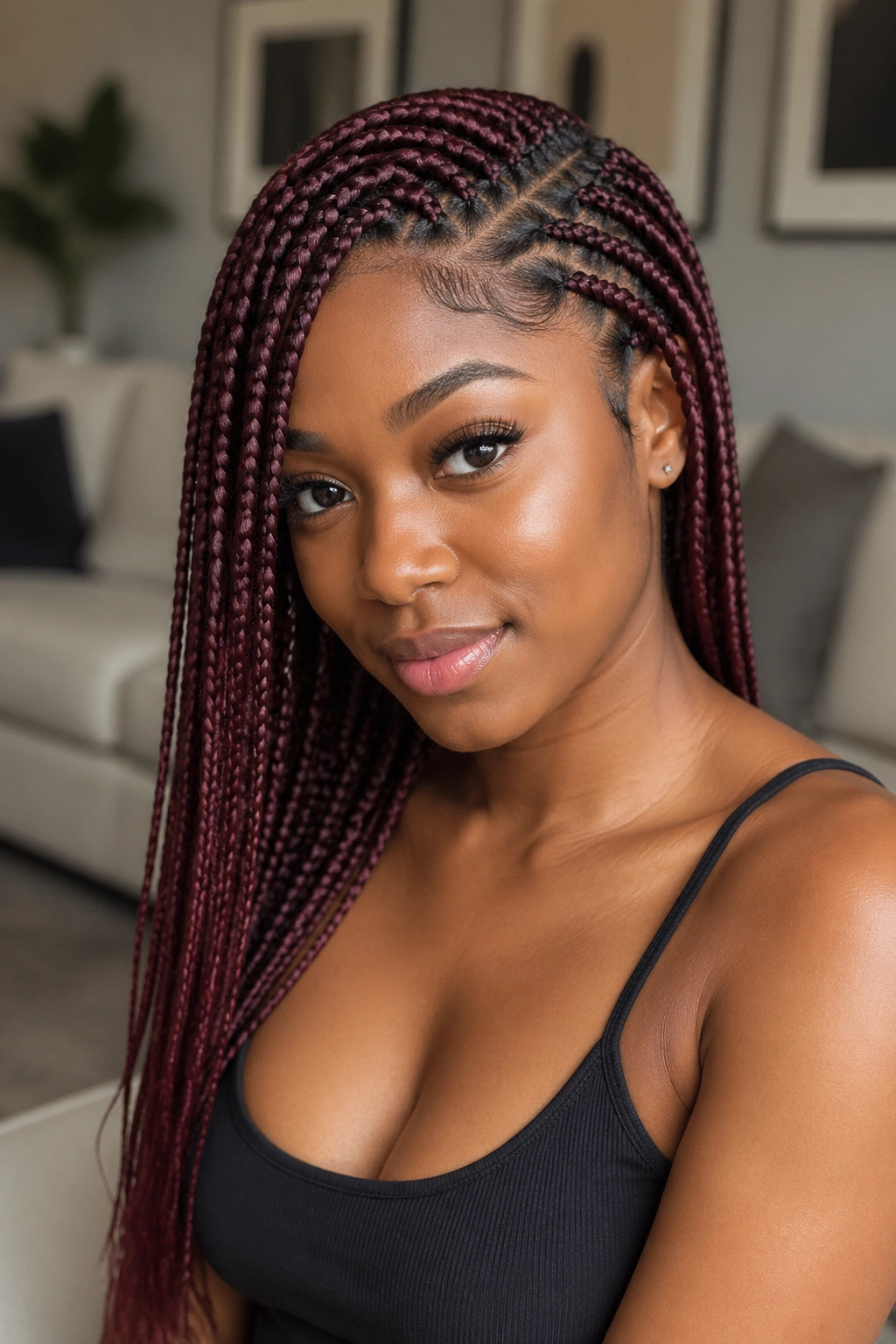
Can a side part change the whole mood of maroon braids? Absolutely.
A clean side part breaks up the weight of the color and gives the braids a softer fall around the face. Maroon is already deeper and moodier than bright red, so the parting does a lot of the shaping work. It keeps the style from looking too square or too symmetrical.
Best Face Shapes and Parting Notes
A side part tends to flatter round and heart-shaped faces because it creates a little sweep across the forehead. It can also work well on oval faces when you want a less expected finish.
- Keep the first two or three rows a touch smaller so the part lays flat.
- Ask for the part to follow your natural growth pattern if your edges are delicate.
- Leave a few slimmer braids near the front if you want movement around the cheeks.
- Use a light edge product only where needed. Too much makes the part look heavy.
Maroon knotless braids are a good choice when you want red with a low voice. The side part gives them shape without making the whole set loud.
10. Sunset Blend Knotless Braids
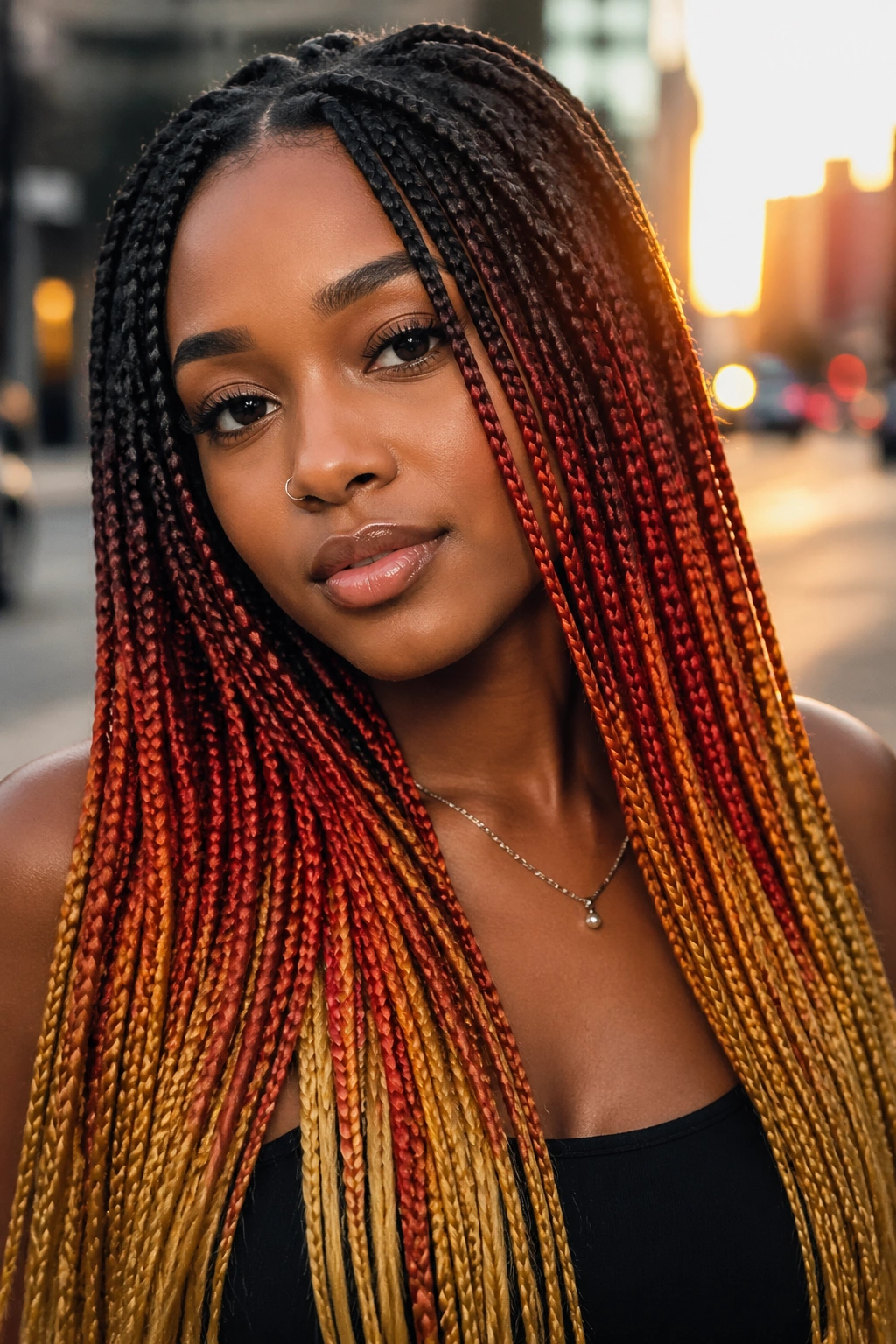
A sunset blend is what happens when black melts into copper, then red, then a whisper of gold at the ends. It sounds dramatic because it is dramatic, but the trick is restraint. Each color needs room.
What Makes the Blend Read Right
The fade has to feel staggered, not striped. If the color switches too fast, you get a hard line that looks more costume than style. A good sunset set lets each shade overlap the one before it by a few inches, so the braid looks like it changed its mind halfway down.
This is one of the few styles where a patient braider matters as much as the hair color itself. You need enough shades in the bundle pile to avoid flatness. Black, copper, red, and a warm blonde or honey tone can all live together if they are placed with some control.
- Best on long lengths, usually past mid-back.
- Best with a middle or slightly off-center part.
- Best worn in half-up styles or loose over the shoulders.
- Best when the ends are left soft, not overly stiff.
There’s a reason sunset blends keep showing up in braid inspo boards. They photograph well in motion because every braid catches a slightly different piece of the color shift.
11. Half-and-Half Black and Red Knotless Braids
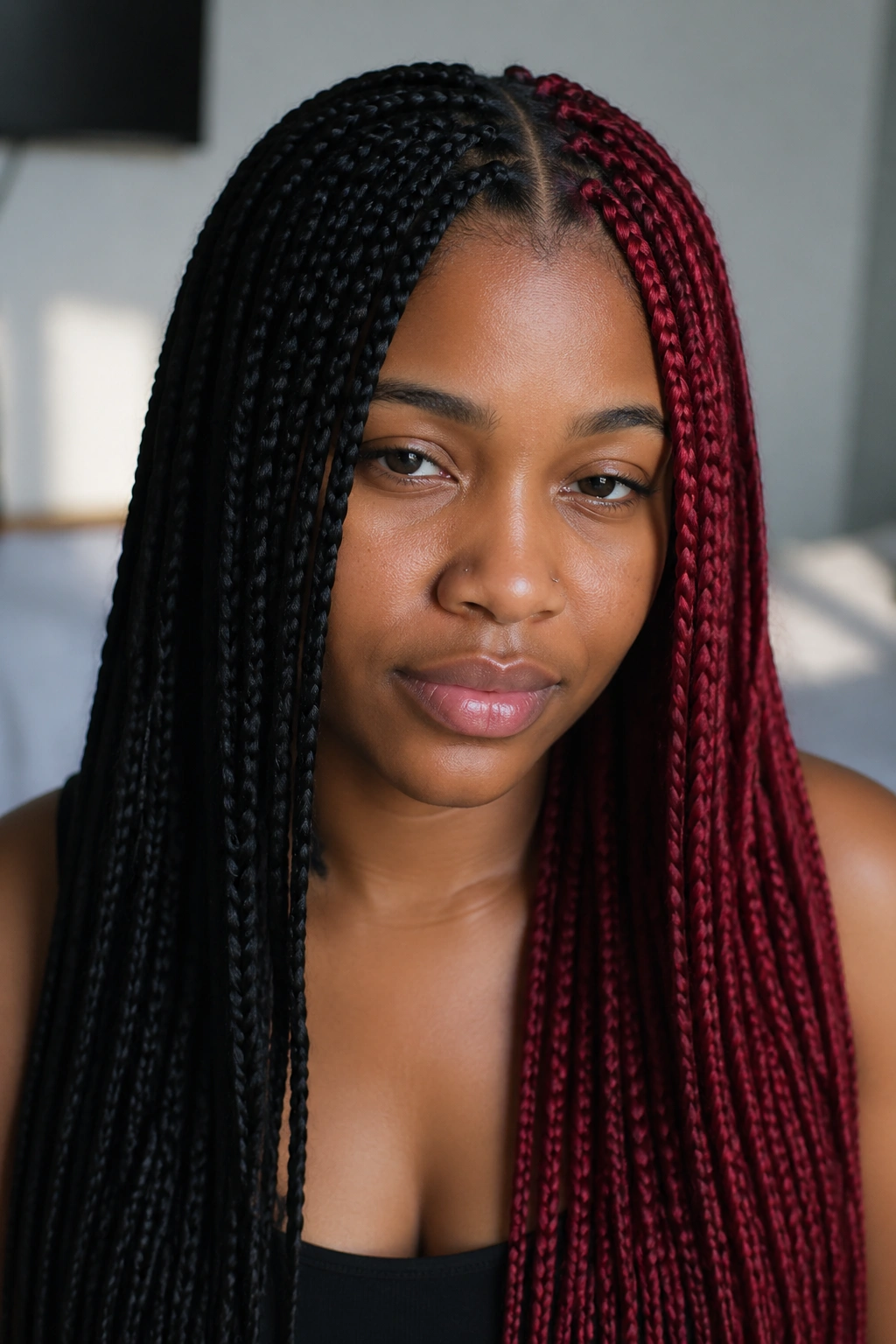
Half-and-half black and red knotless braids are not shy, and pretending they are would be silly. The style works because it is graphic. One side is dark, the other is bright, and the split does the talking.
That clean division needs a crisp part, though. If the line wobbles, the whole effect gets messy fast. A neat center part or a sharp side split gives the colors a job to do. They become part of the structure instead of floating around aimlessly.
I like this style more on medium to long braids than on tiny ones. The contrast needs enough surface area to register from a distance. If the braids are too short, the split can feel abrupt. If they’re longer, the red and black fall with real movement and the difference looks intentional.
You can wear this set with almost no accessories and still look finished. A few cuffs might help, but honestly, the color does the heavy lifting. Keep the clothing simple if you want the hair to stay the focus.
12. Short Red Knotless Bob Braids
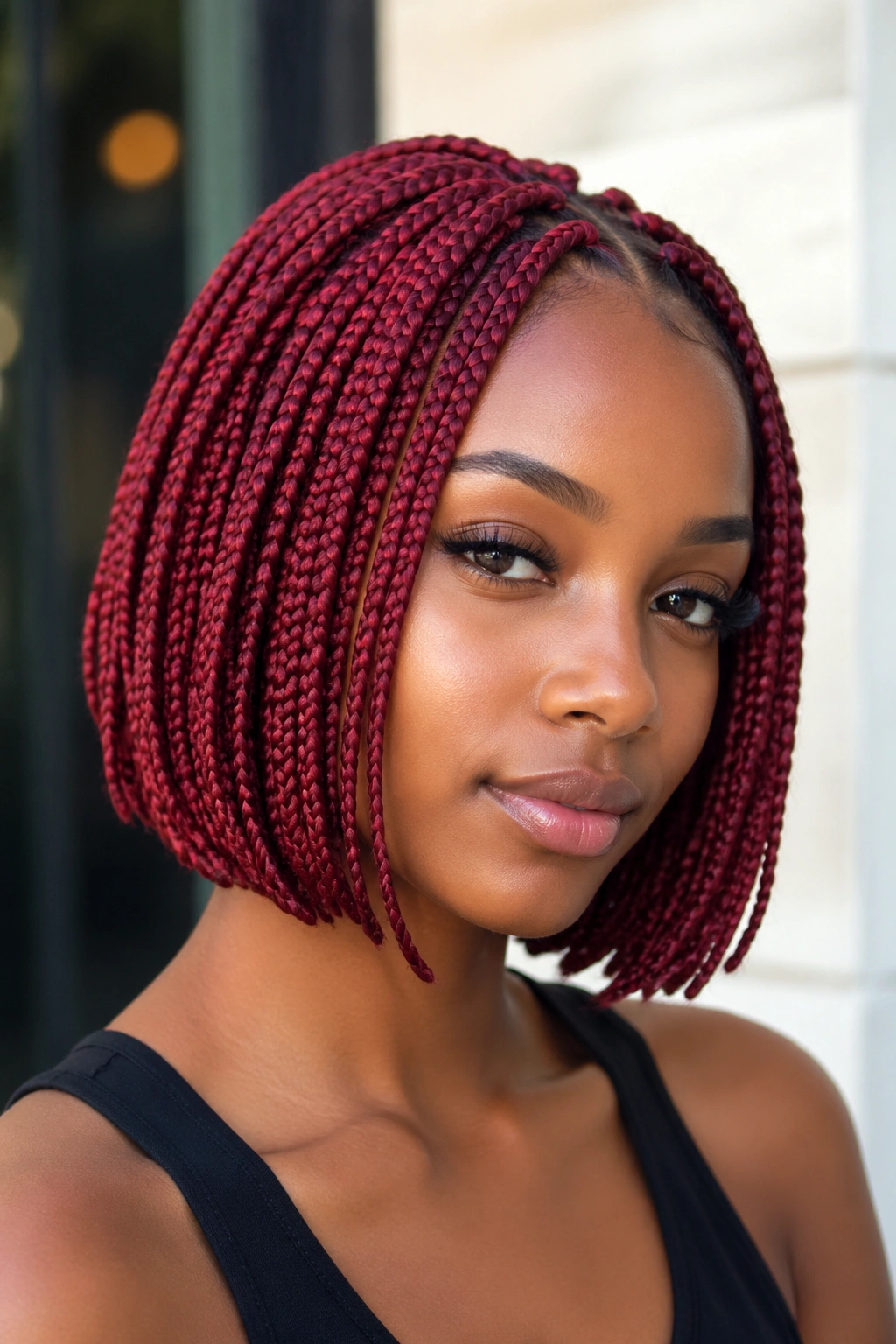
Short red knotless bob braids solve two problems at once: they cut the weight, and they keep the color from taking over the whole head.
A bob is easier on the scalp, easier to wash, and easier to tie up at night. That alone makes it useful. Add red, and the shape gets sharper. The length sits around the jaw or collarbone, which keeps the face open and lets the color frame your features instead of dragging them down.
Why the Cut Matters
A red bob only works if the cut looks deliberate. Choppy ends can make bright color feel messy, especially in synthetic hair. Clean, even ends or a slightly layered finish keep the bob looking crisp.
This is the style I’d suggest to someone trying red for the first time. You get the color payoff without the commitment of a waist-length install. You also get something practical, which is underrated. A shorter set is less likely to feel heavy by the end of the day.
It pairs well with blunt brows, hoop earrings, or a simple lip. The point is the shape. Keep the rest simple.
13. Bronze-to-Red Braids for Warm Undertones
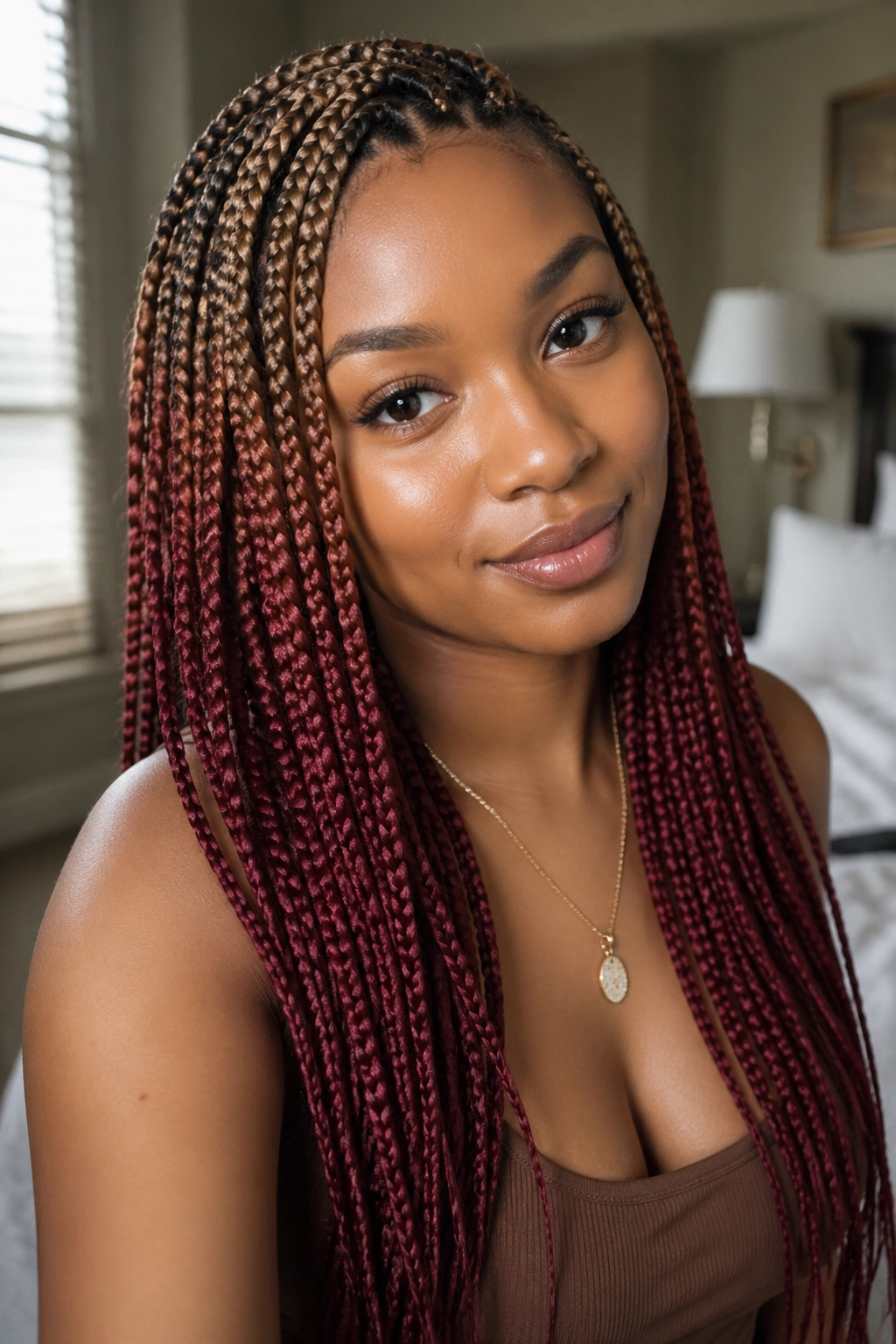
Bronze to red is one of my favorite warm blends because it does not fight the skin; it sits beside it. Bronze acts like a bridge color, which means the red has somewhere to land instead of jumping straight out of the dark base.
Why Bronze Matters
Bronze softens the transition. It turns the fade into a real gradient instead of a color block, and that matters on knotless braids where every part of the braid stays visible.
- Bronze works well when the red is a few shades deeper than candy apple.
- The blend looks best when the bronze runs through the middle third of the braid.
- A three-tone set usually reads smoother than a two-tone set.
- Warm makeup tones — brown liner, brick blush, gold gloss — keep the whole style cohesive.
This style has a sunny feel without going full ginger. If your undertones are warm, bronze can make the red look richer. If your undertones are neutral, it still works because bronze behaves like a softer brown with warmth baked in.
Use the warm colors to your advantage. Don’t pile on extra accessories unless you want the set to get busy.
14. Ruby Red Braids with Beads and Shells
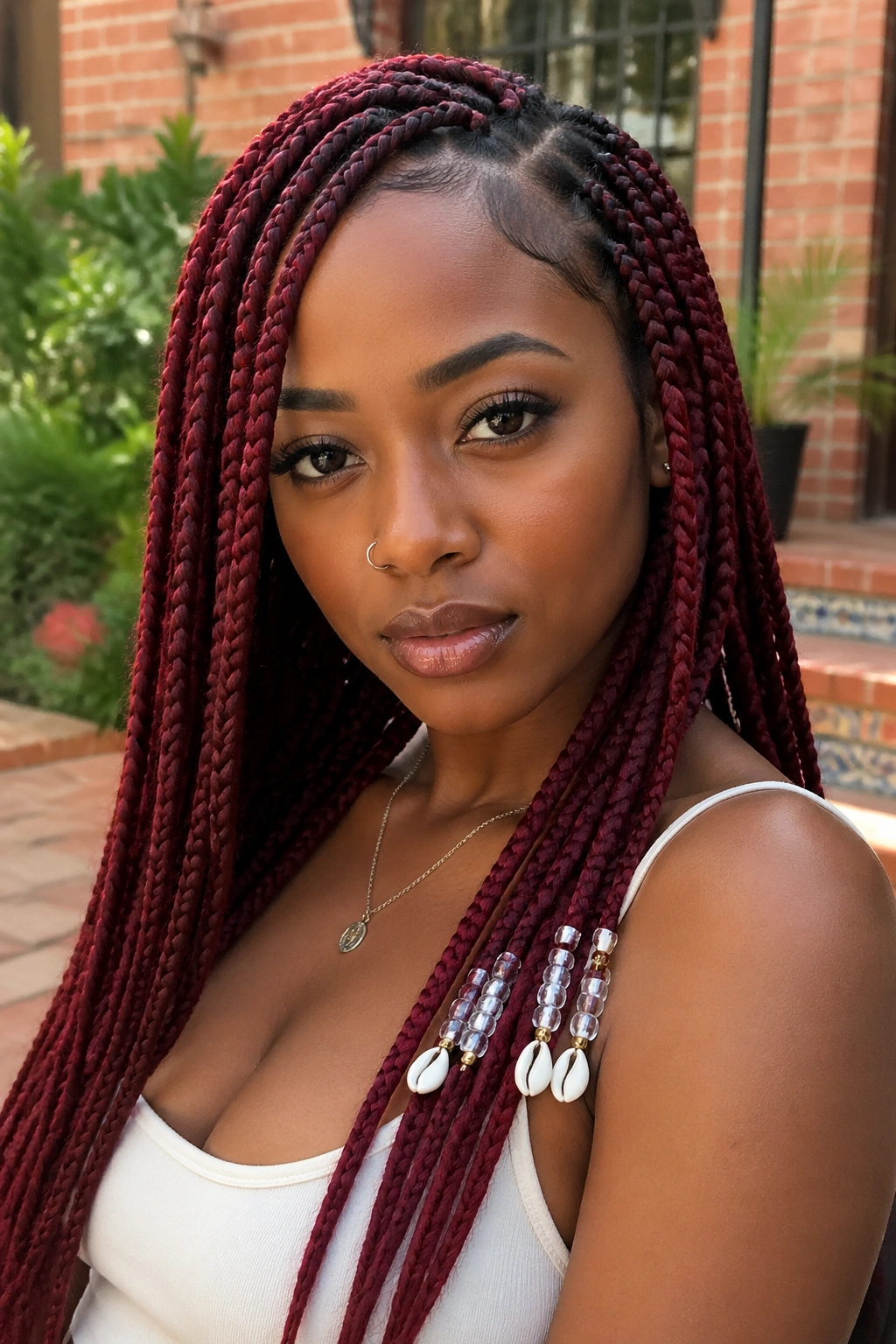
Ruby red braids already carry enough attitude. The accessories should support them, not compete with them.
Clear beads, gold cuffs, and a few shells near the ends can all work here, but placement matters. Put too many beads on every braid and the set starts sounding loud when you move. A better approach is to let one side or one section carry the extras while the rest stays clean. That gives the eye somewhere to rest.
Ruby is a deeper, richer red than scarlet, so it can take on a slightly dressier feel. Beads sharpen that. Shells soften it. Gold does both, depending on how much you use. That gives you a lot of room, which is handy if you want the braids to work for both daytime and evening.
I’d keep the parting neat and the braid size medium or medium-small. Ruby color has enough presence that it does not need oversized sections to feel full. A clean install and one accessory idea are usually enough.
15. Dark Root Braids with Red Ribbon Accents
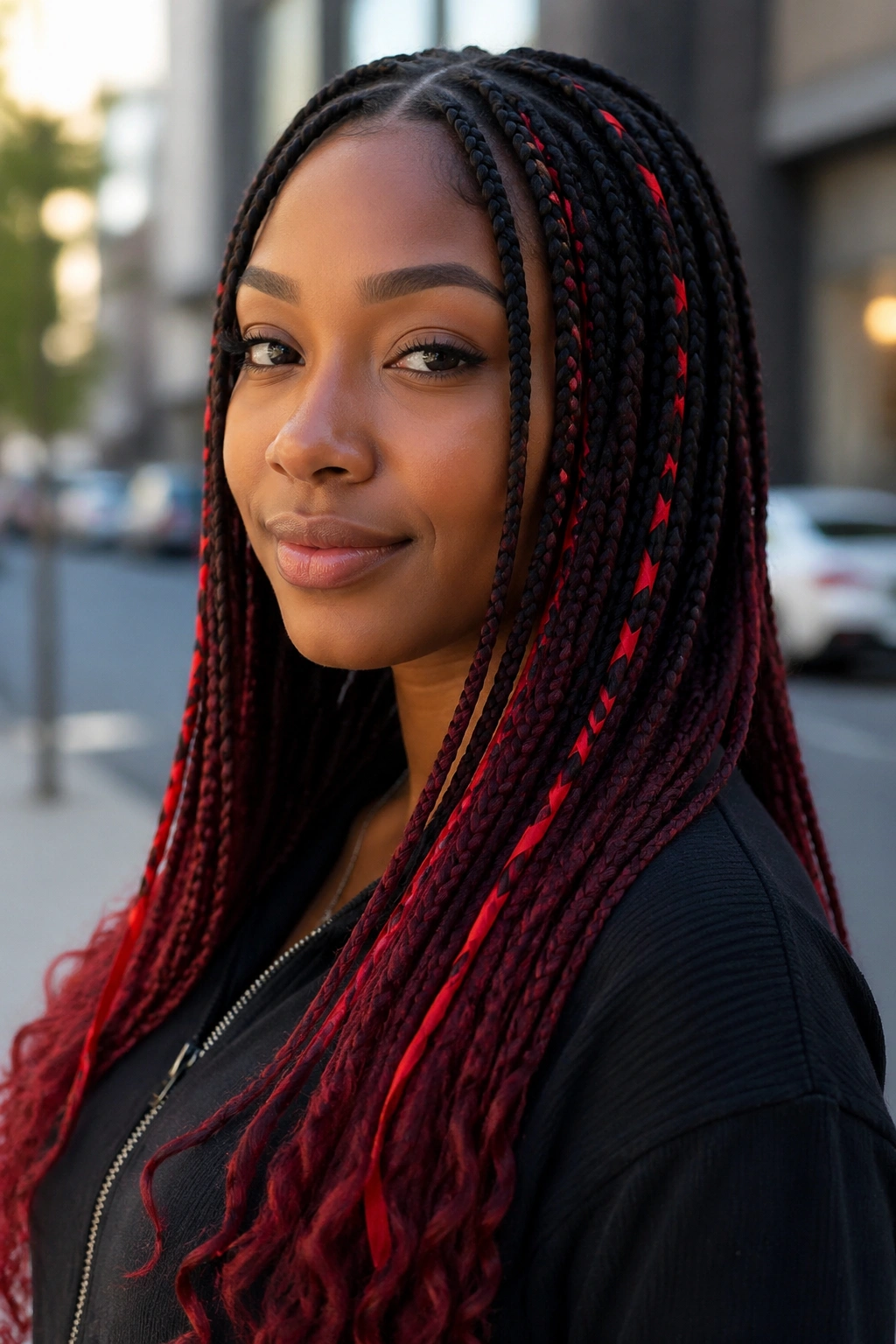
Can ribbon accents save a simple braid set? Yes, if you use them with a steady hand.
Dark roots with red ribbon accents are a smart option when you want a braid style that feels different but not overdone. The braids stay mostly dark, which keeps the install wearable, and the ribbon brings in red without forcing you to commit the whole head to colored hair.
How to Keep It Grown and Not Crafty
The trick is restraint. Thin satin ribbon works better than thick craft ribbon, and you only need it on a few braids. If every braid gets wrapped, the style starts looking busy instead of styled.
- Use ribbon that is about 1/8 to 1/4 inch wide.
- Weave it through every third or fourth braid, not all of them.
- Cut and seal the ends so they do not fray.
- Keep the ribbon shade close to the braid color if you want a softer look.
This style is good for people who like a little extra detail but do not want a permanent color commitment. The ribbon can come out when you’re bored. That’s the nice part.
16. Copper and Burgundy Braids in a High Ponytail
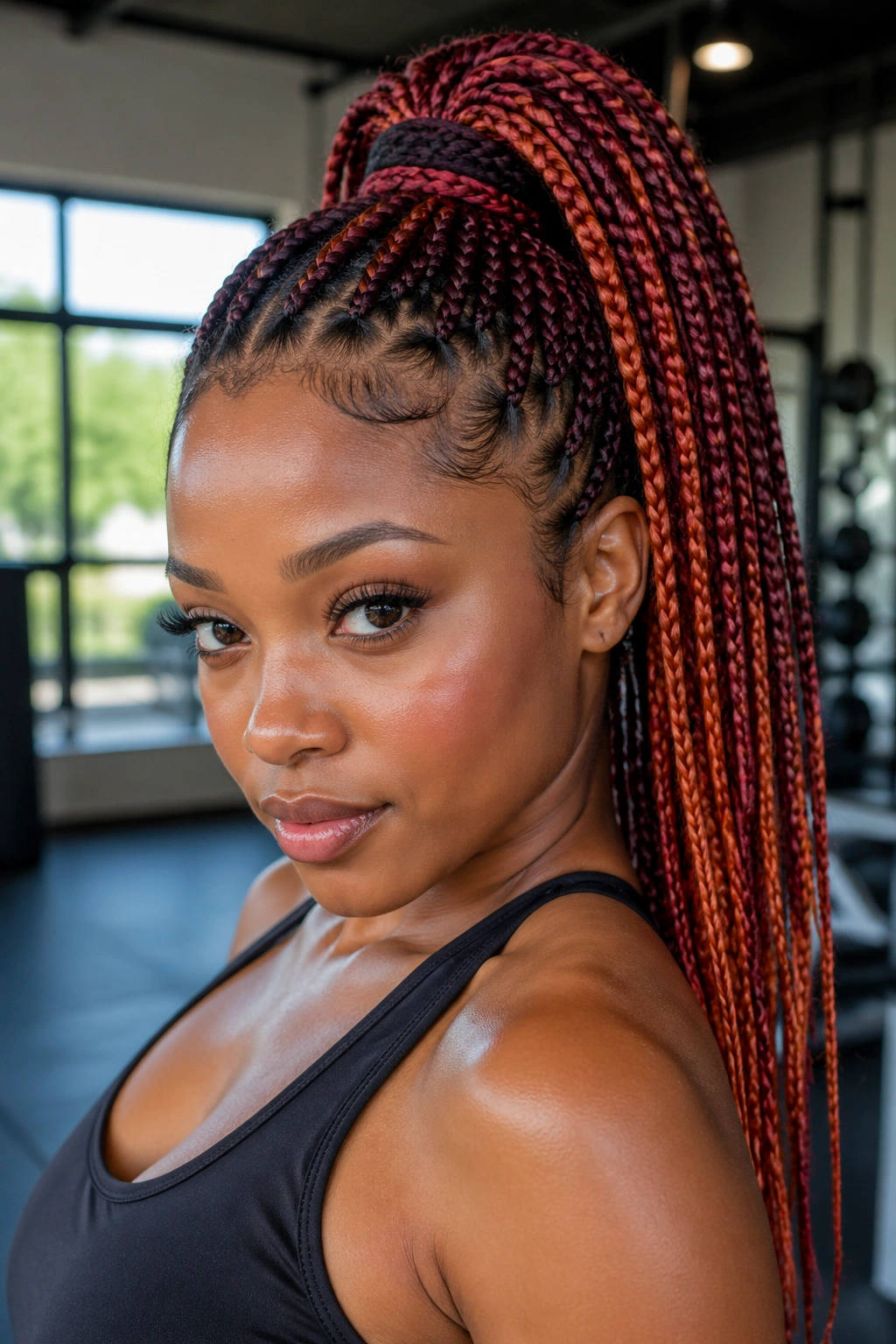
A high ponytail changes everything. It lifts the color, shows the length, and makes the braid tail move like a curtain.
Copper and burgundy are a strong pairing for that shape because they give the ponytail depth. The copper catches light near the top, while the burgundy settles lower and keeps the style from feeling too bright. When the hair swings, the two shades swap places in a way that looks alive rather than static.
How the Ponytail Changes the Whole Look
A high ponytail puts more tension at the crown, so knotless braids help a lot here. The root stays lighter, and the gathered base feels less bulky than a traditional tied knot. That matters if you wear your hair up most of the day.
- Keep the perimeter braids slightly smaller to support the lift.
- Use a bungee or wrap instead of a tight elastic when you can.
- Let the color transition show in the ponytail tail, not just at the base.
- Leave a few face-framing braids loose if you want softness around the front.
This is one of the more versatile red braid looks. It works at the gym, at dinner, and anywhere in between.
17. Fire-Red Knotless Braids with Curled Tips
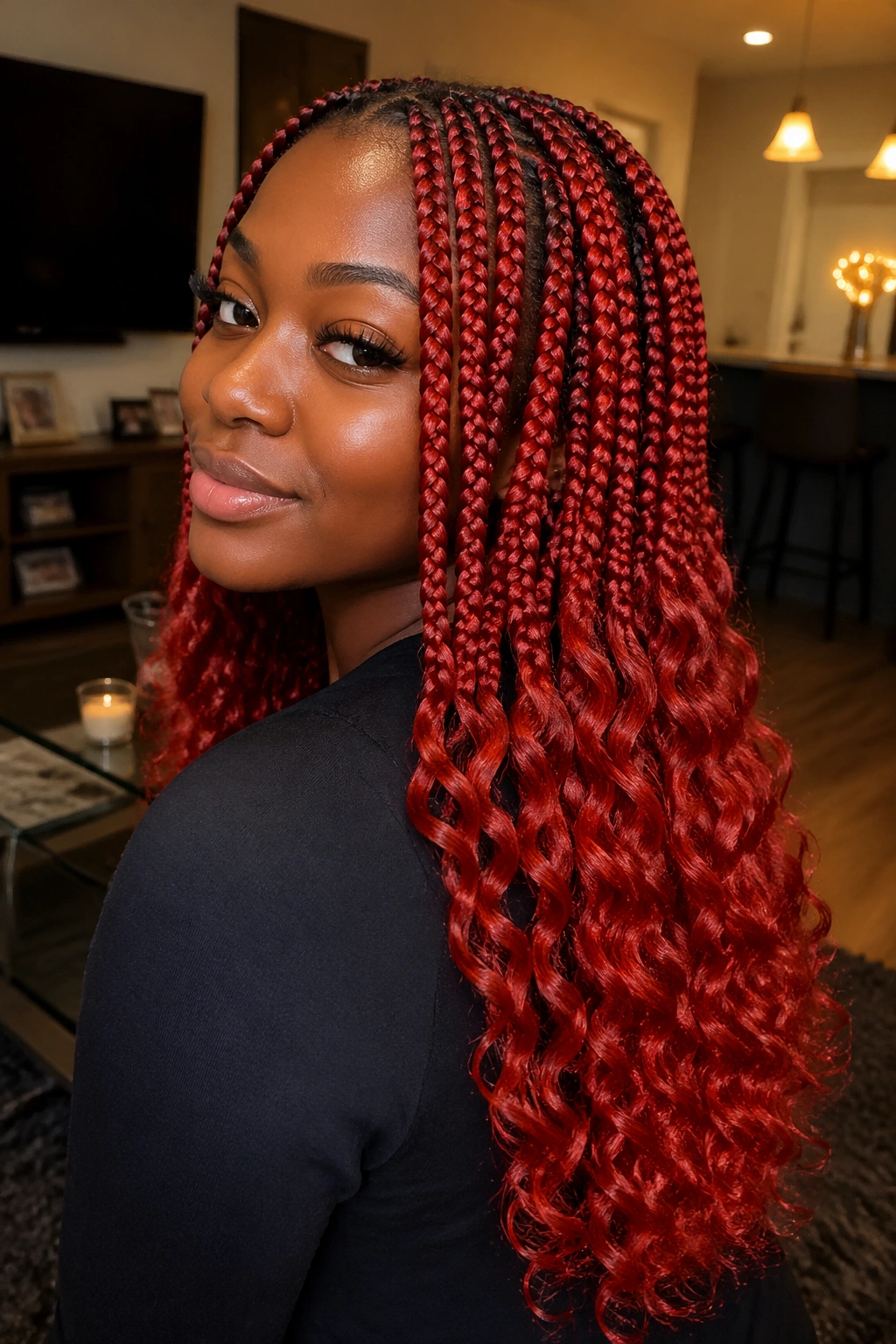
Fire-red knotless braids with curled tips are pure movement. The color is already doing a lot, so the curl at the end needs to feel intentional, not fussy.
Hot water sets, foam wrap, and careful rod placement give the tips enough bend to keep the style from looking blunt. That bend matters more with bright red because sharp ends can make the whole braid set look a little severe. A curl softens the finish and gives the color a place to settle.
I’d keep the braid size medium rather than jumbo. Bright red on huge braids can feel heavy very fast. Medium sections let the curl show and make the hair swing better when you turn your head.
Sleep in a silk scarf or bonnet that protects the ends. If the curls flatten, the whole style loses some of its charm. A little mousse on the tips helps, but do not drown them in product. Bright red hair gets dull when it’s overloaded.
18. Crimson Knotless Braids with Layered Ends
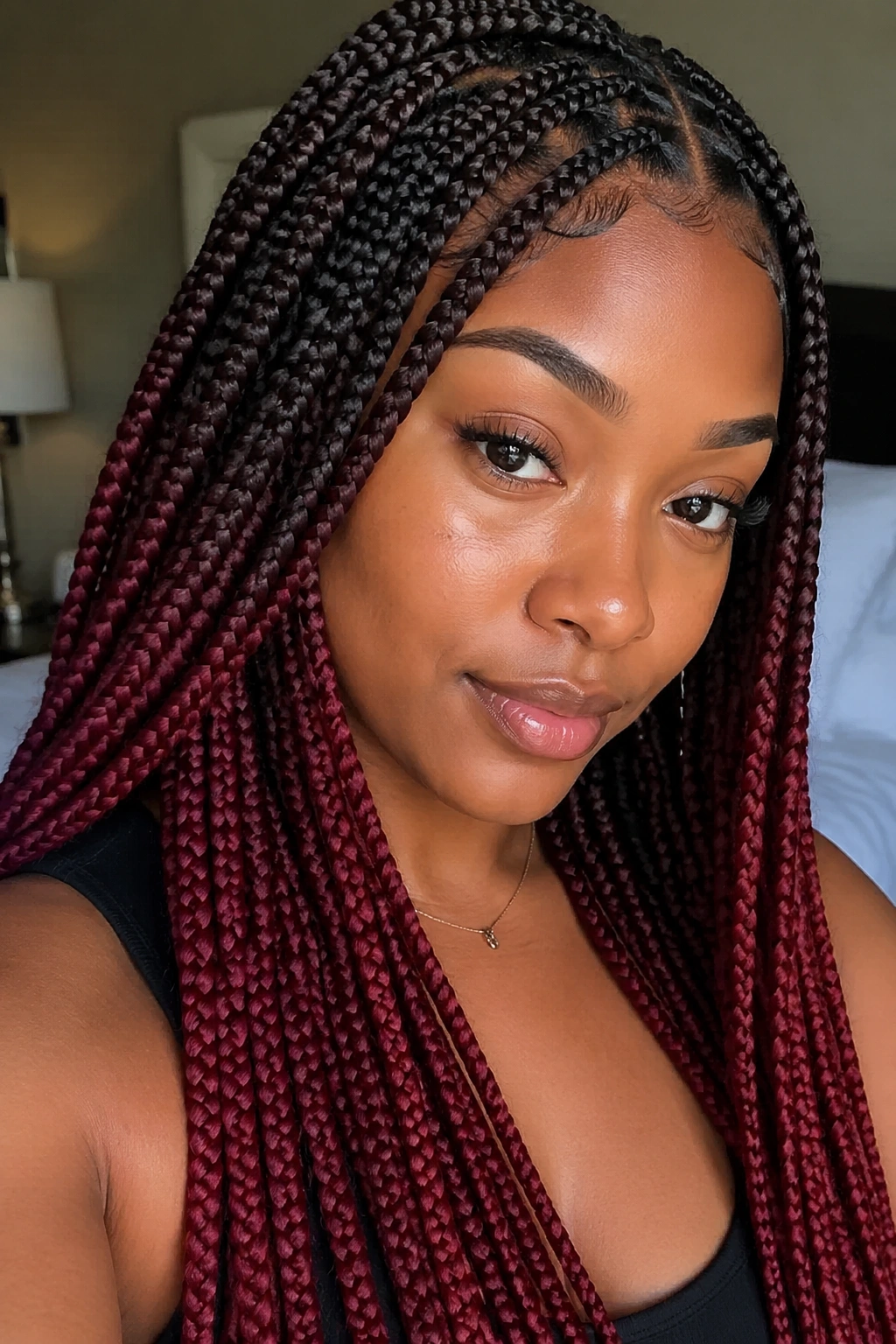
Crimson sits between cherry and burgundy, which is part of why it works so well on long knotless braids. It has heat, but it doesn’t turn into neon. Layered ends keep the length from feeling like one giant curtain of color.
That layered finish matters more than people admit. Long braids can get heavy at the bottom, especially if every section is the same length. A slight stagger in the ends adds motion and helps the crimson read softer when the hair moves. It also keeps the set from looking like a block from the back.
This is the style I’d point to if someone wanted one red braid set that could do almost everything. It looks good with a hoodie, a blazer, a tank top, a dress — whatever. The color has enough depth for daytime and enough edge for night.
If you want the easiest version of the look, ask for a deep crimson base with a slightly darker root and gently layered ends. Clean parting, neat feed-in braiding, and a light finish are enough. The color will handle the rest.
