



Curly ends change box braids fast.
A clean braid line gives you structure; the curls at the bottom soften it, move it, and make the whole style feel less rigid. For Black women who want a protective style that still looks playful at the edges, box braids with curly ends hit a sweet spot between neat and lived-in.
The part people miss is the balance. Braid size, part shape, curl length, and where the curls start all change the final look, and a style that feels gorgeous on someone else can look heavy or lopsided if the proportions are off. Heavy product can wreck the finish, too — the curls go flat, the braid body looks greasy, and the style loses the bounce that makes it work.
Start with the shape that fits your life, not the photo that grabbed you first.
1. Waist-Length Knotless Box Braids with Soft Spiral Ends
Knotless braids are the cleanest place to start if you like a style that feels light at the scalp and soft at the bottom. The braid line sits flatter because there is no hard knot at the root, and the spiral ends keep the length from looking boxy or stiff.
Why It Works
The braid body gives you structure. The curls at the bottom do the rest. That mix matters on longer styles, because waist-length braids can drag visually if the ends are blunt or too dense.
- Ask for medium-sized parts, about the width of a pinky finger, so the curl shape still shows.
- Leave the last 4 to 6 inches curled, not just the final inch.
- Use water wave or deep wave extension hair for the loose ends.
- Keep the loose curls away from the hot-water seal so they do not go limp.
Best tip: Smooth the ends with a light mousse, then let them air-dry before you touch them too much.
2. Chin-Grazing Box Braids with Tight Curly Tips
Short braids can look sharper than long ones. When the length stops around the chin or just below it, the curls frame the face instead of hiding it, and that makes the whole style feel crisp.
This length is also kind to your neck. No braid hair brushing your collarbone all day, no long tails getting trapped under a seatbelt, and no heavy swing every time you turn your head. The curly tips keep the cut from looking blunt, which matters a lot when the overall style is compact.
Ask for the braid body to stop about 1 inch below the jawline so the curls land where you want them. If the curls start too high, the style can puff out at the cheeks. If they start too low, you lose the softness that makes the look work in the first place. Keep the curl tight enough to read as a deliberate finish, not a leftover piece of hair.
3. Triangle-Part Box Braids with Fluffy Curly Ends
Why bother with triangle parts? Because the pattern is half the style. The little points and angles show through the scalp, and that geometry gives box braids a sharper feel than the usual square grid.
Triangle parts also make the curly ends look more intentional. Straight rows can feel calm and classic; triangle parts add a bit of edge, especially when the ends are full and soft instead of thin and stringy. The contrast is the whole point.
How to Ask for It
Tell your stylist you want clean triangle sections, medium density, and curled ends that start low enough to keep the braid body neat. If the braids are too chunky, the triangles get lost. If they’re too tiny, the pattern is hard to see from across the room.
A style like this loves a middle part or a crisp off-center part. It also photographs well under bright light, because the shapes read clearly along the scalp and the curls soften the bottom line.
4. Side-Swept Box Braids with Deep Curl Tails
If your last install felt too symmetrical, a side sweep fixes that fast. The part line moves the eye, and the curly tails keep the shape from feeling stiff or overworked.
I like this version when someone wants a little drama without adding more length. The braid mass can sit on one side, the curls can spill over a shoulder, and the whole style suddenly has movement. It also helps if one side of your face feels stronger than the other and you want the hair to lean into that.
- Ask for a deep side part, not a soft one.
- Keep the braid length at shoulder to mid-back so the side sweep does not get heavy.
- Leave the loose ends curled for 4 inches or more.
- Add a few cuffs near the front if you want the part to stand out.
The style looks best when the side with more hair still feels controlled. Loose, yes. Messy, no.
5. Mid-Back Box Braids with Blunt Braids and Curly Tips
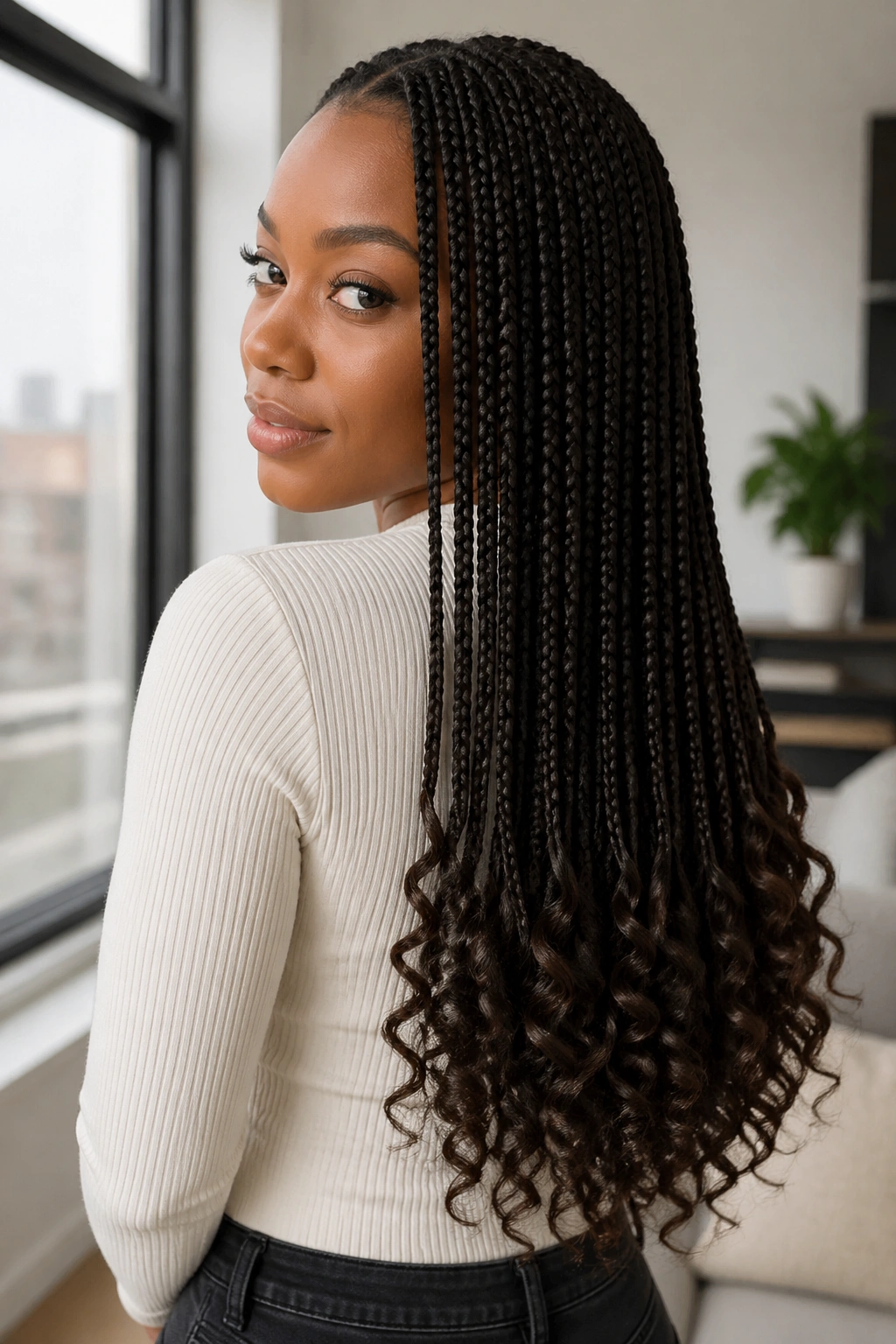
Mid-back length hits a useful middle ground. It gives you enough length to play with, but it does not drag the way waist-length braids can. The blunt braid body keeps the style tidy, and the curly tips stop the hem from looking like a straight curtain.
This is one of those styles that looks better when it moves. When you walk, the braids swing a little, then the curls catch at the bottom and make the whole thing feel lighter. That small shift changes the mood. It keeps the style from reading too serious.
The trick is to keep the curls consistent. If one section is tightly curled and another hangs loose, the ends start looking uneven in a way that is hard to ignore. Ask for the curls to begin at the same point on every braid, usually the last 2 to 3 inches, so the finish feels clean. A little mousse and a silk scarf at night go a long way here.
6. Jumbo Box Braids with Loose Curly Ends
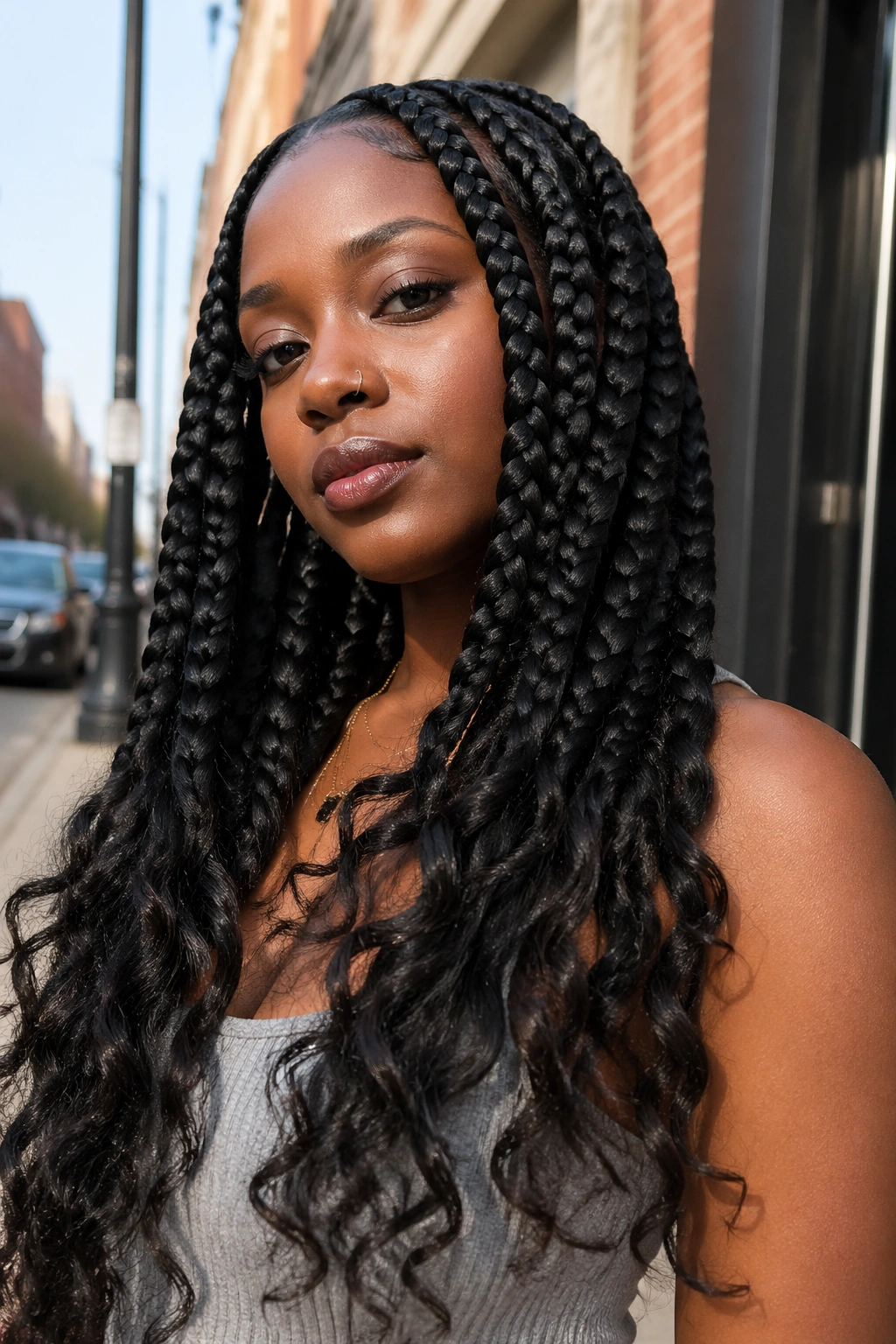
Unlike small braids, jumbo box braids are about shape first. You see the braid from across the room, which means the curly ends have to be wide and soft enough to match the scale of the braid itself.
This style is a good fit when you want fewer braids on your head and a faster install. The curls at the bottom do a lot of the visual work, so the style does not need extra color or beads to feel finished. It already has presence.
I prefer jumbo braids on people who like bold lines and do not mind a little more weight. If your scalp is tender, ask for the parts to be slightly larger and the braid length to stop around the chest or upper back. The curls should be loose, not tight ringlets, or the ends can look out of step with the bigger braid body. That mismatch is what ruins a lot of these.
7. Half-Up, Half-Down Box Braids with Curly Ends
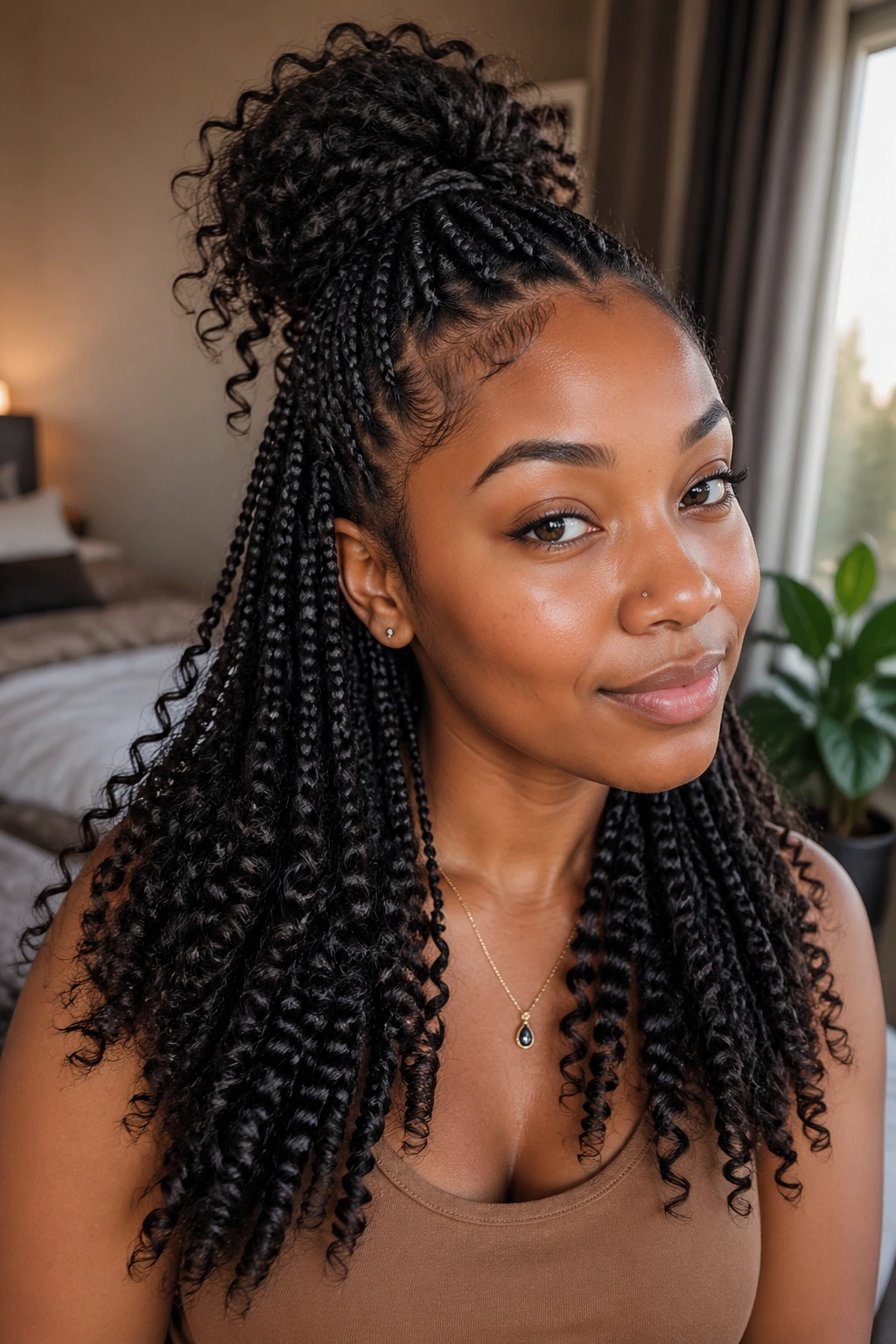
A half-up, half-down braid style is the easiest way to make curly ends feel deliberate. The top section gets lifted, the bottom stays loose, and the curls fall where people can actually see them.
This works especially well if you like wearing braids on busy days. Pull the top half into a puff, a top knot, or a wrapped ponytail, and the style instantly looks put together. The curly ends keep it from feeling too severe, which matters when the top half is slicked back.
No one wants a ponytail that pulls by lunchtime.
Use a wide, snag-free elastic or wrap the base with braid hair so the front does not feel tight. If your edges are fragile, keep the top section a little softer and lower than you think you need. The curls can carry the style; the root does not need to be yanked flat to death.
8. Honey Blonde Ombré Box Braids with Curly Ends
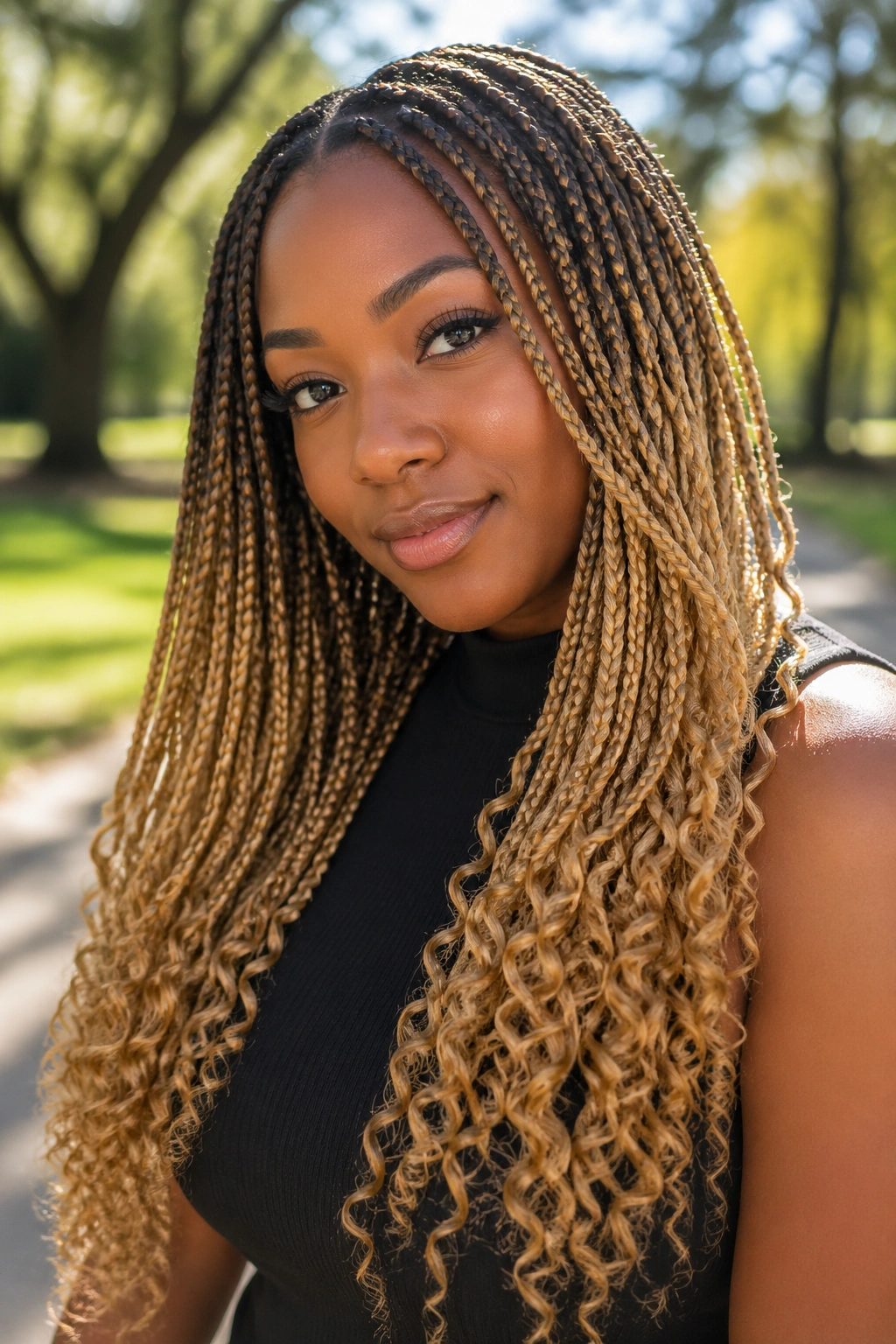
Honey blonde changes the whole mood of box braids. The color catches the curls at the tips in a way that darker shades do not, so the ends read warm, bright, and a little soft even when the braid body stays neat.
The ombré version works because the roots stay grounded while the lower half shifts into caramel, gold, or honey. That gradation keeps the style from looking flat. With curly ends, the lighter color gets a second life, since the spiral shape shows off the different tones inside the hair.
If your skin has warm or neutral undertones, honey blonde often looks especially smooth against the face. Cooler complexions can wear it too, but a darker root helps keep the contrast from getting too sharp. Ask for the lightest shade to live mostly at the ends, not all over the braid, unless you want the whole style to read bright. Too much blonde can wash out the curl detail.
9. Shoulder-Length Box Braids with Face-Framing Curly Pieces
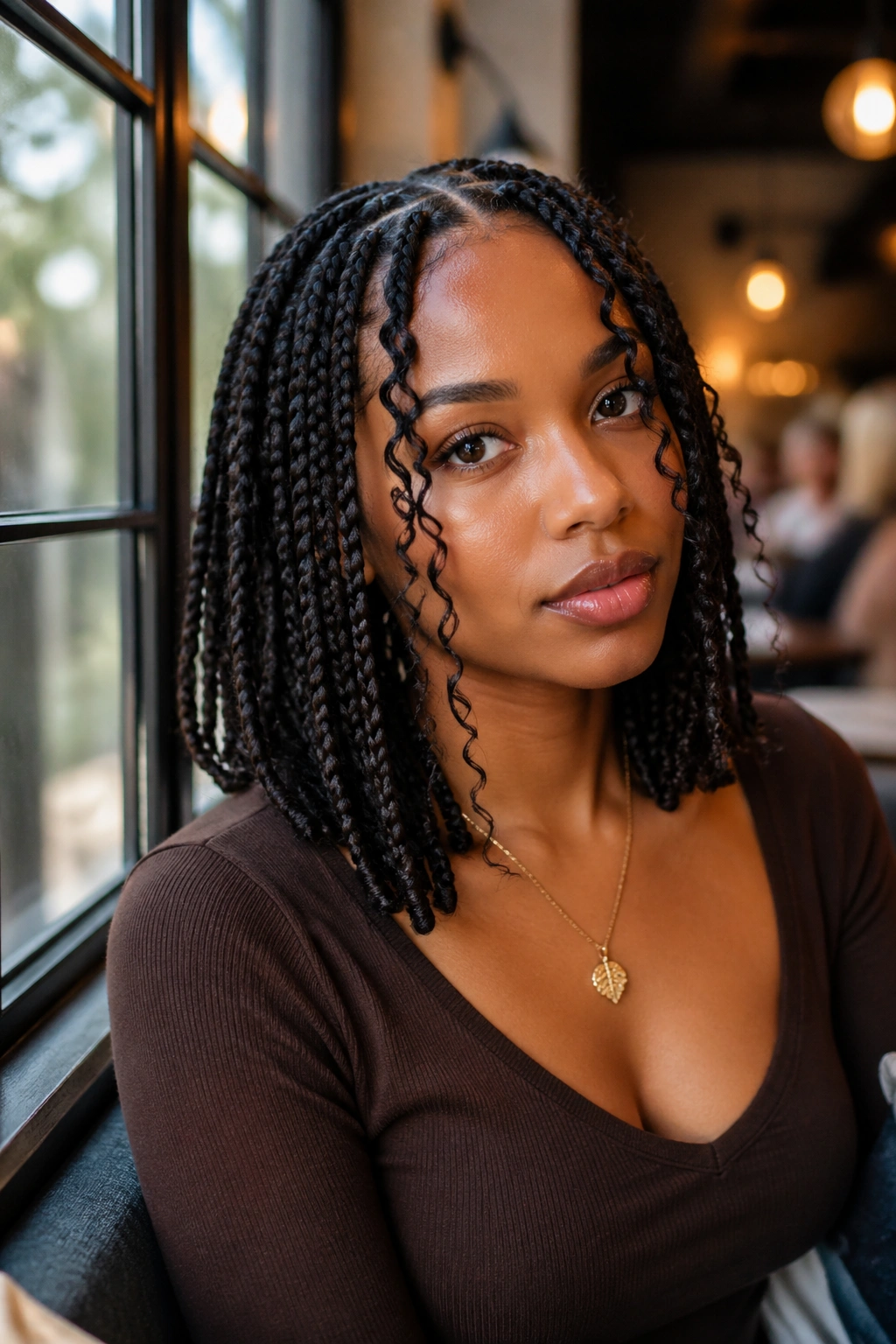
A shoulder-length set can look almost tailored when you leave a few curly pieces around the face. The length stays practical, the shoulders stay free, and the face-framing curls keep the style from feeling boxy.
This one is good when you want movement without a lot of hair on your back. The curls near the face break up the line from temple to jaw, which matters more than people think. A clean frame can make the whole style feel lighter, even if the braids themselves are medium-sized.
Small Details That Matter
- Keep the braids at shoulder length, not collarbone, if you want the curls to land above the sweater line.
- Leave 2 to 4 face-framing pieces a little looser than the rest.
- Choose a curl pattern that matches the ends instead of fighting them.
- Keep accessories minimal near the front so the curls stay the focus.
This is one of the easiest ways to make box braids feel softer without changing the whole structure.
10. Small Box Braids with Wispy Curly Ends
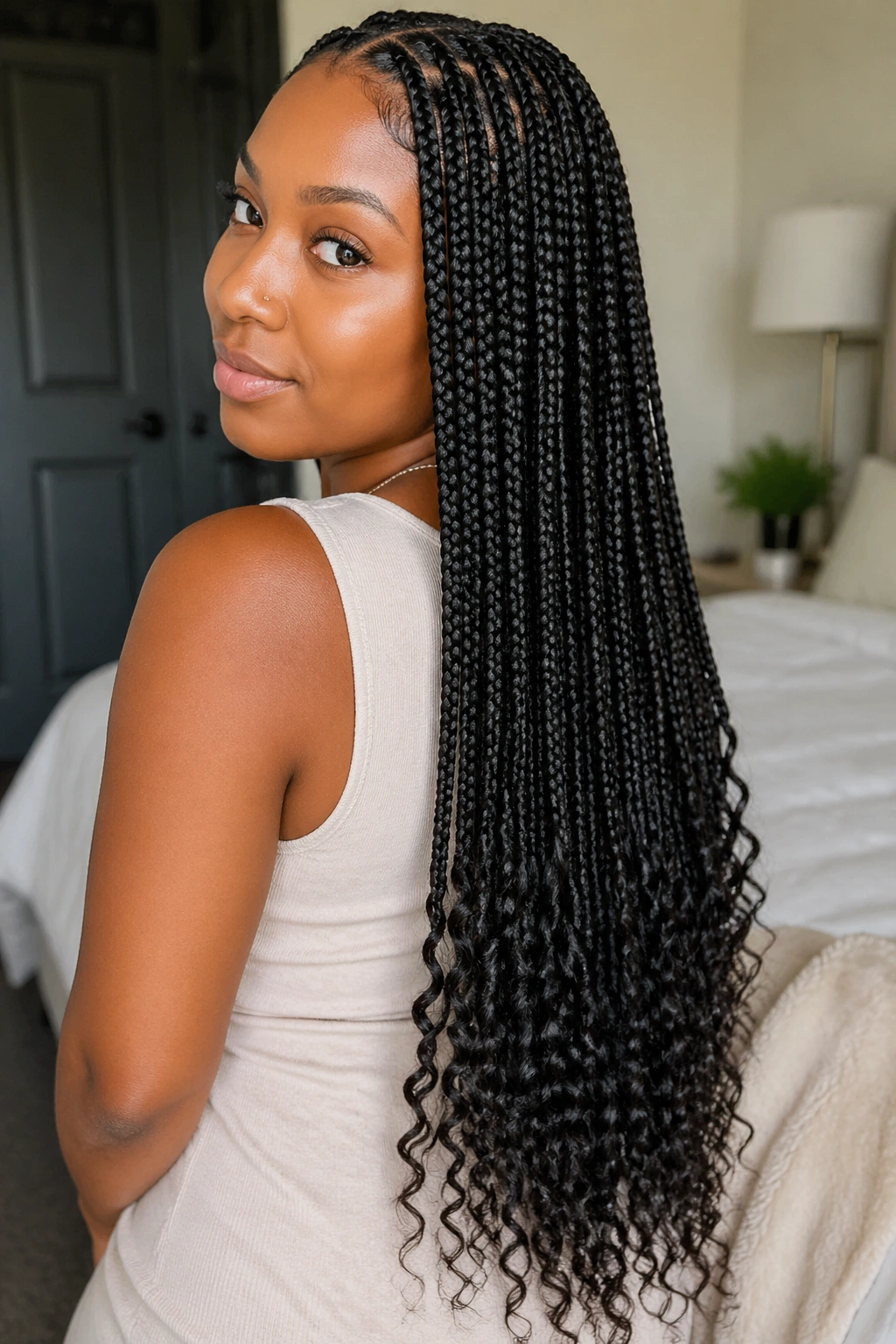
What makes small box braids with curly ends worth the chair time? Movement. Lots of it. The braids are fine enough to fall like a curtain, and the wispy ends keep the overall look from turning into a heavy sheet of hair.
The downside is time. Small braids take longer to install, and they can tug if they’re pulled too tight at the root. Still, if you like detail, this version pays you back. The little pieces sway separately, the curls break up the bottom edge, and the whole style looks airy even when the braids are dense.
The Trade-Off
You do not need extra-long hair for this style to read well. The braid size already gives you texture. What matters more is keeping the curls light and letting them start low enough that they do not bulk up the length. If the loose ends are too thick, small braids can start to look fuzzy instead of soft.
A satin scarf helps here. So does a fingertip amount of mousse on the ends, nothing more.
11. Boho Box Braids with Mixed Curly Pieces
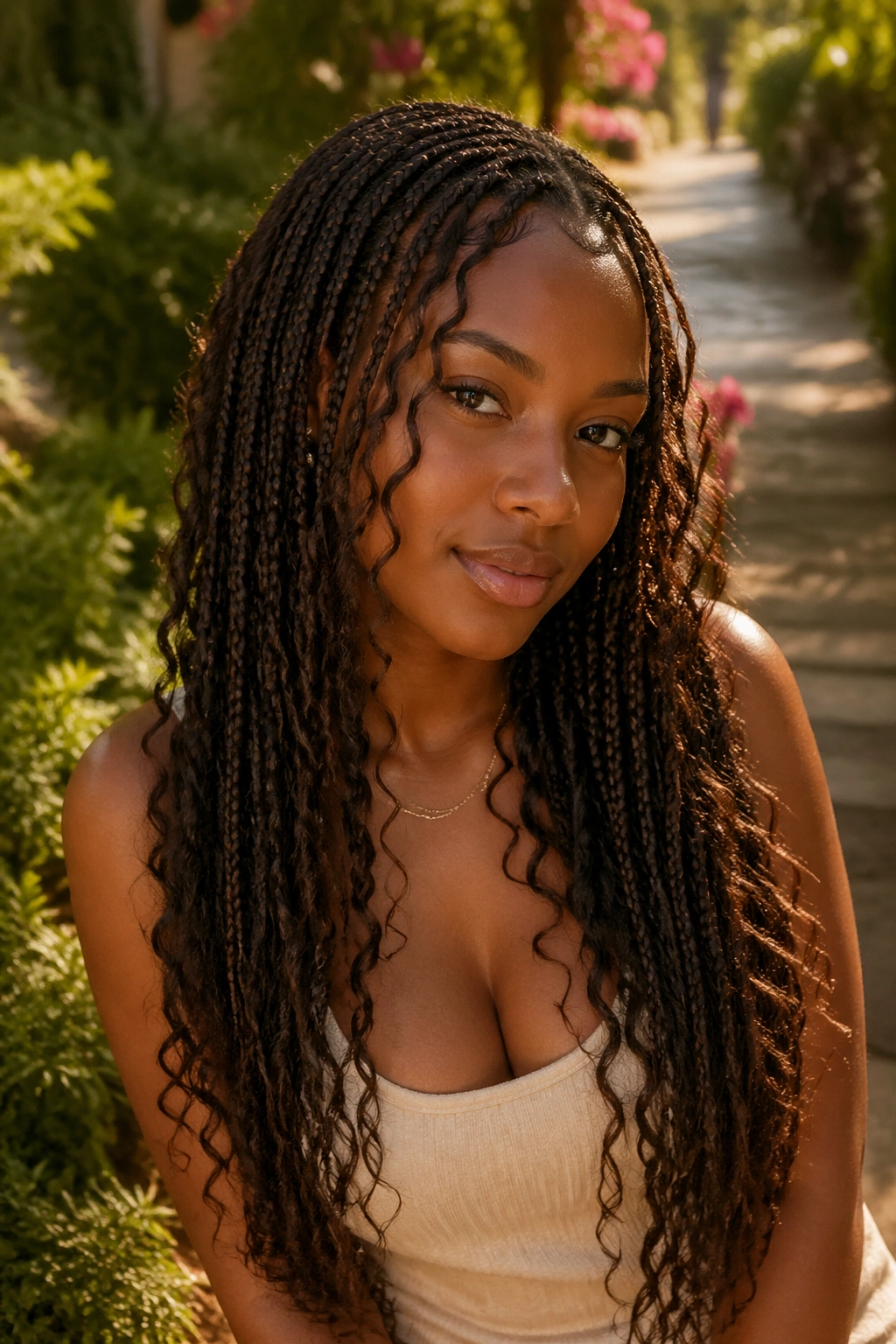
Boho box braids are for people who do not want the braid to look too perfect. Some strands stay loose, some ends curl, and the whole style feels a little more lived-in than a standard install.
That looseness is the point. The curls are not only at the very bottom; they’re mixed through the style in a way that makes the braids move when you move. It gives you a softer silhouette, especially if you like hair that looks a little textured even on a quiet day.
The best version uses two curl patterns: one for the ends and one for the loose pieces tucked between the braids. If they match too exactly, the style can read flat. If they clash too much, the hair looks busy. A soft wave for the body and a tighter spiral at the tips usually works well.
This style does need a careful hand at night. Tossing it around like a regular braid set will flatten the loose texture fast.
12. Layered Box Braids with Face-Framing Curly Strands
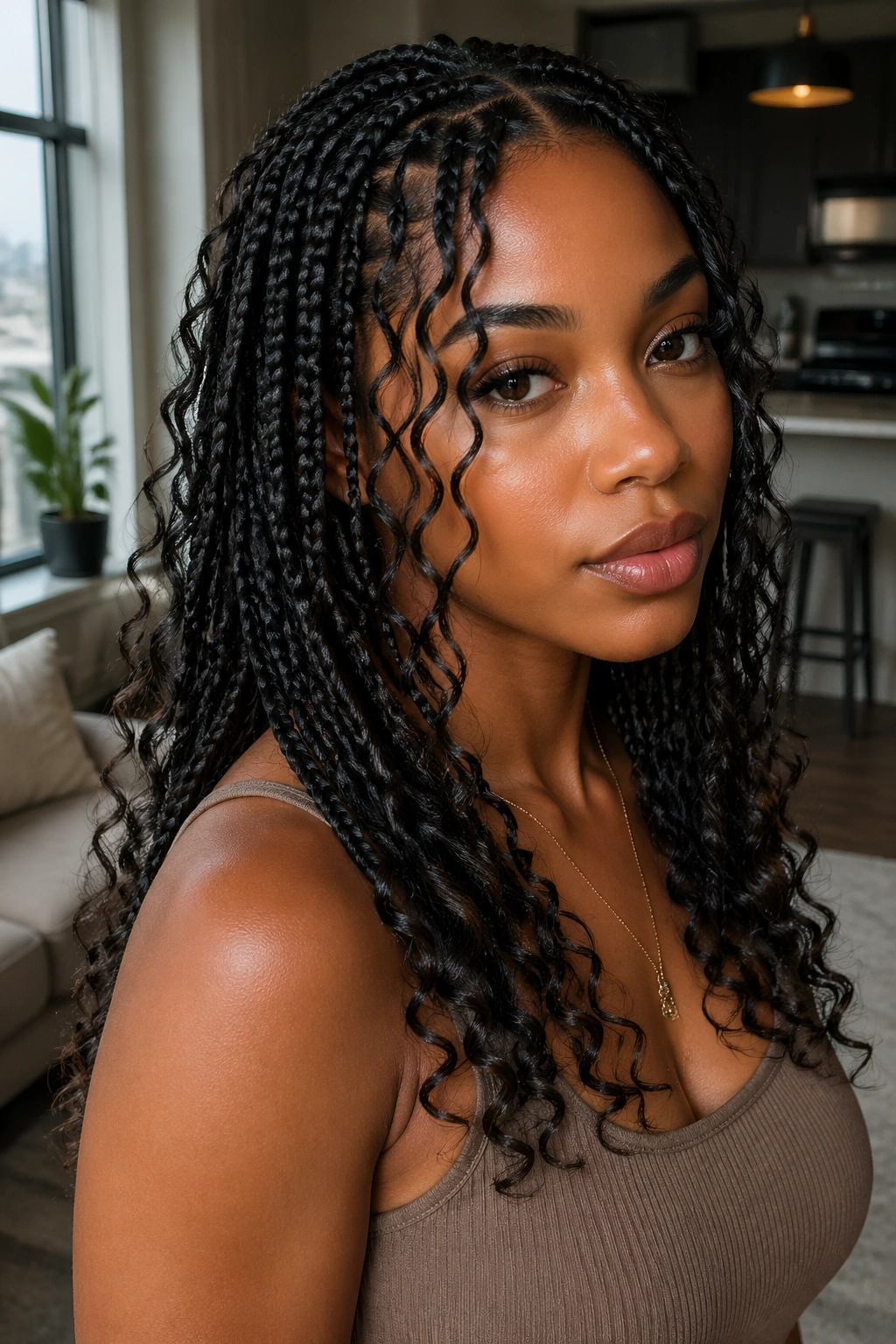
A layered cut changes how the braids fall. Instead of one straight line across your back, the hair breaks into shorter and longer levels, and the curly ends make that difference easier to see.
This works especially well if you hate the blocky bottom edge that some braid installs create. Layering takes away some of the weight, while the curls at the ends keep the style from feeling choppy. Around the face, the shorter layers can land near the cheekbone or chin and soften the whole look.
Best For
- People who want shape without losing length
- Round or square faces that need a softer outline
- Medium to long installs that can handle layered movement
- Anyone who dislikes a straight, heavy hemline
Ask your stylist to stagger the lengths by 2 to 4 inches rather than cutting them all into tiny steps. That gives you shape without making the style look hacked up. The curl finish should follow the layers, not fight them.
13. High Ponytail Box Braids with Curly Ends
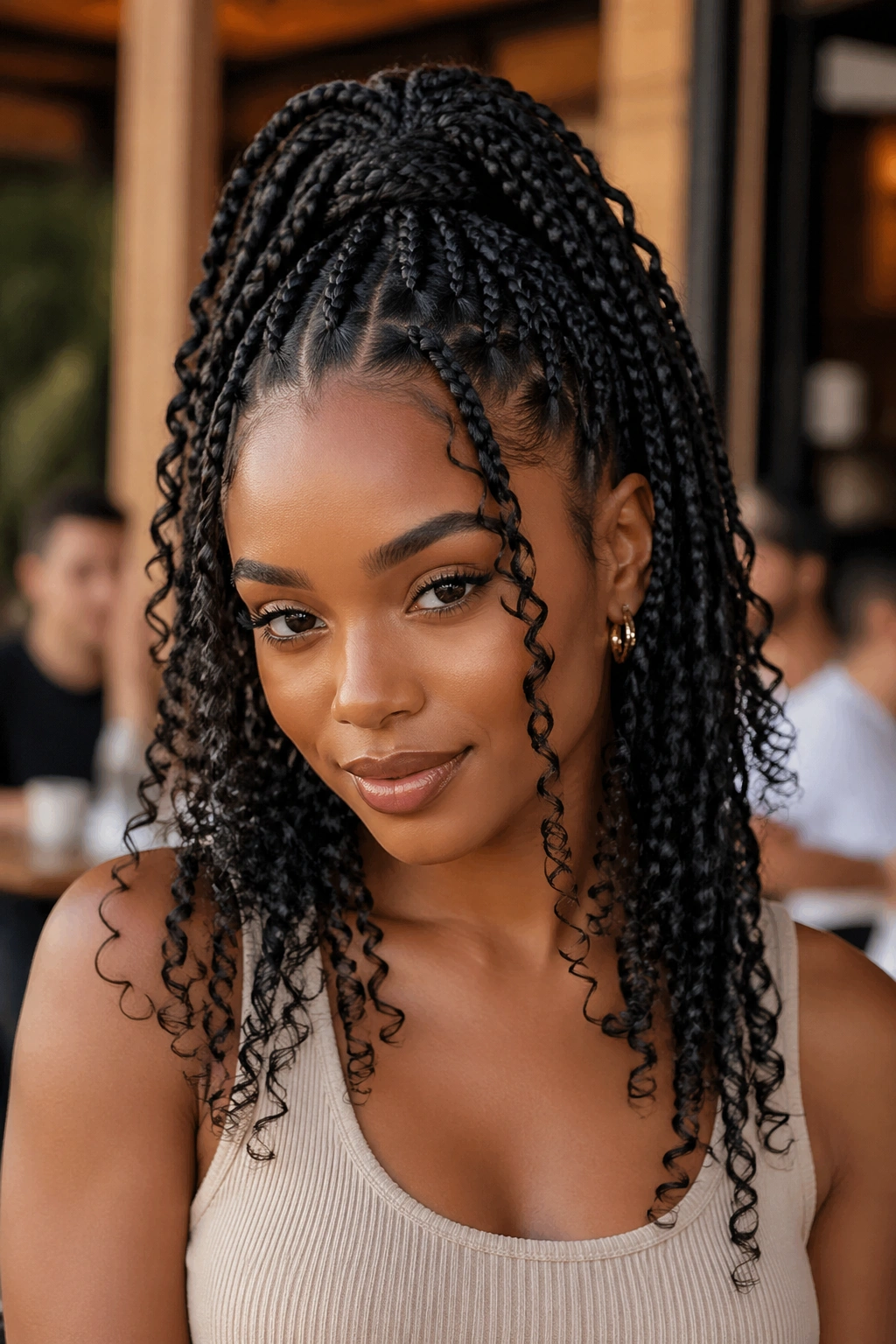
High ponytails make curly ends feel dressed up fast. Pull the braids up, let the curls hang, and the whole style shifts from casual to polished in one move.
The key is tension. A tight ponytail can look neat for an hour and then start hurting by lunchtime. Use a wrapped base or a wide band, and keep the front line smooth without flattening it so hard that it feels stiff. The curls should spill from the top, not get trapped under a knot the size of a golf ball.
I like this style for long days, events, and anything where you want your hair off your neck. The top section lifts your face. The curls bring the softness back. If you want extra height, build the ponytail a little above the crown rather than directly on it. That tiny shift changes the silhouette more than people expect.
14. Low Bun Box Braids with Curly Tail
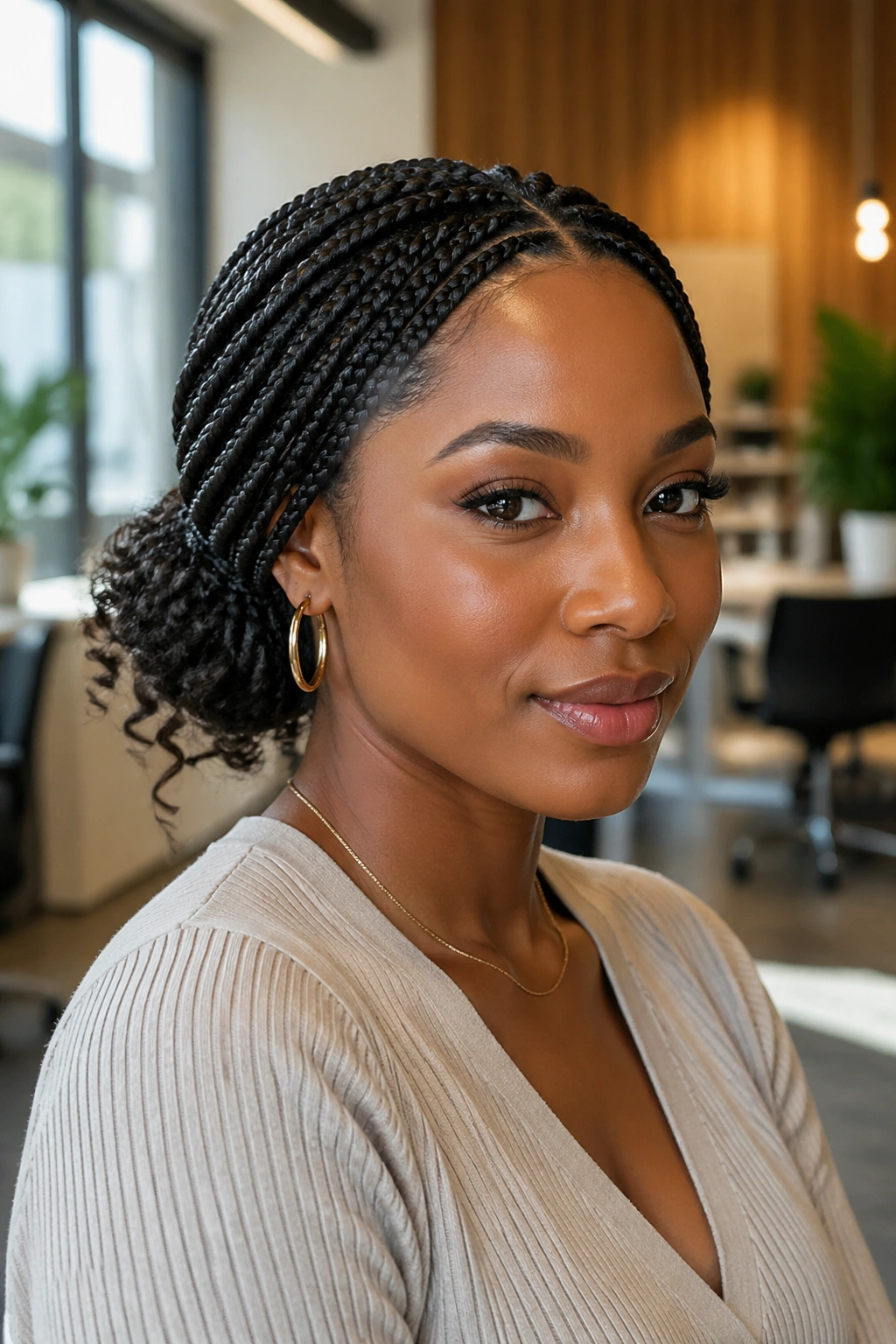
Need something neat for work, a wedding, or a long day when you want your hair off your neck? A low bun with curly ends does the job without looking severe.
The bun keeps the braid mass controlled, and the curly tail gives the style a touch of movement so it does not feel locked down. Some people tuck all the ends in; I like leaving a small curled section out at the base or side. That little piece keeps the bun from looking too formal.
This style gets better when the bun sits low and a little wide instead of tight and tiny. A tiny bun can make long braids look cramped. A broader bun holds the shape and gives the curly ends space to fall naturally. If you’re adding pins, keep them hidden under the braid loops so the finish stays clean. Nothing ruins a good bun faster than visible hardware sticking out like a mistake.
15. Fulani-Inspired Box Braids with Curly Ends
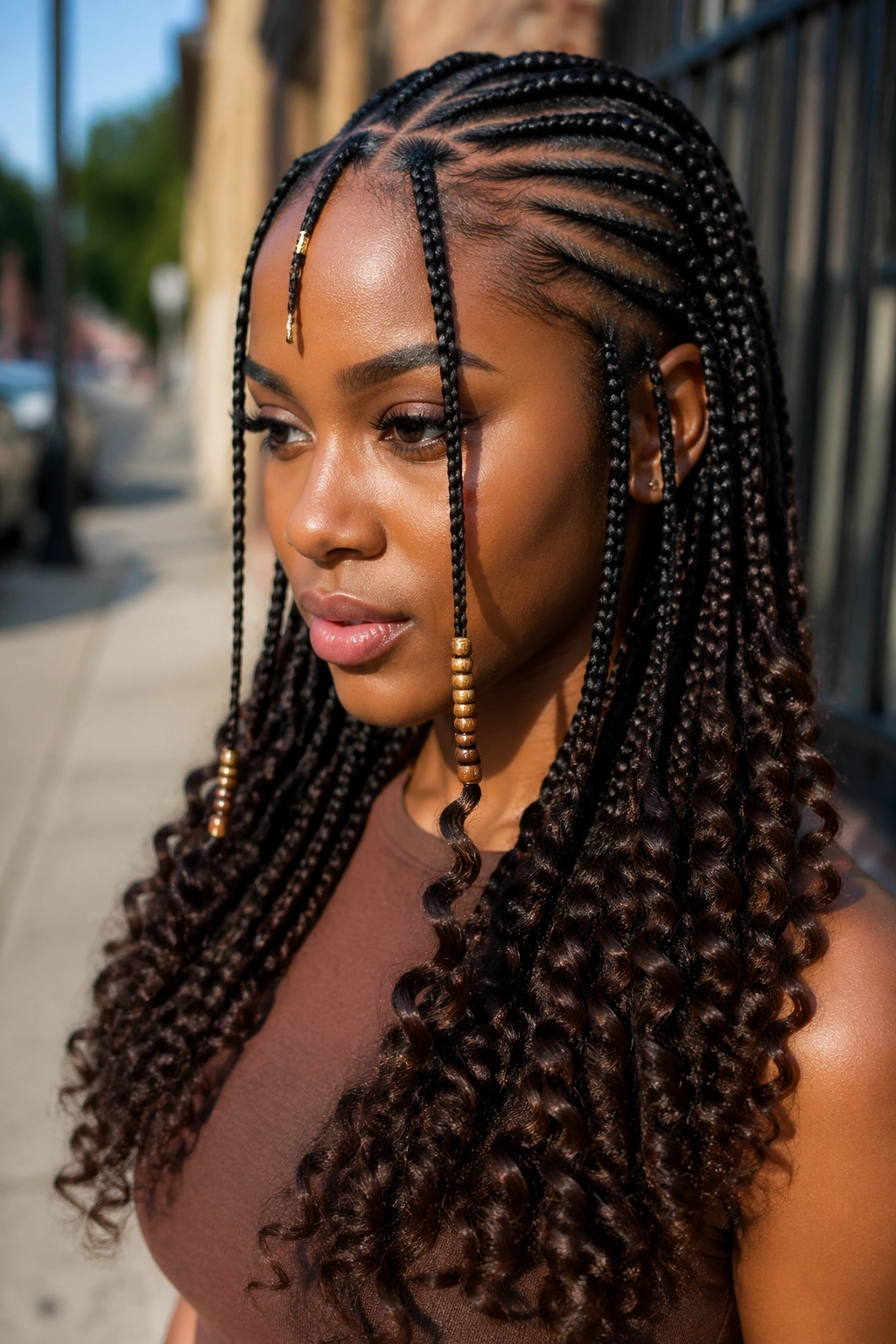
Fulani-inspired braids bring the front details first. The center braid, the side feed-ins, the slim cornrow accents, and the bead work all draw attention up top, while the curly ends keep the style from feeling too severe.
That balance is what makes this version hold up. The front is decorated, but the back still moves. The curls stop the look from becoming too rigid or too ceremonial, which can happen when the braid pattern gets crowded with accessories.
Keep the Front Clean
A few beads go a long way here. If you add too many, the style gets noisy and the curls lose their shape. Pick one material — gold, wood, or clear — and repeat it sparingly instead of mixing everything at once.
Fulani-inspired braids look strongest when the parts are crisp and the hairline is neat. The curly ends should be soft enough to offset all that structure. That contrast is what keeps the style alive.
16. Burgundy Box Braids with Curly Ends
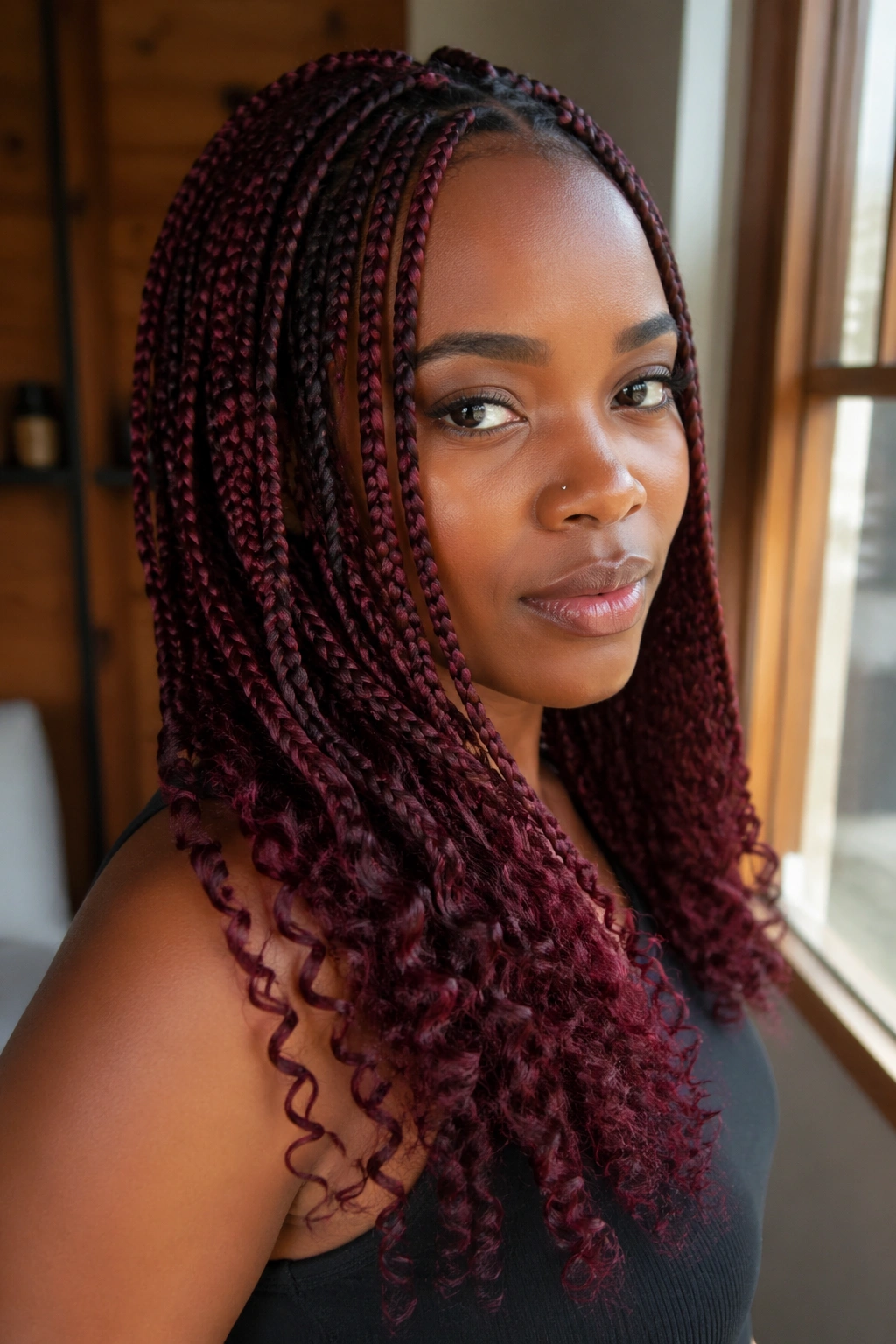
Burgundy reads richer than plain red. It has that wine-and-plum depth that looks deep indoors and brighter when light hits it, and the curly ends make the color shift even easier to notice.
This is a good choice if you want color without going neon. A dark root, burgundy mid-length, and softer red at the ends can look expensive in a very low-key way. The curls break the color into layers, so the style does not look like one flat block of dye.
The shade works with a lot of skin tones, but the balance matters. If your undertones are warm, lean into coppery burgundy. If your undertones run cool, a wine shade with more depth tends to look smoother. Either way, keep the braid size medium or small so the color has room to show. Big braids can swallow the shift and make the red feel louder than it should.
17. Tapered Bob Box Braids with Curly Ends
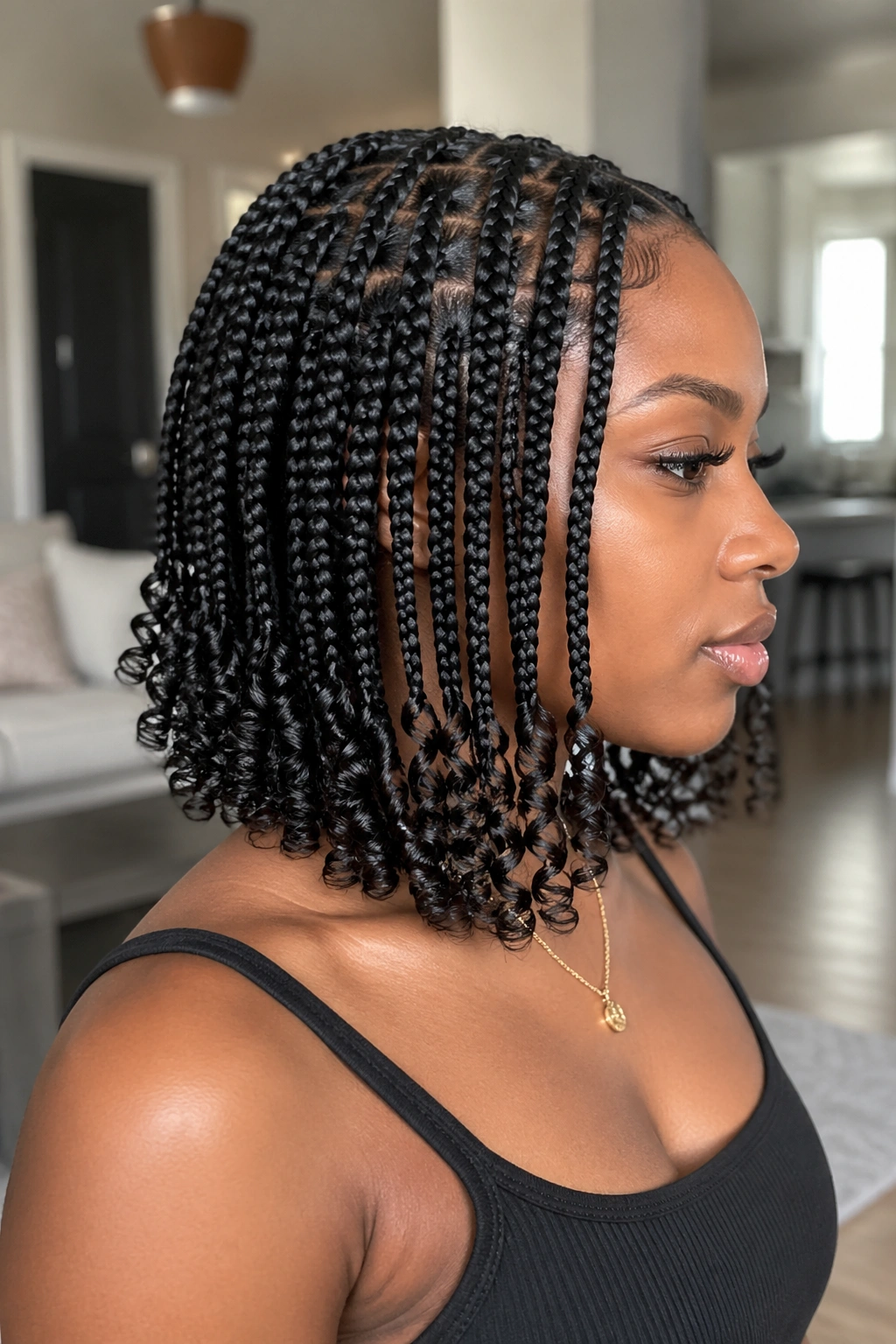
A tapered bob is the style I reach for when I want braids to feel lighter on the head. The back sits shorter, the front hangs a little longer, and the curls at the ends keep the shape moving instead of blunt.
This cut is practical, too. It does not rest on your shoulders all day. It does not get caught under jackets as much. And if you work out, travel, or just hate extra length, the bob makes life easier without giving up the braided look.
The taper matters more than the curl pattern here. If the back is too short and the front too long, the style can look uneven in a bad way. Keep the difference gradual. A gentle slope from nape to jawline usually feels better than a dramatic angle. The curls at the ends should land below the cut line so the bob still has a soft finish.
18. Side-Part Box Braids with Curled Ends and Beads
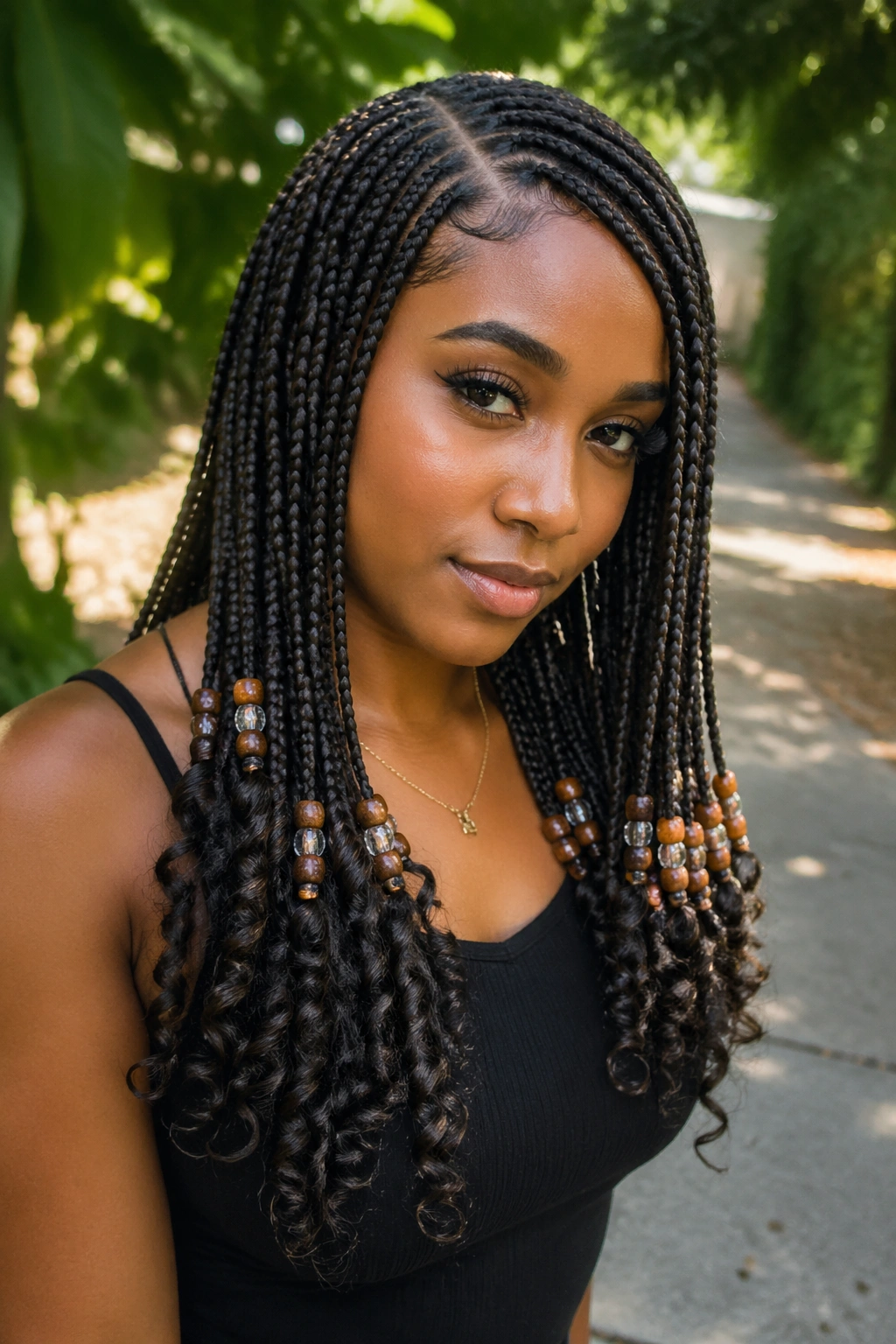
A side part can rescue a style that feels too square. It breaks the symmetry, gives the face a little bend, and lets the curly ends fall in a way that feels more relaxed than a strict middle part.
Beads can help, but use them with restraint. A few placed low on the braid add weight and sound, while too many make the ends heavy and distract from the curl pattern. I like beads near the lower third of the braid rather than all over the place. That keeps the top neat and the bottom playful.
- Choose one bead color family so the look stays clean.
- Keep the side part deep enough to matter, not a half-inch shift.
- Let the curls hang below the beads, not trapped between them.
- If the braids are medium-sized, use smaller beads so the ends don’t feel overloaded.
This style looks best when the part and the accessories feel planned, not piled on.
19. Long Box Braids with Curly Ends and a Defined Middle Part
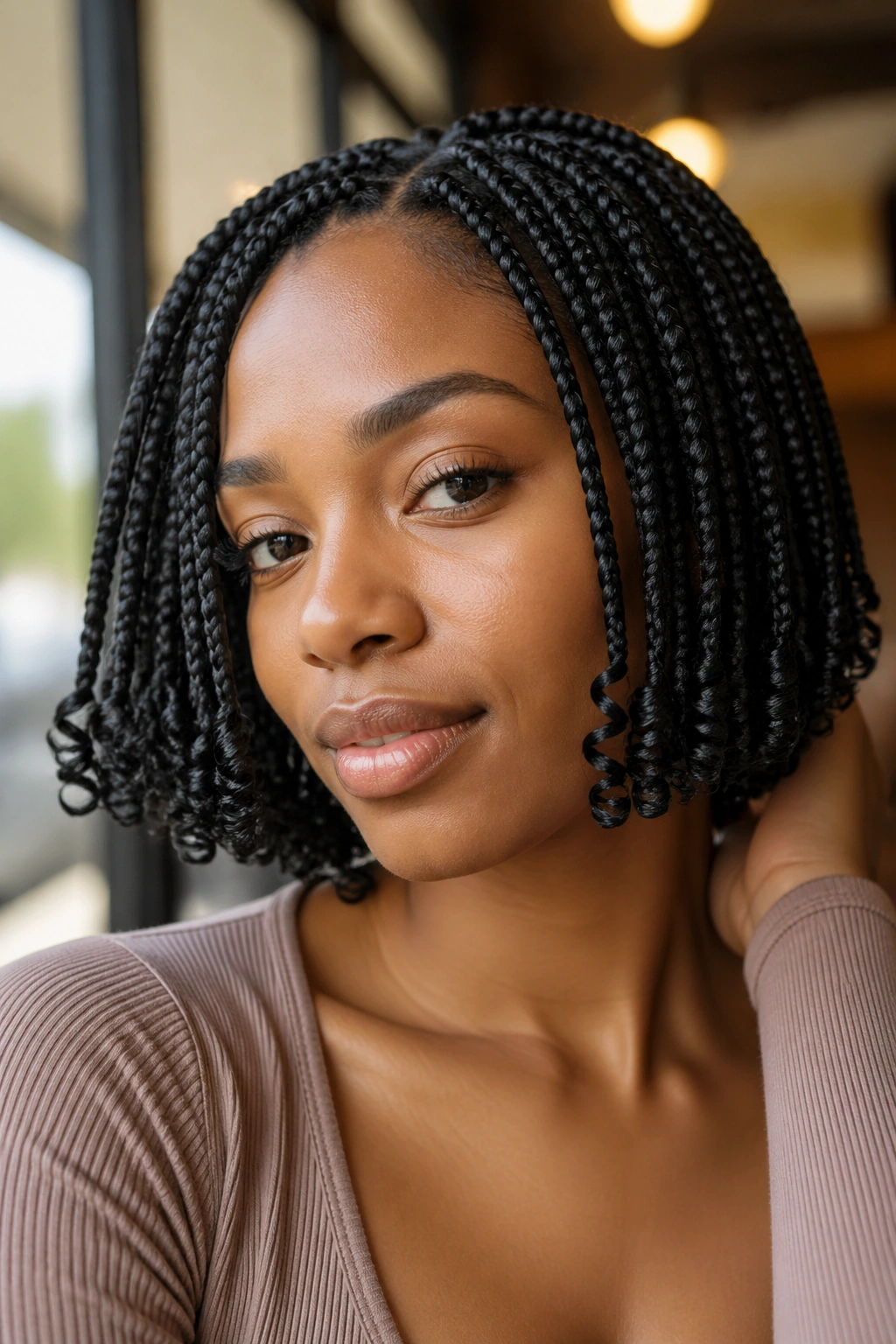
A middle part looks best when the sections are exact. There is no hiding a crooked grid here, which is why this style asks for careful sectioning and a calm hand at the root.
The payoff is symmetry. Long braids falling evenly on both sides of the face can look sleek, strong, and clean, especially when the curly ends soften the bottom edge. Without the curls, long middle-part braids can feel a little severe. With them, the style stays neat but loses the stiffness.
This version works well on oval, heart, and square faces because the curls keep the line from becoming too straight. The important part is keeping both sides balanced in length and density. If one side has thicker braids than the other, the middle part exposes it right away. So ask for the front pieces to be checked twice before the style is finished. That tiny bit of patience saves a lot of frustration later.
20. Mixed-Length Box Braids with Cascading Curly Ends
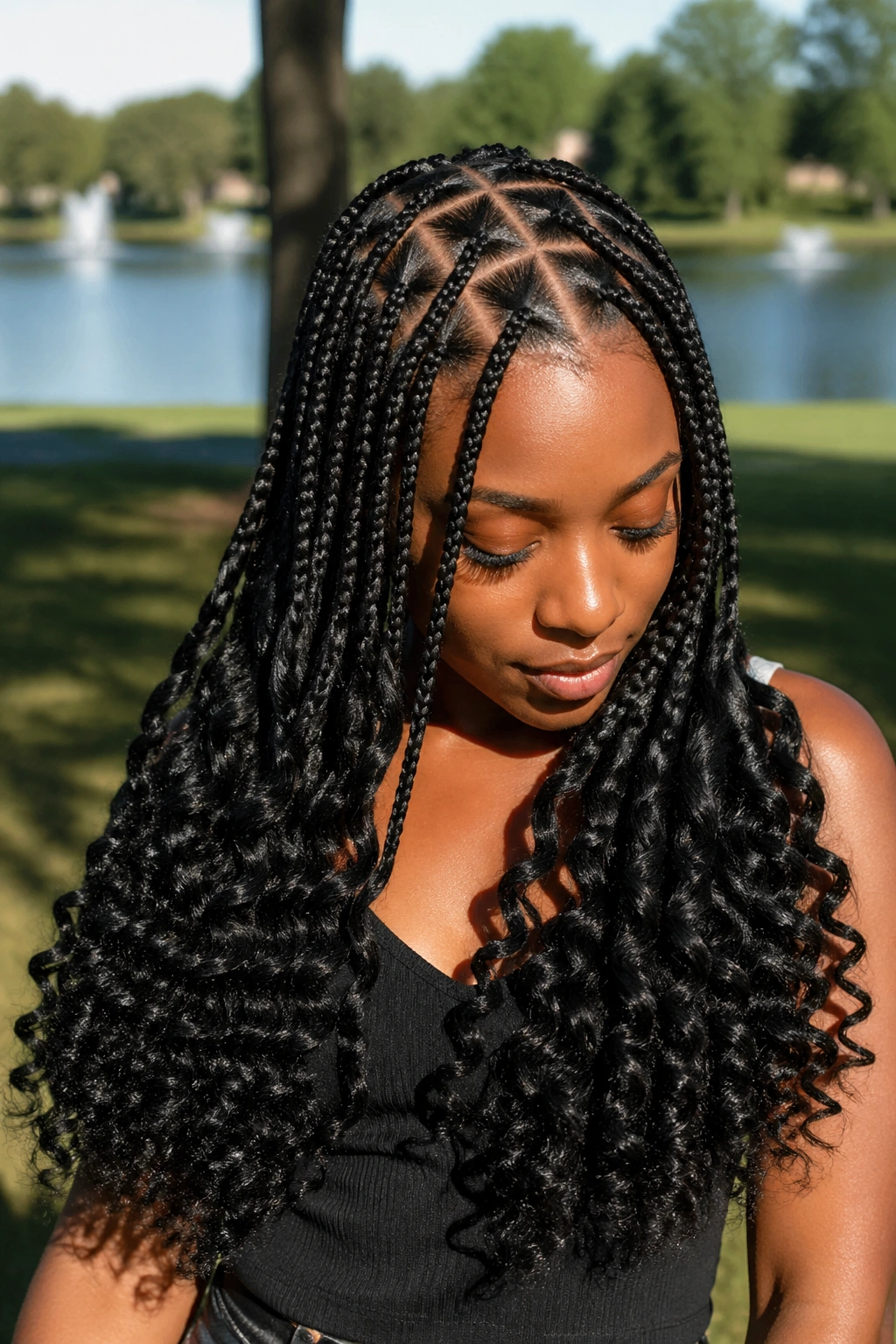
Mixed-length braids solve the blocky hemline problem. Instead of all the ends stopping at one flat line, the hair falls in steps, and the curls make those steps look intentional instead of choppy.
This is a good pick when you want softness without giving up fullness. The shorter layers at the top keep the head from feeling overloaded, while the longer pieces bring the drama. When the curls start at different points, the whole style feels like it has movement even when you’re standing still.
Ask your stylist to stagger the lengths by 2 to 3 inches across sections. Not every braid needs to be different, but they should not all end in the same place. Keep the curl pattern consistent so the variation comes from the cut, not from uneven finishing. That’s the part that makes this style look deliberate rather than accidental. It’s a small thing. It changes everything.
Final Thoughts
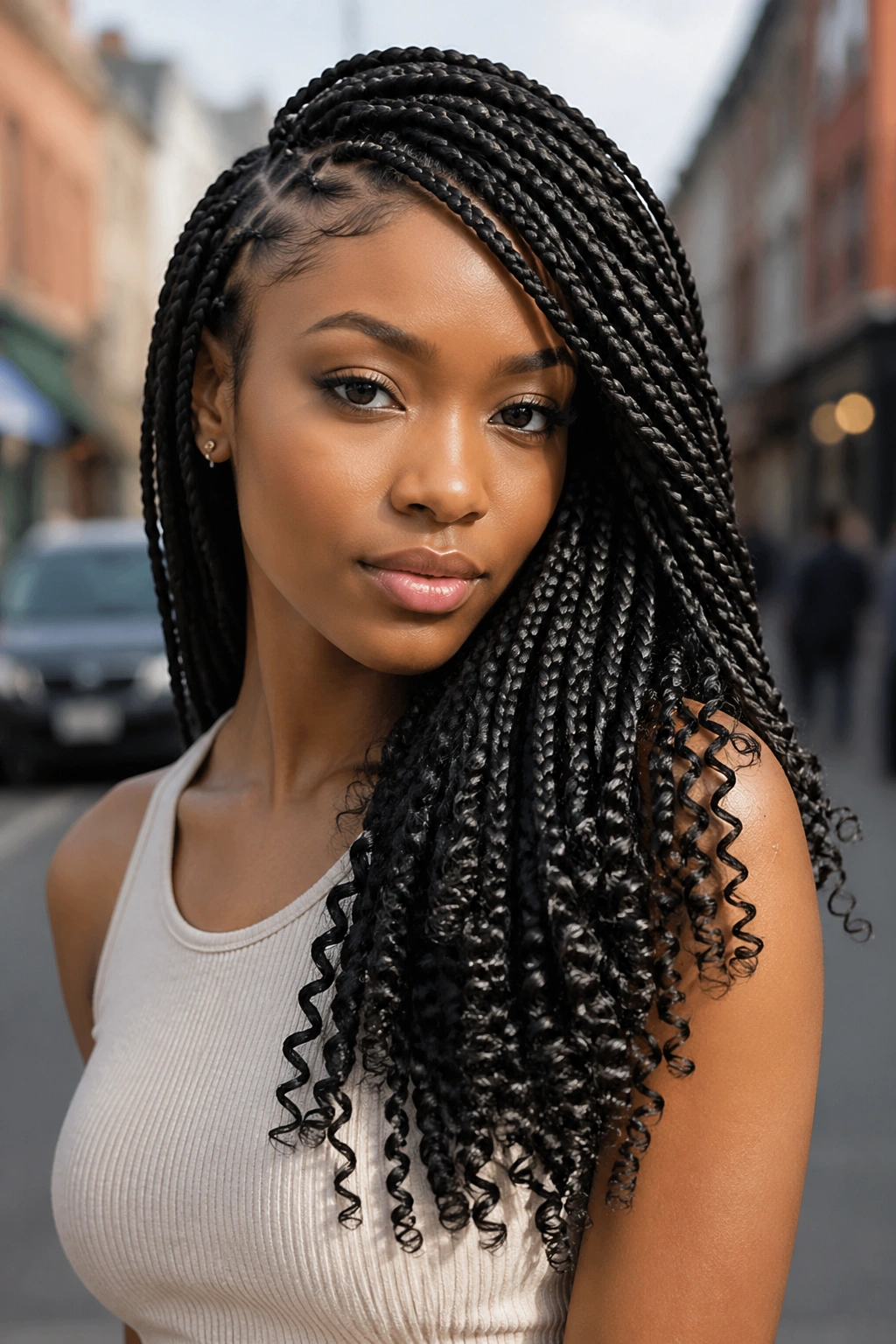
The strongest box braids with curly ends are the ones that match your routine as much as your mood. A waist-length set can feel elegant, a bob can feel practical, and a boho version can lean softer and more textured. The curls at the ends are doing more than decoration; they change the weight, the shape, and the whole read of the style.
Bring two or three reference photos to the chair if you can. One should show the front, one should show the back, and one should show the curl size you actually want. That matters more than trying to describe the style in a single sentence, because “curly ends” can mean loose waves, springy spirals, or a full curly finish that starts several inches up the braid.
If you get the length, parting, and curl pattern right, the style holds up. And if you get those wrong, you feel it every time you look in the mirror.
