
Thick hair after 50 can feel like a gift and a small headache at the same time. The fullness is nice. The weight is not. Once the ends start hanging like a curtain and the crown goes flat after lunch, even a good blow-dry can start to feel like a part-time job.
Haircuts for women over 50 with thick hair work best when they stop fighting the density and start shaping it. Heavy ends, a puffed-out triangle, and that stubborn “too much hair at the bottom” look are usually what send people back to the salon before they’ve really lived with a cut. The trick is not to thin everything out until it feels wispy. It’s to remove weight where it piles up and keep enough structure so the hair still looks full and healthy.
Heavy is the wrong fight.
A good cut on thick hair should do one of three things: create movement, sharpen the outline, or shorten the silhouette so the bulk has less room to take over. Gray and silver strands often feel a little coarser, too, which means the same haircut can behave differently than it did years earlier. That’s why a cut that looked soft on paper can land as boxy in real life, while something with a cleaner shape suddenly looks fresher than expected.
The 17 options below cover the cuts I’d actually suggest to a woman with thick hair who wants something current, flattering, and not fussy. Some are short. Some keep length. All of them respect the hair instead of asking it to behave like fine hair.
1. Long Layered Lob With Face-Framing Pieces
The lob is one of those cuts that keeps earning its place because it solves a real problem: thick hair needs weight removed, but it also needs enough length to stay graceful. A collarbone-length lob with long layers gives the hair room to move without turning the ends into a shelf. It feels polished, but not stiff.
Why It Works on Thick Hair
The best version starts with layers that begin below the cheekbone, not high on the head. That keeps the crown from getting too fluffy while still taking pressure off the ends. Face-framing pieces around the jaw soften the line and make the whole cut feel lighter, which matters when your hair has enough density to hold its own shape all day.
- Ask for the longest layer to hit the collarbone.
- Keep the front pieces about 1 to 2 inches longer than the back.
- Point-cut the ends so they don’t sit in one hard line.
- Dry with a 1.5-inch round brush if you want bend, not curls.
Best tip: keep the face-framing layers long enough to tuck behind the ears. That tiny detail makes the cut look easier and less “done.”
2. Shoulder-Grazing Shag With Soft, Broken Layers
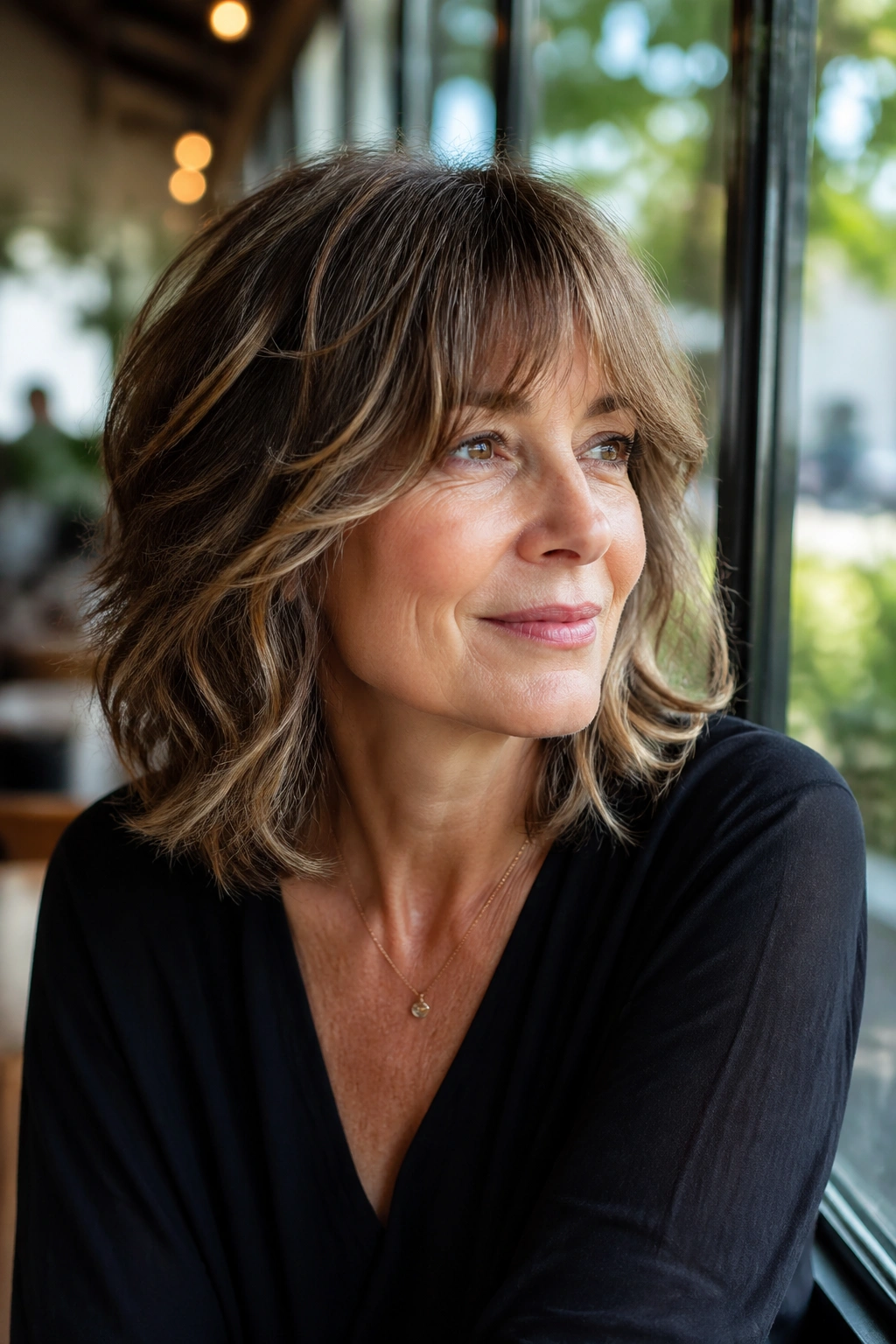
A shag is not a messy haircut. On thick hair, it’s controlled air.
The reason it works is simple: thick hair can swallow shape, and a shag gives shape back by breaking up the mass at the mid-lengths. The soft layers create movement without asking for a huge styling session. That matters when you want something that looks alive, not heavy, after a quick blow-dry or airdry.
A shoulder-grazing shag is especially kind to hair that has a little wave or bend in it. The layers don’t have to be choppy to be useful. Even a softer, blended version can keep the bottom from looking blunt and stiff. I’d avoid going too short at the crown, though. Once the top gets too short, thick hair can pop up in places you didn’t ask for.
One sentence can make the whole thing work: keep the perimeter soft and the layers broken, not sliced up to the sky. That gives the haircut movement without the wild, over-textured look that some shags get.
3. Blunt Bob With Internal Weight Removal
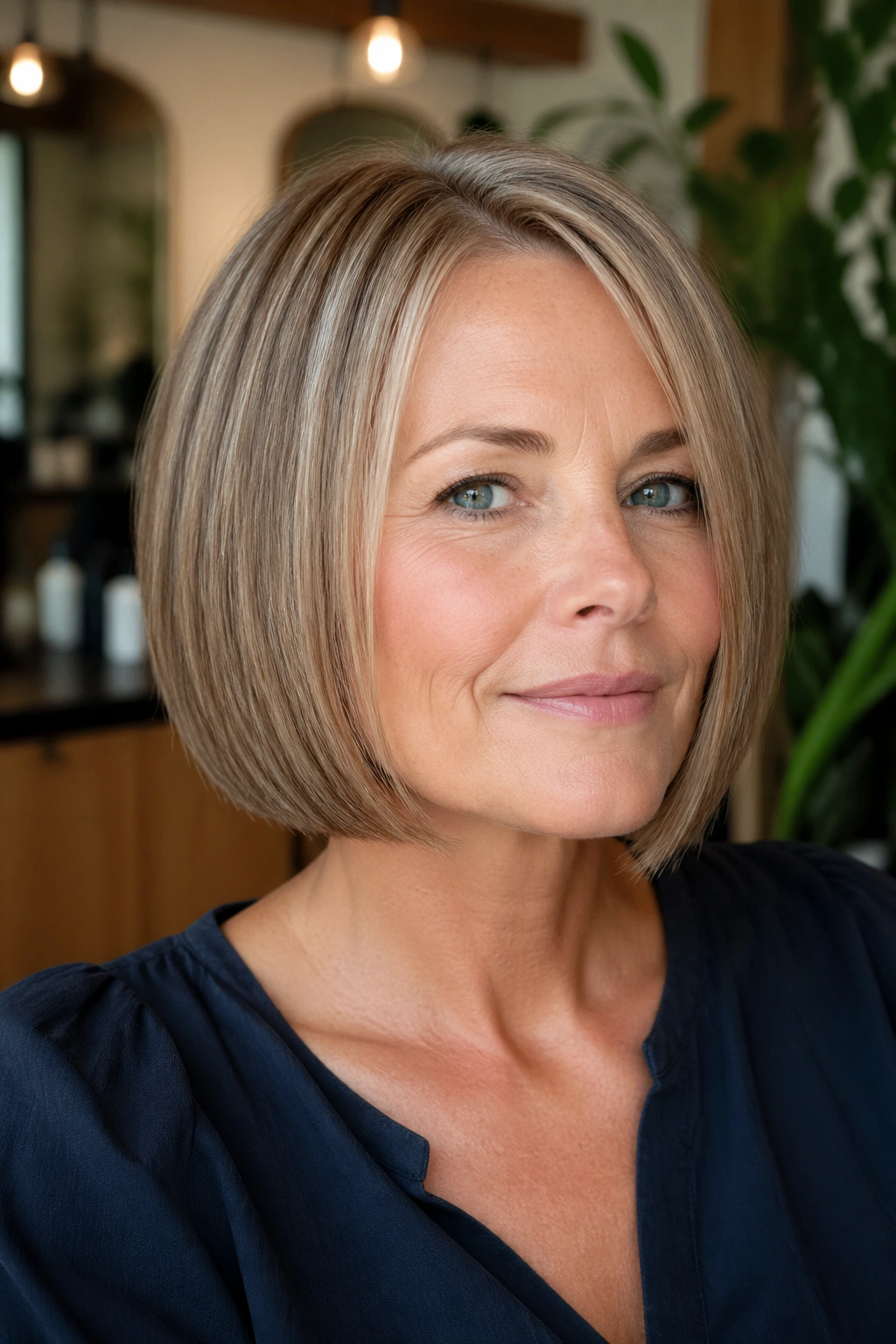
Why does a blunt bob work when your hair is thick? Because the strong outline keeps the style looking clean, while the hidden thinning inside stops it from ballooning out.
A lot of people think thick hair has to be layered to behave. Not true. Sometimes the smartest move is to keep the outside line blunt and remove bulk underneath with careful internal shaping. That way you still get the crisp edge a bob is known for, but you do not end up with a triangle shape that sits away from the neck.
How to Wear It
This cut looks best when the ends are sleek and the part is slightly off-center. A center part can work, but an off-center part often gives the hair a little more lift at the crown. If your hair is naturally straight, a flat brush and a quick pass with a blow-dryer are usually enough. If it has a bend, use a smoothing cream and a soft bend at the ends rather than forcing it poker-straight.
A blunt bob like this is a good choice if you like structure and hate pieces flying everywhere. It feels neat. It behaves well. And that clean line at jaw or chin length can make the face look more open without cutting away all the density you paid for.
4. Feathered Mid-Length Cut With Side-Swept Fringe
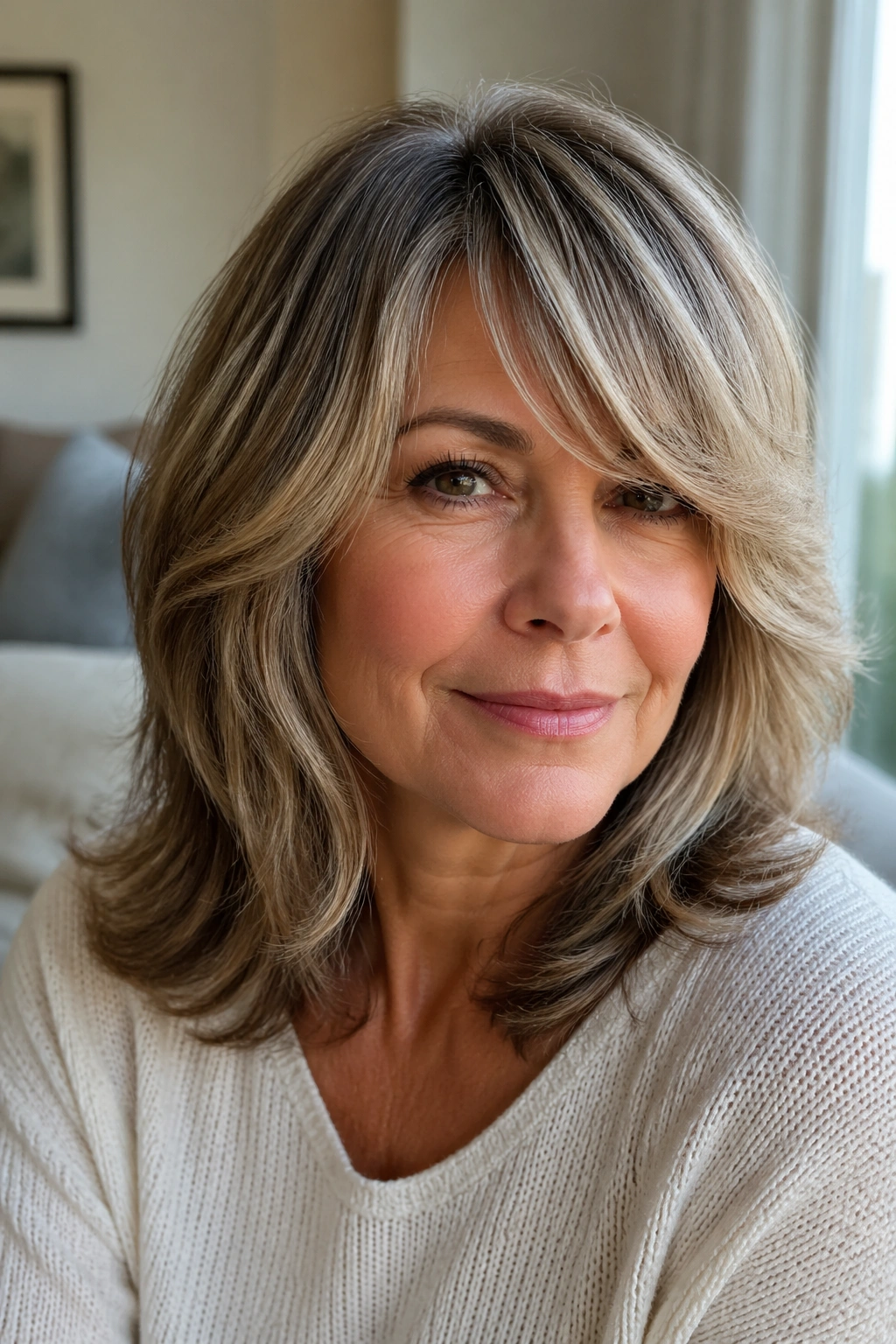
Picture hair that moves when you turn your head instead of sitting like a solid block. That’s the appeal here.
Feathering around the mid-lengths keeps thick hair from feeling like a single heavy sheet. The side-swept fringe matters, too. It softens the forehead, folds easily into the rest of the cut, and gives the front a little lightness without forcing you into a blunt bang that may feel too dense.
A Few Details That Matter
- Keep the fringe long enough to sweep across the brow.
- Ask for feathering to start around the cheekbone or jaw, not at the root.
- Use a lightweight blowout spray, not a heavy cream.
- Lift the front with a round brush and bend the ends out slightly.
The nice thing about this cut is that it looks intentional even on an ordinary day. It does not need perfect styling to work. And that’s the real win with thick hair: the cut should still look shaped when you’ve only spent ten minutes on it.
5. Soft Pixie With a Longer Crown
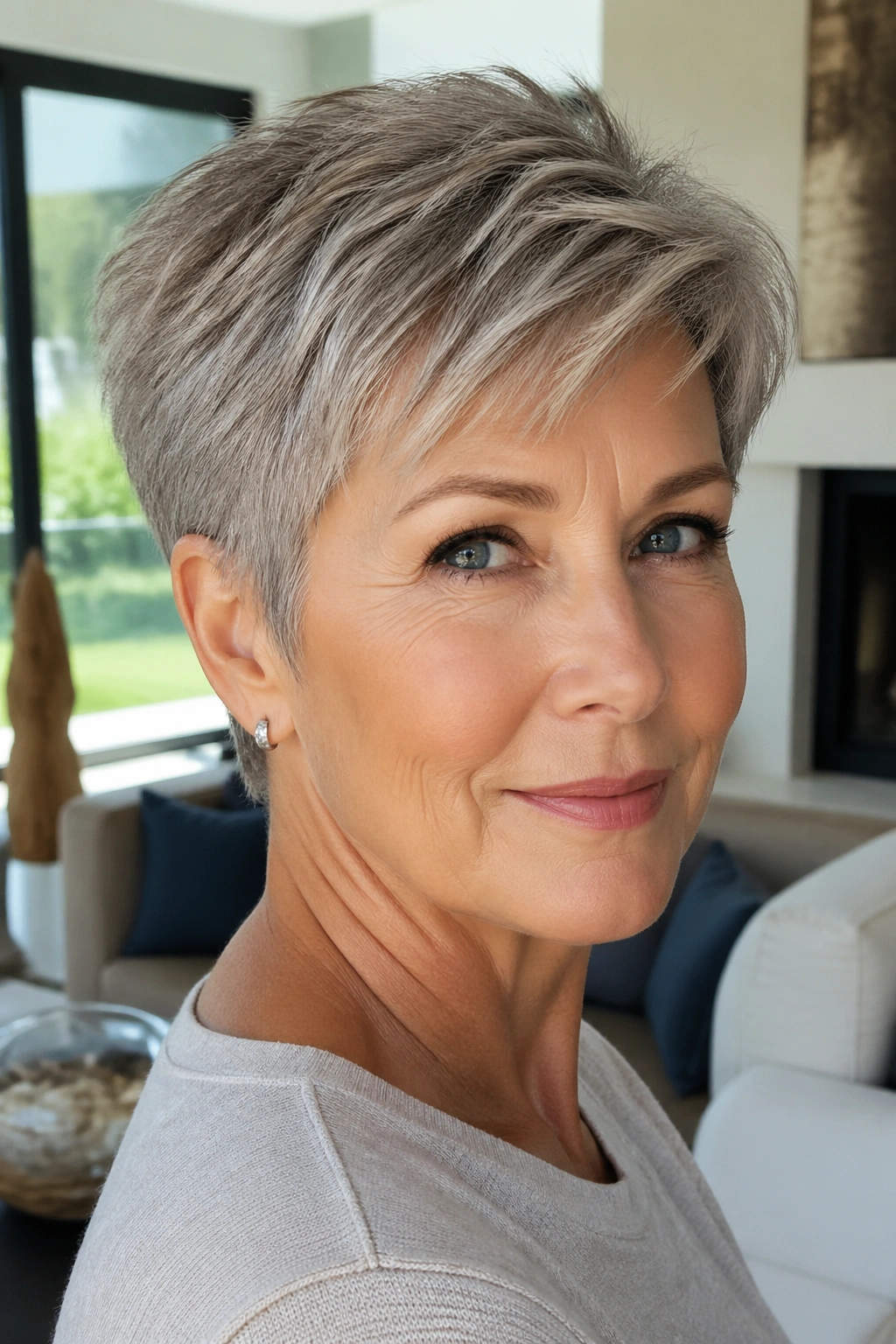
Short hair on thick hair can be glorious, but only if the shape is controlled. A soft pixie with a longer crown does that job better than a super-close crop, which can turn puffy or helmet-like fast.
The longer top gives you room to direct the hair forward, to the side, or slightly up. That bit of length is what keeps the cut from looking flat against the scalp. Around the ears and neckline, the shorter taper removes bulk where thick hair usually piles up and makes the whole style feel lighter around the face and neck.
There’s also a practical side people forget. Thick hair often stands up better in a pixie than fine hair does, so you can get away with a little texture on top without needing a ton of product. A pea-size amount of paste or cream is usually enough. Too much, and the hair starts looking sticky instead of piecey.
If you wear glasses, this cut can be especially good because it keeps the sides tidy. The frame line stays clean. The top stays soft. And the face gets all the attention, which is exactly what a good short cut should do.
6. Angled Bob With a Stacked Nape
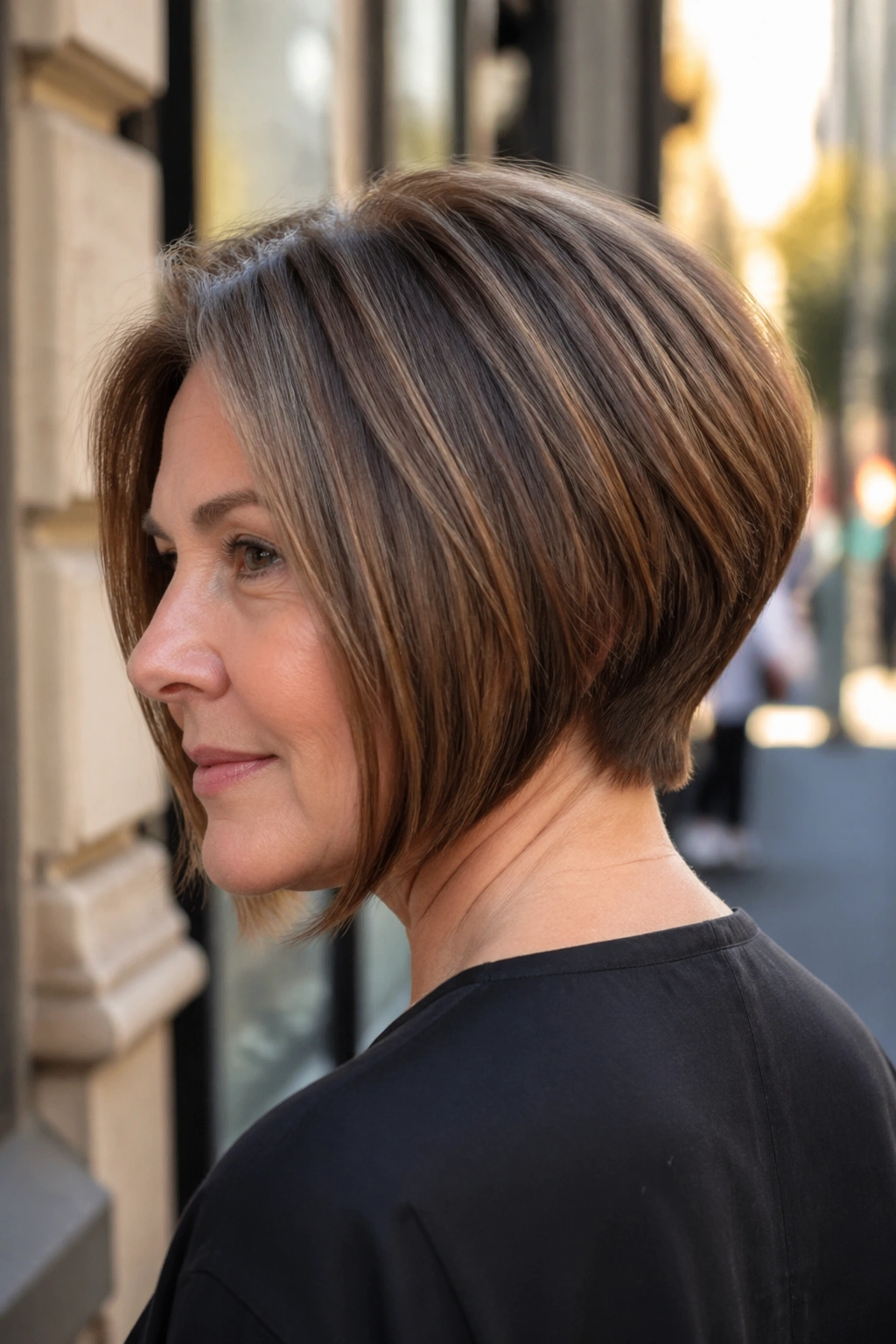
An angled bob works differently from a round bob, and that difference matters more than people think. The front stays a touch longer, the back lifts, and the line creates a clear sense of shape instead of a blocky wall of hair.
For thick hair, that angle is useful because it removes bulk where the head starts to round at the back. A stacked nape adds lift and keeps the neckline neat, while the longer front pieces give the cut some swing. You get movement without losing that sharp bob feeling.
This is a good choice if your jawline is strong or your neck is one of the features you actually like showing off. The angle pulls the eye down and forward, which can make the whole silhouette feel leaner. It also behaves well with a blow-dry because the shape is already built into the cut; you are not trying to create the whole thing from scratch each morning.
If I had to pick one word for this haircut, it would be clean. Not severe. Clean.
7. Collarbone Cut With Curtain Bangs
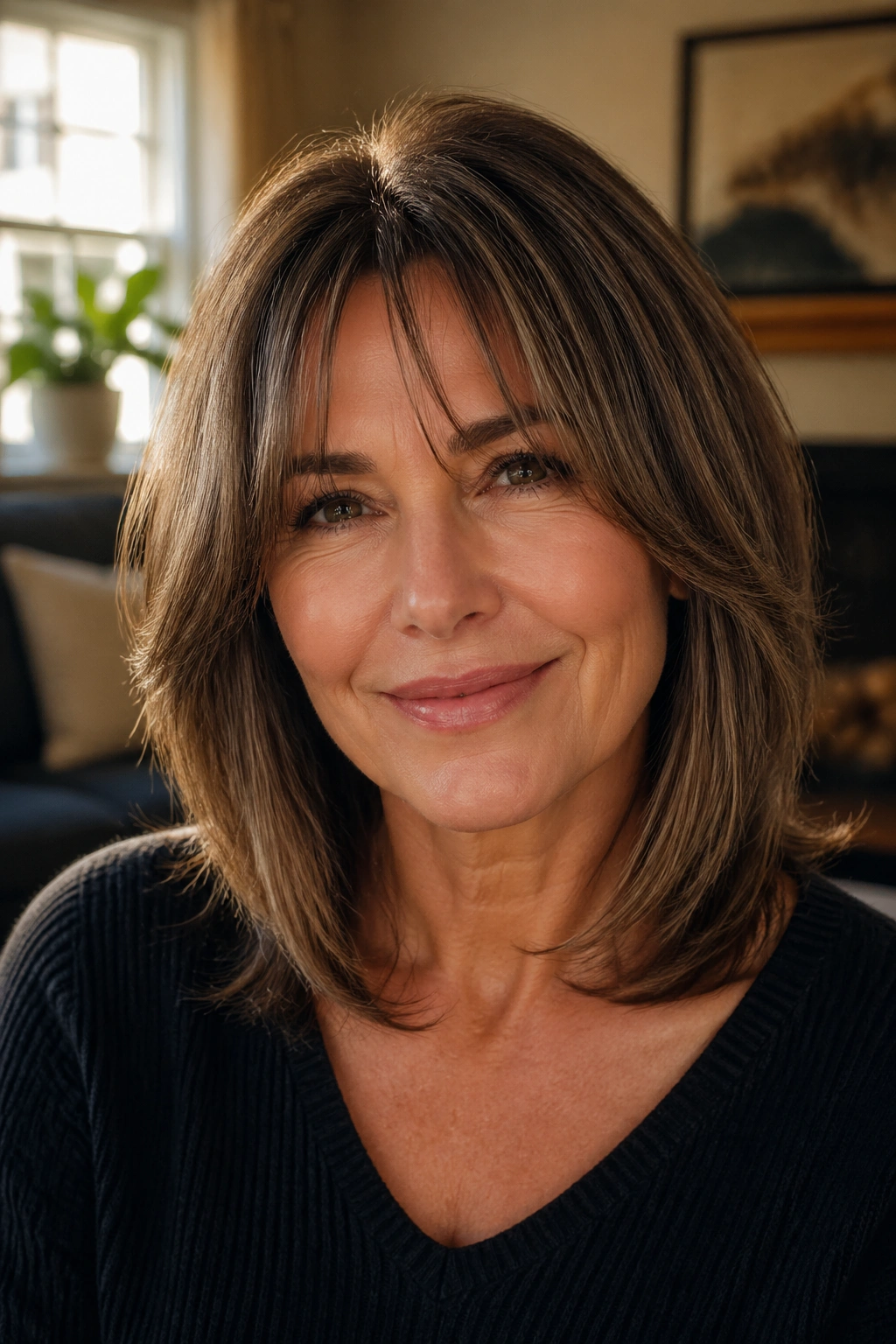
Collarbone length gives thick hair enough room to move, and curtain bangs stop the front from looking too heavy. It’s a smart combination because neither piece is doing all the work alone.
Curtain bangs are a nice fit after 50 when you want softness near the eyes without committing to a short fringe. They open around the face instead of cutting it in half. On thick hair, they also help distribute the density that sometimes gathers at the front hairline, which is one of the spots that can make a cut feel bulky fast.
How to Ask for It
- Keep the bang area long enough to split in the middle.
- Ask for the shortest point to hit around the eyebrow or just below.
- Let the side pieces blend into the first layer at the cheekbone.
- Dry the bangs first, while they’re still damp, so they don’t set in weird directions.
This cut is especially good if you want something that can be worn smooth one day and a bit undone the next. It gives you options without asking for a dramatic chop. And for thick hair, that middle ground is often the sweet spot.
8. Choppy Bixie With Tapered Sides
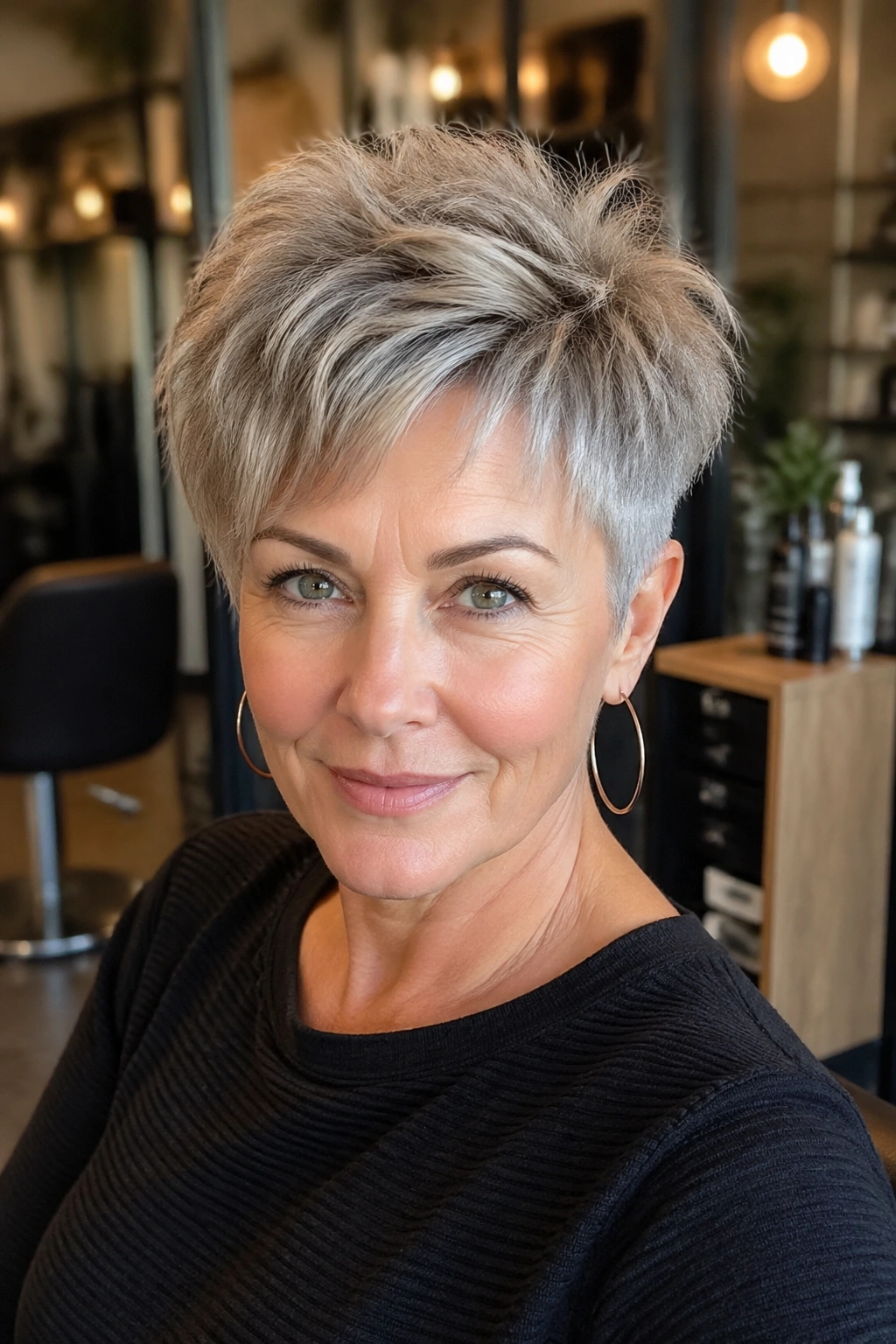
If you want short hair without the helmet effect, the bixie is the answer that keeps showing up for a reason.
It sits between a bob and a pixie, which means you get the lightness of short hair without losing all of your coverage. On thick hair, the tapered sides matter a lot. They take the bulk out of the temples and around the ears, two places where dense hair can suddenly feel too wide. The choppy top adds lift and keeps the shape from reading as flat.
The best part is the styling. A bixie does not need a round brush ballet every morning. A little texture paste worked through the crown and front is often enough. If your hair has natural body, you can finger-style it and let the cut do most of the talking.
This is a good haircut if you want your neck and jawline to show a little more, but you are not ready for a very short crop. It gives you that lifted, modern outline without feeling harsh.
9. U-Shaped Long Cut With Invisible Layers
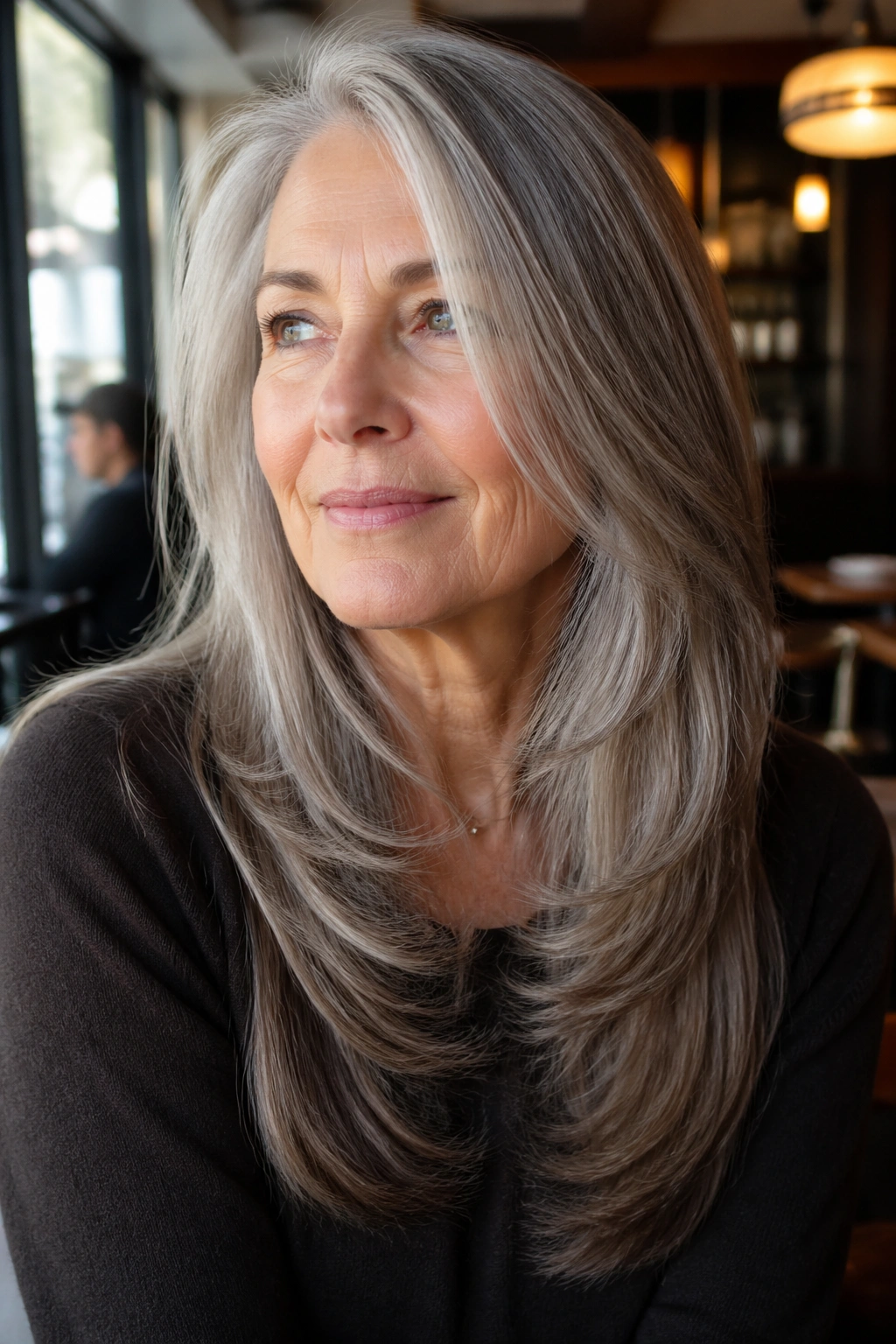
Can you keep length and still remove bulk? Yes, if the shape is handled well.
A U-shaped long cut keeps the perimeter curved instead of blunt across the bottom, which helps thick hair fall in a softer line down the back. The invisible layers live inside the cut, not all over the surface, so the hair still looks full. That matters if you like long hair but hate the heavy, dragged-down feeling that can happen once the ends get too dense.
How to Keep the Shape Soft
The trick is to ask for layers that are long enough to disappear into the rest of the hair. You want movement when the hair swings, not obvious steps. A center part can look gorgeous here, especially if the front pieces are gently angled away from the face. Side parts work too, but they change the whole mood of the cut.
This cut is a good choice if you wear your hair in ponytails, twists, or half-up styles a lot. The shape still looks tidy when it’s down, and the cut does not lose its purpose the second you pull it back. That’s rare, honestly.
10. Sleek One-Length Lob With Point-Cut Ends
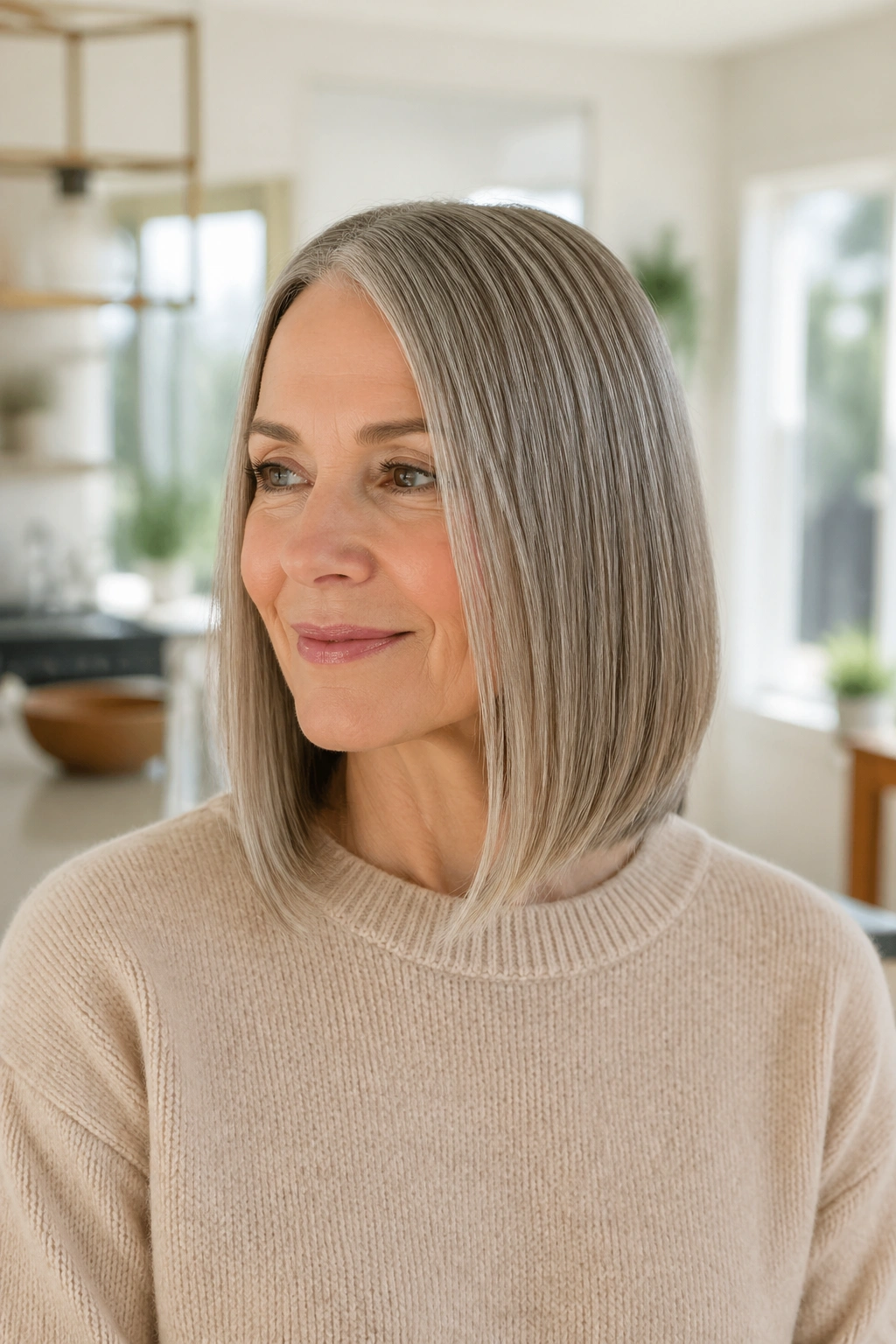
Sometimes thick hair looks best when it’s allowed to be strong and simple. A one-length lob does exactly that.
The clean line gives the hair weight in the right places, while point-cut ends keep it from looking like a helmet. That last detail matters. Without a little softening at the very bottom, thick hair can sit too sharply and make the ends feel heavy. With point cutting, the edge still looks full, but it doesn’t feel hard.
- Ask for the length to land at the collarbone or just above it.
- Keep the base line blunt, then soften only the last half-inch to inch.
- Use a smoothing cream through the mid-lengths.
- Flat iron only the outer layer if you want a polished finish.
This cut is especially good if your hair is naturally shiny or if you like a more classic look. It doesn’t try to be trendy. It just looks expensive in the plain, practical sense of the word — neat, healthy, and easy to recognize as a deliberate shape.
11. Curly Shag for Thick Wavy Hair
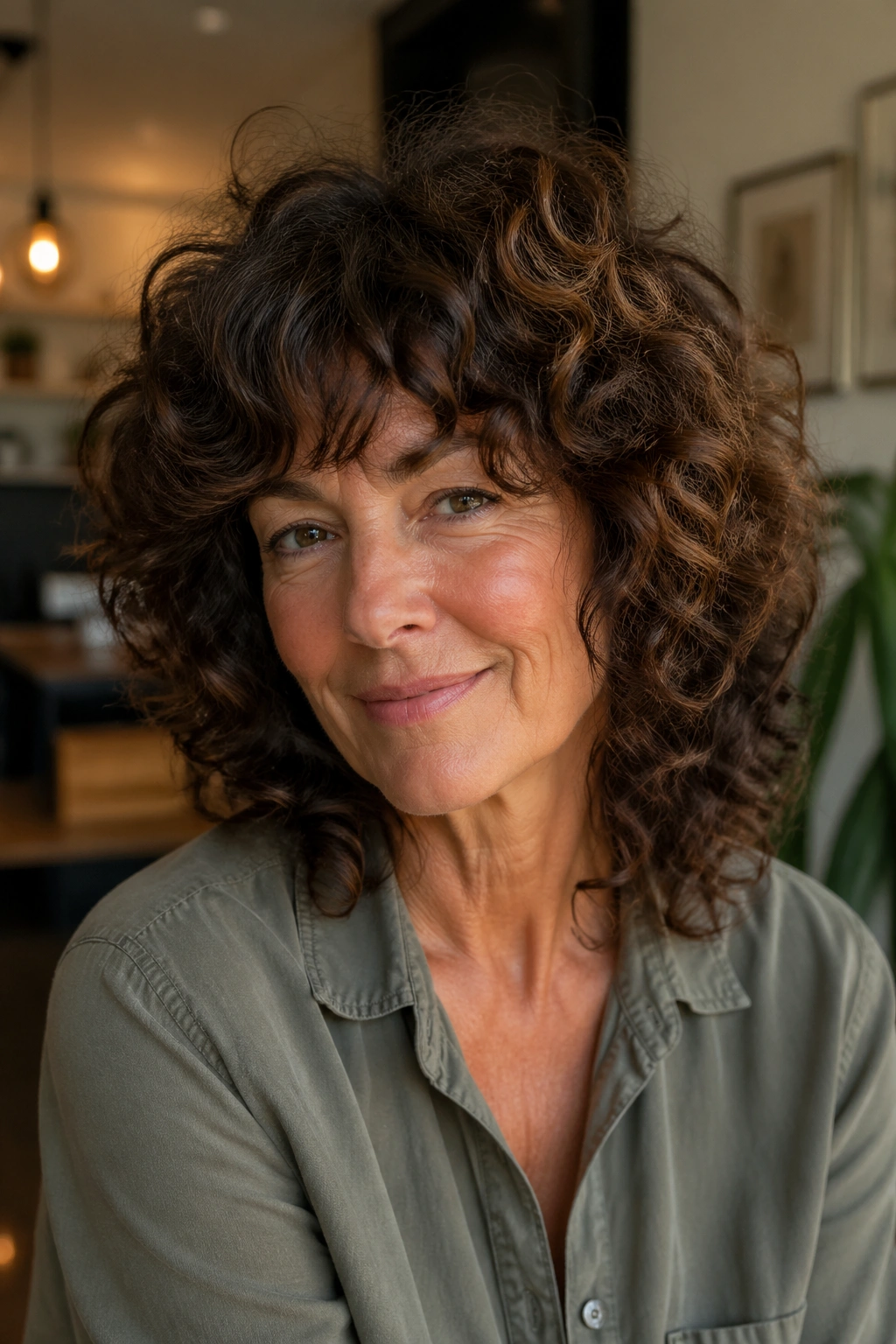
Thick wavy hair after 50 can look best when it’s left a little alive, not polished into submission. A curly shag respects that.
The layers in a shag give curl and wave room to spring instead of stacking up at the bottom. That helps the hair avoid the triangle shape that so many thick wavy cuts fall into. If your wave pattern is uneven — tighter in some spots, looser in others — the shag also helps the whole head read as balanced instead of bottom-heavy.
A dry cut can make a big difference here, because wavy hair often shifts when it’s wet. A stylist who shapes it dry can see where the bulk actually sits and avoid overcutting the pieces that need weight to hold their bend. That does not mean every curly shag has to be done dry, but it’s worth asking about if your hair has a mind of its own.
Styling is mostly about restraint. Scrunch in a curl cream, blot with a microfiber towel, and leave some frizz alone. Not all frizz is a problem. On thick hair, a little of it gives the cut life.
12. French Bob With a Soft Chin-Length Curve
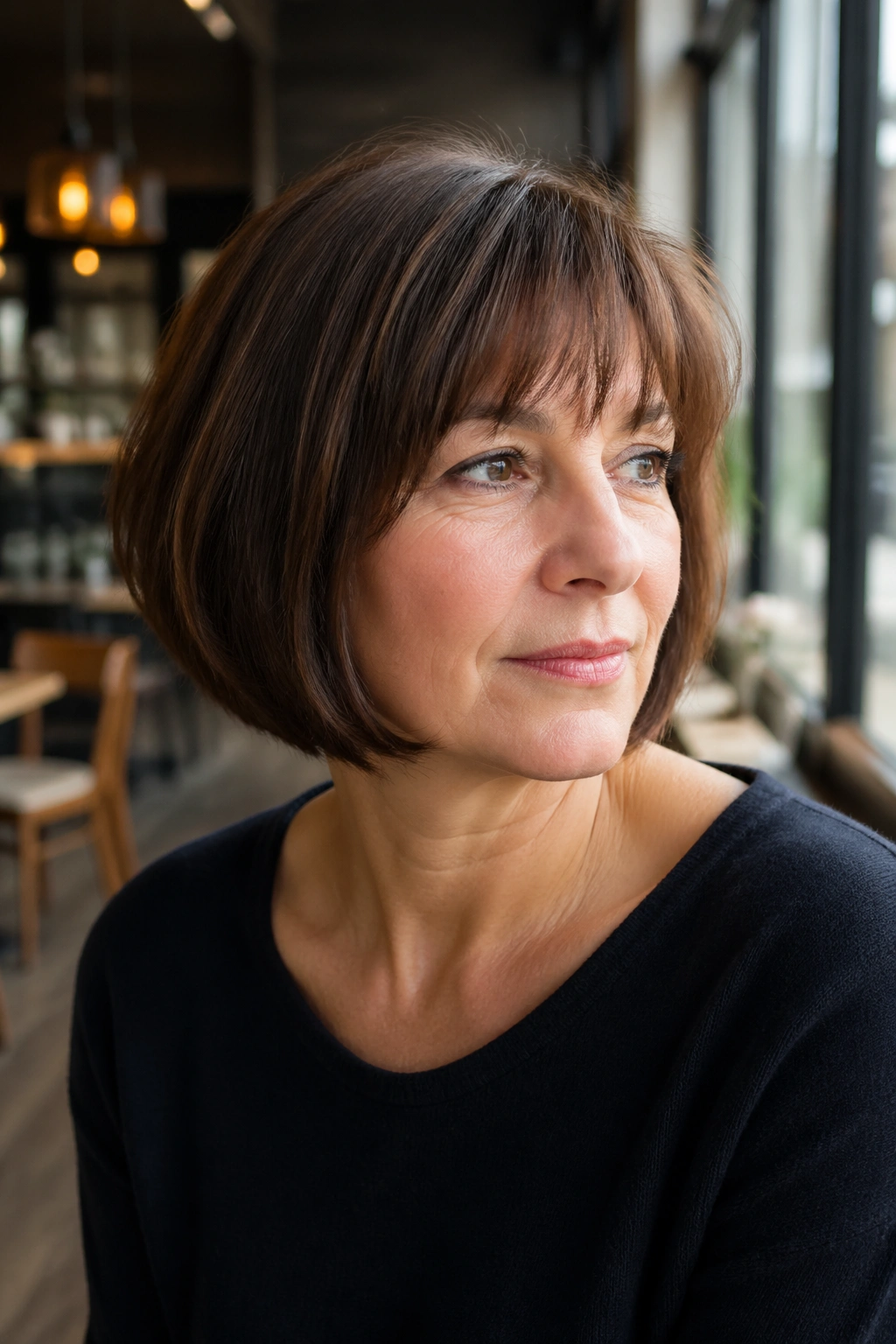
A French bob can be sharp, but on thick hair I prefer the version with a softer curve at the chin. It keeps the style chic without making the face feel boxed in.
Unlike a strict, straight-across bob, the curved edge follows the jaw a little more gently. That matters if you have fullness around the cheeks or if your hair grows wide at the sides. The slight curve keeps the shape close to the head and stops the width from spreading out too far. It also looks especially good with earrings, lipstick, and a bit of neck showing. I’m biased here, but that combo is hard to beat.
This cut works best when the finish is smooth but not stiff. A side part can soften the line even more, though a center part can give it that crisp, French-bob feel people often want. If your hair has a stubborn cowlick at the front, a side part may save you a lot of trouble.
It’s not the easiest cut in the room, but it is one of the most flattering when the shape is right.
13. Long Layers With Bottleneck Bangs
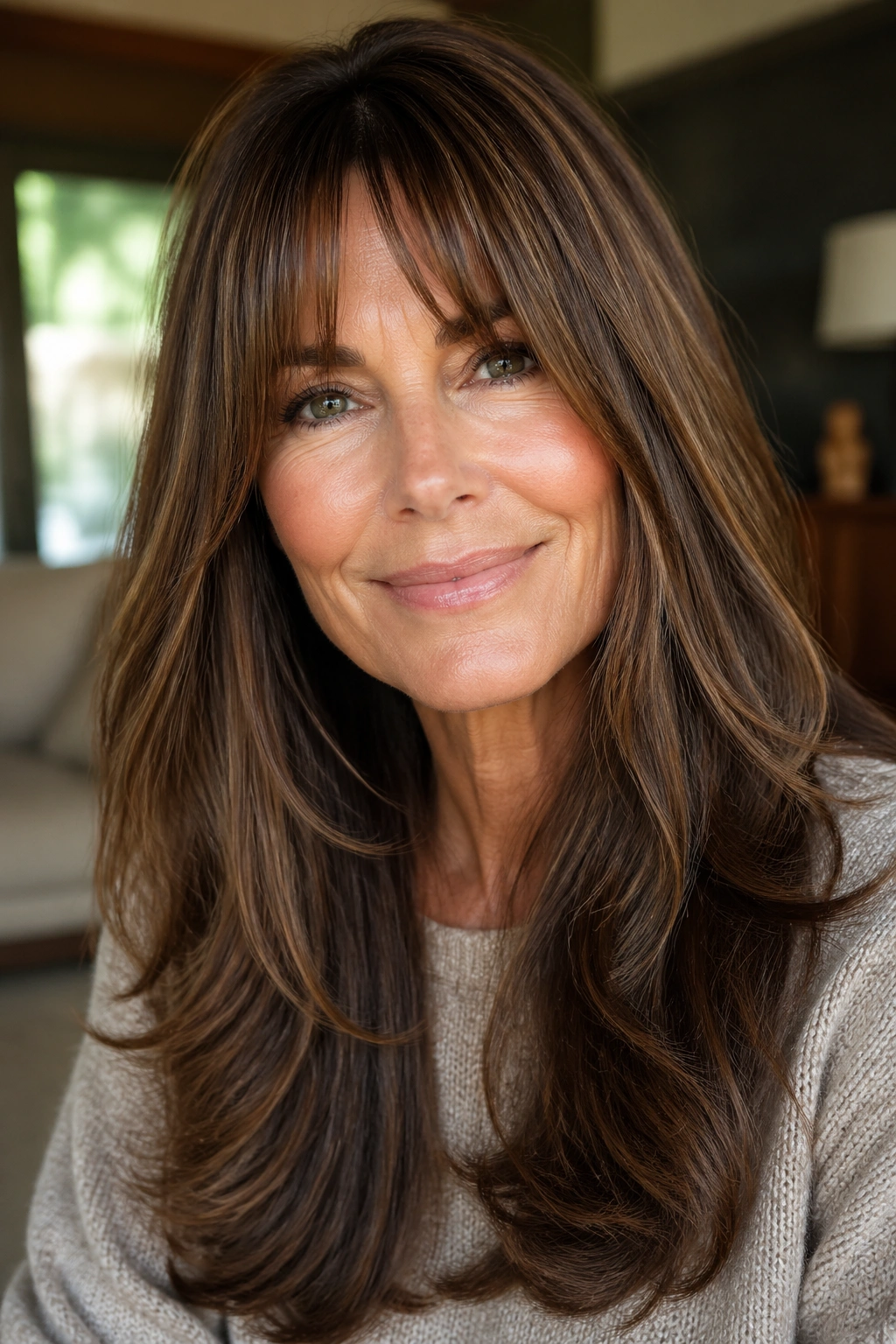
Bottleneck bangs are a smarter choice than blunt bangs for a lot of women with thick hair. They start narrow at the center, then open and soften toward the temples, which keeps the front from feeling too dense.
The rest of the cut stays long and layered, so you still have your length, but the bangs give you a fresh point of focus around the eyes. That can be especially nice if your face feels a little longer than it used to, or if you want to soften forehead lines without hiding half your face under a thick fringe. I like that they grow out in a calm, less awkward way than a full blunt bang.
What Bottleneck Bangs Change
They take pressure off the front hairline. They also blend better into layered hair than a straight fringe does, which means the cut grows out with less drama. On thick hair, that grow-out period matters. Nobody wants to hit week three and suddenly need a trim because the bangs have taken over the whole haircut.
A small round brush and a quick forward blow-dry are usually enough. The shape does the rest.
14. Tapered Crop With a Swept Top
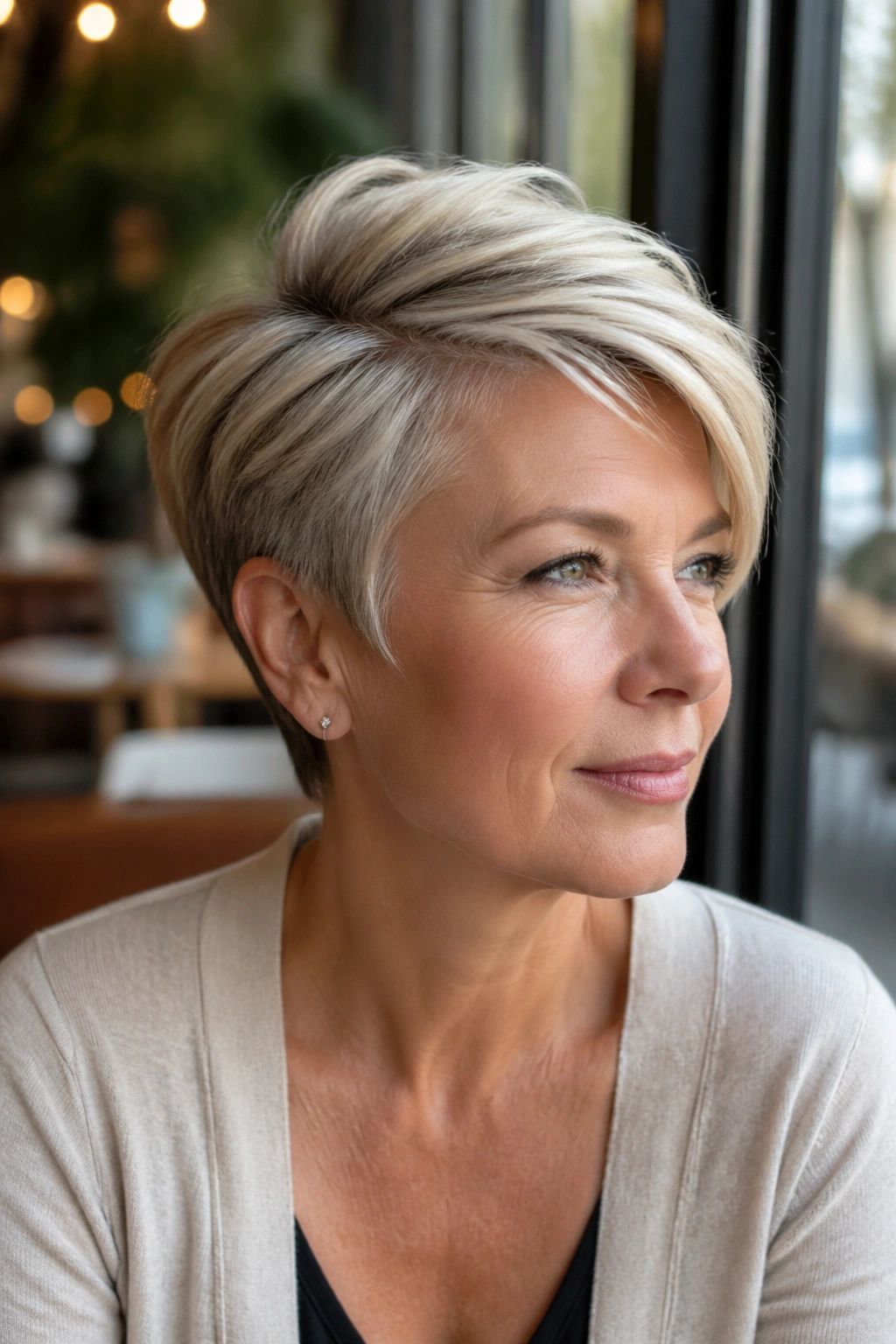
A tapered crop is for the woman who wants her hair off her neck and out of her way, but still wants a little softness up top.
The sides are cut close enough to remove the bulk that thick hair keeps around the ears, while the top stays longer and swept to one side. That longer top keeps the style feminine, if that word even helps here, and it also gives the hair a line to follow. Without that contrast, a short crop on thick hair can feel too round and too puffy.
This is a strong choice if you like seeing your earrings, your jaw, and your neck. It has a neatness to it that feels confident without trying too hard. Styling is fast, too. A bit of matte paste, a quick finger comb, and you’re done.
One warning: if the top is left too short, the whole cut can go flat or stand up in a way that looks accidental. Keep enough length on top to brush it to the side or forward. That’s the part that gives the crop its shape.
15. Shoulder-Length Cut With Razor-Free Texture
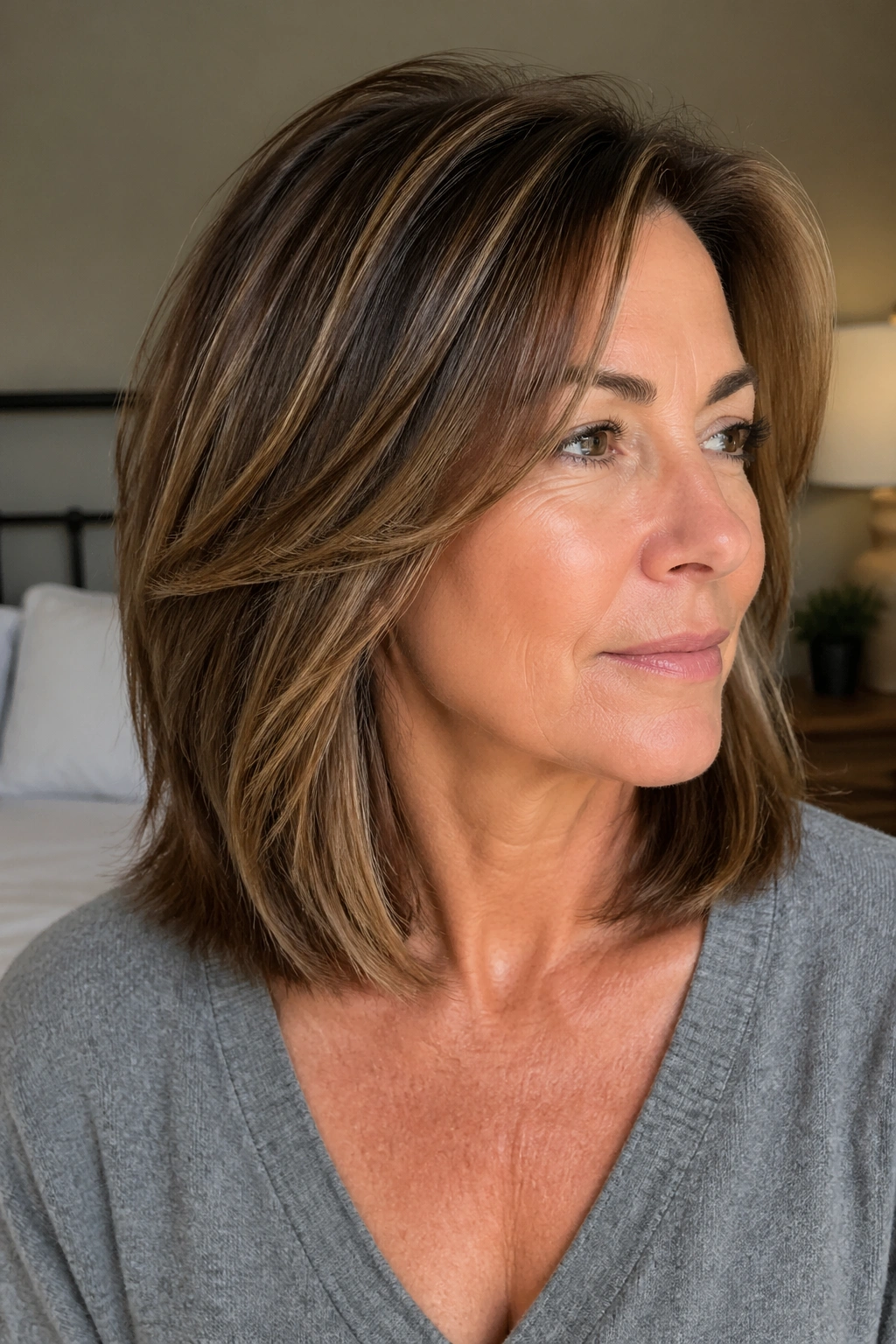
Why do some thick-haired women hate razor cuts? Because a razor can fray the ends and make coarse hair look fuzzy instead of soft.
A shoulder-length cut with texture added by scissors — not a razor everywhere — is a safer, cleaner option for a lot of hair types. The shape stays controlled, but the ends don’t feel too blunt. That means you still get movement, just without the dry, feathery finish that can show up when thick hair is over-thinned.
When Razor-Free Matters
- Your hair is coarse and tends to look frizzy at the ends.
- You wear your hair straight more often than wavy.
- You want the haircut to hold a smooth blowout for two or three days.
- You dislike wispy ends that separate too much.
This style is especially useful if your hair has a lot of density but not a ton of natural wave. It keeps the surface looking smooth while still letting the stylist remove some internal bulk. The result is calmer hair. Not flat. Calmer.
16. Rounded Lob With a Deep Side Part
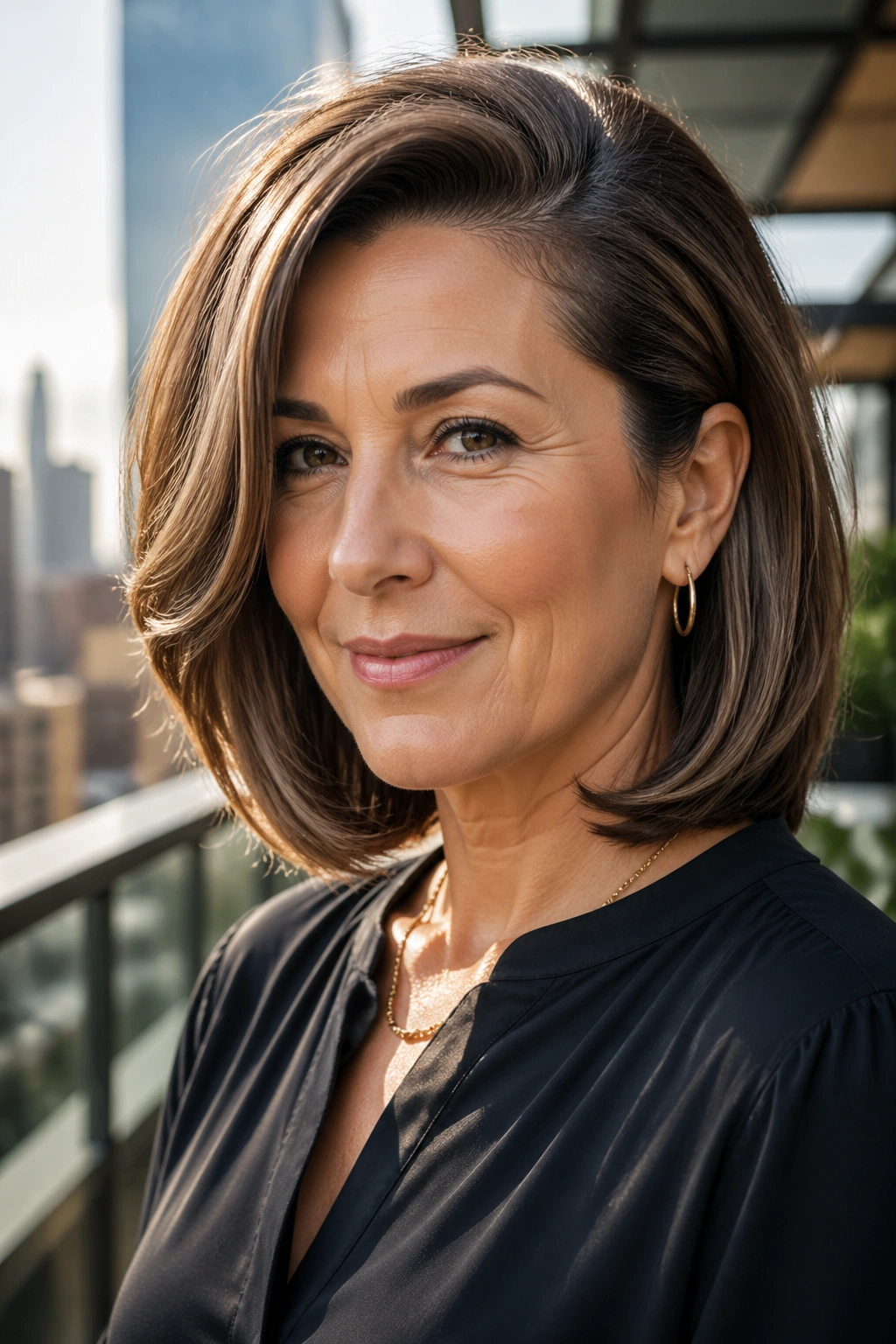
A deep side part can do more for thick hair than a lot of styling tricks people buy in a bottle. It shifts the weight, lifts the crown, and gives the face a little asymmetry that feels fresh.
With a rounded lob, the ends curve inward slightly and hug the neckline, which helps thick hair stay compact instead of spreading wide. The side part keeps the top from collapsing, and the roundness at the bottom softens the shape so it doesn’t look severe. It’s a small adjustment, but it changes the whole read of the haircut.
This cut is a good pick if your hair tends to lie flat at the roots but stays full through the ends. The part gives you height where you need it, and the rounded perimeter keeps the fullness from feeling bulky. If your face is a little angular, that curve can take the edge off in a flattering way.
Try drying the hair in the opposite direction of the part first, then flip it back. That one move gives the crown more lift than most people expect.
17. Soft Rounded Pixie-Bob
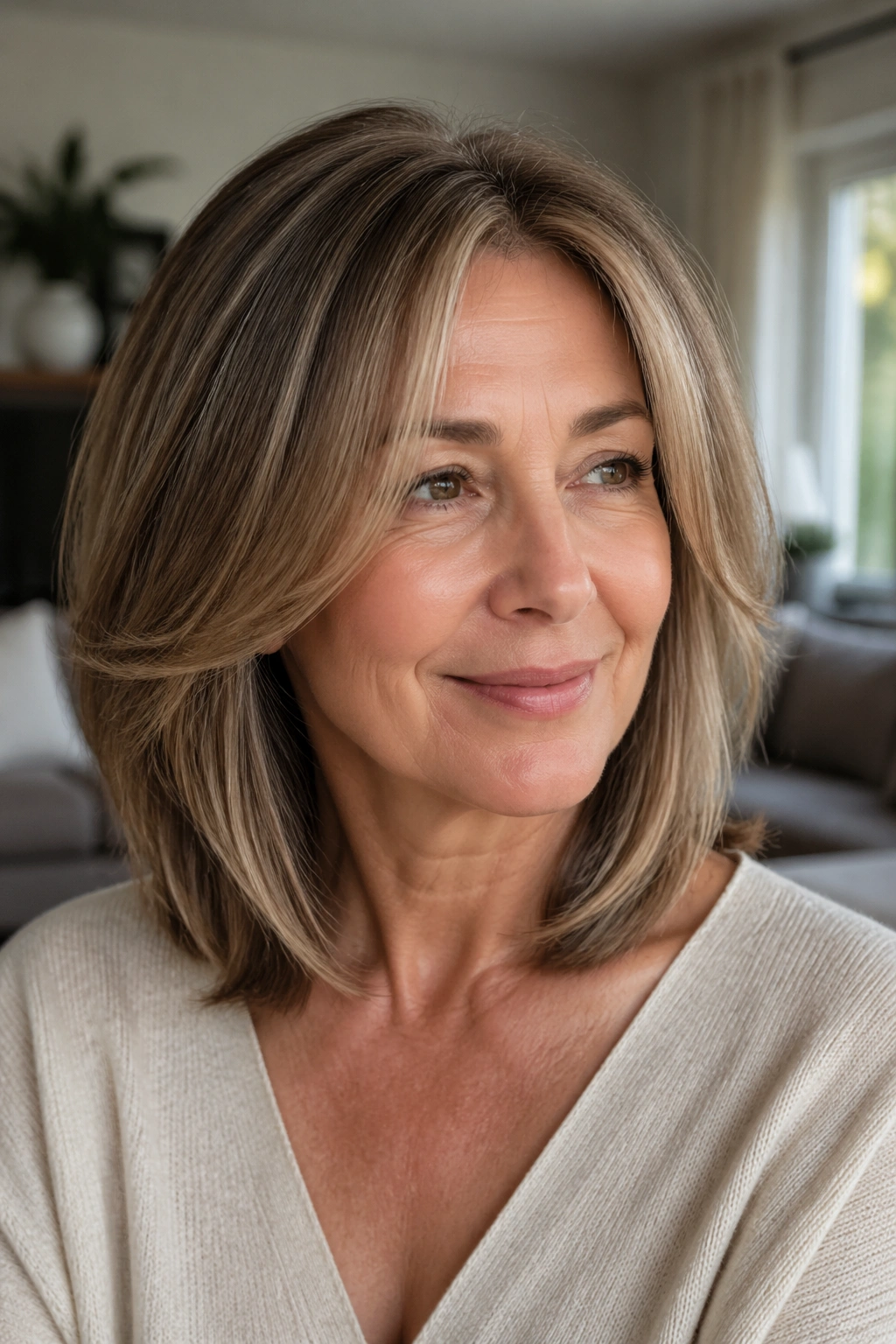
A pixie-bob sits in that useful middle space between short and cropped, and thick hair tends to like it because the shape stays full without getting heavy. The top is long enough to brush forward or to the side, while the back and sides are trimmed close enough to keep the outline neat.
What makes this cut work is the roundness. A square short cut can feel boxy on dense hair. A rounded pixie-bob bends the weight inward a little, so the hair follows the head instead of sitting away from it. That creates a softer profile around the temples and nape, which is where thick hair often starts to feel bulky fast.
This is one of those cuts that rewards a light hand with product. A small amount of styling cream or paste is enough. Too much can collapse the shape and make the top look greasy before noon. If you want a bit more lift, dry the crown with your fingers first, then use a brush only on the front.
Bring a reference photo, sure. But also bring a note about your routine. A good short haircut on thick hair should fit how you actually live, not how often you feel like styling it. If you want a quick shape with some softness left in it, this is a strong ending point. If you want more length, the lob and the collarbone cuts above will be kinder. Either way, thick hair looks best when it’s shaped with intent, not thinned into submission, and that’s the part worth asking for every single time.