



Korean beauty culture has transformed how we think about hairstyling, and the combination of bangs with wavy hair textures represents one of the most flattering trends in modern hair design. If you have naturally wavy hair or a textured perm, adding bangs in the Korean style can completely elevate your look—creating dimension, softness, and that coveted effortless-yet-intentional aesthetic that defines Korean fashion. The beauty of this pairing is that wavy hair naturally complements the delicate, face-framing quality of Korean bangs while adding volume and movement that blunt styles simply can’t achieve.
The challenge most people face is figuring out which specific bang and wave combination will actually work with their hair texture, face shape, and styling routine. Not every Korean bang style translates equally to wavy hair, and not every wave pattern flatters every bang cut. This guide walks you through fifteen proven Korean styles that work beautifully with wavy hair—each one tested and explained so you can bring a reference image to your stylist with complete confidence.
1. Curtain Bangs With Beach Waves
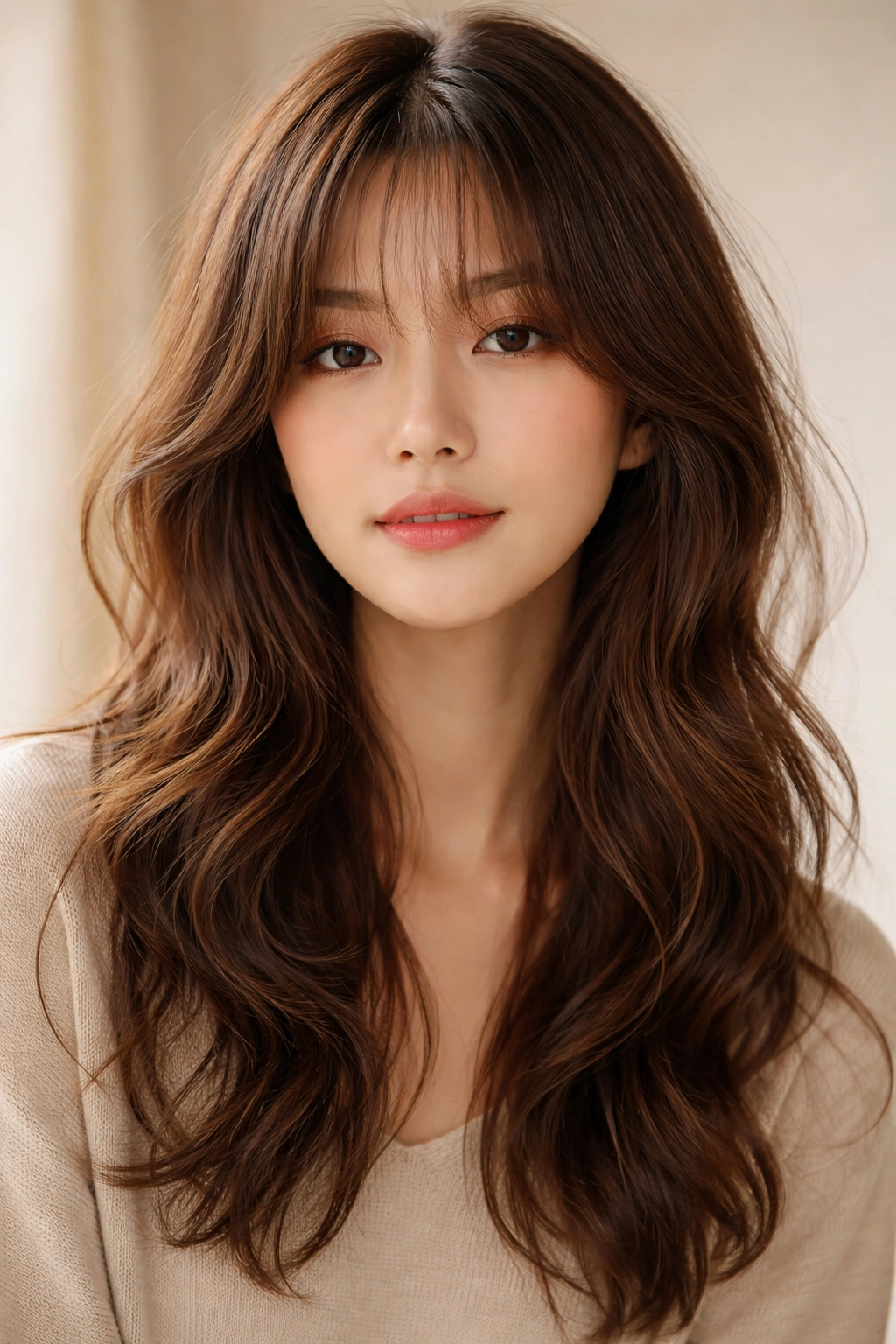
Curtain bangs are perhaps the most universally flattering Korean bang style, especially when paired with wavy hair. They naturally part down the middle and frame the face on both sides, creating a soft, romantic silhouette that works across all face shapes. With wavy hair underneath, curtain bangs look effortlessly tousled rather than stiff, giving you that coveted “I just came back from the beach” aesthetic without any of the damage from actual salt water.
Why This Works for Wavy Hair
Curtain bangs already fall in a divided, directional way that mirrors the movement of waves. When your underlying hair is wavy, the bangs get natural lift and texture at the roots, preventing them from looking flat or greasy. The soft parting in the middle actually emphasizes the wave pattern throughout your entire head, creating visual flow and cohesion. This style requires minimal daily styling—your hair’s natural wave texture does most of the work for you.
How to Style and Maintain Them
- Air-dry your hair whenever possible to maintain natural wave texture and let bangs settle into their divided position naturally
- Use a lightweight texturizing spray on damp hair to enhance waves and add grip to the bangs, preventing them from falling flat against your forehead
- When you do blow-dry, use a diffuser attachment and direct airflow upward to preserve the wave pattern while giving bangs gentle lift at the roots
- Schedule trims every 4-5 weeks to maintain the length (bangs should hit just above your eyebrows when styled)
- Sleep on a silk pillowcase to reduce friction and keep waves defined overnight, preventing bangs from getting creased or bent
Pro tip: Curtain bangs actually improve over time as they grow slightly longer—they get easier to style and look more effortlessly cool the less you fight them. Resist the urge to trim too frequently in the first few weeks.
2. Blunt Bangs With Soft Layers
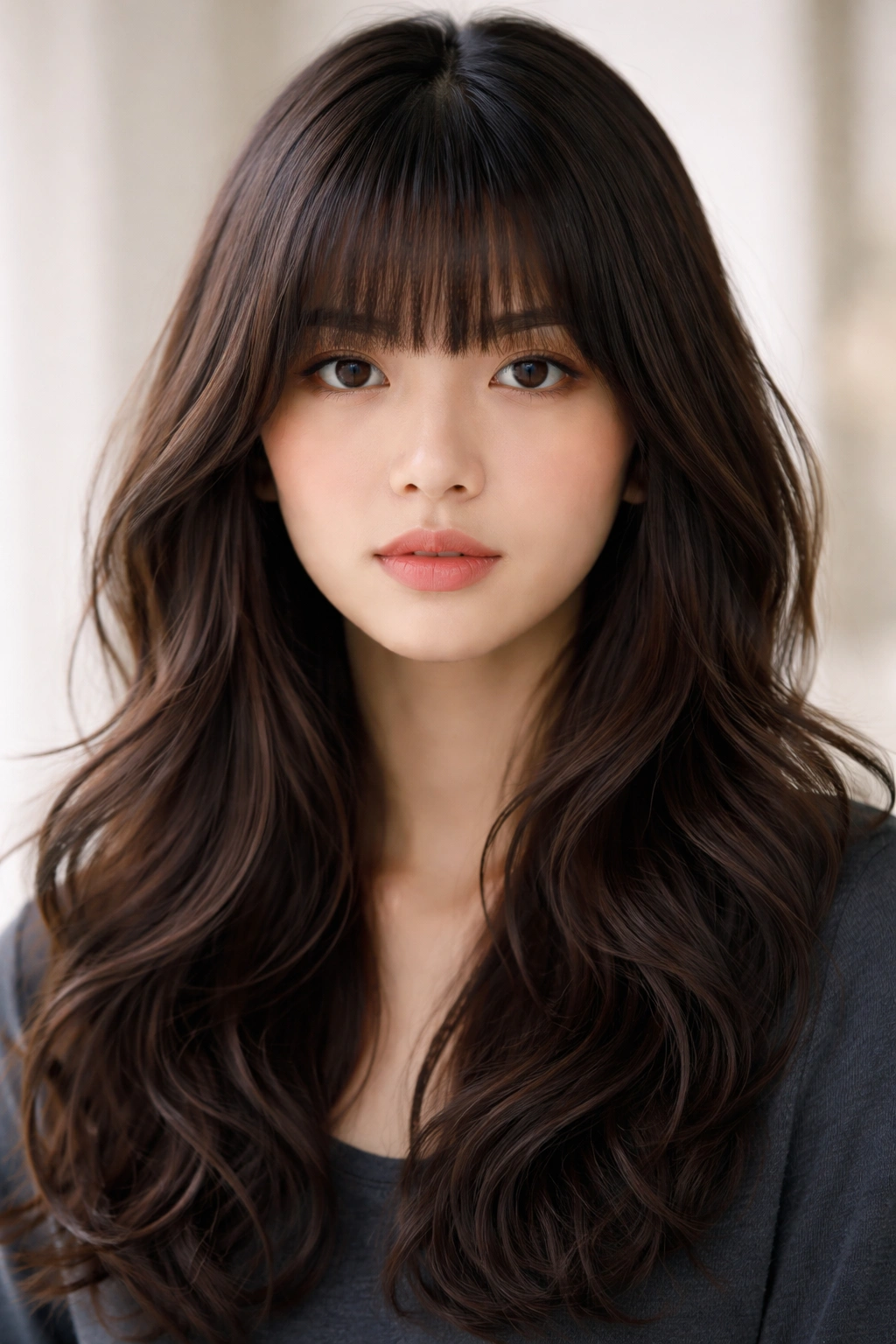
Blunt bangs create a bold, youthful statement when paired with wavy hair and layering. The straight edge of the bangs contrasts beautifully with the movement in your waves, and the layering underneath creates shape and prevents the look from feeling too heavy. This style works particularly well if you want a more dramatic, statement-making appearance while still maintaining the soft, approachable vibe that Korean styles are known for.
Why This Works for Wavy Hair
Blunt bangs actually benefit from having wavy hair below them because the texture prevents your entire look from appearing severe or too structured. The waves soften the visual weight of the blunt line, creating what stylists call “contrast balance”—the hard line of the bangs is visually balanced by the soft, undulating texture of the waves. Layers placed strategically underneath remove bulk and emphasize wave definition, making the whole style appear more intentional and less costume-like.
Styling Tips for Best Results
- Use a flat iron on your bangs only if you want that sleek, blunt look—letting them air-dry with natural waves can create an interesting textured contrast against the soft layers
- Focus layers around face-framing pieces and scattered throughout mid-lengths to emphasize wave movement without creating scraggly, damaged-looking ends
- Apply mousse to damp hair before air-drying to enhance wave definition, especially in the layers where frizz can become more visible with shorter pieces
- Blunt bangs show every little hair texture variation, so invest in a sharp razor-cut (not scissor-cut) from a stylist experienced with textured hair
- Trims every 3-4 weeks are essential with blunt bangs—the precision of the line matters more with this style than with softer bang cuts
Worth knowing: Blunt bangs with wavy hair can look either effortlessly cool or slightly undone depending on how you style them—both interpretations are intentional, so choose based on your daily lifestyle rather than worrying you’re styling them “wrong.”
3. Side-Swept Bangs With Perm Waves
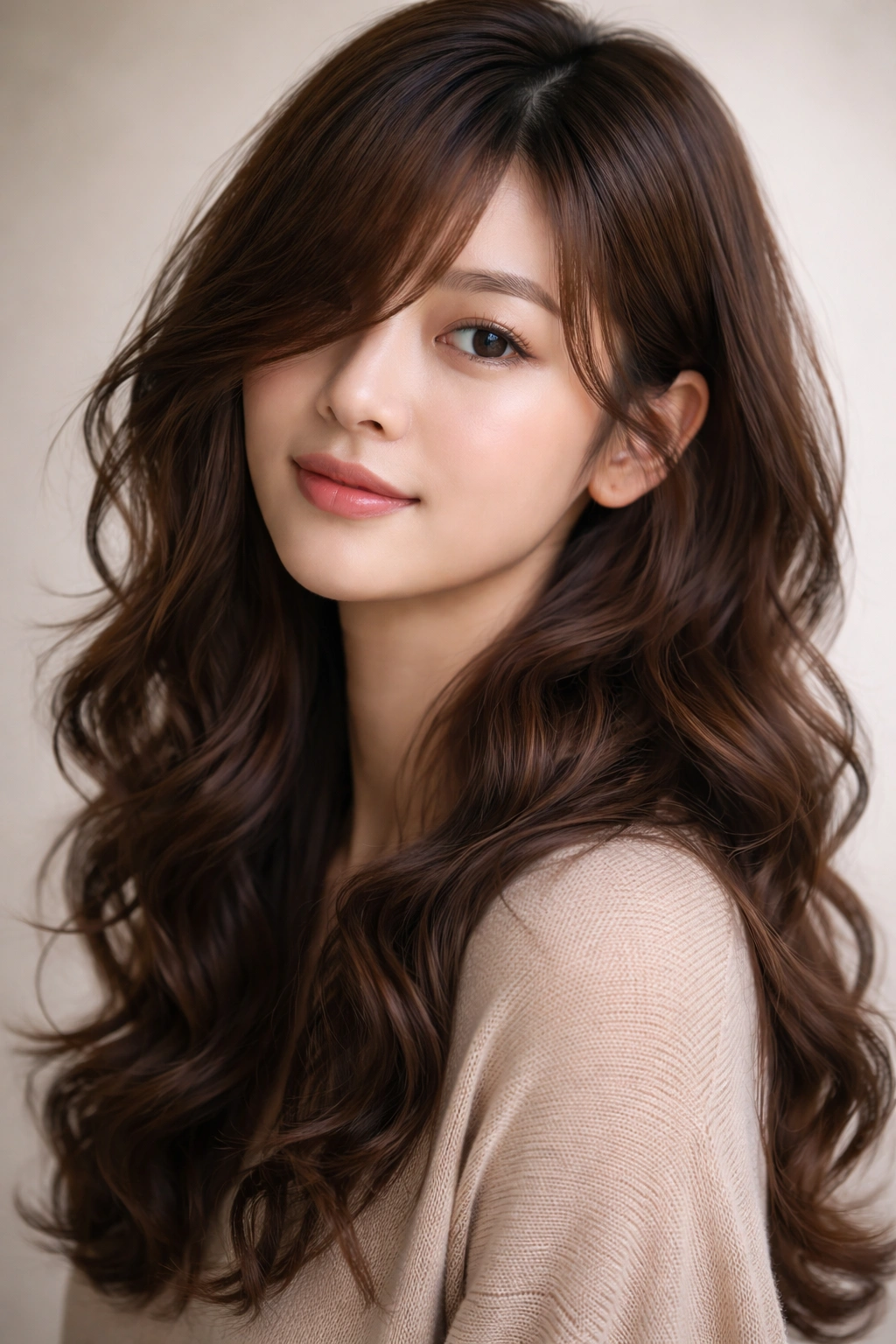
Side-swept bangs angled dramatically to one side create an asymmetrical, fashion-forward look that pairs beautifully with a structured perm wave. This style is popular in Korean salons because it photographs exceptionally well and creates the illusion of a more defined facial structure. The angle of the bangs actually draws the eye down one side of your face, making cheekbones appear more prominent and jawlines appear sharper.
Why This Works for Wavy Hair
A perm wave gives you consistent, controllable texture that holds the side-swept angle of the bangs without requiring daily blow-drying or styling tools. The bangs create a clear directional flow that guides the eye along the wave pattern, making your waves appear more intentional and designed rather than randomly textured. The asymmetry of this style is flattering because it creates visual interest while the structured perm ensures the waves don’t look unkempt or frizzy.
Getting the Perm and Maintaining the Style
- Book a consultation specifically mentioning you want perm waves that will hold side-swept bangs—a skilled stylist will adjust the rod size and placement to complement both elements
- A perm typically lasts 3-4 months before gradually relaxing, so plan for a perm refresh appointment if you want to maintain crisp definition as the style grows out
- Use sulfate-free, moisturizing shampoo and conditioner designed for permed hair to prevent drying and help your waves stay bouncy longer
- Apply a leave-in conditioner to damp hair before air-drying to define curls and reduce frizz, especially important for side-swept bangs that need to stay smooth and directional
- Sleep with bangs clipped up or on a silk pillowcase to prevent the wave pattern from getting disturbed and the bangs from bending in unwanted directions
4. Wispy Bangs With Shag Texture
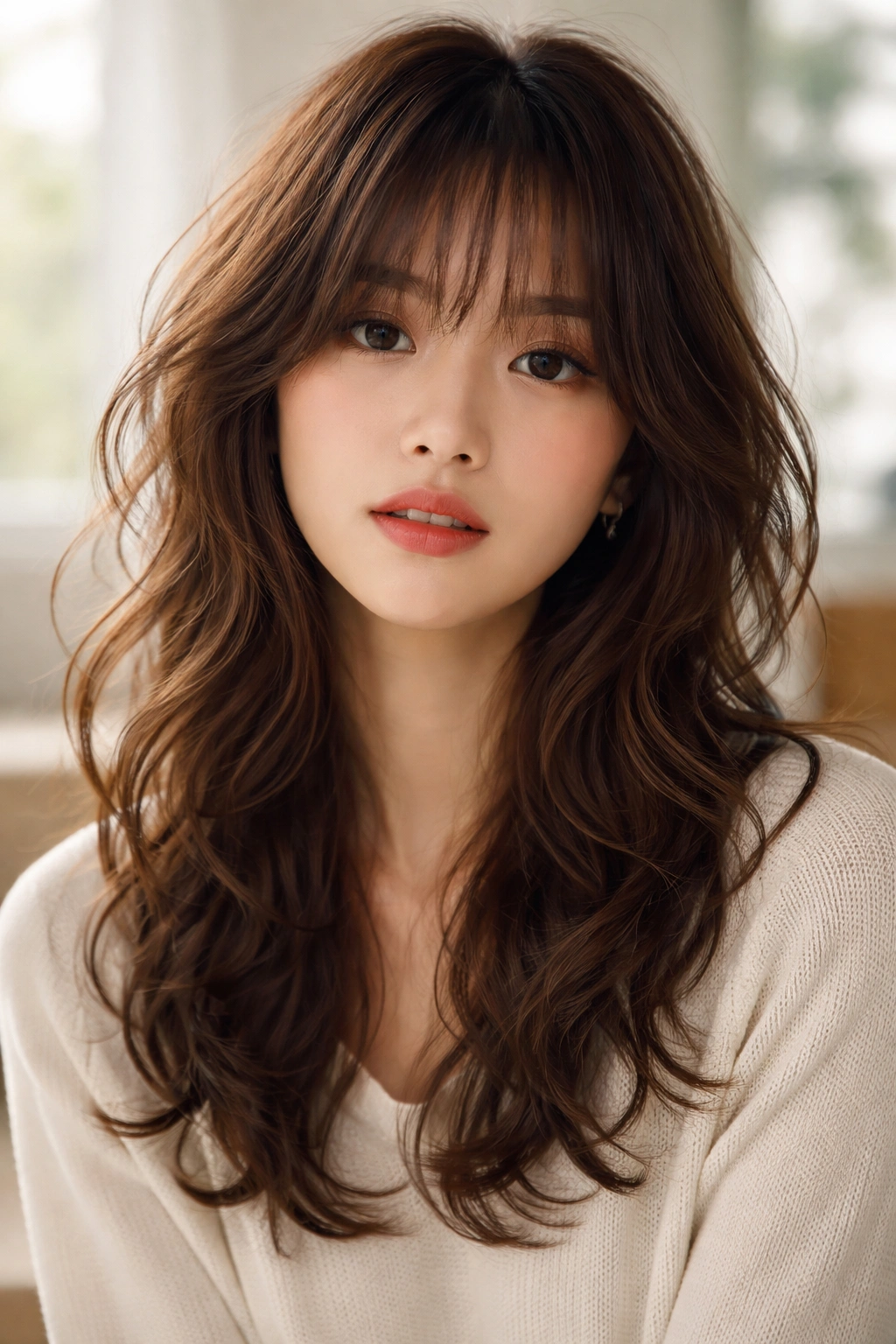
Wispy bangs are delicate, thin, and feathered—they look lighter and more romantic than blunt or thick bangs, and they layer beautifully over a shag-textured cut. Shag hairstyling involves multiple layers at different lengths throughout your hair, creating natural movement and an intentionally undone aesthetic that feels very current in Korean styling. Wispy bangs soften the sometimes-chaotic appearance of a shag, grounding the style with a cohesive frame around your face.
Why This Works for Wavy Hair
Wispy bangs don’t compete with wavy texture the way blunt bangs do—instead, they complement it by adding another layer of delicate detail. A shag cut naturally emphasizes wave texture by removing weight and allowing each wave to move independently. Wispy bangs placed over this textured base create depth and visual interest without overwhelming your face. The combination feels inherently modern and pairs particularly well with naturally wavy hair because you’re working with your hair’s texture rather than against it.
Creating and Maintaining Shag Texture
- A shag cut should be razor-cut by someone experienced with wavy and textured hair—scissor cuts on wavy hair can create an unintentionally choppy appearance
- Layers should be placed at varying depths throughout, not just at the crown, to ensure waves are emphasized at every level of your hair
- Wispy bangs should be very thin and feathered, transitioning seamlessly into the shorter layers near your face
- Use a texturizing spray or sea salt spray on damp hair to enhance the shag’s movement and prevent it from looking stringy or separated
- Trim every 4-6 weeks because shag cuts depend on the precision of the layering—as it grows out, the definition gets lost if you wait too long between trims
Insider note: Shag cuts with wavy hair require less daily styling than people expect—your natural wave pattern does most of the texture work, so you’re not creating an effort-intensive look even though it might appear effortlessly complicated.
5. Straight-Across Bangs With Undercurl Waves
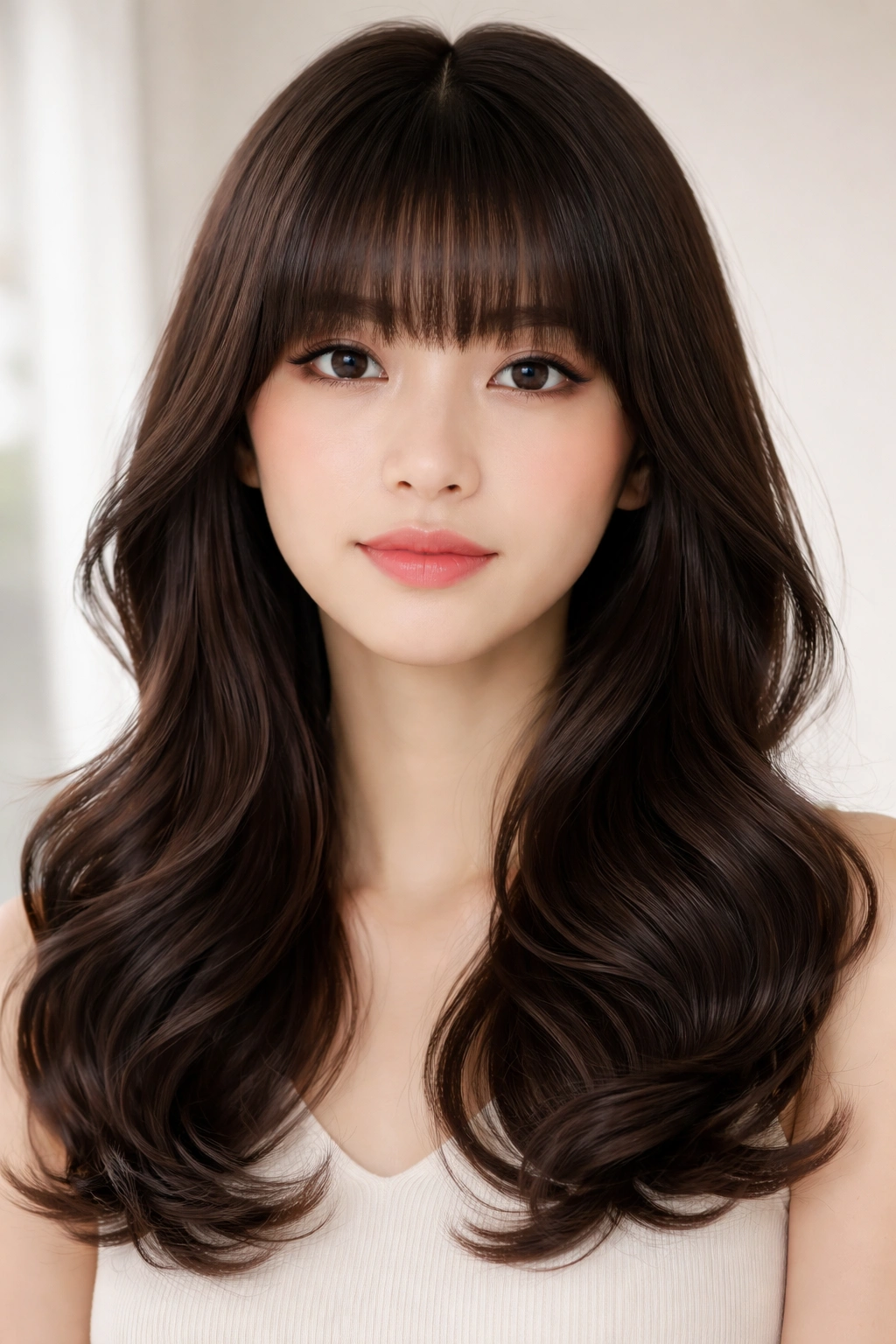
Straight-across bangs that sit just above the eyebrows create a clean, geometric look that’s very Korean. When paired with undercurl waves—where the ends flip slightly upward—you get a youthful, polished appearance that somehow feels both styled and naturally effortless. The clean line of the bangs emphasizes the curl direction in your waves, creating clear visual organization throughout your entire style.
Why This Works for Wavy Hair
Undercurl waves naturally support straight-across bangs by creating upward movement at the ends of your hair, which visually lifts your face and prevents the straight bang line from appearing too heavy or anchoring your features downward. The curl direction at your ends also helps straighten-across bangs sit at a consistent angle rather than dipping down into your face. This pairing is particularly flattering for longer hair because the undercurl prevents length from appearing limp or dragging down your overall silhouette.
Achieving and Styling Undercurl Waves
- Undercurl waves can be achieved with a round brush and blow-dryer during styling, or created semi-permanently with a perm using larger rods that produce subtle curls rather than tight waves
- If you’re blow-drying, focus your round brush on the ends of each section, rotating the brush slightly upward as you move the blow-dryer away from your roots—this creates the flipped-up curl direction
- Use a smoothing serum on your straight-across bangs to keep them sleek and prevent them from curling upward with the rest of your hair
- Product application matters here—use curl cream on your waves but avoid applying it to your bangs, which need to stay straighter for the geometric look to work
- Straight-across bangs require precise trims every 3 weeks to maintain the clean line; even slightly uneven growth becomes visible with this blunt style
6. Feathered Bangs With Wavy Bob
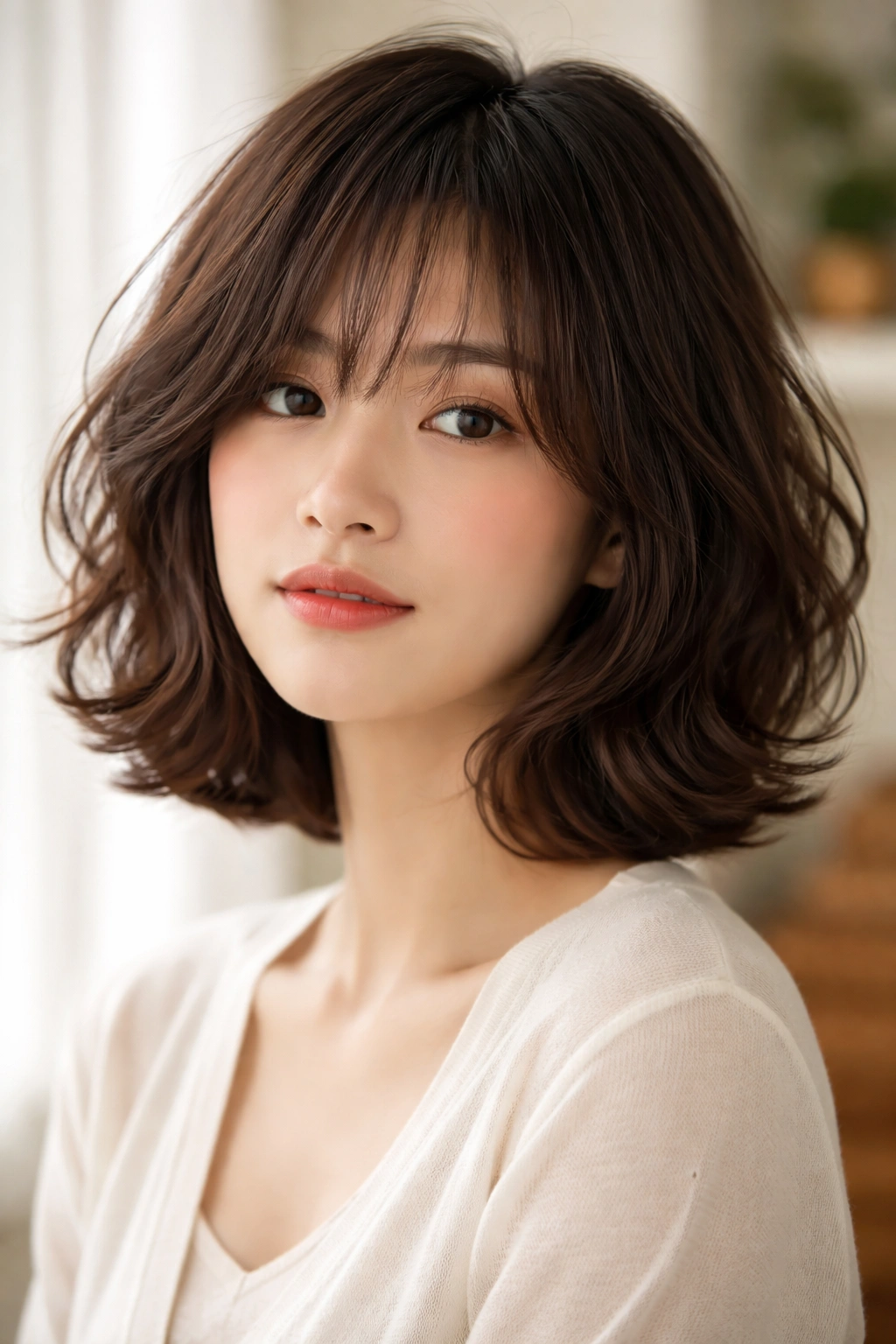
Feathered bangs are layered and textured within the bang section itself, creating a softer, less defined look than straight-across bangs. A wavy bob—hair cut to chin-length or slightly shorter, with waves throughout—pairs beautifully with feathered bangs because both elements are textured and movement-oriented. This style reads as contemporary and accessible without requiring intense daily styling or lots of product.
Why This Works for Wavy Hair
Feathered bangs naturally blend into wavy hair because the texture of the bangs matches the texture of your waves—there’s no harsh line or contrast like you get with blunt bangs. A wavy bob is an ideal length for maintaining wave definition because you’re not carrying too much length that would weigh down your curls. The combination of feathered bangs and a wavy bob creates a cohesive, unified look where every element contributes to the overall movement and texture rather than fighting against it.
Styling a Feathered Bang and Wavy Bob
- Feathered bangs should be cut at slightly different lengths throughout the bang area, so even if they’re not perfectly styled, they still look intentional
- Use a curl-defining cream or gel on damp hair, focusing on creating defined waves rather than frizz—apply product to soaking-wet hair and scrunch upward to enhance your natural wave pattern
- Diffuse or air-dry to set your waves; blow-drying with a round brush will straighten both your waves and your feathered bangs, removing the texture that makes this style work
- A wavy bob needs regular trims (every 4-5 weeks) because the shape depends on the precision of the ends—as it grows out, waves can start to look limp instead of bouncy
- Consider a mousse-based product rather than heavy cream if you have fine or thin hair; feathered bangs can look stringy if weighed down with too much product
Worth knowing: Feathered bangs and wavy bobs are extremely forgiving about whether you’ve had a perfect hair day—the texture works in your favor, making slightly messy waves look intentionally undone rather than poorly styled.
7. Micro Bangs With Long Waves
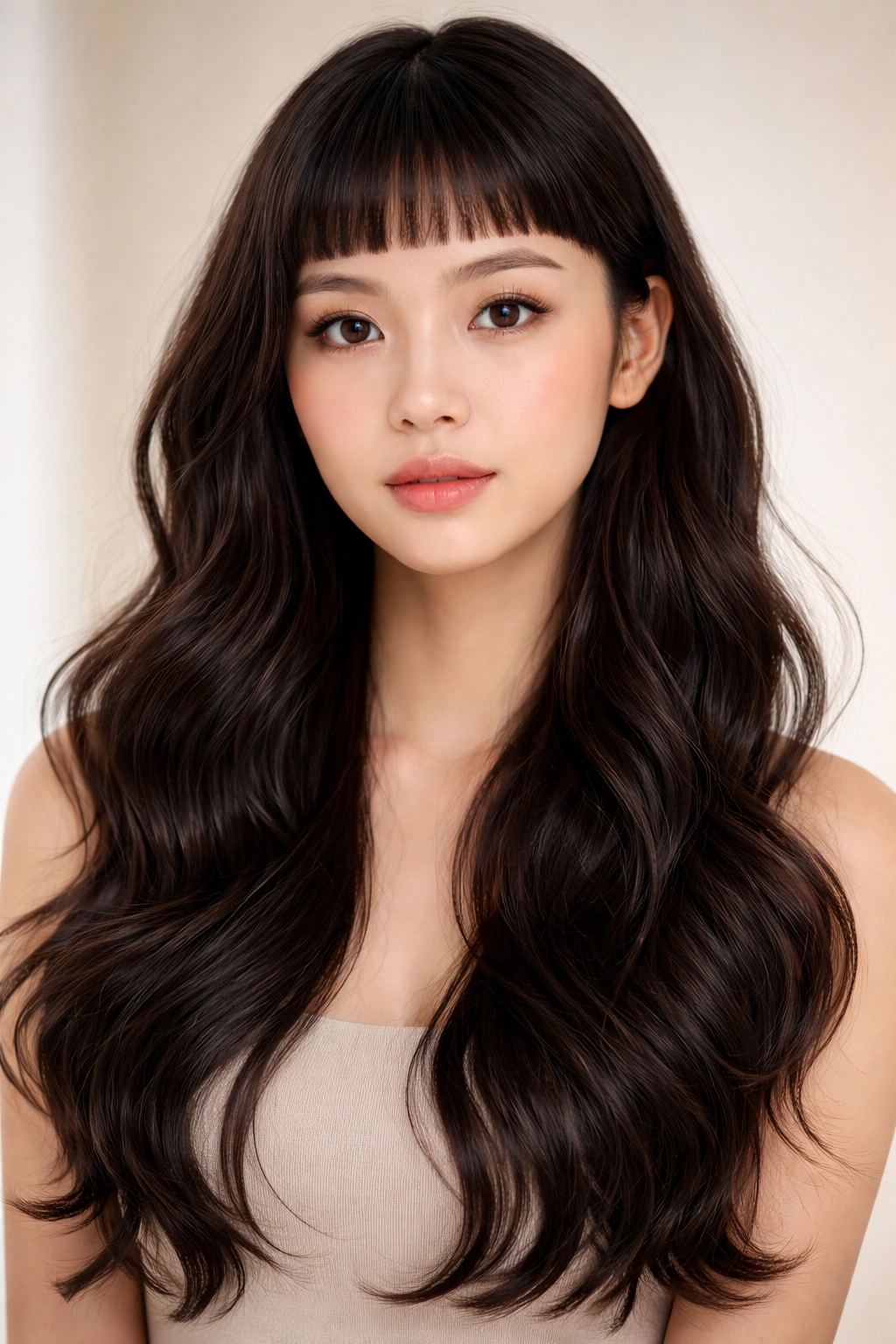
Micro bangs sit very high on your forehead, often just at or above your hairline, creating a bold, youthful look that’s become increasingly popular in Korean styling. Paired with long waves that extend past your shoulders, micro bangs create extreme contrast—the very short bangs make your forehead appear larger and your face appear younger, while the long waves add softness and romance to balance the boldness of the short bangs.
Why This Works for Wavy Hair
Long waves provide the visual softness needed to balance the audacious shortness of micro bangs. Without that soft, flowing length below, micro bangs can appear costume-like or difficult to pull off. The length and movement of your waves actually make micro bangs appear less severe than they would on someone with straight, blunt hair. This combination works especially well if you have a smaller forehead or naturally youthful features that can carry off the playful energy micro bangs create.
Styling Micro Bangs and Long Waves
- Micro bangs require trims every 2-3 weeks without exception—once they grow even slightly, the entire visual effect changes and they stop reading as micro bangs
- Use a lightweight serum or oil on your long waves to reduce frizz and emphasize the smooth, flowing movement that balances the short bangs
- Blow-dry your hair if possible to smooth out waves and create shine; wavy hair that air-dries can sometimes look frizzy, which competes with the precision of your micro bangs
- Part your hair in the center or slightly to one side—a deep side part can actually make micro bangs appear even shorter by creating asymmetry
- Avoid heavy styling products on your micro bangs (they make them look greasy and lifeless), but don’t skip product on your long waves (which need definition and separation)
Pro tip: Micro bangs are a commitment-level hairstyle that requires very frequent trims. If you’re not willing to visit your stylist every 2-3 weeks without fail, choose a different bang style—as micro bangs grow out, they stop looking intentional and start looking overdue for a trim.
8. Honey-Toned Bangs With Textured Waves
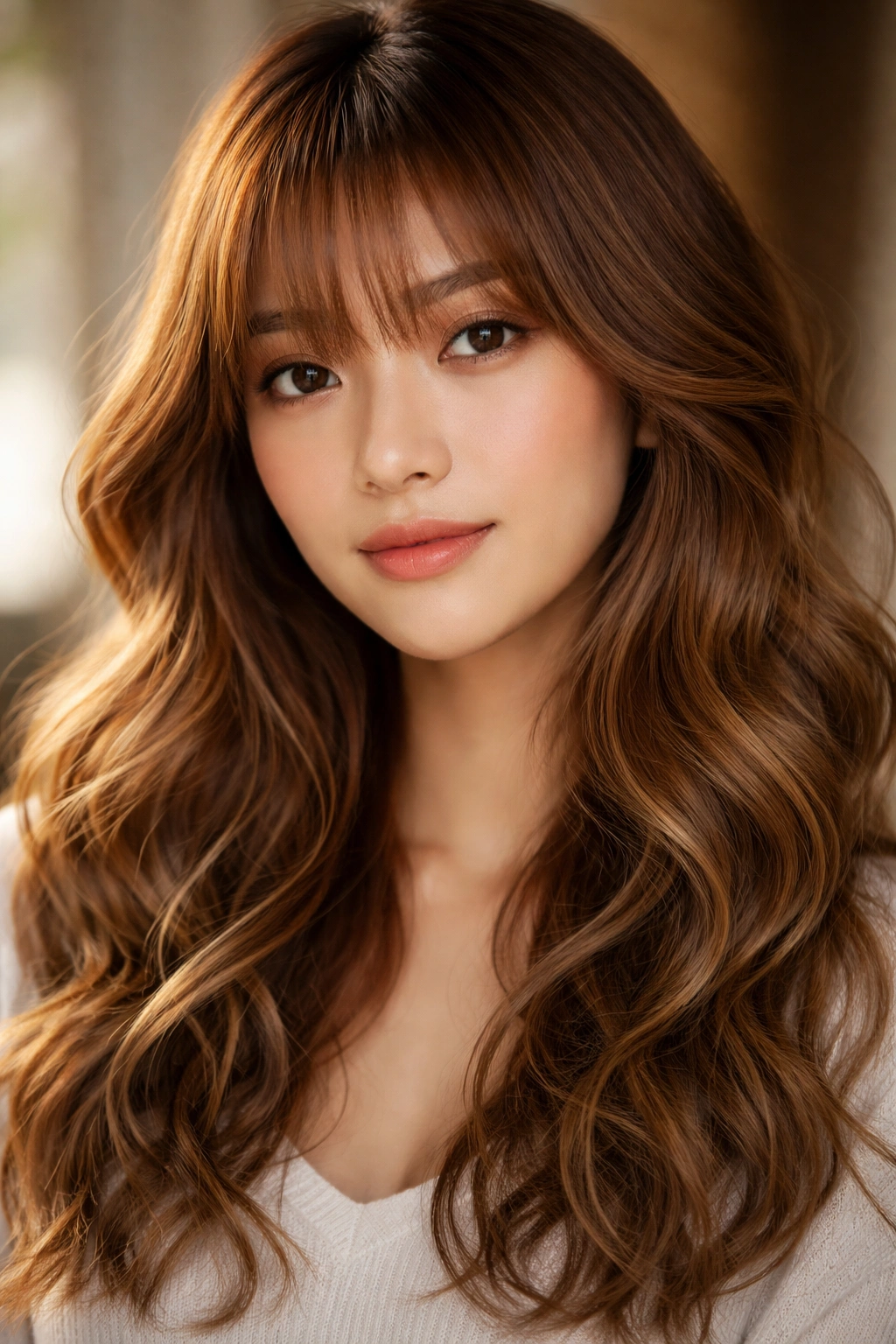
Honey-toned bangs refer to balayage or dimension painting that concentrates warm, golden-blonde tones specifically in your bang area, creating the illusion of dimension and movement. Paired with textured waves throughout your hair (created either naturally or with a perm), this creates a multidimensional, expensive-looking style that reads very current in Korean salons. The honey tones reflect light differently than your base color, making your bangs appear to have more texture and movement than they might otherwise.
Why This Works for Wavy Hair
Honey tones instantly add dimension to any hairstyle, but they’re particularly effective with wavy hair because the dimension creates visual depth—your eye reads the different tones as different planes of texture and movement. Textured waves show off color variation better than straight hair because each wave catches light differently depending on its position and angle. The warmth of honey tones complements the natural shadows created by wave patterns, making the overall effect more harmonious than if you had a flat, single-tone base color with waves.
Getting and Maintaining Honey-Toned Color
- Honey-toned balayage should be customized to your base color—your stylist should blend warmer tones gradually, starting darker near your roots and lightening toward the ends
- Plan for maintenance appointments every 6-8 weeks because brassy, orange tones develop in blonde balayage as it fades; regular toning keeps honey tones looking fresh
- Use sulfate-free, color-safe shampoo and conditioner specifically because balayage and perms are both processing that can dry hair significantly
- Apply a purple toner or glossing treatment to bangs regularly to neutralize any brassy tones and keep honey colors looking intentional rather than faded
- Textured waves show every bit of color damage, so use a deep conditioning treatment weekly and get regular trims to remove any overly porous, damaged ends that make color look muddy
9. Choppy Bangs With Tousled Waves
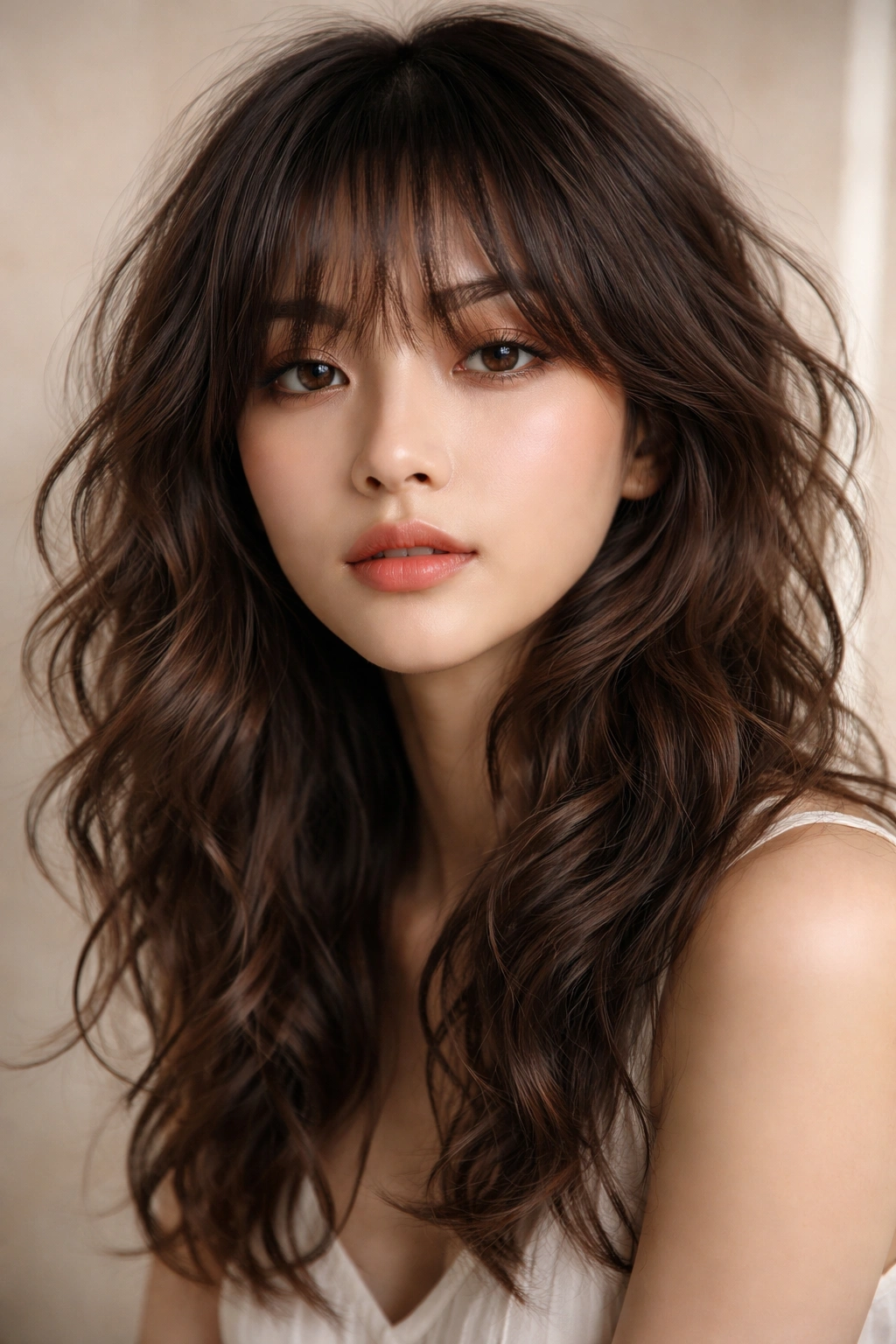
Choppy bangs are cut at varying lengths within the bang area, creating an intentionally undone, textured appearance that pairs perfectly with tousled waves. This is a more editorial, fashion-forward style compared to some other options—it reads as styled and intentional rather than accidental. When paired with waves that are deliberately messed up and textured, choppy bangs create a cohesive “I woke up like this” aesthetic that’s very current in Korean and broader Asian styling.
Why This Works for Wavy Hair
Choppy bangs naturally mesh with wavy hair because the texture of the bangs matches the texture of your waves—there’s visual continuity rather than contrast. Tousled waves are created by deliberately separating and texturizing your waves, sometimes even backcombing sections for extra volume. Choppy bangs work with this approach because uneven lengths read as intentional when surrounded by textured, separated waves. The overall effect feels edgy and modern without looking unkempt or poorly maintained.
Creating Choppy Bangs and Tousled Waves
- Choppy bangs should be cut with a razor (not scissors) by someone experienced with textured hair—the uneven lengths need to be precise to look intentional rather than haphazard
- Vary the lengths of your bangs by at least ½ to 1 inch to create visible choppiness; subtle variations won’t register visually
- Create tousled waves using a texturizing spray applied to damp hair, then either air-drying or using a diffuser to enhance your natural wave pattern
- Backcombing sections at your roots creates extra volume and texture; this technique works particularly well with choppy bangs because the texture supports the short, choppy lengths
- Use a lightweight spray or mousse rather than heavy cream; choppy bangs and tousled waves need to feel airy and movement-oriented, not weighted down by product
Insider note: Choppy bangs and tousled waves require confidence in their styled-but-undone aesthetic. If you’re someone who feels uncomfortable looking slightly messy, this style might frustrate you—it needs to look intentionally undone, not perfectly polished.
10. Air Bangs With Soft Curls
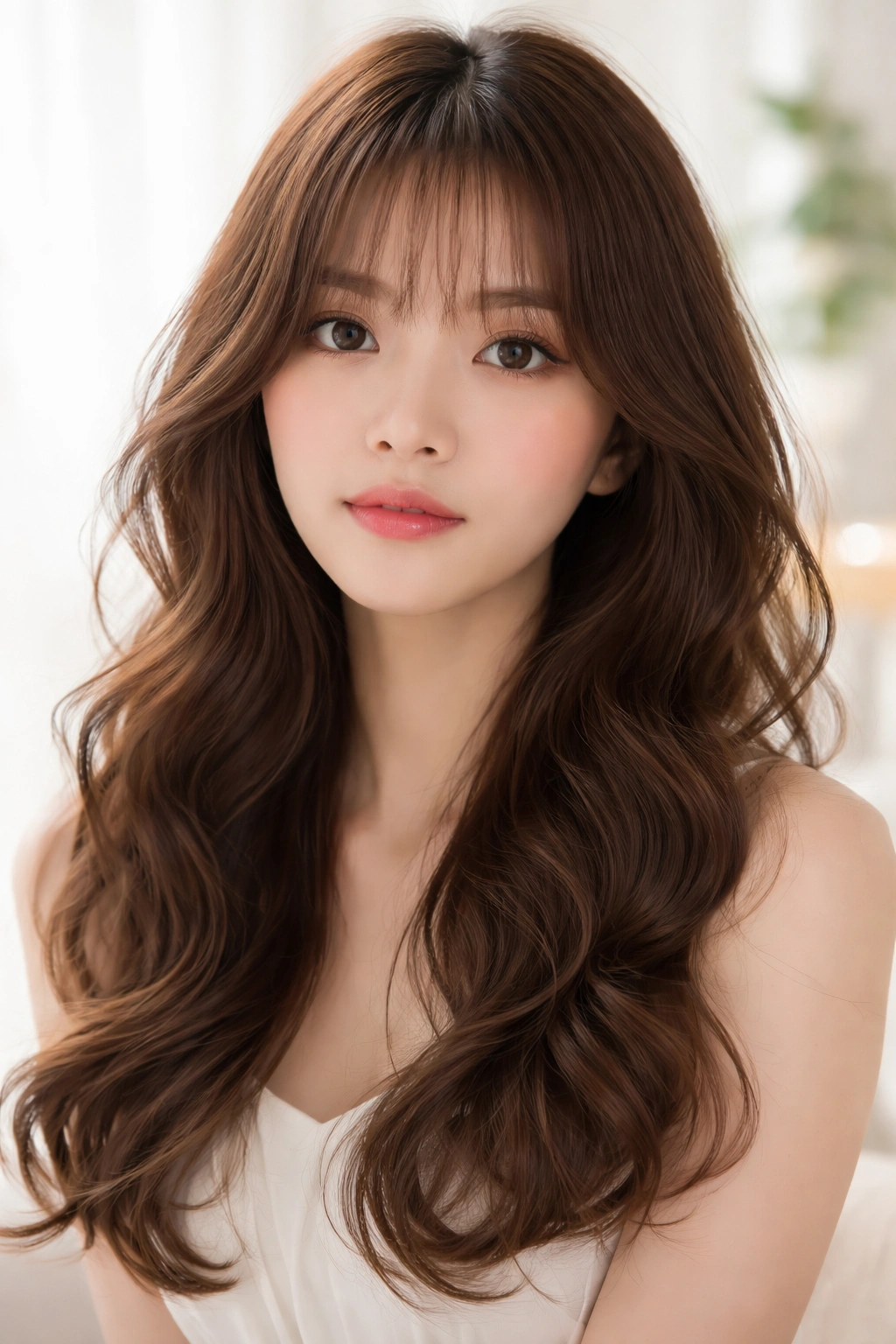
Air bangs are very light, wispy, and see-through—you can literally see through them to your forehead. They create an extremely soft, romantic, feminine aesthetic that’s massively popular in Korean styling. Paired with soft curls (as opposed to waves, which are flatter and more directional), air bangs create an entirely dreamy, almost ethereal appearance that reads very young and gentle.
Why This Works for Wavy Hair
If your wavy hair has some natural curl tendency, you can achieve soft curls rather than simple waves by using smaller rods in a perm or by enhancing your natural curl pattern with styling products and techniques. Air bangs are so light and delicate that they don’t interfere with curl definition—in fact, the soft curls enhance the romantic, light feeling of the bangs. This pairing is particularly flattering if you have a rounder or softer face shape because the delicate bangs and soft curls create a cohesive, gentle aesthetic rather than adding visual weight.
Achieving Air Bangs and Soft Curls
- Air bangs are cut very finely and feathered to create see-through texture; this requires significant skill and should only be done by stylists experienced with creating very delicate bangs
- Ask your stylist to cut your bangs while your hair is dry (or at least slightly damp) so they can see exactly how much texture and airiness they’ve created—wet hair conceals how see-through your bangs actually are
- Soft curls can be created with a perm using medium-sized rods, or achieved by setting damp hair in large pin curls and air-drying
- Use a hydrating curl cream on damp hair, focusing on enhancing your natural curl pattern rather than creating separate defined ringlets
- Air-dry whenever possible to preserve the soft, bouncy quality of your curls; blow-drying tends to make them look frizzy rather than soft
Worth knowing: Air bangs are delicate and require gentle handling—avoid heavy products, tight brushing, or excessive manipulation that would disrupt their see-through quality and make them look stringy instead of ethereal.
11. Heart-Shaped Bangs With Volume Waves
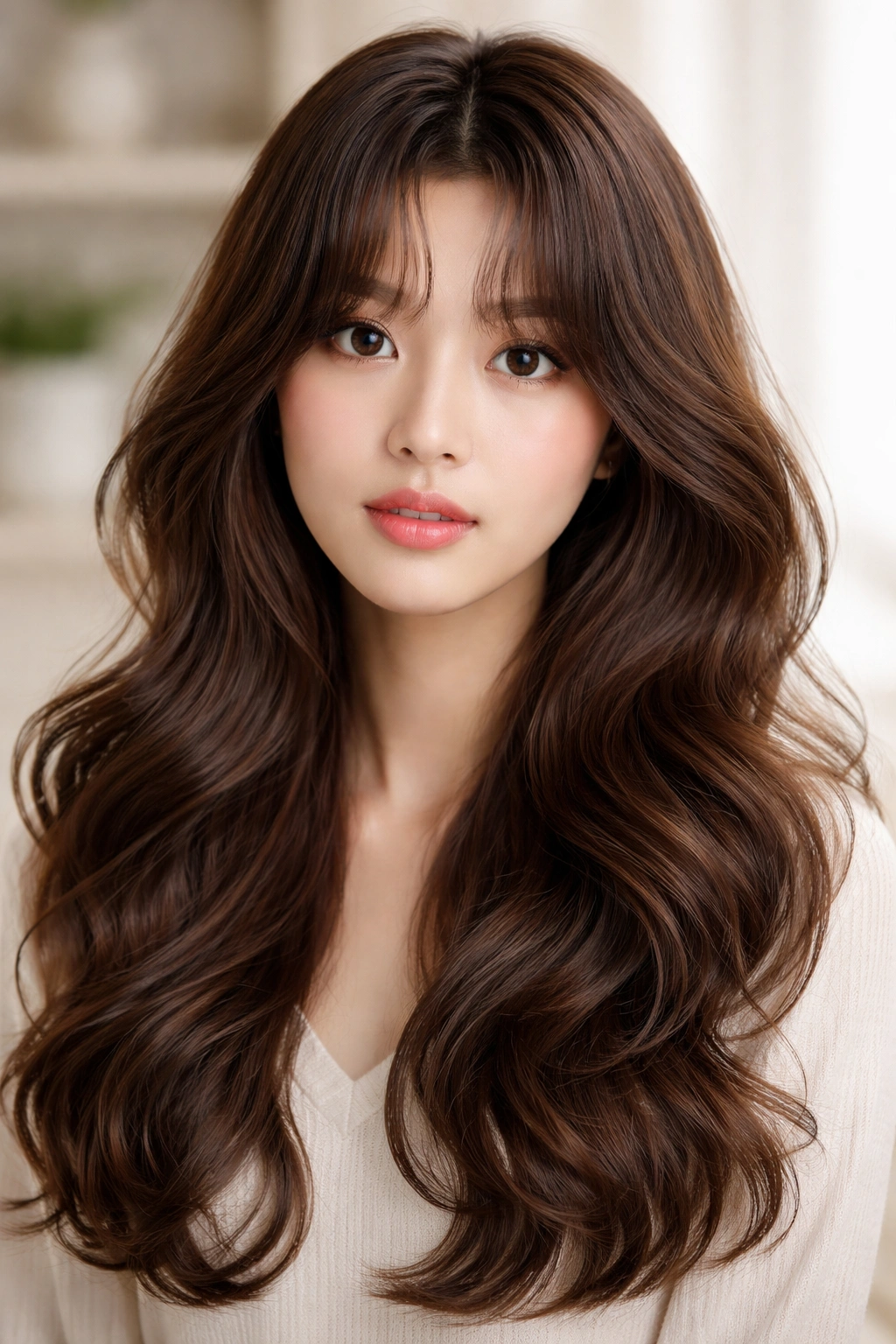
Heart-shaped bangs are cut to create a subtle point in the center, mimicking the shape of a heart when viewed from above. This style is sometimes called “heart bangs” and creates a distinctive, memorable look that’s quite popular in Korean styling. Paired with volume waves—waves that have been enhanced with styling techniques to appear fuller and bouncier—heart-shaped bangs create an ultra-feminine, distinctly styled appearance.
Why This Works for Wavy Hair
Volume waves naturally support heart-shaped bangs by creating full, rounded movement that complements the shape of the bangs. The distinctive shape of heart bangs reads as intentional and thoughtful, requiring supporting volume in your waves to appear balanced. If your waves are flat or limp, heart bangs can look odd or unfinished. But paired with genuinely voluminous waves, heart bangs create a polished, put-together appearance that reads as very intentionally styled.
Creating Heart-Shaped Bangs and Volume Waves
- Heart-shaped bangs require precise razor-cutting to create the subtle point; a stylist should use point-cutting techniques to create the specific shape you want
- Ask to see photos of how dramatically heart-shaped you want the point—some versions are very subtle, while others create a more obvious V-shape
- Create volume waves using a round brush and blow-dryer, directing airflow upward and focusing on lifting at your roots
- Use a volumizing mousse or powder at your roots to maintain lift throughout the day; volume waves can flatten without this support
- Tease sections gently at your roots before styling to create a foundation for volume that lasts longer than a blow-out alone
- Consider a perm with medium-to-large rods if you want to maintain volume waves semi-permanently without daily blow-drying
12. Deep-Side Bangs With Roller-Set Waves
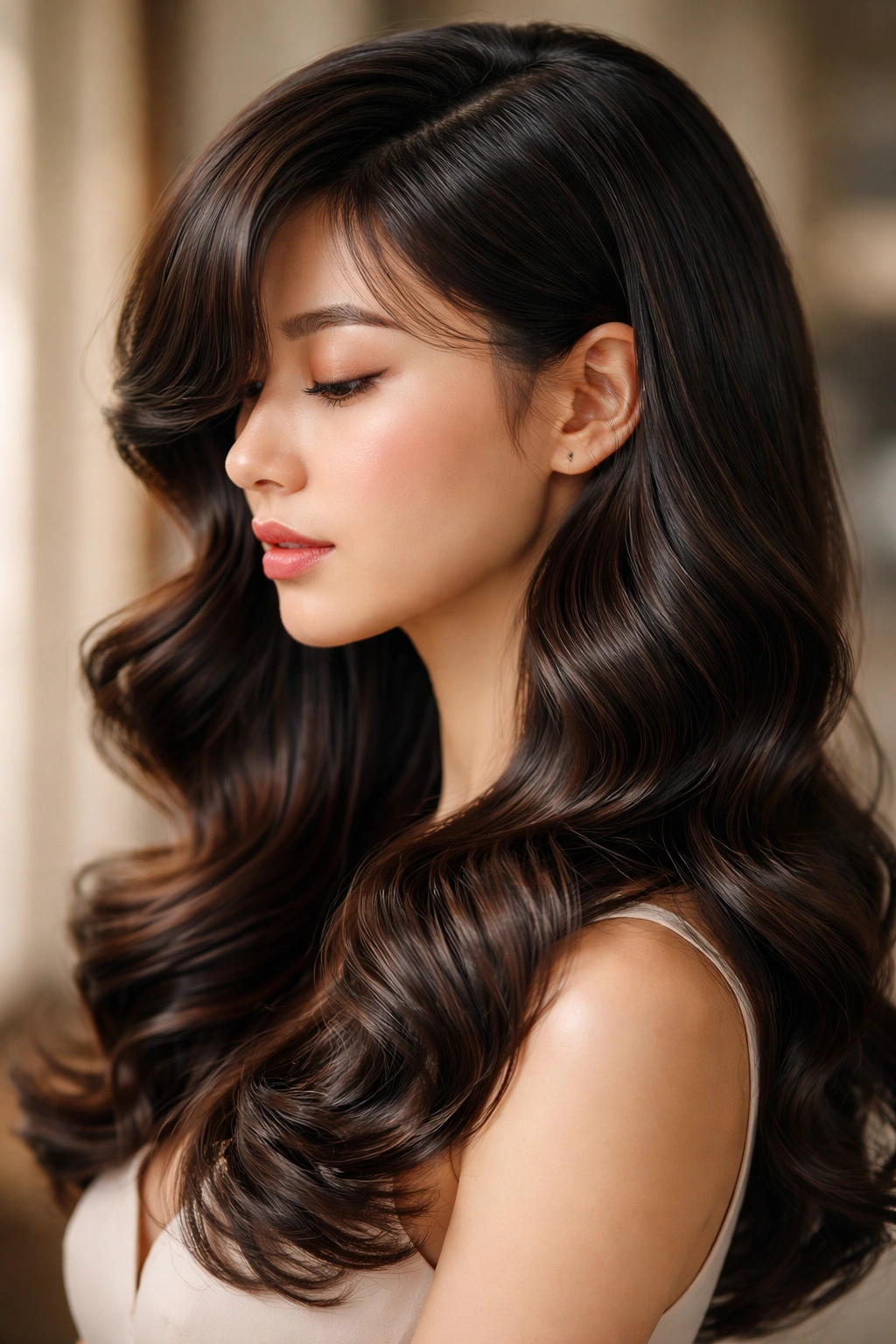
Deep-side bangs are swept far to one side, often starting at the crown and extending to create a dramatic, asymmetrical frame. Roller-set waves are created by setting damp hair in large hot rollers and allowing them to cool, creating bouncy, voluminous waves with beautiful defined curl direction. This combination reads very retro-inspired and glamorous, reminiscent of vintage Korean film stars while still feeling current and styled.
Why This Works for Wavy Hair
Deep-side bangs create a clear directional line that guides the eye along your face and toward the side your bangs are swept to. Roller-set waves follow this directional flow naturally, creating a cohesive look where every element points toward the same side. The volume and bounciness of roller-set waves prevent deep-side bangs from appearing severe or overly dramatic—the softness of the waves balances the boldness of the asymmetrical bang placement.
Setting Roller Waves and Styling Deep-Side Bangs
- Roller waves are set while hair is damp; larger rollers (1½ inches or bigger) create waves, while smaller rollers create tighter curls
- Use heat via a blow-dryer while rollers are in place to speed up the process, or allow air-drying for gentler waves that last longer (takes several hours)
- Once rollers are cool enough to remove (usually 30-45 minutes), carefully unwind them to reveal defined waves with clear curl direction
- Deep-side bangs should be positioned so they sweep naturally across your forehead and around your cheekbone; they should never fall directly into your eye area
- Use a flexible-hold hairspray to maintain roller waves throughout the day; heavy products will weigh down the waves and destroy the voluminous effect
Pro tip: Roller waves improve on your second or third day after setting because the curls relax slightly and look more natural; rolling your hair every other day keeps waves looking full and bouncy without overdoing heat damage.
13. Gradient Bangs With Layered Waves
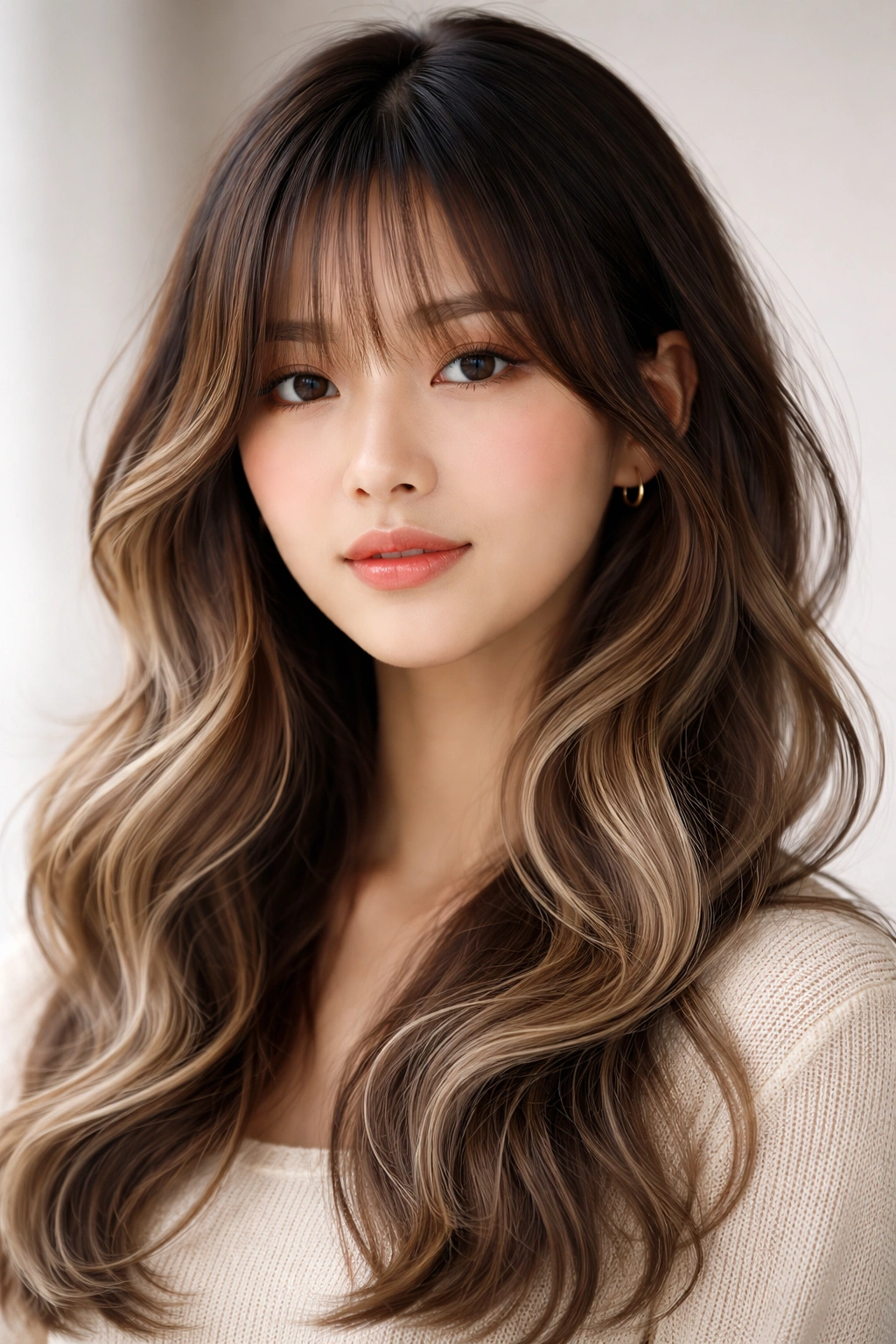
Gradient bangs use color placement to create dimension and shape—darker tones near your roots gradually transitioning to lighter tones, creating an illusory shape even if the actual bang cutting isn’t super defined. Paired with layered waves (shorter layers near your face, longer layers underneath), gradient bangs create remarkable visual depth. The color transition draws the eye and makes your face appear more sculptural and dimensional.
Why This Works for Wavy Hair
Layered waves naturally enhance dimension and movement, and gradient bangs amplify this effect through color. The tonal transition in your bangs repeats the dimensional quality of your waves, creating a cohesive visual story throughout your style. Shorter layers near your face catch light differently than longer layers underneath, and gradient bangs do the same thing with color—the overall effect is very sophisticated and intentional-looking.
Achieving Gradient Bangs and Layered Waves
- Gradient bangs require balayage or hand-painted color placement; discuss with your stylist exactly where you want your darkest and lightest tones
- Plan for 6-8 week maintenance appointments because the gradient will shift as your hair grows and new growth comes in
- Layered waves should be cut with shorter pieces around your face (creating face-frame layers) and progressively longer pieces as you move toward your ends
- Use a curl-defining product on damp hair, focusing on enhancing your natural wave pattern and ensuring layers don’t look stringy
- The color variation in gradient bangs will show better with shine—use a smoothing serum and glossing treatments to keep colors looking fresh and dimensional
14. French Bangs With Loose Waves
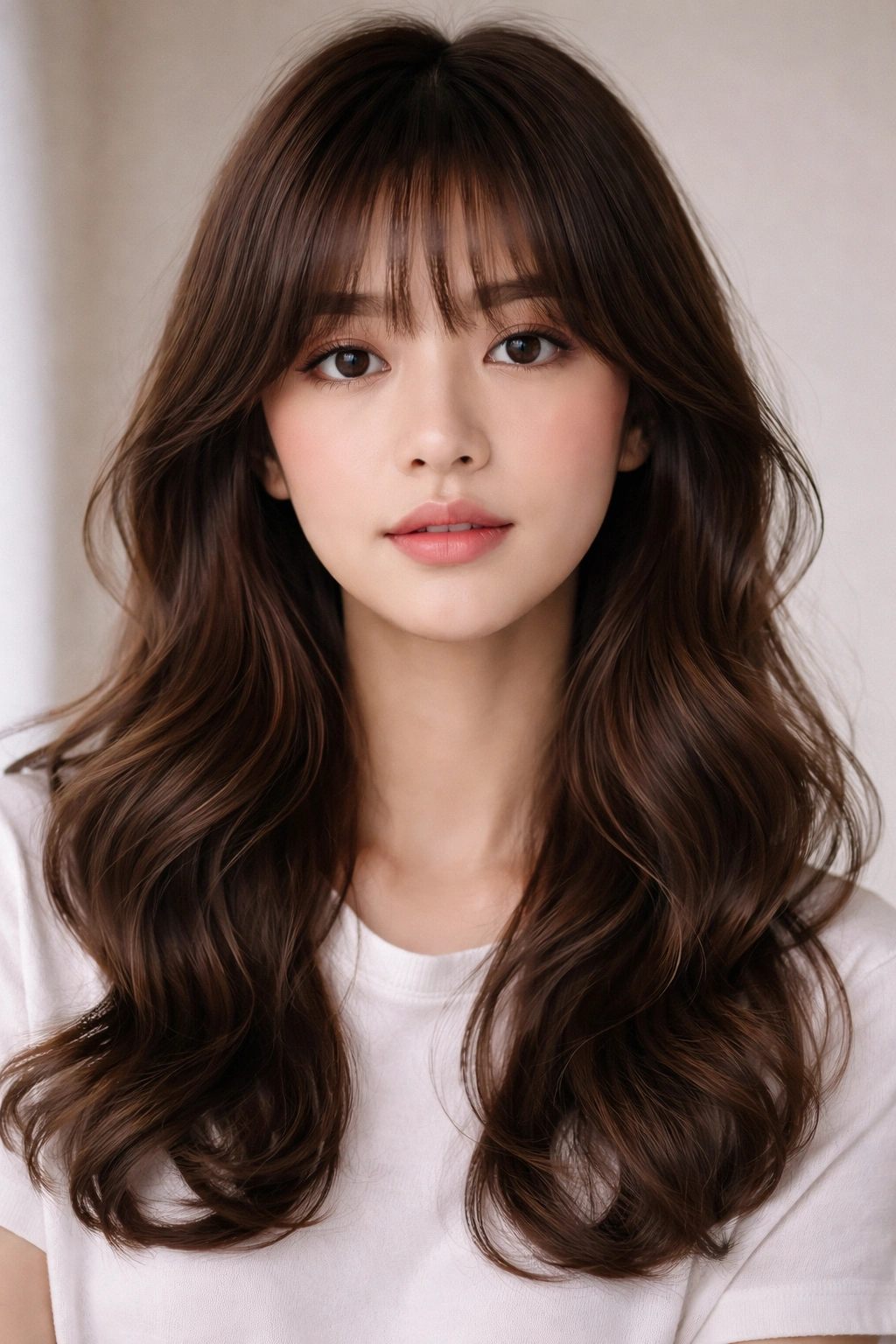
French bangs are cut just above the eyebrows, clean and typically full across (no heavy side-sweep), creating a very classic, polished aesthetic. Loose waves are created by using large tools (large curling irons or rollers) to create gentle, romantic curves rather than defined waves or tight curls. This pairing is incredibly flattering and works with virtually every face shape and hair type.
Why This Works for Wavy Hair
Loose waves created on wavy hair (rather than starting from straight hair) look more natural and less effort-intensive because you’re enhancing an existing texture rather than creating waves from scratch. French bangs provide a clean, structured frame that balances the soft, romantic quality of loose waves. The combination reads as put-together and intentional without appearing fussy or over-styled.
Creating French Bangs and Loose Waves
- French bangs sit just above your eyebrows when your hair is dry and styled; they should be thick enough to provide visual weight without appearing overly blunt
- Create loose waves using a large-barrel curling iron (1½ inches or larger) wrapped away from your face; hold each section for 8-10 seconds to set a gentle wave
- Alternatively, use large hot rollers and allow them to cool completely before removing for loose waves that last through the day
- Once waves are set, run your fingers through them gently or use a wide-tooth comb to soften the wave pattern and create a looser, more romantic appearance
- Apply a light hairspray to set your waves without making them feel stiff or crunchy
Worth knowing: French bangs are extremely forgiving about your hair texture and daily styling because they’re simply cut above the eyebrows—they don’t depend on any specific wave pattern or styling technique to look good, making this style nearly universally flattering.
15. Asymmetrical Bangs With Dimensional Waves
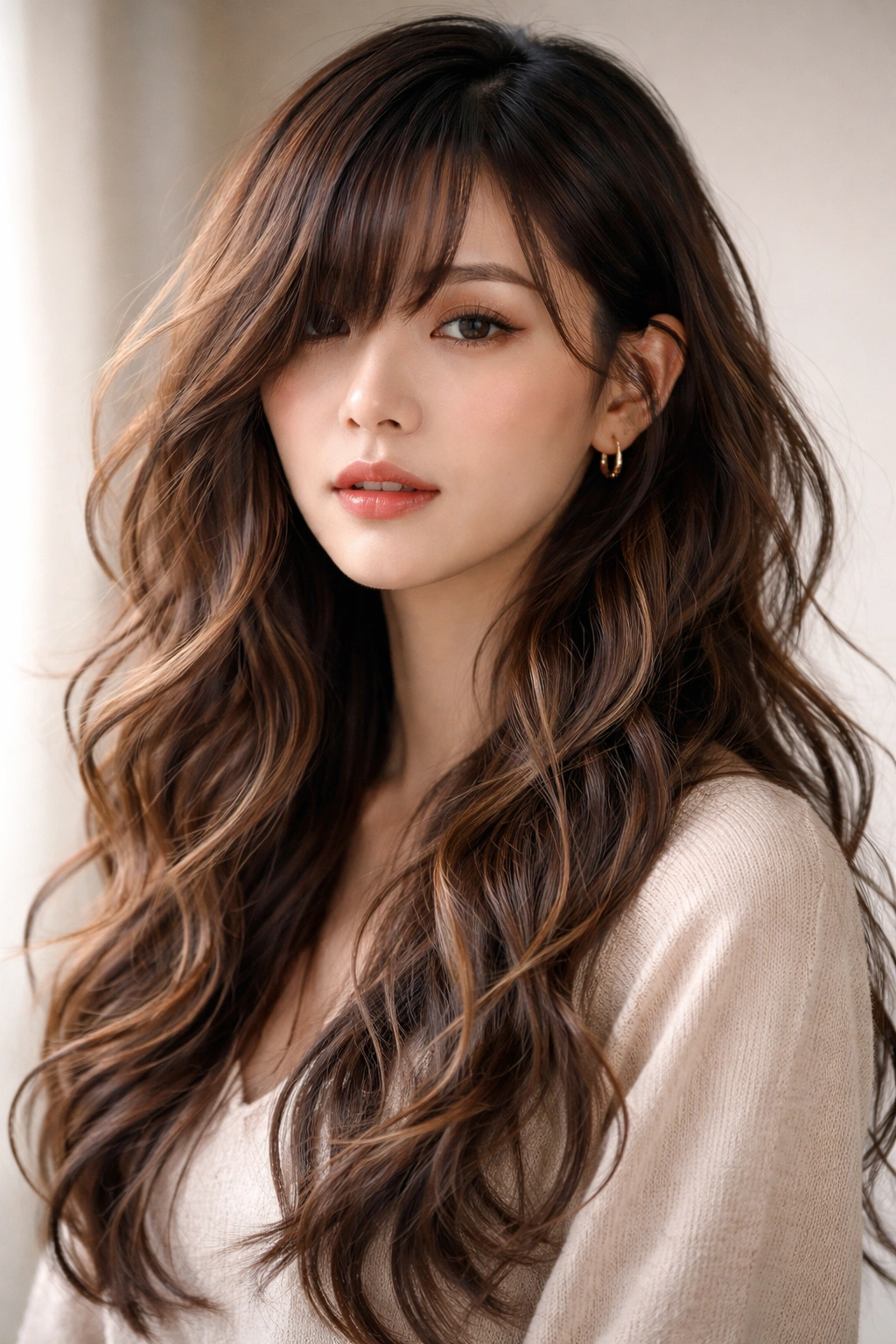
Asymmetrical bangs are longer on one side and shorter on the other, creating an obviously unbalanced, deliberately styled appearance. Dimensional waves incorporate multiple color tones throughout your wave pattern, creating the illusion of more movement and texture. This combination is cutting-edge and fashion-forward, perfect for people who want their hairstyle to read as intentionally current and editorial.
Why This Works for Wavy Hair
Asymmetrical bangs create a bold visual statement that demands supporting texture and dimension—this is where dimensional waves come in. The color variation in your waves creates multiple focal points throughout your hair, making the asymmetry of your bangs feel balanced and intentional rather than strange. Wavy hair naturally supports this aesthetic because waves create movement that matches the dynamic, asymmetrical energy of the bangs.
Creating Asymmetrical Bangs and Dimensional Waves
- Asymmetrical bangs should be cut with precision so the length difference is obvious and intentional; a stylist should communicate exactly how long the shorter side and longer side will be
- Dimensional waves incorporate 2-4 different color tones placed strategically throughout your hair to enhance wave depth and movement
- Have your stylist place lighter tones on shorter layers (which catch more light) and slightly darker tones on longer layers for natural-looking dimension
- Use a curl-defining cream on damp hair, focusing on creating defined waves rather than frizz
- Plan for 6-8 week color maintenance and 4-5 week cut maintenance; asymmetrical bangs require regular trimming to maintain the obvious length difference
Insider note: Asymmetrical bangs with dimensional waves are an expert-level styling choice that requires a talented stylist and regular maintenance to look intentional rather than just growing out unevenly. If you’re willing to commit to upkeep, this style is incredibly impactful.
Final Thoughts
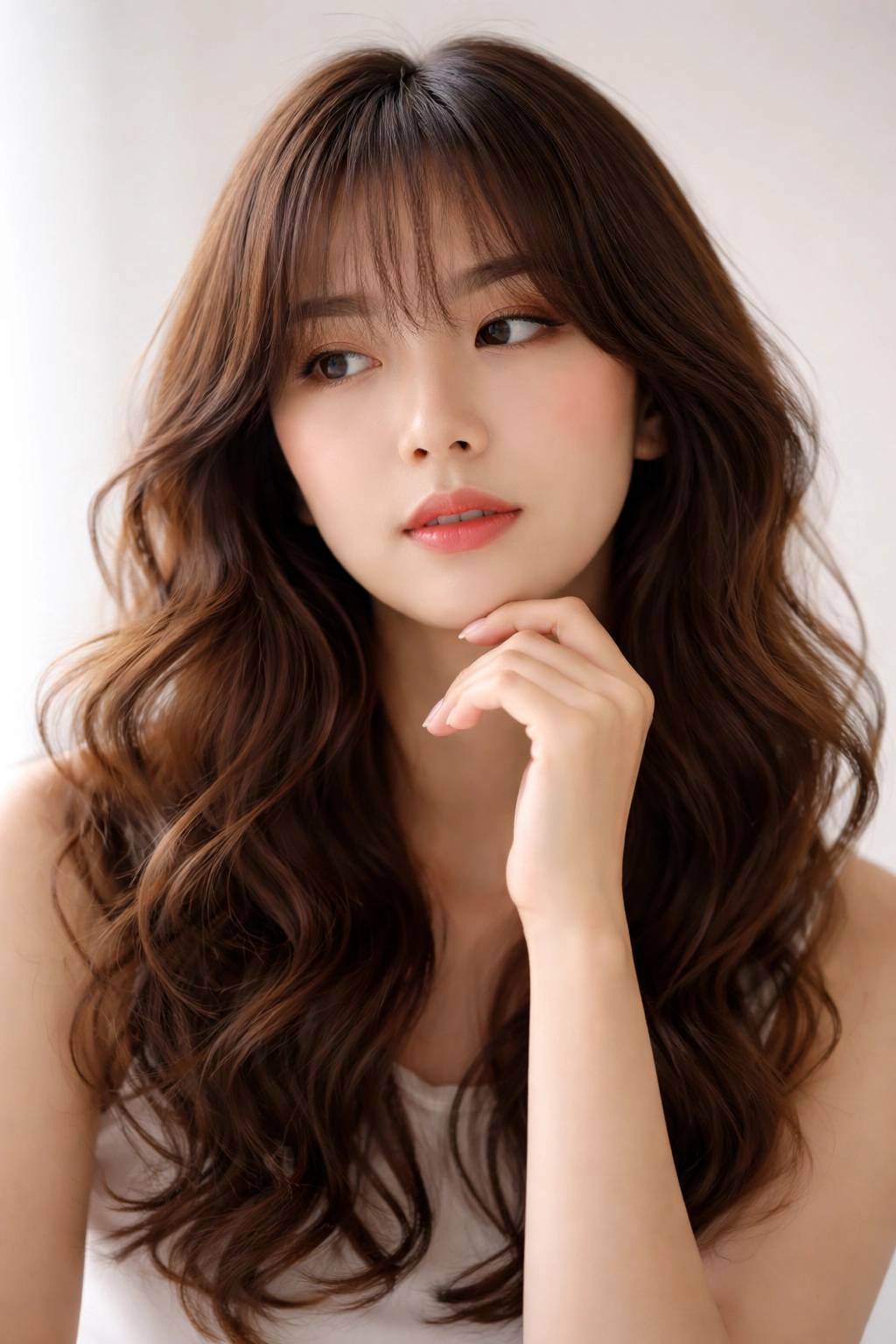
Choosing a Korean bang style for wavy hair comes down to understanding how your specific hair texture interacts with different bang cuts and wave patterns. Some styles—like curtain bangs and feathered bangs—work with virtually any wave texture because they’re forgiving and naturally complement movement. Others, like micro bangs and straight-across bangs, require more commitment to maintaining precise lines and consistent styling.
The most important factor is selecting a style that genuinely fits your lifestyle and maintenance tolerance. A stylish statement means nothing if you’re not willing to trim bangs regularly or invest in the products and techniques your chosen style requires. The best Korean bang style with wavy hair is one you’ll actually maintain, not one that looks perfect in photos but frustrates you in reality.
Work closely with a stylist experienced in both Korean styling and textured hair—these aren’t the same skill set, and you need someone who understands how to cut and style for your specific hair type. Bring multiple reference photos showing exactly what bangs and wave pattern you’re aiming for, discuss your daily styling routine honestly, and trust your stylist’s expertise when they suggest modifications based on your hair’s actual texture and your face shape. With the right combination and realistic maintenance expectations, these fifteen styles offer genuinely beautiful options for anyone wanting to embrace Korean beauty trends with wavy hair.
