



There’s a magical sweet spot in hairstyling where a ponytail looks intentionally relaxed instead of like you rolled out of bed and gave up. That’s where messy ponytails shine — they’re polished enough to wear to brunch, a casual date, or the office, yet effortless enough that they don’t require a professional blowout or thirty minutes of styling. The real skill isn’t in making them perfect; it’s in making them look perfectly imperfect. A well-executed messy ponytail says you have your life together while also saying you’re not too serious about it, and that’s a vibe that works in almost every situation.
The best messy ponytails aren’t created by just throwing your hair into a bunch and calling it a day. There’s a method to the texture, a strategy to the placement, and specific techniques that transform a lazy updo into something genuinely cute. Whether you’re working with straight hair that needs volume tricks, curly hair that naturally wants texture, or fine hair that needs clever layering, there’s a messy ponytail style built for exactly what you’ve got. Some styles rely on teasing and backcombing; others use twisted sections or braided accents to create the illusion of effortless abandon. The variety is endless, and the best part is that most of these styles take less than five minutes once you understand the technique.
Let’s walk through twelve genuinely cute messy ponytail styles — each one designed to work with different hair types, different occasions, and different levels of styling commitment. Pick your favorite, grab a few bobby pins and a texturizing spray, and get ready to perfect the art of looking intentionally undone.
1. The Undone High Ponytail
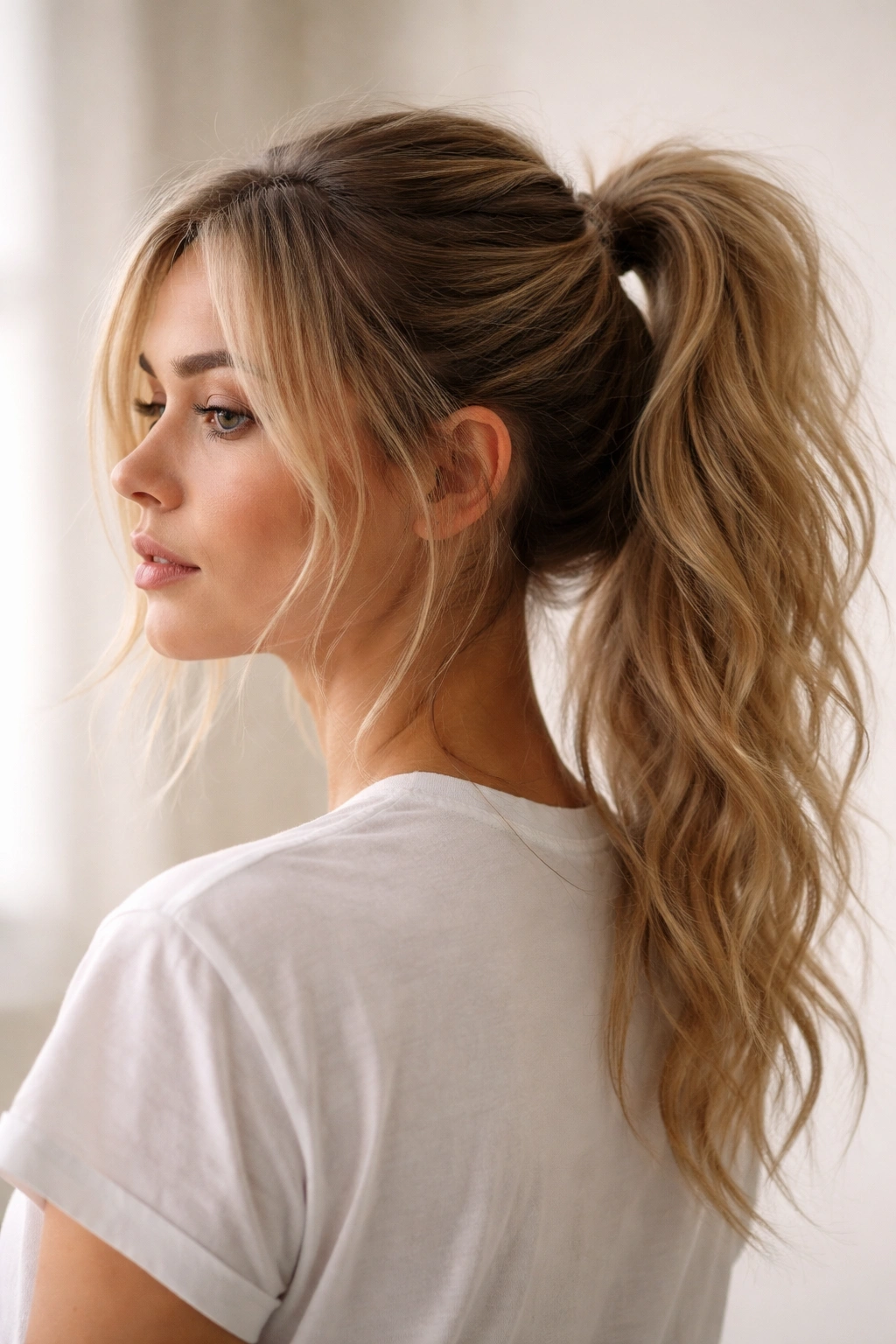
This is the foundation messy ponytail that works in nearly every situation. The idea is to pull your hair up into a high ponytail — not at the crown exactly, but positioned high enough to feel modern and youthful — and then deliberately loosen it the second you tie it. The magic happens when you pull strategic pieces of hair out from the base of the elastic, creating soft wisps around your face and some deliberately frizzy texture throughout the tail itself.
Why It Works for Every Hair Type
The undone high ponytail is genuinely forgiving because the “messiness” is the whole point. If you have naturally textured hair, that slight frizz and flyaway quality is exactly what you’re going for. If your hair is straight and slippery, you’ll need to add texture first (more on that below), but once you do, this style requires almost no effort to maintain throughout the day.
How to Build It
Start by applying a texturizing spray or dry shampoo to dry hair — this gives slippery strands something to grip onto. Gather your hair at the crown (not at the very top of your head, but an inch or two lower) and secure it with a hair tie or elastic band. Now comes the key step: gently tug and loosen sections of the ponytail so it looks fuller and less polished. Pull out a few face-framing pieces, then reach into the ponytail and loosen the hair at the base by gently tugging the sides outward. The ponytail should look soft and slightly undone, not tight and gym-class severe.
Pro tip: If you have thick, heavy hair, use a thicker elastic that won’t slip throughout the day. For fine hair, a thinner elastic or even a small rubber band works better because it creates the appearance of fullness when you loosen around it.
2. The Messy Low Ponytail with Face-Framing
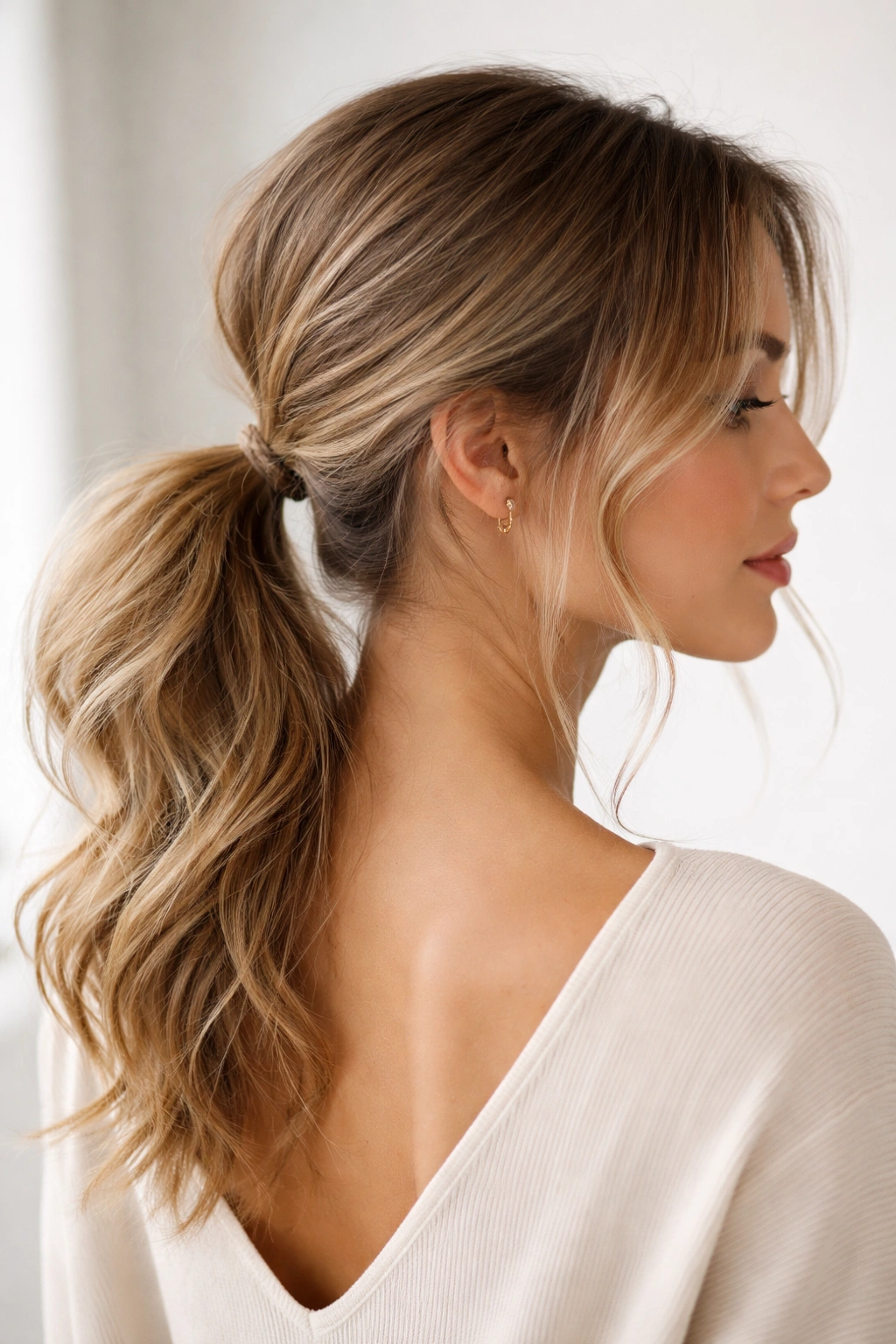
A low ponytail worn at the nape of your neck is inherently more sophisticated than a high one, and when you add strategic face-framing and texture, it becomes the kind of style that looks polished enough for a date or a work meeting. The key difference here is the placement — sitting lower on the head — and the intentional wispy pieces left loose around the face and temples.
The Placement Makes the Difference
Position this ponytail at the nape of your neck, roughly where your hairline curves, rather than at the crown. This placement automatically feels more mature and refined while still allowing plenty of room for the “messy” element. The lower position also means the style feels less gym-ready and more intentional, which is why it reads as cute rather than careless.
Framing Your Face the Right Way
Before securing the ponytail, plan which pieces you want loose around your face. Take sections from your temples and from around your ears — roughly an inch-wide piece on each side — and leave them out. These pieces should frame your face softly without completely obscuring it. Once the main ponytail is secured, you can either leave these frame pieces straight, curl them gently, or even twist them slightly to add visual interest. Gently tease the ponytail itself at the base to create a soft lifted effect at the nape.
Quick Facts About This Style
- Works beautifully with face-framing layers or even without them if you’re intentional about which pieces you leave out
- The lower placement means it won’t feel sporty or utilitarian — this reads as genuinely polished
- You can dress it up with a silk scarf wrapped around the elastic or keep it simple with a metal hair clip
- Shorter, wispy pieces around the face are essential; without them, it reads as a tight bun rather than a soft, messy ponytail
3. The Braided Wrap Ponytail
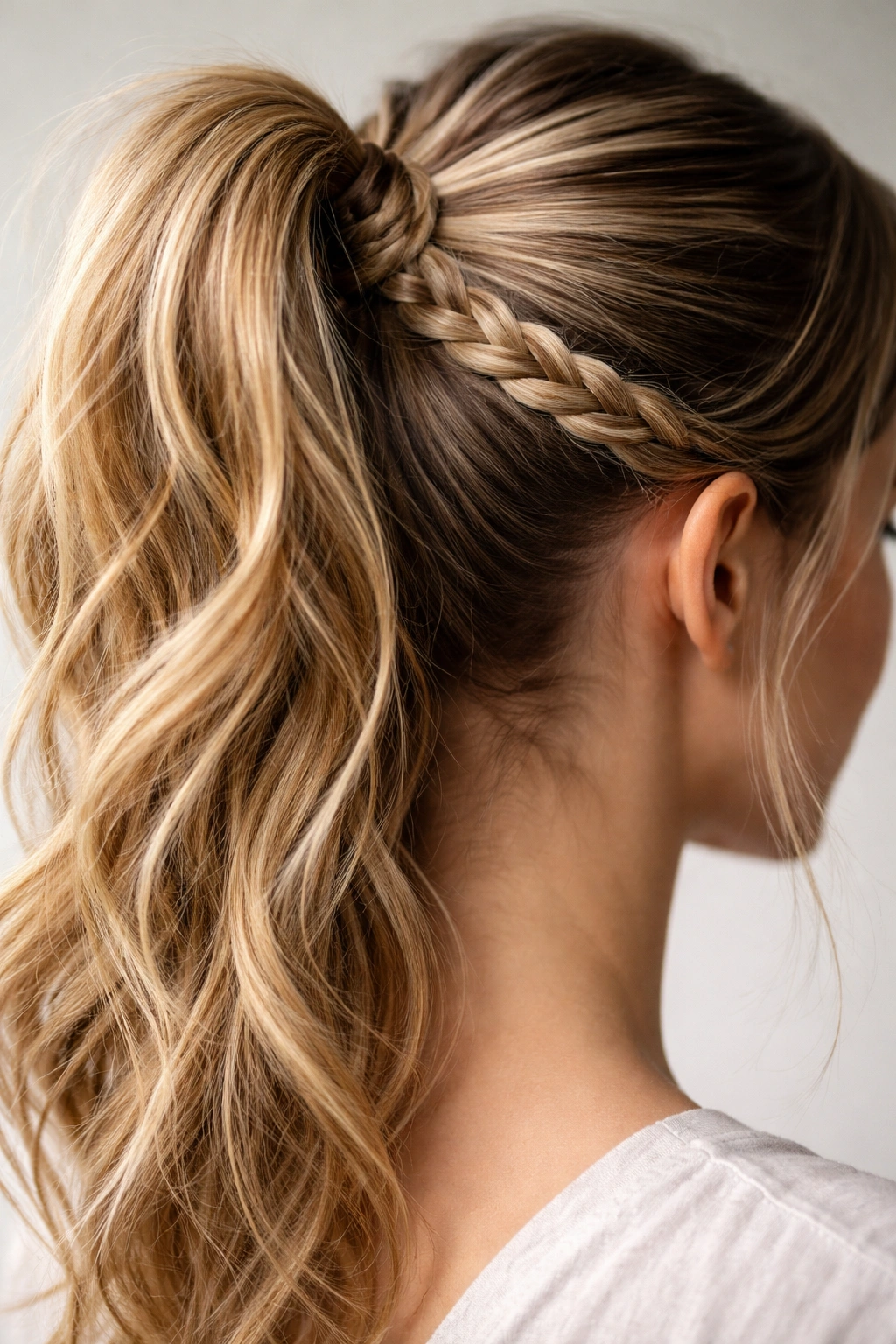
This style adds a sophisticated texture element that elevates a basic ponytail into something that looks intentional and creative. Instead of just tying your hair into a ponytail, you take a small section from the side, braid it, and wrap that braid around the base of the elastic, securing it with bobby pins. The braid becomes a visual anchor that makes the messiness feel intentional rather than accidental.
Building the Braid Wrap
Start with a standard high or mid-height ponytail, then take a small section of hair from one side (near your temple) and braid it loosely — three-strand braid, nothing fancy. This braid doesn’t need to be tight; in fact, a slightly loose braid looks more intentional with the messy aesthetic. Once you’ve braided down to about three inches of hair, stop braiding and wrap the entire braid around the base of your ponytail elastic. Secure the end of the braid with a bobby pin tucked underneath so it’s not visible. If you’re feeling fancy, you can braid a second section from the opposite side and wrap both braids in a crisscross pattern.
The Texture That Makes It Special
Before you create the braid wrap, apply a texturizing spray to the section you’re about to braid. This ensures the braid holds its shape and doesn’t slip out during the day. Once the wrap is secured, gently tug at the sections of the braid to make it look fuller and less polished. This tugging is what transforms a neat, tight braid into something that reads as intentionally undone.
Why This Approach Works
The braided wrap serves as a visual focal point — it draws the eye to the base of the ponytail and essentially says, “I put thought into this.” This detail automatically elevates the entire style from “messy ponytail” to “polished messy ponytail,” which makes it work for settings where a completely undone style might not land quite right.
4. The Voluminous Teased Ponytail
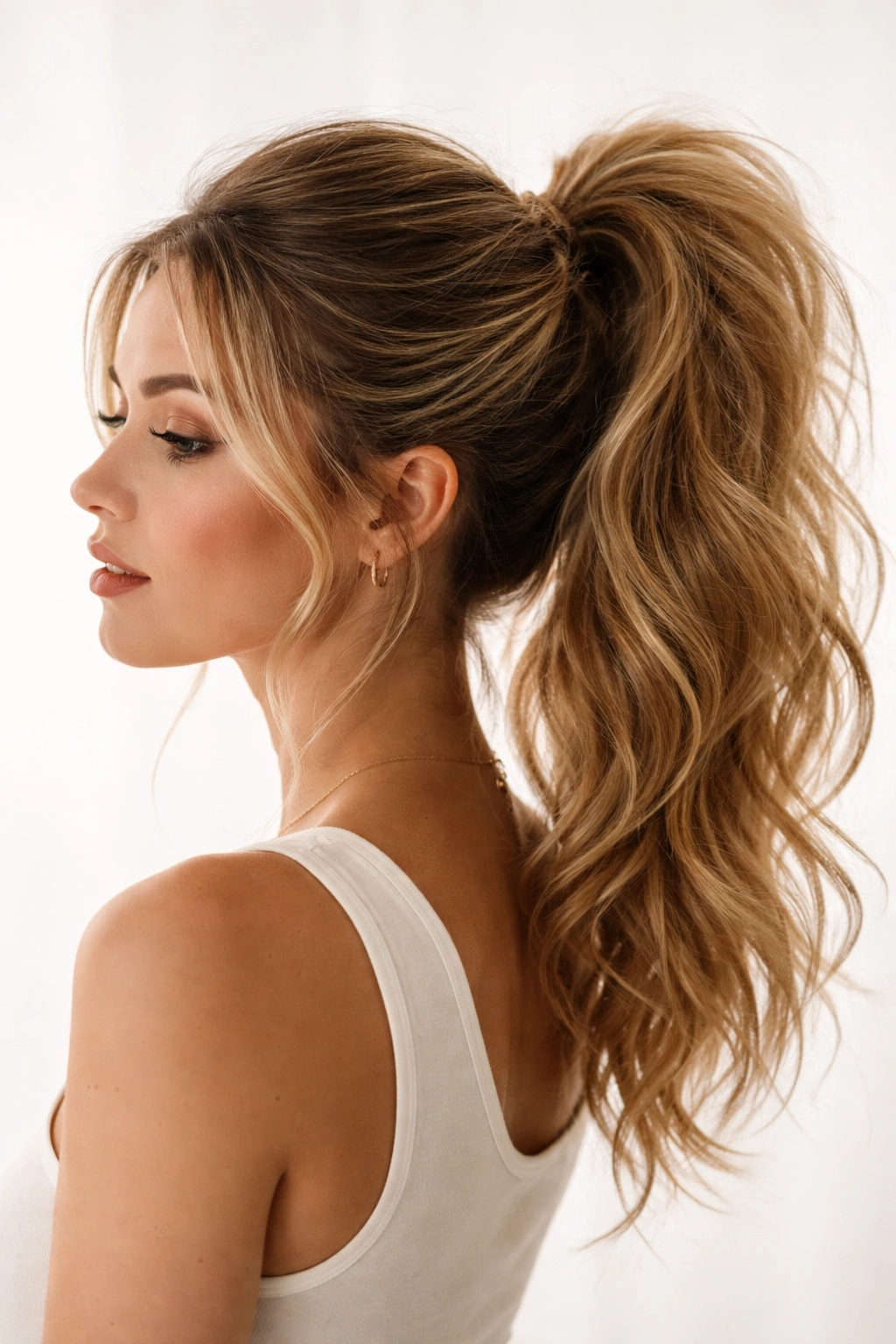
If your hair tends to be fine or somewhat flat, this is the messy ponytail style that transforms everything. Teasing (also called backcombing) creates substantial volume throughout the entire ponytail, making even thin hair look thick and textured. The key is teasing in the right spots — not just at the crown, but throughout the ponytail itself — and doing it in a way that looks intentionally messy rather than like you backcombed your hair in 1985.
Where to Tease for Maximum Impact
Start by section your hair horizontally at the back of your head, roughly from ear to ear. Tease the underside of this section using a fine-toothed teasing brush, working the brush downward with short, flicking motions. This creates a cushion of volume underneath that the rest of your hair will sit on top of. Then, gather all your hair and secure it into a ponytail at your preferred height. Before you finalize the style, tease the very base of the ponytail — where the elastic sits — to create a soft lifted effect that prevents the ponytail from looking slick and tight.
Finishing the Teased Look
Once you’ve created all your teasing, lightly smooth the outermost layer of hair with a fine-tooth comb or brush so it’s not visibly backcombed. You want the texture and volume underneath, but the surface should look smooth and intentional. Pull out a few face-framing pieces and gently tousle them with your fingers. If you want the full effect, mist the entire style with a light hairspray to hold the volume without making it feel stiff or crunchy.
Who This Works Best For
This style is absolute magic for anyone with fine, thin, or limp hair. It’s also fantastic if you have second-day hair with some existing texture — you can tease what’s already there and amplify it. Even if you have thick hair, teasing adds dimension and visual interest that makes the messy look feel more deliberate and less accidental.
5. The Twisted Rope Ponytail
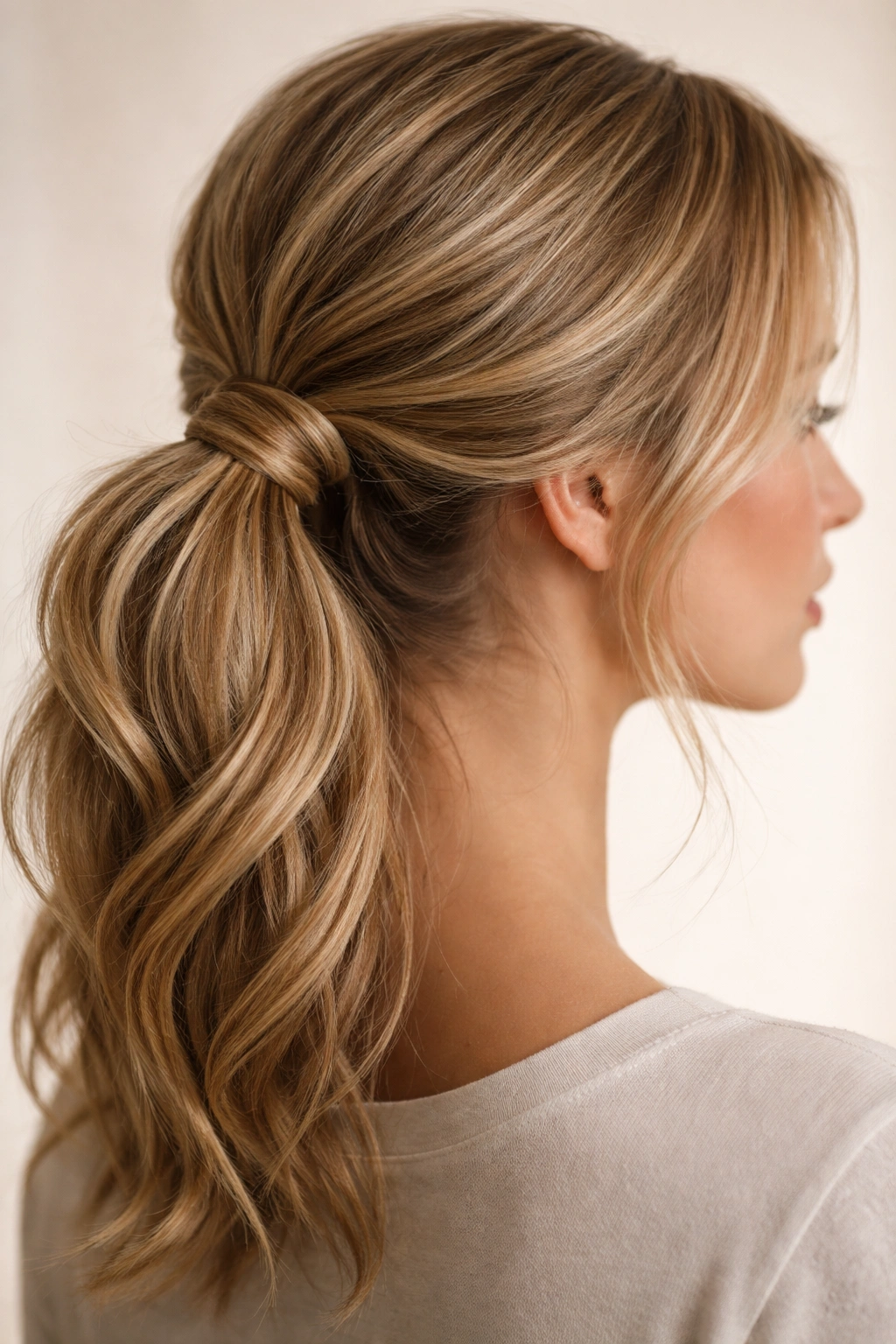
This style uses twisted sections of hair instead of braids to create texture and visual interest at the base of your ponytail. Two or three twisted sections wrapping around the elastic create the same intentional, polished-yet-messy vibe as braids, but they’re faster to execute and often feel softer and more romantic in aesthetic.
Creating Effortless Twists
Secure your hair into a ponytail at your preferred height. Then, take a thin section from the side of your hair and twist it tightly between your fingers as you work your way down — no need to separate into strands or follow any particular pattern, just twist. Stop twisting when you have about three inches of untwisted hair remaining. Wrap this twisted section around the base of your ponytail and secure it with a bobby pin tucked underneath. The beauty of twists is that they’re faster than braids and create a slightly softer, more romantic effect.
The Multi-Twist Approach
For more visual impact, create two or even three twisted sections and wrap them around the elastic in different directions. You could wrap one clockwise and one counterclockwise, or have them crisscross. These multiple twists create dimension and depth that makes the style feel more intentional. Gently tug at each twist once it’s wrapped to loosen it slightly and create that perfectly imperfect texture.
Styling With Texture
Apply a light texturizing spray or sea salt spray to your hair before you twist. This gives the twist something to grip onto and ensures it holds its shape throughout the day without looking tight or artificial. The spray also enhances the slightly undone quality that makes this style work so well.
6. The Textured Bun-Tail Hybrid
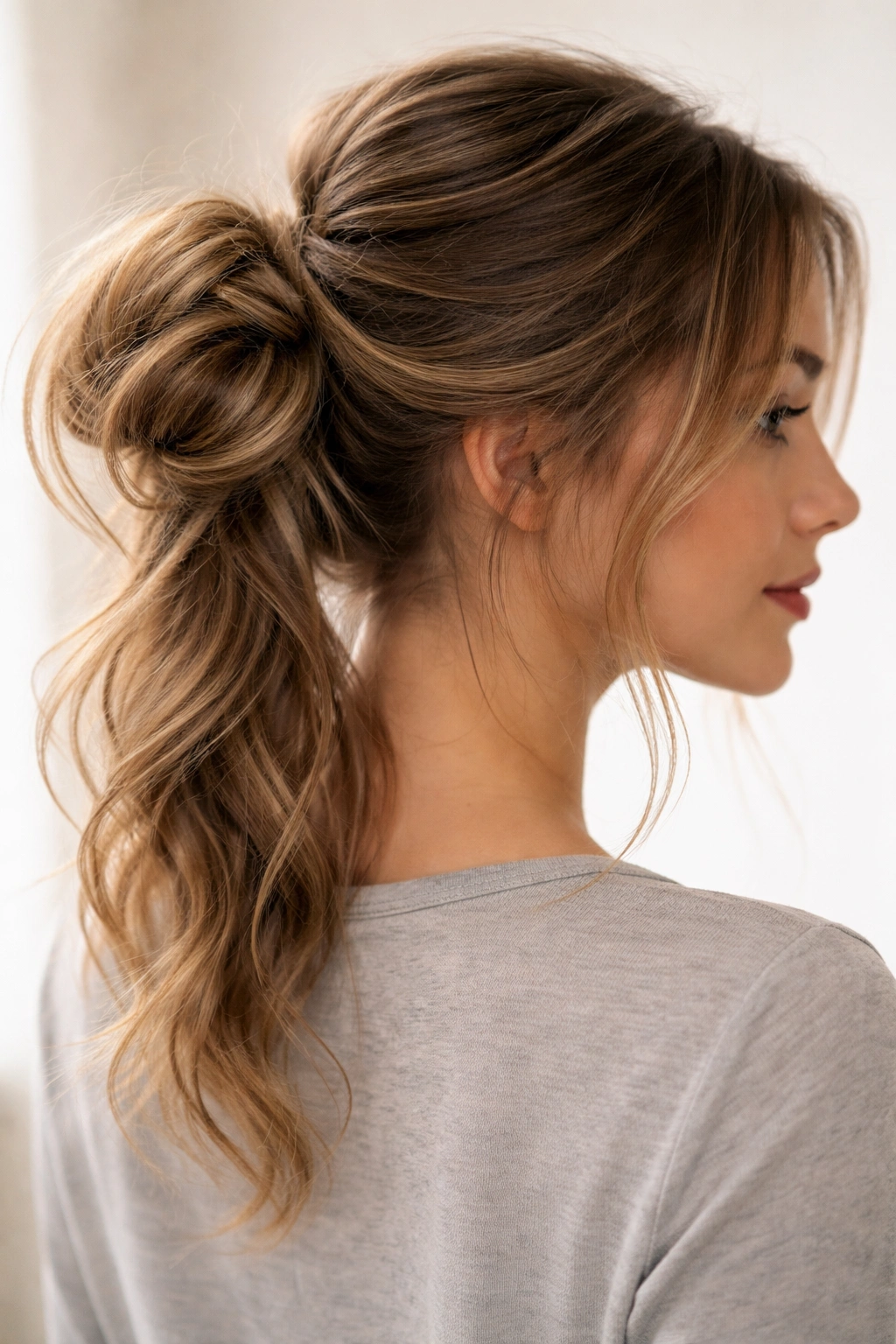
This style splits the difference between a ponytail and a bun — it’s like a ponytail that’s loosely folded into a soft, undone bun shape. The result is a style that’s distinctly more polished than a true ponytail, yet still has all the soft, messy, intentionally undone quality that makes this category so appealing.
Building the Bun-Tail Form
Create a high or mid-height ponytail and secure it with an elastic. Instead of leaving the ponytail hanging, twist or loosely braid the ponytail and wrap it around itself to form a loose, soft bun shape at the base of the elastic. The bun doesn’t need to be tight or perfectly round — in fact, it should look slightly lumpy and undone. Secure the wrapped ponytail with a few bobby pins, leaving some strands loose and falling out slightly. The result is a bun-like shape, but with a distinctly messy, textured quality.
Creating the Soft, Textured Effect
Don’t worry about tucking everything in neatly. Let some pieces stick out; let some wisps frame your face. Gently tug at the bun to make it look fuller and less polished. You want it to look like you took your hair down from a ponytail midway through the day and just twisted it loosely back up without thinking too hard about it.
Why This Works as a Hybrid
This style sits in this perfect middle ground where it feels polished enough for work or a dinner date, but casual enough for brunch with friends. It’s also more secure than a true ponytail — the wrapped structure means it won’t slide or shift throughout the day the way a loose ponytail might.
7. The Sleek-Top-Messy-Bottom Ponytail
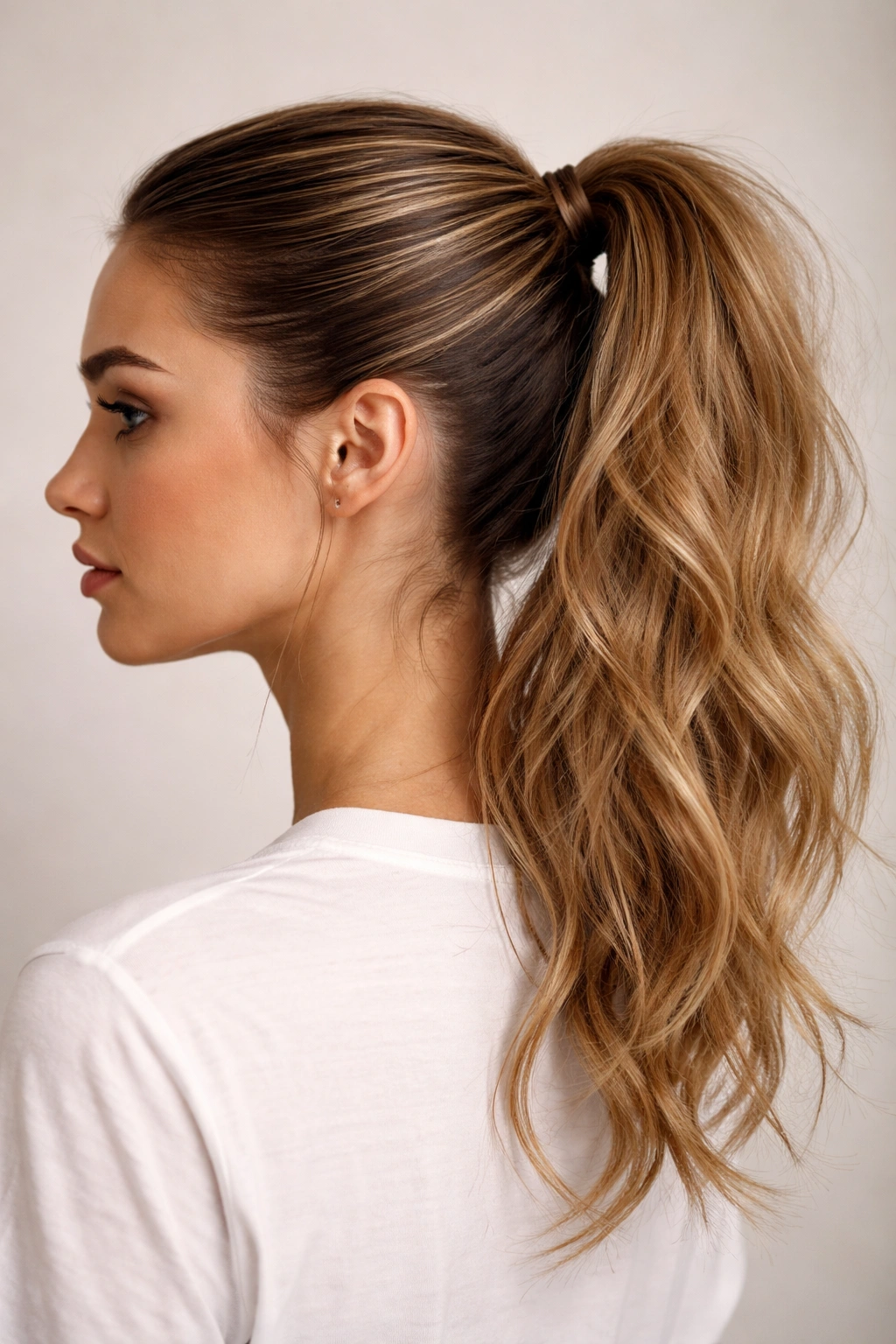
This style creates intentional contrast by keeping the top super smooth and sleek while the actual ponytail itself is textured and voluminous. The result feels modern and editorial — like you’ve made a specific creative choice rather than just not bothering to style.
Creating the Sleek Top Section
Use a fine-tooth comb and a smoothing serum or gel to create the sleekest possible base. Slick your hair back from your face and smooth it all the way to where you’ll place your elastic. You want this section to be genuinely sleek — use the smoothing serum generously and comb thoroughly. Secure the ponytail with a clear elastic or a flat metal clip that matches your hair color. The sleek quality should extend from your hairline all the way to the elastic; this contrast is what makes the style work.
Adding Texture to the Tail
Once the top is sleek and secured, focus entirely on the ponytail section. Tease it, spray it, curl it — make it as textured and voluminous as possible. You could curl the ends in loose waves, use a texturizing spray and tousle it with your fingers, or even braid small sections and unravel them for wave texture. The goal is maximum contrast between the smooth, controlled top and the textured, undone-looking tail.
Who Should Try This
This style works beautifully on everyone, but it’s especially flattering if you have a longer face or a prominent forehead — the sleek top creates a polished frame, and the textured tail adds softness and movement. It’s also surprisingly quick to execute once you have the right products on hand.
8. The Pin-Secured Undone Ponytail
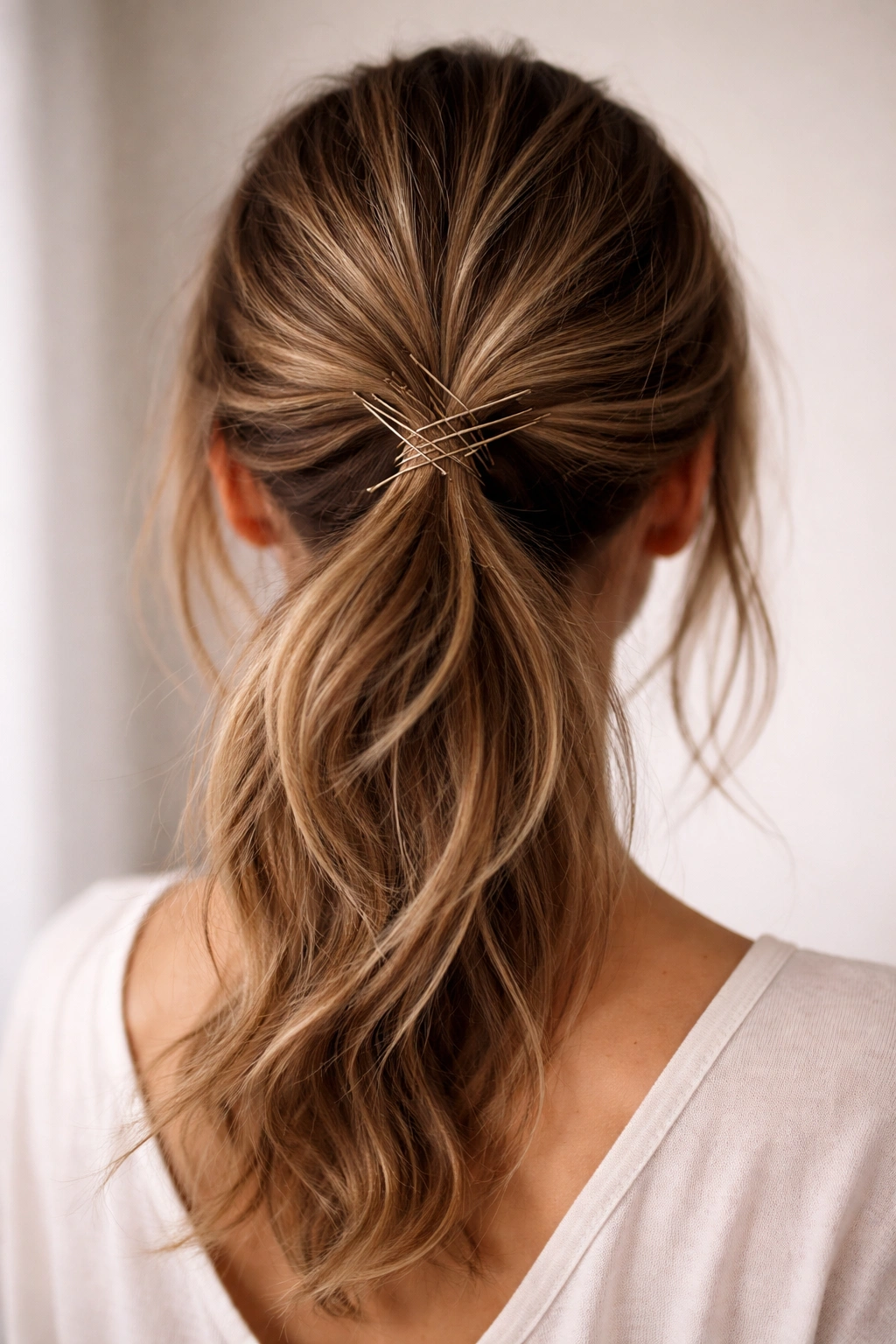
Instead of using a traditional elastic band, this ponytail uses bobby pins to create a gathered, slightly undone effect. It feels looser and more romantic than a traditional ponytail, and the bobby pins become a visible design detail rather than something you’re trying to hide.
The Pinning Technique
Gather your hair to your preferred height and, instead of securing it with an elastic, use three to five bobby pins to secure small sections together in the center of your gather. The bobby pins should cross each other, creating a kind of geometric pattern at the base. Leave the hair intentionally soft and not super tight — the gathering should feel loose and undone, held together more by the pins than by tension.
Creating a Cohesive Look
The bobby pins become a design element here, so consider choosing ones that either match your hair color for a subtle effect or choosing metallic gold, silver, or even colored bobby pins if you want them to be visible and intentional. The loose gathering means some hair will fall away from the base, creating exactly that soft, messy effect you’re going for.
Best Hair Types for This Approach
This works beautifully on thick, heavy hair that tends to slip out of elastics. It’s also fantastic for creating a softer, more romantic vibe than a traditional ponytail gives you. If you have fine hair, you’ll want to tease a bit at the base so the pins have something to grip onto.
9. The Wispy Half Ponytail

A half ponytail (taking only the top half of your hair) automatically reads as softer and more intentional than a full ponytail. When you make it deliberately messy and wispy, with strategic loose pieces, you get a style that’s equal parts cute and romantic.
Choosing Which Hair to Gather
Section your hair horizontally from ear to ear across the top of your head. This top section is what you’ll gather into a half ponytail — don’t pull it too tight. The bottom half of your hair will stay down, framing your face and your shoulders with length and softness. Secure the half ponytail with a small elastic or hair clip, then immediately loosen it by pulling gently at the sides.
Adding the Wispy Factor
Before you secure the half ponytail, pull out several thin pieces from the front, near your temples and around your face. These wispy pieces should frame your face and create softness. You can leave them straight, curl them gently, or twist them slightly. The combination of the half ponytail plus the loose pieces framing your face creates an incredibly soft, romantic aesthetic.
Styling the Lower Half
Leave the bottom half of your hair down and consider adding texture to it — waves, curls, or even some light teasing at the roots. This creates dimension and prevents the style from reading as half-finished. The lower half isn’t an afterthought; it’s integral to the overall aesthetic.
10. The Messy Bubble Ponytail
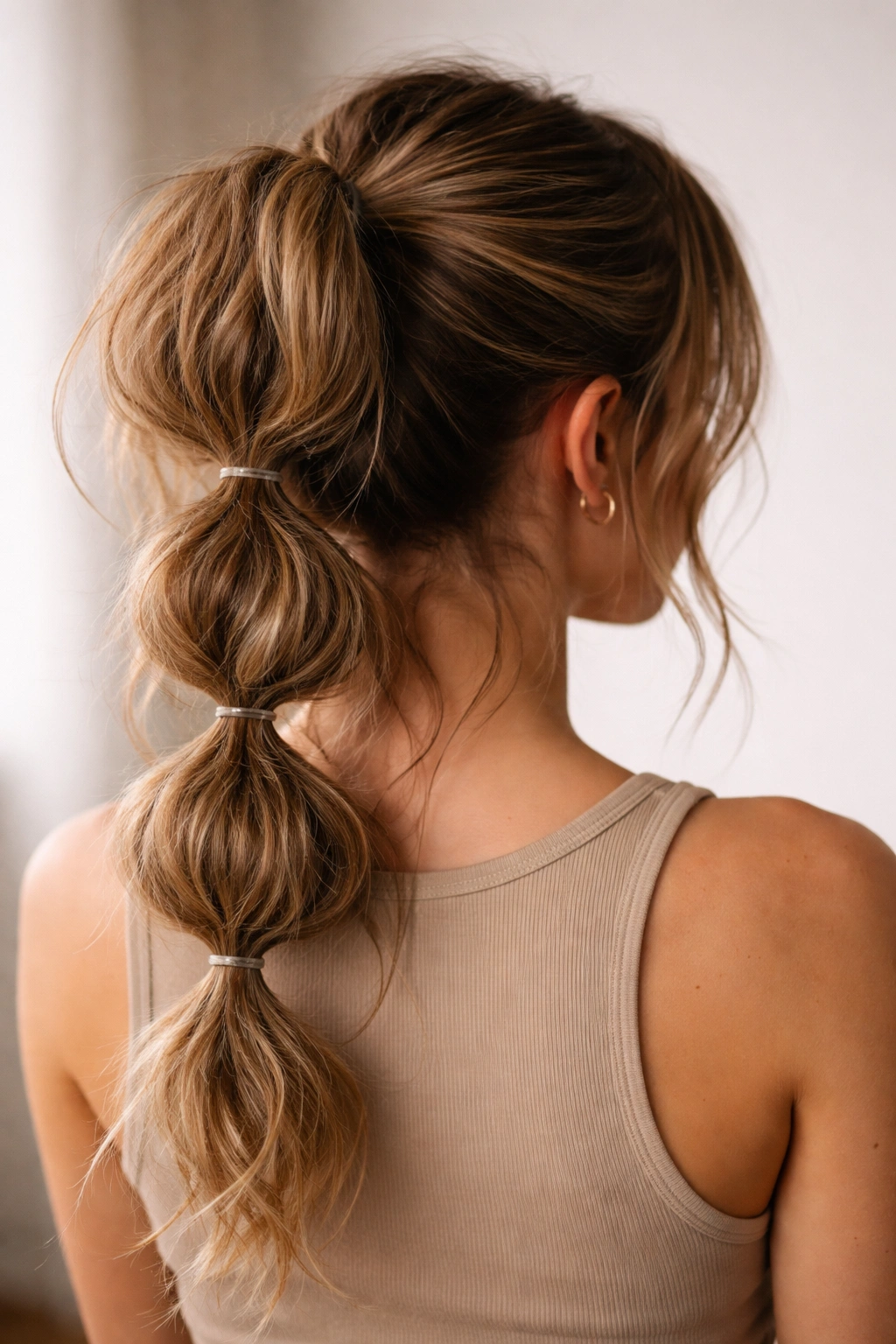
This style creates a playful, youthful effect by dividing your ponytail into sections with multiple elastics, creating bubble-like segments. When done with intentional messiness (looser bubbles, wisps, textured sections), it reads as cute rather than childish.
Creating the Bubble Sections
Secure a high ponytail with your first elastic. About two to three inches down the length of the ponytail, add a second elastic. Then repeat: two to three inches down, add another elastic. You should create four to six bubble sections depending on the length of your hair. The bubbles don’t need to be perfectly even — slightly irregular spacing actually looks more intentionally messy.
Making It Look Grown-Up Messy
Here’s where the messy element transforms this from a kid’s style into something genuinely cute on adults: gently tug and loosen each bubble section to make it puffier and less structured. Let some strands fall loose from between the elastics. Tease slightly at the top of each bubble to create more volume. The result should look soft and voluminous, not neat and segmented.
Styling Details That Elevate It
Choose metallic elastics (gold or silver) that coordinate with your jewelry and become a visible design detail. You could also wrap thin ribbons, yarn, or fabric strips around each elastic for a more intentional, styled appearance. These details are what signal that this is a thoughtfully executed style, not a childhood throwback.
11. The Curled Ends Ponytail
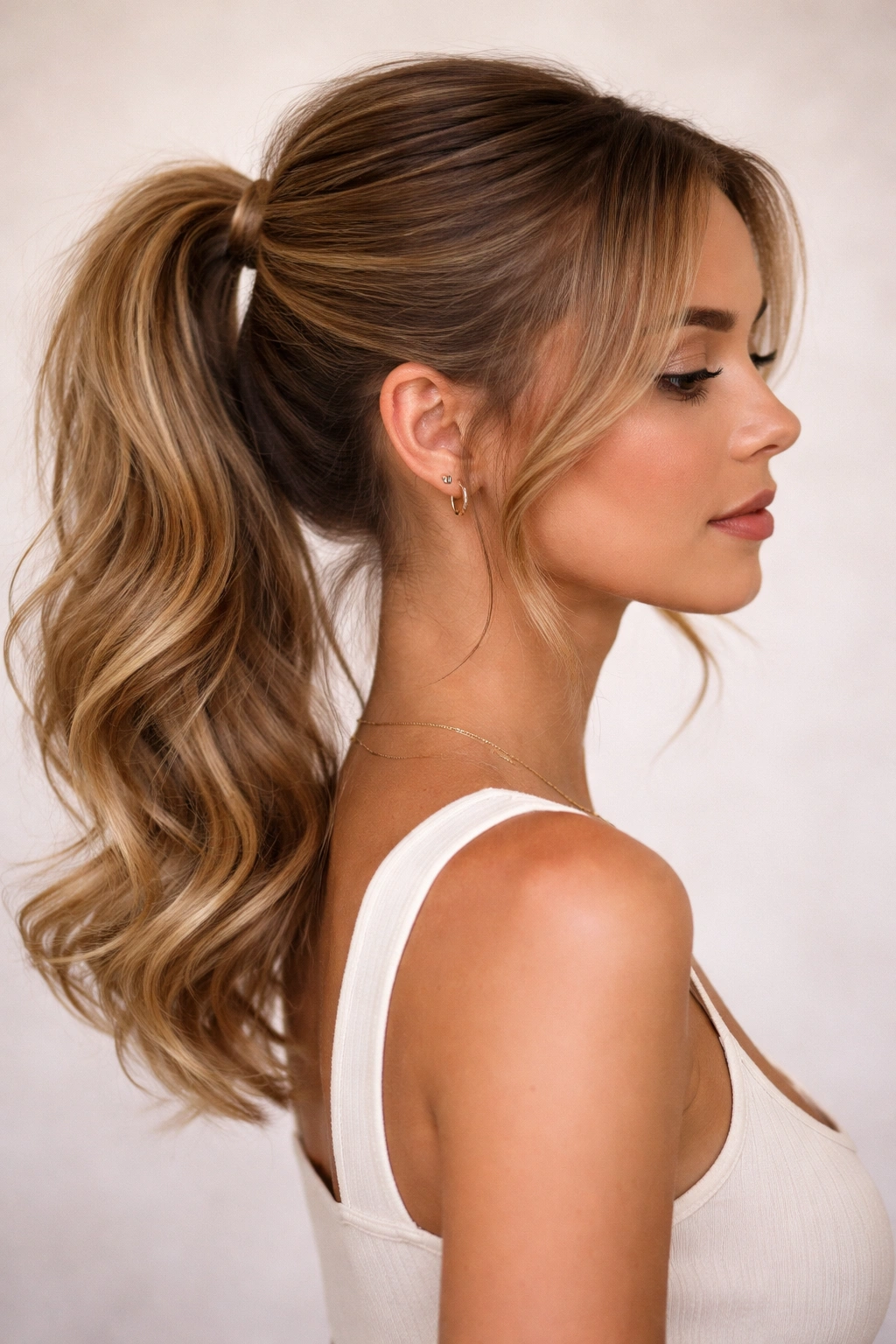
A ponytail with beautifully curled or waved ends looks infinitely more polished and intentional than a straight-ended tail. This style takes any basic ponytail and elevates it with texture, making the whole look feel more carefully considered.
Creating Waves and Curls
Secure your ponytail at your preferred height, then take your curling iron, wand, or even a straightener and create loose waves or curls throughout the length of the ponytail. You don’t need perfectly uniform curls — in fact, slightly irregular, varying wave sizes look more natural and intentionally undone. Start the curls a few inches down from the elastic so the base of the ponytail stays relatively smooth, then wave all the way to the ends.
The Texture That Matters
The curls or waves add dimension and movement that makes the entire ponytail feel more substantial and styled. Even a tight, sleek ponytail at the base looks infinitely more polished when the ends have beautiful texture. Once you’ve created the curls, let them cool for a few minutes (if using heat tools), then gently tousle them with your fingers to break up the uniformity and create that perfectly imperfect effect.
Enhancing With Product
Use a light texture spray, sea salt spray, or even a light hairspray after creating your curls. This holds the waves in place without making them feel stiff or artificial. The product should enhance the texture without making it look overly done.
12. The Scarf-Wrapped Ponytail
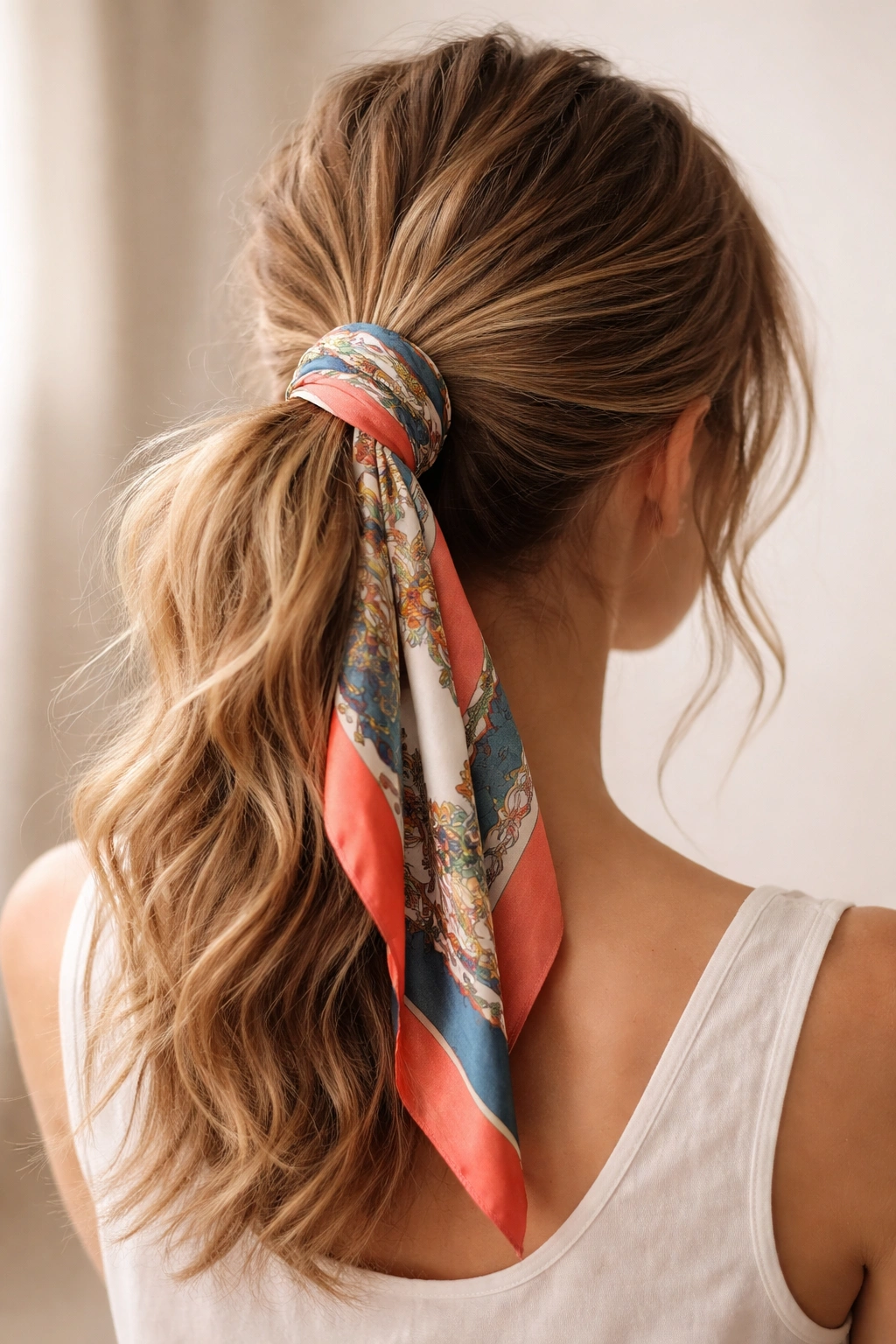
This style adds a pop of color, pattern, and intentional detail by wrapping a scarf or fabric strip around the base of your ponytail. The scarf becomes both a functional element (it helps hold the ponytail in place) and a design statement.
Choosing and Positioning Your Scarf
Select a lightweight scarf, a silk scrunchie, or even a strip of pretty fabric. Secure your ponytail with an elastic, then wrap the scarf or fabric tightly around the base, covering the elastic completely. You can tie the scarf in a bow, knot it, or just wrap it and tuck the ends under. The scarf should feel intentional and coordinated with your outfit — matching your top, your jewelry, or creating an intentional pop of contrast.
Creating Visual Interest
The scarf adds instant sophistication and intention to any ponytail style. It also allows you to coordinate your hairstyle with your outfit in a way that feels very put-together. You could use a patterned scarf for visual interest, a solid color that matches your clothes, or even a metallic or glittery scarf for special occasions.
Functional and Stylish
Beyond looking cute, wrapping a scarf around the base of your ponytail actually helps keep it secure throughout the day. The fabric provides extra grip that prevents the ponytail from slipping, and it can also protect your hair from the friction of the elastic. This is a win-win — you get a more polished look and a more secure ponytail.
Final Thoughts

The common thread running through every single messy ponytail style is intentionality. None of these styles are actually messy by accident — they’re deliberately crafted to look effortlessly undone while requiring just enough technique that they read as polished and thought-out. Whether you’re teasing for volume, adding twists or braids for texture, curling the ends, or simply loosening the elastic strategically, you’re making specific choices that transform a basic ponytail into something genuinely cute.
The best part about these styles is that they work for almost every hair type, every hair length, and every occasion. If your hair is fine, teasing and texturizing sprays are your friends. If your hair is thick and heavy, pin-securing or using structured twists will keep everything in place without feeling too tight. If you have curly or textured hair, you already have the volume and movement built in — you just need to arrange it strategically with some face-framing pieces and loose sections.
Pick one of these styles and practice it a few times. The second or third time you create it, you’ll start to understand exactly how loose to pull, which pieces to frame your face with, and how much texture your specific hair type needs. After that, it becomes almost meditative — a five-minute styling routine that makes you feel polished, intentional, and genuinely put-together. That’s the real magic of the messy ponytail: it’s the ultimate confidence boost disguised as effortless simplicity.
