



If you’ve ever felt stuck between wanting an elegant, polished look and actually having the time and energy to achieve it, low braided ponytails are about to become your secret weapon. They sit comfortably at the base of your neck or slightly lower, which means they’re professional enough for the office, romantic enough for date night, and casual enough to work with a t-shirt and jeans. The braid component transforms what could be a basic ponytail into something that looks intentional and put-together—even when you’re running late.
The real beauty of low braided ponytails is their flexibility. You can wear them loose and romantic with soft, undone texture, sleek and refined for formal events, or playful and dimensional with texture and movement. Whether your hair is naturally straight, wavy, or curly, thick or fine, there’s a braided ponytail variation that’ll work for you. They also age beautifully across different hair types and lengths (though longer hair certainly makes some styles easier). You don’t need special equipment, expensive products, or hairdresser-level skills—just a few bobby pins, an elastic, and maybe a texturizing spray.
What makes braided ponytails so versatile is that the braid can frame your face, sit at the back, wrap around itself, or blend into the ponytail in countless ways. You can dress them up with sleek styling for weddings and professional events, or keep them relaxed and undone for casual days. Many of these styles also hold up beautifully throughout the day, which means less re-doing and more time spent on things that actually matter. Let’s walk through 12 gorgeous low braided ponytail styles that work for any occasion, hair type, and skill level.
1. Classic Dutch Braid Low Ponytail
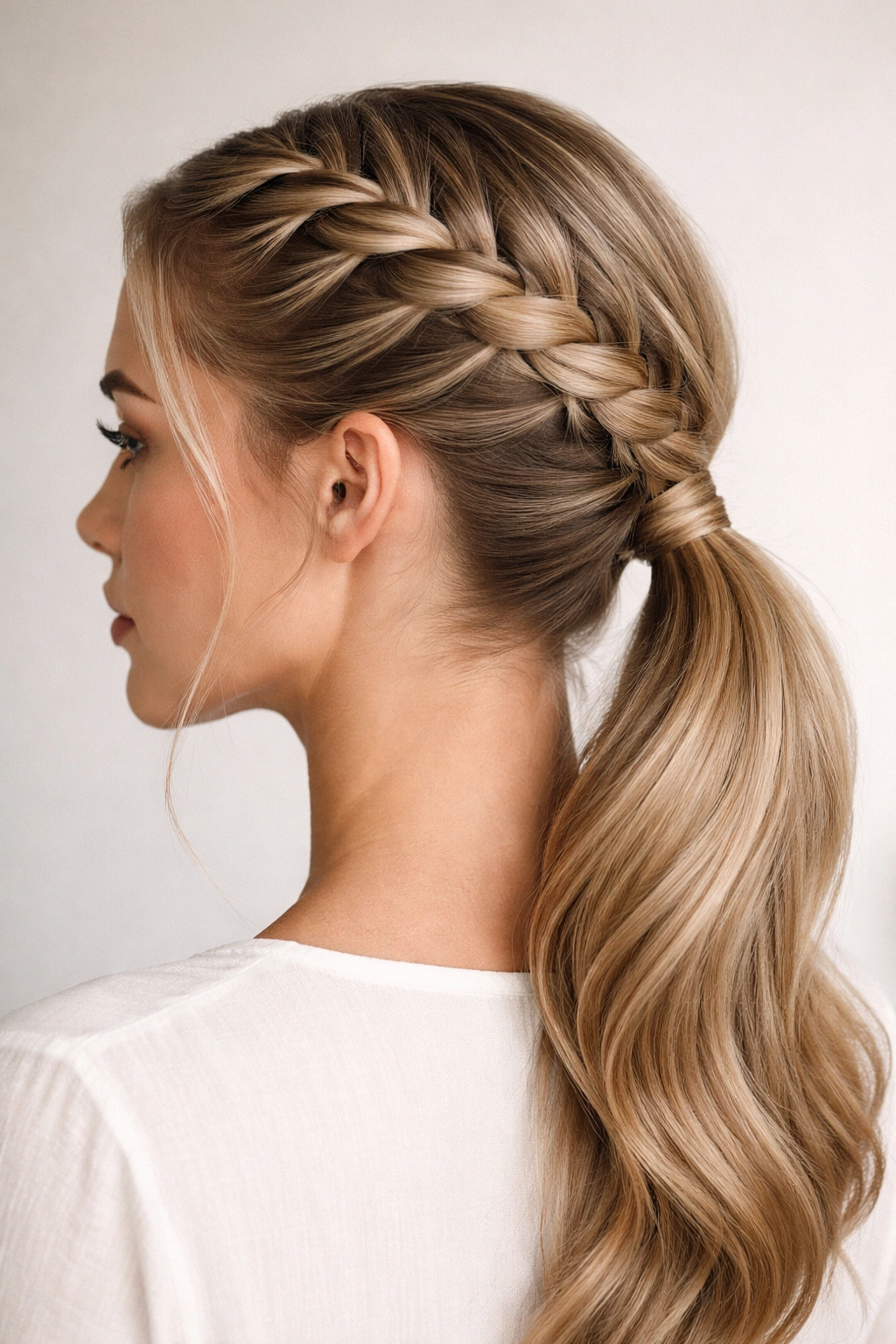
The Dutch braid—sometimes called a reverse French braid—creates a raised, prominent braid that sits directly on top of your head before flowing into a low ponytail. It has a more dramatic, sculptural look than a regular French braid because the strands cross under each other instead of over, making the braid pop visually. This style works beautifully for anyone who wants their braid to be a statement, not just a detail.
Why This Works for So Many Occasions
A Dutch braid commands attention in the best way, making it perfect for days when you want to look polished without looking overdone. The raised braid adds dimension to your crown and works exceptionally well if you have fine or flat hair, since the braid itself creates the illusion of volume. For formal events, you can tighten and smooth the braid for a sleek, serious vibe; for casual days, you can gently tease and loosen sections to make it softer and more relaxed. The style reads as intentional and put-together but isn’t overly complicated to create.
How to Style It
- Start with textured hair (use a texturizing spray or dry shampoo at the roots the day before, or blow-dry with your head upside down for lift)
- Part your hair down the center or slightly to one side, depending on your preference
- Begin a Dutch braid at the crown (strands cross under, not over)
- Braid all the way down to the base of your skull, adding sections as you go
- Gather the remaining hair into a low ponytail and secure with an elastic
- Gently pull and loosen small sections of the braid for a softer texture
- Add a bobby pin or two at the base where the braid meets the ponytail for security
Pro tip: If your braid feels too tight or formal, loosening the sections right after you finish gives it an effortless, romantic quality that feels more modern.
2. Fishtail Braid Low Ponytail
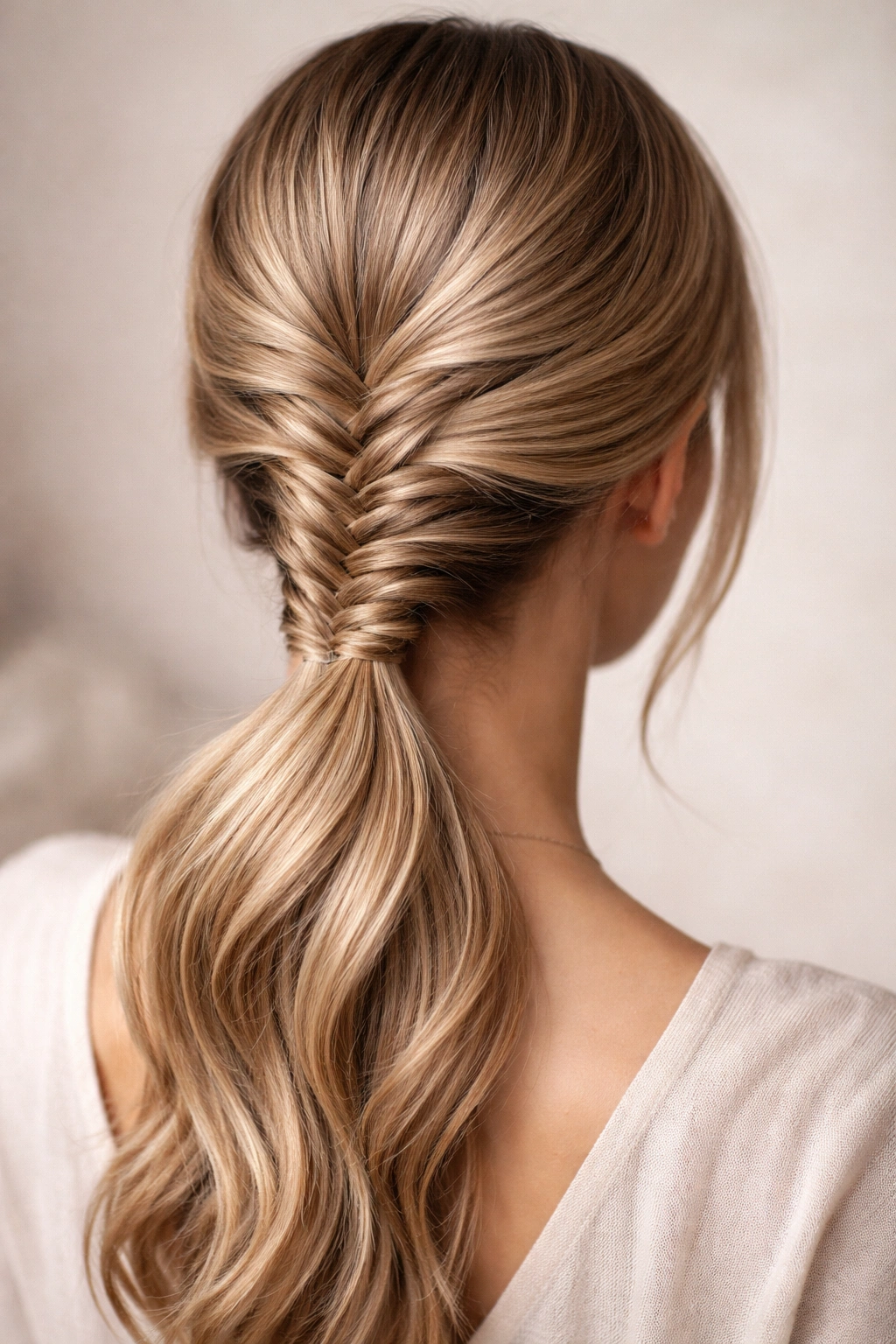
The fishtail braid uses only two sections instead of the traditional three, creating an intricate, woven appearance that looks far more complicated than it actually is. The pattern mimics a fish’s tail and creates a delicate, lacy texture that’s less chunky than other braids. Once you get the hand motion down, it’s actually one of the easiest braids to execute, which makes it perfect if you’re still building your braiding skills.
What Makes It Stand Out
The fishtail braid has an automatically elegant, almost romantic quality because of its fine, interwoven texture. It looks incredible in photographs and catches the light beautifully, especially if you have dimension or lighter tones in your hair. The style works for any hair type—it actually looks better on finer hair because the delicate pattern shows more clearly—and it suits everyone from casual denim-and-sneakers situations to formal dinners. The braid also tends to hold better than other braids throughout the day because the two-strand structure is naturally secure.
How to Style It
- Brush your hair smooth or slightly textured (completely smooth can make a fishtail slip)
- Gather your hair into a low ponytail position and secure loosely with an elastic
- Divide the ponytail into two equal sections
- Take a small piece from the outside of the right section and cross it over to the inside of the left section
- Take a small piece from the outside of the left section and cross it over to the inside of the right section
- Repeat, keeping tension even but not tight
- Continue to the ends and secure with a small elastic
- Gently loosen the fishtail by pulling the side sections outward
Worth knowing: The more loosely you braid, the wider and more dramatic the fishtail becomes. Tighter braids create finer, more delicate-looking results.
3. French Braid Low Ponytail
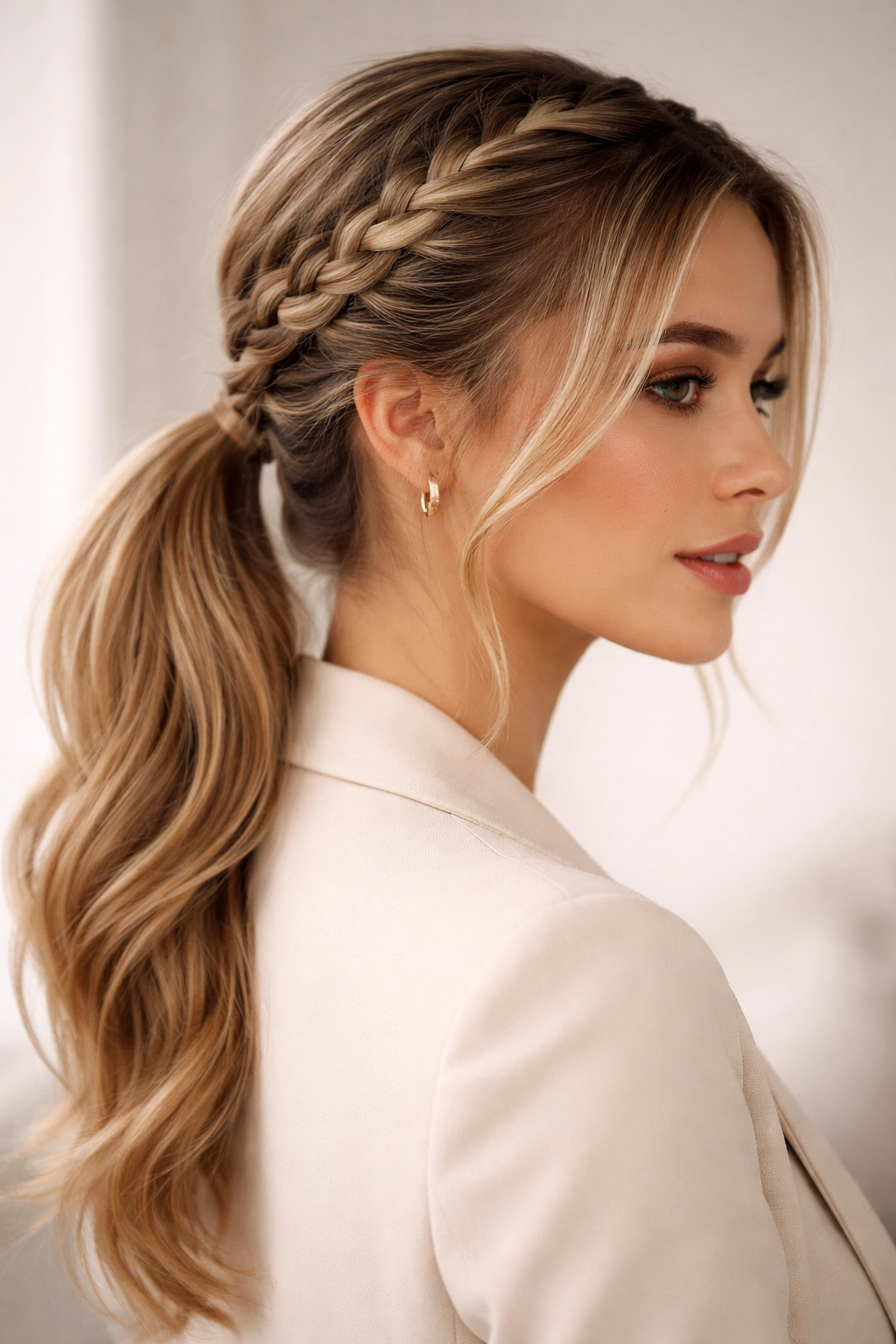
The French braid—the original three-strand braid where strands cross over each other—is the foundation of braid styling and remains an absolute classic. It’s less dramatic than a Dutch braid but still creates a beautiful raised braid that adds dimension and keeps hair off your face. French braiding is a skill worth mastering because once you can do it, dozens of other styles become possible.
Why It’s Still a Top Choice
A French braid reads instantly as intentional and polished without being overly formal or fussy. It’s the hairstyle equivalent of putting on a blazer—it takes something casual and makes it look professional. The raised braid creates a beautiful frame for your face and works beautifully for first dates, job interviews, brunch with friends, or just a day when you want to feel put-together. Unlike a Dutch braid, a French braid has a softer appearance that feels equally at home with a wedding dress or weekend jeans.
How to Style It
- Start with clean or second-day hair (has enough grip for the braid to hold)
- Create a small three-strand section at your crown
- Cross the right strand over the center, then the left strand over the center
- Add new hair to the right section before crossing it over, then add new hair to the left before crossing it over
- Continue down to the base of your skull, adding hair as you go
- Gather the remaining hair into a low ponytail and secure
- Use a fine-tooth comb or small brush to gently smooth any flyaways
- Lightly tease the braid by pulling small sections outward for softness
Pro tip: The key to a beautiful French braid is keeping even tension and making sure you’re adding similar amounts of new hair to both sides as you braid down.
4. Rope Braid Low Ponytail
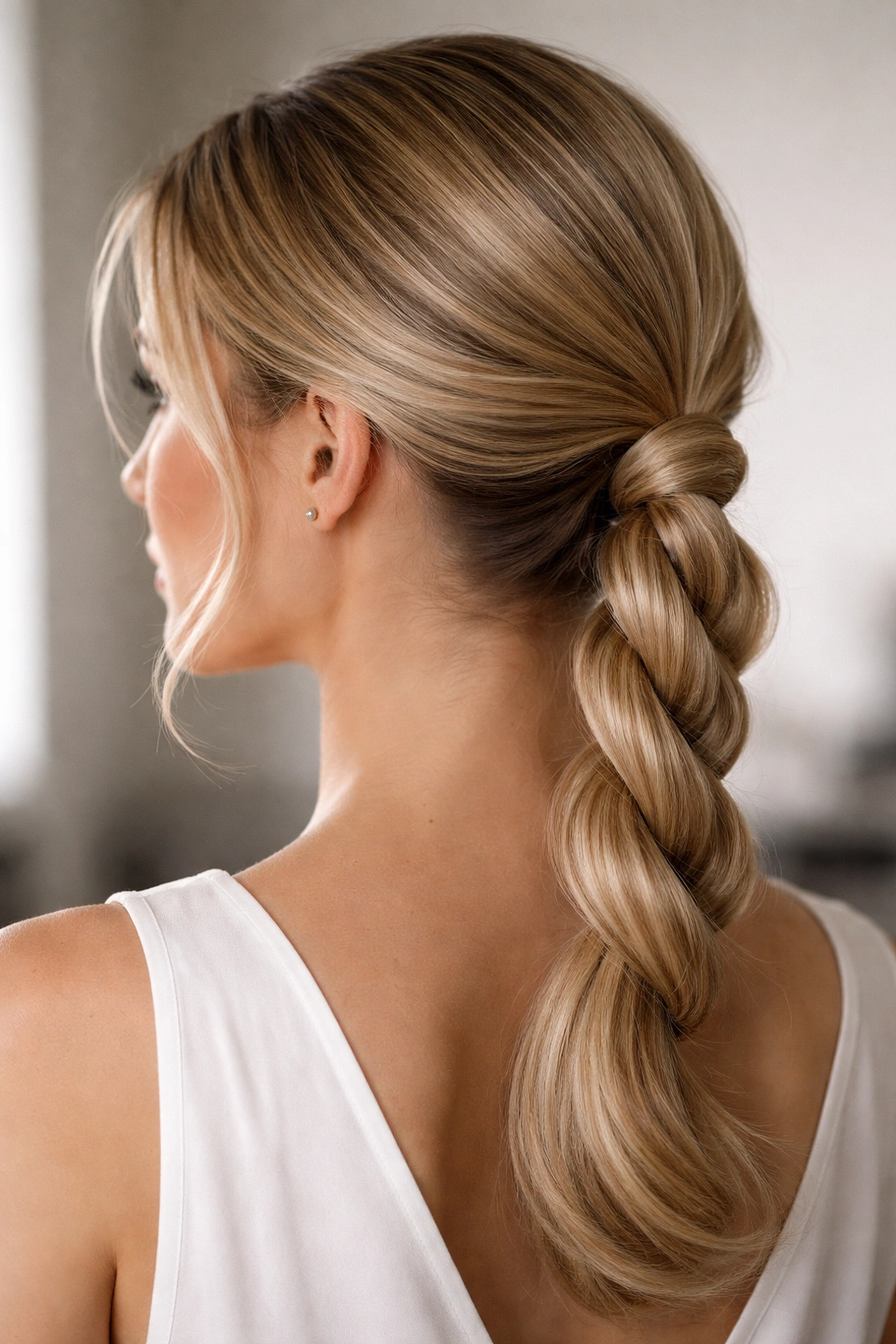
The rope braid (also called a twisted braid) uses only two strands that twist around each other, creating a spiral effect that feels simpler than a traditional braid and somehow even more elegant. The visual result is a smooth, thick, corded line of texture that catches the light beautifully. It’s an underrated braiding technique that deserves more attention because it’s genuinely easier to master than most people realize.
What Makes It Special
A rope braid has a modern, refined quality that feels fresh and contemporary while still being timeless. The two-strand twist is forgiving if you’re new to braiding—there’s less coordination involved than with three-strand braids—and it holds incredibly well throughout the day because the twisted structure tightens naturally as it sits. The style reads as thoughtful and intentional but not overly complicated, which makes it perfect for anyone who wants to look put-together without appearing to have spent hours on their hair.
How to Style It
- Section off the hair you want to braid (from your crown down to where the ponytail will sit)
- Divide this section into two equal pieces and twist each piece clockwise so both are tightly twisted
- Wrap these two twisted sections around each other in the opposite direction (counterclockwise)
- Keep tension even as you twist down to the base of your skull
- Gather remaining hair into a low ponytail and secure
- Gently pull and loosen sections of the twist for a softer, more textured appearance
- Add a bobby pin where the twist meets the ponytail for security
Quick facts:
- Rope braids look thicker and fuller than their actual width, making them great for fine hair
- They’re more secure than they appear and rarely need re-doing throughout the day
- This braid works beautifully with colored or highlighted hair because the twist shows off dimension
5. Twisted Braid Low Ponytail
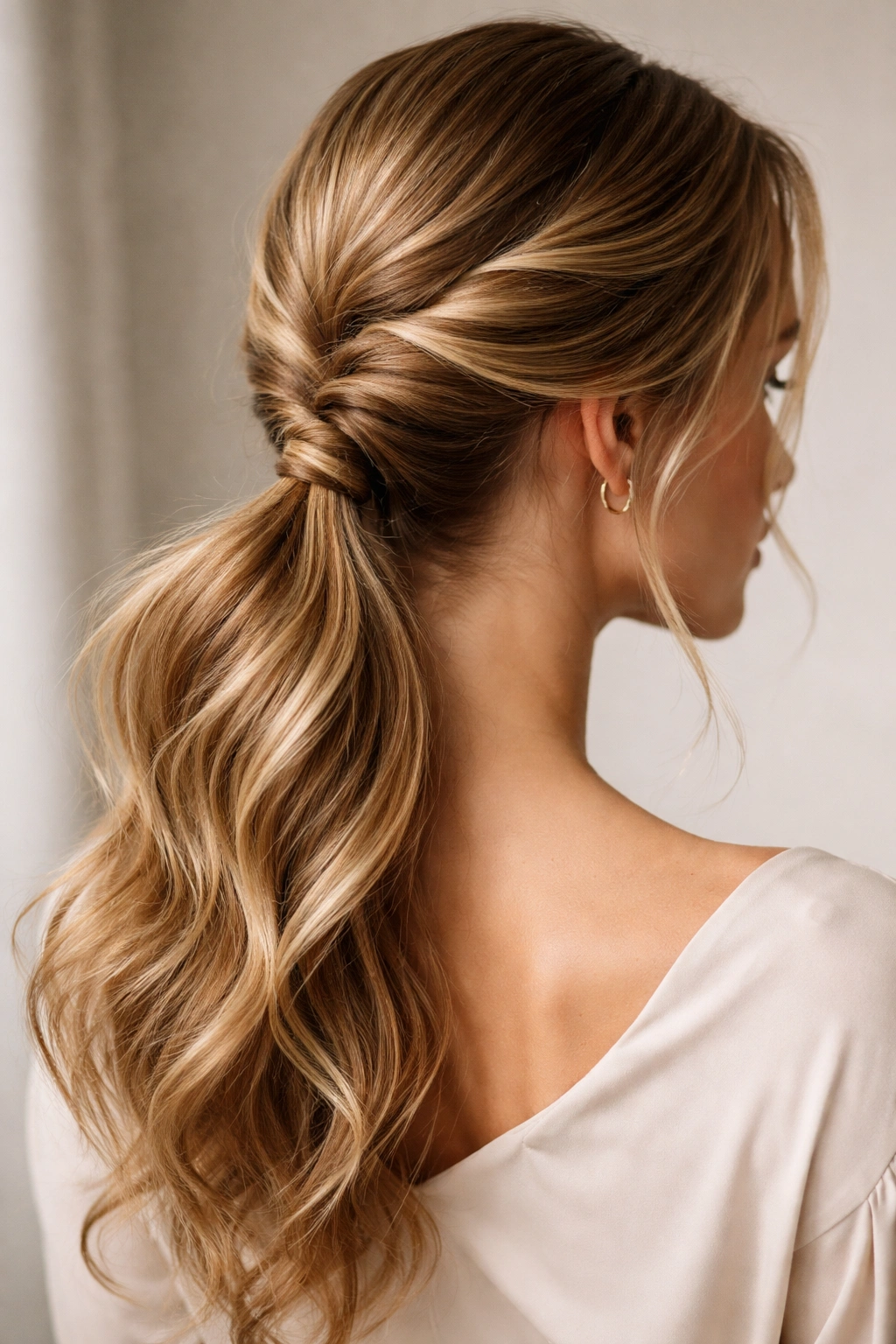
A twisted braid differs from a rope braid—it’s created by taking two sections of hair and wrapping them around each other while simultaneously picking up new hair, similar to a French braid but with only two strands instead of three. This creates an elegant, unified braid with beautiful texture that sits between the simplicity of a rope braid and the complexity of a three-strand braid.
Why You Should Know This Style
The twisted braid has the visual elegance of a French braid but involves fewer steps, making it perfect if you’re intermediate with braiding or want something a bit more approachable than three-strand work. It creates a looser, more romantic texture than a rope braid and a softer appearance than a Dutch braid, landing in the sweet spot for people who want their braid to feel effortless. This style absolutely works for casual days but also feels sophisticated enough for professional settings or special events.
How to Style It
- Start with a small two-strand section at your crown
- Twist the right strand around the left strand
- Add new hair to the left section and twist the left strand around the right
- Add new hair to the right section and twist the right around the left again
- Continue adding new hair and alternating which strand twists around which, all the way down
- Gather remaining hair into a low ponytail and secure
- Loosen sections of the twist to create a softer, more lived-in appearance
- Use bobby pins to anchor the braid where it meets the ponytail
Worth knowing: This style is forgiving with uneven tension because the two-strand structure naturally tightens as it sits. It’s an excellent choice if you’re still learning proper tension control.
6. Multiple Smaller Braids into Low Ponytail
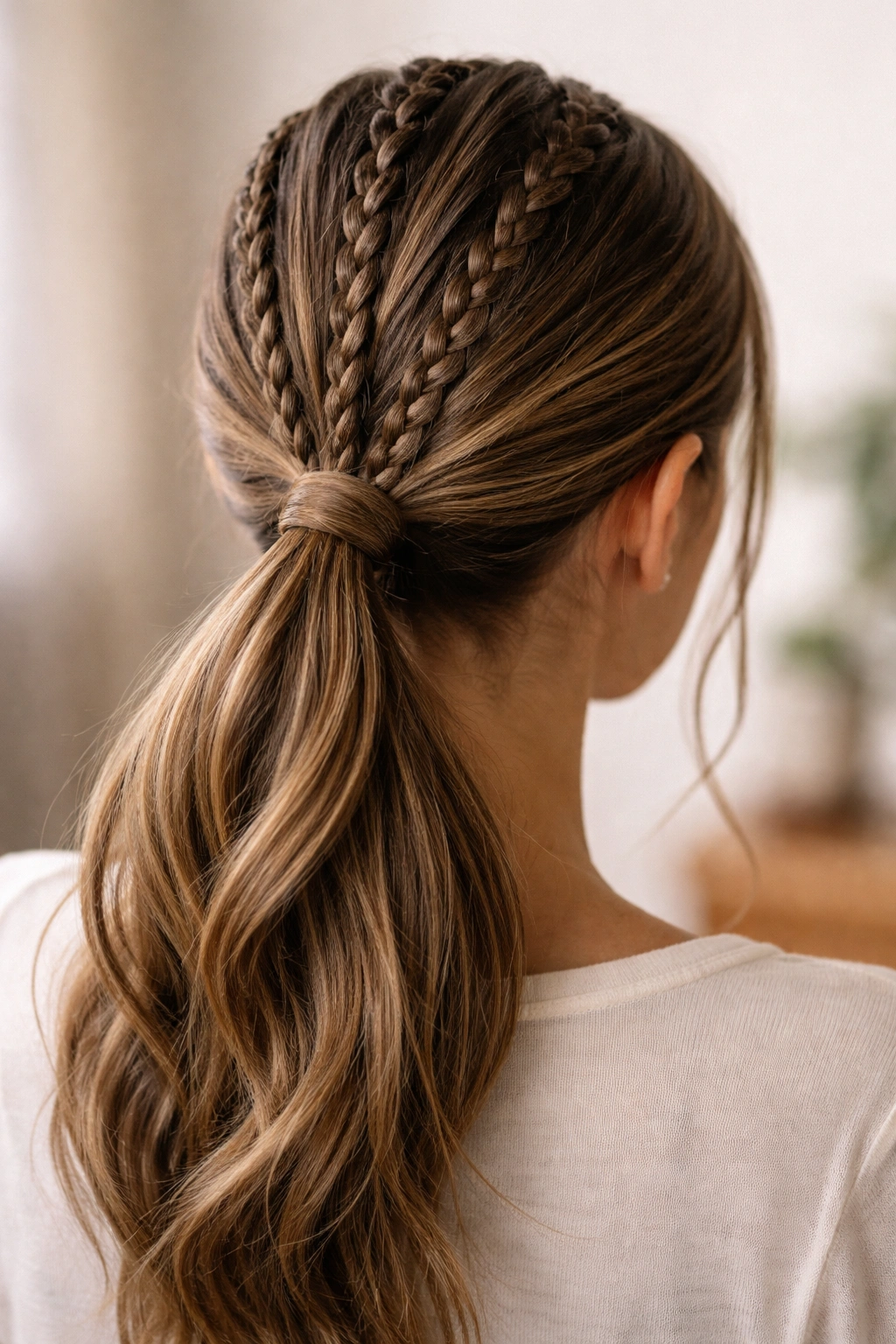
Instead of one large braid, this style divides the hair at the crown into three, four, or even five smaller sections, braids each one separately, and gathers all of them together into a single low ponytail. The result is a visually interesting, textured look that reads as artistic and intentional without being overly complicated. Each braid can be a different style, or they can all match.
When to Wear This Look
Multiple braids create wonderful visual interest and a playful sophistication that works for festivals, casual days with friends, creative workplaces, and anyone who loves a bit of artistic flair in their styling. This style is particularly lovely for people with longer, thicker hair because each braid remains substantial and visible. The multiple sections actually distribute weight better than a single thick braid, making it comfortable for all-day wear. It’s also forgiving because slight imperfections in individual braids become part of the charm when there are several of them.
How to Style It
- Divide the crown area into three, four, or five sections (use clips to keep them separate)
- Braid each section independently—you can use Dutch, French, fishtail, or rope braids
- Braid each section down to about the same point on your head
- Release all sections and gather the full head of hair into a low ponytail at the nape of your neck
- Secure with a sturdy elastic
- Optional: take a small section from the ponytail, wrap it around the elastic, and secure with a bobby pin to hide the elastic
Pro tip: Using different braid styles for each section creates more visual interest than using the same braid repeated. Pairing a Dutch braid with a fishtail and a rope braid, for example, adds subtle variety.
7. Half-Braided Low Ponytail
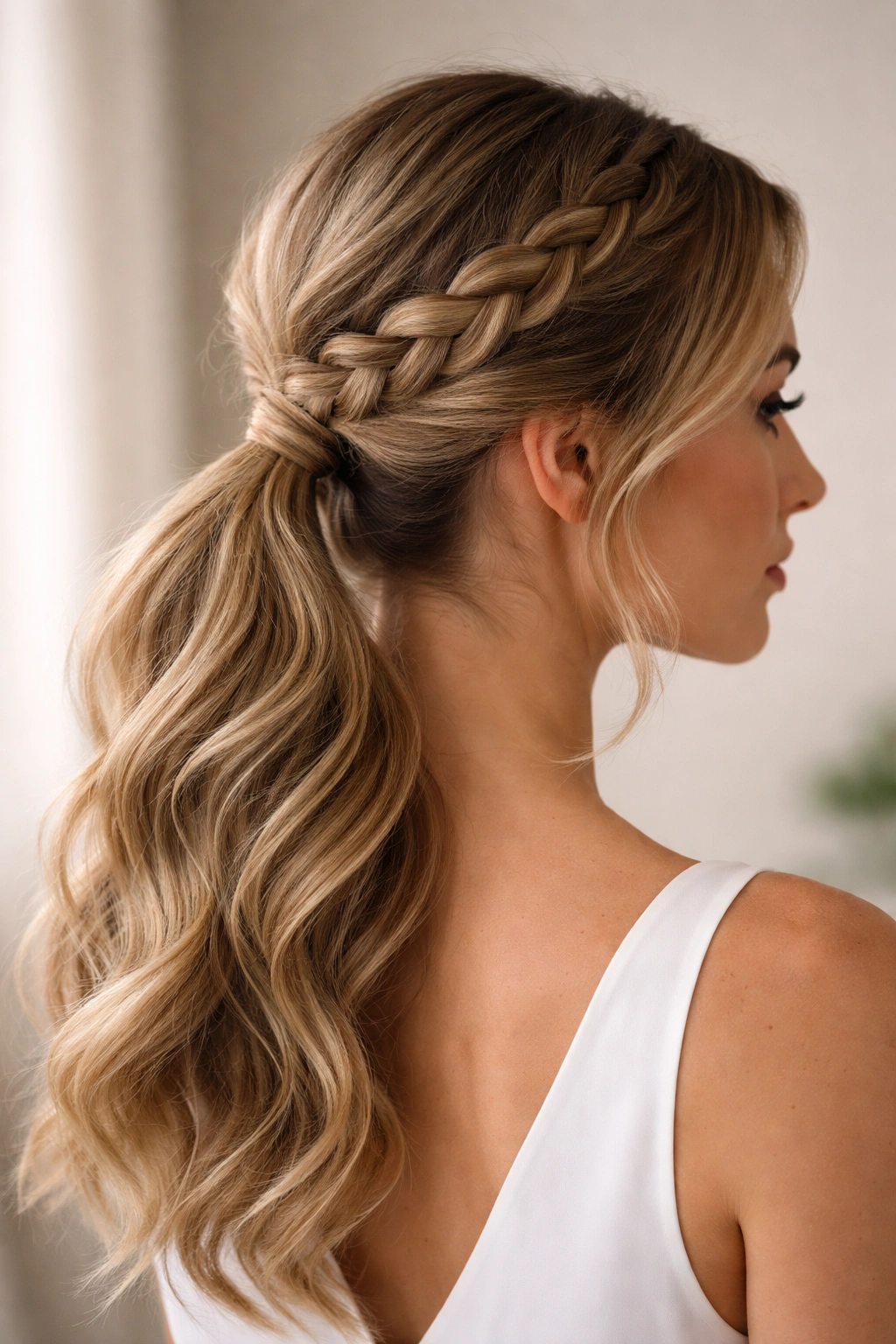
The half-braided ponytail combines loose waves or texture on top with a braid incorporated partway down, creating a soft, romantic, effortless-looking style. Usually, you leave the top section down and loose, then braid starting somewhere around mid-head or where you’d normally start a low ponytail. The result is a style that feels undone but polished.
What Makes It So Wearable
This style perfectly bridges casual and dressed-up, which makes it work for nearly any occasion. The loose top creates a romantic, soft silhouette, while the braid adds intentionality and polish. It’s excellent for people who find fully-braided styles feel too formal or structured but want more than just a plain ponytail. The style also works beautifully for all hair types and lengths—even shorter bobs can achieve a version of this with a loose wave or curl on top and a small braid woven in lower down.
How to Style It
- Create loose waves or curls throughout your hair (use a curling iron, salt spray, or overnight braids)
- Brush out the waves gently so they’re soft and textured, not ringlet-y
- At the point where you want the ponytail to begin (usually the nape of your neck or just below), start a Dutch, French, or fishtail braid
- Braid down a few inches, then gather all the remaining hair (including the braid) into a low ponytail
- Secure with an elastic
- Loosen the braid slightly by gently pulling sections outward
- Use a texturizing spray to emphasize the waves and add hold
Quick facts:
- This style works beautifully with a center part or a side part
- You can incorporate face-framing layers into the loose top section for extra movement
- The style holds well all day because the braid anchors the ponytail
8. Accent Braid Low Ponytail
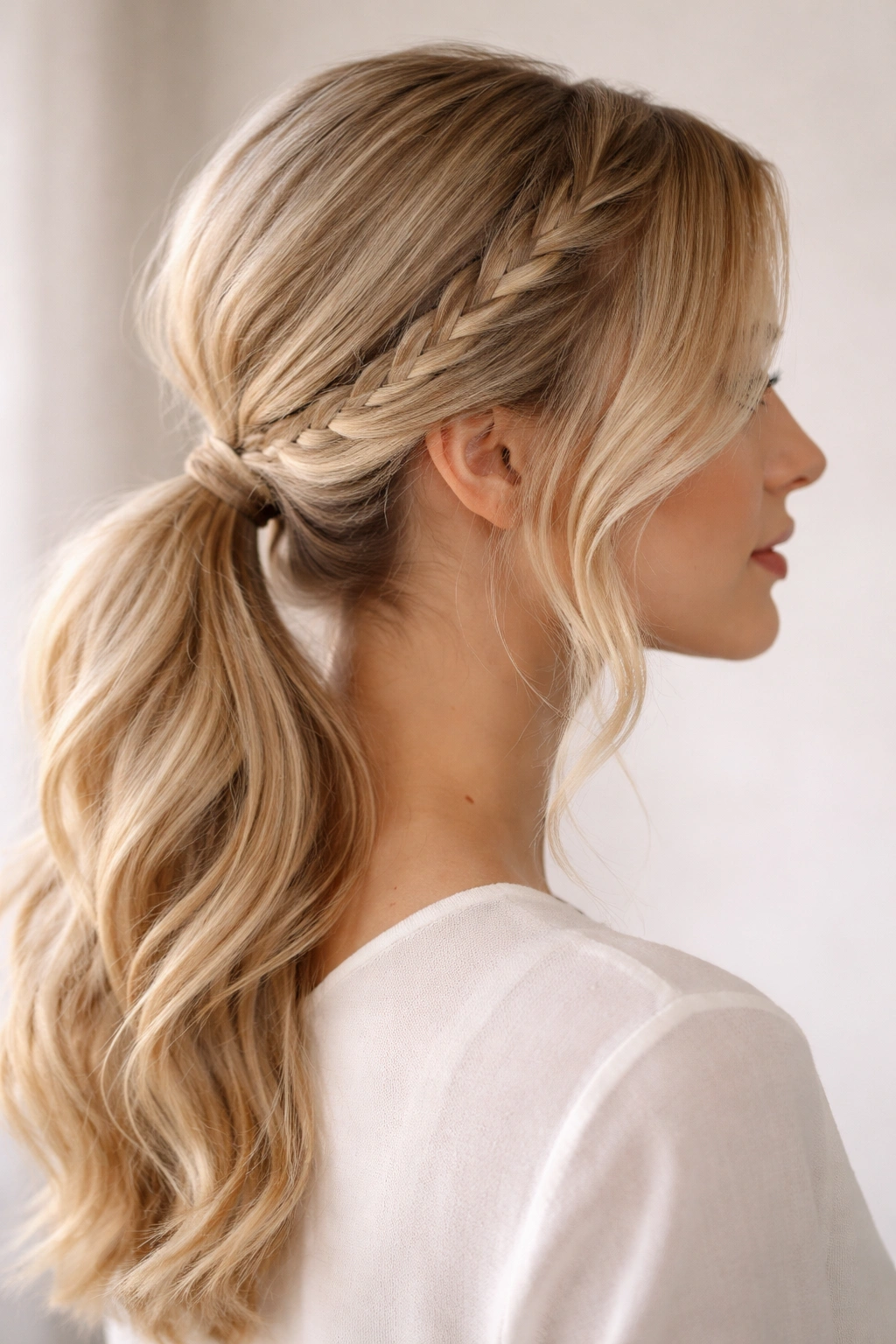
An accent braid is a single, decorative braid woven into the side or front of a low ponytail, rather than serving as the main structural element. The majority of the hair remains loose or wavy in the ponytail, while the braid acts as a beautiful detail—almost like a piece of jewelry made of hair. This style is particularly lovely for people who like the look of braids but want something more subtle or relaxed.
Why This Deserves More Attention
The accent braid approach lets you get the elegance and personality of braided styling without committing to a full braided ponytail. It’s perfect for days when you want something between a plain ponytail and an elaborate braided style. The technique also works beautifully for people whose hair is too short for a substantial braid—even shoulder-length or shorter hair can accommodate a small accent braid. This style reads as thoughtful and intentional but never overdone, making it ideal for professional settings, first dates, or anytime you want to look polished without appearing to have tried too hard.
How to Style It
- Create your low ponytail first and secure it with an elastic
- Take a small section from the front or side of the ponytail (an inch or two wide)
- Braid this section using any braid style you prefer
- Wrap the finished braid around the base of the ponytail or around the elastic itself
- Secure the end of the braid with a bobby pin, tucking it into the ponytail so it’s hidden
- Optional: leave the end of the braid loose and let it blend into the ponytail for a more organic look
- Loosen the accent braid slightly for a softer appearance
Worth knowing: You can add multiple accent braids—one on each side, or several small ones around the base—for a more elaborate look while maintaining the casual, loose ponytail aesthetic.
9. Messy Textured Braid Low Ponytail
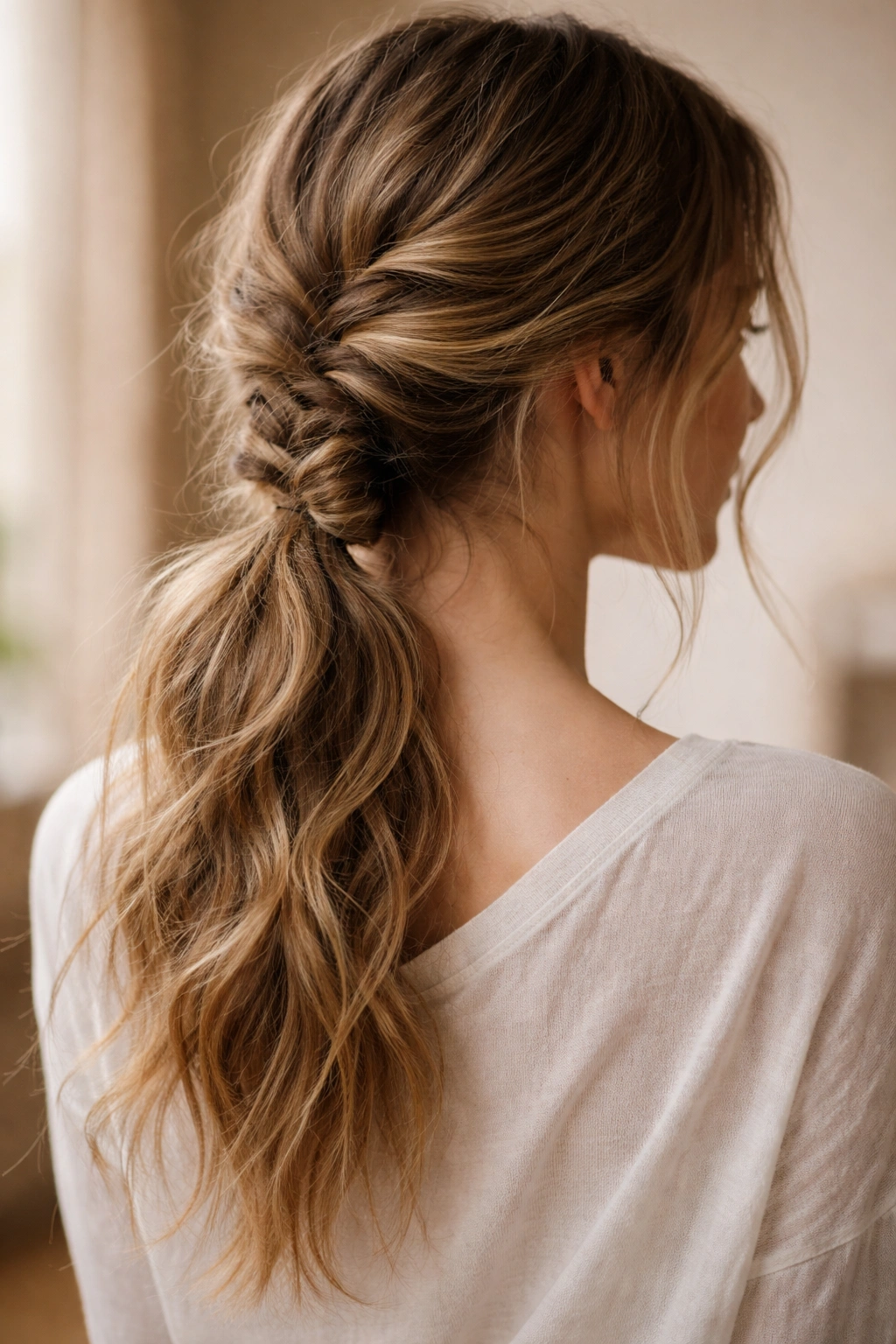
This style takes any braided low ponytail and intentionally loosens and textures it to create a relaxed, undone, “I woke up like this” appearance. The braid is still clearly visible and defined, but it’s soft, organic, and a bit imperfect. This approach works with any braid style and transforms it from formal or neat into casual and effortless.
When to Reach for This Look
Messy textured braids are perfect for casual days, creative environments, date nights that lean toward relaxed vibes, or anytime you want something that looks intentional but not uptight. The beauty of this approach is that it looks simultaneously more modern and more forgiving—slight imperfections in your braiding technique become part of the charm. This style also moves beautifully and feels less heavy than a tight, neat braid, making it comfortable for warm weather or all-day wear. It’s the braided version of “effortless elegance.”
How to Style It
- Create your low braided ponytail using any braid style (Dutch, French, fishtail, etc.)
- Immediately after braiding, before securing the elastic, gently pull sections of the braid outward
- Work from top to bottom, loosening each section by about half an inch
- Apply a texturizing spray, sea salt spray, or dry shampoo throughout to add grip and texture
- Tousle the loose hair around your face and the ponytail itself with your fingers
- Use a comb or brush to gently separate strands and create an undone, piecey appearance
- Leave a few small wisps loose around your face
- Optional: braid slightly looser to begin with so the final loosened version doesn’t look too dramatic
Pro tip: This look improves as the day goes on—by evening, it looks even more effortlessly beautiful as the braid softens and texture increases.
10. Crown Braid into Low Ponytail
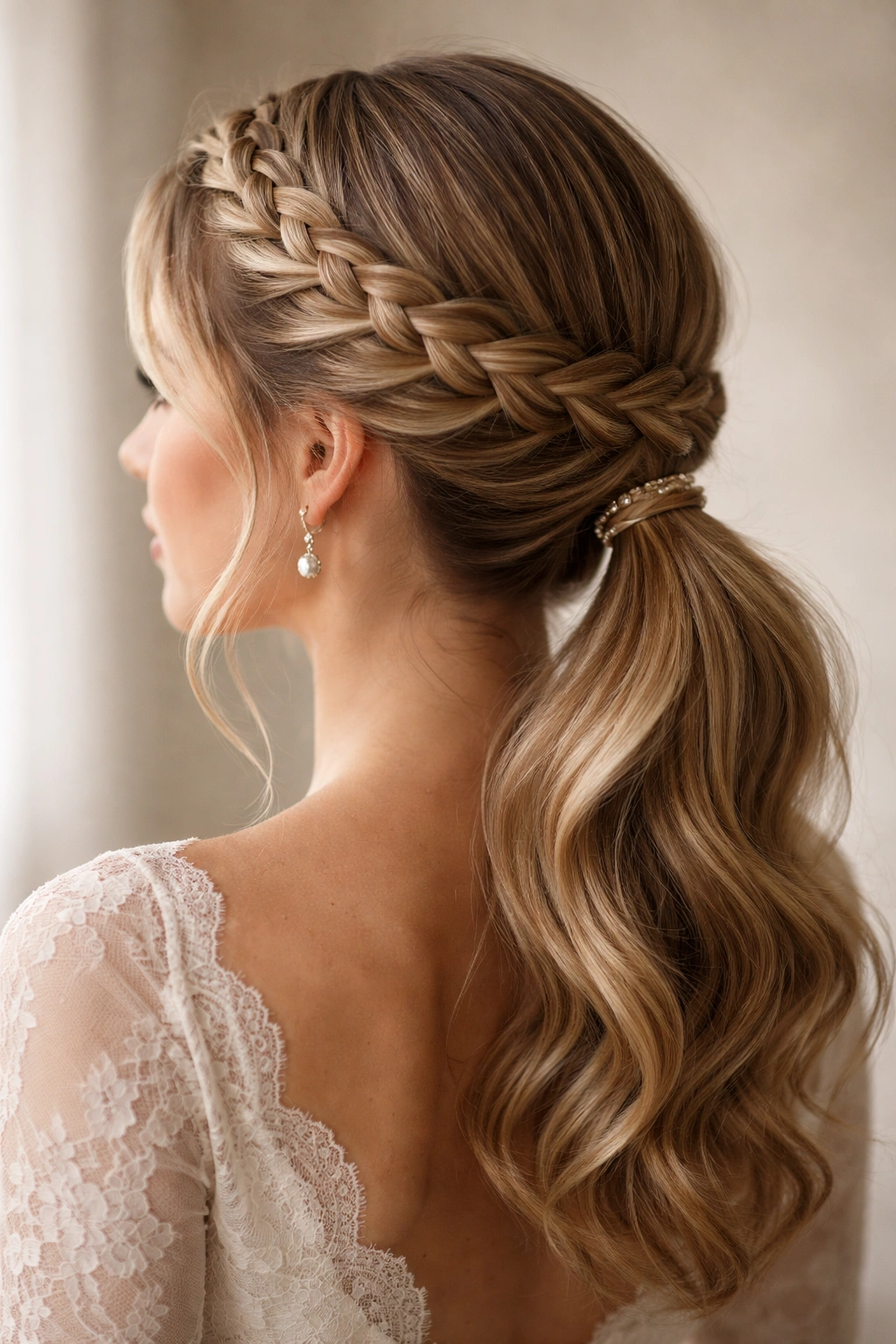
A crown braid wraps around the back of your head from one side to the other, creating a halo or crown-like effect. When you continue this into a low ponytail, you get a romantic, princess-like style that feels special and intentional. This is a stunning option for weddings, special events, or anytime you want to feel extra elegant.
What Makes This Style So Special
A crown braid automatically elevates any occasion—it’s inherently romantic and special while still being wearable for non-formal situations. The style flatters most face shapes because the braid sits at the crown and draws the eye upward, and it works beautifully with different hair types, lengths, and textures. The visual effect is regal without being overdone, sophisticated without being severe. This style also works better than you might expect on finer or shorter hair because the braid sits at the crown rather than needing thickness throughout.
How to Style It
- Start a braid at one side of your head (just above your ear)
- Work the braid diagonally back and across the crown of your head
- Add hair as you go, using a French or Dutch braid technique to incorporate hair along the path
- Bring the braid down the other side of your head, finishing somewhere above the opposite ear
- Take the braided section plus any remaining loose hair and gather into a low ponytail at the nape of your neck
- Secure the ponytail with an elastic
- Gently loosen the crown braid by pulling sections outward
- Use bobby pins as needed to secure any loose sections
Quick facts:
- This braid works beautifully with flowers, ribbons, or small hair accessories woven through it
- It’s forgiving of imperfect braiding because the crown placement means slight unevenness isn’t obvious
- The style holds all day and actually improves as you move around
11. Side Braid into Low Ponytail
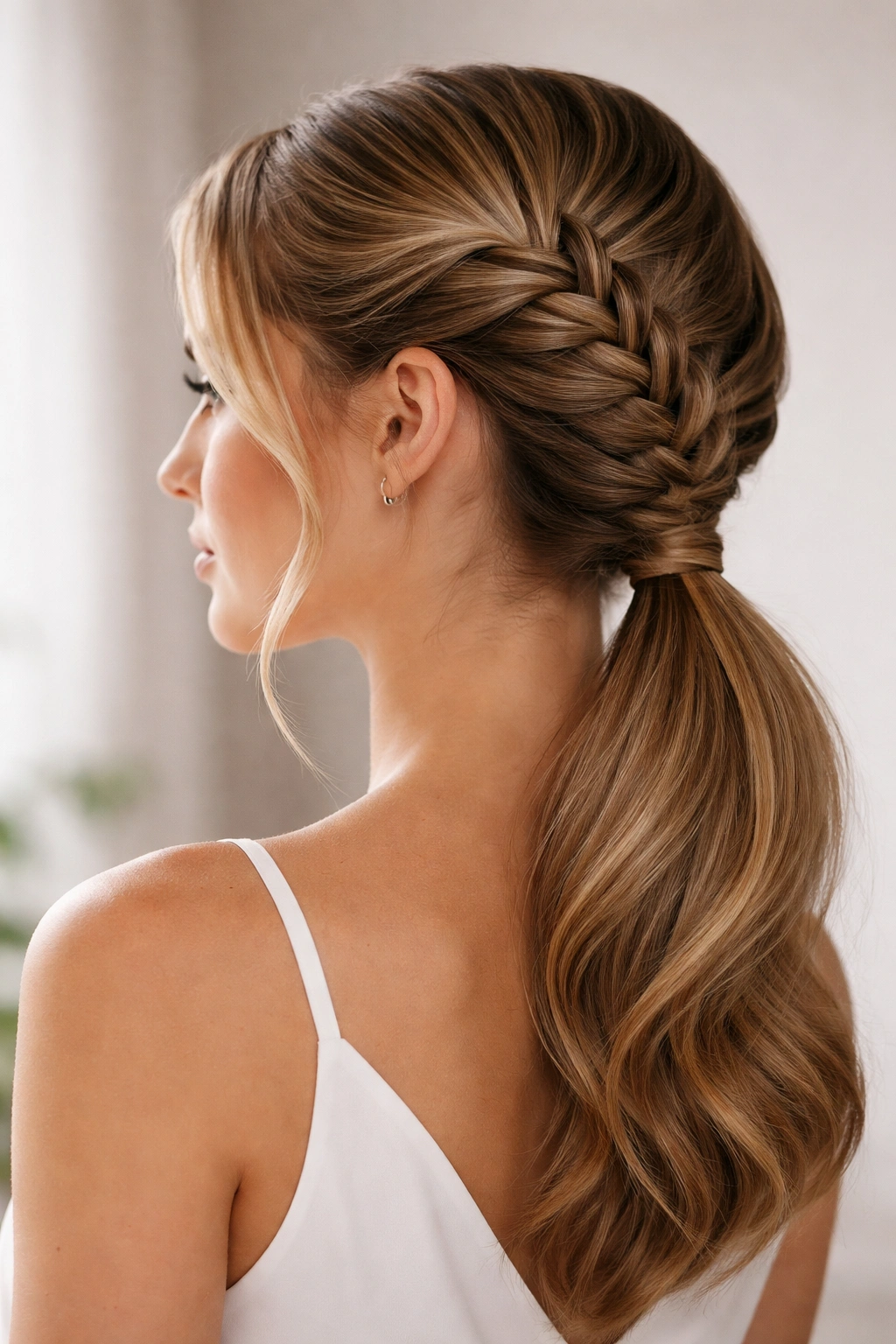
Instead of braiding down the back center of your head, a side braid starts at one temple or behind one ear and braids diagonally down toward the opposite side of your neck, then flows into a low ponytail. This approach creates beautiful asymmetry and movement, flatters most face shapes, and works whether your hair is thin or thick, straight or curly.
Why This Angle Works
A side braid automatically looks more interesting and intentional than a centered braid simply because of its angle. The diagonal line is flattering for most face shapes and creates visual movement that draws the eye in a particular direction. This style is excellent for anyone with a side part or who naturally wears their hair to one side. It feels more casual and modern than a centered braid while still being polished and put-together. The side placement also works beautifully for all hair types and is particularly lovely for people with texture, waves, or curls because the asymmetry complements natural movement.
How to Style It
- Start a braid at one temple or behind one ear
- Use a Dutch or French braid, adding hair as you work diagonally toward the opposite side of your neck
- Braid down to approximately the nape of your neck
- Gather all remaining hair (including the braided section) into a low ponytail
- Secure with an elastic
- Loosen the braid by gently pulling sections outward
- Leave a few face-framing pieces loose on the side where you started the braid
- Smooth any flyaways with a small brush or comb
Worth knowing: This style works beautifully with a deep side part and looks particularly lovely on people with longer faces because the diagonal line balances proportions.
12. Braided Wrap-Around Low Ponytail
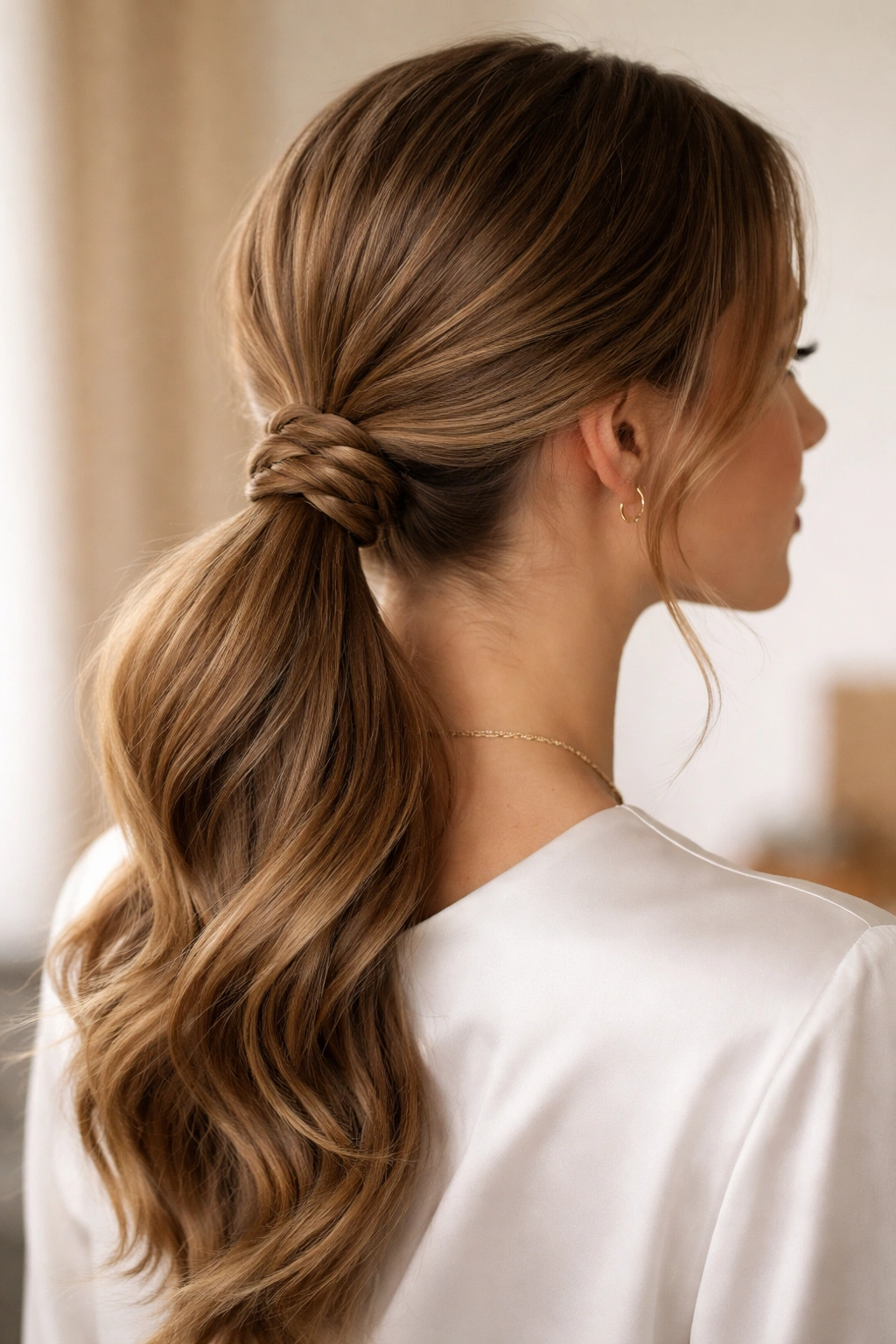
This style creates a low ponytail, then takes a braid and wraps it around the base, covering the elastic and adding a decorative detail. You can braid a section directly from the ponytail, or you can braid a separate piece of hair and wrap it around. The result is a polished, finished look that feels elevated and intentional.
When to Wear This Elegant Detail
The wrapped base transforms a simple ponytail into something special and thoughtful-looking. It’s excellent for professional settings because it looks polished without being overly casual, but it also works beautifully for social occasions. This technique is particularly useful if you prefer the simplicity of a low ponytail but want something a bit more refined, or if you want to hide a less-than-perfect elastic. The wrapped braid adds visual interest and a sense of completion that makes even a simple ponytail feel purposeful.
How to Style It
- Create a low ponytail and secure with an elastic
- Option 1: Take a small section from the ponytail itself, braid it (using any braid style), and wrap it around the base of the ponytail, securing the end with a bobby pin tucked into the ponytail
- Option 2: Separate a thin section from the side of the ponytail, braid it down a few inches, then wrap it around the elastic and secure with a bobby pin
- Option 3: Use a separate strand of hair or even a ribbon, braid or twist it, and wrap it around the base
- Make sure the wrap covers the elastic completely
- Loosen the wrap braid slightly for a softer appearance
- Use bobby pins to keep everything in place
Pro tip: The wrap is particularly effective if your ponytail elastic matches your hair color—it completely disappears, making the wrapped braid the main visual detail at the base of the ponytail.
Final Thoughts
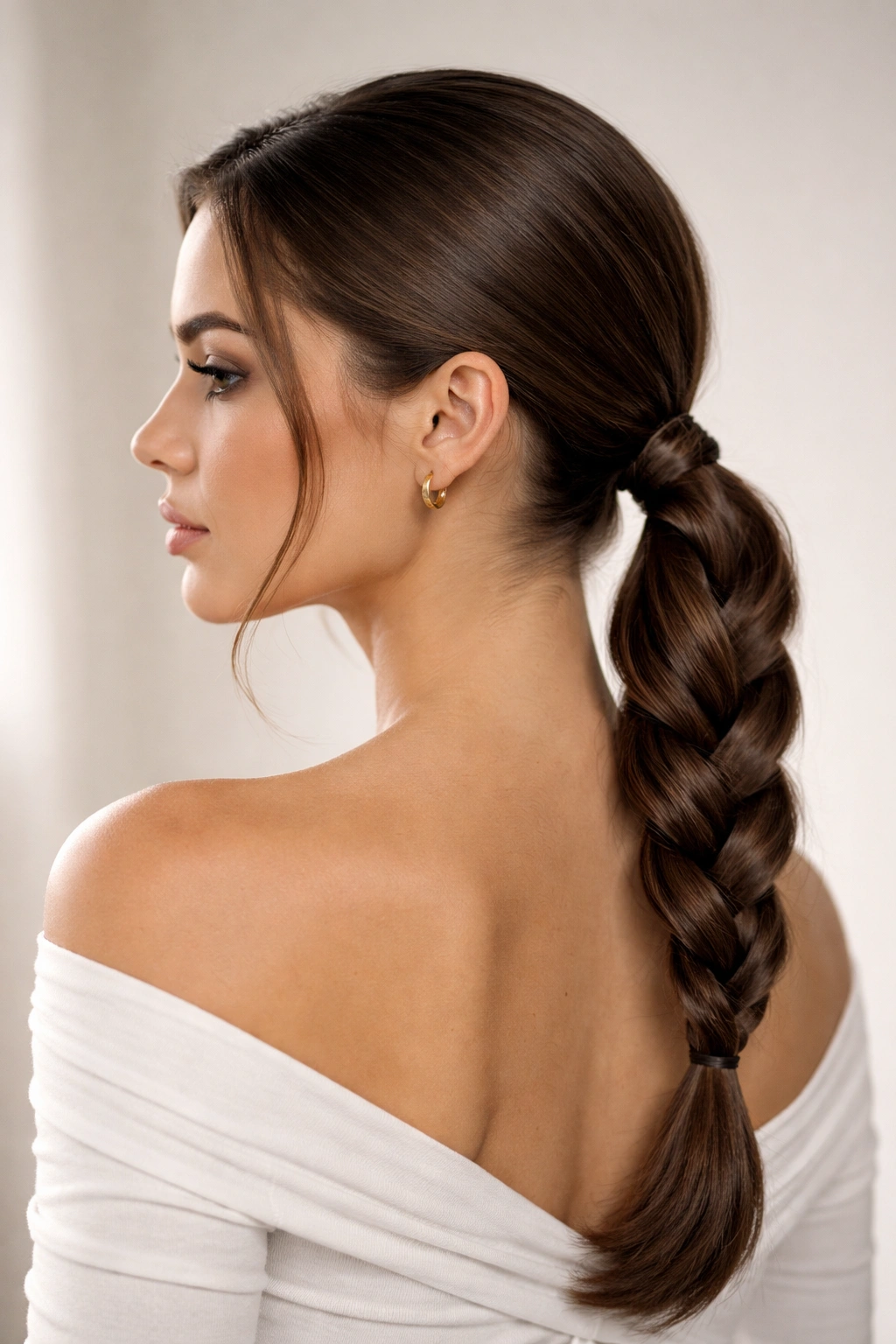
Low braided ponytails are genuinely one of the most versatile hairstyles available because they work for nearly any occasion, hair type, and skill level. Whether you choose a classic Dutch braid for a polished, professional look, a fishtail for romantic delicacy, or multiple smaller braids for playful flair, you’re working with a base that translates elegance and intentionality. The variations mean you can rotate through different styles throughout the week without repeating yourself, which keeps your look fresh while maintaining that effortless-but-polished aesthetic.
The beauty of mastering a few braiding techniques is that you unlock access to dozens of potential styles. Once you can execute a solid French or Dutch braid, you can combine that skill with different ponytail placements, wrapping techniques, and loosening methods to create an endless variety. Start with whichever style appeals to you most and build from there—you don’t need to master all 12 at once. Pick one, practice it a few times, then move on to the next once you’re comfortable.
Most importantly, these aren’t styles that demand perfection. Some of the most beautiful versions are the messier, more loosened interpretations. A slightly imperfect braid that’s been gently pulled apart has more movement and personality than a picture-perfect tight one. Give yourself permission to experiment, loosen things more than feels natural at first, and figure out what version of each style resonates with how you like to look and feel. That’s where the real magic happens.
