



There’s a real difference between wearing an afro wig and wearing an afro wig that genuinely looks like your natural hair. The market is flooded with options that sit awkwardly on the head, feel stiff, or give off that unmistakable “wig” appearance that immediately tells the world it’s not real. But quality afro wigs have evolved dramatically. The right texture, density, hairline, and construction can be virtually indistinguishable from authentic natural hair, especially when you understand which styles deliver that authentic look most convincingly.
Whether you’re exploring protective styling options, managing hair transitions, dealing with hair loss, or simply wanting the flexibility to switch up your appearance without commitment, an afro wig that reads as genuinely natural gives you confidence and freedom. The key isn’t just buying any afro wig — it’s understanding which specific styles, construction methods, and hair textures create that seamless, realistic appearance. You’ll want to consider factors like the hairline detail, the texture pattern, how the wig sits on your head, and whether the density feels authentic rather than theatrically full.
The styles that look most convincing aren’t always the most dramatic or voluminous. Often, the most realistic afro wigs are those that capture the honest texture and movement of natural hair — slight texture variation, realistic density progression, and a hairline that actually looks like it belongs on a human head rather than a mannequin. Let’s walk through ten afro wig styles that consistently deliver that natural appearance while offering versatility, comfort, and the confidence that comes with looking authentically like yourself.
1. Textured Short Afro Wig
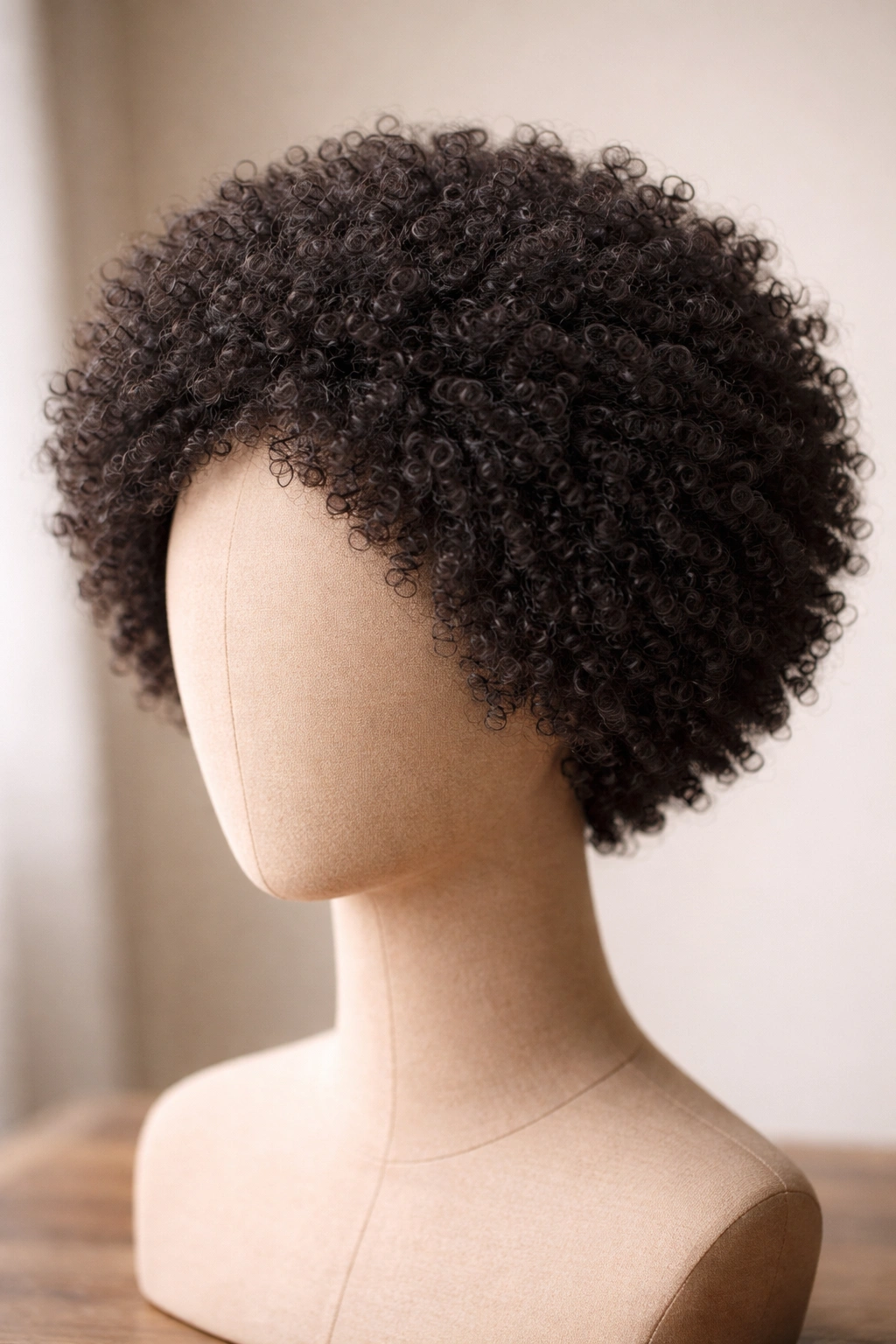
The short textured afro sits right at that sweet spot between protective style and everyday wear. This style typically ranges from two to four inches in height and features a tightly coiled or kinky texture that mirrors natural hair in its early stages of growth or maintenance. What makes this style read as natural is its restraint — it doesn’t oversell with dramatic height or impossible density. The texture appears genuine because coils vary slightly in tightness, mimicking the natural variation you’d see in an actual afro.
Why It Looks Authentic
This length and texture combination feels honest to how natural afro hair actually behaves. The coils catch light and shadow realistically rather than appearing as a uniform matte surface. Because the style doesn’t try to be aggressively voluminous, it avoids the theatrical quality that makes some wigs feel costume-like. The visual weight feels proportional to the actual hair volume present.
Best Features to Look For
- Hand-tied cap construction for a realistic scalp appearance
- Density that sits around 120-140% rather than the theatrical 180-200% that looks unnatural
- A lace frontal or regular frontal with a hairline that includes individual knots and baby hairs for believability
- Texture that includes slight variation in coil size rather than monotonous uniformity
- Leave-out space that allows you to blend your own hairline or lay down edges for seamlessness
Pro tip: This style works beautifully for a wash-and-go aesthetic. You can lightly separate coils with your fingers, dampen with water and lightweight oil, and let it air dry for completely natural-looking dimension and movement.
2. Defined Coil Wig with Tapered Edges
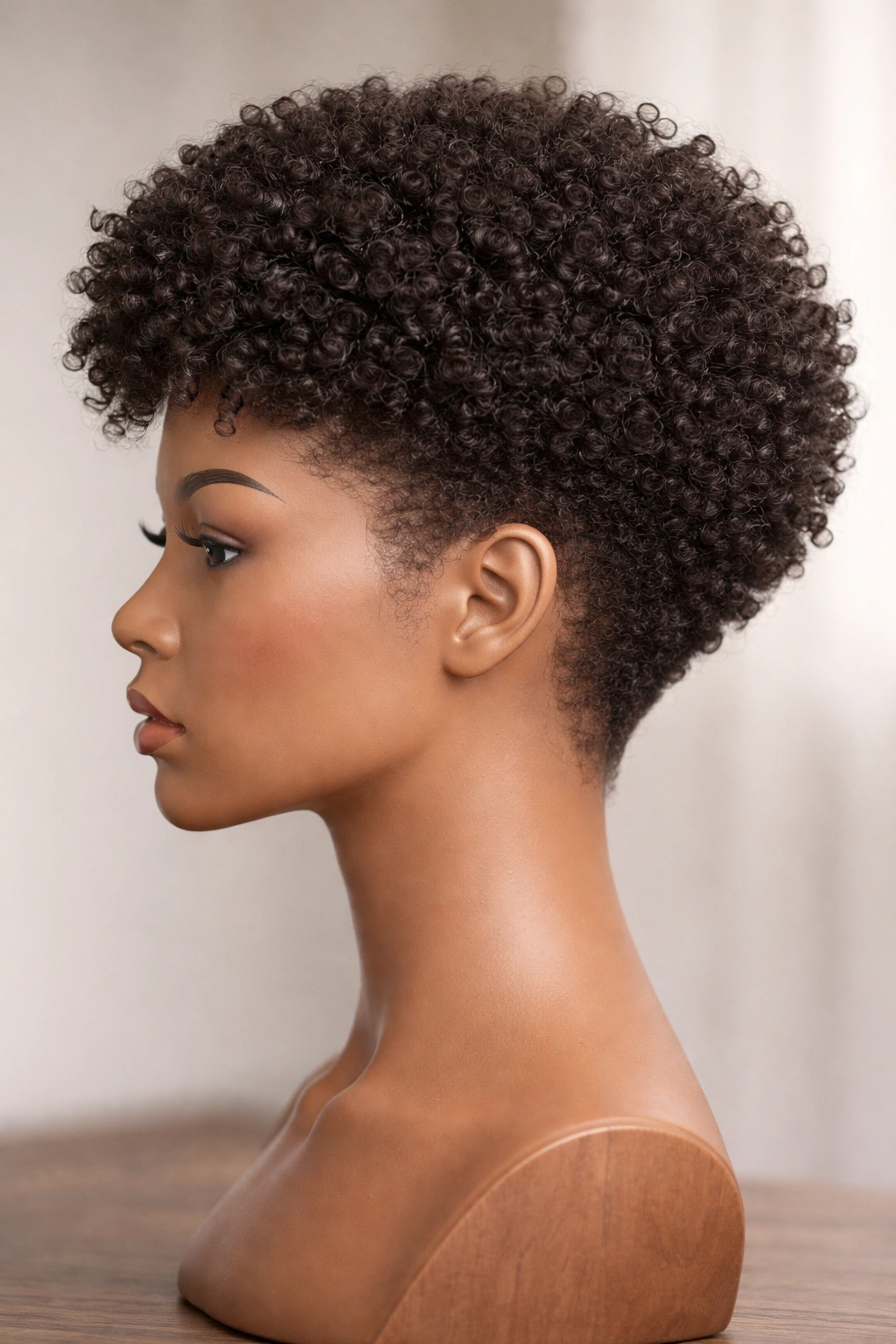
This style maintains defined individual coils while featuring tapered edges that graduate from shorter hair at the temples and nape to fuller coils on top. The tapered construction is what elevates realism here — natural afro hair doesn’t grow uniformly across the head. Sides and edges taper naturally, and this wig respects that biological reality.
Why It Looks Authentic
Tapered edges eliminate the telltale uniformity that reveals most wigs instantly. When every inch of a wig is equally full and voluminous, the human brain recognizes it as artificial. Tapered sides and nape create the visual rhythm of actual hair growth patterns. The coils themselves catch light naturally because they’re individual strands rather than compressed sections.
Best Features to Look For
- Side portions that reach approximately ear-level or slightly shorter
- A nape that tapers to about half the density of the crown
- Individual coil definition throughout rather than compressed or twisted sections
- Layered construction that allows coils to move independently rather than moving as one block
- A cap that sits slightly loose enough for comfortable wear without looking saggy
Pro tip: Style the tapered edges by gently separating coils and defining them with a lightweight styling cream. This takes approximately five minutes and transforms the wig’s appearance from fresh-from-the-box to freshly styled.
3. Natural Texture Blend Wig
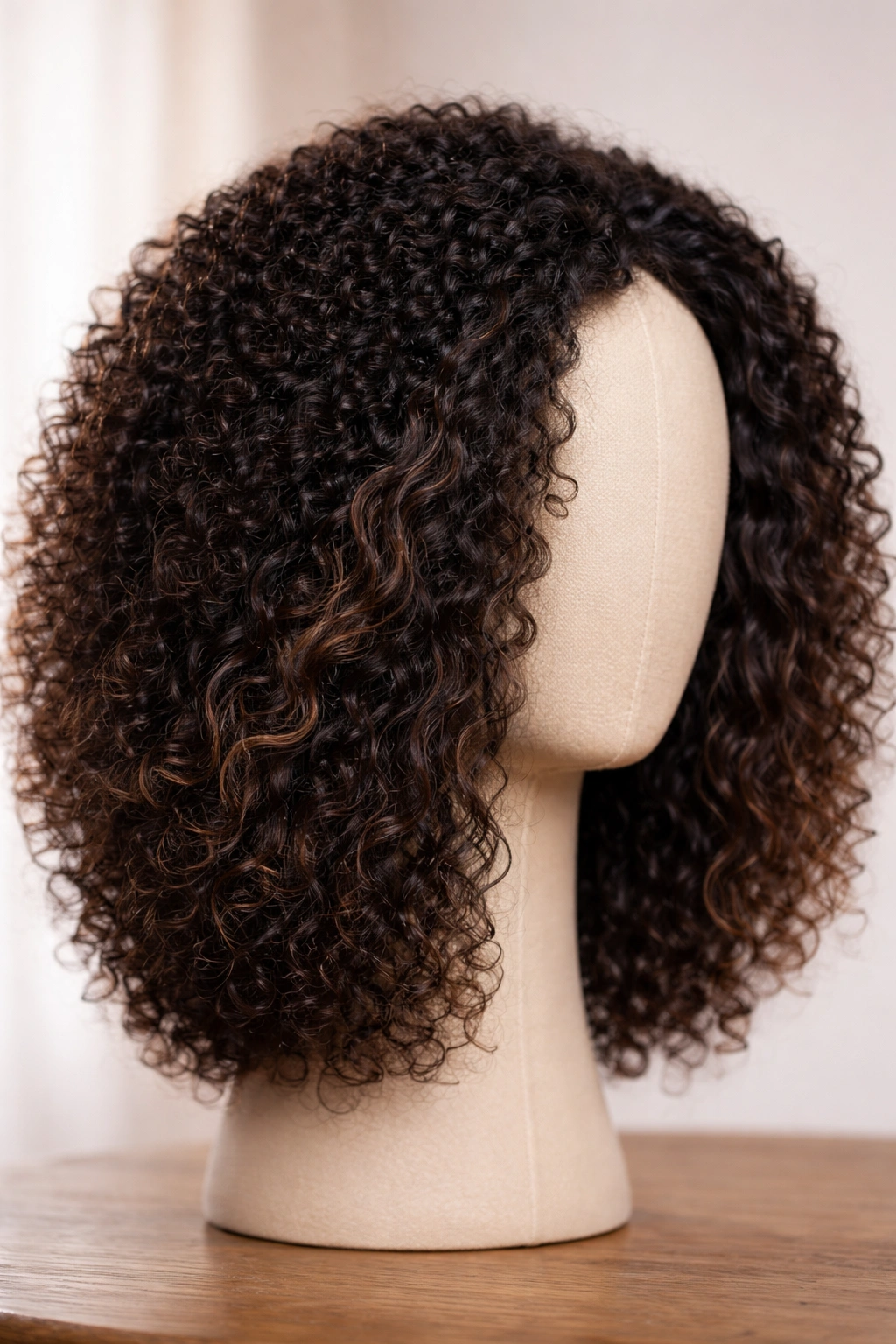
This style combines multiple textures — coils, waves, and slightly straighter strands — all within one wig. This texture blending is actually closer to how real natural hair behaves. Genuine afro hair doesn’t grow in perfectly uniform coils. There’s natural variation: some strands coil more tightly, others wave more loosely, and some have a spring-back quality that falls somewhere in between.
Why It Looks Authentic
When someone asks “is that a wig,” texture blend wigs confound them because they don’t have the visual signature of uniformity that screams artificial. The variation mirrors reality. Movement looks organic because different textures catch air differently. Light plays across the surface in complex ways rather than uniformly reflecting from identical coils.
Best Features to Look For
- At least three distinguishable texture types throughout the wig
- No obvious demarcation lines where textures change — they should blend naturally
- Density that varies slightly by texture (coils typically appear denser than waves due to compression)
- A structure that allows the different textures to move somewhat independently
- Colors that include subtle variation rather than one flat tone
Pro tip: Texture blend wigs photograph exceptionally well because cameras struggle to capture the subtle variations that read as artificial in still images. This makes them the premium choice if you share photos on social media.
4. Lace Front Afro Wig with Customizable Hairline
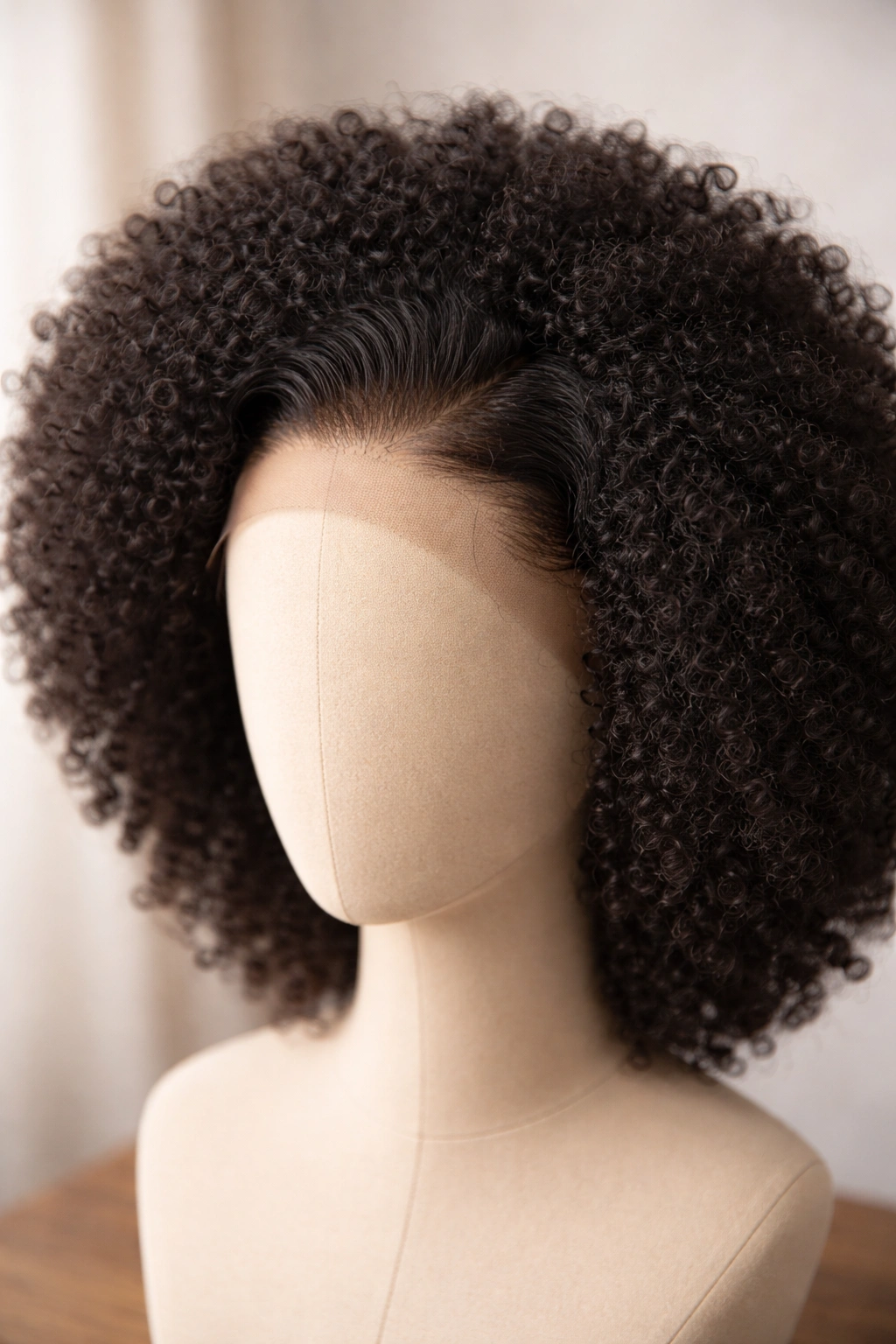
Lace front construction is the closest any wig can get to appearing truly natural at the hairline. A lace front features a sheer lace panel along the front that creates the illusion of hair growing directly from your scalp. When properly installed and styled, the transition from forehead to hair becomes virtually invisible. This particular style combines that lace front advantage with a full afro texture that provides natural-looking volume.
Why It Looks Authentic
The hairline makes or breaks wig realism. We all look at faces from the front, and the hairline is one of the first things we unconsciously evaluate for authenticity. Lace front construction solves this fundamental problem. You can style the hair away from your face without the wig cap becoming visible. You can apply makeup to the lace and create a seamless transition. The front third of your appearance suddenly reads as completely natural.
Best Features to Look For
- A lace material that closely matches your skin tone (not one-size-fits-all beige)
- Individually tied knots along the hairline rather than pre-plucked sections
- Enough depth in the lace front to cover well beyond your hairline for forehead flexibility
- A transition from the lace portion to the body of the wig that blends seamlessly
- The ability to pluck additional baby hairs along the front if you want extra realism
Pro tip: Apply a thin line of concealer along the edge of the lace front before placing makeup over it. This prevents the lace from showing as a distinct line when light hits your face at certain angles.
5. Voluminous Crown Wig with Textured Sides
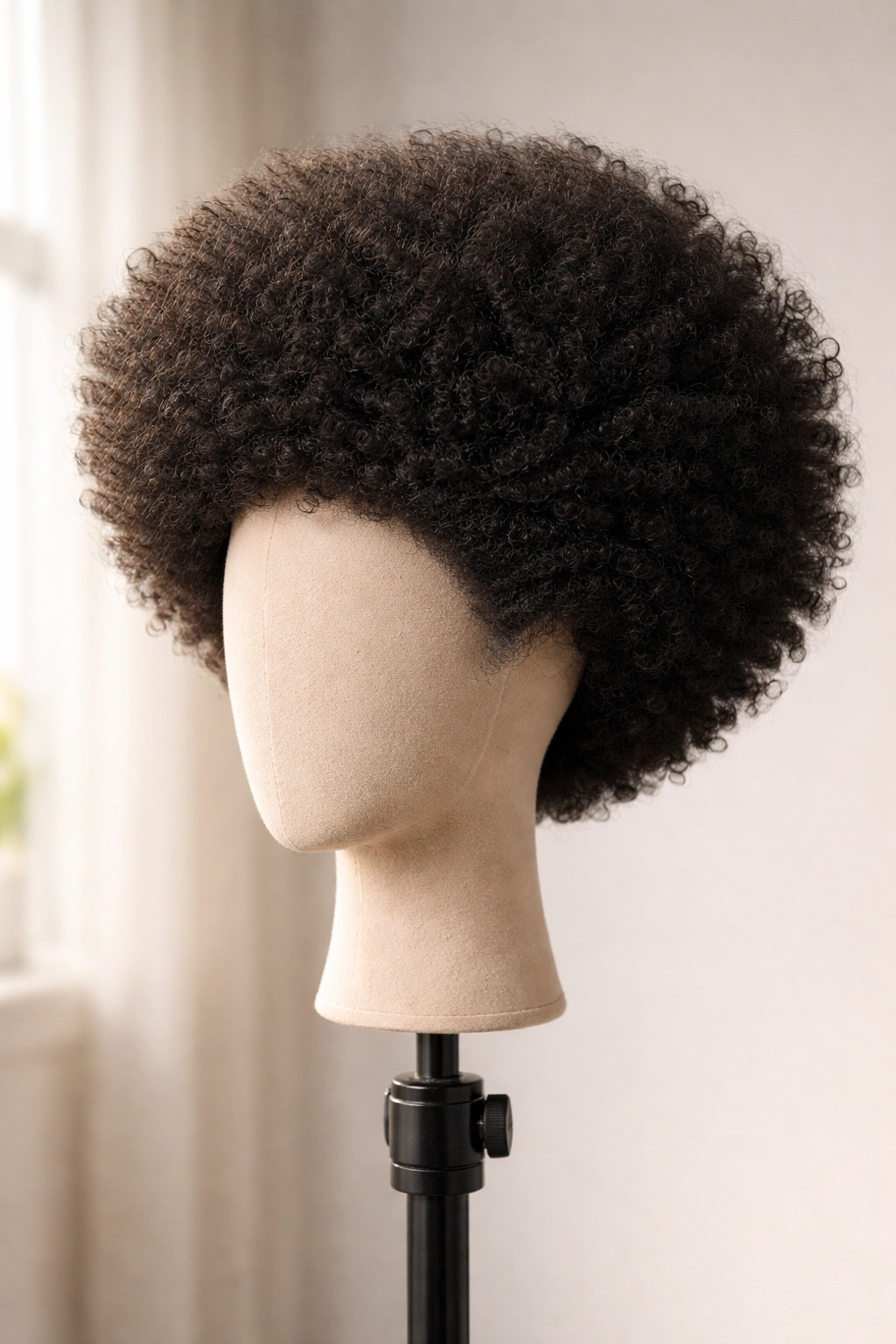
This style features maximum volume and fullness at the crown while maintaining more moderate density at the sides and back. This construction mirrors how natural afro hair often grows — with the most growth and potential fullness at the crown, graduated density moving toward the nape. The crown volume catches compliments, but the tapered sides maintain believability.
Why It Looks Authentic
Real afro hair doesn’t defy gravity uniformly. Weight pulls downward, and density naturally concentrates where hair originates, with that density distributing outward and downward. This wig respects those physical realities. The crown can be genuinely full without looking cartoonish because the overall silhouette remains proportional due to the tapered sides and moderate back density.
Best Features to Look For
- Crown section featuring 160-180% density for impressive volume
- Side portions at 120-140% density for proportional balance
- A cap construction that allows crown coils to stand somewhat independently
- Texture that includes enough stretch and spring for natural movement
- Layering that prevents the entire crown from moving as one solid block
Pro tip: Style the crown by carefully separating sections of coils and applying a lightweight curl-defining cream to individual coils rather than scrunching product throughout. This creates definition while maintaining natural movement.
6. Wash-and-Go Afro Wig
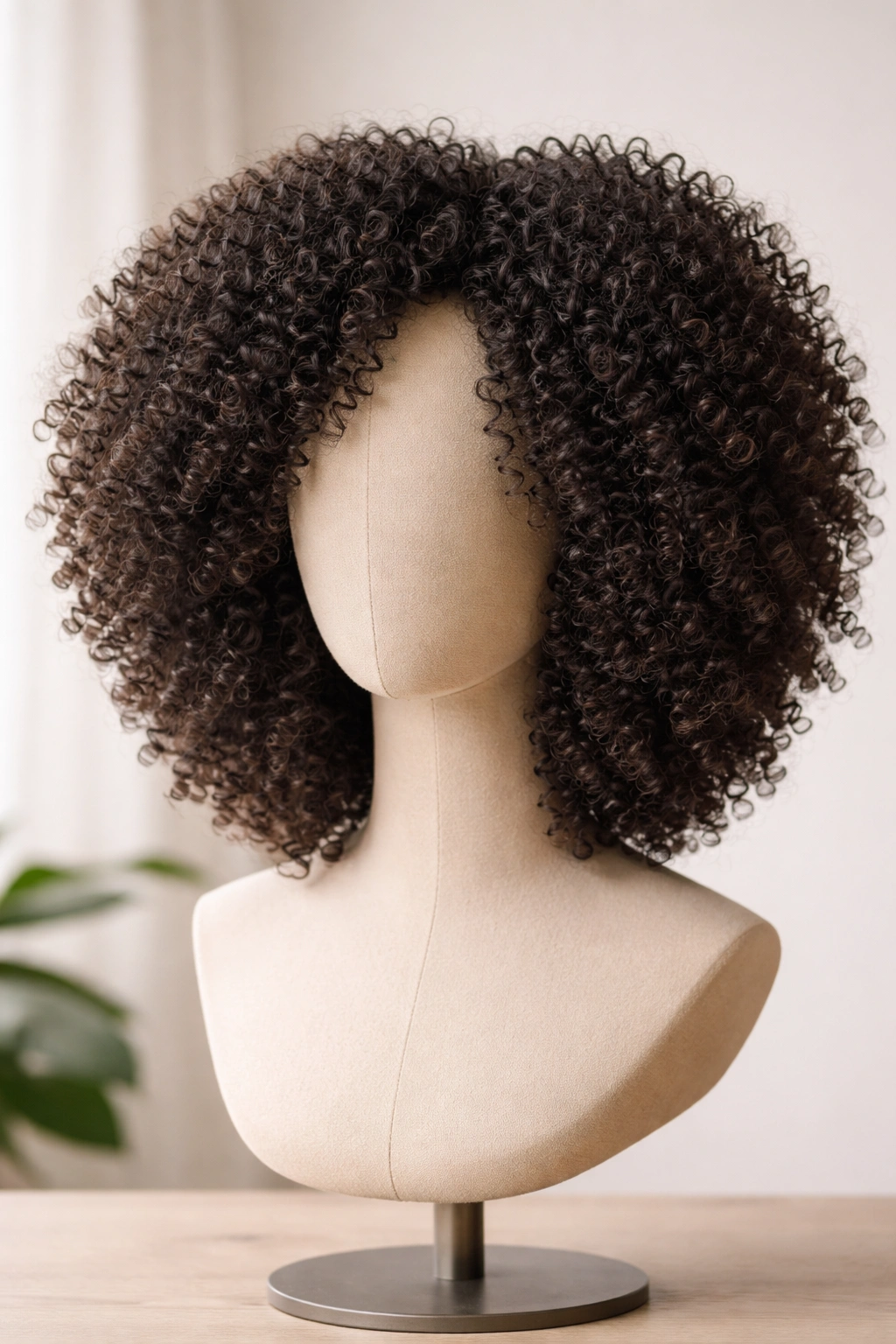
This style is designed to be worn fresh from the package or fresh from a water rinse with minimal styling required. It features organized texture that maintains its appearance without daily manipulation. The magic of a truly convincing wash-and-go wig is that it looks freshly styled rather than freshly washed — there’s a distinction. The texture holds definition without looking artificially manipulated.
Why It Looks Authentic
Many people are intimidated by wigs because they assume constant styling is required. Wash-and-go afro wigs eliminate that burden while maintaining honest aesthetics. They read as natural because they look like someone’s actual afro — undone but defined, not styled within an inch of its life. The coils show natural separation and dimension without appearing fussy.
Best Features to Look For
- Coil definition that persists after multiple wears and finger manipulation
- Texture that demonstrates slight wave and variation rather than rigid coil structure
- A cap design that allows comfortable wear without constant adjustment
- Coil patterns that create visual interest without requiring scrunching or redefining products
- Density that appears full without being aggressively compressed
Pro tip: Refresh a wash-and-go wig by running your fingers through it gently and lightly misting it with water mixed with a tiny bit of leave-in conditioner or lightweight oil. Let it air dry while watching television for refreshed texture and definition.
7. Layered Coil Wig with Graduated Length
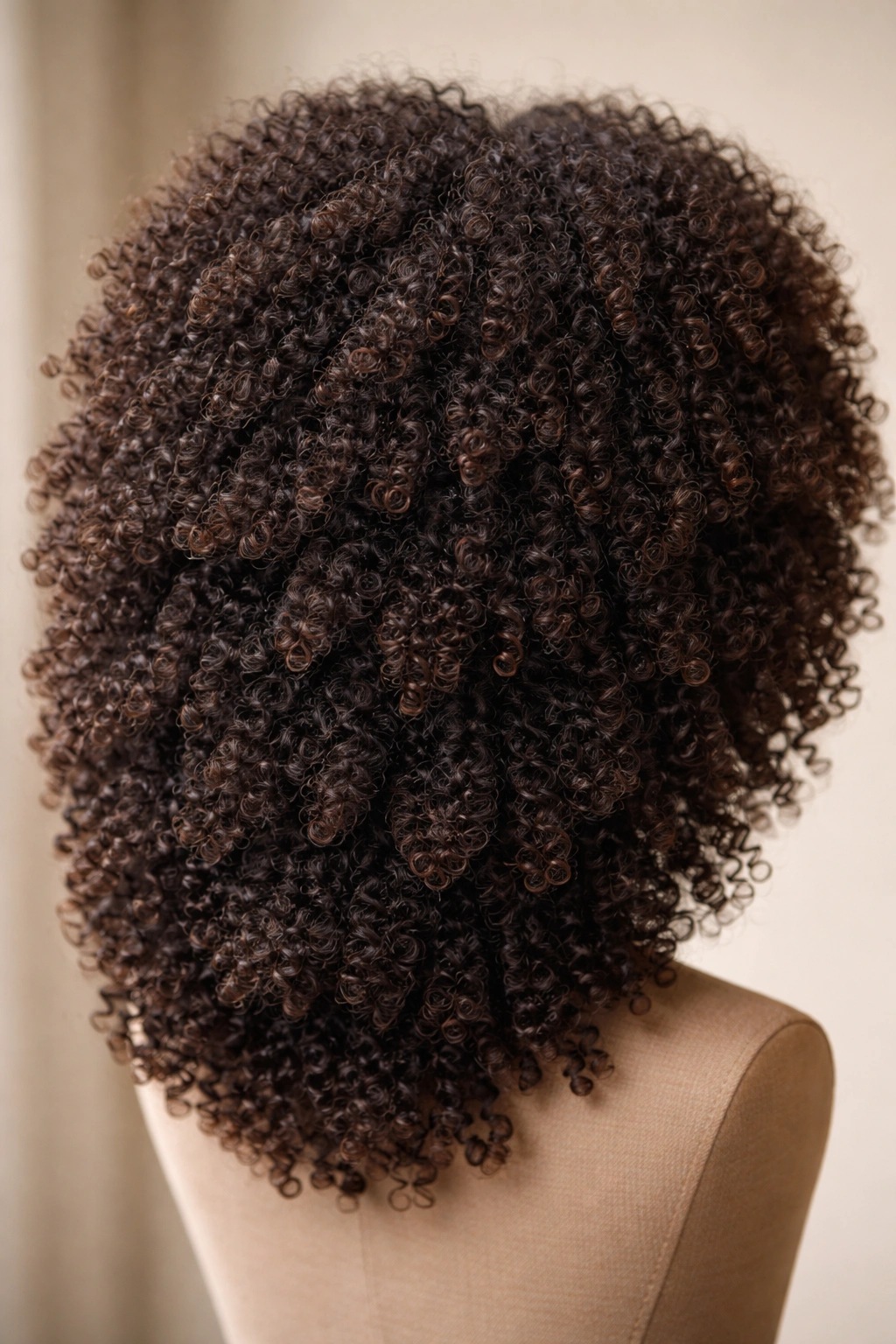
This style incorporates layering throughout — different lengths of coils throughout the wig create dimension and movement that read as highly natural. Some coils extend further than others, creating a subtle texture landscape rather than a uniform surface. The graduated length prevents the wig from appearing as a single solid block of hair, instead creating a flowing, organic appearance.
Why It Looks Authentic
Layering replicates how natural afro hair naturally settles. The longest strands frame the face, while shorter layers add texture and movement throughout. Light passes through the wig differently because of the length variation, creating shadow and dimension that mimics real hair. Movement looks organic because different layers respond to air independently.
Best Features to Look For
- Multiple distinct length tiers rather than just “short” and “long” sections
- Variation that’s noticeable when you run your fingers through the wig but not obviously artificial
- Coil patterns that blend at layering transitions rather than showing obvious demarcation
- A density that works with the layering to create movement rather than appearing limp
- A structure where layers can move independently without the whole wig shifting
Pro tip: This style works beautifully with decorative accessories like gold cuffs, wrapped sections, or beads. The layering provides natural anchor points, and the texture handles adornments beautifully without looking costume-like.
8. Full Density Afro Wig with Realistic Hairline
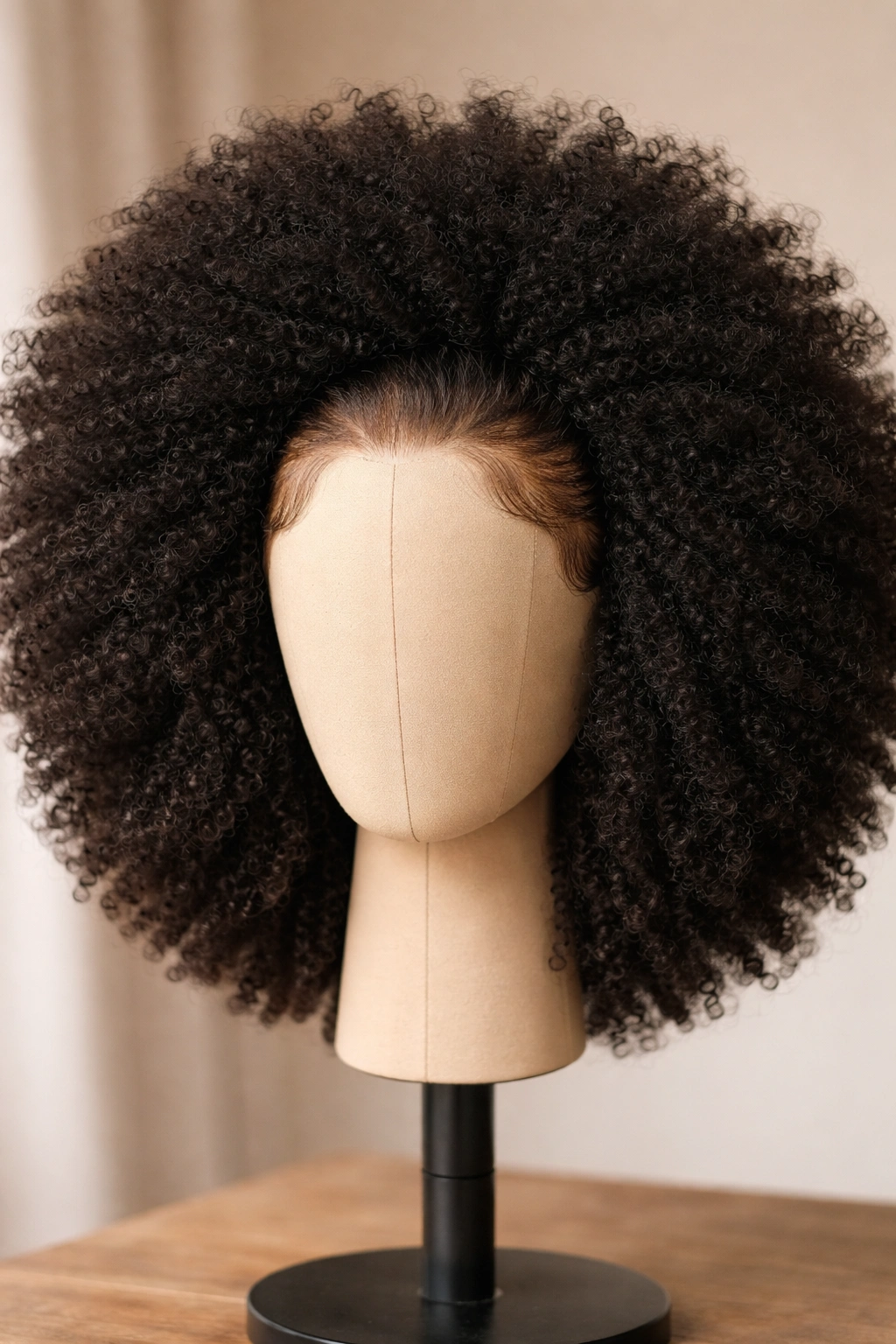
Maximum density can still read as natural when combined with a realistically detailed hairline and proper proportions. This style features full, gorgeous volume at 180% density or higher, but achieves believability through a carefully constructed hairline that includes individual knots, intentional baby hair placement, and a gradual transition from forehead to wig cap.
Why It Looks Authentic
A full afro that looks realistic must have a hairline that sells the entire concept. When someone observes you from the front, the hairline is the anchor for authenticity. If the hairline looks artificial, the entire wig reads as artificial regardless of how beautiful the coils are. This style invests in hairline realism, which allows the full density to read as a genuinely full natural afro rather than a costume piece.
Best Features to Look For
- A frontal that includes baby hairs in a realistic density (sparse, not dense coverage)
- Knot-by-knot construction along the hairline rather than pre-plucked sections
- Natural-looking hairline variations (slightly uneven edges rather than perfectly geometric)
- A density distribution that concentrates fullness at the crown and crown-adjacent areas
- Flexibility in the cap that allows comfortable adjustment without the hairline shifting
Pro tip: Customize your hairline further by plucking additional baby hairs after installation if you want your wig to match your personal natural hairline pattern. Take your time with this — removing 5-10 baby hairs across your hairline can dramatically increase realism.
9. Textured Puff Wig with Defined Crown
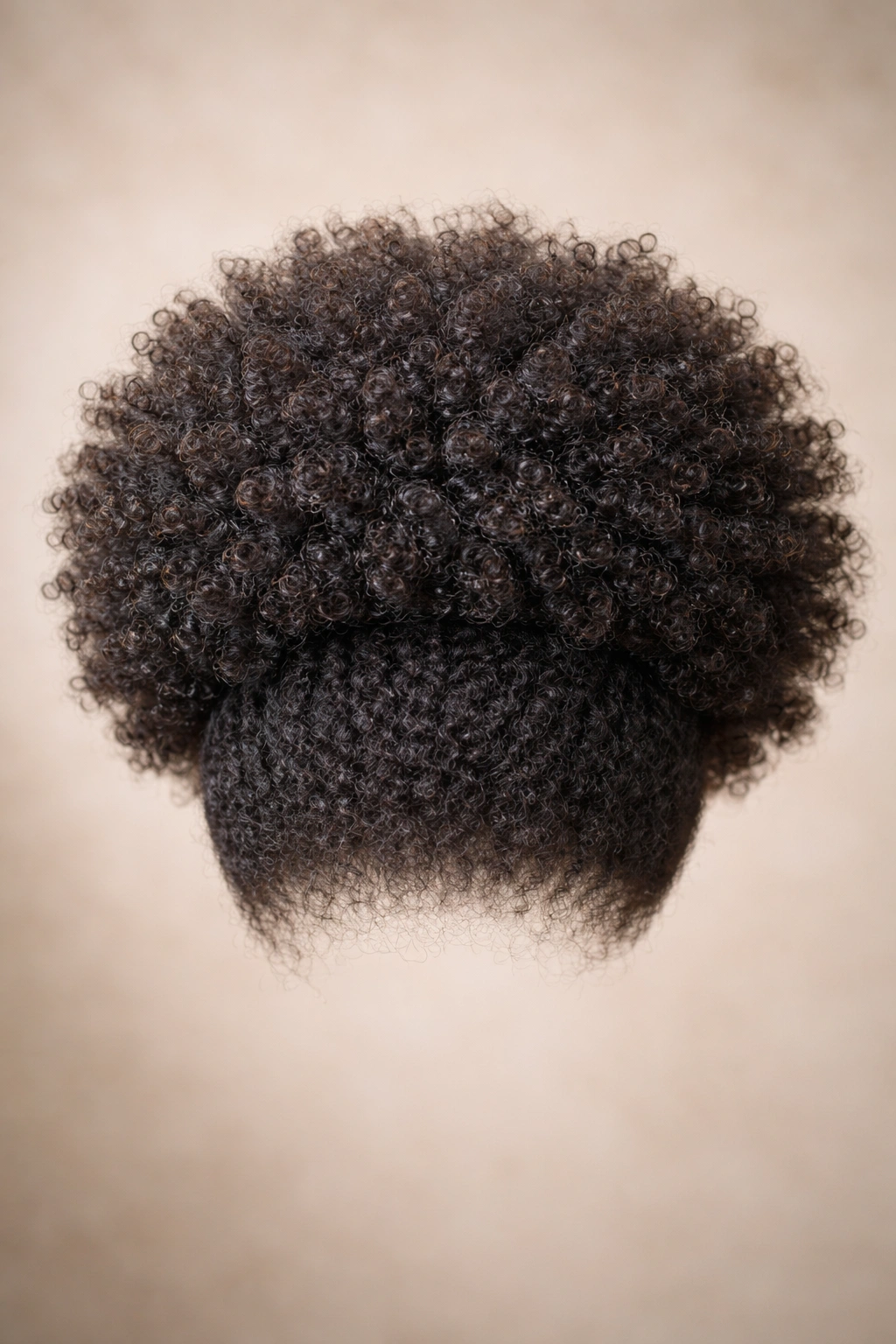
This style features hair styled into a concentrated crown puff — all the fullness and volume at the top with tapered or pulled-back sides. It reads as natural because it mimics the protective puff style that many people with natural afro hair actually wear. You’re not trying to hide that it’s styled; you’re celebrating an authentic protective hairstyle choice.
Why It Looks Authentic
Puff wigs look genuine because the protective puff is a legitimate hairstyle that real people wear daily. You’re not pretending it’s a full, flowing afro — you’re owning the puff aesthetic. The concentrated volume at the crown is proportional because the sides are pulled back or kept shorter intentionally. This straightforward approach to styling reads as honest rather than trying to deceive.
Best Features to Look For
- Coil texture that maintains definition without requiring constant re-scrunching
- A crown that concentrates volume naturally rather than appearing artificially puffed
- Tapered or secured sides that create a clean, intentional aesthetic
- A base cap that allows the pulled-back portions to sit smoothly without bulging
- Flexibility to create variations — a higher puff, a lower puff, or a side-swept puff
Pro tip: Style this wig by securing the sides with lightweight bobby pins or a silk scarf, then gently lifting and fluffing the crown section with your fingers. You can create a fresh puff look in about three minutes whenever you need it refreshed.
10. Multi-Textured Blend with Subtle Color Variation
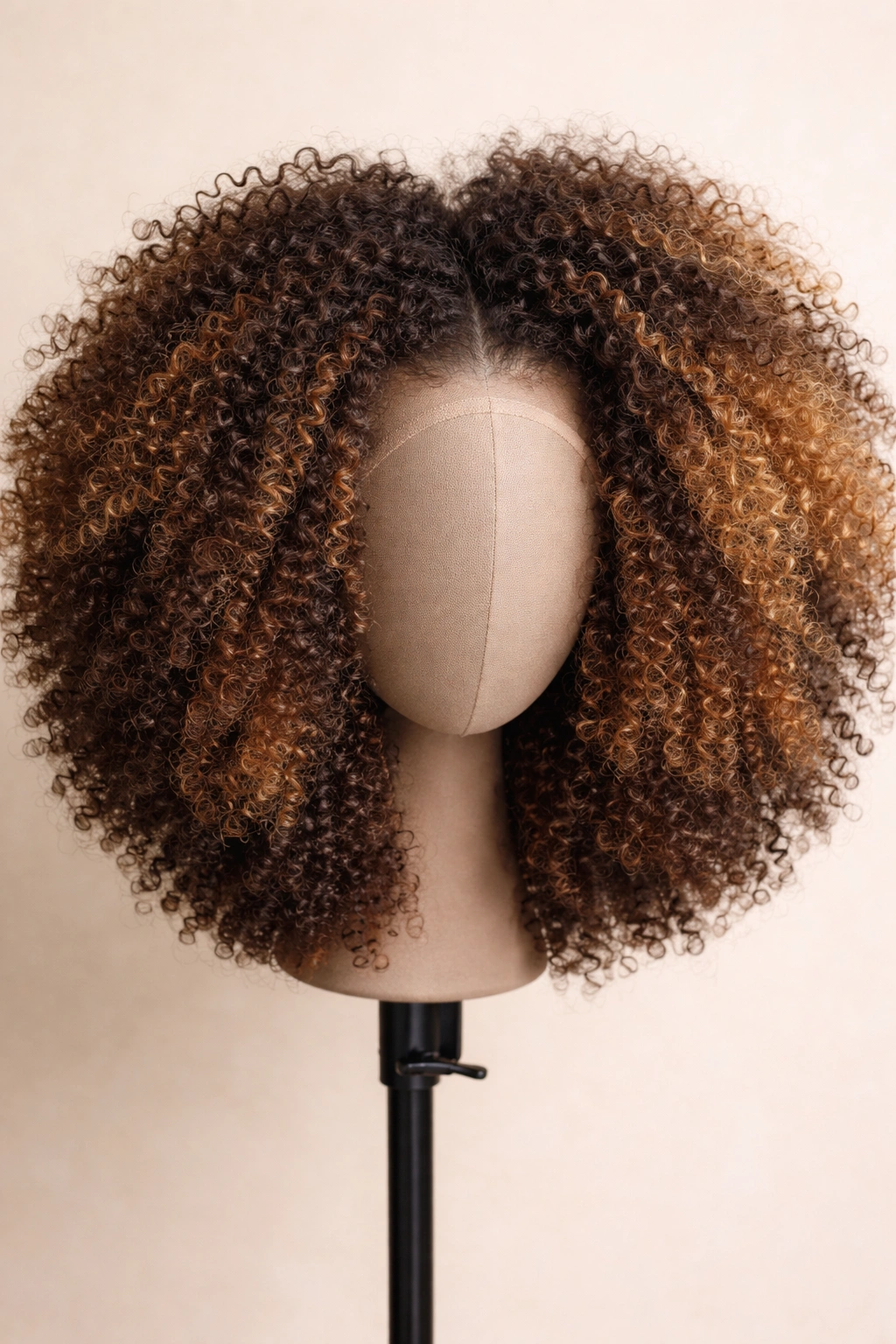
This advanced style combines multiple textures, subtle color variation (like natural root shadowing or dimension), and realistic construction throughout. It’s the closest approximation to actual natural hair because it refuses the temptation to create uniformity. Real hair has variation: slightly different textures, color dimension, and organic imperfection.
Why It Looks Authentic
This style demands genuine scrutiny to confirm it’s a wig. The color variation prevents the flat appearance that single-tone wigs often display. The texture blend means light plays across the surface in complex, organic ways. The combination of sophistication in construction makes it read as something someone chose and cared for — not a costume piece hastily applied.
Best Features to Look For
- At least 2-3 distinct color tones (darker roots, lighter mid-lengths, or dimensional highlights)
- Multiple texture types throughout that blend naturally together
- A lace frontal or detailed hairline that demonstrates realism investment
- Coil variation that includes slight differences in tightness and springback
- A construction that suggests intentional styling rather than manufacturing uniformity
Pro tip: This style photographs beautifully and typically requires the least explanation when people ask if it’s real hair. The sophistication in construction reads as investment and care, which translates visually to authenticity.
Final Thoughts
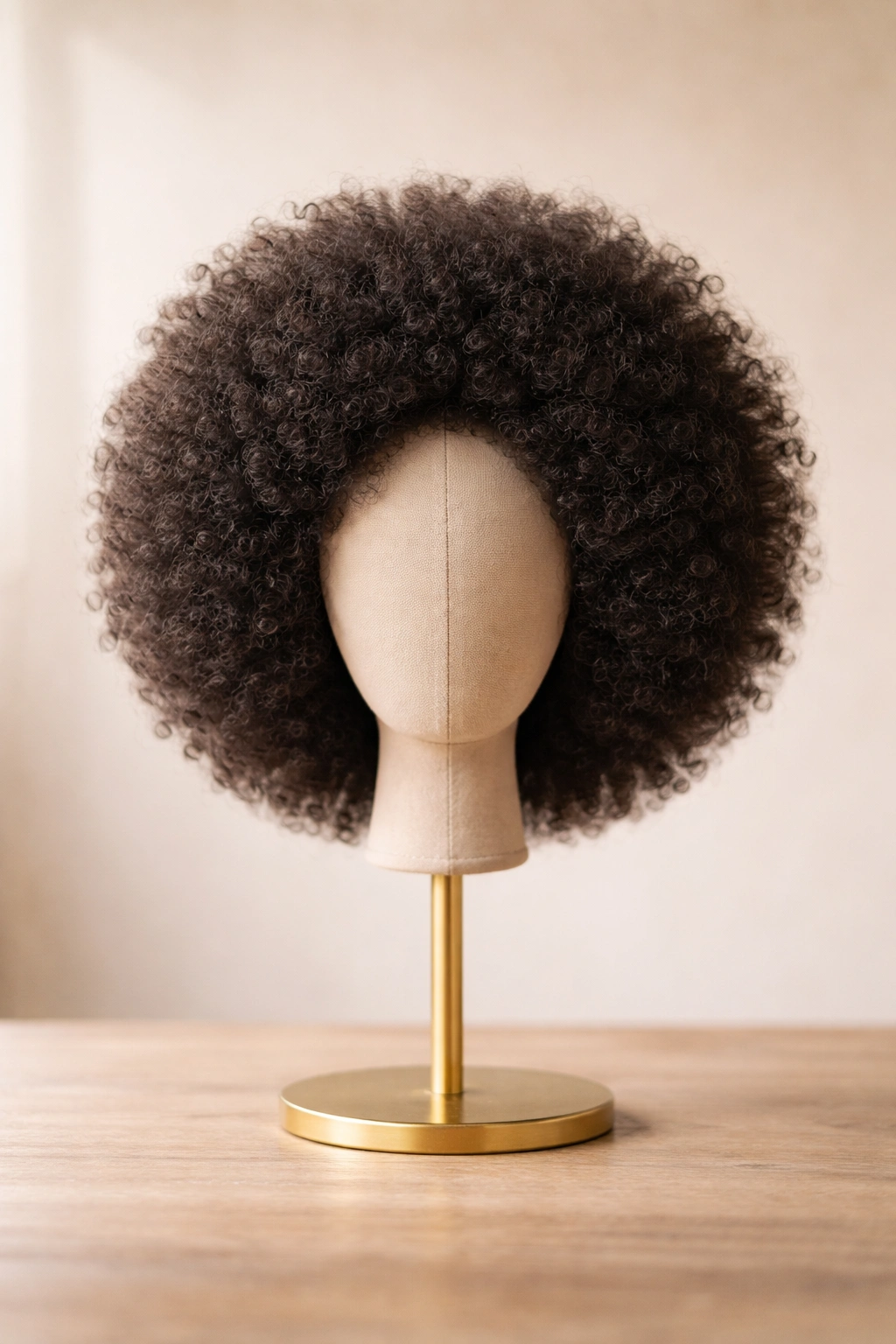
Choosing an afro wig that looks genuinely natural isn’t about buying the most expensive option or the most voluminous style. It’s about understanding which construction details, texture choices, and hairline treatments create believability. The most convincing afro wigs are those that respect the reality of how natural hair actually grows and behaves — with texture variation, realistic density distribution, proportional dimensions, and attention to hairline detail.
When you try on these styles, look at yourself from multiple angles, including from the side and back. Notice how the wig sits on your head, whether the hairline feels believable, and whether the texture shows realistic dimension. Pay attention to how the coils move when you touch them — authentic-looking afro wigs should have independent movement rather than shifting as one solid block. The right choice will make you feel genuinely confident, not like you’re wearing a costume.
The investment in a quality afro wig that reads as natural pays dividends beyond appearance. You’re investing in flexibility, styling options, and the freedom to protect your natural hair while maintaining an authentic aesthetic. Whether you wear it daily, occasionally, or specifically for protective styling periods, a genuinely natural-looking afro wig becomes a reliable tool in your beauty arsenal rather than something that requires explanation or defense.
