



Square faces have a kind of built-in drama. The jaw is defined, the cheekbones have presence, and the whole shape looks strong in photos and in real life.
That strength is the point. It’s also why the wrong haircut can make the lower half of the face look heavier than it really is. A blunt line ending right at the jaw tends to echo the face shape instead of softening it, and nobody usually wants more geometry around the chin.
The best hairstyles for square faces do something simple and smart: they add movement, curves, and a bit of asymmetry. Side parts, layers that start near the cheekbones, wispy bangs, loose bends, and pieces that fall past the jaw all help break up the straight lines that make a square face look boxy.
The goal is not to hide your features. It’s to give the eye somewhere softer to land.
1. Long Layers with Soft Waves
Long layers with soft waves are the safest place to start if you want a haircut that softens a square jawline without fighting your natural shape. The length pulls the eye downward, which helps the face look a little longer, and the waves interrupt the straight edge from temple to chin. That combination does a lot of heavy lifting.
Ask for layers that begin around the cheekbone or just below it, not at the jaw. That placement matters. Layers that sit too low can make the ends look heavy, while layers that start too high can make the hair puff out in the wrong spot.
Soft waves are the other half of the trick. A 1.25-inch curling iron, wrapped away from the face and brushed out once cool, gives that loose bend that feels relaxed instead of done-to-death. Sleek, pin-straight hair can look elegant on a square face, but waves usually soften the angles faster.
Blunt ends are the enemy here.
2. Curtain Bangs with Mid-Length Layers
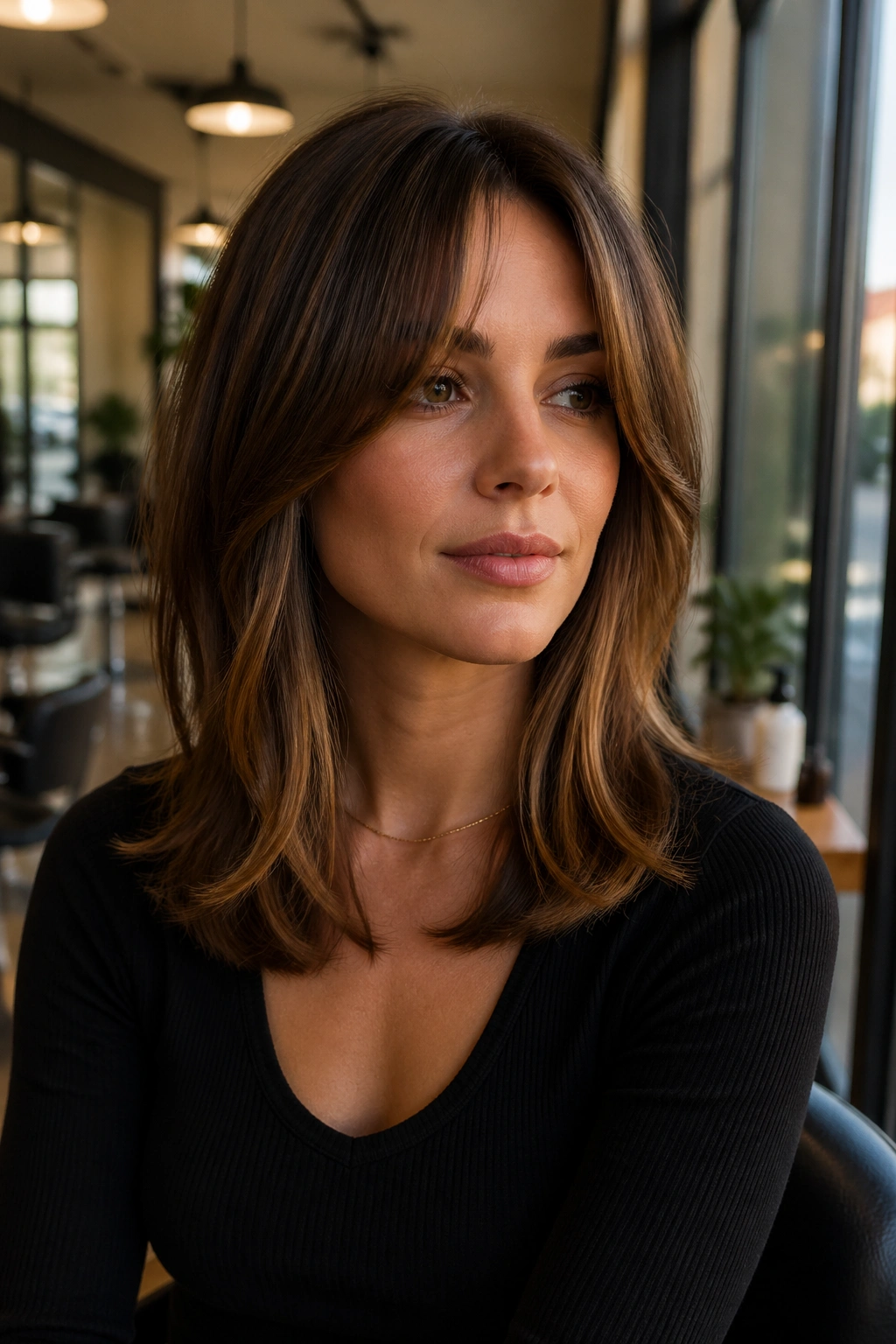
Curtain bangs keep showing up in flattering cuts for square faces because they split the difference between coverage and openness. They don’t shut the face down the way heavy straight bangs can, and they don’t expose every angle the way a tight center part can. The middle opens the forehead a bit, while the longer sides sweep toward the cheekbones.
Why They Work
The shape of curtain bangs creates a diagonal line across the face, and diagonals are your friend when the jaw is strong. They break up symmetry. They also soften the transition from forehead to cheek to chin, which is where square faces can look sharp if the cut is too straight.
How to Ask for Them
- Have the shortest point sit around the bridge of the nose or just above it.
- Let the longest pieces skim the cheekbones or top of the jaw.
- Pair them with mid-length layers that stop near the collarbone.
If your hair is thick, ask for some internal texture so the bangs don’t sit in a heavy curtain. If it’s fine, keep the fringe lighter and airier. Either way, curtain bangs should move. If they sit stiff, the whole effect gets lost.
3. Side-Swept Pixie
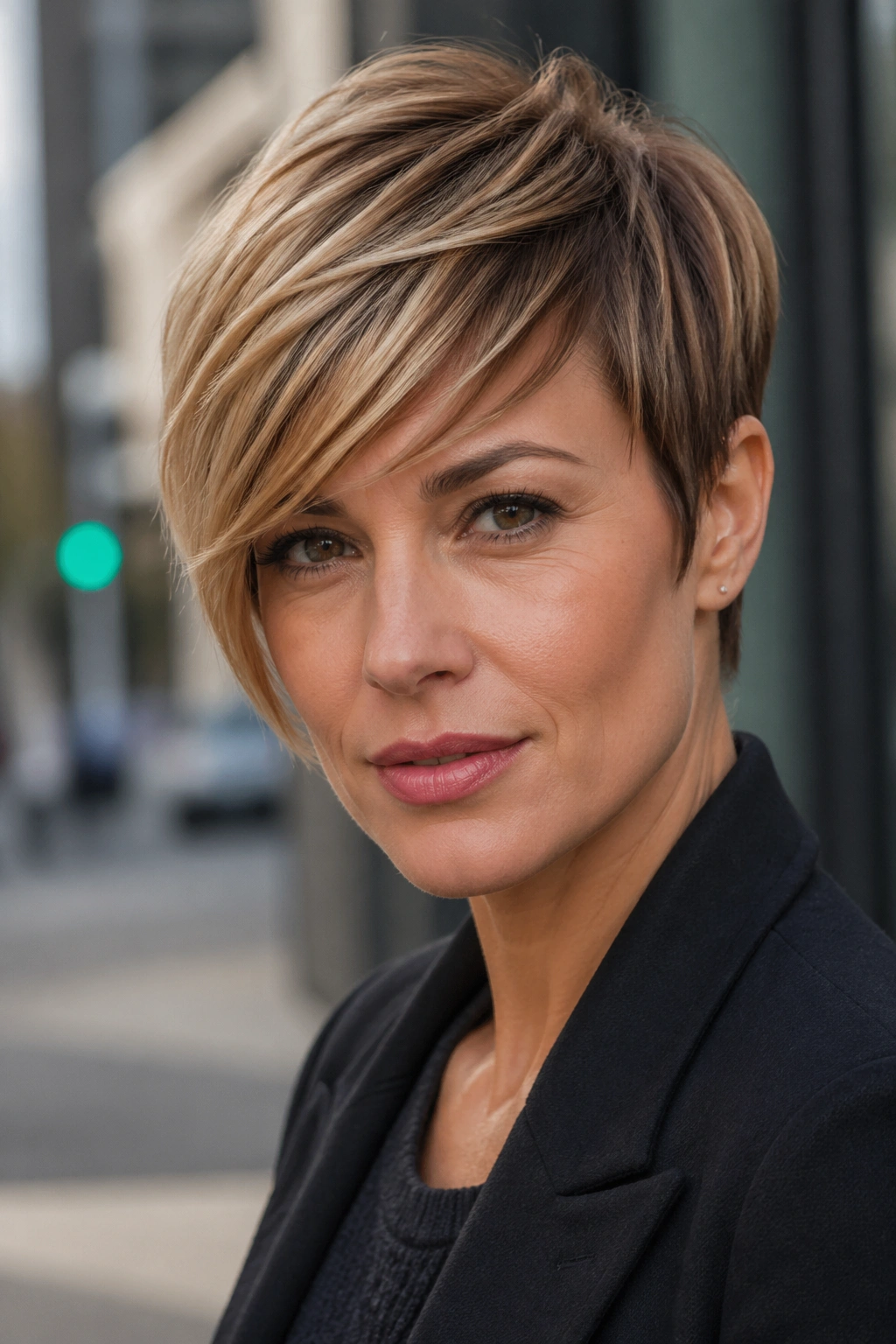
Short hair can soften a square face better than long hair when the fringe is cut right. A side-swept pixie does exactly that. The longer front section drapes across the forehead and cheekbone, while the cropped sides keep the style neat instead of bulky around the jaw.
This is the cut for someone who wants something sharp but not severe. A clean pixie with a soft, side-swept top feels modern. A blunt pixie with equal length all around can make the face look squarer, and that’s the version to avoid if you’re trying to soften angles.
A little paste or lightweight cream is usually enough. Work it through the top with your fingers, then push the fringe slightly forward and to the side so it falls in one smooth line. No helmet hair. No hard part.
The best pixies on square faces leave a bit of mess on purpose.
4. Collarbone Lob with a Loose Bend
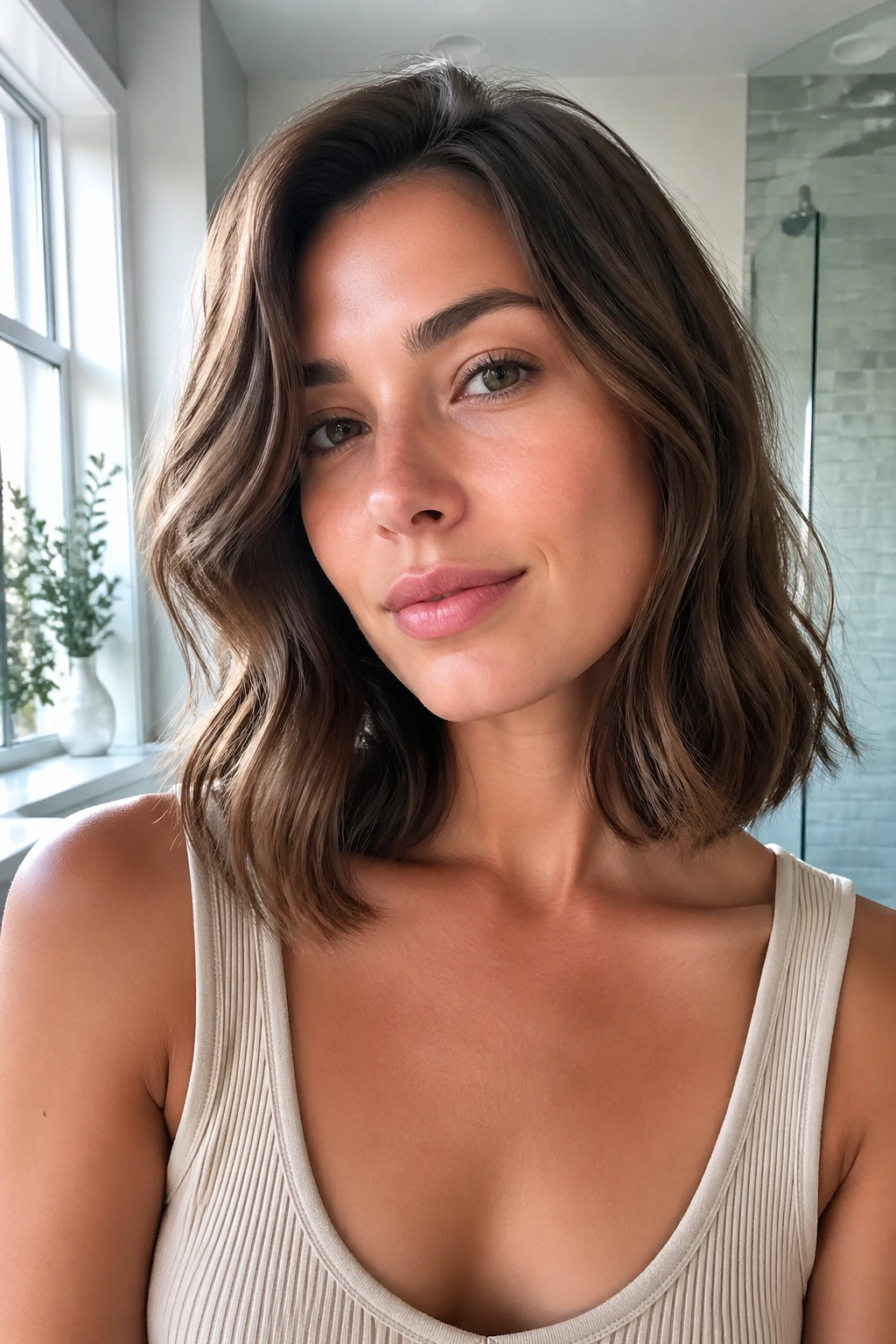
A collarbone lob is one of those cuts that sounds plain until you see it move. The length lands below the jaw, which matters more than people think, because it avoids stopping right at the widest part of the face. Add a loose bend through the mid-lengths and the whole look softens fast.
The collarbone is a sweet spot for square faces. Hair that hits there gives the face a vertical line without dragging everything downward. It also gives you enough length for waves, clips, half-up styles, and low buns on days when you’re over it.
Keep the ends soft. A slight flip under or out is fine, but a straight, blunt edge at collarbone length can look a little boxy if the hair is thick. A round brush or a wide-barrel iron works well here. The bend should look like it happened by accident, not like you counted every section.
Best for: medium-thick hair, someone who wants movement without long layers everywhere, and anyone who wants an easy daily style.
5. Deep Side Part with Crown Volume
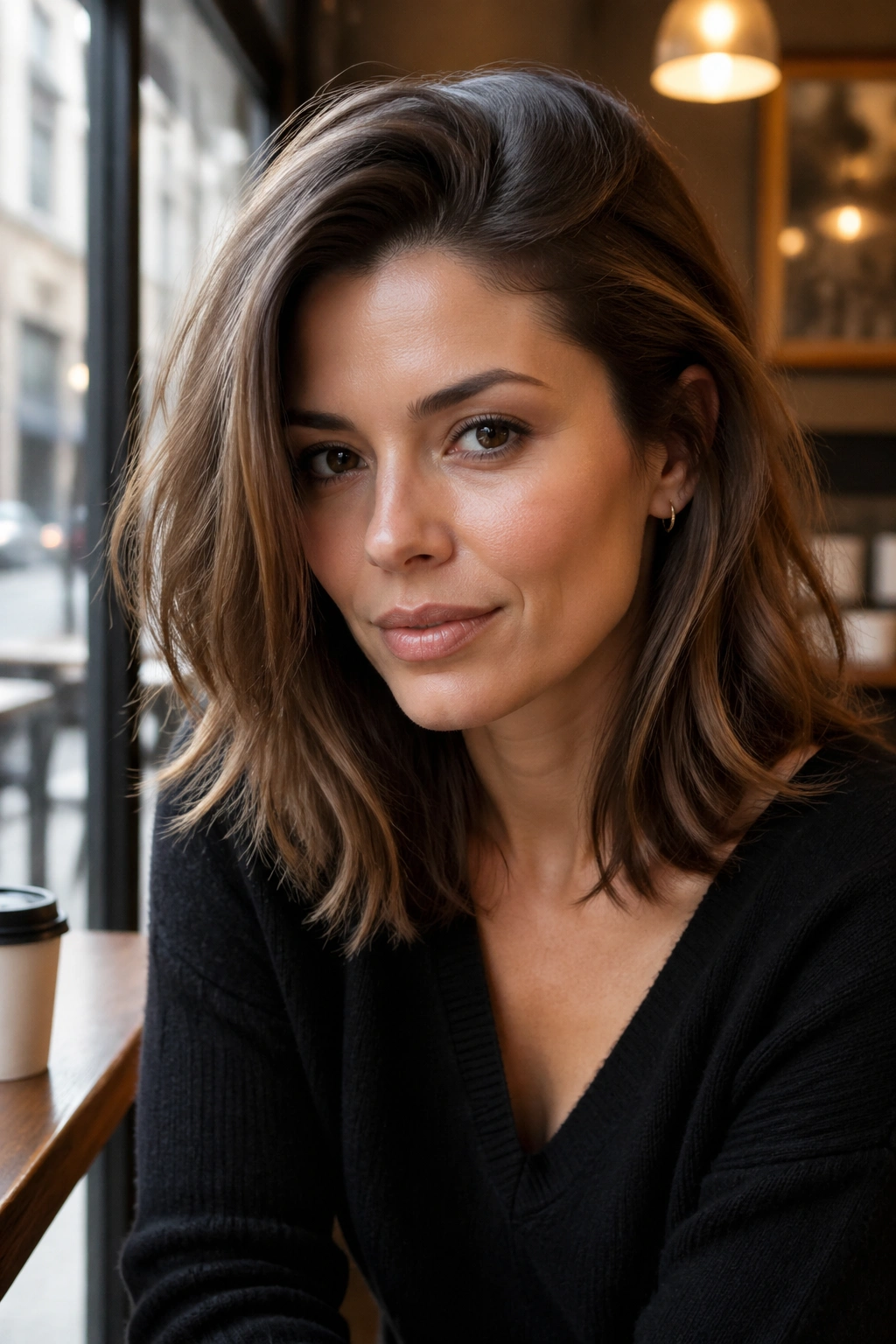
A deep side part changes the whole mood of a square face in about five seconds. It breaks the symmetry, lifts one side of the forehead, and keeps the eye from reading the face as a perfect box. That little shift is useful, and a lot more effective than people expect.
The volume matters too. If the hair is flat at the crown, the face can look wider. A bit of lift at the roots gives the face more length and keeps the jaw from dominating the profile. You do not need a giant blowout. Even a 1-inch round brush at the roots can make a difference.
What to Pair It With
- Loose waves or a bend through the ends.
- Shoulder-length or longer layers.
- A side-swept fringe if you want extra softness near the temple.
This is one of the easiest fixes if you’re not ready for a cut. Sometimes the part alone is enough to make a blunt style look friendlier.
6. Face-Framing Butterfly Layers
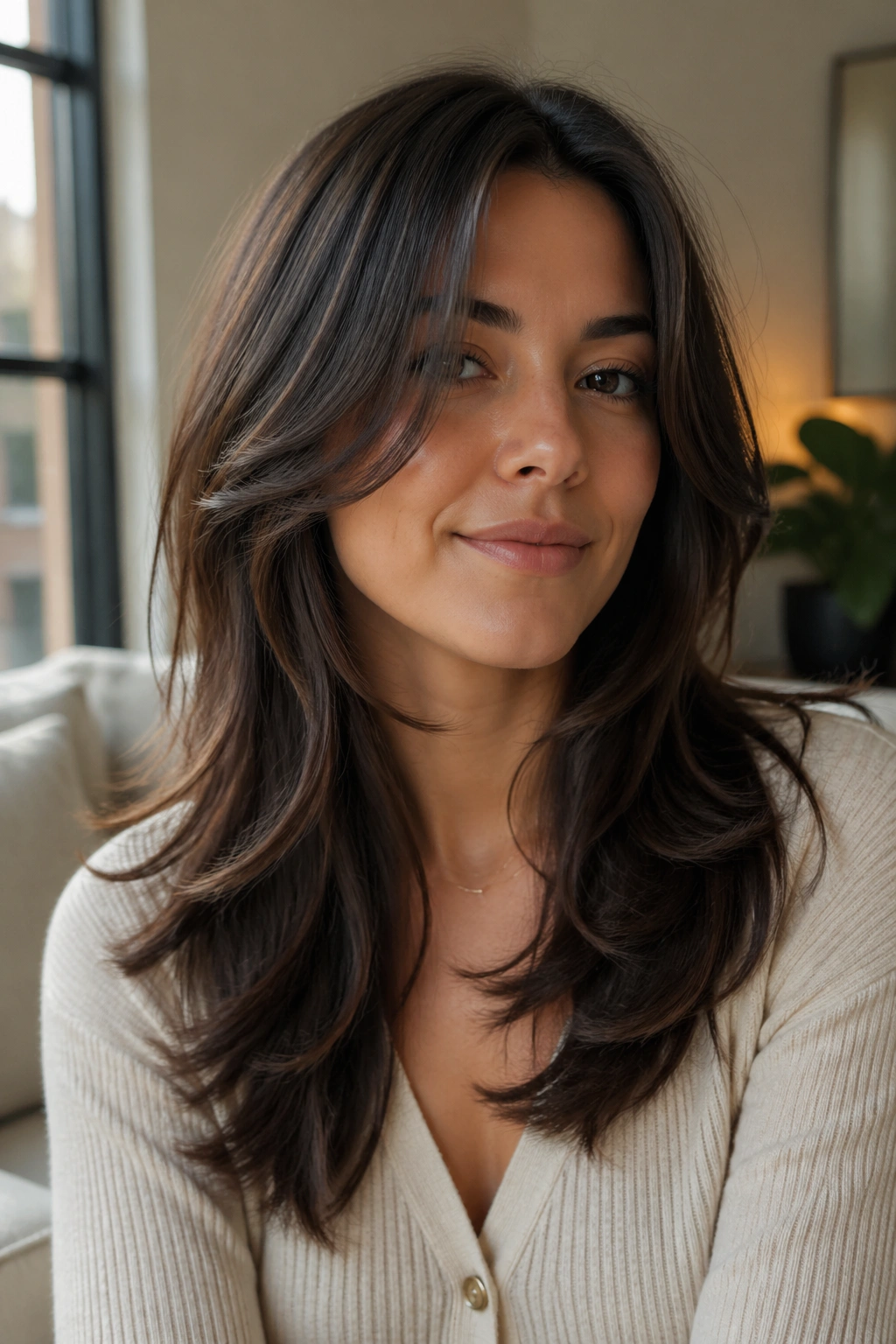
Butterfly layers are built for movement, which is exactly why they work so well on square faces. The shorter top layers lift around the cheekbones and temples, while the longer bottom layers keep the length in place. You get shape without losing softness.
Where the Shortest Layer Should Land
The shortest front layer should usually start around the cheekbone or just below it. If it starts too high, the face can look overexposed. If it starts at the jaw, the cut can draw too much attention to the square line you’re trying to soften.
Styling Notes
- Blow-dry the top layers away from the face with a medium round brush.
- Keep the ends of the longer layers loose, not curled into perfect spirals.
- Use a light mousse at the roots if your hair falls flat.
Butterfly layers are one of my favorites for thick hair because they remove weight without making the outline heavy. They’re polished when you want them to be, but they also look good on second-day hair, which is a nice bonus.
7. Textured Shag with Wispy Fringe
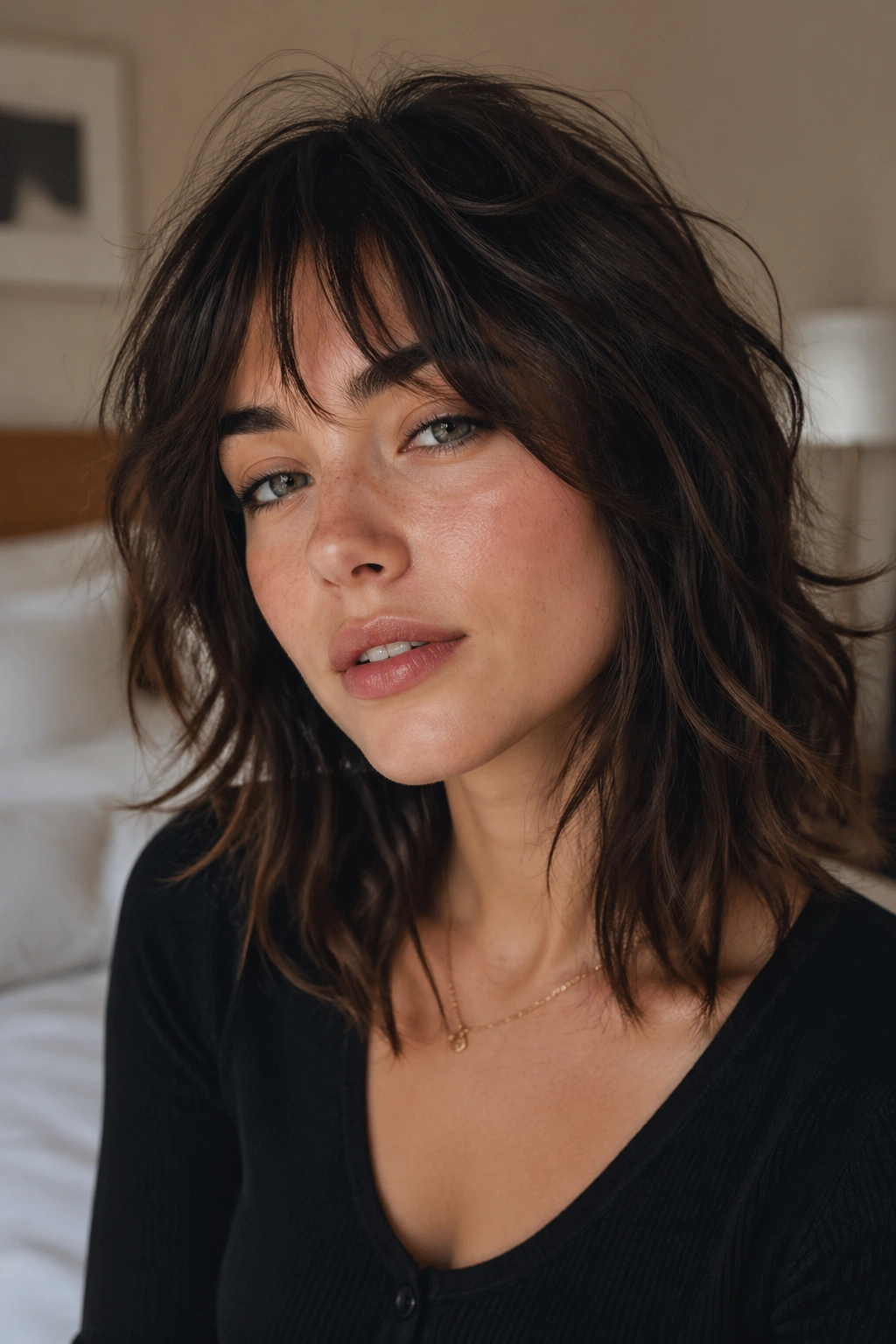
If your hair always feels too stiff in a clean, polished cut, a textured shag can be a relief. The whole point is broken-up movement. You get airy layers, a little lift at the crown, and a fringe that doesn’t draw one harsh line straight across the forehead.
Square faces benefit from the messy edge of a shag because it keeps the eye moving. The cut should feel light around the temples and cheekbones, not bulky. If your stylist takes too much weight out of the bottom, the hair can look stringy. The sweet spot is texture with shape.
Wispy fringe helps a lot here. It softens the forehead without shutting it down, and it works especially well if your hair has a bit of wave already. Straight hair can wear a shag too, but it usually needs a little styling cream or salt spray to keep the layers from lying too flat.
A shag should look lived-in, not neglected.
8. Chin-Length Bob with Rounded Ends
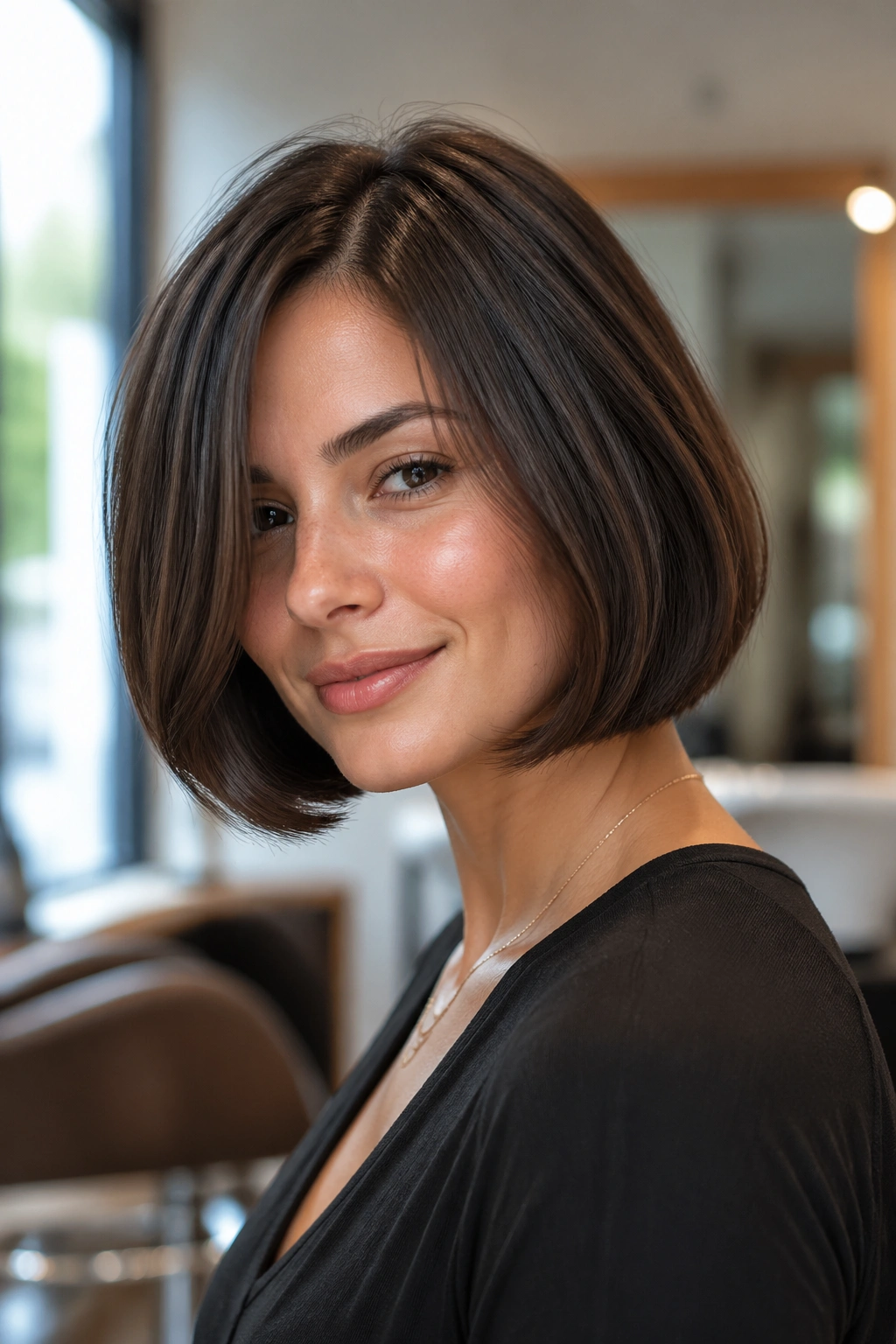
A chin-length bob is not off-limits for square faces. A blunt one is. There’s a difference, and it’s a big one.
Rounded ends change the entire mood of the cut. Instead of stopping with a hard line at the jaw, the hair curves under or outward just enough to soften the edge. Add a side part, and the bob stops feeling boxy. Add a little texture, and it starts looking deliberate.
This cut works best when the bob sits a touch below the chin or grazes it lightly, rather than hugging the jawline tightly. If your jaw is the widest point of your face, ask for a bob that lands a little lower. That tiny adjustment keeps the style from echoing the face shape too much.
Watch out for this: very thick hair cut into a blunt chin-length line can turn into a triangle unless it’s thinned and shaped properly. Rounded ends fix a lot of that.
9. Asymmetrical Bob
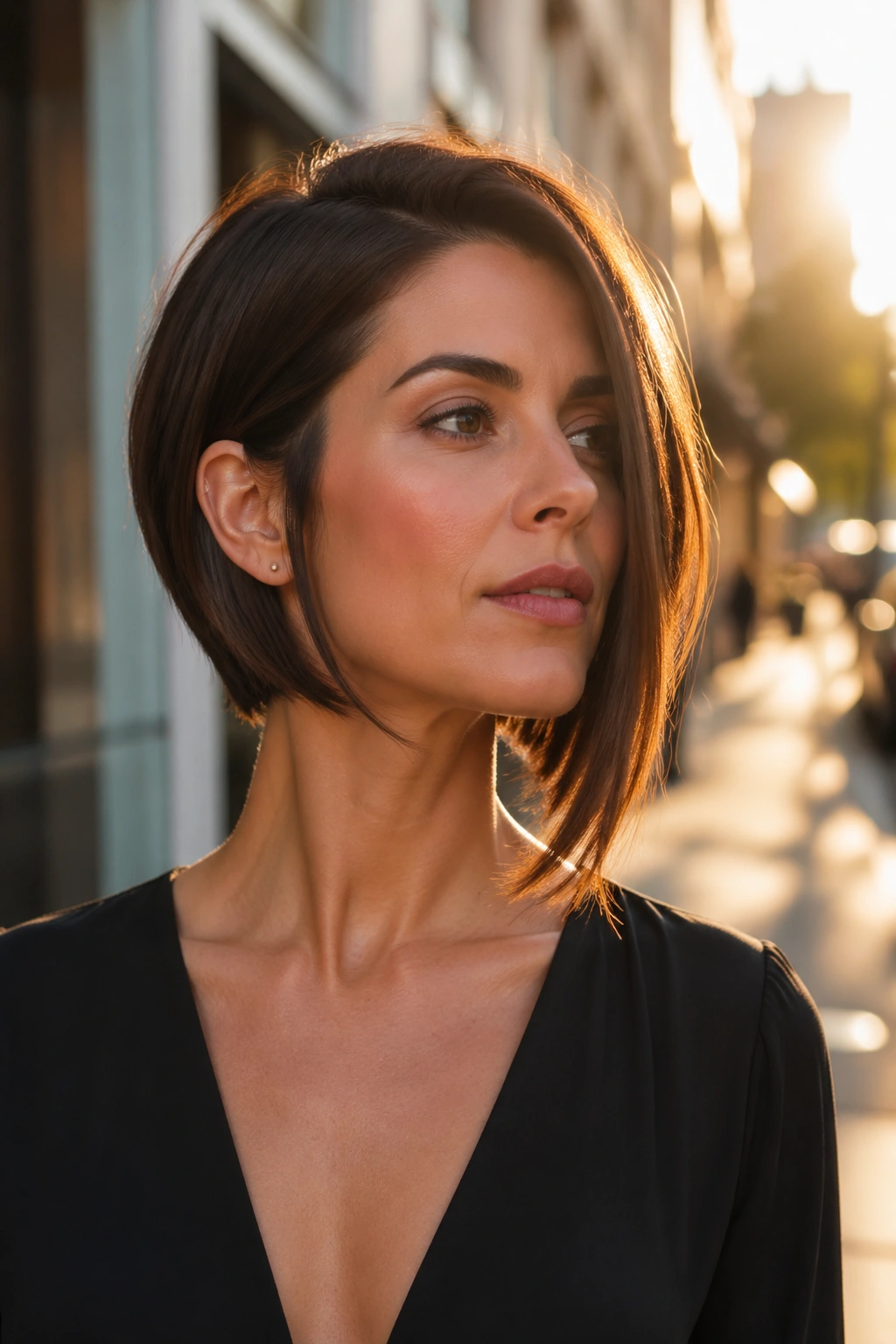
An asymmetrical bob is one of the easiest ways to break up a square face without adding a ton of layers. One side sits a little longer than the other, and that diagonal line pulls attention away from a strong jaw in the best possible way.
Why the Diagonal Matters
Square faces are built on straight edges and even proportions. A bob with one side slightly longer interrupts all of that. The face reads softer because the haircut is no longer mirroring the shape so closely.
You do not need a dramatic difference. Even a one- to two-inch shift can change the look. Too much contrast can feel gimmicky fast. A gentle asymmetry is cleaner and easier to wear every day.
This cut looks especially good with tucked-back styling on the shorter side, which gives the face a bit of movement near the cheekbone. If you like sleek hair but want less severity, this is a strong choice.
10. Loose Low Bun with Face-Framing Tendrils
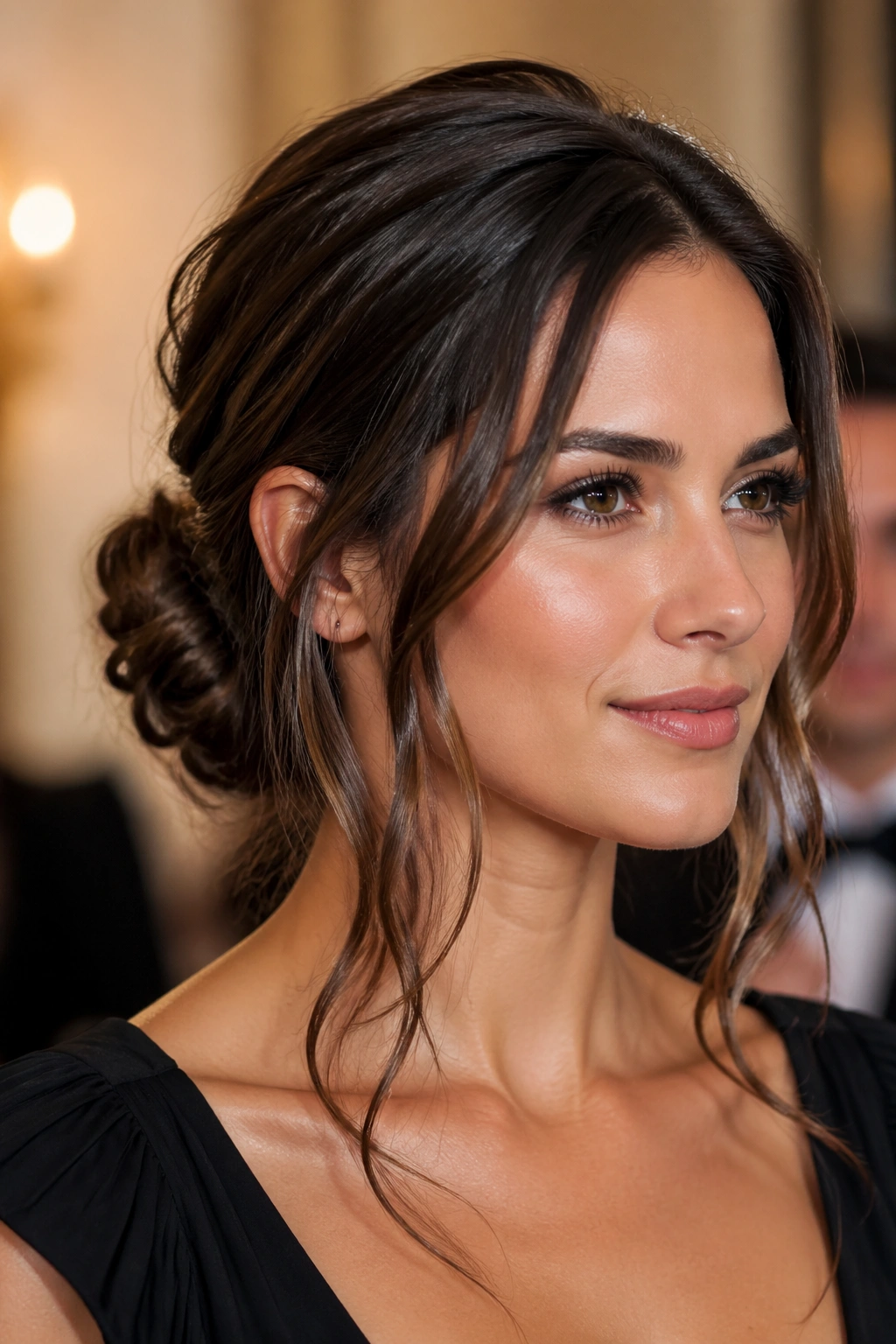
A low bun can either flatter a square face or make it look harder. The difference is softness. A loose bun at the nape, with a few tendrils left around the temples and jaw, gives you that softness right where you need it.
This is the style I’d pick for events when you want your face to look open but not stark. A few loose pieces keep the cheekbones from feeling too exposed. A tiny bit of texture spray at the roots stops the style from looking slicked down and severe.
Keep It Relaxed
- Place the bun low, not mid-back of the head.
- Leave two to four pieces loose around the hairline.
- Pull a little hair out of the bun itself so it has a softer shape.
A tight ballerina bun can sharpen a square face fast. The loose version does the opposite. Small change. Big result.
11. Half-Up, Half-Down with Crown Lift
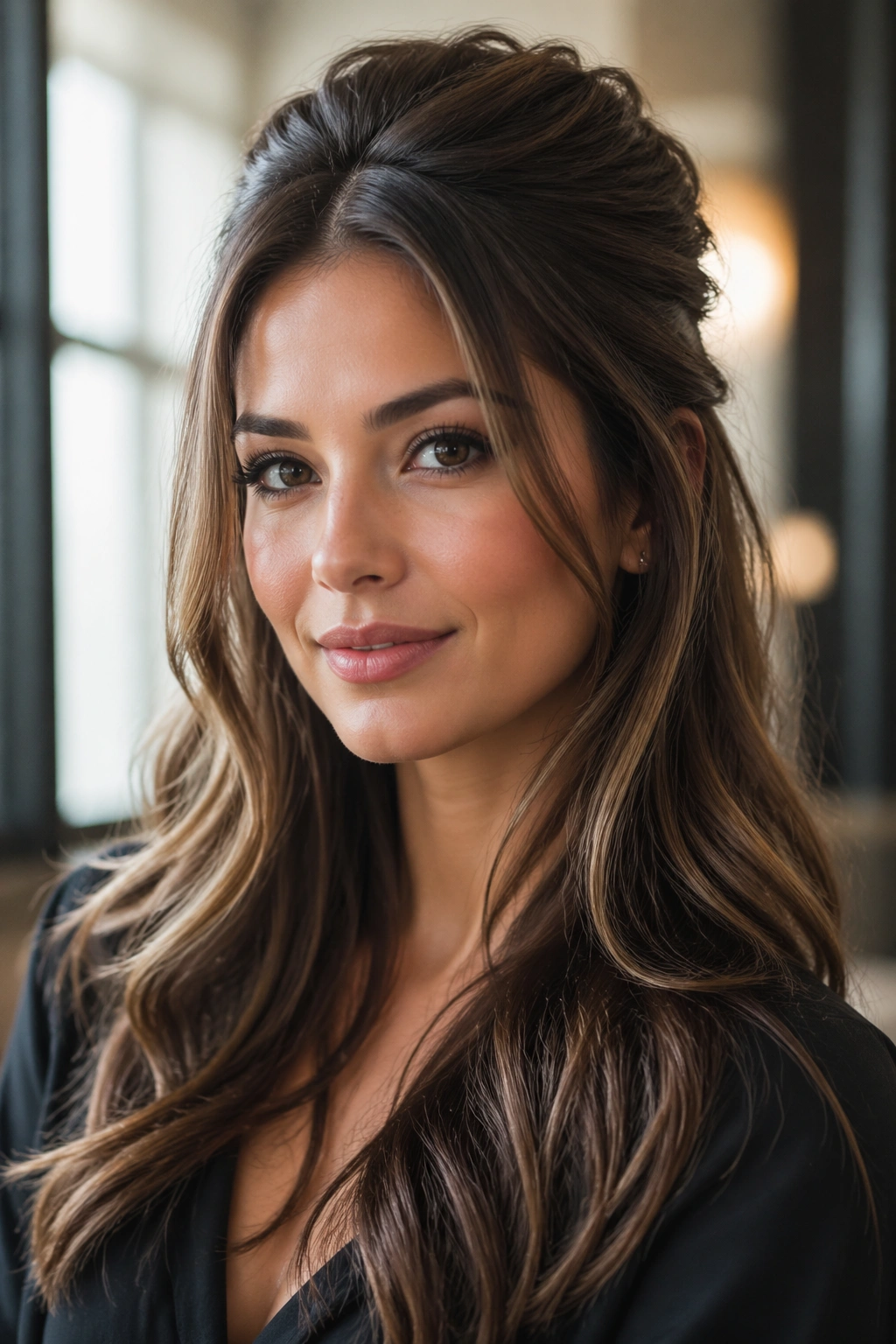
Why does the half-up, half-down style work so well on square faces? Because it gives you vertical height at the crown while still letting hair fall around the jawline. That combo softens the lower face without hiding it.
The crown lift is the important part. If the top section is pulled flat, the style can look heavy on top and wide through the sides. A little teasing at the roots or a clipped-in lift under the top section helps. Nothing dramatic. Just enough to keep the silhouette from collapsing.
The lower half should stay loose. Soft waves or a gentle bend through the ends work better than perfect curls. You want movement around the shoulders and jaw, not a rigid frame.
This style is also practical. It keeps hair off your face, but it still looks soft enough for square jawlines that need a little balancing.
12. Soft Curls with an Off-Center Part
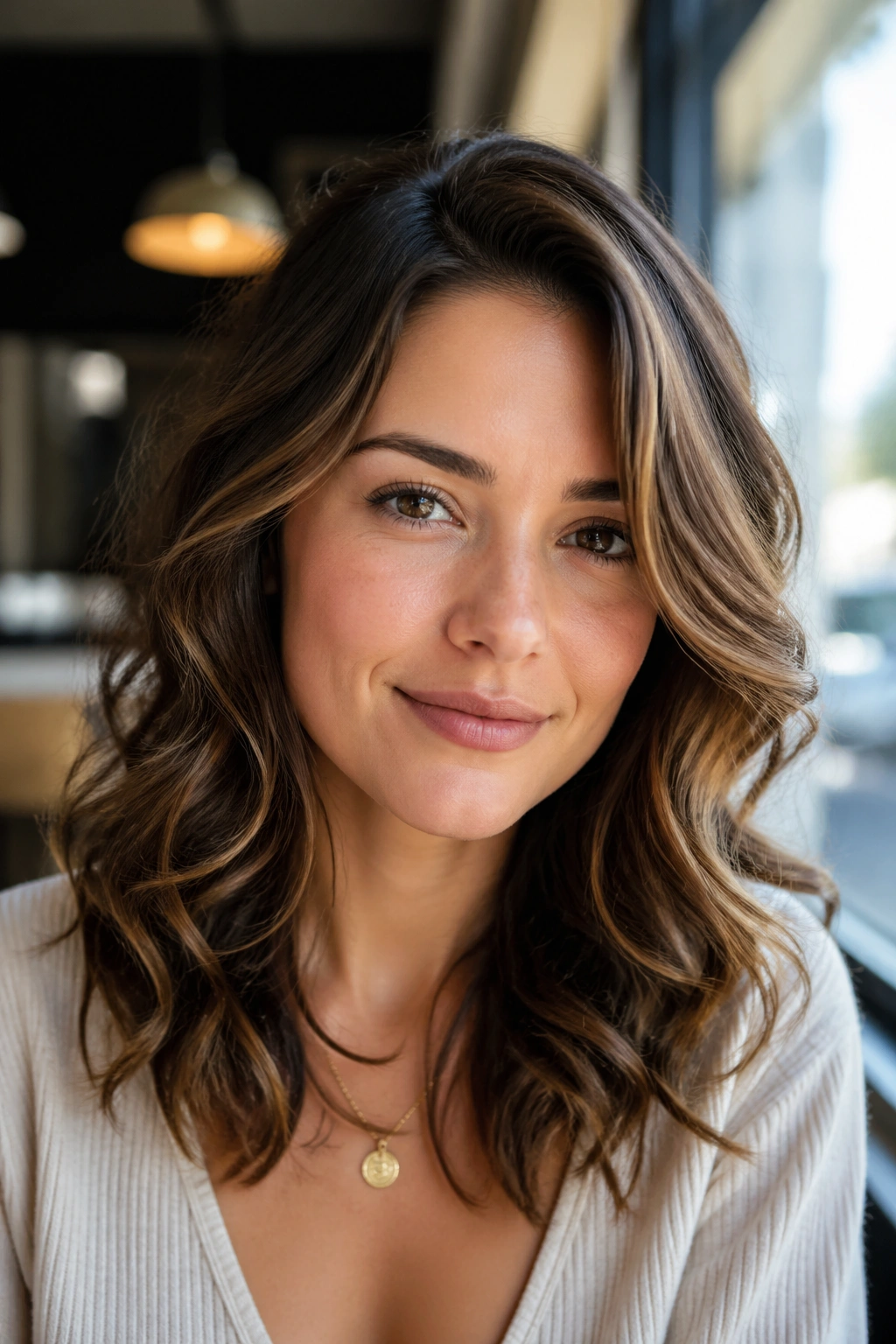
Soft curls are one of the simplest ways to blur strong angles. They round out the face, and when the part sits just off center, the whole shape stops feeling so symmetrical. That tiny asymmetry helps more than people realize.
The curls should be brushed out a bit. Tight ringlets can be gorgeous, sure, but on a square face they sometimes make the outline feel too compact. Loose, touched-up curls with some space between them look gentler. A 1-inch barrel is a good starting point for shoulder-length hair. A larger barrel gives a softer wave if your hair is already thick.
This style is especially good if your hair has natural bend and just needs direction. Set the curls away from the face around the front sections, then let the ends move a little instead of locking them into place.
One note: if your hair is very short, this look can get too round too fast. Shoulder length or longer is usually the sweet spot.
13. Braided Crown with Loose Front Pieces
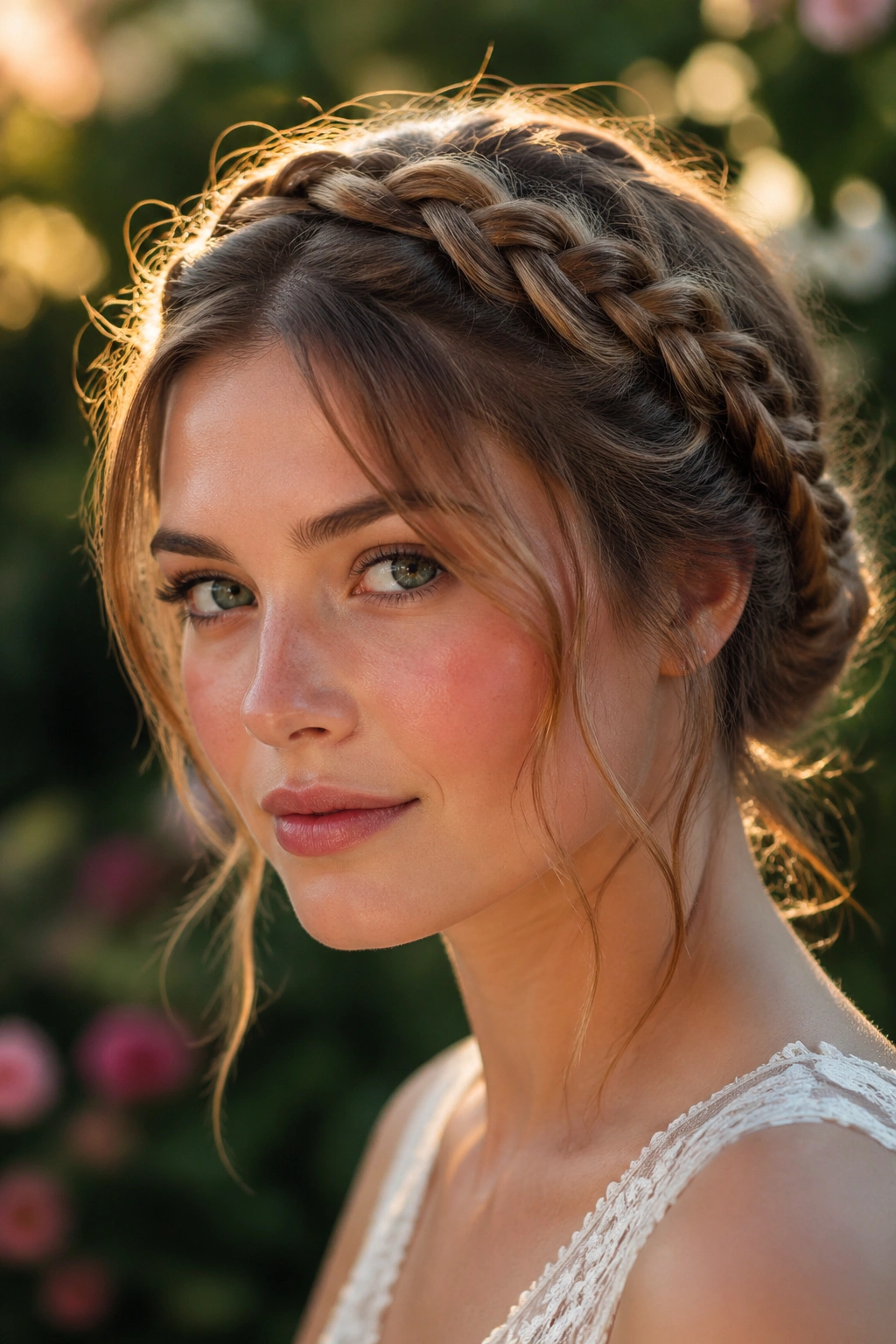
A braided crown can look too severe if it’s pulled tight from hairline to hairline. Loosen it up, though, and it becomes one of the prettiest ways to soften a square face while keeping the hair off your neck.
The braid itself adds a curved line around the head, which is nice. The loose front pieces matter even more. Leave a few wisps around the temples and near the jaw so the face doesn’t feel boxed in by the braid. A small amount of texture cream helps those pieces stay soft instead of frizzy.
The Details That Matter
- Start the braid slightly behind the hairline, not right on it.
- Pull the braid apart gently after securing it so it looks fuller.
- Leave thin pieces out near the ears and cheekbones.
This style works for weddings, long dinners, or any day when you want your hair up but don’t want the face to look bare. Tight braids look clean. Loose braids look kinder.
14. Bottleneck Bangs with Long Hair
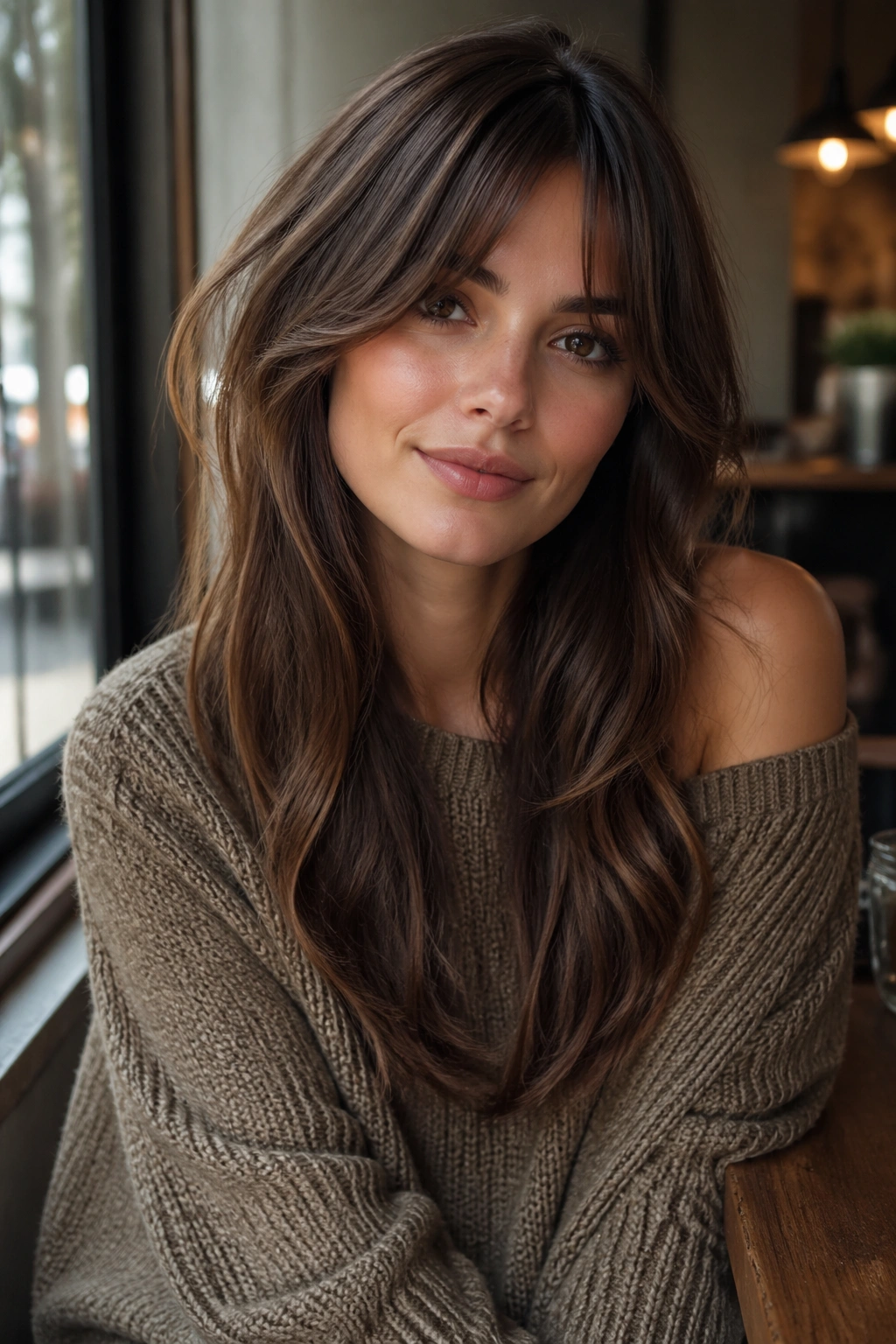
Bottleneck bangs are a nice middle ground for square faces because they’re narrower in the center and wider at the sides. That shape frames the forehead without drawing one hard line straight across it, and it blends into the rest of the hair in a softer way than blunt fringe.
The side pieces usually hit around the cheekbone, which is exactly where you want softness if the jaw is strong. They help guide the eye diagonally down the face instead of straight down the center.
What Makes Them Different from Curtain Bangs
Curtain bangs spread more evenly from the center. Bottleneck bangs keep the middle tighter and let the sides open out more deliberately. That makes them feel a little more tailored.
They’re also easier to grow out if you get tired of fringe. The sides already blend into the layers, so the awkward stage tends to be less annoying than with a straight-across bang.
If your forehead is shorter, ask for a lighter bottleneck shape. Heavy fringe on a square face can work, but only if there’s enough air in the cut.
15. Wavy Wolf Cut
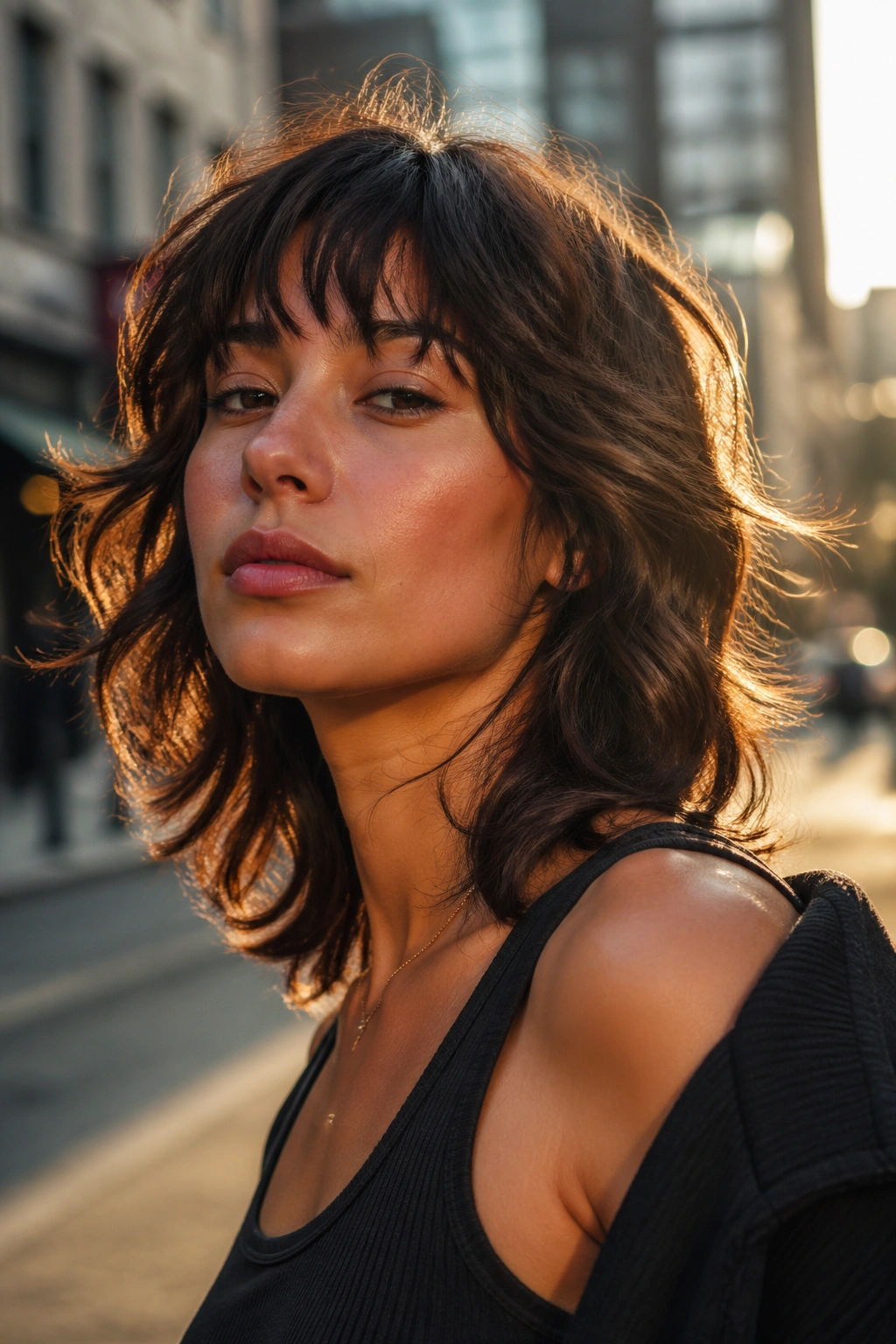
The wolf cut can work beautifully on square faces, but only when the layers stay soft enough to avoid a spiky outline. Too much choppiness around the jaw can look harsh. A smoother version, with texture at the crown and bend through the ends, softens the face and gives it movement.
This style brings a little attitude. It’s not precious, and that’s part of the appeal. The top layers create lift, while the longer bottom layers keep the haircut from turning into a puffball. If you like hair that looks cool without acting polished, this one earns its keep.
The key is restraint near the jaw. You want broken-up ends, not a shelf of hair sitting at chin level. A little wave spray and a diffuse blow-dry usually help the shape settle in without looking overworked.
Best for: medium to thick hair, natural wave, and anyone who wants texture without a neat finish.
16. Rounded Afro with Tapered Edges
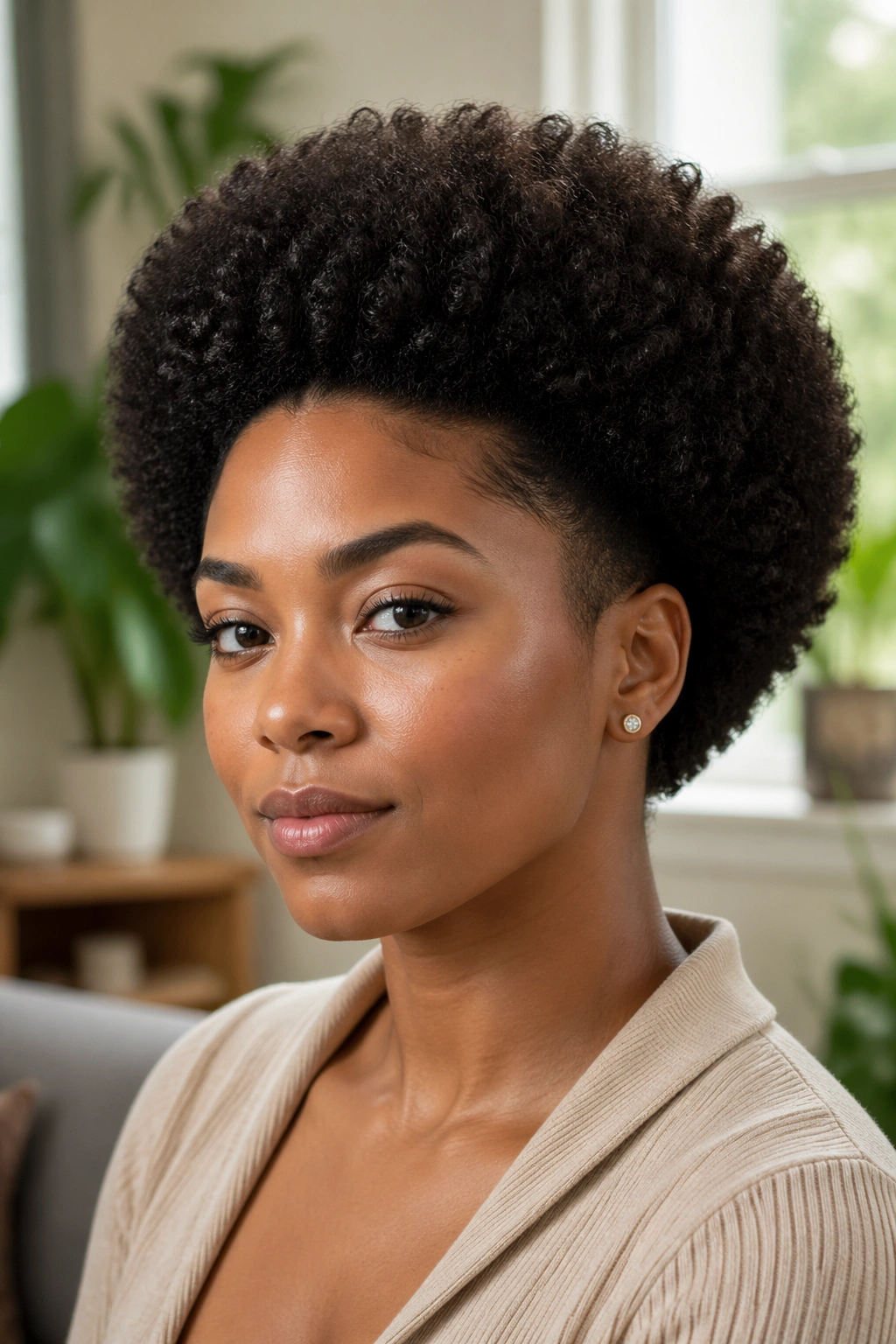
For curly and coily textures, shape matters more than almost anything else. A rounded afro with tapered edges softens a square face by keeping the outline curved instead of angular. The hair becomes a frame, not a border.
The rounded silhouette helps the face feel balanced because it adds width in a softer way across the top and sides. Tapered edges at the nape and temples stop the shape from looking boxy. That tiny bit of taper can make a huge difference around the jaw.
What Helps This Shape Hold
- Moisture first. Dry curls lose their shape fast.
- Use a diffuser or a hood dryer if you want more lift.
- Ask for shaping that respects the curl pattern, not one that cuts straight lines into it.
A square face and a rounded afro can look incredible together because the contrast works. One is all structure. The other is all curve. That tension is the point.
17. Shoulder-Length Flip with Feathered Ends
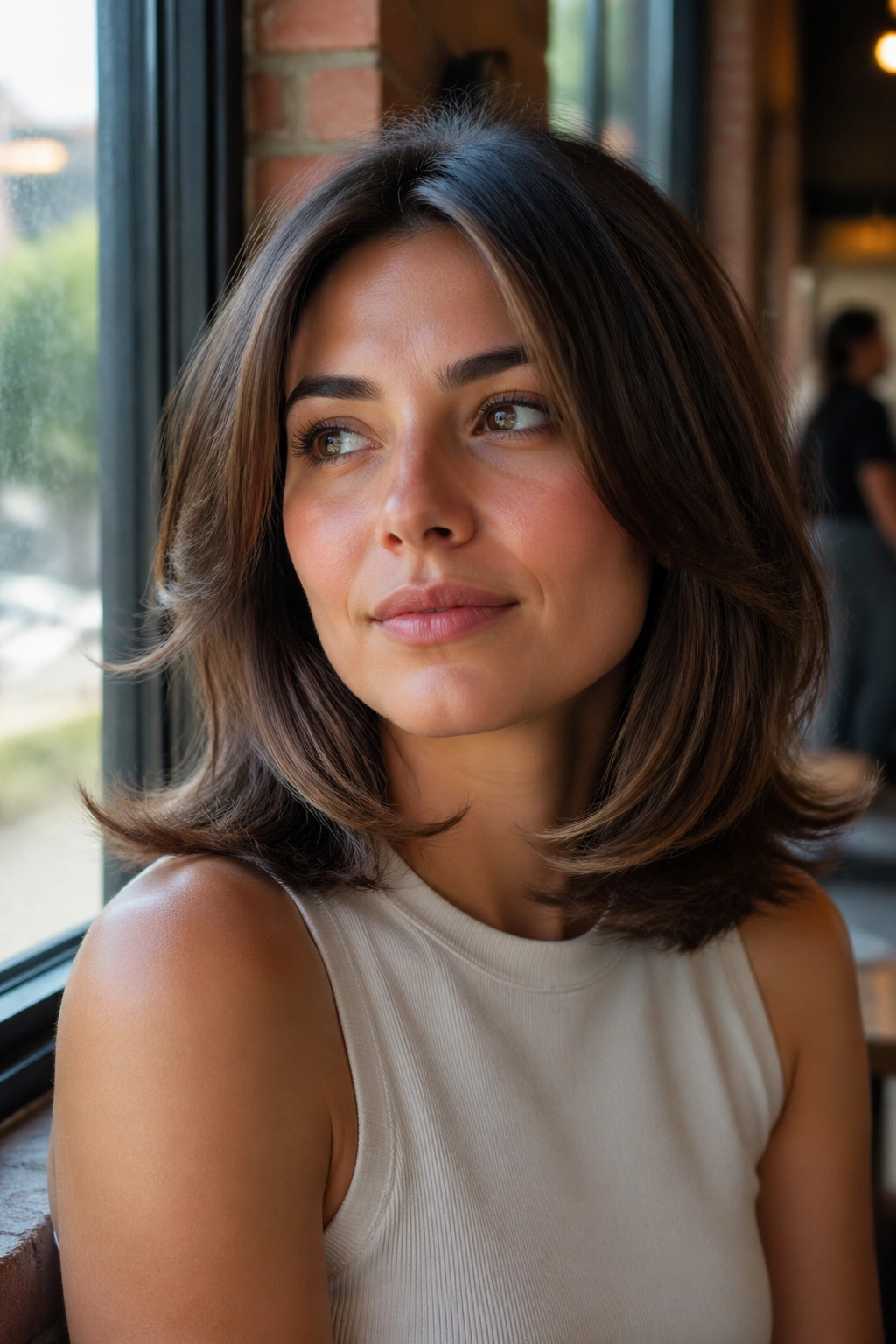
Shoulder-length hair with flipped ends is one of those styles that looks easy and does a lot for a square face. The flipped movement keeps the hair from hanging in one straight column, and the feathered ends soften the jaw by turning the outline into something lighter.
This is a good cut if you don’t want obvious layers everywhere. Feathering takes the bluntness out of the ends without making the whole style look choppy. A round brush and a quick bend at the bottom are usually enough.
Unlike a heavy, straight shoulder cut, the flipped finish opens up the lower face a bit. The eye sees motion instead of one hard horizontal line. That matters more than most people think.
This style is especially nice for fine hair because it creates the feeling of fullness without piling on volume at the sides.
18. Soft French Bob

A French bob can be flattering on a square face, but it needs softness. The classic version is often blunt, short, and a little sharp. A softer version, with a slight curve at the ends and a fringe that breaks up the forehead, is far kinder to strong angles.
The length should hover around the jaw or just below it, not cut exactly through the widest point. That’s the little detail that keeps the style from looking severe. A bit of internal layering helps the bob move instead of sitting like a helmet.
I like this cut when the hair has a natural wave or a slight bend. It looks a bit cooler that way. Straightening it too much can make it feel rigid, and rigid is exactly what you do not want on a square face.
One quiet trick: tuck one side behind the ear and leave the other loose. It softens the whole shape without much effort.
19. High Ponytail with Wrapped Base and Loose Strands
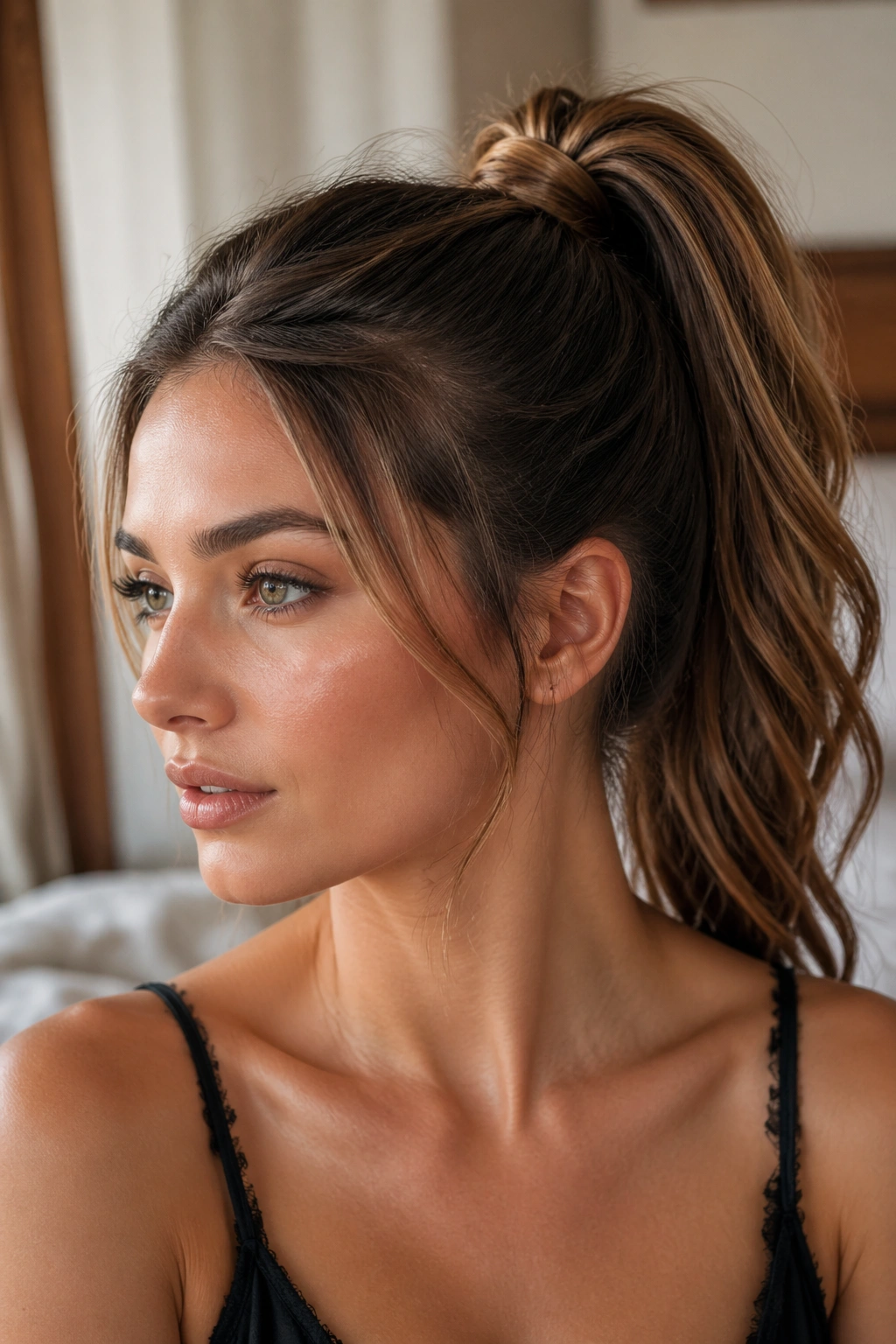
A high ponytail sounds severe at first, but it can be a surprisingly good choice for a square face if you keep it soft around the edges. The lift at the crown elongates the face, and the loose strands around the temples and jaw stop the style from looking too tight.
The base should be wrapped with a small section of hair so the elastic disappears. That tiny detail makes the ponytail look more finished. A little texture at the crown helps too. Flat roots can make the face look wider, while a bit of lift gives the upper half more presence.
A Few Things to Leave Out
- Don’t pull the hair back so tight that the temples look bare.
- Skip the super-slick gel finish unless you’re balancing it with soft front pieces.
- Avoid a ponytail that sits too low; it can drag the face downward.
This is a good option when you want polish but still need the face to feel a little softer.
20. Grown-Out Pixie with Side Volume
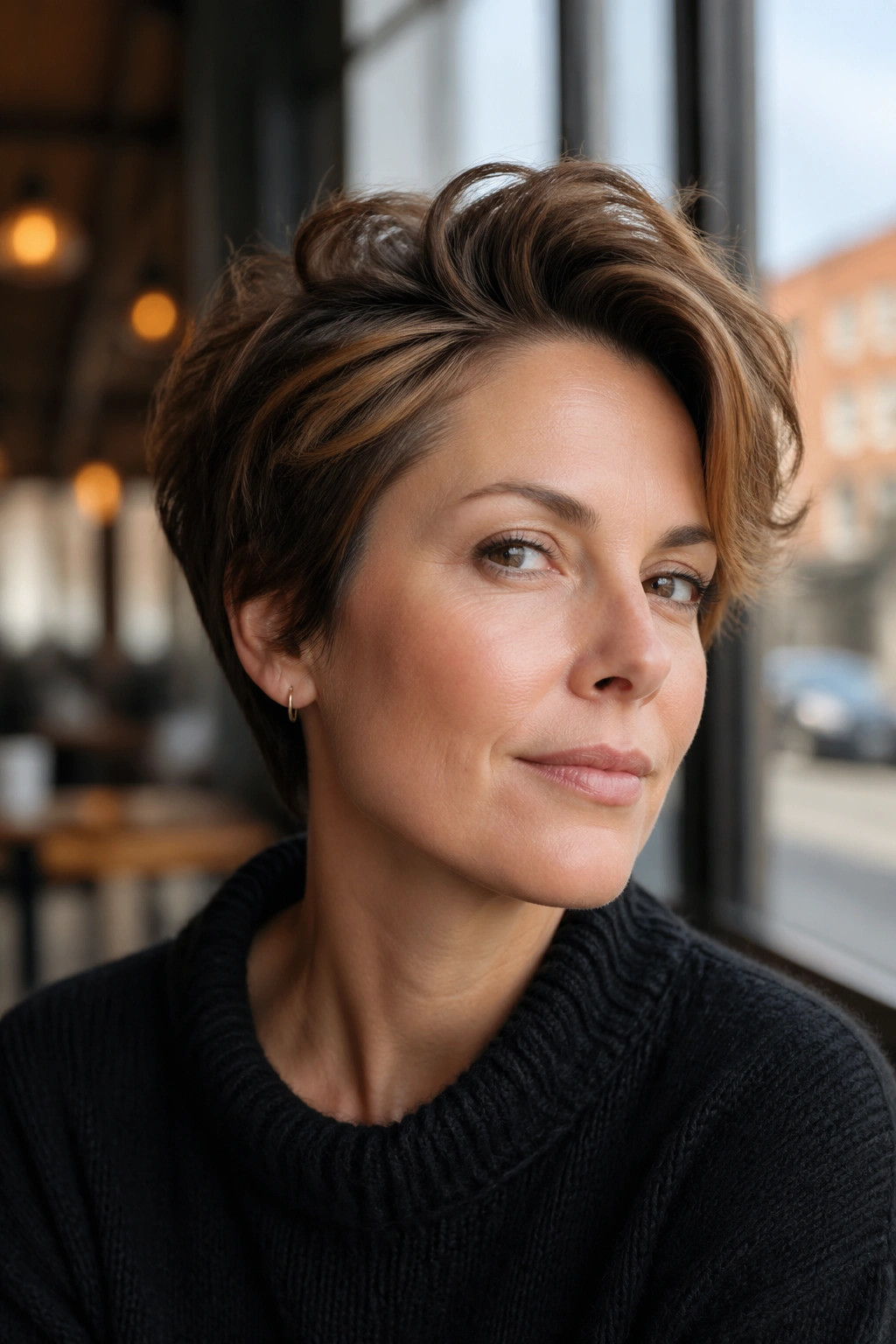
A grown-out pixie is where short hair gets interesting for square faces. The top stays a little longer, the side volume stays piecey, and the edges around the ears and neckline stay soft instead of clipped into a hard line. That keeps the cut from turning square on square.
This is the short style I’d point someone toward if they like low-maintenance hair but hate the helmet feeling some shorter cuts give. The side volume matters because it adds movement at the temple and cheekbone. The longer top gives you styling options, from a loose sweep to a textured quiff.
A pea-sized amount of paste or cream is usually enough. Work it through dry hair with your fingers, then push the top slightly to one side. Don’t overthink it. The charm of this cut is that it looks better when it isn’t too perfect.
Square faces can wear short hair beautifully. They just need a little bend, a little asymmetry, and a cut that knows when to soften the edges.
Final Thoughts
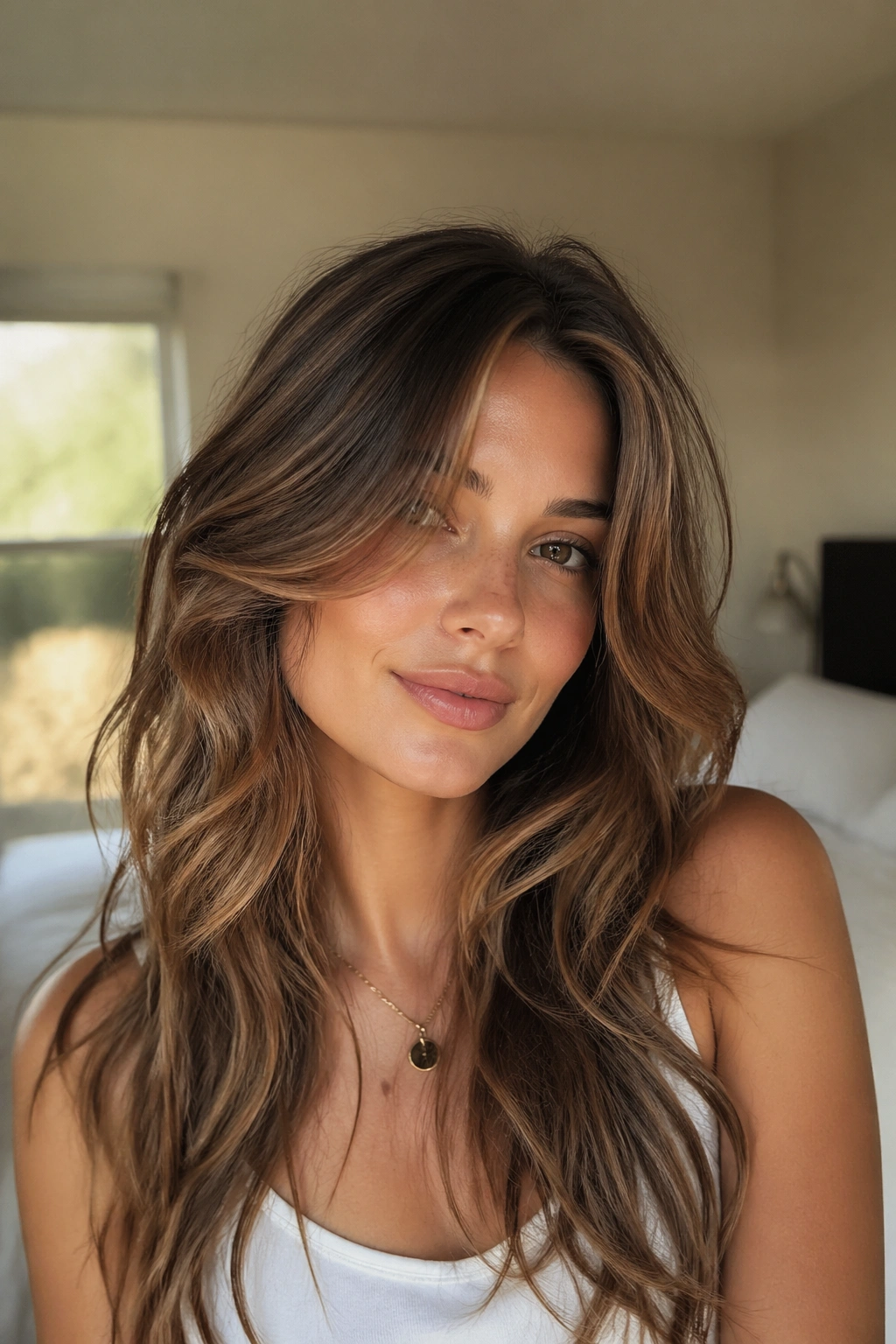
The best hairstyles for square faces don’t fight the jawline. They redirect attention with curves, diagonals, and movement. That can mean long waves, a side-swept pixie, or a low bun with a few loose pieces hanging around the face.
If you’re sitting in a salon chair, the simplest instruction is often the best one: keep the line soft near the jaw. That one sentence covers a lot of ground. It keeps blunt cuts from getting too hard, and it helps your stylist focus on shape instead of just length.
A smart cut can make a square face look softer without losing any of its strength. That balance is the sweet spot.
