



If you’re looking to add volume, length, and versatility to your hairstyle, weave ponytails are the ultimate game-changer. They instantly transform thin or short hair into a thick, full mane that turns heads, and the styling possibilities are genuinely endless. Whether you want a polished office-ready look or something bold enough for a night out, weave ponytails deliver instant confidence along with that coveted fuller appearance.
The magic of a weave ponytail lies in its flexibility—you can customize the length, texture, color, and style to match your personal aesthetic perfectly. The human hair used in quality weaves blends seamlessly with your natural hair, creating a look that’s virtually undetectable. Beyond aesthetics, a well-installed weave ponytail also protects your natural hair by reducing daily manipulation and heat styling, which means you’re actually caring for your hair while looking absolutely stunning.
What makes weave ponytails so powerful is that they work across all hair types, textures, and lengths. Whether your natural hair is short, fine, curly, or damaged, a strategic weave installation can create the exact look you’ve been dreaming about. This article breaks down 15 distinct weave ponytail styles that deliver maximum fullness and wow factor—from sleek and sophisticated to textured and playful.
1. Long Straight Weave Ponytail
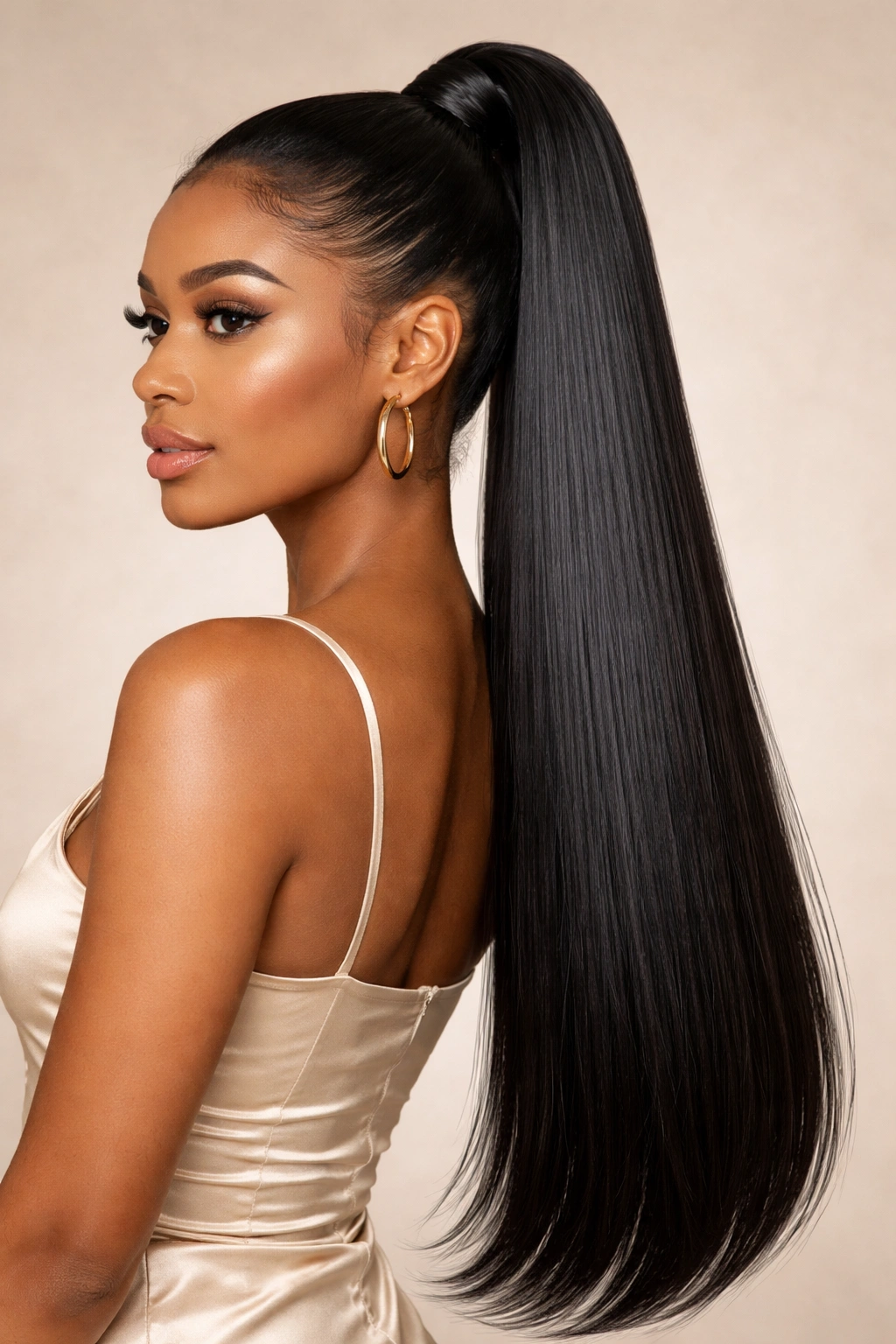
This classic style features long, silky straight hair sewn into a high or mid-level ponytail base that creates an undeniably voluminous silhouette. The length typically extends past the shoulders, sometimes reaching the mid-back, giving an ultra-polished and elongated appearance that’s perfect for anyone wanting dramatic transformation. Straight weave ponytails are the go-to choice for formal occasions, professional settings, or when you simply want that sleek, put-together aesthetic without effort.
Why It Works for Maximum Fullness
The straightness of the hair creates a clean line that emphasizes density and shine, making the ponytail appear significantly thicker than it actually is. The weight and length of the hair also add instant presence—even when pulled into a simple style, straight weave hair commands attention. Because straight hair lies flat against itself, the bundling effect makes a regular amount of hair look surprisingly full when gathered at the base.
How to Maintain Your Straight Weave Look
- Invest in a silk or satin-lined ponytail holder instead of elastic—this prevents frizz and reduces breakage at the base
- Brush gently from the ends upward using a paddle brush or wide-tooth comb to avoid snagging the wefts
- Deep condition the weave weekly with a moisturizing hair mask to maintain softness and shine
- Wash the ponytail every 10-14 days using sulfate-free shampoo and cool water to lock in moisture
- Sleep on a silk pillowcase or wrap the ponytail in a silk scarf to prevent friction-induced frizz
Pro tip: Use a lightweight heat protectant serum on the weave before blow-drying for an extra glossy, magazine-worthy finish that lasts all day.
2. Curly Voluminous Weave Ponytail
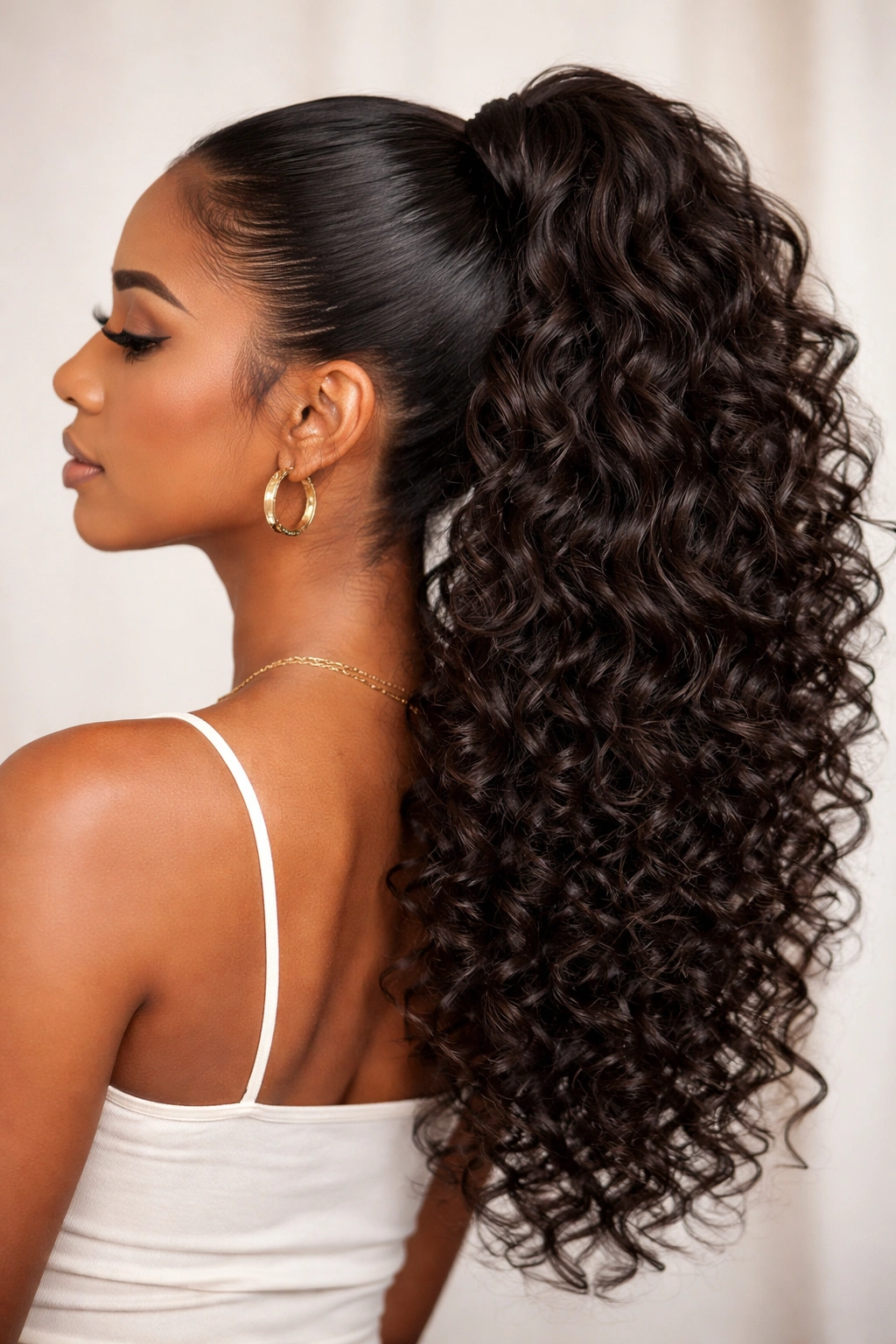
Curly weave ponytails bring instant dimension, texture, and that coveted “I woke up like this” vibe that’s nearly impossible to achieve with thin natural hair alone. The waves or curls can range from loose, beachy waves to tight, defined ringlets—you choose the texture that matches your personality. This style creates what looks like impossibly thick, healthy curls without the daily heat damage and styling time that natural curl maintenance demands.
Why Curls Add Perceived Fullness
Curly hair occupies more space than straight hair because each wave or coil creates volume at multiple points along the strand. This three-dimensional texture makes even a moderate amount of hair appear extraordinarily full and bouncy. The movement and definition of curls also catch light differently than straight hair, creating visual interest that makes the ponytail feel more dynamic and alive.
Styling Your Curly Weave for Maximum Impact
- Apply a curl-defining cream or gel to damp weave hair and scrunch upward to enhance and define the curl pattern
- Use a diffuser attachment on your blow dryer on medium heat to dry curls without disrupting their formation
- Refresh curls between washes by lightly misting with a curl refresher spray and re-scrunching to reactivate the texture
- Avoid touching or playing with the curls while they dry—hands-off drying prevents frizz and maintains definition
- Sleep with the ponytail in a loose pineapple style (high ponytail on top of head) to preserve curls overnight
Worth knowing: Quality curly weave hair holds its curl pattern much better than flat-ironed waves, so investing in textured hair from the start saves you serious styling time.
3. High Bun with Weave
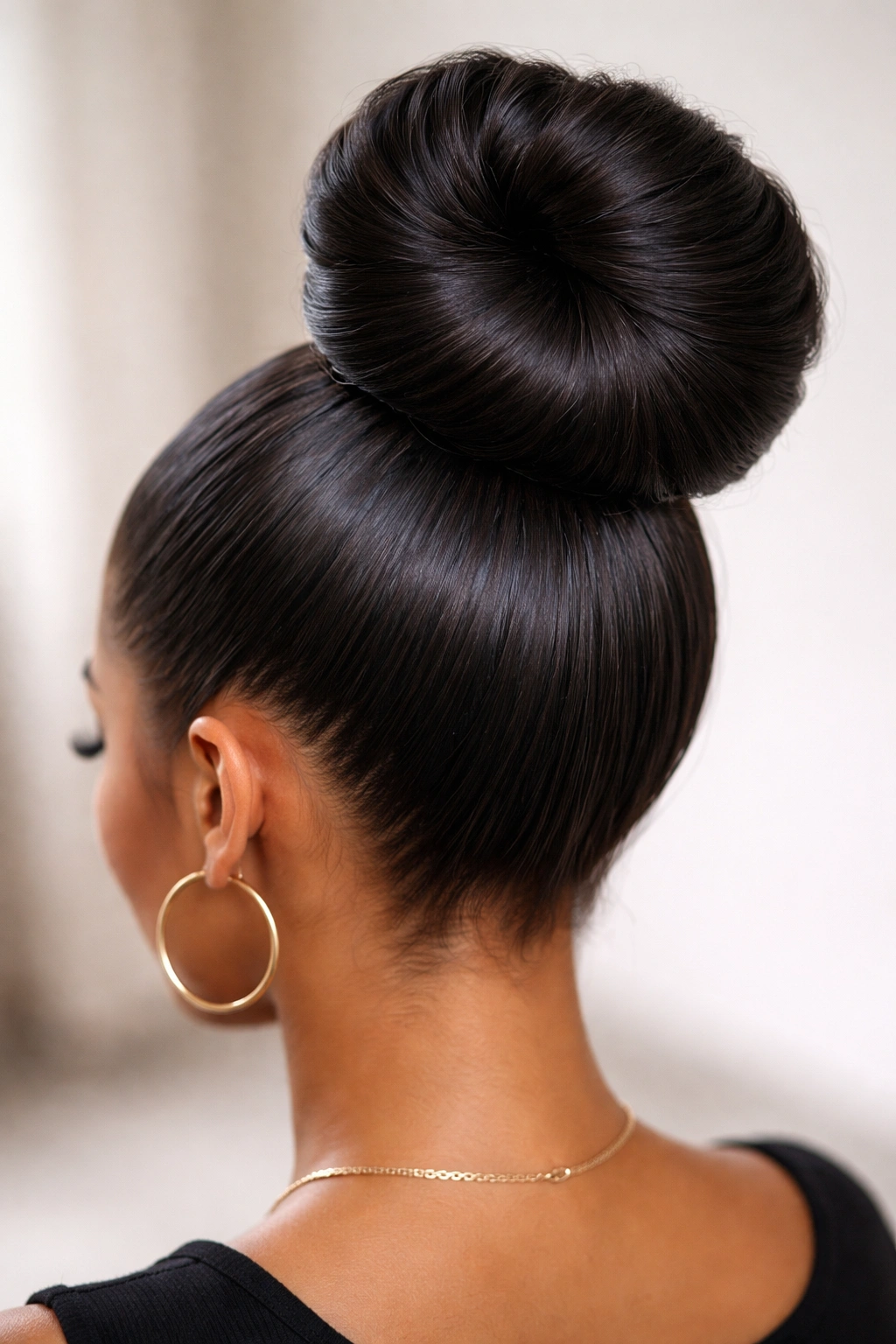
The high bun takes weave fullness to new heights—literally. By anchoring the weave ponytail at the crown and wrapping it around itself to create a voluminous bun, you get a statement style that reads both elegant and modern. This works beautifully for gym days, work meetings, date nights, or anytime you want polished presence without looking overdone. The height of the bun elongates your face and neck while showcasing the sheer volume the weave creates.
The Science Behind a Fuller Bun
A high placement naturally draws attention upward, making your face appear more sculpted and your ponytail base appear thicker due to perspective. When you wrap the ponytail around itself, you’re layering the hair, which compounds the fullness effect—suddenly a ponytail that’s 2 inches thick at the base becomes a bun that appears 3-4 inches in diameter. The wrapped construction also allows you to secure the bun without depending on heavy elastics or pins that might damage hair.
Creating the Perfect High Bun Installation
- Use a flexible, fabric-covered elastic that distributes pressure evenly—this prevents the telltale “pulled” look and minimizes tension
- Backcomb lightly at the base before bun placement to create grip without damaging the weave
- Wrap the ponytail around the base two to three times, securing with bobby pins at multiple angles for stability
- Gently pull sections of the bun outward to create a fuller, more voluminous shape—don’t leave it compacted
- Pin small face-framing sections loosely around your face for a soft, approachable appearance
Insider note: A textured weave (wavy or curly) creates a naturally fuller bun than straight weave because the texture adds immediate dimension without extra styling.
4. Low Sleek Weave Ponytail
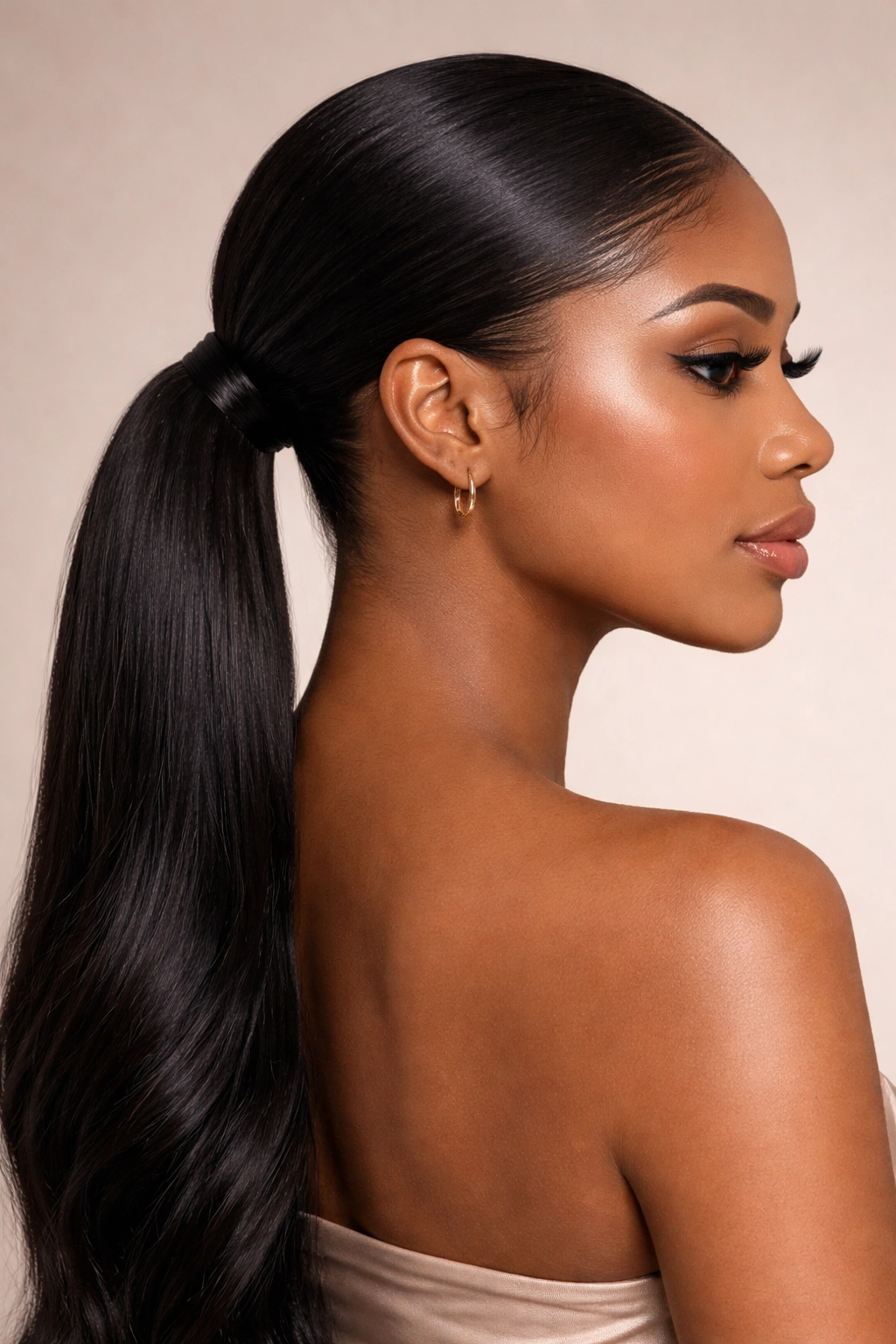
For those who prefer understated elegance, the low sleek ponytail delivers maximum sophistication with minimum drama. Positioned at the nape of the neck and smoothed back tightly against the head, this style creates a streamlined silhouette that’s perfect for professional environments, formal events, or when you want your face to be the focal point. Despite its sleek execution, the ponytail itself appears remarkably thick and full thanks to the weave density.
Why Low Placement Creates Fullness Illusion
By keeping the ponytail low and placing it away from your crown, the contrast between the smooth scalp and the gathered fullness below makes the ponytail appear significantly denser. The horizontal placement also means the full width of the ponytail is visible, showcasing every bit of volume the weave provides. This style works particularly well for people with longer faces because the low placement balances facial proportions.
Achieving That Camera-Ready Sleek Finish
- Start with smooth, damp hair and apply a smoothing serum or anti-frizz cream throughout before drying
- Use a fine-tooth comb to smooth every strand back against the head—no bumps, no flyaways
- Secure the ponytail low with a sleek elastic, then wrap a small section of weave around the elastic to hide it completely
- Apply edge control to your hairline, smoothing baby hairs and any texture at the front for polished edges
- Finish with a lightweight hairspray that controls frizz without creating crunchiness or buildup
Pro tip: A small pearl or metallic clip placed just above the elastic adds understated luxury and catches light beautifully in photos.
5. Layered Weave Ponytail
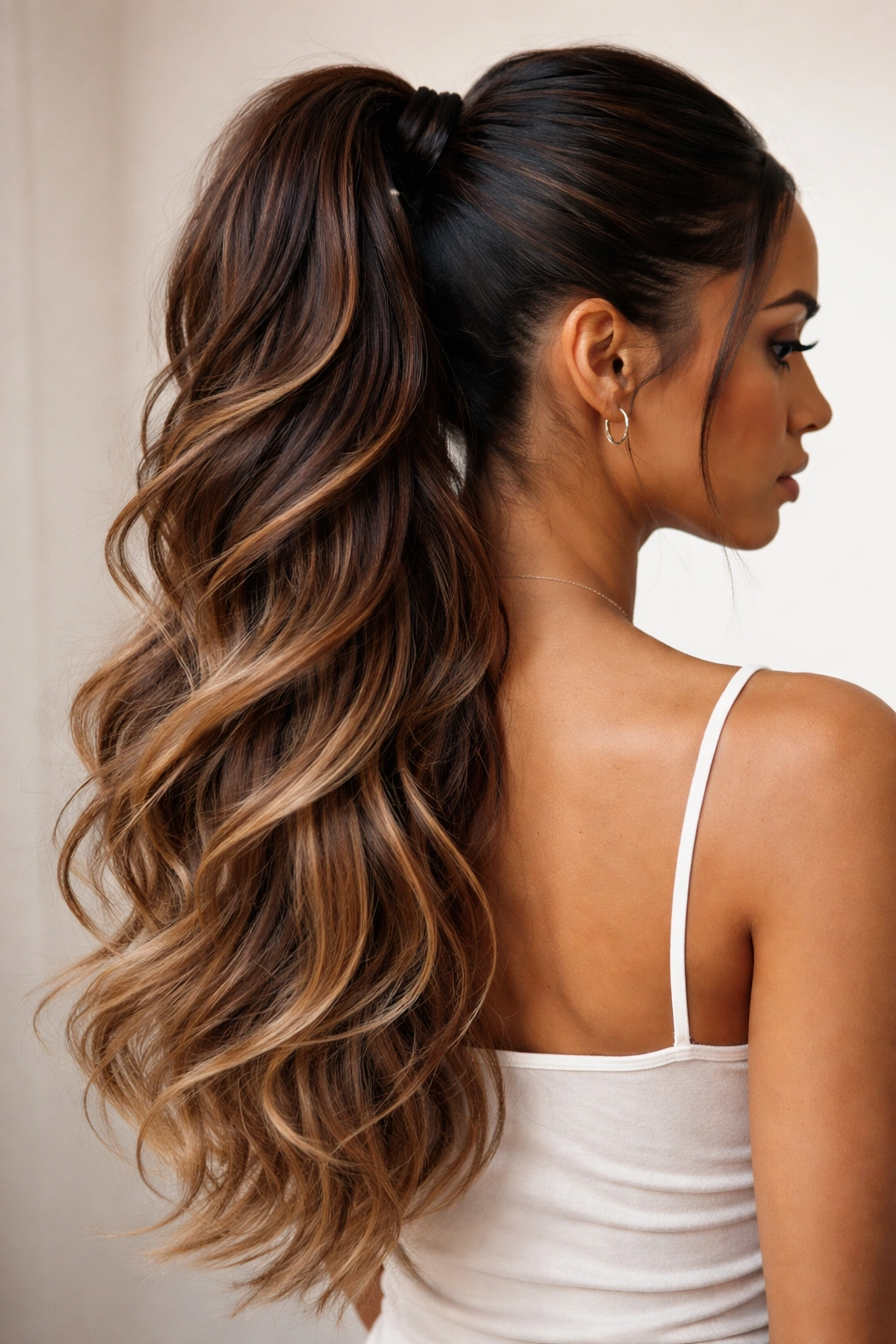
Layered weave ponytails create incredible depth and movement by combining different lengths and textures within a single ponytail. You might blend straight and wavy sections, incorporate different color lengths, or use varying hair weights to create a multi-dimensional effect that’s visually stunning. The layering technique adds complexity to your look while multiplying the perceived fullness—it’s advanced but absolutely worth the effort.
How Layering Amplifies Volume
When you layer different lengths, each length catches light at a slightly different angle, creating visual interest and depth that makes thin hair appear thick. The texture variation also means the ponytail moves differently in different sections—some parts flow while others bounce, creating dynamic movement that reads as full and healthy. The visual complexity of layering is so effective that people often perceive a layered ponytail as thicker than an unlayered one with identical total hair weight.
Installing a Multi-Layer Weave Ponytail
- Determine your desired lengths (for example: longest at 24 inches, mid-layer at 18 inches, shortest at 14 inches) before purchasing weave
- Create a layered base by sewing shorter pieces first, then longer pieces on top, ensuring each layer is secured independently
- Blend the layers by curling or waving the hair so the texture transition between lengths feels intentional rather than choppy
- Keep layers well-distributed around the ponytail so the fullness isn’t concentrated in just one area
- Refresh layers between washes by refreshing the wave pattern with a curling iron to maintain definition
Worth knowing: Layered ponytails require slightly more maintenance than single-length styles because you’re managing multiple texture levels—but the visual payoff is genuinely stunning.
6. Two-Tone Weave Ponytail
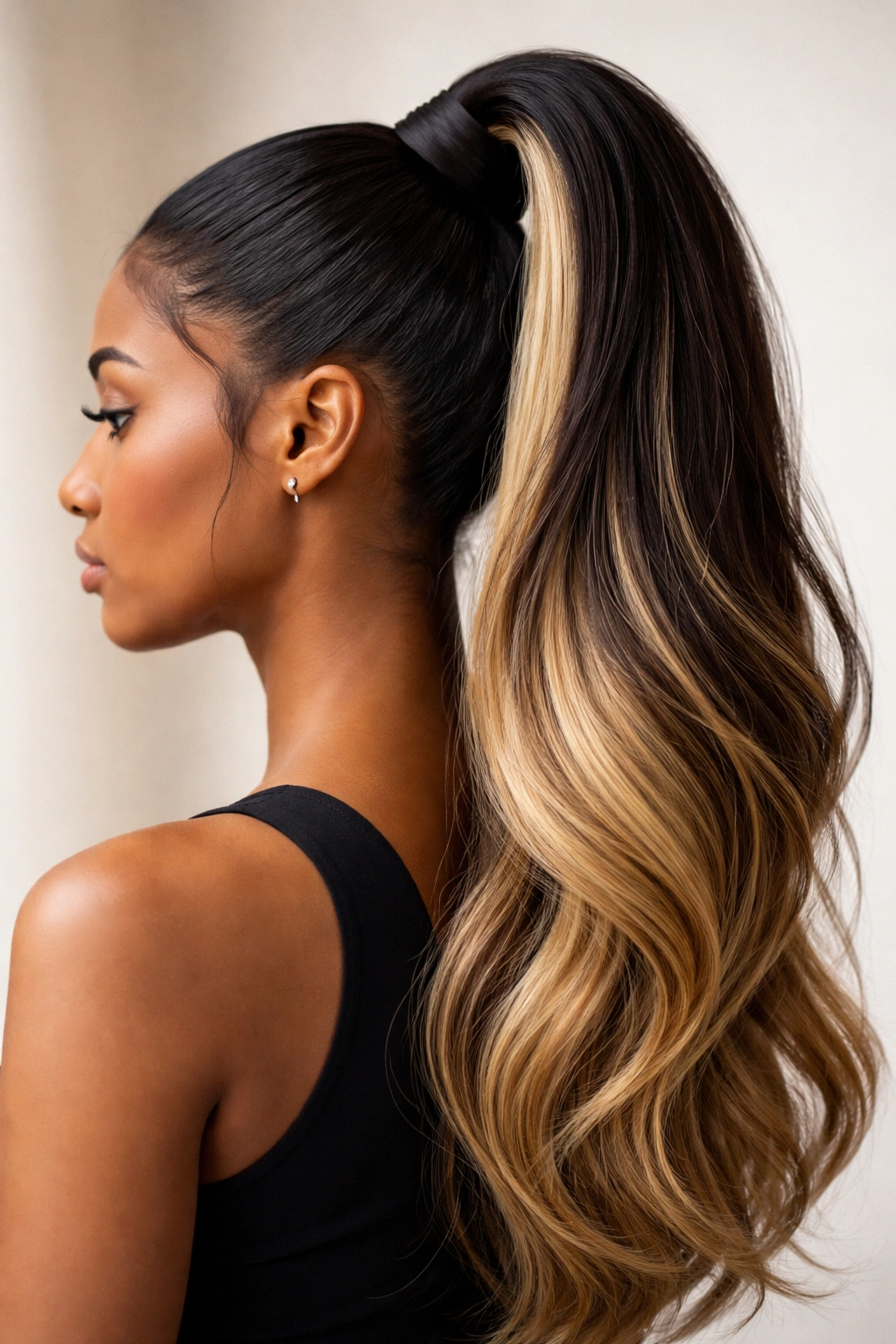
Two-tone weave ponytails combine two contrasting or complementary colors in a single installation, creating visual interest and dimension that naturally enhances the appearance of fullness. You might do black roots with honey-blonde lengths, dark brown with caramel highlights, or even bold colors like burgundy and copper. The color contrast draws the eye along the length of the ponytail, making it appear longer and fuller than a single-color style.
The Psychology of Color Contrast and Volume
Lighter colors appear to recede while darker colors appear to come forward—when you combine them strategically, you create depth perception that makes hair look thicker. The line where two colors meet also creates a visual boundary that helps define the ponytail’s shape and size. Additionally, the color variation acts as a natural highlight, catching light at multiple points and creating an illusion of shine and health that amplifies fullness.
Creating a Flawless Two-Tone Installation
- Choose colors with enough contrast to create visual interest but ensure they complement your skin tone when viewed together
- Consider your natural hair color and decide whether to match one tone to your roots (for a grown-out look) or pick two completely new shades
- Install the lighter shade on the ends and the darker shade at the base if you want a rooted appearance, or alternate them for a striking effect
- Ensure both colors are sealed well at the weft line to prevent color bleeding or fading at different rates
- Use color-safe shampoo and deep conditioning products to maintain vibrancy equally in both shades
Pro tip: Ombré two-tone (dark at roots fading to light at ends) is the most flattering for most face shapes and skin tones because it mimics natural dimensional color.
7. Feed-In Braided Weave Ponytail
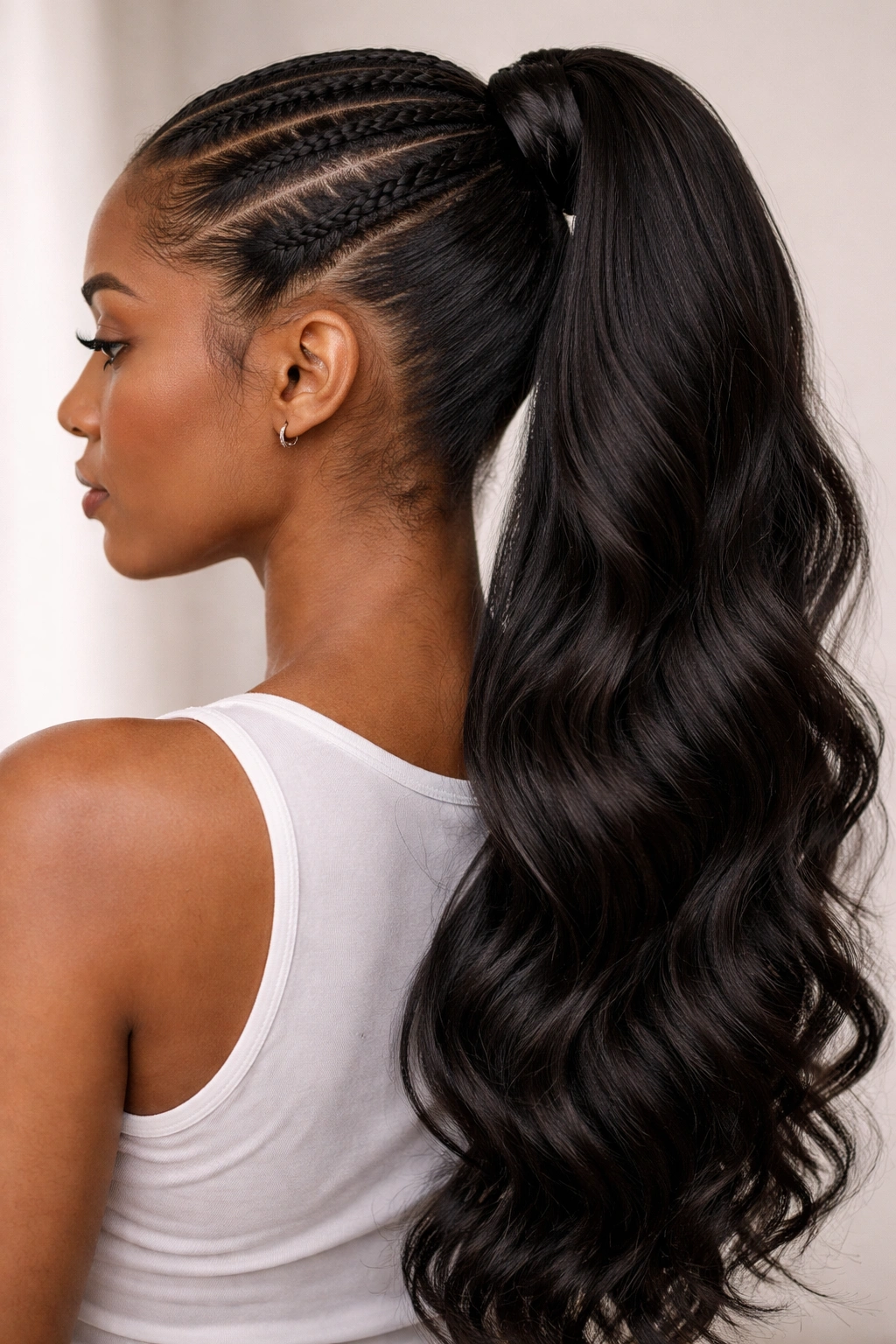
This advanced style incorporates a feed-in braid at the base before securing the weave ponytail, creating a seamless blend between your natural hair and the weave while adding intricate detail. The braid also distributes tension more evenly than a simple elastic, making this style actually protective for your natural hair while delivering maximum visual fullness. Feed-in braids take the ponytail from simple to sophisticated in a single installation step.
Why Braids Enhance Fullness and Longevity
A feed-in braid creates a strong anchor point that holds the ponytail securely without requiring excessive tension on your hairline—this means less pulling, less breakage, and a healthier hair growth cycle. Visually, the braid adds intricate texture that makes the base appear fuller and more complex than a simple elastic would. The braid also disguises the point where your natural hair ends and the weave begins, creating an illusion of continuous hair from scalp to tip.
Executing a Professional Feed-In Braid Base
- Start the braid from the front hairline or top of your head, depending on whether you want the braid visible or hidden by the ponytail
- Use a three-strand or four-strand braiding technique, adding small sections of weave hair as you progress backward to create the “feed-in” effect
- Braid to the point where you want the ponytail to sit (high, mid, or low) and secure with a small elastic
- Attach the bulk of the weave ponytail to the end of the braid, ensuring the transition is smooth and blended
- Gently pull sections of the braid to loosen and fuller the texture—a tight braid looks pinched while a slightly loose one appears voluminous
Insider note: Feed-in braids take practice and patience to perfect, but once you master the technique, you’ll have a signature style that looks custom-made.
8. Textured Weave Ponytail
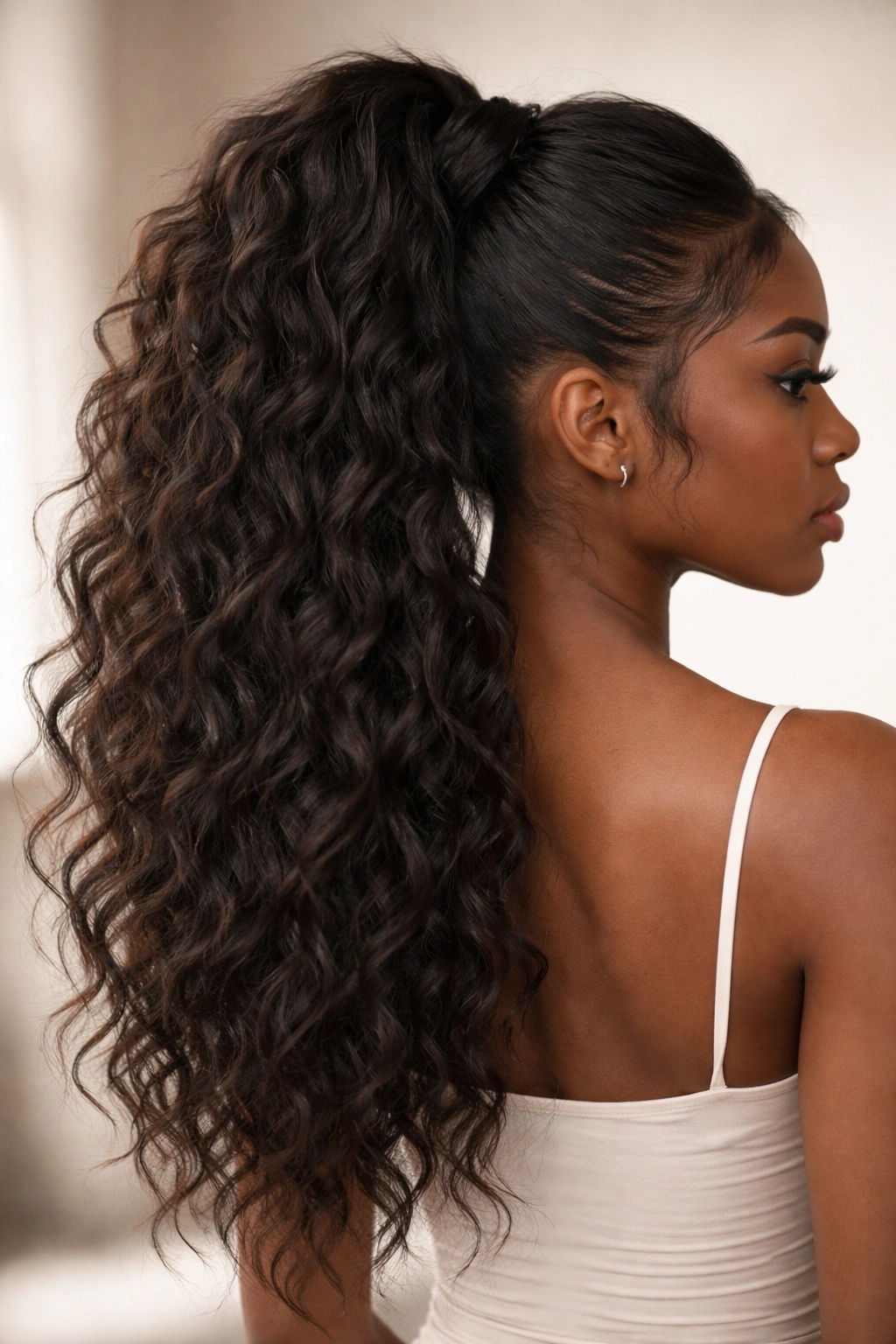
Textured weave ponytails feature body, movement, and dimension through a combination of waves, crimps, coils, or blended textures that create visual fullness from every angle. Unlike smooth straight hair, textured weave occupies significantly more space and moves dynamically, making even a moderate amount of hair feel abundantly full. This style celebrates dimension and works beautifully for people who naturally have textured hair and want their weave to match or enhance their natural aesthetic.
How Texture Creates Illusory Fullness
Every wave, coil, or crimp in the hair creates volume at multiple points along each strand—this is why a textured ponytail appears thicker than a straight ponytail with identical weight. The movement inherent in textured hair also catches light differently as it moves, creating highlights and shadows that enhance depth perception. Additionally, textured hair holds its shape and fullness throughout the day without requiring touch-ups, while straight hair can flatten under its own weight.
Maintaining Texture in Your Weave Ponytail
- Moisturize textured weave twice weekly with a hydrating leave-in conditioner to prevent dryness and breakage
- Avoid brushing textured hair when dry—always detangle on damp hair using a wide-tooth comb or fingers
- Refresh the texture between washes by lightly misting with water and scrunching upward, then air-drying or diffuser-drying
- Avoid heat styling that could damage the texture—instead, work with the natural pattern or use low-heat refreshing methods
- Sleep with the ponytail in a loose pineapple or bonnet to preserve texture definition overnight
Pro tip: Add a curl or texture refresher spray with light oils to your textured weave every few days—this brings back bounce and definition without requiring a full wash.
9. Side-Swept Weave Ponytail
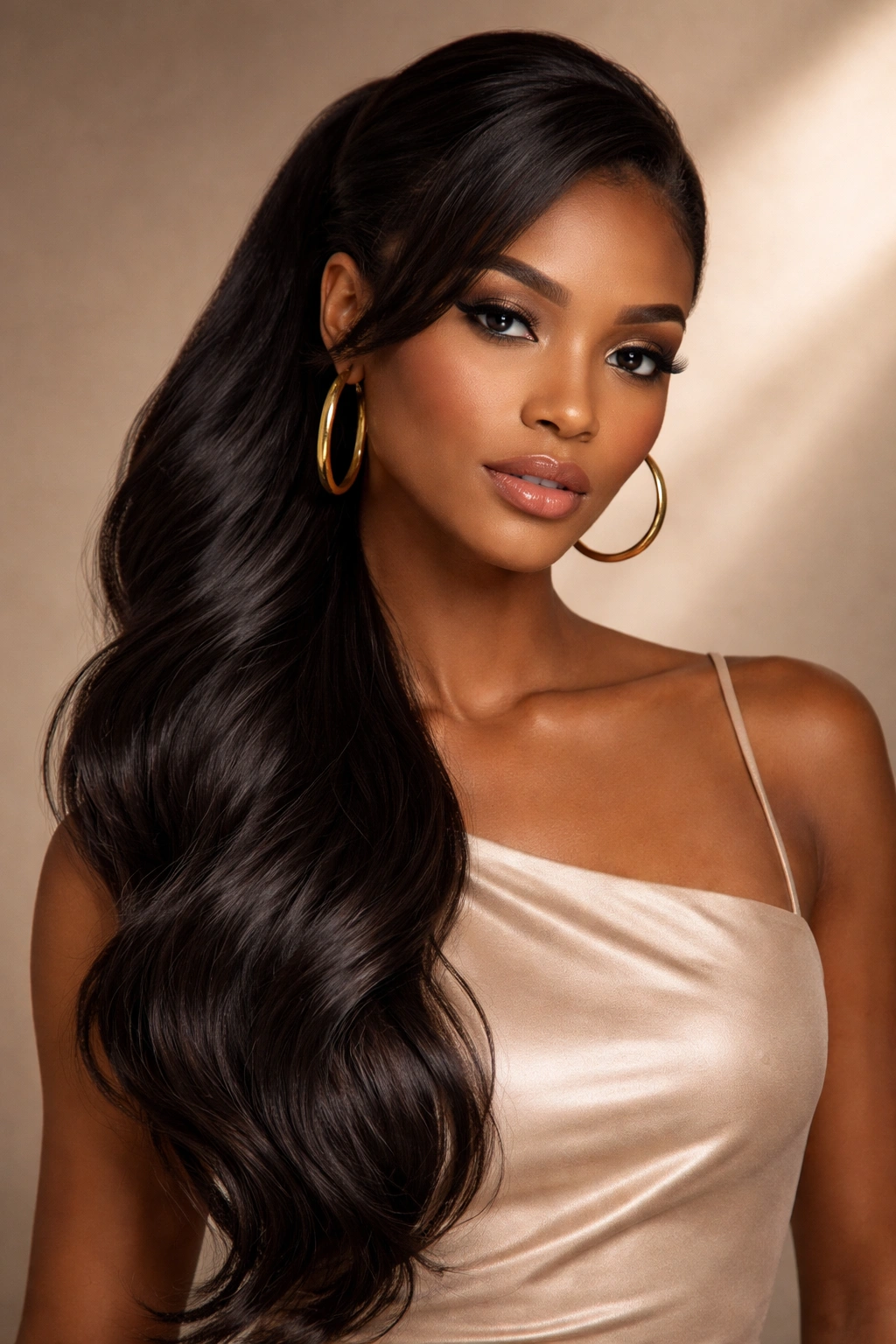
The side-swept ponytail positions the gathering point to one side of your head rather than center, creating an asymmetrical, fashion-forward look that feels modern and effortlessly cool. The weave cascades across one shoulder, creating a long line that elongates your silhouette while showcasing the full length and thickness of your hair. This style works beautifully for dates, photoshoots, or anytime you want to feel confident and a little bit editorial.
The Visual Impact of Side-Swept Placement
Positioning the ponytail to one side creates a diagonal line that elongates your face and neck while adding an element of asymmetrical intrigue. The weave drapes naturally across one shoulder, and gravity works in your favor—the weight of the ponytail adds fullness and ensures it stays perfectly positioned. The asymmetry also makes the style feel intentional and curated rather than basic, elevating the overall aesthetic despite the simplicity of the execution.
Securing a Side-Swept Ponytail Flawlessly
- Determine which side you want to sweep the ponytail toward, considering your face shape (if you have a rounder face, sweeping away elongates; if angular, sweeping toward can balance)
- Apply a smoothing serum and brush the hair to one side, creating a sleek base that guides the eye toward the direction you’re sweeping
- Position the elastic two to three inches to the side of center, not at the back of your head, to create the proper swept silhouette
- Ensure the ponytail’s weight sits comfortably on one shoulder—if it pulls, adjust the elastic position slightly
- Gently pull a few face-framing pieces loose to soften the look and add dimension
Worth knowing: Curly or wavy weave works beautifully for side-swept styles because the texture naturally cascades beautifully across the shoulder, creating movement and fullness.
10. Bubble Weave Ponytail
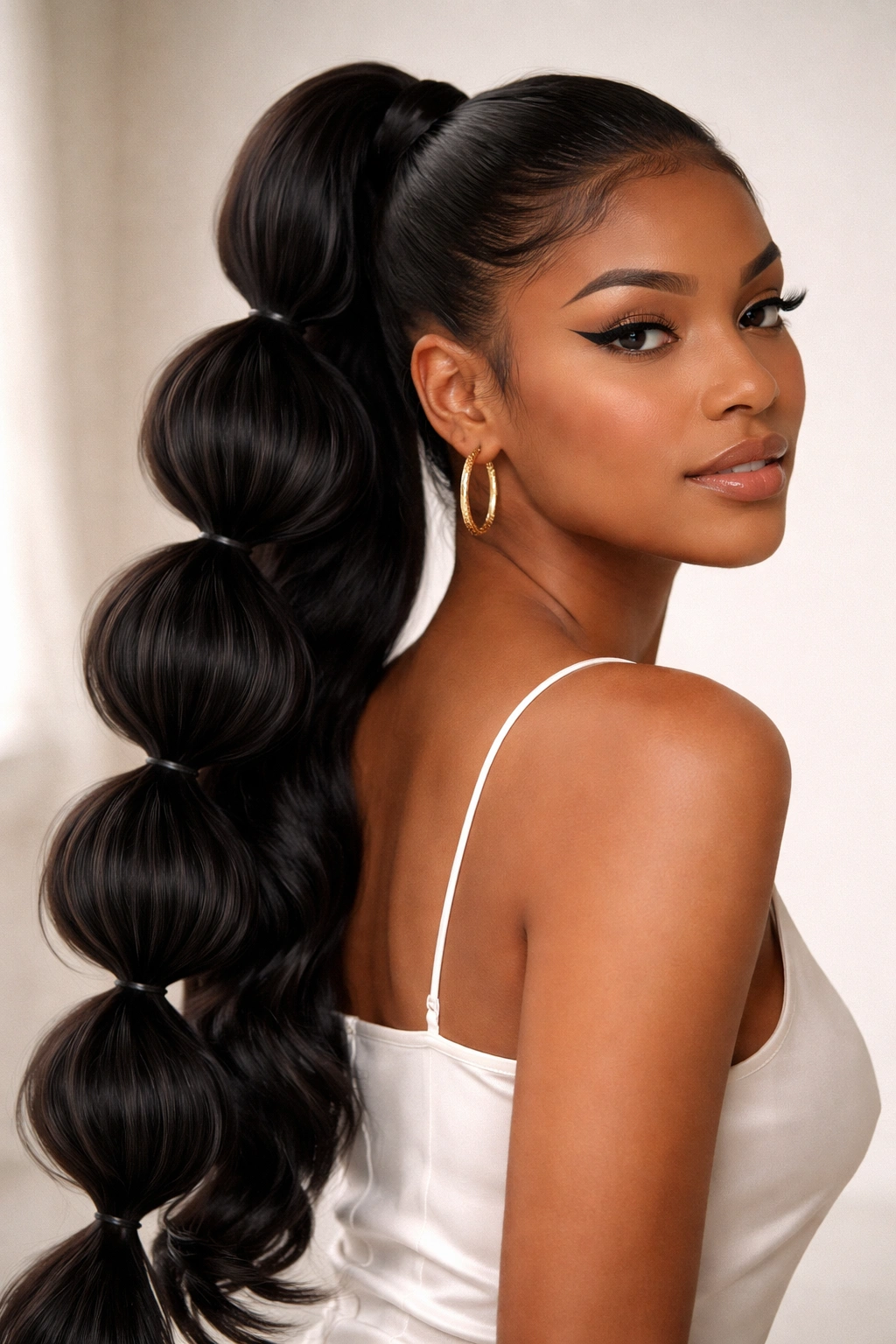
Bubble ponytails take fullness to playful extremes by creating distinct sections (or “bubbles”) along the length of the ponytail with smaller elastics spaced evenly apart. Each bubble section is gently pulled outward to create a puffy, dimensional effect that’s visually striking and incredibly voluminous. This style is perfect for someone who wants maximum impact, a bold statement, or a look that’s distinctly different from standard ponytail styles.
Why Bubbles Multiply Perceived Volume
Each bubble section represents a gathering point where hair is concentrated, and the pulling outward process expands that concentration into a fuller silhouette. When you create five to seven bubble sections down the length of a ponytail, you’re essentially multiplying the visual fullness by creating multiple “fullness moments” rather than just one at the base. The bubbles also allow the hair to move more freely between sections, creating dynamic movement that reads as incredibly healthy and abundant.
Creating Picture-Perfect Bubble Sections
- Start with a tight, secure base ponytail that won’t slip as you add bubbles—use a high-quality elastic and consider securing with bobby pins
- Space elastics about 2-3 inches apart down the length of the ponytail, depending on how many bubbles you want and how thick your weave is
- After placing each elastic, gently pull the hair between the two elastics outward and upward, creating a balloon-like bulge
- Distribute the hair evenly around each bubble rather than pulling from just one side—this creates a uniform, polished appearance
- Use bobby pins inserted horizontally through the pulled-out sections to lock the shape in place and prevent it from flattening
Insider note: Bubble ponytails photograph beautifully because the multiple dimension points catch light from different angles, creating a dimensional, three-dimensional appearance.
11. Twisted Weave Ponytail
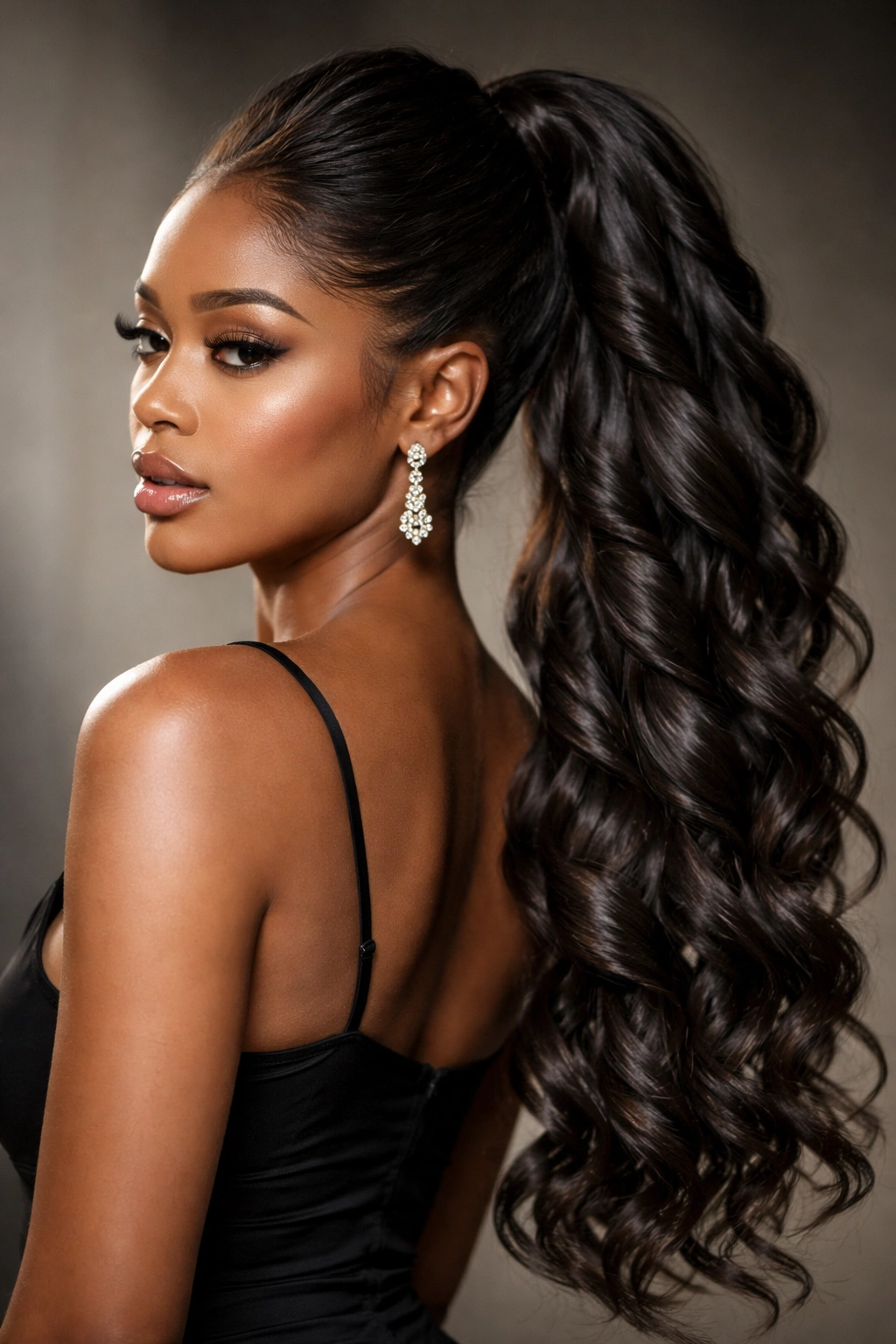
Twisted ponytails feature spiral sections woven throughout the style, creating intricate detail and visual complexity that elevates fullness from simple to sophisticated. You can twist the entire ponytail from root to tip, incorporate twisted sections alongside straight sections, or create twisted accents around the elastic for detail. The twisting technique adds both texture and a polished, intentional appearance that makes the weave look more styled and strategic.
How Twisting Adds Visual Fullness
Twisting the hair compresses it slightly, which actually makes it appear denser than loose hair of the same volume. The spiral pattern also creates natural highlights and shadows as light plays across the twisted sections, enhancing the perception of depth and dimension. Additionally, twisted sections hold their shape throughout the day without frizzing or flattening, maintaining fullness and polish from morning through evening.
Executing Twists in Your Weave Ponytail
- Divide your gathered ponytail into 2, 4, or 6 sections depending on how twisted and intricate you want the final look
- Take two sections and cross them over each other repeatedly, maintaining tension so the twist stays compact and defined
- Secure each twisted section at the end with a small elastic, then gently pull the twist slightly to loosen and fuller it
- For a more subtle look, twist only the outer or bottom sections of the ponytail while keeping the top straight
- Pin twisted sections strategically with bobby pins if they start to unravel or shift throughout the day
Pro tip: Two-strand twists (where you only twist two sections together) are easier for beginners and still create significant visual impact compared to a smooth ponytail.
12. Half-Up Weave Ponytail
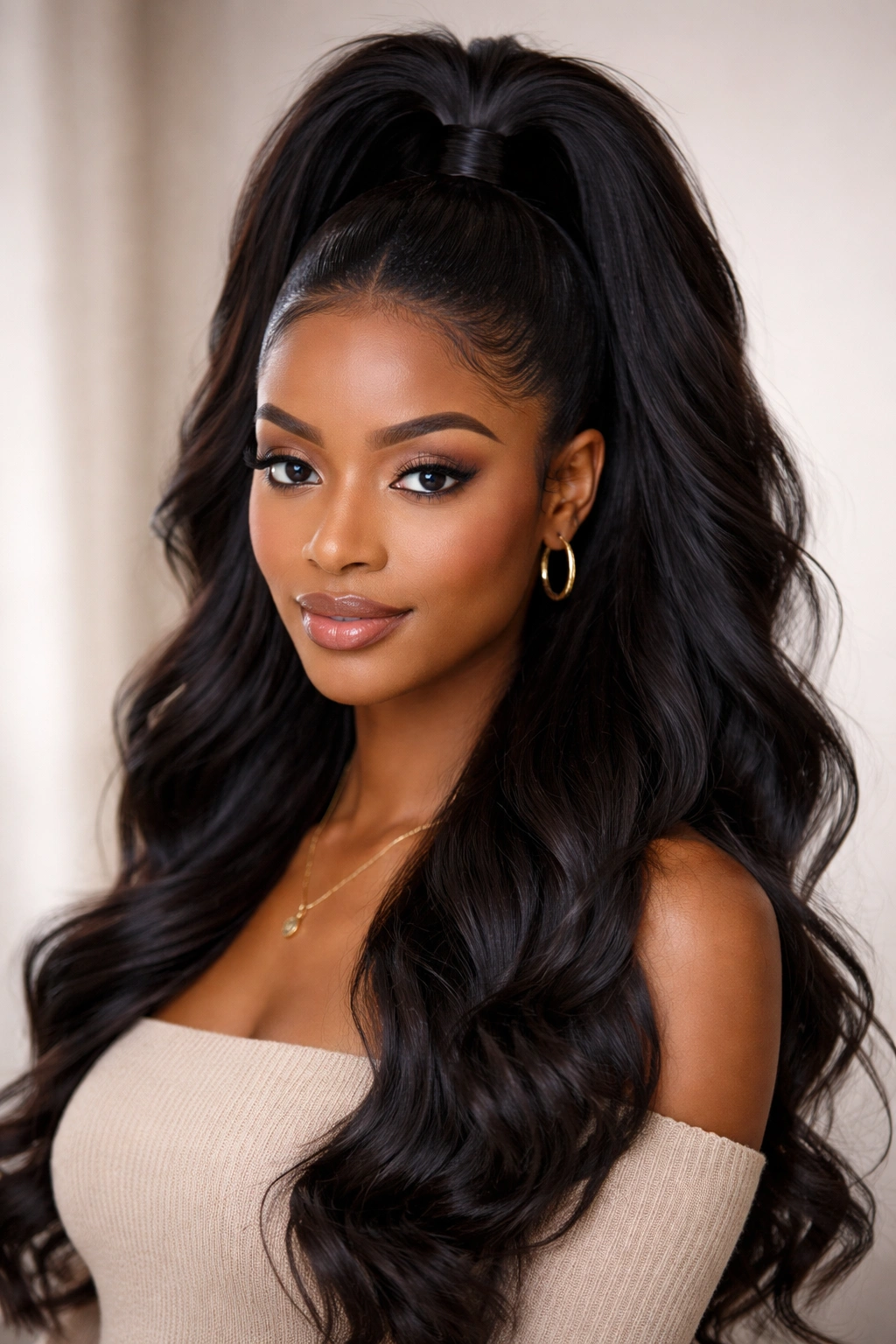
The half-up style gathers the top portion of your hair into a high ponytail while leaving the bottom half down, creating fullness both at the crown and throughout the length. This hybrid style offers the best of both worlds—the voluminous top of a high ponytail combined with the flowing length and freedom of down hair. It’s perfect for people who want to keep their face completely visible while still creating dramatic volume and dimension.
Why Half-Up Maximizes Both Elevation and Length
By gathering only the top portion, you’re creating a concentrated point of fullness at the crown that draws attention upward and creates a lifted appearance. The remaining length flows below that gathered section, allowing you to showcase the full length of the weave while the gathered top creates a halo of volume. This style also allows more movement and variation in texture—the top can be sleek while the bottom is curly, or vice versa, for multi-dimensional appeal.
Styling a Half-Up Weave for Balanced Fullness
- Determine your desired division point (typically halfway down the head, though you can vary this based on preference)
- Gather the top section smoothly, using a paddle brush to create a polished base free of bumps or flyaways
- Secure with an elastic that matches your hair color, then wrap a small section of weave around it to conceal the elastic
- Leave the bottom section completely down, curling or waving it if desired for texture contrast with the top
- Gently pull the gathered section at the base to create a fuller, more voluminous appearance at the crown
Worth knowing: If your bottom section is straight weave, applying a lightweight serum creates shine and makes it blend seamlessly with the gathered top for a cohesive look.
13. Wavy Weave Ponytail with Highlights
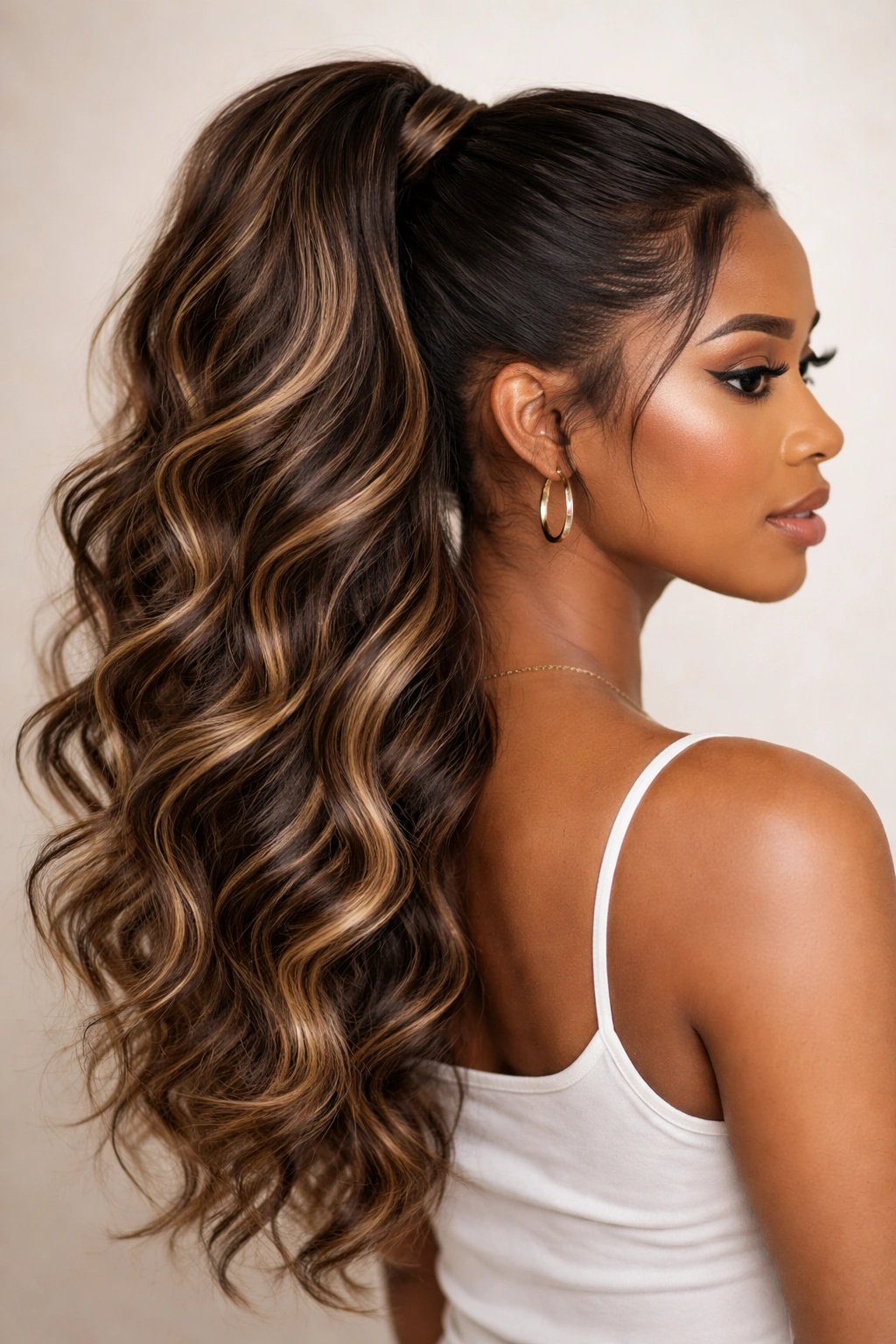
Wavy weave ponytails with incorporated highlights combine soft, romantic texture with strategic color placement for depth, dimension, and an undeniably fuller appearance. Highlights—whether subtle or bold—create visual breaks in the hair that make it appear thicker and more textured than solid color. The wave pattern adds movement and bounce that magnifies the fullness effect while the highlights catch light beautifully, enhancing shine and dimension.
The Science of Highlights Creating Volume
Lighter-colored hair appears to move forward visually while darker color recedes—when you strategically place highlights, you’re creating multiple focal points that the eye travels to, making the overall mass appear larger. Additionally, the contrast between base color and highlights creates visual texture and depth, making even moderate-density hair appear thick and healthy. Waves combined with highlights create what’s often called “lived-in” or “sun-kissed” fullness—an effortlessly abundant aesthetic.
Installing Highlights in Your Weave Ponytail
- Choose highlight colors that complement your skin tone and work with your base weave color—typically 2-3 shades lighter creates the most flattering effect
- Consider placement strategically: face-framing sections brighten your complexion, mid-length highlights add dimension, and ends get the most attention in a ponytail
- Install highlighted sections alongside base-color sections so they’re evenly distributed rather than concentrated in one area
- Wave or curl both the base color and highlighted sections so the texture reads cohesively despite the color difference
- Use color-safe products to maintain vibrancy equally in both shades
Insider note: Balayage-style placement (hand-painted rather than geometric sections) creates the most natural, multidimensional appearance that reads as exceptionally full.
14. Sleek High Weave Ponytail with Accessories
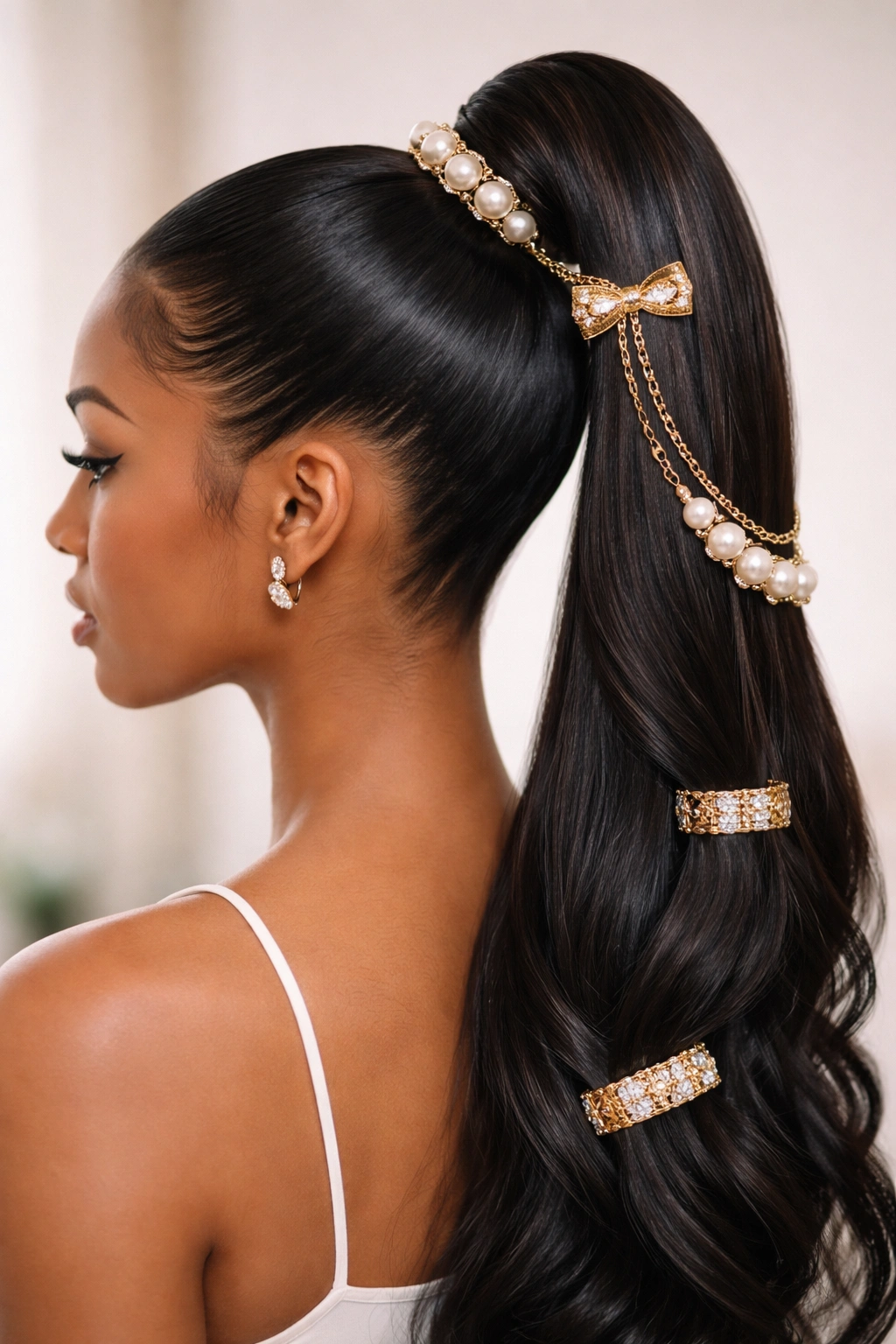
This elevated style combines the instant fullness of a high ponytail with eye-catching accessories that add glamour and draw attention to your hair. Accessories might include decorative clips, pearls, metallic cuffs, hair rings, or jewelry—elements that add intentional style and make the ponytail feel like a complete, curated look. The accessories transform a basic ponytail into a statement style perfect for special occasions, date nights, or anytime you want maximum confidence.
How Accessories Amplify Visual Impact
Strategic accessories draw the eye directly to your ponytail, emphasizing its fullness and making people notice the volume immediately. Metallic or jeweled accessories also catch light, creating additional shine and sparkle that makes hair appear healthier and more vibrant. The intentionality of styled accessories signals that you’ve put thought into your look, which elevates the entire aesthetic even if the ponytail itself is simple.
Choosing and Placing Ponytail Accessories
- Select one to three accessories maximum—too many create visual clutter rather than elegance
- Consider your outfit and the occasion: delicate pearls for professional settings, bold cuffs for events, minimal jewelry for casual days
- Place accessories at the elastic, slightly below it, or distributed down the ponytail depending on your desired effect
- Ensure accessories don’t pull or pinch your hair—comfort matters as much as appearance
- Mix metals if desired (gold and silver together creates modern, intentional style) or stick with one metal tone for classic elegance
Pro tip: A sleek high ponytail with minimal accessories actually showcases fullness better than one weighed down with multiple pieces—let the hair be the star.
15. Ombré Weave Ponytail
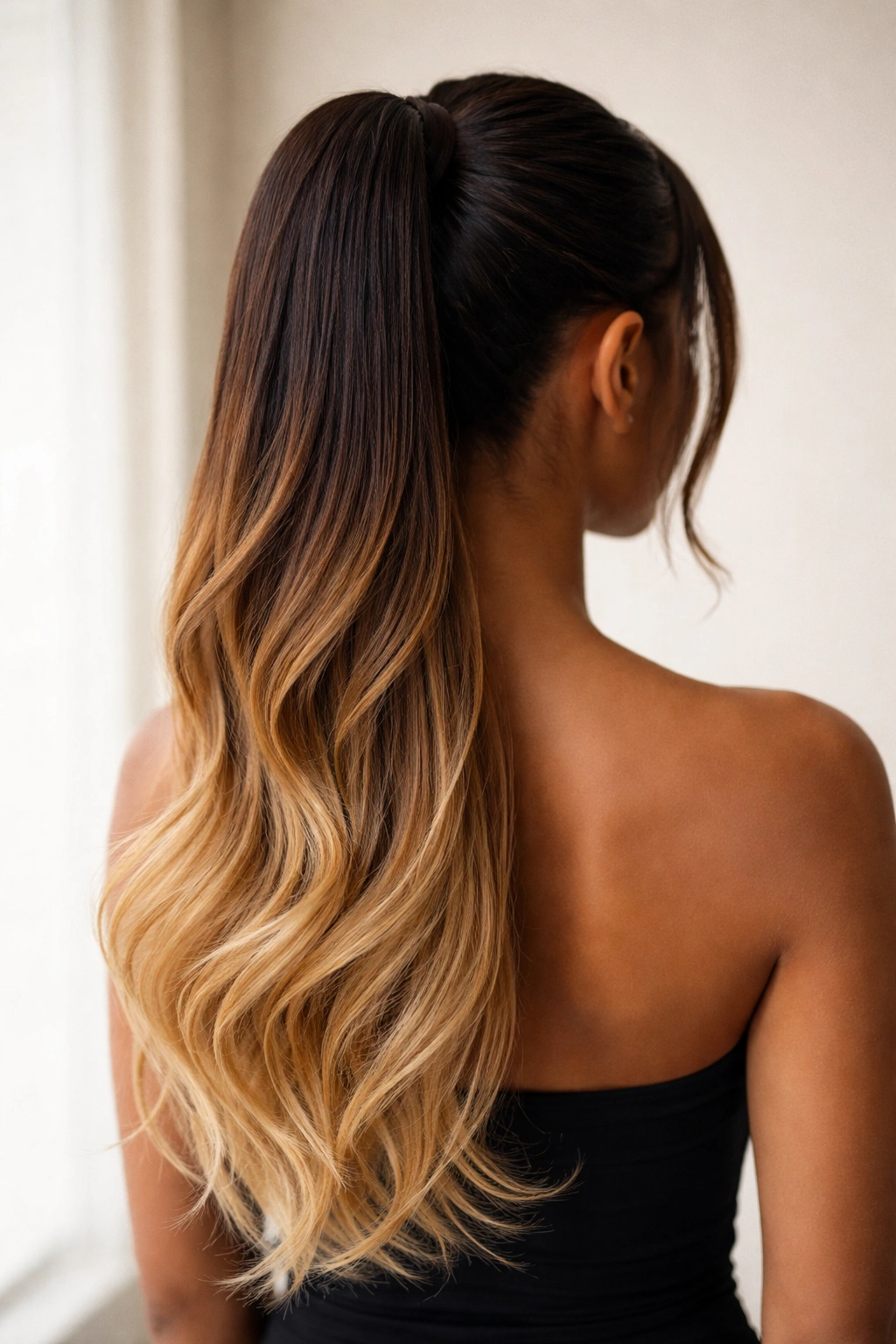
Ombré weave ponytails feature a gradient transition from dark roots to light ends, creating the illusion of dimension, length, and surprising fullness through strategic color placement. The gradient draws the eye from roots to tips, making the ponytail appear longer and fuller because of the visual journey the color creates. This style is incredibly forgiving—it works with virtually any skin tone and looks effortlessly expensive without requiring constant touch-ups.
Why Ombré Creates Fullness Illusion
The color transition creates multiple focal points that catch light differently as they descend the ponytail, making the hair appear more textured and abundant than a single color. The lighter color at the ends appears to fade away visually, which paradoxically makes the overall mass appear larger as your eye follows the gradient. Ombré also creates a rooted appearance even when your actual roots show slightly, eliminating the high-maintenance feeling of roots showing in solid-color hair.
Creating a Flawless Ombré Gradient
- Plan your color transition in advance: choose a darker root shade that matches or coordinates with your natural hair, and a lighter end shade that flatters your skin tone
- Ensure the transition is gradual rather than abrupt—the best ombré looks like a natural progression rather than two separate colors
- Install darker-colored weave sections at the base and progressively lighter sections toward the ends, with blended mid-tone sections creating the transition
- Consider whether you want a traditional dark-to-light ombré or a reverse ombré (light to dark)—both create fullness but read differently
- Use toning shampoo and color-safe products to maintain both shades evenly and prevent one from fading faster
Worth knowing: The ombré technique is incredibly forgiving—slight fading in lighter sections actually enhances the dimensional, lived-in appearance that makes hair look fuller.
Final Thoughts
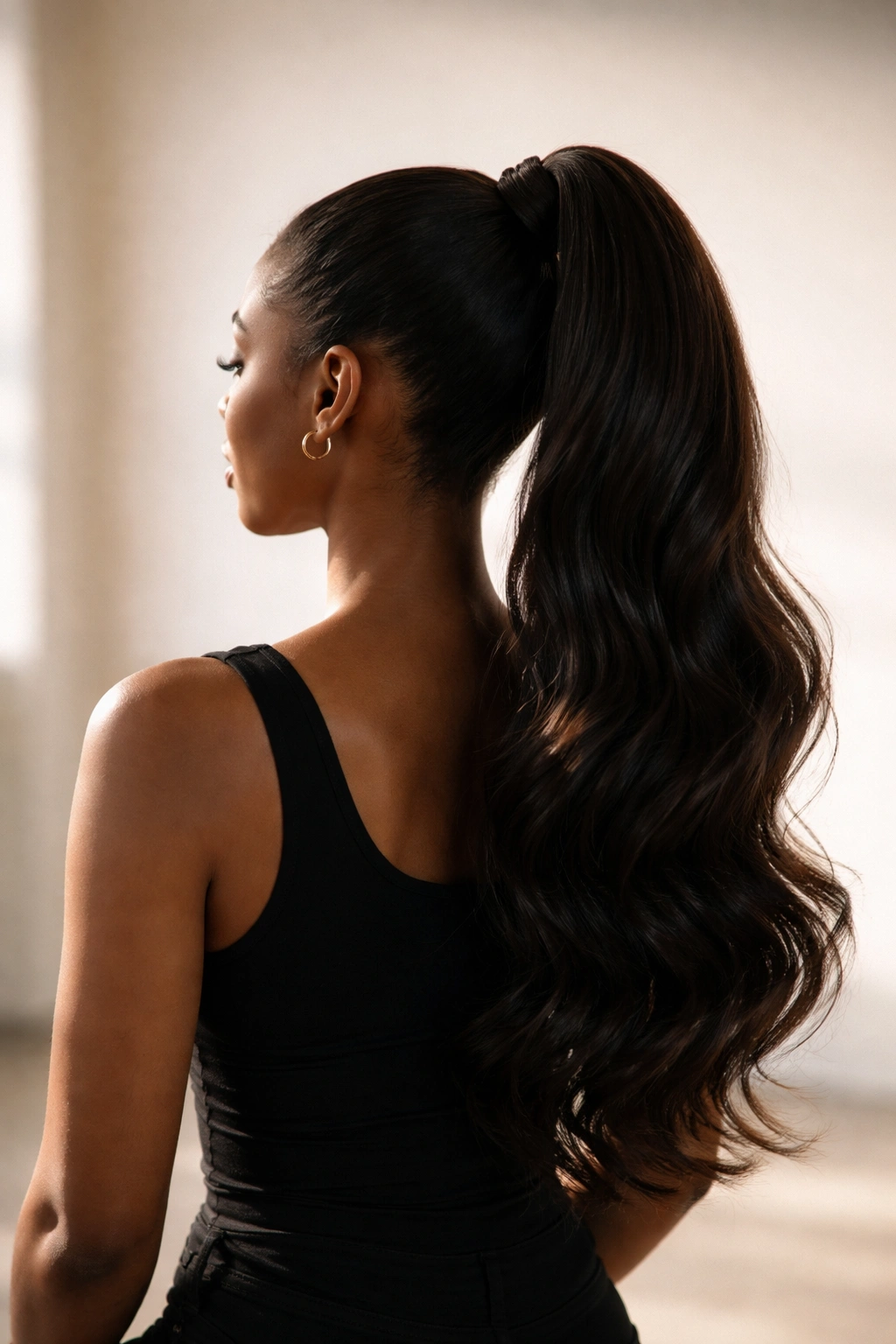
Weave ponytails transform your appearance with instant fullness, length, and versatility that’s nearly impossible to achieve with natural hair alone. Each of the fifteen styles above offers distinct advantages—whether you’re seeking polished professionalism, playful boldness, or romantic dimension. The real power of weave ponytails lies in their customization—you can match your aesthetic exactly, switching styles whenever you want a change without damaging your natural hair.
The key to a ponytail that truly delivers fullness is choosing quality weave hair, ensuring proper installation that doesn’t strain your natural hair, and committing to realistic maintenance. A well-installed weave ponytail actually protects your natural hair while giving you the confident, abundant look you deserve. Whether you go with classic straight, textured curls, or dimensional highlights, your weave ponytail becomes more than a hairstyle—it’s an investment in how you feel about yourself.
