



Small bob-length box braids have a sneaky kind of power. They’re short enough to feel light, long enough to frame the face, and neat enough to look intentional even on days when the rest of your life is not.
That’s why small bob-length box braids for Black women keep showing up in salons, in mirror selfies, and in that mental folder of styles you save for “next install.” They sit in a sweet spot between polished and easy. You get movement without the neck drag, shape without the fuss of waist-length braids, and enough surface area to play with parting, accessories, and color.
The parting matters more than people admit. So does the weight at the ends, the shape around the chin, and whether the front rows lie flat or puff out like a little pyramid. A great bob-length set looks crisp from the scalp down. A sloppy one looks busy in the wrong way. That’s the whole game.
Some versions lean clean and classic. Others feel softer, louder, or more playful. The style you pick changes how the braids read with hoop earrings, lipstick, glasses, or a plain white tee, and that is exactly why the bob keeps earning its place.
1. Classic Chin-Grazing Center-Part Bob
The cleanest version of small bob-length box braids is the one that lands right at the chin and doesn’t ask for much else. A sharp center part gives the style a calm, balanced frame, and the short length keeps the ends from overwhelming your features. It’s the kind of look that makes cheekbones do a lot of the talking.
Why This Shape Works
A center part draws the eye straight down the face, which works well when you want symmetry and a little bit of structure. On Black women with fuller cheeks, longer jaws, or a lot going on in the outfit, that steady middle line can anchor everything.
The bob itself should sit at jaw level to just below the chin, not grazing the shoulders. If it goes much longer, the whole effect changes. It stops being a bob and starts acting like a short layered set, which is fine, but it is not the same mood.
Little Details That Keep It Crisp
- Keep the part clean and straight from front hairline to crown.
- Ask for small, even sections so the braid size matches the short length.
- Seal the ends neatly so they don’t fray and puff out.
- Let the perimeter sit a little looser around the nape if you want less tension.
Best tip: if you want the bob to look expensive without adding extras, keep the parting sharp and the ends blunt. That’s enough. Really.
2. Side-Part Sleek Bob
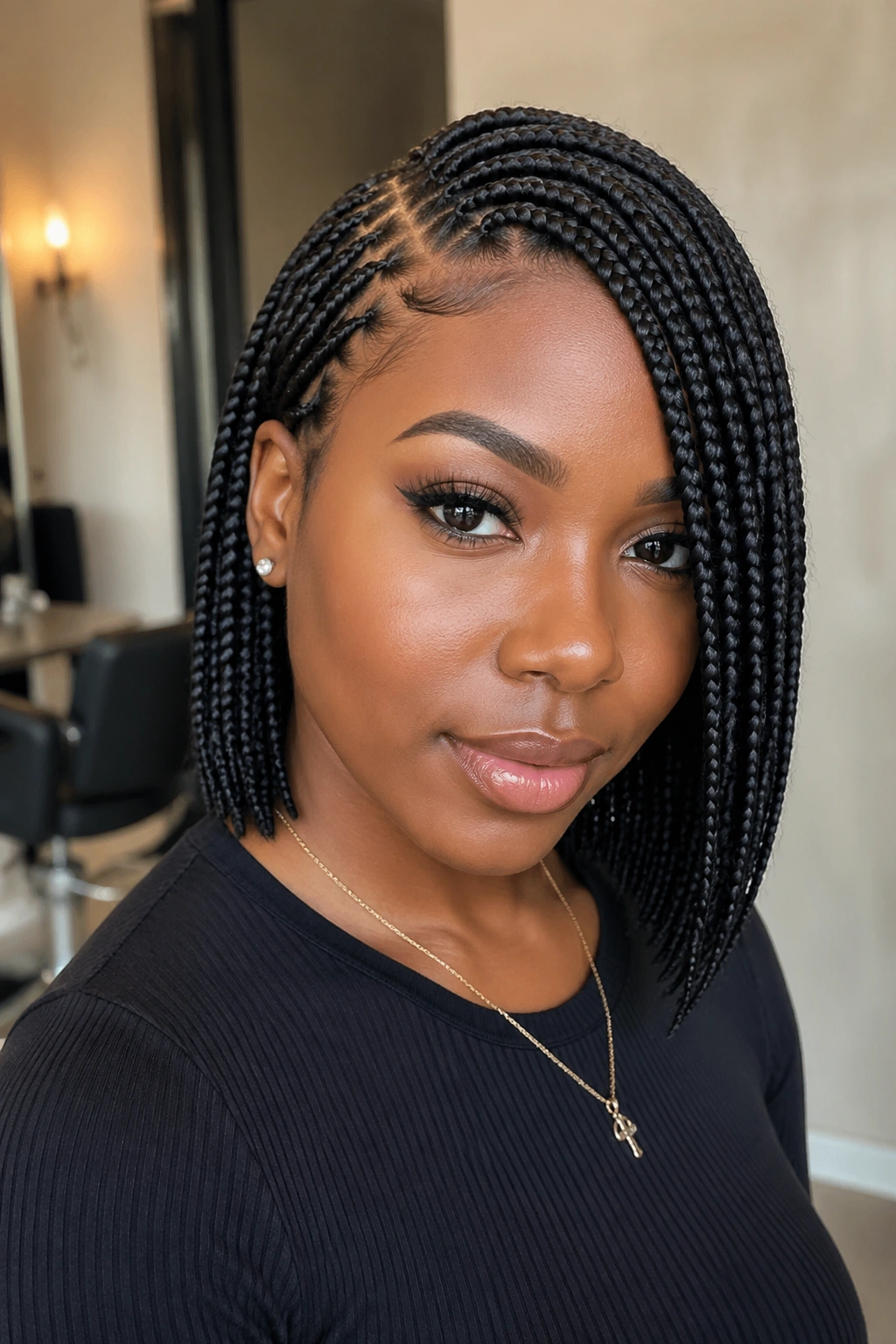
A deep side part changes the whole attitude of the bob. The braids stop reading as neatly symmetrical and start looking a little more deliberate, almost like you dressed up on purpose even if you barely thought about it. That shift is small on paper and big in the mirror.
The side part works especially well on bob-length box braids because the shorter length already has swing. Once you move the part off center, the front braids fall across one side of the face and soften the line near the eye. It can make a round face look a bit longer and give square faces a softer front edge.
What I like about this version is that it doesn’t need extra decoration. A good side part, a smooth front row, and a clean finish near the temples are enough. If you wear hoops or stacked earrings, even better. The braids leave room for them to show.
If your braider is heavy-handed with gel or edge control, ask for a light hand. The style should look sleek, not glued down. That’s a boring distinction until you’ve had to wear itchy buildup for two weeks. Then it becomes the only distinction that matters.
3. Flipped-Out Ends Bob
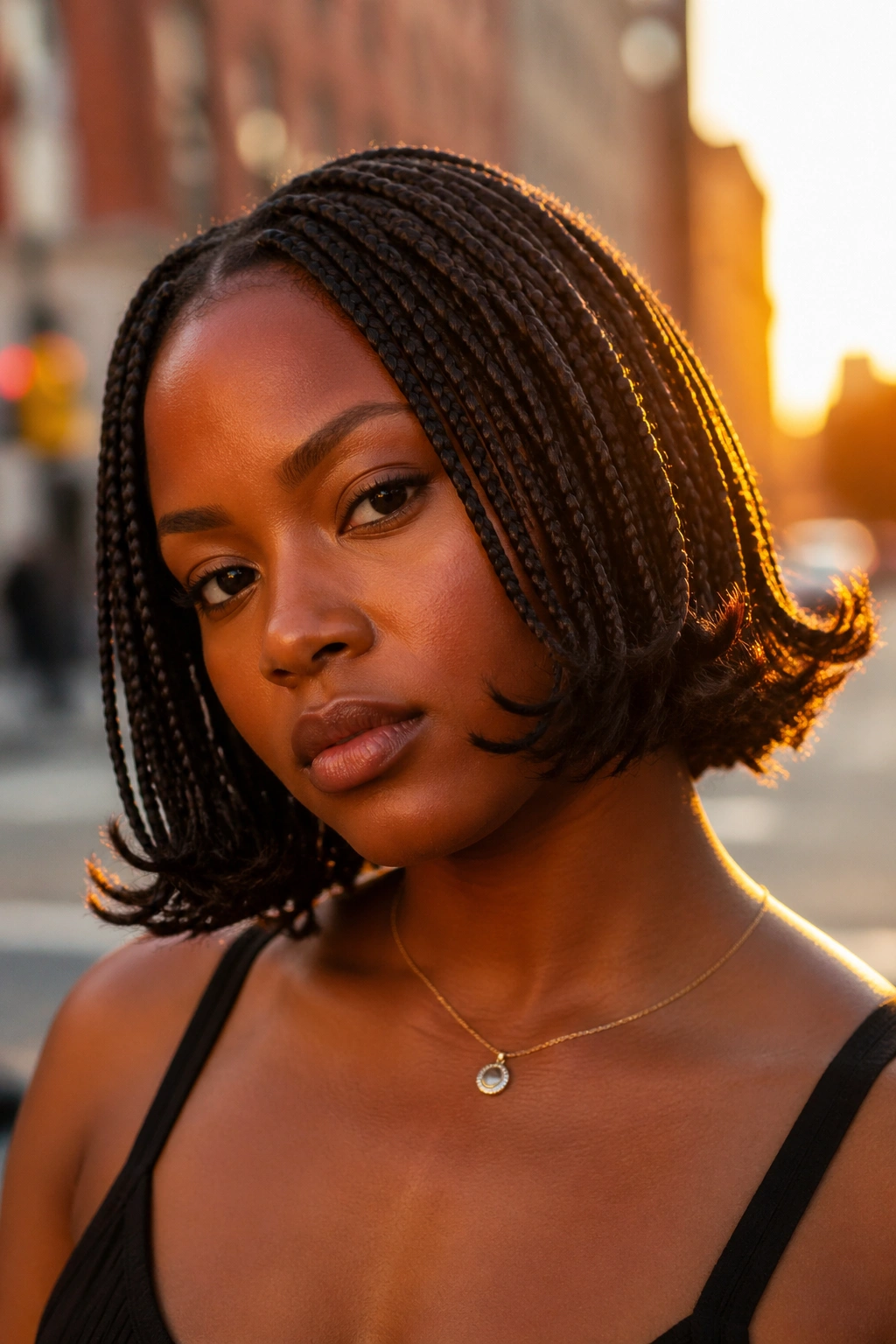
Why do flipped-out ends feel so cheerful on small bob-length box braids? Because the shape breaks the straight line at the bottom and gives the style a little motion, even when the rest of the set is neat and orderly. One tiny bend at the end changes the whole read.
How to Wear the Flip
You can ask for a slight outward curve at the last inch or so of the braids. Some braiders set that with small rollers or flexi rods before dipping the ends, and others shape it with a careful wrap and hold. The trick is subtlety. You want a soft outward flick, not a braid that looks like it was startled.
This works best when the bob is cut right around the jawline. If the braids are too long, the flip can look fussy. If they’re too short, the bend barely shows. The middle ground is where it lives.
What Makes It Look Intentional
A flipped bob should still have a clean part and a strong shape near the scalp. The flip is the punctuation mark, not the sentence. Too much curl at the bottom turns it from stylish into overworked.
- Keep the flips uniform across the perimeter.
- Leave the front pieces a touch longer if you want movement near the cheeks.
- Use a light mousse after installation to calm flyaways.
- Sleep with a satin scarf so the ends keep their bend.
It reads playful without getting loud. That’s the appeal.
4. Beaded Bob With Small Ends
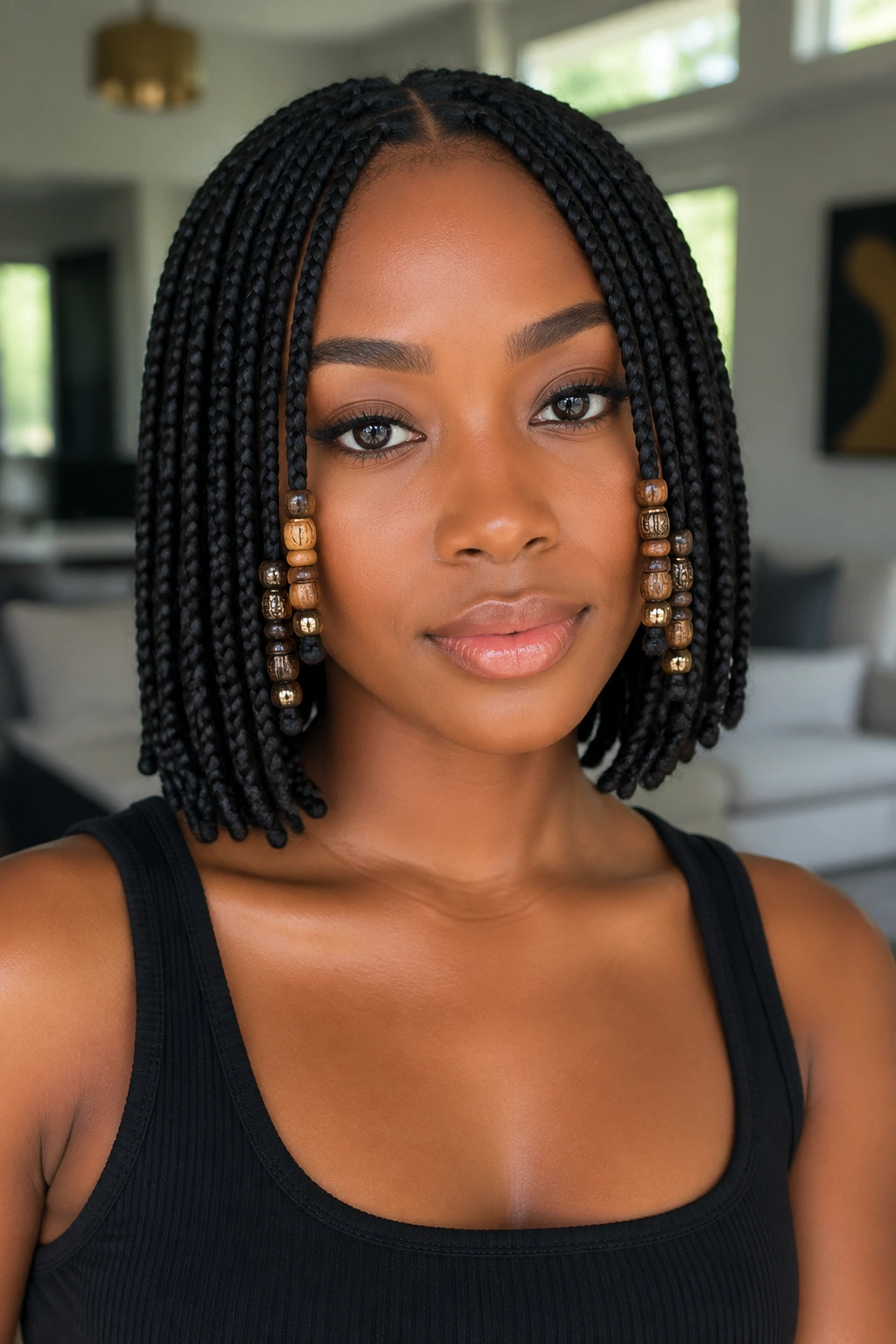
The first thing you hear is the sound. A few beads clicking softly when you turn your head, the kind of tiny movement that makes a bob feel alive instead of static. On a short set of box braids, beads can feel especially good because they sit close to the face and don’t weigh the whole style down.
This version works best when the beads are placed with restraint. A single bead on every braid can get heavy fast. A better move is to place them on the outer rows, or cluster them at the front where they frame the cheek. That keeps the look playful and avoids dragging the shorter braids downward.
A lot of people go wrong by mixing too many bead sizes. You do not need ten different shapes. Pick one bead style and let the braid pattern do the work. Clear, gold, or wooden beads all read differently, but each one looks better when the rest of the set stays quiet.
- Put the bead weight closer to the ends, not right at the roots.
- Keep a few braids bead-free so the style can breathe.
- Use smooth bead openings to avoid snagging synthetic hair.
- Choose lighter beads if your braids are very small.
It’s a small choice. The effect is not small.
5. Half-Up Half-Down Bob
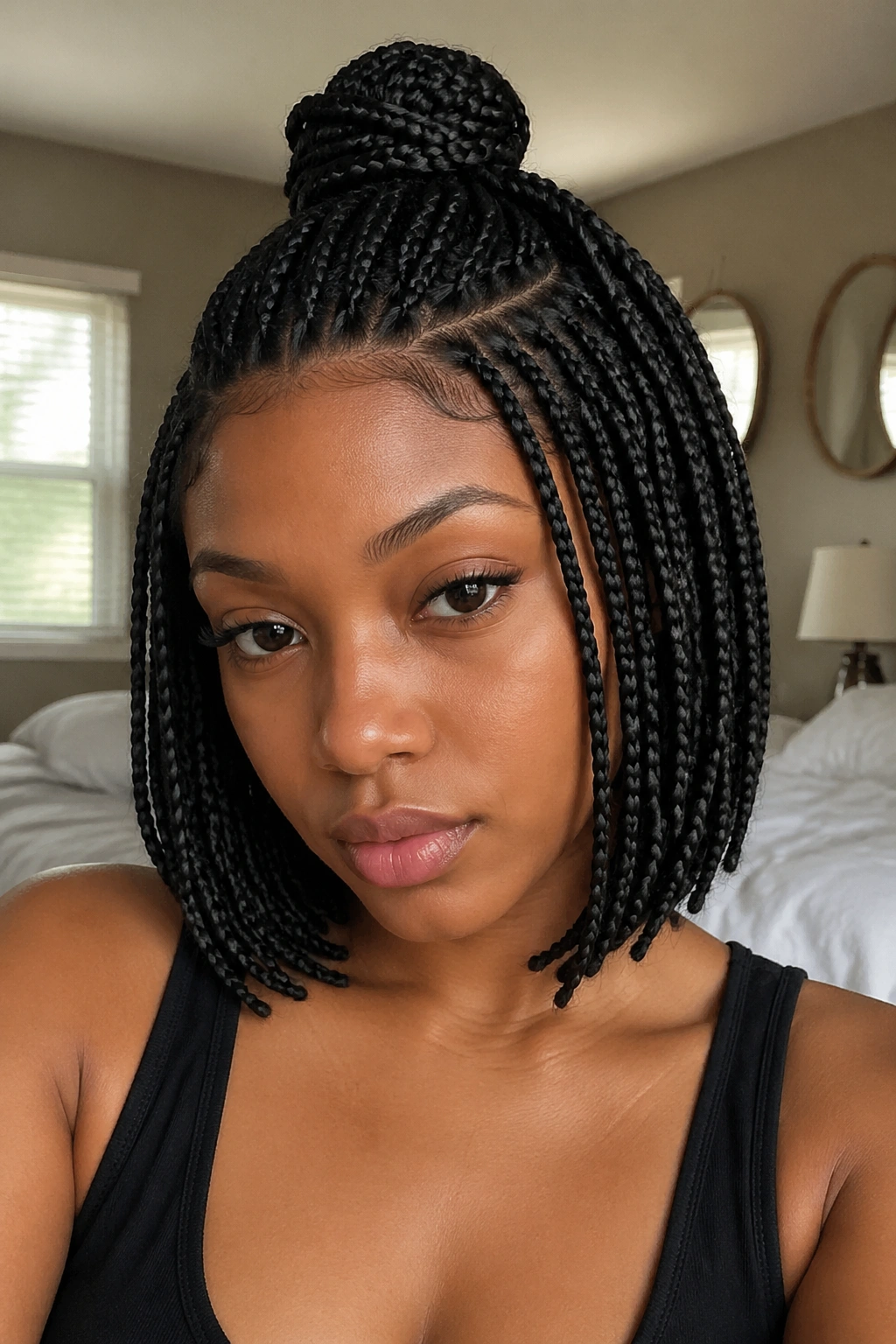
Some mornings call for a style that gets the braids off your face without turning them into a full updo. That’s where the half-up half-down bob lives, and it has more range than people give it credit for. It can look school-sweet, neat enough for work, or a little romantic depending on how high you lift the top section.
The nice part is the balance. The lower braids keep the bob shape visible, so you don’t lose the line that makes short box braids flattering in the first place. The top section, gathered into a small knot, puff, or ponytail, opens up the face and shows off the forehead and brows. If you like earrings, this is one of the better setups.
Go easy on the tie point. A tight anchor at the crown can turn into a headache by lunchtime, and nobody needs that. A wrapped braid, a satin scrunchie, or a soft hair tie gives the style enough hold without yanking the scalp. That little decision matters more than people think.
It also gives you a quick day-two refresh. Smooth the front, lift the crown, and let the ends swing. Done.
6. Tucked-Behind-the-Ear Bob
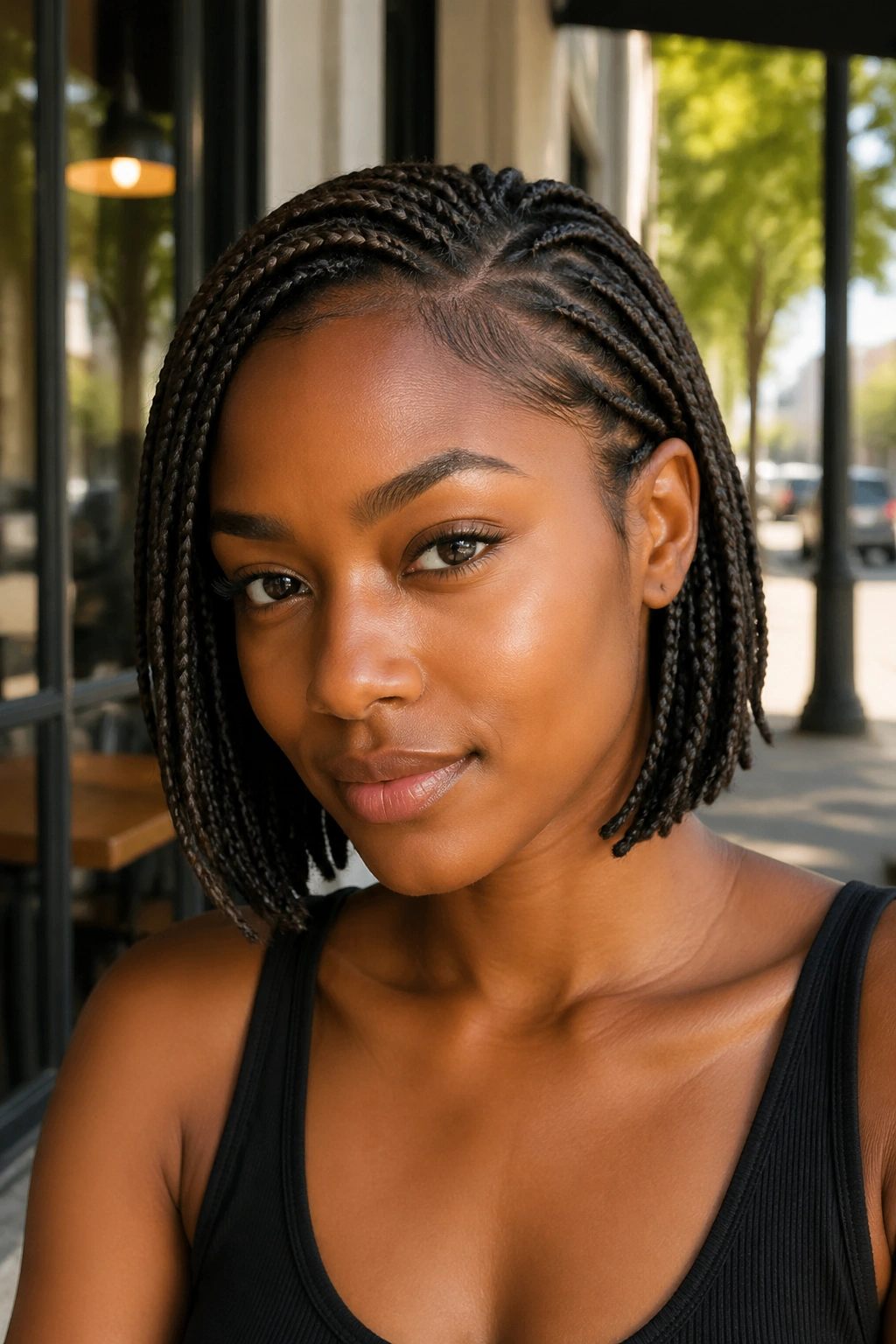
This is the version that looks polished without trying to act polished. The braids tuck neatly behind one or both ears, showing the jawline, the earrings, and a little bit of neck. On small bob-length box braids, that tiny tuck can make the whole style feel lighter and sharper at the same time.
Unlike a side part, which changes the whole front shape, the tucked version keeps the center or off-center part intact and simply gets the front rows out of the way. That makes it a nice choice if you want structure but still want to show your face. Glasses wearers tend to love this one because the braids stop fighting the frames.
The style looks best when the front braids are smooth enough to stay tucked for a few hours without constant fixing. A little mousse at the roots helps. So does braiding the front rows with clean tension and not too much bulk. If the front is bulky, the tuck falls apart every twenty minutes.
It’s not flashy. That’s the point. Clean, close, and easy to wear.
7. Triangle-Part Bob
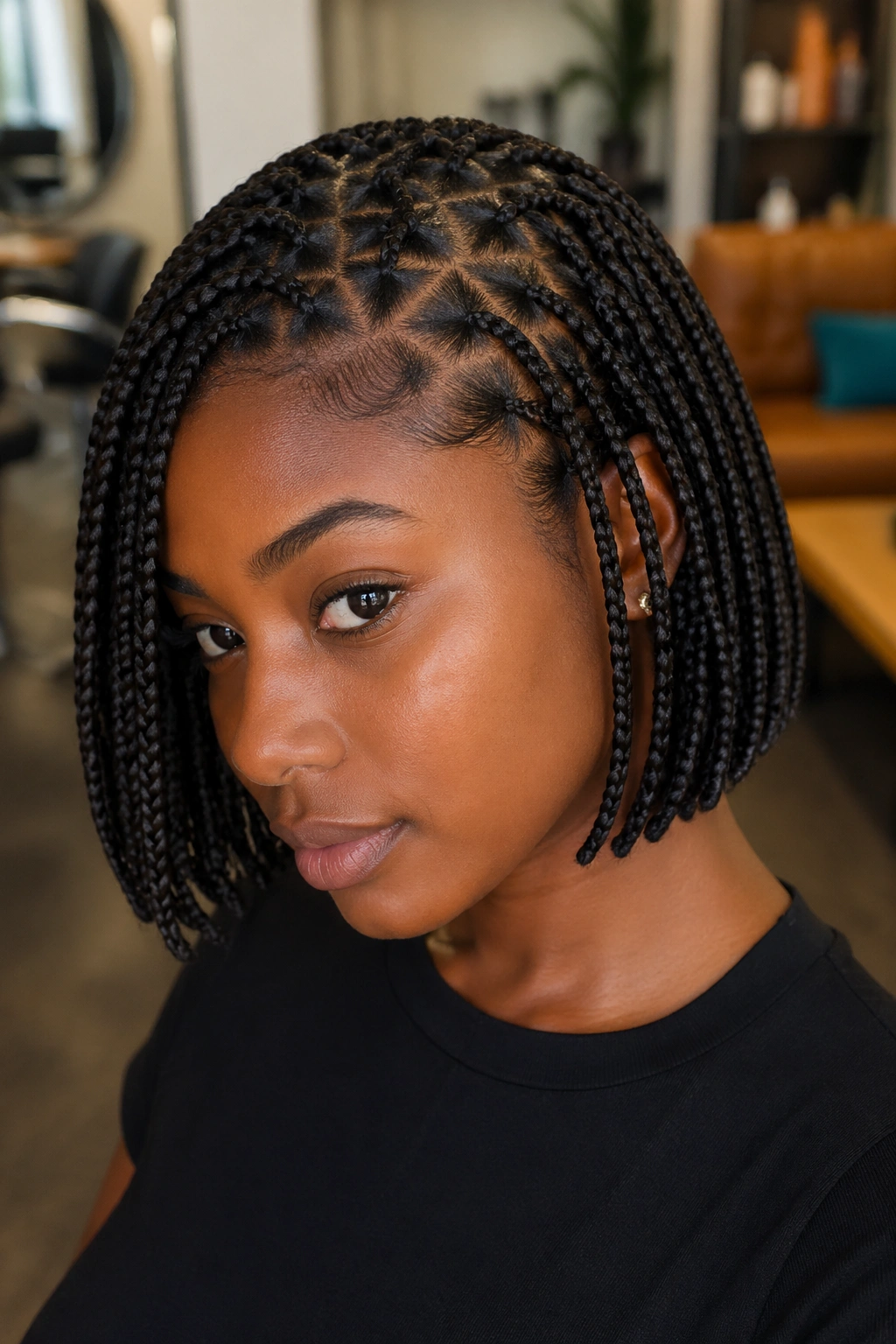
The parting grid changes the mood before the braids even leave the scalp. Triangle parts give the set a more graphic look, and on a short bob that visual pattern stays visible enough to matter. It feels a touch bolder than a square grid, a little less expected, and more handcrafted.
Why Triangle Parts Read Differently
Square parts can look crisp and traditional, which is fine. Triangle parts soften that stiffness by changing the way the scalp pattern repeats. The lines don’t march in perfect rows, so the final set looks more dynamic when the braids swing.
This is a smart choice if you like detail but don’t want accessories or color. The parting itself becomes the decoration. That’s the whole trick.
What To Tell Your Braider
- Ask for small triangle sections so the pattern stays delicate.
- Keep the bob length between the jaw and upper neck.
- Choose a blunt or slightly curved finish at the ends.
- Ask for tidy part lines, because messy triangle parts look accidental fast.
A triangle-part bob suits people who like a little edge without going full dramatic. It has texture before you even touch the hair.
8. Ombré Color-Melt Bob
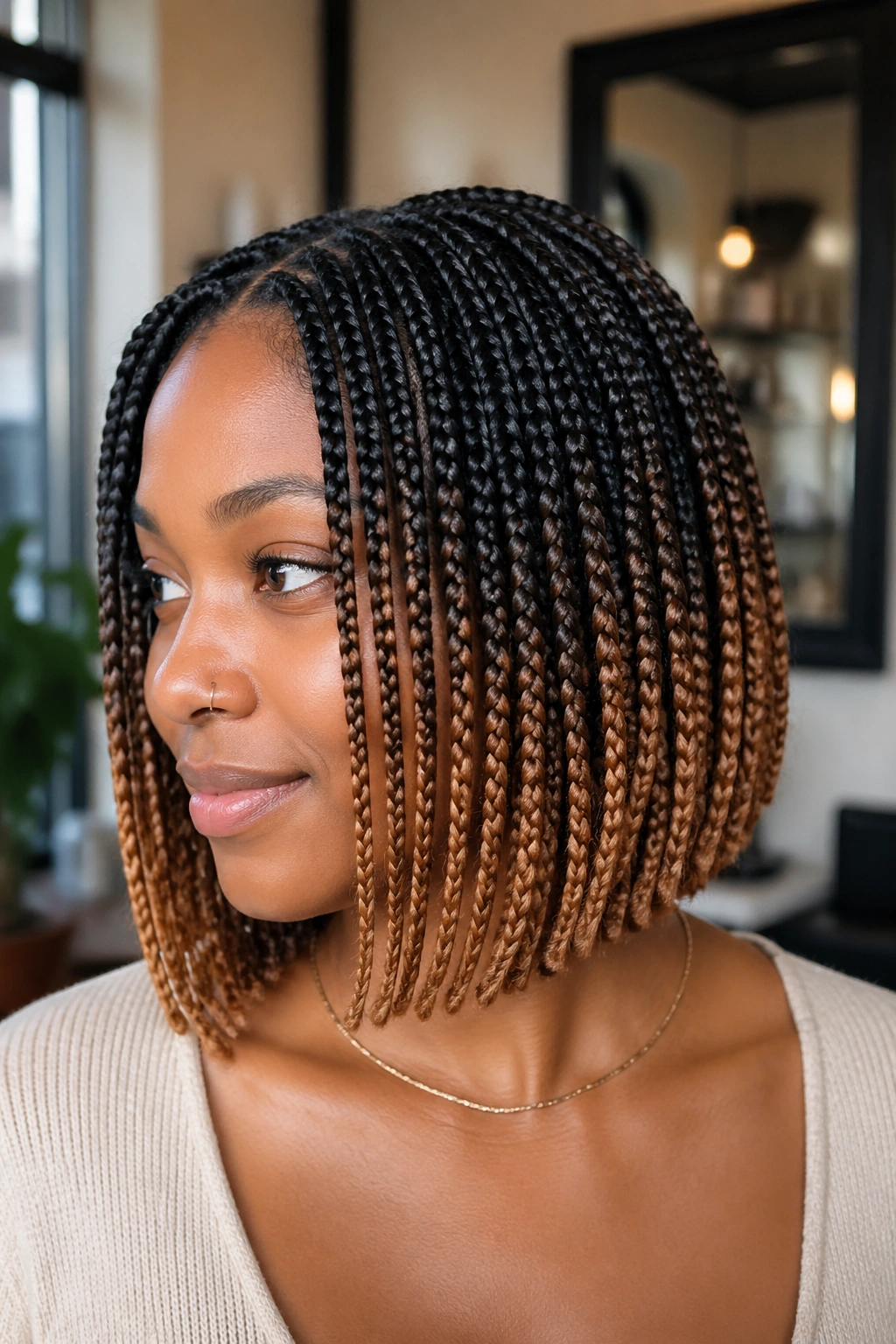
Color does a lot of work on a bob because the length is short enough to show the shift fast. A soft ombré, where the roots stay dark and the ends move into honey, copper, burgundy, or warm brown, gives small bob-length box braids a little depth without turning the style into a costume. That’s a good thing.
The best part about this look is the way it frames the face. Darker roots keep the style grounded near the scalp, while lighter ends pull the eye downward and make the bob feel airy. If you want a set that looks awake in daylight and still calm in low light, this is one of the smarter moves.
You do not need a sharp, obvious color block. In fact, a hard line can make short braids look chopped in half. A gradual shift reads softer and usually looks better on Black women who want the color to feel like part of the style, not a separate event.
If you love maintenance-free color, stay close to your natural base and lift only the ends. The shorter the bob, the easier it is to overdo color. Less can look richer.
9. Layered Graduated Bob
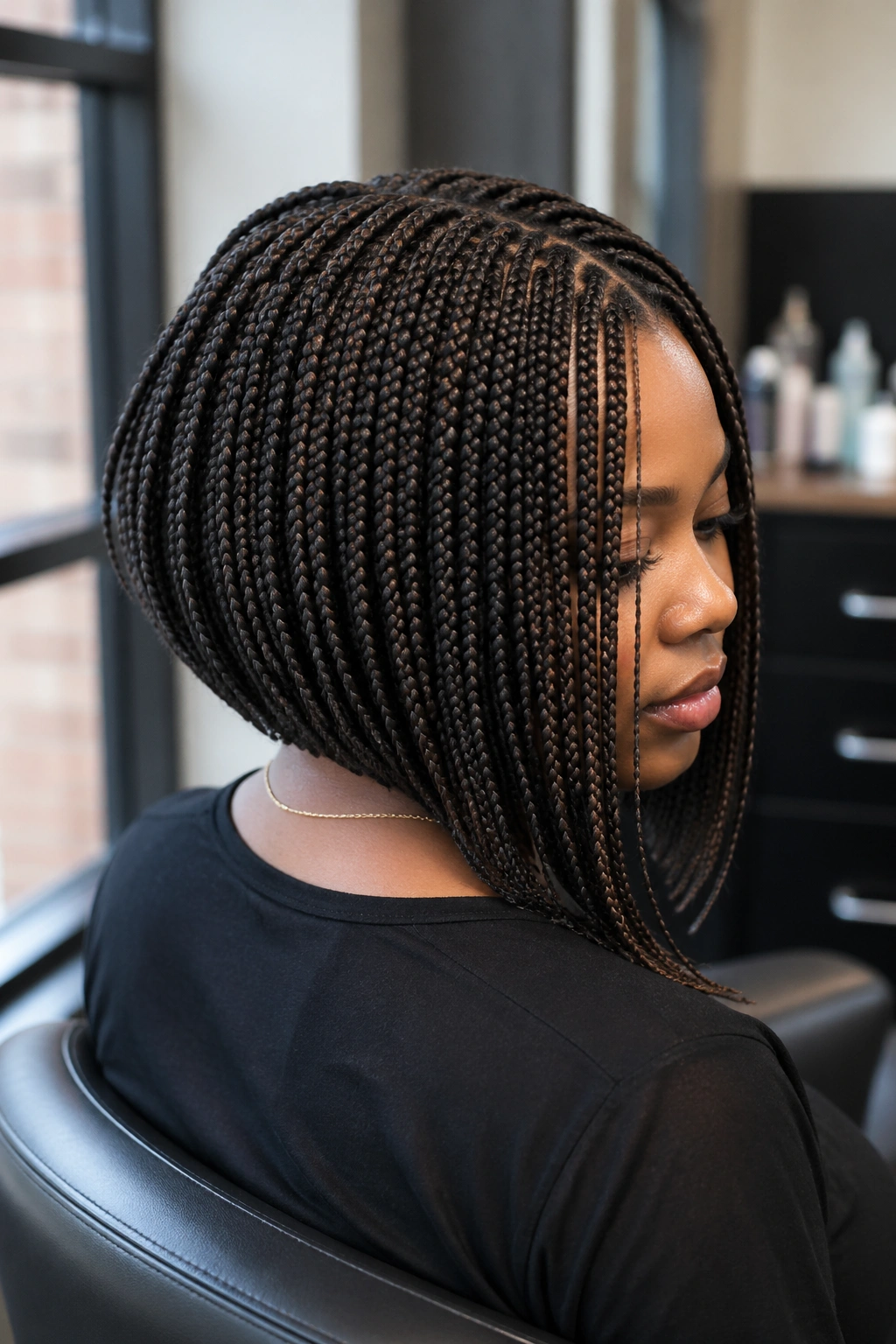
What if you like the bob shape but hate when it turns into a little box around the chin? Then a layered graduated bob is the one to ask about. The back sits a touch shorter, the front hangs slightly longer, and the whole style moves instead of stacking outward in a heavy block.
Why the Layers Matter
Small box braids can get dense, especially if the parting is tight and the hair used for the braids is thick. Without some graduation, the bob may sit wider than you want. A layered cut helps the style fall closer to the head and keeps the bottom line from feeling bulky.
The layers do not have to be dramatic. Even half an inch to one inch of difference between the back and front can change the shape enough to matter. That small change makes the braids swing more naturally when you turn your head.
Who Usually Loves This Look
People with thicker hair often like this because it removes some visual weight. It also works for anyone who wants a more modern silhouette without adding accessories or color. If blunt bobs feel a little severe on you, this version softens the profile.
A layered bob feels easy, but it needs a careful braid count. Too much inconsistency in length and the shape stops looking deliberate. That part is non-negotiable.
10. Curly-Ended Bob
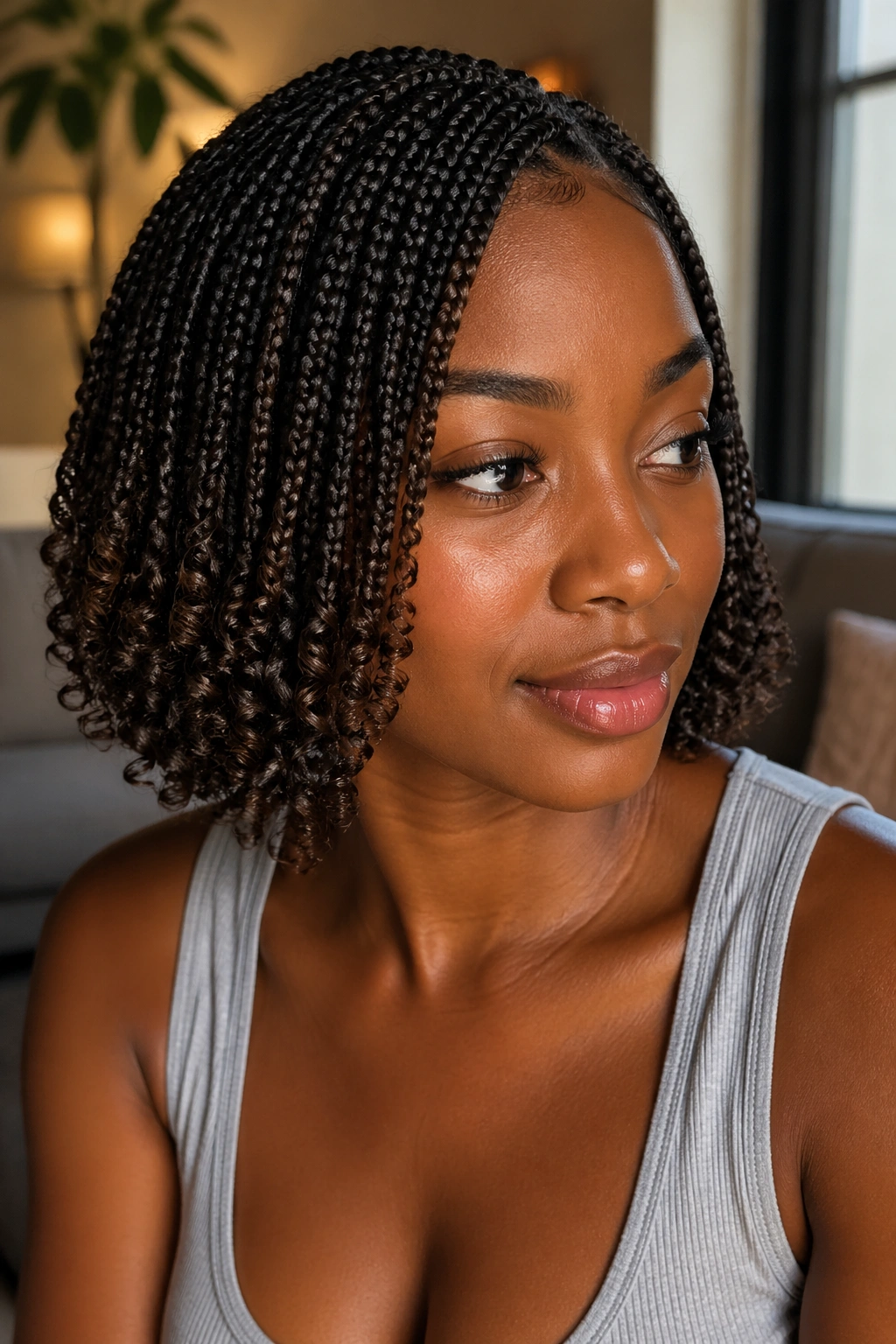
A little curl at the ends makes short box braids look softer almost immediately. The shape changes from neat and linear to relaxed and touchable, which is useful if you want the bob to feel less severe around the jaw. It’s the kind of detail that looks small until you see it in motion.
You can get this effect with braiding hair that already has curly ends attached, or by setting the ends with perm rods or flexi rods before dipping them. A small rod size keeps the curl tight enough to show on a short bob. If the curl is too loose, it disappears into the length and doesn’t do much.
This style is especially nice when you wear simple clothes. A plain tee, a blazer, or a fitted dress suddenly looks more finished because the curls at the ends do the softening for you. No extra styling required.
- Keep the curls consistent around the perimeter.
- Avoid very heavy beads with this style; the ends already carry enough visual weight.
- Wrap the hair at night so the curls do not frizz apart.
- Use a light foam if the braid ends start to separate.
It’s a small detail, and it makes a loud difference.
11. Deep Side-Swoop Bob
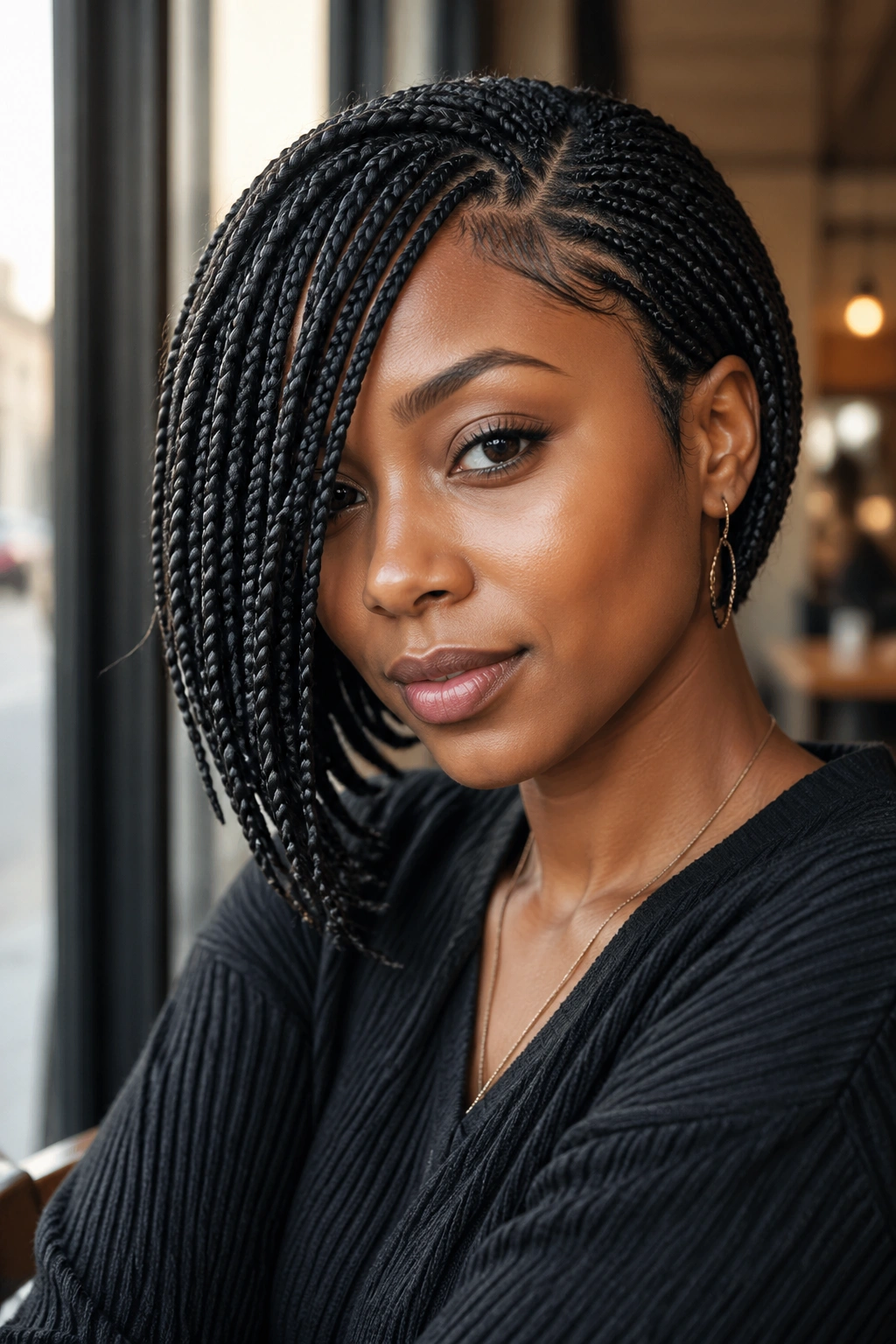
A deep side-swoop bob has a little bit of drama in the front and enough restraint everywhere else to keep it wearable. The front rows fall across one side of the face, often grazing the brow or skimming one cheekbone, while the back stays close and neat. The result is polished with a hint of movement.
The reason this shape works so well on bob-length braids is simple: the shorter cut keeps the sweep from becoming too much. If the braids were long, the front could take over. On a bob, the sweep feels controlled. The eye moves where you want it to move, and then stops.
It also pairs nicely with strong makeup. A bold lip, sharp liner, or even a bare face can sit under this style without looking crowded. That flexibility matters if you want one set of braids to do a few jobs at once.
The only caution is the front tension. A deep swoop should still feel comfortable near the hairline. If the braids are pulling at the temple, the style may look good in the chair and annoying everywhere else. I would take comfort over extra height every time.
12. Asymmetrical Bob
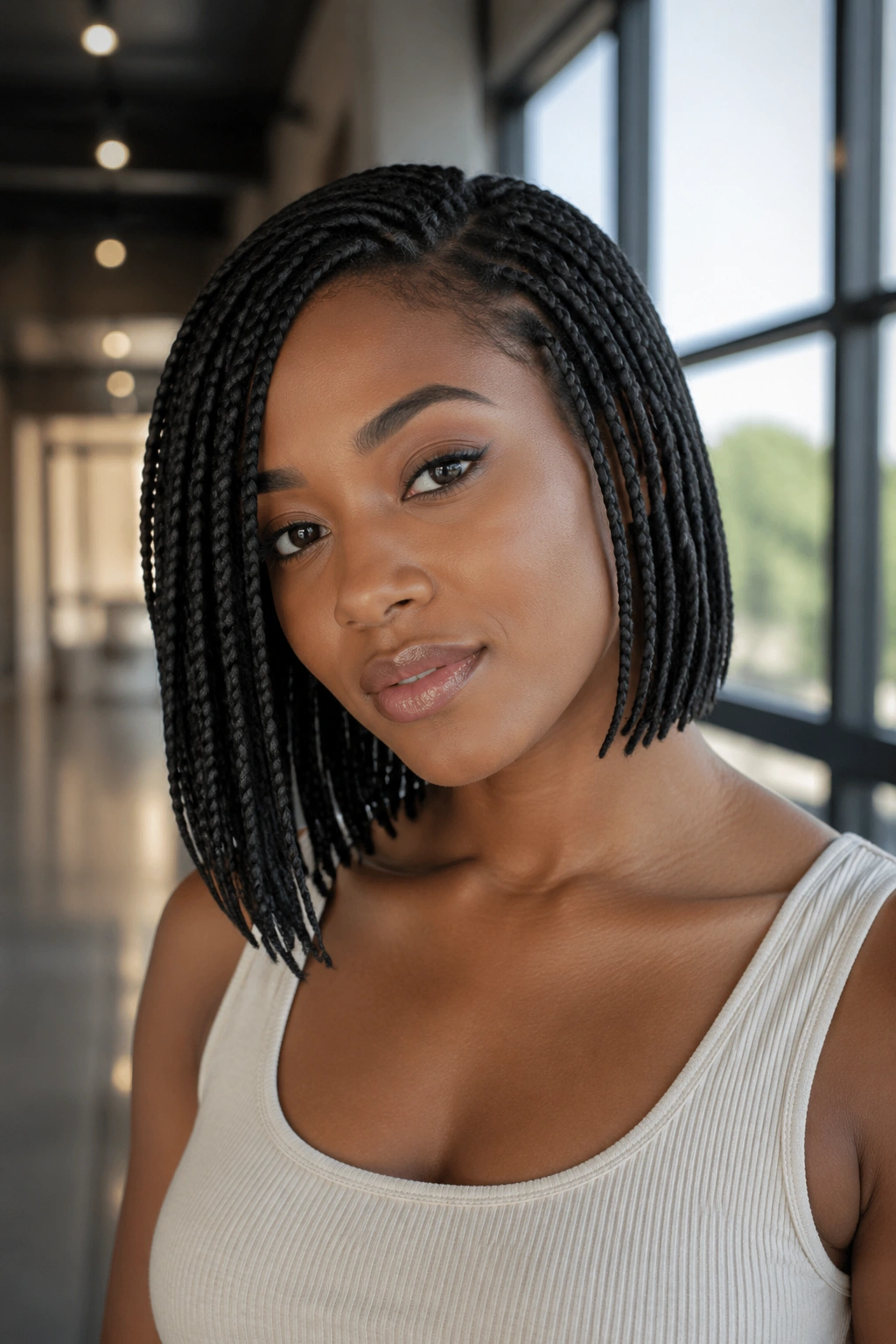
One side longer than the other changes the whole tone. An asymmetrical bob-length set of box braids feels sharper than a standard bob because the eye keeps tracking the uneven line. It is subtle enough to wear every day, but distinct enough that people notice something’s different even if they cannot name it.
Unlike a layered bob, where the front and back shift gradually, the asymmetrical version leans into an obvious difference from left to right. That makes it a better choice if you want a little edge without adding color, beads, or shaved details. It has shape built into the cut.
The best version usually only changes the length by one to two inches. More than that and it starts acting like a different style entirely. The point is a gentle imbalance, not a dramatic lopsided look.
This shape tends to flatter people who like one statement earring, angled necklines, or clothes with clean lines. It gives the face a little movement without cluttering it. If a blunt bob feels too tidy, this is the version that loosens the rules a bit.
13. Fulani-Inspired Bob
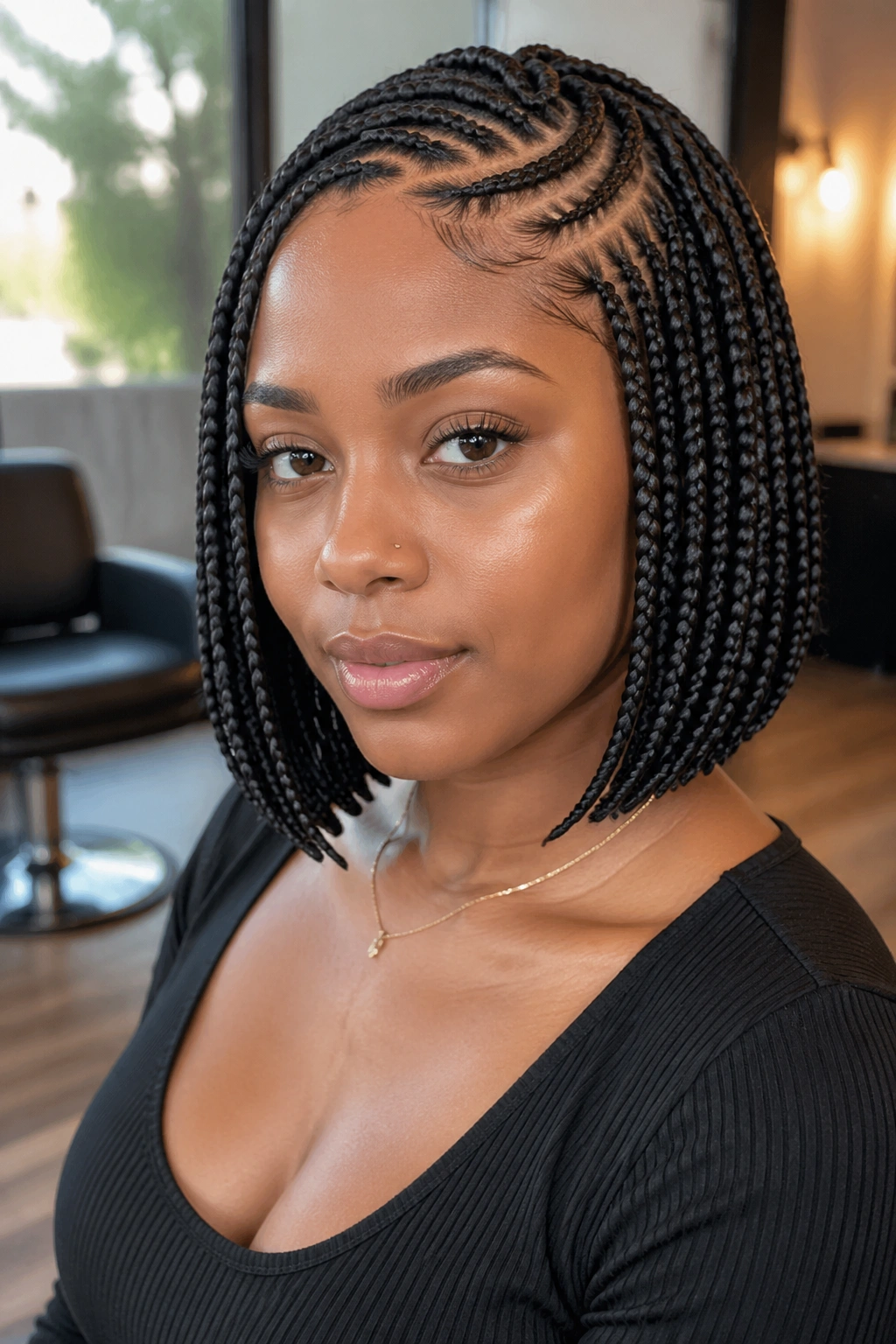
A Fulani-inspired bob brings pattern to the front and keeps the back grounded in small box braids. Usually that means one or two narrow cornrows or feed-in braids at the hairline, then box braids filling out the rest of the bob. The result feels rooted in tradition and still easy to wear short.
The Front Pattern Does the Talking
The beauty of this style is the contrast. The front rows often sit flatter and tighter, while the rest of the braids keep the fuller bob shape. That gives the style a layered visual rhythm, which looks especially nice on short cuts because nothing gets lost in extra length.
You can keep the front detail very simple or make it a little more ornate with a single braid wrapped toward the side. The key is balance. Too much pattern can crowd the forehead, and then the bob starts looking busy instead of elegant.
How Much Detail Is Enough
- One to three slim cornrows is usually plenty.
- Keep the bob length at the chin or just above the collarbone.
- Add cuffs or thread only if the front still feels open.
- Make sure the braids along the temple lie flat, or the style loses its clean line.
This is one of those looks that can feel quietly powerful. It has history in its shape, and that gives it weight even when the length is short.
14. Gold Cuff and String-Wrapped Bob
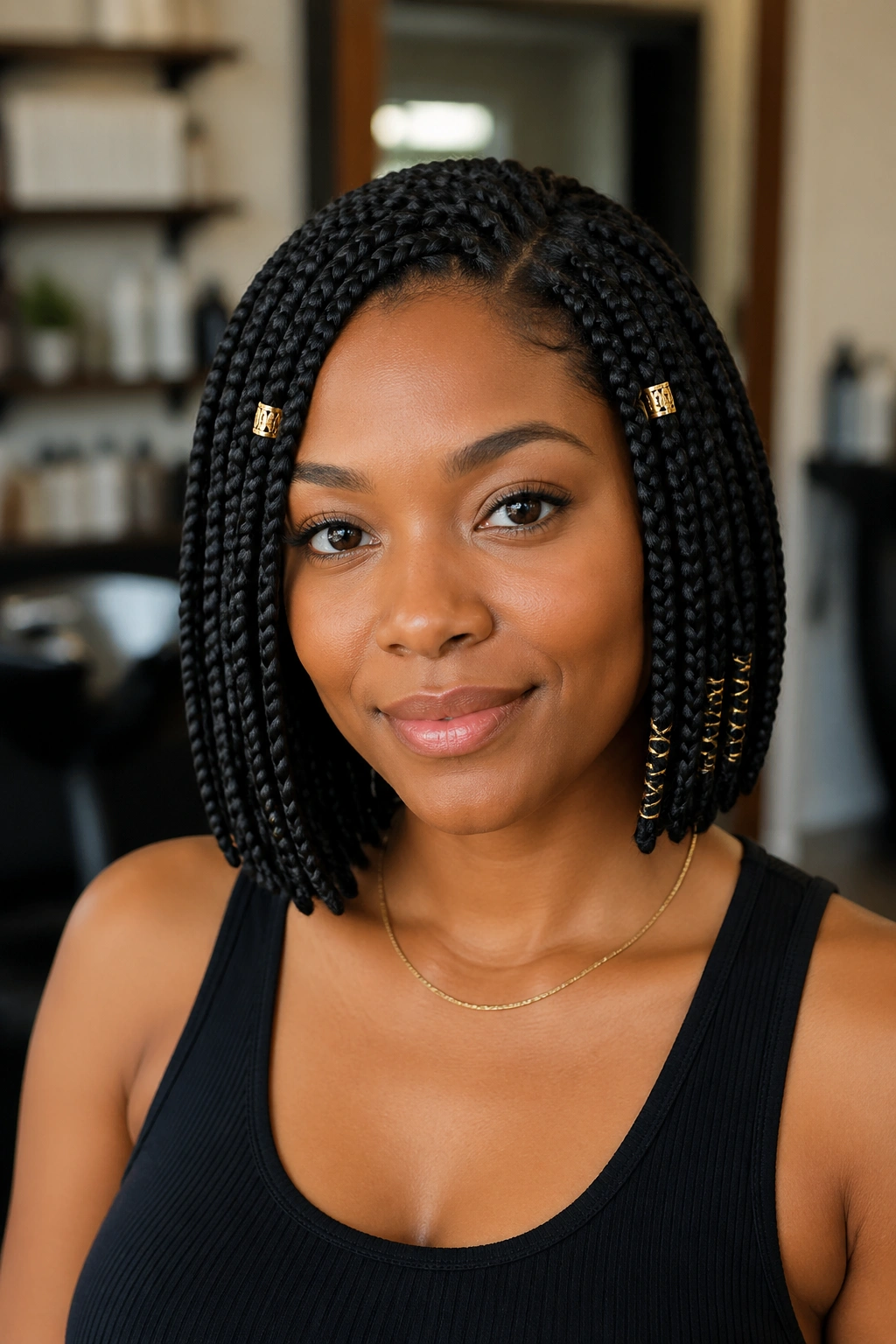
A plain bob can change fast with a few cuffs. Gold braid cuffs, tiny rings, or thread-wrapped accents give small bob-length box braids a finish that feels styled without requiring a different cut or part pattern. If you want the set to look dressed up on a Tuesday, this is one of the easiest ways to do it.
The smartest move is restraint. Put the cuffs on the outer rows, near the front or along one side, and let the rest stay bare. That keeps the metal from overwhelming the short length. With bob braids, too many accessories can make the hair look crowded because there is less length to absorb the visual noise.
String wraps can work too, especially when they’re used at the ends of a few braids in a repeated color. Black and gold reads clean. Burgundy and gold reads richer. White thread against dark braids can look very crisp, though it needs more careful upkeep because it shows dirt sooner.
The style is easiest to wear when the accessories do not snag. Smooth edges matter. If the cuffs catch on everything, the look stops feeling fun pretty quickly.
15. Blunt Middle-Part Bob
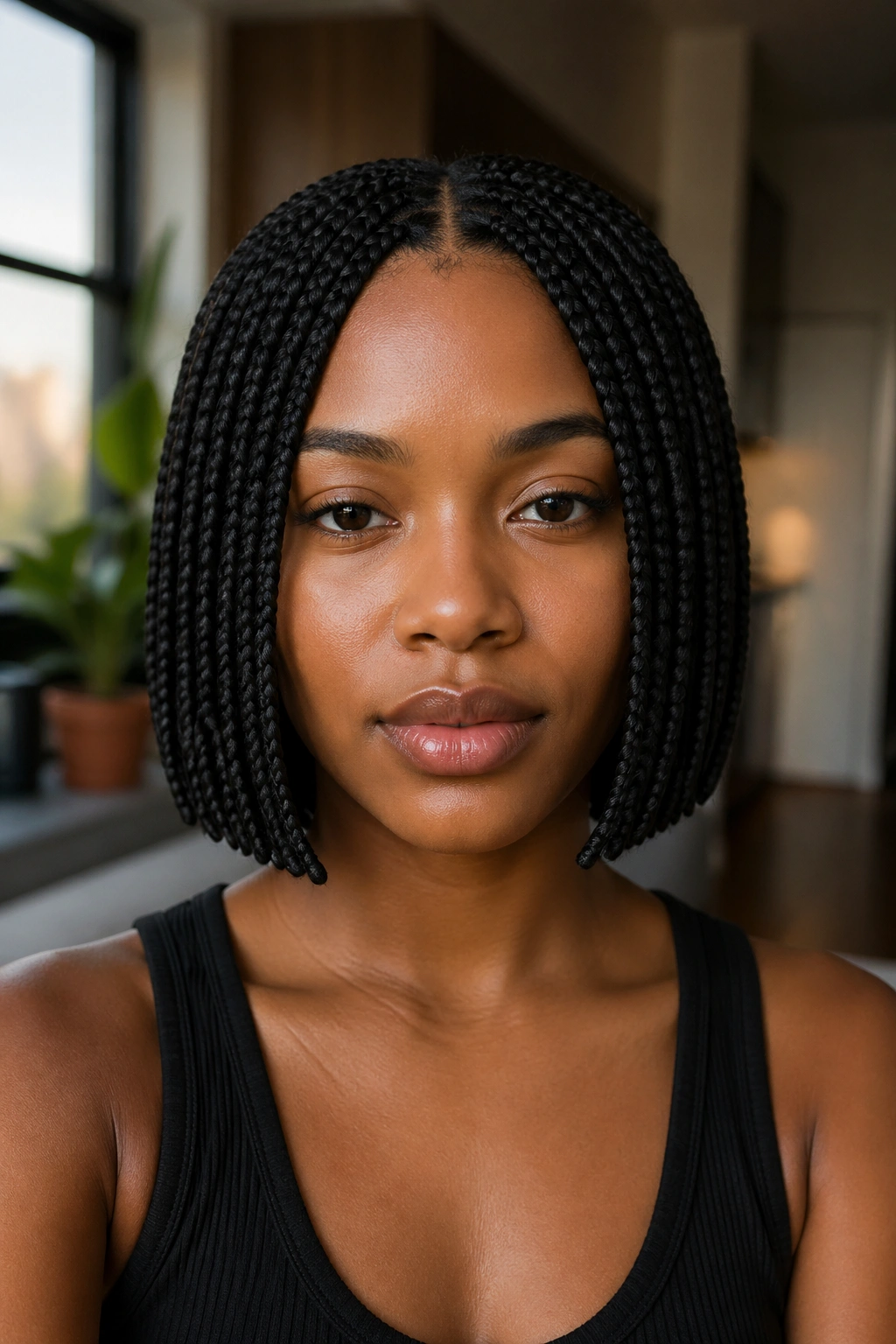
Why do blunt ends look so good on small box braids? Because they give the whole style a hard line to land on. Instead of tapering off or curving away, the braids stop cleanly at the same length, which makes the bob read sharp and intentional. A middle part adds even more structure.
Why the Blunt Line Matters
A blunt finish is the cleanest answer when you want the bob to look graphic. On Black women, especially, that line can make the face pop because the braids frame the jaw in a neat rectangle of texture. It’s a plain idea that works because it is plain.
The tradeoff is that any uneven end will show. If one braid is longer, the eye catches it right away. So this style rewards precision. It is not forgiving, and that’s part of the appeal.
Who It Suits Best
This bob works well if you like minimal makeup, sharp brows, or clothes with strong shoulders. The hair becomes part of the outfit instead of competing with it. It also looks good on anyone who prefers a style that holds its shape all day with minimal touch-up.
A blunt bob doesn’t need accessories to feel finished. If anything, accessories can soften it too much. Sometimes the straight line is the whole point.
16. Braided Bang Bob
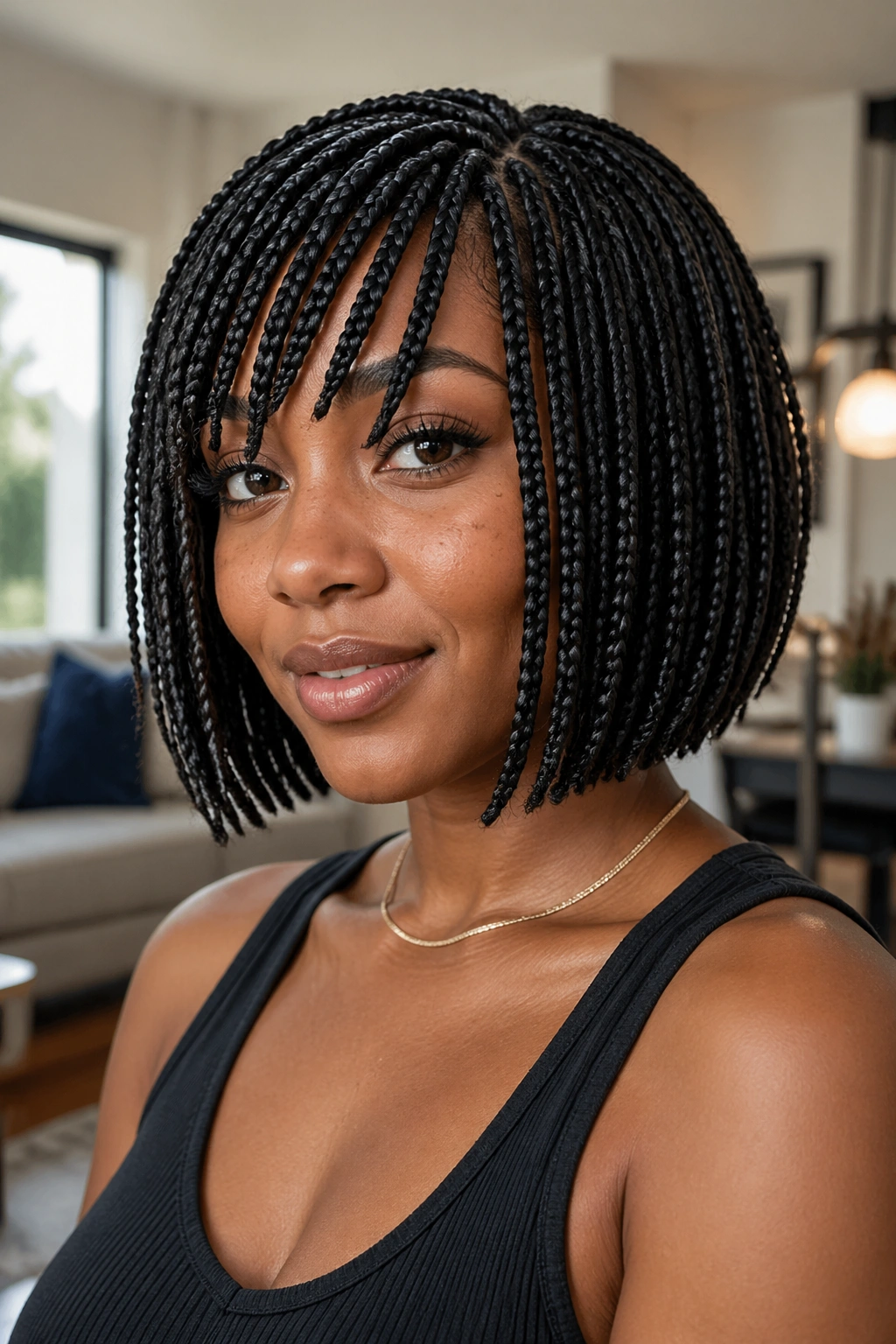
A braided bang changes the front of the face in a way no accessory can. A few braids hang forward as a fringe, either straight across or swept slightly to one side, and the rest of the bob stays in the usual chin-length shape. The effect is playful, a little retro, and surprisingly wearable.
This style works best when the fringe is intentional. The bang braids should be long enough to sit around the brows or cheekbones without constantly slipping into the eyes. If they’re too short, you’ll spend your day pushing them back. Too long, and the “bang” turns into just another front section.
Some people like a soft side-swept bang because it opens the face more. Others go for a straight fringe that lands just above the lashes. Both work. The important part is that the front section is distinct enough to read as a bang, not just accidental front braids.
- Keep the fringe light so it doesn’t feel heavy on the forehead.
- Use a bit more mousse at the front to stop frizz.
- Ask for the bang braids to be slightly longer than the rest if you want room to shape them.
- Be ready to pin them back on active days; that happens.
It’s a fun one. No need to pretend it’s anything else.
17. Face-Framing Bob
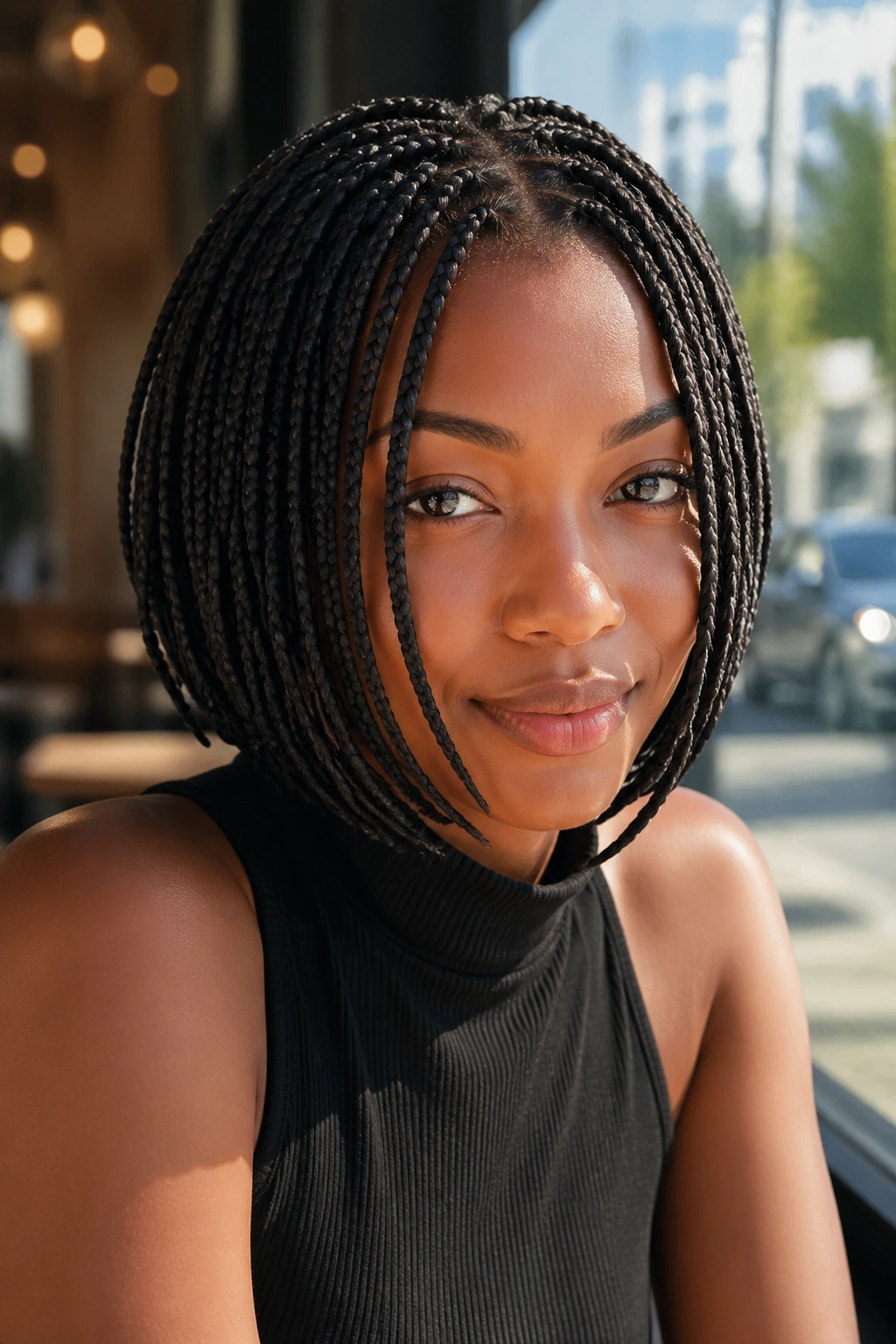
If you want the braids to soften your features instead of boxing them in, face-framing pieces are the move. This version keeps the back and sides in a short bob, then lets the front hang a little longer around the cheekbones or jaw. It can make a round face look more lifted and give longer faces a softer edge near the temples.
The difference between this and an asymmetrical bob is subtle but real. An asymmetrical style usually changes one side more noticeably. Face-framing braids are more balanced, just with a gentle lengthening around the front corners. That makes the whole look feel calmer and less edgy.
The shape also photographs well in everyday life, not in some fantasy lighting setup. You turn your head, the longer front braids fall forward a bit, and the face gets a soft outline. That’s it. No special trick. Just smart placement.
If you wear bright lipstick or statement earrings, this style helps those pieces show without the hair swallowing them. It’s an easy win for anyone who wants a bob that does a little shaping work without looking severe.
18. Minimalist Low-Tension Bob
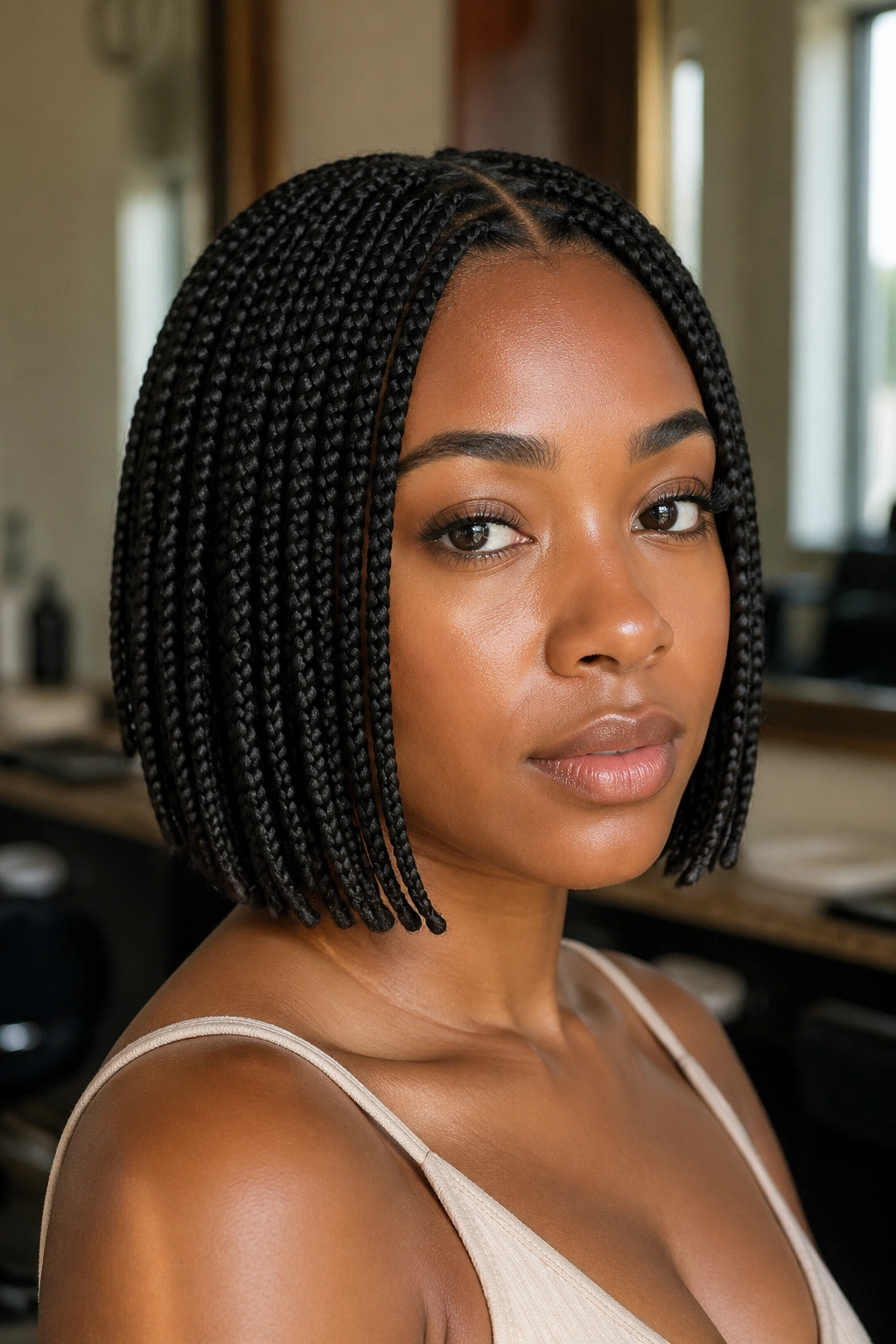
There’s something refreshing about a bob that doesn’t try too hard. No cuffs. No beads. No color melt. Just small box braids cut to a neat length, sitting comfortably around the chin or upper neck, with enough space around the scalp that the style feels wearable for more than a photo.
That matters because short braids should not punish you for looking nice. A minimalist bob can be the best choice when you want the hair to move, stay light, and let your face, earrings, or clothes take the lead. It’s the version you reach for when you need a protective style that still feels calm three weeks in.
I like this shape for busy weeks, travel, and anyone who wears glasses a lot. Less decoration means less snagging, less maintenance, and fewer little annoyances that pile up. The braids can still be beautiful. They just do their job quietly.
If you’re choosing between one more accessory and a cleaner line at the nape, pick the cleaner line. That one choice usually pays off every time you tie a scarf on at night or lean back into a chair and forget you’re wearing braids at all.
