



Four-c curls are a celebration of texture, and finding hairstyles that honor and showcase that natural curl pattern while keeping your hair healthy is one of the most empowering styling journeys you can take. Four-c hair has incredibly tight, wiry curls that shrink dramatically when dry, which means moisture retention and gentle handling are absolutely non-negotiable. This texture thrives when you work with its natural patterns rather than against them, choosing styles that provide stretch, protection, and the kind of support that keeps your curls defined and your hair intact.
The challenge with 4c hair isn’t that it’s difficult to style — it’s that most mainstream beauty advice was never written for you, so you’ve had to become your own expert through trial and error. You know by now that traditional straightening damages your curls permanently, that moisture needs to penetrate deep, and that certain styling methods just work better for your specific curl pattern. What you might still be searching for is a reliable collection of styles you can rotate through, depending on your mood, your schedule, and what your curls need in that moment.
Here’s what makes these twelve styles different: they’re not quick fixes or band-aid solutions. They’re approaches that celebrate your natural curl pattern, keep your hair protected from friction and breakage, maintain moisture over time, and genuinely look stunning while doing all that behind-the-scenes work. Whether you’re looking for an everyday protective style, something that lets your curls shine, or a method that gives you versatility across multiple days, you’ll find it in this collection.
1. Defined Twist-Outs
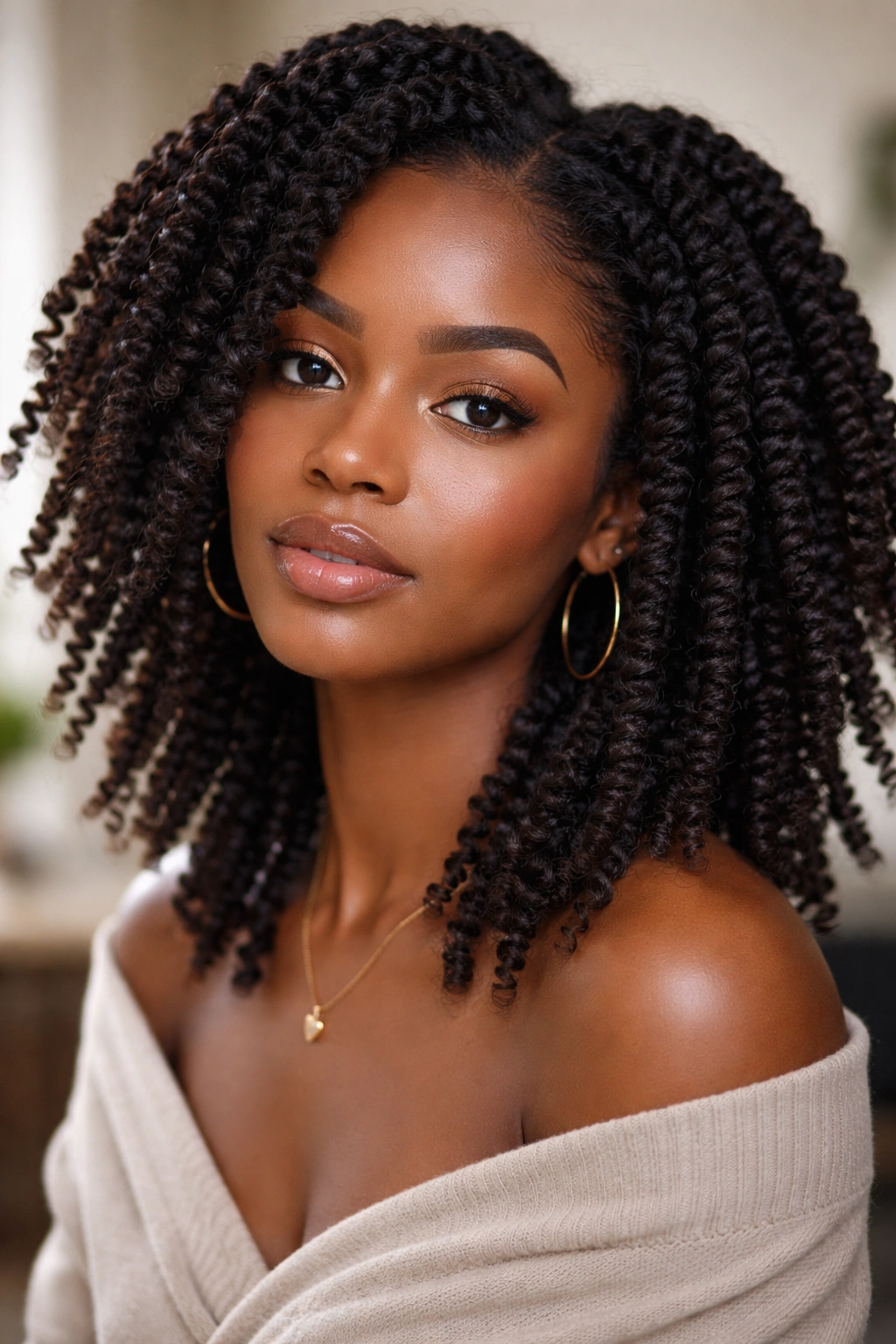
A twist-out is when you two-strand twist damp hair around products that define and hold the curl pattern, then unravel those twists once they’re fully dry to reveal dramatically bounced, separated curls with incredible dimension. With 4c hair, this style creates visible curl definition without any heat, working directly with your natural texture rather than fighting it. The twists act as a mold that stretches your coils just enough to show off their structure while they set.
Why This Works for 4c Hair
Twist-outs prevent the shrinkage that usually flattens 4c curls when they dry freely, giving you 30-50% more visible length than a wash-and-go would show. The twisting process also creates a uniform curl pattern across your head, so every strand appears deliberate and shaped rather than undefined.
How to Create a Stunning Twist-Out
Start with freshly washed, deep-conditioned hair while it’s still soaking wet. Apply a curl-defining cream or gel — something with hold that won’t flake or crunch when dry — and divide your hair into 12-20 sections depending on how defined you want the twists to be. The fewer, thicker sections create looser waves; more sections create tighter coil definition. Two-strand twist each section by taking two strands and rotating them around each other from root to tip, keeping tension consistent so the twist stays tight. Allow 6-8 hours of drying time (or sleep on them overnight if you have time). Once completely dry, gently unravel each twist from the bottom up, separating the curls with your fingers for maximum volume.
Pro Tips for Success
Use a leave-in conditioner mixed with a light gel rather than heavy styling cream — this gives you definition without the weight that flattens 4c curls. Sleep with a silk bonnet or pineapple your twists (gather them loosely at the crown) to prevent friction and frizz overnight. A twist-out typically lasts 5-7 days if you refresh it every morning with a light water spray and some curl-enhancing cream.
2. Protective Box Braids
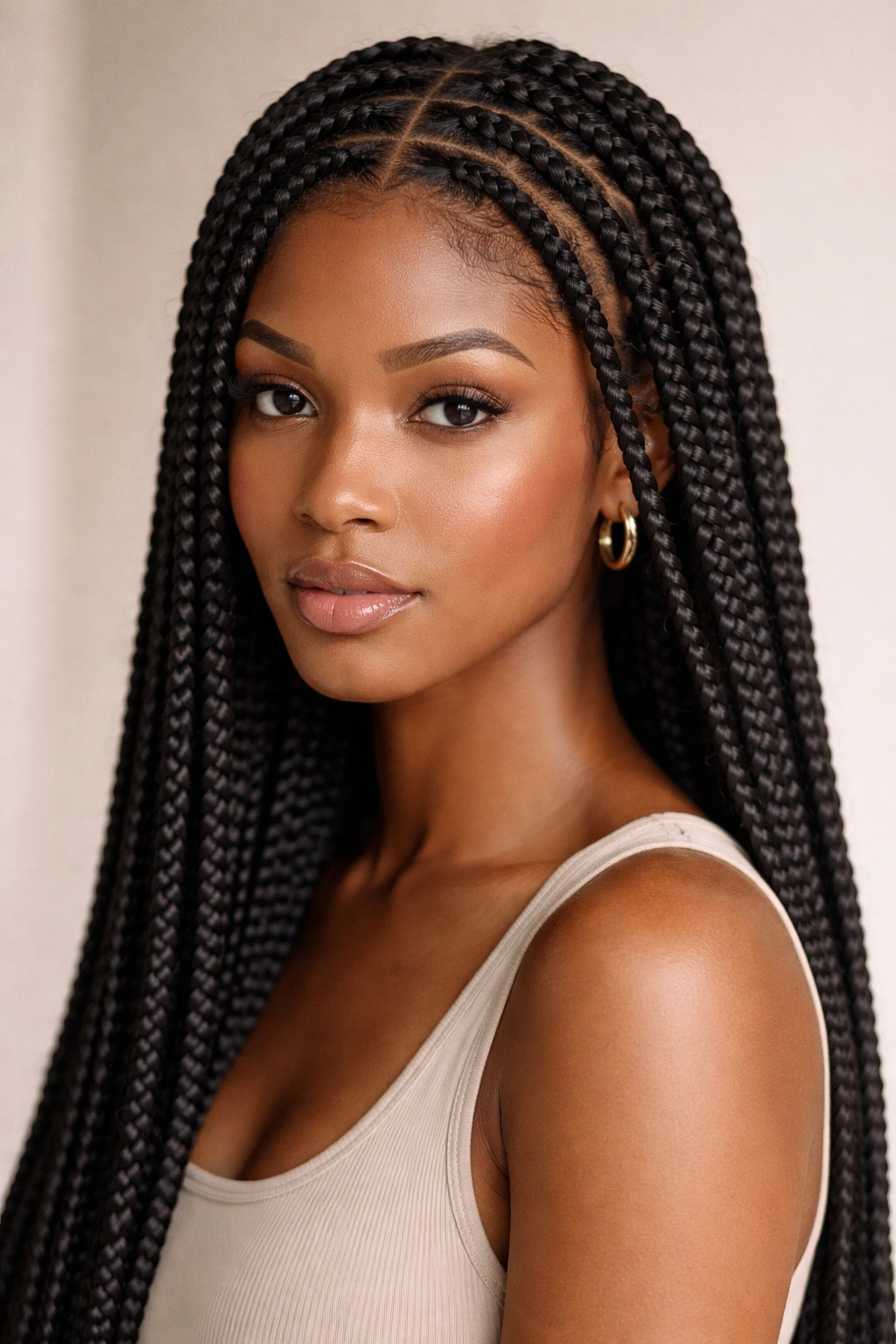
Box braids are individually braided extensions that sit away from your scalp, making them the gold standard of protective styling for 4c hair. Because the braids don’t touch your actual curls most of the time, your hair underneath gets an extended break from manipulation, moisture loss, and friction. The extensions add weight that keeps the braids from tugging on your roots, and you get weeks of low-maintenance styling without touching your natural hair.
Why This Works for 4c Hair
4c curls are prone to breakage from constant manipulation and friction, and box braids minimize both. The protective environment inside the braid allows your hair to retain moisture and length over an extended period. You’re also giving your edges and hairline a genuine rest, which is crucial for preventing traction alopecia.
How to Get Them Installed and Maintained
Visit a stylist experienced with protective styles on textured hair — this ensures the braids are installed with appropriate tension (snug but not so tight that they pull at your roots). Braids should sit about a quarter-inch away from your scalp, not attached directly to it. The installation typically takes 3-5 hours depending on braid thickness and head size. Use lightweight oils to massage your scalp every few days, and keep your braids fresh by wrapping them at night in a silk scarf or sleeping on a silk pillowcase.
Real-World Timeline and Care
Box braids comfortably last 6-8 weeks if you care for them properly. After about week four, some rebraiding might be necessary near the roots if your new growth is creating a loose gap. When you’re ready to remove them, use a braid spray or light oil to help the extensions slide out more easily — never force or pull braids apart, as this will snap your natural hair. Take at least two weeks between protective styles to deep condition and detangle your hair, preventing buildup and maintaining scalp health.
3. Passion Twists
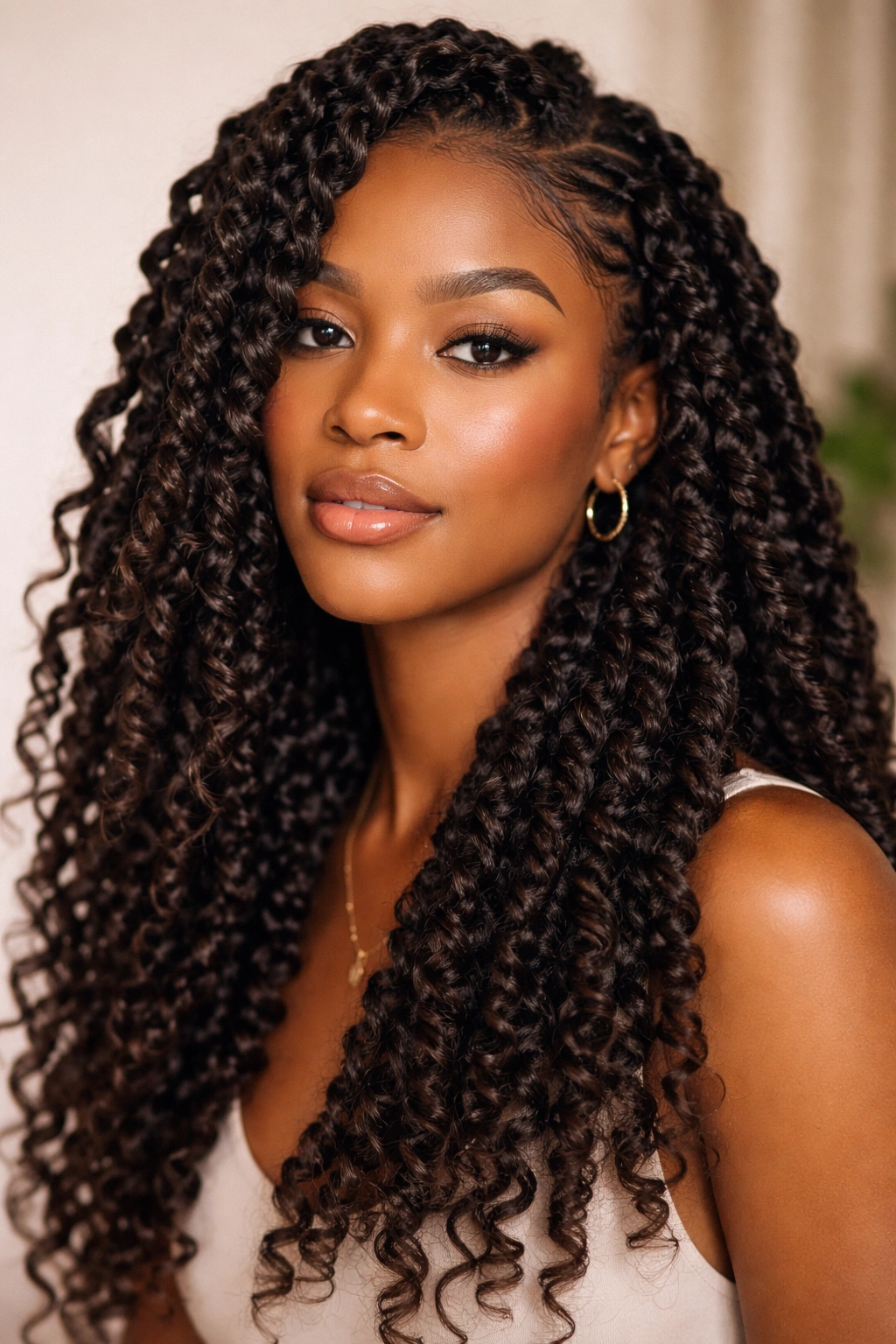
Passion twists are a gentler, faster version of traditional box braids that combine your own hair with lightweight jumbo-weight braiding hair, twisted together rather than braided. They’re chunkier and looser than box braids, so there’s less tension on your roots, and they’re easier to install and remove. With 4c hair, they create a textured, bohemian look while still providing the protection of a low-manipulation style.
What Makes Them Different From Box Braids
Passion twists use a two-strand twist instead of a three-strand braid, which means less pulling and less time in the chair. They also tend to have a more relaxed, voluminous appearance, especially on 4c hair, because the twists create natural-looking spirals rather than uniform braided lines. Installation typically takes 2-3 hours, making them more accessible for people with time constraints.
How to Install Passion Twists Yourself or with a Stylist
Section your hair into 8-12 sections (depending on desired thickness), and dampen each section with a light leave-in conditioner or water. Take a strand of jumbo braiding hair, fold it in half, and place it at the root of your section. Two-strand twist your hair with the braiding hair extension — you’re essentially creating one long, thick twist that combines your natural curl with the synthetic extension. The braid hair adds weight and volume while your natural texture shows through, creating an attractive mixed pattern.
Lifespan and Daily Care
Passion twists typically last 4-6 weeks with proper care. Use a lightweight oil or scalp elixir on your roots every three days, and avoid washing them vigorously — instead, use a diluted shampoo and gentle rinsing. Wrap them at night to prevent unraveling and reduce frizz. They shed more noticeably than box braids because the twists are looser, so expect to see some loose fibers, which is completely normal.
4. Faux Locs
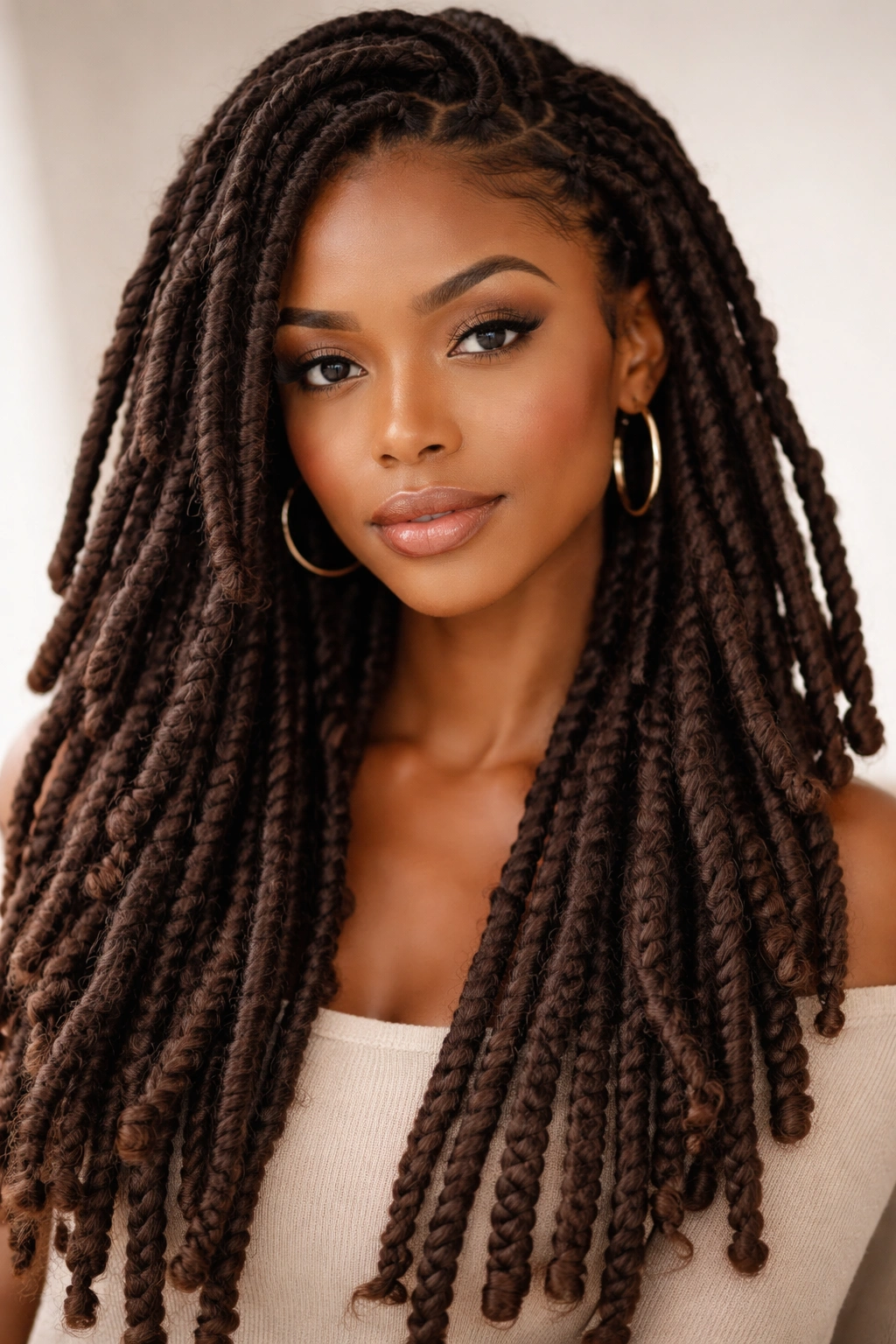
Faux locs are a protective style that mimics the appearance of locs without the permanence or length of actual dreadlocks. You two-strand twist or braid your own hair together with synthetic hair extensions, creating thick, rope-like strands that look like locs but can be removed whenever you want. For 4c hair, faux locs offer serious protective benefits with the aesthetic flexibility of trying a look without committing long-term.
Why 4c Hair Loves Faux Locs
The protective nature is obvious, but what’s less discussed is how faux locs allow your actual curls to stay completely undisturbed for months. Your 4c texture is preserved in its natural state inside the loc, so when you finally remove them, your hair is healthier and longer than if you’d been manipulating it daily. The weight of the locs also creates beautiful hang and movement that standard 4c hair can’t quite achieve.
Installation and Longevity
Faux locs are installed by two-strand twisting or braiding your natural hair with synthetic hair extensions, creating rope-like strands. Installation takes 4-6 hours depending on how many locs you want and how thick they are. They typically last 8-10 weeks, and you can extend that by getting root maintenance every 4-6 weeks, where new growth is incorporated back into the loc. Use a lightweight loc mousse or oil on your roots and length, and avoid harsh washing — instead, use a loc wash specifically designed to clean without unraveling.
Removal and Hair Health
This is the critical step that determines whether faux locs are truly protective or damaging. Never cut or rip your locs off. Instead, use a combination of conditioner, detangler, and patience to gently unravel each loc from the bottom up. This process takes several hours but preserves every strand of your natural hair. After removal, do a thorough detangle in sections using a wide-tooth comb and plenty of conditioner — your 4c curls will have grown and stretched during the loc period, so they’ll need gentle separation.
5. Bantu Knots
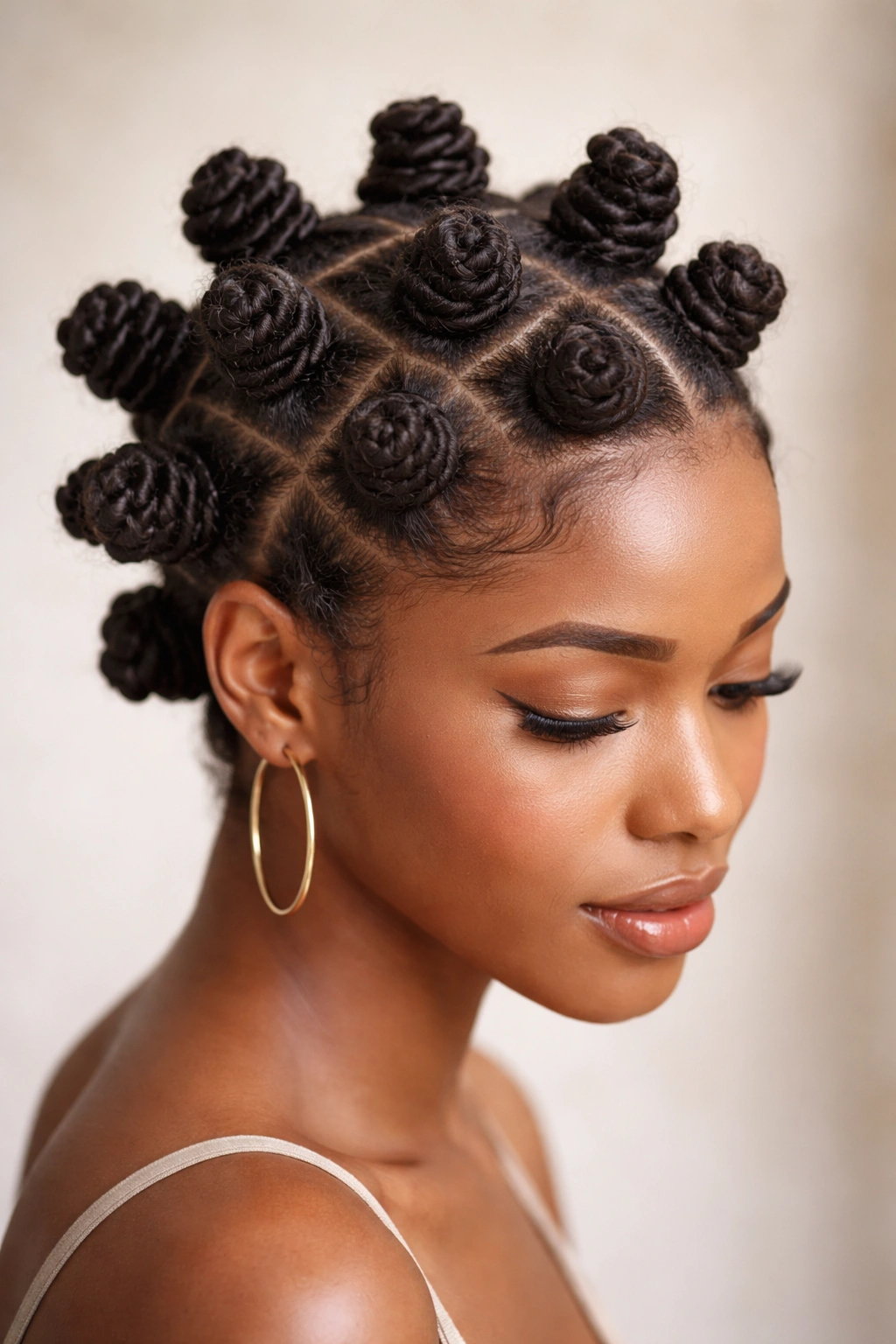
Bantu knots are small, spiral coils that sit flat against your scalp, created by coiling two-strand twists around themselves at the base. They’re named after the Bantu people of Southern Africa and represent both a protective style and a styling technique that creates beautiful texture. On 4c hair, Bantu knots deliver incredible curl definition, volume, and visual interest in a style that’s entirely protective.
The Double Purpose of Bantu Knots
Bantu knots protect your hair while also serving as a set for Bantu knot-outs — when you unravel them, they release into defined, bouncy curls that last for days. This means you get both the protective benefits of a low-manipulation style and the aesthetic payoff of gorgeously defined curls, all without heat or harsh manipulation.
How to Create Bantu Knots
Start with damp hair that’s been sectioned and lightly moisturized. Two-strand twist each section from root to about halfway down, then coil that twist around itself, securing it with bobby pins or spiraling the ends around the base. You want the knot to sit close to your scalp without tugging. Create as many knots as you want definition — 8-12 is typical, creating chunky coils, while 15-20 creates tighter, more defined curls. Allow them to set overnight or for 6-8 hours while dry.
Styling and Longevity
Once dry, unravel each knot starting from the outside and working inward, creating gorgeous spiral curls that have serious bounce and definition. Style them as-is for a cute, textured look, or gently separate them for maximum volume and a more cloud-like appearance. Bantu knot-outs typically last 5-7 days if you sleep in a bonnet and refresh them lightly with water spray each morning. You can re-knot them multiple times using the same twisted base before needing to wash and restart.
6. Crinkle Braids
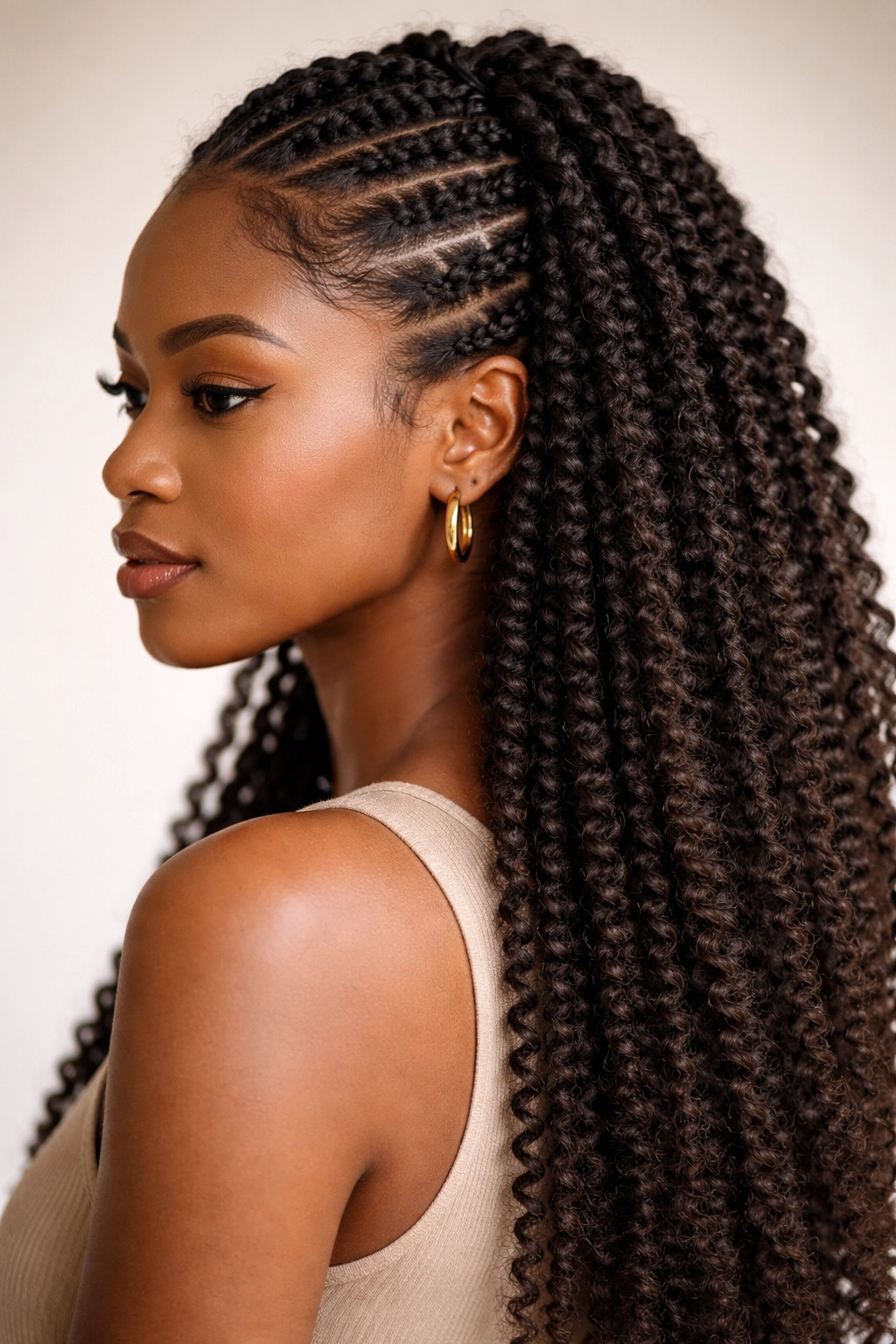
Crinkle braids use a special braiding hair that has a built-in zigzag texture, creating a kinked, deeply textured look that perfectly complements 4c hair’s natural curl pattern. Unlike smooth braiding hair, crinkle hair mimics the inherent texture of coily hair, making the style look more cohesive and blended with your natural curls. Installation is quick, and the result is a unique, eye-catching protective style.
What Makes Crinkle Braids Stand Out
Standard box braids create visual contrast between smooth braid hair and your textured roots. Crinkle braids eliminate that contrast because the kinked texture of the synthetic hair matches the visual weight and character of 4c curls. The result looks more intentional and naturally unified, less like braids-with-braiding-hair and more like one continuous textured canvas.
Installation and Styling Options
Crinkle braids are installed just like regular box braids — your stylist divides your hair into sections and three-strand braids your natural hair together with the crinkle extension. Thickness is entirely up to you, ranging from delicate thin braids to chunky statement braids. The kinked texture shows from root to tip, creating visual interest and depth. Many people find crinkle braids take slightly less time to install than traditional box braids because the texture adds visual fullness even with thinner braids.
Care and Longevity Notes
Crinkle braids last 6-8 weeks and require the same care as box braids — light scalp oils every few days, silk wrapping at night, and gentle washing. The crinkled texture can occasionally snag more than smooth braiding hair, so be extra gentle when separating individual braids and avoid tight hair accessories that might catch the kinked fibers. When removing them, use a detangler spray to help the crinkle hair slide out smoothly.
7. Spring Twists
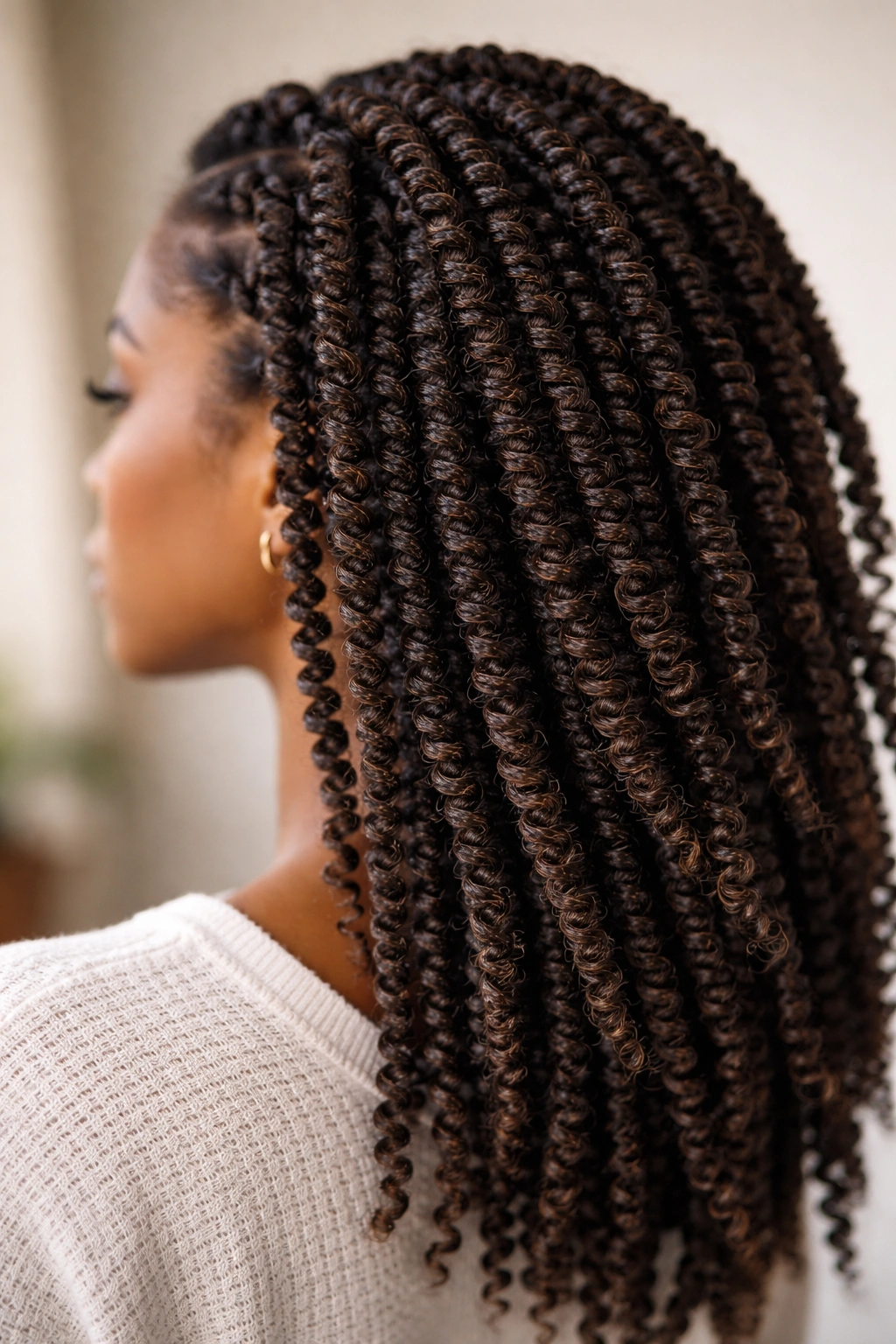
Spring twists are pre-twisted braiding hair that you use to two-strand twist with your own hair, creating thicker, fuller twists in about half the time of traditional passion twists. The synthetic hair comes pre-twisted, so you’re simply twisting your natural hair around the pre-formed spiral, which is much faster and reduces hand fatigue. For 4c hair, they offer quick installation, beautiful textured results, and serious protective benefits.
Why Spring Twists Save Time Without Sacrificing Protection
A full head of spring twists takes about 1.5-2 hours compared to 2-3 hours for passion twists, because you’re not creating the twist pattern from scratch. The pre-twisted hair does that work for you. Despite the speed, the protective benefits remain identical — your 4c hair is undisturbed and moisturized while sitting safely inside the twists.
Installation Technique
Divide your hair into 6-10 sections depending on how thick you want the twists to be. Dampen each section and unravel a spring twist gently to separate the pre-twisted plies. Twist your natural hair with the spring twist, letting the pre-formed pattern guide the shape. Because the synthetic hair is already textured, the twists look more finished and intentional, and the combined pattern is visually striking — your natural curl mixed with the pre-twisted texture creates dimensional, multi-layered coils.
Maintenance and Removal
Spring twists last 4-6 weeks and require lightweight scalp oils every few days. They tend to frizz slightly more than passion twists because of the looser, more voluminous construction, so nightly wrapping is important. Removal is gentler than other protective styles because you can unravel the spring twist much more easily — simply separate the pre-twisted plies and gently pull your natural hair free. This minimizes breakage and makes the removal process significantly faster than unraveling passion twists or faux locs.
8. Two-Strand Twists
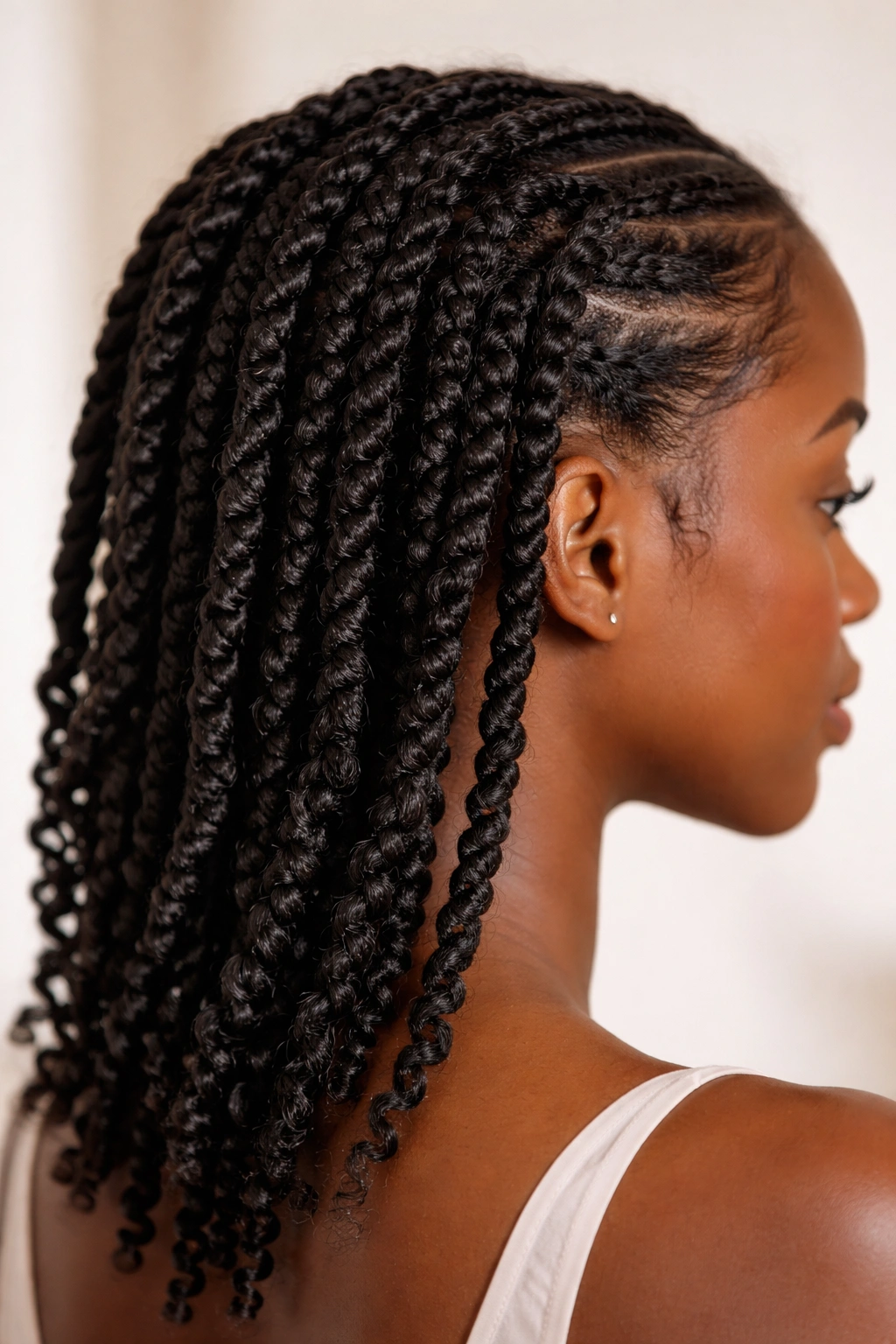
Two-strand twists are the foundational protective style for 4c hair — simple, elegant, and endlessly versatile. You simply take two strands of hair and rotate them around each other from root to tip, creating a spiral that protects your curls while giving you a polished, intentional look. On 4c hair, two-strand twists showcase your natural texture beautifully while offering all the protective benefits you need.
Why Two-Strand Twists Deserve Their Own Spot
It’s easy to overlook basic protective styles in favor of flashier options, but two-strand twists are genuinely one of the best styles you can rotate into your regular rotation. They require zero extensions, take about 45 minutes to an hour to complete a full head, and last 2-3 weeks with proper care. You’re giving your hair protection while maintaining its natural state completely.
Creating Twists That Stay Put
Start with freshly washed, deep-conditioned, soaking-wet hair. Apply a curl-defining cream or lightweight gel, and section your hair into 8-16 sections depending on how defined you want the twists. Thicker sections create thicker, looser twists; smaller sections create more refined coils. Two-strand twist each section, maintaining consistent tension so the twists are even and secure. Allow them to dry completely — 24-36 hours is ideal. Once dry, they should hold their shape without any additional products.
Styling Versatility and Lifespan
Two-strand twists can be worn exactly as they are for a casual, textured look, or you can unravel them for a completely different twist-out style. You can pin them up into a twisted crown, gather them into a high puff, or let them frame your face. They typically last 2-3 weeks, and you can extend that by wrapping them nightly in a silk bonnet. Use a water spray with a light refresher cream each morning to revive them, and they’ll stay looking fresh and intentional throughout their lifespan.
9. High Puff with Defined Curls
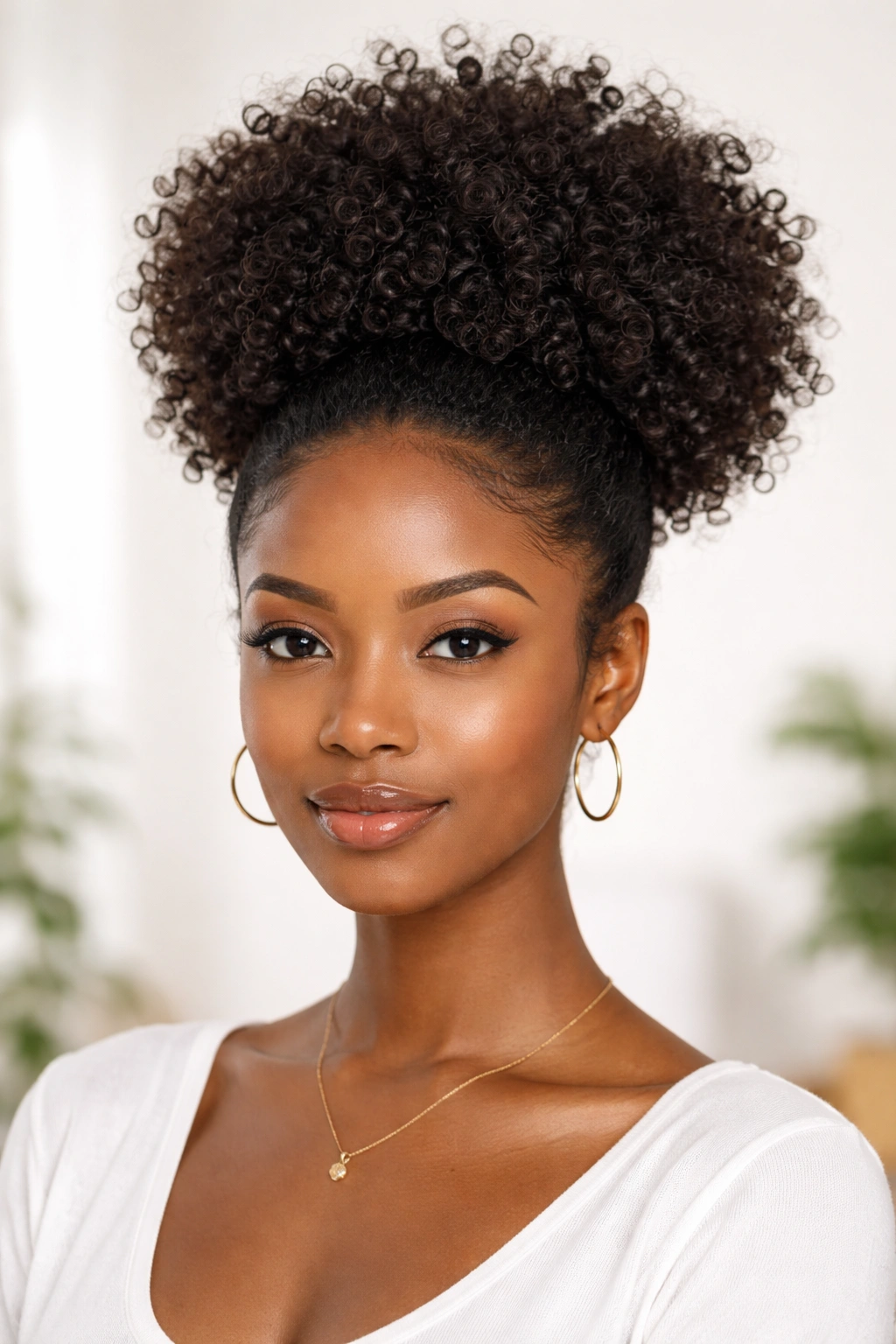
A high puff is a ponytail gathered at the crown, but instead of sleek smoothness, a puff on 4c hair celebrates volume and texture — you’re gathering your defined, separated curls into one glorious, rounded cloud at the top of your head. It’s equal parts protective and stunning, giving you the safety of a low-manipulation style with the impact of a statement hairstyle.
Creating Volume and Definition in Your Puff
The key to a beautiful high puff is starting with defined, moisturized curls. Use a curl-defining cream on damp hair and create twist-outs or coil patterns, allowing them to set fully. Once your curls have maximum definition and bounce, gather them into a high ponytail — don’t smooth or compress them. Instead, use your fingers to lift and fluff the ponytail, creating that rounded, cloud-like shape. Secure with a stretchy, fabric-lined hair tie that won’t create creases or breakage.
Styling Accessories and Variations
Add a silk or satin scrunchie to protect your hair from friction, and consider wrapping the base of the ponytail with a silk scarf or decorative wrap to hide the elastic and add visual interest. You can accessorize with hair clips, beads, or cuffs woven through the puff for extra flair. Some people create a high puff and then twist or braid the individual curl sections within the ponytail for additional texture and definition.
Longevity and Daily Maintenance
A high puff typically looks fresh for 3-4 days, and you can extend that by sleeping in a bonnet to prevent friction frizz. Each morning, flip your head, fluff the puff gently with your fingers, and refresh with a light water spray and curl cream. You can re-create the puff multiple times from the same twist-out base before needing to wash and re-define your curls.
10. Crown Braids with Natural Edges
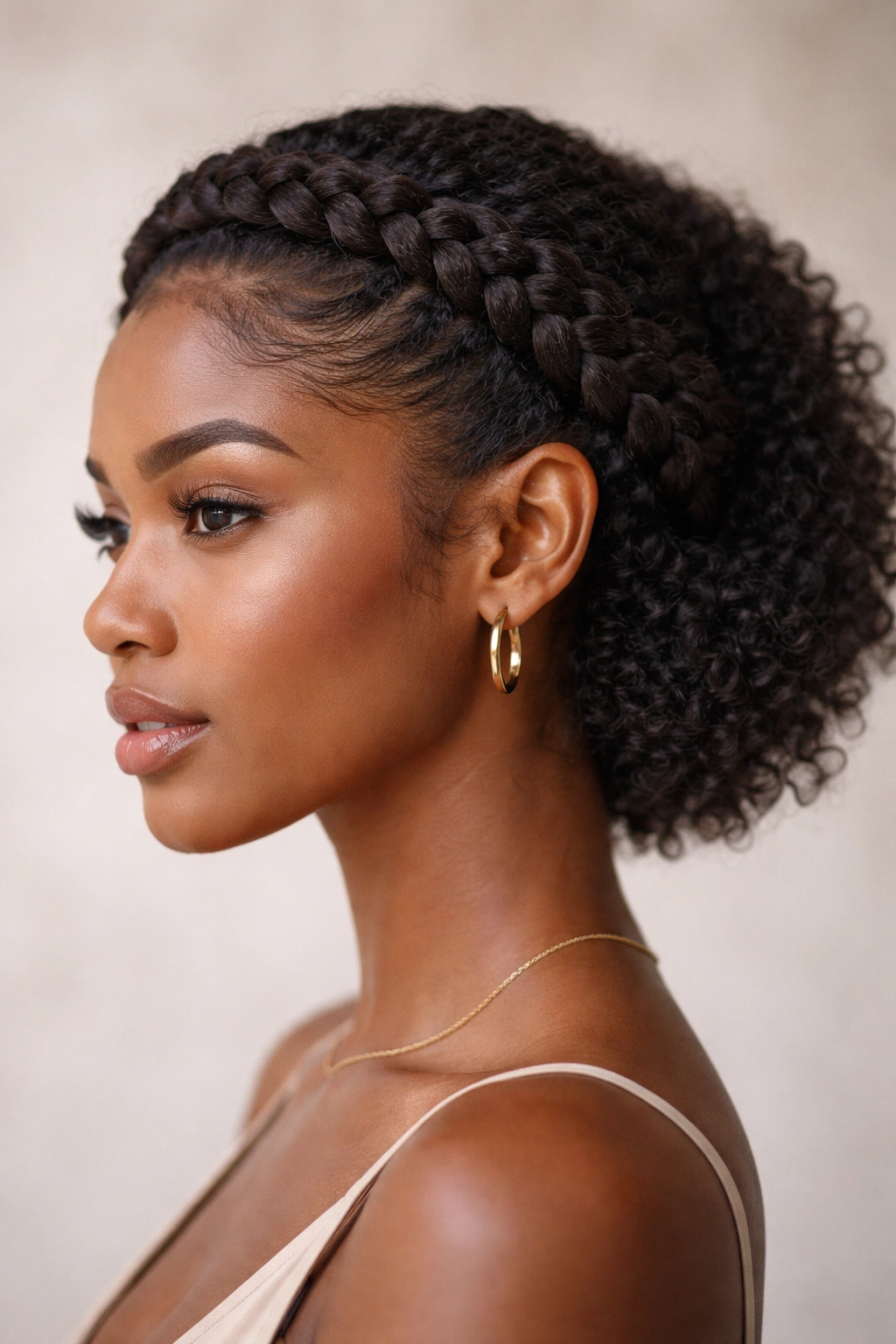
Crown braids are braids that follow your hairline from one side of your head to the other, creating a halo effect that frames your face while keeping your edges secured and protected. On 4c hair, this style is particularly beautiful because it showcases your natural hairline while keeping those delicate edge hairs in a low-manipulation, protected state. You’re not pulling or tensioning your edges at all — they’re simply woven into a braid that sits along your natural hairline.
Protecting Your Edges While Looking Stunning
Crown braids solve a real problem for 4c hair: how to style your hair protectively without putting tension on your hairline. By creating braids that follow your natural edge pattern rather than fighting against it, you give your baby hairs and edges a genuine protective experience. The braid holds everything in place without pulling, and you get a gorgeous, intentional look.
How to Braid Your Own Crown Braids
Start with freshly moisturized, damp hair. Using a braid spray or light leave-in conditioner, create a thin three-strand braid along your hairline, starting at one ear and following the natural curve of your head to the other ear. The braid should sit on top of your head, following your edges. You can create one crown braid or multiple braids depending on the look you want. Once both sides are braided, you can leave the rest of your hair down for a half-up look, or gather all your hair into a high puff, creating a fully protected style with braided crown detail.
Styling and Real-World Wear
Crown braids typically last 3-5 days when worn with the rest of your hair down, or 5-7 days when incorporated into a puff. They work beautifully as a base for other styles — you can braid your crown, then create twists or braids on the rest of your head, creating a mixed-texture protected style. Use a lightweight oil on your braids to keep them looking fresh, and gently re-tighten any loose sections after sleeping if needed.
11. Flat Twists
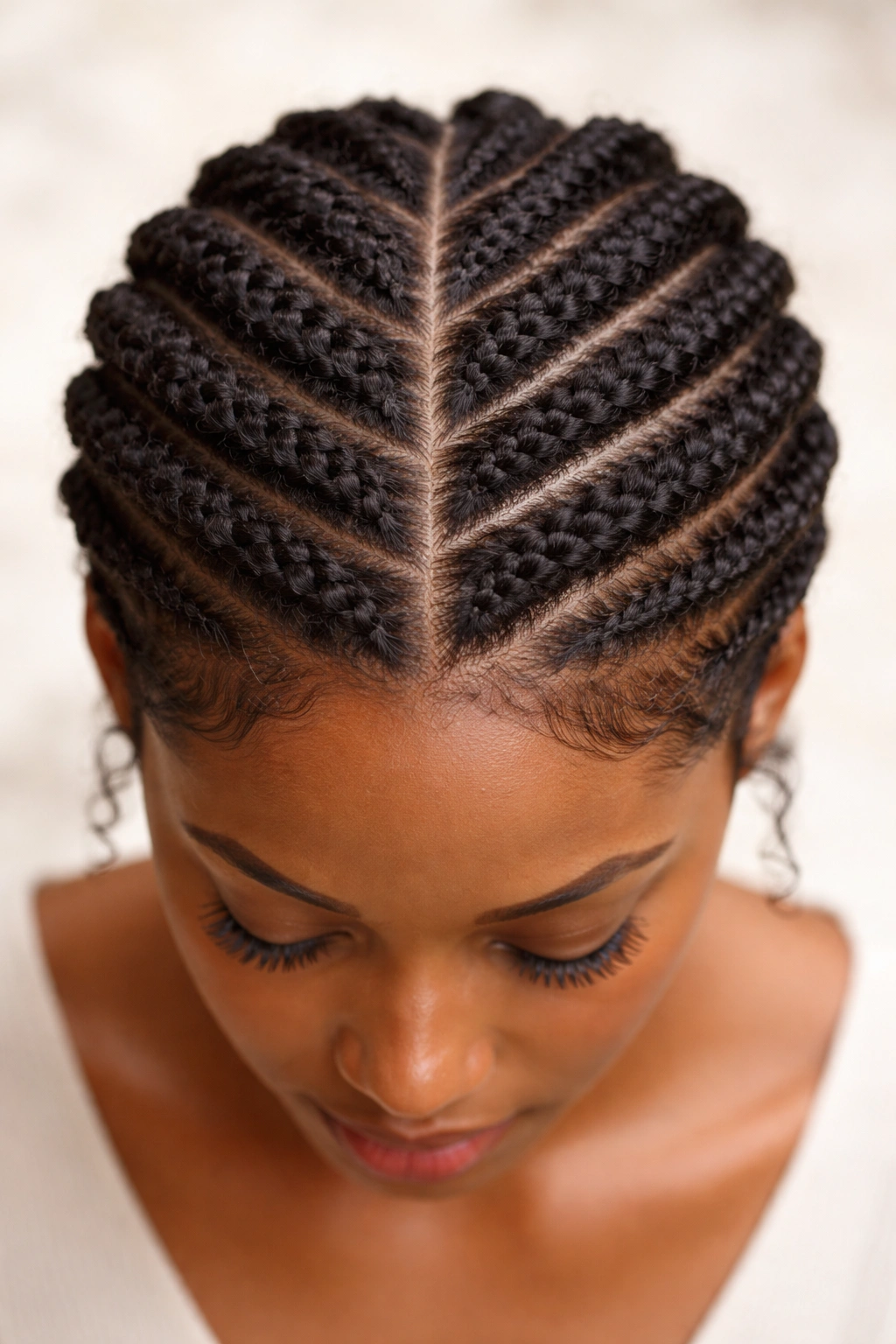
Flat twists are cornrow-like braids created using two strands instead of three, lying flat against your scalp in raised rows. They’re faster to install than cornrows, take less time to remove than braids, and create a beautiful textured pattern while protecting your hair underneath. For 4c hair, flat twists offer a protective option that feels lighter and less commitment-heavy than traditional braids or locs.
The Technique That Makes Flat Twists Different
Instead of three-strand braiding, you two-strand twist while picking up additional hair sections as you move down, creating a flat, raised pattern against your scalp. This is easier to master than cornrow braiding and creates a subtly different aesthetic — more organic and textured, less rigid and uniform. The process is faster, taking about 1-2 hours for a full head depending on how many twists you create and how thick they are.
Installation and Pattern Options
Divide your hair into rows, dampening each section with leave-in conditioner. Starting at the top of each row, two-strand twist while systematically picking up hair, moving the twist down your head in a straight or curved line. You can create vertical rows down the back, diagonal twists, or circular patterns around your crown — the versatility is one of flat twists’ best features. The number of twists determines how defined and tight the pattern appears.
Longevity and Flexibility
Flat twists typically last 2-4 weeks depending on how quickly your hair grows and how well you maintain them. They’re less protective than box braids because more of your natural hair is exposed, but they offer a nice middle ground between the full protection of braids and the styling freedom of loose styles. Removal is faster than braids — you can unravel a flat twist in about five minutes, compared to 10-15 minutes for a box braid. This makes them perfect if you want protection without the long-term commitment or the time-intensive removal process.
12. Coil-Out or Bantu Knot-Out with Jewelry Clips
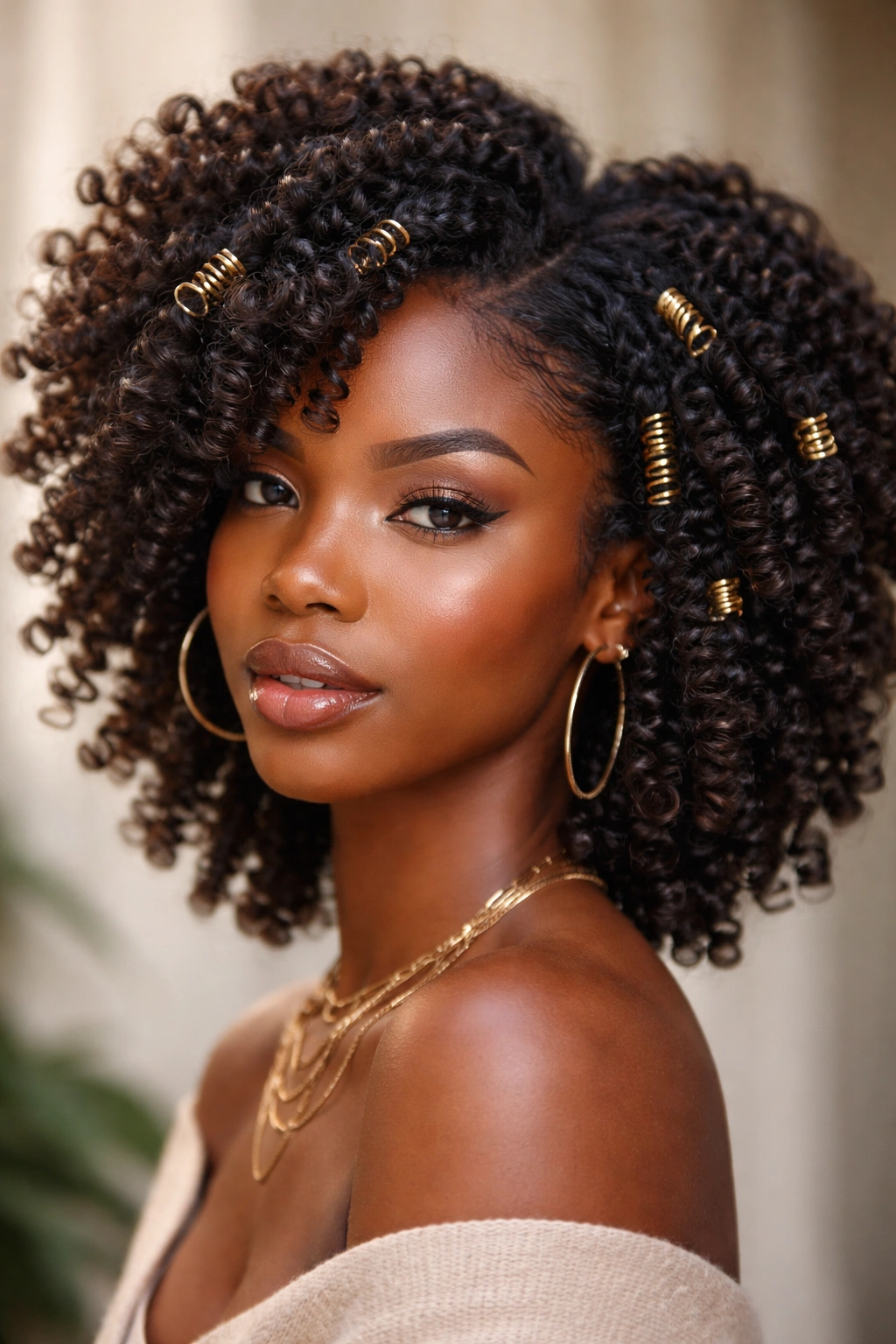
A coil-out or Bantu knot-out that’s been accessorized with decorative hair clips or cuffs transforms a protective style into a statement look. You’re creating defined, separated curls using coiling or knot techniques, then deliberately styling them with metallic clips, beads, or decorative cuffs woven through to add visual interest and personality. It’s a protective style with serious aesthetic impact.
Why Accessorizing Your Coil-Out Elevates the Look
A plain coil-out is beautiful, but adding even one or two strategically placed clips or cuffs transforms it into something that feels intentional and special. You’re not just protecting your hair — you’re celebrating it and making it a focal point. Clips and cuffs also serve a practical purpose, helping to anchor and define sections of curls while adding glamour.
Creating the Coils or Knots and Adding Accessories
Create coils or Bantu knots using the techniques described earlier, allowing them to set completely. Once you unravel them, you’ll have beautifully defined curls. Then, use hair clips, cuffs, beads, or decorative accessories to hold and define sections of those curls. Cuffs can be placed around the circumference of curl sections, clips can anchor twists or coil sections, and beads can be threaded through defined curl spirals. The accessories add weight that helps curls maintain their shape while providing visual interest.
Styling Flexibility and Duration
This style typically lasts 4-7 days, and you can change out the clips and accessories daily to create different looks from the exact same coil-out. Wrap at night to prevent frizz and maintain the curl pattern. The accessories actually help protect your curls from friction because they anchor them and prevent rubbing against pillows or clothing. When you’re ready to take the accessories off, you can restyle the same coils with different clips or unravel them entirely and wear them as a loose, bouncy wash-and-go.
Final Thoughts

The best hairstyle for your 4c curls is always the one that makes you feel most like yourself while keeping your hair healthy and strong. Each of these styles offers something different — protection, definition, versatility, speed, or a combination of all four. Your choice might depend on your schedule that week, how much time you have for styling, whether you want to show your natural texture or create dimension with extensions, or simply what you’re in the mood to wear.
What matters most is building a rotation that works for your life. You might do protective braids for a month, then switch to twist-outs and puffs for a few weeks, then go back to braids. You might find that one style becomes your go-to because it makes you feel confident and it keeps your hair thriving. Listen to what your hair is telling you — if it needs a break from any manipulation at all, lean into the protective styles. If it’s craving definition and moisture, do twist-outs or coil-outs that let your natural texture shine.
The most important thing isn’t which style you choose — it’s that you’re choosing styles intentionally, with your hair’s health and your personal confidence in mind. Your 4c curls are absolutely beautiful, and you deserve styles that celebrate them.
