



Twist braids have become the go-to protective style for people with textured hair who refuse to spend hours maintaining their look. Unlike traditional box braids, which can pull at the roots and require meticulous finger-detangling, afro twist braids sit somewhere in the sweet spot between protective and practical—they shield your natural hair from manipulation and damage while looking intentional, polished, and genuinely beautiful. The appeal is simple: you install them once, and they stay put for weeks without unraveling or developing frizz that requires daily styling.
What makes twist braids different from their braided cousins is the construction itself. Instead of interlocking three or four sections of hair, twists use two strands that wrap around each other in a smooth spiral. This creates a style that’s inherently less tight at the roots, which means less tension, fewer headaches, and zero guilt about scalp health. Whether you’re braiding with your natural hair alone, adding kanekalon extensions for volume, or experimenting with different textures and colors, twist styles offer incredible versatility without demanding your constant attention.
The real win, though, is how genuinely low-maintenance these styles are once they’re installed. You can wash your hair without carefully separating each section. You can sleep on them without waking up to a frizzy mess that requires re-twisting. You can wear them for a full month and actually look better at week four than you did at week one. If you’ve ever felt trapped by a high-maintenance style or intimidated by the upkeep required, twist braids might be exactly what you’ve been looking for.
1. Two-Strand Twists
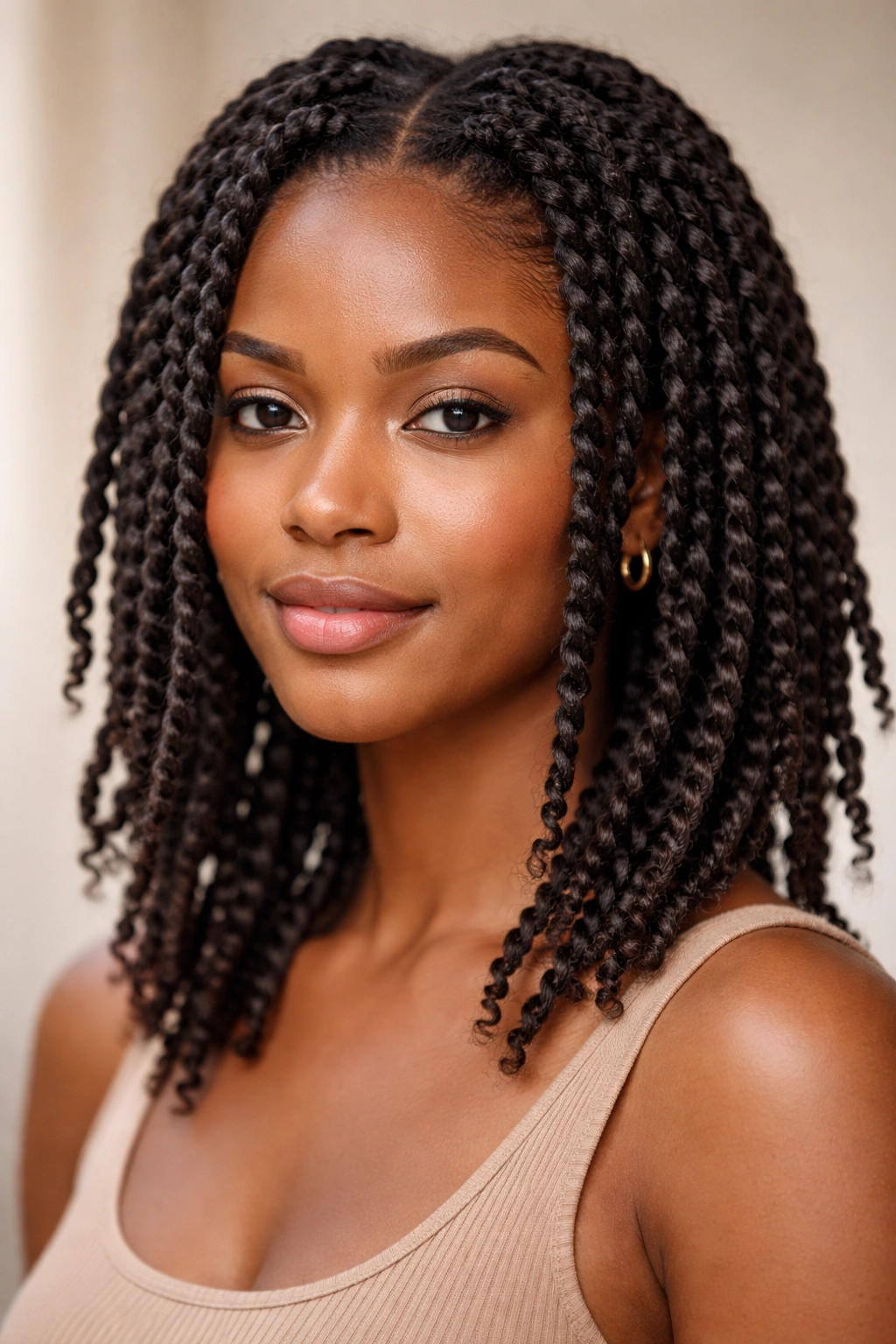
Two-strand twists are the gold standard of low-maintenance styles, and honestly, they’re the reason twist braids became mainstream in the first place. These are created by dividing each section of hair into two strands and twisting them together until they spiral all the way down. The beauty of this style is its incredible simplicity—you don’t need extensions, special equipment, or an advanced skill level to create them. Beginners can absolutely install two-strand twists on themselves with a bit of patience and practice.
Why They’re the Easiest to Maintain
Two-strand twists naturally resist frizz better than you’d expect, partly because the twist structure locks your hair in place without needing to be ultra-tight. You can re-wet them in the shower, apply leave-in conditioner, and they’ll look fresh without requiring any re-twisting work. The twists settle and compact slightly after a few days, actually improving their appearance as time goes on. This style works whether you have loose curls or coily, kinky hair—the hair texture barely matters because the twist structure does most of the work for you.
Styling Options and Longevity
Two-strand twists typically last 4 to 6 weeks depending on how active you are and how well you moisturize at night. You can wear them down for a natural, textured look, or gather them into an updo, ponytail, or bun for something sleeker. The exposed root growth actually becomes part of the aesthetic—it gives the style depth and prevents that obvious “looking for a retouch” feeling that comes with some other styles. Many people find that two-strand twists look better by week three than they do the day they’re installed.
Pro tip: Install your two-strand twists on slightly damp hair (not soaking wet). The moisture helps the twists hold while your hair dries, but not so much that you’re struggling with slippery sections that won’t grip properly.
2. Marley Twists
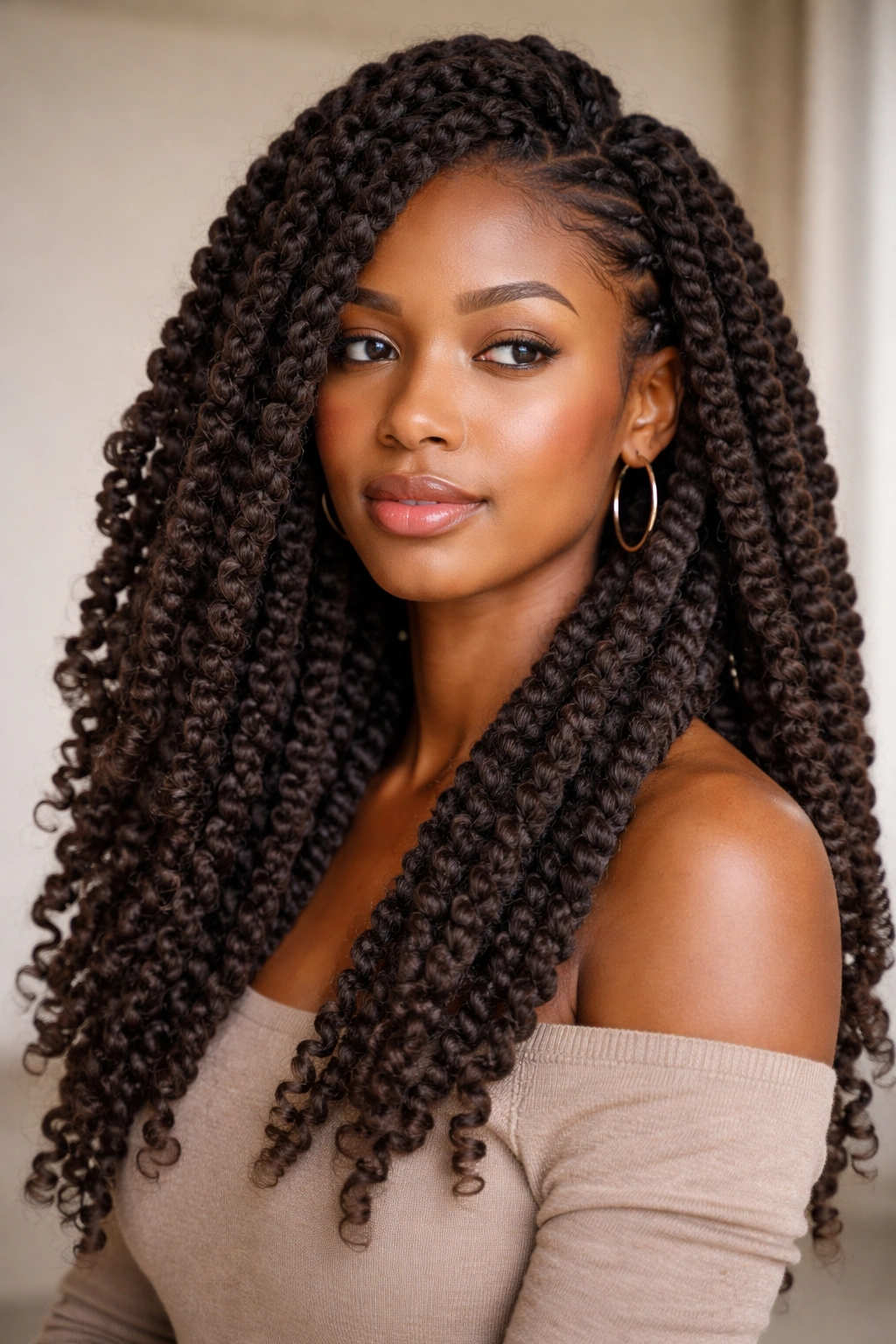
Marley twists bring genuine visual interest to twist braids by adding thick, textured extensions that create a distinctly chunky, almost rope-like appearance. Named after the thick locks associated with reggae culture, these twists are created using Marley hair (also called braid hair), which has a distinct kinky, wiry texture that blends beautifully with natural afro-textured hair. The extensions add volume without requiring you to have super-thick natural hair to start with, making this style particularly appealing if you love the look of locs without the permanent commitment.
Why Marley Twists Stay Fresh for Weeks
The textured extension hair used in Marley twists is specifically designed to hold its structure longer than smoother braiding hair. Because the extension fiber itself is already textured and gripping, the twists compress and settle into a tighter pattern than smooth-haired twists would. This actually works in your favor—Marley twists look deliberately chunky and textured from day one, so they show less progression toward frizz or looseness. The kinkier the extension hair, the longer the style maintains its clean appearance.
Installation and Care Specifics
Marley twists typically take longer to install than standard two-strand twists because the thicker sections require more time to twist fully. But once installed, they require almost no maintenance. You can sleep on them without concern, swim in them without them unraveling, and wash your hair weekly without disrupting the twists. The style lasts 6 to 8 weeks easily, though many people get bored with them after 4 to 5 weeks and want to try something new. One real advantage: Marley twists are forgiving with your root hair, so they work beautifully even if you don’t have strong twist-holding texture.
Worth knowing: Buy Marley hair in person if possible. The texture varies dramatically between brands, and some feels significantly grittier or softer than others. One brand might feel pleasantly textured while another feels scratchy against your scalp.
3. Senegalese Twists
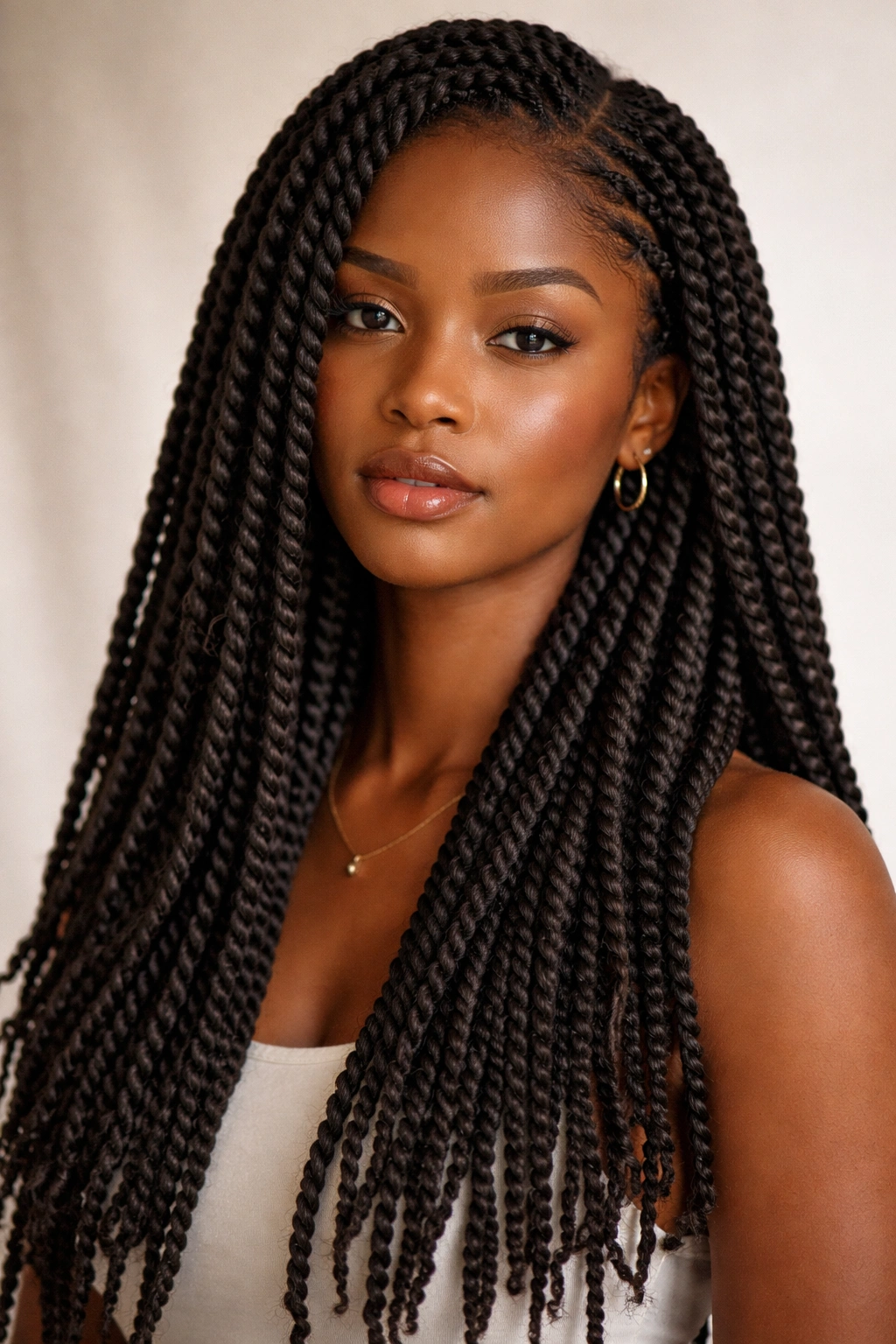
Senegalese twists are three-strand twists that create a rounder, fuller appearance than traditional two-strand twists. The three-strand construction makes them visually distinctive—they have more definition and pop than two-strand twists, and they compress beautifully as they age, eventually looking more like mini locs by week four or five. If you want a twist style that turns heads, Senegalese twists deliver without requiring any extra maintenance effort.
The Three-Strand Advantage for Longevity
The three-strand structure actually holds together more securely than two strands, which means these twists unravel at a slower rate if you’re active or sleep restlessly. The rounded shape created by three strands means water (whether from washing or rain) flows around them rather than getting trapped inside, so they dry faster and resist moisture-related frizz surprisingly well. Many people report that Senegalese twists look tighter and neater at the five-week mark than they do right after installation.
Styling Versatility and Real-World Experience
These twists work beautifully worn down to showcase the three-strand definition, or pinned up to show off the detail and texture at the crown. The style photographs well from every angle, which is genuinely nice if you care about how you look on camera. Senegalese twists last 5 to 7 weeks with minimal care, and the color and texture options available in braiding hair mean you can customize them endlessly. Whether you want a subtle match to your natural hair color or a bold contrasting shade, the market has options.
Real talk: Installation takes longer with three strands because you’re managing more sections, so budget extra time or money if you’re paying someone to install them. But the longevity makes up for the longer installation process.
4. Kinky Twists
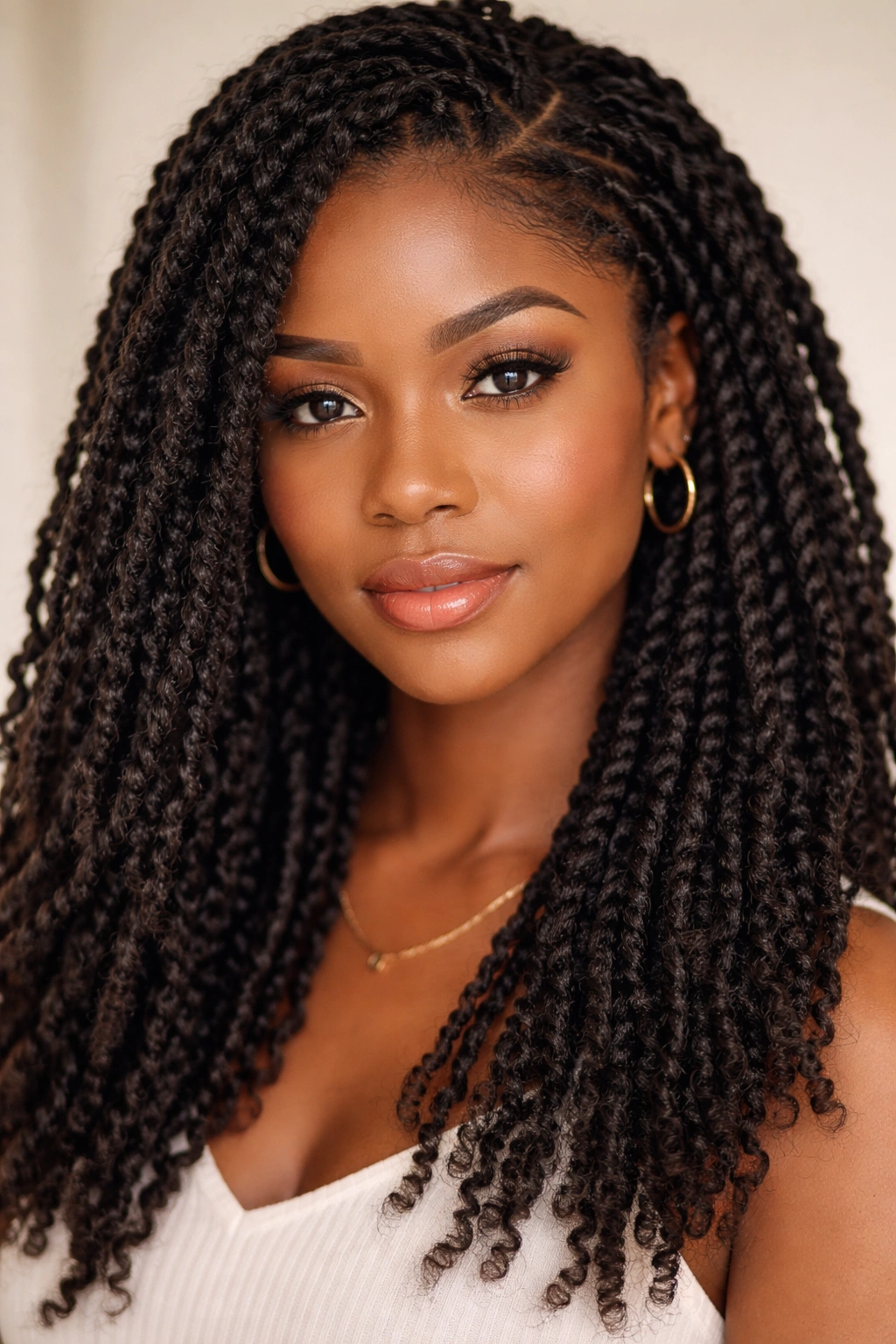
Kinky twists might be the single most forgiving twist style out there, and they deserve more attention than they get. These are two-strand twists created using kinky-textured extension hair (also called kilo hair or marley-style extensions) that matches or closely resembles natural afro-textured hair. The result is twists that blend almost seamlessly with your natural hair, create a softer, less constructed appearance than box braids, and look genuinely natural if that’s the aesthetic you’re after.
Why They Look Natural But Last Long
The kinky texture of the extension hair catches and grips your natural hair differently than smooth braiding hair would. This grip actually makes the twists more stable over time, so they hold their structure longer while looking less deliberately styled. Kinky twists are the style people choose when they want something that reads as “my natural hair is just twisted” rather than “I got a protective style installed.” The texture blend means you don’t see a harsh line between your natural hair and the extensions, which many people find more aesthetically satisfying.
Maintenance Reality and Weekly Washing
You can absolutely wash kinky twists weekly without them unraveling or requiring re-twisting. The texture helps them stay secure even when wet, and they dry faster than you might expect because water doesn’t get trapped in smooth braiding hair. This is the style to choose if you’re someone who likes to wash their hair frequently or who exercises regularly and wants sweat-friendly hair. Kinky twists last 6 to 8 weeks, though they look their freshest around week 3 or 4, which is genuinely convenient timing.
Insider note: Kinky twists work particularly well if you have natural hair on the coarser or textured side. The extension hair and your natural hair end up blending so seamlessly that you can’t tell where one ends and the other begins.
5. Crochet Twists
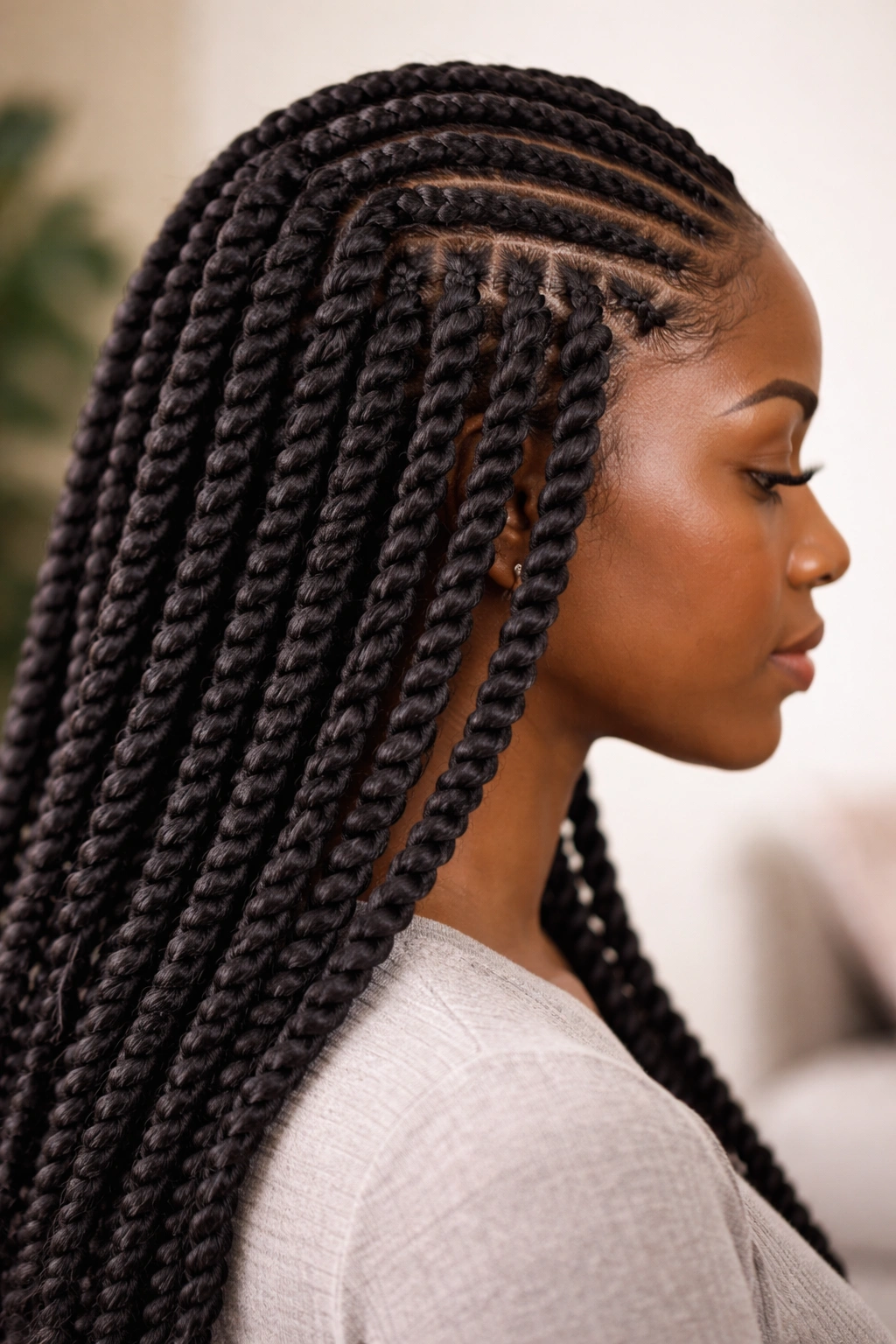
Crochet twists represent a category of their own because they’re installed differently from traditional hand-twisted styles. Your natural hair is braided into thin cornrows, and then pre-twisted extension hair is crocheted onto those braids. The advantage is obvious: installation is dramatically faster than hand-twisting the entire style, and the twists are consistent in size and shape because each section is identical. If speed matters to you, crochet twists are game-changing.
Installation Speed and Install Comfort
A full head of crochet twists can be installed in 2 to 4 hours depending on how many twists you want, whereas hand-twisting that many sections might take 6 to 8 hours. Beyond speed, crochet installation is easier on your arms, hands, and shoulders if you’re installing your own hair. The repetitive motion of crocheting is less intense than the back-and-forth twisting motion required for hand twists, which makes a real difference when you’re working on a full head.
Longevity and Maintenance Simplicity
Because the twists are crocheted securely onto cornrows, they’re incredibly stable—they won’t unravel, and they barely frizz even if you sleep on them roughly or let weeks pass between washes. Crochet twists last 6 to 8 weeks easily, and many people report their twists look better at week six than they do week one. You can wash them without worry, condition them normally, and move through your daily life without thinking about your hair. The low-maintenance quotient is genuinely elite here.
A Note on Scalp Health
The security of crochet twists comes from cornrow braiding, which does create more tension at the roots than other twist styles. If you have a sensitive scalp or a history of tension-related hair loss, crochet twists might not be the right choice, even though they’re low-maintenance in every other way. The cornrow foundation can feel tight for the first few days, and some people never fully adapt to that sensation. Consider your scalp comfort level before committing to this installation method.
Pro tip: Ask your stylist to braid the cornrow foundation slightly looser than usual. A comfortable scalp for six weeks beats three weeks of headaches.
6. Passion Twists
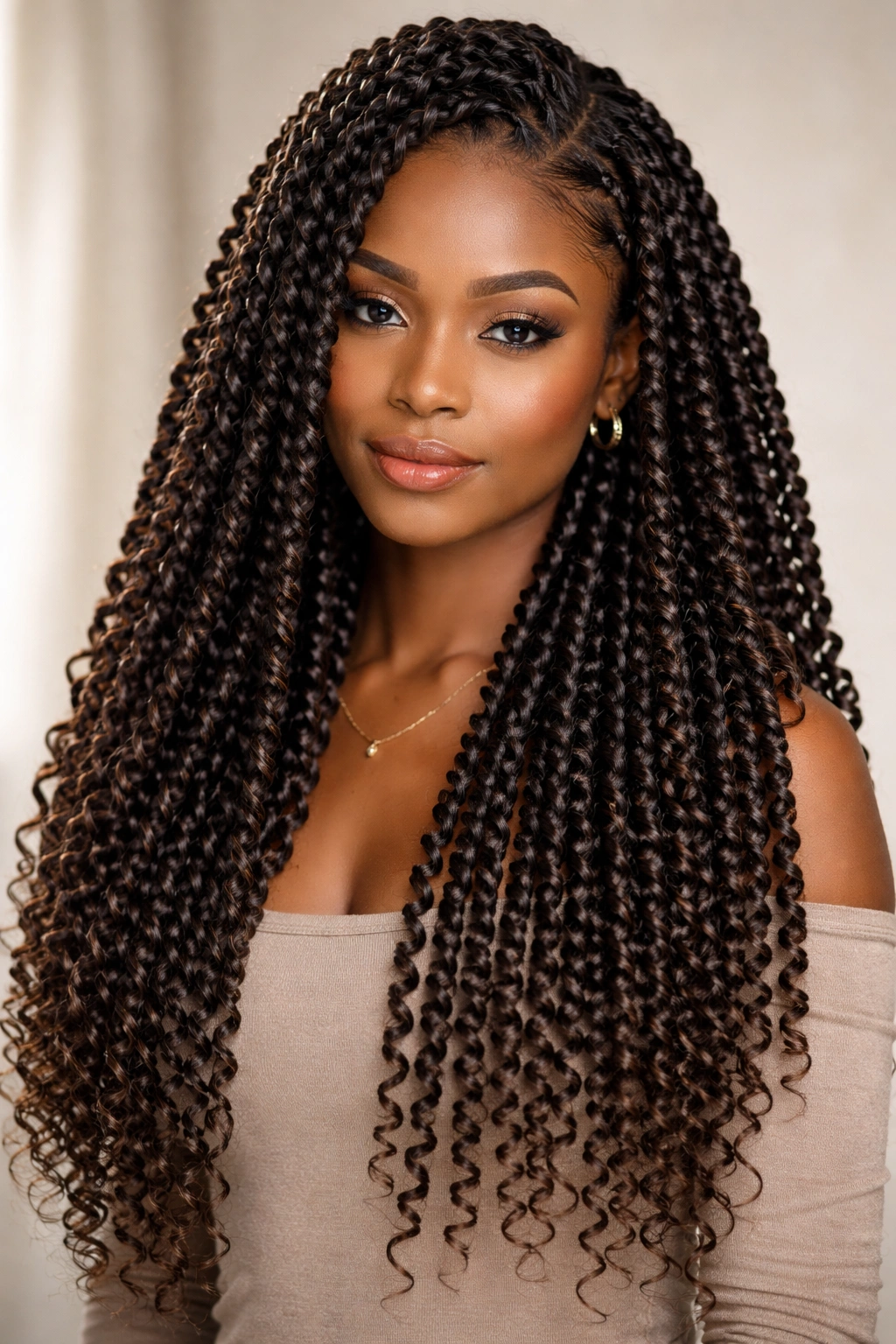
Passion twists have become enormously popular over the last several years, and for good reason—they’re visually stunning, genuinely low-maintenance, and they work beautifully on a wide range of hair textures and curl patterns. These twists use pre-twisted spring twist extension hair, which means the twist structure is already built into the extension itself. You’re essentially twisting your natural hair around pre-twisted extensions, which speeds up installation and creates a very specific aesthetic: twists that look tight, polished, and intentional from day one.
The Visual Appeal and Aesthetic Flexibility
Passion twists create a neater, tighter appearance than hand-twisted styles because the extension hair is already perfectly twisted. This makes the style particularly appealing if you like a more polished look, or if you want twists that coordinate with a professional environment. The pre-twisted extensions come in virtually every color imaginable, so you can choose classic black, blend with your natural hair color, add a pop of contrast, or go fully experimental with vibrant shades. The variety of spring twist lengths (typically 12, 14, 16, 18 inches) means you can customize the exact look you want.
Installation Speed and Damage Minimization
Because the extensions are pre-twisted, installation time is significantly shorter than hand twisting—typically 3 to 5 hours for a full head. The shorter installation time translates to less time with your hair pulled and manipulated, which means less stress on your roots. Passion twists aren’t twisted as tightly as box braids, so they offer the protective benefits without the tension risk. Many protective style enthusiasts actually prefer passion twists specifically because they achieve protection with a gentler approach.
Realistic Maintenance Expectations
Here’s where passion twists deliver on the low-maintenance promise: they look great for 6 to 8 weeks with essentially no maintenance at all. You don’t need to re-twist them. You don’t need to separate them frequently. You can wash your hair, condition it, and move on. The pre-twisted structure means they naturally resist frizz better than twists you’ve hand-twisted yourself. If you love the idea of a twist style but can’t commit to regular re-twisting maintenance, passion twists are legitimately the answer.
Real talk: The spring twist extensions are slightly pricier than regular braiding hair, but the time savings during installation usually makes up for it financially.
7. Flat Twists (Cornrow-Style Twists)
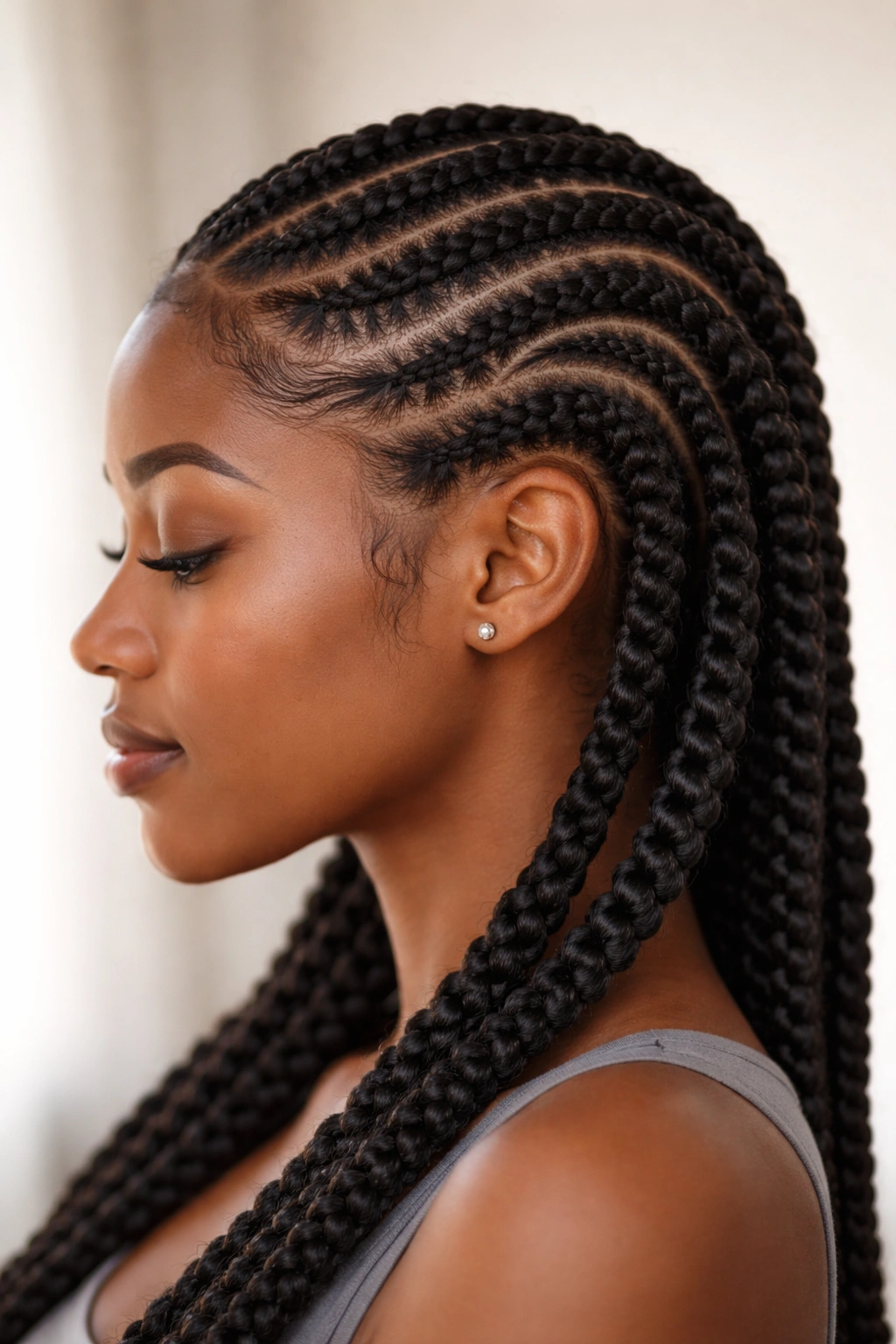
Flat twists are created by twisting hair close to the scalp in a cornrow pattern, then letting the twists hang freely down the length. They create a dramatically different aesthetic from hanging twists—instead of the twists appearing to start an inch or so away from your scalp, flat twists start right at the hairline and follow the contours of your head. This style works beautifully for showcasing the beauty of your scalp, creating interesting patterns, and achieving a polished, intentional appearance that reads as genuinely artistic.
Visual Design and Personalization
Because flat twists follow a cornrow pattern, you get to create a design—whether that’s simple parallel lines, intricate geometric patterns, or curved designs that follow the shape of your head. This personalization element means flat twists look custom-designed for you in a way that other twist styles might not. You can create symmetrical patterns for a formal look, or asymmetrical designs for something edgier and more creative. The design possibilities are extensive, which means you never get bored wearing the same style twice.
Comfort and Scalp Considerations
Flat twists, because they’re twisted close to the scalp, do create more tension at the roots than hanging twists. For some people, this tension settles within a few days and becomes completely comfortable. For others, flat twists never feel comfortable, and that’s important to know before committing. If you have scalp sensitivity or a history of tension alopecia, flat twists might be worth skipping. However, if you can tolerate the initial tension, they’re genuinely low-maintenance once they’ve settled—you can wash them, condition them, and wear them for weeks without any upkeep.
Duration and When They Shine
Flat twists last 4 to 6 weeks depending on how active you are and how frequently you wash your hair. They’re ideal if you want a style that looks intentional and designed rather than simple and relaxed. They photograph beautifully, they look professionally polished, and they suit many occasions—from casual to professional to event-ready, depending on how you style them. Some people wear flat twists down, some pin them up, and some accessorize them with clips or beads, creating endless styling options from one installation.
Worth knowing: Flat twists require skill from whoever is installing them, whether that’s you or a stylist. Uneven or loose flat twists will show, whereas loose hanging twists might just look intentionally textured. Budget for skilled installation to get the result you’re hoping for.
8. Faux Locs
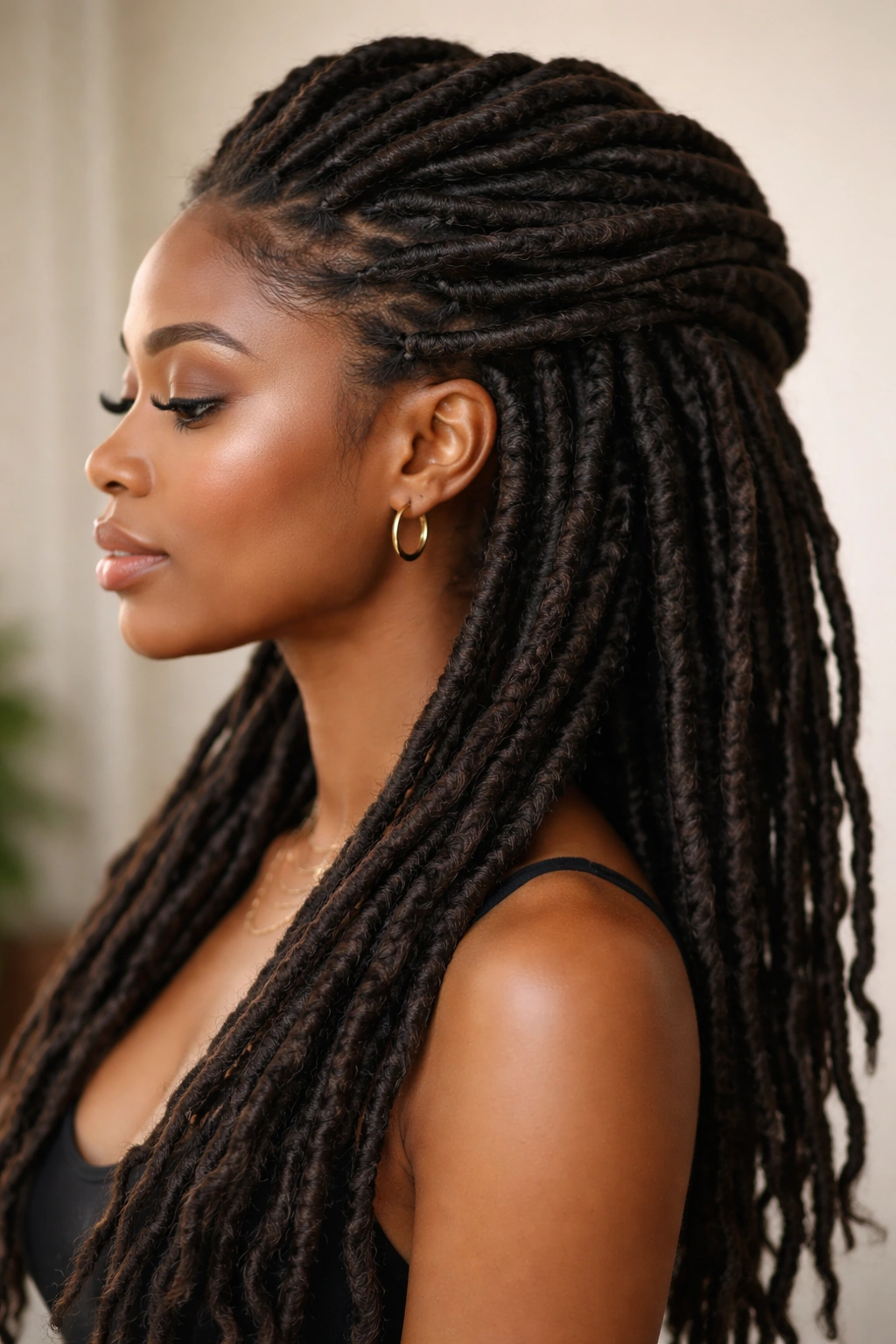
Faux locs are technically twists, though they’re often discussed as their own category. They’re created by twisting extension hair around your natural hair in a way that mimics the appearance of locs—thick, rounded sections that look like they’ve been locked together for months. The difference is, faux locs don’t actually lock your hair; they can be removed cleanly without damage, which is the entire appeal. You get the aesthetic of locs with zero permanent commitment and genuinely low maintenance.
The Loc Aesthetic Without the Commitment
Faux locs look substantial and dramatic in a way that regular twists don’t. They create a bold visual impact, they photograph beautifully, and they absolutely work for anyone who’s curious about locs but isn’t ready for a permanent commitment. The locs can be styled into updos, left down for maximum impact, or pinned back in numerous ways. If you want people to notice your hair, faux locs deliver that without question.
Longevity and Real Maintenance Reality
Faux locs are genuinely low-maintenance, but this style does require slightly more care than simple hanging twists. You can’t wash your hair as aggressively as you might with other twist styles—the locs don’t unravel, but they can accumulate lint and buildup inside the twisted sections. Monthly deep cleaning is really beneficial for keeping them fresh and extending their lifespan. That said, you still don’t need to re-twist them, and they hold their shape beautifully for 6 to 10 weeks.
The Truth About Comfort and Weight
Faux locs are notably heavier than regular twists because of the thicker extension sections, which means you need to assess your scalp comfort honestly before installing them. Some people feel a gentle weight and love it—it creates a grounding sensation. Others find the weight stressful after hours of wearing them. You’re also installing significantly more hair on your head than you might with regular twists, so the overall density and heat can feel different. Try faux locs at a time when you can spend your first few days at home if possible, giving your scalp time to adjust.
Pro tip: Faux locs work beautifully if you install them loosely enough at the root that your scalp can breathe. Tight roots = uncomfortable wear. Ask your stylist specifically for a relaxed root installation if scalp comfort is a concern.
9. Chunky Twists
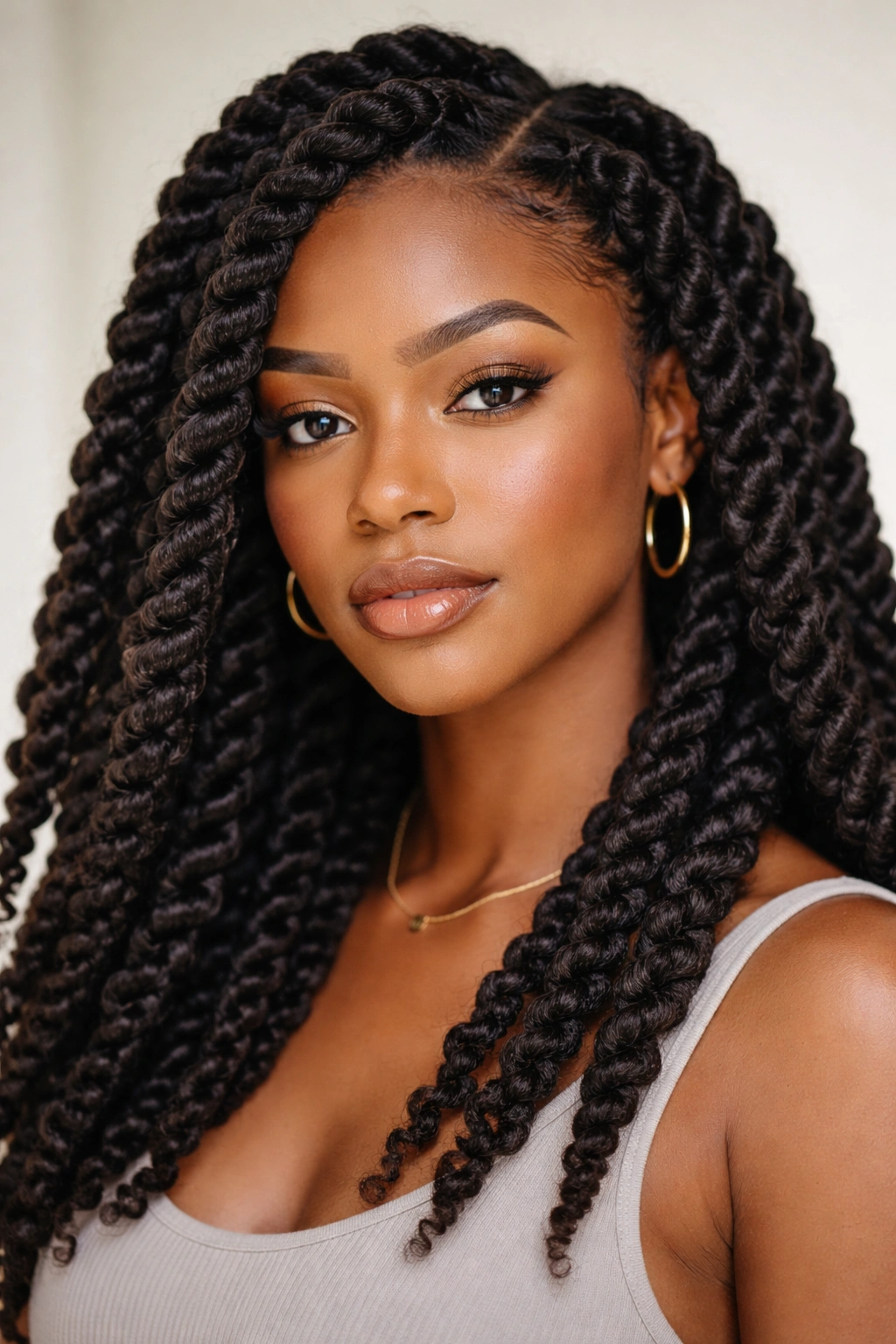
Chunky twists are exactly what they sound like—thick, substantial twists made from larger sections of hair. They’re created by taking bigger portions of your natural hair and twisting them together, optionally with extensions, to create a bold, visually striking style. Where regular twists might involve 30 to 50 sections on a full head, chunky twists might involve only 8 to 15, depending on how thick you want them. This style is all about impact and simplicity.
Visual Drama and Bold Aesthetics
Chunky twists are genuinely statement-making. They look intentional, artistic, and modern in a way that smaller twists might not. The larger sections mean you can see the individual twist structure clearly, which creates visual depth and interest. If you love your hair to be a focal point of your look, chunky twists deliver that. They also work beautifully for anyone who wants twists but prefers a simpler, less intricate aesthetic. Chunky twists feel natural and undone in the best way possible.
Installation Simplicity and Speed
Because you’re working with larger sections, chunky twists are genuinely fast to install—a full head might take just 2 to 3 hours depending on thickness. The simplicity of the style means even someone without advanced braiding skills can install them. If you’re doing your own hair, chunky twists are one of the fastest twist options available. The straightforward nature of large sections means you can get a beautiful result even if your skills are still developing.
Realistic Longevity Expectations
Chunky twists last 4 to 6 weeks on average, with the understanding that they’ll look slightly less neat by week 5 than they did week one. The larger sections mean the hair has more room to shift slightly as you move around and sleep, so they don’t maintain their pristine appearance quite as long as smaller, more numerous twists. However, they genuinely do not require maintenance—you can wash them, sleep on them, and live your life without worrying about them coming undone or needing re-twisting.
Real talk: Chunky twists show root growth more visibly than smaller twists do because each section is larger. If you’re sensitive to that, plan to refresh the style around the 5-week mark, or embrace the root growth as part of the aesthetic.
10. Springy Box Twists
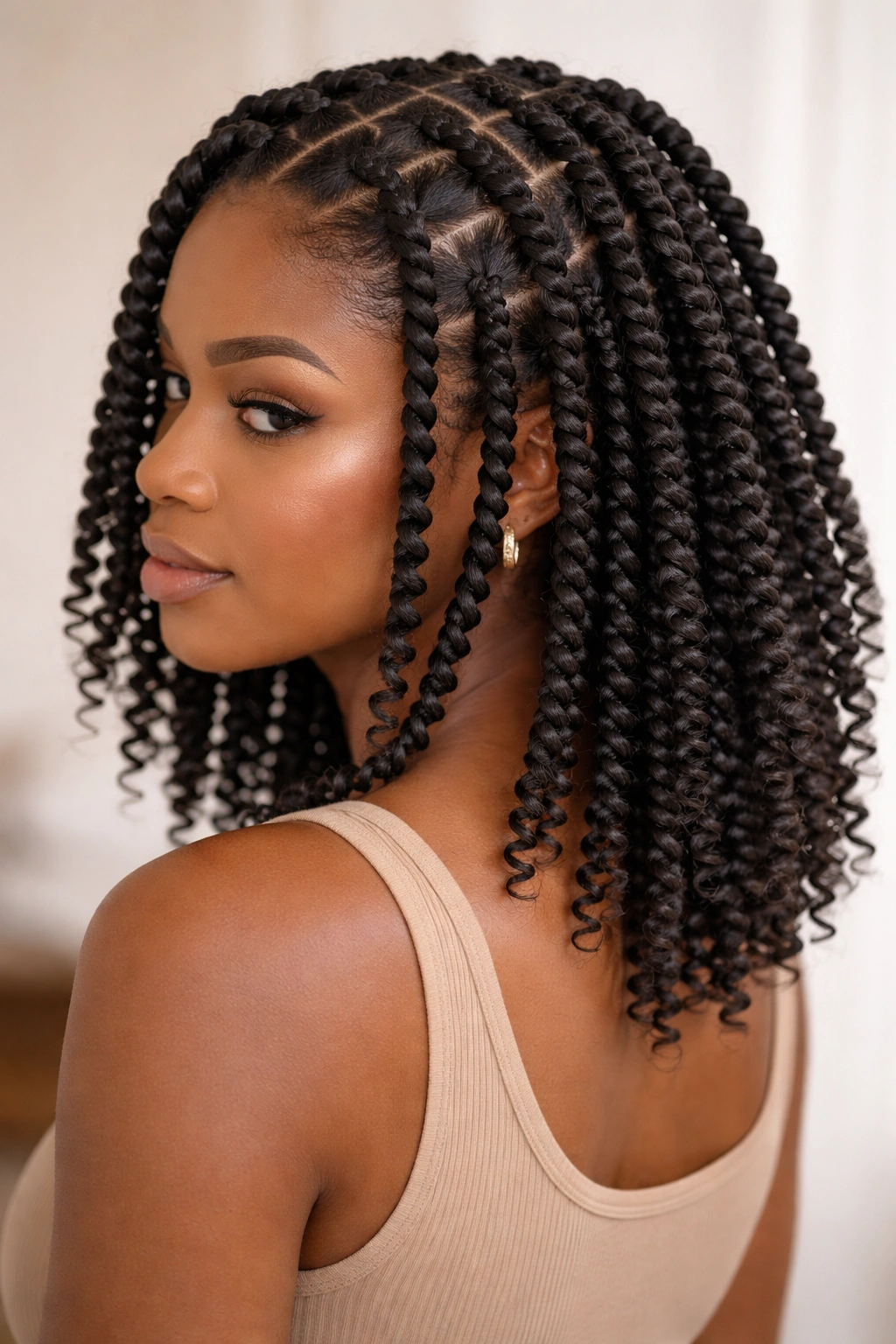
Springy box twists combine the structured appearance of box braids with the twisting technique, creating a style that’s visually distinctive and genuinely unique. These are created using the box braid grid pattern—your hair is divided into square or rectangular sections—but instead of braiding each section, you twist them. The result is structured sections that sit in an organized pattern, but with the softer, less tension-heavy installation of twists rather than braids.
Grid Structure and Neat Appearance
Because springy box twists follow a grid pattern, they naturally sit in organized rows that look intentional and designed. There’s something inherently satisfying about the clean structure—it looks neat without looking overly done, natural without looking like you didn’t try. The grid pattern works well if you prefer symmetry and organization in your styling, or if you simply like the visual appearance of structured sections. You can create different patterns by varying the grid size or leaving some sections unbraided.
Installation and Sectioning Precision
Creating springy box twists requires careful sectioning from the start—you’re mapping out a pattern and dividing your hair into sections that will be twisted within those grid lines. This does require some planning and perhaps a bit more installation skill than simply twisting randomly throughout your head. However, the payoff is a style that looks intentionally designed and photographed well from every angle. If you’re working with a stylist, be clear about the grid pattern you want so they understand the vision.
Maintenance and Real-World Durability
Springy box twists last 5 to 7 weeks and hold up remarkably well to regular washing and daily life. The structured pattern means they compress and settle into a neater appearance as time goes on, rather than gradually loosening. You won’t need to re-twist them, and they don’t require any special maintenance—just your normal wash and condition routine. The grid structure also means you can easily access your scalp for moisturizing if you prefer to do targeted applications.
Worth knowing: If you love the visual appearance of box braids but prefer the lower maintenance and lower tension of twists, springy box twists are genuinely the perfect hybrid. You get the aesthetic of one with the benefits of the other.
The Care Routine That Keeps Twists Fresh for Weeks
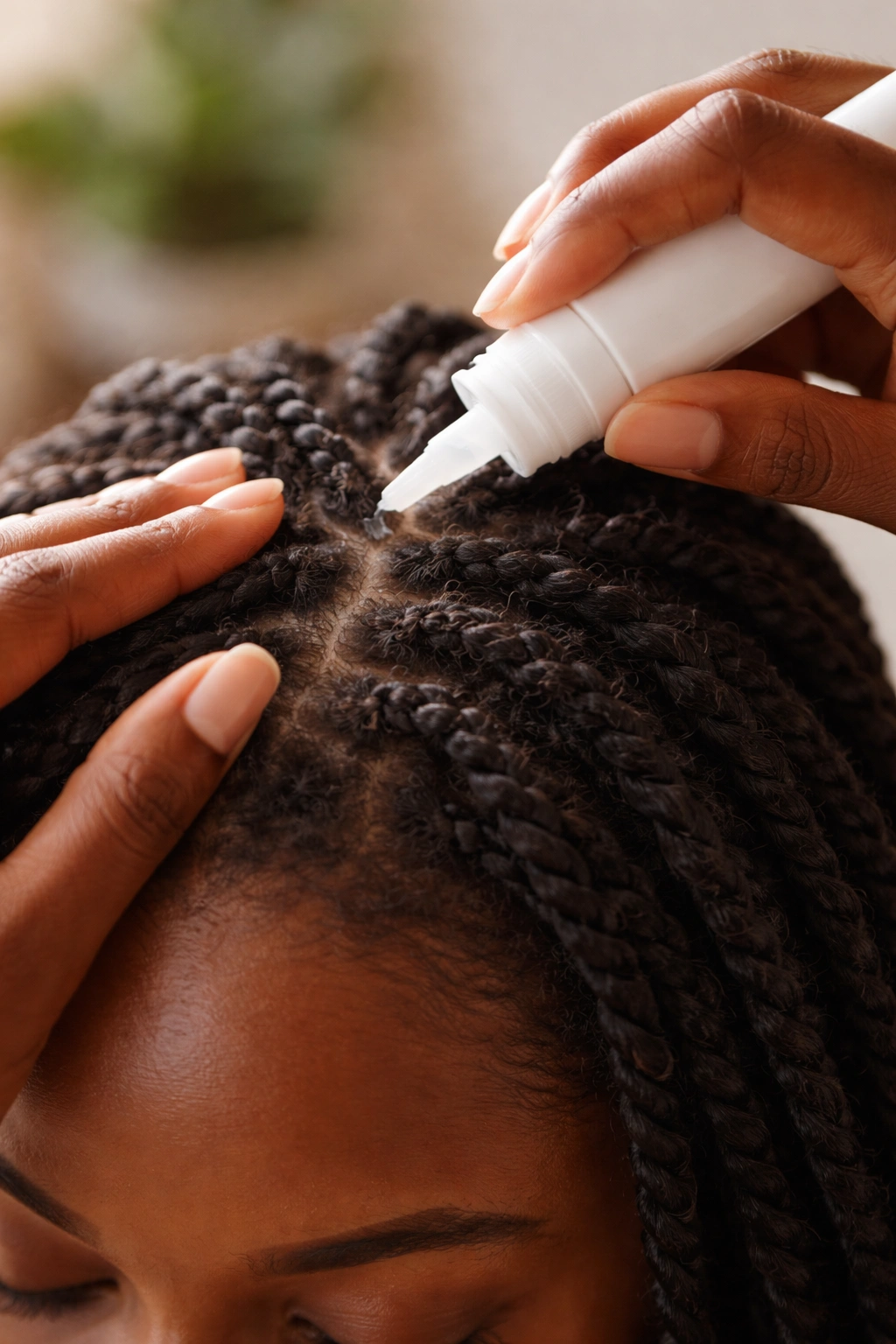
Once your twist braids are installed, the maintenance routine is genuinely minimal—that’s the entire point. However, a few simple practices keep them looking fresh longer and protect your natural hair underneath. Moisturizing your scalp is genuinely important, even though twists are less tension-heavy than some other styles. Use lightweight oils or moisturizing scalp sprays two to three times weekly, focusing on your roots and scalp rather than saturating the twists themselves. Water-based products work best because they hydrate without building product residue that can make twists look dull.
Washing your twists depends on your lifestyle and preference. If you exercise frequently, swim regularly, or simply prefer to wash your hair weekly, absolutely do it—most twist styles are completely washable. Use a sulfate-free shampoo diluted with water, apply it in a gentle stream along your scalp rather than aggressively scrubbing the twists, and rinse thoroughly. Condition your hair as usual, focusing on the lengths and ends. Your twists might look slightly fluffier for a day or two after washing, but they’ll settle back into their neat appearance as they dry.
Night care is simple but genuinely matters. Sleeping on a silk or satin pillowcase (or wearing a silk bonnet or scarf) prevents friction that causes unnecessary frizz and loosening. Cotton pillowcases absorb moisture and create friction that degrades your twists faster than you want. You’re not trying to be precious about this—a silk pillowcase is genuinely a practical investment that extends the life of any twist style. Many people find that their twists look noticeably better weeks into wear if they’ve been sleeping on silk from day one.
Styling Options Beyond Wearing Them Down
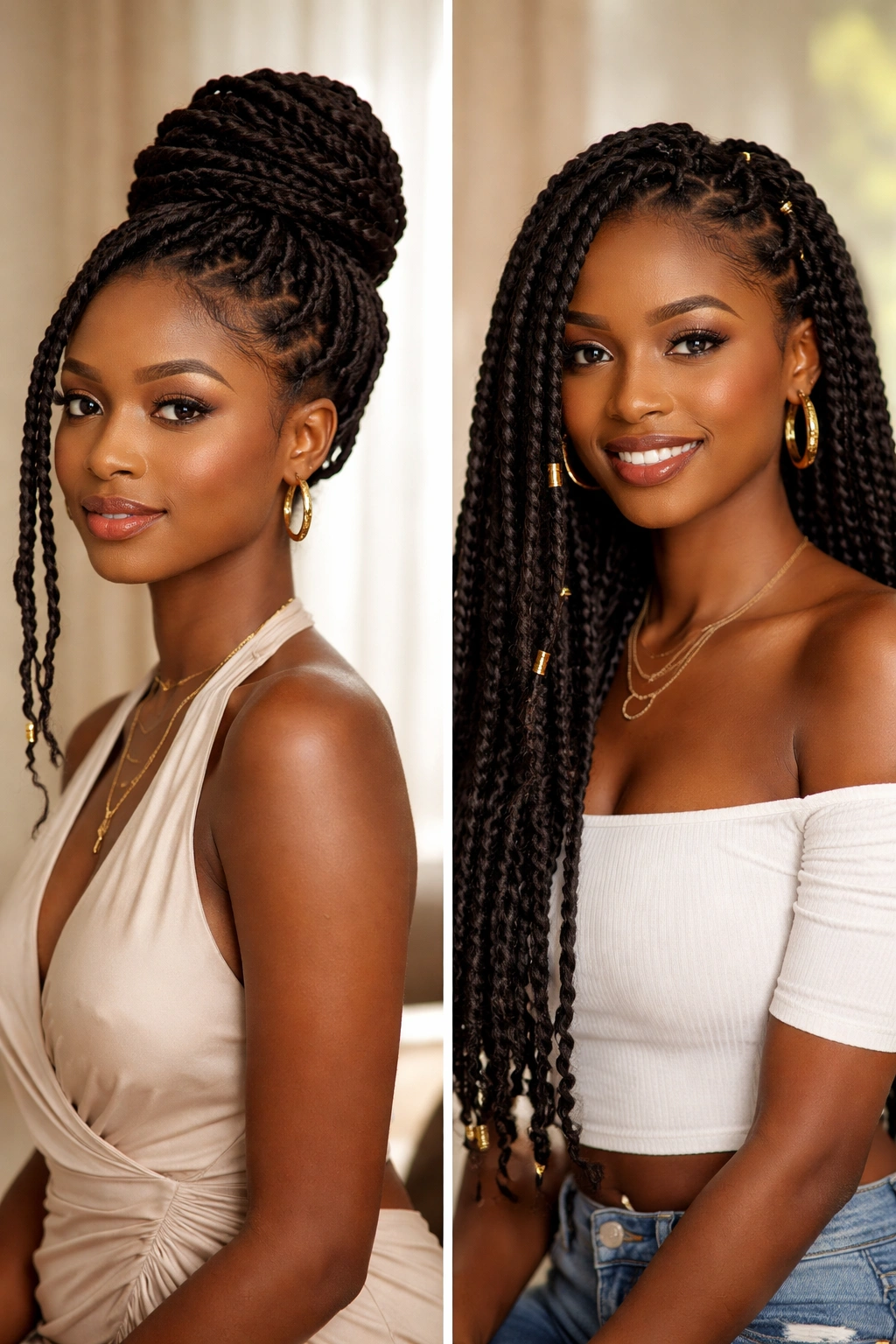
One underrated advantage of twist braids is how versatile they are for different styling options beyond simply wearing them down. You can create high or low ponytails, gather half your twists up while leaving the rest down, create buns or knots, or use clips and accessories to pin sections back. These styling changes mean you can create multiple looks from one installation, which extends how long you want to keep the style because you’re not getting bored wearing the exact same look every day.
Updos look particularly beautiful with twists because each section is distinct and textured—you’re not working with smooth braids, so the updo has built-in visual interest and texture. You can create sleek buns where every twist is tucked tightly, or looser updos where twists are gathered but still visible. Twist styles also work beautifully with hair accessories—you can weave beads onto individual twists, clip sections up, or add gold or colorful cuffs to specific sections for a customized look that changes your vibe entirely.
Final Thoughts
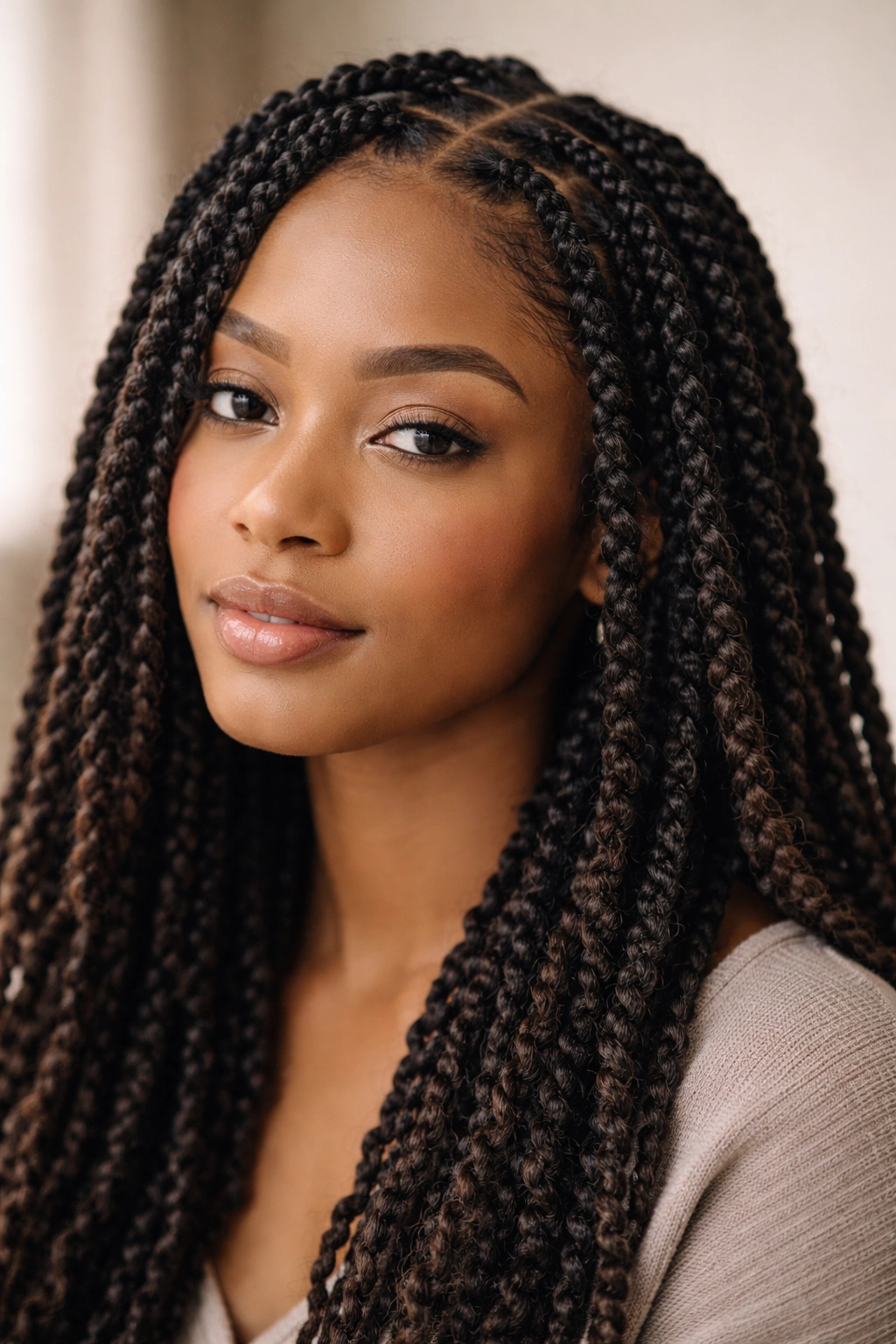
Twist braids exist in this beautiful space where they’re genuinely protective—they shield your natural hair from manipulation, reduce the need for daily styling, and give your hair a genuine break—while being low-maintenance enough that you’re not spending your evenings re-twisting or managing frizz. Unlike styles that look fantastic on installation day but deteriorate quickly with wear, most twist styles actually improve as time passes, looking tighter and more intentional by week three or four than they did on day one.
The style you choose really depends on your lifestyle, how long you want the install to take, how much visual impact you’re after, and how your scalp responds to different tension levels. Someone who wants maximum speed and minimum upkeep might choose passion twists or crochet twists. Someone who values visual artistry and scalp design might go for flat twists. Someone who wants the absolute lowest tension and most natural appearance might choose two-strand twists or kinky twists. There’s genuinely a twist style for every preference and every situation.
The real beauty of twist braids is that they work. They deliver on the promise of low maintenance because the twist structure itself holds up over time, because you don’t need to re-twist them regularly, and because they’re genuinely washable and compatible with your normal hair routine. You can install them and genuinely forget about them for weeks, moving through your life without constantly thinking about your hair. That freedom is genuinely valuable, and it’s why twist braids have become such a staple in protective styling.
