

Heavy hair has a way of lying to the mirror. It looks full when it’s wet, then dries into a shape that hangs, swallows your neck, and makes every inch feel heavier than it is. Long shag haircuts fix that better than most layered cuts because they remove weight where it matters and keep the length that people usually don’t want to lose.
The best ones don’t scream for attention. They move. They skim the shoulders, bend at the ends, and make thick hair feel lighter while giving fine hair a little more lift at the crown. That’s the real appeal here: not just layers, but placement.
A shag can be soft, edgy, retro, polished, messy, or almost invisible until the light hits it and the shape opens up. The difference usually comes down to where the shortest layers start, how much fringe sits around the face, and whether the ends are sliced, feathered, or left a little blunt for balance.
1. Curtain-Bang Long Shag With Cheekbone Layers
This is the version I recommend to people who want their hair to look lighter without making a big statement. The curtain bang opens the front, and the cheekbone layers do a lot of quiet work around the face, so the whole cut feels airy instead of heavy.
Why It Works
Curtain bangs split the visual weight down the middle. That matters more than people think. When the front of the hair is parted and softly feathered away from the face, the eye stops reading the hair as one solid curtain.
Ask your stylist to keep the shortest front pieces around cheekbone level, then let the rest fall into long, blended layers. If your hair is thick, this cut can take a surprising amount of weight out while still looking soft. If it’s finer, keep the layers longer so the ends don’t turn stringy.
Best with: straight-to-wavy hair, oval faces, and anyone who wants shape without a choppy finish.
Styling note: a 1.25-inch round brush or a medium velcro roller at the front makes the curtain effect sit better and last longer.
2. Feathered Long Shag With Soft, Flicked Ends
Feathering changes everything. A blunt end keeps the eye parked in one place; a feathered end lets the cut breathe. That’s why this version feels lighter the second it’s dry.
The shape works especially well if your hair tends to collapse at the bottom. Instead of letting the perimeter sit like a shelf, feathered layers let the ends move in different directions, which creates that soft, airy finish people want from a shag. It looks polished when blown out and a little undone when you let it air-dry.
This cut shines on medium to thick hair, but it can also help finer hair look less flat if the feathering stays subtle. Too much slicing, though, and the ends can start to look wispy in a bad way. That’s the line to watch.
A little light-hold mousse at the roots and a round brush through the last 2 inches of each section usually gets the flick without making the style stiff.
3. Choppy Wolf-Style Long Shag With Loose Fringe
This one has edge. Not costume edge, which is where people go wrong. I mean the kind of choppy long shag that keeps a fuller crown, loose fringe, and longer lengths through the back so the cut feels sharp but wearable.
What Makes It Feel Lighter
The lightness comes from contrast. The top has texture and lift, while the bottom stays long enough to keep the outline from feeling too fragmented. That contrast makes the hair look like it has less bulk, even when there’s plenty of it.
Loose fringe helps too. You get movement around the eyes and forehead, but the fringe doesn’t sit heavy enough to crowd the face. That’s why this cut works so well if you want a lived-in look rather than a careful salon blowout.
How to Get the Most From It
- Ask for shorter crown layers and longer perimeter length.
- Keep the fringe soft, not blunt.
- Use a texturizing spray on dry hair, not soaking wet hair.
- Scrunch the roots with your fingers after drying.
Watch out for this: if your hair is already fine and fragile, too much choppiness can make the ends look sparse. The shape should look messy, not thin.
4. Air-Dry Long Shag for Wavy Hair
Wavy hair and shag cuts usually get along, but only when the layers respect the wave pattern. The worst versions fight the bend and create triangle hair. The good ones let the wave do half the styling for you.
A good air-dry shag starts with long, soft layers that kick up around the cheeks and fall away at the sides. That keeps the shape open. You want the hair to look feather-light around the face, then looser through the lengths, almost like the cut grew that way instead of being forced into shape.
Here’s the easy part. After washing, squeeze out water with a microfiber towel, add a small palmful of curl cream, then a mousse at the roots. Don’t pile on both at the ends. That’s how waves get stringy and heavy.
Simple air-dry routine:
- Part while damp.
- Scrunch in mousse at the roots.
- Smooth a little cream through the mids.
- Leave the ends alone.
- Don’t touch it until it’s fully dry.
5. Sleek Long Shag With Hidden Internal Layers
Not every shag has to look shaggy. Some of the best ones are almost invisible until the hair moves. This version is for people who want the shape benefits without the obvious choppiness.
The outer line stays long and smooth, which keeps the haircut elegant. Inside, though, the stylist removes weight with internal layers so the hair doesn’t hang like a block. That matters a lot if your hair is dense or coarse, because the surface can look heavy even when the cut technically has layers.
The result is clean. Not boring. There’s still bend at the ends and movement around the jaw, but the cut reads as sleek first and layered second. That’s a nice option if you live in a blazer, a plain tee, or anything else that already has strong lines.
This one works best with a center or soft off-center part and a blow-dry that smooths the top while keeping the ends slightly rounded.
6. Bottleneck Bang Long Shag With Crown Lift
Bottleneck bangs are a smart middle ground. They’re narrower at the center, then widen as they travel out toward the temples, which gives the front of the cut a softer, less boxy feel.
That shape does a lot for long shag haircuts because it draws attention upward without piling too much weight on the forehead. The crown lift matters too. If the roots at the top are flattened, the whole cut can look tired, no matter how nice the layers are underneath.
This version is especially good if you want the cut to feel lighter in motion but still present when your hair is still. A root-lifting spray at the crown, then a round brush aimed up and back, helps the whole shape sit away from the head instead of hugging it.
The fringe should skim, not sit like a curtain. If it’s too dense, the effect disappears fast.
7. Razor-Cut Long Shag With Piecey Movement
A razor cut can be brilliant or a disaster. There isn’t much middle ground. On the right hair, though, it creates that wispy, separated movement that makes a shag look light from the first step out the door.
What the Razor Changes
A razor softens the ends and slices through bulk in a way scissors don’t always do. That means the hair can swing more easily and the layers can fall into those piecey little strands people love in a good shag. The downside is obvious: if the hair is already dry, fragile, or prone to split ends, too much razor work can make it look frayed.
Who Should Ask for It
- Medium-density hair that needs movement.
- Wavy textures that hold separation.
- Thick hair that feels too round at the bottom.
- Anyone who likes a slightly undone finish.
A razor-cut shag should still look deliberate. If the ends seem shredded, the cut went too far. Keep the overall length long enough that the layers have room to show.
8. Boho Long Shag With Extra Face-Framing
This is the kind of cut that looks like it belongs with a soft knit, a leather jacket, or a white tank and nothing else. It’s loose, face-framing, and a little romantic without turning precious.
The lightness comes from the front pieces. They start near the cheekbones or just below, then drift into longer layers that blend into the rest of the hair. That keeps the face open. Hair that sits too close to the jaw can make the whole style feel heavier than it is, and this cut avoids that problem nicely.
It’s also forgiving. You don’t need perfect styling every morning. A little bend in the front pieces and some texture through the mids is enough. If your hair gets flatter when it’s clean, a dry texture spray at the roots can save the shape.
A good boho shag should feel soft, not polished to death. If it looks too tidy, something’s off.
9. Long Shag for Fine Hair With Root Volume
Fine hair needs a careful shag. Too many short layers and you end up with see-through ends and a shape that collapses by lunchtime. Too few layers and the hair hangs flat. The sweet spot is a cut that lifts the roots and leaves the perimeter long enough to keep density.
The crown layers should be the shortest part, but they still need to blend. You want lift near the top, not a shelf around the head. The front can be softly fringed or left open, depending on how much forehead you want to show. Either way, the goal is the same: make the hair look fuller and lighter at once.
What helps most:
- Blow-dry with a small round brush at the roots.
- Keep conditioner off the top 2 inches.
- Use a light mousse, not a heavy cream.
- Trim the ends often so they don’t split and look even thinner.
One more thing. A fine-hair shag should not be over-textured. Clean layers beat shredded layers every time.
10. Long Shag for Thick Hair With Weight Removed
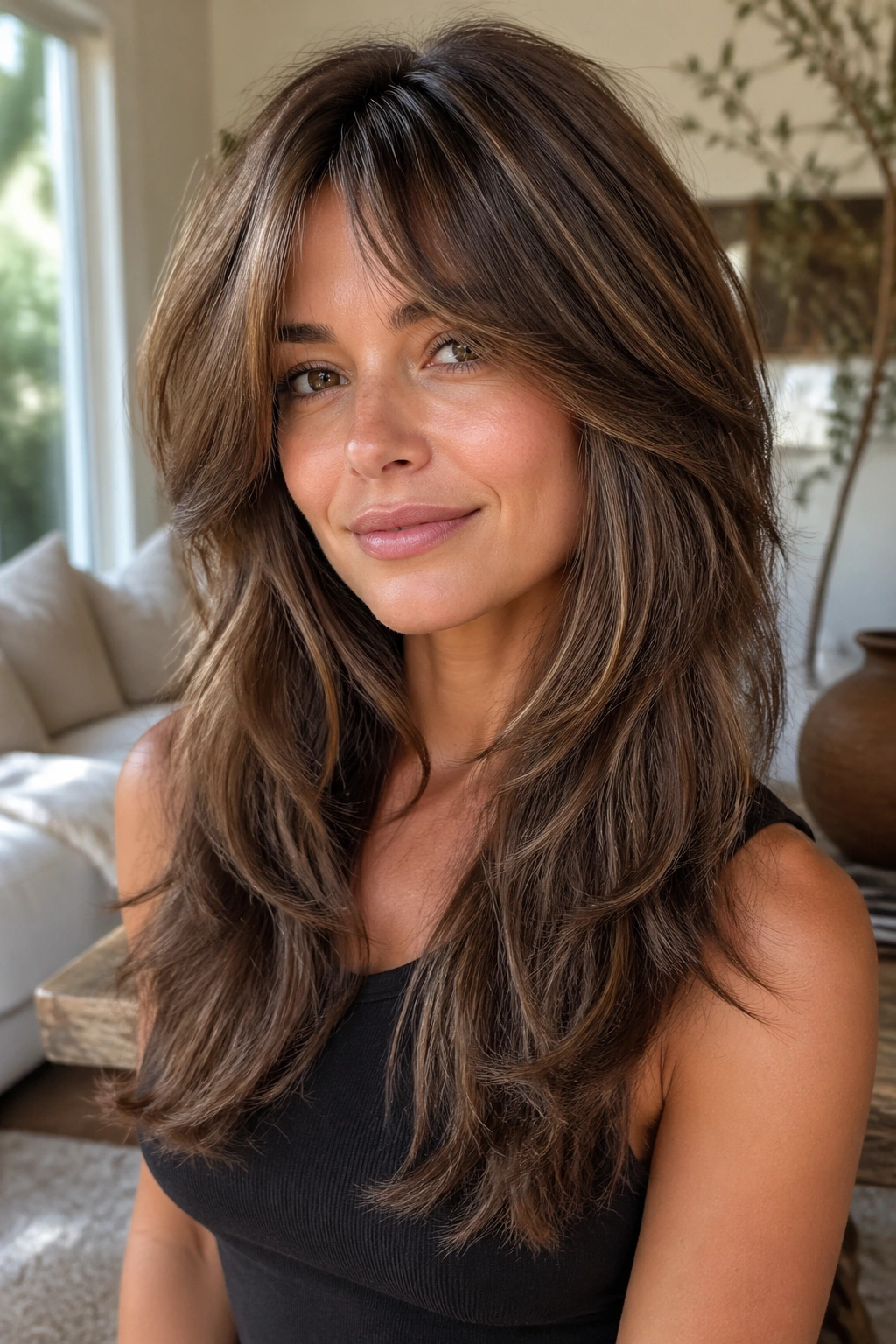
Thick hair is where the shag earns its keep. A blunt long cut on dense hair can feel like carrying a blanket on your head. A well-cut shag removes bulk and gives the hair somewhere to go.
The key is controlled thinning. You want weight taken out from the interior and the lower mids, not hacked away at the outer line. That outer line is what keeps the haircut looking full and healthy. Lose too much of it, and the ends start to feel fuzzy or hollow.
What to Ask For
- Long layers starting below the cheekbones.
- Internal debulking in the middle sections.
- Soft face-framing pieces, not short chunks.
- A perimeter that stays substantial.
This cut is a relief in humid weather, on long workdays, and any time you want your hair to feel like it has air between the strands. It can still look glamorous. It just won’t feel heavy.
11. 70s Feathered Long Shag With Flipped-Out Ends
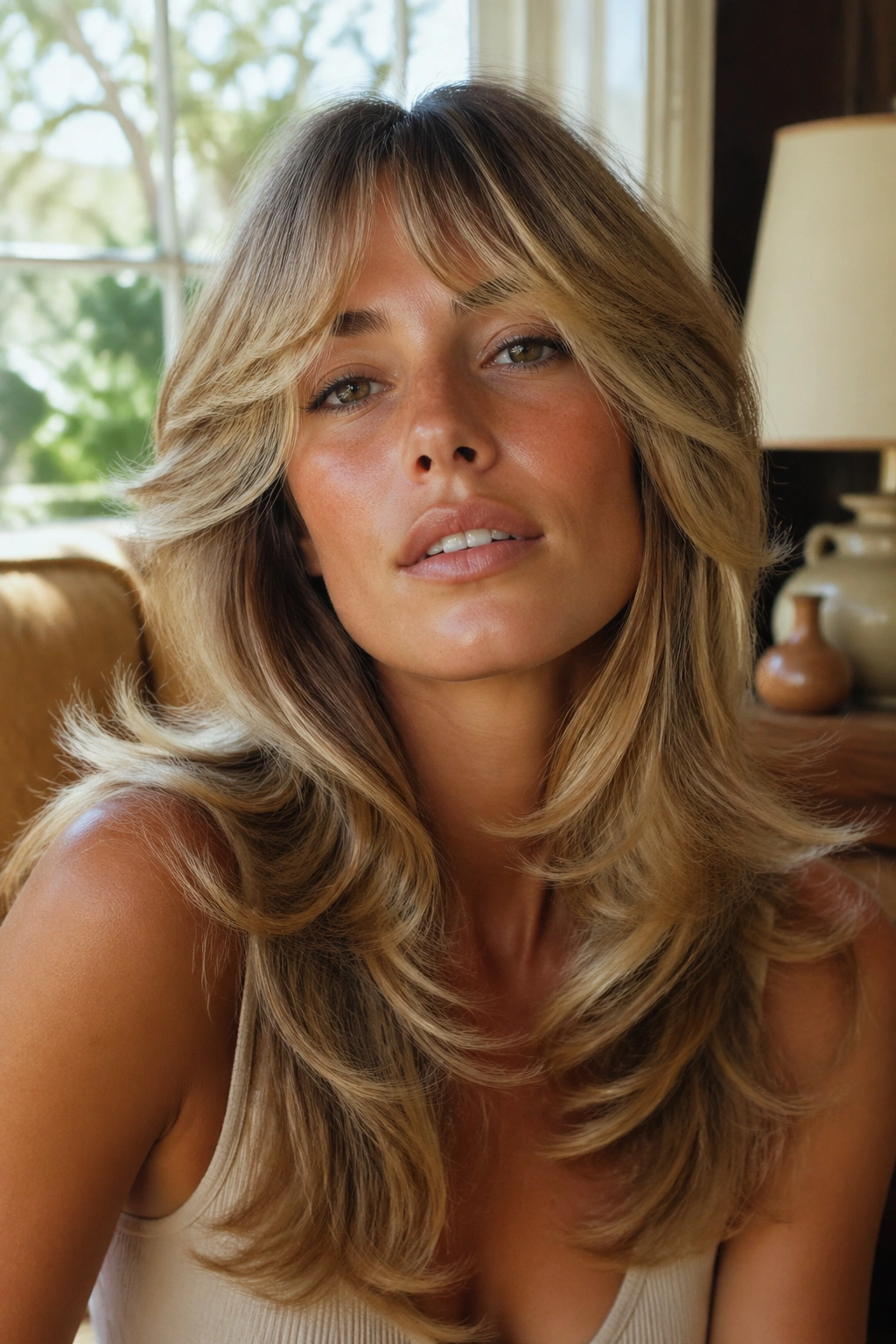
This is pure movement. The 70s-inspired feathered shag has layers that fan away from the face, then flip out at the bottom in a way that feels open and breezy.
Why It Looks So Light
The silhouette is the point. Instead of falling straight down, the layers curve out at the cheekbones and again near the ends, which keeps the eye moving. Heavy hair looks like one solid shape; feathered hair looks like several soft pieces working together.
A round brush and a blow-dryer are your friends here. Roll each section away from the face, hold the heat for a few seconds, then let the hair cool in the brush before dropping it. That cooling part matters. It helps the bend stay instead of falling flat in ten minutes.
This cut suits people who like a little glam in their hair. Not stiff glam. More brushed-out and touchable.
If you want the effect to last, mist the mid-lengths with a flexible spray after styling. Skip the crunchy stuff. It fights the movement.
12. Birkin Bang Long Shag With Soft Edges
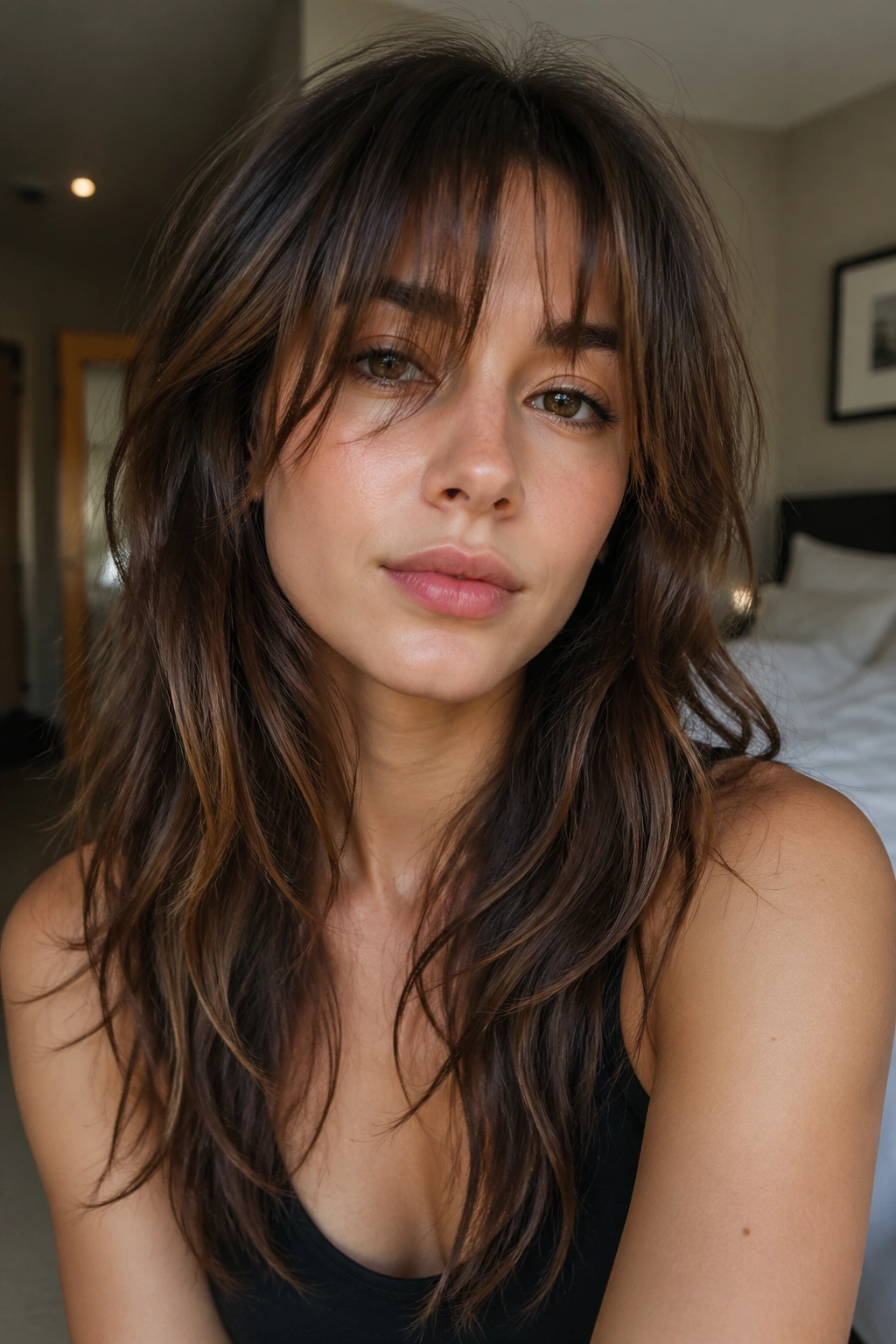
There’s something nice about a fringe that looks a little imperfect. Birkin bangs, with their soft, airy finish, bring that feeling to a long shag without making the front too heavy.
The fringe is usually longer and more relaxed than a classic blunt bang, which helps the face feel open. It gives just enough texture near the eyes to keep the cut interesting, but not so much that it swallows the forehead. That balance is why it feels lighter than a dense straight fringe.
This version suits hair that can handle a bit of styling at the front. You don’t need to spend ages on it. A quick pass with a small brush, a touch of blow-dry heat, and maybe a flat iron on the very ends is often enough.
It’s a good call if you like soft-focus hair rather than sharp lines. The look is gentle, but not sleepy.
13. Center-Part Long Shag With Swooping Layers
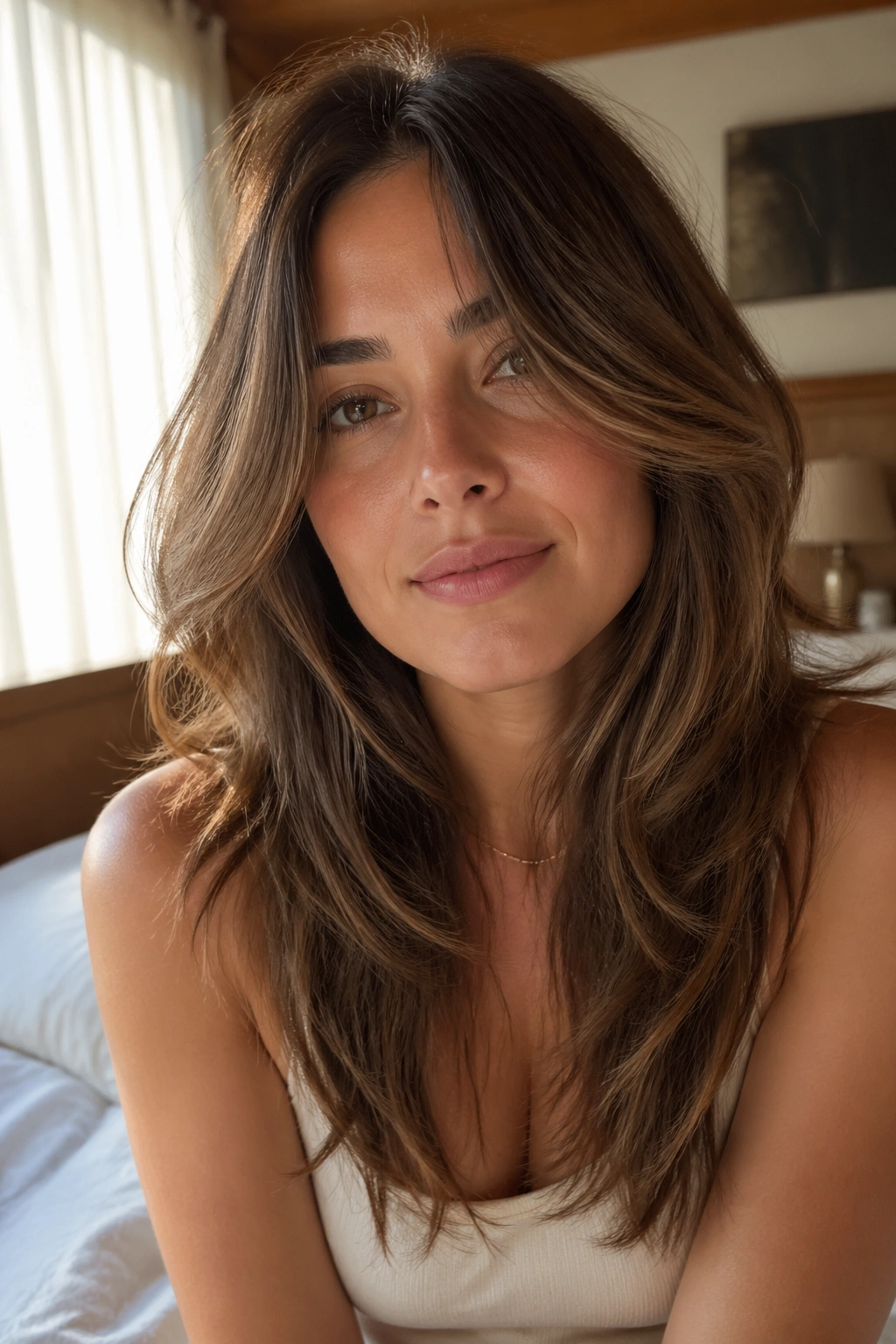
A center part can make a shag look calmer and more open, especially when the layers sweep away from the face instead of falling straight down. That little shift matters. It keeps the cut from feeling busy.
The Shape Behind It
The layers should start low enough to keep the center part from exposing too much scalp around the crown, but high enough to create movement near the cheekbones. If the shortest layers are too short, the part can look harsh. If they’re too long, the shape loses lift.
The swooping action is what makes this version feel light. Hair should move off the face in a soft arc, then settle into longer lengths that still feel full. It’s a very clean look, actually, even when the ends are a little tousled.
How to Style It
- Blow-dry with the nozzle pointed downward at the roots.
- Use a medium brush to bend the front pieces outward.
- Pin the front back for 5 minutes while it cools.
- Finish with a small amount of serum on the ends only.
That last step matters. Too much product near the crown kills the airy effect.
14. Curly Long Shag With Rounded Shape
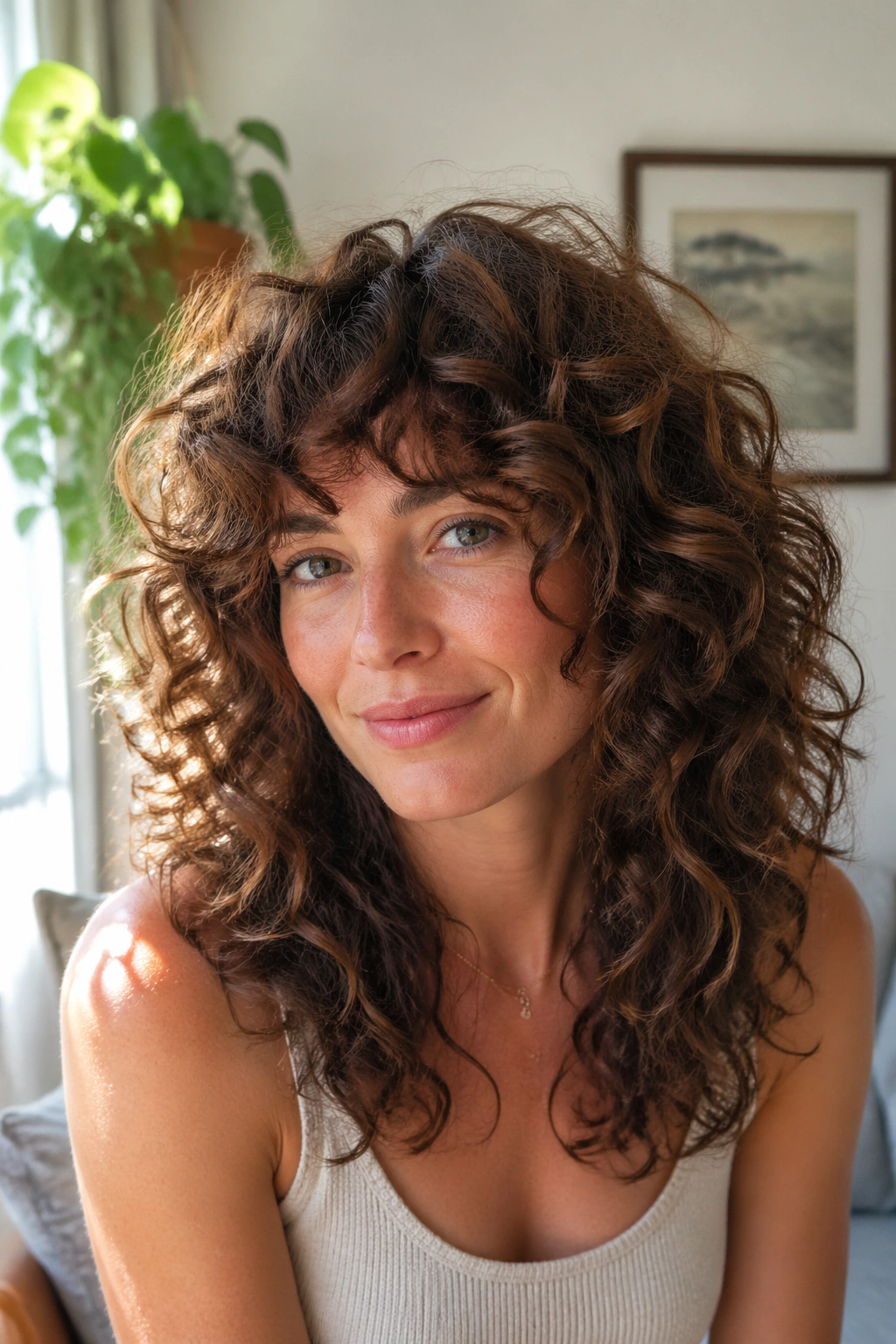
Curly hair loves a shag when the cut follows the curl pattern instead of fighting it. The rounded version is especially good because it keeps the shape balanced while taking heaviness out of the sides.
The trick is where the layers land. Short layers around the crown can give curls lift, but if they’re too short, the top balloons. Long layers through the sides and back help the curl stack in a softer way, so the whole head looks lighter and more even.
Dry cutting can help here, because curls shrink and behave differently once they dry. A stylist who understands curl patterns will look at how each section falls, not just the length on paper. That’s not a small detail. It’s the whole haircut.
A curl cream plus a gel cast usually gives the shape enough hold without weighing it down. Scrunch out the crunch once it’s dry, and the layers will show up better.
15. Straight-Hair Long Shag With Bend and Texture
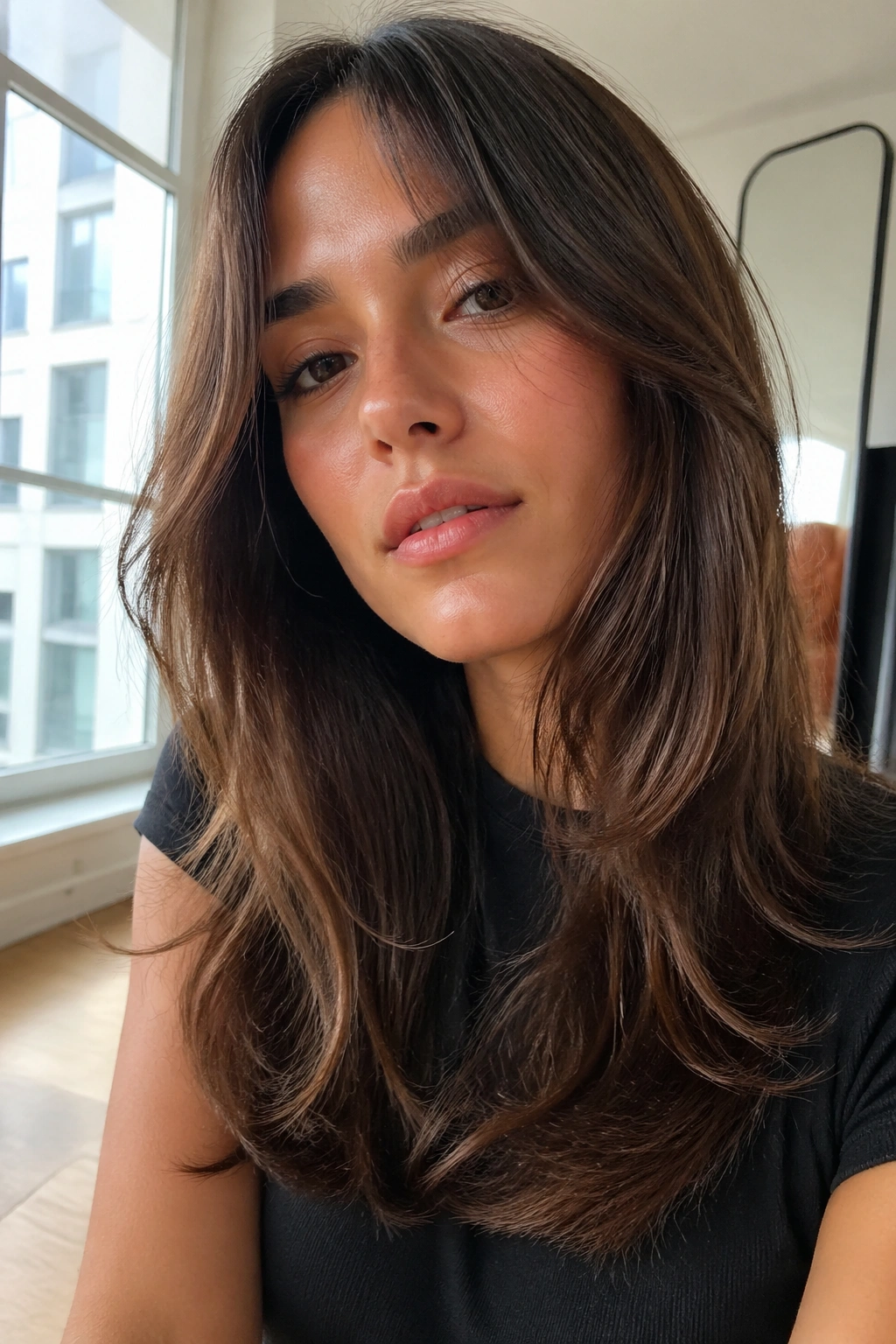
Straight hair can be the hardest type to shag well. Leave it too plain and the layers disappear. Cut too aggressively and it turns stringy. The sweet spot is a long shag that builds bend into the front and keeps the ends soft.
The Trick Here
Straight hair needs some internal shape, not just visible chunks. The layers should encourage movement when the hair is tucked behind the ear, tossed over a shoulder, or curved with a brush. Without that, the cut can look flat from every angle.
A flat iron can work here, but a round brush blowout usually gives a better result because it creates that soft curve instead of a hard wave. Keep the root area lifted and the mid-lengths slightly bent. Straight hair has a way of exposing every line, so clean blending matters.
This version is good if you want a light shape that still looks neat. It won’t give you wild texture. It will give you shape that reads well in real life.
16. Deep Side-Part Long Shag With Sweeping Fringe
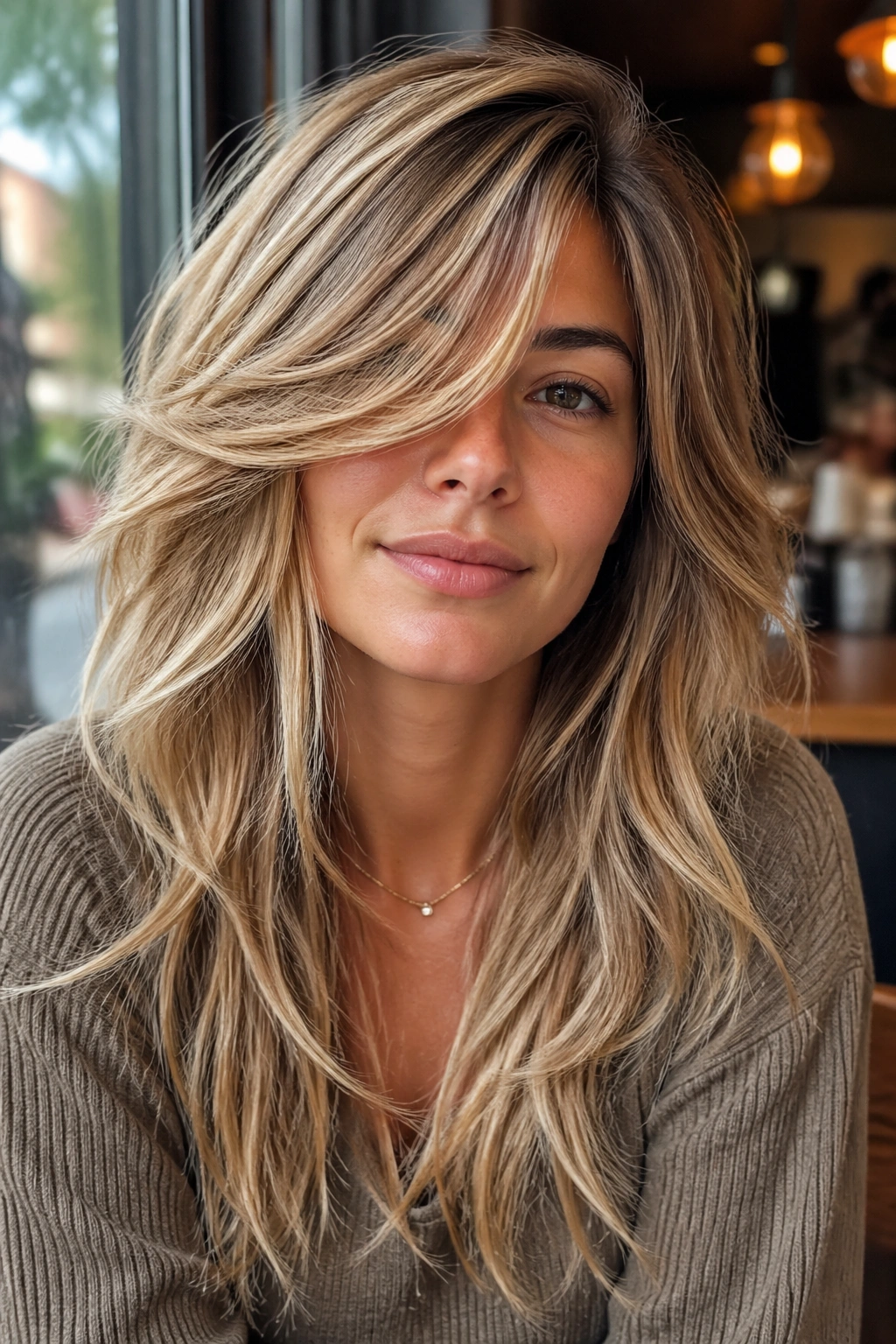
A deep side part changes the whole mood. Suddenly the hair has lift, drama, and a lighter front edge because all that fringe moves off to one side instead of sitting across the forehead.
The side with more hair creates a soft curtain effect. The opposite side opens the face and makes the cut feel less heavy around the temples. That contrast is what gives the style its airiness. It also helps if one side of your hair naturally lies flatter than the other.
This is a smart move for people with a flat crown or a cowlick that keeps fighting a center part. A side part gives the roots somewhere to rise. A little root spray at the base, then a blow-dry in the opposite direction before flipping back, can make the lift last longer.
It’s a good-looking cut on camera and in person. The movement reads immediately.
17. Dense Long Shag With Invisible Internal Layers
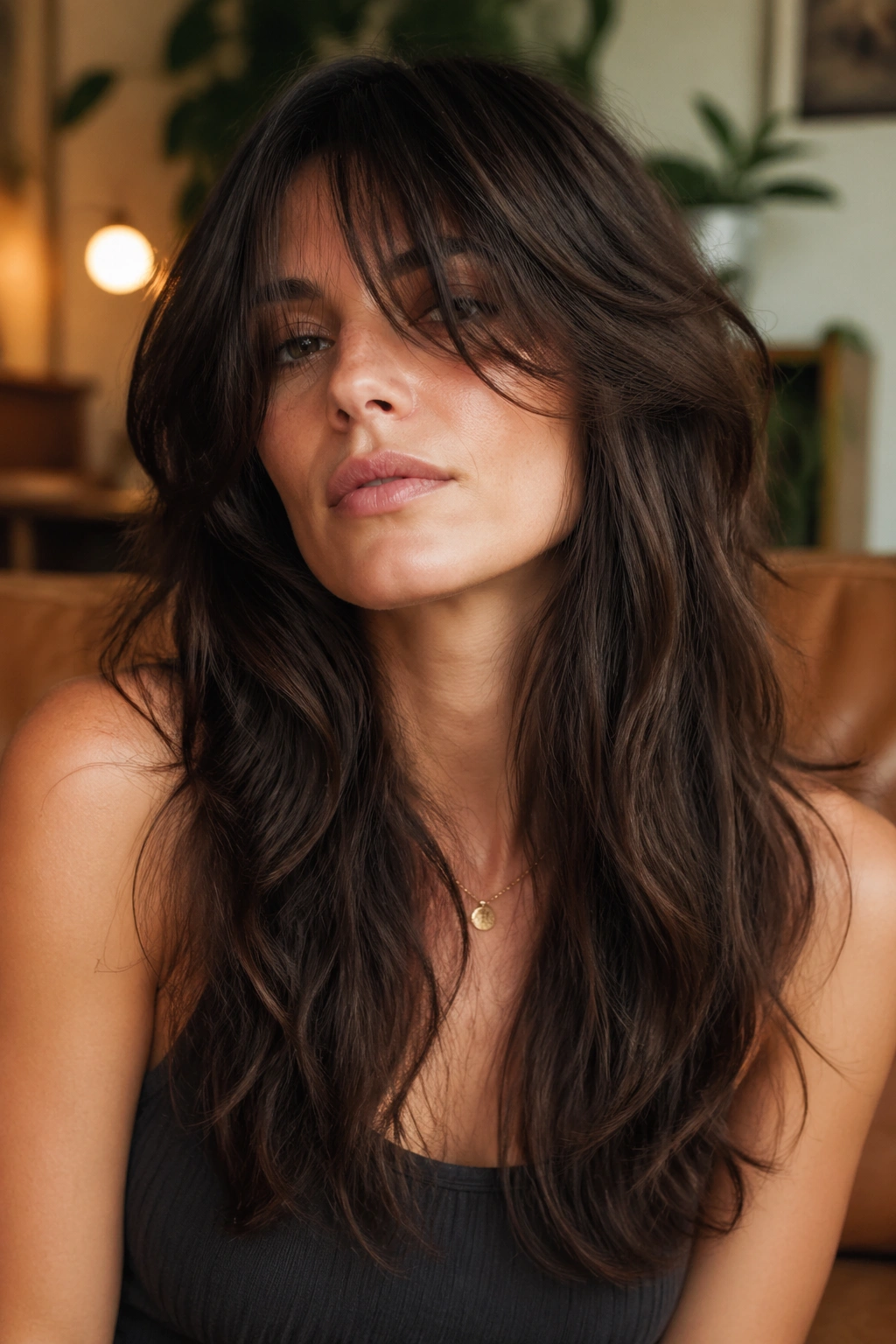
Some people want the haircut to look more expensive than layered. This is that cut. The layers live inside the shape, so the surface stays smooth while the bulk inside gets softened.
That matters for dense hair that swells at the wrong places. You can take weight out from the middle and underneath without leaving obvious steps. The result feels lighter, but the outside still looks like a rich, full curtain of hair rather than a stack of shorter pieces.
The biggest mistake with dense hair is over-texturizing the top. That only creates frizz and makes the ends look thin. Keep the top intact enough to hold shine, then let the inside do the work.
A dense long shag like this is also easier to grow out than a harsh choppy cut. The shape lingers nicely between trims, which is a small mercy.
18. Tapered Long Shag With Airy Ends
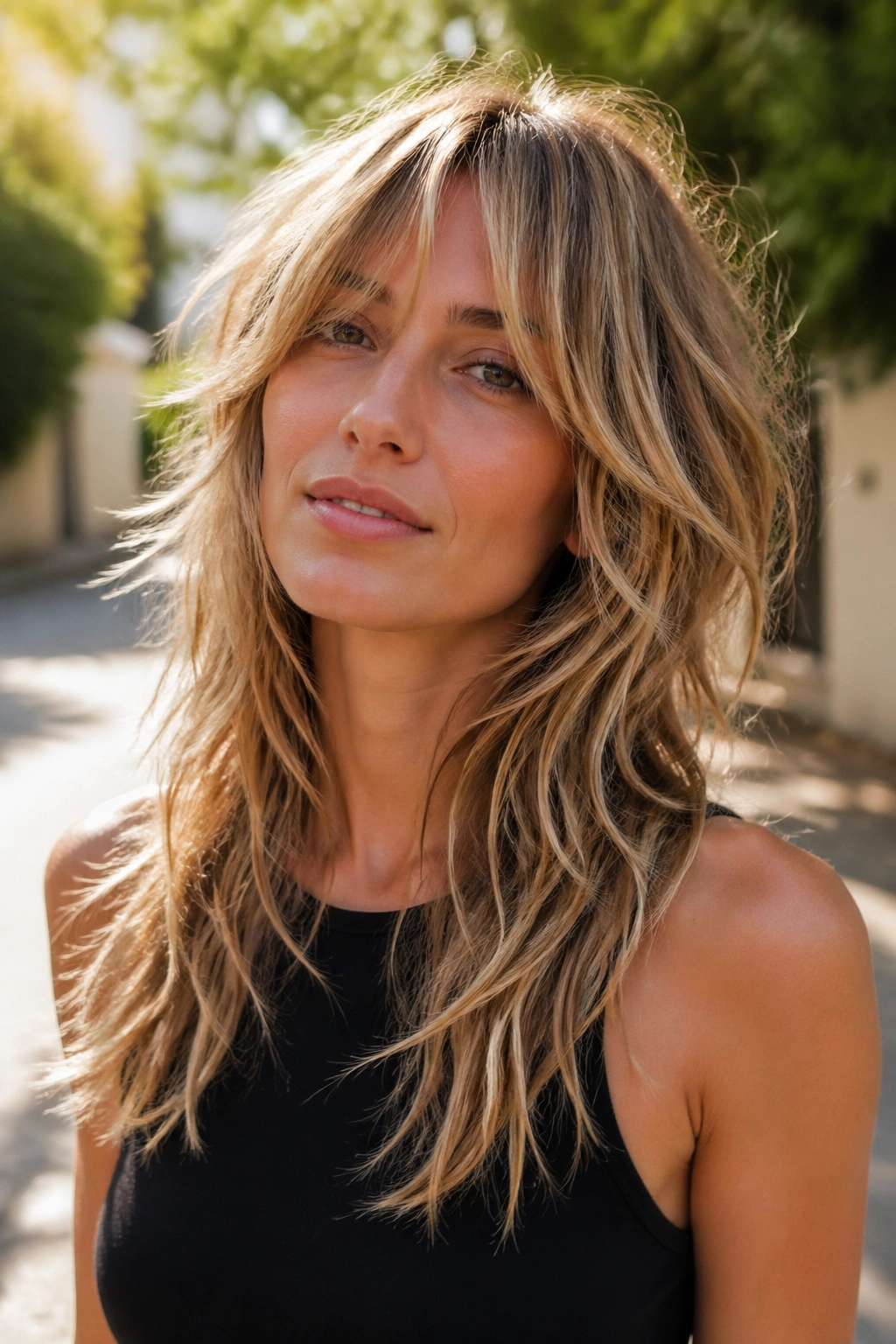
Tapering is underrated. A lot of people think of shag cuts as messy from root to tip, but a tapered long shag is smoother than that. The layers narrow gradually, so the ends feel light without looking chopped up.
What to Ask For in the Chair
- Gradual tapering through the bottom third.
- Longer layers through the sides.
- Soft ends that don’t sit in a blunt line.
- Enough weight at the perimeter to keep the hair from fraying out.
This style works because it avoids a hard visual stop. The eye keeps moving down the hair, which makes the whole cut feel less heavy. That’s useful if your hair tends to form a thick block at the bottom.
It also grows out nicely. The taper softens the awkward stage between trims, so the haircut doesn’t lose its shape fast.
19. Brushed-Out Wave Long Shag for Big Movement
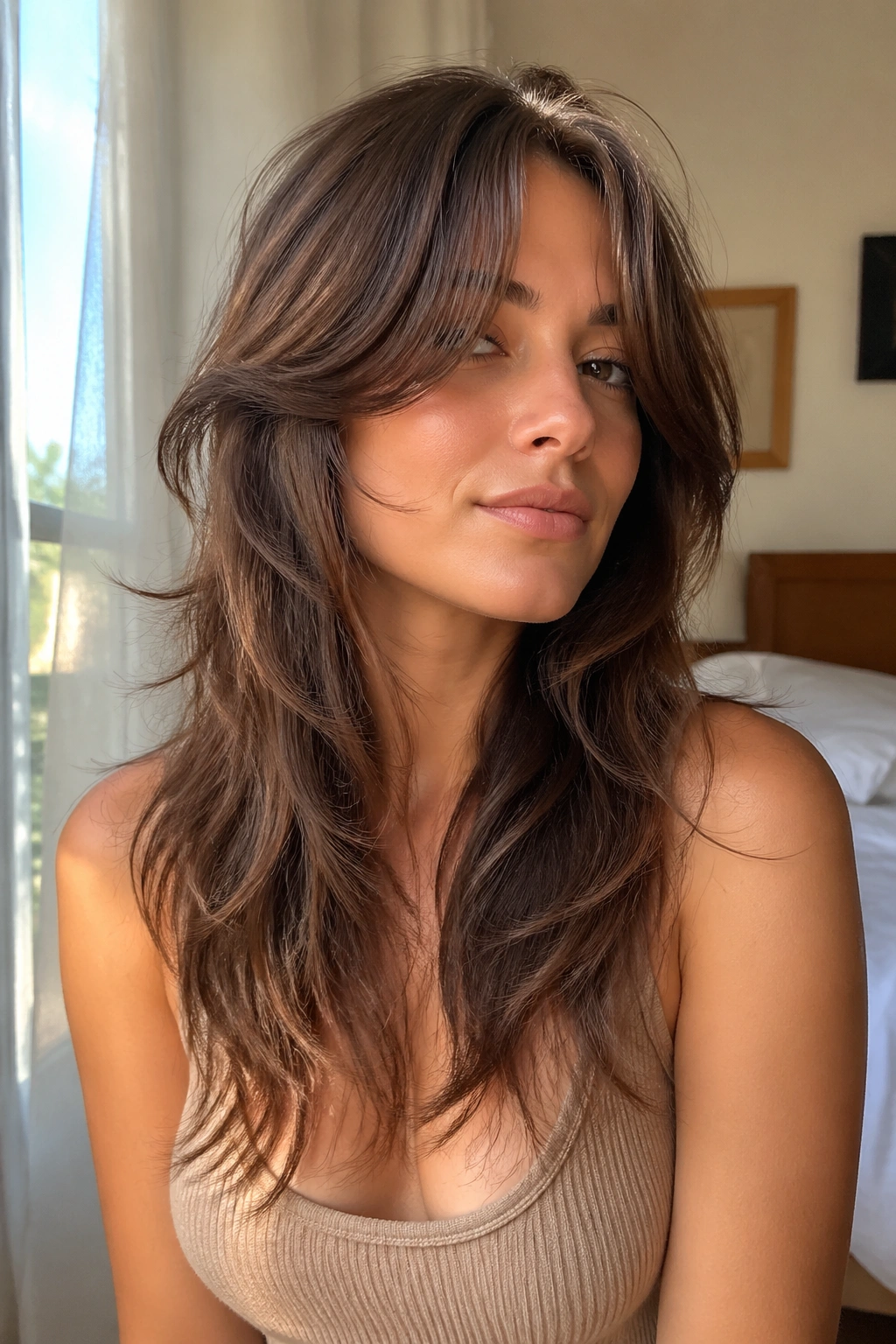
Sometimes the prettiest shag is the one you brush out after styling. The waves blur together a little, the layers stop looking separate, and the whole shape turns soft and full of motion.
How to Get It
Start with a loose blowout or a large-barrel curl, then brush everything out with a boar-bristle brush once the hair has cooled. That last part matters. If you brush while the hair is still warm, the shape collapses too fast.
The brushed-out finish makes the haircut look lighter because there are fewer hard lines. Instead of seeing every layer, you see a cloud of movement. On long hair, that can be gorgeous. It can also go too fluffy if you use too much product, so keep the spray light.
A satin pillowcase helps too. The shape stays softer overnight, and the waves don’t knot up as badly at the ends.
20. Soft Mullet-Edge Long Shag With Long Tail
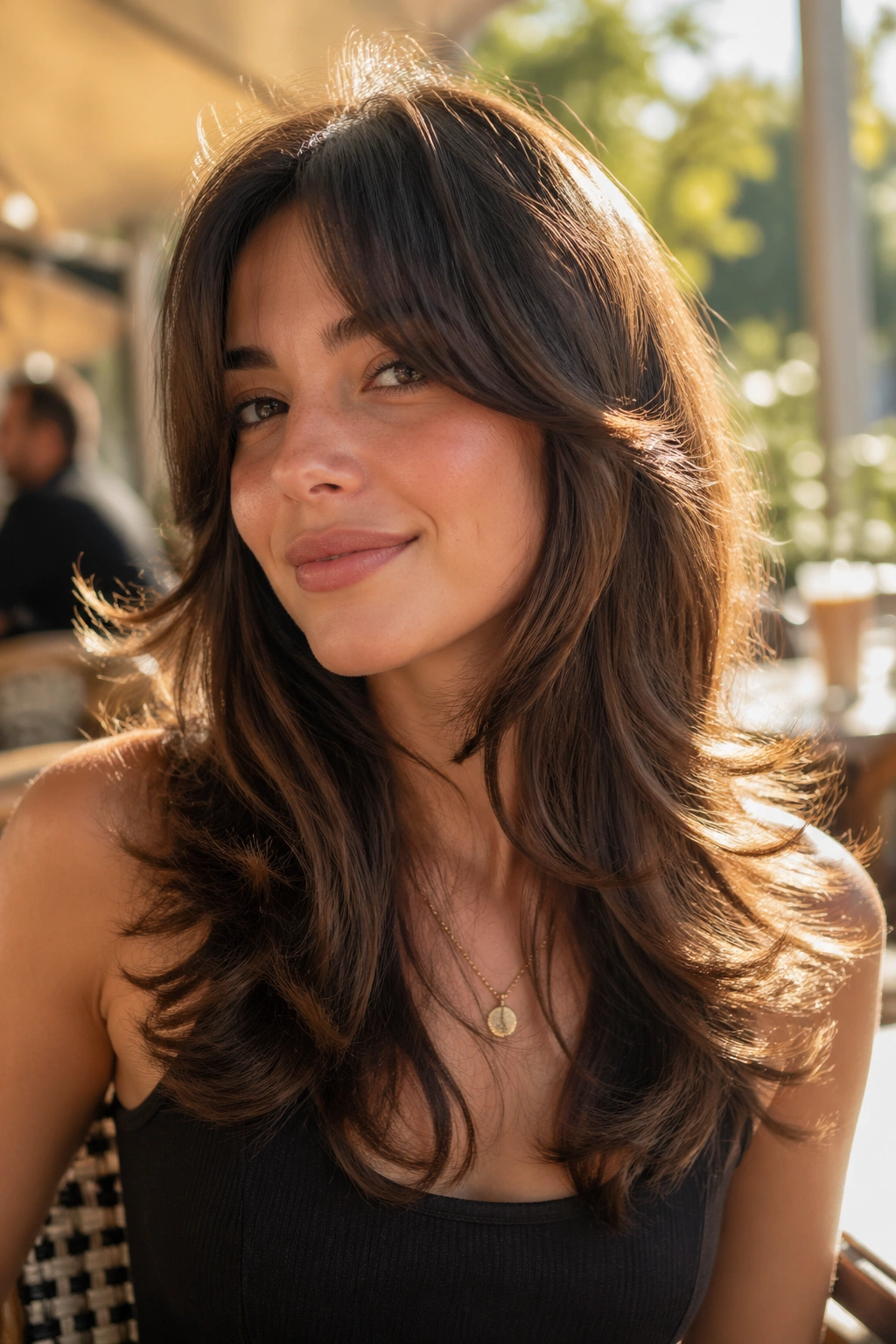
This is for people who want a little attitude without tipping into full mullet territory. The top and sides stay shaggy, the front stays soft, and the back keeps a longer tail that gives the cut some swing.
It works because the back length keeps the silhouette from feeling too chopped, while the shorter layers up top make the style feel lighter around the head. That balance matters. Too much shortness everywhere and the haircut starts shouting. This one speaks in a lower voice.
The edge is in the contrast, not in the extremes. You can wear it with a T-shirt and sneakers, or dress it up and let the shape do the talking. It doesn’t need perfect styling. A bit of texture paste at the ends and some root lift are enough.
If you like hair that looks a little rebellious but still movable, this is a strong one.
21. Long Shag With a See-Through Fringe
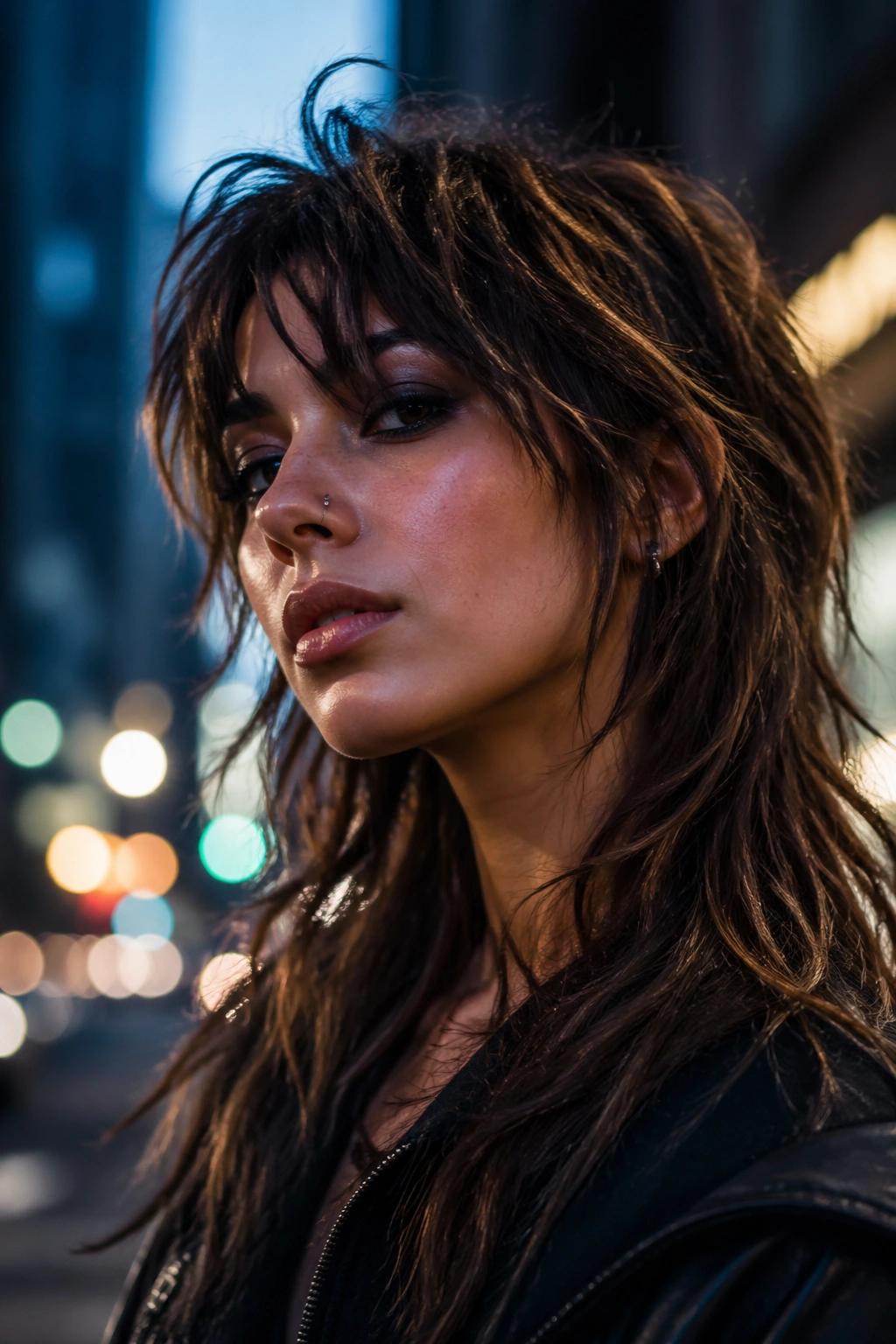
A see-through fringe is softer than a full bang and lighter than a curtain fringe. You can see a little forehead through it, which is exactly why it makes the face feel less boxed in.
That transparency matters. Hair that sits in one thick line across the front can make the whole haircut feel heavier, even if the rest of the layers are smart. A wispy fringe gives you shape without crowding the eyes. It also grows out gracefully, which is a relief for anyone who hates bang maintenance.
This version suits people who want just enough fringe to change the face shape, not enough to commit to a heavy front. A little dry shampoo at the roots can keep the fringe from separating too much if your hair gets oily fast.
The effect is soft, slightly undone, and easy to live with.
22. Round-Face Long Shag With Vertical Layering
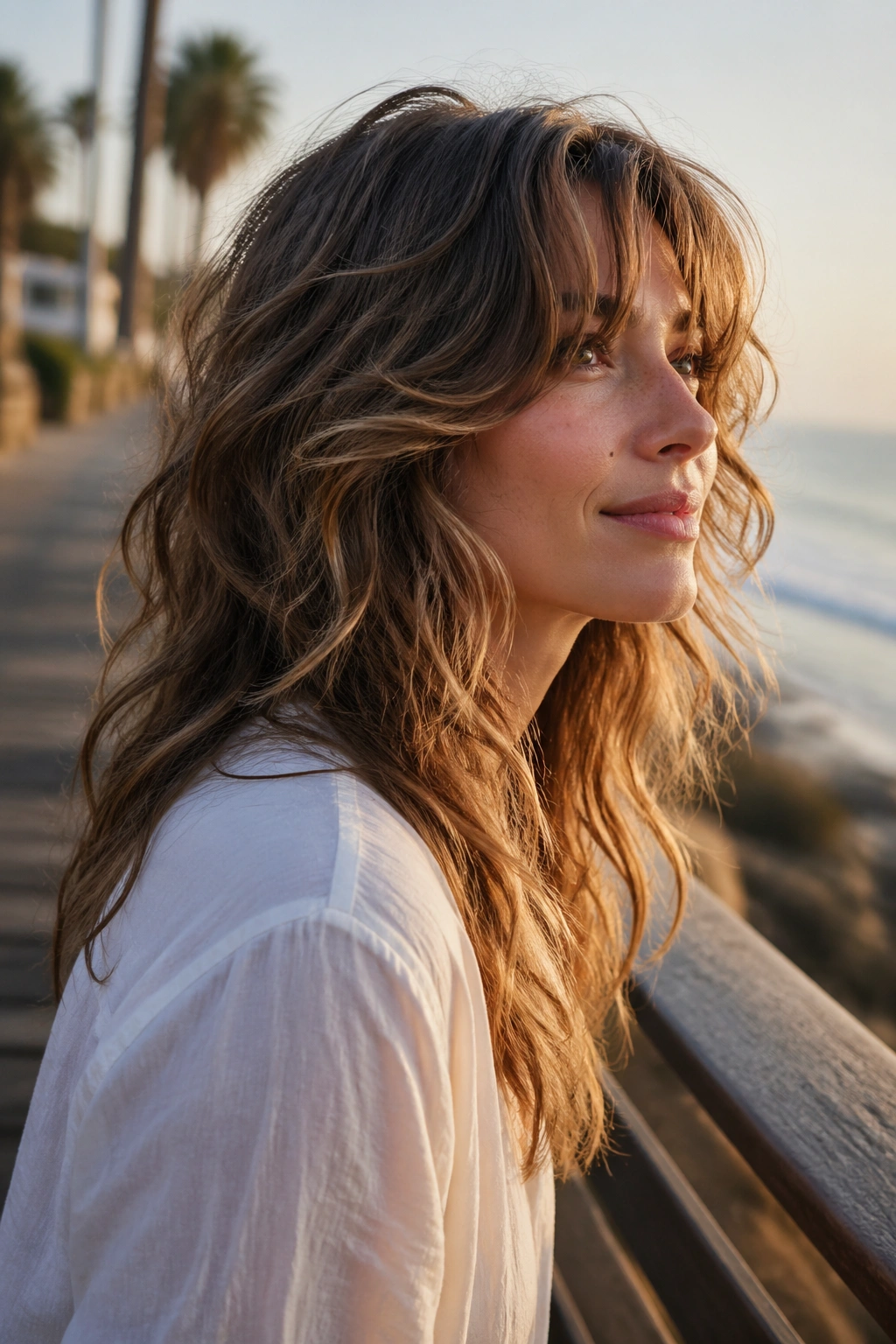
If the goal is to make the hair look lighter and the face look a bit longer, vertical layering is the move. It pulls the eye down the length of the hair instead of across the width of the face.
Why This Placement Helps
The shortest pieces should sit below the cheekbones, not right at the widest part of the face. That keeps the sides from puffing out in a way that can add width. Longer face-framing pieces help too, especially when they taper toward the collarbone.
A round face doesn’t need hidden hair. It needs room. Vertical layers make that room by creating length and movement without too much side volume.
A Few Good Requests for the Salon
- Layers that start below the cheekbones.
- Side pieces that skim past the jaw.
- A bit of lift at the crown.
- Soft ends, not a blunt bottom line.
That combination makes the haircut feel lighter and more open right away.
23. Heart-Face Long Shag With Chin-Frame Pieces
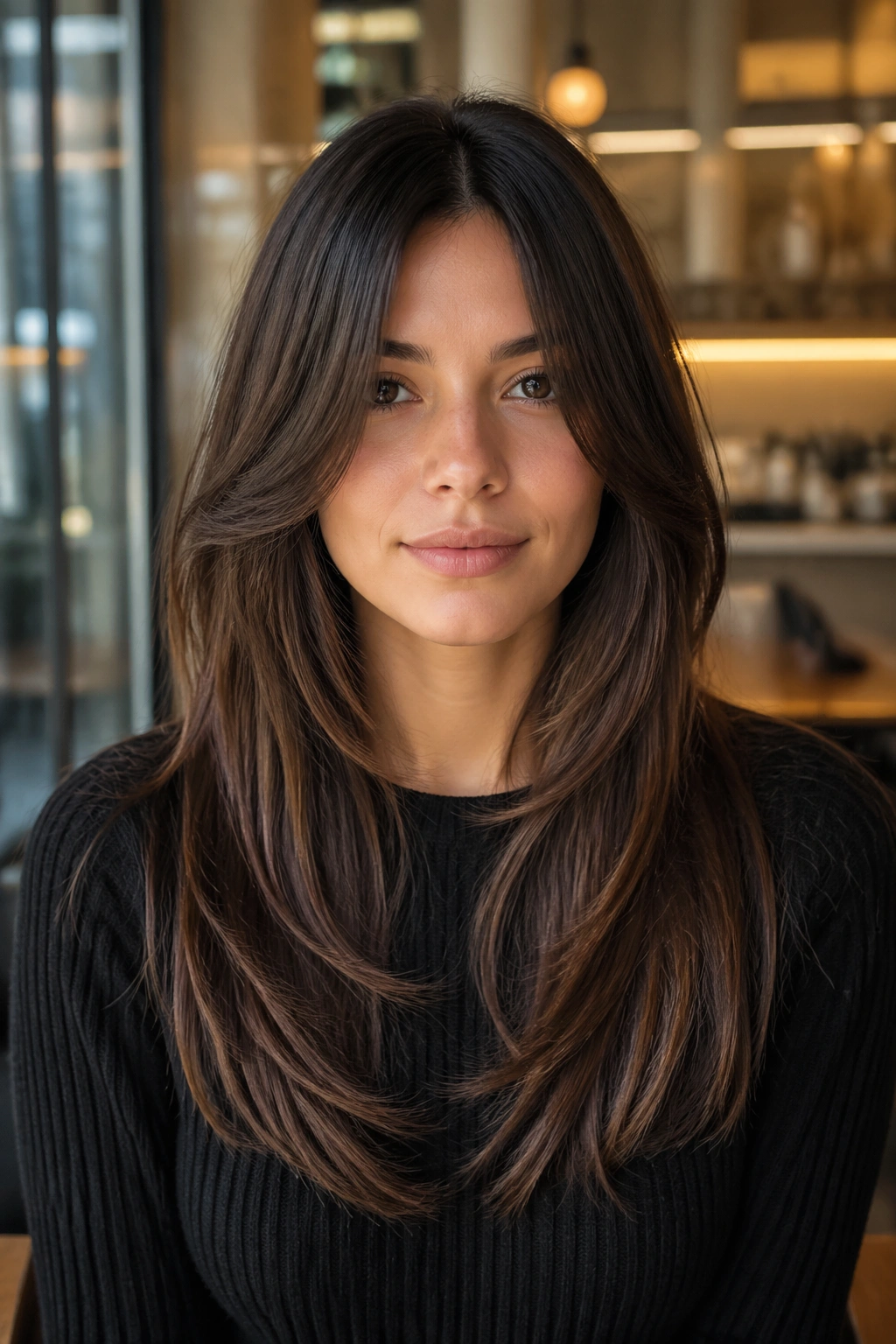
Heart-shaped faces usually carry more width at the forehead and less at the jaw, so the right shag should put some visual weight lower down. Chin-frame pieces do that neatly.
The layers around the chin soften the lower half of the face and keep the front from feeling too top-heavy. That matters because a lot of shag cuts can accidentally put too much action near the eyes and temples. Pretty, yes. Balanced, not always.
What to Watch For
You want the fringe or front layers to lead the eye down, not stop it at the forehead. Longer side pieces that hit at the chin or just below can make the whole cut feel lighter and more even. A center part can work here, but a slight off-center part often gives a gentler fall.
This cut is one of those styles that looks like it was made for natural movement. If the hair bends a little at the ends, even better.
24. Oval-Face Long Shag With Minimal Fringe
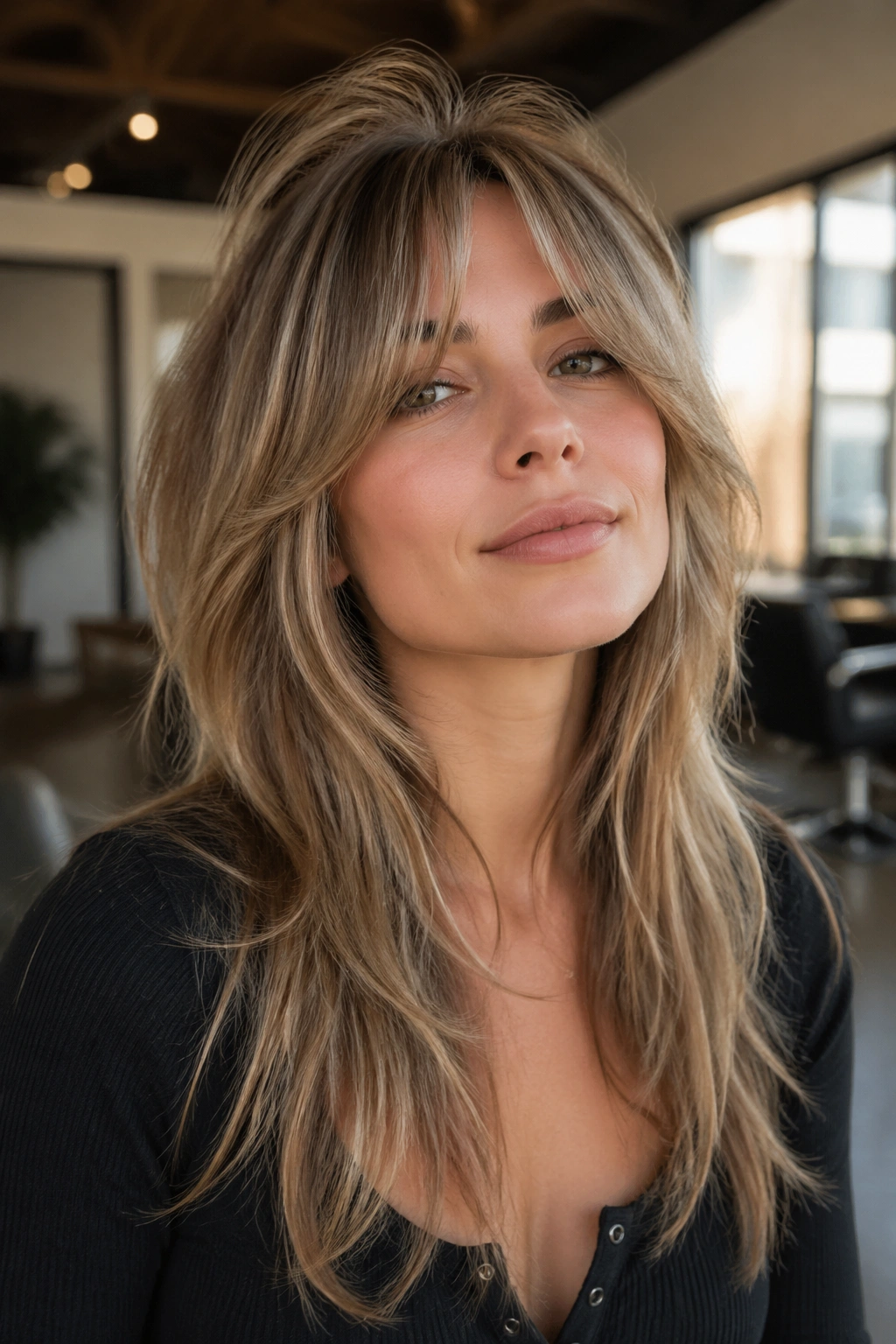
Not every face needs a lot of front action. Oval faces can carry a long shag with a very light fringe, or none at all, and still get all the movement in the lengths.
The point here is restraint. Keep the fringe wispy or skip it and let the layers around the cheekbones do the talking. That opens the face and keeps the haircut from feeling crowded. It also lets the length stay the hero, which some people want more than bangs.
This is a nice choice if you like hair that looks polished on a clean day and relaxed on a messy one. The cut does not need much to work. A bend at the ends and a little texture through the mids are enough.
Sometimes less front weight makes the whole style look lighter. This is one of those cases.
25. Balayage Long Shag That Shows Off Color
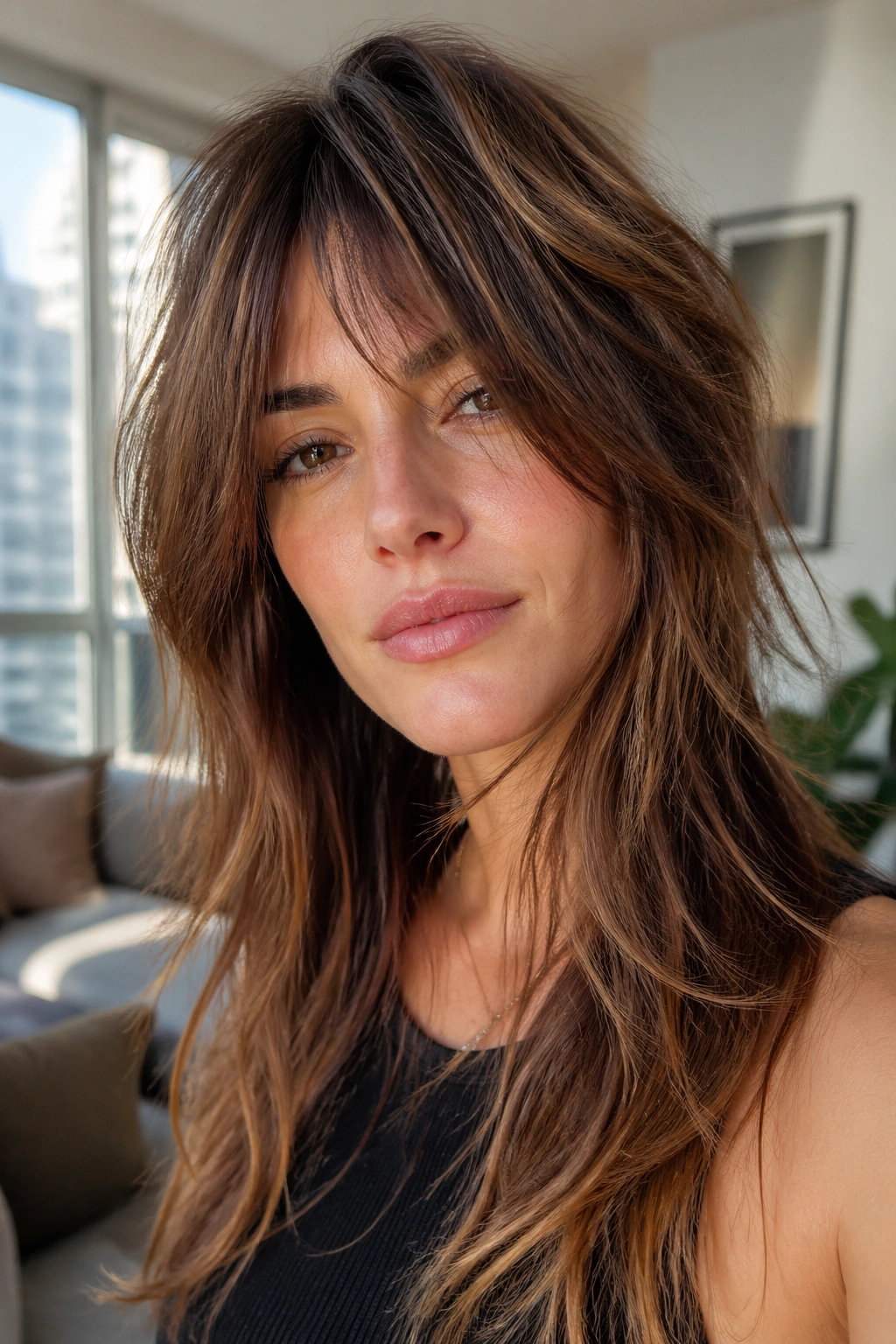
Color and layers can help each other a lot. A long shag with balayage looks lighter because the layers catch the lighter pieces in different places, so the hair reads as more dimensional and less solid.
Where the Color Helps Most
Face-framing pieces, mid-length ribbons, and soft ends are the spots that show off balayage best. If the lightest color sits only on the surface, the cut can still feel flat. Place it where the shag actually moves, and the whole style looks airier.
That’s one of the reasons this cut works so well on layered brunettes, blondes, and redheads who want depth without heaviness. The layers let the color breathe. The color makes the layers more visible.
A good gloss or toner keeps the contrast clean. Brassiness can make the lighter pieces look dull, which ruins the sense of lift. Sharp, healthy color helps the cut feel fresh.
26. Air-Dry Long Shag for Low-Maintenance Mornings
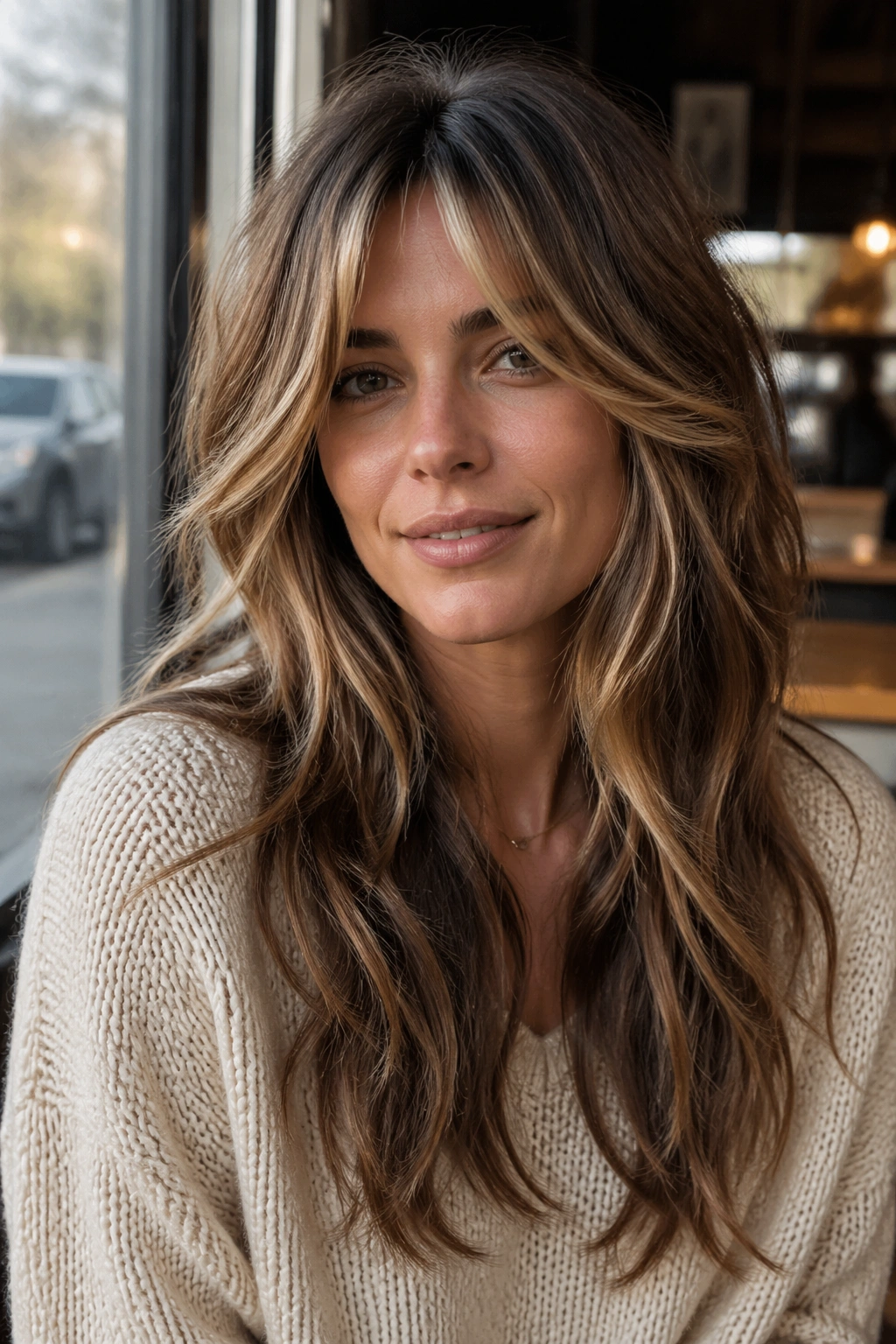
This is the shag for people who want the shape to do the work while they get on with their day. It leans into natural texture, so you don’t need a full styling session every morning.
The layers should be soft enough to fall on their own, with just enough face-framing shape to keep the front interesting. A little wave, a little bend, maybe a few flatter pieces near the back — that mix is fine. In fact, it often looks better than perfect symmetry.
What makes it easy:
- A layered cut that follows your natural texture.
- Light styling cream or mousse.
- No heavy oils at the roots.
- A quick scrunch and go finish.
If your hair hates heat styling, this version is worth asking for. It can look lived-in without looking sloppy, which is harder to pull off than people think.
The Bottom Line
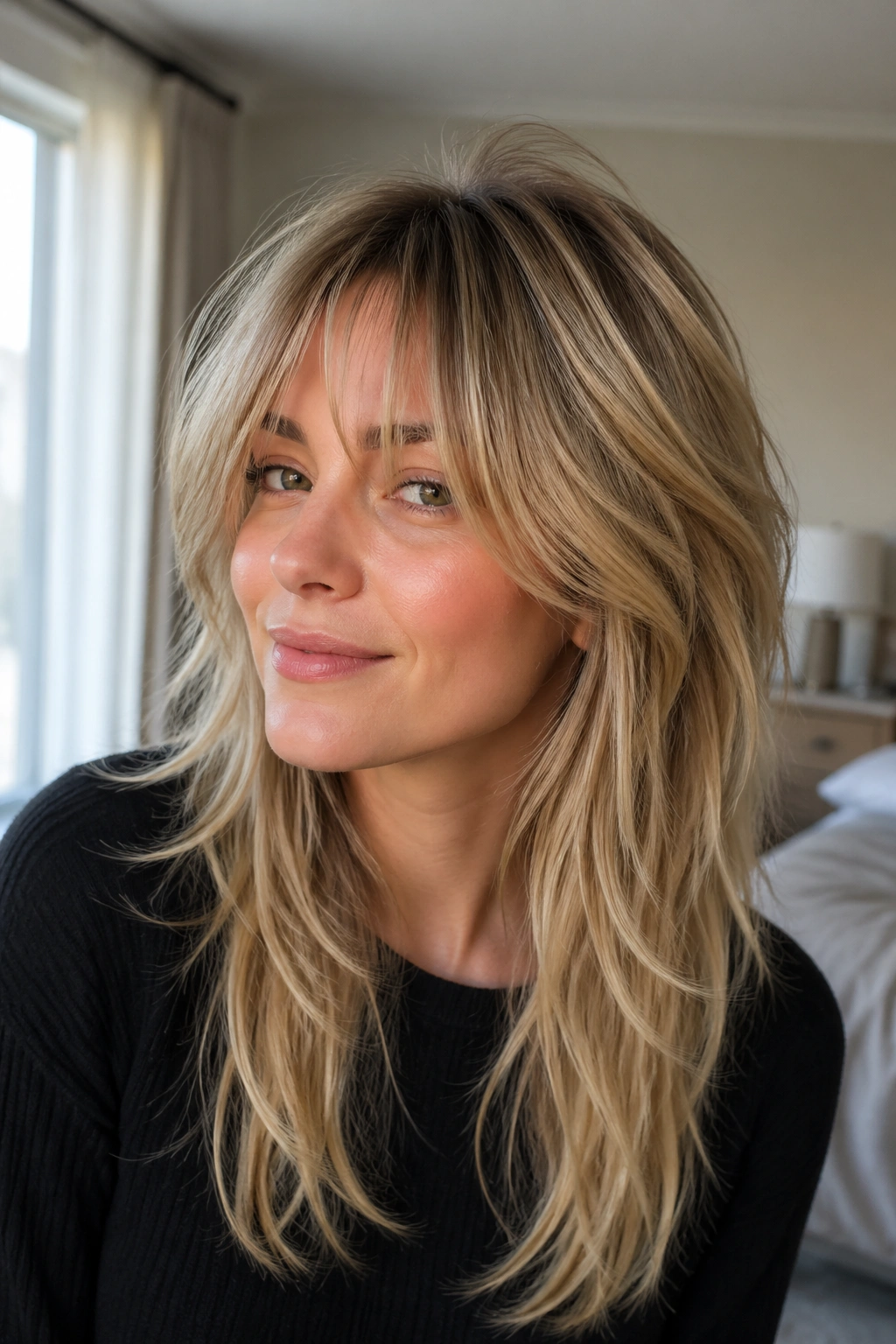
A good shag should make hair feel lighter, not thinner. That’s the difference between a cut that flatters and a cut that just removes length for the sake of it.
The best long shag haircuts use layers with purpose: a softer front, a smarter crown, and ends that move instead of hanging in a single block. Get those three things right, and the haircut does half the styling on its own.
If your hair feels heavy, flat, or a little too polite, a long shag can wake it up fast. The right version will still feel like your hair — only looser, airier, and easier to live with.