



Short curly hairstyles can make curls look fuller than long hair ever does — if the cut gives the curl pattern room to bounce instead of hanging in a heavy curtain. The trick is not chasing more volume with more product. It’s shape. Shape does the heavy lifting.
Shrinking is not the enemy. Misplaced weight is.
A bad short curly cut is easy to spot. The crown goes flat, the ends look wispy, and the silhouette turns boxy or triangular once the hair dries. A better cut changes the whole mood. It uses weight in the right place, a little lift at the roots, and a perimeter that lets the curls stack on each other instead of fighting gravity.
That’s why the best short curly hairstyles for fullness are not all the same. Some lean soft and rounded, some use tapered sides, and some use bangs to pull the eye upward. The right one depends on curl size, density, shrinkage, and how much styling you’re willing to do before coffee.
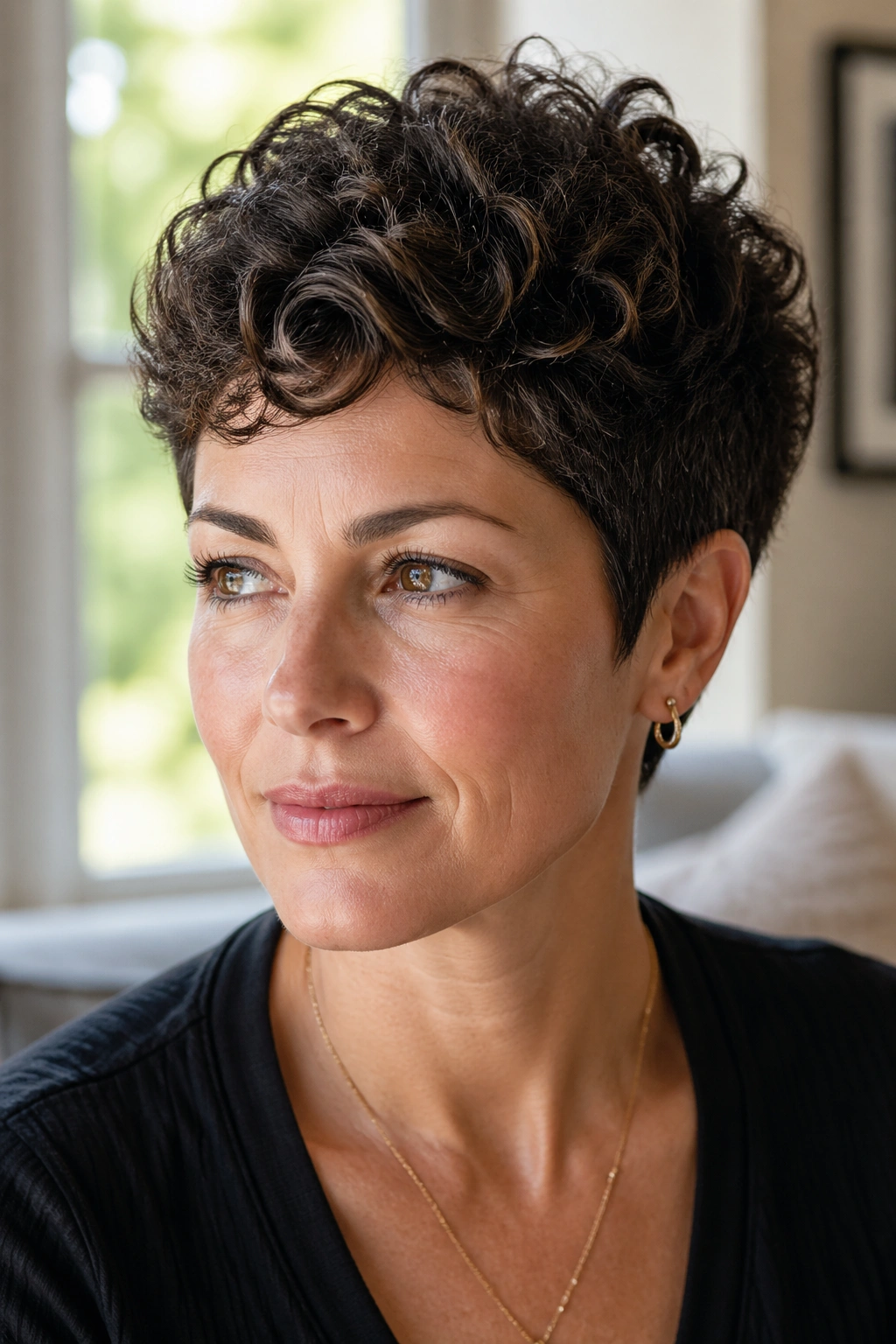
1. Curly Pixie With Crown Lift
A curly pixie looks tiny when the crown sits too close to the head. Give that same cut a little lift up top, and it suddenly reads as dense, airy, and confident instead of flat. The fullness comes from contrast: shorter sides, more height at the crown, and curls that are free to spring instead of being compressed.
Why It Works
The crown is the whole story here. If the top is cut a touch longer than the sides — usually by about 1 to 2 inches — the curls can stack and make the head look fuller from every angle. A soft taper at the nape helps too. It keeps the outline clean without stealing body from the top.
Styling Notes
- Ask for a dry cut or curl-by-curl shaping so shrinkage doesn’t surprise you later.
- Use a light mousse at the roots and a small amount of curl cream through the ends.
- Diffuse with your head tilted side to side for 3 to 5 minutes at a time, then let the rest air-dry.
Best tip: clip the crown roots up while they dry. Small metal clips. Big payoff.
2. Tapered Curly Afro
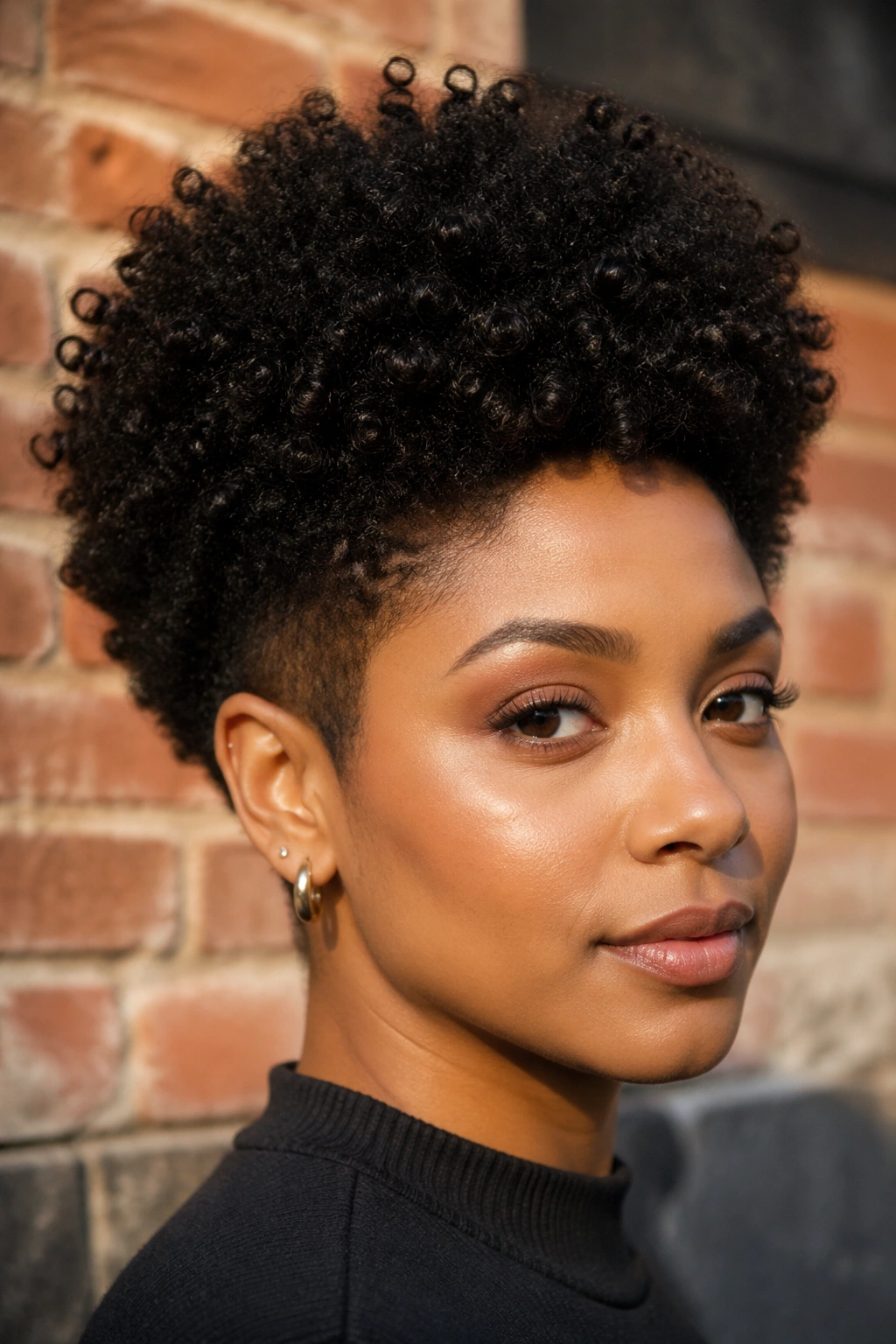
Tapered sides are one of the easiest ways to make tight curls look denser. The reason is simple: when the sides are neat and close, the eye goes straight to the rounded top, and that top reads as fuller than it would in a flat, all-one-length shape. It’s one of those cuts that looks polished without trying too hard.
This shape works especially well when the curl pattern is tight enough to create a natural halo. The top keeps 3 to 5 inches of length, while the sides and nape stay shorter and more controlled. That difference creates lift, even before styling. And no, it does not need to be shaved down to the skin to work. A gentle taper is often better. Too much contrast can make the cut look harsh.
For styling, think moisture first, definition second. A leave-in, a curl cream, and a bit of gel on damp hair usually give enough hold to keep the shape rounded. If your curls are dense, this cut can be almost low-maintenance. If they’re finer, ask your stylist not to remove too much bulk from the top.
3. Chin-Length Layered Bob

Why does a chin-length layered bob make curls look so much thicker than longer hair? Because it keeps the spring in the curl instead of dragging the pattern down. Once curls fall below the shoulders, weight starts stealing bounce. At the chin, they still have enough room to move, but not so much length that they collapse.
How to Keep It From Turning Triangle-Shaped
The layers matter. You want them placed low enough to create movement, but not so high that the ends start looking see-through. A good bob often starts its layers below the cheekbone and keeps the perimeter soft around the jaw. That gives the style body without letting it flare out in the wrong places.
- Ask for face-framing pieces that start near the mouth or chin.
- Keep the bottom edge slightly blunt so the ends look thick.
- Use a diffuser on low heat and stop drying when the curls are about 90% dry.
This is one of those cuts that looks expensive even when it isn’t fancy. Clean line. Full shape. Done.
4. Rounded French Bob
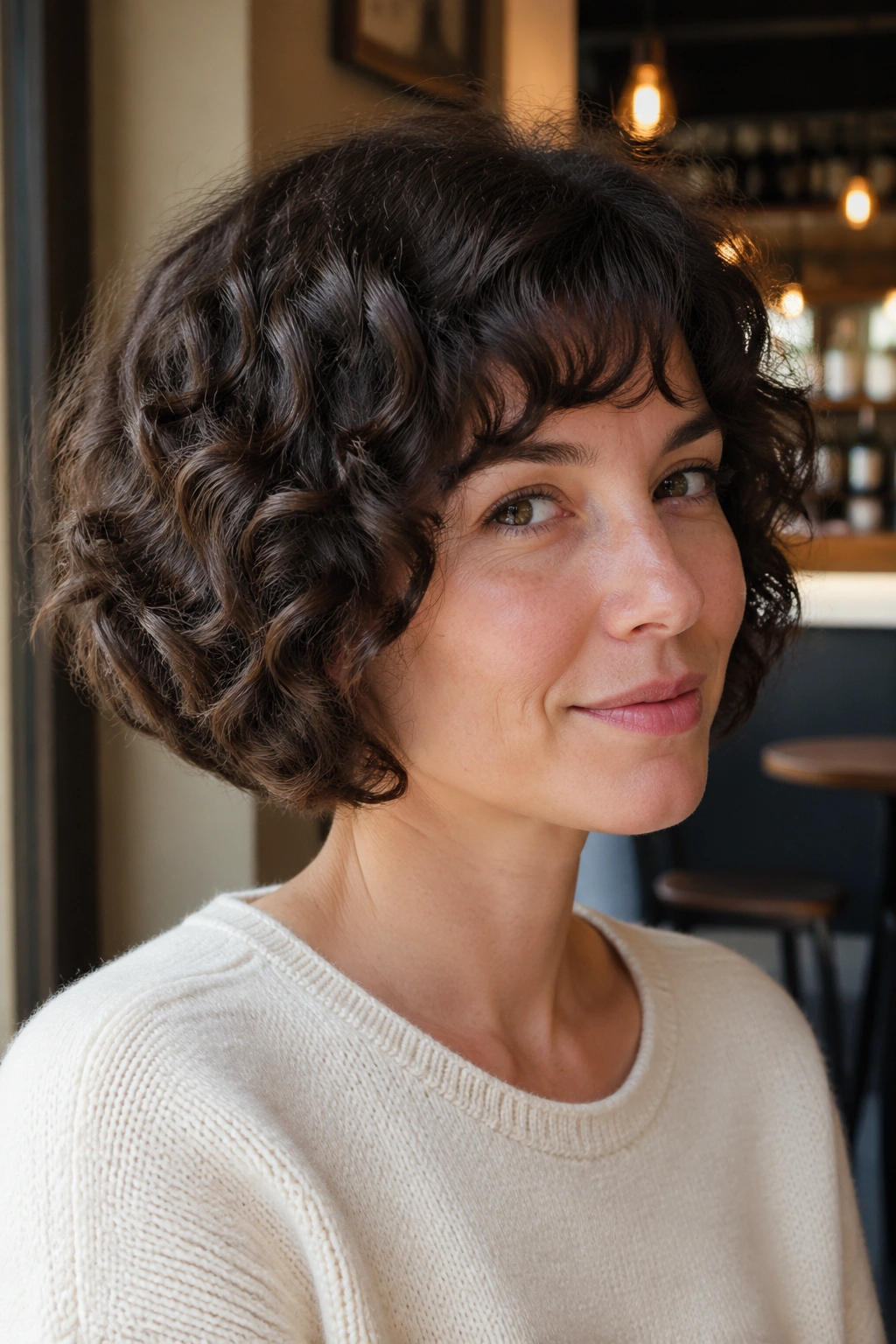
I keep coming back to the rounded French bob because it does one thing better than most cuts: it makes modest density read as plush. The shape curves in softly at the jaw, and that curve keeps the curls together instead of letting them drift outward. It’s a small detail. It changes everything.
The best version lands somewhere between the lip and the chin, depending on shrinkage. The perimeter should feel rounded, not sharp. A deep side part can make the crown look a little taller, but a center part works too if your roots hold some lift. The real secret is the edge — it should feel shaped, not chopped.
- Keep the shortest curls just long enough to tuck behind an ear.
- Ask for soft internal layering, not a pile of short pieces.
- If your hair is fine, leave a touch more length at the sides so the bob doesn’t look sparse.
This cut is elegant in the most practical way. It does not need a lot of drama. It already has the shape.
5. Curly Shag
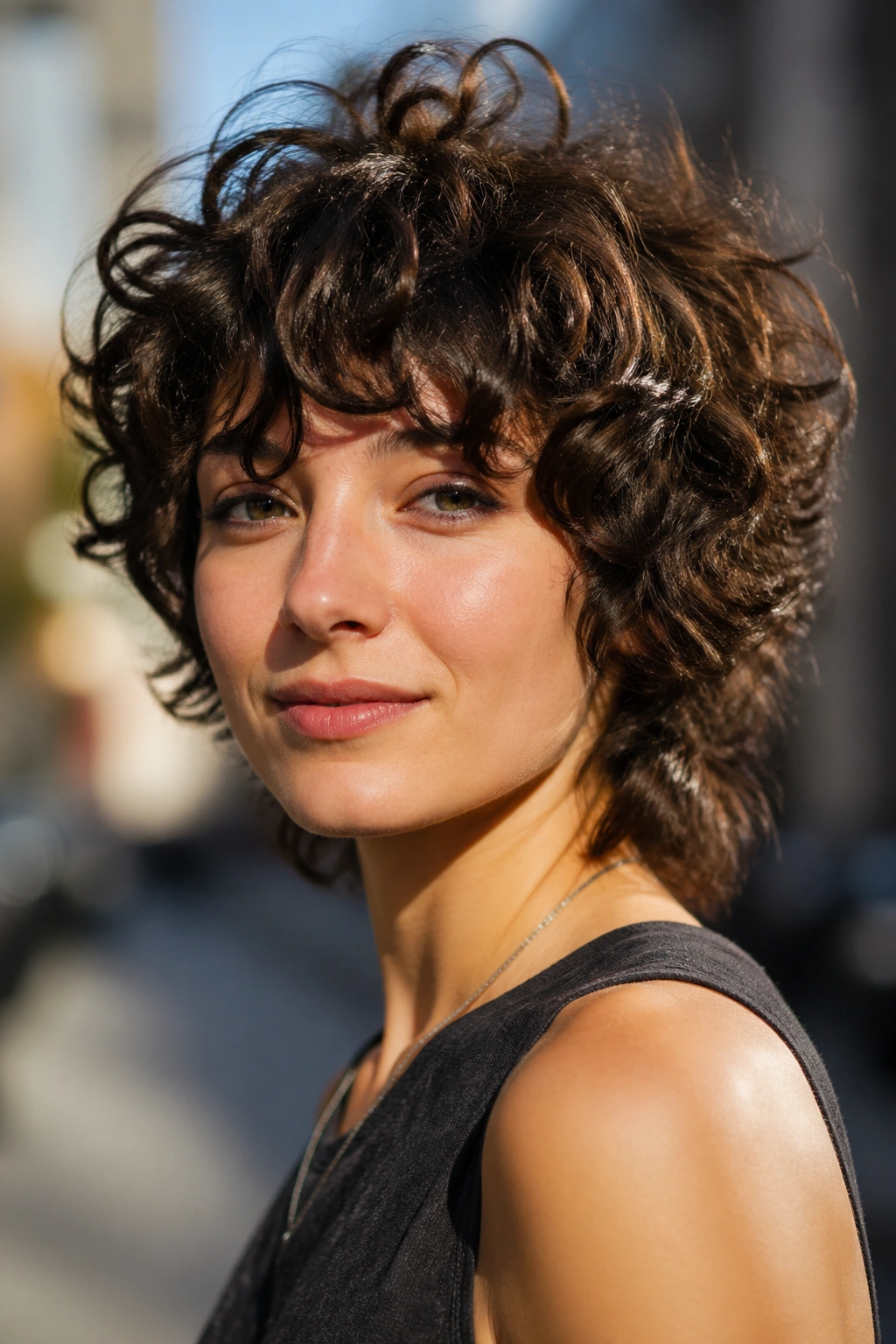
The curly shag is for people who want movement first and polish second. It’s messy in a good way. Not sloppy, not damaged-looking — just full of uneven lift, which is exactly what makes curls read as thick. The shorter layers around the crown wake up the top of the head, while the longer pieces underneath keep the shape from puffing into a helmet.
A shag works because it lets curls fall in little clusters. That cluster effect gives the illusion of more hair than a blunt, one-length cut can manage. It also hides thin spots better than people expect, especially around the sides where hair can sometimes look flat. But there’s a line here. If the layers are too aggressive, the ends start to look tired.
Too much razor work is where it goes sideways.
Ask for a shag that follows your curl pattern, not a punk-photo copy of a shag. A good one should still look like your curls, only with a little more lift at the crown and a little more swing around the face. Diffuse it upside down if you want extra body. Scrunching helps, but a light root clip helps more.
6. Curly Bixie
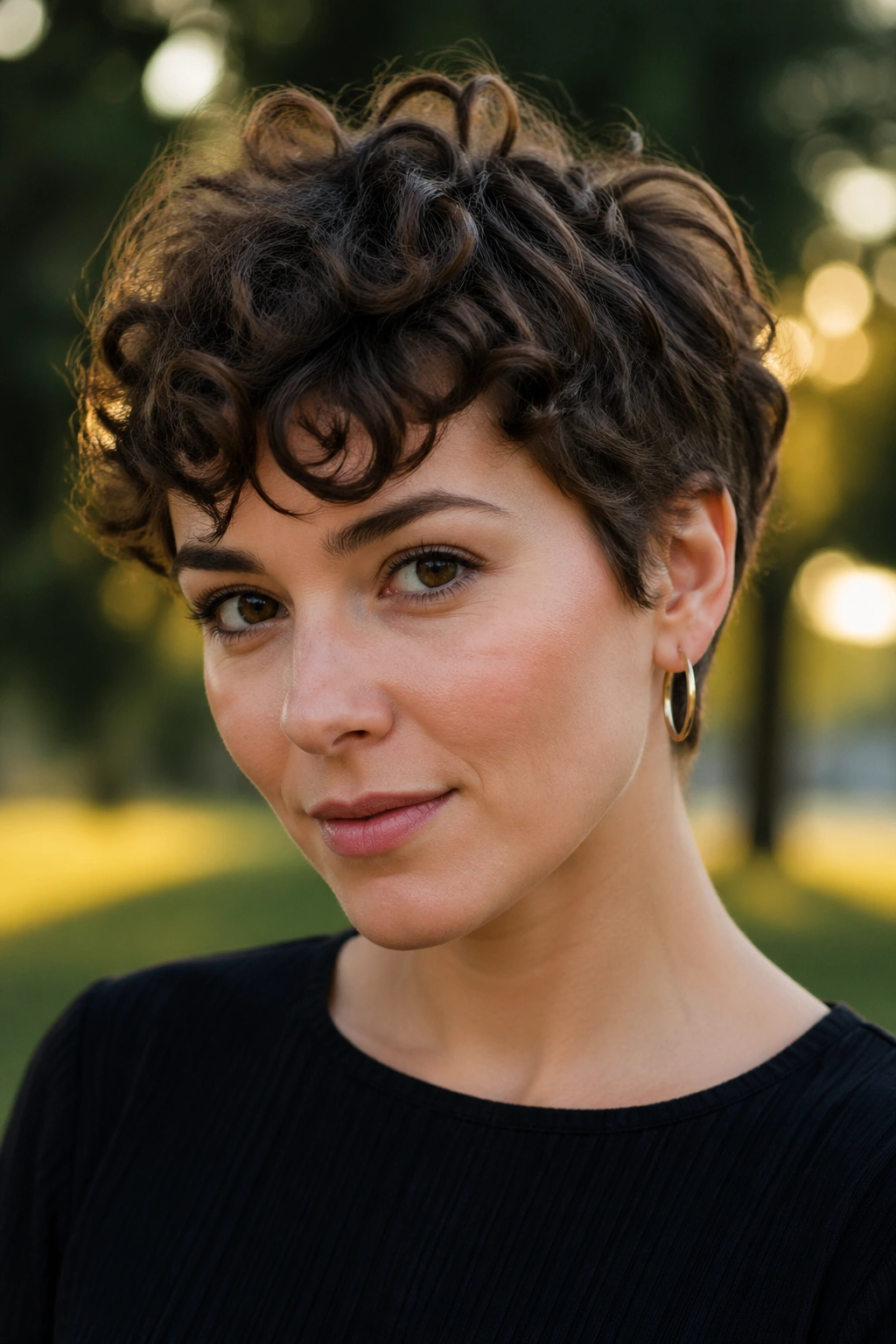
The bixie sits in that nice middle ground between a pixie and a bob, and curls love that in-between space. Unlike a pixie, it leaves enough length around the ears and nape to make the hair look thicker. Unlike a bob, it stays light enough to avoid that heavy, dragging feeling that can flatten curls fast.
It’s a smart choice if you want a short shape without losing the sense of hair around your face. A little length at the temples softens the outline, while the crown can stay layered enough to keep things lifted. If your curls are loose to medium, this cut can look especially full because the pieces separate just enough to show off texture. If they’re tight, it gives you a neat frame without crushing the coil pattern.
What to Ask For
- Keep the top layers longer than the sides by about 1 inch.
- Leave soft length around the ears.
- Avoid over-thinning the back.
This one is for people who want short hair that still feels like hair, not a haircut trying to be a sculpture.
7. Tapered Crop With a Long Top
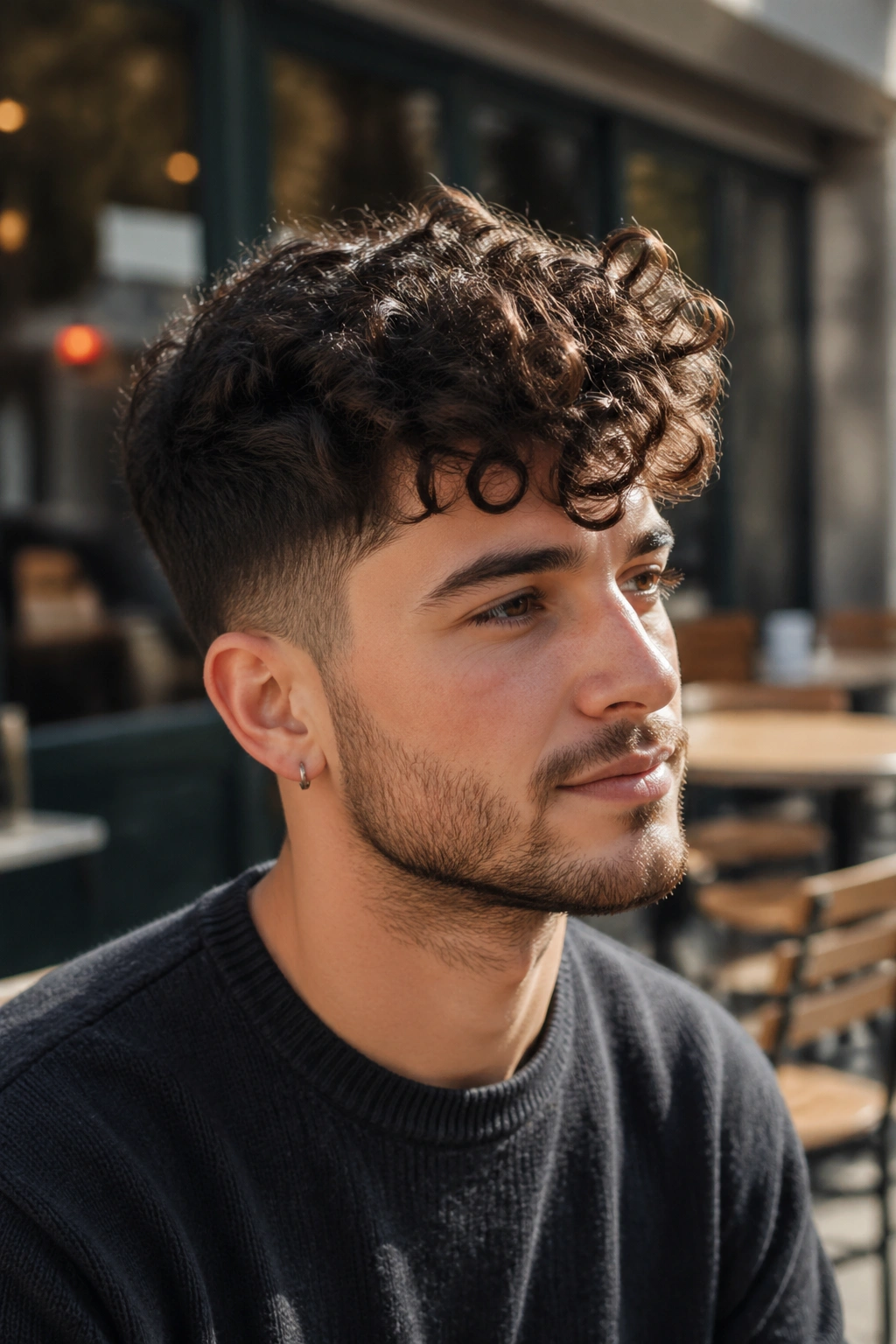
A tapered crop with a long top gives curls a clear job: stay tight on the sides, bloom up top. That contrast is what makes the style look fuller. The shape is compact, but the height does all the visual work, so even finer curls can read as dense if the top has enough spring.
What Makes It Look Fuller
The sides should be neat, not skin-tight unless you really want that effect. The top needs enough length to form curl clumps — usually around 3 to 5 inches for looser textures, a bit less for tighter coils. The whole cut feels sharp when the perimeter is controlled and the crown gets space to move.
For styling, a bit of foam or mousse at the roots can be enough. If you want more separation, finger-coil a few curls at the front and leave the back looser. That keeps the top lively without making the shape too perfect. Perfect usually looks smaller than you want.
Pro move: keep the hair on top slightly longer at the crown than at the front. That tiny difference creates lift where it matters.
8. Bob With Soft Fringe
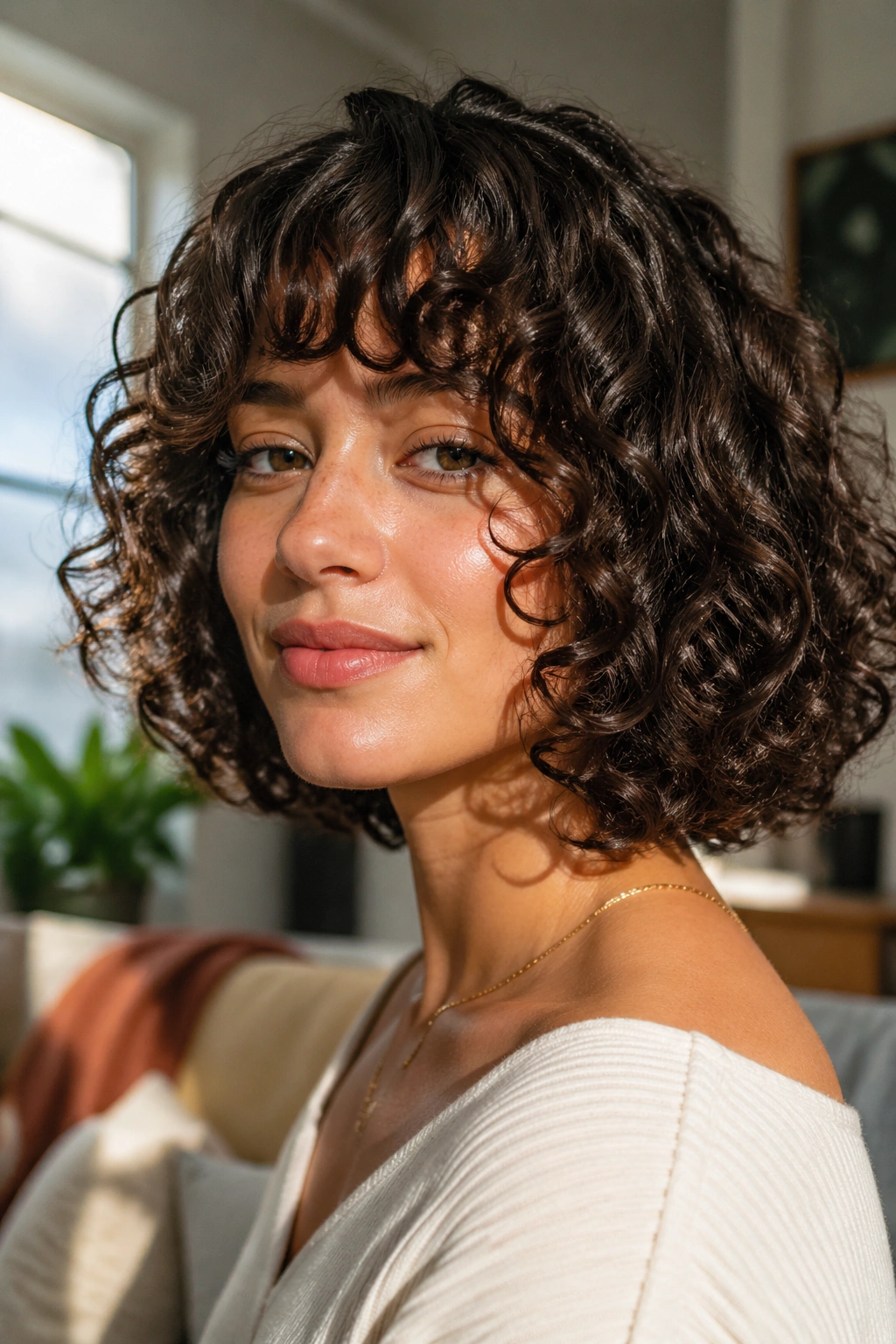
A fringe can make short curls look thicker because it gives the eye a second place to land. Without it, all the attention sits on the perimeter. With it, you get movement at the front and a little more visual weight at the crown. The result is a bob that feels fuller even when the actual density is average.
Soft fringe works better than a blunt, heavy bang on most curly hair. A gentle curve across the forehead breaks up empty space without covering too much of the face. If your curls spring up a lot, ask for the bangs longer than you think you need. Curly fringe can shrink fast, and nobody enjoys a bang that lands halfway to the hairline.
The rest of the bob should stay clean and thick at the ends. That matters. Thin ends and fringe together can make the whole cut feel unfinished. A soft fringe plus a blunt-ish bob edge gives curls a nice frame and keeps the shape from drifting flat.
9. Asymmetrical Curly Bob
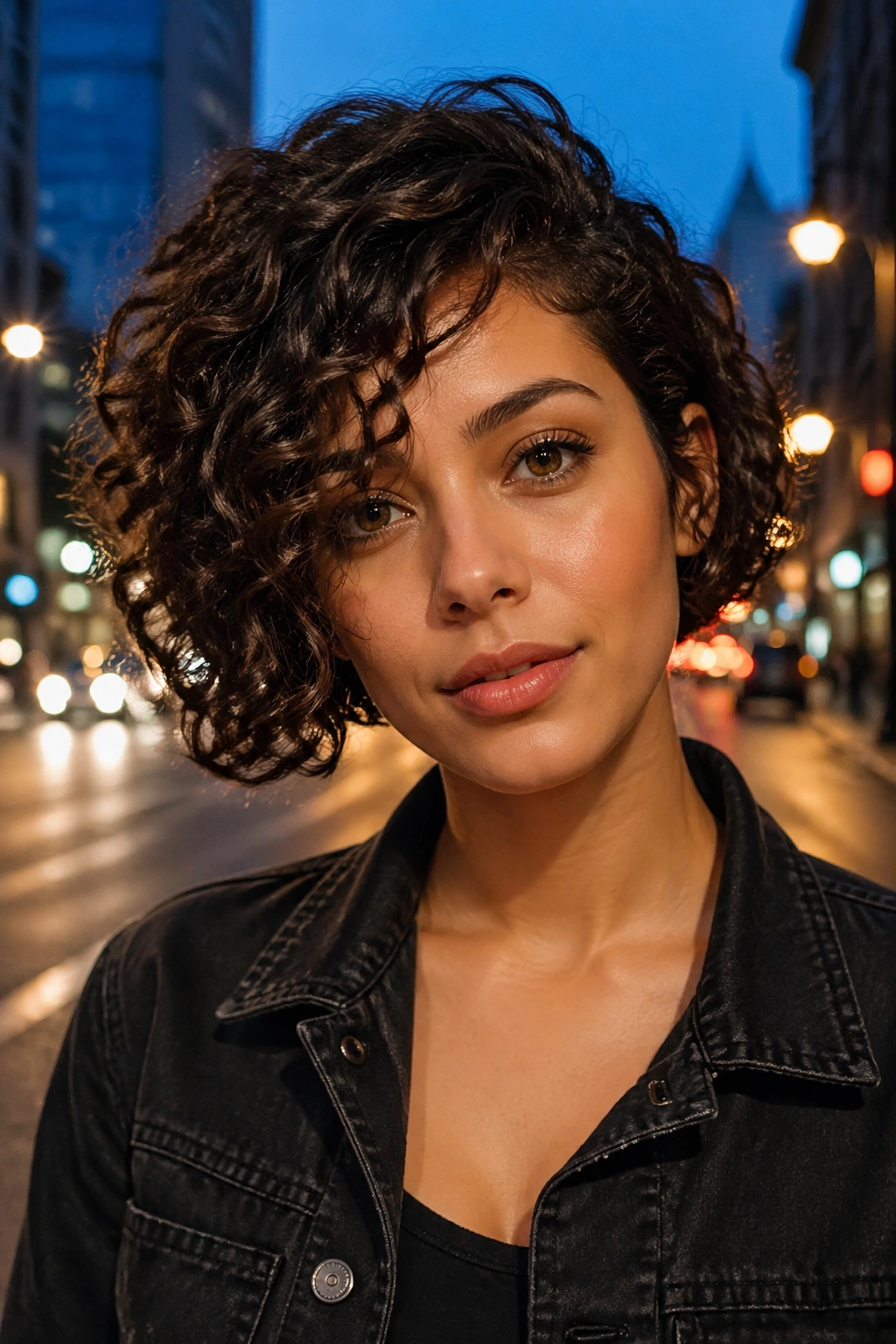
Why does a slight asymmetry make curls look fuller? Because the eye stops expecting perfect balance and starts following the movement instead. One side sits a little longer, the other side sits a little higher, and suddenly the whole cut has more life. It’s a small shift. It reads bigger than it is.
How Much Difference Is Enough
You do not need a dramatic slash from one side to the other. A difference of about 1 to 2 inches is often plenty, especially on short curls. That’s enough to create motion without making the haircut feel gimmicky. The shorter side can lift the cheekbone area, while the longer side keeps the outline soft and full.
This works well on curls that want to fall forward or separate at the front. It also helps if one side of your hair grows flatter than the other — which happens more often than people admit. A side part can amplify the effect, but the real trick is keeping the perimeter thick enough that the asymmetry looks intentional, not accidental.
If you like haircuts with a little attitude, this one has it. Quietly.
10. Stacked Curly Bob
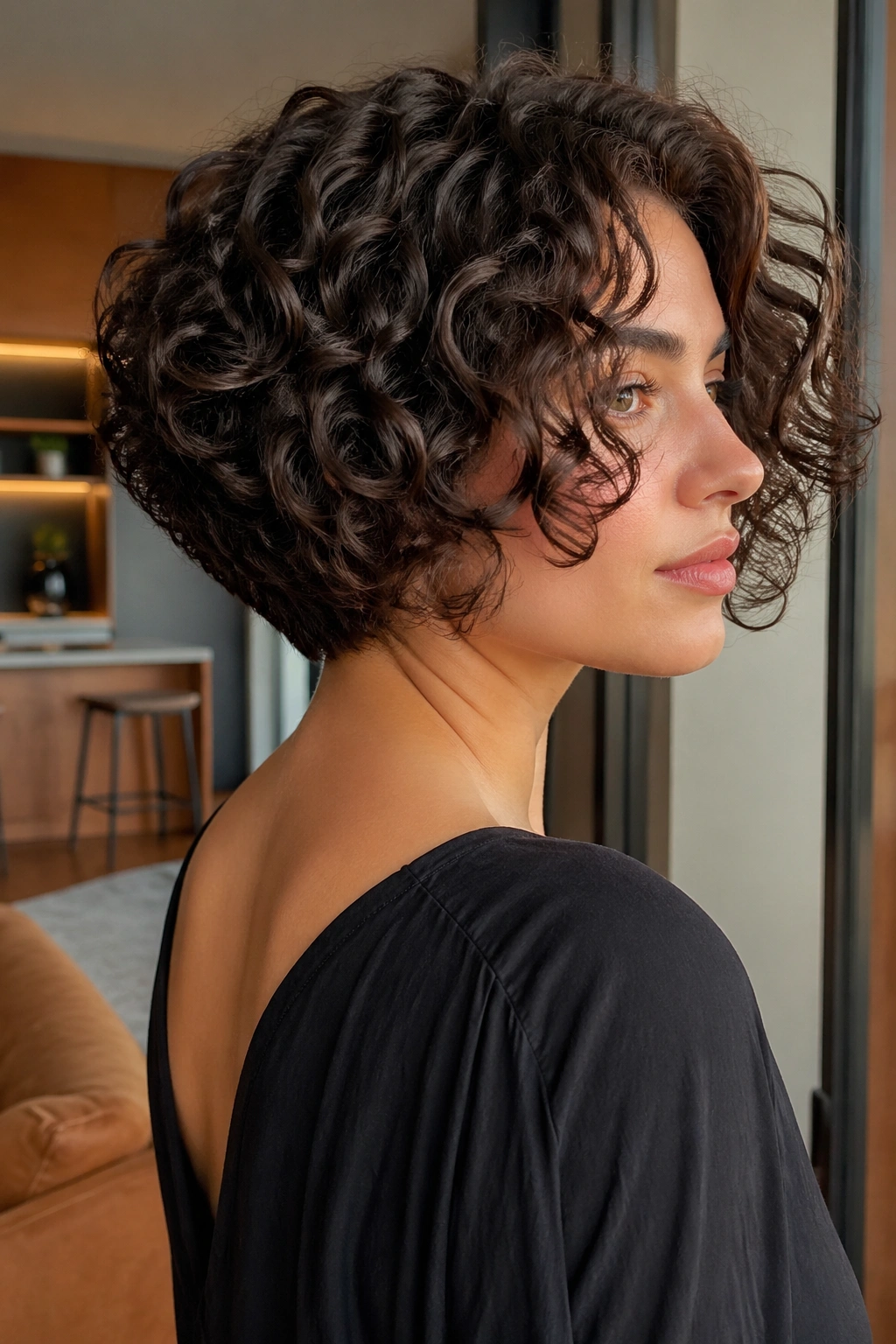
If the back of your hair is the flattest part, a stacked curly bob can change the whole silhouette. Shorter layers in the back create a little shelf of lift, and the front stays longer so the cut doesn’t collapse into a round puff. It’s a clean shape, but not a stiff one.
The stacking should start below the crown, not right at the top. That’s where a lot of bobs go wrong. Too much height too high can make the cut look mushroom-shaped. A good stacked bob keeps the nape neat, builds volume through the back, and lets the curls at the sides fall softly toward the jaw.
- Ask for graduation in the back, not a blunt box.
- Keep the top layers long enough to hold a curl clump.
- Use a diffuser with a few root clips if your crown lies flat.
This cut is a nice one if you want fullness with shape. It can look polished at work and still feel easy on a casual day. That balance is harder to get than it sounds.
11. Curly Wolf Cut
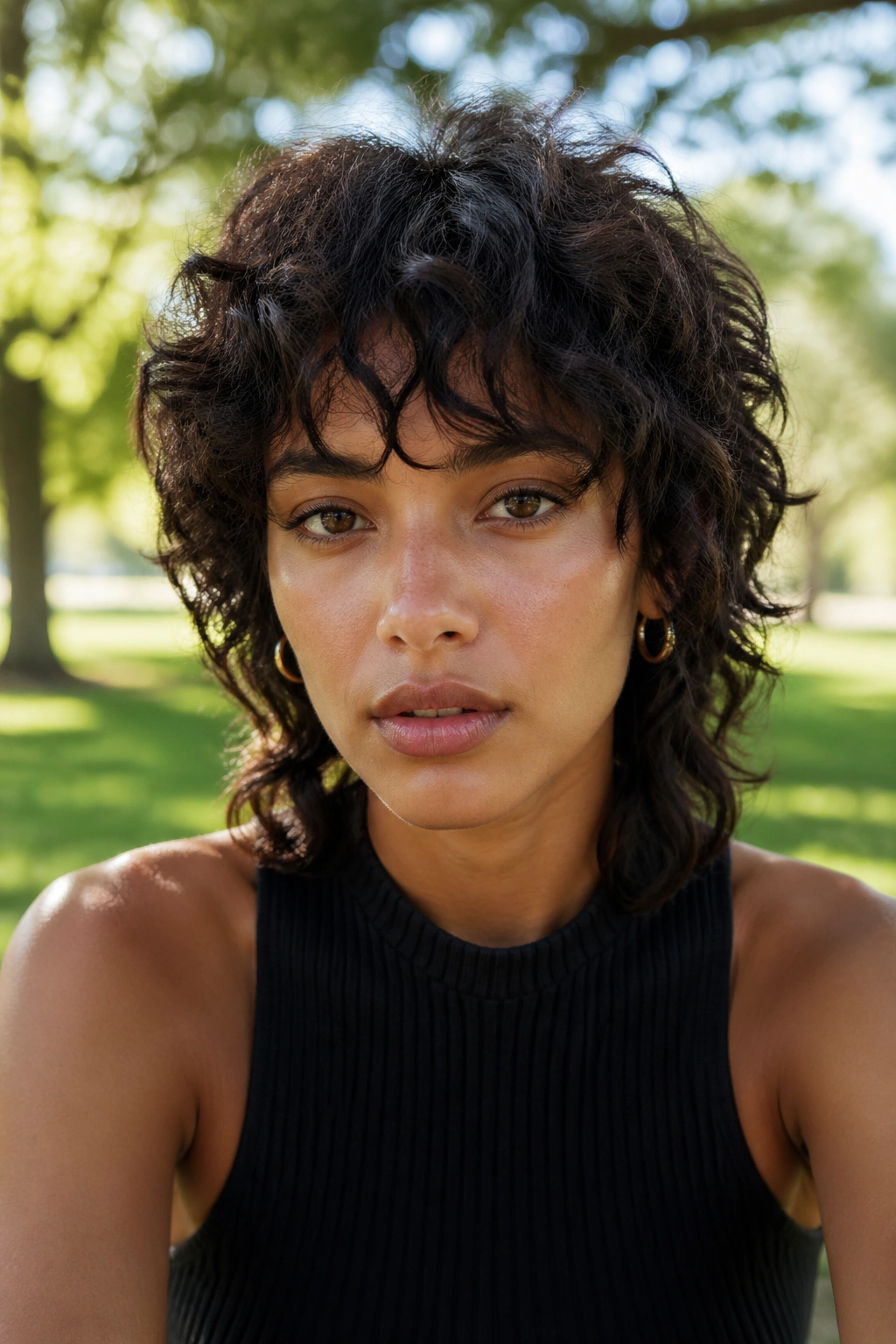
The curly wolf cut is built on texture, not restraint. That’s why it makes hair look full. The crown is choppier, the sides are looser, and the whole shape has a little wildness that curls understand instinctively. Instead of fighting the curl pattern, it lets the pattern do the messy part for you.
There’s a reason this cut keeps showing up on naturally curly hair. It creates bulk where you want it — around the top and upper sides — and keeps the lower lengths from hanging straight and thin. If you’ve got dense hair, the wolf cut can feel almost weightless. If your hair is fine, the same cut needs a gentler hand. Too many short layers can leave the ends looking frayed.
I like this cut on people who don’t mind a bit of movement near the face. It’s not tidy. That’s the appeal. A quick scrunch, a bit of diffuser time, and you’re done. Some curls will pop more than others. That unevenness is part of the charm.
12. Side-Swept Curly Crop
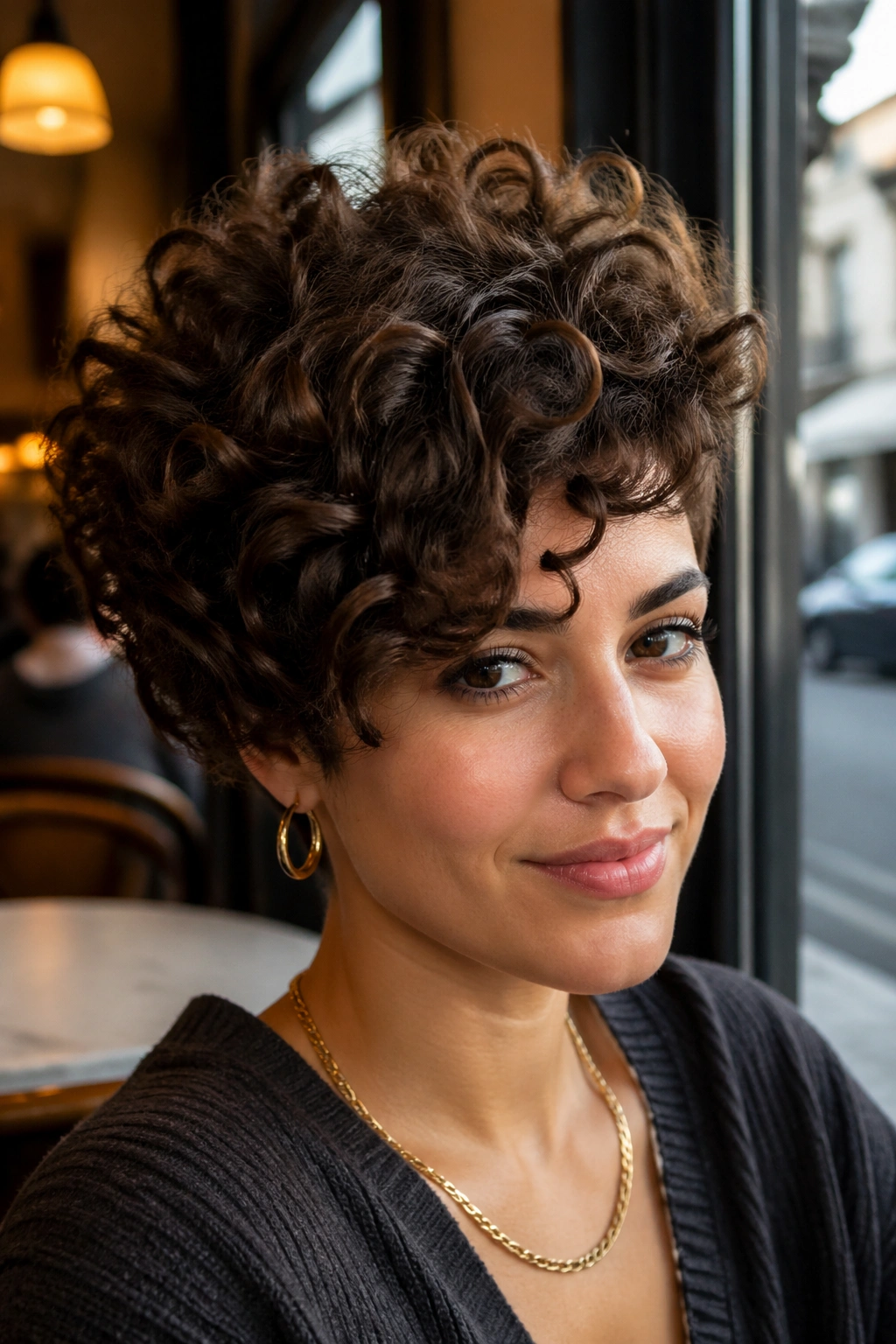
A center part can split curls into two flat halves when the roots are weak. A side-swept crop does the opposite. It pushes the hair across the forehead, gives the front a little height, and keeps the whole shape from sitting too close to the scalp. Short curly hair often looks thicker when one side carries more of the visual weight.
This cut is especially useful if you like a softer line around the face. The sweep can start at the arch of the brow rather than way over the ear. That keeps the lift near the front, where fullness is most visible. The sides can stay short and tidy, which helps the top look even denser by comparison.
Who It Flatters Most
- People with flatter roots at the front.
- Curls that separate easily and need direction.
- Anyone who wants volume without a lot of layering.
A side-swept crop is underrated. It does not scream for attention, but it makes curls look intentional in a way a center part sometimes misses.
13. Mini Curly Mullet
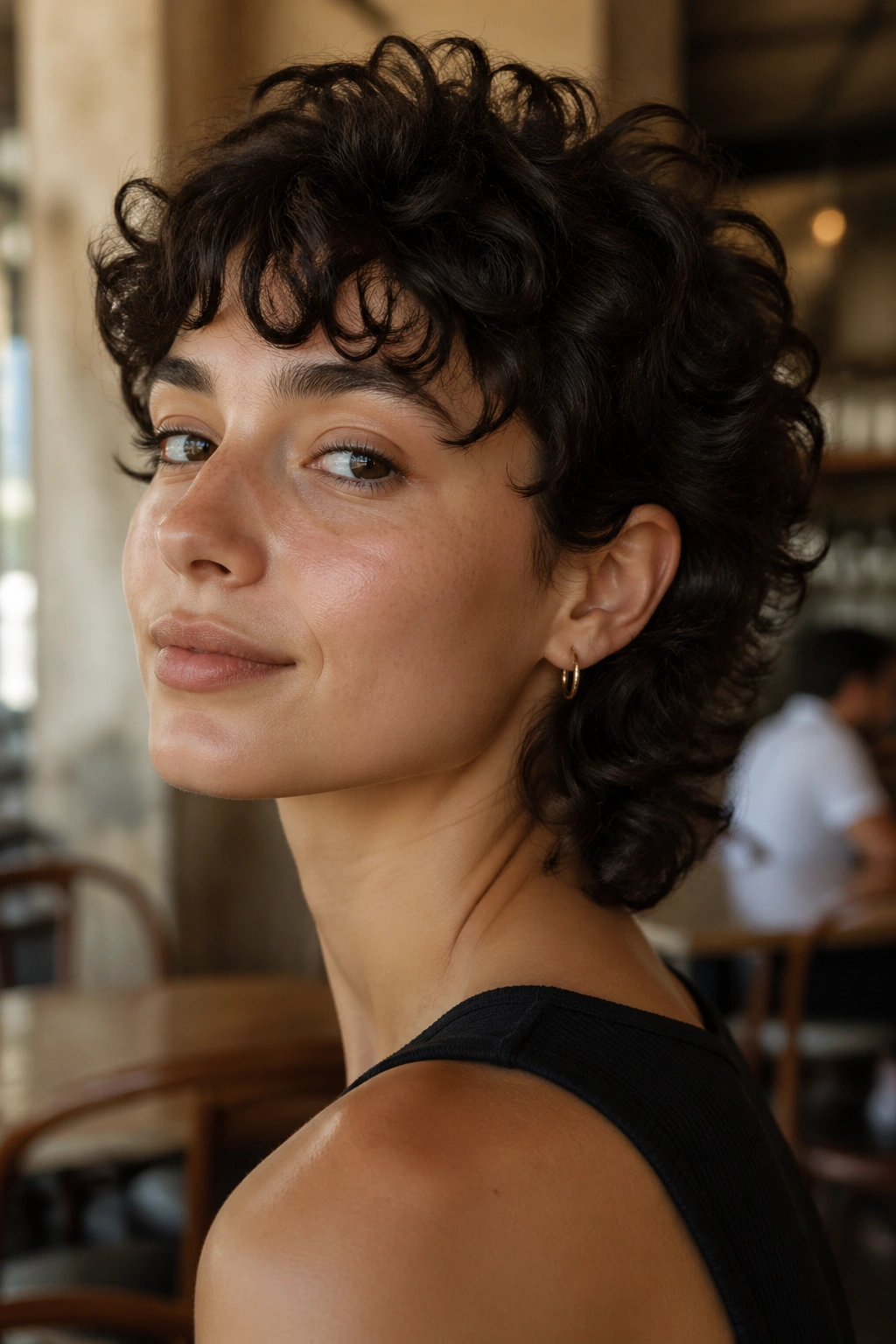
The mini mullet works because it puts the volume where curls naturally want to live: higher up and around the crown. The front stays short and lively, the back keeps a touch more length, and the shape feels full without swallowing the face. It sounds edgy. It is, a little. It also flatters curls in a way a lot of conservative cuts never do.
What makes the mini version wearable is softness. The transition from top to back should be gradual, not abrupt. You want enough length in the back to keep the hair looking thick, but not so much that it starts to drag the whole shape down. The best versions still have rounded edges and a bit of lift around the temple area.
- Keep the crown layered for height.
- Leave the back just long enough to curl under the neck.
- Use a tiny amount of styling cream so the ends stay separated, not crunchy.
This one is not for everyone. It is for people who want fullness with a little personality baked in.
14. Jaw-Length Halo Cut
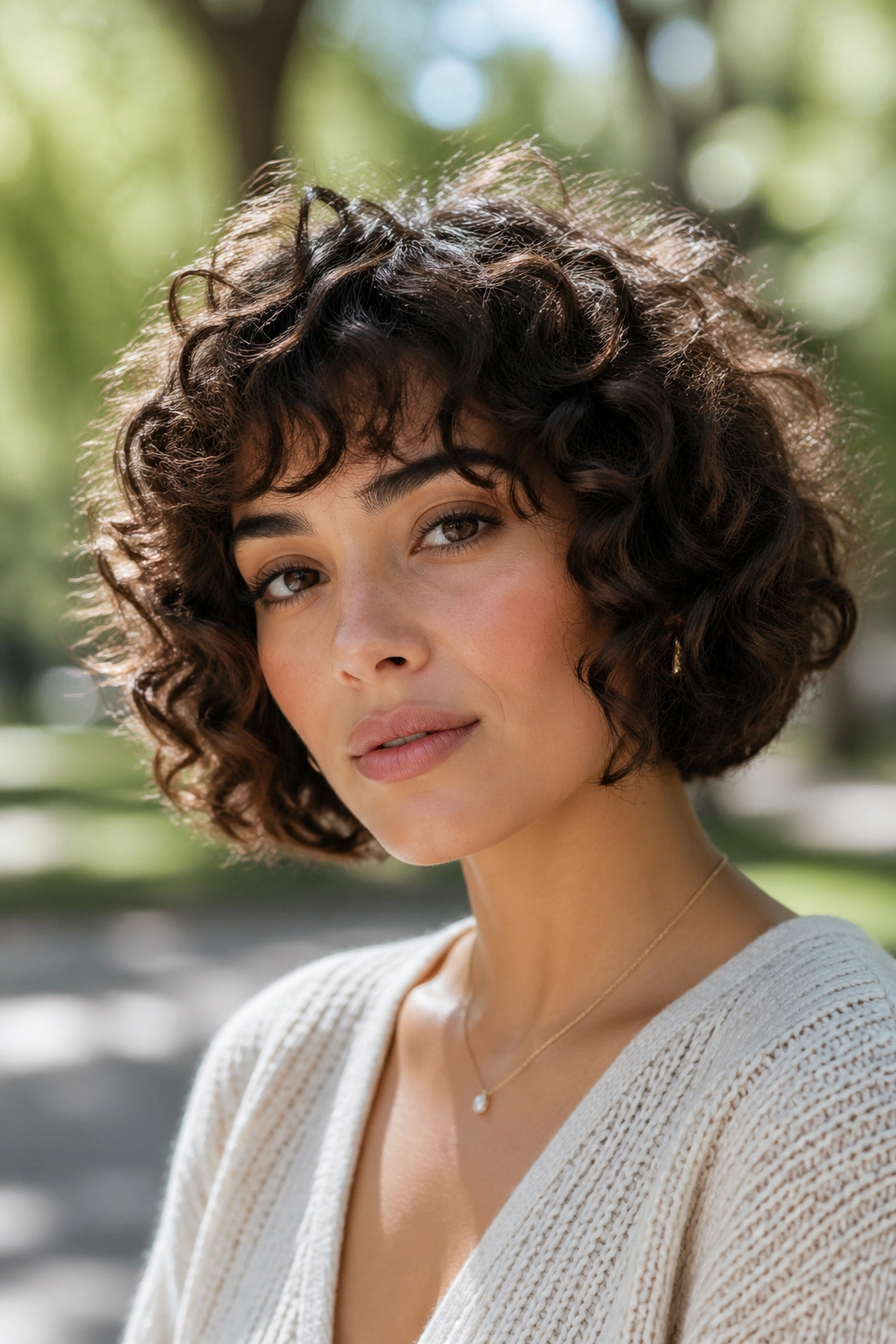
Why does a halo cut make curls look plush? Because it follows the round shape of the head instead of forcing the hair into a hard line. The curls sit in a gentle circle around the jaw and cheeks, which makes the whole style feel thick from every angle. It’s one of the nicest shapes for curls that already have natural spring.
A jaw-length halo cut works especially well on tighter curl types and coils. The hair can stack on itself without losing its outline. If your hair has a lot of density, this is where a skilled stylist matters most. You want enough shape to show the curl pattern, but not so much thinning that the perimeter turns airy. Thin ends ruin the effect fast.
The Sweet Spot at the Jaw
The line should land right around the jaw or just below it when dry. That gives you a full-looking frame without dragging the hair into your neck. A little internal shaping can help, but the outer shape should stay round and strong.
This cut is quietly flattering. No flash. Just a lot of body.
15. Curly Pixie Bob
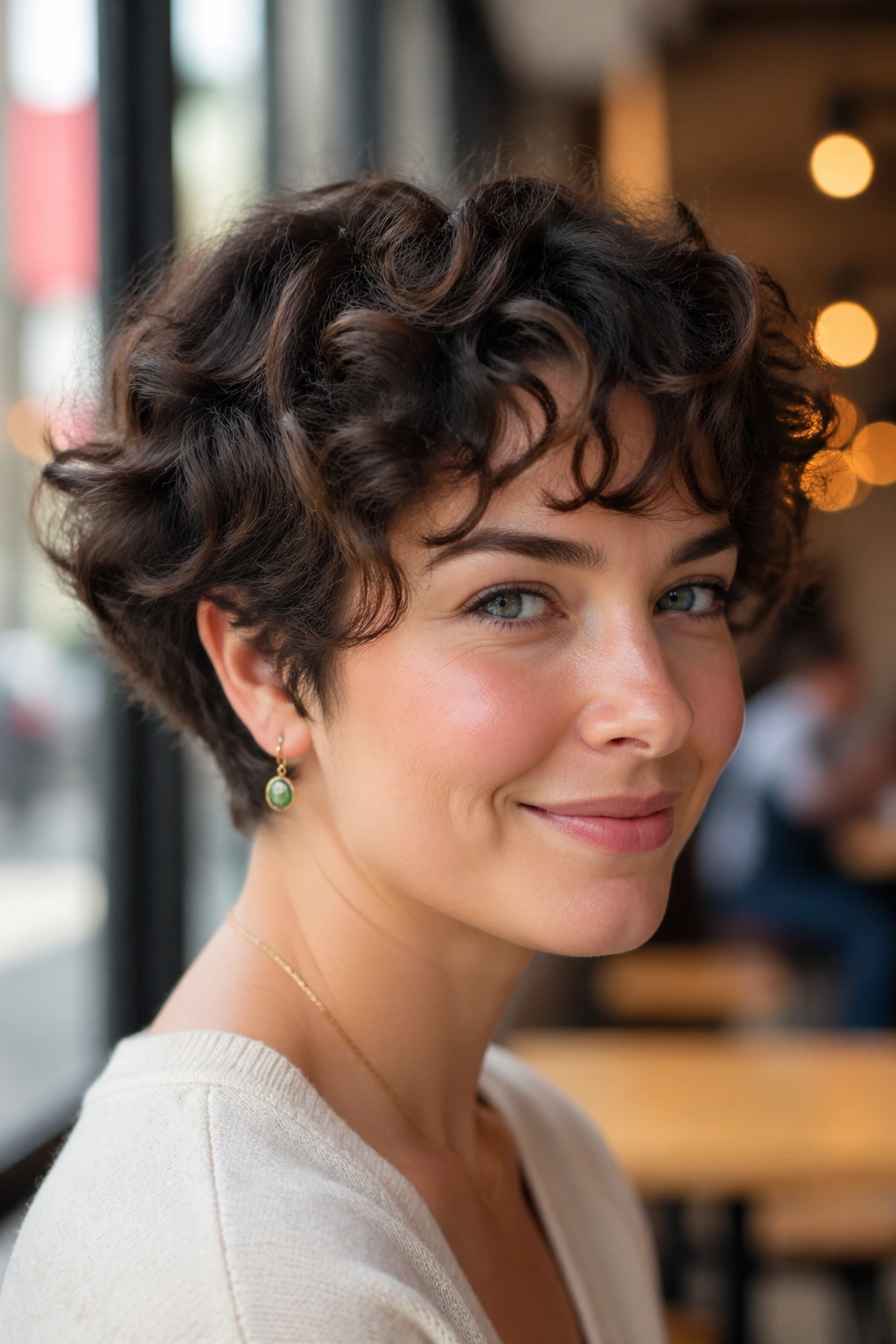
A curly pixie bob is what happens when a pixie grows up a little but refuses to turn into a boring bob. You get short layers around the back, more length through the top and sides, and enough curl movement to keep the shape from looking rigid. It’s full, but not heavy. That’s the sweet spot.
This cut is especially good if your hair has uneven density. The top can hold a bit more length, which makes the crown look lifted, while the sides stay close enough to keep the silhouette neat. It also grows out gracefully, which is nice. Some short styles look awkward after a month. This one tends to soften in a good way.
- Keep the top pieces long enough to curl over the forehead.
- Ask for a rounded nape instead of a hard line.
- Use a diffuser on low speed so the crown keeps its height.
If you want short curly hair that looks full without feeling too styled, this is a strong pick. It’s practical. It has shape. It doesn’t try too hard.
16. Short Curly Cut With Bottleneck Bangs
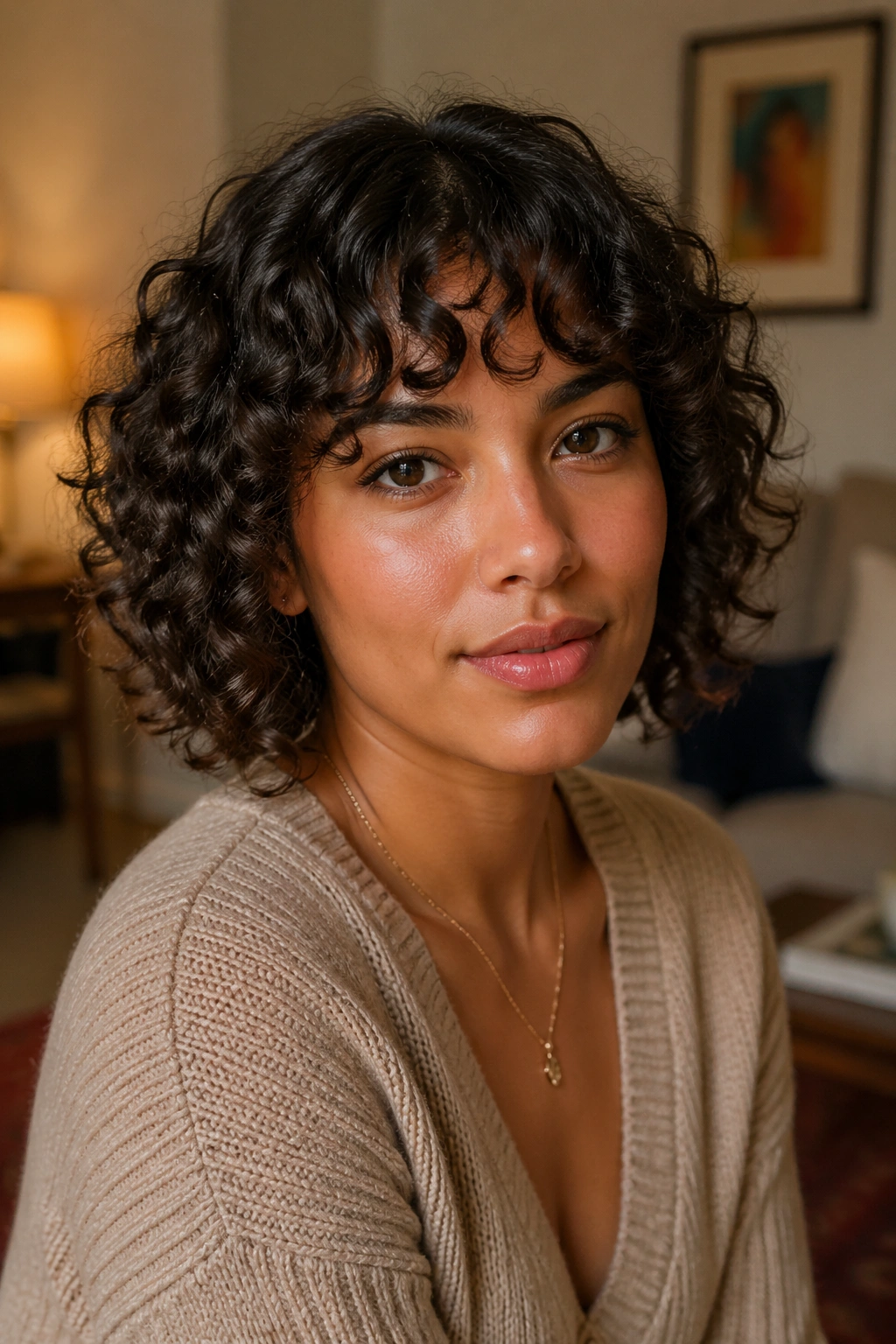
Bottleneck bangs work so well on curls because they make the front feel dense without turning the whole forehead into a curtain. The shape starts narrower in the center and opens wider toward the sides, which gives the cut movement and a little softness. On short curly hair, that front detail can make the rest of the style look fuller by comparison.
The bangs should usually be cut longer than straight-hair versions. Curls spring, and if you cut them too short, they pop up and lose the shape you wanted. The ends can skim the brows or sit just above them when dry, depending on curl type. Around the sides, the pieces should blend into the front layers instead of dropping as one heavy block.
This cut works well when you want your curls to frame your face without hiding it. It also keeps the crown from feeling empty. A little root lift at the front, a little separation through the bang area, and the whole style gains presence. Not much else needed.
17. Rounded Bob With Internal Layers
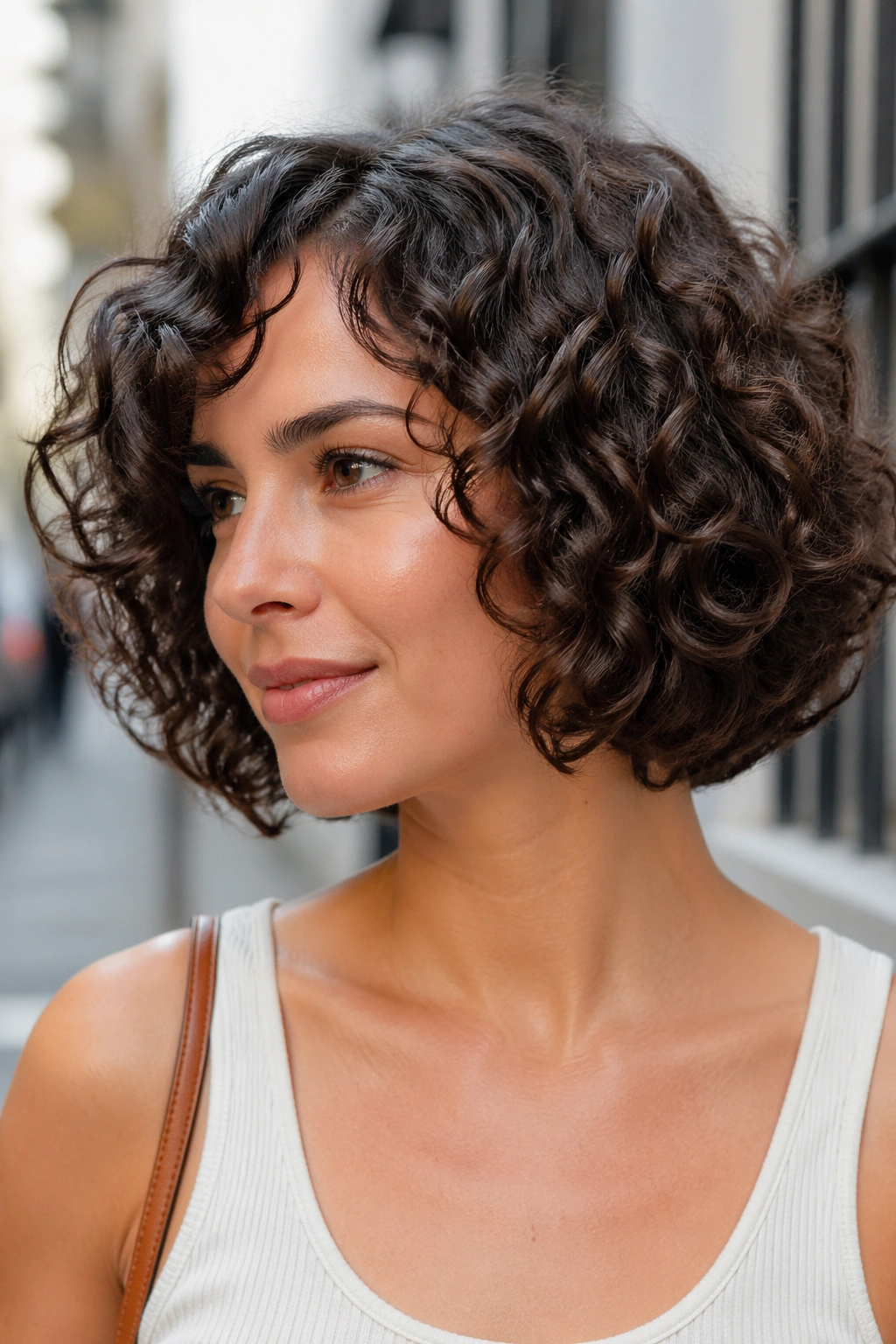
A rounded bob with internal layers is the quiet achiever on this list. From the outside, it looks clean and smooth. Underneath, weight has been removed in the right places so the curls can rise instead of hanging down. That inside-out shaping is what gives the style its fullness.
Unlike a shag, this cut keeps the perimeter polished. The line around the bottom stays strong, which means the ends look thick even if the interior is lightened a bit. It’s a good choice when you want the hair to look dense in photos, in daylight, and when it’s been air-dried on a busy morning. The shape does not depend on perfect styling.
Ask your stylist to keep the outer edge blunt and remove weight from inside the middle sections. That’s the whole trick. Too many short layers around the outside can make the cut look scattered. The fullness comes from the contrast between the clean edge and the lifted interior.
18. Undercut Curly Crop
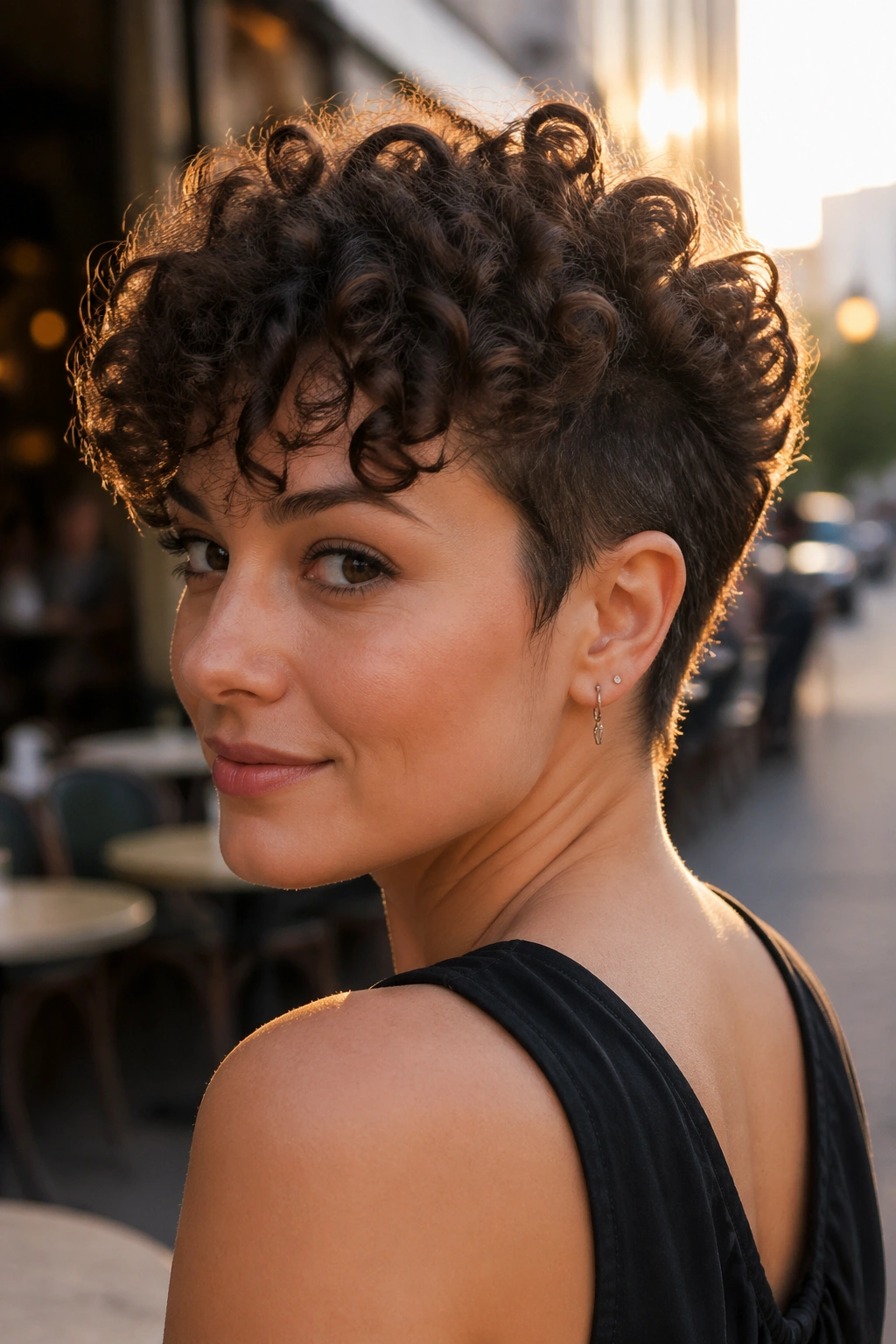
An undercut can be a smart move when the bulk underneath is stealing all the shape from your curls. Taking weight out from below lets the top puff up, and that top is what people see first. The cut feels lighter on the neck, cleaner at the nape, and much fuller on top than it would if all the hair were left the same length.
When an Undercut Helps
- Thick, dense curls that turn square when left long.
- Hair that gets hot or bulky around the neck.
- Short styles where you want volume without extra width.
Keep the undercut hidden or low if you want the style to stay soft. A visible undercut has its own look, and I like it, but it changes the mood fast. The top can stay 3 to 5 inches long, which gives curls enough room to form good clumps. If the top is too short, the cut loses the plush effect and starts looking clipped down.
This one is bold without being fussy. It’s a volume cut, basically, and it knows it.
19. Face-Framing Curly Bob With Thick Ends
The simplest way to make curls look dense is to keep the perimeter thick. A face-framing bob does that while still giving the front a little shape, which is why it works so well for short curly hair that needs body. The front pieces guide the eye, the ends stay strong, and the whole cut feels fuller than a heavily thinned style ever could.
What I like here is the balance. The face-framing pieces can start near the cheekbone or mouth, then flow into a bob that lands around the chin. That gives you movement where you want softness and thickness where you want volume. If your curls shrink a lot, the dry length should be judged carefully. A bob that looks chin-length when wet may land well above that once it sets.
Skip the urge to over-layer this one. A few internal layers can help the curls stack, but the ends should still feel solid. That solid edge is what makes the style look rich instead of sparse. Full hair does not always need more pieces. Sometimes it just needs a better outline.
Fullness loves a clean edge.
